 PHOTO 1
 PHOTO 1 (CLOSE-UP)
 PHOTO 2

PHOTO 2 (CLOSE-UP)
These two snapshots provide examples of nose art decoratively painted on the fuselage of American planes during World War II. Nose art was originally deployed as a way of identifying friendly aircraft. The practice evolved to the point that the art became a way of expressing individuality within the uniformity of the military. It also reminded plane crews and ground support of better times back home and at the same time defended the men from the stresses of war and the threat of death. Nose Art was not sanctioned by the military but they did not enforce rules against it. Nose art has been described as “folk art” as well as “graffiti art”. Some civilian airlines later picked up the practice of displaying art on their airliners. The practice of nose art on fighting airplanes began with German and Italian pilots. The first known example was a sea monster that was pained on an Italian war plane in 1913. The most famous of all nose art was was the shark-face image which first appeared on British and American planes during World War I. During that time, the creators and artists of nose art were usually members of the ground crew. World War II has been called the “golden age” of nose art. Axis and Allied pilots participated in the practice. Artists included both professional civilian artist as well as talented servicemen. Paintings of “pin-up” girls and cartoon characters were very popular nose art during the second World War. Nose art is still a popular tradition today. Photo 1 features a pin-up girl lying down. There are a number of names painted on the fuselage (“Karma Jean”, “Bizzy”, “White Angel”, and “Little Joe”. I don’t know what the names represent. Perhaps they are nicknames of the crew members. There is also a column of names near the front of the fuselage and it is my presumption is a list of the proper names of all the crew members. In my unsophisticated opinion, I believe the pictured plane is a B-24. I could really use a fact checker right now. This image measures about 2 1/4″ x 3 1/4″ and is in very good condition. Photo 2 may also be a B-24 bomber. Note the US insignia (star in a blue circle) on the rear of the fuselage. Also take notice of the two aircraft in the background. The nose art on the foreground plane is a painting of a pin-up named “Miss Behaving”. This photograph measures about 4 1/4″ x 2 1/2″. (SOLD)
 PHOTO 1
 PHOTO 2


 This carte de visite photograph features an impeccably dressed adolescent boy. He is decked out in a three piece suit and has a pocket watch, walking stick, and long coat. This fashionista fellow looks like he walked off the pages of “Gentleman’s Quarterly”. The photographer of this exceptional CDV is Heinrich E. Herkner. He operated a studio in the city of Gablonz, which is the German name for a city located in present day Czechoslovakia. The city is now named Jablonec. SOLD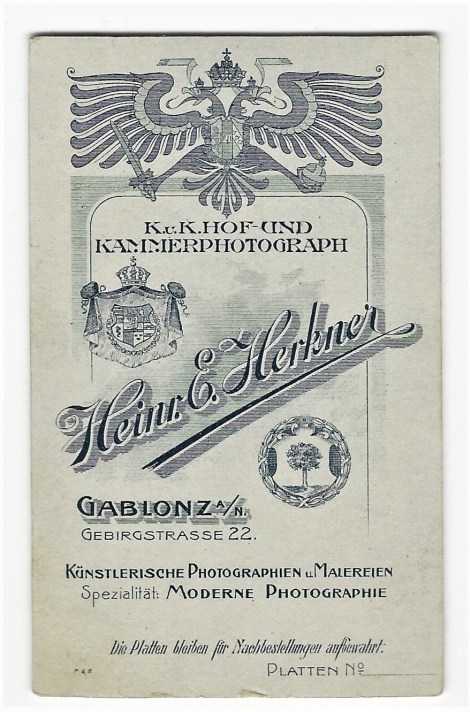
 This vintage real photo postcard offers a street view of Dobson’s Store, in Stoystown, Pennsylvania. Three upstanding citizens of the town can be seen in the photograph. Note that the thoroughfare is a dirt road. There are a number of posts in front of the sidewalk. I wonder it they were used to hitch horses. This postcard was published by G S Dobson; the proprietor of Dobson’s Store. The 1910 US census lists George S. Dobson (1863-1944) as a merchant (department store). He was married to Ellen L Dobson (1867-1947), nee Straub,for 26 years. George and Ellen lived with their son Albert (age 21), daughter (age 4), and Ellen’s sister. Albert worked as a salesman in the family business. The 1920 US census finds the family intact, but both George and his son were unemployed. Here is some information about Stoystown, the home of George’s store. The town is part of the Johnstown, Pennsylvania Metropolitan area. Originally the site of Stoystown was an encampment and a supply depot during the French & Indian War. The town was founded by hunter Daniel Stoy in 1774. Stoy later served in the Revolutionary War. Stoysville is near the site where flight 93 crashed on September 11th, 1001. SOLD
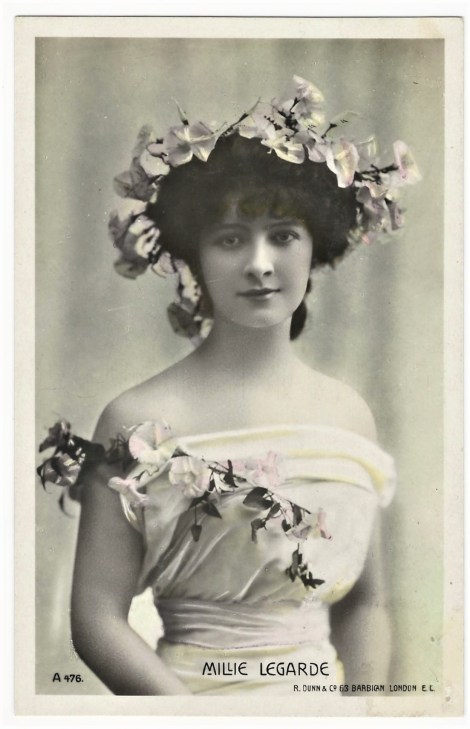 The beautiful woman in this vintage real photo postcard is Millie Legarde. She was an actress and a singer. She was active in her career between 1898 and 1911. She was a sitter for eight portraits in Great Britain’s National Portrait Gallery. She performed in numerous theater productions and in one film (1905). Searching for biographical information about Miss Legarde was like looking for a needle in a haystack. Preliminary research revealed that she appeared in many plays. Newspaper articles of the time, mention her name, but provide little information. It’s as if she was in the “witness protection program” and nearly all information about her has been scrubbed. Millie posed for a number of postcards but this card is certainly the nicest one I’ve seen. This postcard was published by Ralph Dunn & Company which operated out of London, England. The card is part of a series (no.A476). The postcard was manufactured in Berlin, Germany. (SOLD)


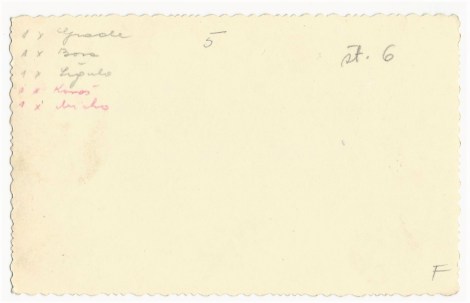
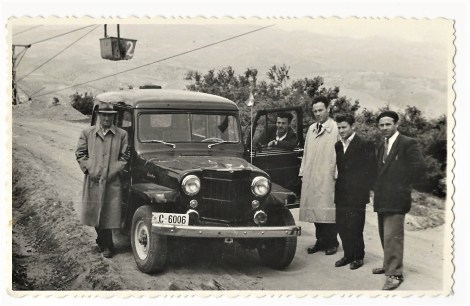 I would love to know the story behind this vintage postcard. Five men are standing by a Willys Jeep or Jeep-like vehicle. The car is on a dirt road. The men are posed in an odd manner. There are four men on one side of the automobile and a single man on the other side of the vehicle. Is the lone man a hired driver? Are the four other gentleman traveling together for business? There are mountains in the background. A cable car type system is in the near background. I wonder what was being transported by the cable cars? There is a small flag above the hood of the jeep. Although the design of the flag is not fully visible, the flag appears very similar to the flags flown by Serbia and some of it’s neighboring countries. The previous owner of this photograph has advised me that this photo was taken in Serbia. An inscription on the reverse of the photograph lists five names that most likely belong to the five men in the photo. This photograph appears to be from the 1950’s. It is in very good condition (see scans).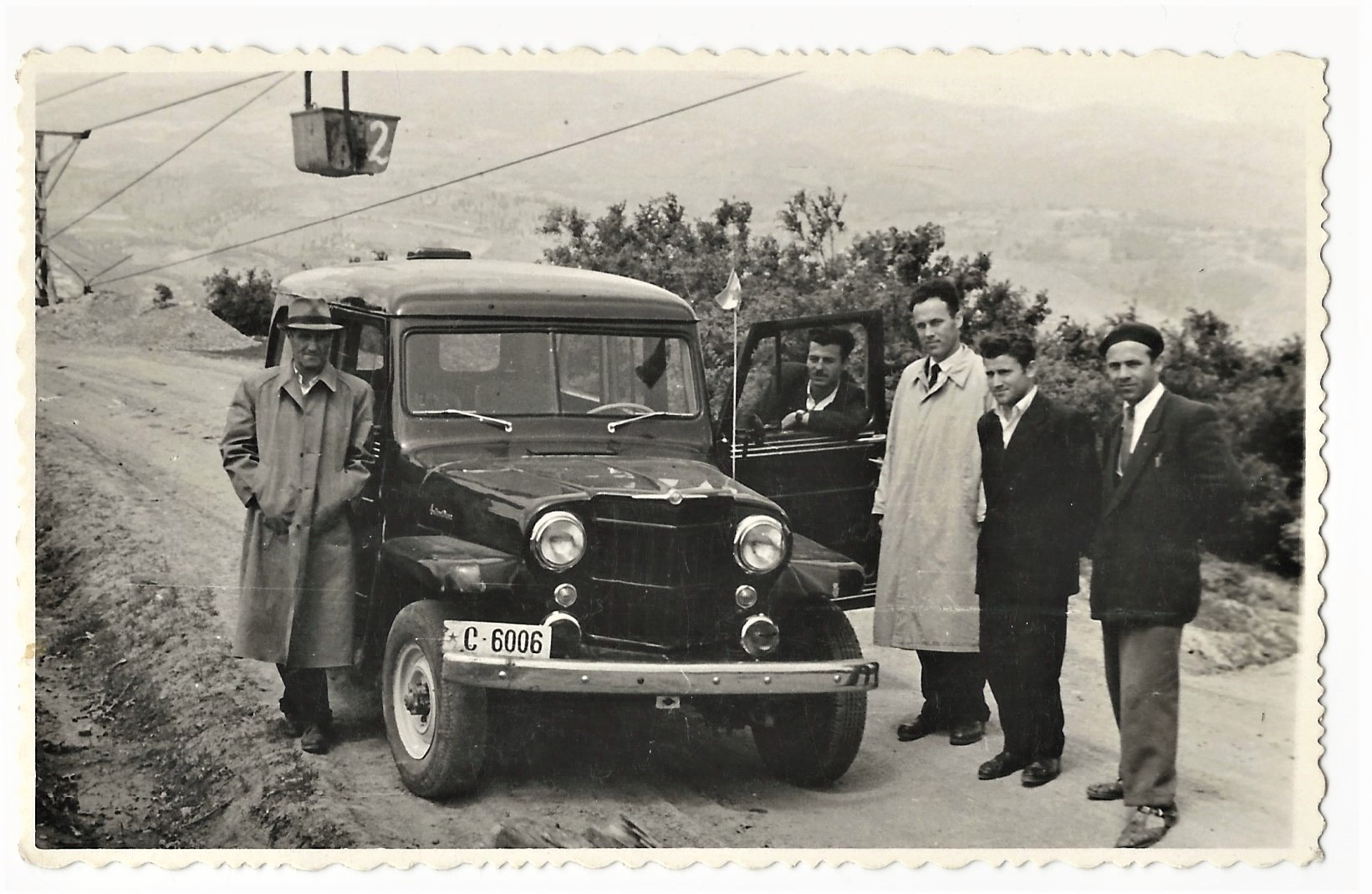
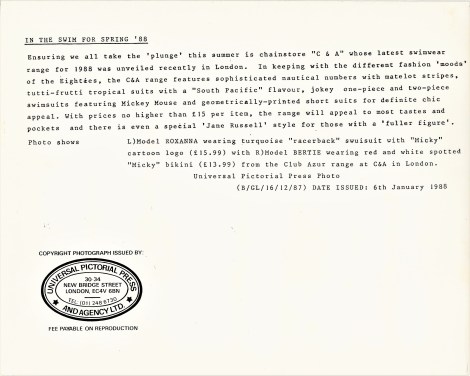
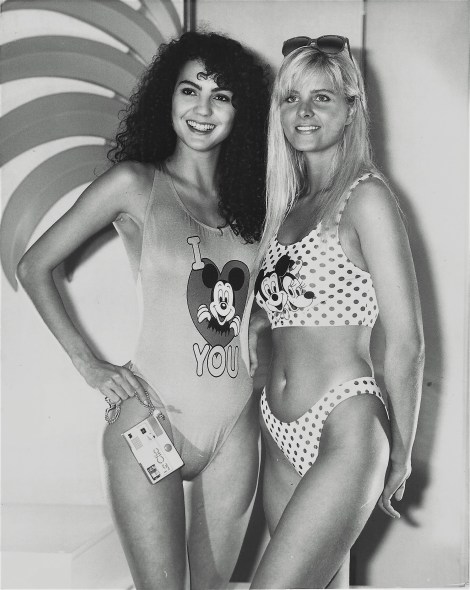 This 1988 press photo features two beautiful young women modelling swimsuits for the international retail clothing firm, “C & A”. Model, Roxanna Hudson is wearing a “turquoise racerback swimsuit” with a Mickey “I Love You” logo. The second model, “Bertie”, is wearing a red and white spotted bikini with a Mickey and Minnie logo. It is interesting to note that Miss Hudson is holding a “Le Clic” camera. Produced by Keystone, these cameras were fashionable and inexpensive. Manufactured in the late 1980’s, they had Kodak Disc technology and were easy to load and had a reusable flash. This photograph was published by Universal Pictorial Press. The publisher was located in London, England. Twenty-eight portraits from Universal can be found in the United Kingdom’s National Portrait Gallery. This press photograph has wonderful clarity and is in very good condition (see scans).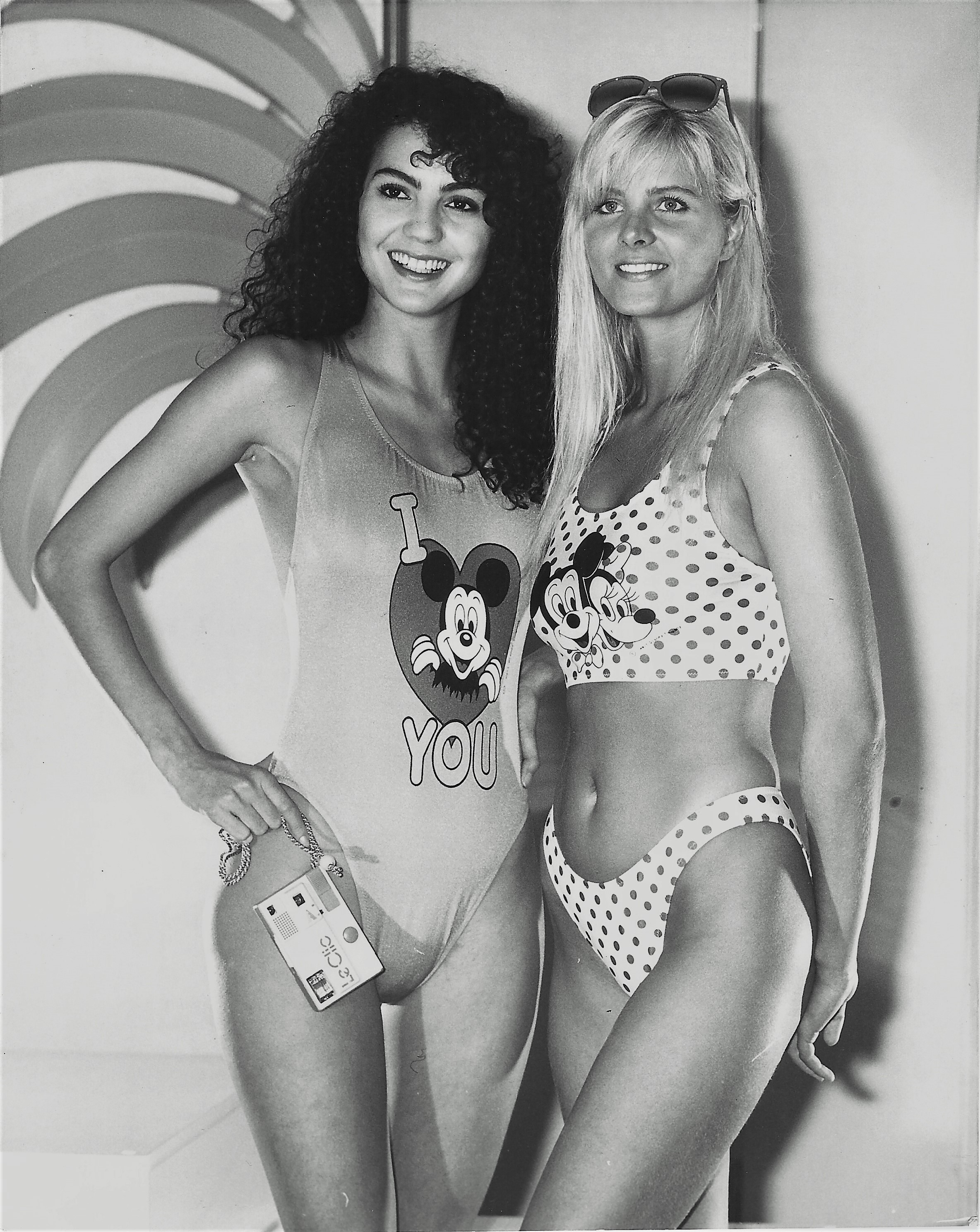




 THE CABINET CARD GALLERY