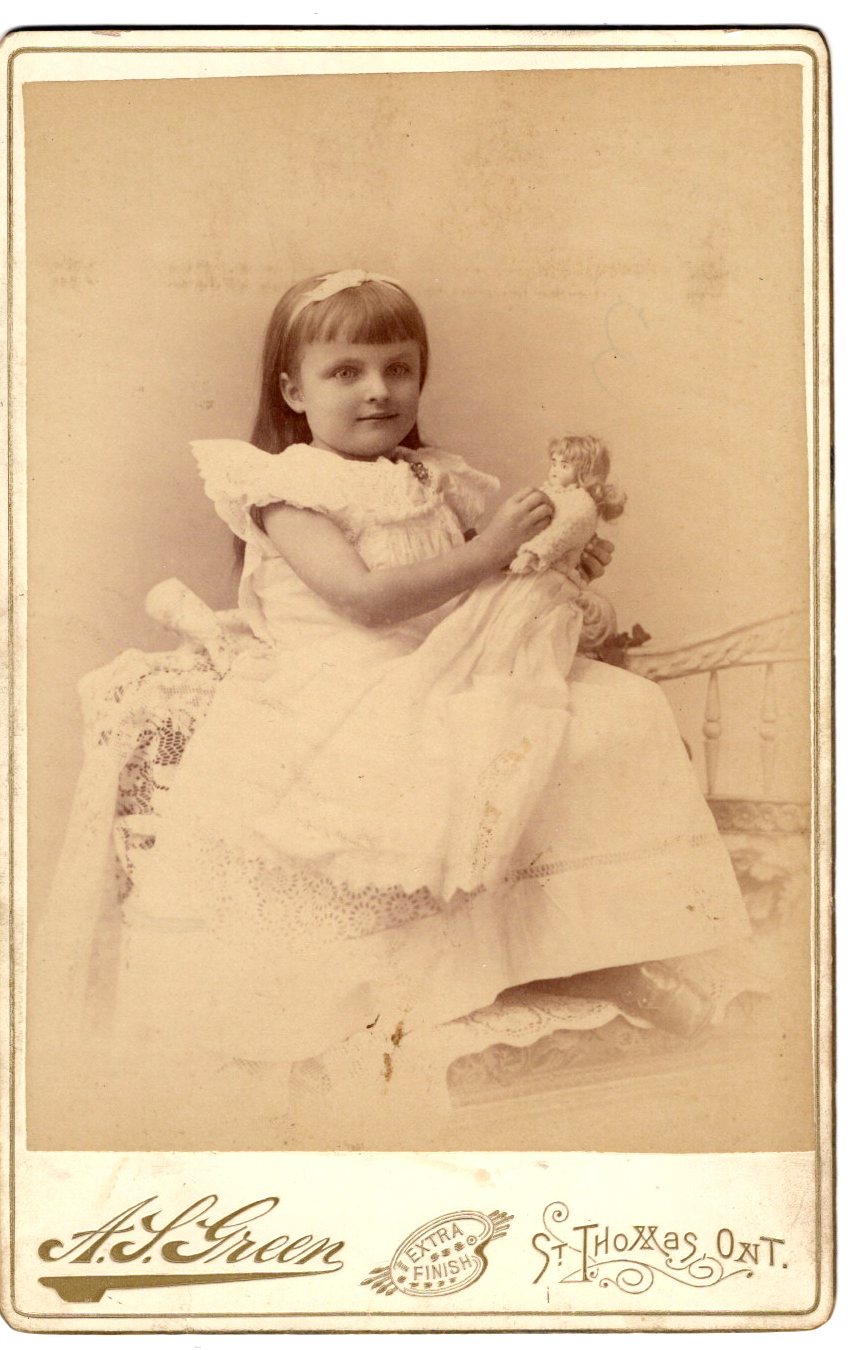
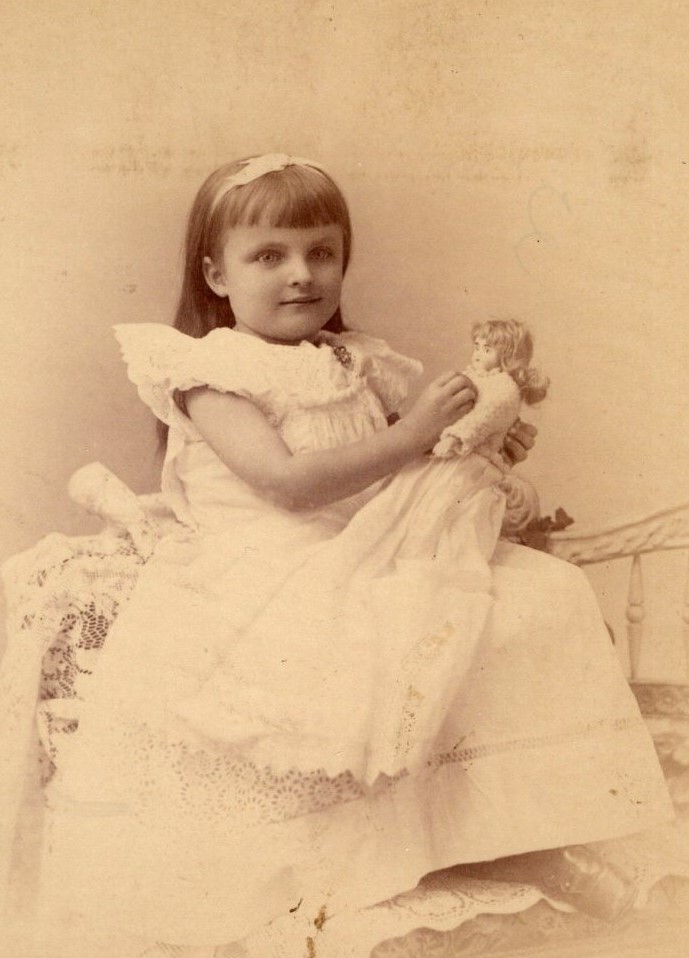
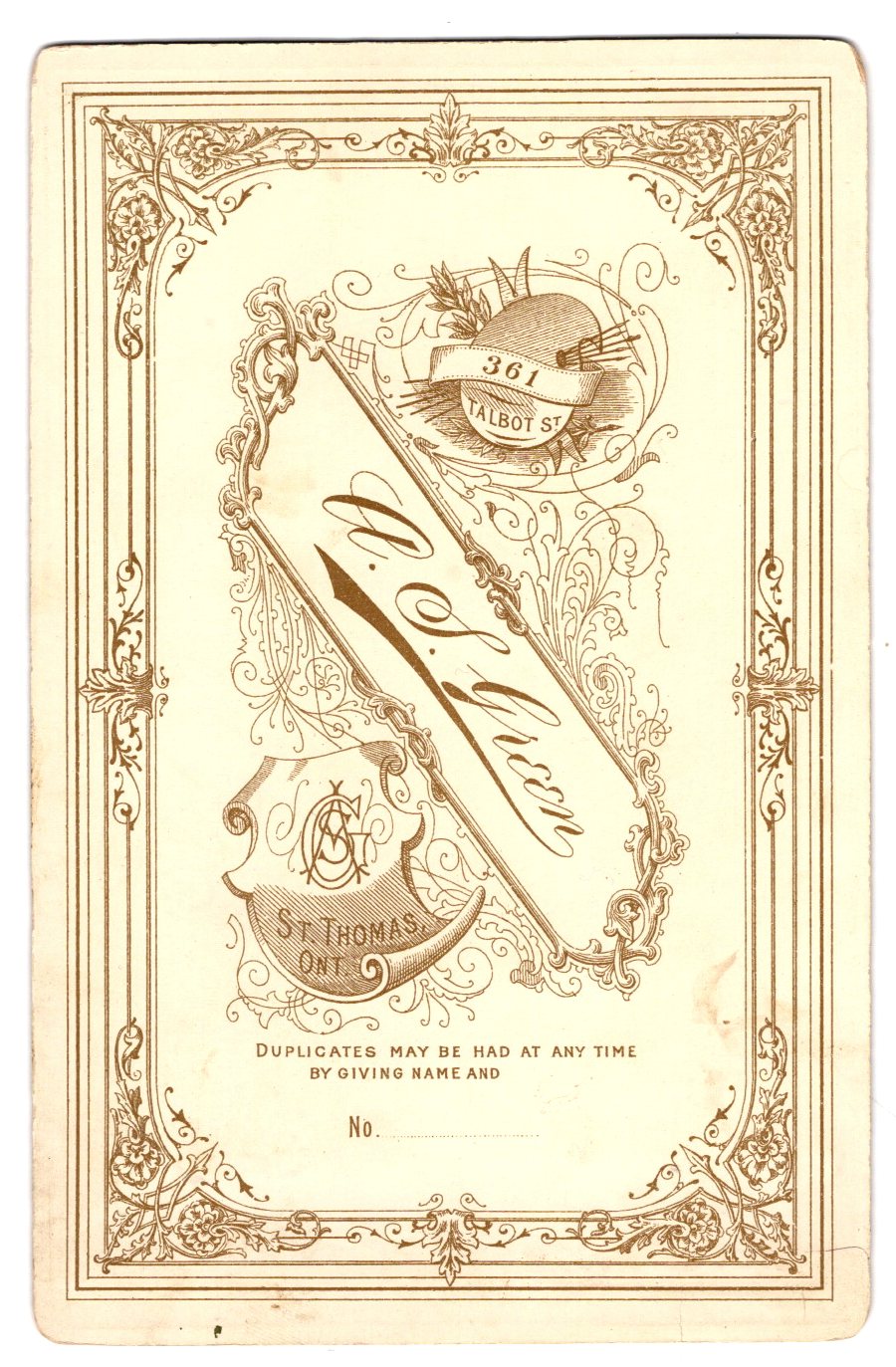
This cabinet card portrait features an adorable little girl sitting on a chair and holding a doll. She is wearing a “fancy” dress. The child appears quite content as she poses for her photograph at the A. S. Green studio in St. Thomas, Ontario, Canada. Anson S. Green was active as a photographer in St. Thomas between 1888 to 1893, according to Glen C. Phillips’s “The Ontario Photographers List (1851-1900)”. SOLD
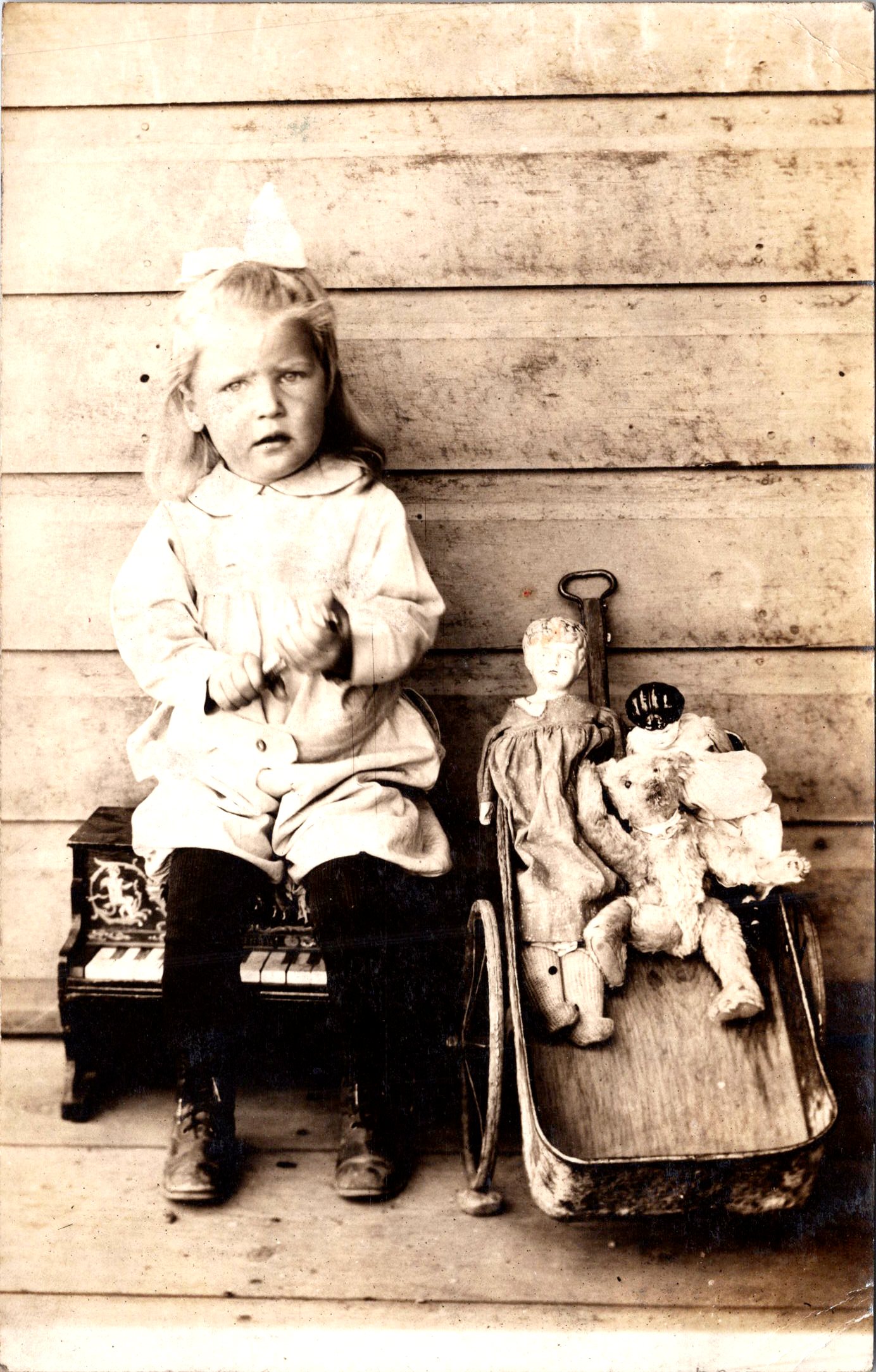
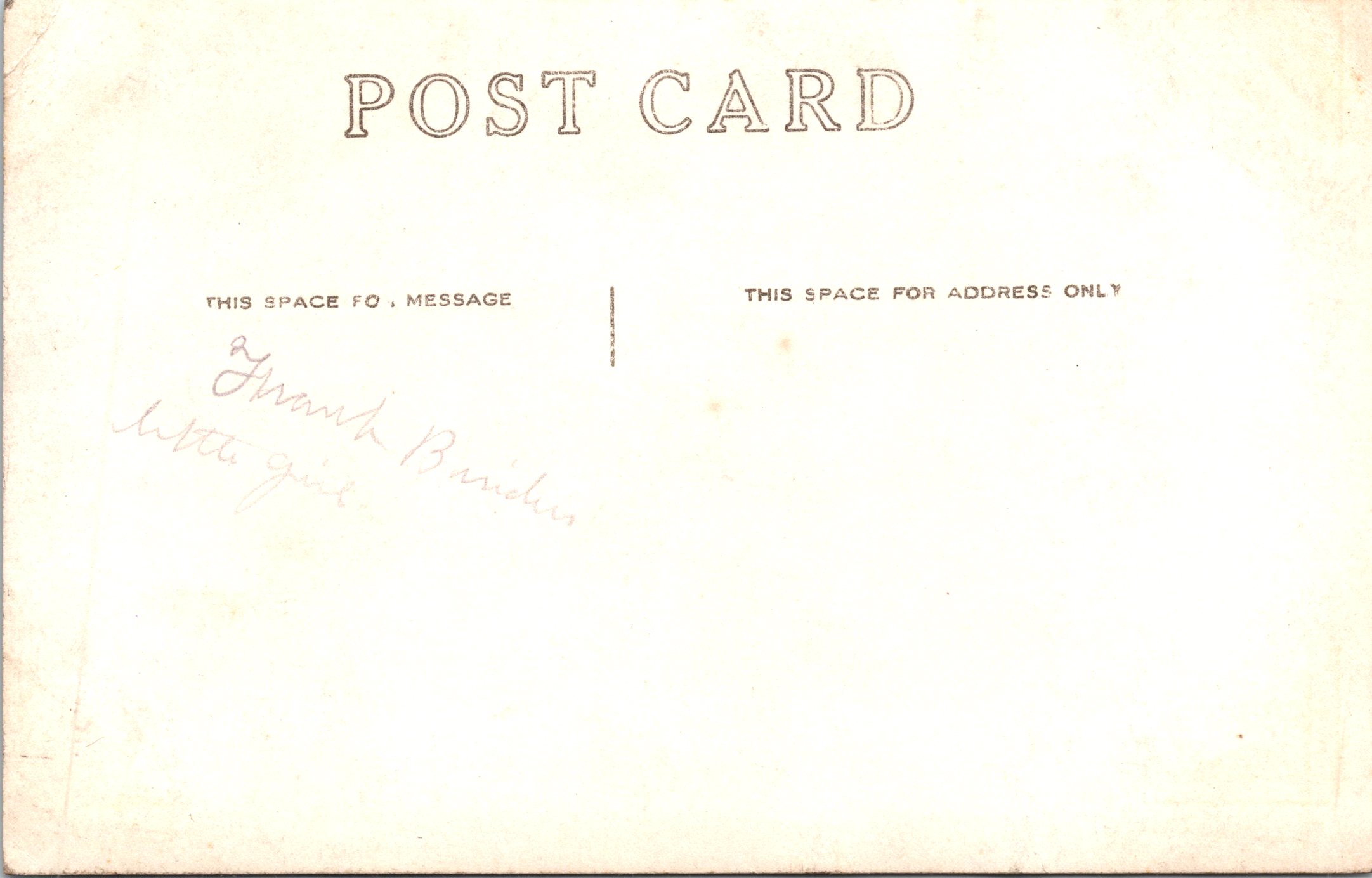
Seated on a small toy piano, a young girl gazes directly into the camera with a serious, almost puzzled expression. Her light-colored coat, featuring large buttons and a Peter Pan collar, suggests a chilly season. Her dark stockings contrast sharply against the crisp fabric of her coat, and her slightly scuffed lace-up shoes hint at a child often at play. Her blonde hair, parted slightly to the side, is adorned with a large white bow, a common fashion accessory for young girls of the era. Beside her, a well-loved wooden wagon carries an assortment of cherished toys. A china-head doll dressed in a long, slightly tattered gown sits upright, her delicate painted face conveying a timeless charm. Next to her, a worn plush teddy bear with jointed limbs lounges against the wagon’s edge, its fur thinned from years of companionship. A smaller doll, with a cloth body and a painted bisque head, rests in a heap, suggesting it may have been hastily placed there before the photo was taken. Behind the girl, the toy piano upon which she perches adds a striking visual element. The intricate decals and ornate detailing on its wooden frame indicate it was once a prized plaything. Its keys, some appearing slightly askew, reveal the signs of youthful enthusiasm. The setting appears to be an outdoor porch or wooden structure, the horizontal planks of the wall providing a rustic backdrop. The natural light casts soft shadows, enhancing the depth and character of the image. The reverse side of the postcard features a typical divided-back design, indicating it dates from the early 1900s. A faint handwritten inscription reads “Frank B’s little girl”. Franks’s last name is likely “Binder”. The handwriting is delicate and slightly faded, but still legible. SOLD
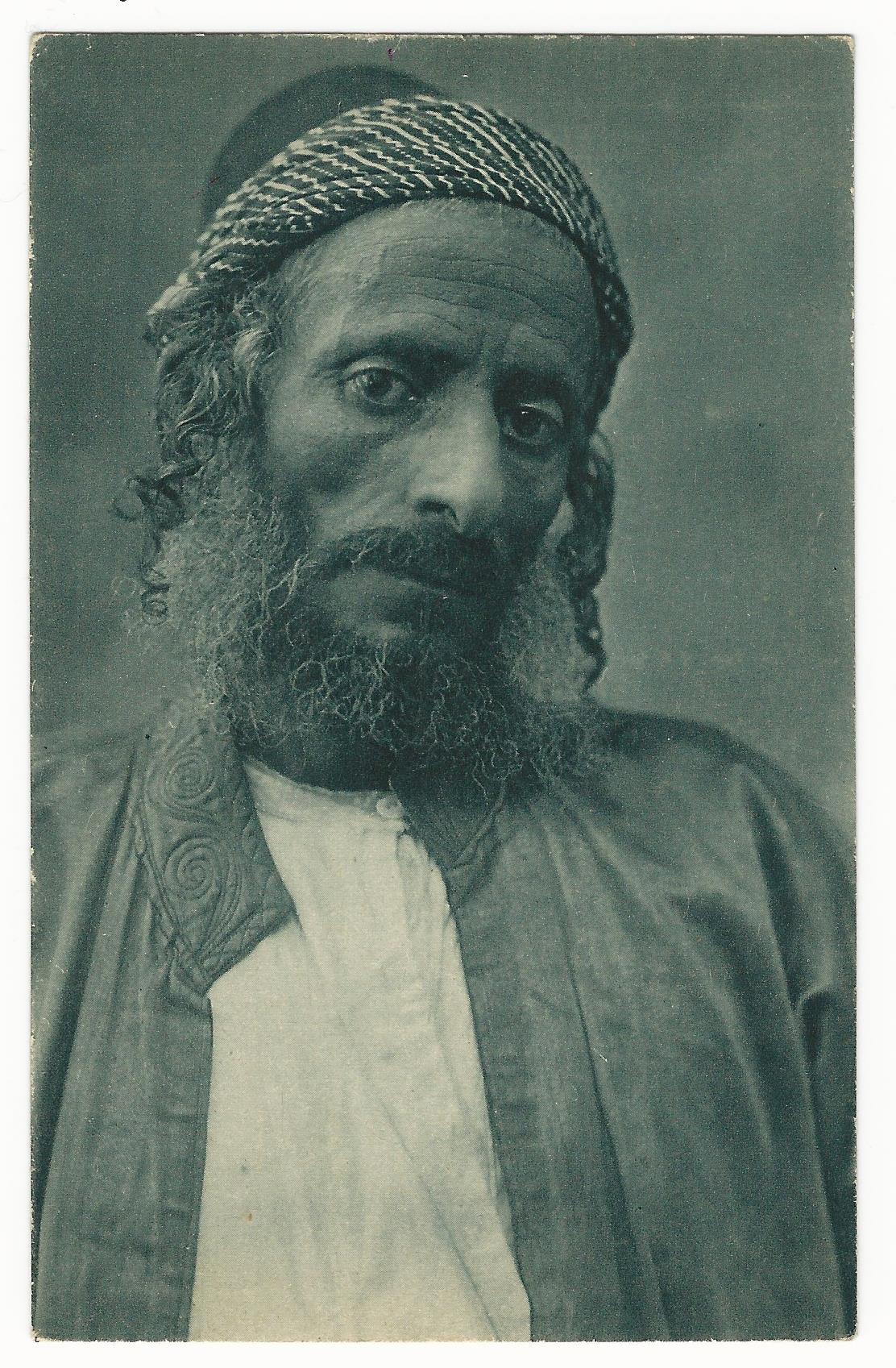
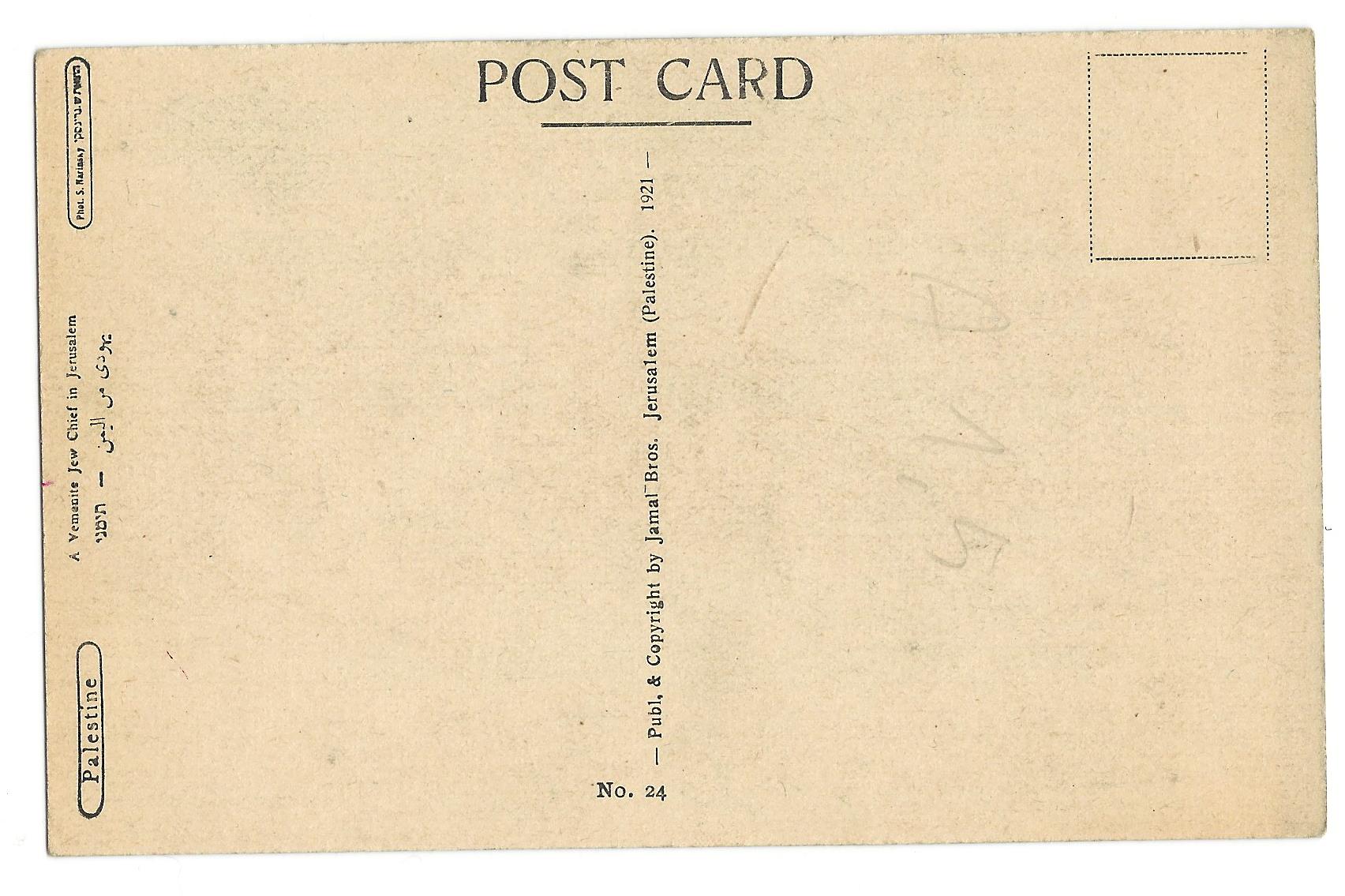
This vintage real postcard features a fascinating portrait of “a Yemenite Jew Chief in Jerusalem”. It is my belief that rather than this being a “Yemenite Jew Chief”, this gentleman is the chief rabbi of the Yemenite Jews in Palestine. Arabic and Hebrew text can be found on the reverse of the postcard. The hebrew word on the postcard is “Teimanim” which translates to “Yemenite Jew”. “Palestine”, not Israel, is printed on the reverse of the postcard. “Palestine” is used because Israel was not established until 1948, long after this postcard was printed. The photographer of this portrait is Shlomo Narinsky and the card was published in 1921 by the Jamal Brothers (located in Jerusalem). This postcard portrait is included in the collection of the US Library of Congress. Shlomo Narinsky (1885-1960) was born in Southern Russia (Ukraine). In 1904/1905, he studied photography in Paris and Berlin. He returned to Russia only briefly before immigrating to Palestine. He opened a photography studio in Jerusalem. He produced many postcards focusing on Palestine. He was known for his use of light and shadow in order to give his images a soft and romantic air. Shlomo’s wife, Sonja, was also a very talented and highly esteemed photographer. This postcard has excellent clarity and is in excellent condition (see scans). SOLD
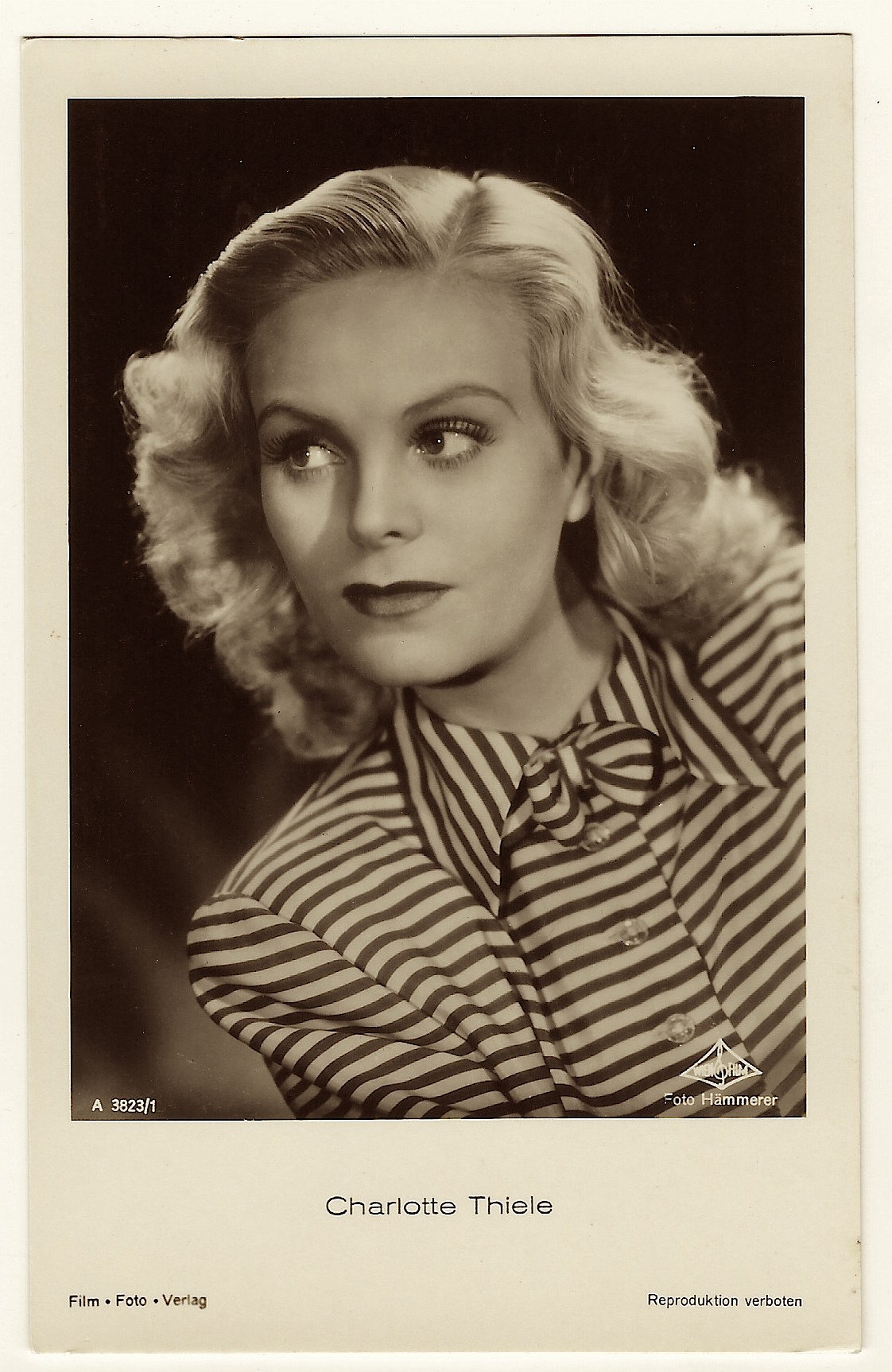
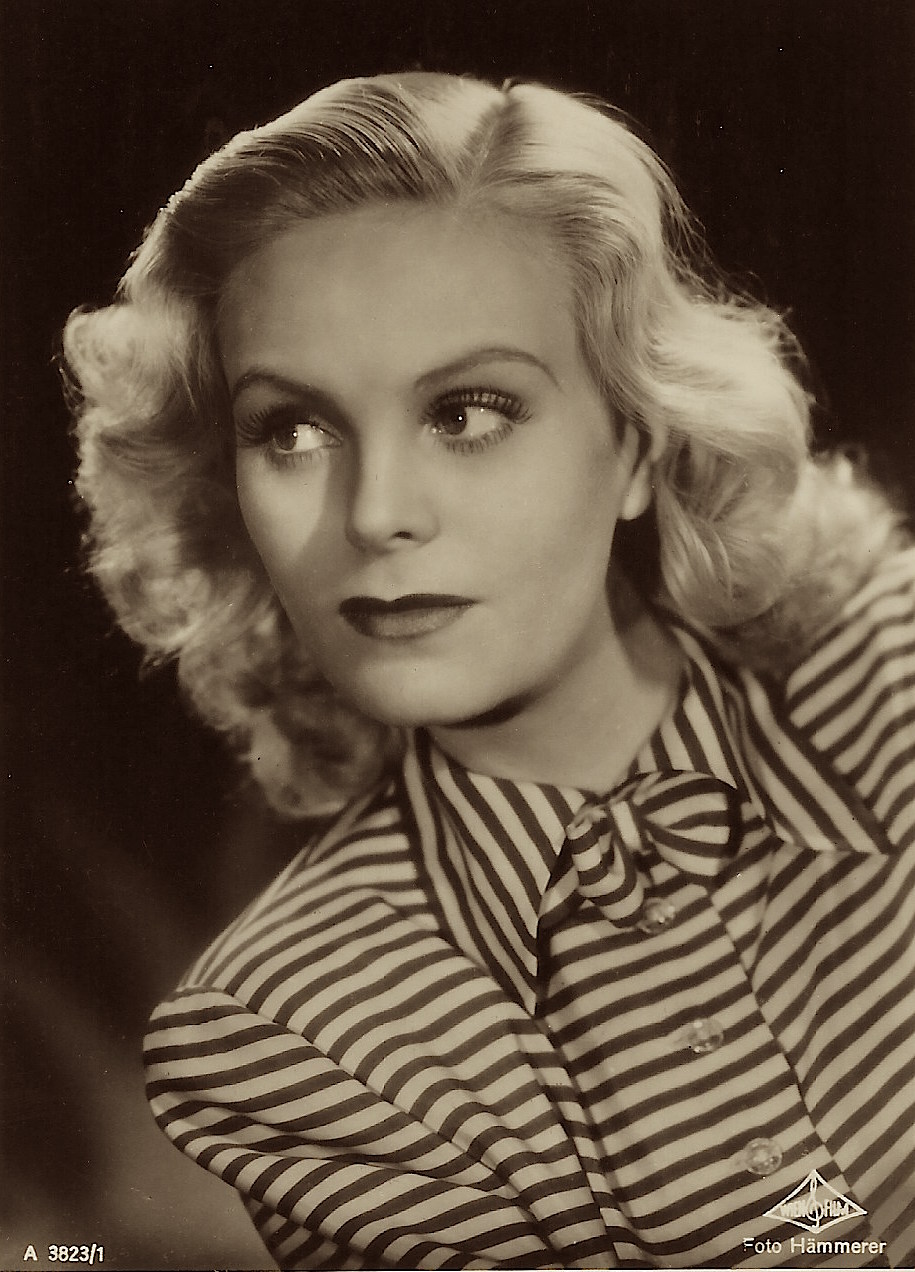
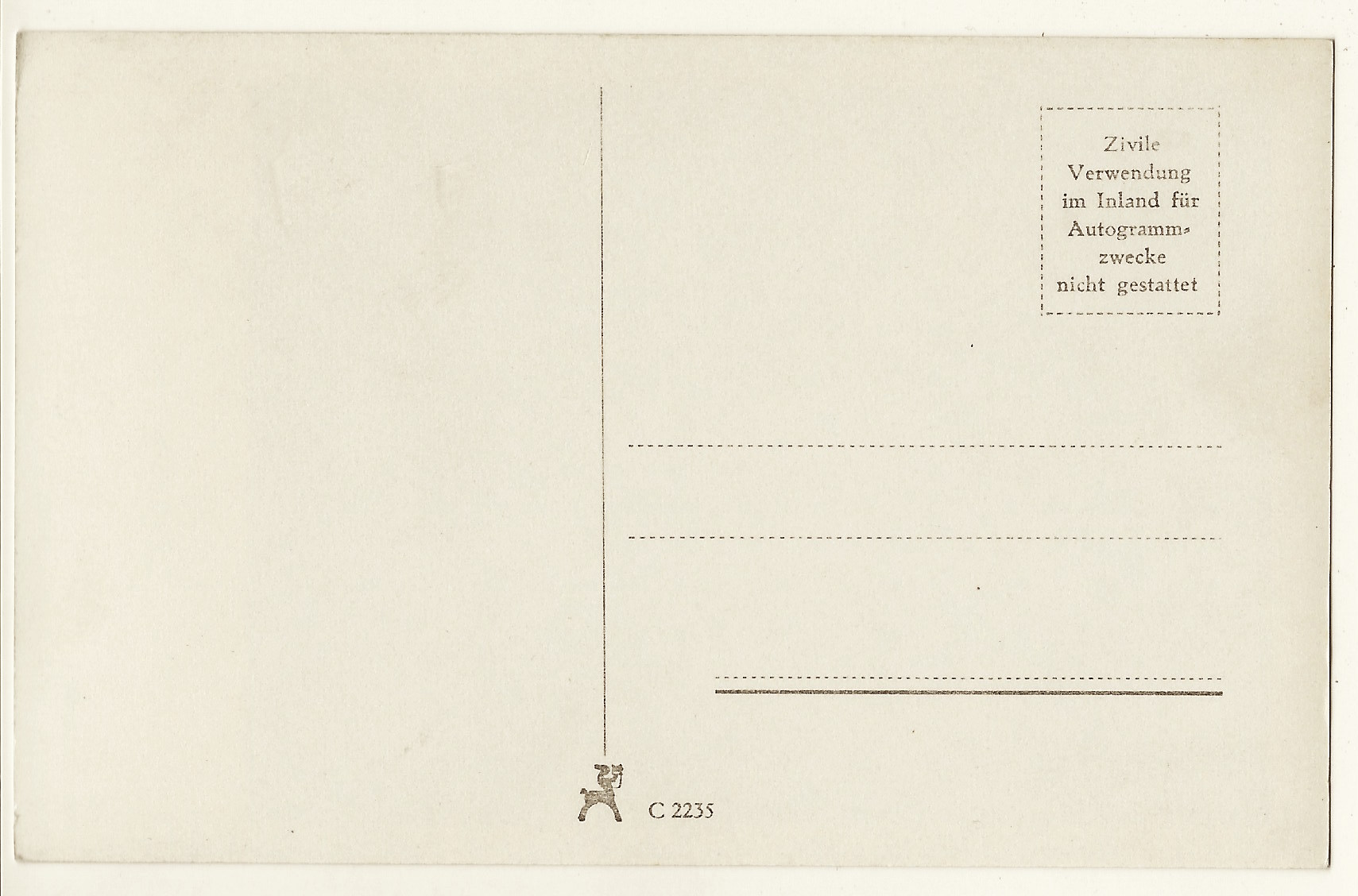
Charlotte Thiele (1918-2004) was a German actress. She was quite pretty. Thiele was born in Berlin and attended acting school at the “Schauspielhaus Berlin”. Her acting debut occurred in 1938 in a film directed by Kurt Hoffmann, a well known German film director that directed 48 films between 1938 and 1971. In 1939, she appeared in “We Dance Around The World” and the feature film made her an instant star. During the 1930’s and 1940’s she was often cast in roles where she played the “cool blonde”. In 1941, she appeared in a controversial propaganda film. The movie was a controversial pro euthanasia vehicle. The plot was about a successful doctor who is compelled to make a “heart wrenching” decision when his pretty young wife is diagnosed with multiple sclerosis. This movie was aimed at making the public more supportive of Germany’s euthanasia program and was a portend of things to come. She is also known for playing a Lady Astor, in the film, Titanic (1943). In 1944, Thiele appeared in her last movie. Her career was ruined by Propaganda Minister Joseph Goebbels because she had rejected his advances. She went as far as throwing the dedicated engraved powder box he have her, into the trash. Thiele’s first marriage was to a prominent surgeon who was an assistant to a famous German surgeon.Her second husband was a Croatian diplomat. The couple emigrated to Argentina in 1944. She returned to Germany in 1954 and failed in her attempt to resume acting. However, in 1956, she appeared in an episode of the American television series “Douglas Fairbanks Jr. Presents/ Rheingold Theater”. The IMDb reports that Thiele appeared in 7 films. She died in Berlin in 2004. This vintage real photo postcard was published by Film-Foto-Verlag and was part of a series (no. A3823/1). The photographer was Hammerer for Wien-Film. It was published in 1943. The postcard features Miss Thiele in her role in the Wien-Film “Am Vorabend”. SOLD
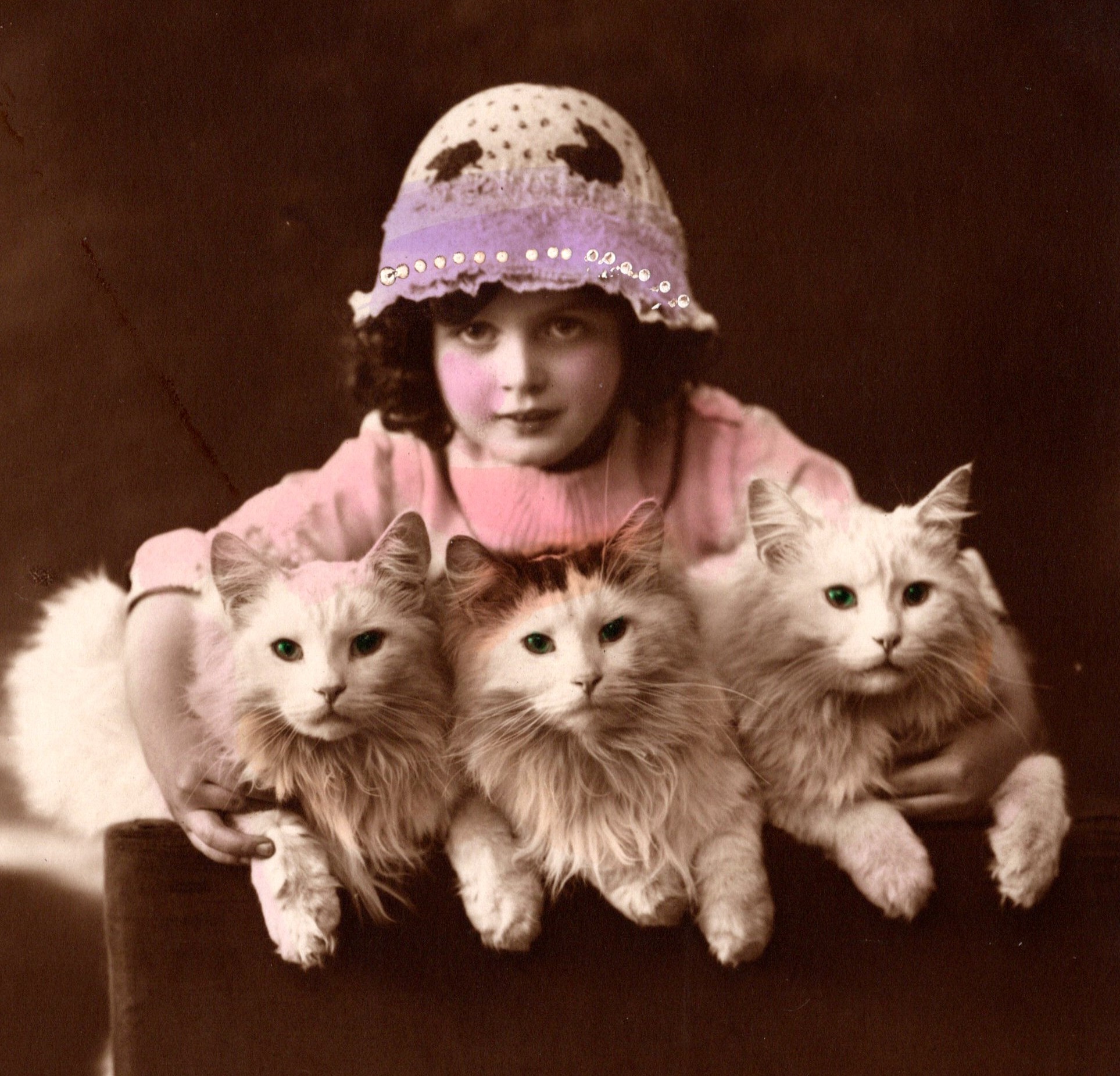
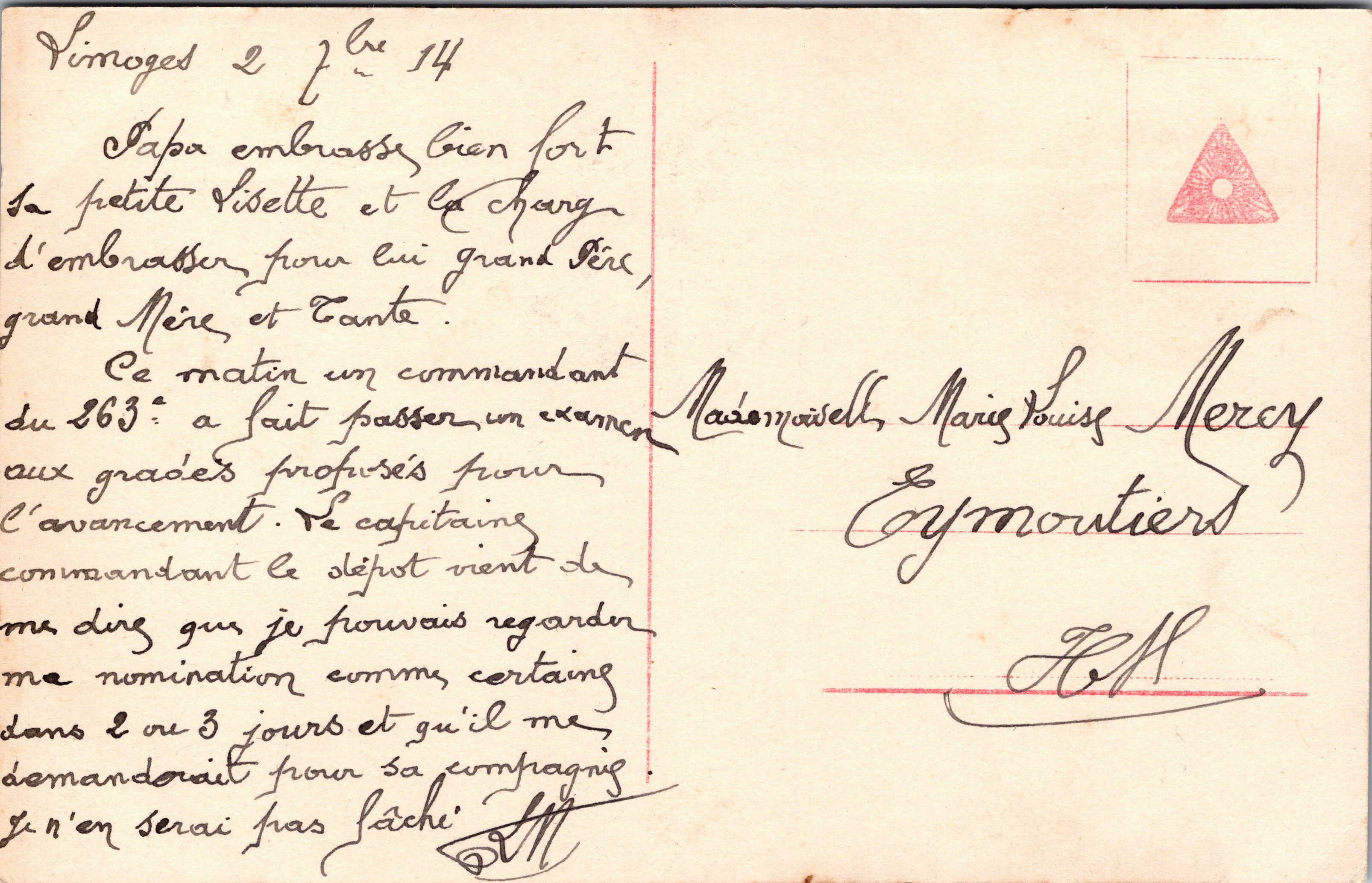
This color tinted vintage real photo postcard features an adorable little girl and her three beautiful cats. The child is wearing a pretty hat. The cats are extremely photogenic. This postcard is dated 1914 and was published by Rotophot (RPH) as part of a series (No.4315/2). Rotophot eventually morphed into Ross Verlag. SOLD
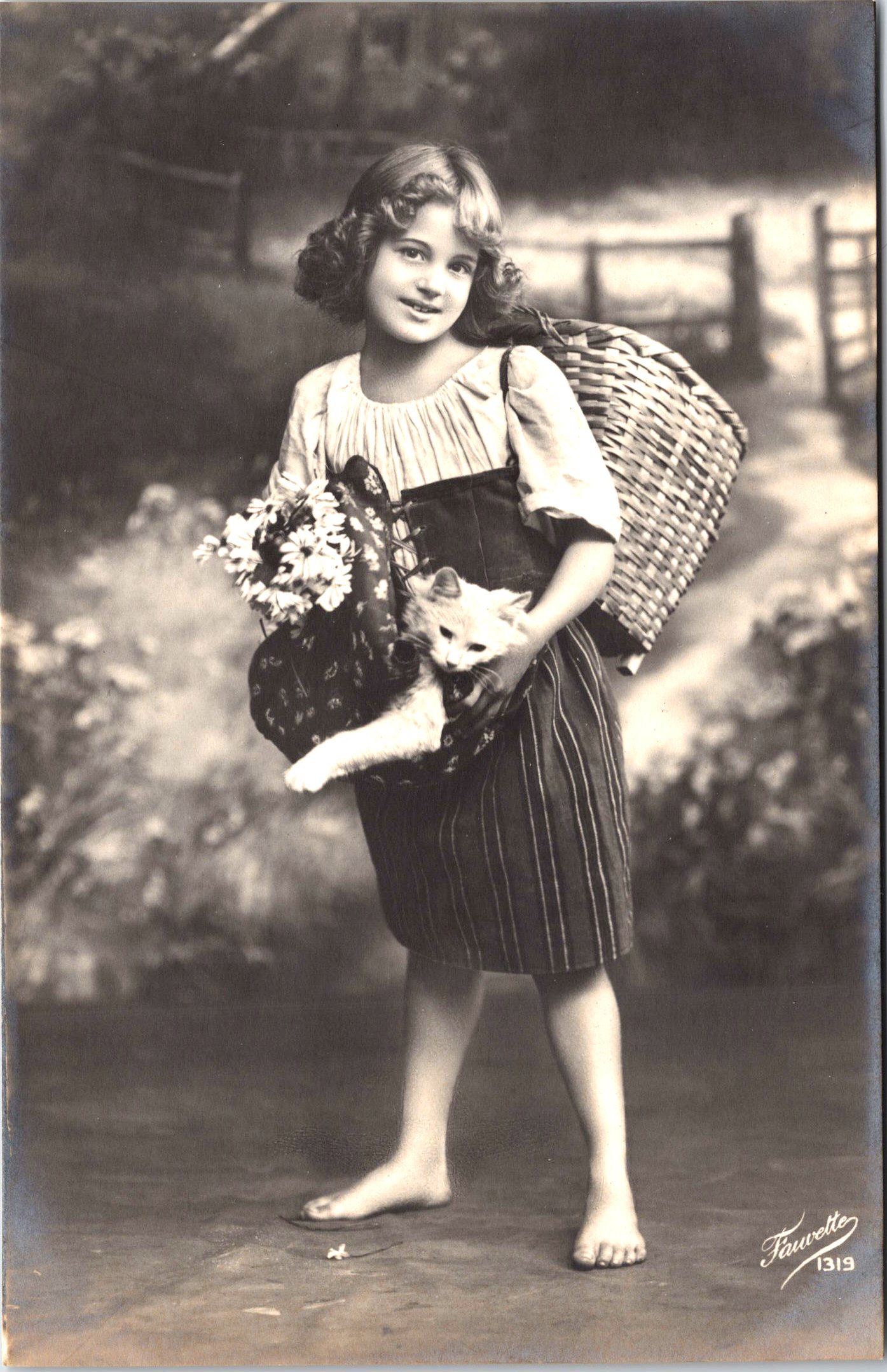
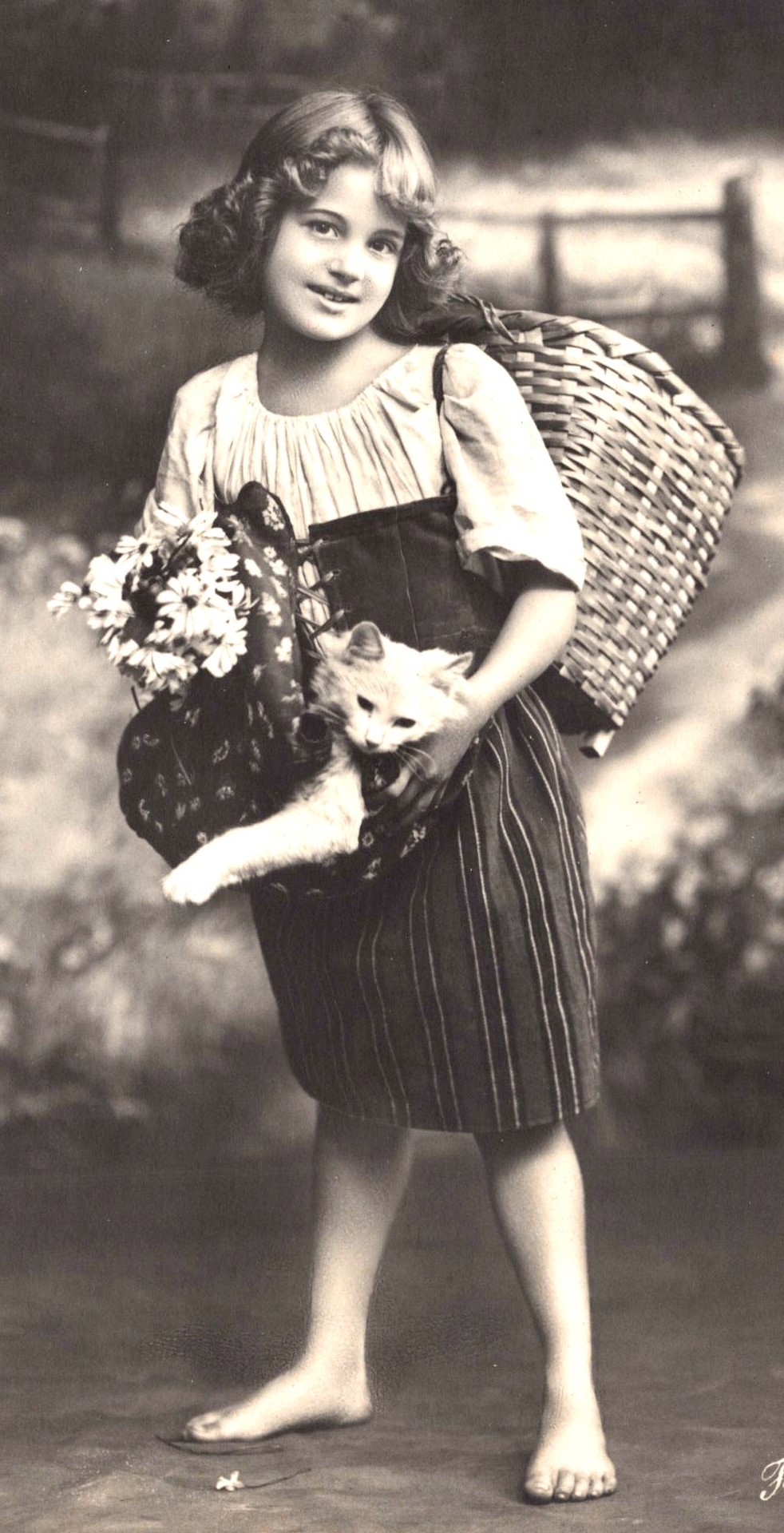
This color tinted vintage real photo postcard features a barefoot adorable little girl and her white cat that she is carrying in a cloth bag. She is also carrying a bouquet of flowers and has a basket on her back. The model seen in this postcard photo is most likely, Hani Reinwald, sister of popular postcard model, Grete Reinwald. Both girls became stage and film actresses. I own another postcard from the same series as this postcard. That postcard is postmarked 1913, indicating that this postcard also dates back to that year. This French postcard was published by Fauvette as part of a series (No.1319). SOLD
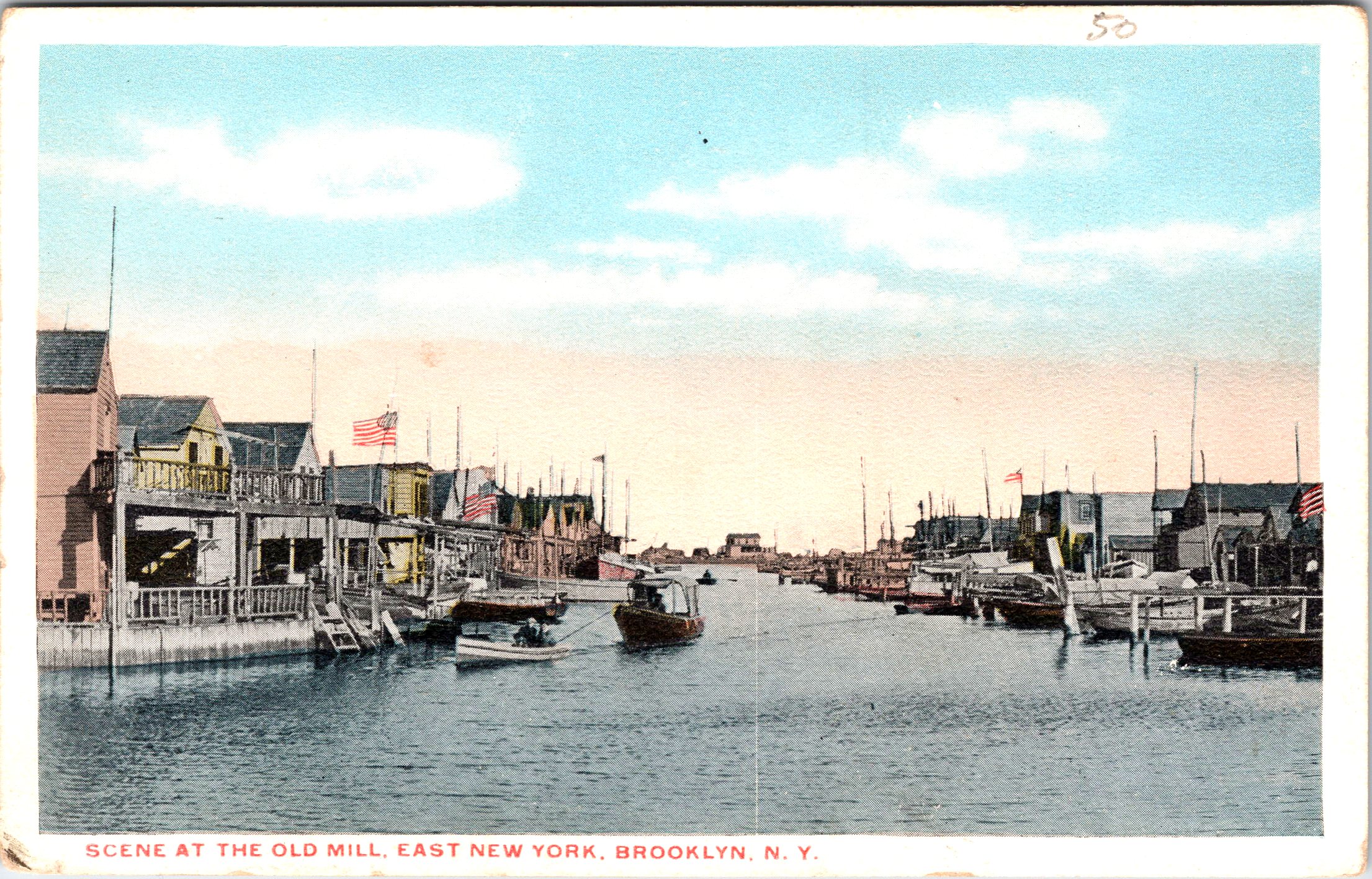
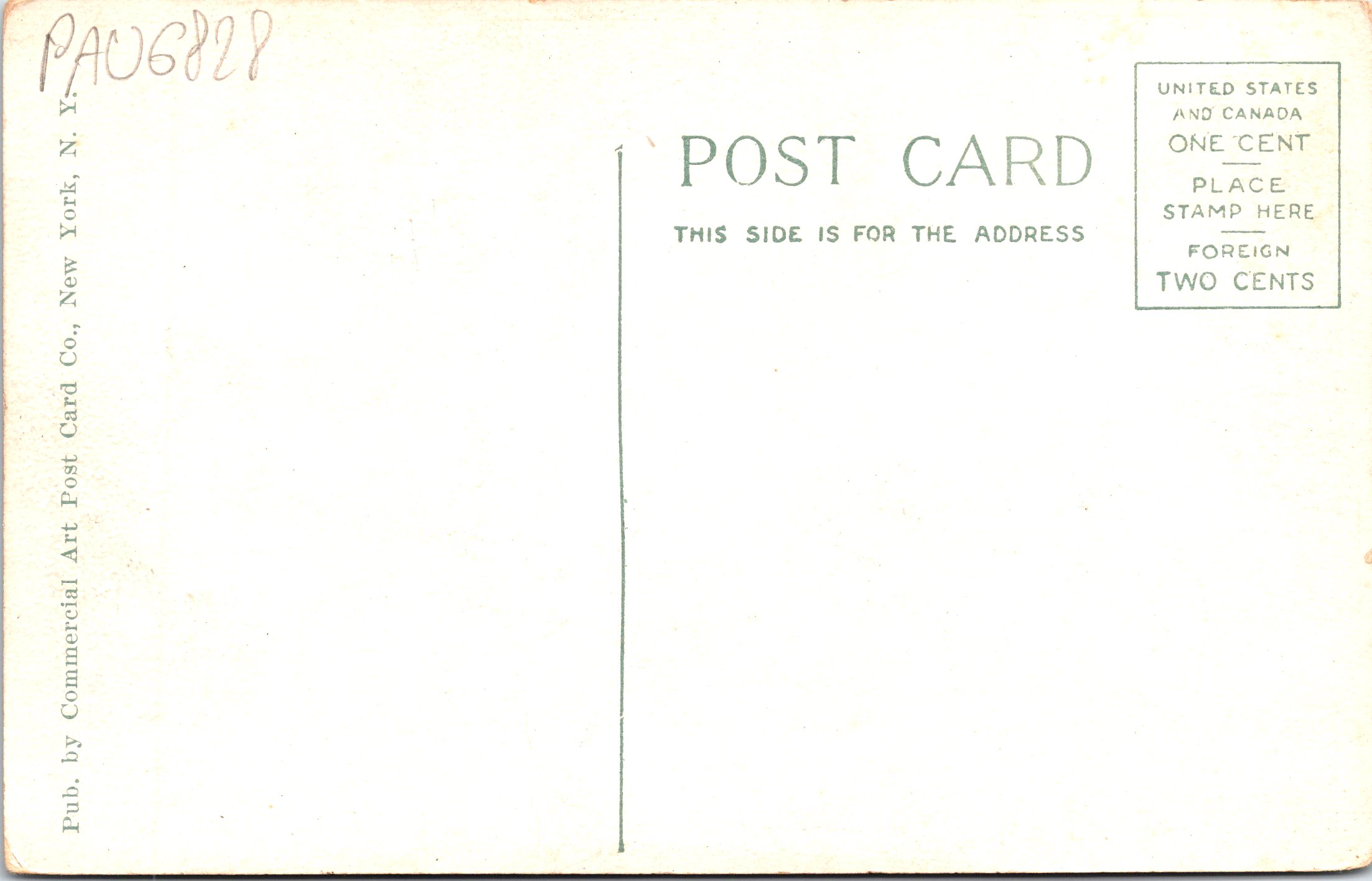
This vibrant, hand-tinted postcard captures a nostalgic waterfront scene titled, “Scene at the Old Mill, East New York, Brooklyn, New York.” A peaceful waterway stretches into the distance, flanked on both sides by wooden piers, weathered clapboard boathouses, and numerous small fishing boats and rowboats moored at the docks. Several American flags wave proudly from the buildings and masts, suggesting a patriotic atmosphere—perhaps near the Fourth of July. The canal is lively yet serene, with a few boats actively drifting in the calm water and others docked beside wooden walkways. The pastel tones of the sky, combined with the charming architectural details of the boathouses—painted in soft yellows, pinks, and blues—lend the postcard an idyllic charm, reminiscent of early 20th-century East New York before urbanization transformed the landscape. This postcard was published by the Commercial Art Post Card Co., New York, N.Y., a prolific publisher active in the early 20th century, known for scenic views and hand-colored lithographs. It is a divided back postcard with the stamp box indicating one cent for U.S. and Canada—suggesting a date range from the 1910s to early 1920s. (SOLD)
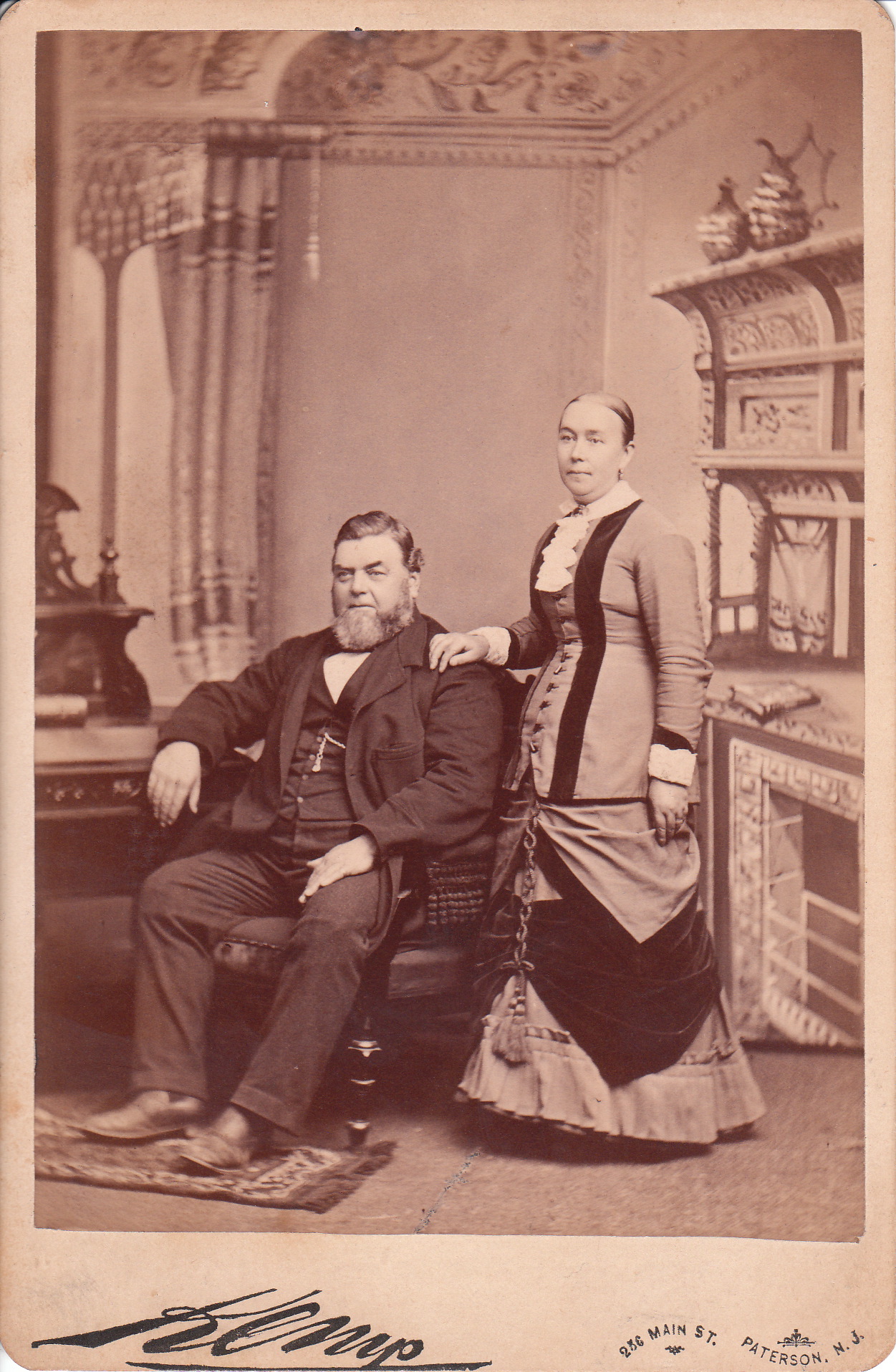
This cabinet card photograph captures an older couple posing in a study setting. This particular trompe loile is an unusual and a wonderful backdrop. Note the desk and fireplace. The portly man looks like he would have difficulty rising from his chair. He is wearing a pocket watch. Hopefully the vast unpaid research department of the cabinet card gallery (the visitors) can comment about the chain or cord hanging from the woman’s dress. What function does this unusual accessory serve? The photographer of this image is John M. Kemp in Paterson, New Jersey. His studio was at 256 Main Street. Kemp was a native of New York City and initially did his photographic work in California. He opened his Paterson studio in 1876. He held photographic patents for a photographic printing apparatus. He is listed by the Paterson Morning Call (1910) as one of the prominent citizens of Paterson, New Jersey to have died in 1910. SOLD
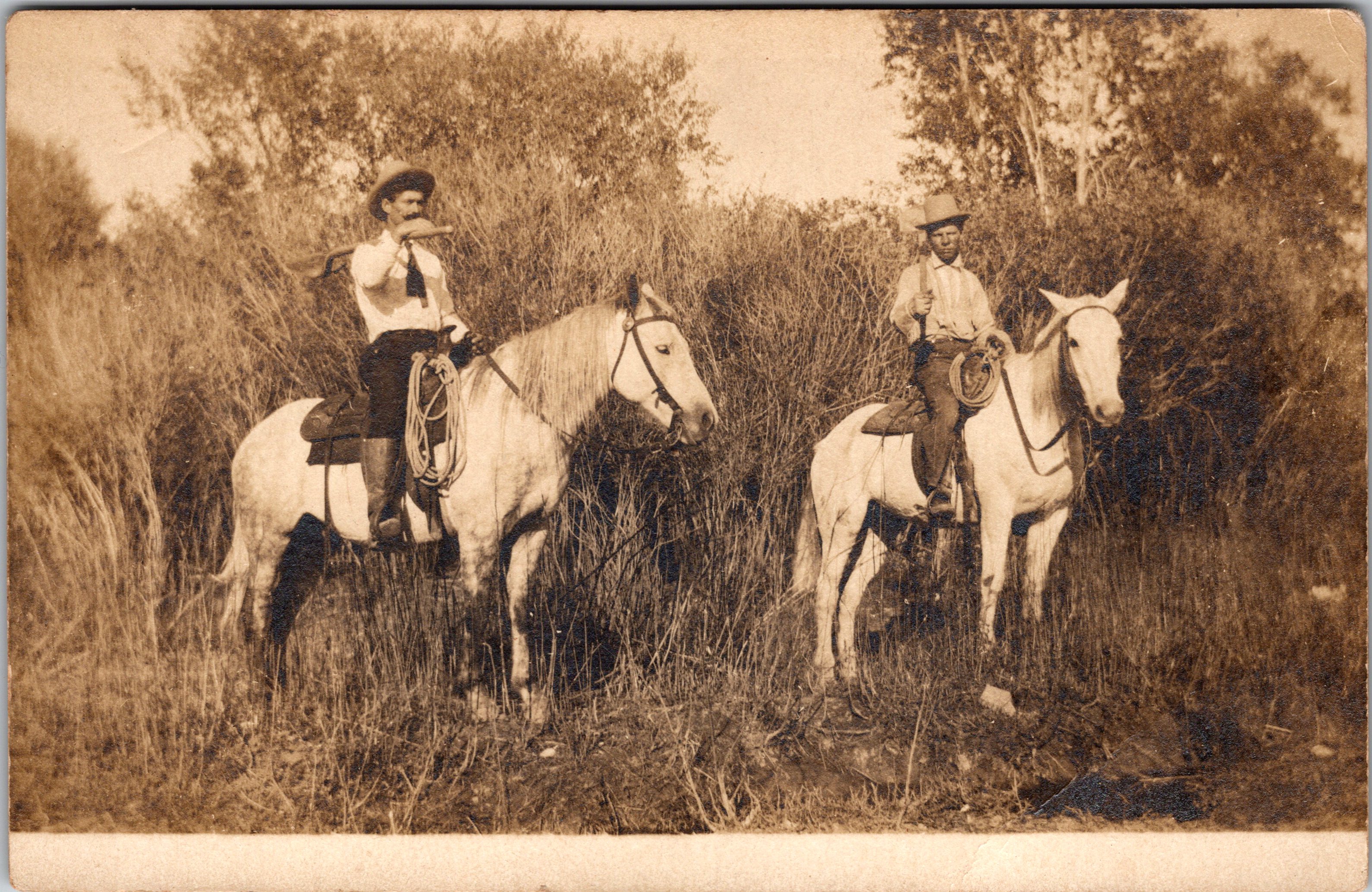
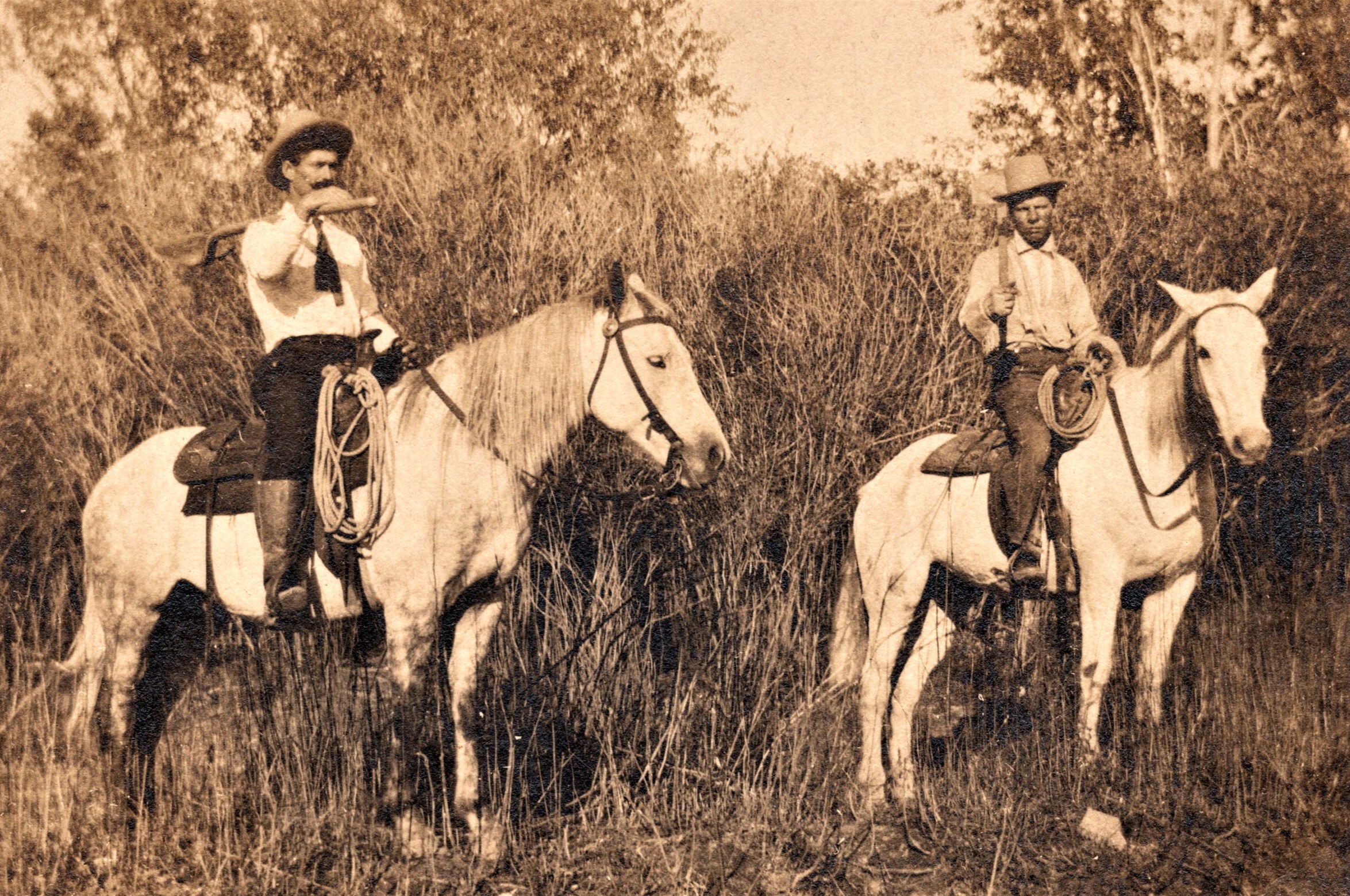
This vintage real photo postcard features two men on horseback. They are carrying tools. The tools appear to be shovels or spades. One rider has coiled rope hanging from his saddle. Is it a lasso. Are these men cowboys? Prospectors? Ranch hands? This postcard has a Velox stamp box indicating it dates back to sometime between 1907 and 1914. SOLD
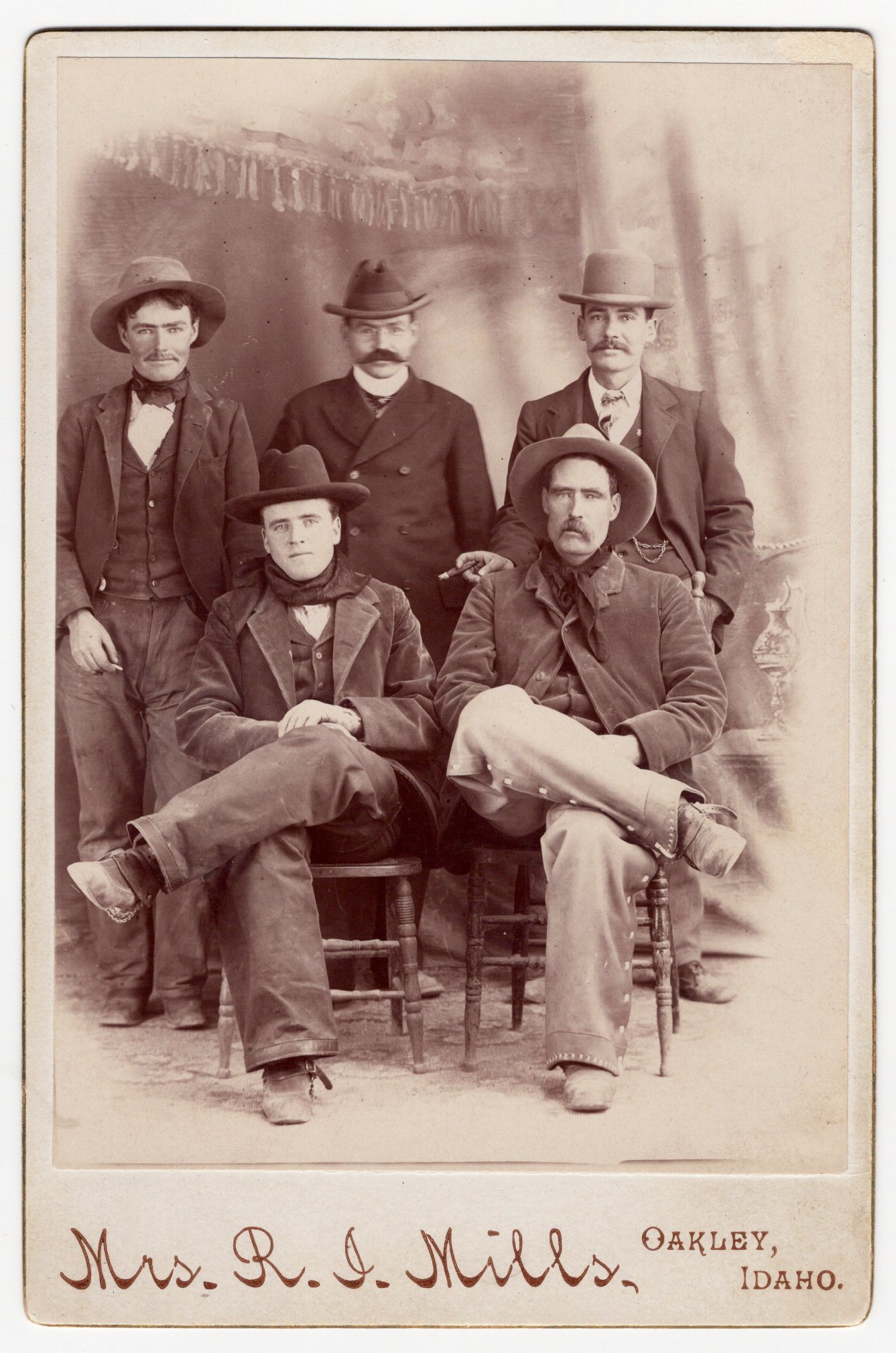
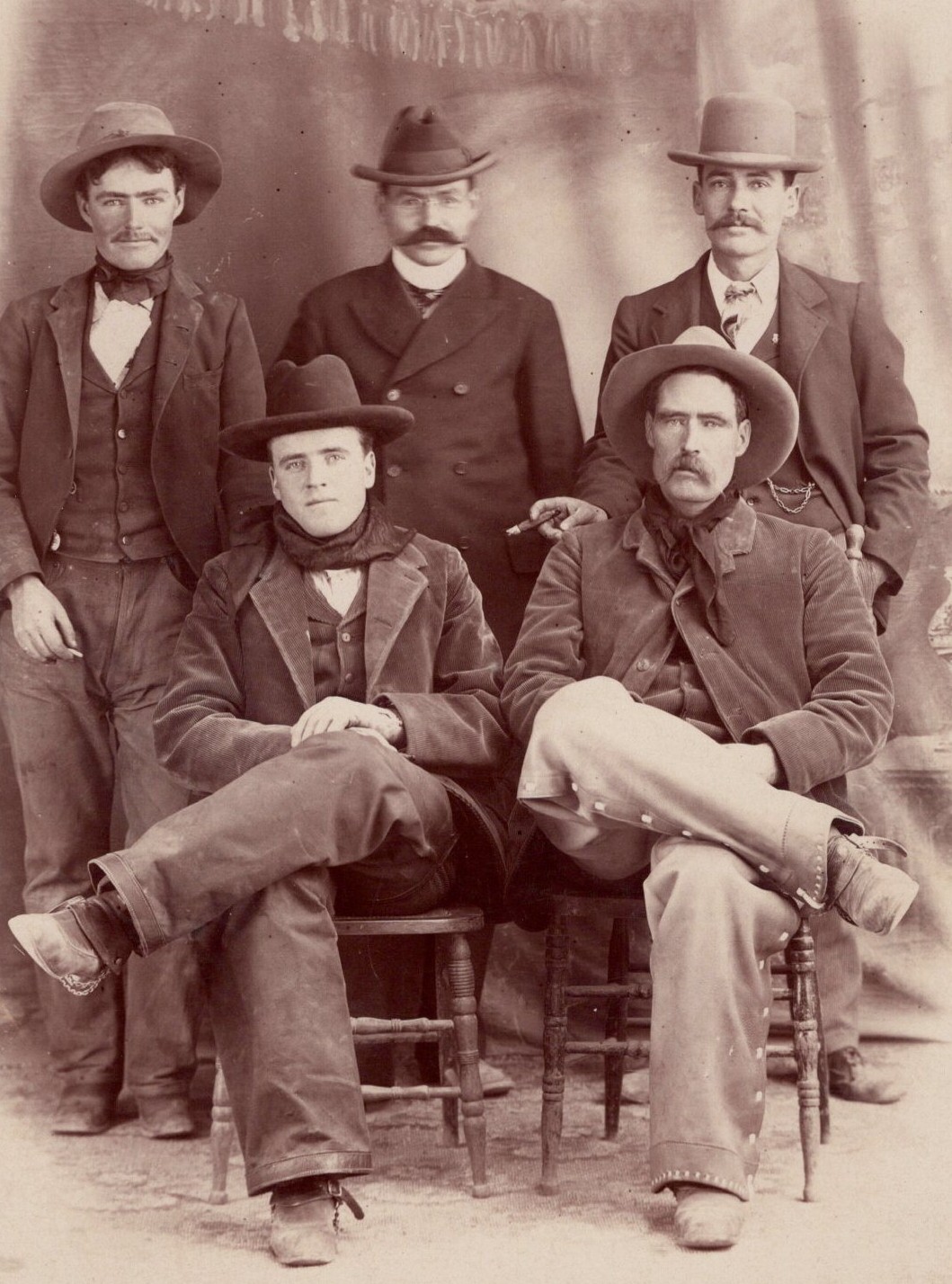
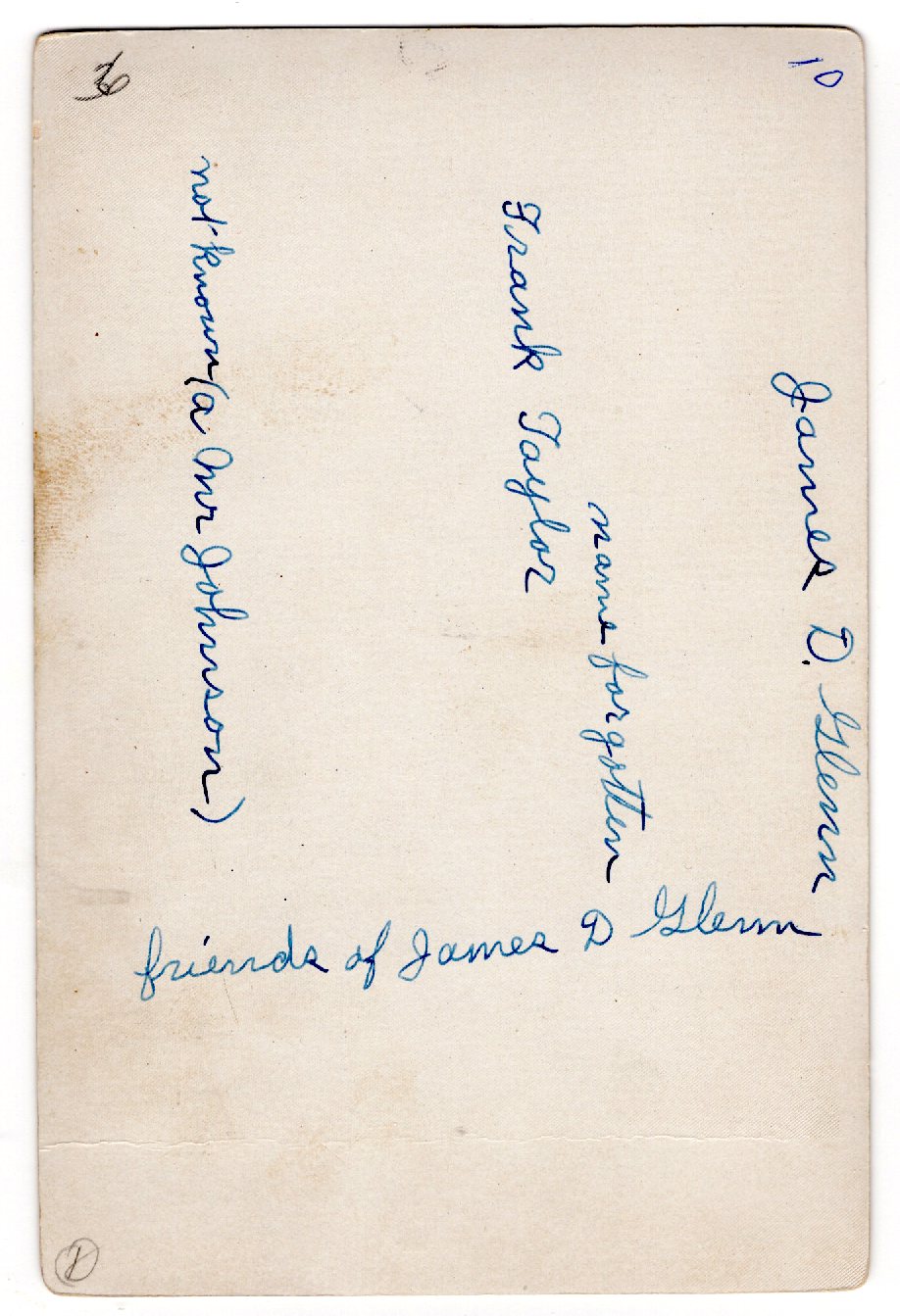
This arresting cabinet card, taken in Oakley, Idaho by the photographer Mrs. R. I. Mills, captures a vivid and timeless portrait of five rugged Western men from the late 19th or very early 20th century. The image radiates strength, camaraderie, and a quiet intensity that invites speculation about the identities and lives of its subjects. The five men are posed against a painted studio backdrop that includes drapery and a classical vase stand, subtly contrasting with the grit and rough-hewn realism of the men themselves. Two sit in the foreground, legs crossed with a relaxed authority, while three stand behind them. All are dressed in frontier attire: wide-brimmed hats, wool coats, high boots, and neckerchiefs. Their layered clothing suggests the chill of the high desert West. The expressions vary slightly—some show stoic resolve, others a more neutral bearing—but none of the men are smiling. Their faces are rugged, with prominent cheekbones, strong jaws, and thick mustaches. The man at center back smokes a cigar, and one gets the sense that these are men of action—likely cowboys, ranchers, or possibly even lawmen or miners. The man seated at the right front—wearing a wide-brimmed hat, dark scarf, and white canvas trousers with riveted side seams—commands particular attention. His intense gaze and imposing posture suggest he may have been a leader among them. The others wear expressions of cool composure, unified by the weathered look of men who knew hard labor or possibly the frontier justice of the American West. Written in blue ink on the reverse of the card is an identification key, apparently penned by someone familiar with at least some of the sitters: James D. Glenn, Frank Taylor, Mr. Johnson. An inscription reveals that the men are all friends of James Glenn. It is likely that this photograph belonged to Mr. Glenn. This photograph was taken by a female photographer. Mrs. R. I. Mills was an early female photographer working in the American West—an unusual and significant occupation for a woman at the time. Her studio was located in Oakley, Idaho, a small Mormon-founded settlement in Cassia County. Historical records show that Mrs. Rachel I. Mills operated a photography studio in Oakley in the late 19th century. She was part of a small but growing number of frontier women who ran their own commercial photography studios. Though little has been published about her biography, her studio was active around the 1880s–1890s, a time when Oakley was transitioning from a pioneer settlement into a more established town with irrigation agriculture and Mormon communal development. Founded in the early 1880s by Mormon settlers, Oakley was a rural, religiously conservative community that grew around farming and ranching. It sat on the edge of the high desert and became a local hub for commerce in southern Idaho. During the time this photograph was likely taken—circa 1890—Oakley would have been a small but lively town, with residents involved in cattle ranching, grain farming, and trade. (SOLD)




 THE CABINET CARD GALLERY