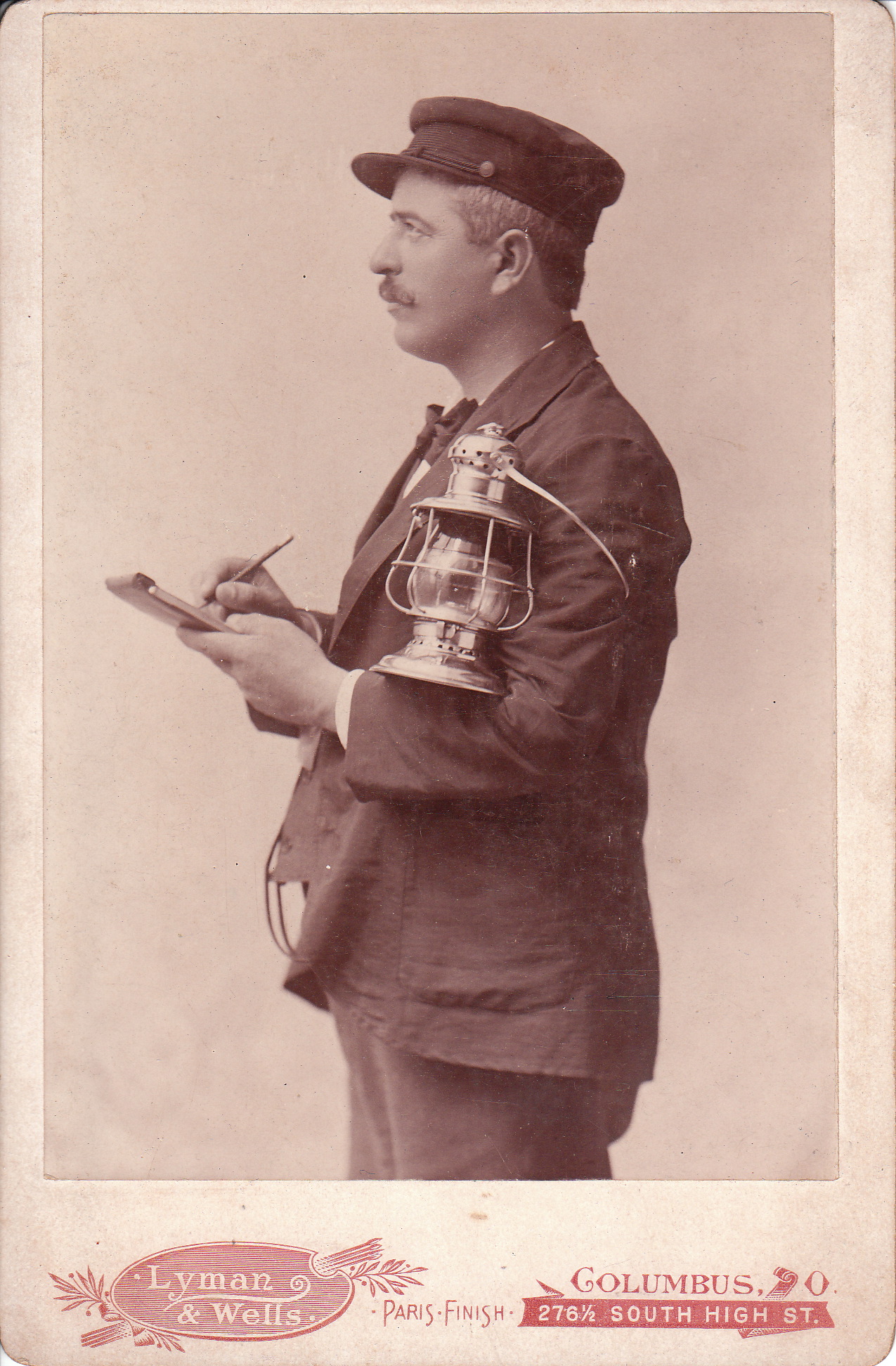
 This cabinet card is a staged portrait of a man at work. The man is wearing a uniform and most likely he is a railroad worker. He may be an engineer or possibly a conductor. He is holding a brass lantern and writing on a pad. The man’s facial expression seems to say that he means business. One can easily imagine seeing him standing next to a train at a railroad station taking notes. The photographer of this cabinet card is Lyman & Wells, of Columbus, Ohio.
UNIFORMED MAN WITH A LANTERN (OCCUPATIONAL CABINET CARD)

LADY PINNED BY A CONDUCTOR IN SIOUX CITY, IOWA
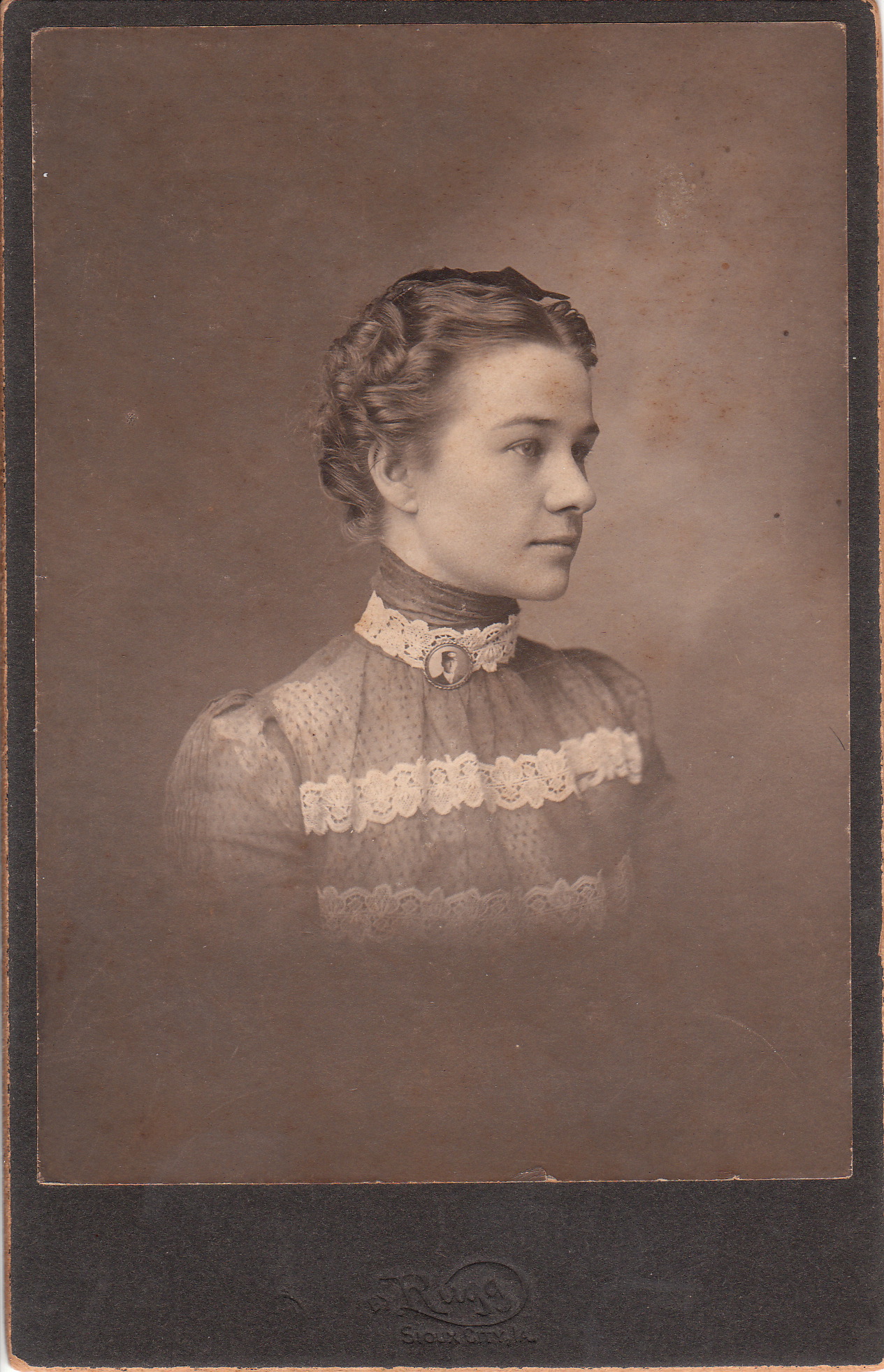 This cabinet card portrait features a young nicely dressed woman wearing a tintype pin or brooch. The jewelry holds a photograph of a train conductor; presumably the woman’s husband or suitor. The cabinet card was photographed by Rugg, whose studio was located in Sioux City, Iowa. Research reveals little to assist in gathering information about Rugg. Investigation found that there was an artist that resided in Sioux City named Elliott I. Rugg (1862-?). There is a reasonable possibility that he is the photographer that produced this image. Elliott Rugg was a relative of another photographer, Arthur Rugg, who operated out of Minneapolis, Minnesota. To view photographs by Arthur Rugg, click on category “Photographer: Arthur Rugg”.
OLDER GENTLEMAN WITH SCRUFFY BEARD IN PORTLAND, MAINE
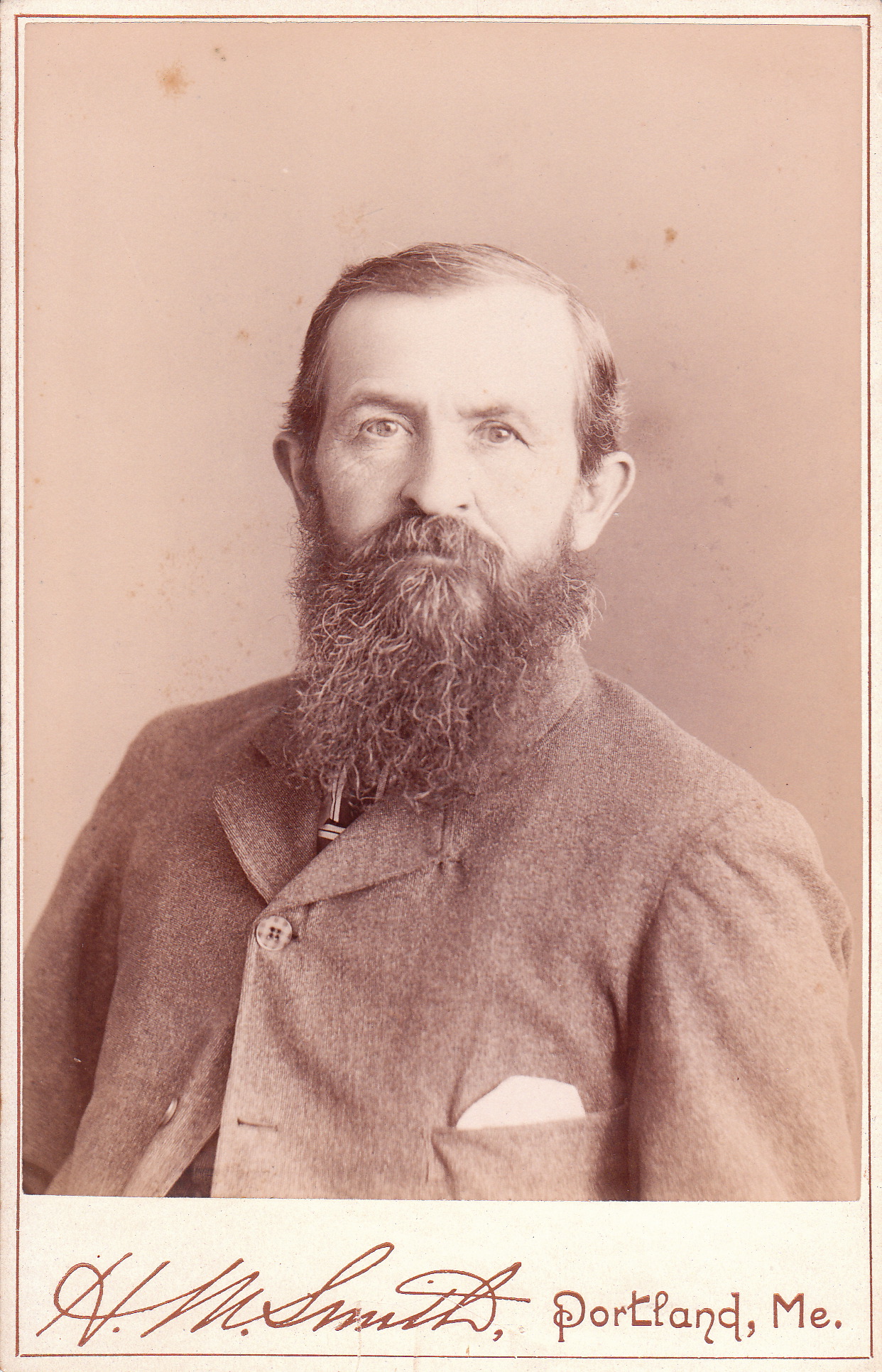 This cabinet card features an older man with a scruffy, but nicely shaped, pointy beard. In the style of his day, he has just the top button of his jacket fastened. The photographer of this image is Howard M. Smith of Portland, Maine. Smith operated studios at 2574 Middle Street and at 478 Congress Street, in Portland. Smith’s studio is listed in an 1891 Portland business directory. To view other photographs of unusual beards, click on the category “Beards (Only the Best)”.
ANNIE ROBE: THEATRE ACTRESS KNOWN FOR HER BEAUTY
 Annie Robe, stage actress, is the subject of this cabinet card portrait by celebrity photographer, Sarony. Sarony’s studio was located in New York City. Robe was known for her beauty, and this photograph confirms that she was quite attractive. Note her cape and matching handbag. It is possible that the “handbag” is actually a hat. Hopefully, one of Cabinet Card Gallery’s fashion experts will resolve the confusion with one of consistently informative comments. Annie Robe was the leading lady of Wallack’s Theatre for several seasons. Initial research yielded little biographical information. One article reports that she was English. The New York Times (1887) describes her work in “Harbor Lights” as commendable.
ADORABLE SIBLINGS IN SALEM, MASSACHUSETTS
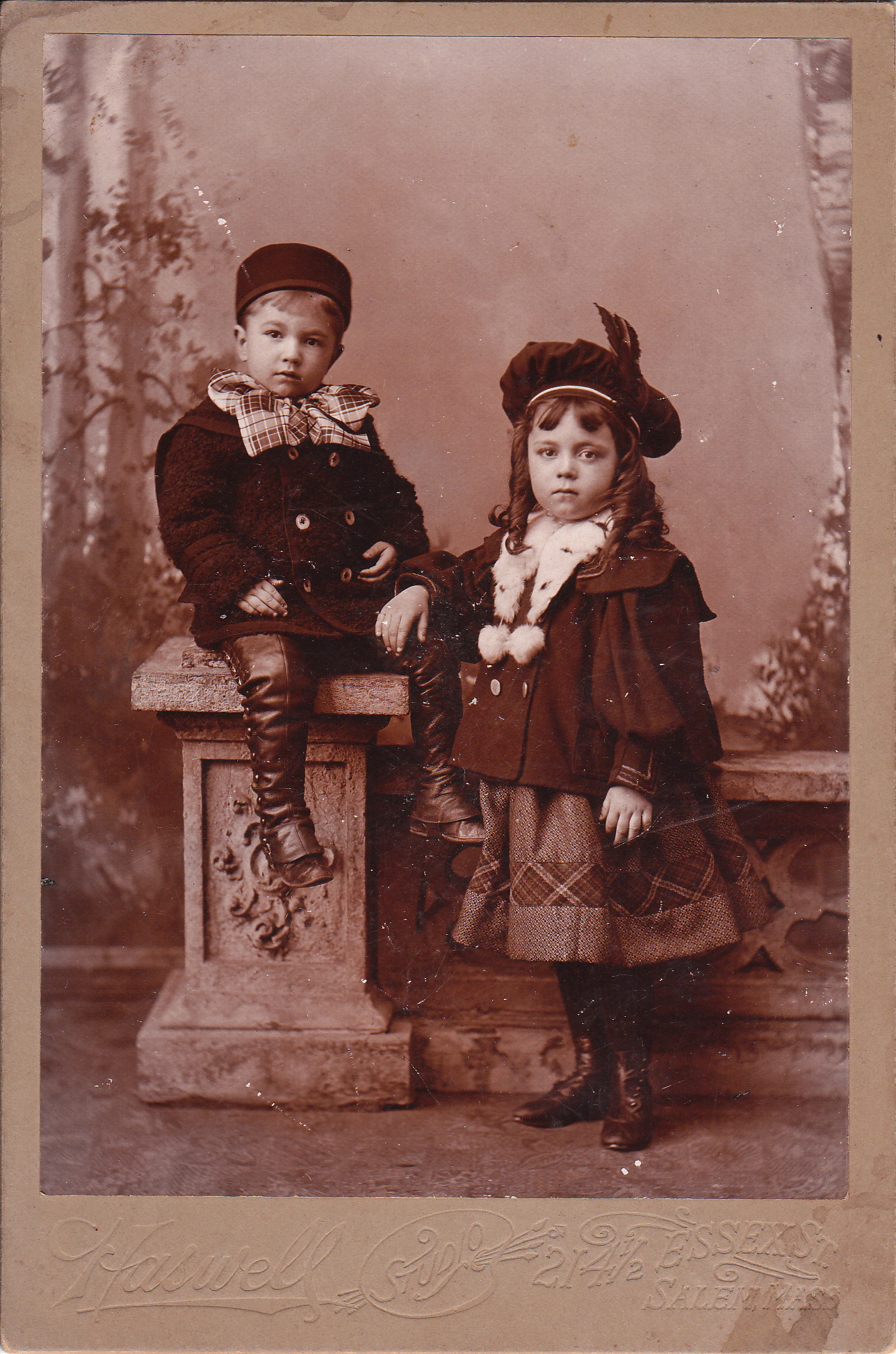 This cabinet card is a portrait of two adorable siblings posing for their portrait at a studio in Salem, Massachusetts. The photographer is S. S. Haswell. The children are fashionably dressed for cold weather. Their jackets appear to be similar or identical. The little boy sports beautiful long boots and a large bow tie. The girl is wearing a cute scarf with pom poms as well a cute cap.
A YOUNG BOY AND HIS PULL-TOY DOG
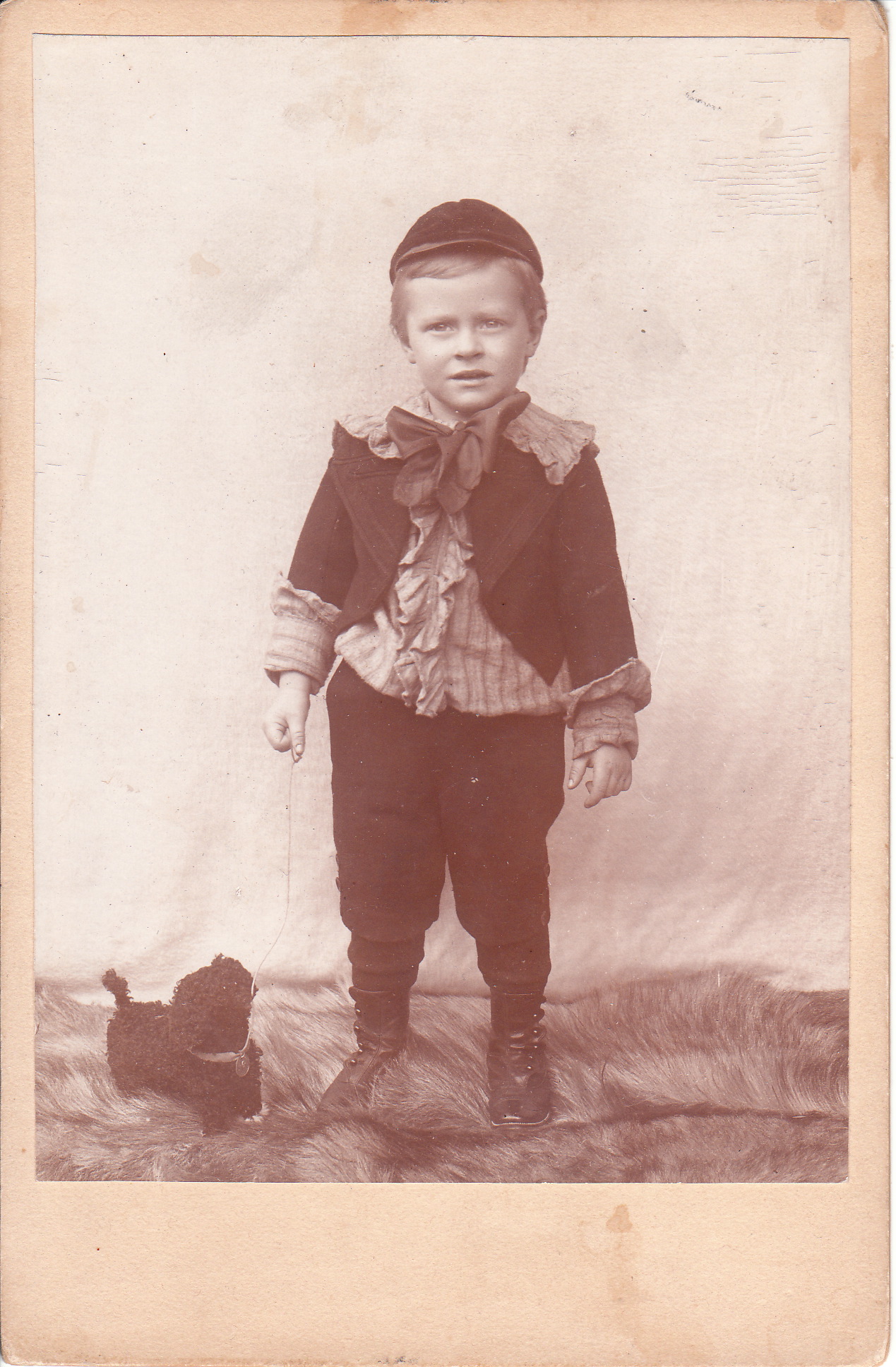 A cute little boy poses with his pull-toy dog. He is very dressed up for his portrait. Note his large bow tie and his cute cap. The photographer and the location of the photographic studio are unknown. The photographer’s creativity, in regard to his choice of background and props, is very uninspiring.
THREE LOOK-ALIKE SISTERS IN RIVER FALLS, WISCONSIN
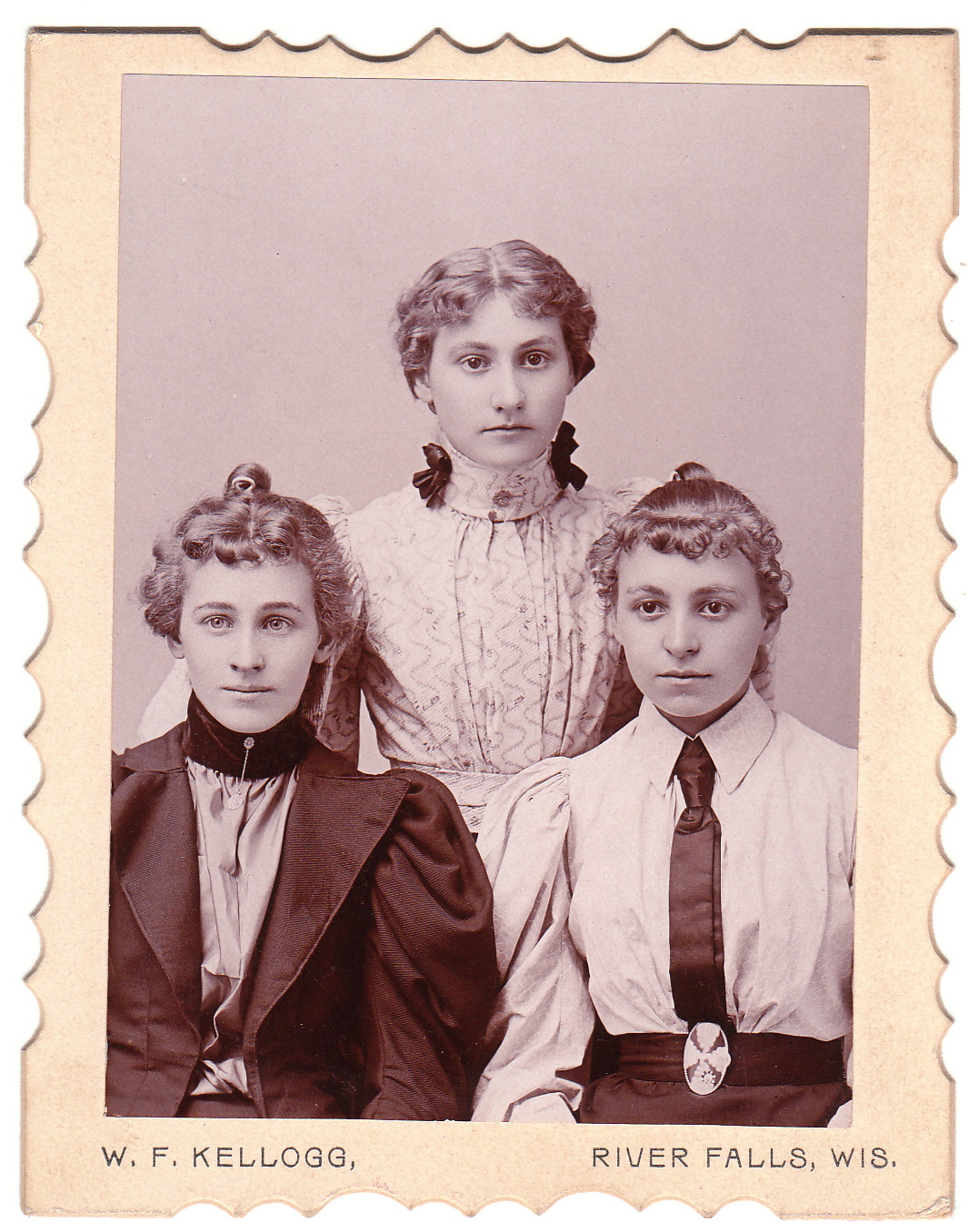 This cabinet card is a portrait of three sisters with a strong family resemblance. The woman are attractive and nicely dressed. Note that the woman on the right is wearing a necktie, and the sister in the center has ribbons on her collar. The photographer is W. F. Kellogg of River Falls, Wisconsin. The Kellogg studio was established in 1877 by Douglas Wright Kellogg (1840-1913). The studio was built on the southeast corner of Main and Walnut Street. In 1878, Douglas Kellogg sold the studio to to his older brother, Wilbur Fiske Kellogg (1836-1920). Wilbur Kellogg is the photographer who produced the above portrait. Another brother, John D. Kellogg operated a gallery in Red Wing, Minnesota from 1868 until 1899. Douglas Kellogg eventually moved to Reedsburg, Wisconsin and opened a gallery there. All three brothers were born in Danby, New York, and learned photography in Beaver Dam, Wisconsin. Wilbur was a farmer prior to entering the photography business. In 1900, he was thought to be the oldest photographer in Wisconsin. When he sold the studio, Wilbur and his wife moved to Spokane, Washington. In 1899, he partnered with John R. Boals (1872-1959) to establish a photographic studio which was eventually sold to Stella Thayer (1875-1934).
TWO SIBLINGS AND A FAKE DOG IN VIENNA, AUSTRIA
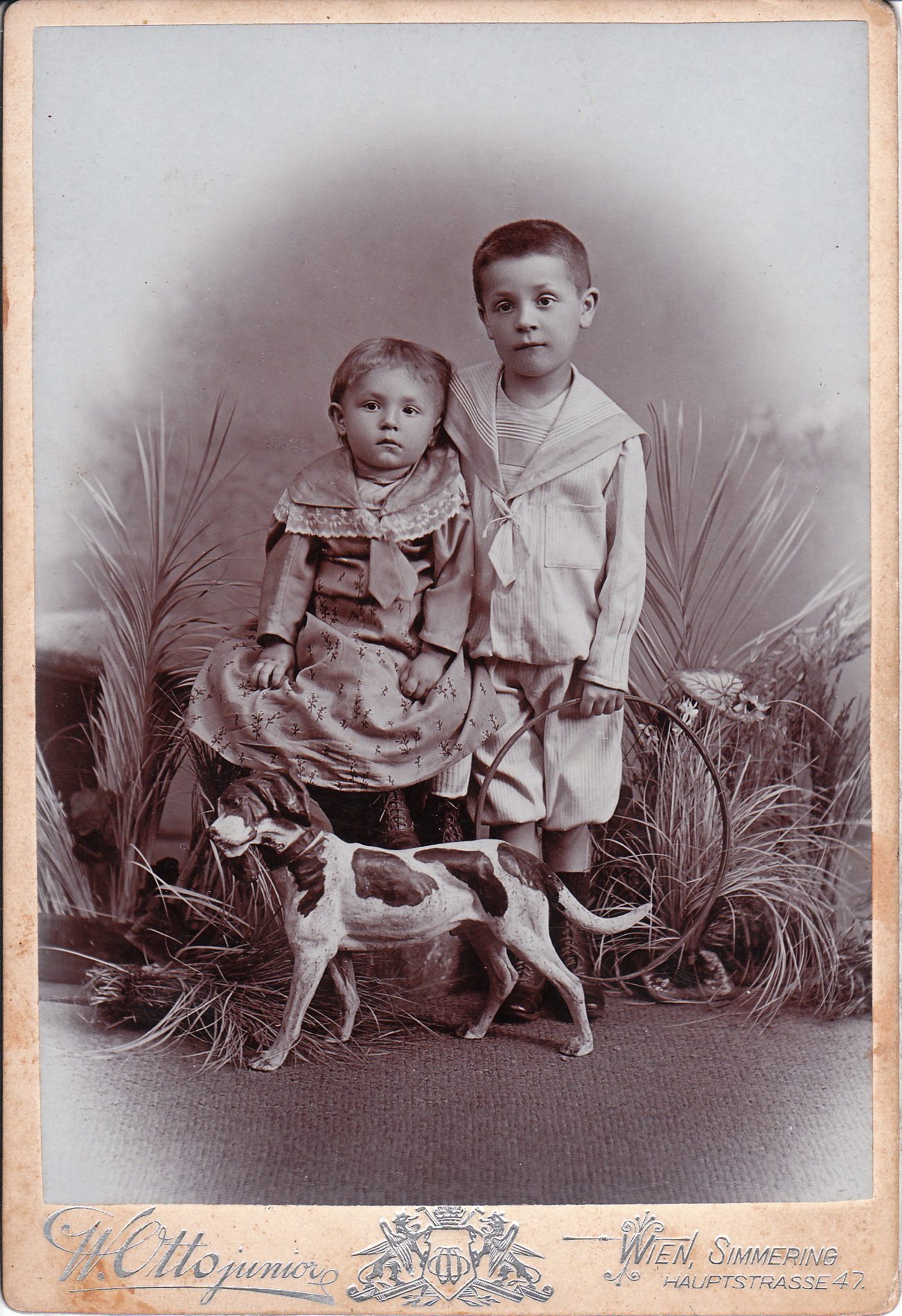 This cabinet card features two siblings posing with a fake dog. The dog, and perhaps the ring toy held by the older child, were provided by the photographer, Wilhelm Otto Jr. Otto’s photographic studio was located in Vienna, Austria. One can see the advantages of a fake dog versus a real dog from the perspective of the photographer. Children were difficult enough to photograph; dogs behaving like dogs were likely a photographers nightmare. Talking about nightmares, the children do not seem to be having too much fun having their portrait taken.
MAN WITH A LONG GREY GOATEE IN MINNEAPOLIS, MINNESOTA
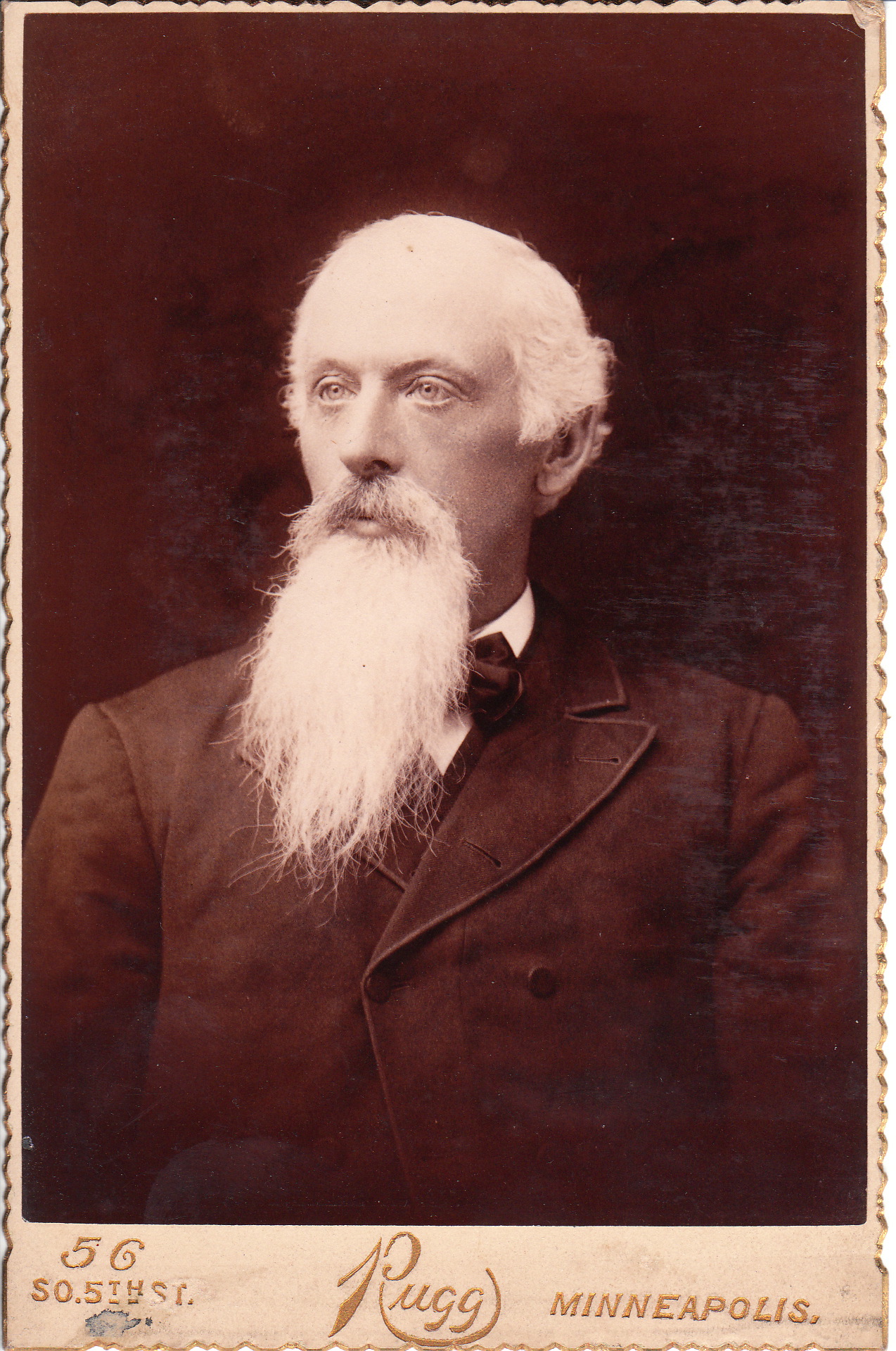 An elderly man poses for his portrait at the studio of Arthur Rugg in Minneapolis, Minnesota. The man has a very distinguished appearance. His long grey goatee is his entry ticket into cabinet card gallery’s category “Beards (Only the Best)”. To view other photographs by Rugg, and learn of his unethical behavior as a photographer, click on the category “Photographer: Rugg”.
PORTRAIT OF A POSSE
 This cabinet card offers a joy ride for the viewers imagination. The mind trip leads to a small town in the old west. Six men are gathered in the photography studio of E W. Beard. The men are members of a posse that has recently captured a notorious outlaw. They have come together for a group portrait, so that they can have a memento of their accomplishment. It would be terrific to know the real reason why these men are gathered together; but there is no explanatory evidence available. Further frustration and lack of success was encountered when trying to identify the location of the photography studio that produced this photograph.


 THE CABINET CARD GALLERY