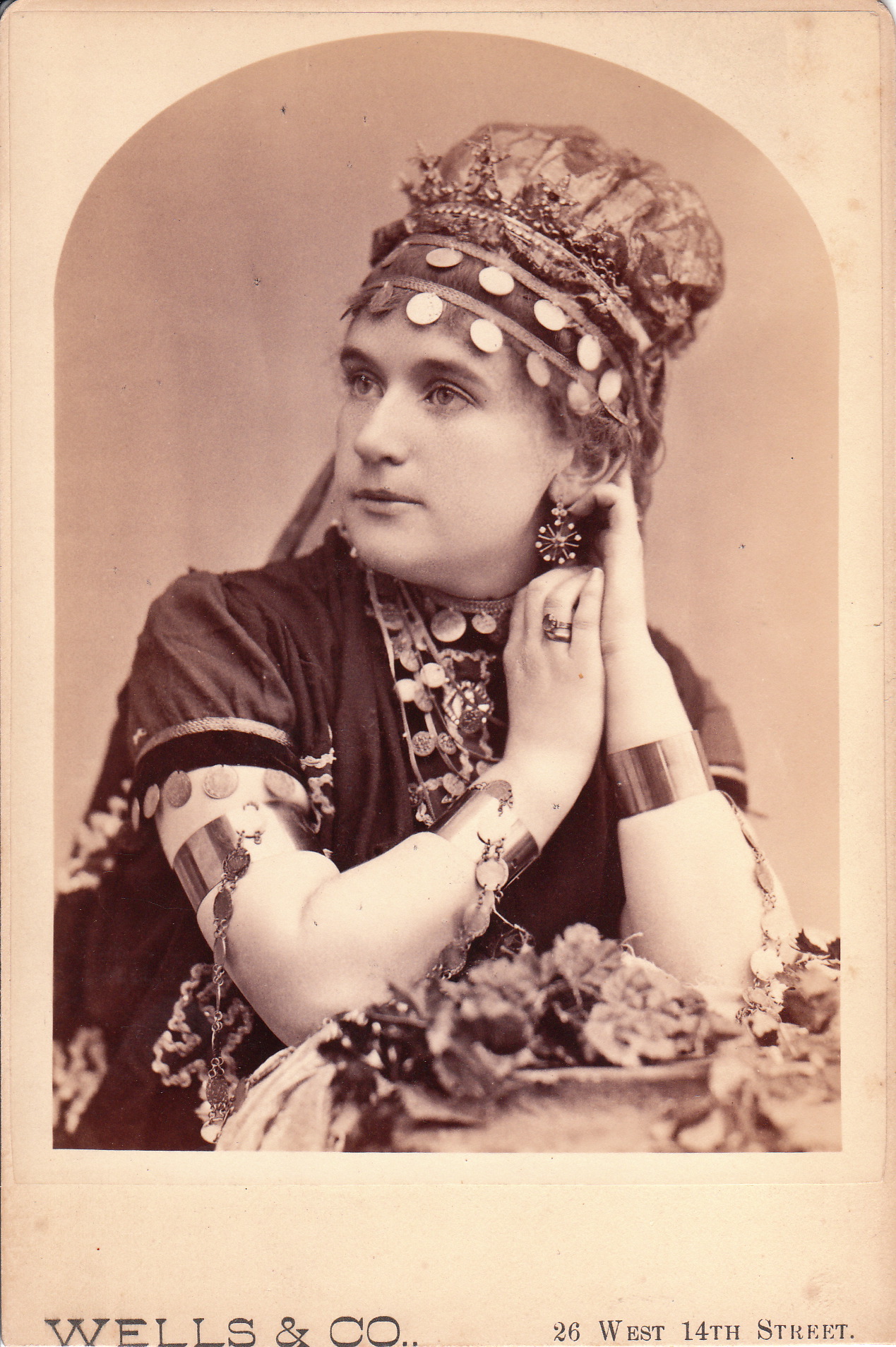
 This cabinet card features actress, Lizzie Burton. Research yielded little information about her and the search was hampered because references to Elizabeth Taylor Burton kept surfacing. The few articles about Lizzie Burton that were found, seem to indicate that she was a minor comic opera actress. She appeared with the Boston Ideal Opera Company which existed between 1879 and 1904. A review of “The Musketeer”, which appeared in tNew York Times (1885), offered praise for her performance in a minor role. The “Musketeer”, Varney’s comic opera, had been performed at New York’s Fifth Avenue Theatre. This cabinet card was published by Wells & Co., a New York City photographic studio.
LIZZIE BURTON: STAGE ACTRESS (NOT ELIZABETH TAYLOR BURTON)

FASHIONABLE WOMAN IN TAMAQUA, PENNSYLVANIA
 This cabinet card captures a fashionable young woman, who judging by her expression, knows that she looks great. Note the striped bodice. Also notice her small waist, courtesy of a corset. In addition, the rings of hair on her forehead are quite unusual, but not particularly attractive. . The woman is pretty, but “its the dress” that makes this cabinet card notable. The photographer of this image is either David Baily, or his son Elmer Baily. Their studio was located in Tamaqua, Pennsylvania. To view other photographs by the Bailys, and to learn more about them, click on the category “Photographer: Baily”.
A GIRL AND HER DOG IN PHOENIX, NEW YORK
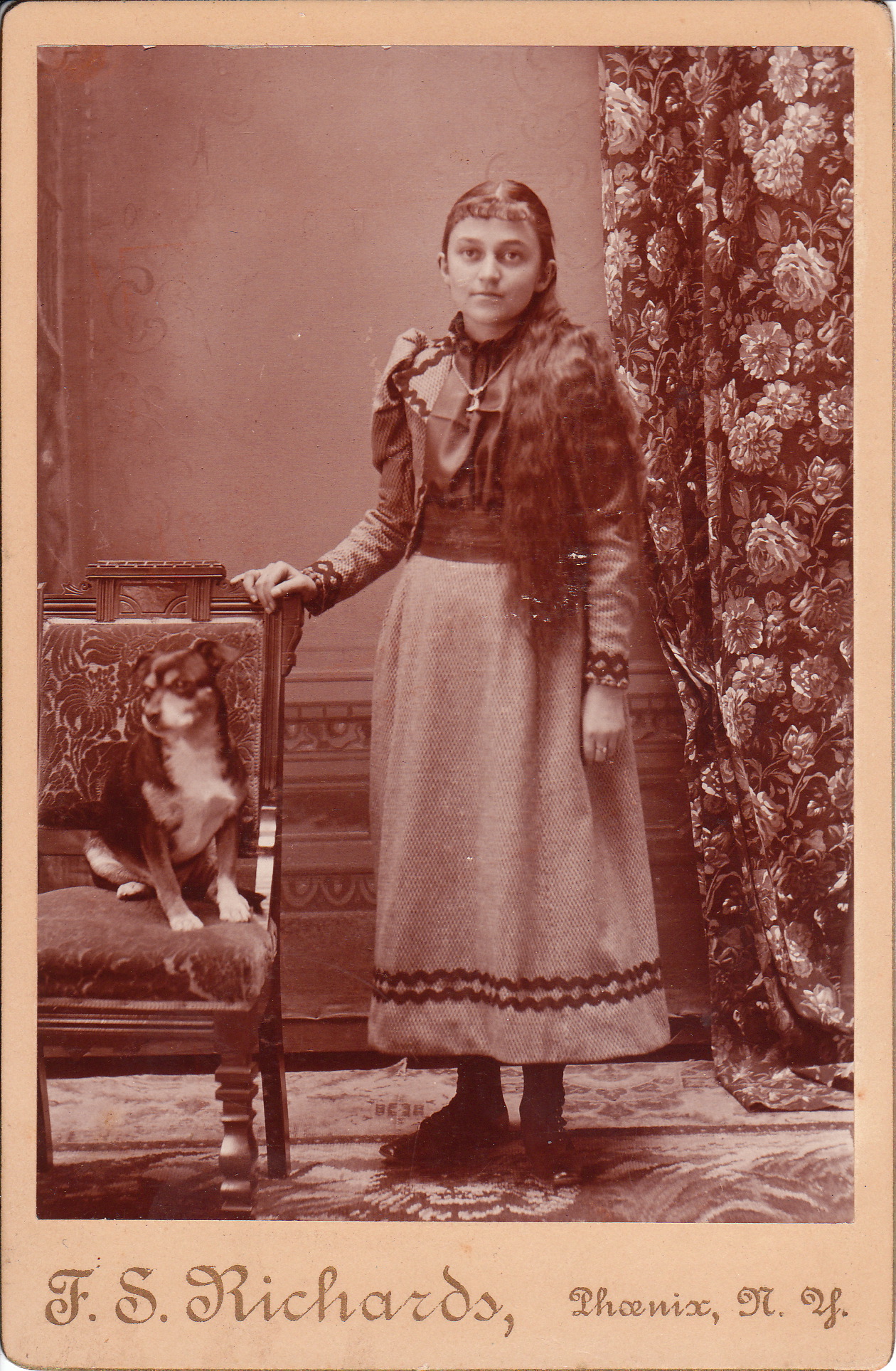 This cabinet card is a portrait of a young woman posing with her small dog. It appears that the dog was not the most cooperative subject, since the photographer found this image acceptable even though the mongrel was looking away from the camera. The quality of the photographers work is also lowered by his choice of backdrop (a wall and curtain); as well as his not including the entire chair in the image. The girl, who looks as if, she is in her teenage years, is rather plain looking. She is wearing a ring and a necklace. She has very long hair with curly bangs. The photographer is F. S. Richards and the studio was located in Phoenix, New York. Phoenix is a village located in Oswego County. It is 15 miles north of Syracuse. In 1916, Phoenix was nearly destroyed by a devastating fire.
PROVOCATIVE WOMAN ON A FAINTING COUCH IN CHICAGO, ILLINOIS
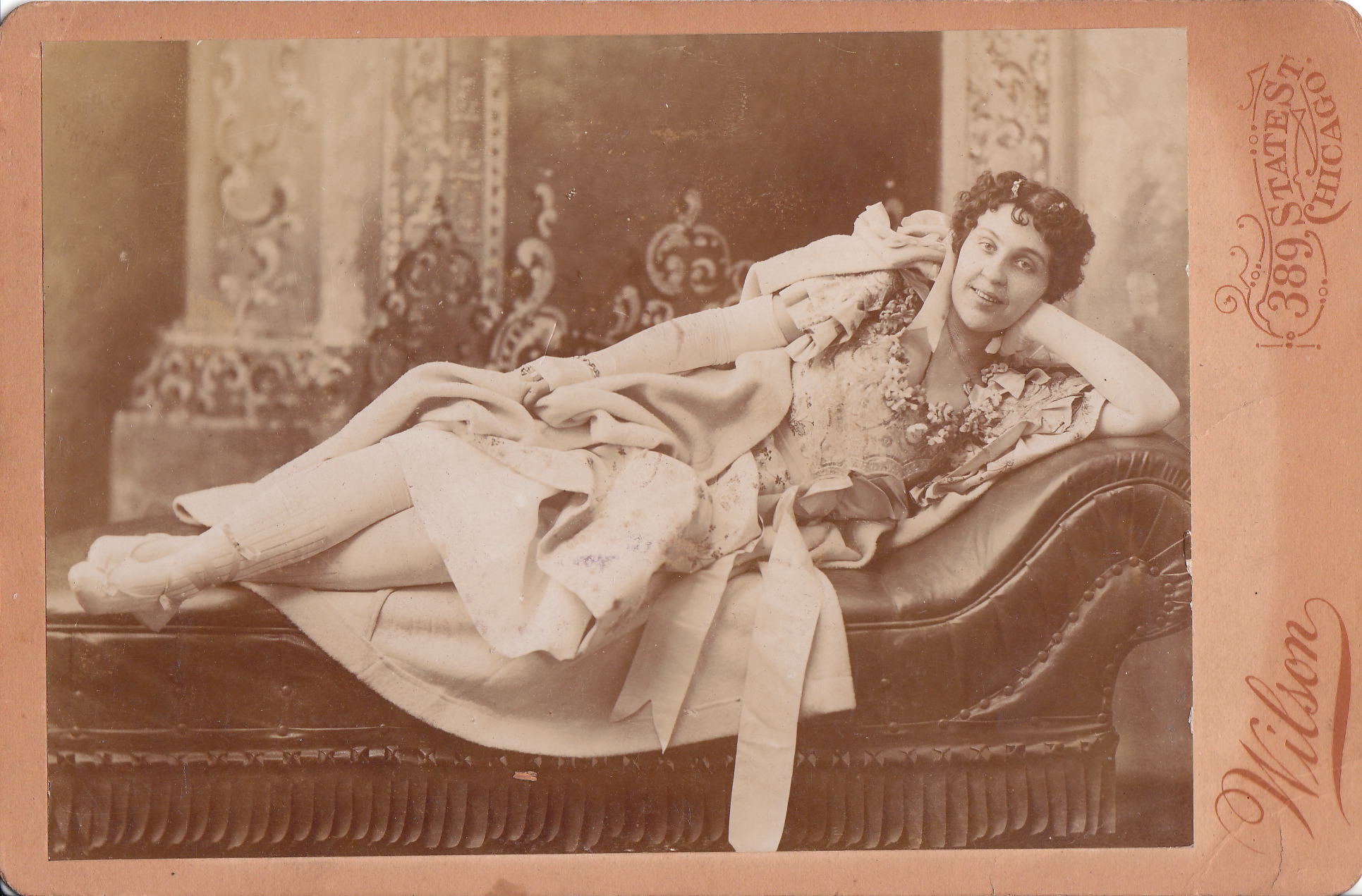 This cabinet card features a young smiling woman lying on a fainting couch. This image is quite risque for its time. The style and folds of the woman’s dress, her exposed feet, her smile and her body language all contribute to the provocativeness of this image. Fainting couches were popular in the 19th century and used predominately by woman. They are couches with a back that is traditionally raised at one end. There are two major theories as to why these type of couches became popular. The first theory was that some women wore their corsets so tight, that they restricted blood flow; causing fainting. This theory has pretty much been debunked. A second theory was that the couch was popular because many women of that time suffered from “female hysteria”. This medical condition caused symptoms that included faintness, nervousness, and insomnia. The illness was treated by “pelvic massage”. The couch was a great setting for hysterical woman to receive the treatment from visiting physicians and midwives. This female psychiatric illness sounds very much like an anxiety attack, and Xanax and Ativan seem to have replaced “pelvic massage” on a fainting couch. The photographer of this cabinet card was J. B. Wilson of Chicago, Illinois. To view other photographs by Wilson, click on the category “Photographer: Wilson (JB)”. The subject of this photograph may have been an actress.
LITTLE GIRL POSING IN NEW YORK CITY FOR PHOTOGRAPHER WHO WAS “SHABBILY TREATED BY CUPID”
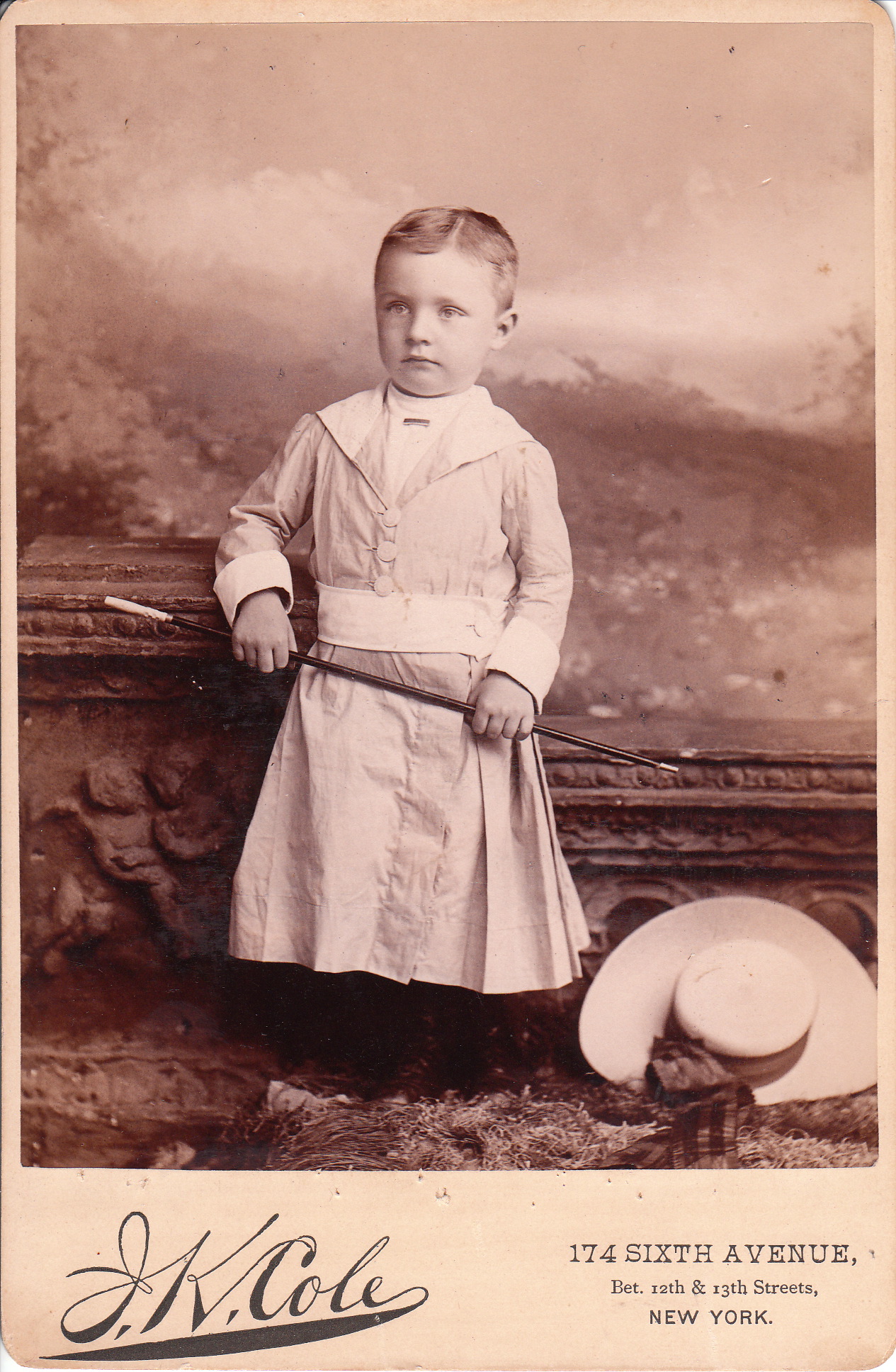 A little girl poses for her portrait at the studio of J. K. Cole in New York City. She is wearing a light jacket and holding what appears to be, a walking stick. Her sun hat lies on the floor beside her. She has a serious expression as gazes at the camera. The New York Times (1893) reported that Cole was “shabbily treated by cupid”. The author noted that the 38 year-old photographer did not want this story published and that Cole “admits the truth of the narrative but declares that it is a private affair and refuses to discuss it”. Cole and the young lady in this story, were childhood friends. As they grew older, his friendship grew into love. Five years before this story appeared, they were to be married. However, without notice to Mr. Cole, she suddenly married another man who was “more abundantly blessed with earthly goods” than was Cole. Cole was quite “cast down” but he eventually recovered. Soon after the wedding, Cole’s ex-girlfriend’s marriage ended, after her husband’s mother expressed great disapproval about the pairing. When Cole learned of the separation, he returned to his beloved, and she promised to marry him. As Cole was boarding his carriage to go to his wedding, he received a message from his fiance stating she was ill and needed some days to recover before marrying. Cole sent a firm message back to his fiance stating that the minister was waiting, all arrangements had been made, and that they needed to at once, proceed with the wedding. The messenger failed to deliver the message and failed to inform Cole of his inability to find his fiance. The next day, Cole’s fiance sent a letter to him that was critical of his failure to visit her when she was ill. Cole explained to his girlfriend the confusion caused by the undelivered message of the previous night, and the two decided to reschedule their wedding for the coming evening, just hours away. Cole dressed for the wedding , drove to her home, and waited in the parlor, talking with his future mother-in-law. While they chatted, a little girl ran in the parlor crying out, “Lizzie has gone and run away with her old husband”. Both Mr. Cole and his intended to be mother-in-law, collapsed in shock. Ironically, Lizzie and her ex-husband, remarried using the same minister that Cole had hired to perform his wedding. Apparently, reliability and stability were not some of Lizzie’s greatest assets.
A CABINET CARD OF A YOUNG COUPLE POSING WITH CABINET CARDS IN MANCHESTER, NEW HAMPSHIRE
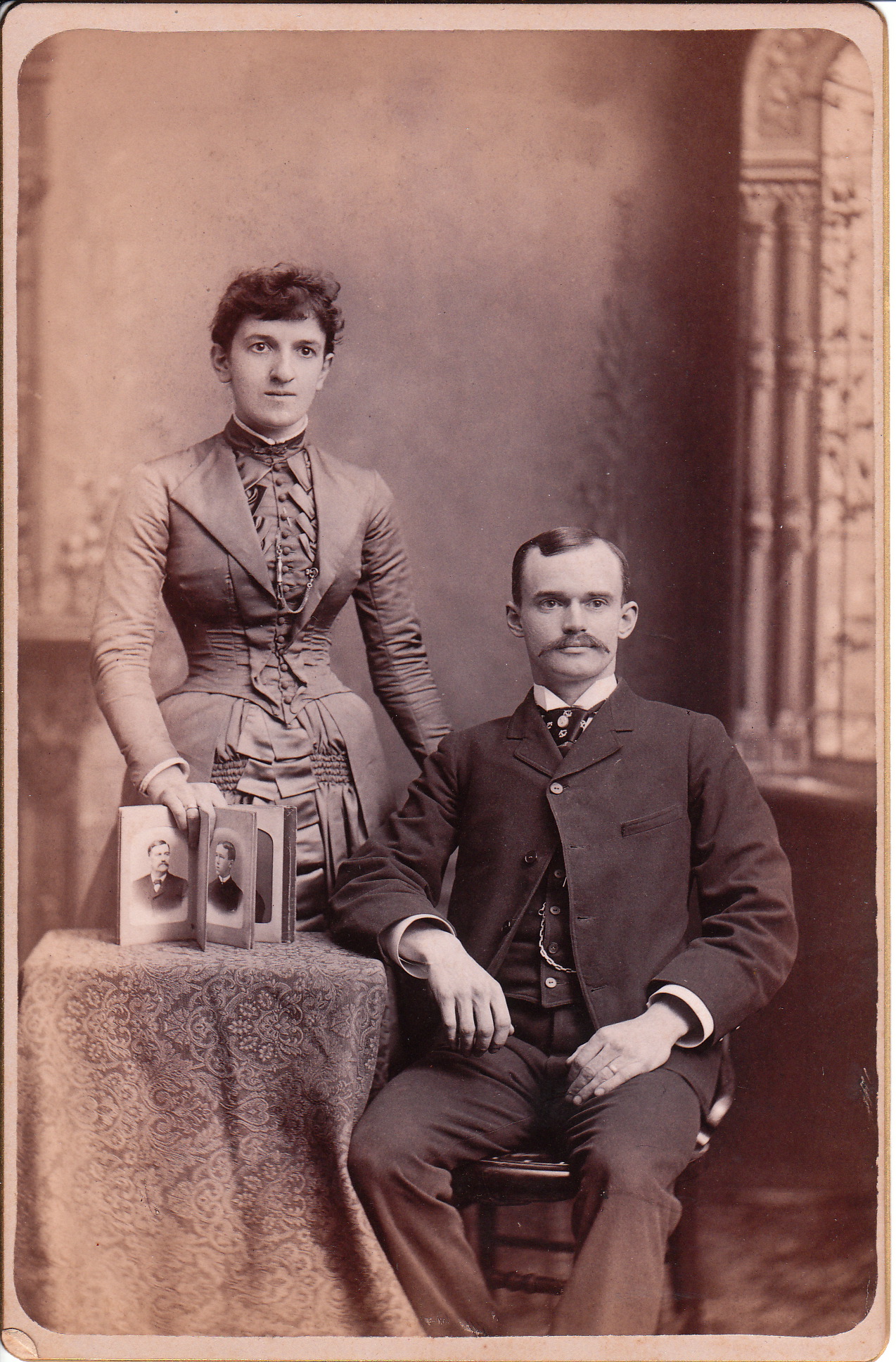 This cabinet card features a well dressed young couple posing for their portrait in the studio of Stephen Piper in Manchester, New Hampshire. The studio was located at 804 Elm Street. The husband is seated, his jacket has just the top button fastened, and he is wearing a pocket watch. His wife is standing behind the table, an ideal position for displaying her beautiful figure (enhanced by her corset). The photographer and the subjects apparently decided to use cabinet cards as props. The young woman is displaying them on the covered table. One wonders if these are cabinet card portraits of family menbers that the couple brought from home, or if they are just cabinet cards of random people that were lying around the gallery. Piper (1835-1903) was a photographer in Manchester from 1866 to at least, 1887. He was born in Sanborton, New Hampshire. His obituary in the Manchester Union Leader nearly filled the entire front page of the newspaper. Even more remarkable for the time, was the fact that his picture was also on the front page. Piper was clearly considered an important citizen of Manchester, at the time of his death.
A GIRL AND HER DOLL IN POUGHKEEPSIE, NEW YORK
 This cabinet card features a young girl holding and posing her large doll. The doll is quite beautiful and detailed. The child is posed in a room with what appears to be wicker furniture and a backdrop of curtains. The photographer is Samuel Ardron and his studio was located in Poughkeepsie, New York. He is listed in the Poughkeepsie Business Directory (1896). (SOLD)
DISTINGUISHED GENTLEMAN IN SAN FRANCISCO, CALIFORNIA
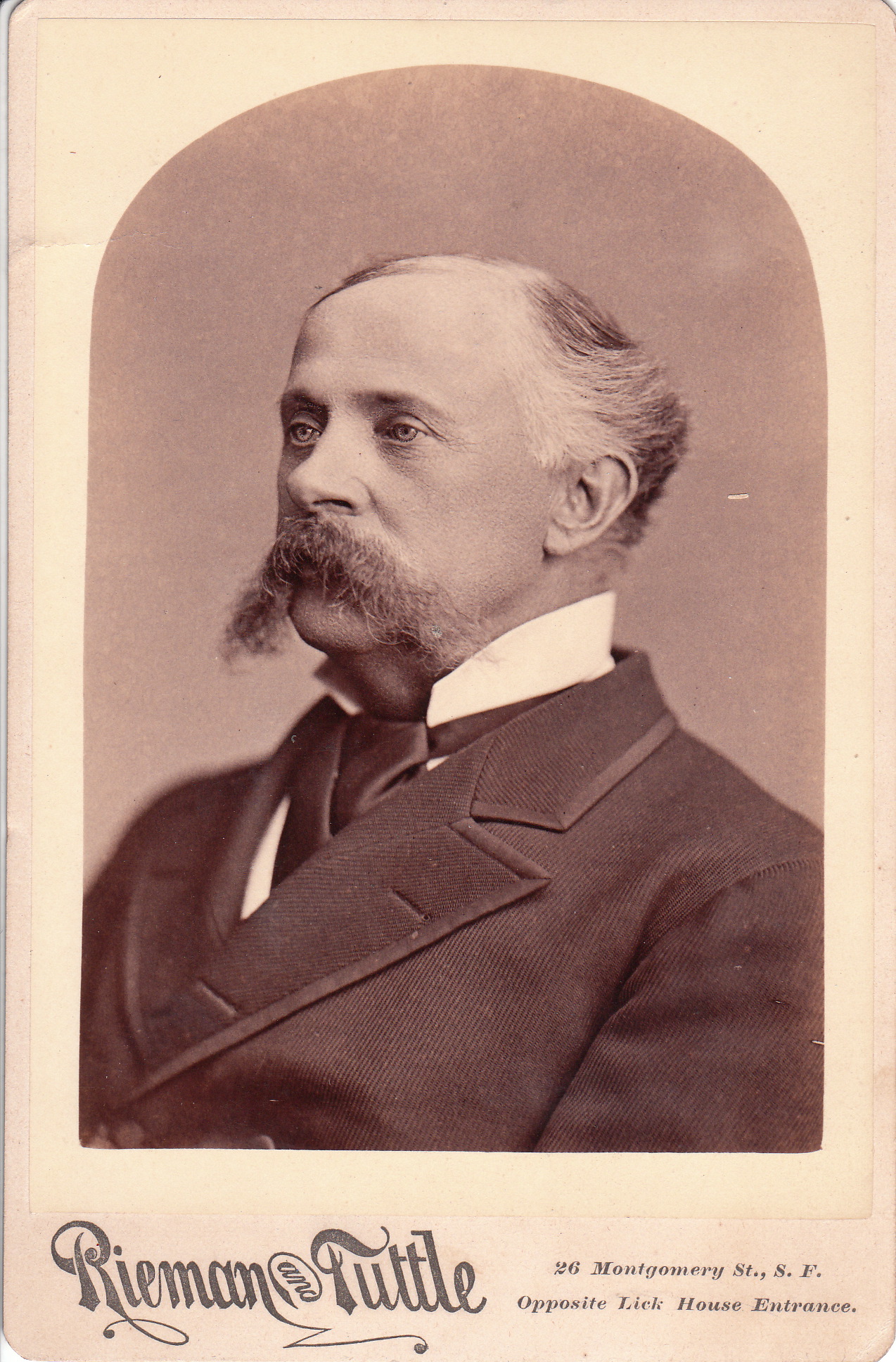 This cabinet card is a portrait of a nicely dressed older gentleman with a bushy mustache. The gentleman appears quite distinguished and may have been part of the elite of San Francisco. The Rieman and Tuttle Studio produced this cabinet card. George B. Rieman and William Nutting Tuttle (1844-1895) became partners in 1879. The first three letters of Mr Tuttle’s middle name seems to have described his personality. He appears to have been a vagabond photographer; working in a number of studios and having multiple business partners in the years proceeding his venture with Rieman. In 1880, Tuttle left his family in Oakland and sailed to Australia to start anew. Tuttle’s wife, Belle, went to Australia to try to convince her husband to return to California. Her efforts were fruitless. Although Tuttle’s photography studios were very successful and he prospered in Australia, he didn’t support his family back in the United States. He stayed abroad until his death in 1895. The Cabinet Card Gallery has some photographs related to this image. To see other terrific mustaches, click on the category “Mustaches (Only the Best). To view other photographs by Rieman, and to learn more about his life, click on the category “Photographer: Rieman”.
A FAMILY PORTRAIT IN BELLOWS FALLS, VERMONT
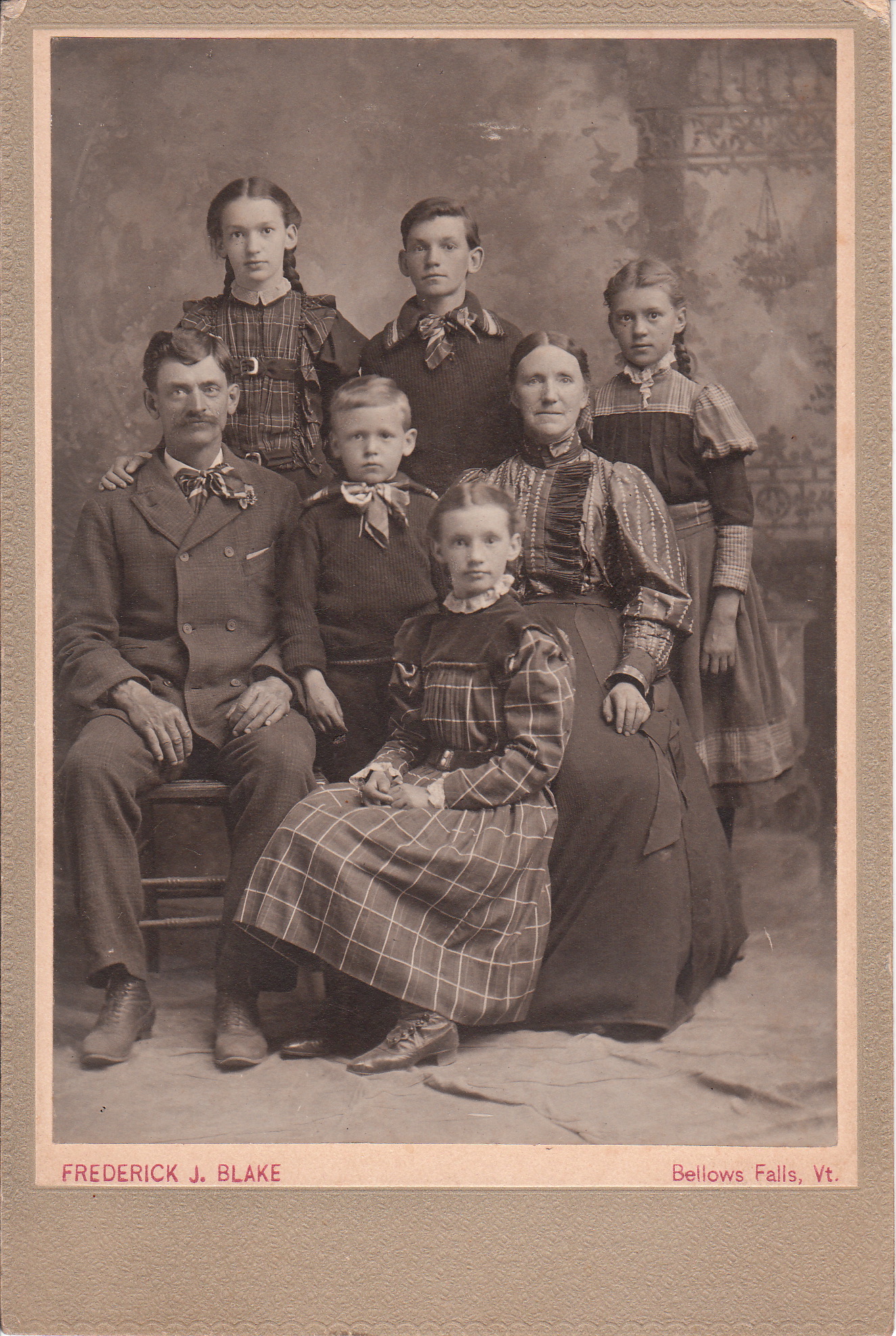 This cabinet card features at attractive family posing for their portrait at the studio of Frederick J. Blake, in Bellows Falls, Vermont. Mom and Dad are accompanied by their two sons and three daughters. Blake is listed in the Windham County Business Directory (1884).
TWO ADORABLE LITTLE GIRLS RIDING TO MARKET IN HORSE DRAWN WAGON (GERMANY)
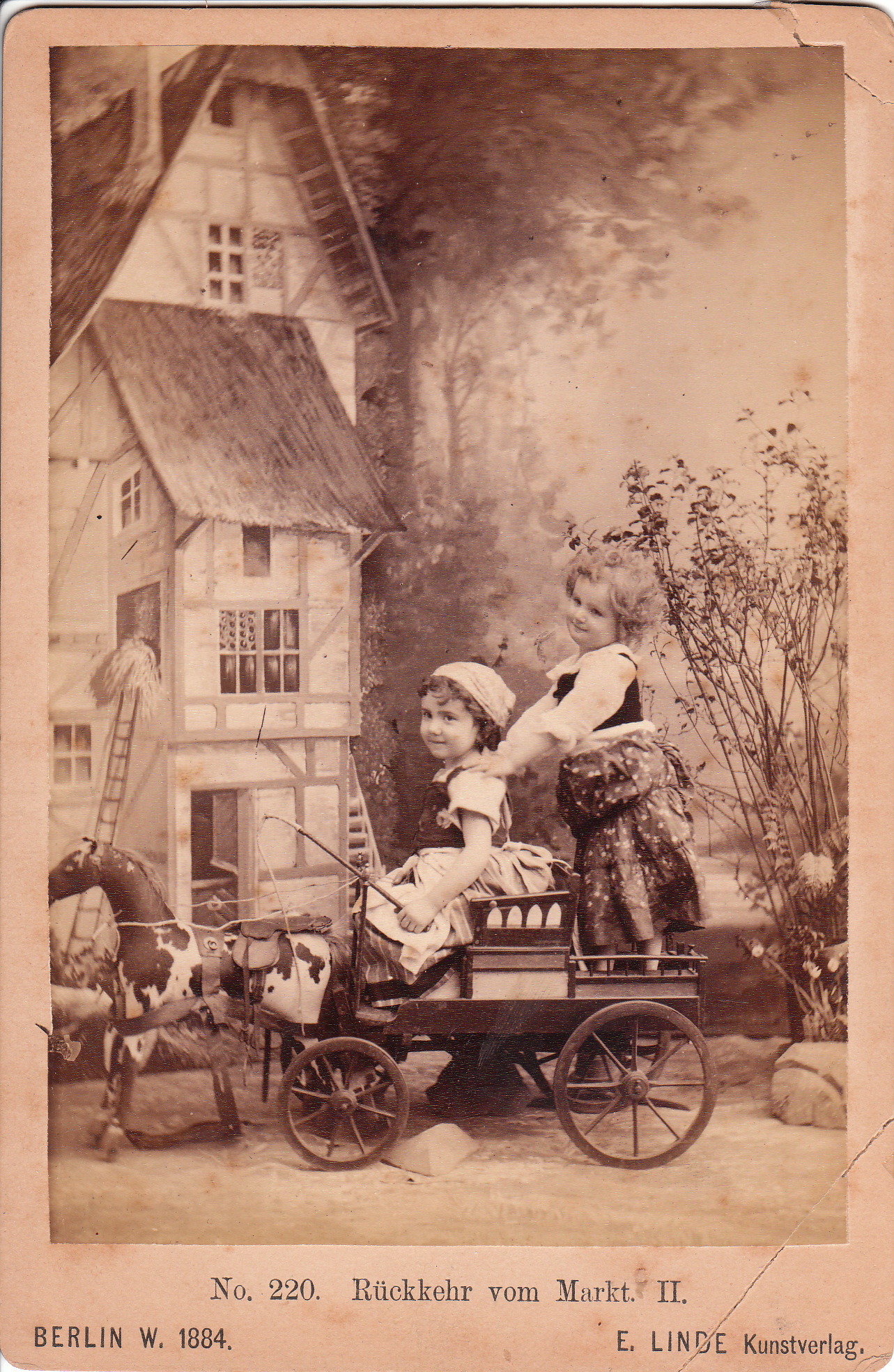
This cabinet card captures two precious little girls riding a toy horse drawn wagon to market. Note the terrific detail of both the toy horse, and the backdrop. The horse appears to be covered with fabric and has leather saddle bags and a tail made from hair. The printed German title below the photograph, “Ruckkehr vom Markt.”, translates to “smooth traffic from the market”. The card is dated 1884 and was photographed in Germany. The publisher of this photograph was E. Linde, who was located in Berlin, Germany. SOLD


 THE CABINET CARD GALLERY