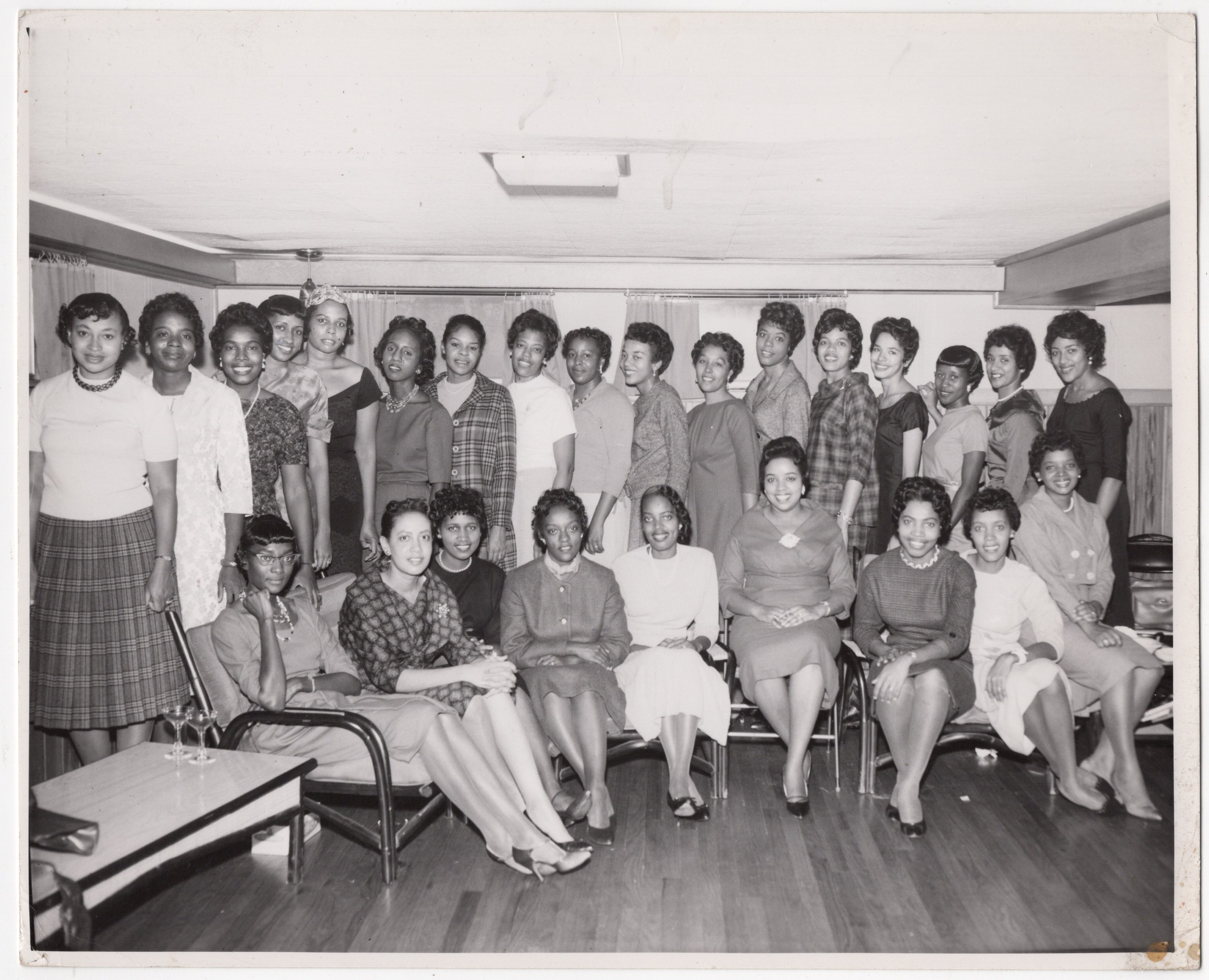
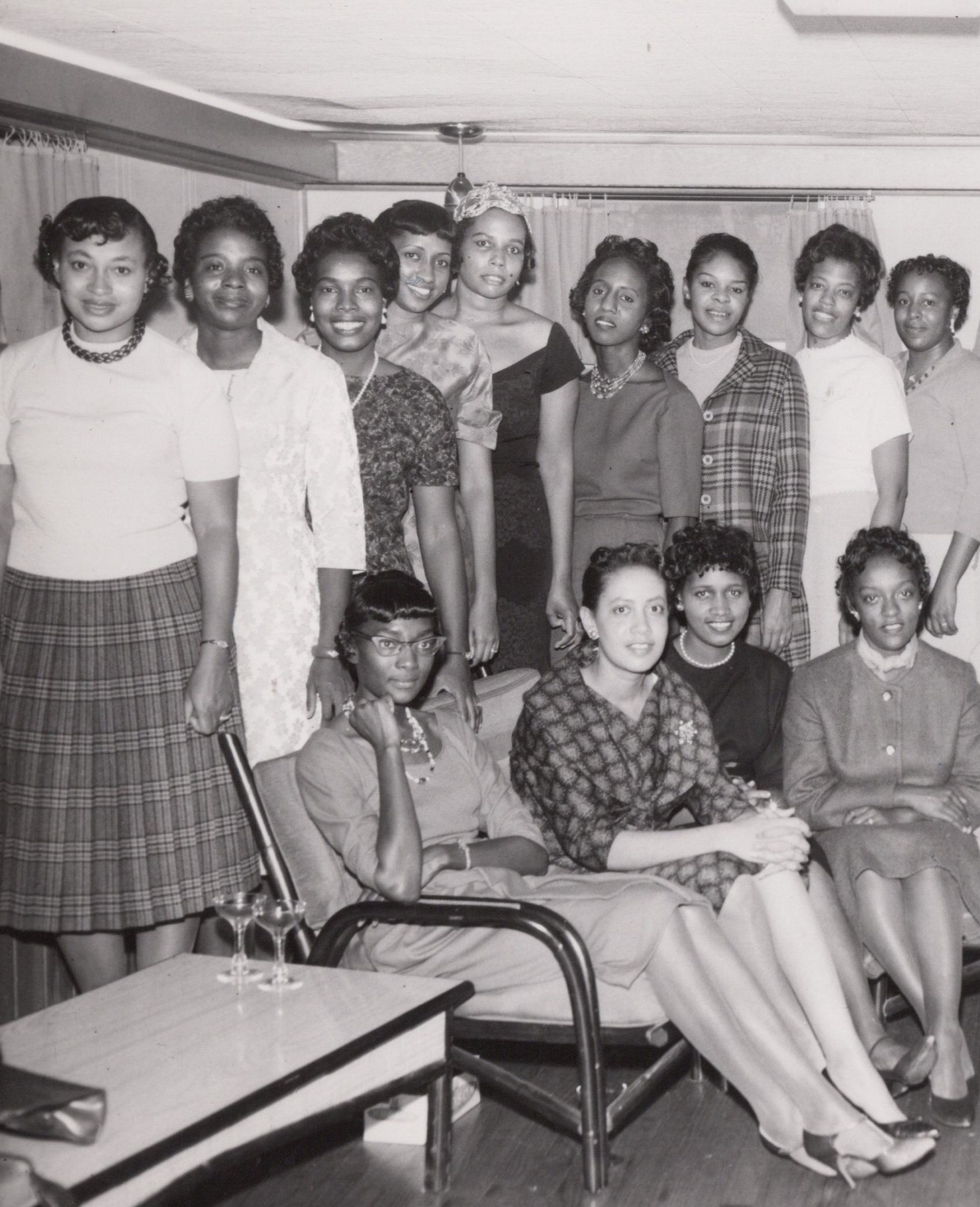
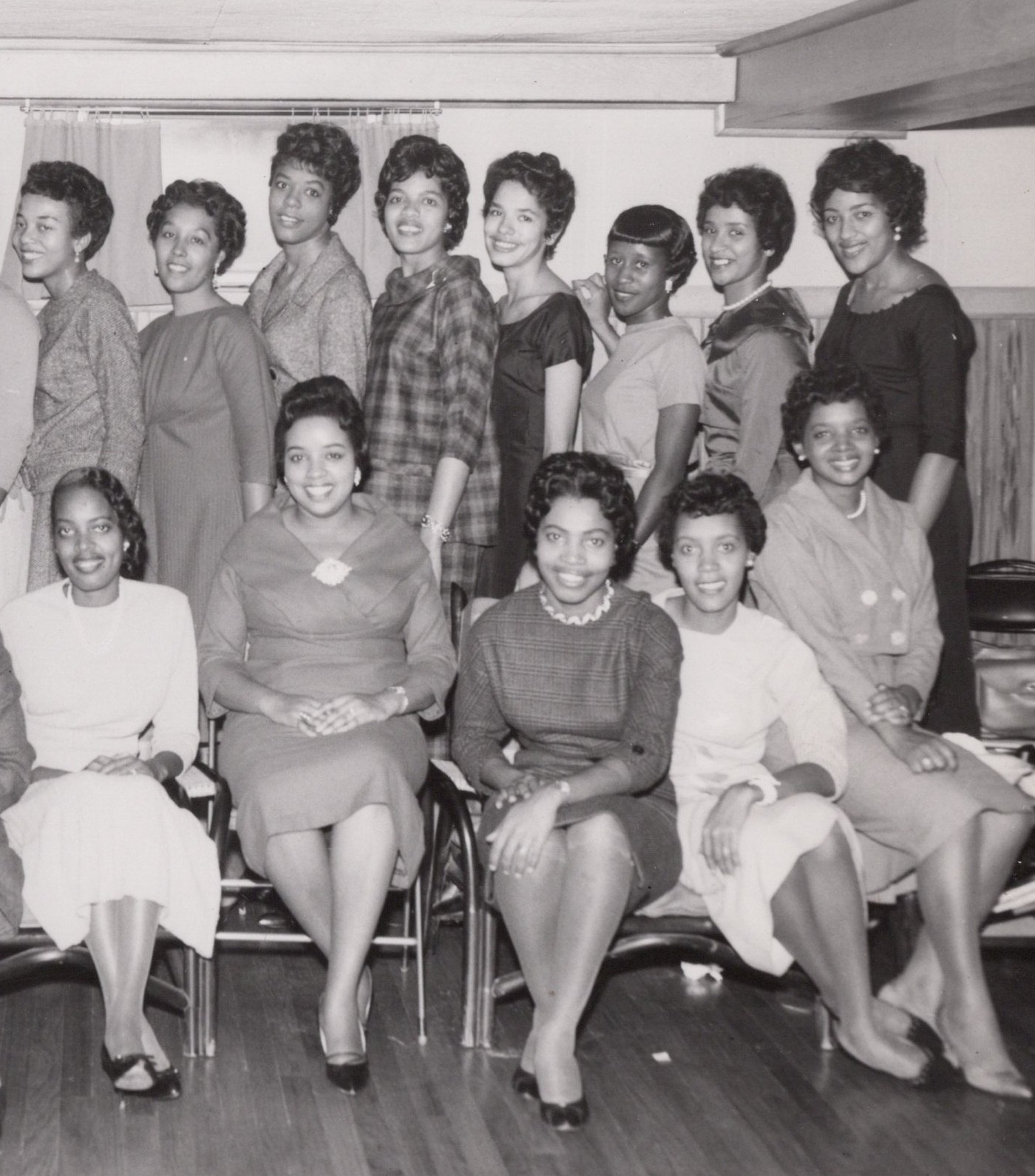
This original vintage black-and-white photograph was taken by noted Cleveland photographer Jimmy Baynes, whose stamp appears on the reverse. The photograph shows a large group of well-dressed African American women posed together indoors, likely at a social gathering, club meeting, church event, school function, or community organization event. The women are beautifully dressed in 1950s/early 1960s fashions, including tailored dresses, plaid skirts, sweaters, jewelry, high heels, and carefully styled hair. Several women are seated in front while the rest stand behind them, creating a lively and attractive group portrait with excellent facial detail throughout. Based on the hairstyles, clothing, room setting, and photographic style, I would date this to approximately the late 1950s to early 1960s. Jimmy Baynes was a prolific photojournalist and chronicler of Cleveland’s African American community during the mid-20th century. His work documented civic events, political gatherings, cultural programs, entertainment, and the everyday lives of African Americans in Cleveland. Originally a postal worker, Baynes pursued photography as a passion and ultimately founded Baynes Foto Service. His photographs captured the vibrancy of African American social life from the 1950s through the 1980s, including intimate gatherings, beauty contests, live music performances, political events, and community celebrations. Baynes photographed major figures in music and entertainment, including Aretha Franklin, Louis Armstrong, Count Basie, Mahalia Jackson, Louis Jordan, Jerry Lee Lewis, the Platters, and the Drifters. His work is recognized today as an important visual record of Cleveland’s African American community and is valued by collectors of African American history, press photography, entertainment photography, and local Cleveland history. The Rock and Roll Hall of Fame and Museum Library and Archives in Cleveland holds a collection of Baynes photographs, especially relating to music and entertainment. The candid but posed composition reflects Baynes’s ability to capture people within civic and cultural spaces, preserving not only the appearance of an event but also its social energy. SOLD