The “bad boys” are in town and they are gathered to play a mean game of cards and enjoy their smokes. Traveling photographer, C. A. Johnson has posed the five men in front of a painted river scene. The guys seem quite natural in this gambling milieu. My guess is, that “they’ve been there, and done that”. Its a bit unusual to see cigarettes in cabinet card photography, but they fit this scene perfectly.
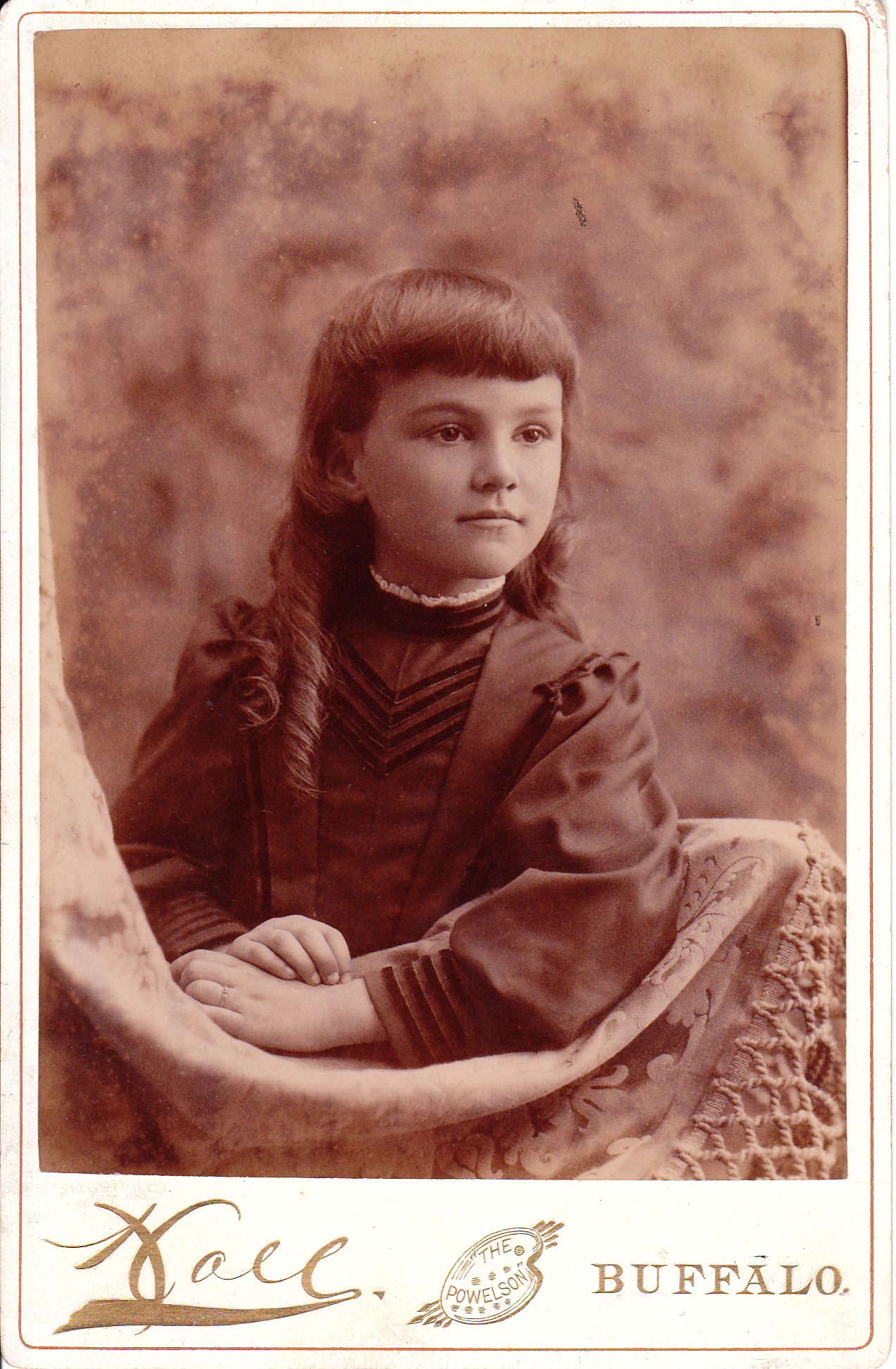
CONFIDENT LITTLE GIRL IN BUFFALO, NEW YORK
A young girl, with a look of confidence, poses for her portrait at the Hall & Co. studio in Buffalo, New York. The studio was located at 306 Main Street in Buffalo. The front and back of the card mentions the name “Powelson” which appears to be the name of the building that the studio was located in. Benjamin F. Powelson was a pioneer photographer in Buffalo beginning in the 1840’s. E. F. Hall took this photograph between 1889 and 1895. The reverse of this card indicates that Hall won an award in 1889 and research reveals that he opened a new studio in 1895, in another location in Buffalo. Hall was elected an officer in the Buffalo camera club in 1889.
WOMAN WITH SULTRY EYES
This cabinet card is a portrait of an attractive young woman with sultry eyes. She is wearing a beaded dress with a high collar which is highlighted by a pin. The photographer is Hamilton and the location of his studio is not indicated. Note the interesting hairstyle.
Handsome Spanish-American War Cavalry Soldier in Manila, Philippines (Private Dave Foley)
This cabinet card features U. S. Cavalry Private Dave Foley, in his khaki campaign uniform during the Spanish American War & Philippine Insurrection period (1898-1901). The photograph was taken in Manila, Philippines at the “Fotografia Universal”. The identifying information is typed on the reverse of this photograph. No further background information on this young soldier has been found. Perhaps a visitor to this site can uncover biographical information concerning Private Foley or the studio where this image was taken.
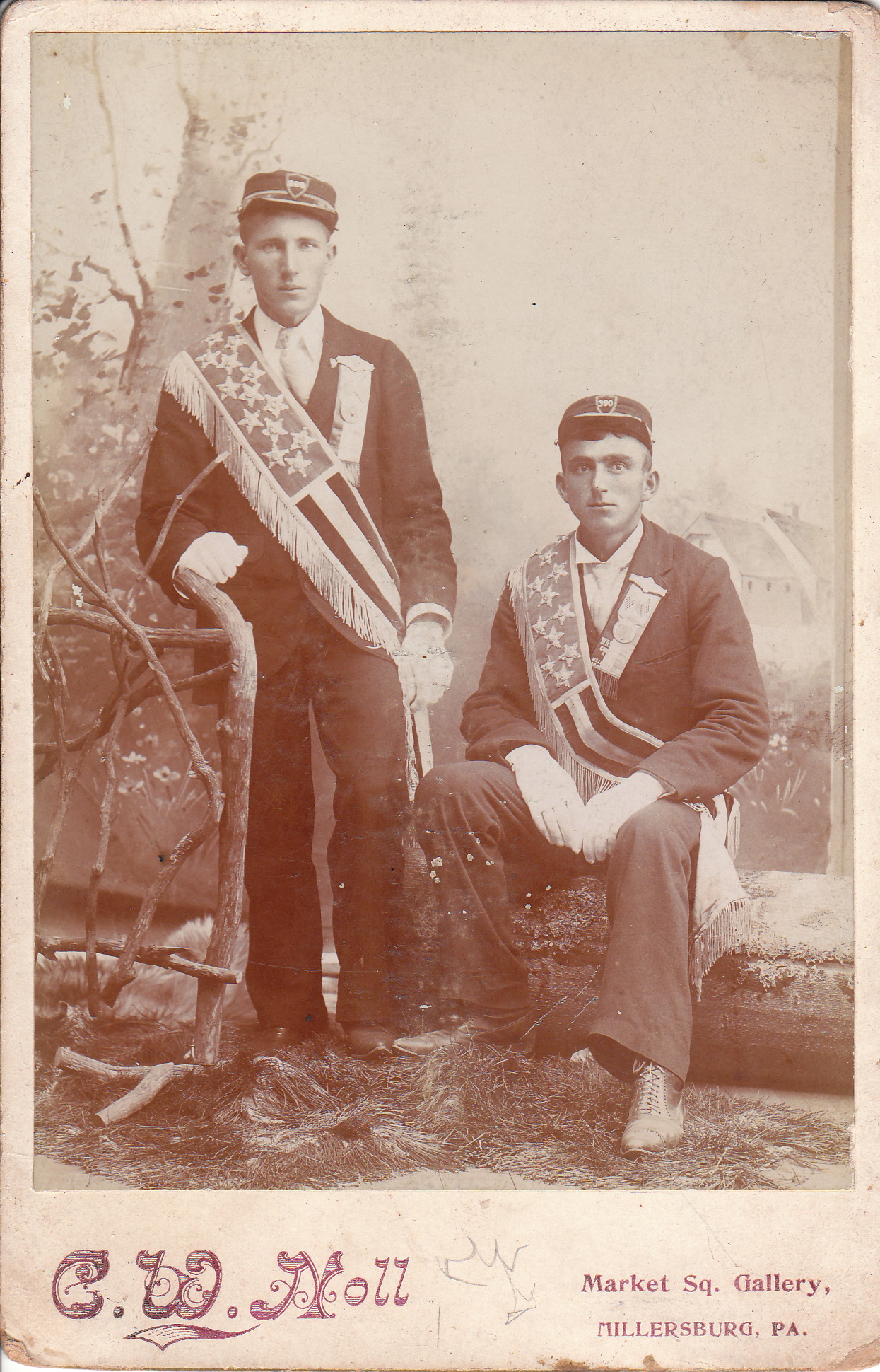
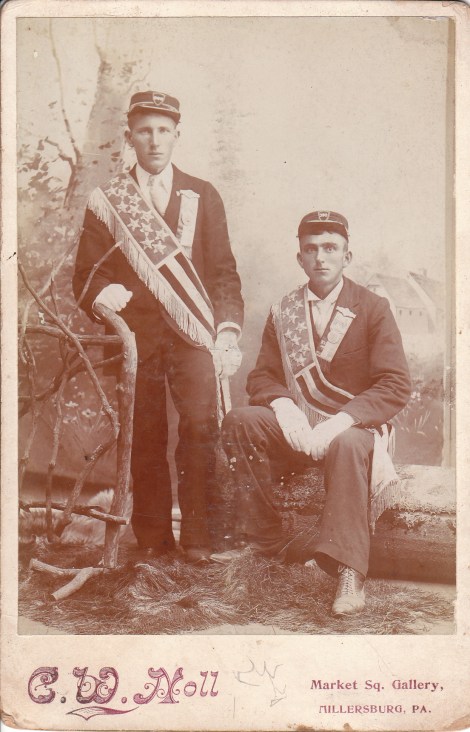
TWO PATRIOTS IN MILLERSBURG, PENNSYLVANIA PHOTOGRAPHED BY EX PITTSBURGH STEELERS COACH CHUCK NOLL
Cabinet Card’s often present more questions than answers; this is one of those images. The Cabinet Card features two men in uniform, wearing sashes that look like a portion of the American flag. Both men are wearing caps that display a number. Each man is also wearing a badge and ribbons on their jacket. One of the ribbons may say Washington Campaign and have Millersburg written on the bottom line, but this is just a hypothesis. Hopefully, a visitor to this site will share a more informed opinion about what organization these men may be representing. Are they Firemen, Railroad Workers, Military Veterans, Fraternal Organization Members, or some other specific occupational or service group? The photographer is Charles W. Noll. If his nickname was Chuck, than he is the unofficial namesake of the former football coach, Chuck Noll of the Pittsburgh Steelers. The photographer is listed in the Harrisburg, Pennsylvania directories of 1902 and 1904.
STAGE STAR, DOROTHY DONNELLY IN “SOLDIERS OF FORTUNE” (1902)
Dorothy (Agnes) Donnelly (1880-1928) was an actress, lyricist, and a librettist. She was the daughter of the manager of New York City’s Grand Opera House. She made her acting debut in the stock company of her brother, Henry V. Donnelly at the Murray Hill Theatre in New York City. She became a well known performer in 1903 when she played title roles in Yeat’s “Kathleen ni Houlihan” and Shaw’s “Candida” in their first American performances. Her most celebrated performance was in the title role of “Madame x” (1910). She acted for another decade but after the success of her book and lyrics for Sigmund Romberg’s adaptation of Schubert’s melodies in “Blossom Time” (1921), she gave up performing and concentrated on her writing. Donnelly was married to Sigmund Romberg. The photographer of this cabinet card was celebrity photographer, Schloss. The photograph captures Donnelly in costume for “Soldiers of Fortune” (1902); so the image is a portrait representing the very early part of her theatrical career. The cabinet card comes from the Oral M. Heffner Theatrical Collection and was formerly the property of the Franklin County Historical Society. To learn more about the Heffner collection, click on the Cabinet Card Gallery category of “Oral M. Heffner Theatrical Collection”.
CUTE SIBLINGS IN HUDSON, NEW YORK
This cabinet card features two very cute siblings photographed by the Sullivan Brothers of Hudson, New York. The older sibling, with bows in her hair, seems to be evaluating he situation as she stares at the camera. The younger sibling appears comfortable atop a cushion on the seat of a wicker chair. The photographic studio’s partners were Frederick and Alfred H. Sullivan. One of their photographs of a child was published in the Burr McIntosh Monthly (1907). The Bulletin of Photography (1915) reported that the Sullivan Brothers studio was sold to James C. Van Loon in 1915. To view other photographs by Sullivan Brothers studio, click on the category “Photographer: Sullivan Brothers”.
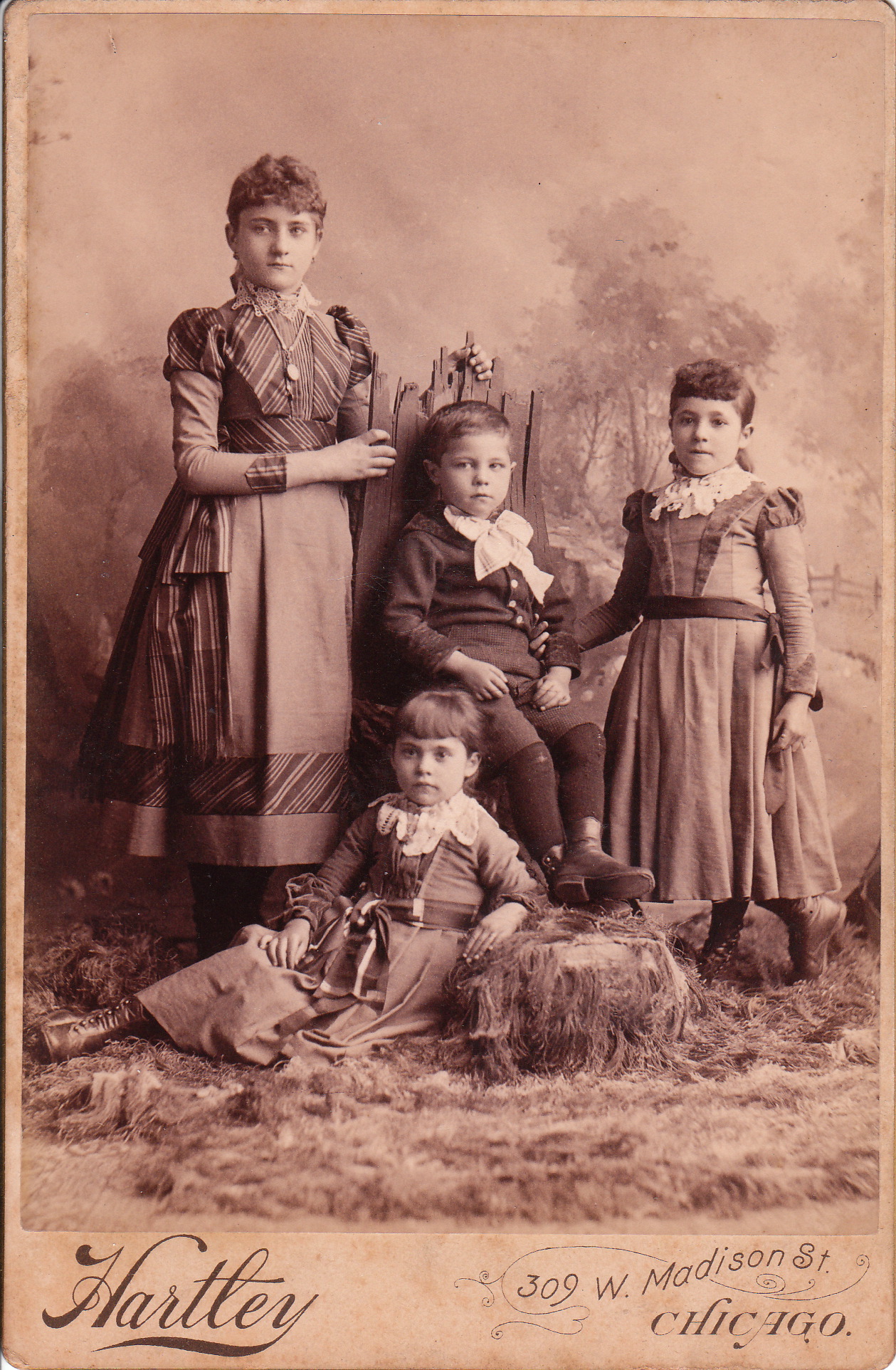
FOUR ATTRACTIVE SIBLINGS IN CHICAGO, ILLINOIS
Four siblings, three girls and a boy, pose for their portrait in an urban photography studio’s “out in the country” setting. The photographer is Hartley, of Chicago, Illinois. The siblings are attractive and nicely dressed. To view other photographs by this photographer, click on Cabinet Card Gallery’s category of “Photographer: Hartley”.
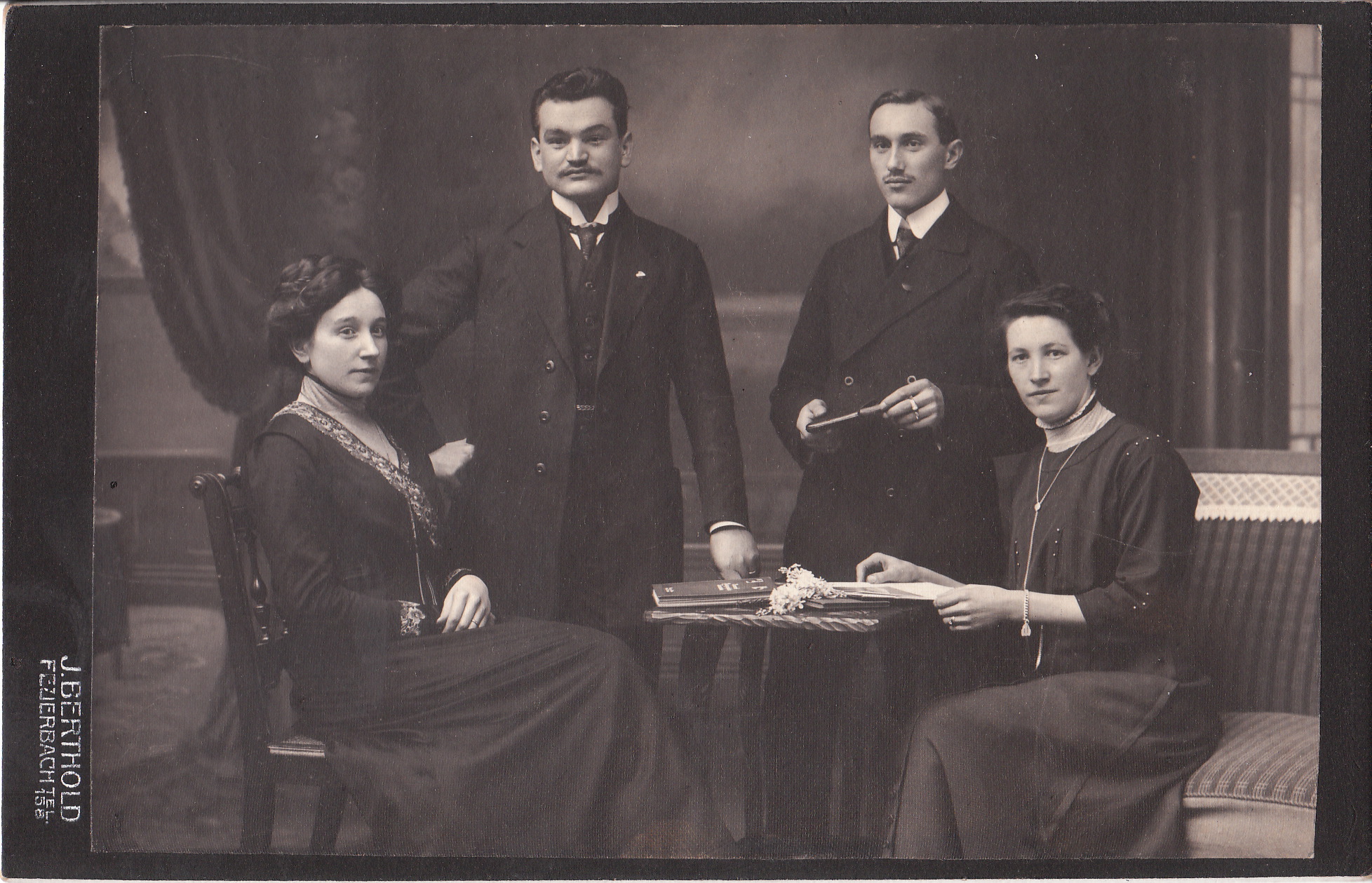
THE FEUERBACH BOOK CLUB MEETS IN GERMANY (CIRCA 1900)
This photograph captures two couples gathered around a table. There are books on the table and one gentleman is holding a kindle. Ok, so its not a kindle, but you must admit it looks like a kindle. When photographer Julius Berthold took this photograph, Amazon was just a river; not a corporation. Berthold’s studio was located in Feuerbach, Germany. Feuerbach is a district of the city of Stuttgart.
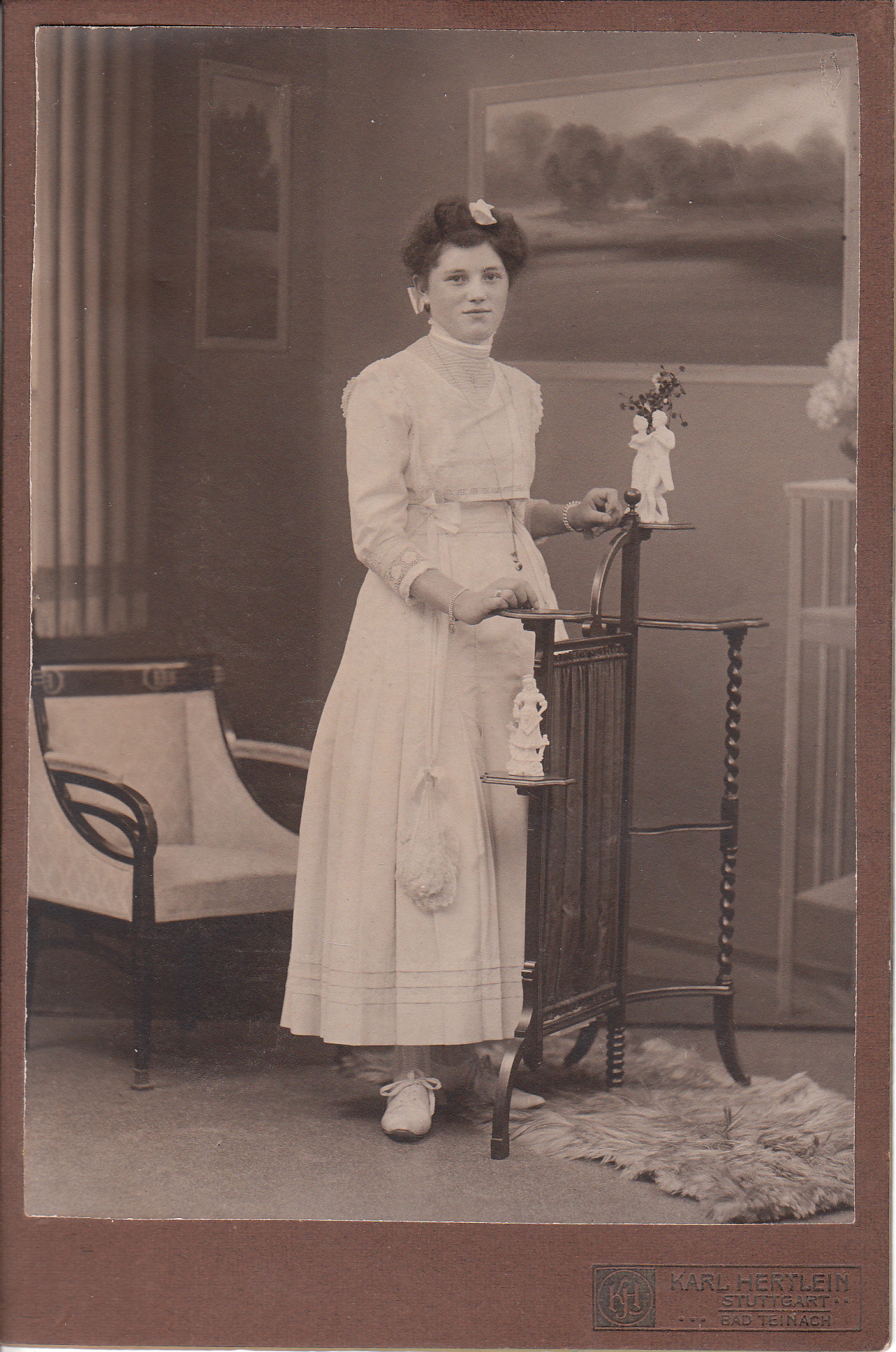
LADY AND PORCELAIN IN STUTTGART, GERMANY
A nicely dressed, thin young woman, poses in a living room setting, at the studio of Karl Hertlein, in Stuttgart, Germany. Note the porcelain pieces on the pedestal.