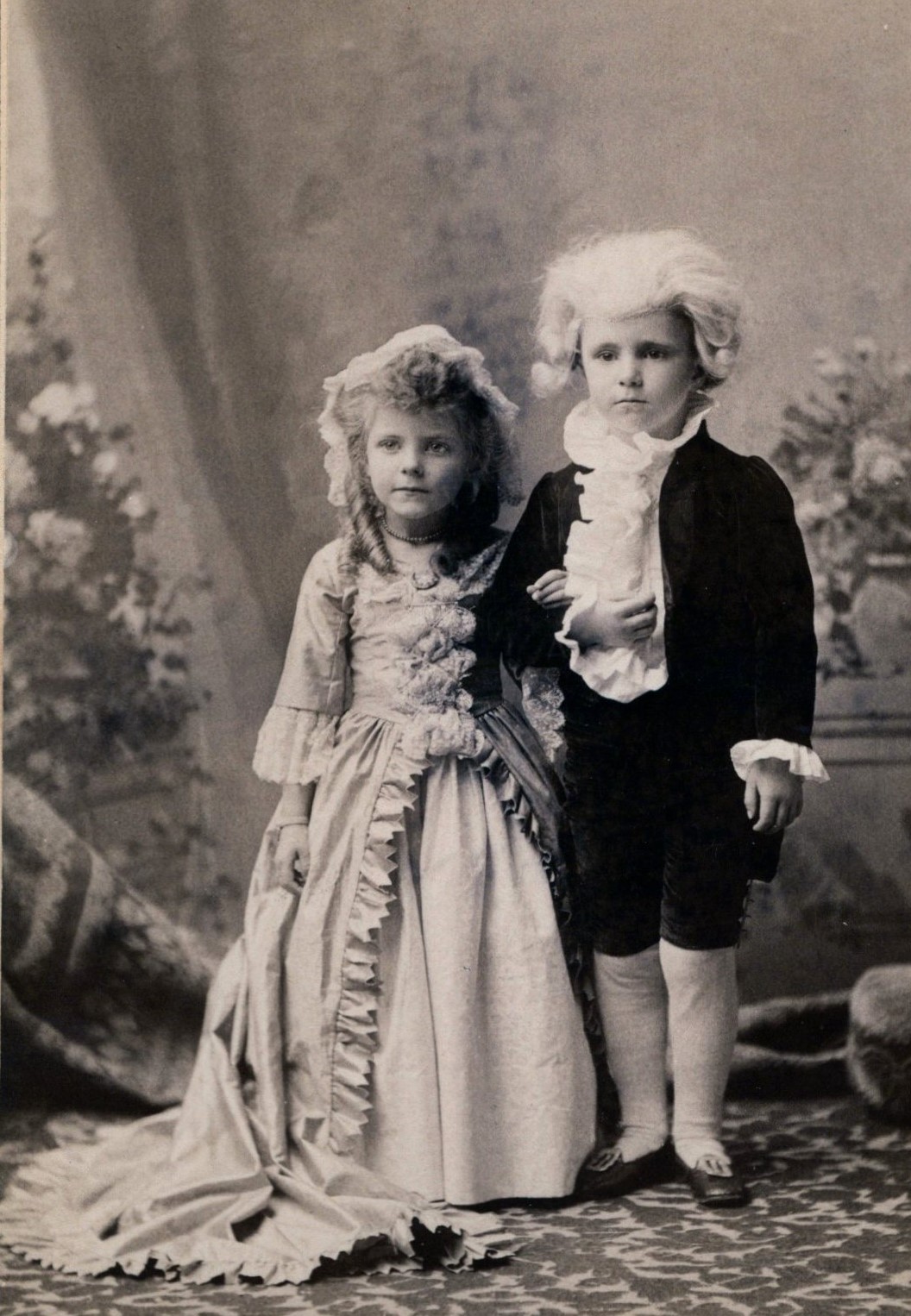
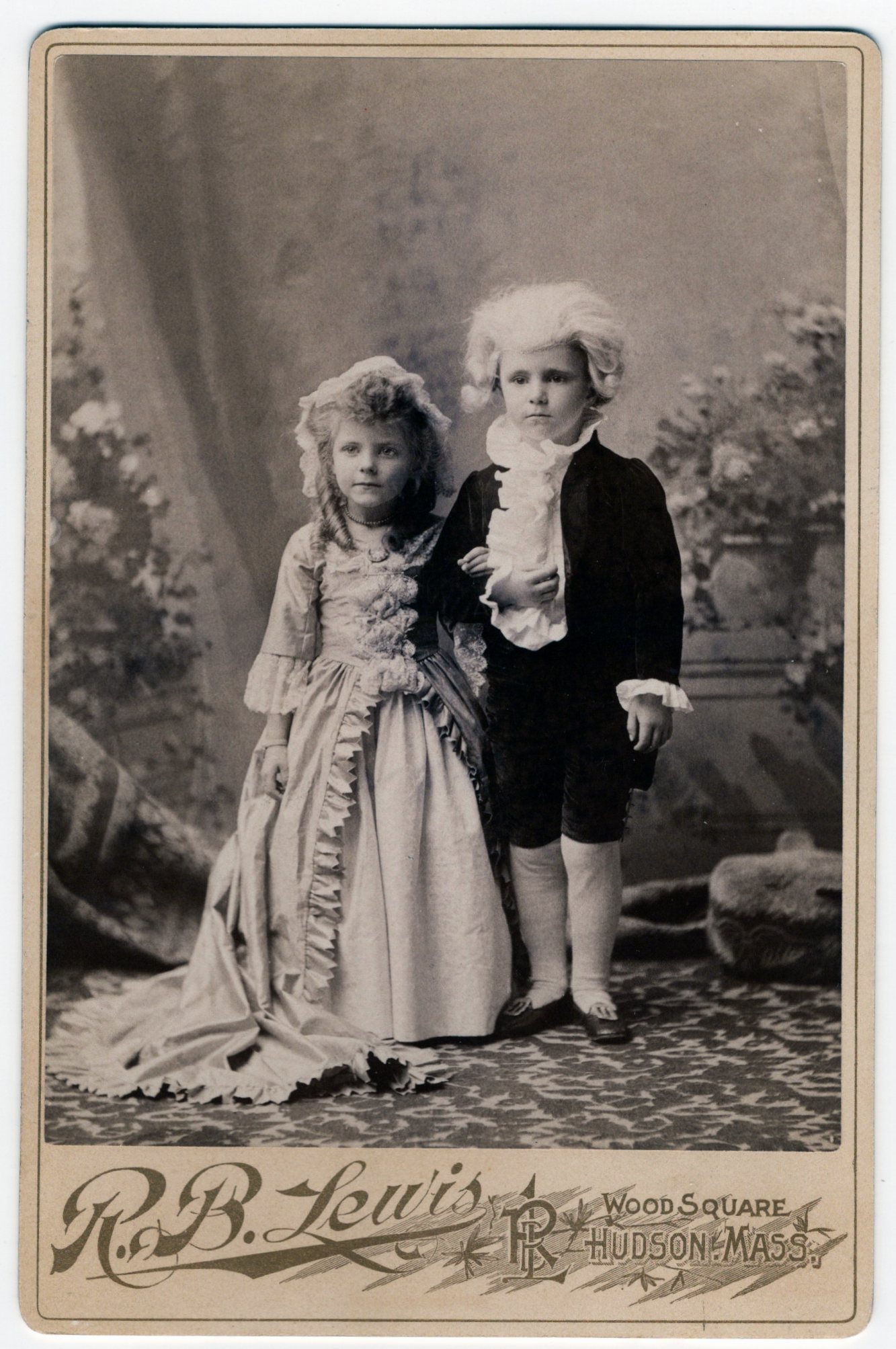
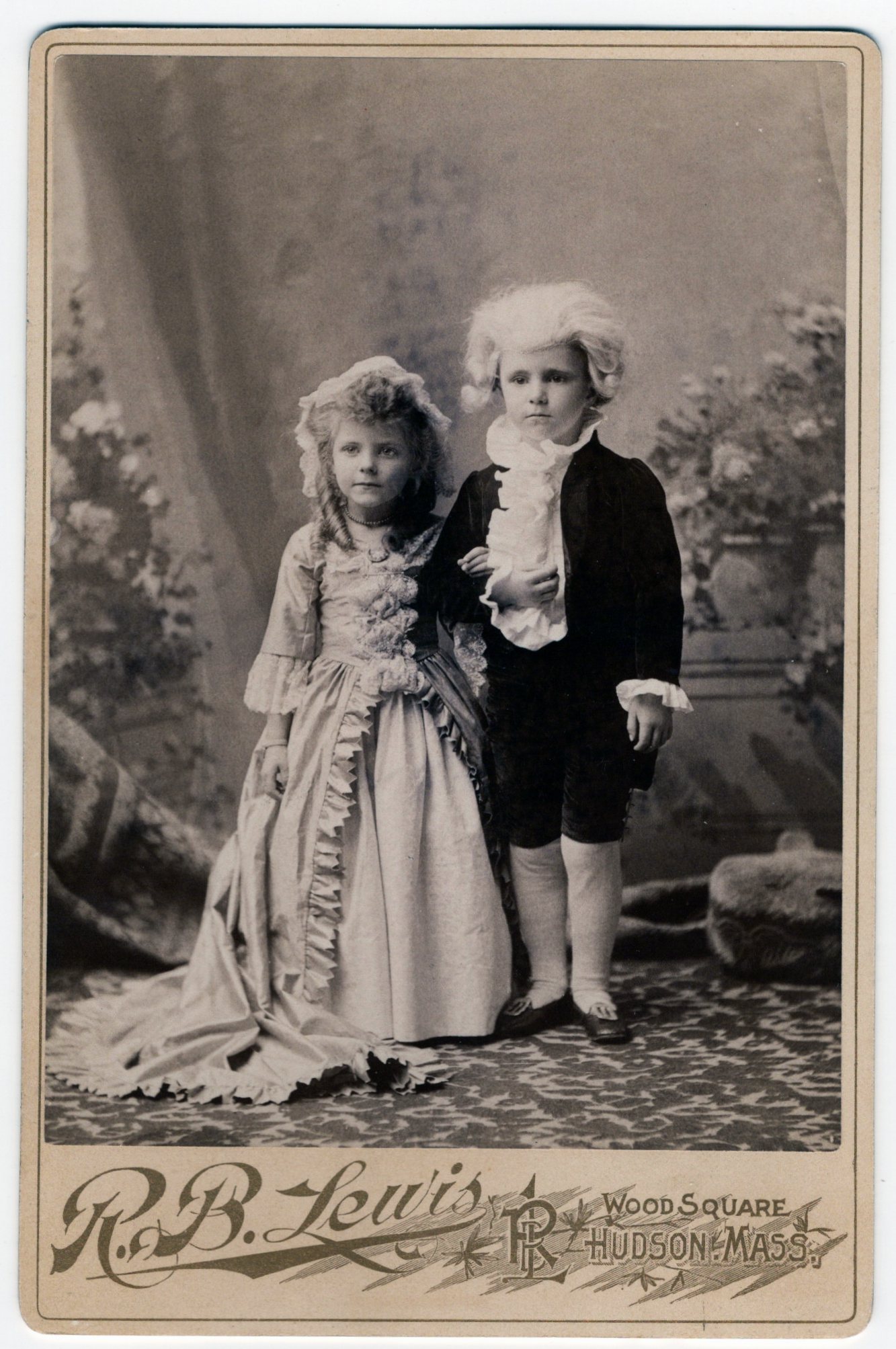
IS THIS A TOM THUMB WEDDING PHOTOGRAPH OR IS THIS A PORTRAIT OF A REINCARNATED GEORGE AND MARTHA WASHINGTON?

This cabinet card poses an interesting question. My first impression upon looking at the photograph was that it was an example of a “Tom Thumb Wedding Portrait”. What is a “Tom Thumb Wedding” ?  The answer offers an interesting social commentary. A “Tom Thumb Wedding” is a wedding pageant in which the major wedding roles are played by children; usually under ten years old. Not only are the bride and groom portrayed, but so are the best man, maid of honor, groomsmen, bridesmaids and the clergyman. Some of these weddings involved more then twenty children playing costumed parts. Often times, the weddings were fund raising events for charitable causes.  These faux weddings became popular after the wedding of General Tom Thumb (Charles Stratton) to Lavinia Warren in 1863. Tom Thumb’s wedding was very publicized by the media in America and received the attention across the county. Not having any royal families, Americans had to find celebrities to obsess over. Tom Thumb had a great promoter keeping him in the public’s eye. P. T. Barnum, the circus entrepreneur managed Tom Thumbs career. The previous owner of this cabinet card contends that this image is actually a portrait of a boy and a girl portraying George and Martha Washington. I have to give the last owner’s theory credibility because over the years I have been collecting these photographs, I have seen a number of portraits of children portraying George and Martha. Sometimes the images present them together and sometimes separately. In conclusion, there is no conclusion. What do you think, “Tom Thumb Wedding” or “Portrayal of George and Martha Washington”. The photographer of this image is R. B. Lewis of Hudson, Massachusetts. He is cited in the Photographic Journal of America (1893) for an excellent photograph of a football team. Lewis is also listed in the Hudson city directory as a photographer between at least 1872 and 1909. This cabinet card portrait has gold beveled edges and is in excellent condition (see scans).
Buy this Cabinet Card Photograph (includes shipping within the US) #5843

To purchase this item, click on the Pay with PayPal button below

$148.00
Buy this Vintage Original Cabinet Card (includes International shipping outside the US) #5843

To purchase this item, click on the Pay with PayPal button below

$158.00

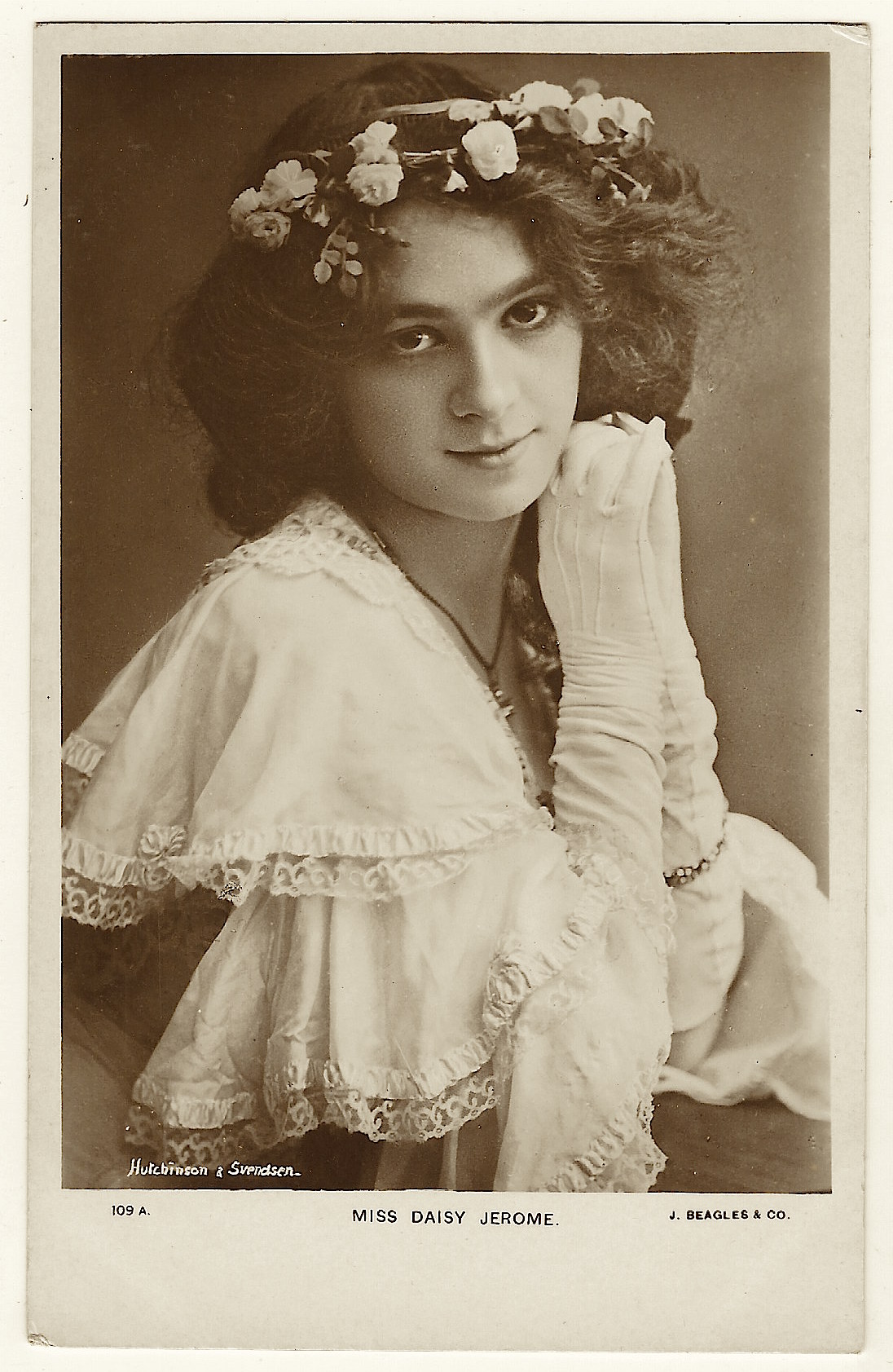
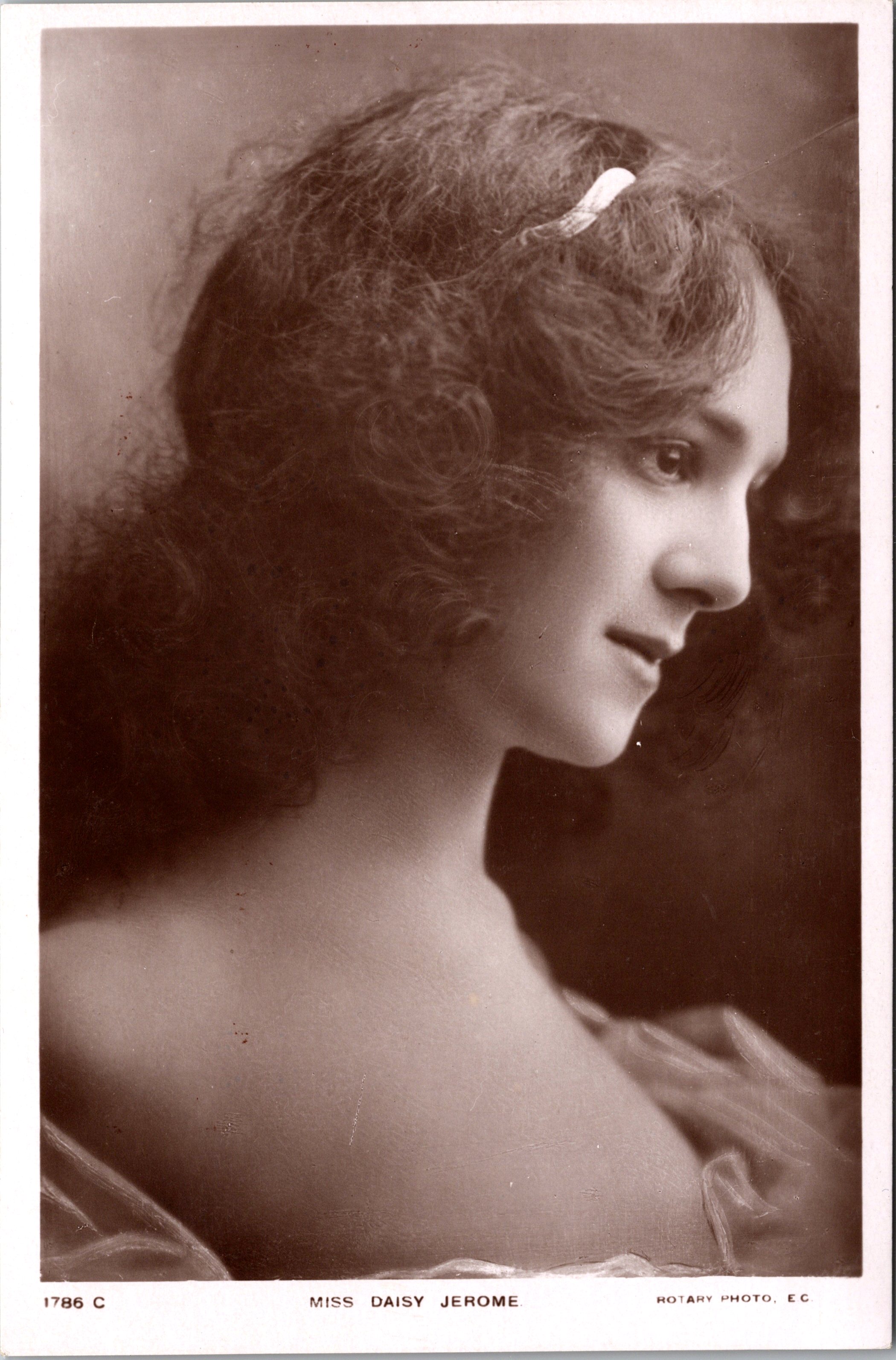
DAISY JEROME : SCANDALOUS STAGE ACTRESS WHO WAS VIEWED AS RAUCOUS, VULGAR, AND “AN ACQUIRED TASTE”

POSTCARD 1 (SOLD)

POSTCARD 2

This rare vintage real photo postcard features the red headed actress that electrified the Australian stage. She was noted for her famous wicked wink. The life and times of Daisy Jerome can best be described as scandalous. She arrived in Australia in 1913 for a three year stage tour.  Feminism was rising in the western world. Suffragettes were marching for the right to vote. Women were smoking, driving, wearing less conservative fashion, and even dancing the tango with it’s sexual overtones. She arrived in Adelaide adorned with an excess of jewelry. She was born in America but raised in England. Her place of birth was New York and she was born Daisy Witkowski in 1886. Daisy reported that she was raised in a multilingual household that had been visited by Presidents Lincoln, McKinley, and Roosevelt. After experiencing financial problems, her father moved the family to England. Money was needed and Daisy followed her sister onto the stage. She played the Palace and toured with companies that gave her a chance to do comedic singing and pantomime. Her performances were considered to be amusing and irreverent. She was a comedienne. Her humor has been described as “vibrant” and “wicked”. Daisy was described as “feisty”, “cunning”, and “independent”. She was small and dainty and had compelling eyes and an expressive face. Her performances had a risque tone and she had a hoarse, sensual voice. She could toe dance and wooden shoe dance, but was most known as a mimic and comnic singer. After a year of marriage, she deserted her first husband to live with another man. In 1910, she took a journalist to court for libel. The reporter had accused her of performing encores when audiences had not requested them. She claimed that her professional reputation had been damaged. The court case was a circus. The defense ridiculed one of her songs which caused her to break into tears in the witness chair. She won the case but was barely compensated. When she began her tour of Australia, she was recognized as raucous, vulgar and “an acquired taste”. She quickly charmed those that were hesitant to appreciate her and she soon received a warm welcome and a complimentary nickname, “The Electric Spark”. Her carrot red hair became the subject of much debate. She claimed it was her natural color but most people were not believers of her claim. One day, an Australian comedian told her that a gentleman had taken offence to her hair. The comedian said that the offended man would visit her that night. The comedian then informed the local fire chief that there was great risk of fire during Daisy’s time on stage. The worried fireman came to the theatre and when he saw Daisy’s red hair, he realized he had been a victim of a joke. He kept the joke going when he said that he agreed there was risk of fire and he ordered the scenery to be fireproofed immediately. During Daisy Jerome’s era, there was a bias against redheads. They were considered to be hot tempered and sexually wild and uninhibited. Her theater/music hall background only magnified some people’s negative view of Daisy. After completing her touring contract in Australia, she signed another one. This time she performed on a vaudeville stage which allowed her to showcase her bawdy songs. In 1914 she sang a feminist style song called “The Press, the Pulpit, and the Petticoat”. This song argued that women were more powerful and influential than the media and the church. Daisy was a woman who had unconventional ideas. She would not restrained by political correctness. She stated in a 1914 interview that “I refuse to regulate my acts to accepted rules of conduct”. Despite her views, she remained popular with Australian audiences. She left Australia in 1916 and returned in 1922 for another successful tour. Later, she was involved in another court case which this time involved her suing her maid over missing jewels. With the arrival and subsequent popularity of films, Daisy Jerome faded out of the public’s focus. Two photo portraits of Daisy Jerome can be found in England’s National Portrait Gallery.
 
Postcard 1 was published by J. Beagles & Co. of London, England as part of a series (No. 109 A). The company was started by John Beagles (1844-1909). The company produced a variety of postcards including an extensive catalog of celebrity (stage and screen) portrait postcards. After Beagle’s death, the business continued under it’s original name until it closed in 1939.Miss Jerome’s portrait was taken by the Hutchinson & Svendsen studio. The National Portrait Gallery asserts that this pair of photographers were active in London between 1905 and 1906. This vintage photo postcard is in excellent condition (see scans). This postcard portrait of Daisy Jerome is absolutely beautiful and very uncommon.  (SOLD)                                     
Postcard 2 was published by Rotary Photo (England) as part of a series (No. 1786 C). This vintage photo postcard is in good condition (see scans). 
5172_0001-1

Buy this Vintage Real Photo Postcard (includes International shipping outside the US) #5172

To purchase this item, click on the Pay with PayPal button below

$22.00

5172_0001-2

Buy this Vintage Real Photo Postcard (includes International shipping outside the US) #5172

To purchase this item, click on the Pay with PayPal button below

$32.00
POSTCARD 1

POSTCARD 2

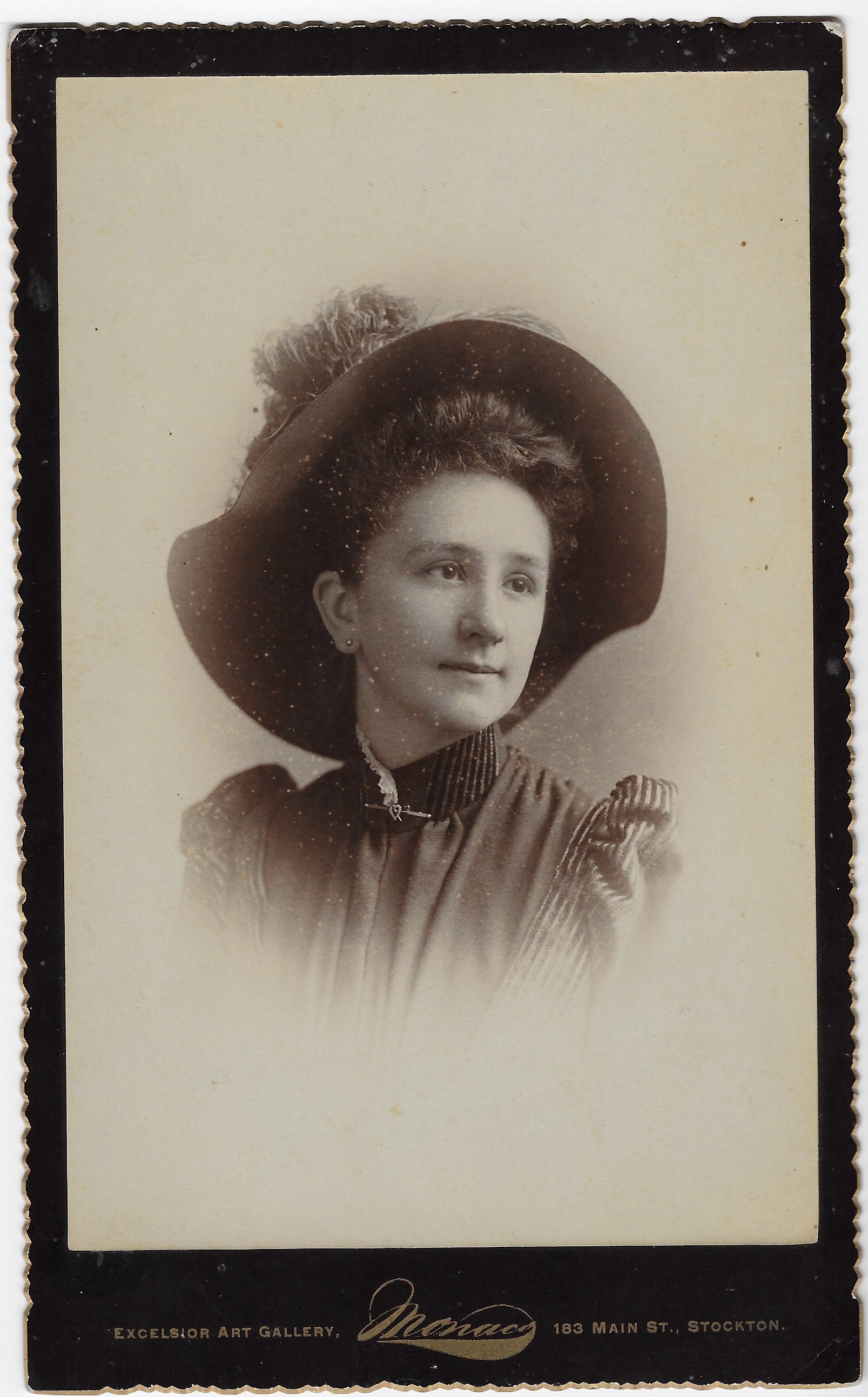
BOUDOUIR CABINET CARD :FAMOUS PHOTOGRAPHER :J. B. MONACO : STOCKTON, CALIFORNIA

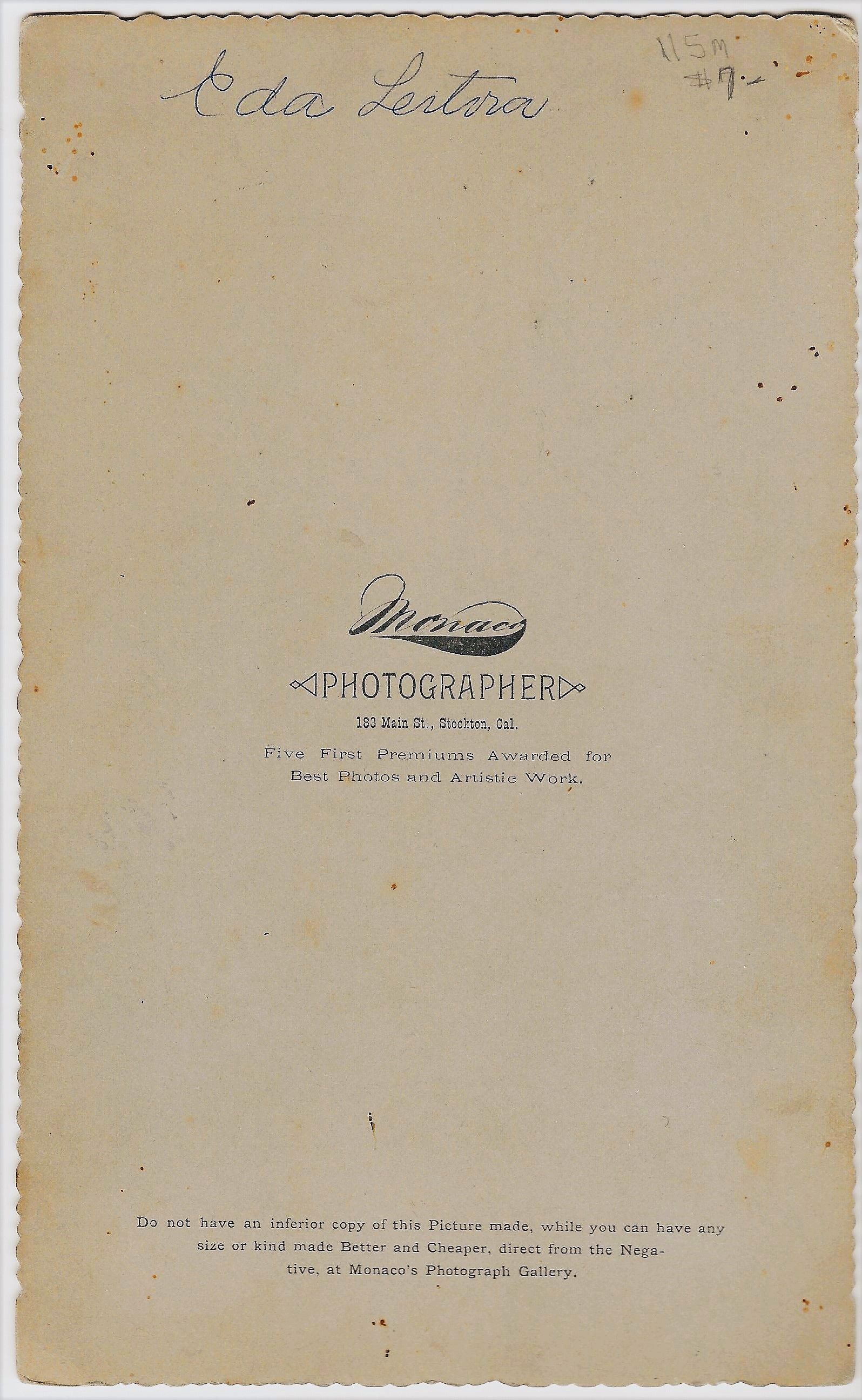
This vintage photograph is a Boudoir Cabinet Card. Boudoir Cabinet Cards are larger than the typical cabinet card. This photograph features a portrait of fashionable girl who appears to be in her teenage years. The identity of the girl is written on the reverse of the photograph. Her name appears to be “Eda Lestora”. What makes this photograph special is the photographer who took the photo. The 5″ x 8.25″ image was photographed at Monaco’s Excelsior Art Gallery at 183 Main Street in Stockton, California. J.B. Monaco (1856-1938) was a noted photographer in San Francisco but had satellite studios. A collection of his photographs can be found at the San Francisco History Center at the San Francisco Public Library. In 1875 Monaco arrived in the United States as an immigrant from Switzerland. His name was originally Giovanni Battista. He joined his brother in Eureka, Nevada. Louis Monaco operated a photo studio there and J.B. joined him in the business, thus launching a career as a photographer that would span 62 years. In 1887 J. B. moved to San Francisco where he was soon joined by his brother who died in 1897. During J. B.’s career, he distinguished himself with his earthquake and fire photographs. These images have been described as  dramatic and journalistic. He documented much of early Nevada and Northern California history. His portraiture work of prominent San Francisco individuals and their families is considered to be exceptional. During his career, Monaco was described as the “Dean of North Beach photographers”.  SOLD

CAMP MASSAD BETH : JEWISH CAMP NEAR DINGMANS FERRY, PENNSYLVANIA : POCONO MOUNTAINS

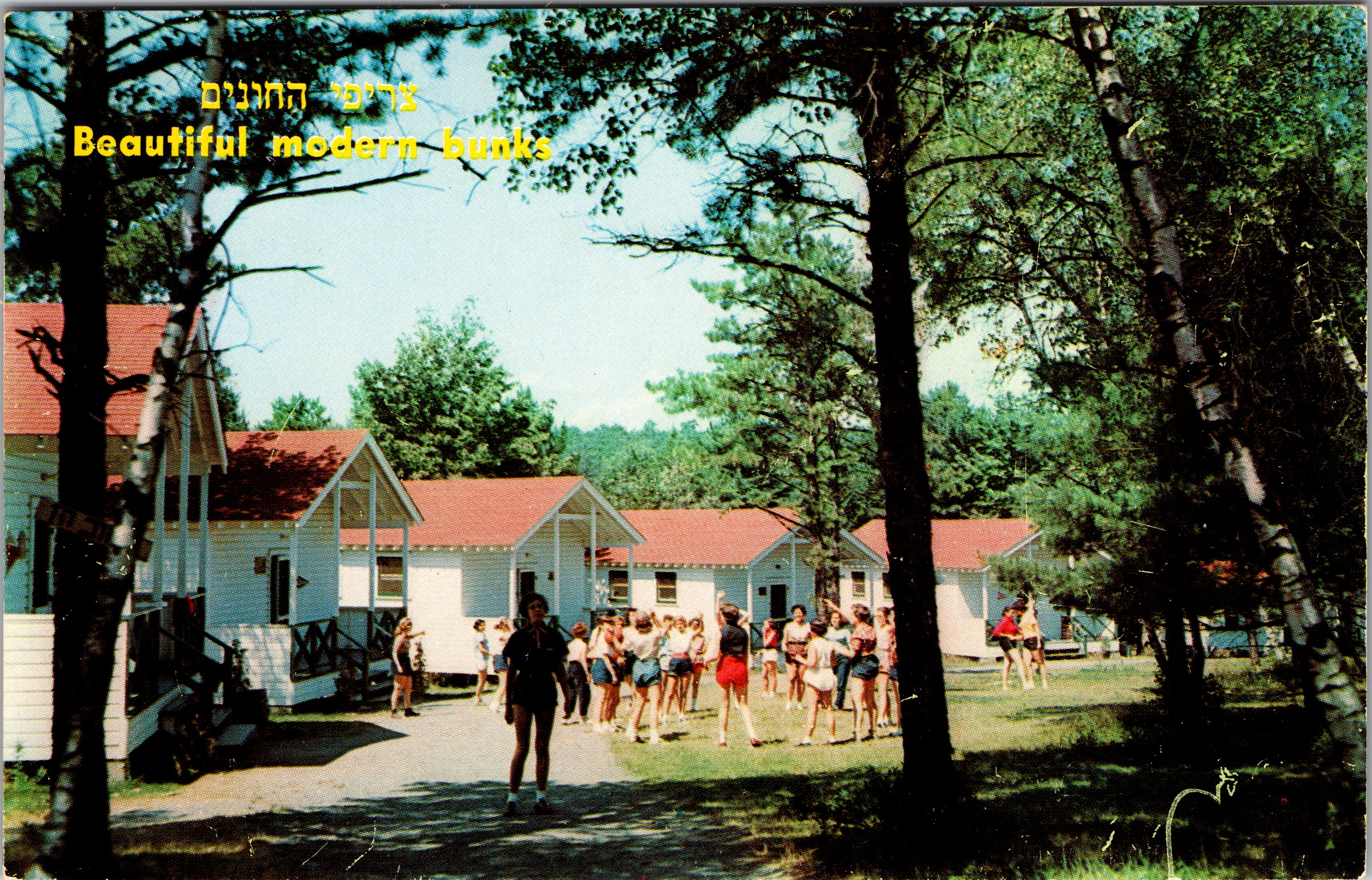
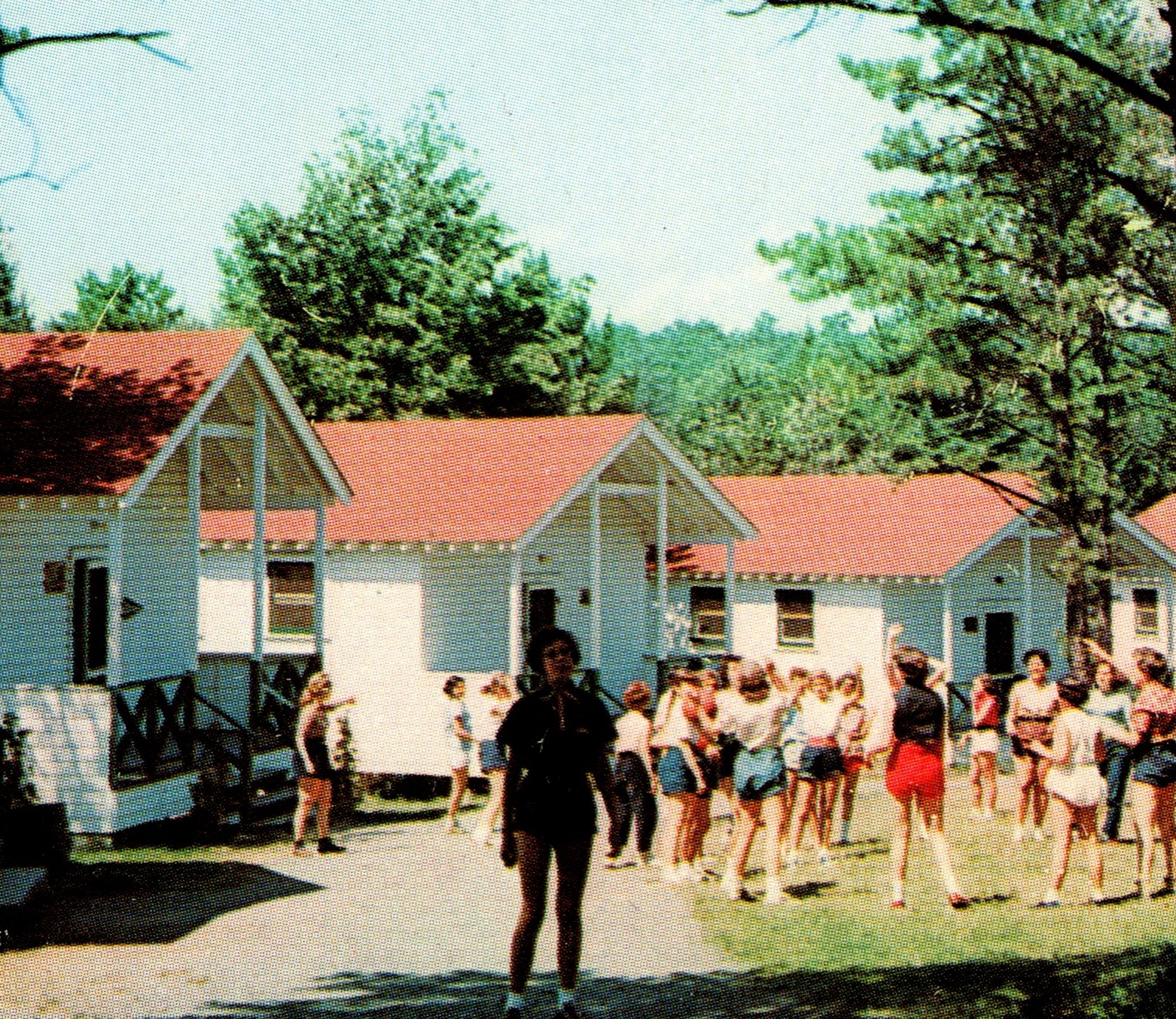
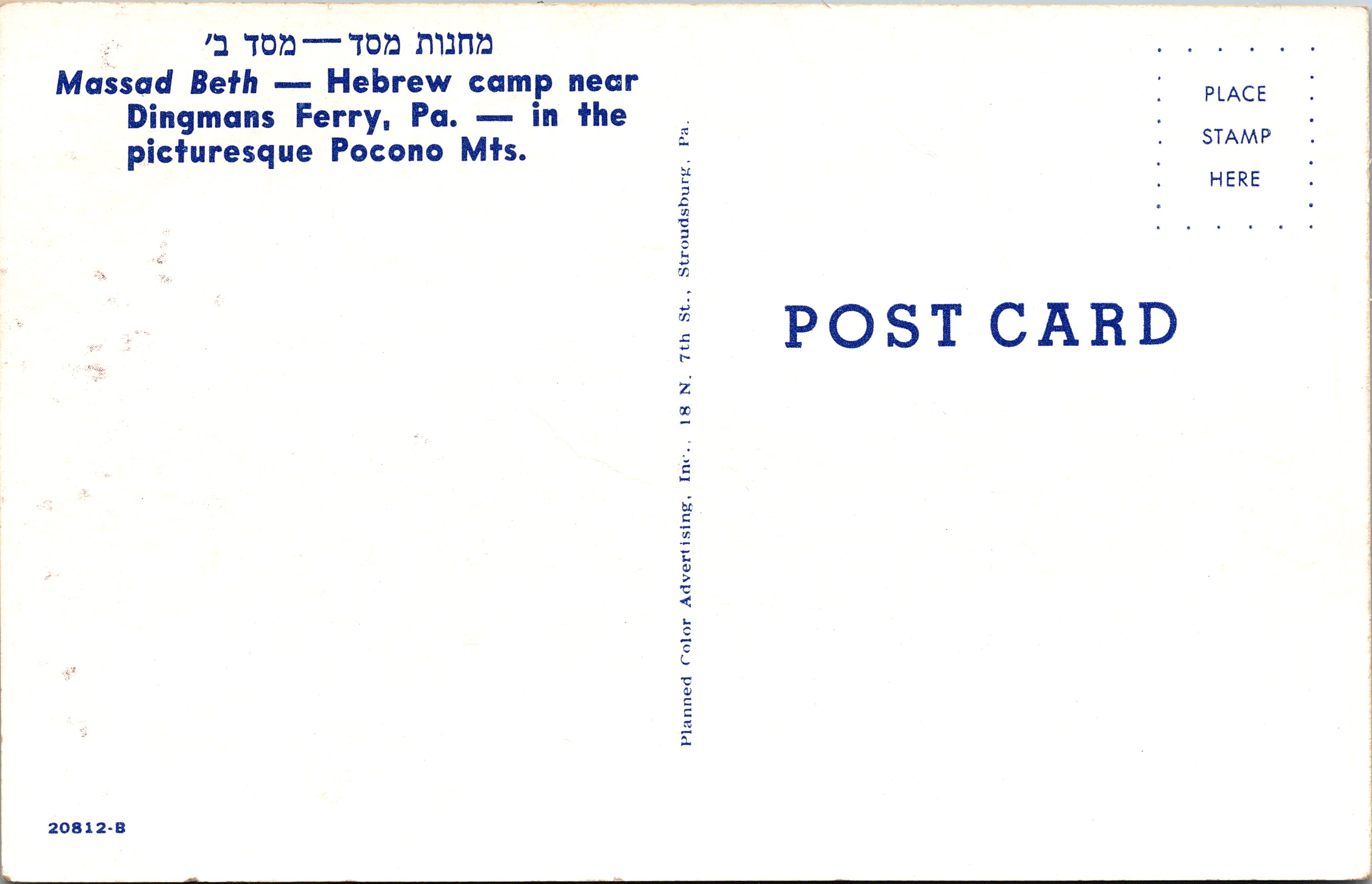
This vintage lithographic postcard features Massad Beth, a Jewish camp located in the Pocono Mountains near Dingmans Ferry, Pennsylvania. The camp was a Zionist Jewish summer camp. The camp was about camping, but also about learning the Hebrew language and Jewish culture. The camp was founded as a day camp in 1941 and grew into three sleep away camps in Pennsylvania. At it’s peak, the camp had over a thousand campers and staff each summer. The camp closed in 1981. The camps alumni include Noam Chomsky (linguist), Alan Dershowitz (attorney), and Ralph Lauren (fashion designer and executive). This card was published by Planned Color Advertising. The firm was located in Stroudsburg, Pennsylvania. SOLD

Published in: on January 11, 2024 at 12:00 pm  Leave a Comment  
Tags: , , ,

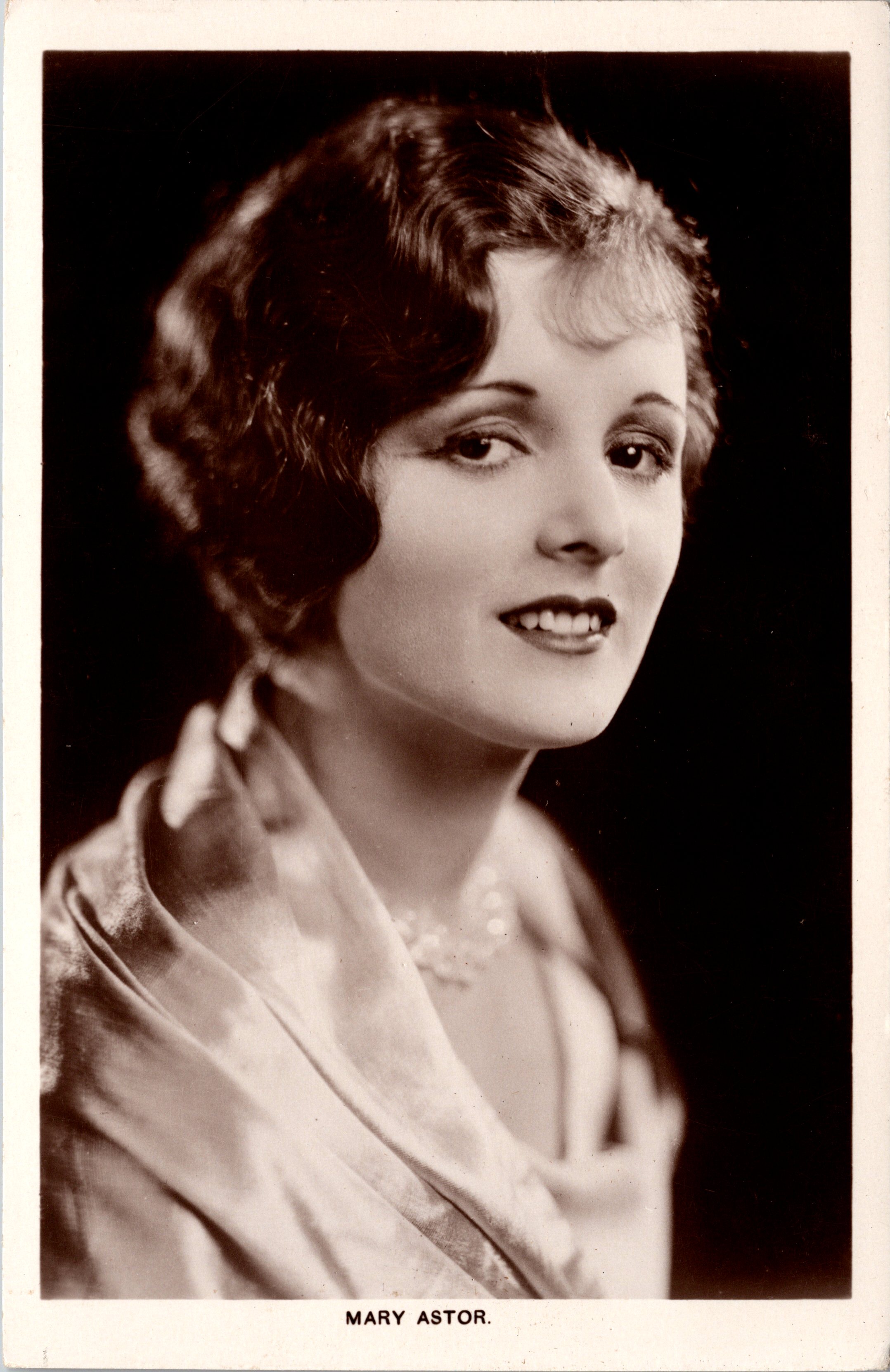
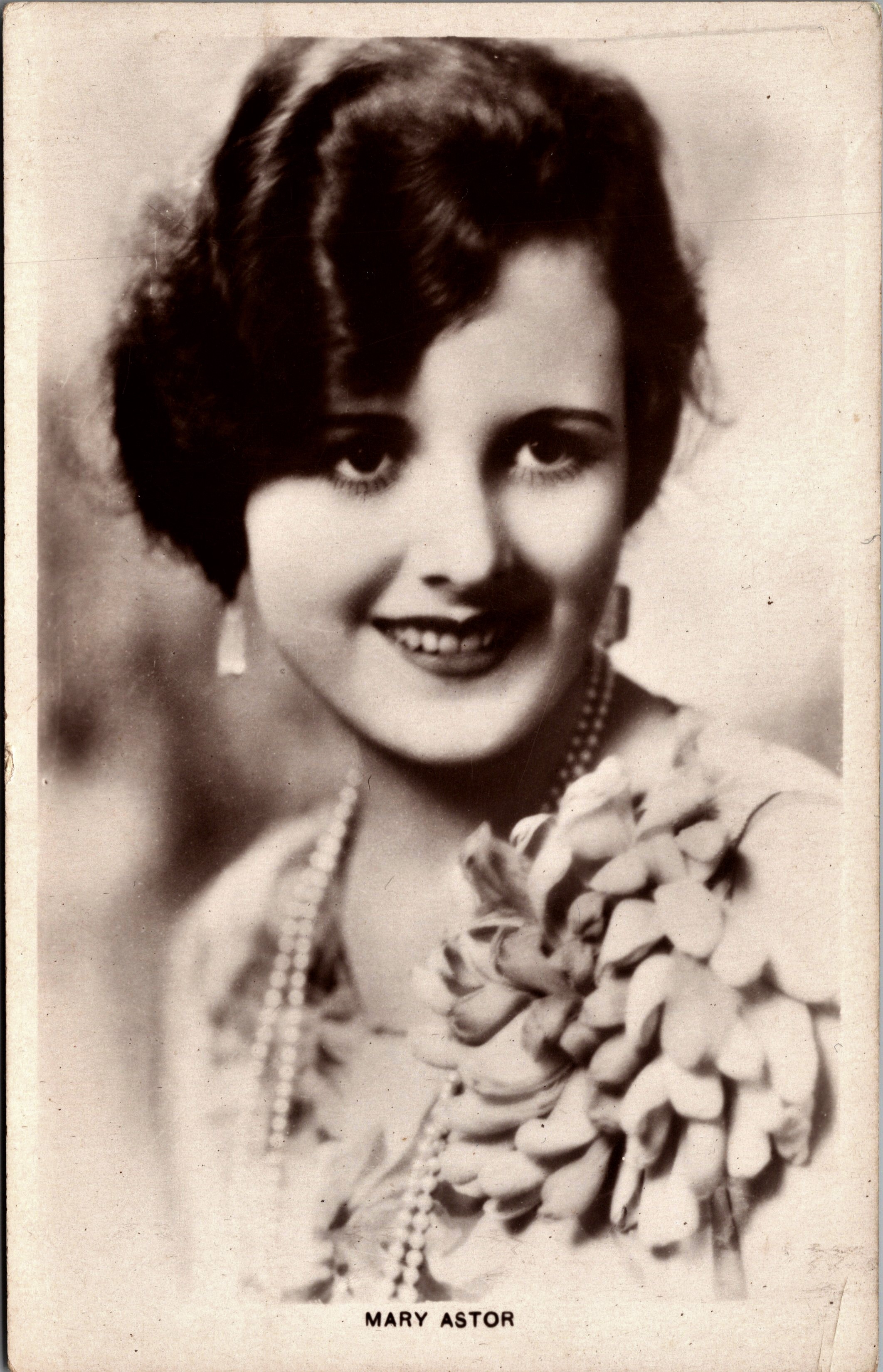
MARY ASTOR : PRETTY FILM, TELEVISION, AND STAGE ACTRESS : TRAUMATIZED BY FAMILY

POSTCARD 1

POSTCARD 2

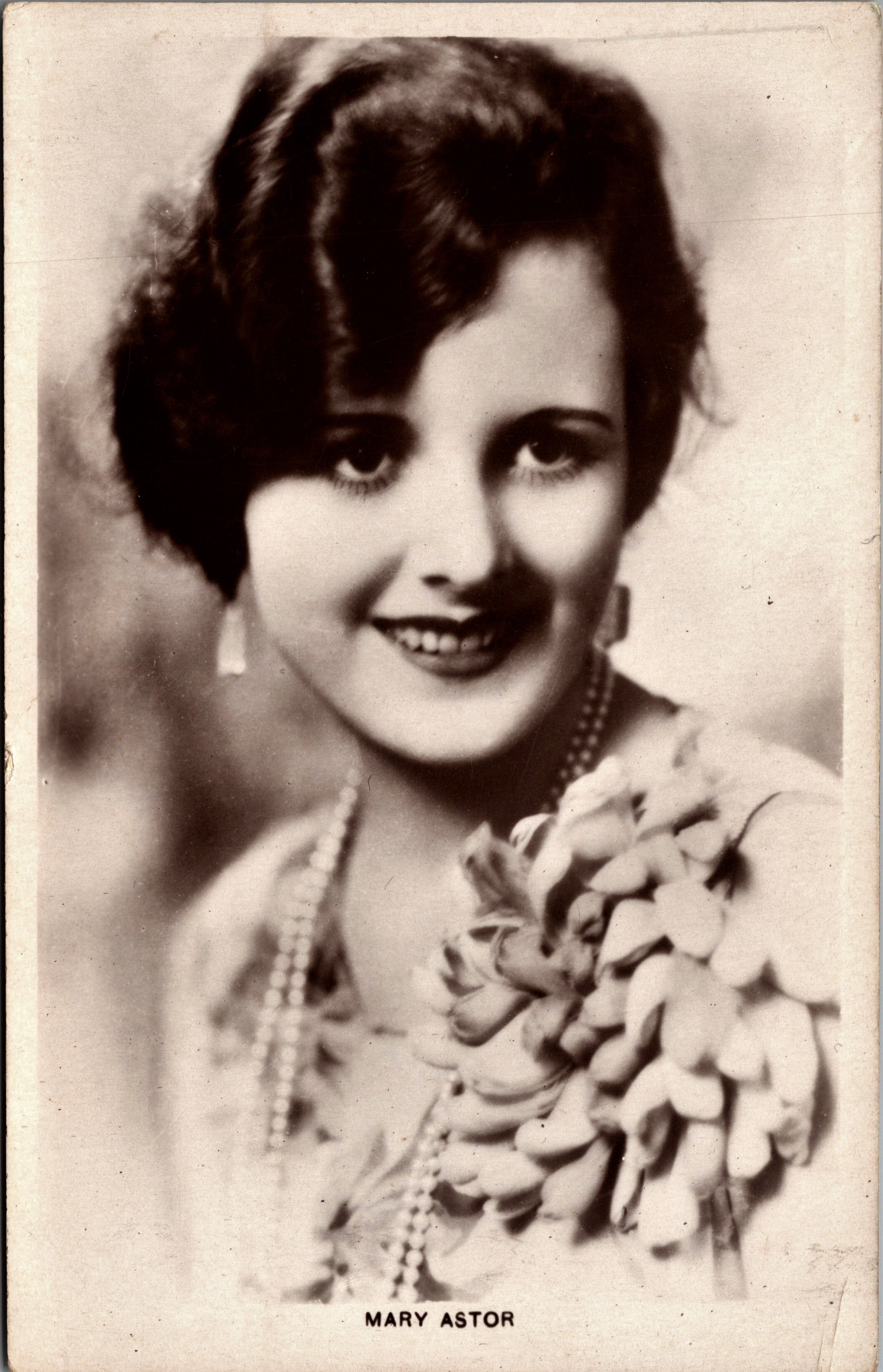
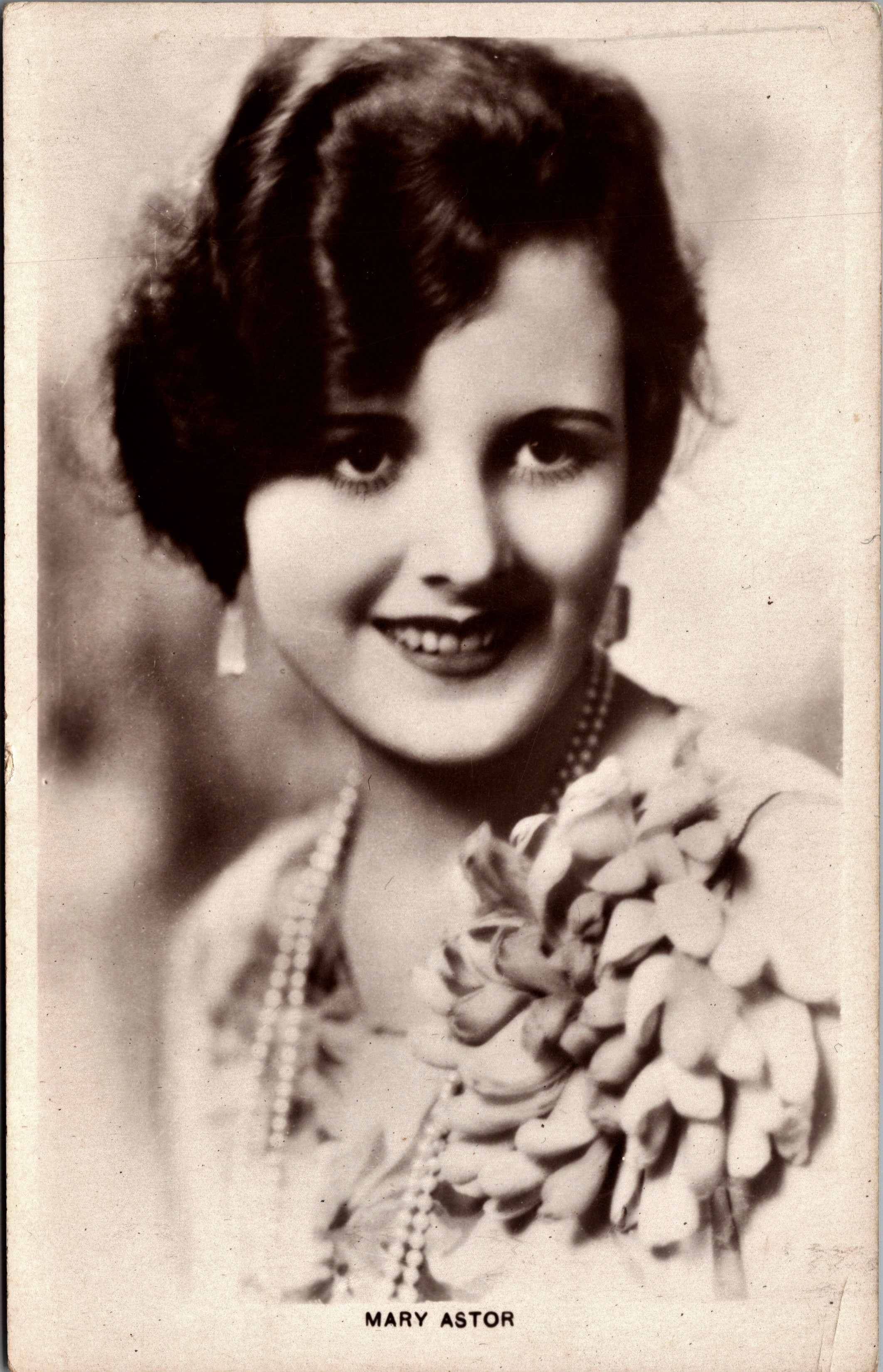
This vintage real photo postcard features American film, stage, and television actress and musician, Mary Astor (1906-1987). She played many memorable roles but she is most associated with her performance in “The Maltese Falcon” (1941). Astor also wrote five novels and an autobiography. She began her film career as a teenager by appearing in silent movies during the early 1920’s. Her career continued with the introduction of “talkies”. In 1936, Astor’s career was almost ruined by a scandal in which she had an affair with playwright George Kaufman. A custody fight with her ex-husband stigmatized her as being an adulterous wife. She managed to overcome the poor PR and in 1941, won an Academy Award fo Best Supporting Actress in “The Great Lie”.  Astor was born in Quincy, Illinois. Her father was a German teacher and her mother taught drama and elocution. Astor was home schooled by her father who also taught her the piano. In 1919, she sent her photo to a beauty contest in Motion Picture Magazine. She was chosen as a semi finalist. When she was fifteen, she and her family moved to Chicago where she took drama lessons and performed on the stage. She and her family moved to New York City so she could act in motion pictures. A Manhattan photographer asked Astor to pose for him and the resulting photographs led her to be signed by Paramount pictures. In 1921, at age fourteen, she made her film debut. In 1923, she and her family moved to Hollywood. During the filming of one movie, the underage actress was wooed off set by the significantly older actor, John Barrymore. She became a “WAMPAS Baby Star” in 1926. In Hollywood, her controlling parents kept her a virtual prisoner and lived lavishly off her earnings. They gave her a five dollar a week allowance while she was earning 2500 dollars a week. Her father was emotionally and physically abusive. She did not gain control of her salary until she was 26 years old. However, this resulted in her parents suing her for financial support.  In 1928 she married film director Kenneth Hawkes. In 1928, he was killed in a plane crash while filming sequences for a movie. After Astor appeared in a few more movies, she suffered a nervous breakdown related to the loss of her husband. She married the doctor who treated her for her psychiatric illness. By 1933, she had a child, and was seeking a divorce. Her personal life was coming apart at the seams. That is when the aforementioned scandal occurred. She continued to appear in films during the 1930’s but had entered the early stages of alcoholism. By 1949, she entered a sanitarium for alcoholics. In 1951, she experienced her third suicide attempt. Astor’s filmography credits her with 155 film appearances between 1921 and 1964. The IMDb reports that she appeared in two Broadway plays between 1945 and 1954. Astor was a very successful performer but was plagued by problems in her personal life.

Postcard 1 was published by Picturegoer as part of a series (no.240b). The firm was located in London, England. This postcard is in very good condition (see scans). 

Postcard 2 was published by Picturegoer as part of a series (no.240a). The firm was located in London, England. This postcard is in very good condition (see scans). 

Buy this Vintage Real Photo Postcard (includes shipping within the US) #3903

To purchase this item, click on the Pay with PayPal button below

$15.75

Buy this Vintage Real Photo Postcard (includes International shipping outside the US) #3903

To purchase this item, click on the Pay with PayPal button below

$25.00

mary-astor-240a_0001-1

Buy this Vintage Real Photo Postcard (includes shipping within the US) #5171

To purchase this item, click on the Pay with PayPal button below

$14.00

mary-astor-240a_0001-2

Buy this Vintage Real Photo Postcard (includes International shipping outside the US) #5171

To purchase this item, click on the Pay with PayPal button below

$24.00

Postcard 1

Postcard 2

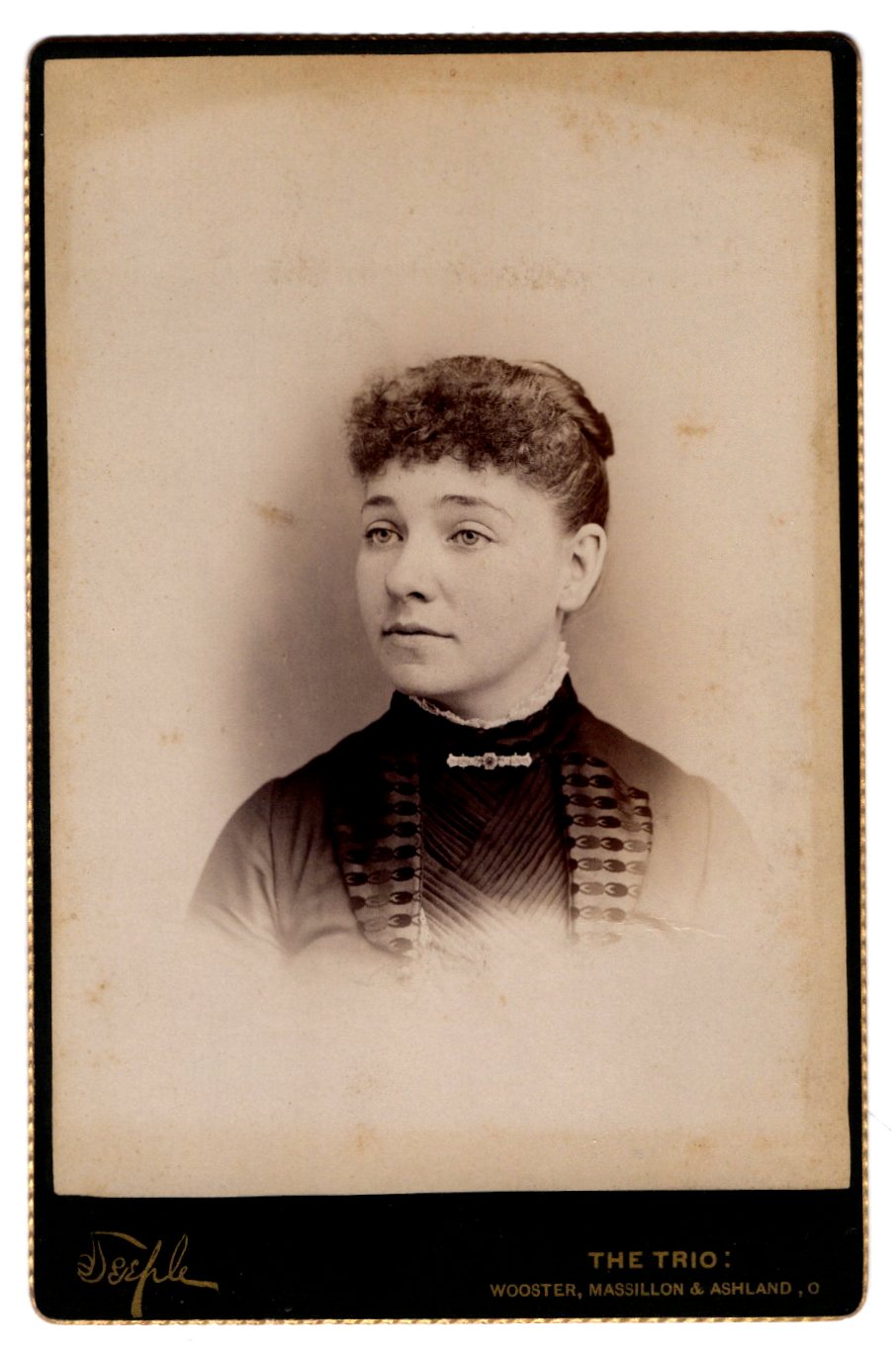
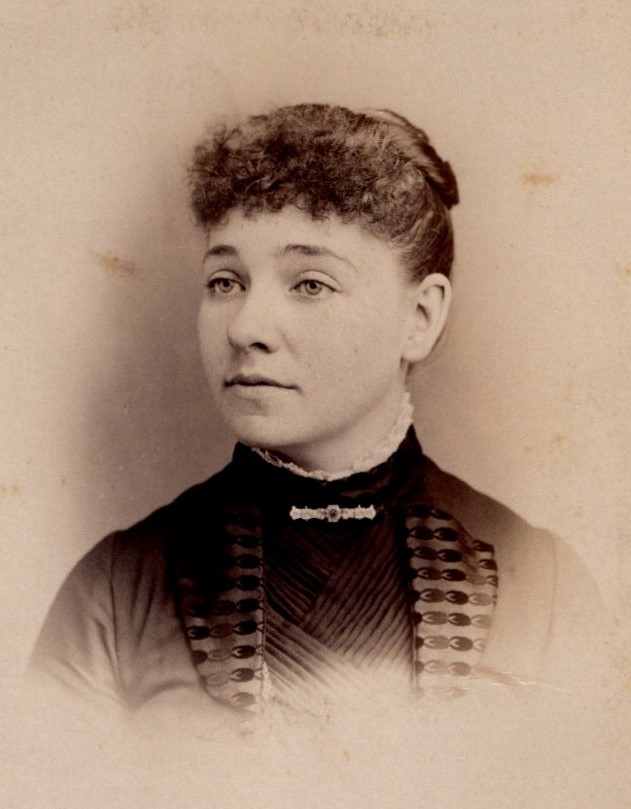
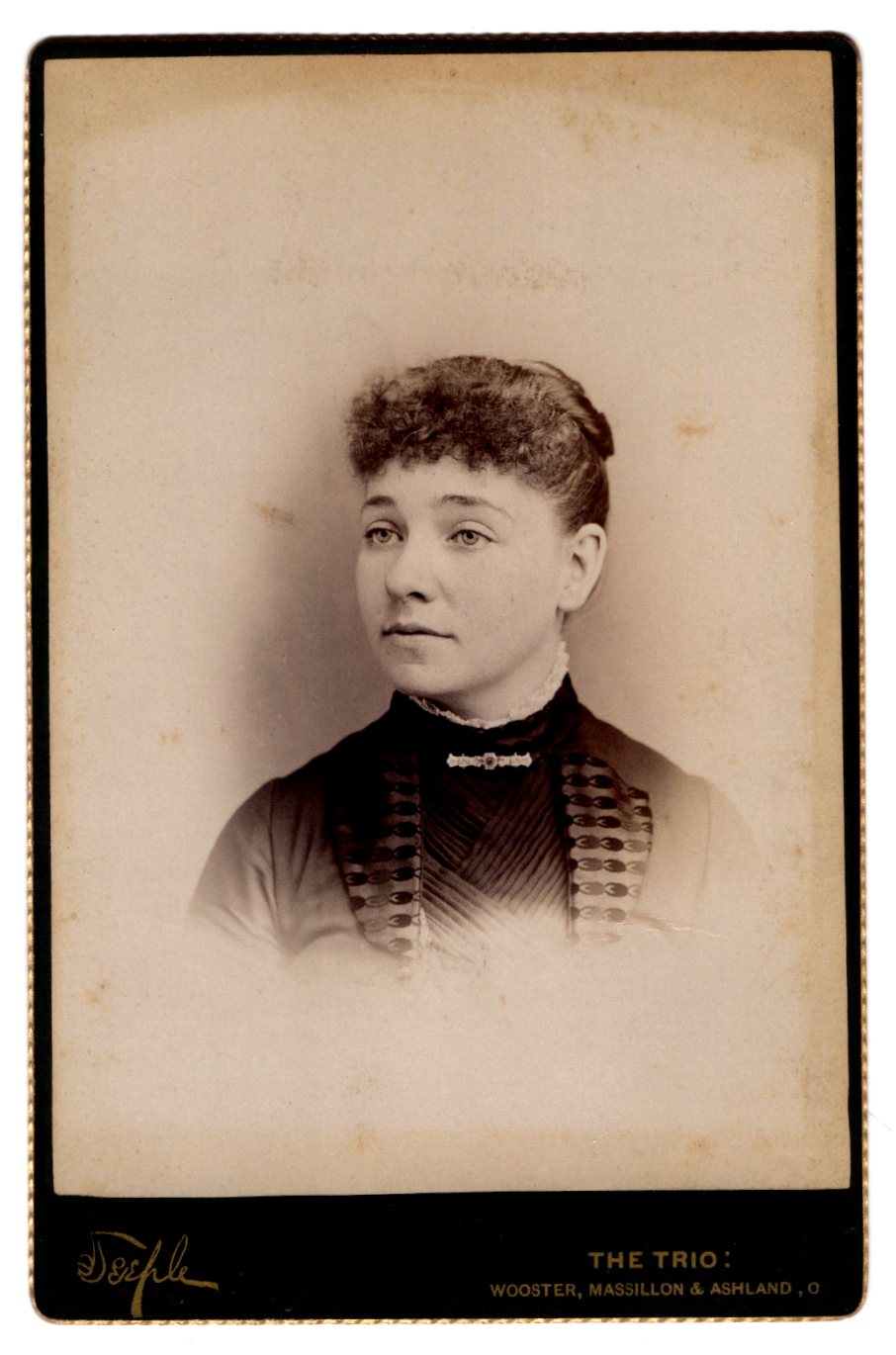
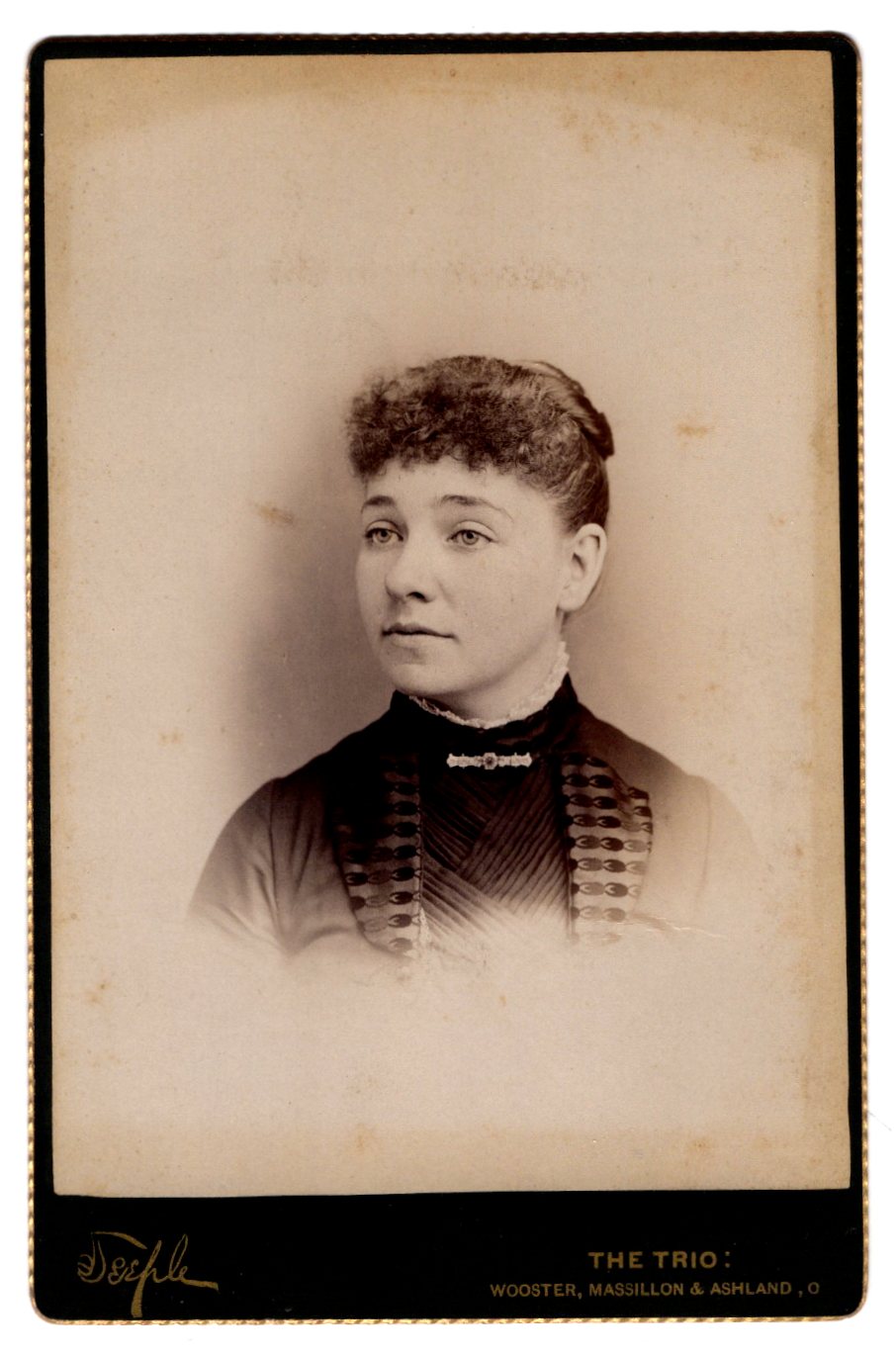
PORTRAIT OF A WOMAN : WOOSTER, MASSILLON, & ASHLAND, OHIO : CABINET CARD

This cabinet card features a portrait of an Ohio woman. She is wearing a collar brooch. This cabinet card photograph was taken at a studio in either Wooster, Massillon, or Ashland, Ohio. The photographer advertises his studios as “The Trio”. This cabinet card portrait is in fair condition (see scans). 

5794-1

Buy this Cabinet Card Photograph (includes shipping within the US) #5794

To purchase this item, click on the Pay with PayPal button below

$12.00

5794-3

Buy this Vintage Original Cabinet Card (includes International shipping outside the US) #5794

To purchase this item, click on the Pay with PayPal button below

$21.00

Published in: on January 9, 2024 at 12:00 pm  Leave a Comment  
Tags: , ,

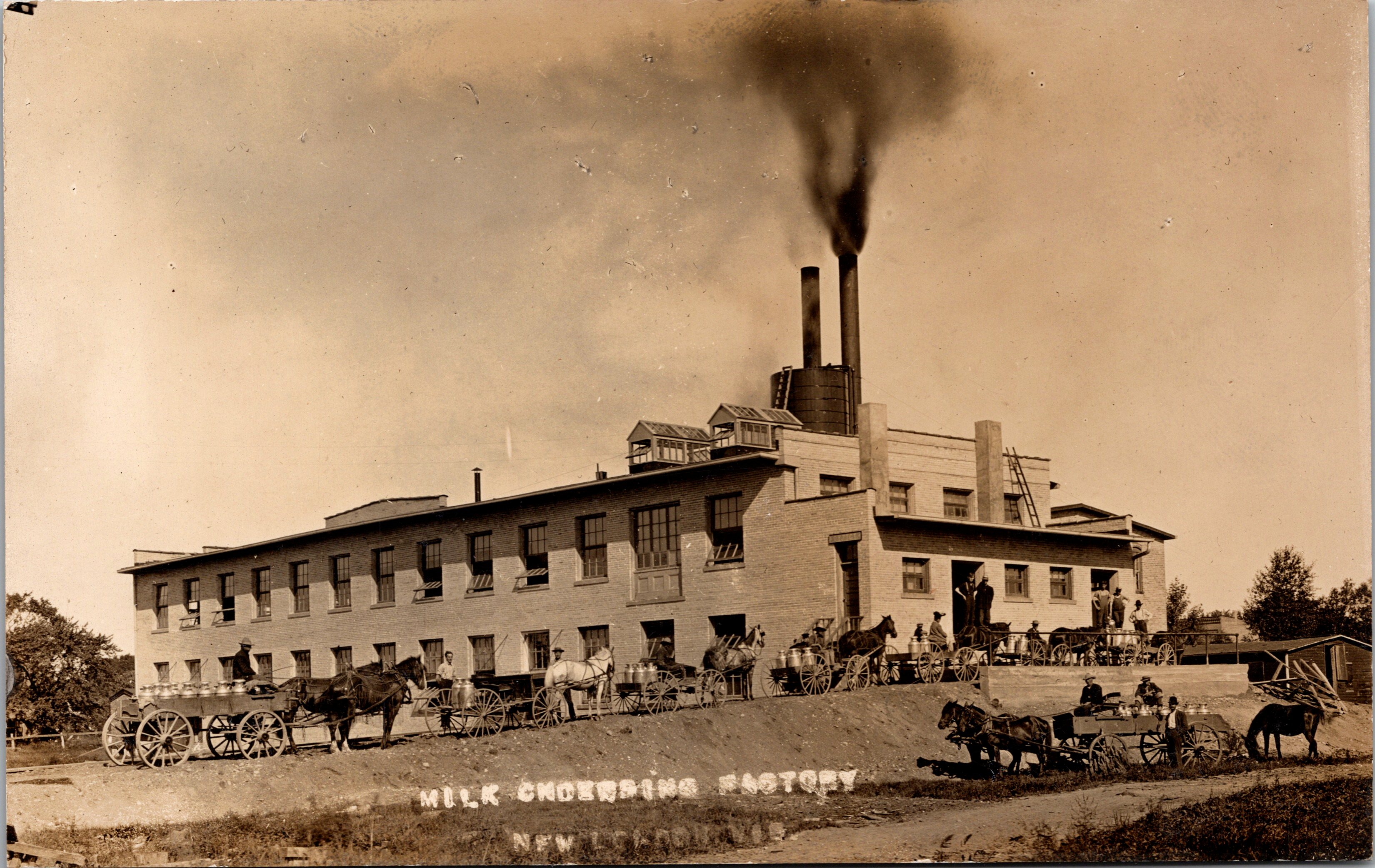
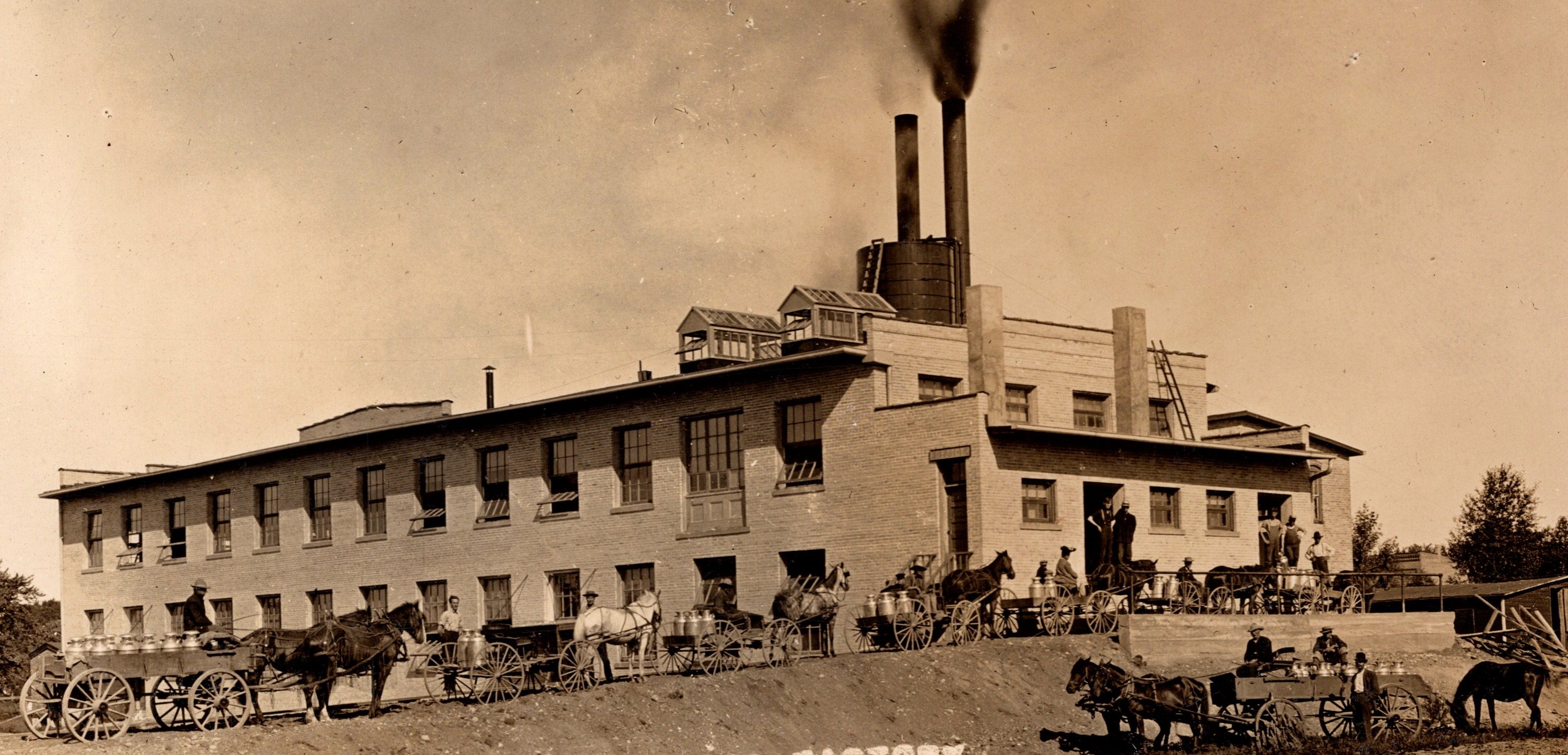
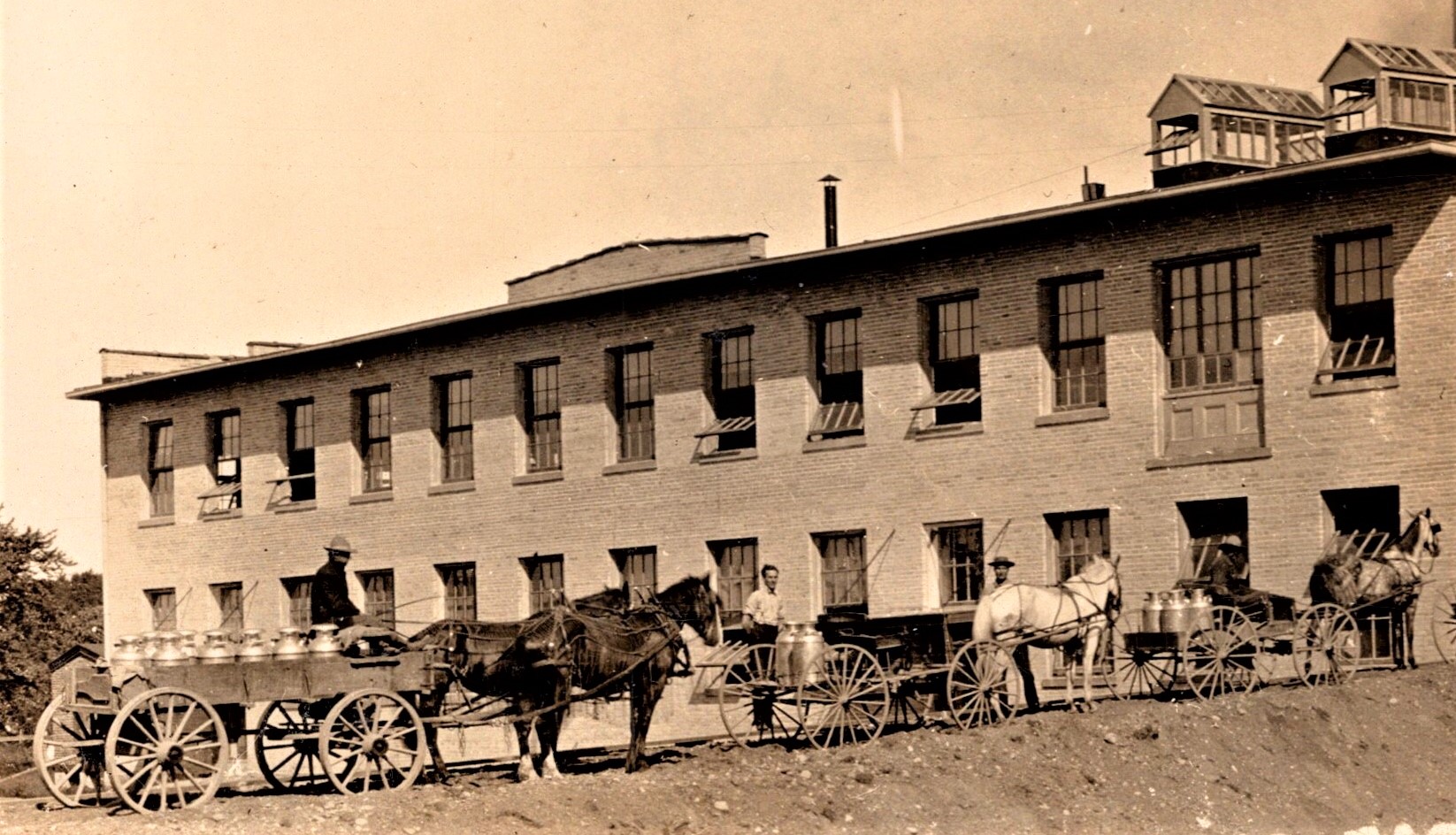
A MILK CONDENSING FACTORY : NEW LONDON, WISCONSIN : DELIVERY WAGONS & HORSES

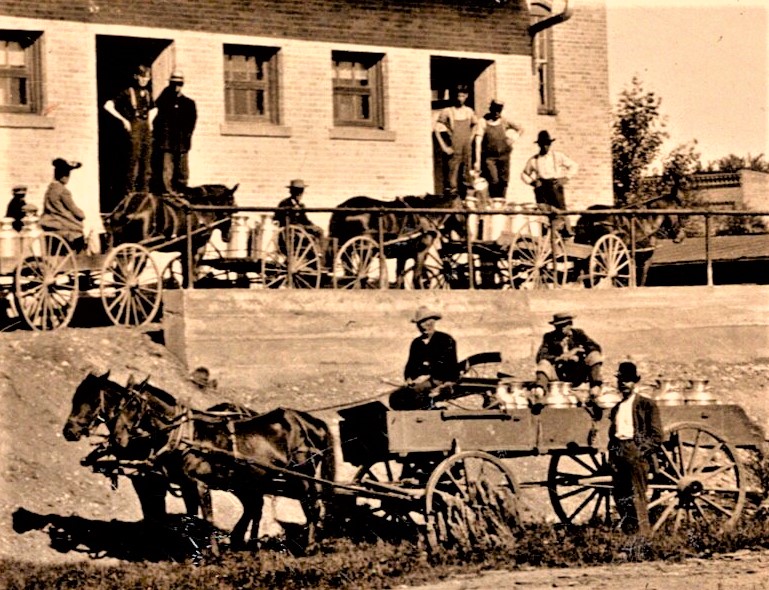
This vintage real photo postcard fetures a Milk Condensing Factory in New London, Wisconsin. Note the lined up horse drawn wagons holding large milk containers. This card was published by the McClellan studio, located in New London. This postcard is in very good condition (see scans).

milk-1-1

Buy this Vintage Real Photo Postcard (includes shipping within the US) #5168

To purchase this item, click on the Pay with PayPal button below

$22.00

milk-1-2

Buy this Vintage Real Photo Postcard (includes International shipping outside the US) #5168

To purchase this item, click on the Pay with PayPal button below

$32.00

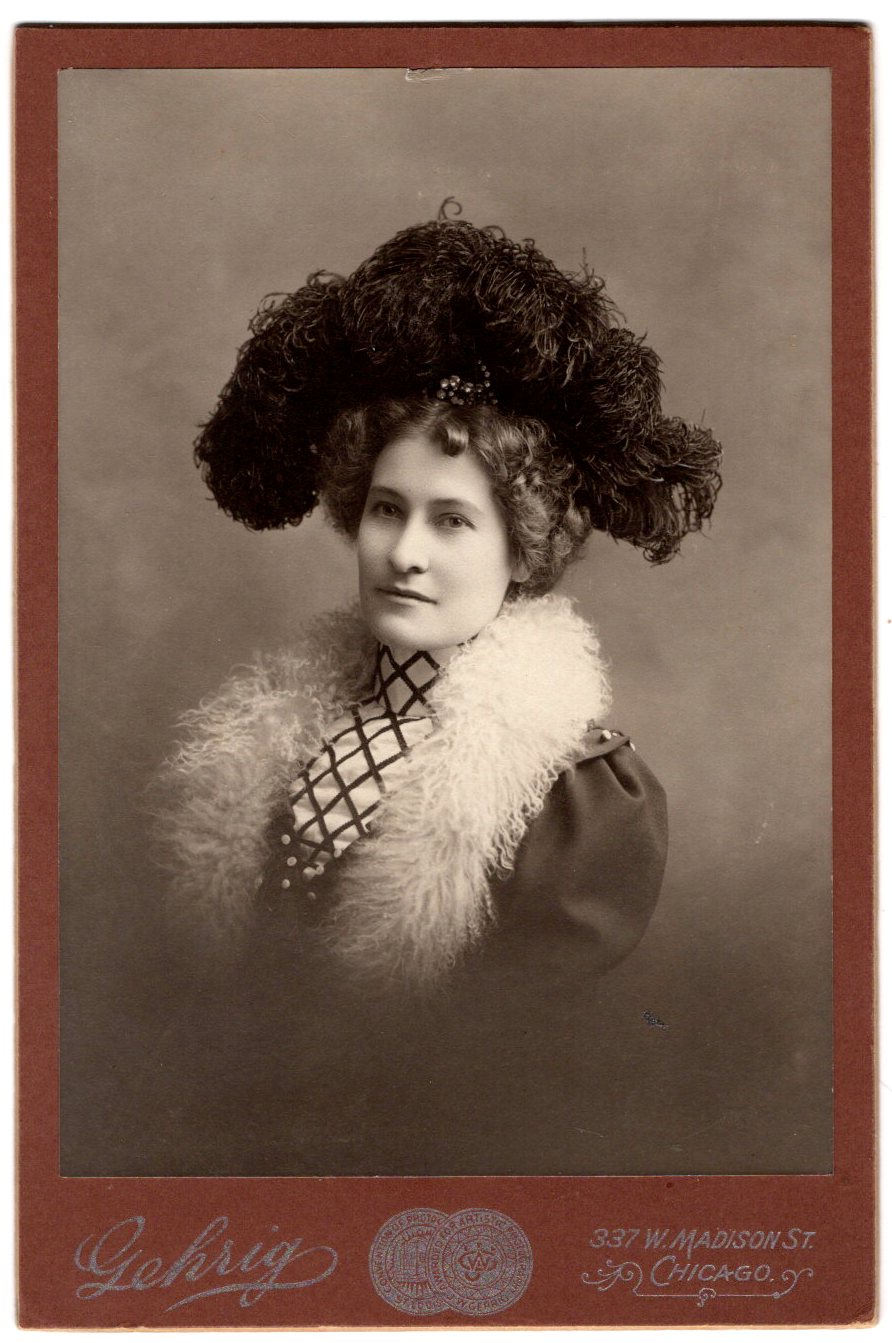
GEHRIG HITS HOMERUN WITH PORTRAIT OF STYLISH YOUNG WOMAN IN CHICAGO, ILLINOIS

Joseph W. Gehrig “hits one out of the park” with this cabinet card portrait of a fashionable and attractive woman in Chicago, Illinois. She looks magnificent with her white fur draped around her neck and her black feather hat. The subject of this photograph is clearly a woman of means. The photographer of this  excellent photograph, Joseph Gehrig (1847-1915), was active in Chicago between 1876 and 1905. He produced many portraits of celebrities, society folk, and performing artists. He began his career in Dubuque, Iowa. This cabinet card has some corner wear and the image’s top center edge is imperfect. This cabinet card portrait is in overall very good condition (see scans). 

5793-1

Buy this Cabinet Card Photograph (includes shipping within the US) #5793

To purchase this item, click on the Pay with PayPal button below

$54.00

5793-4

Buy this Vintage Original Cabinet Card (includes International shipping outside the US) #5793

To purchase this item, click on the Pay with PayPal button below

$65.00

Published in: on January 7, 2024 at 6:00 pm  Comments (3)  
Tags: , ,

FROMENTIN : PRETTY FRENCH PERFORMER : RISQUE : SAZERAC : PIPROT : PARIS : RPPC

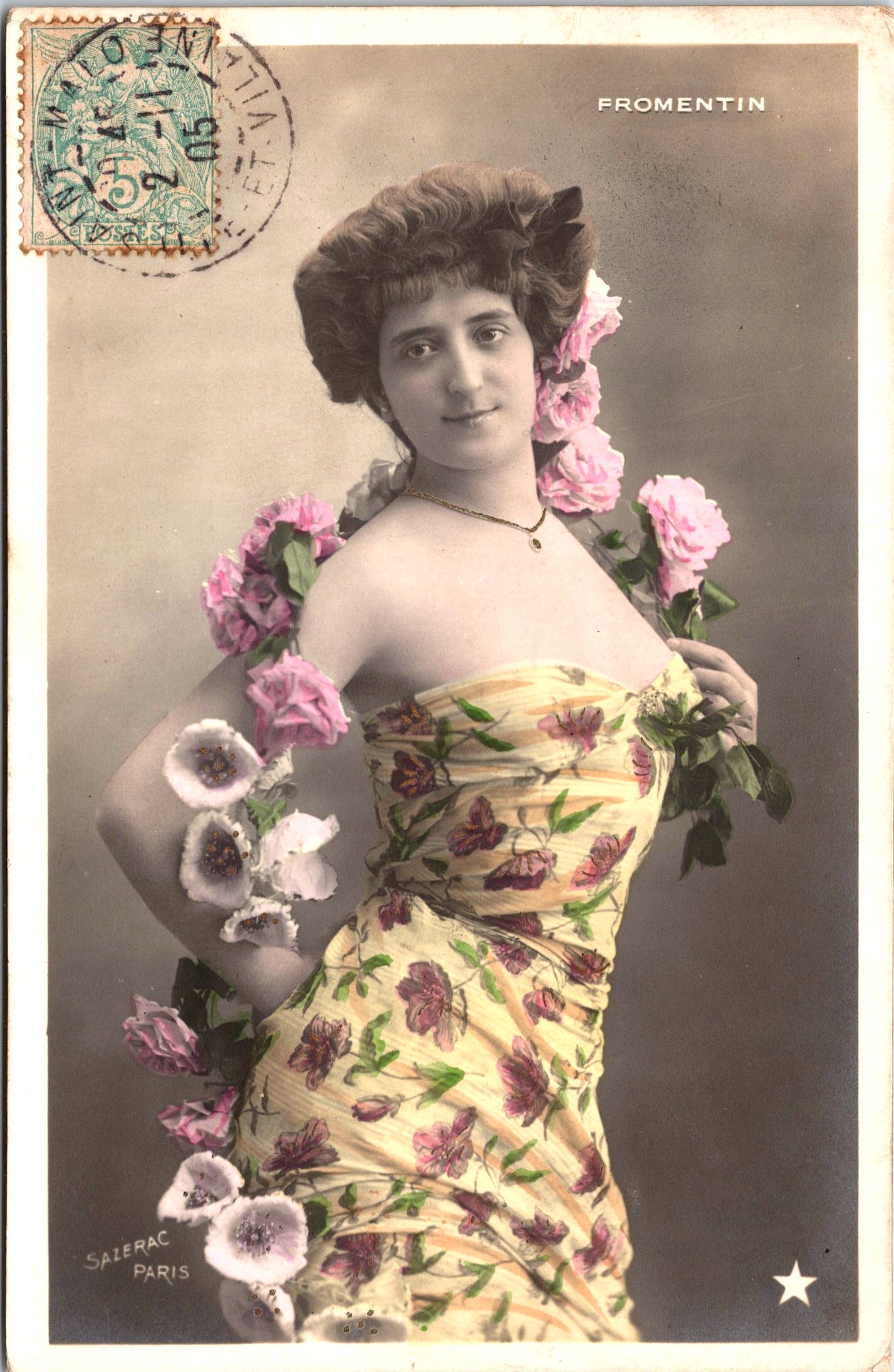
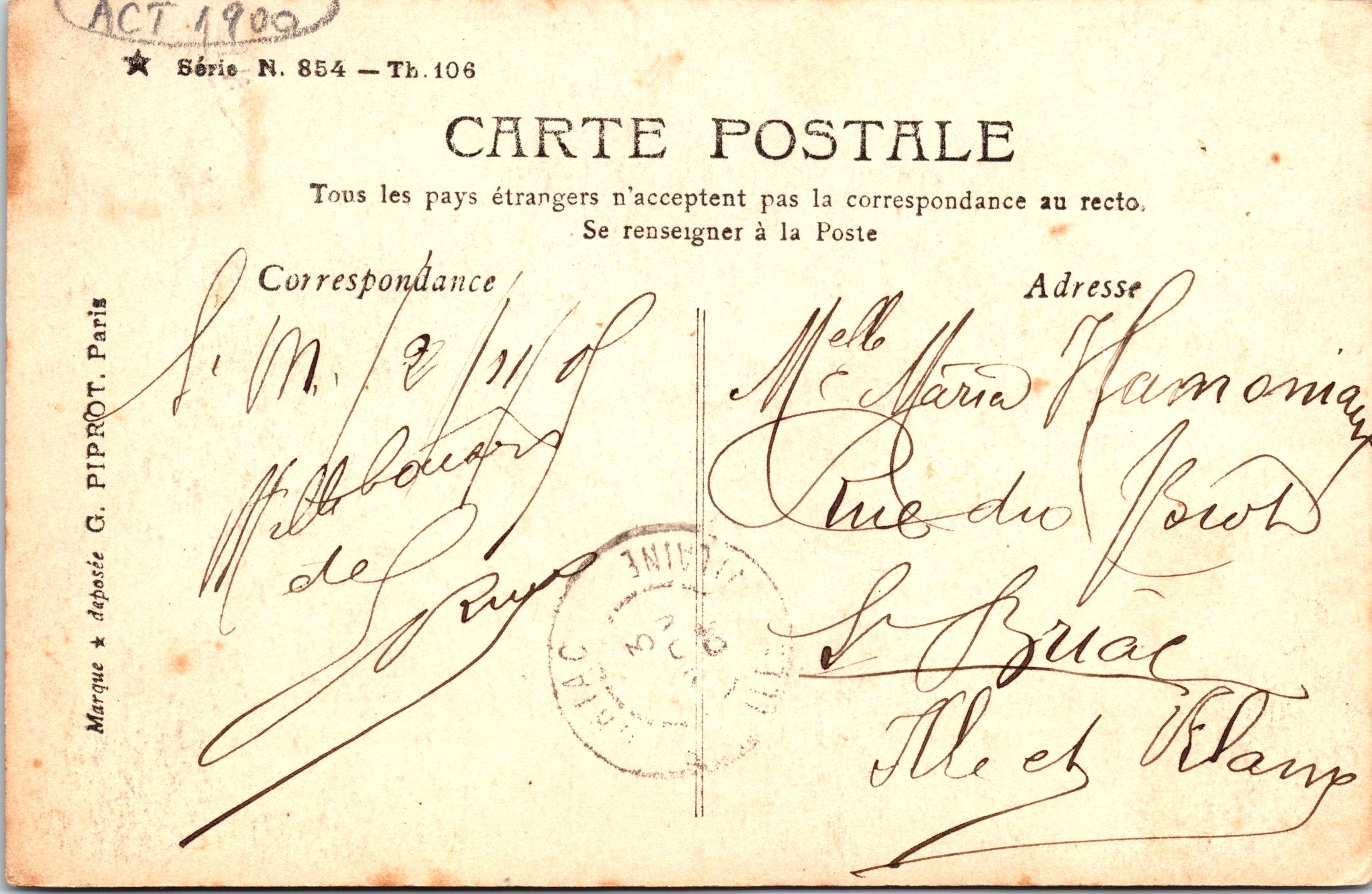
This risque vintage real photo postcard features a fashionable performer named Fromentin.  The card is color tinted. She has a string of flowers wrapped around her shoulders and her dress is a flower pattern. The combination is a nice touch. “The Theatre” (1882) states that Fromentin, among others, present grace and beauty difficult to match. Fromentin was photographed by Sazerac. He was a photographer well known for his portraits of the showgirls of Paris. The publisher of this postcard, was Monsieur G. Piprot, of “Etoille” or “Star” publishing in Paris. The card is part of a series (No.854). The postcard has a postmark from 1905.  SOLD

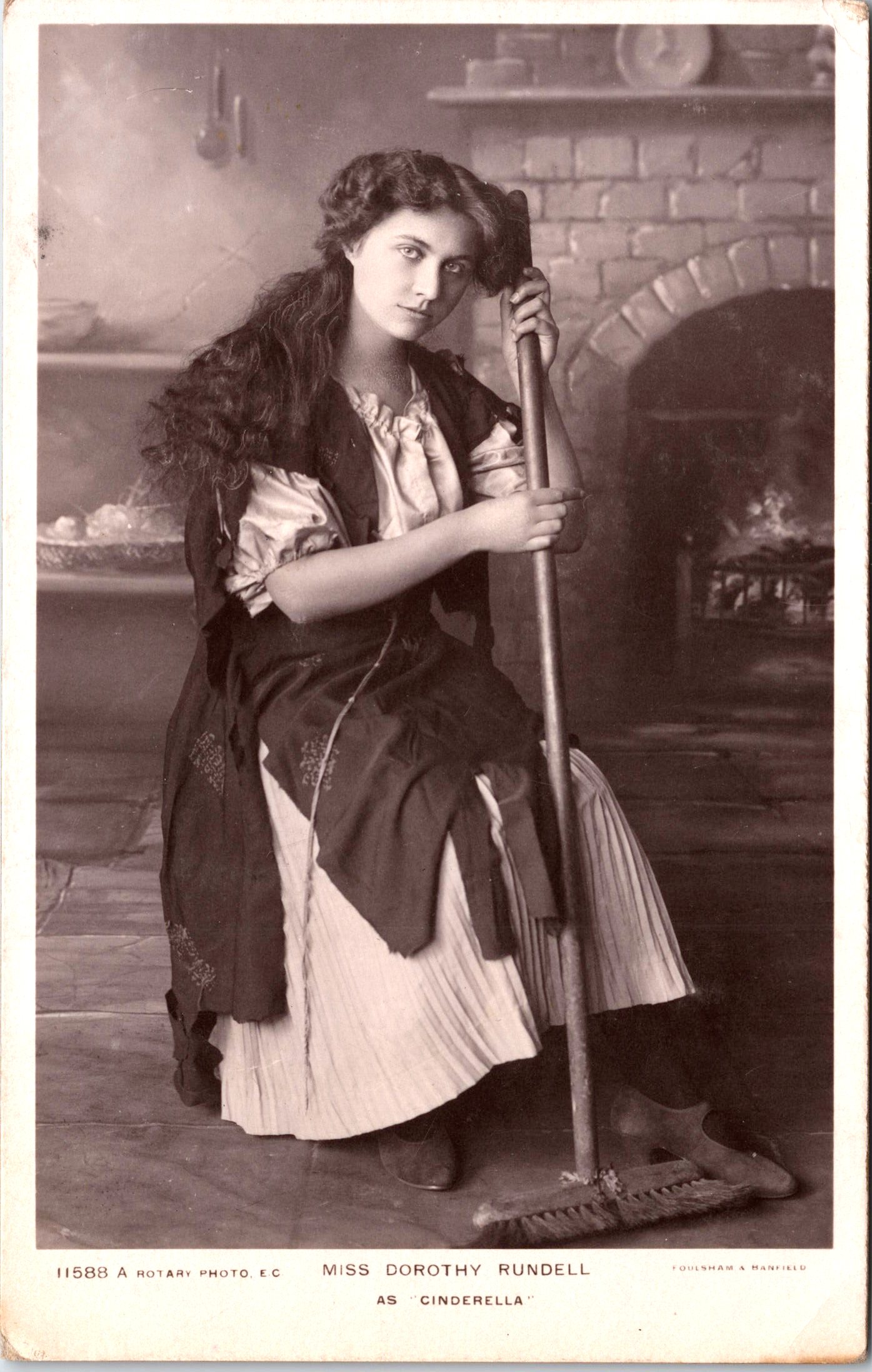
MISS DOROTHY RUNDELL AS CINDERELLA : IN COSTUME : ROTARY PHOTO : RPPC

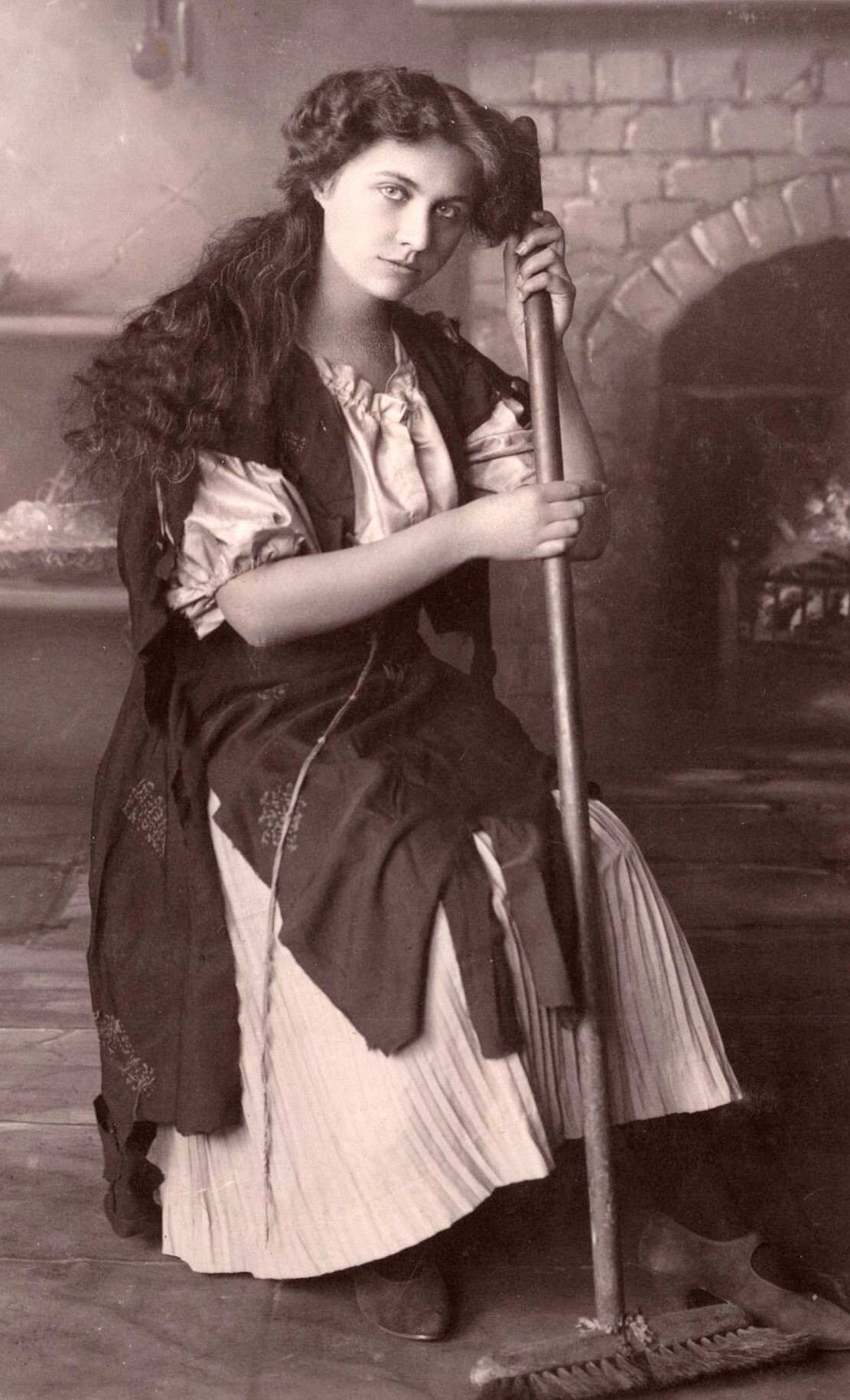
This vintage real photo postcard features actress Dorothy Rundell in costume for her role as Cinderella. She is holding a broom and has a look of despondency. Rundell was a sitter for six portraits in the collection of England’s National Portrait Gallery. In 1913, Rundell appeared in  “This Way Madam! at London’s Queens Theatre. A World War I website presents an article about Captain Leopold Profeit. The author mentions that in 1915, about nine months after he enlisted into the army, Profeit married Dorothy Rundell. She was 26 years old, nine years younger than Captain Profeit. In 1917, less than two years after the nuptials, Profeit was killed at the Battle of Dorian fighting against the Bulgarians. A review in the “Tatler” (1917) reports that Dorothy replaced Doris Keane in the London production of “Romance”. The reviewer wrote that Dorothy “won all hearts by her personal charm, and delicate sensibility”.  This postcard was published by Rotary Photo as part of a series (No.11588 A). The photo of Miss Rundell was taken by the Foulsham & Banfield studio.  Frank Foulsham and A. C. Banfield operated a studio from the 1900’s through the 1920’s and were well known celebrity photographers. SOLD