MAXINE ELLIOTT : STAGE & FILM ACTRESS : BUSINESS WOMAN : CELEBRITY LOVERS : RPPC

POSTCARD 1

POSTCARD 2
POSTCARD 3 (SOLD)
POSTCARD 4 (SOLD)
POSTCARD 5 (SOLD)
POSTCARD 6 (SOLD)
POSTCARD 7 (SOLD)
POSTCARD 8 (SOLD)

This vintage real photo postcard (Postcard 1) features a portrait of beautiful stage and film actress, and businesswoman, Maxine Elliott (1868-1940). Her photograph was taken by celebrity photographer Benjamin Falk at his New York City studio. Elliott was more than a stage actress. She managed her own theater and experimented with silent films in the 1910’s. Elliott was an extremely popular actress. Apparently she was popular with the men too. It is thought that she had affairs with famous people including King Edward VII and J. P. Morgan. It is also reported that she dated baseball hall of famer, John Montgomery Ward and heavyweight champion Gentleman James Corbett. During World War I she was very involved with the cause for Belgian relief. Elliott was born in Rockland, Maine. Her father was a sea captain. She had at least three siblings including her sister Gertrude Elliott, who also became a successful actress. When Maxine was 15, she was seduced and impregnated by a 25 year-old man. She may or may not have married the man but it is known that she lost the baby. In 1890 she made her first stage appearance. Her big break came in 1895 when she was hired by Augustin Daly to be the supporting actress for the highly acclaimed actress, Ada Rehan. In 1898, after divorcing husband number one, she married comedian Nat C. Goodwin. The two starred together in a number of productions including “Nathan Hale” and “The Cowboy and the Lady”. In 1903, Maxine appeared in the Broadway production of “Her Own Way” (1903). The play launched Maxine into stardom. In 1905, the play went to London where King Edward VII requested an introduction to the pretty actress. They met and then rumors started about the pair having an intimate relationship. In 1908, Goodwin obtained a divorce from Elliott. This is about the time she met 70 year-old J. P. Morgan. They became friends and rumors of their romantic involvement were never confirmed. Financial advice from Morgan helped her become a wealthy woman. The same year as her divorce, she opened her own theater, “The Maxine Elliott” in New York City. She was both the owner and the manager. In fact, she was the only woman in the US, at the time, managing her own theater. In regard to acting on Broadway, Elliott had an extensive resume. She appeared in 22 Broadway productions between 1894 and 1920. In 1913, she began acting in silent films. The IMDb reports that she was in five films including “From Dusk to Dawn” (1913), “Fighting Odds” (1917), and “The Eternal Magdalene” (1919). In 1913, Elliott went to England and started dating tennis star Anthony Wilding, fifteen years her junior. According to one source, the pair planned to marry, but he was killed in action in World War I. As a result, Elliott became obsessed with the war and moved to Belgium where she volunteered her money and time toward Belgian relief. It is reported that she also nursed wounded soldiers. Belgium recognized her by awarding her the Belgian Order of the Crown. Elliott retired from the stage in 1920. She stated that she “wished to grow middle-aged gracefully”. This postcard portrait features a young and beautiful Maxine Elliott. This image is a beautiful remnant of turn of the century theater history. This postcard was published by the Rotograph Company which was based in New York City. The postcard is part of a series (No.B888). SOLD

Postcard 2 features a photograph taken by female celebrity photographer, Lizzie Caswall Smith. Lizzie Caswall Smith (1870-1958) was a British photographer who operated in the early 1900’s. She specialized in photographing members of society and celebrities. Many of her photographs were used for postcards. She was involved in the Women’s Suffrage movement and photographed many of the leading suffragettes. She also photographed many actors including Billie Burke and Maude Fealy. She operated the Gainsborough Studio from 1907 through 1920 (309 Oxford Street) and moved to a new location (90 Great Russell Street) where she remained until she retired in 1930 at the age of 60 years-old. Her most famous photograph is a portrait of Florence Nightingale taken in 1910. It was auctioned in 1908 and sold for 5500 pounds which is an equivalent today of nearly 8,000 dollars. The National Portrait Gallery has 84 portraits associated with Lizzie Caswall Smith. This postcard was published by the Rotograph Company which was based in New York City. The postcard is part of a series (No.B636). SOLD

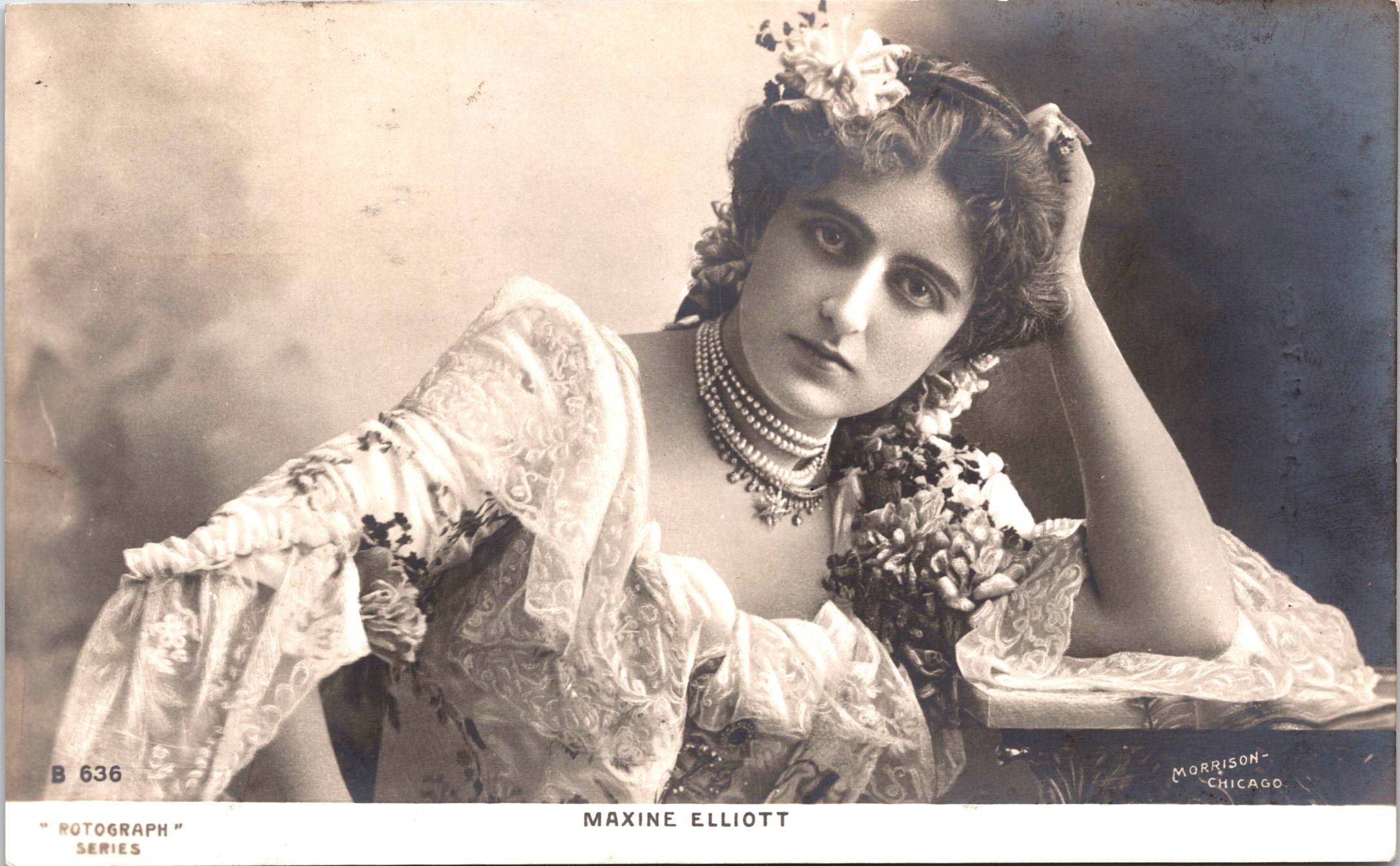
Postcard 3 features a nice portrait of Maxine Elliott. This image, taken by William Morrison (Chicago, Illinois) is a beautiful remnant of turn of the century theater history. This postcard was published by the Rotograph Company, which was based in New York City. The postcard is part of a series (No.B636).  (SOLD)

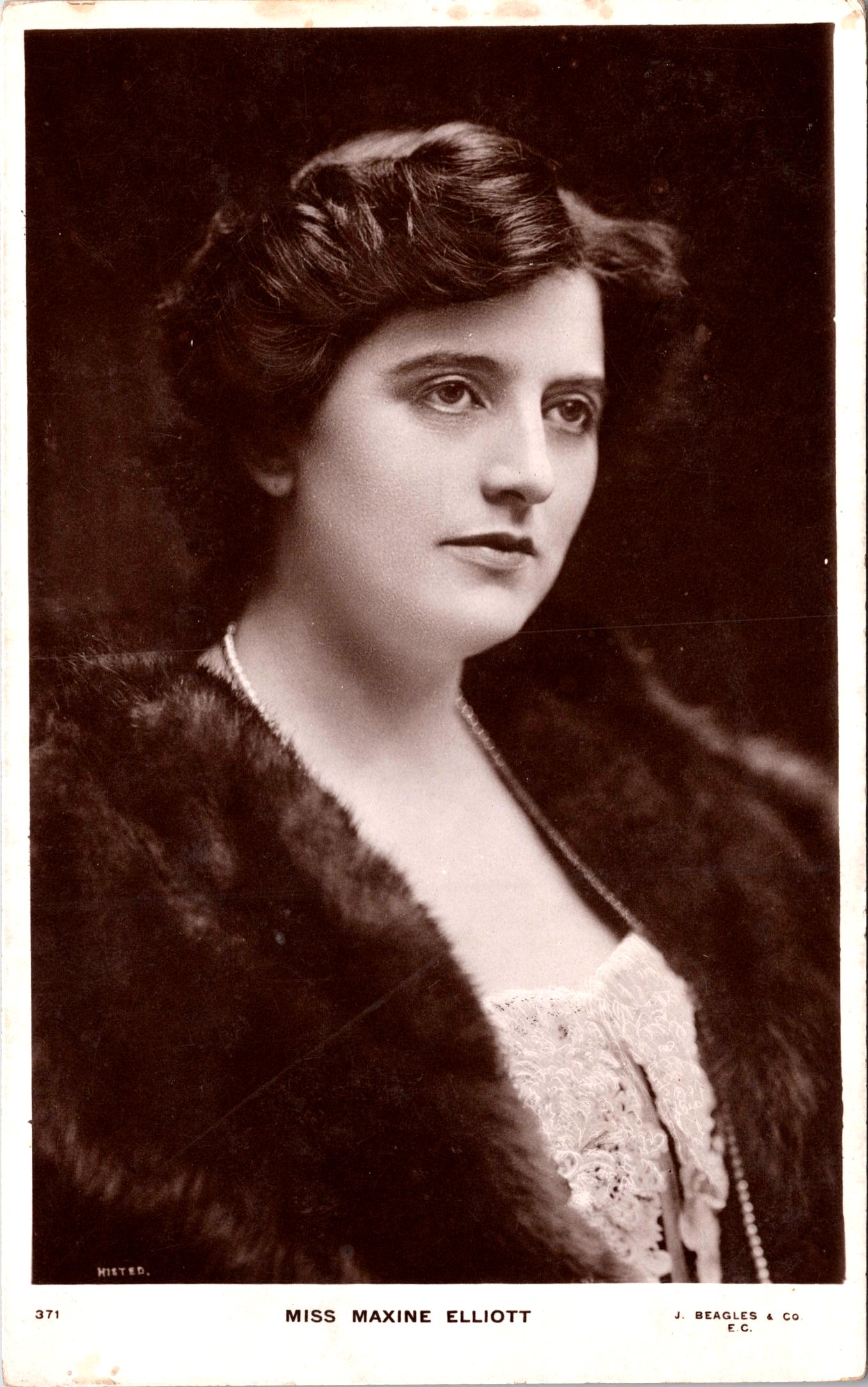
Postcard 4 features Miss Elliott’s portrait by Ernest Walter Histed (1862-1947). Histed was born in England but achieved his success as a photographer in Chicago, and later, in Pittsburgh. He then returned to England and opened a photography studio there. His subjects there included Clara Butt (Opera Star) Pope Pius X, and the Empress of Germany. Histed returned to the US and opened a studio on Fifth Avenue in New York City. He later moved to Palm Beach, Florida and continued his profession until 1934. The Museum of the City of New York has a large collection of his work. The National Portrait Gallery (England) has 32 of his photographs in their collection. This postcard was published by London’s J. Beagles & Co. as part of a series (No. G386).The company was started by John Beagles (1844-1909). The company produced a variety of postcards including an extensive catalog of celebrity (stage and screen) portrait postcards. After Beagle’s death, the business continued as J. Beagles & Co. until it closed in 1939.  (SOLD)

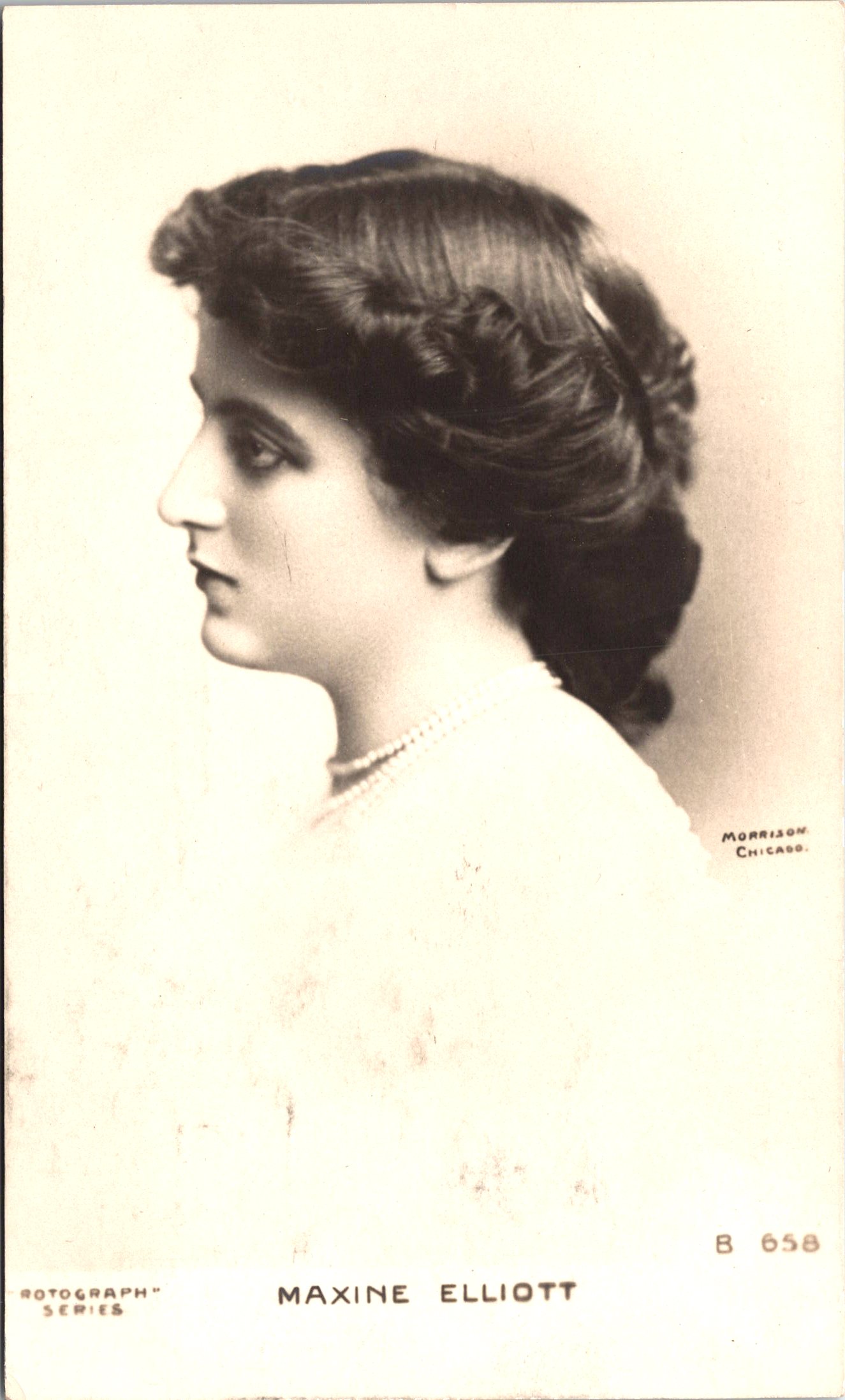
Postcard 5 comes from the studio of celebrity photographer, William McKenzie Morrison of Chicago, Illinois. Morrison’s studio was in the Haymarket  theater building. This postcard was published by the Rotograph Company which was based in New York City. The postcard is part of a series (No.B658).  (SOLD)

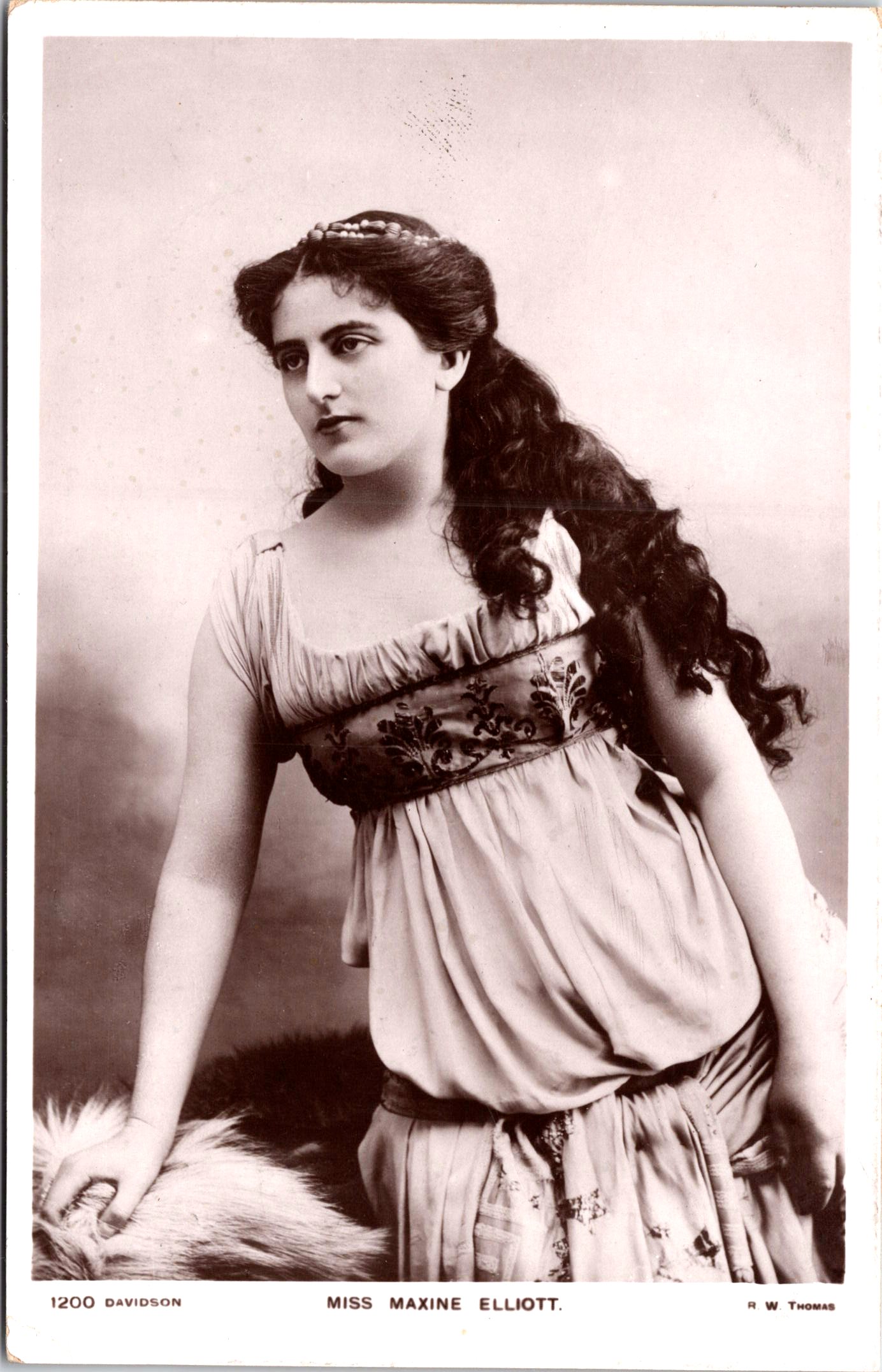
Postcard 6 features a pretty portrait of Miss Elliott taken by R. W. Thomas.  It is likely that he is the same man that authored “The Modern Practice of Photography” (1927).This postcard was published by London’s Davidson Bros. as part of a series (No.1200). The message from the sender of this card introduced me to a new word. The writer asks “Isn’t this a beauteous maiden?”. I looked up the word “beauteous” to see if it existed. I learned that the word exists and means “beautiful”. I also learned that “Beauteous” is a word that is customarily used in literature and not conversation. (SOLD)

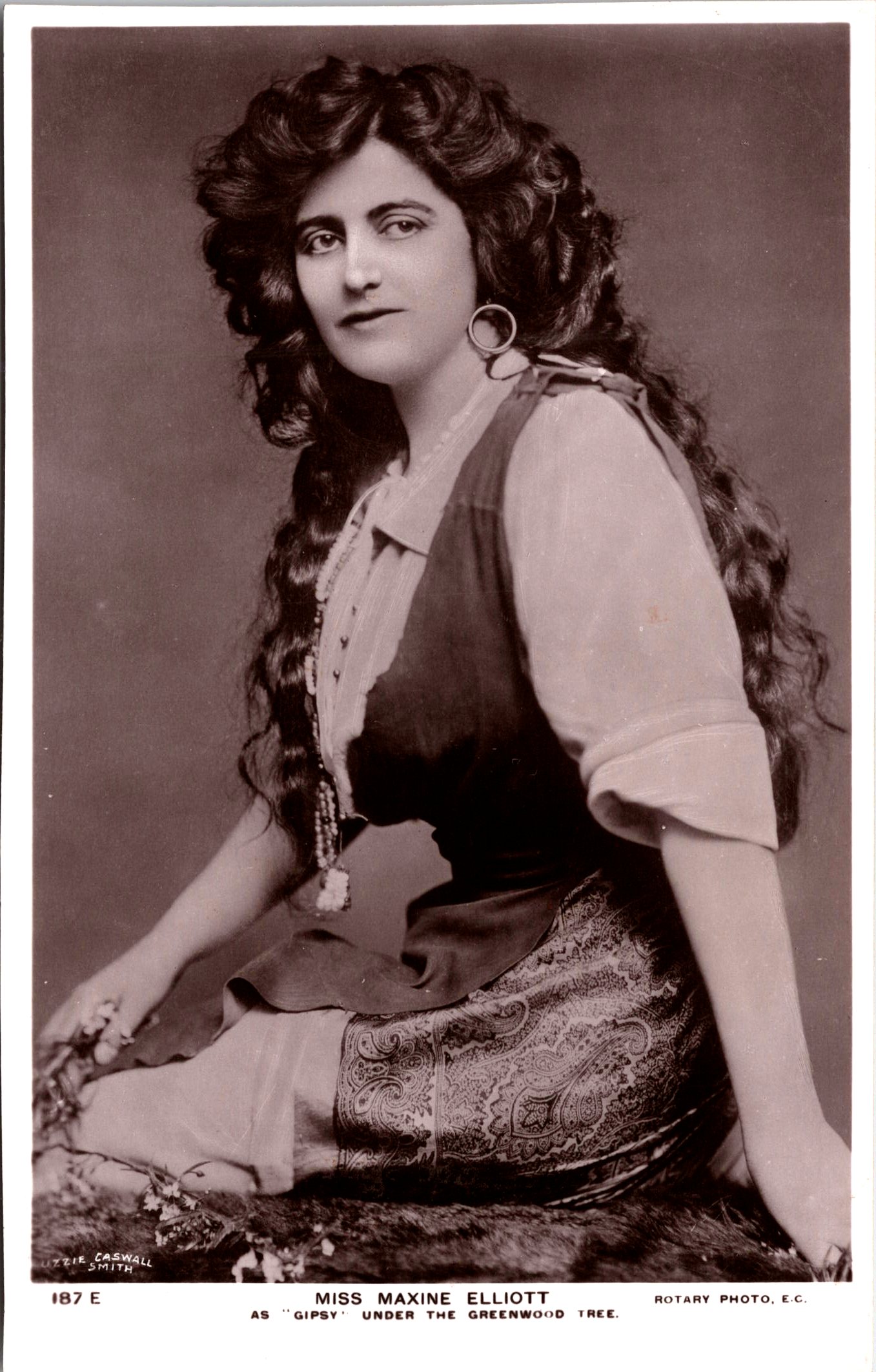
Postcard 7 Elliott photrographed in costume for her role as Gipsy in “Under the Greenwood Tree”. Her photograph was taken by famed celebrity female photographer, Lizzie Caswall Smith. This image is a beautiful remnant of turn of the century theater history. This postcard was published by Rotary Photo as part of a series (No.187E).  (SOLD)

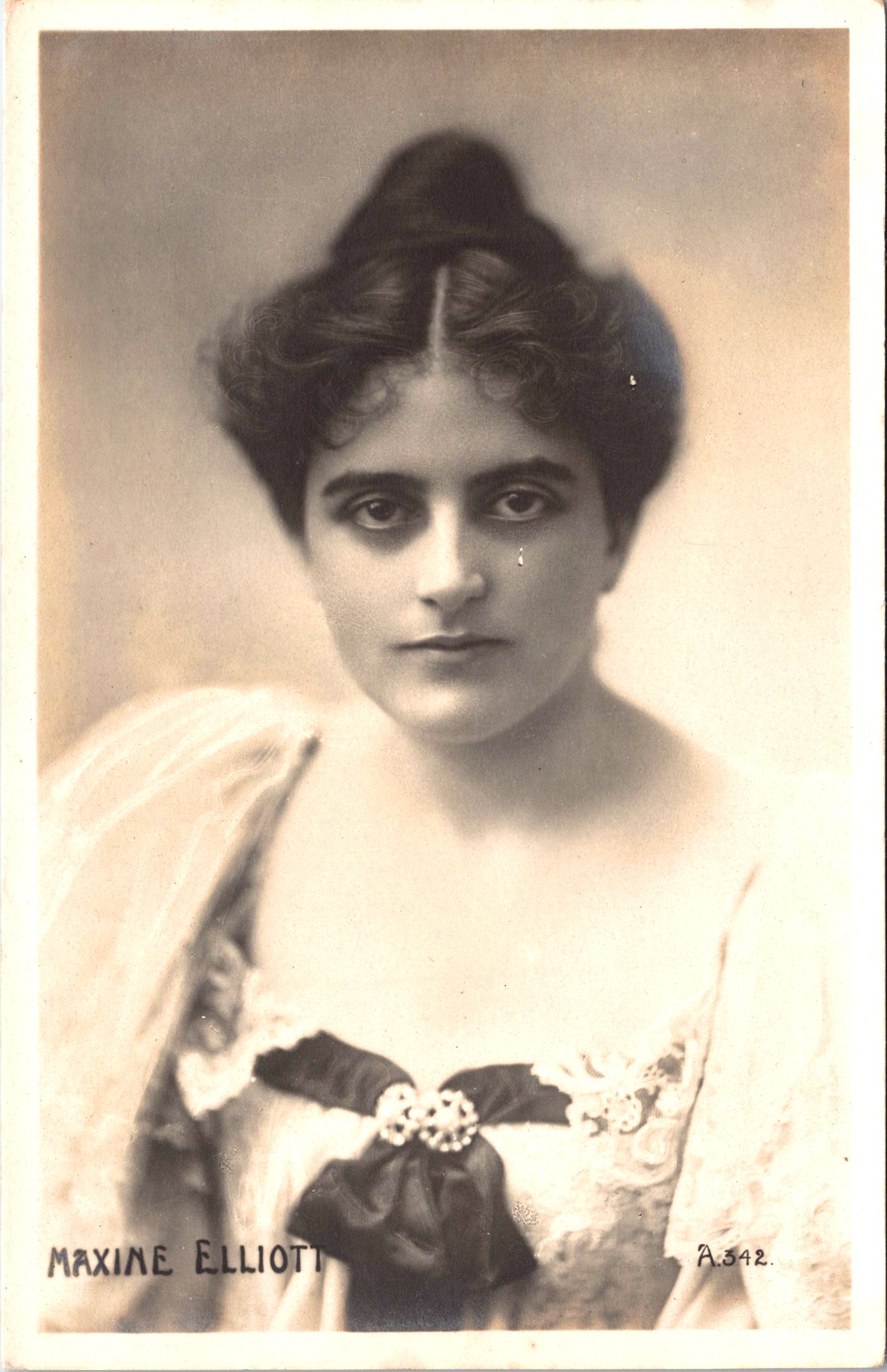
Postcard 8 was published by London’s Ralph Dunn & Co. as part of a series (No. A342). (SOLD)
POSTCARD 1 (SOLD)
POSTCARD 2 (SOLD)
POSTCARD 3 (SOLD)
POSTCARD 4 (SOLD)
POSTCARD 5 (SOLD)
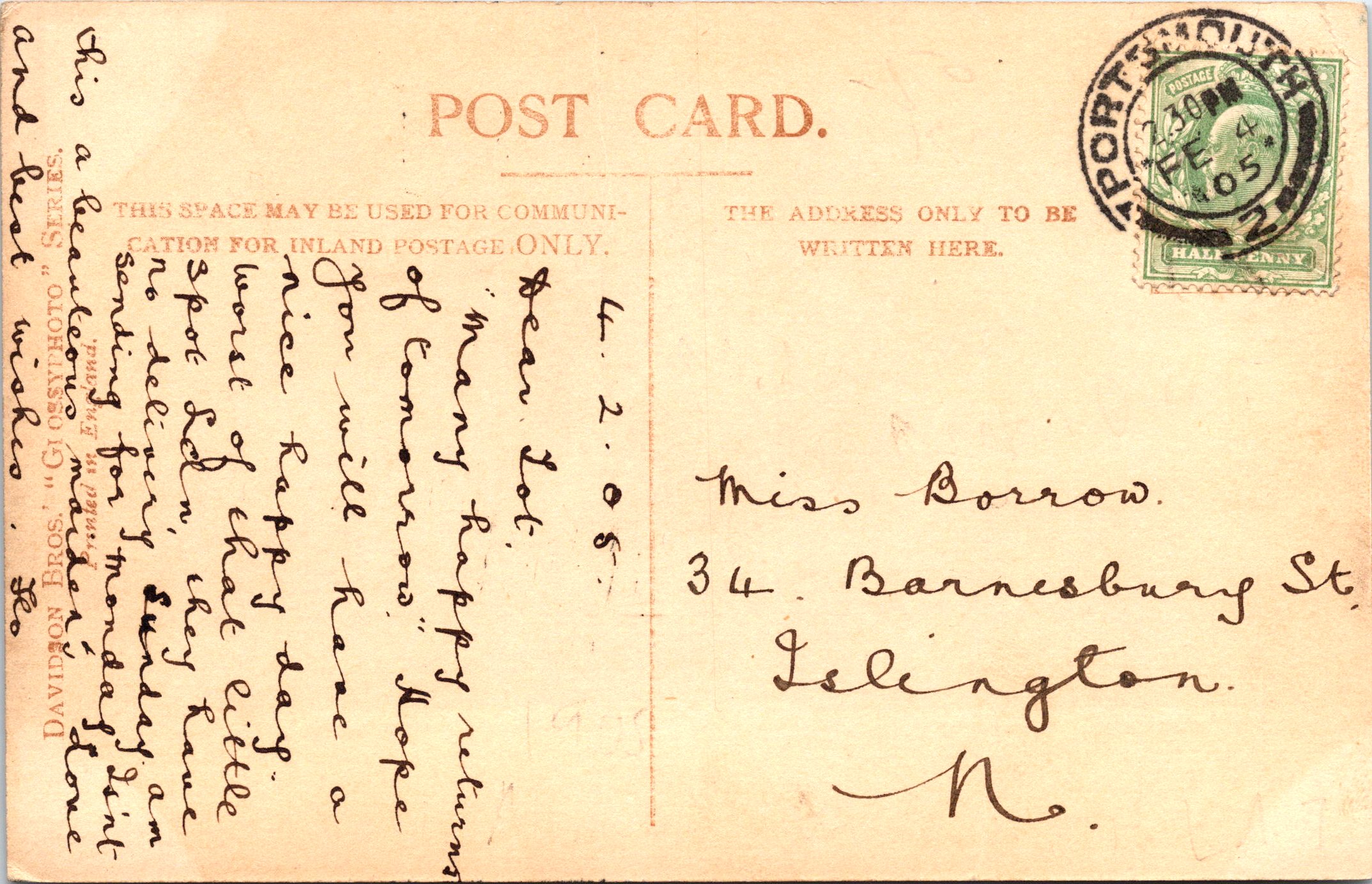
POSTCARD 6 (SOLD)
POSTCARD 7 (SOLD)
POSTCARD 8 (SOLD)

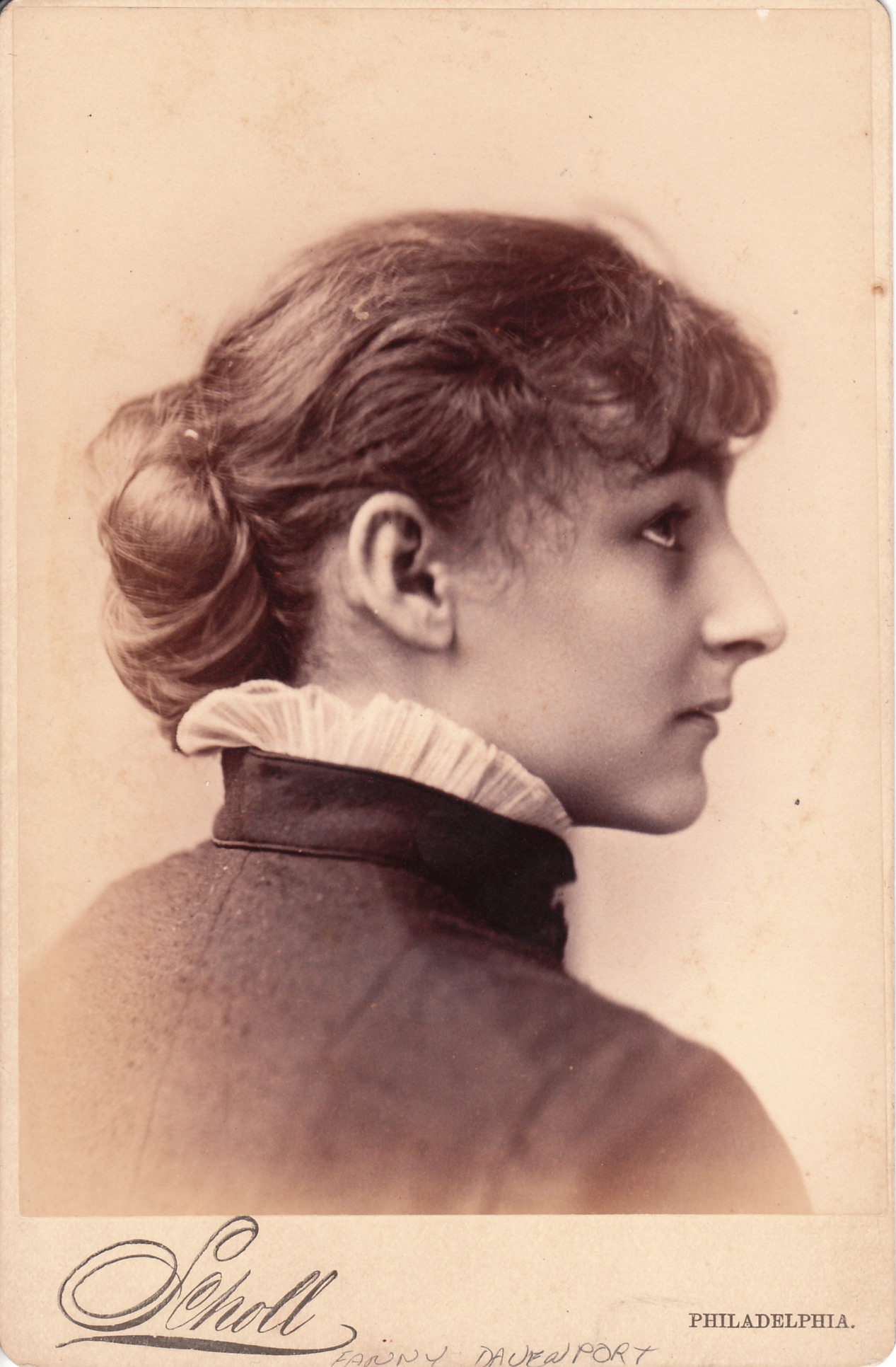
FANNY DAVENPORT: AMERICAN STAGE ACTRESS (1880)

PHOTO 1

PHOTO 2 (SOLD)

PHOTO 3 (SOLD)

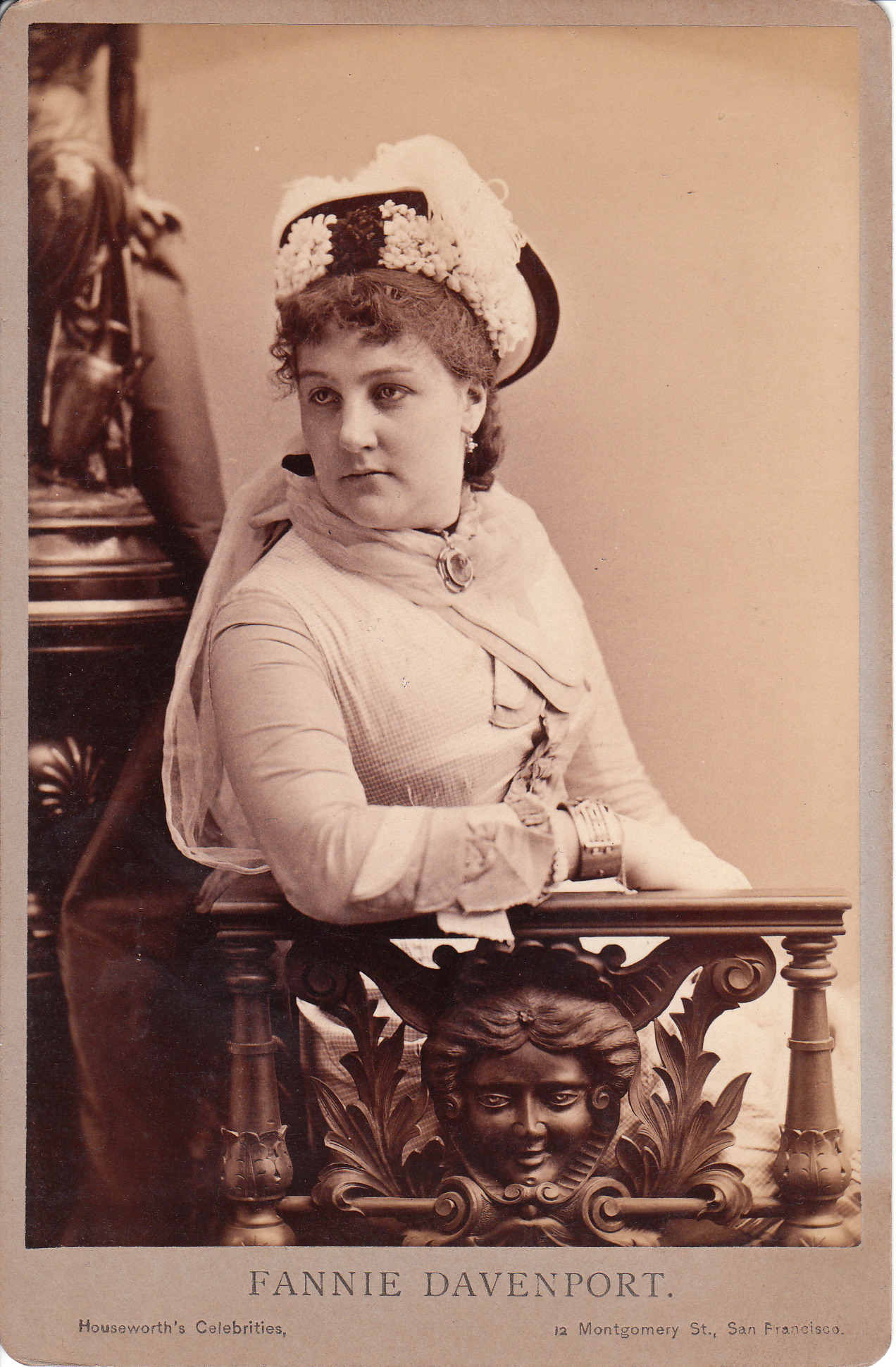
The top Cabinet Card is an image of American stage actress, Fanny Davenport. The photograph is dated February 28, 1880. Miss Davenport (1850-1898) was thirty years of age when she sat for this photograph by Emil Scholl, in Philadelphia, Pennsylvania. He photographed many celebrities and this site has a category that includes a number of his images.  To view these images, click on the category “Photographer: Scholl”. Davenport was born in London, England and educated in public schools in Boston, Massachusetts. In 1862 she appeared in ” Faint Heart Never Won Fair Lady” in New York. In 1869 she became a member of the Augustin Daly Theater Company. She later formed her own company. She had great success in “Fedora” (1883) and “Cleopatra” (1890). Fellow actor, Otis Skinner, in a backhanded compliment stated that “Miss Davenport was a handsome woman, her business sense keen and her industry untiring. To these qualities rather than her acting, she owed the late success in which she accumulated a fortune in her productions.”

The second photograph features a portrait of Davenport by Thomas Houseworth, whose studio was located in San Francisco, California. This image was part of the “Houseworth Celebrities” series. The series included three thousand titles for different categories, including entertainment and government. Note the carving below the chairs armrest in this photograph. Also take notice of Miss Davenport’s interesting hat. Thomas Houseworth (1828-1915) was an optician, photographer, and photographic publisher. Houseworth and George S. Lawrence came to San Francisco in 1849, during the Gold Rush. They caught gold fever and worked as miners in Calavera and Trinity counties. After two years of mining, they admitted defeat, and returned to San Francisco. In 1855, they partnered in a store that sold optical supplies and other miscellaneous items; but the partners became most well known for their stereographs. In 1859 they sold stereographs from an English company, but they soon contracted with local photographers to acquire and publish a diverse collection of stereos featuring various aspects and scenery of northern California and western Nevada. Later, they began to publish and market stereographs under their own name and by the early 1860’s had built the largest collection of stereographs for sale on the west coast. Lawrence retired in 1868 and the firm became known as Thomas Houseworth and Company. Houseworth hired the most talented photographers he could find.  His photographers included Thomas Hart (Transcontinental Railroad Construction), Carleton Watkins (The Sierras’), and Eadweard Muybridge (Yosemite). By the 1870’s Houseworth’s business was failing due to increased competition. He left the field of photography in the 1880’s and went to work as an accountant and an optometrist.

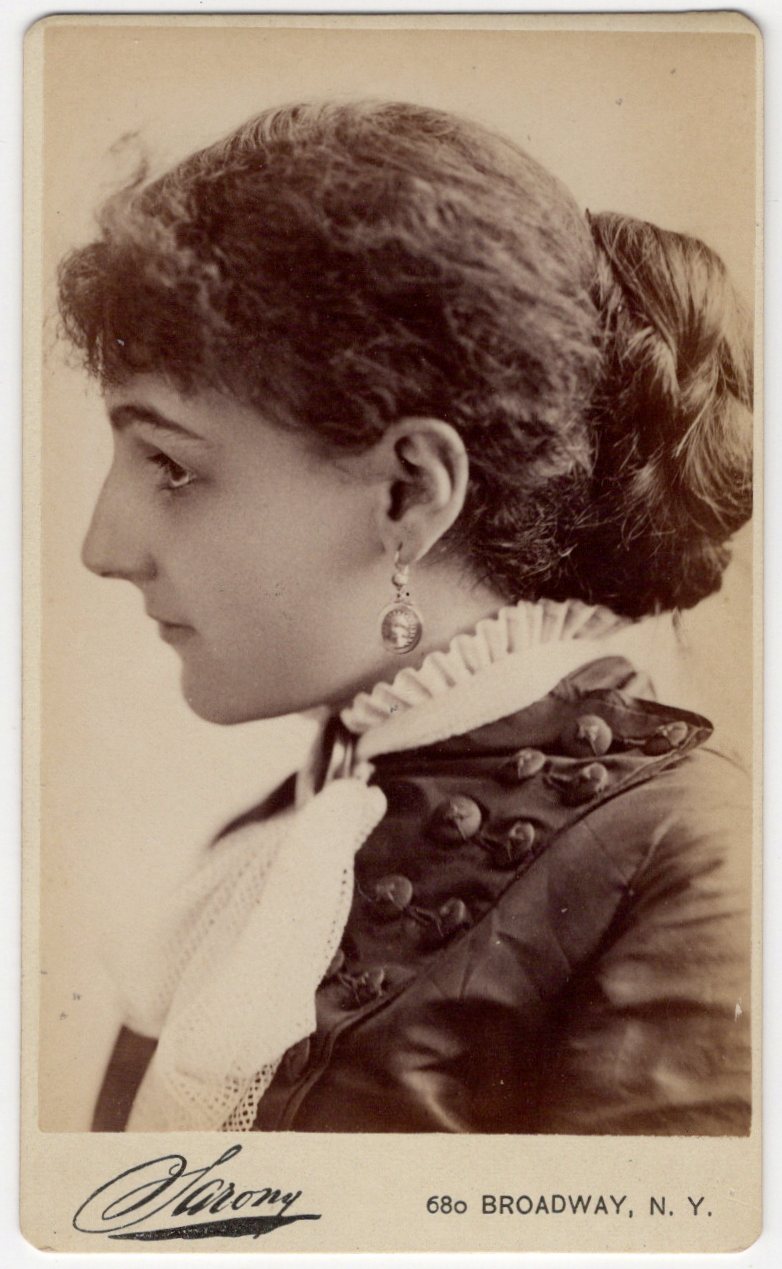
Photograph 3 is a carte de visite portrait of Fanny Davenport (1850-1898) . The photo was taken at the Broadway studio of Napoleon Sarony. This photograph is from circa 1880. Miss Davenport  was about thirty years of age when she sat for this photograph by Napoleon Sarony in New York City. 

VIRGINIA EARL : STAGE ACTRESS : PROLIFIC ON BROADWAY : VAUDEVILLE : PHOTO BY BENJAMIN FALK : CABINET CARD

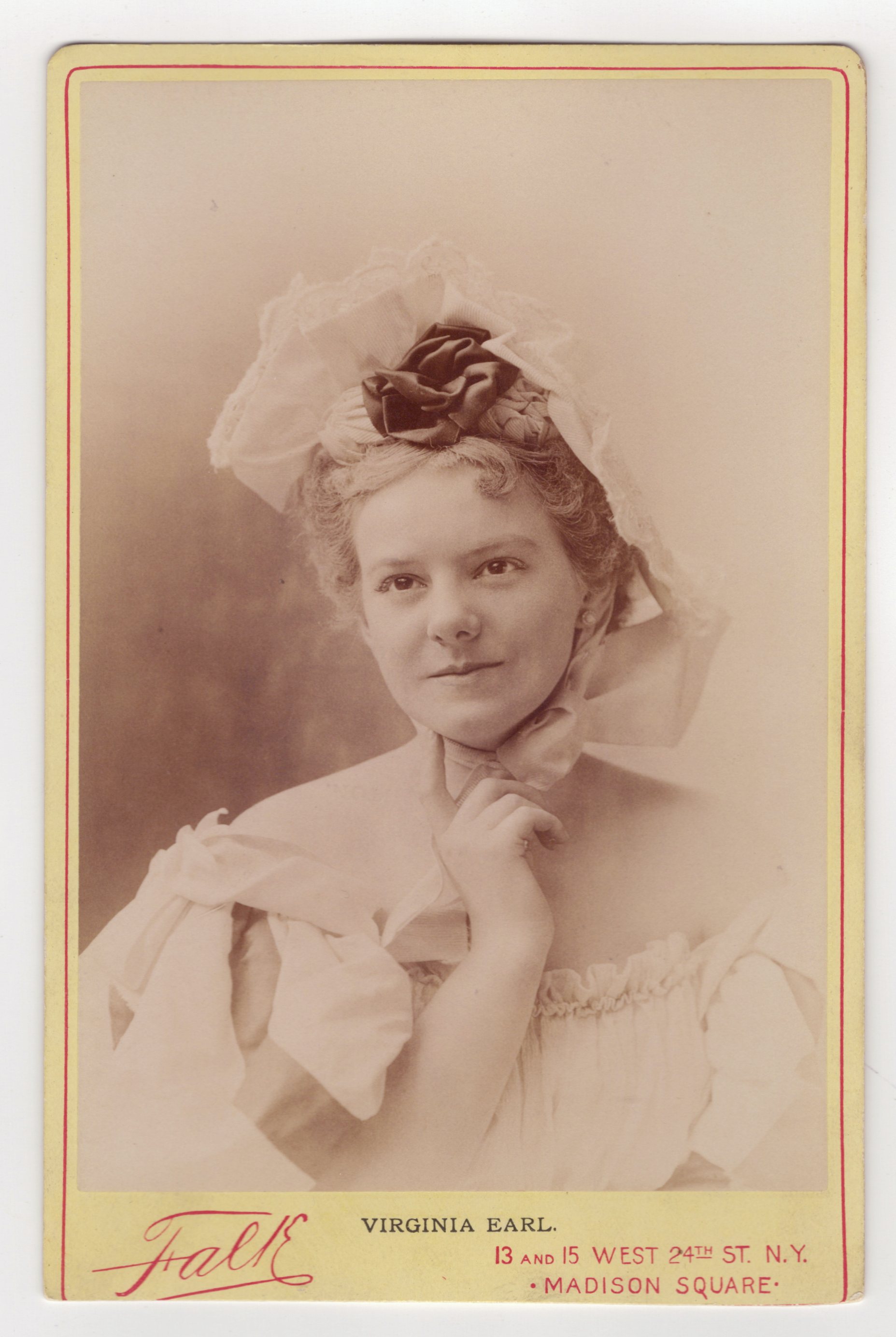
This cabinet card photograph features American stage actress, Virginia Earle (1873-1937). Much of her work was in light operas, musical comedies, and vaudeville. Earle was born in Cincinnati, Ohio. Her parents were Irish immigrants. She made her stage debut in 1887. She had a role in Gilbert and Sullivan’s “The Mikado” produced by the Juvenile Opera Company. She played in several of their productions. Earle then joined a touring company of the Pike Opera Company. When in San Francisco, she was hired by a vaudeville company where she performed for two seasons. She next went to Australia with a performing company. She was identified with Augustin Daly’s Edwardian musical comedies for many years. The musicals included “The Circus Girl” and “A Runaway Girl”.  Earle played in eleven Broadway production between 1899 and 1910. Earle was a “chronic” robbery victim. She captured one of the thieves. Earle was walking along Sixth Avenue (Manhattan) and saw a woman wearing one of the cloaks she wore in the production of “The Merry World”. Earle grabbed the woman and screamed for help. Eventually the woman was tried and acquitted. The woman’s husband claimed to have found the cloak and he was judged credible. In 1894, Earle married Frank Lawton, an actor and comedian. She divorced him in 1899. Earle’s photo portrait seen on this cabinet card, was taken by celebrity photographer, Benjamin Falk. Falk operated a studio in New York City. This photograph was likely taken in the late 1880’s or early 1890’s. The cabinet card has a slight curl and is in overall good condition. See Scans. 

6268

Buy this Cabinet Card Photograph (includes shipping within the US) #6268

To purchase this item, click on the Pay with PayPal button below

$39.95

6268

Buy this Vintage Original Cabinet Card (includes International shipping outside the US) #6268

To purchase this item, click on the Pay with PayPal button below

$49.95

CECILIA LOFTUS : BROADWAY AND FILM ACTRESS : SHAKESPEARE : STAGE BEAUTY : RPPC

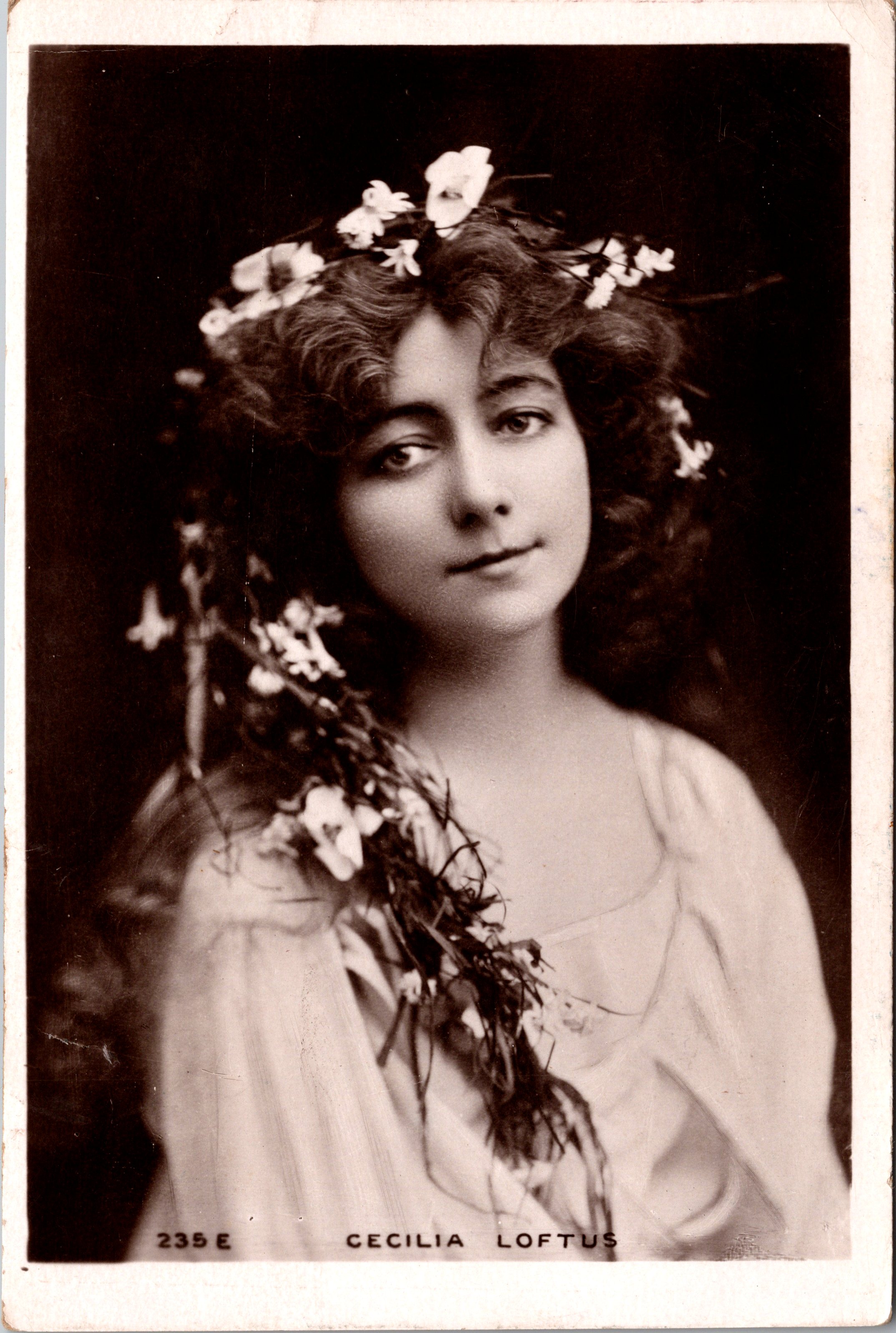
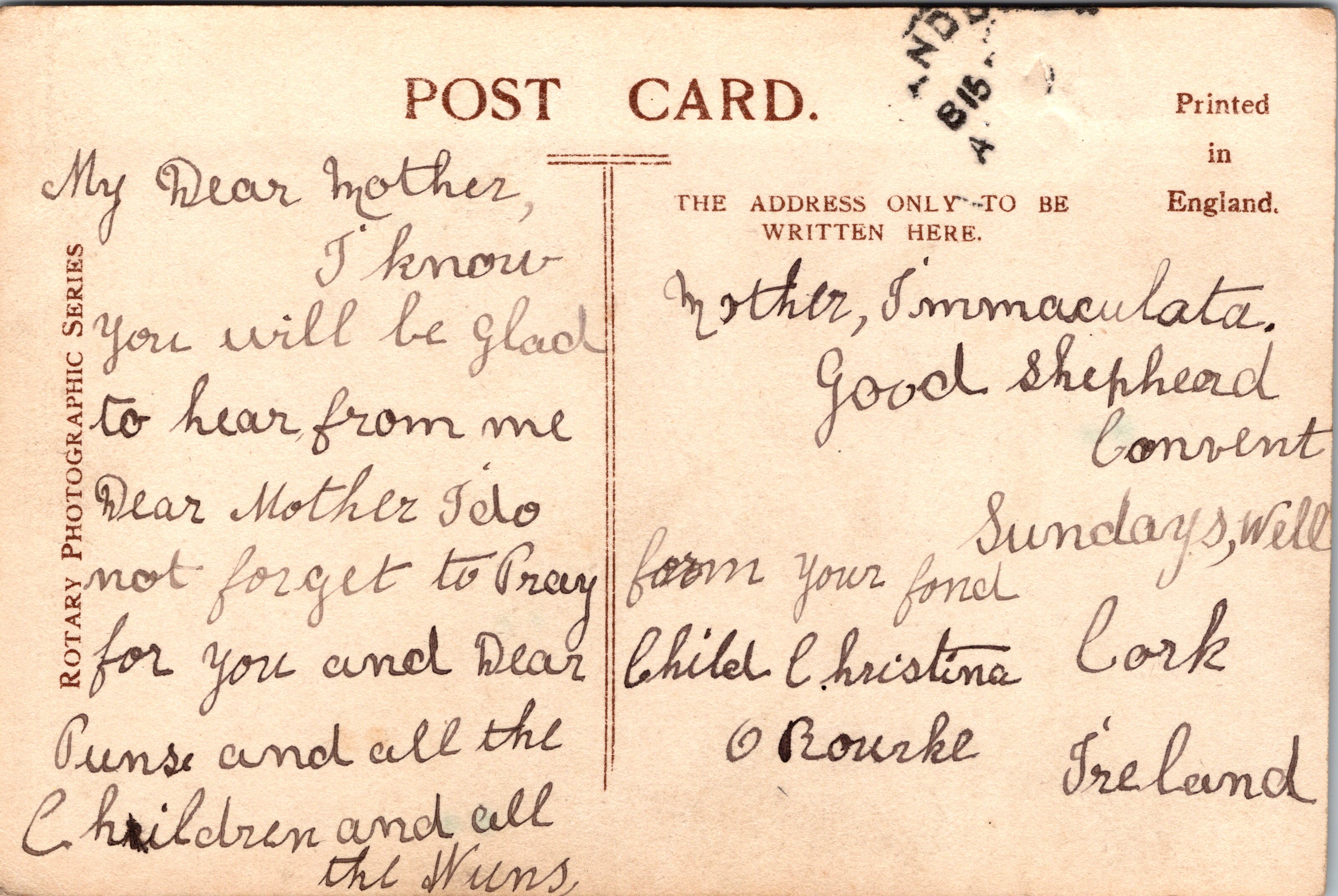
This vintage real photo postcard features a stage beauty named Cecilia Loftus (1876-1943). She was a Scottish actress, singer, mimic, vaudevillian, and music hall performer. Her career spanned the late 19th and early 20th centuries. She was a product of parents who were performers. Her father was a member of a successful variety group and her mother was an actress, music hall performer, and burlesque star. At age seventeen, Cecilia (Cissy) made her debut at the Oxford Music Hall in London. She began her career in Music Halls and then appered in musical comedy at the Gaiety Theatre. In 1894, she appeared in Vaudeville at the Lyceum Theatre in New York City. She joined the Ada Rehan Company, and then the Augustin Daly Company. In 1898, she began to appear in legitimate theatre. She toured with actor Sir Henry Irving. In 1905 she had success appearing in Henrik Ibsen’s “A Doll’s House”. Later that same year, she received much acclaim for her portrayal of Peter Pan. Loftus had a successful career in burlesque as well as on Broadway. The IBDb credits Loftus with appearing in 39 different Broadway productions between 1900 and 1941. Many of her roles were in Shakespeare plays. She also appeared in 14 films from the 1910’s to the 1940’s. Cecilia had a tumultous personal life. She eloped at 17 with an Irish writer, twice her age. The marriage failed. In 1908 she married an American doctor. Within six years, her marriage and health were in bad shape. She divorced her husband. Healthwise, she became dependent on alcohol and pain killers. In 1922, she was arrested for possession of morphine. She received probation from an English court and in 1923, she permanantly left Great Britain and returned to New York City to pursue her career on Broadway and in Hollywood.  The message on this postcard is very interesting. It is a note from a daughter to her mother. Although it is only a hypothesis, the daughter appears to be at the Good Shepherd Convent, in Cork, Ireland. This vintage postcard was published by the Rotary Photo Company as part of a series (no.235 E).  SOLD

PRETTY PRIMA DONNA: MINNIE ASHLEY

BJ FALK PORTRAIT VINTAGE PHOTOGRAPH 1  (SOLD)

BJ FALK PORTRAIT 1 VINTAGE PHOTOGRAPH 1   (CLOSE UP)  (SOLD)

 POSTCARD 2   (SOLD)

 POSTCARD 3   (SOLD)

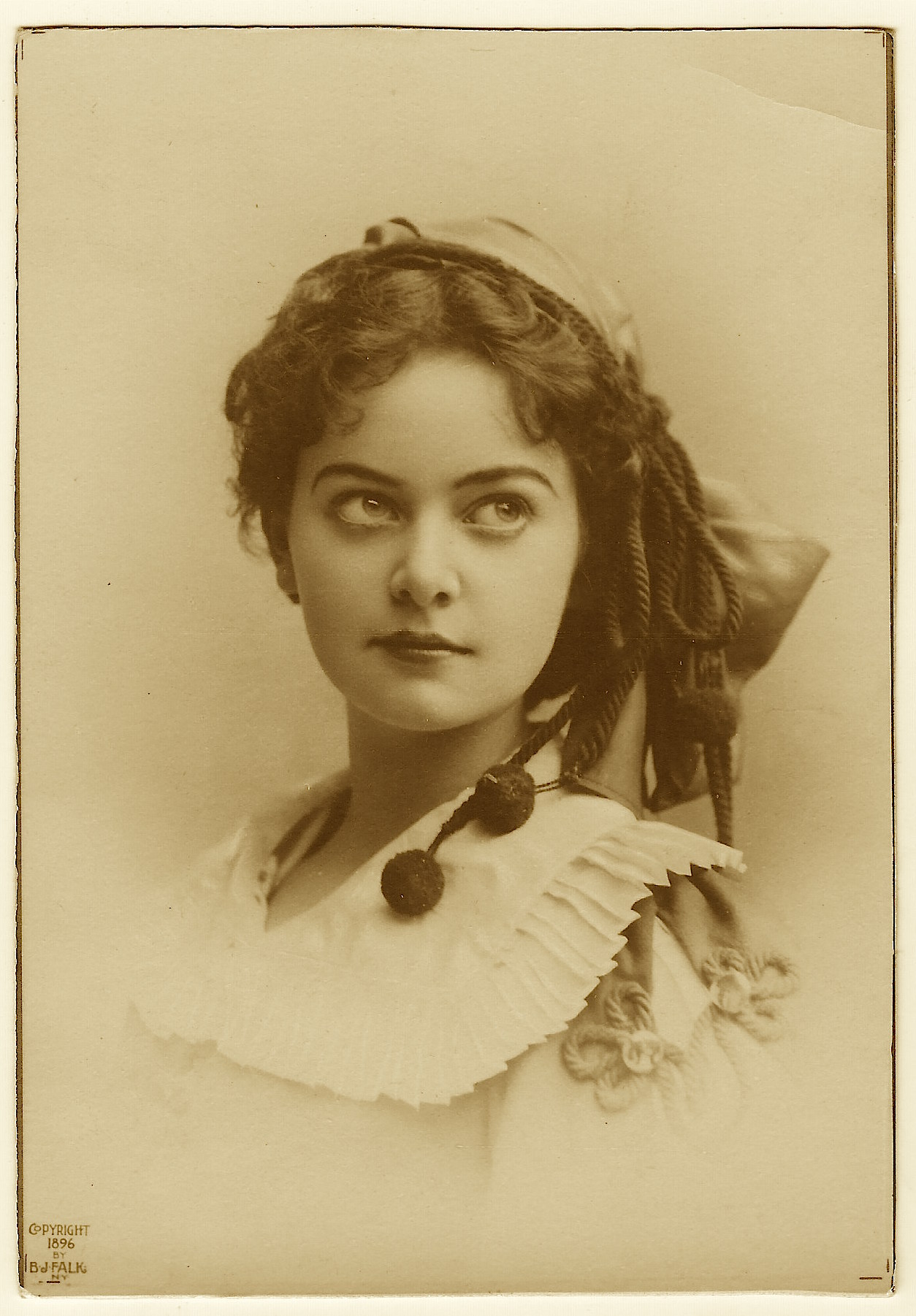
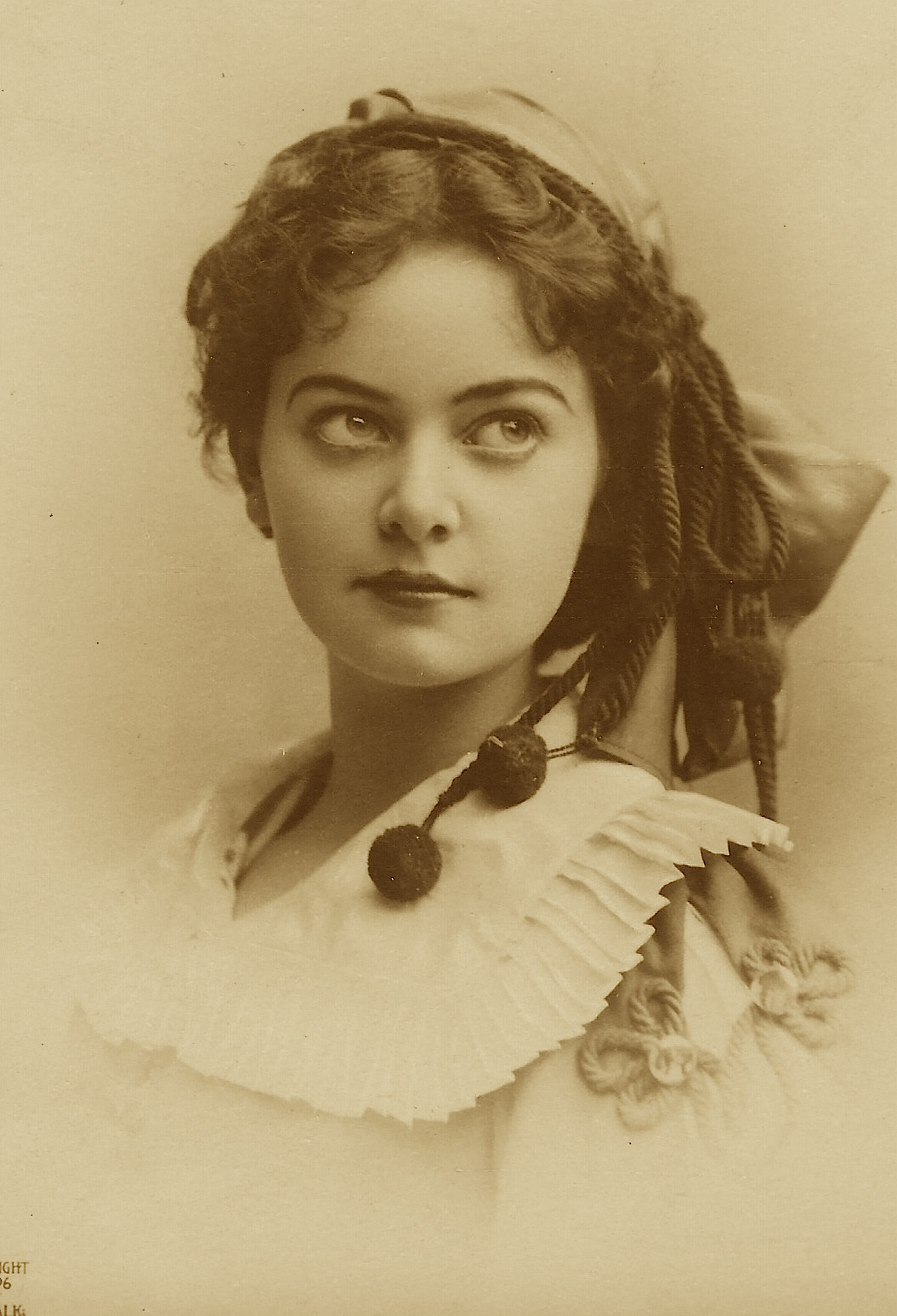
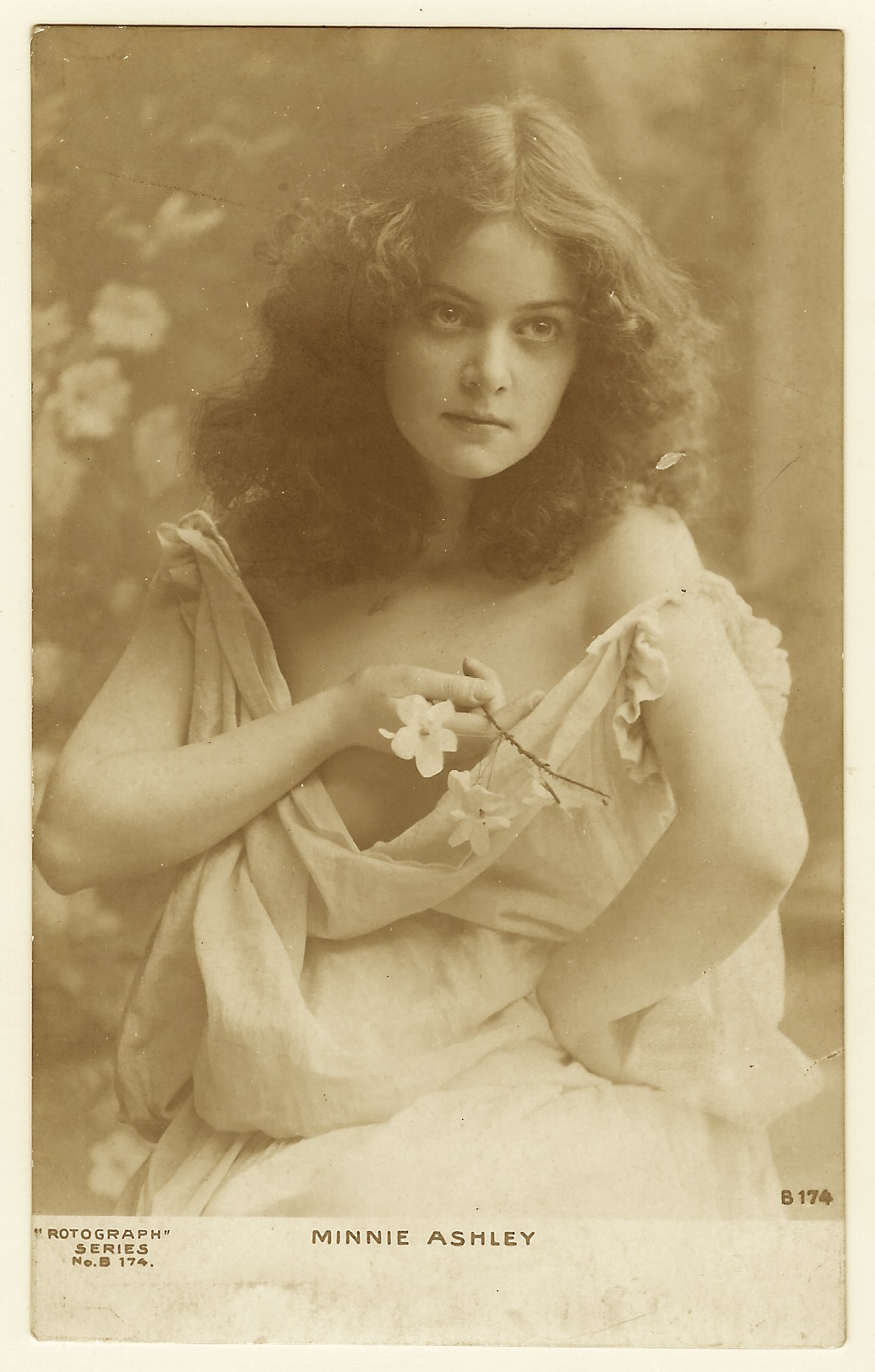
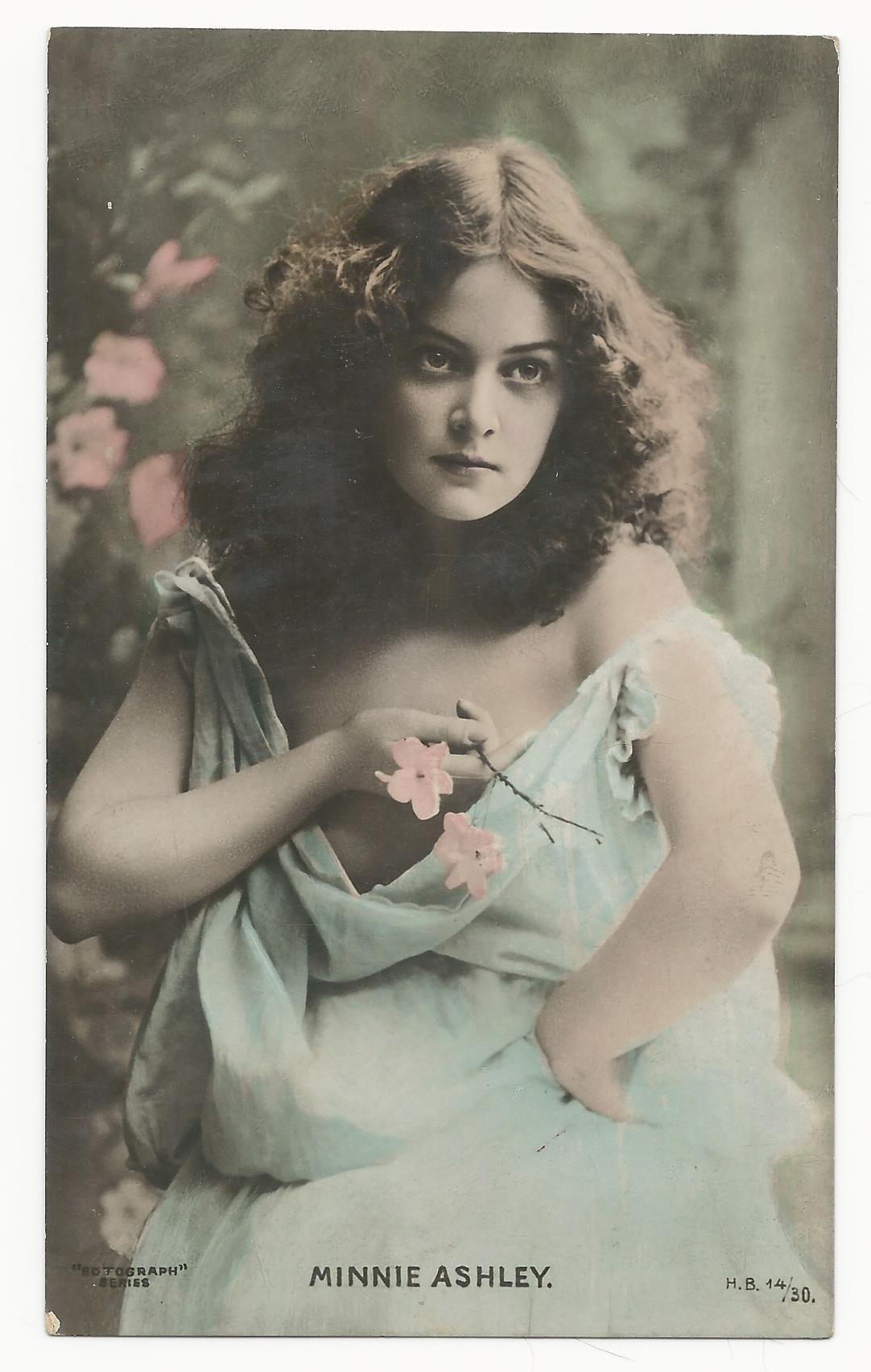
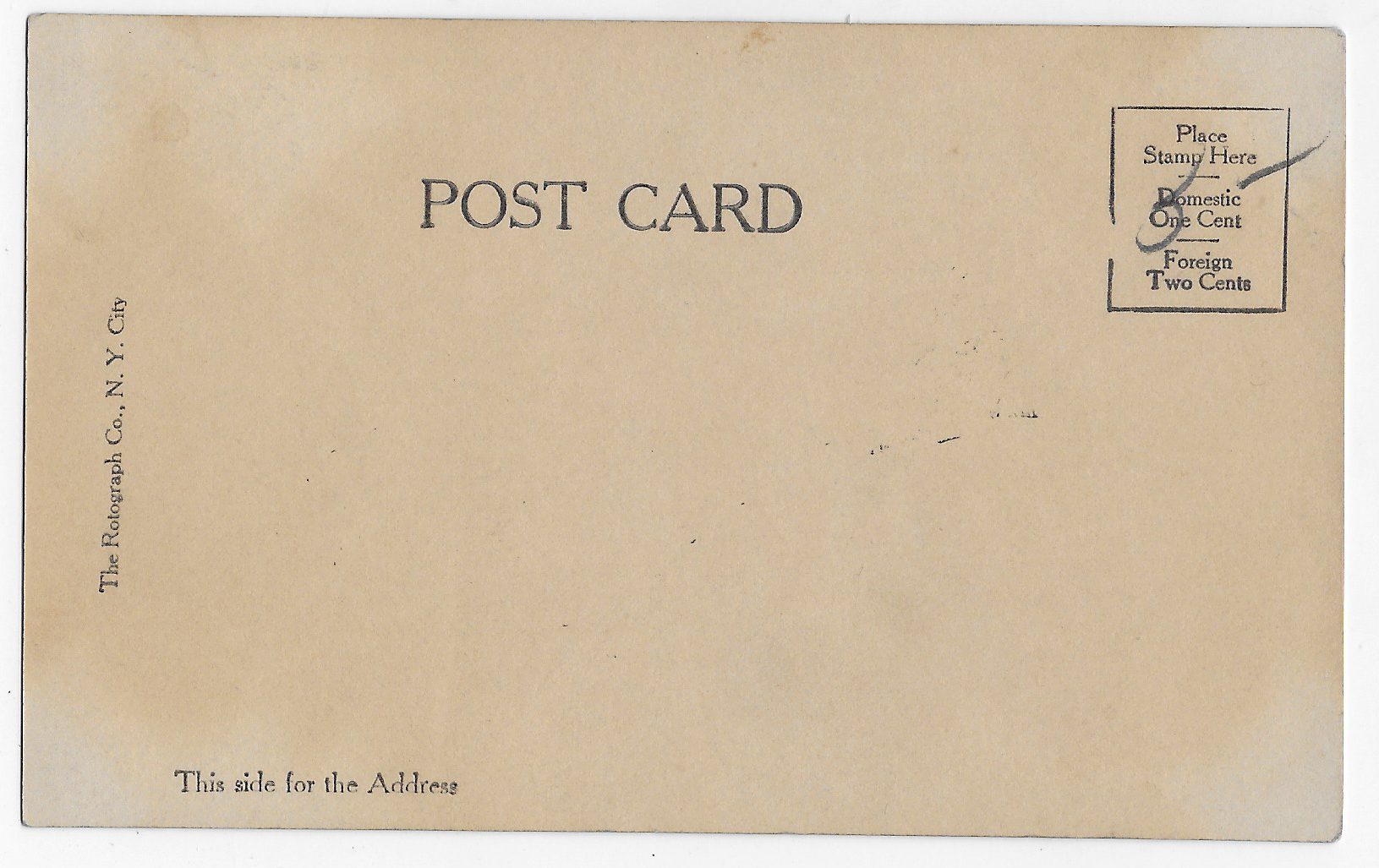
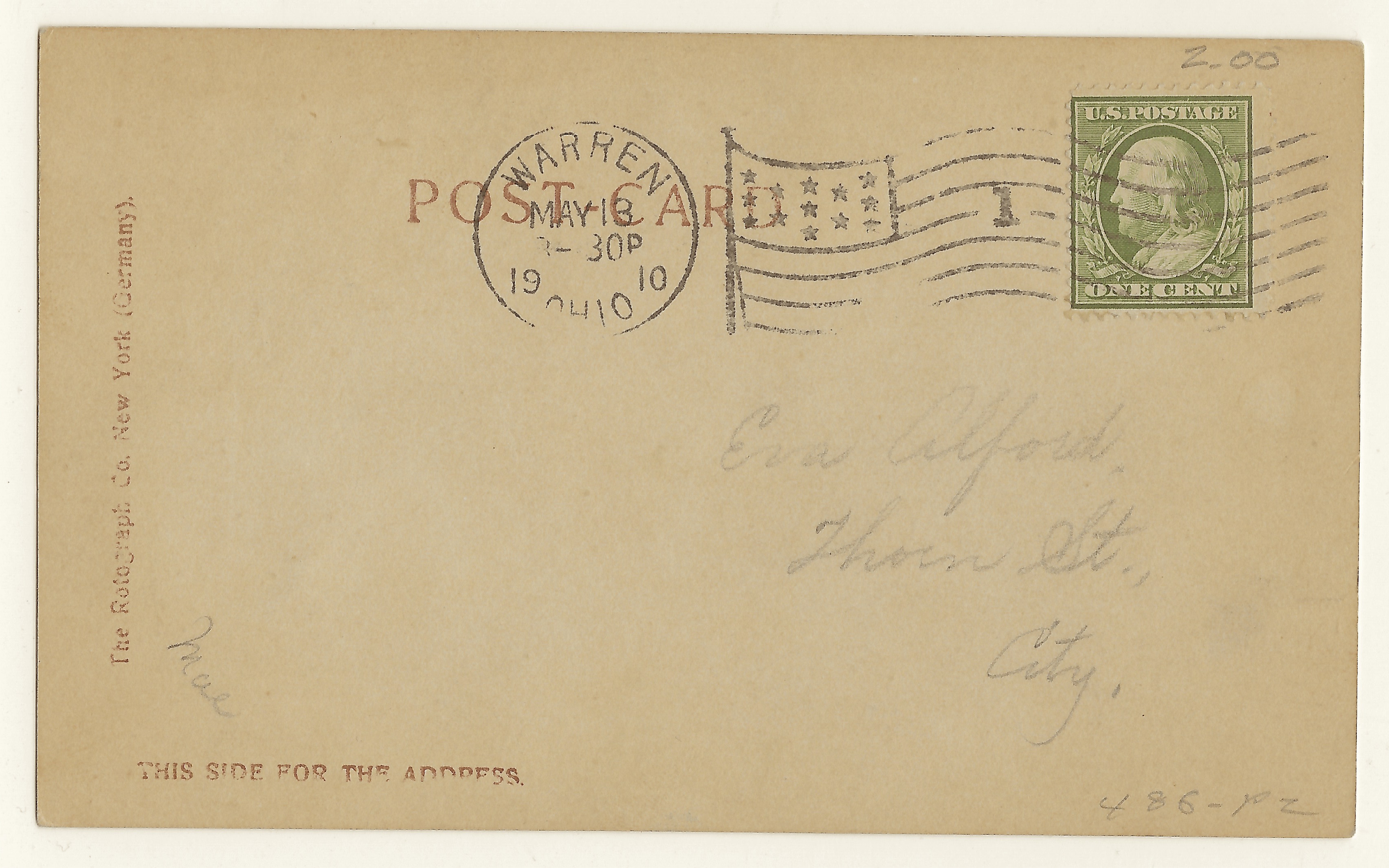
This vintage real photo postcard features theater actress Minnie Ashley (1878-1946). She was one of the great “stage beauties” of the end of the 19th century. She was a talented singer and dancer and she was featured in the madcap musical “1492” (1892). In Boston she performed with the Museum Company and in New York she was a member of the Augustin Daly Company. She had many successes including her performance in “A Country Girl”, “Wang”, and “San Troy”. Her acting resulted in a medical problem. The prolonged exposure to theatrical arc lights caused vision problems. In 1902 she left her acting career and married politician William Astor Chanler who was an affluent grandson of John Jacob Astor. Medical treatment did not help her vision problems and Miss Ashley than put her efforts into sculpting. Chanler and Ashley separated in 1909. She made an attempt at returning to the stage in 1911 but soon opted to pursue her sculpting. During her artistic career she worked under the name of Beatrice Ashley Chanler. In addition to the sculpting, she was active in philanthropy. The book “Famous Prima Donnas” (1900) by Lewis Clinton Strang, devotes a chapter to Minnie Ashley. He describes her as having “artless girlishness, remarkable personal charm, and skill as an imaginative dancer scarcely equalled on the American stage”. He adds that these talents explain her “sudden success” in musical comedy. He describes her dancing as “artistic in every sense” but asserts she was not exceptionally talented in the realm of acting and singing. However, Strang is very complimentary of Ashley’s appearance. He states “nature was indeed good to her when it endowed her with a most fascinating personality, a pretty piquant face, and a slim graceful figure.                                                         Vintage Photograph 1 features a young Minnie Ashley. She is a beautiful. Her facial expression is very engaging. The photographer, B. J. Falk was a very well known for his penchant for photographing theatrical stars. He was also recognized for his talent as a celebrity photographer. The image was copyrighted in 1896. this photo measures about 4″  x 5 3/4″. It appears upon very close examination that this image may have been trimmed. Note the imperfection in the top right hand corner. This vintage photograph is in overall good condition (see scans).   (SOLD)                                                                                               Postcard 2 was published by the Rotograph Company (New York) and was part of a series (no. B 174).   (SOLD)                                                                                                                    Postcard 3 has the same portrait of Miss Ashley except the image is color tinted. It became common practice around 1902 to hand color photo postcards. Rising labor costs led to the decreasing use of this practice after the 1930’s.  This postcard, like the one above it, was produced by the Rotograph Company (New York) and was part of a series (H.B. 14/30). The postcard was mailed and has a 1910 postmark from Warren, Ohio.  (SOLD)                                                                                                                                                     


                                                                    POSTCARD 1                                                                                                                                          
ashley 2    POSTCARD 2

ISABELLE URQUHART: COMIC OPERA AND MUSICAL COMEDY STAR (PHOTOGRAPH BY NEWSBOY)

URQUHART_0001

This cabinet card features actress Isabelle Urquhart (1865-1907). She was an American stage actress and contralto who appeared in mostly comic operas and musical comedies. Urquhart was born in New York City and claimed to have been educated in a convent. She made her first stage appearance in 1881. She performed as a chorus girl at the Standard Theatre in New York City. She than appeared in a number of small roles. From 1882 through 1883 she joined Augustin Daly’s company and acted in productions including “The Passing Regiment” and “The Squire”. In the latter production she was only seventeen years of age but played a ninety-seven year old woman. She returned to light opera because of it’s better compensation although she stated she preferred legitimate drama to comic opera. She had much success in major roles in light operas including in the hit operetta  “Erminine” which ran from 1886 through 1888 at the Casino Theatre. She also had success in other productions by luminaries such as Gilbert and Sullivan. In her leading lady role in “Erminine”, she started a fashion trend by not wearing petticoats in order “to accentuate her gorgeous figure”. Urquhart later appeared in vaudeville. Blue Vaudeville (2004) states that in a sketch at the Union Square Theatre, she “did little more than display her form in a handsome gown to the utmost advantage”. Urquhart also performed in several Broadway plays including “The Diplomat” (1902), “Arms and the Man” (1906), and “How He Lied to Her Husband”. This cabinet card was published by Newsboy and was number one i a series of photographs that were distributed as a premium accompanying tobacco sales.

CELEBRATED ACTRESS ADA REHAN AND HER LABORADOR RETRIEVER (PAGE INCLUDES ADDITIONAL PORTRAITS OF MISS REHAN)

PHOTOGRAPH 1  (SOLD)

PHOTOGRAPH 2

PHOTOGRAPH 3

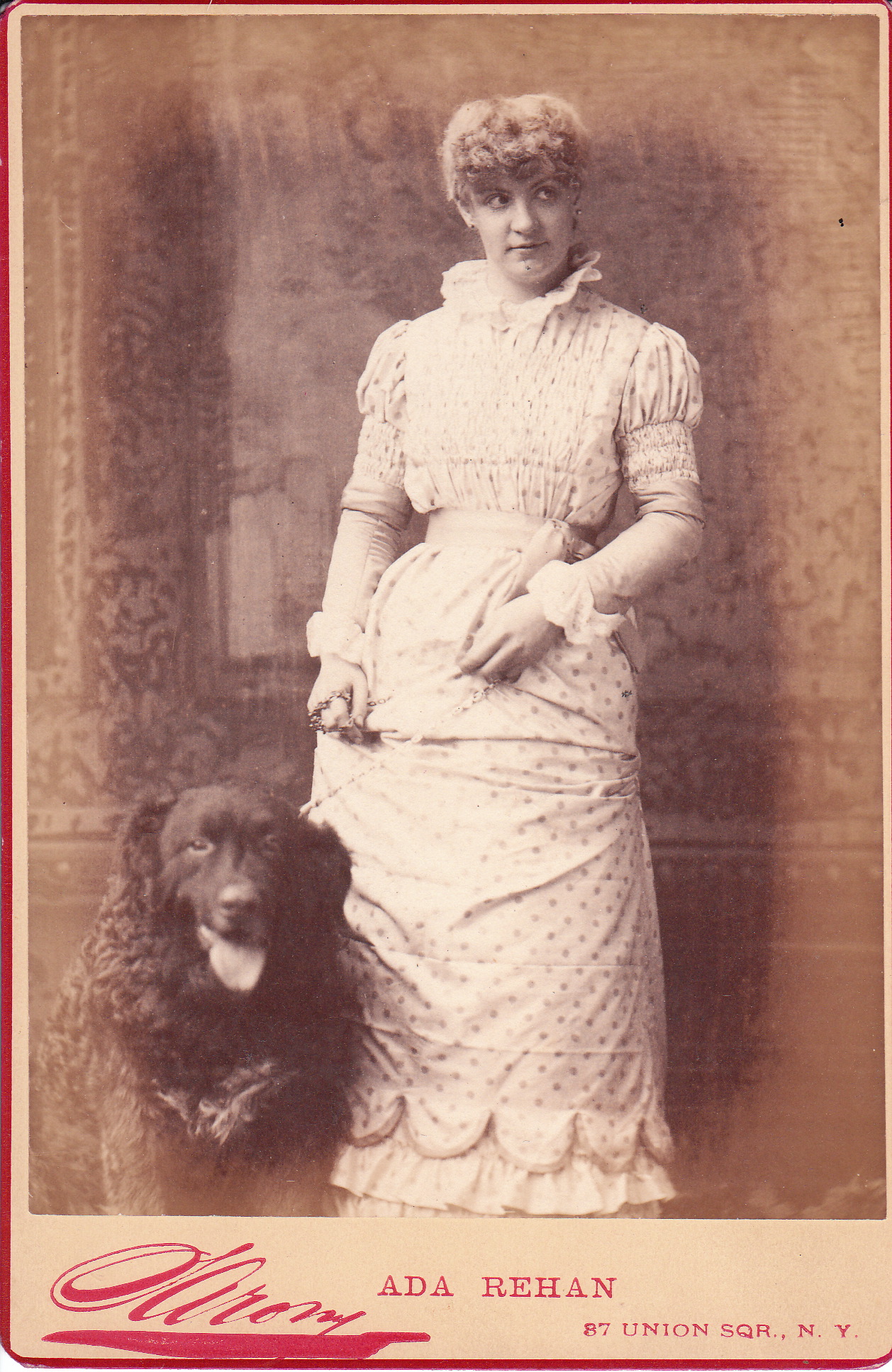
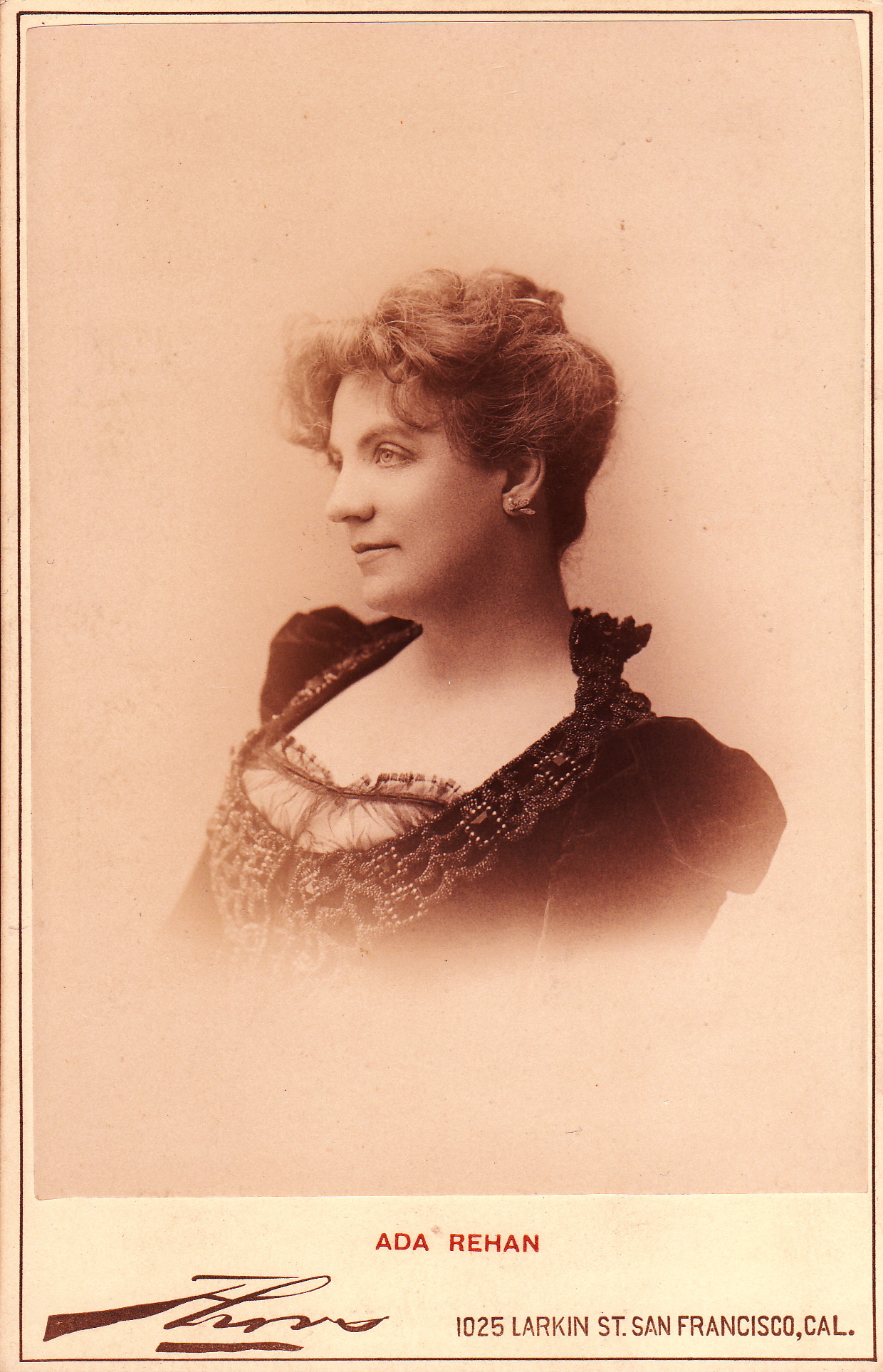
Ada Rehan was a well known and respected American actress. The top cabinet card portrait of Ms Rehan and her dog was published by Napoleon Sarony, a famous celebrity photographer in New York City, New York. Ada Rehan was born in Ireland and came to the United States at six years of age. She grew up in Brooklyn, New York. She began acting as a child. From 1873 until 1875 she became more active in acting at Mrs. Drew’s Theatre in Philadelphia, Pennsylvania. She then joined John Albaugh’s company and appeared in Baltimore, Albany and numerous other cities. In 1879 she joined Augustin Daly’s company upon his opening of his New York theater. She worked with his company for twenty years and appeared throughout Europe. The IBDB reveals that Ada Rehan appeared in 12 Broadway productions.  Some of the Broadway and non Broadway plays she appeared in include a number of Shakespeare productions such as “As You Like It” and “Twelfth Night”. Rehan also acted in “The School for Scandal”, “Foresters”, “Cinderella at School”, and “Our English Friend”. She retired from the stage in 1906 and lived in New York City until her death. It is interesting to note that Ms Rehan’s dog is on a leash. The leash is made of metal links. She is holding the leash with both hands. This is the first leash that I have observed in the many cabinet card photographs of dogs that I have seen. The dog at the end of the leash in this image appears to be a laborador retriever.  (SOLD)

The second portrait of Miss Rehan was published by Newsboy of New York. The image was number 68 in a series of photographs. Newsboy distributed these images as premiums for their tobacco product sales.

The third image of Miss Rehan is a bust portrait by Louis Thors of San Francisco, California. Thors was born in Holland in 1845. He was of French descent and educated in France. He was fitted for service in the Merchant Marine and he served in that capacity for a number of years before coming to California in 1876. By 1880 he had established his photography business. One source states that his studio had more than twelve “apartments”. He won a Bronze Medal at the Paris Exposition in 1889. His wife, Gertrude M. Thors was also a photographer. Camera Craft: Photographic Association of California (1910)  printed Thors’s obituary. He was described as one of the highest esteemed photographers in San Francisco. He died of stomach cancer at age seventy-two. He worked in the photography business in San Francisco for over forty years. He left the city after the San Francisco fire and worked in St. Louis for two years before returning to California. The obituary reports that after his immigration to the United States, his skill as a painter earned him employment with photographers Bradley and Rulofsen (click on category “Photographer: Bradley and Rulofsen” to view some of  their photographs). In addition, the death notice asserted that besides his talents as a photographer, Thors had a charming personality and high moral character. To view other photographs by Thors, click on the category “Photographer: Thors”.


KATE CLAXTON: STAGE ACTRESS ASSOCIATED WITH DEADLY THEATRE FIRE

CABINET CARD 1  (SOLD)

CABINET CARD 2

Kate Claxton (1848-1924) is the subject of this cabinet card portrait. Claxton was an American stage actress who made her first appearance in Chicago with Lotta Crabtree in 1870. That same year she joined Augustin Daly’s Fifth Avenue Theatre in New York. In 1872, she became a member of A. M. Palmer’s Union Square Theatre in New York. She played mostly in comedic roles. She began starring in theatrical tours in 1876. In 1876 she was performing the play “The Two Orphans” at the Brooklyn Theatre (in New York City) when a fire broke out killing 278 people. Soon after the tragic fire, she was in a St. Louis hotel when it caught fire and she made a narrow escape. After the two fires, Claxton was viewed by some audiences and theater professionals, as bad luck and a performer to be avoided.  There are some interesting asides about Claxton. First, the town of Claxton, Georgia was named after her in 1911, Second, her father was Colonel Spencer W. Cone, who was the commander of the 61st New York Regiment in the American Civil War. Cabinet Card 1 was photographed by Schloss, a famous New York celebrity photographer. To view other photographs by Schloss, click on this site’s category “Photographer: Schloss”. The reverse of this card has a hand written notation stating “Empire Theatre”. Perhaps this photograph captures Kate Claxton in costume for a role she played at the Empire. (SOLD)

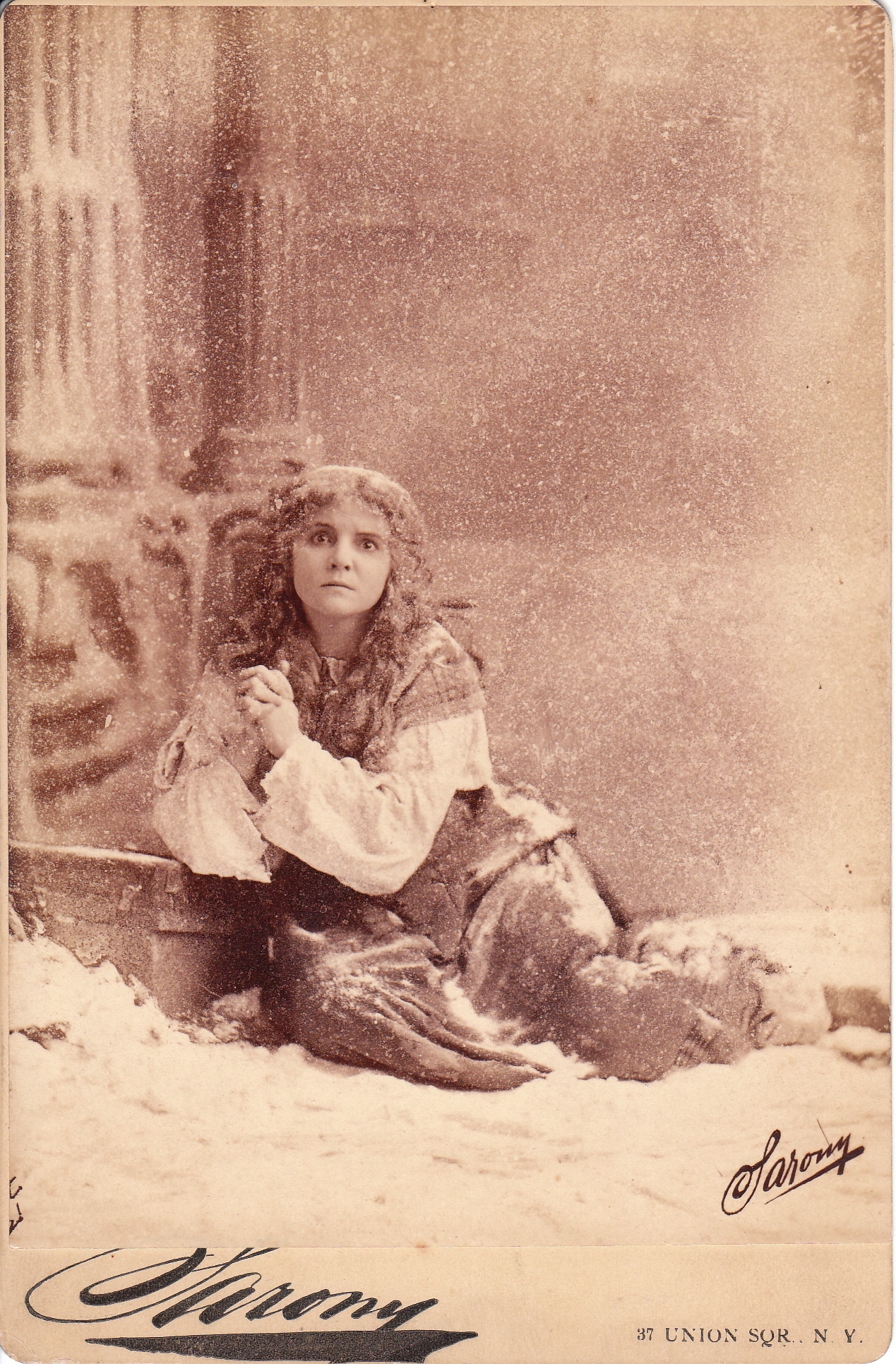
Cabinet Card 2 captures Claxton sitting on the ground during a snow storm. The staged scene in this image is likely from one of Claxton’s performances. This photograph is by Sarony, famed New York City photographer. To view other images by Sarony, click on Cabinet Card Gallery’s category “Photographer: Sarony”.

Agnes Ethel: Broadway Stage Actress

agnes-ethel

Agnes Ethel (1853-1903) was briefly one of the more popular and promising actresses of her time. She made her debut in New York in 1869 playing Camille. Augustin Daly signed her and she appeared in Play (1869). Daly’s biographer described Ethel as “a slender figure, candid eyes, flowing auburn hair, an oval face, and regular features always lit up by an expression of childish appeal.” Her biggest success was in Daly’s Frou-Frou  (1870). In 1873, he retired at the height of her career when she married Francis Tracy, a millionaire from Buffalo, New York. She stated her reason for leaving the stage was to aim “for quiet domesticity”. She spent post retirement supporting charities and helping struggling actors and actresses. When her husband died, she was involved in a nasty legal dispute about his will. She was eventually awarded his entire fortune. The photographer of this Cabinet card is the well known studio of Gurney & Son.