MARY PICKFORD : LES VEDETTES DE CINEMA : CINEMAGAZINE : RPPC (1920’s)

POSTCARD 1 (SOLD)

POSTCARD 2 (SOLD)

Mary Pickford (1892-1979) was a Canadian-American actress and one of the most influential figures in early Hollywood. She was often referred to as “America’s Sweetheart”. She was a pioneer of silent film and a co-founder of the film industry as we know it today. Pickford’s career began in childhood when she performed in theater productions in Canada and the United States. By the early 1900s, she transitioned to film, working with director D.W. Griffith at Biograph Studios. Her delicate beauty and expressive acting quickly made her a fan favorite, setting her apart in an era when exaggerated stage-style performances dominated silent films. During the 1910s and 1920s, Pickford became one of the highest-paid and most beloved actresses in the world. Starring in films such as Rebecca of Sunnybrook Farm (1917), Daddy-Long-Legs (1919), and Pollyanna (1920), she was known for playing wholesome, spirited young women. Her curly hair and signature on-screen innocence became iconic, but she was also a savvy businesswoman who understood the power of her brand. Pickford was not only a star but also a trailblazer in the film industry. In 1919, she co-founded United Artists alongside Charlie Chaplin, Douglas Fairbanks (her then-husband), and director D.W. Griffith. This revolutionary move allowed filmmakers to control their own productions rather than rely on major studios, changing the industry forever. As the film industry transitioned to “talkies,” Pickford retired from acting in the early 1930s, though she continued to produce films. Her contributions earned her an honorary Academy Award in 1976 for her lasting impact on cinema. Mary Pickford’s influence extends beyond her films. She helped shape the star system, paved the way for women in Hollywood, and co-founded the Motion Picture Relief Fund to support struggling actors. She remains an enduring symbol of early Hollywood glamour and innovation. Mary Pickford was born into a working-class family in Toronto, Canada. Her father, John Charles Smith, was an alcoholic who struggled to provide for the family and died from a workplace accident when Mary was just six years old. Her mother, Charlotte Hennessey Smith, was left to raise Mary and her two younger siblings, Lottie and Jack, on her own. To support the family, Charlotte encouraged her children to enter acting, and Mary began performing in theater at a young age. She soon became the family’s primary breadwinner, and her siblings, Lottie Pickford and Jack Pickford, also pursued film careers. Pickford transitioned from theater to film in the early 1900s, quickly rising to fame with her expressive acting and wholesome on-screen persona. By the 1910s and 1920s, she was one of the most recognizable stars in the world, earning the nickname “Queen of the Movies.” She also helped establish the Academy of Motion Picture Arts and Sciences. Mary Pickford was married three times. Pickford’s first marriage was to silent film actor Owen Moore (1911-1920). Her second and most famous marriage was to fellow silent film actor, Douglas Fairbanks (1920-1936). Her third marriage was to actor Charles “Buddy” Rogers (1937-1979). After retiring from acting in the early 1930s, Pickford focused on producing films and philanthropy. She became more reclusive in her later years, struggling with alcoholism and health issues. Today, she is remembered as a pioneering force in cinema history.

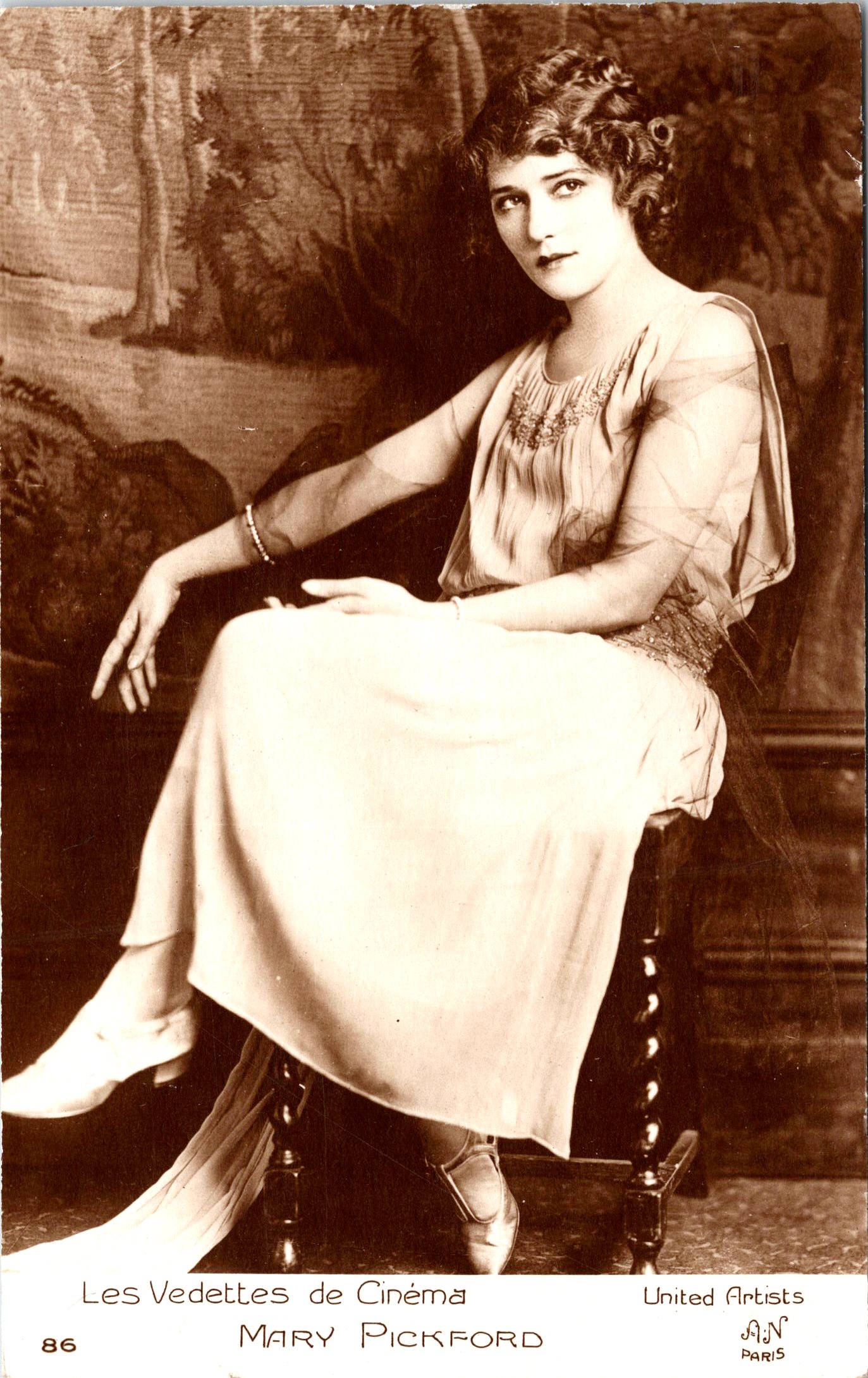
Postcard 1 features Pickford seated gracefully on a carved wooden stool, exuding elegance and poise. She is dressed in a flowing, light-colored gown with delicate embellishments on the bodice and sheer fabric draping over her arms. Her signature curls frame her face, a defining feature of her “America’s Sweetheart” image. She wears a subtle yet confident expression, her eyes gazing slightly to the side with a soft, introspective quality. Her arms are relaxed, with one hand resting gently on her lap and the other elegantly extended. Her accessories include a bracelet on her wrist and a ring on her finger, adding to her refined look. The backdrop behind her is a richly textured tapestry, possibly depicting a pastoral scene. This postcard was likely produced in the 1920s, during the height of Pickford’s career. It is numbered 86 and is part of a larger collectible series showcasing cinema stars of the era. This vintage postcard is part of a series titled Les Vedettes de Cinéma (translated as The Stars of Cinema), and it was published by Alfred Noyer (Paris,France), in collaboration with United Artists, the film distribution company that Pickford co-founded. The back of the postcard identifies the publisher as Cinémagazine – Edition and states that it was Made in France / Fabriqué en France, indicating its European origin. (SOLD)

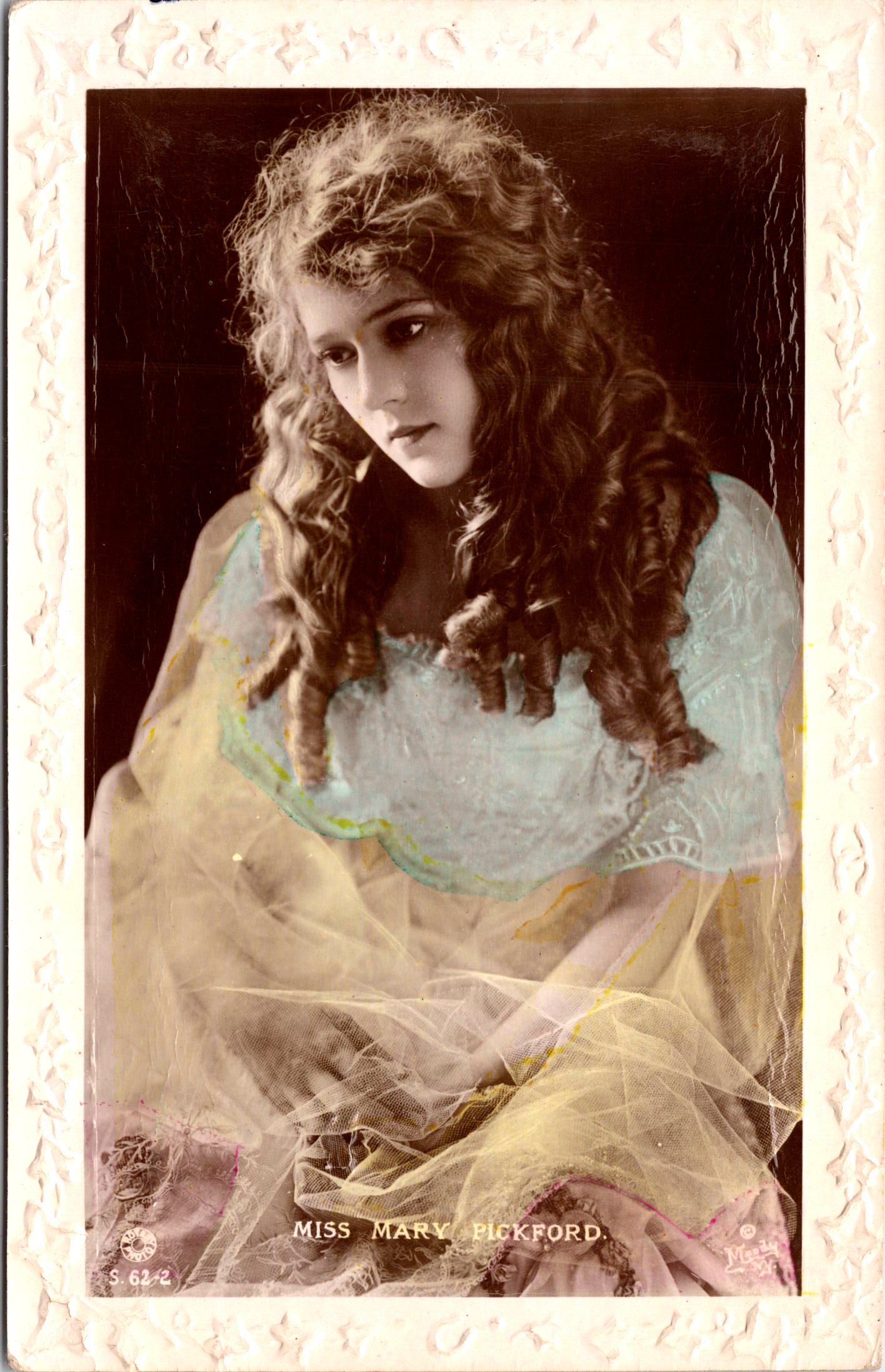
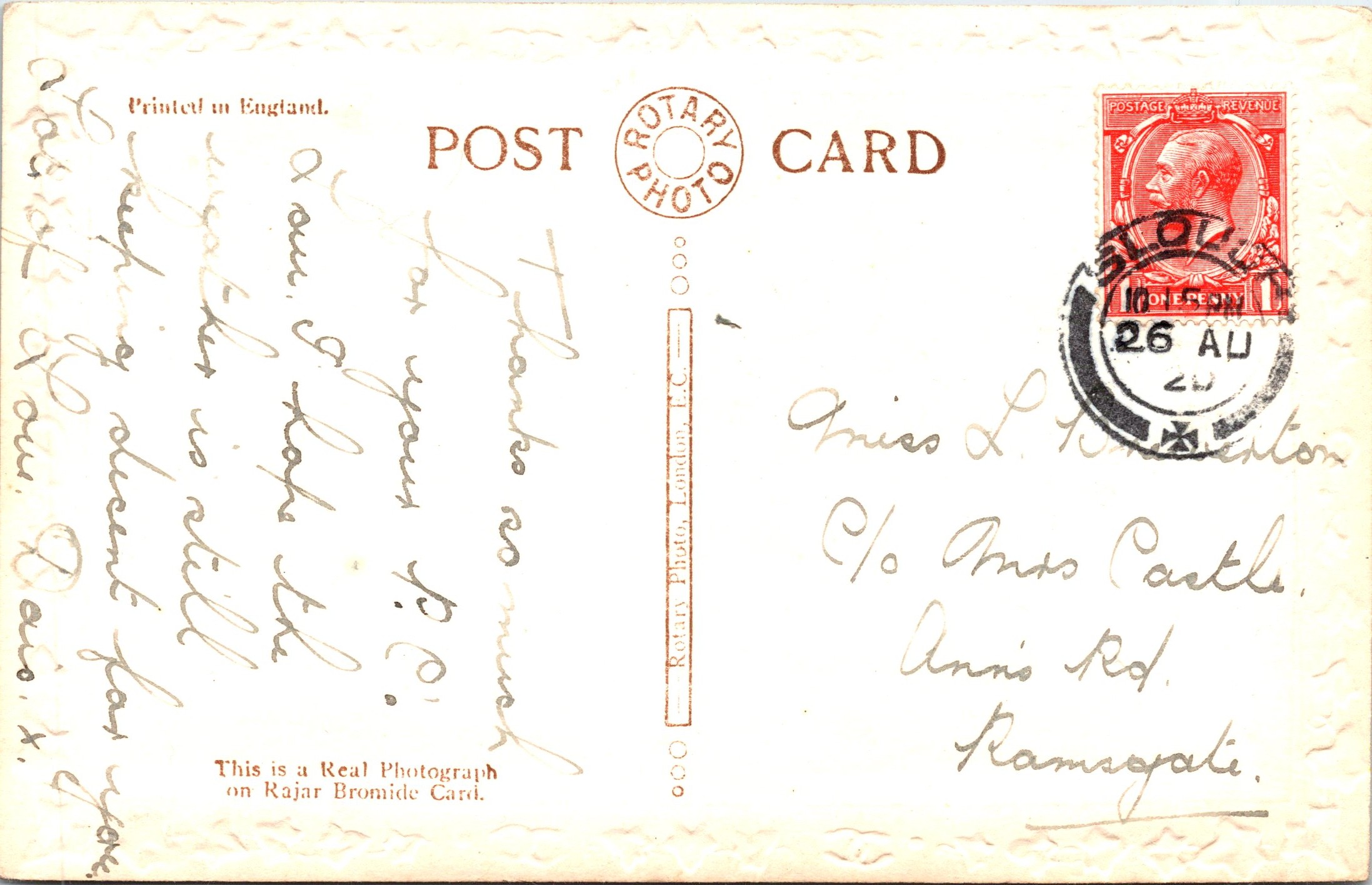
Postcard 2 features Mary Pickford in a soft, introspective portrait that perfectly captures the romantic visual style of the early 1910s. Pickford is posed in three-quarter profile, her gaze cast downward, with her signature long curls cascading over her shoulders. She wears a delicate, flowing gown rendered in subtle hand-applied color, with pale blue and warm cream tones carefully brushed over the original photograph, lending the image a dreamy, ethereal quality. The overall effect is gentle and luminous, emphasizing her youthful features and expressive eyes. This postcard was produced by Rotary Photo, one of the most prolific and collectible publishers of celebrity real photo postcards in the early 20th century. The image is identified by the ID No. S.62-2, printed at the lower edge, and the reverse confirms it was printed in England via (Rajer Bromide). (SOLD)
POSTCARD 2

MARY PICKFORD : AMERICA’S SWEETHEART : PRETTY ACTRESS : ROTARY PHOTO : RPPC

POSTCARD 1 (SOLD)

POSTCARD 2 (SOLD)

Mary Pickford (1892-1979) was a Canadian-American actress and one of the most influential figures in early Hollywood. She was often referred to as “America’s Sweetheart”. She was a pioneer of silent film and a co-founder of the film industry as we know it today. Pickford’s career began in childhood when she performed in theater productions in Canada and the United States. By the early 1900s, she transitioned to film, working with director D.W. Griffith at Biograph Studios. Her delicate beauty and expressive acting quickly made her a fan favorite, setting her apart in an era when exaggerated stage-style performances dominated silent films. During the 1910s and 1920s, Pickford became one of the highest-paid and most beloved actresses in the world. Starring in films such as Rebecca of Sunnybrook Farm (1917), Daddy-Long-Legs (1919), and Pollyanna (1920), she was known for playing wholesome, spirited young women. Her curly hair and signature on-screen innocence became iconic, but she was also a savvy businesswoman who understood the power of her brand. Pickford was not only a star but also a trailblazer in the film industry. In 1919, she co-founded United Artists alongside Charlie Chaplin, Douglas Fairbanks (her then-husband), and director D.W. Griffith. This revolutionary move allowed filmmakers to control their own productions rather than rely on major studios, changing the industry forever. As the film industry transitioned to “talkies,” Pickford retired from acting in the early 1930s, though she continued to produce films. Her contributions earned her an honorary Academy Award in 1976 for her lasting impact on cinema. Mary Pickford’s influence extends beyond her films. She helped shape the star system, paved the way for women in Hollywood, and co-founded the Motion Picture Relief Fund to support struggling actors. She remains an enduring symbol of early Hollywood glamour and innovation. Mary Pickford was born into a working-class family in Toronto, Canada. Her father, John Charles Smith, was an alcoholic who struggled to provide for the family and died from a workplace accident when Mary was just six years old. Her mother, Charlotte Hennessey Smith, was left to raise Mary and her two younger siblings, Lottie and Jack, on her own. To support the family, Charlotte encouraged her children to enter acting, and Mary began performing in theater at a young age. She soon became the family’s primary breadwinner, and her siblings, Lottie Pickford and Jack Pickford, also pursued film careers. Pickford transitioned from theater to film in the early 1900s, quickly rising to fame with her expressive acting and wholesome on-screen persona. By the 1910s and 1920s, she was one of the most recognizable stars in the world, earning the nickname “Queen of the Movies.” She also helped establish the Academy of Motion Picture Arts and Sciences. Mary Pickford was married three times. Pickford’s first marriage was to silent film actor Owen Moore (1911-1920). Her second and most famous marriage was to fellow silent film actor, Douglas Fairbanks (1920-1936). Her third marriage was to actor Charles “Buddy” Rogers (1937-1979). After retiring from acting in the early 1930s, Pickford focused on producing films and philanthropy. She became more reclusive in her later years, struggling with alcoholism and health issues. Today, she is remembered as a pioneering force in cinema history.

In Postcard 1, Mary Pickford is shown in a soft, romantic studio portrait. She is presented in three-quarter view and gazing directly at the camera with a calm, introspective expression. Her most striking feature is her abundant cascade of long, tightly curled hair, which frames her face and falls well past her shoulders, emphasizing the youthful, ethereal image for which she became famous. Her face is delicately lit, with smooth, pale complexion, gently arched brows, and large, expressive eyes that convey both innocence and quiet seriousness. The lighting is subtle and flattering, creating a gentle contrast that draws attention to her eyes and the natural symmetry of her features. Pickford wears a dark, likely velvet garment with a lighter collar visible at the neckline, adding depth and richness to the composition. The image appears hand-tinted, with warm tones in her hair and soft coloration in her clothing, enhancing the lifelike quality while preserving the elegance of early studio portraiture. Overall, the photograph presents Mary Pickford as youthful, graceful, and refined, embodying the carefully crafted screen persona that earned her the nickname “America’s Sweetheart.” This postcard was published by Rotary Photo as part of a series (No.S62-3). The photographer is listed as “Moody”. (SOLD)

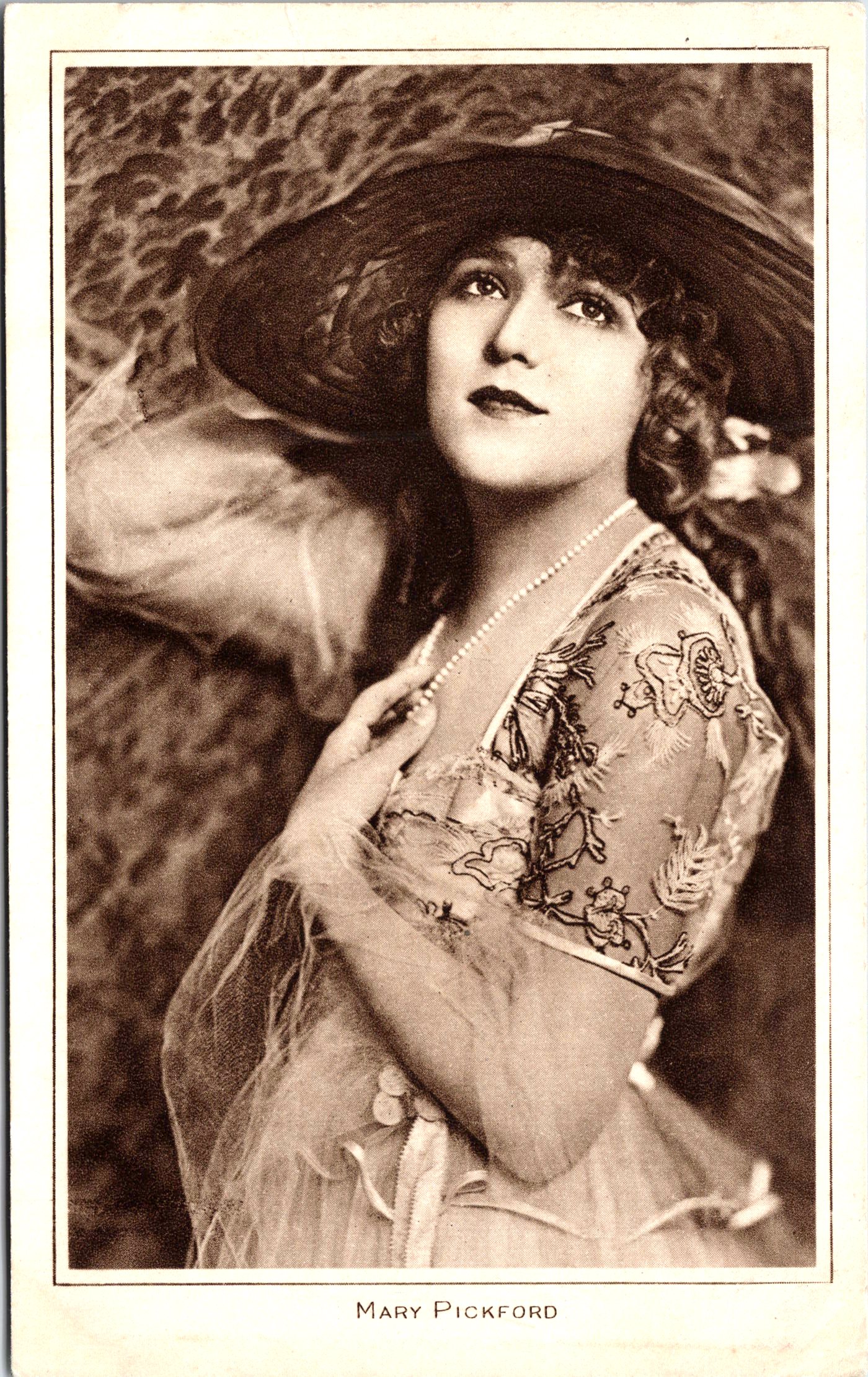
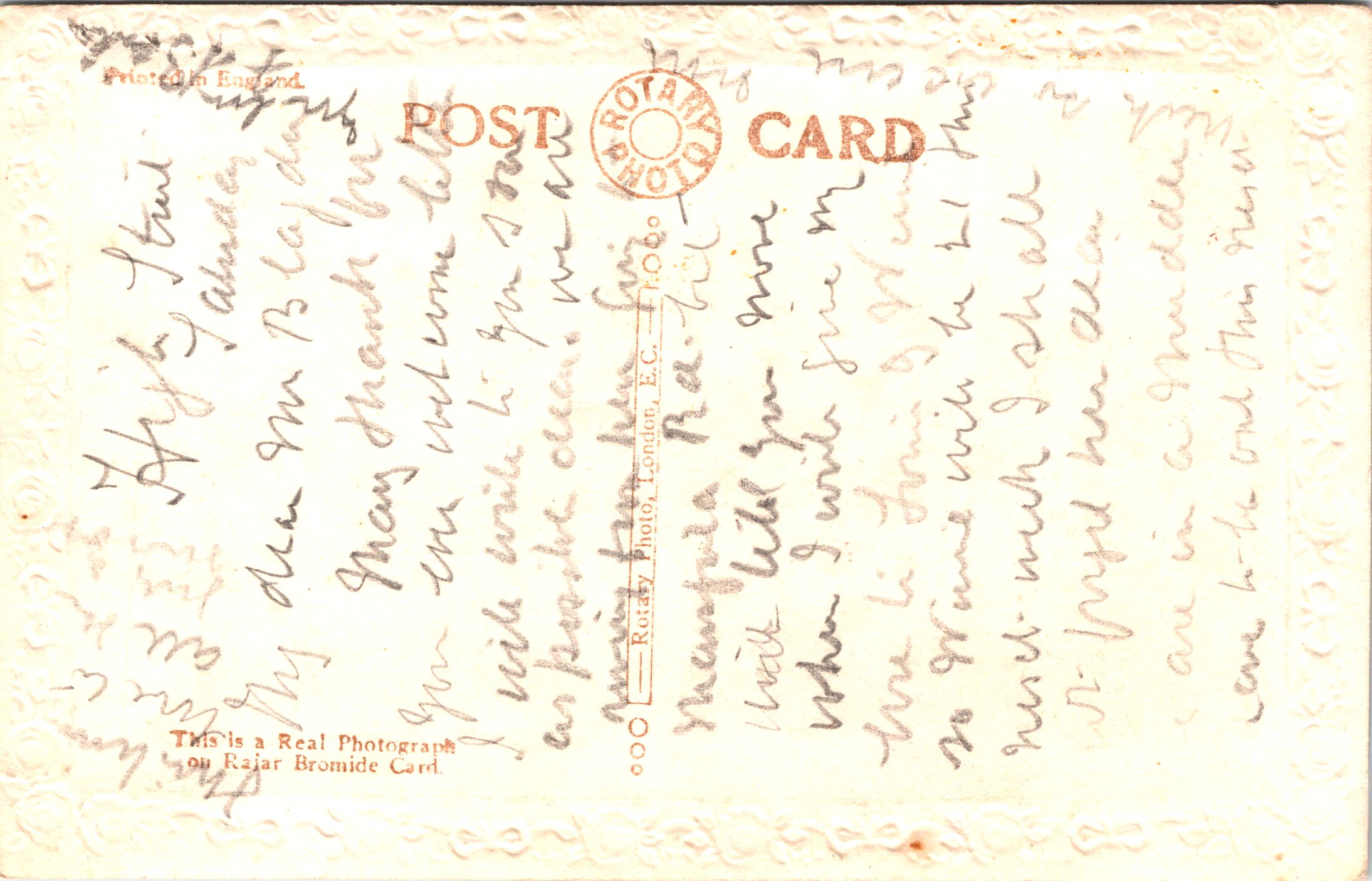
Postcard 2 features Pickford appearing on an uncommon postcard. In this glamorous sepia-toned image, Pickford is posed elegantly against a textured backdrop. She wears a large, dramatic hat with a wide brim that frames her face beautifully. Her hair is styled in soft curls that fall to her shoulders, and she wears a sheer, embroidered gown that adds a romantic and ethereal quality to the photograph. A simple yet elegant string of pearls drapes around her neck, which she gently holds with one hand, adding to her demure and sophisticated pose. Mary Pickford’s facial expression is soft and serene, with her large, expressive eyes gazing upward as if lost in a dream. Her lips are slightly parted in a faint, knowing smile, giving her an air of both innocence and quiet confidence. The delicate embroidery on her gown and the flowing tulle layers create an image of timeless beauty and classic Hollywood elegance. The reverse of the postcard identifies the publisher as Pictures Ltd., located at 88 Long Acre, London, United Kingdom. This card is part of their “Pictures Portrait Gallery” series and is numbered No. 144. The design on the back features ornate lettering and a charming illustration of a woman surrounded by art supplies, reinforcing the theme of portraiture and artistry.  (SOLD)

LYDIA WEST : PRETTY BRITISH STAGE ACTRESS : 1904 AND 1907

POSTCARD 1  (SOLD)

POSTCARD 1 (CLOSE-UP)   (SOLD)
This image has an empty alt attribute; its file name is lydia-west_0001.jpgPOSTCARD 2

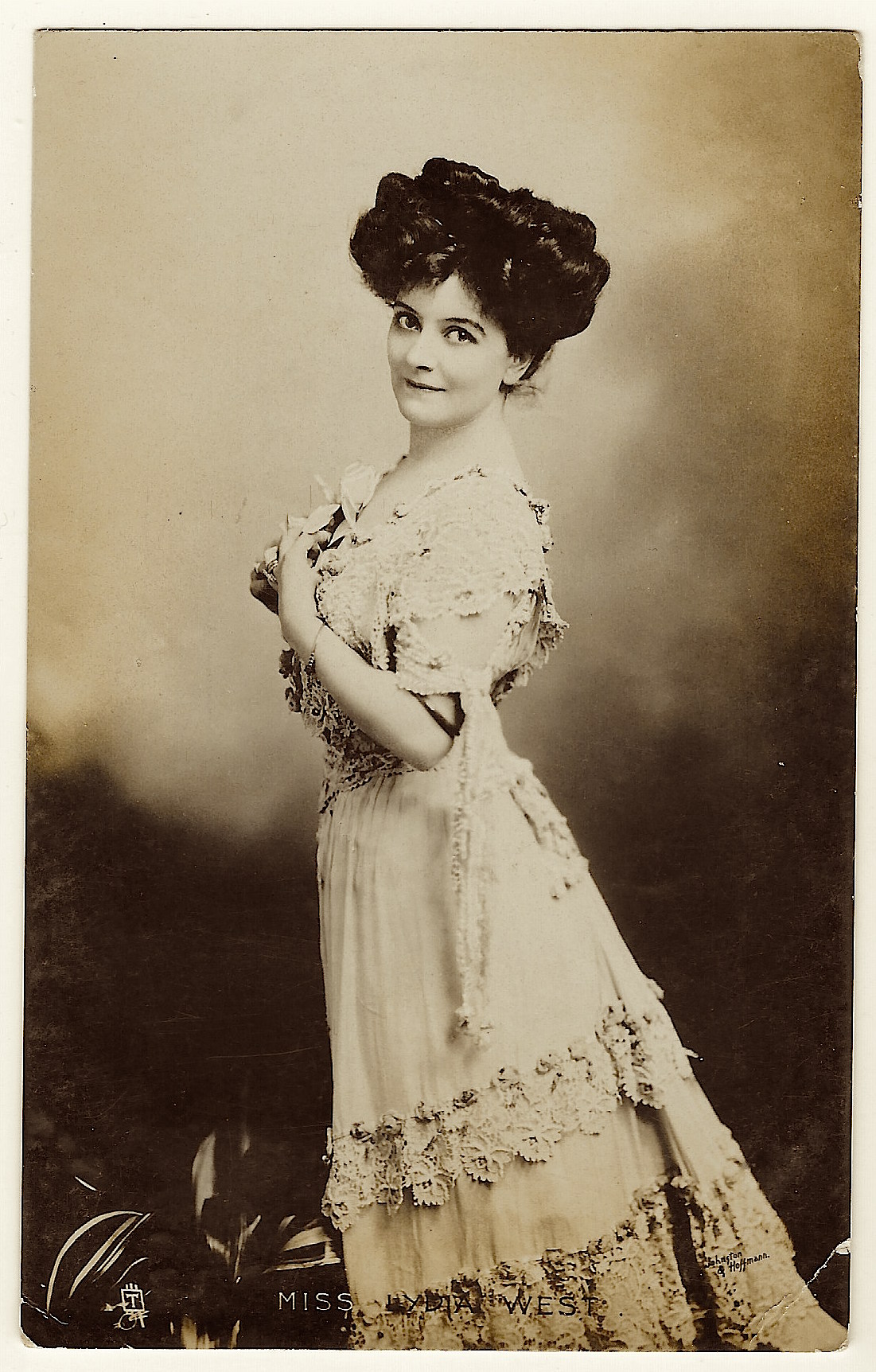
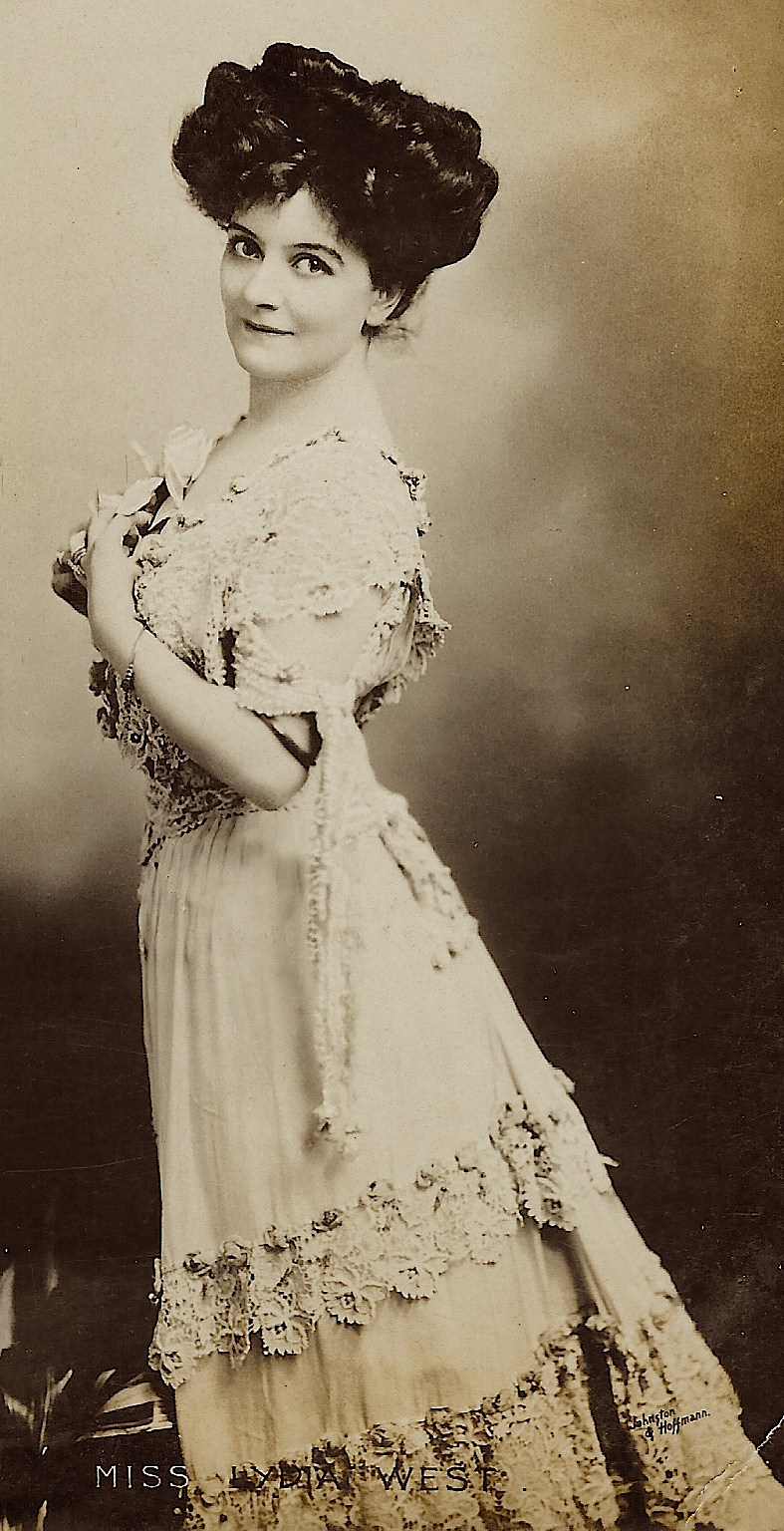
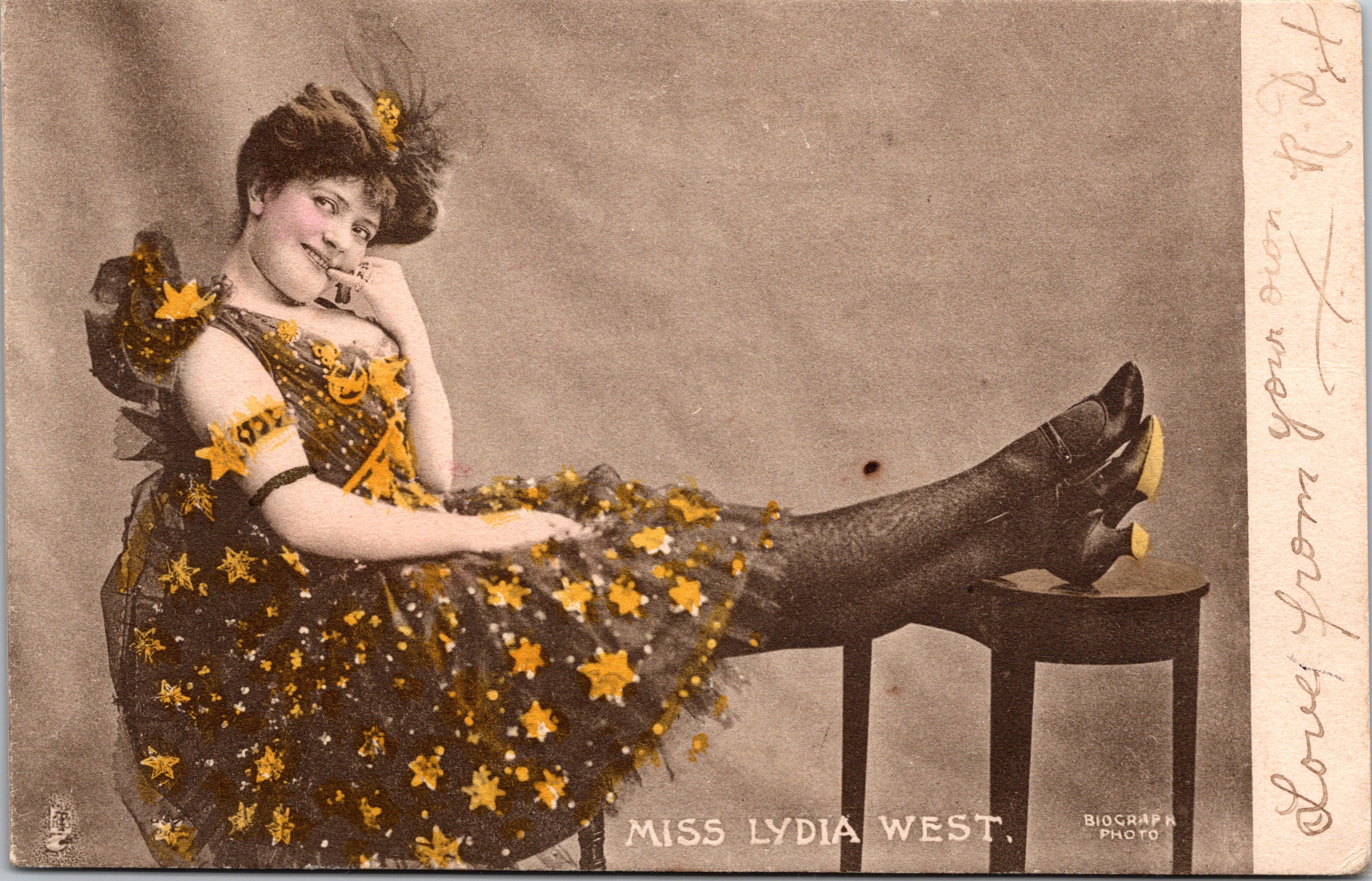
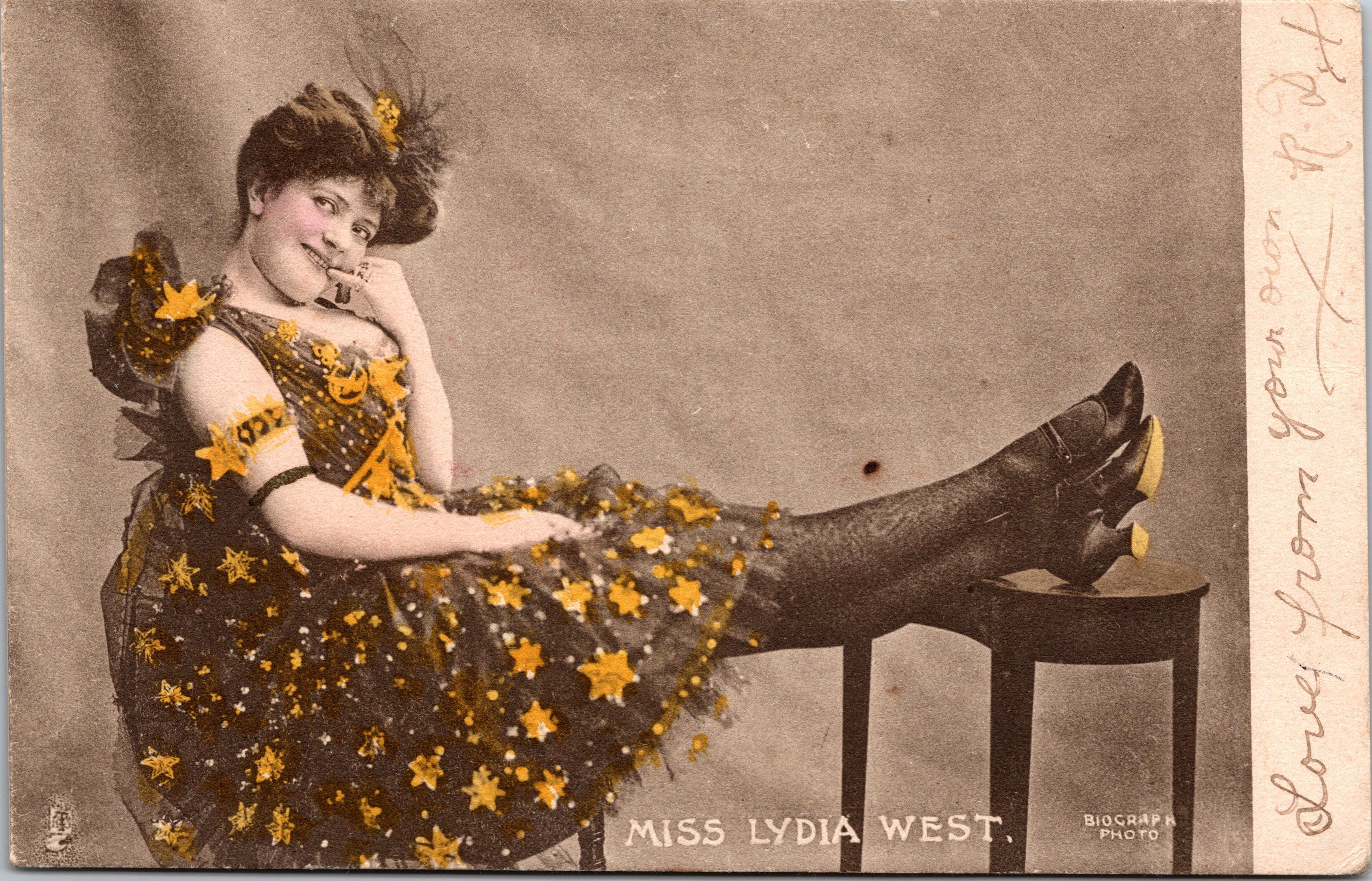
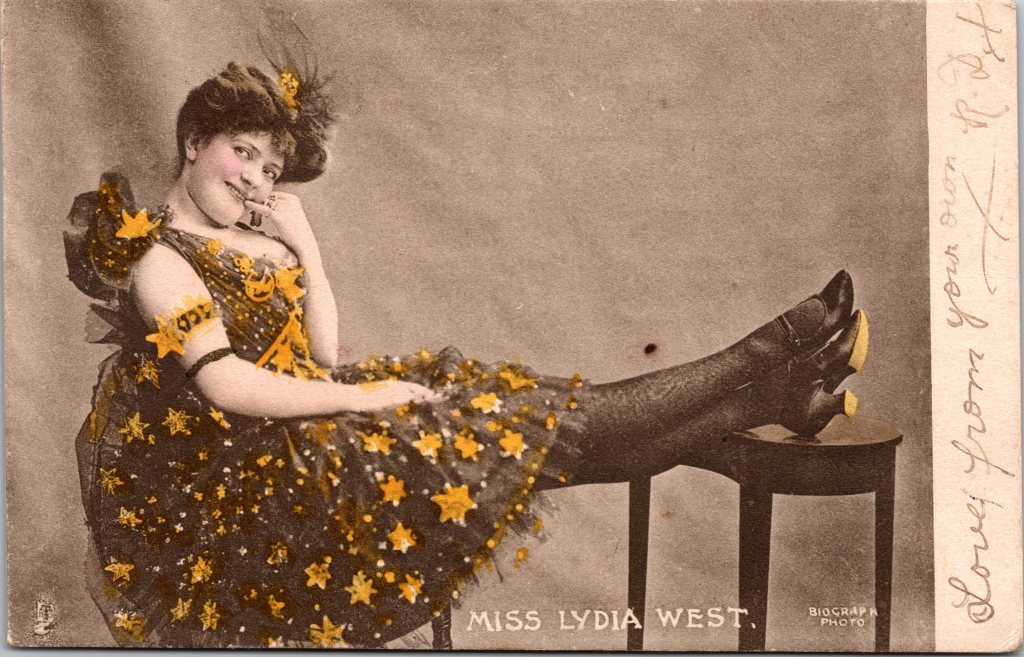
These vintage real photo postcards feature theatre actress, Lydia West. I believe she is British but I am unable to confirm her nationality. In fact, I could find little information about this pretty stage performer. I was able to locate a photograph of Miss West, in costume for her performance in the musical comedy, “Florodoro” (1899). The photo appeared in the theatre magazine, “Play Pictorial”. Research also discovered a Play Program for a play in which West was part of the cast. She played one of twelve butterflies in “My Darling” (1907). The play was co-written by actor, Seymour Hicks, and was produced at the Hicks Theatre. Marie Studholme, a very well known stage actress was in the production.

Postcard 1 was published by Rafael Tuck & Sons. The card was part of the “Celebrities of the Stage” series (no. G 1028). The photo studio that produced West’s portrait was Johnston & Hoffmann. The postcard is in fair condition (see scans) and is priced accordingly. This postcard’s postmark reveals that the card was mailed in 1907.   SOLD

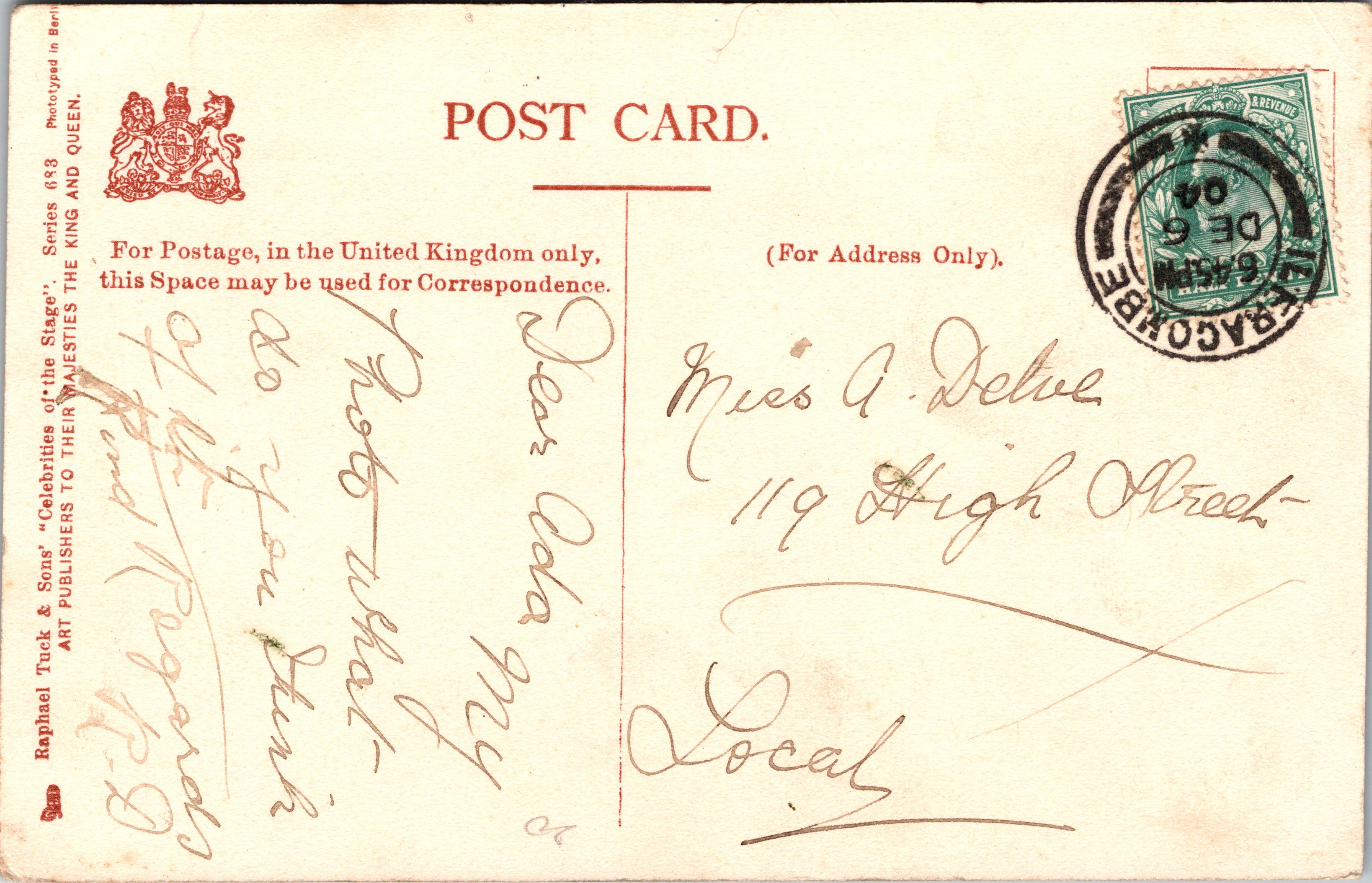
Postcard 2 This postcard was published by Rafael Tuck & Sons. The card was part of the “Celebrities of the Stage” series (683). The photo studio that produced West’s portrait was Biograph Photo. The card is hand colored. The postcard is in good condition (see scans). This postcard’s postmark reveals that the card was mailed in 1904.  

Buy this Vintage Real Photo Postcard (includes shipping within the US) #3937

To purchase this item, click on the Pay with PayPal button below

$8.74

Buy this Vintage Real Photo Postcard (includes International shipping outside the US) 3937

To purchase this item, click on the Pay with PayPal button below

$17.99

POSTCARD 1
POSTCARD 2

BLANCHE SWEET : SILENT FILM ACTRESS : 161 FILM CREDITS : BY FRED HARTSOOK : 1917

Blanche Sweet (1896-1986) was an American silent film actress. Her mother was a dancer and her father was a wine merchant. Blanche began show business at an early age. At age four she was performing with a touring company with stars, Marie Burroughs and Maurice Barrymore. At age thirteen, she was working at Biograph Studios under contract with D. W. Griffith. She became known as “The Biograph Blonde”. In 1914, Sweet moved to Paramount (Famous Players – Lasky). Paramount had offered her more money than Biograph could pay. During the 1910’s, Sweet appeared in several prominet film roles and kept her place as a popular leading lady. She played in a number of Cecil B. DeMille films. She and Marshall Neilan (actor, director, producer, screen writer) had an affair which led to Neilan obtaining a divorce and marrying young Blanche. She was about 16 years old. The marriage ended in 1929 because Neilan was an alleged philanderer. When “talkies” began, Sweets career suffered causing her to retire in 1930. The IMDb lists 161 film credits in Blanche’s filmography. Her post film career included radio work and non major Broadway roles. When job offers dissipated, she began working in a Los Angeles department store. She later worked with historians and gave lectures about the early days of Hollywood. This photo portrait of Miss Sweet was taken by American photographer, Fred Hartsook (1876-1930). He owned a chain of California studios described as “the largest photographic business in the world” at that time. The photo was taken circa 1917. Hartsook photographed many silent film stars as well as Woodrow Wilson during his Presidency. This vintage postcard’s AZO stamp box indicates that the postcard was published sometime between 1910 and 1930. This postcard is in very good condition (see scans).

blanche-sweet-1-1

Buy this Vintage Real Photo Postcard (includes shipping within the US) #3895

To purchase this item, click on the Pay with PayPal button below

$25.75

blanche-sweet-1-2

Buy this Vintage Real Photo Postcard (includes International shipping outside the US) 3895

To purchase this item, click on the Pay with PayPal button below

$35.00

MISS MAY TAVERNER : STAGE ACTRESS : “WRENCH SERIES” : VINTAGE POSTCARD : (1904)

This vintage postcard features stage actress, Miss May Taverner. Information about this early nineteenth century stage actress is not easily accessible. Deeper research will be needed to uncover biographical information about her life. Taverner was a successful enough actress to have seven of her portraits in the National Portrait Gallery. I found a  vintage photo postcard of Miss Taverner and Marion Terry as they appeared in the play “Quality Street”. The play, a comedy, was written by “Peter Pan” writer, J. M. Barrie. The original production, on Broadway, opened in 1901 and ran for 64 performances. In 1902, the London production of Quality Street became a hit. It ran for 459 performances. Headlining the cast was Seymour Hicks and Ellaline Terriss. It appears that Taverner had a minor role. The photographer cited on this postcard is from the “Biograph Studio). This card is part of the “Wrench Series (no.4703)”. Why is the word “Wrench” meaning in this context? The series is named after (John) Evelyn Leslie Wrench. The series was published from 1900 through 1906. Wrench went on to become a newspaperman. He was knighted in 1932.This postcard has a 1904 English postmark. The message on the card is interesting. The writer indicates that she is sending this card for the addressees postcard collection. This postcard is in fair condition and priced accordingly. Note the stain on the left margin of the card. See scans for condition. 

Buy this original Vintage Real Photo Postcard (includes shipping within the US) #3593

To purchase this item, click on the Pay with PayPal button below

$7.49

taverner_0001-3

Buy this Vintage Real Photo Postcard (includes International shipping outside the US) 3593

To purchase this item, click on the Pay with PayPal button below

$16.49

MISS GERTIE MAY : PRETTY ACTRESS : BACKGROUND INFO INACCESSIBLE (1907)

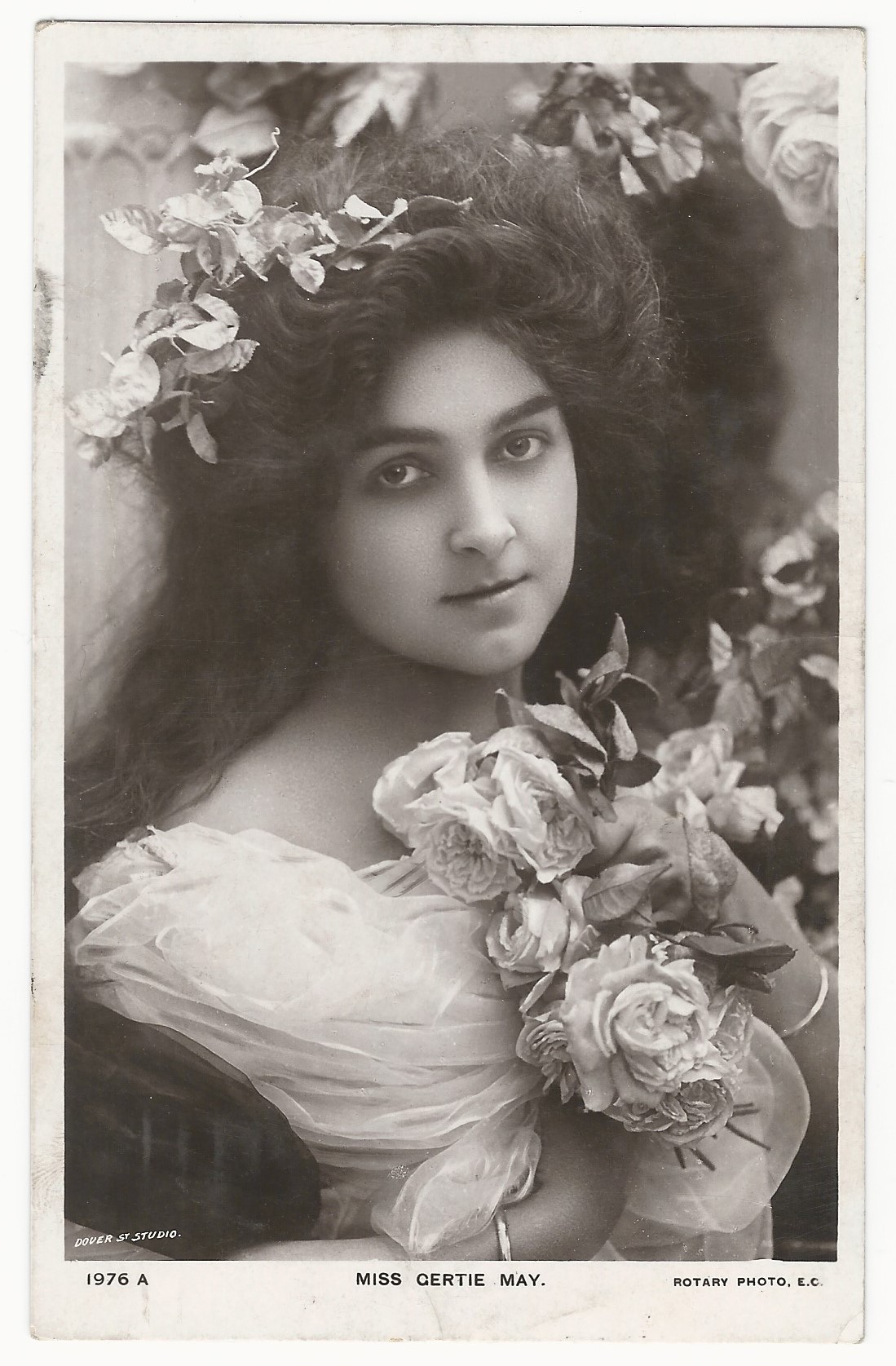
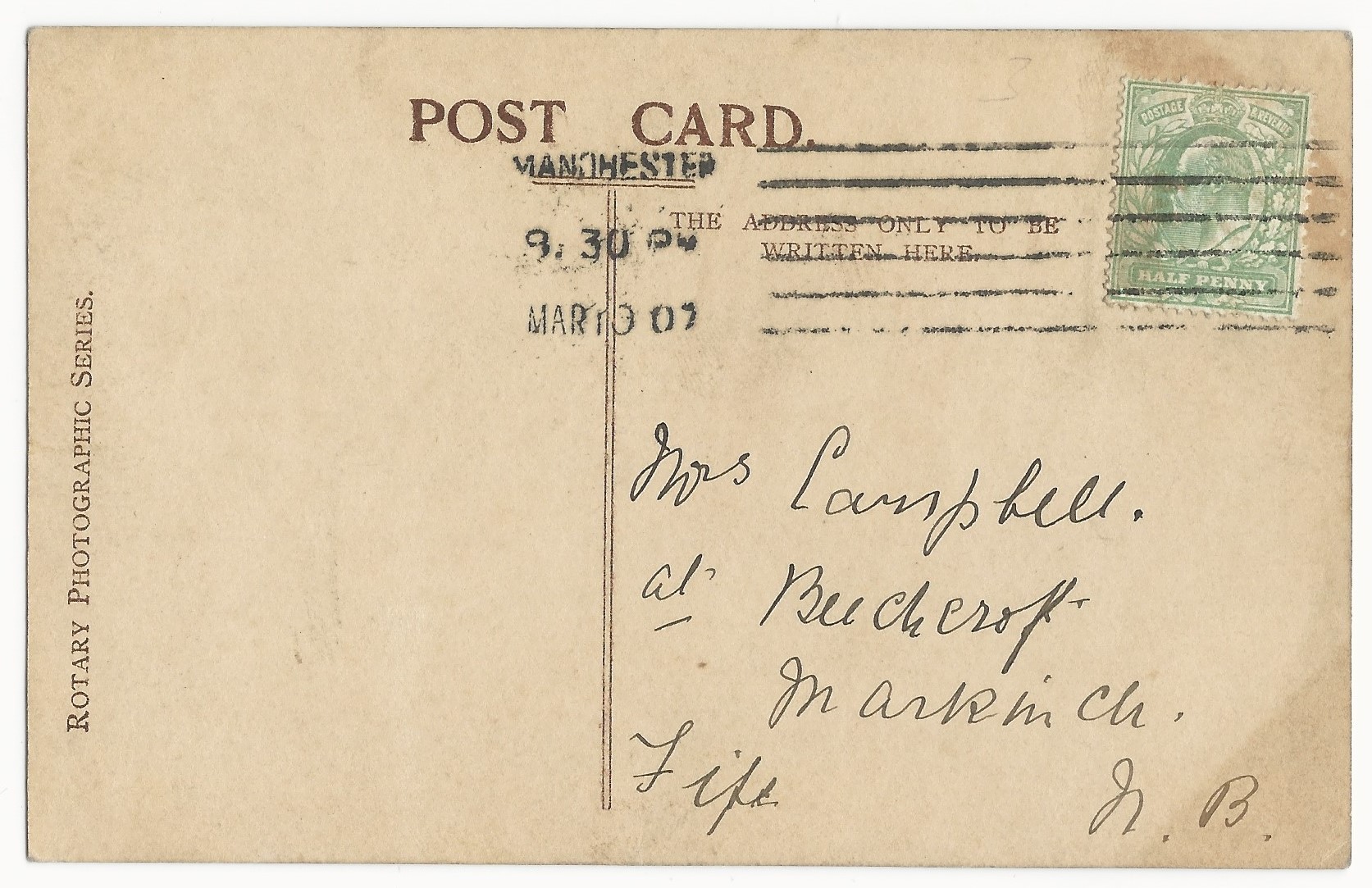
This vintage real photo postcard features a pretty actress named Gertie May. She has beautiful flowing dark hair and is flashing a wonderful half smile. Miss May is nearly surrounded by flowers. Preliminary research uncovered “bubkes”. I would welcome any information about this performer. This postcard was produced by Rotary Photo as part of a series (no.1976 A). The card has a 1907 postmark from Manchester, England. This wonderful portrait of Miss May, was taken by Dover Street Studios. The studio was active between circa 1906 and circa 1912. The gallery specialized in taking theatrical portraits and was located in London, England. They were the successors to the Biograph Studios as well as Adart (a studio that took advertising photos). SOLD

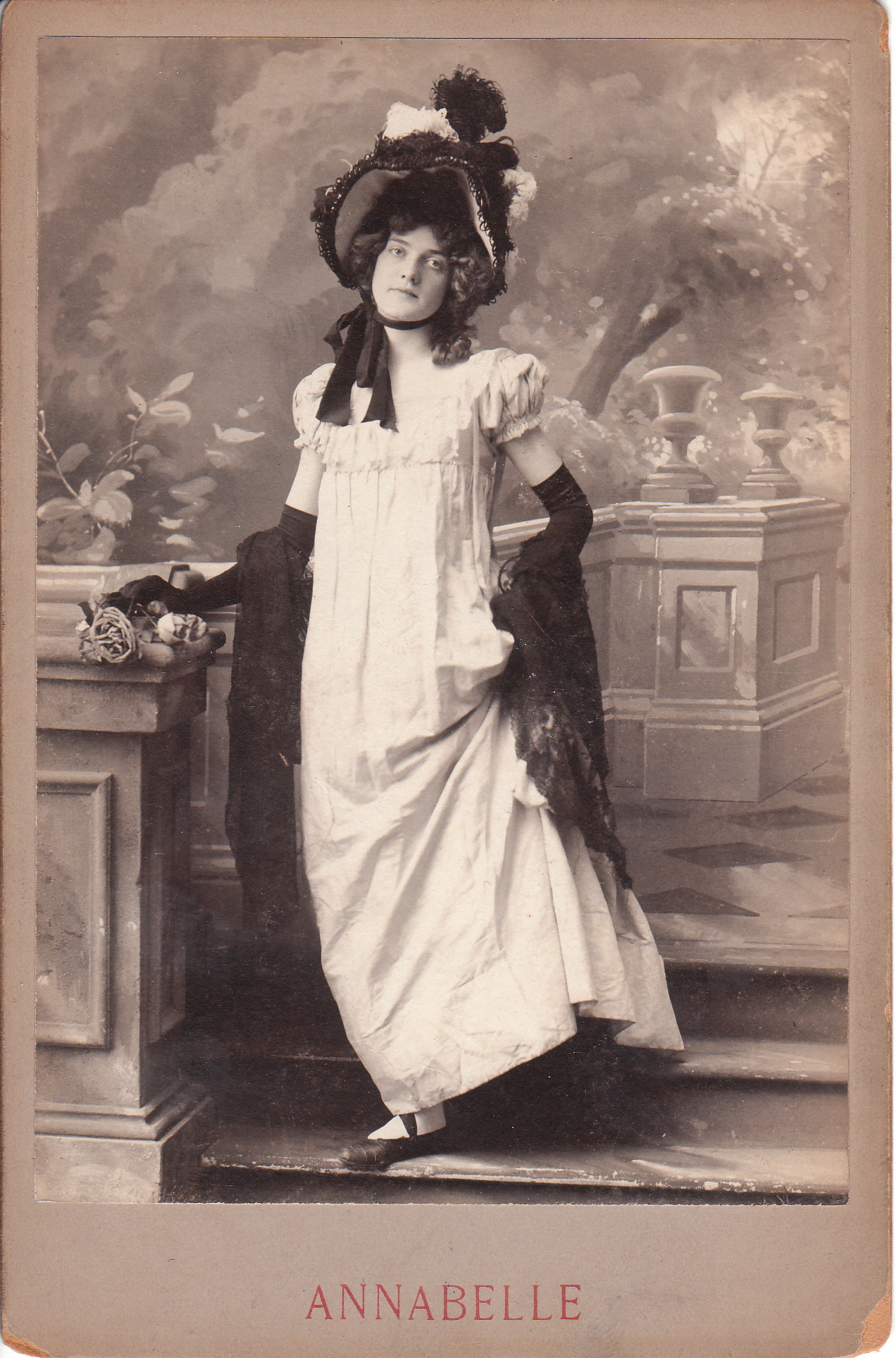
ANNABELLE MOORE: STAGE AND EARLY FILM DANCER

Annabelle Moore (1878-1961) was born Annabella Whitford in Chicago, Illinois. In 1910 she married Edward James Buchan and they remained married until his death in 1958. She appeared in at least nine films beween 1894 and 1897.  Film companies included Edison and Biograph. The films were dance films and included “A Mermaid Dance”, “Butterfly Dance” and “Serpentine Dance”. These films can be seen on “You Tube”. Annabelle starred as the Gibson Bathing Girl in the first of  the Ziegfeld Follies (1907). She remained as part of the Ziegfeld Follies company until her marriage and retirement in 1912. The cabinet card is stamped on the reverse with the following words; “This No. 46 is the property of the American Lithographic Company” of New York.