“LADIES AND GENTLEMEN, BOYS AND GIRLS, CHILDREN OF ALL AGES, LOOK AT THE GIRL ON THE FLYING TRAPEZE” …ROSE AUSTIN, AERIAL PERFORMING STAR

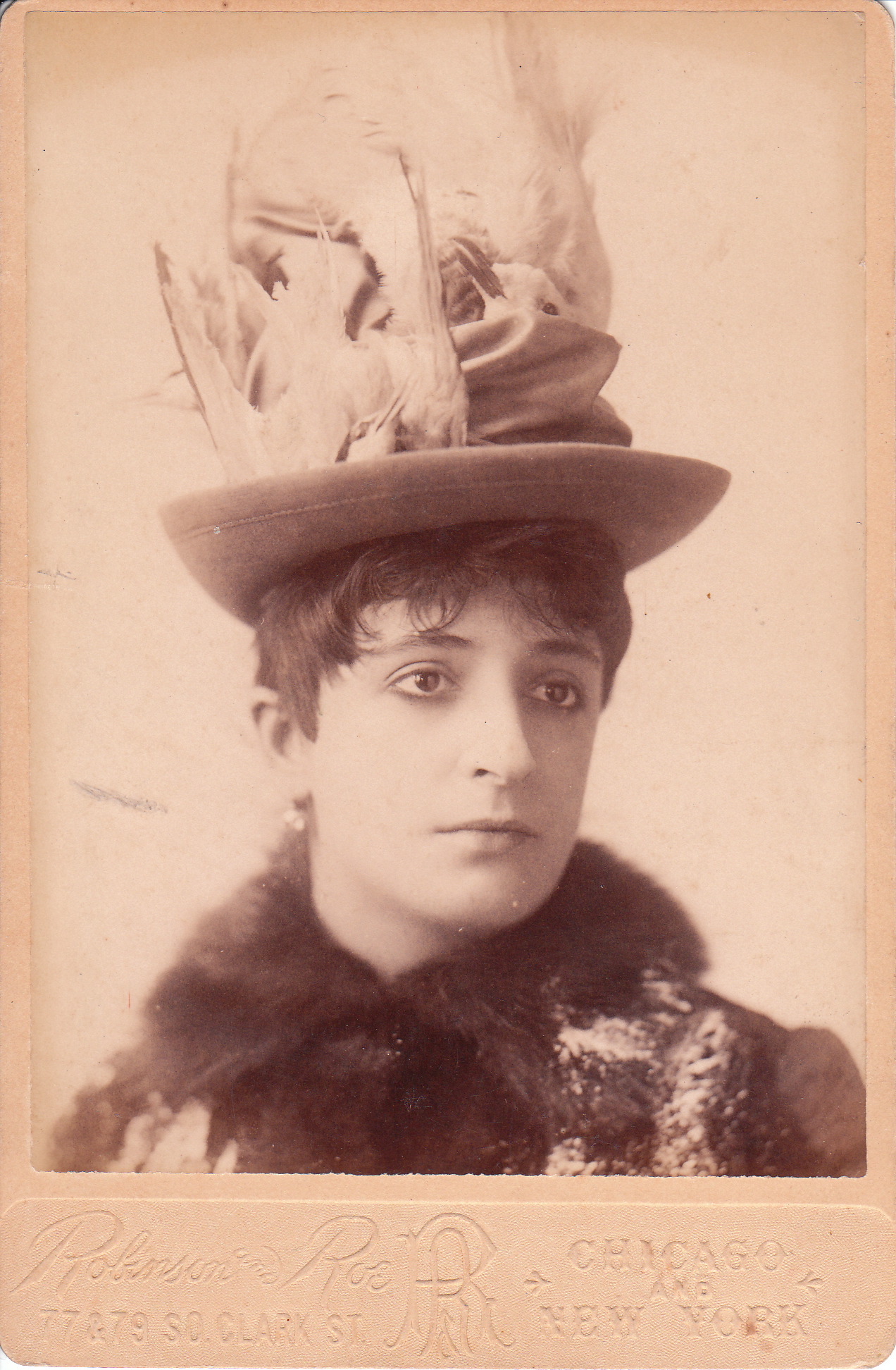
This cabinet card features a pretty, Rose Austin, of the Austin Sisters, who were well known trapeze artists. On the reverse of the photograph is a pencilled notation that states the performer’s name and “Bath Beach, Long Island, New York” (Bath Beach is in Brooklyn). The image was published by the Robinson & Roe studio which had galleries in both Chicago and New York City. The Circus Historical Society’s web site cites the “Austin Family”. Its members included R.G., Aimee (1870-1907), George E., and Rose. Among their venues were Orrin Brothers (1883-1884), W. W. Cole (1885), Coney Island (1892), and Bentley’s (1895). Aimee Austin, born in London, was an aerialist who was known as the “Human Fly” for her talent of “ceiling walking”. She began performing with Rose Austin, at nine years of age, as part of the Austin Sisters aerial act which played at the Circus Rentz, in Berlin, Germany. The act was managed by R. G. Austin. The aerialist performed with various European circuses before coming to the United States. Rose Austin was the subject of three articles in the New York Times. A 1892 article was entitled “Cannot Find Rose Austin”. The article reported that the disappearance of Ms. Austin from her home in Bath Beach. She was described as a well known trapeze performeer and leader of the “clever” Austin Sisters. It was also metioned that she was the wife of R. G. Austin; the manager of the Australian Theatrical Company. At the time of her disappearance, she and her sister were performing at Vaceas’s West End Casino in Coney Island, New York. She had been last seen boarding a ferry bound for New York City. The article points out that Ms. Austin had suffered from epilepsy for the previous four or five years and had experienced a severe attack about ten days earlier.(An acrobat with epilepsy? Doesn’t seem like a terrific career choice.). The article closes with a statement that both Rose Austin’s husband and her doctor, believed that she was either in a hospital, or had fallen off the ferry and drowned. A follow up article (1892) revealed that Ms. Austin had been found and was currently confined to bed as “she is wandering in her mind”. She couldn’t account for her whereabouts or activities during the time she was missing and last remembered falling ill on the ferry. A third article in the New York Times (1894) reports that Rose fell from a trapeze while performing with her brother George in Coney Island. She fell after fainting (one would imagine she had a epileptic seizure). She and her brother fell into a net together and knocked heads, rendering them both unconscious. George recovered quickly but Rose was brought home to Bensonhurst (Brooklyn) in a delirious condition. To view other photographs by Robinson and Roe, and to learn a little about them, click on the category “Photographer: Robinson & Roe”.  SOLD


A HANDSOME MAN IN BROOKLYN, NEW YORK

A very handsome man poses for his portrait at the Dana studio in Brooklyn, New York. Information written on the reverse of the photograph indicates that this good looking gentleman was named Ferdinand Clauburg. The inscription also indicates that the date of this photograph was July 2nd, 1897. Mr. Clauburg is well dressed and is wearing a pin on his lapel. The Dana studio was located at 565 Fulton Street, Brooklyn, New York. Edward Cary Dana (1853-1897) was born in Boston, Massachusetts, developed an interest in photography, and moved to Brooklyn, where he opened a studio. In time he had a great reputation as a skilled photographer and had established three galleries in New York City. He died at age 44 of kidney problems and left a widow, Miss Ada Sherman, of Staten Island, New York.

PAULINE MARKHAM: TURN OF THE CENTURY BURLESQUE ACTRESS

This risque (lots of cleavage shown for this era) cabinet card is a portrait of Pauline Markham (1847-1919), a singer and burlesque dancer during the civil war period in the United States. She was born in England where she made her stage debut as a child. She came to New York and appeared in “Black Crook” and “Pinafore”. She was a member of the Lydia Thompson troupe (British Blondes). After the civil war, she had relations with Northern Generals and Reconstructionists In the 1870’s she formed her own stage company and in 1879 she took her company on a tour of the West during which they performed Gilbert and Sullivan. A member of that troupe was Josephine Marcus, who later married lawman, Wyatt Earp. She retired from the stage in 1889 after breaking her leg. She must have taken the old show business saying of “break a leg” literally. This cabinet card was photographed by Fredricks, of Brooklyn, New York. It is possible that the photographer is Charles DeForest Fredricks (1823-1894) who was an innovative American photographer. Fredricks learned the art of daguerreotypes from the great photographer , Jeremiah Gurney (see category “Photographer: Gurney”). Fredricks worked in South America through the early 1850’s and then he operated out of Charleston, South Carolina; and Paris, France. He was the first photographer to make life-size portraits, which he then hired artists to color them using pastel. He then returned to New York City and rejoined Gurney. In 1854 he developed a new enlarging process and in 1855 he ended his association with Gurney. In the late 1850’s Fredricks ran his studio in Havana, Cuba, and in the 1860’s he opened a studio on Broadway, in New York City. He retired in 1889. Research has not confirmed that Fredricks ever had a studio in Brooklyn, so it is quite uncertain whether the Fredricks who photographed Markham is actually Charles D. Fredricks.

SALVATION ARMY LADY AND BIBLE IN BROOKLYN, NEW YORK

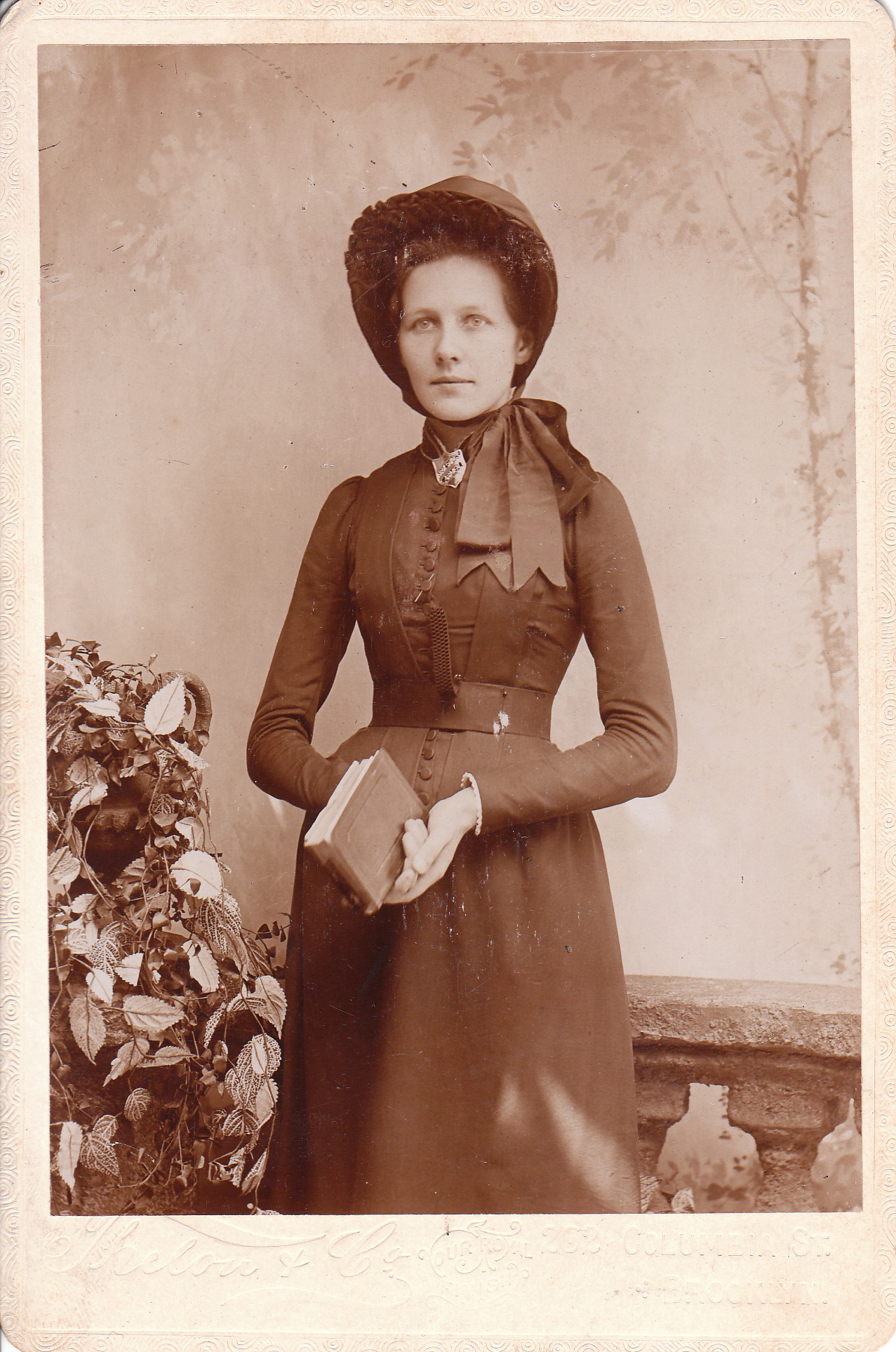
A young woman dressed in her Salvation Army uniform poses for her portrait in a Brooklyn, New York photographic studio (262 Columbia Street). The woman appears to be holding a bible and her Salvation Army badge is evident on her collar. The name of the photographer is difficult to interpret but it appears to be Thelou & Co. Research reveals that another photographer, named Leeds, also operated at the Columbia Street address, and that in 1883, the studio was put up for sale.

Published in: on February 7, 2011 at 12:01 am  Comments (1)  
Tags: , ,

CATHOLIC CLERGYMAN PORTRAIT (BROOKLYN CATHOLIC PHOTO COMPANY)

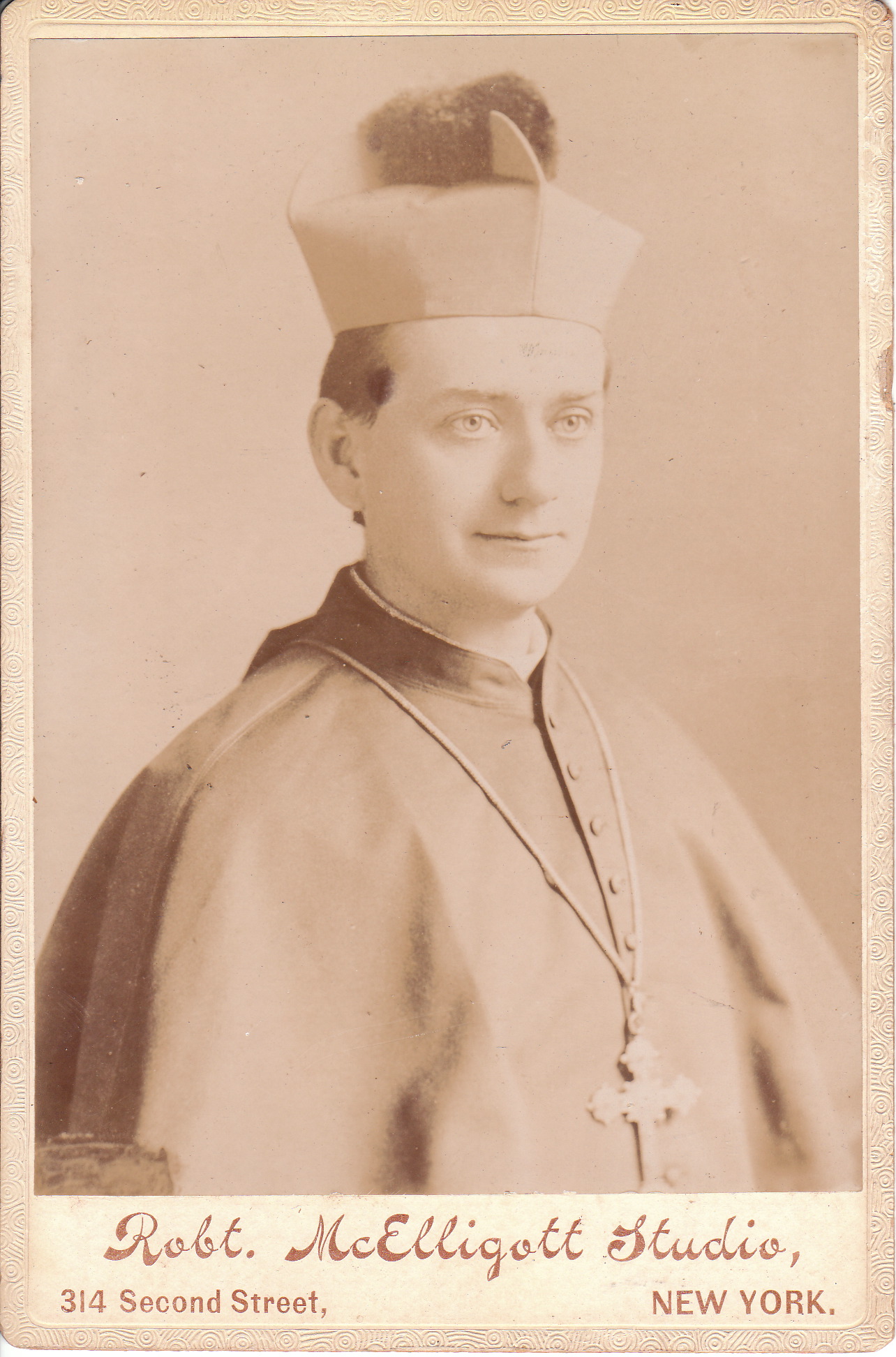
Sarony, Falk and Mora were photographers known to specialize in photographing famous theatre personalities. Eisenmann is a photographer associated with portraits of circus and sideshow performers. A. & G. Taylor was on of several British photographers known as “Photographers to the Queen”. This cabinet card represents the work of a photographic studio that claimed “Clergymen’s Photographs a Specialty”. The reverse of this cabinet card has an elaborate back stamp of the “Brooklyn Catholic Photo. Co.”. The front of the cabinet card indicates the photographer was Robert McElligott  and that his studio was in New York City, New York. The relationship between McElligott and the Brooklyn Catholic Photo  Company is unknown, and research has not yet been fruitful in obtaining additional information. Hopefully, the vast unpaid research department of the Cabinet Card Gallery knows, or can locate relevant illuminating information about the studio and photo company listed on this cabinet card.  This cabinet card  image presents a portrait featuring a priest in his religious garb. Perhaps  the subject is not a priest but instead someone who holds another type of religious role in the church?

GOOD TIME GIRL IN NEW YORK CITY (1897)

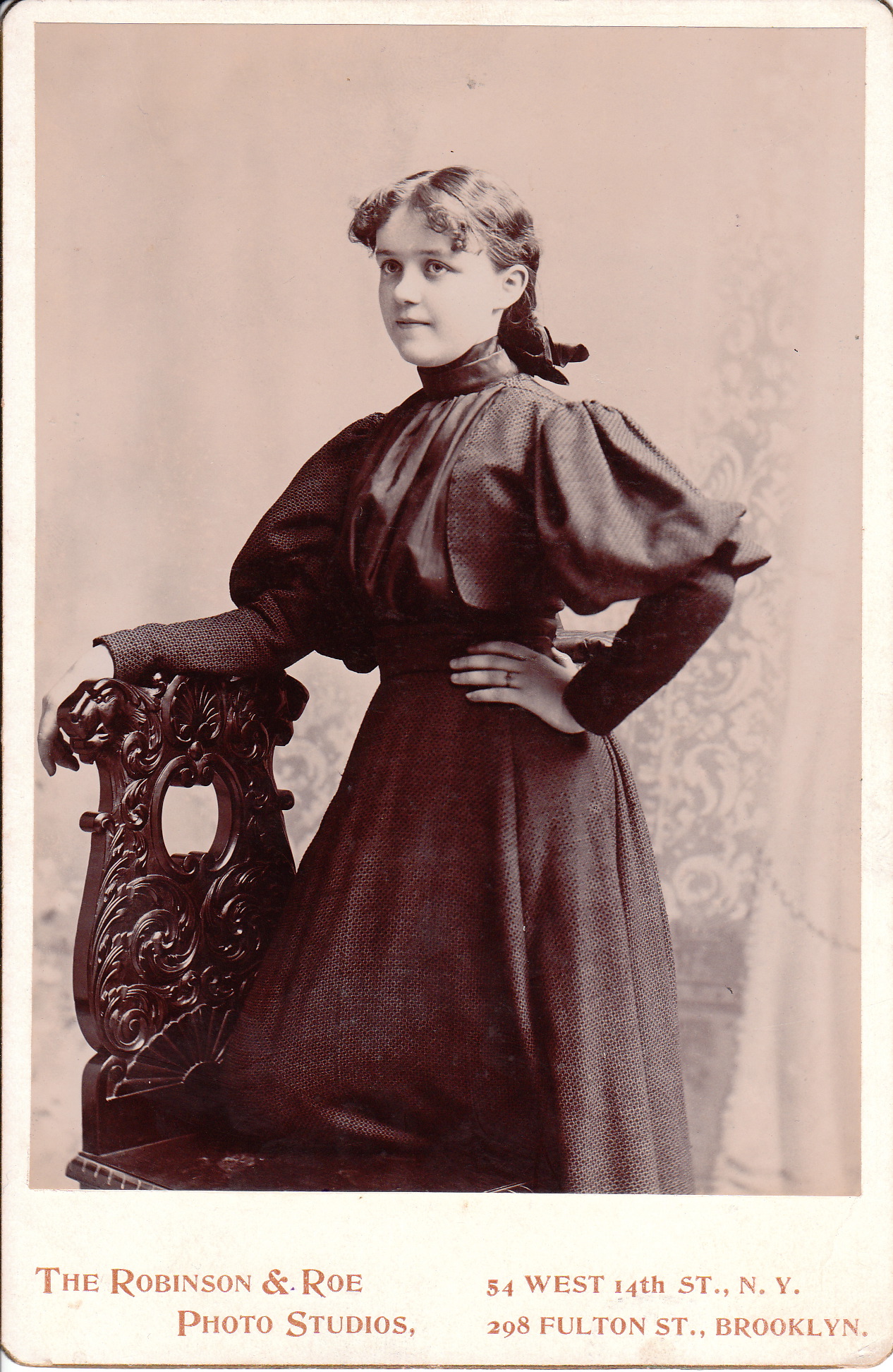
The following letter in inscribed on the reverse of this cabinet card. “Dear Friends, This picture I send as a token to remember the good times we had and hoping to see you all again if not in this world then in the next. From a true friend, Lizzie   This day November 4/1897”. This is a sweet letter from a girl who appears to be in her teenage years. The photographer of this cabinet card is The Robinson & Roe Photo Studios, in  New York City. The studio had operations in both Manhattan and Brooklyn. They also operated a studio in Chicago, Illinois. They were prominent photographers in the 1880’s and 1890’s. The pair of photographers are known for their photographs of Inuits from Labrador that were produced during the Worlds Columbian Exposition in Chicago (1893). The Inuits were part of the Eskimo Village exhibition. SOLD

A BEARD GROWS IN BROOKLYN (1890)

This Cabinet Card was taken in 1890 by the photographer, Kopke of Brooklyn, New York. Kopke’s studio was located on Fulton Street. The subject has a very interesting beard earning him the honor of entering the Cabinet Card Gallery’s category for Beards (Only the Best).  The unidentified subject was 55 years of age when this photograph was taken. To view other photographs by Kopke, click on the category “Photographer: Kopke”.

Published in: on December 28, 2009 at 9:00 am  Leave a Comment  
Tags: , , ,

SAILOR LANDLOCKED IN BROOKLYN

SAILOR 2_0003This Cabinet Card captures a sailor posing for his photograph at the studio of L Bradfisch on Fulton Street in Brooklyn, New York. The buttons on his coat are decorated with an anchor shaped design.
Published in: on May 28, 2009 at 12:07 am  Leave a Comment  
Tags: , , , ,

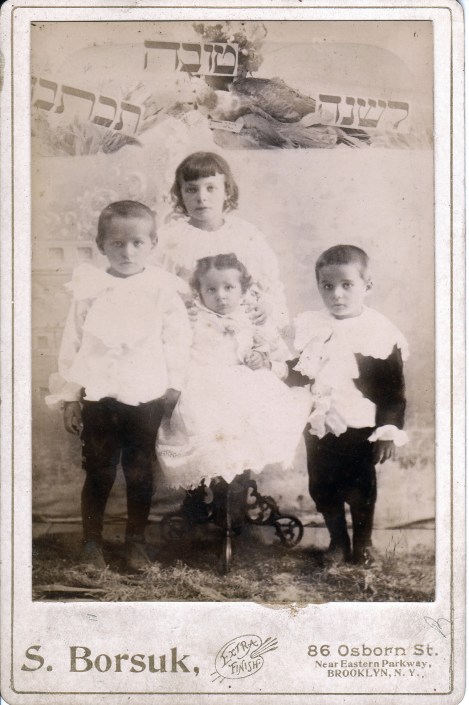
Jewish Children in Brooklyn, New York

jewish_0001

This Cabinet card is a photograph of four Jewish children posing in a studio with a background (perhaps added during the developing process) of Hebrew words. This is  a Jewish New Years card (Rosh Hashanah). The photographer of this Cabinet card is S. Borsuk of Brooklyn, New York.  It is noted that the studio is near Eastern Parkway. Eastern Parkway has some interesting history. It was the first “parkway” and was conceived by Frederick Olmsted and Calvert Vaux in 1866 (Olmsted designed Central Park). Eastern Parkway was designed as a wide road with several medians with trees, benches, and bike and pedestrian paths. The concept of the parkway was to bring the country to the city.

Published in: on December 27, 2008 at 3:43 pm  Comments (1)  
Tags: , , , , ,

Richard Bartholdt: U.S. Congressman from Missouri

bartholdt

Richard Bartholdt (1855-1932) was born in Schleiz, Germany where he attended college and then immigrated to the United States in 1872. He initially settled in Brooklyn, New York where he learned the printing trade and became a newspaper writer and publisher. He then moved to St. Louis, Missori in 1877 and continued in the newspaper trade. In 1893, while editor in chief of the St. Louis Tribune and member of the St. Louis Board of Education, he was elected as a Republican to the U.S. Congress where he served until 1915. While in Congress he served as chairman of the Committee on Immigration and Naturalization and other committees. In 1911, President Taft appointed him special envoy to the German Emperor to present a statue of Baron Steuben as a gift from Congress and the American people. After serving his time in congress, Bartholdt devoted himself to literary and further political pursuits. He was an esperantist, ind in 1914 he proposed a resolution to have Esperanto taught in American schools. During World War I, he was president of the American Independence Union, which was committed to establishing an embargo on munitions sales by the United States companies to belligerent nations. He died in St. Louis, Mo.  This Cabinet card was photographed by C M (Charles) Bell of Washington D.C.  The reverse of the card is inscribed by Barholdt. He writes “With the compliments of the season. Yours very truly, Richard Bartholdt M.C.” It is very likely that M.C. signifies “Member of Congress”.

Published in: on December 21, 2008 at 6:02 pm  Leave a Comment  
Tags: , , , , , ,