This vintage real photo postcard portrait feature British silent film actress, Marjorie Villis (1891-1981). Miss Villis is quite pretty and has a wonderful smile. This photograph captures her in a risque pose and a risque costume. What an amazing elaborate and busy costume. When I first saw this image, I immediately became motivated to find information about this provocative actress. I met little success in learning about Marjorie Villis. Photographs of her appear to be uncommon, and I could not find the postcard above anywhere online. I did learn that she sat for seven postcard portraits that can be found in the UK’s National Portrait Gallery, All of the portraits were taken by celebrated photographer, Alexander Bassano. The IMDb credits Villis with 15 film roles between 1915 and 1922. Villis was most noted for her roles in “The Rugged Path (1918), “A Romany Lass (1918)”, and “Brenda of the Barge (1920). She had a relatively short career. I wonder why her career ended so abruptly? The first talkie feature film did not get released until 1927, so we know that, unlike many other silent film stars, Villis was not shut out of the film industry because of an unsuitable voice or foreign accent. This postcard was published by J. Beagles & Company (London) as part of a series (no.142 J). The wonderful portrait of Miss Villis was taken by S. Ward. This vintage postcard is in very good condition (see scans)
This cabinet card is available for purchase at my store, The History Peddler, for $35.00 or best offer.
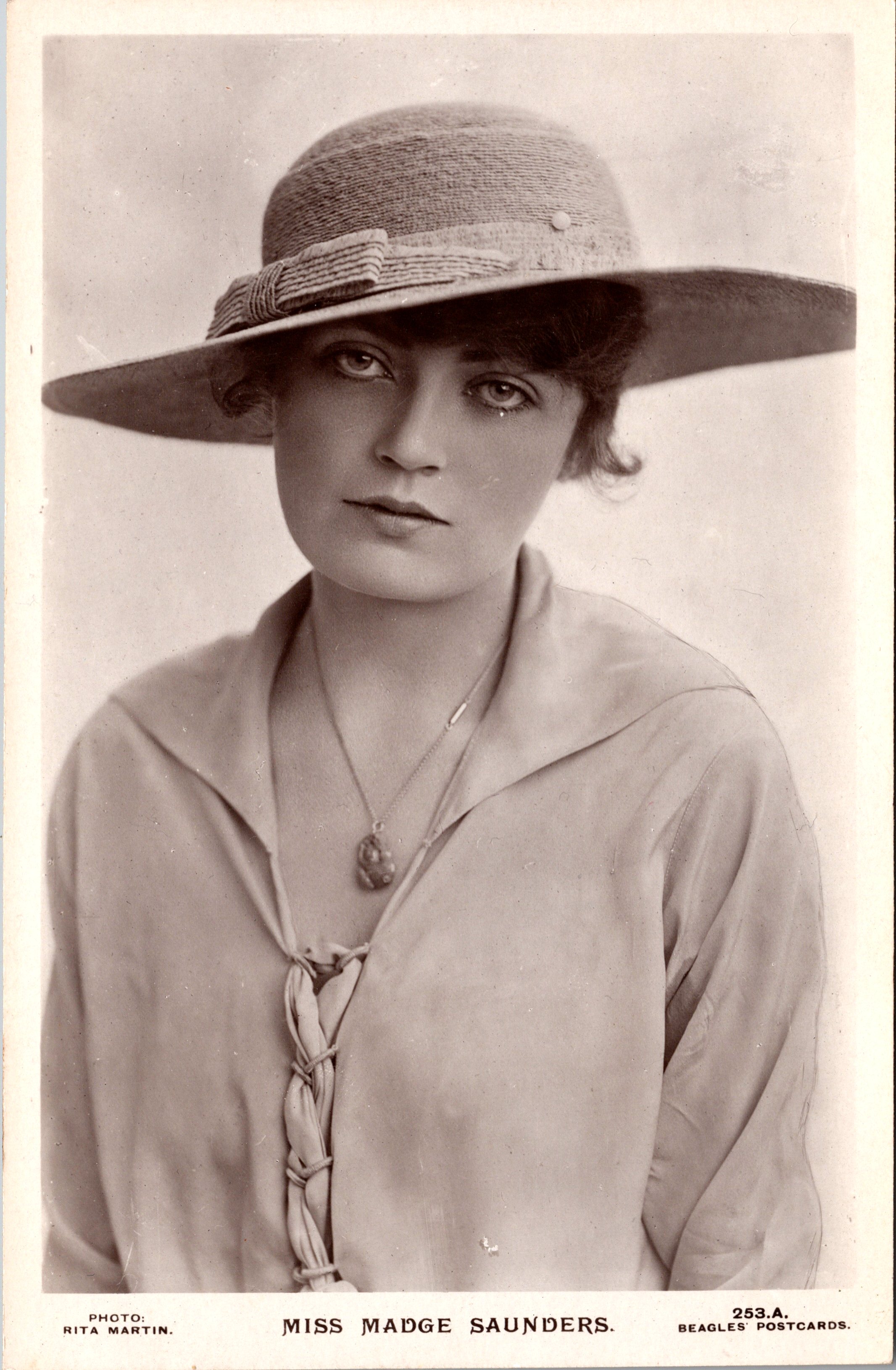
This vintage real photo postcard features theater actress and singer, Madge Saunders (1894-1967). She was born in South Africa. She was married twice, both times to actors. She appeared in two film (1918, 1930). There are 47 portraits of Saunders in England’s National Portrait Gallery. This photo portrait of Miss Saunders is one of the images in the gallery’s collection. This photograph was published by J. Beagles & Co. as part of a series (no.253A). Saunders was photographed by a celebrated female photographer, Rita Martin. SOLD
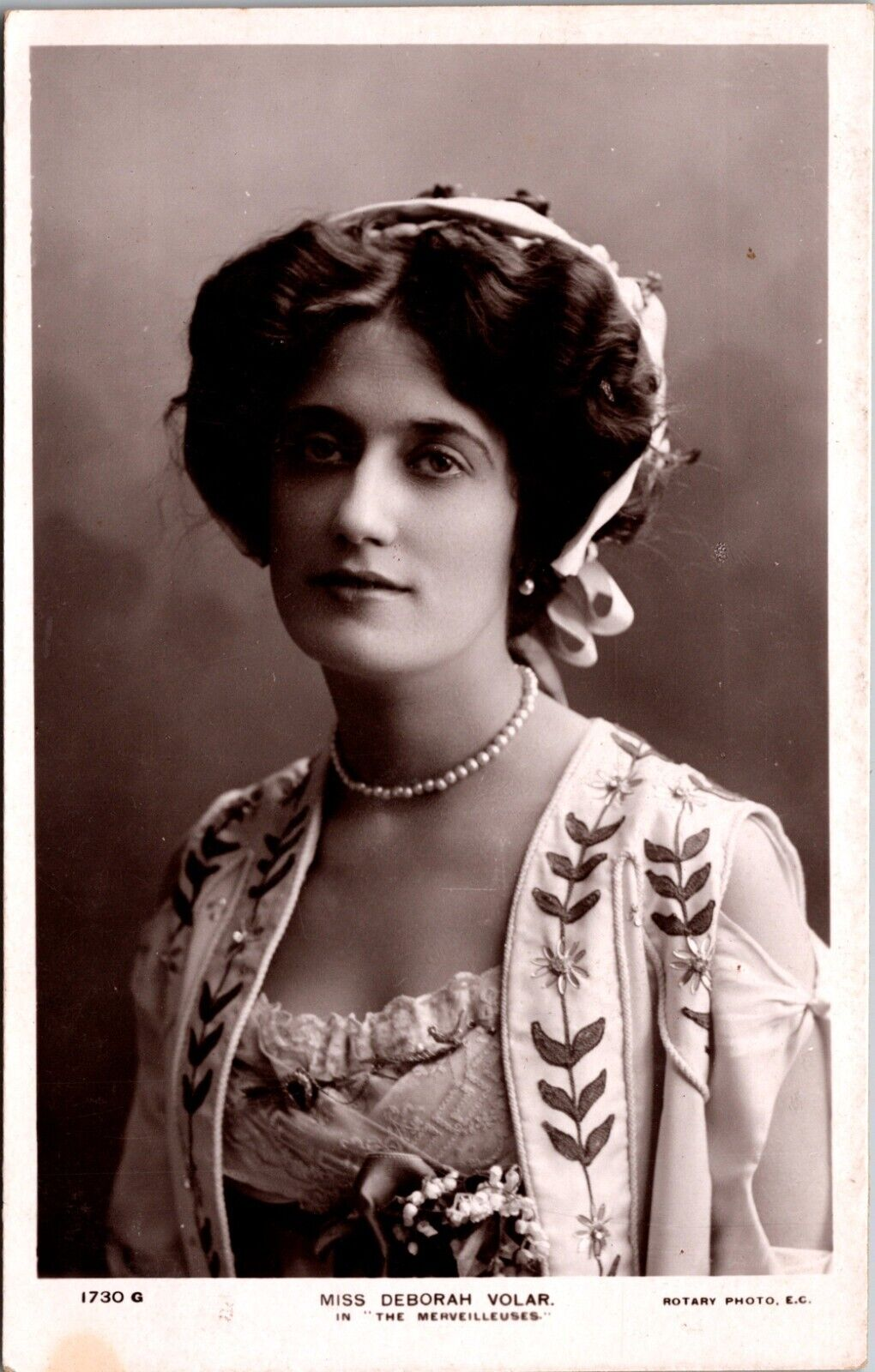
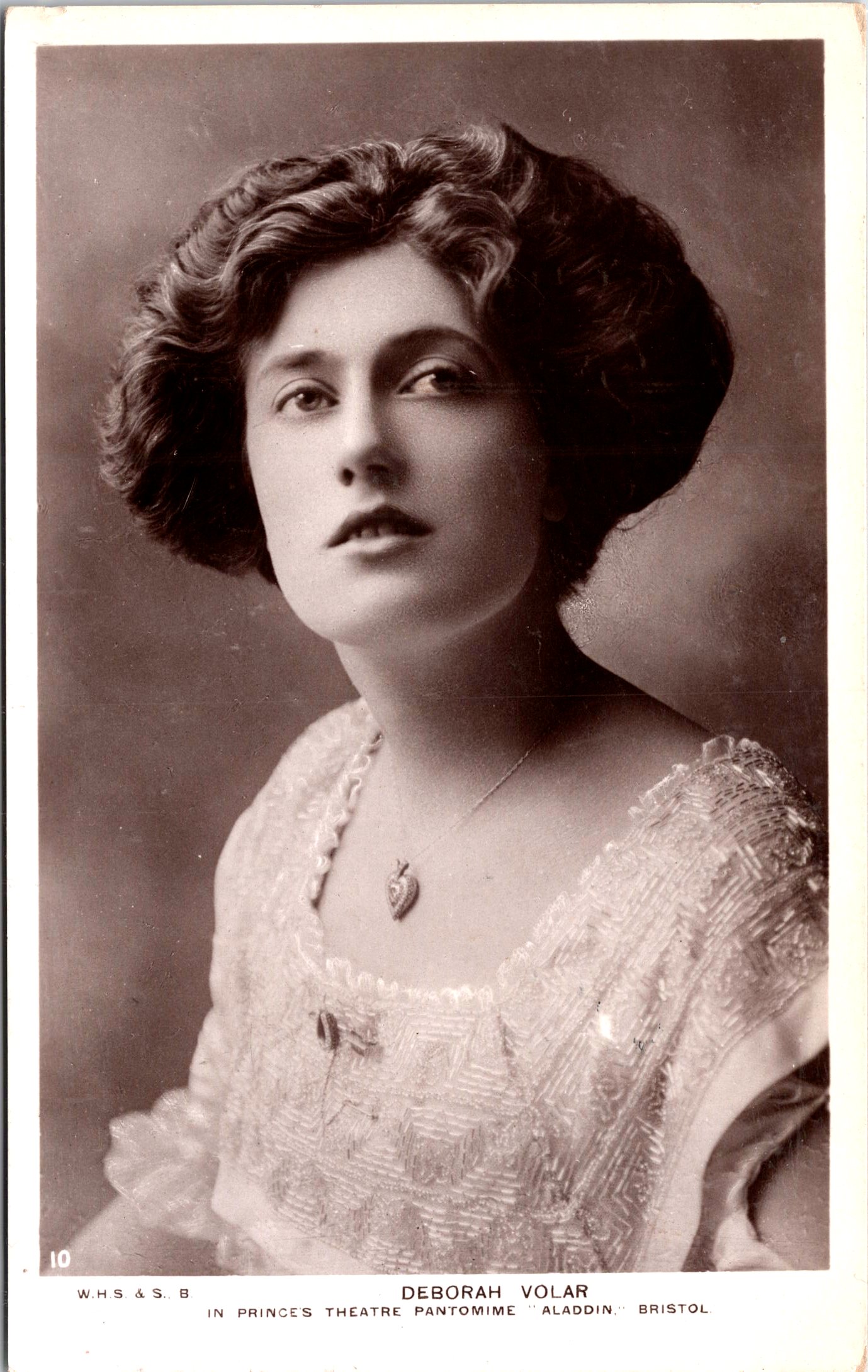
These vintage real photo postcards feature singer and actress, Deborah Volar. Navy and Army magazine (1905) has an article about the performer in which she is described as a young “prima dona” (she was 21). The article reports that Volar was appearing at the Apollo Theater, and that she had made her debut two years earlier in “The Country Girl” at the Daly Theater.
Postcard 1 shows Volar in costume for her role in “The Merveilleuses”. The title can be translated as “The Marvellous Women”. Historically, these women lived at the end of the 18th century and were known for their outrageous style of fashion and behavior. Their fashion style was neo-classical and naked legs and toes challenged the mores of the day. These women were expressing their freedom through fashion. “The Merveilleuses” was a musical play that can be categorized as a love story. Twelve photographs of Deborah Volar can be found in Great Britain’s National Portrait Gallery. This vintage postcard was published by Rotary Photo as part of a series (No.1730G). The card was printed in England and is in fair condition (see scans).
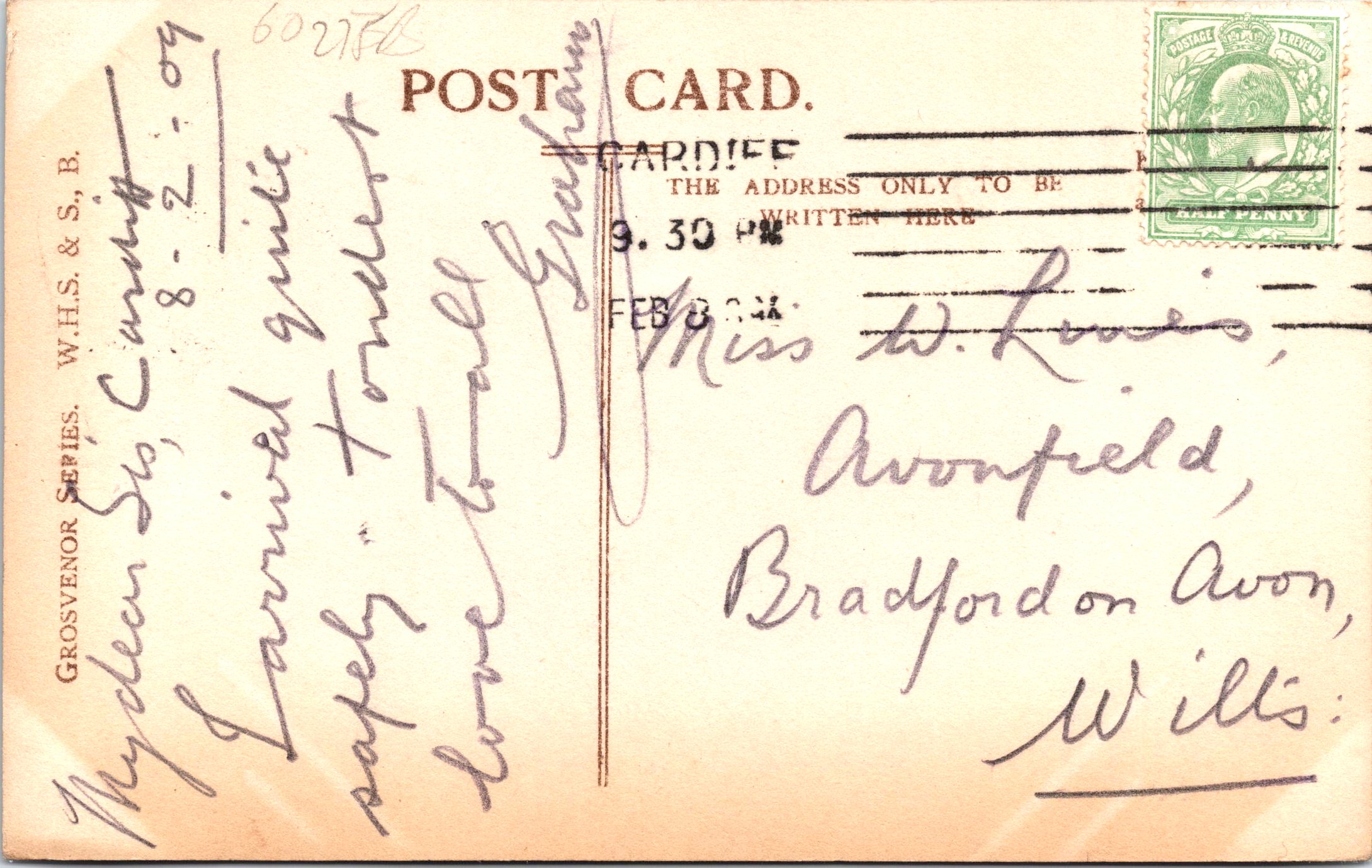
Postcard 2 shows Volar in costume for her role in “Aladdin” at the Prince’s Theatre in Bristol, England. Twelve photographs of Deborah Volar can be found in Great Britain’s National Portrait Gallery. This postcard is dated 1909. This vintage postcard was published by W.H.S. & S. B. (W. H. Smith & Son) as part of the Grosvenor series (No.10). The firm was located in Bristol. The card was printed in England. SOLD
Buy this Real Photo Vintage Postcard (includes shipping within the US) #5037
To purchase this item, click on the Pay with PayPal button below
$15.75
Buy this Vintage Real Photo Postcard (includes International shipping outside the US) #5037
To purchase this item, click on the Pay with PayPal button below
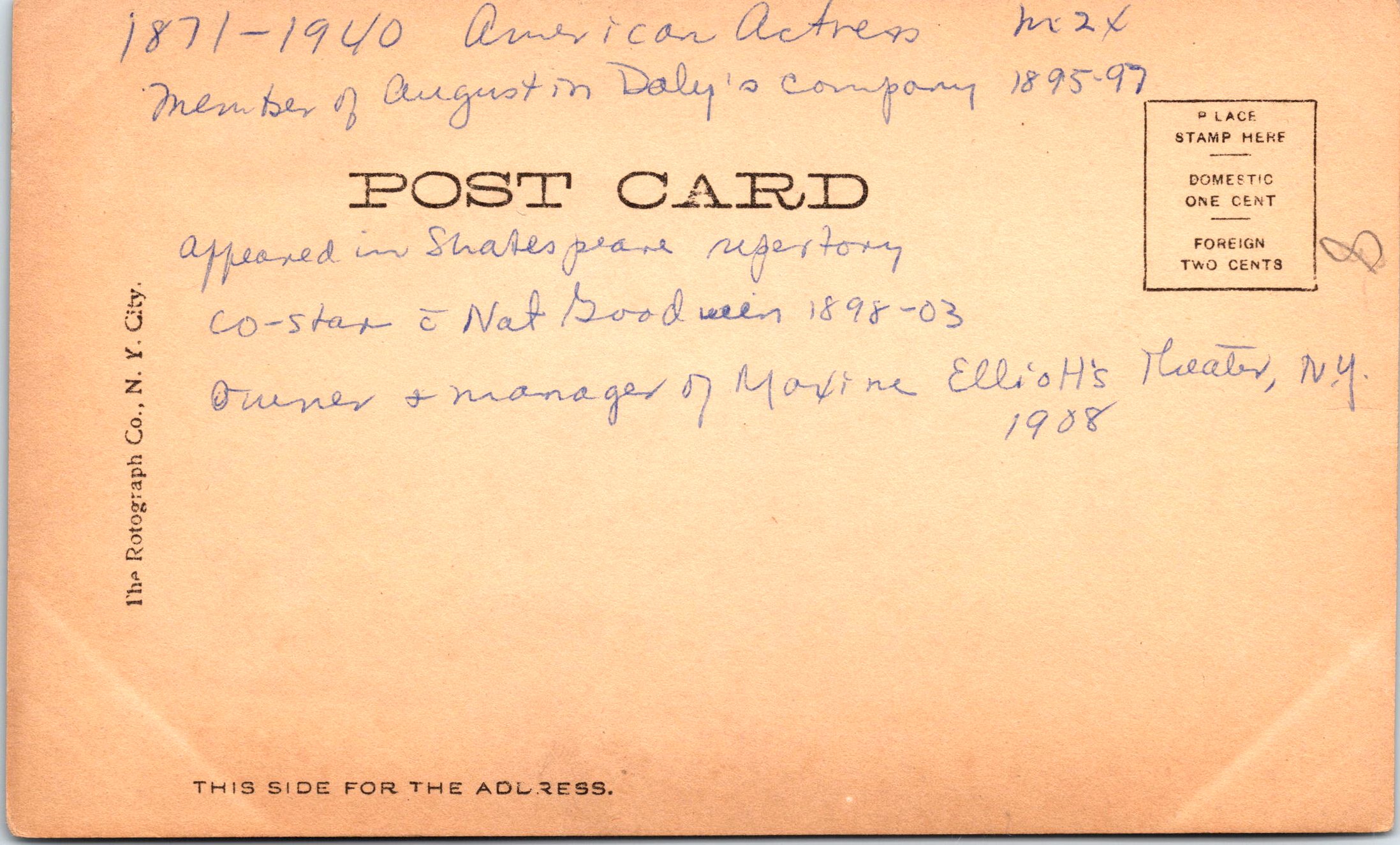
This vintage real photo postcard (Postcard 1) features a portrait of beautiful stage and film actress, and businesswoman, Maxine Elliott (1868-1940). Her photograph was taken by celebrity photographer Benjamin Falk at his New York City studio. Elliott was more than a stage actress. She managed her own theater and experimented with silent films in the 1910’s. Elliott was an extremely popular actress. Apparently she was popular with the men too. It is thought that she had affairs with famous people including King Edward VII and J. P. Morgan. It is also reported that she dated baseball hall of famer, John Montgomery Ward and heavyweight champion Gentleman James Corbett. During World War I she was very involved with the cause for Belgian relief. Elliott was born in Rockland, Maine. Her father was a sea captain. She had at least three siblings including her sister Gertrude Elliott, who also became a successful actress. When Maxine was 15, she was seduced and impregnated by a 25 year-old man. She may or may not have married the man but it is known that she lost the baby. In 1890 she made her first stage appearance. Her big break came in 1895 when she was hired by Augustin Daly to be the supporting actress for the highly acclaimed actress, Ada Rehan. In 1898, after divorcing husband number one, she married comedian Nat C. Goodwin. The two starred together in a number of productions including “Nathan Hale” and “The Cowboy and the Lady”. In 1903, Maxine appeared in the Broadway production of “Her Own Way” (1903). The play launched Maxine into stardom. In 1905, the play went to London where King Edward VII requested an introduction to the pretty actress. They met and then rumors started about the pair having an intimate relationship. In 1908, Goodwin obtained a divorce from Elliott. This is about the time she met 70 year-old J. P. Morgan. They became friends and rumors of their romantic involvement were never confirmed. Financial advice from Morgan helped her become a wealthy woman. The same year as her divorce, she opened her own theater, “The Maxine Elliott” in New York City. She was both the owner and the manager. In fact, she was the only woman in the US, at the time, managing her own theater. In regard to acting on Broadway, Elliott had an extensive resume. She appeared in 22 Broadway productions between 1894 and 1920. In 1913, she began acting in silent films. The IMDb reports that she was in five films including “From Dusk to Dawn” (1913), “Fighting Odds” (1917), and “The Eternal Magdalene” (1919). In 1913, Elliott went to England and started dating tennis star Anthony Wilding, fifteen years her junior. According to one source, the pair planned to marry, but he was killed in action in World War I. As a result, Elliott became obsessed with the war and moved to Belgium where she volunteered her money and time toward Belgian relief. It is reported that she also nursed wounded soldiers. Belgium recognized her by awarding her the Belgian Order of the Crown. Elliott retired from the stage in 1920. She stated that she “wished to grow middle-aged gracefully”. This postcard portrait features a young and beautiful Maxine Elliott. This image is a beautiful remnant of turn of the century theater history. This postcard was published by the Rotograph Company which was based in New York City. The postcard is part of a series (No.B888). SOLD
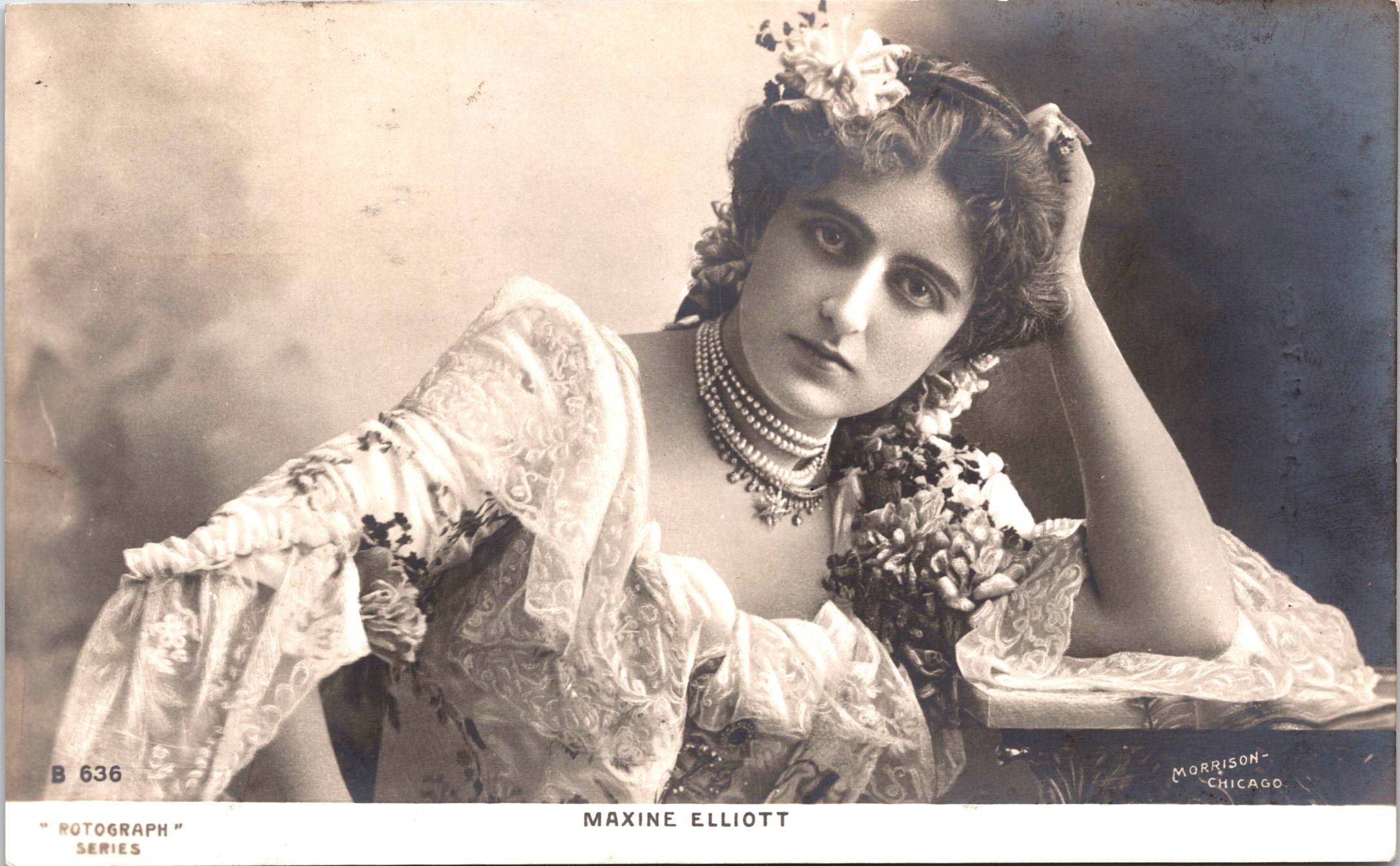
Postcard 2 features a photograph taken by female celebrity photographer, Lizzie Caswall Smith. Lizzie Caswall Smith (1870-1958) was a British photographer who operated in the early 1900’s. She specialized in photographing members of society and celebrities. Many of her photographs were used for postcards. She was involved in the Women’s Suffrage movement and photographed many of the leading suffragettes. She also photographed many actors including Billie Burke and Maude Fealy. She operated the Gainsborough Studio from 1907 through 1920 (309 Oxford Street) and moved to a new location (90 Great Russell Street) where she remained until she retired in 1930 at the age of 60 years-old. Her most famous photograph is a portrait of Florence Nightingale taken in 1910. It was auctioned in 1908 and sold for 5500 pounds which is an equivalent today of nearly 8,000 dollars. The National Portrait Gallery has 84 portraits associated with Lizzie Caswall Smith. This postcard was published by the Rotograph Company which was based in New York City. The postcard is part of a series (No.B636). SOLD
Postcard 3 features a nice portrait of Maxine Elliott. This image, taken by William Morrison (Chicago, Illinois) is a beautiful remnant of turn of the century theater history. This postcard was published by the Rotograph Company, which was based in New York City. The postcard is part of a series (No.B636). (SOLD)
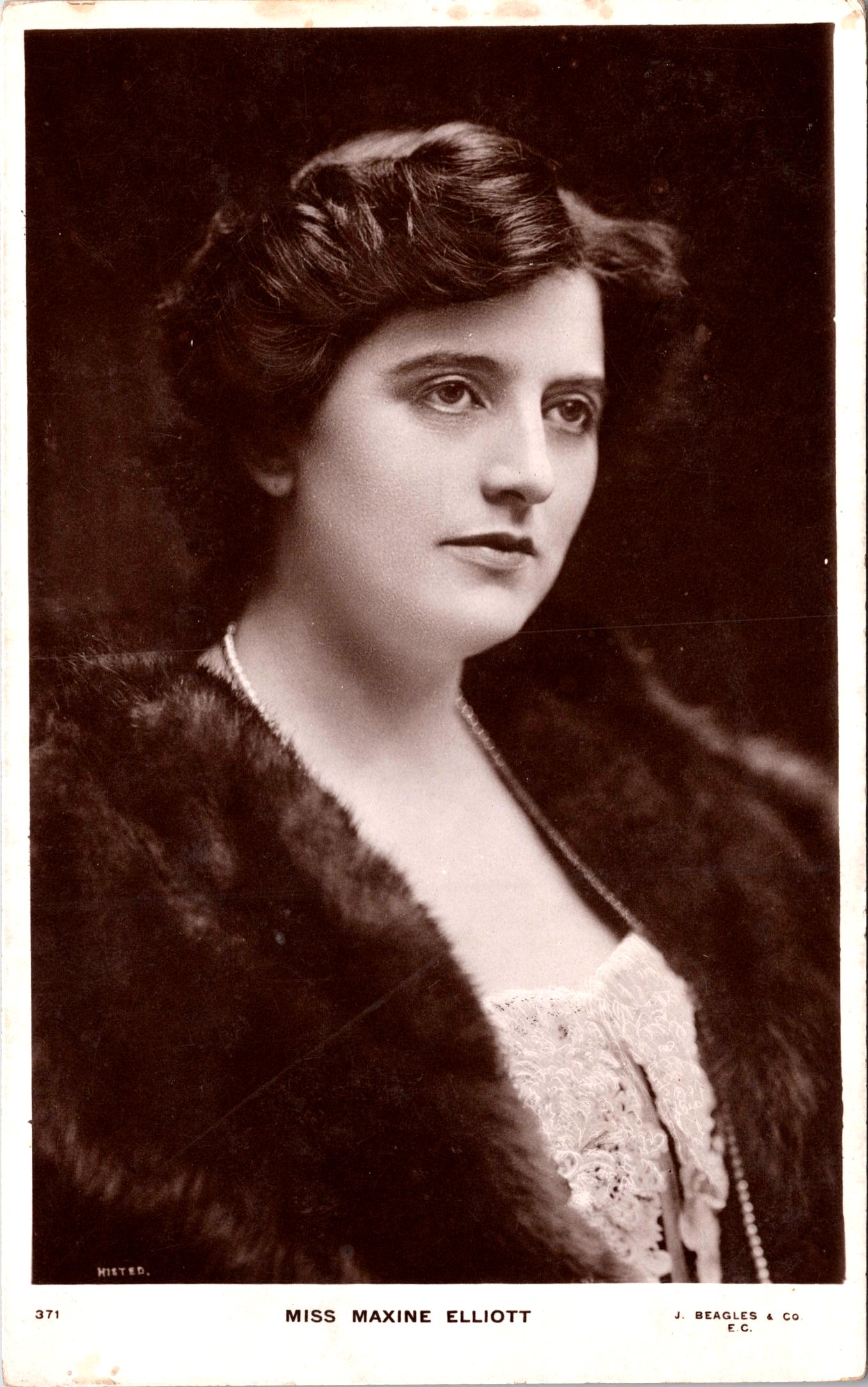
Postcard 4 features Miss Elliott’s portrait by Ernest Walter Histed (1862-1947). Histed was born in England but achieved his success as a photographer in Chicago, and later, in Pittsburgh. He then returned to England and opened a photography studio there. His subjects there included Clara Butt (Opera Star) Pope Pius X, and the Empress of Germany. Histed returned to the US and opened a studio on Fifth Avenue in New York City. He later moved to Palm Beach, Florida and continued his profession until 1934. The Museum of the City of New York has a large collection of his work. The National Portrait Gallery (England) has 32 of his photographs in their collection. This postcard was published by London’s J. Beagles & Co. as part of a series (No. G386).The company was started by John Beagles (1844-1909). The company produced a variety of postcards including an extensive catalog of celebrity (stage and screen) portrait postcards. After Beagle’s death, the business continued as J. Beagles & Co. until it closed in 1939. (SOLD)
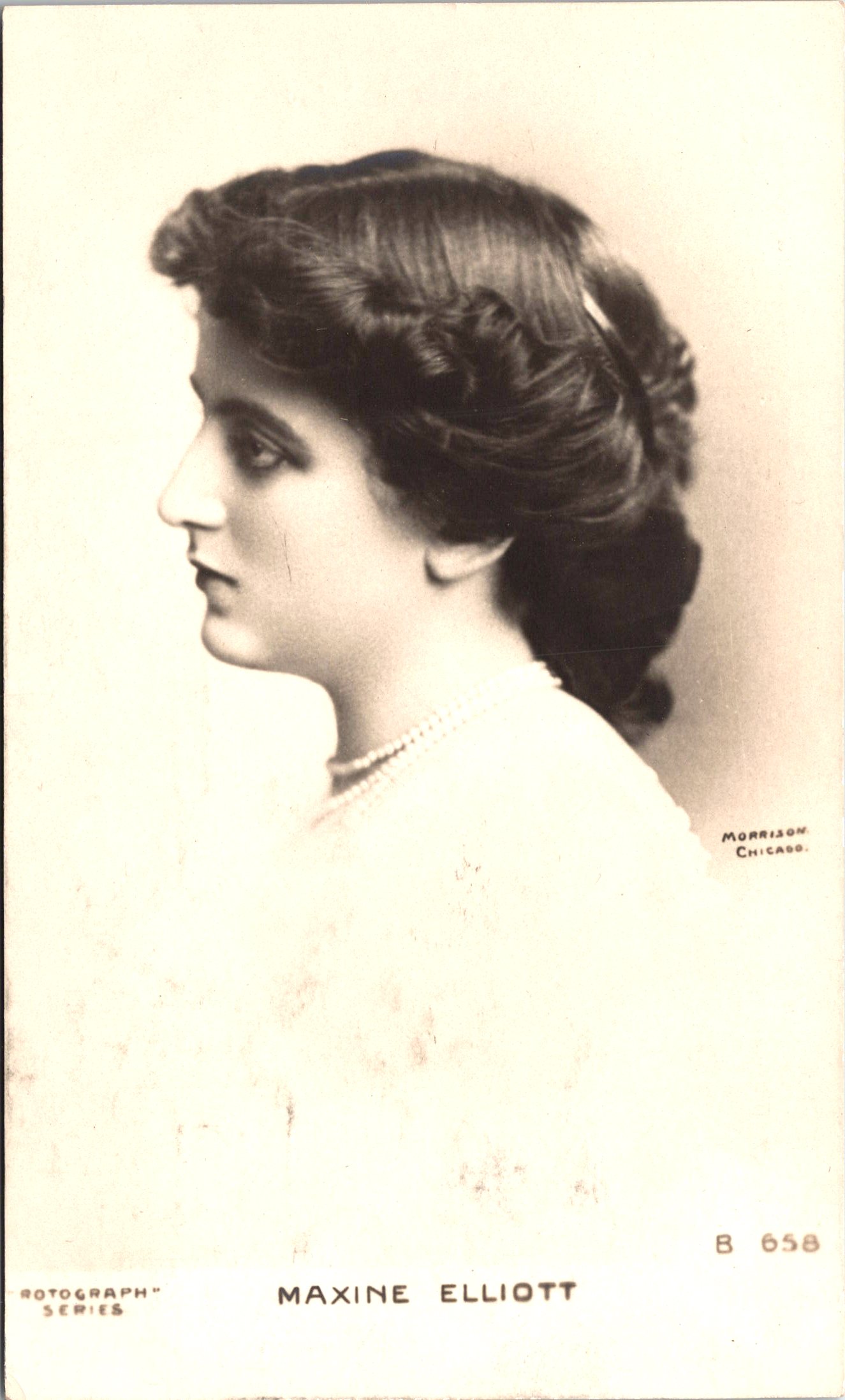
Postcard 5 comes from the studio of celebrity photographer, William McKenzie Morrison of Chicago, Illinois. Morrison’s studio was in the Haymarket theater building. This postcard was published by the Rotograph Company which was based in New York City. The postcard is part of a series (No.B658). (SOLD)
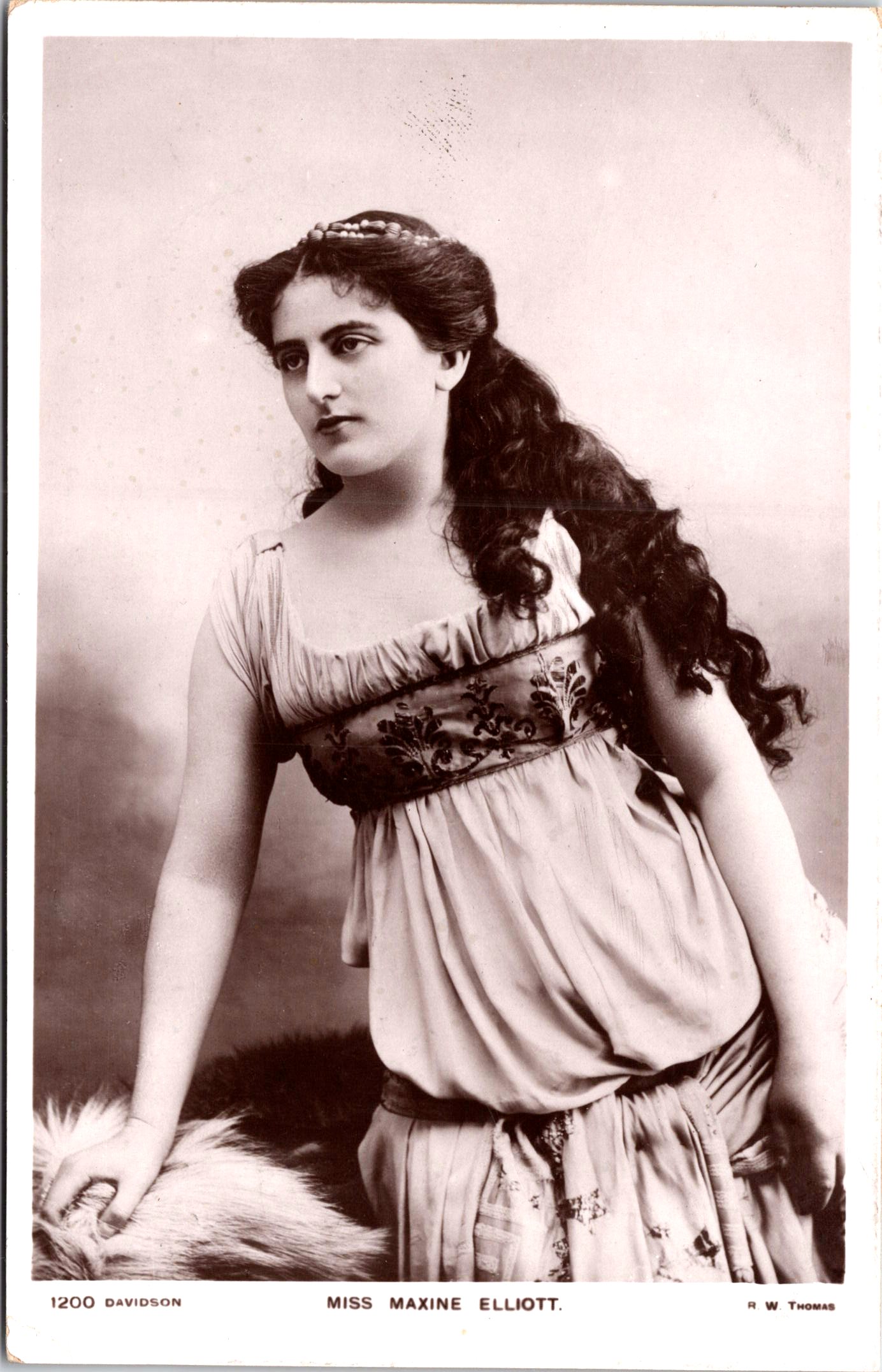
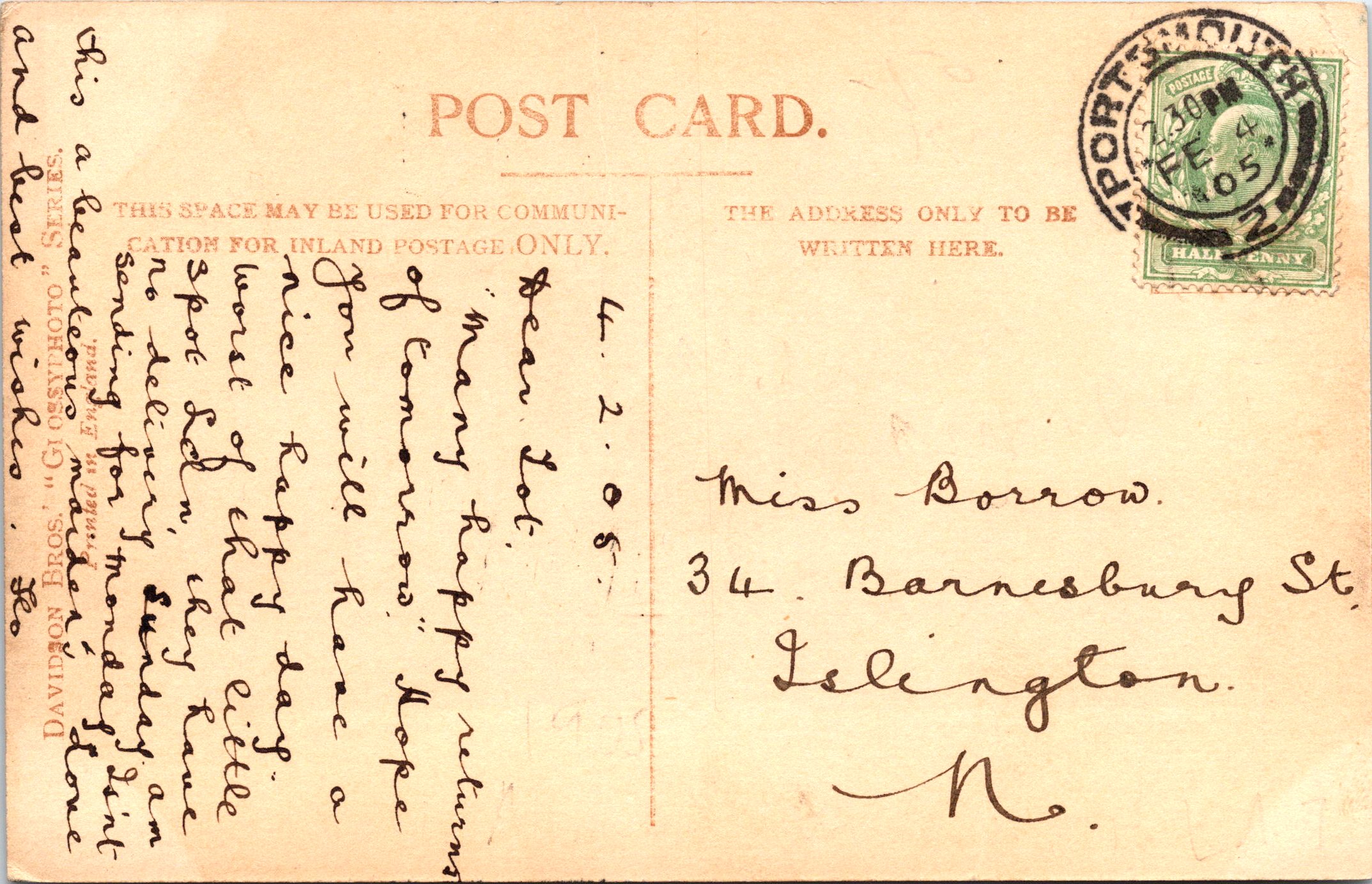
Postcard 6 features a pretty portrait of Miss Elliott taken by R. W. Thomas. It is likely that he is the same man that authored “The Modern Practice of Photography” (1927).This postcard was published by London’s Davidson Bros. as part of a series (No.1200). The message from the sender of this card introduced me to a new word. The writer asks “Isn’t this a beauteous maiden?”. I looked up the word “beauteous” to see if it existed. I learned that the word exists and means “beautiful”. I also learned that “Beauteous” is a word that is customarily used in literature and not conversation. (SOLD)
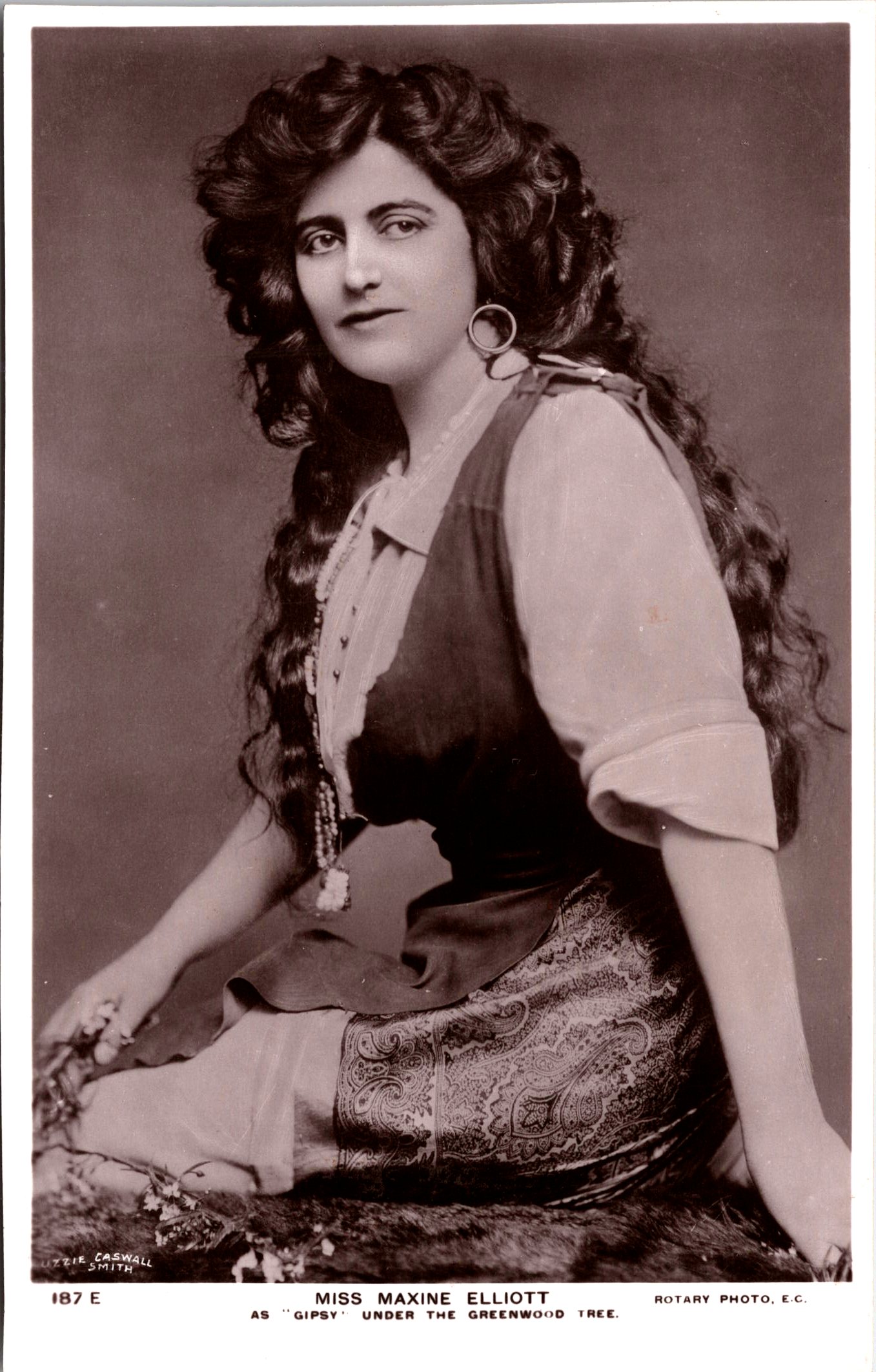
Postcard 7 Elliott photrographed in costume for her role as Gipsy in “Under the Greenwood Tree”. Her photograph was taken by famed celebrity female photographer, Lizzie Caswall Smith. This image is a beautiful remnant of turn of the century theater history. This postcard was published by Rotary Photo as part of a series (No.187E). (SOLD)
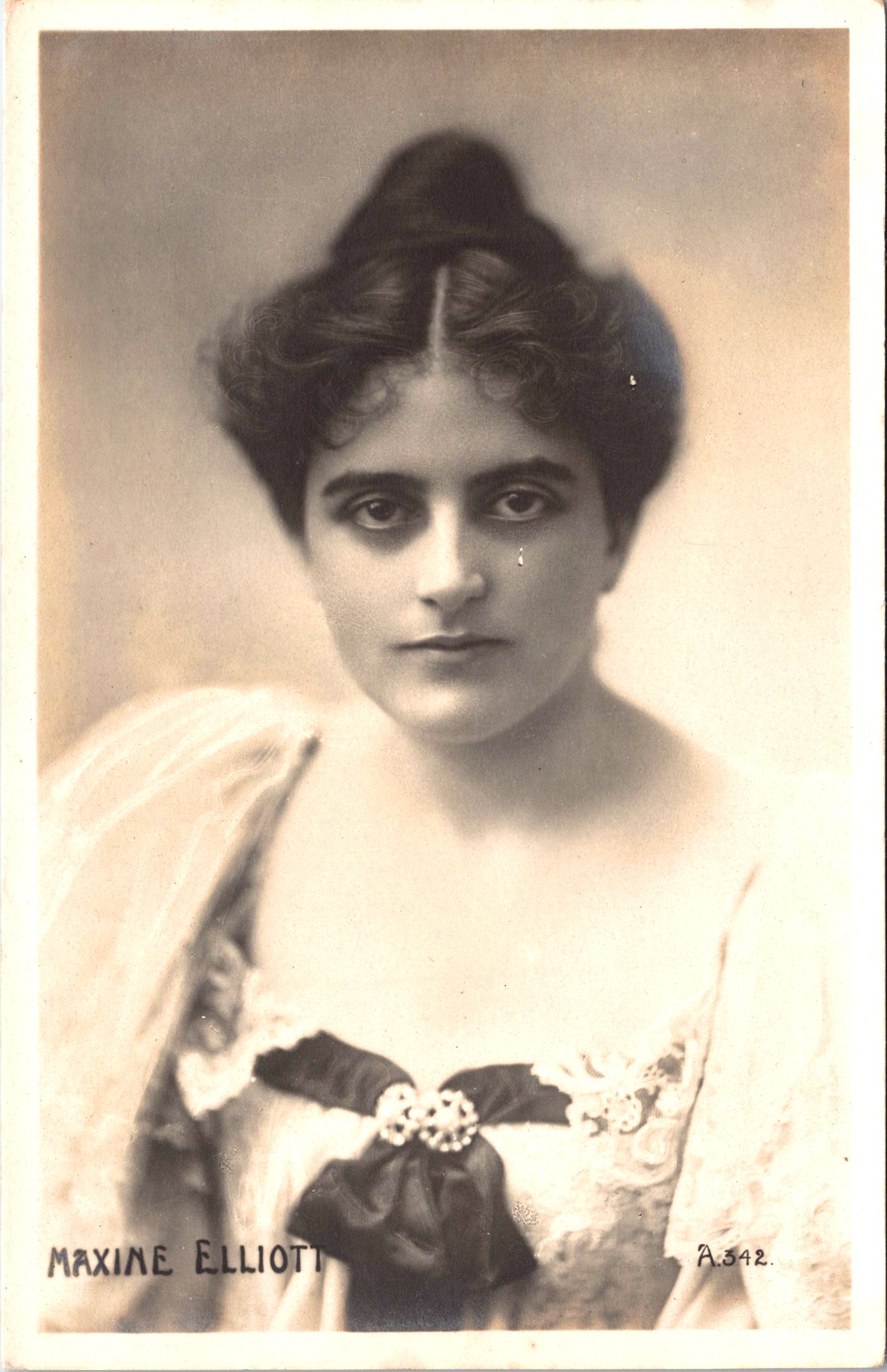
Postcard 8 was published by London’s Ralph Dunn & Co. as part of a series (No. A342). (SOLD)
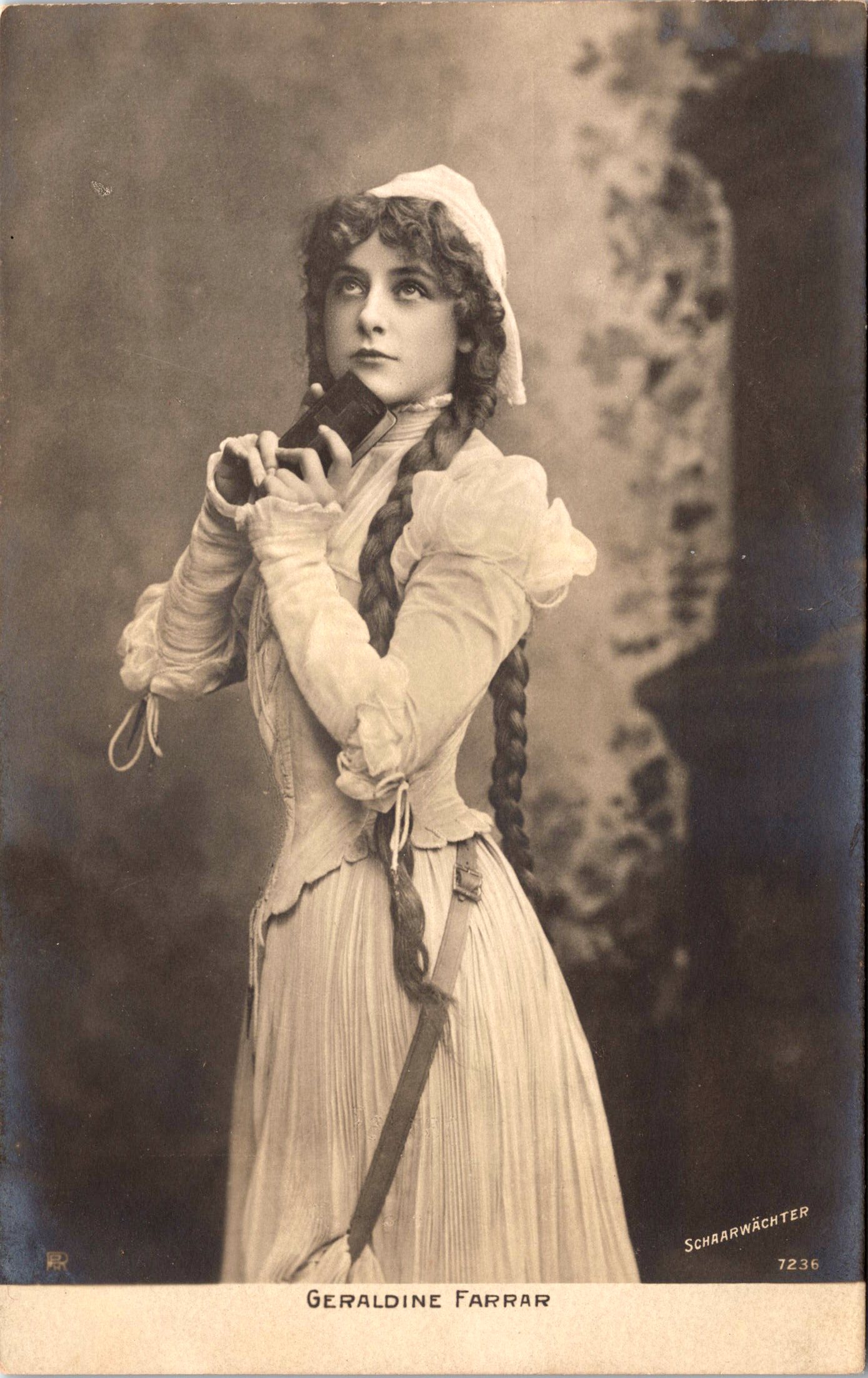
This vintage real photo, Postcard 1, features Geraldine Farrar (February 28, 1882 – March 11, 1967). She was an American soprano opera singer and film actress. She was one of the most popular singers of the early 20th century and she appeared in several silent films as well as on stage. She was also a successful recording artist and a leading figure in the world of opera. She was known for her beauty, as well as her powerful and expressive voice. She was also known for her striking stage presence and her ability to convey emotion through her singing. Farrar had a particularly successful career at the Metropolitan Opera in New York City, where she performed for many years. She also performed in many other major opera houses around the world including La Scala (Milan), The Royal Opera House (London), and the Opera-Comique (Paris). Geraldine Farrar was born in Melrose, Massachusetts, in 1882. She began her career as a singer in vaudeville and later studied voice in Paris. In 1902, she made her debut at the Metropolitan Opera in New York City, where she quickly became one of the most popular singers of her time. Farrar retired from the opera stage in 1922 and settled in New York City. She continued to perform in concerts and recitals for several more years. She also appeared in a few films, including a silent film version of Carmen, in which she played the title role. This postcard photo of Geraldine Farrar was taken by Julius Cornelius Schaarwachter (1847-1904). The photographer has five portraits in Britain’s National Portrait Gallery. Farrar is dressed in costume for her performance in the opera “Faust”, by composer, Charles Gounod. SOLD
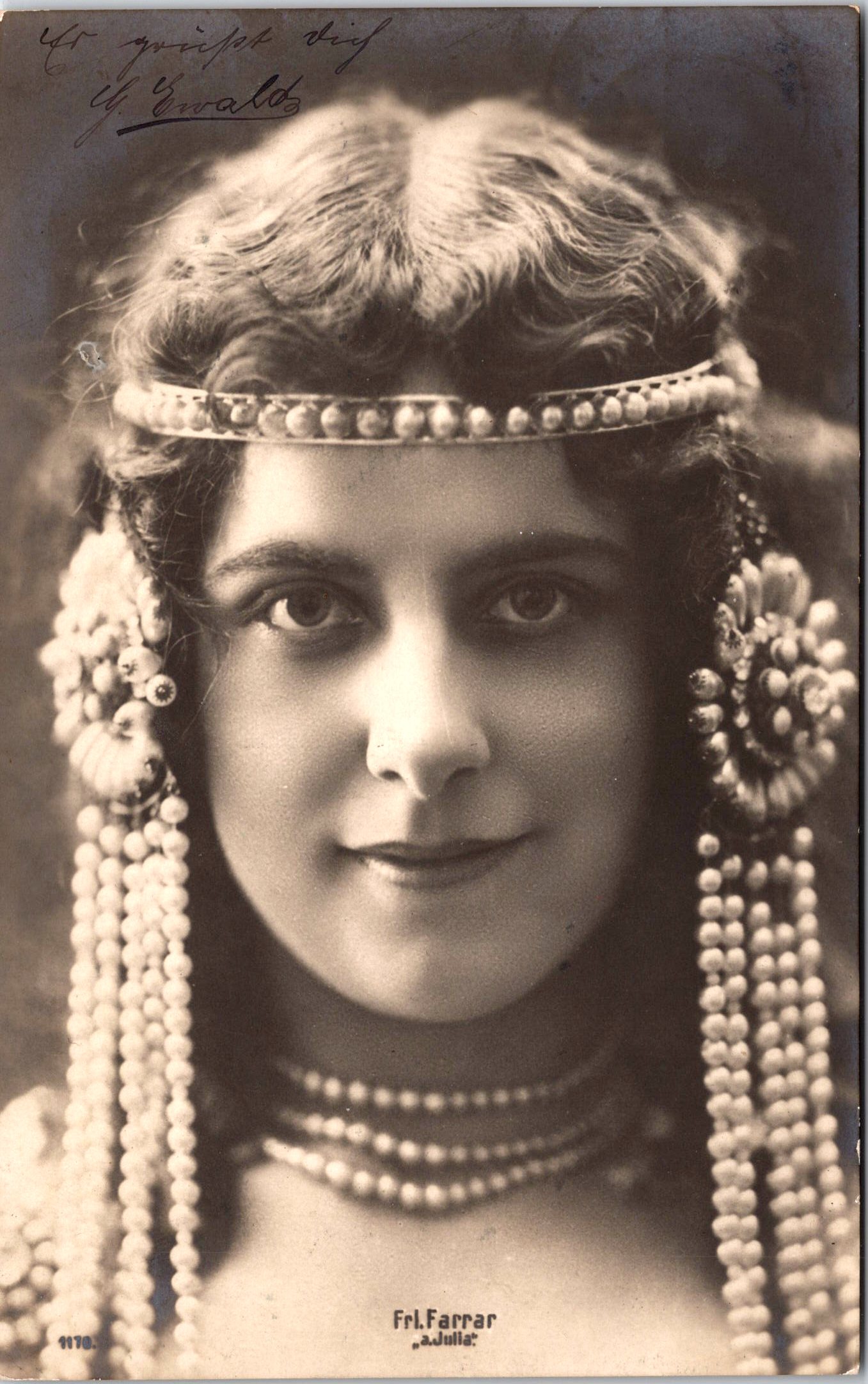
Postcard 2 is a rare close-up portrait postcard of Miss Farrar. SOLD
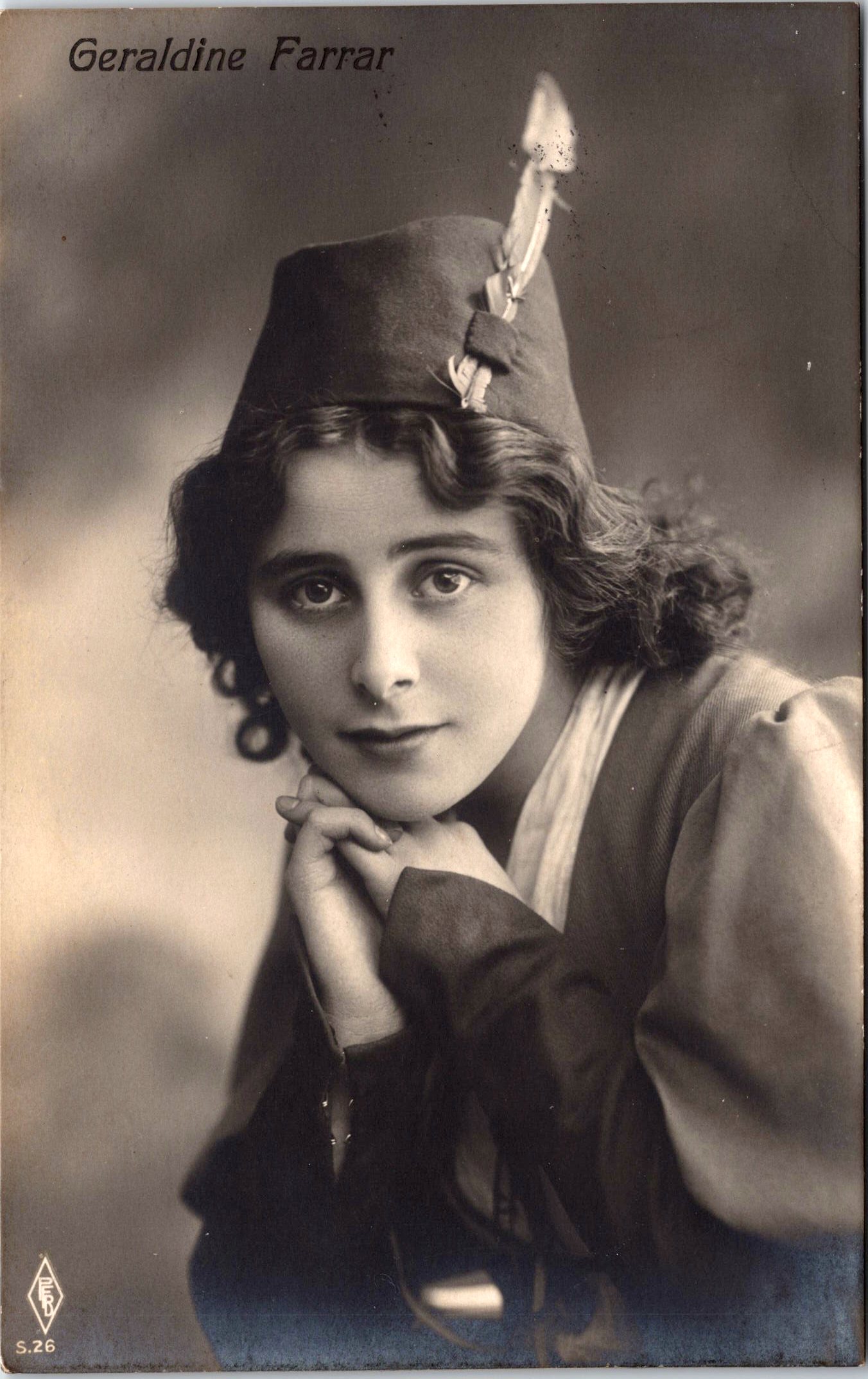
Postcard 3 is a rare photo of Geraldine Farrar that was published by Paul Fink (Berlin) as part of a series (No.S26). The postcard was postmarked in 1911. SOLD
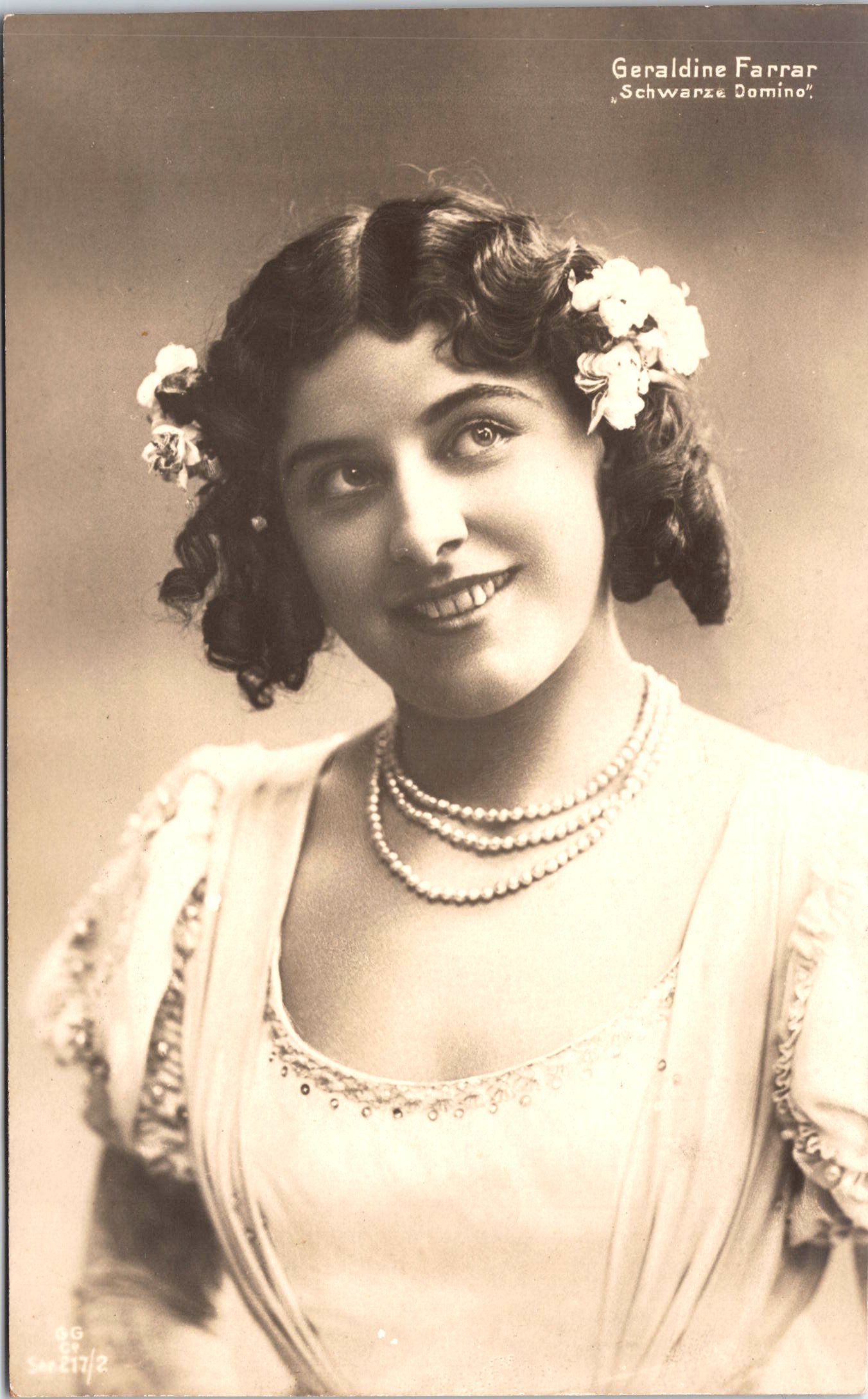
Postcard 4 was published by Georg Gerlach (Berlin) as part of a series (No.217/2). SOLD
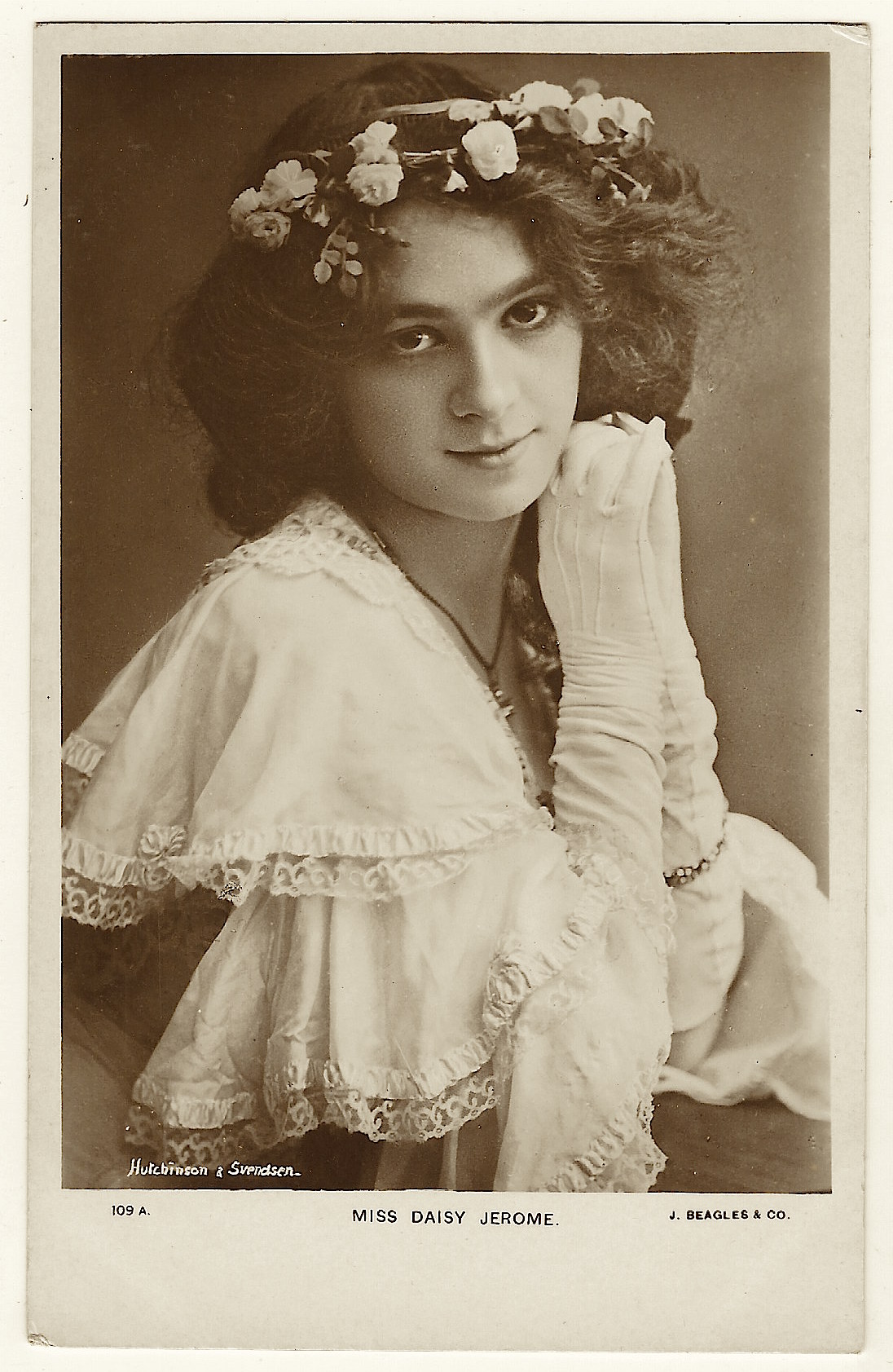
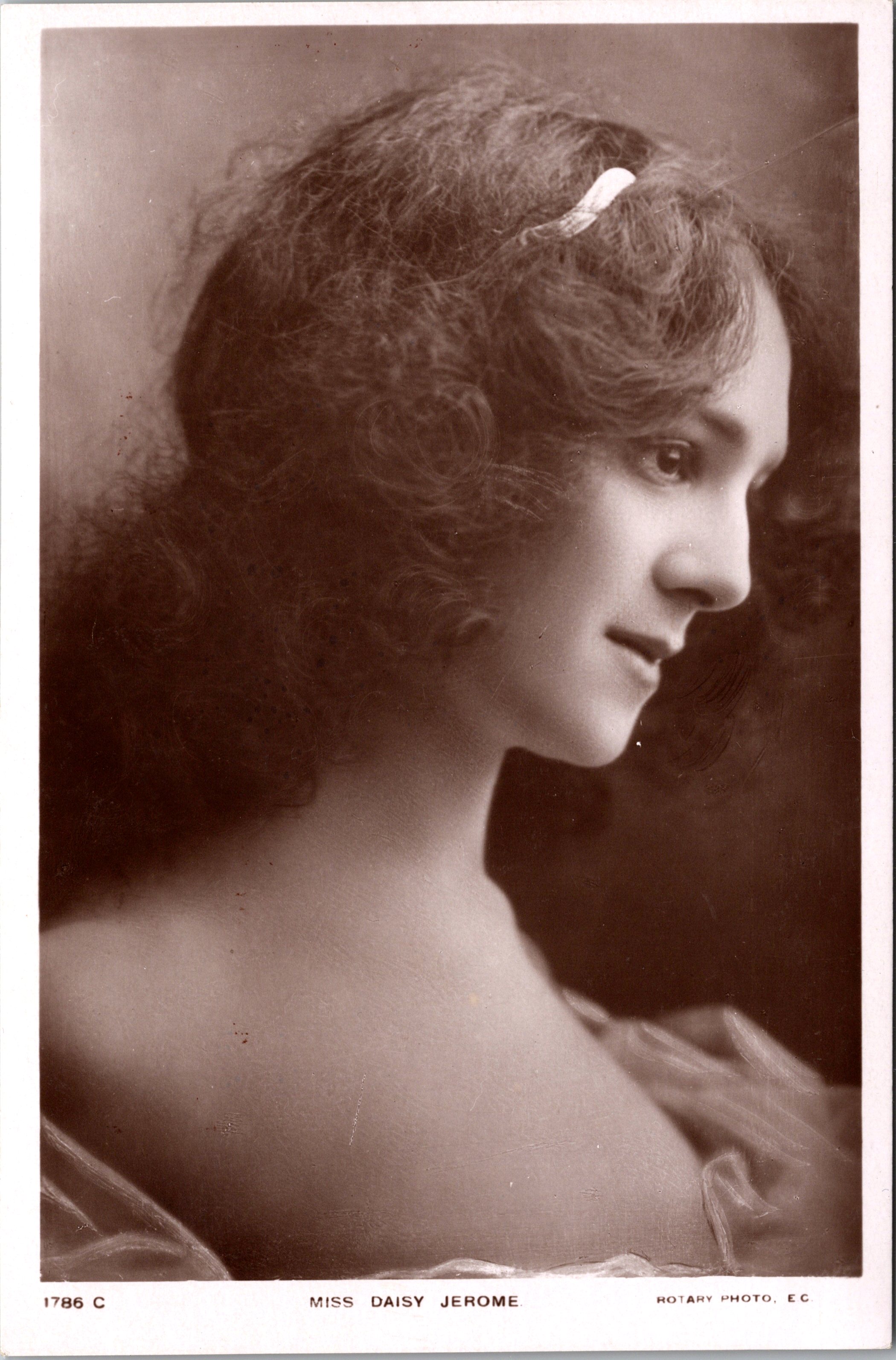
This rare vintage real photo postcard features the red headed actress that electrified the Australian stage. She was noted for her famous wicked wink. The life and times of Daisy Jerome can best be described as scandalous. She arrived in Australia in 1913 for a three year stage tour. Feminism was rising in the western world. Suffragettes were marching for the right to vote. Women were smoking, driving, wearing less conservative fashion, and even dancing the tango with it’s sexual overtones. She arrived in Adelaide adorned with an excess of jewelry. She was born in America but raised in England. Her place of birth was New York and she was born Daisy Witkowski in 1886. Daisy reported that she was raised in a multilingual household that had been visited by Presidents Lincoln, McKinley, and Roosevelt. After experiencing financial problems, her father moved the family to England. Money was needed and Daisy followed her sister onto the stage. She played the Palace and toured with companies that gave her a chance to do comedic singing and pantomime. Her performances were considered to be amusing and irreverent. She was a comedienne. Her humor has been described as “vibrant” and “wicked”. Daisy was described as “feisty”, “cunning”, and “independent”. She was small and dainty and had compelling eyes and an expressive face. Her performances had a risque tone and she had a hoarse, sensual voice. She could toe dance and wooden shoe dance, but was most known as a mimic and comnic singer. After a year of marriage, she deserted her first husband to live with another man. In 1910, she took a journalist to court for libel. The reporter had accused her of performing encores when audiences had not requested them. She claimed that her professional reputation had been damaged. The court case was a circus. The defense ridiculed one of her songs which caused her to break into tears in the witness chair. She won the case but was barely compensated. When she began her tour of Australia, she was recognized as raucous, vulgar and “an acquired taste”. She quickly charmed those that were hesitant to appreciate her and she soon received a warm welcome and a complimentary nickname, “The Electric Spark”. Her carrot red hair became the subject of much debate. She claimed it was her natural color but most people were not believers of her claim. One day, an Australian comedian told her that a gentleman had taken offence to her hair. The comedian said that the offended man would visit her that night. The comedian then informed the local fire chief that there was great risk of fire during Daisy’s time on stage. The worried fireman came to the theatre and when he saw Daisy’s red hair, he realized he had been a victim of a joke. He kept the joke going when he said that he agreed there was risk of fire and he ordered the scenery to be fireproofed immediately. During Daisy Jerome’s era, there was a bias against redheads. They were considered to be hot tempered and sexually wild and uninhibited. Her theater/music hall background only magnified some people’s negative view of Daisy. After completing her touring contract in Australia, she signed another one. This time she performed on a vaudeville stage which allowed her to showcase her bawdy songs. In 1914 she sang a feminist style song called “The Press, the Pulpit, and the Petticoat”. This song argued that women were more powerful and influential than the media and the church. Daisy was a woman who had unconventional ideas. She would not restrained by political correctness. She stated in a 1914 interview that “I refuse to regulate my acts to accepted rules of conduct”. Despite her views, she remained popular with Australian audiences. She left Australia in 1916 and returned in 1922 for another successful tour. Later, she was involved in another court case which this time involved her suing her maid over missing jewels. With the arrival and subsequent popularity of films, Daisy Jerome faded out of the public’s focus. Two photo portraits of Daisy Jerome can be found in England’s National Portrait Gallery.
Postcard 1 was published by J. Beagles & Co. of London, England as part of a series (No. 109 A). The company was started by John Beagles (1844-1909). The company produced a variety of postcards including an extensive catalog of celebrity (stage and screen) portrait postcards. After Beagle’s death, the business continued under it’s original name until it closed in 1939.Miss Jerome’s portrait was taken by the Hutchinson & Svendsen studio. The National Portrait Gallery asserts that this pair of photographers were active in London between 1905 and 1906. This vintage photo postcard is in excellent condition (see scans). This postcard portrait of Daisy Jerome is absolutely beautiful and very uncommon. (SOLD)
Postcard 2 was published by Rotary Photo (England) as part of a series (No. 1786 C). This vintage photo postcard is in good condition (see scans).
Buy this Vintage Real Photo Postcard (includes International shipping outside the US) #5172
To purchase this item, click on the Pay with PayPal button below
$22.00
Buy this Vintage Real Photo Postcard (includes International shipping outside the US) #5172
To purchase this item, click on the Pay with PayPal button below
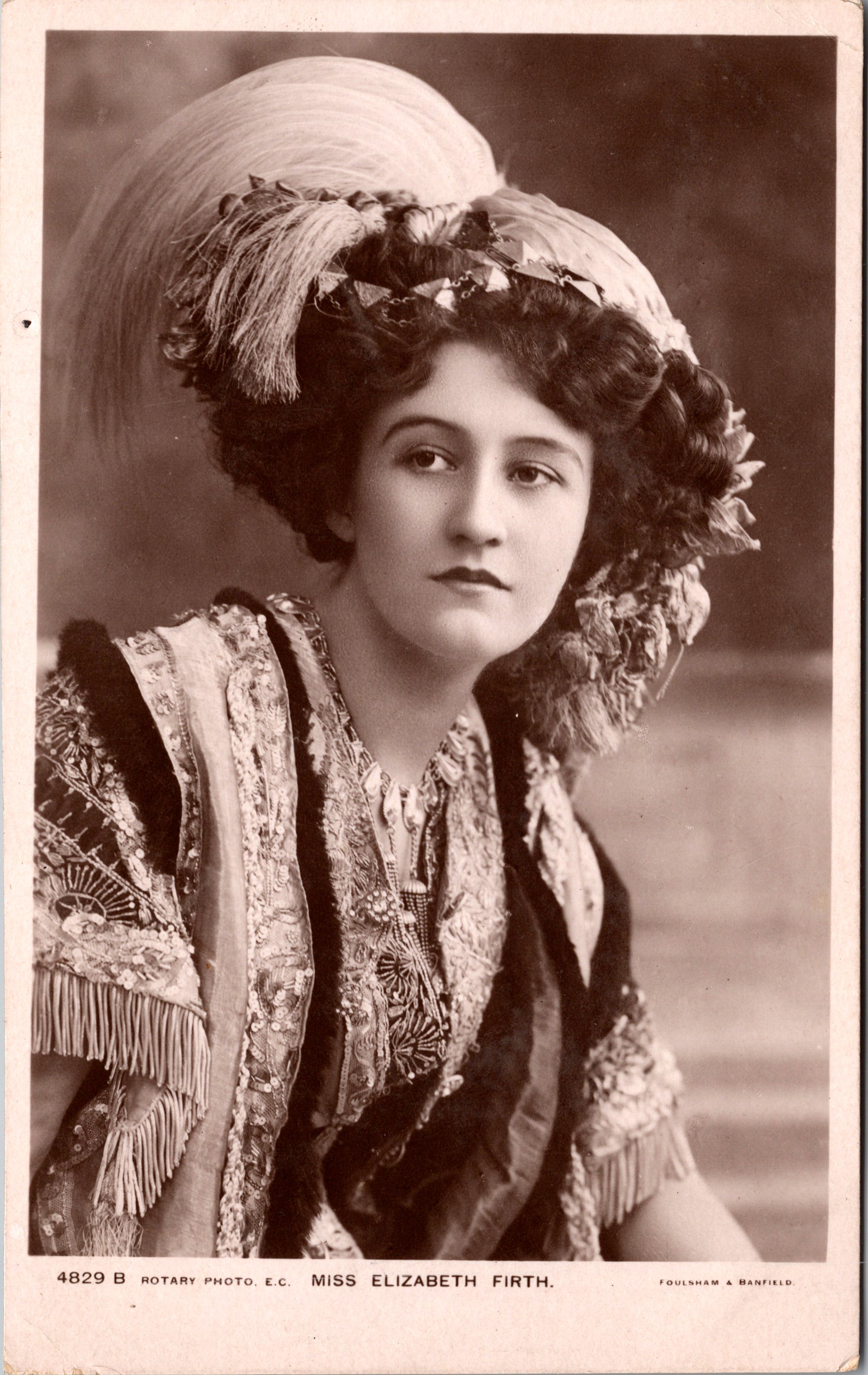
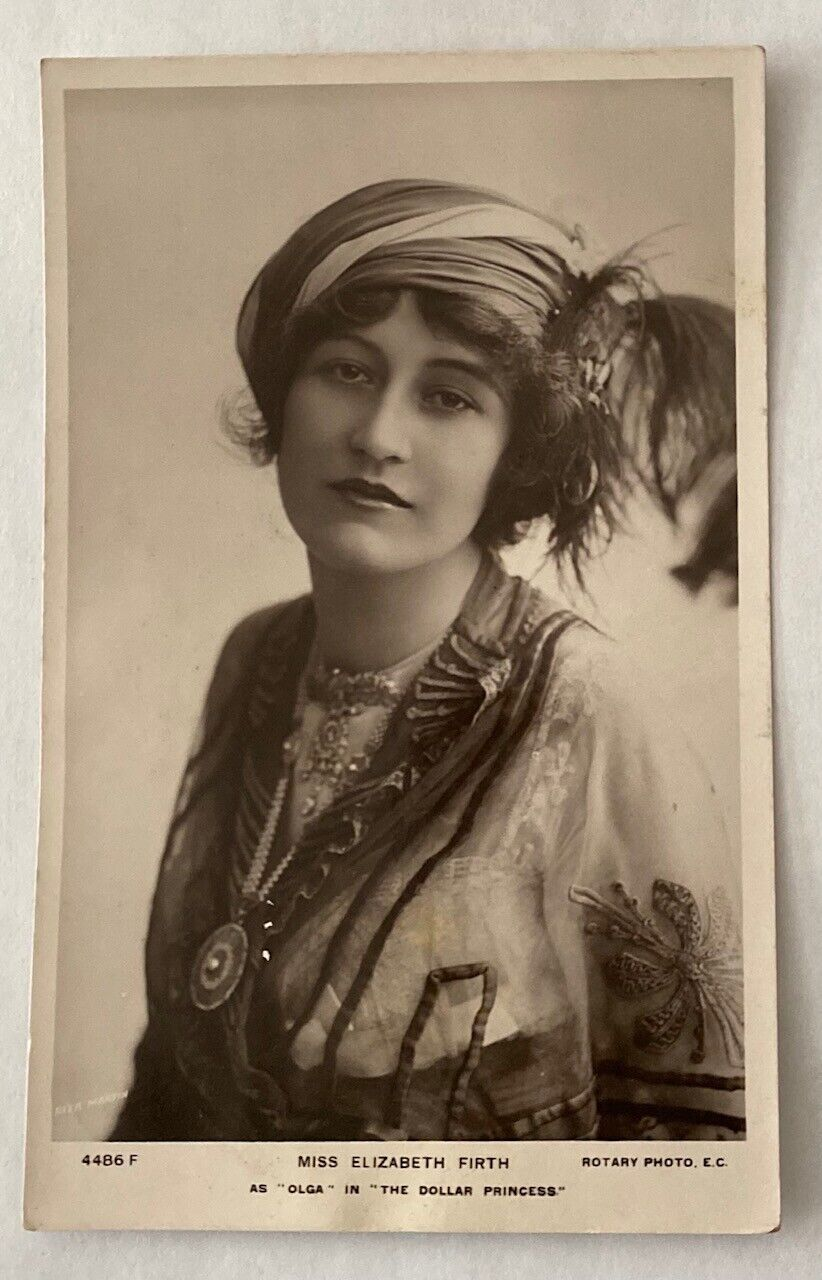
These vintage real photo postcards feature soprano, actress, and philanthropist, ElizabethFirth (1880-1960). Although she was born in Phillipsburg, New Jersey, she became an accomplished singer and actress on the English stage. When she lived in Phillipsburg, she was known as “Jimmy” Firth. The nickname, Jimmy, came courtesy of her beloved father. She went by this moniker with her most intimate friends as well as among those in her theatre world. “Jimmy” graduated from high school in New Jersey and sang as a soprano soloist in the choir of her church. She then entered the New York Conservatory of Music. At a concert at New York City’s Waldorf-Astoria, she came to the attention of a leading London musical directress. Miss Firth then appeared in a few theatrical productions, including a small part in a play starring Viola Allen. In 1903 she accepted an offer to do an English concert tour. Before she could return to the United States, she was signed to a three year contract to act and sing on the English stage. She experienced a great deal of success in Gaiety theatre productions. Among her major roles was her appearance as Natalie, in the “Merry Widow”. The production was in 1907 at the Daly Theatre. Other actors in the play included Lily Elsie and Gabrielle Ray. Five portraits of the actress can be found in England’s National Portrait Gallery. She was known as a beautiful woman. One writer described her as “tall and slender” and that she had a “clear blond complexion along with blue eyes”. She was also considered one of the best dressed women in London. While in England, the actress visited her parents in the US annually and also engaged in theatrical tours there. “Jimmy” was a charitable woman and she established the “Elizabeth Firth Wade Foundation Endowment Fund”. Among the groups work was the building a a Youth Center in Phillipsburg. The foundation is still operating. Firth was married to a widower from Cleveland, Ohio. They wed in New York City in 1931.
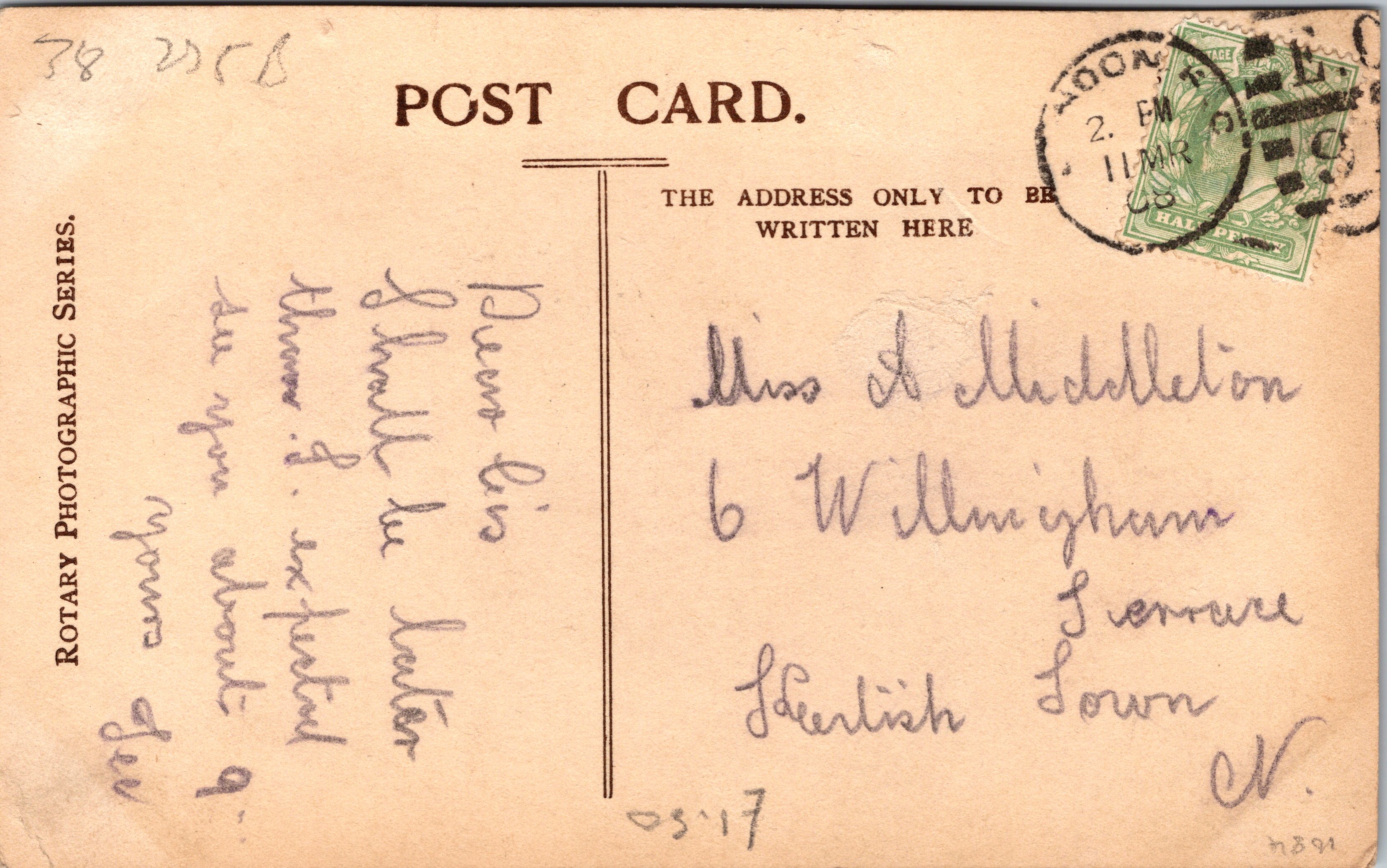
Postcard 1 features a portrait taken by the Foulsham & Banfield studio. Foulsham & Banfield were well known celebrity photographers. Frank Foulsham and A. C. Banfield operated a studio from the 1900’s through the 1920’s.. The postcard was published by Rotary Photo as part of a series (no.4829 B). This postcard was postmarked in 1908 and is in very good condition (see scans). (SOLD)
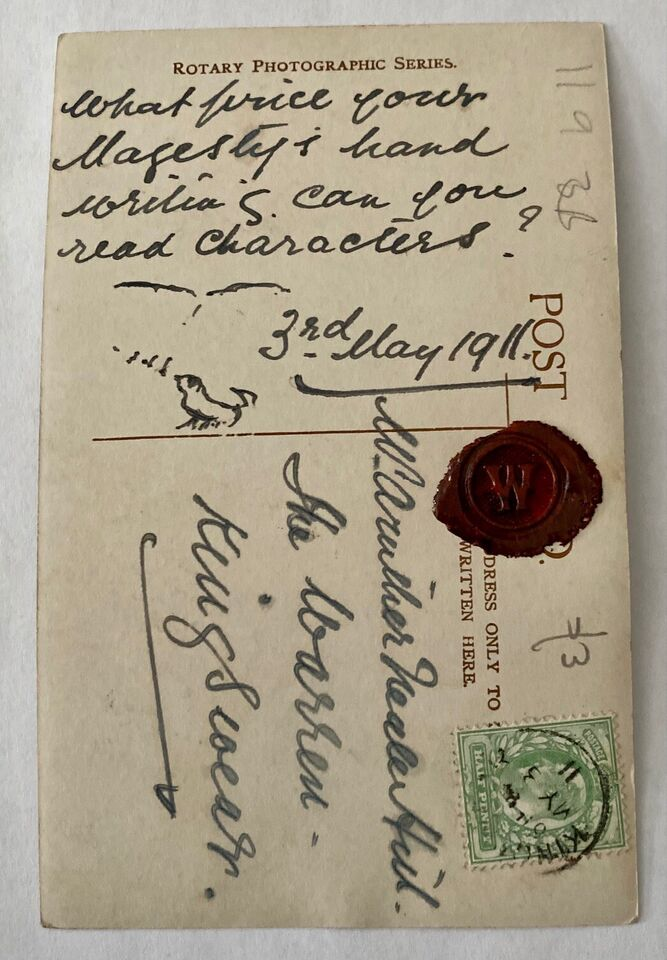
Postcard 2 features Miss Firth in her role as “Olga” in “The Dollar Princess”. Her photograph was taken by Rita Martin. Miss Martin was well known for her expertise in taking portraits of theater stars and other celebrities. The postcard was published by Rotary Photo as part of a series (no.4486 F). The writer of the message on this postcard dated it “1911”. The correspondent also provided an illustration of a barking dog along with their message. The sender of this postcard used sealing wax on the card. I have not seen sealing wax used on a postcard before. Sealing was is usually used to confirm one’s identity or to secure privacy of the contents of an envelope. (SOLD)
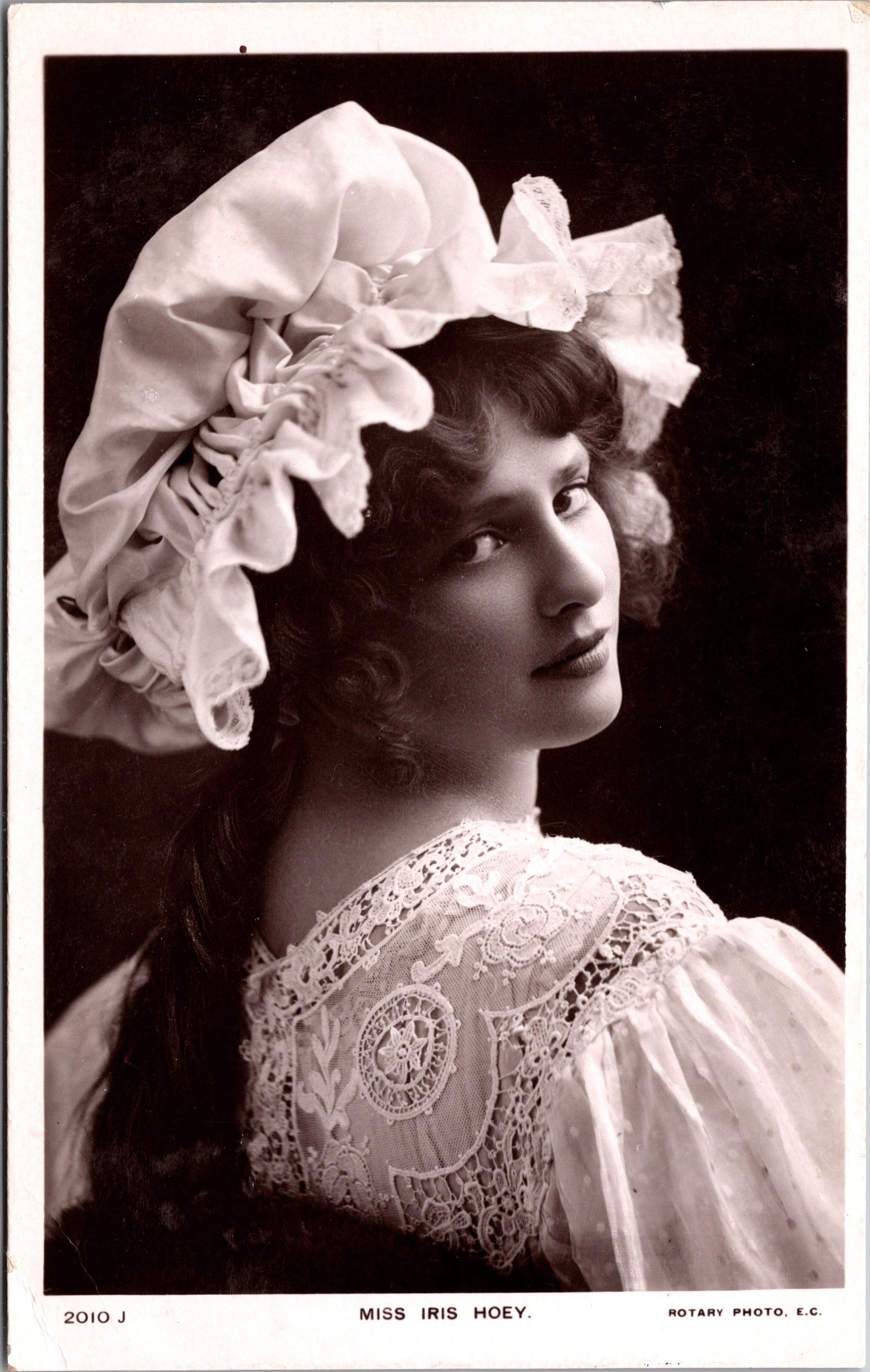
The pretty actress seen on these vintage real photo postcards is Iris Hoey (1885-1979). She has a beautiful smile. Hoey was a British actress who performed in the first half of the twentieth century. She appeared in both stage and movie roles. Iris was born in London. Her father was a professor of economics. She began her career in straight theater and in musical comedies. Her first film appearance was in 1922. She was very active in the 1930’s working in film but still found time for theater. Th IMDb credits her with 20 acting roles in films. They range from 1922 to 1954. The IBDb reports that Hoey performed in two Broadway shows. Twelve portraits of Iris Hoey are part of the collection of Great Britain’s National Portrait Gallery. Hoey is considered to be among the prettiest actresses of her era.
Postcard 1 was published by Rotary Photo and is part of a series (no.2010 J). (SOLD)
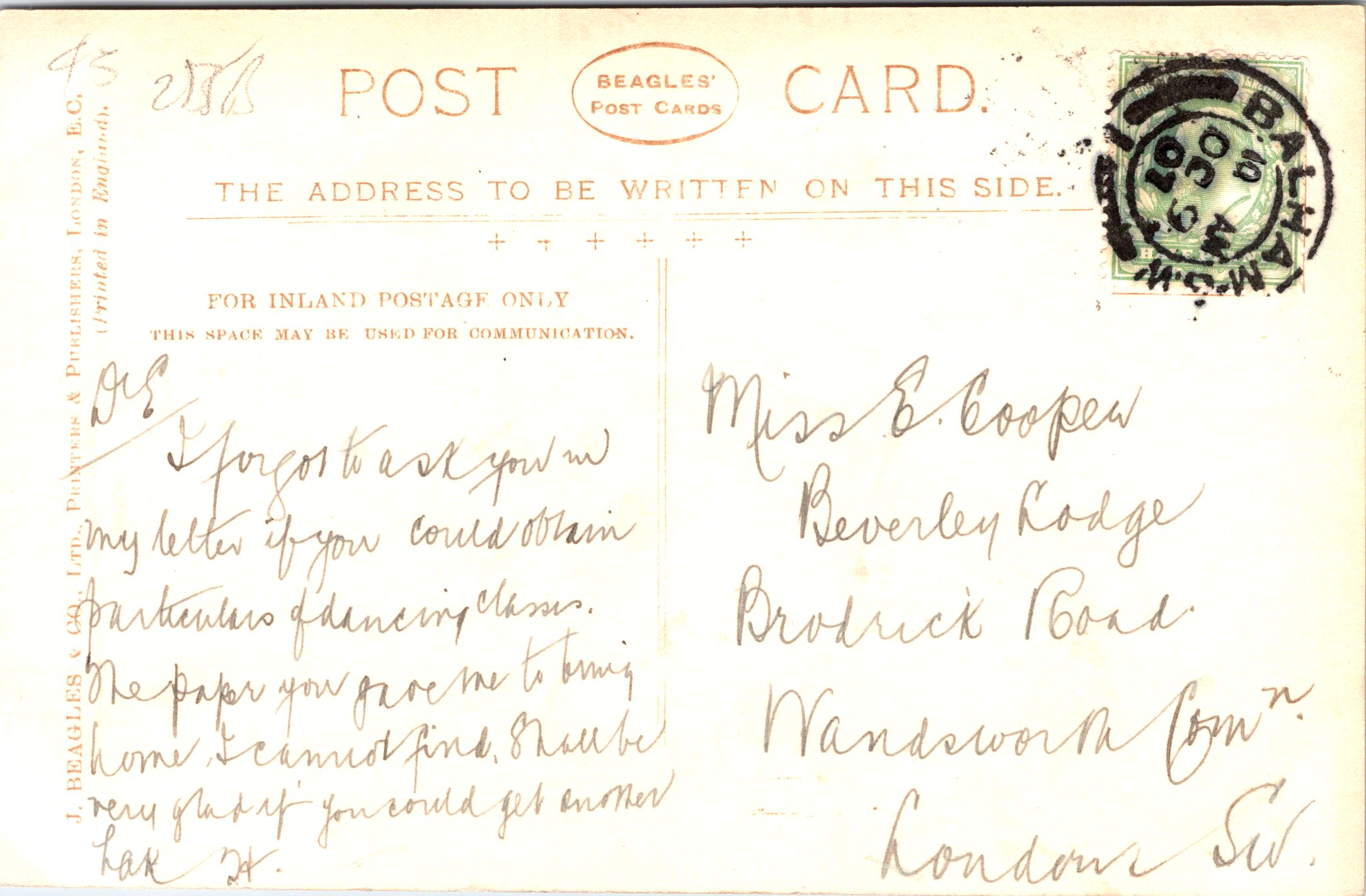
Postcard 2 was published by Beagles Postcards and is part of a series (no.220R). (SOLD)
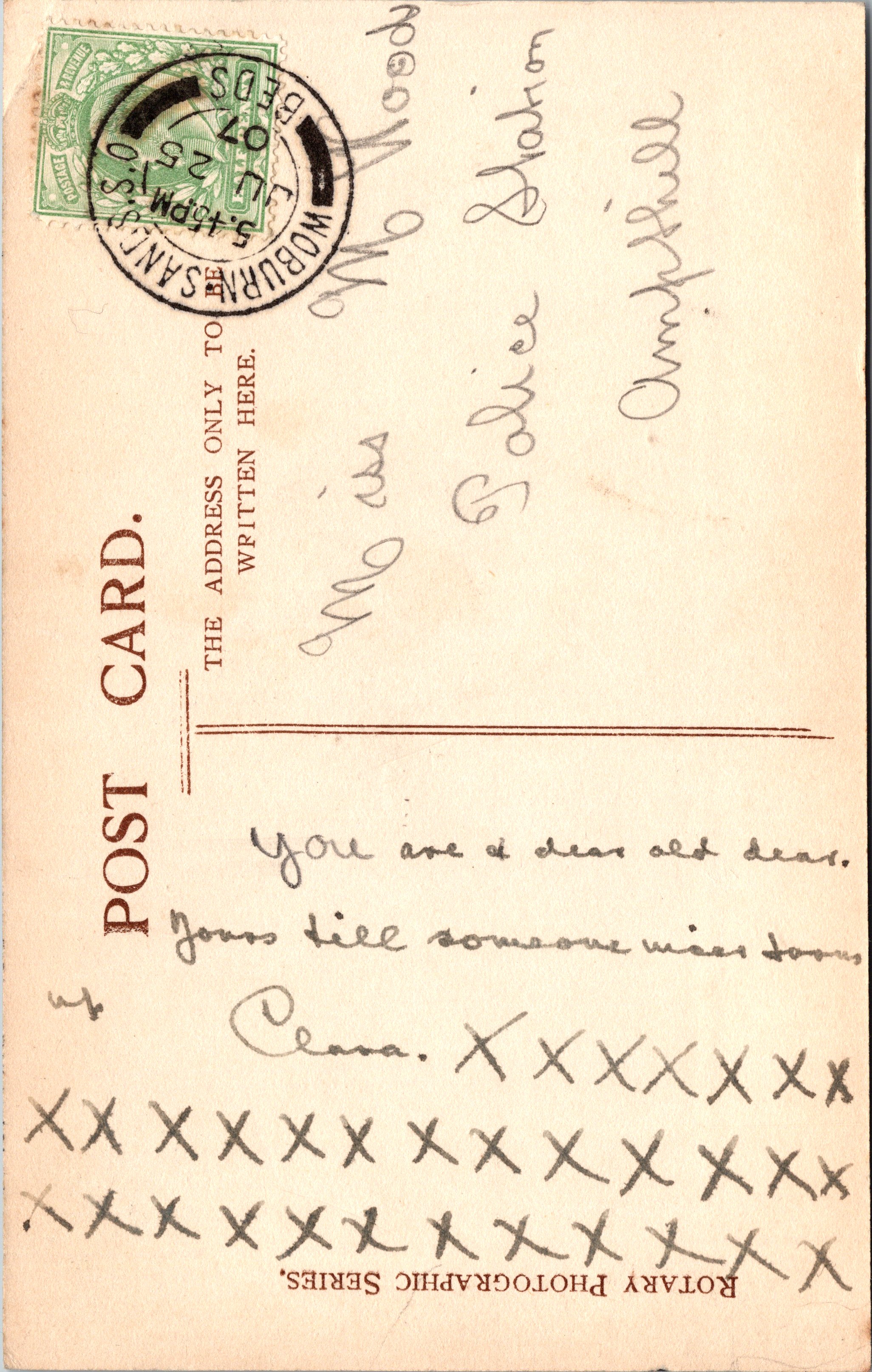
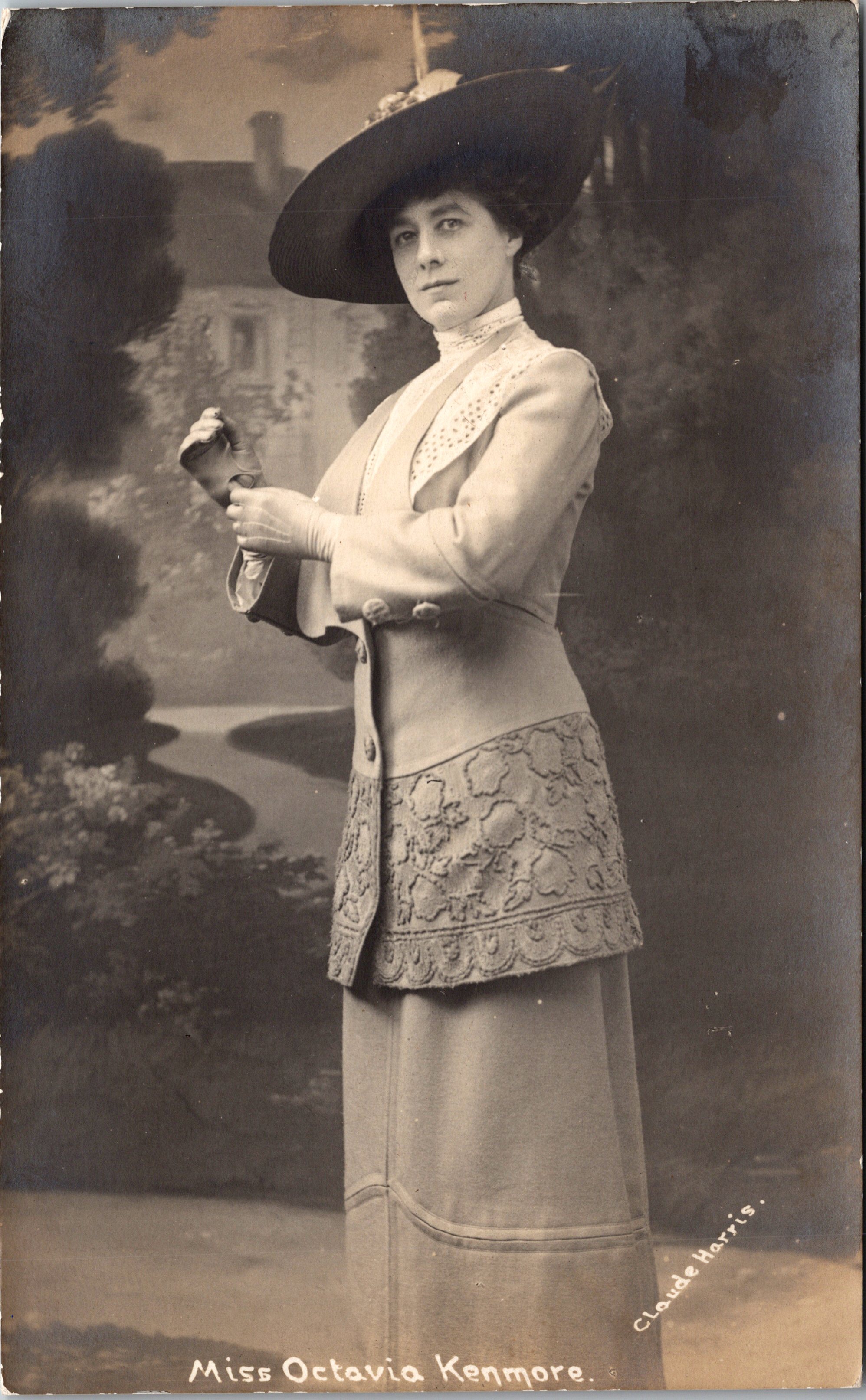
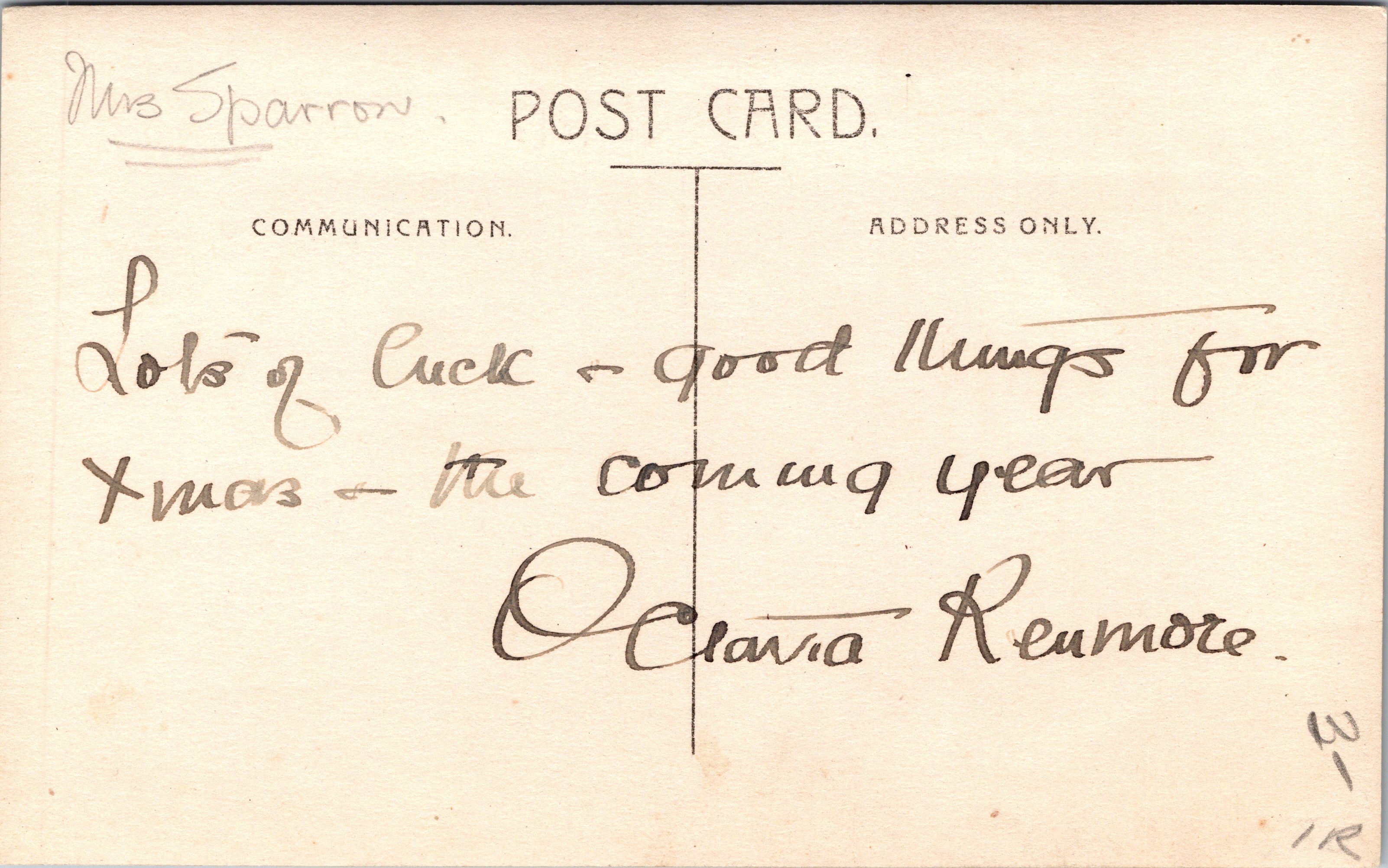
This vintage real photo postcard features British actress, Miss Octavia Kenmore. Kenmore was an actress who performed in many productions of Shakespeare’s and Ibsen’s plays. She also was a Broadway actress. She was in eight Broadway shows from 1921 through 1947. Her appearances included a role in Hedda Gabler. Kenmore received many fine reviews in her long theatrical career. In a review of her London debut performance, one critic was not totally impressed. He states that she had a pleasing voice, intelligent and pretty features, and a good presence. He continues with the comment that she should have had more experience before taking on the difficult role in W. S. Gilbert’s fairy comedy, “The Palace of Truth” (1888). The critic’s final assessment of Miss Kenmore was biting. He declared that “Her performance was emphatically one of promise, not of fulfillment.” This vintage portrait postcard is unique in that the reverse of the postcard has a message from Kenmore. She has also signed the postcard. Her signature has not been authenticated. The photograph of Miss Kenmore seen on this card, was taken by Claude Harris (1883-1961). He has 61 photographs in the collection of the National Portrait Gallery. His studio was located in London. He fought in the Boer War and World War I. He produced and directed a film “The Sanctuary” (1916). He photographed many celebrated theater celebrities. Harris was considered a master of lighting.
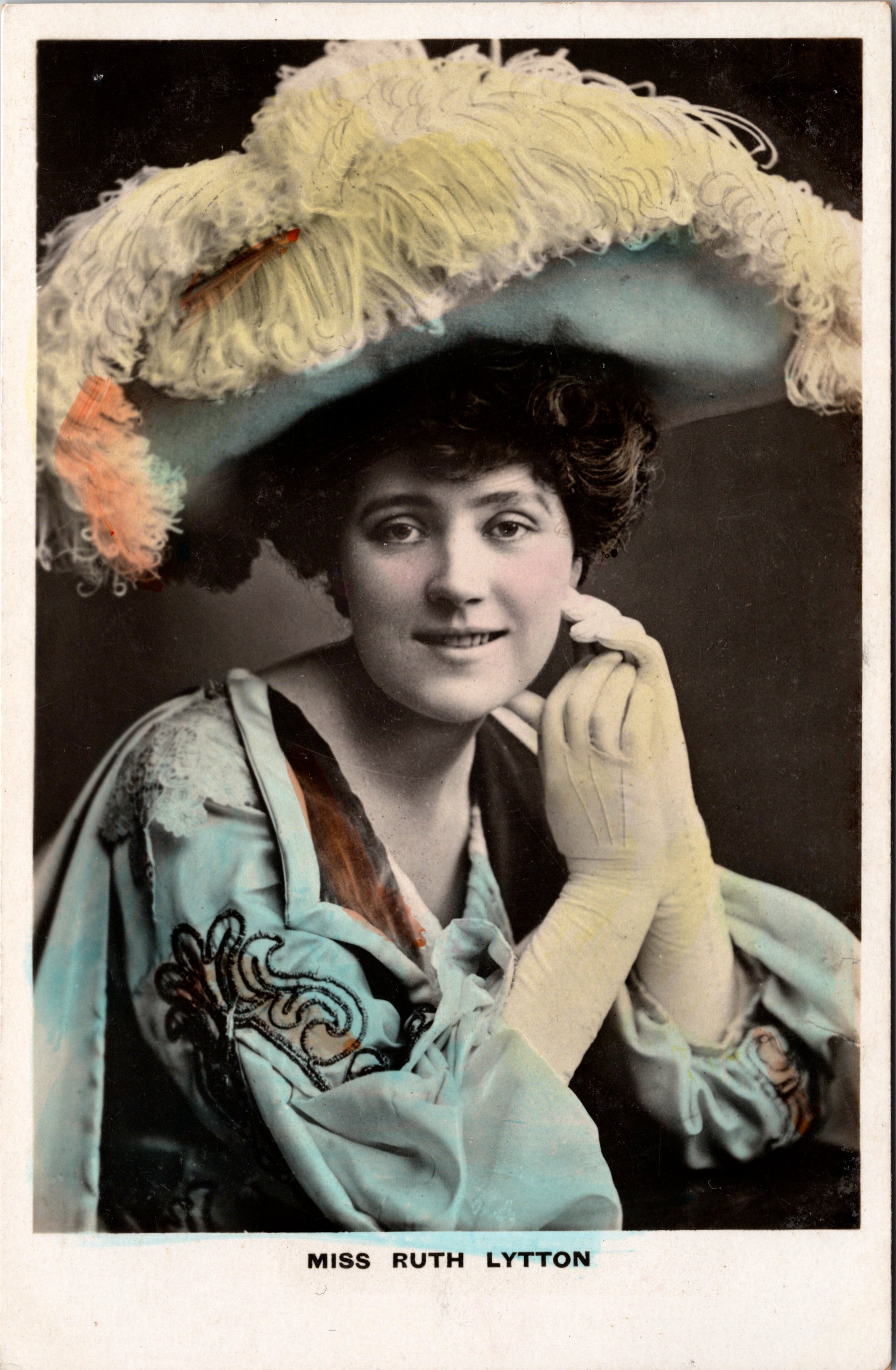
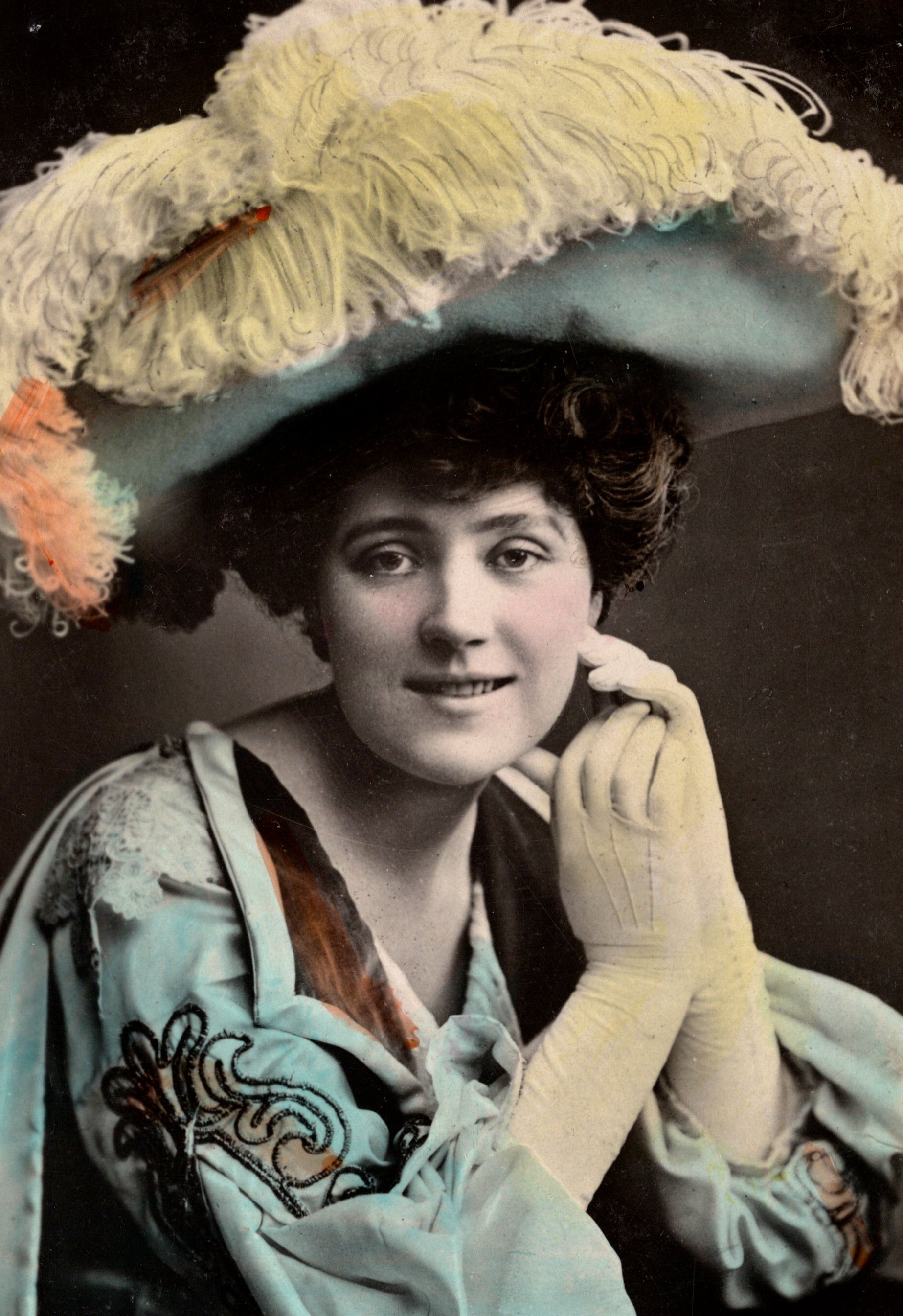
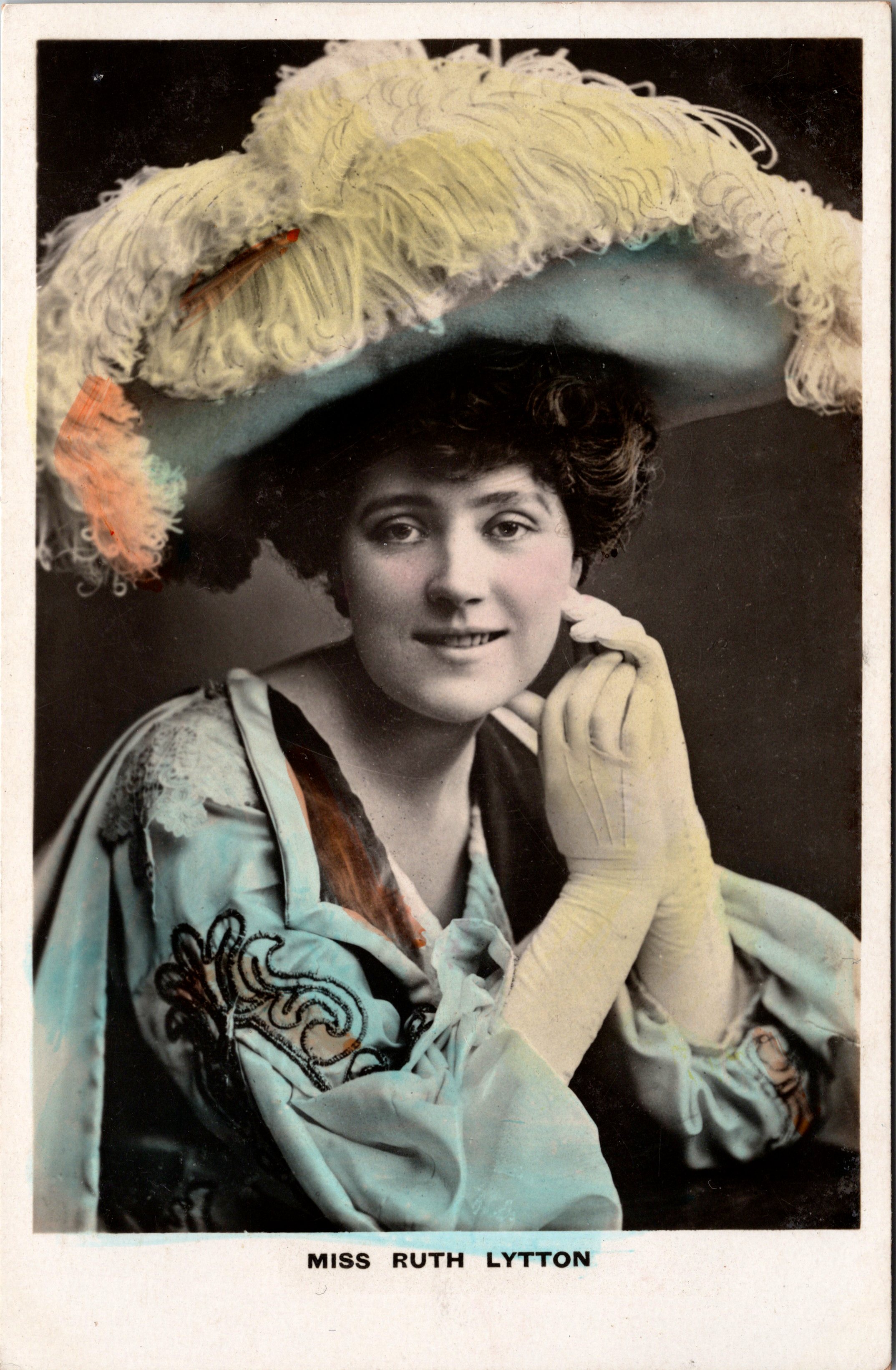
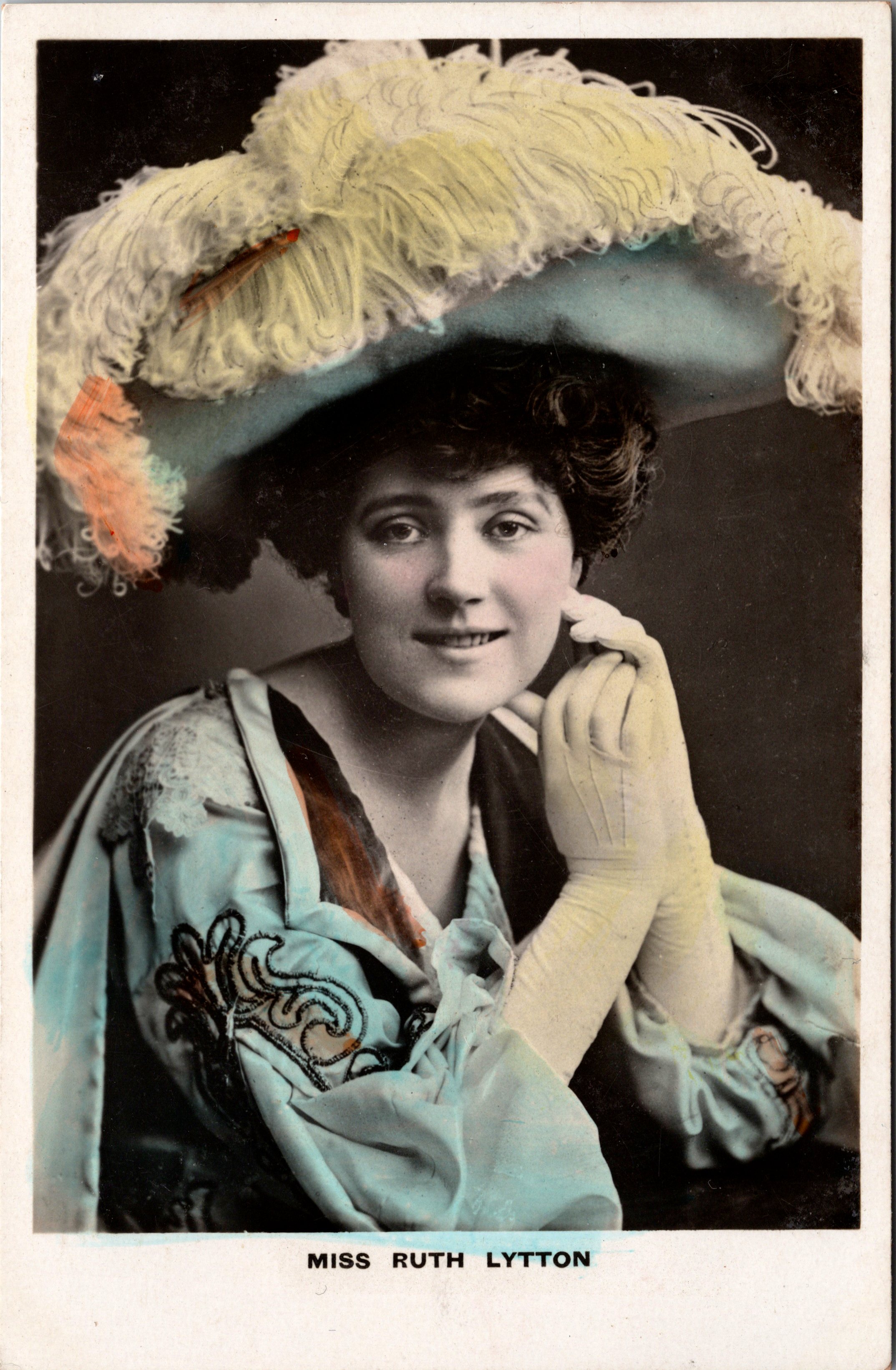
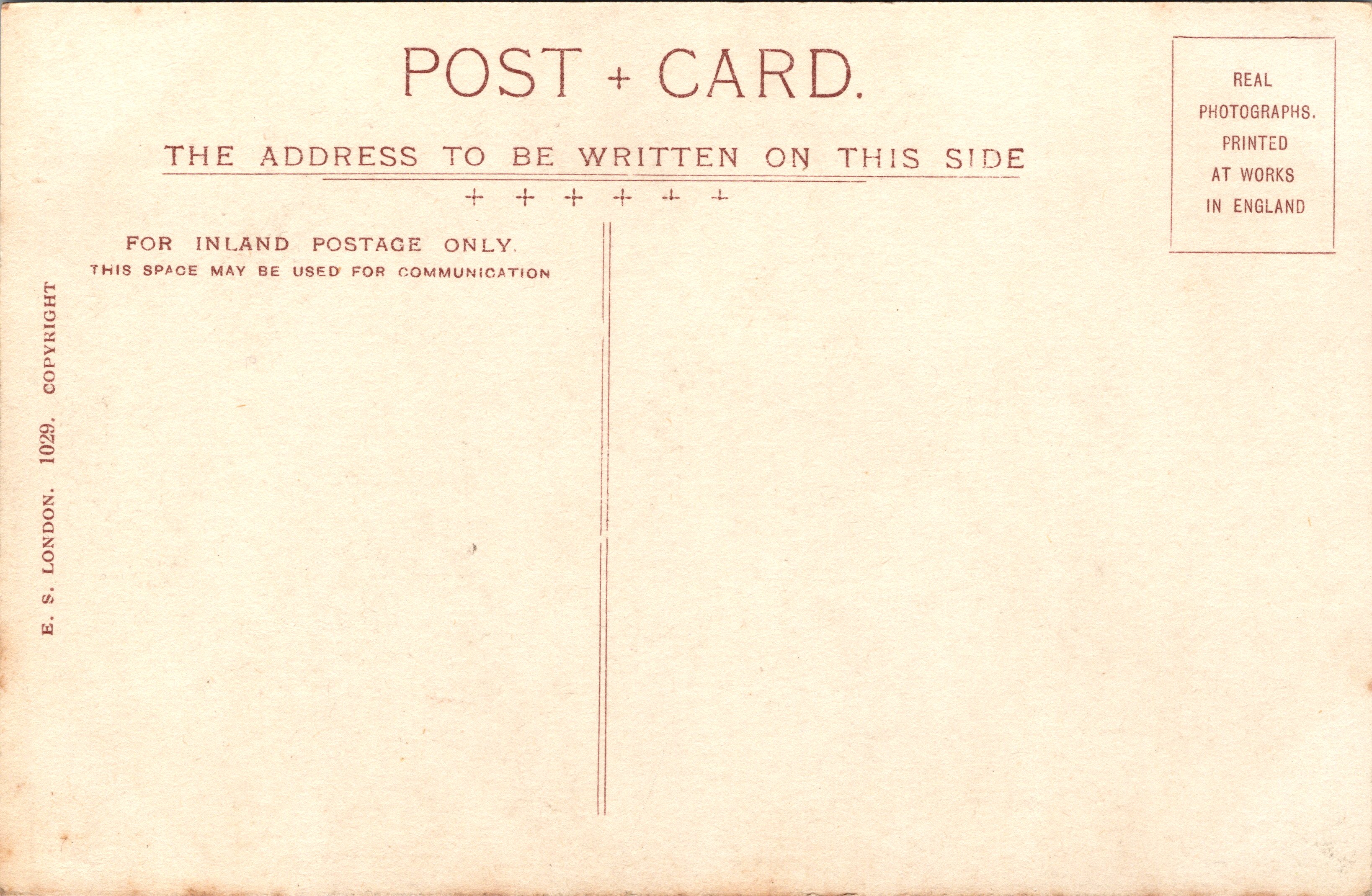
This vintage real photo postcard features pretty actress, Miss Ruth Lytton (1875-1939). She sat for two portraits in England’s National Portrait Gallery’s collection. Lytton was an English born stage and music hall actress. She was active in the early 1900’s. Lytton was the daughter of a goldsmith/jewelrer. She was married twice, first to a well known comedian (George Henry Bastow), and second, to a salesman. This postcard was published by Empire Series, Pictorial Postcard Company Ltd, London, England. The card is part of a series (no.1029). This divided back vintage postcard is color tinted and is in very good condition (see scans).
Buy this original vintage real photo postcard (includes shipping within the US) #3617
To purchase this item, click on the Pay with PayPal button below
$18.49
Buy this Origianal Vintage Postcard (includes International shipping outside the US) 3617
To purchase this item, click on the Pay with PayPal button below
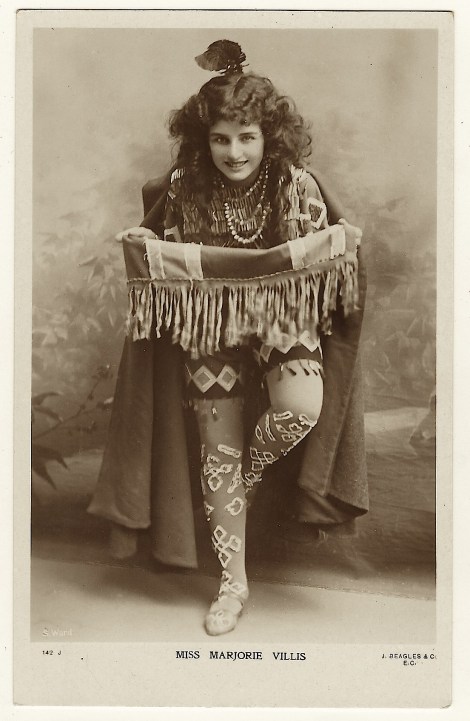
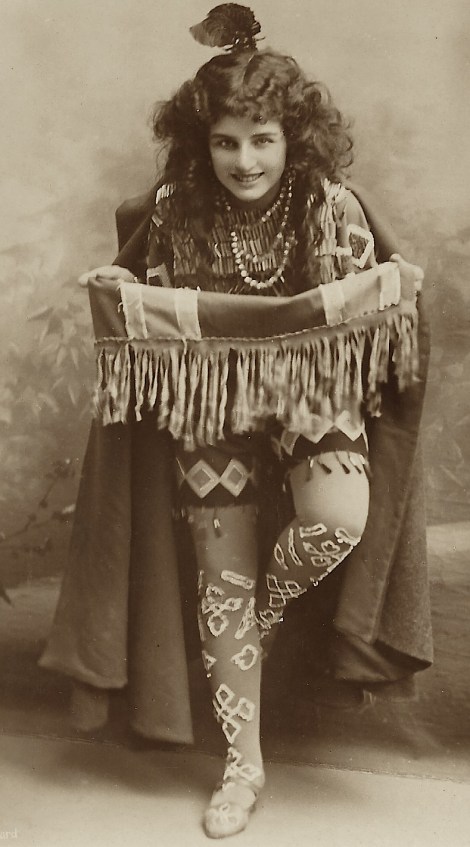 This vintage real photo postcard portrait feature British silent film actress, Marjorie Villis (1891-1981). Miss Villis is quite pretty and has a wonderful smile. This photograph captures her in a risque pose and a risque costume. What an amazing elaborate and busy costume. When I first saw this image, I immediately became motivated to find information about this provocative actress. I met little success in learning about Marjorie Villis. Photographs of her appear to be uncommon, and I could not find the postcard above anywhere online. I did learn that she sat for seven postcard portraits that can be found in the UK’s National Portrait Gallery, All of the portraits were taken by celebrated photographer, Alexander Bassano. The IMDb credits Villis with 15 film roles between 1915 and 1922. Villis was most noted for her roles in “The Rugged Path (1918), “A Romany Lass (1918)”, and “Brenda of the Barge (1920). She had a relatively short career. I wonder why her career ended so abruptly? The first talkie feature film did not get released until 1927, so we know that, unlike many other silent film stars, Villis was not shut out of the film industry because of an unsuitable voice or foreign accent. This postcard was published by J. Beagles & Company (London) as part of a series (no.142 J). The wonderful portrait of Miss Villis was taken by S. Ward. This vintage postcard is in very good condition (see scans)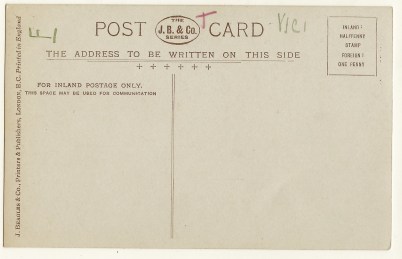










 THE CABINET CARD GALLERY