A pretty woman, wearing a fashionable, but unusual dress, poses for a photographer named Joseph G. Morris, in Pittsburgh, Pennsylvania. The studio was located at 16 Sixth Street, in Pittsburgh. She is wearing a collar pin. On the reverse of the photograph is the handwritten name, “Hillz”. One imagines that Hillz is the last name of the subject of this photograph. United States census data reveals some biographical information about the photographer of this cabinet card. Morris was located in the 1880 census. Morris was about 29 years old and he and his father (David Morris) were both working as photographer agents. In 1900, Morris and his 18 year old son, Harry, were boarders, and the older Morris was working as a photographer while the younger Morris was employed s a photographer apprentice. The 1910 U.S. Census finds Morris still working as a photographer and living with his wife, Mary P. Morris. SOLD
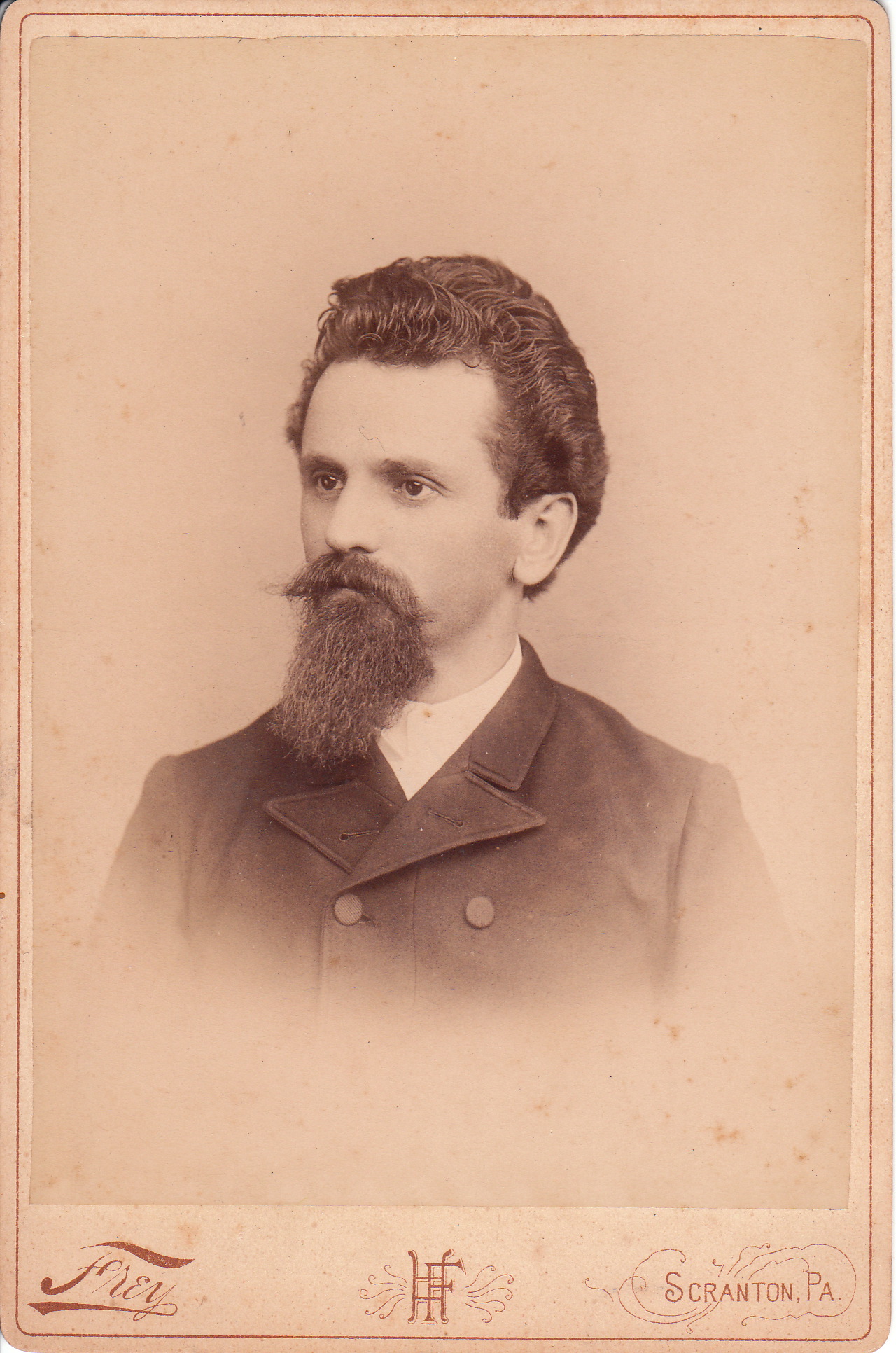
This cabinet card features a young man with an interesting beard and an abundance of hair atop his head. He isn’t the former President of the Hair Club for Men but his natural hair is styled in such a way to give an appearance of a hairpiece. The photographer is Henry Frey of Scranton, Pennsylvania. The studio was located at 121 Lackawanna Avenue. A second studio was located at 101 S. Main Avenue, in Hyde Park, Pennsylvania. To view other interesting beards, check out this site’s category of “Beards (Only the Best). SOLD
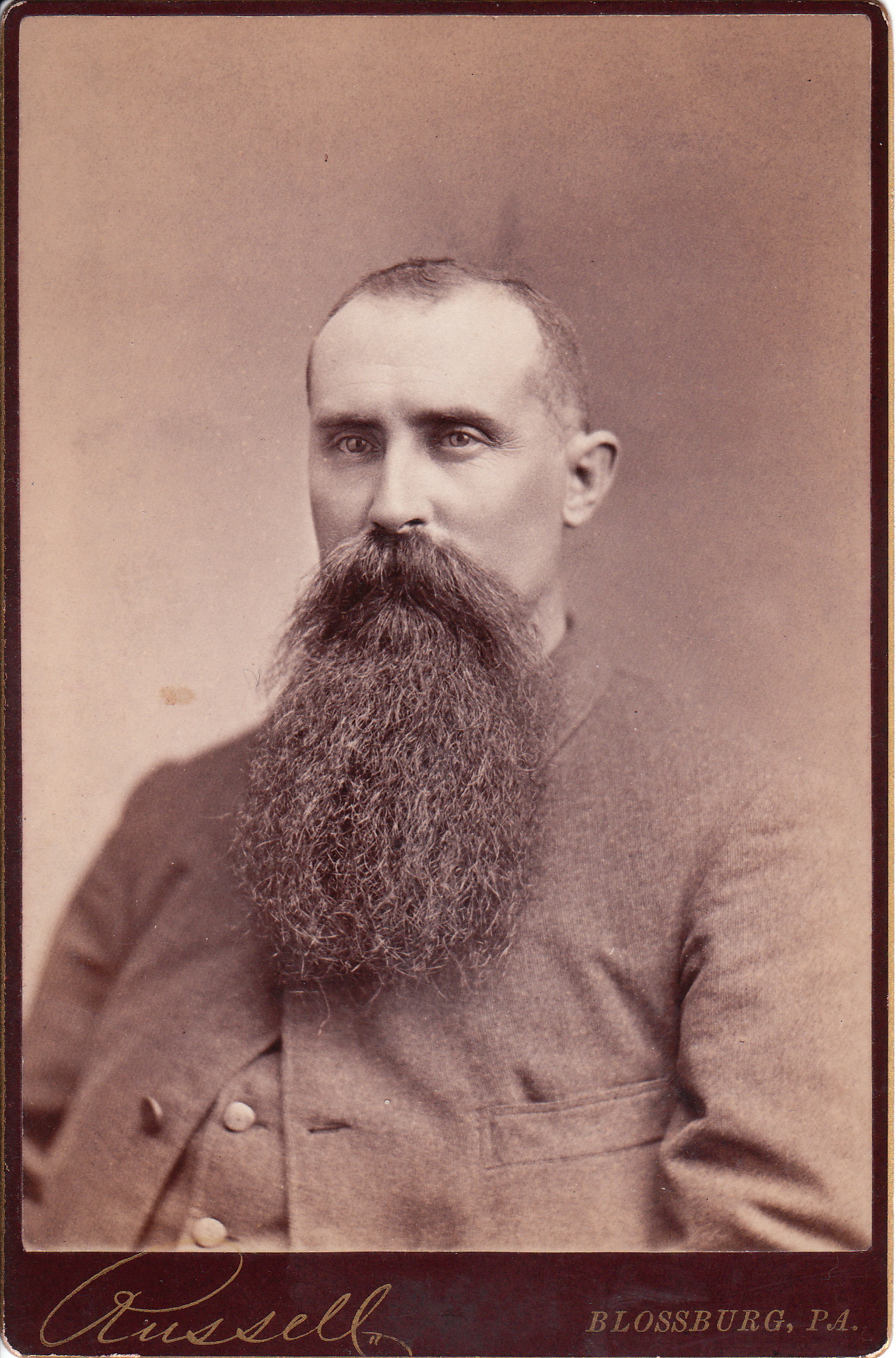
A man with a long bushy beard and formidable mustache poses for his portrait at the studio of E. L. Russell in Blossburg, Pennsylvania. Printed on the reverse of the card is the not so modest statement “From Russell, Blossburg’s Photographer”. Other interesting beards can be seen by clicking on this site’s category “Beards (Only the Best)”. SOLD
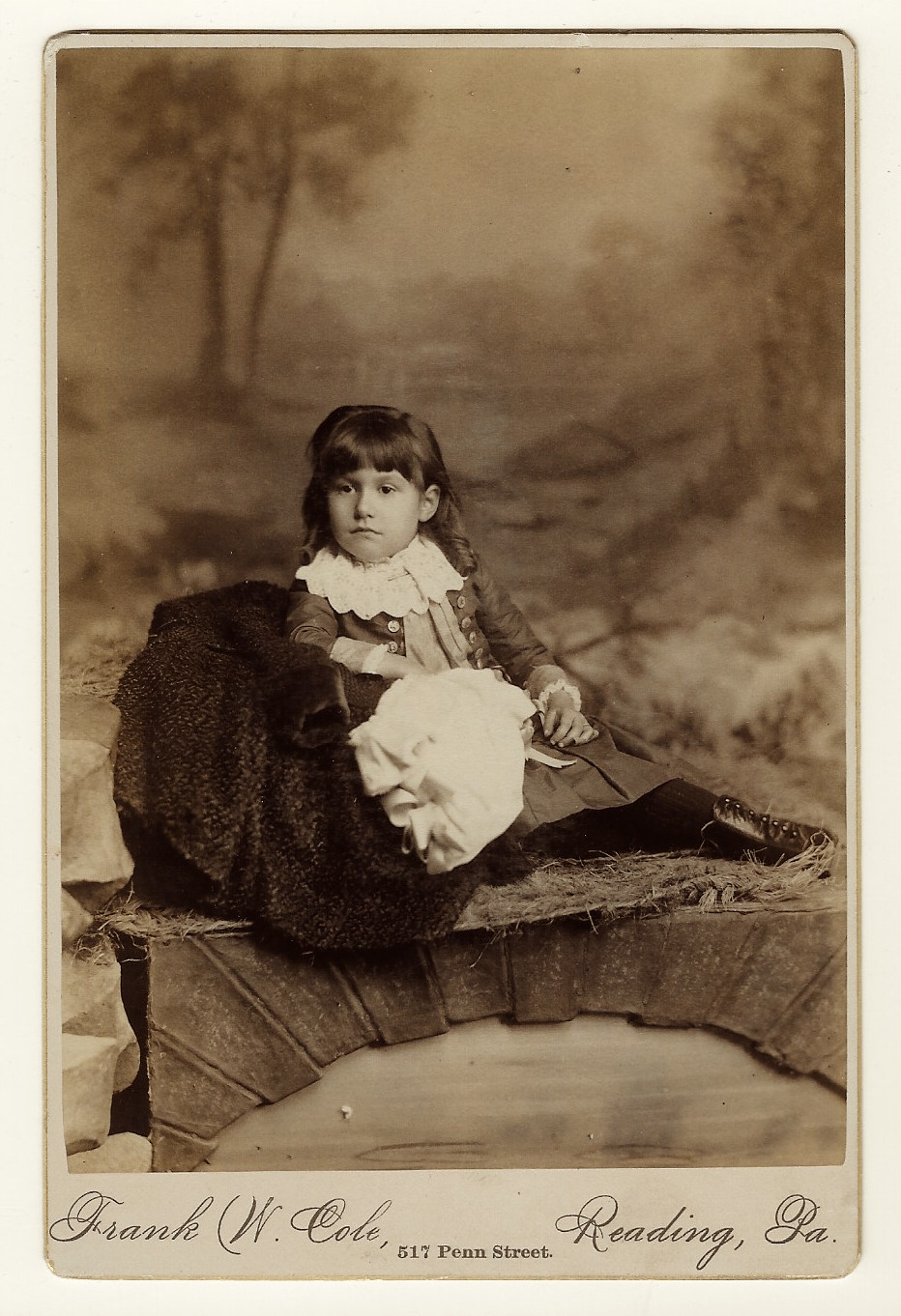
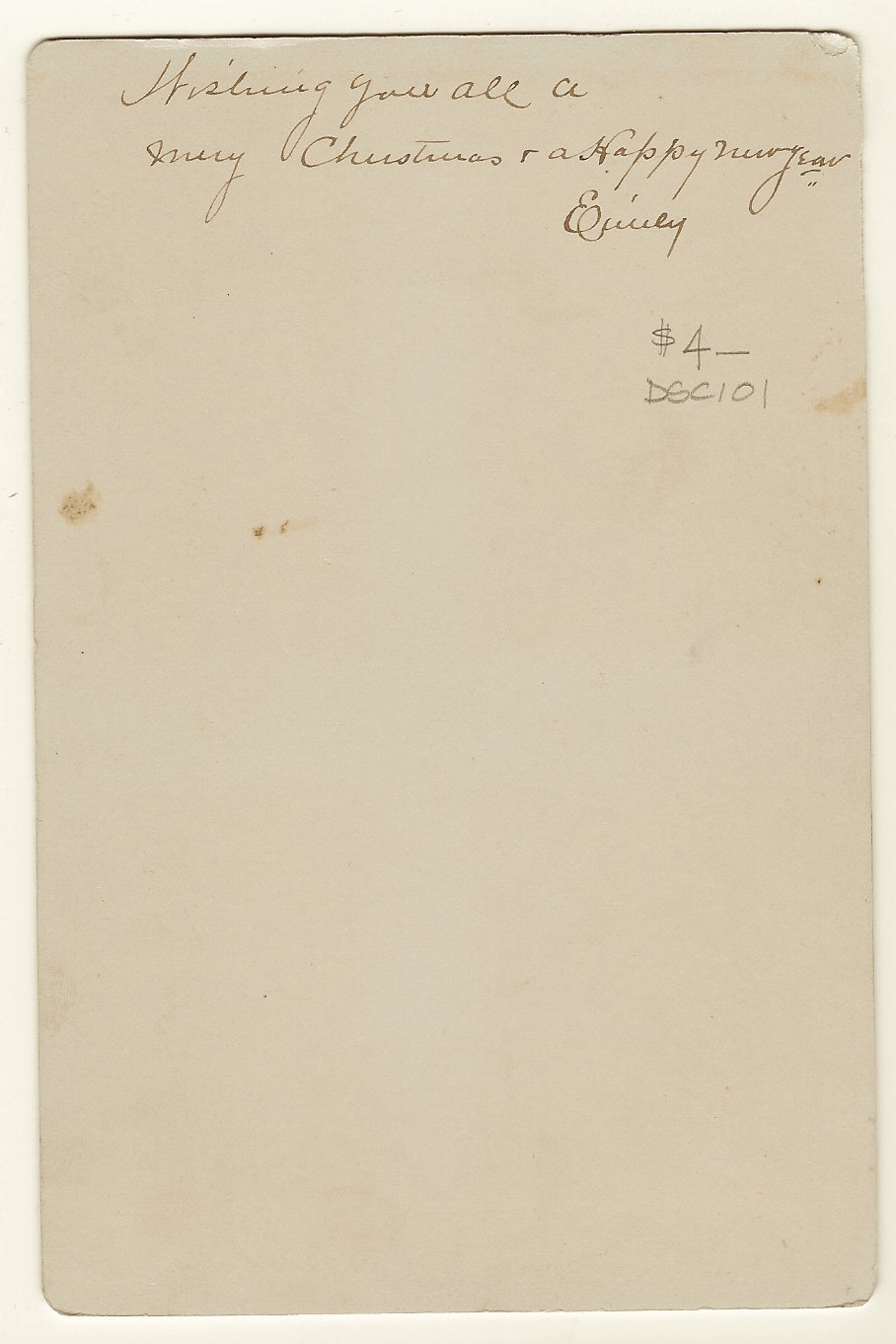
This cabinet card portrait features an adorable little girl while sitting on a platform covered with fake grass. The youngster exhibits a lot of poise for a child her age. Note her lace collar and the multitude of buttons on her jacket. She is holding her bonnet on her lap. The photographer of this image is Frank W. Cole (1857-1912) who operated a studio in Reading, Pennsylvania. Cole was born in Bethlehem, Pa. and learned photography there. He came to Reading in 1883 and opened a photography studio at the address printed at the bottom of this cabinet card. He closed the studio in 1885 and went to work for another photographer (Saylor). According to the information aforementioned, this photograph was taken between 1883 and 1885. A Christmas/New Year’s message on the reverse of the photograph (see below) reveals that this charming girl’s name is Emily. SOLD
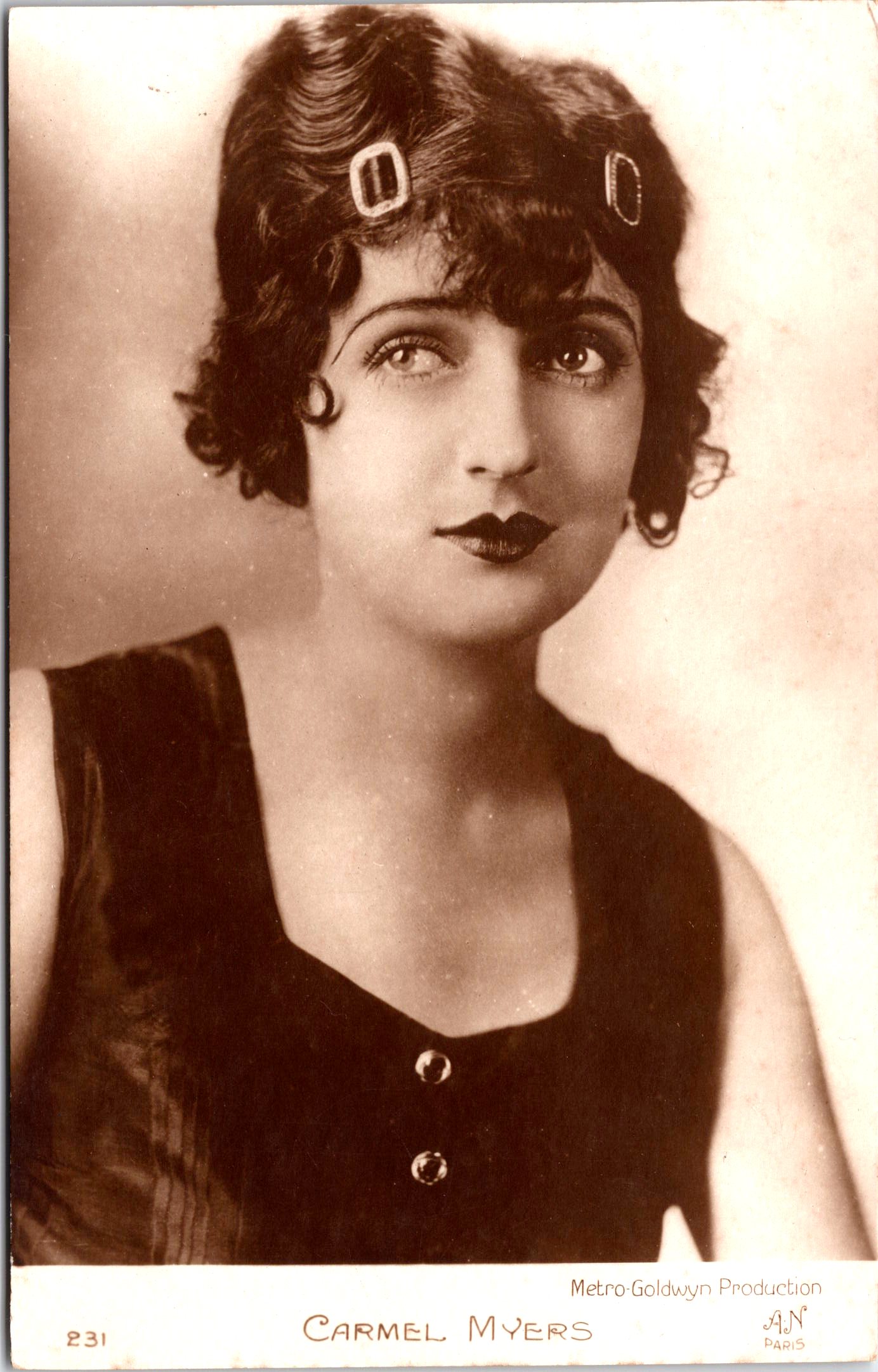
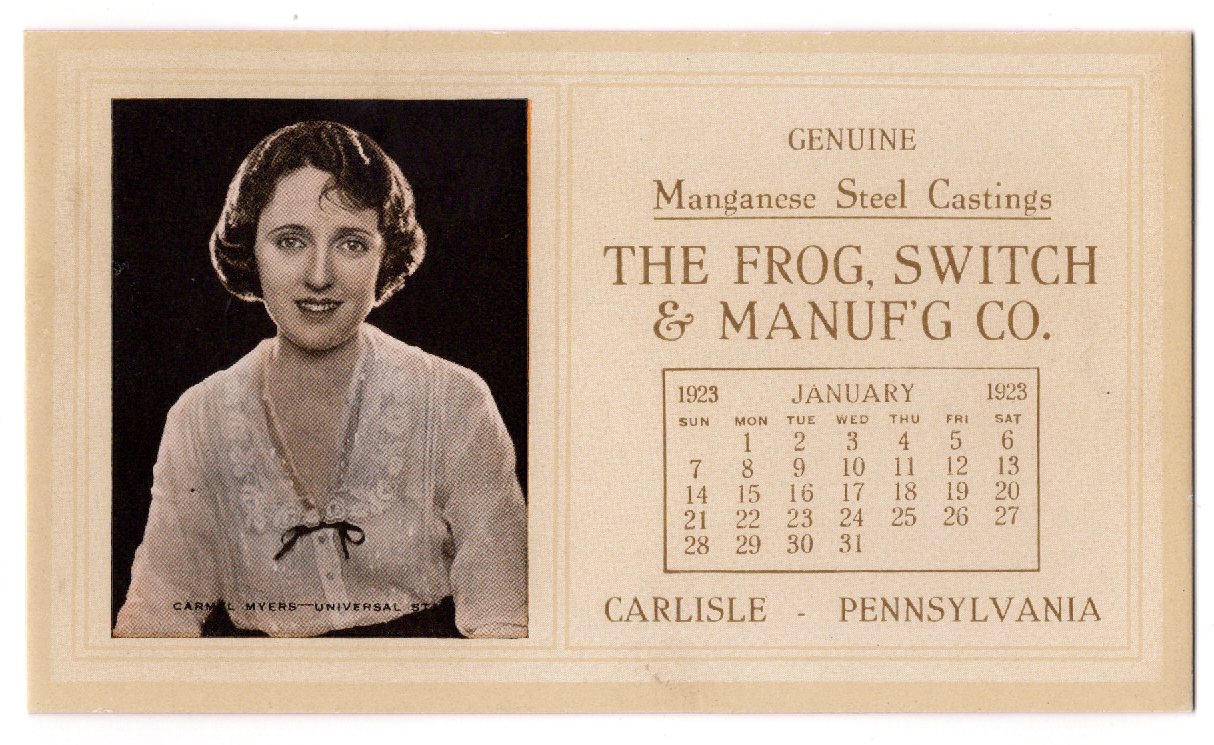
This vintage real photo postcard features American silent and sound film actress, Carmel Myers (1899-1980). Carmel Myers was an extraordinary actress who captivated audiences during the early years of Hollywood. She had striking beauty, magnetic screen presence, and versatile talent. Myers was born in San Francisco to Jewish immigrants. Her father was a Rabbi from Russian and her mother was from Austria-Hungary. She grew up in a theatrical household and was exposed to the performing arts from a young age. She participated in both school plays and local theater productions. At the age of 16, Carmel Myers made her professional debut on stage, impressing both critics and audiences with her natural talent. It wasn’t long before she gained the attention of film producers. In 1916 she made her screen debut in the silent film “The House of Mystery”. This was the start of a more than twenty year career in the film business. During the silent film era, Carmel Myers became one of the most sought-after actresses in Hollywood. Known for her expressive eyes, graceful movements, and remarkable versatility, she effortlessly transitioned between comedic and dramatic roles. Her notable films during this period include “Ben-Hur” (1925), where she portrayed the seductive courtesan Iras. Many of her early roles were playing a “vamp”. Carmel Myers was also an early advocate for actors’ rights and was instrumental in establishing the Motion Picture Artists Association. She fought for fair wages, better working conditions, and creative control for performers, contributing to the formation of movie industry unions. With the advent of sound in films, Carmel Myers smoothly made the transition from silent movies to “talkies.” Her resonant voice and impeccable timing added another dimension to her performances. She starred in a range of films throughout the 1930s, including comedies, dramas, and musicals, collaborating with renowned directors and actors of the time. her most popular sound films were “Svengali” (1931) and “The Mad Genius” (1931). Her final film appearance was in the 1945 production of “Blonde Ransom,” marking the end of her illustrious acting career. However, Myers remained involved with both radio and television. Carmel Myers lived a private life outside of the spotlight, rarely divulging details about her personal affairs. She was married three times, first to an attorney and song writer in 1919, in 1929, she married a second attorney, and thirdly, she married a Paramount Pictures executive in 1951. Her first two marriages ended in divorce, and her third marriage ended with her husband’s death. After her husband’s death, she wrote a book about handling grief effectively. After retiring from acting, Carmel Myers devoted herself to philanthropy and community work. She supported various charitable organizations and advocated for social causes.
Postcard 1 was published by A. Noyer and is of French origin. The card has the MGM logo on it’s front. (SOLD)
Blotter 1 is a vintage ink blotter that advertises the Frog Switch & Manufacturing Company, located in Carlisle, Pennsylvania. The blotter has a calendar for January, 1923. The blotter also features a photograph (litho) of Carmel Myers. (SOLD)
This cabinet card photograph captures a pretty young woman with an” interesting look”. Her hair is styled in a somewhat unusual manner. The photograph was taken by an unidentified photographer in Scranton, Pennsylvania. SOLD
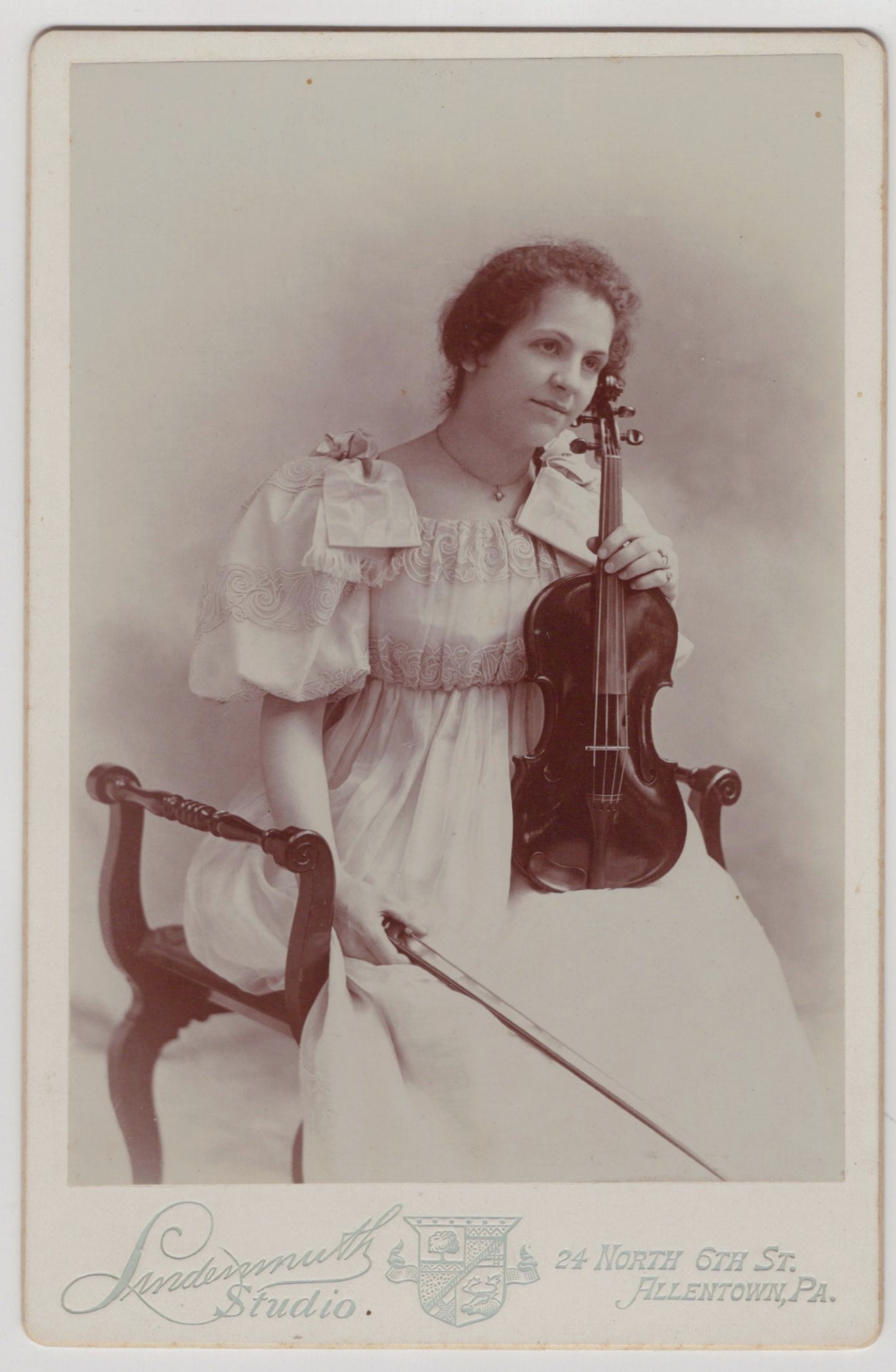
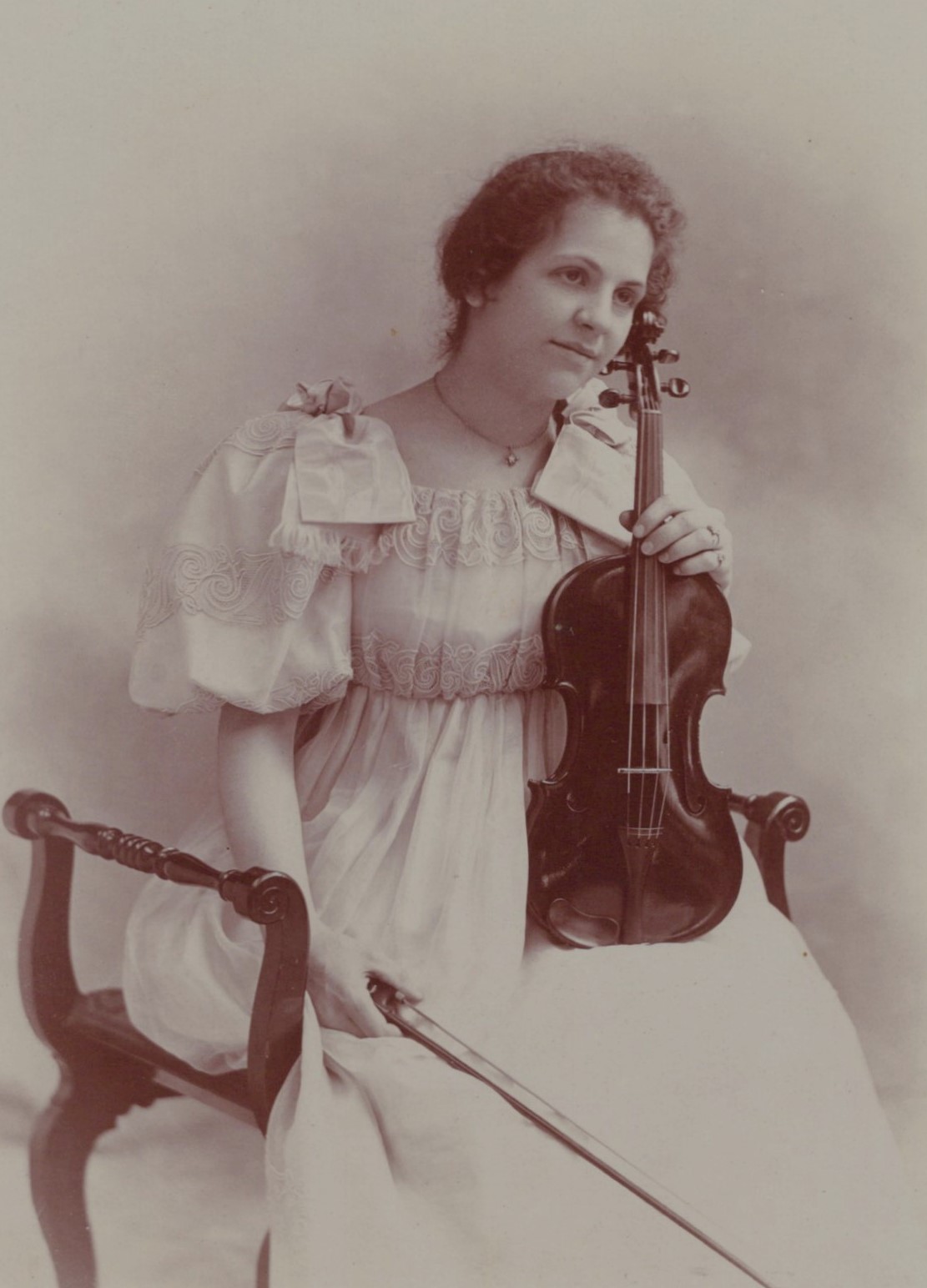
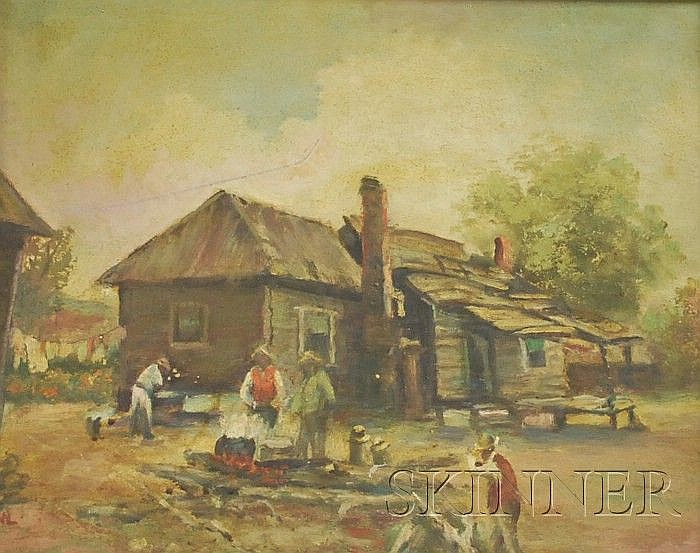
A woman poses for her portrait at the Lindenmuth Studio in Allentown, Pennsylvania. She likely viewed her self as foremost, a musician. She chose to pose herself, or approved the photographers instructions, to pose sitting and holding her violin and bow. The photographer, Arlington Nelson Lindenmuth (1856-1950) is a noted American landscape and portrait painter. He worked in Allentown which is located in the Lehigh Valley area of Pennsylvania. He was a member of the Baum Circle which was a group of artists who were influenced by the work of Pennsylvania impressionist painter Walter Emerson Baum. Lindenmuth studied painting under Peter Alfred Gross and also in Europe. His paintings were exhibited in Philadelphia and New York City. He also painted a number of murals which still can be seen in a number of Allentown’s buildings. Lindenmuth is also known as one of the pioneer photographers in the Lehigh Valley. He operated a photography studio in Allentown for a number of decades. Interestingly, in addition to running a photography business, Lindenmuth taught art from his photography studio. In 1882 he worked for the Eastman Kodak Company as a traveling salesman. He was a great advocate of art appreciation. He was a proponent for the Allentown Art Museum. One of his sons, Raphael Tod Lindenmuth, had much success as an artist. Below is an example of a painting by Arlington Nelson Lindenmuth. To view other photographs by Lindenmuth, click on the category “Photographer: Lindenmuth”. This cabinet card portrait is in excellent condition (see scans).
Buy this Vintage Original Cabinet Card (includes shipping within the US) #5313
To purchase this item, click on the Pay with PayPal button below
$78.00
Buy this Vintage Original Cabinet Card (includes International shipping outside the US) #5313
To purchase this item, click on the Pay with PayPal button below
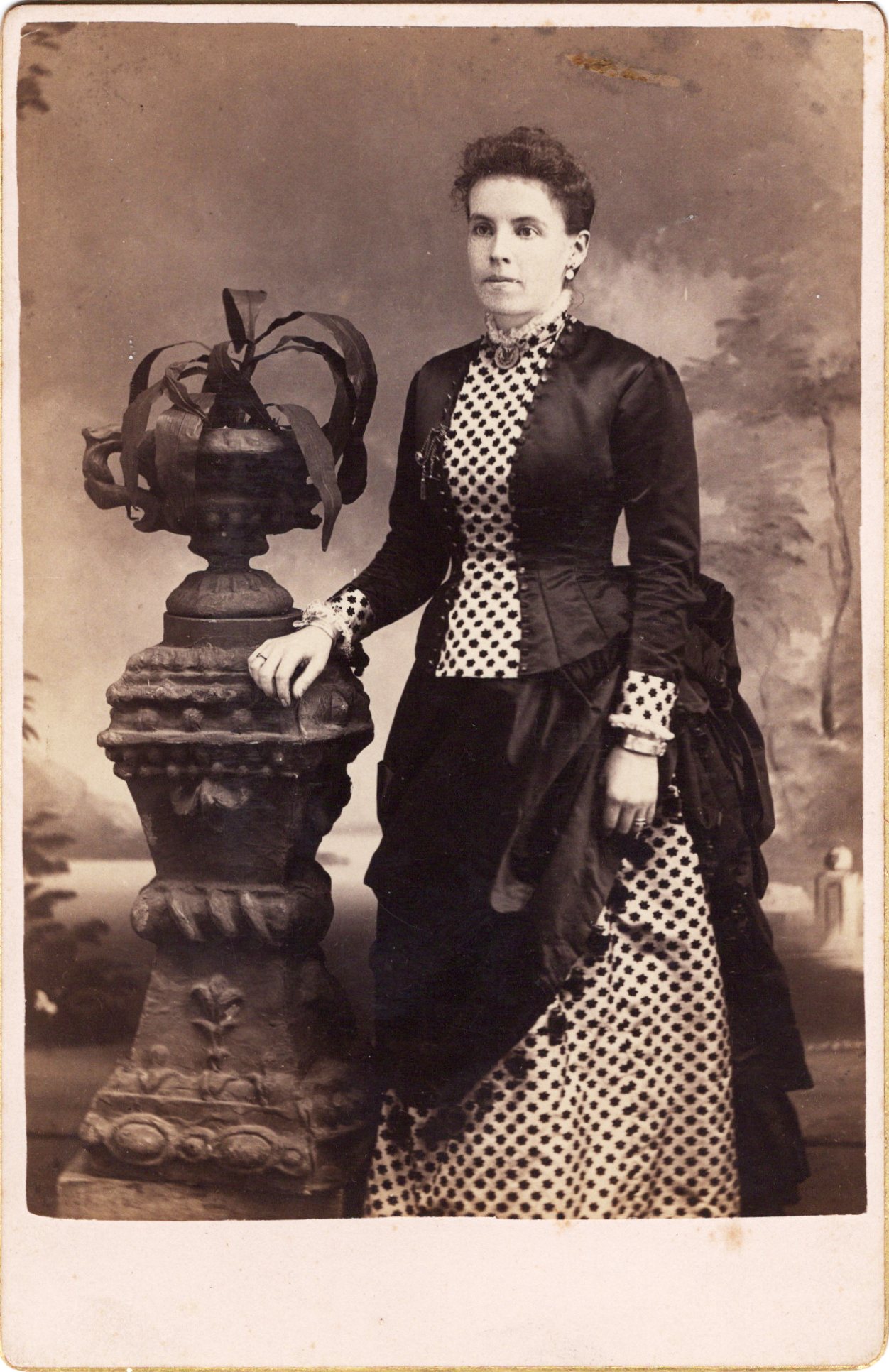
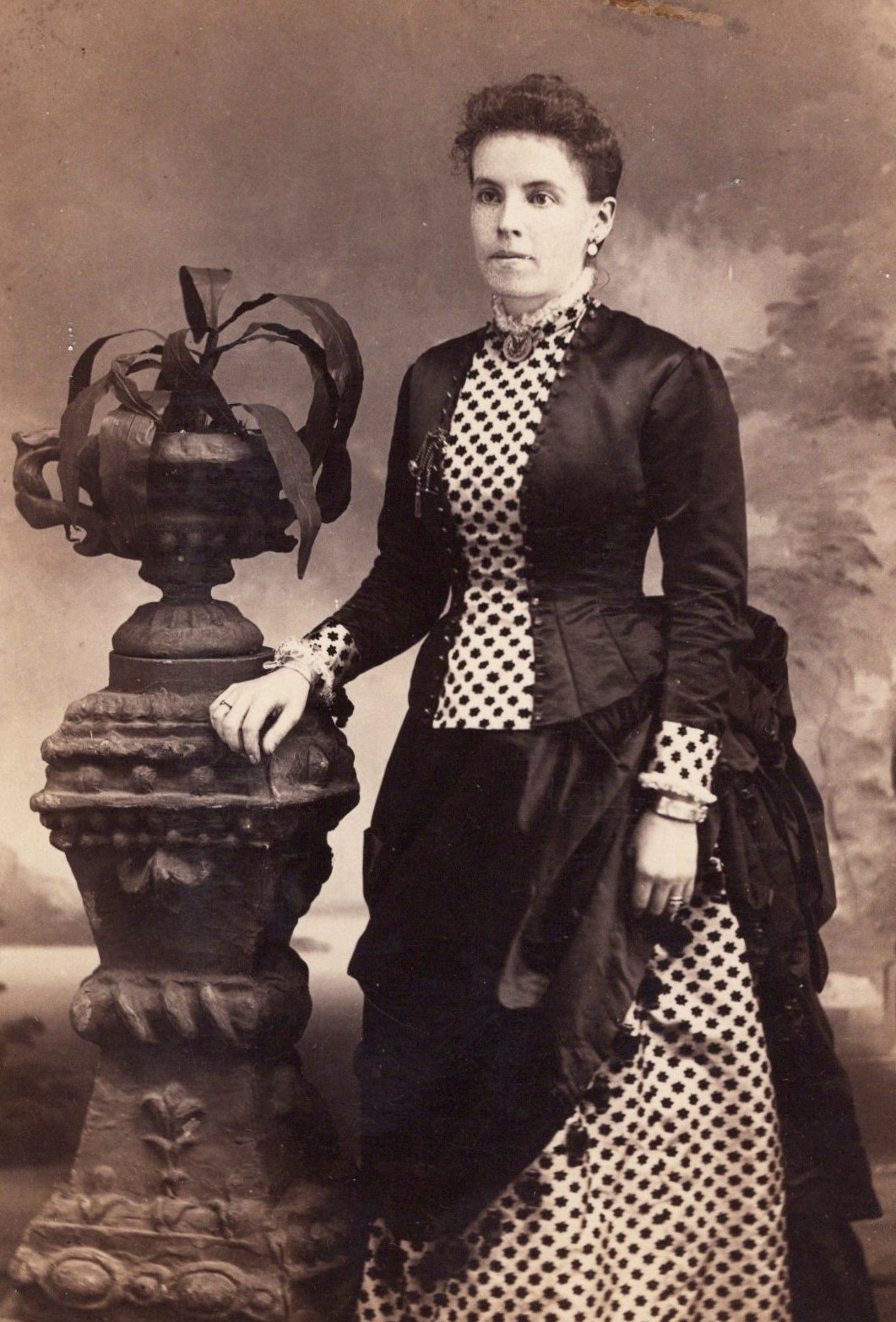
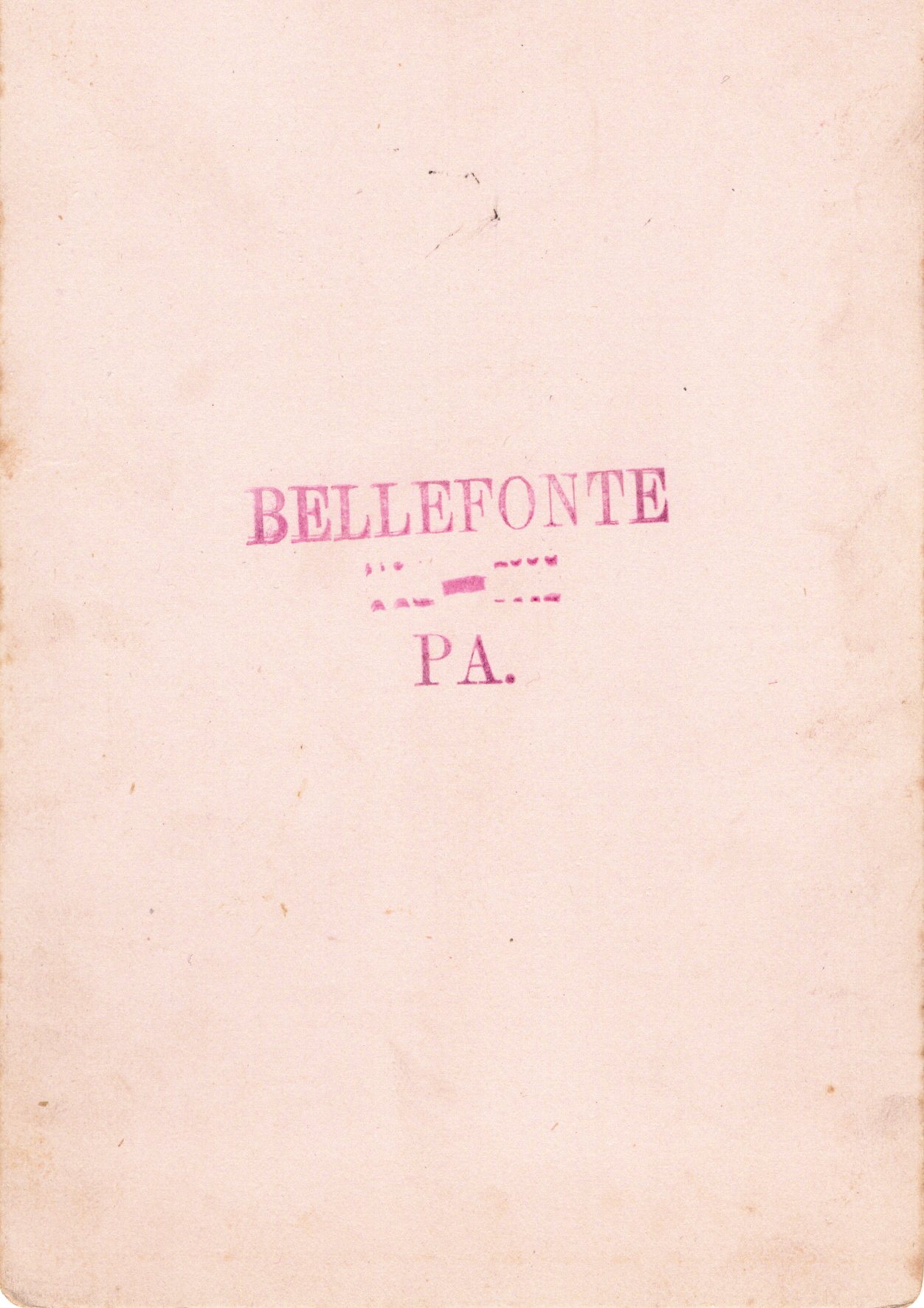
This cabinet card image features a shapely woman in a polka dot dress with a black jacket and apron. Although the shape of the dots are more like a leaf or star, than a dot, the dress has a polka dot appearance. The fashion statement made by this woman is reminiscent of the latter day song about the girl in the “itsy bitsy teeny weeny yellow polka dot bikini”. The woman in this photograph, judging by her outfit, clearly is not adverse to attracting attention. The photograph was produced by an unidentified studio in Bellefonte, Pennsylvania. Interestingly, Bellefonte proclaims itself to be “Central Pennsylavnia’s Victorian Secret”. According to various sources, the town has many lovely Victorian homes. Bellefonte is located about twelve miles from State College, the home of Penn State. SOLD
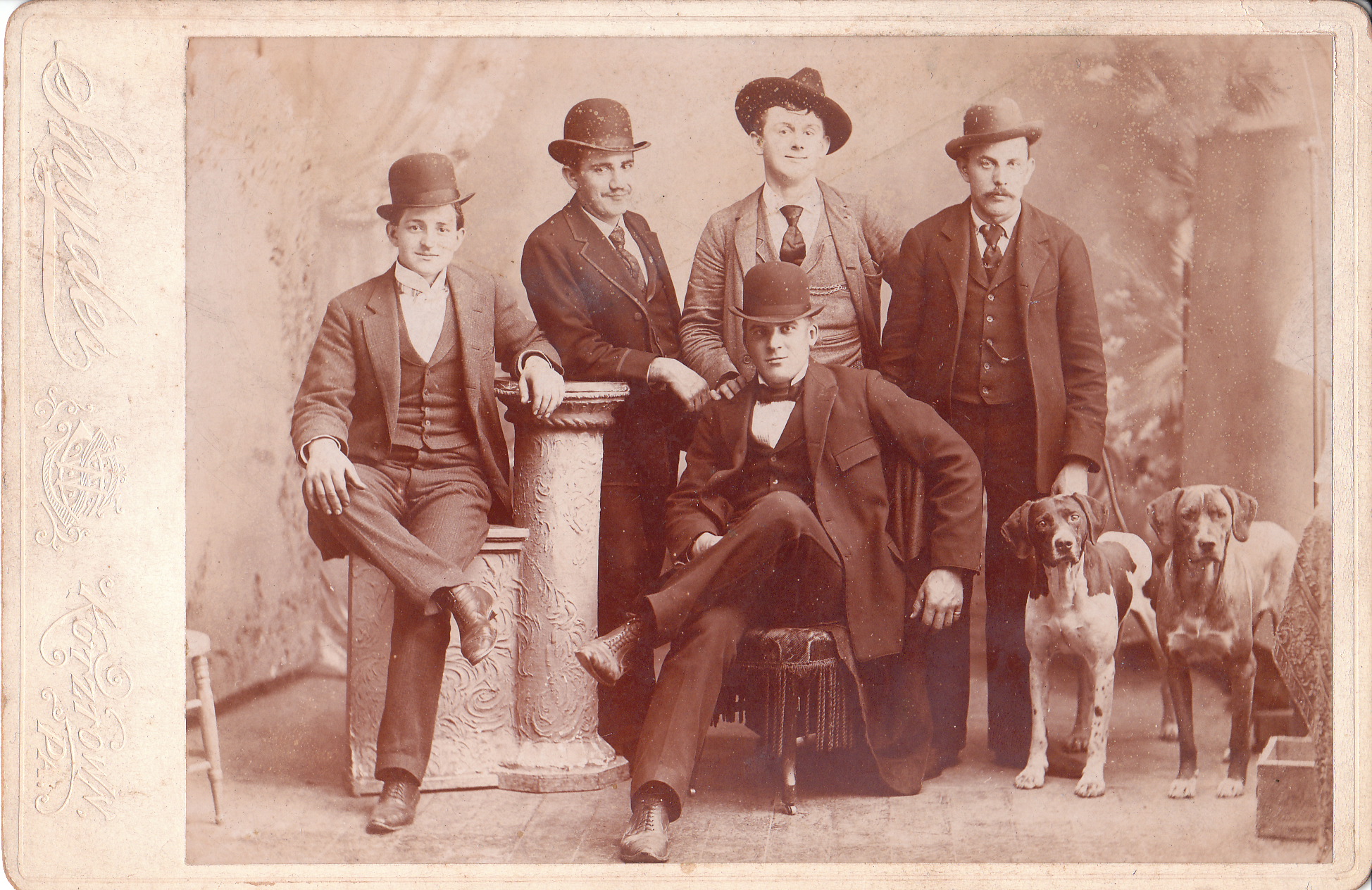
The boys gather together at Snyder’s Studio in Kutztown, Pennsylvania for a group portrait. Suits and derby hats seem to be the order of the day. Someone brought their two large hounds to the gathering. The dogs appear to be hunting dogs. Examination of this cabinet card image brings up the question, “How are these men connected to each other?”. Are they good friends? Are they co-workers? The answer to these questions are unobtainable and we are left with only hypotheses.What do we know about the photographer? The 1880 U. S. census reveals that Charles Wanner Snyder (1852-1927) was married to Sallie A. Jackson (1858-1900) and the pair had a daughter named Lydia (born 1879). Charles Snyder was born, and later died, in Kutztown. At the time of the census, Snyder was employed as a boot and shoe maker, but he appears to have had a tendency to switch careers over time. After tiring of boots and shoes, he worked two years as a harness maker. He learned photographic and freehand crayon work and then, became a photographer. Research reveals that he had a reputation for being an excellent scenic artist and sign painter. He also was a very civic minded man. He was credited as saving a grove from woodsmen, and establishing the Kutztown Park with the rescued property. He served six years on the Kutztown council and five years as President of the council. In 1880 he entered the bicycle business. He added a Sphinx automobile dealership to his bicycle shop in 1915. What in the world is a Sphinx automobile? The Sphinx was produced by the Sphinx Motor Car Company which was located in York, Pennsylvania. The company produced cars in 1915 and 1916. The Sphinx was a light touring car. Automobile Industries (1914) reported that the car was expected to have an initial selling price of six hundred and ninety-five dollars. SOLD
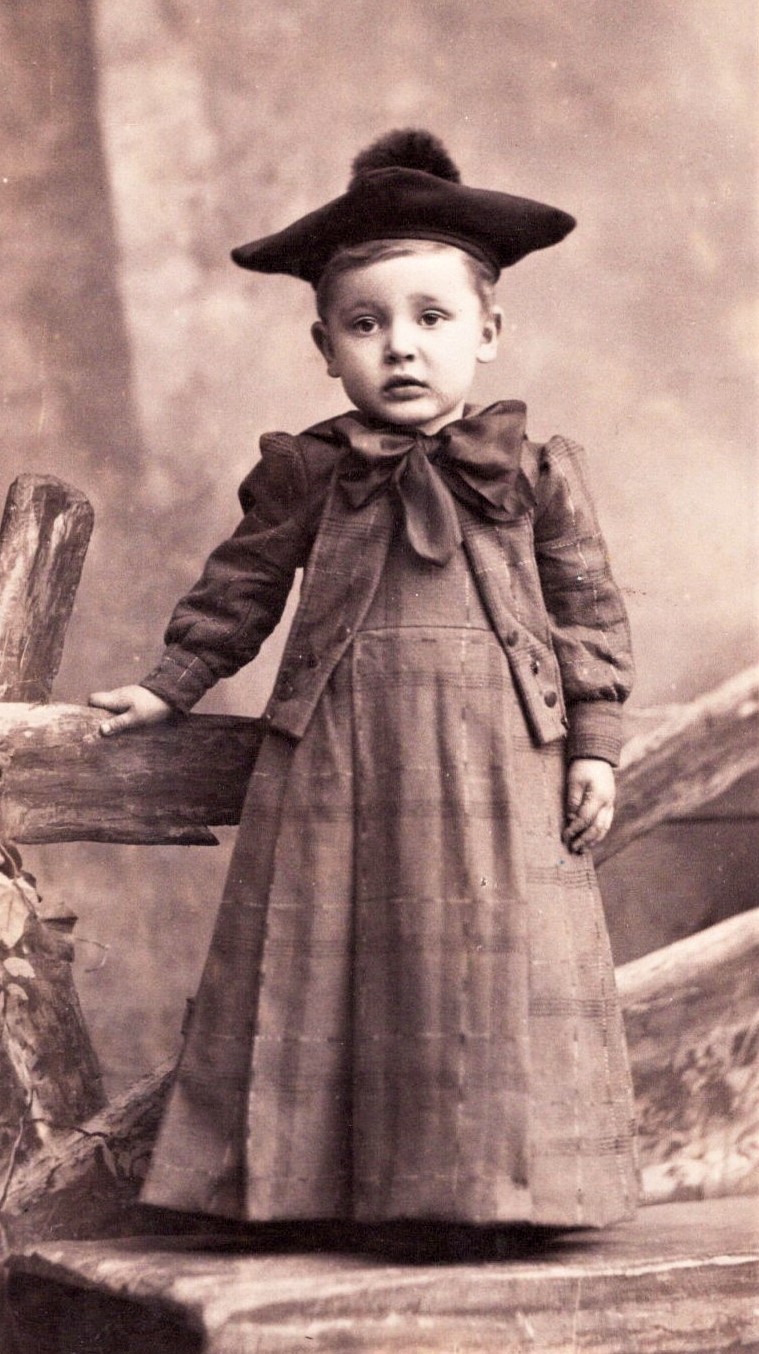
A sad child poses for a portrait at the studio of J. S. Fritz, in Reading, Pennsylvania. The frowning child is standing on a bench and wearing a fancy outfit. Note the large bow and the unattractive hat. The name of the child, “Jemil Arman”, is penciled on the reverse of the cabinet card. Research yielded no information about Jemil Arman or photographer, J. S. Fritz. It is possible that a legibility problem may have resulted in an incorrect interpretation of the subject’s name. ADDENDUM Additional research resulted in discovering information about photographer, John S. Fritz. He was born on his father’s Pennsylvania farm in 1861. He left home at 15 to work in Philadelphia and while there, learned photography. He then worked with his brother in law as a traveling photographer. He left the business to pursue other occupations and he worked in both Atlantic City, New Jersey, and Philadelphia. He returned to photography and at some point operated a photography studio located at 852 Penn Street in Reading. He was married to Elizabeth Apffel and had at least three children. (SOLD)
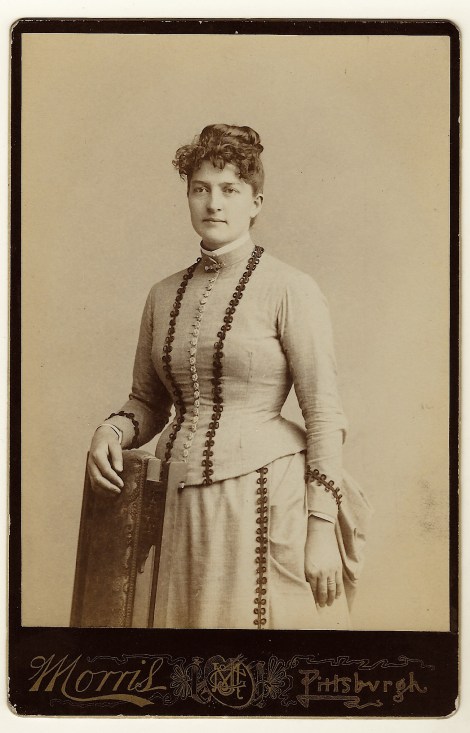
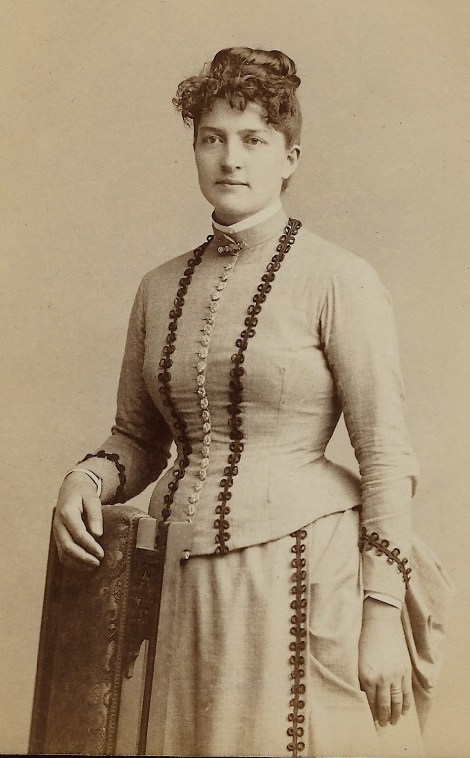 A pretty woman, wearing a fashionable, but unusual dress, poses for a photographer named Joseph G. Morris, in Pittsburgh, Pennsylvania. The studio was located at 16 Sixth Street, in Pittsburgh. She is wearing a collar pin. On the reverse of the photograph is the handwritten name, “Hillz”. One imagines that Hillz is the last name of the subject of this photograph. United States census data reveals some biographical information about the photographer of this cabinet card. Morris was located in the 1880 census. Morris was about 29 years old and he and his father (David Morris) were both working as photographer agents. In 1900, Morris and his 18 year old son, Harry, were boarders, and the older Morris was working as a photographer while the younger Morris was employed s a photographer apprentice. The 1910 U.S. Census finds Morris still working as a photographer and living with his wife, Mary P. Morris. SOLD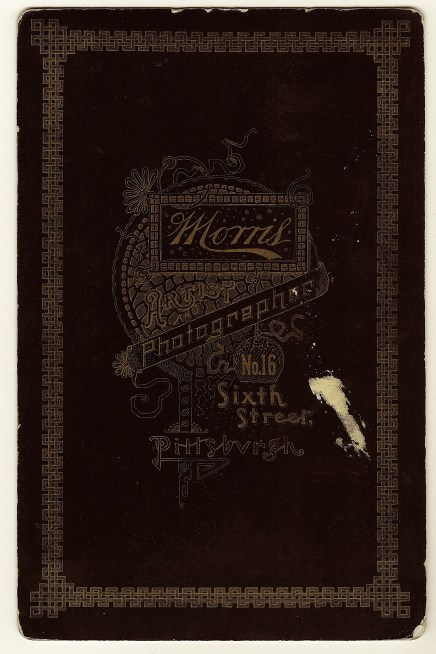











 THE CABINET CARD GALLERY