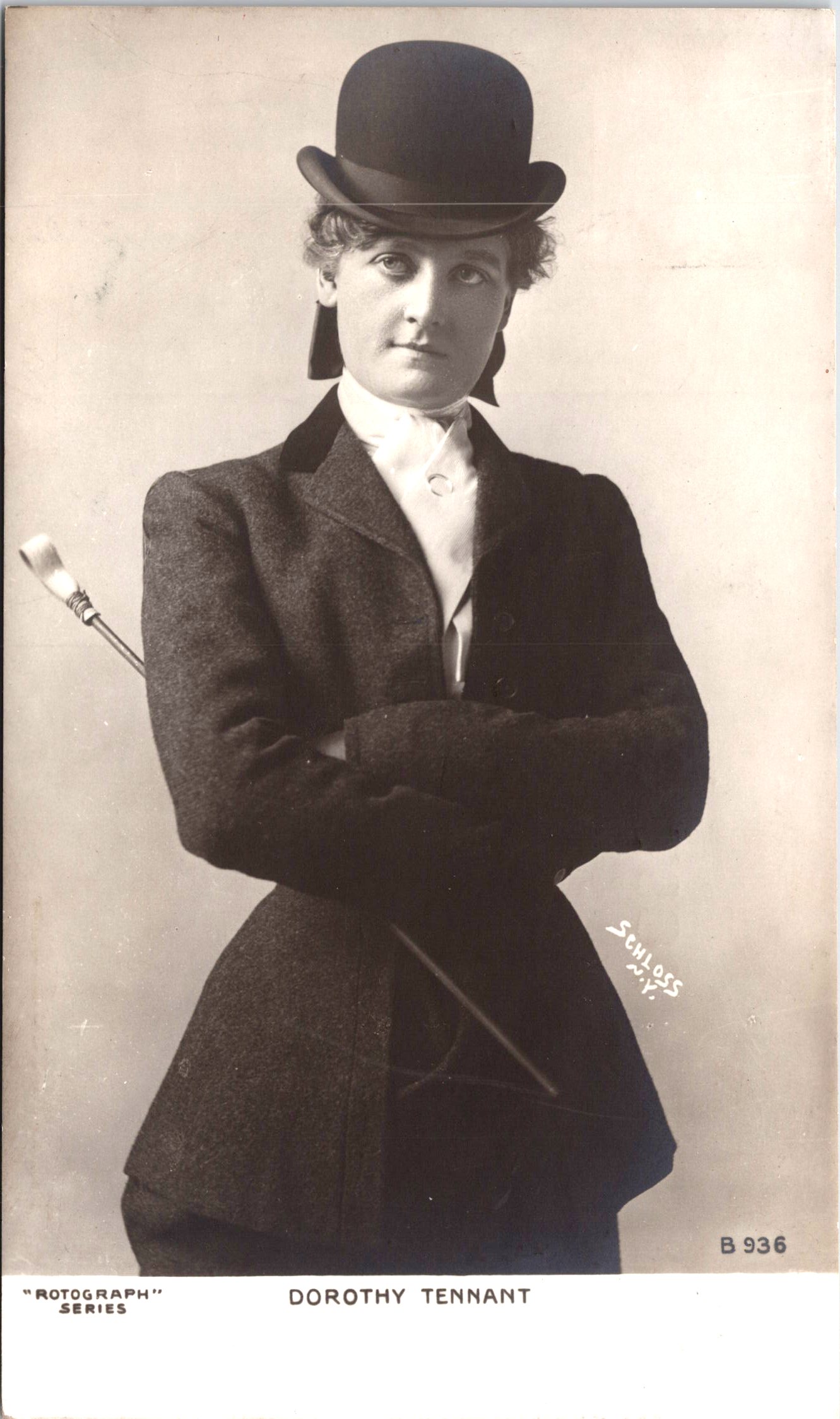
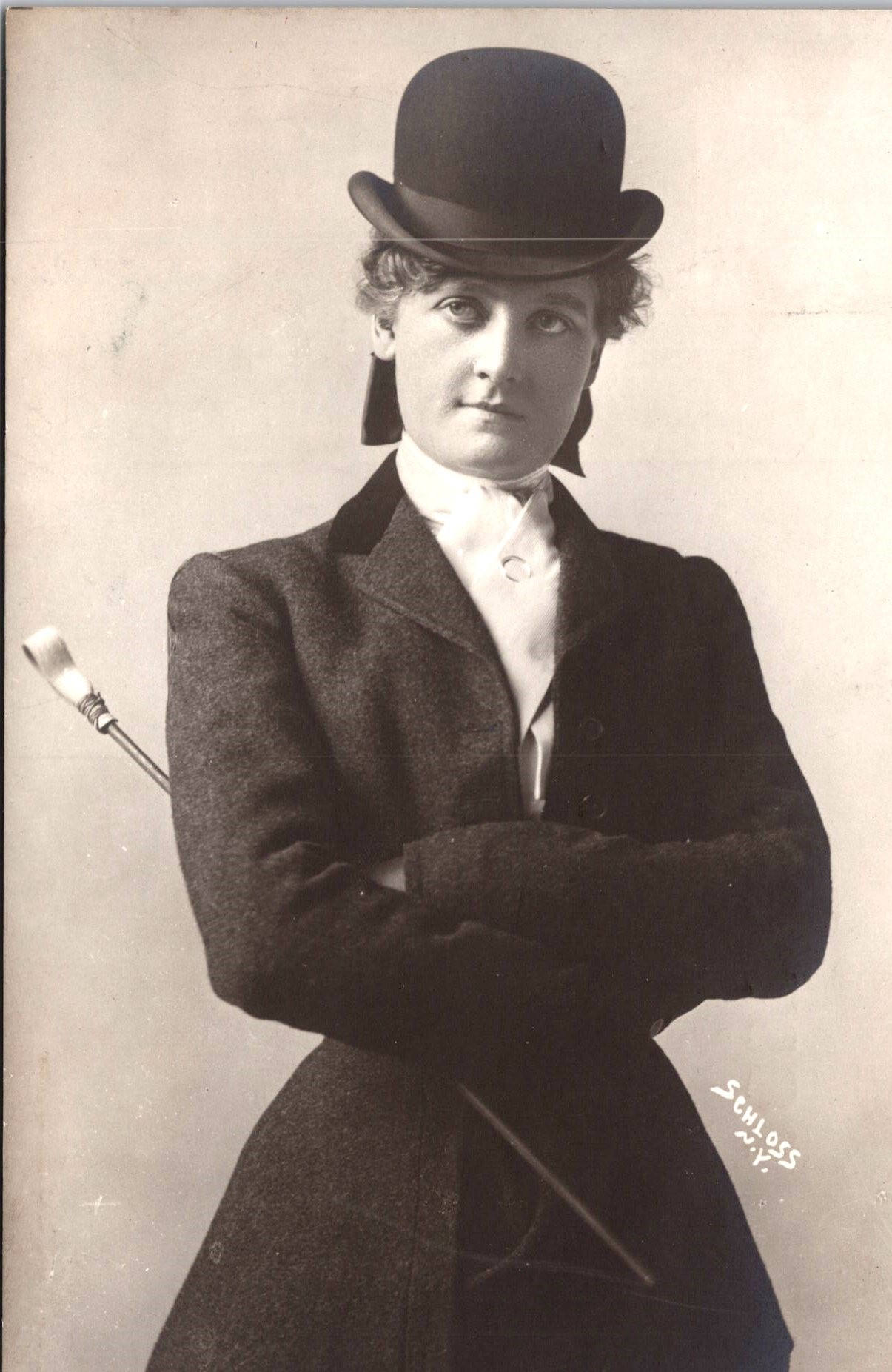
This undivided back vintage real photo postcard features American stage and screen actress, Dorothy Tennant (1865-1942). She is best known for her stage roles in the first ten years of the twentieth century. Her most prominent starring role was in the 1904 comedy, “The College Widow”. She performed in this play both on Broadway and on tour. She first appeared on stage in 1901 in the New York production of “White Roses”. The IBDb reports that she appeared in eight Broadway plays between 1902 and 1932. The IMDb states that Tennant acted in eight films between 1929 and 1938. This postcard was published by the Rotograph Company of New York City as part of a series (No.B936). The photo of Tennant seen on this card was taken by esteemed photographer Jacob Schloss. SOLD
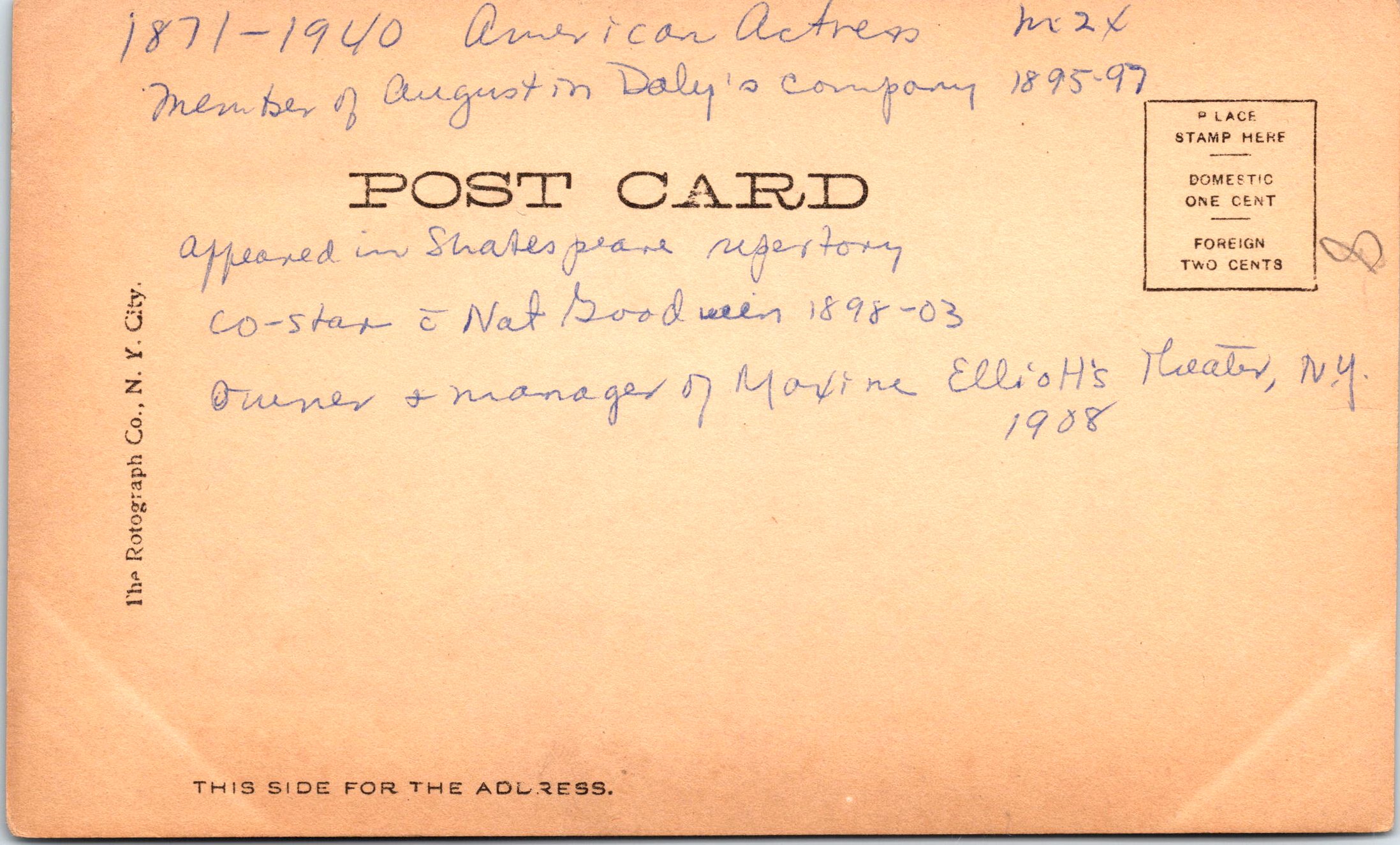
This vintage real photo postcard (Postcard 1) features a portrait of beautiful stage and film actress, and businesswoman, Maxine Elliott (1868-1940). Her photograph was taken by celebrity photographer Benjamin Falk at his New York City studio. Elliott was more than a stage actress. She managed her own theater and experimented with silent films in the 1910’s. Elliott was an extremely popular actress. Apparently she was popular with the men too. It is thought that she had affairs with famous people including King Edward VII and J. P. Morgan. It is also reported that she dated baseball hall of famer, John Montgomery Ward and heavyweight champion Gentleman James Corbett. During World War I she was very involved with the cause for Belgian relief. Elliott was born in Rockland, Maine. Her father was a sea captain. She had at least three siblings including her sister Gertrude Elliott, who also became a successful actress. When Maxine was 15, she was seduced and impregnated by a 25 year-old man. She may or may not have married the man but it is known that she lost the baby. In 1890 she made her first stage appearance. Her big break came in 1895 when she was hired by Augustin Daly to be the supporting actress for the highly acclaimed actress, Ada Rehan. In 1898, after divorcing husband number one, she married comedian Nat C. Goodwin. The two starred together in a number of productions including “Nathan Hale” and “The Cowboy and the Lady”. In 1903, Maxine appeared in the Broadway production of “Her Own Way” (1903). The play launched Maxine into stardom. In 1905, the play went to London where King Edward VII requested an introduction to the pretty actress. They met and then rumors started about the pair having an intimate relationship. In 1908, Goodwin obtained a divorce from Elliott. This is about the time she met 70 year-old J. P. Morgan. They became friends and rumors of their romantic involvement were never confirmed. Financial advice from Morgan helped her become a wealthy woman. The same year as her divorce, she opened her own theater, “The Maxine Elliott” in New York City. She was both the owner and the manager. In fact, she was the only woman in the US, at the time, managing her own theater. In regard to acting on Broadway, Elliott had an extensive resume. She appeared in 22 Broadway productions between 1894 and 1920. In 1913, she began acting in silent films. The IMDb reports that she was in five films including “From Dusk to Dawn” (1913), “Fighting Odds” (1917), and “The Eternal Magdalene” (1919). In 1913, Elliott went to England and started dating tennis star Anthony Wilding, fifteen years her junior. According to one source, the pair planned to marry, but he was killed in action in World War I. As a result, Elliott became obsessed with the war and moved to Belgium where she volunteered her money and time toward Belgian relief. It is reported that she also nursed wounded soldiers. Belgium recognized her by awarding her the Belgian Order of the Crown. Elliott retired from the stage in 1920. She stated that she “wished to grow middle-aged gracefully”. This postcard portrait features a young and beautiful Maxine Elliott. This image is a beautiful remnant of turn of the century theater history. This postcard was published by the Rotograph Company which was based in New York City. The postcard is part of a series (No.B888). SOLD
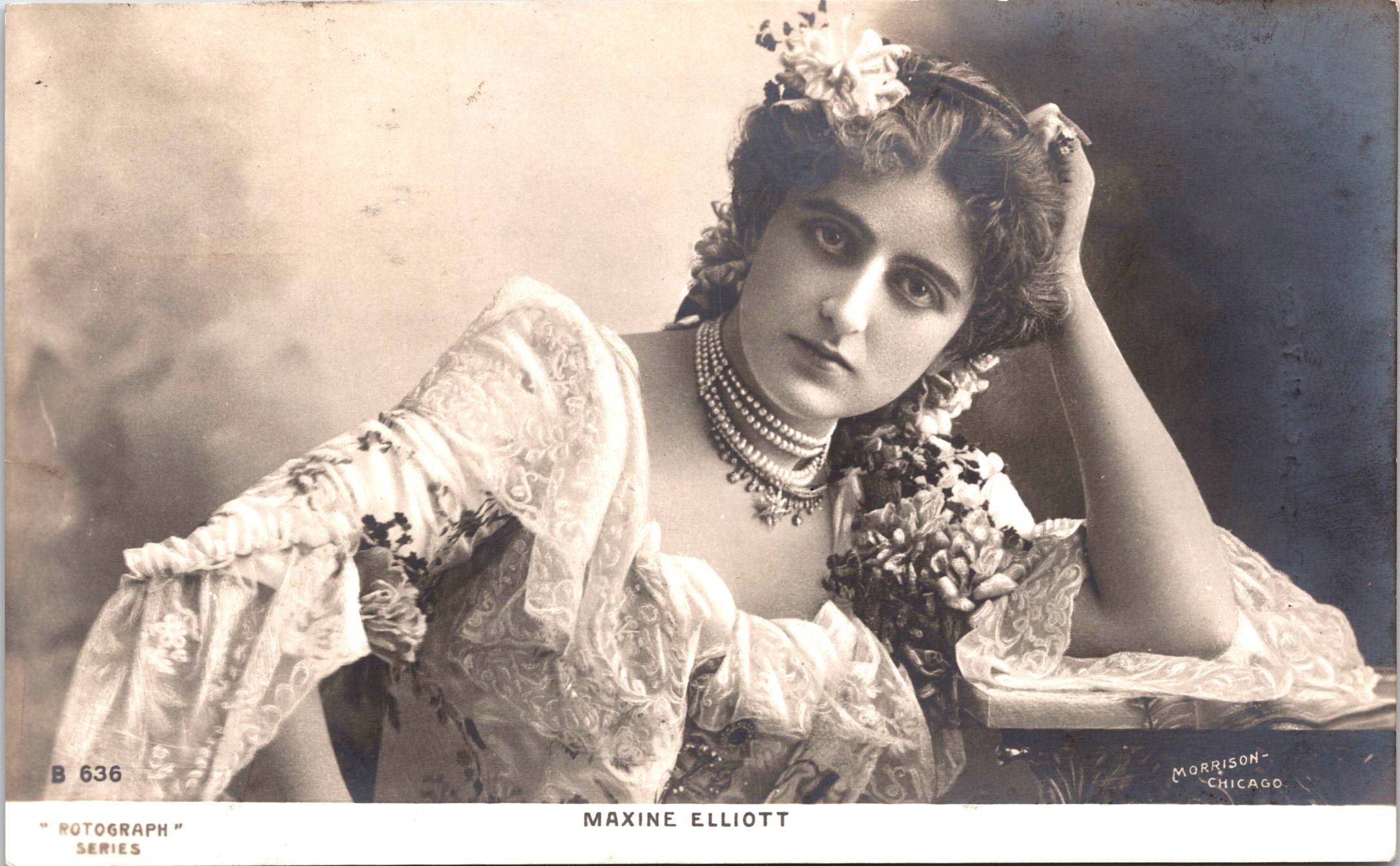
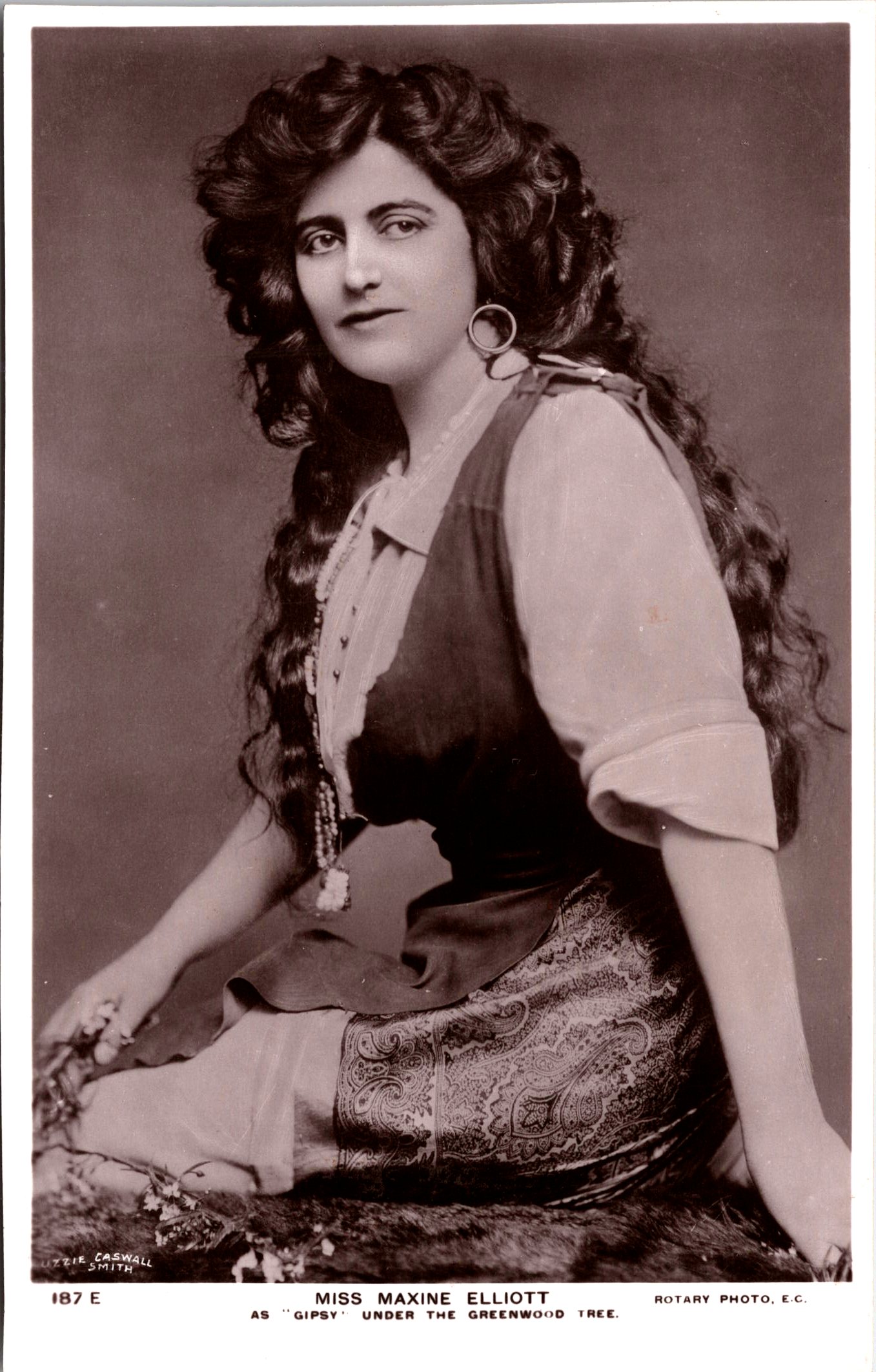
Postcard 2 features a photograph taken by female celebrity photographer, Lizzie Caswall Smith. Lizzie Caswall Smith (1870-1958) was a British photographer who operated in the early 1900’s. She specialized in photographing members of society and celebrities. Many of her photographs were used for postcards. She was involved in the Women’s Suffrage movement and photographed many of the leading suffragettes. She also photographed many actors including Billie Burke and Maude Fealy. She operated the Gainsborough Studio from 1907 through 1920 (309 Oxford Street) and moved to a new location (90 Great Russell Street) where she remained until she retired in 1930 at the age of 60 years-old. Her most famous photograph is a portrait of Florence Nightingale taken in 1910. It was auctioned in 1908 and sold for 5500 pounds which is an equivalent today of nearly 8,000 dollars. The National Portrait Gallery has 84 portraits associated with Lizzie Caswall Smith. This postcard was published by the Rotograph Company which was based in New York City. The postcard is part of a series (No.B636). SOLD
Postcard 3 features a nice portrait of Maxine Elliott. This image, taken by William Morrison (Chicago, Illinois) is a beautiful remnant of turn of the century theater history. This postcard was published by the Rotograph Company, which was based in New York City. The postcard is part of a series (No.B636). (SOLD)
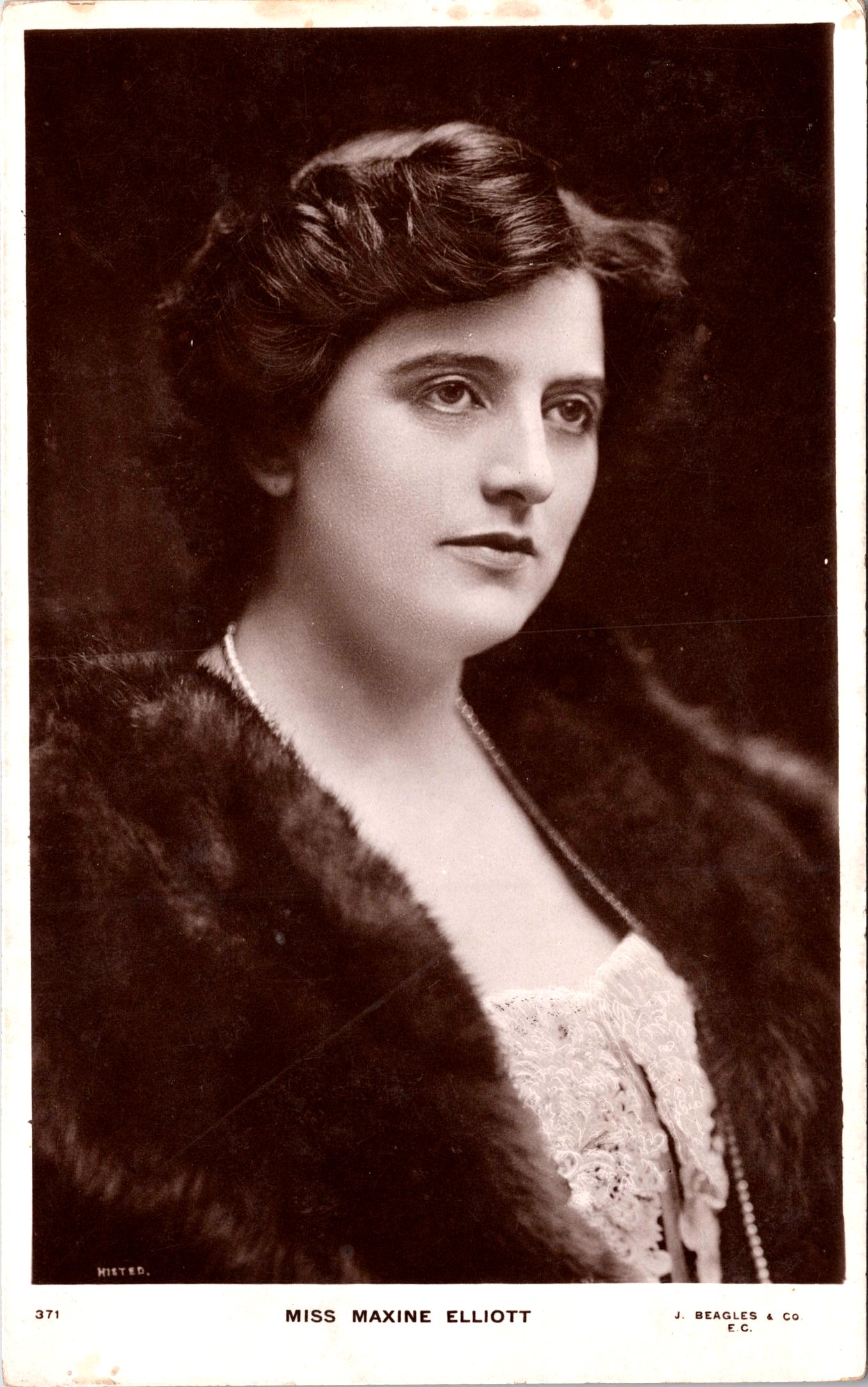
Postcard 4 features Miss Elliott’s portrait by Ernest Walter Histed (1862-1947). Histed was born in England but achieved his success as a photographer in Chicago, and later, in Pittsburgh. He then returned to England and opened a photography studio there. His subjects there included Clara Butt (Opera Star) Pope Pius X, and the Empress of Germany. Histed returned to the US and opened a studio on Fifth Avenue in New York City. He later moved to Palm Beach, Florida and continued his profession until 1934. The Museum of the City of New York has a large collection of his work. The National Portrait Gallery (England) has 32 of his photographs in their collection. This postcard was published by London’s J. Beagles & Co. as part of a series (No. G386).The company was started by John Beagles (1844-1909). The company produced a variety of postcards including an extensive catalog of celebrity (stage and screen) portrait postcards. After Beagle’s death, the business continued as J. Beagles & Co. until it closed in 1939. (SOLD)
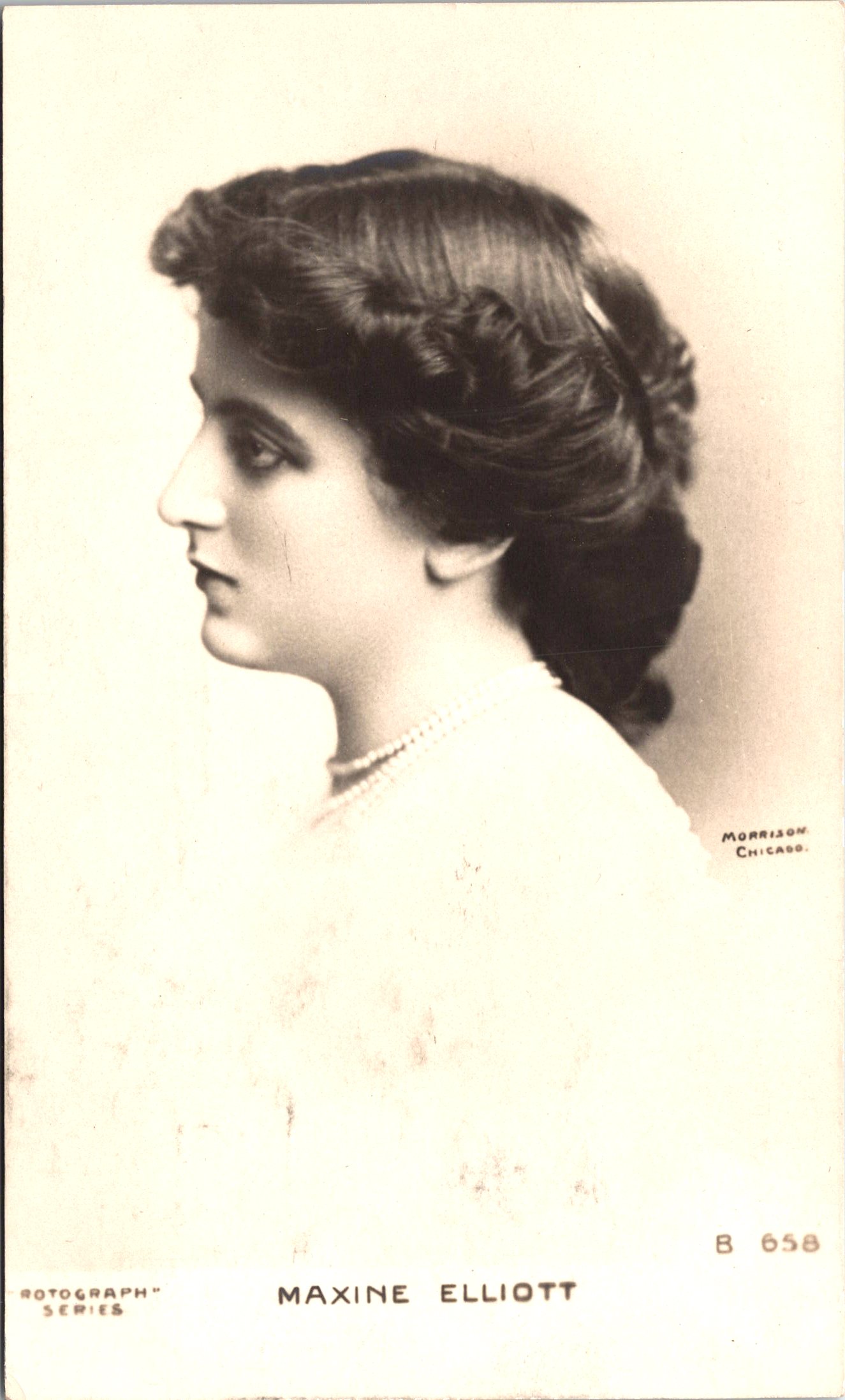
Postcard 5 comes from the studio of celebrity photographer, William McKenzie Morrison of Chicago, Illinois. Morrison’s studio was in the Haymarket theater building. This postcard was published by the Rotograph Company which was based in New York City. The postcard is part of a series (No.B658). (SOLD)
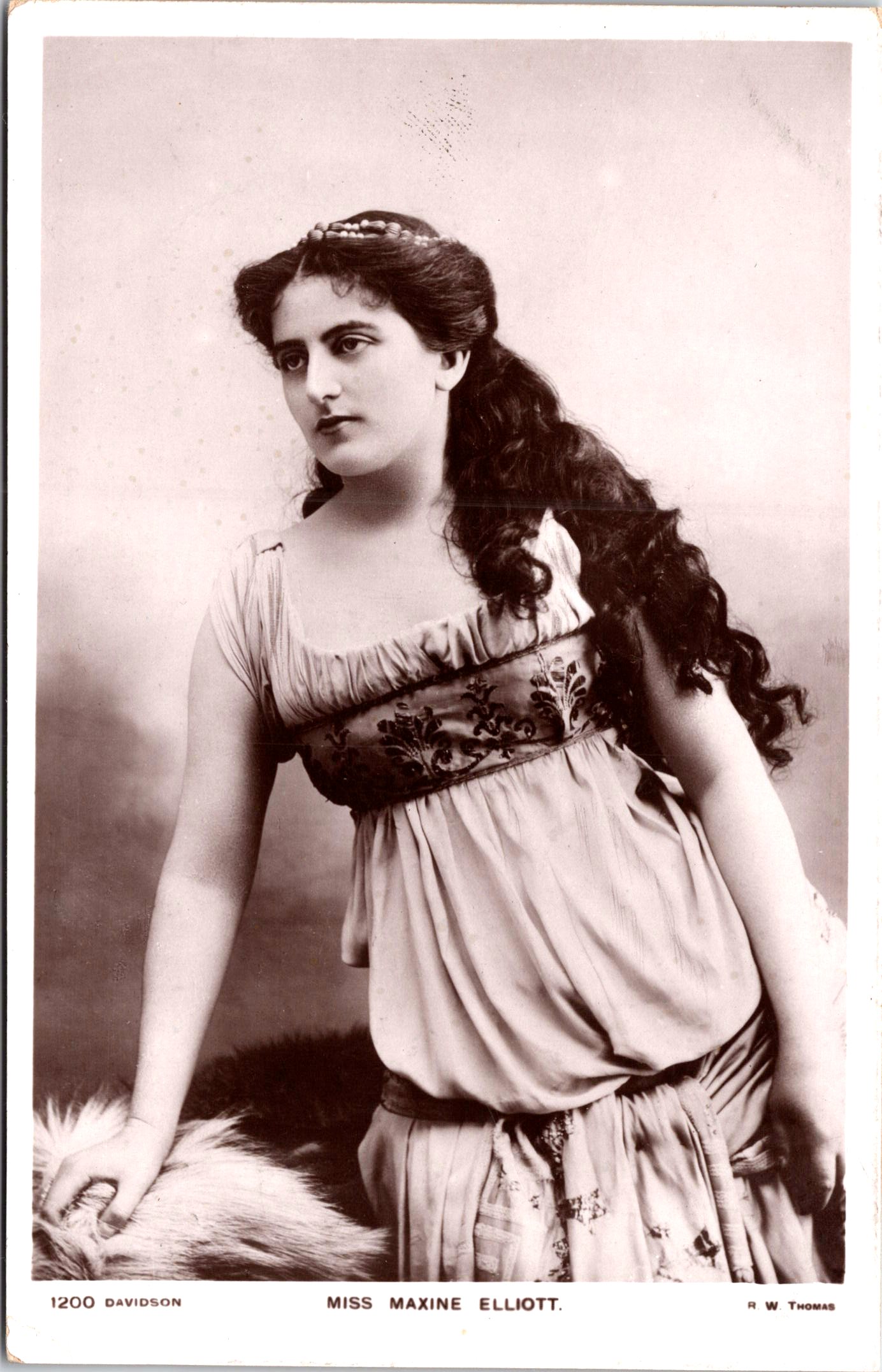
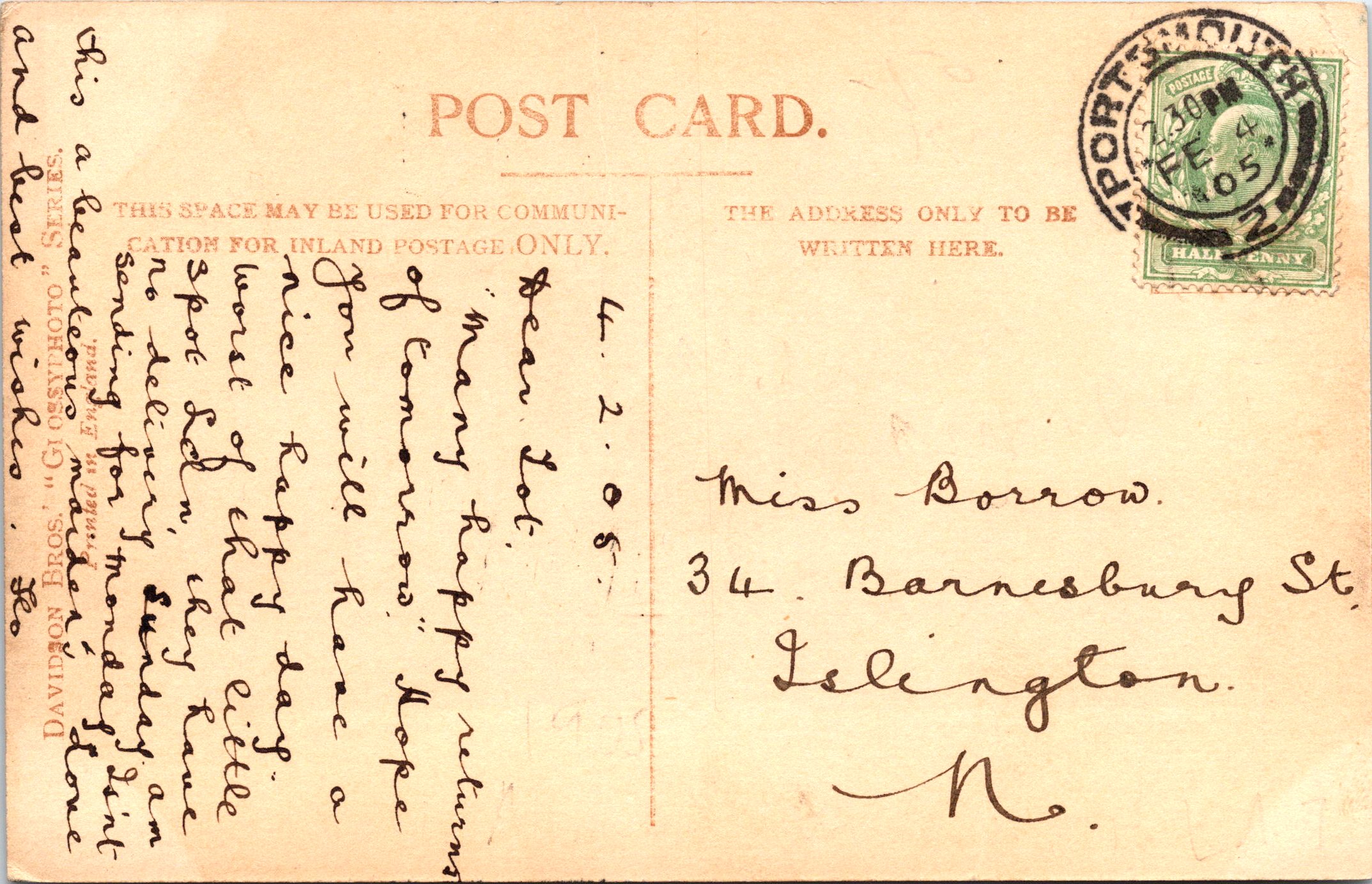
Postcard 6 features a pretty portrait of Miss Elliott taken by R. W. Thomas. It is likely that he is the same man that authored “The Modern Practice of Photography” (1927).This postcard was published by London’s Davidson Bros. as part of a series (No.1200). The message from the sender of this card introduced me to a new word. The writer asks “Isn’t this a beauteous maiden?”. I looked up the word “beauteous” to see if it existed. I learned that the word exists and means “beautiful”. I also learned that “Beauteous” is a word that is customarily used in literature and not conversation. (SOLD)
Postcard 7 Elliott photrographed in costume for her role as Gipsy in “Under the Greenwood Tree”. Her photograph was taken by famed celebrity female photographer, Lizzie Caswall Smith. This image is a beautiful remnant of turn of the century theater history. This postcard was published by Rotary Photo as part of a series (No.187E). (SOLD)
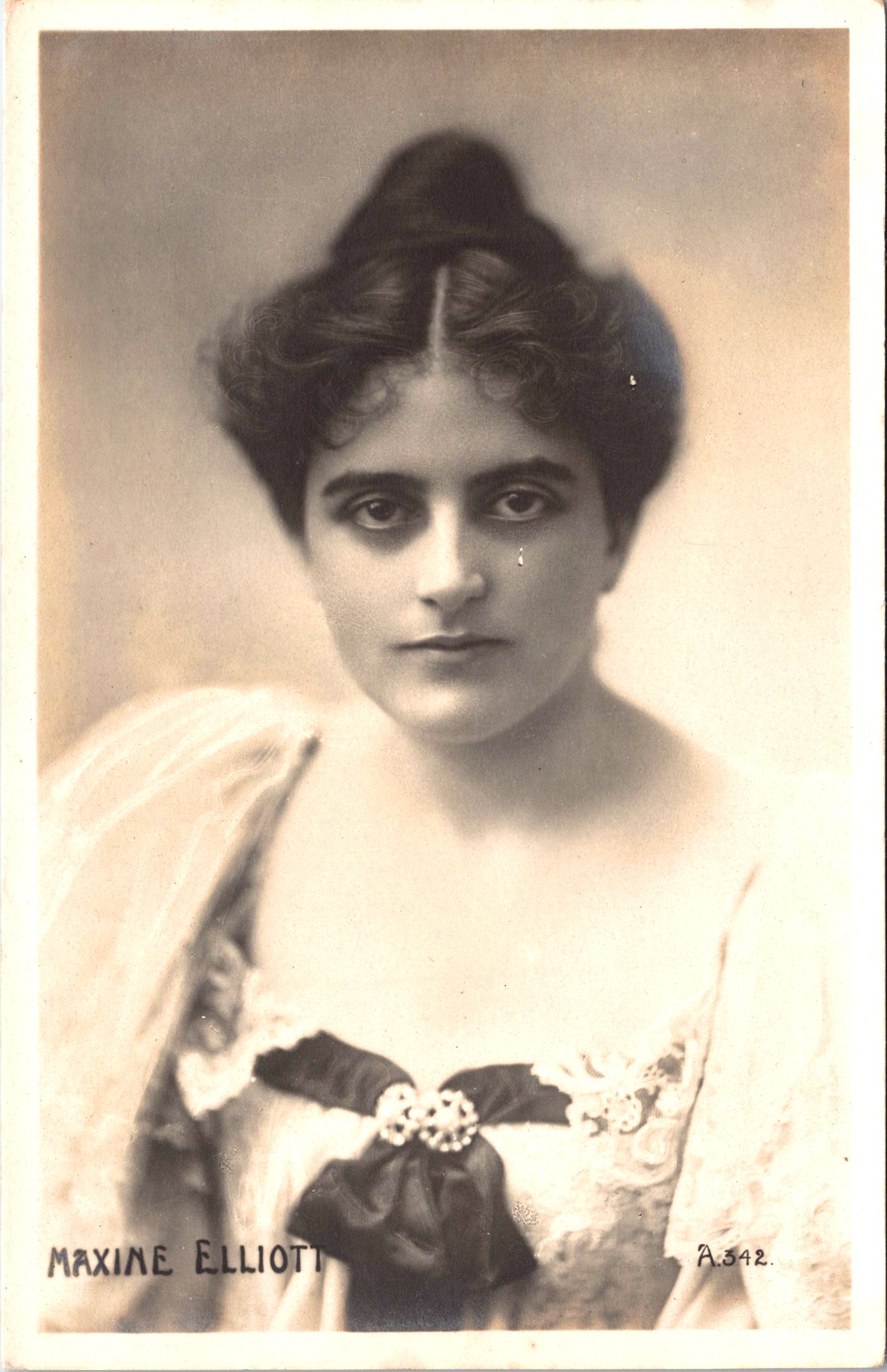
Postcard 8 was published by London’s Ralph Dunn & Co. as part of a series (No. A342). (SOLD)
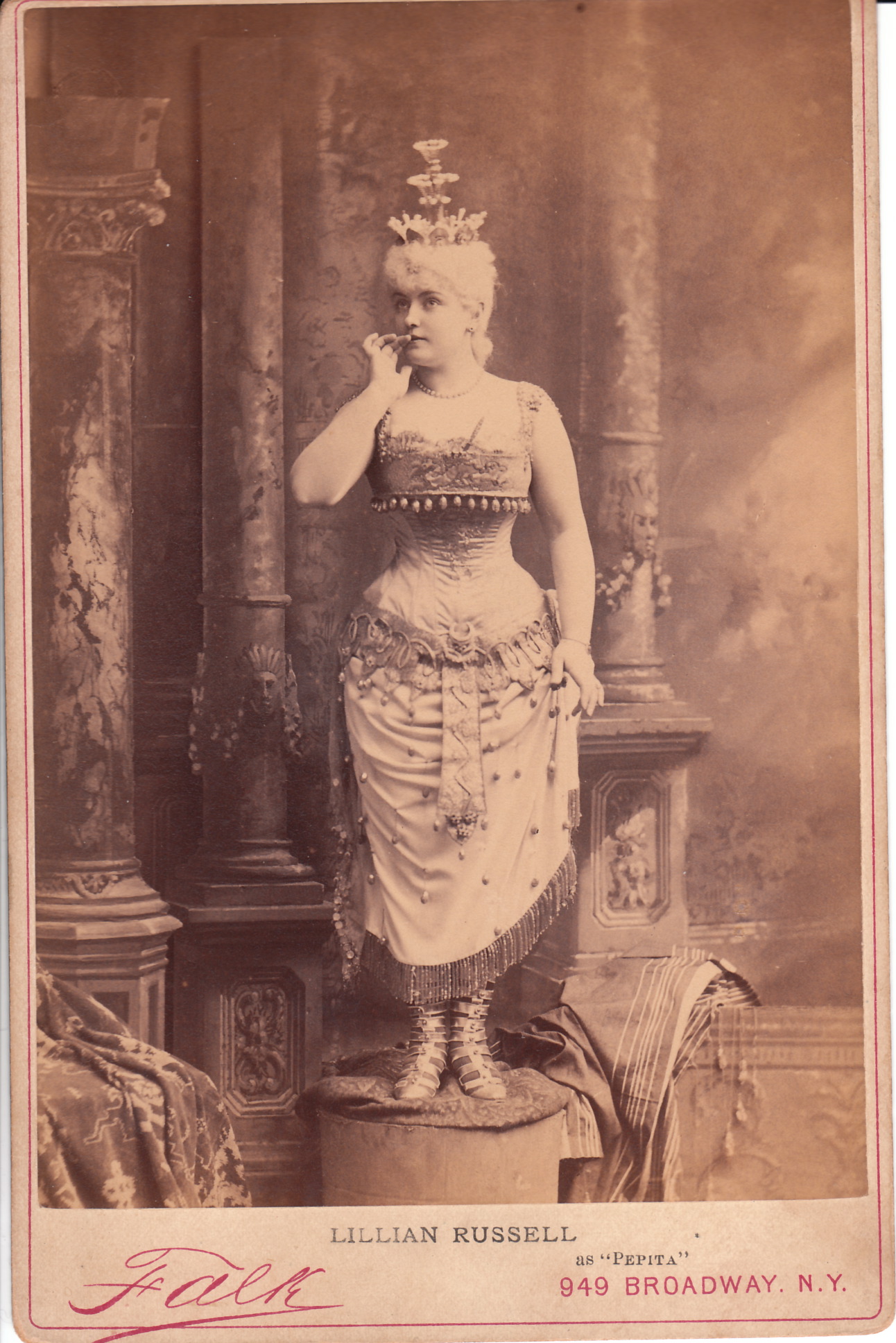
Lillian Russell (1860-1922) is pictured in the Cabinet Card 1 photograph by famed New York celebrity photographer, Falk. Lillian Russell is captured in costume as she appeared in “Pepita” (1886). Russell was a very famous American actress and singer who was known for her beauty, style, voice and stage presence. Her theater career began with roles in comic operas including the work of Gilbert and Sullivan. She married composer Edward Solomon in 1884 and two years later, he was arrested for bigamy. She performed in New York and elsewhere in starring roles in comic opera and musical theatre. In 1904 she switched to dramatic roles due to voice problems. She later also appeared in vaudeville. She retired from the stage in 1919. She later wrote newspaper columns, advocated for women suffrage, and was a popular lecturer. She married four times and her longest marriage was to Diamond Jim Brady who supported her extravagant lifestyle for four decades. It is interesting to note that the New York Times (4/2/1886) reported that during the performance of “Pepita”, an opera by her husband, Edward Solomon; there were obvious signs of marital discord observed on stage. The newspaper blamed issues revolving around Russell’s interfering mother, as well as, issues pertaining to Russell’s sudden prosperity. The newspaper article correctly predicted that there would soon be a divorce.
Cabinet card 2 is also photographed by Falk. This photograph provides a close-up image of Lillian Russell and is a testimonial to her beauty.(SOLD)
Cabinet card 3 was published by Newsboy and used by the tobacco company as a premium (#340). The photographer was Falk and the image was copyrighted in 1893. To view a collection cabinet cards by Falk; click on the category “Photographer: Falk”.(SOLD)
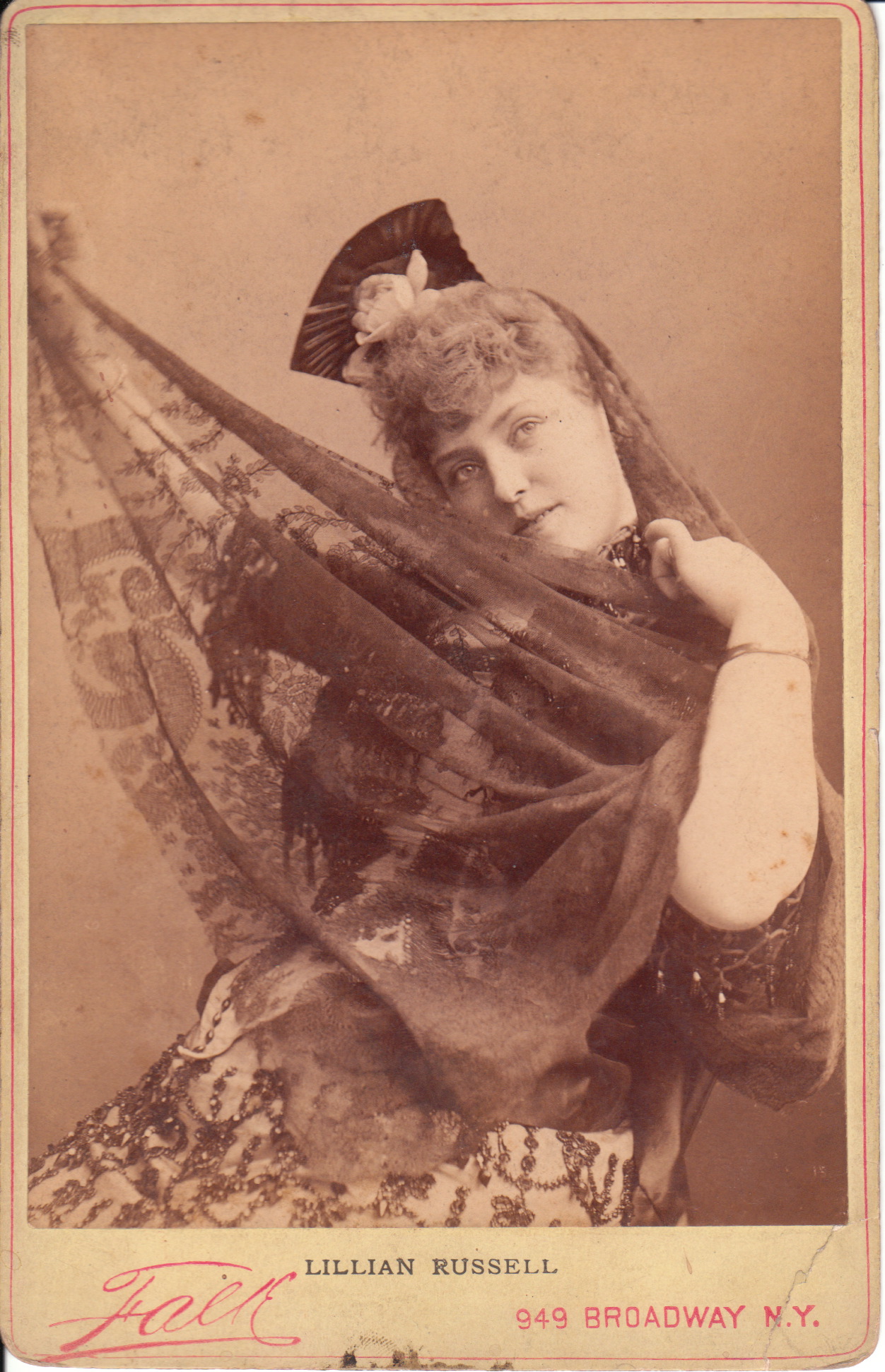
Cabinet card 4 is another image produced by B. J. Falk. Miss Russell is in costume and is posed provocatively partially behind sheer lace.
Cabinet card 5, also by Falk, provides a terrific profile portrait of the beautiful Miss Russell.
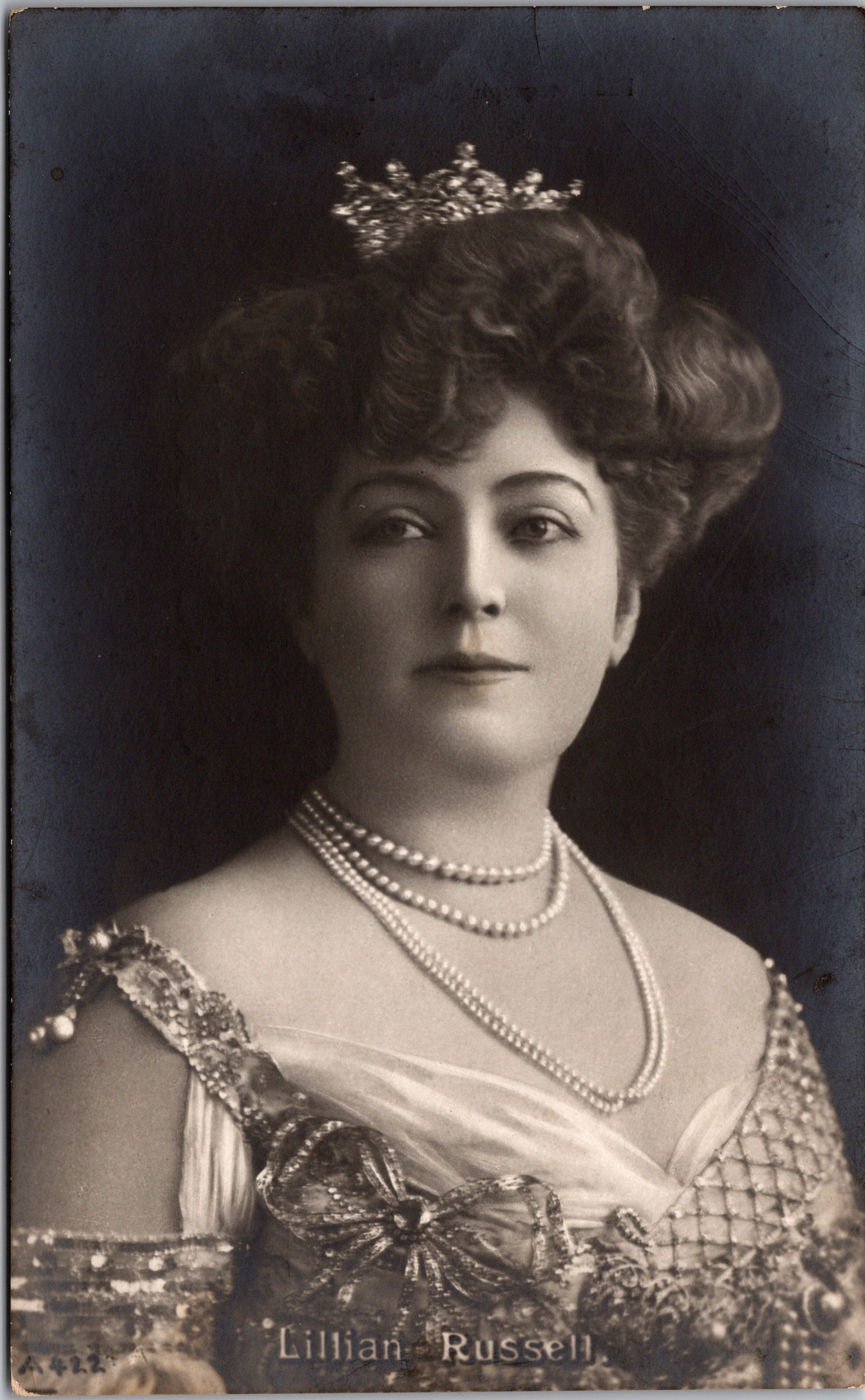
Lillian Russell is pictured in this vintage real photo postcard (RPPC 6). This undivided back postcard was published in 1907 or earlier. (SOLD)
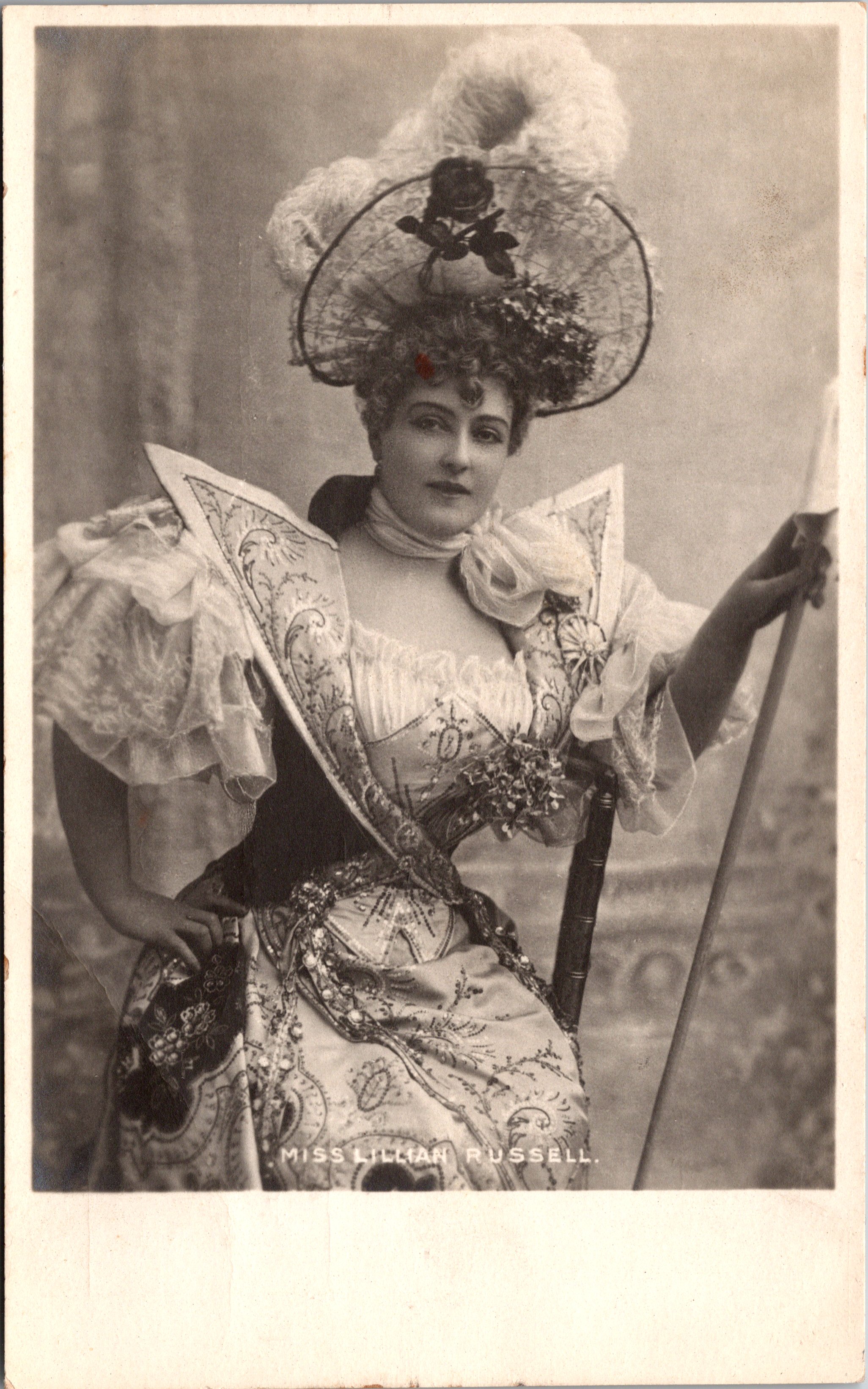
RPPC 7 is an undivided back postcard portrait of Miss Russell. She is in costume. The publisher of this card is Pascalis, Moss & Company. The firm was London based and ceased publishing postcards in 1902. At that time Charles H. Pascalis (c1877-?) left the company and the firm changed it’s name to Henry Moss & Company.(SOLD)
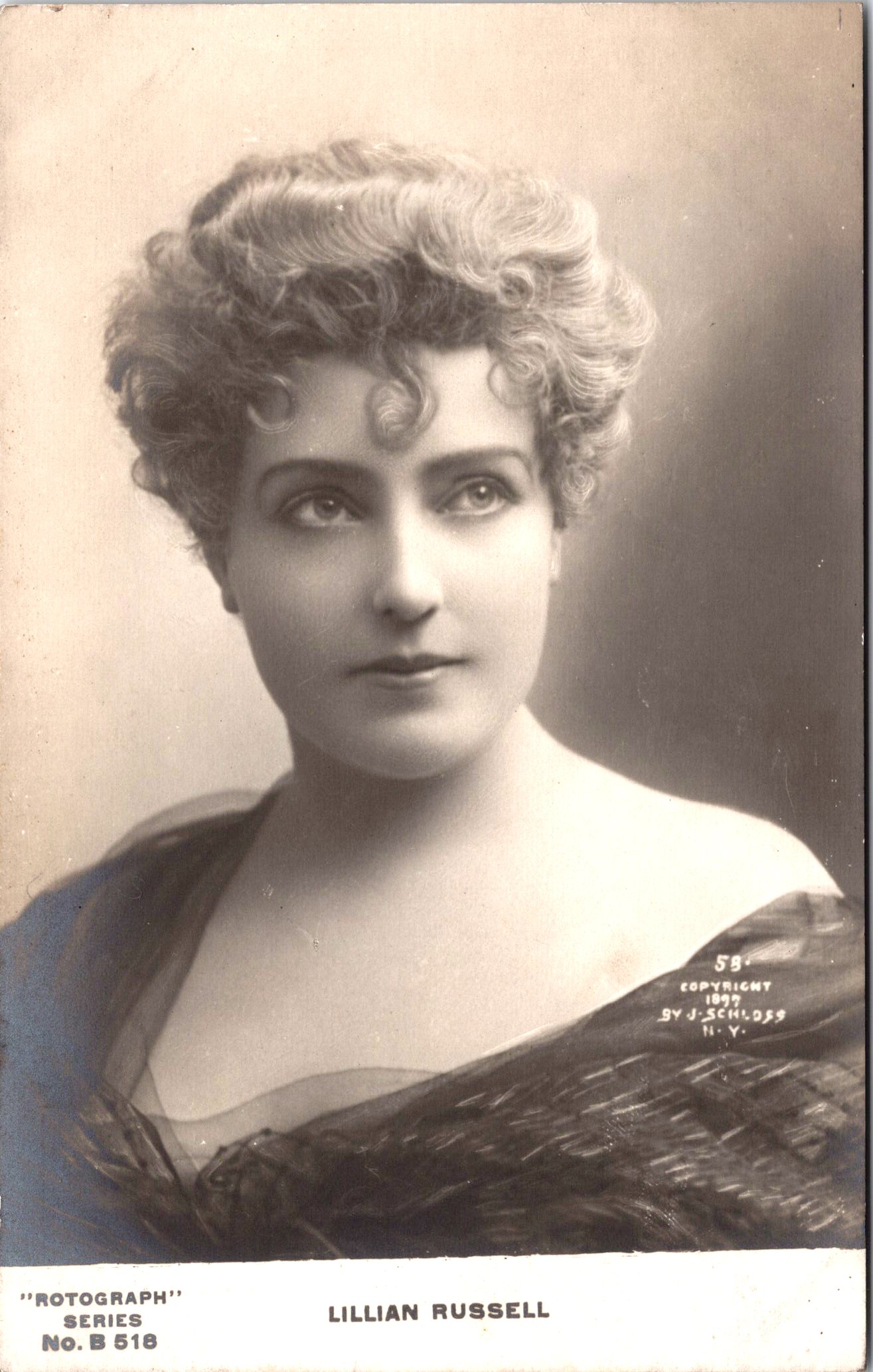
RPPC 8 is risque in terms of the “plunging” neckline of Russell’s dress. This vintage postcard was published by Rotograph as part of a series (No.B518) Miss Russell’s photograph was taken by Jacob Schloss in 1899. (SOLD)
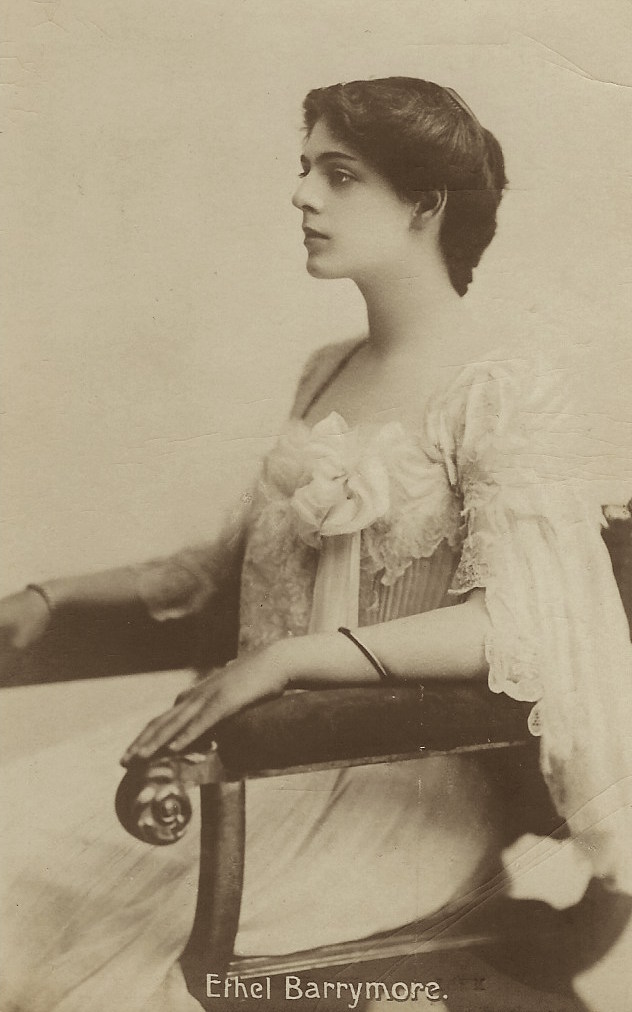
Ethel Barrymore (1879-1959) was an outstanding American actress and a member of the famous theatrical Barrymore family. She was born Ethel Mae Blythe in Philadelphia, Pennsylvania. Her parents were actors and she was the sister of John and Lionel Barrymore. She was the great aunt of modern day actress Drew Barrymore.
Ethel Barrymore was considered by many to be the greatest actress of her generation. She was a major Broadway performer and first appeared there in 1895. She had roles in A Dolls House by Ibsen (1905). She was a strong supporter of the Actors’ Equity Association and played a major role in the 1919 strike. She played in Somerset Maugham’s comedy, The Constant Wife (1926). She also starred in motion pictures beginning her film career in 1914. Notable films included None but the Lonely Heart (1944) and The Spiral Staircase (1946). Around 1900, Winston Churchill proposed marriage to Barrymore but she refused. She later married Russell Griswold Colt in 1909 and had three children. She died of cardiovascular disease in 1959 at her home in California. The Ethel Barrymore Theatre in New York City is named in her honor.
The cabinet card 1 portrait of Ethel Barrymore was photographed by Phillips Photographers of Philadelphia, Pennsylvania. To view other photographs by Phillips, click on the category “Photographer: Phillips”. The second image (cabinet card 2) of the actress was produced by Sarony, the famous celebrity photographer who’s studio was located in New York City. To see other Sarony photographs, click on the category “Photographer: Sarony”.
Cabinet card 2 was produced by Napoleon Sarony, the famous celebrity photographer who’s studio was located on Fifth Avenue in New York City. Barrymore looks young and quite pretty in this image. (SOLD)
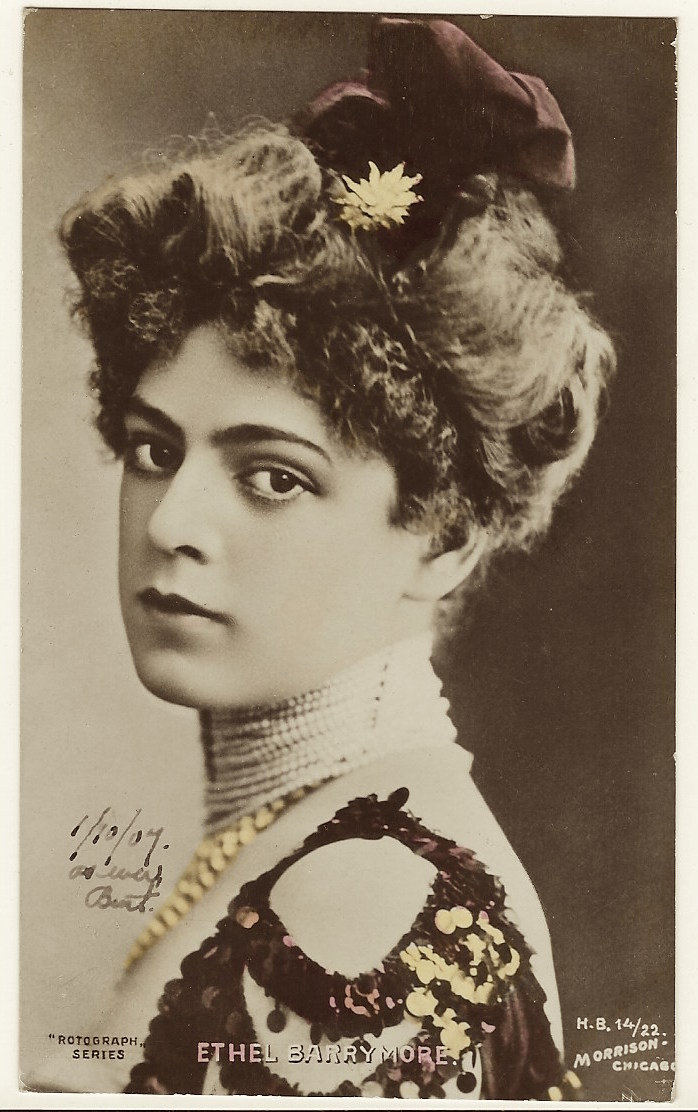
The third portrait of Miss Barrymore appears on postcard 1, published by the Rotograph Company who operated in New York City and Germany. This postcard portrait was taken by famed Chicago photographer William Morrison. He is well known for his excellent portraits of theatrical stars. He produced both real photo postcards and cabinet cards. This postcard is number HB/1422 of the “Rotograph Series”. The image on this postcard is color tinted. This postcard has been mailed and postmarked (1907). The reverse of this postcard can be seen below.To view other photographs by Morrison, click on the category “Photographer: Morrison”.
The fourth portrait of Ethel Barrymore is an uncommon one (postcard 2). The image provides a lovely profile view of this legendary actress. If you search for this exact postcard online, you likely won’t find it. This postcard was published by E. Frey & Company who operated in New York City . Research reveals that postcards displaying the printed name of “E. Frey” were actually published by the Souvenir Post Card Company which existed between 1905 and 1914. It was located at 268 Canal Street in New York City. The company was purchased by Valentine & Sons and the combined company became Valentine – Souvenir. This postcard was printed in Germany and is in good condition (see scan).
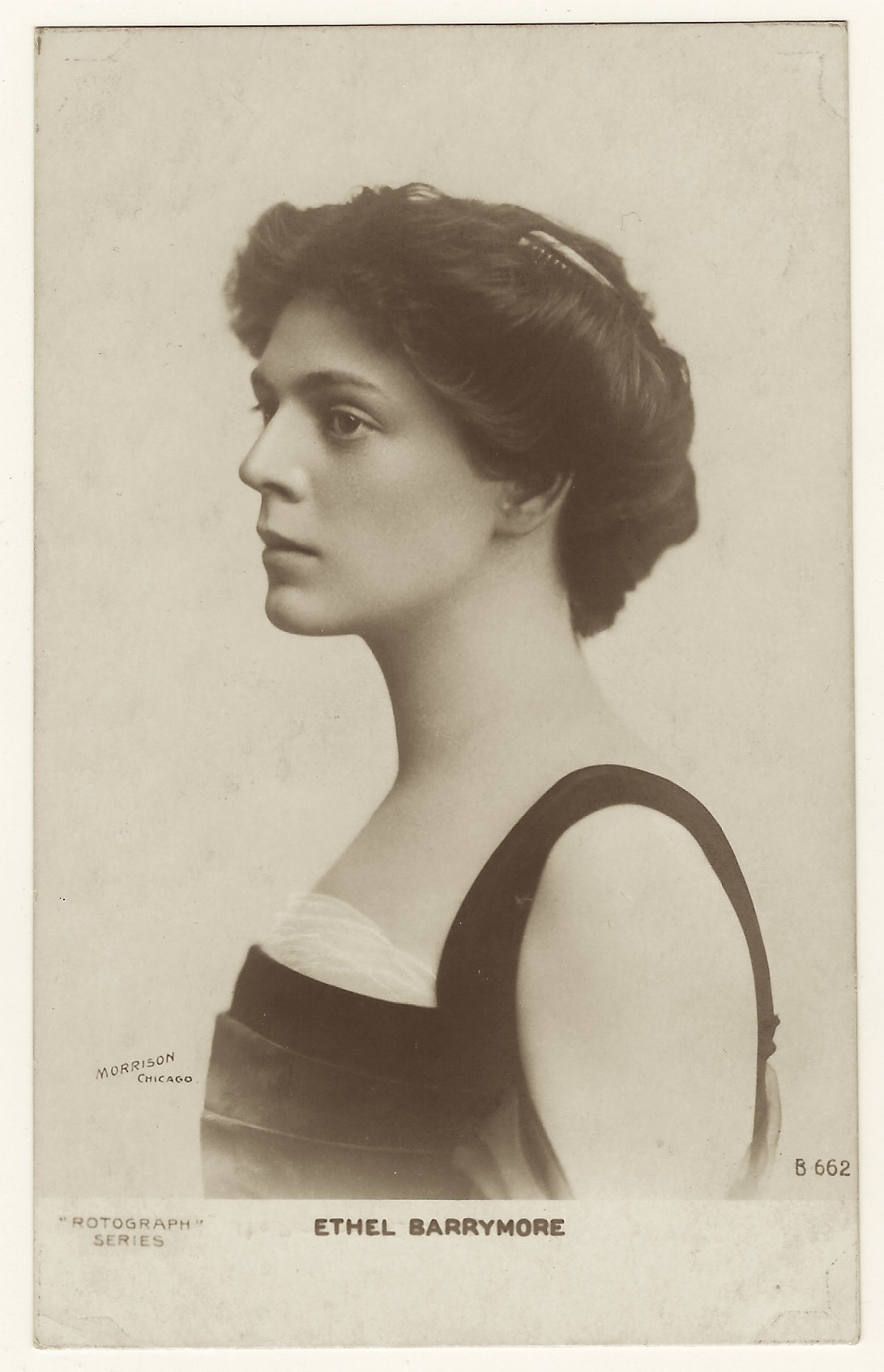
The fifth photograph (postcard 3) of Miss Barrymore was published by the Rotograph Company. This postcard portrait was taken by famed Chicago celebrity photographer William Morrison.This postcard is number B 662 of the “Rotograph Series”. The image has excellent clarity.
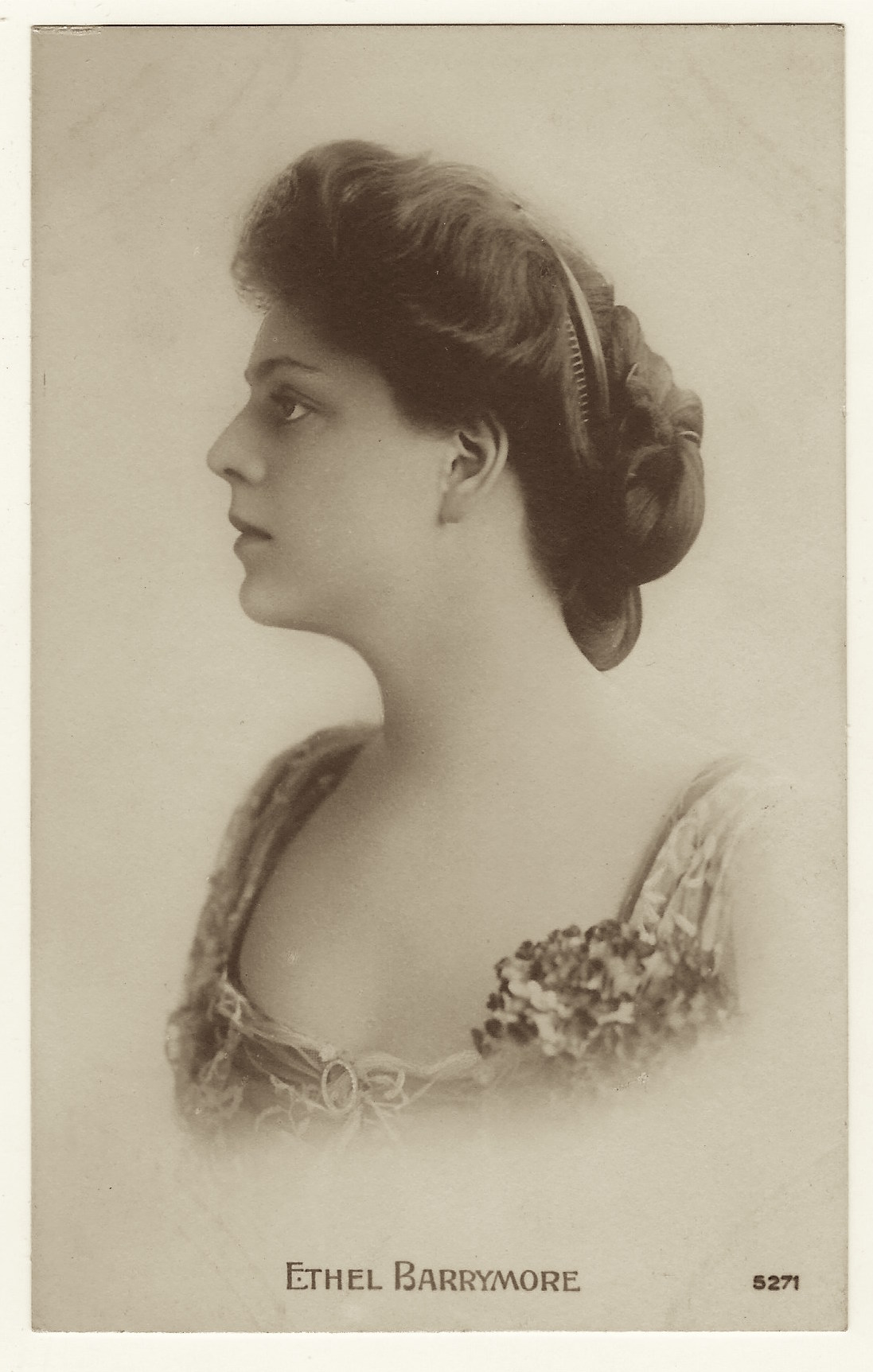
The sixth image (postcard 4) is a vintage real photo postcard portrait of Ethel Barrymore. The postcard was published by Albert Hahn who was based in New York City (200 Broadway) and Hamburg. Hahn operated his company between 1901 and 1919. The postcard was produced in Germany sometime in the decade of 1900-1910. The postcard is part of a series (no. 5271). (SOLD)
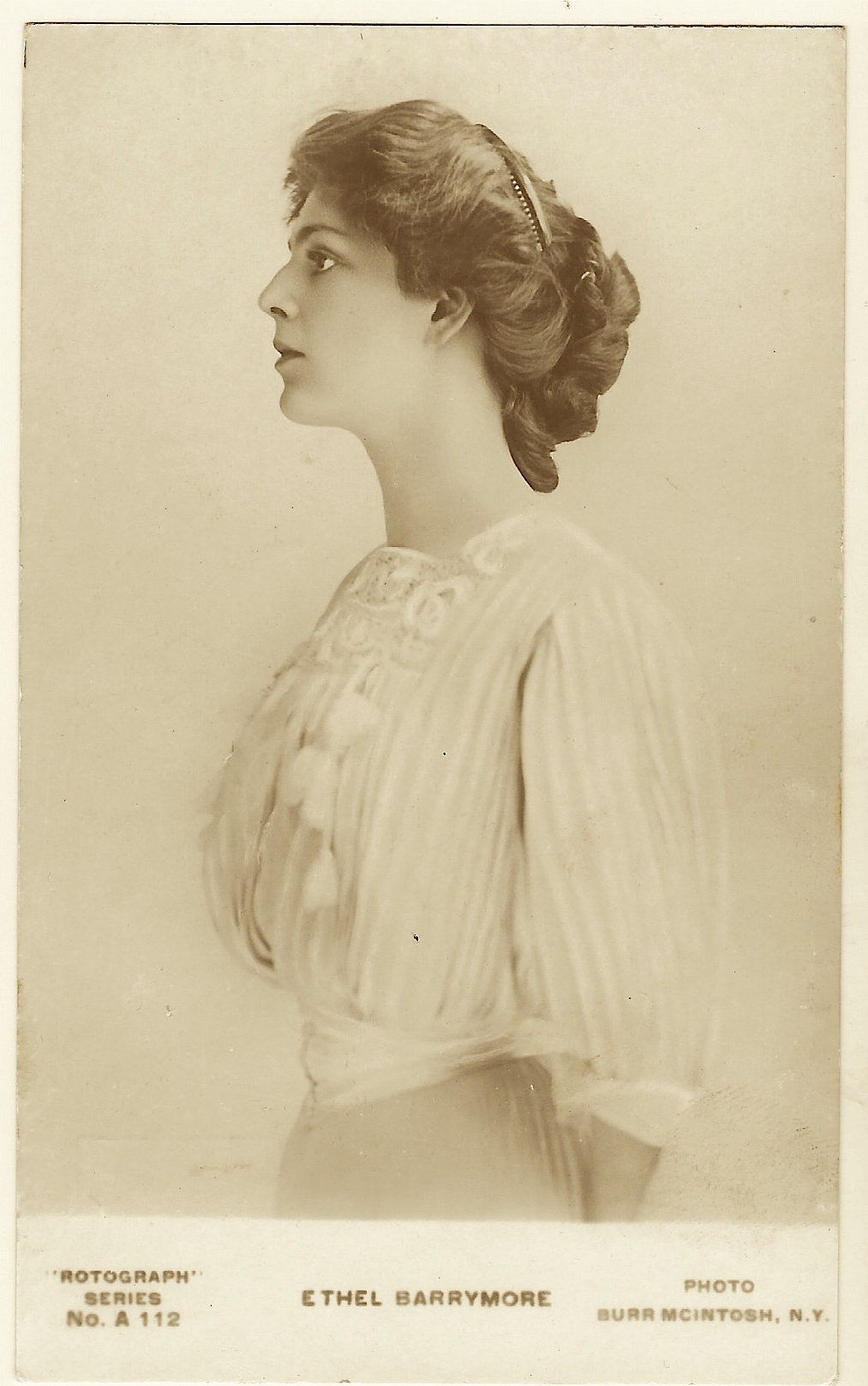
Postcard 5 offers a profile view of Miss Barrymore. The postcard was published by the Rotograph Company as part of the Rotograph Series (No. A 112). The photographer of this image is Burr McIntosh of New York City. William Burr McIntosh (1862-1942) lived an interesting life. Among his job titles listed by Wikipedia, are photographer, lecturer, film studio owner, silent film actor, publisher of the “Burr McIntosh Monthly”, reporter, and radio and early film pioneer. His sister was Nancy McIntosh, a noted operatic soprano. He was a graduate of Lafayette College in 1884. His most noted film role was his appearance in D. W. Griffith’s film, “Way Down East” (1920). Wikipedia notes that he appeared in 53 films between 1914 and 1934. This vintage postcard is in very good condition.
Postcard 6 is a portrait of Miss Barrymore that was postmarked in 1907. (SOLD)
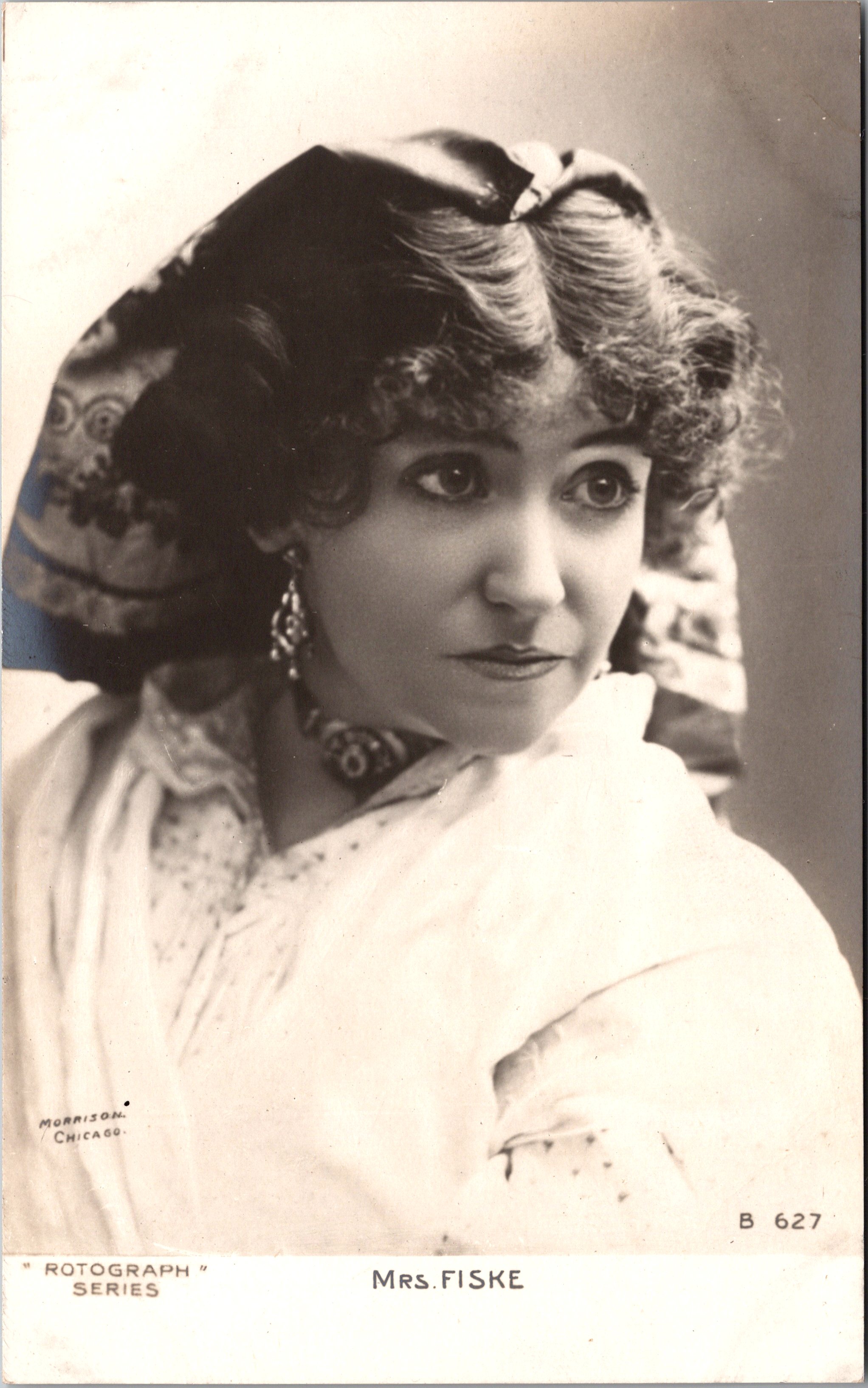
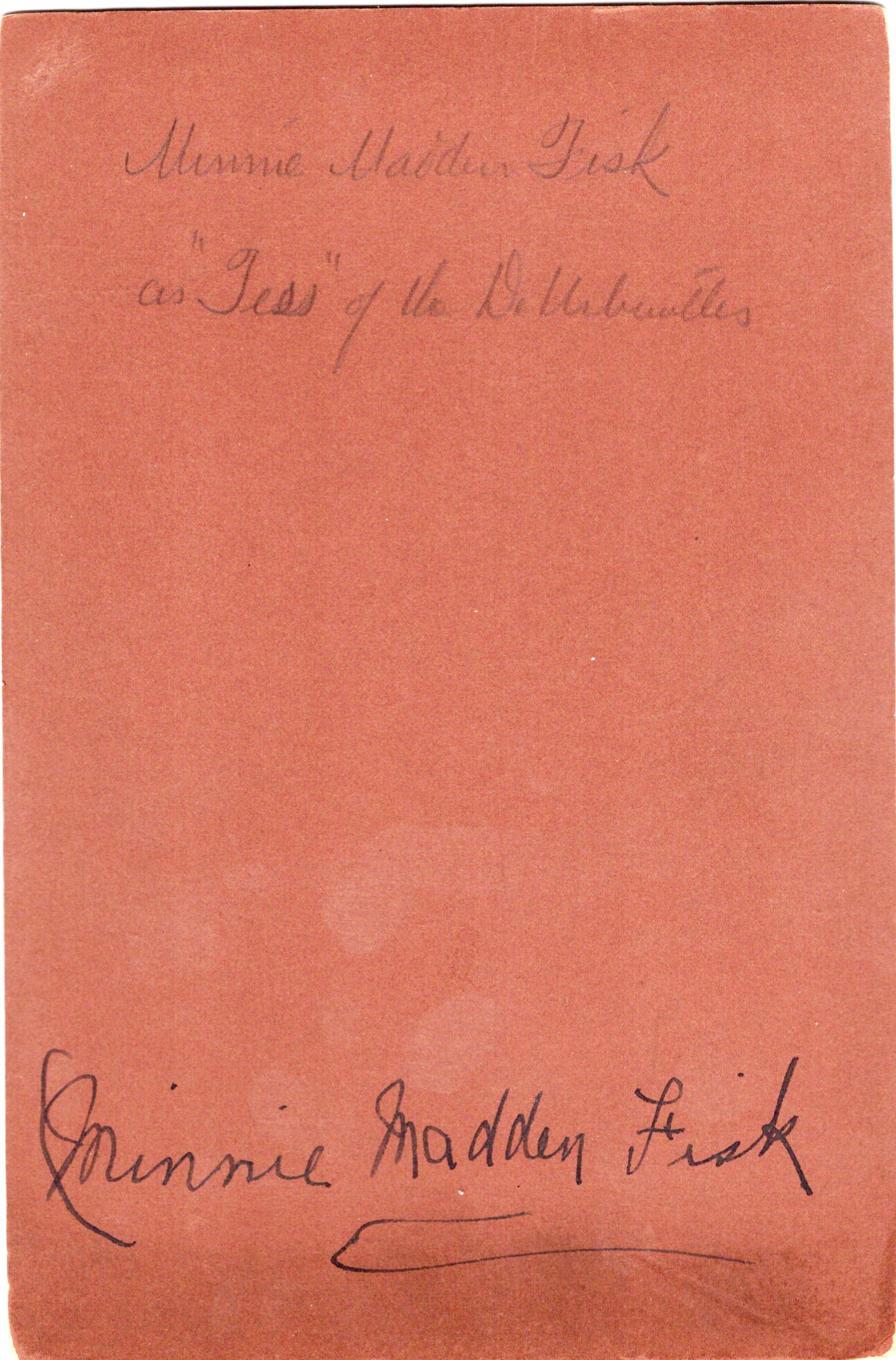
This vintage real photo postcard and this cabinet card features acclaimed theater actress, Minnie Maddern Fiske (1865-1932). When performing, she was often billed as “Mrs. Fiske”. She was one of America’s leading actresses during the late 19th and early 20th centuries. She performed in several Henrik Ibsen plays and is recognized as introducing American audiences to the Norwegian playwright. She was born in New Orleans, Lousiana, to parents that worked in the theater world. Her first professional acting gig was playing a role in a Shakespeare play. She was only three years old. By the age of four, she made her New York debut. Much of her childhood was spent touring with theater companies. At age sixteen, she played leading lady roles. She was recognized for her acting, but also for her beauty and singing voice. In 1890, she married Harrison Grey Fiske, successful playwright and Broadway producer. After takin three years off from acting, she returned to the theater in 1893 as an actor, playwright and director. The IBDb reports that she had 55 Broadway credits, combining her acting, writing, and directing. Among her successes on Broadway were “Tess of the d’Urbervilles (1897), “A Dolls House” (1902), “The Rose” (1905), and “The High Road” (1912). Her Broadway credits spanned from 1871 through 1930. In the mid 1910’s, Mrs Fiske starred in film adaptations of two of her stage successes. Although the films were well received, she believed she was more suited for theater than film. Despite her success in the theater, the talented actress died poverty stricken. Her financial downfall was realted to her battling against a group of producers that organized the Theatrical Trust (or Syndicate). The Syndicate controlled the nation’s best theaters and dictated what plays would appear and which actors would be in the cast. They relegated Mrs Fiske to appear in third rate theaters, churches, and skating rinks. Mrs. Fiske was not to be intimidated. She also was an advocate for animal welfare. She was involved in the activities of the ASPCA and other human leagues. She fought against the fashion craze of decorating hats with bird feathers. Many bird lives were sacrificed, and entire species were nearly wiped out as a result of this fad. She also educated the public about the cruelty involved in trapping animals. Because she was well known, respected and popular, she was able to influence animal reform. Mrs Fiske won a number of humanitarian awards. She was a strict vegetarian and was anti vivisection. During World War II, there was a liberty ship named the “SS Minnie M Fiske”. Minnie Maddern Fiske was a woman born before her time. She was a feisty activist.
Cabinet Card 1 features acclaimed theater actress, Minnie Maddern Fiske (1865-1932). The photograph captures her in her role in “Tess of the d’Urbervilles (1897). Mrs. Fiske’s photograph for this cabinet card was taken by eccentric celebrity photographer, Napoleon Sarony. (SOLD)
Mrs. Fiske’s photograph on Postcard 1 was taken by William Morrison of Chicago, Illinois. The card was published by Rotograph as part of a series (no.B 627). (SOLD)
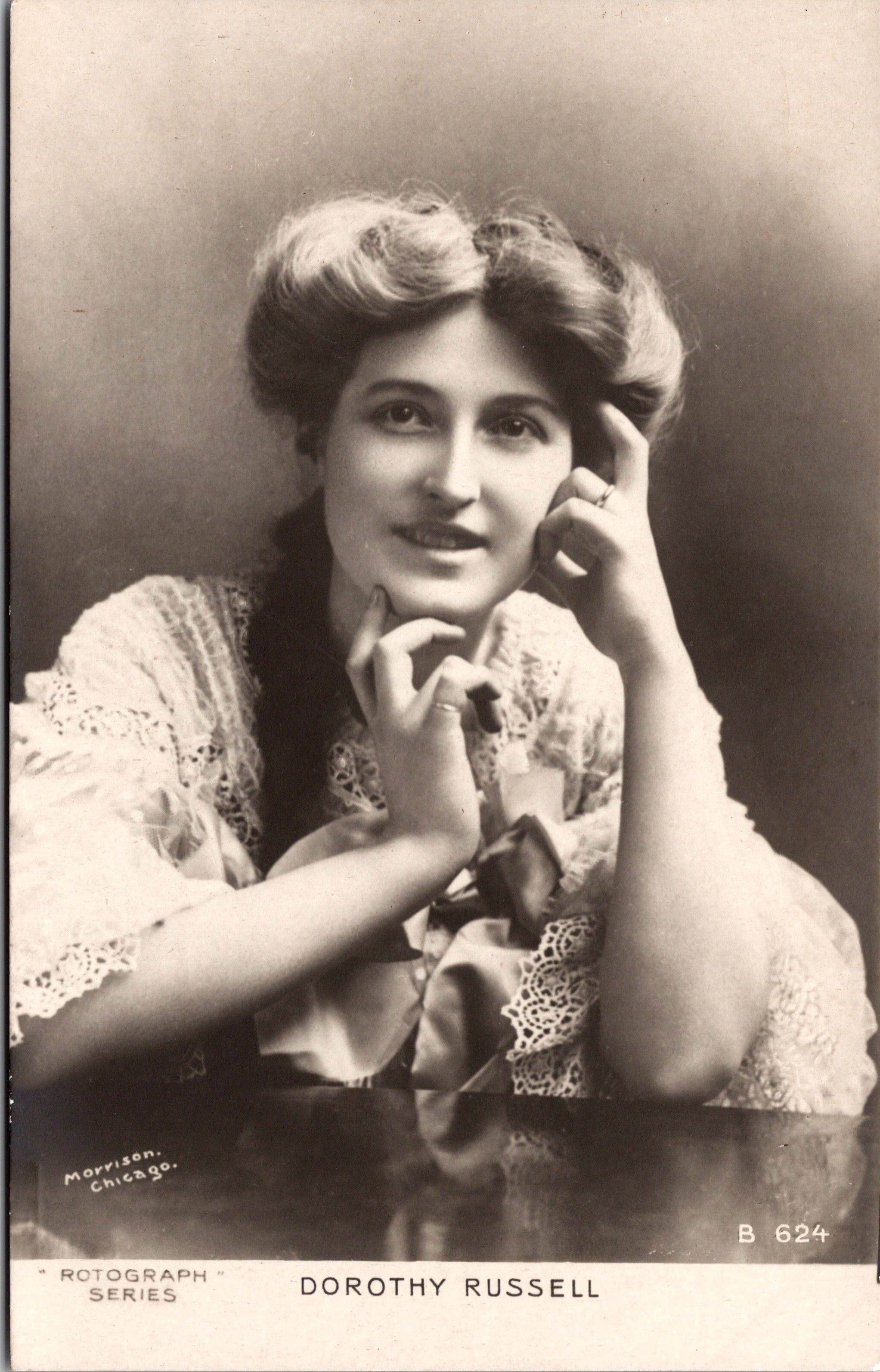
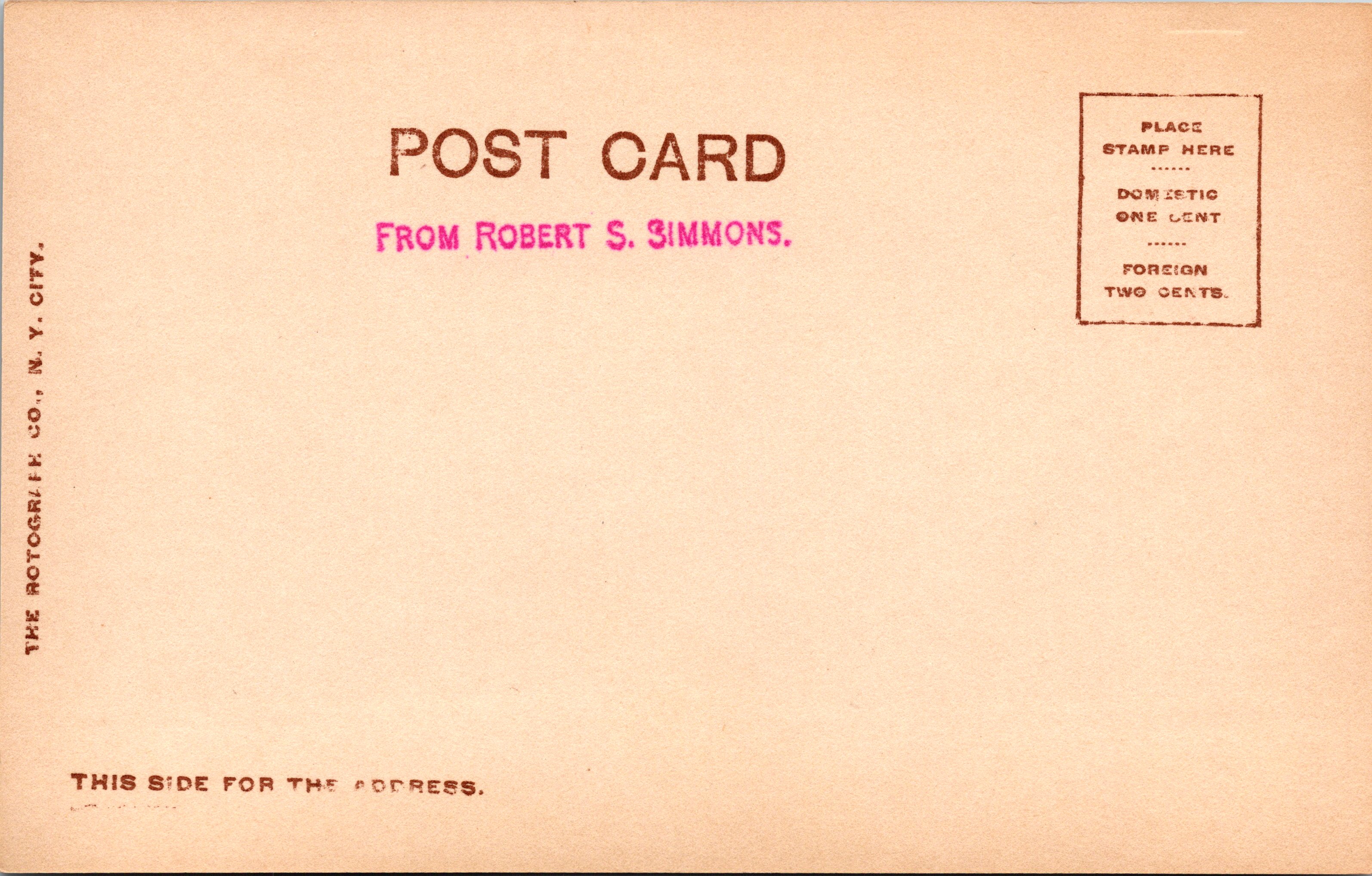
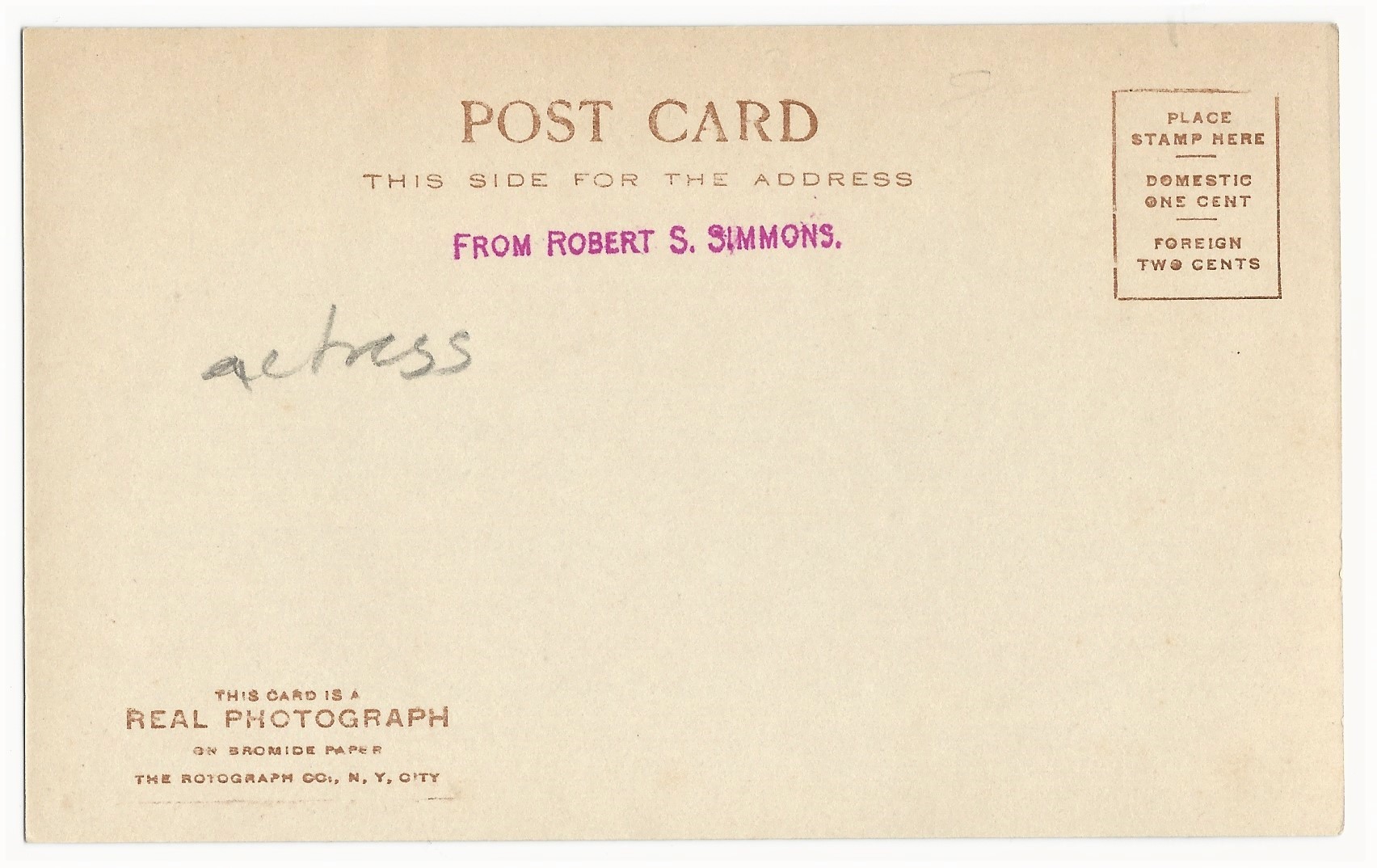
This vintage real photo postcard features actress Dorothy Russell (1883-1954). She was the notorious daughter of the ultimate diva, Lillian Russell (1860-1922). Dorothy was in three Broadway plays between 1904 and 1907. Dorothy’s trademark was her penchant for sensational hijinks, divorces, and legal fights. Dorothy was married seven times. In one civil suit, she was forced to surrender jewelry given to her mother by “Diamond Jim” Brady. The court insisted that she use the proceeds from the jewelry to pay off personal debts. A stamp on the reverse of the postcard indicates that this card was once the property of Robert S. Simmons. This postcard was published by the Rotograph Company (New York City). It is part of the Rotograph Series (No. B 624), The photographer of this image is William Mckenzie Morrison whose studio was located in the Haymarket Theatre building in Chicago, Illinois. Morrison was a well known and successful celebrity photographer. (SOLD)
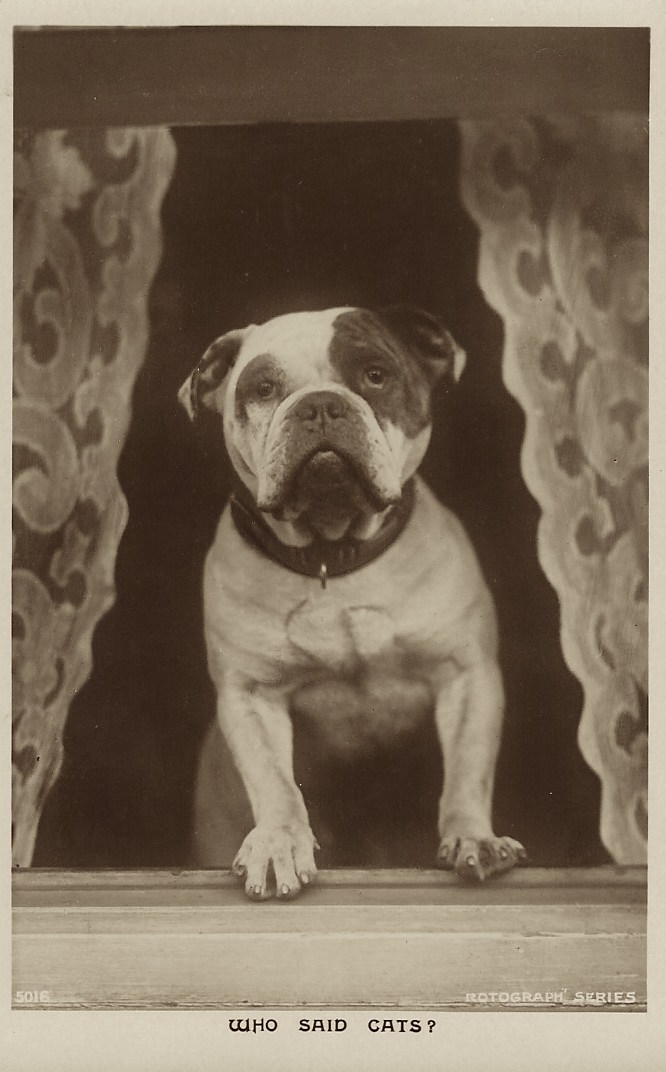
If this vintage real photo postcard portrait of a handsome bulldog isn’t the best you’ve ever seen; it has to be right up there with the best. This adorable canine is apparently watching doggie tv. The dog is looking out the curtained window and appears quite intense about what he is seeing. The caption below the photo indicates that the dog is hoping to see cats. This unused postcard is part of a series published by Rotograph (no. 5016).
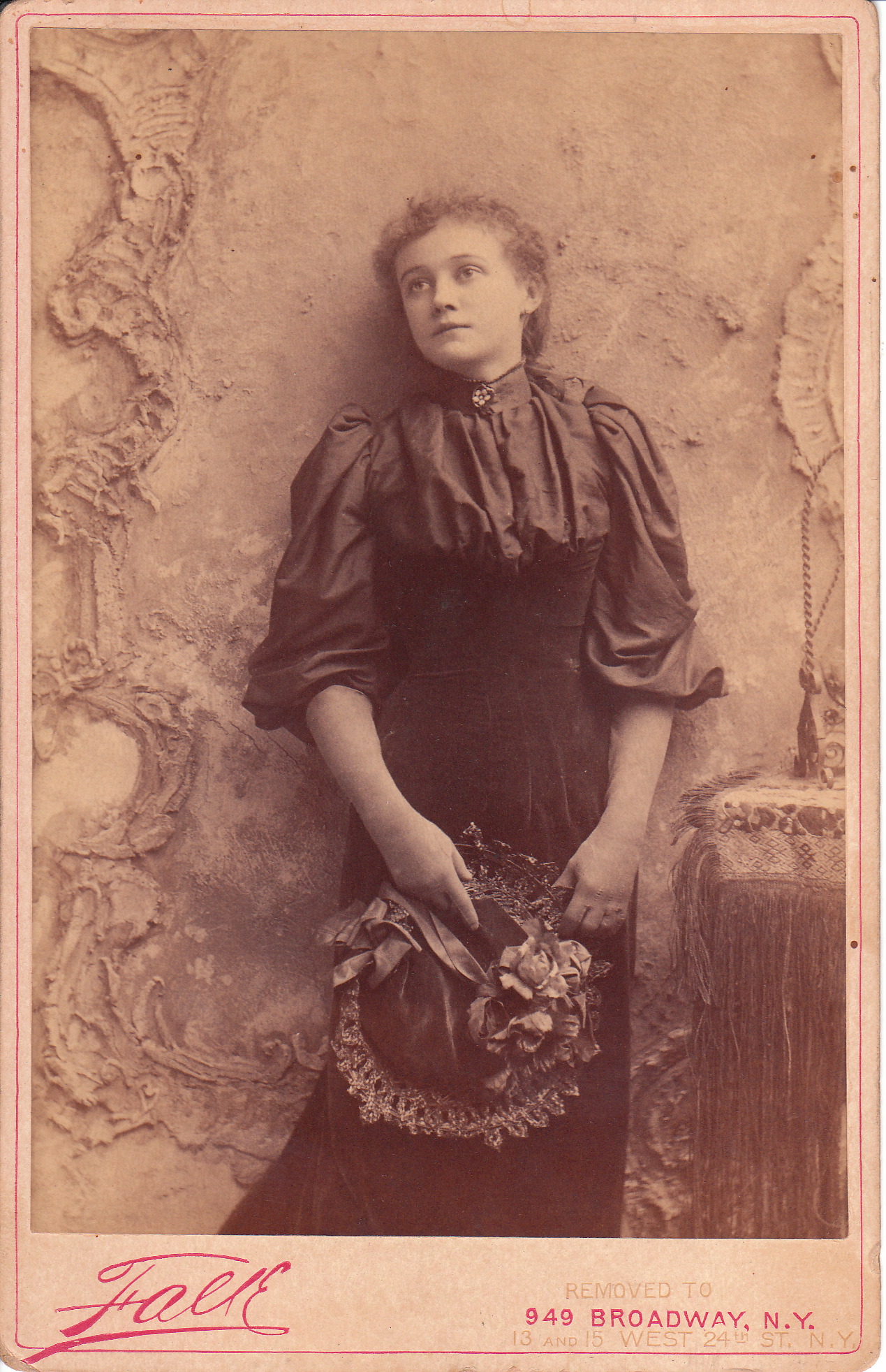
Photograph 1 is a cabinet card portrait of Minnie Dupree (1873-1943). She was an American stage and film actress. She was born in La Crosse, Wisconsin. She made her acting debut in a touring company in 1887. In 1888, she was a sensation in a small role in William Gillette’s New York play. “Held by the Enemy”. This role propelled her into a number of supporting roles with the some of the leading actors of the day. She finally got a starring role in the 1900 production of “Women and Wine”. Many other leading roles followed as well as a number of notable successes. However, critics agreed that her later career was less successful than her early and middle career. Dupree also made a small number of films including “The Young in Heart” (1938). Costars in this film included Janet Gaynor, Douglas Fairbanks Jr., Billie Burke, and Paulette Goddard. This cabinet card photograph captures Miss Dupree holding her had and looking dreamily away from the camera. The photograph was taken by celebrity photographer, B. J. Falk. Falk’s address is listed as 949 Broadway, New York City. However, there is a light stamp over the Broadway address indicating that the studio had “removed” to 13 & 15 West 34th Street, New York City. To see other photographs by Falk, click on the category “Photographer: Falk”.
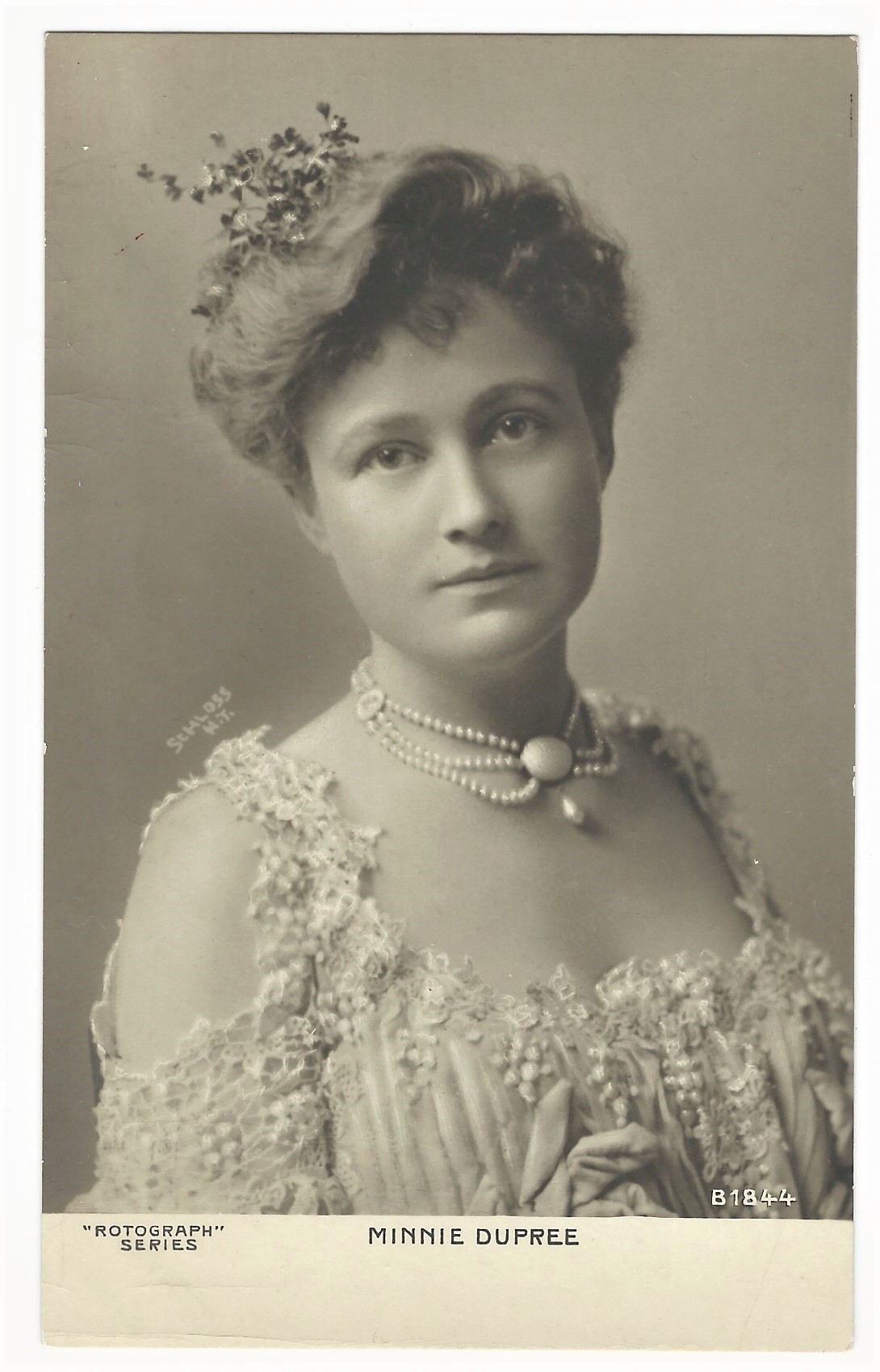
Photograph 2 is a vintage real photo postcard featuring Miss Dupree. The image provides a wonderful close-up view of the actress. She is wearing a fancy dress that is low-cut. Note her pearl necklace. Her hair is styled perfectly, providing a very fresh and clean look. The photographer credited with this fine portrait is celebrity photographer, Jacob Schloss (1856-1938). His studio was located in New York City (Manhattan). He received his education at the Cooper Union in New York City. He graduated in 1872 as an etcher. He joined Benjamin J. Falk’s photography studio and worked there in the mid 1870’s. He left Falk’s employ to open his own studio (54 West 23rd Street) where like Falk, he specialized in theatrical photography. He tended to favor photographing actresses in costume in front of generic studio furnishings. He produced many cabinet card photographs but also was active in the production of magazine images. By the 1890’s he was particularly known for his photographs of beautiful women, much like photographer Jose Maria Mora. Schloss also was an activist for photographers rights. He was very involved in the movement to copyright images. He sued those who used his photographs without crediting or paying him. He was an active participant in national photographer associations and was an worked as a photographer until the 1910’s. The photograph was published by the Rotograph Company as part of the “Rotograph Series” (no.B1844). The postcard has a stamp stating “From Robert S. Simmons”, whom I believe, but can not confirm, was a well known collector of photographs. (SOLD)


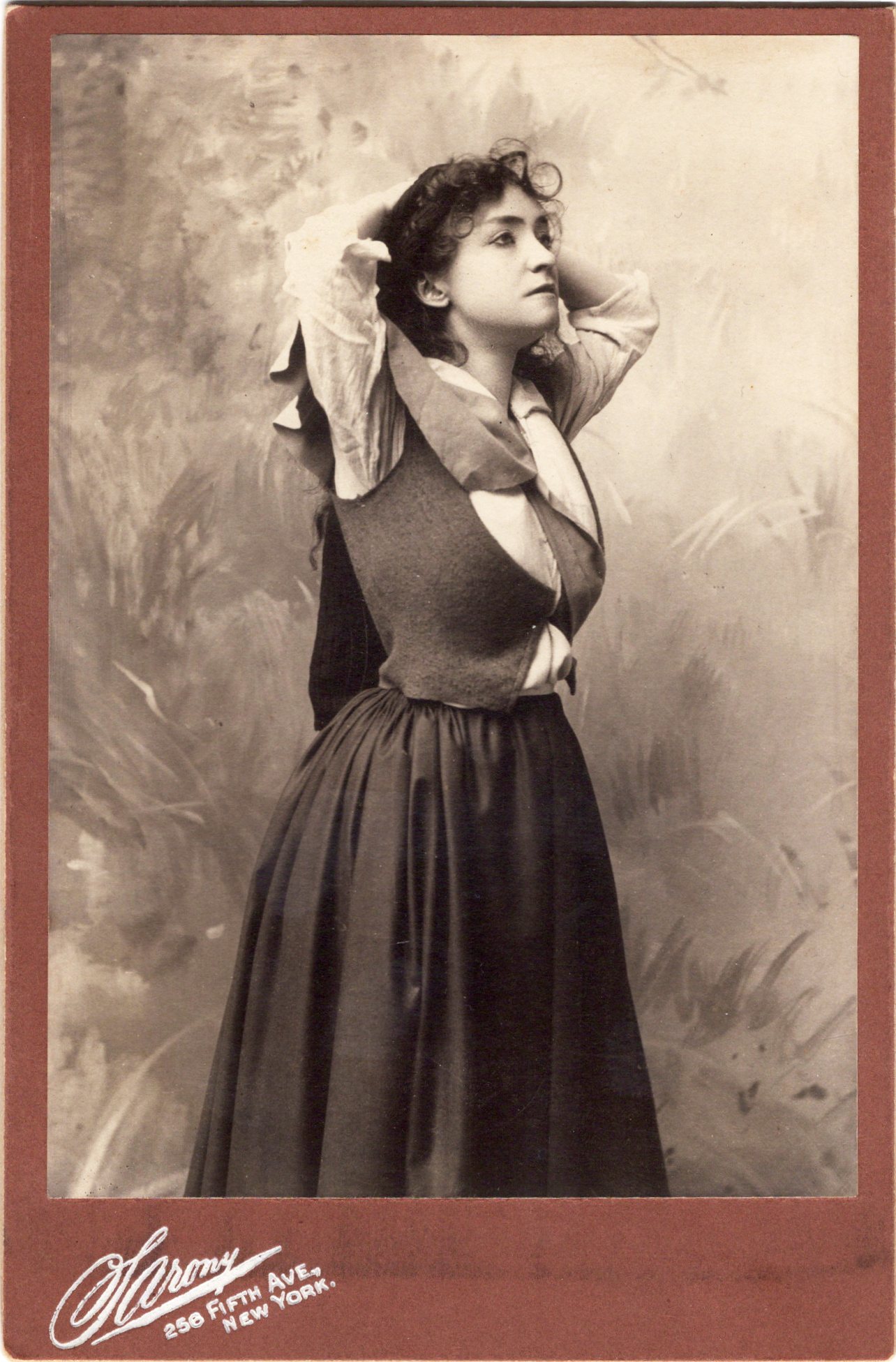
 CABINET CARD 1
 CABINET CARD 2 (SOLD)
 CABINET CARD 3 (SOLD)
 CABINET CARD 4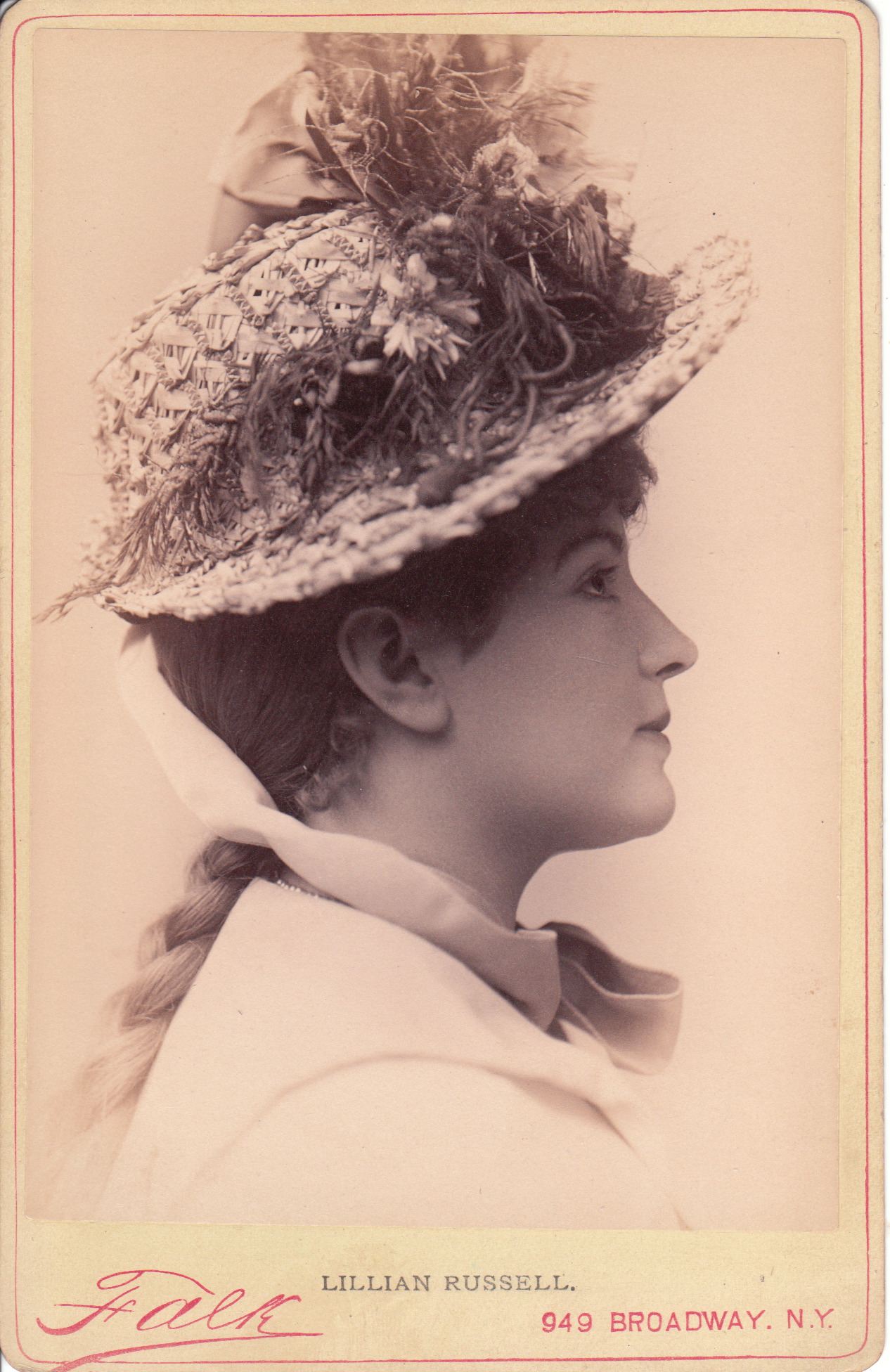







 THE CABINET CARD GALLERY