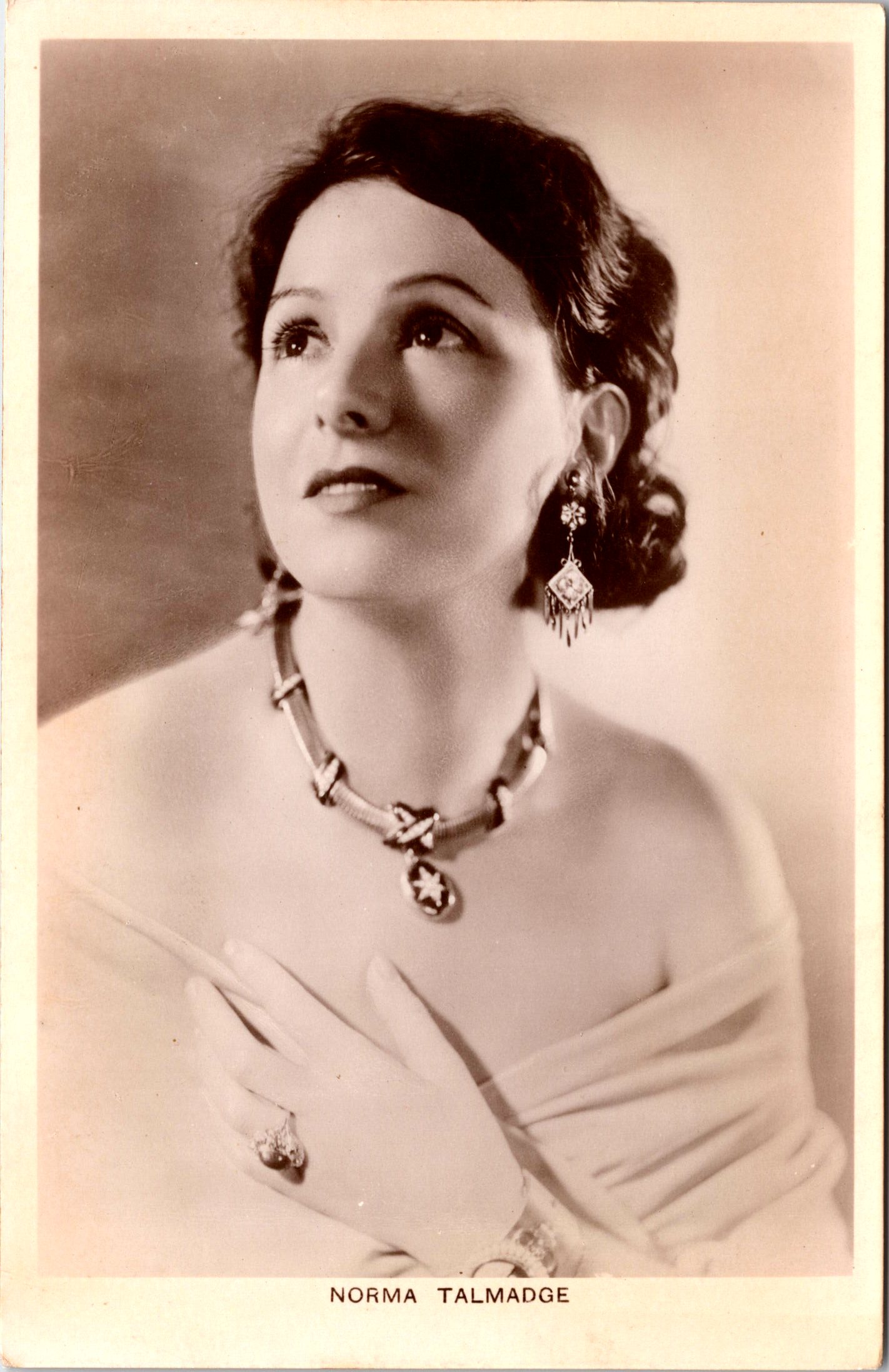
NORMA TALMADGE : BEAUTIFUL ACTRESS : PICTUREGOER SERIES : RPPC

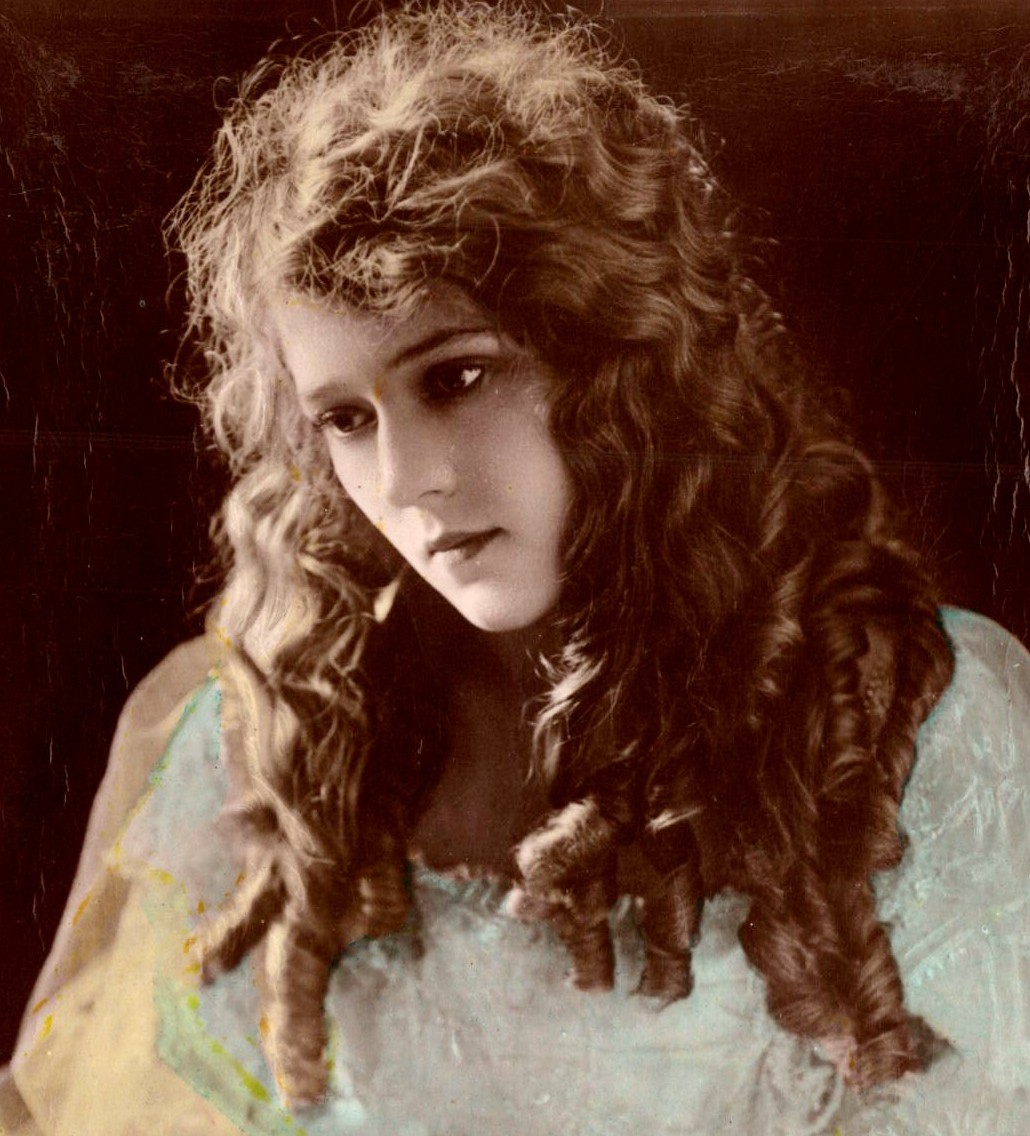
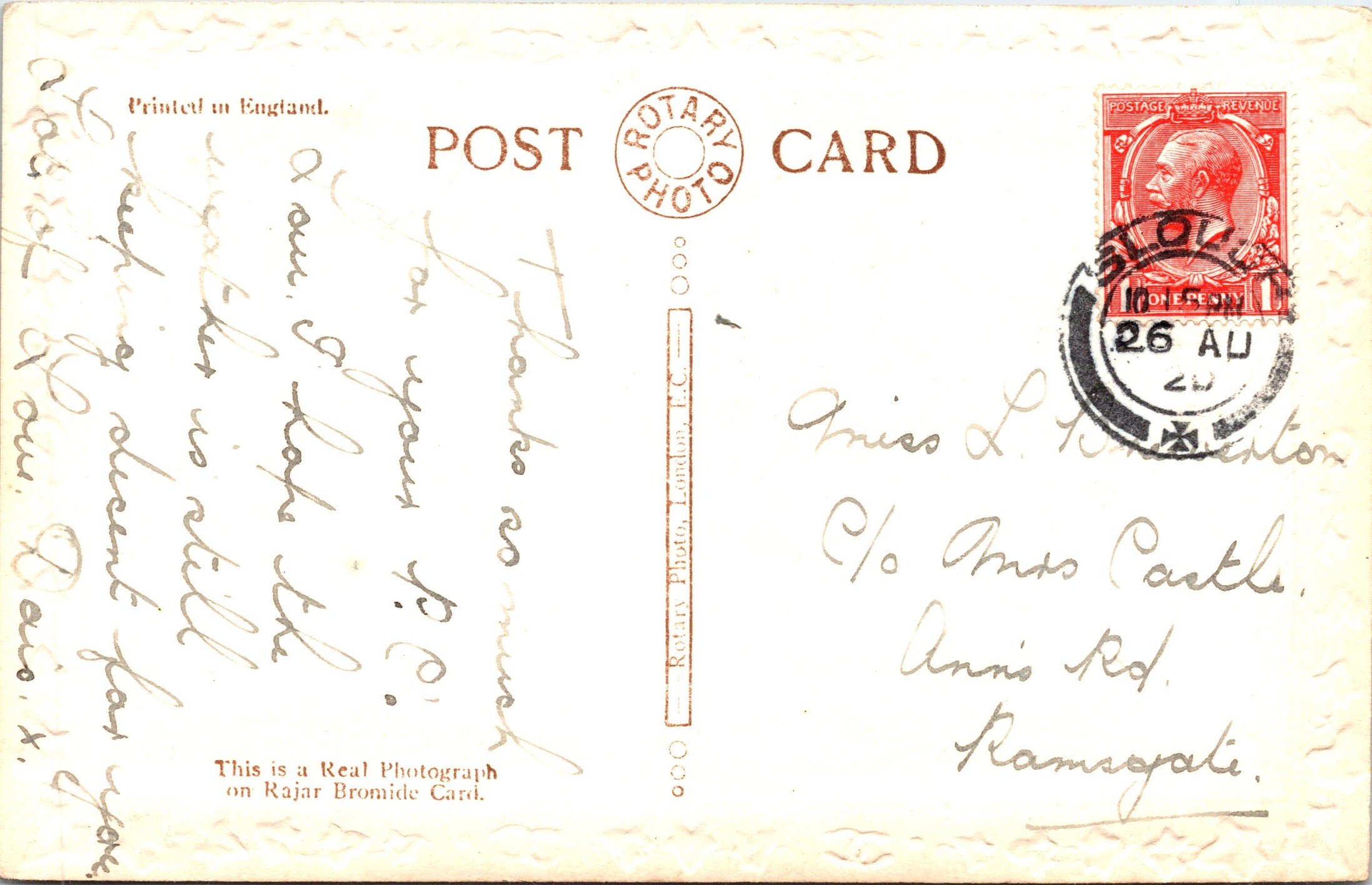
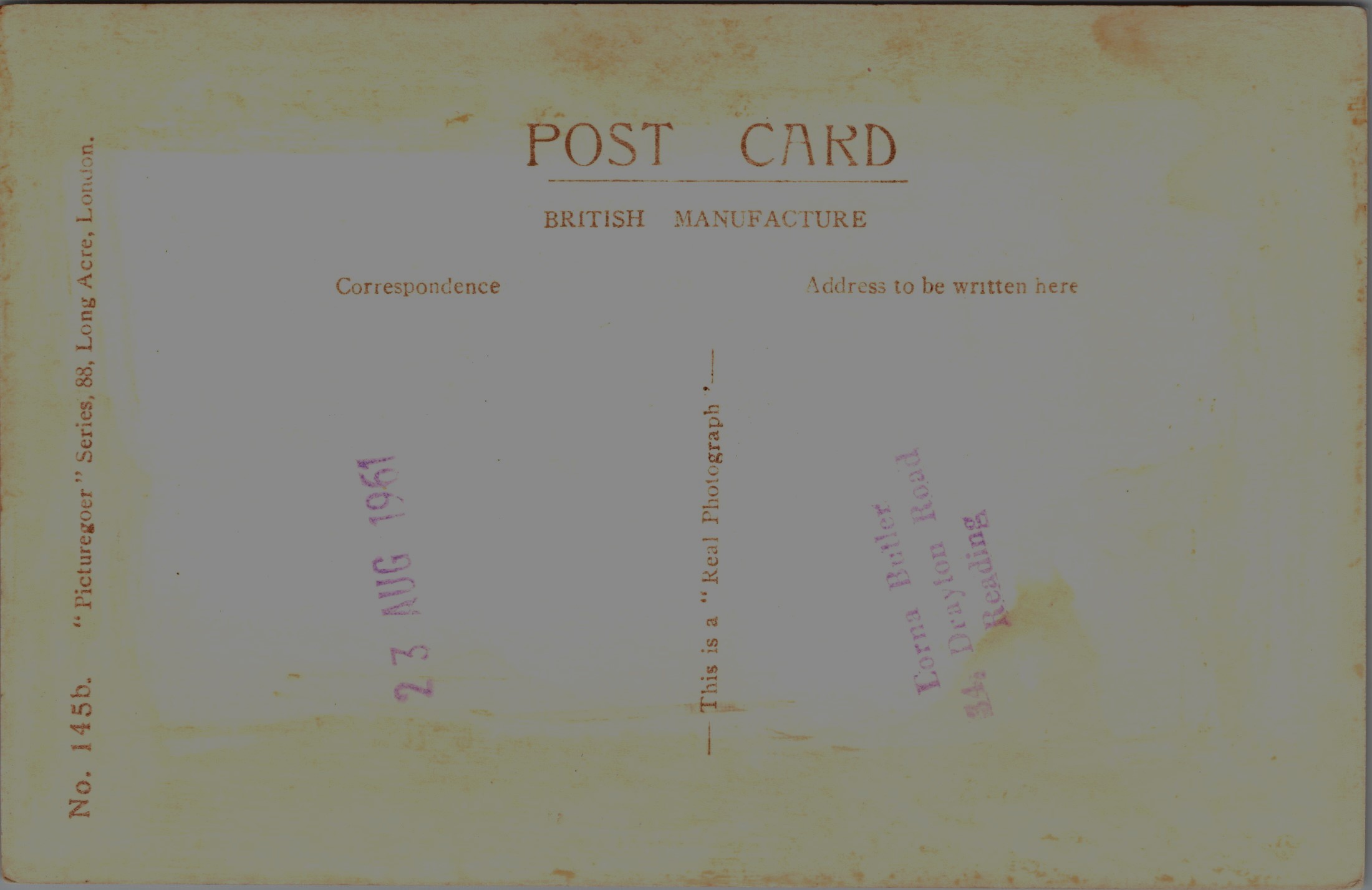
This vintage real photo postcard features American silent film actress, Norma Talmadge (1894-1957). She was noted for her dramatic and emotionally intense performances. She was one of the most popular and highly paid actresses of her era. She starred in over 200 films during her career. Raised in a show business family, Norma and her sisters Constance and Natalie Talmadge all became successful actresses. Norma began her acting career on the stage, performing in vaudeville and musical comedies. Initially, Talmadge worked for Vitagraph Studios before signing with D.W. Griffith’s Triangle Film Corporation, where she gained recognition for her talent. In the 1910s and 1920s, Talmadge became a major star, known for her ability to portray a wide range of characters. She excelled in dramatic roles, often playing heroines with complex emotions. Some of her notable films include “The Probation Wife” (1919), Smilin Through (1922), Camille (1926), and “New York Nights” (1929). Norma Talmadge was one of the few silent film stars who successfully made the transition to talkies. However, as the era of sound films emerged, her popularity waned. After her last film in 1930, Talmadge retired from acting and focused on her personal life. She married the film producer Joseph M. Schenck in 1916, and together they founded the Norma Talmadge Film Corporation. The company produced several successful films, contributing to Talmadge’s financial success and status as one of the highest-paid actresses of her time. However, her marriage to Schenck eventually ended in divorce in 1934. After her retirement from acting, Talmadge lived a private life, seldom making public appearances. She remarried in 1946 to Carvel James, a wealthy oil broker, and they remained together until her death. This vintage postcard is part of the “Picturegoer” series (No. 145B).  SOLD

BRIGITTE HELM : TAKES A PHOTO : CAMERA ON TRIPOD : PHOTOGRAPHER : ACTRESS : RPPC

POSTCARD 1 (SOLD)

POSTCARD 2 (SOLD)

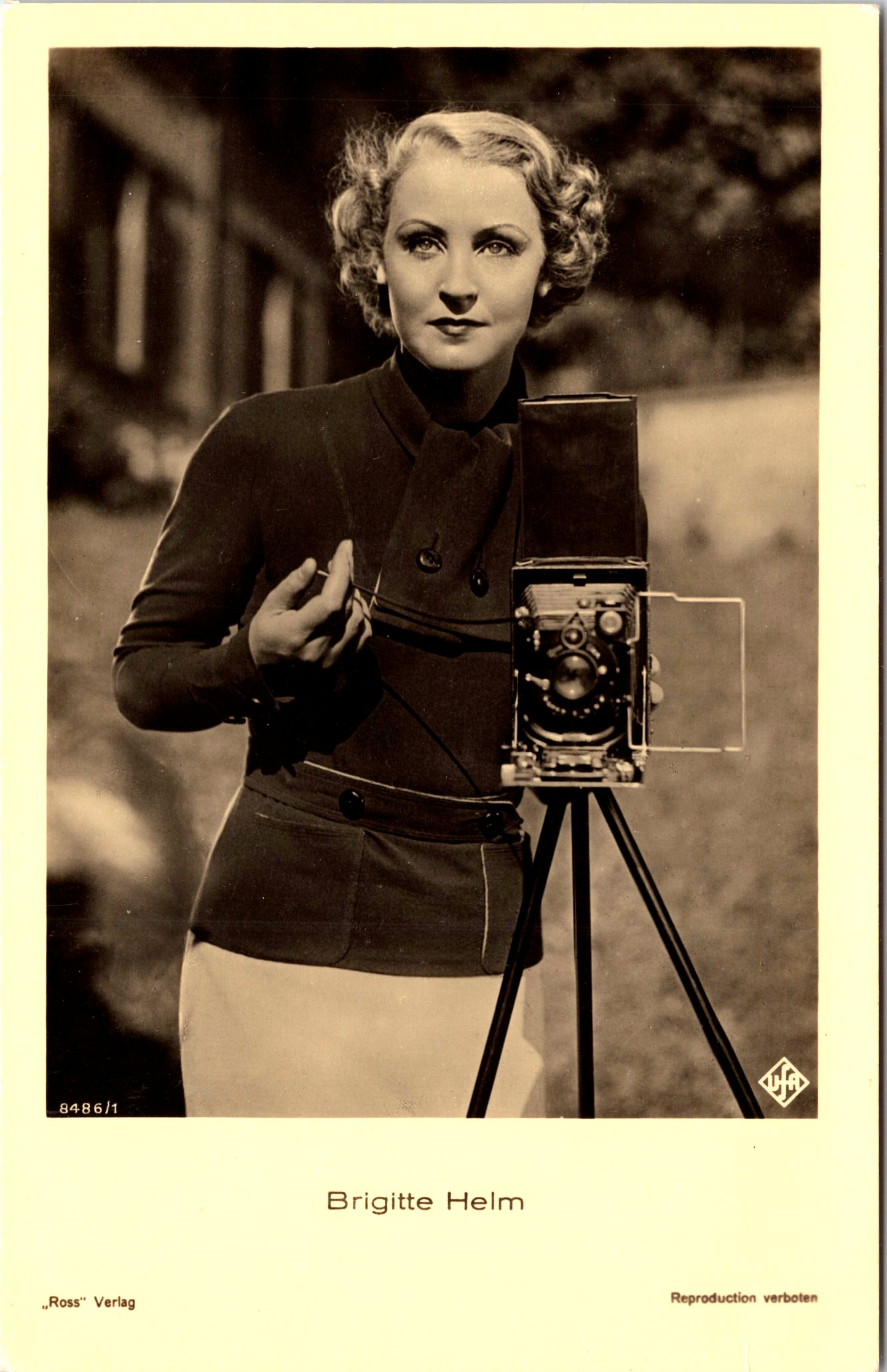
Postcard 1 features German actress, Brigitte Helm (1908-1996). The postcard captures Miss Helm taking a photograph with a camera on a tripod. Photographs of photographers in action are quite collectible. Now, back to Brigitte Helm. She is best known for her dual role in Fritz Lang’s 1927 silent film, Metropolis. After “Metropolis” she played in a long string of movies where she typically had the starring role. Helm was typecast as a Vamp or a femme fatale. She was born in Berlin. Her father was a Prussian Army officer. She was interested in acting at an early age and by age 12, was taking lead parts in school plays. At the age of 17, she acted in “Metropolis”. In 1925 she signed a ten year contract with UFA. She performed in both silent films and talkies. Beside “Metopolis” (1927), Helm was best known for “A Daughter of Destiny” (1928), “L’Argent” (1928), and “Alraune” (1929). Helm had an eventful personal life. Helm was involved in several traffic accidents. In fact, she was briefly placed in prison for manslaughter charges. She married industrialist, Dr Hugo Kunheim. The Nazis were not very pleased with her choice in men because Kunheim was Jewish. In 1935, Helm retired and moved with her husband to Switzerland where they started a family. Helm explained her retirement was because of disgust about the Nazi’s taking over the German film industry. This postcard was published by Ross Verlag as part of a series (No.8486/1). The card has the UFA logo which reveals it was published between 1925 and 1935. (SOLD)

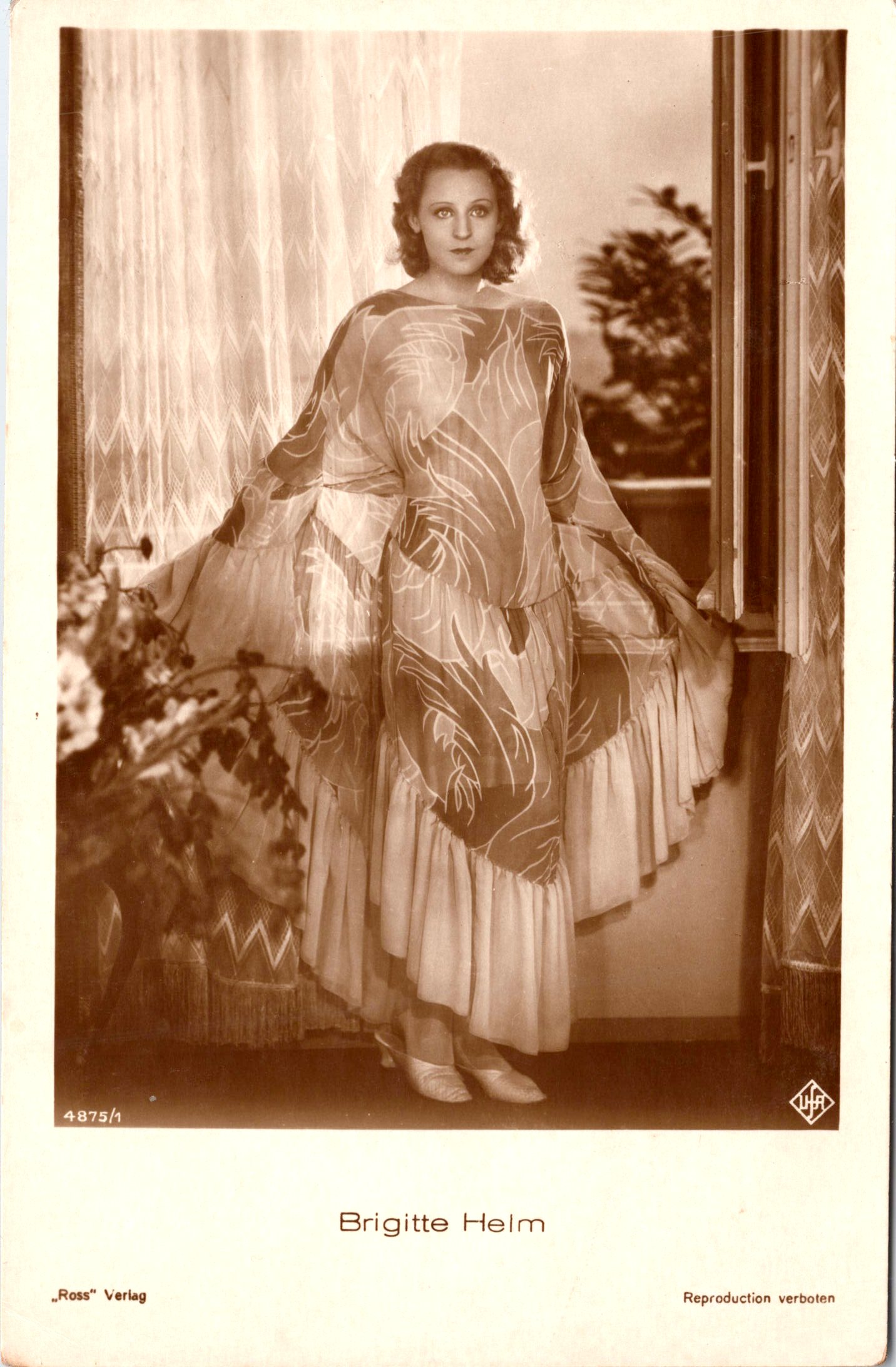
Postcard 2 captures Miss Helm in a beautiful dress that illustrates her nice figure. This postcard was published by Ross Verlag as part of a series (No.8486/1). The card has the UFA logo which reveals it was published between 1925 and 1935.  (SOLD)

POSTCARD 1

POSTCARD 2

LILLIAN GISH : PRETTY SILENT FILM STAR : D W GRIFFITH : RPPC

POSTCARD 1 (SOLD)

POSTCARD 2 (SOLD)

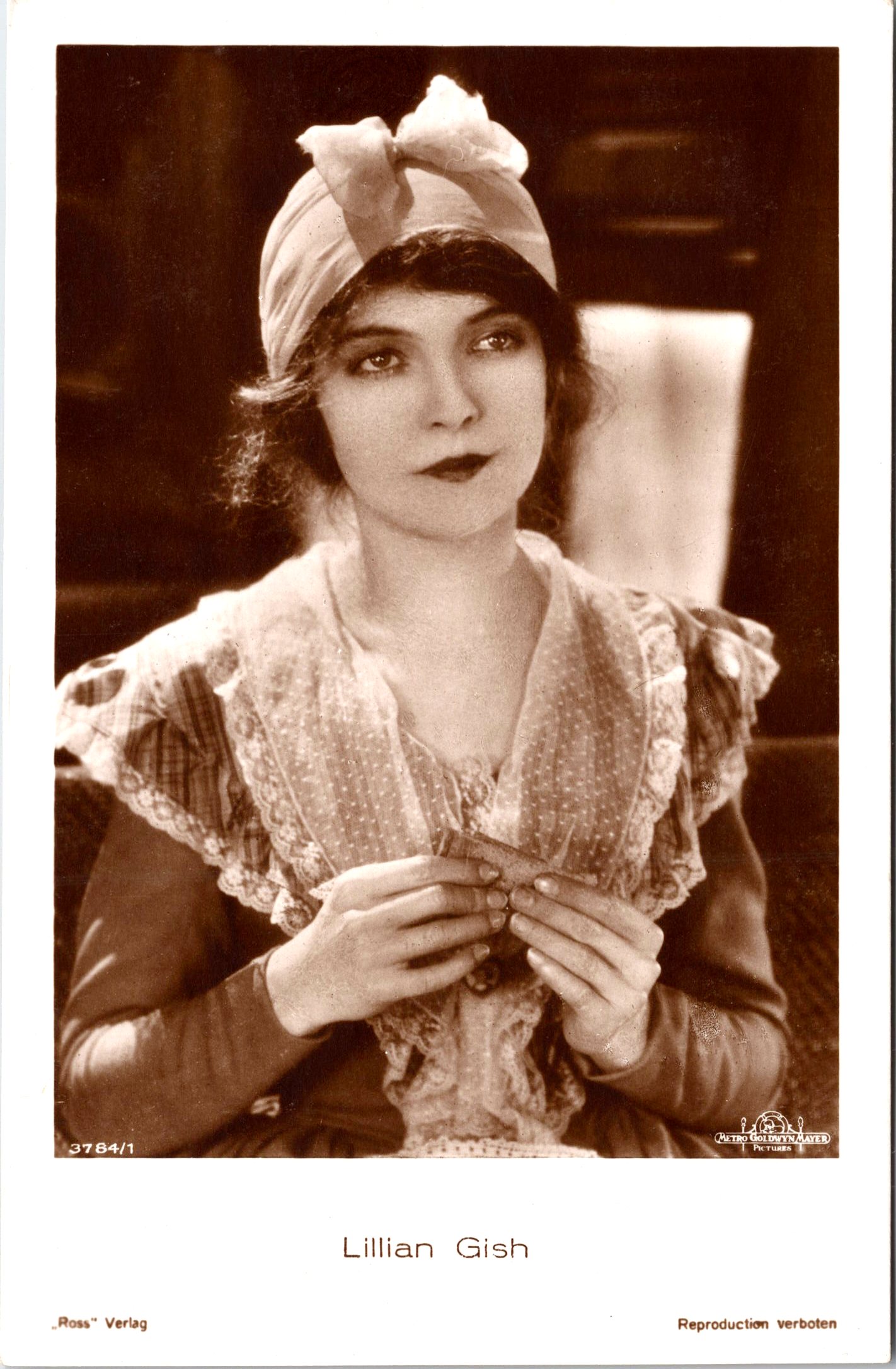
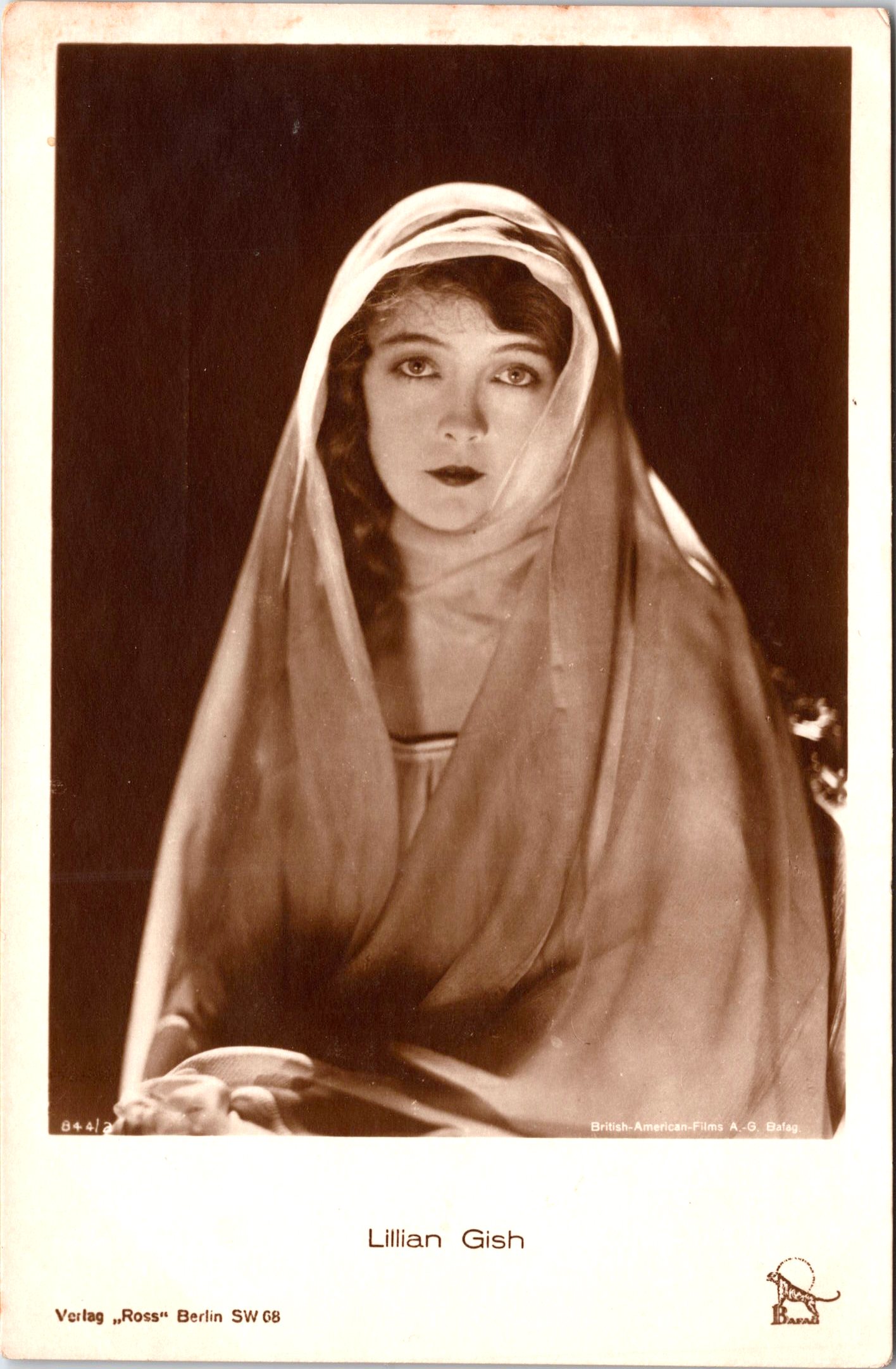
Postcard 1 features American actress, Lillian Gish (1893–1993). She is considered one of the pioneering figures in early cinema. Born in Springfield, Ohio, Gish began her career on the stage alongside her sister, Dorothy, but soon transitioned to film, where her delicate features and expressive acting made her a favorite of directors during the silent film era. In 1912, Gish joined legendary director D.W. Griffith, becoming his protégé and collaborating with him on groundbreaking films like The Birth of a Nation (1915), Broken Blossoms (1919), and Way Down East (1920). These films cemented her reputation as a leading lady, often playing roles that emphasized innocence and emotional depth. She was known for her meticulous attention to the art of acting. She helped establish the art of screen acting, emphasizing subtlety and naturalism at a time when film was still evolving away from theatrical exaggeration. She was a versatile actress, adapting well to various roles, from delicate heroines to more complex characters, and her commitment to authenticity often saw her enduring extreme conditions on set, like filming in freezing temperatures and performing her own stunts. When silent films gave way to “talkies” in the late 1920s, Gish transitioned gracefully, though her popularity declined as she aged and Hollywood’s focus shifted to younger stars. Still, she continued acting, taking on character roles and even appearing on television. One of her most memorable later performances was in The Night of the Hunter (1955), a film now regarded as a classic. In addition to her acting career, Gish became a vocal advocate for film preservation and the legacy of silent cinema. She gave lectures on the subject. Her work won her numerous accolades, including an honorary Academy Award in 1971, and she remained active in the industry well into her later years. Gish’s career spanned over 75 years, and she is remembered as an icon who bridged the silent and sound eras, leaving an indelible impact on American cinema. Lillian Gish, though a public figure, led a private and often solitary personal life. She was born on October 14, 1893, in Springfield, Ohio, to James Leigh Gish and Mary Robinson McConnell. Her early life was marked by hardship; her father abandoned the family when she was young, leaving her mother to support Lillian and her younger sister, Dorothy. Her mother opened a candy store in New York City, where the family eventually settled, and the two sisters began acting in theater to help support the family financially. Lillian and Dorothy were close throughout their lives, frequently working together in theater and film. Lillian took on the role of family protector and provider from a young age. Though she later became one of the most celebrated actresses of her time, Lillian remained deeply committed to her family, often prioritizing family relationships over romantic entanglements. She never married and had no children, believing that marriage and family life might interfere with her career. However, she did have close friendships with several prominent figures in Hollywood, including her frequent collaborator, director D.W. Griffith, with whom she shared a professional and deeply loyal relationship. There were rumors of a romance with Griffith, though Gish maintained that their relationship was strictly professional. Other rumored suitors included producer Charles Duell and critic George Jean Nathan, yet she largely avoided the spotlight when it came to romance. She valued independence and often expressed a desire to avoid the constraints she felt marriage could impose on her creative pursuits. In later life, she lived with her sister Dorothy until Dorothy’s death in 1968, a loss that deeply affected her. In her final years, Gish continued to work in the entertainment industry and to honor the legacy of silent cinema. She died in 1993, at the age of 99, leaving behind a remarkable career and a life dedicated to her art, family, and the preservation of film history.

Postcard 1 : The logo for Metro Goldwyn Mayor Films can be seen in the lower right corner of the image. This postcard was published by Ross Verlag (Berlin) as part of a series (No.3784/1). (SOLD)

Postcard 2 : This postcard portrait was taken in 1923. LIllian was 30 years old and the photo shows her as she appeared in the film “The White Sister”. This 1923 silent drama film co-starred Ronald Coleman. The logo for British American Films can be seen in the lower right corner of the image. This postcard was published by Ross Verlag (Berlin), is (844/2) in a series. SOLD

POSTCARD 1

POSTCARD 2
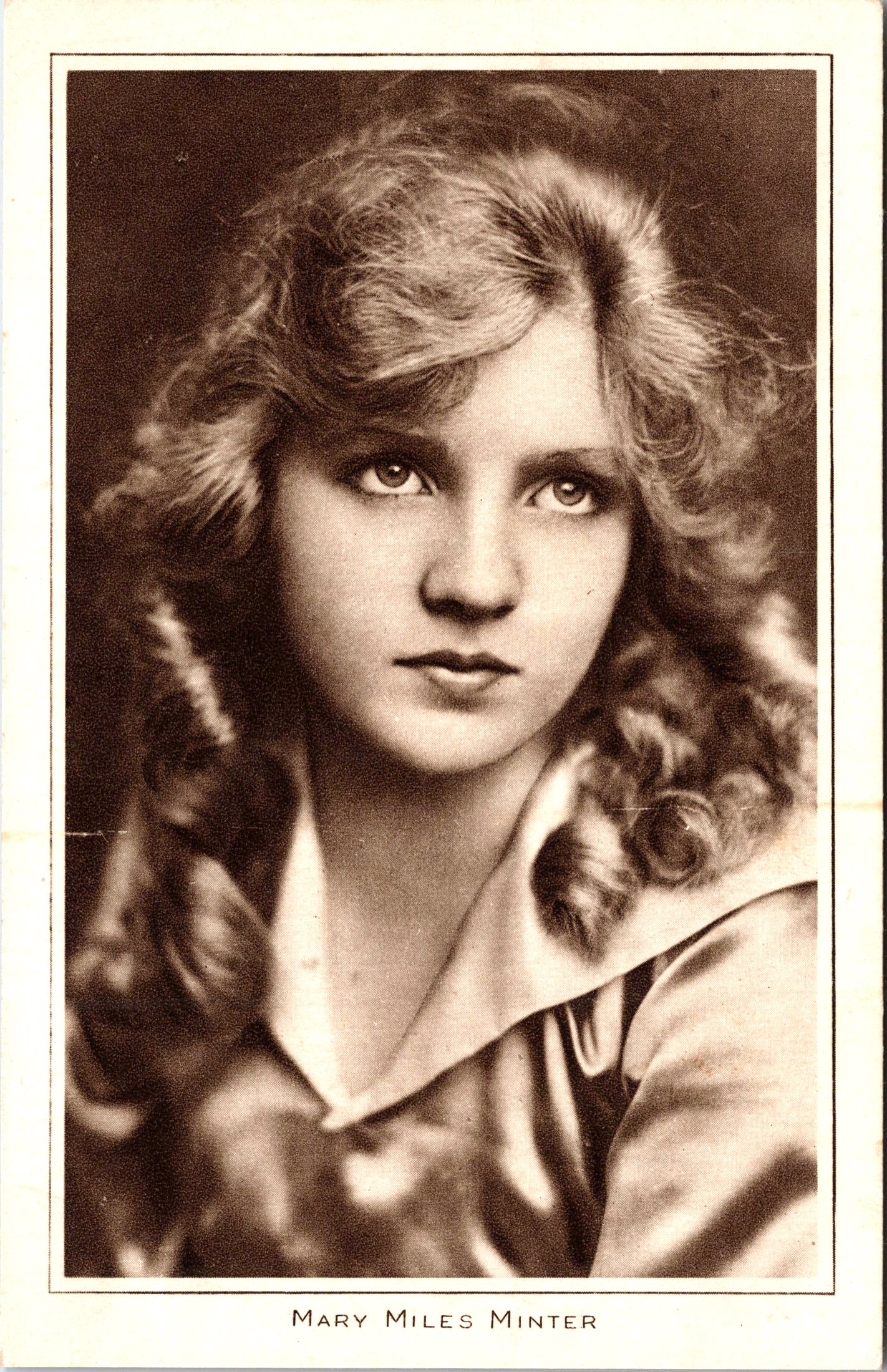
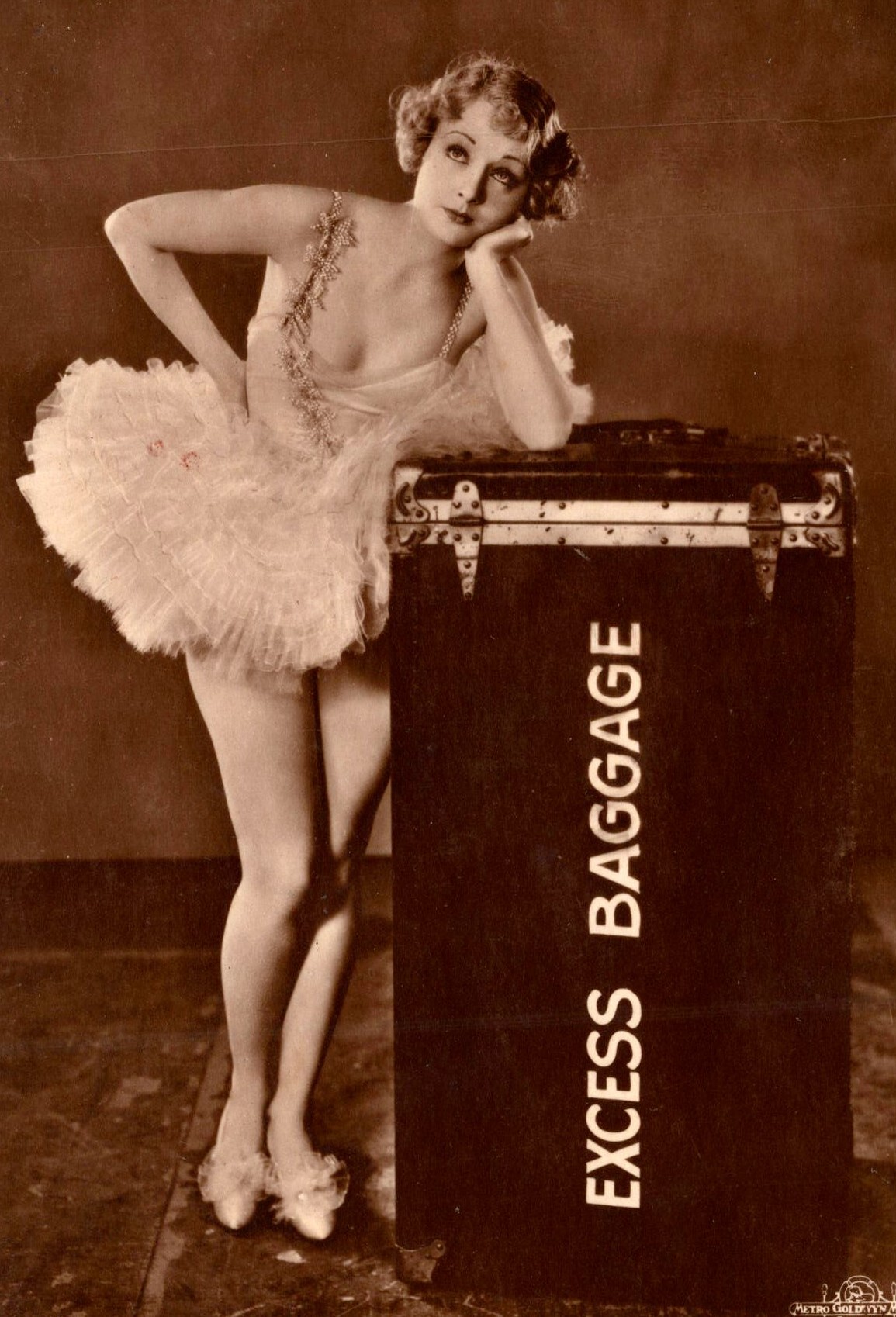
JOSEPHINE DUNN : IN “EXCESS BAGGAGE” : MGM SILENT FILM STAR : RISQUE RPPC 1928

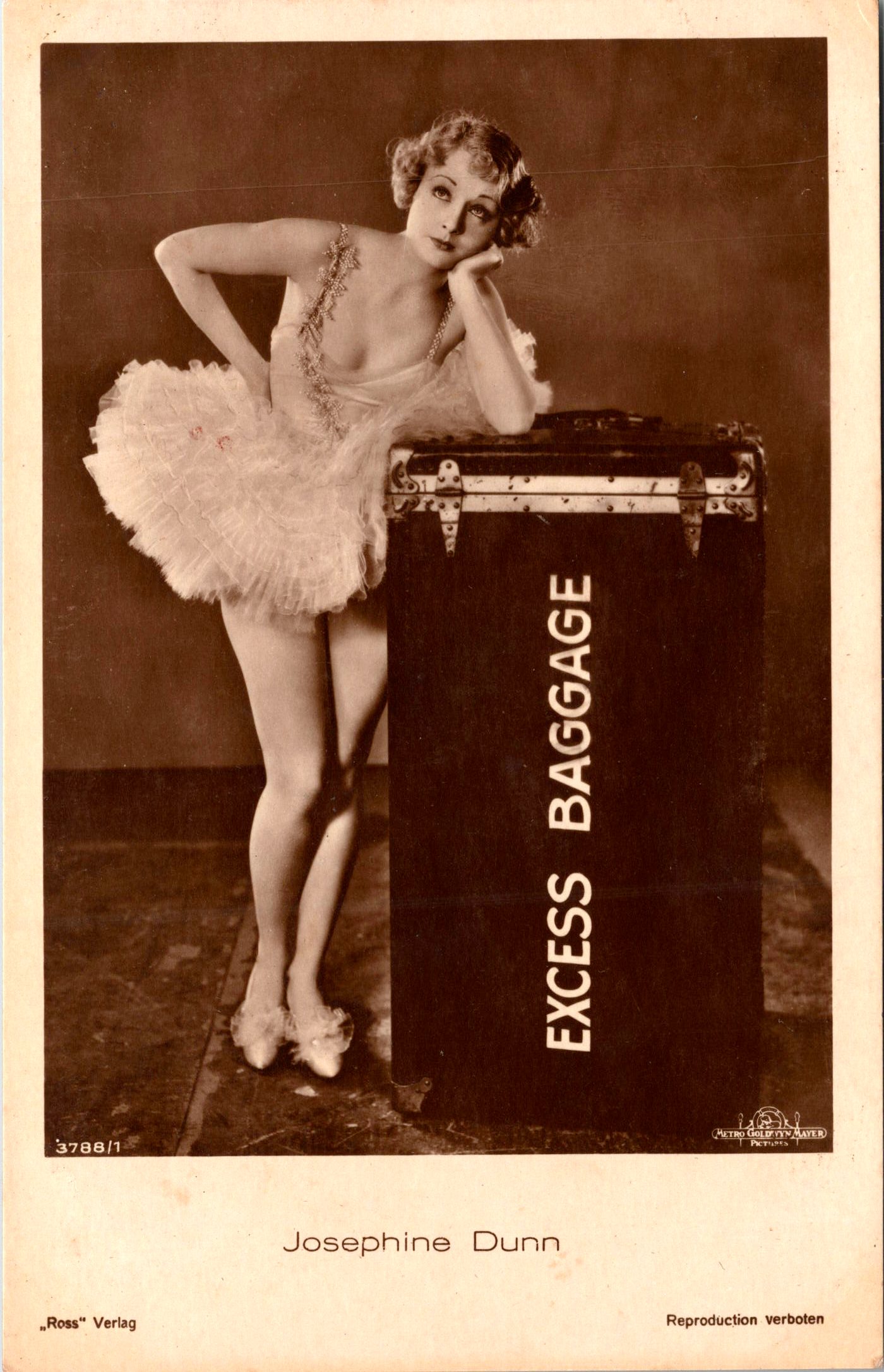
Josephine Dunn (1906 –1983) was an American actress known primarily for her work in silent and early sound films during the late 1920s and early 1930s. She was a glamorous starlet of the Jazz Age, often cast in flapper and socialite roles. Josephine Dunn was born in New York City, where she was raised. Little is known about her early years, but she entered show business as a teenager, joining the world of vaudeville before making the transition to film. Her natural beauty, charisma, and fashionable style made her a popular choice for film producers during Hollywood’s silent era. Dunn made her film debut in 1926 and quickly became a sought-after actress, starring in a variety of silent and early talkie films. She was often cast as the “other woman” or as a carefree flapper, fitting the Roaring Twenties’ archetype of modern femininity. One of her most notable films was “Our Modern Maidens” (1929), in which she starred alongside Joan Crawford and Douglas Fairbanks Jr. She also appeared in: “Excess Baggage” (1928),”The Broadway Melody” (1929),  “Tanned Legs” (1929), and “Montana Moon” (1930). Her transition from silent films to talkies was fairly successful, though she never achieved the same level of fame as some of her contemporaries, such as Crawford or Norma Shearer. By the early 1930s, her film career began to slow down. While primarily a screen actress, Dunn had early experience in vaudeville and stage performances, though she never became a major Broadway star. She retired from acting in the mid-1930s and lived a largely private life afterward. Dunn was married multiple times, including to millionaire oil executive Carroll Case. Her personal life was often the subject of media gossip. Although she was never a top-tier star, Josephine Dunn was emblematic of 1920s and early 1930s Hollywood glamour. This postcard features Dunn in her starring role in the 1928 silent film, “Excess Baggage”. The romantic comedy film was produced by Metro-Goldwyn-Mayer (MGM). She played the role fo a glamourous and sophisticated young woman. Unfortunately, like many silent films of the era, Excess Baggage is considered lost, meaning no known copies are available today. In this image, Josephine Dunn is dressed in a delicate, ruffled ballet-style costume, with a short, voluminous tutu and an intricately adorned bodice. The dress features lace and embellishments, reflecting the flapper era’s fascination with femininity and luxury. Her feet are adorned with soft, ballet-like slippers, adding to the graceful, almost ethereal appearance of her outfit. Her pose is both playful and weary—leaning on the large travel trunk with one arm propped up and her hand resting gently against her face. Her expression is one of wistful contemplation, with her eyes gazing off to the side, giving a sense of melancholy or quiet amusement. This pose complements the humor suggested by the film’s title, Excess Baggage, possibly hinting at the idea of emotional or romantic burdens rather than just literal luggage. Her curled, short blonde hair, typical of the 1920s, frames her face beautifully, reinforcing her status as a Jazz Age beauty. This risque postcard was published by Berlin based, Ross Verlag. In the card’s lower right corner, we see the logo of MGM. This vintage real photo postcard was issued in 1928. (SOLD)

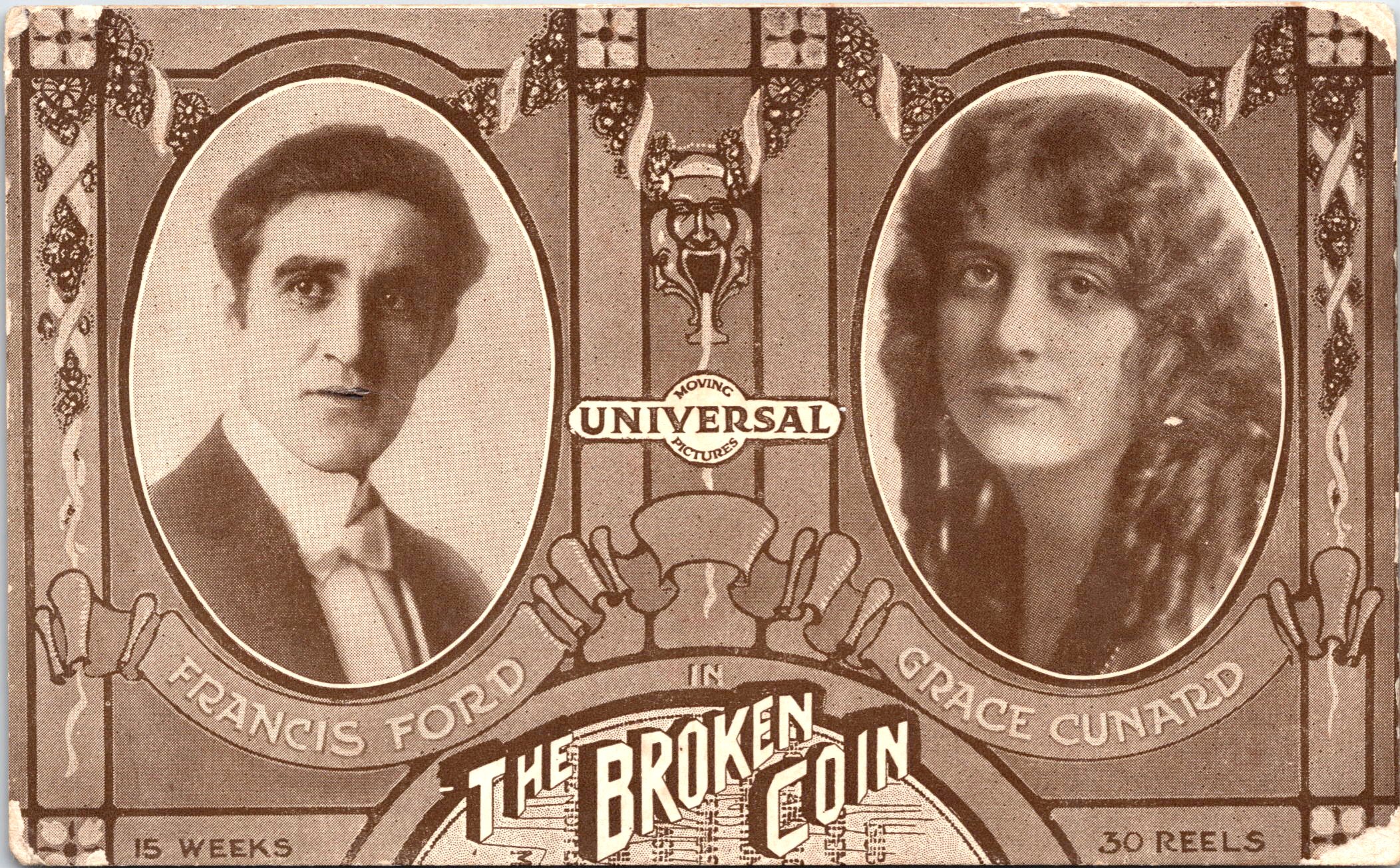
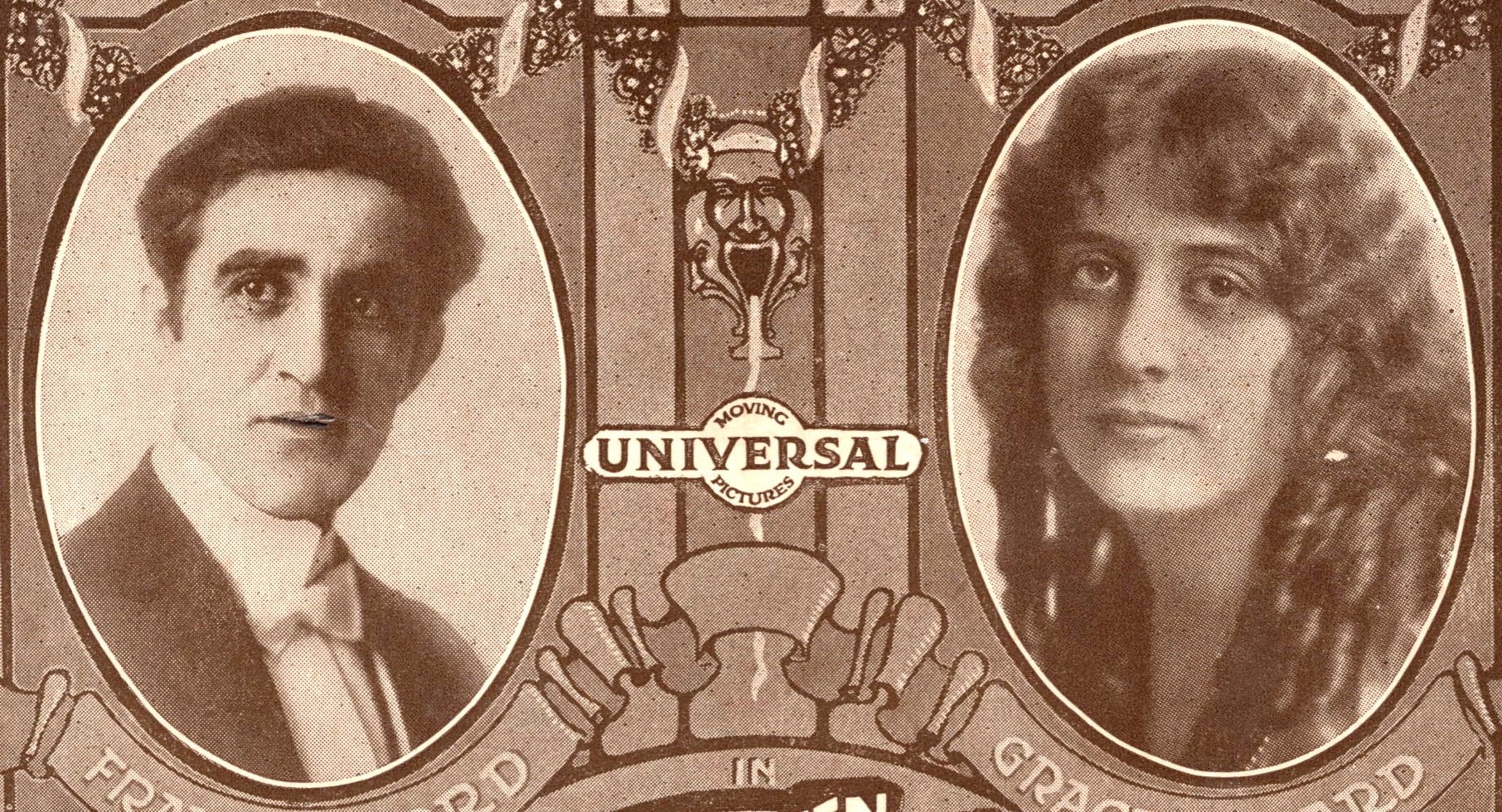
SILENT FILM ADVERTISING POSTCARD : “THE BROKEN COIN” : FRANCIS FORD & GRACE CUNARD

This vintage lithographic postcard advertises the American adventure-mystery silent film, “The Broken Coin”. The film was released by Universal Motion Pictures in 1915 and it was part of a 22 episode serial. The “Broken Coin” was the first chapter in the series which included thirty reels over 15 weeks. The film starred Francis Ford and Grace Cunard. The film was directed by Francis Ford and Grace Cunard was one of the two writers of the screenplay. Francis Ford (1881-1953) was an early American film actor, writer, and director. He was the older brother and mentor of film director John Ford. Francis Ford is reported by IMDb to have appeared in 495 acting roles, directed 180 films, and wrote 31 different screenplays. Grace Cunard (1893-1967) was an American actress, screenwriter and film director. She starred in over a hundred films during the silent film era. She cowrote at least 44 of these film and directed at least 8 of them. Cunard also edited many of her films. It is unfortunate to note that no copies of the “Broken Coin” series appear to have survived. This vintage postcard is an excellent purveyor of American silent film history. 

Published in: on September 25, 2025 at 12:00 pm  Leave a Comment  
Tags: , , , ,

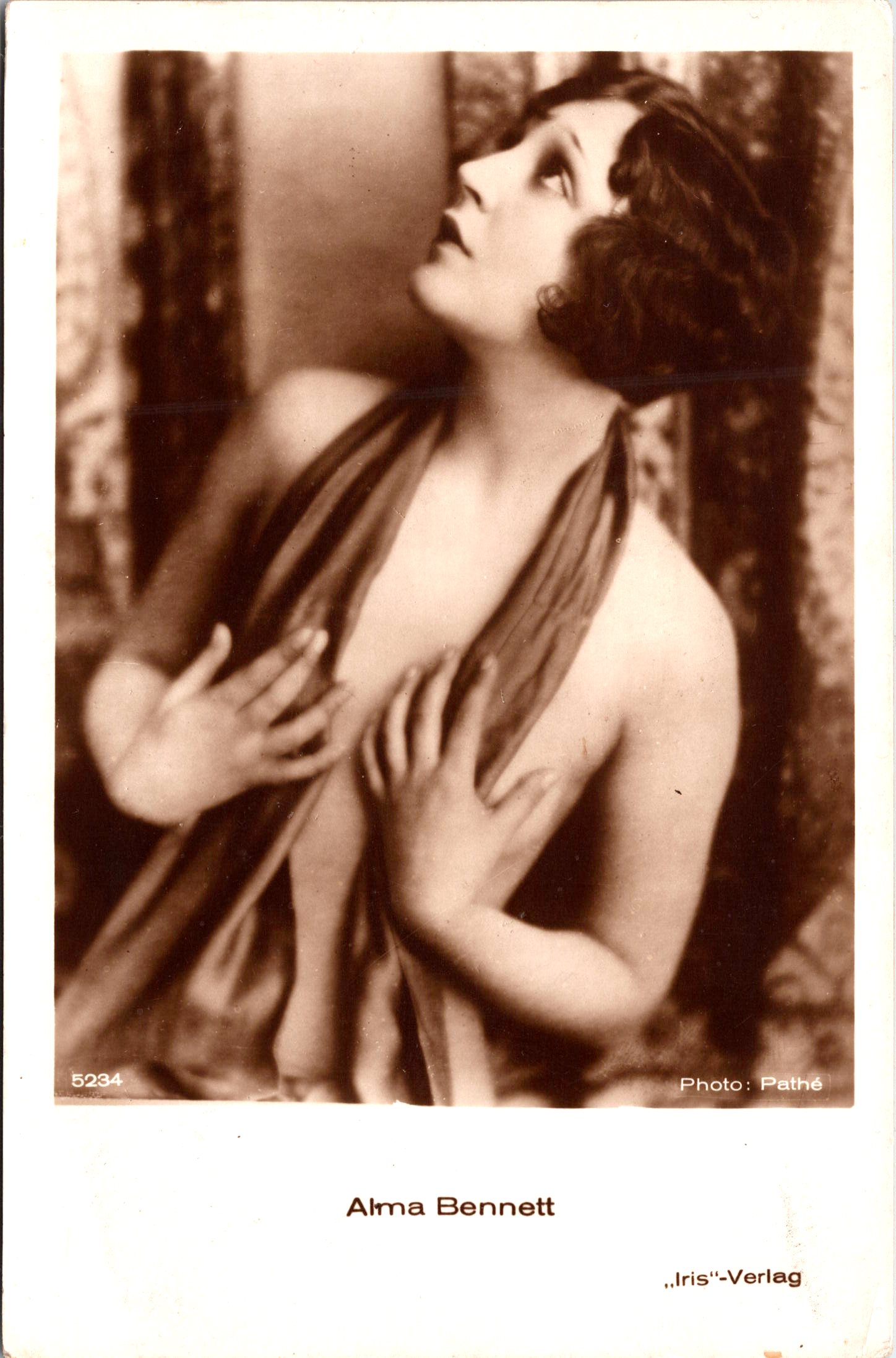
ALMA BENNETT : RISQUÉ 1920s RPPC OF SILENT FILM ACTRESS : PATHE : IRIS VERLAG

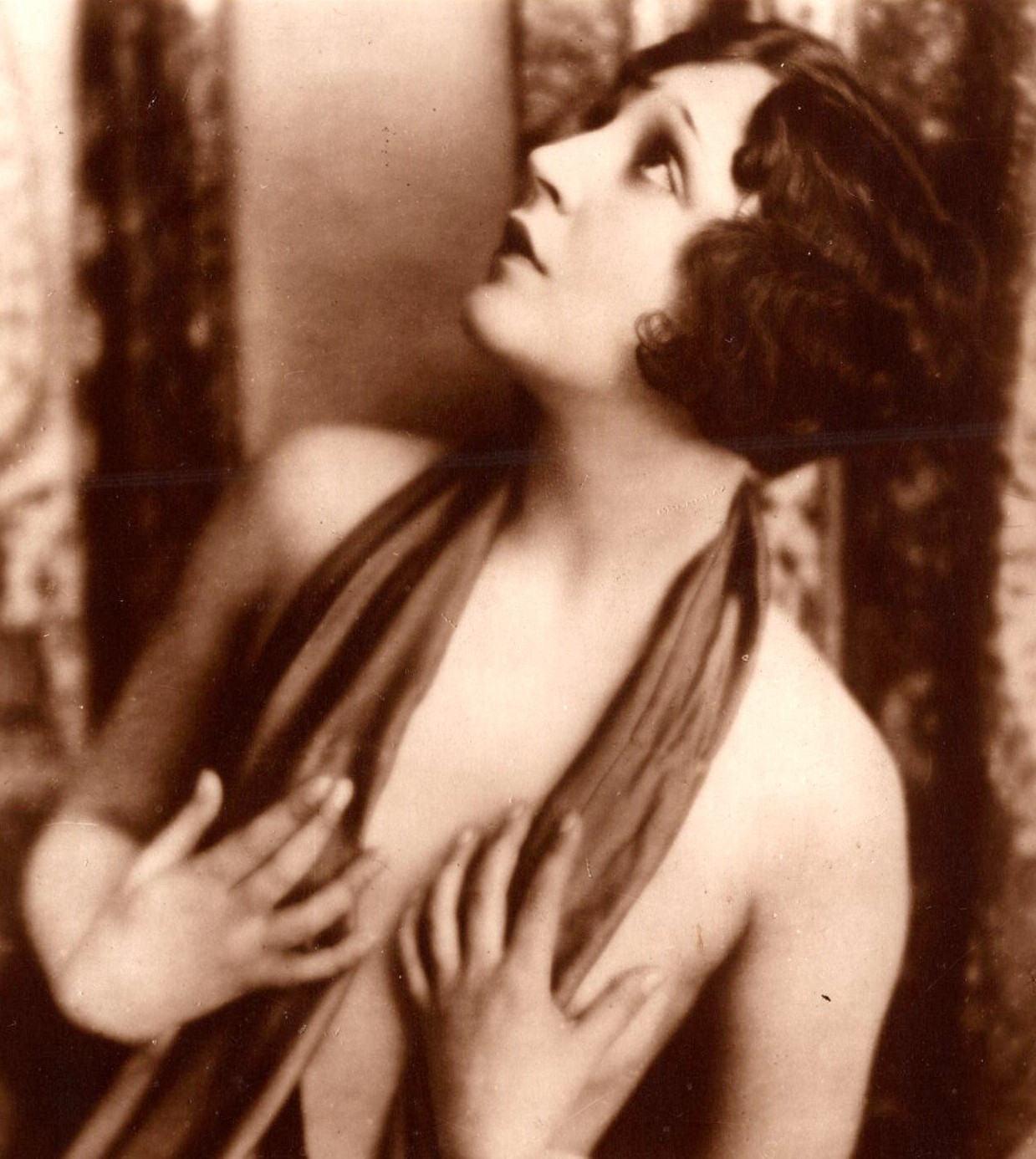
This sepia-toned, real photo postcard features the glamorous silent film actress Alma Bennett (1904-1958) in a striking, risqué pose. Published by Iris Verlag of Austria, this collectible is numbered 5234 and credits the prominent studio Pathé as the photographer—known for its high-quality film stills and star portraits during the silent era. The image captures Bennett draped in a sheer, flowing fabric that barely conceals her chest. With her hands placed carefully to cover herself, the pose is both sensual and elegant—clearly intended to appeal to fans of 1920s starlets and risqué glamour. Her expressive face is tilted upward in a dramatic fashion, with her dark, wavy bob framing large, expressive eyes. Her parted lips and gaze suggest a moment of theatrical longing or awe, characteristic of the silent film aesthetic. This postcard falls squarely into the risqué category due to its suggestive styling and scant coverage, though it retains a refined and artistic tone rather than being overtly provocative. Alma Bennett was an American silent film actress who appeared in over 60 films between 1919 and 1931. Known for her beauty, versatility, and ability to play both dramatic and comedic roles, she became a recognizable face during the peak years of silent cinema. Bennett began her career in Hollywood in the late 1910s, likely transitioning into film from stage or local beauty contests, as was common during the period. Her breakout years came in the 1920s, with notable roles in films such as: “Orphans of the Storm” (1921, uncredited, directed by D.W. Griffith), “The Prairie Pirate” (1925), “A Woman Against the World” (1928), “The Night Flyer” (1928). and “The Arizona Kid” (1930).  Alma’s personal life was somewhat tumultuous, mirroring that of many silent-era actresses whose careers were overshadowed by the transition to sound films. She was married to Fred Bennett, though the marriage reportedly ended in divorce. Little is documented about her life after retiring from film around 1931, and she never returned to the screen during the sound era. (SOLD)

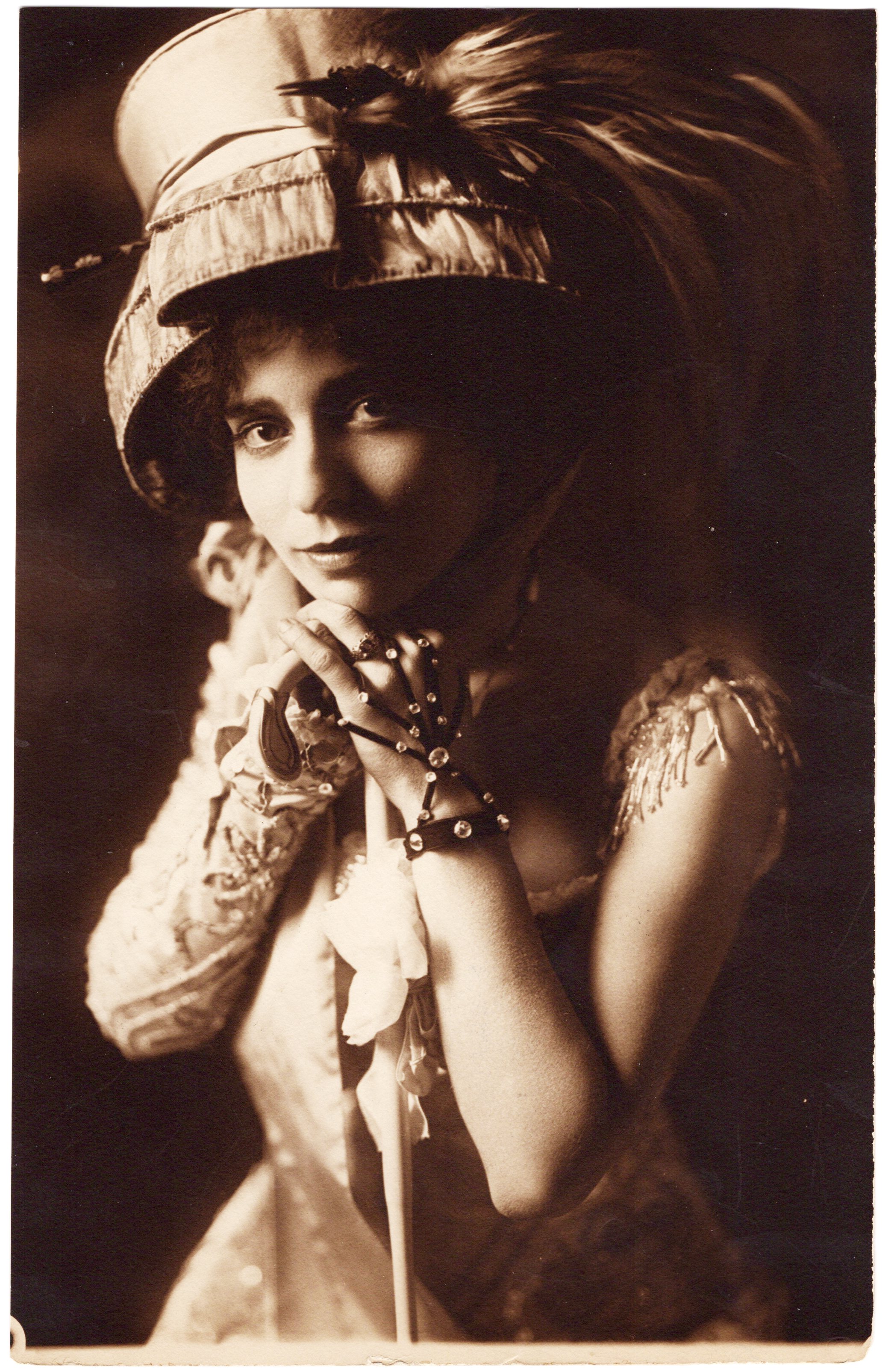
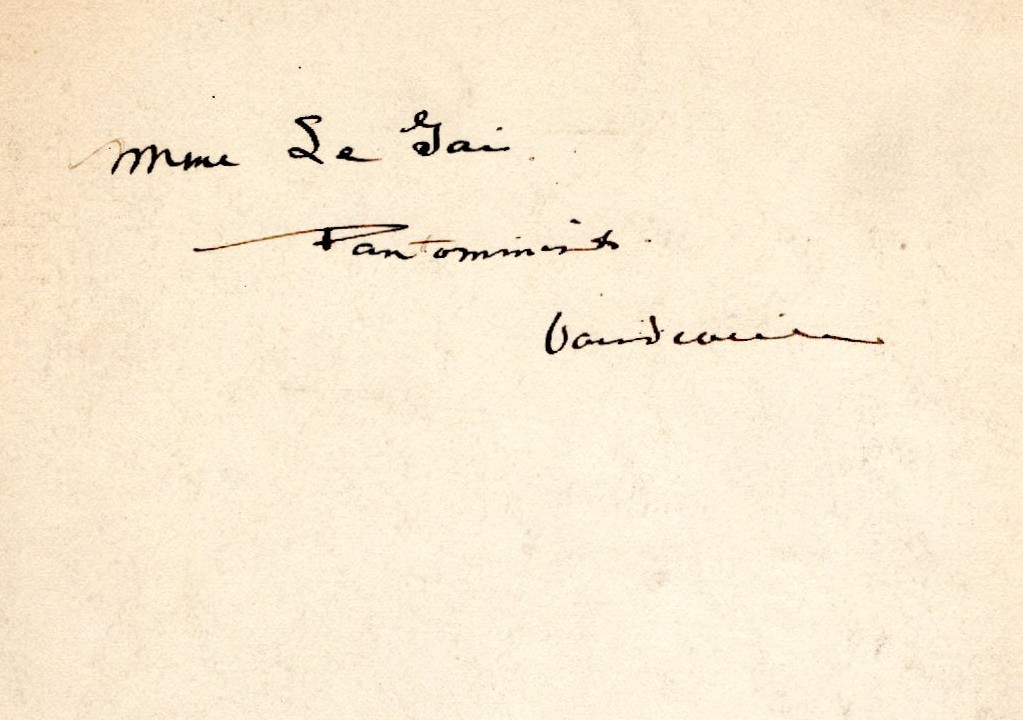
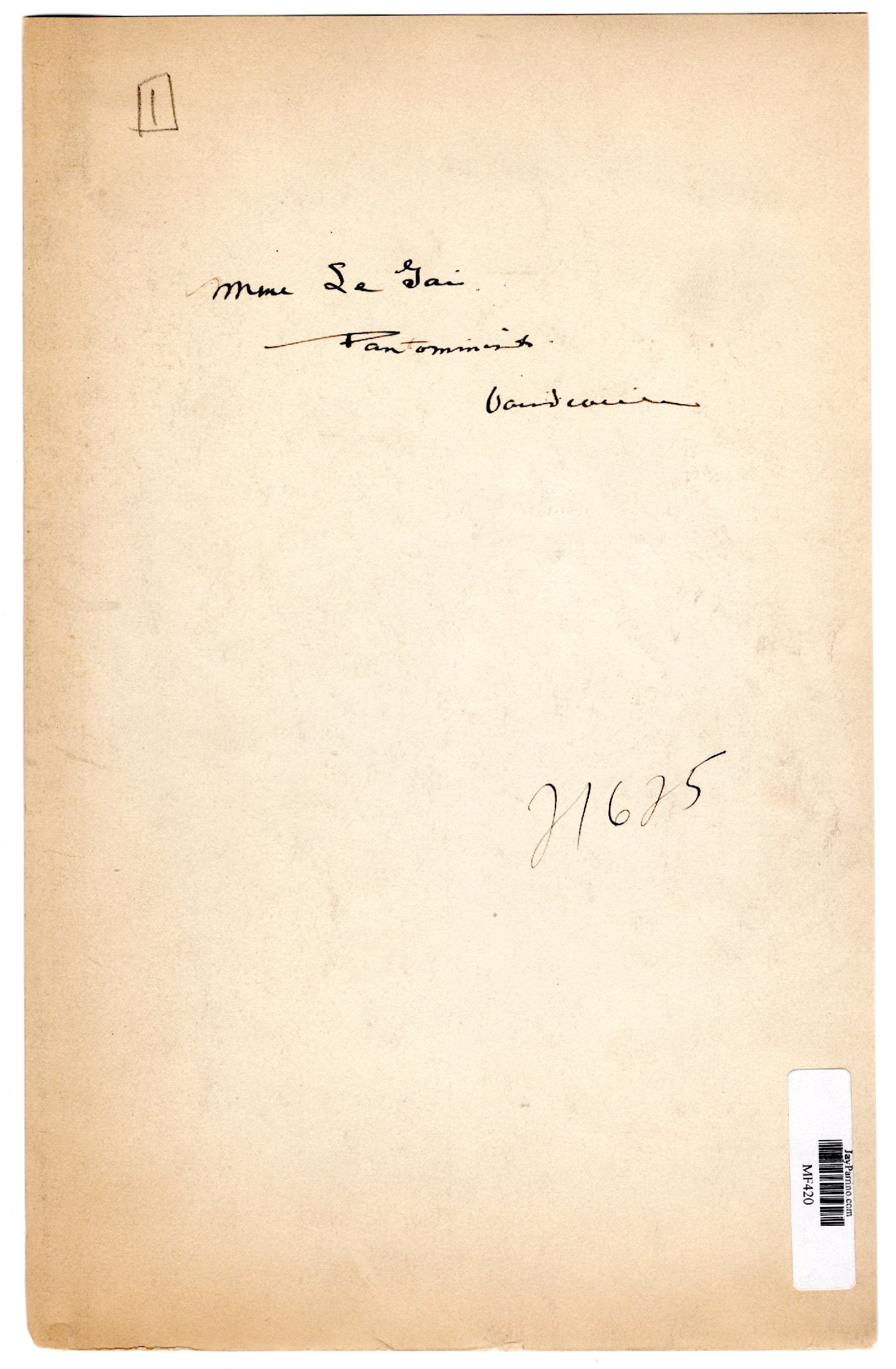
MADAME LE GAI : PANTOMIMIST : VAUDEVILLE : PIN-UP : HOLLYWOOD PHOTO 1918

This is a stunning and rare sepia-tone glamour portrait of a woman identified as Mme Le Gai, described on the reverse as a “Pantomimist” and “Vaudevillian.” Believed to date from around 1918, this photograph showcases an elegant, mysterious woman in elaborate costume—perhaps a stage or cabaret performer—gazing confidently into the camera. She wears a richly adorned hat with plumes, a beaded glove-like bracelet, and a delicately embroidered gown with satin and lace textures. Her theatrical pose and sensual expression make this image a prime example of early Hollywood pin-up photography, though its style is also heavily influenced by European cabaret traditions. The handwritten inscription on the back appears to read: “Mme Le Gai / Pantomimist / Vaudevillian.” There is some ambiguity—“Mme” could stand for Madame or Mademoiselle, and the surname may also be interpreted as Le Gai or Le Gaï. The elegant script suggests a deliberate stage name, possibly borrowed from the famed Parisian pantomime houses of the same name. “Le Gai” (French for “the merry” or “joyful”) was also used in naming French performance venues such as Le Théâtre Gai or variations like Le Gai Paris. This connection strengthens the possibility that the subject either performed in or took inspiration from these Parisian theatrical traditions. Though solid biographical confirmation of Mme Le Gai has not yet been found, the visual evidence, style, and inscription point to her role as a vaudeville-era pantomime performer, likely active in the United States or France around World War I. Her alluring presence and costume are consistent with the kind of studio portraiture used for performer promotion, possibly circulated as publicity or collectible pin-up material during the silent film and vaudeville boom.  (SOLD)

ANITA PAGE w/ CAT : SILENT FILM STAR : MGM : ROSS VERLAG : RPPC 1920s

This sepia-toned publicity postcard features Anita Page (1910-2008), an iconic silent and early sound film actress, posing with a tabby cat. She cradles the cat gently in her lap, both arms encircling it protectively. The cat appears calm, eyes half-closed in contentment or sleep, nestled into Page’s arms. Anita is styled with soft, sculpted blonde curls typical of late 1920s-early 1930s glamour. She wears a tailored dress or top with a broad, satin-trimmed collar and decorative slashes on the cuffs, along with a double-stranded pearl necklace and a bracelet on one wrist. Her expression is wistful—perhaps intentionally melancholy or dreamy—a popular aesthetic in studio portraits of the era. Her makeup emphasizes the eyes with dark liner and curved brows, enhancing her expressive gaze. The presence of the cat lends the portrait an intimate and slightly whimsical tone, softening the glamorous studio setting and humanizing the star. It was not uncommon for stars to be photographed with animals to add charm or relatability. The publisher of this postcard is Ross Verlag, a German company based in Berlin. The card is identified as (No.6247/1). The circular logo in the bottom right corner of the card belongs to Metro-Goldwyn-Mayer (MGM), the major Hollywood studio with which Anita Page was under contract. The message on the reverse of the card is written in Czech (or possibly Slovak). A rough translation reads: “Your devoted, Wishes you everything good – Your dear Miloš,  I send you this card for memory. The card is dated 1929. Anita Page was a major screen star in the late 1920s and early 1930s, often called “the girl with the most beautiful face in Hollywood.” She rose to fame starring alongside Joan Crawford in Our Dancing Daughters (1928) and appeared in The Broadway Melody (1929), which won the Academy Award for Best Picture. She retired young in the 1930s but returned sporadically to the screen in later years. She was one of the last surviving stars of the silent film era.  (SOLD)

EDITH STOREY : AMERICAN SILENT FILM ACTRESS

This vintage real photo postcard features American silent film actress, Edith Storey (1892-1967). She was born in New York City and began acting when she was still a child. Her first film was “The Two Brothers” (1908). By 1913, she had appeared in 75 films and between 1908 and 1921 she performed in nearly 150 films. She performed in many Westerns and was noted for her excellent horseback riding skills. She also did her own stunts. She worked for Vitagraph Studios (New York) for the majority of her career. Storey also acted on stage and was noted for acting in a number of male impersonation roles. She appeared in two Broadway plays. The first was in 1903 and the second was in 1904. She retired at the age of 29 in the year of 1921. During the Spanish Flu Epidemic, Storey drove an ambulance in New York City for the National League for Women’s Service. It is also reported that she worked as a hospital night nurse at the height of the epidemic. After retiring she served almost 30 years as village clerk for Asharoken, Long Island. She died at the age of 75 in Northport, Long Island, New York. Within the message on the this postcard, Daisy (the sender) tells Lucille (the recipient) that Edith Storey is her favorite movie actress. A caption on the front of this card states that Storey has brown eyes and dark brown hair. This postcard was published by Kraus Mfg. Co. of New York.  (SOLD)

THELMA TODD : MOVIE ACTRESS : GODFREY PHILLIPS : CIGARETTE CARD : 1934

This vintage tobacco card features American silent and talkie film actress, Thelma Todd (1906-1935). She was also a businesswoman. Her nicknames included “The Ice Cream Blonde” and “Hot Toddy”. She appeared in about 120 feature films and shorts between 1926 and 1935. She was known for her comedienne talent. Among the performers she worked with are the Marx Brothers, Laurel & Hardy, and Buster Keaton. In 1934 she opened a restaurant in Los Angeles with two partners. In 1935 she was found dead in her Lincoln automobile. The car was in a garage and had died from carbon monoxide poisoning. Her death was ruled to be accidental but there was much speculation about whether she committed suicide or had been murdered. This cigarette card was published by Godfrey Philips Ltd. The firm was a British tobacco importer and manufacturer of cigars and Cigarettes. The business was established in 1844 and was one of the first tobacco companies to issue cigarette cards. Their first set was published in 1904. The cards were meant to stiffen cigarette packaging, to serve as a collectible, and to advertise the cigarette brand. This cigarette card was issued in 1934.  SOLD