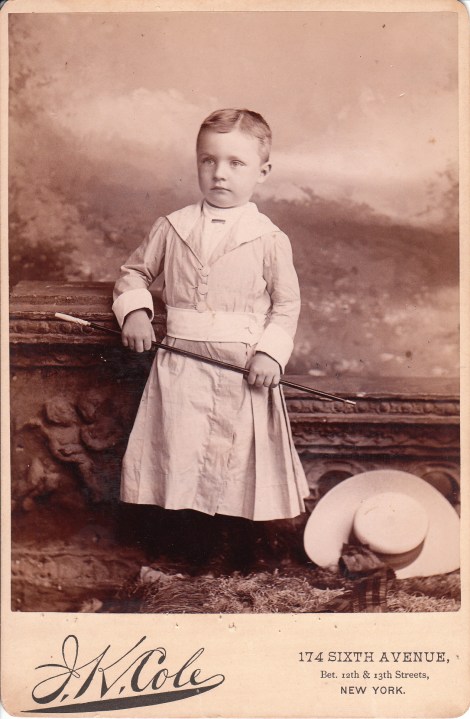
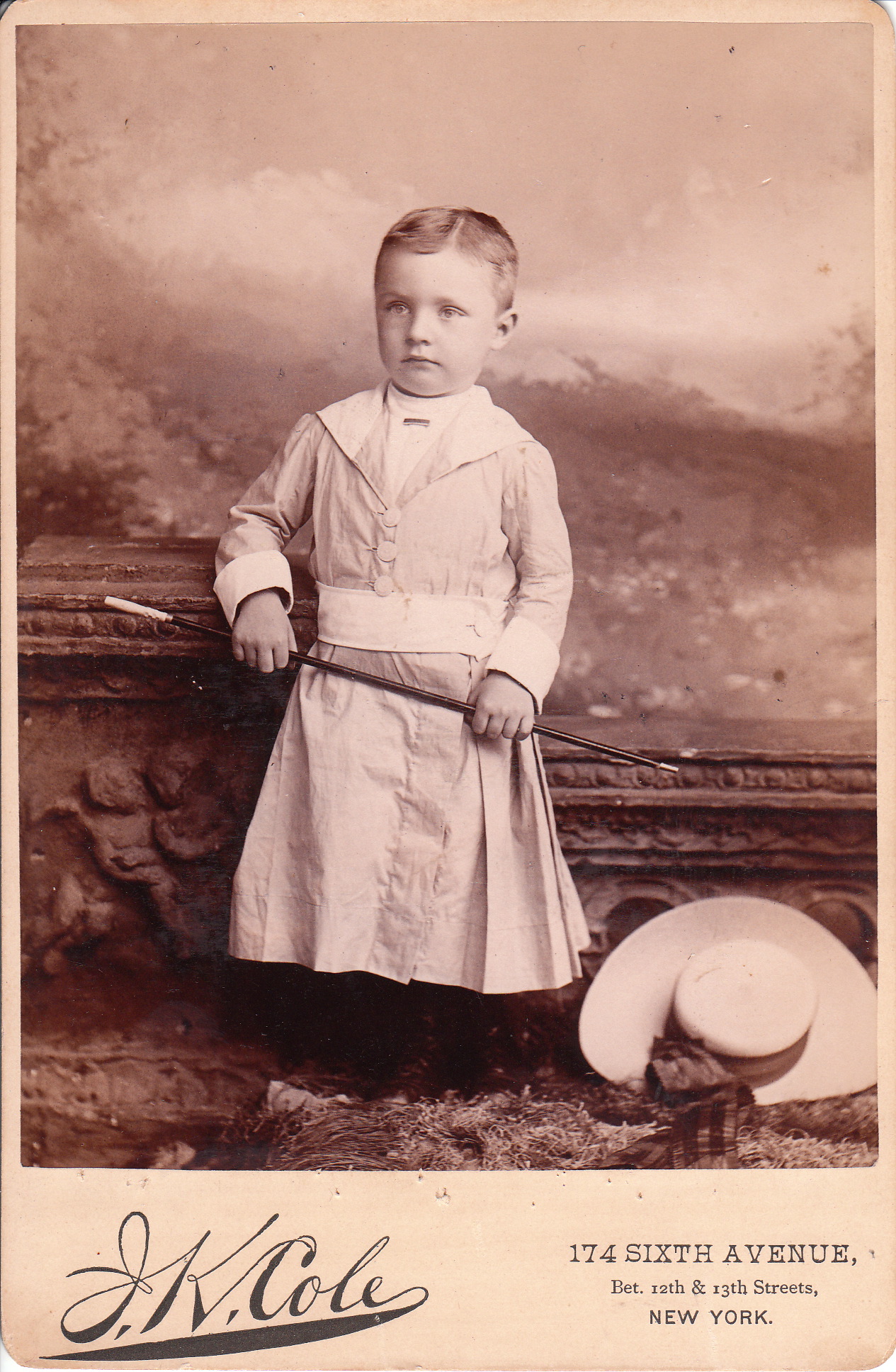
 A little girl poses for her portrait at the studio of J. K. Cole in New York City. She is wearing a light jacket and holding what appears to be, a walking stick. Her sun hat lies on the floor beside her. She has a serious expression as gazes at the camera. The New York Times (1893) reported that Cole was “shabbily treated by cupid”. The author noted that the 38 year-old photographer did not want this story published and that Cole “admits the truth of the narrative but declares that it is a private affair and refuses to discuss it”. Cole and the young lady in this story, were childhood friends. As they grew older, his friendship grew into love. Five years before this story appeared, they were to be married. However, without notice to Mr. Cole, she suddenly married another man who was “more abundantly blessed with earthly goods” than was Cole. Cole was quite “cast down” but he eventually recovered. Soon after the wedding, Cole’s ex-girlfriend’s marriage ended, after her husband’s mother expressed great disapproval about the pairing. When Cole learned of the separation, he returned to his beloved, and she promised to marry him. As Cole was boarding his carriage to go to his wedding, he received a message from his fiance stating she was ill and needed some days to recover before marrying. Cole sent a firm message back to his fiance stating that the minister was waiting, all arrangements had been made, and that they needed to at once, proceed with the wedding. The messenger failed to deliver the message and failed to inform Cole of his inability to find his fiance. The next day, Cole’s fiance sent a letter to him that was critical of his failure to visit her when she was ill. Cole explained to his girlfriend the confusion caused by the undelivered message of the previous night, and the two decided to reschedule their wedding for the coming evening, just hours away. Cole dressed for the wedding , drove to her home, and waited in the parlor, talking with his future mother-in-law. While they chatted, a little girl ran in the parlor crying out, “Lizzie has gone and run away with her old husband”. Both Mr. Cole and his intended to be mother-in-law, collapsed in shock. Ironically, Lizzie and her ex-husband, remarried using the same minister that Cole had hired to perform his wedding. Apparently, reliability and stability were not some of Lizzie’s greatest assets.
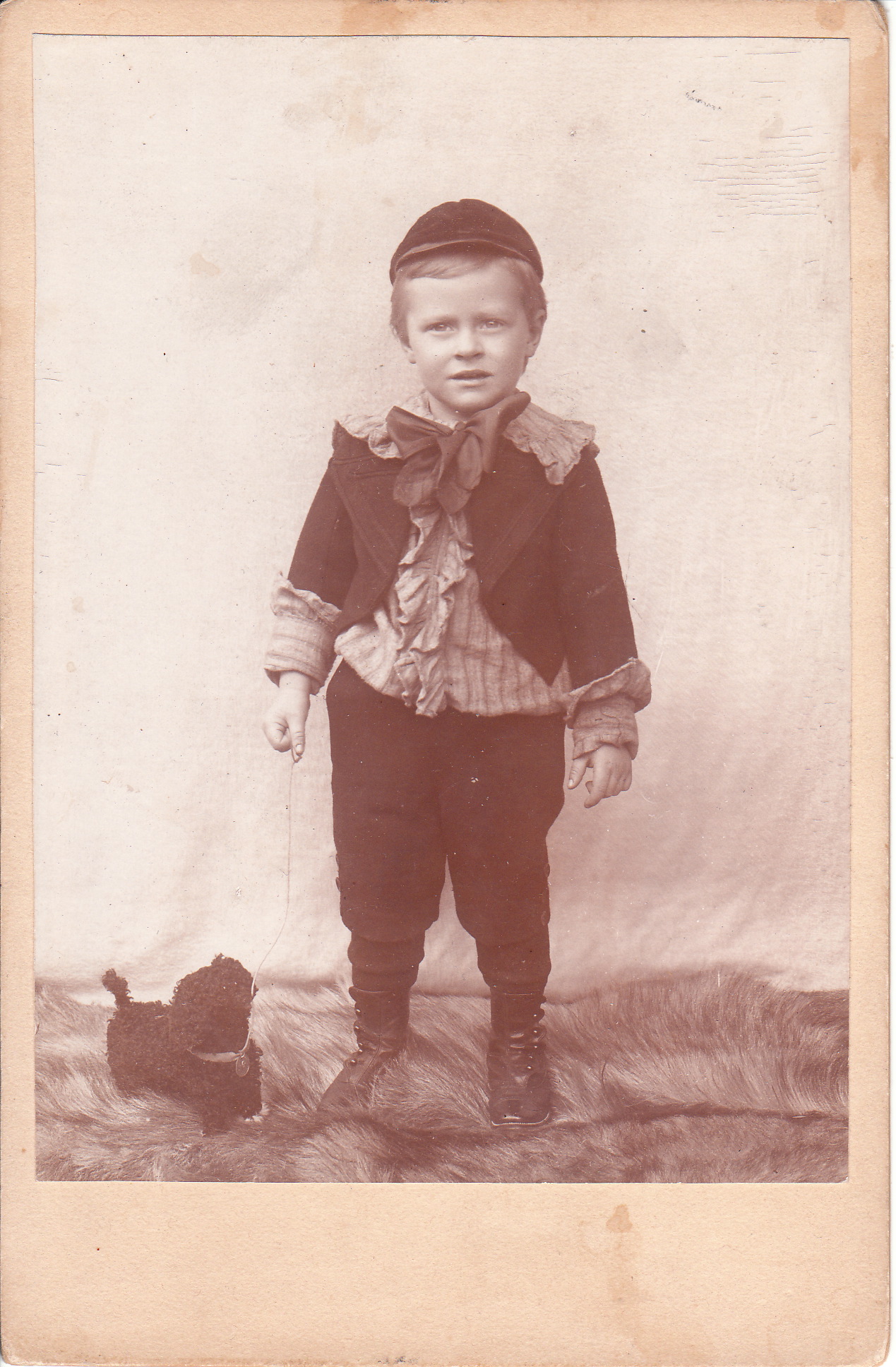 A cute little boy poses with his pull-toy dog. He is very dressed up for his portrait. Note his large bow tie and his cute cap. The photographer and the location of the photographic studio are unknown. The photographer’s creativity, in regard to his choice of background and props, is very uninspiring.




 THE CABINET CARD GALLERY