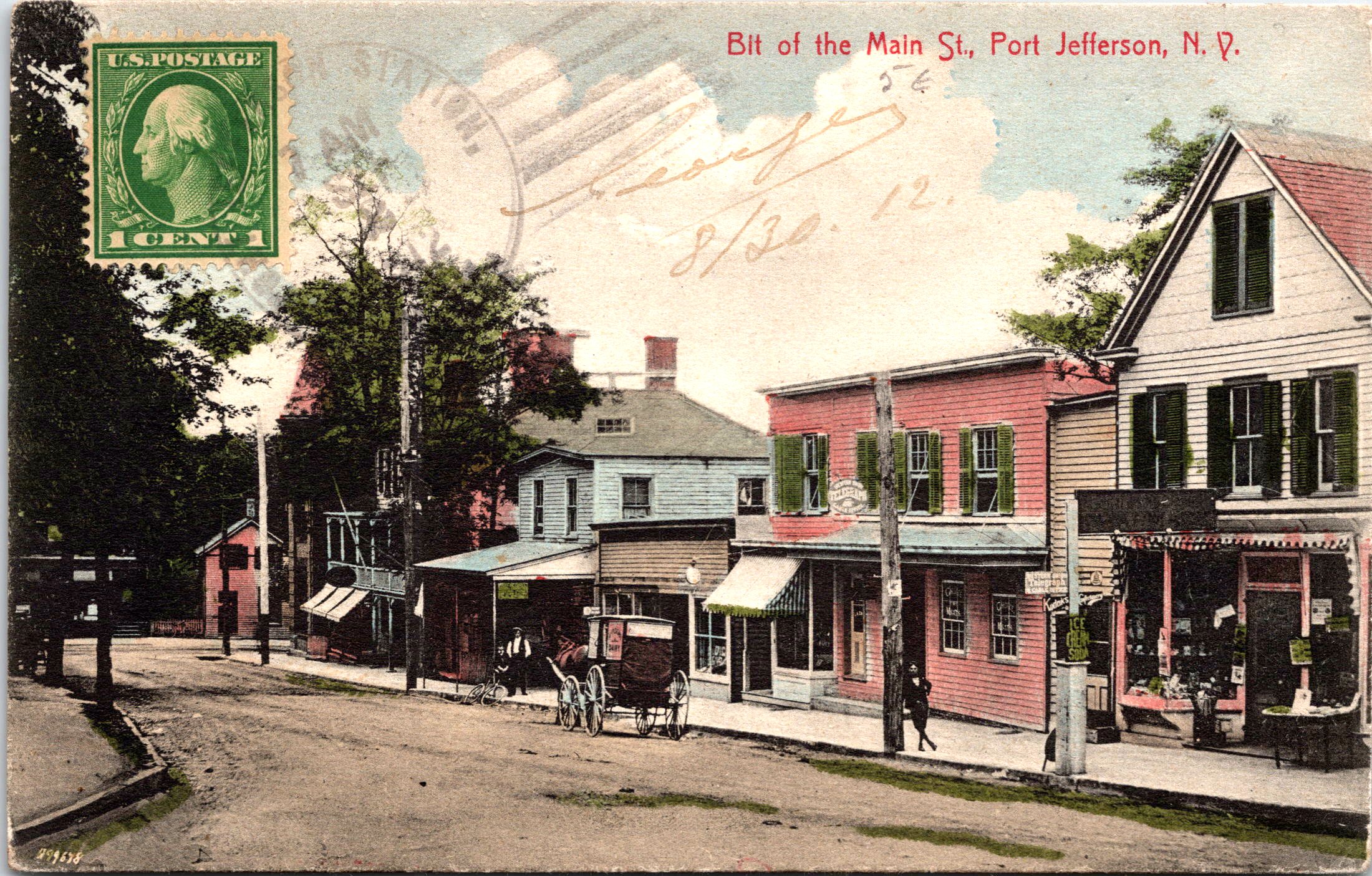
This lithographic postcard features a street scene in Port Jefferson, Long Island, New York. The postcard pictures Main Street in 1912. The road, sidewalk, stores and trees, has a resemblance to the way the street looks today. Port Jefferson is a village in the town of Brookhaven. Port Jefferson is on the north shore of Long Island and is the home of a commercial ferry line that shuttles back and forth to Bridgeport, Connecticut. The village was first settled in the 17th century and became an active shipbuilding center in the mid 9th century. Port Jefferson was beautiful than, and beautiful now. Note the postcard view of quaint shops, a horse led delivery wagon, and the sign on a sidewalk pole advertising a ice cream shop. This postcard was published by the G. W. Dare as part of a series (No.23). SOLD
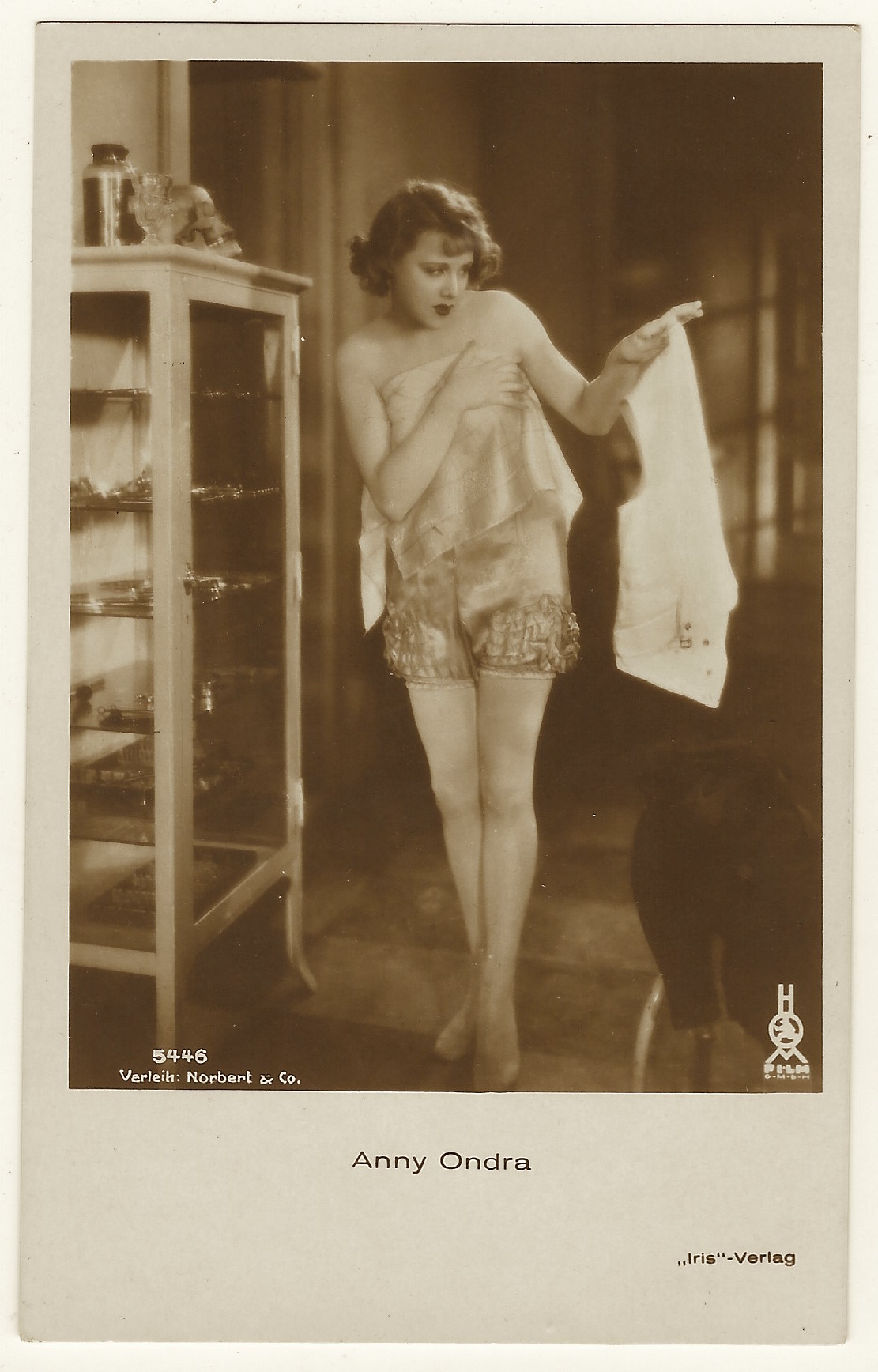
This risque vintage real photo postcard (Postcard 1) features actress Anny Ondra. The postcard was published by Iris Verlag. The photograph is by Verleih Norbert & Co.. The postcard is part of a series (no. 5446). The photo seen on this postcard captures Ondra in a scene from the movie “Blackmail” (1929). This particular postcard is rare. I have searched extensively and have not been able to locate this particular image elsewhere. Anny Ondra (1903-1987) was a Czech film actress. She was born in Tarnow, Galicia, Austria-Hungary (now Poland). She was active in the movie industry between 1914 and 1957. She acted in Czech, Austrian, and German films in the 1920’s. She appeared in some British dramas, most notably, Alfred Hitchcock’s “The Manxman” (1929) and “Blackmail” (1929). The IMDb credits Ondra with over 90 acting credits between 1914 and 1957. She appeared in more than 40 films in the sound era. However, her career in British films was hurt by her thick accent. Check out the youtube video below. In this “test film”, Hitchcock “interviews” Ondra and makes her visibly uncomfortable and embarrassed by asking her very personal questions. She was married to German boxing champion Max Schmeling between 1933 and 1987. Schmeling was the world champion between 1930 and 1932. He is well known for his fights with African American fighter, Joe Lewis. Ondra’s father was a Czech, Austro-Hungarian military officer and she grew up in Tarnow, Pula, and Prague. At the early age of seventeen, she acted in the theater as well as in a film. When her family learned that she had acted in a film, they were extremely angry. In fact, she reported that she was given a beating by her father. Post World War I was a time, for many people, that being an actress was akin to being a prostitute. Ondra began to live with her boyfriend (her debut film’s director) but after some time, the relationship ended because she wanted a family and he wanted nothing to do with marriage. In 1933, after a three year romance, Anny married Max Schmeling. She had been in a film with the boxer (“Knock-Out”, 1935). It was a “happy” marriage and the couple remained together until her death in 1987. Ondra and Schmeling were hot names in Nazi Germany. German fascists tried to exploit them in order to popularize their movement. Schmeling was seen as a German superman while Ondra represented the blonde Aryan type. The two celebrities refused to collaborate. Schmeling turned down honors and even helped hide two Jewish children, saving their lives. However, because of Nazi propoganda, many believed that the couple had collaborated. As a result, Schmeling and Ondra suffered financially for their fictional cooperation with the Nazis. Ondra was portrayed in two modern day movies, “Ring of Passion” (1978) and Joe and Max (2002). (SOLD)
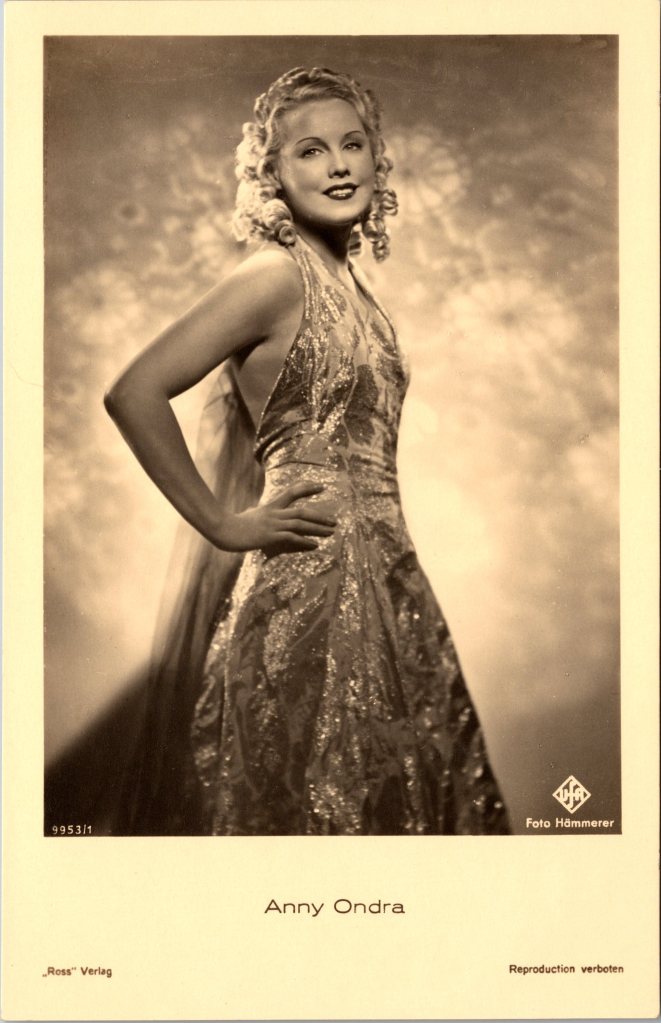
Postcard 2 was published by Ross Verlag. The photograph is from the Hammerer studio. The logo for UFA, a German film company, can be seen in the right hand bottom corner of the image. (SOLD)
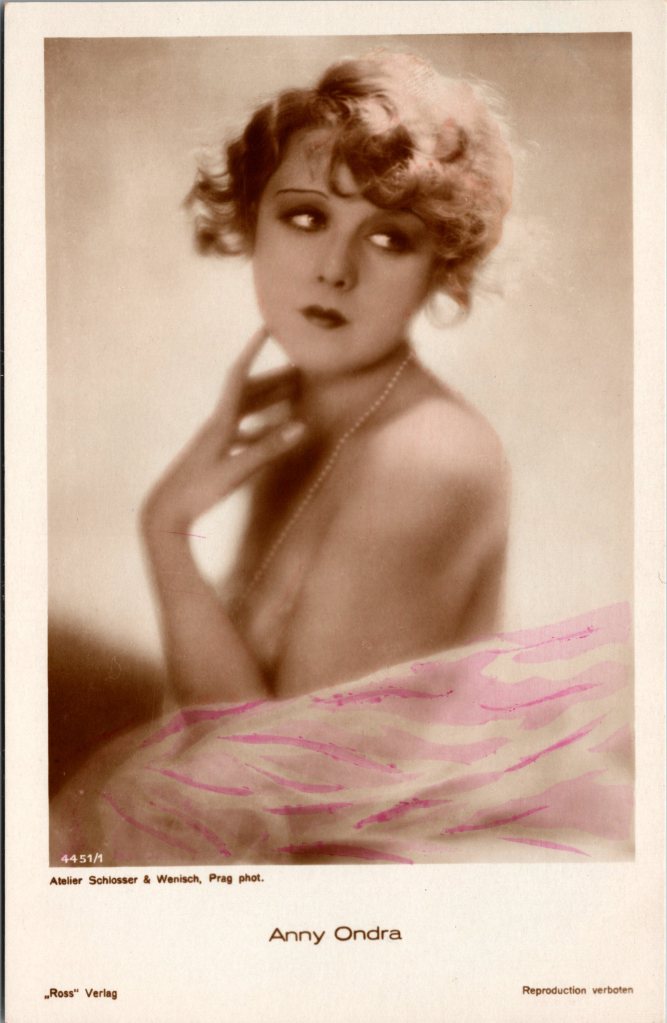
Postcard 3 is risque for it’s time. The postcard was published by Ross Verlag. Ondra’s photograph is from the Schlosser & Wenisch studio. (SOLD)
Postcard 4 is an uncommon vintage real photo postcard is of Dutch origin and was published by Remaco. The photograph shows Anny working in a tailor shop. She is pressing a shirt and smiling while she works. This photo likely captures a scene from one of Ondra’s films. Note the other woman in the photo busy at work on their tailoring tasks. This postcard is in very good condition. See Scans.
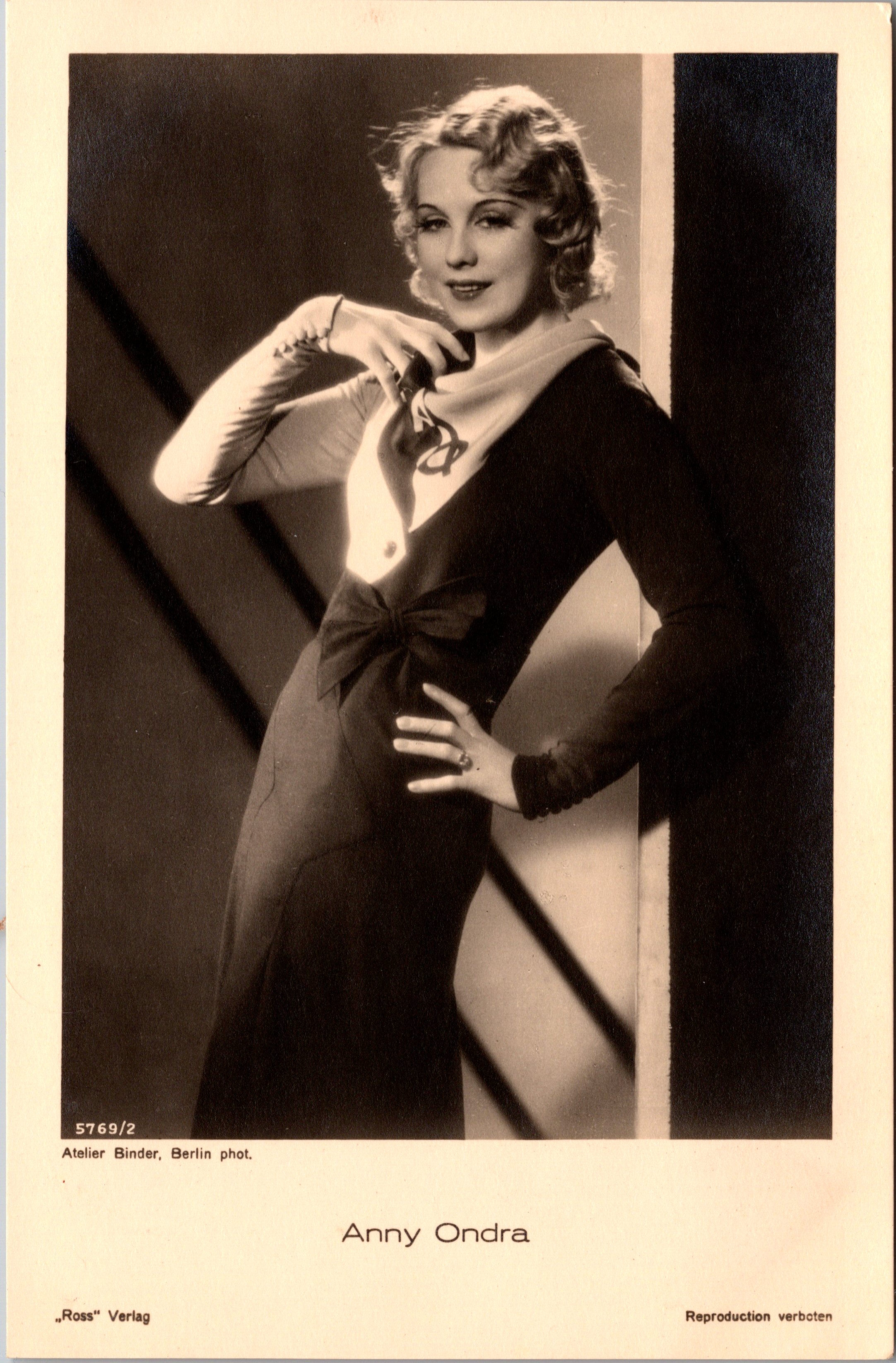
Postcard 5
Postcard 5 was published by Ross Verlag. The photograph is by Alexander Binder. The postcard is part of a series (no. 5769/2). (SOLD)
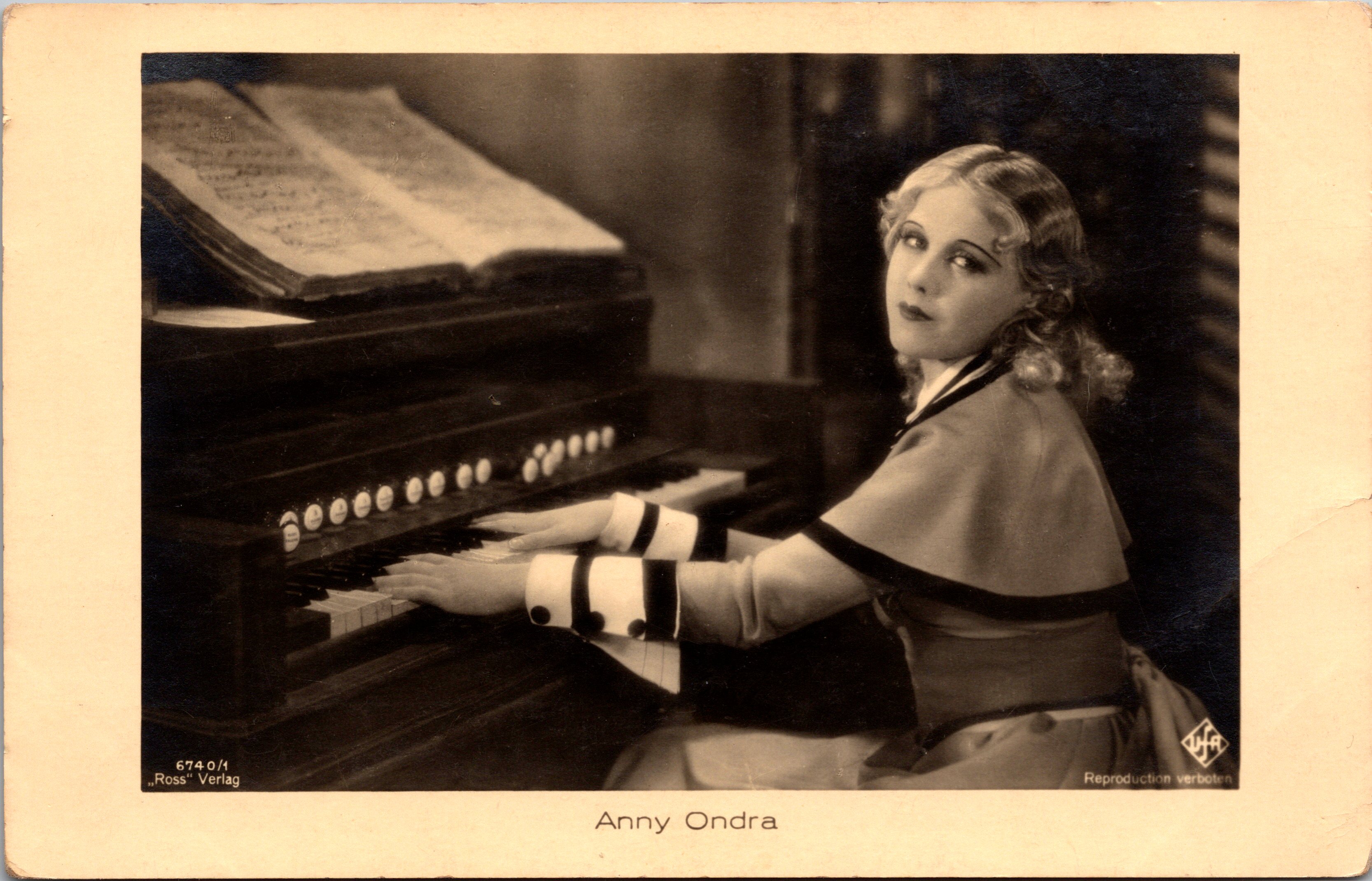
Postcard 6 features Ondra playing the piano. She is displaying a beautiful half smile. The postcard was published by Ross Verlag as part of a series (No.6740/1).The logo for UFA, a German film company, can be seen in the right hand bottom corner of the image. (SOLD)
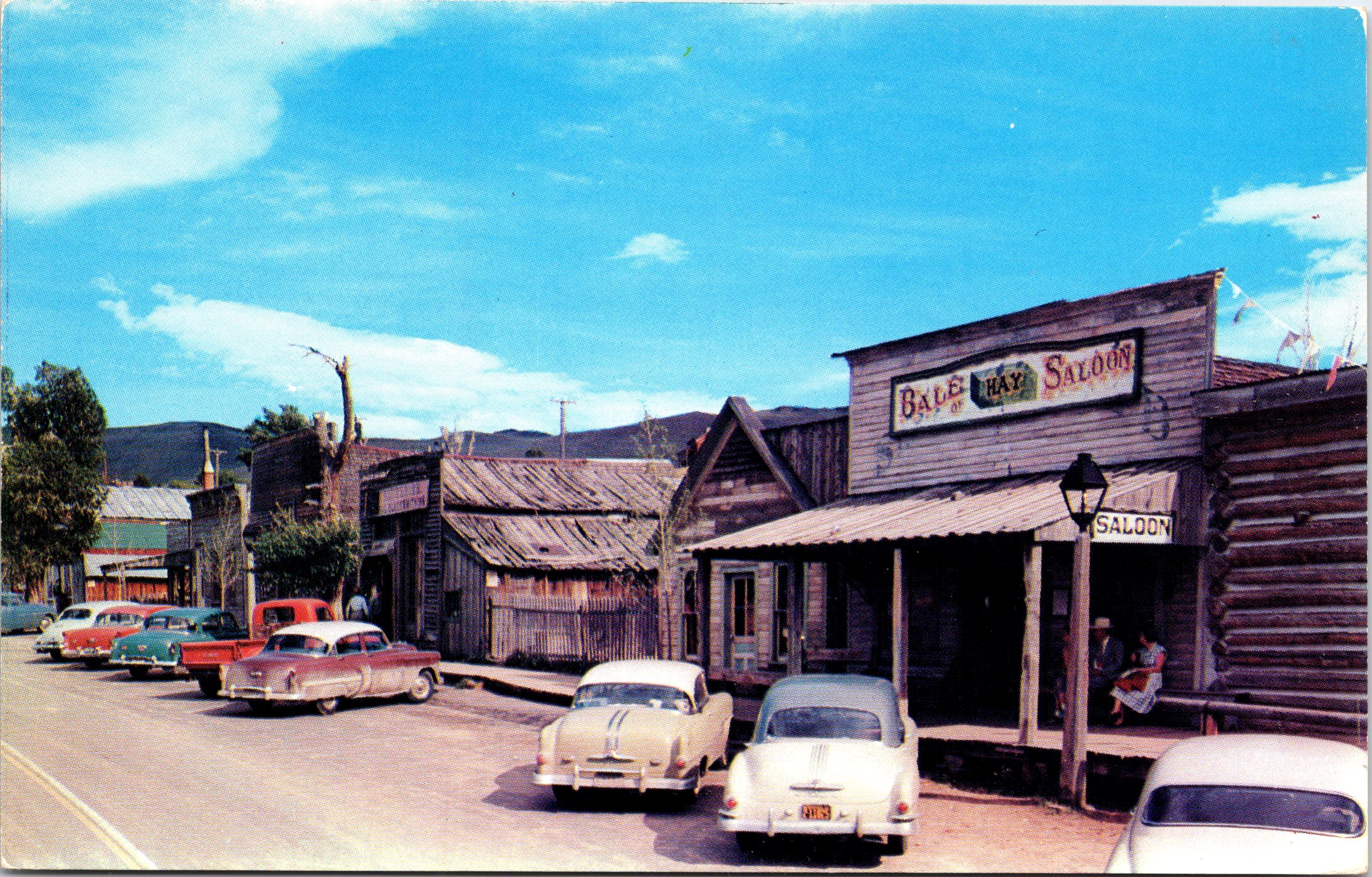
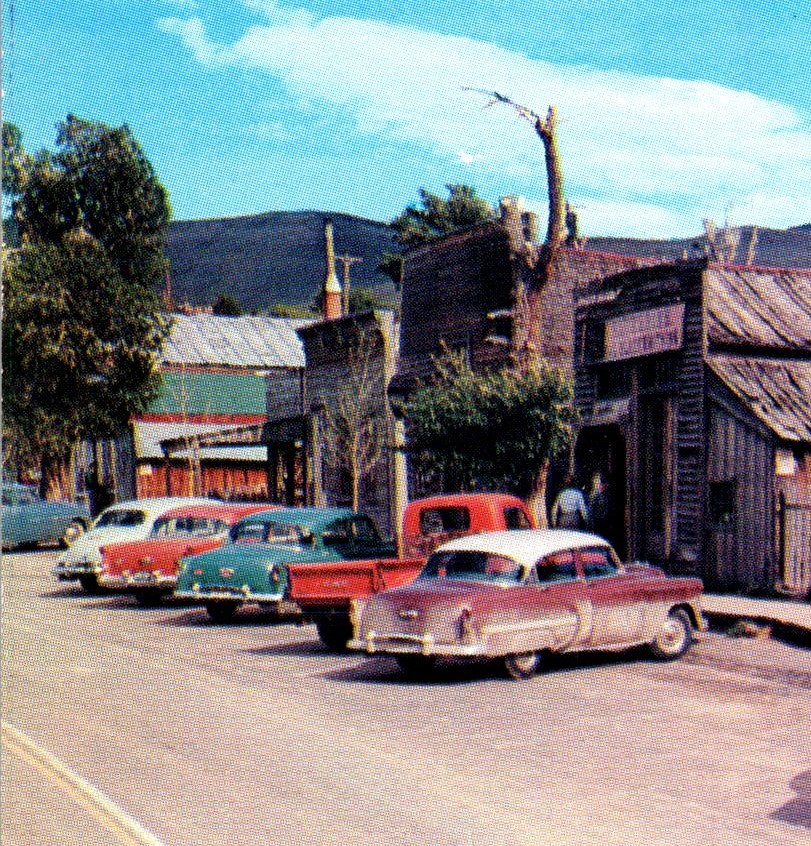
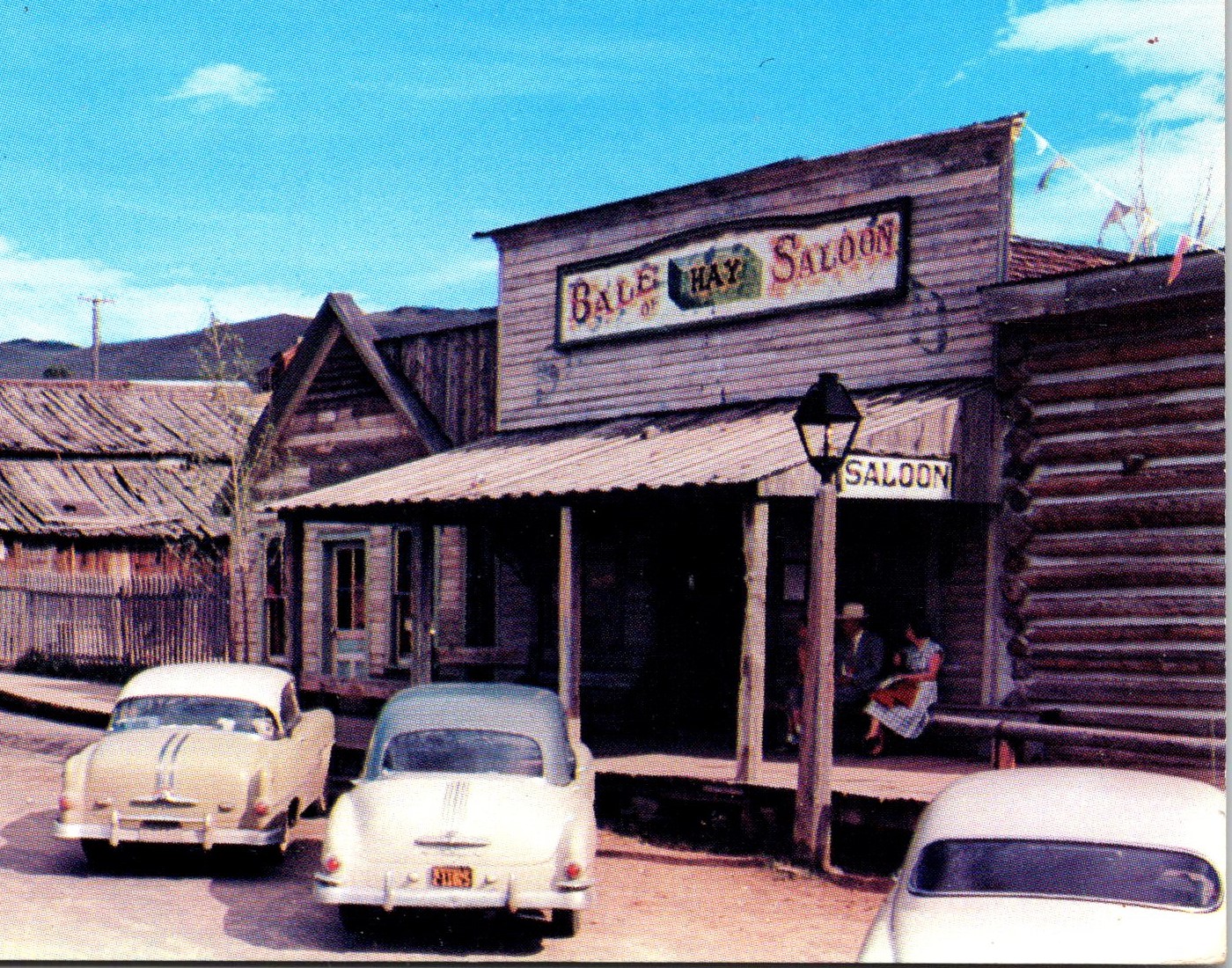
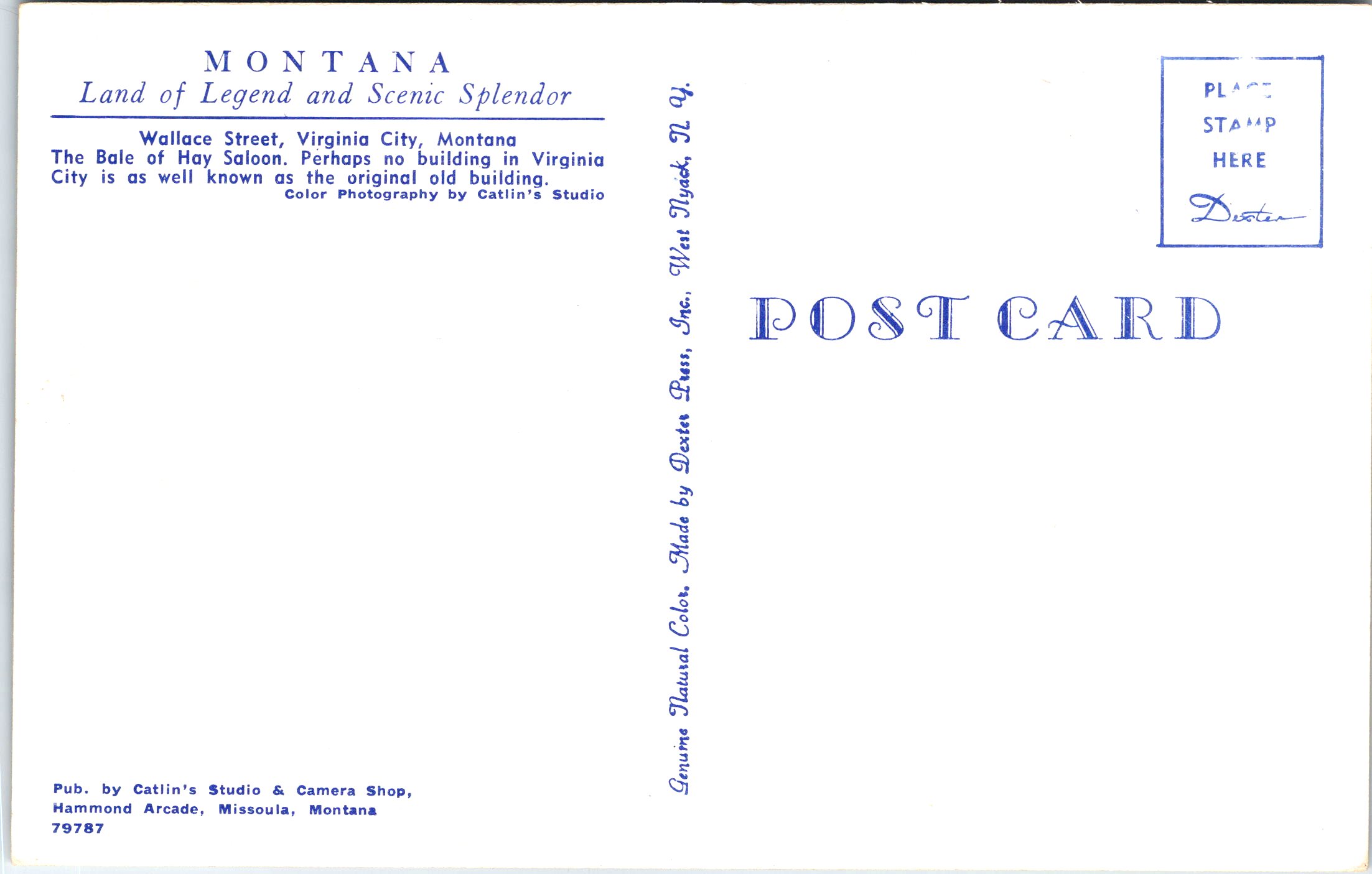
This vintage real photo postcard features a street scene in Virginia City, Montana. Virginia City was founded during, and due to, the gold rush. The card captures a view of Wallace Street. The cars in the photo appear to be from the 1950’s. Note the store sign that reads “Bale of Hay Saloon”. The postcard was published by Dexter Press for Catlin’s Studio & Camera Shop (Missoula, Montana). Catlin’s also was the photographer of this photo. SOLD
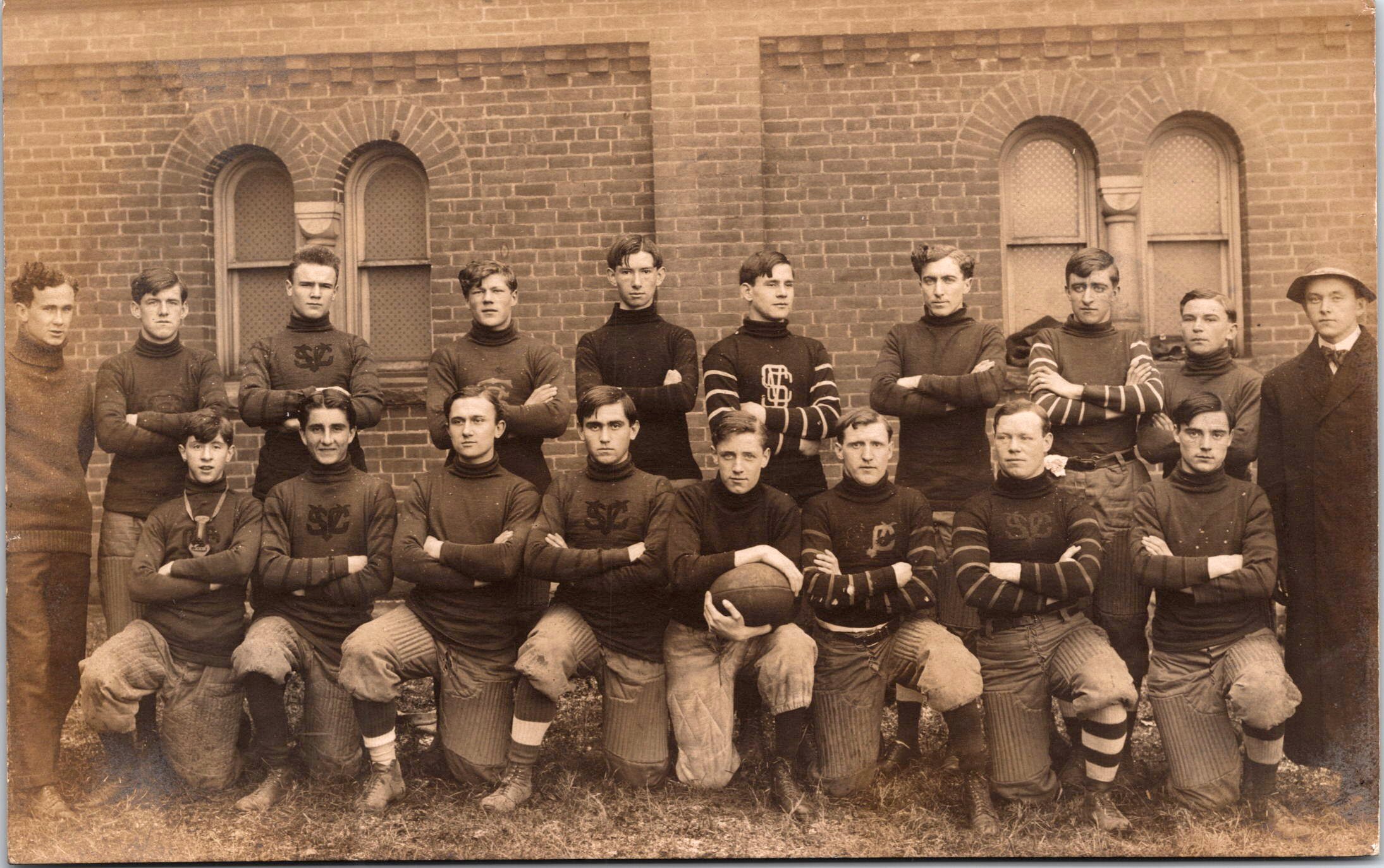
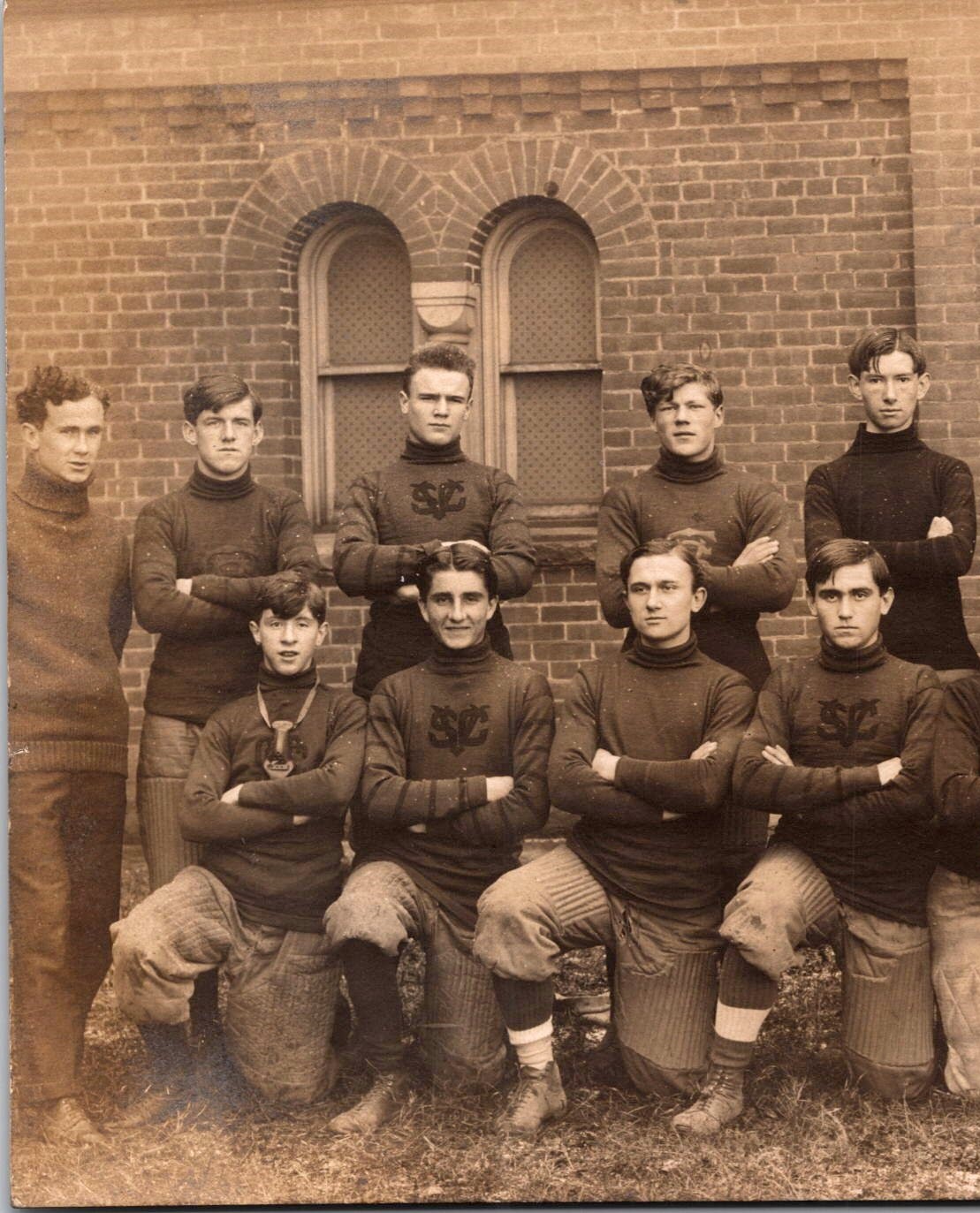
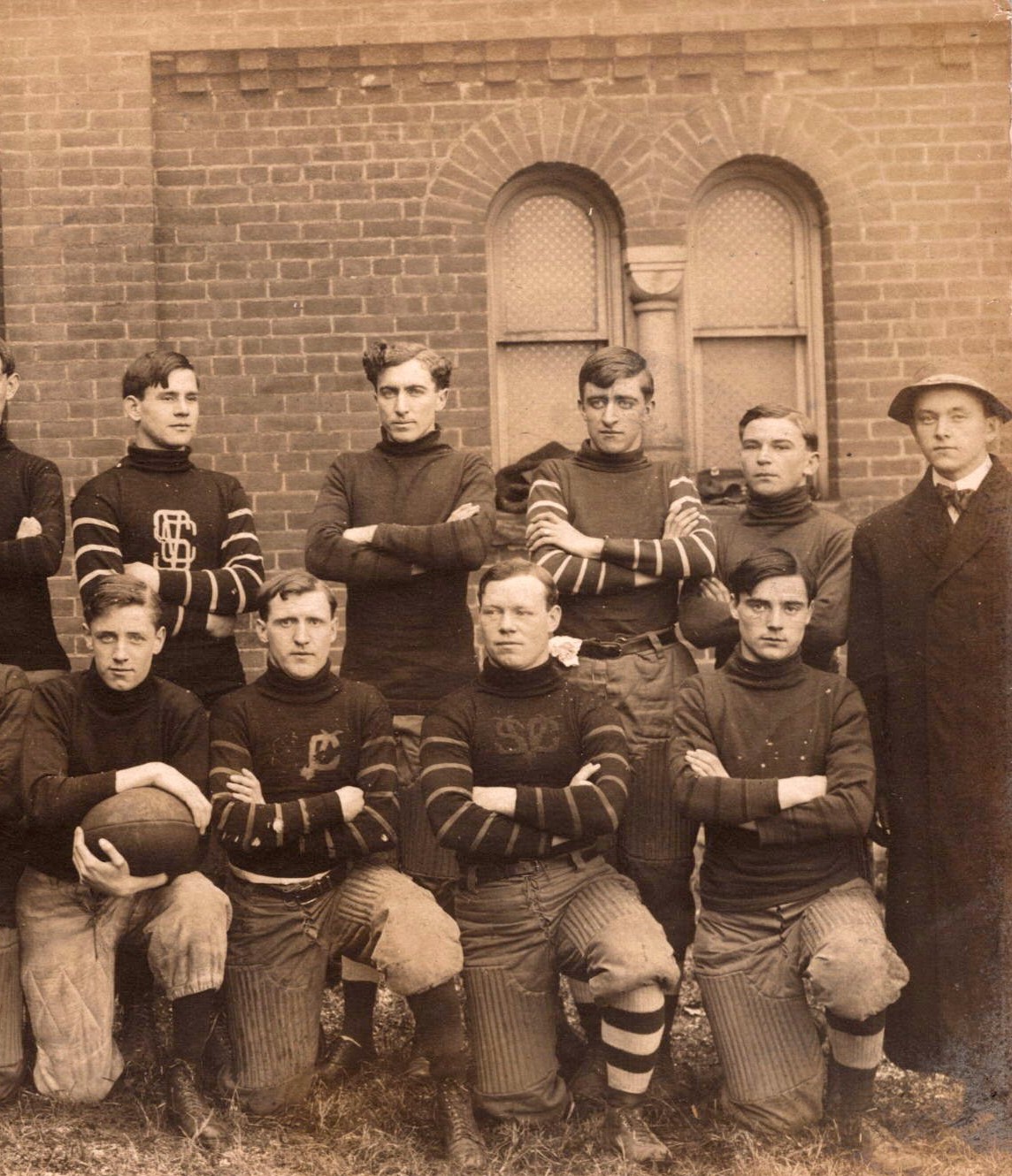
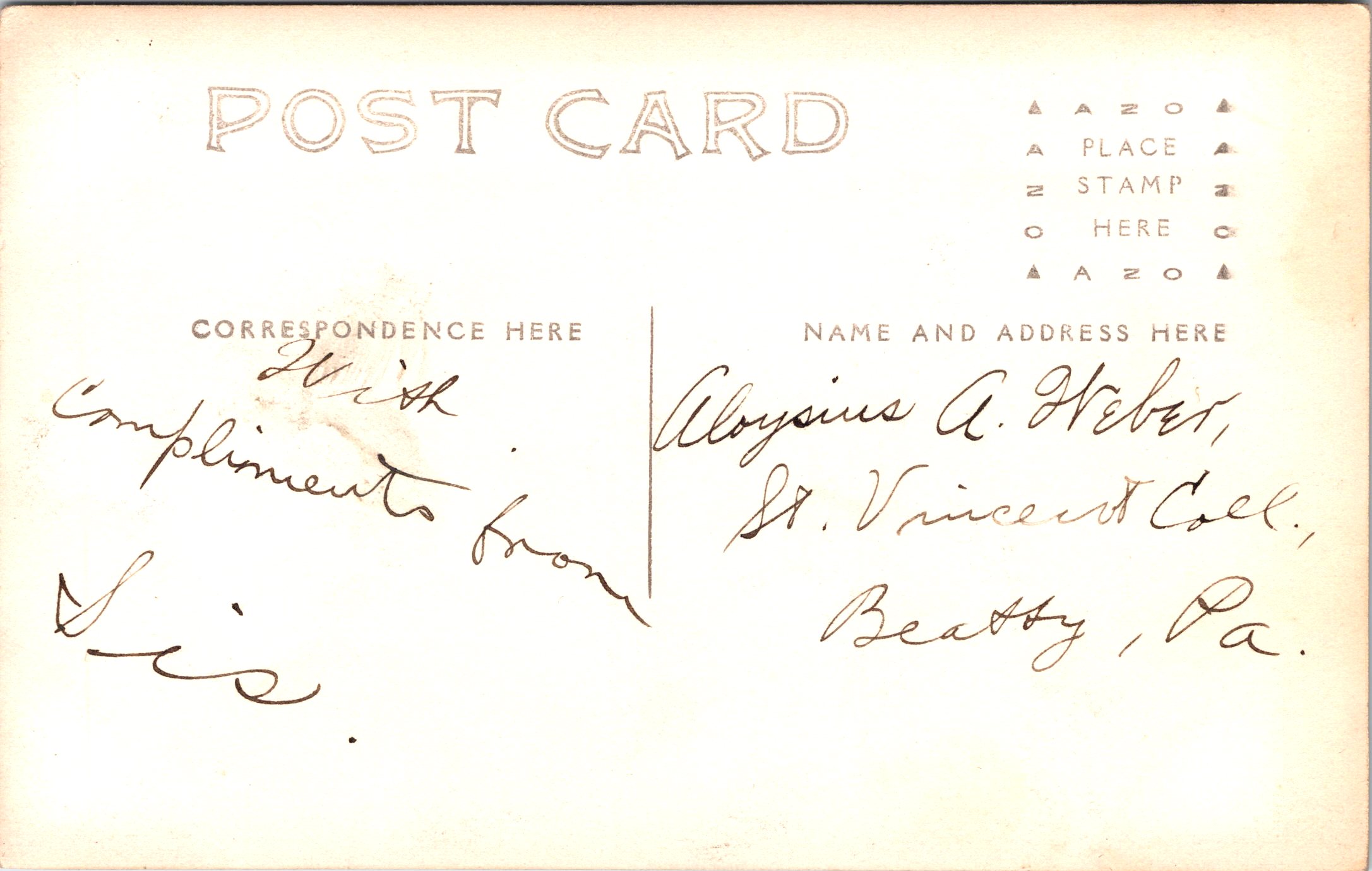
This vintage real photo postcard features the St. Vincent’s College Rugby Team. The players are dressed in their uniforms. The boys are beautifully posed for their team photo. St. Vincent College is a private Benedictine college in Latrobe, Pennsylvania. The school was founded in 1846, In regard to sports, one of the college’s claims to fame is that since 1966, the campus has served as the training camp host for the Pittsburgh Steelers. The AZO stamp box on the reverse of this postcard indicates that the card was published sometime between 1904 and 1918. SOLD
Three men, dressed in western fashion, pose for photographer D. W. Carpenter, in La Junta, Colorado. The men may be ranchers or businessmen, judging by their clothing. They seem less likely to be cowpokes. The men are dressed in their finest clothing and wearing three different types of neckwear. A standard necktie, a bandana type tie, and a bow tie, are all represented. To of the men are wearing pins. The gentleman standing on the left in the image has a pin with a portrait of a woman. The seated man’s pin has words on it but they are not decipherable with available magnification. The two standing men are displaying some affection, not commonly seen among males on cabinet cards of this era. La Junta, Colorado, is located on the Arkansas River, in southeast Colorado. The town was formed in 1881 and was a railroad town (Santa Fe Railroad) that became a center of trade. It is interesting to note that this photograph was taken not long after the formation of La Junta. SOLD
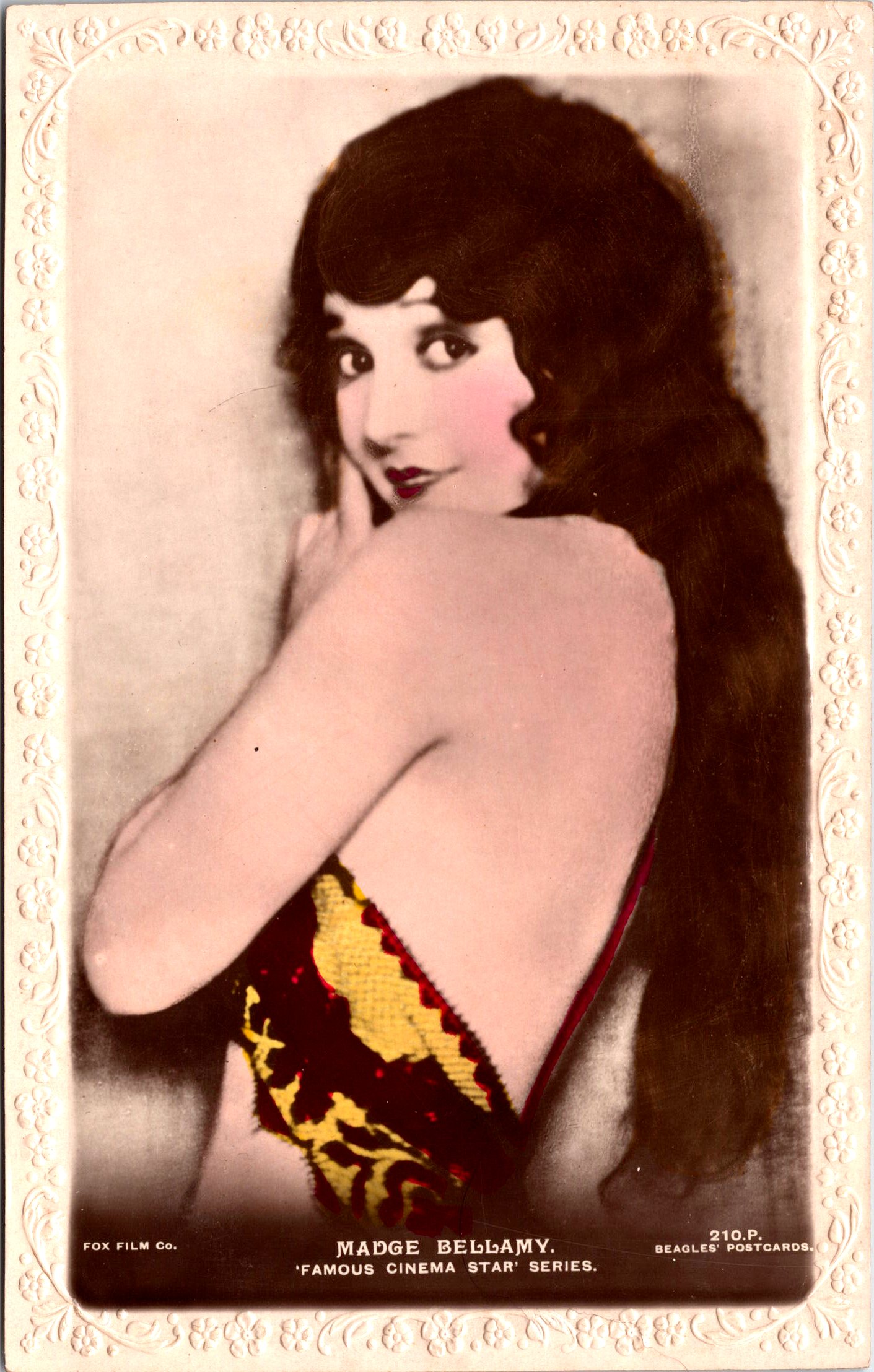
Postcard 1 is a hand tinted vintage real photo postcard that features Madge Bellamy (1899-1990), an American stage and film actress. She was a popular leading lady in films of the 1920’s and 1930’s. The sound era put the brakes on her career and a romantic scandal in the 1940’s brought it to a total stop. Madge was a Texan. She was born in Hillsboro and was raised in San Antonio and Brownwood. Her father was an English professor at Texas A&M University. As a young child she took dancing lessons but soon, she was interested in becoming an actress. At age 9, she made her stage debut in “Aida”. She and her family moved to Denver, Colorado. She met Carlos Bellamy there and the two married. When Madge decided to leave the state to pursue acting, her marriage ended. Madge went to New York City and worked on Broadway as a dancer. In 1919, she replaced Helen Hayes in Broadway’s “Dear Brutus”, opposite actor, William Gillette. Her career took off thereafter. In 1920, Madge appeared in her first film as a supporting actress to Geraldine Farrar. She then signed a contract with the Triangle Film Corporation. Her “breakout role” was as the title character in Lorna Doone (1922). In 1924 she signed a film contract with Fox Film Corporation. She stayed there five years and during that time she appeared in two films for film director, John Ford. In 1925, she began to have difficulties with fox executives. In 1928, she appeared in Fox’s first talking film, “Mother Knows Best”. In 1928, she married for a second time. The marriage lasted 3 days before she and her husband separated. By 1929, Bellamy’s career entered a tail-spin. She had made poor choices out of her unbridled anger. Fan magazines gave her the nickname of “Miss Firecracker” due to her temperament. In 1929, she also quit her contract with Fox, right after they bought the rights to make a film out of Broadway play. The vehicle was bought with a plan to have Madge be it’s star. Bellamy later admitted she quit over money and added “I got too big for my britches”. She didn’t work again until 1932. She accepted roles in “Poverty Row” (B-movies) films. One of these films was “White Zombie” (1932) in which she appeared opposite Bela Lugosi. Her performance received many poor reviews from film critics. By 1940, Madge basically had no film career. However, she wasn’t done with drama. She was arrested after firing three shots from a .32 caliber revolver at her former lover of five years. The incident was premeditated. She was angry at her intended victim because he married a model shortly after ending their affair. Fortunately, her aim was poor and she missed. The only casualty was her ex boyfriend’s car which took a couple of shots into it’s body. Bellamy pleaded guilty to a lesser charge (violating gun laws), and received a suspended six month sentence and probation. Madge Bellamy’s IMDb filmography reports 61 credits between 1920 and 1945. This vintage postcard is provocative. This postcard is risque for it’s era. She is showing a lot of bare skin. The postcard was published while Madge was under contract with Fox. Therefore, the postcard is from before 1929. The card was published by J. Beagles and is part of the “Famous Cinema Star Series” (No.210P). (SOLD)
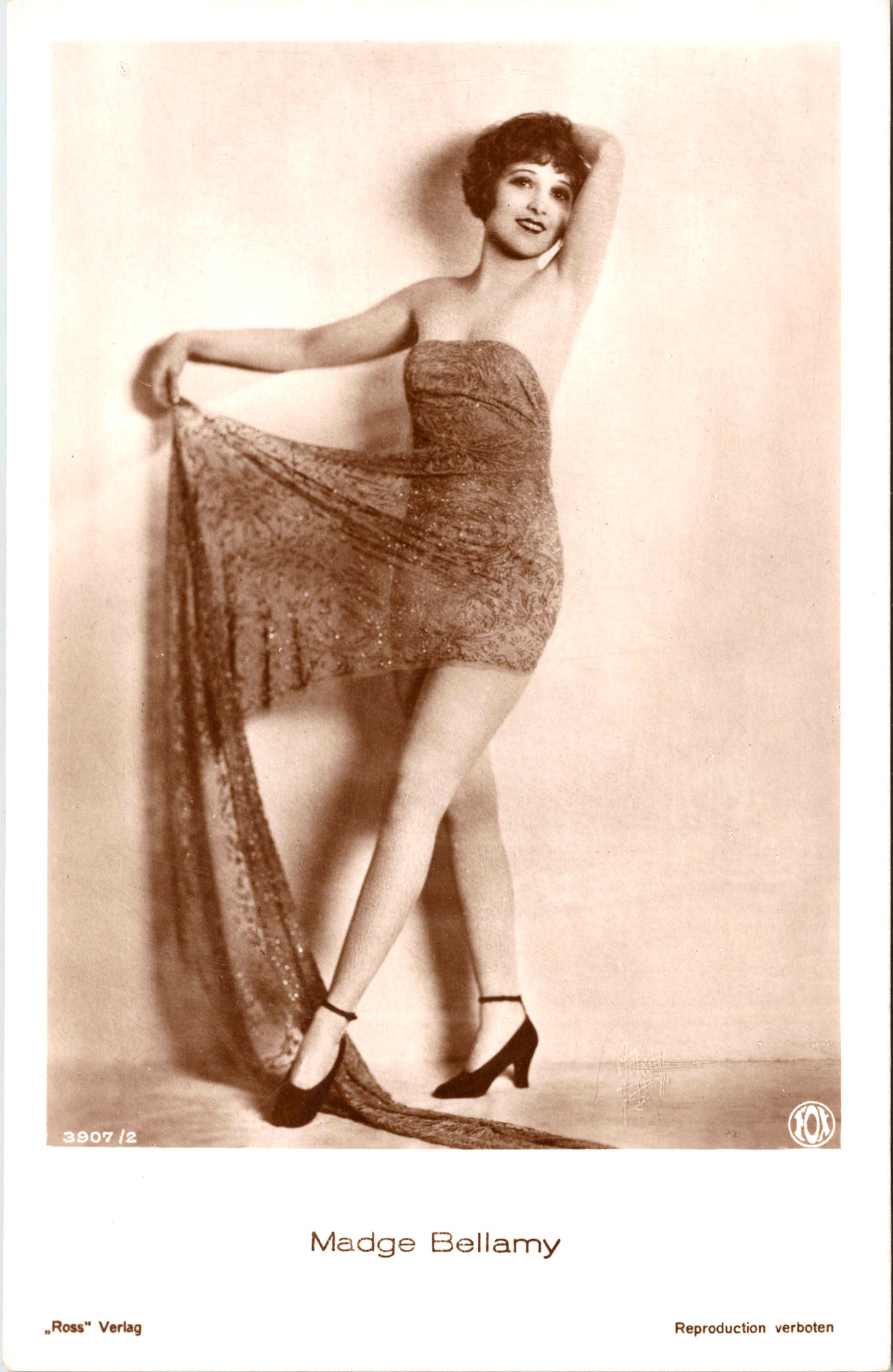
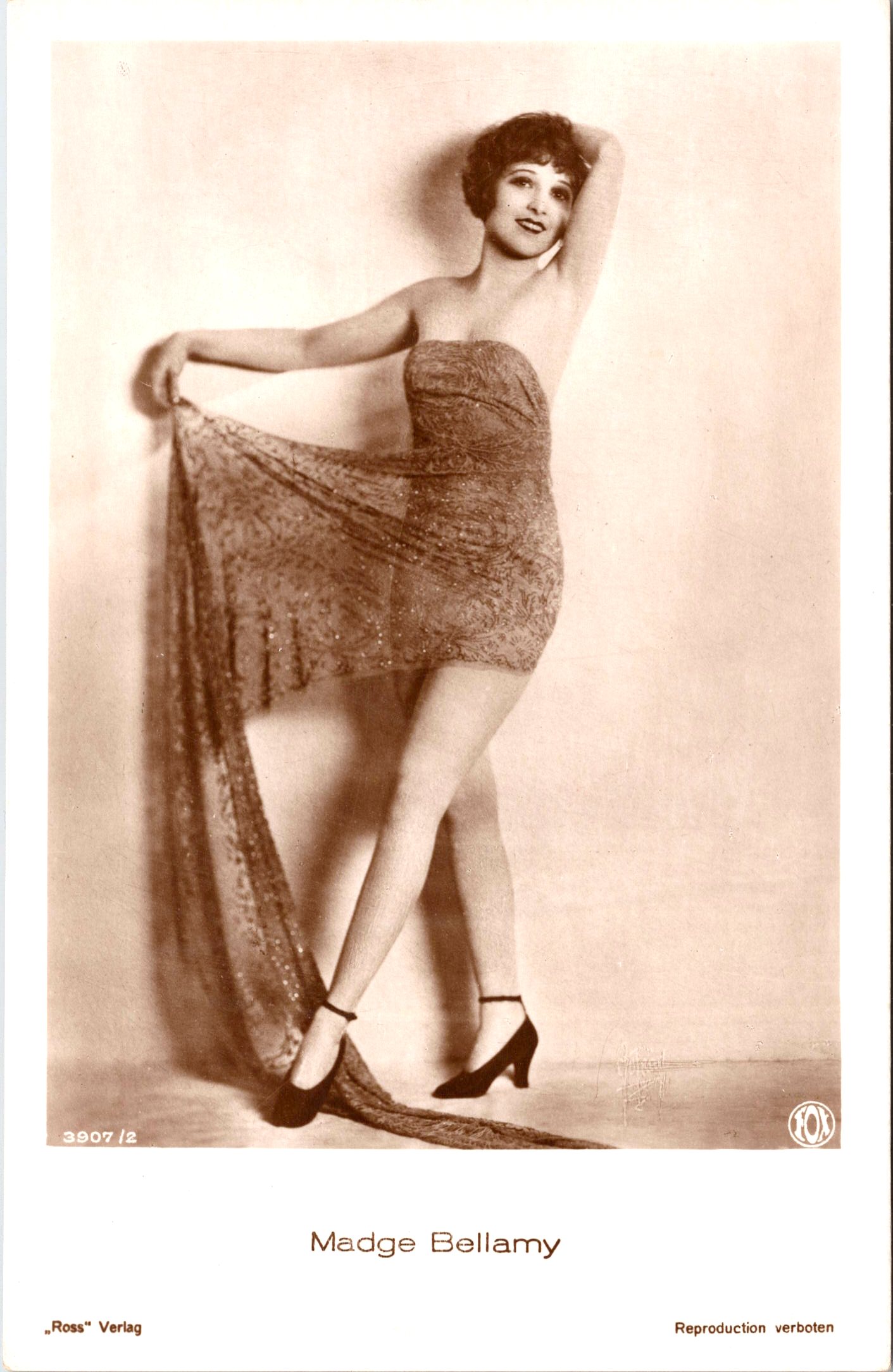
Postcard 2 offers another risque view of Madge Bellamy. Her alluring pose and short skirt qualifies this postcard to be considered provocative. This card was produced while Madge was under contract with Fox Films, sometime before 1929. This postcard was published by Ross Verlag as part of a series (No.3907/2). The postcard is in very good condition (see scans).
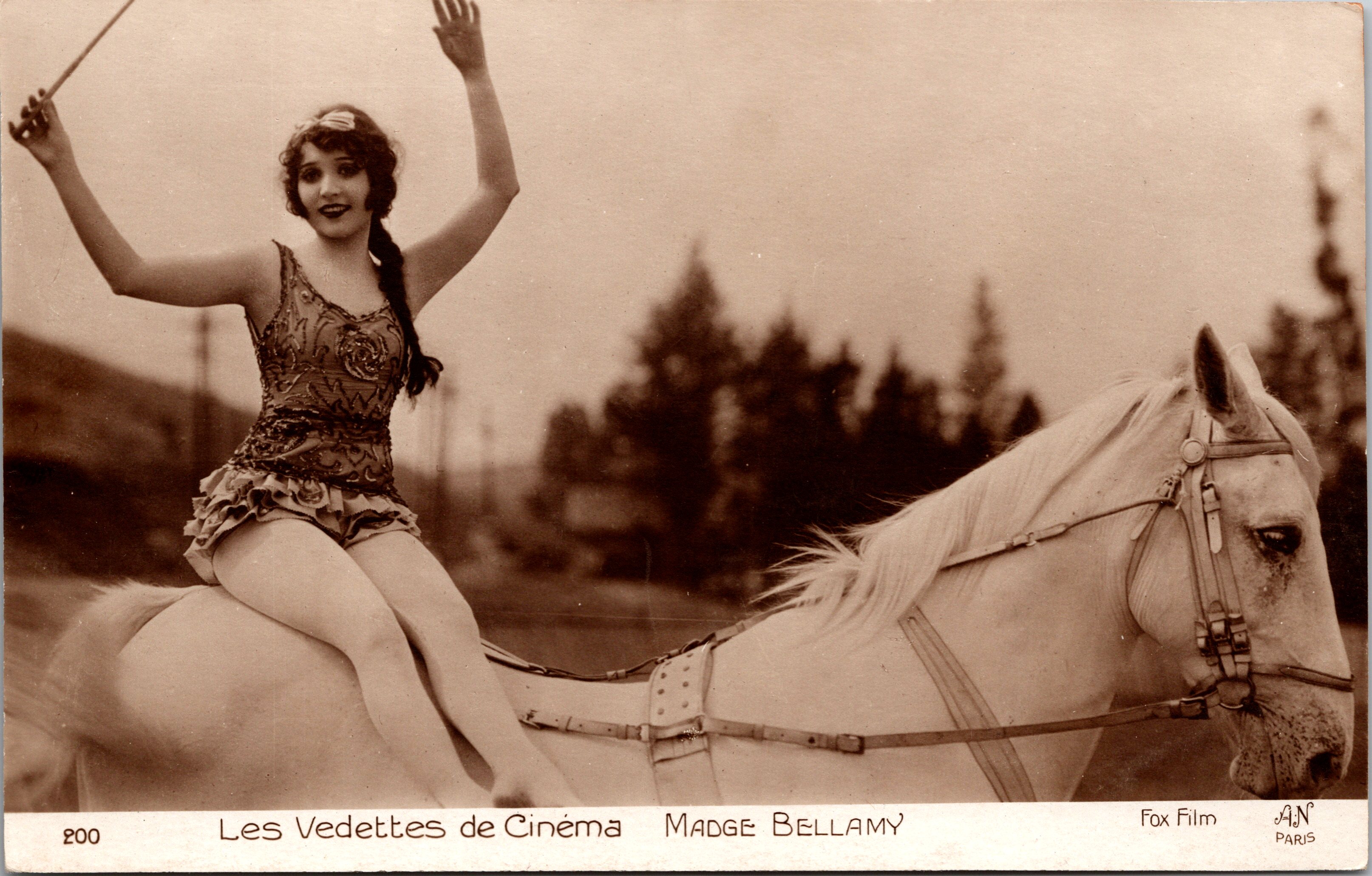
Postcard 3 is quite provocative. There are shades of Lady Godiva in this photograph. Miss Bellamy is pretty and scantily dressed. This postcard is risque for it’s era. The postcard was published while Madge was under contract with Fox. Therefore, the postcard is from before 1929. The card was published by Alfred Noyer and is part of the “Les Vedettes de Cinema” (The Stars of Film) series (No.200). This postcard is uncommon. (SOLD)
Buy this original Vintage Real Photo Postcard (includes shipping within the US) #7386
To purchase this item, click on the Pay with PayPal button below
$24.00
Buy this original Vintage Real Photo Postcard (includes International shipping outside the US) #7386
To purchase this item, click on the Pay with PayPal button below
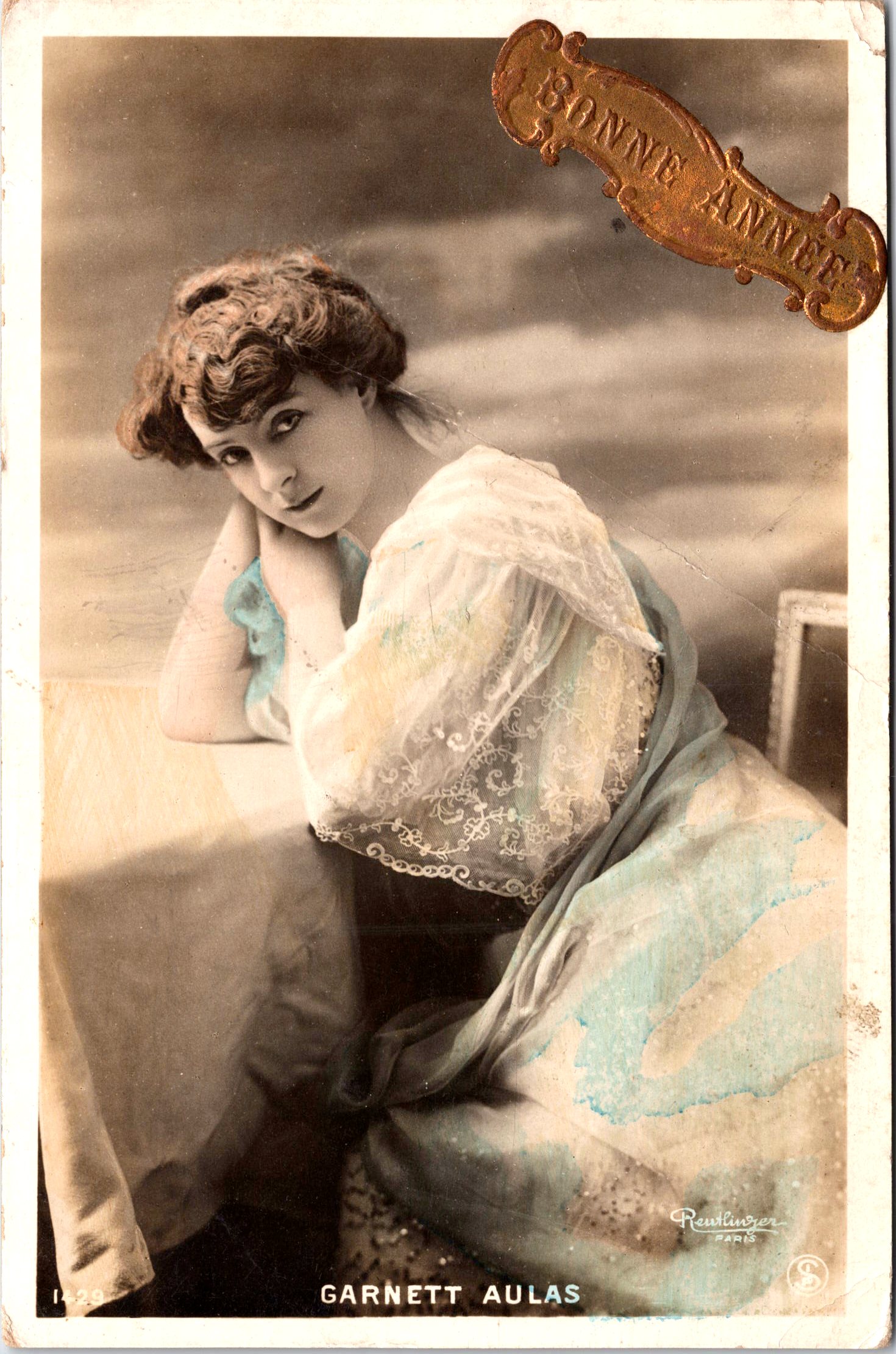
This hand tinted vintage real photo postcard features a pretty performer named Garnett Aulas. This obscure actress/dancer has a dearth of biographical information on the internet. The caption in the card’s top right corner provides Happy New Years greetings (Bonne Annee). This portrait of Miss Aulas was taken by Leopold Reutlinger’s studio in Paris, France. This postcard was published by Societe Industrielle de Photograpie (SIP) of Rueil, France. It is part of a series (no.1429). Reutlinger was a very popular celebrity photographer. SOLD
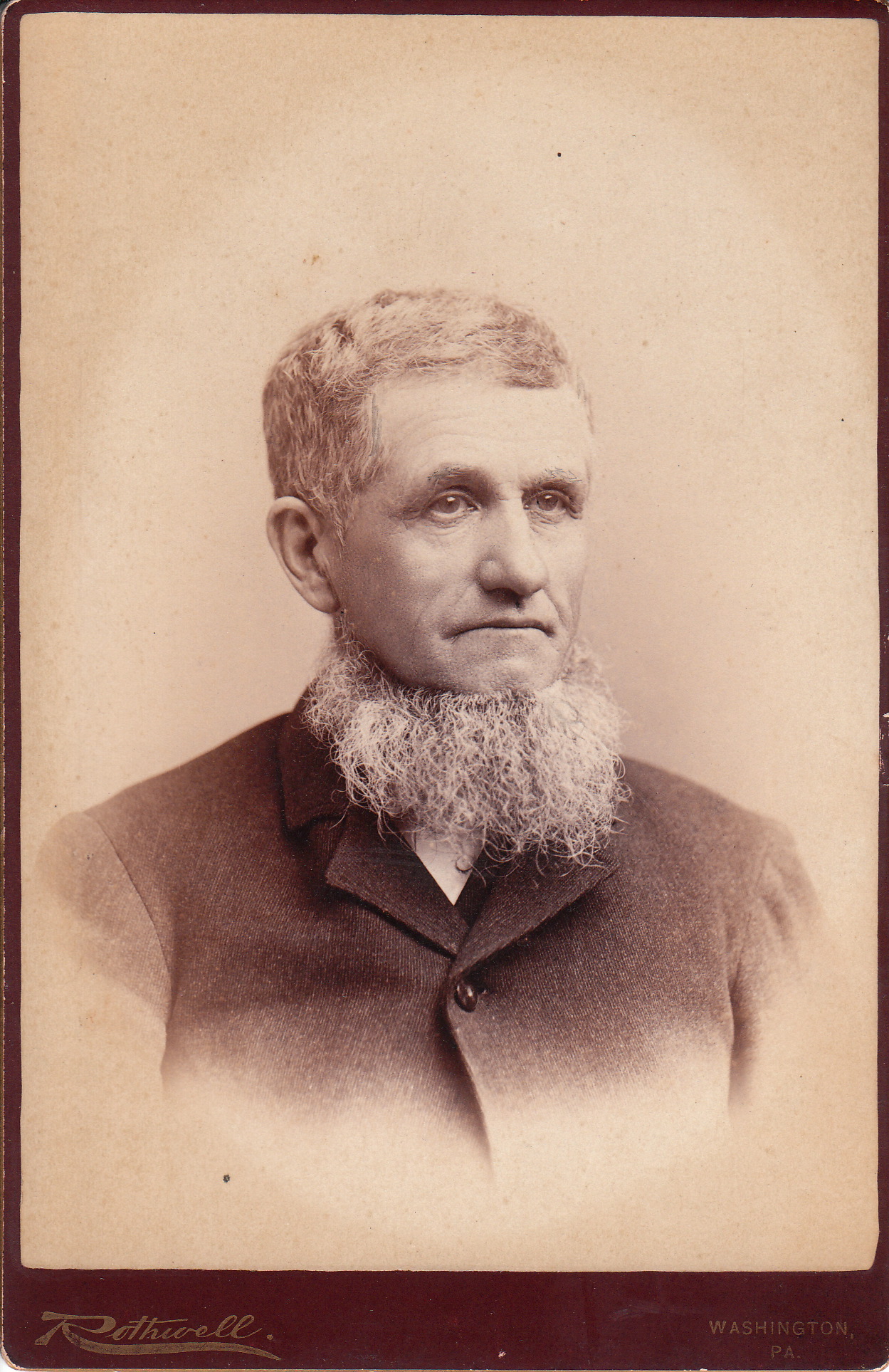
A gentle looking man with a bushy underbeard and sparkling eyes poses for his portrait at the Rothwell studio in Washington, Pennsylvania. This fellow’s wonderful beard qualifies him for Cabinet Card Gallery’s category “Beards (Only the Best). Click on the category to view portraits of men with exceptionally interesting beards. It is uncertain which of the Rothwell brothers is the photographer of this cabinet card. J. Wesley Rothwell is listed by Langdonroad.com as operating as a photographer in Washington, Pennsylvania between 1900 and 1915. The 1880 US census reveals that J. W. Rothwell was born in Pennsylvania in 1838. He married his wife, Nancy J. Rothwell in 1871. His occupation at the time of the census was listed as “artist”. He lived with his wife and brother, Newton. Newton’s occupation was listed as “photographer”. J. W. was 42 years old, his wife was 43, and Newton was 29 years old. The 1900 census finds J. W. living with his wife in Washington and working as a photographer. There is no mention of Newton Rothwell. The 1910 census reveals that Nancy had become a widow upon J. W.’s death sometime in the previous ten years. Note that Langdonroad’s claim that J. W. worked as a photographer through 1915 is incorrect unless we adopt a new meaning to the phrase “working stiff”. SOLD
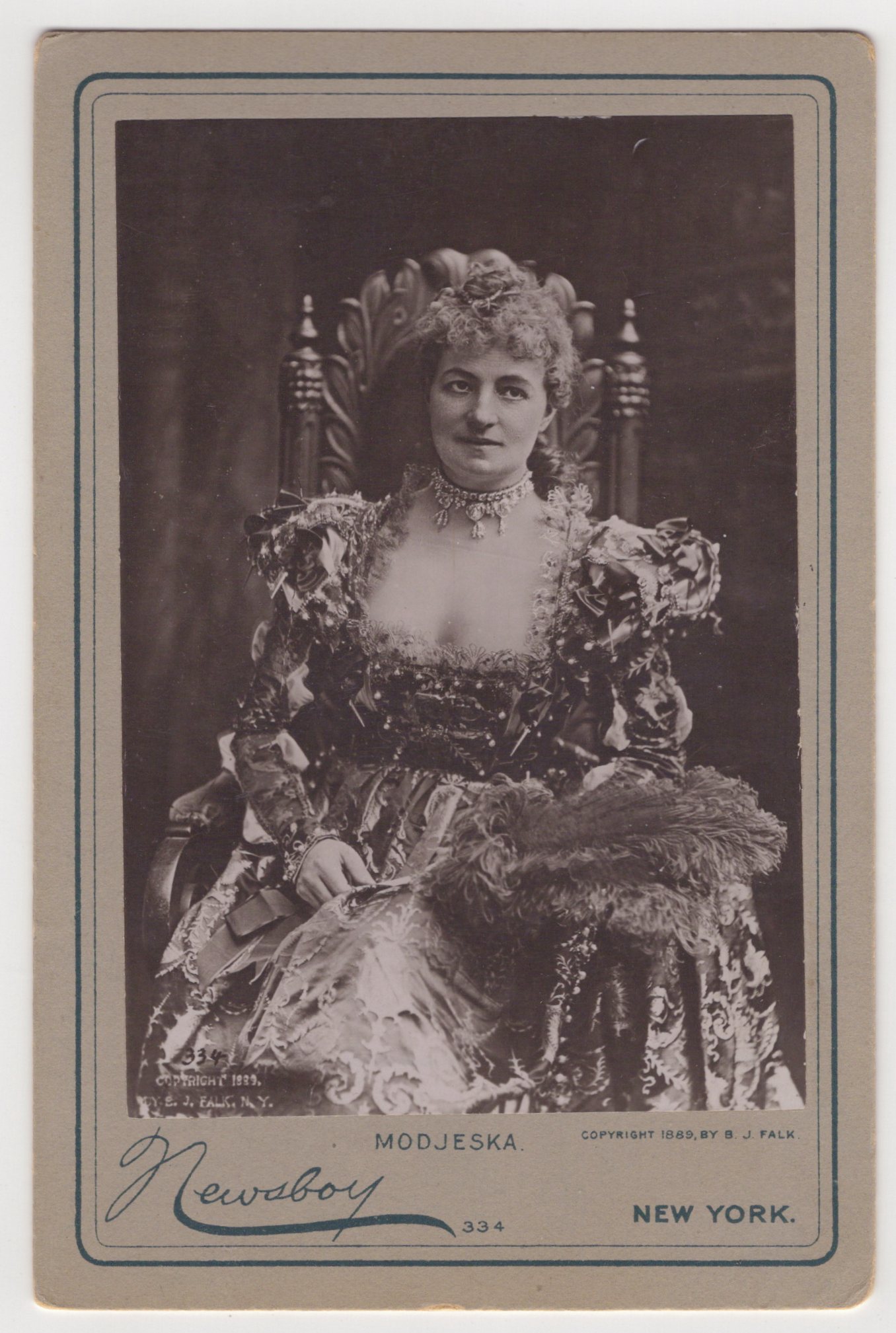
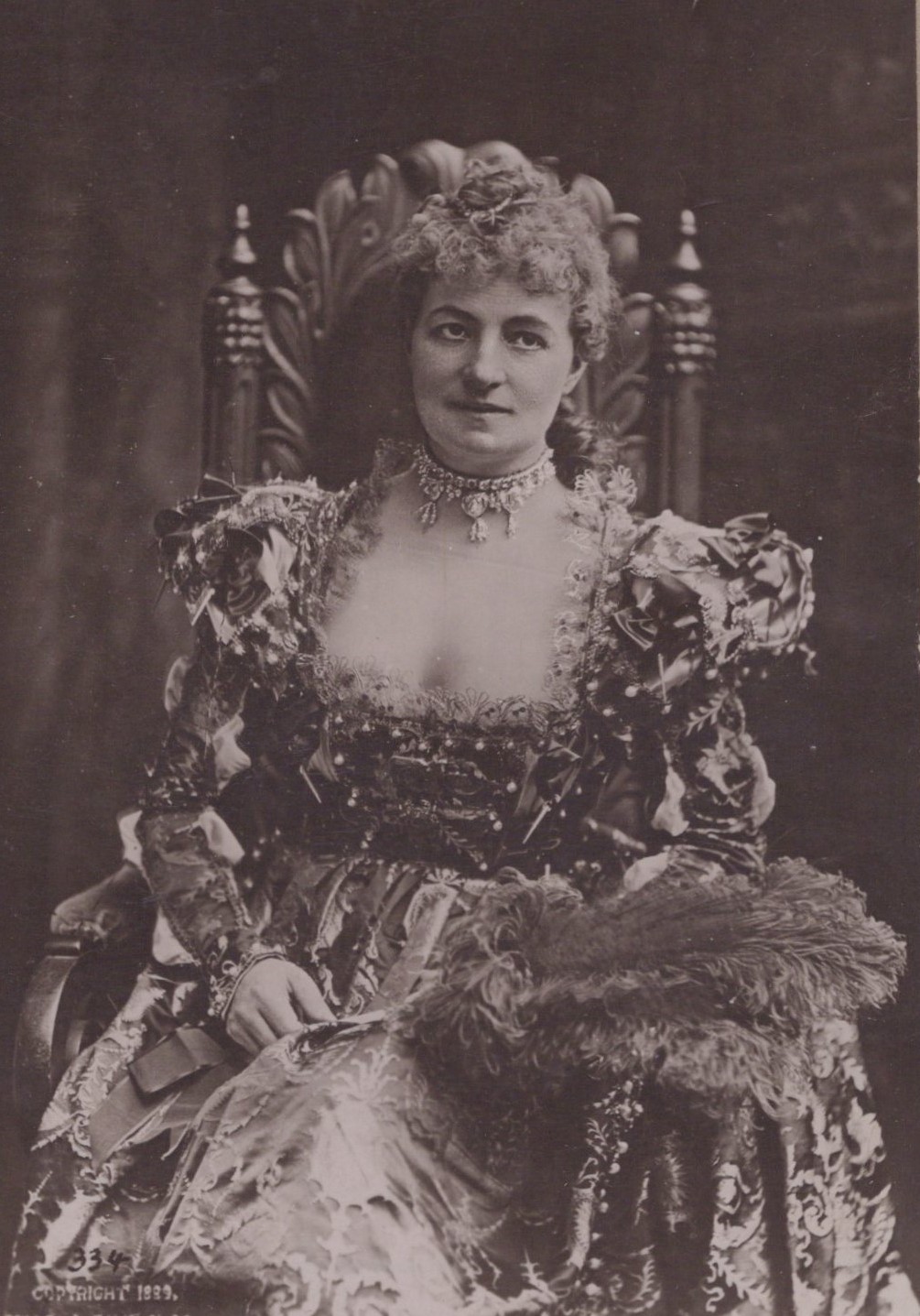
This cabinet card photograph features Polish actress, Helena Modjeska (1840-1909). She was known for her Shakespearean and tragic roles. She began her career on the Polish stage and after emigrating to the United States in 1876, she was successful on both the American and British stage. She is considered the greatest actress in the history of the Polish stage. After marrying Count Karol Bozenta Chłapowski, Modjeska emigrated with him to the United States in 1876. She initially attempted to establish a utopian agricultural community in California. However, the colony struggled, and she turned back to acting to support the venture financially. Modjeska achieved remarkable success on the American stage, learning English and debuting in San Francisco in Adrienne Lecouvreur. She quickly became known for her elegance, refined acting style, and powerful performances in Shakespeare’s plays, such as As You Like It and Othello, which she toured extensively across the U.S. and England. She played twelve Shakespearean parts in this country in addition to other classic and contemporary roles. In 1883 she appeared in America’s first professional appearance of Ibsen’s “A Doll’s House”. This cabinet card was published by Newsboy as a premium for their tobacco products. Miss Modjeska’s photograph was taken by esteemed celebrity photographer, Benjamin Falk in 1889. Some may consider this photo risque because of Modjeska’s low cut dress. SOLD
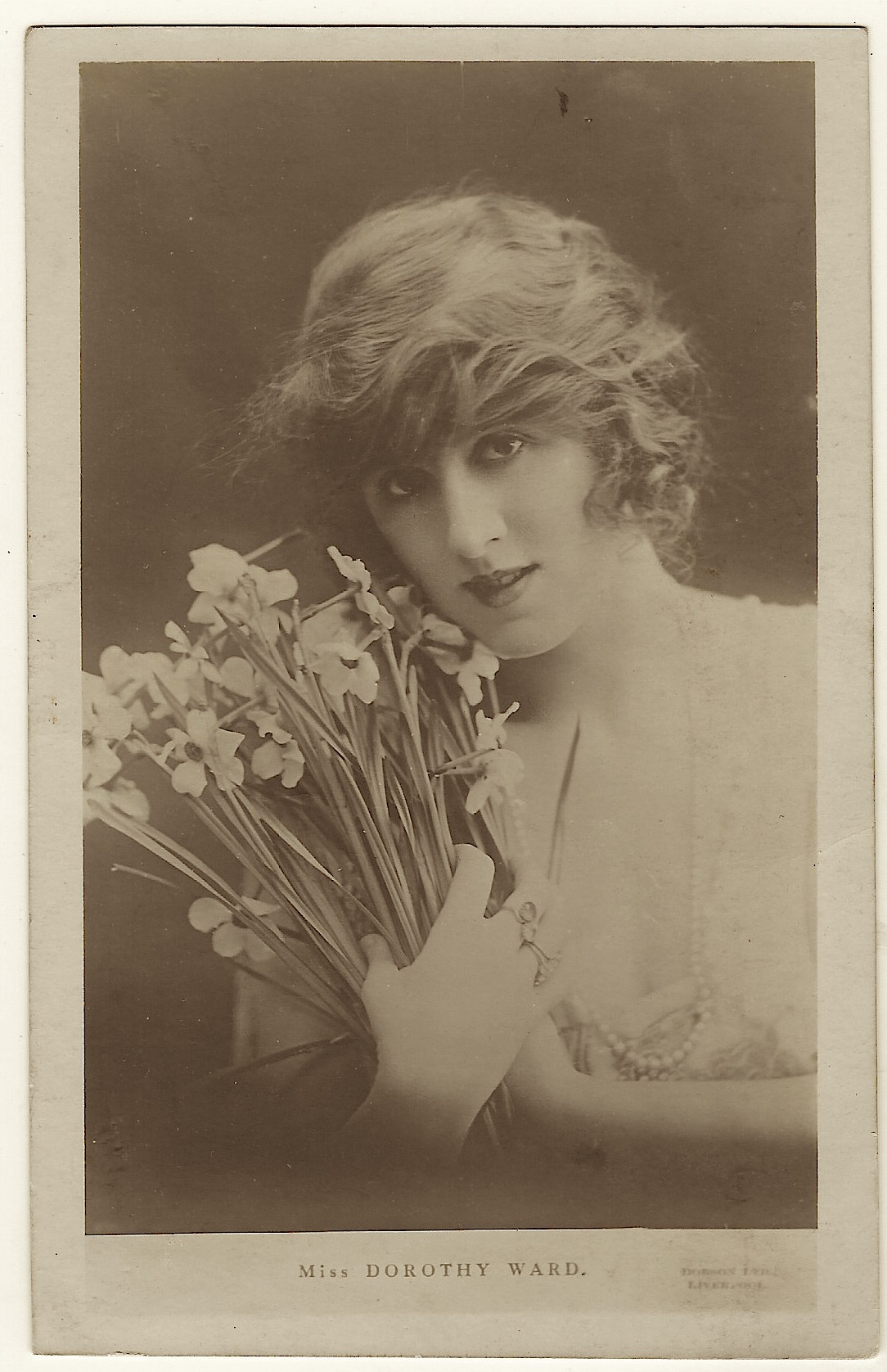
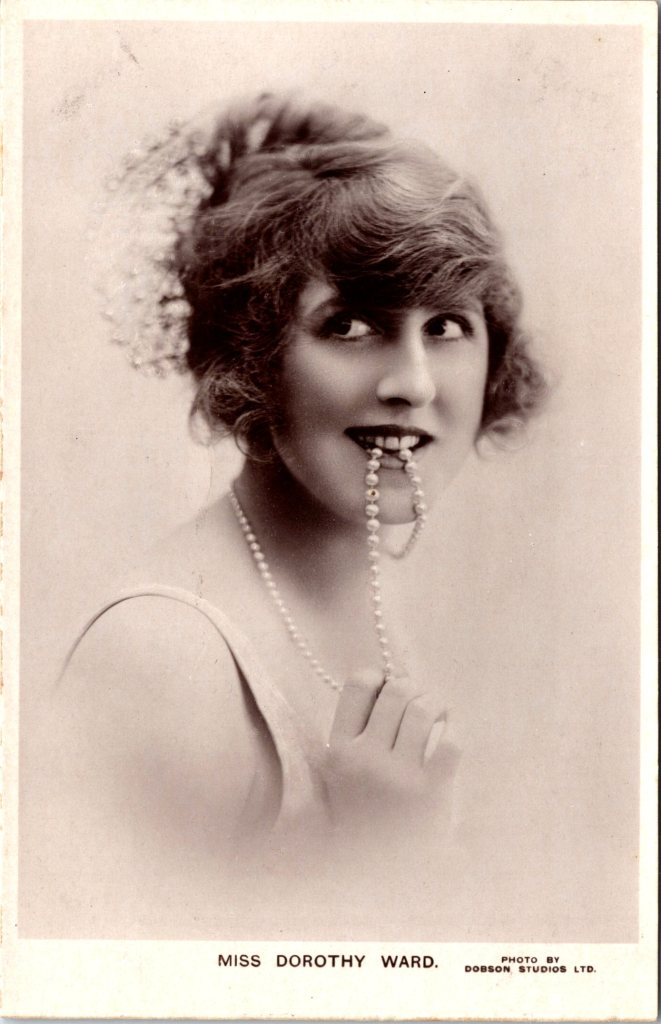
These vintage real photo postcards feature a sweet, pure, and innocent looking English actress named Dorothy Ward (1890-1987). Her specialty was pantomime and she often performed with her husband, Shaun Glenville. She made her stage debut in Birmingham in 1905 in the production of “Blue Beard”. She was an overnight success and went on to a successful career in theater. In fact, she was considered a mainstay of of British Music Hall and Variety for many decades. She was described by music historian, W. Macqueen-Pope, as a “handsome and striking woman, with auburn hair, wonderful carriage and fine figure…Tights become her, they are second nature to her and she understands pantomime and its topsy turviness”.
The photo portrait used for Postcard 1 was taken by Dobson Studios which was located in Liverpool, England. This postcard was published by Thomas Illingworth & Co. (T.I.C.). The company was a paper manufacturer founded about 1904. They produced the “Horse Shoe Brand” photographic paper in London England. In 1919 they were bought by British Photographic Supplies company, Ilford. An internet source states that the company produced postcards with horseshoe stamp boxes between 1919 and 1930. (SOLD)
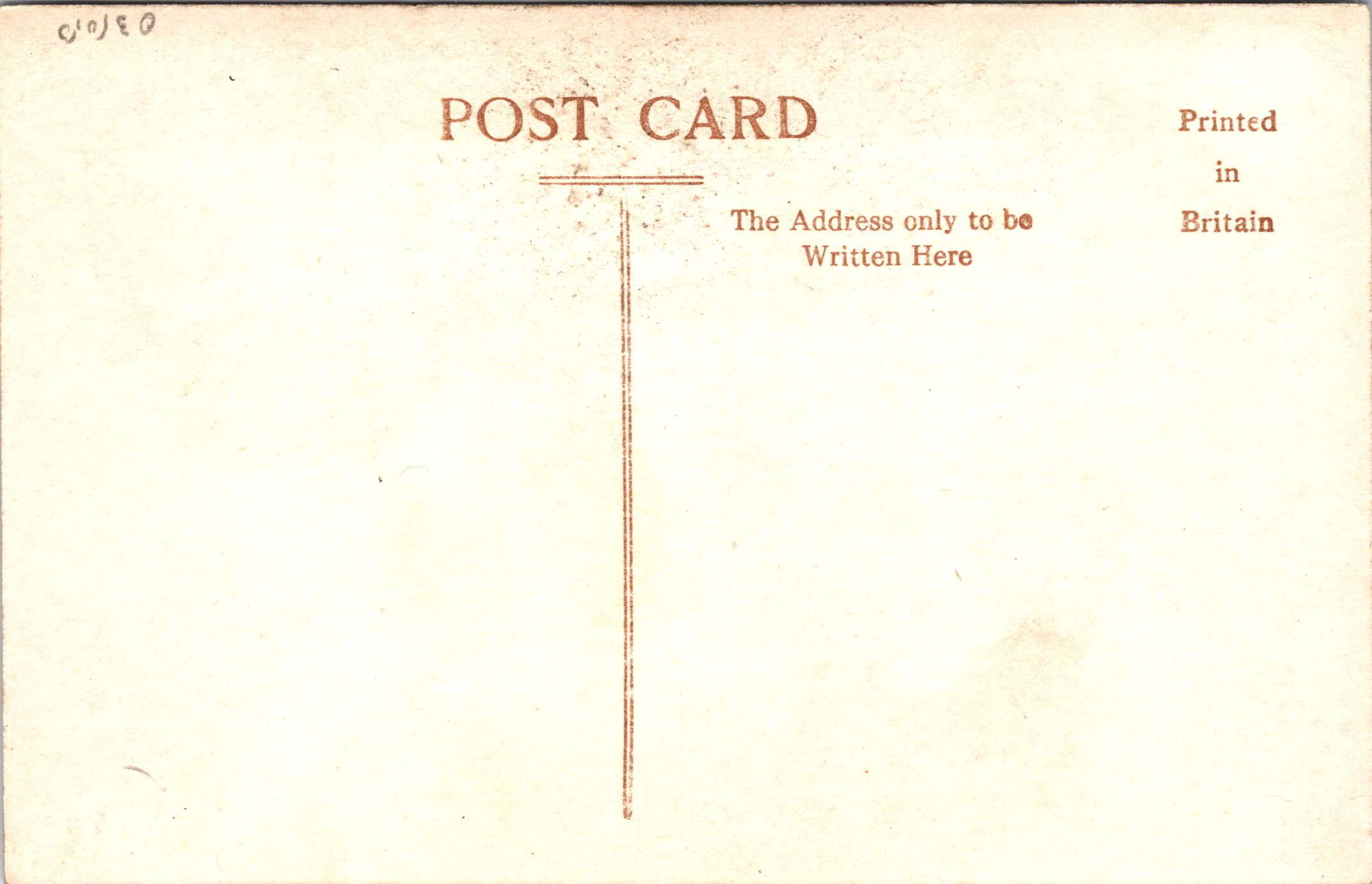
In Postcard 2, Miss Ward’s expression, and her act of biting the strand of pearls, appears more flirtatious than innocent. The photo portrait used for this postcard was taken by Dobson Studios which was located in Liverpool, England. This postcard was likely published by Rotary Photo. I hold this hypotheses because the printing on the reverse of the card matches the design of many Rotary Photo postcards. (SOLD)





 POSTCARD 2 (SOLD)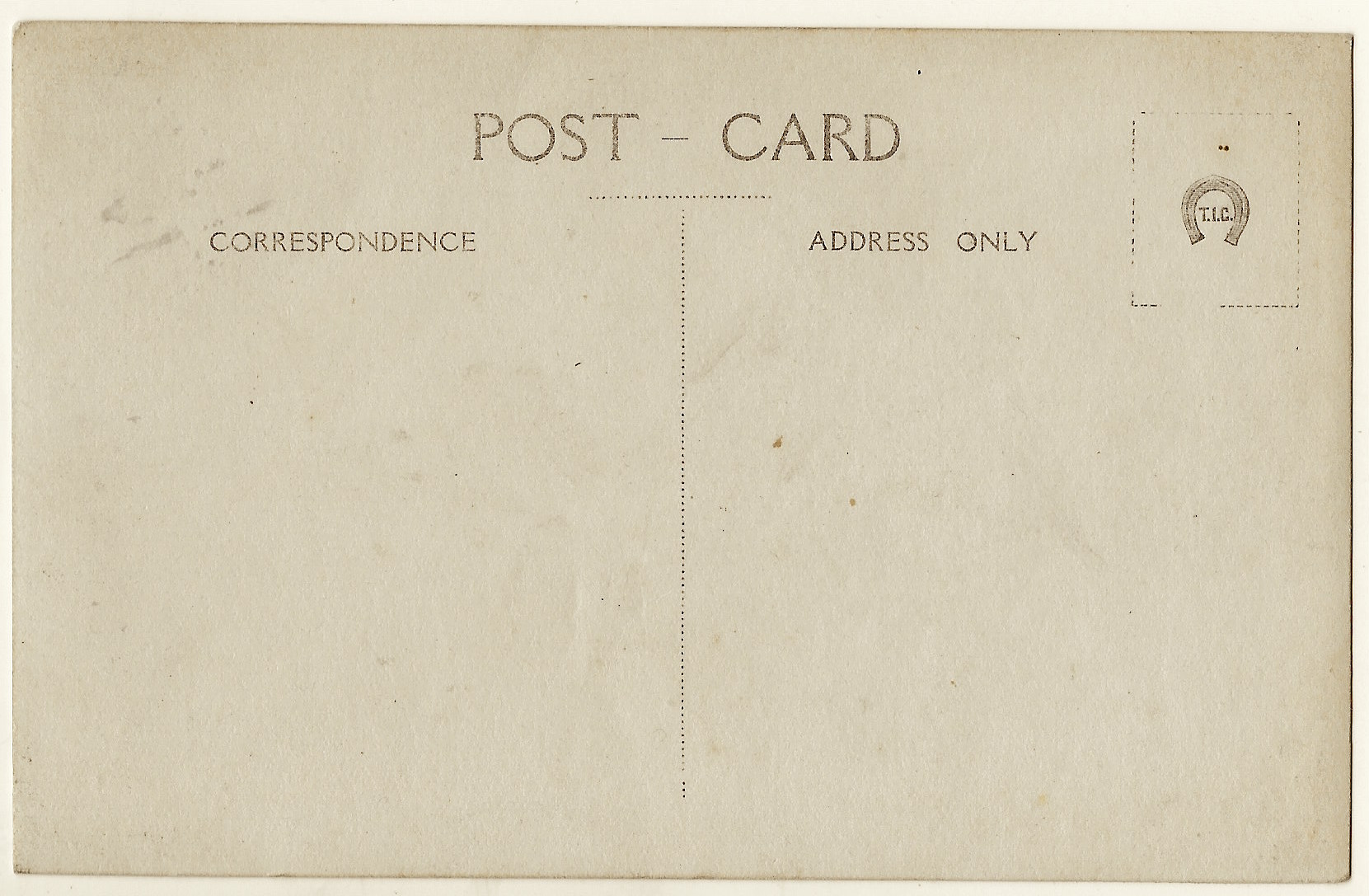


 THE CABINET CARD GALLERY