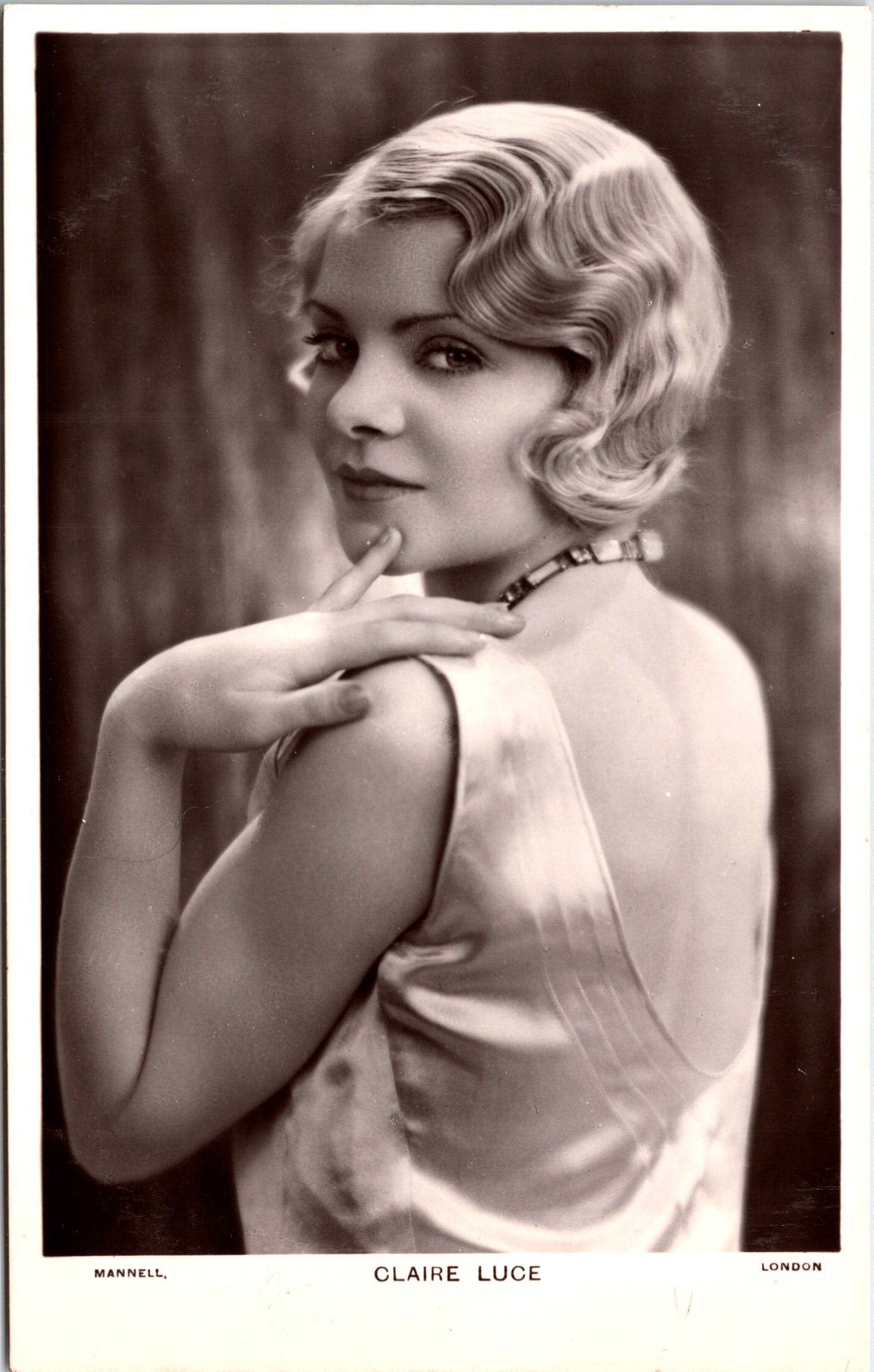

CLAIRE LUCE : VINTAGE GLAMOUR PORTRAIT : BY MANNELL STUDIO : PRETTY ACTRESS

This vintage portrait postcard captures the elegance and sophistication of Claire Luce, a celebrated American stage and screen actress known for her work in theater and Hollywood during the early to mid-20th century. Photographed by Mannell Studio, London, this stunning black-and-white image exudes the classic glamour of the era, likely from the 1920s or 1930s. In this portrait, Claire Luce is seen wearing a sleek satin gown with a low-cut back, reflecting the timeless fashion of the Art Deco period. Her delicate necklace adds a touch of refinement, while her softly curled platinum blonde hair is meticulously styled in the distinctive finger waves that were highly fashionable during that time. Her expression is both confident and alluring, with a slight smile and a captivating gaze that suggests both poise and mystery. She poses gracefully, her fingers resting near her chin in an elegant yet relaxed manner, enhancing the overall sophistication of the composition. Born in 1903, in Syracuse, New York, Claire Luce became a renowned actress known for her work on both stage and screen. She rose to prominence in the 1920s and 1930s, particularly for her performances in Broadway productions. One of her most notable roles was in Gay Divorce (1932), where she starred alongside Fred Astaire. This production later inspired the classic film The Gay Divorcee (1934), though her role in the film was played by Ginger Rogers. Luce also made a mark in Hollywood, appearing in films such as Up the River (1930), The Cohens and the Kellys in Africa (1931), and Over She Goes (1937). However, her true passion remained the stage, and she continued to shine in numerous theatrical productions, both in the United States and the United Kingdom. Aside from her acting career, Luce was admired for her beauty, grace, and sophisticated sense of style. She was often photographed in elegant gowns, embodying the glamour of the Golden Age of Hollywood and theater. Claire Luce was known for her dedication to her craft, and while she had several notable relationships, she was never widely publicized for her personal life. She married Clifford Warren Smith, an English businessman, though details about their marriage remain relatively private. . Claire Luce’s contributions to theater and film continue to be remembered by classic cinema enthusiasts and theater historians. Her connection to Fred Astaire and the Broadway stage solidifies her place in entertainment history.  George Mannell (London) is the photographer who took this postcard’s photo portrait. The postcard is relatively uncommon.

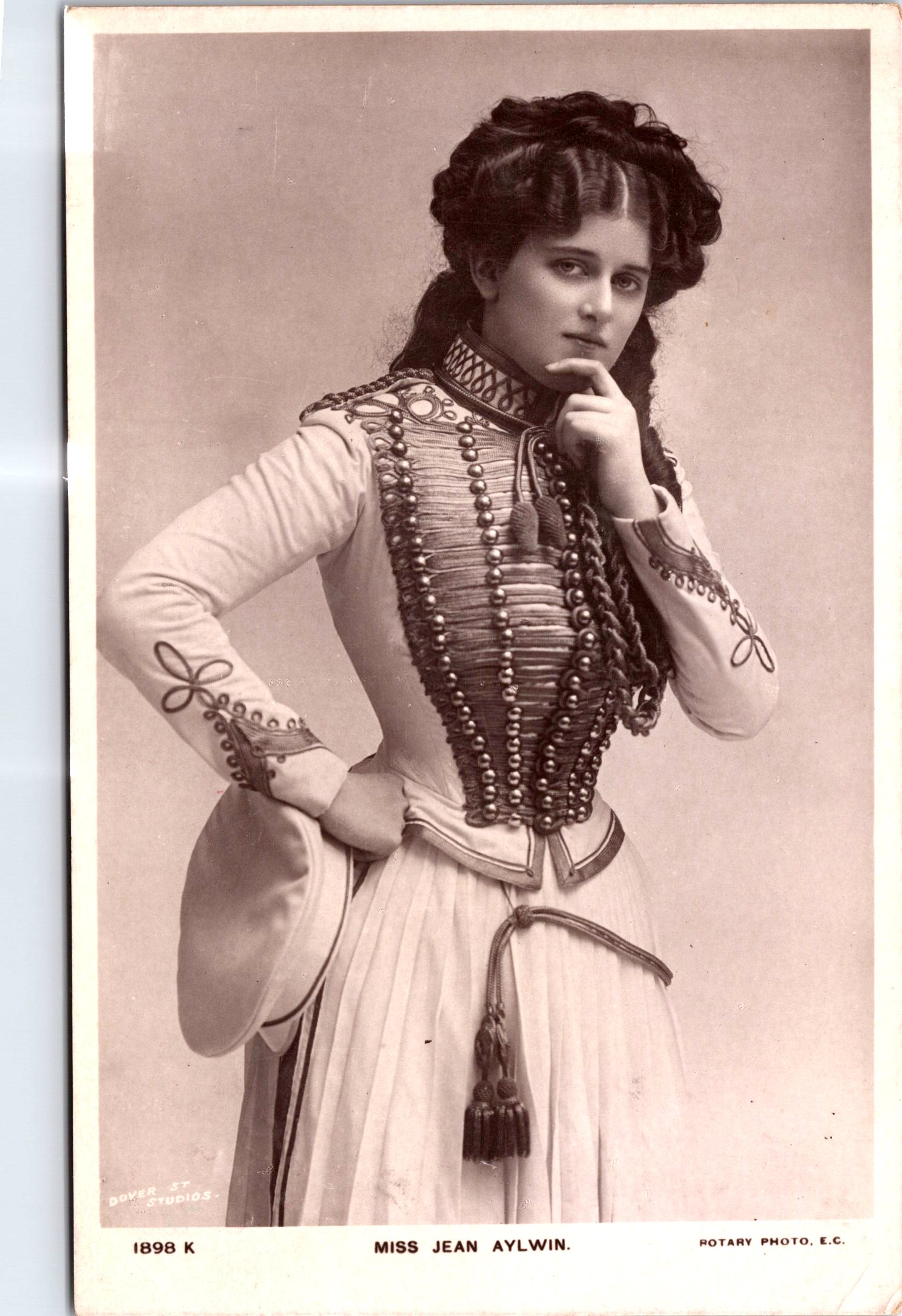
JEAN AYLWIN : SCOTTISH ACTRESS & SINGER : DOVER STREET STUDIOS : RPPC 1908

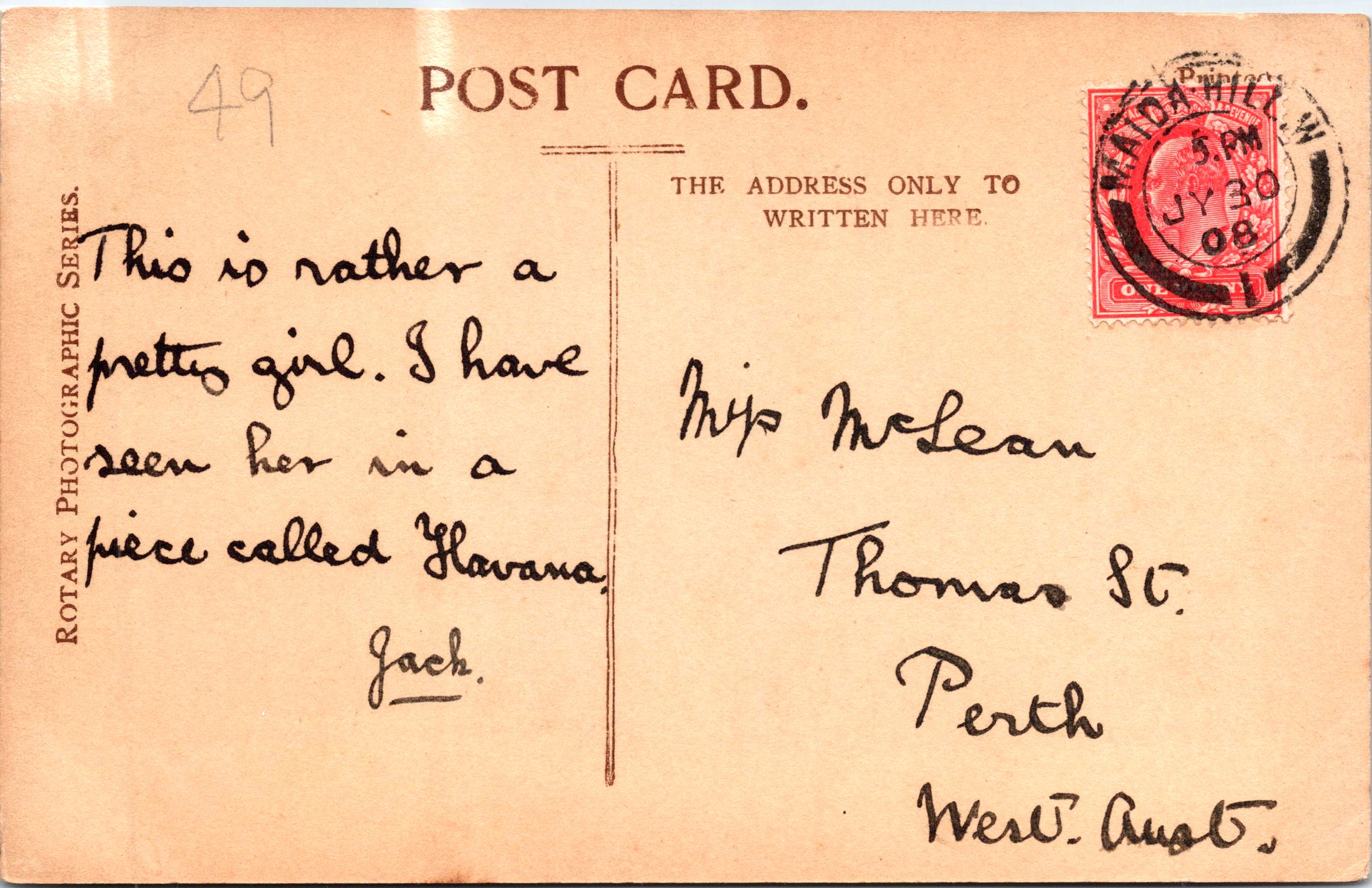
This vintage real photo postcard features a striking portrait of Jean Aylwin (1885-1964), a pretty British actress and singer from the early 20th century. She gained fame for her performances in musical comedies and plays in London and she also toured internationally. Aylwin was associated with the popular Gaiety Theater productions. She had notable performances in several successful productions including “The New Aladdin” (1906), “The Girls of Gottenberg” (1907) and “Our Miss Gibbs” (1909). Aylwin also appeared in two silent films. She married in 1913 but the marriage ended in divorce in 1924. She was accused of adultery with a noted composer of her time. After her divorce, her career declined. She later worked as a housekeeper. In 1926, she briefly worked as a BBC radio broadcaster.  Aylwin looks elegant in this dramatic studio pose. She stands three-quarter length with a thoughtful, hand-to-chin expression, the other hand set firmly at her hip. Aylwin wears a striking military-style costume—a fitted jacket heavily braided with ball buttons and tasselled cords, over a pleated skirt; a matching hat rests at her side. Her hair is dressed in full Edwardian waves, completing the theatrical look. Thd photographer of this portrait is the Dover Street Studios. The card was published by Rotary Photo as part of a series (no1898K). The postcard has a Wandsworth (London) postmark from 1908. The postcard is addressed to someone in West Australia. The message on the card is “This is rather a pretty girl. I have seen her in a piece called Havana. Jack.” The front of this card is has rich, sharp sepia tones. Holding the card at a certain angle, one can see dimples caused by the postmark. (SOLD) 

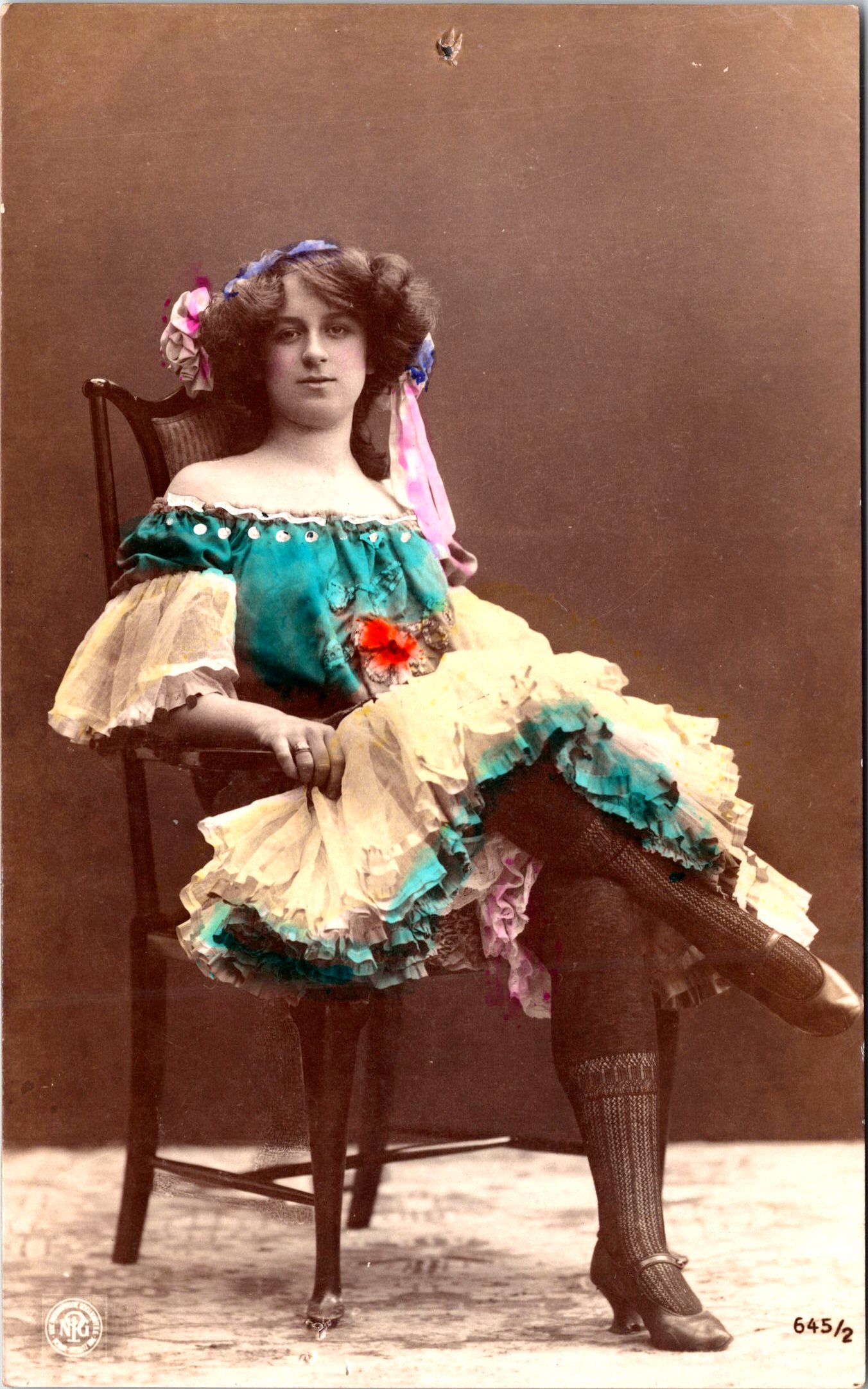
PRETTY PARISIAN ACTRESS : HAND-TINTED : NPG : RPPC 1904

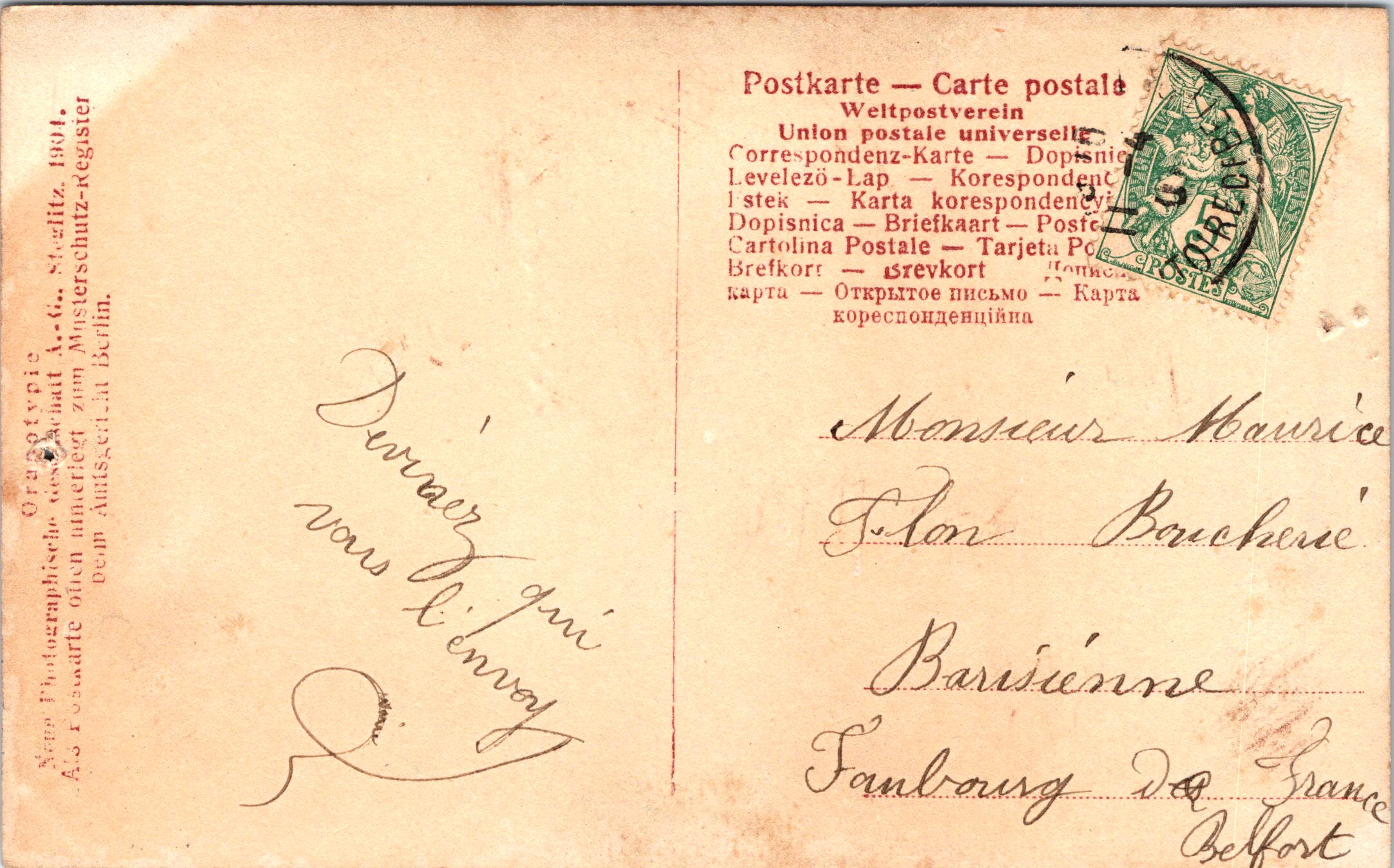
This is a striking hand-tinted real photo postcard (RPPC) featuring a young actress or performer seated confidently on a chair. The card is part of the NPG (Neue Photographische Gesellschaft) series, serial number 645/2, and dates to 1904. It was printed in Berlin, Germany, as indicated on the reverse. The woman in the image has voluminous, dark, curly hair adorned with colorful ribbons, one pink and one lavender. She wears a bold theatrical costume: a bright turquoise satin dress trimmed with cream-yellow ruffled sleeves and skirt, accented by a vivid red flower at the bodice. The layered ruffles of her skirt spill over her lap, giving her a lively, almost playful stage presence. She sits with her legs crossed, her expression calm and slightly defiant, exuding poise and self-assurance. Her dark stockings and buttoned heels complete the look, emphasizing her identity as a stage performer rather than a conventional society portrait sitter. Neue Photographische Gesellschaft A.G. was a leading German postcard and photographic publishing house active in the early 20th century. The left-side imprint, translated, reads: “Original photograph by NP Steglitz refers to the Berlin district where NPG was located, not the photographer’s surname. On the reverse, the postcard carries a green French stamp, confirming that the card was mailed from France, even though it was printed in Germany. The stamp is from the French “Sower” (La Semeuse) series, first issued in the early 20th century. The message on the card, translated from French reads: “Guess who is sending this to you.”  SOLD

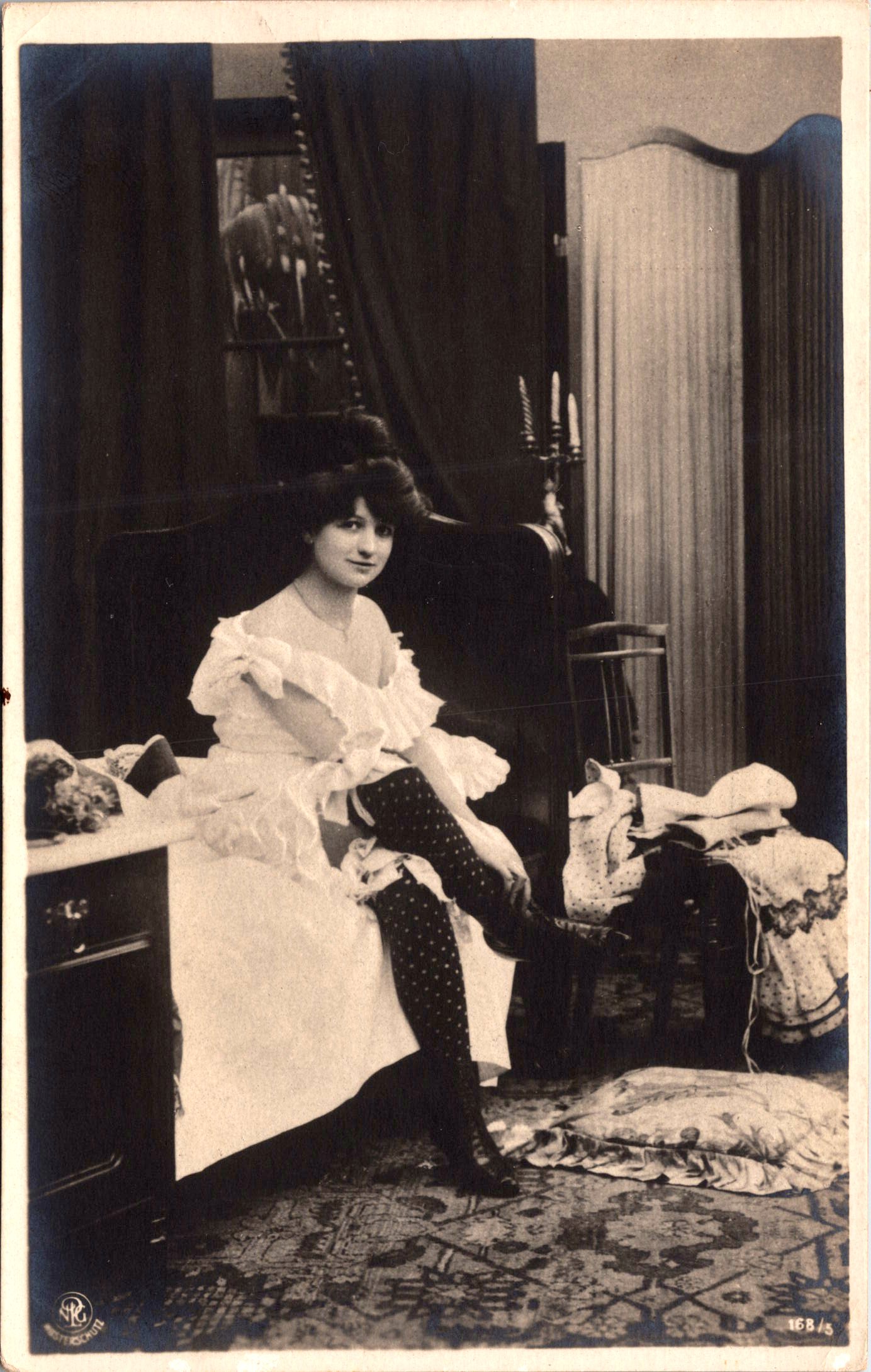
PRETTY WOMAN GETTING DRESSED : WEARING LINGERIE : RISQUE : NPG : RPPC

This vintage real photo postcard features a pretty young scantily clad woman, getting dressed. She is dressed in her lingerie and the rest of her clothes are on the chair beside her. Interestingly, it appears that there is a wig on the dressing table at her right. This young lady has a fetching smile. The card is part of a series (No.4287).  SOLD

Published in: on October 18, 2025 at 12:00 pm  Leave a Comment  
Tags: ,

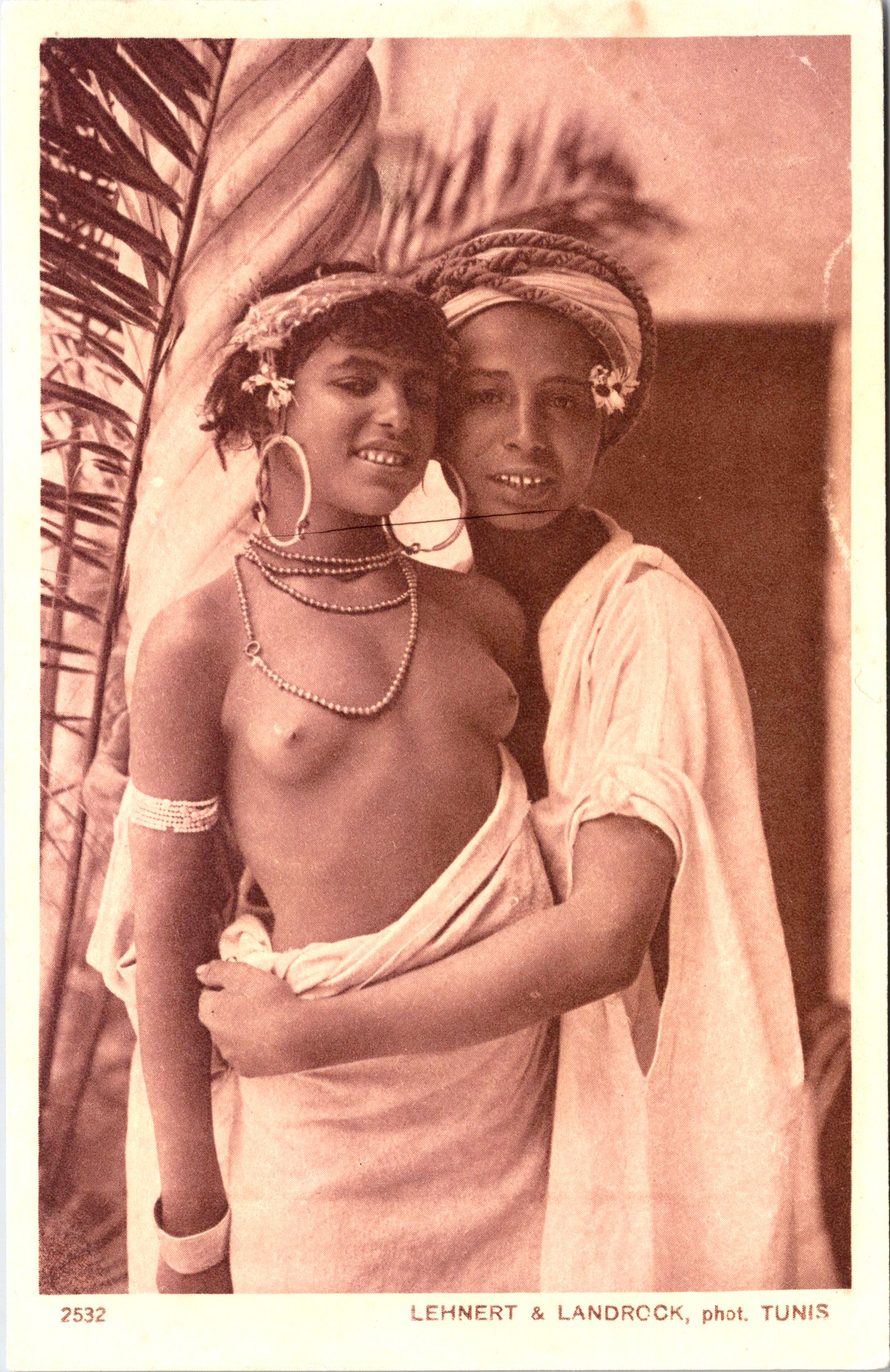
TUNISIAN LOVERS : LEHNERT AND LANDROCK : ORIENTAL TYPES : ETHNOGRAPHY : RPPC

This vintage postcard features “Les Amoureux” which translates to English as “Lovers”. The pair are dressed in their traditional garb. Both offer the photographer beautiful smiles. The postcard was published by the celebrated ethnographic photography firm, Lehnert & Landrock as part of the III series (No.2532). R
udolf Franz Lehnert (1878-1948) & Ernst Heinrich Landrock (1878-1966) were the principals of the firm. Lehnert was of German origin, while Landrock was from Bohemia. The pair met in Switzerland and decided to go into business together. Lehnert was the photographer and Landrock was the administrator. Landrock organized trips, managed the photo studio and photo production, and marketed the photographs and prints. They were photographers in Tunisia and in Egypt, They also opened studios in Munich (Germany) and Leipzig (Germany).  They produced many photographs from Egypt and Tunisia. Their first studio was in Tunis. They photographed monuments and sites in those countries, but were most known for their erotic images of Arab women, often posing in harem themes. Sometimes the photographers seemed more concerned about producing erotic photographs rather than documenting everyday life in these Middle Eastern countries. Lehnert and Landrock were well acclaimed for their work and the duo have images in a number of museums, including Philadelphia’s Penn Museum an the Musee de l’elysee in Lausanne, Switzerland. (SOLD)

SUFFOLK COUNTY LONG ISLAND NY FAIRGROUNDS : HARNESS RACING : COLORIZED POSTCARD

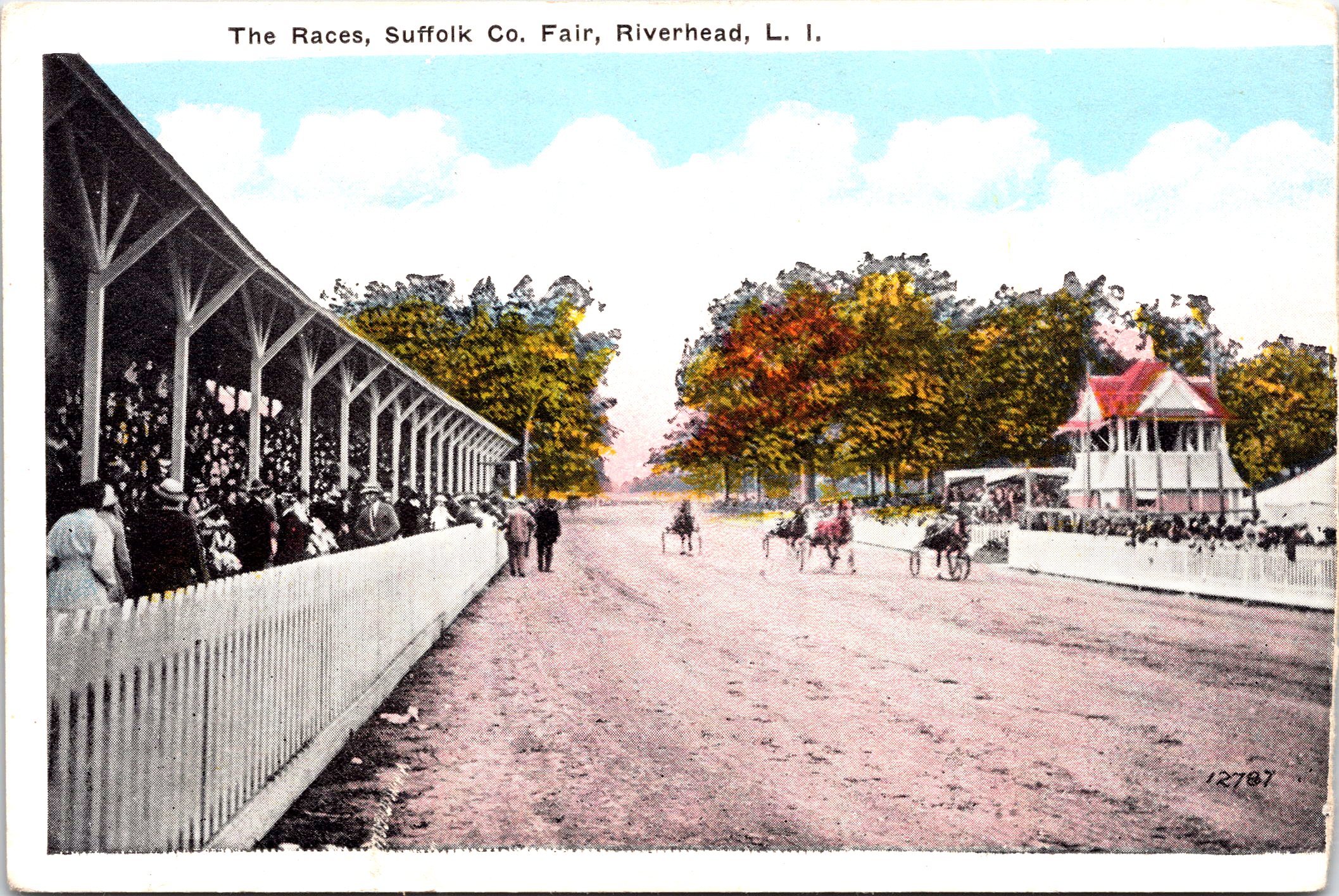
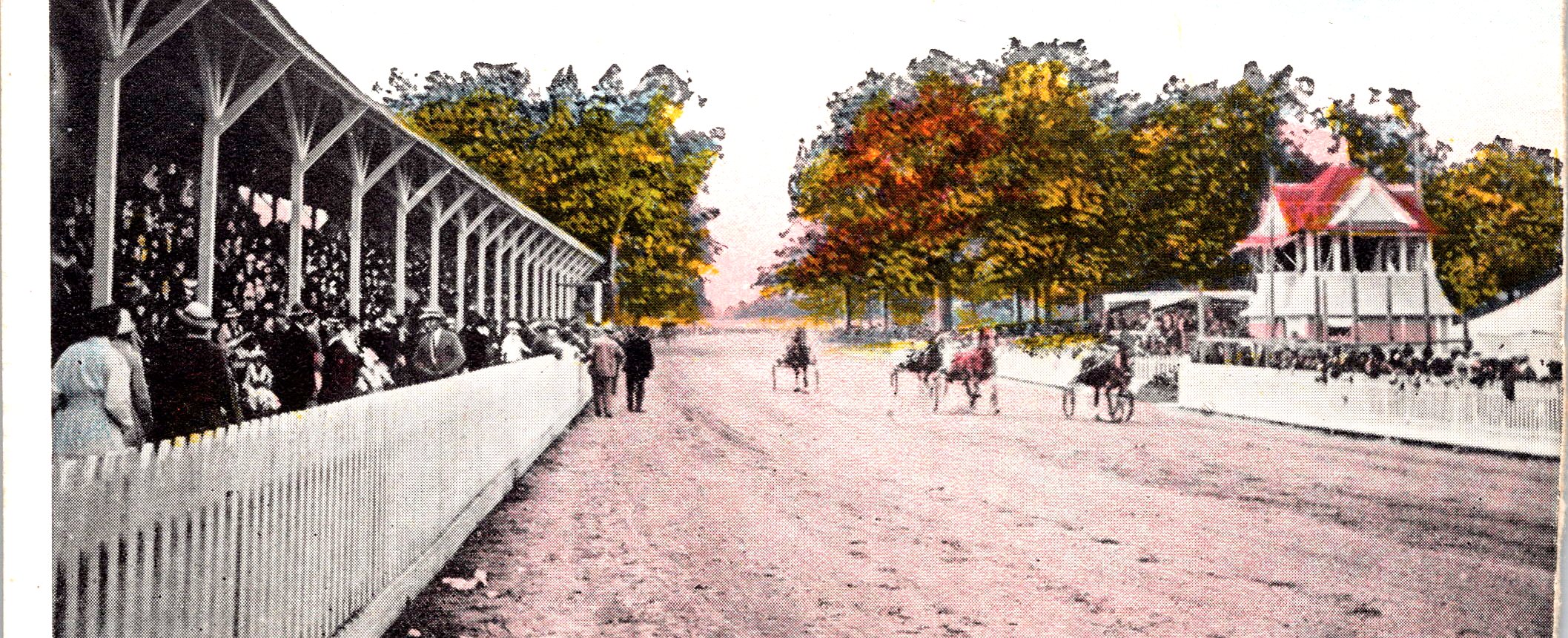
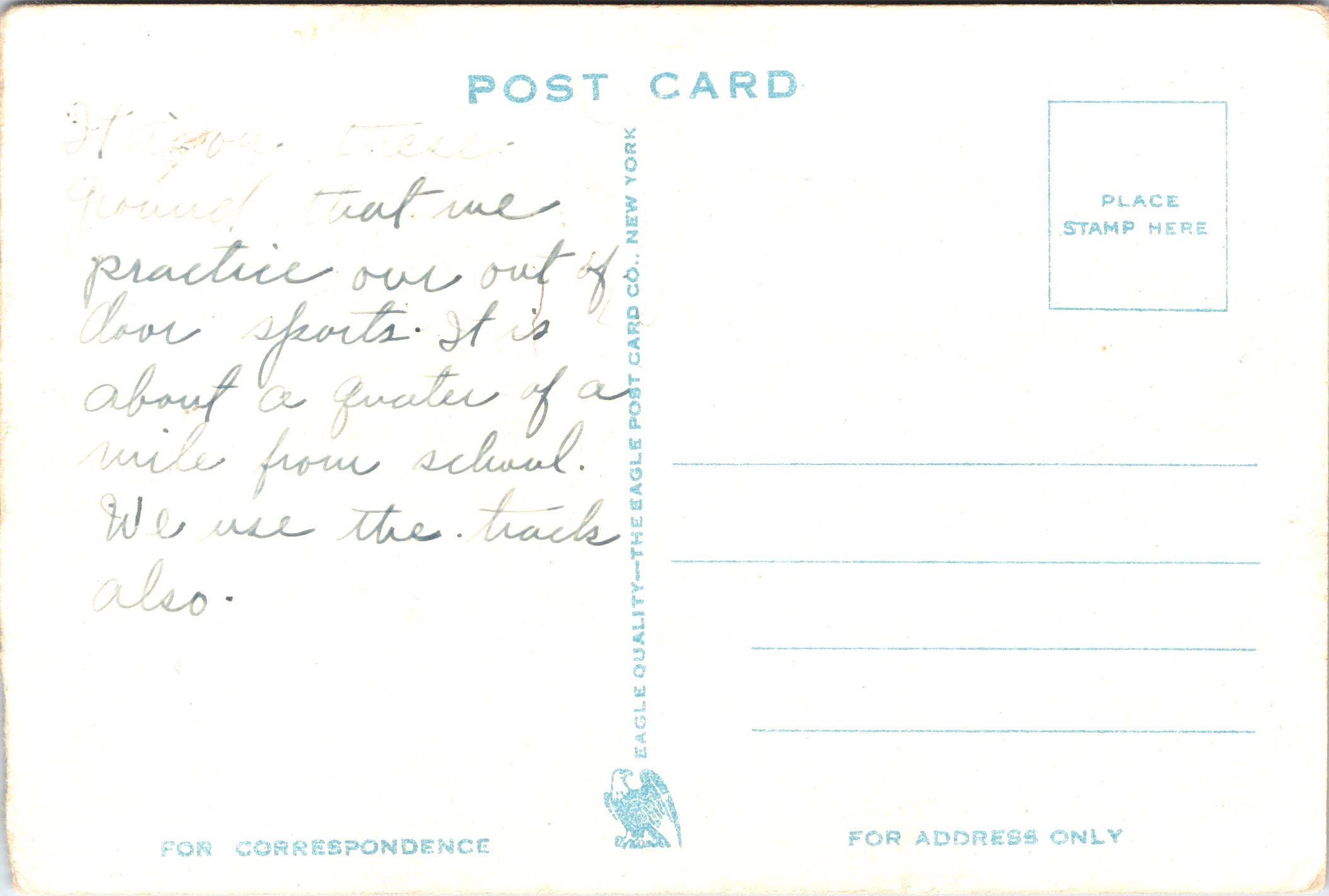
This vintage colorized postcard captures a lively scene at the Suffolk County Fair Grounds in Riverhead, New York, during the early 1900s. The image shows harness racing in progress, with several sulky drivers and their horses trotting down the dirt track. A covered grandstand filled with spectators lines the left side of the view, while on the right a tall judges’ or announcer’s stand rises above the crowd beneath autumn-colored trees. The postcard vividly conveys the excitement of fair-time races and the bustling atmosphere of an agricultural fair. On the reverse, the card is published by the Eagle Post Card Company of New York. A handwritten message reads: “It is on these grounds that we practice our out of door sports. It is about a quarter of a mile from school. We use the tracks also.” This personal note suggests that the track and fairgrounds were used for more than public events—they were also a community resource. The Suffolk County Fair was a major institution on Long Island for nearly a century. The Suffolk County Agricultural Society began holding fairs in the 1840s, and in 1867 Riverhead citizens purchased and donated 20 acres to establish permanent fairgrounds, which opened the following year. The fair showcased livestock, poultry, produce, and machinery, and it quickly became known for its popular horse and bicycle races. The site grew to prominence, hosting events such as political rallies—Theodore Roosevelt campaigned there—and even sporting spectacles; Babe Ruth is said to have played baseball on the grounds in 1923. The fair operated annually through the 1930s, until the land was sold to the Riverhead School District between 1934 and 1936. The grandstand and racetrack, however, lived on in postcards like this one, which now serve as visual records of an important part of Suffolk County’s history.  SOLD

PRETTY DANCER : RISQUE : JEAN AGELOU : PARIS : JENNY BELL : TITTILATING RPPC

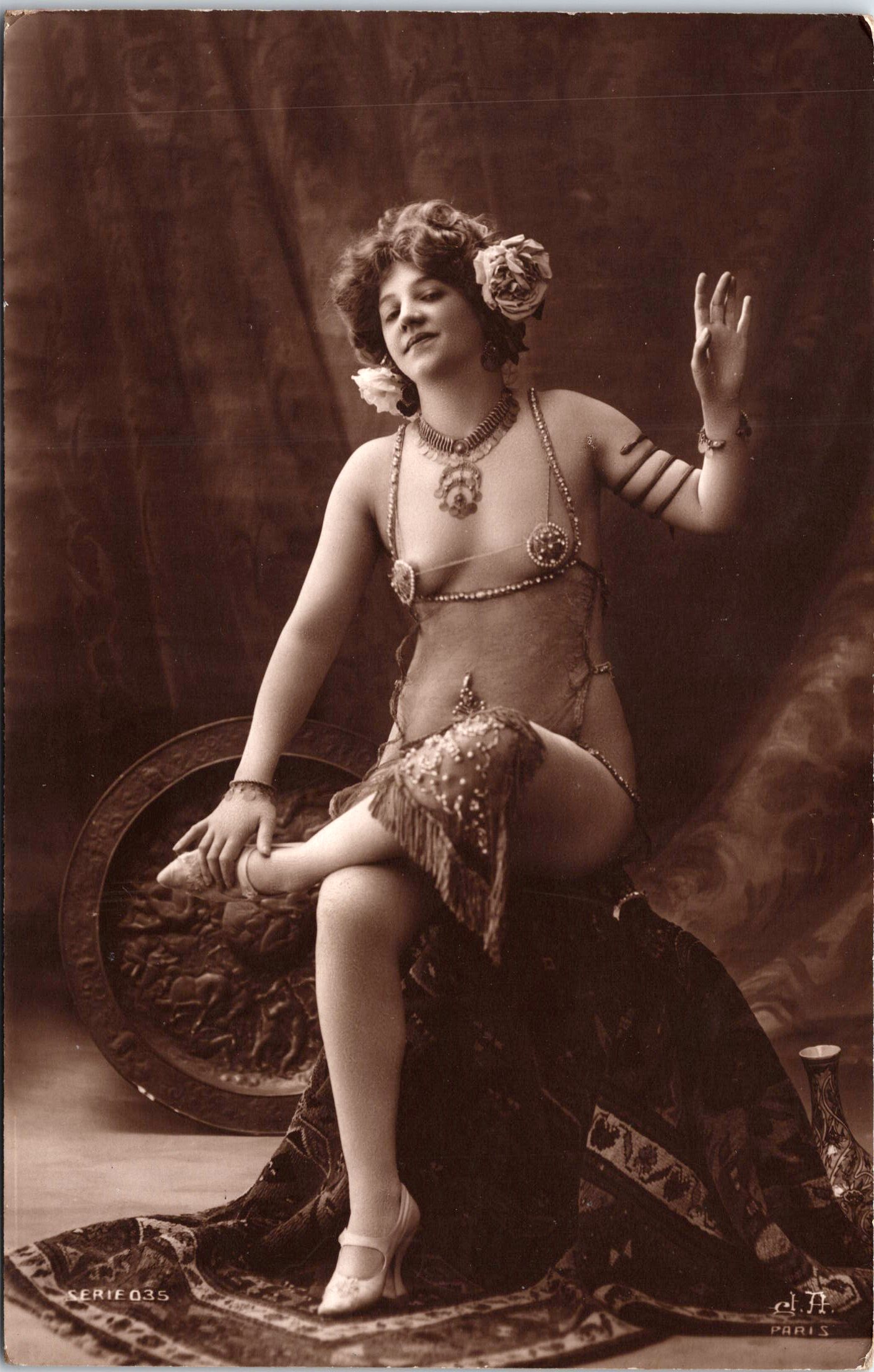
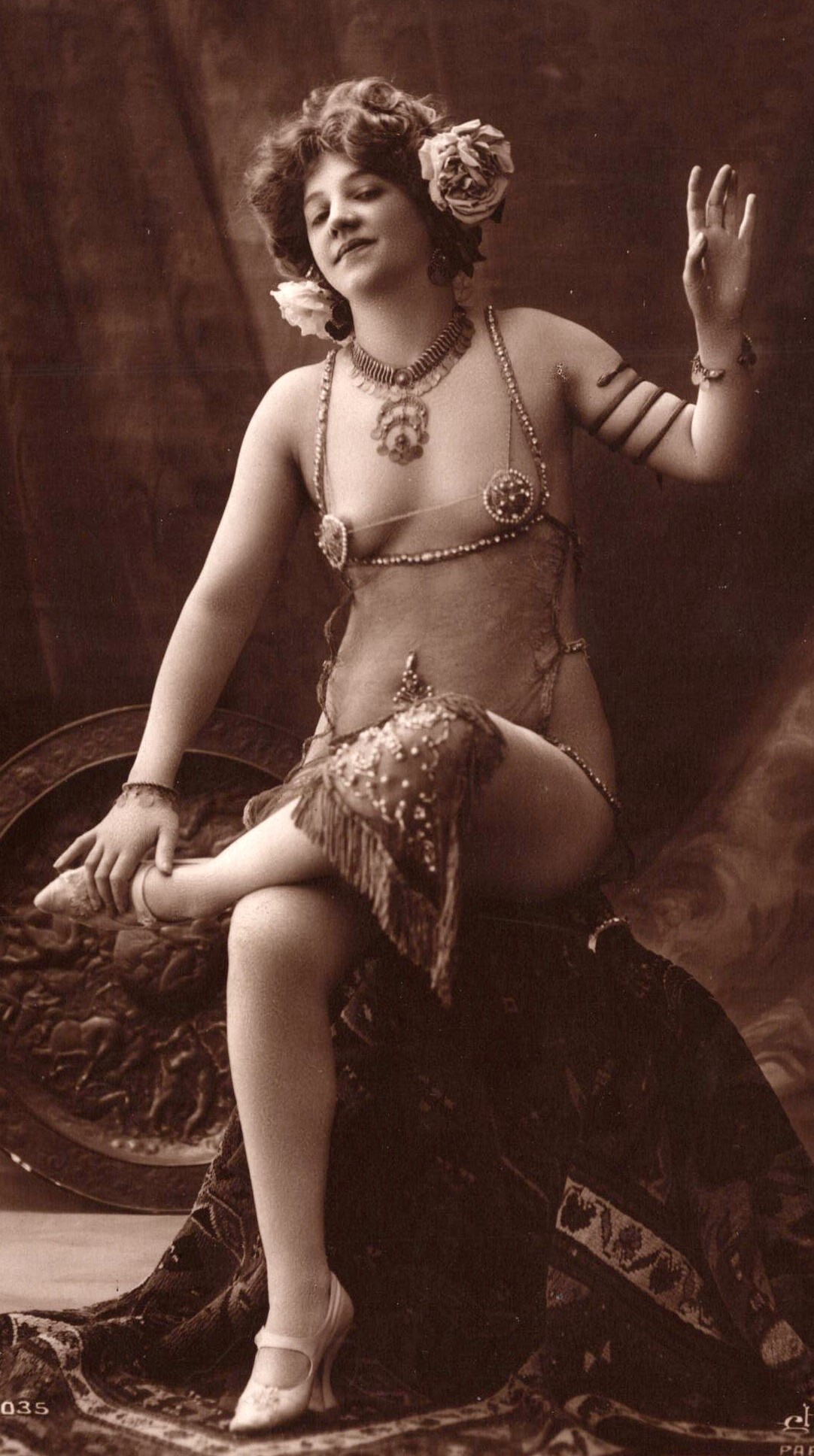
his French vintage risque real photo postcard features a pretty young woman modeling for an artist. This photograph is meant to titillate. The young woman is scantily dressed. More of her body is exposed than covered. The previous owner of this portrait postcard identifies the woman as a Parisian dancer named “Jenny Bell”. After preliminary research, I have been unable to confirm this identification. This risque photographic portrait was published by celebrated photographer, Jean Agelou (1878-1921), as part of a series (No.035). Agelou was a French photographer of the 1910’s and 1920’s who is best known for his erotic and nude photographs. He was born in Egypt and not much is known about his private life. Agelou generally used models between the age of 20 and 24 years-old. Although the 1900’s was the “golden age” of erotic photograph, photographers who took such risque photos had to use discretion. As a result, Agelou signed his work “JA”. In 1908, nudity in photographs was banned in France and photographers had to cover nude women images with strategically placed undergarments or other materials. Nude images had to circulate on the down low. They were sent in the mail inside of envelopes. Jean Agelou died in 1921; the result of a car accident. His brother George, who managed Jean’s business, also was killed in the crash.  SOLD

VALLI VALLI : PRETTY SILENT FILM & STAGE ACTRESS : RPPC 1908

POSTCARD 1 (SOLD)

POSTCARD 2 (SOLD)

POSTCARD 3 (SOLD)

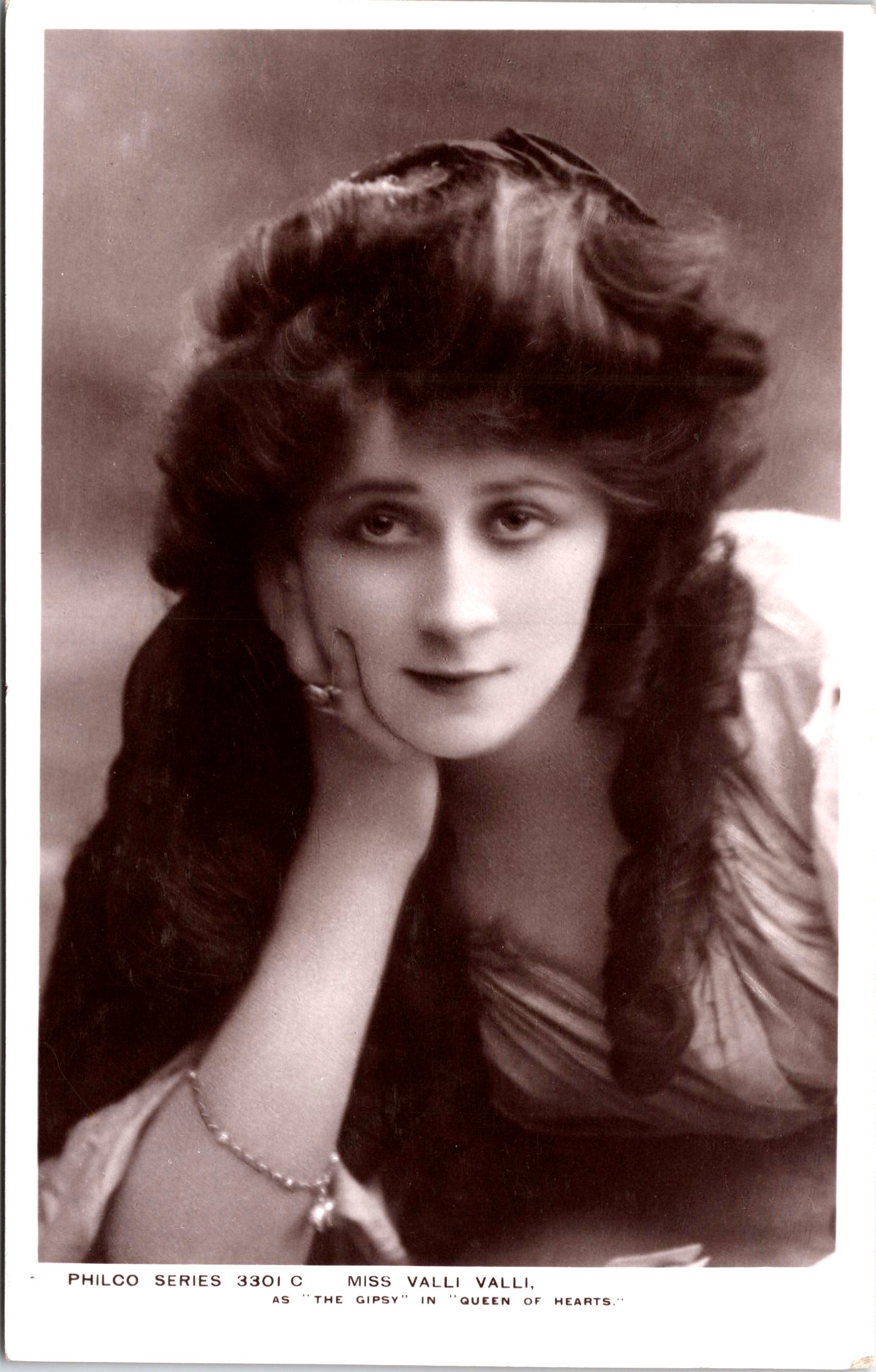
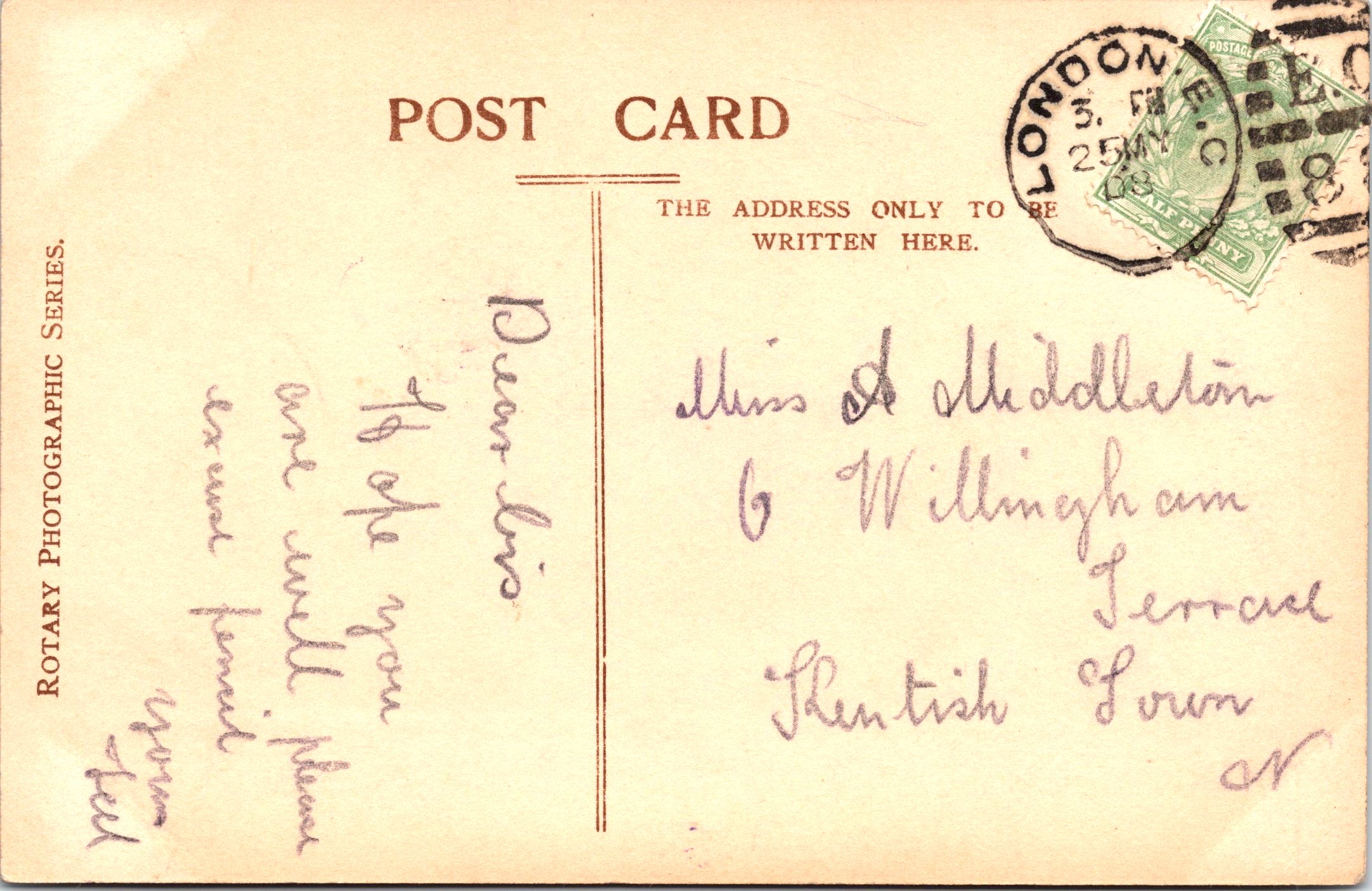
These vintage real photo postcards feature British beauty and actress, Valli Valli (1882-1927). She was a British musical comedy actress and a silent film performer. She was born in Berlin but spent most of her life in England. Her sisters, Lulu and Ida Valli were both actresses. Her father was a merchant. She was educated in London and Paris. She made her stage debut in London at the age of twelve. At thirteen years of age she had a successful run in the musical comedy “Morocco Bound” in Berlin. The next year she performed at London’s Drury Lane Theatre in a pantomime version of Cinderella. As an adult, Valli was a beautiful woman. She performed mostly on the English stage but did tour the United States a number of times. These plays include “The Dollar Princess” and her final New York City performance in “Miss Millions” (1919). In all, she appeared in seven Broadway plays between 1905 and 1920. Valli appeared in four films during 1915 and 1916. These films included “The Turmoil” which was an adaptation of a Booth Tarkington novel. In 1917, she married Louis Dreyfus, head of a music publishing house, and later, a theatrical producer. Valli died from tuberculosis at the young age of forty-five.

Postcard 1 captures Valli, in a pensive, or possibly, dejected mood. The card was published by Rotary Photo as part of a series (No.1760G). Miss Valli was photographed by the Bassano studio. (SOLD)

Postcard 2 features Valli, in a pensive or imploring mood, identical to the mood she exhibits in postcard 1. This card was published by Rotary Photo as part of a series (No.11415A).  (SOLD)

Postcard 3 captures Valli in her role as “The Gipsy” in “Queen of Hearts” . The card was published by Rotary Photo as part of a series (No.11415A). (SOLD)

POSTCARD 1 (SOLD)

POSTCARD 2 (SOLD)

POSTCARD 3 (SOLD)

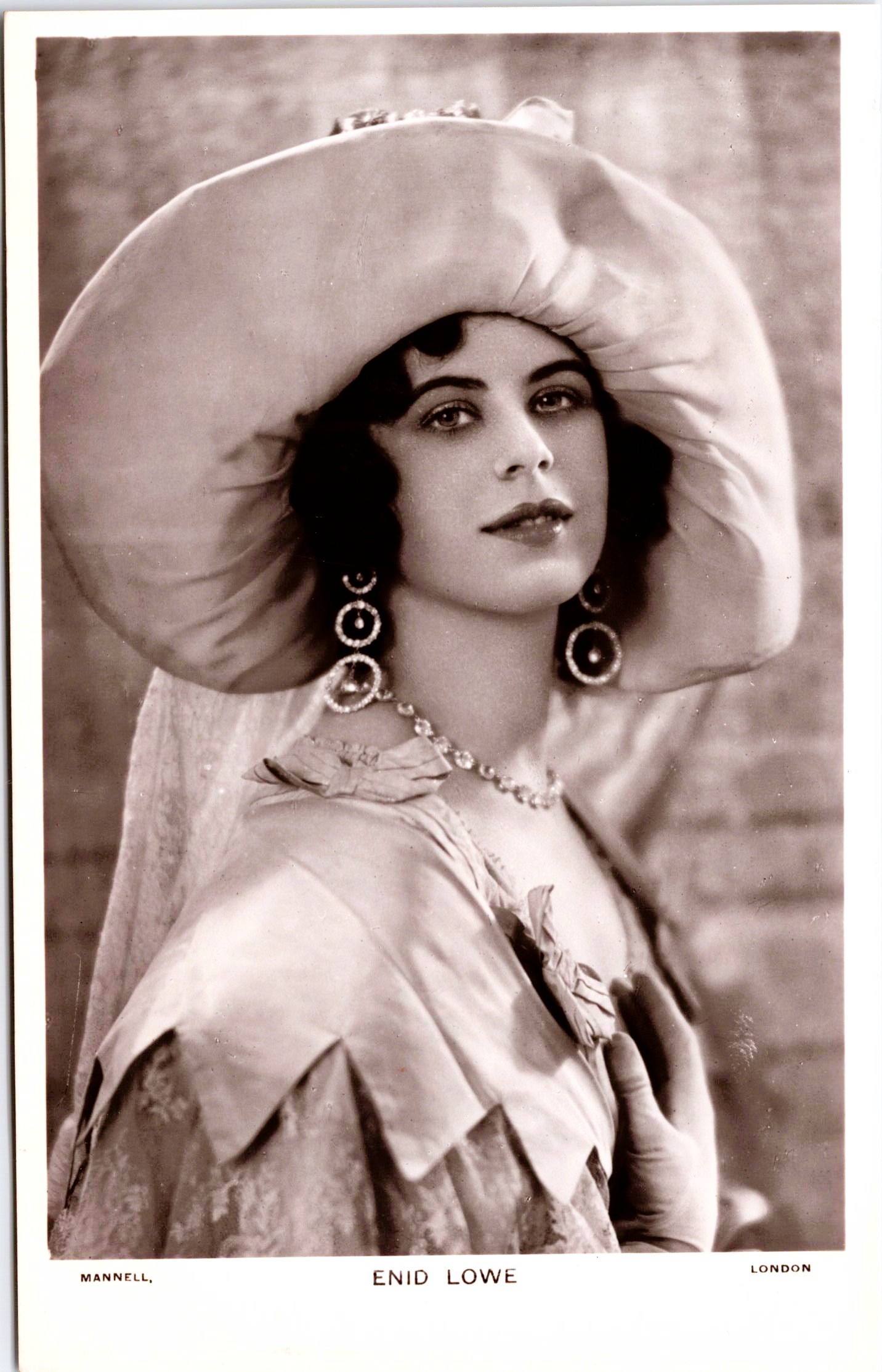
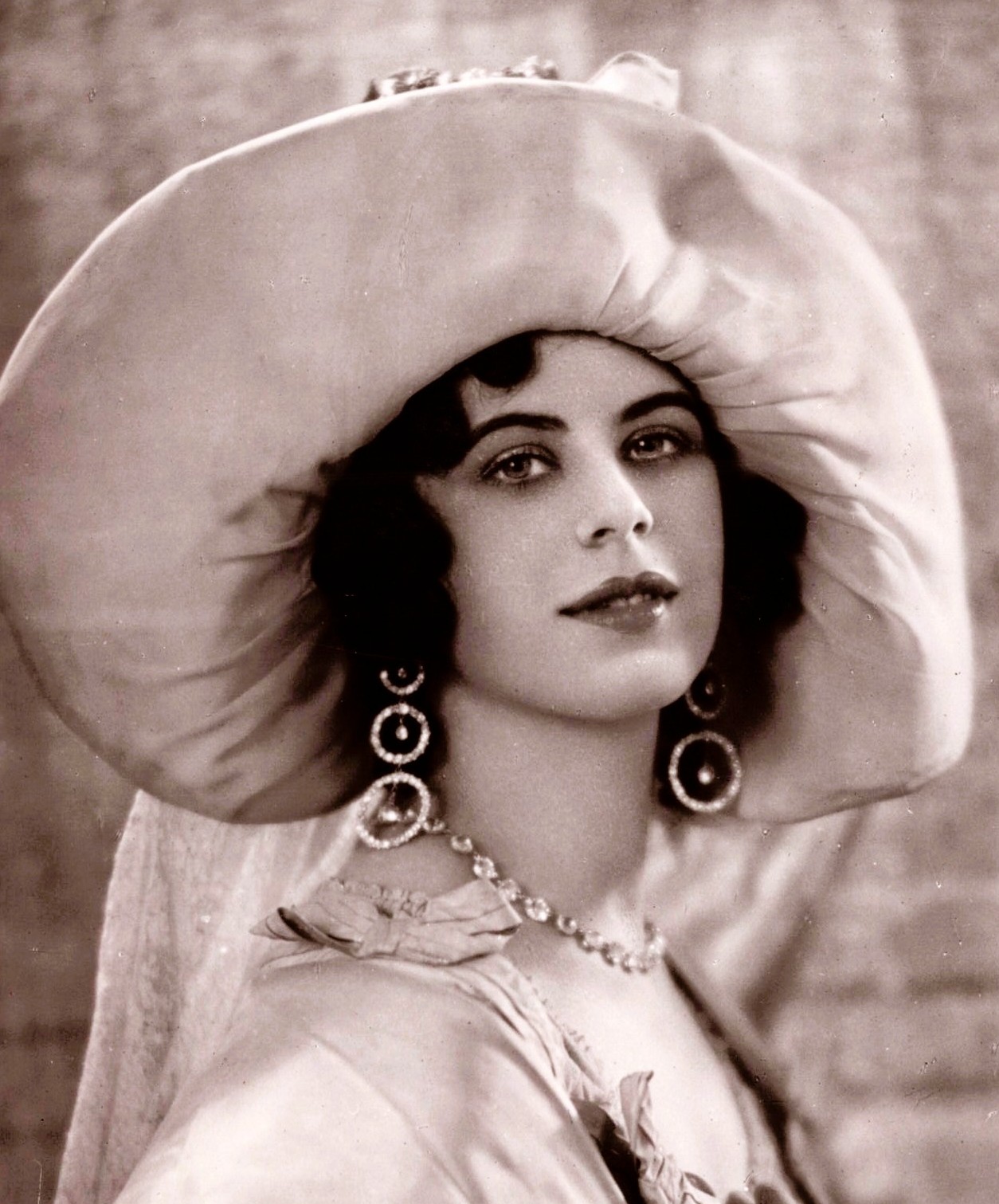
ENID LOWE : VINTAGE GLAMOUR PORTRAIT : BY GEORGE MANNELL : PRETTY ACTRESS : RARE

The photo postcard features Enid Lowe (1908-1994) in an elegant and theatrical pose. She was a British actress known for her work in television and theater, with notable appearances in productions such as “BBC Sunday-Night Theatre” (1950), “Educated Evans” (1957), and “Loot” (1970). In 1941, she performed in the musical “London Rhapsody” at The London Palladium. This postcard is a testament to Enid Lowe’s beauty. She is dressed in period-style attire. Her outfit includes a lavish gown with a soft, flowing texture, possibly made of silk or satin, adorned with delicate lace and ribbon details. The bodice has a gentle scalloped trim, and she wears long gloves, adding to the refinement of her look. Her accessories are striking—she wears an elaborate wide-brimmed hat with a voluminous, gathered crown, likely made of soft fabric. Her jewelry is ornate, consisting of large, dangling earrings with multiple tiers and a matching necklace of pearl-like beads. These accessories enhance the regal and theatrical nature of the portrait. Enid Lowe’s facial expression is poised and slightly enigmatic. Her dark, wavy hair is styled in an elegant, vintage fashion, framing her face beautifully. Her eyes, accentuated with dark makeup, have a confident and alluring gaze, and her lips are slightly parted, conveying a subtle yet engaging expression. The soft lighting highlights her delicate features, giving her a luminous and almost ethereal appearance. The photographer of this image, George Mannell, was based in London and was active in the early 20th century. He specialized in theatrical and celebrity portrait photography, producing high-quality postcards featuring actors and actresses of the time. His work captured the glamour and artistry of stage performers, often presenting them in elaborate costumes and dramatic poses to appeal to both fans and collectors. His work often appeared in publications such as the Picturegoer series, a popular British postcard collection featuring film stars and entertainers. SOLD

DOROTHY GISH : PRETTY SILENT FILM STAR : FASHIONISTA :PARAMOUNT : RPPC 1928

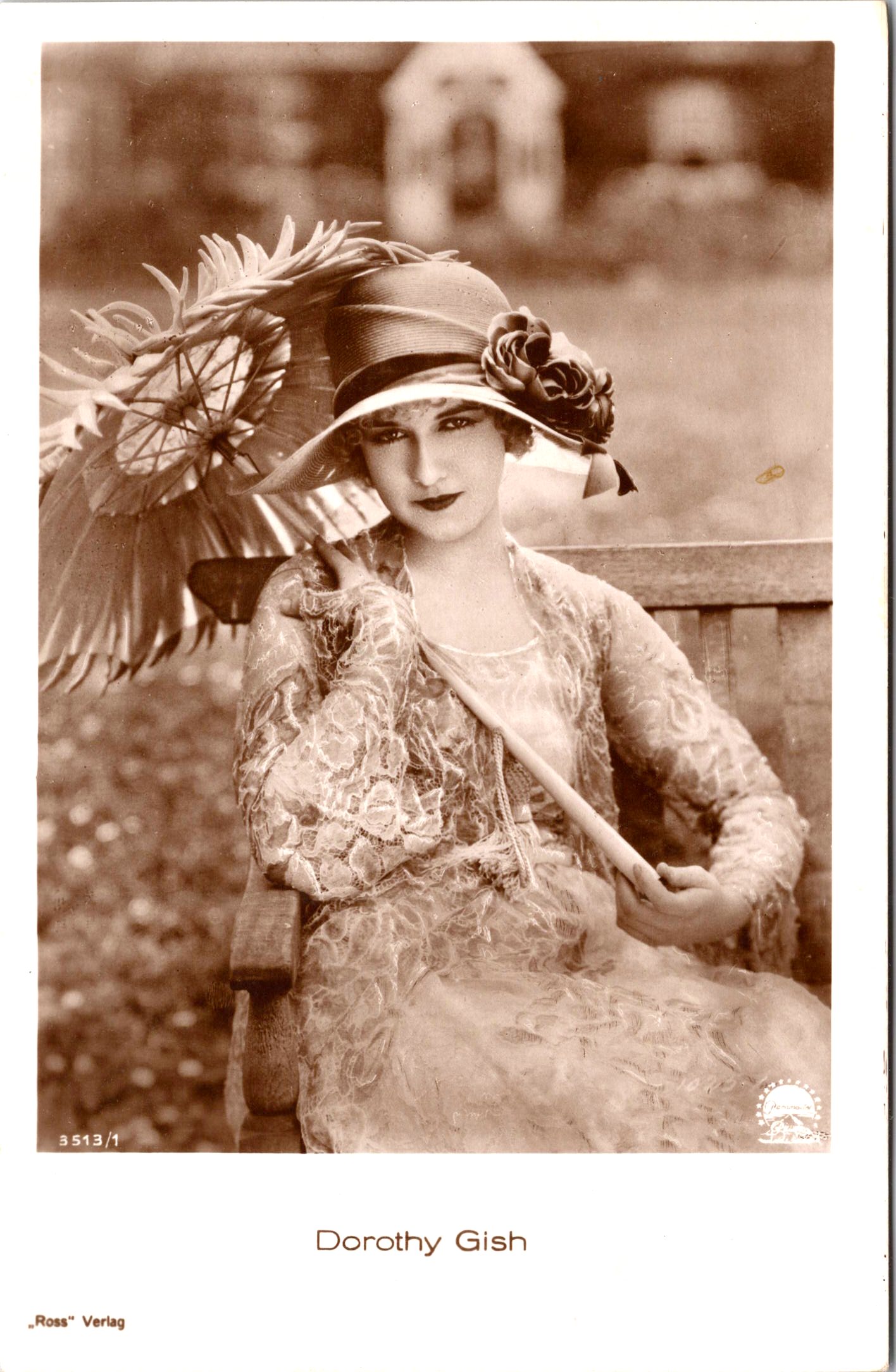
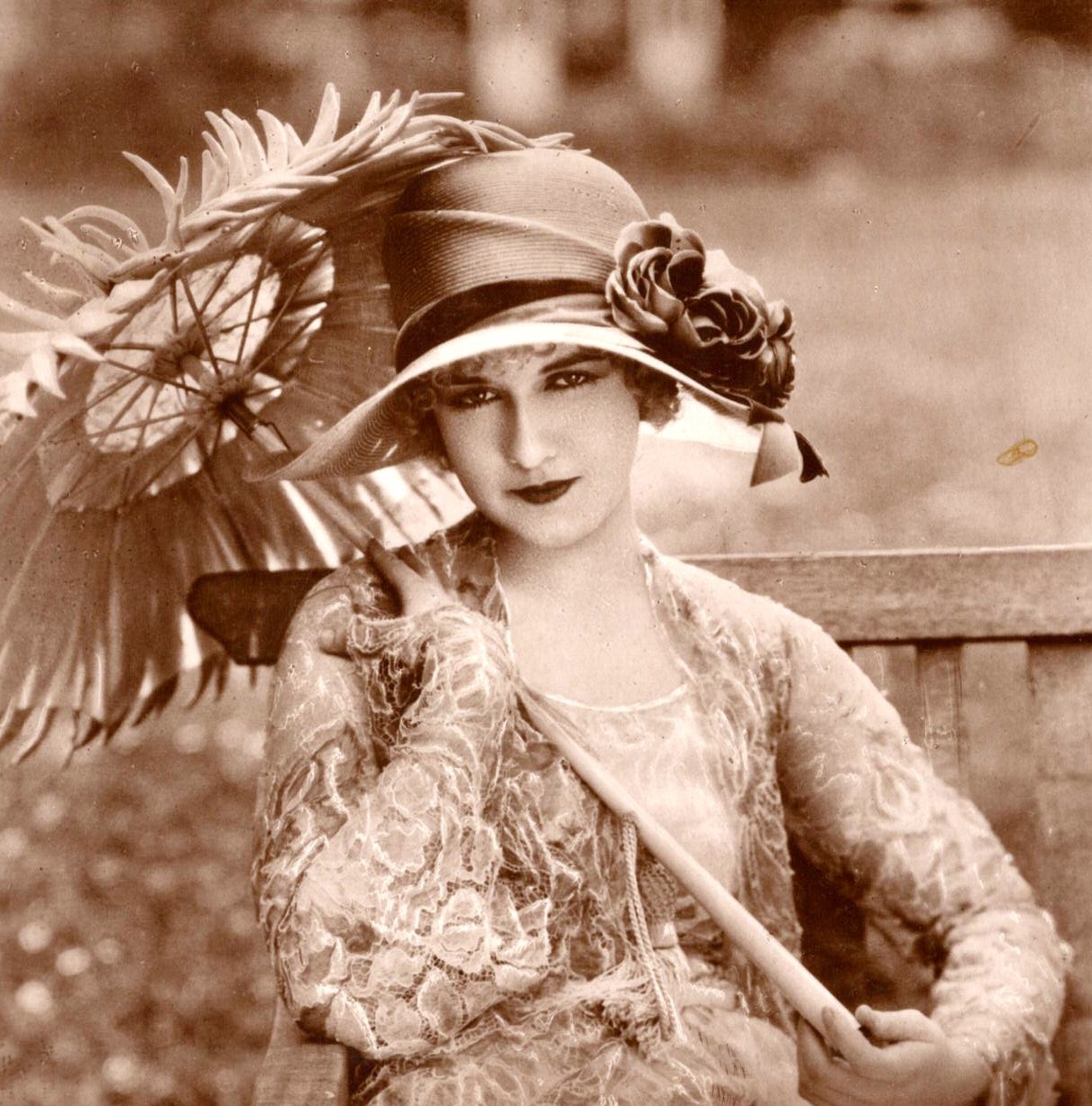
This vintage real photo postcard features actress, Dorothy Gish (1898–1968). She was a prominent American actress best known for her work in silent films and later in theater. She was also quite pretty which is apparent in this postcard portait. In addition, she was quite fashionable. She was born in Dayton, Ohio, into a family with roots in the performing arts. Dorothy and her older sister, Lillian Gish, are often remembered as significant figures in early American cinema, particularly for their work with director, D.W. Griffith. Dorothy and Lillian’s parents separated when they were young, leaving their mother to support the family. In 1902, the Gish family moved to New York City, where their mother sought work in the theater. Both sisters began acting on stage as children to help support their family. Dorothy made her stage debut at a young age, and by the time she was a teenager, she had already gained experience in theater. In 1912, Dorothy and Lillian were introduced to D.W. Griffith by their friend, actress Mary Pickford. Griffith immediately saw potential in the sisters and cast them in his films, launching their film careers. Dorothy’s early work with Griffith included supporting roles in films like The Musketeers of Pig Alley (1912) and The Birth of a Nation (1915). However, Dorothy’s specialty was comedy, and she developed a distinct, lively style that set her apart from her sister Lillian, who typically played more dramatic roles. Dorothy’s popularity rose as she starred in a series of comedic silent films, including Hearts of the World (1918) and Orphans of the Storm (1921), both of which also featured Lillian. While Lillian’s characters often embodied innocence and vulnerability, Dorothy’s roles allowed her to showcase a playful, often mischievous side, bringing her critical acclaim and a strong fan following. With the advent of sound films in the late 1920s, Dorothy, like many silent film stars, found it challenging to transition to “talkies.” She made a few sound films, but she gradually shifted her focus to theater, where she had always felt at home. Dorothy was well-suited to the stage, bringing her charm and humor to roles in productions such as Young Love (1928), which was a hit on Broadway, and The Chalk Garden (1956). Throughout the 1930s and 1940s, Dorothy toured in various plays and continued to appear in films occasionally. She remained active in theater well into the 1950s, and her stage career extended her professional life even as her work in film slowed. In contrast to her sister, who continued to receive accolades in film well into the sound era, Dorothy’s legacy was tied more to her stage performances and her beloved silent film roles. Dorothy was known for her wit, independence, and close bond with her sister Lillian. The two were inseparable and supported each other throughout their lives, both personally and professionally. In 1920, Dorothy married James Rennie, a Canadian-born actor. However, their marriage ended in divorce in 1935, and she did not remarry. After retiring from the stage, Dorothy lived a quiet life but remained connected to the arts and close to her sister. She passed away in 1968. This postcard was published by Ross Verlag as part of a series (No.3513/1). The card was published in 1928/1929. SOLD