This vintage real photo features dancer/actress Lydia de Rostow. She is dressed in a dance costume that accentuates her shapely figure. The photograph was taken by Felix studio, which was located in Paris, France. Luminous-Lint describes Felix as a “photographer of couture in the first decades of the 20th century in France”. He was an early fashion photographer who operated, according to Luminous-Lint, during two decades (1900-1920). The name “R Guilleminot” is printed on the reverse of the postcard. Guilleminot was a firm based in Paris that manufactured photographic plates and papers. Much of their photo paper was used for printing real photograph postcards. The company existed between 1858 and 1994. This vintage postcard portrait is in very good condition (see scans).
Buy this Vintage Real Photo Postcard (includes shipping within the US) #3409
To purchase this item, click on the Pay with PayPal button below
$28.00
Buy this Vintage Real Photo Postcard (includes International shipping outside the US) 3409
To purchase this item, click on the Pay with PayPal button below
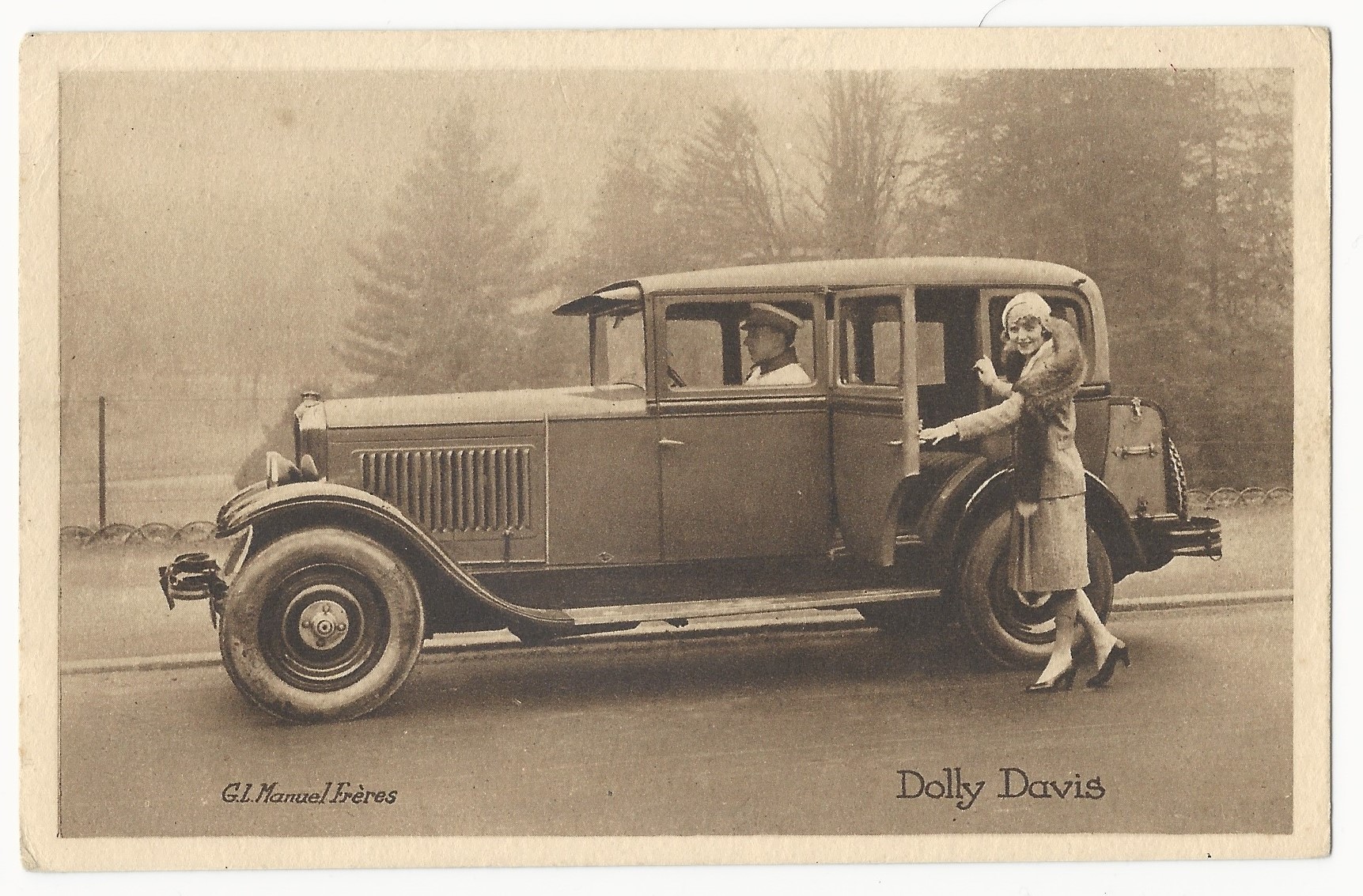
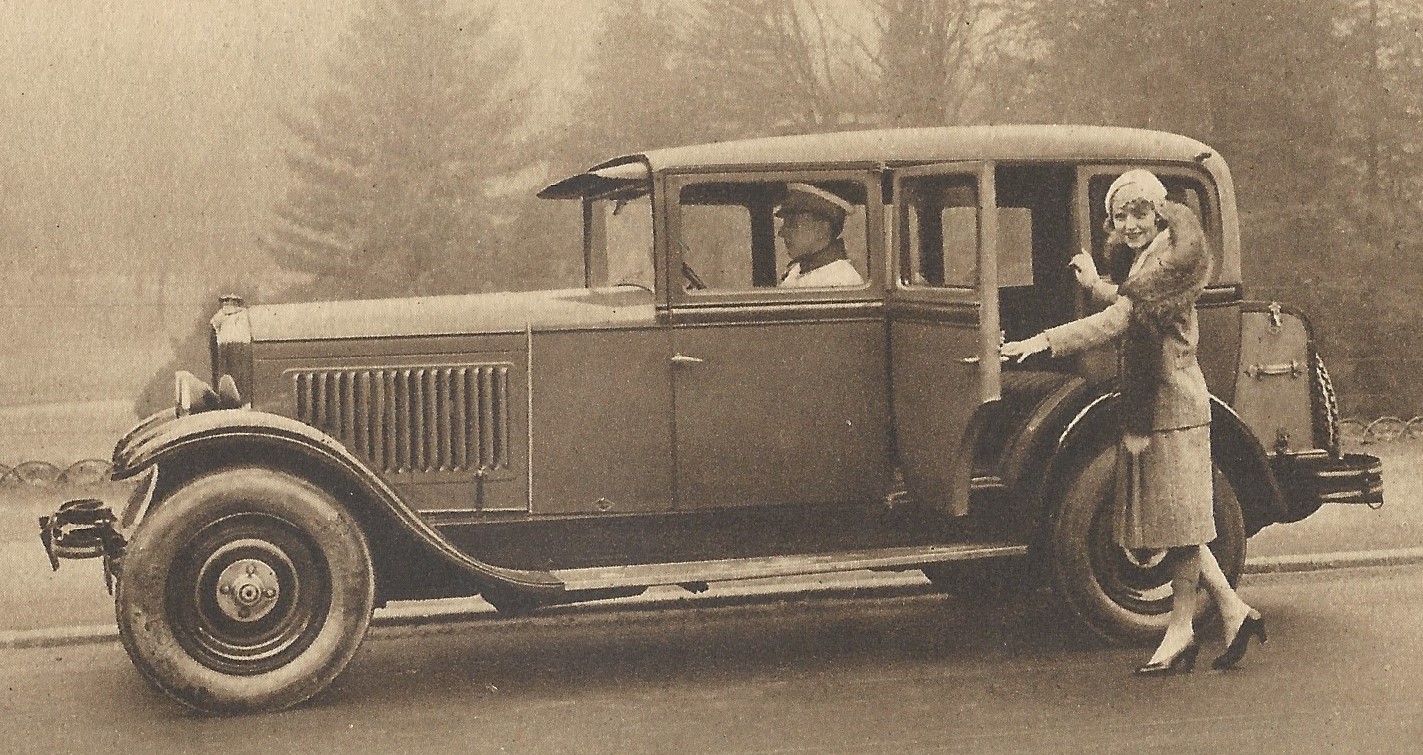
Dolly Davis (1896-1962) was a French film actress. She is described by IMDb as very pretty and very “lively”. She was very active in film during the 1920’s. That was also the height of her popularity. She appeared mostly in comedies. She often acted in films with her companion, Andre Roanne. She appeared in international films near the close of the silent film era. She continued to act with the advent of sound films. She retired in 1937 and focused on painting. The IMDb reports that she has 52 film credits ranging from 1920 through 1936. This vintage real photo postcard is part of a series, “Peugeot 12 six Collection”. Miss Davis is seen entering into a chauffer driven luxury automobile. The photographer of this image was GL Manuel Freres. The studio was founded by brothers Gaston and Lucien Manuel. This vintage postcard is in very good condition (see scans). SOLD
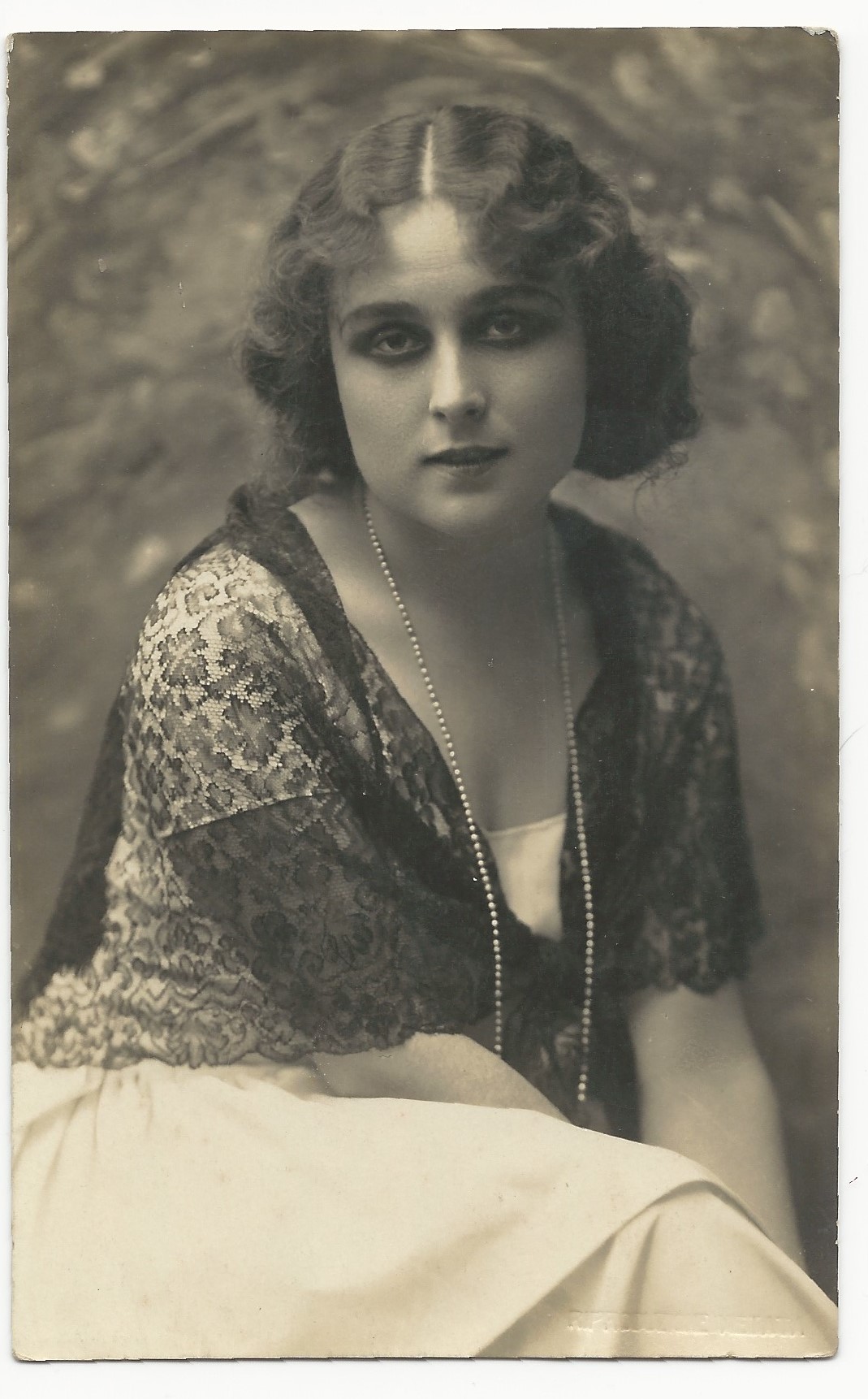
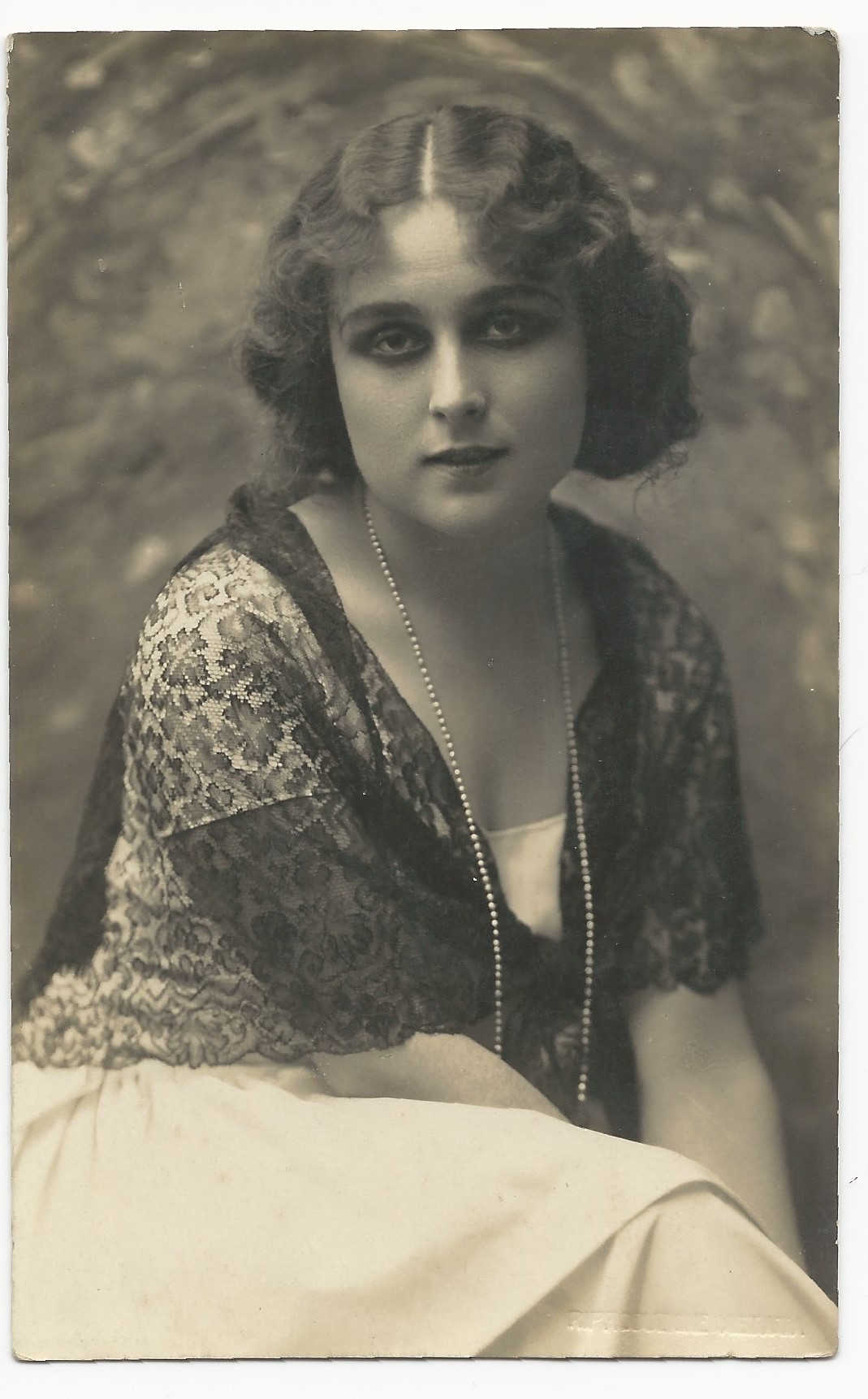
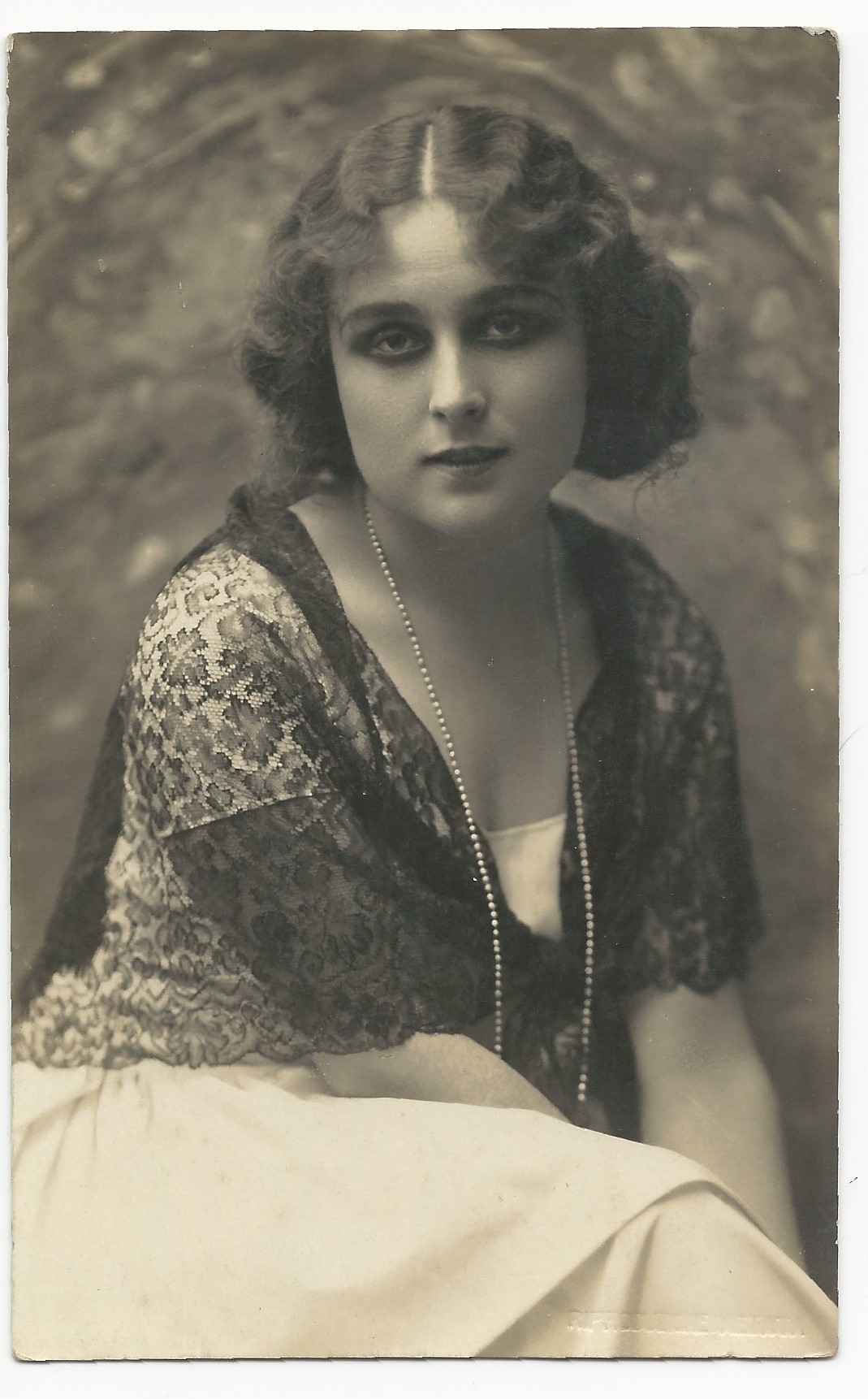
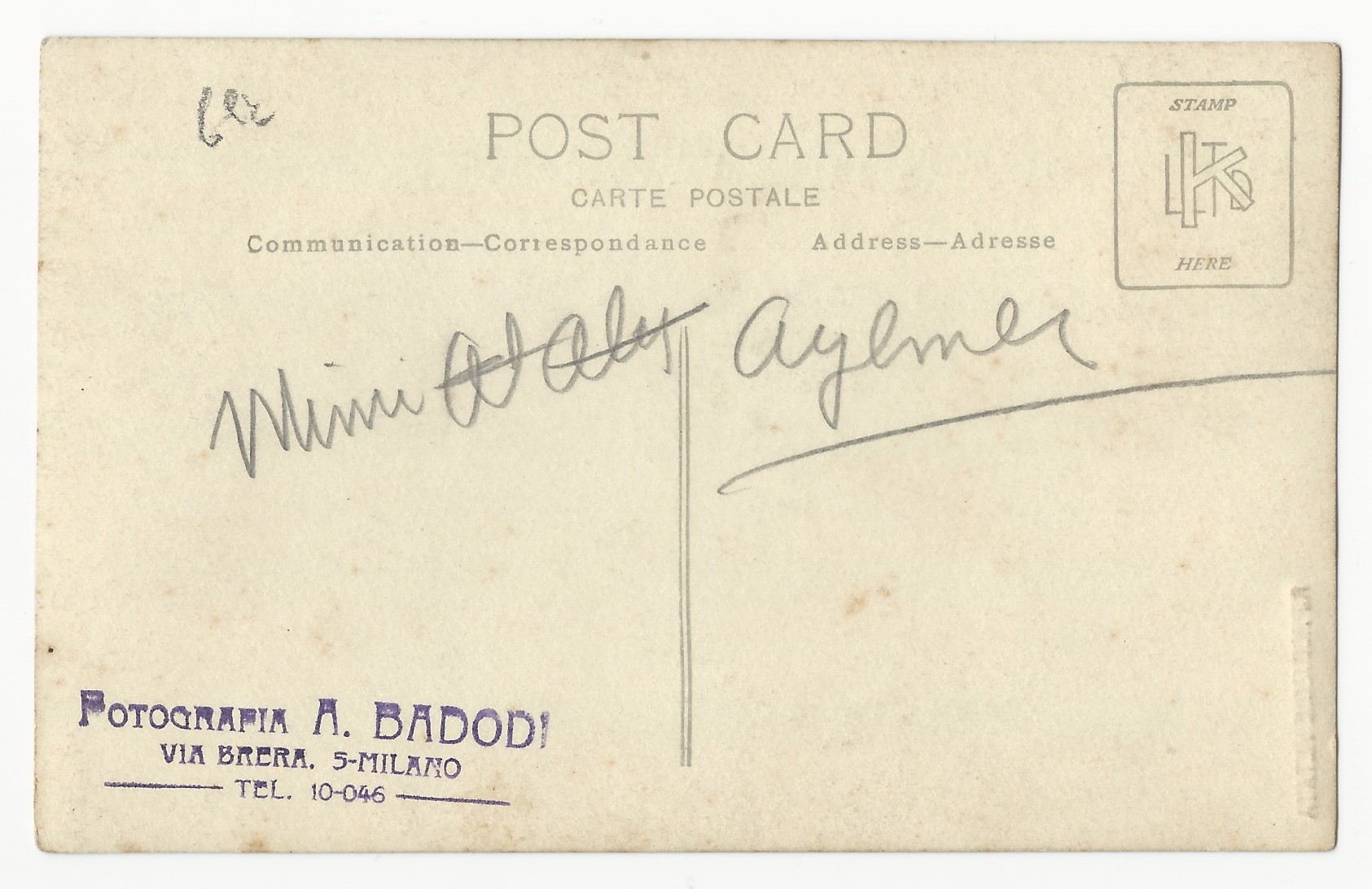
This vintage real photo postcard features Italian stage and film actress, Mimi Aylmer (also spelled Almieri) (1896-1992). She was a star during Italy’s fascist era. Aylmer was born in Rome. Her family was of the bourgeois class. At age seventeen, she made her debut as a chanteuse (female nightclub singer of popular songs). Shortly after her debut, she was hired by the Riviste Papa stage company. In 1914, she launched her film career. She starred in her first film and remained a major star for more than twenty years (until 1936). After World War II, she played character roles in two films before retiring from the entertainment world in 1959. In 1964, she moved to Bologna where she lived in a rest home for entertainment artists. The IMDb reports that Aylmer has twelve film credits ranging from 1914 to 1951. As this photo postcard demonstrates; Miss Aylmer was a pretty woman. She has an aura of sweetness and a nice half smile. This vintage postcard is in very good condition (see scans).The reverse of the card has the stamp of Milan photographer Attilio Badodi (1880-1967). He was a talented and very successful photographer of European celebrities. His photos immortalized many actors and actresses. He also did portraits of Benito Mussolini. The stamp box on this postcard indicates that it was published by K Ltd. sometime between 1918 and 1936. The postcard is in good condition (see scans).
Buy this Vintage Real Photo Postcard (includes shipping within the US) #3400
To purchase this item, click on the Pay with PayPal button below
$32.00
Buy this Vintage Real Photo Postcard (includes International shipping outside the US) 3400
To purchase this item, click on the Pay with PayPal button below
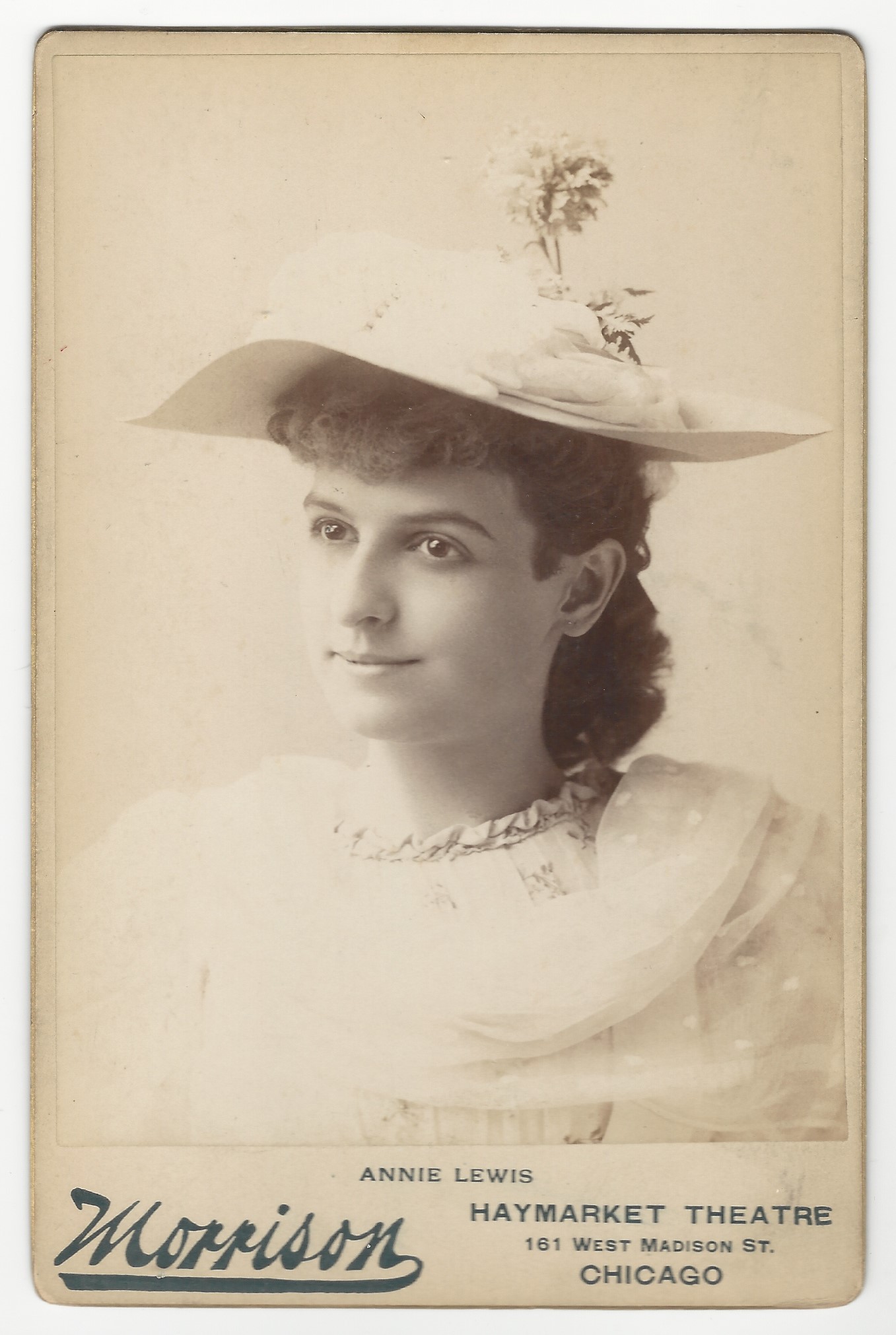
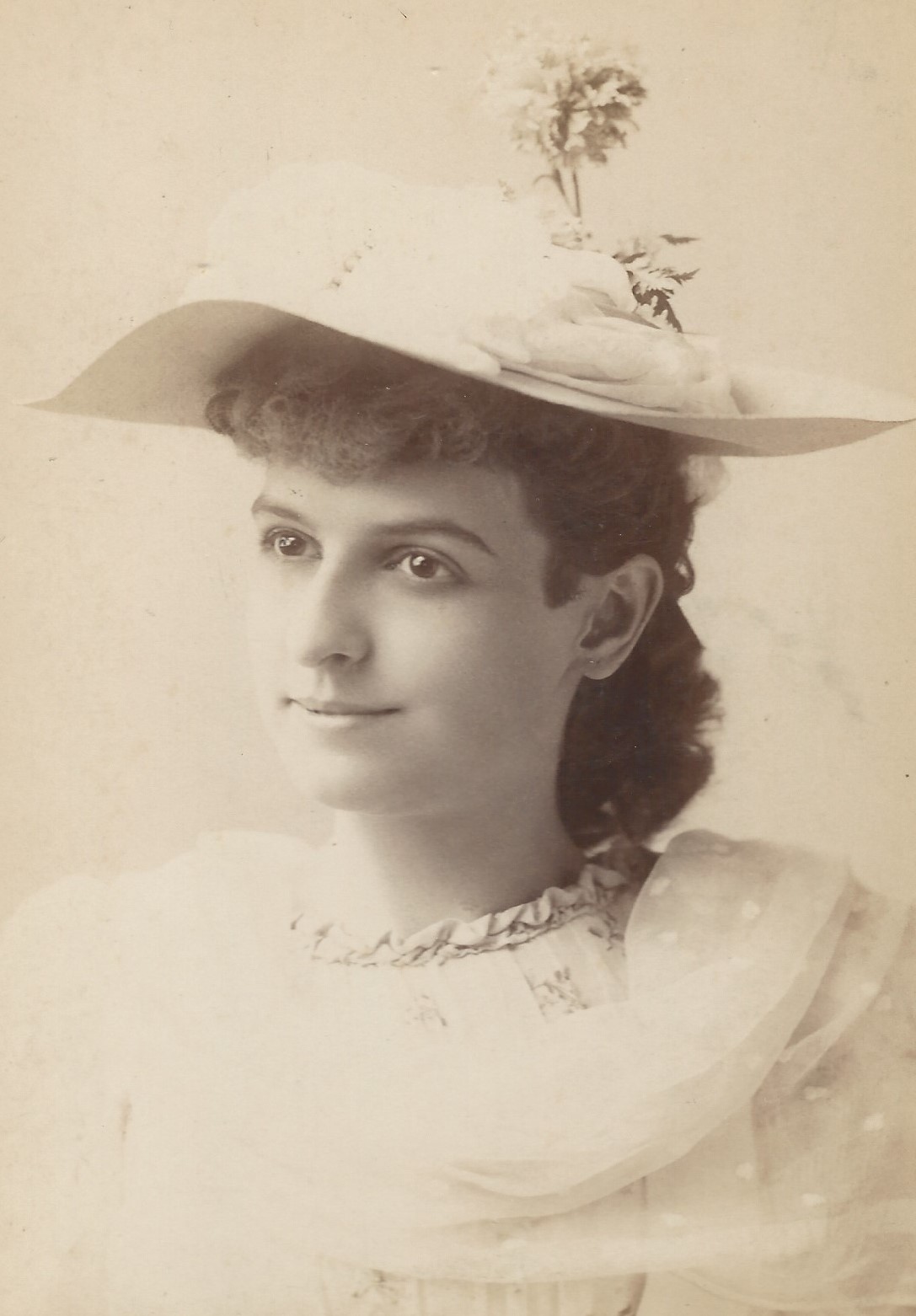
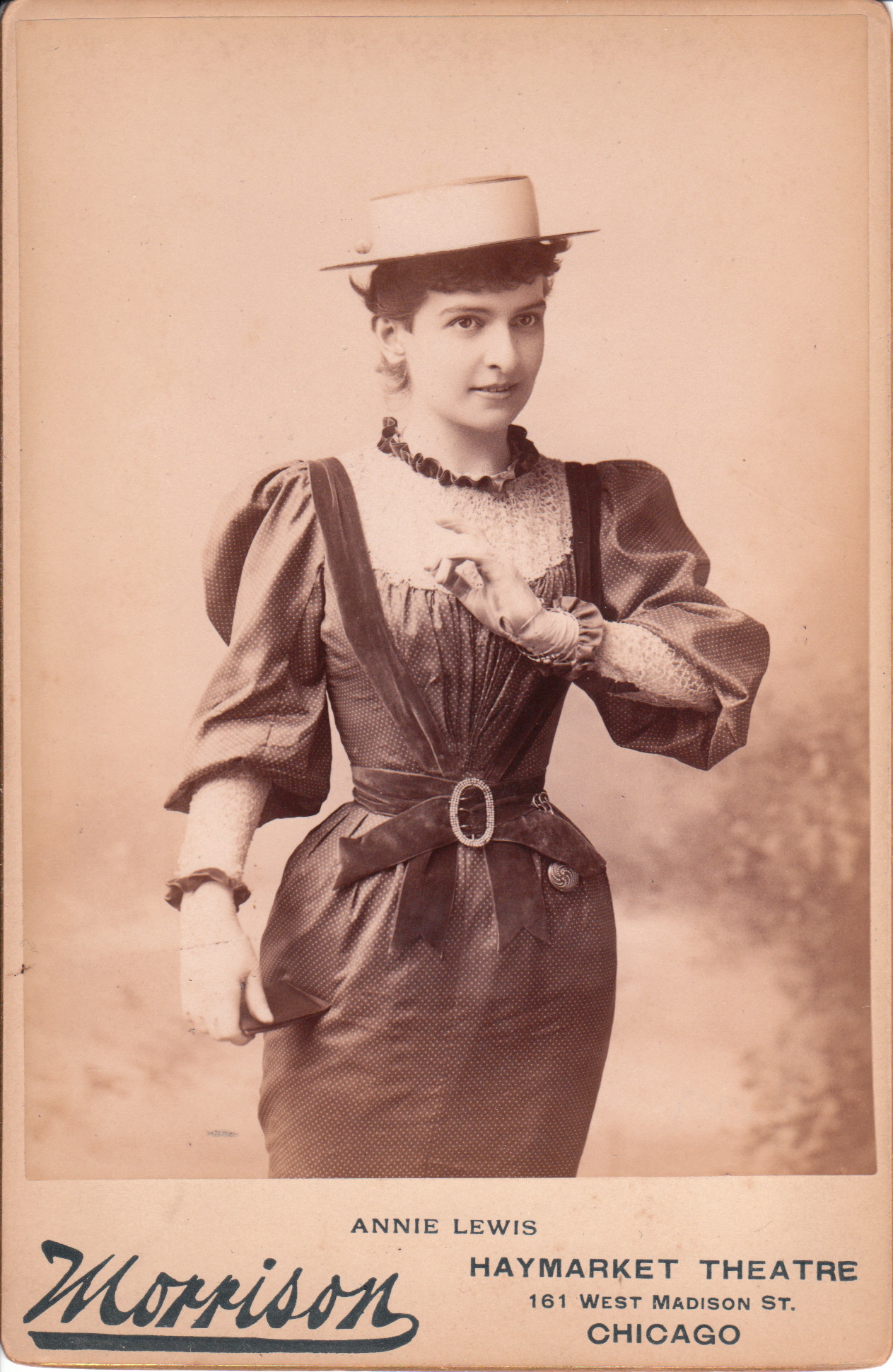
Celebrity photographer, William McKenzie Morrison of Chicago, Illinois, produced these photographic portraits of actress Annie Lewis (1869-1896). Morrison’s studio was in the Haymarket theater building. To view more photographs from the Morrison studio and to learn more about him, click on the category “Photographer: Morrison”. Lewis was a soubrette of light operas and musical comedies. She was born and raised in Washington D.C.. Her father was a clerk for the U.S. Treasury Department. Her mother was a former parlor entertainer. As a child, she showed talent for “mimicry”. By the time she was four years old, she was performing on the stage. Actually, during her early years, she often did her singing and dancing atop a piano because that vantage point, allowed her to be seen by her audience. At the age of sixteen, Lewis was touring the country with her own performing company. She was the soubrette in production called “Little Trump”. Go figure. At seventeen years of age, she married stage actor Wilton Lackaye. He was twenty-five years old at the time and he went on to have a long successful career in both theater and film. Lewis went on to play starring roles in a number of productions. She became a popular enough actress to be mentioned in a number of articles appearing in the New York Times. The Times (1892) called her the “bright leading lady” of the Yon Yooson company. The newspaper (1892) also reported that she she performed to “standing room only” audiences in Boston’s Bowdoin Theater. In 1893, The New York Times wrote of trouble caused by Annie Lewis at New York’s 14th Street Theater that threatened that evening’s performance of “The Nutmeg Match”. The management had wanted to add some “specialties” to the performance and Miss Lewis threatened to quit the cast if they made the proposed changes. It was reported that the theater management had looked for an actress to replace Annie Lewis but they were unsuccessful due the extremely short time a new actress would have to prepare for the part. In 1895, she was the supporting actress to Camille D’Arville in the Broadway Theatre production of “A Daughter of the Revolution”. Not long after that appearance, illness forced her to leave the stage, and by October, 1896, Annie Lewis was dead. The cause of death was tuberculosis. She was only 27 years-old. Her obituary appeared in “The Evening Times” (Washington D.C.). The headline of the article was “Little Annie Lewis Dead”. The article reports that she had been sick for nearly a year. She was forced to cancel a number of appearances. Her friends had hoped that a trip to the Southwest and Mexico would help restore her health. A benefit was held and enough money was raised for the trip and for her care. However, her worsening health did not allow her to travel. The obituary states that Lewis was the mascot of the “National Fencibles”. She was adopted as their “Daughter of the Regiment”. The fencibles were a Washington based militia and drill team. John Philip Sousa dedicated a march to the organization. The obituary laments that the curtain fell way too soon in the life drama of Miss Annie Lewis.
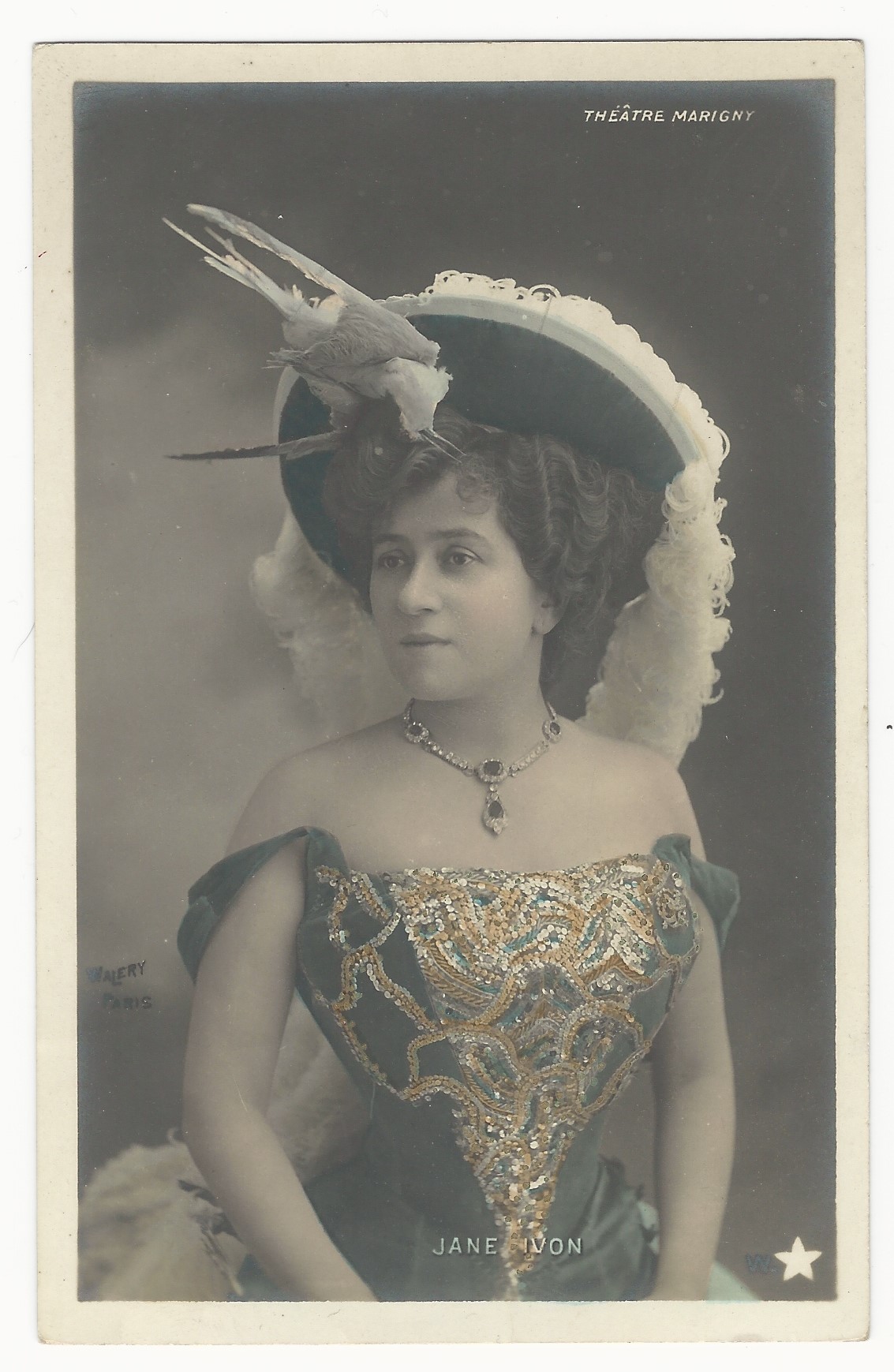
This vintage real photo postcard features pretty performer, Jane Ivon. Take a close look at her hat. Yes, that is a real deceased bird decorating her hat. The bird looks as if it is staring into Miss Ivon’s eyes. There was a time when whole birds were considered desirable decorations on lady hats. This was to the detriment of many bird species that were nearly wiped out by hunters looking to make a quick buck from the millinery industry. One of the venues that Ivon performed at was the Theatre Marigny. The Marigny was, and remains located, near the corner of Champs-Elysees and the Avenue Marigny. The theatre was opened in 1894 and was the home to operetta and other musical theatre. It was a popular venue for musical productions until the 1930’s. There have been many changes in the venue overtime, including a major rehabilitation and restoration in 2018. The theatre still operates today. This portrait postcard was photographed by Lucien Walery. He was a celebrated Paris photographer known for his portraits of artists and cabaret dancers from the city’s music halls. He is very well known for his portraits of Mata Hari and Josephine Baker. Walery did a lot of work in the genre of nude/erotic photography. He photographed the beautiful women of Paris between the early 1900’s and the 1920’s. The postcard is part of a series (n542). This vintage portrait postcard is in very good condition (see scans).
Buy this Vintage Real Photo Postcard (includes shipping within the US) #3393
To purchase this item, click on the Pay with PayPal button below
$25.50
Buy this Vintage Real Photo Postcard (includes International shipping outside the US) 3393
To purchase this item, click on the Pay with PayPal button below
The subject of this vintage real photo postcard is theatre actress, Suzy Mabel. I was unable to find much biographical information about this pretty young woman with an enticing smile. The magazine, “Navy and Army” (1905) published a full page spread of Miss Mabel. The article included four photographs of Miss Mabel. One of those photographs was identical to the photo above. A caption beneath the images reads “One of the most popular of the young actresses now appearing at La Scala, Paris”. Le Concert de La Scala was built in 1873 and was one of the most famous cafe-concert halls of the Belle Epoque. The portrait of Suzy Mabel seen on this postcard was photographed by Lucien Walery. He was a celebrated Paris photographer known for his portraits of artists and cabaret dancers from the city’s music halls. He is noted for his portraits of Mata Hari and Josephine Baker. Walery did a lot of work in the genre of nude/erotic photography. He photographed the beautiful women of Paris between the early 1900’s and the 1920’s. This postcard was postmarked in 1907. The card was published by Societe Industrielle de Photograpie (SIP) of Rueil, France, as part of a series (no. 5087). SOLD
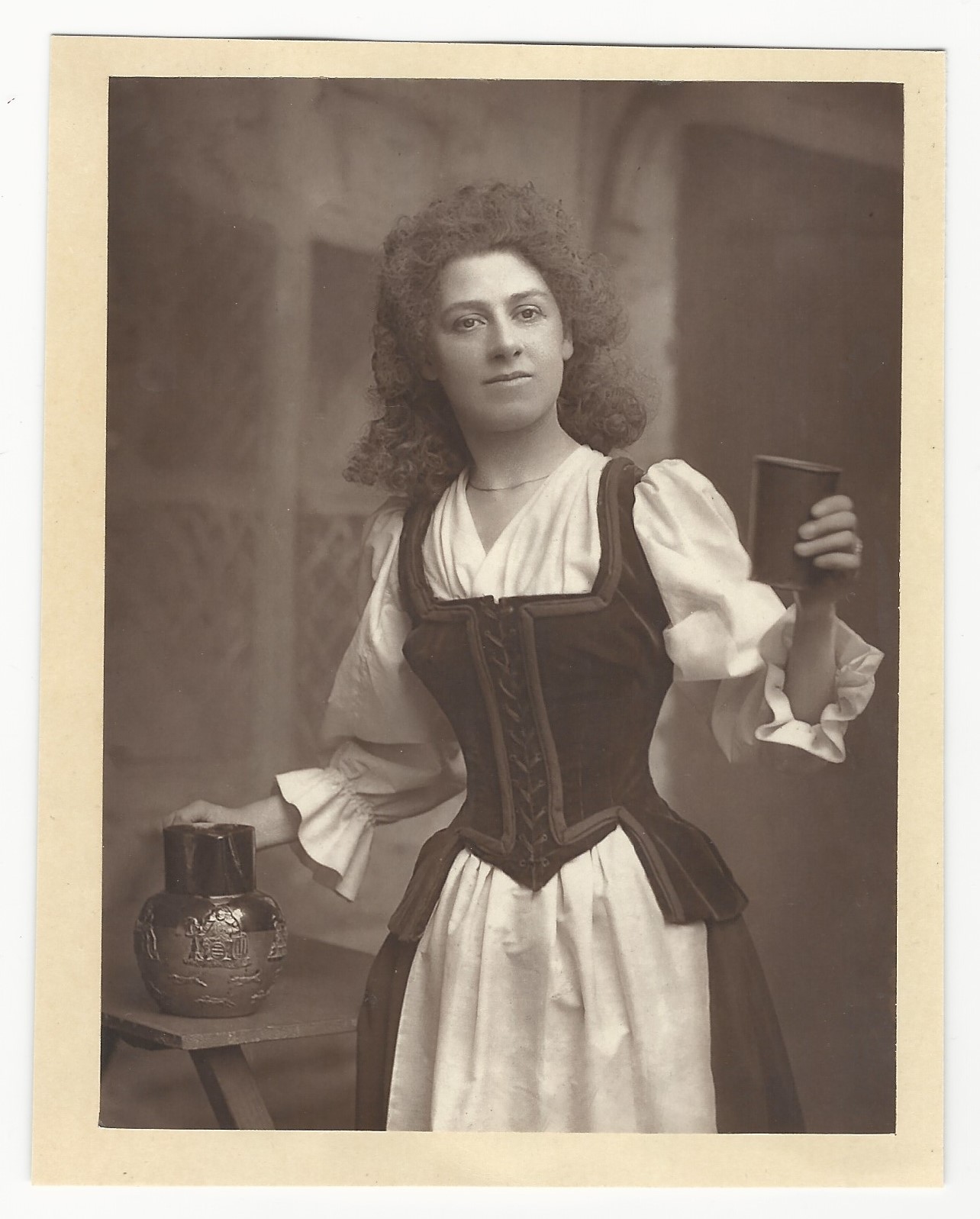
The pretty woman seen in this vintage photograph is English musical comedy actress, Clara Jecks (1854-1951). She was born in London, England. Her father was an actor and theatrical manager (Adelphi Theatre). Her mother was a popular actress. It is unsurprising that Clara began her stage career when she was a baby. She first appeared on the stage as a toddler. Growing up, she received the music, dance, and voice training needed to prepare her for a performing career. Her London stage debut was in 1873, at about the age of nineteen. Clara’s specialty was playing soubrettes (lively flirtatious roles) and boy roles. In fact, she once said, “I am never so really happy as when acting as a lad”. Clara was mentored by talented actress, Miss Nellie Farren. There is a portrait of Clara in Great Britain’s National Portrait Gallery. In fact, the portrait is identical to the photograph seen above. The NPG reports that this image appeared in “The Theatre” magazine in 1892. She was photographed, for this image, playing her role in “Richard II”, written by William Shakespeare. The photographer of the photo was Alfred Ellis (1854-1930). Ellis was an active photographer between 1884 and 1899. He operated a studio on Upper Baker Street in London. He specialized in theatrical photography and sometimes photographed whole scenes inside his studio. He later went to theaters to photograph performers and play scenes. Now, back to Clara’s career. In 1878, she and her mother toured together with the Comedy Opera Company. A few of Clara’s notable performances were in “Formosa” (1877), “The Black Domino” (1893), Cinderella (1893), and “A Merry Madcap” (1896). Her final London performance was in “The Critic” (1911). In an interview appearing in “The Sketch” (1893), Clara was asked the reason why she never toured America. She answered that she received many good offers to appear there, but preferred to perform in London, “Where I am at home with my audiences”. She then added, as if to change the subject, the following observation. She asserted, “You should see what funny letters I sometimes get from little boys in front, who can hardly believe I’m not one of themselves”. During her career, she appeared in over two hundred opera, drama, and pantomime roles. This image features Clara holding a wine pitcher in one hand, and a wine cup in the other. This photograph measures about 4″ x 5″, has excellent clarity, and is in excellent condition.
Buy this Vintage Photograph (includes shipping within the US) #3371
To purchase this item, click on the Pay with PayPal button below
$41.50
Buy this Vinatage Photograph (includes International shipping outside the US) 3371
To purchase this item, click on the Pay with PayPal button below
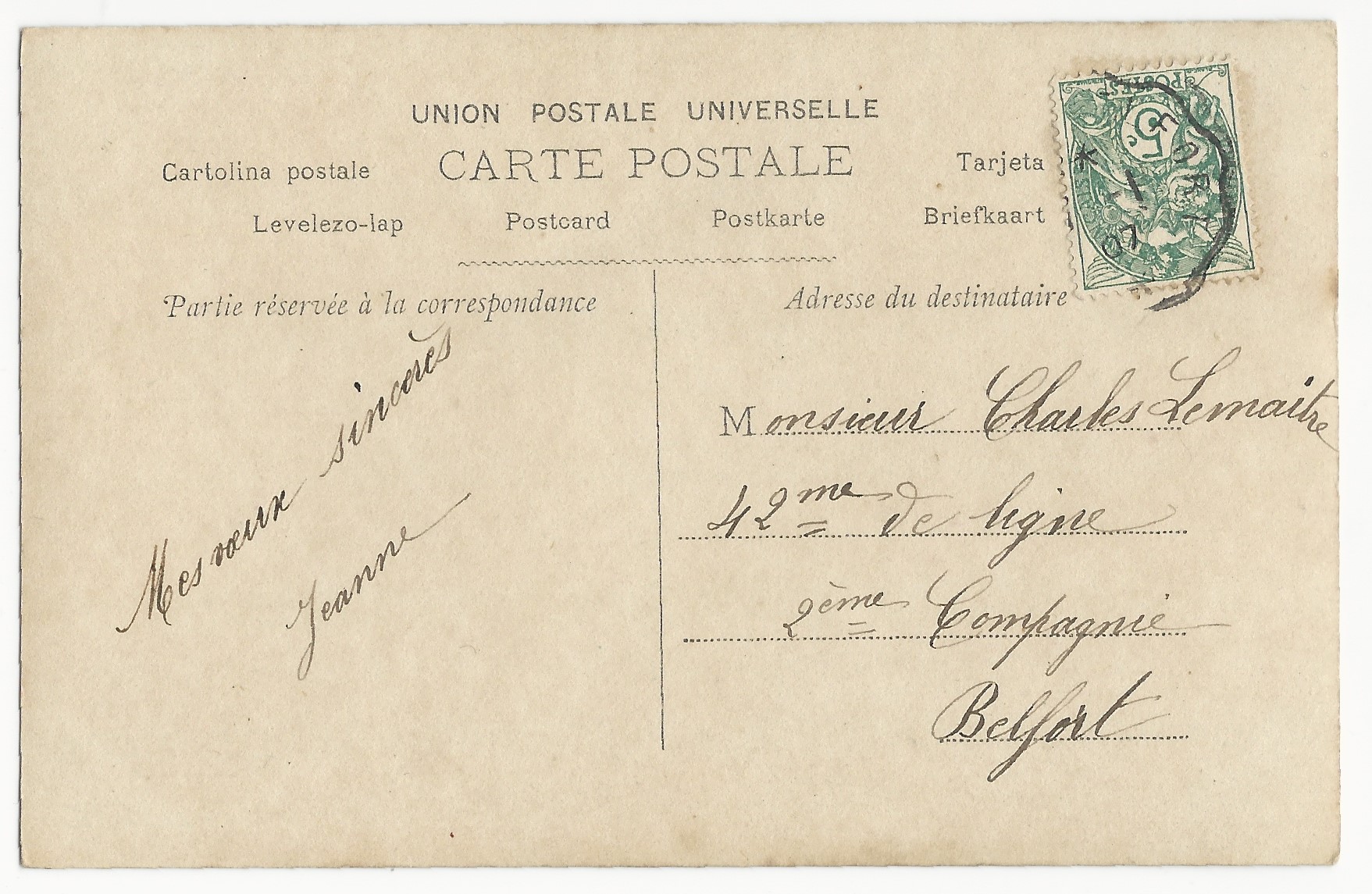
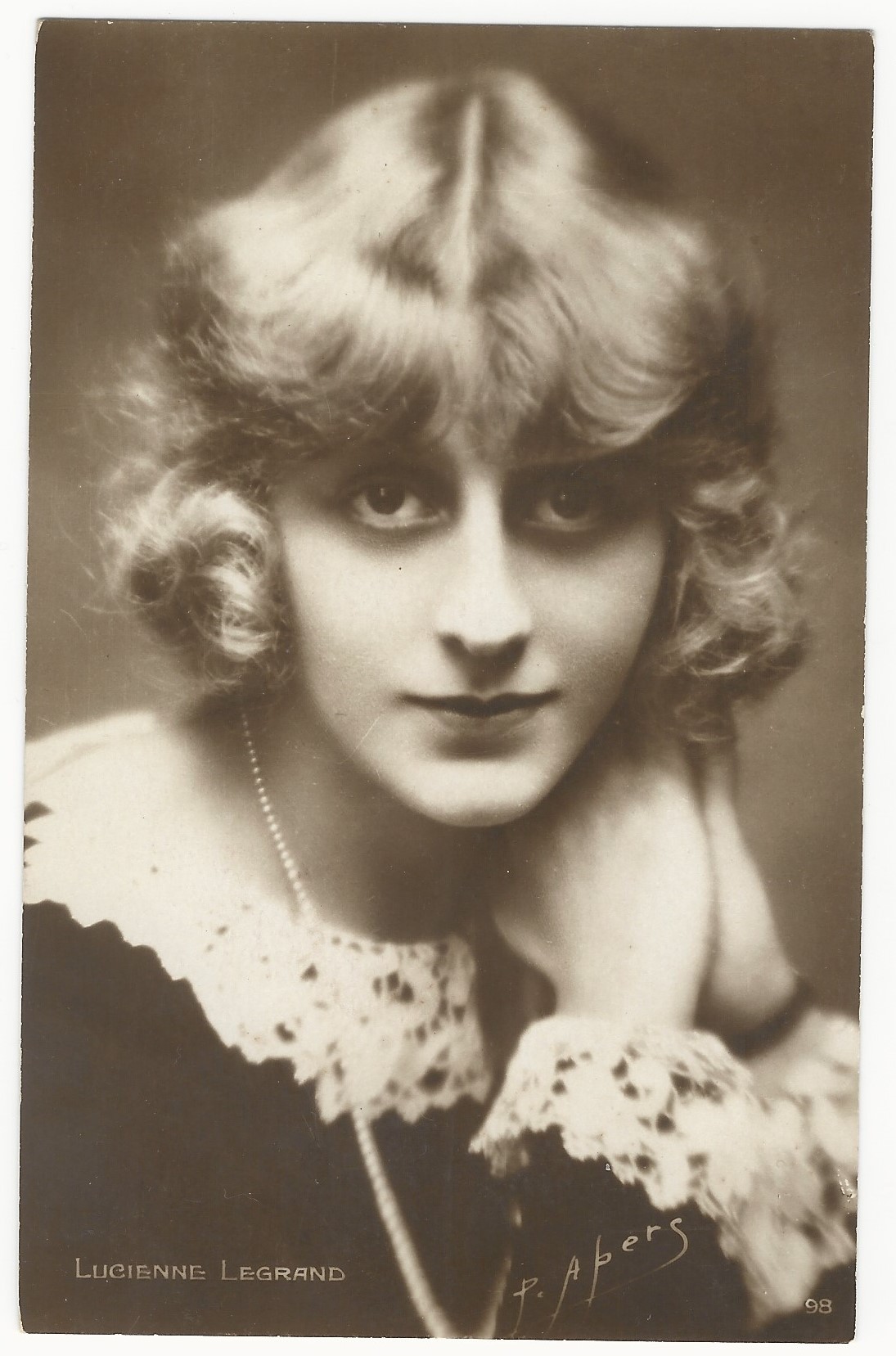
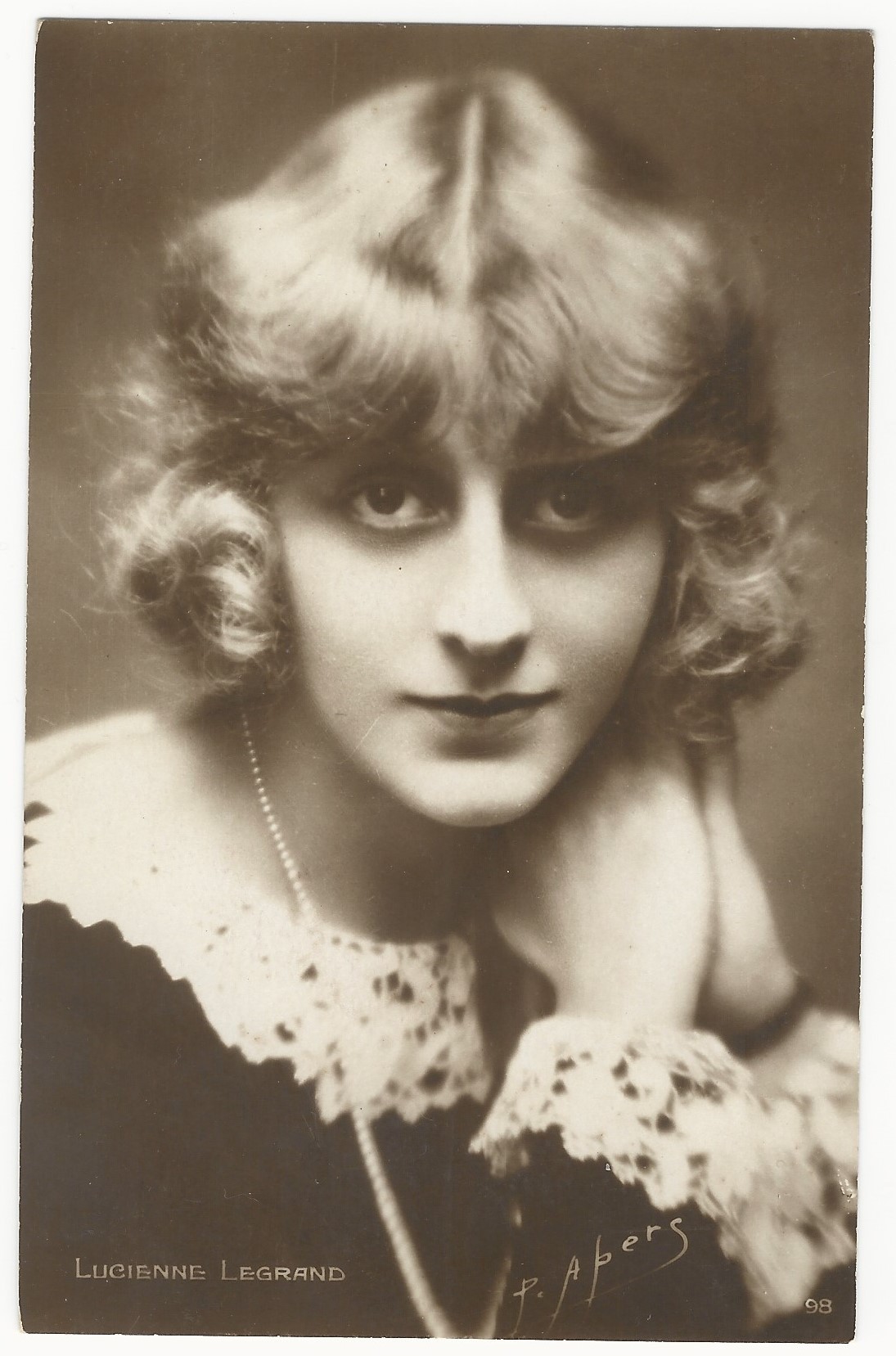
The pretty actress seen in this vintage real photo postcard is Lucienne Legrand (1900-1987). She was French and was active in film between 1921 and 1929. Her work was in silent film and she often worked alongside her actor/director husband, Emile-Bernard Donatien. For clarity sake, note that there was another actress named Lucienne Legrande; but this actress was born in 1920. Lucienne Legrand, pictured on this postcard, has eighteen film credits listed by IMDb. The site states that she is most well known for La chevauchee blanche (1924), Simone (1926), and Le martyre de Sainte-Maxence (1928). This photo postcard was published by Cinemagazine (Paris Edition) as part of a series (no.98). The photograph of Miss Legrand was taken by Pierre Apers. He was a talented French photographer active in the early twentieth century. His studio was in Paris and he specialized in portraiture. The cabinet card gallery is building a nice collection of his photographs. This vintage photo postcard is in very good condition (see scans).
Buy this original Vintage Real Photo Postcard (includes shipping within the US) #3360
To purchase this item, click on the Pay with PayPal button below
$15.50
Buy this Vintage Real Photo Postcard (includes International shipping outside the US) 3360
To purchase this item, click on the Pay with PayPal button below
Bessie Love (1898-1986) is the subject of this vintage real photo postcard. She was beautiful and her postcard and photo images are very collectible. Bessie was an American-British actress who initially became popular by playing sweet, pure, and innocent young girls. She went on to play virtuous leading ladies in silent and early sound films. Her career had amazing longevity; she acted for more than eight decades. She worked in many areas of entertainment. In addition to her film work, she acted on the stage, and on radio and television. Bessie was born in Midland, Texas. Her father was a cowboy and a bartender. Her mother was a restaurant manager. She attended Midland schools until the eighth grade. She and her family moved to Arizona, New Mexico, and then Hollywood, California. Once in the Golden State, her father became a chiropractor and her mother worked in a clothing factory (Jantzen). Bessie attended Los Angeles High School and in 1915 she went to a film set to meet with Tom Mix who had promised to help her to “get into pictures”. Mix was unable to meet with her but film director D. W. Griffith was able to meet with her and he promptly put her under contract. Love dropped out of high school in order to pursue her film career. Impressively, she did complete her diploma in 1919. Bessie began with a small role in a Griffith movie, “Intolerance” (1916). Her first major role was in “The Flying Torpedo” (1916). That same year, she appeared in movies opposite William S. Hart and Douglas Fairbanks. Her first starring role was in “A Sister of Six” (1916). Love quickly became a popular performer. Early in her career, Bessie worked for “Fine Arts”, “Pathe” and then Vitagraph. In the 1920’s Love sought roles outside of the “sweet and innocent girl” parts. In two movies she played Asian women. She had the role of a drug addicted mother in “Human Wreckage” (1923) and in other films played an underworld flapper as well as a woman accused of murder. In the 1925 movie, “The King on Main Street”, Love became the first person to dance the Charleston in a movie (see the video below).. The dance became the rage of the era. Also in the 1920’s, Bessie appeared in a film based on Arthur Conan Doyle’s novel “The Lost World”. In addition, she appeared in a romantic comedy directed by Frank Capra. She signed with MGM in 1928. In 1929, Love exhibited her talent in musical comedy. She toured with a musical revue for sixteen weeks. It is thought that her singing and dancing performances in vaudeville helped prepare her for sound films. That same year, she made her debut in her first feature length sound film, the musical “The Broadway Melody”. Her performance led to her receiving a nomination for the Academy Award for Best Actress. MGM rewarded her with a five year contract and a three thousand dollars a week (equivalent to $45,000 a week in 2019). She continued to act in musicals and her success was reflected in her becoming “the screen’s first musical comedy star”. Between 1931 and 1943, Love entered semi-retirement. She had married in 1929 and during this break in her career, she began focusing on her personal life. Her husband was an agent, William Hawks. She had celebrity bridesmaids, including Carmel Myers, Norma Shearer, and Mary Astor. Love had a daughter in 1932, and in 1935, she moved to England. She obtained a divorce in 1936. During World War II, Love worked as a film script supervisor and also worked for the American Red Cross. After the war, Love resumed acting. Much of her work was in theater, television, and radio. She also played minor roles in British film. In 1958, she wrote and performed in a semiautobiographical play. Some of her later films included “The Barefoot Contessa” (1954), “On Her Majesty’s Secret Service” (1969 a James Bond Thriller), and “Sunday Bloody Sunday” (1971). Bessie Love had a long and successful acting career. The IMdB reports that she had 156 acting credits between 1915 and 1981. This vintage postcard was published by Cinemagazine (Paris Edition) as part of a series (no.163). The postcard has excellent clarity and is in very good condition (see scans). SOLD
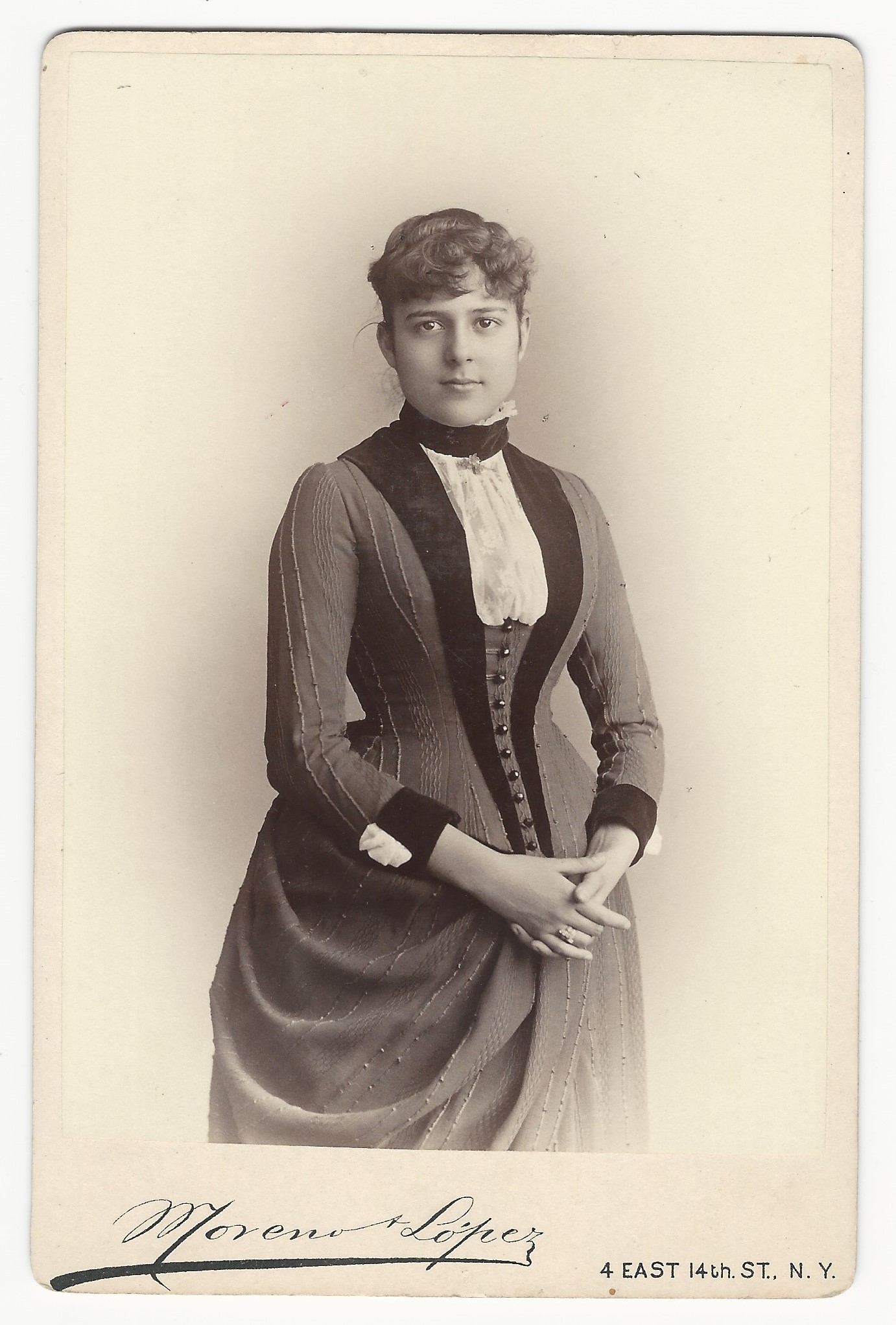
This cabinet card photograph features an attractive and well dressed young woman posing for her portrait at the Moreno & Lopez studio in New York City. An inscription on the reverse of this photograph, identifies the lovely subject of this image as “Maria Estevez”. Miss Estevez has the kind of appearance that causes an observer to mutter to oneself , “I know that she is somebody, but, who is she?”. Antonio E. Moreno was a Cuban painter and graphic artist who became a photographer after seeing the success of his New York based countryman, Jose Maria Mora (see category “Photographer: Mora”). In 1881, Moreno took over a failing New York City photographic studio. The business end of the studio was run by his co-director, Jose Lopez. Moreno developed the business into a great success due to his talent as a photographer, developer and innovator. He became noted in photographic circles and received much acclaim from his participation in photographic expositions. He surrounded himself with talented co-workers. Much of his staff came from Mexico. Spanish cameraman Antonio Urda was considered to be excellent at his craft but was a fiery man who eventually committed suicide by drinking development fluid, after failing to murder printer, Domingo Costello. After this incident, Moreno preferred to hire English speaking Europeans to work at his studio. One of his hires was printer Nahum Lubosh, whom he snared from celebrated photographer B. J. Falk (see category “Photographer: Falk”). Another employee, cameraman A. L. Simpson, pioneered the use of slides utilized in theater sing-alongs. In 1890 Moreno partnered with the Taber Art Company in publishing photographs of beautiful female models in what has been described as “genre scenes and allegories”. The photographs were well posed, precisely lit and very tasteful. Moreno’s gallery was in business for a quarter of a century and was a center for performing arts portraiture. One wonders if the subject of this cabinet card portrait was in fact a theater actress, or one of Moreno’s pretty models. SOLD















 THE CABINET CARD GALLERY