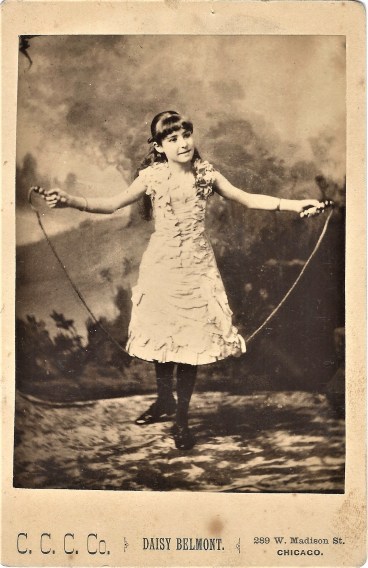
Daisy Belmont (1871-1896) was a circus equestrian and performer. She made her theater debut at three years of age and her career took off. Her repertoire included singing, and dancing and in time, bare back riding. She sometimes preformed with her siblings, Lottie and Charles. Her performing career took her to Asia, Australia, and South America. In 1889, at age 18, she married William Showles (1857-1924), a “dashing” young equestrian who rode with Sells Brothers circus. She became the most famous bareback rider in the country. Tragically, after returning to America after performing “on the road” in Austalia, she died from Bright’s disease at age twenty-five. Miss Belmont’s obituary indicates that she was a “successful with Barnum’s circus” (P T Barnum) as a bare back rider. Daisy Belmont has been described as “the embodiment of grace and feminine loveliness”. She died and was buried in Chicago, Illinois. This cabinet card features Miss Belmont. She appears to be in her mid teenage years at the time of this photograph. She is displaying a sweet smile. She is posed as if she is jumping rope. Most images that I have seen of Daisy, capture her at a significantly younger or older age than this image. The photo studio that produced this cabinet card portrait is C. C. C. Co. of Chicago. (SOLD)

 The pretty woman featured in this real photo postcard is Mable Woods. She was a theater actress. I could find little biographical information about her. I did discover that sometimes her name appeared as “Mabel” Woods rather than “Mable” Woods. I stumbled across a couple of real photo postcards in which Miss Woods made an appearance. Two of these cards were individual portraits of the actress but another postcard paired her with an actress name Rose de Vella. Mable Woods and Miss de Vella toured India together, performing in the chorus line for one of the “Gaiety Girls” touring companies. Irish born, George Edwards (1852-1915) was the theater manage of London’s Gaiety Theater. At one point he had sixteen touring companies. He had a propensity for hiring pretty young women to work as “Gaiety Girls”. These women were the chorus girls appearing in Edwardian musical comedies that began in the 1890’s. These women were an important ingredient for staging a successful musical production. They danced and appeared on stage in bathing attire and in the latest fashionable clothing. Unlike the corseted actresses from earlier musical burlesque shows, Gaiety Girls were viewed as respectable and refined. One writer reports that Gaiety girls “were polite, well-behaved young women”. Many Gaiety girls progressed to very successful acting careers. The list of former Gaiety girls reads like a hall of fame of celebrated actresses. Gaiety girls that catapulted to major roles include Marie Studholme, Mabel Love, Ellaline Terriss, Lily Elsie, Gladys Cooper, Phyllis Dare, and Gabrielle Ray. These and other starring alumni of the chorus, kept the moniker “Gaiety Girls”. The young women performing in Edward’s shows peaked the interest of wealthy gentlemen who became known as “Stage Door Johnnies”. They would wait outside the stage door and invite the actresses to dinner at fine restaurants. A number of women accepted the invitation. Sometimes the women would eventually marry one of these dates. A number of these women married noblemen, while others became the wives of professionals. In the book, “The Gaiety Years”, author Alan Hyman refers to the chorus as becoming “a matrimonial agency for girls with ambitions” to marry titled men. This postcard is in very good condition (see scans).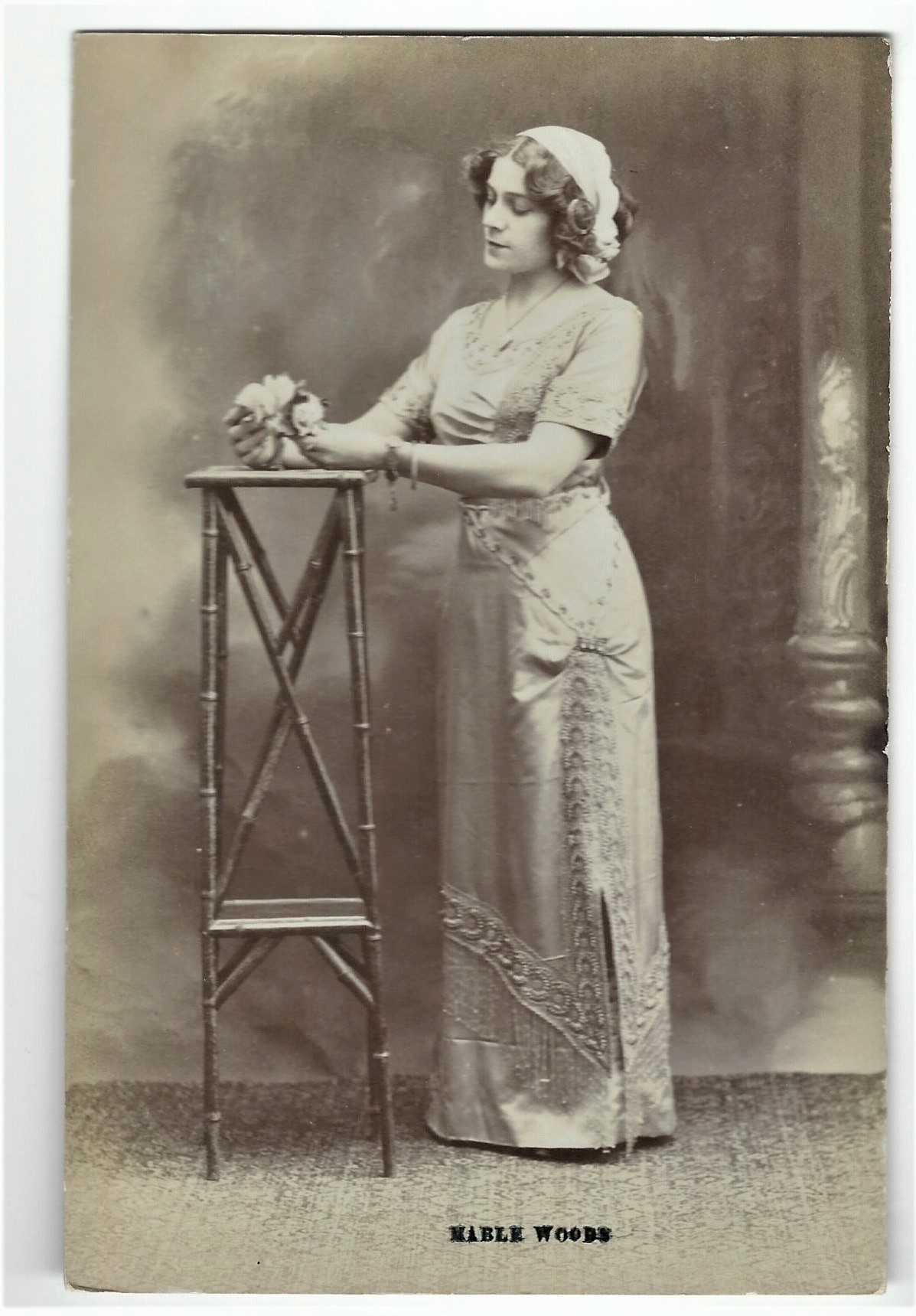

 PHOTO 1
 PHOTO 2
 PHOTO 3
 Photo 1
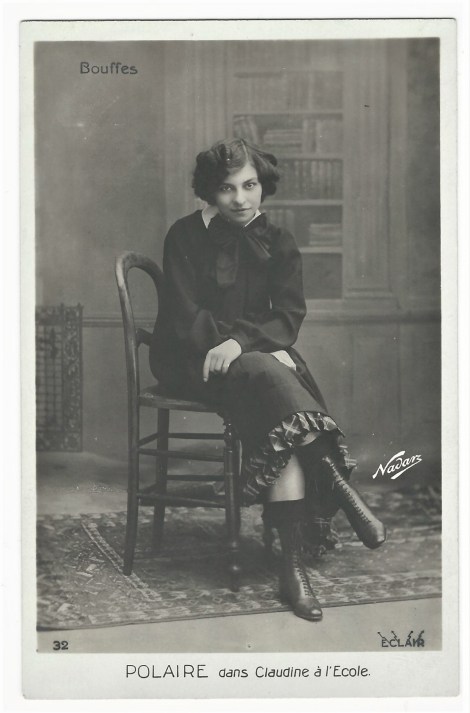 PHOTO 2
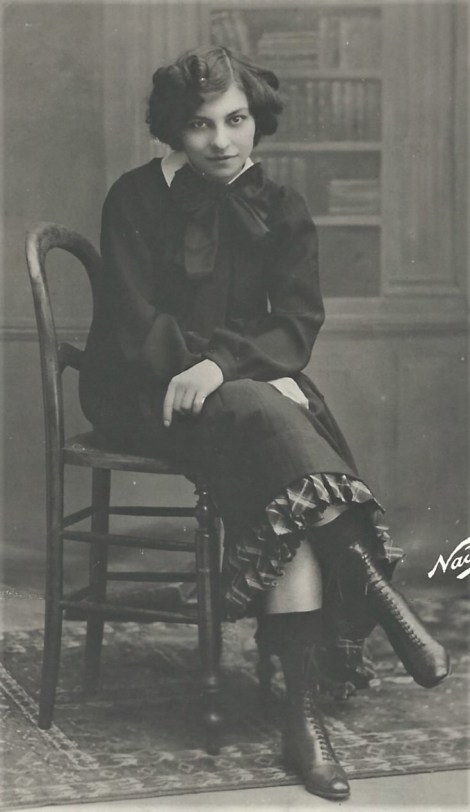 PHOTO 2 (CLOSE-UP)
 PHOTO 2
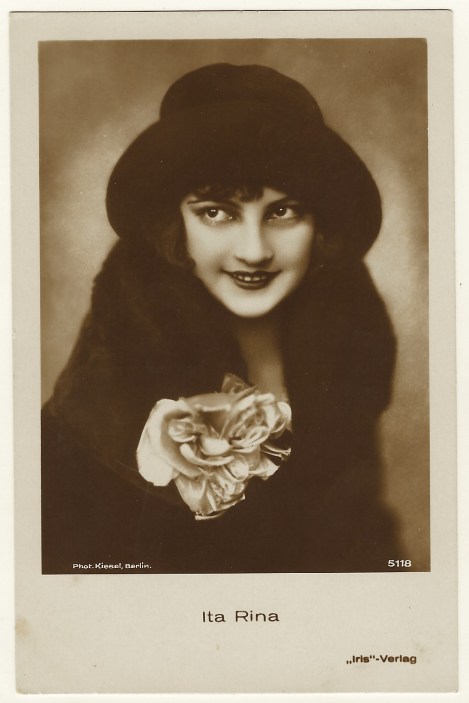 POSTCARD 1 (SOLD)
 POSTCARD 1 (CLOSE-UP) (SOLD)
 POSTCARD 2 (SOLD)
 POSTCARD 2 (CLOSE-UP) (SOLD)
 POSTCARD 1
 POSTCARD 2
 POSTCARD 1 (SOLD)
 POSTCARD 2
 POSTCARD 2
 POSTCARD 1 (SOLD)
 POSTCARD 2
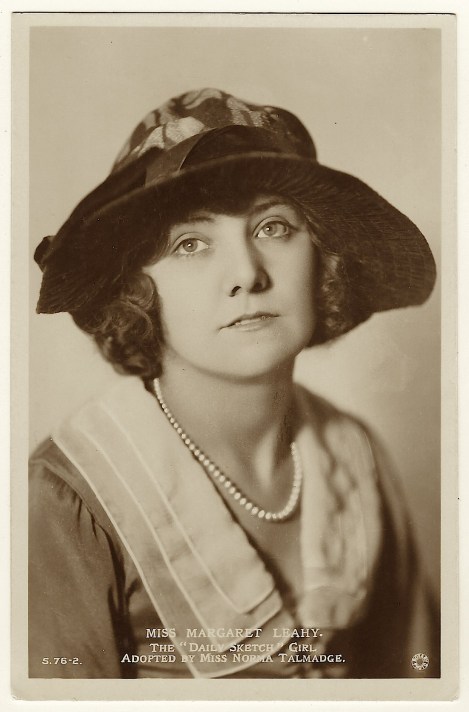 Margaret Leahy (1902-1967) was a British actress. She was born in London. At the age of eighteen, she set up a costume shop and designed women’s clothing. She also modeled her designs for her customers. The story of how she got her start in acting is an interesting one. After winning a beauty contest, she seemed destined for stardom. Unfortunately, despite her rapid launch into filmdom, her career quickly crashed. She made only one film in her short-lived career. The beauty competition occurred in 1922. Actresses, Constance and Norma Talmadge, Joseph Schenck (film studio executive), and Edward Jose (film director) held a beauty contest in England. It’s purpose was to find a new leading lady. The “Daily Sketch”, an English newspaper, offered a starring role in a major Hollywood film to the winner of the contest. Eighty thousand women entered the contest and three girls were chosen to the final competition. The finals were held in Hollywood and Miss Leahy was the winner. Norma Talmadge described Leahy as “the most ravishing girl in England”. Leahy’s start in films was a disaster. She was dismissed from “Within the Law” (1923). The film’s director found her acting talent was nearly non-existent. He threatened to quit unless Leahy was terminated. The year 1923 wasn’t all bad for Miss Leahy. She was named one of thirteen WAMPAS Baby Stars. Evelyn Brent, Eleanor Boardman, and Laura La Plante were among the thirteen. All but Leahy became successful film actresses. Between 1922 and 1934, WAMPAS association supported a promotional campaign that named thirteen young actresses thought to be destined to become stars. Margaret’s next stop was an appearance in a Buster Keaton comedy, “Three Ages” (1923). Leahy received little attention for her role in the movie and her career was stopped in it’s tracks. Leahy did not return to England. Instead she got married and remained in California. She became an interior decorator and was known to despise the movie industry. In fact, she burned all her movie related scrap books. Sadly, Leahy committed suicide at the age of sixty-four in California. This vintage postcard was published by Rotary Photo and printed in England. The postcard is part of a series (no. 5.76.2). The postcard is in very good condition (see scans). SOLD
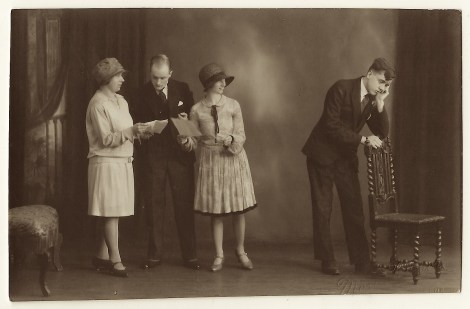

 This vintage real photo postcard features a theatrical performance in progress. The name of the theatre, play, and players are unknown. The gentleman leaning on the chair seems very forlorn. The photographer of this image is Marie Podmore. She operated a studio in the town of Colne in Lancashire, England. Preliminary research reveals that she was active at least from the early 1920’s until 1938. The stamp box indicates that the postcard was made by Crown Studios sometime between 1913 and 1929. This vintage theatrical postcard is in excellent condition.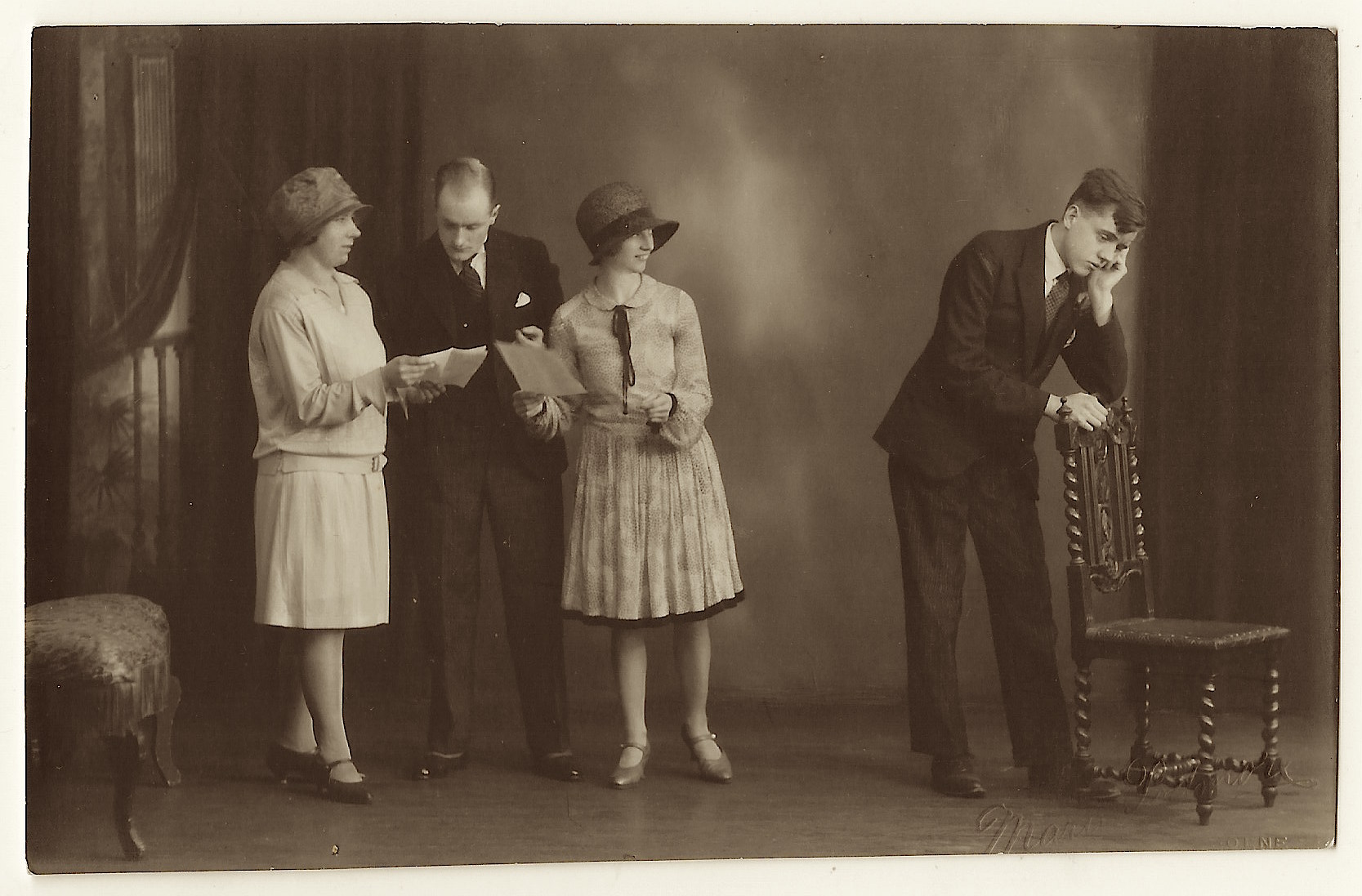

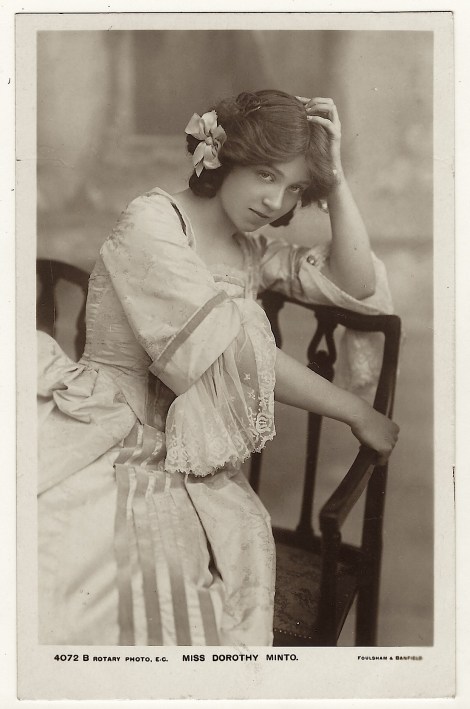

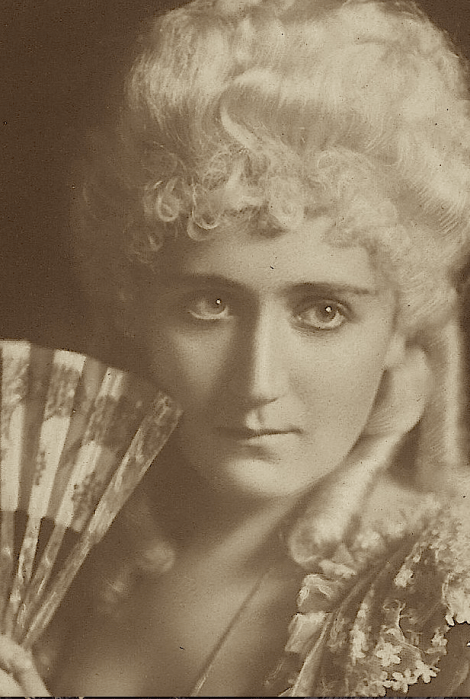 This vintage real photo postcard features stage and film actress, Blanche Walsh (1873-1915). Walsh was born in the lower east side of New York City. Walsh’s father was a Tammany Hall (New York City) politician and prison warden. His name was Thomas Power “Fatty” Walsh. Miss Walsh was an active actress between 1888 and 1915. Blanche Walsh made her stage debut at 15 years of age in 1888. She joined Charles Frohman’s stock company. She was a supporting actress for the likes of Marie Wainwright and William Gillette. She toured Australia with actor Nat Goodwin in 1896. Walsh became popular playing “emotional” roles and succeeded Fanny Davenport when she became too ill to perform in such roles. In fact, many fans believed that Walsh closely resembled Davenport in appearance. Walsh than began being tasked in more challenging roles such as in her performances in “The Woman in the Case” (1905) and in Tolstoy’s “The Kreutzer Sonata” (1904). Walsh appeared in ten Broadway productions between 1895 and 1907. A reviewer in “Variety” (1918) wrote that Walsh ” was not only a great actress, but an artist enough to subordinate whatever personal charms she might have had to a proper characterization of a role”. Blanche Walsh only appeared in one film. She was a well respected American actress. Her only film was Resurrection (1912). The film was based on one of Leo Tolstoy’s novels. The film helped Adolph Zukor launch his movie company, Famous Players Studio. It later became Paramount. She was one of the first stage stars to appear in a long feature film (over 50 minutes). Miss Walsh had two marriages. Her first husband, Alfred Hickman (1873-1931) was an English actor who appeared in thirty-five films. Walsh had no children. She was one of the original advocates of an American National Theater where people could see major plays at a low price. Walsh had significant health problems during her career. She had several hospitalizations. She died at 42 years of age from kidney problems. This vintage postcard was published by the Rotograph Company as part of the “Rotograph Series” (No. B 506) The photographer was Jacob Schloss (1856-1938) and his studio was located in New York City. Schloss received his education at the Cooper Union in New York City. He graduated in 1872 as an etcher. He joined Benjamin J. Falk’s photography studio and worked there in the mid 1870’s. He left Falk’s employ to open his own studio (54 West 23rd Street) where like Falk, he specialized in theatrical photography. He tended to favor photographing actresses in costume in front of generic studio furnishings. He produced many cabinet card photographs but also was active in the production of magazine images. By the 1890’s he was particularly known for his photographs of beautiful women, much like photographer Jose Maria Mora. Schloss also was an activist for photographers rights. He was very involved in the movement to copyright images. He sued those who used his photographs without crediting or paying him. He was very involved in national photographer associations and was an active photographer until the 1910’s. SOLD


 THE CABINET CARD GALLERY