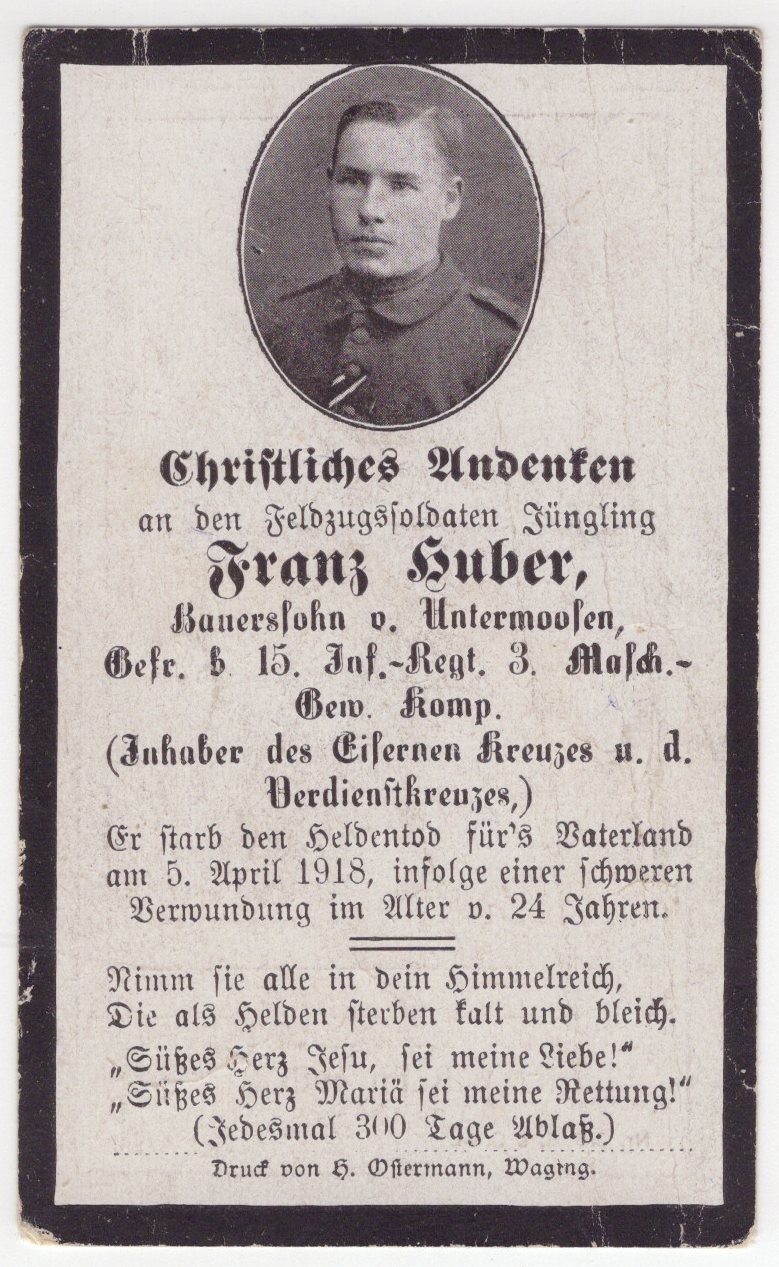
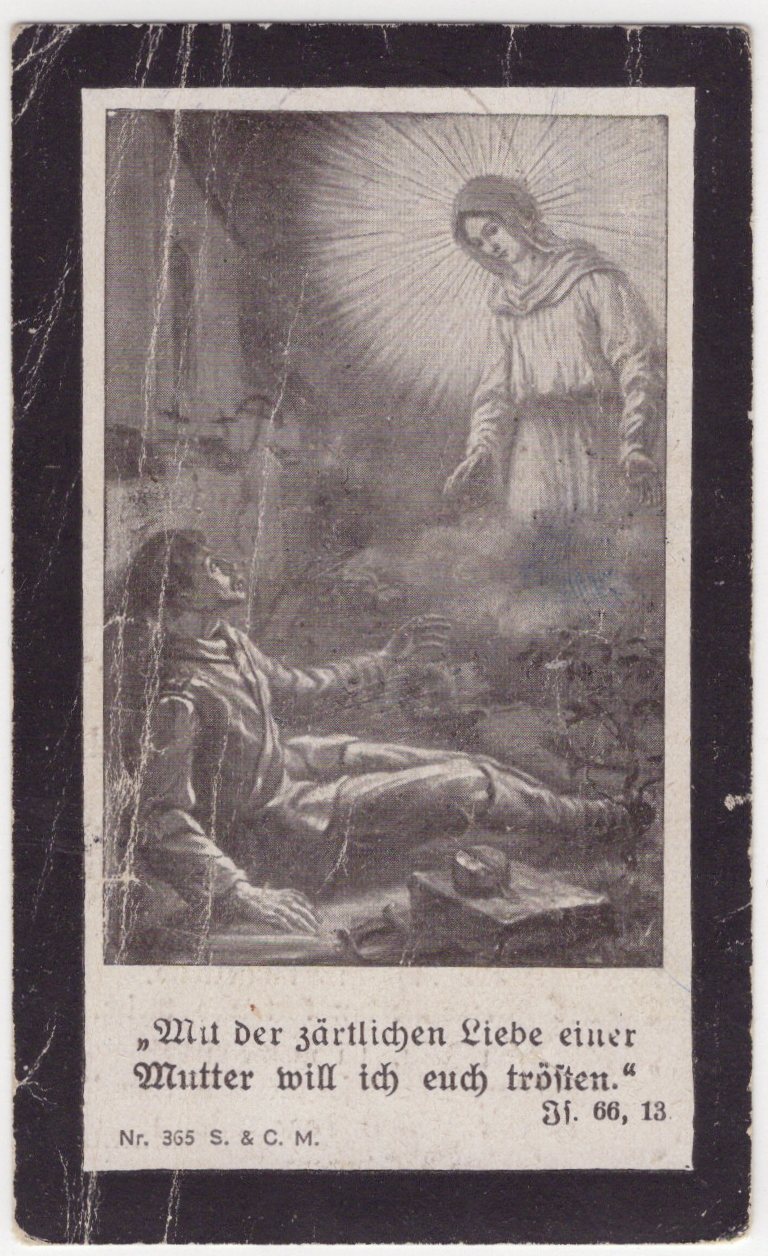
This item is a World War I death card. It was customary to issue a card for fallen soldiers of the German army, navy and air force. The front of the card states that it is a Christian commemoration of the campaign soldier youth, Franz Huber. Information about his regiment and overall unit is provided. It is stated that the soldier was awarded the Cross of Merit. Furthermore, it states that Huber died a heroic death for his country on April 5, 1918. He died as the result of a serious injury at the young age of 24. A prayer is at the bottom of the card and there is a notation that the card was printed by H. Ostermann of Waging, Germany. The reverse of the card has a touching quote. “With the tender love of a mother I want to comfort you. SOLD
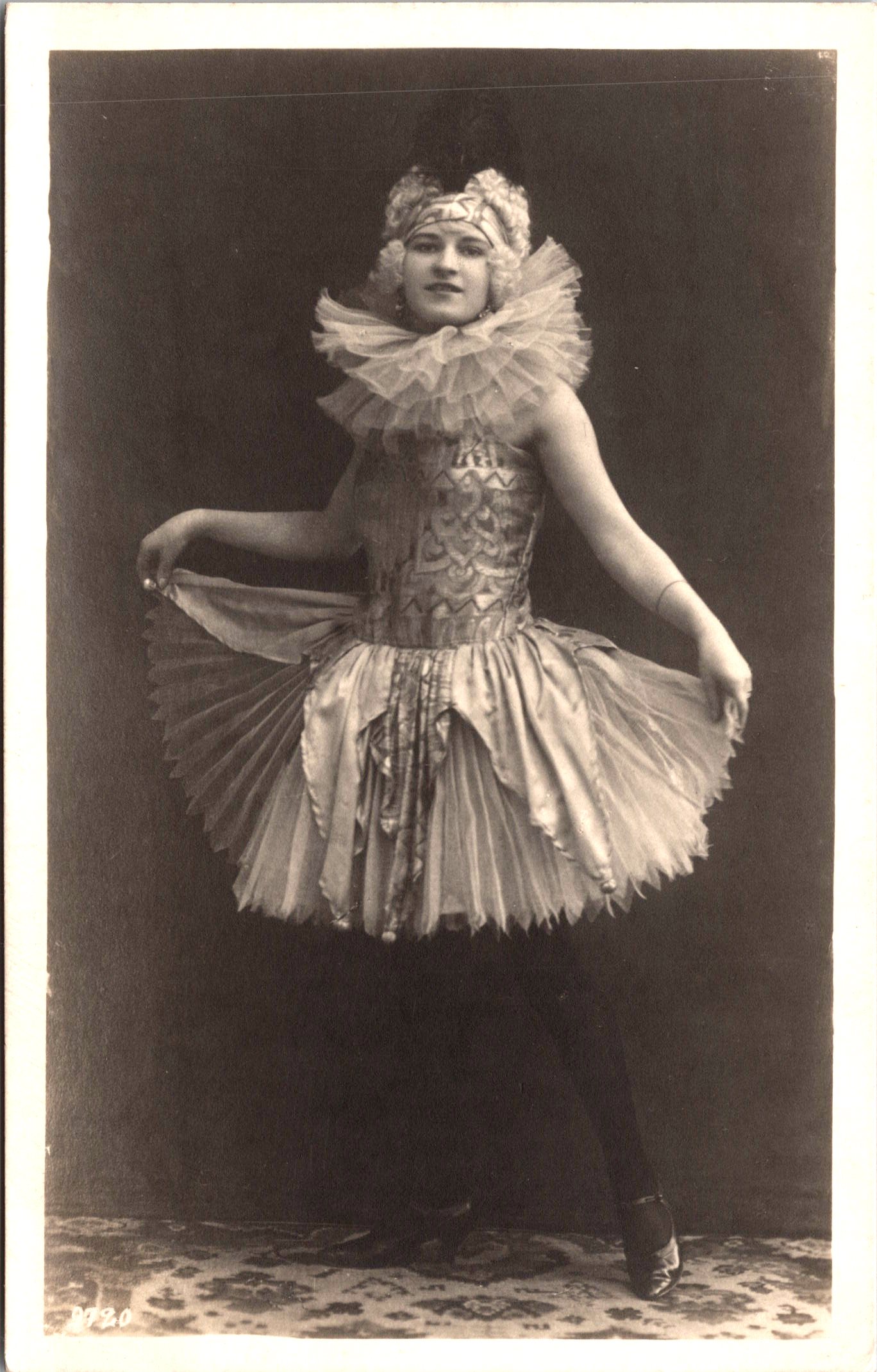
PORTRAIT OF PRETTY GERMAN FILM ACTRESS KARIN HARDT
POSTCARD 1 (SOLD)
POSTCARD 2
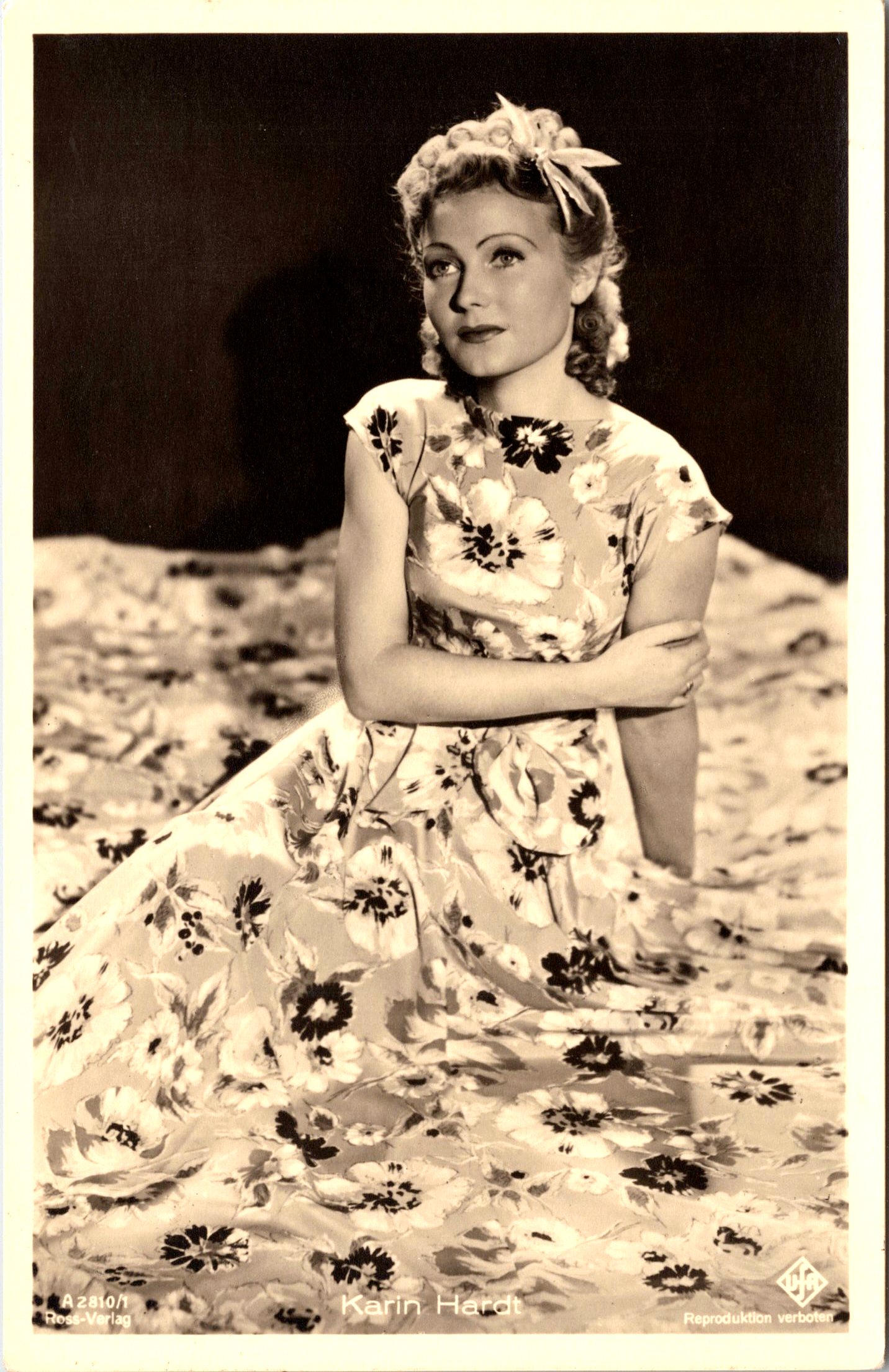
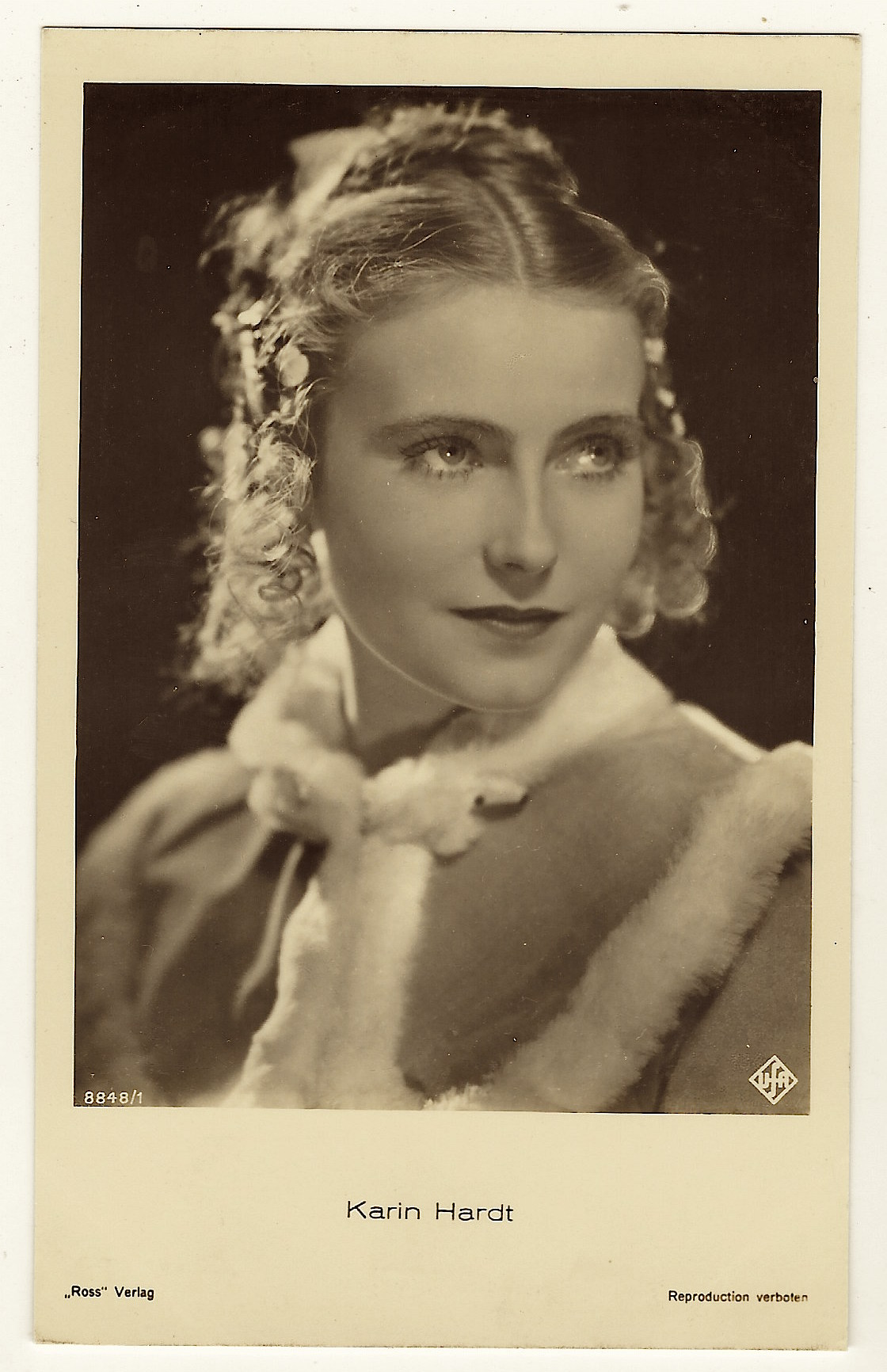
Karin Hardt (1910-1992), German film actress, is featured on these two vintage real photo postcards. Her father was a merchant. She took private acting lessons with Alex Otto, a German actor and theater director. After some theatrical appearances, she made her movie debut in 1931. She quickly rose to stardom. During the war years, her film roles decreased. Post war, she appeared in only a few more films. In the 1960’s she appeared in a number of television roles. She was married to director Erich Waschneck in 1933. She later married Rolf von Goth, a German actor. An internet filmography indicates that Hardt appeared in 88 films from 1931 through 1992. In 1979, she was in a film with David Bowie. The YouTube video below features Miss Hardt in the film, “Mens Economy” (1941).
The image in Postcard 1 gives the appearance that Hardt is about to be swallowed up by her dress. She is wearing ribbons in her hair and a sweet half smile. This photo postcard was published by Ross Verlag and is part of a series (no.A2810/1). The logo for UFA, a German film company, can be seen in the right hand bottom corner of the image. SOLD
Postcard 2 was published by Ross Verlag and is part of a series (no.8848/1). The logo for UFA, a German film company, can be seen in the right hand bottom corner of the image. This vintage postcard is in excellent condition (see scans).

Buy this original Vintage Real Photo Postcard (includes shipping within the US) #2620
To purchase this item, click on the Pay with PayPal button below
$22.00

Buy this original Vintage Real Photo Postcard (includes international shipping outside the US) #2620
To purchase this item, click on the Pay with PayPal button below
$30.00
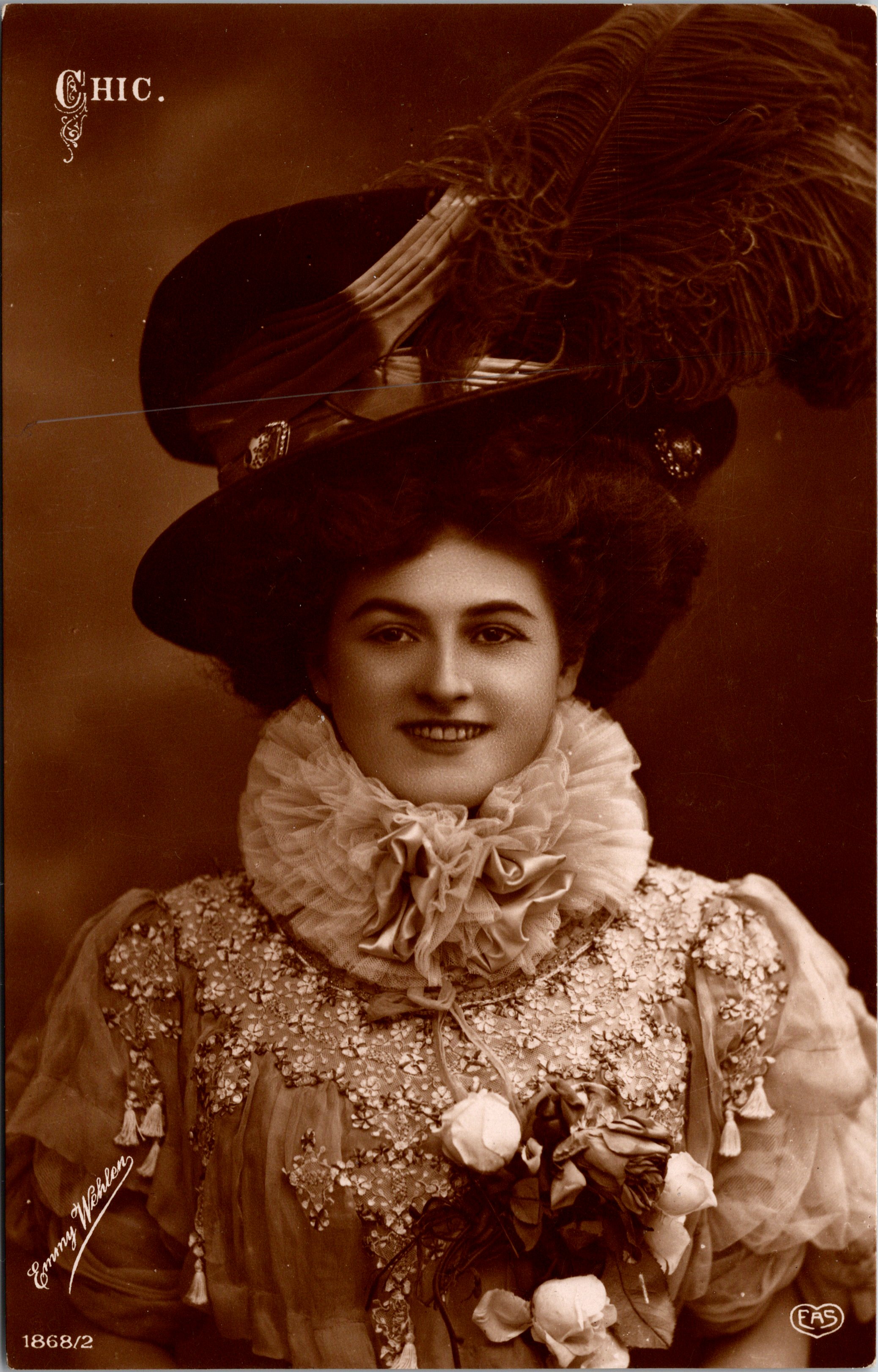
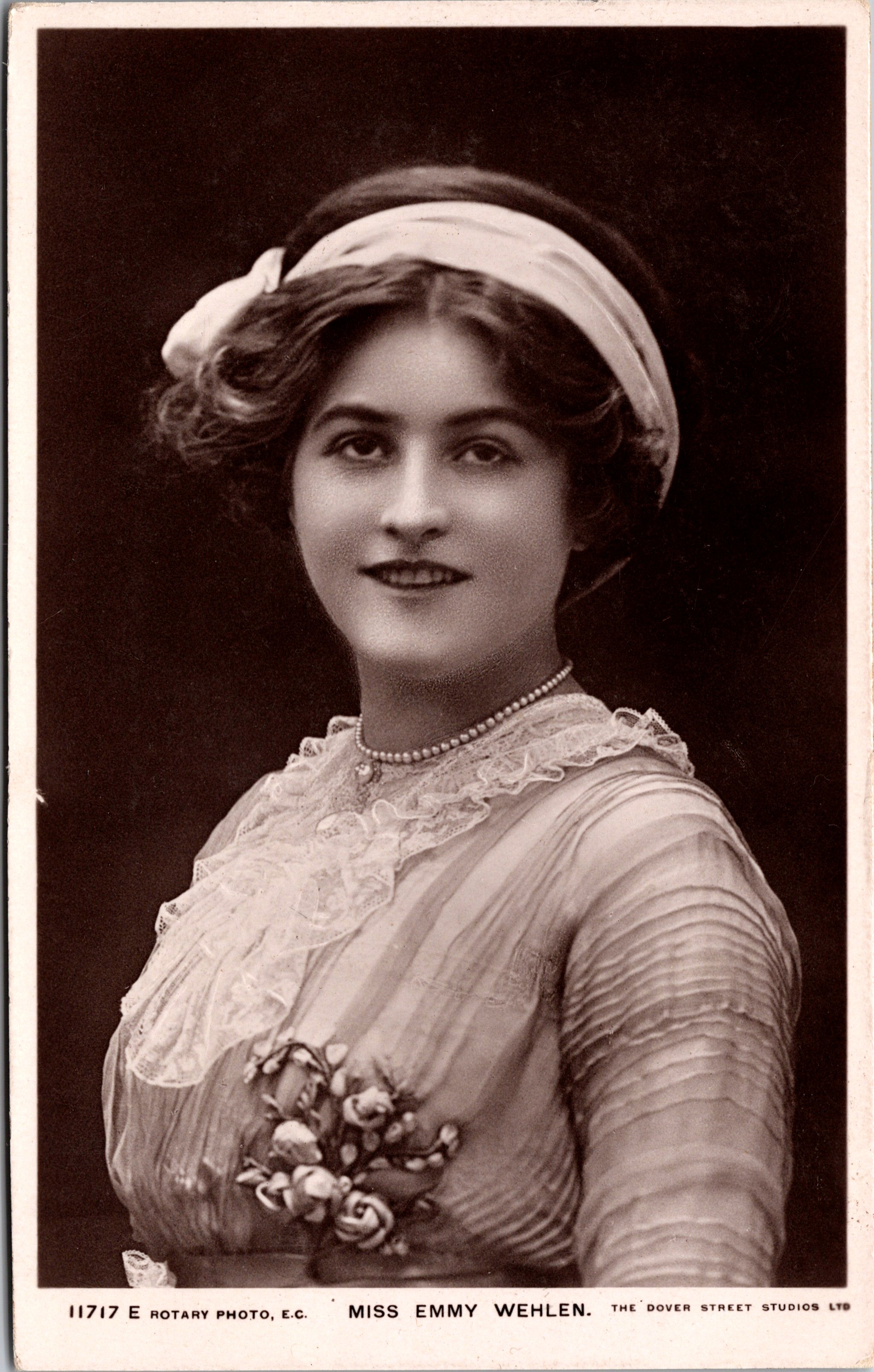
MISS EMMY WEHLEN : PRETTY THEATRE AND SILENT FILM STAR : BROADWAY : RPPC
POSTCARD 1
POSTCARD 2 (SOLD)
POSTCARD 3 (SOLD)
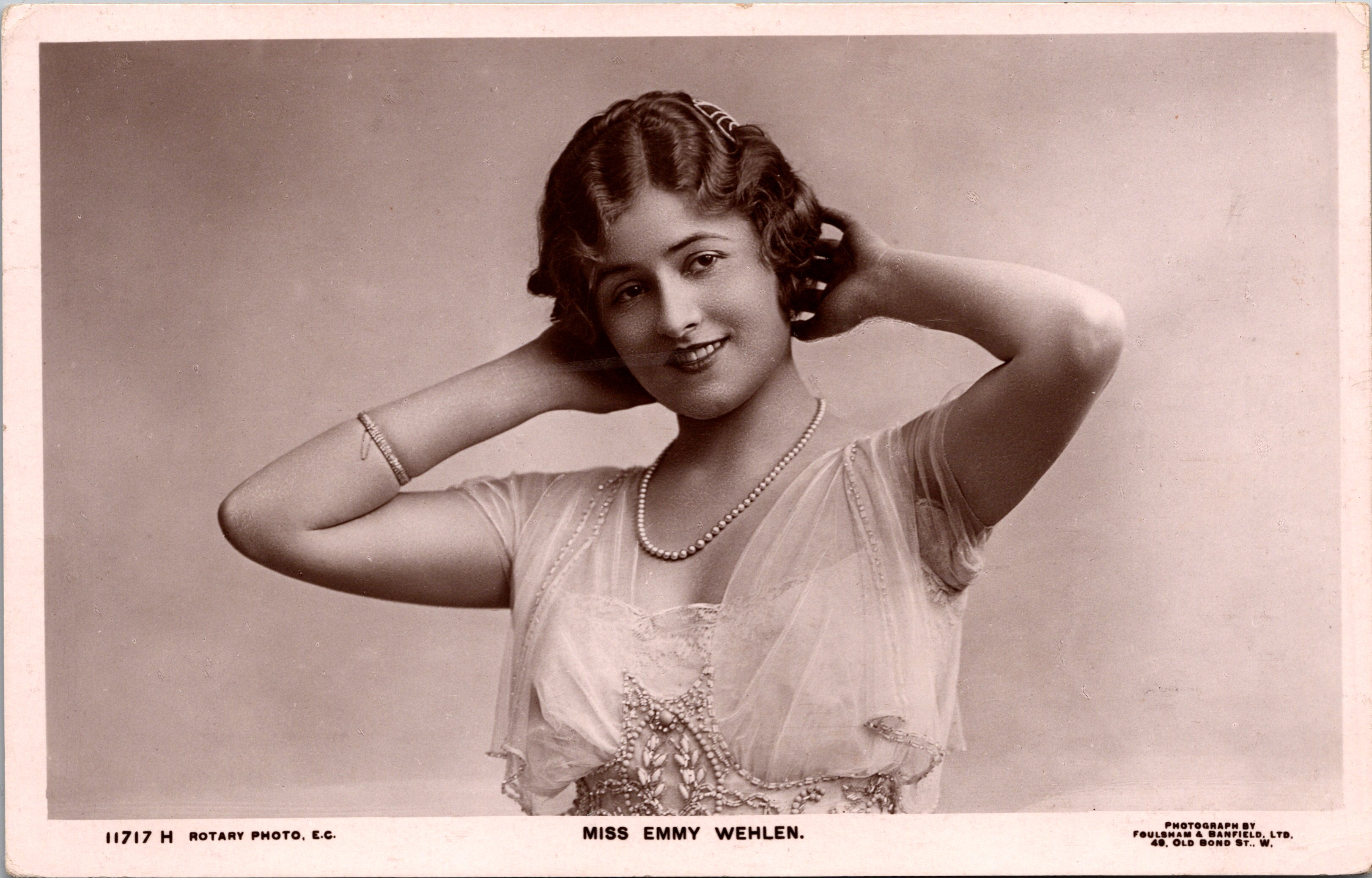
Postcard 1 features German actress, Emily “Emmy” Wehlen (1887-1977). She was a Edwardian musical comedy and silent film actress. She retired from acting at a young age (early 30’s), Wehlen received her musical training at the Mannheim Conservatory. She then joined the Thalia-Theatre and performed in musical comedies in several German cities. She was then invited to London and was considered as a possible successor to Lily Elsie. Wehlen played the lead role in “The Merry Widow” (1909). Later that year she appeared in the hit musical “The Dollar Princess” which ran for 428 performances. Next stop was New York, where she appeared in four Broadway plays between 1911 and 1915. Shortly after her last Broadway appearance, Wehlen left the stage and pursued a film career. She appeared in over twenty films between 1915 and 1920. “Everybody’s Magazine (1911) reported that Wehlen was very pretty and very graceful. Her acting and voice were also praised. In addition, the article stated that “she has the indescribable charm of personality” and that audiences liked her and wanted her to never leave the stage during a production. Miss Wehlen’s photograph on this postcard was taken by celebrity studio, Foulsham & Banfield. The card was published by Rotary Photo as part of a series (no.11717H).
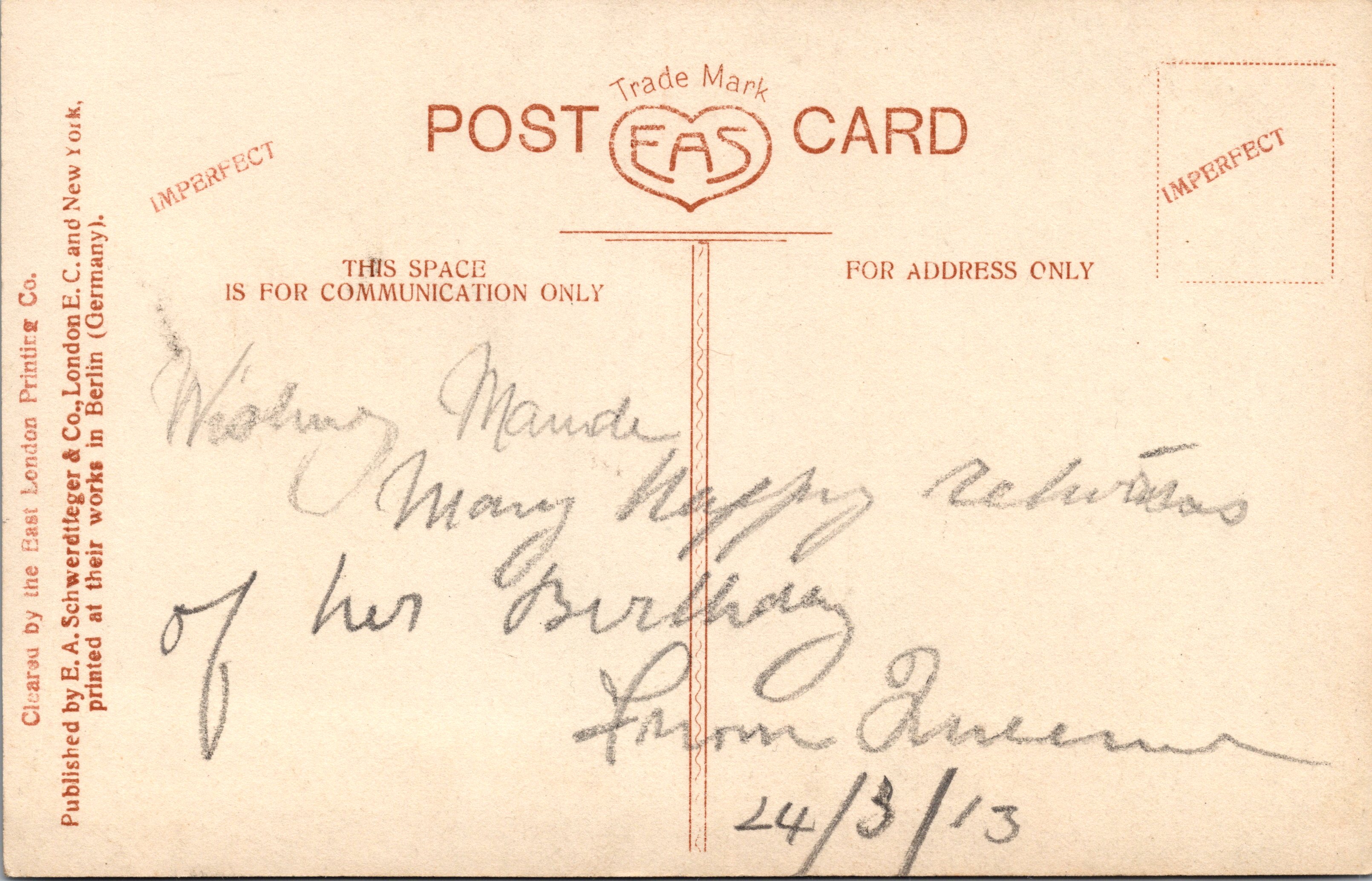
In Postcard 2, Wehlen is beautifully dressed for the portrait appearing on the postcard. She looks a bit clownish with her ruffled collar. There are flowers pinned to the front of her dress and she is wearing a jumbo feathered hat. She has a beautiful smile. The card was published by EAS as part of a series (no.1868/2). The firm was located in London and New York. The postcard was printed in Germany. Interestingly, the word “imperfect” is printed in two places on the front of the card. The word “chic” appears in the upper right hand corner of the image. Emmy Wehlen fits the bill. She is truly chic. The message on the postcard indicates that it was written in 1913. (SOLD)
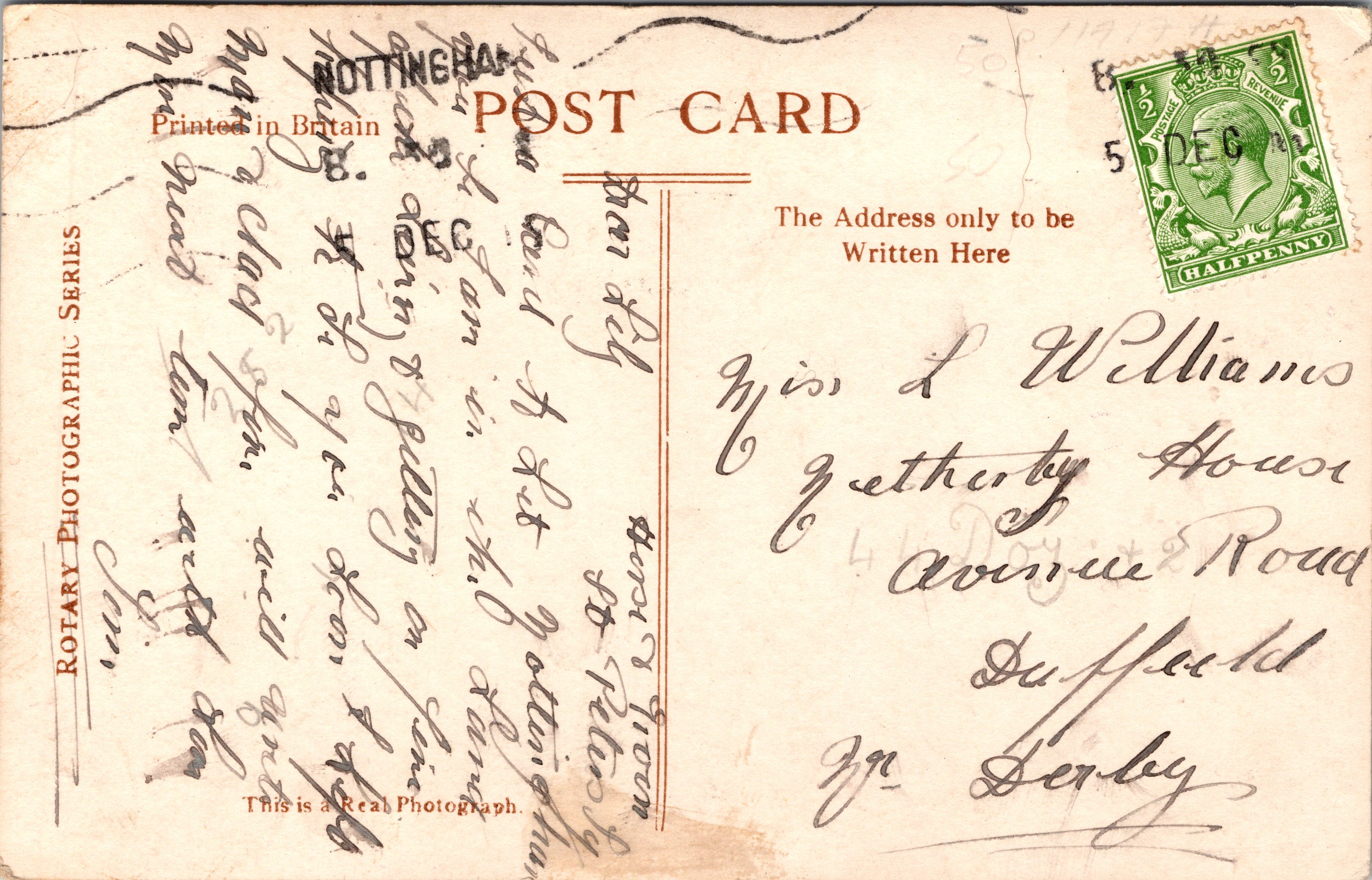
Postcard 3 features Miss Wehlen’s photograph taken by celebrity studio, Dover Street Studios. The card was published by Rotary Photo as part of a series (no.11717E). The message on the card indicates that the sender hoped that this photo postcard was meant to be an addition to the recipient’s postcard collection. (SOLD)
POSTCARD 1

POSTCARD 2

POSTCARD 3
NINE PORTRAITS OF PRETTY EUROPEAN STAGE ACTRESS LIANE HAID

POSTCARD 1

POSTCARD 2

POSTCARD 3 (SOLD)

POSTCARD 4 (SOLD)

POSTCARD 5

POSTCARD 6 (SOLD)
POSTCARD 7 (SOLD)
POSTCARD 8 (SOLD)
POSTCARD 9 (SOLD)
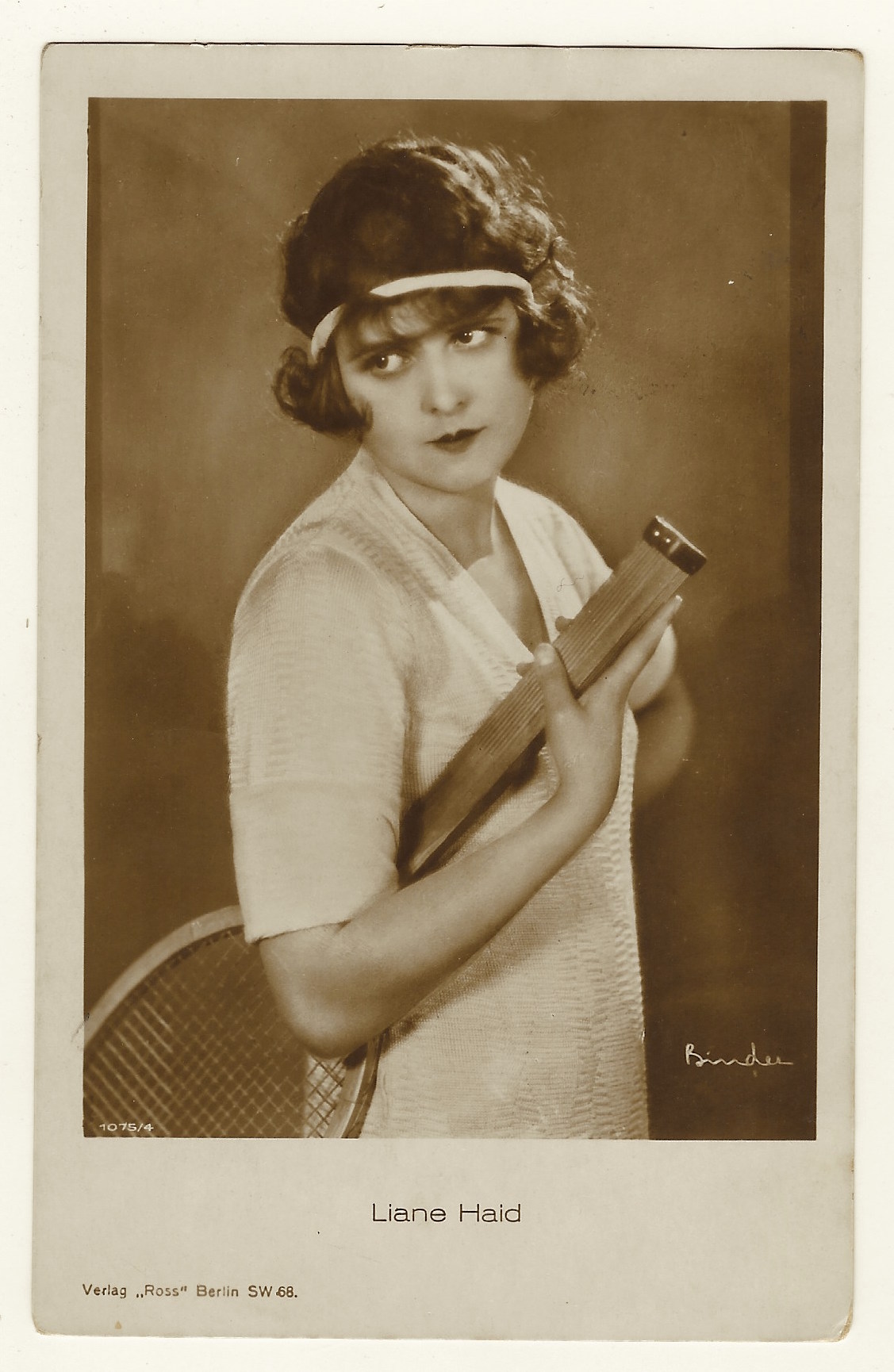
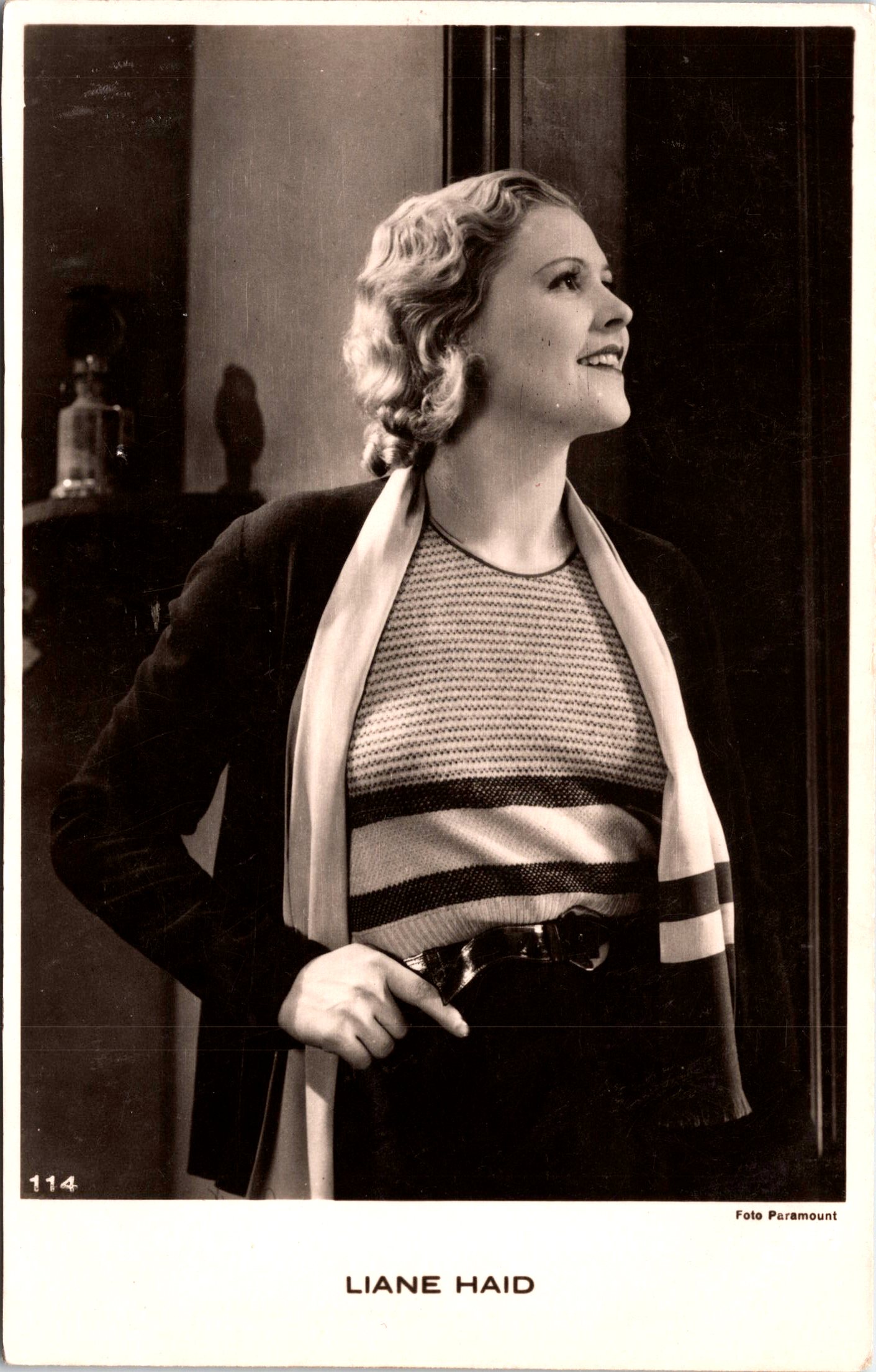
These vintage real photo postcards feature European film star Liane Haid (1895-2000). In the top postcard she poses holding a tennis racket and wearing a hair band to keep her hair out of her eyes. She is quite beautiful but how can we interpret her facial expression. To me, it looks like she is rolling her eyes as if she is bothered by something. Who is Liane Haid? She was born in Vienna, Austria and received training in both dance and singing. She gained the nickname of “Sweet Viennese Girl”. Haid was a prima ballerina, dancer, singer and stage actress. She worked in Budapest and Vienna as a dancer. Her stage career was mostly in Berlin and Vienna. She became a popular pin-up star through the 1920’s and 1930’s. Her first movie role was in a World War I propaganda film. She was employed by UFA and appeared in a number of comedy films alongside other movie stars including Willi Forst, Bruno Kastner, and Georg Alexander. UFA was a major German Film producer and distributor that operated between 1917 through the end of World War II. Liane Haid refused a number of Hollywood offers but in 1942, she escaped Nazi Germany and went to Switzerland according to Wikipedia, “because of the regime, because everything was bombed, and because all the good directors had left”. Soon thereafter she got married and retired from films. She was married three times. The IMDB web site states that she has 92 film credits from 1915 through 1953. Notable films include “Lady Hamilton” (1921), “Lucrezia Borgia” (1926), and “The Song is Ended” (1930). The photographer of this terrific image was Alexander Binder (1888-1929). He had the largest photo studio in Europe during the late 1920’s and the 1930’s. Many of his entertainment star portraits appear on Ross Verlag postards. It is thought that Binder was of Swiss origin. He was of the Jewish faith. He studied engineering but did not complete his studies. From 1908 to 1910 he studied photography at a school in Munich, Germany. After the completion of his photography studies, he went to Berlin and in 1913 opened his first photography studio. Before long, he became one of the premier photographers in Berlin. He primarily focussed on fashion and celebrity photography. Since Berlin was the capital of the European film industry, Binder photographed all the stars of the European film industry including, Lilian Harvey, Conrad Veidt, and Lya De Putti. Many of his images were used in popular film portrait postcards. His photographs could be seen in postcards published by Ross Verlag and Photochemie. Binder died in 1929 but new photo cards bearing his signature continued to be published until 1937. It is thought that the real photographer of these new postcards was Hubs Floeter (1910-1974) who was employed at the studio as an operator. The studio continued to be owned by Binder’s widow, Mrs. Binder Alleman and their two daughters. The studio was managed by the Jewish Elisabeth Baroness Vonhedlis Stengel who was later deported to the Theresienstadt concentration camp. In 1938 the Nazi’s closed Binder’s studio and it was later taken over by an Aryan photographer, Karl Ludwig Haenchen . Haenchen continued to produce celebrity portraits for postcards. His publishers included Film-Foto-Verlag. After World War II the studio was taken over by the Hasse und Wiese company.
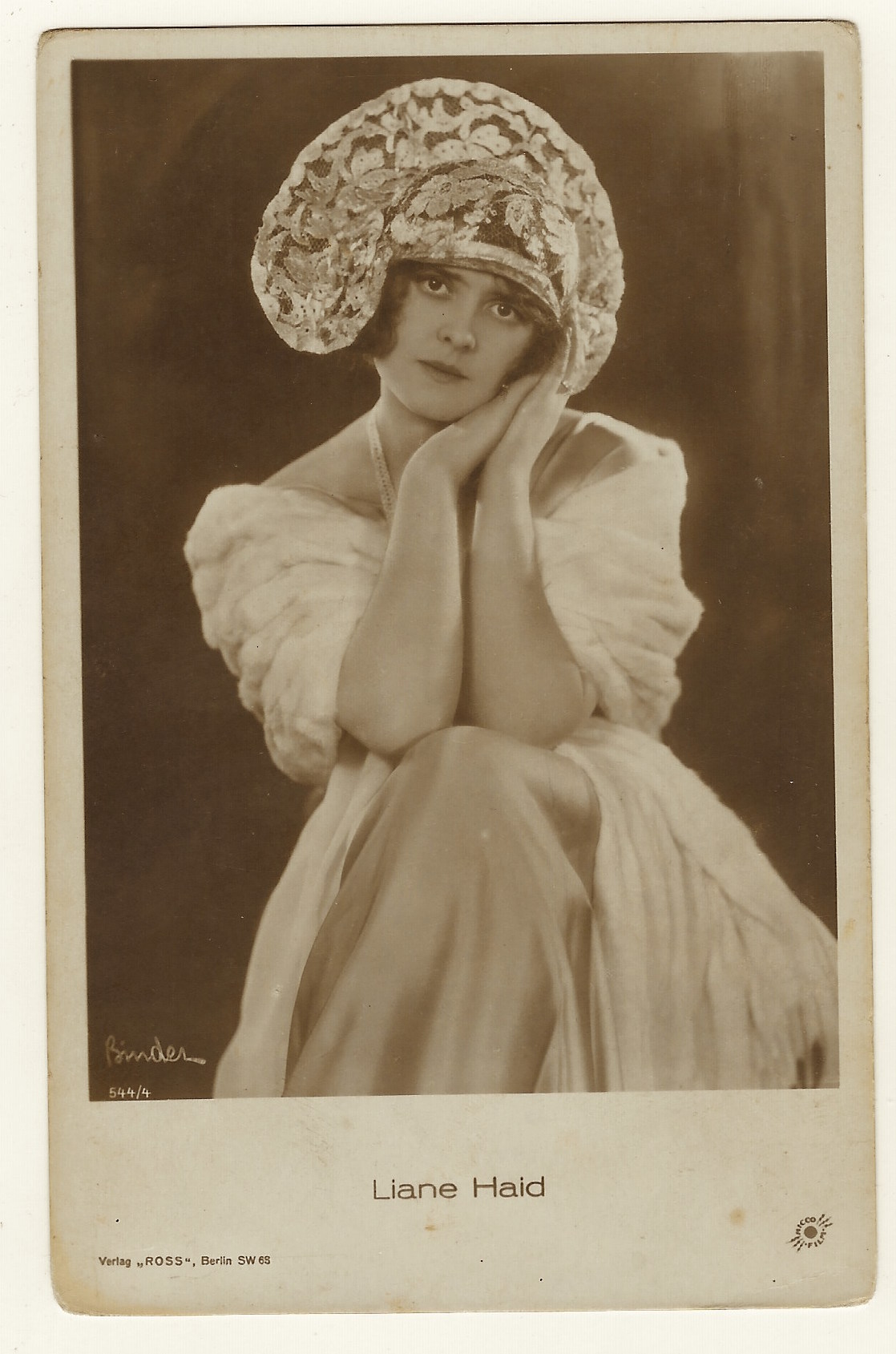
The second vintage postcard portrait of Miss Haid was also the work of Alexander Binder. The actress looks beautiful in her art deco lace headdress. Her eyes can be described as spell binding. The postcard was published by Germany’s Ross Verlag and is part of a series (no. 544/4). Also credited for this photograph is “Micco Film”. Before working for Micco Film, Haid was employed by Kunstfilm. She was very successful working for the company but in 1920 she sued the company for physically exploiting her (placing her in dangerous situations) and for making her financially responsible for her own makeup and costuming. Haid’s husband, industrialist Fritz von Haymerle, built her a studio (Micco-Film) in Vienna to further promote her career.
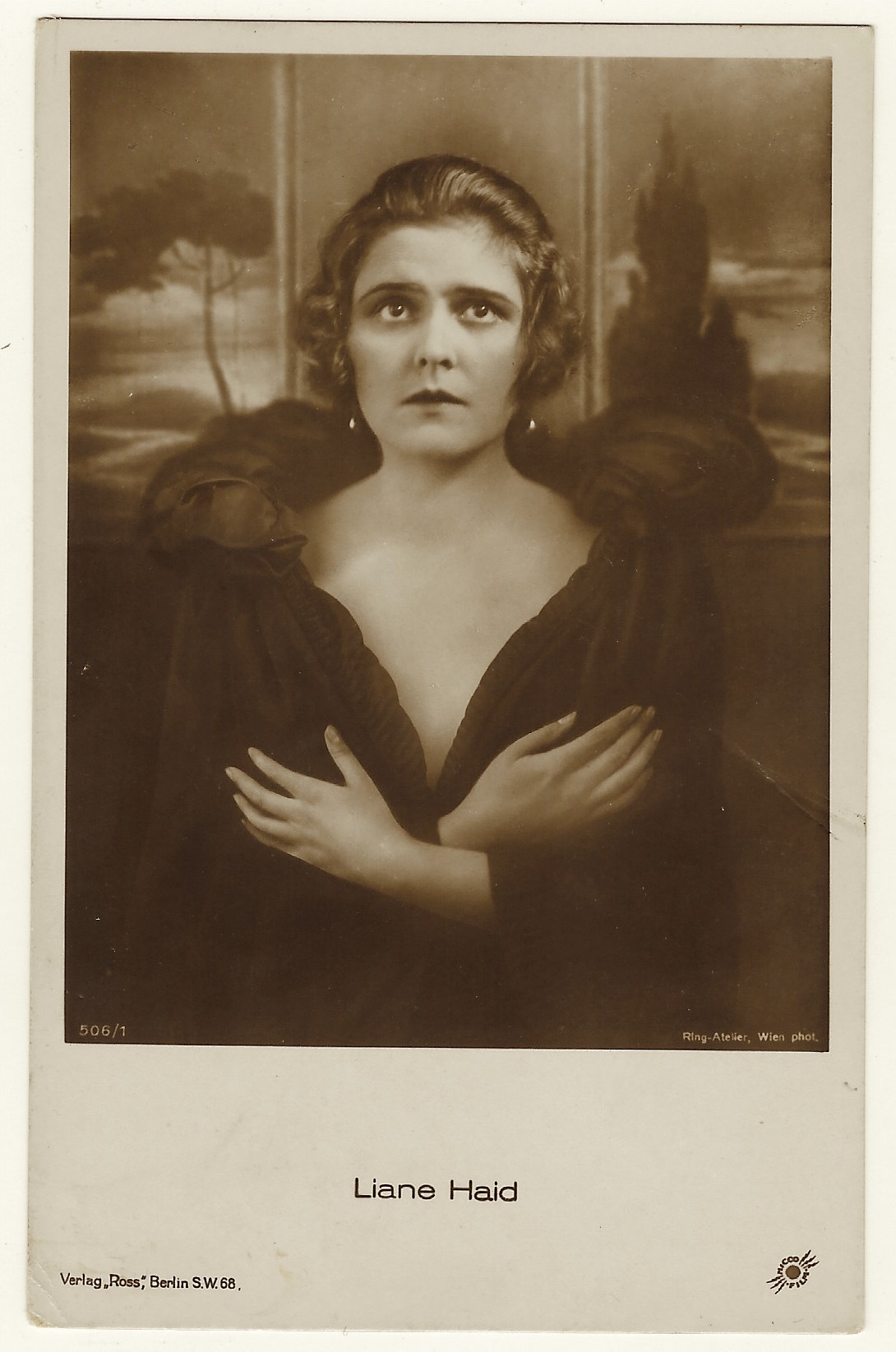
The third real photo postcard, seen above, was produced by publisher Ross Verlag (Berlin). Once again, Liane Haid appears beautiful in her portrait. The photograph was taken by the Ring studio in Vienna, Austria. A logo for Micco-Film appears in the lower right hand corner of the postcard. SOLD
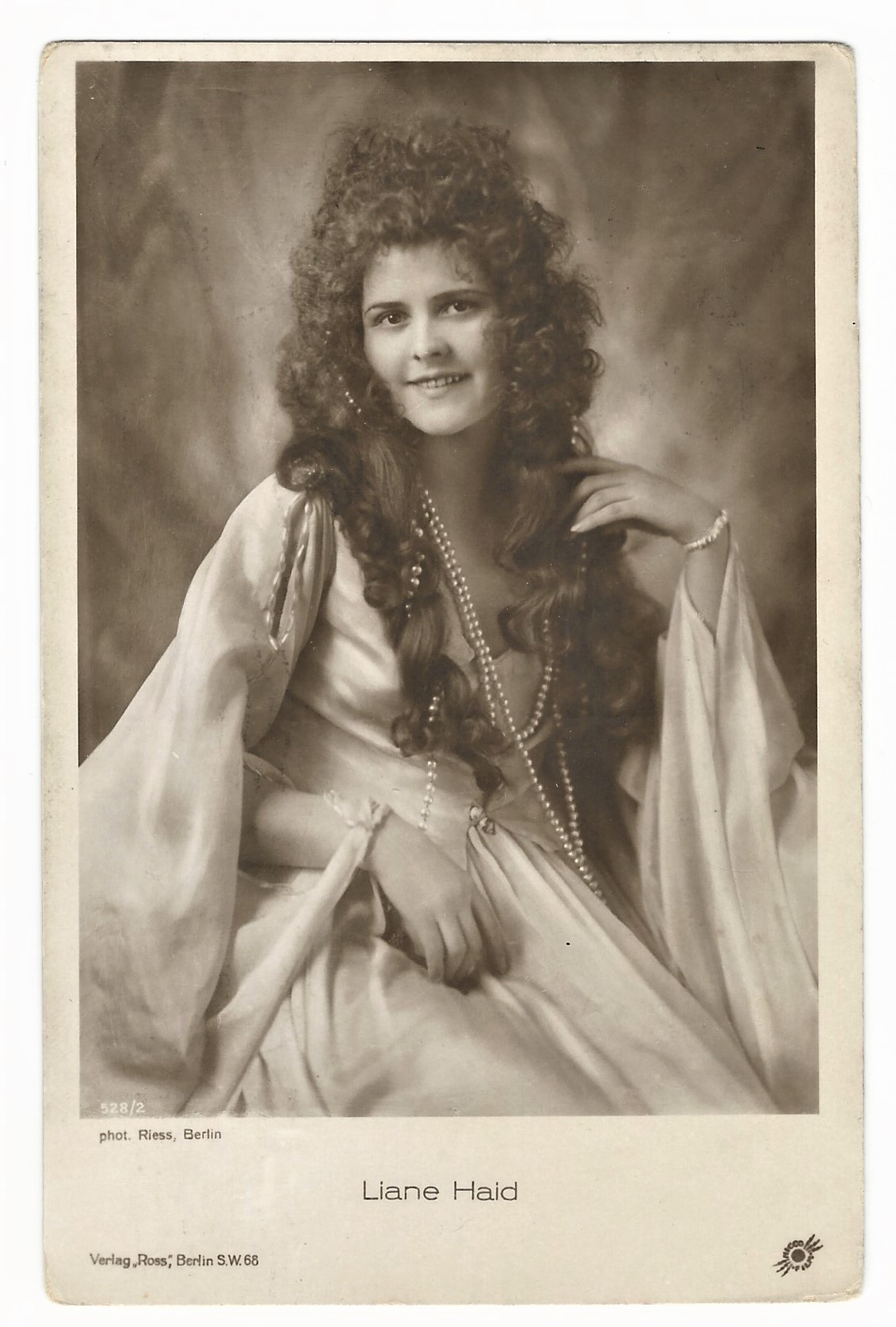
Postcard 4 is a vintage real photo postcard featuring a young and long haired Liane Haid. She is flashing a very sweet smile. The postcard was published by Ross Verlag of Berlin, Germany. It is part of a series (No. 528/2). Miss Haid was photographed by Frieda Riess (1890-1955?), a female Berlin photographer. One of her photographs can be found in Great Britain’s National Portrait Gallery. The postcard has the logo for Micco-Film in the bottom right hand corner and is postmarked 1929. The card was mailed from Denmark to Estonia. SOLD
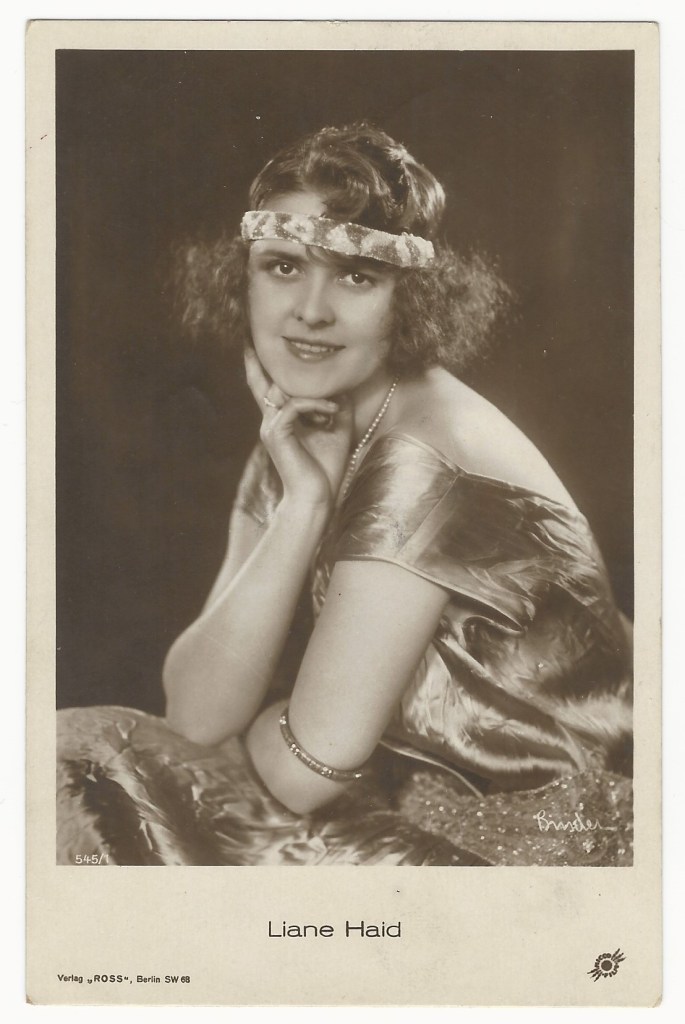
Postcard 5 features a vintage real photo of Miss Haid. As usual, she looks quite pretty. The actress is flashing a lovely smile. She is wearing a string of pearls and a hair band. This photograph was taken by the talented and prolific celebrity photographer, Alexander Binder. The postcard was published by Ross Verlag (Berlin) as part of a series (no. 545/1). The logo for Micco-Film can be seen on the bottom right hand corner of the postcard. The card was postmarked in 1925 and is in very good condition (see scans).
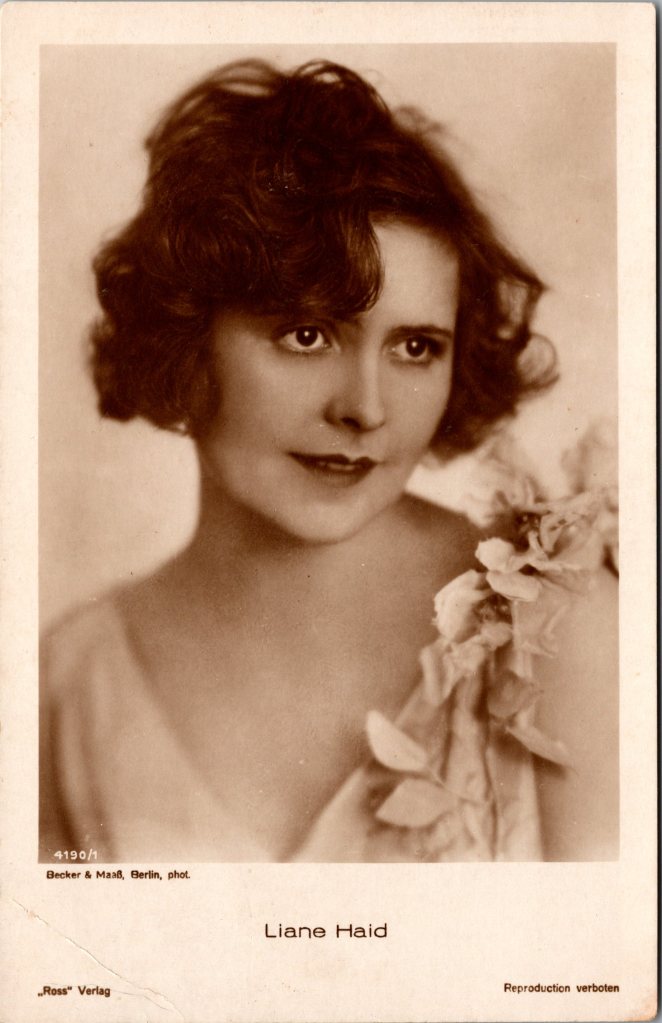
Postcard 6 offers another view of Miss Haid. She looks beautiful as always. This photograph was taken by the Becker & Maas studio. The firm was located in Berlin Germany. The publisher of the card was Ross Verlag. The postcard is part of a series (No.4190/1). (SOLD)
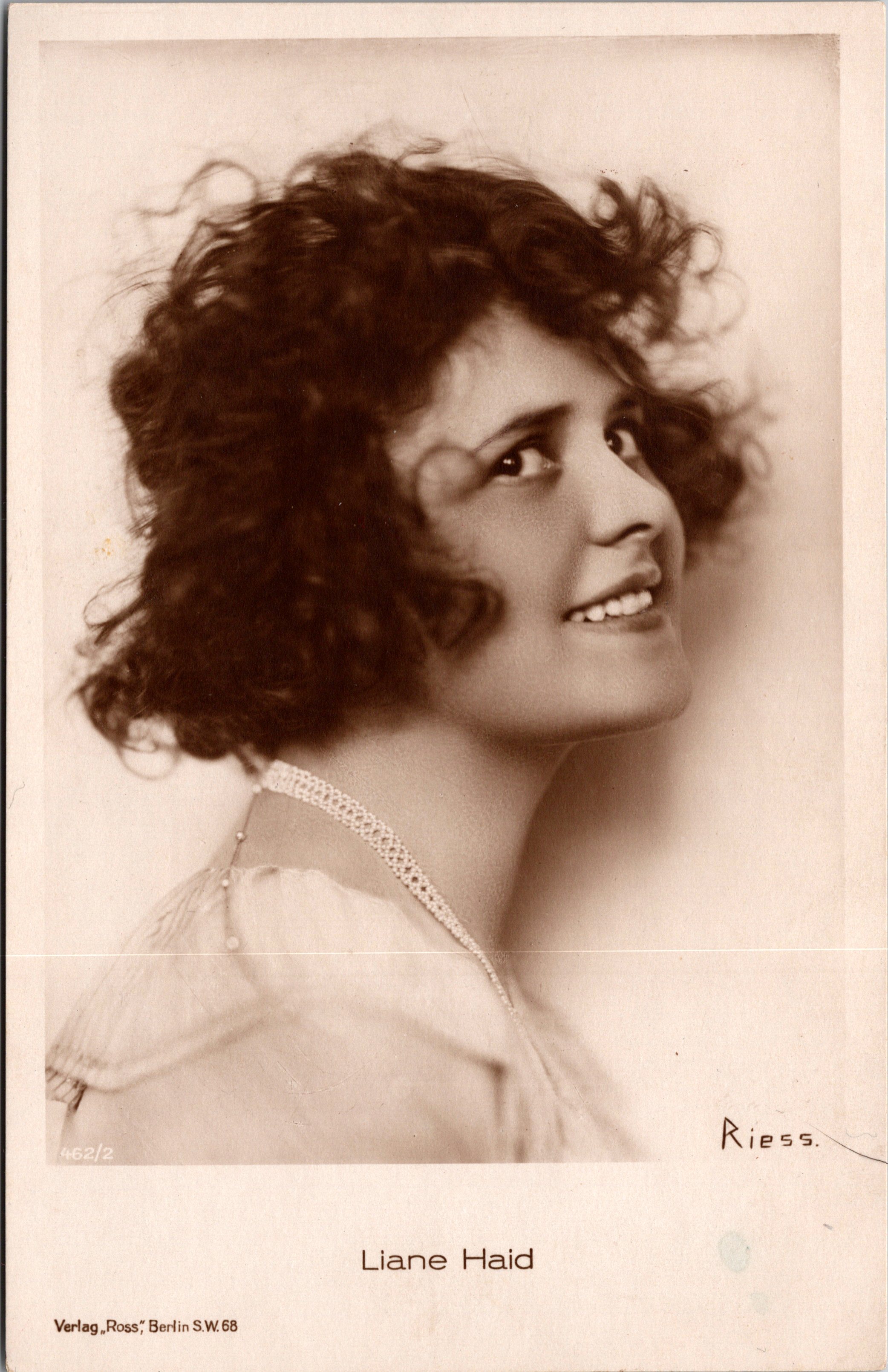
Postcard 7 features Miss Haid as photographed by Frieda Riess (1890-1955?), a female photographer located in Berlin, Germany. The publisher of the card was Ross Verlag. The postcard is part of a series (No.462/2). (SOLD)
Postcard 8 was published by Ross Verlag. The postcard is part of a series (No.1732/3). Note the logo for UFA, a German film company. (SOLD)
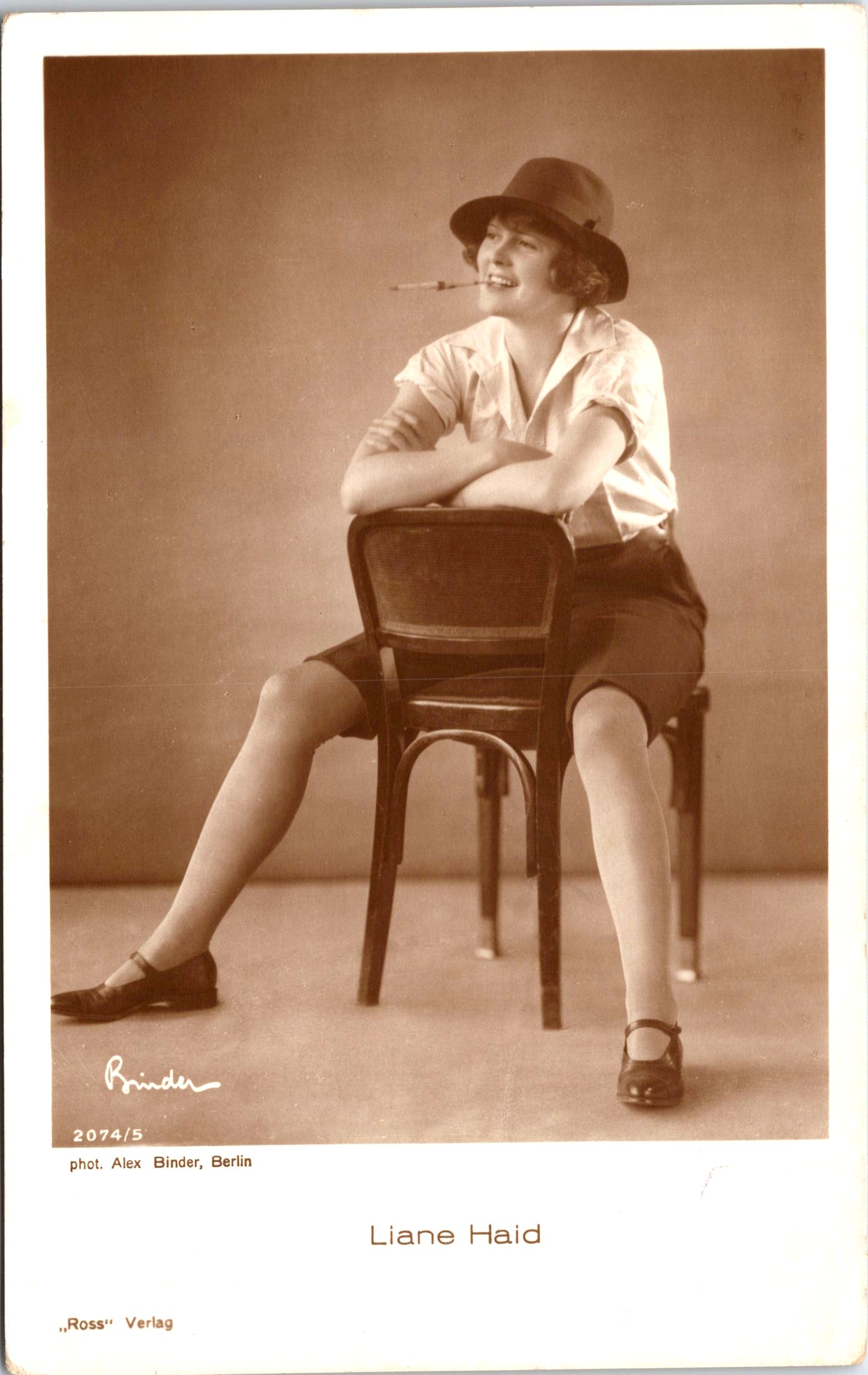
Postcard 9 features Haid sitting in a chair in a provocative manner and smoking a cigarette in a cigarette holder. This photograph portrays Haid as unconventional and seductive. The publisher of the card was Ross Verlag. The postcard is part of a series (No.2074/5). Miss Haid’s photograph appearing on this postcard was taken by Alexander Binder (Berlin, Germany). (SOLD)
ST. LEOS SCHOOL : ST. LEO, MINNESOTA : WITH CHILDREN & TEACHER : RPPC : 1908


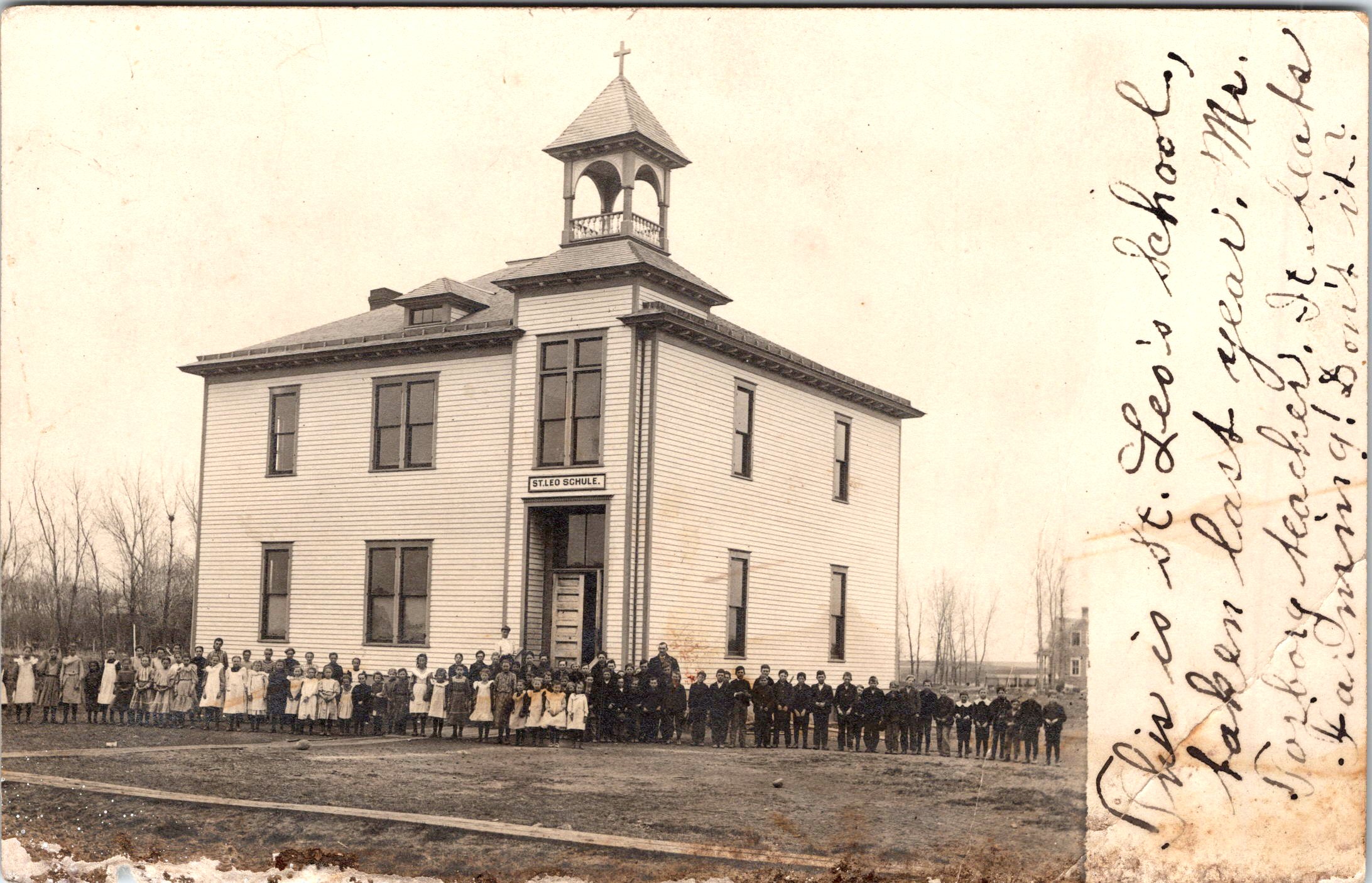
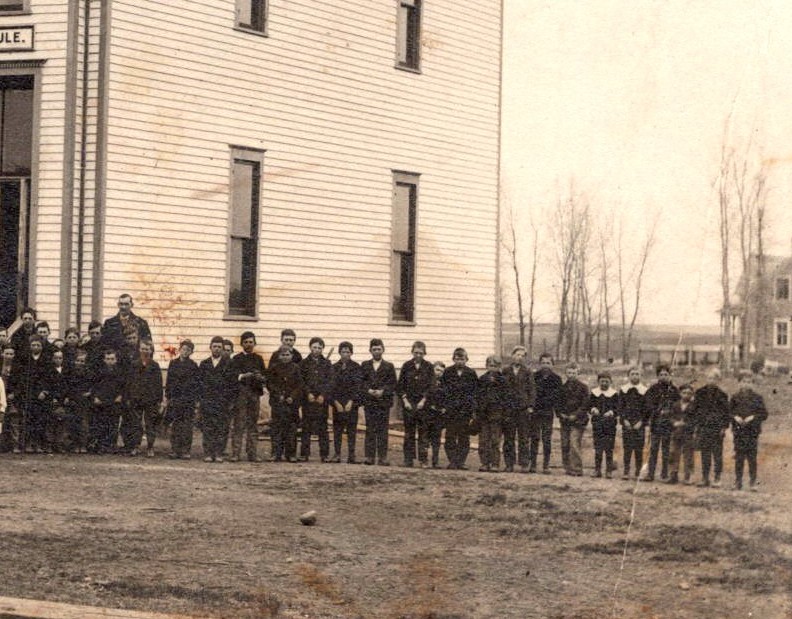
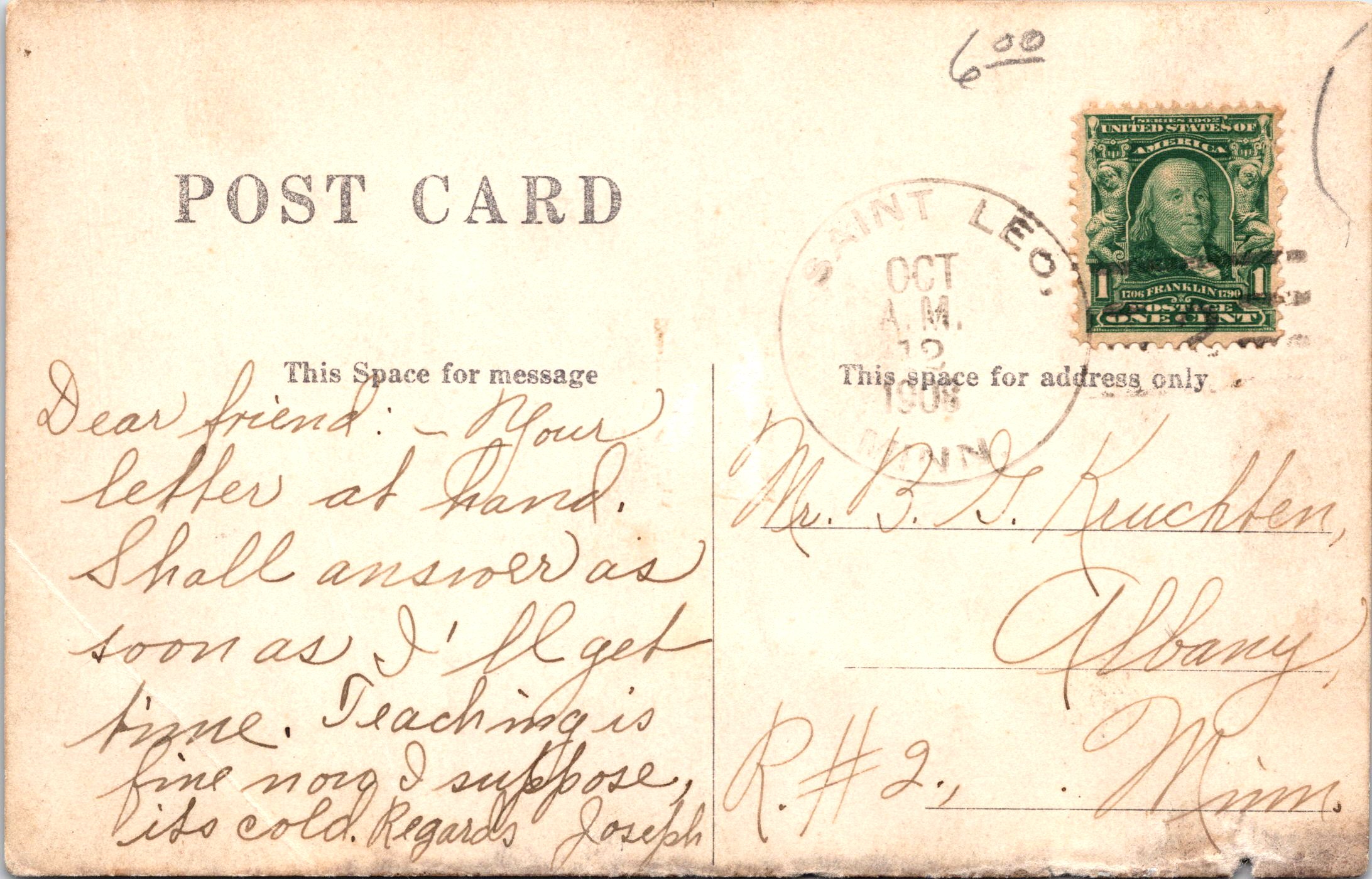
This real photo postcard captures a moment in time outside St. Leo’s School, a two-story wooden schoolhouse with a central bell tower topped by a cross. The sign above the doorway clearly reads “ST. LEO SCHULE,” suggesting a German influence in the local community. The school stands in what appears to be a rural area, with a few trees and a distant building visible in the background. In front of the school, a large group of schoolchildren—boys and girls of various ages—stand in an orderly line. The girls are dressed in long skirts or dresses, many wearing aprons over them, while the boys are attired in dark suits, jackets, and trousers, appearing more formal. A single teacher, possibly Joseph, who wrote the message on the card, stands among them, dressed in a longer coat. The handwritten inscription on the front of the postcard identifies the scene:“This is St. Leo’s School, taken last year. My school, St. Leo’s, So. Min.” On the back, a brief note is addressed to Mr. B. S. Kuchen in Albany, Minnesota, and is signed Joseph. He mentions receiving a letter and promises to respond soon, adding: “Teaching is fine now I suppose. It’s cold. Regards, Joseph.” The postmark is from Saint Leo, Minnesota, dated October 12, 1908, and features a one-cent Benjamin Franklin stamp. This postcard is a wonderful historical artifact, offering a glimpse into early 20th-century rural education in Minnesota. The presence of a German-language school sign and the formal attire of the children suggest a tight-knit immigrant community. (SOLD)

LIL DAGOVER : PRETTY GERMAN SILENT & SOUND FILM STAR : MADAME BOVARY : RPPC 1942
This vintage real photo postcard features celebrated German actress, Lil Dagover (1887-1980). She was renowned for her work in silent films, particularly her collaborations with key figures of German Expressionist cinema. Her striking beauty and ability to convey complex emotions made her one of the most recognizable faces of early 20th-century European cinema. Lil Dagover was born into a well-to-do family in the Dutch East Indies, where her father worked as a forestry officer. After his death, her mother relocated with the family to Europe, and Dagover spent much of her youth in Switzerland and Germany. She was orphaned at 13 years of age and was raised by relatives. She initially planned to become a painter but was drawn to the performing arts, which led her to pursue acting. Dagover’s acting career began on the stage, but her breakthrough came with the advent of film. She made her debut in 1913, though her rise to stardom began in earnest in the early 1920s when she worked with director Robert Wiene in the landmark German Expressionist film The Cabinet of Dr. Caligari (1920). Dagover became a favorite of directors such as Fritz Lang, F.W. Murnau, and Ernst Lubitsch. Her notable silent-era films include “Destiny” (1921), “Dr. Mabuse, the Gambler” (1922), and “The Chronicles of the Grey House” (1925). Her success continued during the sound era, where her aristocratic demeanor and elegance suited roles in historical dramas and comedies. Dagover remained active in German cinema during the Third Reich, a time when the industry was heavily influenced by propaganda. However, she largely avoided overtly political films, focusing instead on character-driven narratives. After World War II, she transitioned to stage work and television, continuing her career well into the 1970s. In regard to her personal life, in 1913 she married Fritz Daghofer, an Austrian officer. They had one child and the marriage ended in divorce. She married for a second time to a German film producer. This postcard was published by Film-Foto-Verlag as part of a series (No.A3735/1). Miss Dagover’s photograph was taken by Baumann between 1941 and 1944. The logo for Terra Film is in the bottom right corner of the image. Terra Film was a Berlin-based film production company. Founded in 1919, it became one of Germany’s largest film production companies in the 1930s under the Nazi regime. SOLD

ANNY ONDRA: BEAUTIFUL TALENTED ACTRESS : WIFE OF BOXING CHAMPION MAX SCHMELING : RPPC
This vintage real photo postcard features actress Anny Ondra. The postcard was published by Ross Verlag. The photograph is by Alexander Binder. The postcard is part of a series (no. 5873/1). Anny Ondra (1903-1987) was a Czech film actress. She was born in Tarnow, Galicia, Austria-Hungary (now Poland). She was active in the movie industry between 1914 and 1957. She acted in Czech, Austrian, and German films in the 1920’s. She appeared in some British dramas, most notably, Alfred Hitchcock’s “The Manxman” (1929) and “Blackmail” (1929). The IMDb credits Ondra with over 90 acting credits between 1914 and 1957. She appeared in more than 40 films in the sound era. However, her career in British films was hurt by her thick accent. Check out the youtube video below. In this “test film”, Hitchcock “interviews” Ondra and makes her visibly uncomfortable and embarrassed by asking her very personal questions. She was married to German boxing champion Max Schmeling between 1933 and 1987. Schmeling was the world champion between 1930 and 1932. He is well known for his fights with African American fighter, Joe Lewis. Ondra’s father was a Czech, Austro-Hungarian military officer and she grew up in Tarnow, Pula, and Prague. At the early age of seventeen, she acted in the theater as well as in a film. When her family learned that she had acted in a film, they were extremely angry. In fact, she reported that she was given a beating by her father. Post World War I was a time, for many people, that being an actress was akin to being a prostitute. Ondra began to live with her boyfriend (her debut film’s director) but after some time, the relationship ended because she wanted a family and he wanted nothing to do with marriage. In 1933, after a three year romance, Anny married Max Schmeling. She had been in a film with the boxer (“Knock-Out”, 1935). It was a “happy” marriage and the couple remained together until her death in 1987. Ondra and Schmeling were hot names in Nazi Germany. German fascists tried to exploit them in order to popularize their movement. Schmeling was seen as a German superman while Ondra represented the blonde Aryan type. The two celebrities refused to collaborate. Schmeling turned down honors and even helped hide two Jewish children, saving their lives. However, because of Nazi propoganda, many believed that the couple had collaborated. As a result, Schmeling and Ondra suffered financially for their fictional cooperation with the Nazis. Ondra was portrayed in two modern day movies, “Ring of Passion” (1978) and Joe and Max (2002). Miss Ondra appears quite thin in this postcards’s photo. Note her fur collared jacket. SOLD

CUTE YOUNG GIRL : LOVELY FRINGED FLORAL DRESS : ROSES IN HER HAIR : RPPC : (1908)
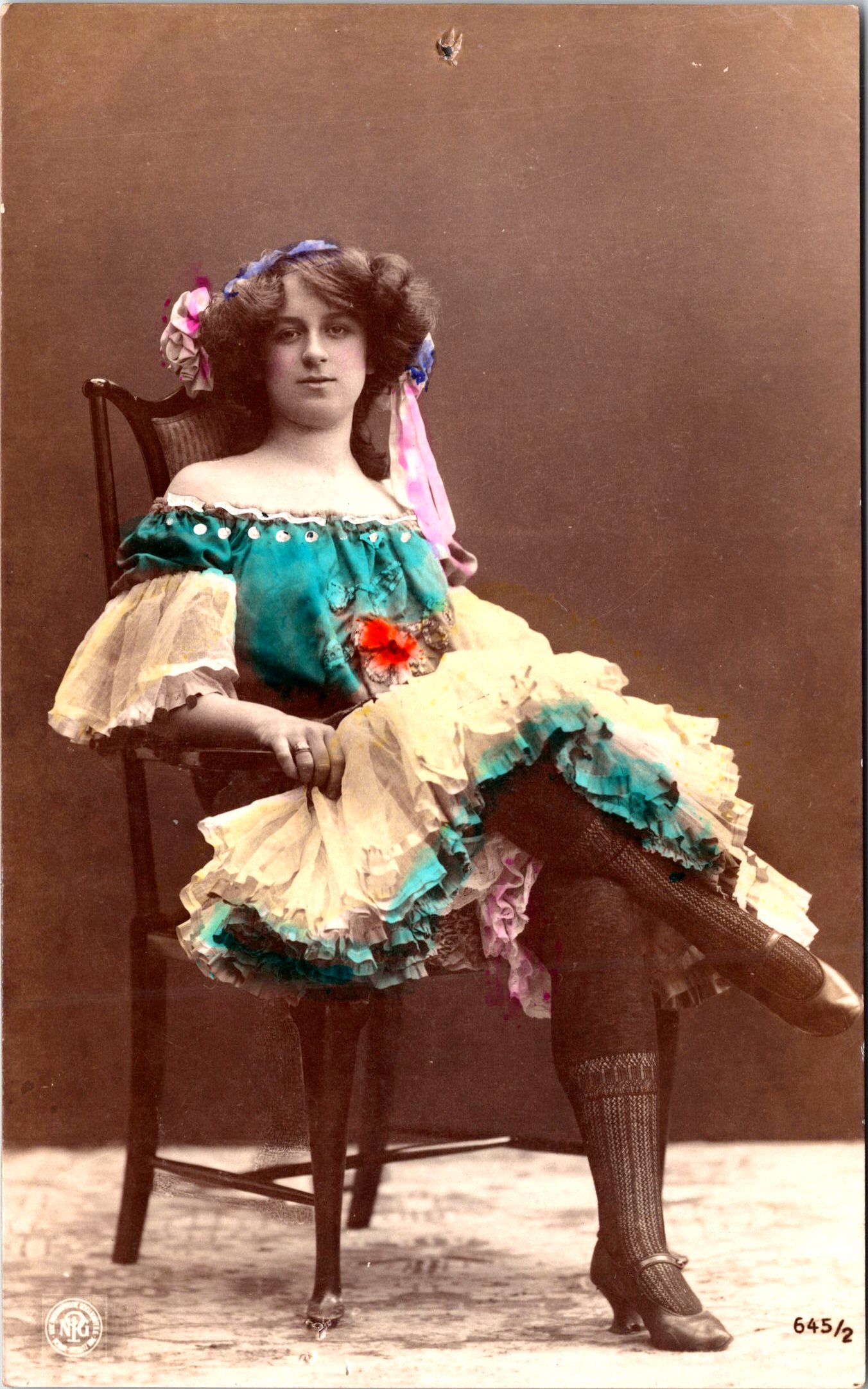
This German vintage real photo postcard features an adorable little girl wearing a fringed dress and roses in her hair. The postcard was published by DLG (Deutsche Lichtbild-GmbH) as part of a series (No. 212/4). The firm is located in Berlin, Germany. This postcard is in very good condition (See Scans).

Buy this original Vintage Real Photo Postcard (includes shipping within the US) #5333
To purchase this item, click on the Pay with PayPal button below
$32.00

Buy this original Vintage Real Photo Postcard (includes International shipping outside the US) #5333
To purchase this item, click on the Pay with PayPal button below
$42.00

LA JANA : AUSTRO-GERMAN EXOTIC DANCER AND FILM STAR : RISQUE : RPPC
Postcard 1 (SOLD)
Postcard 2 (SOLD)
Postcard 3 (SOLD)
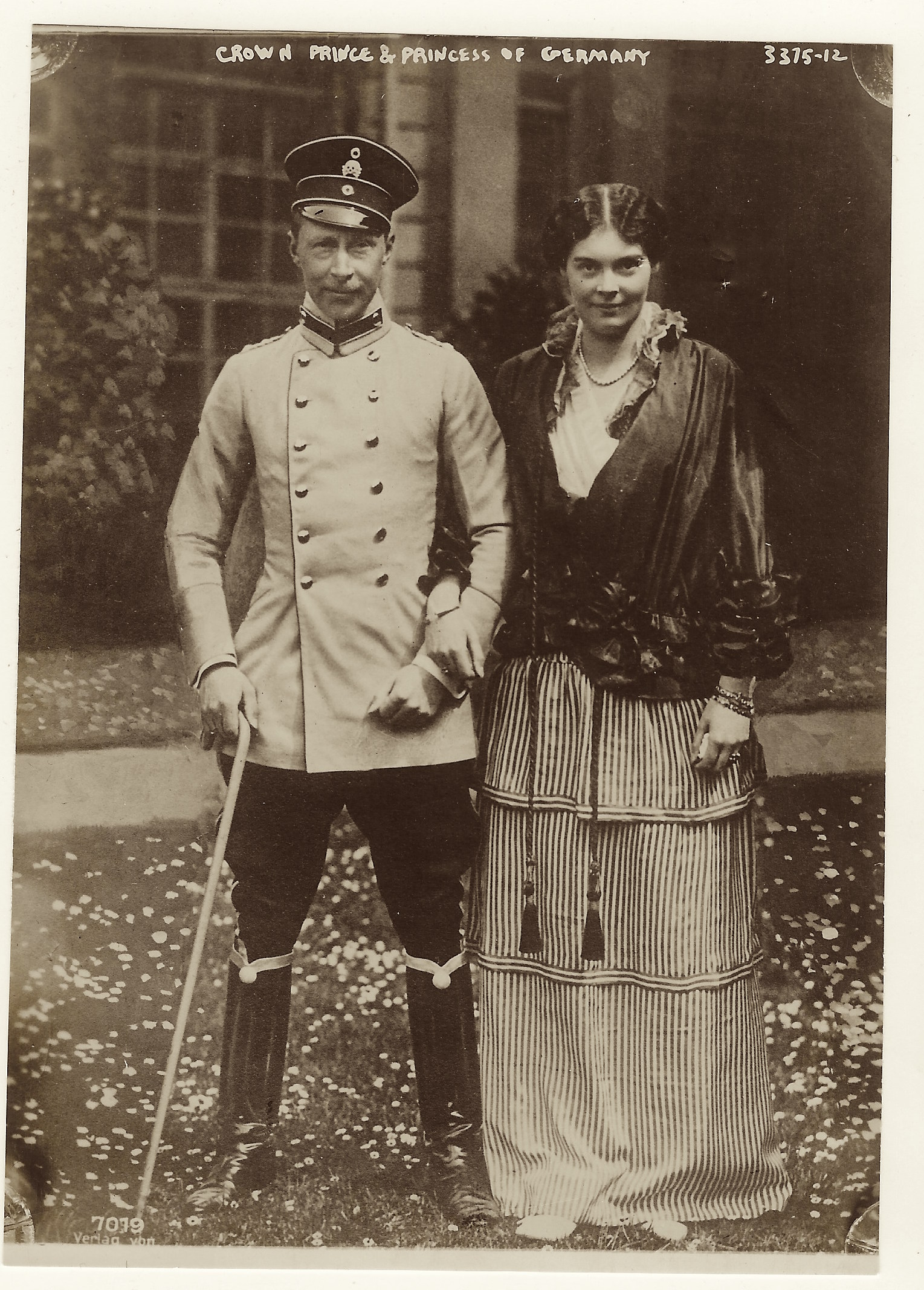
La Jana (1905-1940) was an actress and dancer. Her nationality was Austro-German. She was the illegitimate daughter of a master gilder and his housekeeper. Her parents wed four years after her birth. Her family was Jewish. She went by the name, Henny.. She trained as a dancer at the Frankfurt Opera Ballet and her first stage appearance was at the age of eight. She later began dancing in revues. She was “discovered” in Paris and brought to Berlin to meet with Frederic Zelnik who got her into films. The film director who “discovered” her said that the first time he saw her dance, “that woman possessed the most attractive body that I had set eyes upon” in my not all that long life. He went on to describe her as simple, nice and approachable. He added that she “had as much interest in sex as in Immanuel Kant”. meaning, none at all. As her career advanced, she danced in revues in Berlin, Stockholm, London, and many other cities. When she appeared in “Casanova” she viewed by the audience semi-naked and on a silver platter. In Berlin, she began an affair with Crown Prince Wilhelm. There were also rumors that she had an affair with Joseph Goebbels. Charlie Chaplin was also one of her lovers. Clearly, her attitude about sex changed from the earlier days of her dancing career. In 1937, her performance in a film catapulted her to film stardom. In 1940, while touring Germany, entertaining troops, she fell ill with pneumonia and passed away. The IMDb gives La Jana 23 film credits between 1926 and 1940.
La Jana’s portrait for Postcard 1 was taken by the Manasse studio in Vienna, Austria. The Manasse studio was in existence between about 1922 and 1938. The studio was run by Olga Solarics (1896-1969) and her husband Adorja’n von Wlassics (1893-1946). Olga was known for her interest in photographing nudes. The studio flourished in Vienna during the 1930’s. Many of the portraits taken by the studio had an erotic flavor. The studio attracted some of the leading ladies of film and theater. This postcard was published by Ross Verlag (no.7043/1). This vintage postcard has a small imperfection located under La Jana’s left elbow. (SOLD)
Postcard 2 was published by Ross Verlag (no.5035/2). Miss Jana’s photograph was taken by the Manasse studio in Vienna, Austria. The Manasse studio was in existence between about 1922 and 1938. The studio was run by Olga Solarics (1896-1969) and her husband Adorja’n von Wlassics (1893-1946). Olga was known for her interest in photographing nudes. The studio flourished in Vienna during the 1930’s. Many of the portraits taken by the studio had an erotic flavor. The studio attracted some of the leading ladies of film and theater. (SOLD)
Postcard 3 was published by Ross Verlag (no.3911/1). Miss Jana’s photograph was taken by Martin Badekow (1896-1983) in Berlin. In the 1920’s, Badekow was a well known photographer in Berlin. He photographed portraits of many film stars and other celebrities. He also was a fashion photographer. Before she was famous, Badekow took many fashion photos of Marlene Dietrich. After World War I, he and his son Heinz, took photographs of the devastation in Berlin. Some of them can be found at Getty Images. After the 1920’s, interest in Badekow’s work waned. More recently, Badekow’s photographs from the Berlin cabarets and of the stars of German silent films, can now be found in museums and are considered symbolic images of Weimar Germany. (SOLD)