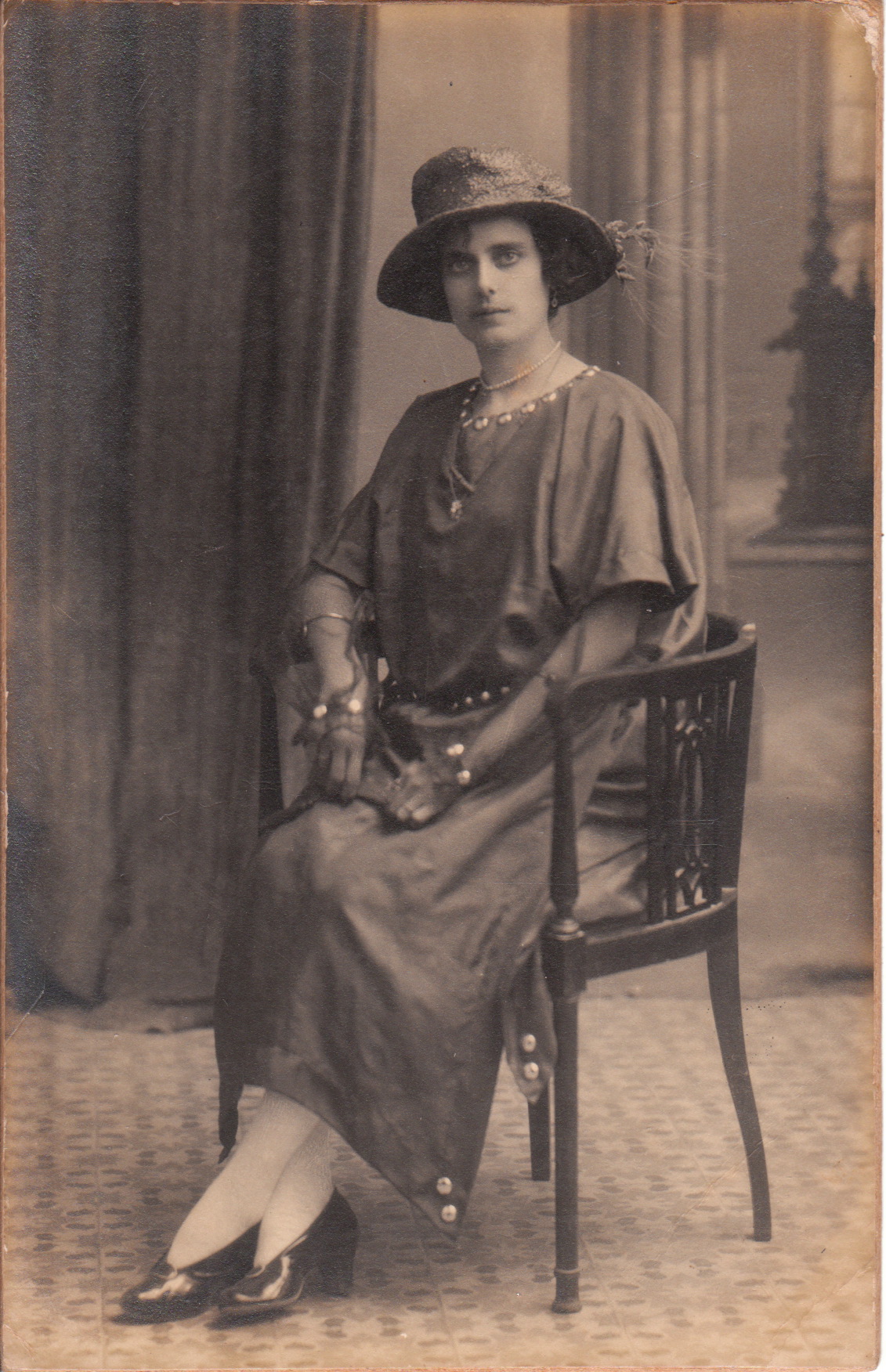
 This image features a well dressed woman posing for her portrait at the Amadeo studio in Palma de Mallorca, Spain. Amadeo’s gallery was located at 19 Calle San Nicolas. The subject of this photograph is unidentified. She is wearing jewelry and a nice hat. Her arms seem to be covered by translucent lace material that resemble stockings, but worn on the arms. It is clear that I need some major assistance from the cabinet card gallery research department (comprised of the site’s visitors) in order to explain the woman’s undersleeves. It is unknown whether the woman in this photograph was a visitor or resident of Palma. Palma de Mallorca is a major city and capital of the province of the Balearic Islands in Spain.
PORTRAIT OF A SPANISH WOMAN IN PALMA DE MALLORCA

MAUDE BRANSCOMBE: CELEBRATED BEAUTY AND ACTRESS


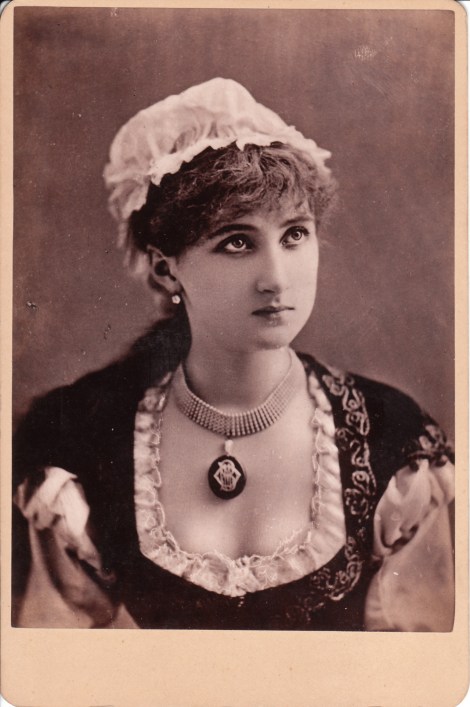

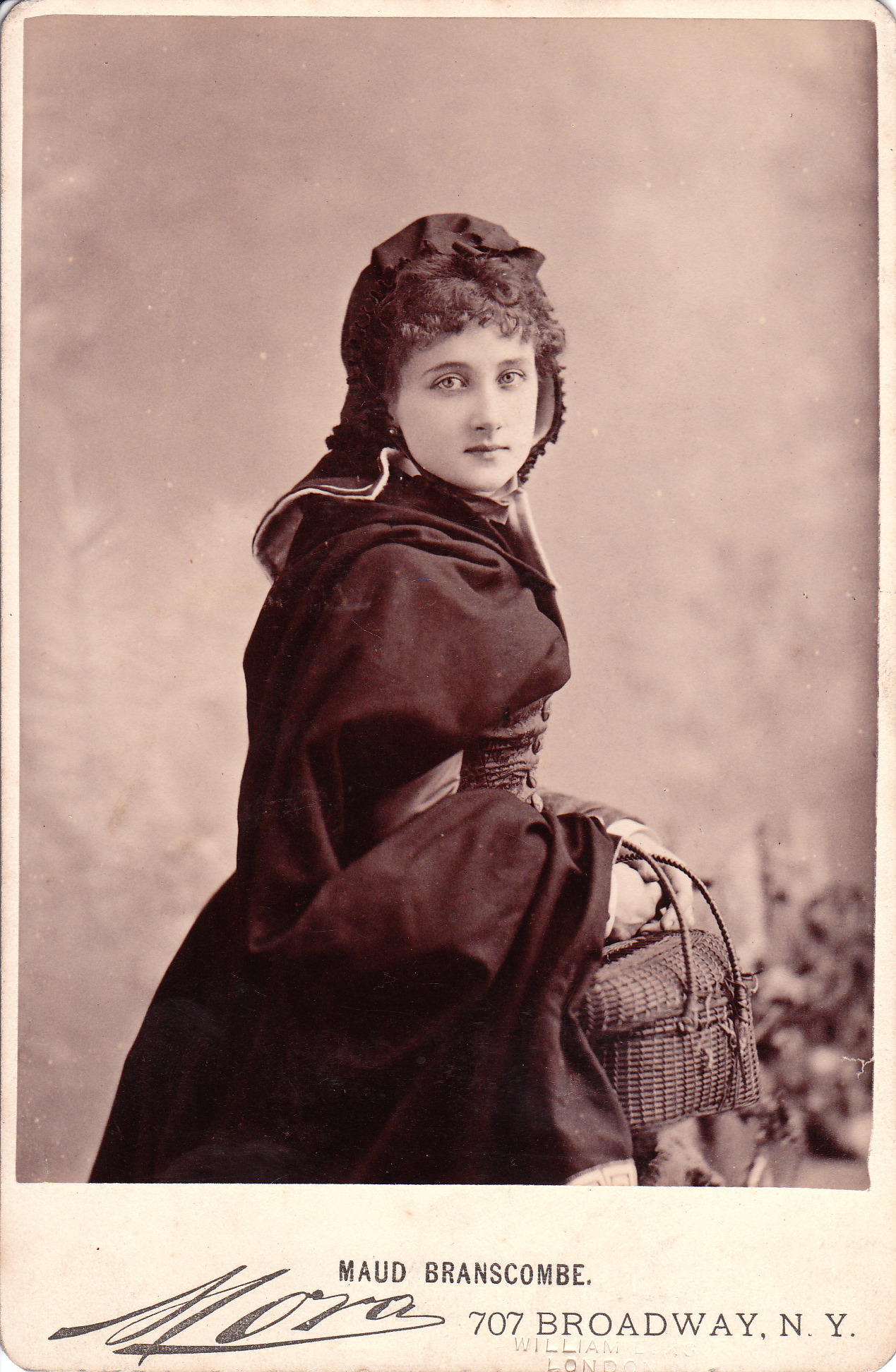
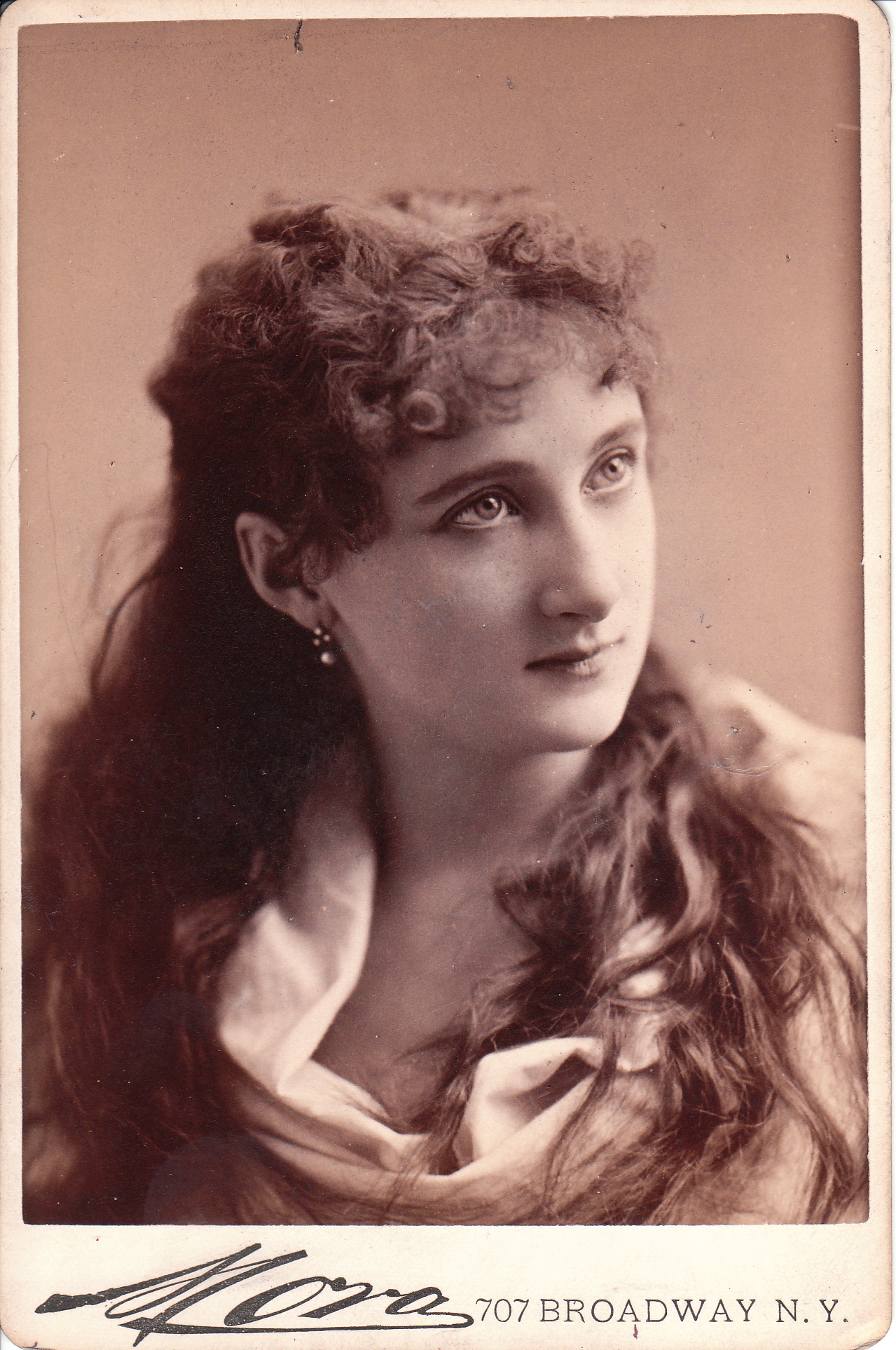

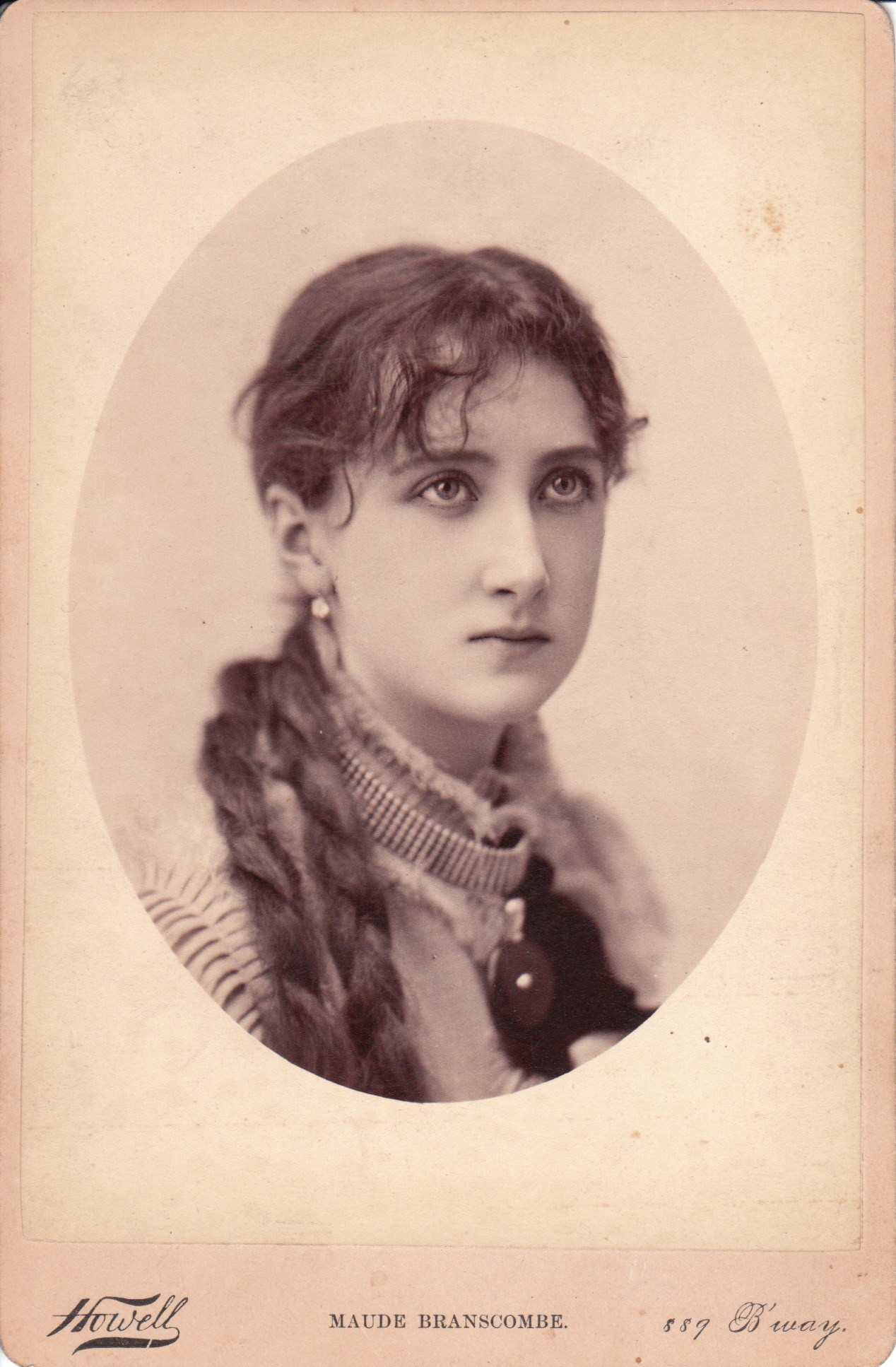


Maude Branscombe was a very popular stage beauty and light opera singer. She was reported to be the most photographed woman of her day. Biographical information about her is sparse and more will be added at a later date. Her first appearance on the New York stage was in 1876 as Cupid in a revival of Ixion at the Eagle Theatre. The portrait at the top was photographed by renowned W & D Downey of London, England.
The second portrait was cropped so the photographer is unknown.
The third portrait (Branscombe is wearing a necklace) is by L. Levin & Son of San Francisco, California.
The fourth cabinet card image was photographed by Sarony. Sarony was a well known celebrity photographer and more of his portraits can be viewed by clicking on the category of “Photographer: Sarony”. Sarony does an excellent job of capturing Branscombe’s beauty and her alluring eyes.
The fifth and sixth, and seventh cabinet card were photographed by another celebrity photographer, Jose Mora, of New York City. Interestingly, the fifth and seventh cabinet card captures Branscombe in the same costume as the second cabinet card. It is likely that the photographer of cabinet card number two, is also Jose Mora. To view other photographs by Mora, click on the category of “Photographer: Mora”.
The eighth cabinet card portrait of Branscombe was photographed by Howell, another New York City photographer with a studio on Broadway. Howell’s close-up photograph captures the actress’s beauty and her wonderful eyes. She is wide eyed and her hair is a bit mussed. These qualities add to the allure of Miss Branscombe.William Roe Howell was born in 1846 in Goshen, New York. He had a passion for drawing and painting and he directed his creative interest into the field of photography as a young adult. He opened a photographic studio in Goshen. In 1863 he moved to New York City where he joined Robert and Henry Johnston at Johnston Brothers Studio at 867 Broadway. In 1866 the firm became Johnston & Howell. In 1867, he became the sole proprietor of the gallery. By 1870, he was gaining much recognition in the field of photography. His great location in New York City gave him access to many fashionable upper class men and women as well as many celebrities. Among his photographic subjects were P. T. Barnum, Buffalo Bill, and Robert E. Lee. He opened a branch studio in Brooklyn. In 1873 he came one of five Americans to be awarded a special grand prized at the Vienna World Fair. He frequently received mention in the photographic journals. He published a book of cabinet cards that received much praise. He became a photographer for West Point, Princeton, and other notable institutions. He won many medals at photography exhibitions. In 1878 he moved his business from 867 to 889 Broadway and opened another studio with a partner (Meyer) at 26 West 14th Street. In 1880 he retired from photography due to health reasons. In 1886 he moved with his family to Washington D.C. intent on opening a photography business there. He then disappeared. He vanished just two weeks before the grand opening of his new studio. He left his wife of 16 years (Fannie Scott) and his five children penniless. His wife stated that Howell was an eccentric man and that he must have got tired of business and family problems “and cut loose from us”. He apparently returned home after a short duration of absence and his business appeared in the 1888 Washington D. C. business directory but not in the 1889 directory. He died of tuberculosis in New York City in 1890. He had been residing at the home of a colleague who ran a photography studio in Harlem. It is believed by some biographers that he had divorced his wife and returned to New York without his family.
The ninth cabinet card is another portrait photographed by Jose Mora. The actress’s costuming detracts from the overall appeal of the photograph. She seems lost in the swirl of her head covering. However, the photographer does an excellent job of highlighting Miss Branscombe’s seductive eyes. The phrase “Maude Branscombe eyes” certainly rivals the phrase “Bette Davis eyes”.
Cabinet card number ten also comes from the studio of Jose Mora. She is well dressed in this portrait. It is not clear if she is dressed for a stage role or if she is attired for a jaunt around town.
THREE DASHING YOUNG MEN WEARING BIZARRE HATS IN VIENNA, AUSTRIA
 This photograph features three well dressed men wearing bizarre hats. Why are they wearing these hats? Perhaps a cabinet card gallery visitor can leave a comment offering a plausible explanation. One wonders if the men are trying to be funny. This image is truly an unusual photograph. The photographer is Oskar Liessner who’s studio was located in Vienna, Austria.
A WOMAN AND HER LABRADOR RETRIEVER IN HONESDALE, PENNSYLVANIA
 J A Bodie of Honesdale, Pennsylvania photographed this lady and her lab at the Bodie Art Studio located on the Keystone Block. The woman is holding a wonderful large hat featuring what appears to be long feathers. The lady and her canine companion are posed atop bales of hay. The dog is likely a labrador retriever and he or she has very expressive eyes that seem sad and lonely and begging for attention. The photographer of this cabinet card is either Joseph Alonzo Bodie (1852-1935) or his son, Joseph A. Bodie Jr.. Junior followed his father into the family business. The senior Bodie learned photography from E. I. Stearns and in 1875, Bodie bought half interest in Stearns’s studio. By 1878, Bodie became the sole proprietor of the studio. The Bulletin of Photography (1912) reported that Bodie’s studio was totally destroyed by fire and the loss was valued at $2500.00 and was only partially covered by insurance. In a later issue, the same journal stated that Bodie had rebuilt the studio.
PORTRAIT OF A COUPLE IN CHATSWORTH, ILLINOIS (JOSEPH AND ELLA FRANCIS)
 This cabinet card features a couple posing for their portrait at the studio of A. H. Hall in Chatsworth, Illinois. The gentleman has an interesting long and narrow beard, The woman has a dress with many buttons and is wearing a pin on her collar. Note the mans hat is on the floor directly in front of where the couple is sitting. It is not uncommon to see cabinet card portraits that include hats prominently displayed on the floor. Perhaps the hats were viewed as important enough to belong in the picture but it was considered inappropriate to wear hats indoors. The couple in this photograph are identified on the reverse as Joseph and Ella Francis. Investigation reveals that Joseph Francis served in the civil war. In 1864 he enlisted as a private in Company D of the Illinois 45th Infantry Regiment.He mustered out as a private in 1865. The 1880 US census identifies Joseph S. Francis (1846-1930) as a farmer of Irish descent living in Illinois. The 1910 census finds the Ohio born, Francis living in Forrest, Illinois and working as a railroad car inspector. He was 64 years old at the time and living with his wife Ella Svedaker Williamson Francis (1862-1938) and four of their children. The 1930 census that Joseph Francis, at age 84, was still employed. He was working as an assessor for his township. Research found death certificates for both Joseph (1930) and Ella (1938). The photographer of this image was Albert H. Hall. The History of Livingston County (1878) provides a brief biography of Hall. He was born in 1849 and at age 22 went to Chicago to learn the trade of photography. In 1872 he moved to Chartsworth and opened a photography and gem gallery. He married a woman named Dora Knapp.
PORTRAIT OF TWO WOMAN IN MASSIVE HATS
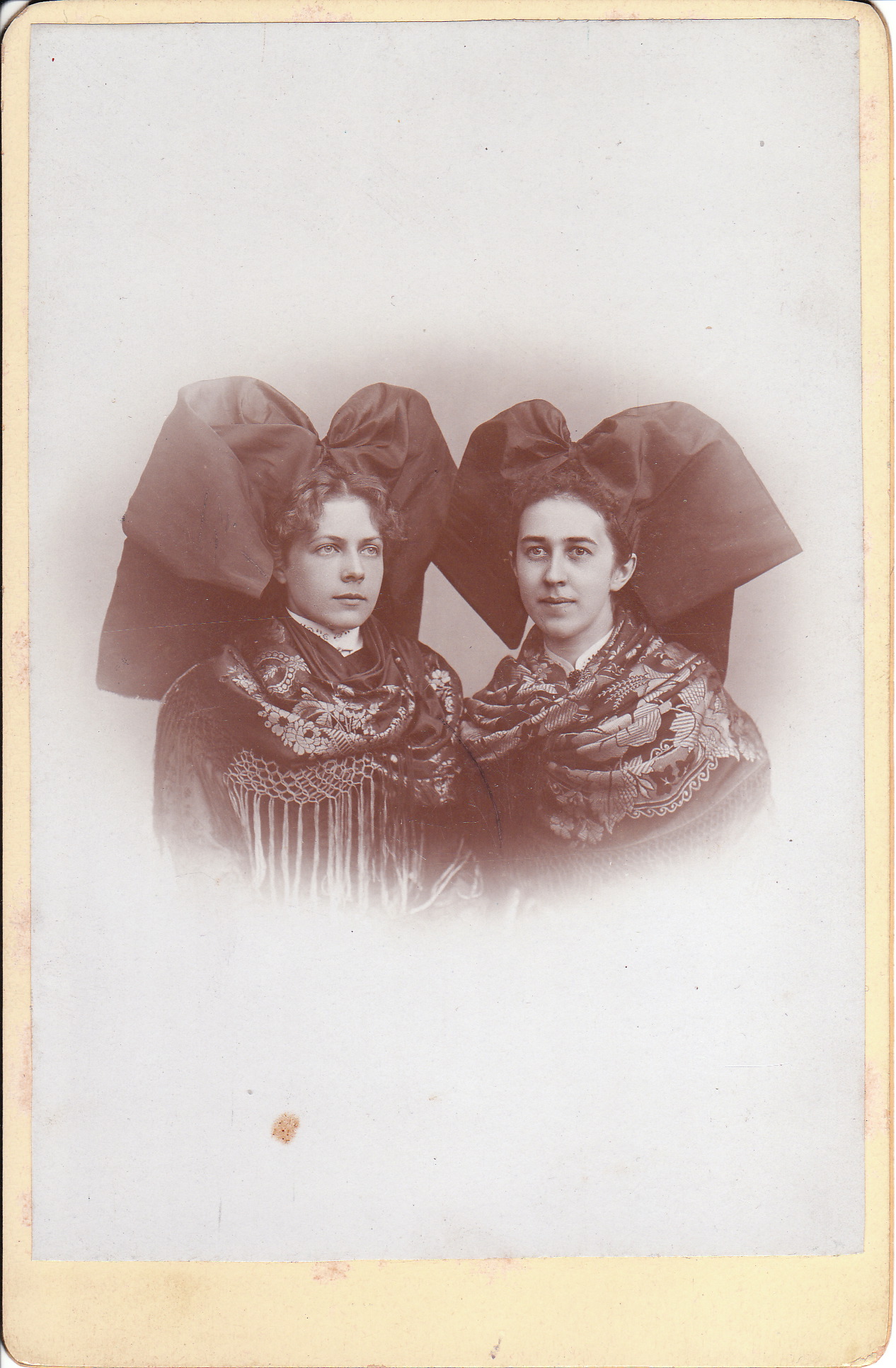 The Cabinet Card Gallery is fortunate to have many historical fashion experts among its visitors. Hopefully, one or more of them will leave comments that offer an explanation about the history behind the hats seen in this cabinet card. The two women featured in this image are wearing shawls and massive hats. Are these hats part of a uniform or costume of some sort of order or organization? Are these hats on steroids? There is no identifying information concerning the subjects or the photographer written on either side of the cabinet card.
BUFFALO LADY DISCOVERED UNDER GIGANTIC OUTRAGEOUS HAT
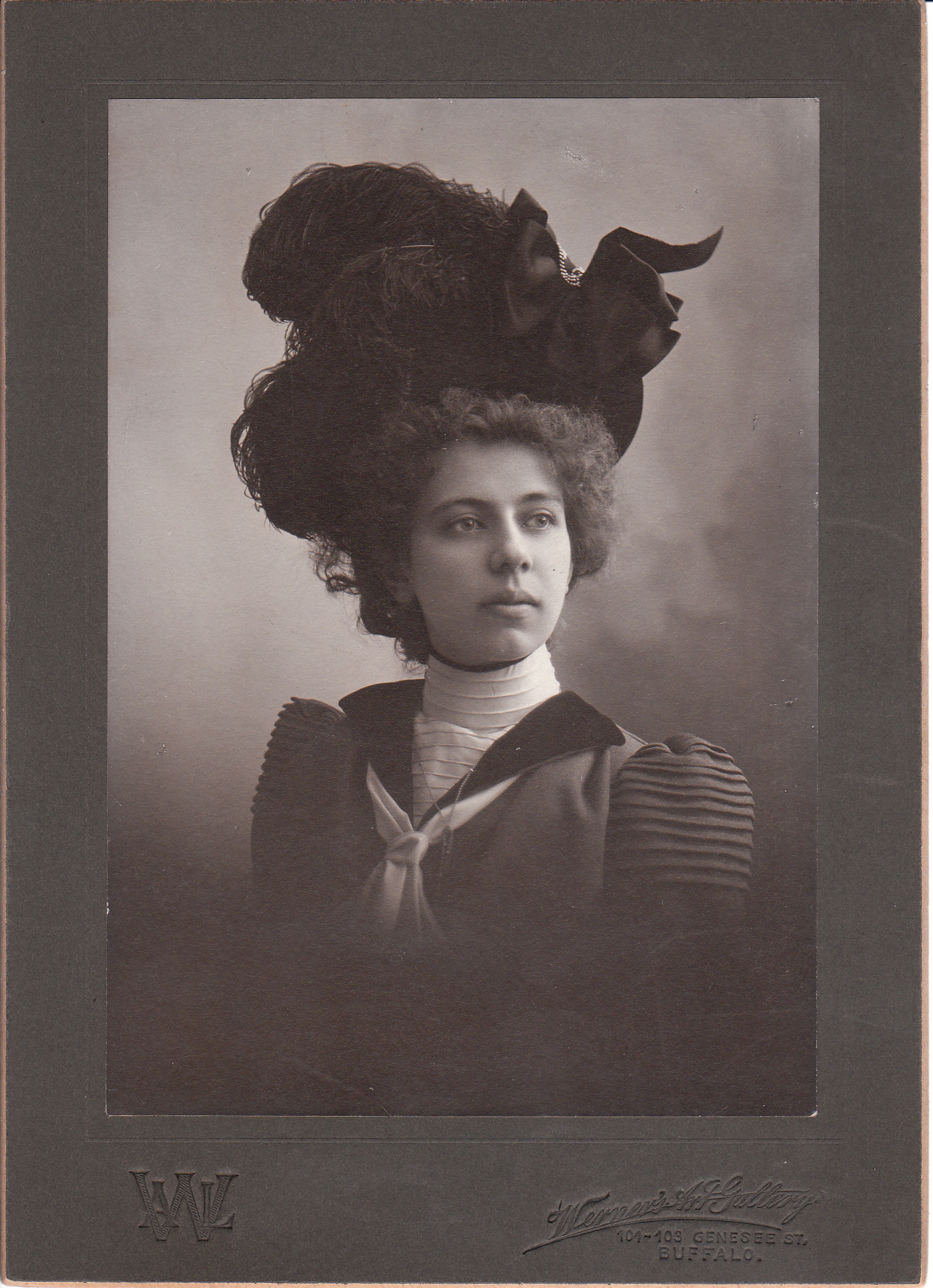 A nicely dressed and beautiful young woman poses for her portrait at the Werner Art Gallery. A. L. Werner operated his studio out of 101-103 Genesee Street in Buffalo, New York. The woman is identified on the reverse of the photograph as “Aunt Christine”. She appears to be very fashionable but her millinery taste is somewhat suspect. By today’s standards, her hat can best be described as ostentatious. However, her choice in headwear was likely quite stylish for her time. To view other photographs by Werner and to learn more about him, click on the category “Photographer: Werner”.
THE “SPRING LAKE GYPSIES” IN WAVERLY, IOWA
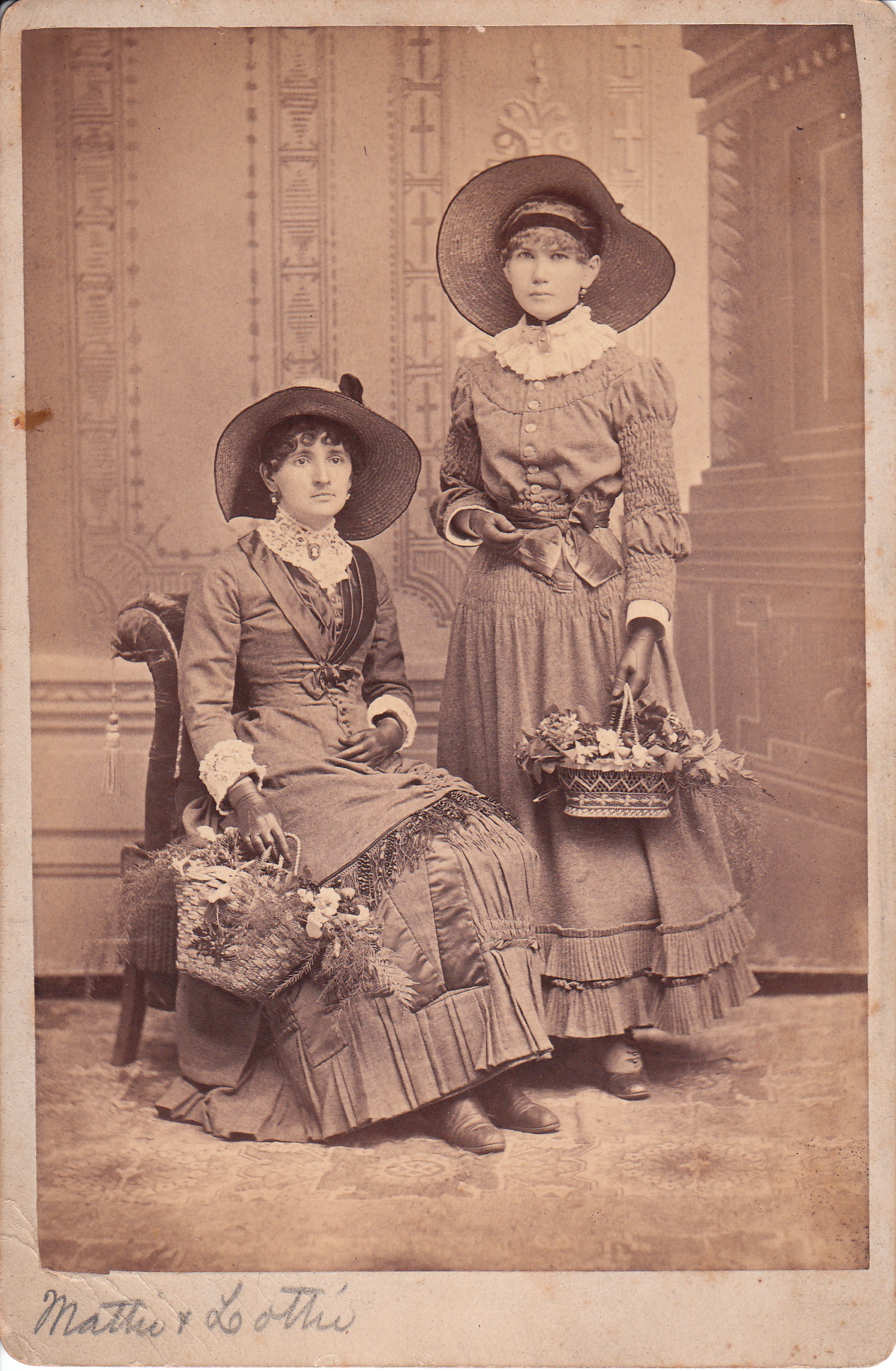
This cabinet card features two pretty young woman dressed in multiple layers of clothing and holding baskets of flowers. The pair are wearing large straw hats. The subject’s names, Mattie and Lottie, are written below the photograph. The reverse of the photograph has an inscription which states “These are Spring Lake Gypsies”. Although these women could be gypsies it seems more likely that the writer of the inscription was commenting about these women’s propensity to travel around a lot. A printed advertisement on the back of the cabinet card names the photographer as the A. Garner Art Gallery, located in Waverly, Iowa (“Four Doors East of Breemer House”). No information could be found about “Breemer House”. Interestingly, the town of Waverly is located in “Bremer” county. Is there a connection between Breemer and Bremer? As a side note, Bremer County received it’s name from Governor Hempstead who admired Swedish feminist writer Fredrika Bremer. The phrase “Spring Lake Gypsies” was researched and no information was uncovered. In addition, investigation yielded no last names for Miss Mattie or Miss Lottie. Little could be learned about photographer A. Garner other than the discovery of an article in the Report of the Iowa State Horticultural Society (1890) which includes the text of his speech to the group. The topic of his lecture was “Photography and Horticulture”.
EARLY CABINET CARD PORTRAIT OF A PRETTY WOMAN IN CANANDAIGUA, NEW YORK

This cabinet card captures the image of a pretty young woman dressed in a fur trimmed winter coat and wearing a fancy hat. She is also wearing a necklace. The photographer who produced this image is Finley & Sons. The studio was located in Canandaigua, New York. This cabinet card likely dates back to the 1870’s. The Finley & Sons studio was established by Marshall Finley as a daguerreotype gallery. His son, Horace M. Finley (1839- ?) joined his father in business in the early 1860’s. The 1870 Ontario County Directory has an advertisement for the gallery. The ad reveals that in addition to “photographic work”, Finley & Sons (172 Main Streeet) was “Canandaigua’s Music Store”. The Finley’s sold pianos (including Steinway and Chickering brands) as well as other instruments and music supplies. In 1888, Horace Finley took on a partner named William N. Freeman. There are many stereoview cards, cdvs, and cabinet cards produced by this studio that can be found today as the Finleys were known to run a prolific studio. To view other photographs by Finley, click on category “Photographer: Finley”.
“WHEN I WORE A YOUNGER MAN’S CLOTHES” IN PHILADELPHIA, PENNSYLVANIA
 An older man poses for his portrait at the studio of Adolph W. Rothengatter in Philadelphia, Pennsylvania. While looking at this photograph I thought of a line in the lyrics of Billy Joel’s song “Piano Man”. “When I wore a younger man’s clothes” popped into my head. Something about the image made me think that this elderly man was wearing clothing that he had not worn for many years. At the time of this photograph, I think he looked a bit out of place in his “business clothes”. My thoughts on this matter probably reflect some sort of ageism. However, they are my thoughts and for some reason I wanted to share them. The photographer of this cabinet card operated his own business but during his career he also had partnerships which included “Rothengatter & Dillon” and “Rothengatter & Casselberry”.


