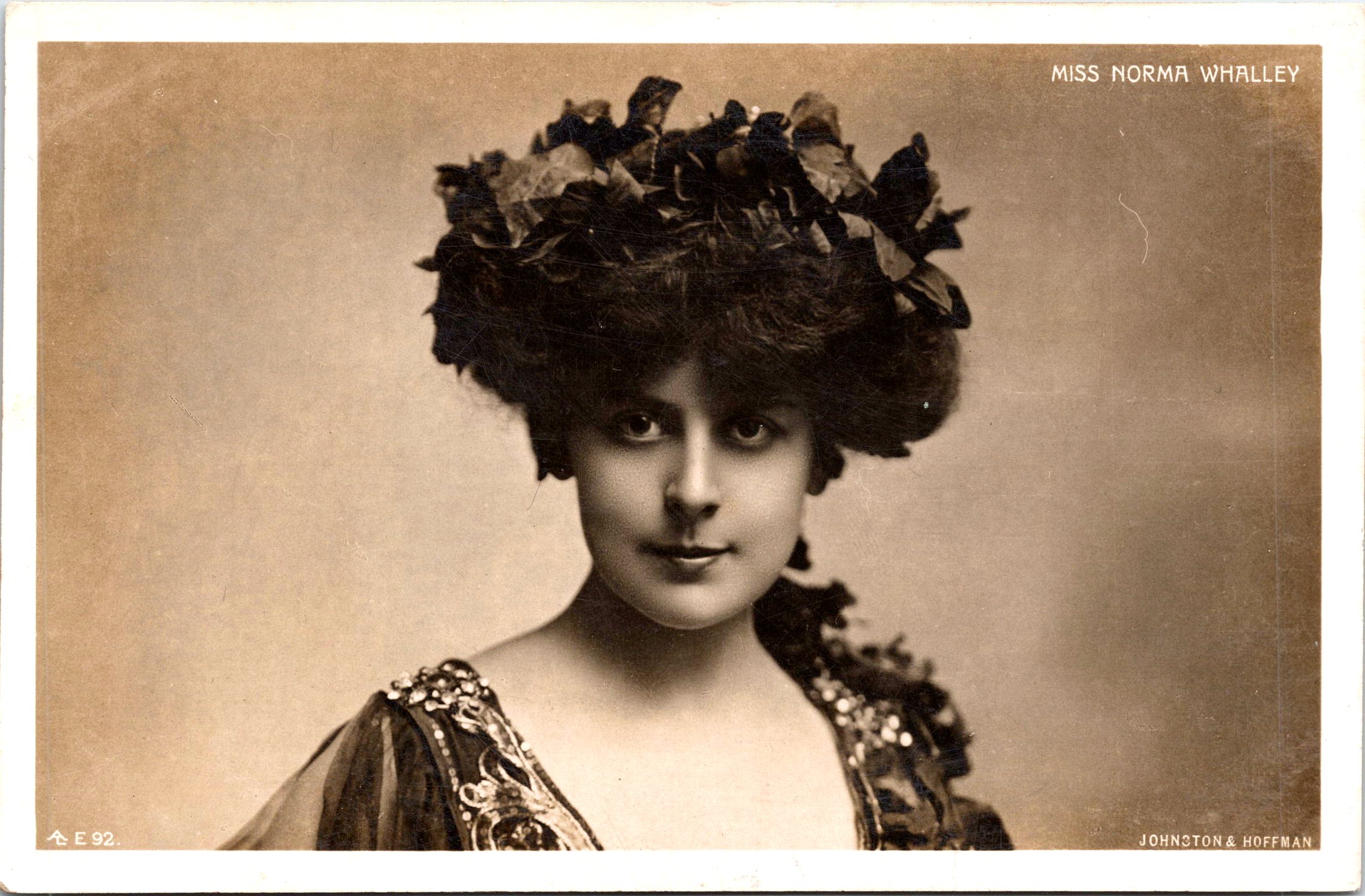
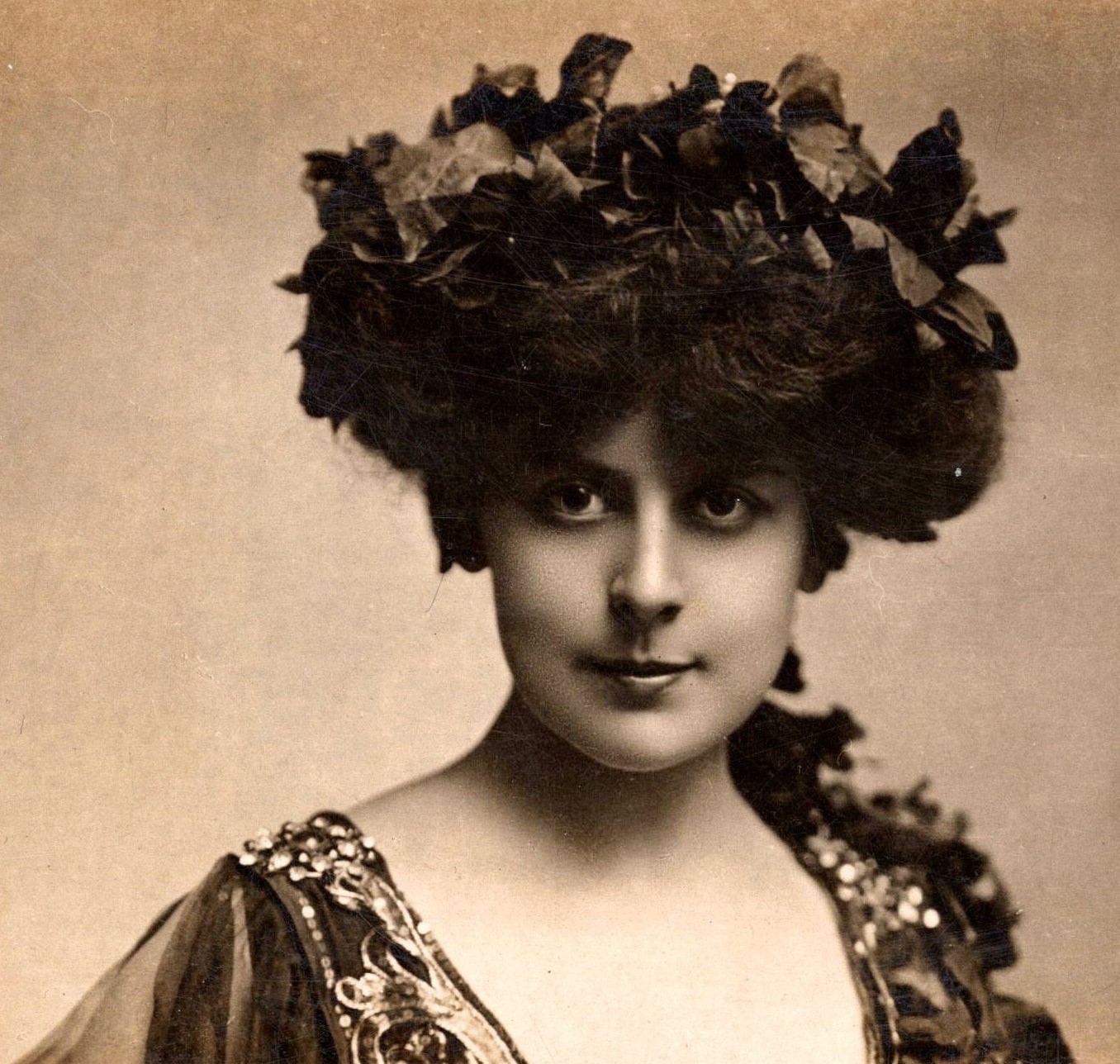
The pretty actress seen on this vintage real photo postcard is Norma Whalley (?-1954). She was an Australian stage and film actress performing in the United States and Great Britain. Whalley toured South Africa during the late 1890’s. She married J. Sherrie Matthews in 1901. He was an American Vaudeville performer. In 1902, a stroke left him permanently disabled. She divorced him in 1904 and married barrister Sir Percival Clarke. Whalley came to the US to perform on the stage with George Edwardes company. She worked in Chicago and New York for several years from the late 1890’s. She performed on Broadway in “The Man in the Moon” (1899). Whalley also had a film career. The IMDb credits her with 21 films between 1920 and 1935. This postcard was published by Aristophot as part of a series (No.E92). Aristophot was known for publishing “made in Germany” real photo postcards. They operated from Germany (Saxony) and New York and produced high quality postcards. The firm’s focuses included capturing images of stage and film stars. Whalley was photographed for this portrait by the Johnston & Hoffman studio. The postcard is in good condition (see scans). There is minor corner and surface wear. (See Scans). Postcards featuring Miss Whalley are not difficult to find, however, this particular postcard portrait of the actress is uncommon.
This cabinet card is available for purchase at my store, The History Peddler, for $22.00 or best offer.
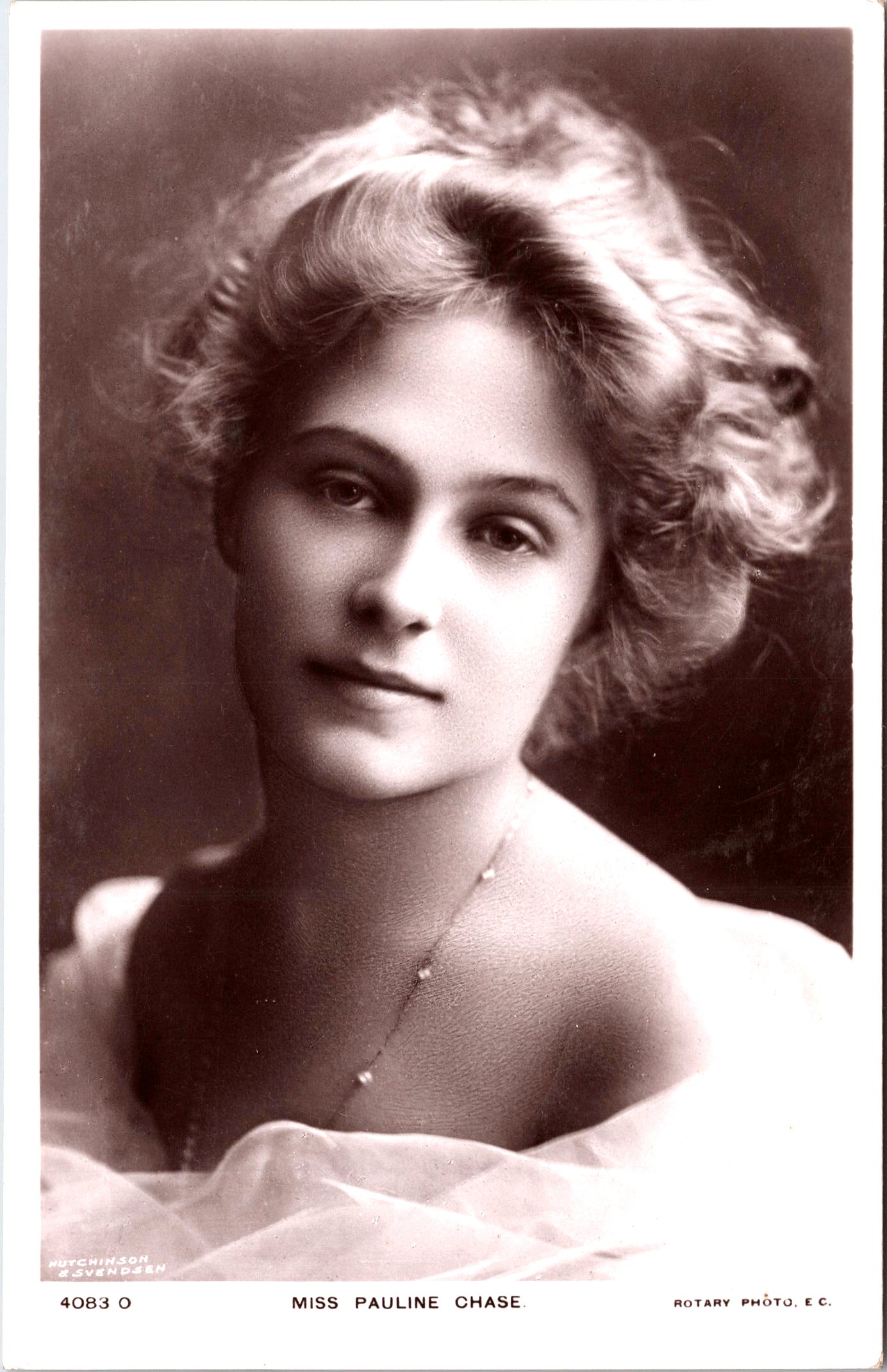
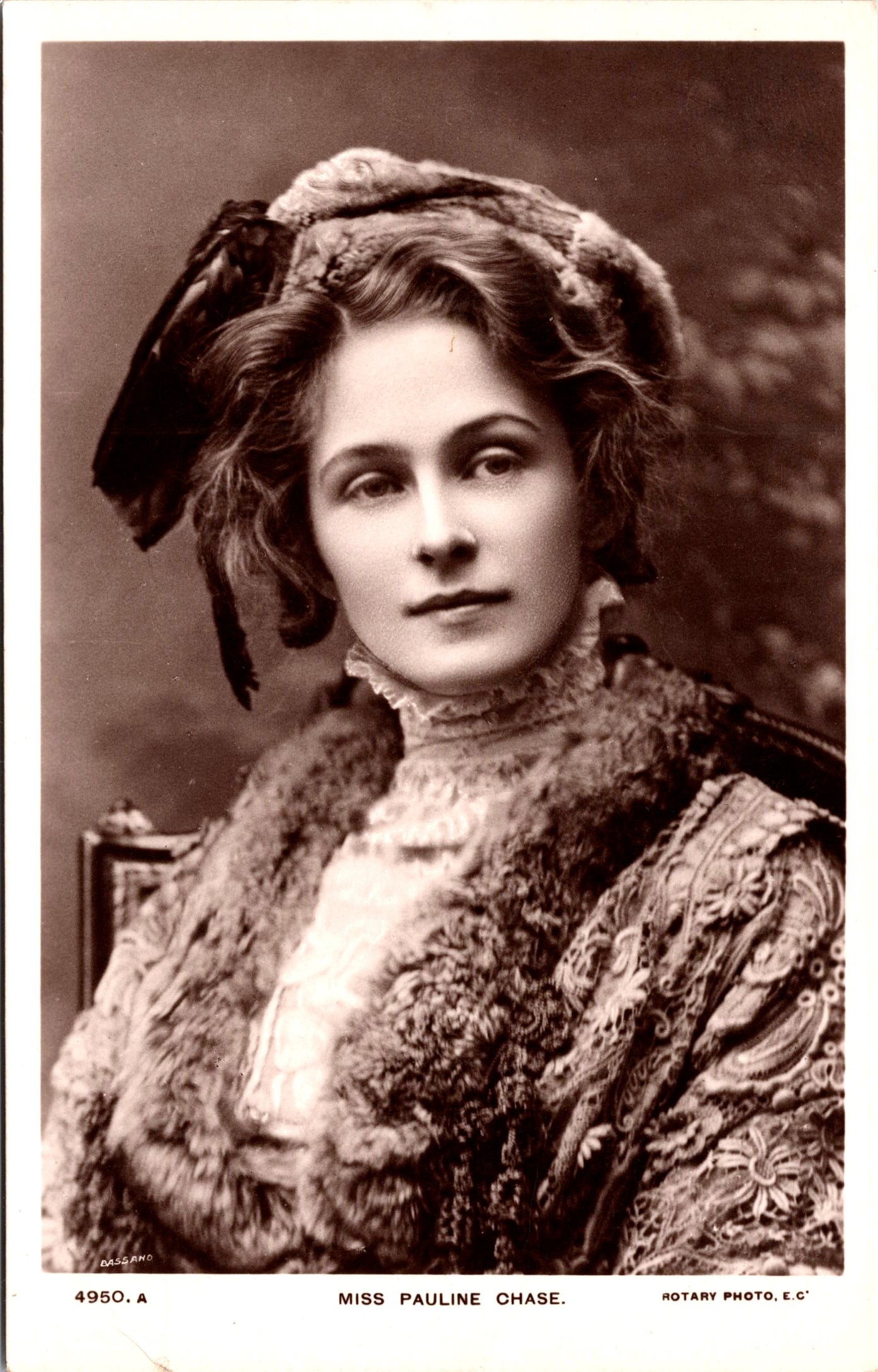
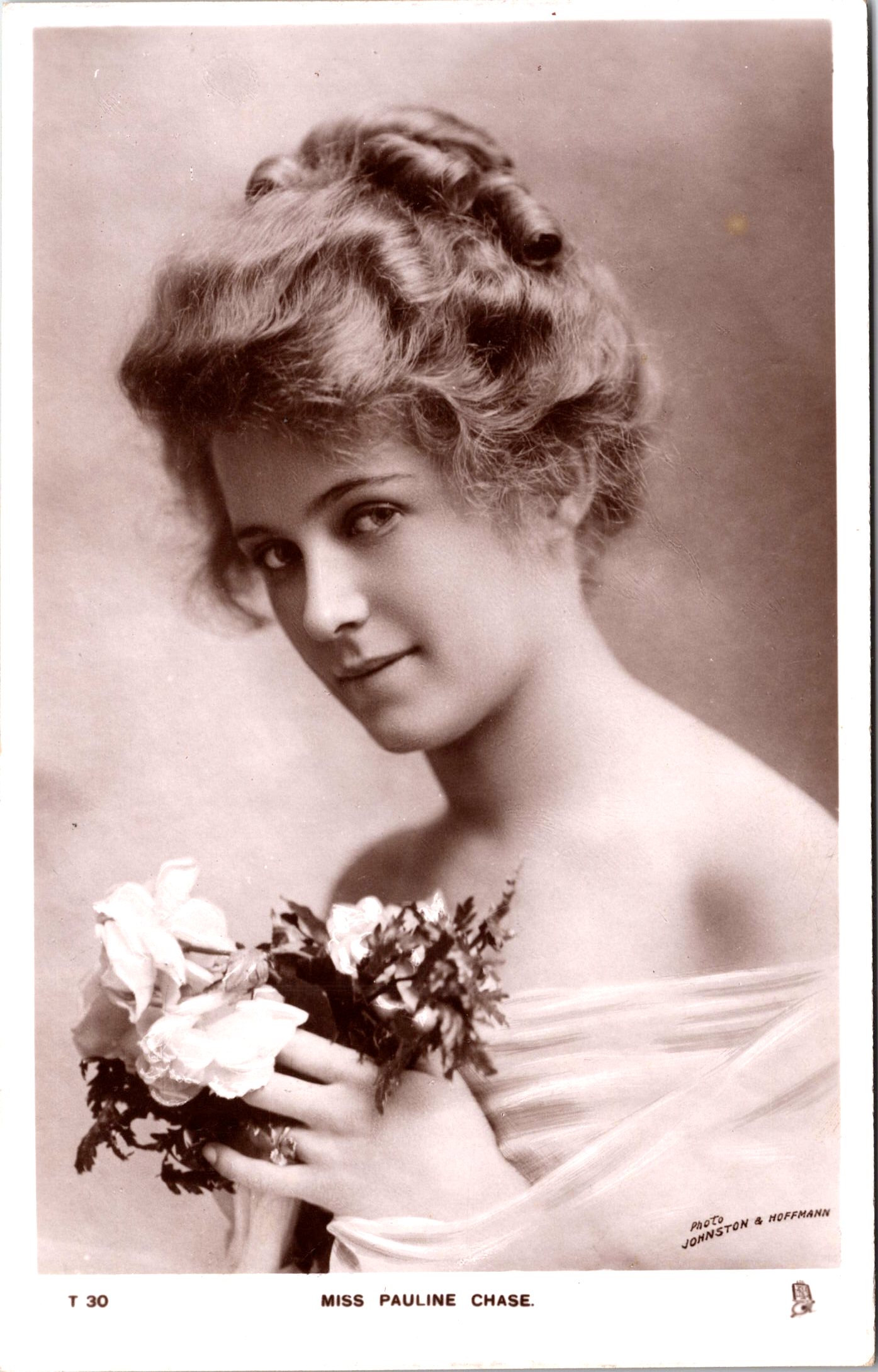
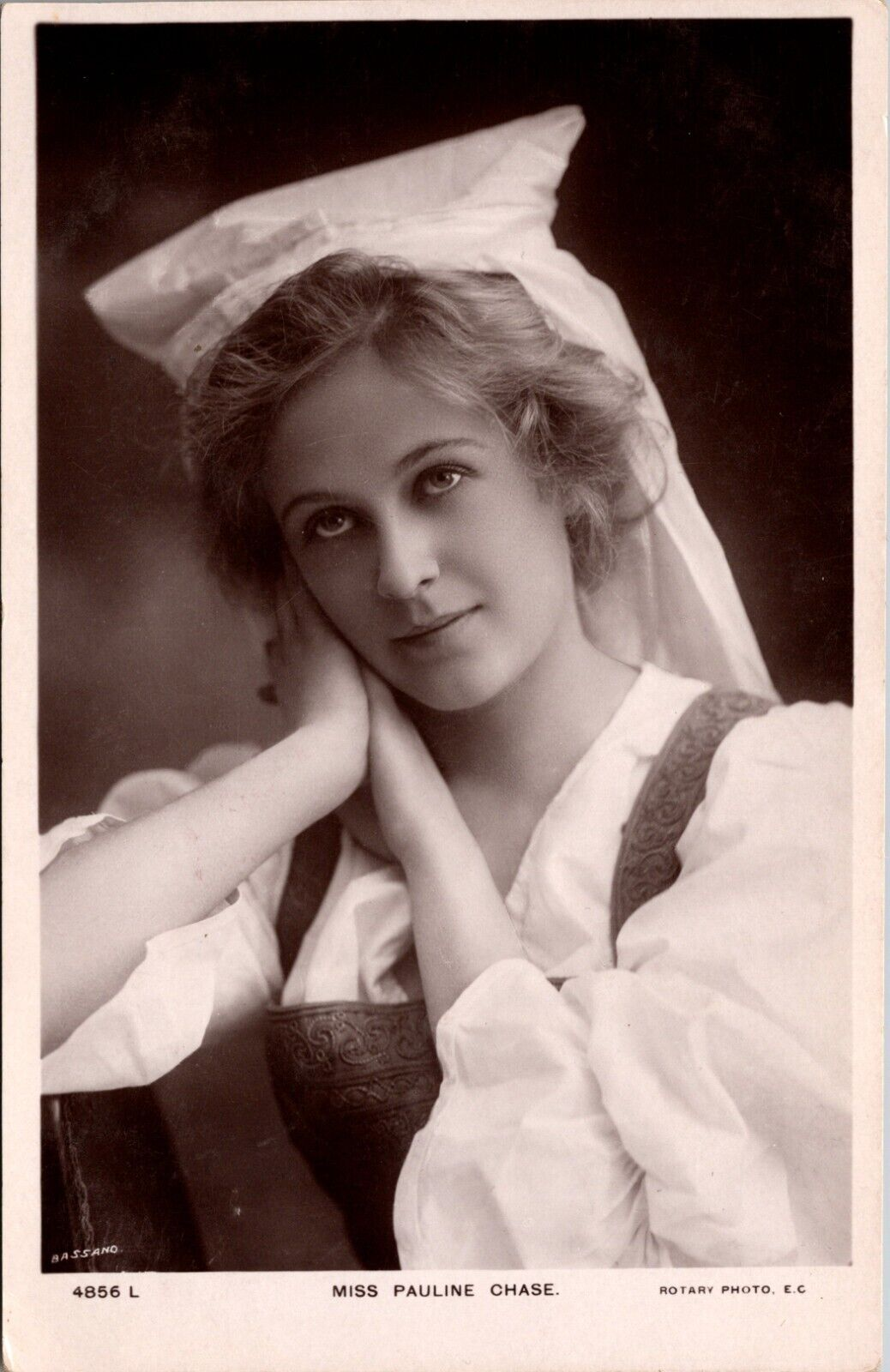
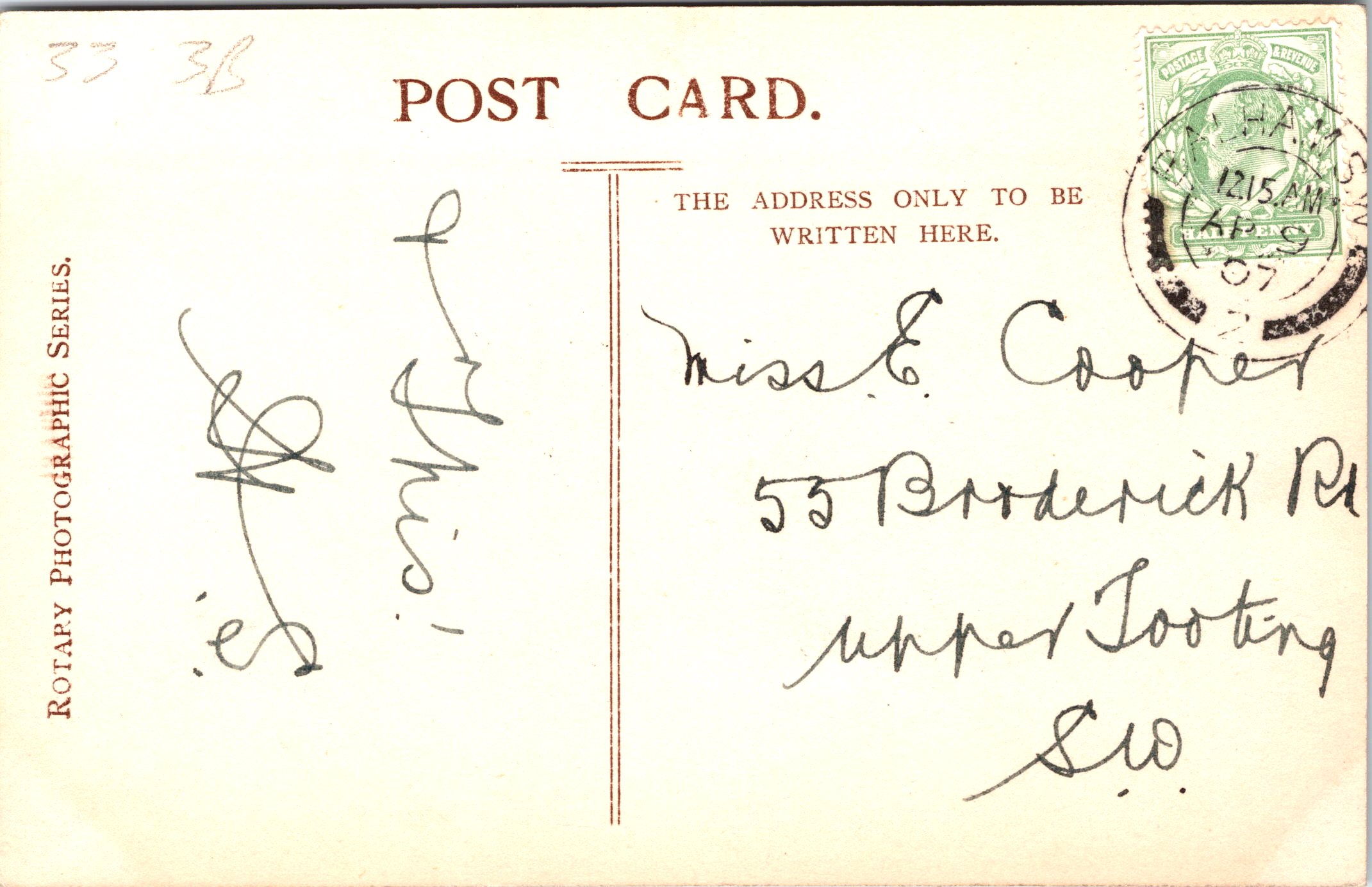
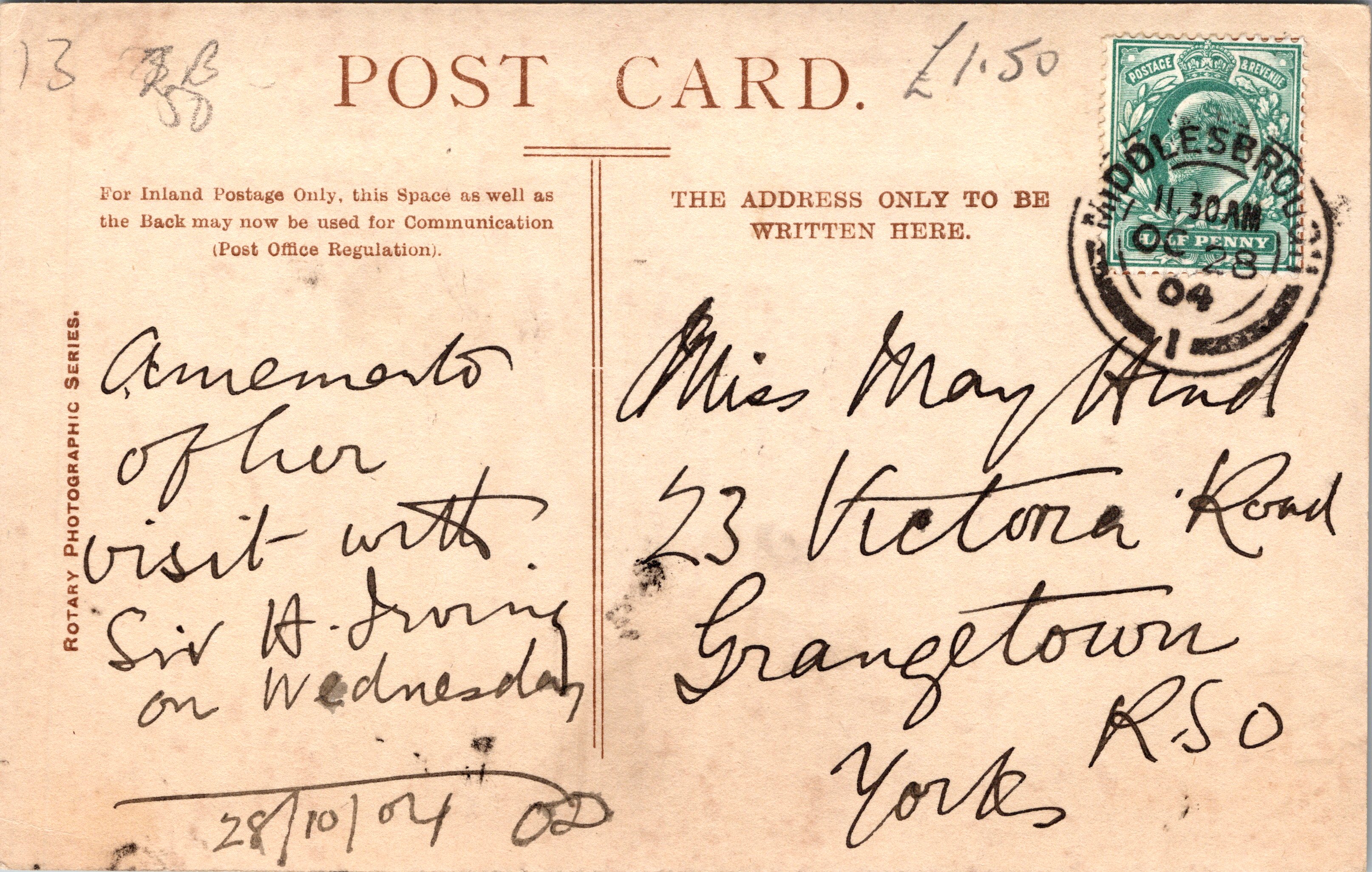
This vintage real photo Postcard 1 features pretty American actress and dancer, Pauline Chase (1885-1962). She was a regular performer both in the United States and the United Kingdom. She is especially known for her extended starring role in the British production of “Peter Pan, The Boy Who Wouldn’t Grow Up”. Her nickname was the “Pocket Venus of New York”. She was born in Washington D.C. and attended school in New York. She began acting when she was just fifteen years old. In 1901, producer, Charles Frohman recruited her to play in the London production of “The Girl From Up There”. She was just 15 years old. Upon her return to the US, she created a sensation as the “Pink Pajama Girl” in “The Liberty Belles”. She played one of the “lost boys” in the debut of Peter Pan (1904) in London. In 1906 she was chosen by producer, Charles Frohman, and playwright, J. M. Barrie, to play the title role in the production (1906-1913). This role brought her much fame and financial security. While in England, over the years, Chase developed quite a following. Charles Frohman had become her friend and mentor. Chase was a social beauty with many influential friends and admirers. She was a member of the socially elite and lived an extravagant life style. In 1913, Chase retired from the stage to marry a banker. The pair had three children. In 1916, Chase came out of retirement to play in her one and only movie appearance. There are 52 portraits of Chase in the National Portrait Gallery. The film “The Real Thing At Last” was a satirical film, based on MacBeth, written by Barrie. This postcard has a 1907 postmark. The card was published by Rotary Photo as part of a series (No.4083O). Miss Chase’s photograph was taken by the Hutchinson & Svendsen studio. (SOLD)
Postcard 2 was published by Rotary Photo as part of a series (No.4950A). Miss Chase’s photograph was taken by Alexander Bassano. (SOLD)
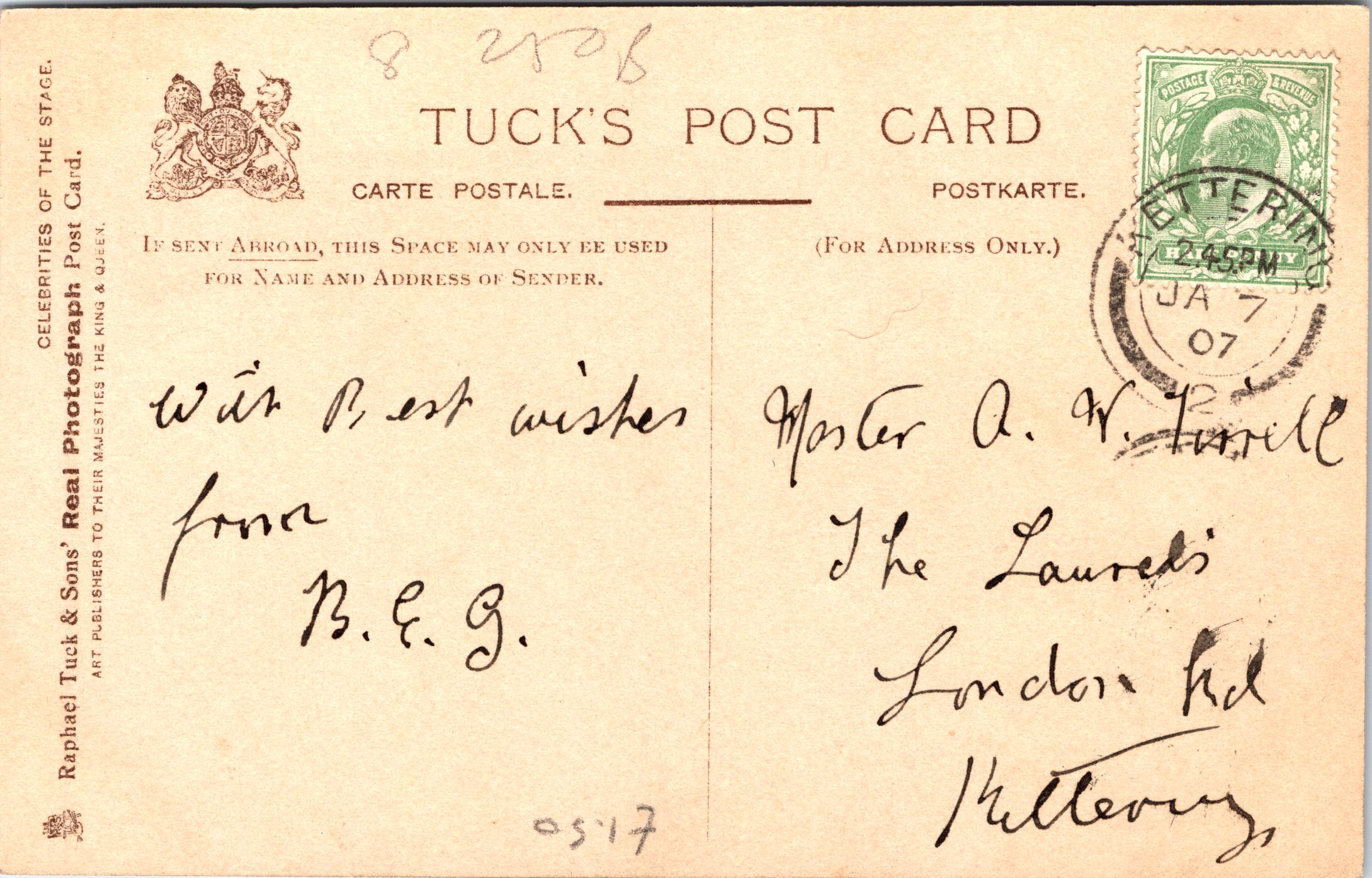
Postcard 3 has a 1907 postmark. The card was published by Raphael Tuck & Sons as part of a series (No.T30). Miss Chase’s photograph was taken by the Johnston & Hoffmann studio. (SOLD)
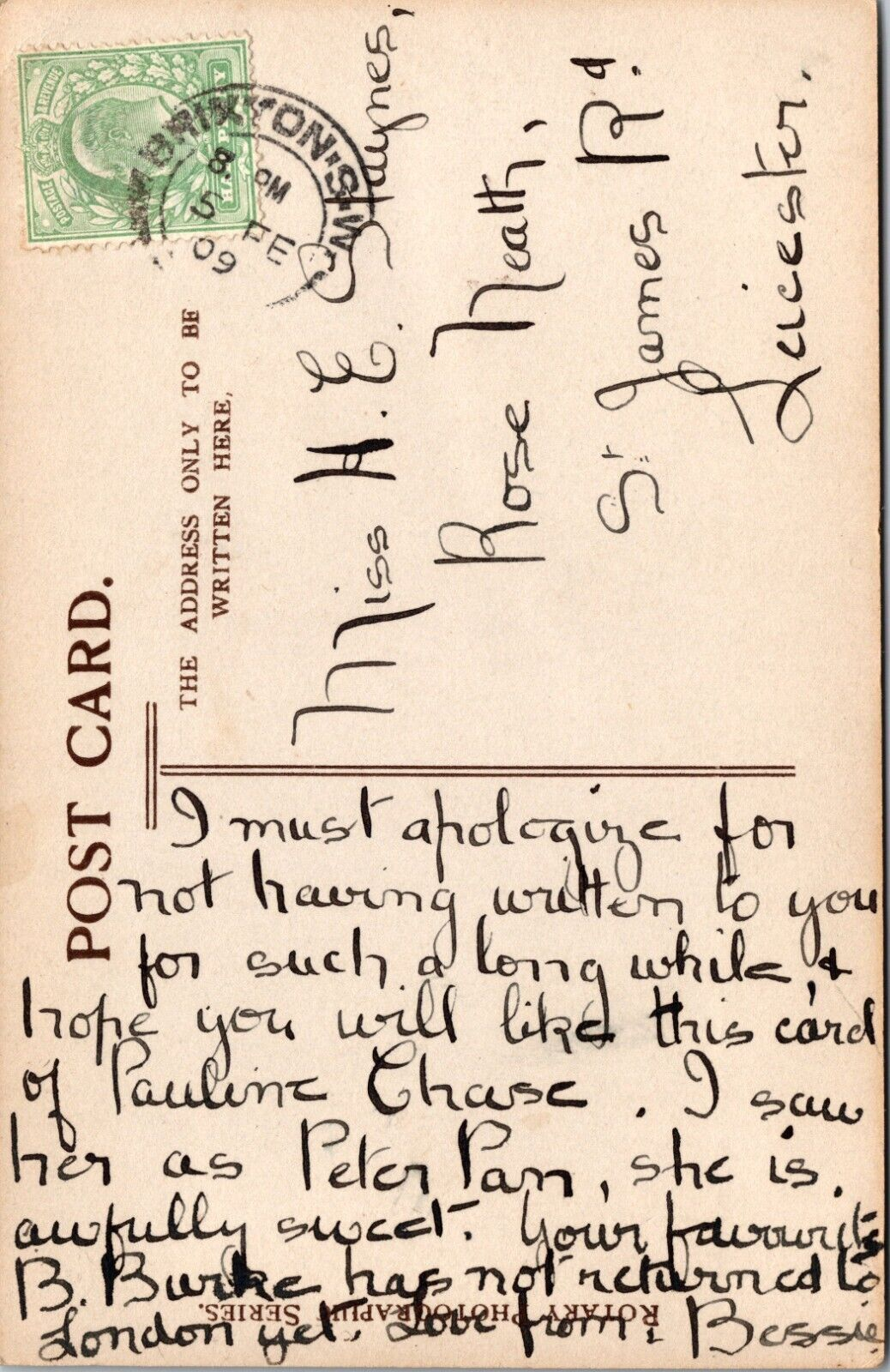
Postcard 4 features Chase wearing an interesting lace hat and she has a sweet, pure, and innocent appearance. This postcard was published circa 1909, the date of the cards postmark. The card was published by Rotary Photo as part of a series (No.4856L). Miss Chase’s photograph was taken by the Bassano studio. (SOLD)
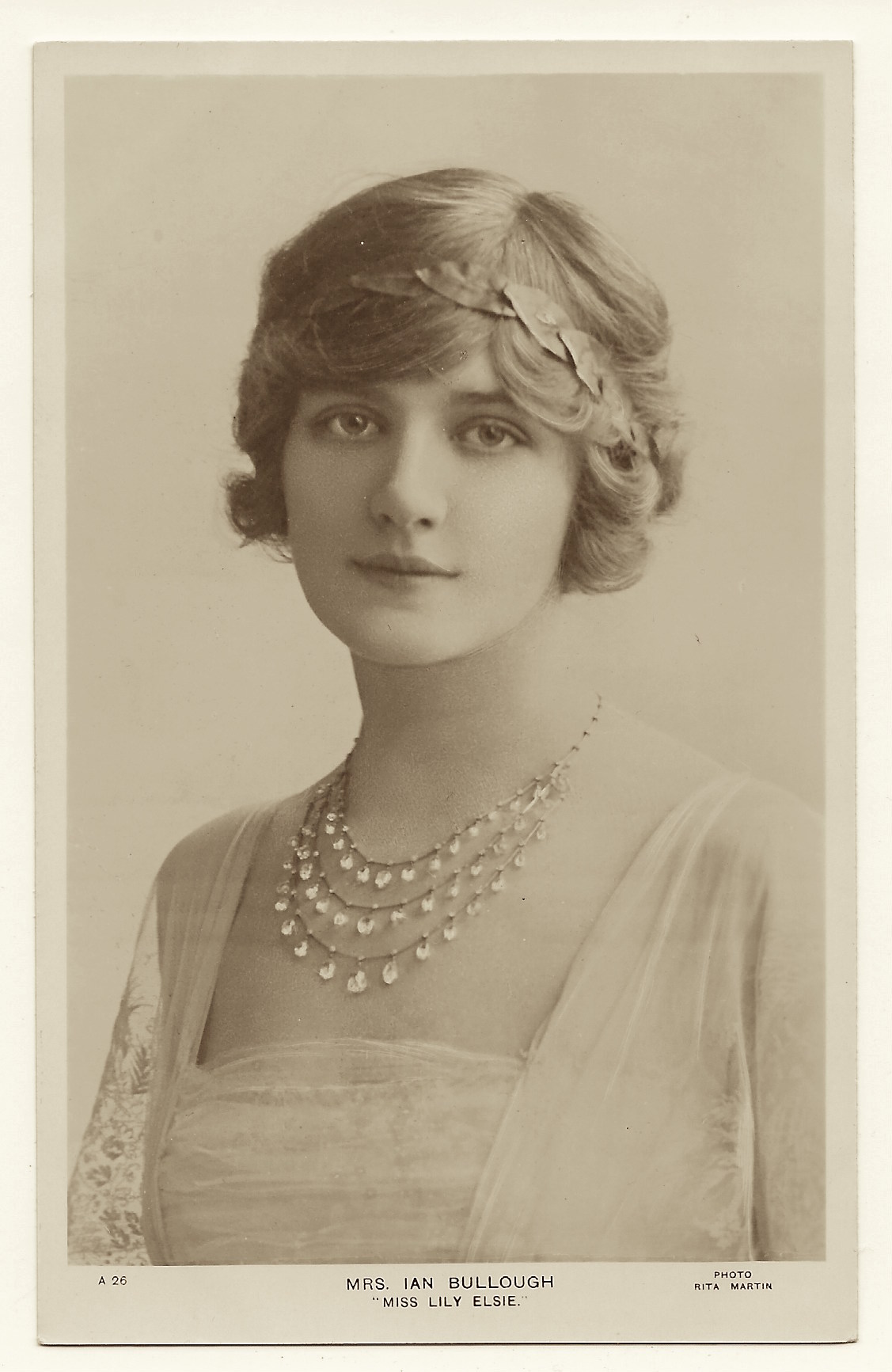
Postcard 1 features celebrated stage actress Miss Lily Elsie (1886-1962). At the time of her portrait sitting for this image, Miss Elsie was also known as “Mrs. Ian Bullugh”. More about that later. Lily Elsie was a very popular English actress and singer. She was most known for her starring role in the London production of “The Merry Widow (1907)”. The show ran for 778 performances. A critic for The Pelican (1907) wrote that “the youthfulness, the dainty charm and grace, the prettiness and the exquisite dancing with which Miss Elsie invests the part…. I share the opinion of most of the first-nighters, who considered it could not have been in better hands, and could not have been better handled…. The night was a genuine triumph for Miss Elsie, and she well deserved all the calls she received”. She began as a child actress and before her big break had appeared in a number of Edwardian musical comedies. She was charming and beautiful and became one of the most photographed actresses of her time. Lily Elsie’s dad was a theater worker and her aunt was well known actress Ada Reeve. Shortly after the turn of the century she joined George Edwardes’ company at the Daly Theater. Some of her early appearances included “A Chinese Honeymoon”, “Lady Madcap”, “The Little Michus (1905)”. In the years between 1900 and 1906 she appeared in 14 shows. After the “Merry Widow” she appeared in 26 more shows including “The Dollar Princess” (1909) and “A Waltz Dream” (1911). She clearly was an actress who was in demand. Men paid her much attention but apparently she did not enjoy the attention. Lucile, her costume designer for “The Merry Widow” stated that Elsie was “absolutely indifferent to men and had once said that she disliked “the male character”. She added that men would only behave well if a woman “treated them coldly”. Now, some words about her marriage. In 1911 she he left the cast of a play in which she was performing to marry Major John Ian Bullough (1885–1936). Major Bullough was the son of a wealthy textile manufacturer. He was formerly married to actress Maude Darrell who only survived one year after their 1909 marriage. The marriage between Elsie and Bullough was reported to be very unhappy. Elsie’s health began to deteriorate and her husband pressured her to quit the stage and she was ready to do so. She returned to the stage during the war years (World War I) and was active in fund raising for the war effort. She next took a ten year break from the stage only to return once again. Her final performance took place in the Daly Theater in the play “The Truth Game” (1929). In addition to her theater career, Elsie made recordings, and appeared in two films, including D. W. Griffith’s “The Great Love” (1918). Also appearing in that film was Lillian Gish. In 1930 Elsie’s marriage ended in divorce. Her health began to deteriorate more and she developed hypochondriasis causing her to spend much time in nursing homes and sanitariums. Due to her psychological problems she had brain surgery. Her final years were spent at St. Andrews hospital in London. This postcard is part of a series (Arcadian no. A 26). The photographer of this image of this beautiful actress is the well known celebrity photographer, Rita Martin. She was considered one of the best British photographers of her time. She opened her studio in 1906. Martin’s sister, Lallie Charles was an esteemed society photographer. Many of Rita’s photographs can be found in the National Portrait Gallery. To view more photographs by Rita Martin in the cabinet card gallery, click on the category “Photographer: Martin”.
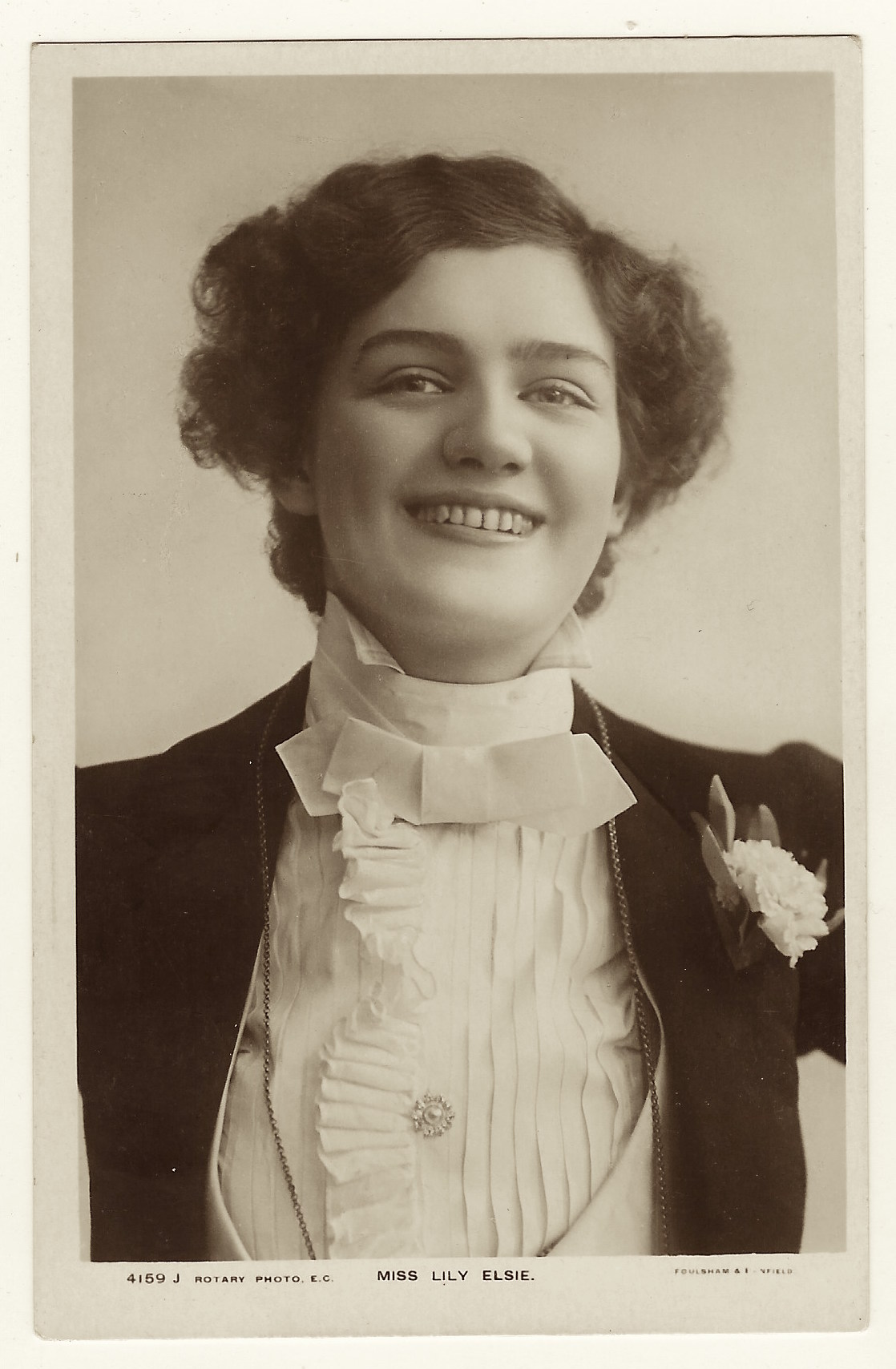
The second postcard of Miss Elsie provides a terrific close-up photograph of the beautiful Miss Elsie. She is wearing a dark jacket, a frilly high collared blouse and a ribbon bow tie. Her accessories include a long necklace, a pin low on her blouse, and a corsage. The postcard is part of the Rotary Photographic Series (no. 4159 J) published by Rotary Photo. The photograph was taken by the Foulsham & Banfield Studio. Foulsham & Banfield were well known celebrity photographers. Frank Foulsham and A. C. Banfield operated a studio in the 1900’s through the 1920’s.
The third postcard features Lily Elsie clutching a bouquet of flowers and glancing sideways at the photographer. She looks absolutely beautiful. She is wearing a fancy beaded dress and a bracelet. She stands in front of a window. This photograph, like the second postcard’s photo, was taken by the Foulsham & Banfield studio. The portrait postcard was published by Rotary Photo and is part of a series (11840 F). The postcard was printed in Britain.
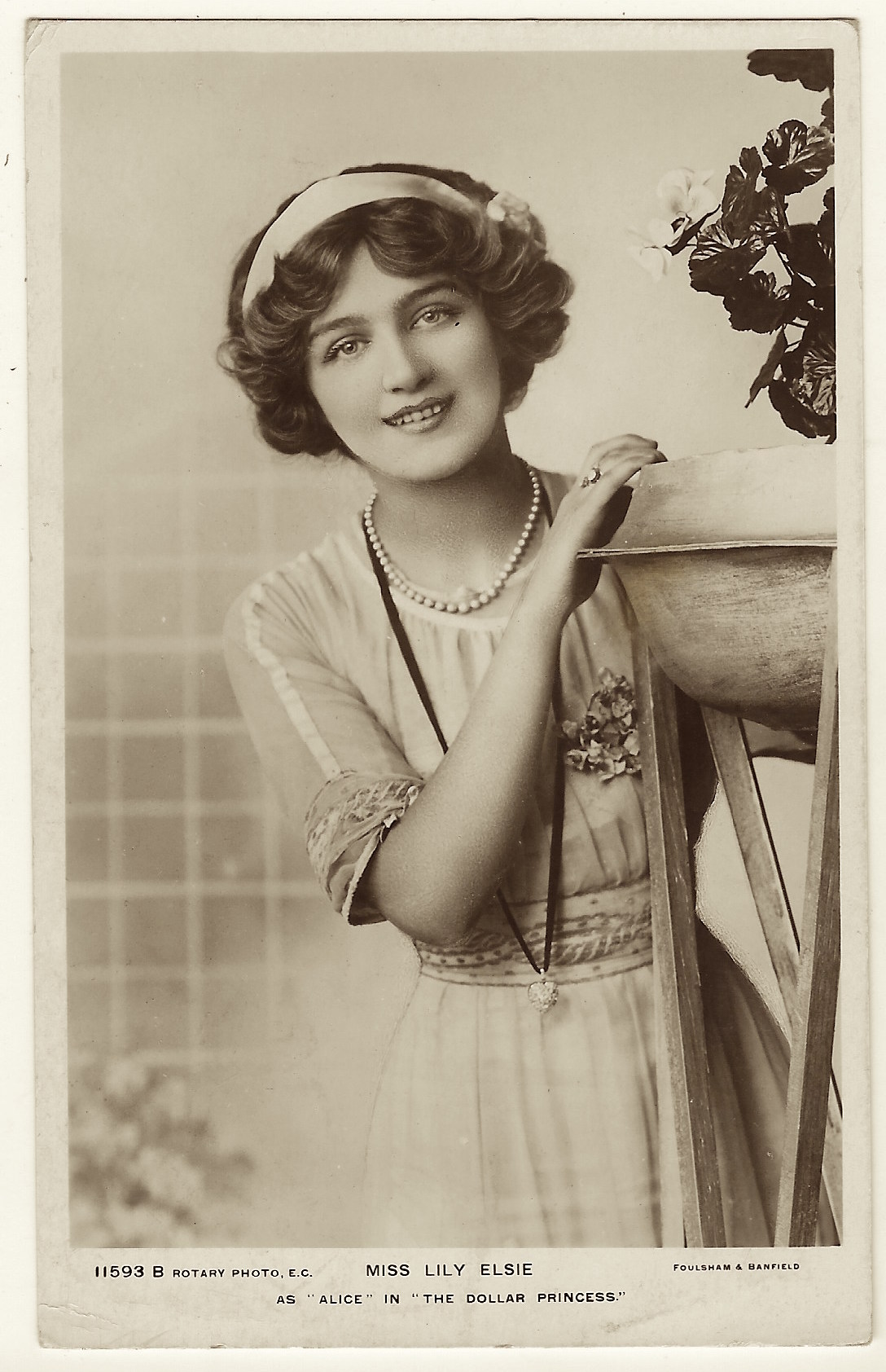
The fourth postcard is a portrait of a smiling Lily Elsie. She is wearing a flower, beads (pearls?), and a hairband. This photograph was taken by the Foulsham & Banfield studio. The portrait postcard was published by Rotary Photo and is part of a series (11593 B). This postcard captures Miss Elsie in her role as Alice in “The Dollar Princess” (1909). The venue for the play was Daly’s Theater in London and cast members included Joseph Coyne, Gabrielle Ray, Emmy Wehlen, and Gladys Cooper. (SOLD)
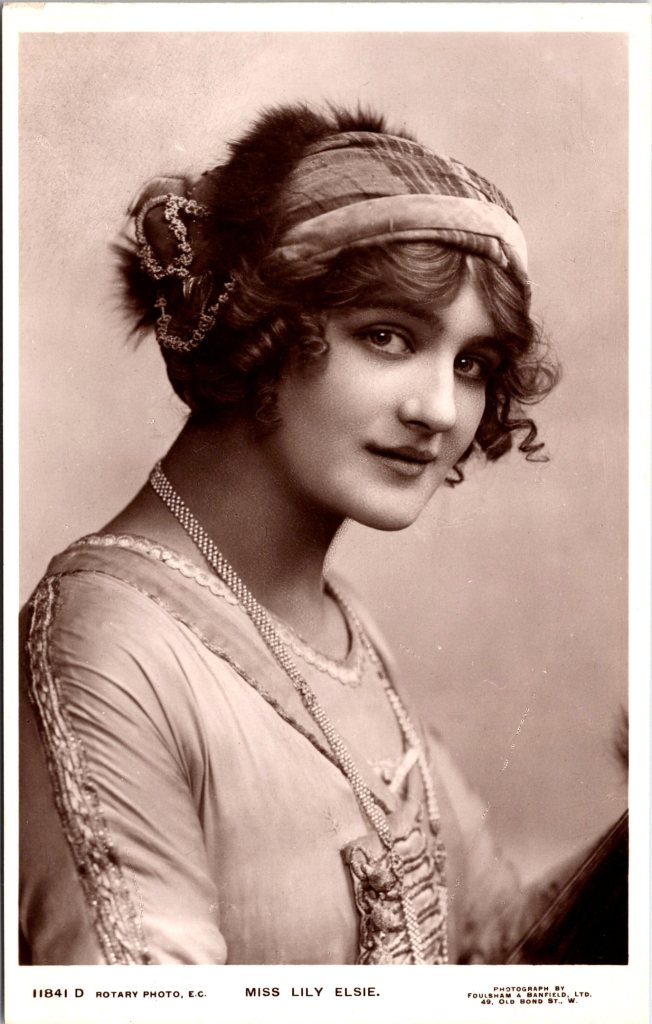
Postcard 5 is a portrait postcard of Miss Elsie that provides a terrific close-up photograph of the stage beauty. The postcard is part of the Rotary Photographic Series (no.11841D) published by Rotary Photo. The photograph was taken by the Foulsham & Banfield Studio. Foulsham & Banfield were well known celebrity photographers. Frank Foulsham and A. C. Banfield operated a studio in the 1900’s through the 1920’s. (SOLD)
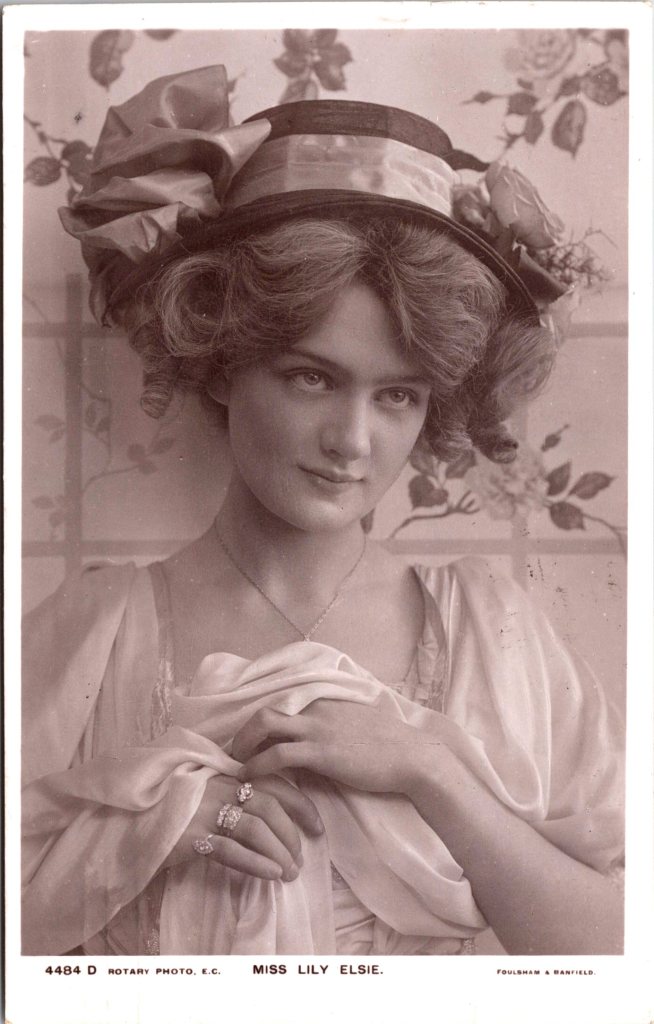
Postcard 6 was published by Rotary Photo and is part of a series (4484D). The photographer of this image of this beautiful actress are the well known celebrity photographers, Foulsham & Banfield. The card was postmarked in 1907. (SOLD)
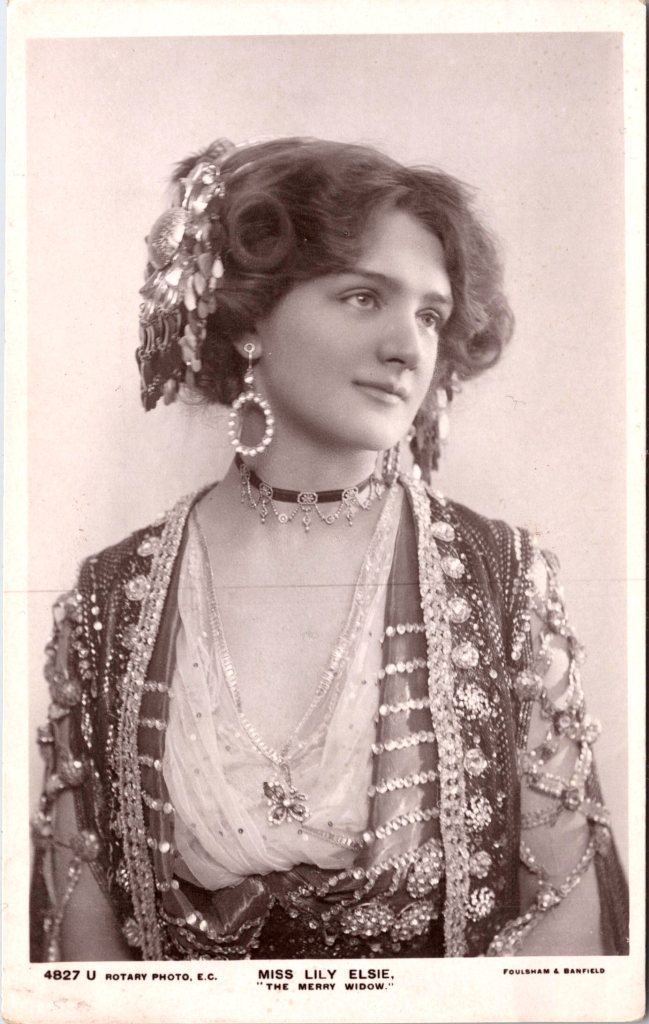
Postcard 7 is a vintage real photo postcard featuring celebrated stage actress Miss Lily Elsie (1886-1962) in costume for her role in “The Merry Widow” (1907). This postcard was published by Rotary Photo and is part of a series (4827U). The photographers of this image of this beautiful actress are the well known celebrity photographers, Foulsham & Banfield. The card was postmarked in 1908. (SOLD)
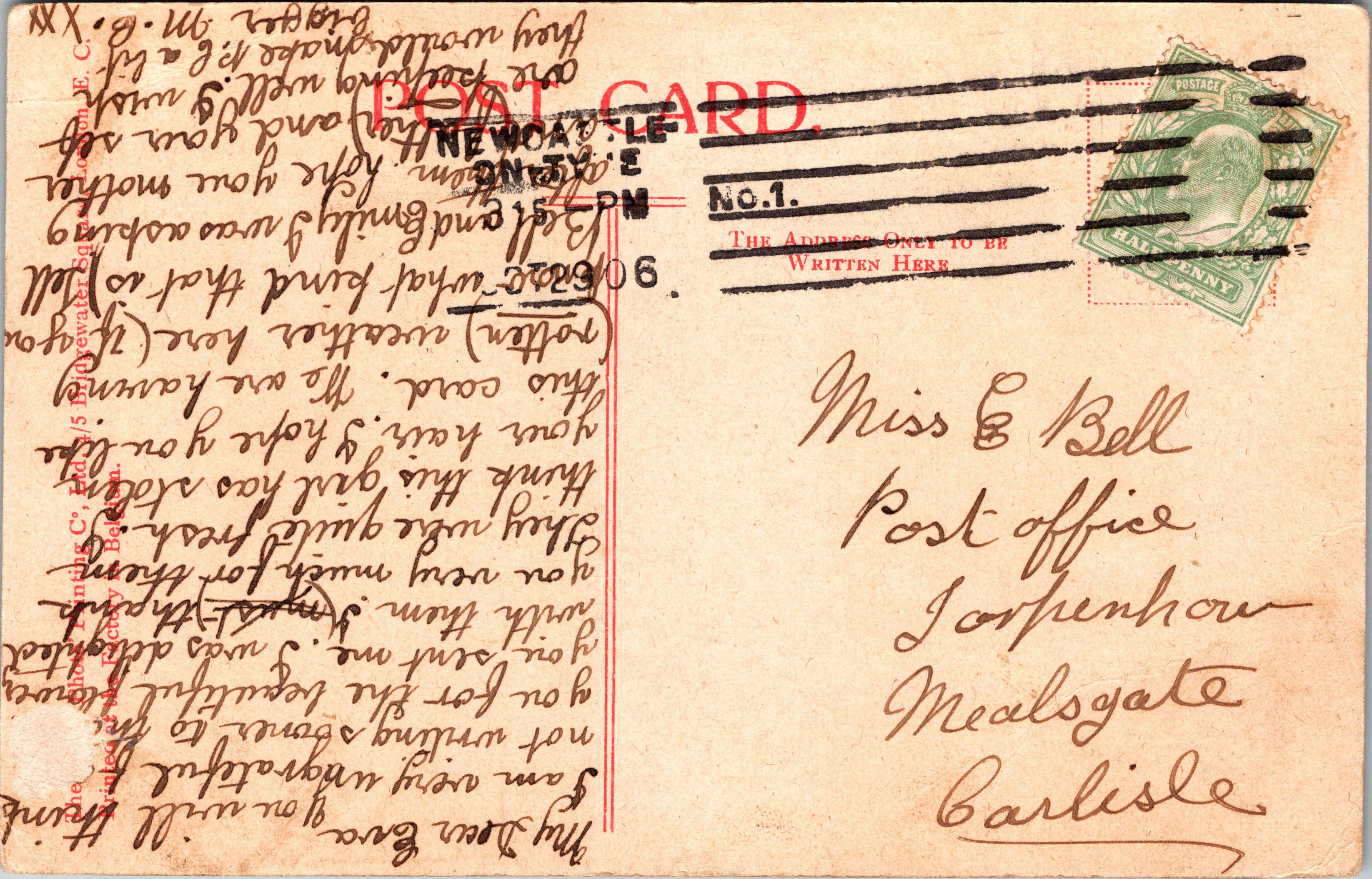
Postcard 8 features celebrated stage actress Miss Lily Elsie (1886-1962) in costume for her role in “The Merry Widow” (1907).This postcard was published by Rotary Photo and is part of a series (4827J). The photographers of this image of this beautiful actress are the well known celebrity photographers, Foulsham & Banfield. The card was postmarked in 1909. This postcard has an interesting message. The writer appears to be having difficult times. She opens the message with the announcement that she can’t afford to send anymore postcards because her “cash is nearly gone”. She also complains about the “rotten weather”. (SOLD)
Postcard 9 was published by Rotary Photo and is part of a series (no.4827S). The card is uncommon. The photographers of this image of this beautiful actress are the well known celebrity photographers, Foulsham & Banfield. (SOLD)
Postcard 10 was published by Rotary Photo and is part of a series (no.4827P). The photographers of this uncommon image of this beautiful actress are the well known celebrity photographers, Foulsham & Banfield. (SOLD)
Postcard 11 was published by Rotary Photo and is part of a series (no.4827V). The photographers of this image of this beautiful actress are the well known celebrity photographers, Foulsham & Banfield. (SOLD)
Postcard 12 This postcard captures Elsie in her role in “The Merry Widow”. The card was published by Rotary Photo and is part of a series (no.4827W). The photographers of this image of this beautiful actress are the well known celebrity photographers, Foulsham & Banfield. (SOLD)
Postcard 13 was published by Rotary Photo and is part of a series (no.4827M). The photographers of this image of this beautiful actress are the well known celebrity photographers, Foulsham & Banfield. The postcard is uncommon. (SOLD)
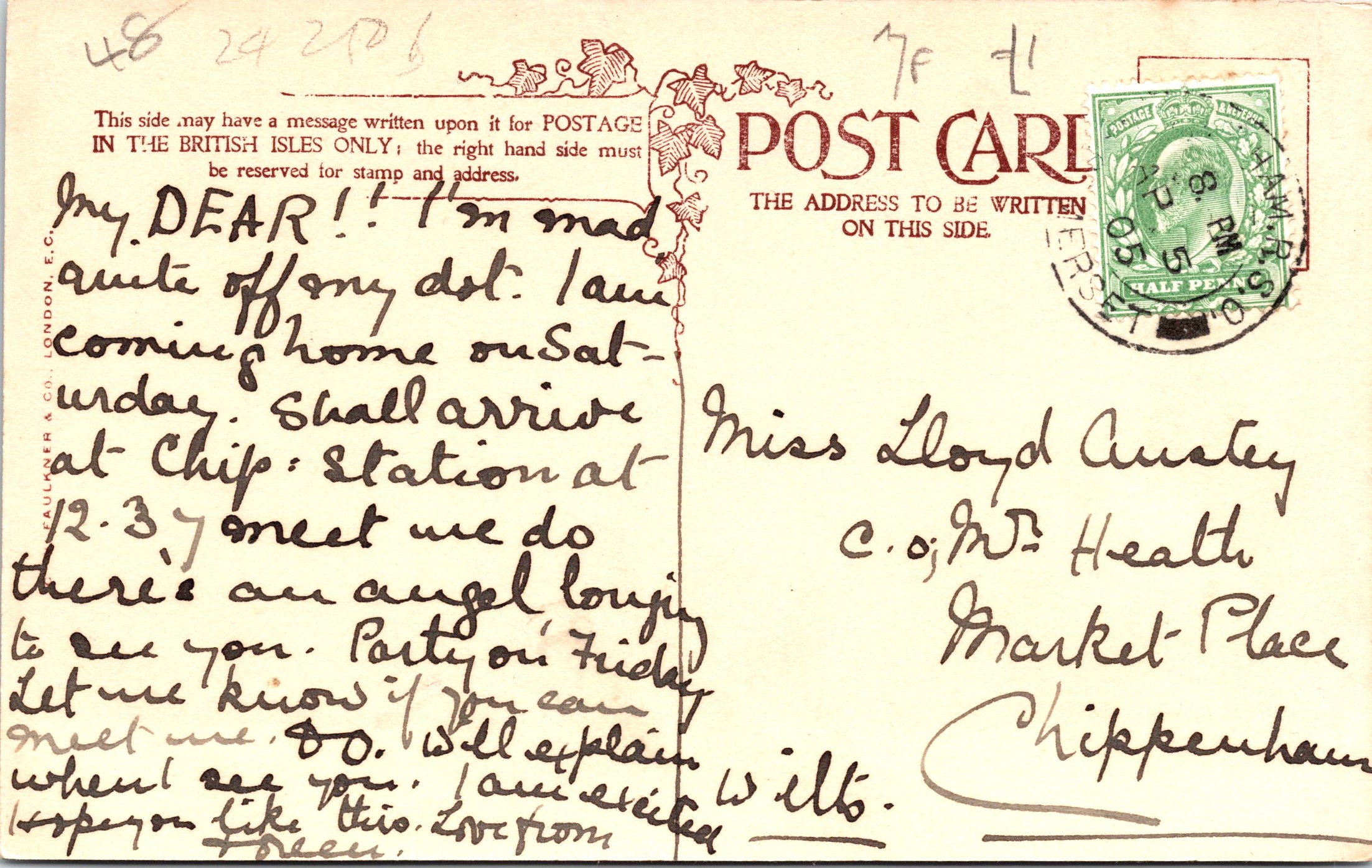
Postcard 14 was published by C.W.F. & Co. and is part of a series (no.457C). The photographers of this image of this beautiful actress are the well known celebrity photographers, Johnston & Hoffmann. The card was postmarked in 1905. (SOLD)
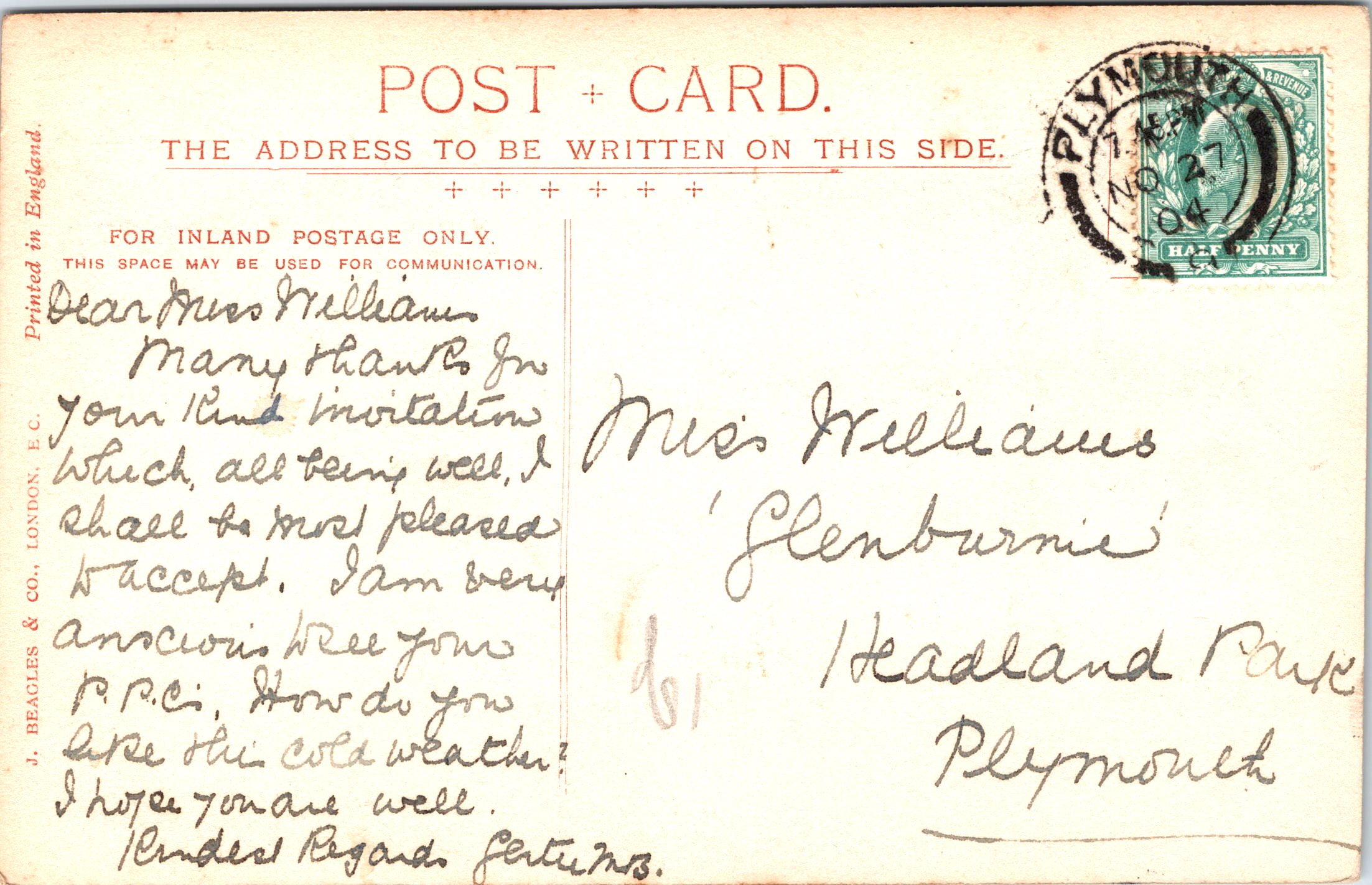
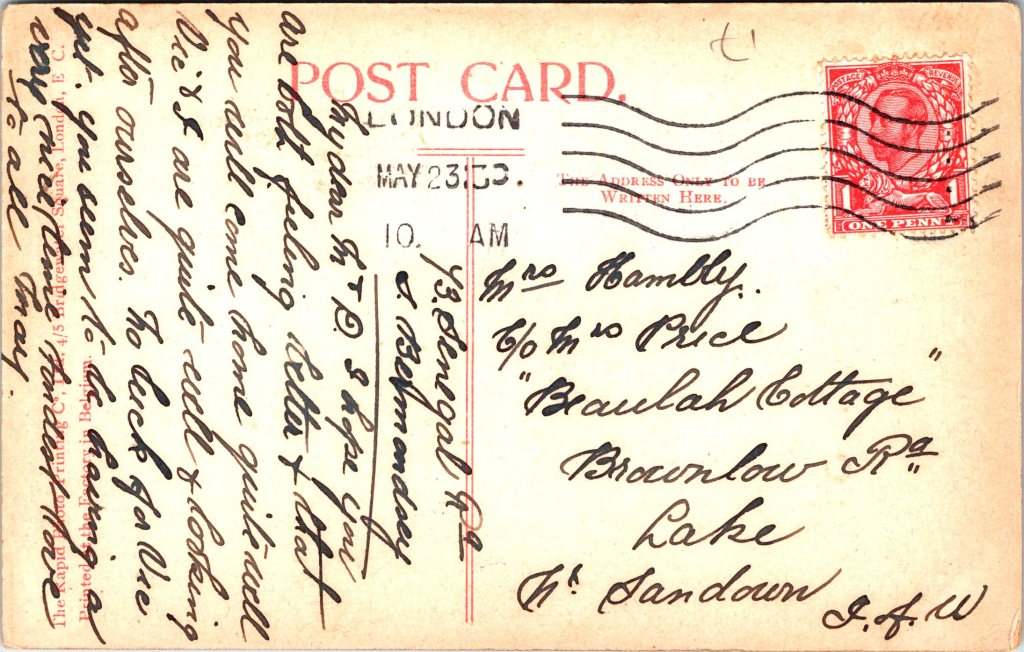
Postcard 15 was published by J. Beagles & Co. and is part of a series (no.179L). The photographer of this image of this beautiful actress is celebrated female photographer, Rita Martin. (SOLD)
Postcard 16 was published by Rapid Photo and is part of a series (no.1284). The photographer of this image is the Johnston & Hoffmann studio. (SOLD)
Postcard 17 was published by Rotary Photo and is part of a series (no.4124B). The photographers of this image of this beautiful actress are the well known studio of Foulsham & Banfield. The card was postmarked in 1907. (SOLD)
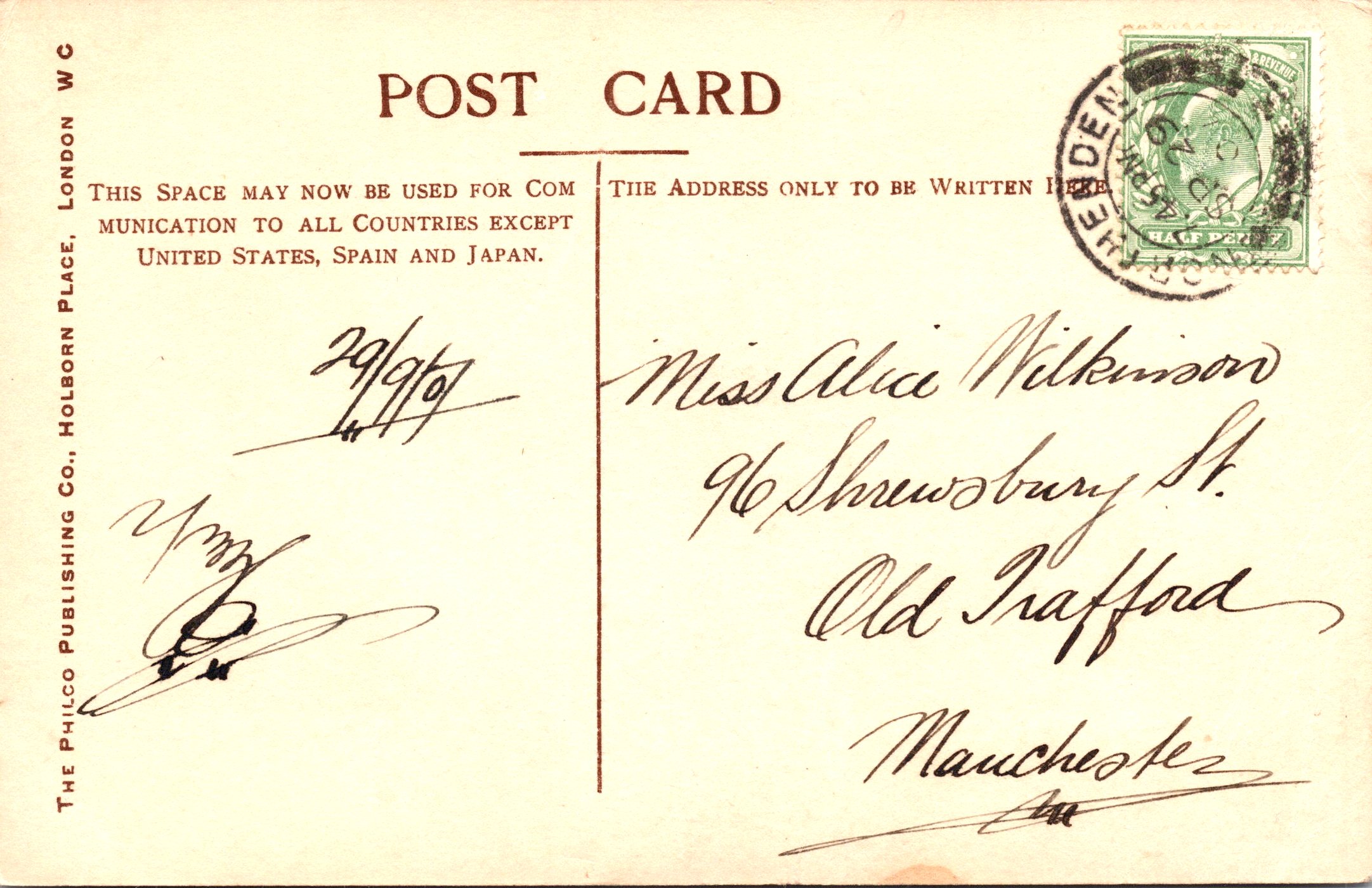
Postcard 18 was published by Philco Publishing and is part of a series (no.3381B). The card was written in 1907. (SOLD)
Postcard 19 was published by Rotary Photo and is part of a series (no.4827N). The photographers of this image of this beautiful actress are the well known celebrity photographers, Foulsham & Banfield. The card was postmarked in 1908. (SOLD)
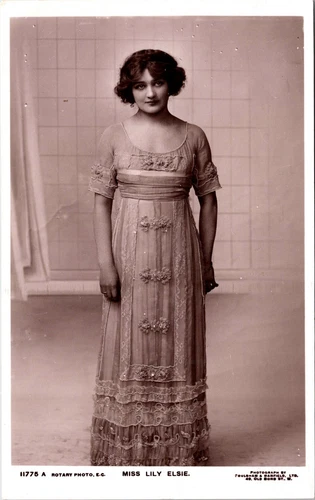
Postcard 20 was published by Rotary Photo and is part of a series (no.11775A). The photographers of this image of this beautiful actress are the well known studio of Foulsham & Banfield. (SOLD)
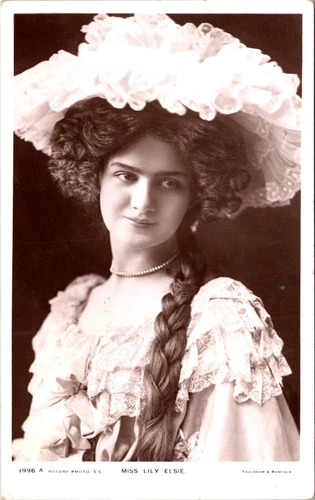
Postcard 21 was published by Rotary Photo and is part of a series (no.1996A). The photographers of this image of this beautiful actress are the well known studio of Foulsham & Banfield. The postcard has a 1906 postmark and a British stamp. (SOLD)
Postcard 22 is uncommon and was published by Davidson Brothers and is part of a series (no.1479). The photographer of this image of this beautiful actress is Draycott Galleries . (SOLD)
Postcard 23 was published by J. Beagles and is part of a series (no.127A). The photography studio that took this image of this beautiful actress is Ellis and Walery. (SOLD)
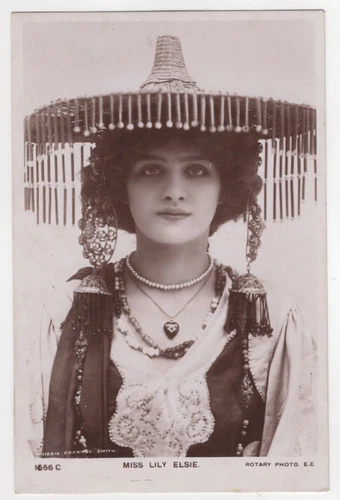
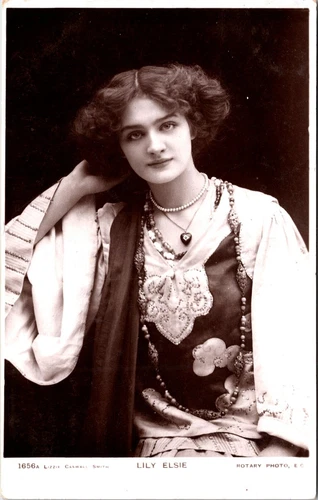
Postcard 24 captures Miss Elsie wearing a fantastic hat and a beautiful smile. Miss Elsie is seen in costume for her role in “A Chinese Honeymoon” (1903). The plot of the play concerns couples who honeymoon in China and unknowingly breaks the kissing laws. The show was the first musical to run over one thousand performances. This postcard was published by Rotary Photo and is part of a series (no.1656/C). The photographer of this image is celebrated female photographer, Lizzie Caswall Smith. The postcard has a 1906 postmark and a British stamp. (SOLD)
Postcard 25 was published by Rotary Photo and is part of a series (no.1656/C). The photographer of this image of this beautiful actress is celebrated female photographer, Rita Martin. The postcard has a 1913 postmark and a British stamp. (SOLD)
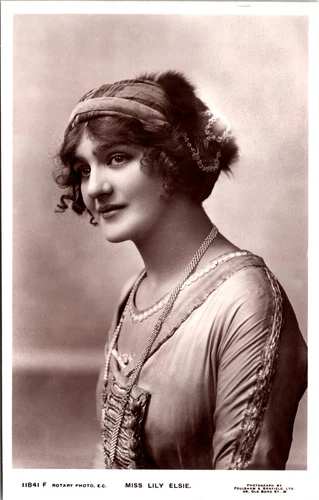
Postcard 26 captures Miss Elsie in this photo in her role as Franzi in the stage production of the operetta, “A Waltz Dream”. This postcard was published by Rotary Photo and is part of a series (no.11841/F). The photographer of this image of this beautiful actress is the Foulsham & Banfield studio. (SOLD)
Postcard 27 was published by Rotary Photo and is part of a series (no.11502/C). The photographer of this image of this beautiful actress is the Foulsham & Banfield studio. (SOLD)
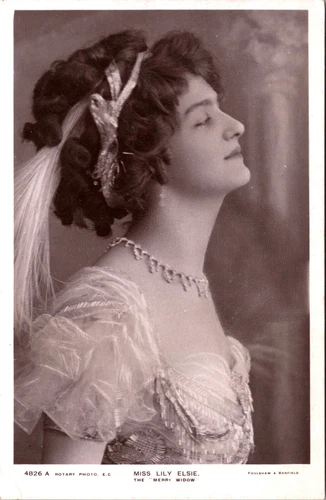
Postcard 28 captures Lily Elsie in her role in “The Merry Widow”. This uncommon postcard was published by Rotary Photo and is part of a series (no.4826A). The photographers of this image is the well known studio of Foulsham & Banfield. The card was postmarked in 1908. (SOLD)
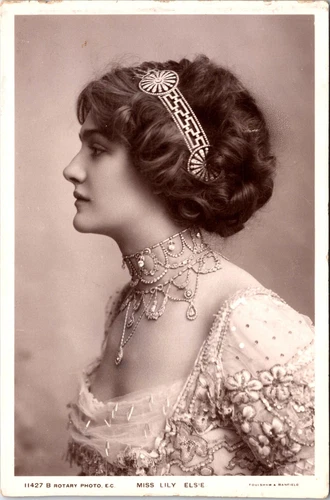
Postcard 29 was published by Rotary Photo and is part of a series (no.11427B). The photographers of this image is the well known studio of Foulsham & Banfield. (SOLD)
Postcard 30 was published by C.W.F. & Co. and is part of a series (no.457C). The photographers of this image of this beautiful actress are the well known female celebrity photographer, Lizzie Caswall Smith. The card was postmarked in 1904. (SOLD)
Postcard 31 was published by Rotary Photo and is part of a series (no.11594C). The photographer of this crisp image of this beautiful actress is the well known celebrity photographic studio, Foulsham & Banfield. This postcard captures Miss Elsie in her role as Alice in “The Dollar Princess” (1909). The venue for the play was Daly’s Theater in London and cast members included Joseph Coyne, Gabrielle Ray, Emmy Wehlen, and Gladys Cooper. (SOLD)
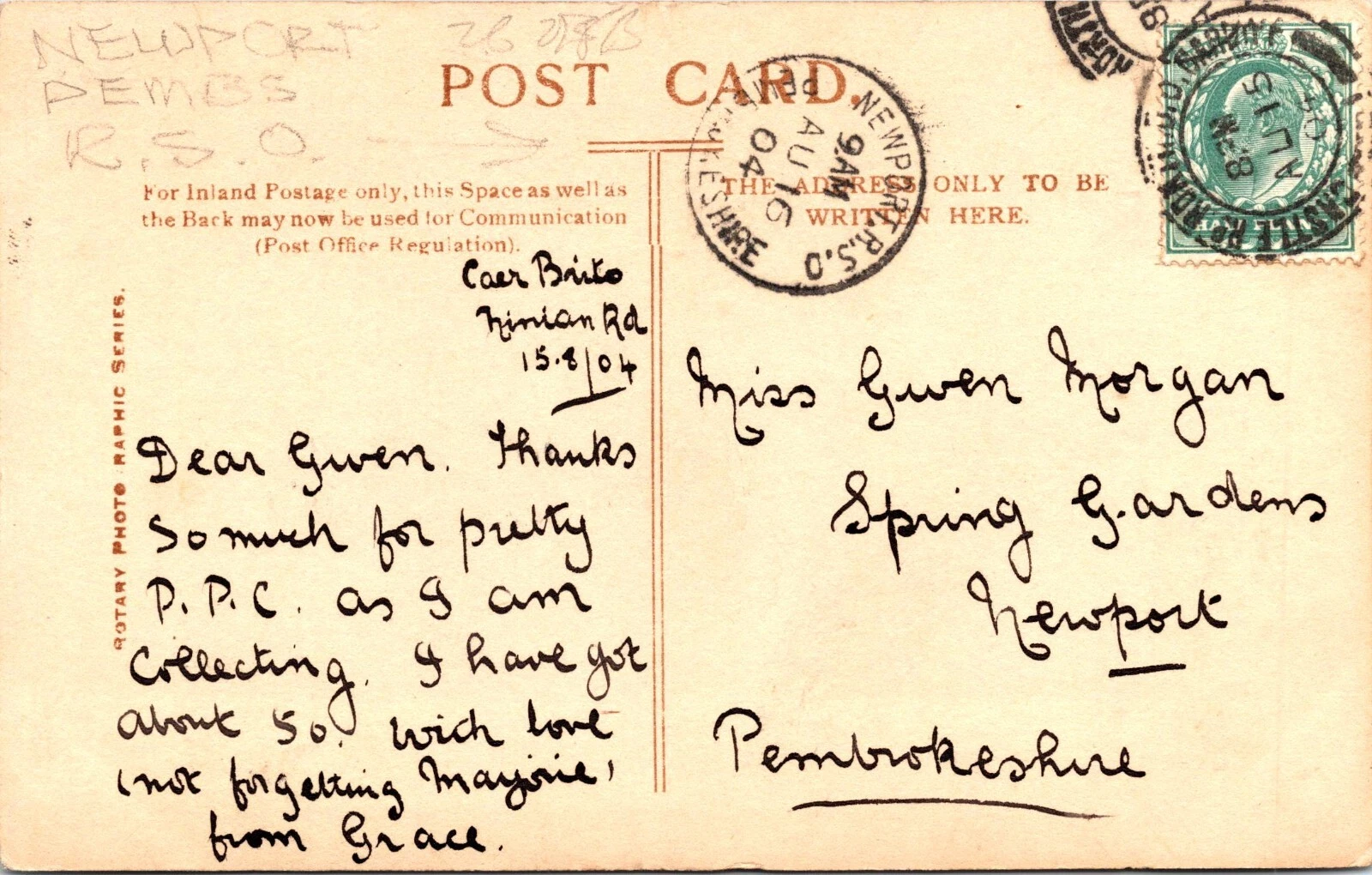
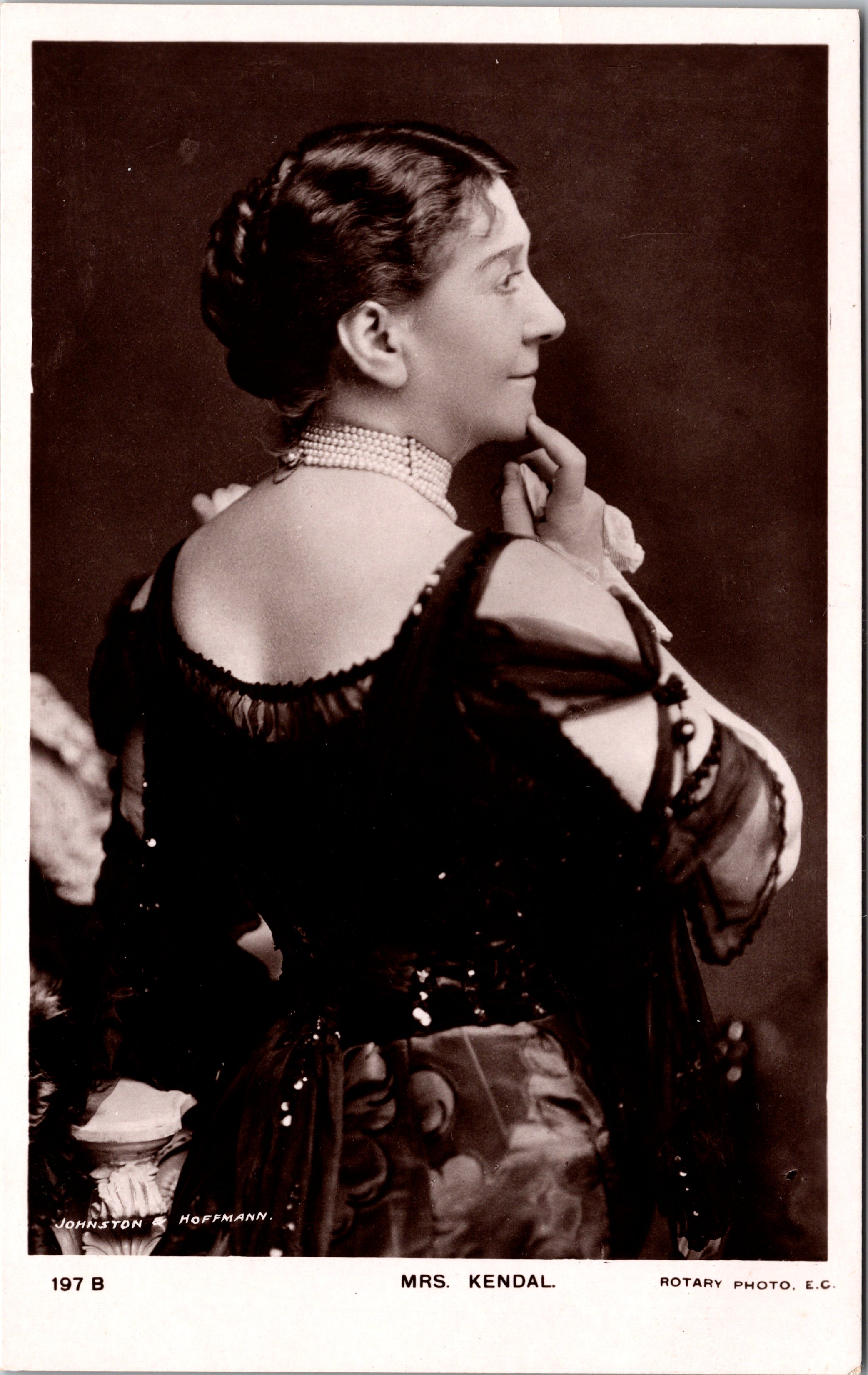
This vintage real photo postcard features English Victorian and Edwardian actress, Dame Madge Kendal (1848-1935). Her photograph was taken by the Johnston and Hoffmann studio. The postcard was published by Rotary Photo as part of a series (no.197 B). The postcard is in excellent condition (see scans). She appears to be in a stage costume. Mrs Kendal was most well known for her Shakespeare and English comedy roles. Along with her husband, she became a major theater manager. Madge was the product of a theatrical family. Her father ran a chain of theaters. She made her stage debut in London at the age of four. As a teenager she played with major stars in Shakespeare in West End theaters. At 21, she joined the Haymarket theater. She met actor W H Kendal and married him while in the Haymarket company. The pair often played in the same productions and became known as “The Kendals”. After much success in English productions, the couple successfully ran the St James Theater between 1879 and 1888. In the late 1800’s and early 1890’s the couple went of a US tour that played in more than 40 cities. They returned to act in Britain for more that a decade before retiring in 1908. Madge was known for her success at playing comic roles.. She had more mixed reviews when performing in serious parts. She and her husband worked hard to make acing a more socially respectable profession and she became known as “the matron of the English theater”. She was also active in charitable causes.
Buy this Vintage Real Photo Postcard (includes shipping within the US) #5300
To purchase this item, click on the Pay with PayPal button below
$19.00
Buy this Vintage Real Photo Postcard (includes International shipping outside the US) #5300
To purchase this item, click on the Pay with PayPal button below
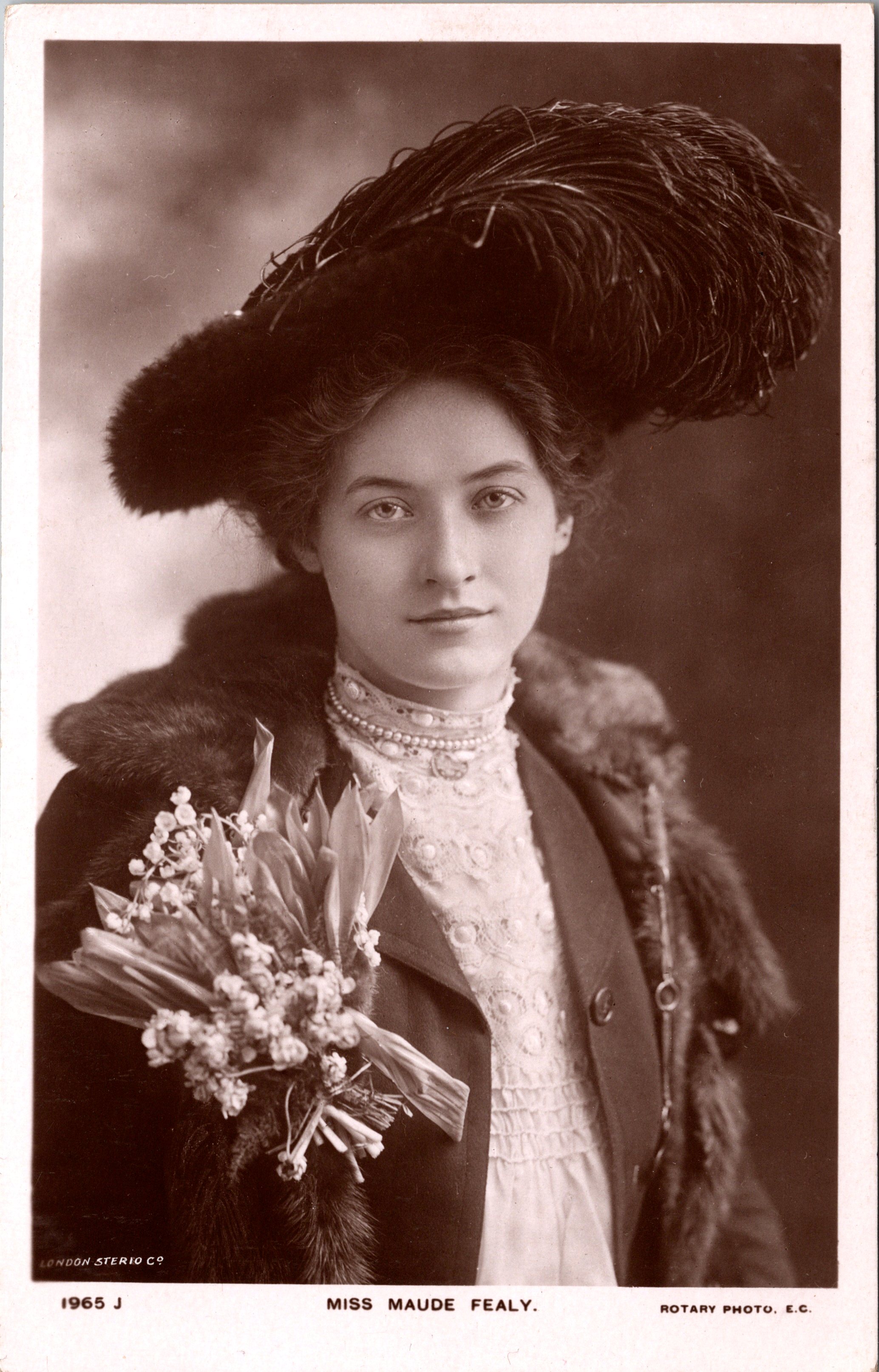
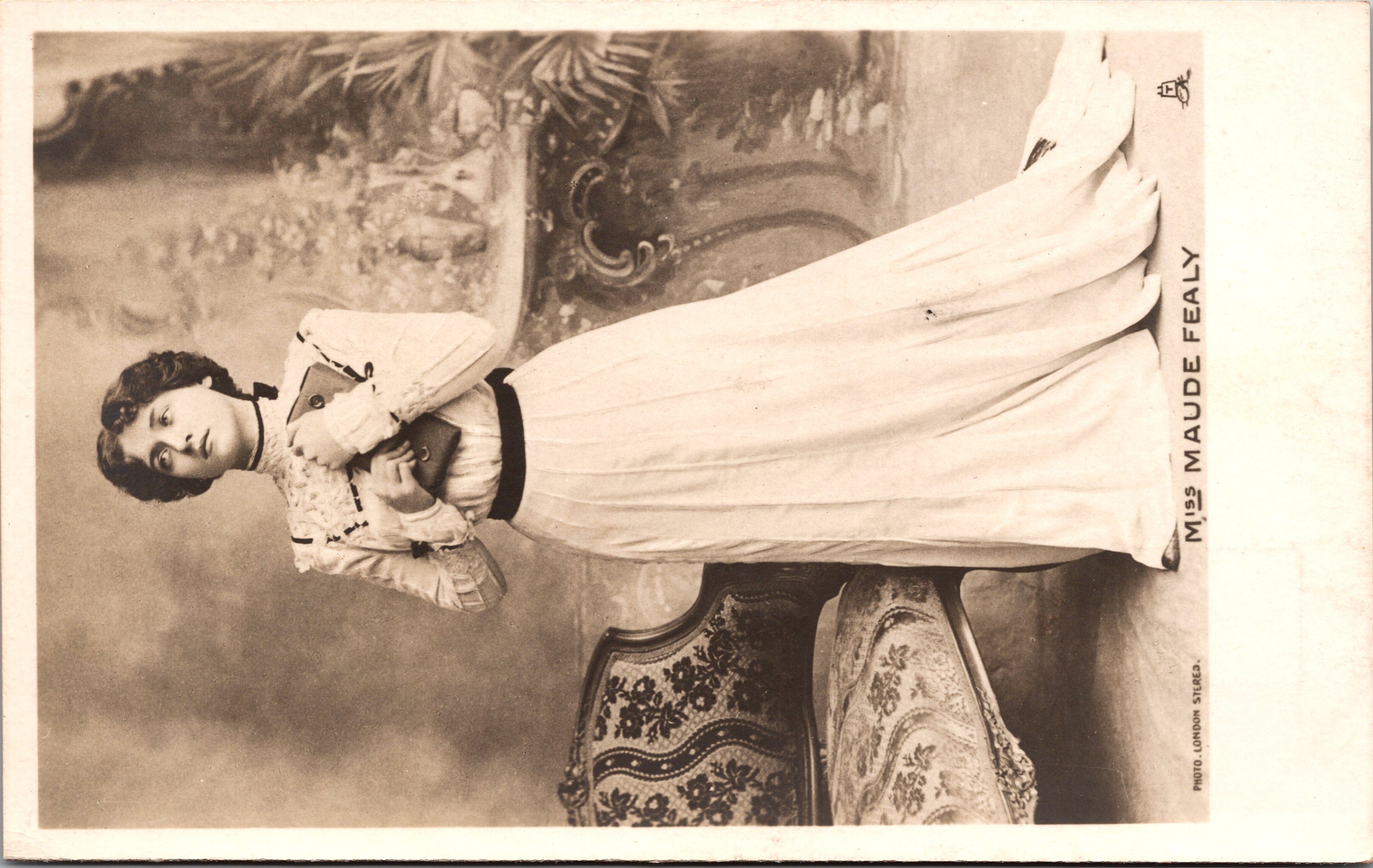
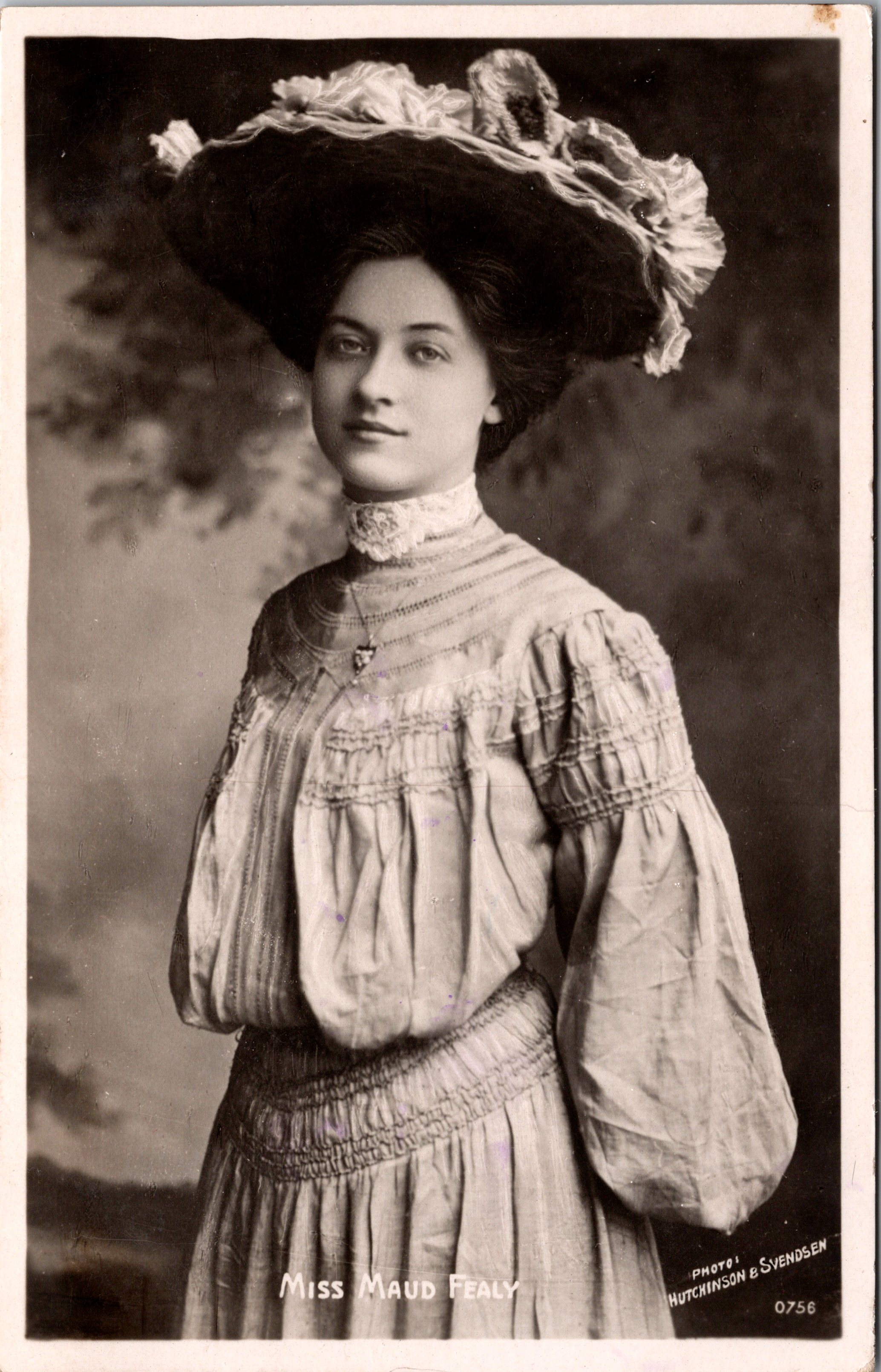
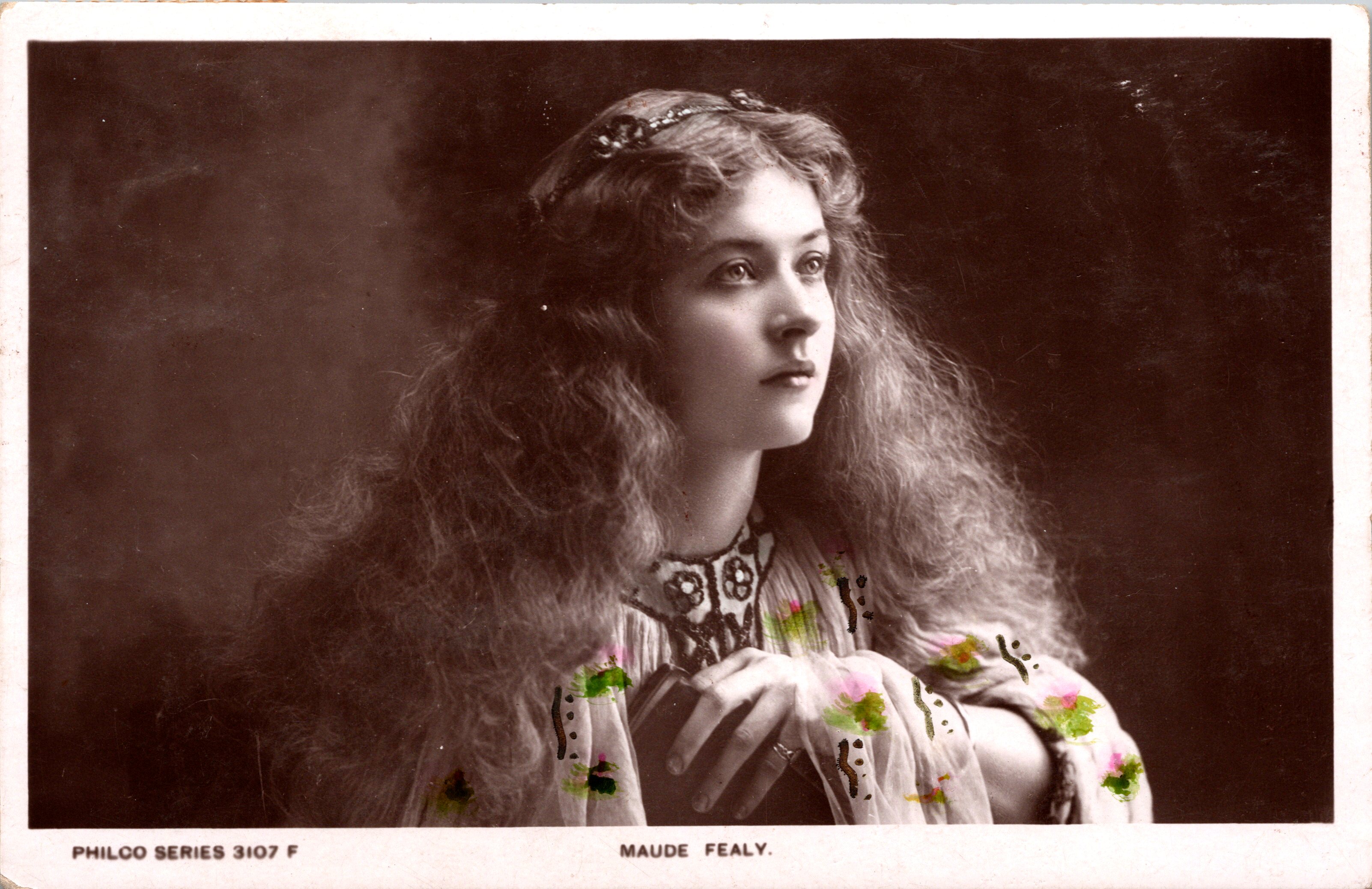
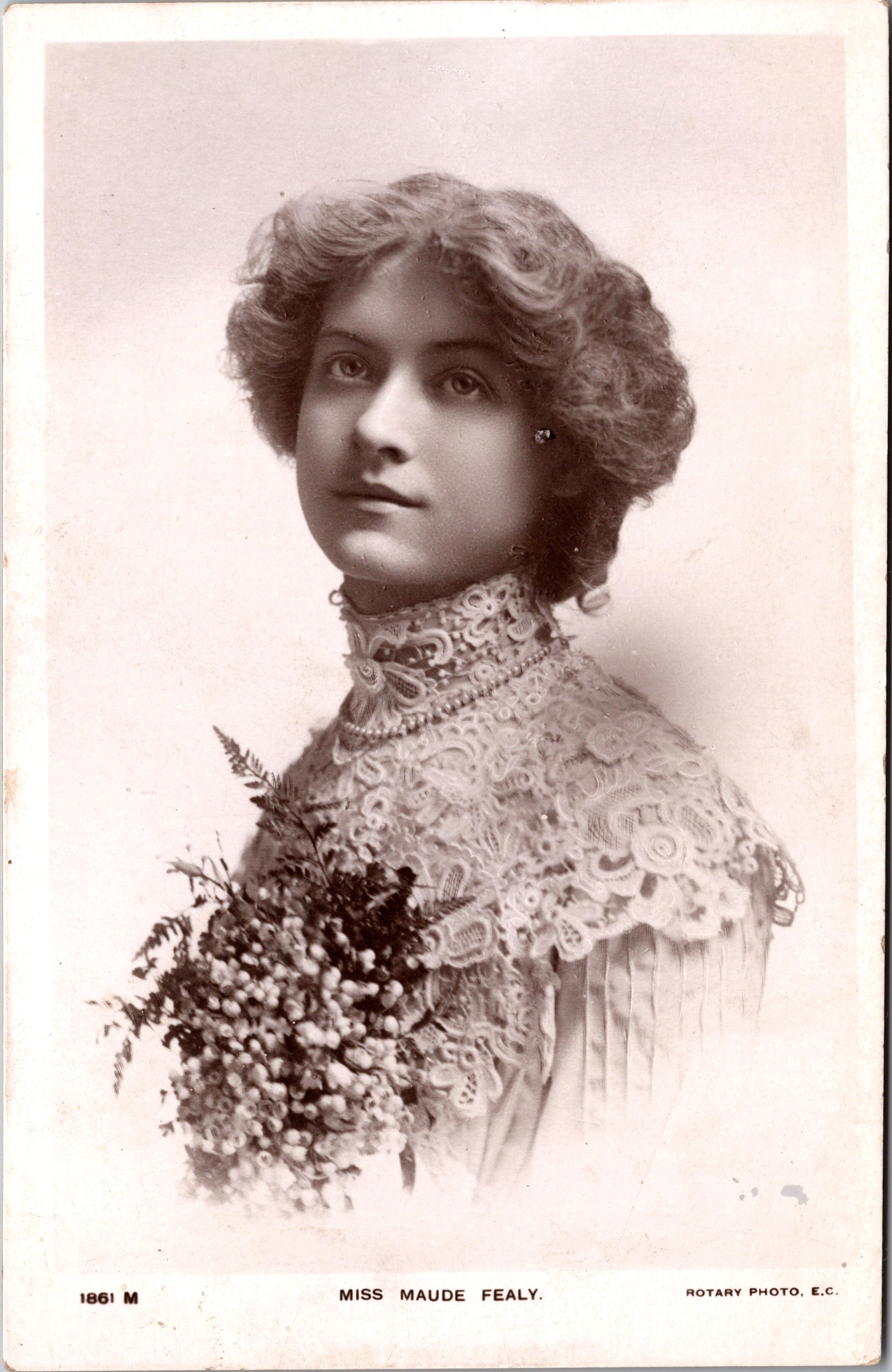
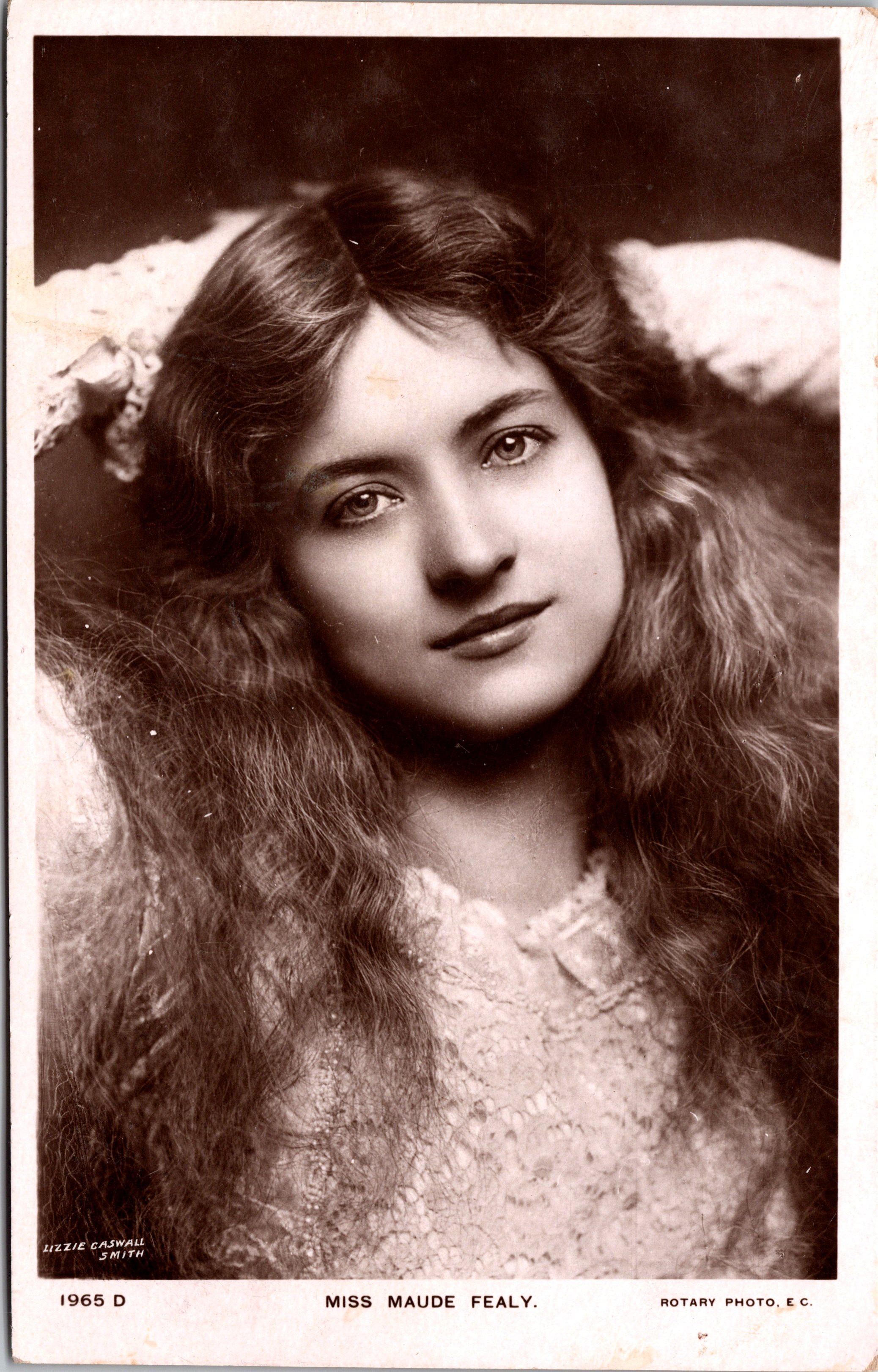
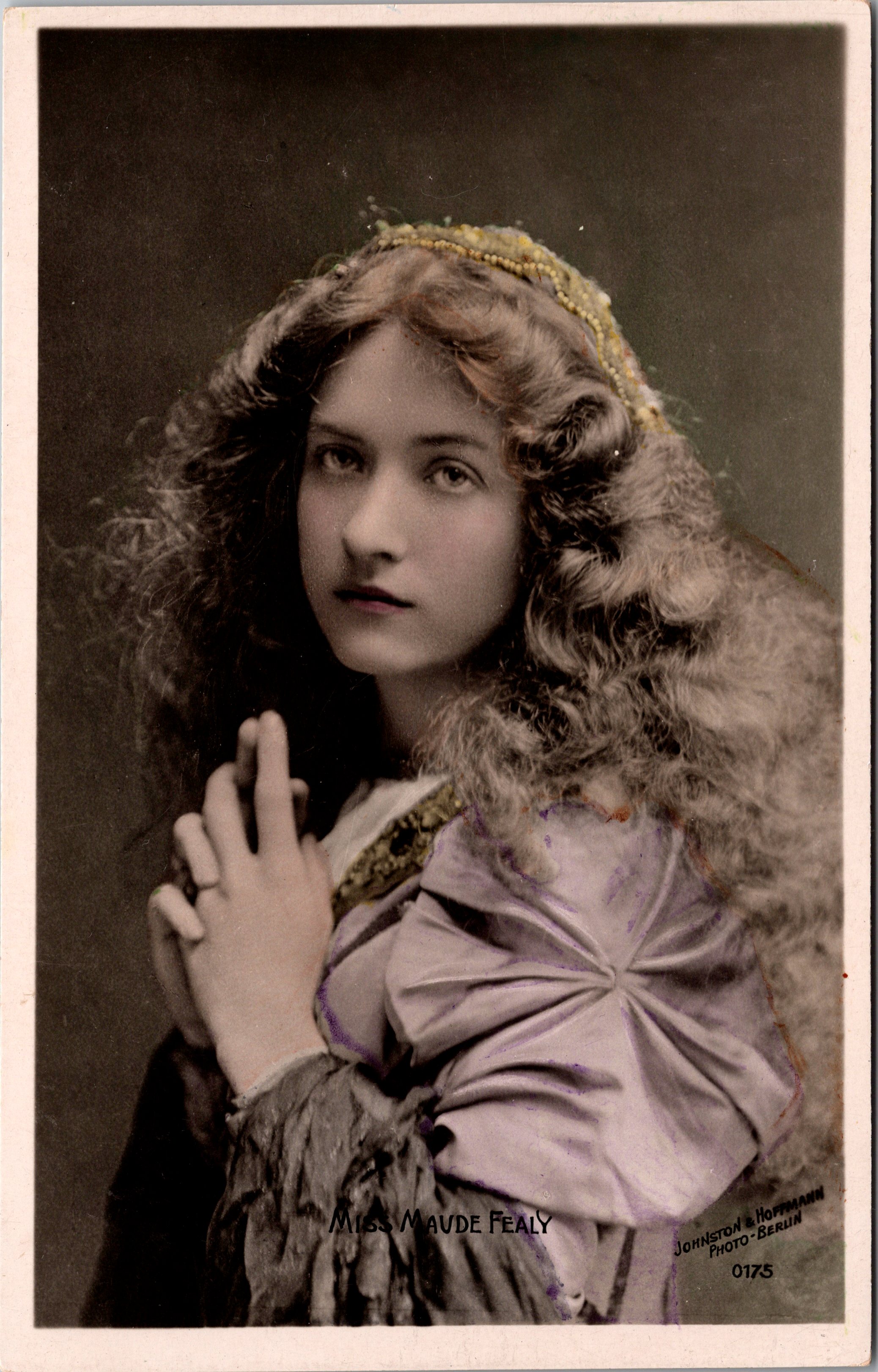
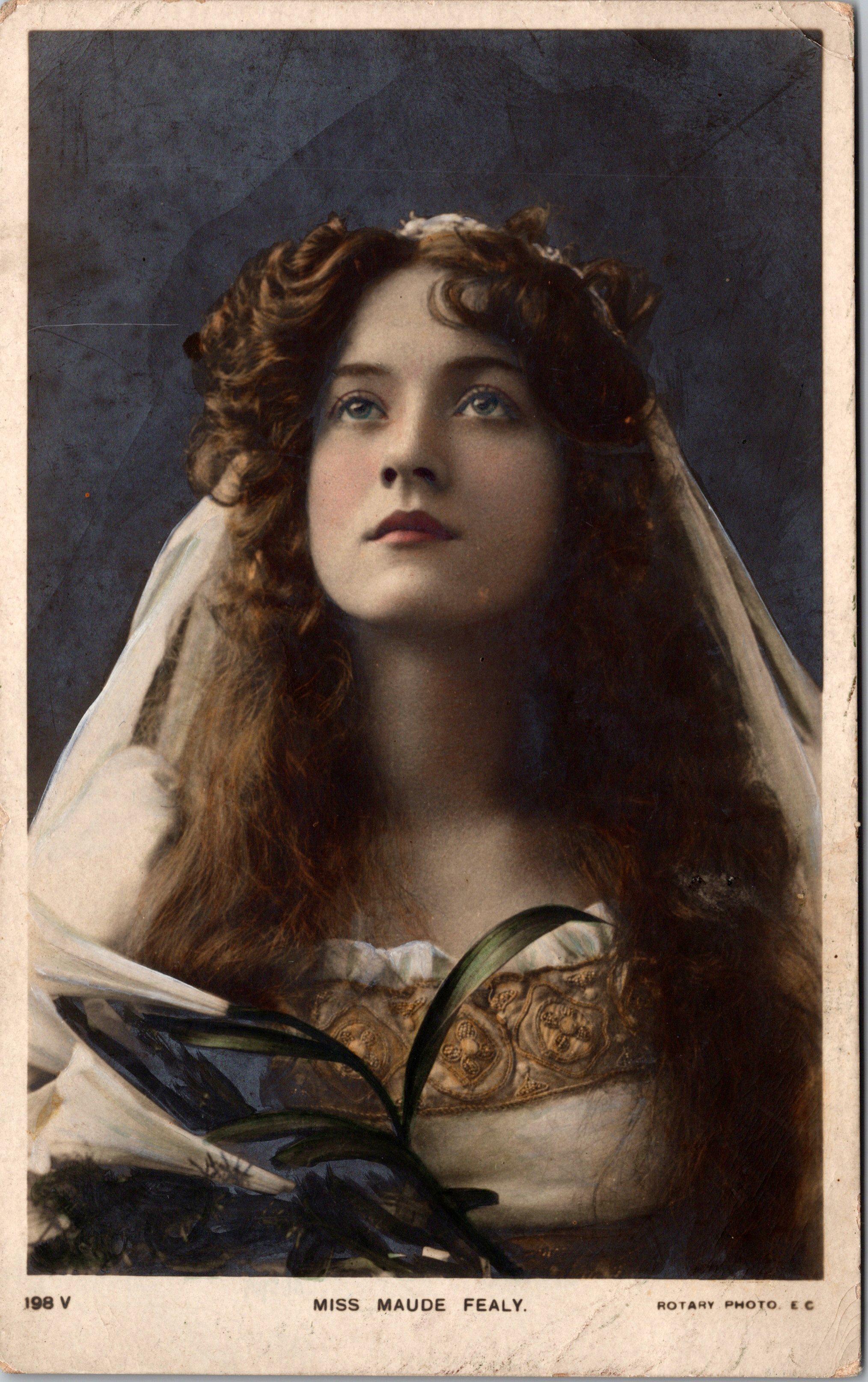
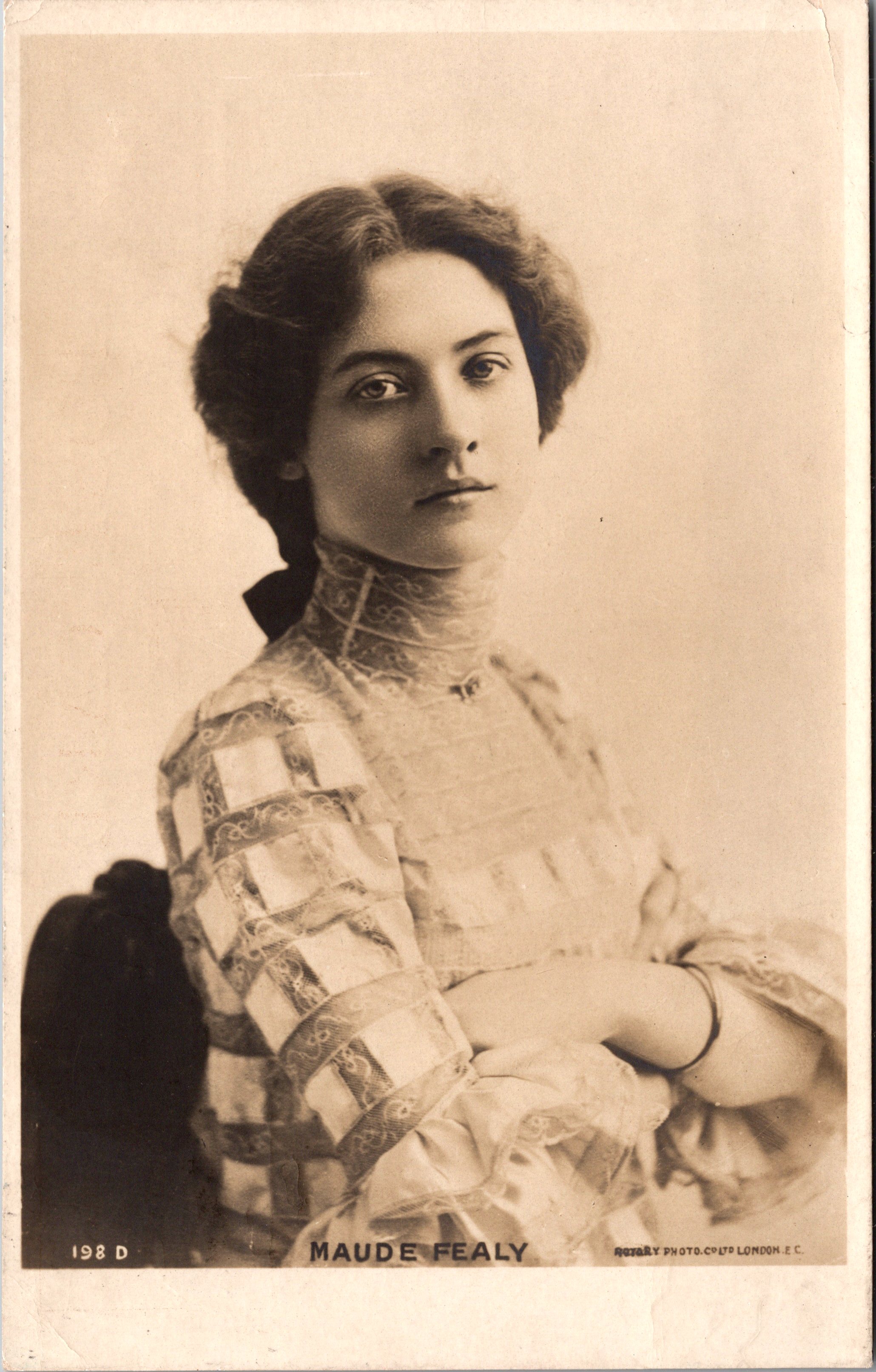
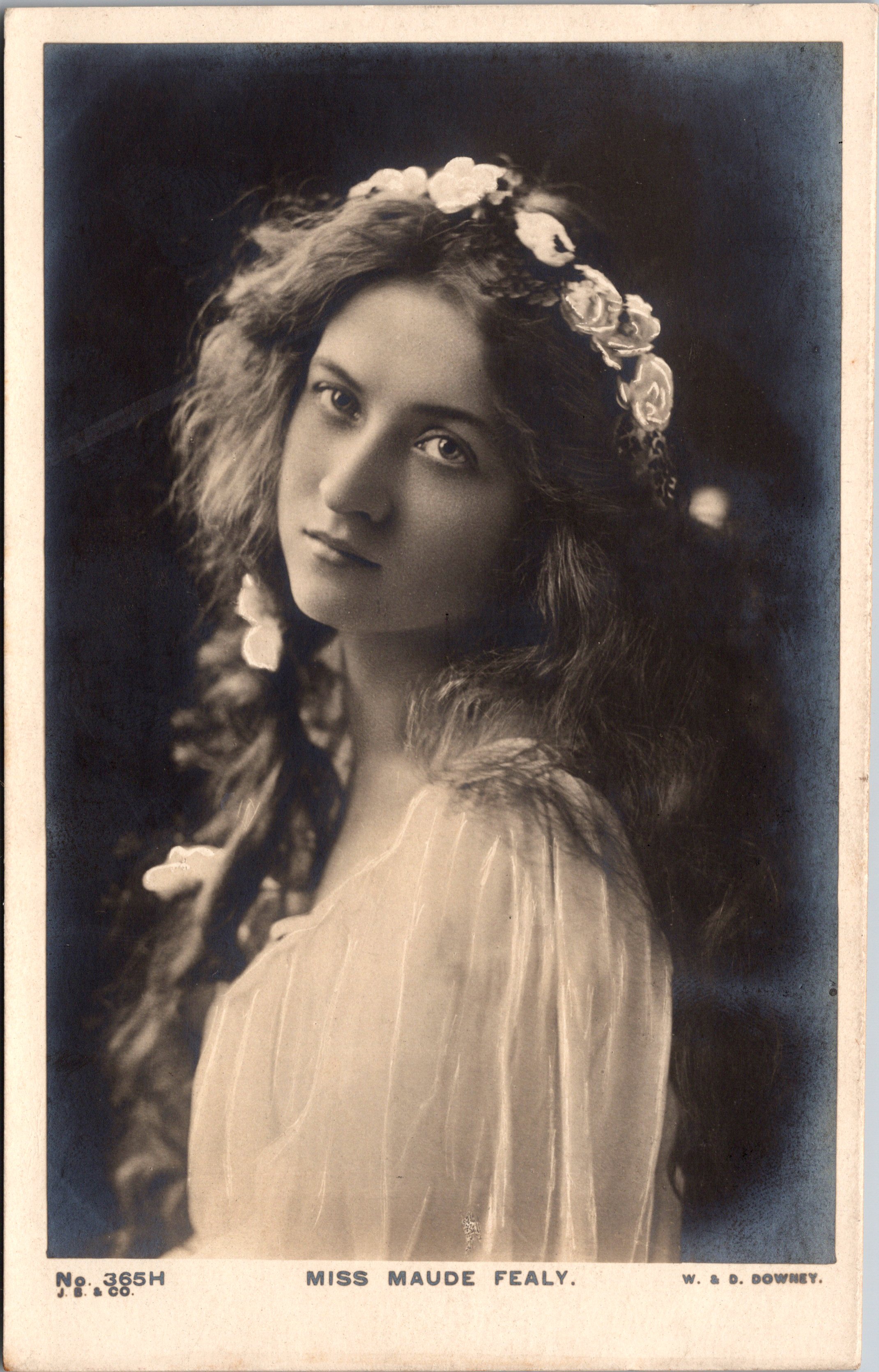
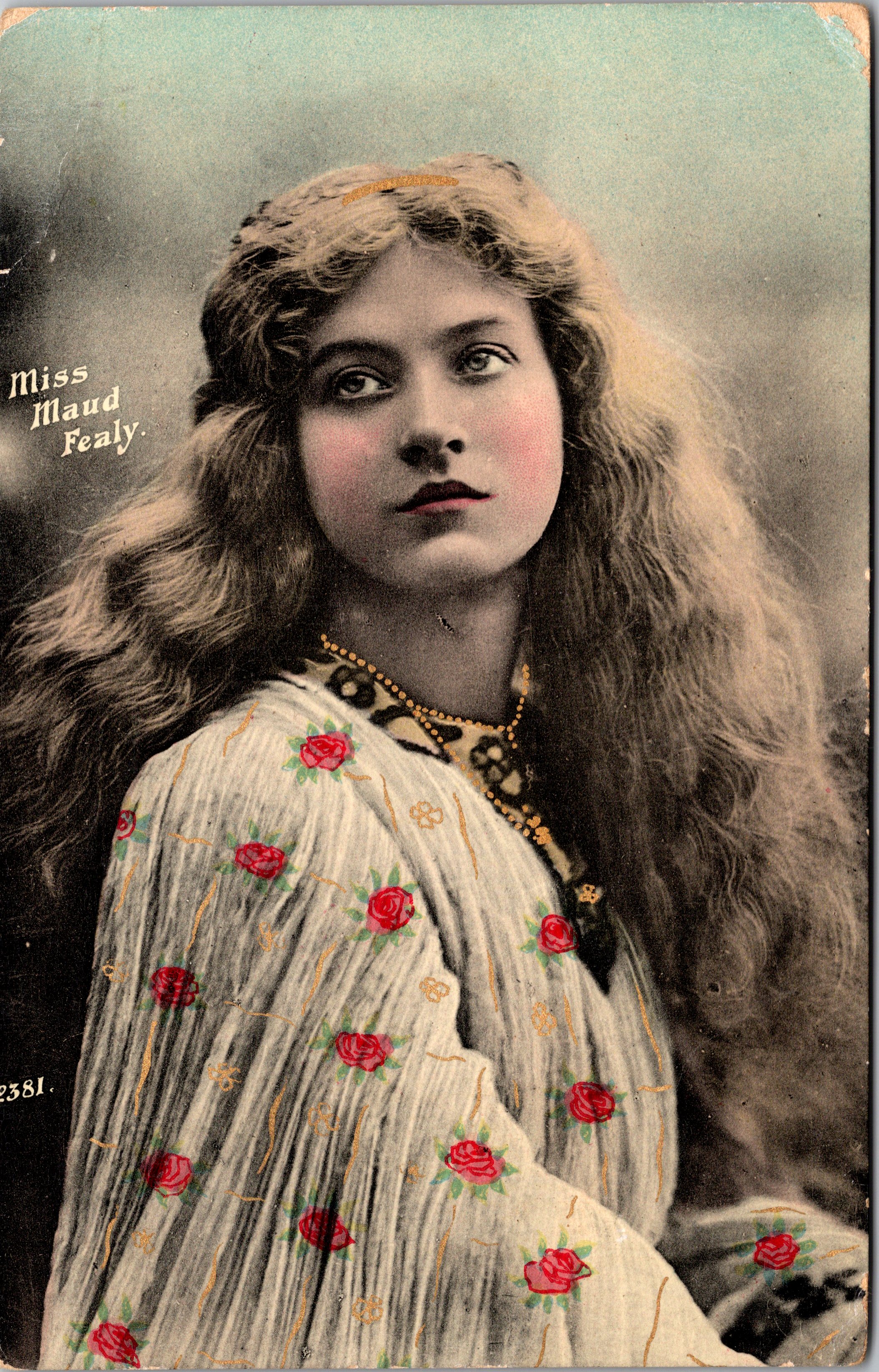
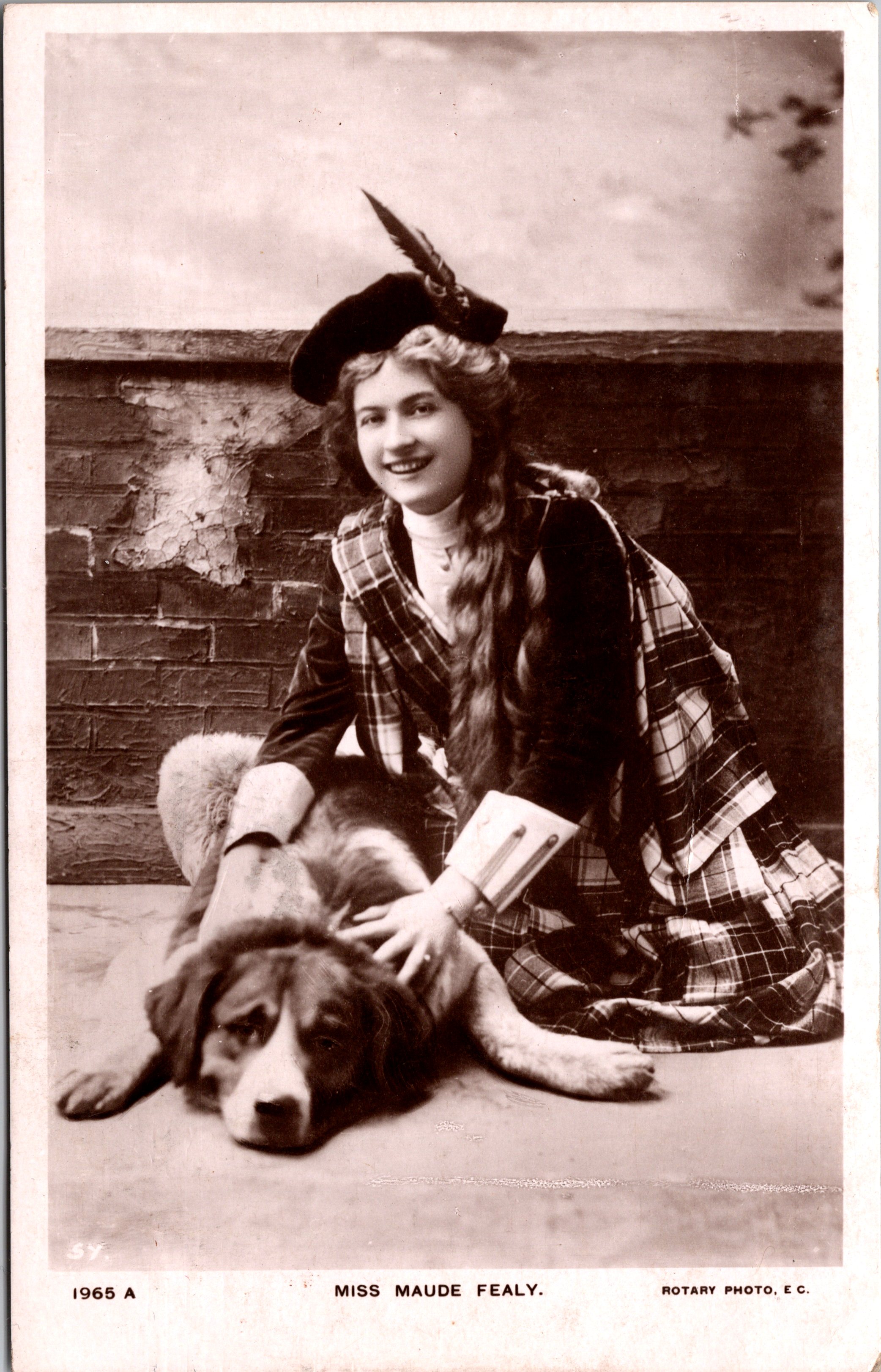
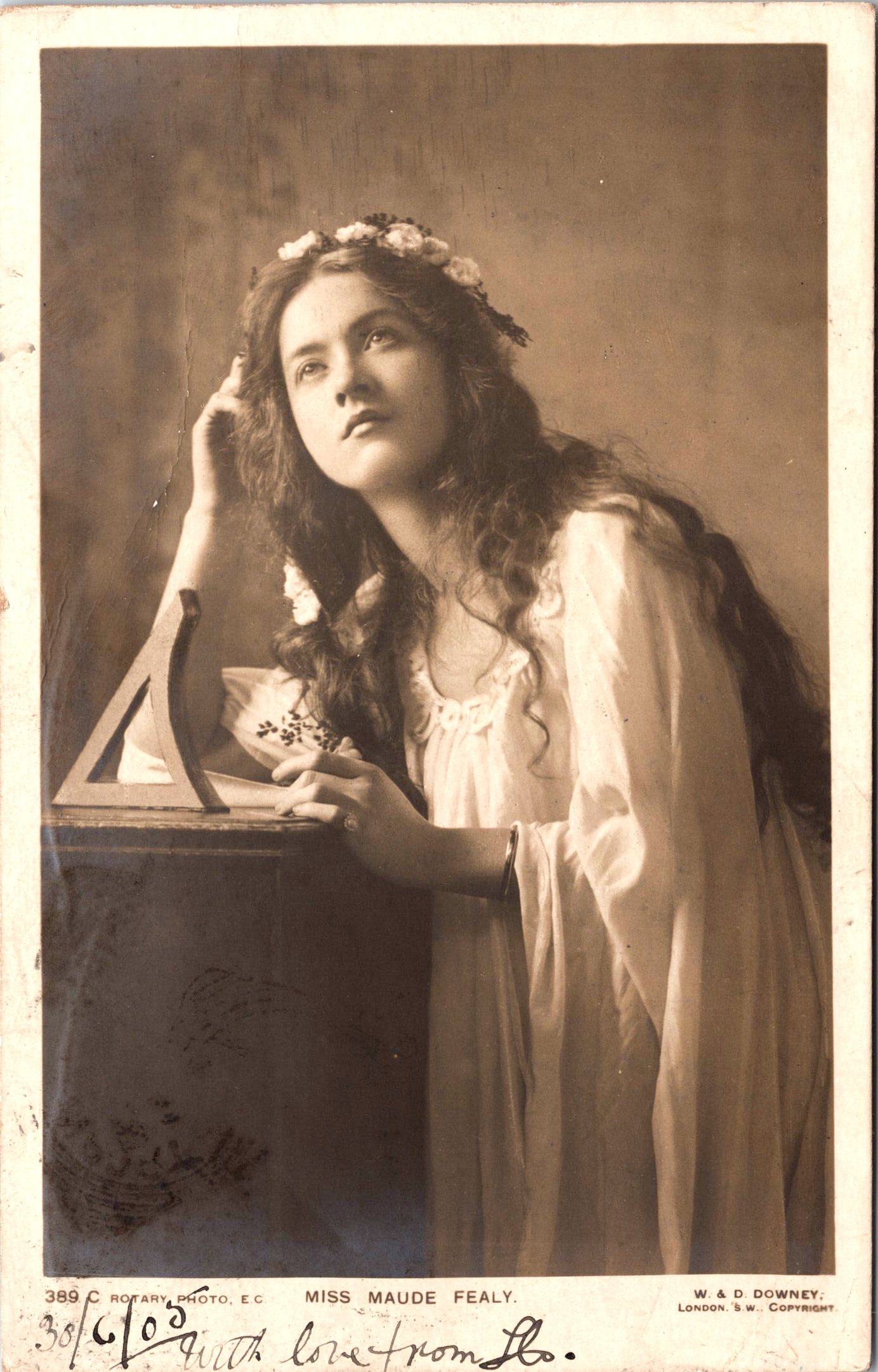
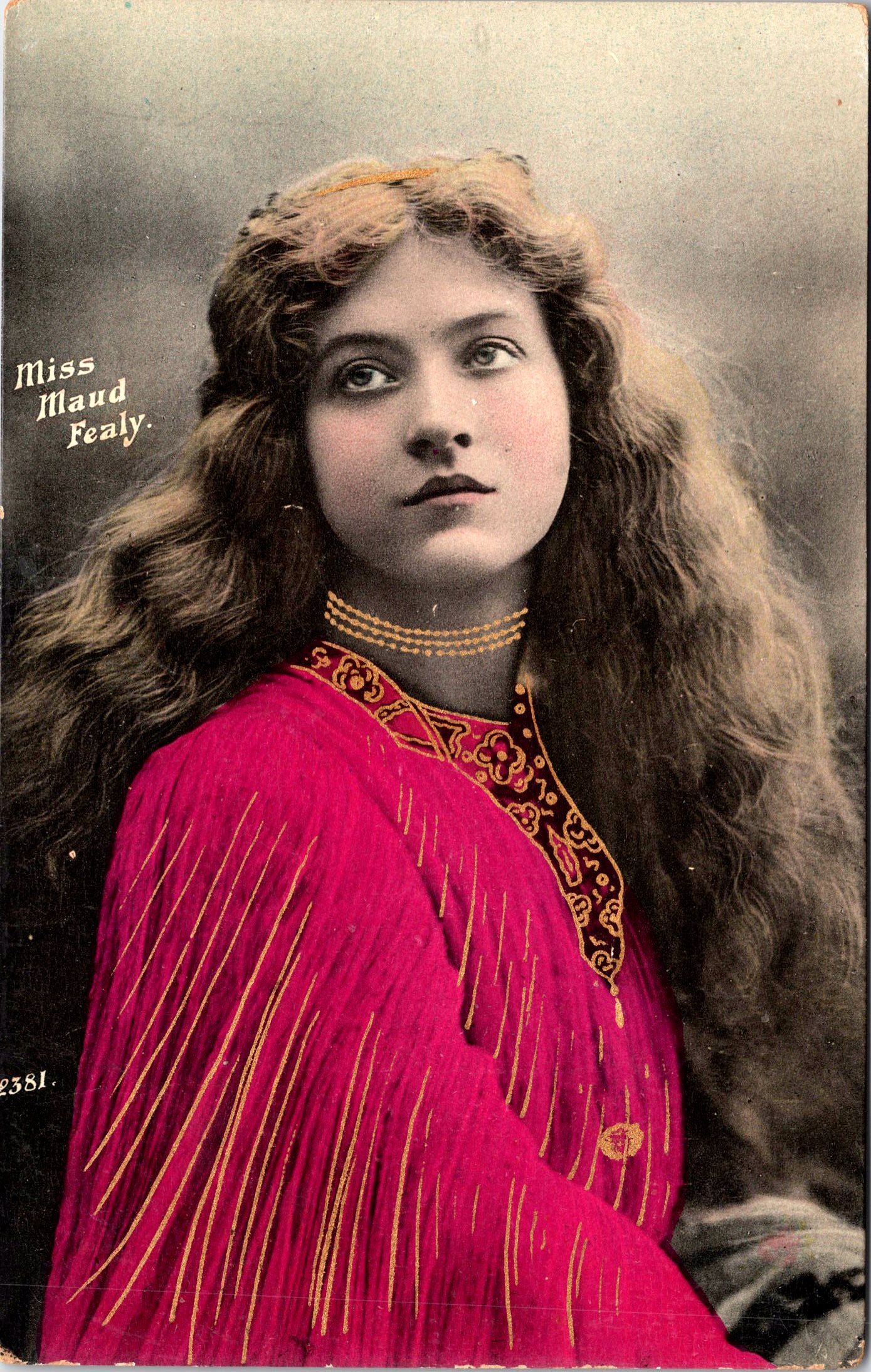
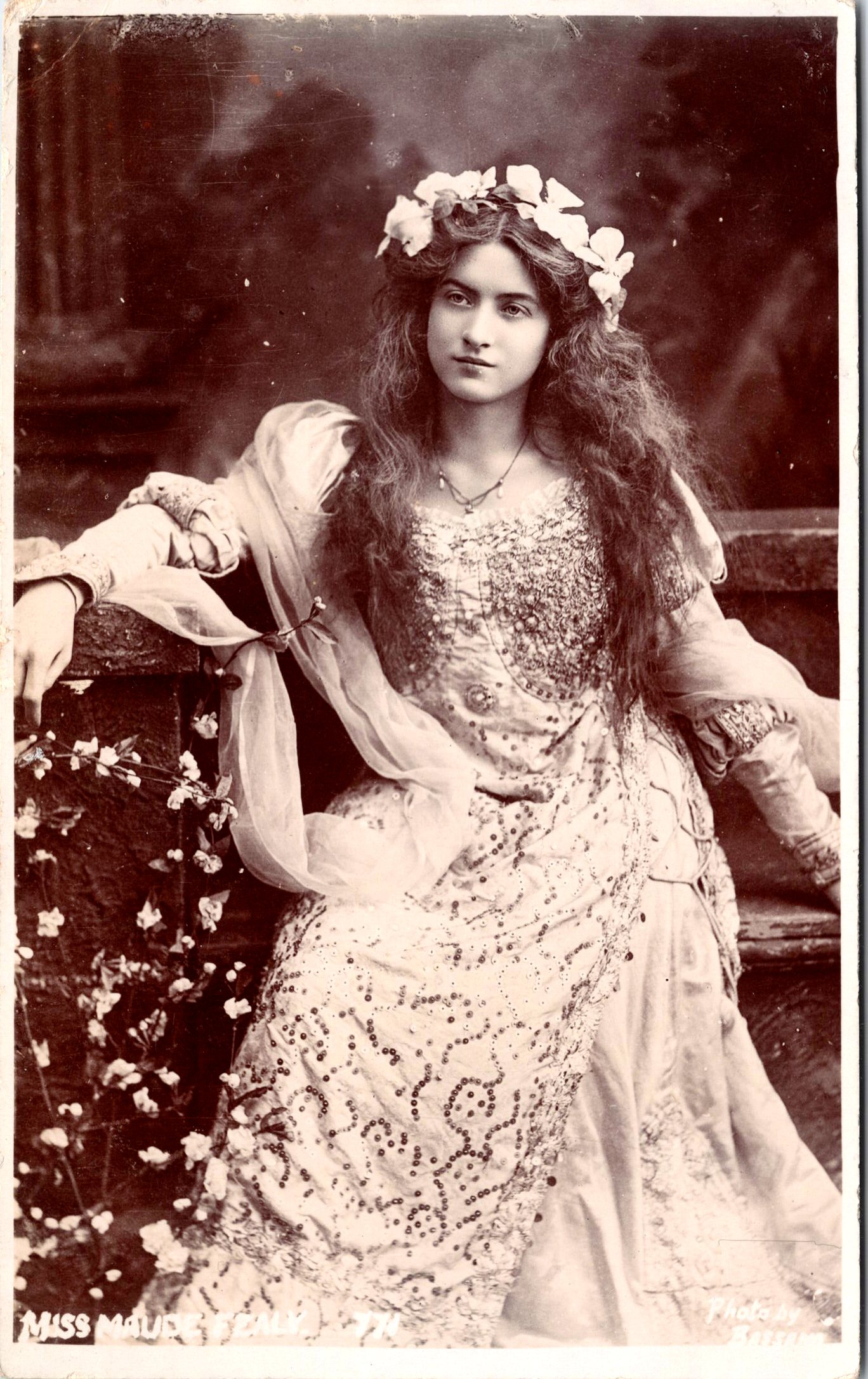
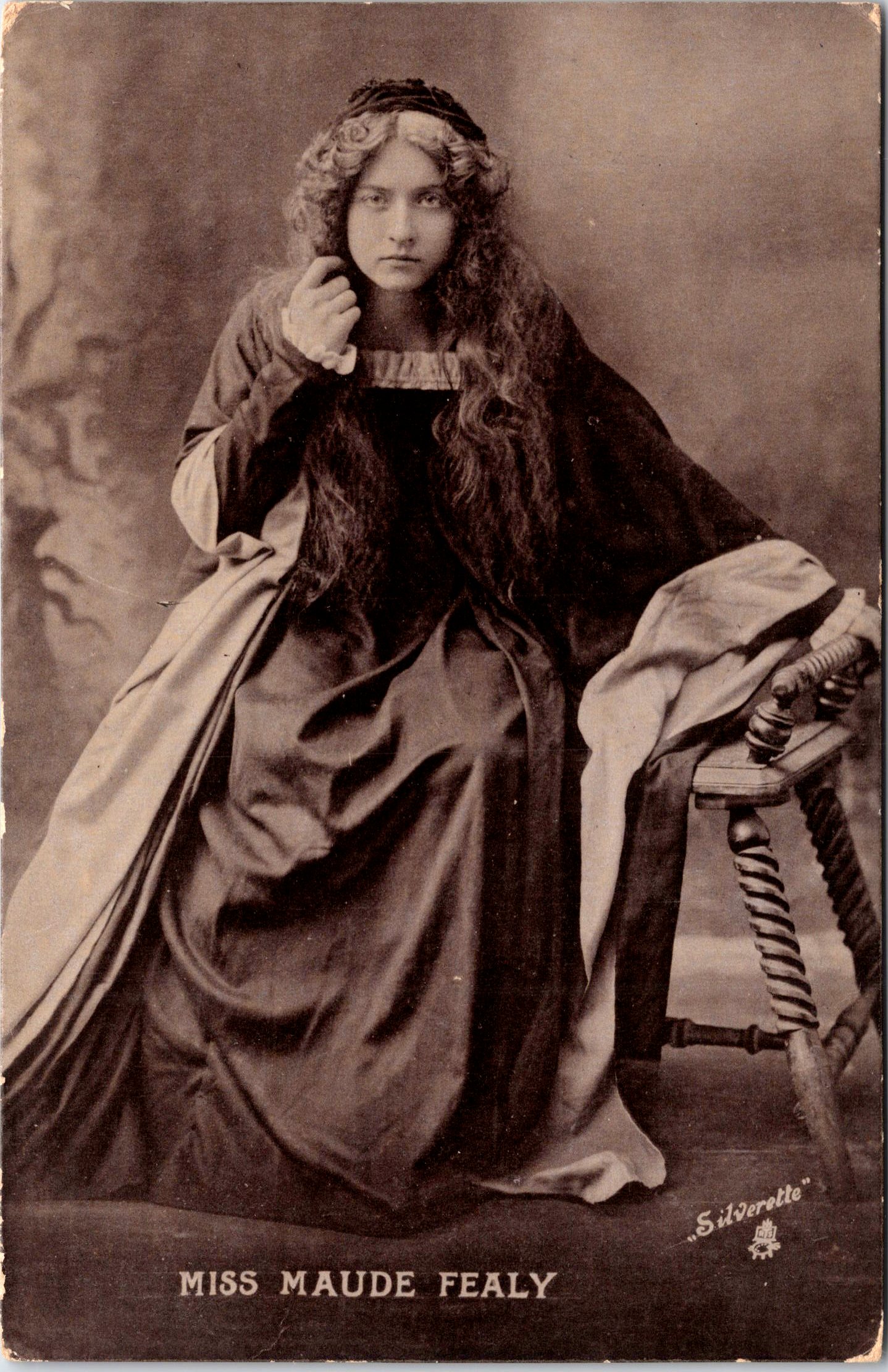
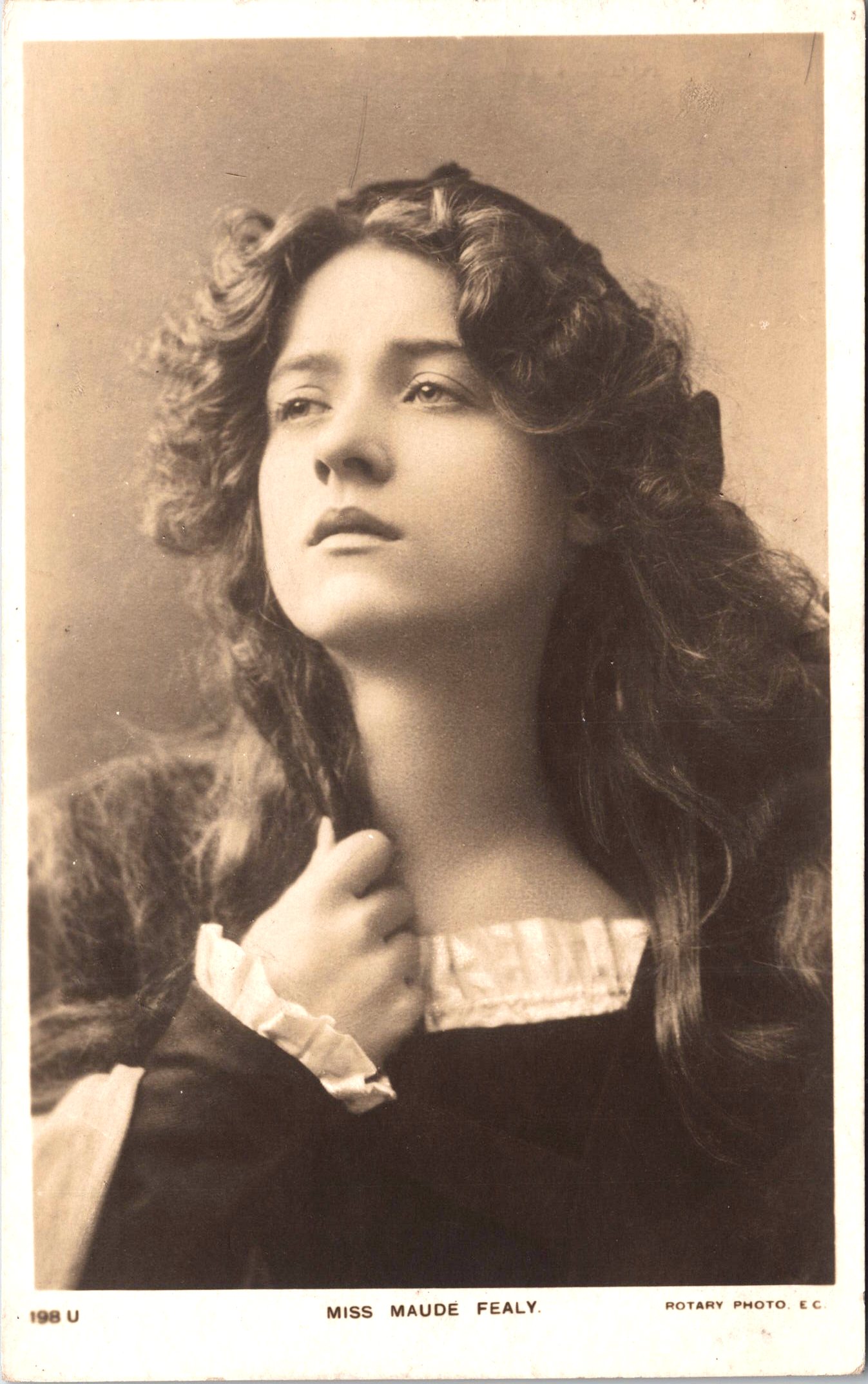
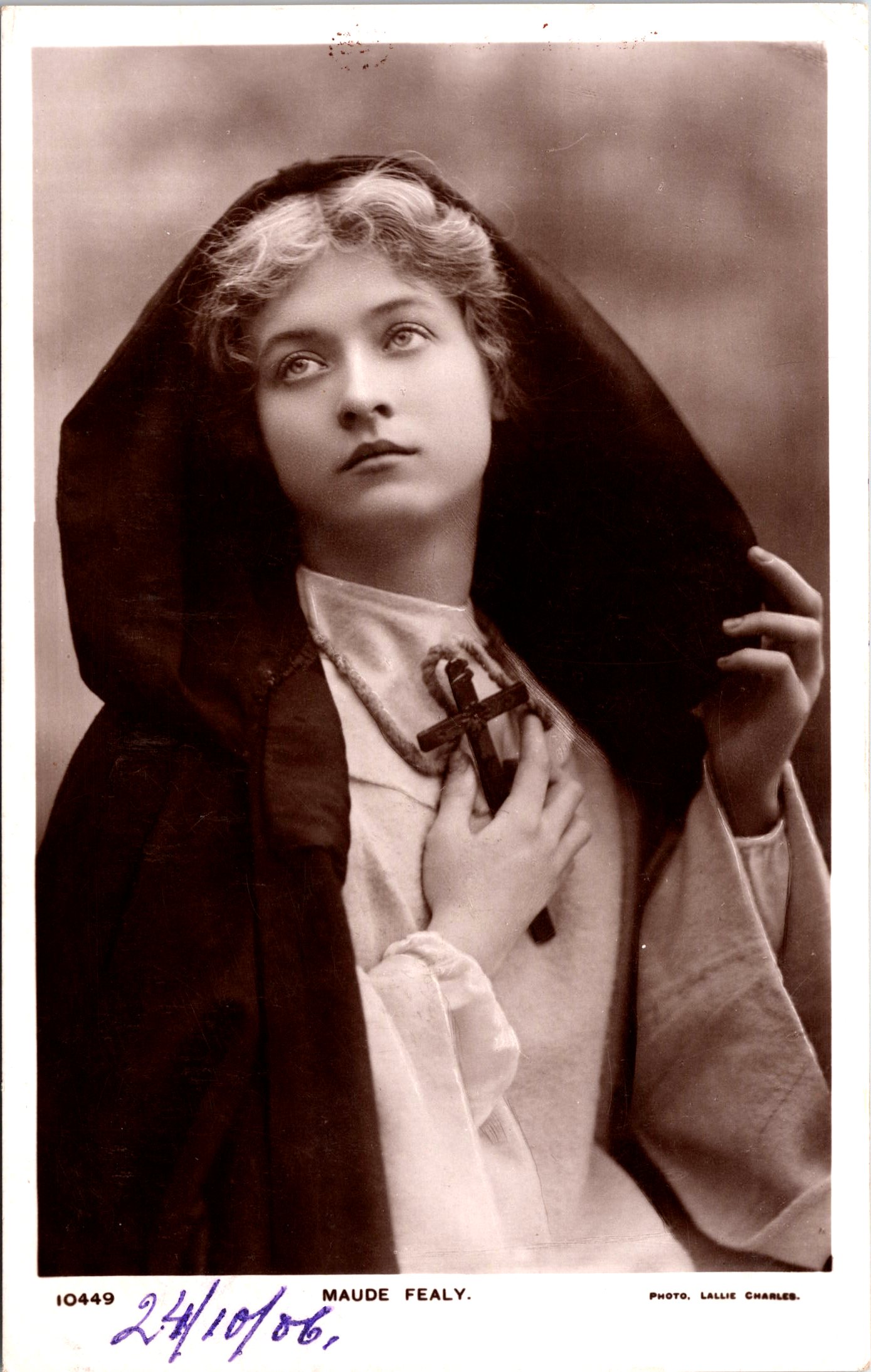
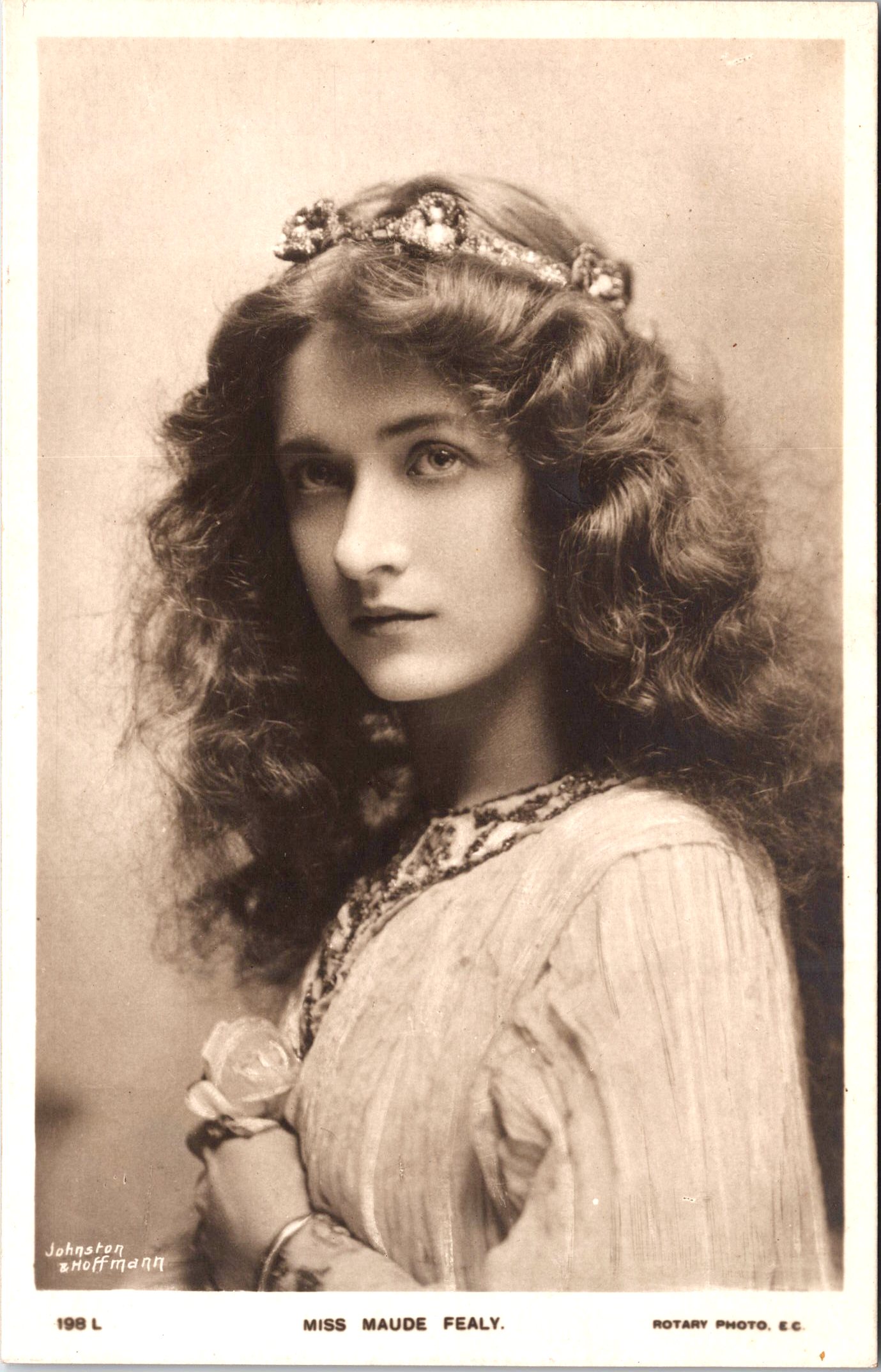
This vintage real photo postcard features American stage and silent and sound film actress, Maude Fealy (1883-1971). Maude was born in Memphis, Tennessee. Her mother was an actress and acting coach. After her mother remarried, she moved to Colorado where Maude called home for much of her life. She made her stage debut at the age of three. she performed at the Elitch Theater numerous times during her childhood. In 1905 she began to be the featured actress in a number of productions. She worked alongside stock player Cecil B DeMille and the pair developed a friendship that lasted many decades. In fact, he cast her in his film “The Ten Commandments” (1956). This postcard illustrates Miss Fealy’s beauty. Her photo postcards were very popular and collectable during her era, as well as today.
Postcard 1 is uncommon. The card was published by Rotary Photo as part of a series (no.1965J), The postcard is of British origin. Note that this postcard is hand tinted and postmarked in Dublin (1906). The card has an interesting message. The writer proclaims “What an innocent face this girl has. Poor thing”. Since when is “innocence” something to pity? (SOLD)
Postcard 2 demonstrates that Miss Fealy was fashionable and quite beautiful. Her photo postcards were very popular and collectable during her era, as well as today. This particular postcard is rare. The portrait for this postcard was taken by the London Stereo Company. The card was published by Rotary Photo as part of a series (no.1965J), The postcard is of British origin. (SOLD)
Postcard 3 was published by Davidson Brothers as part of a series (no.1378), The postcard is of British origin and demonstrates that Maude Fealy was fashionable as well as beautiful. (SOLD)
Postcard 4 is uncommon. The card was published by Raphael Tuck in 1904 as part of the “Stage Favorites: series (no.5058), The postcard is of British origin. (SOLD)
Postcard 5 is rare. The card was published by Rotary Photo as part of a series (no.1928C), The postcard is of British origin. (SOLD)
Postcard 6 is rare. The card was published by Germany’s Rotophot (no.0756). (SOLD)
Postcard 7 was published by Philco as part of a series (no.3107F). The card is beautifully hand colored. The postcard is of British origin. The postcard was postmarked in 1907. (SOLD)
Postcard 8 was published by Rotary Photo as part of a series (no.1861M), This particular card is rare. The postcard has a 1905 postmark and is of British origin. (SOLD)
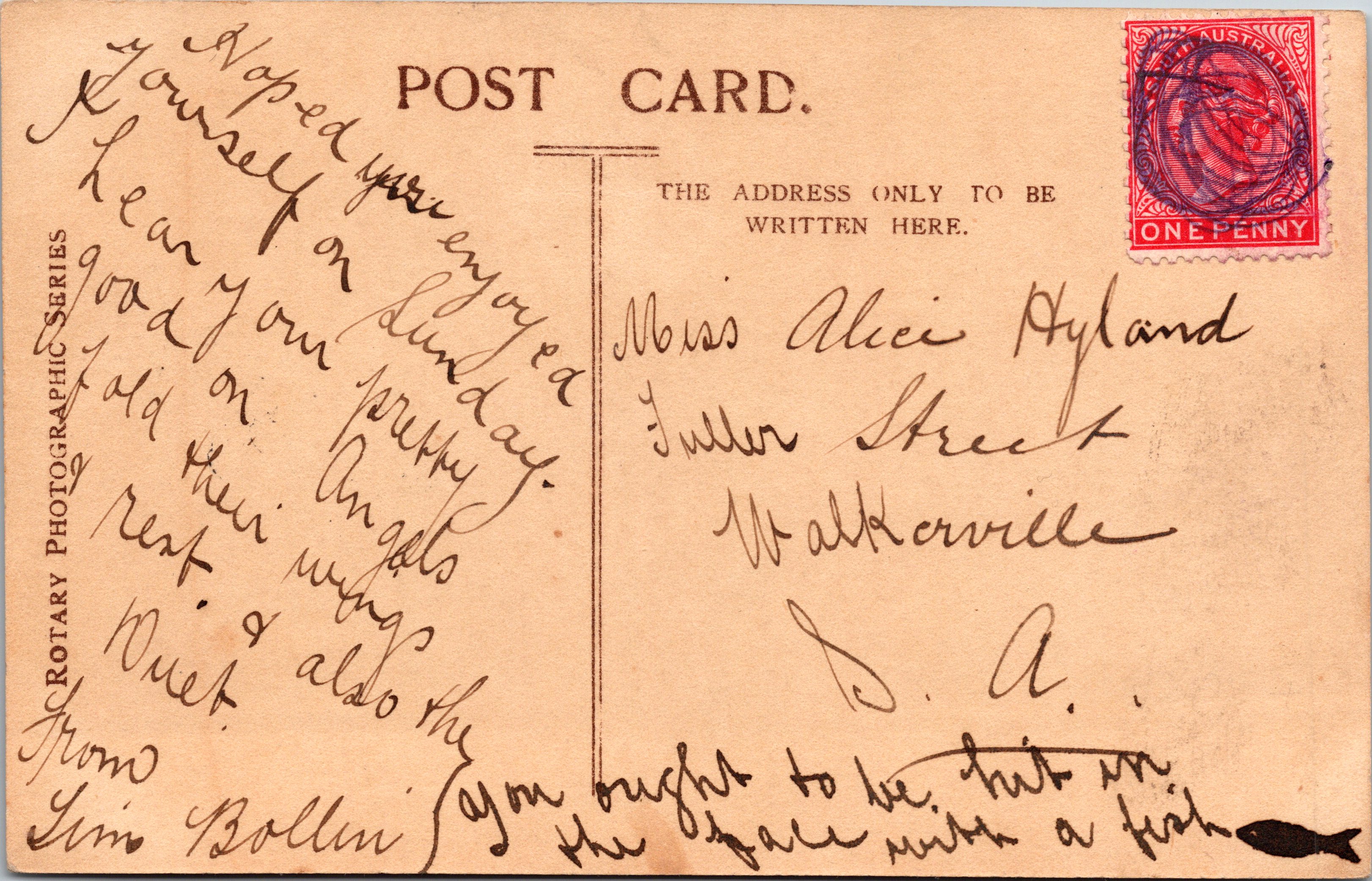
Postcard 9 has a notable message. The card was written from a man to a woman. The last line of the gentleman’s note states “You ought to be hit in the face with a fish”. He topped it off by drawing a fish at the end of the sentence. He certainly must have been joking but the comment is quite odd by today’s standards. The card was published by Rotary Photo as part of a series (no.1965D). (SOLD)
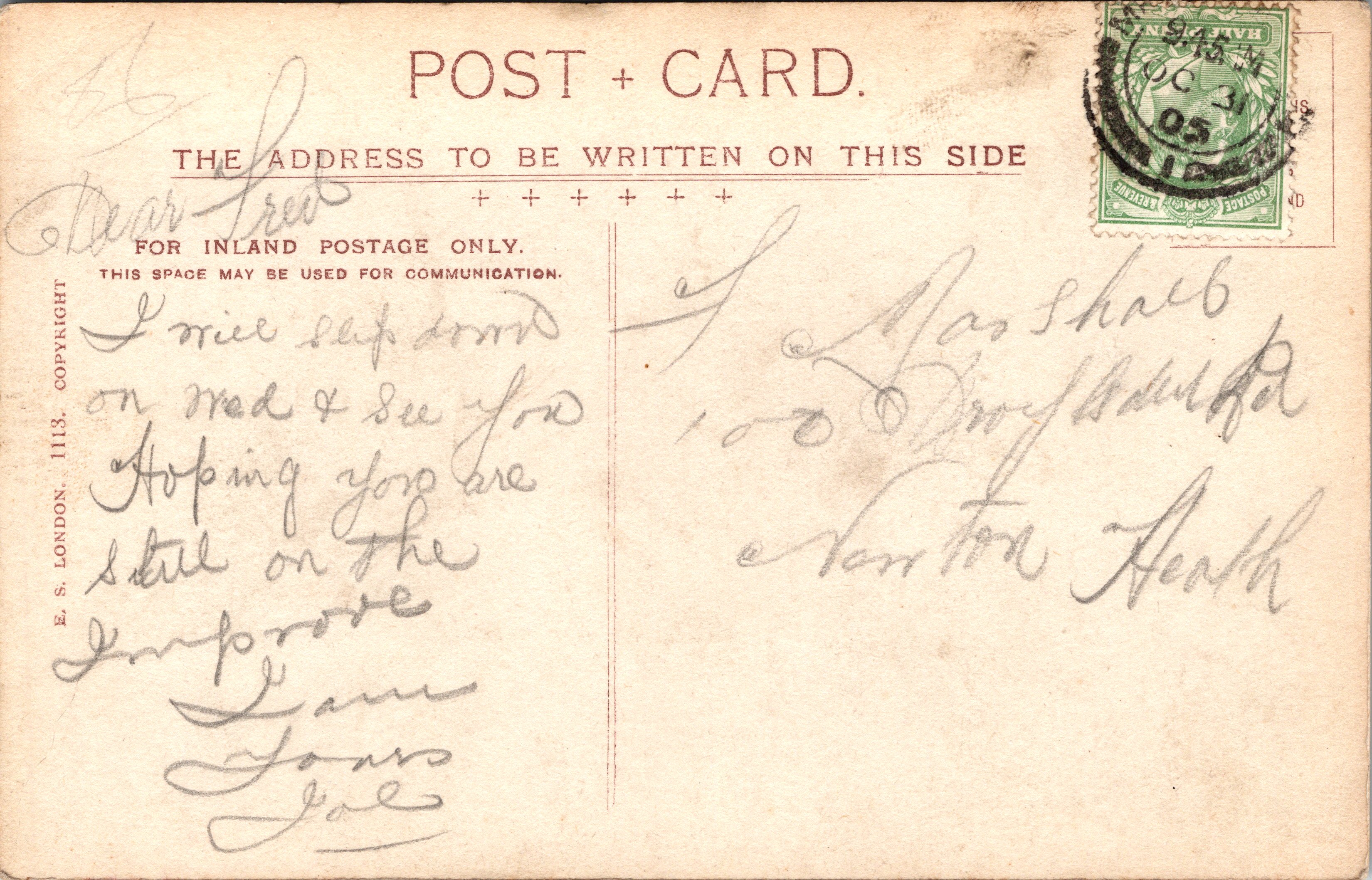
Postcard 10 is uncommon. The card was published by E. S. London as part of a series (no.1113). (SOLD)
Postcard 11 is rare. The card was published by RotoPhot as part of a series (no.0175). The card is beautifully hand colored. (SOLD)
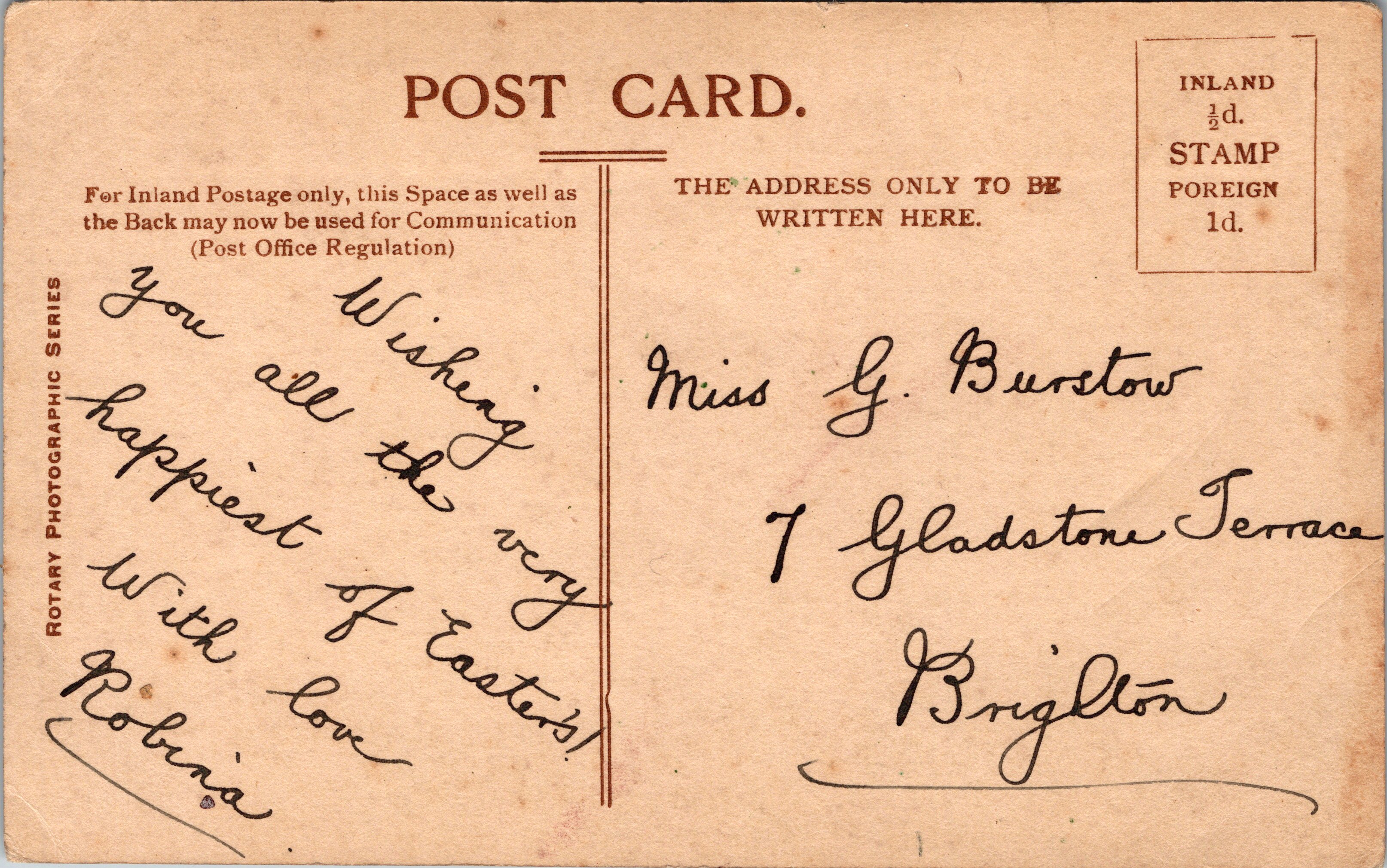
Postcard 12 is uncommon and the card was published by Rotary Photo as part of a series (no.198 V)), The message on this postcard is an Easter greeting.
Postcard 13 demonstrates that Miss Fealy was fashionable and quite beautiful. Her photo postcards were very popular and collectable during her era, as well as today. This card has a 1904 postmark.It was published by Rotary Photo as part of a series (no.198D), (SOLD)
Postcard 14 was published by J. Beagles 7 Co. as part of a series (no.365H). Miss Fealy’s photo portrait was taken by esteemed celebrity photographers, W & D Downey. The uncommon postcard is of British origin. (SOLD)
Postcard 15 was published by P. F. B. as part of a series (no.4037). P. F. B. is likely a Berlin firm named Paul Finkenrath. However, a second Berlin company named Paul Fink went by the inititials PFB which certainly creates some confusion among postcard collectors. This vintage postcard is uncommon. (SOLD)
Postcard 16 was published by Rotary Photo as part of a series (no.2381). (SOLD)
Postcard 17 is rare. The postcard offers a view of Miss Fealy petting a large dog. It appears to be some type of hound. Maude is flashing a pretty smile and is wearing a feathered hat and a plaid dress and jacket. The card was published by Rotary Photo as part of a series (no.1965A), The postcard is of British origin. (SOLD)
Postcard 18 is rare. The card was published by Rotary Photo as part of a series (no.1861F), The postcard is of British origin and it’s postmark is appears to be from 1906. (SOLD)
Postcard 19 is rare. The card was published by Rotary Photo as part of a series (no.389C). Miss Fealy’s photograph was taken by the esteemed W & D Downey studio. The postcard is of British origin and it’s postmark is from 1905. (SOLD)
Postcard 20 is rare. The card was published by the Schofield Photographic Series (no.428). Three actress portrait postcards from this series can be found in England’s National Portrait Gallery. Miss Fealy’s photograph was taken by the esteemed Johnston & Hoffman studio. The postcard is of British origin and it’s postmark is from 1905. (SOLD)
Postcard 21 is of British origin and is generously hand tinted. The card is identical to Postcard 16 except for the two different hand tintings. (SOLD)
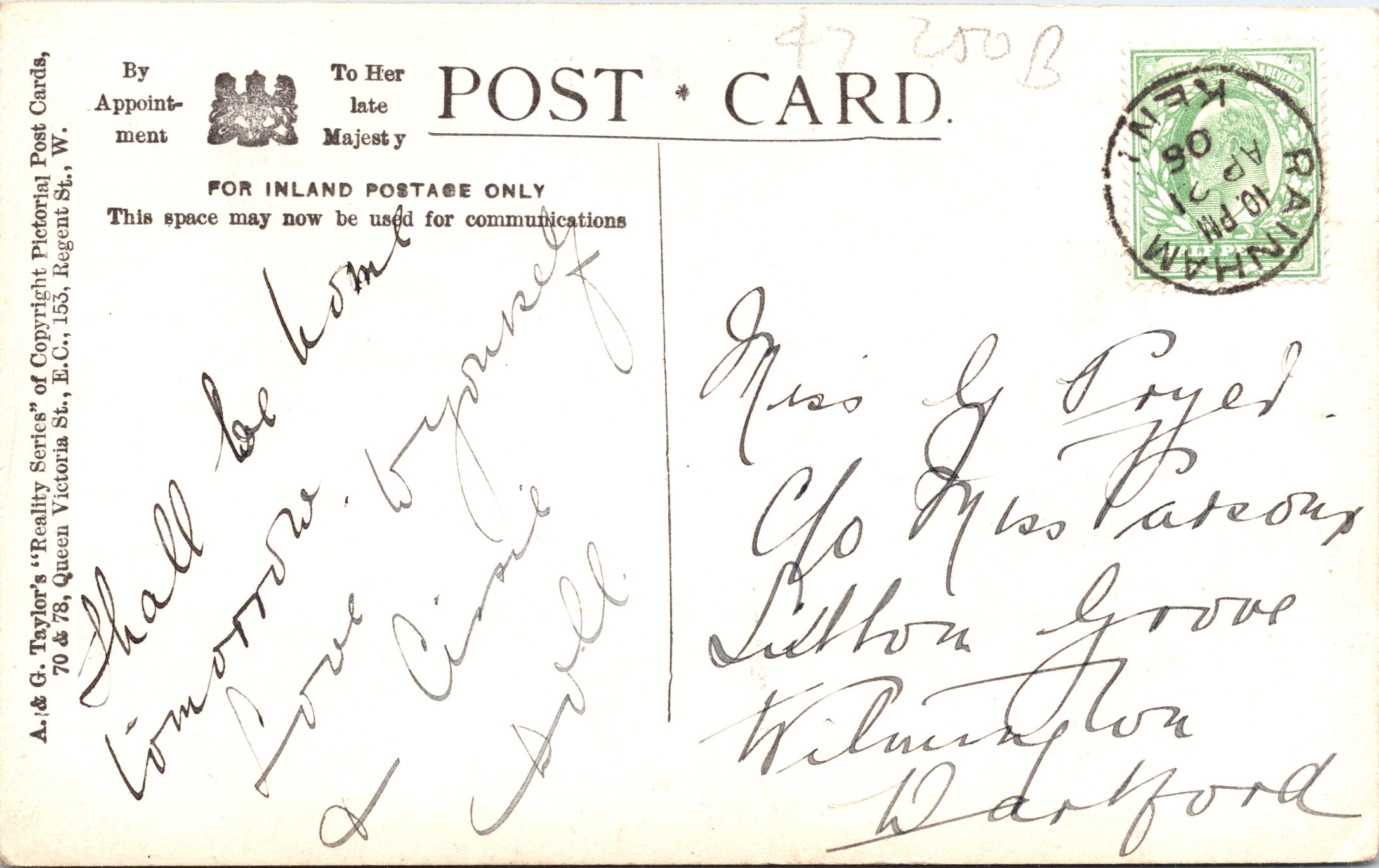
Postcard 22 is uncommon. The card was published by A & G Taylor as part of the “Reality Series”. Miss Fealy’s portrait was taken by the Bassano studio. The postcard is of British origin. (SOLD)
Postcard 23 is uncommon. The card was published by J. Beagles & Co. as part of a series (No.365). The postcard is of British origin (SOLD)
The photo portrait on Postcard 24 was taken by the Johnston & Hoffmann studio. The card is an example of an “Enamelette Postcard”. (SOLD)
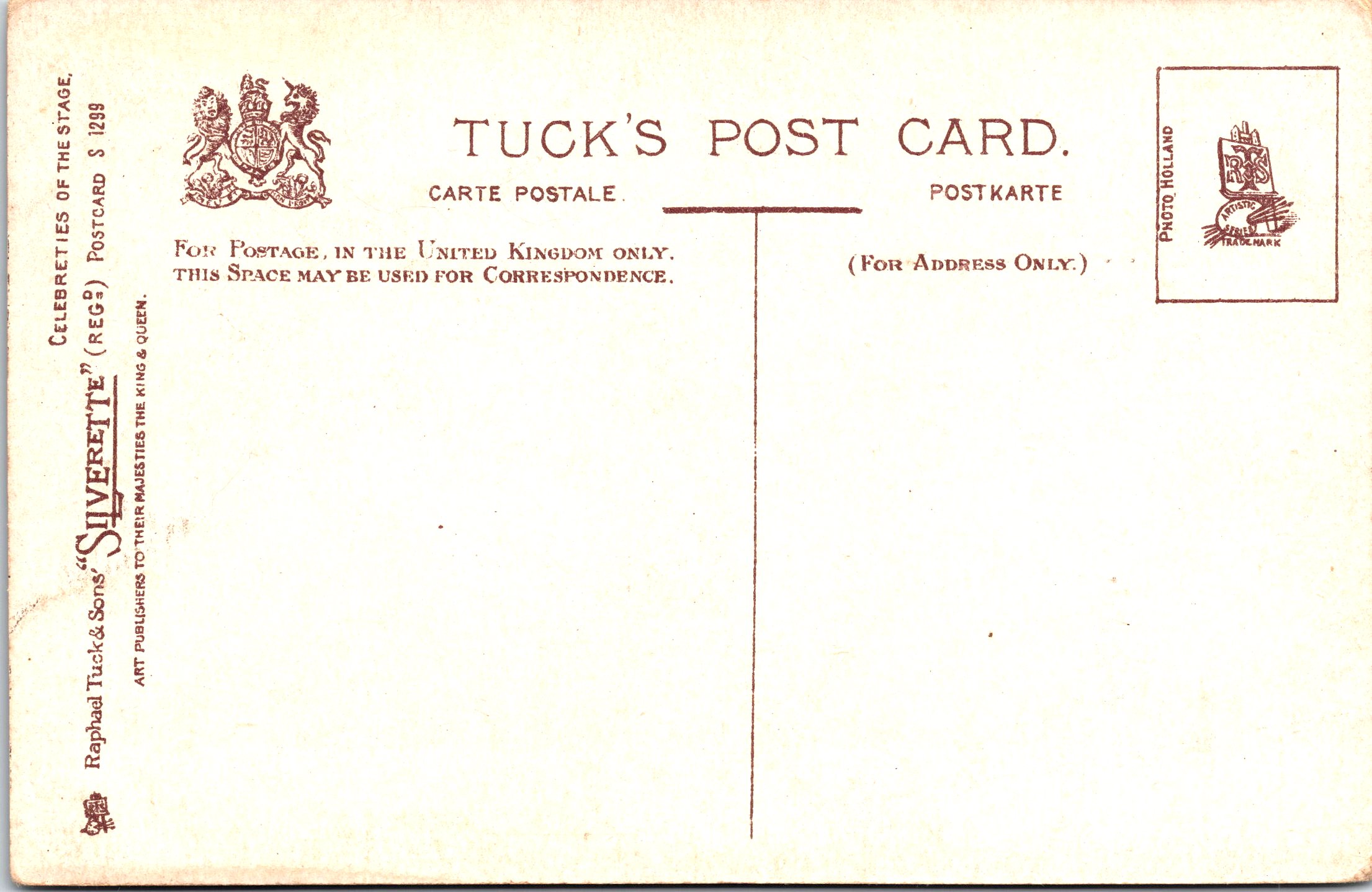
Postcard 25 is color tinted and was published by Raphael Tuck as part of the “Celebrities of the Stage” series (no.S1299). The card is an example of an “Silverette Postcard”. (SOLD)
Postcard 26 is an uncommon color tinted vintage lithographic card. It was published by Rotary Photo as part of a series (no.198U). (SOLD)
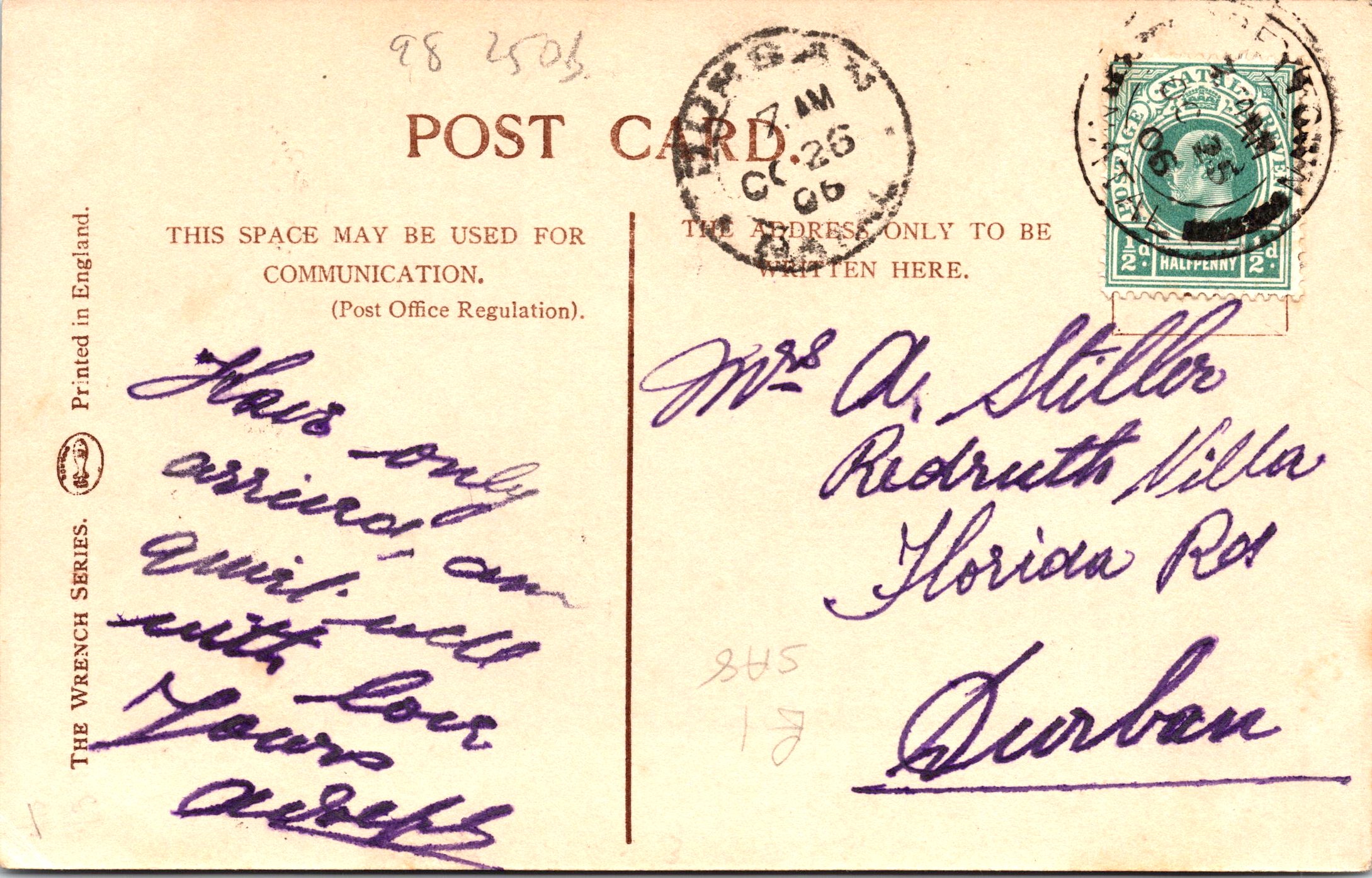
Postcard 27 is uncommon. The card was published as part of the Wrench series (No.10449). Miss Fealy’s portrait was taken by the famous female celebrity photographer, Lallie Charles. The postcard is of British origin and has a 1906 postmark. (SOLD)
Postcard 28 was published by Rotary Photo as part of a series (No.198L). Miss Fealy’s photograph was taken by the Johnston & Hoffmann studio. (SOLD)
Postcard 29 was published by Giesen Brothers & Co. as part of a series (no.K46). The photographer of Maude’s portrait was the Hutchinson & Svendsen studio. The National Portrait Gallery asserts that this pair of photographers were active in London between 1905 and 1906. (SOLD)
Postcard 30 was published by Giesen Bros. (GB).Miss Fealy’s photograph was taken by R. Thiele. Reinhold Thiele is known for his photographical talent. Thiele (1856-1921) also used the name “Karl Anton”. Seven of his photo portraits can be found in Great Britain’s National Portrait Gallery. He was born in Germany and learned about photography there. He came to London in 1878 and after a stint with photographer, William Henry Prestwich, he was hired by the London Stereoscopic Company (1880). In 1894, he established a studio known as Simmons & Thiele. Initially, Thiele specialized in photographing football teams. He is considered to be one of the early press photographers. Later, he operated a studio in London. He photographed many theatre stars. This postcard is of British origin. (SOLD)
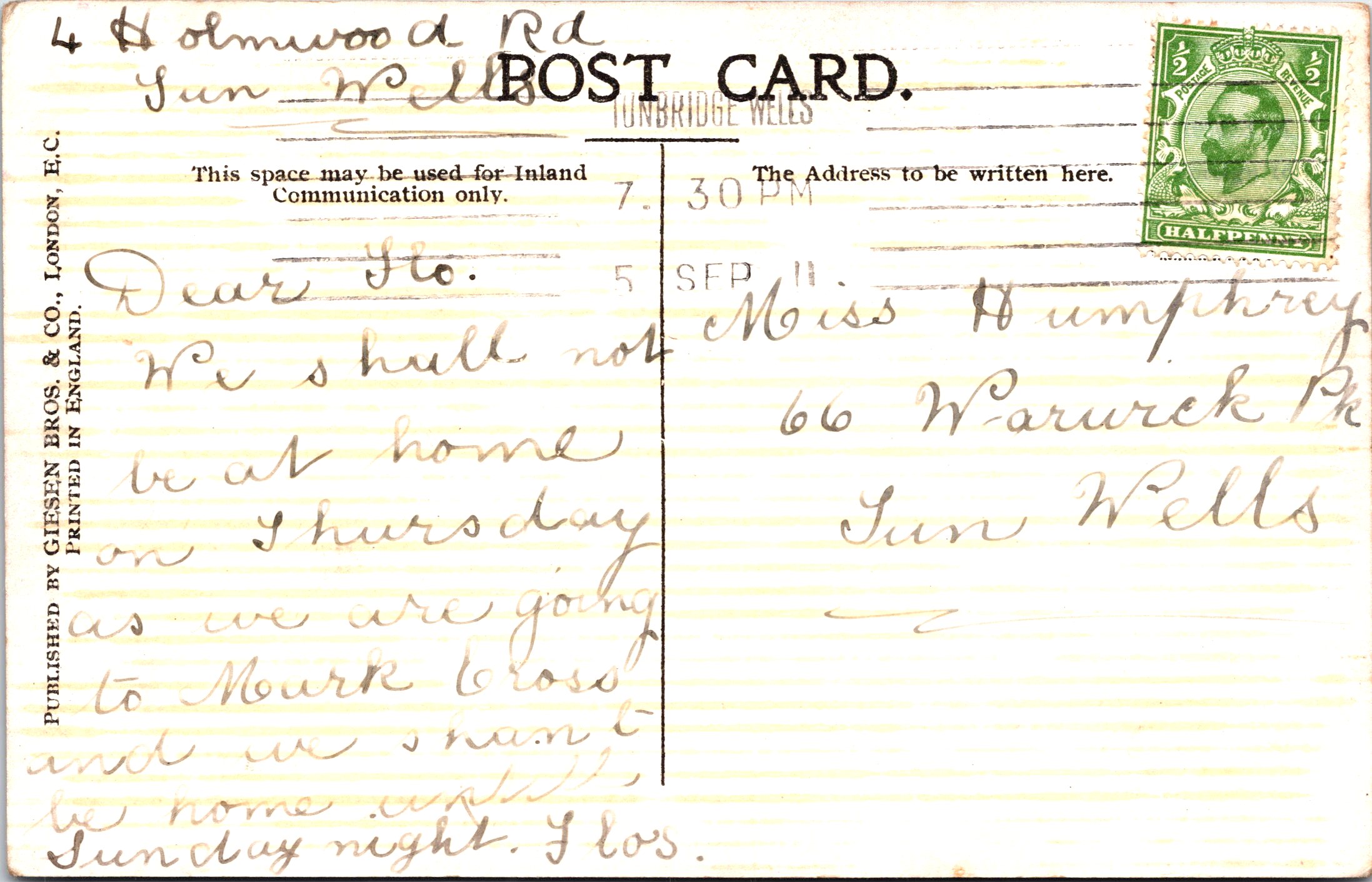
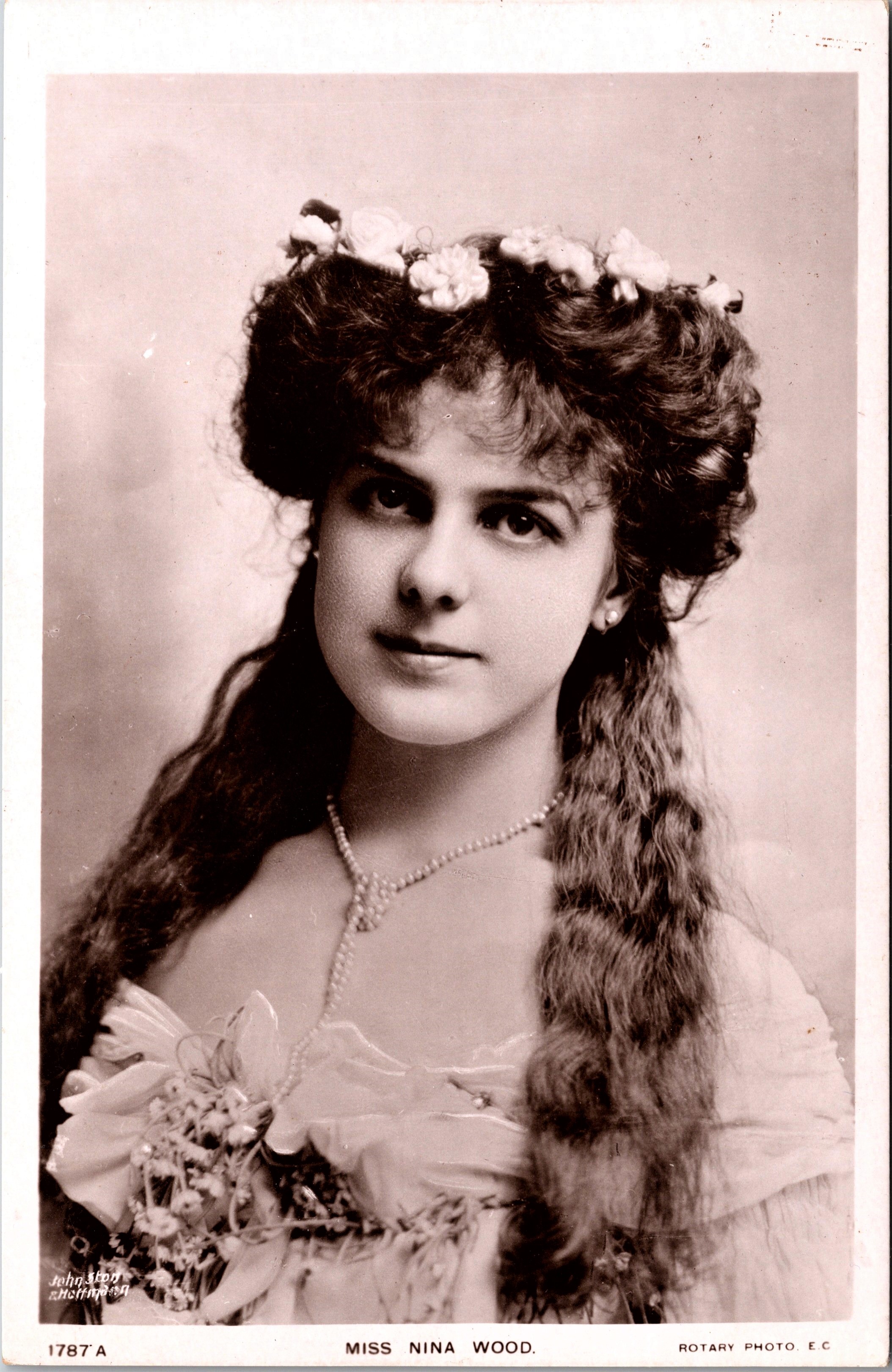
This vintage real photo postcard features pretty stage actress Miss Nina Wood. She is wearing flowers in her hair. Note the length of her hair. The postcard was published by Rotary Photo as part of a series (No. 1787A). Miss Woods photograph is by the Johnston & Hoffman studio. Theodore Julius Hoffmann and P. A. Johnston established a commercial photography studio in Calcutta (1882) and Darjeeling (1890). They also operated a studio in Simla. Johnston and Hoffmann’s photography business was the second largest commercial photography studio in India in that period. Many of their images were of North and Northeast India as well as Sikkim and Nepal. Johnston & Hoffmann produced many photographs of actors and actresses. It is certain that these performers did not travel to India to have their photo taken. It seems likely that Johnston & Hoffmann also had a studio in England during some part of their careers. This postcard is unposted and in very good condition (see scans).
Buy this Vintage Real Photo Postcard (includes shipping within the US) #5114
To purchase this item, click on the Pay with PayPal button below
$24.00
Buy this Vintage Real Photo Postcard (includes International shipping outside the US) #5114
To purchase this item, click on the Pay with PayPal button below
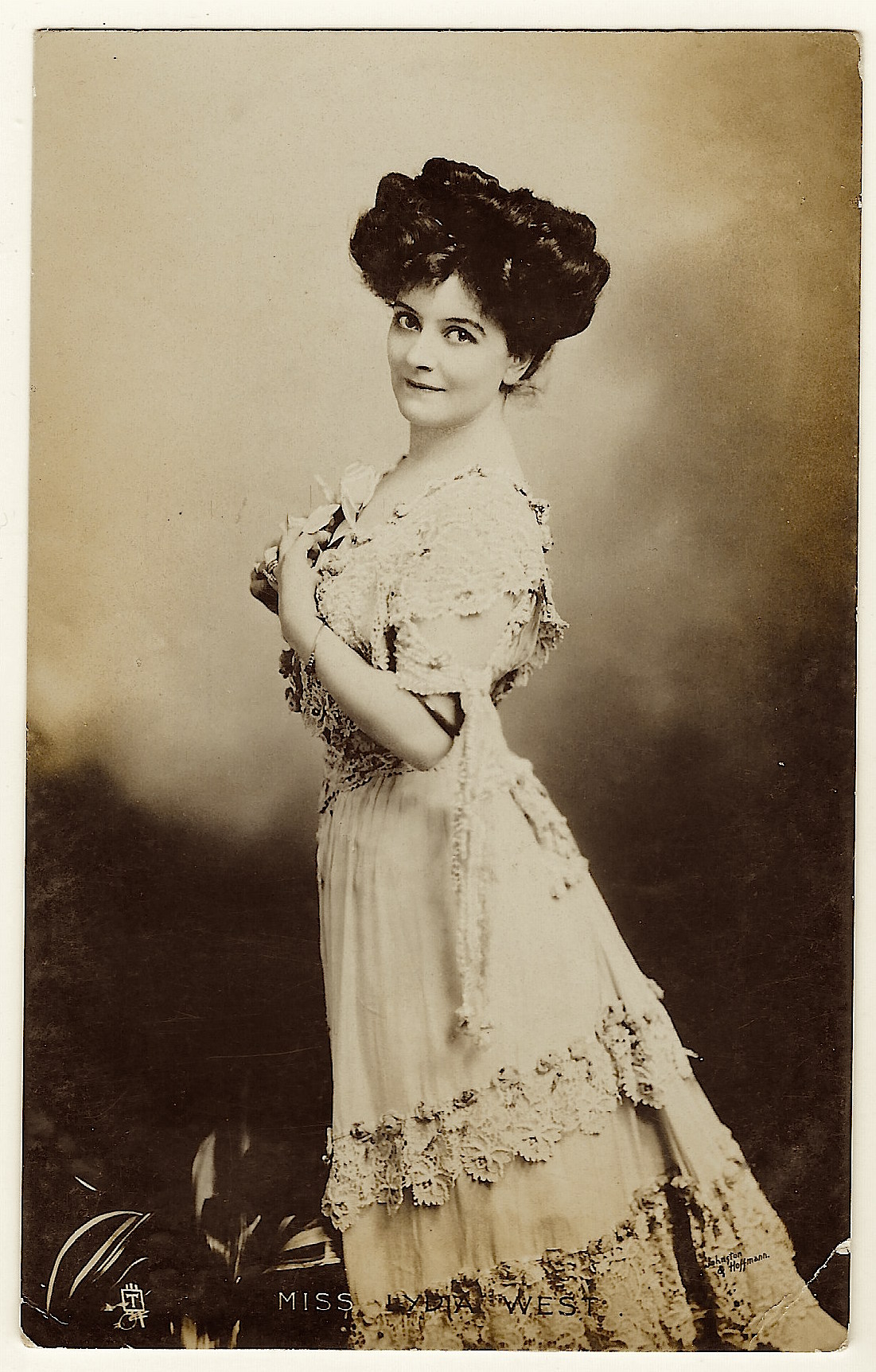
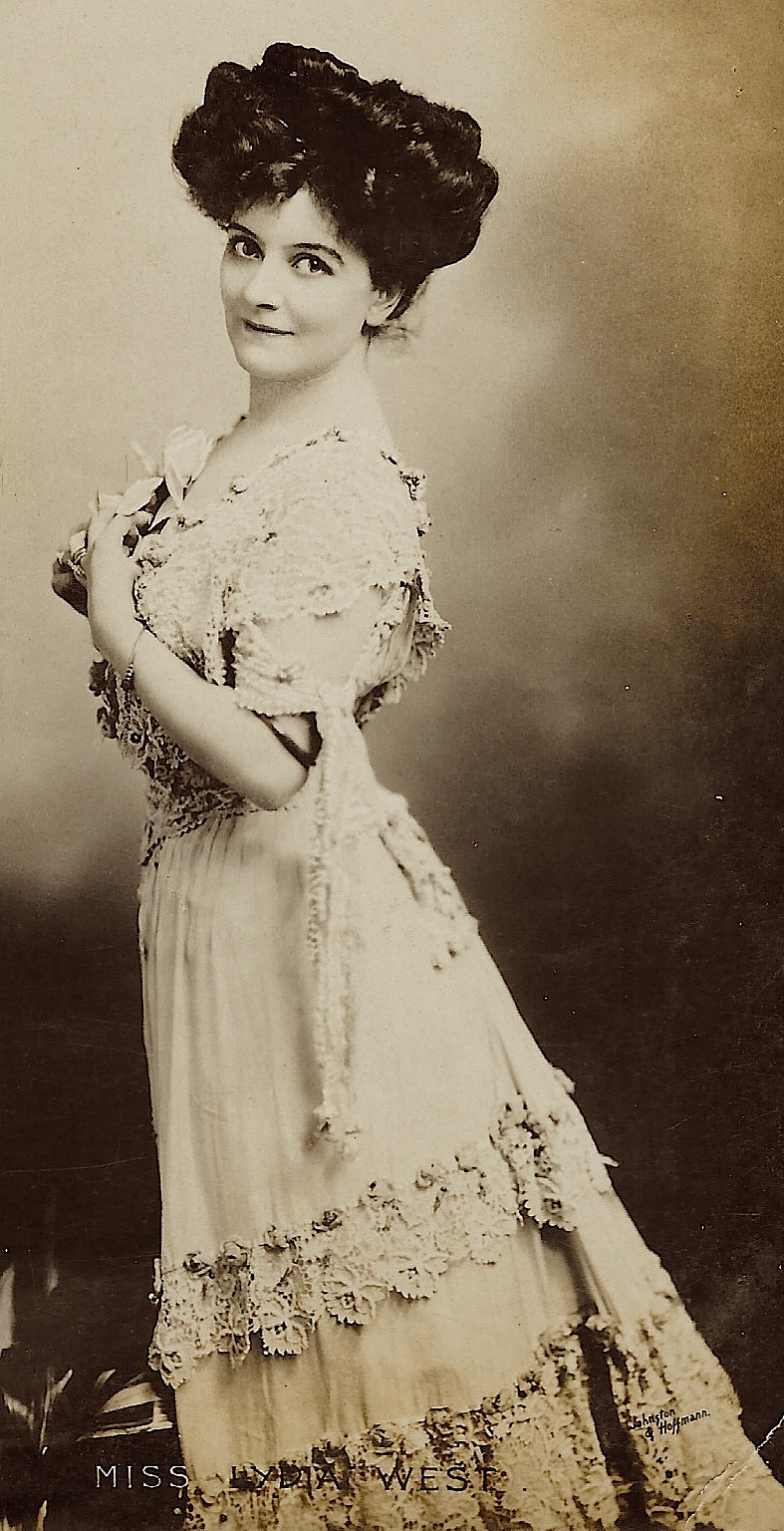
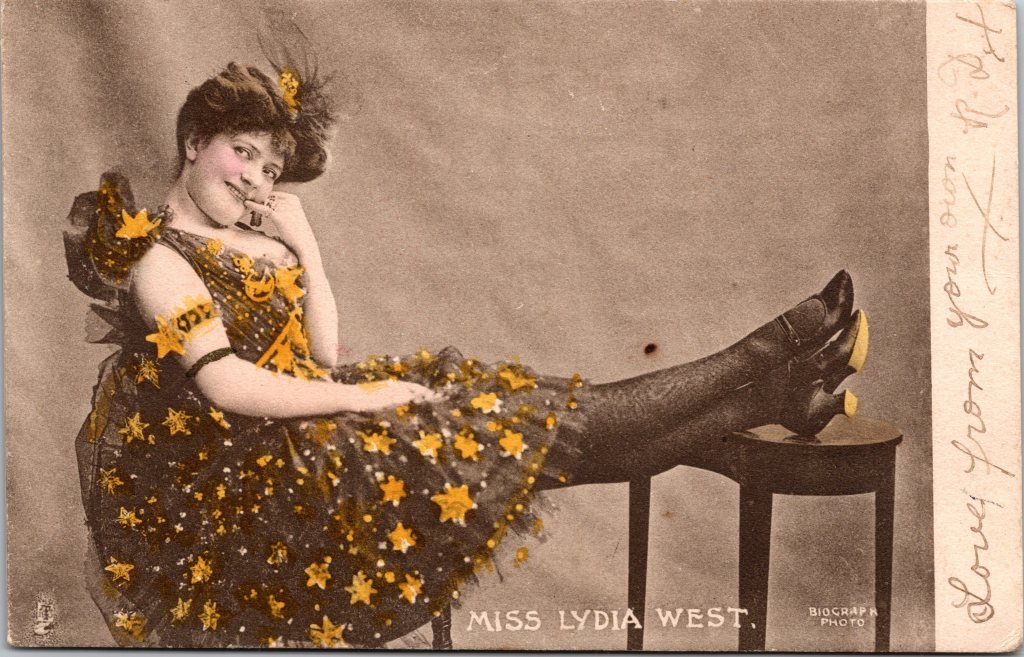
These vintage real photo postcards feature theatre actress, Lydia West. I believe she is British but I am unable to confirm her nationality. In fact, I could find little information about this pretty stage performer. I was able to locate a photograph of Miss West, in costume for her performance in the musical comedy, “Florodoro” (1899). The photo appeared in the theatre magazine, “Play Pictorial”. Research also discovered a Play Program for a play in which West was part of the cast. She played one of twelve butterflies in “My Darling” (1907). The play was co-written by actor, Seymour Hicks, and was produced at the Hicks Theatre. Marie Studholme, a very well known stage actress was in the production.
Postcard 1 was published by Rafael Tuck & Sons. The card was part of the “Celebrities of the Stage” series (no. G 1028). The photo studio that produced West’s portrait was Johnston & Hoffmann. The postcard is in fair condition (see scans) and is priced accordingly. This postcard’s postmark reveals that the card was mailed in 1907. SOLD
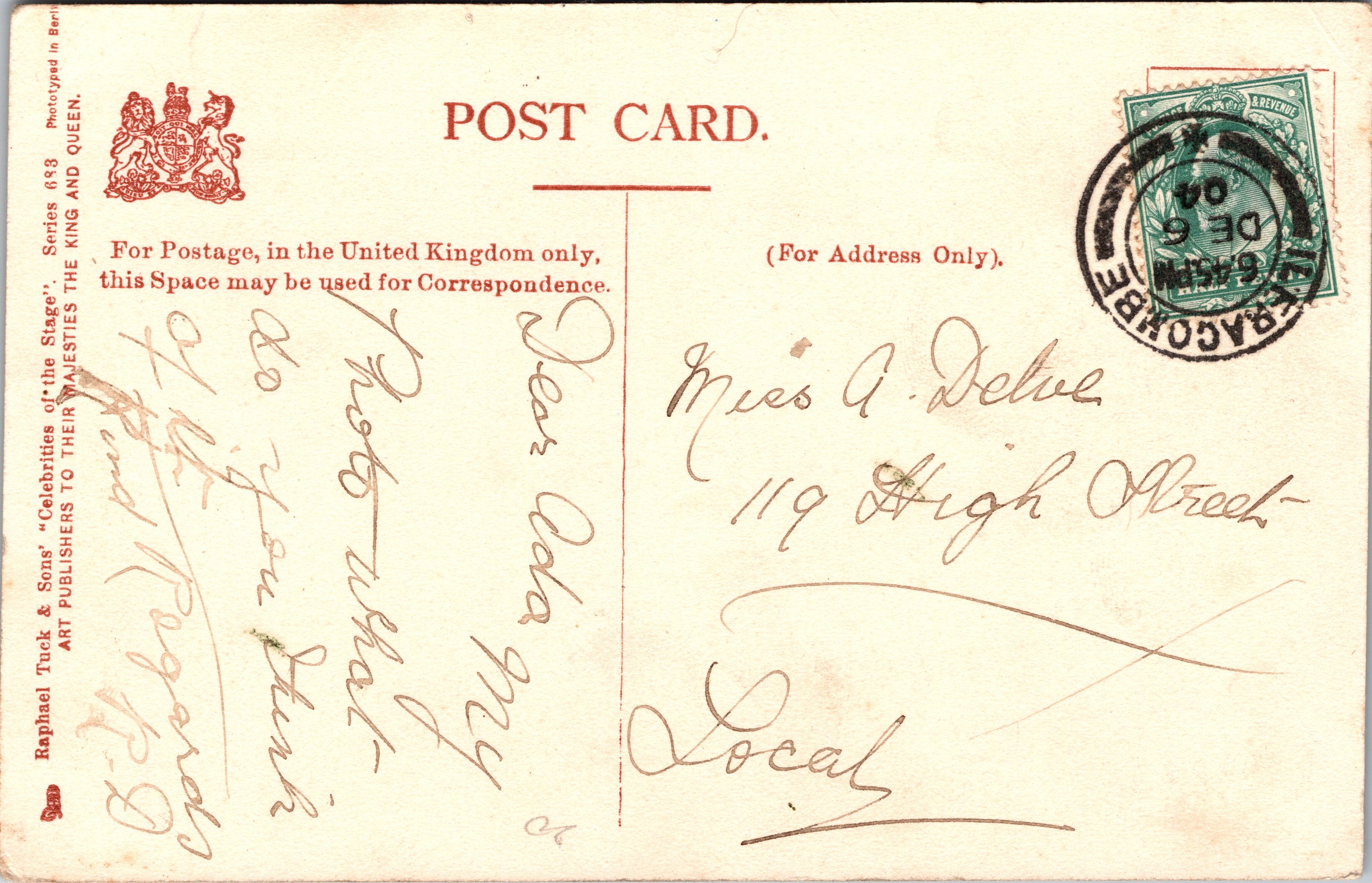
Postcard 2 This postcard was published by Rafael Tuck & Sons. The card was part of the “Celebrities of the Stage” series (683). The photo studio that produced West’s portrait was Biograph Photo. The card is hand colored. The postcard is in good condition (see scans). This postcard’s postmark reveals that the card was mailed in 1904.
Buy this Vintage Real Photo Postcard (includes shipping within the US) #3937
To purchase this item, click on the Pay with PayPal button below
$8.74
Buy this Vintage Real Photo Postcard (includes International shipping outside the US) 3937
To purchase this item, click on the Pay with PayPal button below
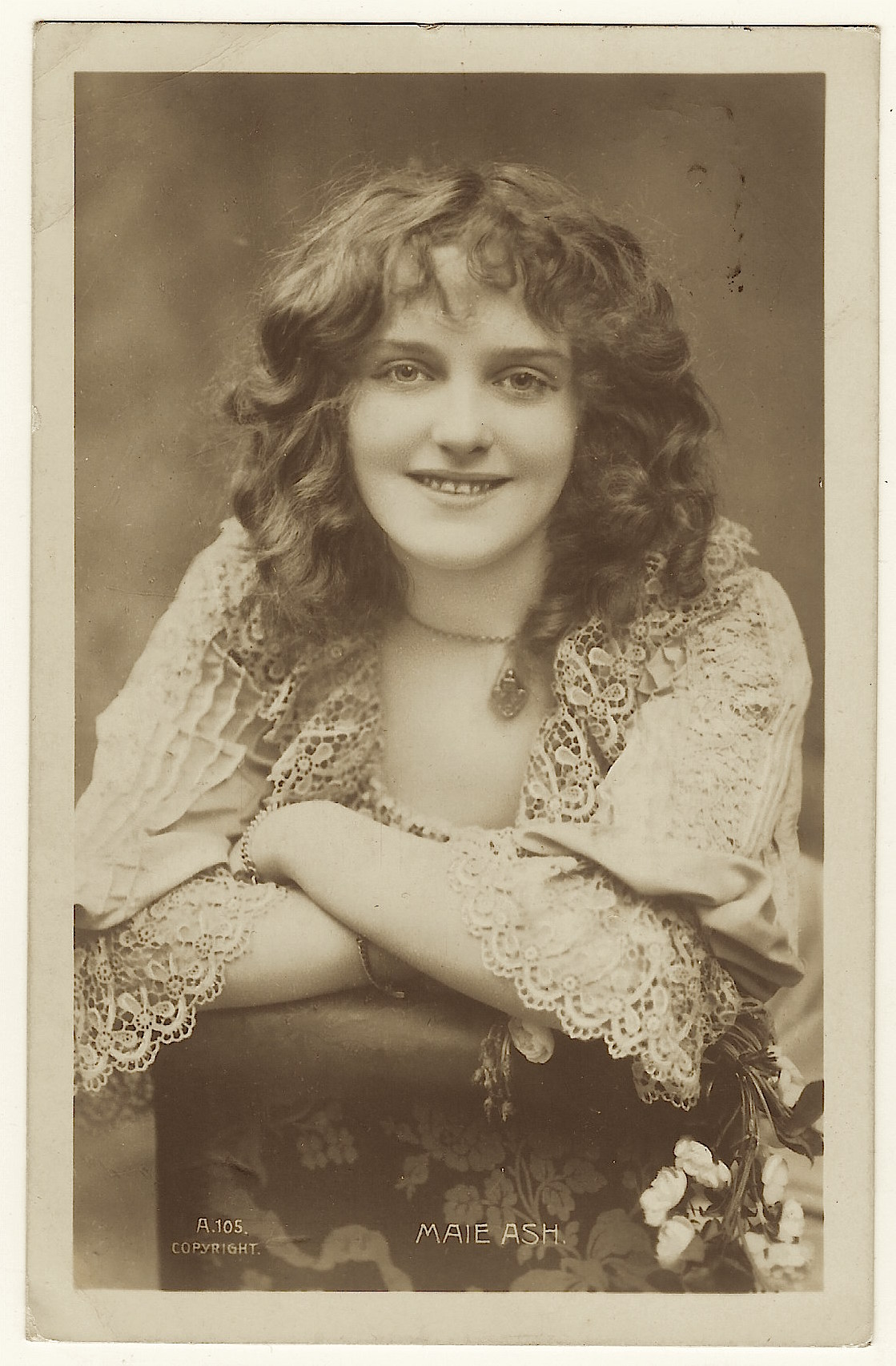
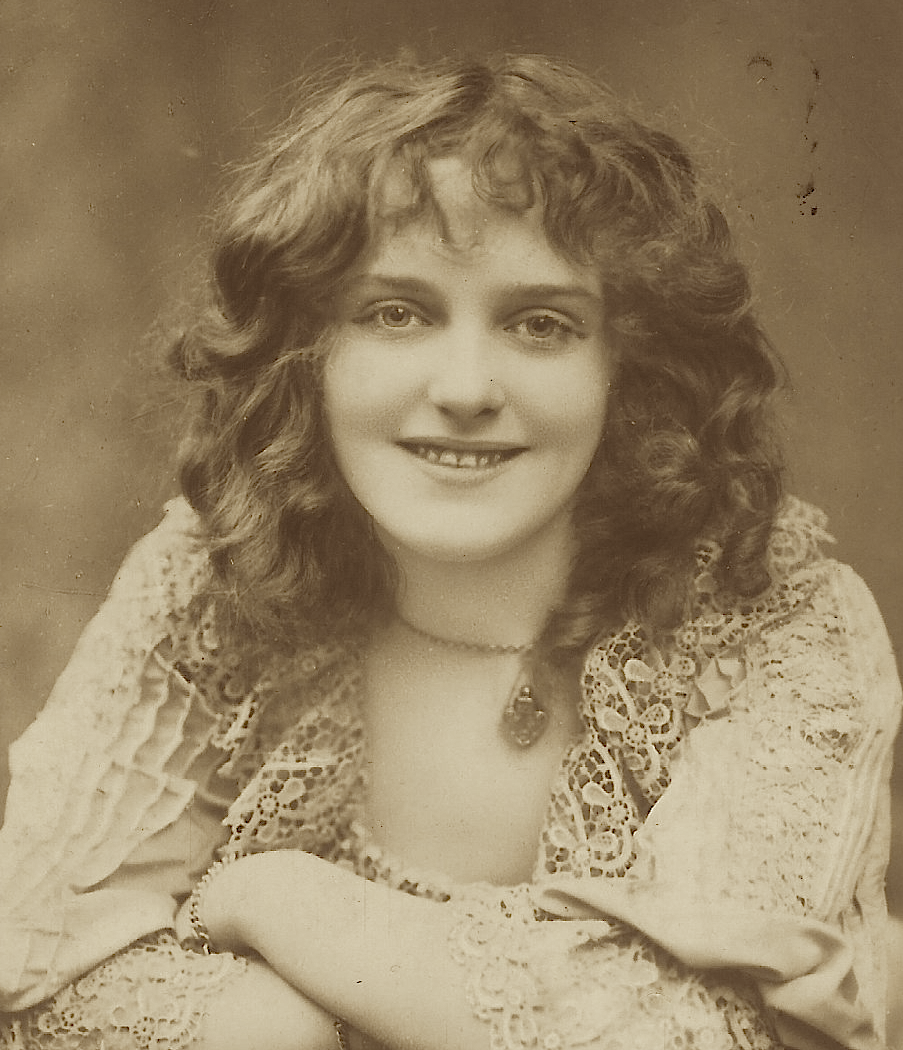
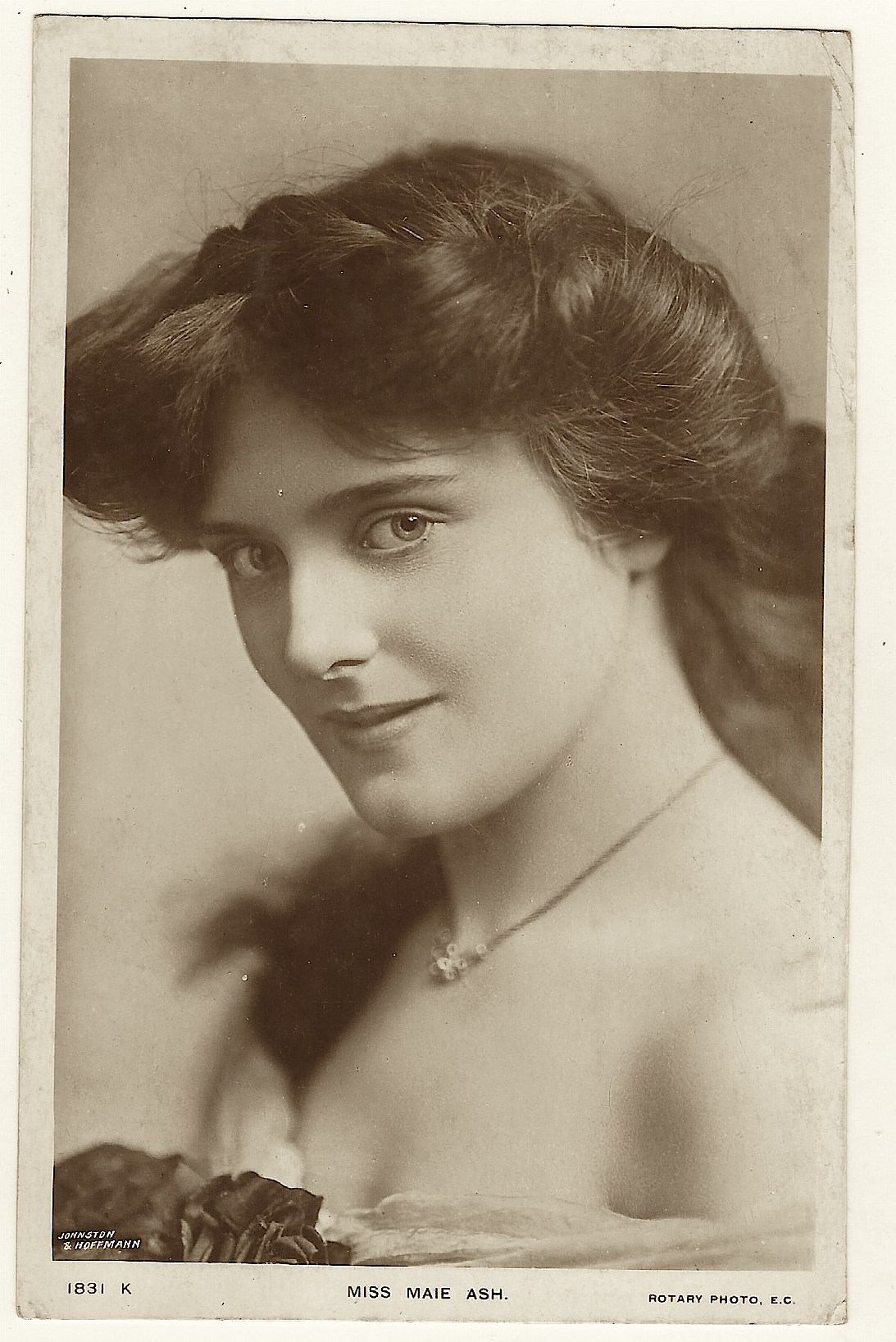
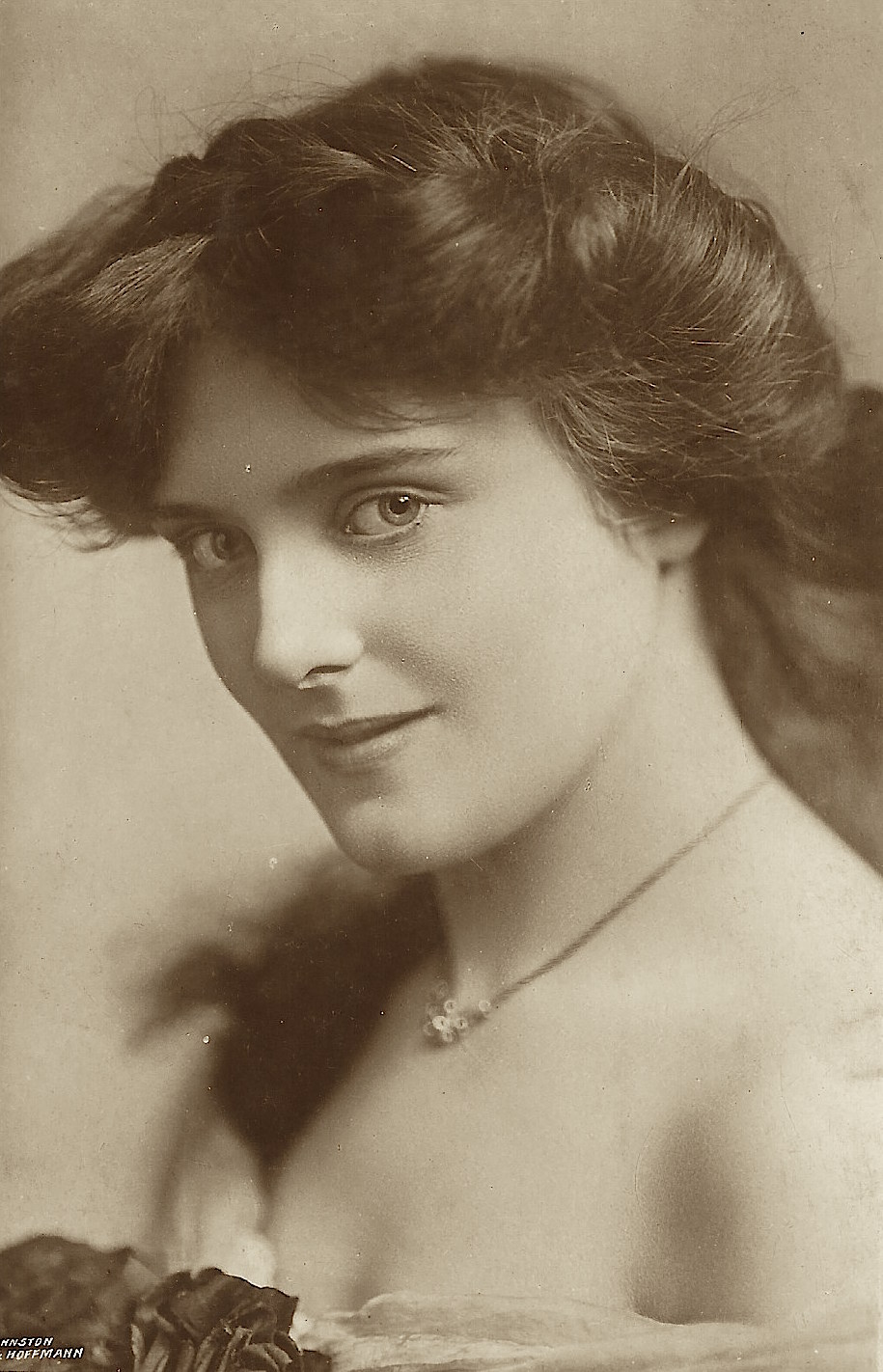
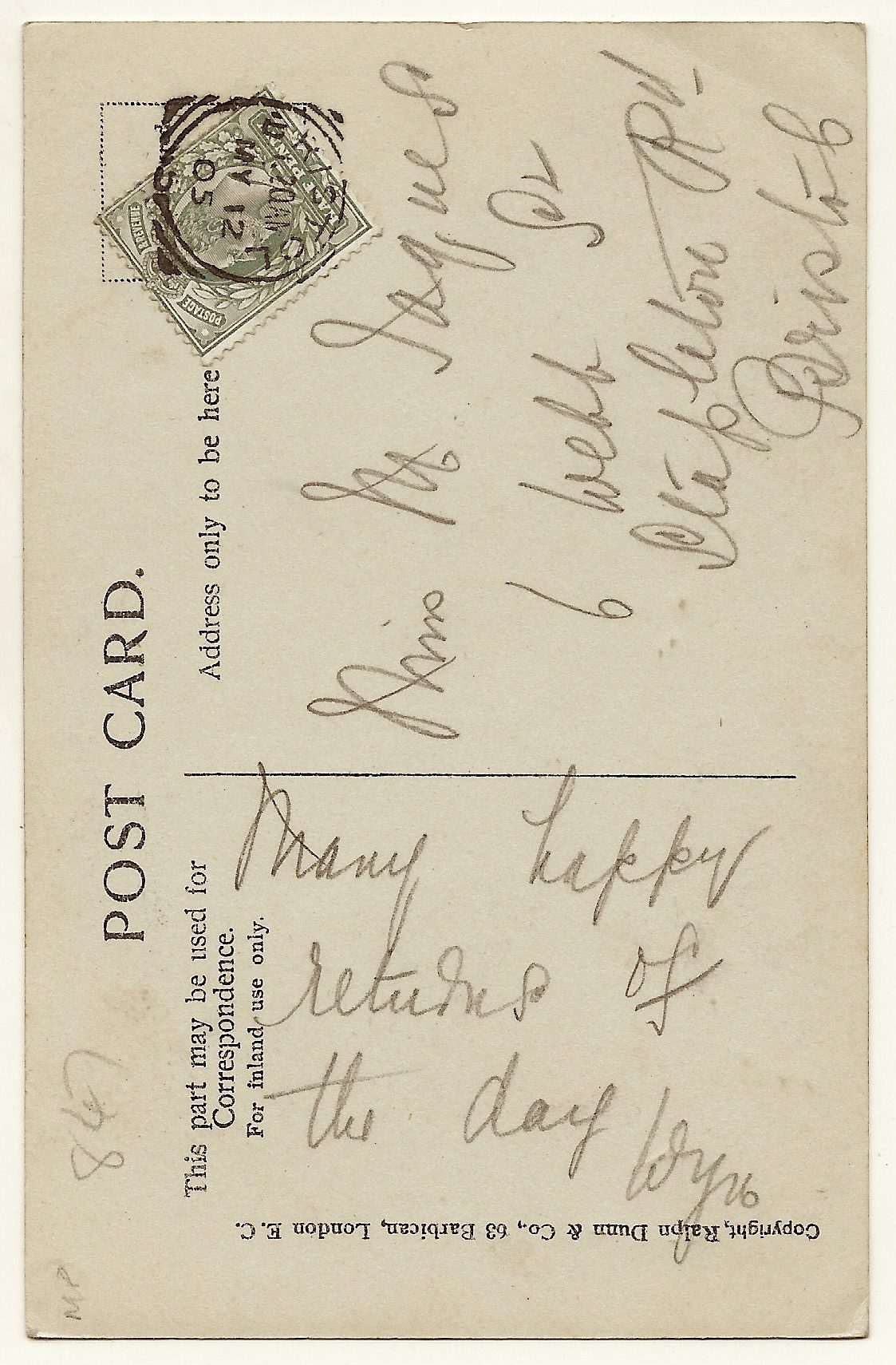
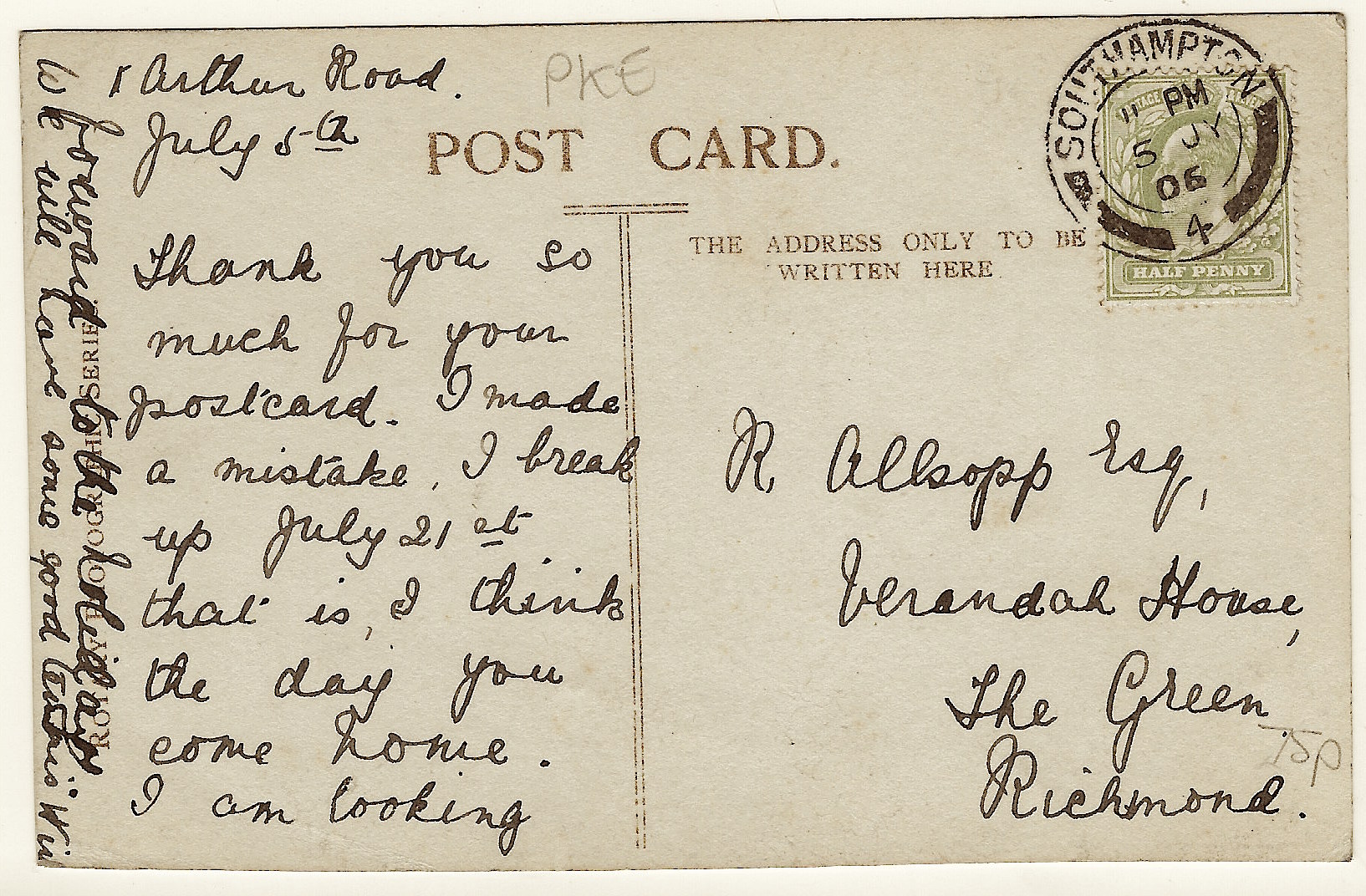
These two real photo postcards features stage beauty, Maie Ash (1888-1923). She was an English comedy actress and dancer. She made her London debut in 1902 at Shaftesbury Theatre. The next year she played the title role in Cinderella in Southampton. Other appearances include “Goody Two Shoes” (1904), “Yellow Fog Island” (1907), and “My Darling” (1907). Ash played Miss Gibbs in “Our Miss Gibbs” (1911). A reviewer of the play, writing for the “Playgoer Weekly”, suggests that Ash was charming in her role and that her singing voice resembled that of popular actress, Miss Ellaline Terriss. The reviewer added that her singing and dancing brought the audience much pleasure and that she demonstrated herself to be a “most finished musical comedienne”. She married actor Stanley Brett in 1909. He was the brother of celebrated actor Seymour Hicks. The pair divorced in 1913, and in 1915, she married comedian Fred Allandale. Apparently, Miss Ash and Mr. Allandale didn’t wait for their divorces before getting involved romantically. Ash was named by Allandale’s wife and Allandale was named by Ashe’s husband in their respective divorce petitions. So much for impulse control. Ash was the sitter for six portraits in Britain’s National Portrait Gallery.
Postcard 1 features a fetching portrait of Maie Ash. She is wearing a beautiful smile and has pretty eyes. The card was published by Ralph Dunn & Company which operated in London, England. The post card is part of a series (no. A 105). The card has a 1905 postmark. The message on this postcard wishes the recipient “Many happy returns of the day”. According to Wikipedia, this 18th century greeting is meant to offer the hope that each happy day is repeated by other happy days, The saying was often used on birthdays, and in particular, as a response to “Merry Christmans” and “Happy New Year” wishes. The word “returns” also was used to wish a person that their day yields much happiness.(SOLD)
Postcard 2 presents a close-up photograph of Miss Ash. The postcard is a bit risque for it’s time. Her low cut dress and her coy expression accentuate the beauty of the alluring actress. This postcard was published by the Rotary Photo Company as part of their “Rotary Photographic Series (No. 1831K)”.This photo of Maie Ash was taken by the Johnston & Hoffmann studio. Theodore Julius Hoffmann and P. A. Johnston established a commercial photography studio in Calcutta (1882) and Darjeeling (1890). They also operated a studio in Simla. Johnston and Hoffmann’s photography business was the second largest commercial photography studio in India in that period. Many of their images were of North and Northeast India as well as Sikkim and Nepal. Johnston & Hoffmann produced many photographs of actors and actresses. It is certain that these performers did not travel to India to have their photo taken. It seems likely that Johnston & Hoffmann also had a studio in England during some part of their careers. It is also possible that there were to separate studios that coincidentally shared the same name. This postcard was postmarked in 1906 in Southampton, England. The postcard is in very good condition (see scans). (SOLD)
This cabinet card offers a fascinating portrait of a couple dressed for a costume party occurring in India. The couple are either in the country on holiday or perhaps the man is assigned to work there by his government. Inscriptions on the reverse of the photograph provide some explanatory information about the image. The photograph was taken 9/24/1894. The couple is wearing the costumes that they wore to a “Fancy dress ball” that was held on 9/20/1894. The gentleman is dressed as a Raja while the woman is dressed a a gypsy. She is holding a tambourine. This photograph was taken by a well know Indian studio. Theodore Julius Hoffmann and P. A. Johnston established a commercial photography studio in Calcutta (1882) and Darjeeling (1890). They also operated a studio in Simla. Johnston and Hoffmann’s photography business was the second largest commercial photography studio in India in that period. Many of their images were of North and Northeast India as well as Sikkim and Nepal. To view other photographs this pair of photographers, click on the category “Photographer: Johnston and Hoffmann”. (SOLD)
Calcutta, India is the location at which this cabinet card photograph was taken. The studio of Johnston and Hoffmann were the photographers. The reverse of the card has the stamp of Austrian lithographer, Bernard Wachtl of Vienna. Calcutta is the current capitol of the Indian state of West Bengal located in eastern India. However, at the time of this photograph and until 1911, during the British Raj (colonial rule), Calcutta was the capitol of India. It would be interesting to know why this gentleman was in India and something about his identity, but this information has been lost over time. Research reveals some information about the photographers. Theodore Julius Hoffmann and P. A. Johnston established a commercial photography studio in Calcutta (1882) and Darjeeling (1890). Their studio is considered to be the second largest commercial photography studio in India in that period. Many of their images were of North and Northeast India as well as Sikkim and Nepal. To view other cabinet cards from India, click on the category “India”. To view other works by Bernard Wachtl, click on the category “Lithographers: Bernard Wachtl”.

 POSTCARD 1
 POSTCARD 2
 POSTCARD 7 (SOLD)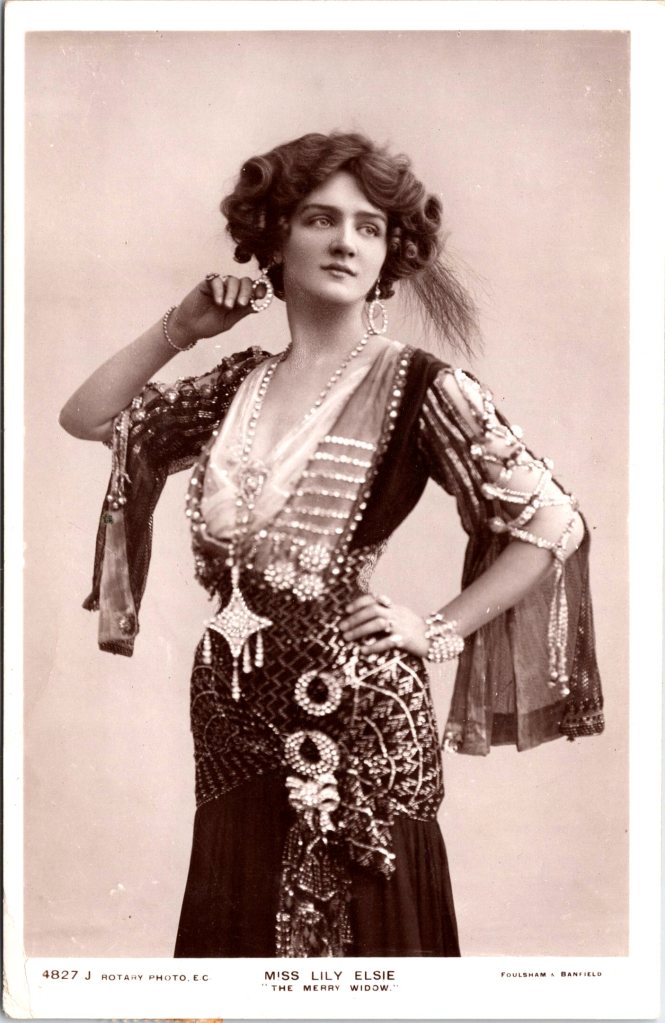

 POSTCARD 10 (SOLD)
 POSTCARD 11 (SOLD)

 POSTCARD 14 (SOLD)

 POSTCARD 17 (SOLD)
 POSTCARD 18 (SOLD)
 POSTCARD 21 (SOLD)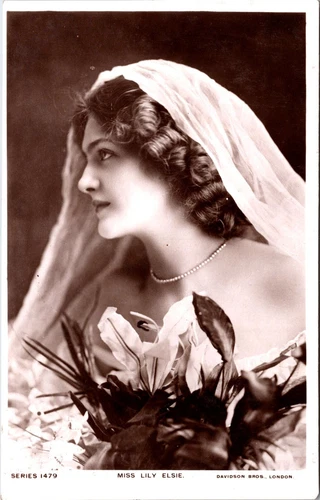
 POSTCARD 23 (SOLD)
 POSTCARD 24 (SOLD)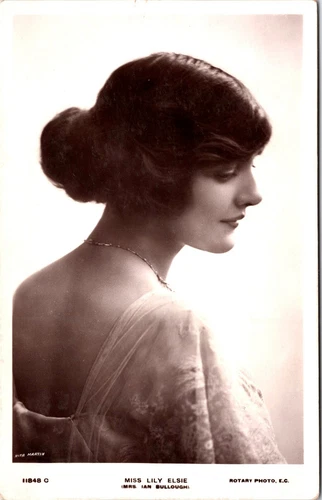
 POSTCARD 26 (SOLD)


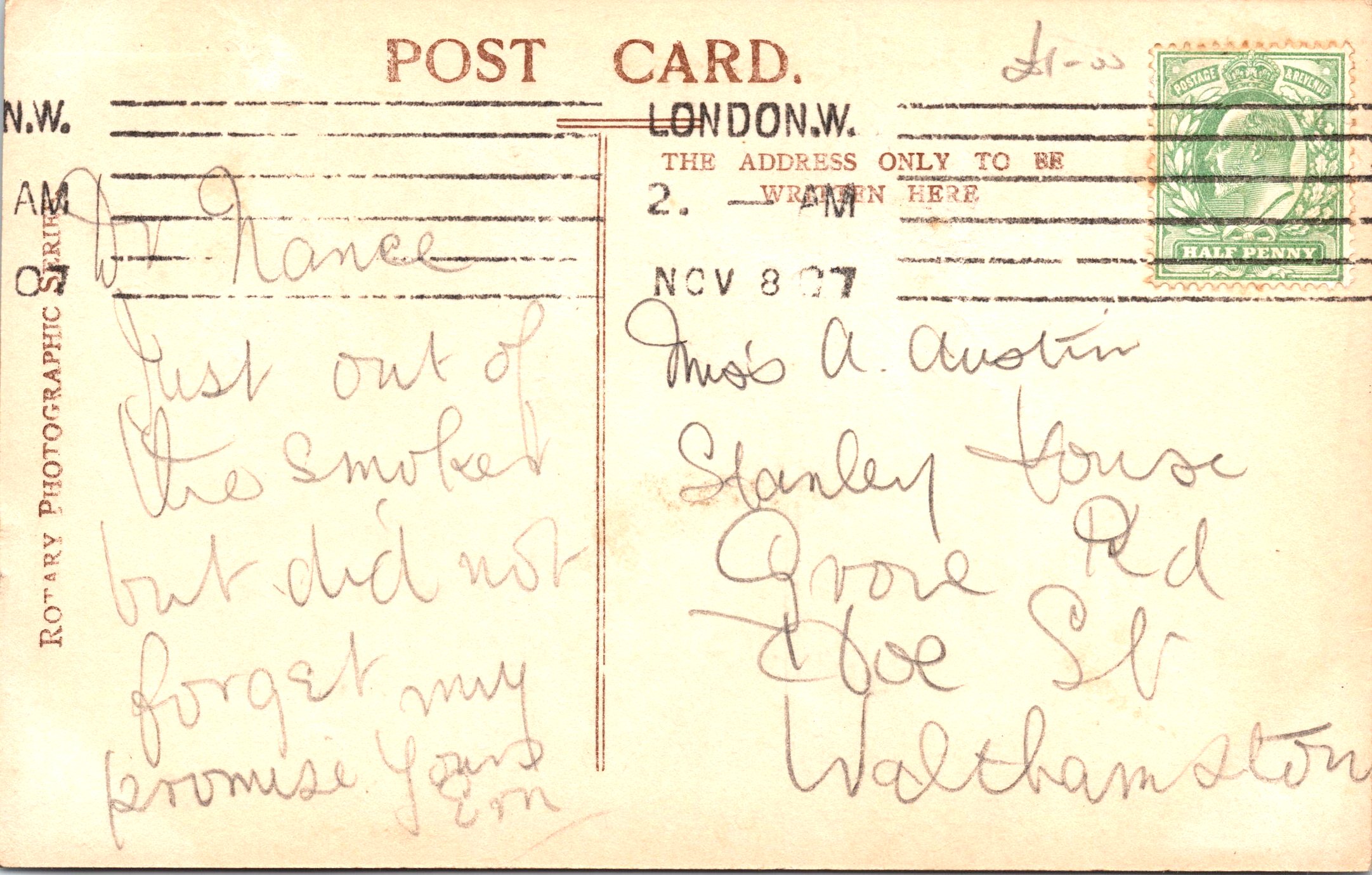
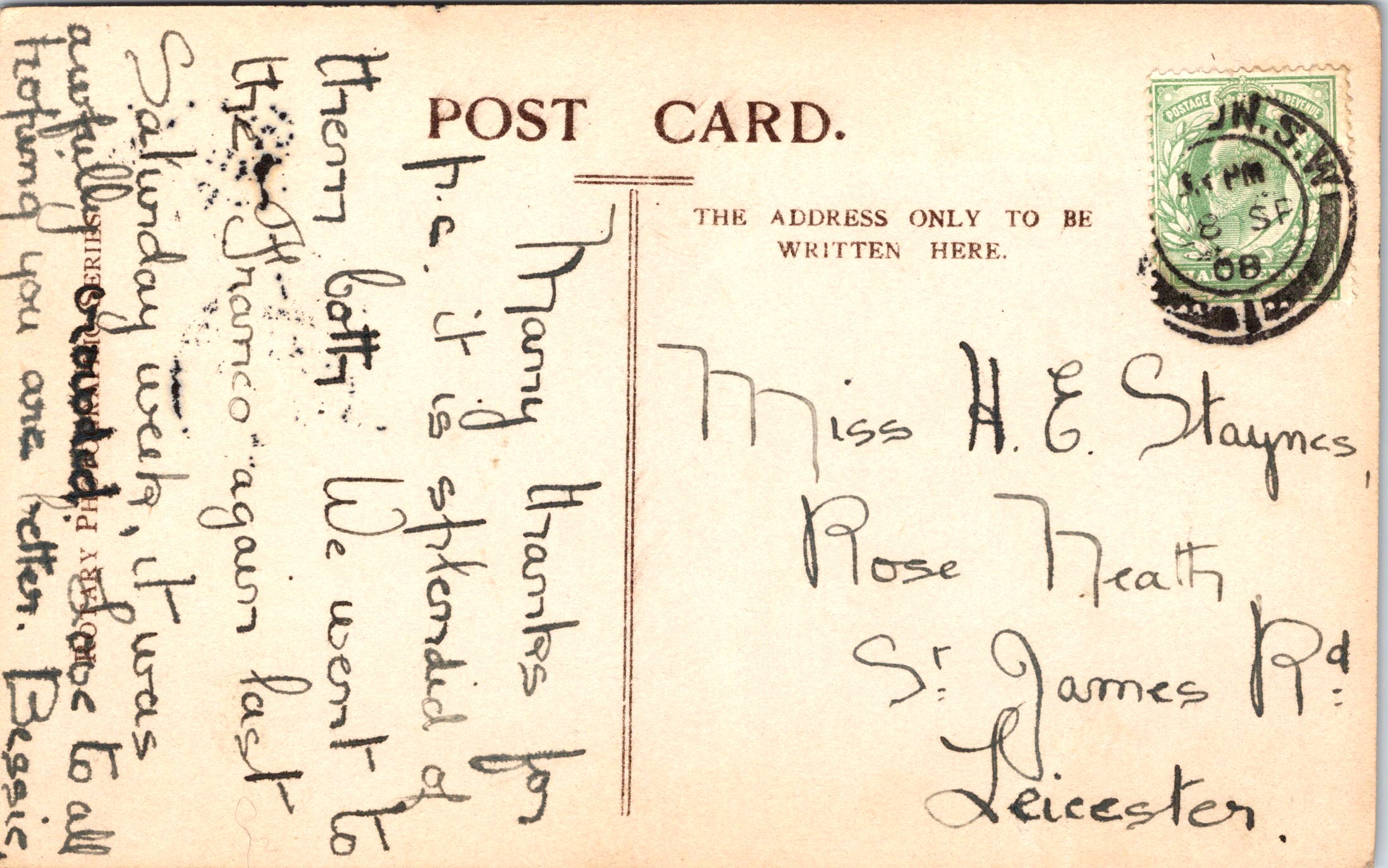
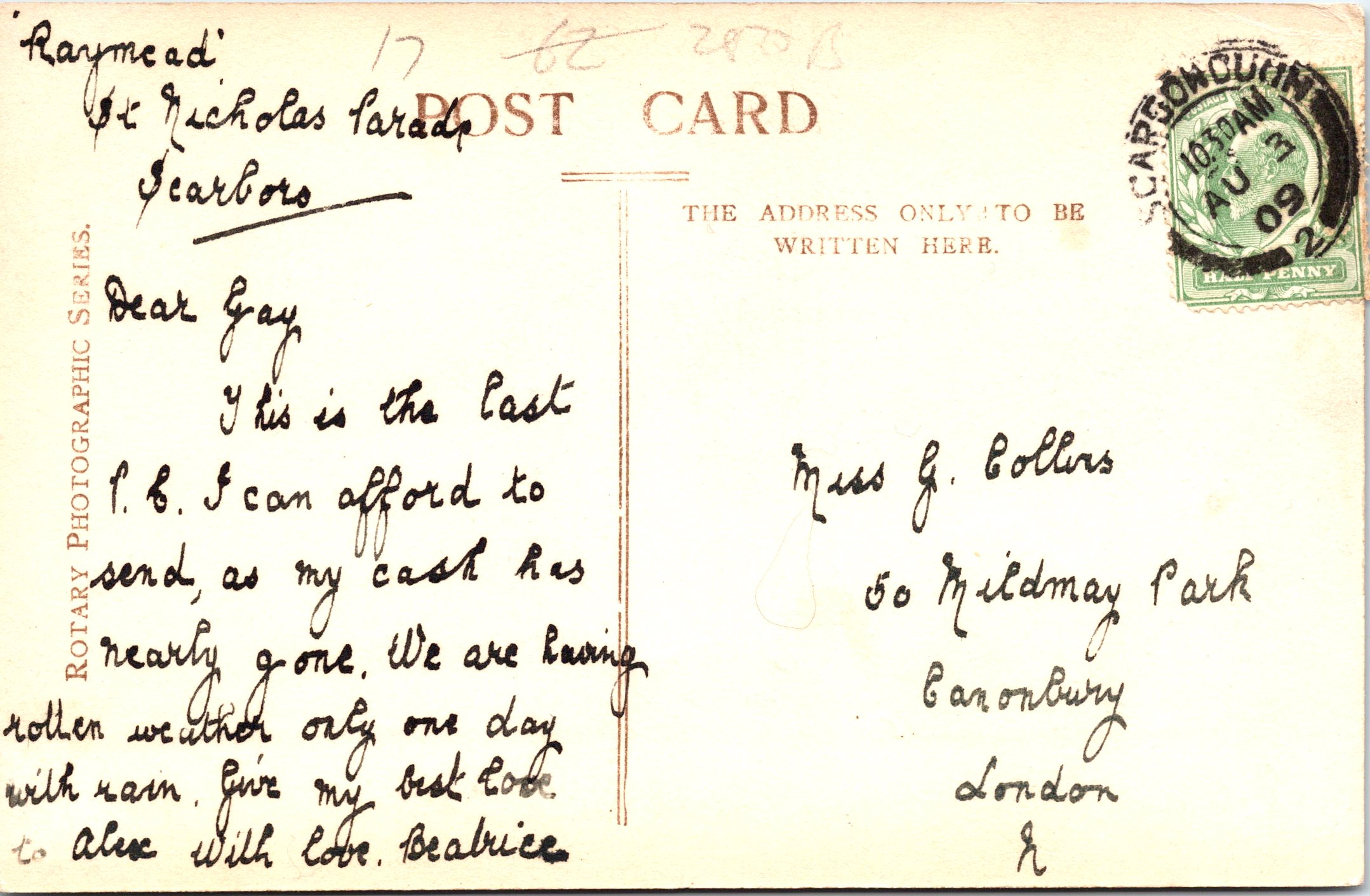
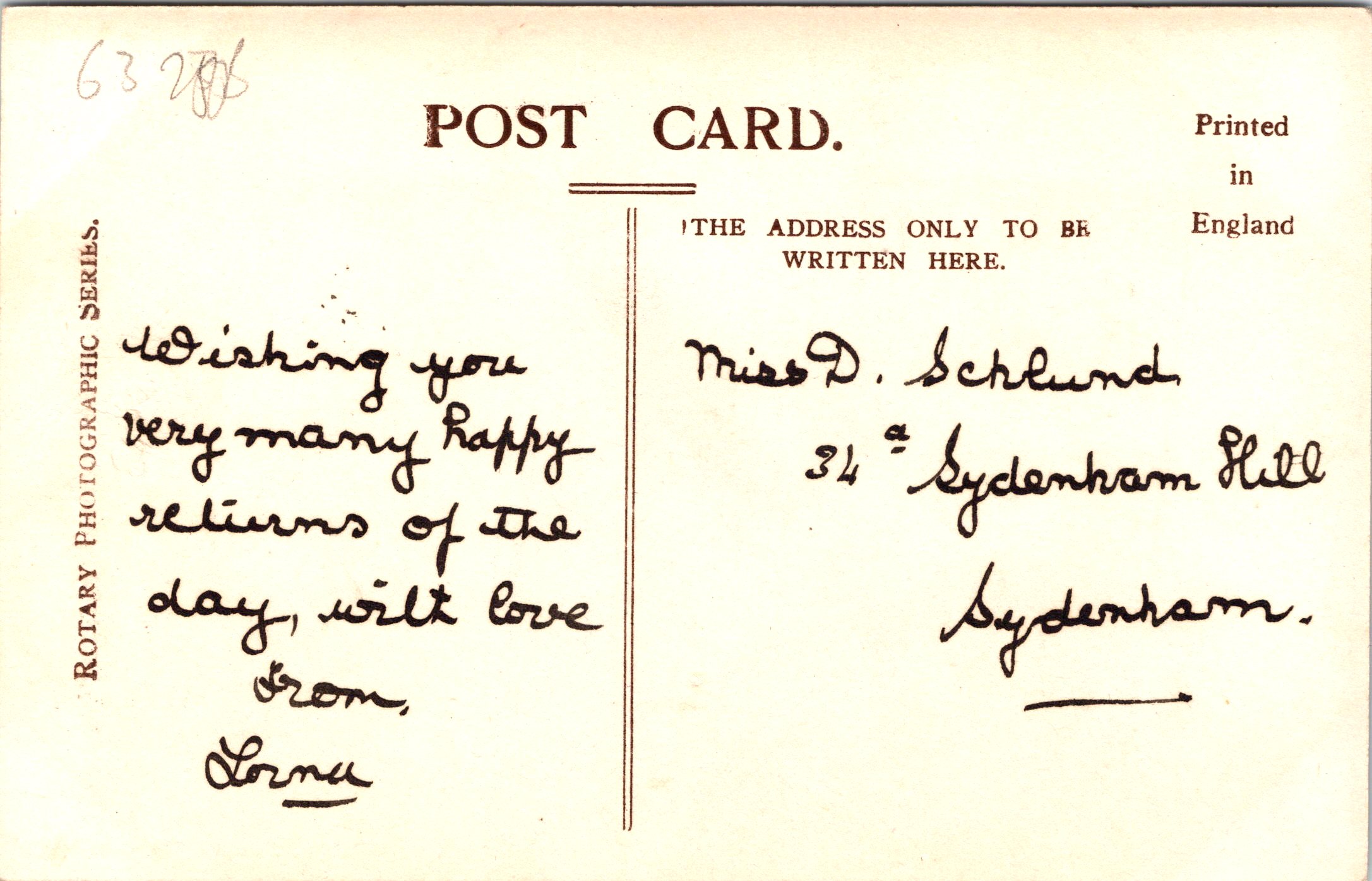










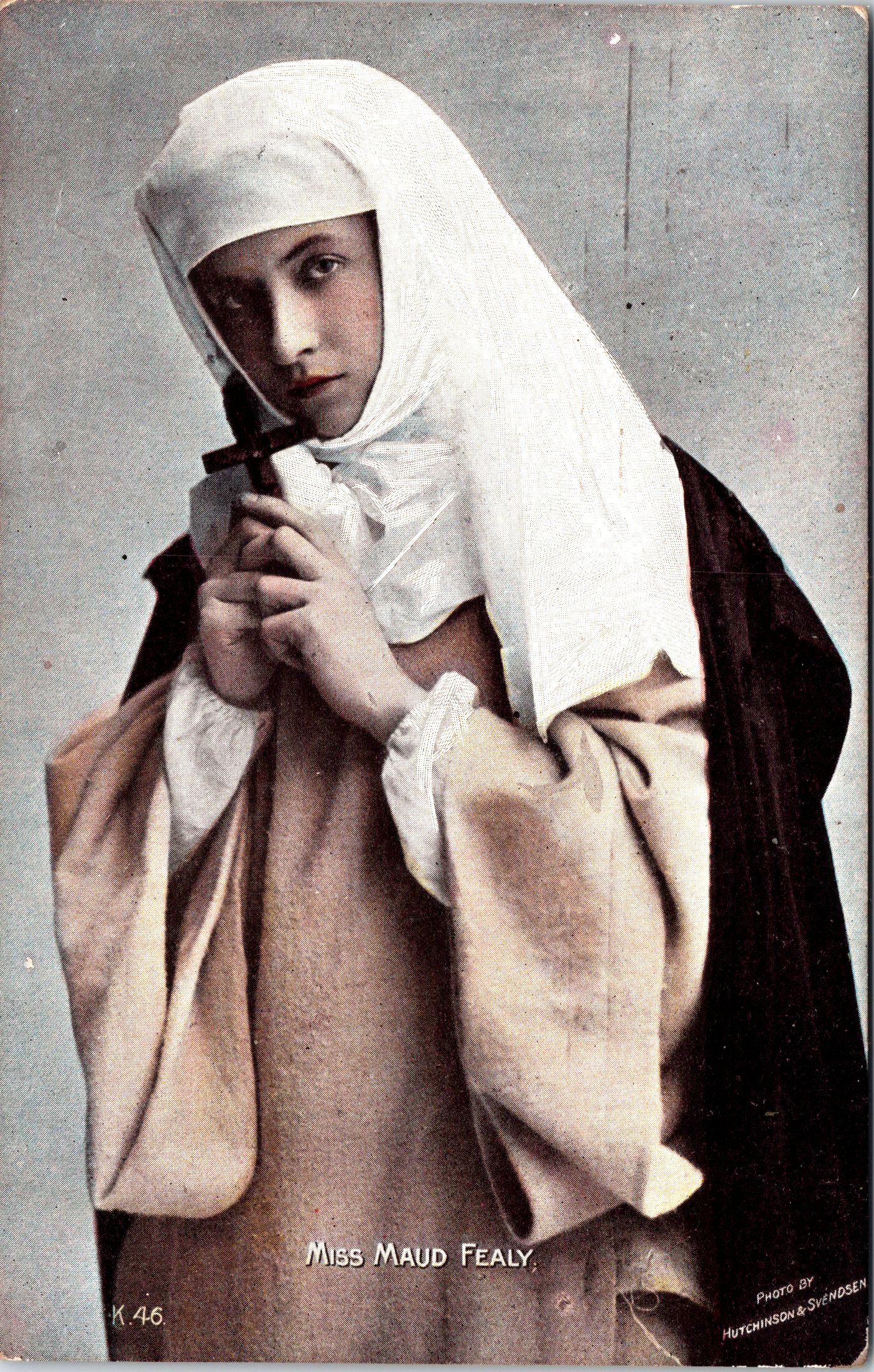

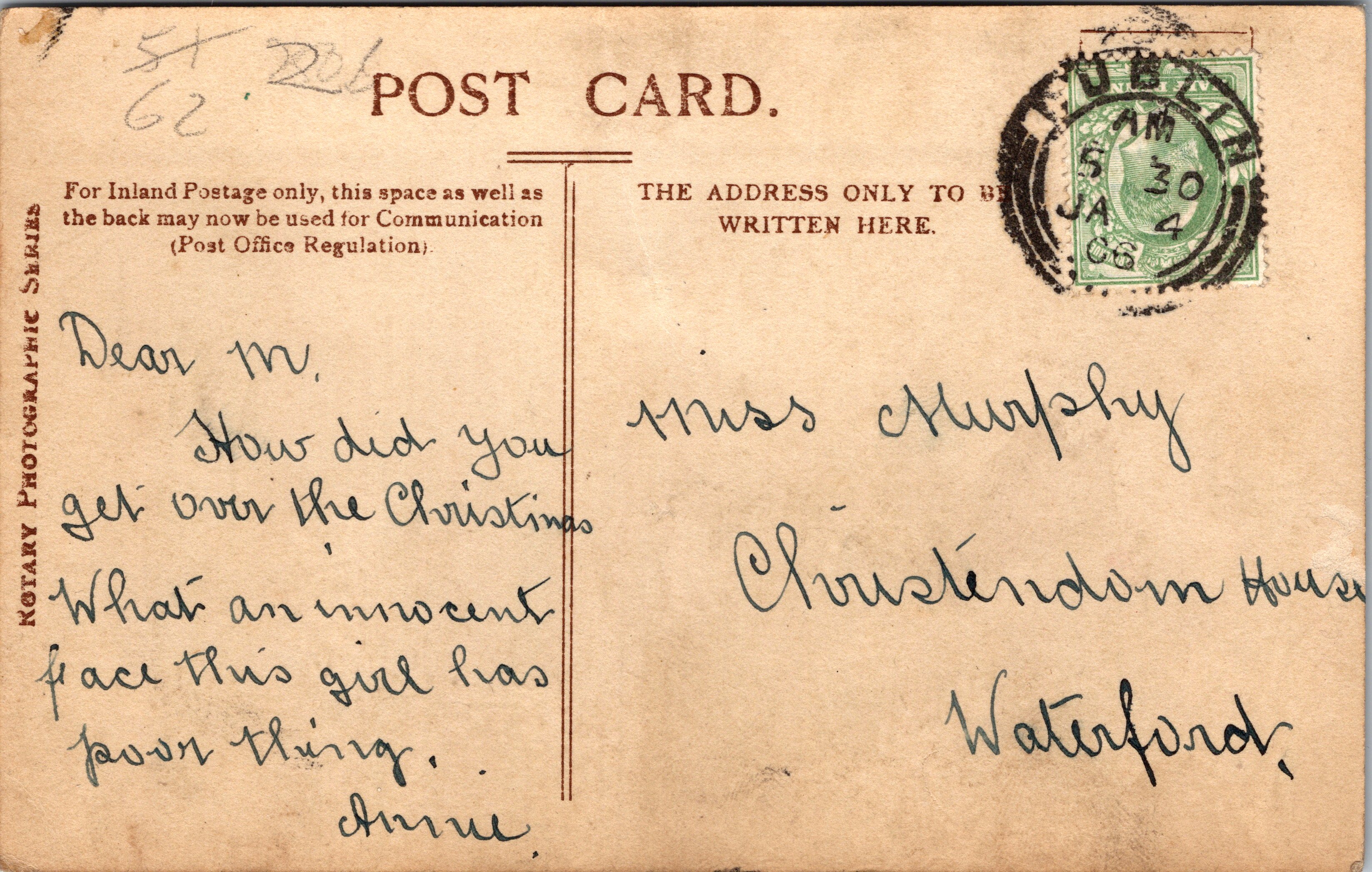

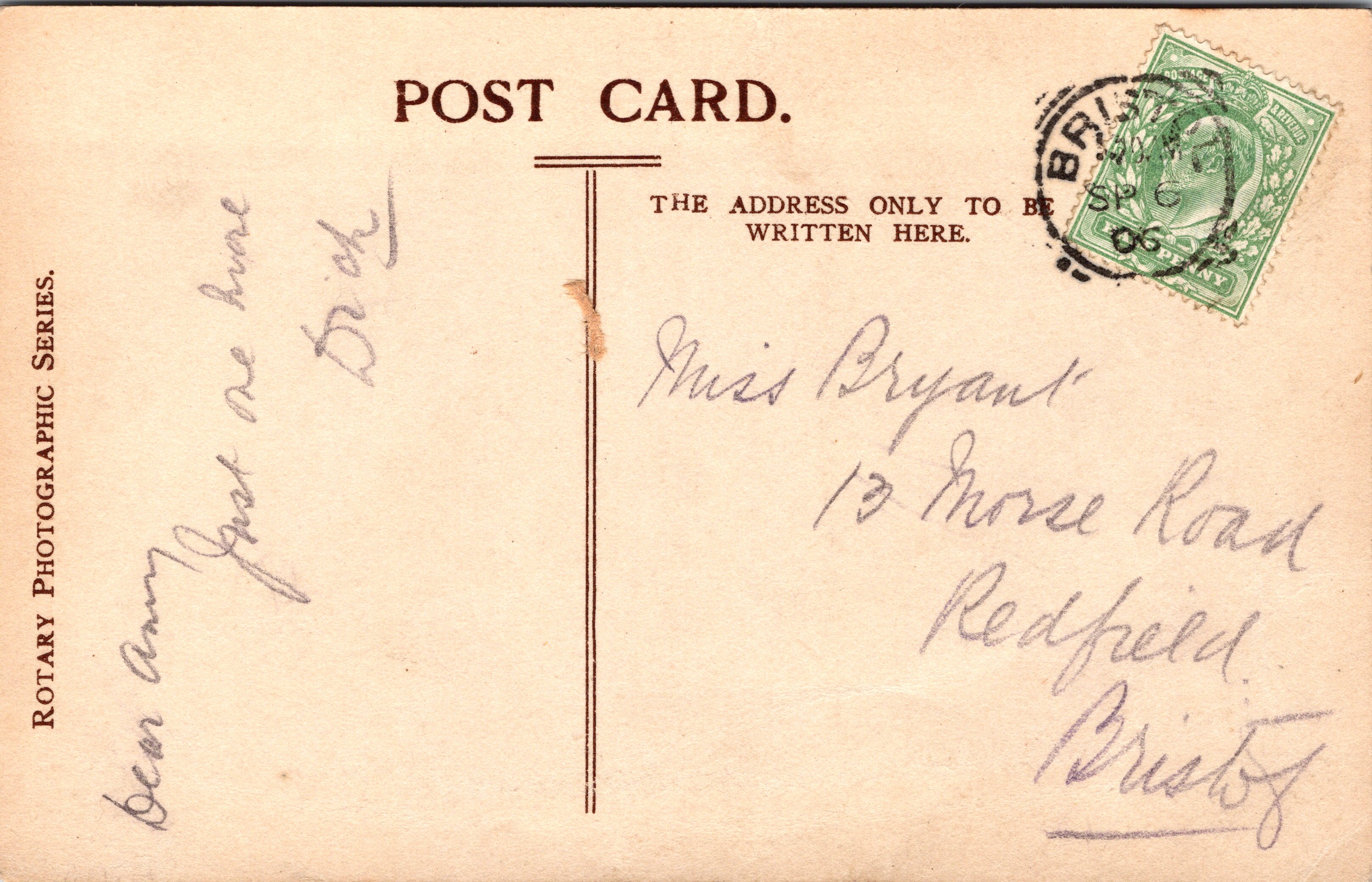
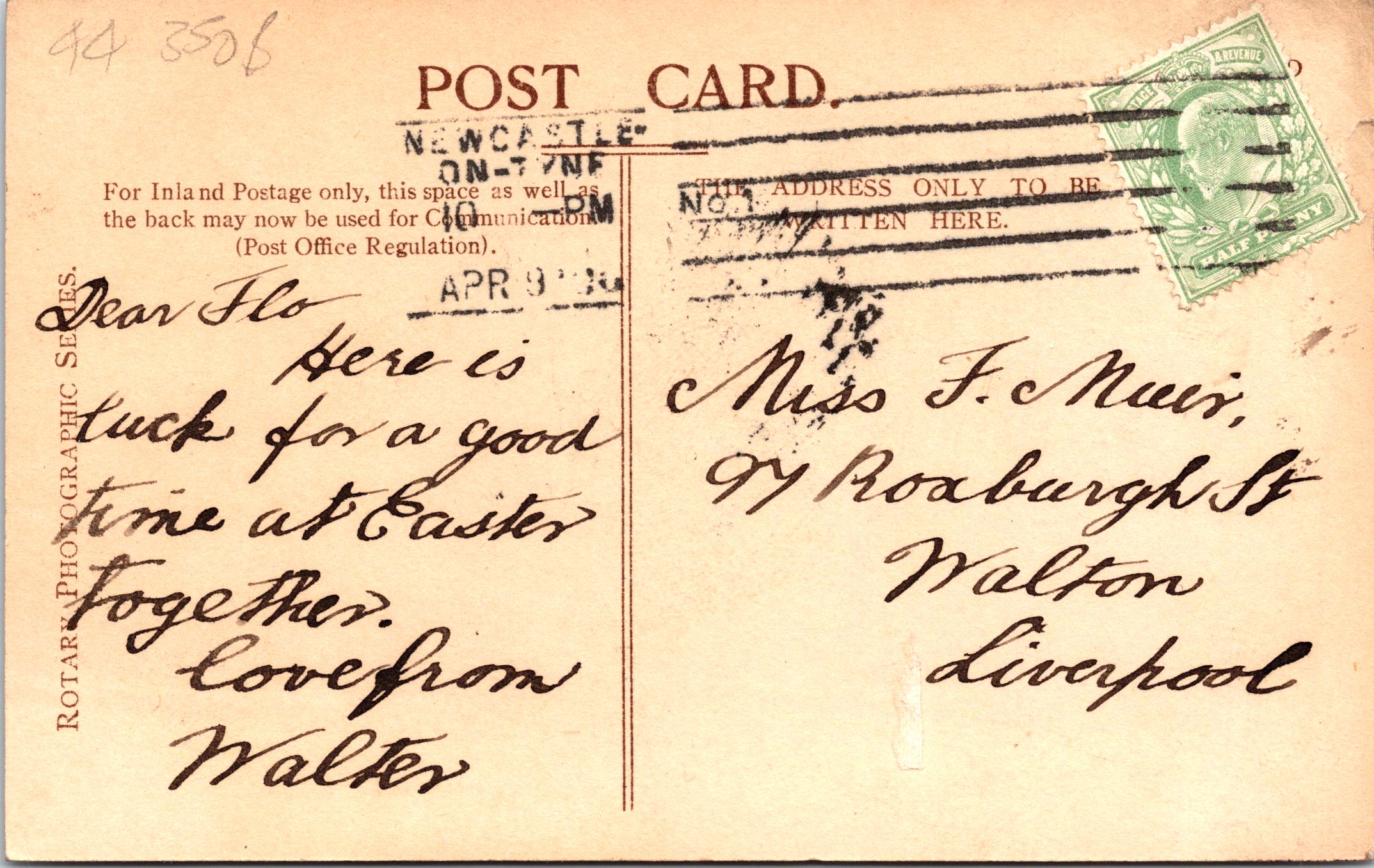
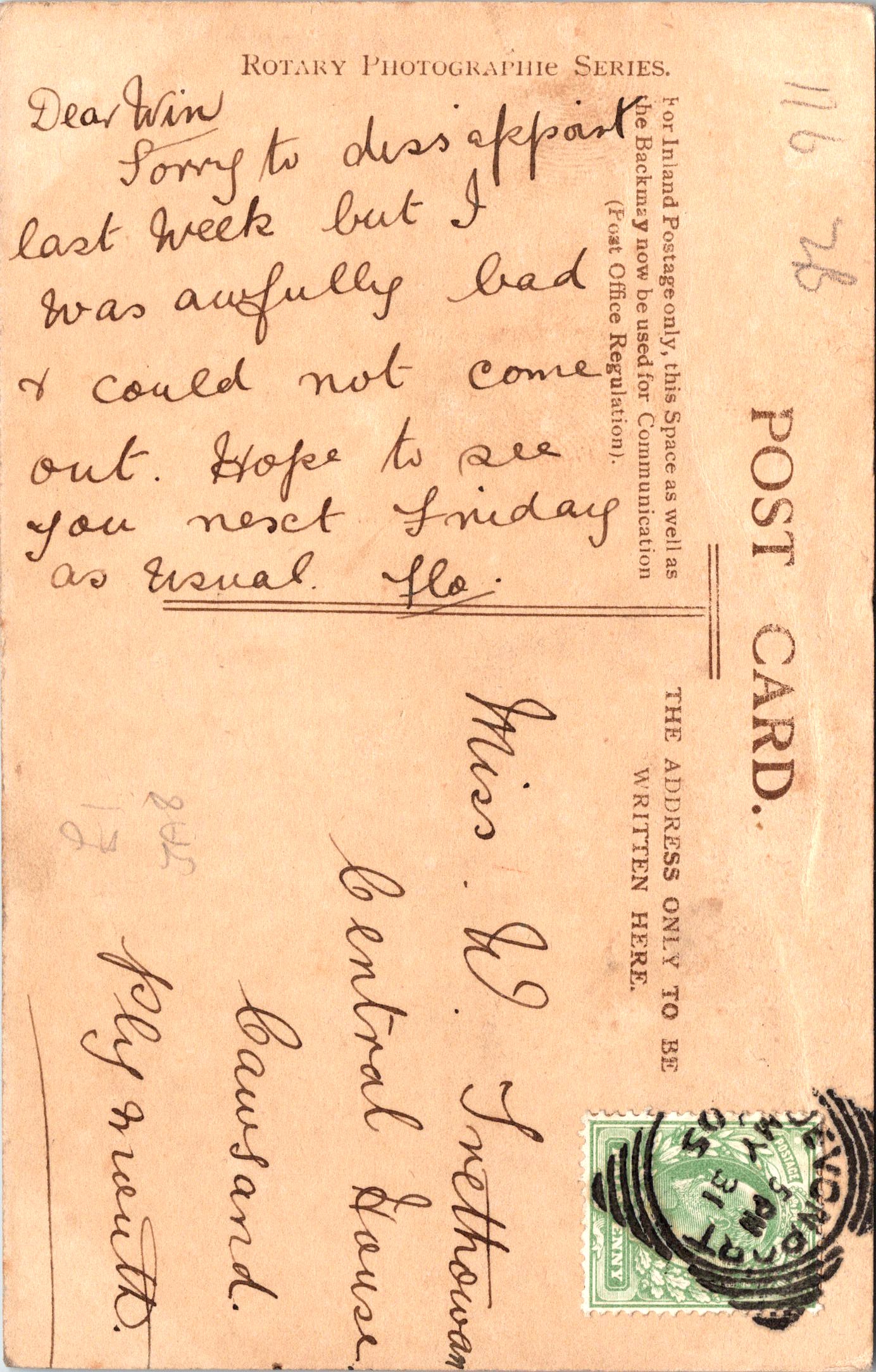
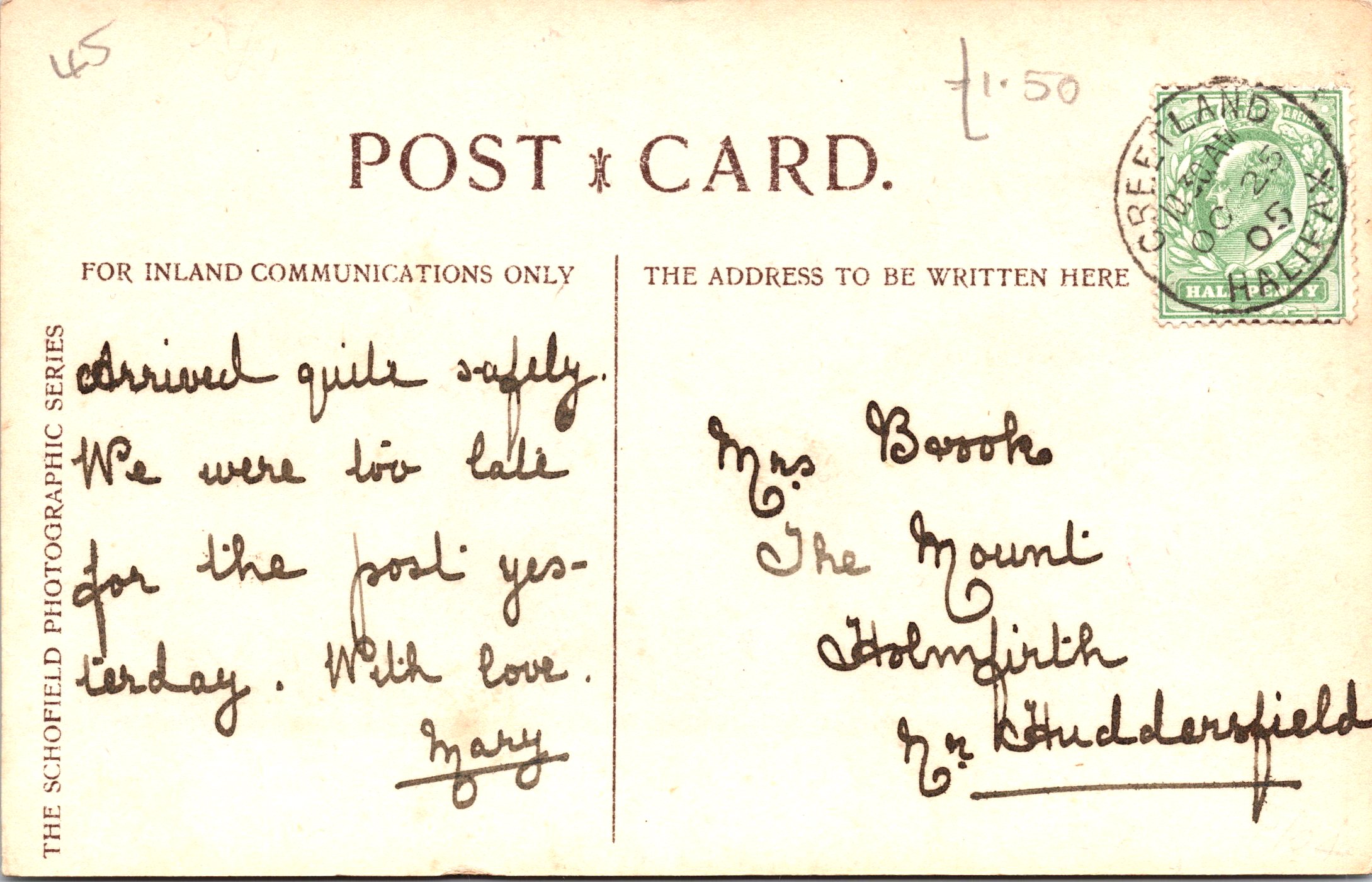

 POSTCARD 1 (SOLD)
 POSTCARD 1 (CLOSE-UP) (SOLD)
 POSTCARD 2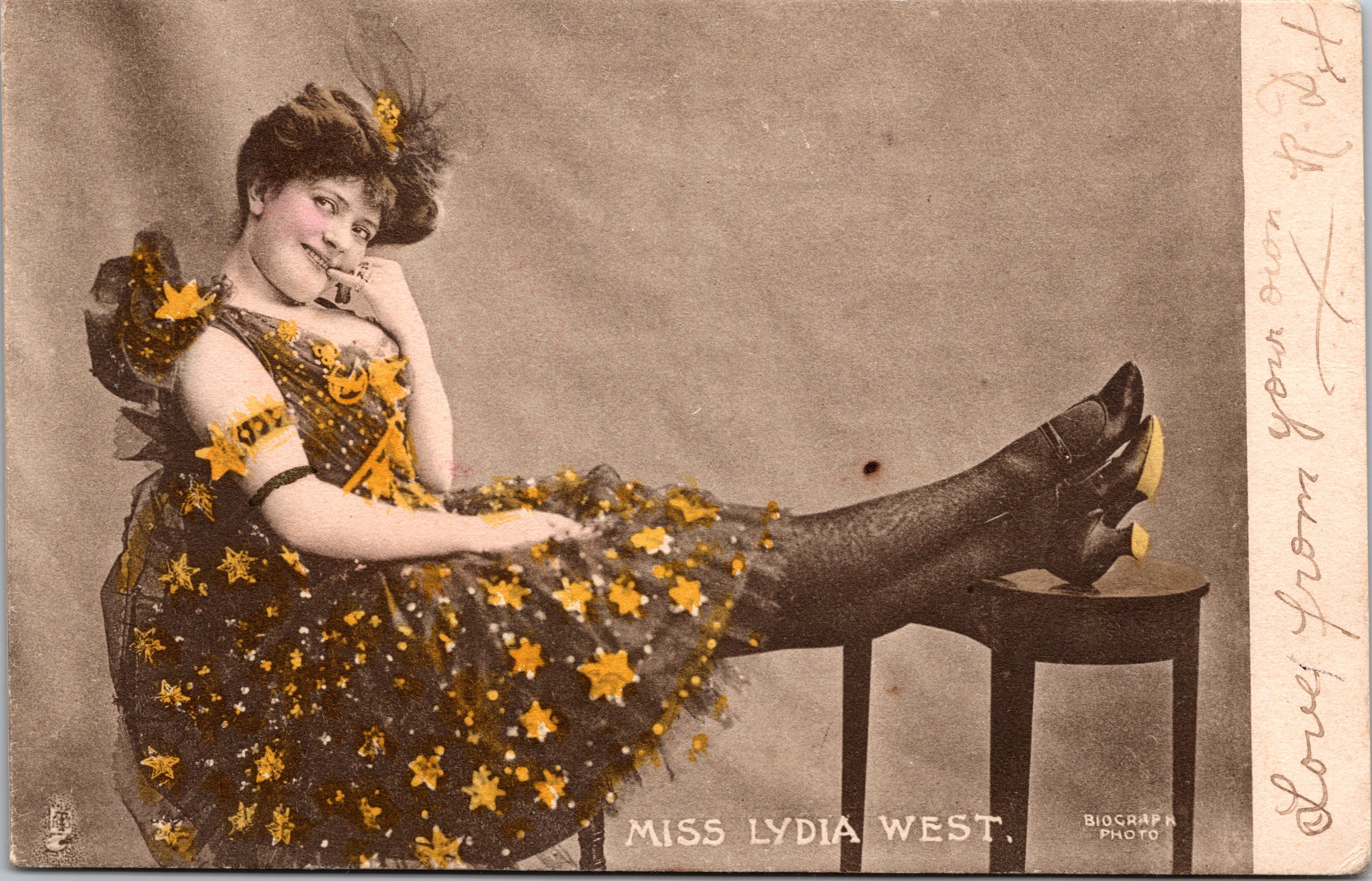
 POSTARD 1 (SOLD)
 POSTCARD 1 (SOLD)
 POSTCARD 2 (SOLD)
 POSTCARD 2 (MAGNIFIED) (SOLD)
 POSTCARD 1 (SOLD)
  POSTCARD 2 (SOLD)


 THE CABINET CARD GALLERY