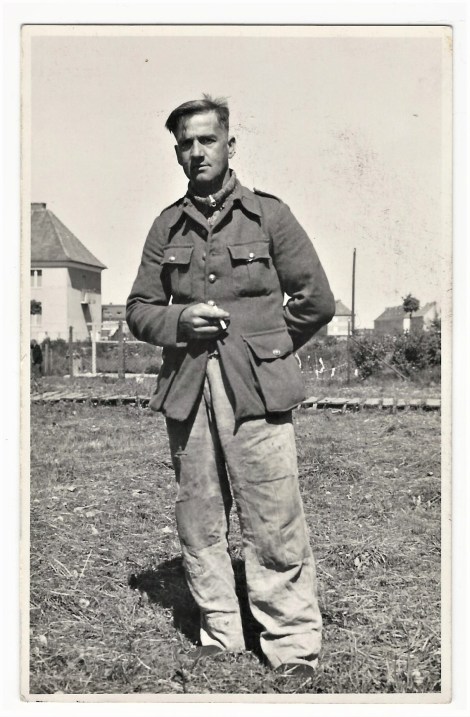

This vintage real photo postcard features a portrait of an allied prisoner of war imprisoned at a German POW camp. The soldier in this photograph was being held at Stalag 1-A. The camp was located near the village of Stablack in East Prussia. Stalag 1-A was the furthest east German POW camp. The camp was built in 1939 by Polish prisoners of war. In 1940, Belgian and French prisoners were added to the camp and in 1941, the camp began to incarcerate Russian POWs. There were also British and Italian prisoners in the camp. It is important to note that tens of thousands of Stalag prisoners were sent to “kommandos” (subcamps) spread throughout East Prussia. In January of 1945, with Russian troops approaching, the camp was abandoned and all of the prisoners were evacuated to the west. Note the photograph below which shows the entrance to Stalag 1-A. The prisoner seen in this photograph is wearing a military jacket, stripped of all insignias. I am unable to determine his rank, branch of service, or the identity of the nation he fought for. Note the prisoner’s pants. They are too long and too baggy Despite the ill-fitting uniform, he appears relatively healthy. He is holding a cigarette, which may represent “good treatment” by their German captors. One wonders why this photograph was permitted to be taken. Photographs, such as this one, were allowed because they served as a tool for positive public relations. A relatively content and healthy looking prisoner “advertised” that the Germans treated allied POWs well. Note the ink stamp on the reverse of the card. It identifies the camp as Stalag 1-A and that the card was “Gepruft” (checked or censored). This photo postcard is from sometime between 1940 and 1945. SOLD

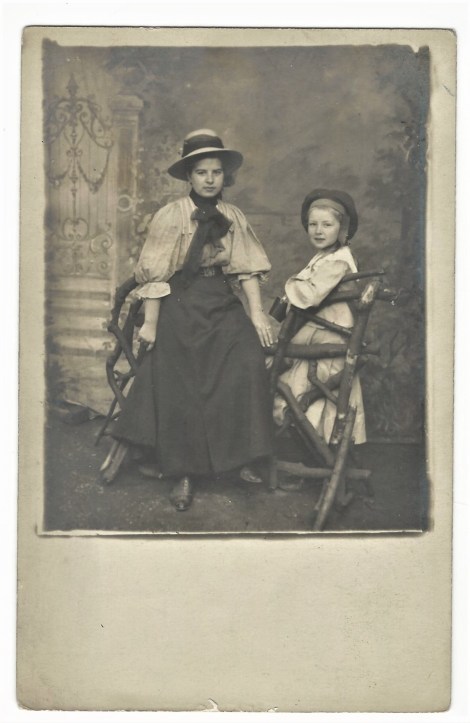
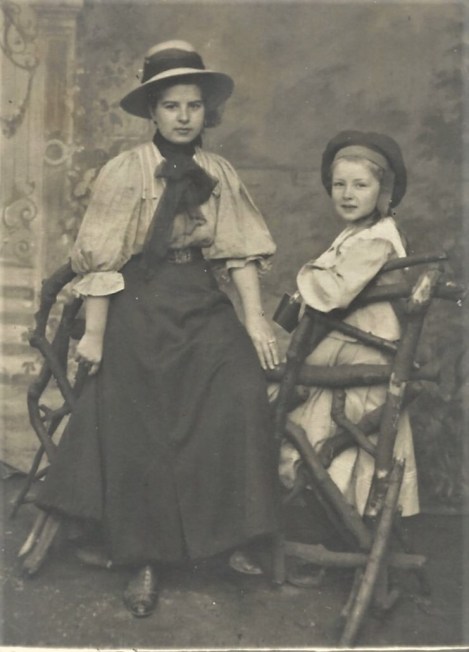
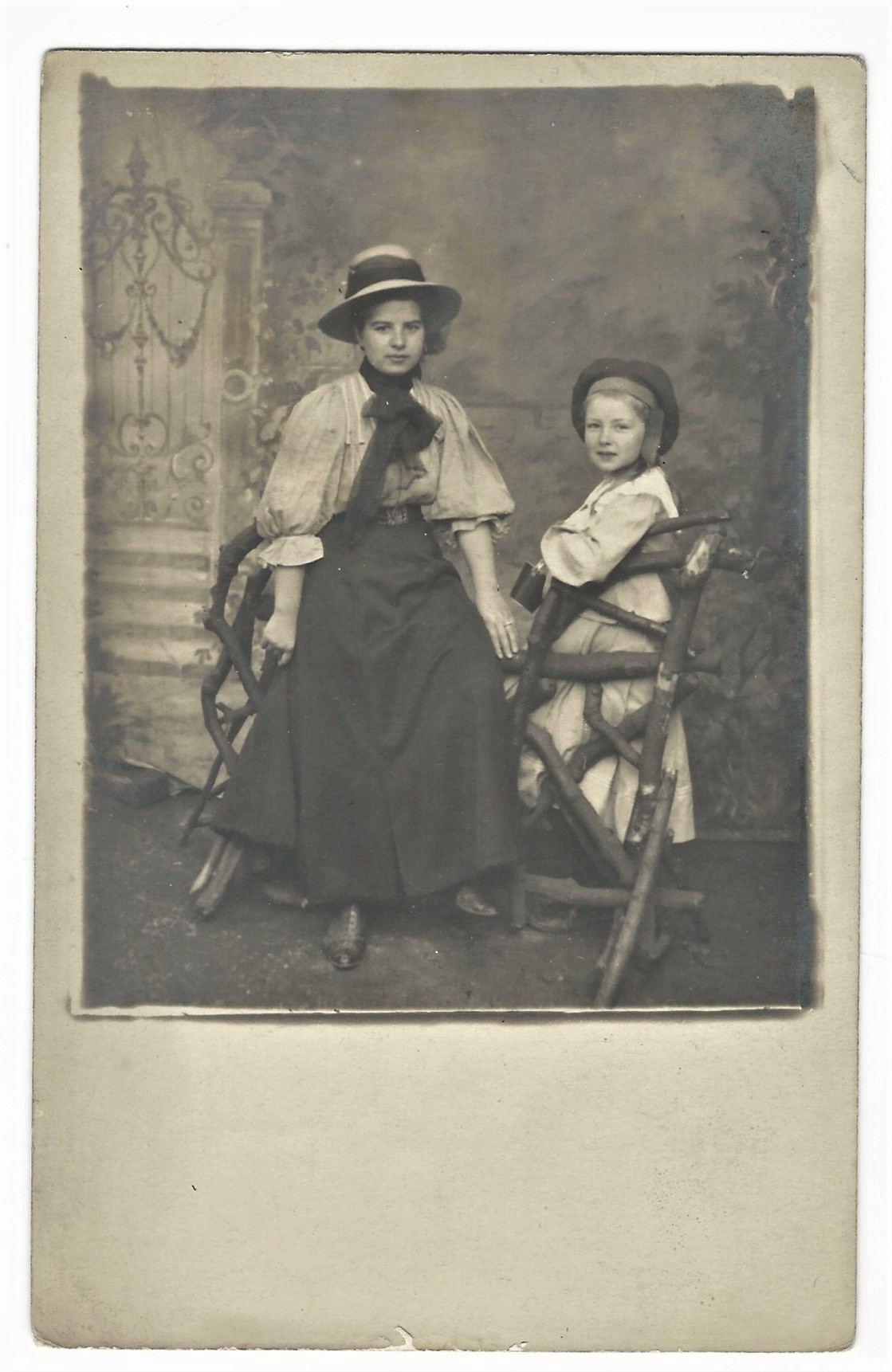

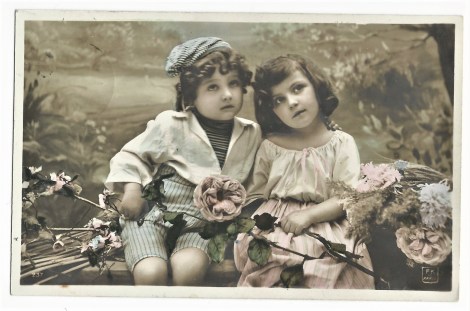
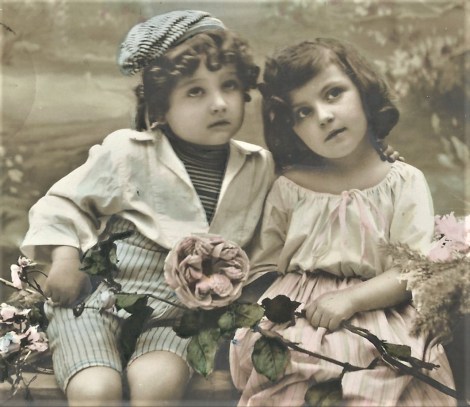 This vintage real photo postcard features two young children sitting on a garden wall. The boy and girl are adorably dressed and are very cute. The girl is holding a bouquet of pink flowers. Note the boy’s fantastic curls and terrific cap. The postcard’s message is dated 1902. This postcard was likely published by Felix Korn & Co. (F.K.) which was located in Stuttgart, Germany. I am unable to confirm the publishers name. This postcard lists F.K. as being located in Paris, not Stuttgart. Further complicating matters is that there also was another company that went by the F.K. initials (F. Kehrhan & Co of Bexley Heath, England). This card’s postage stamp is German and the postmark is from the city of Mulhausen. Mulhausen is a city located in eastern France, near the Swiss and German borders. However, at the time of the mailing of this postcard, Mulhausen belonged to the German Empire and was part of the Alsace-Lorraine territory. (SOLD)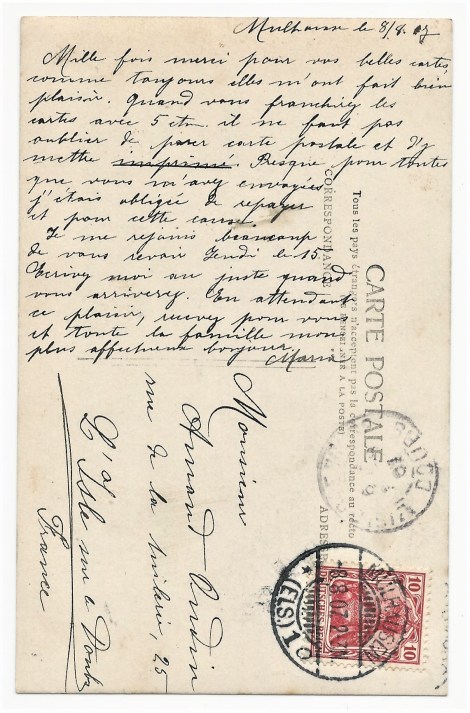

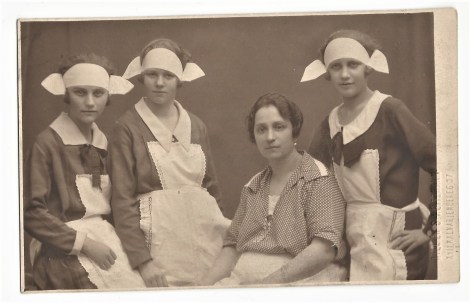 This vintage real photo postcard features a close-up view of four uniformed Viennese tea room waitresses. The three standing women are dressed nearly identically while the seated woman is dressed notably different. Is the seated woman the tea room’s manager or owner? You may be wondering how I know that these ladies are tea room employees? Actually, I don’t. I am just repeating what I was told by the previous owner of this photo postcard. Of course, I may be wrong about the women’s occupation. However, I am certain about the identity of the photographer of this portrait. I am also certain that he was very talented. The Cabinet Card Gallery has three of his photographs in it’s collection. They are beautiful cabinet card portraits. The photographer’s name and address are embossed near the bottom right hand corner of this postcard. The photographer is S. Weitzmann and his studio was located in Vienna, Austria. The studio won medals at exhibitions Paris, London, and Grand Prix. Weitzmann is mentioned in a book entitled “Hitler’s Silent Partners : Swiss Banks, Nazi Gold, and the Pursuit of Justice” (2011). The book states that Weitzmann was the foremost portrait photographer in Vienna and worked for the Austrian Royal Court before it’s demise in 1918. SOLD]
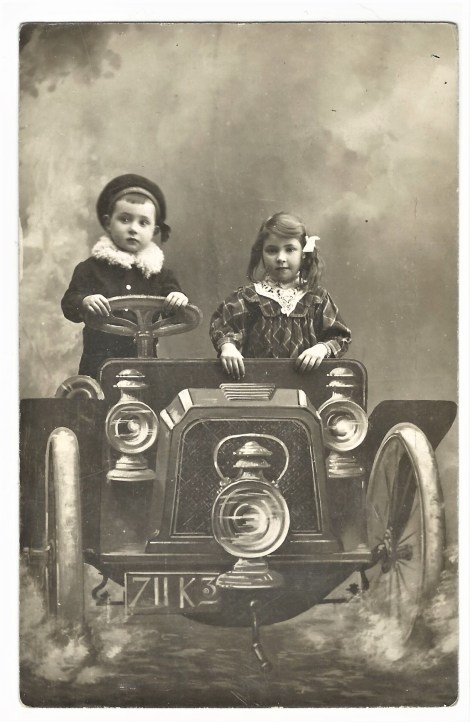
 This vintage real photo postcard features two young children sitting in a faux automobile. Most likely, the pair are siblings. The youngest of the two is behind the wheel. Judging by the facial expression of the driver, the roads must have been very treacherous that day. The little girl in the photo is flashing a wonderful smile. This studio photograph was taken by the Mage studio, located in Grand-Montrouge, France. Grand-Montrouge is a southern suburb of Paris. This vintage portrait postcard is probably from the 1910’s era. SOLD
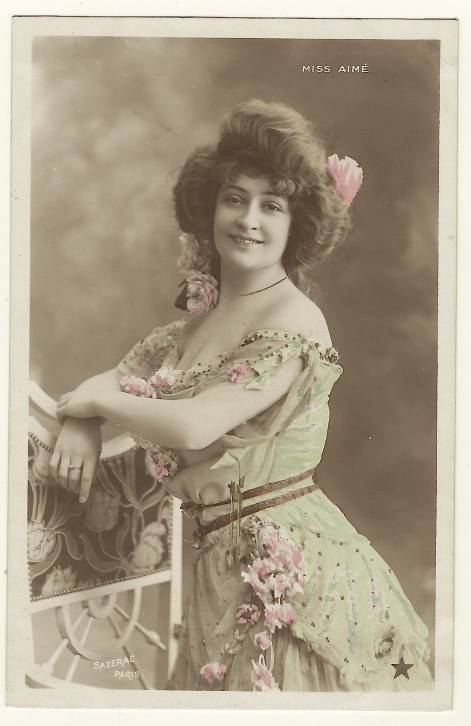 POSTCARD 1
 POSTCARD 2
 POSTCARD 2 (CLOSE-UP)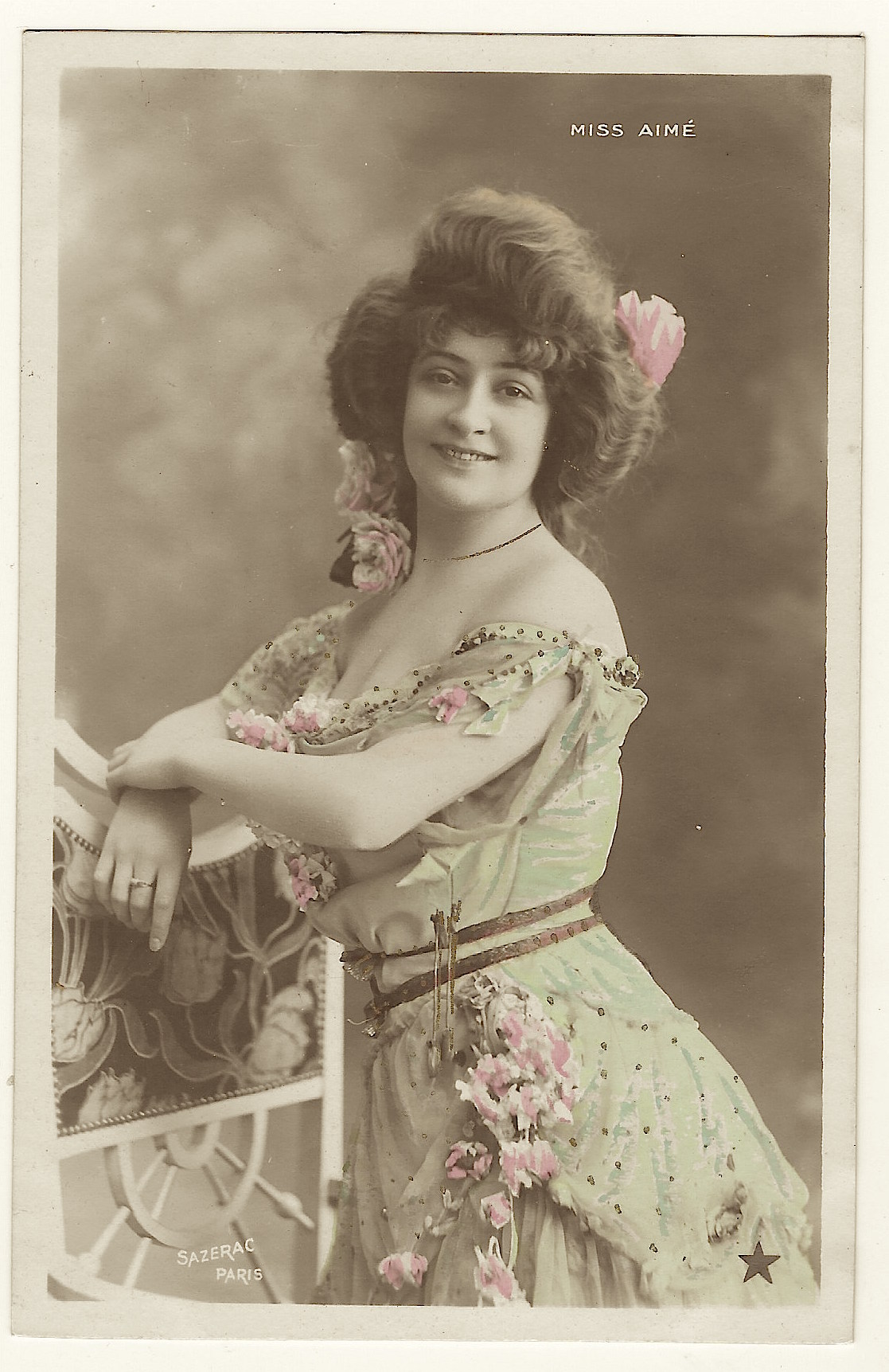
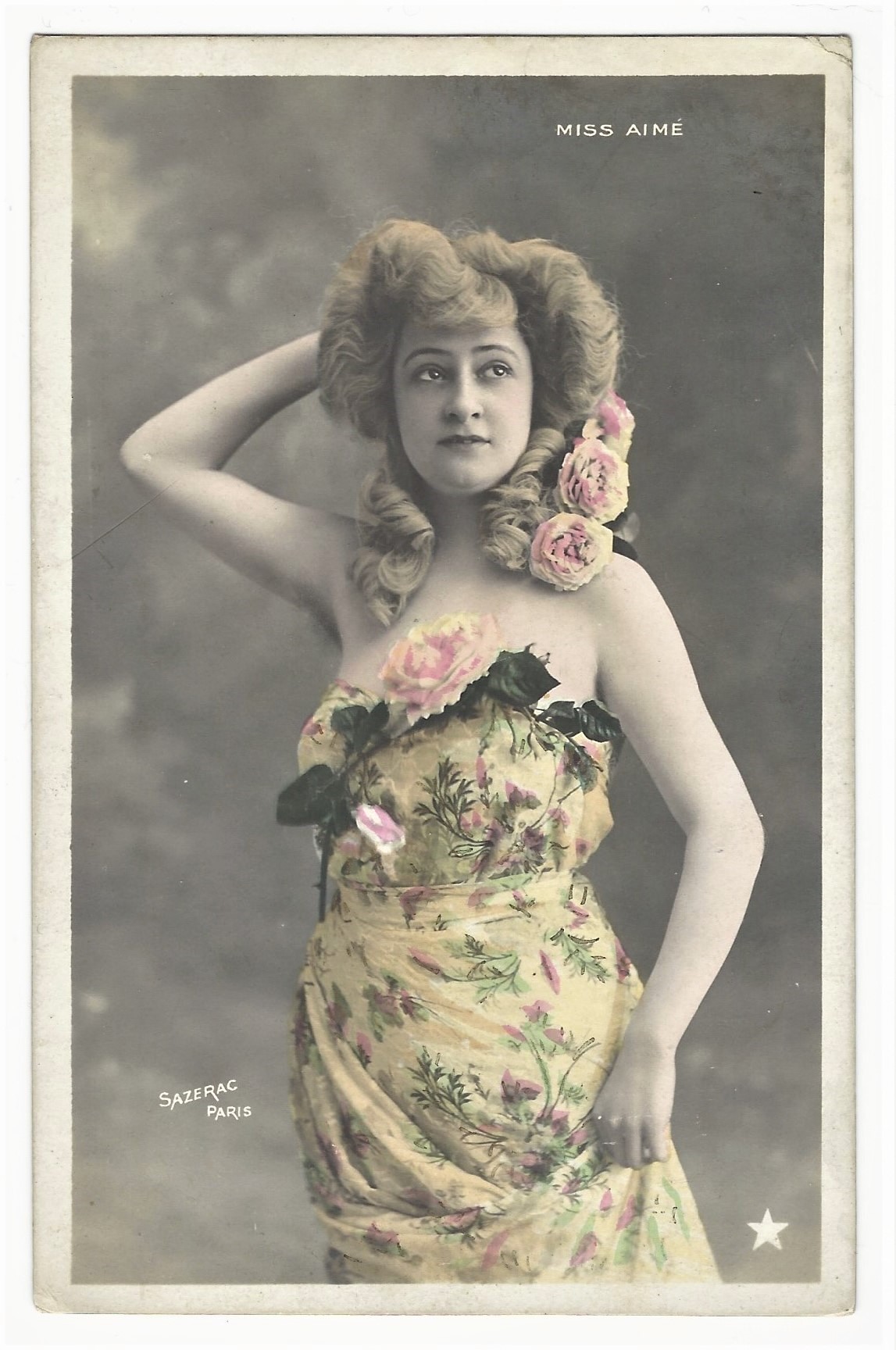
 POSTCARD 1
 POSTCARD 2
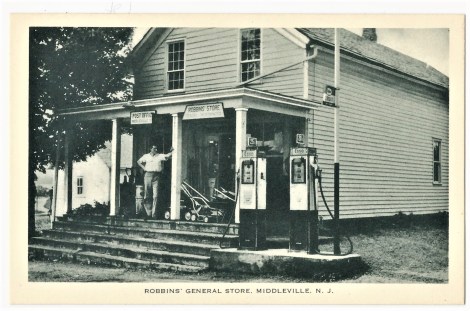
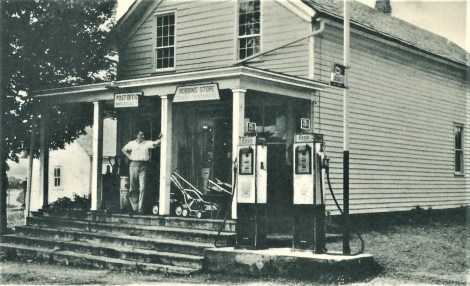
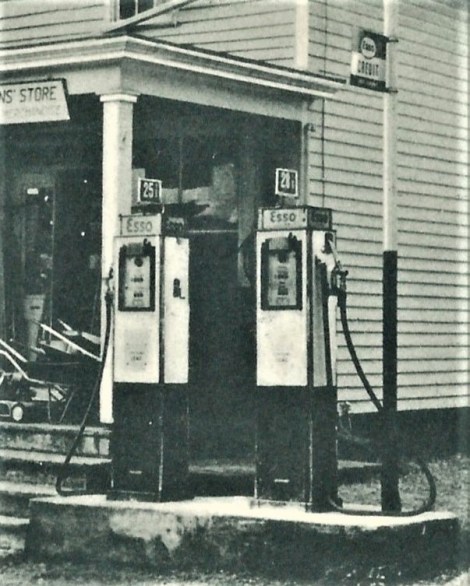
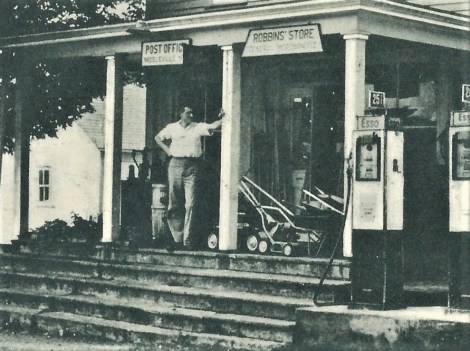 This vintage real photo postcard features the Robbins General Store in Middleville, New Jersey. The store also served as the town’s post office and as an Esso gas station. Note the two gas pumps in front of the building. A sign indicates that the price of gas was 25 cents a gallon for regular, and 28 cents per gallon for premium. There is an Esso credit card advertising sign on a pole next to the pumps. Some of the store’s merchandise can be seen on the front porch. The items for sale include lawnmowers, garbage cans, and a wagon. The store is housed in a two story wooden structure. I wonder how the second floor was utilized. A man is posed on the porch. He is likely the proprietor of the store (Mr. Robbins?). Victor M. Robbins became the postmaster of Middleville in 1914. Victor had acquired the store in 1903. The store’s building is thought to have been built before 1837. Victor was the postmaster until 1955. Victor was succeeded by his son, Donald A. Robbins who operated the store and post office until 1987. The father and son duo ran the post office for a cumulative 73 years. The Robbins store later housed the “Robin’s General Store and Country Kitchen” which existed in Middleville until at least 2016. This postcard was published in the 1950’s by the Artvue Post Card Company. The firm was located on Fifth Avenue in New York City. The company was formed in 1948 and produced black & white postcards in the 1950’s despite the popularity of color postcards during that time. The company’s “claim to fame” was that it published postcards picturing plaques of the players that were enshrined in Baseball’s Hall of Fame in Cooperstown, New York. They produced the cards from about 1951 through 1963. SOLD

 This vintage postcard is unusual (uncommon). It features two female dancers, I believe they are performing a type of ballet. The dancer that is holding up the other dancer has very muscular legs. Is she a he? An inscription on the reverse of the card appears to say “Jennoff”. I was hoping that the name “Jennoff” would lead me to more information about this postcard. It failed to do so. The story behind this Italian vintage postcard, intrigues me. (SOLD)


