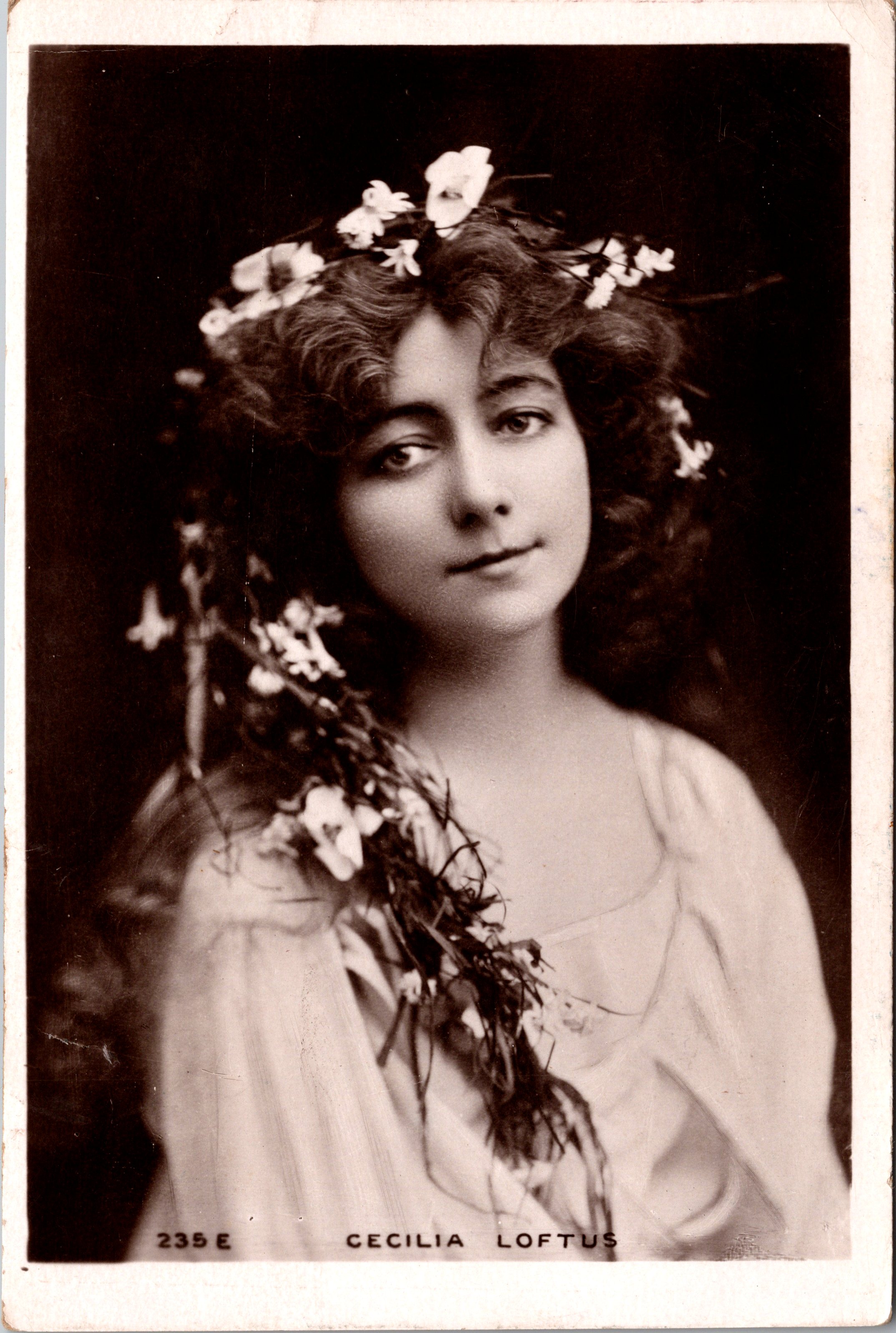
CECILIA LOFTUS : BROADWAY AND FILM ACTRESS : SHAKESPEARE : STAGE BEAUTY : RPPC

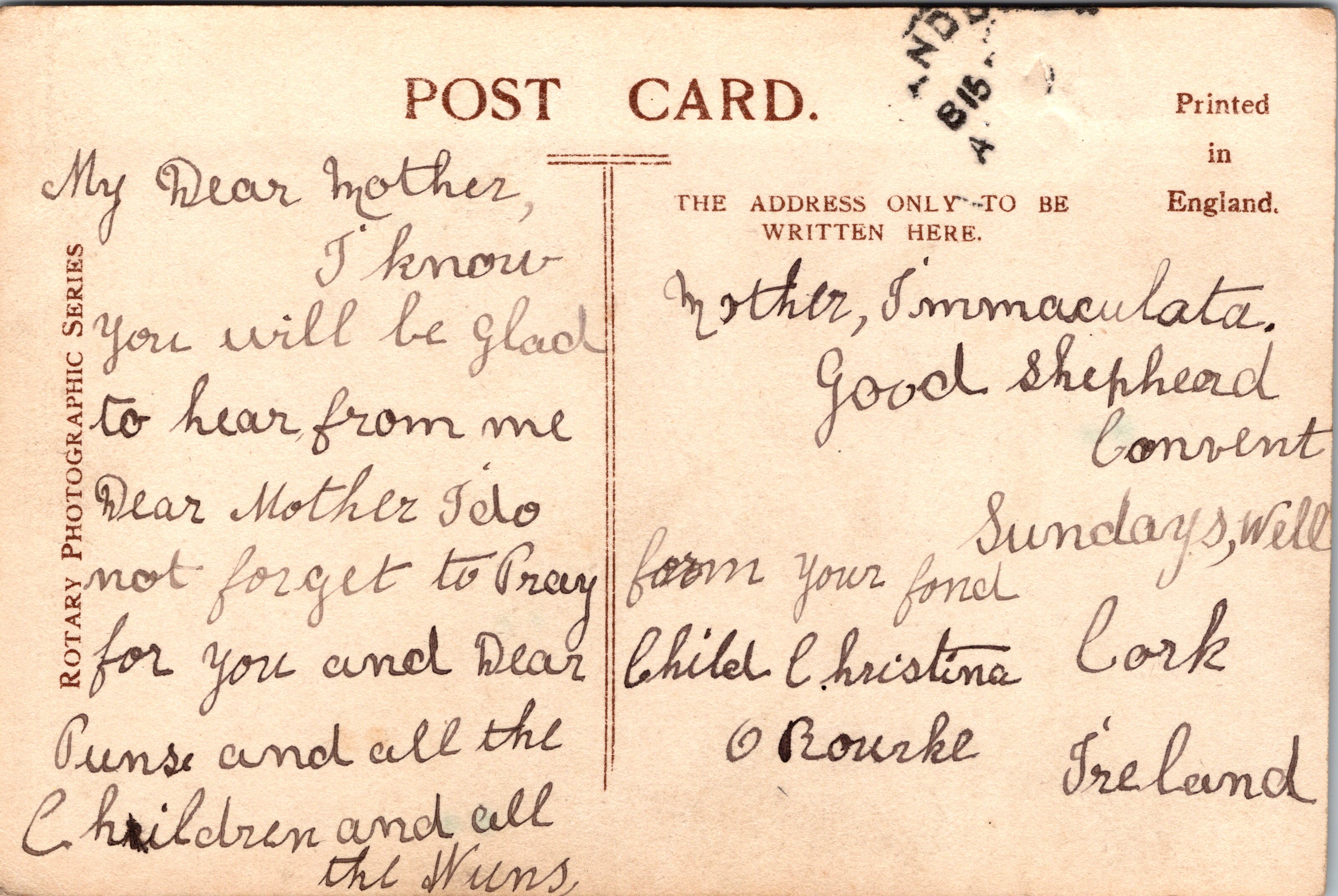
This vintage real photo postcard features a stage beauty named Cecilia Loftus (1876-1943). She was a Scottish actress, singer, mimic, vaudevillian, and music hall performer. Her career spanned the late 19th and early 20th centuries. She was a product of parents who were performers. Her father was a member of a successful variety group and her mother was an actress, music hall performer, and burlesque star. At age seventeen, Cecilia (Cissy) made her debut at the Oxford Music Hall in London. She began her career in Music Halls and then appered in musical comedy at the Gaiety Theatre. In 1894, she appeared in Vaudeville at the Lyceum Theatre in New York City. She joined the Ada Rehan Company, and then the Augustin Daly Company. In 1898, she began to appear in legitimate theatre. She toured with actor Sir Henry Irving. In 1905 she had success appearing in Henrik Ibsen’s “A Doll’s House”. Later that same year, she received much acclaim for her portrayal of Peter Pan. Loftus had a successful career in burlesque as well as on Broadway. The IBDb credits Loftus with appearing in 39 different Broadway productions between 1900 and 1941. Many of her roles were in Shakespeare plays. She also appeared in 14 films from the 1910’s to the 1940’s. Cecilia had a tumultous personal life. She eloped at 17 with an Irish writer, twice her age. The marriage failed. In 1908 she married an American doctor. Within six years, her marriage and health were in bad shape. She divorced her husband. Healthwise, she became dependent on alcohol and pain killers. In 1922, she was arrested for possession of morphine. She received probation from an English court and in 1923, she permanantly left Great Britain and returned to New York City to pursue her career on Broadway and in Hollywood.  The message on this postcard is very interesting. It is a note from a daughter to her mother. Although it is only a hypothesis, the daughter appears to be at the Good Shepherd Convent, in Cork, Ireland. This vintage postcard was published by the Rotary Photo Company as part of a series (no.235 E).  SOLD
PORTRAITS OF EVELYN MILLARD: SHAKESPEARIAN STAGE ACTRESS (VINTAGE RPPC)

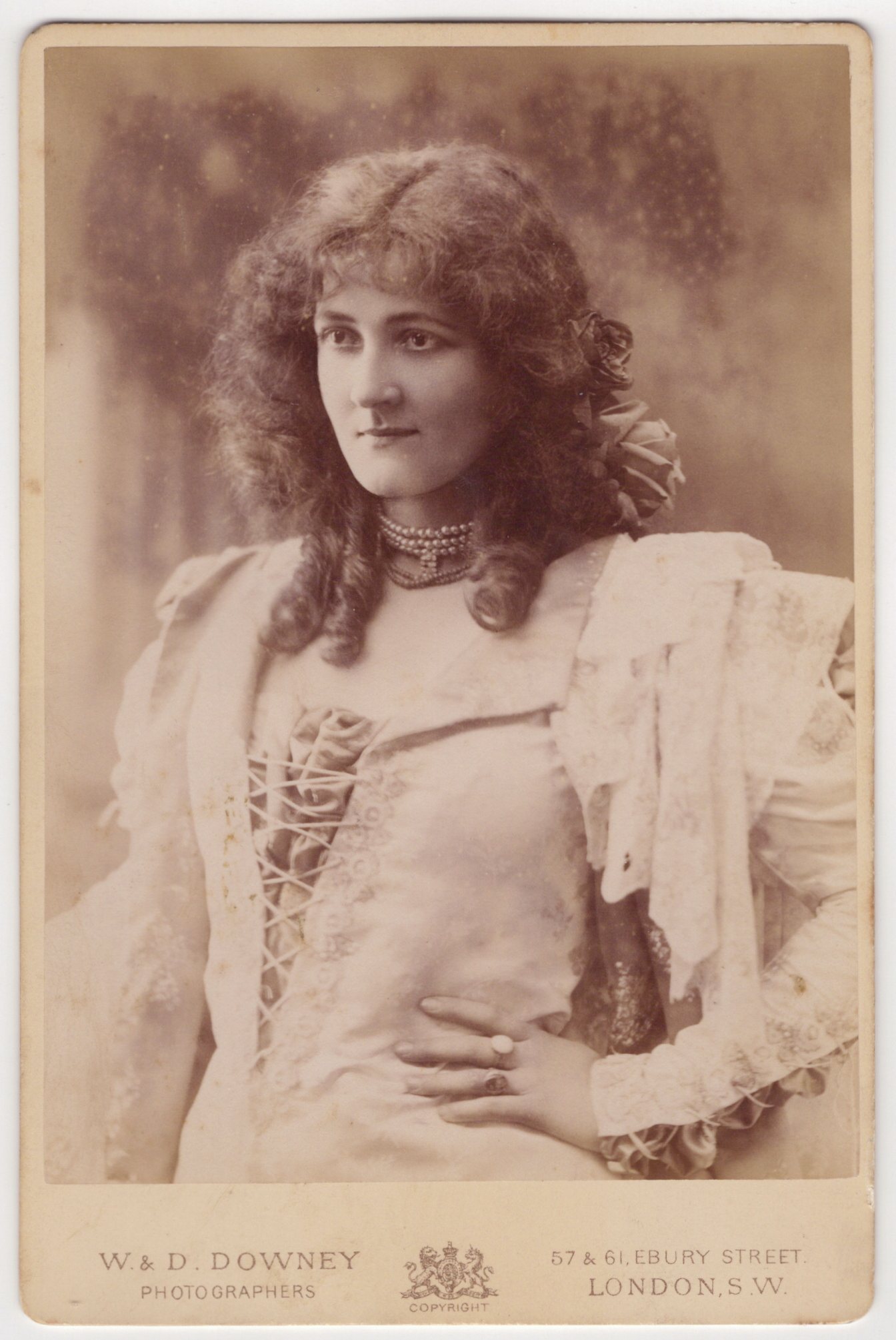
CABINET CARD 1 (SOLD)

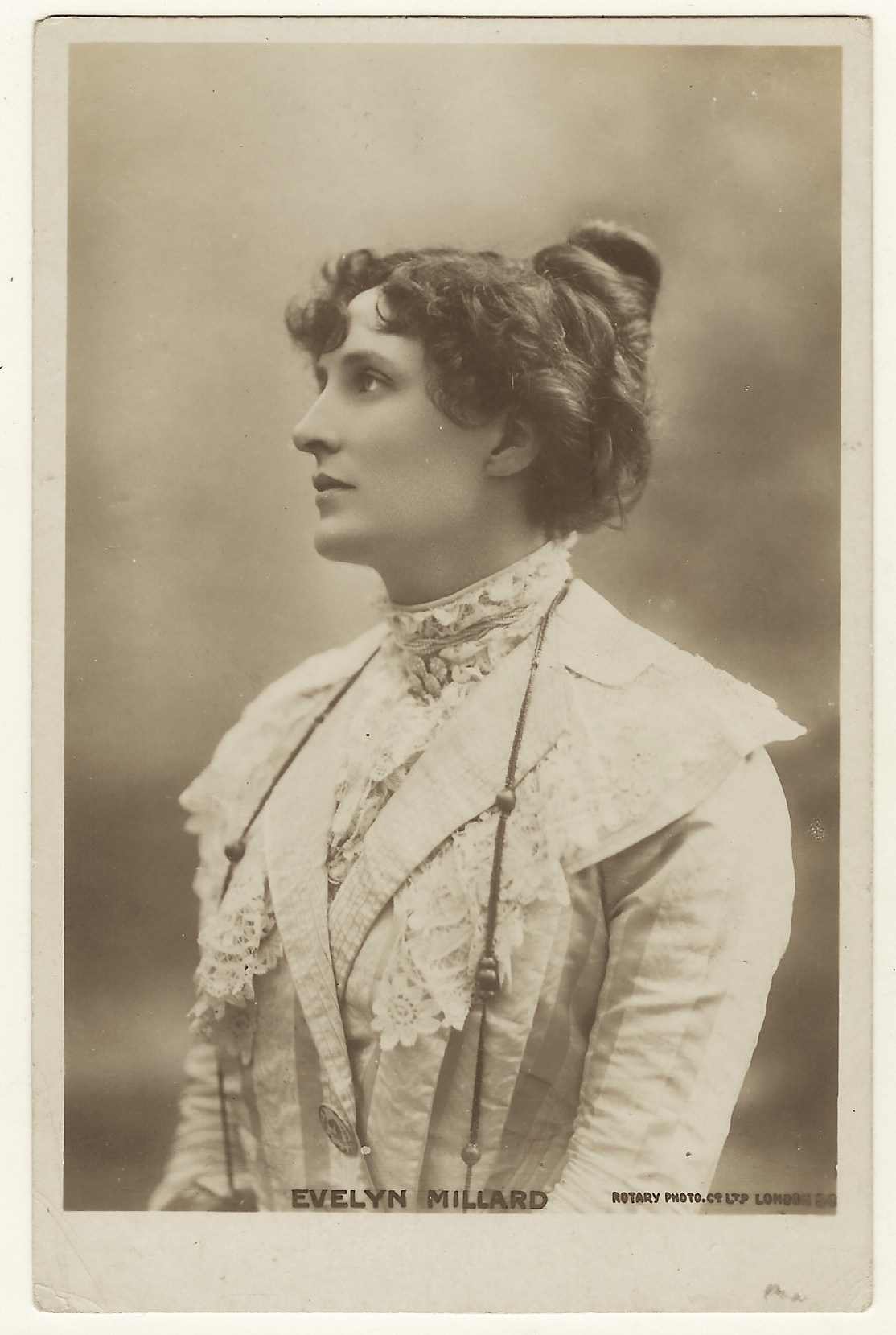
POSTCARD 1  (SOLD)

millard 2

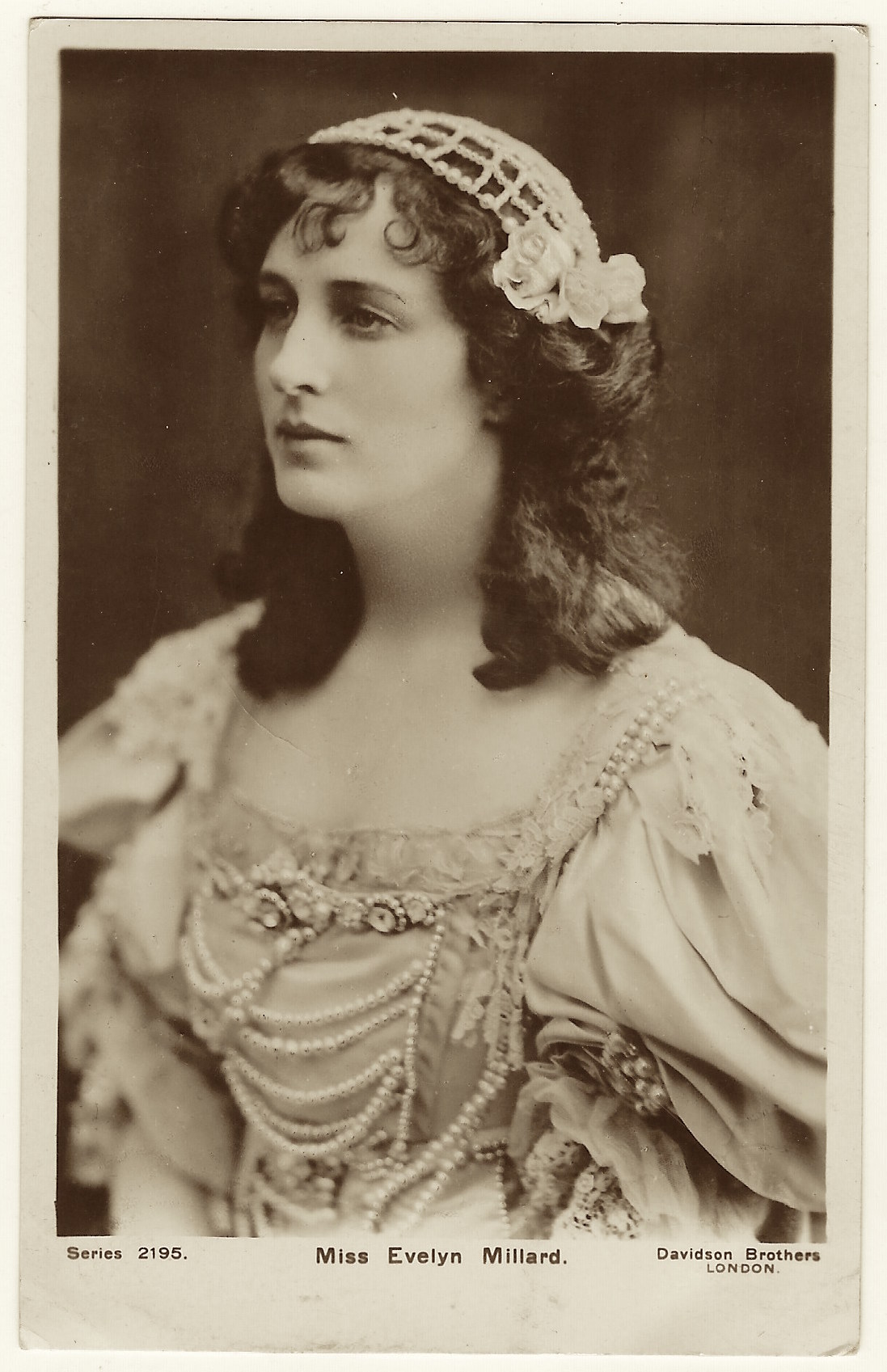
POSTCARD 2  (SOLD)

millard

POSTCARD 3  (SOLD)

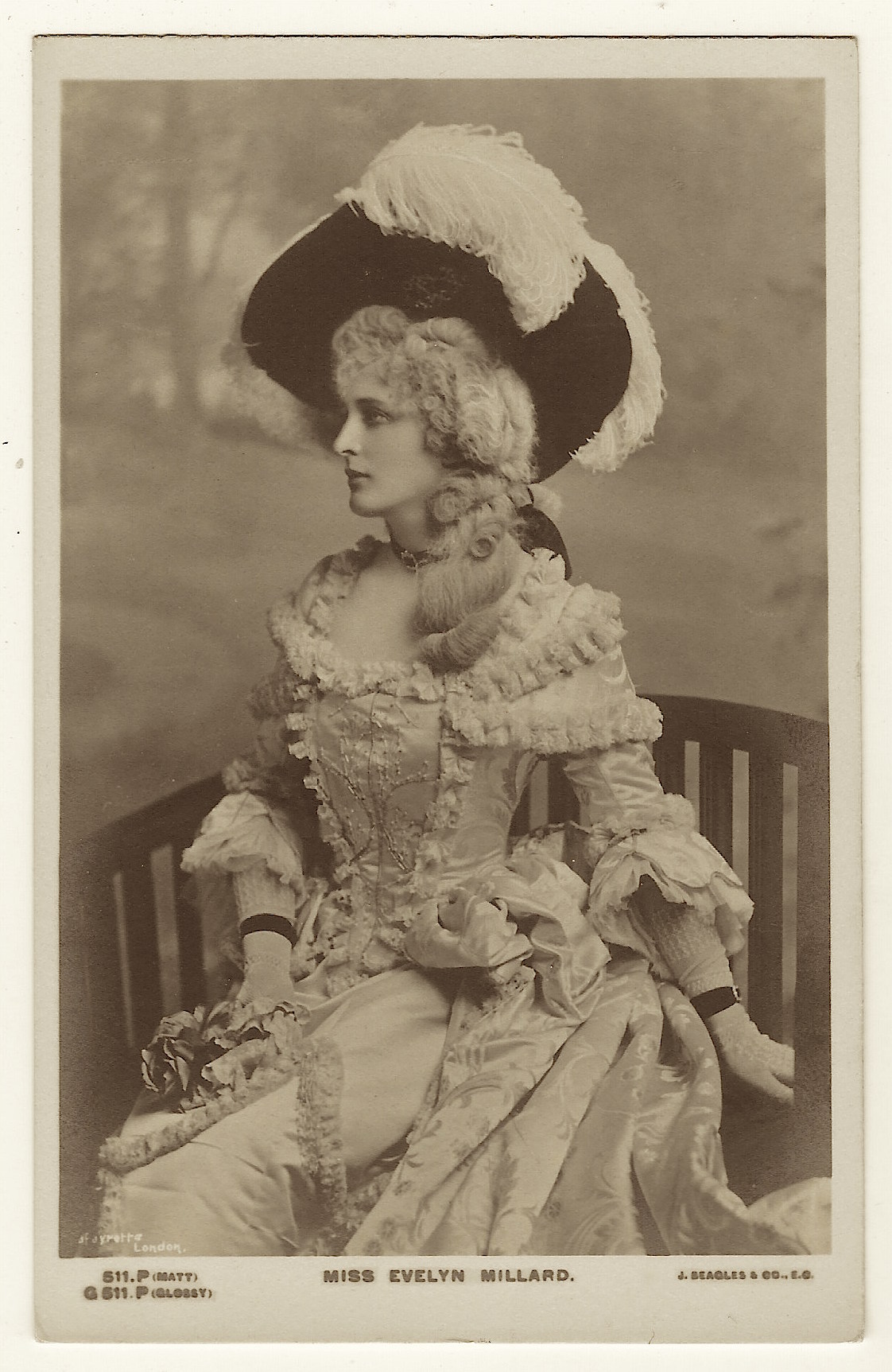
MILLARD 4                                                                                                                                                                                                                               POSTCARD 4  (SOLD)
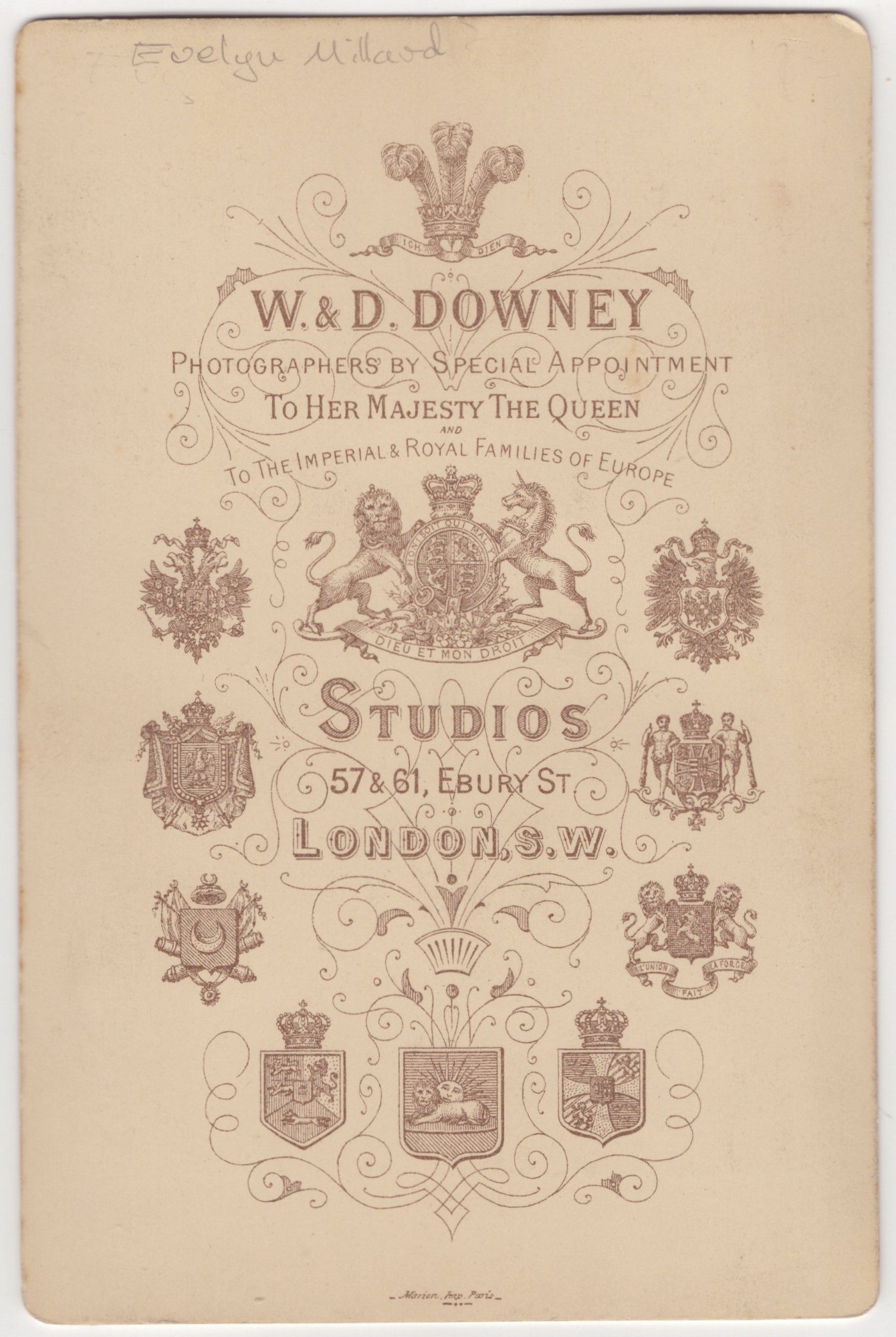
 Cabinet Card 1 was photographed by W & D Downy, located in London, England. This studio was well known and highly respected in England. They advertised themselves as photographers specially appointed to photograph the imperial and royal families of Europe.   SOLD

 Postcard 1 features  a portrait of English stage actress Evelyn Millard (1869-1941). She was well known for her acting in Shakespearian theater as well as for her beauty. She is also noted for creating the role of Cecily Cardewin in the premier of Oscar Wildes play “The Importance of Being Earnest” (1895). This postcard was produced by the Rotary Photo Company of London, England.  (SOLD)

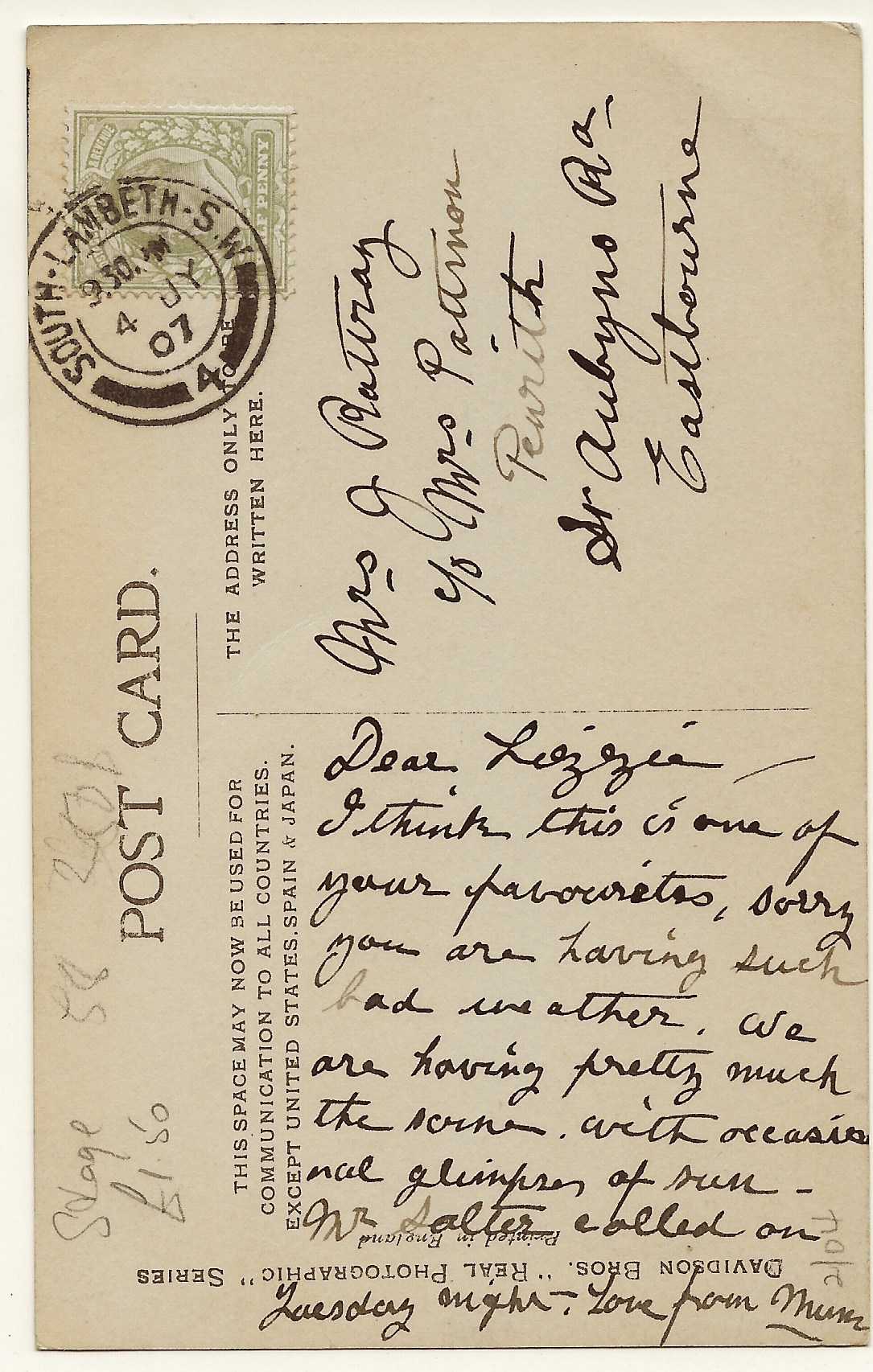
    Postcard 2 is a portrait of Miss Millard taken by the Davidson Brothers studio in London, England. The postcard is part of a series (“Real Photographic Series” no. 2195). Davidson Brothers was located in both London and New York City. The firm operated between 1901 and 1911. Some of their theatrical postcard portraits have the same format as many of the Rotograph photo cards.  This postcard was postmarked in South Lambeth in 1907. Lambeth is a district in Central London. The writer of the message on this postcard starts the communication with “Dear Lizzie, I think this is one of your favorites”. Most likely the writer was stating that Evelyn Millard was one of the favorite actresses of the recipient of the postcard. Collecting postcard images of theatrical stars was certainly quite popular at the time this postcard was written. (SOLD)

The third postcard is color tinted and was produced by the Rotary Postcard Co. as part of the Rotary Photographic Series ( no. 191G). The photographer was T. C. Turner who operated studios in London and Hull, England. Thomas Charles Turner (1839-1896) operated his London studio between 1870 and 1900. Millard is clearly in costume for this portrait. Note her unusual pin. It looks like a multi-eyed horror movie insect. This vintage postcard is in very good condition (see scans).  (SOLD)

Postcard number four is rare. Miss Millard looks quite beautiful and is dressed in an exquisite gown. Note, that unlike most of her other portrait postcards, Evelyn has blonde hair. Most of her photo postcards show her with dark hair. It is very possible, even likely, that she is wearing a wig in this portrait. The photographer of this image was the Lafayette studio. The firm was founded in Dublin in 1880 by James Stack Lauder. His father, Edmund Lauder was a pioneering and successful photographer. The elder Lauder used the name “Lafayette’ to give the company a touch of Paris, which was a a city considered the center of the art and photography world. James was joined in business by his three photographer brothers. By the 1900, the company had studios in Glasgow, Manchester, London and Belfast. The studio also was invited to photograph Queen Victoria. The company still exists today. This postcard was published by J. Beagles & Co. of London, England. The postcard is part of a series (no. G 511.P). The “G” is an abbreviation for “glossy”. There was also a matte version of this postcard portrait. John Beagles (1844-1909) was born in England. At age 17 he was a “pupil teacher”. In the census of 1891, he is listed as a “photographic publisher” in Nottingham. Later he established J. Beagles & Co. in London. He and his successors produced a variety of postcards including an extensive catalog of celebrity (stage and screen) portrait postcards. The firm also published topographic and view cards, as well as a series called “Matrimonial Cats”. After Beagle’s death, the business continued as J. Beagles & Co. until it closed in 1939.  (SOLD)

                                                                   POSTCARD  1

millard 2 1

                                                                       POSTCARD 2

millard3                                                                   POSTCARD 3

                                                                                                MILLARD 4 2        POSTCARD 4
Cabinet Card 1

DAISY JEROME : SCANDALOUS STAGE ACTRESS WHO WAS VIEWED AS RAUCOUS, VULGAR, AND “AN ACQUIRED TASTE”

POSTCARD 1 (SOLD)

POSTCARD 2

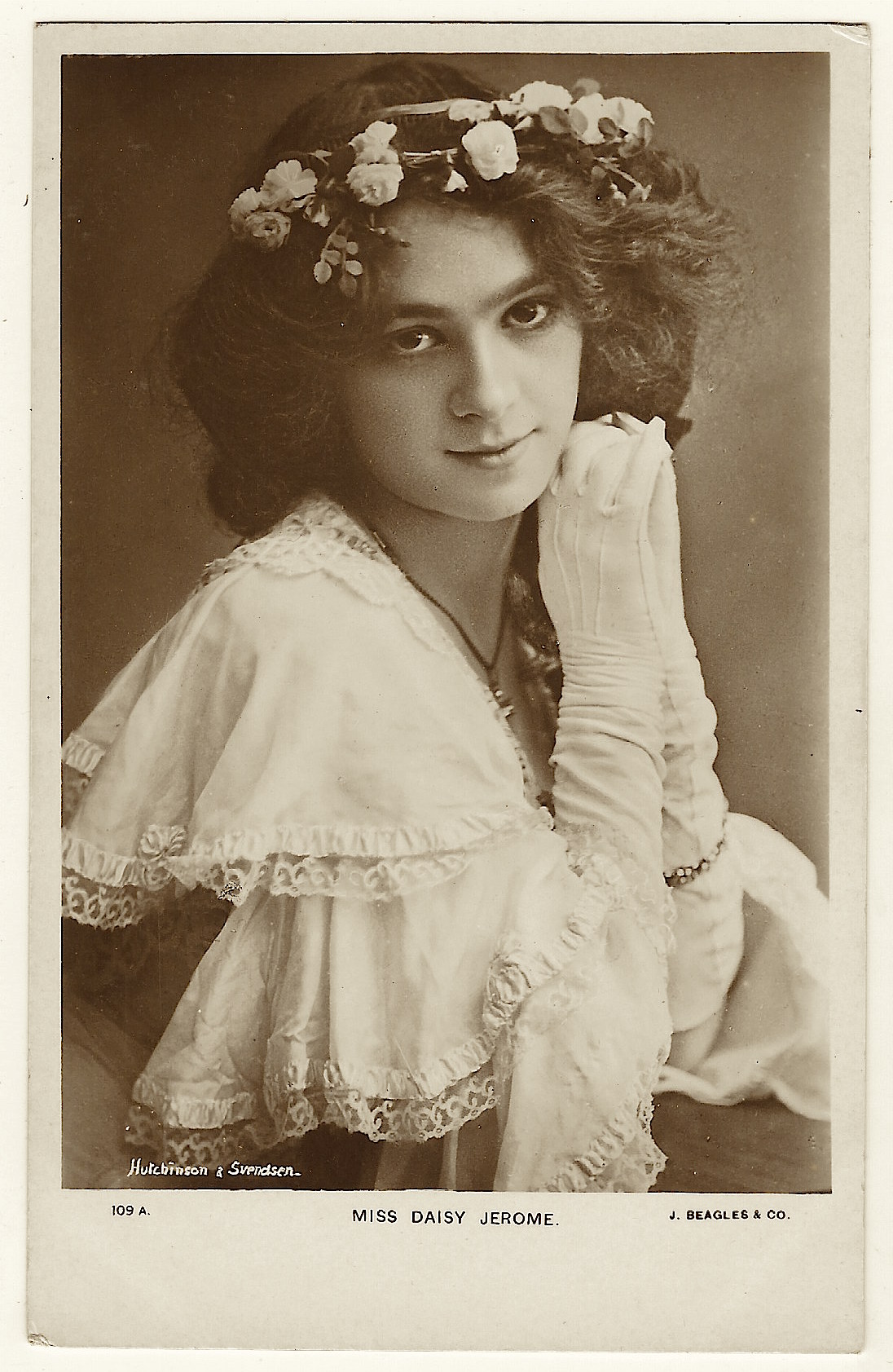
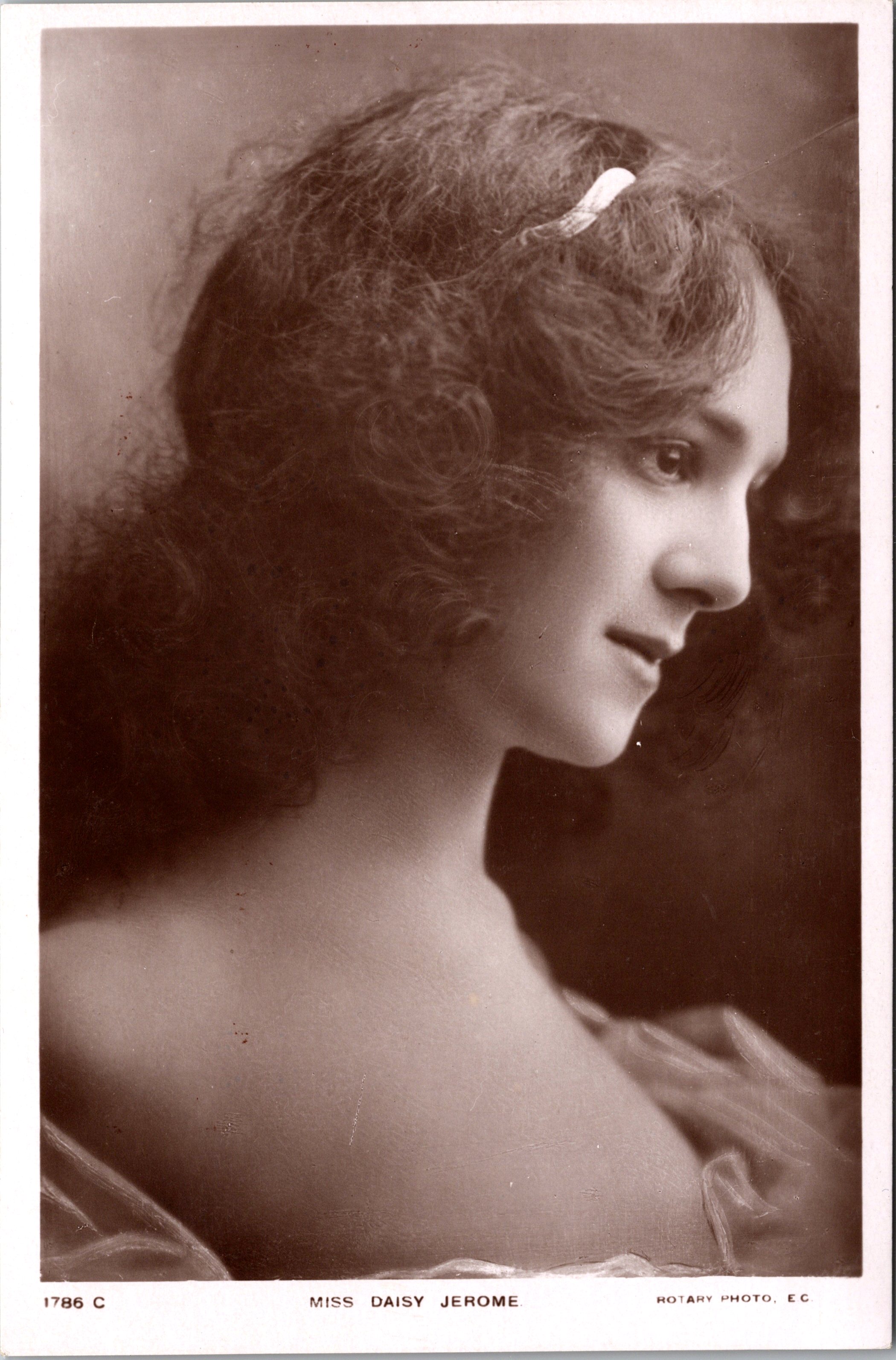
This rare vintage real photo postcard features the red headed actress that electrified the Australian stage. She was noted for her famous wicked wink. The life and times of Daisy Jerome can best be described as scandalous. She arrived in Australia in 1913 for a three year stage tour.  Feminism was rising in the western world. Suffragettes were marching for the right to vote. Women were smoking, driving, wearing less conservative fashion, and even dancing the tango with it’s sexual overtones. She arrived in Adelaide adorned with an excess of jewelry. She was born in America but raised in England. Her place of birth was New York and she was born Daisy Witkowski in 1886. Daisy reported that she was raised in a multilingual household that had been visited by Presidents Lincoln, McKinley, and Roosevelt. After experiencing financial problems, her father moved the family to England. Money was needed and Daisy followed her sister onto the stage. She played the Palace and toured with companies that gave her a chance to do comedic singing and pantomime. Her performances were considered to be amusing and irreverent. She was a comedienne. Her humor has been described as “vibrant” and “wicked”. Daisy was described as “feisty”, “cunning”, and “independent”. She was small and dainty and had compelling eyes and an expressive face. Her performances had a risque tone and she had a hoarse, sensual voice. She could toe dance and wooden shoe dance, but was most known as a mimic and comnic singer. After a year of marriage, she deserted her first husband to live with another man. In 1910, she took a journalist to court for libel. The reporter had accused her of performing encores when audiences had not requested them. She claimed that her professional reputation had been damaged. The court case was a circus. The defense ridiculed one of her songs which caused her to break into tears in the witness chair. She won the case but was barely compensated. When she began her tour of Australia, she was recognized as raucous, vulgar and “an acquired taste”. She quickly charmed those that were hesitant to appreciate her and she soon received a warm welcome and a complimentary nickname, “The Electric Spark”. Her carrot red hair became the subject of much debate. She claimed it was her natural color but most people were not believers of her claim. One day, an Australian comedian told her that a gentleman had taken offence to her hair. The comedian said that the offended man would visit her that night. The comedian then informed the local fire chief that there was great risk of fire during Daisy’s time on stage. The worried fireman came to the theatre and when he saw Daisy’s red hair, he realized he had been a victim of a joke. He kept the joke going when he said that he agreed there was risk of fire and he ordered the scenery to be fireproofed immediately. During Daisy Jerome’s era, there was a bias against redheads. They were considered to be hot tempered and sexually wild and uninhibited. Her theater/music hall background only magnified some people’s negative view of Daisy. After completing her touring contract in Australia, she signed another one. This time she performed on a vaudeville stage which allowed her to showcase her bawdy songs. In 1914 she sang a feminist style song called “The Press, the Pulpit, and the Petticoat”. This song argued that women were more powerful and influential than the media and the church. Daisy was a woman who had unconventional ideas. She would not restrained by political correctness. She stated in a 1914 interview that “I refuse to regulate my acts to accepted rules of conduct”. Despite her views, she remained popular with Australian audiences. She left Australia in 1916 and returned in 1922 for another successful tour. Later, she was involved in another court case which this time involved her suing her maid over missing jewels. With the arrival and subsequent popularity of films, Daisy Jerome faded out of the public’s focus. Two photo portraits of Daisy Jerome can be found in England’s National Portrait Gallery.
 
Postcard 1 was published by J. Beagles & Co. of London, England as part of a series (No. 109 A). The company was started by John Beagles (1844-1909). The company produced a variety of postcards including an extensive catalog of celebrity (stage and screen) portrait postcards. After Beagle’s death, the business continued under it’s original name until it closed in 1939.Miss Jerome’s portrait was taken by the Hutchinson & Svendsen studio. The National Portrait Gallery asserts that this pair of photographers were active in London between 1905 and 1906. This vintage photo postcard is in excellent condition (see scans). This postcard portrait of Daisy Jerome is absolutely beautiful and very uncommon.  (SOLD)                                     
Postcard 2 was published by Rotary Photo (England) as part of a series (No. 1786 C). This vintage photo postcard is in good condition (see scans). 
5172_0001-1

Buy this Vintage Real Photo Postcard (includes International shipping outside the US) #5172

To purchase this item, click on the Pay with PayPal button below

$22.00

5172_0001-2

Buy this Vintage Real Photo Postcard (includes International shipping outside the US) #5172

To purchase this item, click on the Pay with PayPal button below

$32.00

POSTCARD 1

POSTCARD 2

MISS DOROTHY RUNDELL AS CINDERELLA : IN COSTUME : ROTARY PHOTO : RPPC

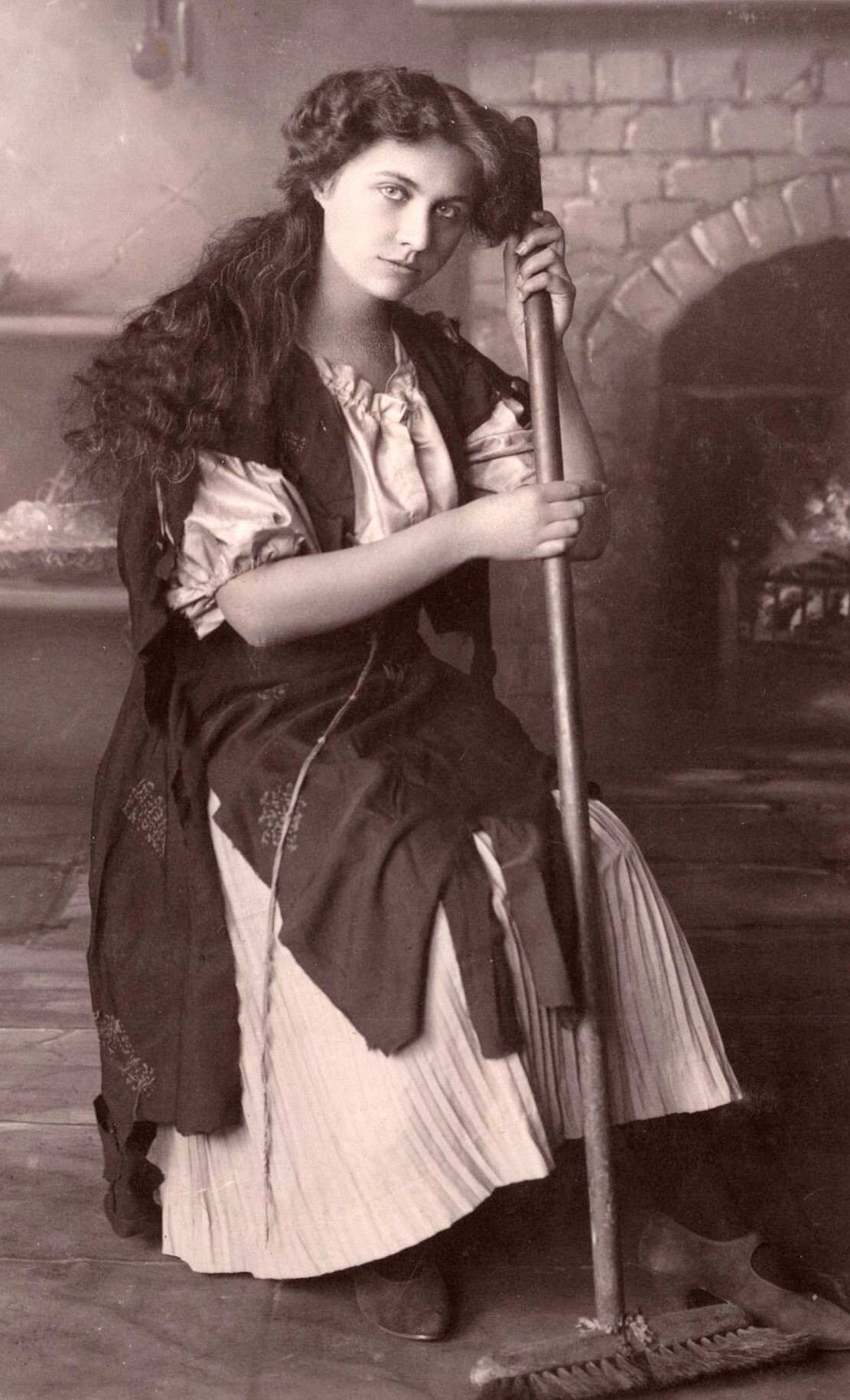
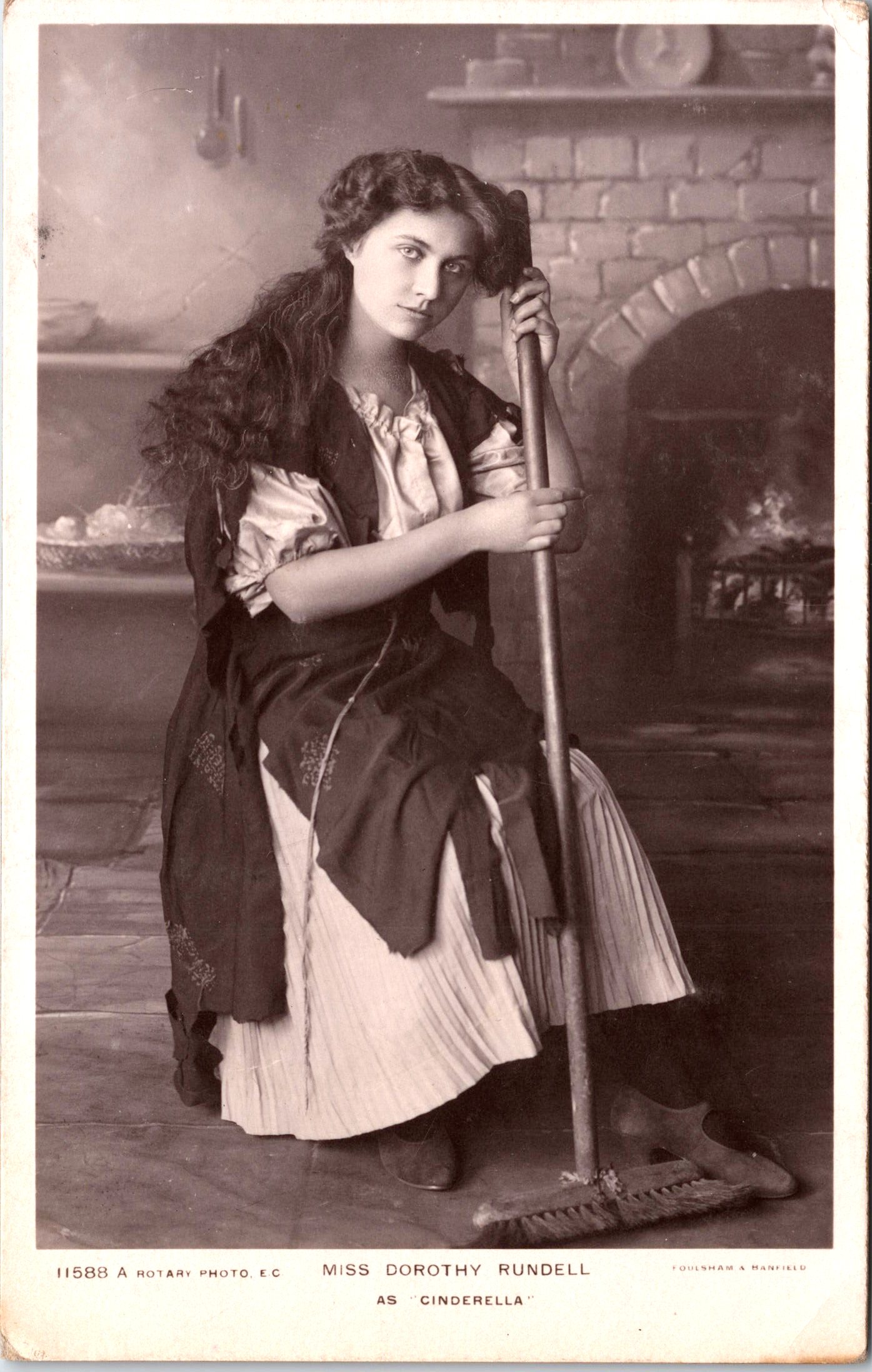
This vintage real photo postcard features actress Dorothy Rundell in costume for her role as Cinderella. She is holding a broom and has a look of despondency. Rundell was a sitter for six portraits in the collection of England’s National Portrait Gallery. In 1913, Rundell appeared in  “This Way Madam! at London’s Queens Theatre. A World War I website presents an article about Captain Leopold Profeit. The author mentions that in 1915, about nine months after he enlisted into the army, Profeit married Dorothy Rundell. She was 26 years old, nine years younger than Captain Profeit. In 1917, less than two years after the nuptials, Profeit was killed at the Battle of Dorian fighting against the Bulgarians. A review in the “Tatler” (1917) reports that Dorothy replaced Doris Keane in the London production of “Romance”. The reviewer wrote that Dorothy “won all hearts by her personal charm, and delicate sensibility”.  This postcard was published by Rotary Photo as part of a series (No.11588 A). The photo of Miss Rundell was taken by the Foulsham & Banfield studio.  Frank Foulsham and A. C. Banfield operated a studio from the 1900’s through the 1920’s and were well known celebrity photographers. SOLD

THE MOST ADORABLE LITTLE GIRL : CURLS GALORE : HAVING A CUP OF TEA : RPPC

This vintage real photo postcard features an adorable little girl with curls galore. The child sits at a table behind a cup of tea. The girl has an expression as if she is suspiciously eying the photographer. The card was published by Rotary Photo and is part of a series (No.1405).This real photo postcard has minor edge and corner wear and is in overall good condition (see scans).

5161_0001-1

Buy this Real Photo Vintage Postcard (includes shipping within the US) #5161

To purchase this item, click on the Pay with PayPal button below

$26.00

5161_0001-2

Buy this Vintage Real Photo Postcard (includes International shipping outside the US) #5161

To purchase this item, click on the Pay with PayPal button below

$36.00

Published in: on December 11, 2023 at 12:00 pm  Leave a Comment  
Tags: , ,

ALEXANDRA DAGMAR : MUSIC HALL PERFORMER & PANTOMIMIST : RPPC 1904

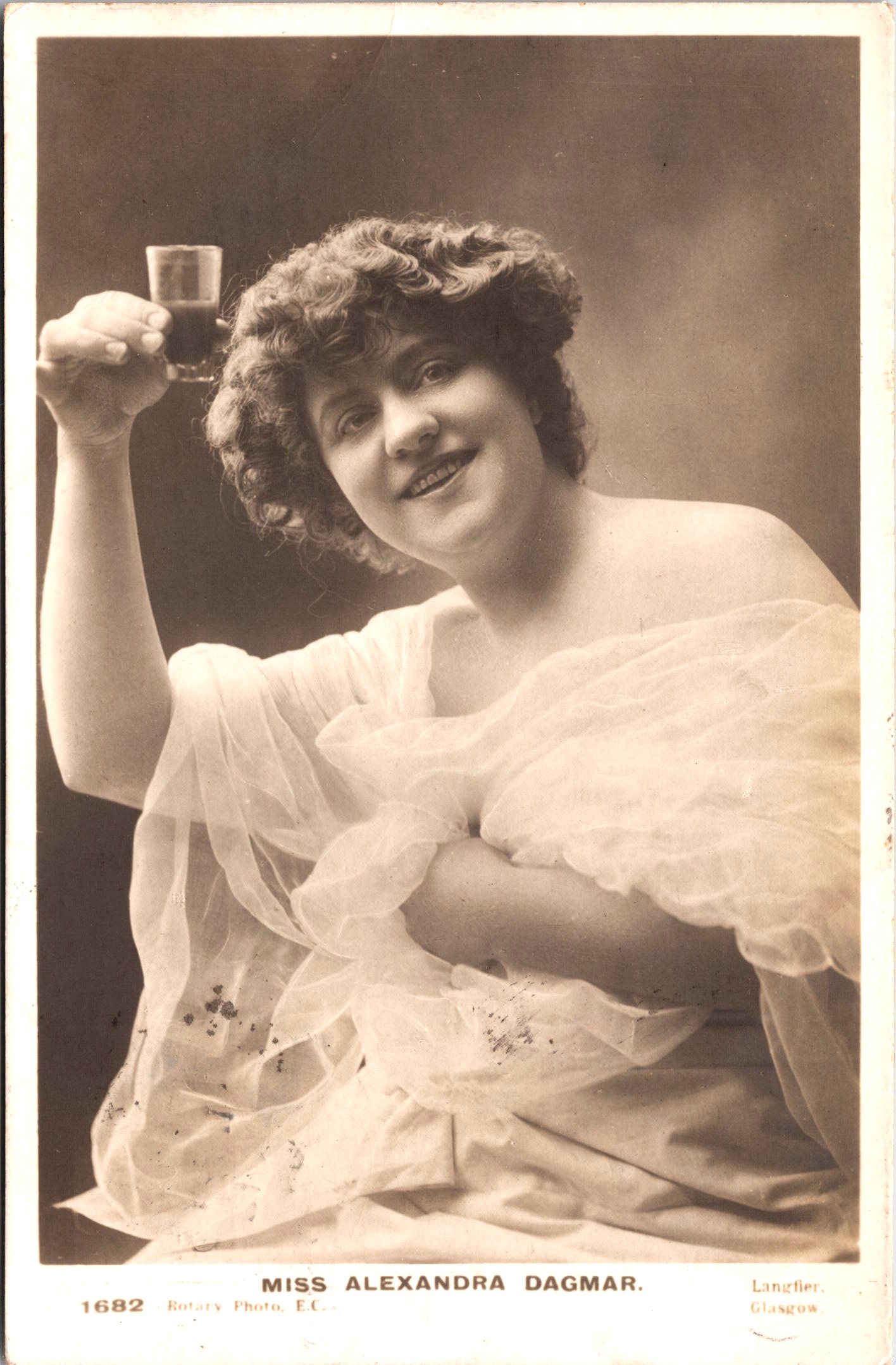
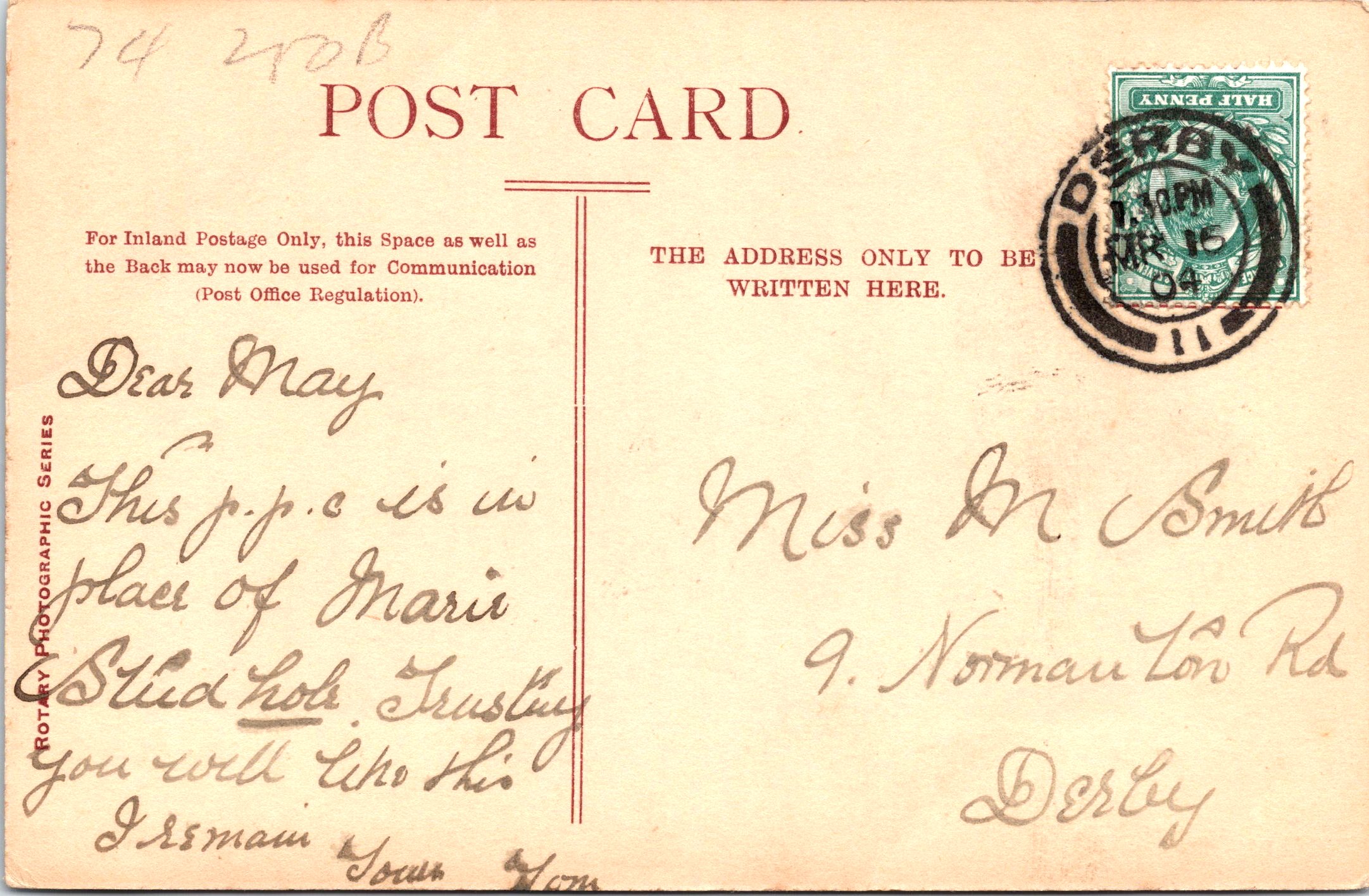
This vintage real photo postcard features music hall vocalist and pantomime performer, Alexandra Dagmar (1868-1940). Dagmar appears to be making a toast in the postcard’s photo. She was born in Polar, England to Danish born parents. Her father was a ship chandler (seller of ship supplies and equipment), and later a wholesale provision merchant. Dagmar came to the public’s attention at the Grand National Amphitheatre in London. where she appeared in “Richard III”. She subsequently toured the United States where she met Edmond DeCelle (1854-1920), a tenor, who she married in New York (1888).The pair appeared together in both the United States and Great Britain for a few years until Dagmar resumed her solo career. She retired upon the onset of the First World War and she and her family made the US her home. She died in Mobile, Alabama at about 72 years of age. This postcard was published by Rotary Photo as part of a series (No.1682). The photo on this card was taken by the Langfer studio which was located in Glasgow, Scotland. This postcard was postmarked in Derby in 1904.  (SOLD)

MISS ELIZABETH FIRTH : SINGER, ACTRESS, AND PHILANTHROPIST (1908)

POSTCARD 1 (SOLD)

POSTCARD 2 (SOLD)

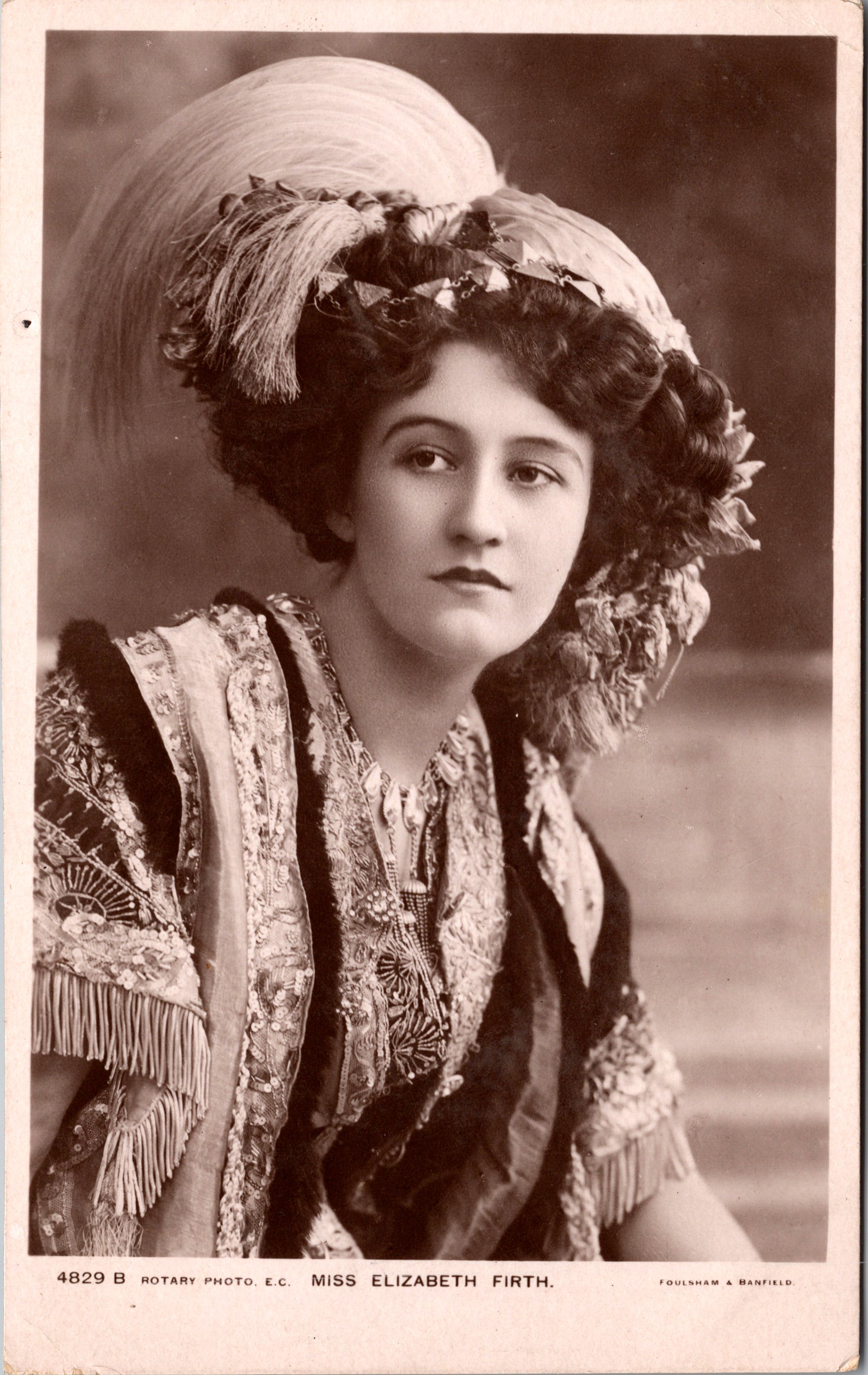
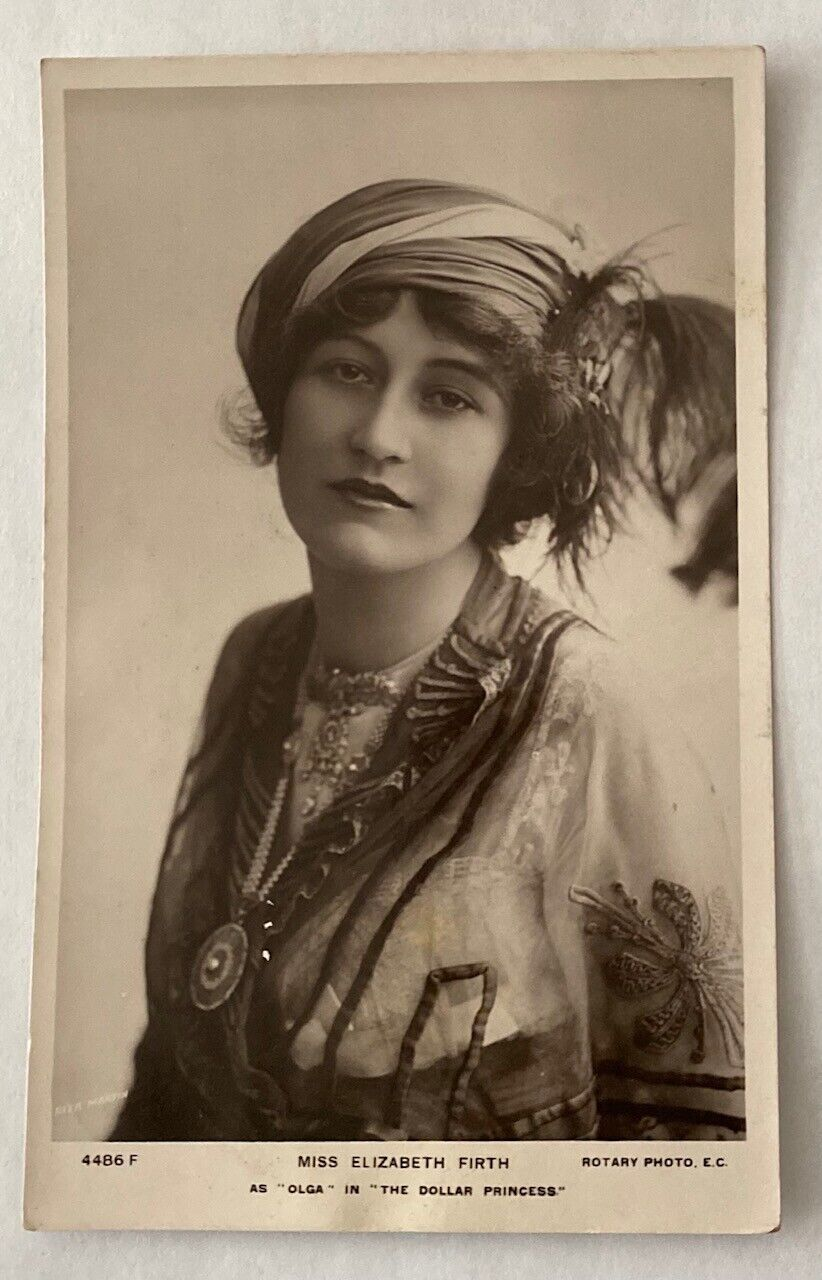
These vintage real photo postcards feature soprano, actress, and philanthropist, ElizabethFirth (1880-1960). Although she was born in Phillipsburg, New Jersey, she became an accomplished singer and actress on the English stage. When she lived in Phillipsburg, she was known as “Jimmy” Firth. The nickname, Jimmy, came courtesy of her beloved father. She went by this moniker with her most intimate friends as well as among those in her theatre world. “Jimmy” graduated from high school in New Jersey and sang as a soprano soloist in the choir of her church. She then entered the New York Conservatory of Music. At a concert at New York City’s Waldorf-Astoria, she came to the attention of a leading London musical directress. Miss Firth then appeared in a few theatrical productions, including a small part in a play starring Viola Allen. In 1903 she accepted an offer to do an English concert tour. Before she could return to the United States, she was signed to a three year contract to act and sing on the English stage. She experienced a great deal of success in Gaiety theatre productions. Among her major roles was her appearance as Natalie, in the “Merry Widow”. The production was in 1907 at the Daly Theatre. Other actors in the play included Lily Elsie and Gabrielle Ray. Five portraits of the actress can be found in England’s National Portrait Gallery. She was known as a beautiful woman. One writer described her as “tall and slender” and that she had a “clear blond complexion along with blue eyes”. She was also considered one of the best dressed women in London. While in England, the actress visited her parents in the US annually and also engaged in theatrical tours there. “Jimmy” was a charitable woman and she established the “Elizabeth Firth Wade Foundation Endowment Fund”. Among the groups work was the building a a Youth Center in Phillipsburg. The foundation is still operating. Firth was married to a widower from Cleveland, Ohio. They wed in New York City in 1931.

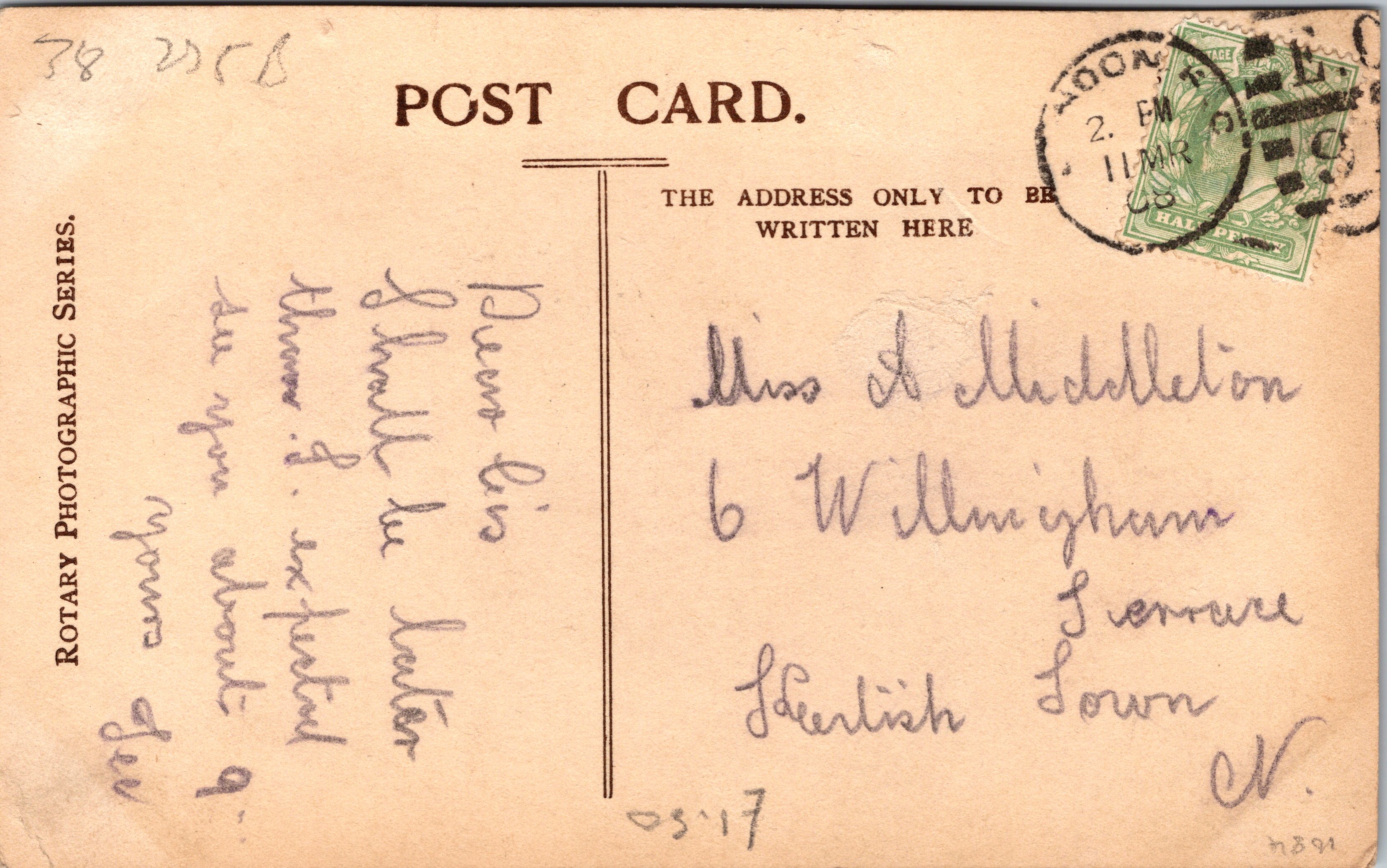
Postcard 1 features a portrait taken by the Foulsham & Banfield studio. Foulsham & Banfield were well known celebrity photographers. Frank Foulsham and A. C. Banfield operated a studio from the 1900’s through the 1920’s.. The postcard was published by Rotary Photo as part of a series (no.4829 B). This postcard was postmarked in 1908 and is in very good condition (see scans). (SOLD)

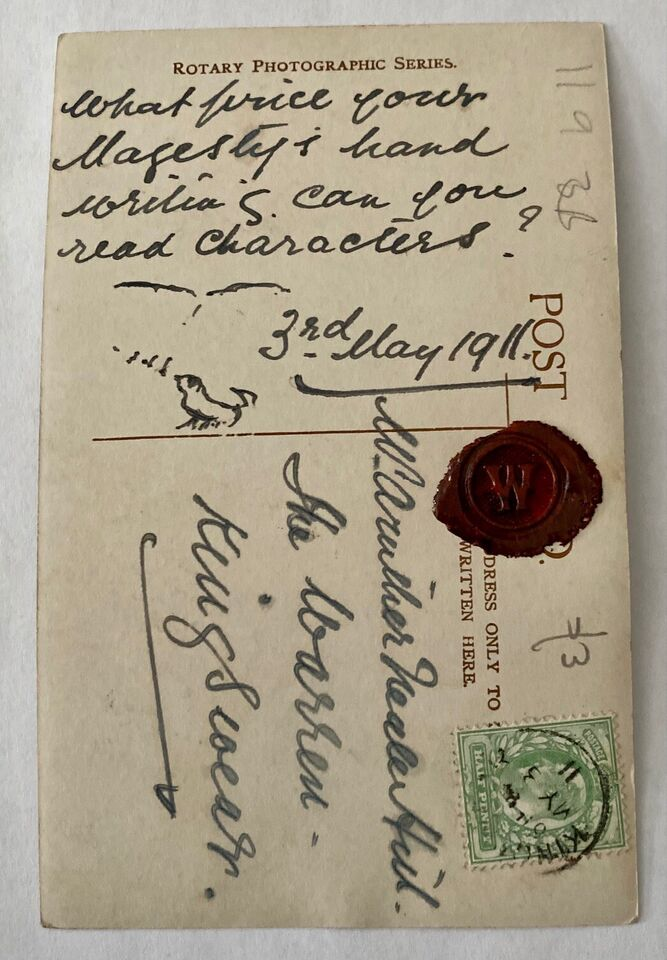
Postcard 2 features Miss Firth in her role as “Olga” in “The Dollar Princess”. Her photograph was taken by Rita Martin. Miss Martin was well known for her expertise in taking portraits of theater stars and other celebrities. The postcard was published by Rotary Photo as part of a series (no.4486 F). The writer of the message on this postcard dated it “1911”. The correspondent also provided an illustration of a barking dog along with their message. The sender of this postcard used sealing wax on the card. I have not seen sealing wax used on a postcard before.  Sealing was is usually used to confirm one’s identity or to secure privacy of the contents of an envelope.  (SOLD)

POSTCARD 1

POSTCARD 2

ALICE RUSSON : IRISH STAGE AND SILENT FILM STAR : RPPC (1908)

POSTCARD 1 (SOLD)
POSTCARD 2 (SOLD)

POSTCARD 3

POSTCARD 4 (SOLD)
POSTCARD 5 (SOLD)

POSTCARD 6 (SOLD)

POSTCARD 7 (SOLD)

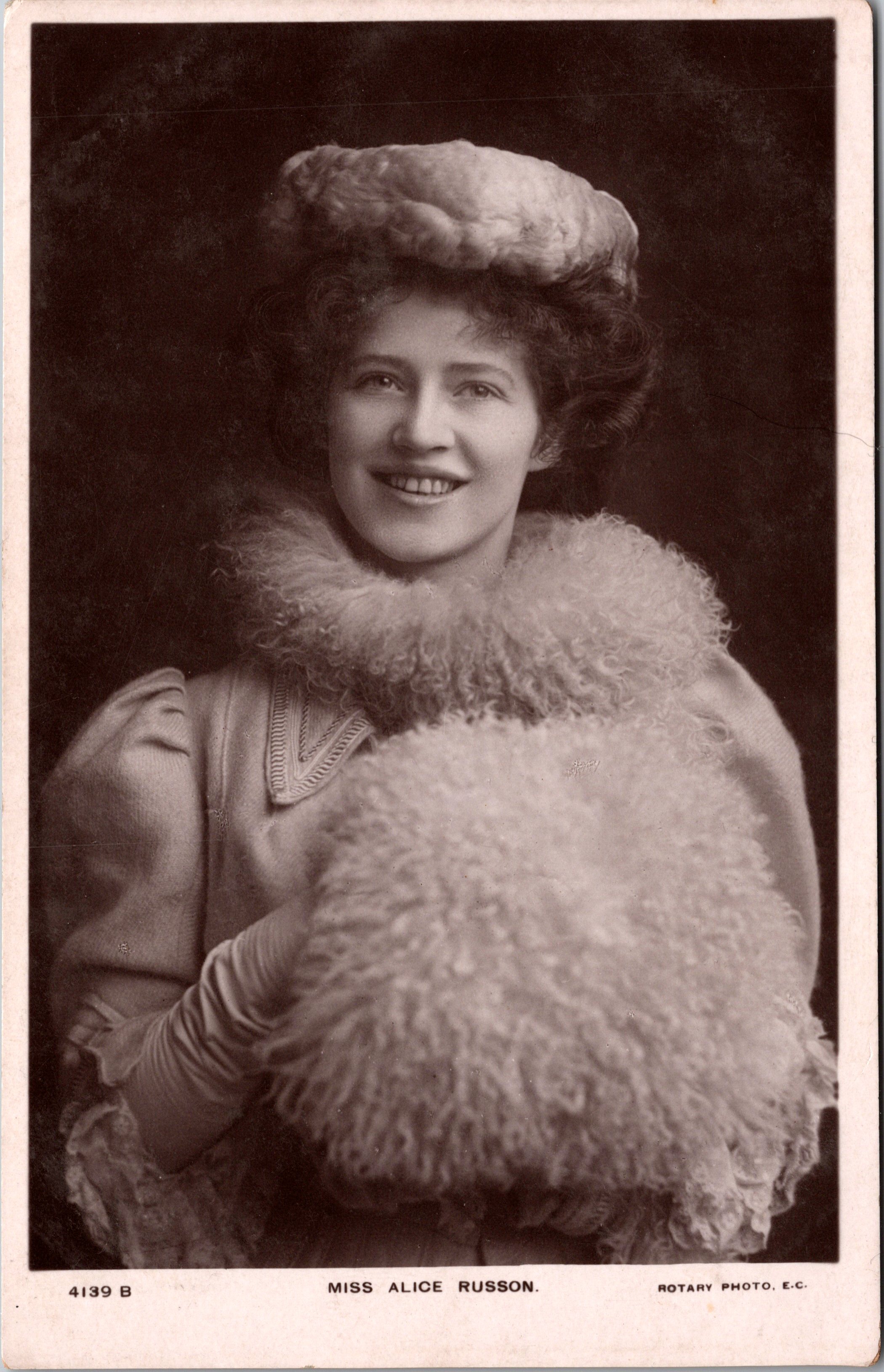
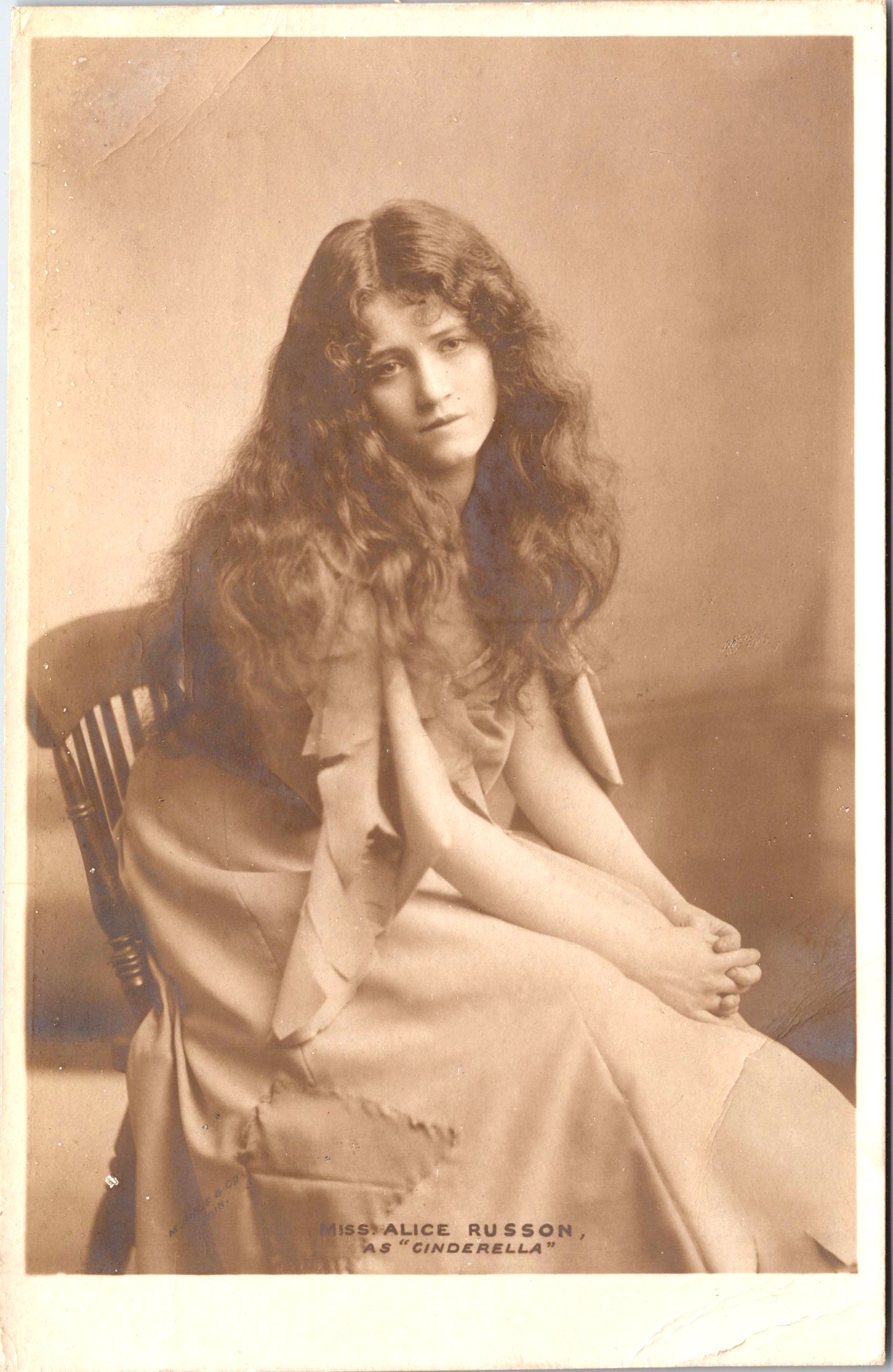
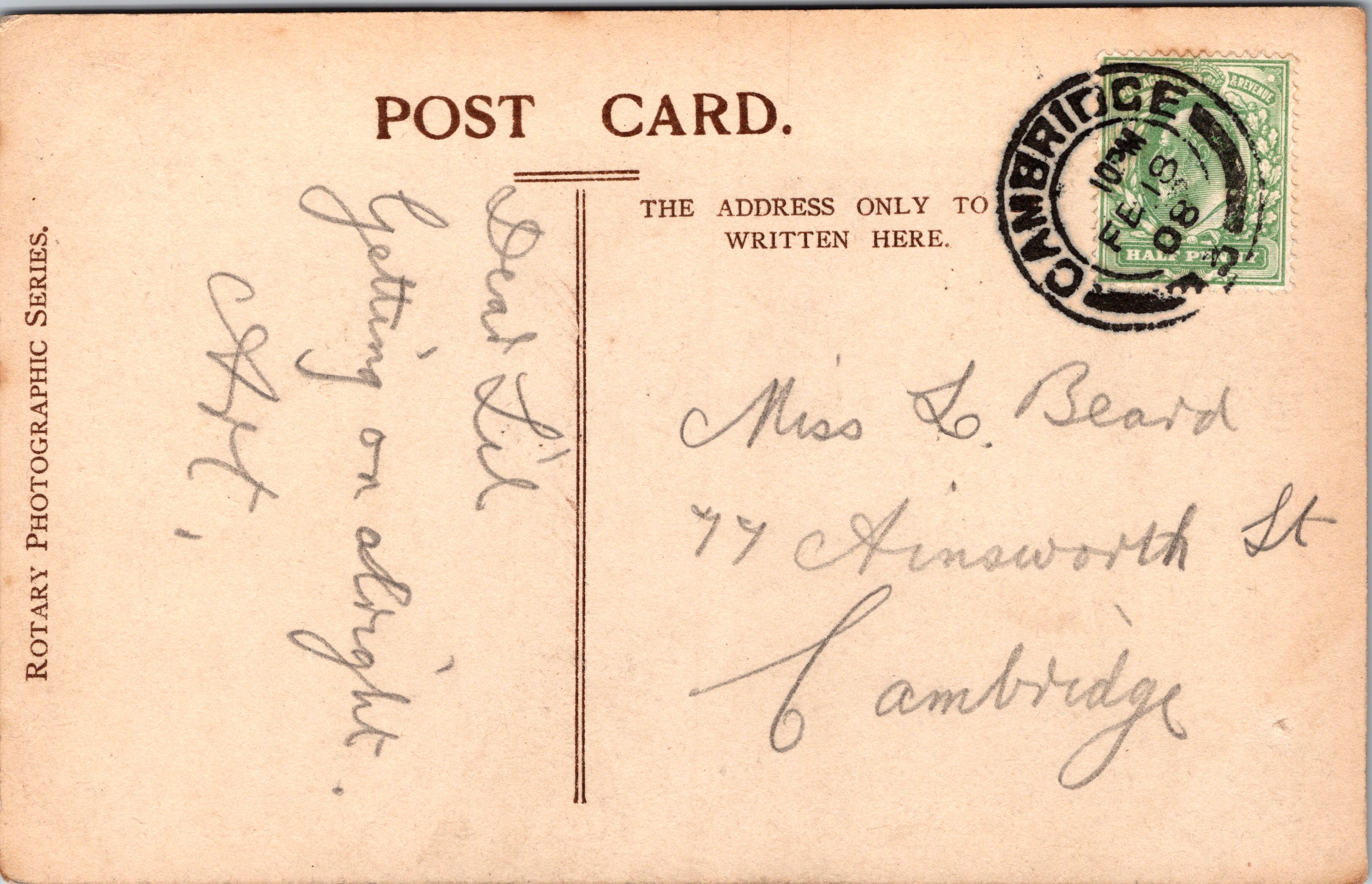
This vintage real photo postcard (Postcard 1) features Irish actress, singer, and dancer, Alice Russon. She acted in musical comedies and silent films. Russon’s stage work included “The Girl from Kay’s” (1904), “Cinderella” (1907), and “The Arcadians” (1911). In 1906, she appeared in a variety show headlined by Will Rogers. In 1912 and 1913, she performed in Australia. According to IMDb, Russon appeared in three British silent films including “Democracy” (1918) and “All Men are Liars” (1919). Russon was married to actor, Vernon Davidson. It is reported that she was an amateur photographer. This postcard was published by Rotary Photo as part of the Rotary Photographic Series (No. 4139 B). The card has a postmark from Cambridge, England (dated 1908). The message on the reverse of the card, like today’s text messages, is short and sweet. The writer simply writes “Getting on alright”.  (SOLD)

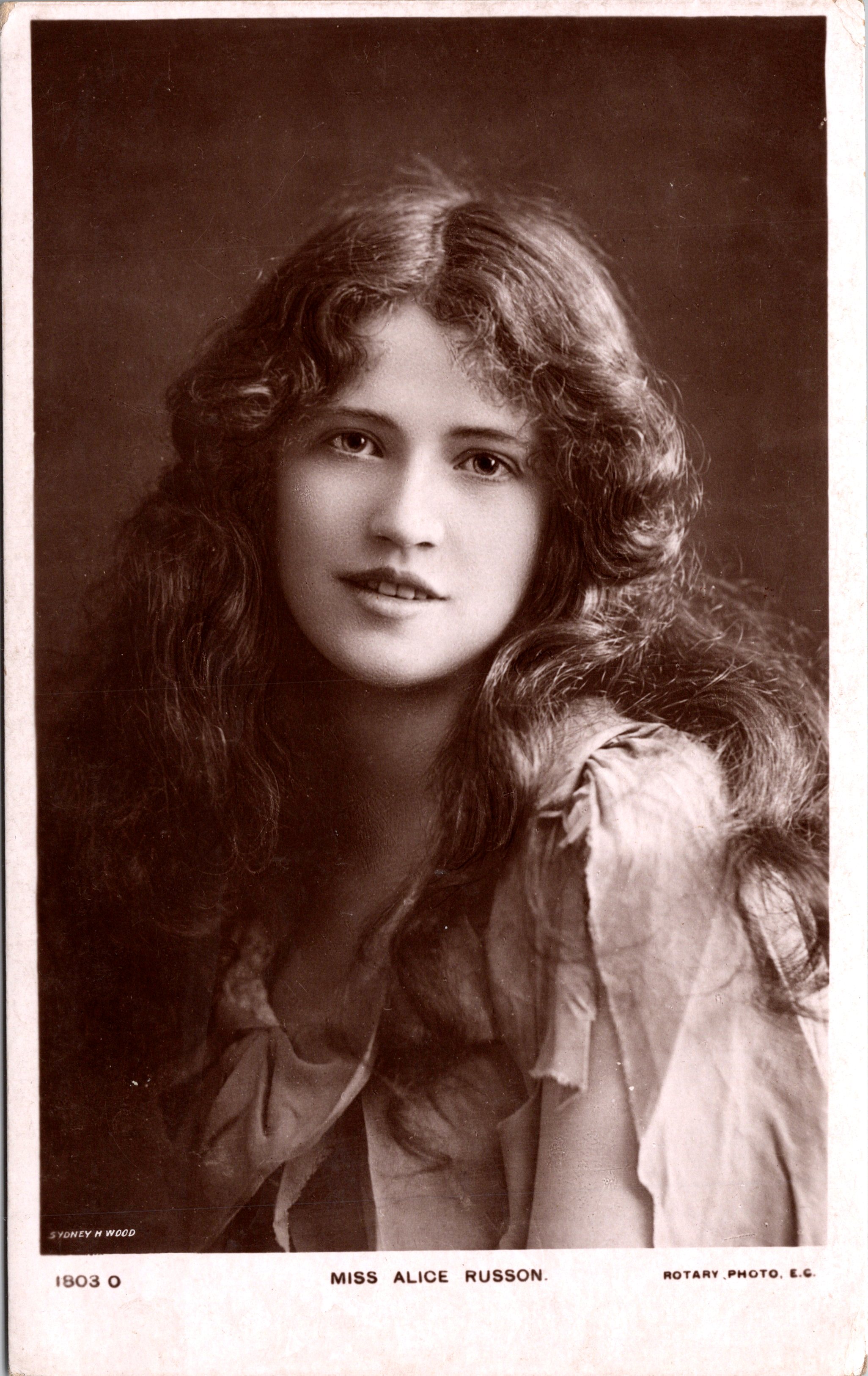
Postcard 2 was published by Rotary Photo as part of a series (No. 1803 O). Russon’s photograph was taken by Sydney Wood.  (SOLD)

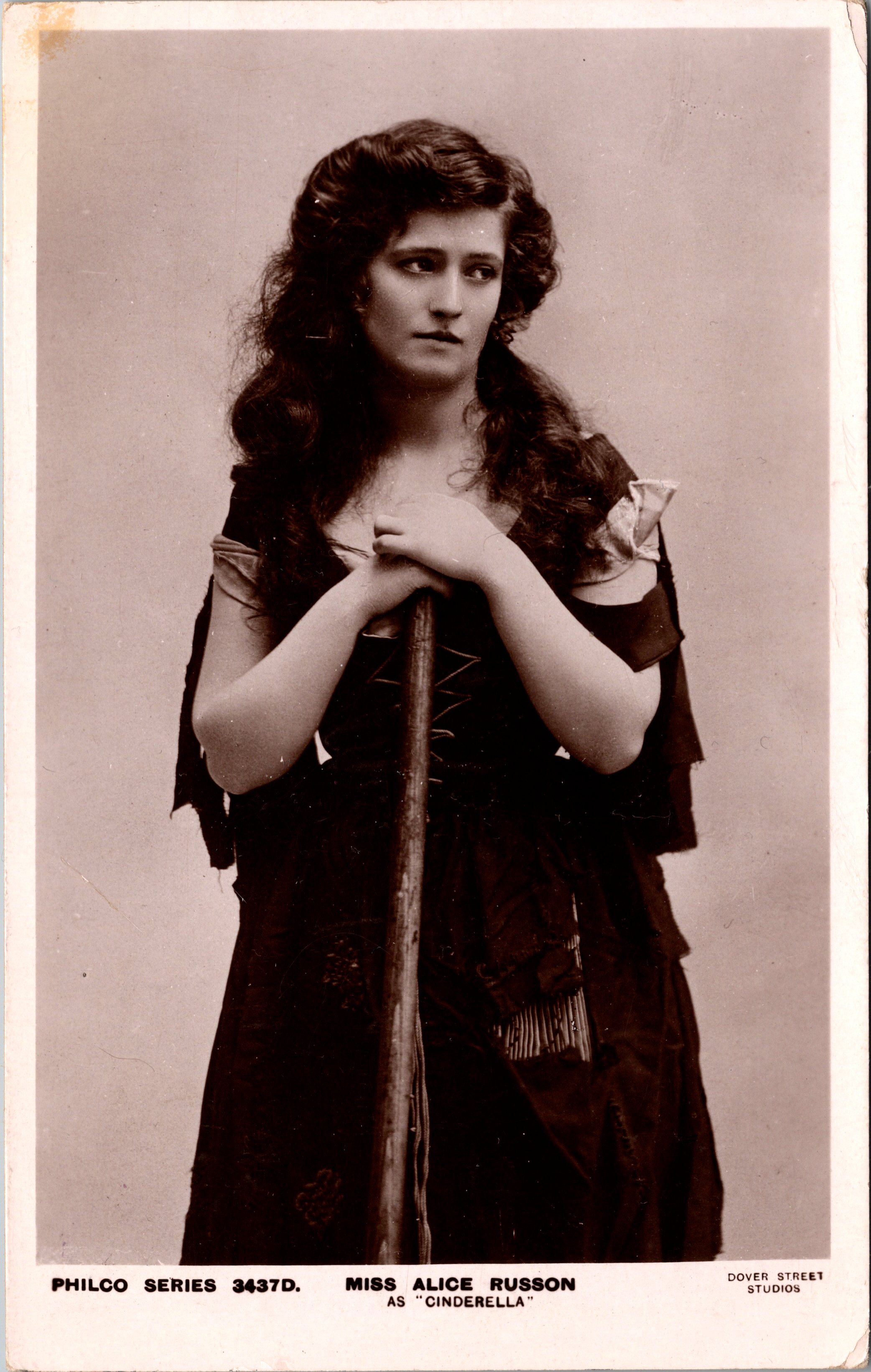
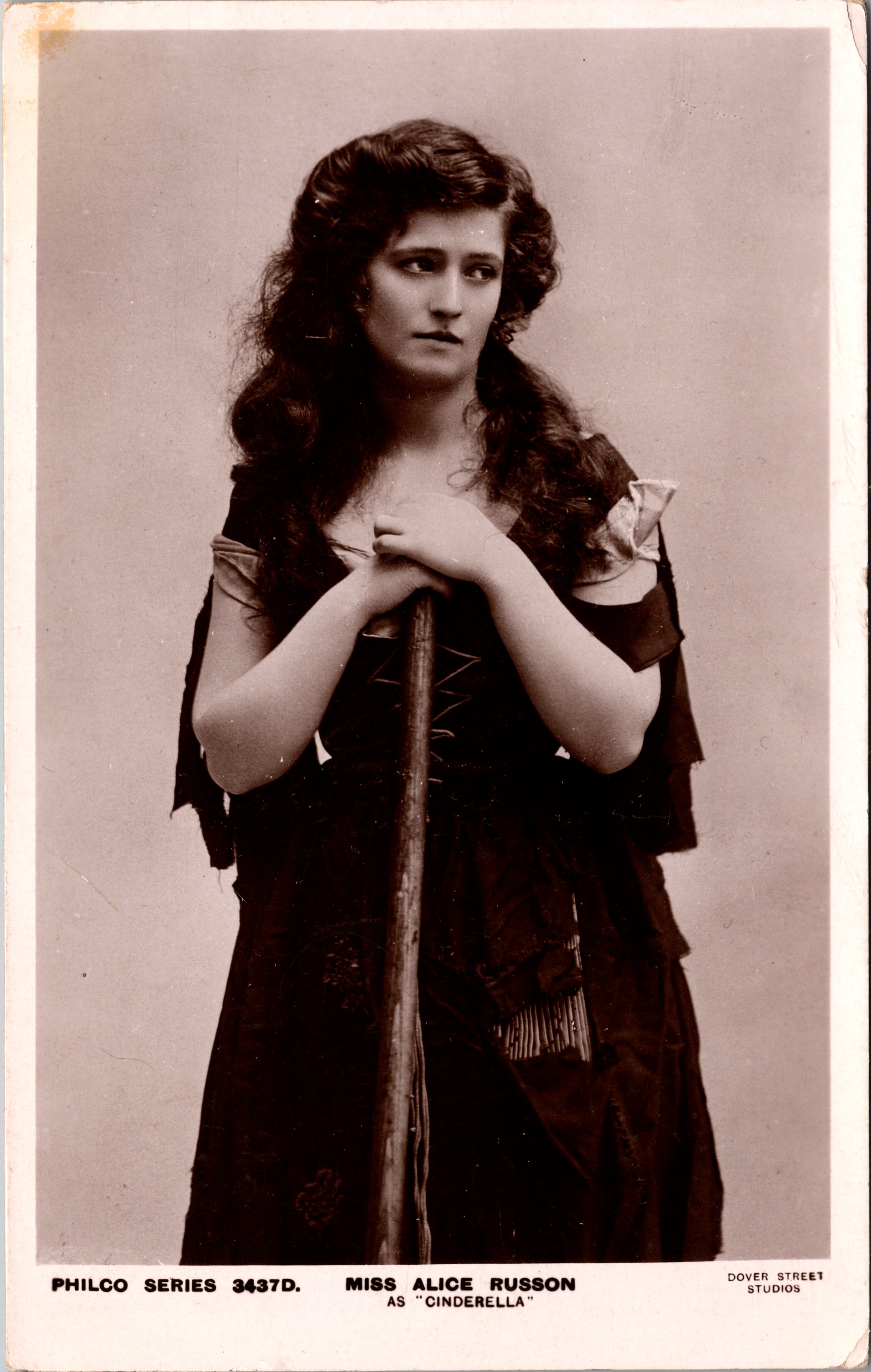
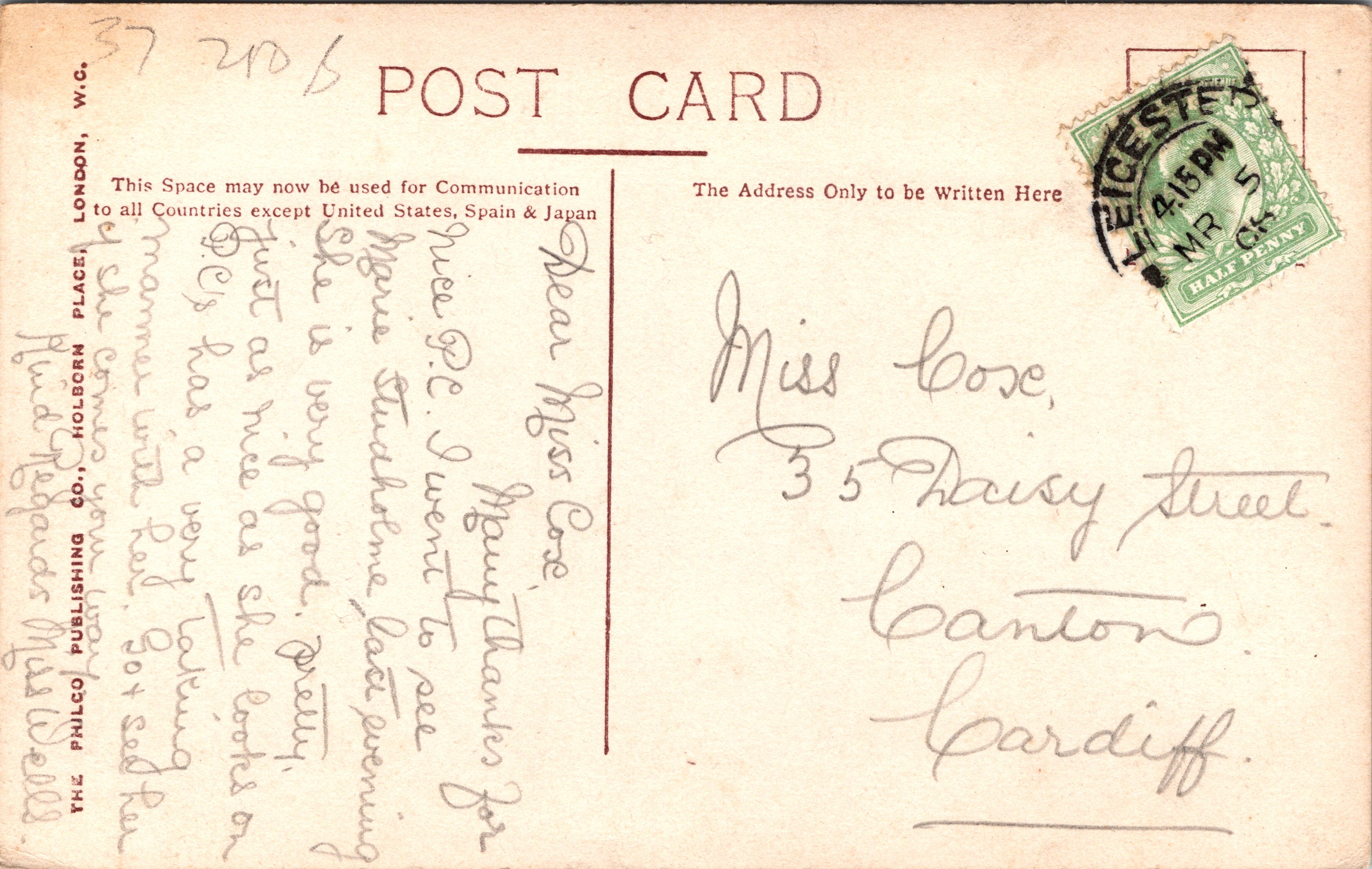
Postcard 3 was published by Philco as part of a series (No. 3437 D). Russon’s photograph was taken by Dover Street Studios. The card has a postmark dated 1908. The message on the reverse of the card, states that the writer attended the theatre the night before writing. She reports that she saw actress, Marie Studholme and that Miss Studholme was “very good, pretty and just as nice as she looks on postcards”. This postcard is in good condition (see scans).

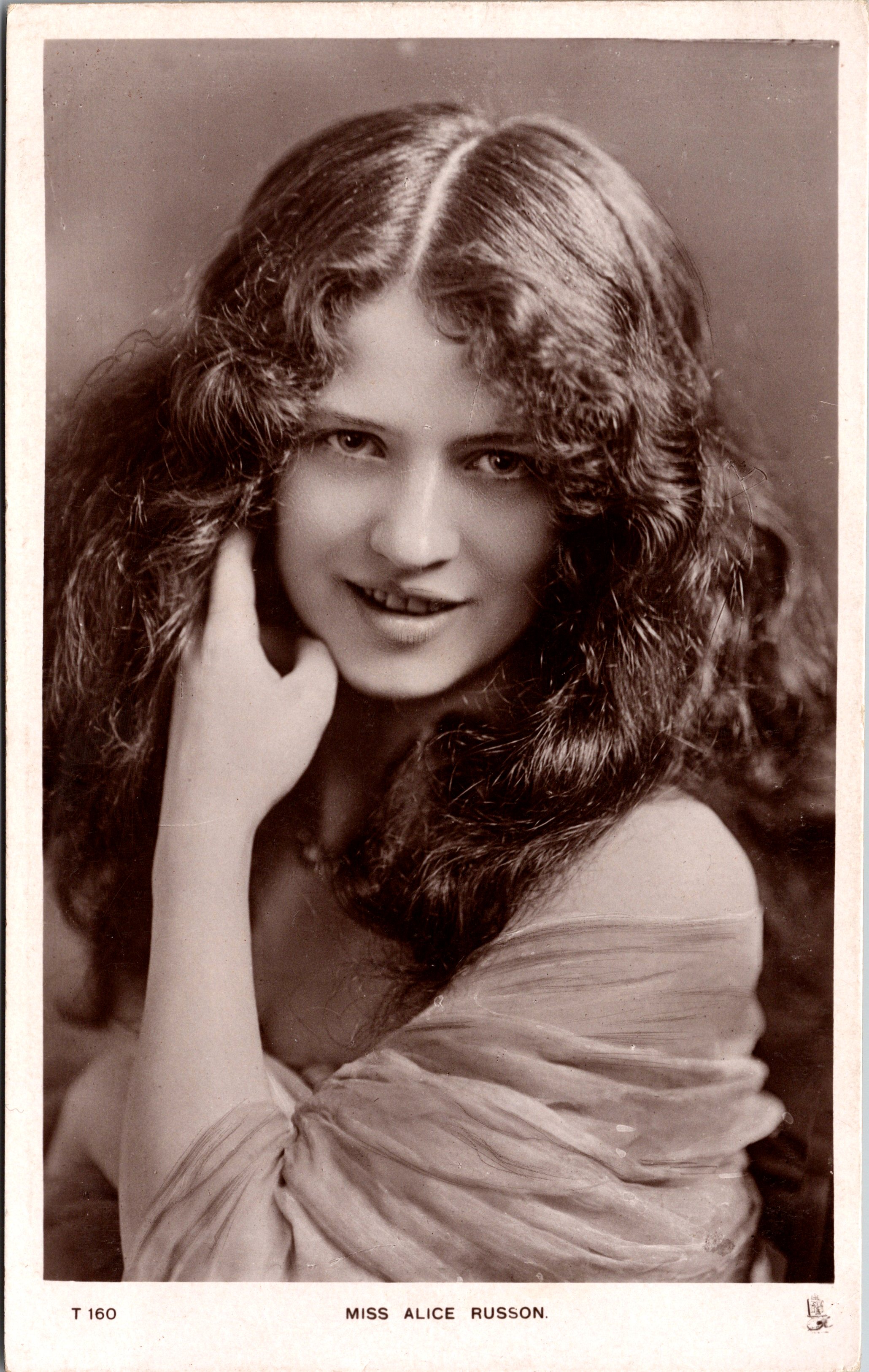
Postcard 4 was published by Raphael Tuck as part of a series (No.T160). (SOLD)

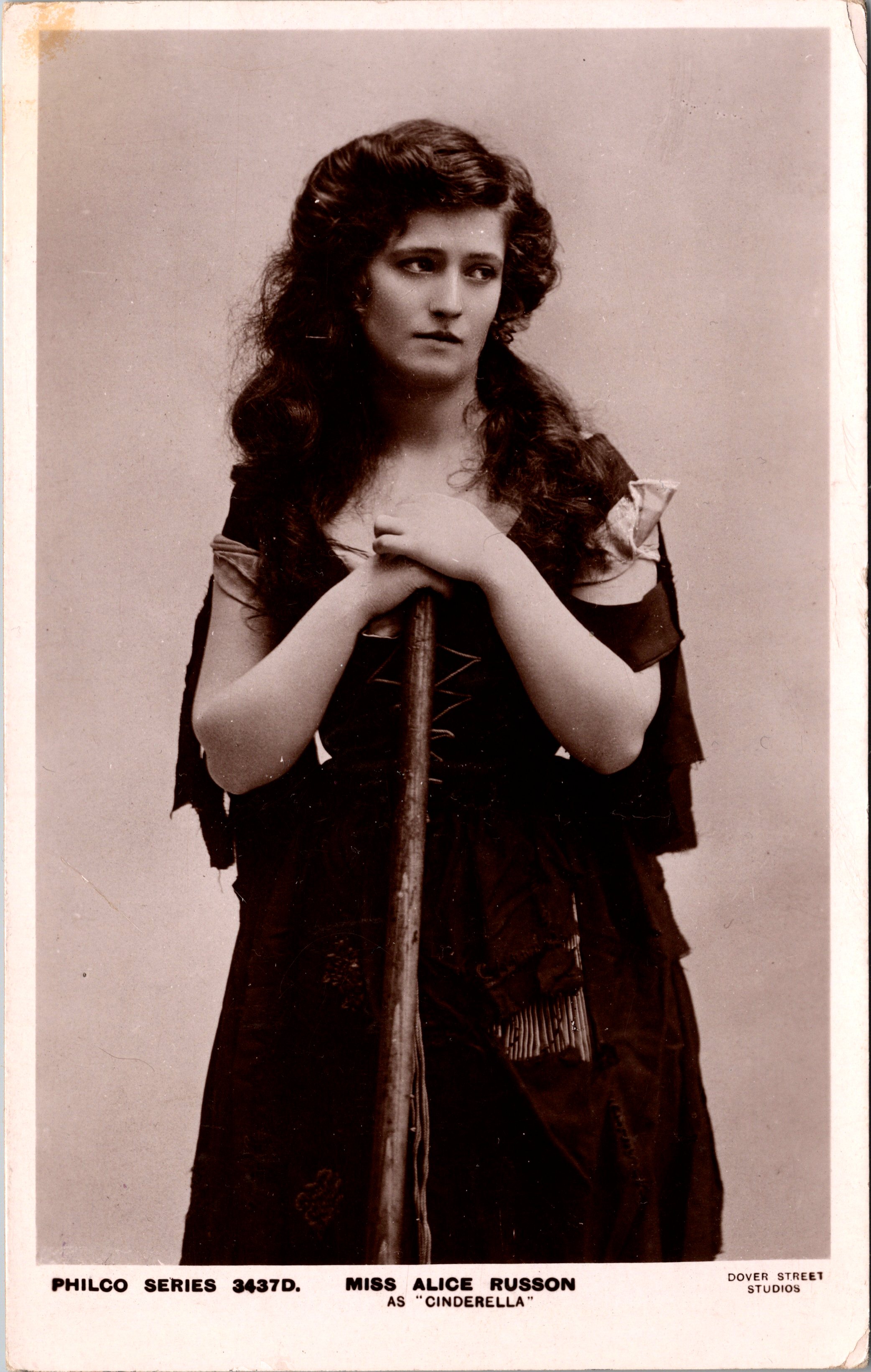
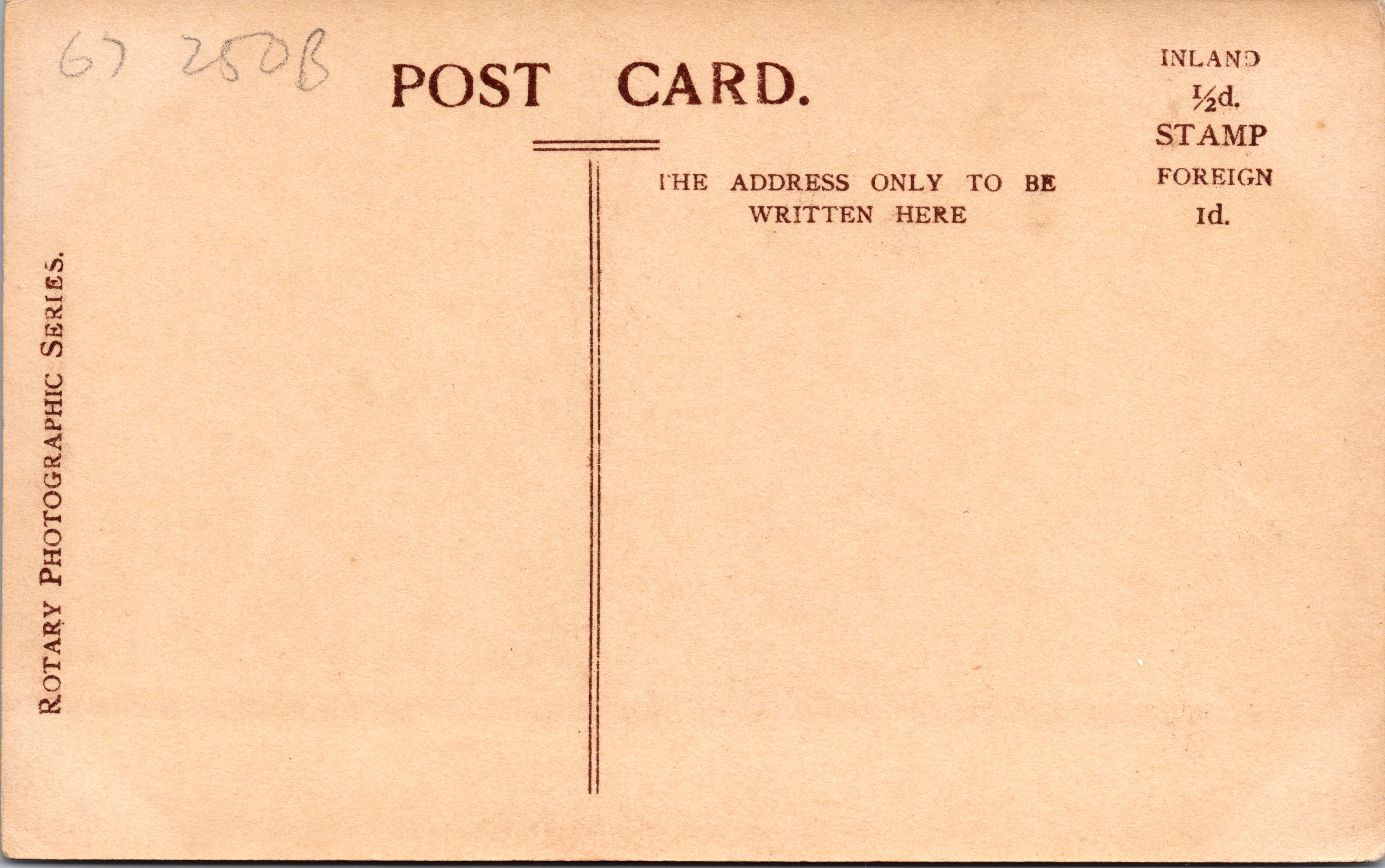
Postcard 5 was published by Philco as part of a series (No. 3437 D). This photo captures Miss Russon in costume for her role as “Cinderella”. Russon’s photograph was taken by Dover Street Studios. The card has a postmark dated 1908. The message on the reverse of the card, states that the writer attended the theatre the night before writing. She reports that she saw actress, Marie Studholme and that Miss Studholme was “very good, pretty and just as nice as she looks on postcards”. (SOLD)

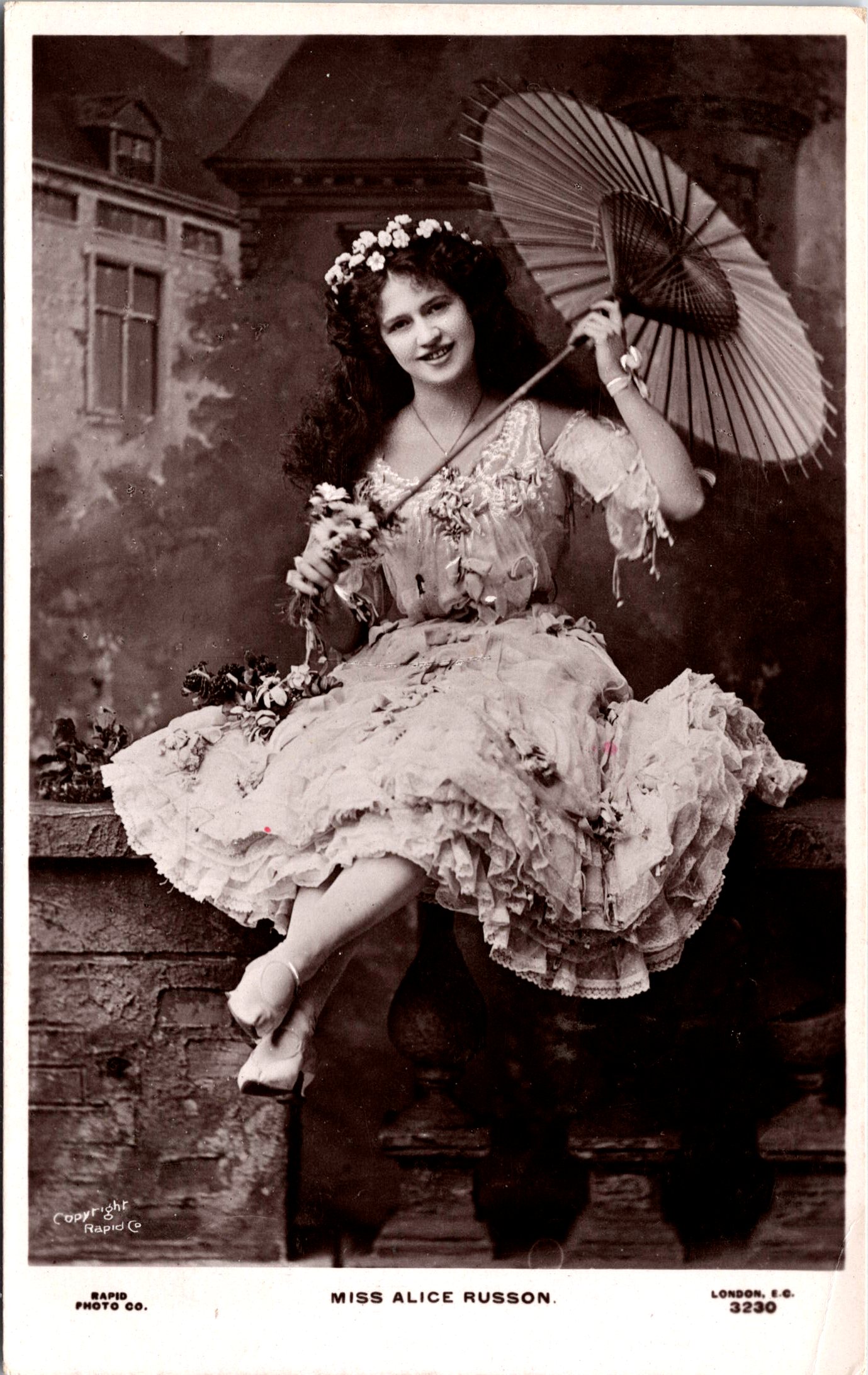
Postcard 6 features Russon looking quite pretty as she sits on a wall holding a parasol. She is wearing a frilly dress and has flowers in her hair. This postcard was published by Rapid Photo as part of a series (No.3230). The card has a postmark from London, England (dated 1906). (SOLD)

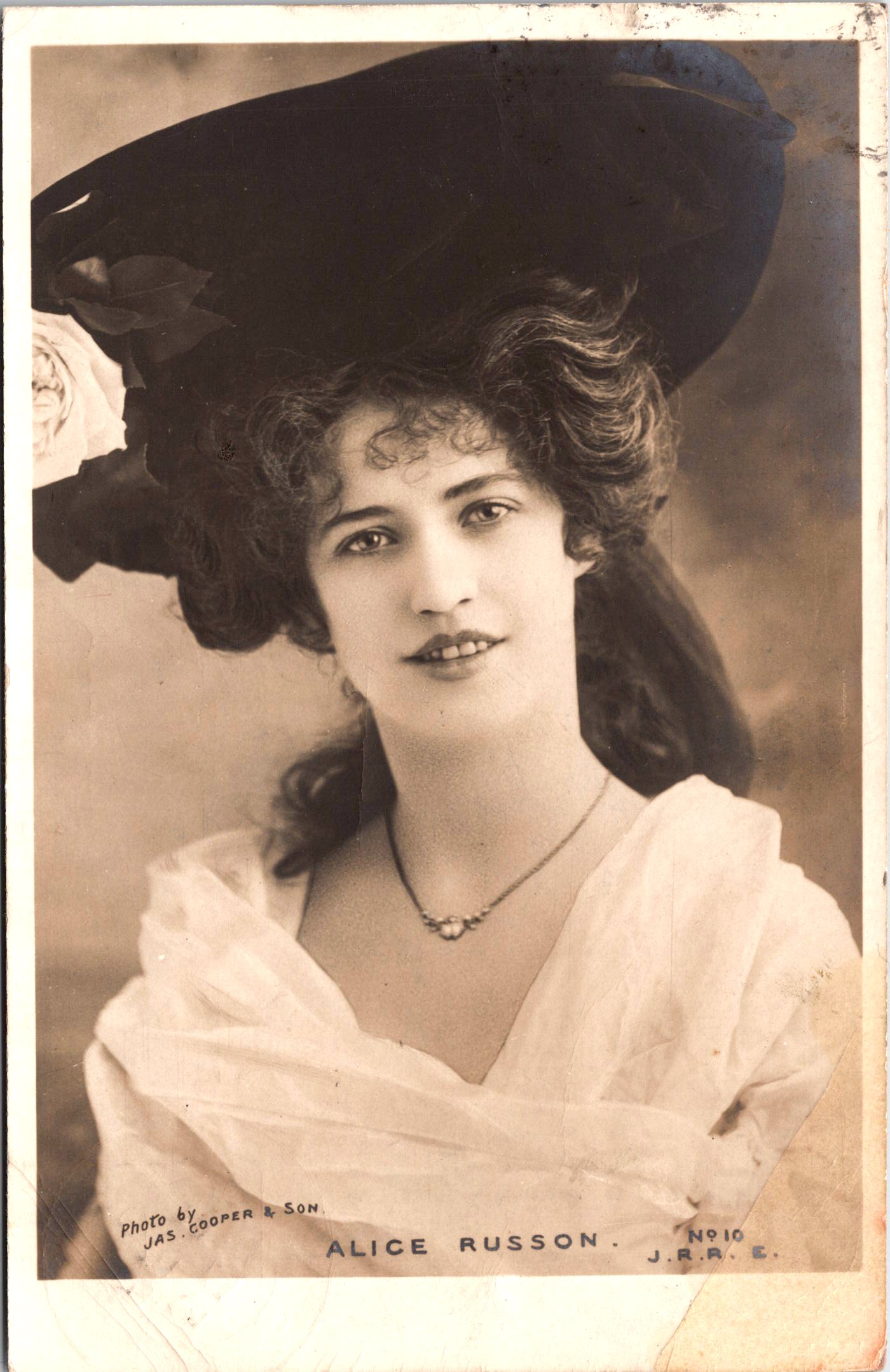
Postcard 7 was published by J. R. R. E. as part of a series (No.10). Russon’s photograph was taken by James Cooper & Son Studios. The card has a postmark dated 1904.  (SOLD)

Buy this Real Photo Vintage Postcard (includes shipping within the US) #5096

To purchase this item, click on the Pay with PayPal button below

$24.50

Buy this Vintage Real Photo Postcard (includes International shipping outside the US) #5096

To purchase this item, click on the Pay with PayPal button below

$34.00

POSTCARD 1
POSTCARD 2

POSTCARD 3

POSTCARD 4
POSTCARD 5 (SOLD)

POSTCARD 6 (SOLD)

POSTCARD 7 (SOLD)

DOROTHY DIX : ENGLISH THEATRE ACTRESS : IN “THE WHITE MAN” (1908)

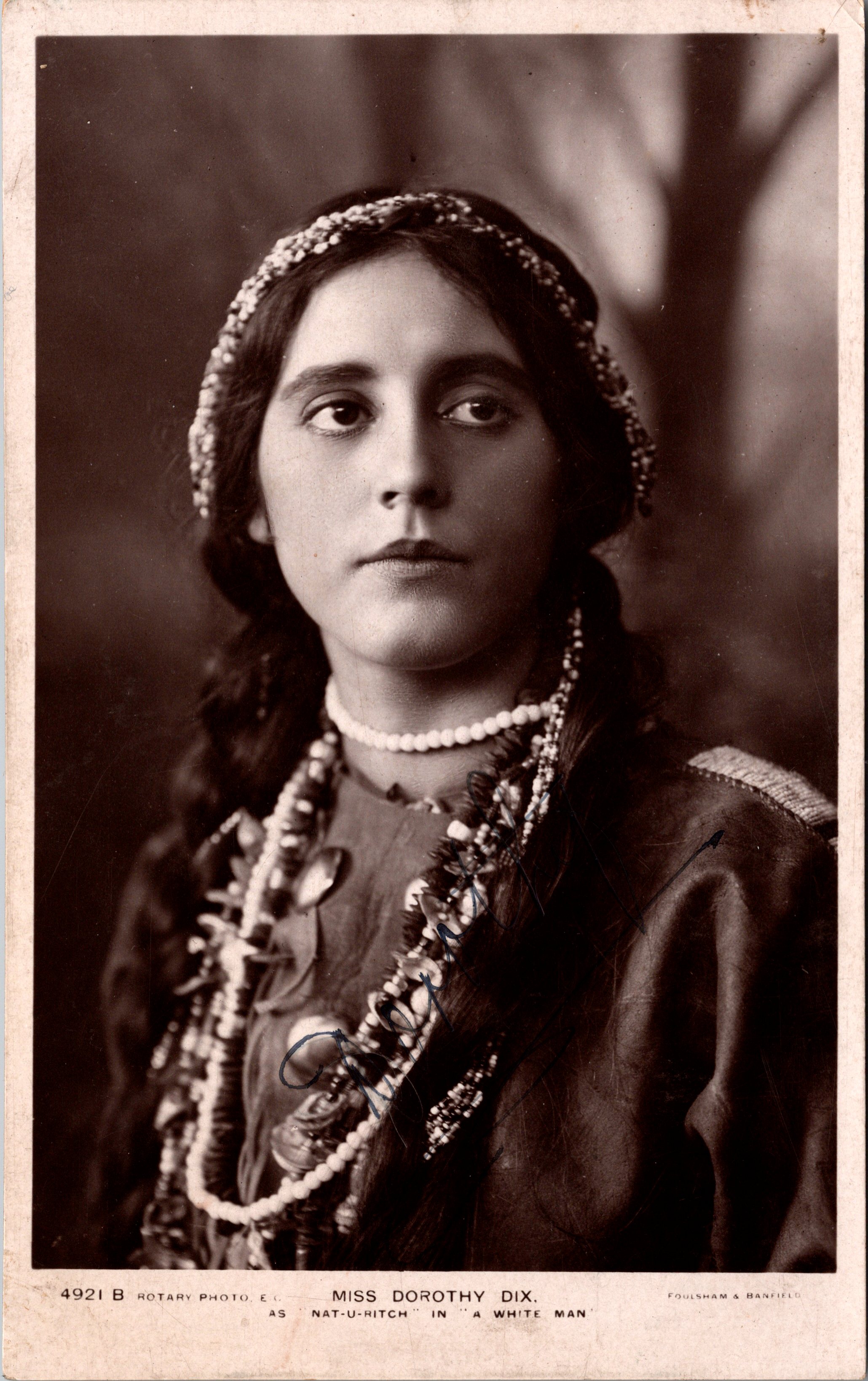
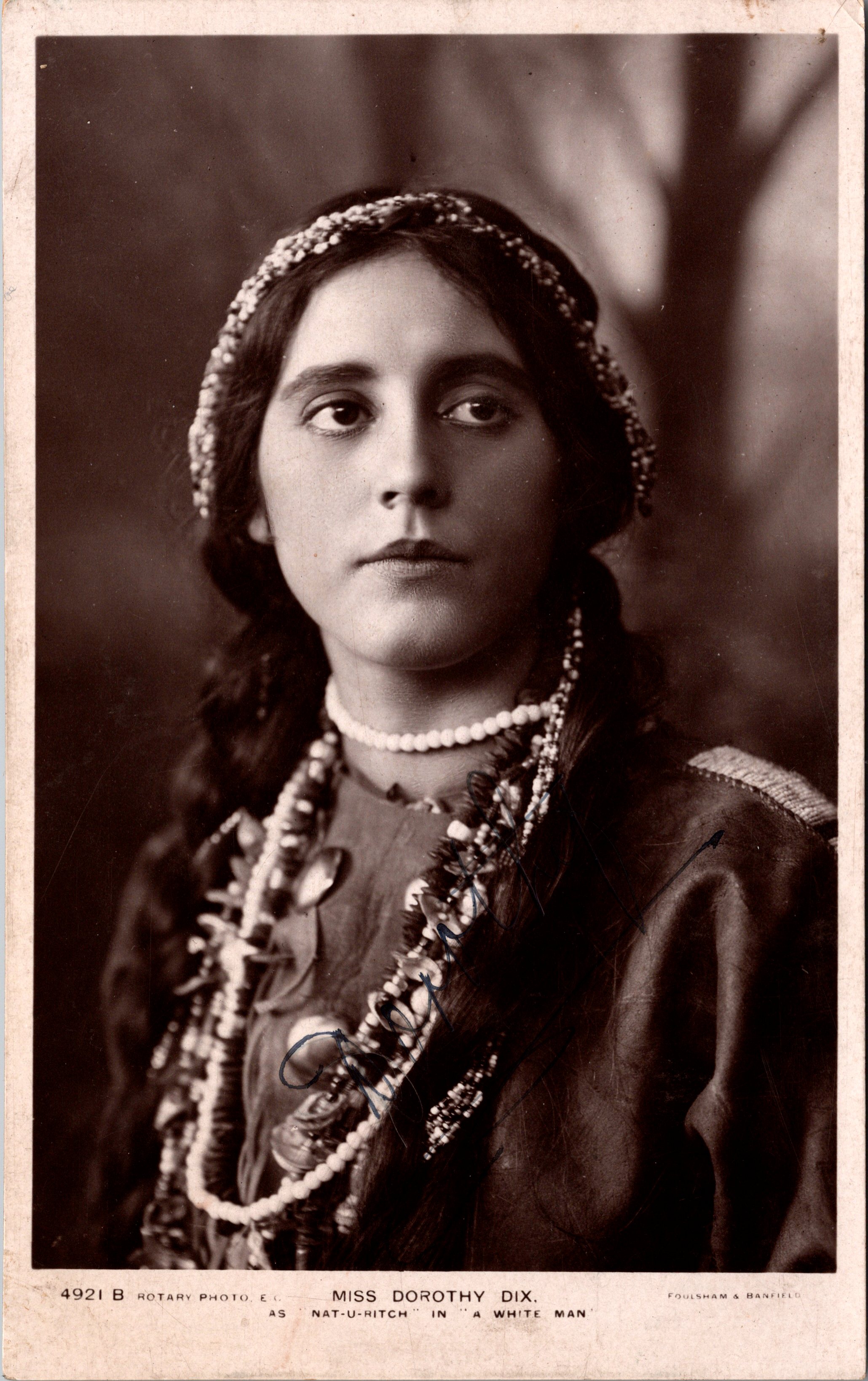
This vintage real photo postcard features English theater actress, Dorothy Dix (1892-1970), Her London debut was in 1907. She became a major player after her appearance in “The White Man” (1908). This portrait postcard captures her in the role of Nat-u-ritch from that play. “The Illustrated Sporting and Dramatic News” explains the plot of the play as follows. Dix plays the role of a “white man’s” wife who commits suicide to free her husband. The play was presented at London’s Lyric Theatre. Other appearances include “The Three Musketeers”, “The Cherry Orchard” and “Hamlet”. She appeared in the film, “The First Mrs. Fraser” (1932). This portrait postcard was published by Rotary Photo as part of a series (No.4921B). Miss Dix’s photograph was taken by the Foulsham & Banfield studio. The postcard is in good condition (see scans). 

5123-1

Buy this Vintage Real Photo Postcard (includes shipping within the US) #5123

To purchase this item, click on the Pay with PayPal button below

$25.00

5123-2

Buy this Vintage Real Photo Postcard (includes International shipping outside the US) #5123

To purchase this item, click on the Pay with PayPal button below

$35.00

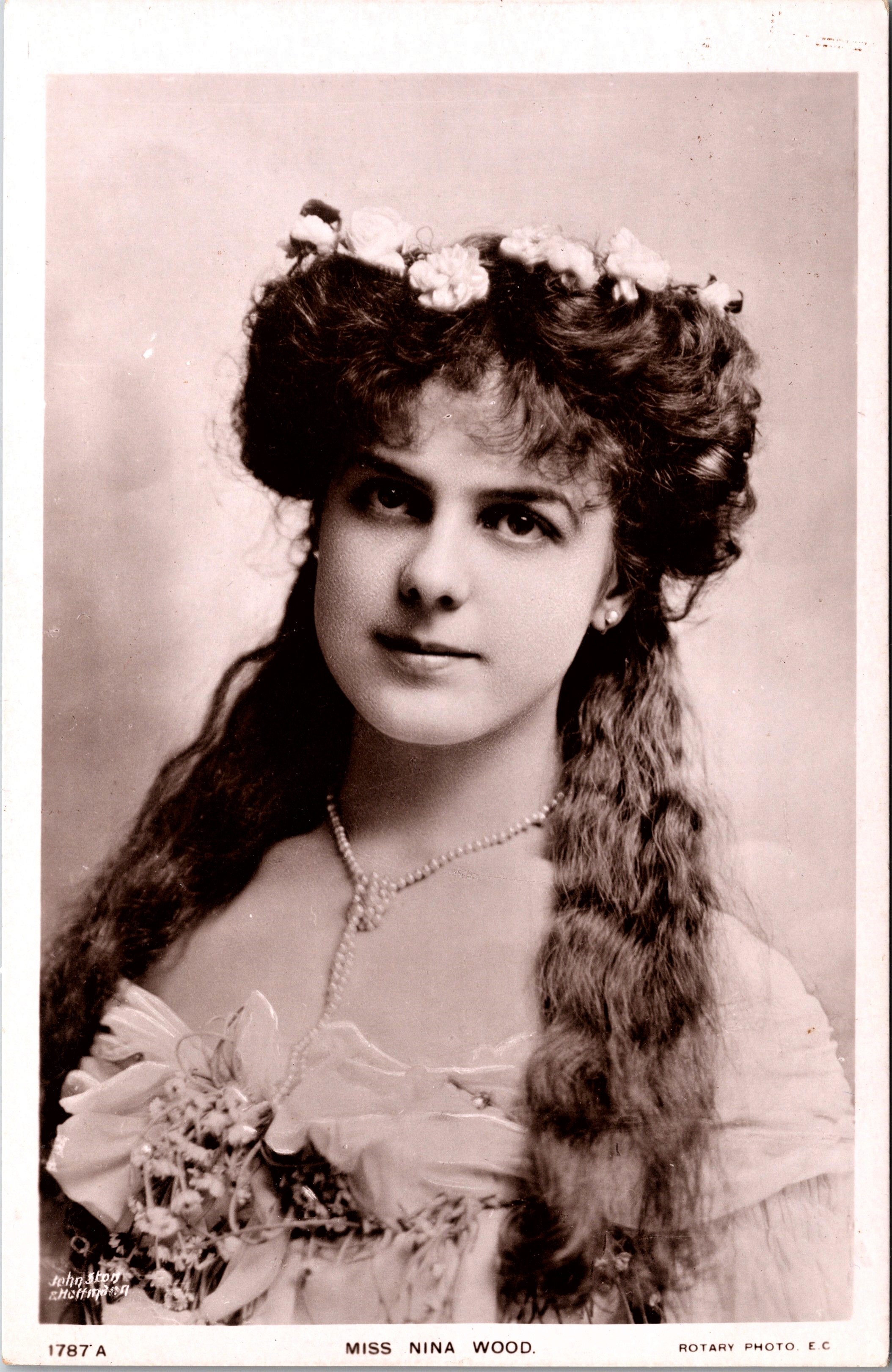
NINA WOOD : STAGE ACTRESS AND MUSIC HALL PERFORMER

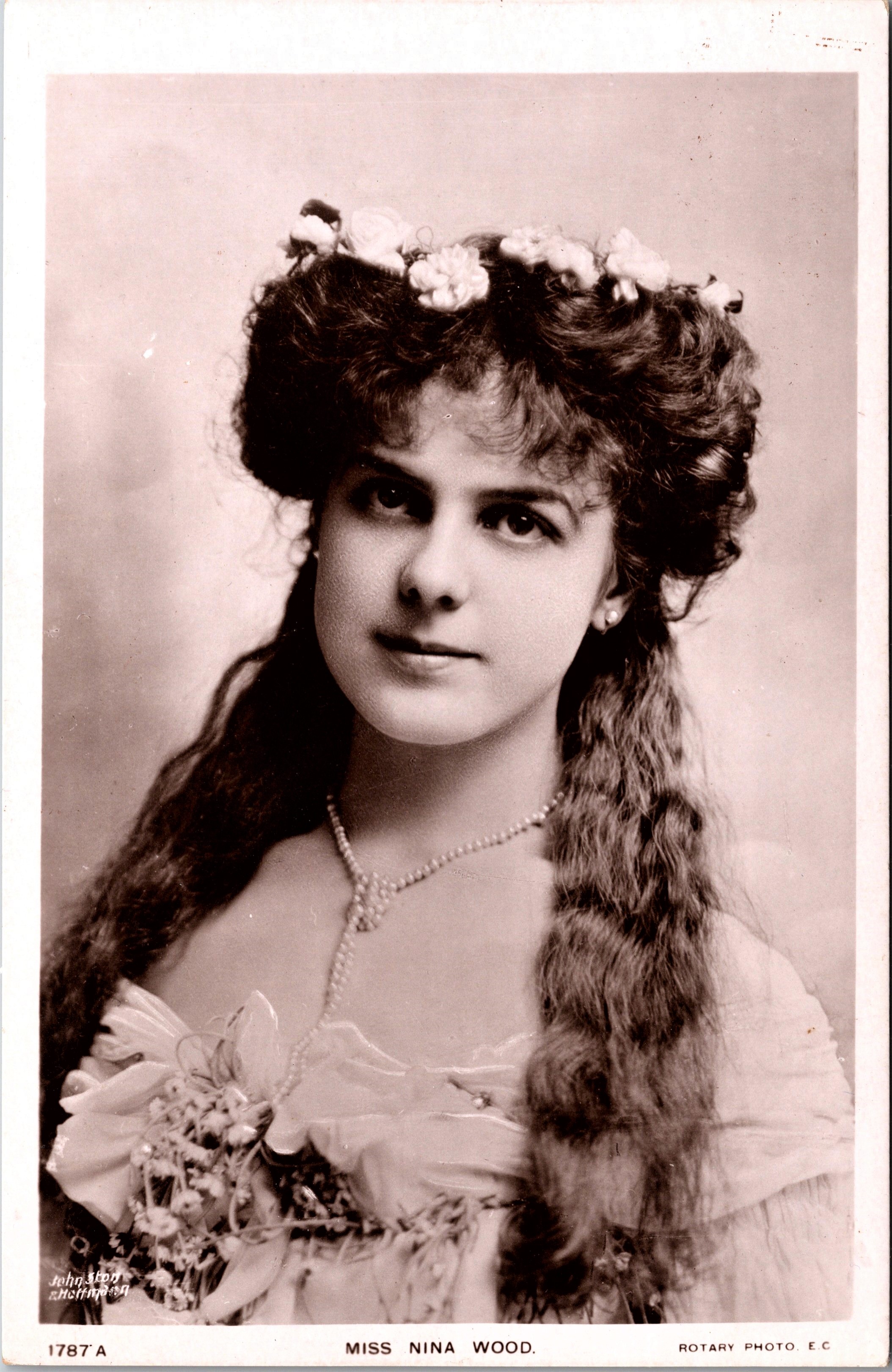
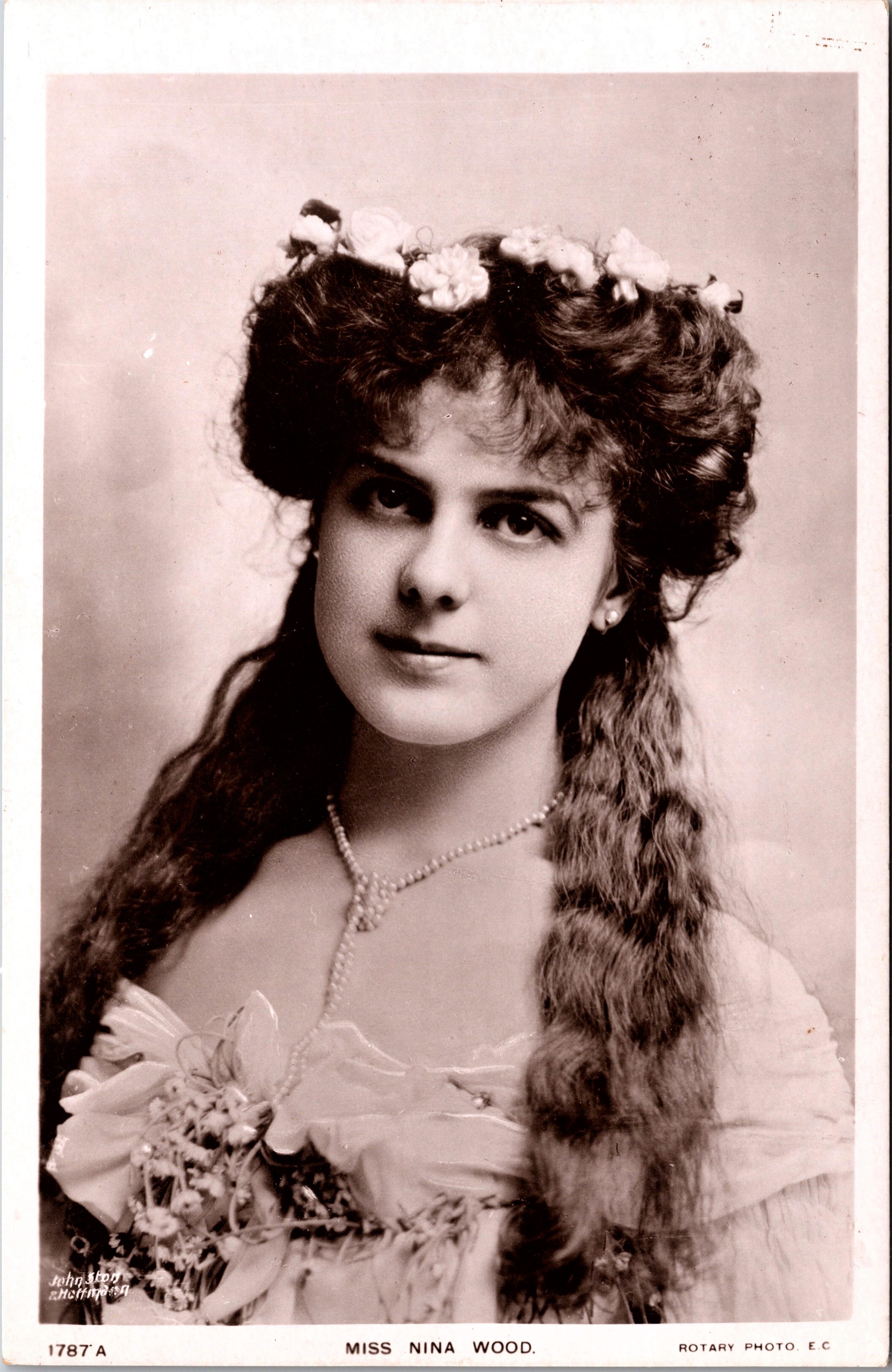
This vintage real photo postcard features pretty stage actress Miss Nina Wood. She is wearing flowers in her hair. Note the length of her hair. The postcard was published by Rotary Photo as part of a series (No. 1787A). Miss Woods photograph is by the Johnston & Hoffman studio. Theodore Julius Hoffmann and P. A. Johnston established a commercial photography studio in Calcutta (1882) and Darjeeling (1890). They also operated a studio in Simla. Johnston and Hoffmann’s photography business was the second largest commercial photography studio in India in that period. Many of their images were of North and Northeast India as well as Sikkim and Nepal. Johnston & Hoffmann produced many photographs of actors and actresses. It is certain that these performers did not travel to India to have their photo taken. It seems likely that Johnston & Hoffmann also had a studio in England during some part of their careers. This postcard is unposted and in very good condition (see scans). 

nina-wood-1787a_0001-1

Buy this Vintage Real Photo Postcard (includes shipping within the US) #5114

To purchase this item, click on the Pay with PayPal button below

$24.00

nina-wood-1787a_0001-2

Buy this Vintage Real Photo Postcard (includes International shipping outside the US) #5114

To purchase this item, click on the Pay with PayPal button below

$34.00