 POSTCARD 1 (SOLD)
 POSTCARD 1 (CLOSE-UP) (SOLD)
 POSTCARD 2 (SOLD)
 POSTCARD 2 (CLOSE-UP) (SOLD)
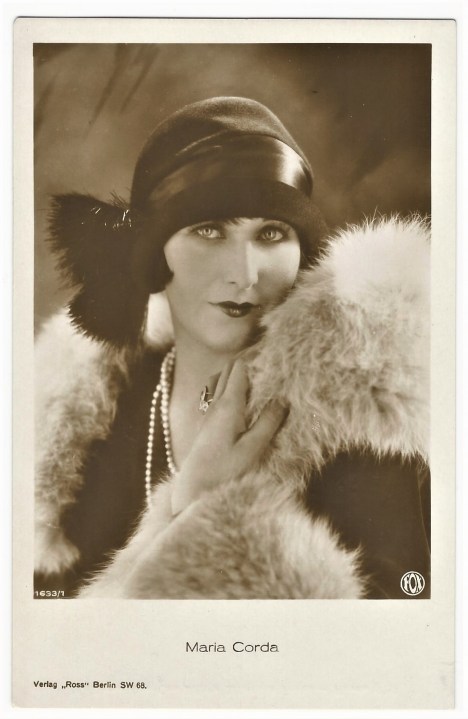
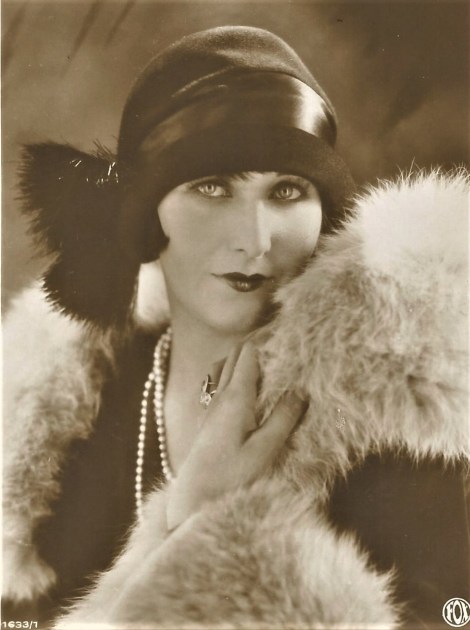
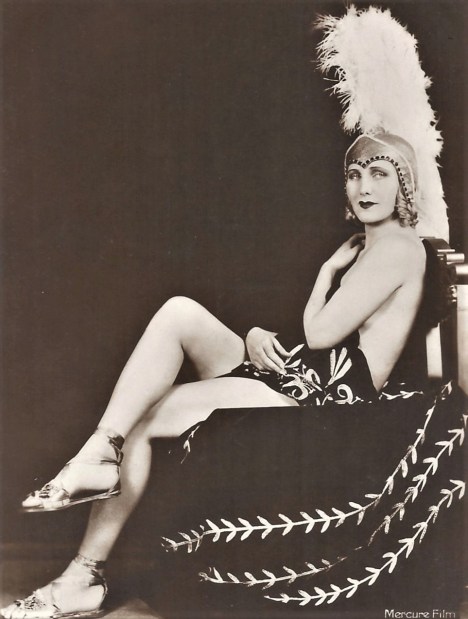
Maria Corda (1898-1976) was a Hungarian actress and a star during the silent film era in German and Austria. She began her career in acting in the theaters of Budapest during the beginning period of World War I. One of her gigs was working as a dancer with the Royal Opera in Budapest. When the Austria-Hungary Empire fell apart, she began working in the film industry. She appeared in her first film in 1919 ;under the direction of Hungarian, Korda Sandor, who later changed his name to Alexander Korda. Korda was the leading movie director in Hungary and he featured her in three of his films in 1919. Maria became the most famous actress in Hungary. Hungary’s leader had Alexander seized by the secret police. Maria and her brother-in-law exerted pressure on the British Military consulate and was able to get her husband freed. The couple fled Hungary and settled in Vienna, Austria. It was in Vienna that the pair changed their names. He became Alexander Korda and she, for some unknown reason, became Maria Corda. In 1920, Alexander began directing films in Austria and Maria became an Austrian silent screen star. Alexander directed Maria in a number of films including “Samson and Delila” (1923). In 1926, the couple moved to Germany the couple teamed up again and were able to continue their film career success. The caught the attention of First National, a Hollywood movie studio. Alexander and Maria were offered a package deal to come to American and make movies. They settled in Beverly Hills. Maria did not encounter the success that she had in Europe. Her Hollywood career aspirations were crushed in 1928 by the advent of sound pictures. She knew little English and had a thick accent. In addition to her movie career, her turbulent marriage also came to an end. They divorced in 1930. Her husband returned to Europe where he had a long successful career in British filmmaking. Maria moved to New York and wrote a number of novels. She spent her later years in Switzerland. In 1942, her husband was knighted and she insisted upon being called “Lady Korda”, even though Alexander was remarried. When Alexander died in 1956, he was onto his third marriage, but that did not stop Maria from trying to claim an inheritance. Maria had an interesting personality. Writers have asserted that she was temperamental and ambitious. She had a tendency to embellish her background. She often described herself as the “Hungarian Garbo”, an opinion reflecting aggrandizement. The IMDb reports that Maria had 28 film credits between 1919 and 1929. —–Postcard 1 was published by Ross Verlag (Berlin), The card was part of a series (no.1633/1). Note the “Fox” logo on the bottom right hand corner of the image. Maria starred in a Korda film for a Berlin based subsidiary of Fox in 1926. Therefore, this postcard is likely from 1926. The film was entitled “Madame Wants No Children”. The postcard was sold exclusively by Ballerini & Fratini of Florence, Italy. SOLD —–Postcard 2 was published by “Europe” which I believe was based in France. It is part of a series (no.315). This photograph of Corda is risque. She is barely covering herself with what appears to be a blanket. Only her strategically placed arm shields her from crossing the risque border. At the time that this photograph was taken, Maria Corda was under contract with Mercure Film. The logo of the company can be seen in the lower right corner of the card. This photo postcard features Corda in costume for her starring role in “The Private Life of Helen of Troy (1927). The film was directed by her husband, Alexander Korda. (SOLD)
 POSTCARD 1 (REVERSE)
 POSTCARD 2 (REVERSE)




 A pretty woman sits in a wicker chair poses for her portrait at the Wheaton studio in Schenectady, New York. She appears pensive as she looks at the photographer. The woman is well dressed. Her blouse has “leg o mutton” sleeves. Such sleeves are voluminous around the biceps and shoulders while fitted at the lower arm and wrist. They became popular between 1825 and 1933. The style reappeared in fashion in the 1890’s and was gone by 1906. It was during the reemergnce of “leg o Mutton” sleeves that this photo was taken. The photographer of this image is Van B. Wheaton (1870-1948). The Anthony Photographic Bulletin (1897) reports Wheaton winning a medal at a photography exhibition. His son, Ivan P. Wheaton was a World War I aviator, race car driver, author, and photographer. SOLD

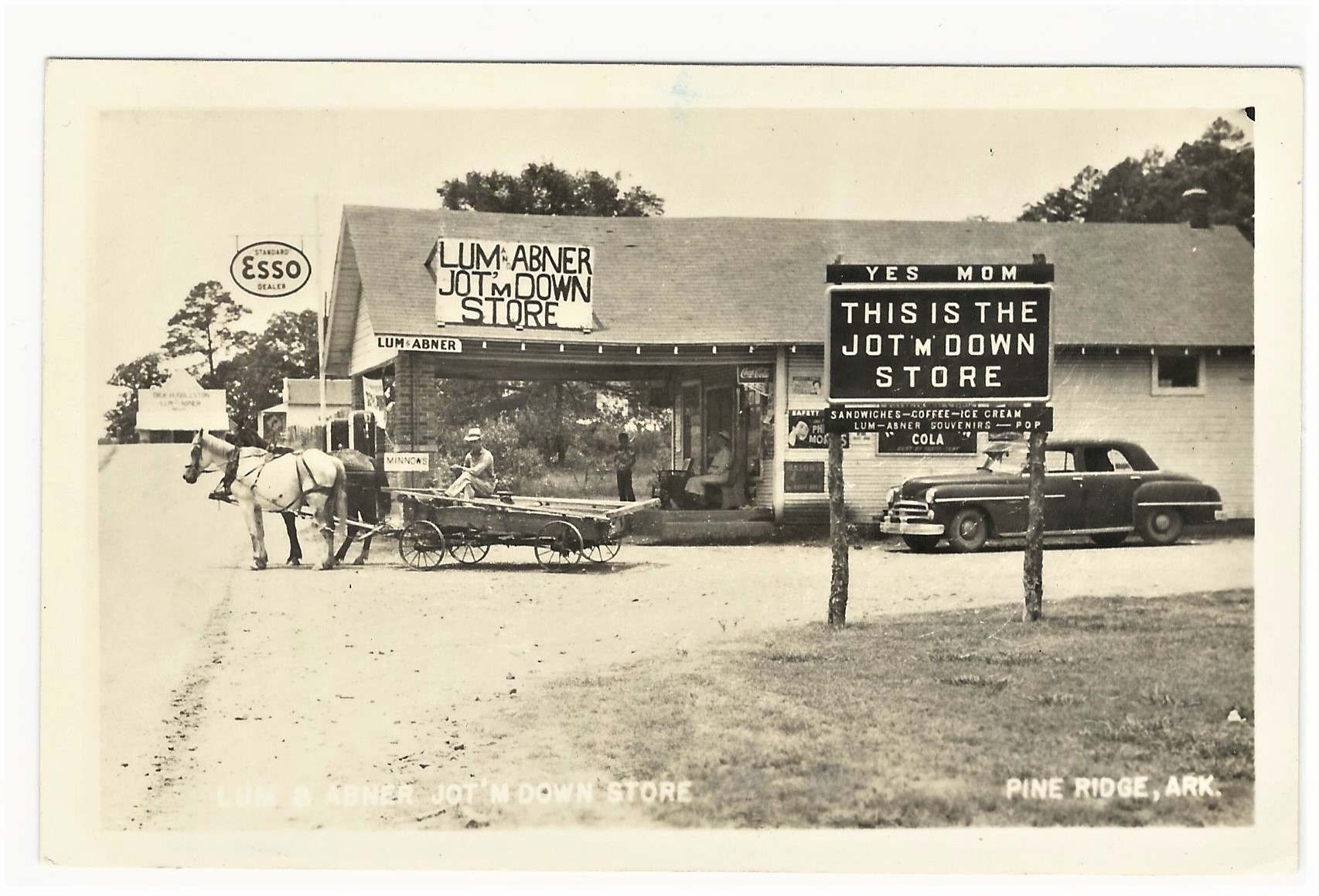
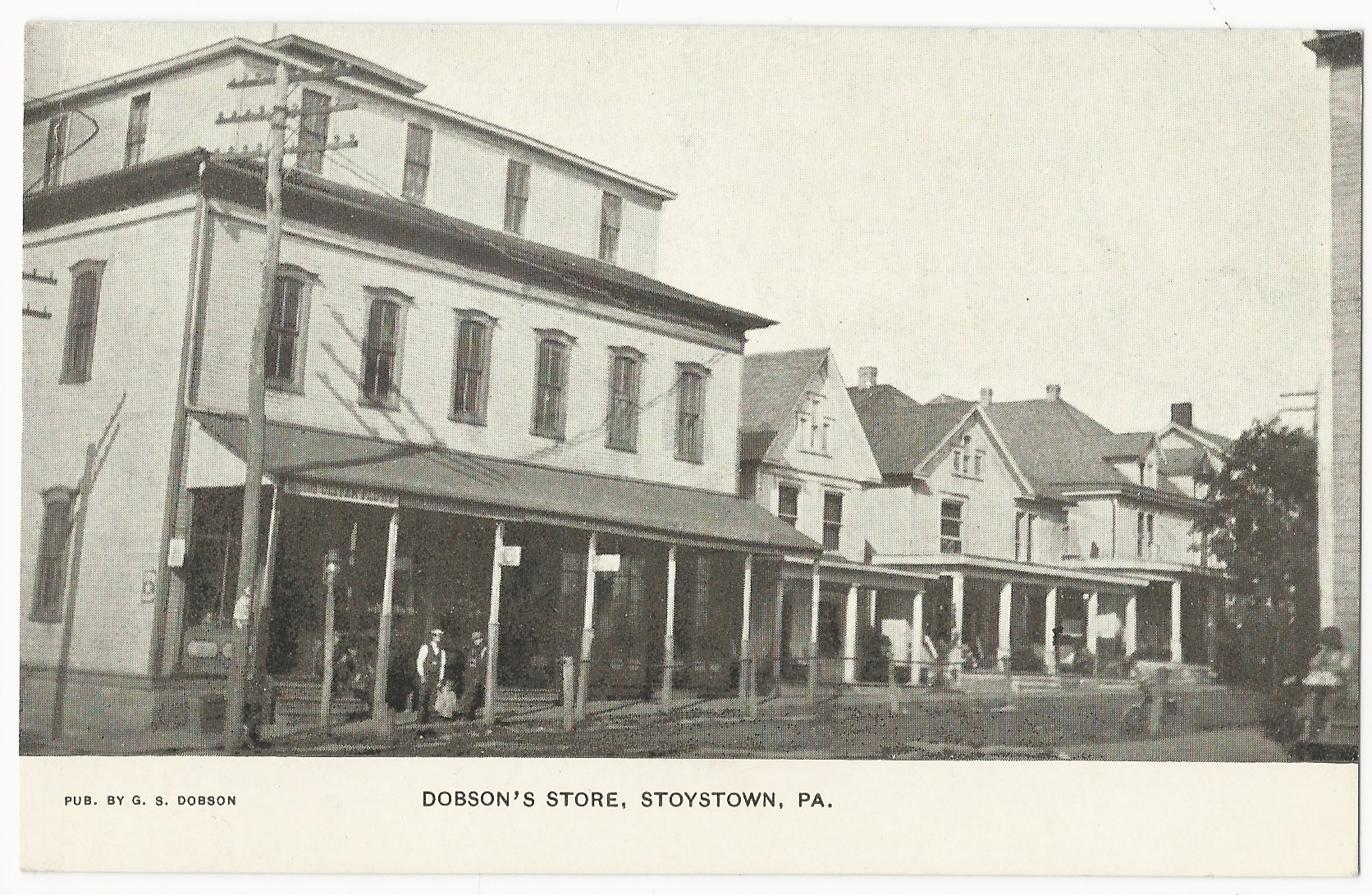 This vintage real photo postcard offers a street view of Dobson’s Store, in Stoystown, Pennsylvania. Three upstanding citizens of the town can be seen in the photograph. Note that the thoroughfare is a dirt road. There are a number of posts in front of the sidewalk. I wonder it they were used to hitch horses. This postcard was published by G S Dobson; the proprietor of Dobson’s Store. The 1910 US census lists George S. Dobson (1863-1944) as a merchant (department store). He was married to Ellen L Dobson (1867-1947), nee Straub,for 26 years. George and Ellen lived with their son Albert (age 21), daughter (age 4), and Ellen’s sister. Albert worked as a salesman in the family business. The 1920 US census finds the family intact, but both George and his son were unemployed. Here is some information about Stoystown, the home of George’s store. The town is part of the Johnstown, Pennsylvania Metropolitan area. Originally the site of Stoystown was an encampment and a supply depot during the French & Indian War. The town was founded by hunter Daniel Stoy in 1774. Stoy later served in the Revolutionary War. Stoysville is near the site where flight 93 crashed on September 11th, 1001. SOLD
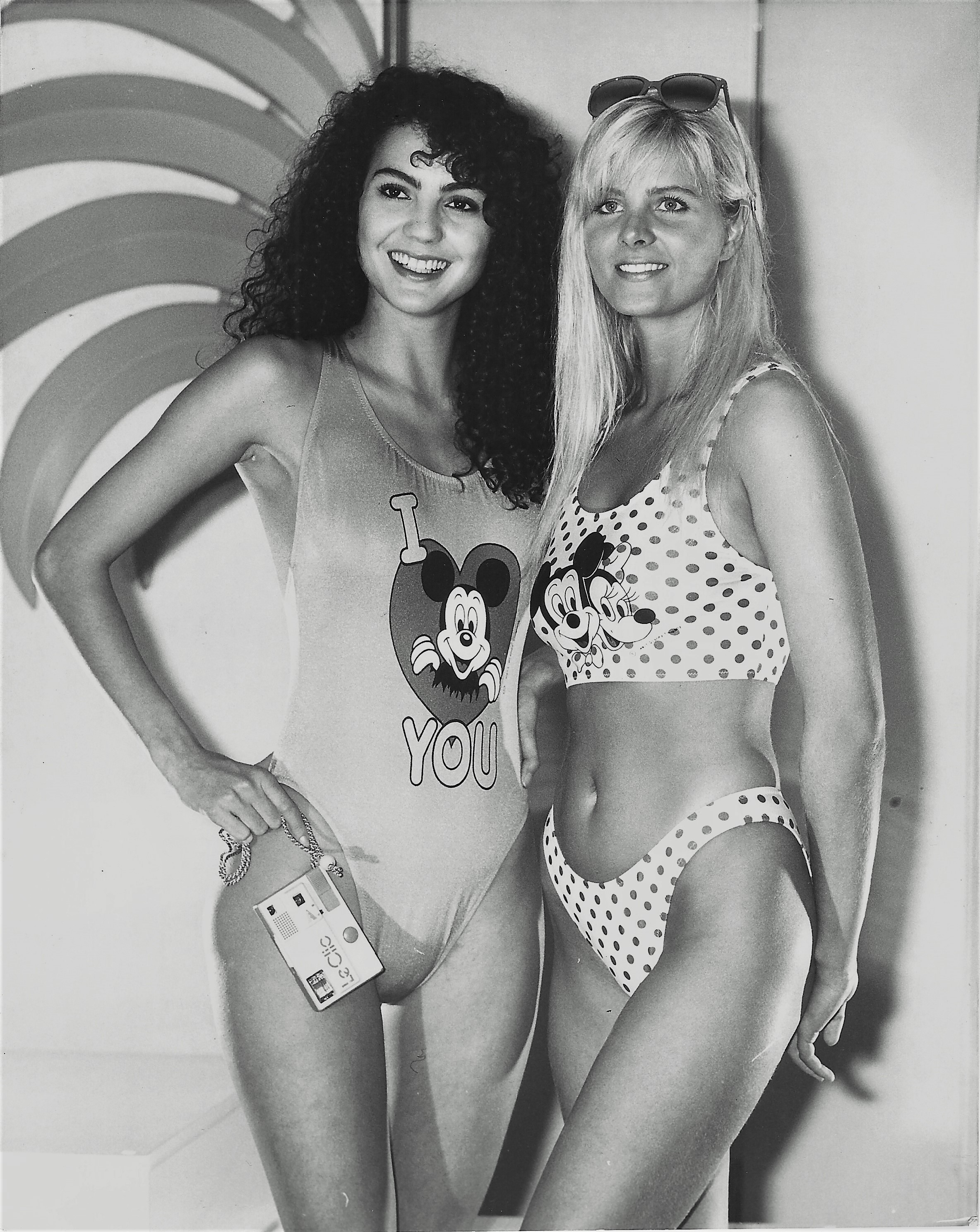 This 1988 press photo features two beautiful young women modelling swimsuits for the international retail clothing firm, “C & A”. Model, Roxanna Hudson is wearing a “turquoise racerback swimsuit” with a Mickey “I Love You” logo. The second model, “Bertie”, is wearing a red and white spotted bikini with a Mickey and Minnie logo. It is interesting to note that Miss Hudson is holding a “Le Clic” camera. Produced by Keystone, these cameras were fashionable and inexpensive. Manufactured in the late 1980’s, they had Kodak Disc technology and were easy to load and had a reusable flash. This photograph was published by Universal Pictorial Press. The publisher was located in London, England. Twenty-eight portraits from Universal can be found in the United Kingdom’s National Portrait Gallery. This press photograph has wonderful clarity and is in very good condition (see scans).

 A professor of math, physics, chemistry, or who knows what, stands in front of his classroom teaching his lesson. Behind him is a blackboard displaying a very complicated equation. A prize is offered to anyone who is able to solve the equation. After much study, no student in the large class is able to solve the problem. However, someone had clandestinely slipped into the lecture hall and wrote the answer on the board. Who could be the genius that solved the perplexing equation. Surprisingly, it was Matt Damon, the self-taught school janitor that had deduced the solution. Wait a minute! I think I am confusing this photograph with the 1997 film, “Good Will Hunting”. This educational vintage photograph measures about 4 3/4″ x 3 1/4″ and is in good condition (see scans).