This postcard features a portrait of American film actress, Colleen Moore (1899-1988). She began her career in the silent film era. She was a fashionista and one of the highest paid stars of her time. She is also noted for popularizing the “dutchboy bobbed haircut”. Like many silent film stars, she was unable to adapt to “talkies” and decided to retire after just making a few sound films. Upon retirement, Moore focused on investing, and was quite talented in that realm. She became a partner at Merrill Lynch and wrote a book about how to invest in the stock market. One of her hobbies involved dollhouses. In the early 1950’s, she helped design and curate “The Colleen Moore Dollhouse” which is still exhibited at the Museum of Science and Industry, in Chicago, Illinois. The dollhouse is 9 square feet and worth millions of dollars and has been seen by millions of museum goers. Moore was born in Michigan and her family relocated to Atlanta around 1908.They then moved on to Pennsylvania and finally, Tampa, Florida. At fifteen years of age, Moore had a screen test with director D. W. Griffith. Griffith owed a debt to Moore’s uncle, a successful newspaper man in Chicago. Moore must have done well on the screen test since she soon found herself playing heroines in Westerns. She signed a contract with Triangle-Fine Arts and for the first few years she appeared in minor supporting roles. When the Triangle Company folded she signed with Selig Polyscope. She appeared in “A Hoosier Romance” and “Little Orphant Annie”. They were popular films and Moore achieved some celebrity. When Selig closed their doors, Moore went to work on films from various companies. Her star kept rising. In 1922, Moore was named a WAMPAS Baby Star (honor for actresses on the threshold of fame). The IMDb credits Moore with 65 film appearances between 1918 and 1934. At the height of her career, she was earning over twelve thousand dollars a week. This vintage portrait postcard features Colleen Moore with her trademark dutch boy bobbed haircut. The card was published by Ross Verlag. Note the logo for First National Pictures in the lower right hand corner of the image. The card has a 1926 postmark. Moore was about 27 years old when the photograph was taken. SOLD
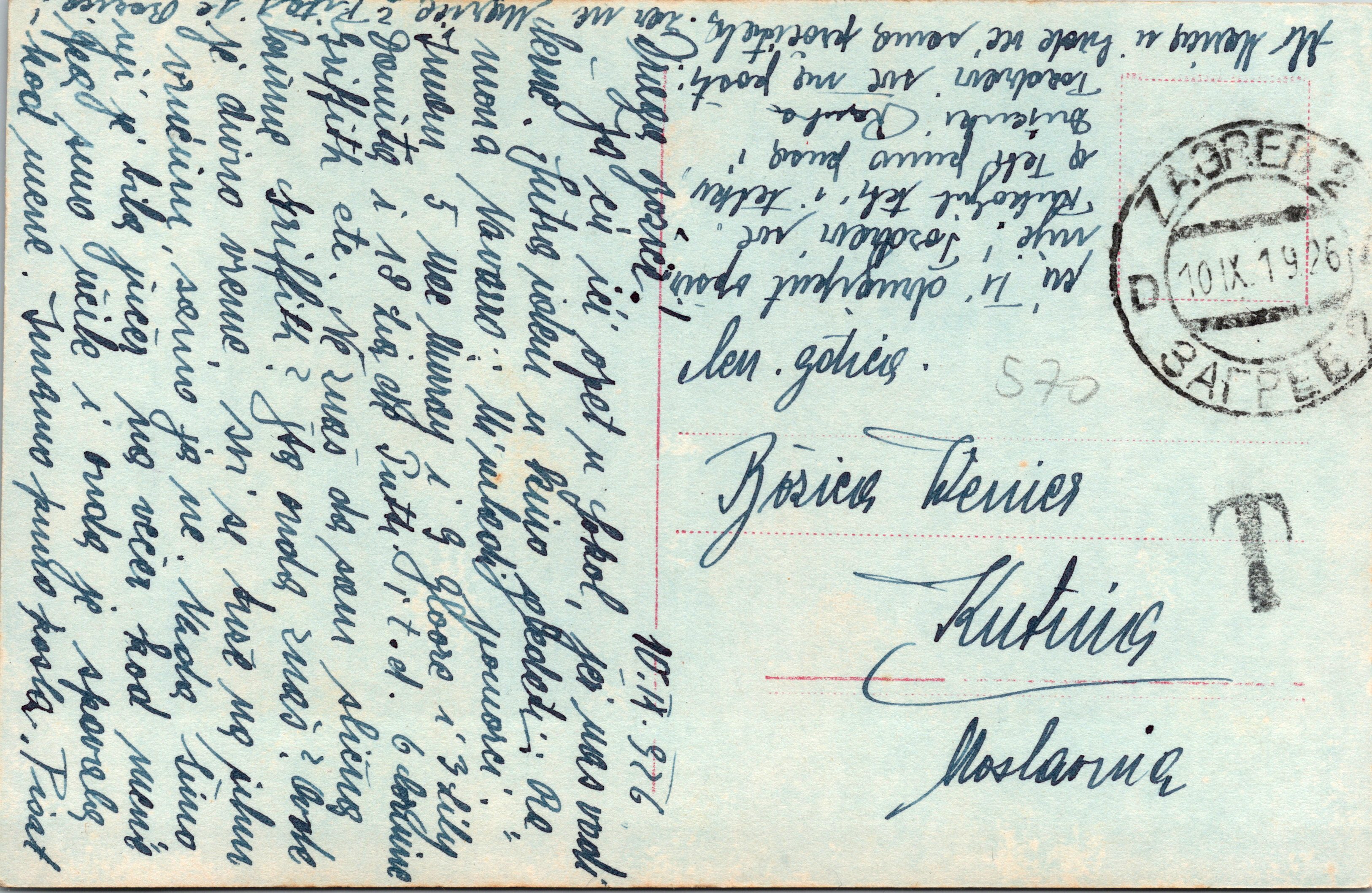
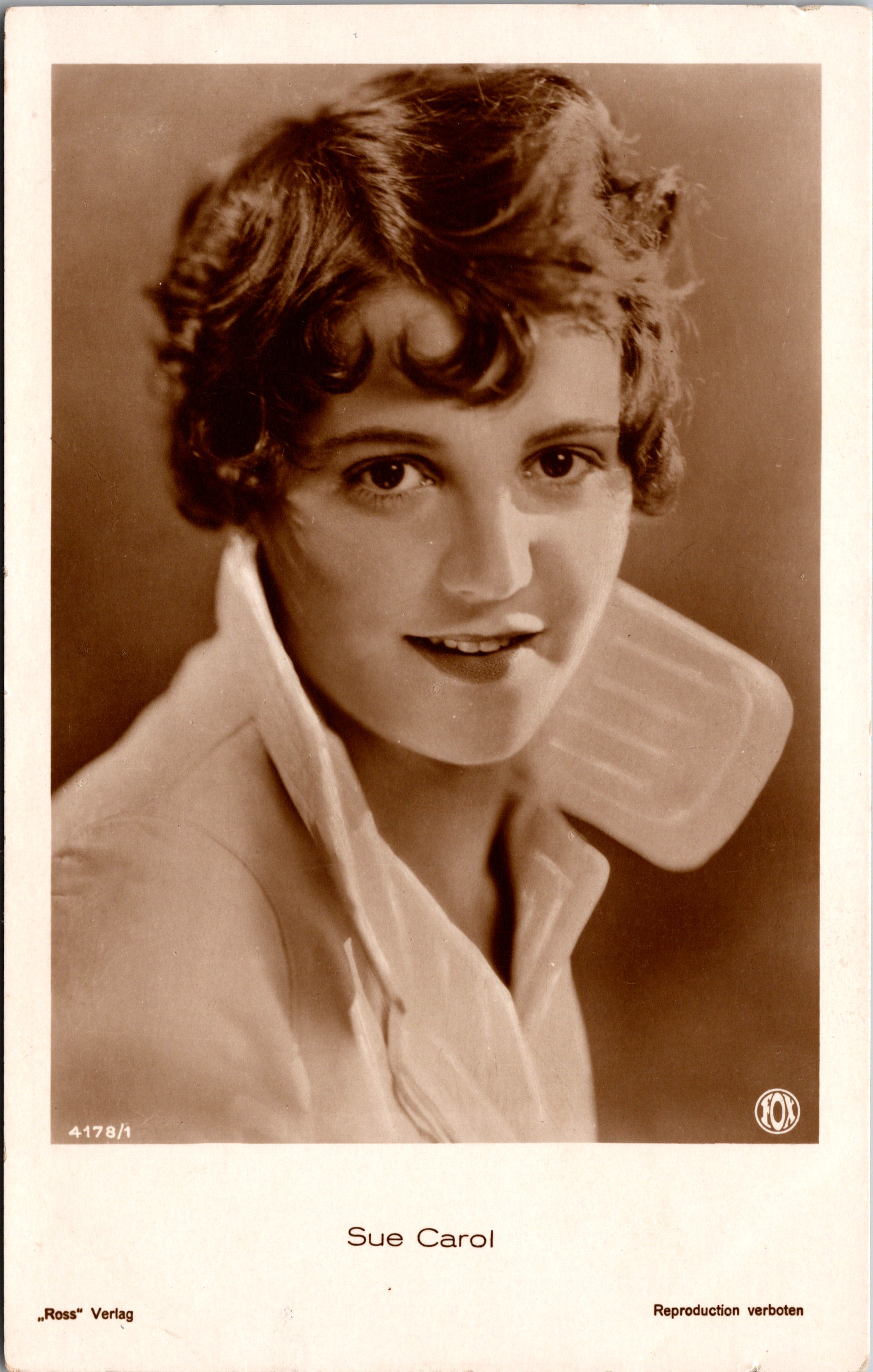
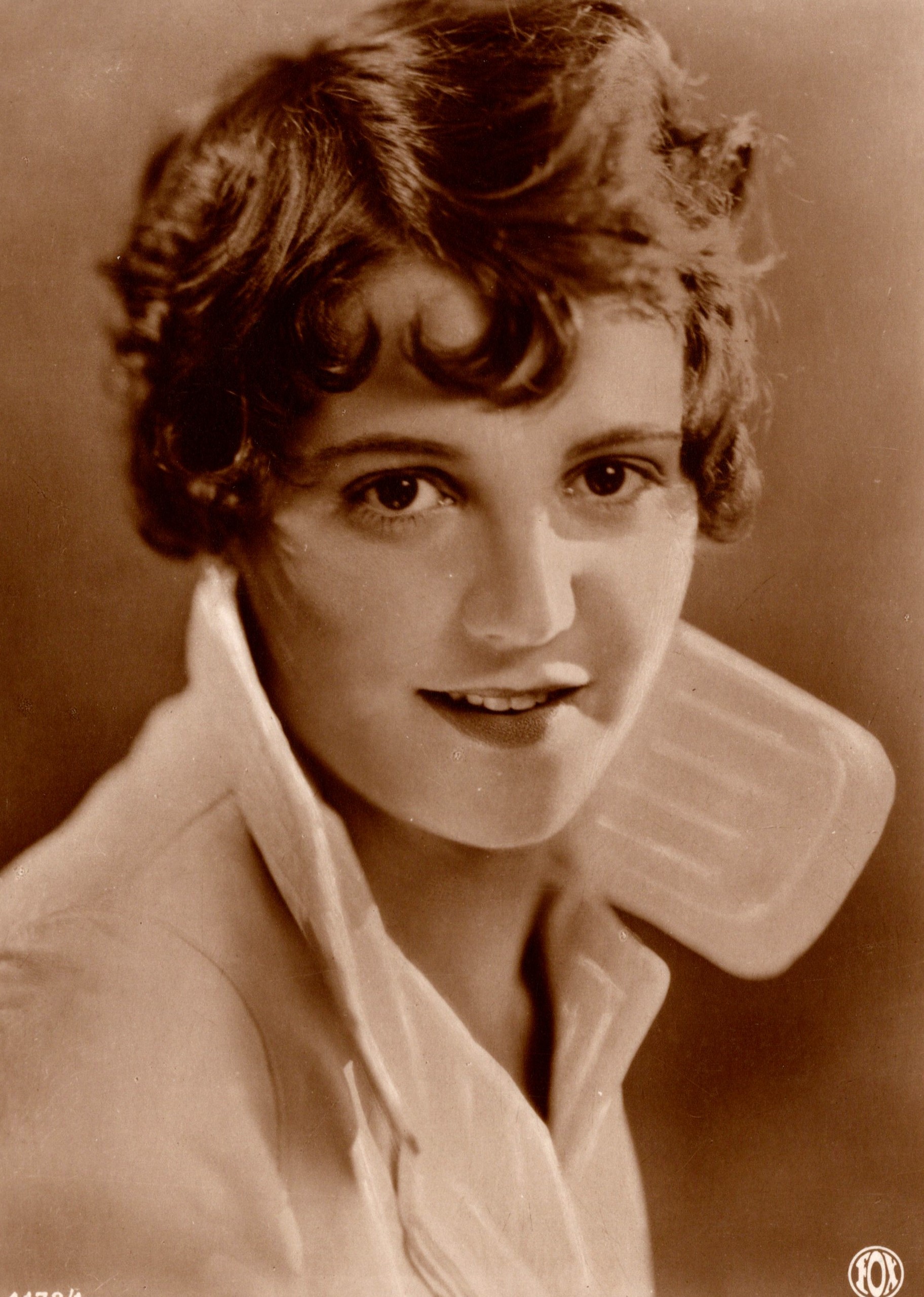
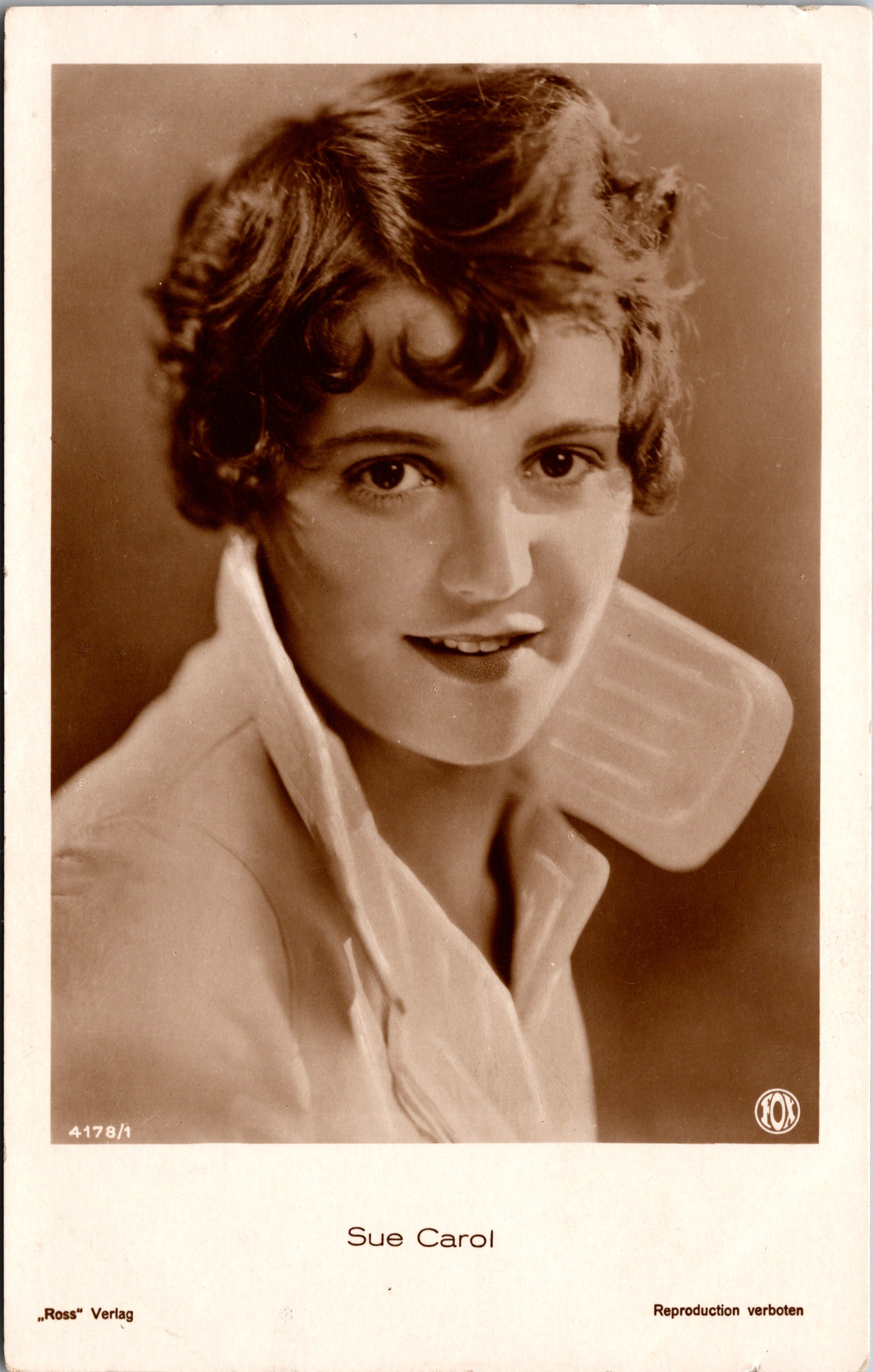
This vintage real photo postcard features American actress and talent agent, Sue Carol (1906-1982). She began her career in silent films during the 1920’s. She made the transition to talkies and appeared in a number of movies throughout the 1930’s. She appeared in more than 60 films during her career. Her notable movies included “No No Nanette”, “The Phantom in the House”, and “The Donovan Affair”. She also appeared in several westerns and musicals in the 1930’s. She later became a talent agent representing several successful Hollywood stars including Robert Wagner and Roger Moore. She was married to actor Alan Ladd for more than two decades. This portrait postcard is in fair condition (see scans).
Buy this Vintage Real Photo Postcard (includes shipping within the US) #5033
To purchase this item, click on the Pay with PayPal button below
$10.80
Buy this Vintage Real Photo Postcard (includes International shipping outside the US) 5033
To purchase this item, click on the Pay with PayPal button below
This cabinet card is a postmortem photograph of a young girl. The image is upsetting and sad, but served as a remembrance of a family member for their grief stricken family. Note the flowers and cross lying on the child’s bed and the religious statues and candles on the side table. The photographer of this cabinet card was R. Dechavannes, whose studio was located in Paris, France. To view other photographs by Dechavannes, click on the category “Photographer: Dechavannes”. Hopefully, visitors to the cabinet card gallery will not find this image offensive. A website called “Ostrobogulous Cackleberries”, has an interesting article about the practice of postmortem photography. The writer states that during the Victorian era, photographing the recently deceased was “extremely prevalent”. The author points out that the practice existed before the invention of the camera. Instead of photographing the dead, artists painted their portraits immediately following their death. In many cases, the postmortem photo was the only image a family possessed of the departed family member. Many of the Victorian memorial photographs were of infants and children. The mortality rate of children during that time was very high. The writer offers a description of how the dead were posed and there seems to be a great deal of approaches to the practice. Postmortem images could be full body or facial close-ups. Coffins were not frequently included in the picture. The dead were often posed as if they were sleeping and sometimes were presented as life-like. In some photos they were braced or tied into chairs or propped up against other family members to look as alive as possible. According to the article, the popularity of postmortem photography faded in the early twentieth century. Funerals moved from the home parlor to the funeral parlor. Society stopped “embracing mortality” and we became the death denying culture of today. SOLD
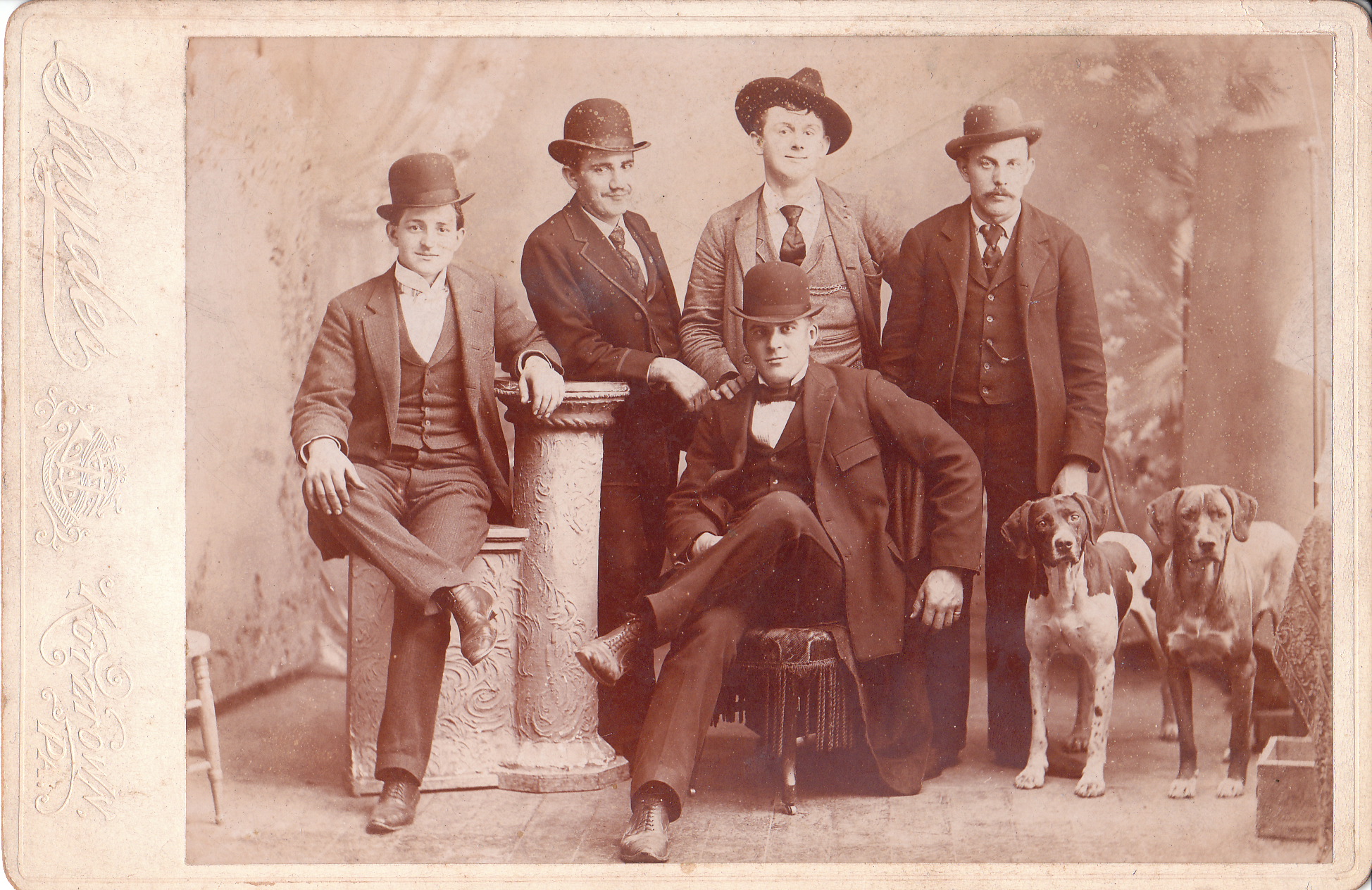
The boys gather together at Snyder’s Studio in Kutztown, Pennsylvania for a group portrait. Suits and derby hats seem to be the order of the day. Someone brought their two large hounds to the gathering. The dogs appear to be hunting dogs. Examination of this cabinet card image brings up the question, “How are these men connected to each other?”. Are they good friends? Are they co-workers? The answer to these questions are unobtainable and we are left with only hypotheses.What do we know about the photographer? The 1880 U. S. census reveals that Charles Wanner Snyder (1852-1927) was married to Sallie A. Jackson (1858-1900) and the pair had a daughter named Lydia (born 1879). Charles Snyder was born, and later died, in Kutztown. At the time of the census, Snyder was employed as a boot and shoe maker, but he appears to have had a tendency to switch careers over time. After tiring of boots and shoes, he worked two years as a harness maker. He learned photographic and freehand crayon work and then, became a photographer. Research reveals that he had a reputation for being an excellent scenic artist and sign painter. He also was a very civic minded man. He was credited as saving a grove from woodsmen, and establishing the Kutztown Park with the rescued property. He served six years on the Kutztown council and five years as President of the council. In 1880 he entered the bicycle business. He added a Sphinx automobile dealership to his bicycle shop in 1915. What in the world is a Sphinx automobile? The Sphinx was produced by the Sphinx Motor Car Company which was located in York, Pennsylvania. The company produced cars in 1915 and 1916. The Sphinx was a light touring car. Automobile Industries (1914) reported that the car was expected to have an initial selling price of six hundred and ninety-five dollars. SOLD
This terrific Cabinet card image shows two Hunters and their three hunting dogs. Both gentleman are wearing boots and are holding rifles. This studio photograph was produced by Walter of Rochester, New York. Notation on the reverse of the card identifies the hunters and is dated 1887. SOLD
This French vintage risque real photo postcard features a pretty young woman partially disrobed. She is wearing an open negligee.Her elbow rests on a table that is topped by a rose in a vase.She has a wonderful smile. This postcard was published by Leo as part of a series (No.65). The firm was located in Pradot, France. The Leo firm operated in the mid 1920’s and published many types of real photo postcards. They were especially noted for producing a large amount of nude postcards. (SOLD)
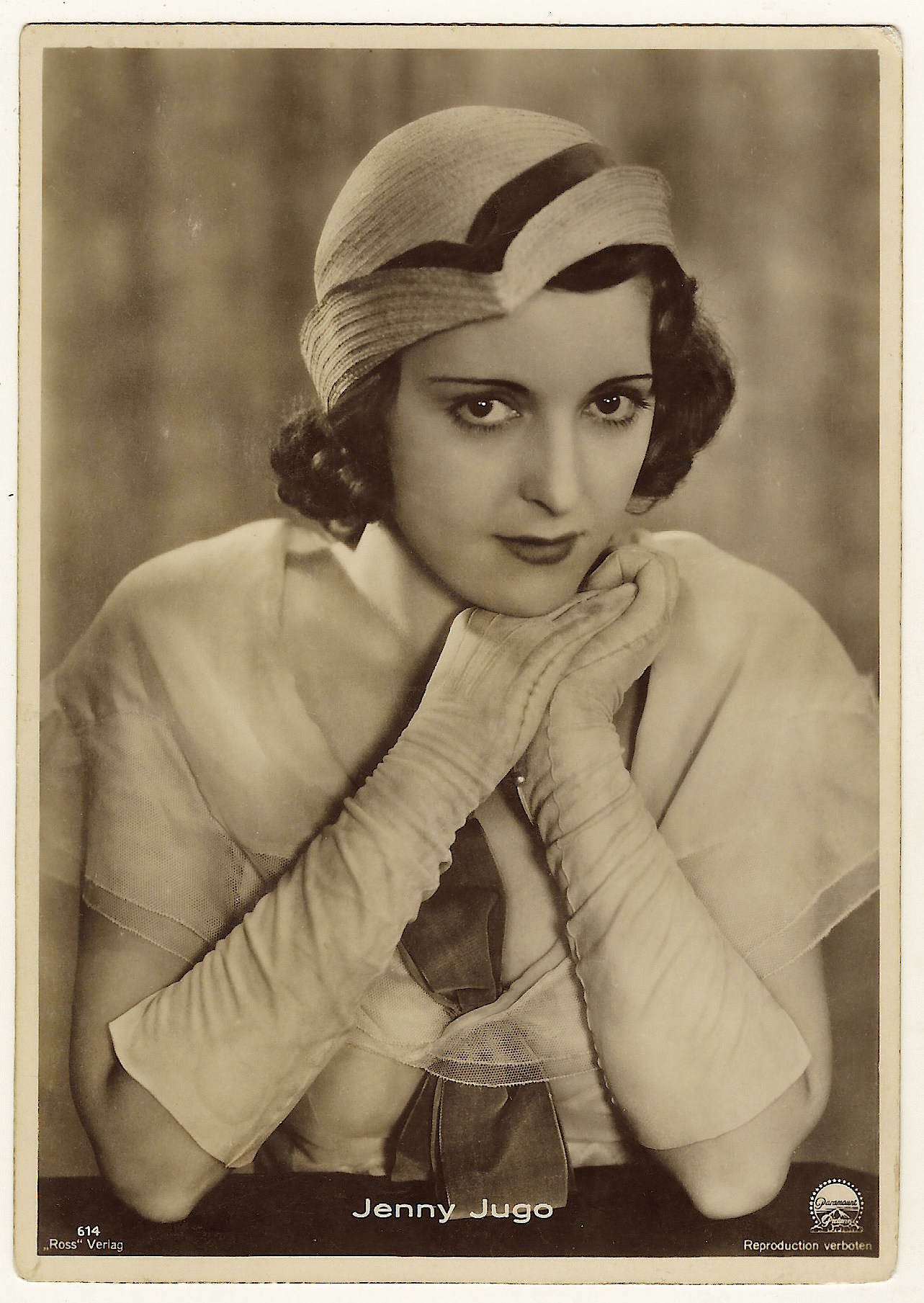
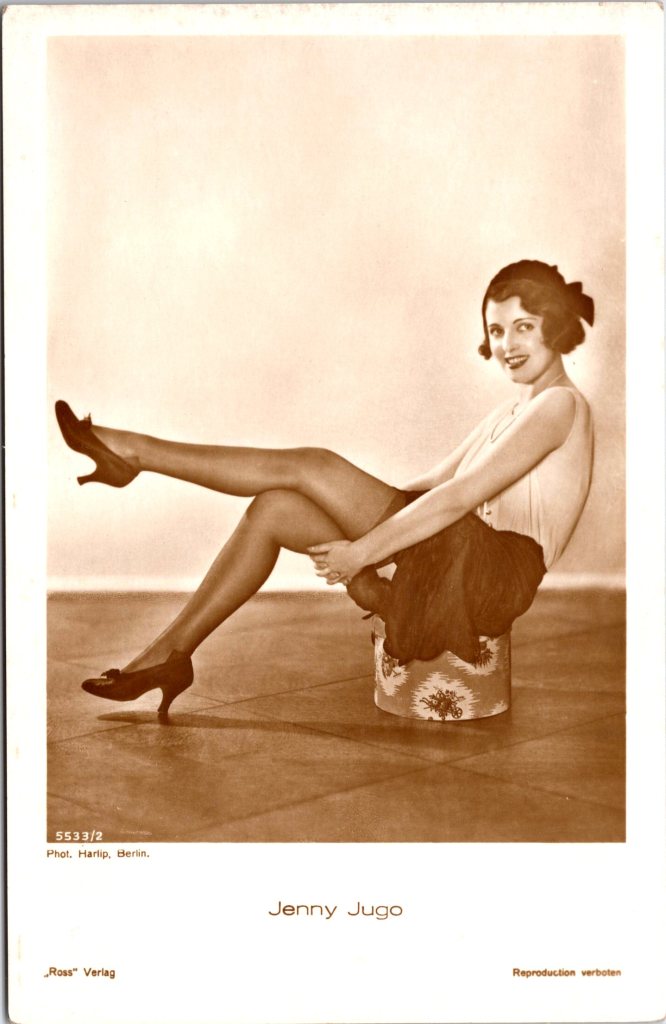
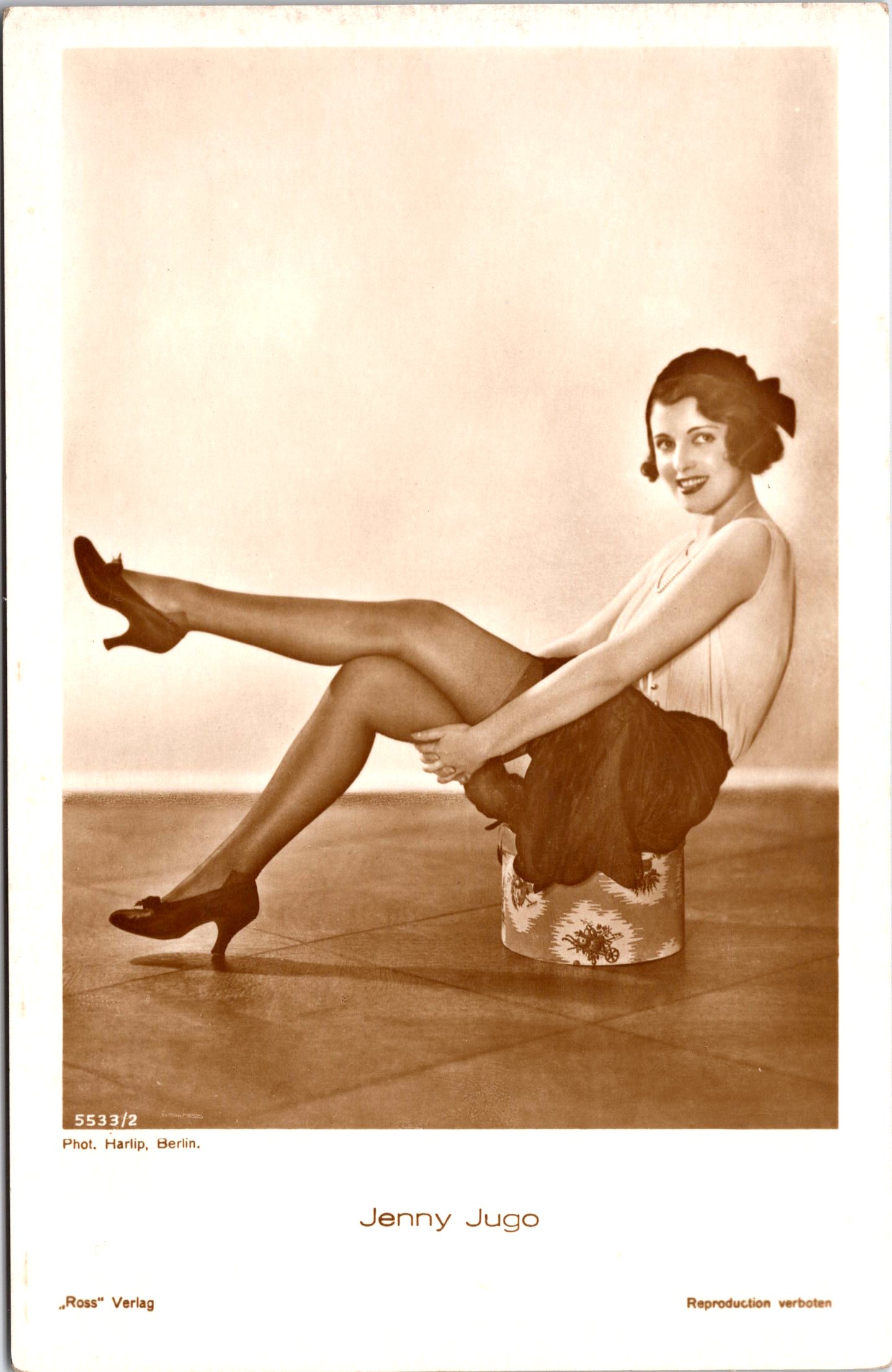
Jenny Jugo (1904-2001) was an Austrian actress. Her IMDb filmography reveals that she appeared in fifty-three films between 1925 and 1950. Jenny, as is evident in this vintage real photo postcard, was very beautiful. She was born in the Austro-Hungarian Empire. Her father owned a factory. She received her education in a convent. At age sixteen, she married actor Emo Jugo and the pair settled in Berlin, Germany. Their marriage was of short duration (1921-1922). She gave up her husband but not his last name. The German film studio, UFA, signed her to a contract in 1924. She struggled in the dramatic roles that she was given. By the end of the silent era, she was successful in comedies and specialized in that genre through the 1930’s. She often played perky, confident characters. She was often directed by Erich Engel. In 1935, Jugo played Eliza Doolittle in Pygmalion. Writer, George Bernard Shaw was so happy with her performance that he invited her to act in all of his plays on the English stage. She made films during the Nazi regime until 1943, when she returned to her Bavarian home. She was in a relationship with film producer Eberhard Klagmann who worked on her final three post-war films. In 1950, she married actor and former co-star, Friedrich Benfer. She retired from acting at age forty-six. She was given a lifetime achievement award for her outstanding contribution to German cinema. The IMDb biography of Jugo describes her as a “lively brunet, dimple-cheeked actress with a tom-boyish, unaffected manner”. The writer of the biography contends that Jenny Jugo flirted with stardom but did not achieve it. This assessment may be too harsh. To view Jenny Jugo acting in a 1931 film, watch the youtube video below.
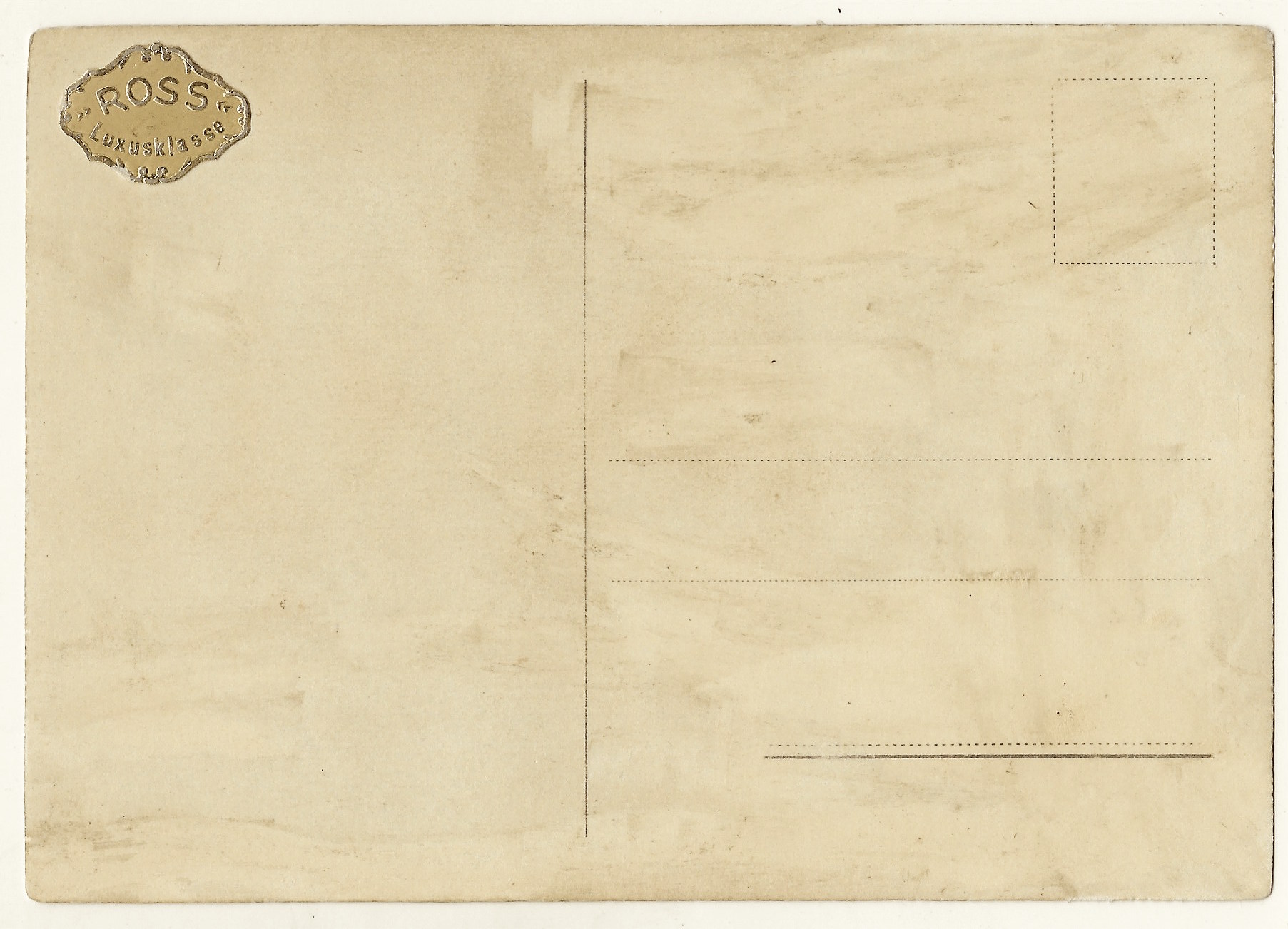
Postcard 1 was published by Ross Verlag and is part of the Luxusklasse series (no. 614).It is easily identifiable by the gold emblem on the reverse of the card.The postcard is larger than regular sized postcards. This vintage postcard measures about 4″ x 5 3/4″ and is in very good condition. (SOLD)
Postcard 2 features Miss Jugo in a risque pose. She is wearing what appears to be skimpy lingerie. Her pose and facial expression projects a “come hither” message. This vintage postcard was published by Iris Verlag as part of series (no. 5383). The photographer of this portrait is Erich Engel of Berlin, Germany. There was also a German film and theatre director named Erich Engel (1891 –1966) . As stated above, Engel directed Jugo many times. Engel is listed on the postcard for either being the photographer, or possibly the director of the film she was working on at the time. The reverse of this post card indicates that it once resided in an album. The card is in very good condition (see scans).
Buy this vintage Real Photo Postcard (includes shipping within the United States) #2942
To purchase the item click on the Pay with Paypal button below
$34.71
Buy this Vintage Real Photo Postcard (Includes International Shipping Outside the United States) #2942
To purchase the item click on the Pay with Paypal button below
$43.21
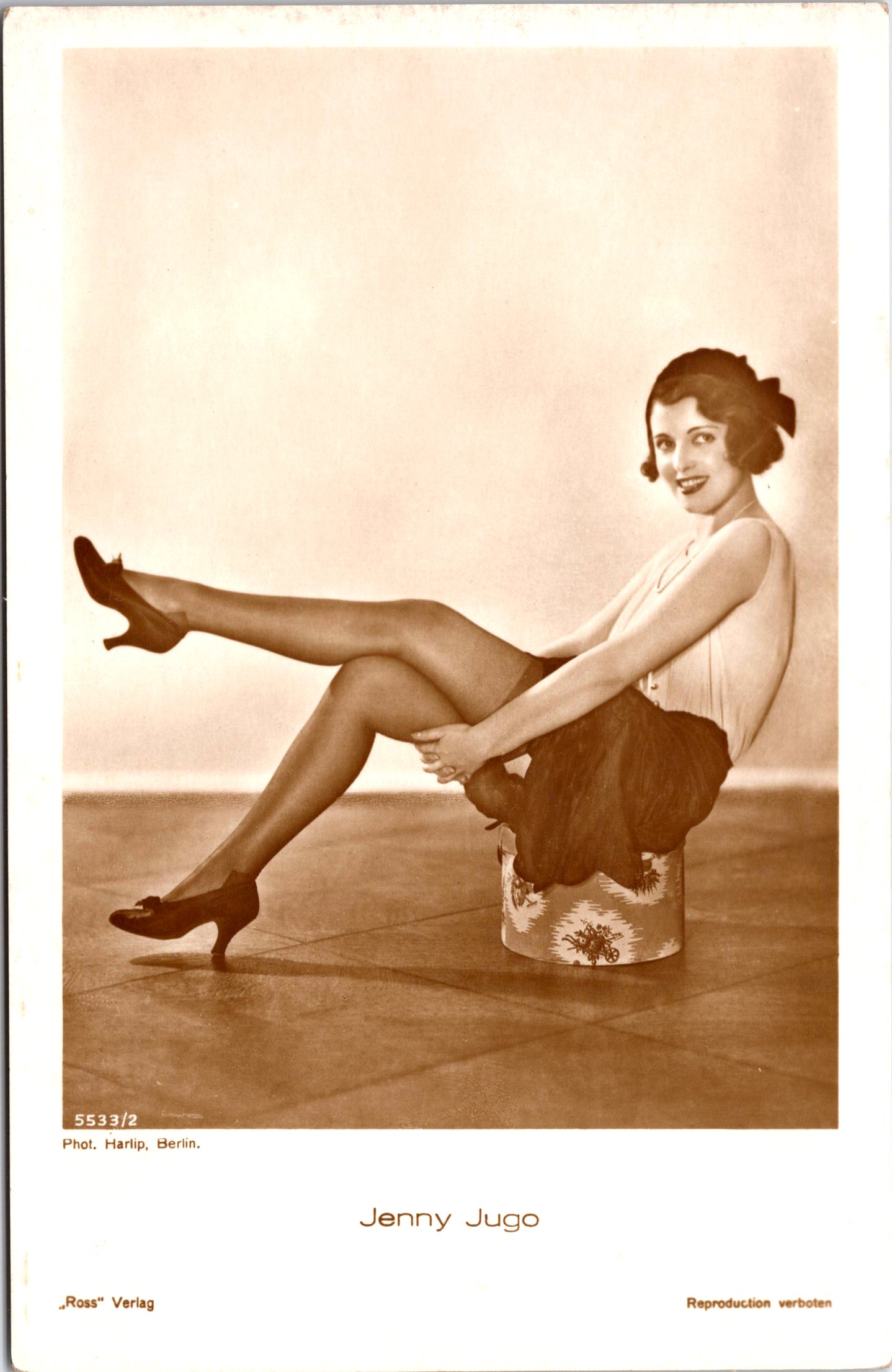
Postcard 3 was published by Ross Verlag as part of series (no. 5533/2). Miss Jugo’s photographic portrait was taken by the Harlip studio, located in Berlin Germany. Gregory Harlip specialized in celebrity portraits. In 1937, Harlip left Berlin because of Nazi persecution. He relocated to London. Harlip died in 1945 and was succeeded by his wife who became one of the renowned society photographs of the 1950’s. She died in 1982. This portrait postcard is in very good condition (see scans).
Max Hansen & Jenny Jugo “Who Takes Love Seriously? (1931)”
POSTCARD 1 (SOLD)
POSTCARD 2
POSTCARD 3
Buy this Vintage Real Photo Postcard (includes shipping within the US) #5032
To purchase this item, click on the Pay with PayPal button below
$23.85
Buy this Vintage Real Photo Postcard (includes International shipping outside the US) 5032
To purchase this item, click on the Pay with PayPal button below
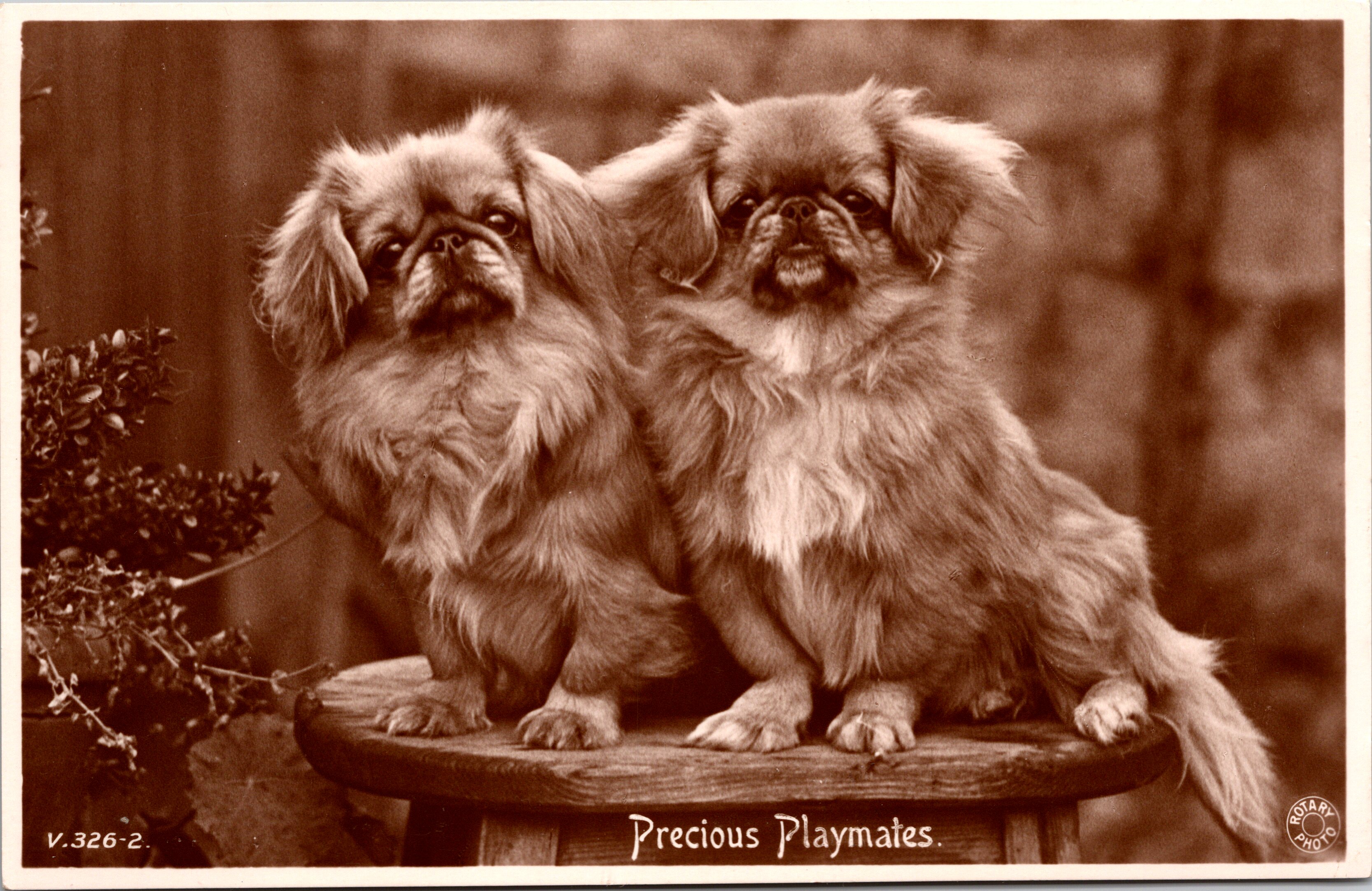
This vintage real photo postcard features two adorable Pekingnese dogs. The dogs may be a different breed, or even a mixed breed, but certainly they have the appearance of Pekingnese. The caption under the pups reads “Precious Playmates” and this is an apt description for these lovely dogs. This postcard was printed in Great Britain and was published by Rotary Photo as part of a series (No. v.326-2). This portrait postcard is in excellent condition (see scans).
Buy this Vintage Real Photo Postcard (includes shipping within the US) #5035
To purchase this item, click on the Pay with PayPal button below
$23.85
Buy this Vintage Real Photo Postcard (includes International shipping outside the US) 5035
To purchase this item, click on the Pay with PayPal button below
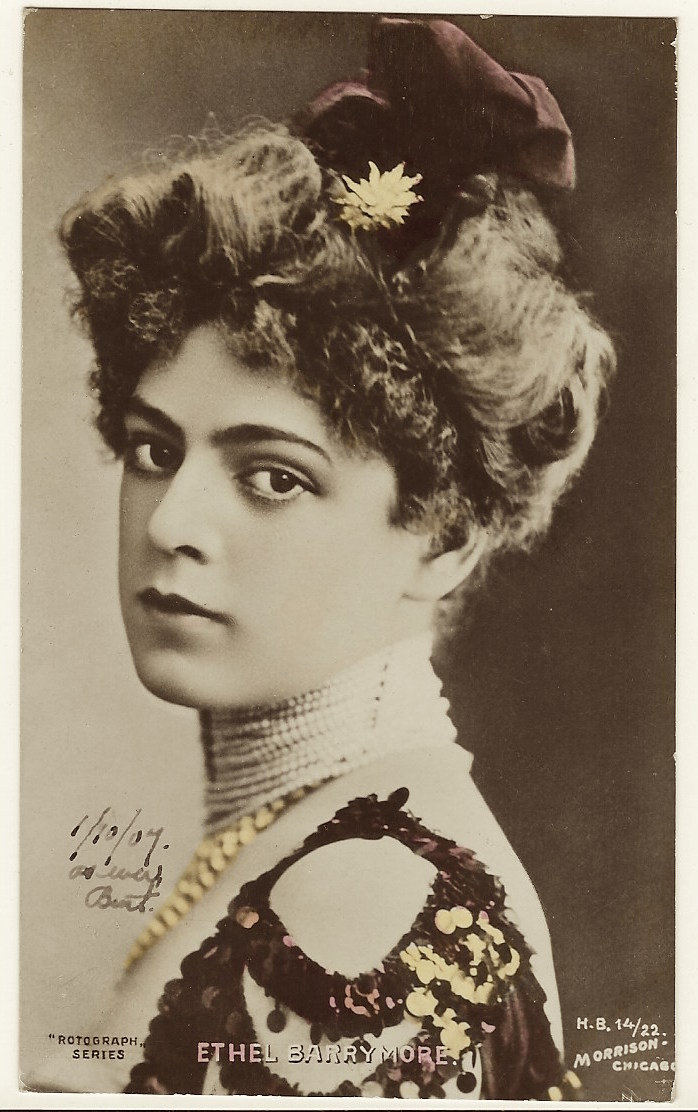
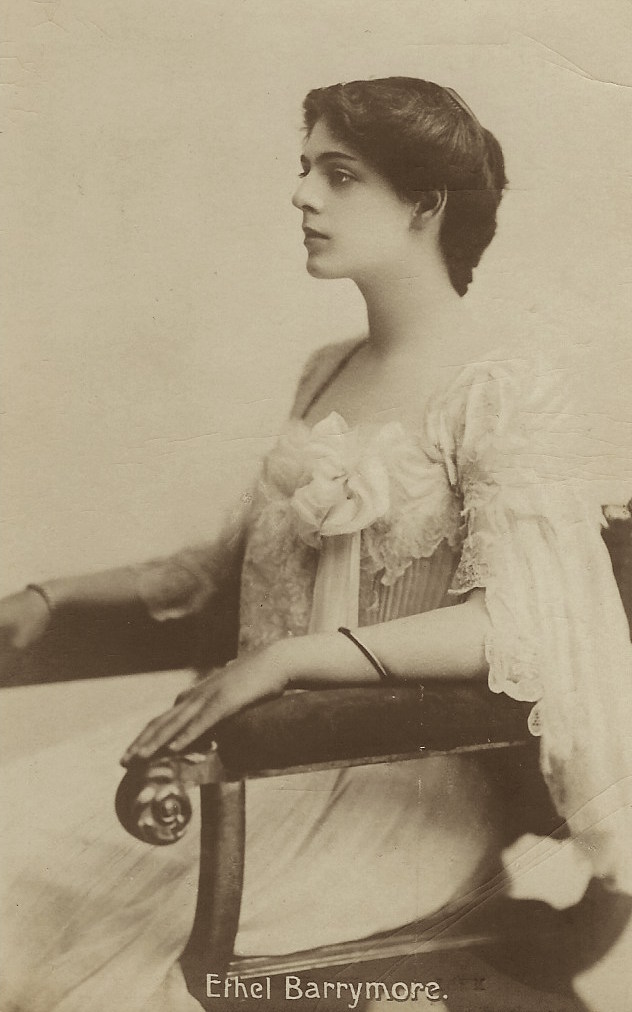
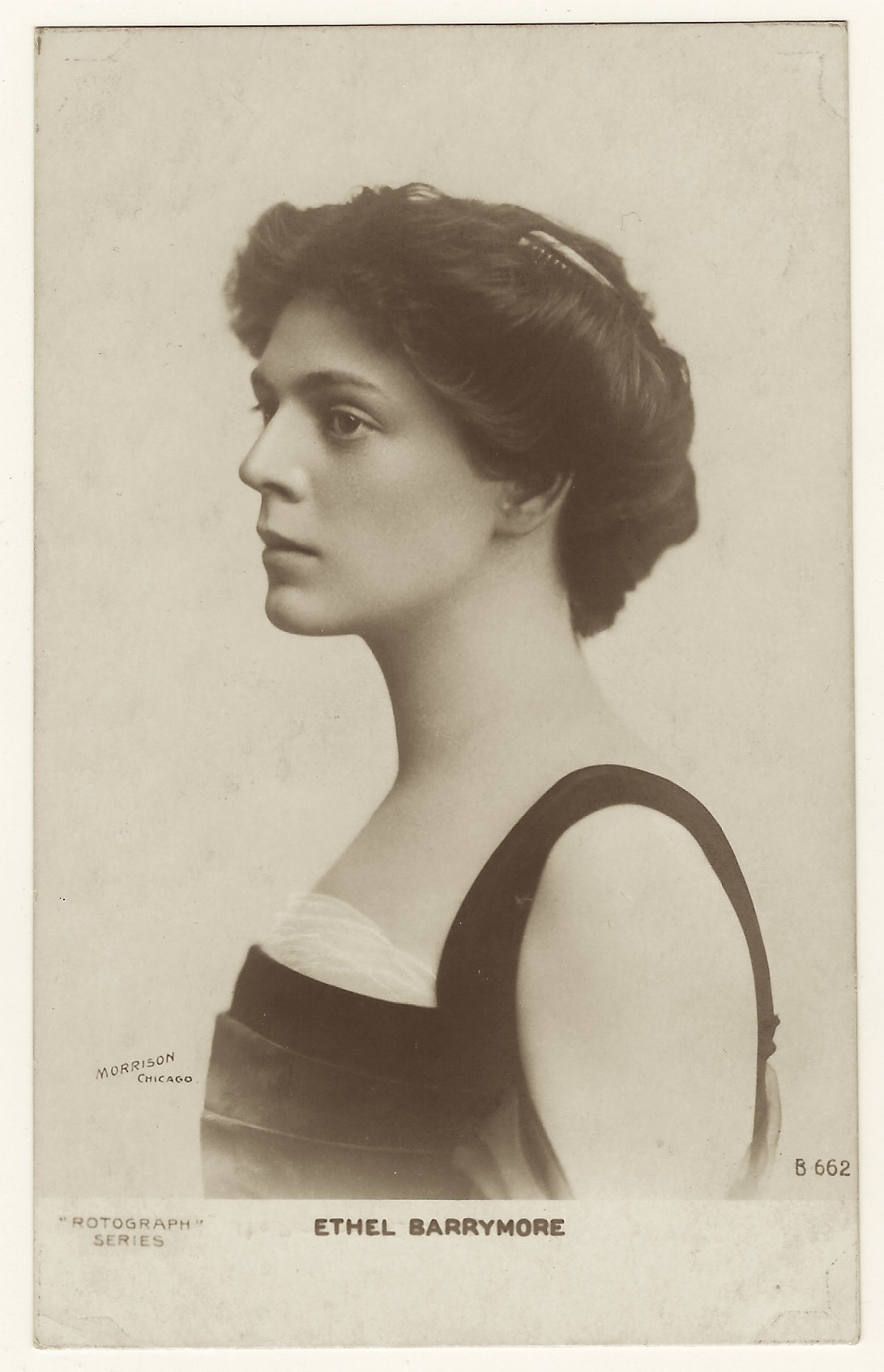
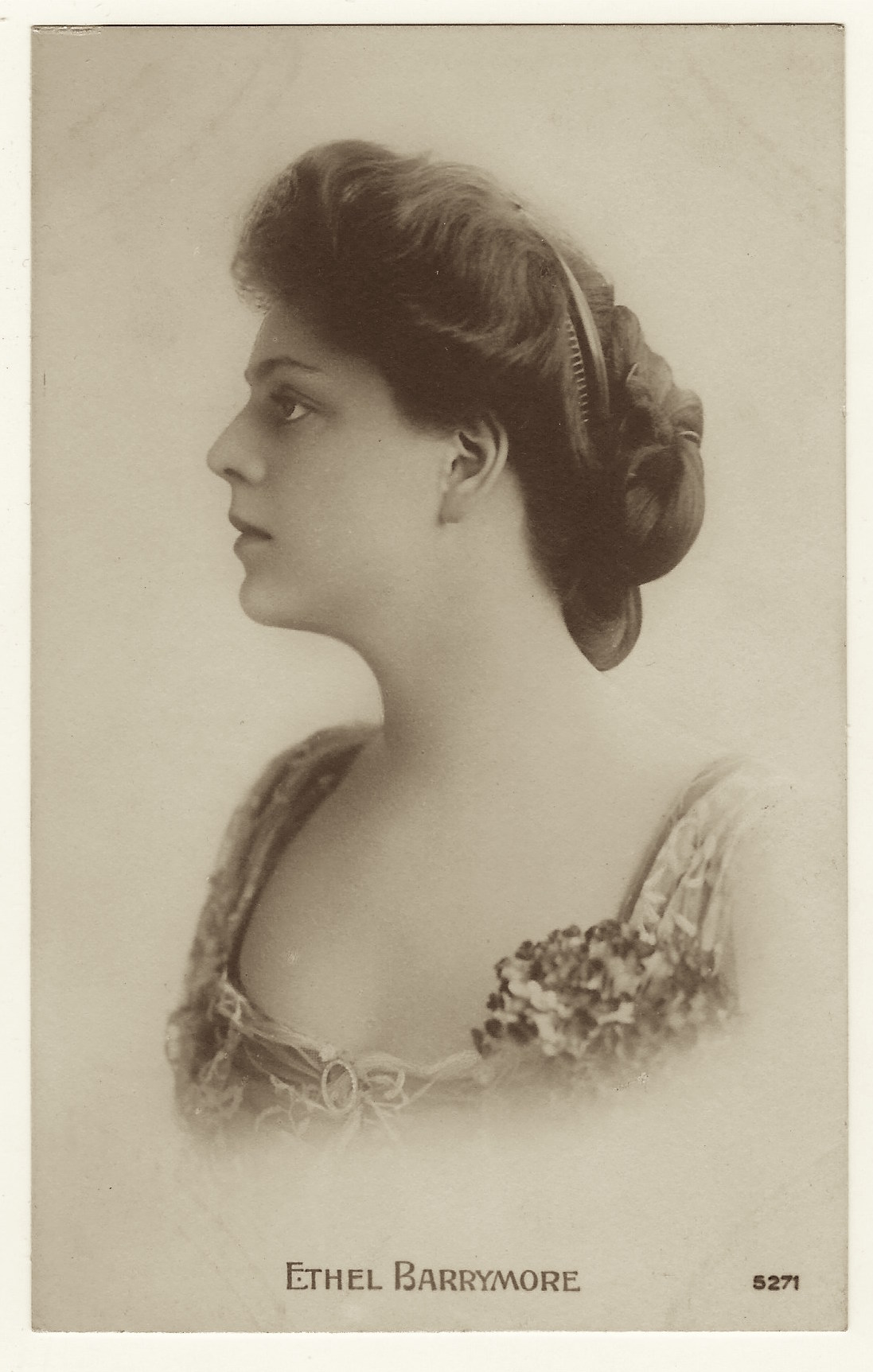
Ethel Barrymore (1879-1959) was an outstanding American actress and a member of the famous theatrical Barrymore family. She was born Ethel Mae Blythe in Philadelphia, Pennsylvania. Her parents were actors and she was the sister of John and Lionel Barrymore. She was the great aunt of modern day actress Drew Barrymore.
Ethel Barrymore was considered by many to be the greatest actress of her generation. She was a major Broadway performer and first appeared there in 1895. She had roles in A Dolls House by Ibsen (1905). She was a strong supporter of the Actors’ Equity Association and played a major role in the 1919 strike. She played in Somerset Maugham’s comedy, The Constant Wife (1926). She also starred in motion pictures beginning her film career in 1914. Notable films included None but the Lonely Heart (1944) and The Spiral Staircase (1946). Around 1900, Winston Churchill proposed marriage to Barrymore but she refused. She later married Russell Griswold Colt in 1909 and had three children. She died of cardiovascular disease in 1959 at her home in California. The Ethel Barrymore Theatre in New York City is named in her honor.
The cabinet card 1 portrait of Ethel Barrymore was photographed by Phillips Photographers of Philadelphia, Pennsylvania. To view other photographs by Phillips, click on the category “Photographer: Phillips”. The second image (cabinet card 2) of the actress was produced by Sarony, the famous celebrity photographer who’s studio was located in New York City. To see other Sarony photographs, click on the category “Photographer: Sarony”.
Cabinet card 2 was produced by Napoleon Sarony, the famous celebrity photographer who’s studio was located on Fifth Avenue in New York City. Barrymore looks young and quite pretty in this image. (SOLD)
The third portrait of Miss Barrymore appears on postcard 1, published by the Rotograph Company who operated in New York City and Germany. This postcard portrait was taken by famed Chicago photographer William Morrison. He is well known for his excellent portraits of theatrical stars. He produced both real photo postcards and cabinet cards. This postcard is number HB/1422 of the “Rotograph Series”. The image on this postcard is color tinted. This postcard has been mailed and postmarked (1907). The reverse of this postcard can be seen below.To view other photographs by Morrison, click on the category “Photographer: Morrison”.
The fourth portrait of Ethel Barrymore is an uncommon one (postcard 2). The image provides a lovely profile view of this legendary actress. If you search for this exact postcard online, you likely won’t find it. This postcard was published by E. Frey & Company who operated in New York City . Research reveals that postcards displaying the printed name of “E. Frey” were actually published by the Souvenir Post Card Company which existed between 1905 and 1914. It was located at 268 Canal Street in New York City. The company was purchased by Valentine & Sons and the combined company became Valentine – Souvenir. This postcard was printed in Germany and is in good condition (see scan).
The fifth photograph (postcard 3) of Miss Barrymore was published by the Rotograph Company. This postcard portrait was taken by famed Chicago celebrity photographer William Morrison.This postcard is number B 662 of the “Rotograph Series”. The image has excellent clarity.
The sixth image (postcard 4) is a vintage real photo postcard portrait of Ethel Barrymore. The postcard was published by Albert Hahn who was based in New York City (200 Broadway) and Hamburg. Hahn operated his company between 1901 and 1919. The postcard was produced in Germany sometime in the decade of 1900-1910. The postcard is part of a series (no. 5271). (SOLD)
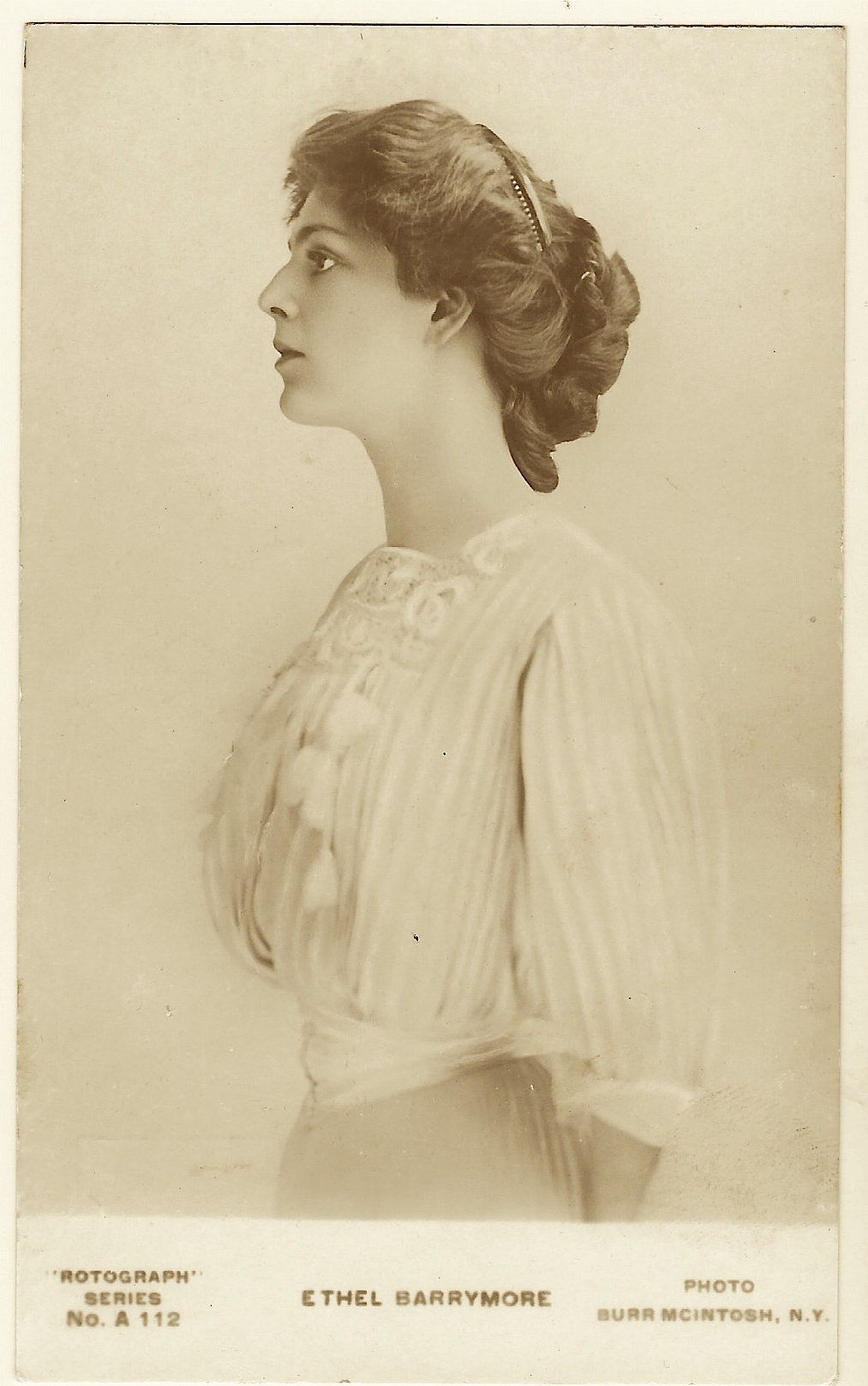
Postcard 5 offers a profile view of Miss Barrymore. The postcard was published by the Rotograph Company as part of the Rotograph Series (No. A 112). The photographer of this image is Burr McIntosh of New York City. William Burr McIntosh (1862-1942) lived an interesting life. Among his job titles listed by Wikipedia, are photographer, lecturer, film studio owner, silent film actor, publisher of the “Burr McIntosh Monthly”, reporter, and radio and early film pioneer. His sister was Nancy McIntosh, a noted operatic soprano. He was a graduate of Lafayette College in 1884. His most noted film role was his appearance in D. W. Griffith’s film, “Way Down East” (1920). Wikipedia notes that he appeared in 53 films between 1914 and 1934. This vintage postcard is in very good condition.
Postcard 6 is a portrait of Miss Barrymore that was postmarked in 1907. (SOLD)
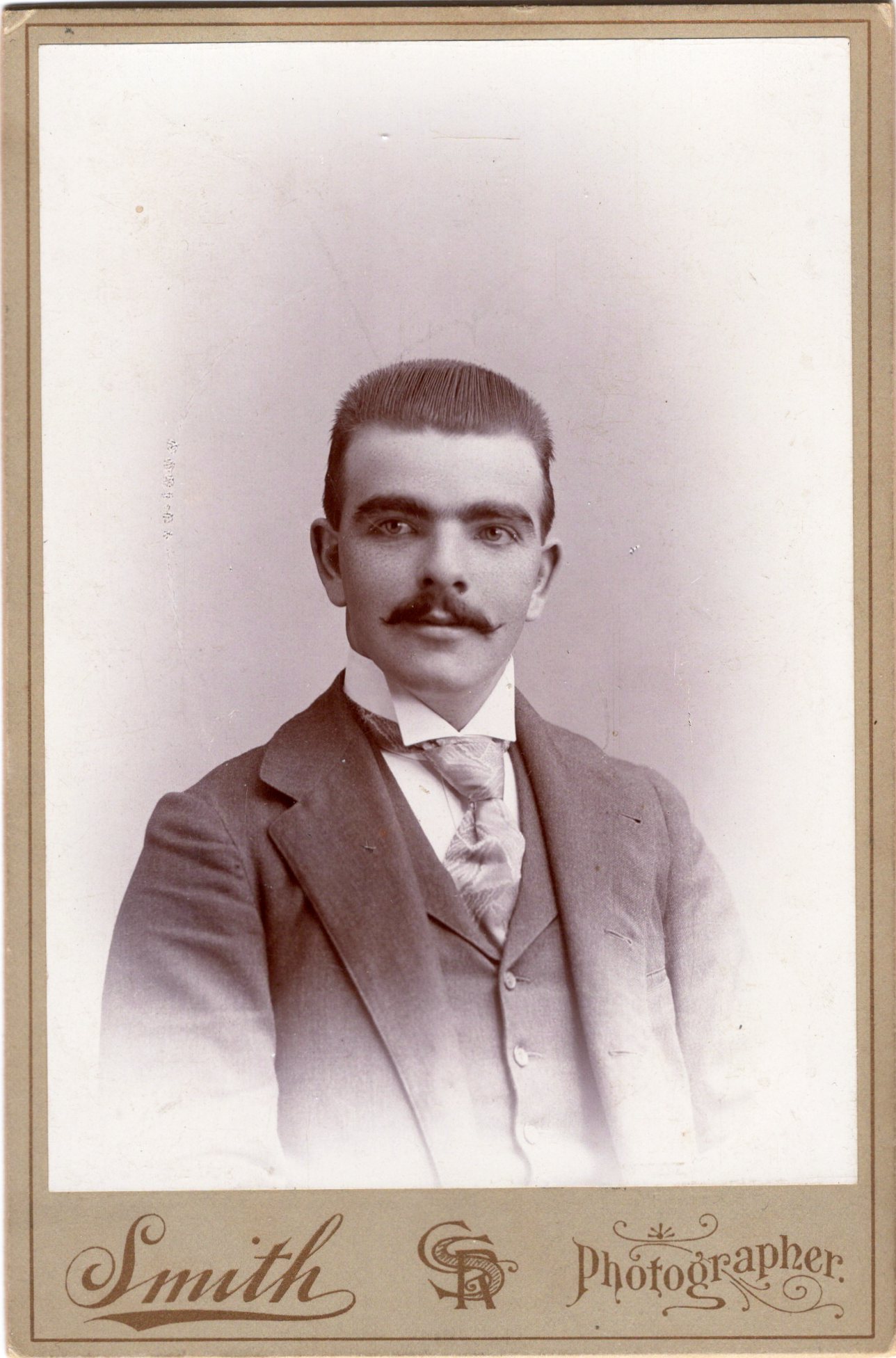
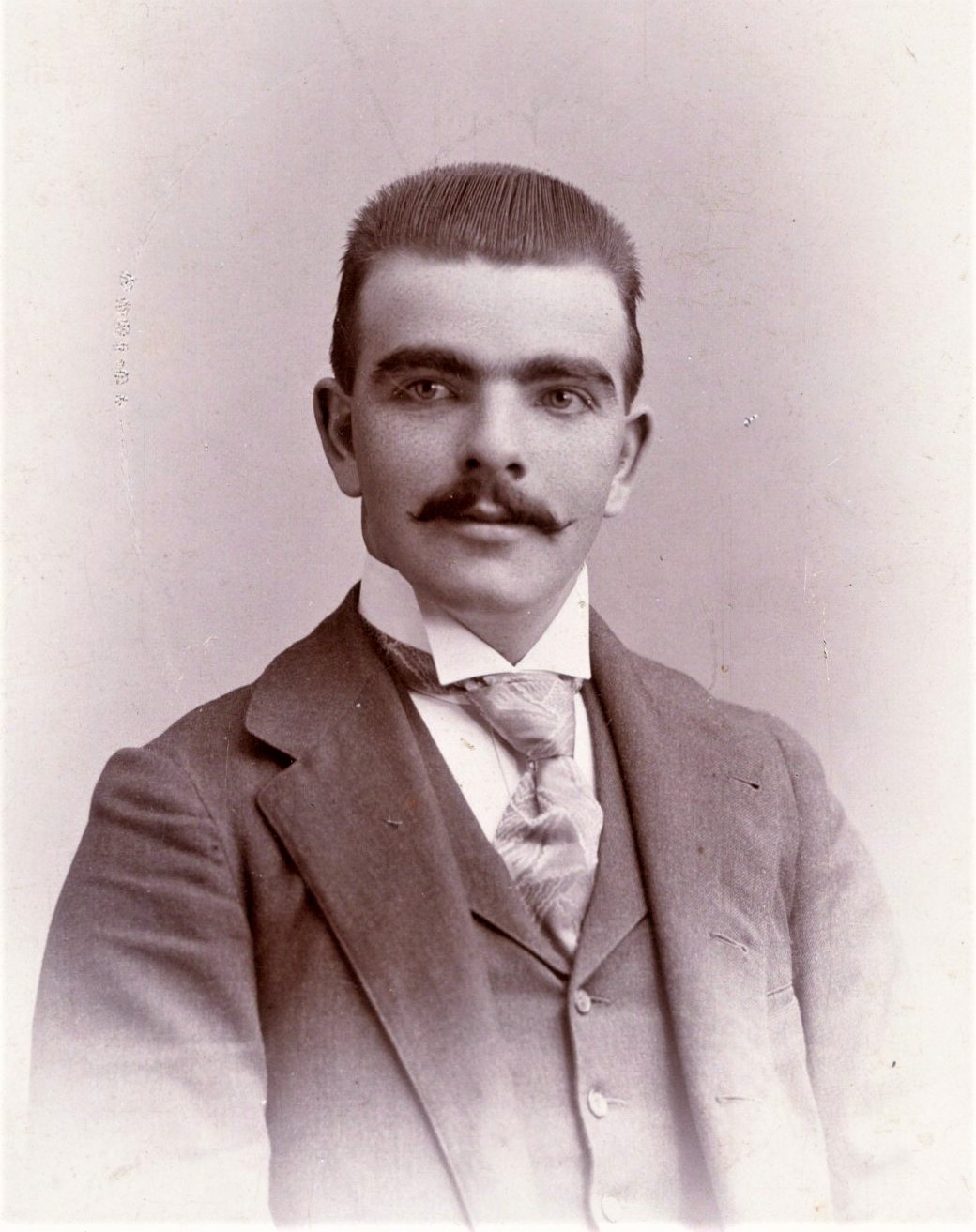
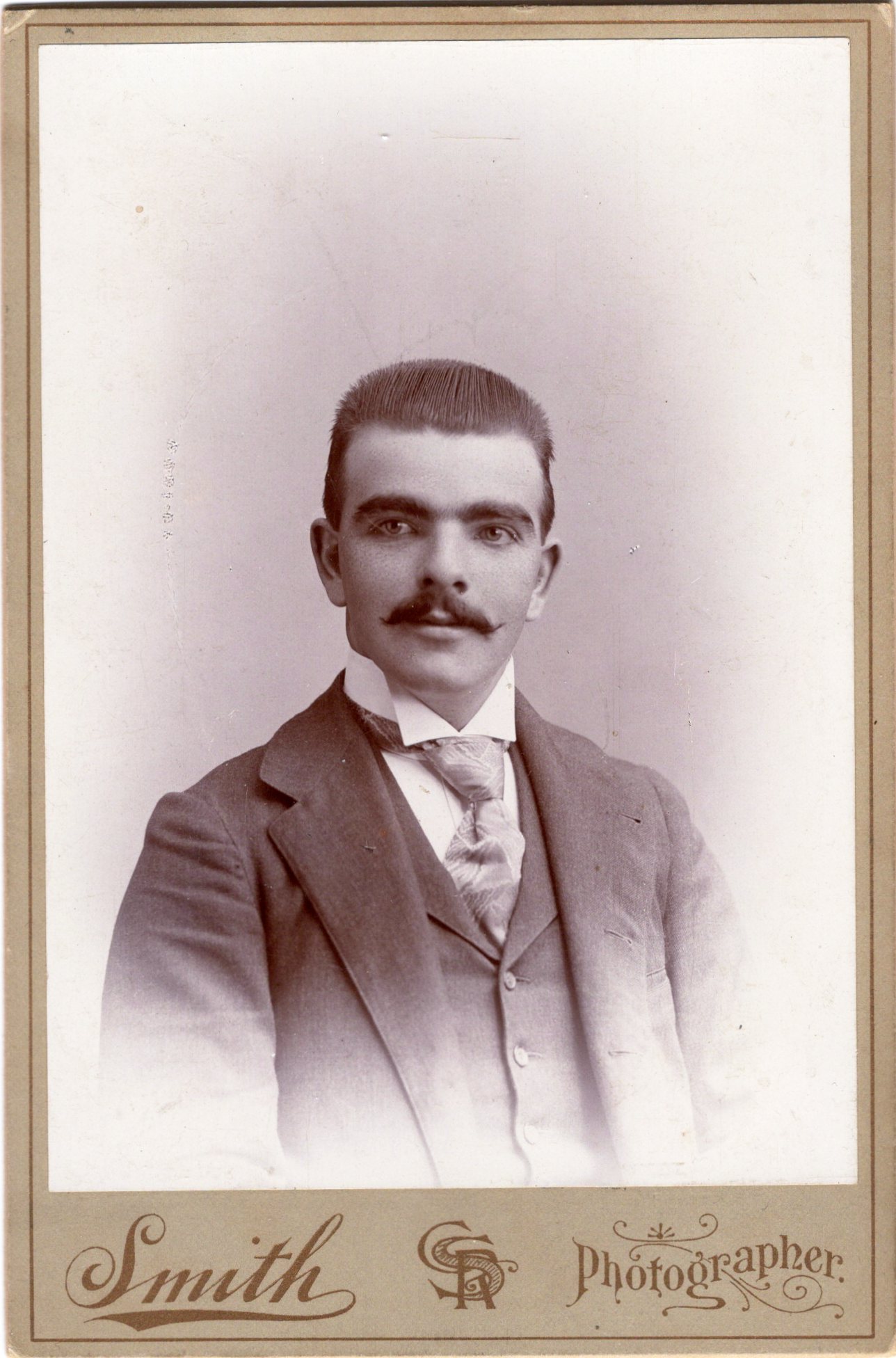
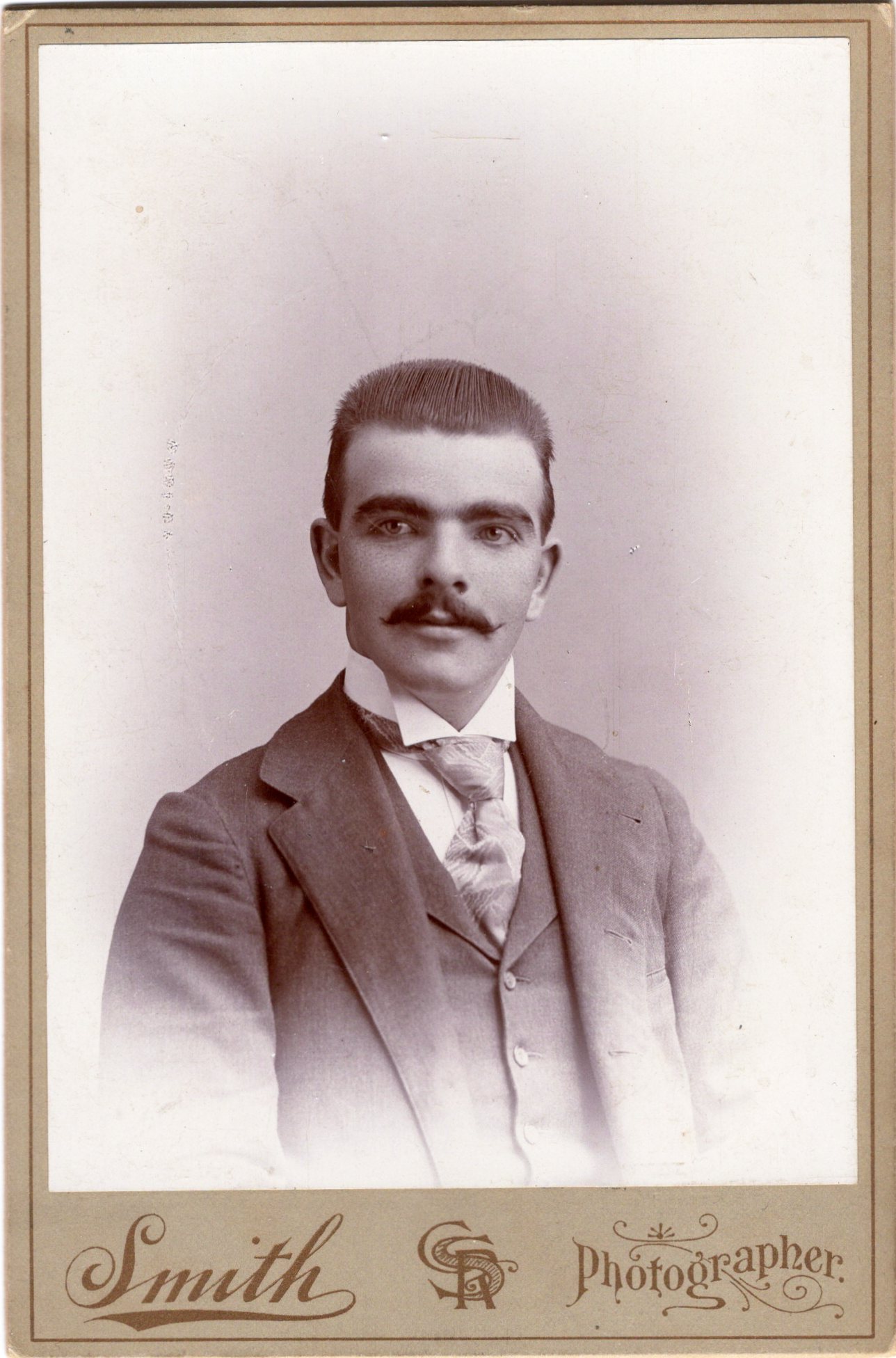
This cabinet card features a portrait of a handsome young man with slicked back hair. He is dressed beautifully and well groomed. The photographer is named Smith but the location of his studio is not listed on the front or the reverse of the photograph. The initials on the front of the card indicate that the photographers full name is C. R. Smith. There was a photographer named C. R. Smith located in Clearwater, Minnesota. He was listed in CameraCraft (1908) and also in The Photographic Journal of America (1917). It is not confirmed that this C. R. Smith is the photographer of this cabinet card. This cabinet card has slight cornerwear and is in overall excellent condition (see scans).
Buy this Vintage Cabinet Card photograph (includes shipping within the US) #5188
To purchase this item, click on the Pay with PayPal button below
$48.00
Buy this Vintage Cabinet Card photograph (includes shipping outside the US) #5188
To purchase this item, click on the Pay with PayPal button below




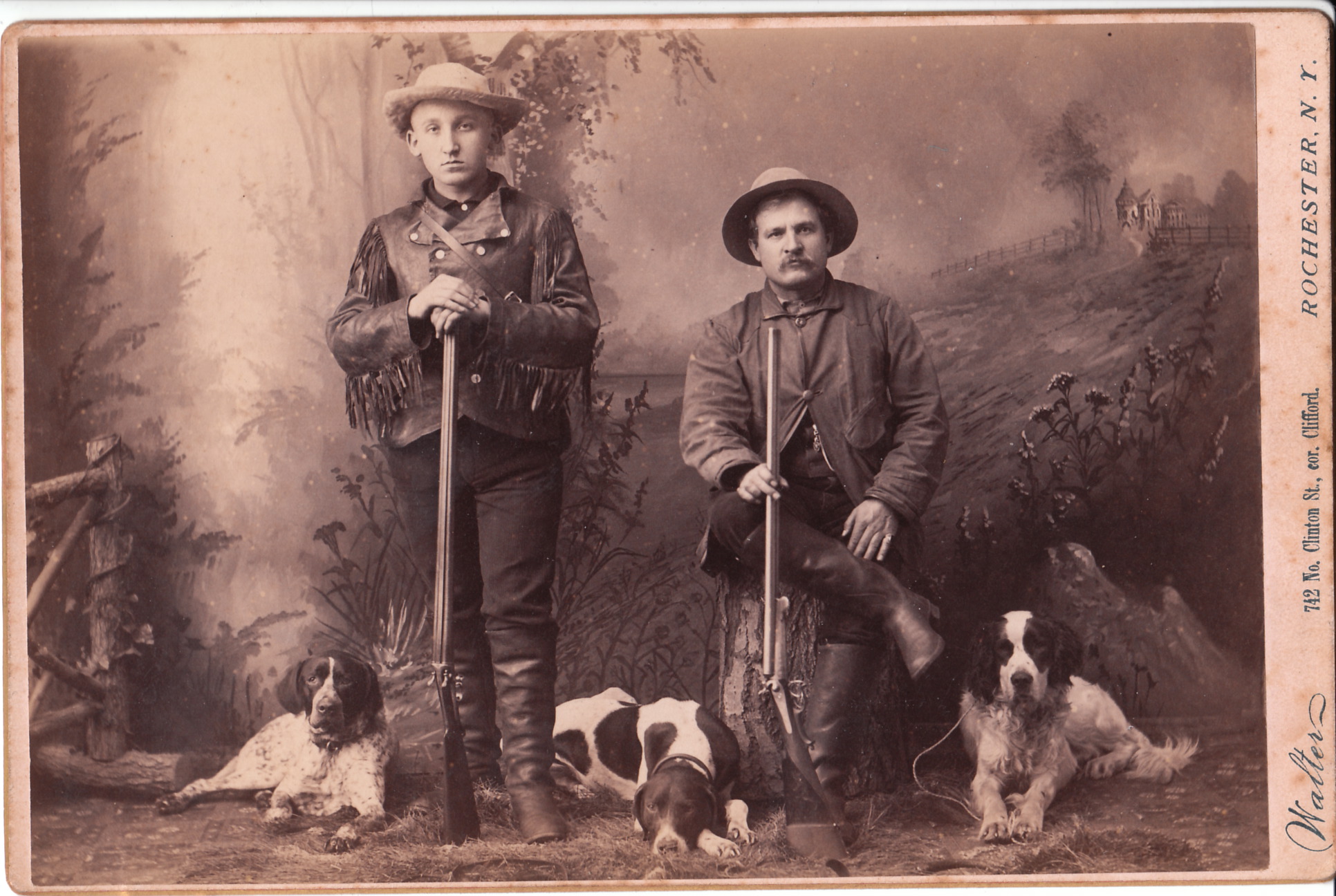 This terrific Cabinet card image shows two Hunters and their three hunting dogs. Both gentleman are wearing boots and are holding rifles. This studio photograph was produced by Walter of Rochester, New York. Notation on the reverse of the card identifies the hunters and is dated 1887. SOLD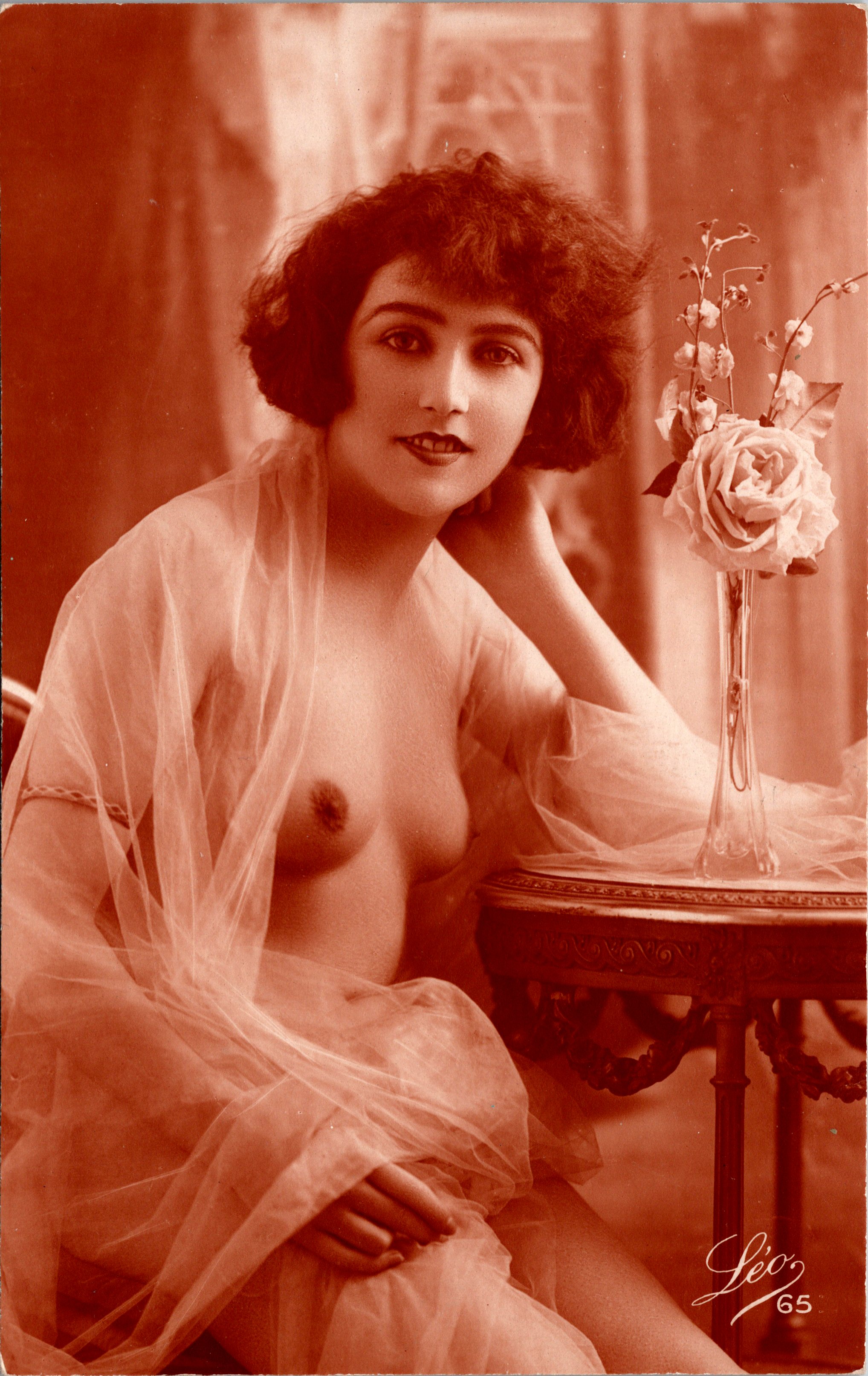
 POSTCARD 1 (SOLD)
 POSTCARD 2
 POSTCARD 3
 POSTCARD 1 (SOLD)
 POSTCARD 2








 THE CABINET CARD GALLERY