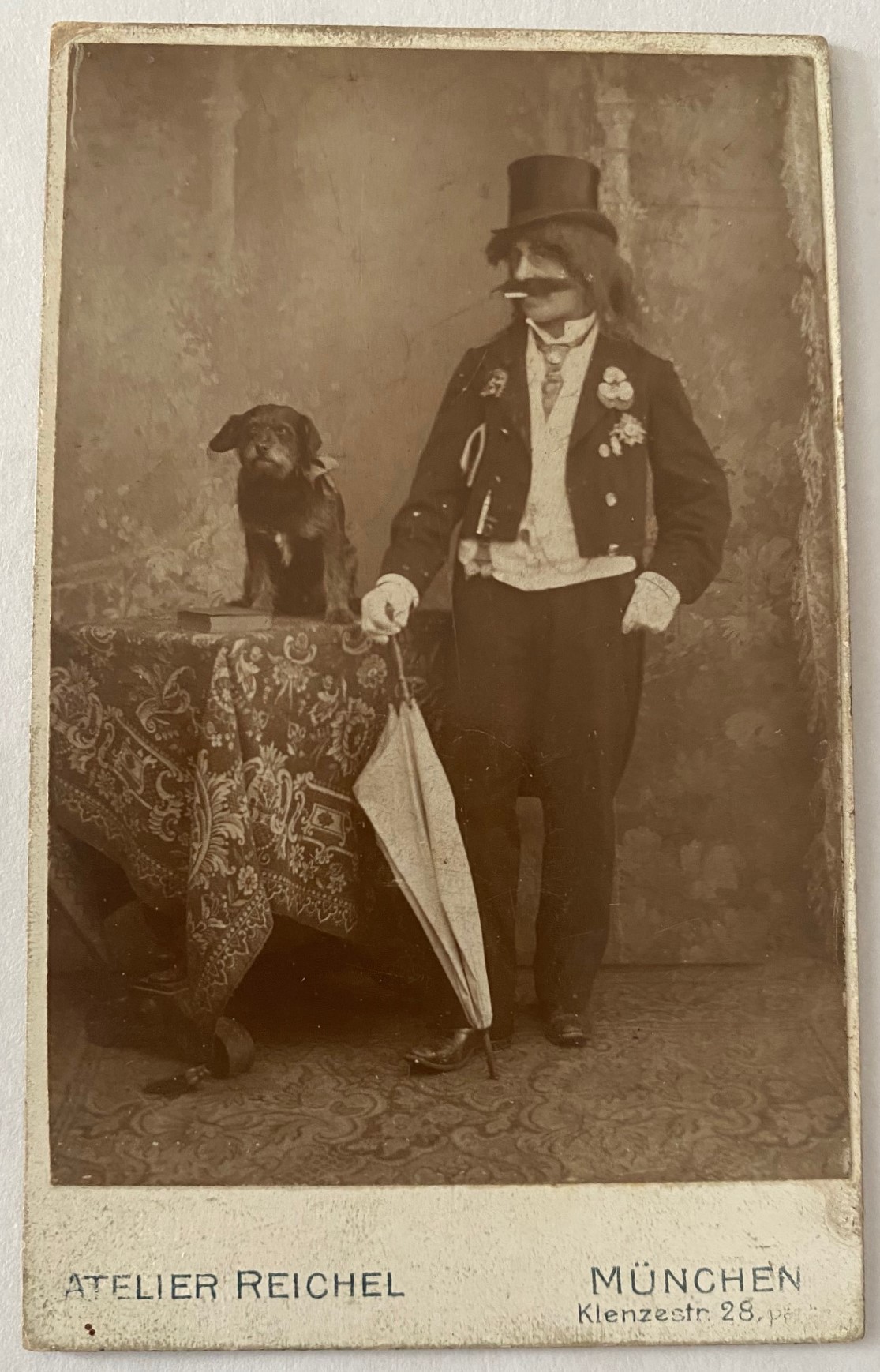
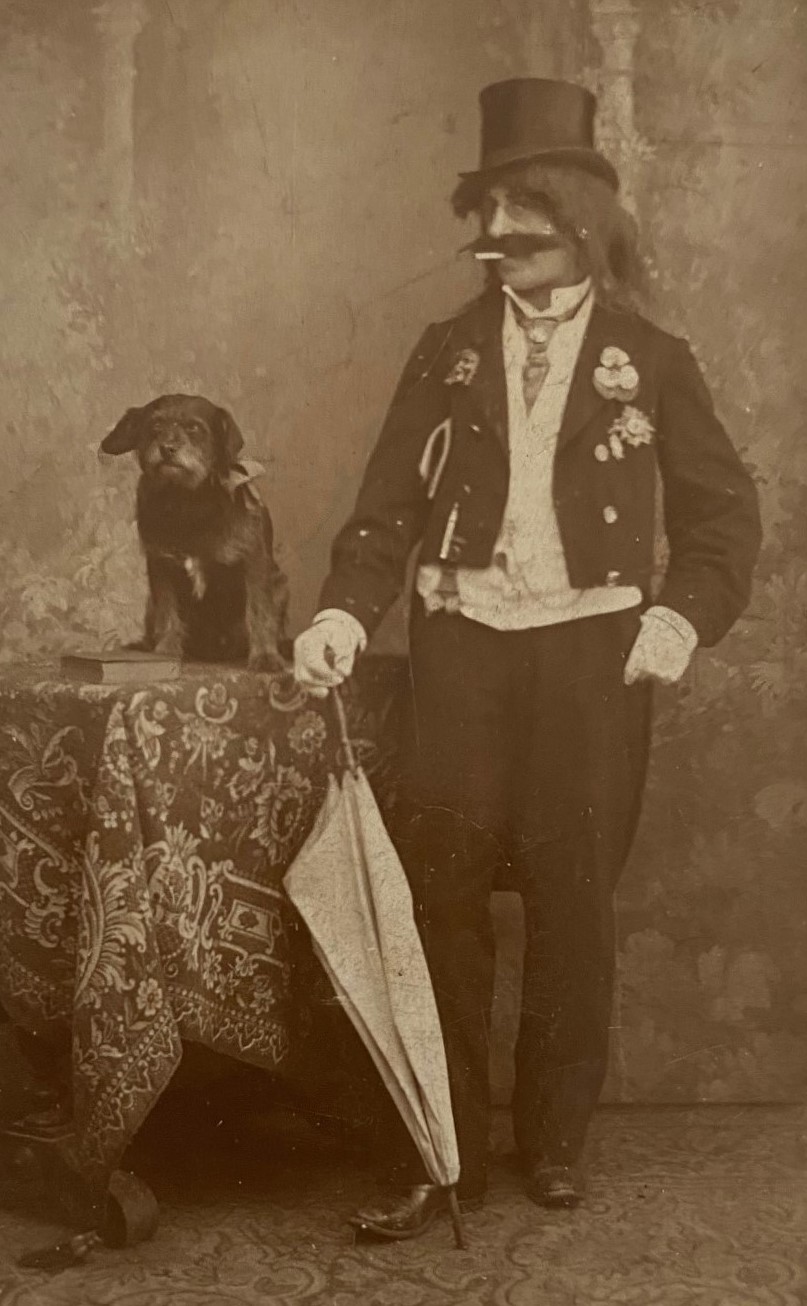
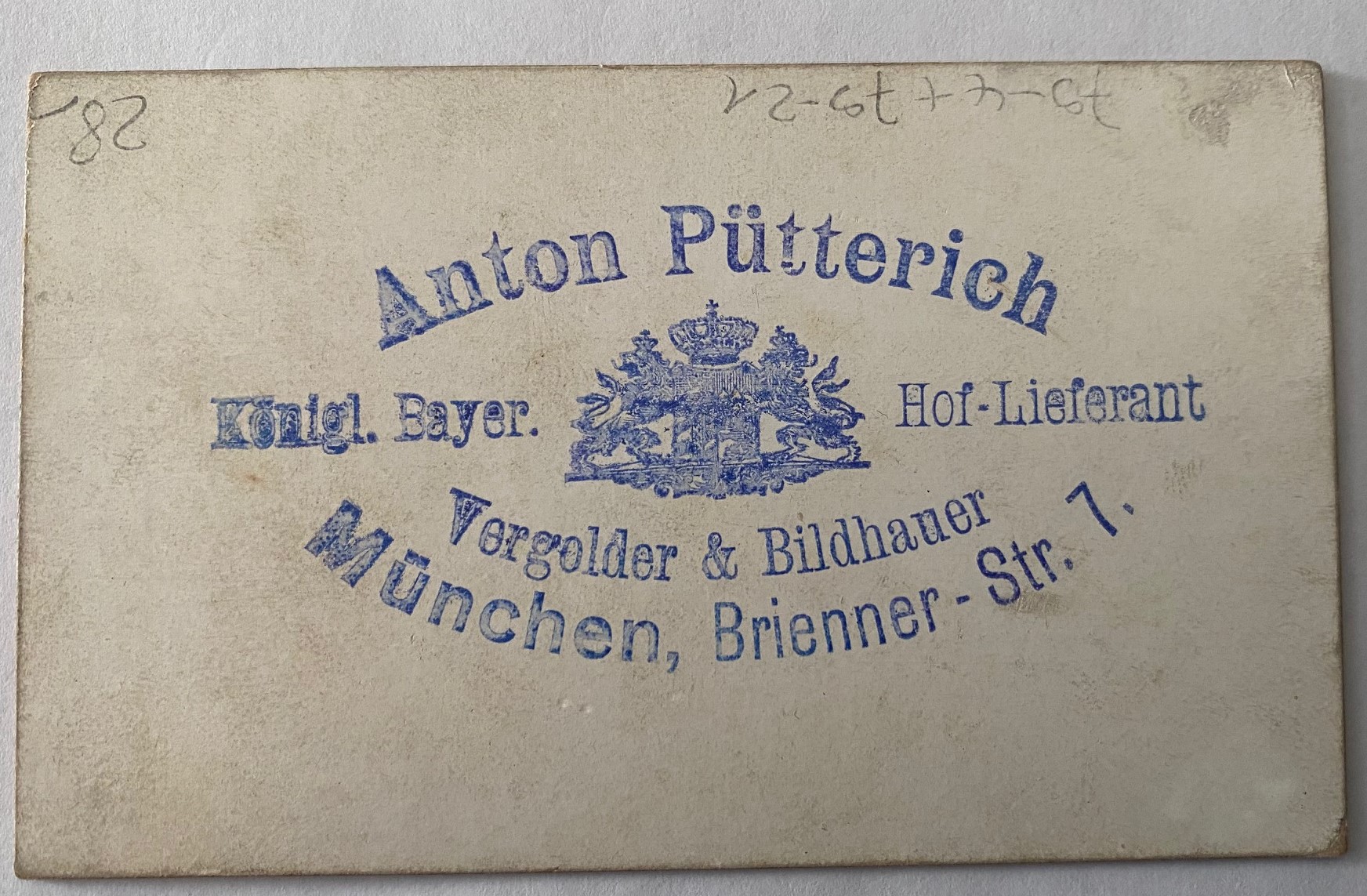
This carte de visite photograph features a clown in his clown costume. He is dressed like a hobo with the exception of his top hat. Note that he is wearing eye glasses and is smoking a cigarette. The clown is posing with his small dog on a table beside him. This clown and his dog are likely members of a circus troupe. This cdv photograph was taken at the Reichel studio in Munich, Germany. The reverse of the photo lists the photographer as Anton Putterich. It is likely that one of these gentlemen succeeded the other in operating the studio. SOLD
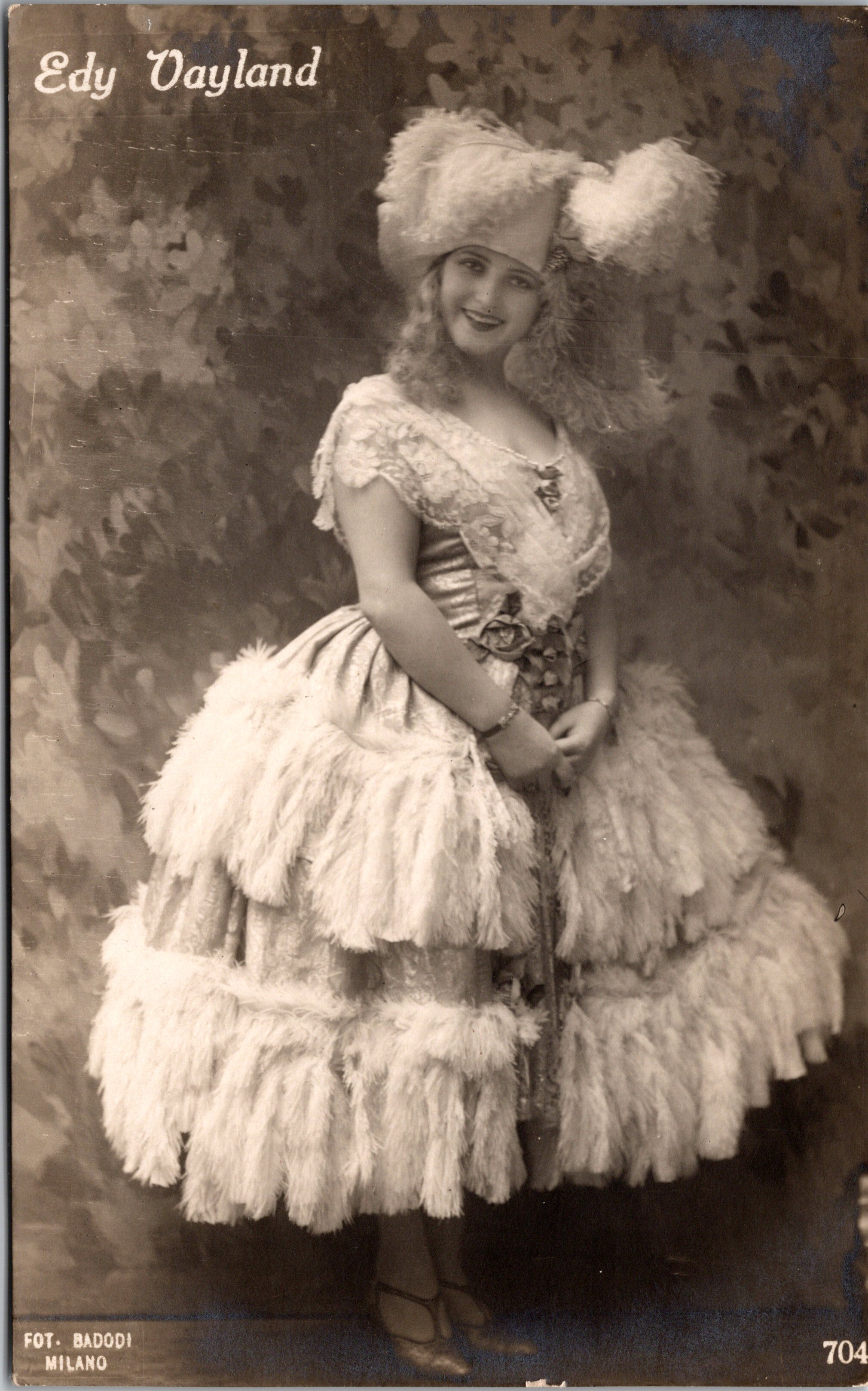
The pretty costumed blonde actress featured in this real photo postcard is Edy Vayland. She is wearing a fantastic headdress. This portrait is a bit risque for it’s era. Preliminary research revealed little information about this Belle Epoque theatre actress. One source labelled her a burlesque actress. The postcard is from the 1910’s and was published in Italy by A. Traldi from the city of Milan. Traldi operated in Milan from 1902-1918. The publisher concentrated on view cards of Europe and the Middle East. They are also known for a series published that focused on dogs. Research reveals that they produced a number of postcard portraits of European stage performers. Miss Vayland’s photograph was taken by the Badodi studio in Milan. This real photo postcard portrait is in excellent condition (see scans). SOLD
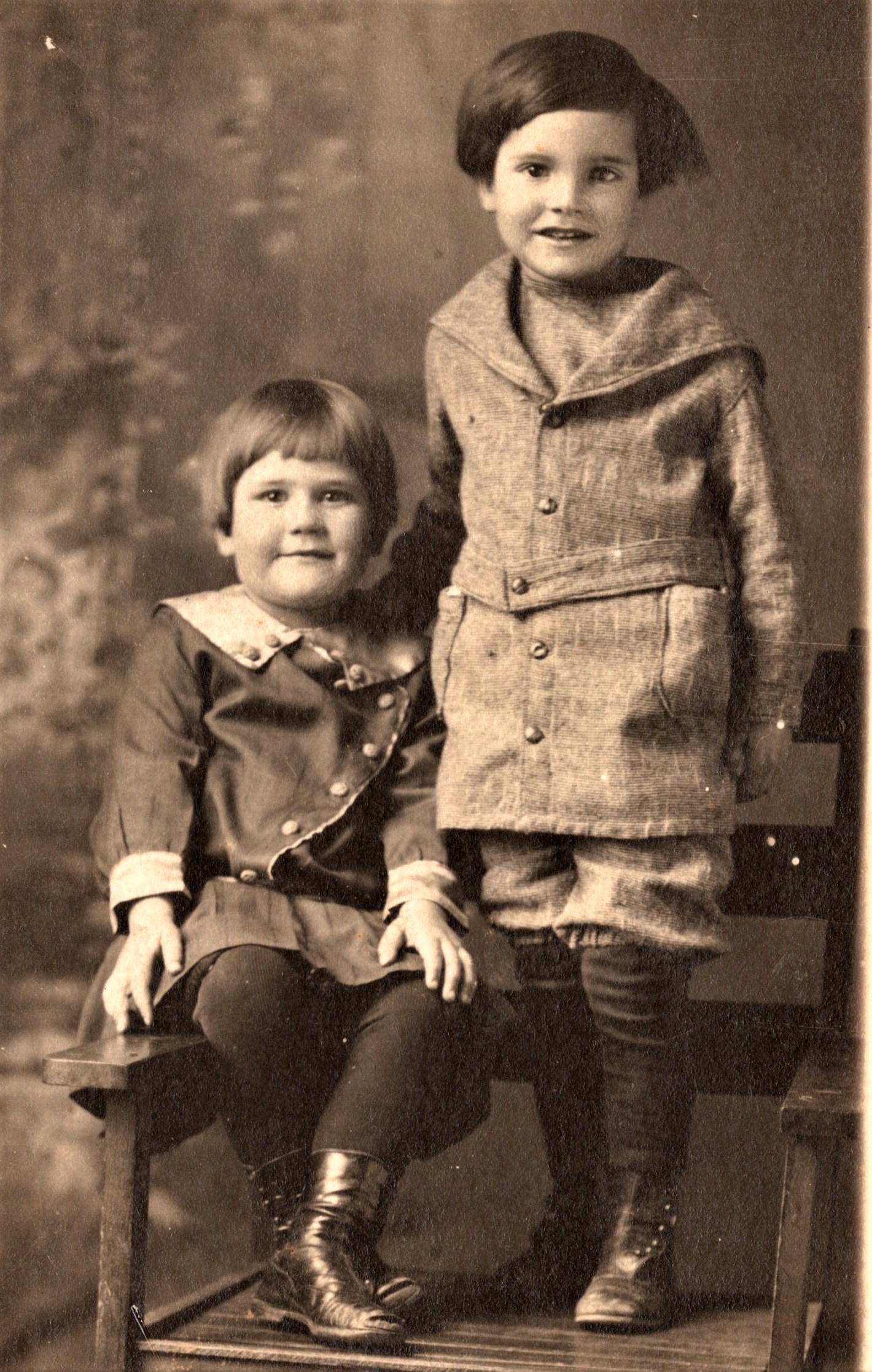
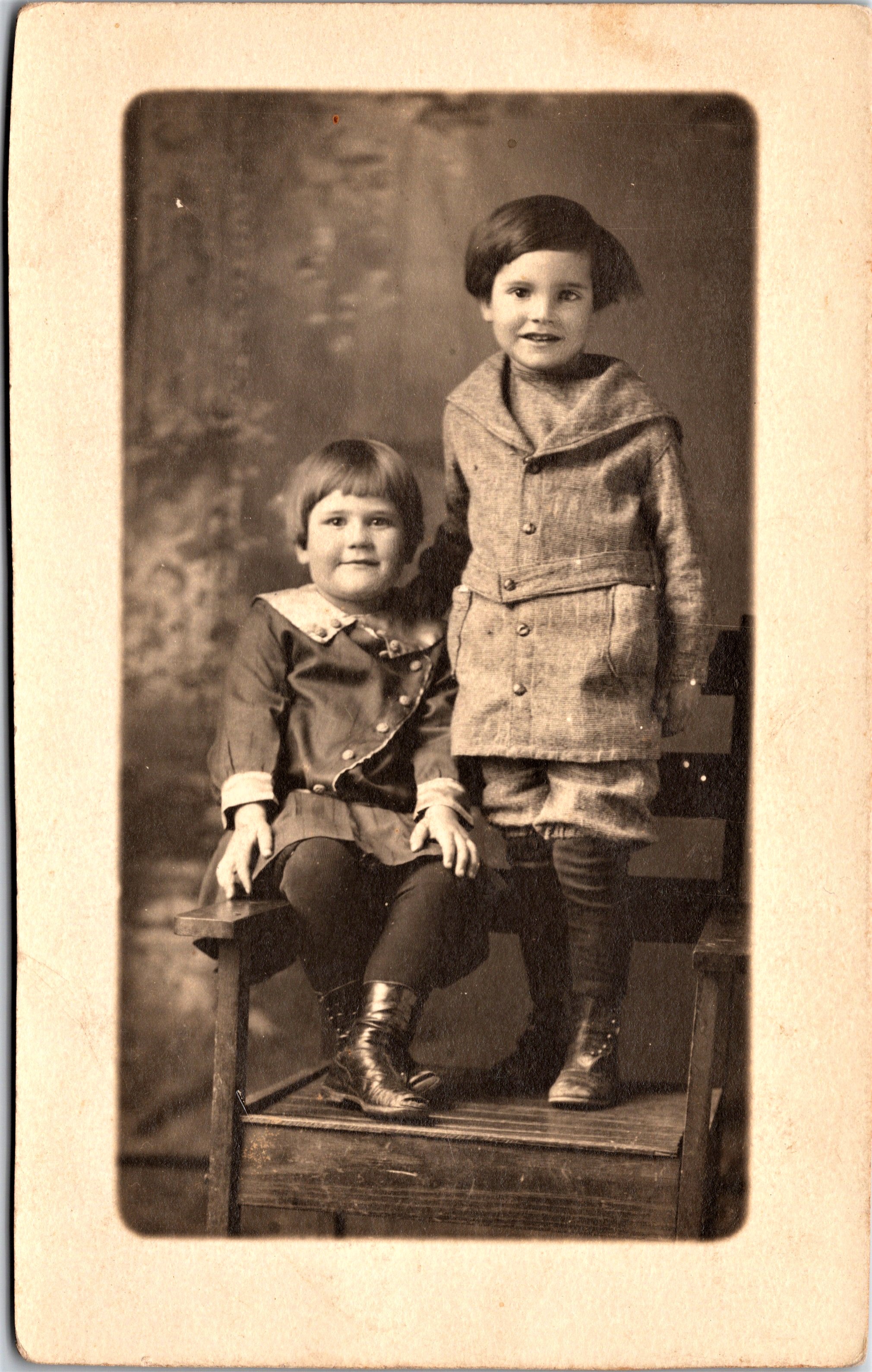
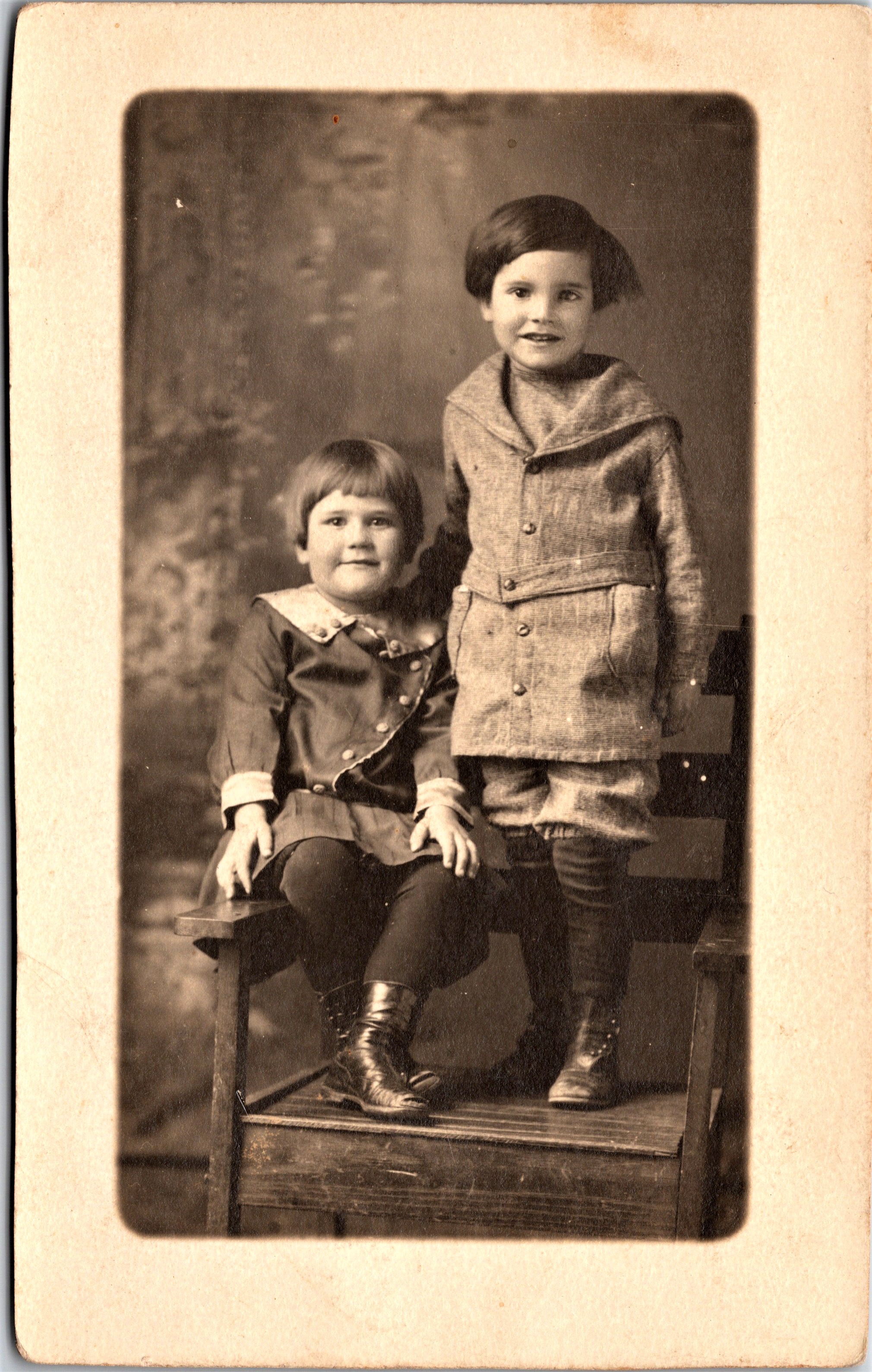
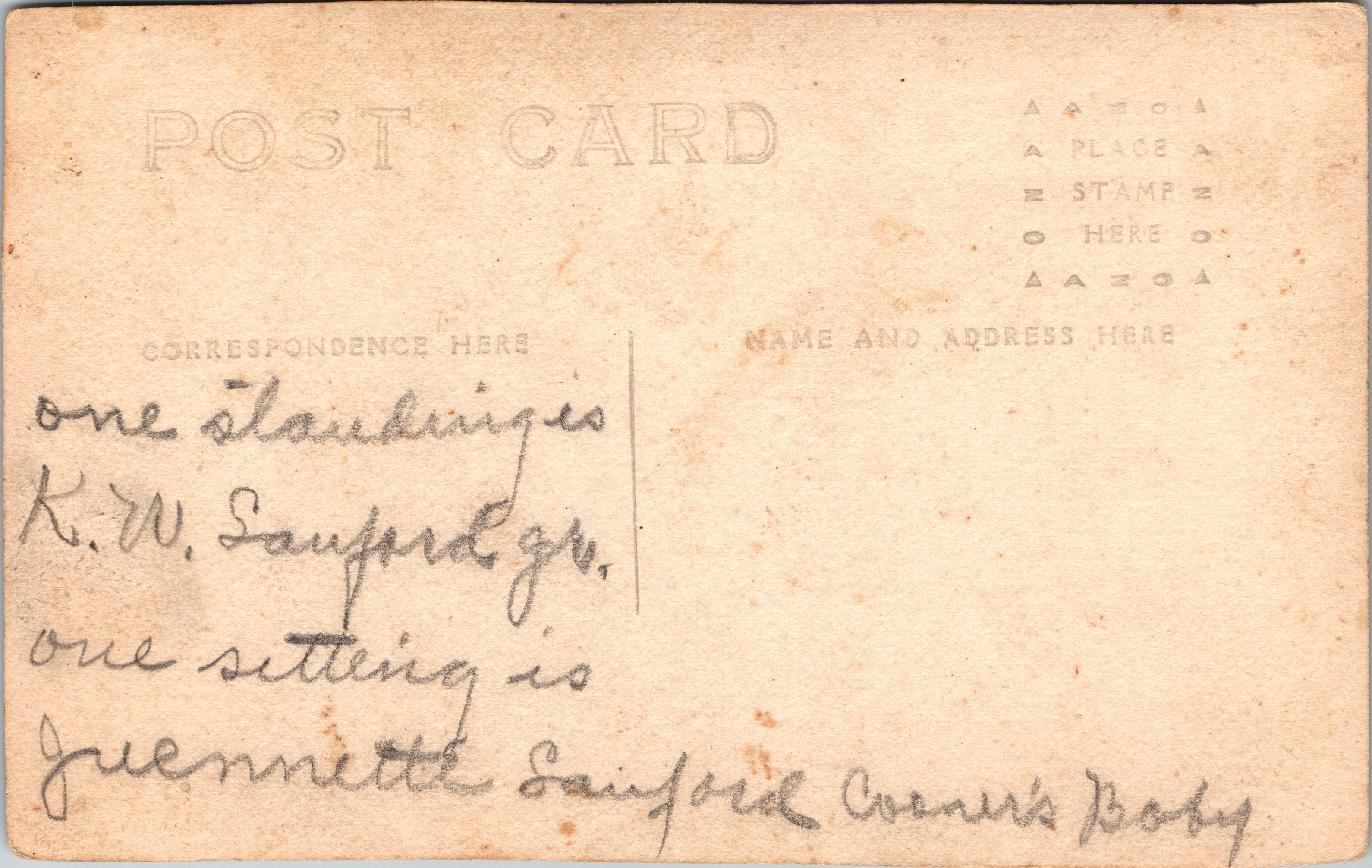
This vintage real photo postcard features two adorable siblings. Someone was kind enough to write their names on the reverse of the card. They inscribed the card many years ago. The AZO stamp box reveals that this postcard dates back to sometime between 1904 and 1918. The standing child is K. W. Sanford Jr. and the sitting child in Juennnette Sanford. I obtained this postcard in the Texas Hill Country (Johnson City). There is a reasonable chance that these children were from that area. This vintage portrait postcard is in very good condition (see scans).
Buy this original Vintage Real Photo Postcard (includes shipping within the US) #3588
To purchase this item, click on the Pay with PayPal button below
$21.50
Buy this Vintage Real Photo Postcard (includes International shipping outside the US) 3588
To purchase this item, click on the Pay with PayPal button below
This vintage real photo postcard is part of a series named “Les Plus Belles Femmes de France” (The Most Beautiful Women of France). This series is about the Provinces of France, and the model for this image represents La Bearnaise. This postcard is no.26 in the series. There were a number of different series published. The Province series was one of the more popular series. The models in this series represent different French Provinces and wear traditional clothing from that particular area of the country. This postcard was published by well known photographer Alfred Noyer. The celebrated photographer supervised a large photo studio in Paris. The Noyer Studio operated from 1910 until the 1940’s. Many of his early postcards were reproductions of artworks. He also produced illustrated patriotic postcards during World War I. With the onset of the 1920’s he began producing postcards of children and women. Many of the postcards he produced of women were nudes or risque images. Some of his postcards list his name while others are simply marked “AN”. The photographer of this postcard portrait is Zanetti. This vintage postcard is in very good condition (see scans).
Buy this original Vintage Real Photo Postcard (includes shipping within the US) #3587
To purchase this item, click on the Pay with PayPal button below
$14.79
Buy this Vintage Real Photo Postcard (includes International shipping outside the US) 3587
To purchase this item, click on the Pay with PayPal button below
This vintage real photo postcard features a pretty young woman and her precious dog. The woman has a lovely smile. She appears to be in her teenage years. This real photo postcard was published by the Reutlinger studio. This postcard is quite unusual, perhaps rare, because Reutlinger seldom employs dogs in his photos. In the message written on this postcard, the writer sends her happiness, or regards to the addressee. SOLD
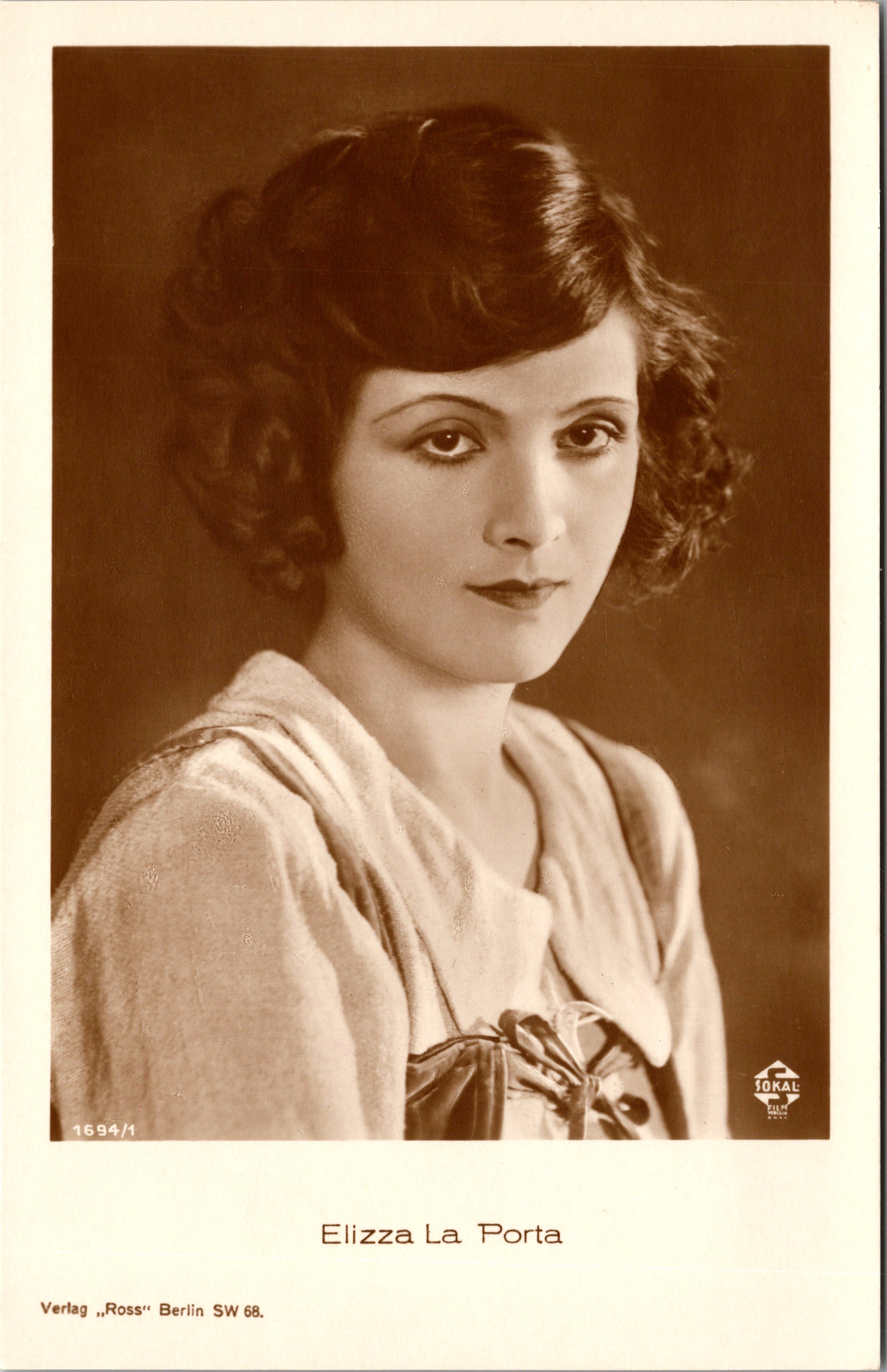
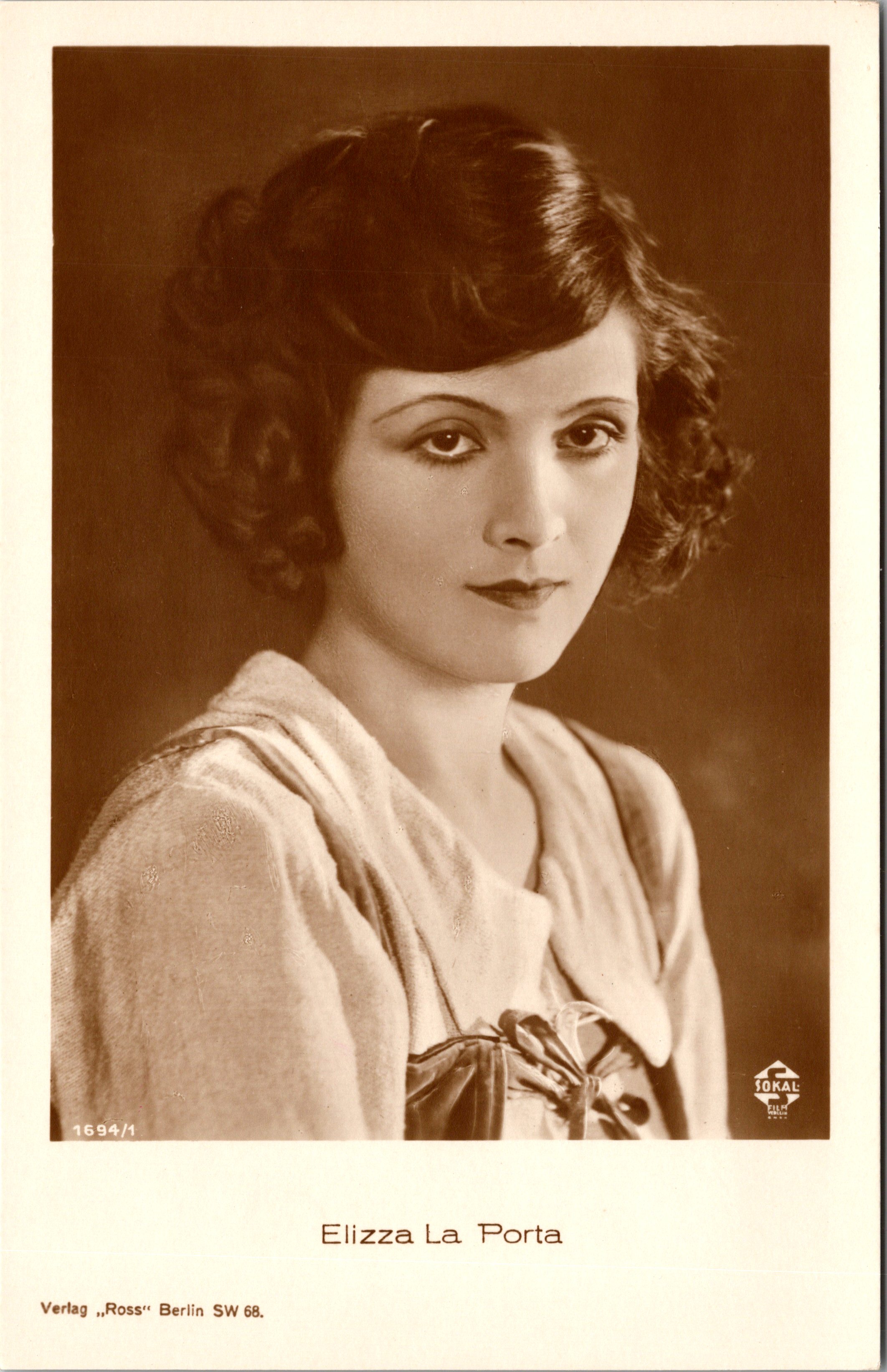
This vintage real photo postcard features Romanian born film actress, Elizza La Porta (1902-1997). She appeared in a number of German silent films between 1926 and 1930. The IMDb credits he with 19 film appearances. Some of her films had racy titles. She performed in “The Bordellos of Algiers” (1927), as well as “The Vice of Humanity” (1927). La Porta also appeared in a social commentary type film entitled “The Right of the Unborn” (1929). This silent film dealt with the issue of abortion and took a generally anti-abortion stance. La Porta retired from the film business with the advent of sound film. This vintage postcard was published in 1927 by Ross Verlag (Berlin, Germany). The card is part of a series (no.1694/1). The front of the postcard includes a logo advertising Sokal Films. Harry Sokal (1898-1979) was Romanian born and became a German film producer. He produced 22 films between 1926 and 1977. This portrait of Elizza La Porta was taken when she appeared in Sokal’s film, “The Student of Prague” (1926). This postcard is in very good condition (see scans).
Buy this original Vintage Real Photo Postcard (includes shipping within the US) #3586
To purchase this item, click on the Pay with PayPal button below
$15.50
Buy this Vintage Real Photo Postcard (includes International shipping outside the US) 3586
To purchase this item, click on the Pay with PayPal button below
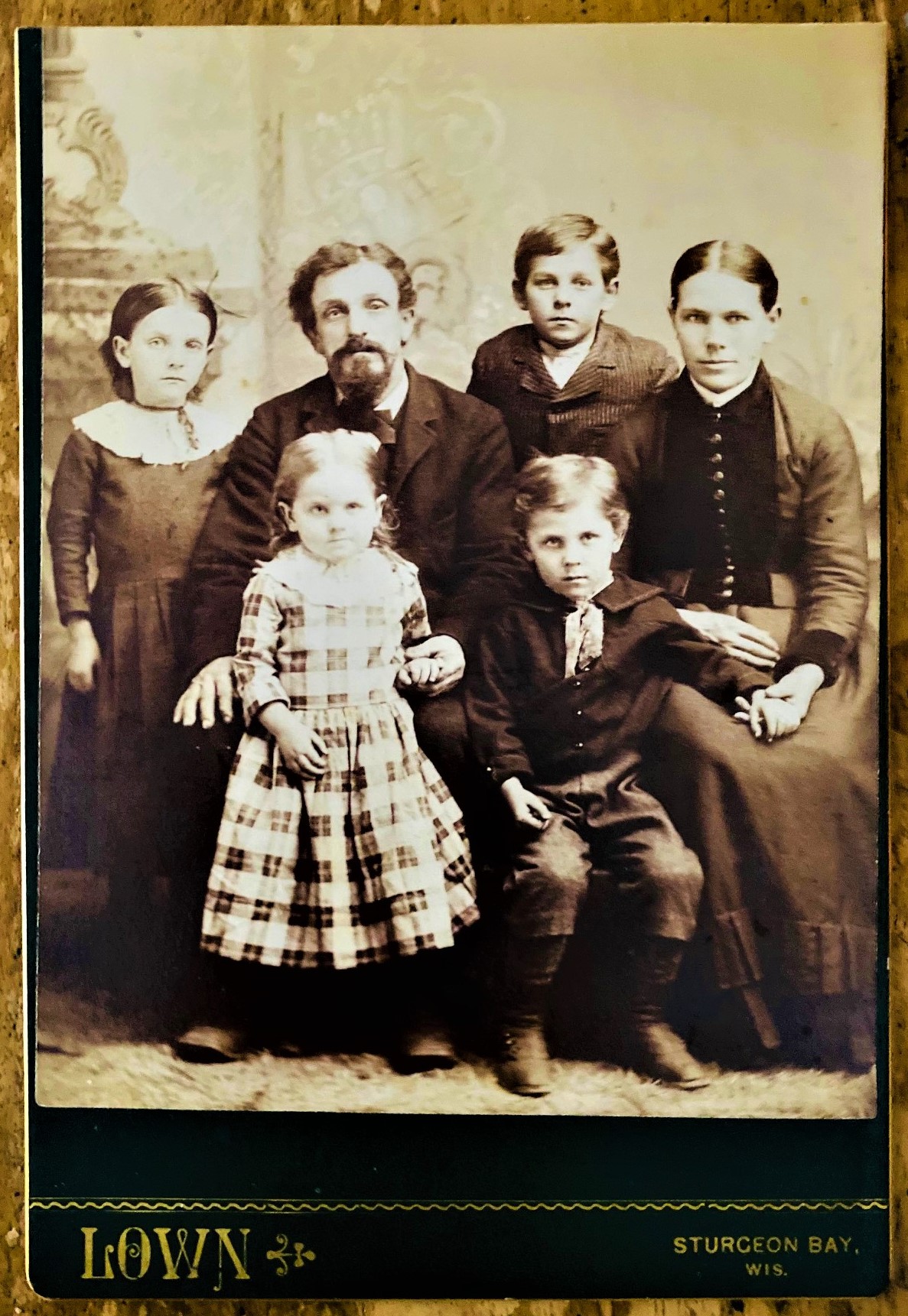
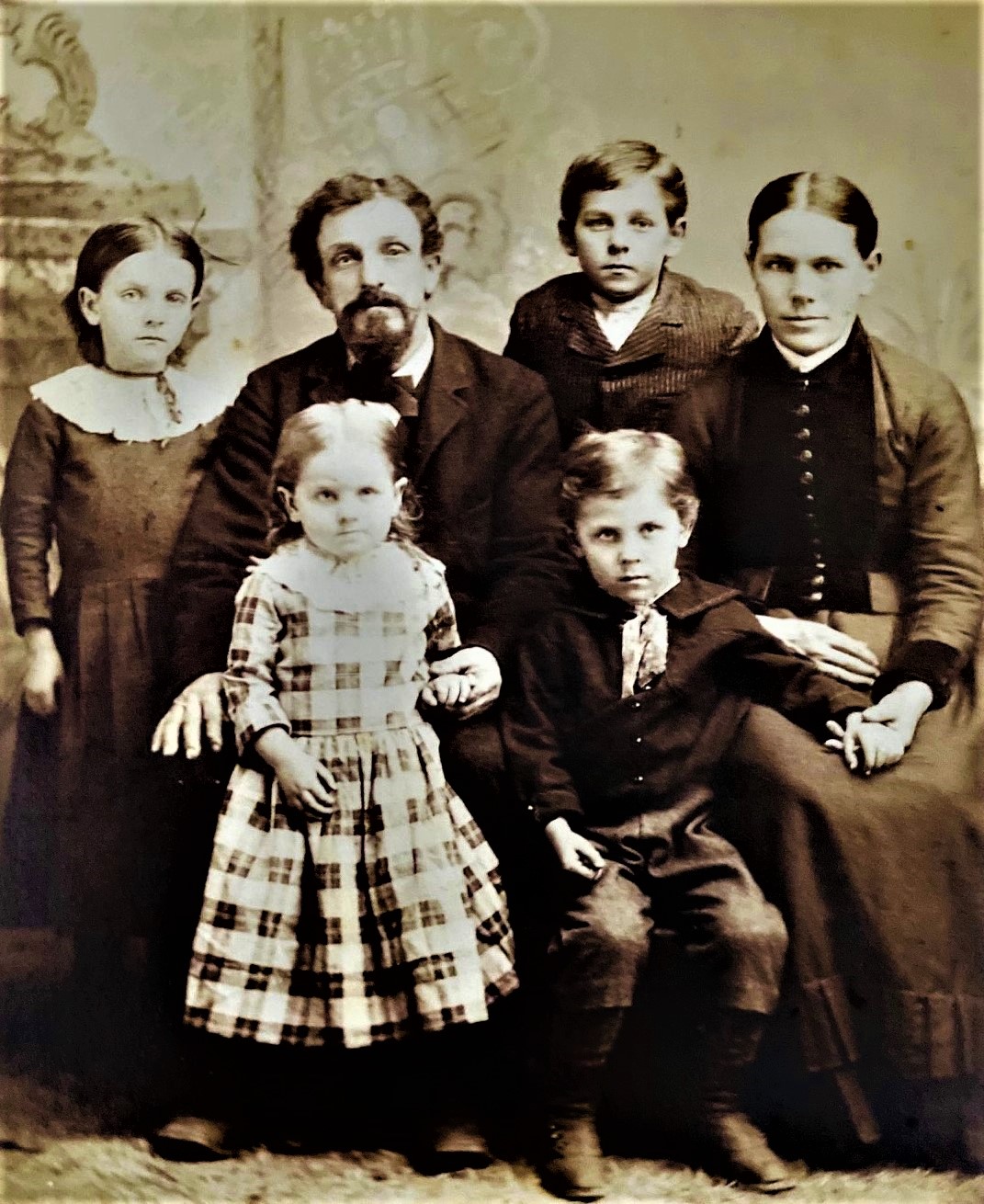
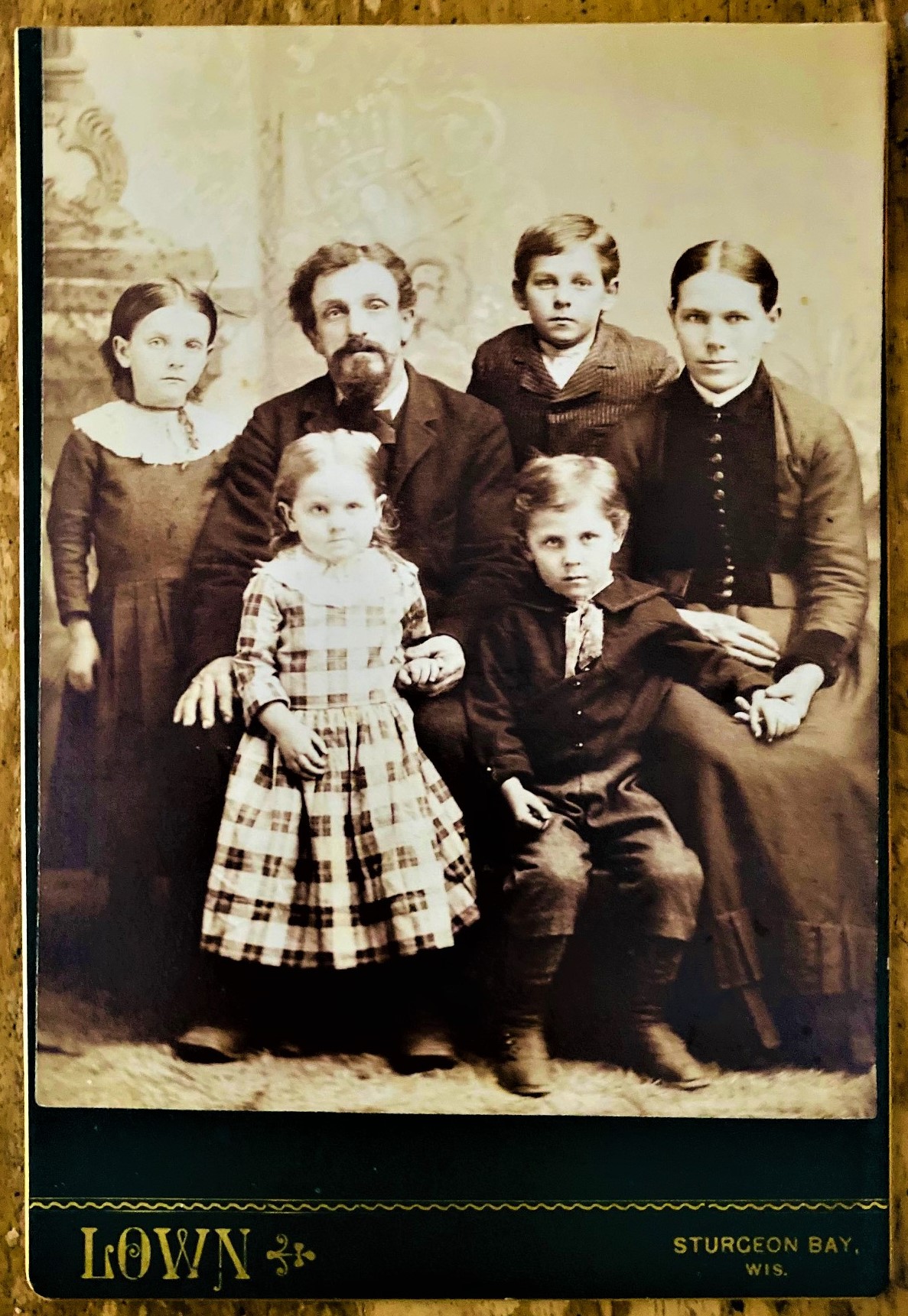
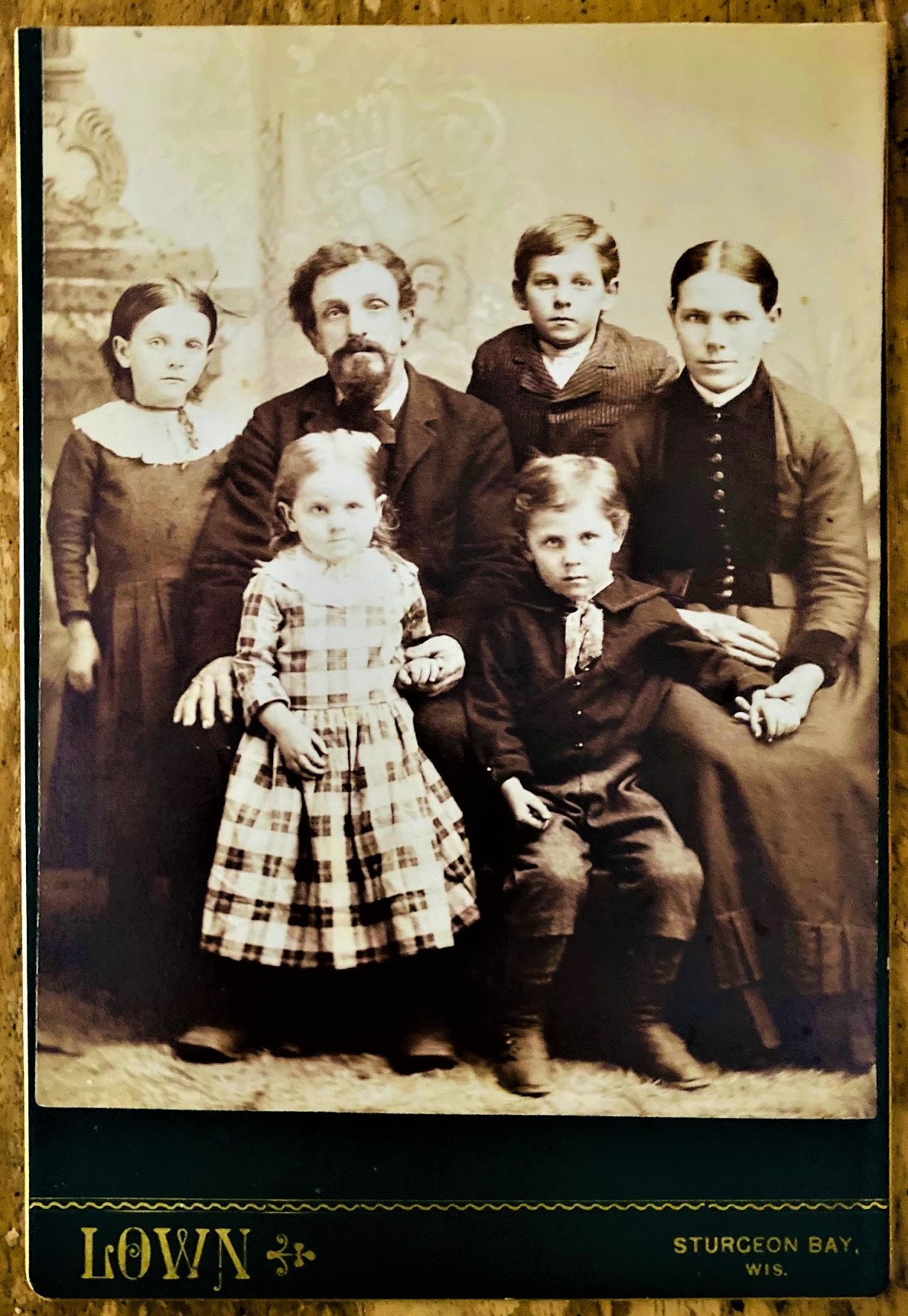
A mother and father and their four children sit for a portrait at a studio in Sturgeon Bay, Wisconsin. The father’s facial expression could be described as “disinterested”. The photographer is Charles H. Lown who operated in Sturgeon Bay between 1887 and 1896. He also may have been there prior to or after these dates. His studio was located on Cedar Street. This cabinet card photograph may have been trimmed. Overall, this photo is in very good condition (see scans).
Buy this Cabinet Card (includes shipping within the US) #3585
To purchase this item, click on the Pay with PayPal button below
$25.50
Buy this Cabinet Card Photograph (includes International shipping outside the US) 3585
To purchase this item, click on the Pay with PayPal button below
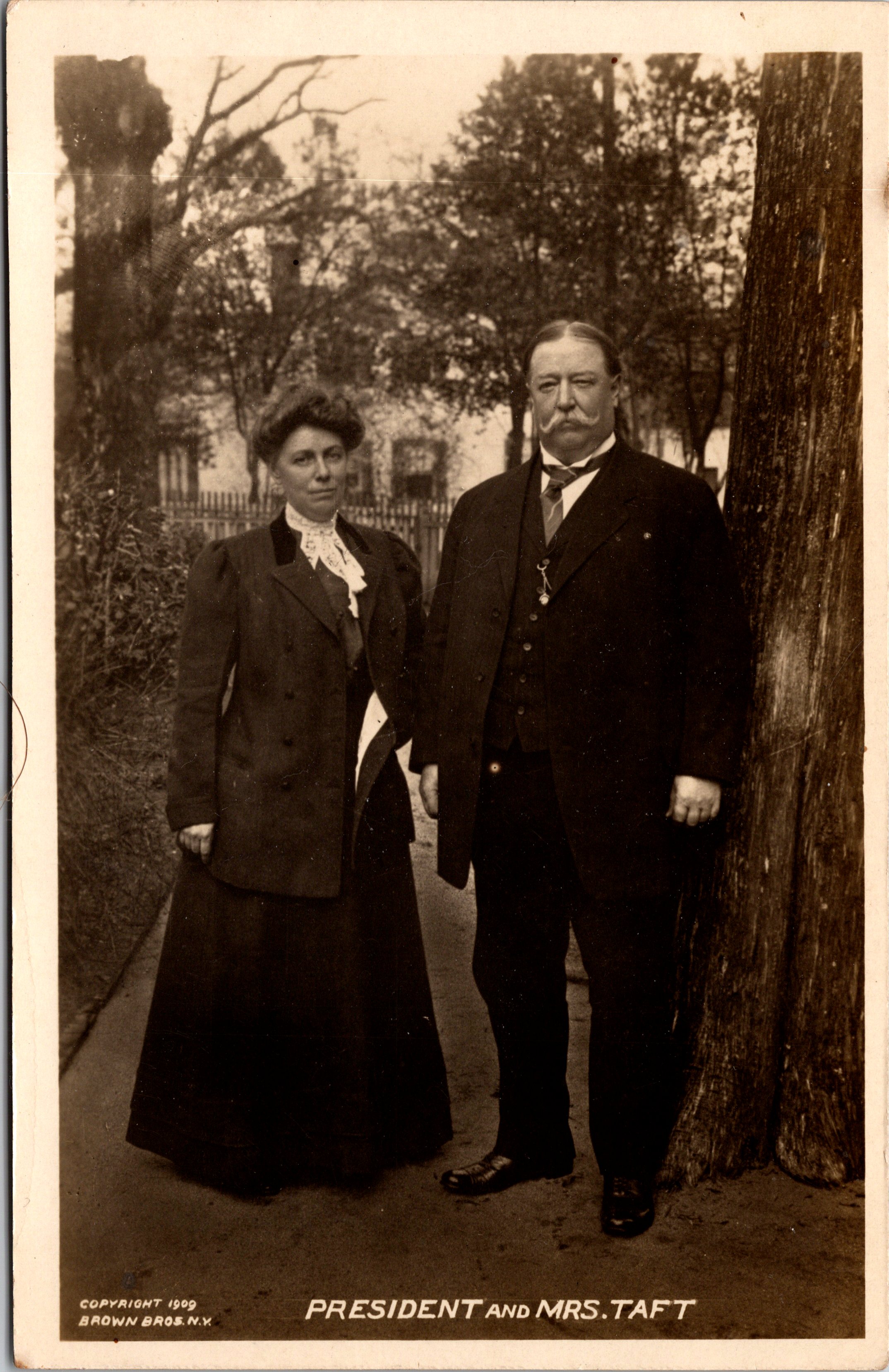
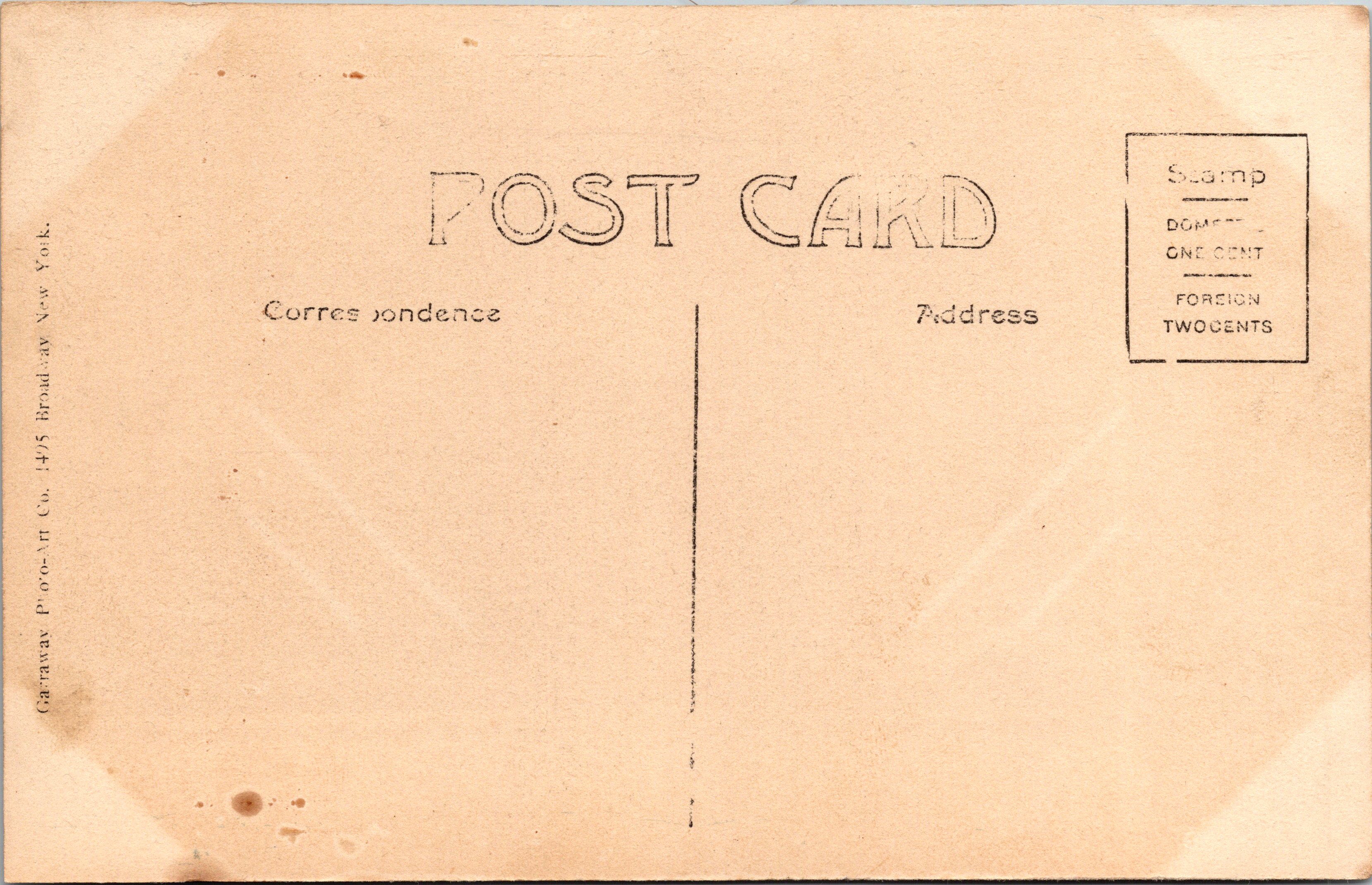
This vintage real photo postcard features a portrait of President William Howard Taft (1857-1930) and his wife, Helen (Nellie) Taft (1861-1943). Taft was the 27th president of the United States. He served from 1909 to 1913. He also served as chief justice of the United States Supreme Court. The Tafts married in 1886 and their marriage lasted nearly 44 years. The pair had three children, one of whom, became a U.S. Senator. This portrait photo was copyrighted by Brown Brothers in 1909. Brown Brothers, located in New York City, was the world’s first stock photo agency. It was founded in 1904. The publisher of this postcard was Garraway Photo-Art Company; a firm that operated in New York City. The corners on the reverse of this postcard reveal that the card formerly resided in a postcard album. Overall, this vintage postcard is in very good condition (see scans).
Buy this Vintage Real Photo Postcard (includes shipping within the US) #3584
To purchase this item, click on the Pay with PayPal button below
$31.50
Buy this Vintage Real Photo Postcard (includes International shipping outside the US) 3584
To purchase this item, click on the Pay with PayPal button below
This vintage real postcard features a portrait of a woman deep in thought. She is wearing a bracelet, ring, necklace, and a hair ornament. This photograph was taken by W. S. Mynster. The card has an AZO stamp box indicating that it dates back to between 1904 and 1918. This postcard is in very good condition (see scans).
Buy this Vintage Real Photo Postcard (includes shipping within the US) #3581
To purchase this item, click on the Pay with PayPal button below
$15.49
Buy this Vintage Real Photo Postcard (includes International shipping outside the US) 3581
To purchase this item, click on the Pay with PayPal button below
This vintage real photo postcard features a portrait of a young girl standing in front of a painted backdrop of a water mill. The artwork is very detailed. The child in this image is wearing an adorable hat, a bracelet, and Mary Jane shoes. The card has an AZO stamp box indicating it dates back to sometime between 1904 and 1918. The postcard has an almost undetectable pinhole located in the leaves above the child’s head. Overall, the postcard is in good condition (see scans). SOLD