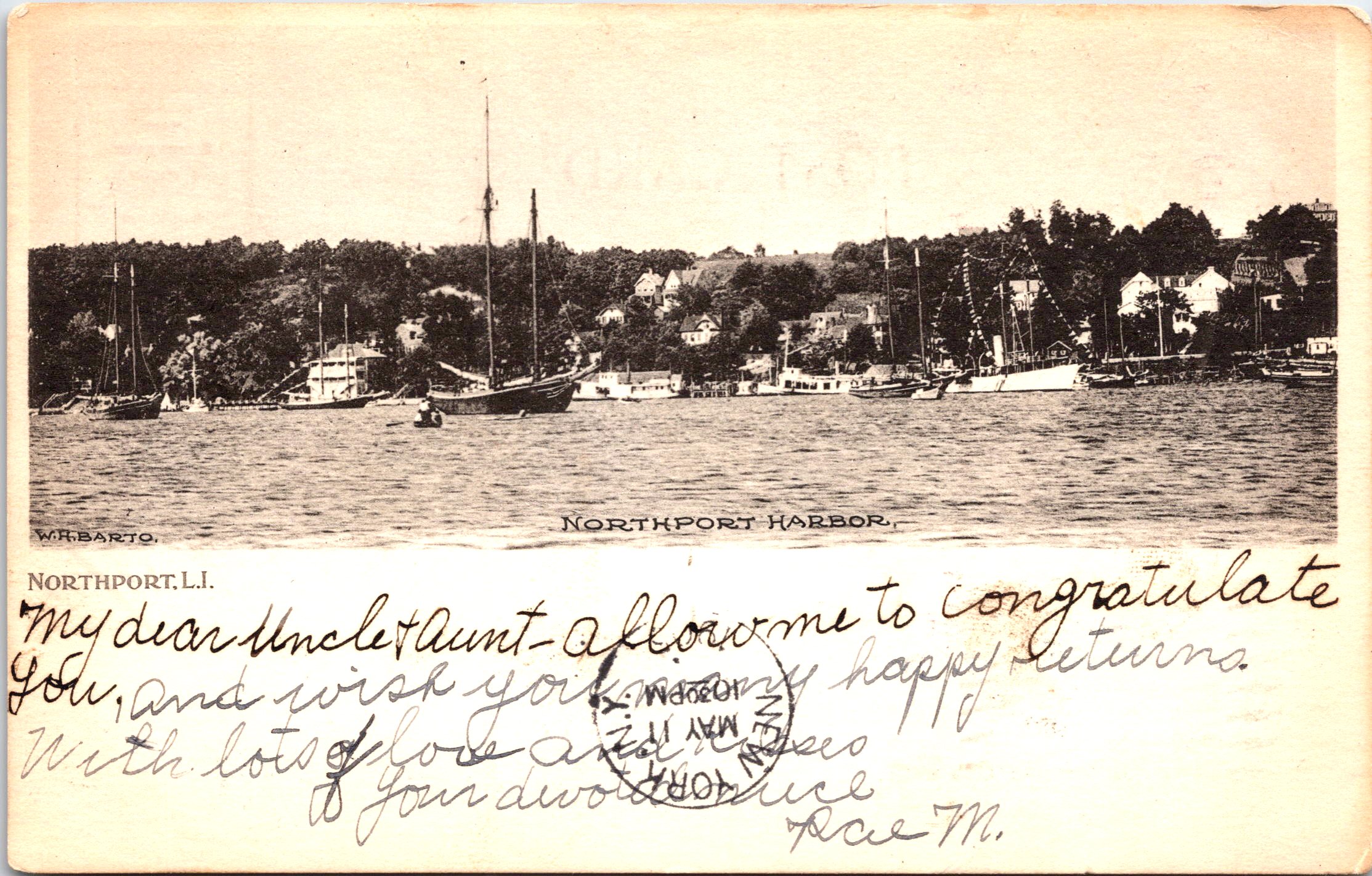
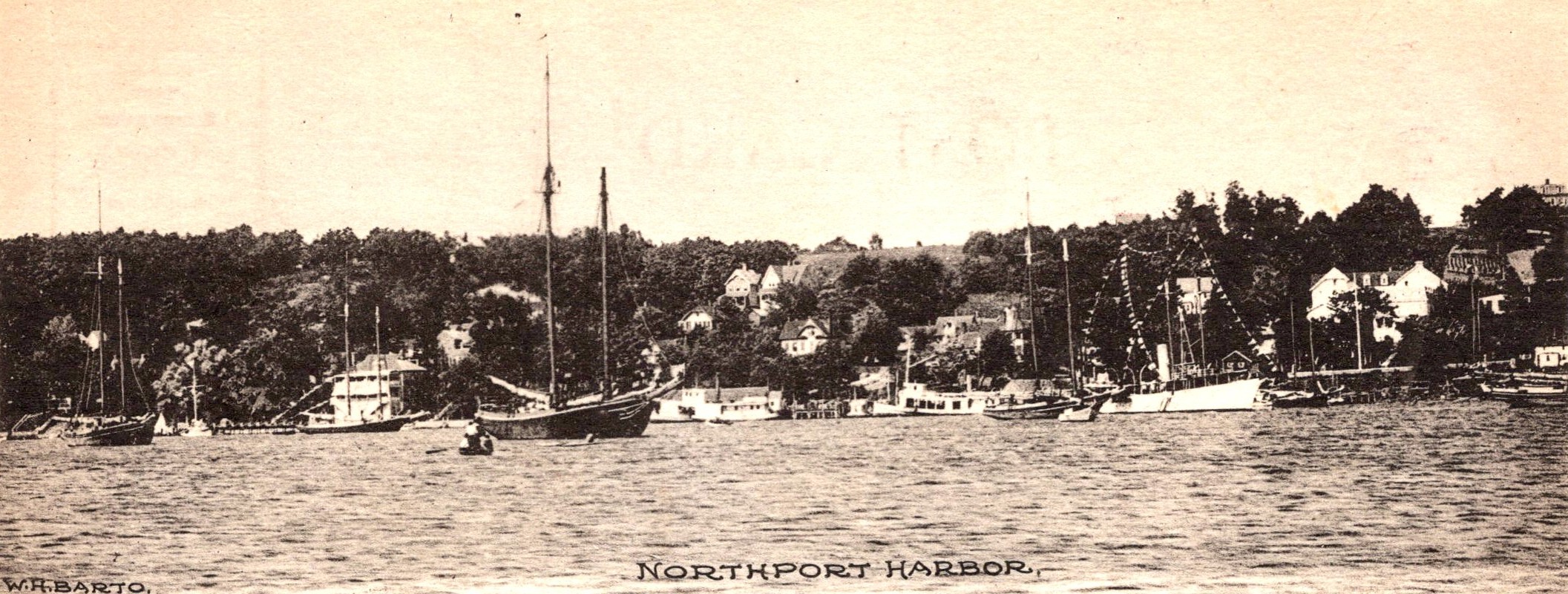
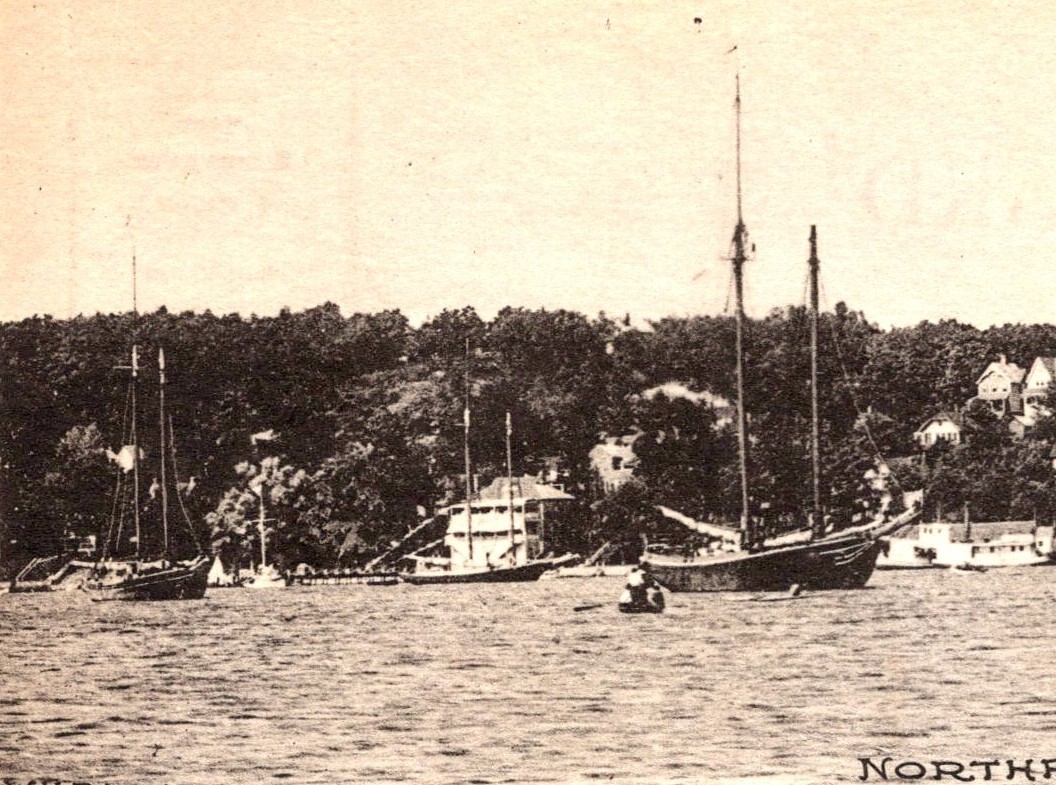
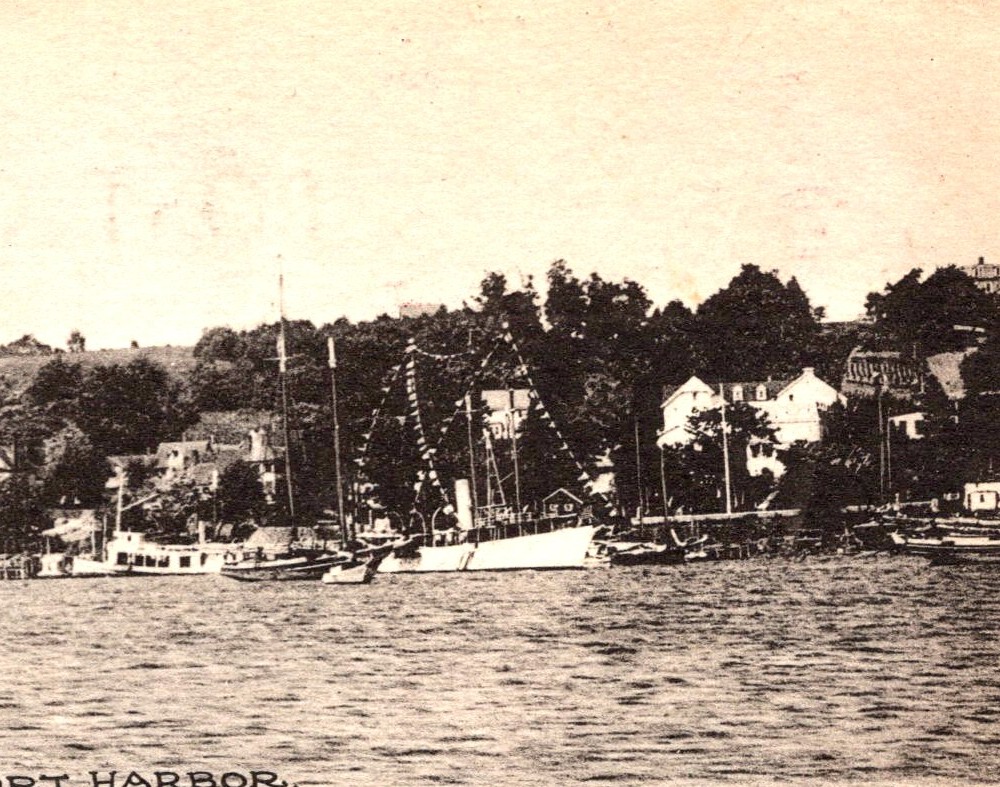
This vintage real photo postcard features a pretty view of Northport Harbor. Northport is located on the Northshore of Long Island and is a community in the township of Huntington. This nautical scene takes place on Long Island Sound. Note the houses at the water’s edge, which include the local yacht club, as well as the houses built on the hills of the village. Also note the sailboats and the rowboat which likely served as a launch. Historically, Northport was a town and port that was involved in the whaling industry. Many of the houses of the ship captains that lived by the water in the 1800’s, still are housing many of the town’s residents today. They are beautiful and high end residences. This postcard is undivided and was postmarked in 1905. The photograph seen on this card was taken by W. H. Barto. SOLD
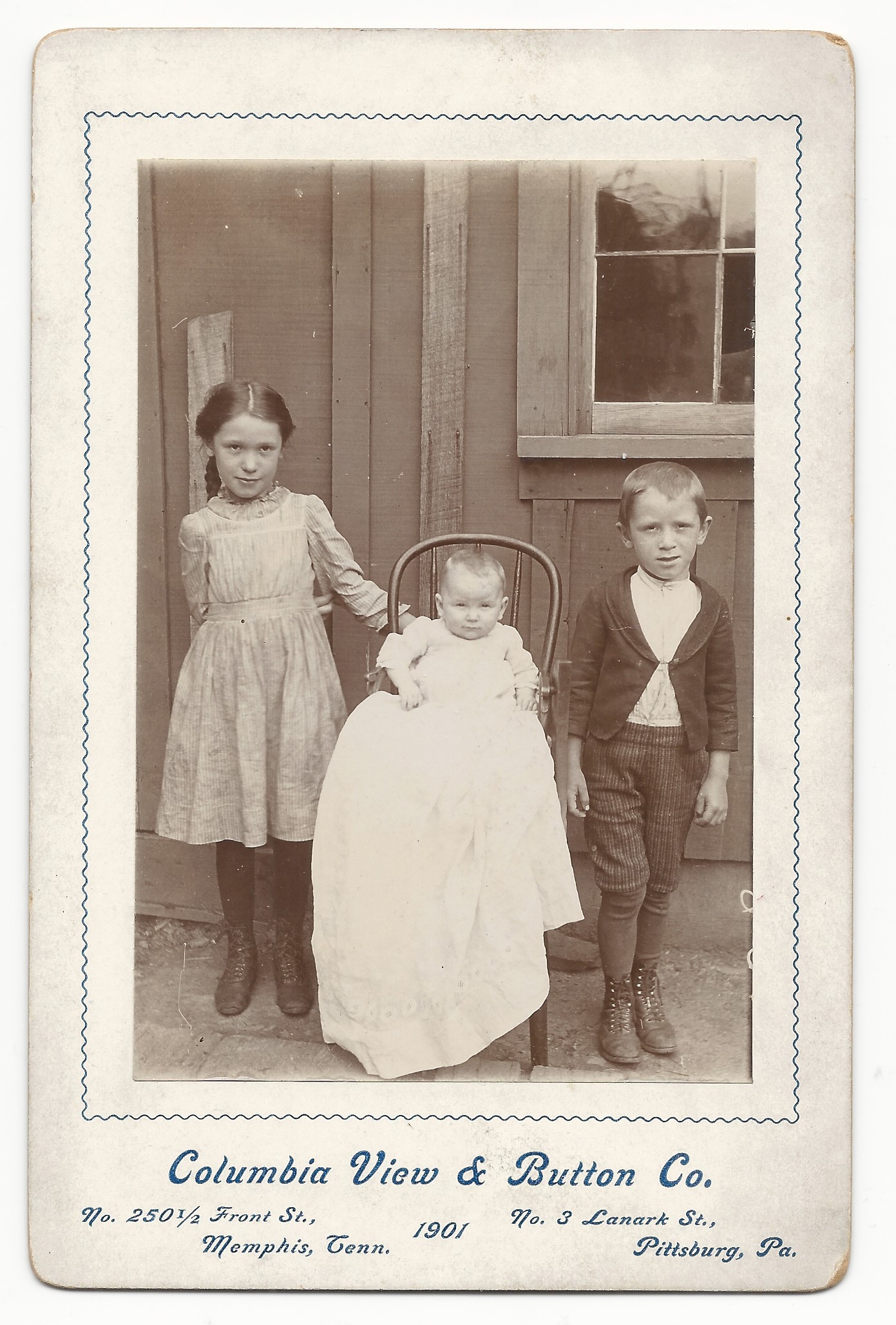
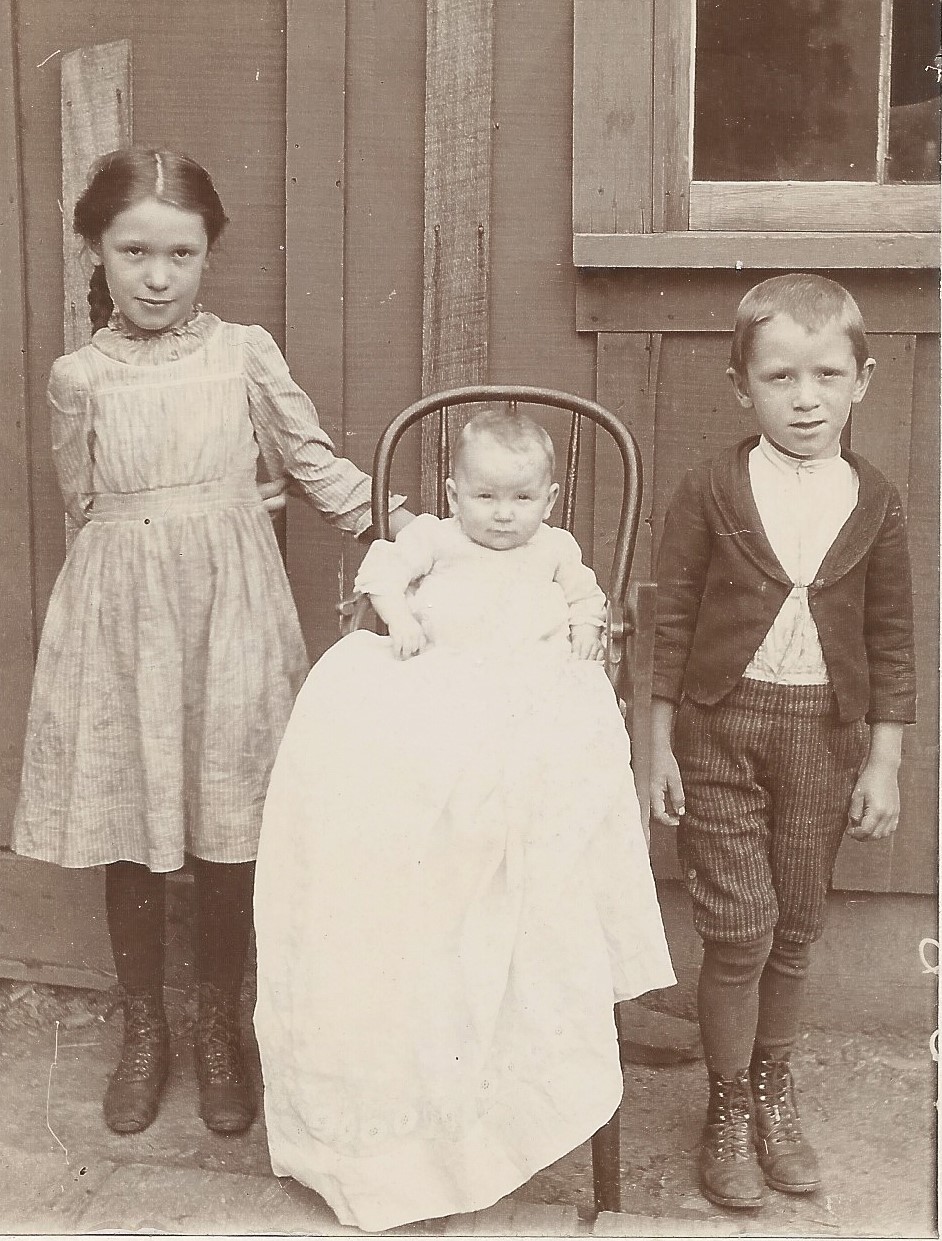
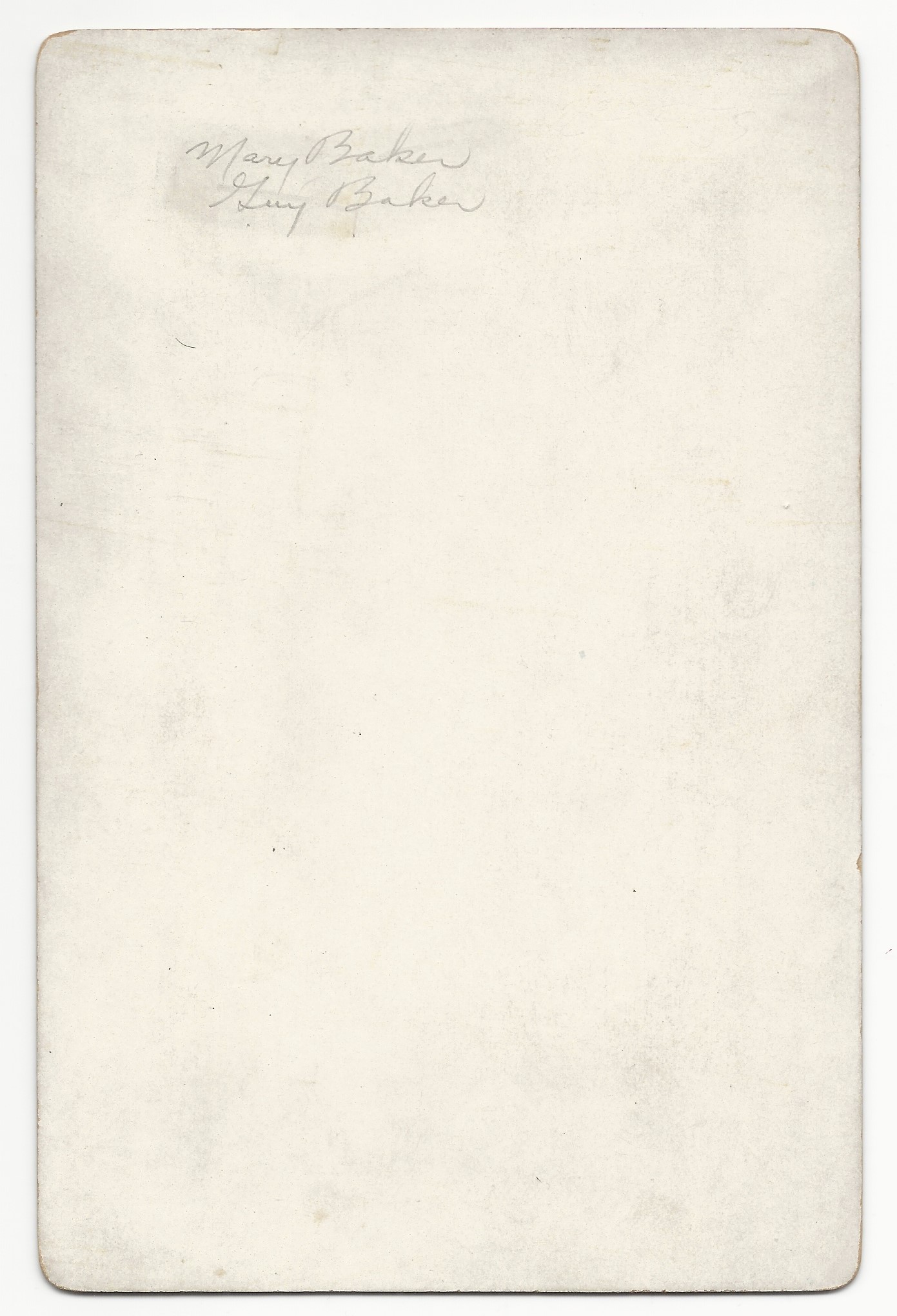
Three young children pose together for a cabinet card portrait by the Columbia View & Button Company of Memphis, Tennessee and Pittsburgh, Pennsylvania. This photograph precipitates a number of questions. Was this photograph taken outdoors, or is this an in-studio portrait? Was this image produced in Memphis, or, in Pittsburgh? Finally, why is the photographic studio called a “View & Button Company”? Lets attempt to answer the previous questions. It is not clear if this is an indoor, or outdoor photograph; nor is it apparent in which of the studios, the image was produced. However, one source reports that the Pittsburgh studio existed between circa 1893 and 1900. This cabinet card is marked on its front as being photographed in 1901. Does the 1901 date preclude the possibility that the image comes from the Pittsburgh studio? The answer is a resounding no. The date on the card was preprinted and the source is not certain the Pittsburgh studio definitely closed in the exact year 1900. The third question concerns the reason the name of the studio includes the terms “View & Button” . The likely answer is that the studio originally produced stereoviews and photograph buttons. The buttons were generally portraits and varied in size. They could be worn or displayed on a piece of furniture or shelf. Large photographic buttons were most popular between 1900 and 1930. The smaller pinback buttons were popular beginning the 1890’s. There is some other information that may prove to be important in learning more about the image. On the reverse of the cabinet card, there are two names written. These names likely identify two of the subjects in the photograph. The two subjects names are Mary Baker and Guy Baker. Searching census data with a common name like”Baker” was an exercise in frustration, in regard to identifying these probable siblings. After viewing this cabinet card, one notes that the three children in this photograph are not fashionably nor expensively dressed. They are different from most of the children seen in cabinet cards. The majority of children tend to wear their sunday best, which is generally much nicer than these children’s wardrobe. One surmises that these children are not from an affluent family. This cabinet card is in very good condition (see scans).
This Cabinet Card is available for purchase at my store, The History Peddler, for $68.48 at auction
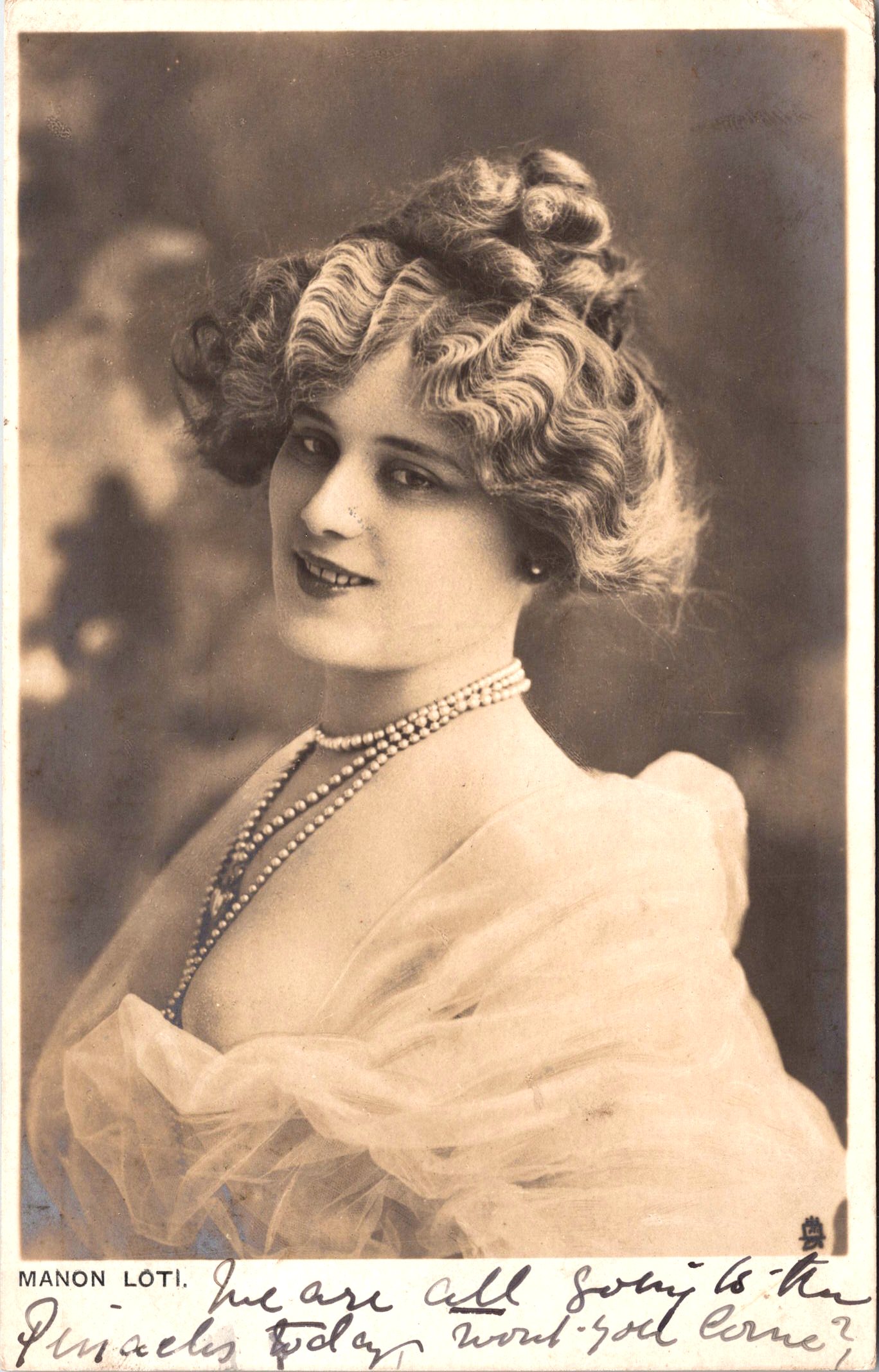
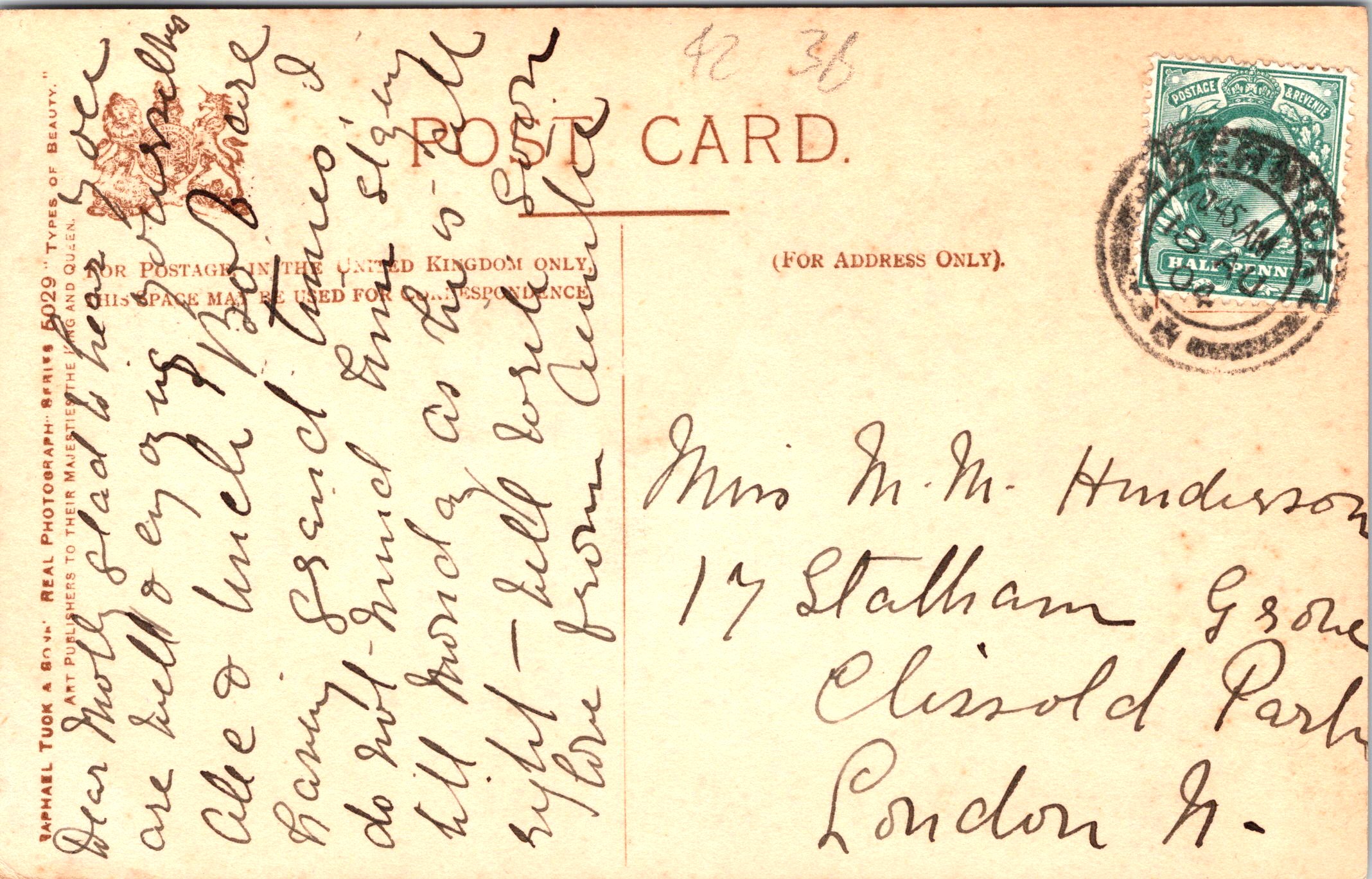
This vintage real photo postcard features Manon Loti, a beautiful performer of the Belle Epoque and a noted courtesan. At least one of her liaisons has been written about. She had a short passionate affair with the dashing and wealthy Russian nobleman, Nikolay Felixovich Yusupov. The two were “inseparable” during their affair in Paris. Nikolay’s brother, Prince Felix, described Loti as a beautiful and famous courtesan who lived in great luxury. Loti employed a dwarf as her servant and “mascot”. This postcard was published by Raphael Tuck & Son as part of the “Types of Beauty” series (5029). The postcard has a British stamp and was postmarked in 1904. SOLD
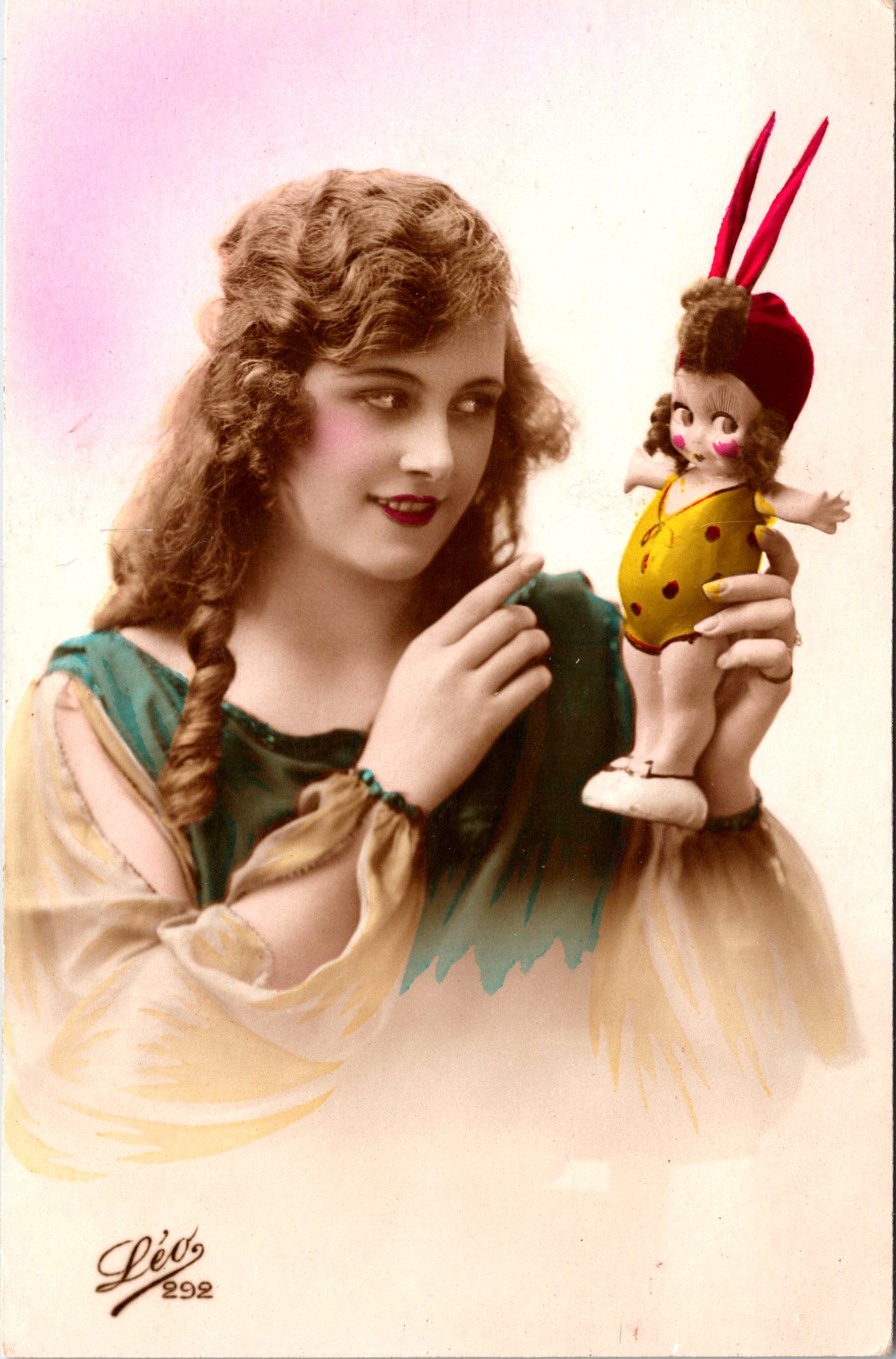
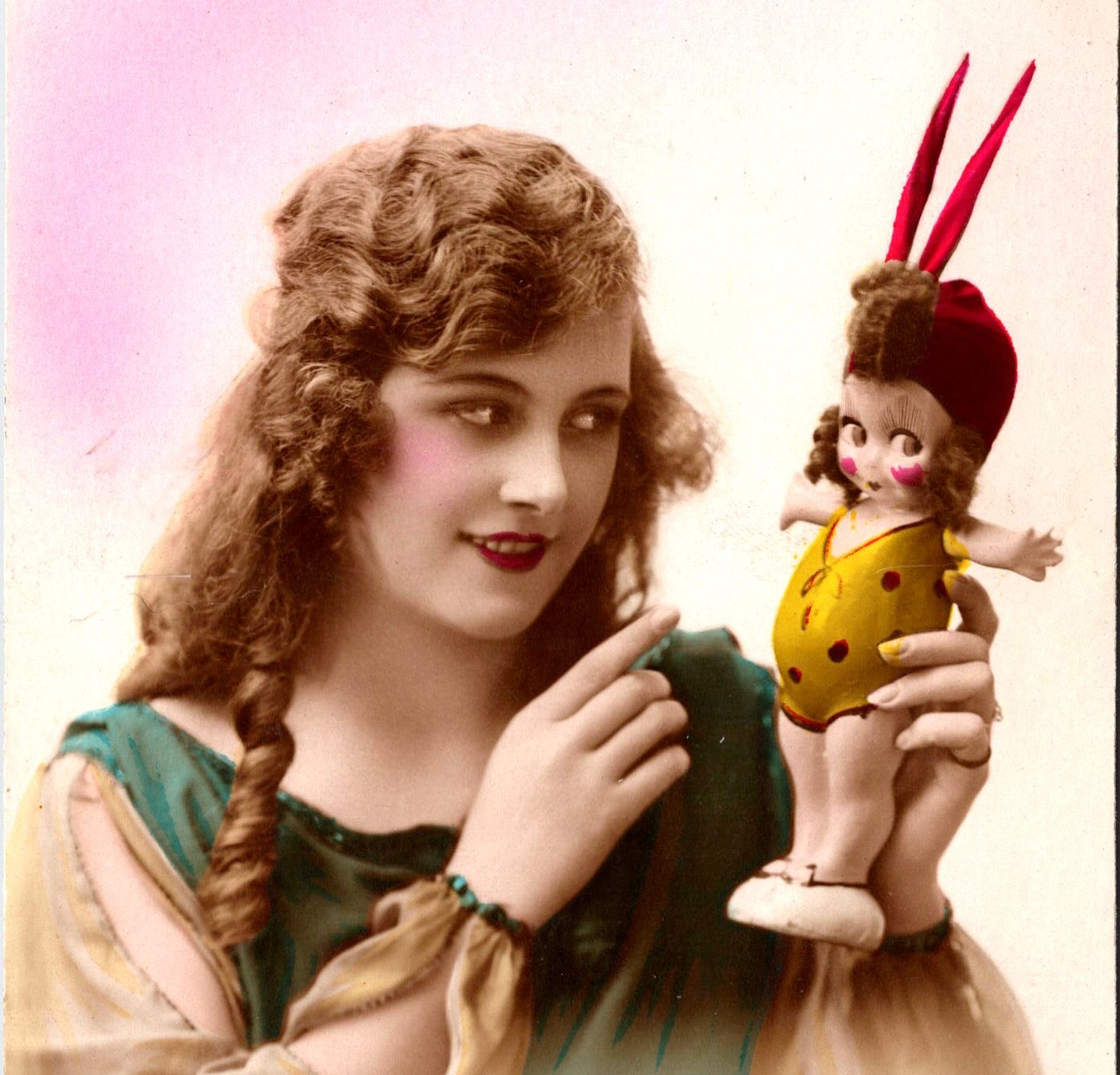
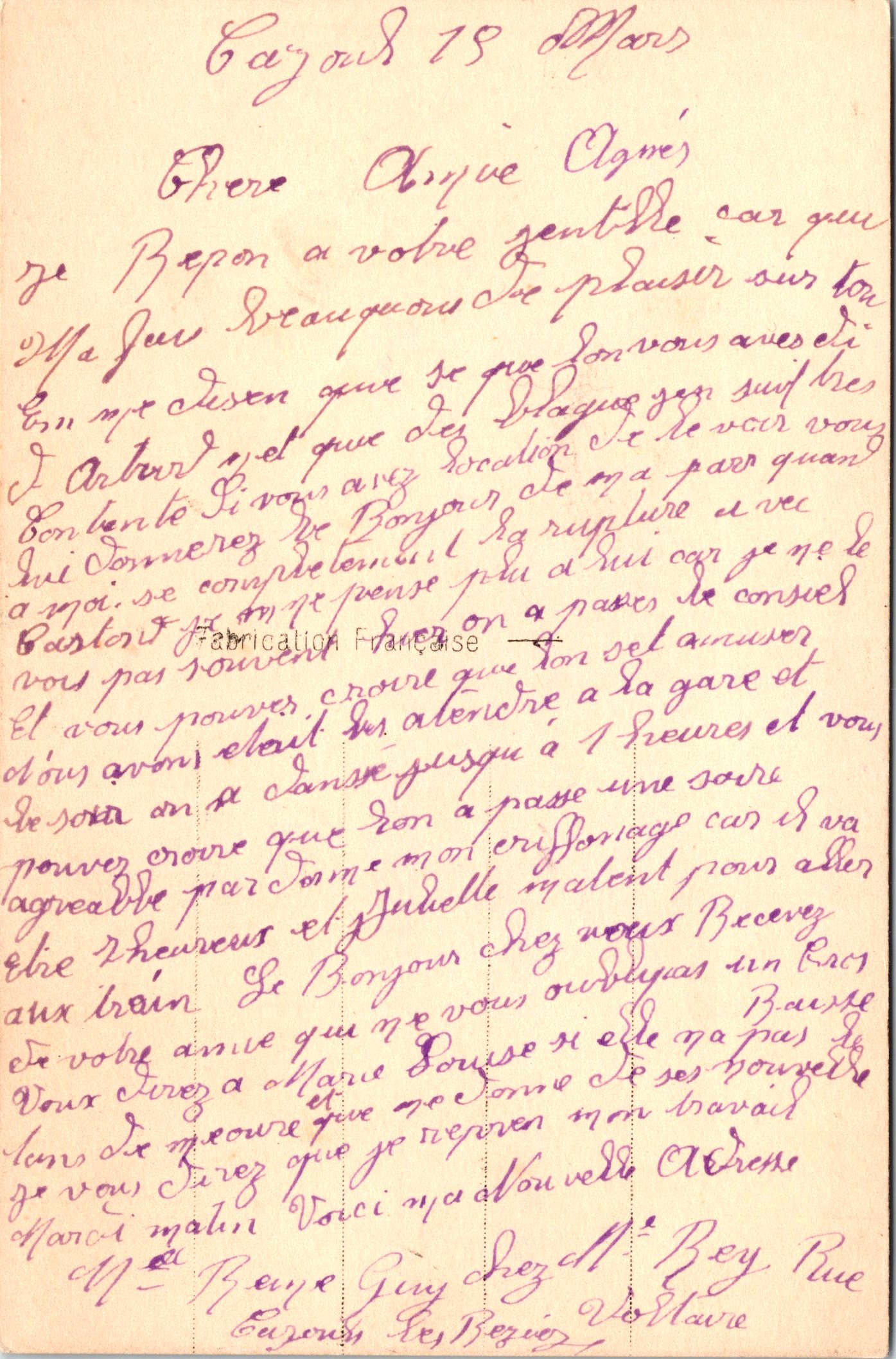
This vintage French tinted real photo postcard features a pretty young woman holding a very cute kewpie doll. Kewpie is a brand of doll which was modeled after a comic strip character created by cartoonist Rose O’Neill in 1909. The doll had a similar appearance to cupid. In 1912 the first kewpie doll appeared and it was a bisque doll. Later, the dolls were made of composition (1920’s), celluloid (1930’s and 1940’s), and later plastic kewpies made their appearance. The woman in this photo has a beautiful smile and pretty eyes. She is colorfully dressed. This postcard was published in the 1920’s by Leo as part of a series (No.292). SOLD
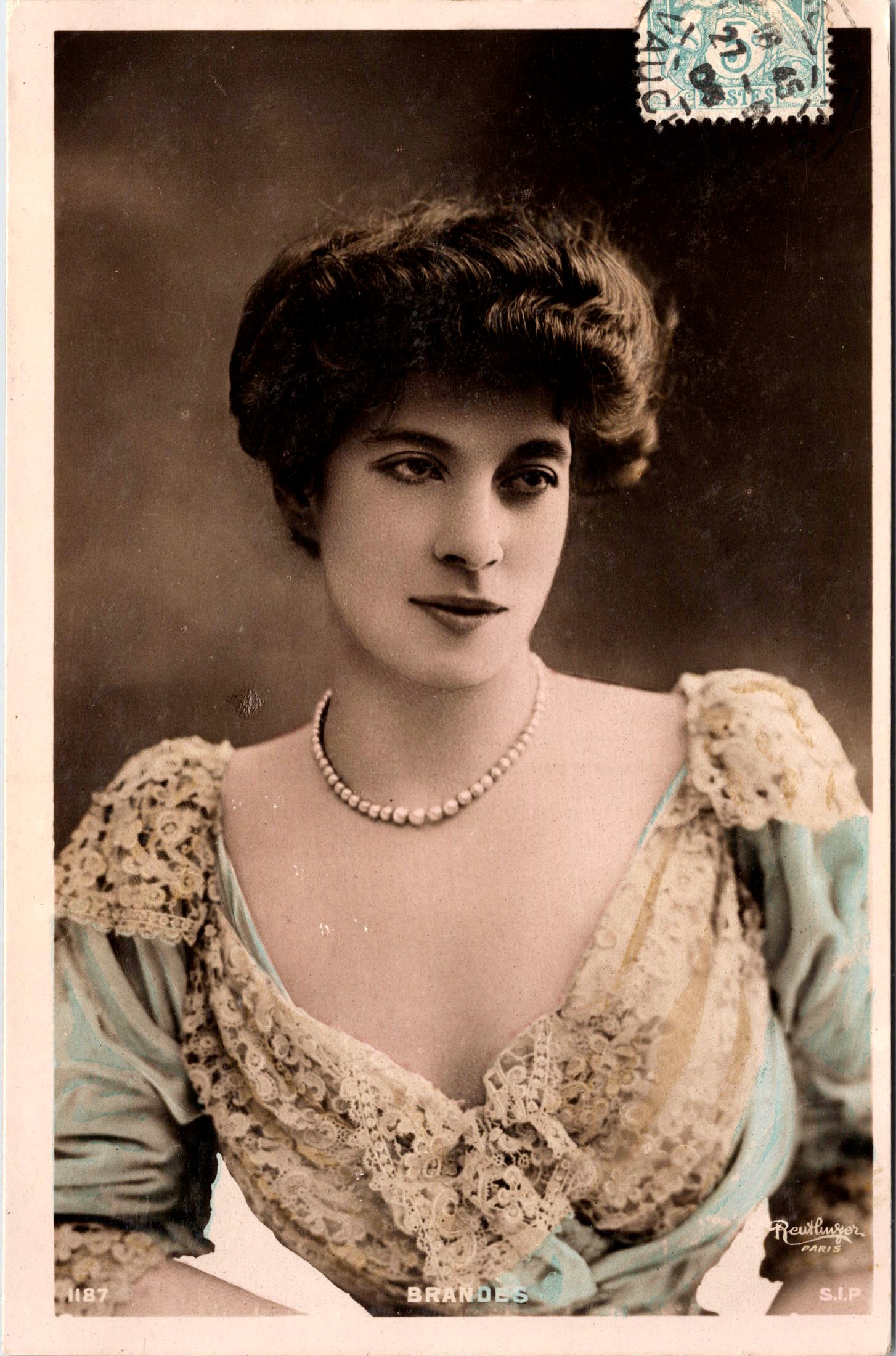
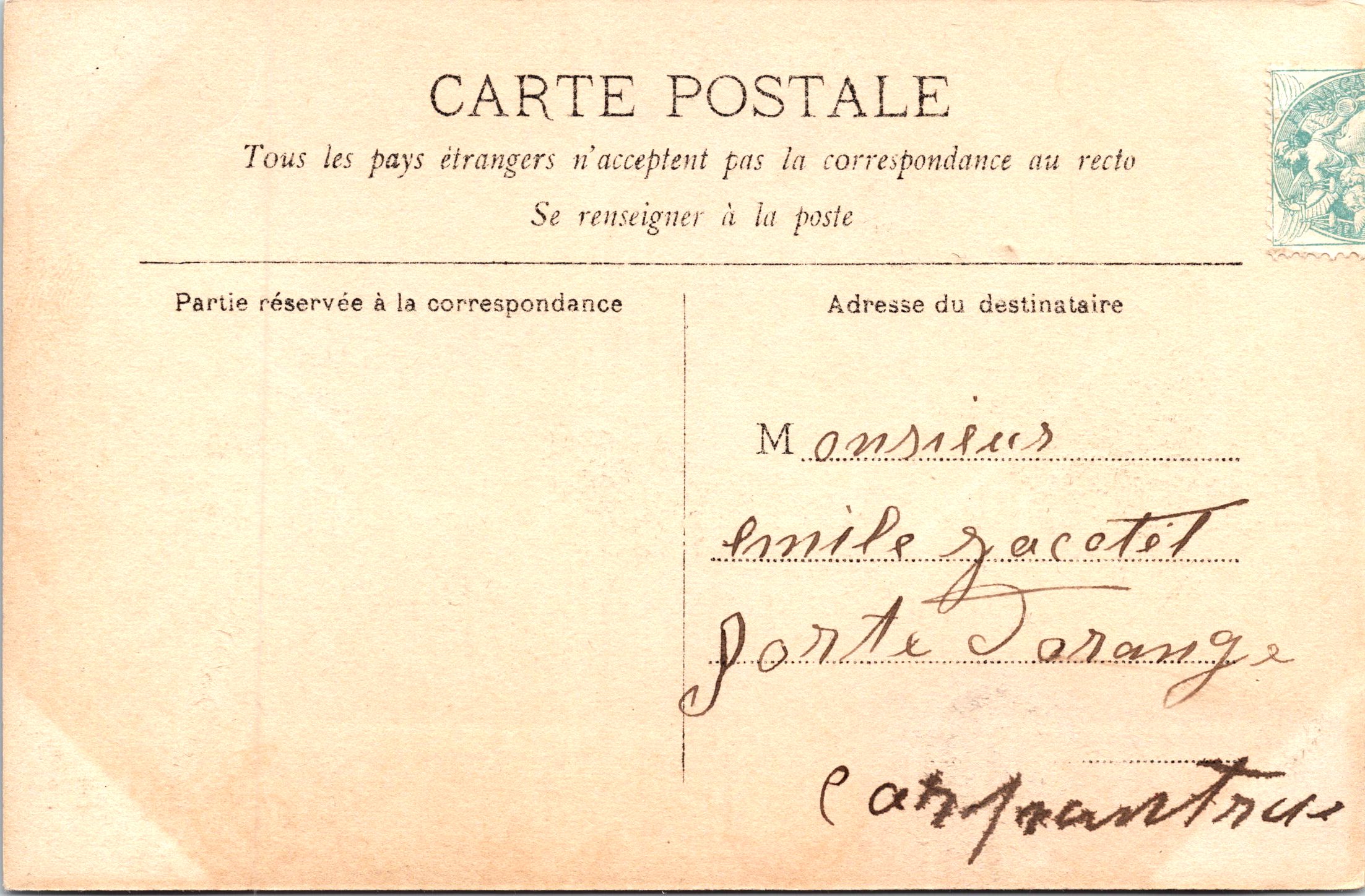
This is a striking and elegant Belle Époque hand tinted portrait postcard featuring the actress Brandes, photographed by the renowned Paris studio of Léopold-Émile Reutlinger. This beautifully composed image, issued as part of the S.I.P. (Société Industrielle de Photographie) series, bears the serial number 1187. The subject is presented in a classic Reutlinger studio style—softly lit, refined, and idealized—wearing an ornate lace bodice with delicate hand-applied tinting in pale blue and cream tones. A string of pearls and her carefully styled coiffure reinforce the fashionable aesthetic of the early 1900s. Reutlinger’s studio was widely known for producing high-quality portrait photographs of leading actresses, opera singers, and stage personalities, many of which were issued as collectible postcards during the height of the Belle Époque. The sitter is identified as Brandes, very likely Marthe Brandes (1862–1930), a French stage actress and comedienne active in Parisian theatre during the late 19th and early 20th centuries. She was a member of the Comedie-Francaise in 1896. She also played at the Theatre de la Renaissance. She often played the femme fatale. She appeared in works by notable playwrights such as Alexandre Dumas and Maurice Donnay. She was associated with the vibrant theatrical scene of Paris, frequently appearing in productions that blended drama and light comedy. As with many performers of the period, surviving biographical detail is somewhat limited, but her presence in Reutlinger’s catalog confirms that she had achieved a level of recognition sufficient to warrant commercial postcard distribution.The card is addressed to a gentleman in Carpentras, France. The postcard was postmarked in 1906. In regard to condition, the postcard is in overall good condition with strong visual appeal. The image retains excellent contrast and detail, and the hand-tinting remains attractive and well-preserved. There is light, even age toning to the card stock. The upper right corner shows the original stamp and postmark, with minor associated wear. Corners show mild wear consistent with age (see scans).
This vintage postcard is available for purchase at my store, The History Peddler, for $14.00 at auction
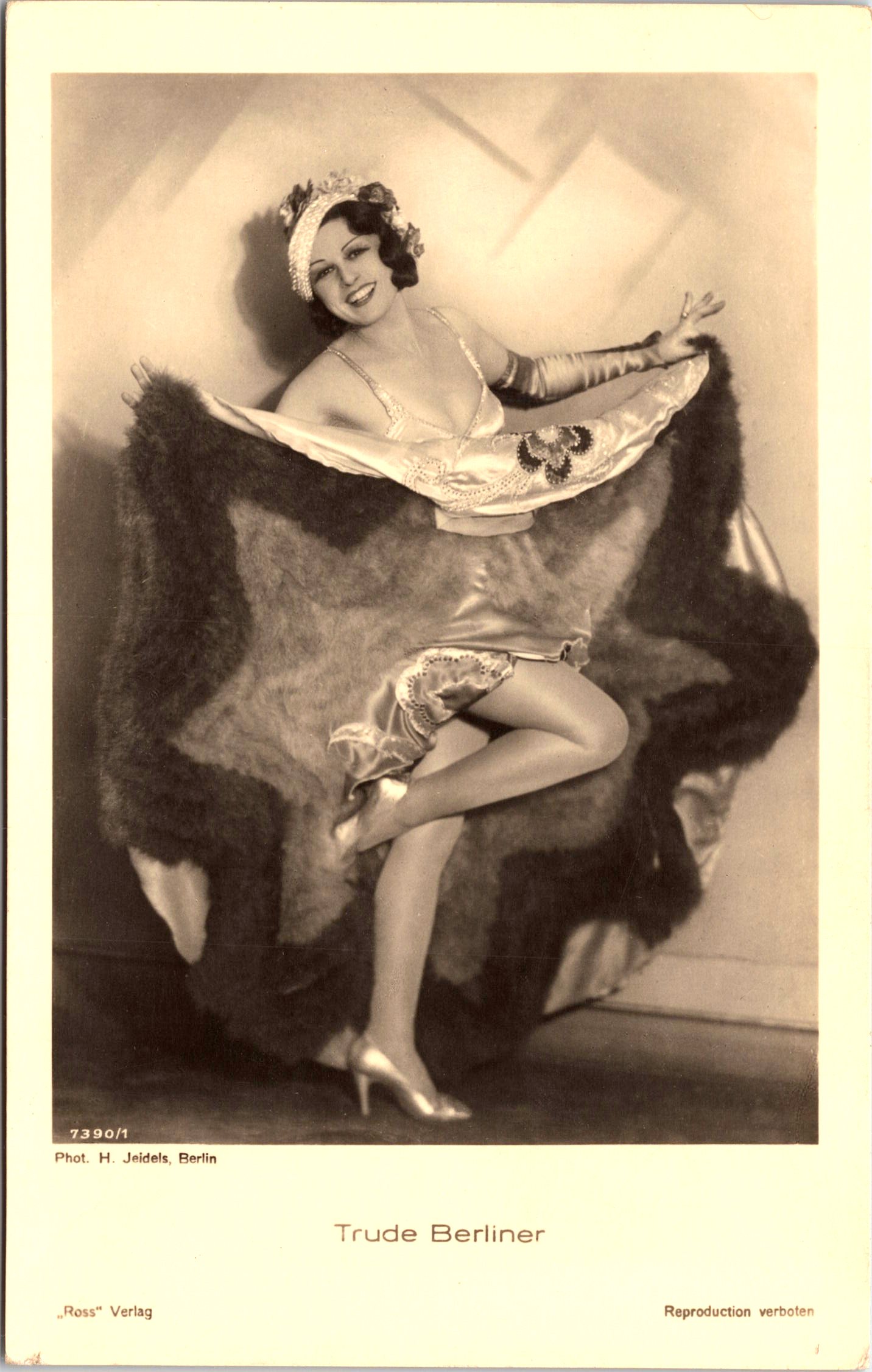
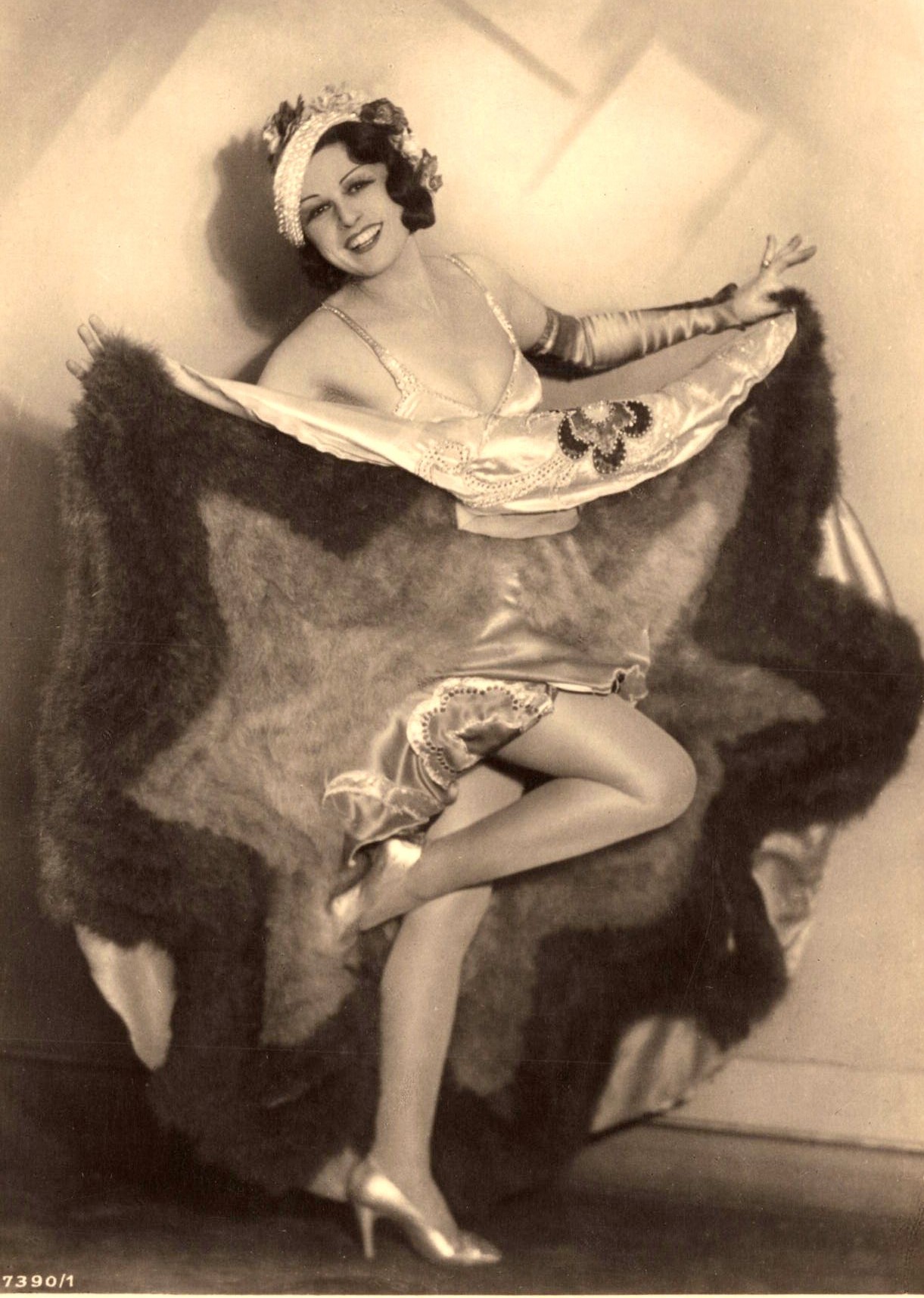
This vintage real photo postcard features Trude Berliner (1903-1977), German actress, singer and dancer. She was also a popular cabaret and comic performer at the Scala and Wintergarten in Berlin during the 1920’s. This postcard captures her doing a happy dance. The photo is risque. She is showing her bare legs and lifting her dress. Her film career took off and she ultimately appeared in 48 films between 1916 and 1955. She was in a number of well known German movies. Berliner was forced to flee Germany when the Nazis took power in 1933. She first went to France but emigrated to the United States in 1939. Unfortunately, Hollywood did not offer the kind of opportunities she experienced in Europe. She was only able to obtain bit parts in four movies. Interestingly, her first role in an American film was in “Casablanca” (1942). She left acting after 1945 and managed a date farm. This postcard was published by Ross Verlag as part of a series (No.7390/1). The photograph on this postcard was taken by H. Jeidels at his Berlin studio. (SOLD)
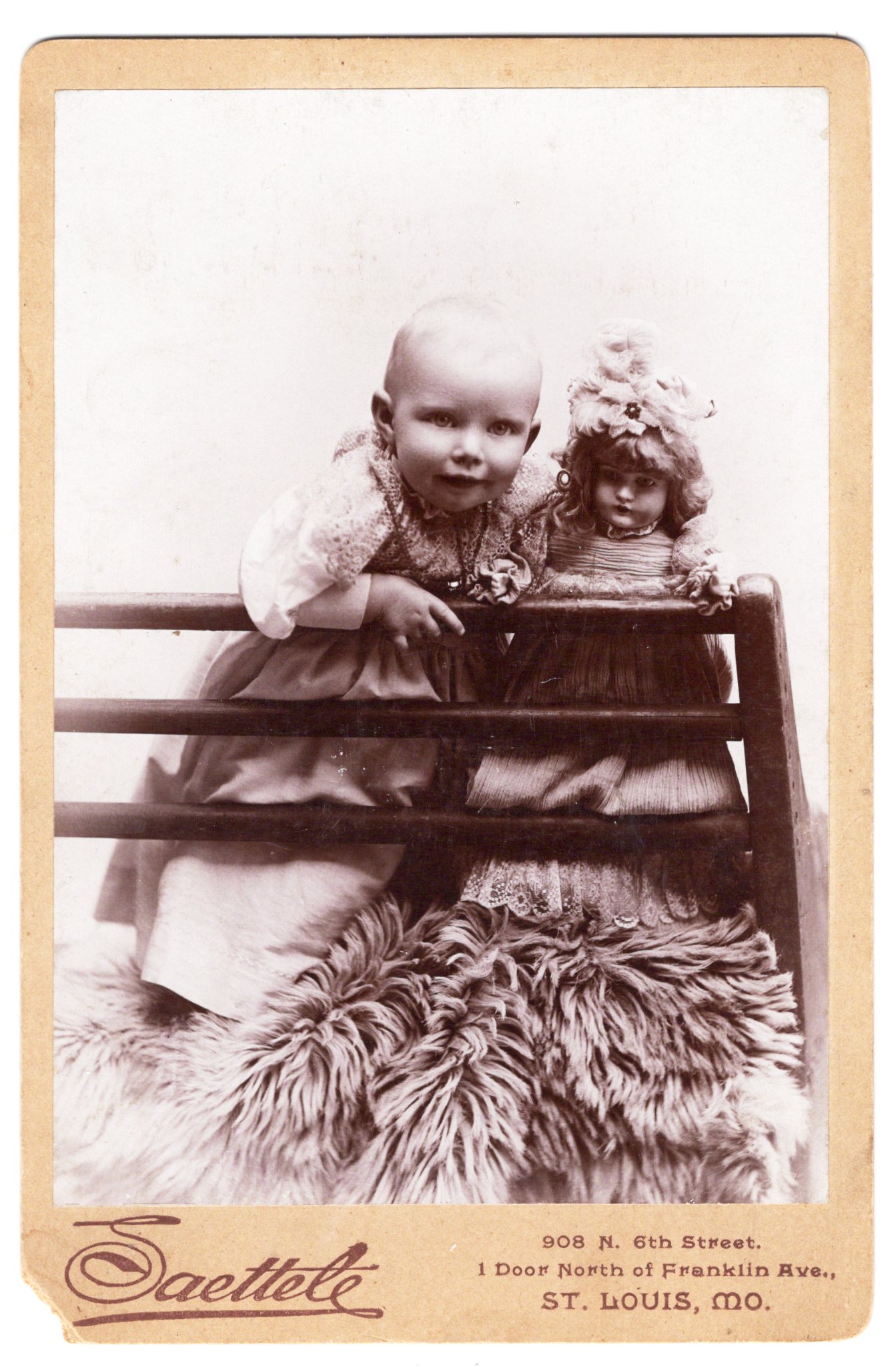
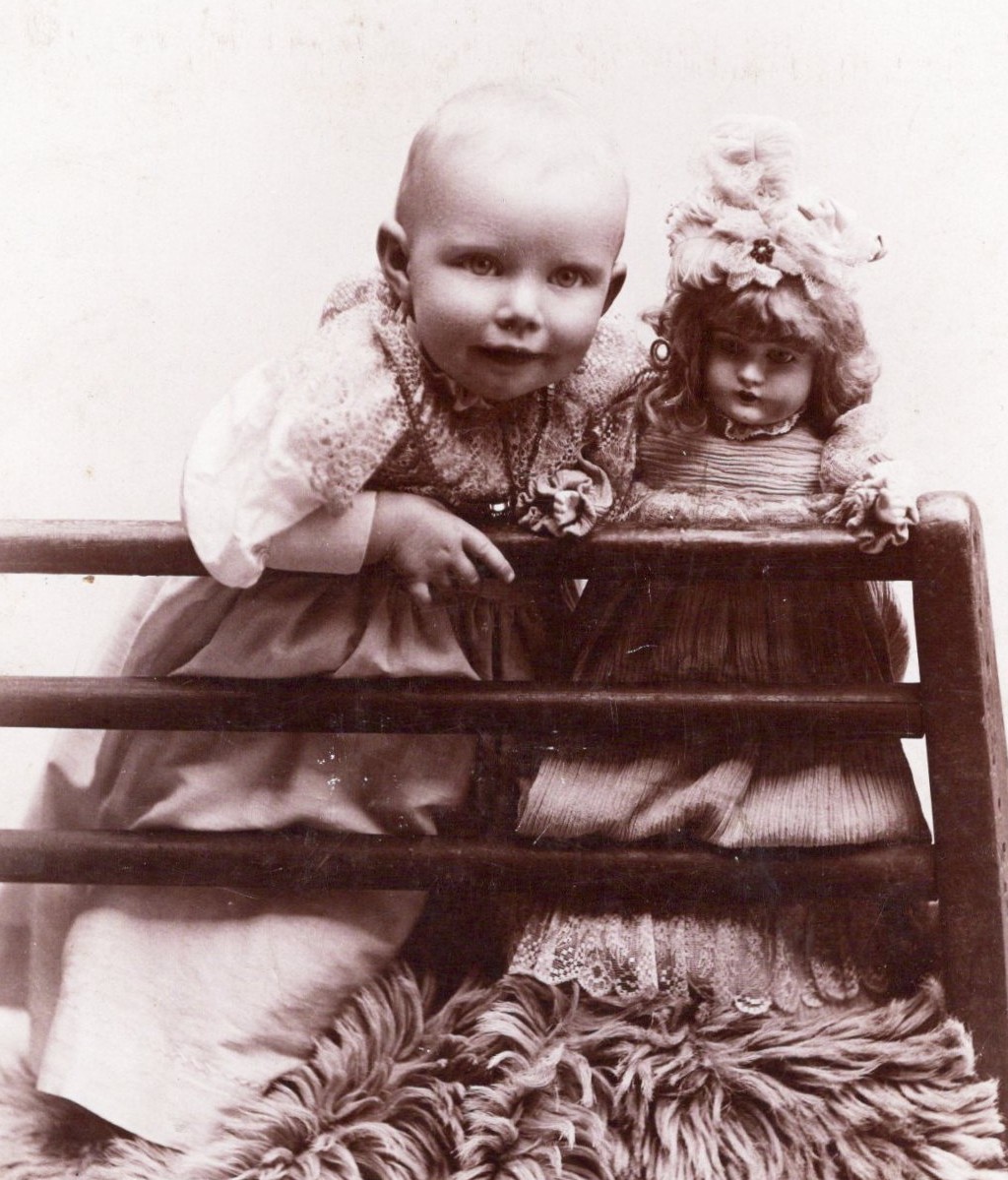
This charming 19th-century cabinet card photograph features a baby posed beside a beautifully dressed porcelain doll. The infant leans forward over a wooden prop, gazing directly at the camera with a curious and slightly mischievous expression. The child is dressed in a light gown with delicate lace trim, while the doll beside her is ornately dressed, wearing a finely pleated gown accented with lace and an elaborate feathered bonnet. The pairing of the child and doll creates a whimsical and endearing composition. The photograph was taken at the studio of Saettele, located in St. Louis, Missouri (imprinted on the mount). Research reveals that the Saettele studio was at the address on the mount only one year (1905). This studio portrait has crisp clarity, strong contrast, and uses fur rugs and furniture props to stage the image. The mount is a standard cabinet card size, with the photographer’s name “Saettele” in ornate script at the bottom. (SOLD)
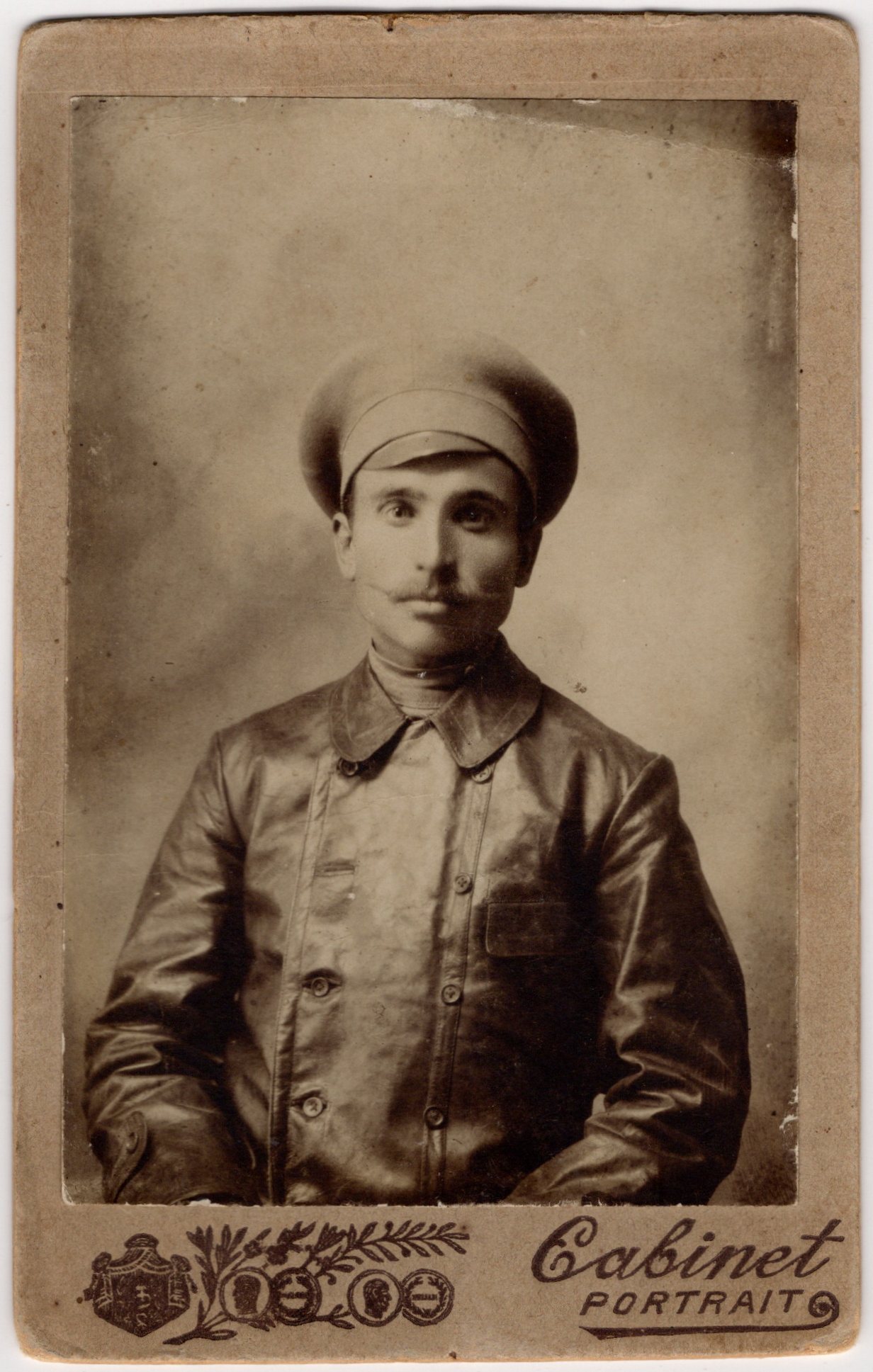
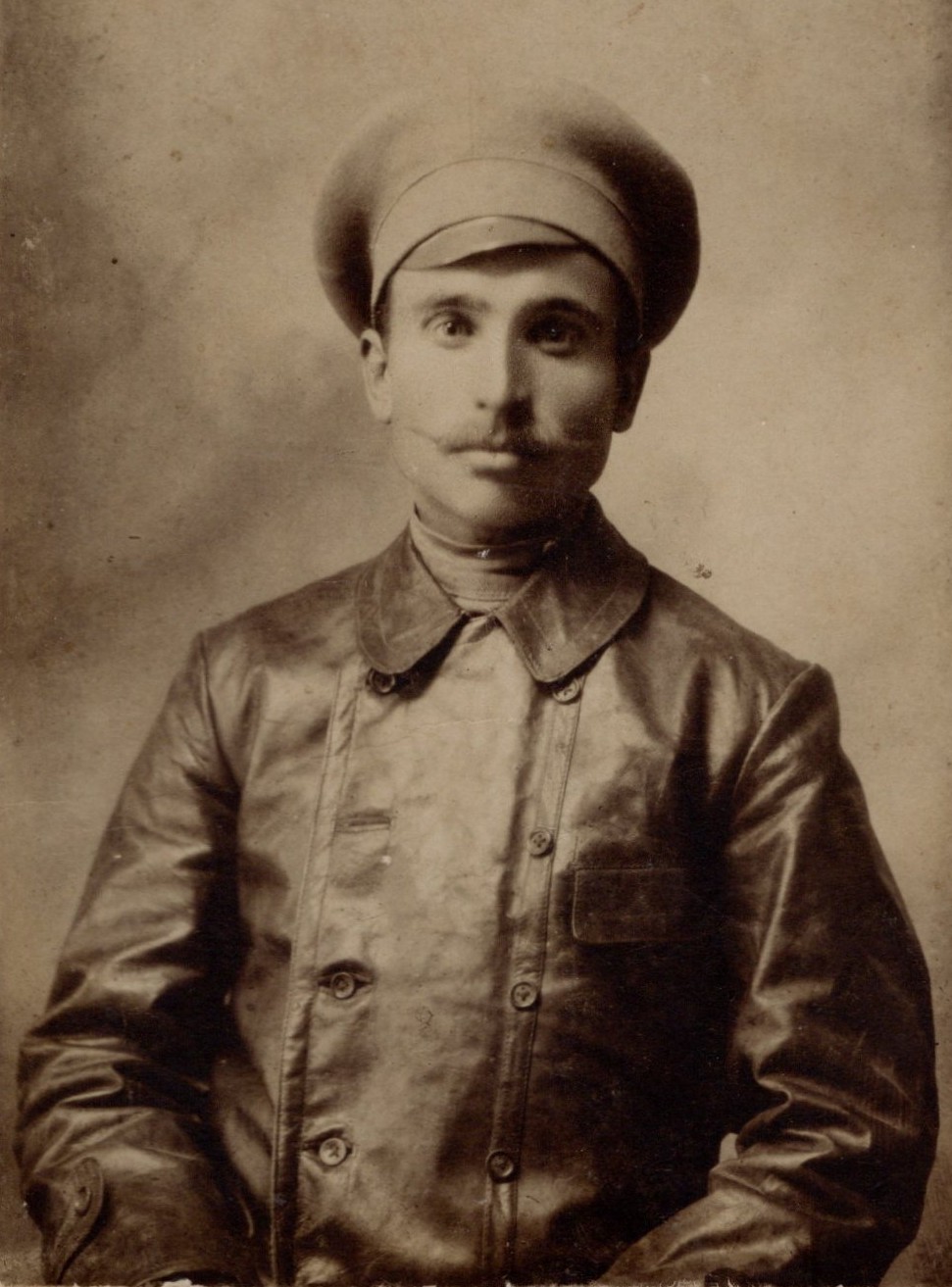
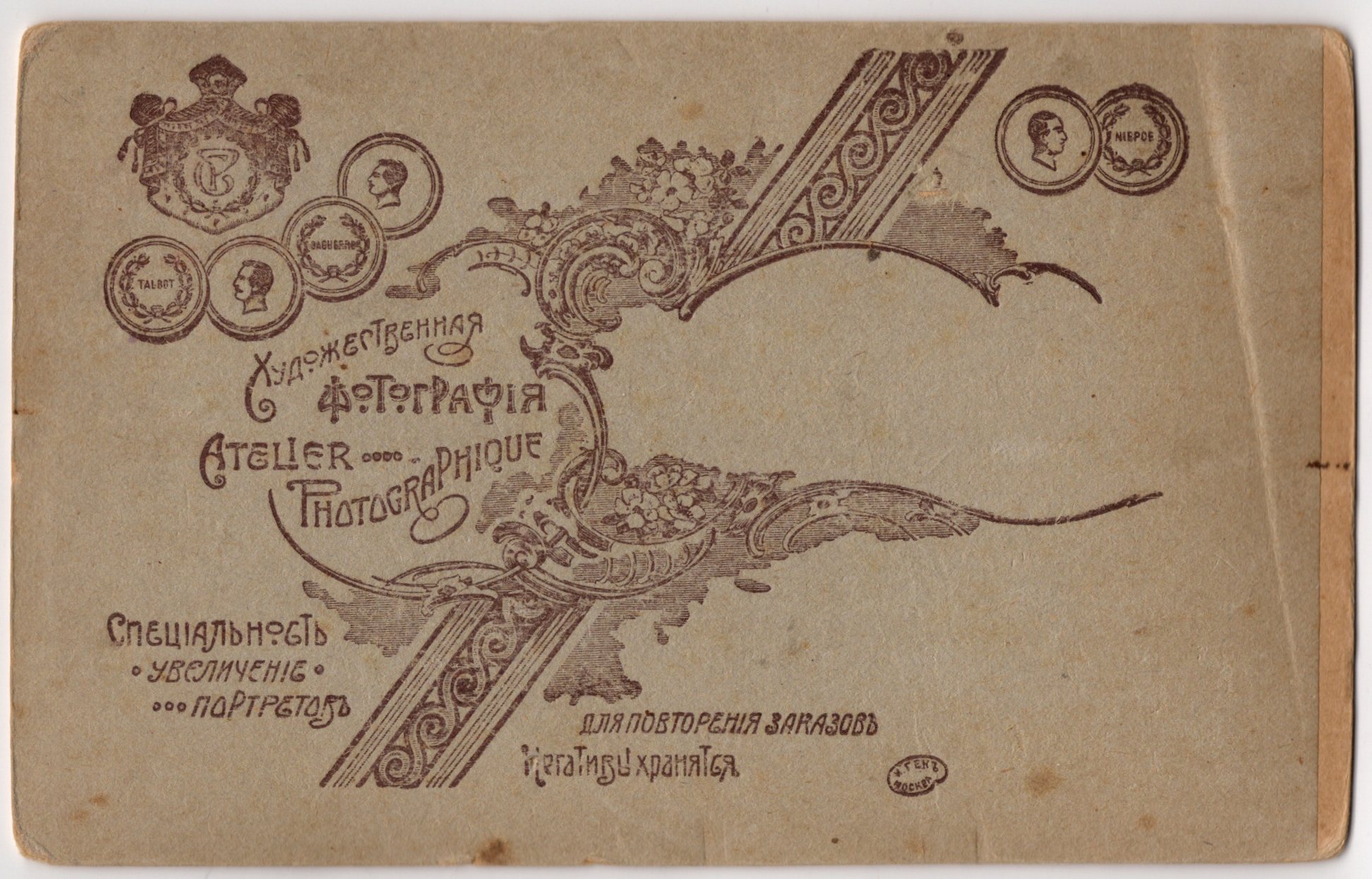
This is a striking and somewhat unusual cabinet card portrait featuring a young man posed in studio, dressed in what appears to be a distinctive uniform or occupational attire. The photograph has a strong presence, with the sitter facing forward and engaging the viewer directly, his expression calm, alert, and slightly intense. He wears a neatly groomed thin mustache, and his wide, steady gaze adds a sense of personality and individuality to the image. What immediately stands out is his clothing. He is dressed in a buttoned leather or leather-like jacket, which has a slightly reflective surface, suggesting either treated leather or a heavy protective garment. Beneath it, he wears a high-collared shirt or tunic. On his head is a rounded cap with a structured band, reminiscent of military or early industrial uniforms. The overall look strongly suggests an occupational or service-related portrait—possibly railway, early aviation, mechanical trades, or even a paramilitary or military-adjacent role. While it is difficult to definitively identify the exact profession, the uniform is clearly not ordinary civilian dress. The mount is attractively printed with decorative elements. The reverse is particularly informative and places the photograph geographically. It is printed in both Russian and French. The presence of Cyrillic text, combined with the bilingual French wording (common in higher-end studios of the Russian Empire), strongly indicates that this cabinet card originates from Imperial Russia, likely dating to the late 19th or early 20th century (circa 1895–1910). The photograph presents well overall with a pleasing, slightly warm sepia tone and good clarity of detail. There is moderate, honest age-related wear to the mount, including some edge and corner wear, light soiling, and minor surface marks. Notably, there is a visible diagonal crease at the top right corner of the mount, which can be felt when handled but does not break through or significantly distract from the image area. See Scans
This vintage postcard is available for purchase at my store, The History Peddler, for $80.00 at auction
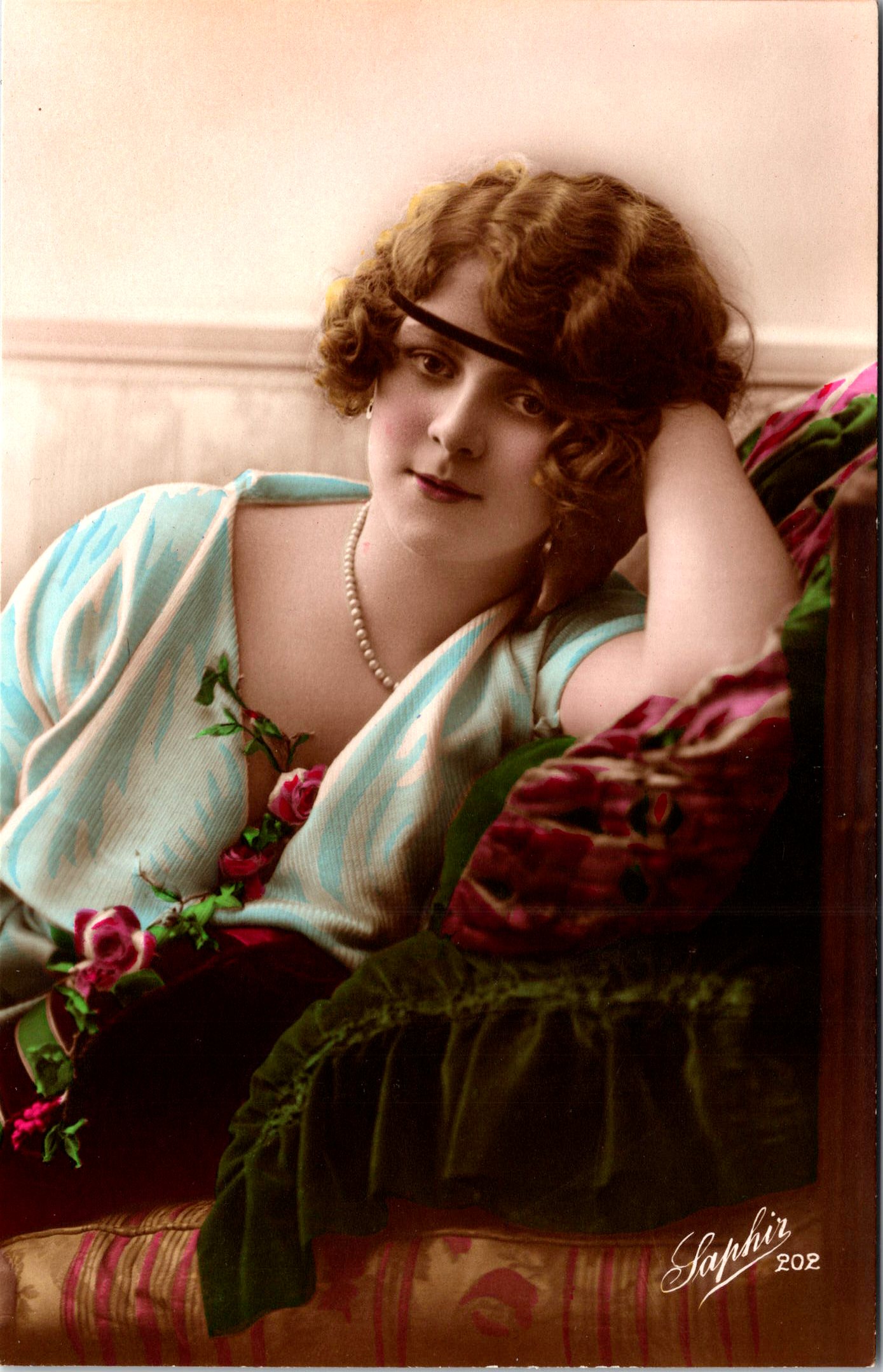
This is a beautiful and highly appealing real photo postcard featuring a glamorous young woman in a softly posed, intimate portrait that perfectly captures the elegance and style of the late Edwardian to early 1920s period. The image has been tastefully hand-colored, with delicate pink tones to the cheeks, soft natural coloring to the lips, and rich hues brought out in her clothing and surroundings, giving the portrait a warm, lifelike presence. The young woman reclines slightly, resting her head gently on her hand, her expression calm, inviting, and quietly confident. Her gaze meets the viewer with a subtle softness that gives the image a distinctly personal, almost cinematic quality. She is fashionably dressed in a light, flowing garment with soft blue tones, accented by a string of pearls around her neck. A thin dark headband worn across the forehead reflects the transitional style moving toward the 1920s, while her softly waved hair frames her face beautifully. Adding to the composition are decorative floral elements, including small pink roses woven into the scene, and richly colored drapery beneath her arm, which enhances the romantic, almost boudoir-like atmosphere. The lower right corner bears the signature “Saphir 202,” identifying the publisher—Saphir being well known for producing high-quality European glamour postcards in the early 20th century. I have found Saphir cards to be uncommon. Printing on the reverse of the divided back postcard confirms its French manufacture. The postcard is in excellent antique condition overall. The image remains vibrant with strong contrast and attractive coloration (see scans).
This vintage postcard is available for purchase at my store, The History Peddler, for $28.00 at auction
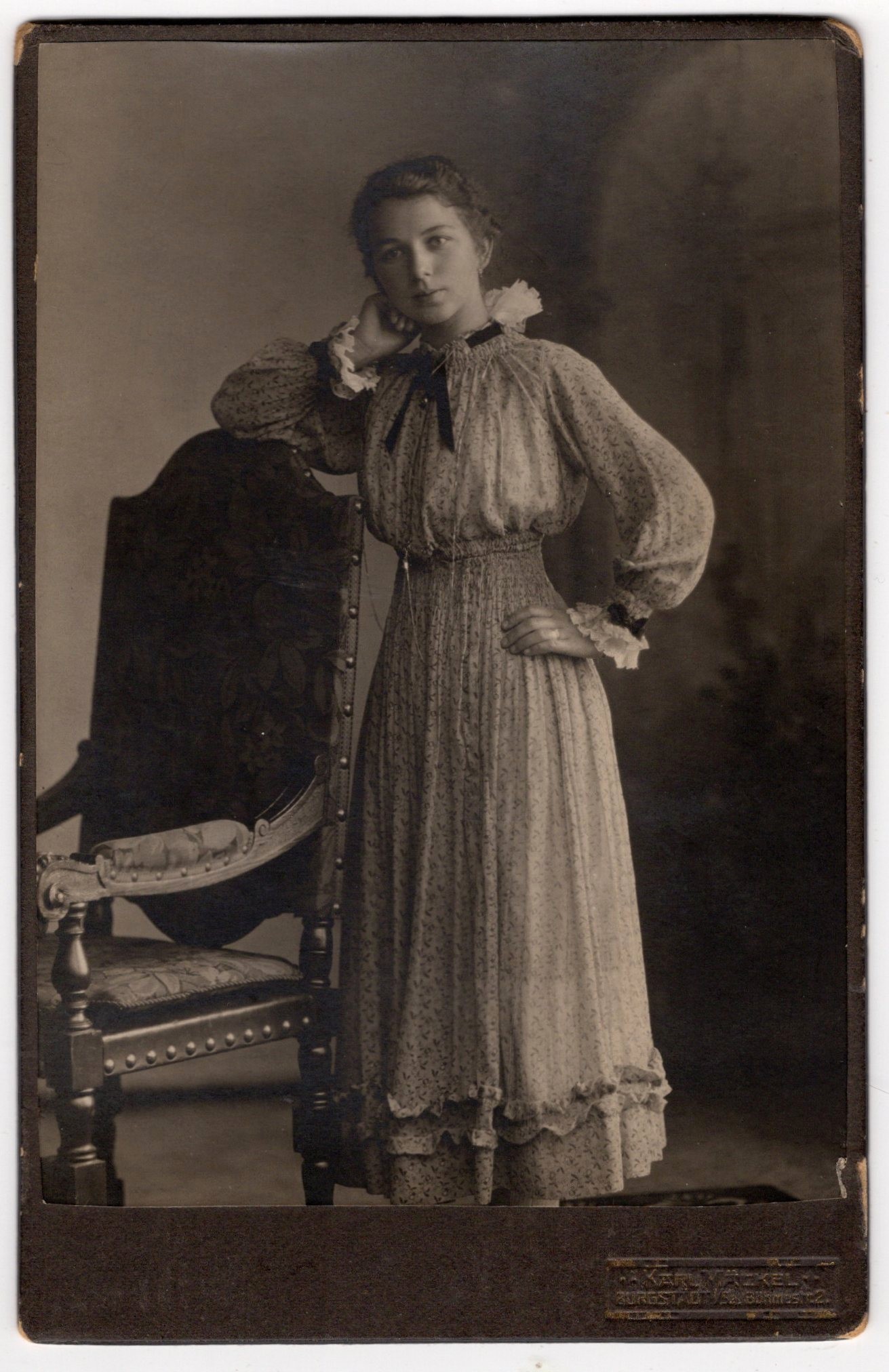
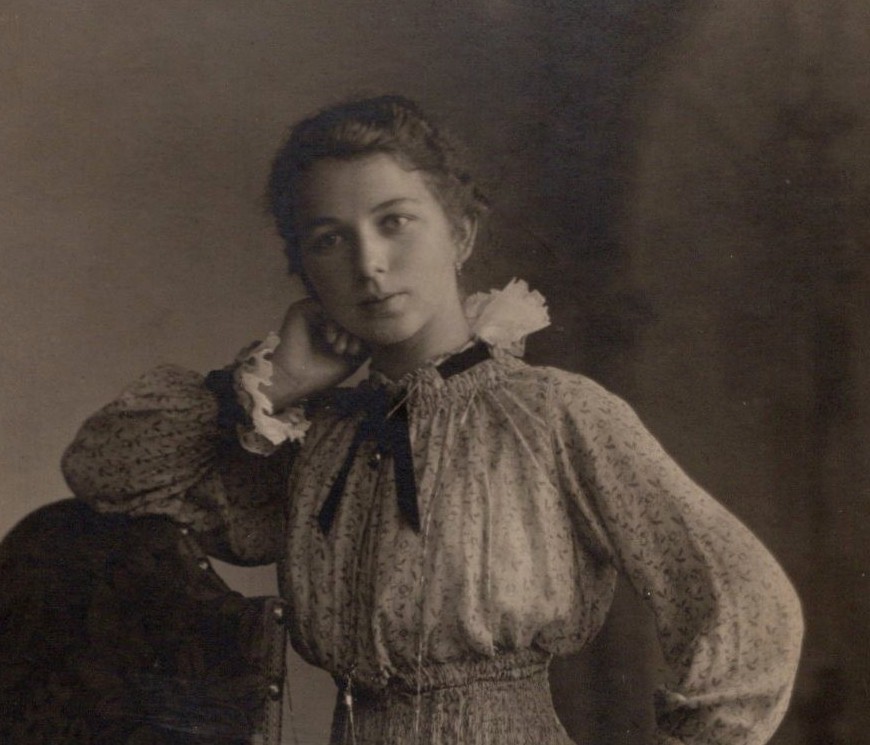
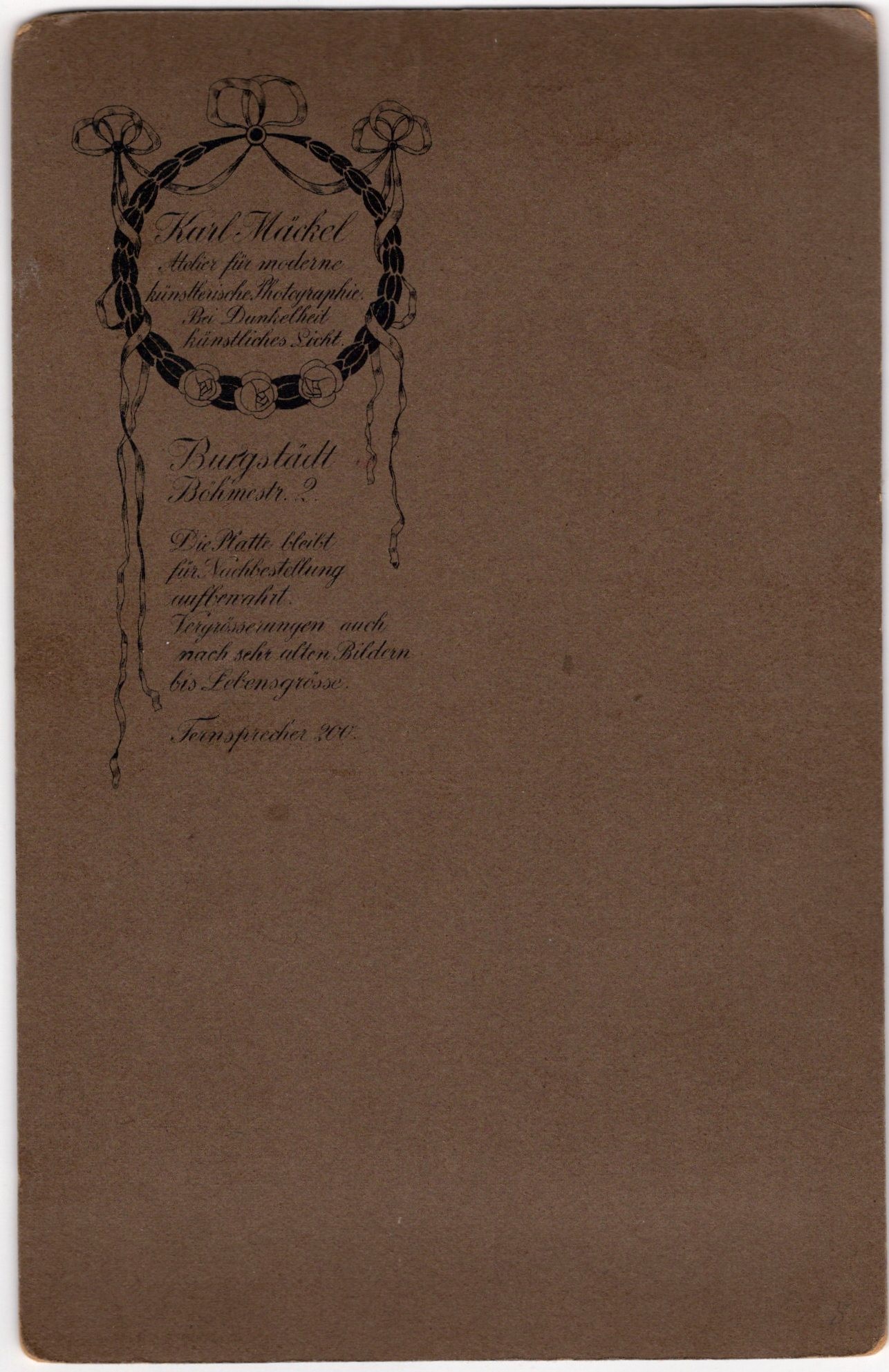
This evocative early 20th-century studio photograph presents a poised young woman photographed full-length in a formal interior setting. She stands beside an upholstered armchair, resting one hand thoughtfully against her cheek while the other is placed confidently at her waist. The pose feels both contemplative and self-assured, a balance that was highly favored in Edwardian portraiture, where sitters were encouraged to convey refinement and emotional depth. She is dressed in a long, light-colored patterned dress with a softly gathered bodice and a high, ruffled neckline accented by a dark ribbon bow. The sleeves are voluminous and finished with lace-trimmed cuffs, and the skirt falls in gentle tiers, creating a graceful silhouette typical of the period circa 1905–1915. Her hair is worn swept back and neatly styled, emphasizing her youthful face and direct, quietly introspective gaze. The photographer’s careful use of soft, diffused lighting creates a gentle tonal range, highlighting facial features while allowing the background to fall away into a subtle vignette. The overall effect is intimate and dignified, capturing both the sitter’s individuality and the aesthetics of turn-of-the-century Central European studio photography. The reverse bears an ornate printed studio mark for Karl Mückel, described as “Atelier für moderne künstlerische Photographie” (Studio for modern artistic photography), located in Burgstädt, Böhmen (Bohemia)—then part of the Austro-Hungarian Empire. The decorative wreath-and-ribbon design is characteristic of Art Nouveau–influenced photographic branding, reinforcing a date in the early 1900s. The backmark text also notes the availability of enlargements and reproductions, a common feature of professional European studios serving middle-class clientele during this period. Bohemia at the turn of the 20th century was a vibrant cultural crossroads, blending German, Czech, and Austro-Hungarian artistic traditions. Studio portraits like this one were often commissioned to mark important life moments—coming of age, engagement, or family milestones—and were prized personal keepsakes. The refined styling and professional presentation suggest a sitter from a comfortable, possibly bourgeois background. (SOLD)