 A stylish and well dressed family pose for their portrait at the studio of J. Loerb in Porta Westfalica, Minden, Germany. It seems that someone forgot to tell the woman on the right that she was supposed to wear a light colored dress. Oops! Writing on the reverse of the image indicates that this photograph was taken in 1905.
STYLISH FAMILY IN MINDEN, GERMANY (1905)

PRETTY LADY WITH EXCELLENT FASHION SENSE IN WEST HOBOKEN, NEW JERSEY
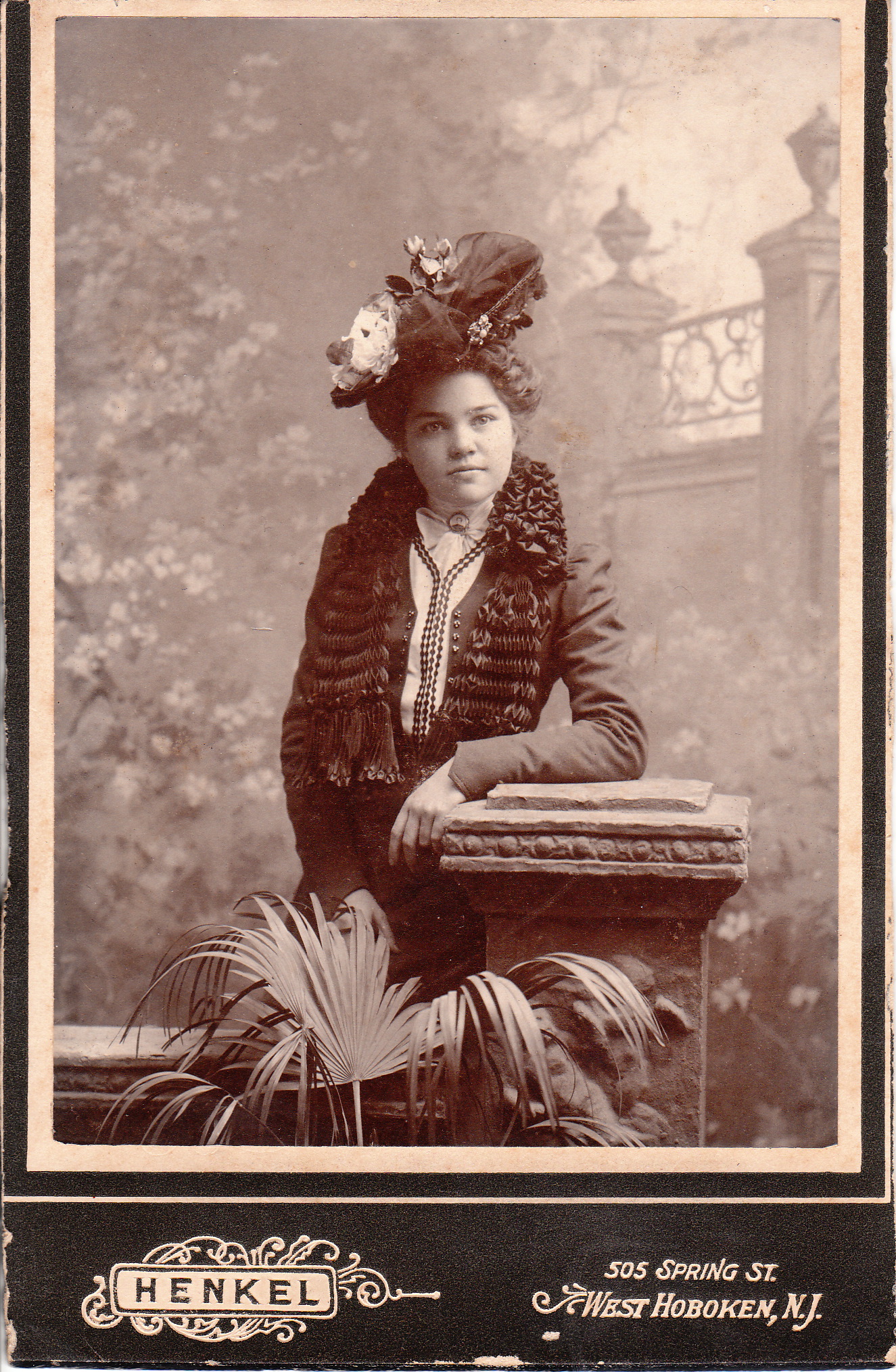 This pretty West Hoboken lady dressed cool, before cool was invented. She clearly mastered the layered look, and the combination of textures composing her outfit, is phenomenal. Her very busy, but interesting hat, also adds to her “look”. This woman knew how to put herself together and likely was well aware that she had this talent. She is posed for this photograph in a studio faux park like setting which includes a live plant. The photographer is Charles A. Henkel. His studio was located in West Hoboken, New Jersey, from 1893 through at least 1900. An advertisement in the Photographic Times (1884) indicates that Henkel previously had a studio in Jersey City Heights, New Jersey.
TWO YOUNG SISTERS WEARING EXQUISITE DRESSES IN GOSHEN, NEW YORK
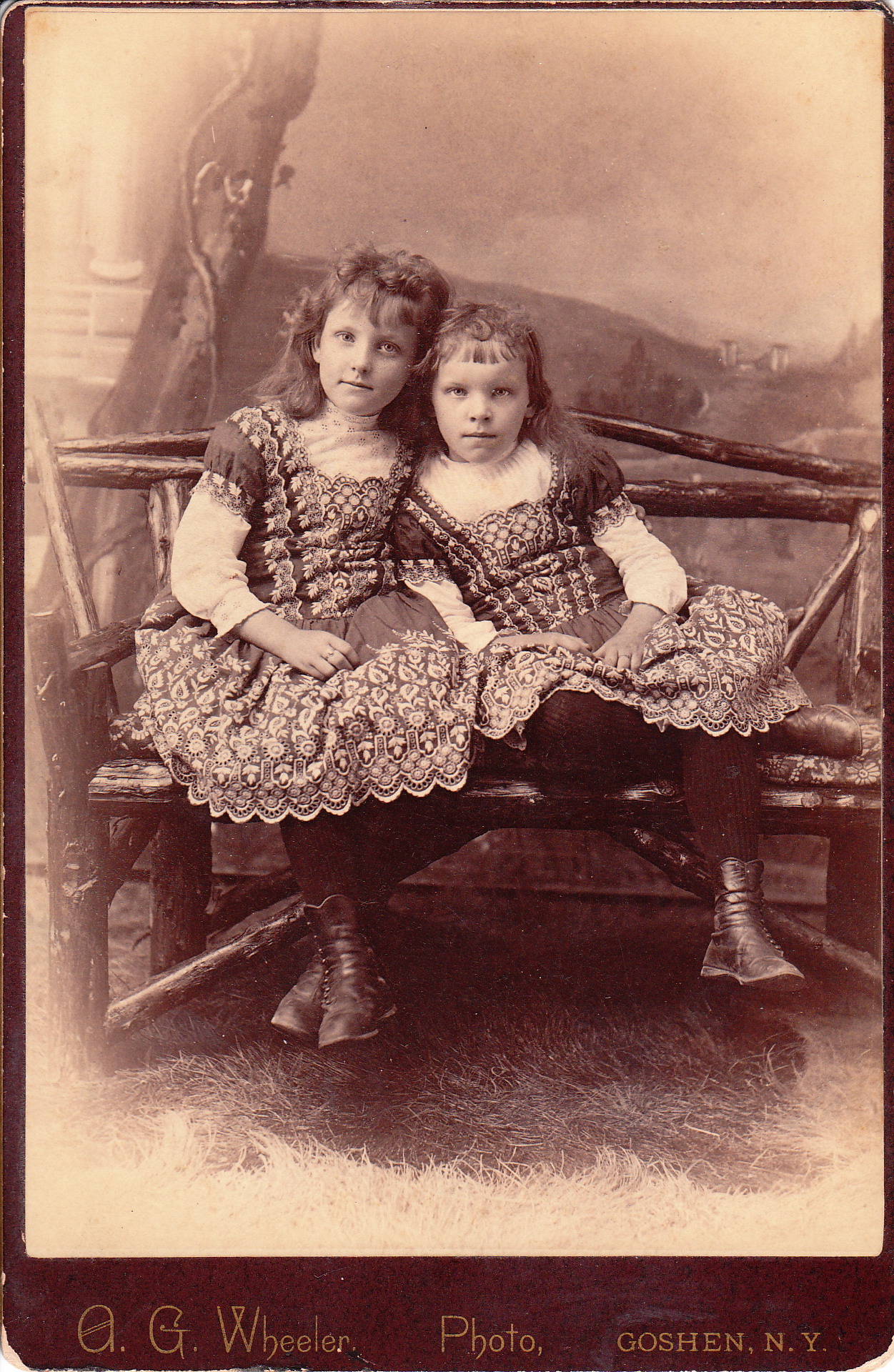 These Goshen girls are likely sisters, and they are wearing identical exquisite dresses as they pose for photographer A. G. Wheeler, in Goshen, New York. Wheeler is mentioned in the book,The Empire State: Its Industries and Wealth (1888). He is described as a native New Yorker who established his Goshen gallery in 1885. The brief biographical sketch adds that, earlier in time, he had a photographic studio in Hempstead, New York.
NICE MUSTACHE IN TRENTON NEW JERSEY
 This cabinet card features a well dressed gentleman with a noteworthy mustache. In fact, the mustache is so noteworthy, that it joins other cabinet cards featuring fantastic mustaches in Cabinet Card Gallery’s category of Mustaches (Only the Best). Click on the category and view the other mustaches. The photographer of this image is Henry C. Lovejoy (1838-1901) of Trenton, New Jersey. Lovejoy had a series of studios in Trenton between 1869 and 1900. A Trenton Times (1891) newspaper article interviewed Lovejoy about many issues pertaining to portrait photography. He stated that “the great art, however, is in placing a person in position. This can only be acquired by long practice and experience.” He added “the photographer must also by a physiognomist” because different people will photograph better in different positions. A physiognomist is an expert at the art of judging human character from facial features. Later in the same article, Lovejoy provides interesting comments about post mortem photography (photographing the dead).
THE OTHER BOOGIE WOOGIE BUGLE BOY OF COMPANY B……… IN ALBERT LEA, MINNESOTA
 This cabinet card features a uniformed bugle boy, posed holding his instrument, and wearing a satchel bag strapped over his shoulder. The boy’s cap has a badge indicating that he was in company B of the “ALC”. “ALC” likely stands for Albert Lea C……”. Perhaps a visitor to the Cabinet Card Gallery can leave a comment identifying the “C” word. The bugle boy, judging by his uniform, was a member of a band. Albert Lea is the name of the Minnesota town where the photographic studio that produced this cabinet card was located. Albert Lea is ninety miles south of Minneapolis, Minnesota; and was named after a topographer with the US Dragoons who surveyed the area in 1835. The photographer of this cabinet card was Joseph A. Fuller (1851-?). Fuller was born in Walworth County, Wisconsin. He worked as a photographer in Decorah, Iowa and Chatfield, Minnesota; before moving to Albert Lea in 1873. At the time of this photograph, Fuller’s studio was on the corner of Williams and Broadway Streets, “over Brown & Cos Bank”. His later studios in Albert Lea included 202 South Broadway (1914-1922) and 204 South Broadway (1924). He worked in Minnesota from the 1870’s through part of the 1920’s.
TWO GIRLS AND A DOLL IN CHICAGO HEIGHTS (OR POSSIBLY FRANKFORT STATION) , ILLINOIS
 Two bright-eyed young girls sit for their portrait at the studio of Fred Heising in either Chicago Heights, or Frankfort Station, Illinois. The youngest child, sitting in a wicker chair, has her arm firmly around the shoulders of her toy doll. The older girl stands behind her little sister, with a physical position and a facial expression that can best be described as “big sisterish”. An advertisement in the Bulletin of Photography (1912) lists Heising’s studio for sale at the price of eleven thousand dollars. The ad states that the studio had been in existence for twenty years. A little simple math reveals that this photograph was produced sometime after 1892.
TWO CUTE YOUNG SISTERS IN SOFIA, BULGARIA
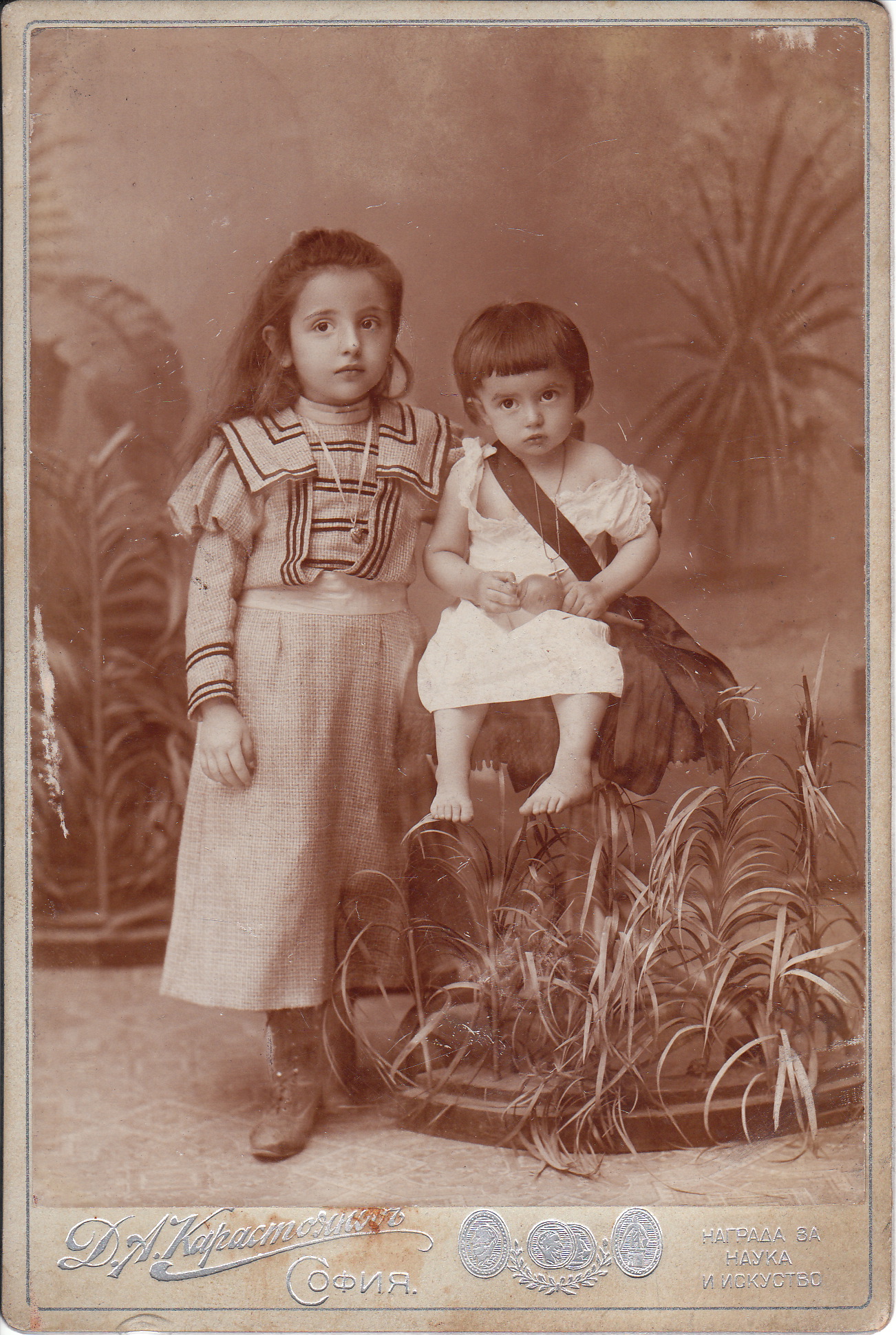 This cabinet card features two young girls posing for their portrait at a photographer’s studio. The girls are most probably sisters, and they are very cute. Note their large dark expressive eyes. The older girl is wearing a necklace with a locket or charm, while her little sister is wearing a necklace with a cross and holding a toy that could be a spinning top. The youngest child also has a strap over her shoulder which appears to be a bag of some kind. A previous owner of this cabinet card states that the photograph was produced by a studio in Sofia, Bulgaria. The name of the photographer is difficult to decipher and hopefully a Bulgaria savvy visitor to the Cabinet Card Gallery, will be able to provide the name of the producer of this image.
PRETTY WOMAN WITH COILED HAIR IN DETROIT, MICHIGAN
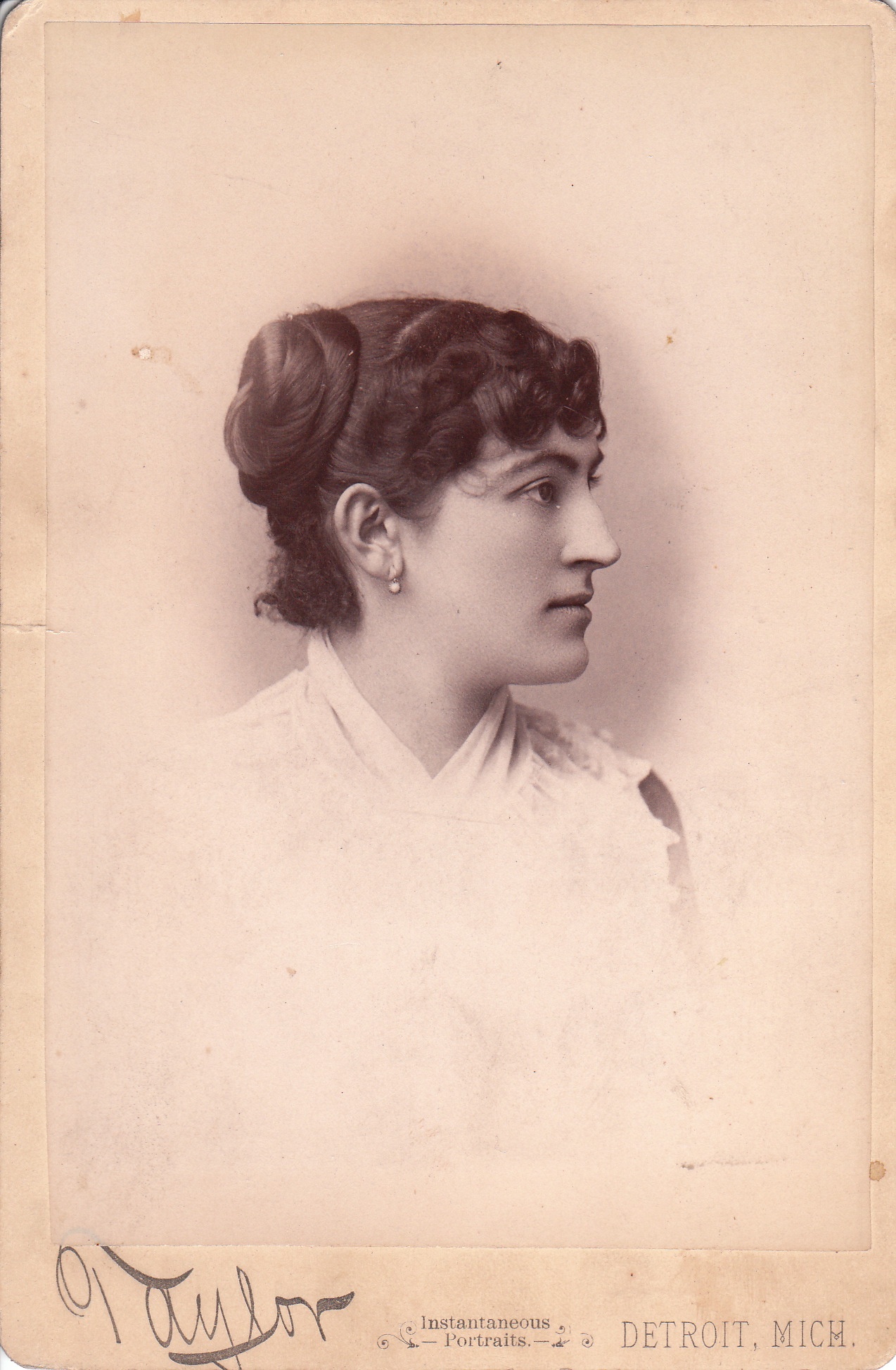 This cabinet card features a portrait of an attractive young woman. The side view that the photographer chose to capture, provides a view of her very well styled hair. The photographer is Taylor, of Detroit, Michigan. His gallery was called the Grand Central Gallery and was located at 41 & 43 Monroe Avenue.
CUTE YOUNG GIRL IN NASHUA NEW HAMPSHIRE
 A young girl poses for her portrait in the studio of Charles Henry Lindsay in Nashua, New Hampshire. Note her lace collar and her cute curls. She has a great half smile and is very focused on the photographer and camera. The photographer of this image had quite a journeyman career. The Granite State Monthly (1916) wrote a glowing article about his skills and described his career experiences. Lindsay learned his profession in the studio of Frank O. Everett, in Nashua. He began working for Everett around 1872 and stayed in his employ for about three years. He then moved to Concord, New Hampshire to become an operator for Benjamin Carr. He ultimately purchased Carr’s business and conducted it successfully until it was destroyed in a fire. He then worked with Stephen Piper in Manchester until 1879, when he moved to Nashua and opened his own studio. In 1889 he went to Boston and worked for some well known photographers. From 1894 until at least 1915, he operated a studio in Manchester, New Hampshire. At some point, his son, Ira Frank Lindsay, joined him in operating the Manchester studio. Lindsay’s career certainly was one that had many starts and stops, and forced him to make many relocations. This cabinet card was produced during Lindsay’s Nashua tenure between 1879 and 1889.
BIG DOG SPRAWLED ACROSS THE BENCH….. SMALL MAN DECIDES TO STAND (LODZ, POLAND)
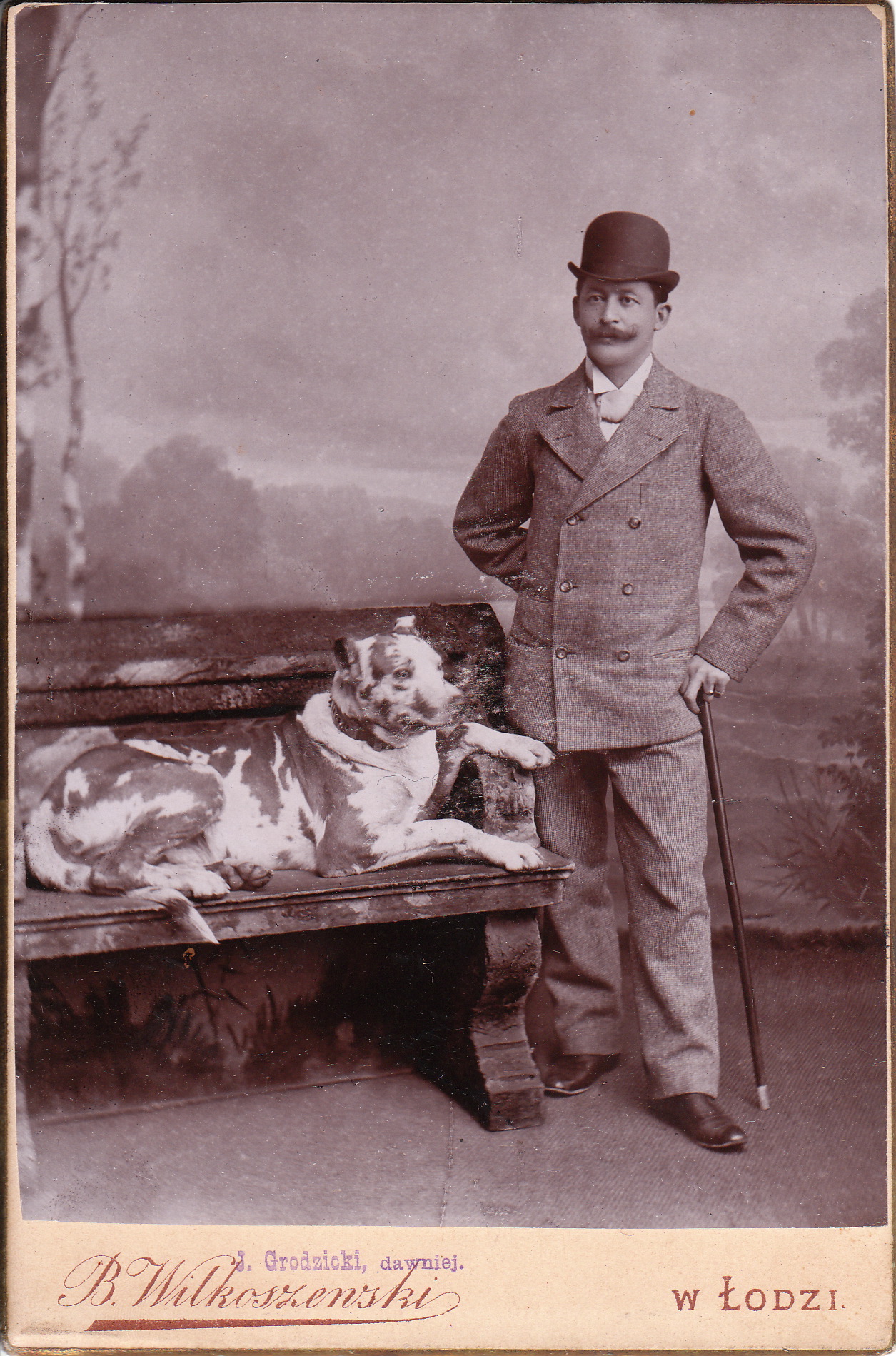 This cabinet card photograph appears to have been photographed in the studio of B. Wilkoszewski of Lodz, Poland (things aren’t always as they appear to be). At the time of this photograph, the city was likely under the rule of Russia, and Wilkoszewski no longer owned the studio. The gentleman in this image is very well dressed and is holding a cane. He is posed in a faux park scene and stands next to his very large dog, who appears to have taken ownership of the park bench. The dog’s coat could be used to give the Rorschach Ink Blot Test to psychiatric patients. The cabinet card is stamped on the front and back of the photograph with the name “J. Grodzicki” , and next to the name is the word “dawniej”. Research reveals that “dawniej” is the Polish word for “formerly”. Therefore, the actual photographer of this image is J. Grodzicki, and Wilkoszewski was the former owner of the studio.


 THE CABINET CARD GALLERY