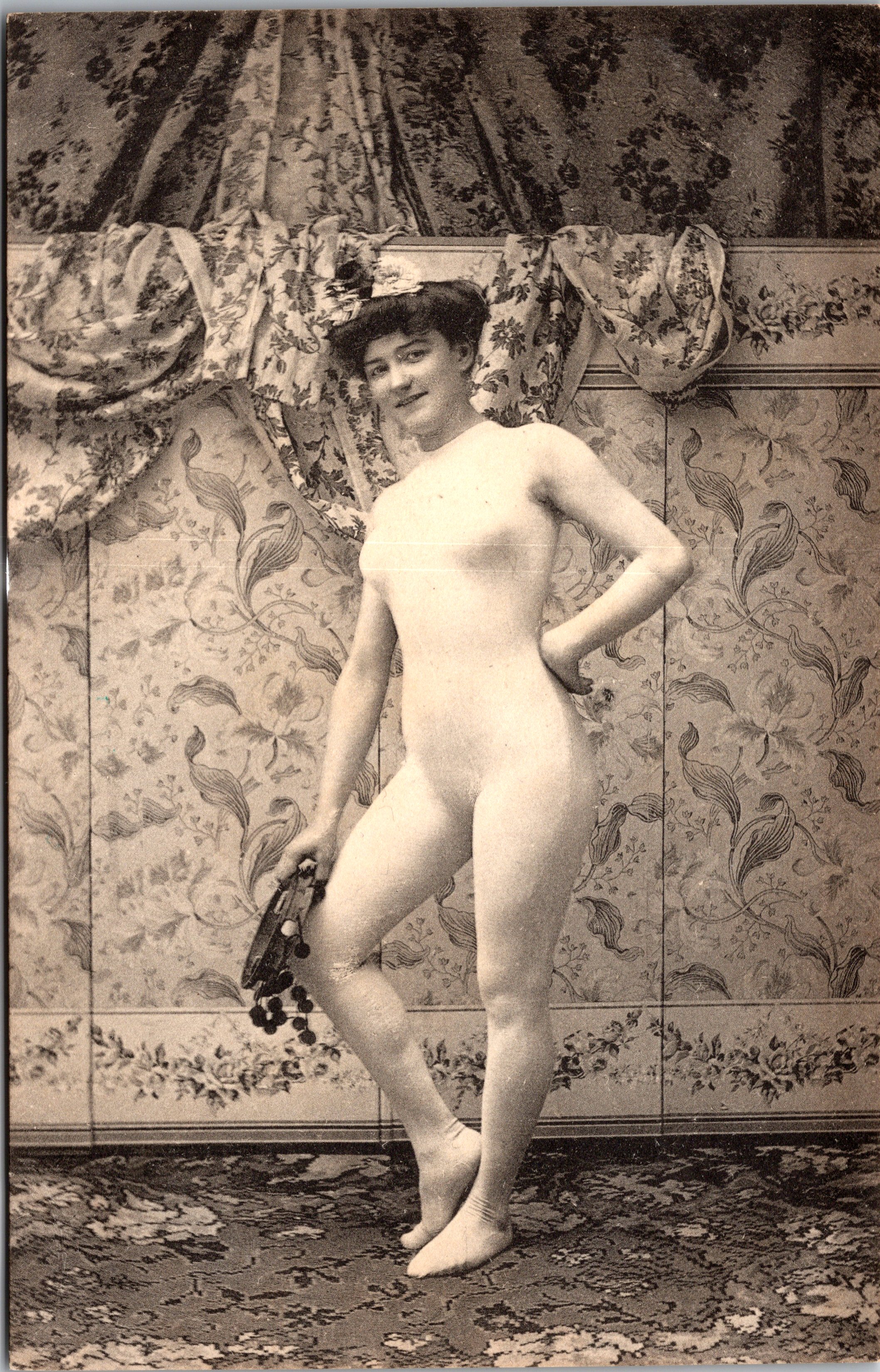
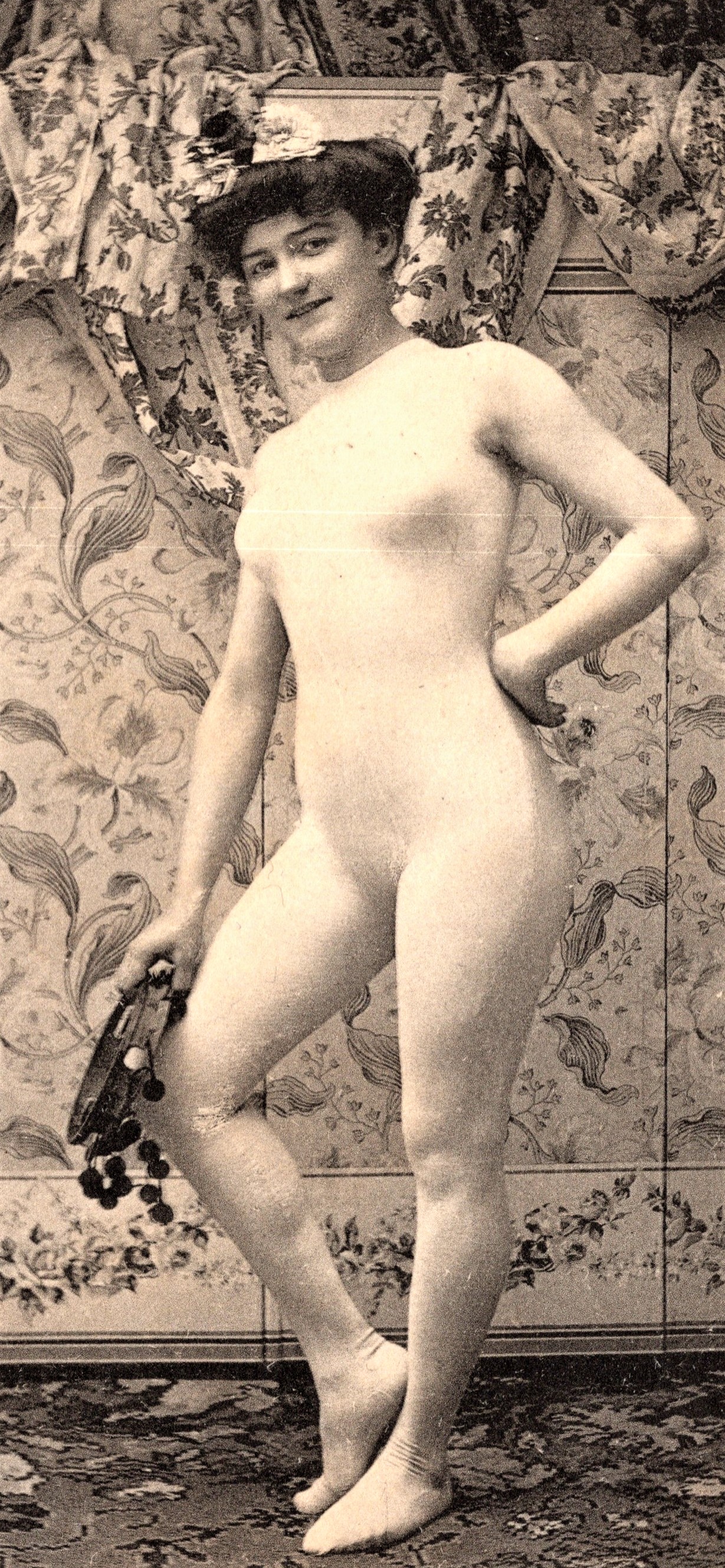
This vintage real photo postcard features a pretty young dancer dressed in a risque body suit. The costume aims to give the appearance of nudity. The performer is holding a tambourine. The publisher of the postcard is unidentified. The reverse of this postcard shows some wear but the front of the card is in excellent condition. The postcard is in overall Good Condition (See Scans). SOLD
This uncommon vintage real photo postcard (Postcard 1) features silent film icon, Clara Bow (1905-1965 ). She successfully made the transition to talkies in 1929. Bow appeared in 46 silent movies and 11 talkies. She was known as the “It Girl” during the golden age of Hollywood. She was known for her vivacious energy, mesmerizing on-screen presence, and her impressive talent. She was born in Brooklyn, New York and grew up in the borough’s tenements. Both of her parents had mental health issues and she grew up in an unstable and chaotic environment. She was a resilient and determined child and she took on a caretaker role for her younger siblings. She was responsible and mature beyond her years. Despite her humble background, she became a very influential figure in cinema history. Her rise from poverty to stardom, and her groundbreaking portrayals of independent and liberated women, helped her gain an enduring legend of the silver screen. Clara Bow was discovered in 1922 when she participated in a magazine contest searching for new talent. Her photographs were seen by film producer B. P. Schulberg who saw her potential and offered her a screen test. Her screen presence was impressive and she signed a contract with Paramount Pictures. In her earliest films, her versatility was was obvious as she transitioned effortlessly between dramatic and comedic roles. It was the 1927 film, “It” that made Clara Bow a superstar and earned her the nickname of “The It Girl”. She was viewed as modern, charismatic, and sexually liberated. Bow was also successful in “talkie” films, despite her Brooklyn accent. While Bow was successful professionally, her personal life was a “hot mess”. She had a long term troubled marriage to actor Rex Bell (m.1931) and she battled her own mental health issues, including anxiety and depression. In 1933, Bow retired from acting and became a rancher. This vintage real photo postcard was published by Ross Verlag (Germany) as part of a series (No.3394/1). Bow is wearing a grass skirt, a Hawaiian Lei, and holding a ukulele. She is showing her bare legs. The card is risque for it’s era. The logo for Paramount Pictures can be found in the images bottom right hand corner. SOLD
Postcard 2 was published by Ross Verlag (Germany) as part of a series (No.4480/1). Bow is wearing a short skirt. She is showing her bare legs. The card is risque for it’s era. The logo for Paramount Pictures can be found in the images bottom right hand corner. SOLD
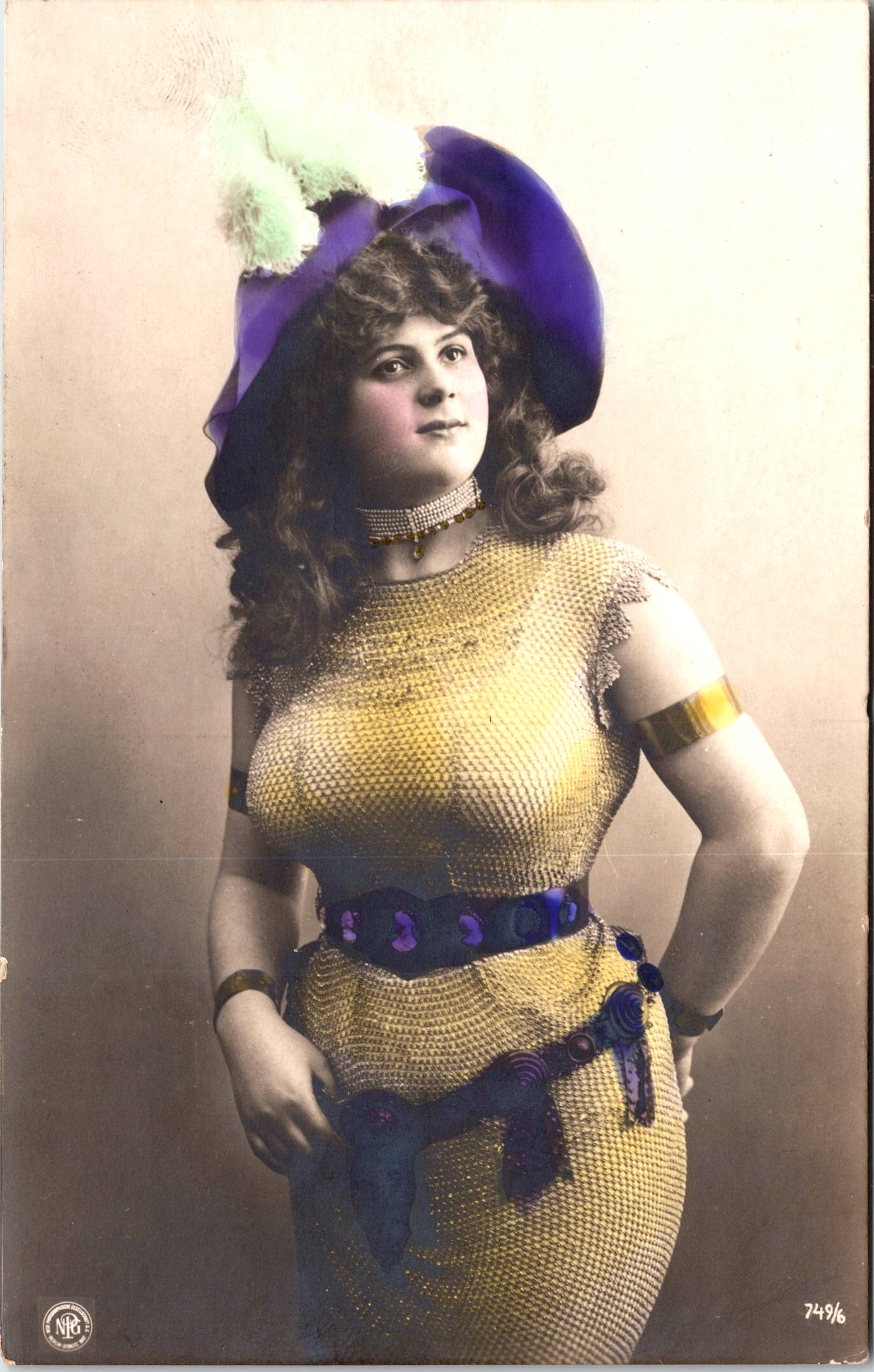
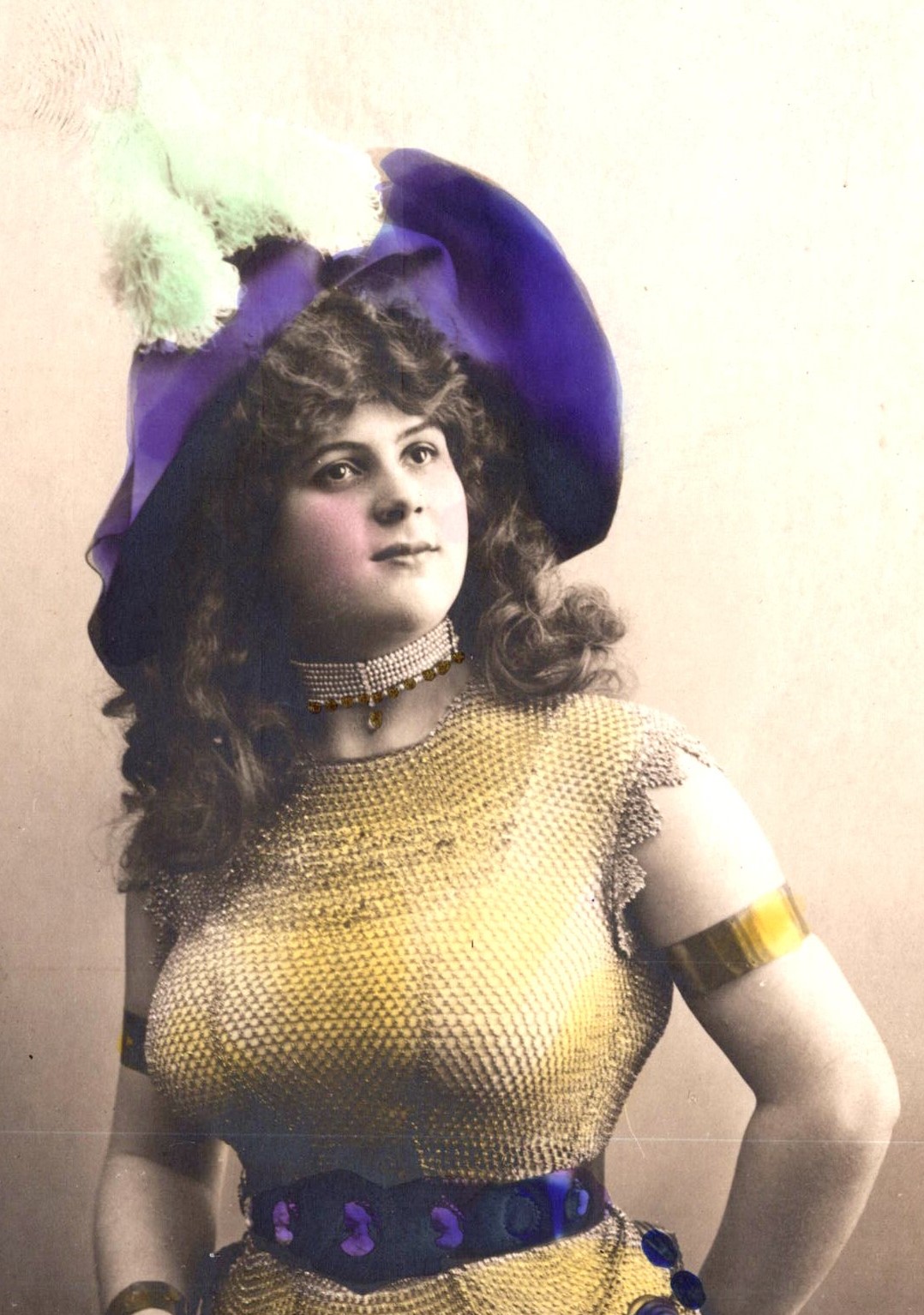
This German vintage risque real photo postcard features a pretty buxom young woman wearing a feathered purple hat. This photograph is meant to titillate. The woman is voluptuous. This photographic portrait was published by NPG (Germany) as part of a series (No.749/6). This postcard’s photograph has been hand tinted. SOLD
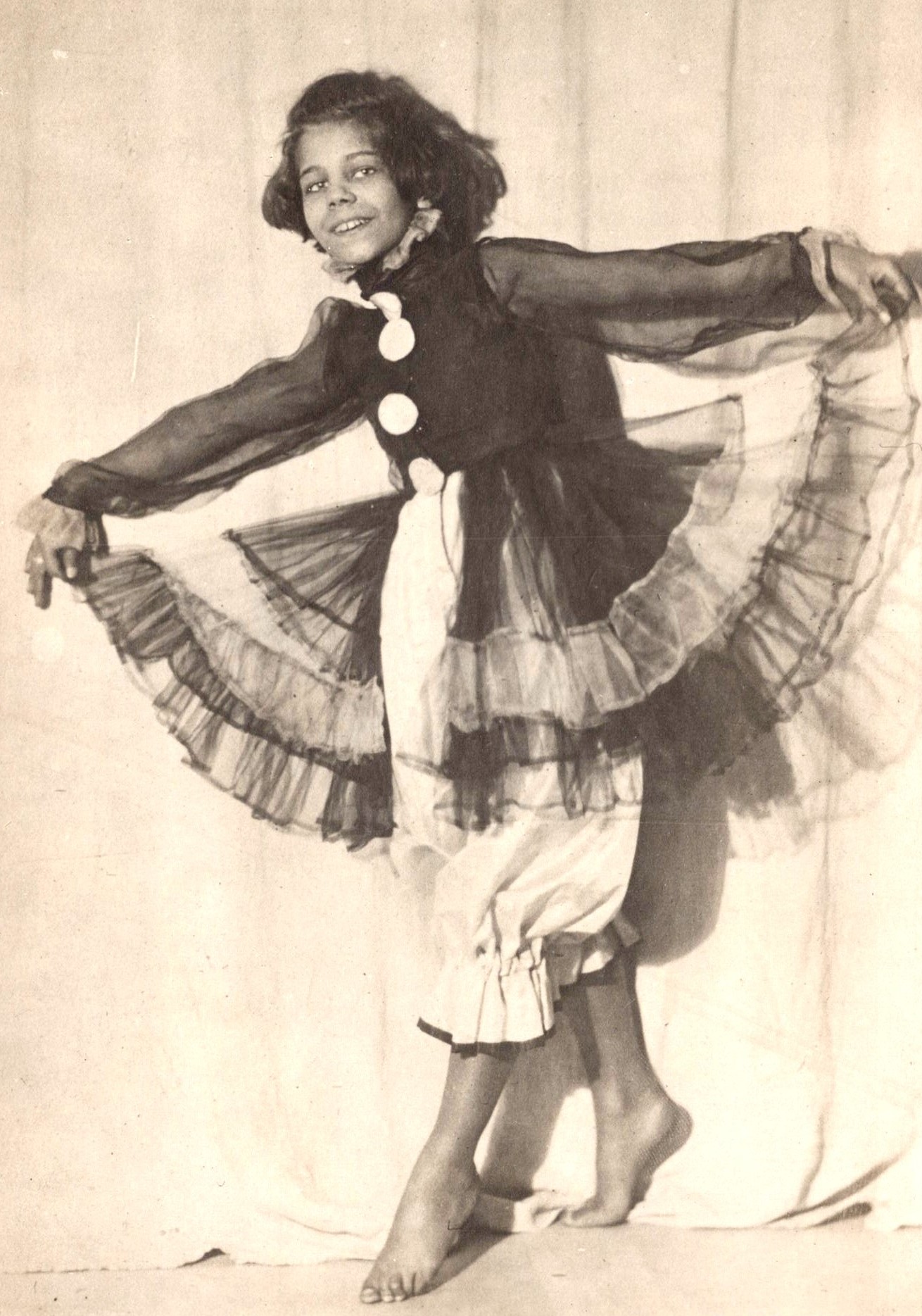
This vintage real photo postcard features a Black Woman in her dance costume. She is an unusual costume and she is lifting her skirt in a risque manner. The woman has a pretty smile. SOLD
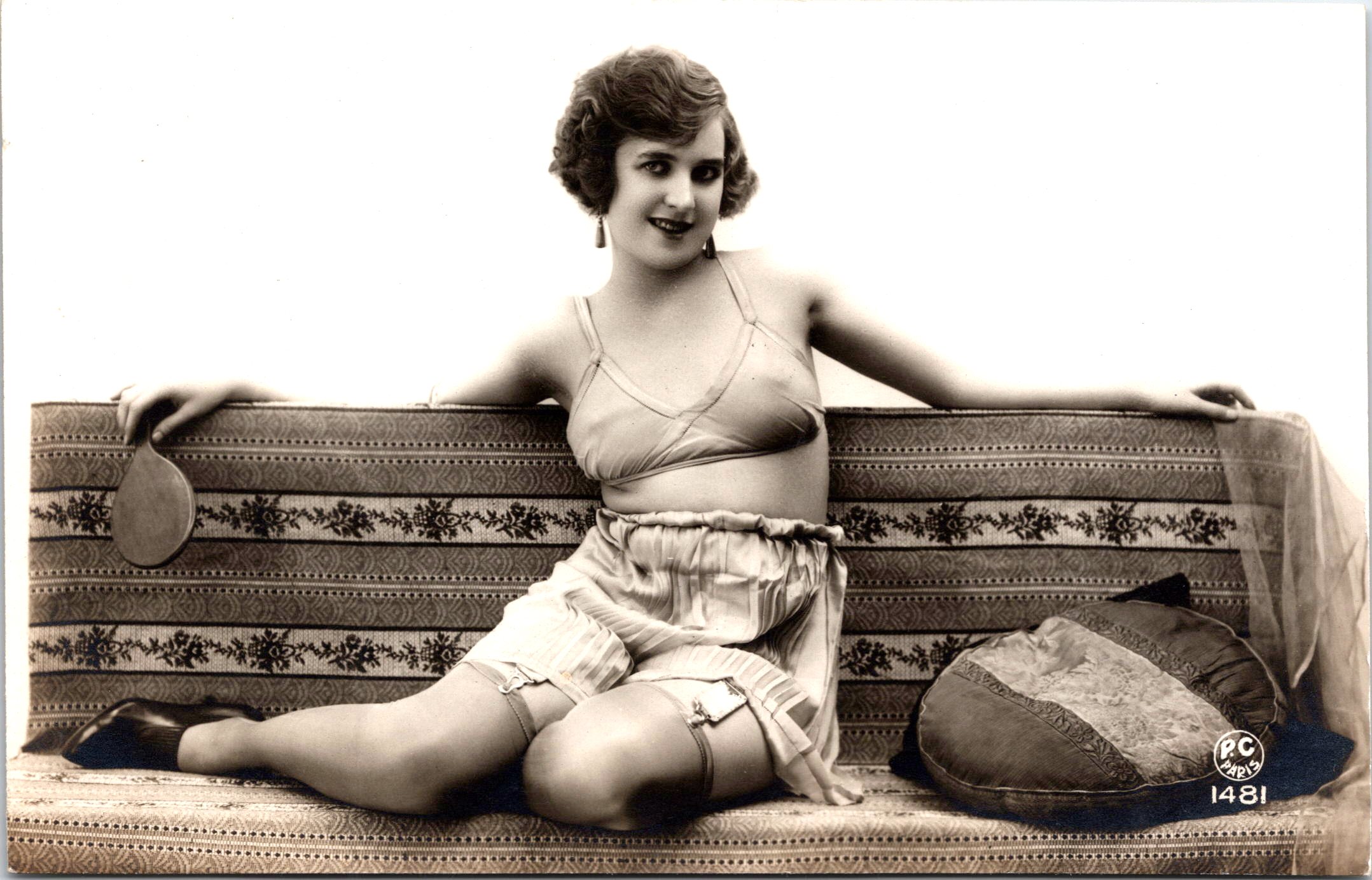
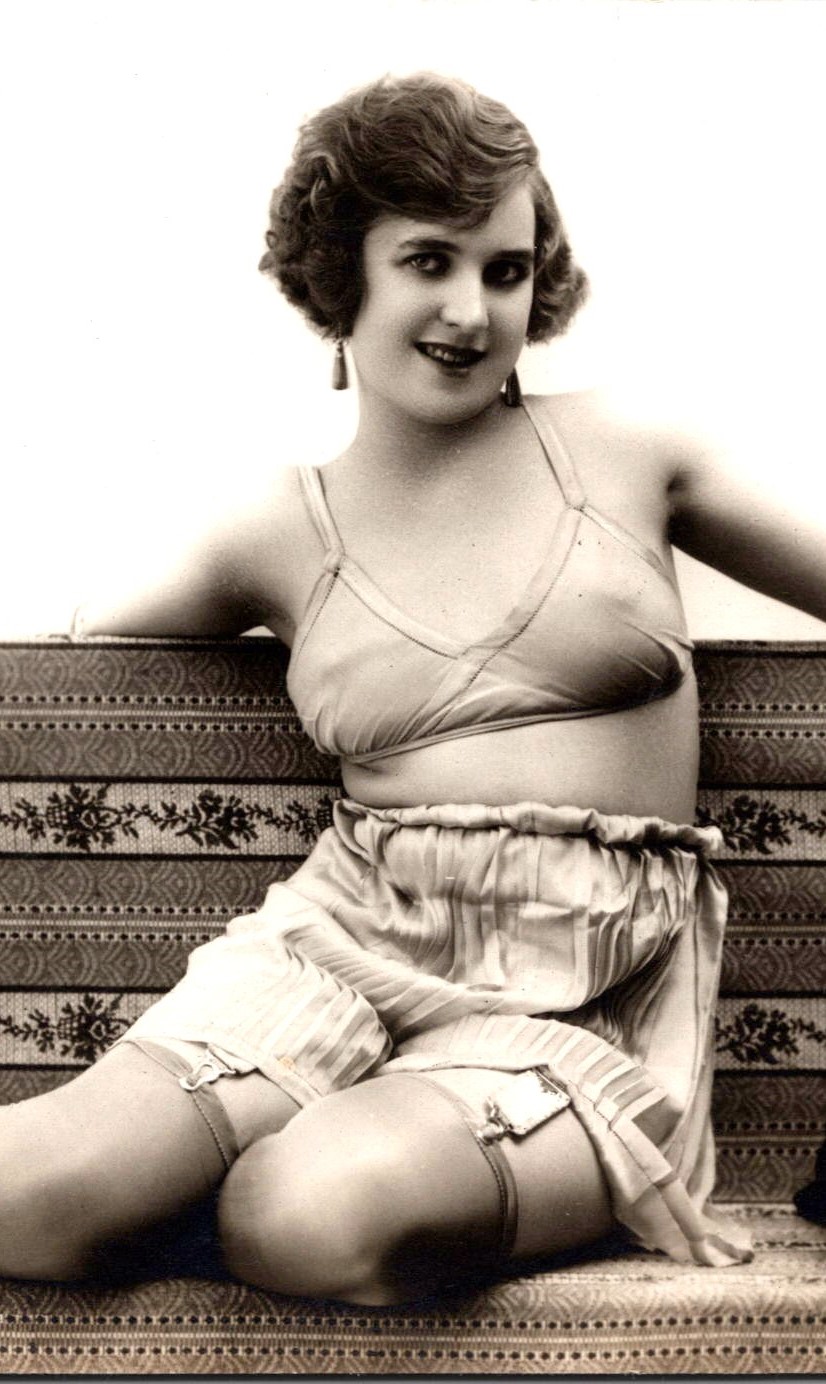
This risque vintage real photo postcard captures a pretty young woman sitting on a couch. The woman is holding a small mirror in her right hand. She is wearing lingerie. Her sheer bra, exposed legs, stockings, garter, and “come hither” pose, all contribute to making this an erotic postcard. This postcard was produced by PC Paris as part of a series (No.1481). The P.C logo is an abbreviation for Papeteries d Levallois-Clichy. The firm published a variety of real photo postcard topics including portraits of pretty models, nudes, views, and holiday cards. The company was active in the 1920’s. SOLD
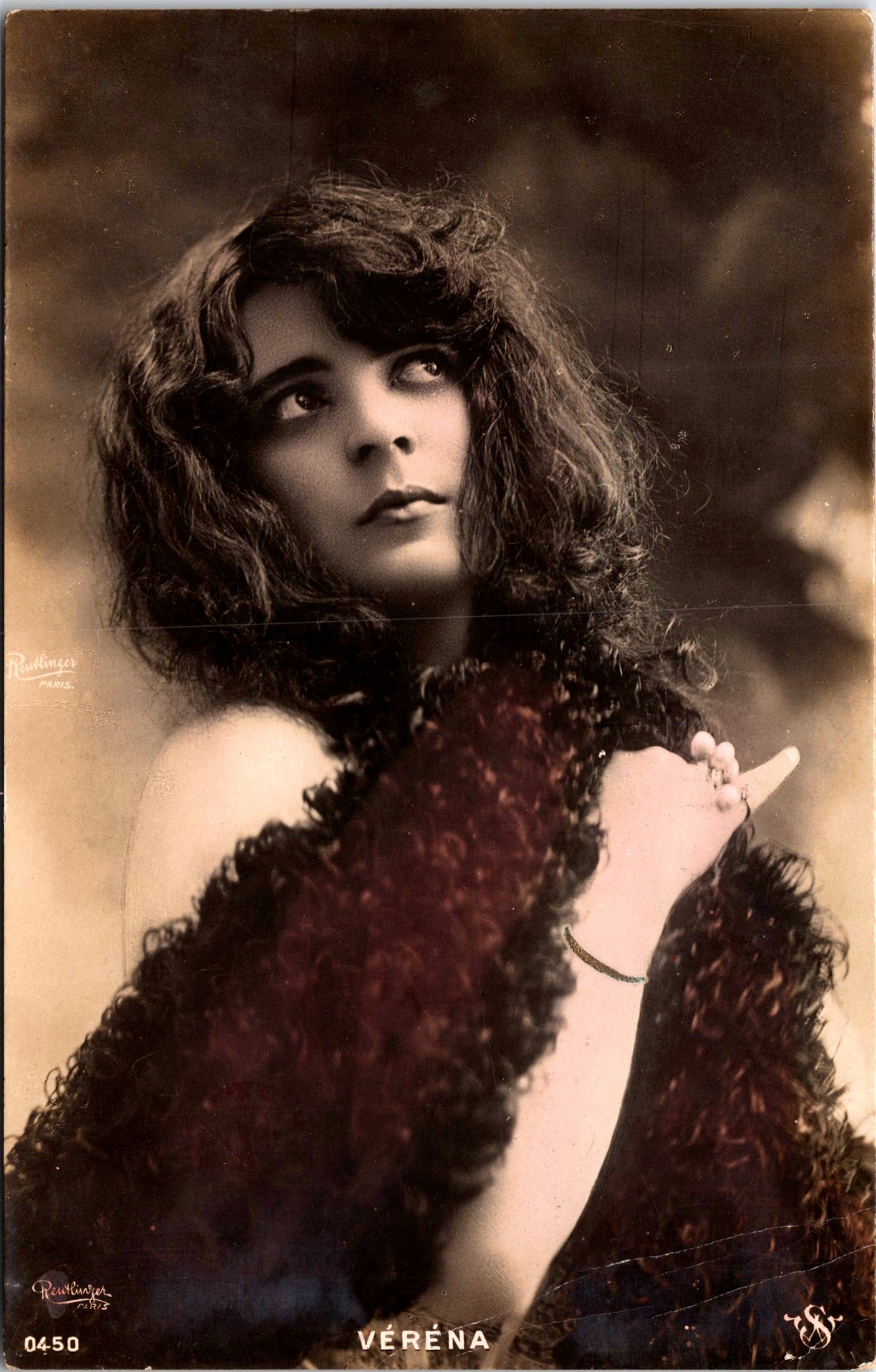
This vintage real photo postcard features Verena, an enchanting and seductive performer captured by the lens of renowned photographer, Leopold Reutlinger. She has long dark cascading hair and she exudes an aura of mystery. Adorned with a feather boa, she reveals a bare shoulder, adding sensuality to this portrait. Verena was one of the early performers at the Folies Bergere. This postcard is part of a series (no.0450). SOLD
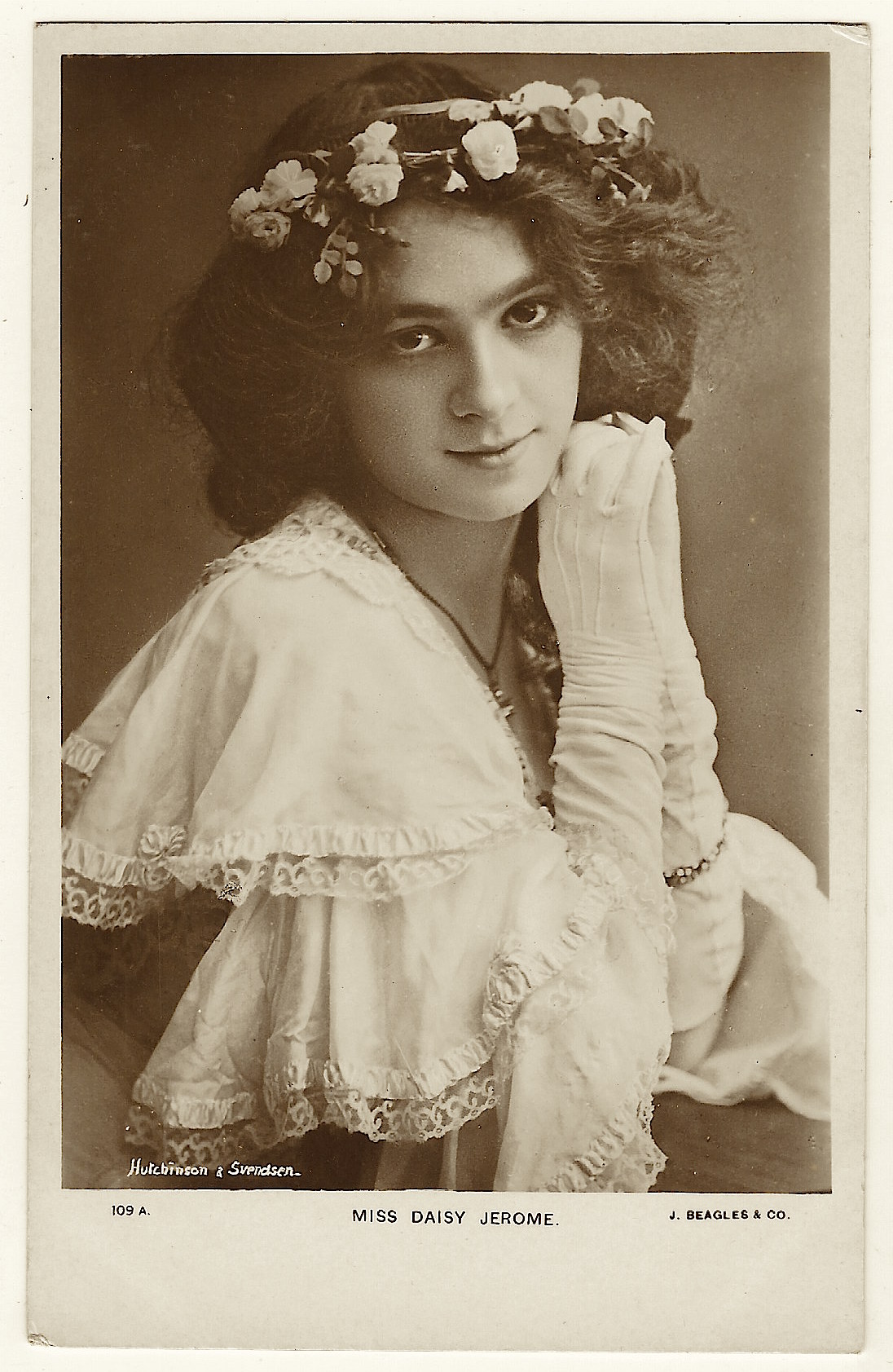
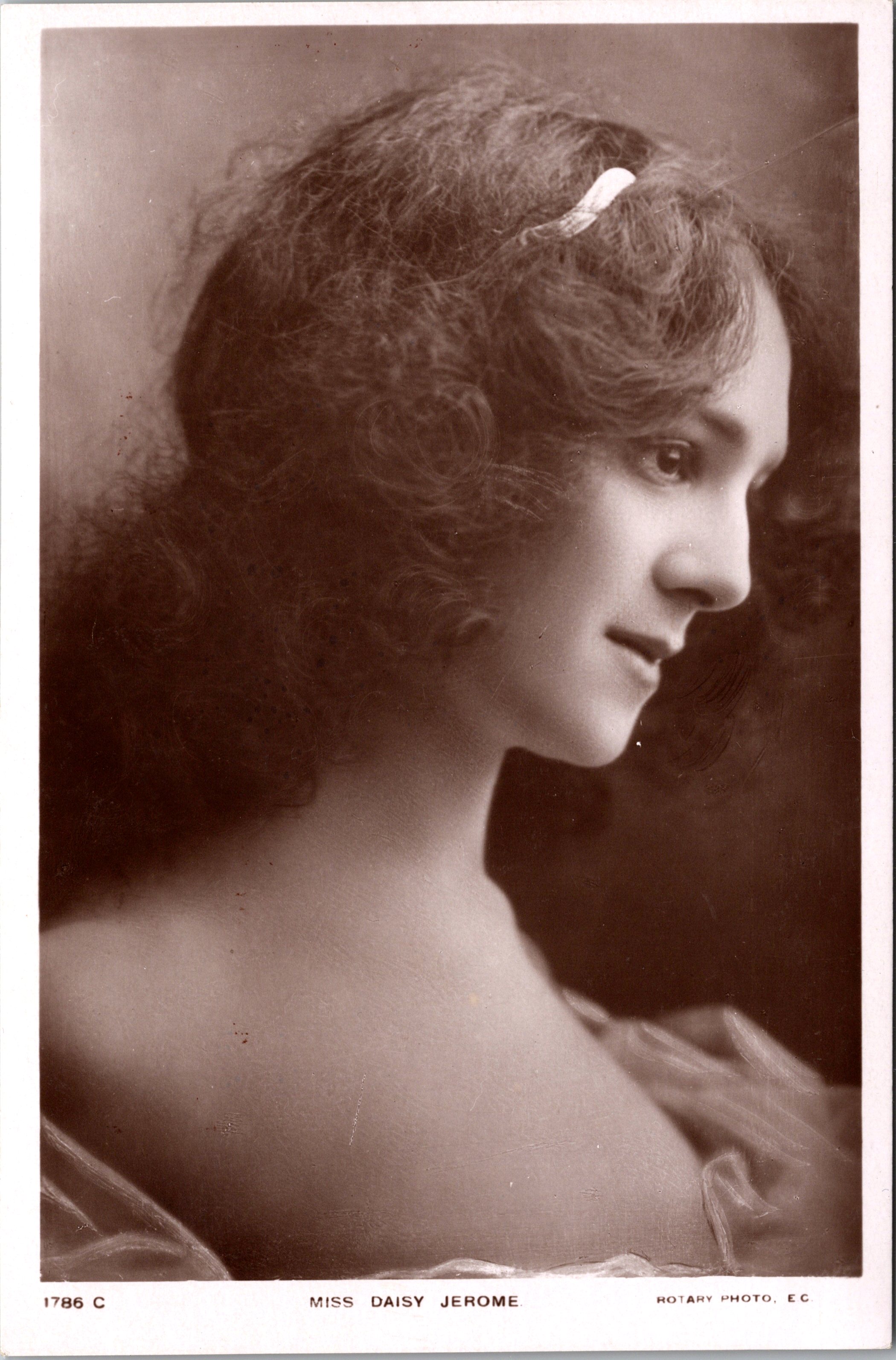
This rare vintage real photo postcard features the red headed actress that electrified the Australian stage. She was noted for her famous wicked wink. The life and times of Daisy Jerome can best be described as scandalous. She arrived in Australia in 1913 for a three year stage tour. Feminism was rising in the western world. Suffragettes were marching for the right to vote. Women were smoking, driving, wearing less conservative fashion, and even dancing the tango with it’s sexual overtones. She arrived in Adelaide adorned with an excess of jewelry. She was born in America but raised in England. Her place of birth was New York and she was born Daisy Witkowski in 1886. Daisy reported that she was raised in a multilingual household that had been visited by Presidents Lincoln, McKinley, and Roosevelt. After experiencing financial problems, her father moved the family to England. Money was needed and Daisy followed her sister onto the stage. She played the Palace and toured with companies that gave her a chance to do comedic singing and pantomime. Her performances were considered to be amusing and irreverent. She was a comedienne. Her humor has been described as “vibrant” and “wicked”. Daisy was described as “feisty”, “cunning”, and “independent”. She was small and dainty and had compelling eyes and an expressive face. Her performances had a risque tone and she had a hoarse, sensual voice. She could toe dance and wooden shoe dance, but was most known as a mimic and comnic singer. After a year of marriage, she deserted her first husband to live with another man. In 1910, she took a journalist to court for libel. The reporter had accused her of performing encores when audiences had not requested them. She claimed that her professional reputation had been damaged. The court case was a circus. The defense ridiculed one of her songs which caused her to break into tears in the witness chair. She won the case but was barely compensated. When she began her tour of Australia, she was recognized as raucous, vulgar and “an acquired taste”. She quickly charmed those that were hesitant to appreciate her and she soon received a warm welcome and a complimentary nickname, “The Electric Spark”. Her carrot red hair became the subject of much debate. She claimed it was her natural color but most people were not believers of her claim. One day, an Australian comedian told her that a gentleman had taken offence to her hair. The comedian said that the offended man would visit her that night. The comedian then informed the local fire chief that there was great risk of fire during Daisy’s time on stage. The worried fireman came to the theatre and when he saw Daisy’s red hair, he realized he had been a victim of a joke. He kept the joke going when he said that he agreed there was risk of fire and he ordered the scenery to be fireproofed immediately. During Daisy Jerome’s era, there was a bias against redheads. They were considered to be hot tempered and sexually wild and uninhibited. Her theater/music hall background only magnified some people’s negative view of Daisy. After completing her touring contract in Australia, she signed another one. This time she performed on a vaudeville stage which allowed her to showcase her bawdy songs. In 1914 she sang a feminist style song called “The Press, the Pulpit, and the Petticoat”. This song argued that women were more powerful and influential than the media and the church. Daisy was a woman who had unconventional ideas. She would not restrained by political correctness. She stated in a 1914 interview that “I refuse to regulate my acts to accepted rules of conduct”. Despite her views, she remained popular with Australian audiences. She left Australia in 1916 and returned in 1922 for another successful tour. Later, she was involved in another court case which this time involved her suing her maid over missing jewels. With the arrival and subsequent popularity of films, Daisy Jerome faded out of the public’s focus. Two photo portraits of Daisy Jerome can be found in England’s National Portrait Gallery.
Postcard 1 was published by J. Beagles & Co. of London, England as part of a series (No. 109 A). The company was started by John Beagles (1844-1909). The company produced a variety of postcards including an extensive catalog of celebrity (stage and screen) portrait postcards. After Beagle’s death, the business continued under it’s original name until it closed in 1939.Miss Jerome’s portrait was taken by the Hutchinson & Svendsen studio. The National Portrait Gallery asserts that this pair of photographers were active in London between 1905 and 1906. This vintage photo postcard is in excellent condition (see scans). This postcard portrait of Daisy Jerome is absolutely beautiful and very uncommon. (SOLD)
Postcard 2 was published by Rotary Photo (England) as part of a series (No. 1786 C). This vintage photo postcard is in good condition (see scans).
Buy this Vintage Real Photo Postcard (includes International shipping outside the US) #5172
To purchase this item, click on the Pay with PayPal button below
$22.00
Buy this Vintage Real Photo Postcard (includes International shipping outside the US) #5172
To purchase this item, click on the Pay with PayPal button below
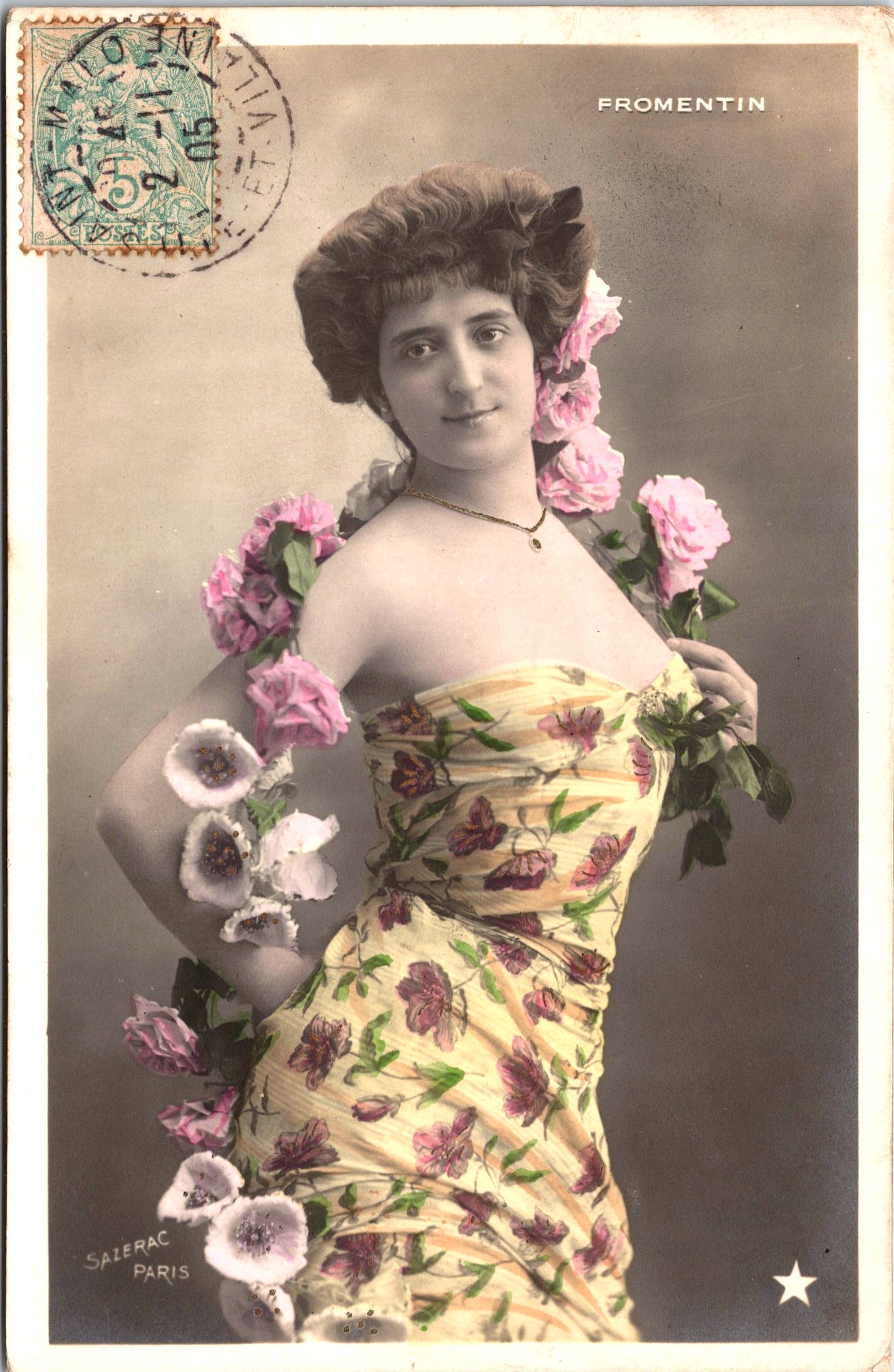
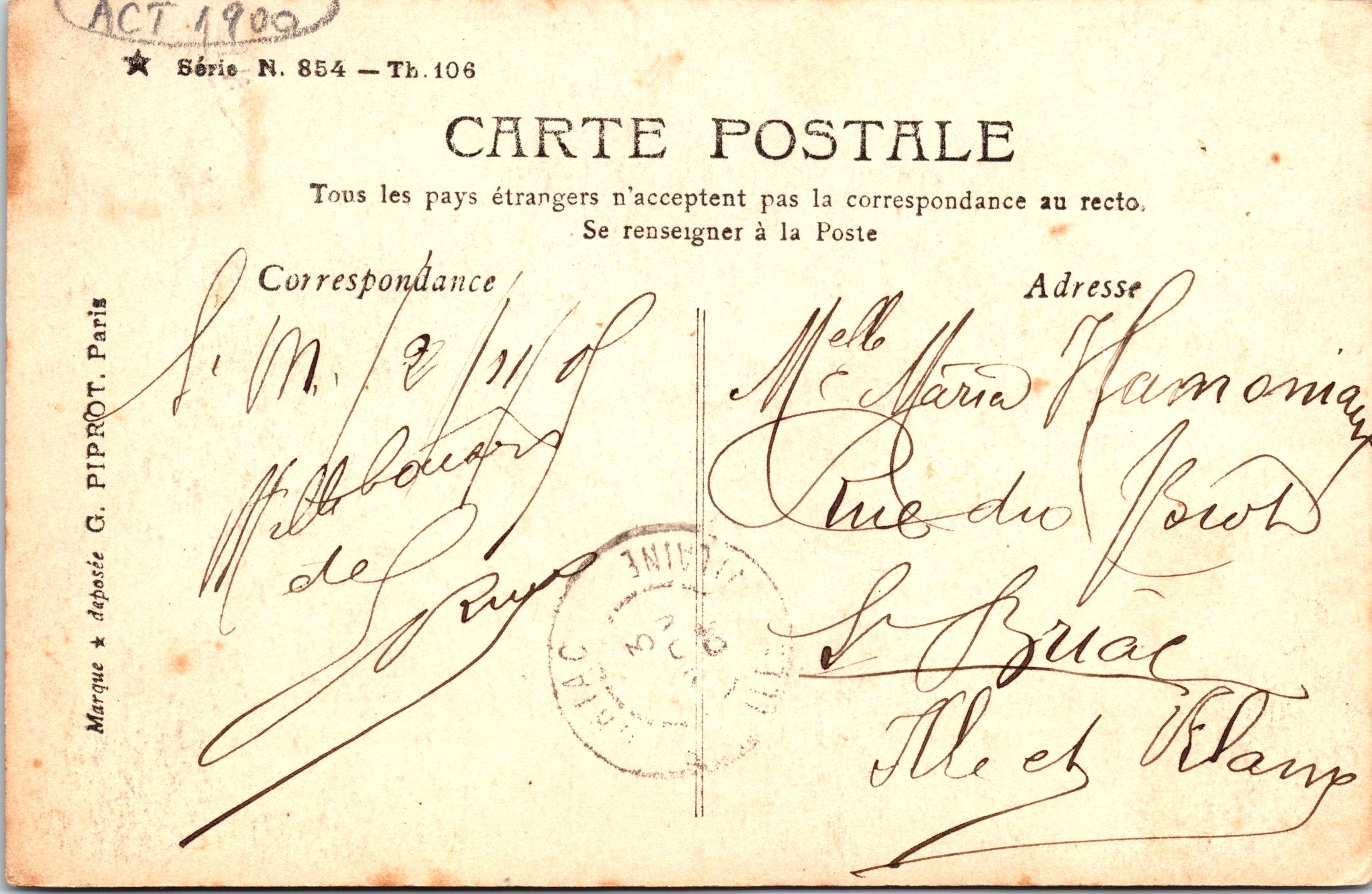
This risque vintage real photo postcard features a fashionable performer named Fromentin. The card is color tinted. She has a string of flowers wrapped around her shoulders and her dress is a flower pattern. The combination is a nice touch. “The Theatre” (1882) states that Fromentin, among others, present grace and beauty difficult to match. Fromentin was photographed by Sazerac. He was a photographer well known for his portraits of the showgirls of Paris. The publisher of this postcard, was Monsieur G. Piprot, of “Etoille” or “Star” publishing in Paris. The card is part of a series (No.854). The postcard has a postmark from 1905. SOLD
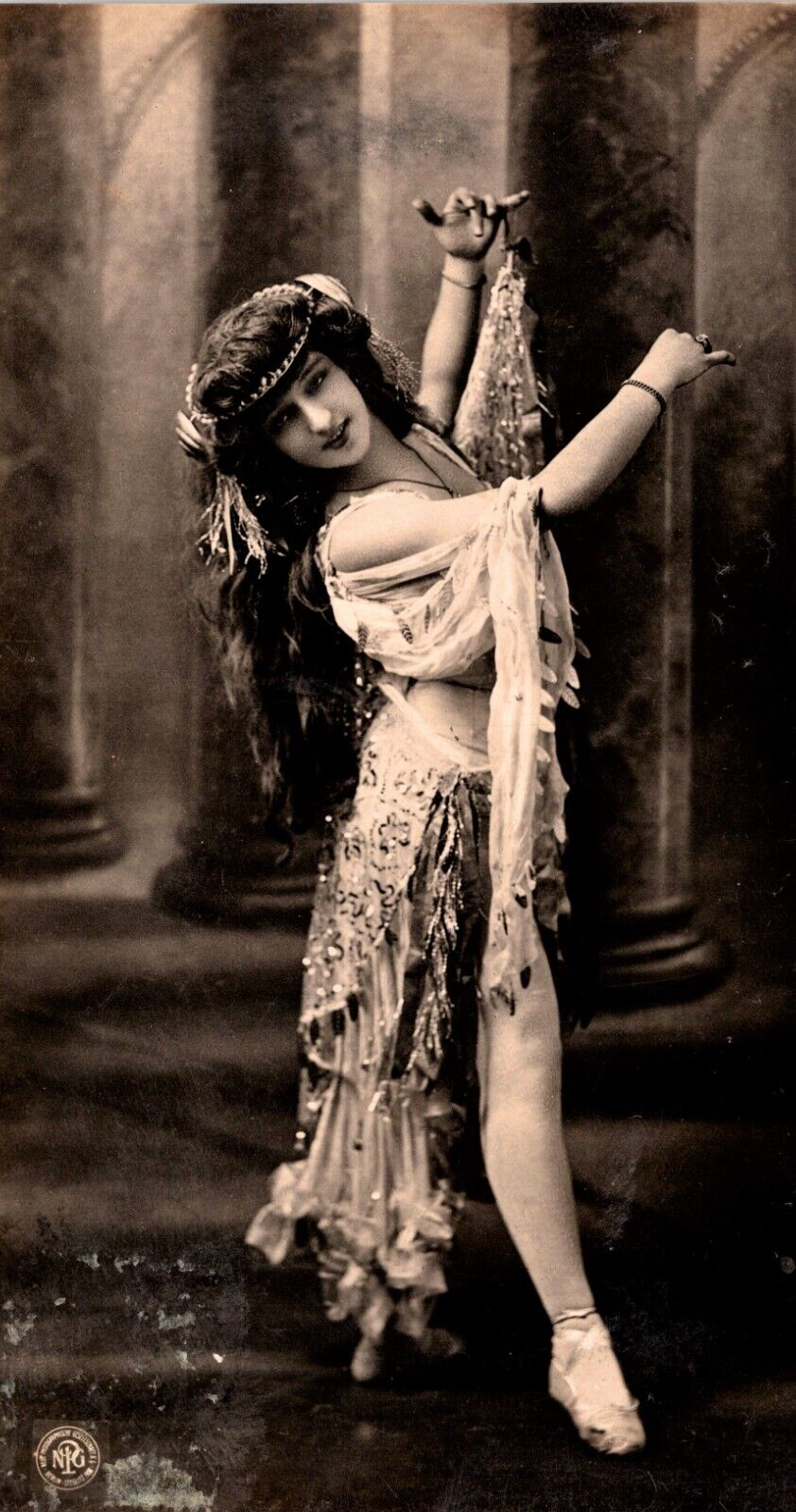
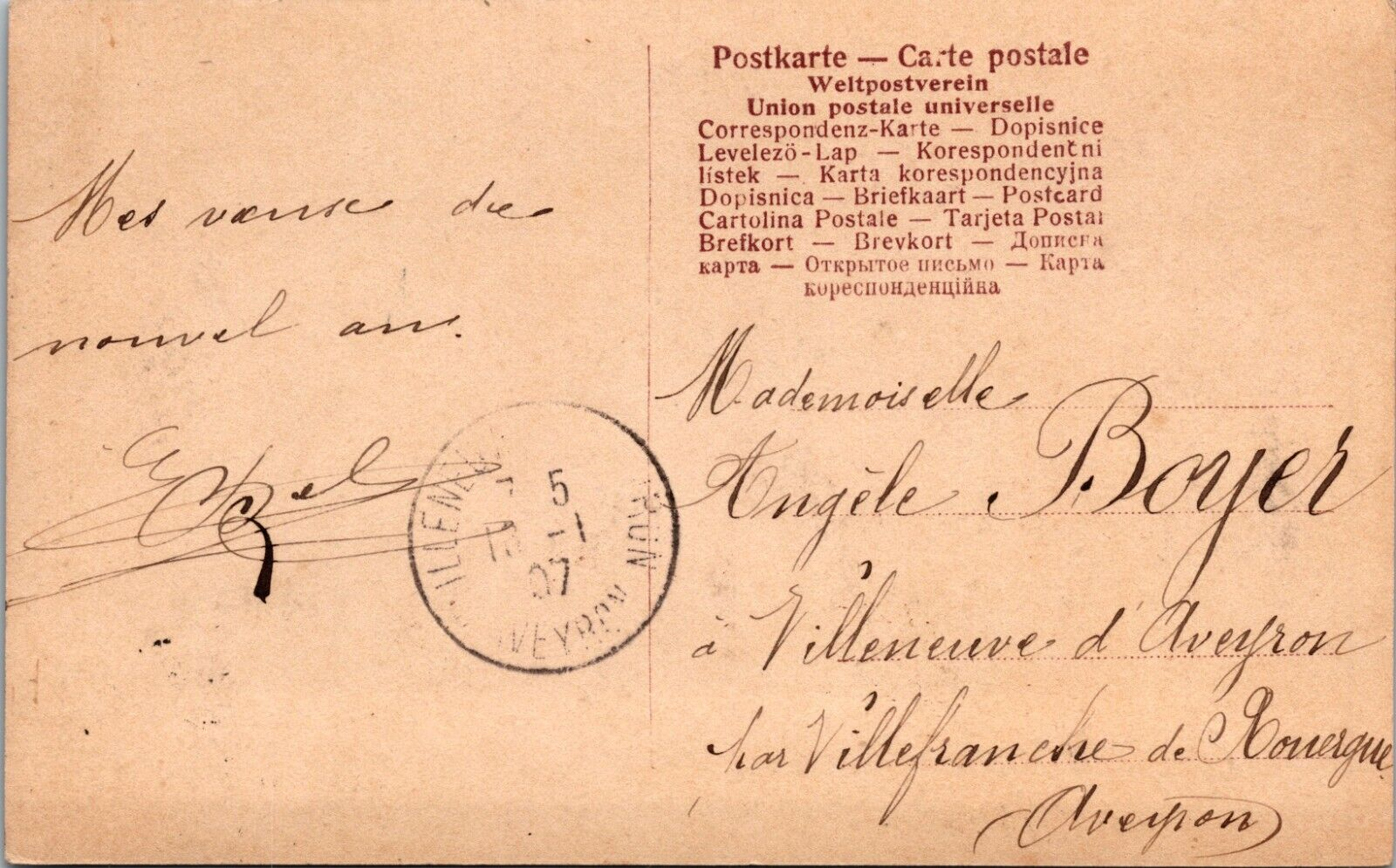
This vintage risque real photo postcard features a scantily clad pretty young dancer. Note her long hair and headress.The card was published by Neue Photographische Gesellschaft (NPG) as part of a series (No.553/2). The company was a leading bromide photo printing company for many years.at the beginning of the 20th century. (SOLD)
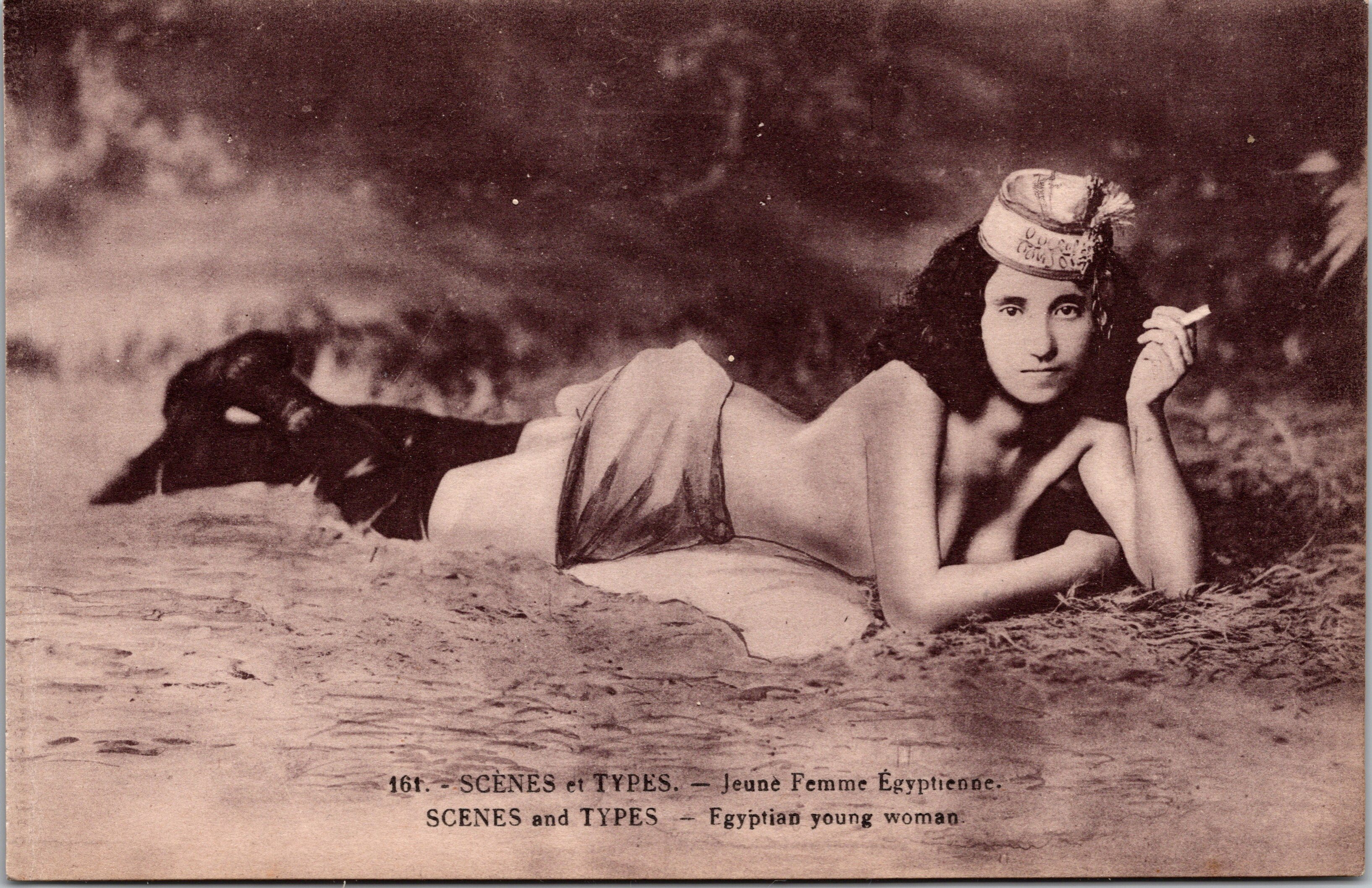
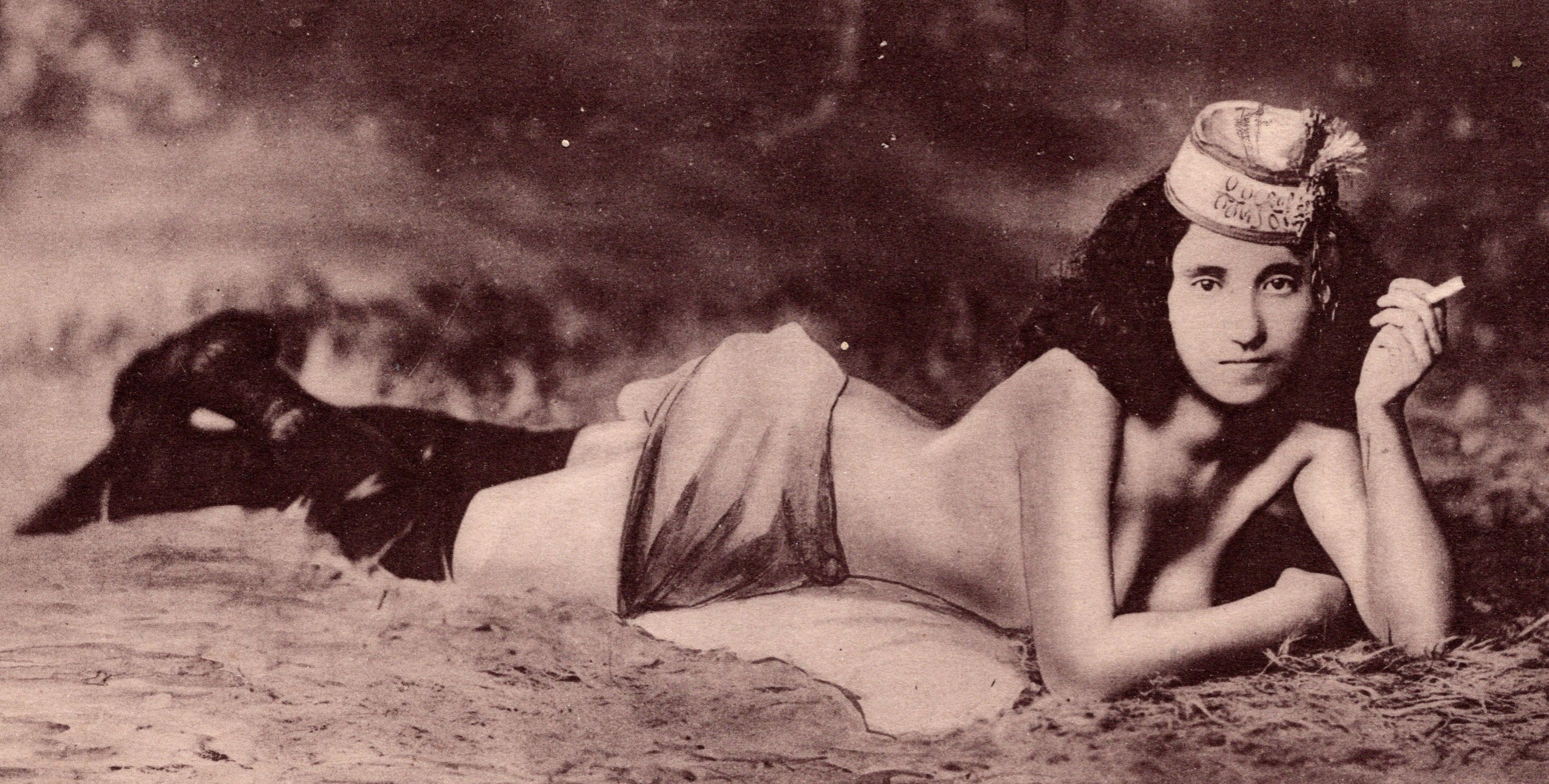
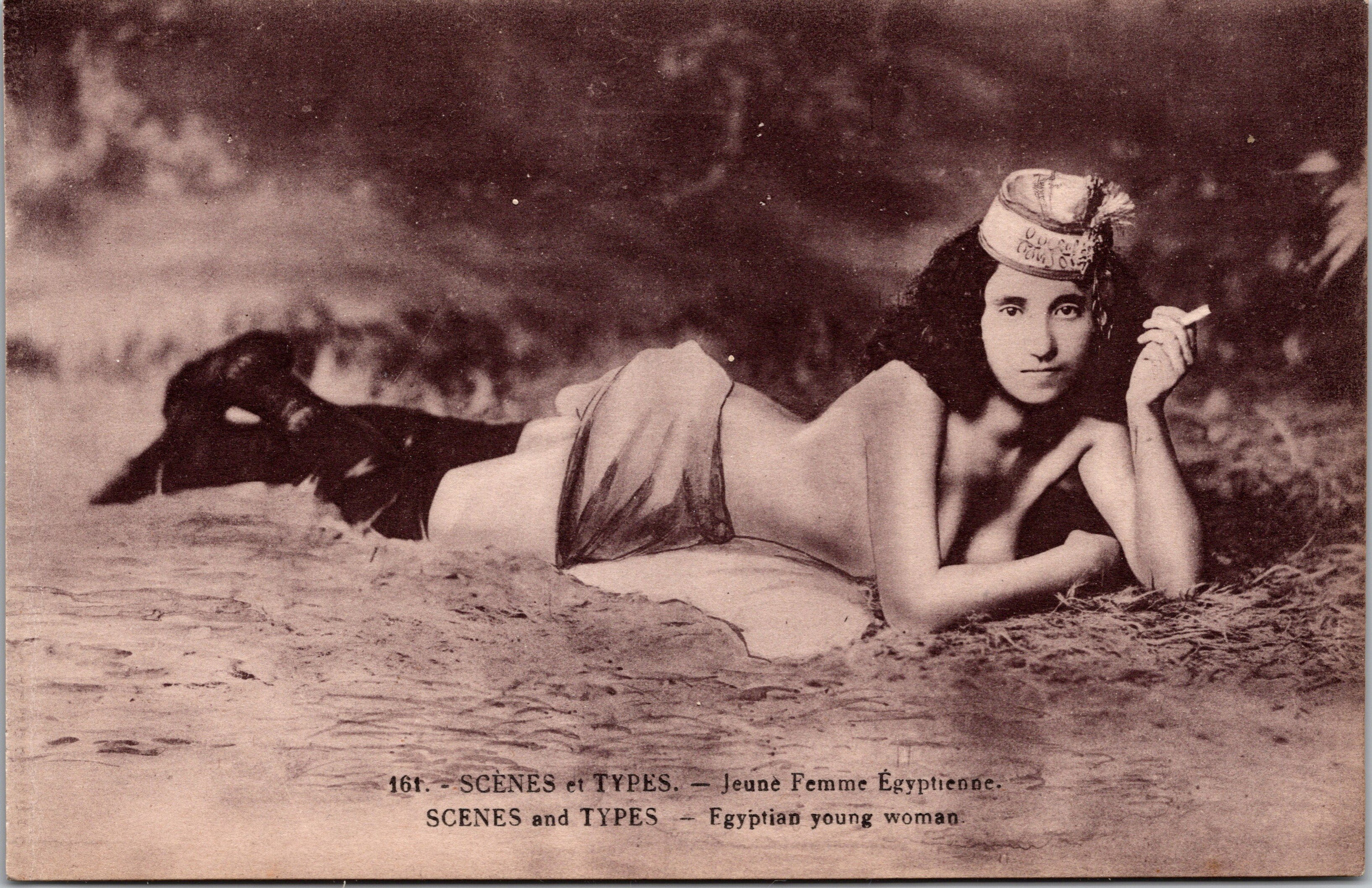
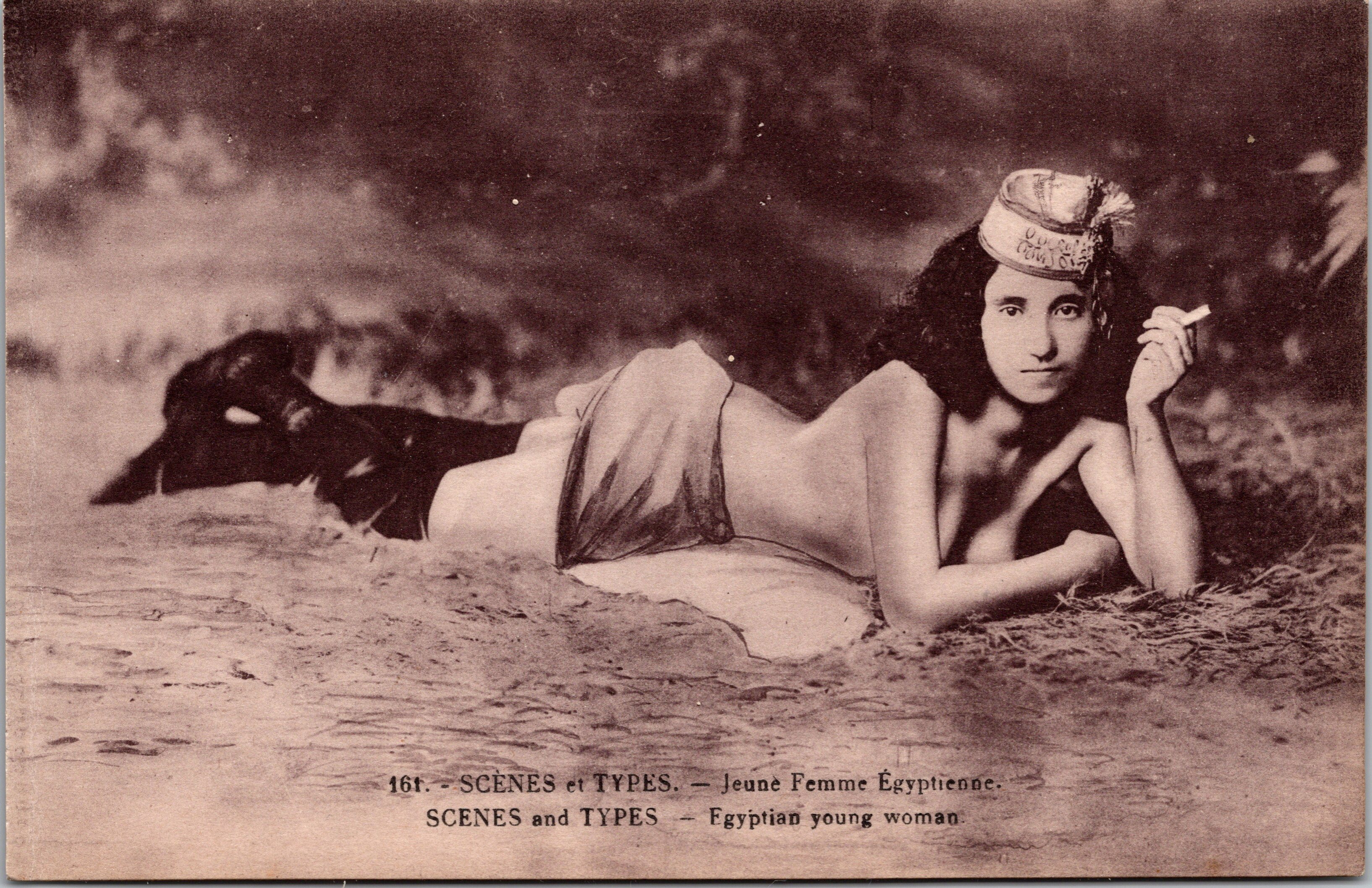
This vintage postcard features a partially clad young Egyptian woman lying on the ground and smoking a cigarette. She appears in a risque pose on this suggestive postcard. The postcard is from the “Scenes et Types Series” (no.161). This vintage postcard is in very good condition (see scans).
Buy this Real Photo Vintage Postcard (includes shipping within the US) #5157
To purchase this item, click on the Pay with PayPal button below
$25.00
Buy this Vintage Real Photo Postcard (includes International shipping outside the US) #5157
To purchase this item, click on the Pay with PayPal button below











 THE CABINET CARD GALLERY