DOROTHY GULLIVER : PRETTY ACTRESS : ROSS VERLAG : UNIVERSAL PHOTO PORTRAIT : RPPC

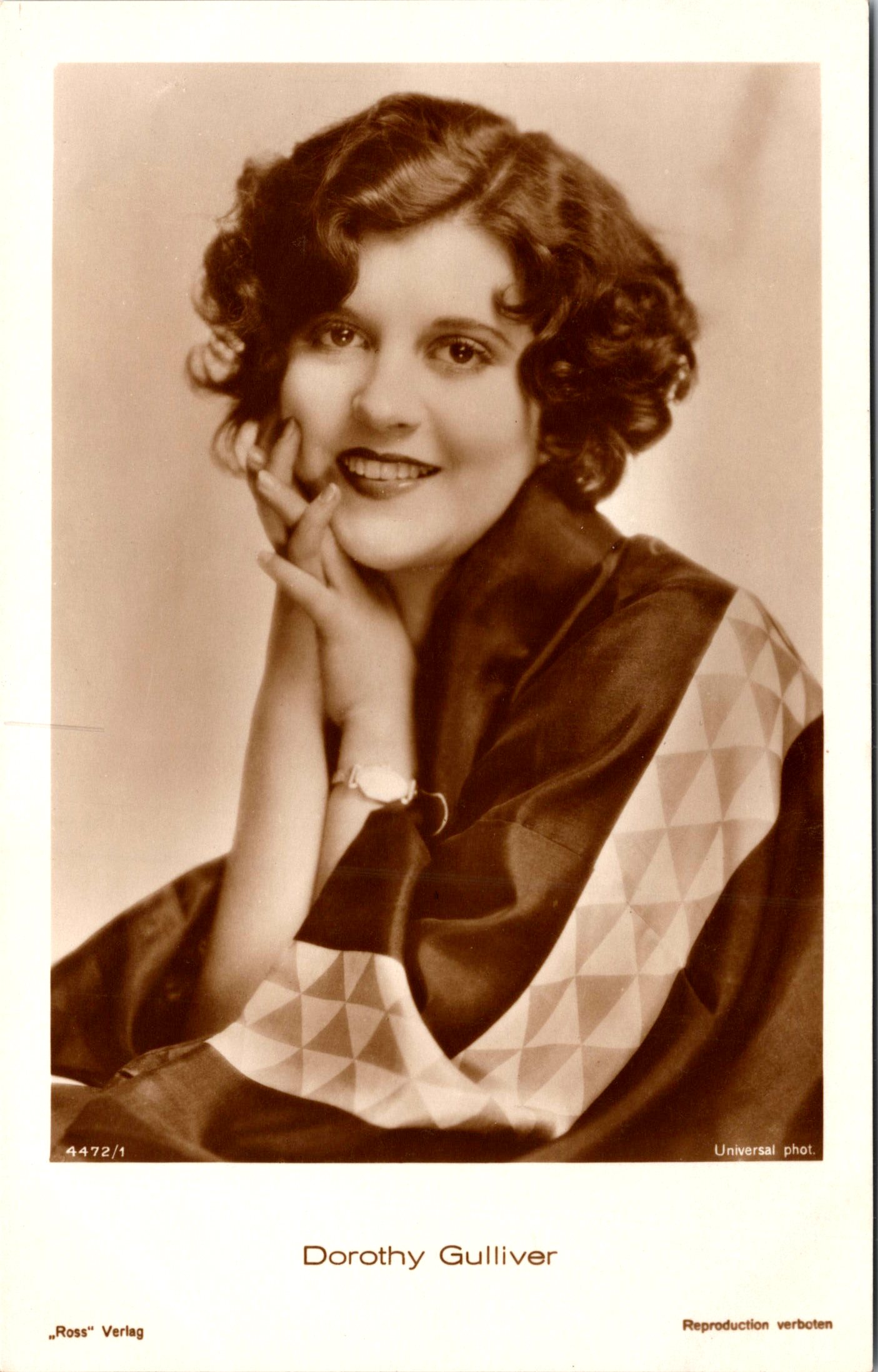
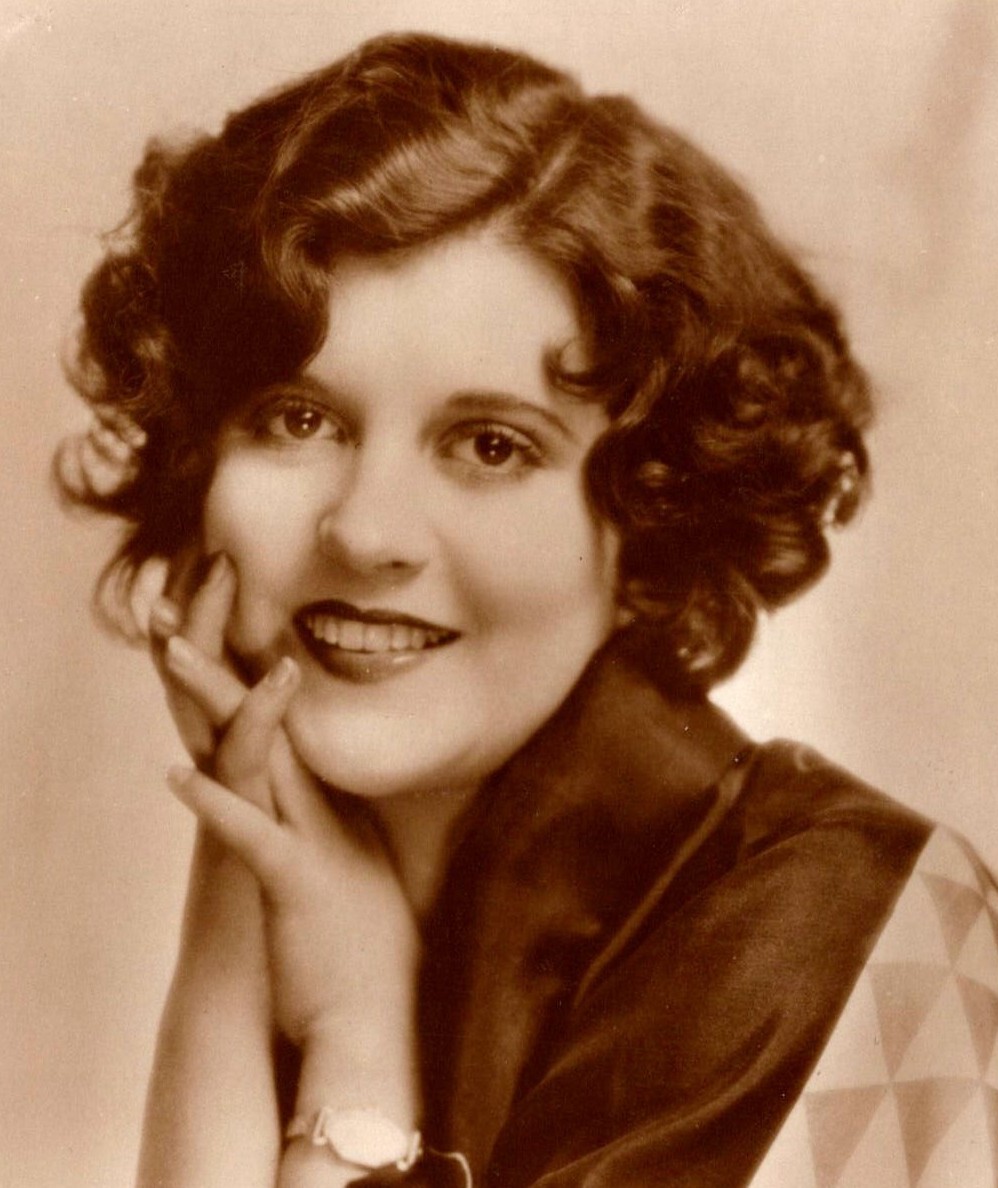
This is a beautifully composed real photo postcard (RPPC) of Dorothy Gulliver, produced by Ross Verlag, bearing the series number 4472/1. The photograph credit on the front says “Universal phot.”, indicating the image was taken under Universal’s photographic unit. Dorothy is shown in an elegant three-quarter pose, her head slightly tilted, her eyes bright and engaging, and a gentle, confident smile touching her lips. Her coiffed hair is waved softly around her face. She wears a silky, draped garment with geometric patterned panels, possibly a robe or decorative wrap, giving a graceful, glamorous look. The lighting highlights her complexion and facial features delicately, lending the image an enchanting, almost glowing quality. Her expression is poised but warm — she seems aware of her image and projecting a subtle star quality, rather than an overly stiff studio pose. The overall look is refined, feminine, and suited to her identity as a screen actress. This postcard is part of Ross Verlag’s cinema star series, a popular line of European film star postcards in the 1920s–1930s.The inclusion of “Universal phot.” connects this portrait directly to the film studio world. Take note that Dorothy produced relatively few postcards, and this is an attractive example. Dorothy Kathleen Gulliver was born in 1908, in Salt Lake City, Utah. She was raised in a Mormon family, one of six children, and even from youth expressed a desire to act. Her break came in 1925 when she won a Universal-sponsored national contest (after earlier local pageant success) which awarded her a six-month contract with Universal. She began appearing in silent short films and serials such as The Winking Idol (1926) and Strings of Steel (1926). In 1928, she was honored as one of the WAMPAS Baby Stars, a promotional campaign that highlighted rising actresses. Throughout the late 1920s, Dorothy appeared in The Collegians series of short films produced by Universal, often paired with George J. Lewis. When sound came in, she successfully made the transition and worked frequently in 1930s serials and Westerns — titles include The Galloping GhostThe Phantom of the WestThe Shadow of the EagleThe Last Frontier, and Custer’s Last Stand. Her film career spanned decades (officially credited in nearly 100 films), though after the 1930s her roles tended toward smaller or uncredited parts.  Remarkably, in 1968 she had a notable role in John Cassavetes’ Faces. Her final film appearance was a cameo in Won Ton Ton, the Dog Who Saved Hollywood (1976). On the personal side, Dorothy’s first marriage was in 1926 to Chester De Vito (an assistant director), which ended in divorce by 1932.  In 1947 she married Jack R. Proctor, and they remained together until his death in 1976. She passed away in 1997, in California. Interestingly, her life story encompasses the classic arc of early Hollywood: beauty contest discovery, silent film stardom, adaptation to talkies, and then gradual fading into character work.  (SOLD)

LOTTE NEUMANN : PRETTY GERMAN ACTRESS, SCREENWRITER, AND FILM PRODUCER


                                                                         POSTCARD 1

POSTCARD 2

POSTCARD 3 (SOLD)

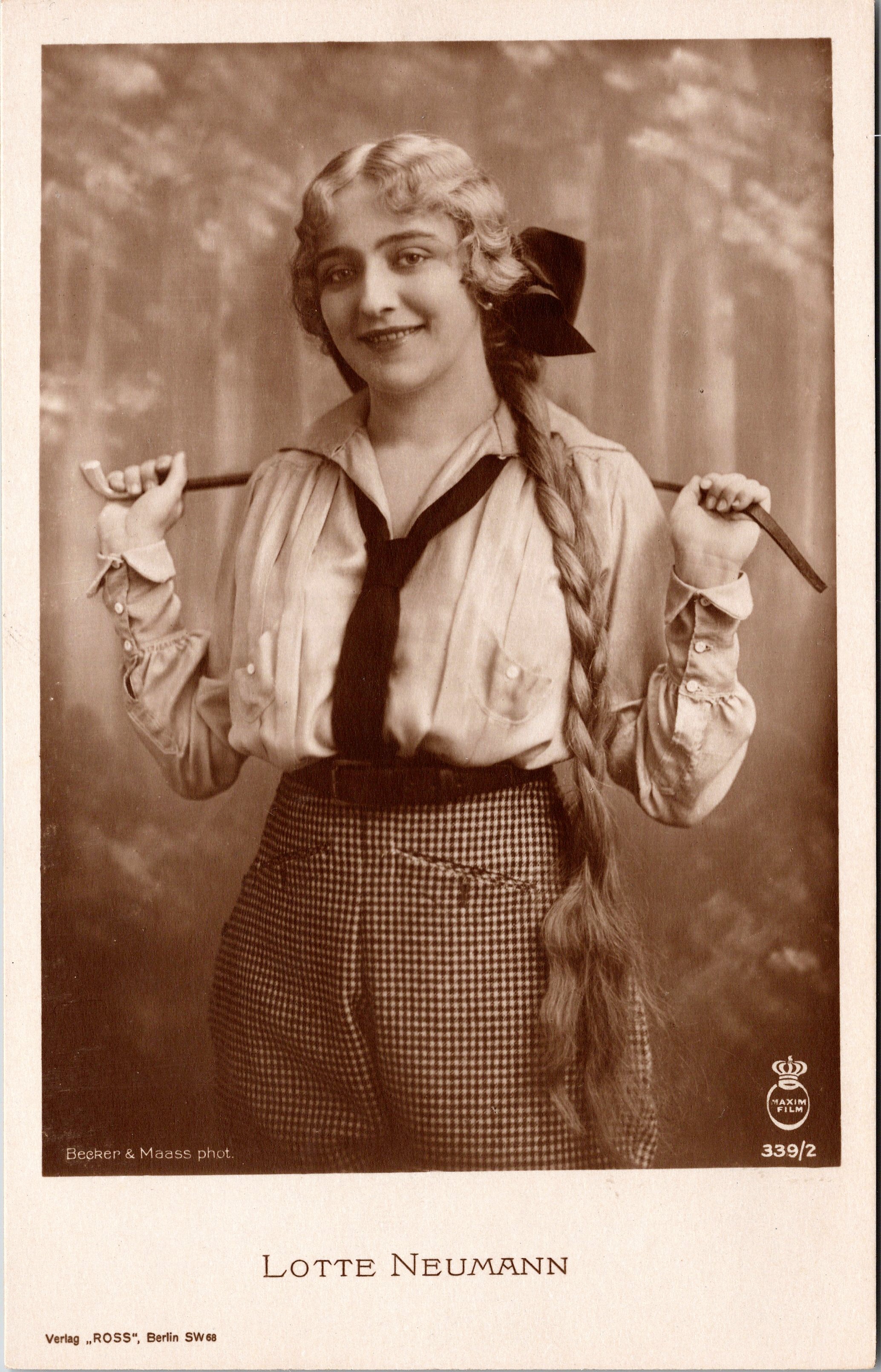
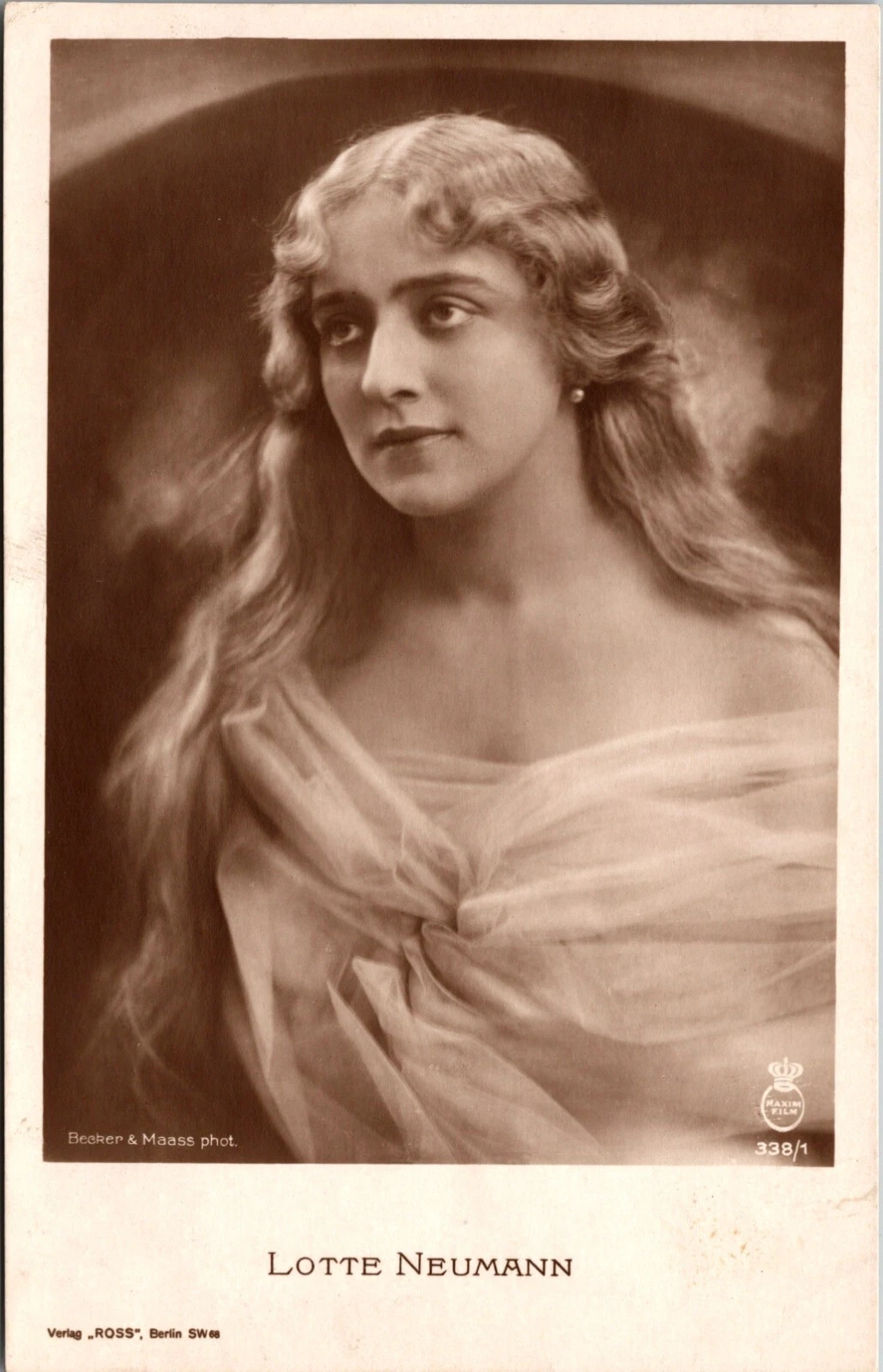
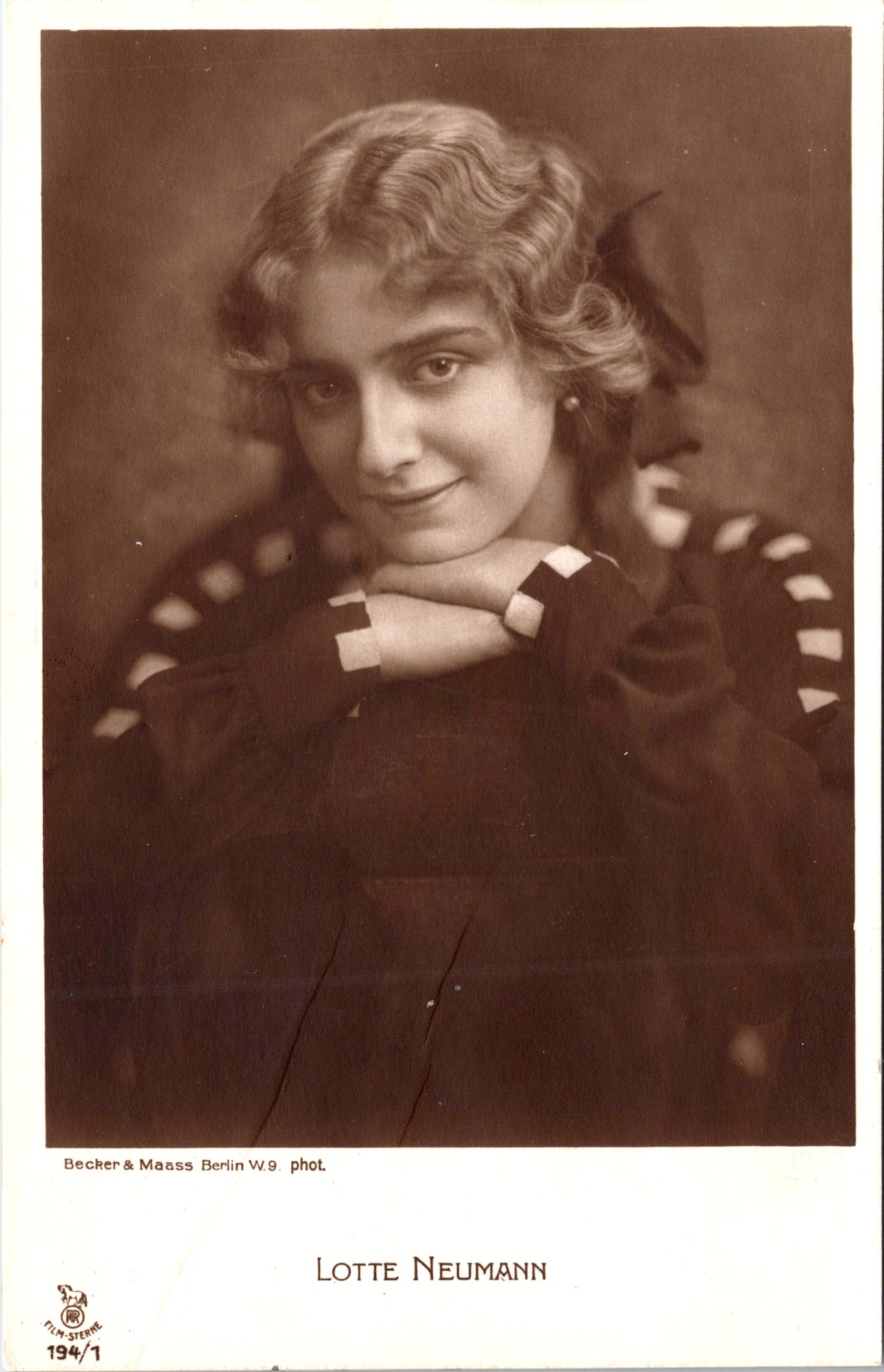
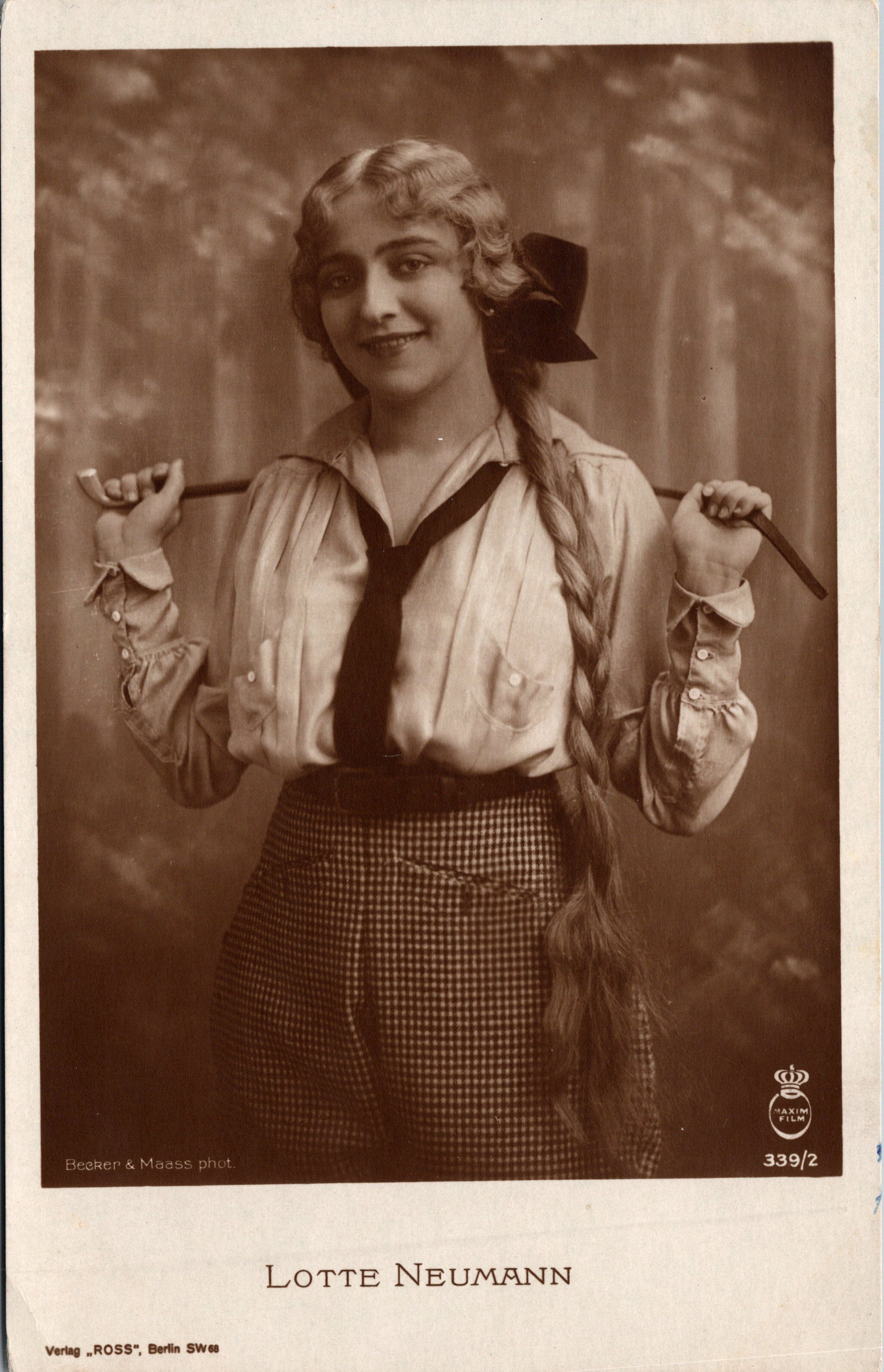
These vintage real photo postcards feature German actress, screenwriter, and producer; Lotte Neumann (1896-1977). She was active in the film industry between 1912 and 1958. Neumann was born in Berlin, Germany. At age 13, she took vocal training and acting lessons. She also studied dance and piano. Neumann also sang in two choirs. She originally desired to be a singer but after some advice from Max Mack, a German screenwriter, silent film producer and director; she chose to pursue a career in film. She made her debut in a short silent film, “Whims of Fate” (1912).  Neumann became a popular actress in Germany. In 1917 she began acting in films which she produced herself. She established her own film company (Lotte-Neumann-Film-GmbH) which operated between 1916 and 1919. In 1919, she began working for UFA, a major German film producer and distributor that was active between 1917 through the end of World War II. In 1920 she starred in two films directed by Ernst Lubitsch. He was a German born American film director, producer, writer, and actor. It was prestigious for Neumann to appear in his productions. She remained popular through the 1920’s but her career declined with the advent of sound film. This was a dreaded fate suffered by many actors and actresses during the transition to talkies. Her final screen appearance was in 1931. After retiring from acting she continued to write screenplays and partnered with her her husband, Walter Wassermann, in creative endeavors. They worked together from 1935 until his death in 1944. The IMDb reports that Neumann appeared in 69 films, wrote 24 films, and produced 14 films. Neumann’s film career accomplishments are very impressive.

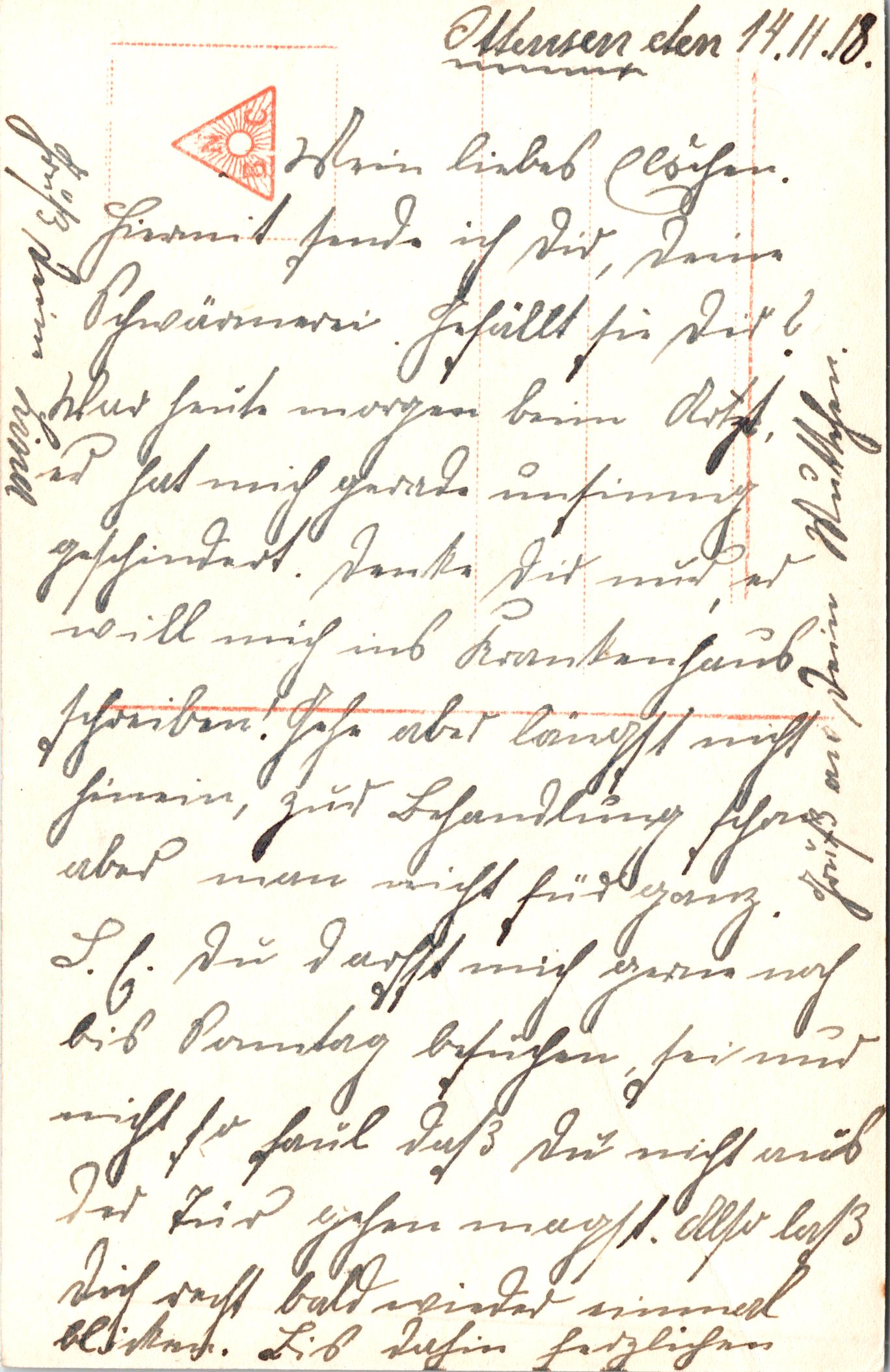
Postcard 1 was published by Film-Sterne as part of a series (no.194/1). The photographer of Miss Neumann’s photo was the Becker & Maass studio in Berlin. The message on the reverse of the postcard was written in 1918. The stamp box of this postcard has an interesting story. “NBC” (Neue Bromsilber Convention) was a price cartel established in 1909 that continued until the 1930’s. The purpose of the cartel was to ensure that the minimum price charged for postcards was kept at a sufficiently profitable level. A number of postcard publishing companies joined the cartel in an effort to stave off the effect of competition on the pricing of postcards. This postcard is in fair condition. Please note that there are two very thin creases located on the left and center bottom of the card. The photo postcard is priced accordingly.

Postcard 2 was published by Ross Verlag (Berlin) as part of a series (no.339/2). The photographer of Miss Neumann’s photo was the Becker & Maass studio in Berlin. Note the Maxim Film logo in the bottom right hand corner of the image. This postcard is in very good condition. 

Postcard 3 was published by Ross Verlag (Berlin, Germany) as part of a series (No.338/1). A logo for Maxim Films can be seen in the lower right hand corner of the image. Neumann must have been under contract with Maxim when this portrait was taken. The photographer of Miss Neumann’s photo was the Becker & Maass studio in Berlin. This postcard was likely published circa 1918. The stamp box of this postcard has an interesting story. “NBC” (Neue Bromsilber Convention) was a price cartel established in 1909 that continued until the 1930’s. The purpose of the cartel was to ensure that the minimum price charged for postcards was kept at a sufficiently profitable level. A number of postcard publishing companies joined the cartel in an effort to stave off the effect of competition on the pricing of postcards. SOLD

Buy this Vintage Real Photo Postcard (includes shipping within the US) #6031

To purchase this item, click on the Pay with PayPal button below

$10.00

Buy this Vintage Real Photo Postcard (includes International shipping outside the US) #6031

To purchase this item, click on the Pay with PayPal button below

$22.00

Buy this Vintage Real Photo Postcard (includes shipping within the US) #5304

To purchase this item, click on the Pay with PayPal button below

$14.00

Buy this Vintage Real Photo Postcard (includes International shipping outside the US) #5304

To purchase this item, click on the Pay with PayPal button below

$26.00

POSTCARD 1

POSTCARD 2

POSTCARD 3 (SOLD)

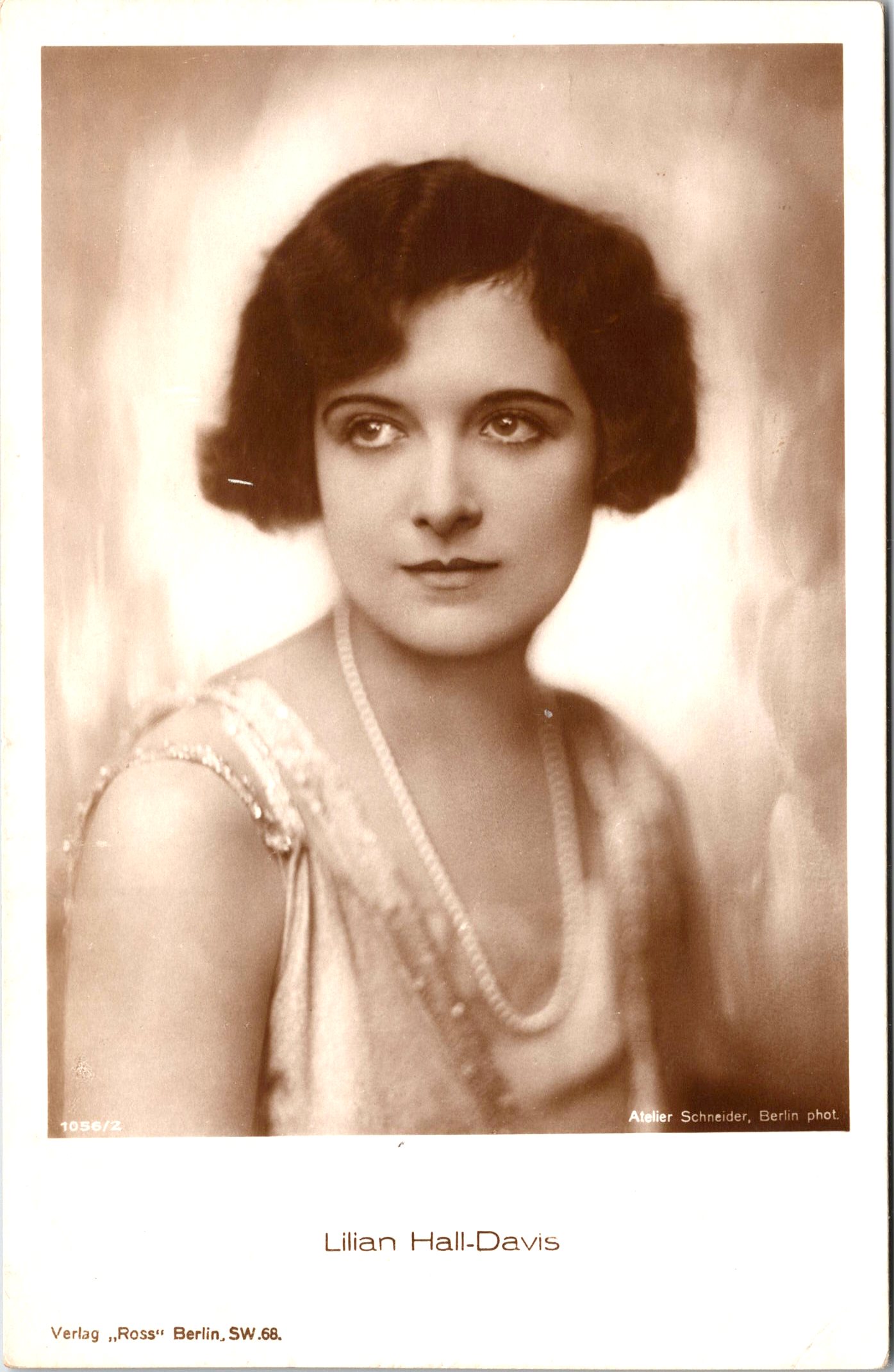
LILIAN HALL-DAVIS : BRITISH SILENT FILM ACTRESS : DIED BY SUICIDE AT 35 : RPPC

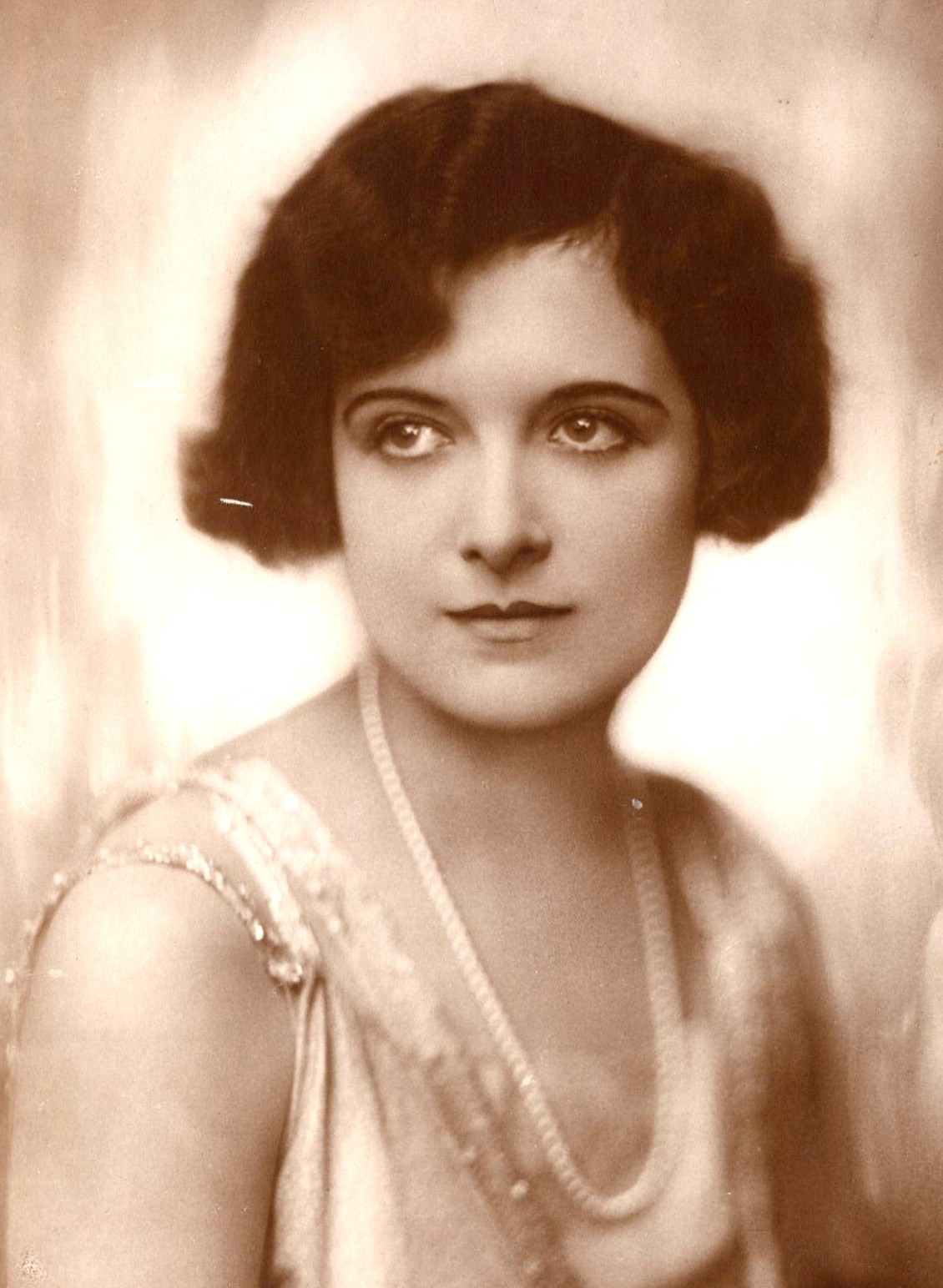
This vintage real photo postcard features British silent film actress, Lilian Hall-Davis (1898-1933). She had much success in silent films but struggled with the transition from silent to sound films. This frustration and disappointment likely led to her experiencing mental health problems and eventually to her suicide at the age of 35.  She was one of Britain’s leading actresses in the 1920’s, appearing in numerous films that showcased her charm, talent and on-screen presence. She worked with some of the most respected directors of her time and was a recognized talented actress in both British and International films. She starred in both romantic and dramatic roles. She is best remembered for her performances in two of Alfred Hitchcock’s films, “The Ring” (1927) and “The Farmer’s Wife” (1928). Other notable performances were in “The Passionate Adventure” (1924), “The Ghost Train” (1927), and “The Guns of Loos” (1928). Her popularity is reflected by the number of collectible postcards (such as this one) and photographs that were published during her era. This postcard shows Miss Hall-Davis with short wavy styled dark hair. understated make-up and large expressive eyes. Her gaze is slightly off-camera, conveying a reflective, almost wistful mood. She is wearing an elegant sleeveless dress adorned with embellishments along the shoulder strap. A delicate pearl necklace adds to her refined and classic look. The photographer of Miss Hall-Davis’s portrait was Schneider, a Berlin based photographer, The postcard was published by Ross Verlag (Berlin). Ernst Schneider was one of the most celebrated studio photographers in Berlin during three decades (1900’s, 1910’s, 1920’s). He photographed many celebrities from the world of theater, opera, circuses, and film. He was also one of the most prominent fashion photographers in Berlin. In addition, he was well known for his nude photography and he published books showcasing his work in this domain. Sometime around 1908 Schneider began working with postcard publishers “Rotophot” and “Neue Photographische Gesellschaft” (NPG). In 1919 he began working with Ross Verlag.  SOLD

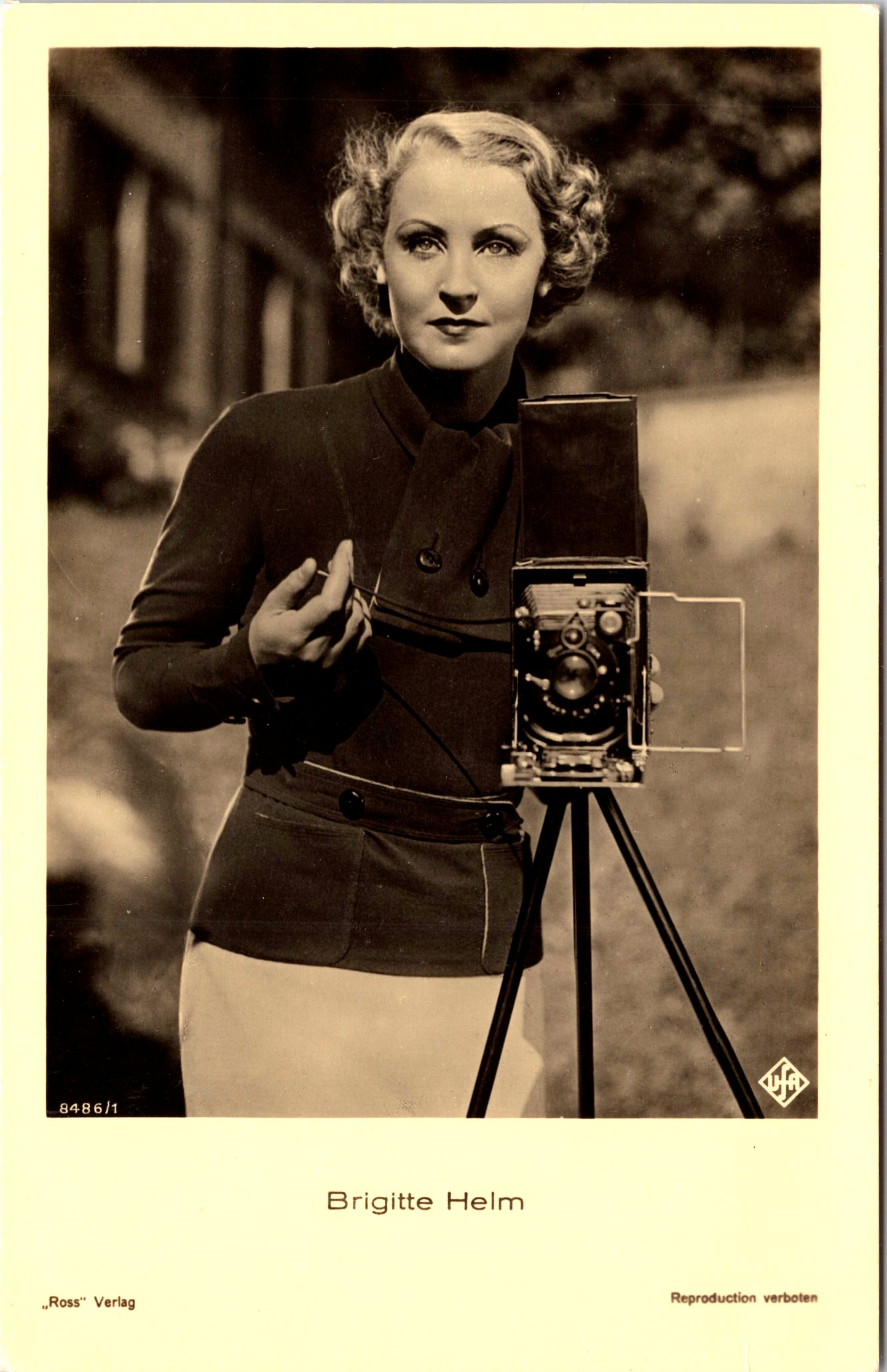
BRIGITTE HELM : TAKES A PHOTO : CAMERA ON TRIPOD : PHOTOGRAPHER : ACTRESS : RPPC

POSTCARD 1 (SOLD)

POSTCARD 2 (SOLD)

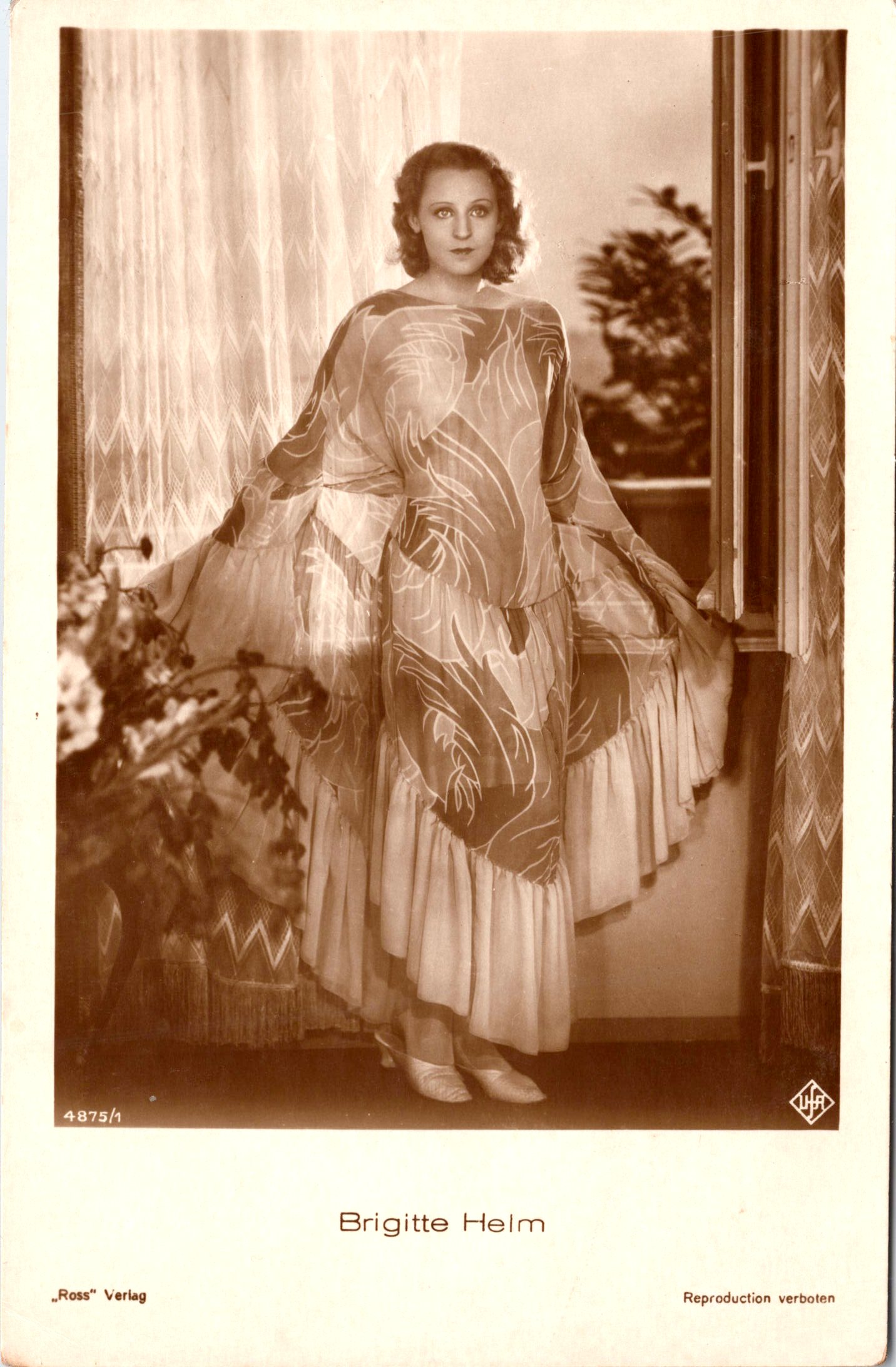
Postcard 1 features German actress, Brigitte Helm (1908-1996). The postcard captures Miss Helm taking a photograph with a camera on a tripod. Photographs of photographers in action are quite collectible. Now, back to Brigitte Helm. She is best known for her dual role in Fritz Lang’s 1927 silent film, Metropolis. After “Metropolis” she played in a long string of movies where she typically had the starring role. Helm was typecast as a Vamp or a femme fatale. She was born in Berlin. Her father was a Prussian Army officer. She was interested in acting at an early age and by age 12, was taking lead parts in school plays. At the age of 17, she acted in “Metropolis”. In 1925 she signed a ten year contract with UFA. She performed in both silent films and talkies. Beside “Metopolis” (1927), Helm was best known for “A Daughter of Destiny” (1928), “L’Argent” (1928), and “Alraune” (1929). Helm had an eventful personal life. Helm was involved in several traffic accidents. In fact, she was briefly placed in prison for manslaughter charges. She married industrialist, Dr Hugo Kunheim. The Nazis were not very pleased with her choice in men because Kunheim was Jewish. In 1935, Helm retired and moved with her husband to Switzerland where they started a family. Helm explained her retirement was because of disgust about the Nazi’s taking over the German film industry. This postcard was published by Ross Verlag as part of a series (No.8486/1). The card has the UFA logo which reveals it was published between 1925 and 1935. (SOLD)

Postcard 2 captures Miss Helm in a beautiful dress that illustrates her nice figure. This postcard was published by Ross Verlag as part of a series (No.8486/1). The card has the UFA logo which reveals it was published between 1925 and 1935.  (SOLD)

POSTCARD 1

POSTCARD 2

LILLIAN GISH : PRETTY SILENT FILM STAR : D W GRIFFITH : RPPC

POSTCARD 1 (SOLD)

POSTCARD 2 (SOLD)

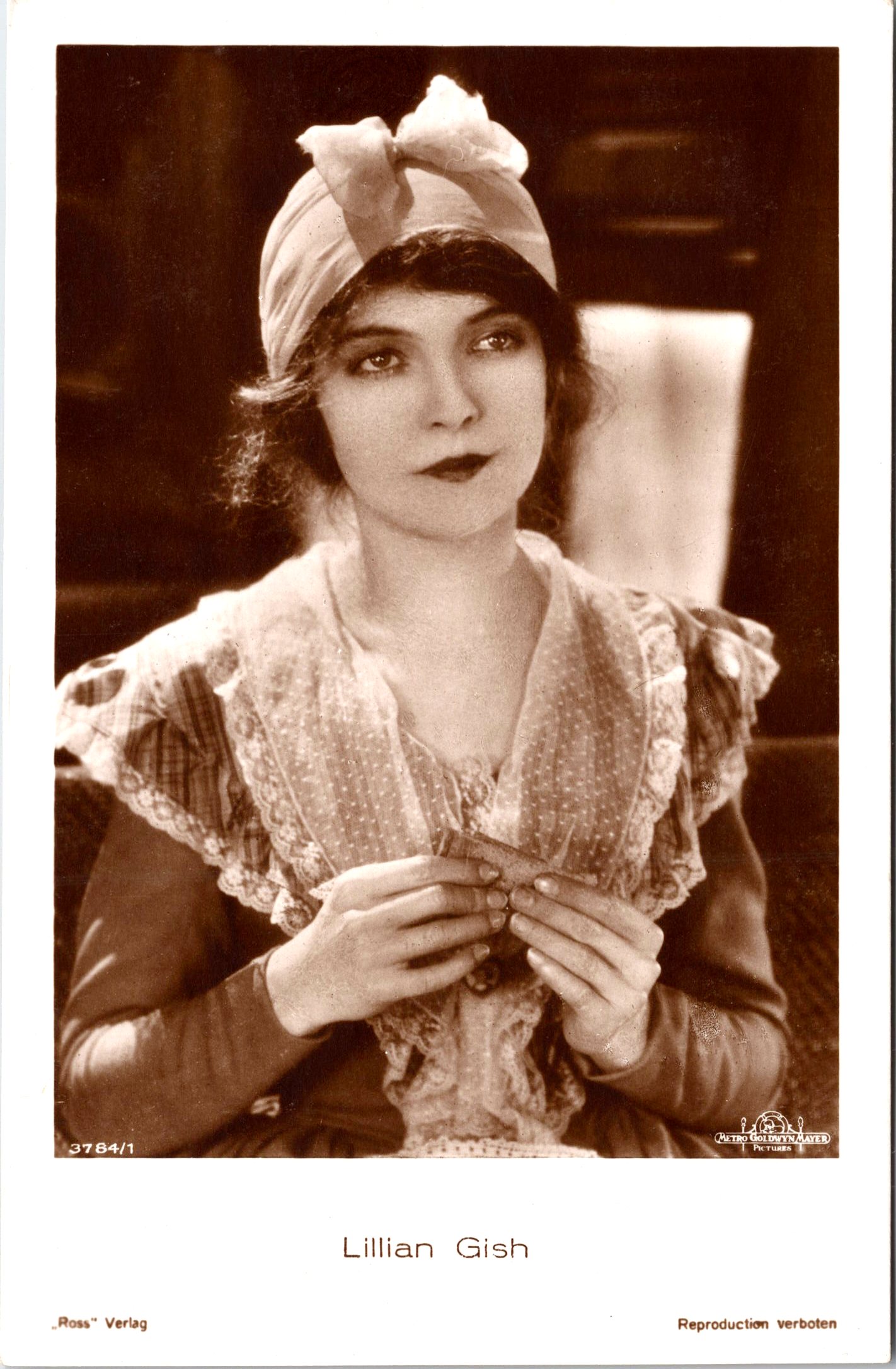
Postcard 1 features American actress, Lillian Gish (1893–1993). She is considered one of the pioneering figures in early cinema. Born in Springfield, Ohio, Gish began her career on the stage alongside her sister, Dorothy, but soon transitioned to film, where her delicate features and expressive acting made her a favorite of directors during the silent film era. In 1912, Gish joined legendary director D.W. Griffith, becoming his protégé and collaborating with him on groundbreaking films like The Birth of a Nation (1915), Broken Blossoms (1919), and Way Down East (1920). These films cemented her reputation as a leading lady, often playing roles that emphasized innocence and emotional depth. She was known for her meticulous attention to the art of acting. She helped establish the art of screen acting, emphasizing subtlety and naturalism at a time when film was still evolving away from theatrical exaggeration. She was a versatile actress, adapting well to various roles, from delicate heroines to more complex characters, and her commitment to authenticity often saw her enduring extreme conditions on set, like filming in freezing temperatures and performing her own stunts. When silent films gave way to “talkies” in the late 1920s, Gish transitioned gracefully, though her popularity declined as she aged and Hollywood’s focus shifted to younger stars. Still, she continued acting, taking on character roles and even appearing on television. One of her most memorable later performances was in The Night of the Hunter (1955), a film now regarded as a classic. In addition to her acting career, Gish became a vocal advocate for film preservation and the legacy of silent cinema. She gave lectures on the subject. Her work won her numerous accolades, including an honorary Academy Award in 1971, and she remained active in the industry well into her later years. Gish’s career spanned over 75 years, and she is remembered as an icon who bridged the silent and sound eras, leaving an indelible impact on American cinema. Lillian Gish, though a public figure, led a private and often solitary personal life. She was born on October 14, 1893, in Springfield, Ohio, to James Leigh Gish and Mary Robinson McConnell. Her early life was marked by hardship; her father abandoned the family when she was young, leaving her mother to support Lillian and her younger sister, Dorothy. Her mother opened a candy store in New York City, where the family eventually settled, and the two sisters began acting in theater to help support the family financially. Lillian and Dorothy were close throughout their lives, frequently working together in theater and film. Lillian took on the role of family protector and provider from a young age. Though she later became one of the most celebrated actresses of her time, Lillian remained deeply committed to her family, often prioritizing family relationships over romantic entanglements. She never married and had no children, believing that marriage and family life might interfere with her career. However, she did have close friendships with several prominent figures in Hollywood, including her frequent collaborator, director D.W. Griffith, with whom she shared a professional and deeply loyal relationship. There were rumors of a romance with Griffith, though Gish maintained that their relationship was strictly professional. Other rumored suitors included producer Charles Duell and critic George Jean Nathan, yet she largely avoided the spotlight when it came to romance. She valued independence and often expressed a desire to avoid the constraints she felt marriage could impose on her creative pursuits. In later life, she lived with her sister Dorothy until Dorothy’s death in 1968, a loss that deeply affected her. In her final years, Gish continued to work in the entertainment industry and to honor the legacy of silent cinema. She died in 1993, at the age of 99, leaving behind a remarkable career and a life dedicated to her art, family, and the preservation of film history.

Postcard 1 : The logo for Metro Goldwyn Mayor Films can be seen in the lower right corner of the image. This postcard was published by Ross Verlag (Berlin) as part of a series (No.3784/1). (SOLD)

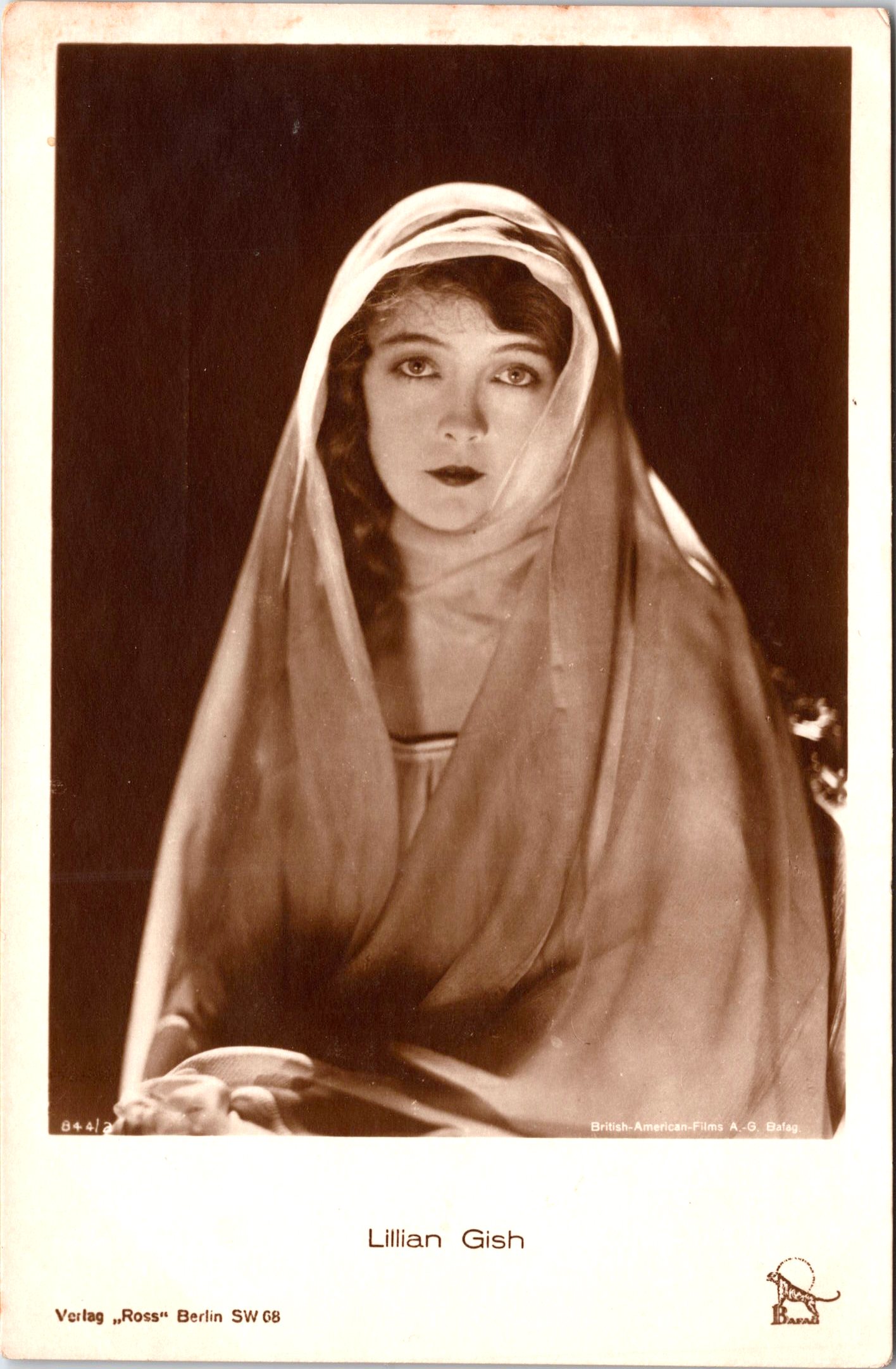
Postcard 2 : This postcard portrait was taken in 1923. LIllian was 30 years old and the photo shows her as she appeared in the film “The White Sister”. This 1923 silent drama film co-starred Ronald Coleman. The logo for British American Films can be seen in the lower right corner of the image. This postcard was published by Ross Verlag (Berlin), is (844/2) in a series. SOLD

POSTCARD 1

POSTCARD 2

LYA MARA : GERMAN SILENT FILM STAR : PRODUCER FREDERIC ZELNICK’S WIFE : RPPC

This vintage real photo postcard features German silent film star, Lya Mara (1897-1960). She was born in Latvia. Mara was trained as a ballerina. She was a stage performer before World War I. Her rise to fame was rapid and her career spanned a number of continents. Her first film in Germany was in 1918. It was produced by renowned producer, Frederic Zelnick, whom she married in 1918. Zelnick promoted her into major stardom. Her popularity in film was illustrated by the hundreds of photographs of her produced into postcards, cigarette cards, and trade cards. She had exotic looks, expressive eyes, and ability to convey complex emotions non verbally. These attributes made her perfect for appearing in silent films. In film she displayed a combination of sex appeal and naivety. A serious car accident in the 1920’s interrupted her career. At the end of the 1920’s she appeared in a number of Austrian films. She was unsuccessful in making the transition into sound films. In 1933, with Hitler in power, Zelnick and Mara hightailed it to London. She spent the last years of her life in Switzerland. Her long filmography spans from 1916 to 1931. This postcard was published by Ross Verlag as part of a series (No.1218/3). Mara’s photograph was taken by Ernst Schneider. He was considered to be one of the most celebrated studio photographers in Berlin during three decades (1900’s, 1910’s, 1920’s. He photographed many celebrities from the world of theater, opera, circuses, and film. He was also one of the most prominent fashion photographers in Berlin. In addition, he was well known for his nude photography and he published books showcasing his work in this domain. Sometime around 1908 Schneider began working with postcard publishers “Rotophot” and “Neue Photographische Gesellschaft” (NPG). In 1919 he began working with Ross Verlag. (SOLD)
DOROTHY GISH : PRETTY SILENT FILM STAR : FASHIONISTA :PARAMOUNT : RPPC 1928

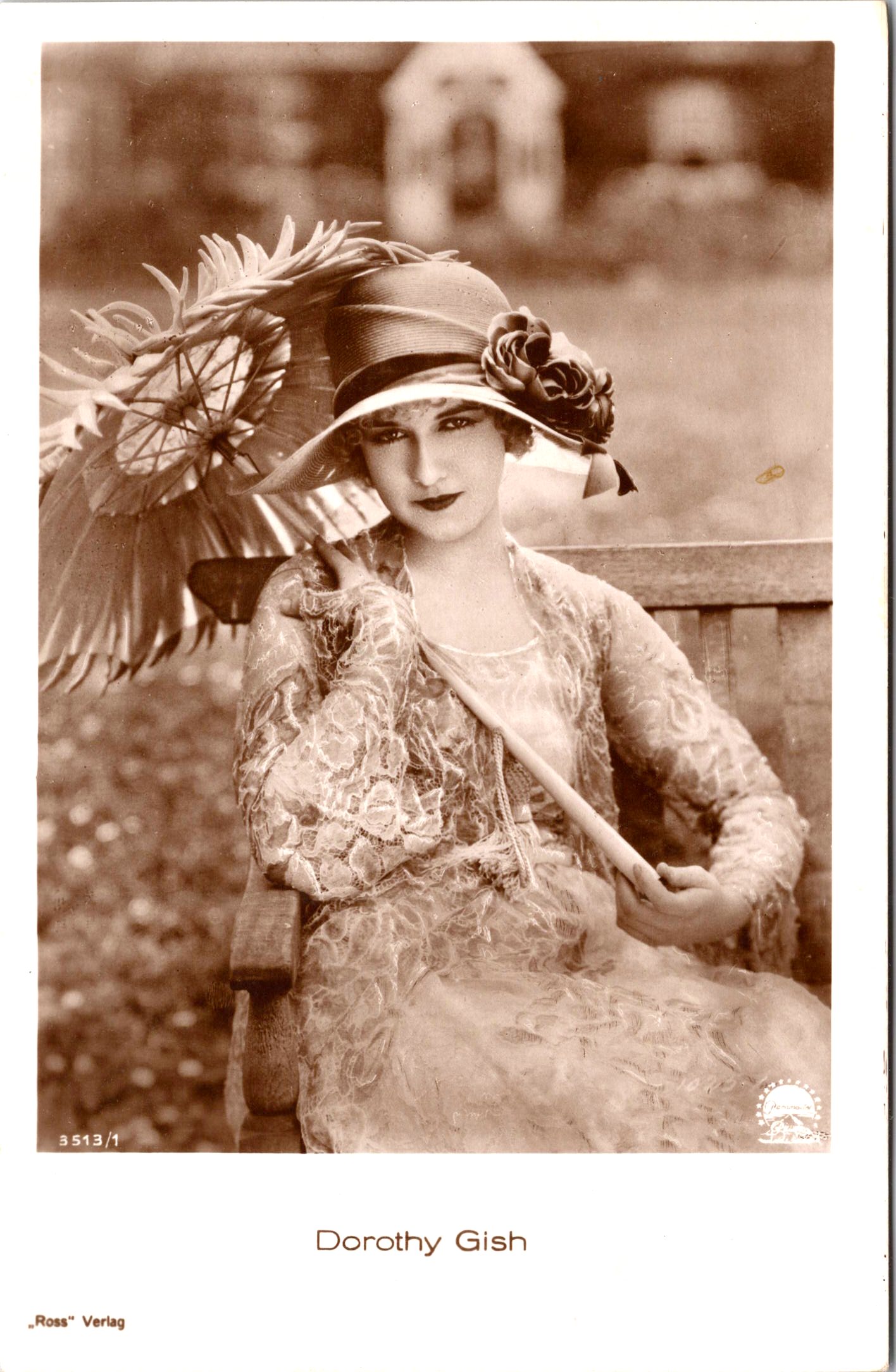
This vintage real photo postcard features actress, Dorothy Gish (1898–1968). She was a prominent American actress best known for her work in silent films and later in theater. She was also quite pretty which is apparent in this postcard portait. In addition, she was quite fashionable. She was born in Dayton, Ohio, into a family with roots in the performing arts. Dorothy and her older sister, Lillian Gish, are often remembered as significant figures in early American cinema, particularly for their work with director, D.W. Griffith. Dorothy and Lillian’s parents separated when they were young, leaving their mother to support the family. In 1902, the Gish family moved to New York City, where their mother sought work in the theater. Both sisters began acting on stage as children to help support their family. Dorothy made her stage debut at a young age, and by the time she was a teenager, she had already gained experience in theater. In 1912, Dorothy and Lillian were introduced to D.W. Griffith by their friend, actress Mary Pickford. Griffith immediately saw potential in the sisters and cast them in his films, launching their film careers. Dorothy’s early work with Griffith included supporting roles in films like The Musketeers of Pig Alley (1912) and The Birth of a Nation (1915). However, Dorothy’s specialty was comedy, and she developed a distinct, lively style that set her apart from her sister Lillian, who typically played more dramatic roles. Dorothy’s popularity rose as she starred in a series of comedic silent films, including Hearts of the World (1918) and Orphans of the Storm (1921), both of which also featured Lillian. While Lillian’s characters often embodied innocence and vulnerability, Dorothy’s roles allowed her to showcase a playful, often mischievous side, bringing her critical acclaim and a strong fan following. With the advent of sound films in the late 1920s, Dorothy, like many silent film stars, found it challenging to transition to “talkies.” She made a few sound films, but she gradually shifted her focus to theater, where she had always felt at home. Dorothy was well-suited to the stage, bringing her charm and humor to roles in productions such as Young Love (1928), which was a hit on Broadway, and The Chalk Garden (1956). Throughout the 1930s and 1940s, Dorothy toured in various plays and continued to appear in films occasionally. She remained active in theater well into the 1950s, and her stage career extended her professional life even as her work in film slowed. In contrast to her sister, who continued to receive accolades in film well into the sound era, Dorothy’s legacy was tied more to her stage performances and her beloved silent film roles. Dorothy was known for her wit, independence, and close bond with her sister Lillian. The two were inseparable and supported each other throughout their lives, both personally and professionally. In 1920, Dorothy married James Rennie, a Canadian-born actor. However, their marriage ended in divorce in 1935, and she did not remarry. After retiring from the stage, Dorothy lived a quiet life but remained connected to the arts and close to her sister. She passed away in 1968. This postcard was published by Ross Verlag as part of a series (No.3513/1). The card was published in 1928/1929. SOLD

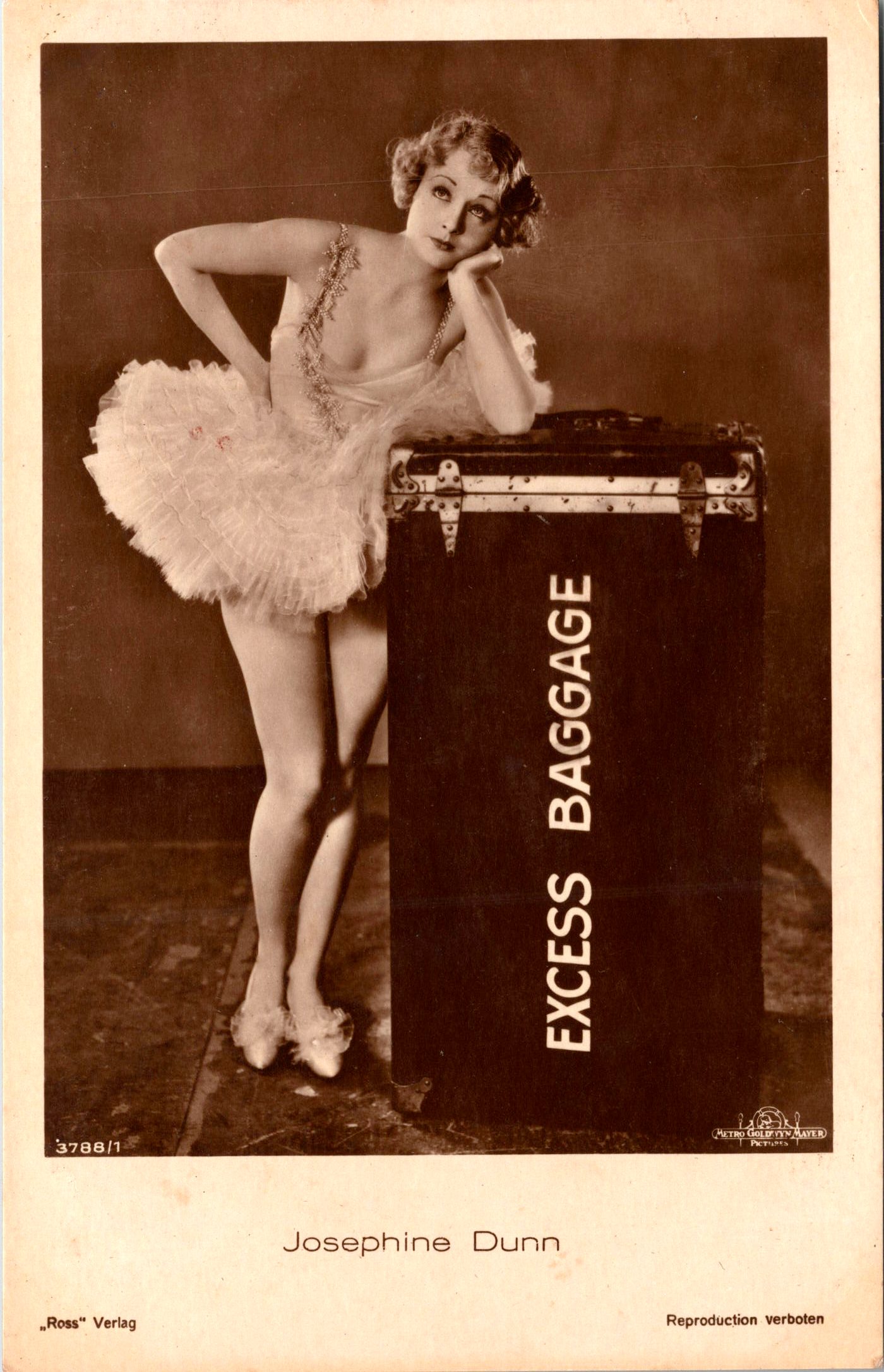
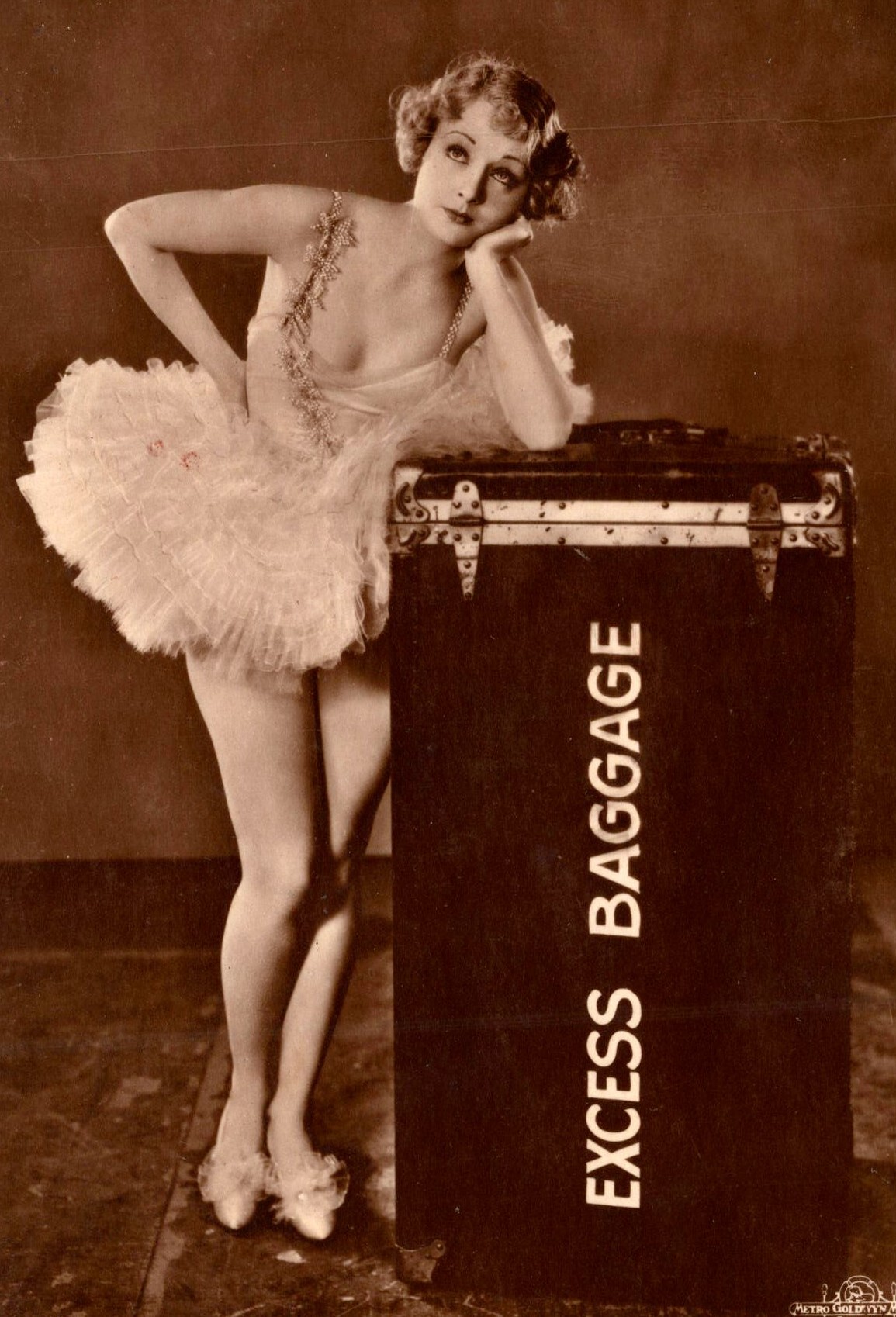
JOSEPHINE DUNN : IN “EXCESS BAGGAGE” : MGM SILENT FILM STAR : RISQUE RPPC 1928

Josephine Dunn (1906 –1983) was an American actress known primarily for her work in silent and early sound films during the late 1920s and early 1930s. She was a glamorous starlet of the Jazz Age, often cast in flapper and socialite roles. Josephine Dunn was born in New York City, where she was raised. Little is known about her early years, but she entered show business as a teenager, joining the world of vaudeville before making the transition to film. Her natural beauty, charisma, and fashionable style made her a popular choice for film producers during Hollywood’s silent era. Dunn made her film debut in 1926 and quickly became a sought-after actress, starring in a variety of silent and early talkie films. She was often cast as the “other woman” or as a carefree flapper, fitting the Roaring Twenties’ archetype of modern femininity. One of her most notable films was “Our Modern Maidens” (1929), in which she starred alongside Joan Crawford and Douglas Fairbanks Jr. She also appeared in: “Excess Baggage” (1928),”The Broadway Melody” (1929),  “Tanned Legs” (1929), and “Montana Moon” (1930). Her transition from silent films to talkies was fairly successful, though she never achieved the same level of fame as some of her contemporaries, such as Crawford or Norma Shearer. By the early 1930s, her film career began to slow down. While primarily a screen actress, Dunn had early experience in vaudeville and stage performances, though she never became a major Broadway star. She retired from acting in the mid-1930s and lived a largely private life afterward. Dunn was married multiple times, including to millionaire oil executive Carroll Case. Her personal life was often the subject of media gossip. Although she was never a top-tier star, Josephine Dunn was emblematic of 1920s and early 1930s Hollywood glamour. This postcard features Dunn in her starring role in the 1928 silent film, “Excess Baggage”. The romantic comedy film was produced by Metro-Goldwyn-Mayer (MGM). She played the role fo a glamourous and sophisticated young woman. Unfortunately, like many silent films of the era, Excess Baggage is considered lost, meaning no known copies are available today. In this image, Josephine Dunn is dressed in a delicate, ruffled ballet-style costume, with a short, voluminous tutu and an intricately adorned bodice. The dress features lace and embellishments, reflecting the flapper era’s fascination with femininity and luxury. Her feet are adorned with soft, ballet-like slippers, adding to the graceful, almost ethereal appearance of her outfit. Her pose is both playful and weary—leaning on the large travel trunk with one arm propped up and her hand resting gently against her face. Her expression is one of wistful contemplation, with her eyes gazing off to the side, giving a sense of melancholy or quiet amusement. This pose complements the humor suggested by the film’s title, Excess Baggage, possibly hinting at the idea of emotional or romantic burdens rather than just literal luggage. Her curled, short blonde hair, typical of the 1920s, frames her face beautifully, reinforcing her status as a Jazz Age beauty. This risque postcard was published by Berlin based, Ross Verlag. In the card’s lower right corner, we see the logo of MGM. This vintage real photo postcard was issued in 1928. (SOLD)

BILLIE DOVE: BEAUTIFUL FILM ACTRESS, GIRLFRIEND OF FLORENZ ZIEGFELD : RPPC

POSTCARD 1 (SOLD)

POSTCARD 2 (SOLD)

POSTCARD 3 (SOLD)
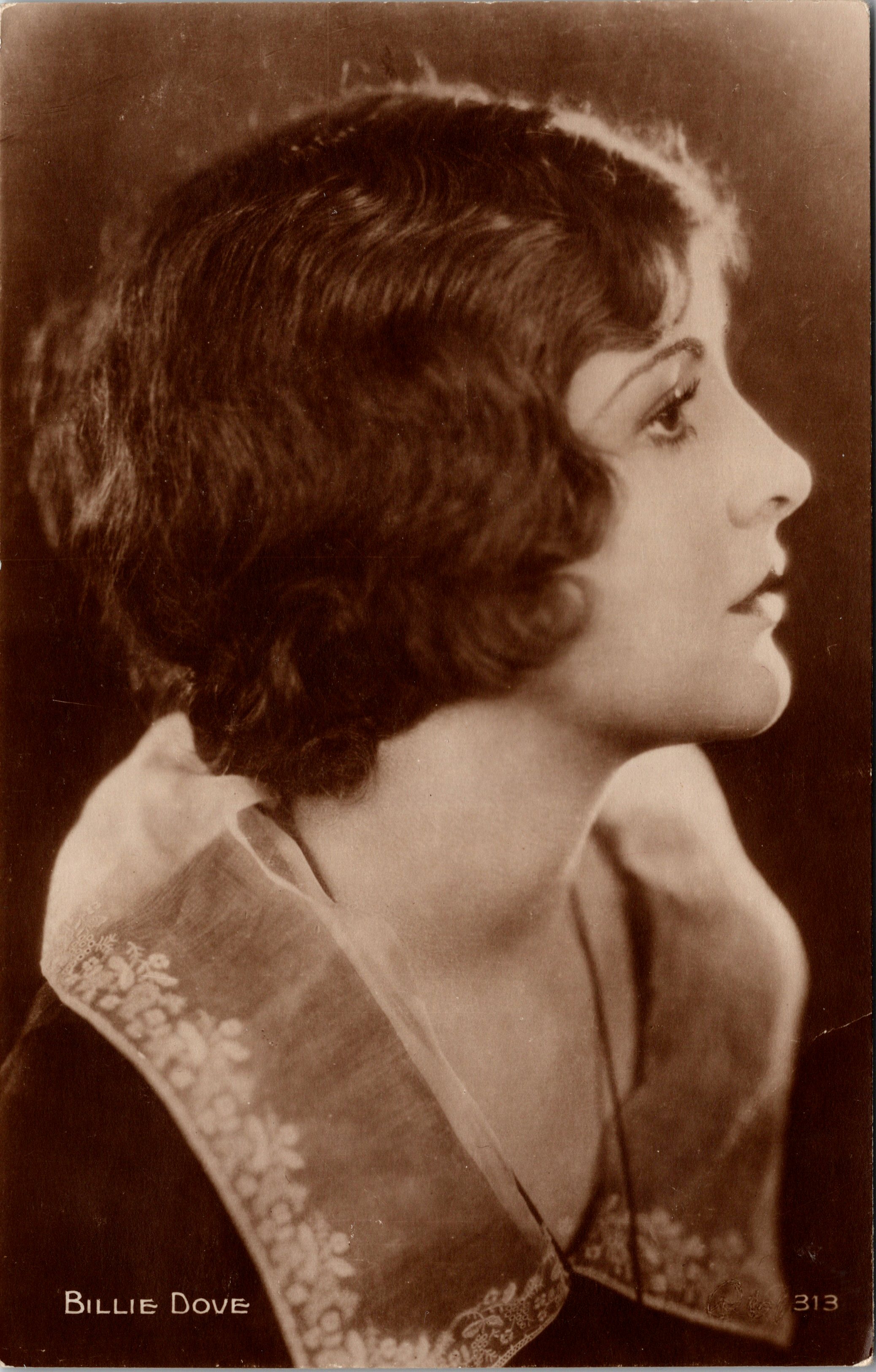
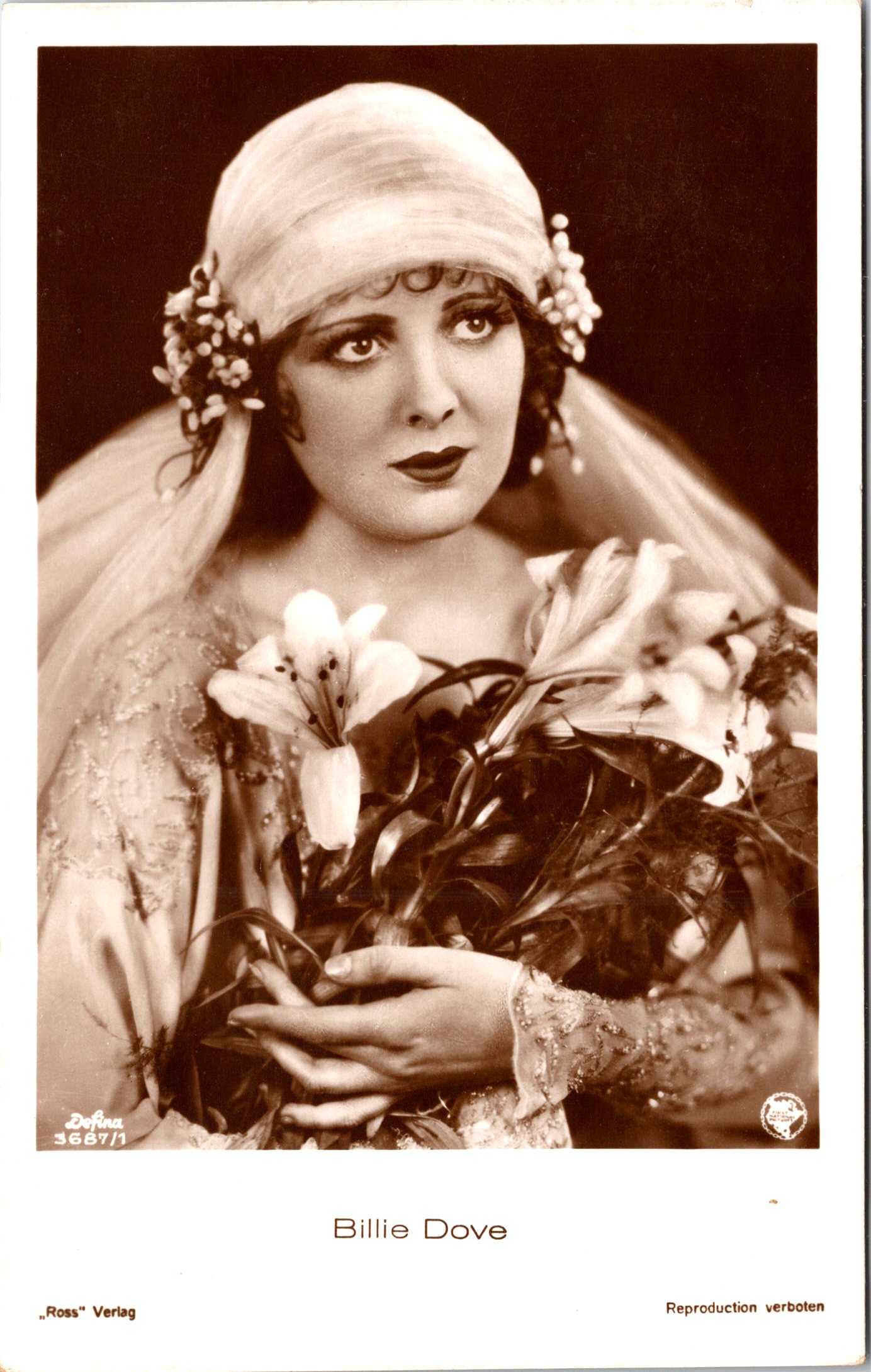
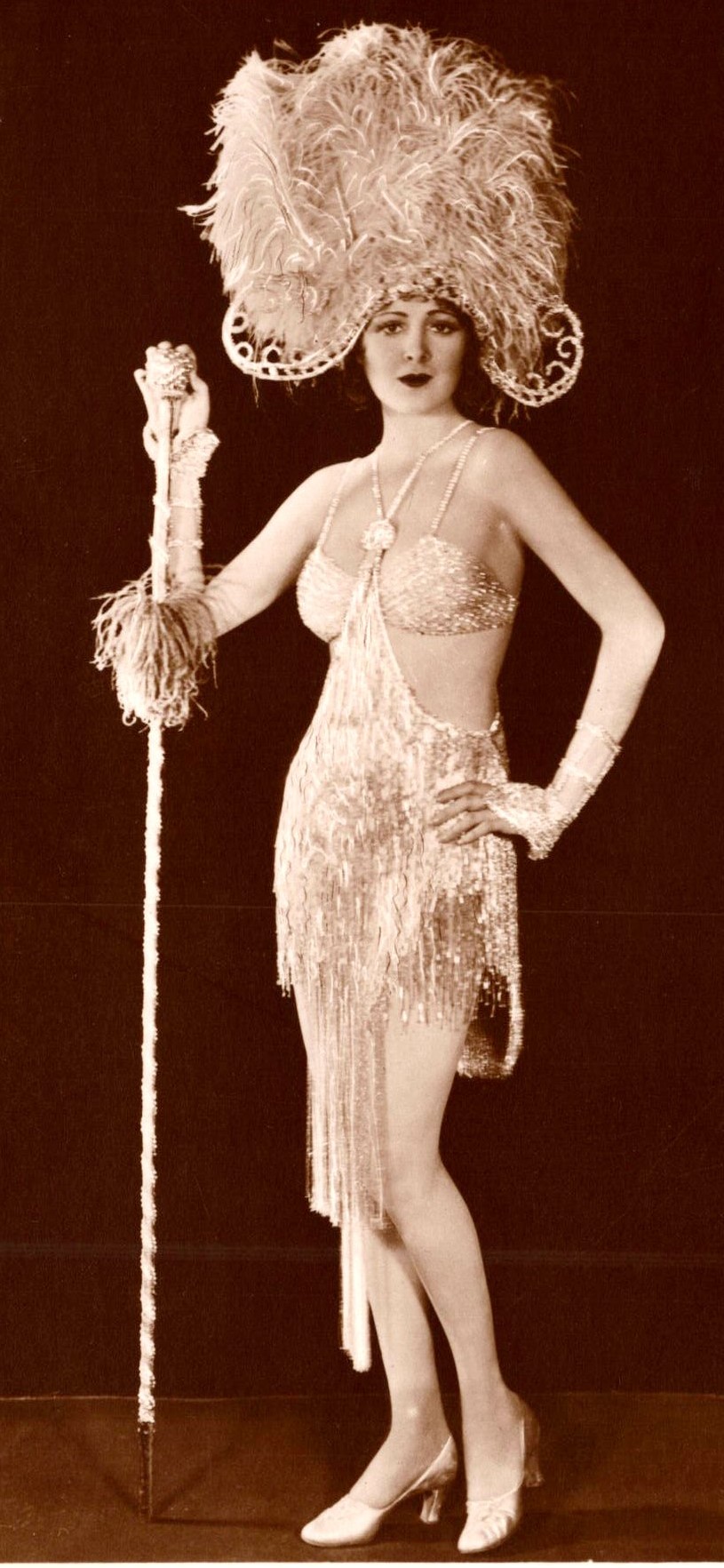
These vintage real photo postcards feature actress Billie Dove. Billie Dove (1903-1997) was an American actress. Her parents were Swiss immigrants. During her teenage years, she worked as a model to support her family. Florenz Ziegfeld hired her as a teenager to appear in the Ziegfeld Follies Revue. She was not a particularly talented dancer or singer, her beauty and acting ability were her major assets. In the early 1920’s she moved to Hollywood and began appearing in silent films. It has been written that Ziegfeld’s wife, actress Billie Burke, helped facilitate Dove’s transition to films. Apparently, Burke was trying to separate Dove from her husband because the pair were having an affair. It did not take long for her to become one of the more popular actresses of the 1920’s. Among her better known films was “The Black Pirate” (1926) with Douglas Fairbanks, and “The American Beauty” (1927). Dove was a ravishing beauty and was very photogenic. She married director, Irvin Willat, in 1923. The marriage had a six year duration. She then had a three year romance with Howard Hughes. Dove’s other interests included being a pilot, painter, and poet. After her last film, “Blondie of the Follies” (1932), Dove retired from films. It is thought that she retired because she was distraught about her role in her last film being “trimmed” by her co-star’s (Marion Davies) influential boyfriend (William Randloph Hearst). Hearst was upset because Miss Davise’s acting was overshadowed by Dove’s acting. Mr Hearst owned Cosmopolitan Productions which produced the movie. After retirement, Dove married oil executive Robert Kenaston in 1933 and the couple remained together until Kenaston’s death in 1970. She had a brief third marriage to an architect. It is interesting to note that jazz singer, Billie Holiday, borrowed Billie Dove’s first name when picking out her own stage name. Miss Holiday was an admirer of Miss Dove. The IMDb lists 50 movie credits for Billie Dove between 1921 and 1962.

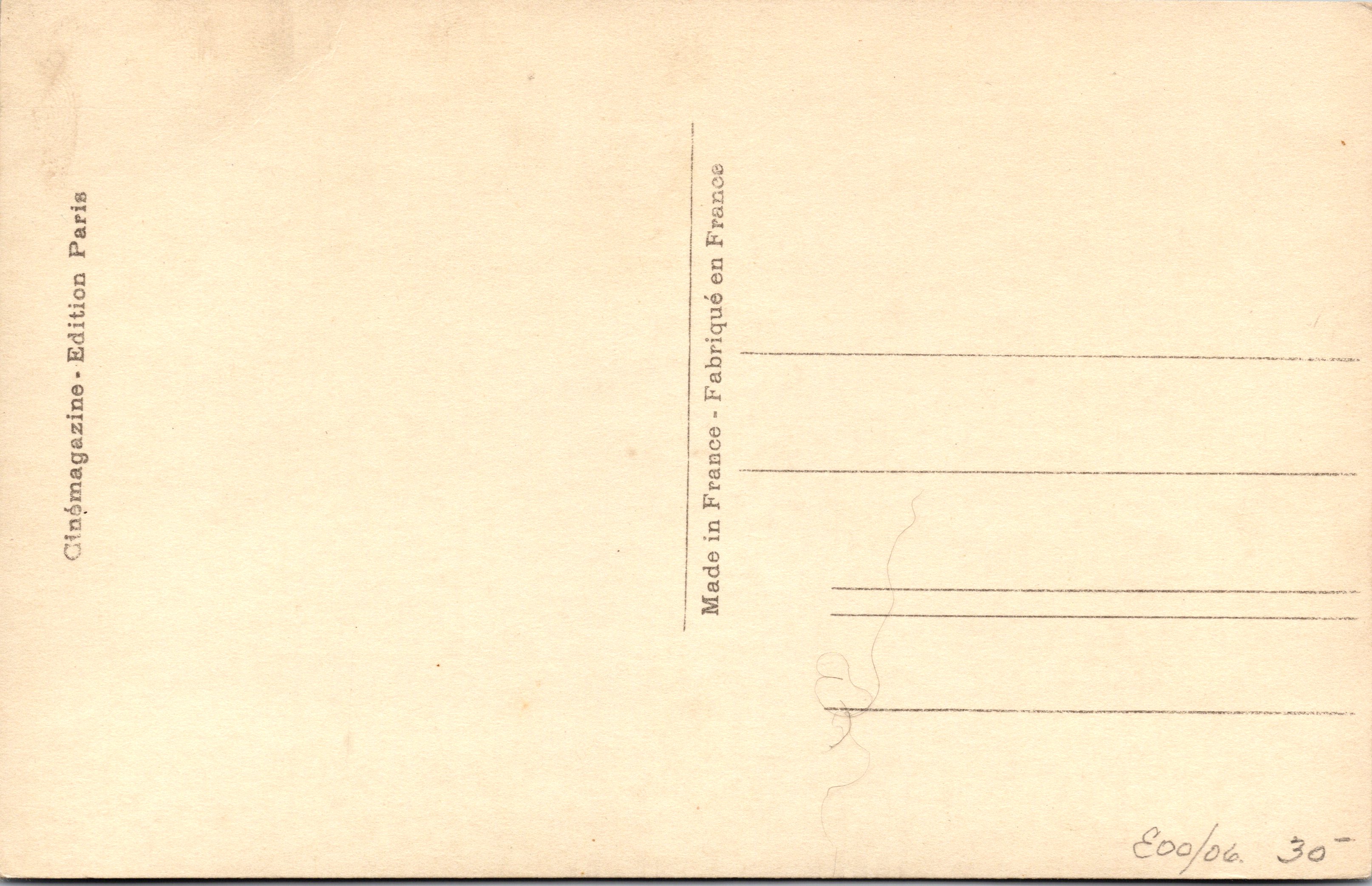
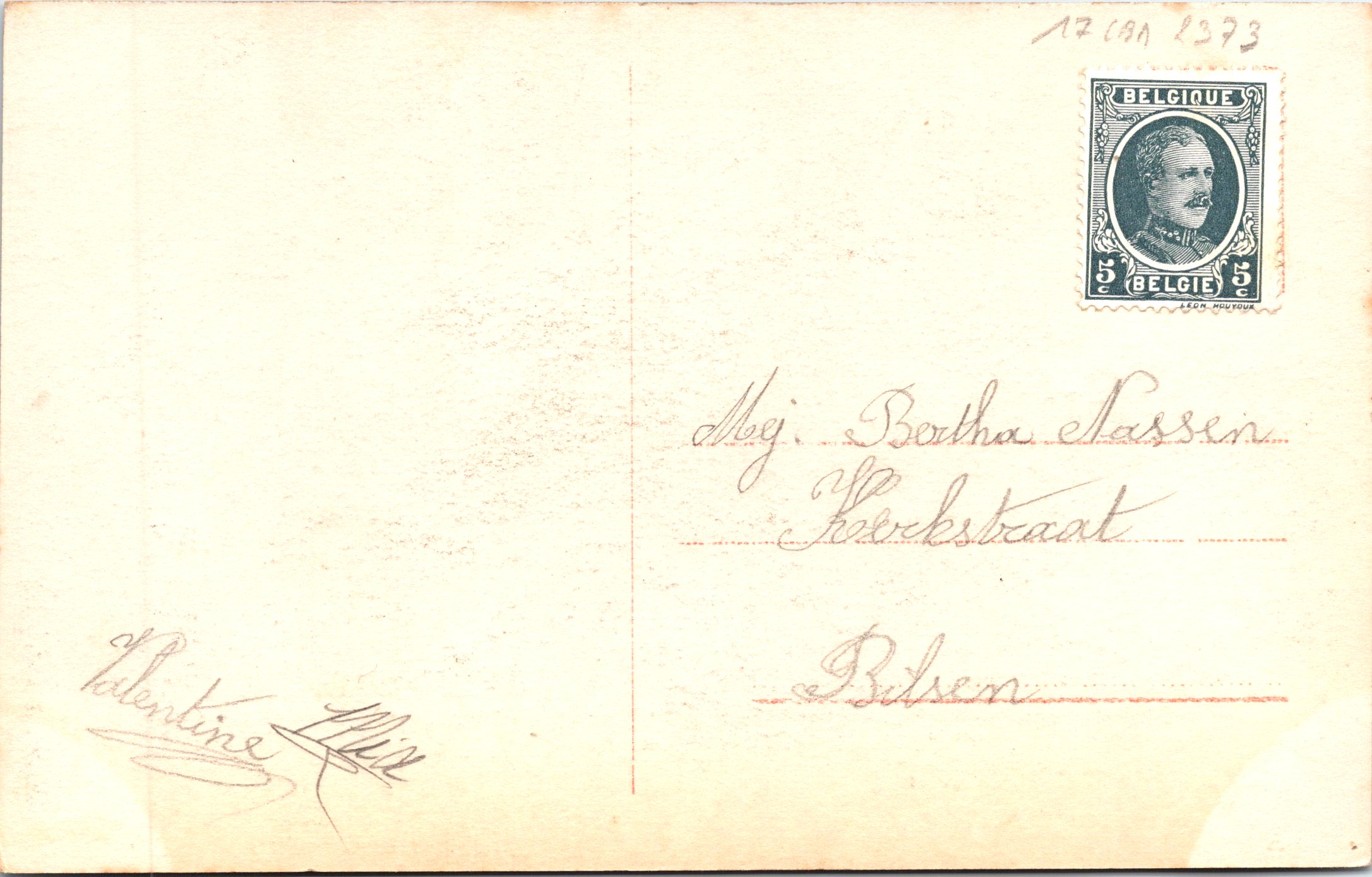
Postcard 1 is a profile portrait was published by Cinemagazine – Paris Edition (no.313). (SOLD)

Postcard 2 was published as by Ross Verlag as part of a series (No.3687/1).  Billie Dove looks beautiful in this portrait taken by Defina. The logo for First National Pictures can be seen in the image’s lower right corner.  (SOLD)

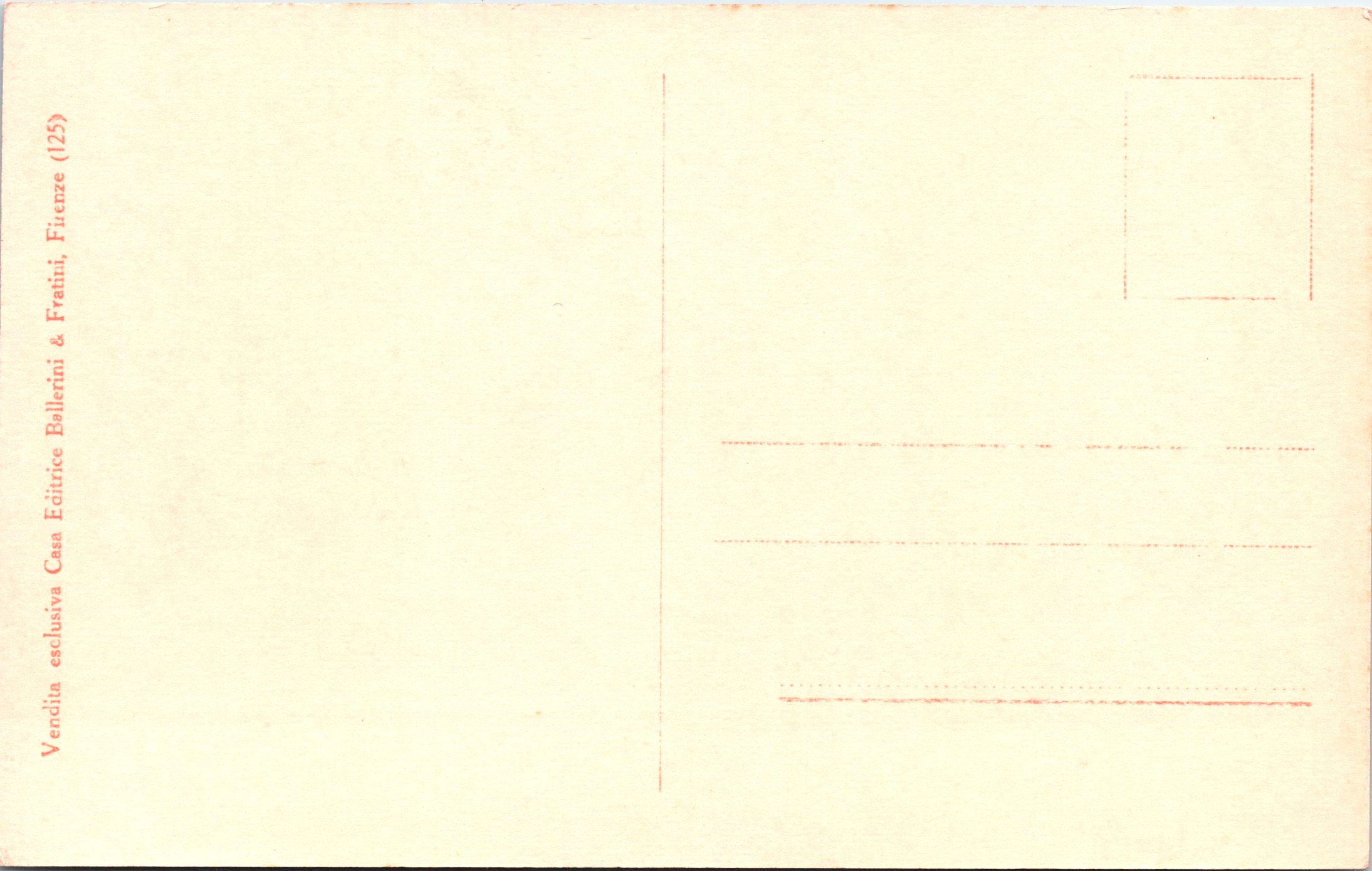
Postcard 3 features Billie Dove looking beautiful in this provocative portrait. The card is risque, considering Dove’s pose and revealing tight dress. Billie Doves portrait seen on this postcard was taken by Defina. This card was published by Ross Verlag’s Italian Edition (Bellerini & Fratini, Florence, Italy). Casa Editrice Bellerini & Fratini was one of the most renowned Italian publishers. The firm began publishing film postcards in the early 1920’s and later became a distributor for Ross Verlag. As of 1918, the firm was still in existence.  (SOLD)

POSTCARD 1

POSTCARD 2 (SOLD)

POSTCARD 3
RENEE ADOREE : HOLLYWOOD SILENT & “TALKIE” FILM STAR : TRAGIC DEATH AT 35

POSTCARD 1

POSTCARD 2

POSTCARD 3 (SOLD)
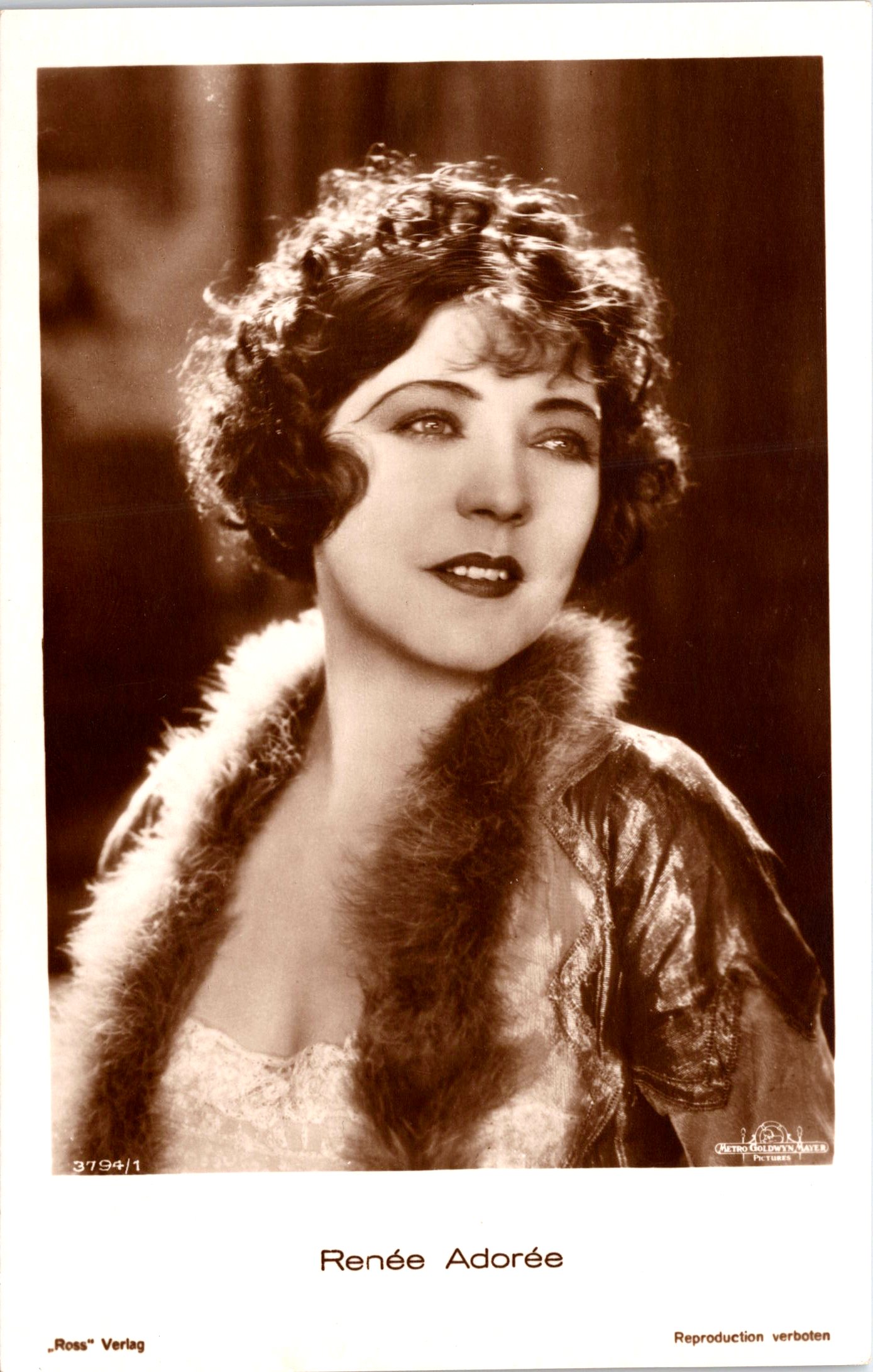
These vintage real photo postcards feature French stage and film actress, Renee Adoree (1898-1933). She also appeared in silent movies produced by Hollywood in the 1910’s. Her most well known film was the melodramatic romance and war epic, “The Big Parade”. She played the love interest of John Gilbert. Renee’s parents were circus artists. She would perform with them at times. She was a dancer, acrobat artist, and bareback rider. She perfomed throughout Europe. She made her movie debut in 1918. In 1919, she went to New York City and played in a vaudeville-style musical. Several other stage appearances followed. In 1920, she began to perform in movies again. In total, Renee performed with John Gilbert nine times. She appeared with actor Ramon Novarro four times. In a 1928 Howard Hughes film, “The Mating Call”, Renee had a brief scene in which she swam in the nude. This act created much controversy. Renee’s personal life included two marriages and two divorces between 1921 and 1929. Renee, unlike many other actresses of her time, was successful in making the transition to sound film. She appeared in four “talkies” before her early death. In all, by the end of 1920, Renee had appeared in forty-five films. The IBDb reports that she appeared in two Broadway productions, both occurred in 1919, It was in 1930 that Renee was diagnosed with tuberculosis. Despite her doctor’s advice, she continued her participation in the filming of a movie. After completing the movie, she was rushed to an Arizona sanitorium. She was flat on her back for two years during her recovery. Post discharge, Renee’s health began to deteriorate until she died in 1933. She was only about 35 years old at the time of her death.

Postcard 1 features Renee in a risque pose. She is dressed quite provocatively. This postcard was published by “Ross Verlag” as part of a series (No.4350/1). Note sticker on reverse of card. This vintage postcard is in overall good condition. (see scans).

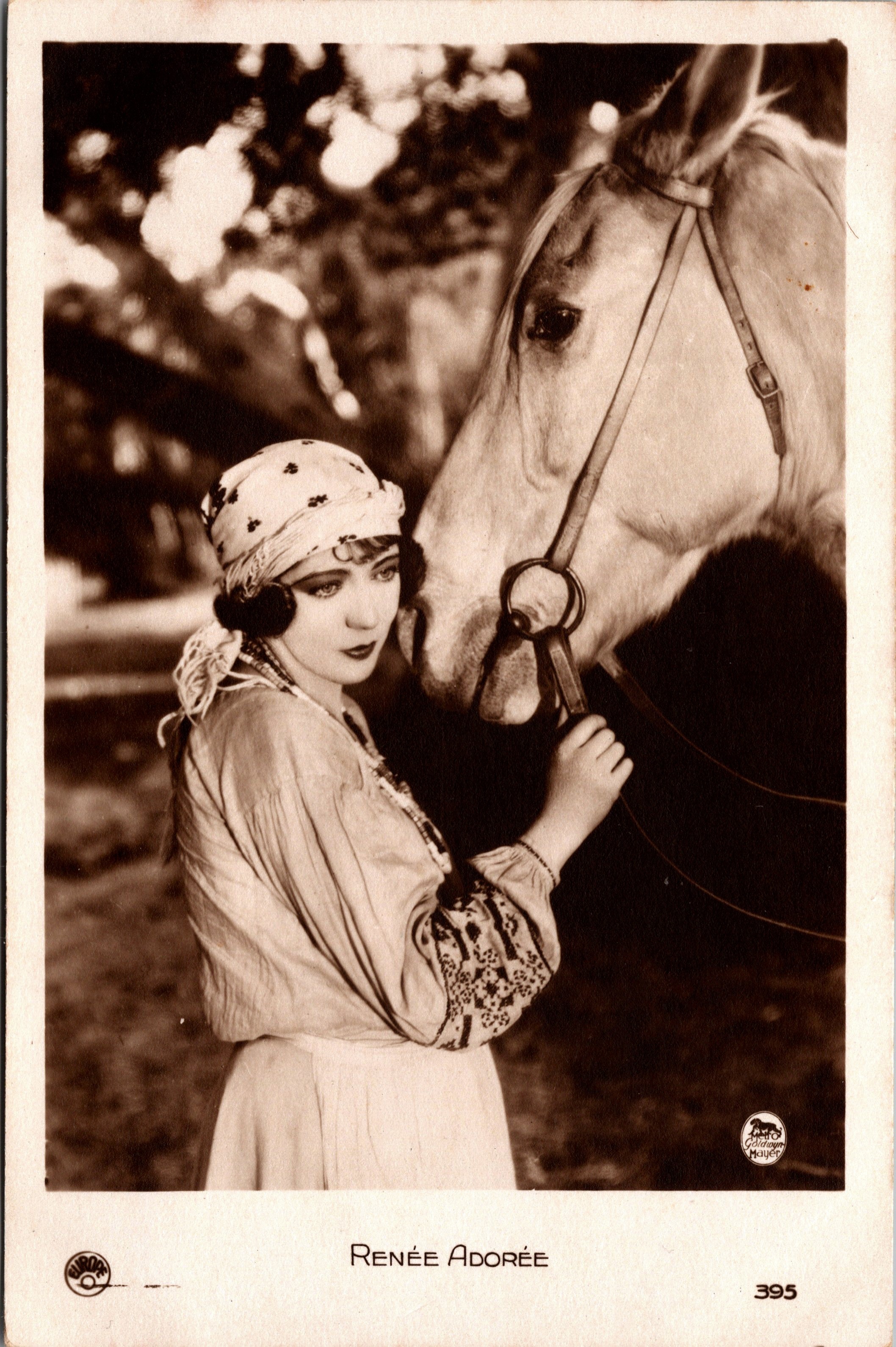
Postcard 2   features Renee standing in front of a horse. She is holding the horse’s harness. Apparently, she liked animals and possessed a sense of humor. She had a dog named “Useless”, and a cat named “Worthless”. The logo for MGM can be seen in the lower right hand corner of the image. She was under contract with MGM from 1930 until her death. This postcard was published by “Europe” as part of a series (No.395). This postcard is in very good condition (see scans).

Postcard 3 offers a view of Renee that illustrates her beauty. She is fashionable and her attire includes a jacket with a fur collar. The card features a logo for MGM in its lower right corner. The card was published by Ross Verlag and is part of a series (No.3794/1). SOLD

Buy this Vintage Real Photo Postcard (includes shipping within the US) #5137

To purchase this item, click on the Pay with PayPal button below

$22.00

Buy this Vintage Real Photo Postcard (includes International shipping outside the US) #5137

To purchase this item, click on the Pay with PayPal button below

$32.00

Buy this Vintage Real Photo Postcard (includes shipping within the US) #5299

To purchase this item, click on the Pay with PayPal button below

$19.00

Buy this Vintage Real Photo Postcard (includes International shipping outside the US) #5299

To purchase this item, click on the Pay with PayPal button below

$29.00

POSTCARD 1

POSTCARD 2