Isabel Irving: American Stage Actress

isabel-irving

  irving3_0001


isabel irving two

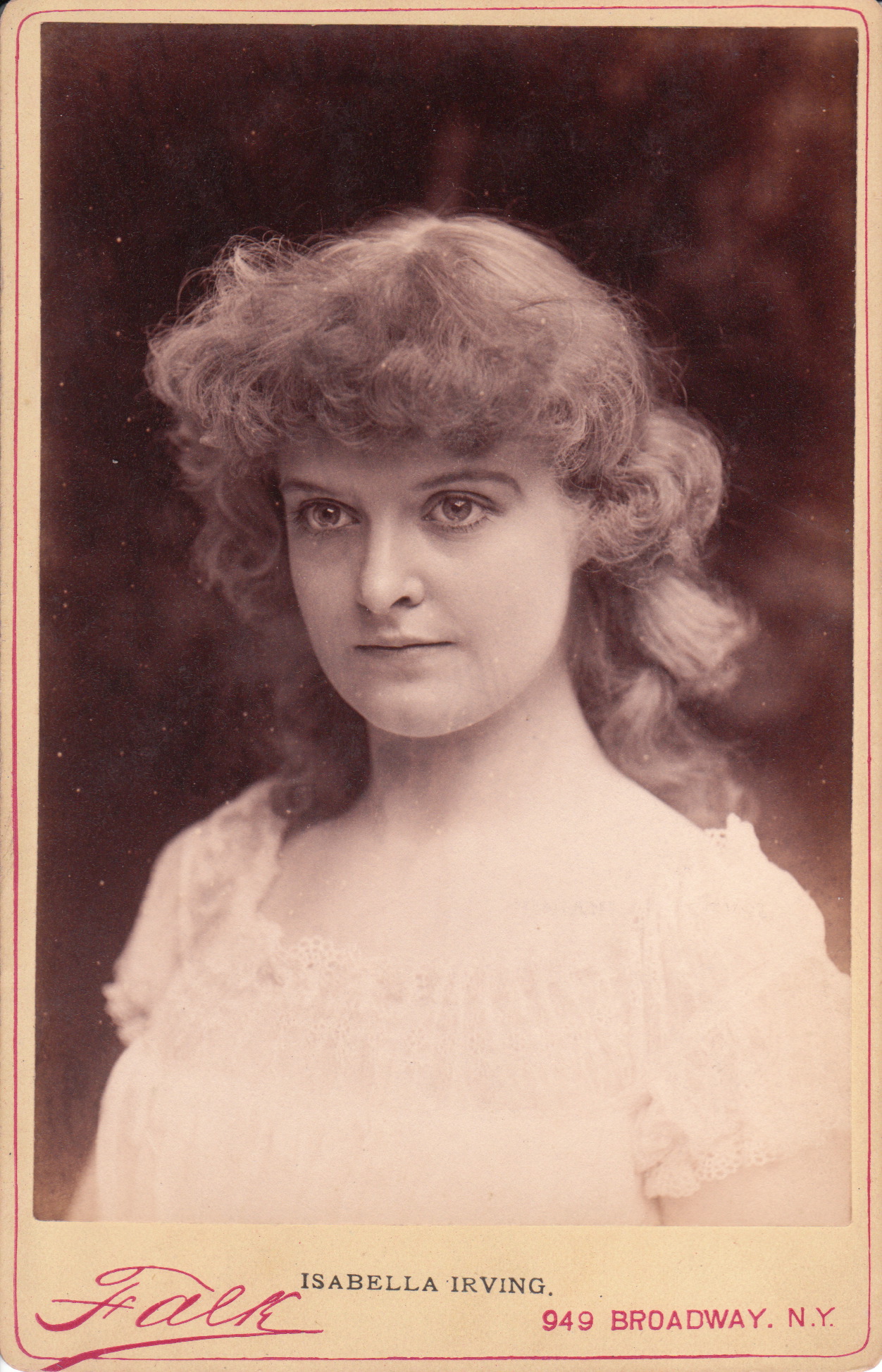
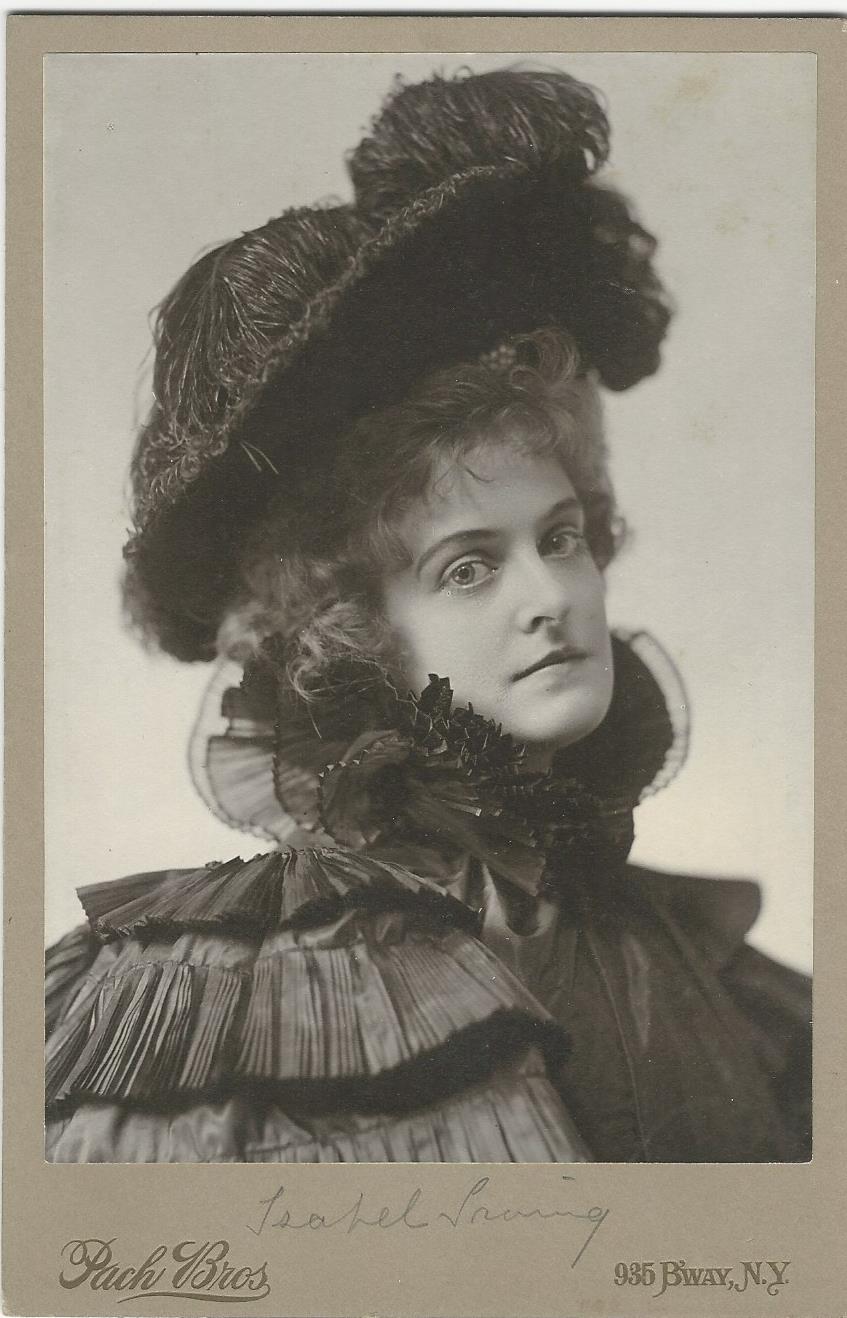
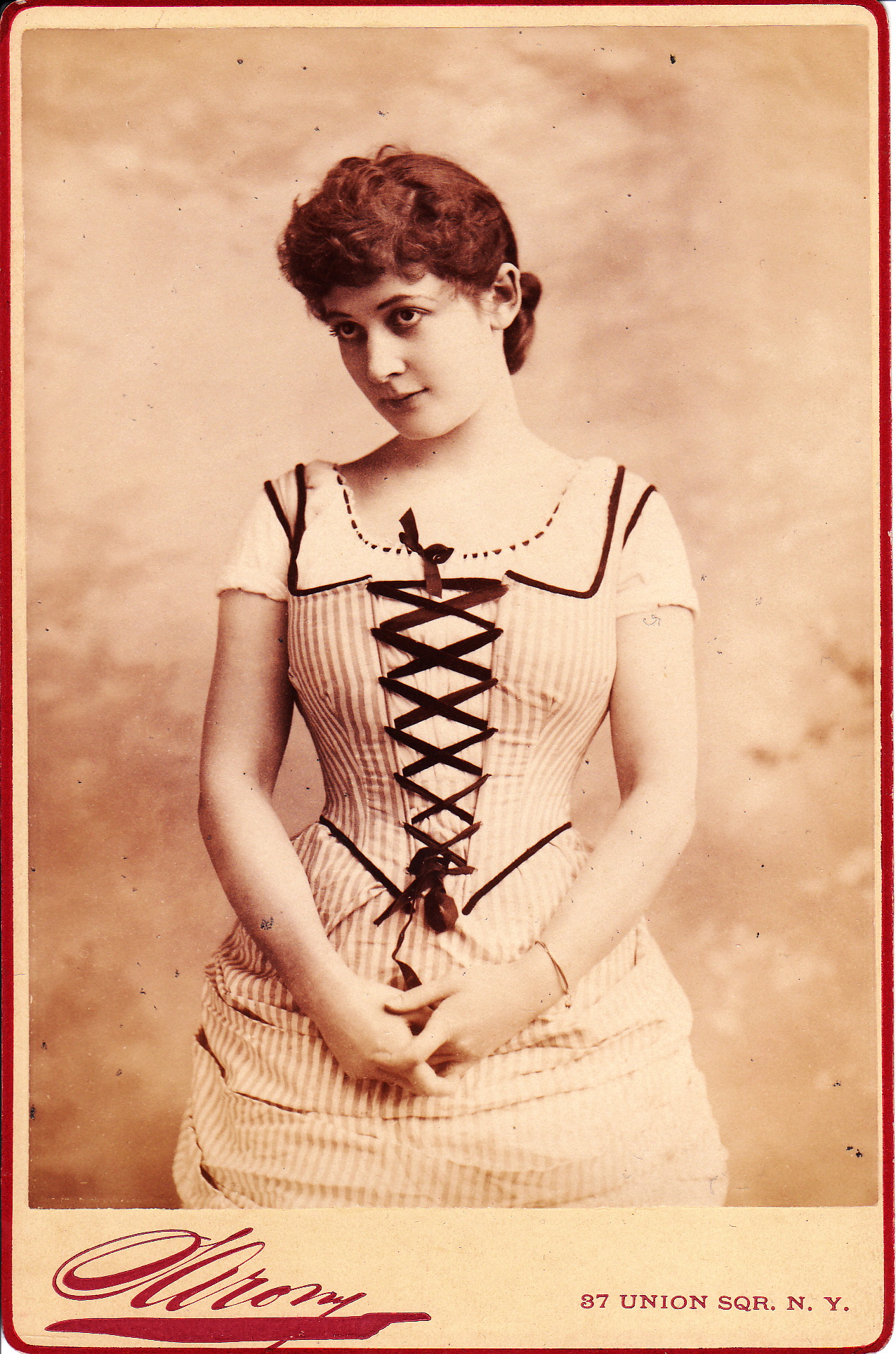
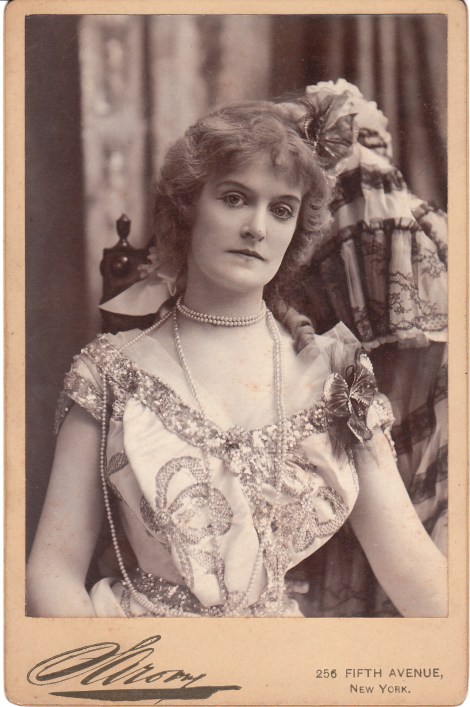
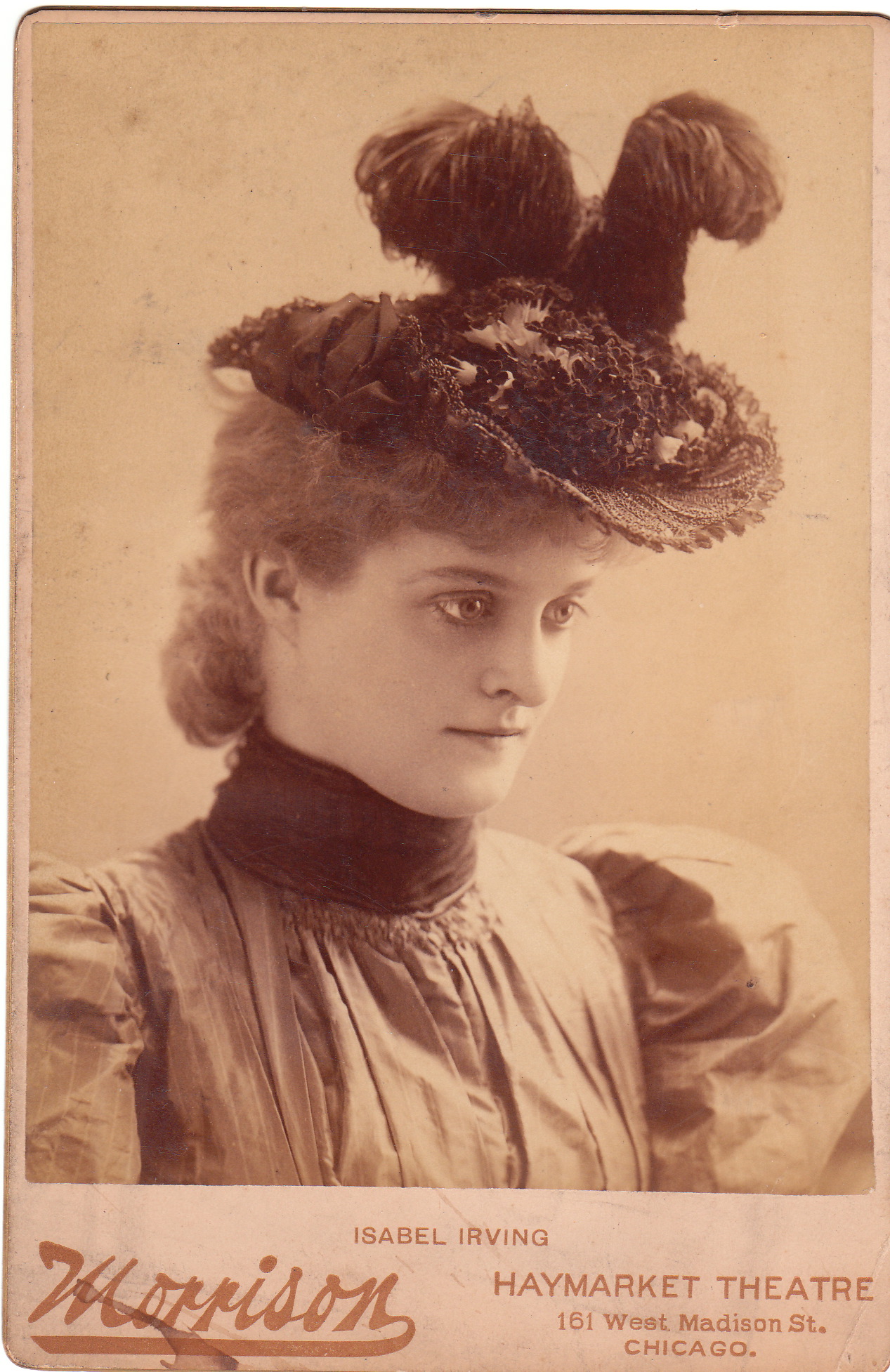
Isabel Irving (1871-1944) was an American actress born in Bridgeport, Connecticut. Her stage career began in 1886. She performed in many performances of Shakespeare. She was also in more than 30 Broadway plays between 1894 and 1936.  These plays included “Merry Wives of Windsor” (1917) and “Uncle Vanya” (1930). The first cabinet photo was done at the studio of Napoleon Sarony in New York.  Sarony was a very famous photographer of his time and known for his photos of theatrical performers and other celebrities. The second photograph comes from the studio of William McKenzie Morrison who was located in the Haymarket Theatre building in Chicago, Illinois. The third cabinet card portrait features Miss Irving photographed by celebrated New York photographer Benjamin Falk. The fourth cabinet card was produced by Pach Brothers studio in New York City. To view a photograph of Isabel Irving’s sister, write “Evangeline Irving” in the search box and press search. To view other photographs by any of the four cited photographers, click on the category “Photographer: Falk, Photographer: Sarony, Photographer: Morrison, or Photographer: Pach Brothers.

CHARLES HENRY PARKHURST: CLERGYMAN, SOCIAL REFORMER, CROOKED POLITICIAN’S AND CORRUPT POLICEMAN’S NIGHTMARE (1892)


parkhurst

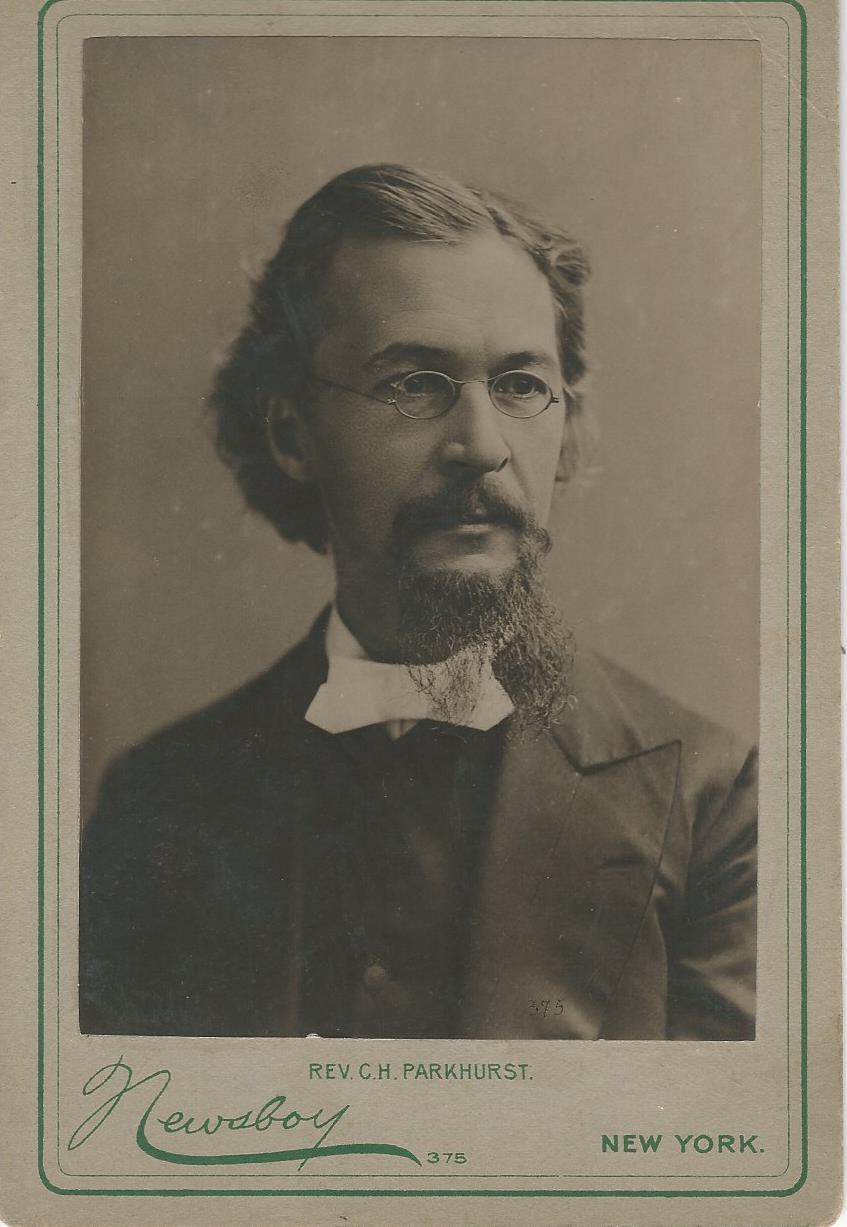
Charles Henry Parkhurst (1842-1933) is the subject of these Cabinet Card photographs which are published by Newsboy. Photographer Napoleon Sarony has the 1892 copyright for the top photograph. The second photograph is marked “375” and is part of Newsboy’s tobacco premium series. Parkhurst was a clergyman and social reformer. He was a presbyterian minister and from 1874 until 1880, he was a pastor in Lenox, Massachusetts. He then became the pastor for Madison Square Presbyterian Church in New York City (1880-1919). During the year of this photograph, Parkhurst began giving tough sermons attacking the political corruption in the New York City government. This led to the exposure of the corruption in Tammany Hall and subsequent social and political reform. He had a special concern about the problem of prostitution in New York City’s tenderloin section. He hired private detectives to investigate the houses of ill repute and their police protection. Concerning the police, he said “while we fight iniquity they shield or patronize it; while we try to convert criminals, they manufacture them”. He took his concerns and investigative results to court on these matters. He was President of the New York Society for the Prevention of Crime and published numerous magazine articles and books. Parkhurst died tragically; while sleep walking he fell off the second story porch of his home.

PORTRAIT OF ENGLISH STAGE ACTRESS ADA CAVENDISH (PHOTOGRAPHED BY SARONY)

CAVENDISH F_0002

This cabinet card features English actress Ada Cavendish (1839-1895). She was noted for her performances in Shakespeare plays and for popularizing the plays of Wilkie Collins in America. Cavendish made her stage debut in 1863. She began her career doing musical burlesques. As she progressed professionally she played a number of heroine roles in the works of Shakespeare. There are many references to Cavendish in the theatrical literature of her era. Gentlemen’s Magazine and Historical Review (1872) provides the following description of Miss Cavendish. She looks like a lady and walks and dresses like one.Some of the clever actresses now on stage dress, walk,and talk like shop girls”. Celebrated photographer Napoleon Sarony produced this image. Cavendish may be dressed for a role in this portrait. Note her fancy clothing and “big” jewelry. To view other photographs by Sarony, click on the category “Photographer: Sarony”.


Published in: on February 27, 2014 at 11:53 am  Comments (1)  
Tags: , , ,

A LITTLE GIRL AND HER WAGON IN DETROIT, MICHIGAN

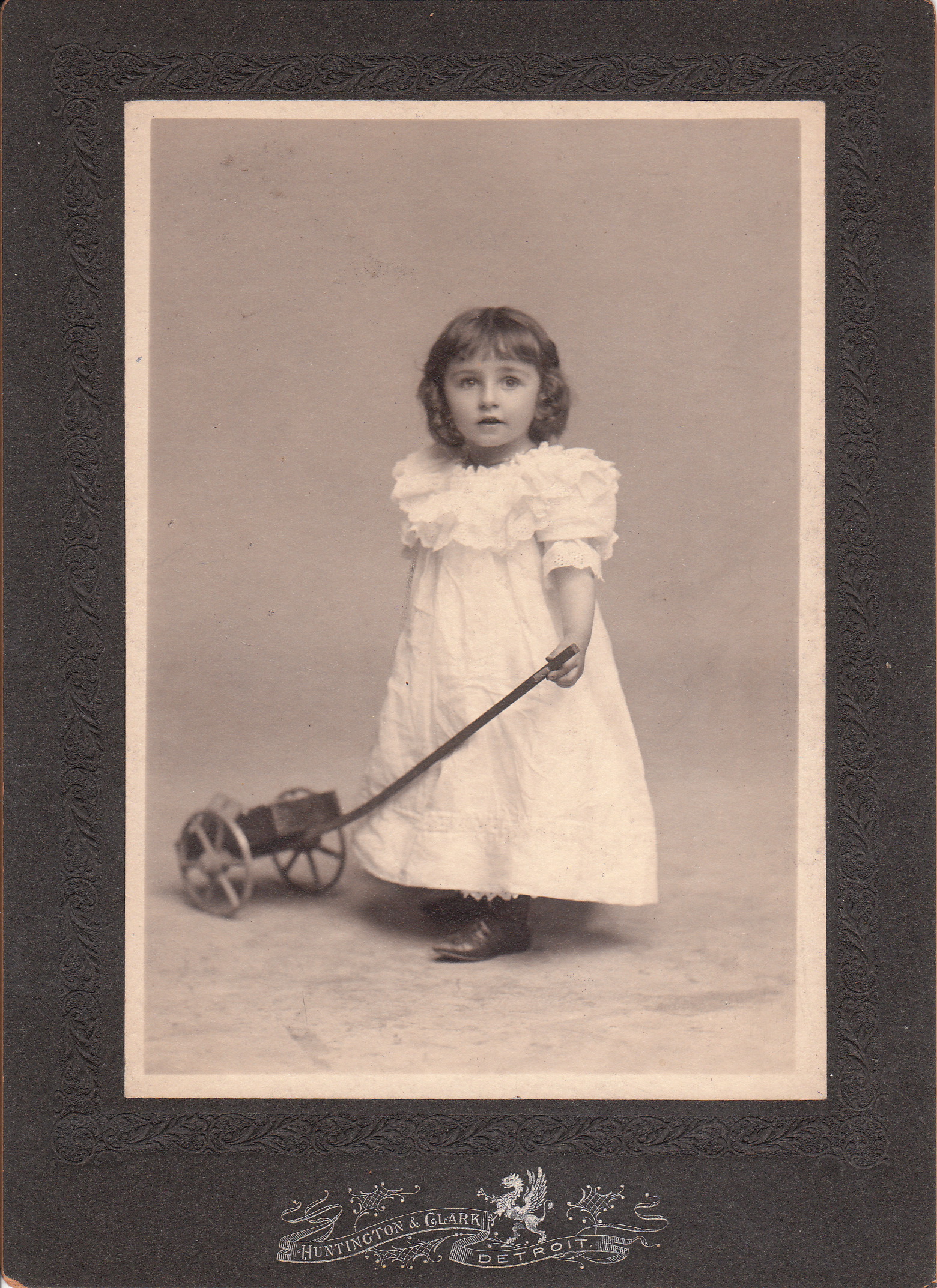
WAGONGIRLThe Huntington & Clark studio of Detroit, Michigan, produced this wonderful photograph of an adorable little girl and her toy wooden wagon. The child’s hair is well styled and she is wearing a pretty frilly dress. Historical author, Thomas Yanul included Frank Scott Clark (1865-1937) in his series “Business & the Baroque: Six Portrait Photographers of America”. Clark was born in Peru, Indiana and claimed that his family lived in America during Revolutionary War times. Clark began his work career by working many different jobs in eastern United States and Canada. Around 1880 Clark was hired by prominent background painter, Lafayette W. Seavey. Seavey was very popular during the cabinet card era. Clark was then hired by a friend of Seavy who happened to be famed New York portrait photographer, Napoleon Sarony. Clark was involved with creating, making and setting up backgrounds for Sarony. He also worked as a camera operator. He worked several years with Sarony and also studied and was employed  briefly with celebrated New York photographer, Jose Maria Mora. In the next phase of his career, he worked doing portraits, backgrounds, and theater scenery. In 1892, Clark moved to Detroit and managed the the Charles  A. Millard studio estate. In 1894, Clark partnered with George Huntington and they worked together until 1903 when Clark began operating a studio on his own. The above portrait was taken during this partnership. Clark prospered and became very involved with Detroit’s upper crust. He not only served as their photographer but he also was active in their sport, social, literary and art circles. In his narrative, Yanul states that Clark “became a larger than life character of the Detroit scene”. He describes Clark as being a “slightly bohemian figure”. Yanul adds that Clark had a charismatic personality, dressed in an artistic fashion, and was quite intellectual.


HANDSOME MAN WITH EXTRA LARGE MUSTACHE IN NEW YORK CITY

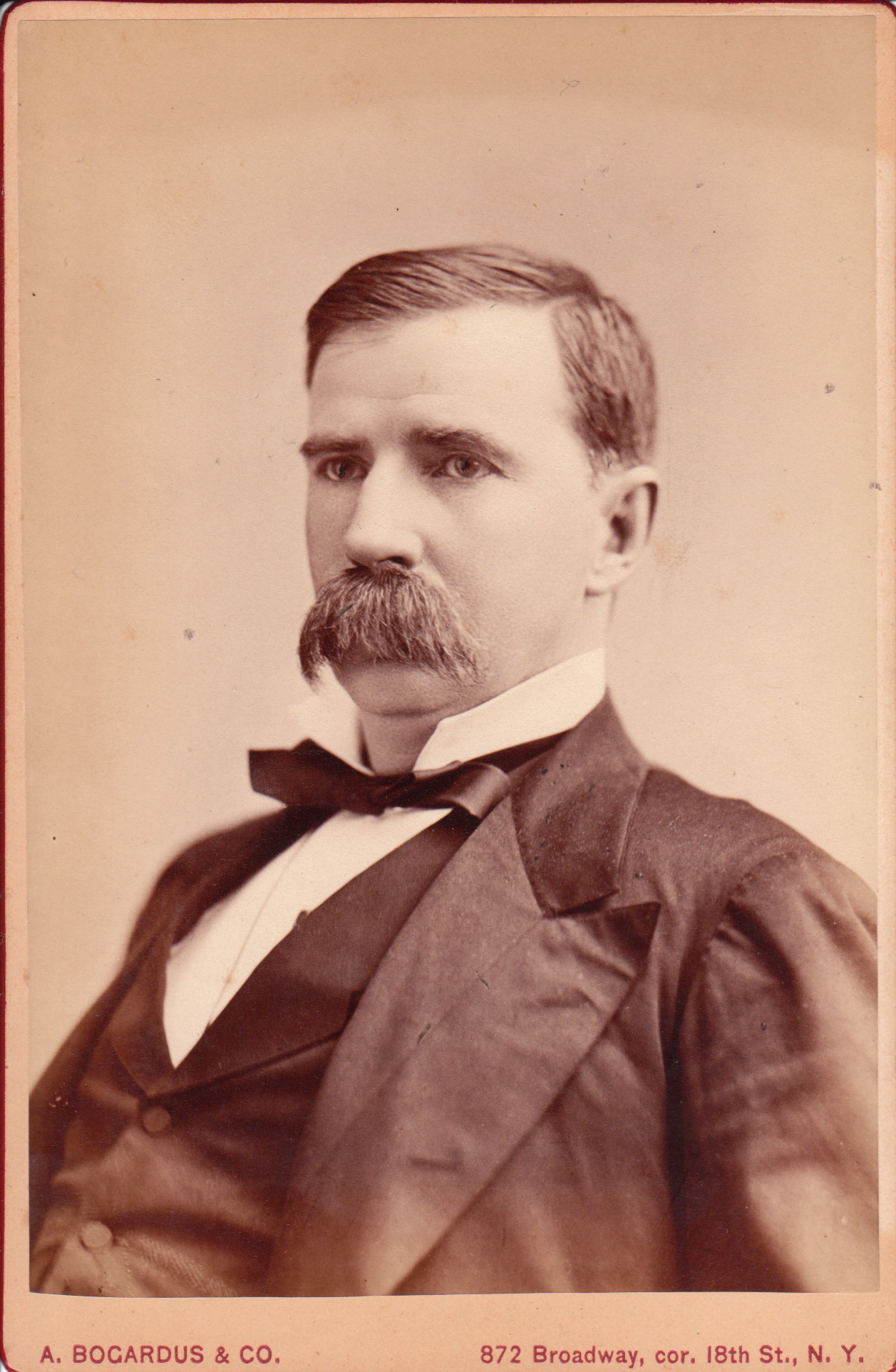
bogardusA nicely groomed gentleman, dressed in formal clothing, poses for his portrait at the Bogardus studio in New York City. The subject has an imposing mustache and a rather austere expression.  Abraham Bogardus (1822-1908) was a descendent of Dutch settlers of New York’s Hudson Vallery. He opened a studio and gallery in New York in 1846. In 1849 he opened a branch gallery in Newark, New Jersey.   His business was very successful. Bogardus was a noted celebrity photographer. In 1868 he was one of the founders of the National Photographic Association and served as the organization’s President for five years. Bogardus was a major witness at the trial of William H. Mumler. Mumler was a “spirit photographer” and he was brought to trial for fraud. Bogardus was hired by P. T. Barnum to fake a photograph of him with the “ghost” of Abraham Lincoln. The image was used as an example of the ease at which a photographer could create fake photographs of ghosts. From 1871 through 1873 Bogardus partnered in owning his studio with Daniel and David Bendann. Bogardus was not a big advocate of extensive retouching. He spoke at national conferences about his belief in minimal intervention. The popular photographers Sarony and Mora did not support the minimalist approach. Mora worked particularly hard to create celebrity portraits with an idealized appearance. Bogardus’s philosophy caused him to be very popular with male portrait sitters. In fact, Cornelius Vanderbilt insisted that Bogardus be the only photographer allowed to sell his portrait. Wishing to retire in 1884, after 38 years of business, he put his studio up for sale and in the advertisement he stated that “The reputation of the gallery is too well known to require one word of comment”. Bogardus’s studio had been located at a number of New York City addresses and the photograph above was taken at his last location. Bogardus was also a talented writer. He published many articles in photography journals and in addition during much of the 1880’s he edited a well respected monthly entitled “The Camera”. The photograph below is a portrait of Abraham Bogardus.


store

MAUDE BRANSCOMBE: CELEBRATED BEAUTY AND ACTRESS

branscombe_00012

branscombe-2_00011

BRANSCOMBE 3_0001

BRANSCOMBE BY HOWELL_0003

BRANSCOMBE EYES_0013

BRANSCOMBE AGAIN_0006

Maude Branscombe was a very popular stage beauty and light opera singer. She was reported to be the most photographed woman of her day. Biographical information about her is sparse and more will be added at a later date. Her first appearance on the New York stage was in 1876 as Cupid in a revival of Ixion at the Eagle Theatre. The portrait at the top was photographed by renowned W & D Downey of London, England.

The second portrait  was cropped so the photographer is unknown.

The third portrait (Branscombe is wearing a necklace) is by L. Levin & Son of San Francisco, California.

The fourth cabinet card image was photographed by Sarony. Sarony was a well known celebrity photographer and more of his portraits can be viewed by clicking on the category of “Photographer: Sarony”. Sarony does an excellent job of capturing Branscombe’s beauty and her alluring eyes.

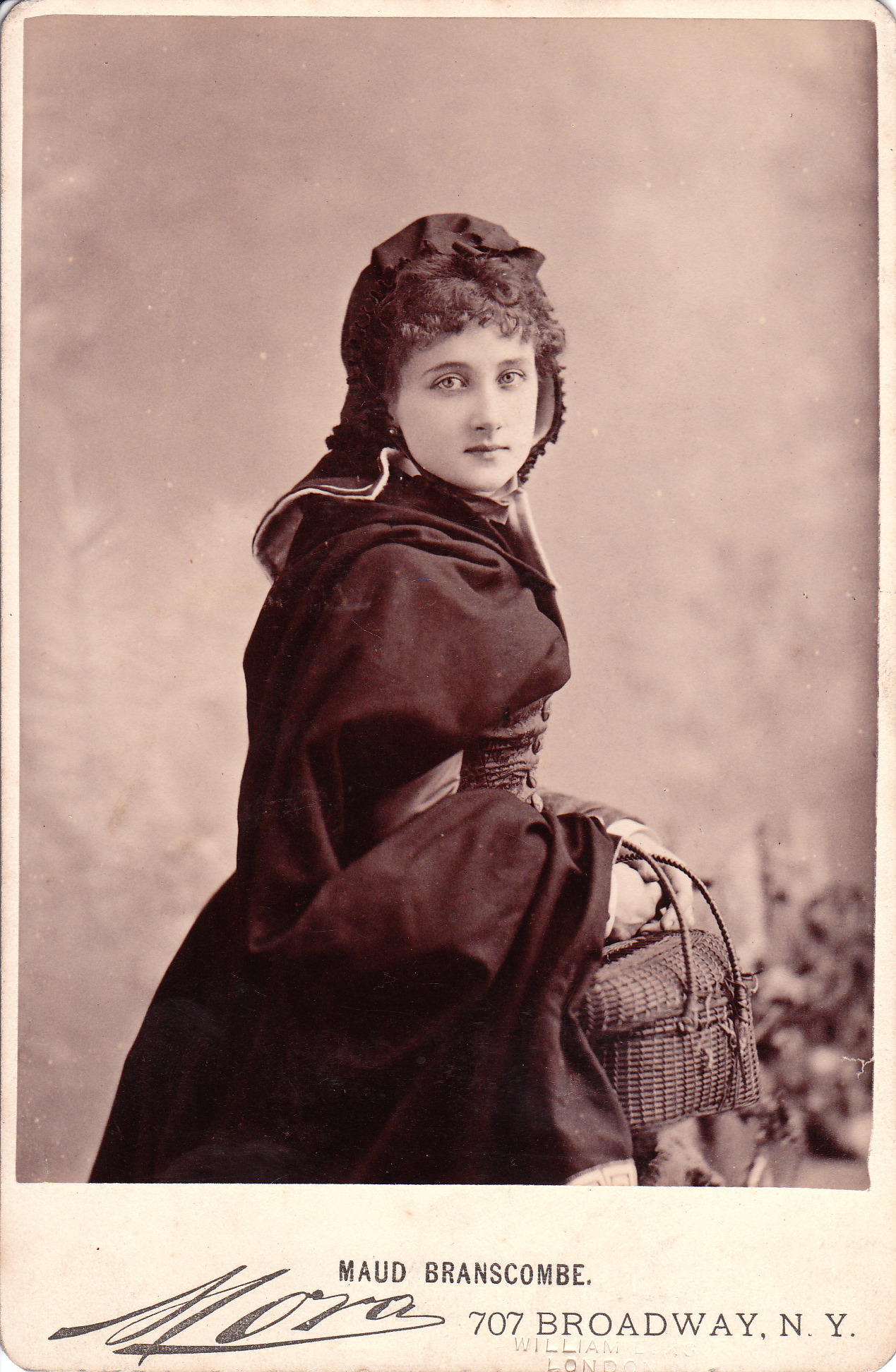
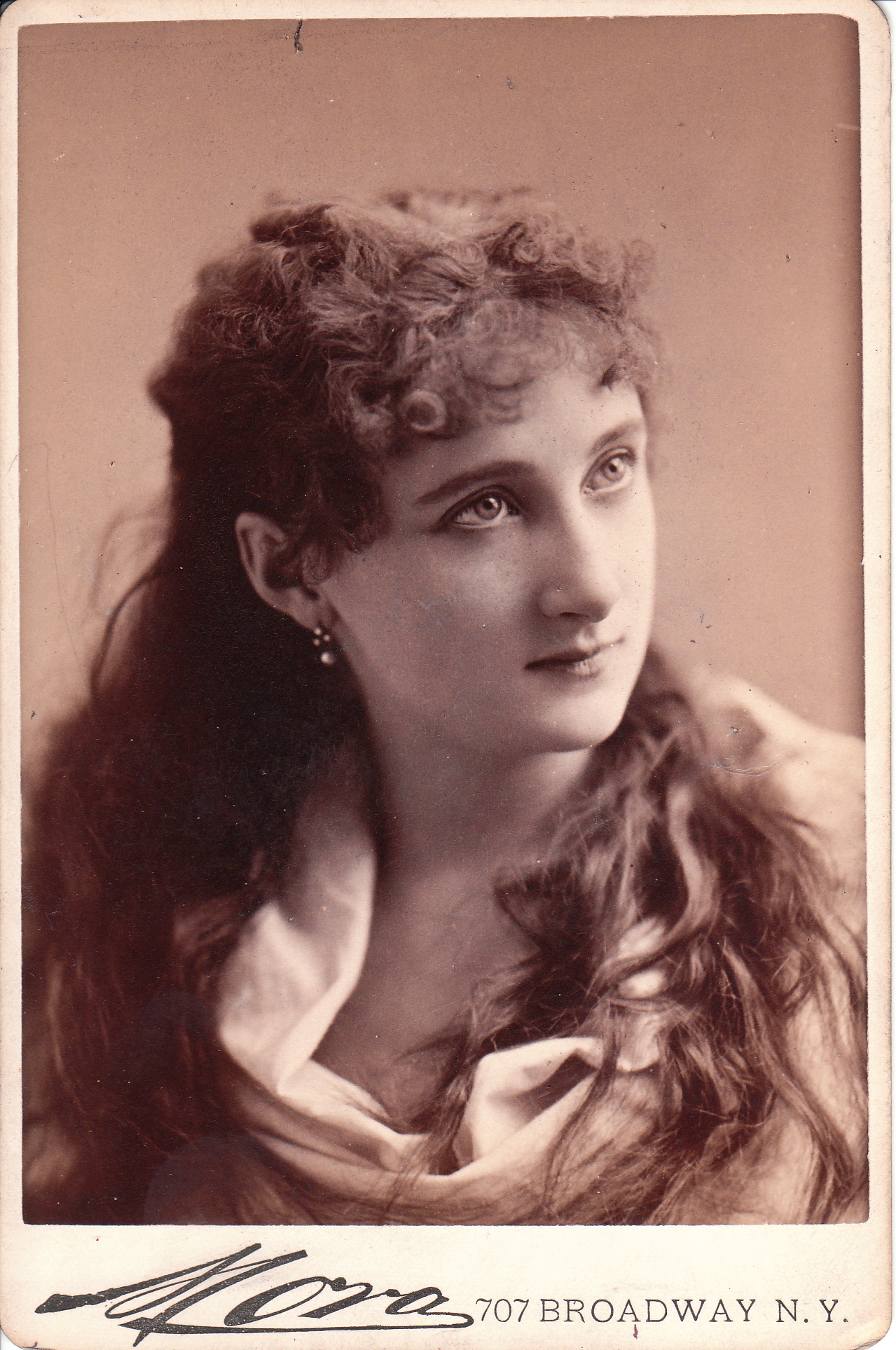
The fifth and sixth, and seventh cabinet card were photographed by another celebrity photographer, Jose Mora, of New York City. Interestingly, the fifth and seventh cabinet card captures Branscombe in the same costume as the second cabinet card. It is likely that the photographer of cabinet card number two, is also Jose Mora. To view other photographs by Mora, click on the category of “Photographer: Mora”.

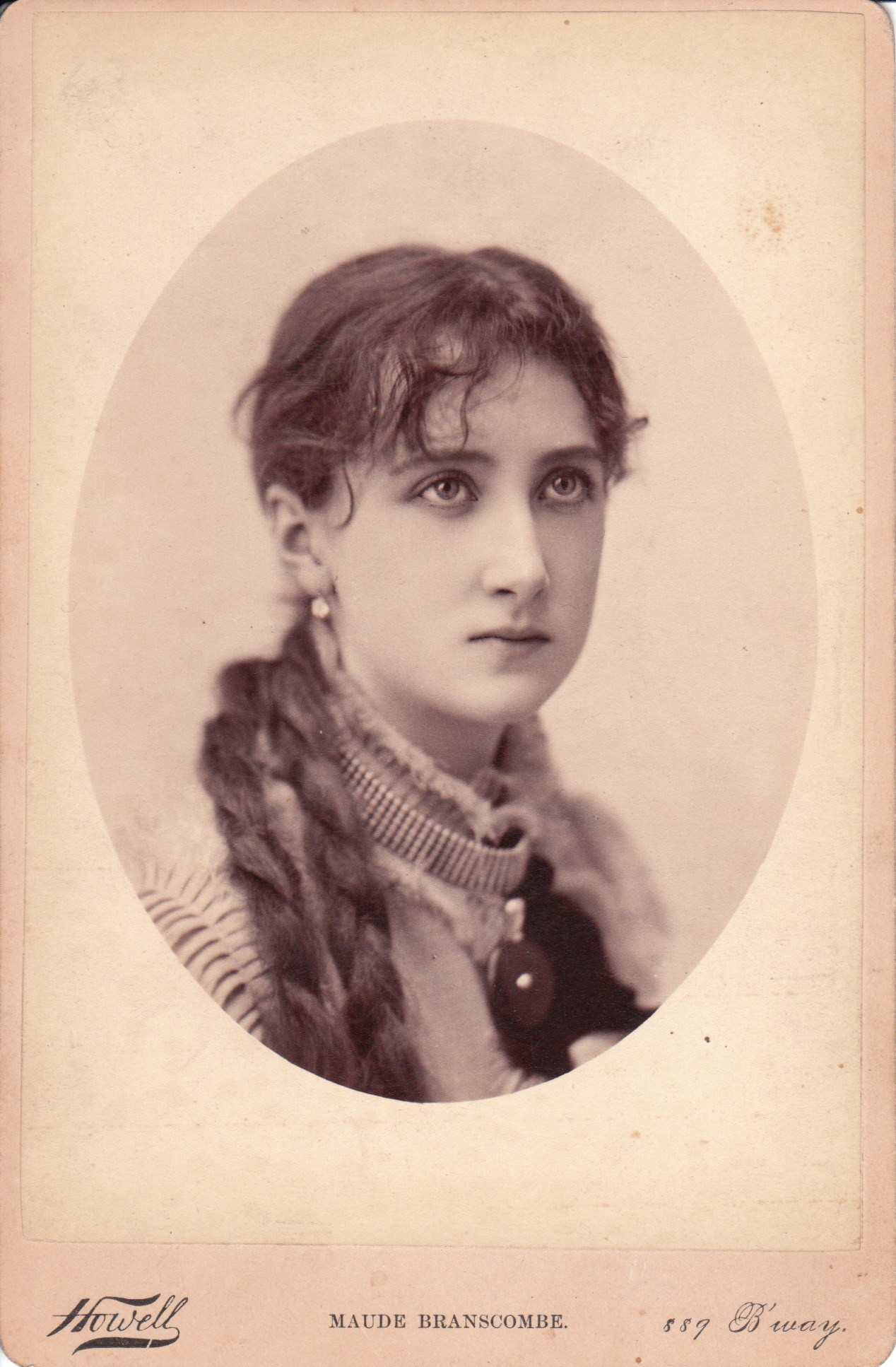
The eighth cabinet card portrait of Branscombe was photographed by Howell, another New York City photographer with a studio on Broadway. Howell’s close-up photograph captures the actress’s beauty and her wonderful eyes. She is wide eyed and her hair is a bit mussed. These qualities add to the allure of Miss Branscombe.William Roe Howell was born in 1846 in Goshen, New York. He had a passion for drawing and painting and he directed his creative interest into the field of photography as a young adult. He opened a photographic studio in Goshen. In 1863 he moved to New York City where he joined Robert and Henry Johnston at Johnston Brothers Studio at 867 Broadway. In 1866 the firm became Johnston & Howell. In 1867, he became the sole proprietor of the gallery. By 1870, he was gaining much recognition in the field of photography. His great location in New York City gave him access to many fashionable upper class men and women as well as many celebrities. Among his photographic subjects were P. T. Barnum, Buffalo Bill, and Robert E. Lee. He opened a branch studio in Brooklyn. In 1873 he came one of five Americans to be awarded a special grand prized at the Vienna World Fair. He frequently received mention in the photographic journals. He published a book of cabinet cards that received much praise. He became a photographer for West Point, Princeton, and other notable institutions. He won many medals at photography exhibitions. In 1878 he moved his business from 867 to 889 Broadway and opened another studio with a partner (Meyer) at 26 West 14th Street. In 1880 he retired from photography due to health reasons.  In 1886 he moved with his family to Washington D.C. intent on opening a photography business there. He then disappeared. He vanished just two weeks before the grand opening of his new studio. He left his wife of 16 years (Fannie Scott) and his five children penniless. His wife stated that Howell was an eccentric man and that he must have got tired of business and family problems “and cut loose from us”.  He apparently returned home after a short duration of absence and his business appeared in the 1888 Washington D. C. business directory but not in the 1889 directory. He died of tuberculosis in New York City in 1890. He had been residing at the home of a colleague who ran a photography studio in Harlem. It is believed by some biographers that he had divorced his wife and returned to New York without his family.

The ninth cabinet card is another portrait photographed by Jose Mora. The actress’s costuming detracts from the overall appeal of the photograph. She seems lost in the swirl of her head covering. However, the photographer does an excellent job of highlighting Miss Branscombe’s seductive eyes. The phrase  “Maude Branscombe eyes” certainly rivals the phrase “Bette Davis eyes”.

Cabinet card number ten also comes from the studio of Jose Mora. She is well dressed in this portrait. It is not clear if she is dressed for a stage role or if she is attired for a jaunt around town.
DELLA FOX: AMERICAN STAGE ACTRESS (IMAGES FROM 1893 and 1894)

fox3_0001

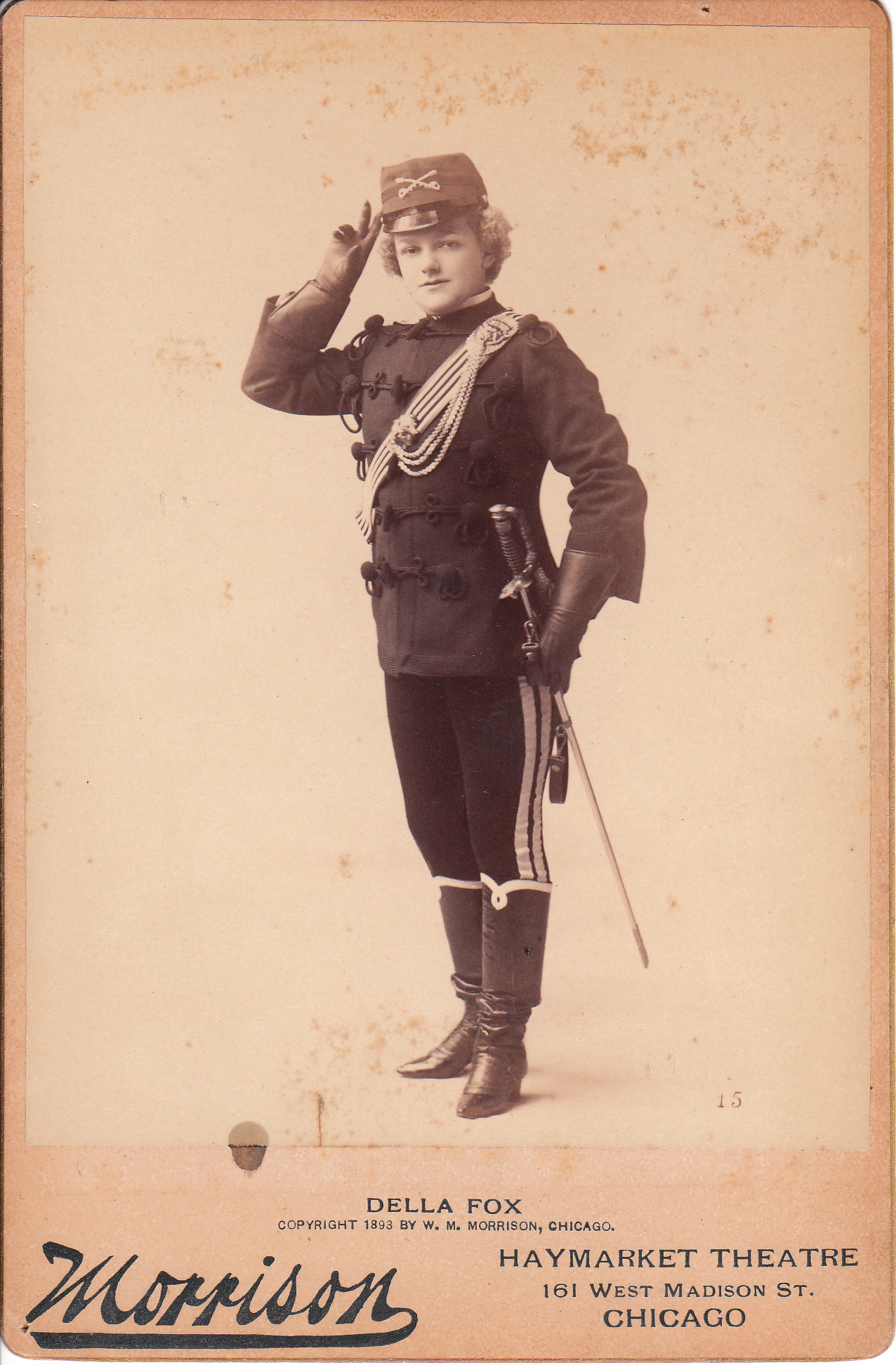
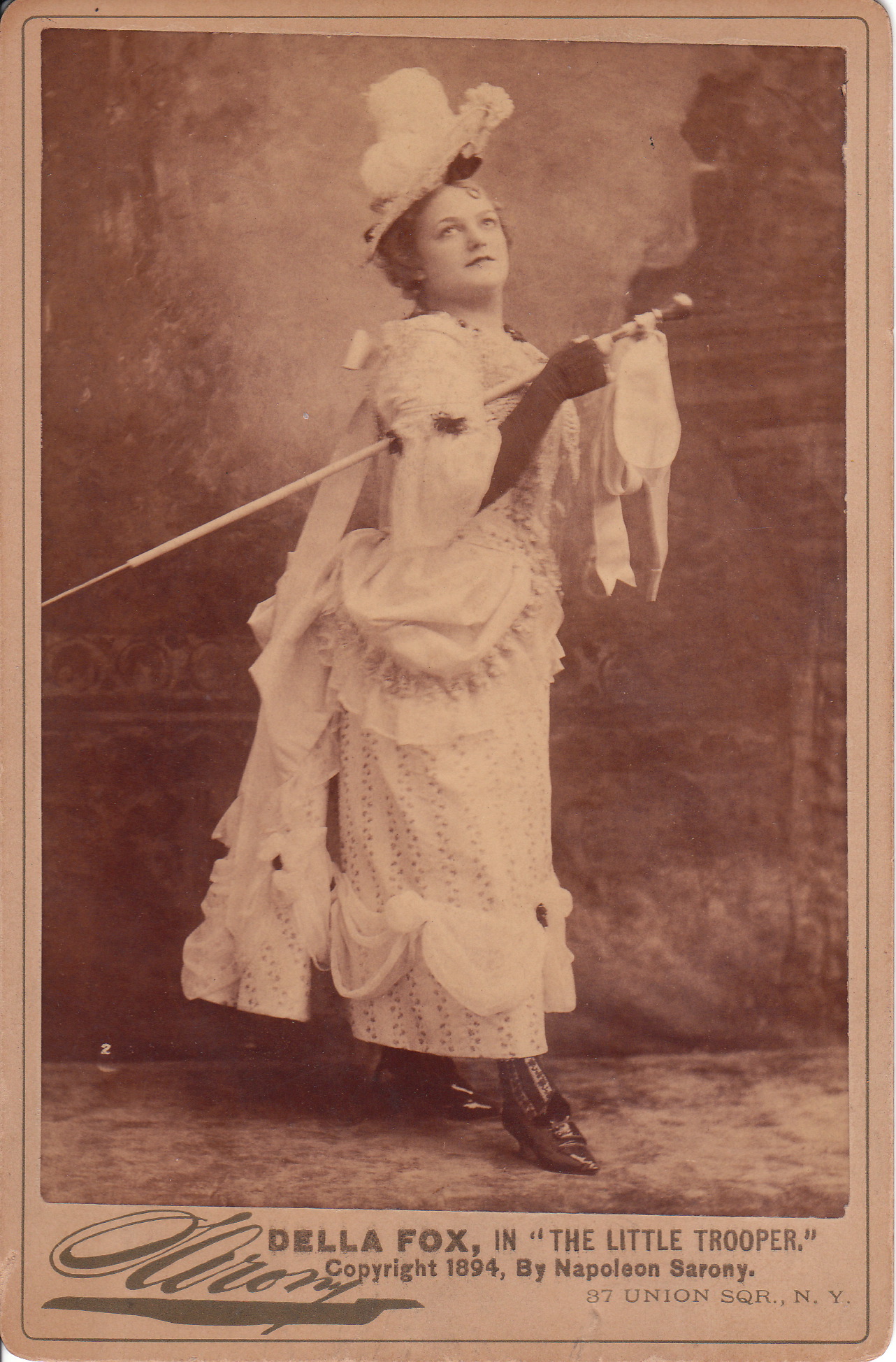
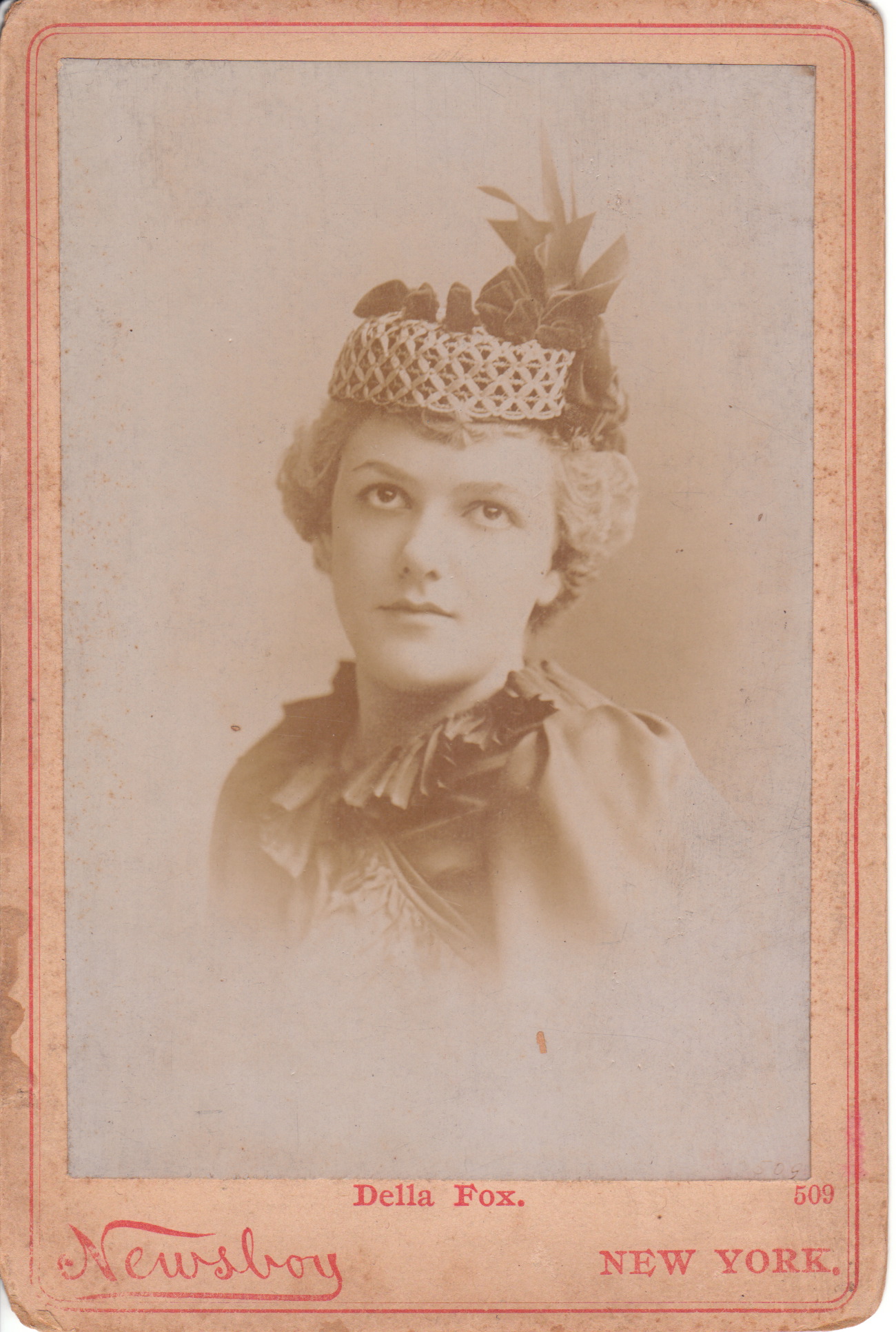
These cabinet cards feature American stage actress, Della Fox (1870-1913). In the top photograph, she is wearing a military costume  for a play that she was appearing in. The photograph is copyrighted in 1893. She began her acting career as a child and became a well known musical comedy actress. Her popularity peaked in the 1890’s when she appeared in several musical with De Wolf Hopper. She also toured with her own theatre company. Her life was plagued with personal problems including alcohol and drug abuse, and mental breakdowns requiring institutionalization. This cabinet card portrait was photographed by Morrison who is known for his portraits of theatre stars and other celebrities. Morrison operated out of the Haymarket Theatre builiding in Chicago, Illinois. Please click on the category “Photographer: Morrison” for more information about Morrison and to view other photographs by his studio.  The second photograph captures Della Fox in costume for the play “The Little Trooper”. The play was by William Furst (1852-1917) and appeared at the Empire Theatre in New York City. The photograph is the work of Napoleon Sarony, famed celebrity photographer of New York City. The reverse of the cabinet card indicates that the photograph was taken on December 25th, 1894. To view other photographs by Sarony, click on Cabinet Card Gallery’s category of “Photographer: Sarony”. The third photograph of Miss Fox was produced by Newsboy as a premium to be given away with their tobacco products. It is number 509 of a series. To view other Newsboy photographs, click on the category “Photographer: Newsboy”.

ESTELLE CLAYTON: STAGE ACTRESS

estelle-claxton1

CLAYTON3

Estelle Clayton (1867-1917) is seen in the first and second Cabinet cards. She was a prominent actress as well as a librettist in the late 1800’s. In one of her roles, she starred in “Fayette” with E H Sothern. Clayton was the sister of actress Isabelle Evesson. In 1908, the two sister actresses filed suit against New York City for allegedly diverting land away from earlier generations of their family. In 1917 she died in New York City of heart failure. The photographer of both of these Cabinet cards is Sarony of New York City. The third cabinet card portrait of Clayton was produced by Newsboy as a premium for tobacco products. It is number 47 of a series. The barefoot Miss Clayton is in quite the risque pose in this image.

MINNIE PALMER: SUCCESSFUL THEATRE ACTRESS NEARLY MURDERED BY HER POSSESSIVE HUSBAND

MINNIEPALMER4_0005

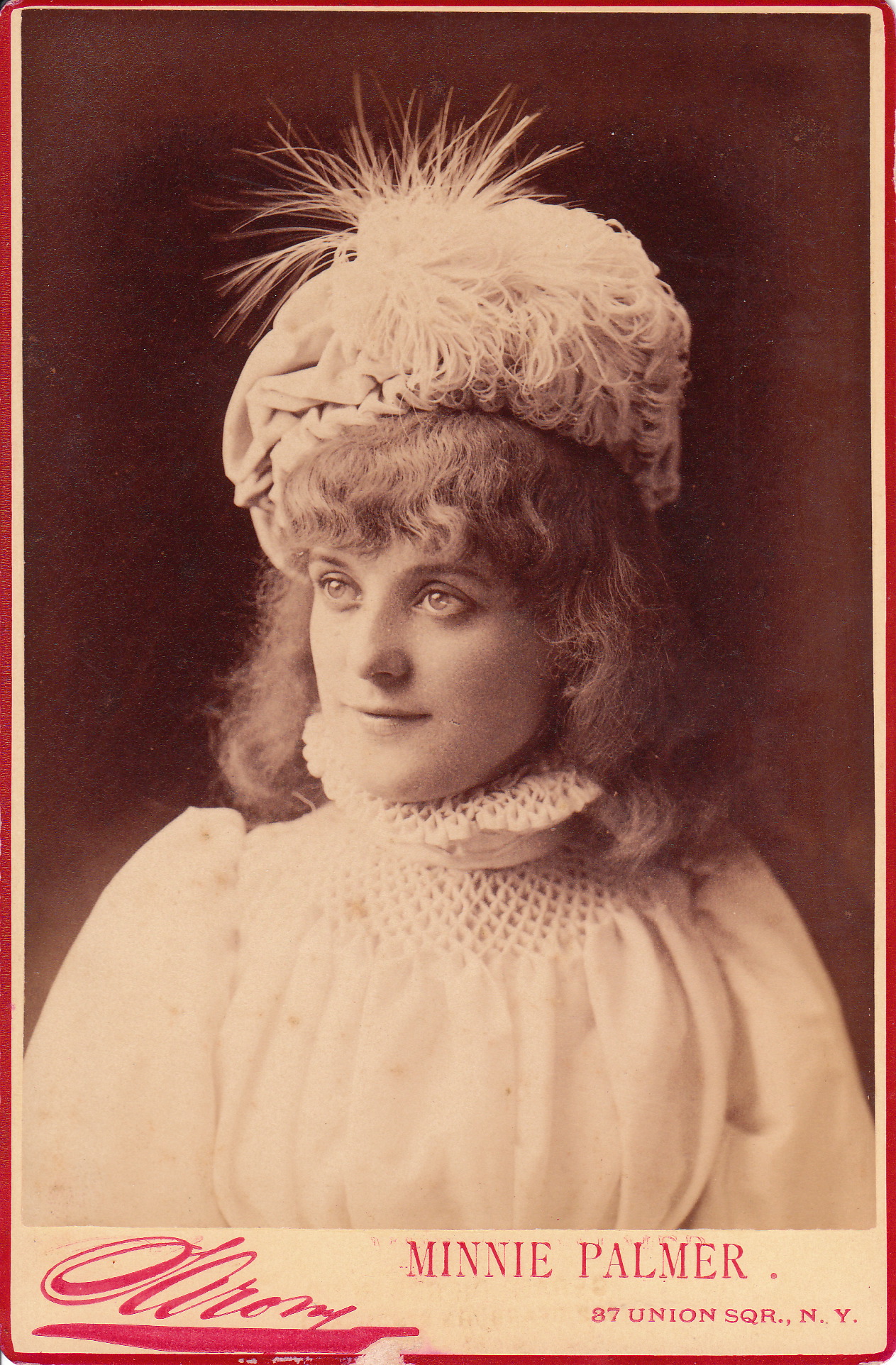
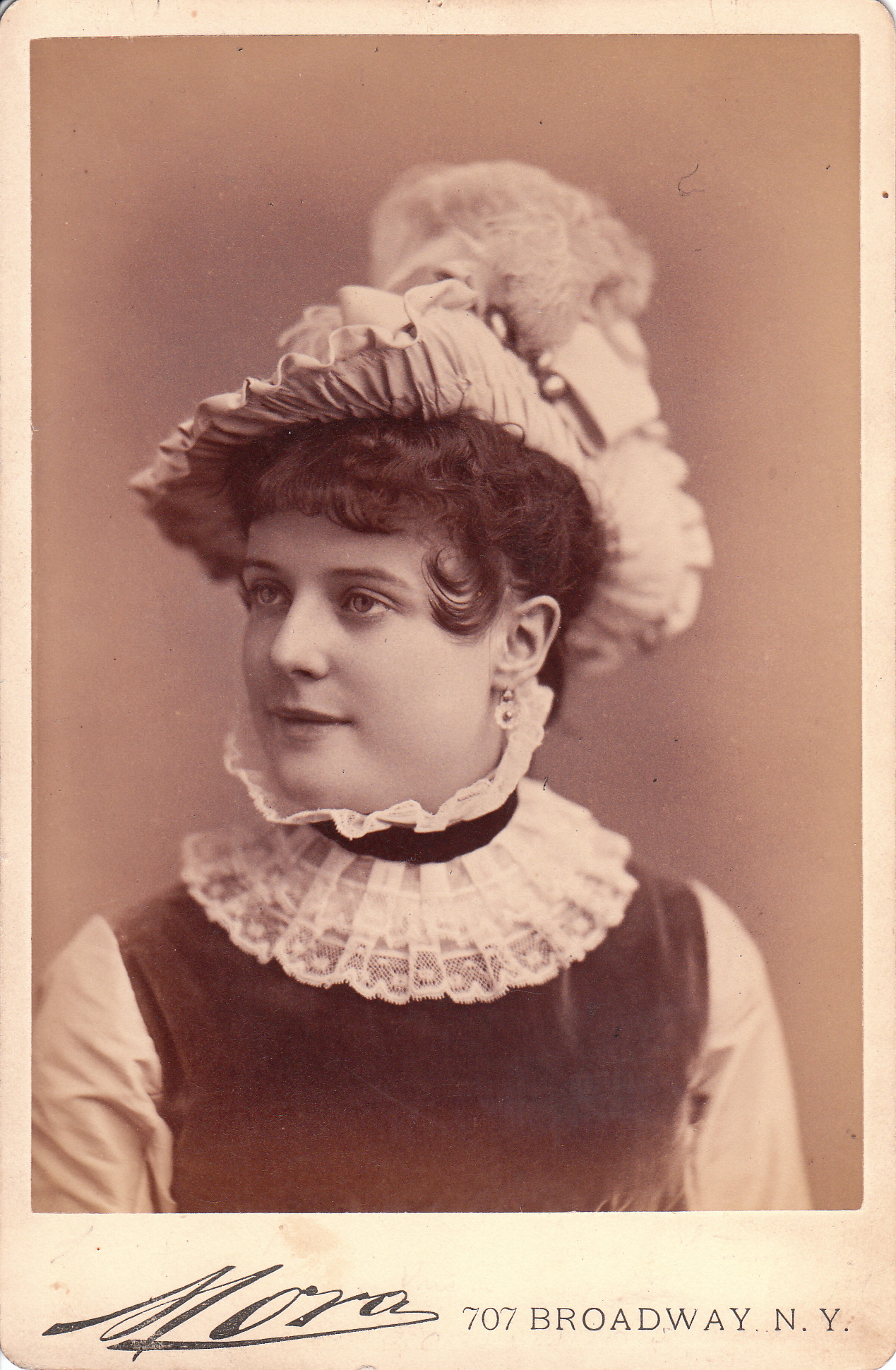
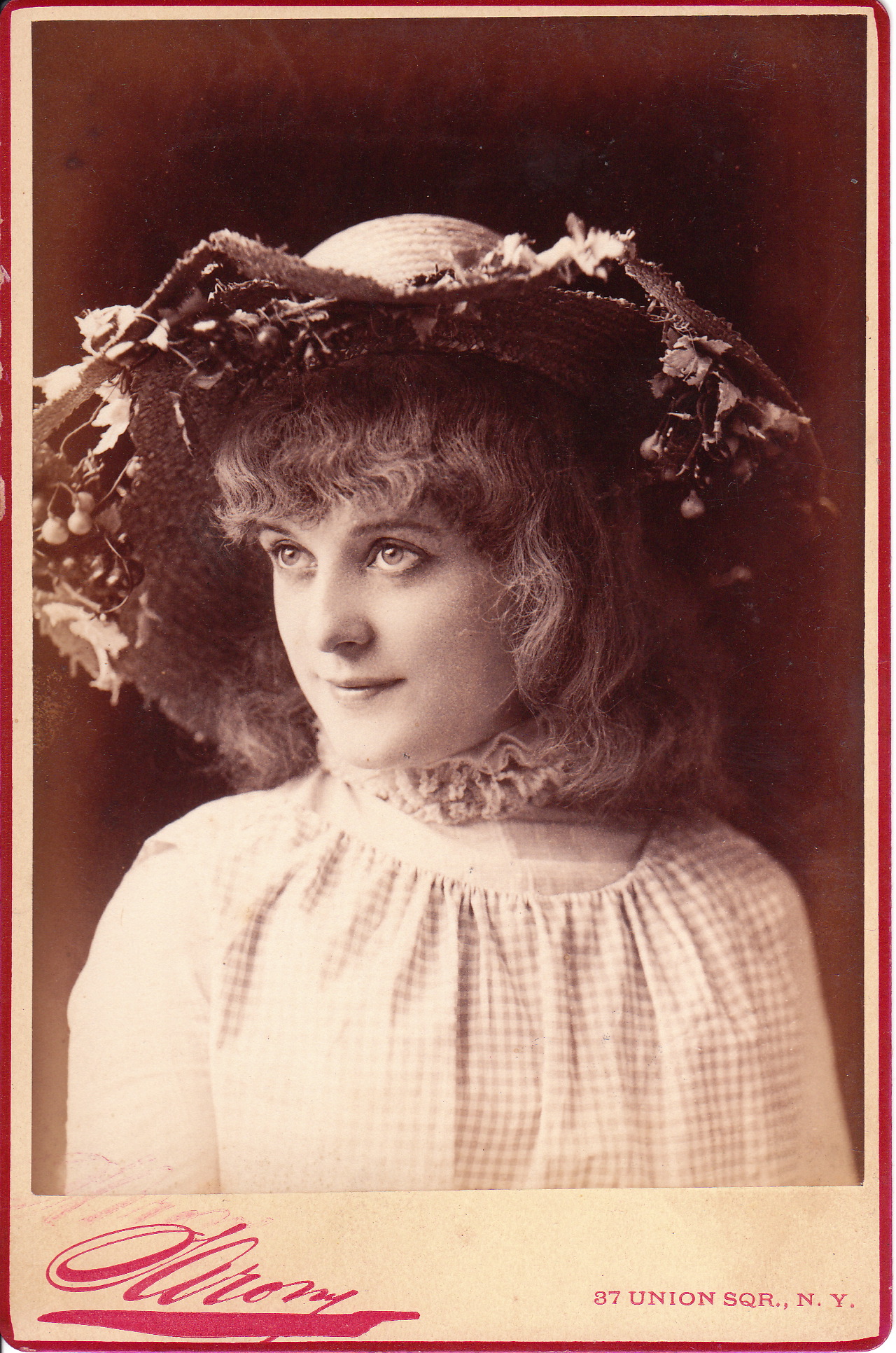
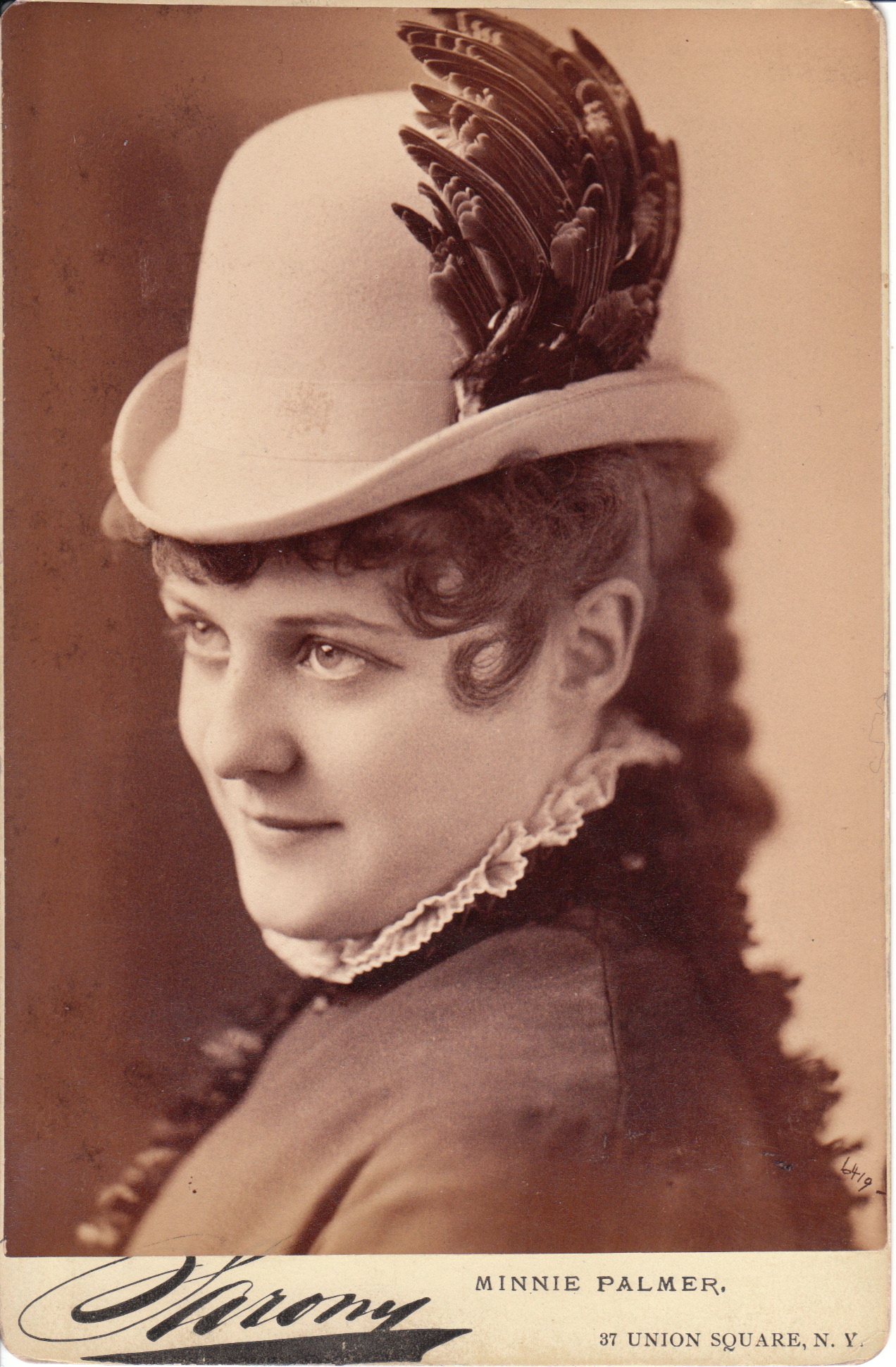
These cabinet cards feature a portrait of theatre actress, Minnie Palmer (1860-1936). Palmer was born in Philadelphia and spent her early childhood in a convent. At age eight, her family moved with her to Vienna where she was taught music and German. She then went to Paris where she learned dancing and French. At age eleven, in 1876, she went to Baltimore, Maryland,  and made her first stage appearance. She then acted in Booth Theatre’s production of “Dan’l Druce”. This appearance was followed by roles in “Engaged“, “The Cricket on the Hearth” and other plays. She was very successful in “Two Orphans” and in the 1879-80 theatre season she had great notice in “The Boarding School” and “My Sweetheart“. Palmer also was successful at having aspects her personal life detailed in the newspaper. The New York Times (1890) reported her “narrow escape from death” when she was assaulted by her husband who brandished a huge carving knife. She received minor injuries to her face and her hand. Her husband, John Rogers, was also her manager. Rogers was angry because his wife had ignored his edict that she stay away from her mother. Apparently, upon her return from attending a horse show with her parents, Rogers attacked her. Rogers was a very possessive man; he had already written many insulting and abusive letters to Palmer’s friends in an effort to keep them away from her. Palmer was certainly not media shy. She gave the Times reporter a very detailed story about the violent incident and problems in her marriage which they were happy to print. The photographer of the top cabinet card is Sarony. The second cabinet card is a portrait by celebrity photographer, Mora. Both photographers were located in New York City. To see other photographs of these talented celebrity photographers, click on Cabinet Card Gallery’s category “Photographer: Sarony” and “Photographer: Mora”. The third cabinet card is by Sarony and it does a great job of capturing Minnie Palmer’s exceptional beauty. The fourth cabinet card, also by Sarony, is a close-up portrait of Miss Palmer wearing a feathered hat. Once again, Minnie Palmer is quite photogenic. She has sparkling beautiful eyes and a wonderful smile.

Published in: on January 29, 2013 at 12:01 am  Comments (2)  
Tags: , , ,

PORTRAIT OF BEAUTIFUL THEATER ACTRESS KATE SANTLEY (PHOTOGRAPHED BY NAPOLEON SARONY)

santleyThis fantastic cabinet card photograph features beautiful theater actress Kate Santley (1837-1923). The photograph was produced by New York City celebrity photographer, Napoleon Sarony. Santley was born in Germany but raised as a child in Charleston, South Carolina. After the outbreak of the civil war in America, Santley left for England. She began her theater career in England and became a well known actress, singer, comedienne, and theater manager. In 1876 she played Wilhelmina in “The Jolly Waterman” at the London Opera Comique. Also in 1876, she started her own theater company and produced and starred in W. S.Gilbert’s “Princess Toto” at the Theatre Royale in Nottingham. Kate Santley was a stage beauty. She was slim and pretty and was frequently photographed for carte de visites, cabinet cards, postcards, and advertising. To view other photographs by this celebrated photographer, click on the category “Photographer: Sarony”.