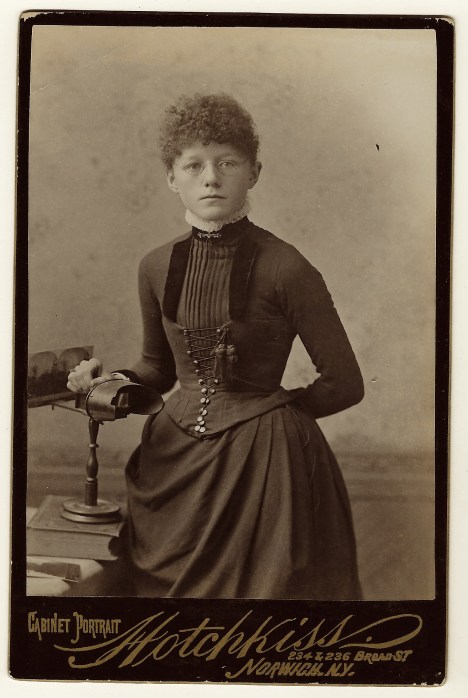
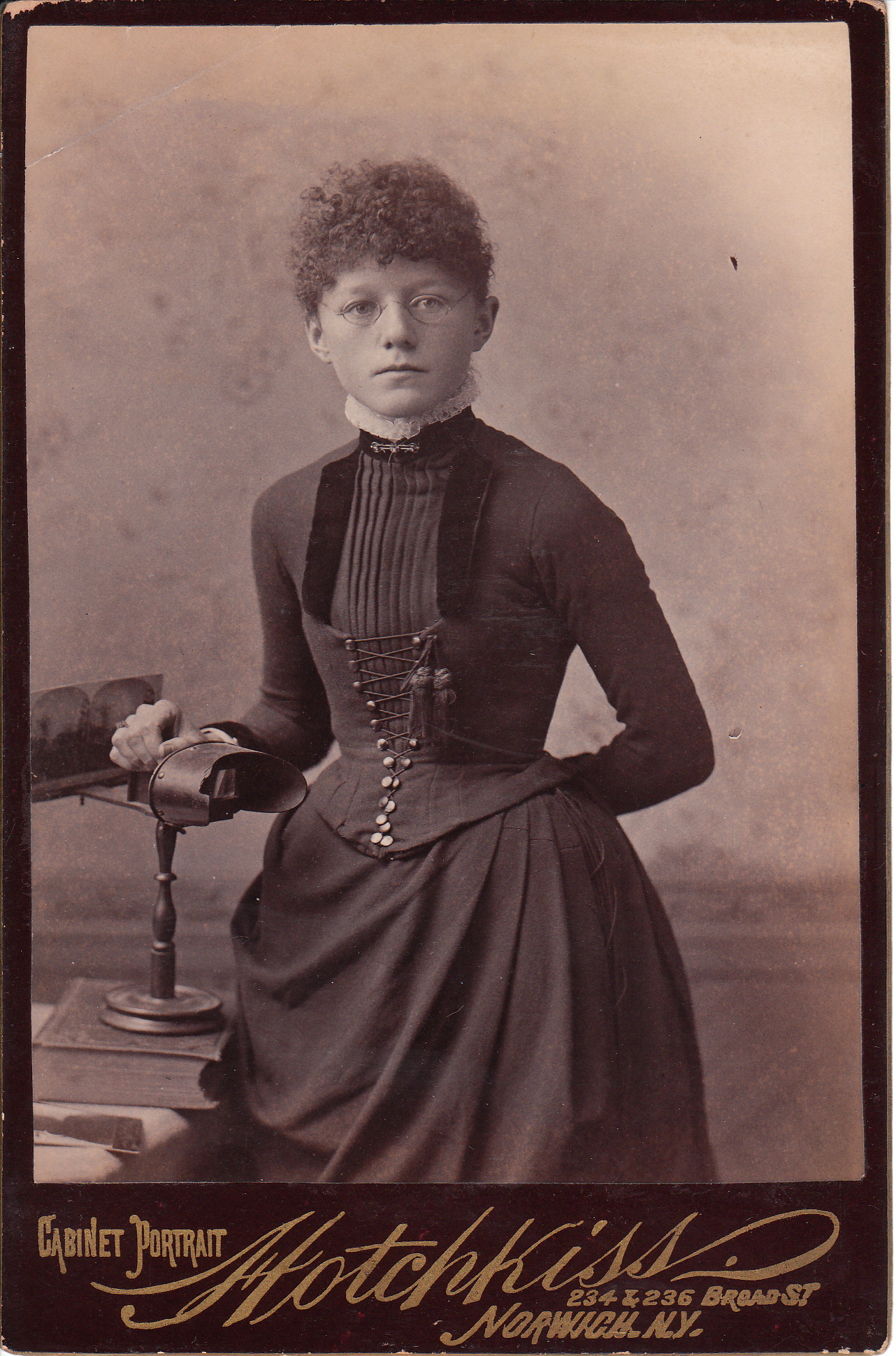
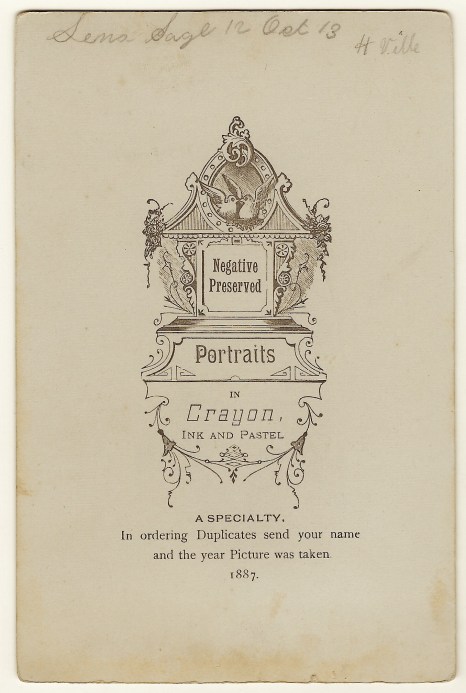
 The young girl posing in this photograph has the appearance of a very intellectual child. She is standing next to two books atop a table and her hand rests upon a stereoscope. She is wearing a pair of glasses. The photograph was published in 1887. The girl is identified on the reverse of the photograph as Lena Sage, age 12. According to census data, Lena A. Sage was born around 1876. Her father, George, was a farmer. Her mother, Harriet, kept house. Lena was still living at home with her family at the time of the 1905 New York census. She was 28 years old and unemployed. Her younger brother, Daniel also lived in the household. He worked as a telegraph operator. As stated earlier, this photo includes a fantastic view of a stereoscope. Stereoscopes were a popular way to view photographs in the late 1800’s and early 1900’s. A popular later version was invented by Oliver Wendell Holmes Sr.. Stereoscopes are used to view stereographic cards. These cards have two separate images printed side by side. When viewing these images through the stereoscope, the focal points becomes more distant, the card image is magnified allowing the viewer to see more detail, and the resulting image is 3-D. The photographer of this cabinet card is Alston E. Hotchkiss ( c 1846-1907) of Norwich, New York. A. E. Hotchkiss came to Norwich in 1872 at the age of twenty-six. He ran the most popular photo gallery in town and it is reported that he took on the persona of an artistic and cultured gentleman. His wife played a major role in his running the studio and at one point, he employed at least twenty workers. At this point in time, the Cabinet Card Gallery has three photos by this excellent photographer. This cabinet card portrait is in very good condition (see scans) and is quite special. The child’s glasses and the stereoscope are enhance the photograph and the fact that the girl is identified is definitely a bonus. SOLD

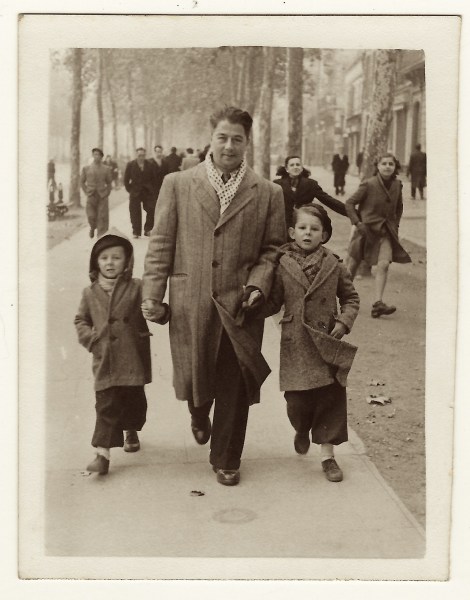 This snap shot photograph tells a story. It may go something like this. It is a cool winter day in France. Its 1966. A handsome father puts on his winter coat and scarf, bundles up his two adorable children, and the family goes for an enjoyable brisk walk down the boulevard. They are not alone. A number of pedestrians are occupying the sidewalk. The man and his children are well dressed and appear fairly affluent. An inscription, written in French, can be found on the reverse of the photo. Perhaps a visitor to the Cabinet Card Gallery will be able to translate the inscription for the rest of us. The photograph measures about 2 3/4″ x 3 1/2″ and is in very good condition (see scans).


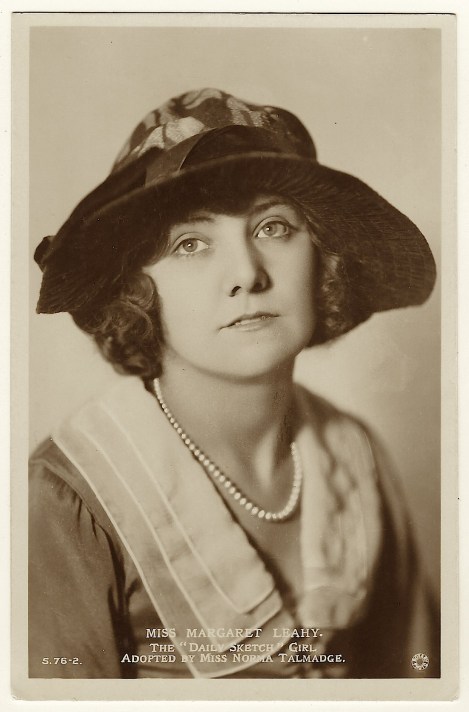 Margaret Leahy (1902-1967) was a British actress. She was born in London. At the age of eighteen, she set up a costume shop and designed women’s clothing. She also modeled her designs for her customers. The story of how she got her start in acting is an interesting one. After winning a beauty contest, she seemed destined for stardom. Unfortunately, despite her rapid launch into filmdom, her career quickly crashed. She made only one film in her short-lived career. The beauty competition occurred in 1922. Actresses, Constance and Norma Talmadge, Joseph Schenck (film studio executive), and Edward Jose (film director) held a beauty contest in England. It’s purpose was to find a new leading lady. The “Daily Sketch”, an English newspaper, offered a starring role in a major Hollywood film to the winner of the contest. Eighty thousand women entered the contest and three girls were chosen to the final competition. The finals were held in Hollywood and Miss Leahy was the winner. Norma Talmadge described Leahy as “the most ravishing girl in England”. Leahy’s start in films was a disaster. She was dismissed from “Within the Law” (1923). The film’s director found her acting talent was nearly non-existent. He threatened to quit unless Leahy was terminated. The year 1923 wasn’t all bad for Miss Leahy. She was named one of thirteen WAMPAS Baby Stars. Evelyn Brent, Eleanor Boardman, and Laura La Plante were among the thirteen. All but Leahy became successful film actresses. Between 1922 and 1934, WAMPAS association supported a promotional campaign that named thirteen young actresses thought to be destined to become stars. Margaret’s next stop was an appearance in a Buster Keaton comedy, “Three Ages” (1923). Leahy received little attention for her role in the movie and her career was stopped in it’s tracks. Leahy did not return to England. Instead she got married and remained in California. She became an interior decorator and was known to despise the movie industry. In fact, she burned all her movie related scrap books. Sadly, Leahy committed suicide at the age of sixty-four in California. This vintage postcard was published by Rotary Photo and printed in England. The postcard is part of a series (no. 5.76.2). The postcard is in very good condition (see scans). SOLD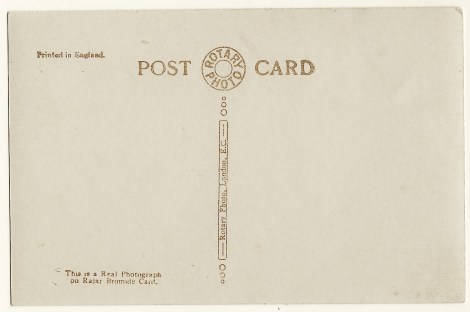

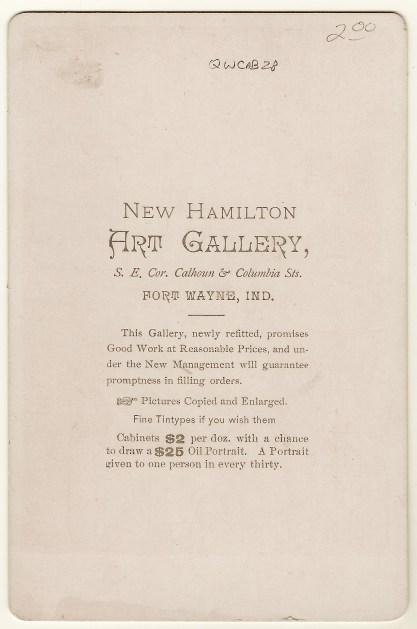
 A pretty woman poses for her portrait at the New Hamilton Art Gallery in Fort Wayne, Indiana. She looks quite fashionable in her dark dress and wonderful hat. The feathers on the hat are neatly divided into halves of black and white. She is wearing a necklace and is leaning on a high backed chair. She looks very pensive. Advertising on the reverse of the photograph reveals that the studio was located on the corner of Calhoun and Columbia Streets. In addition, the advertising lists the cost of cabinet cards as being 2 dollars per dozen. As an added marketing technique, the studio would do a free 25 dollar oil portrait for one of every thirty customers. Apparently the photographer who operated this studio was a creative marketer as well as a creative photographer. This cabinet card is in very good condition (see scans).
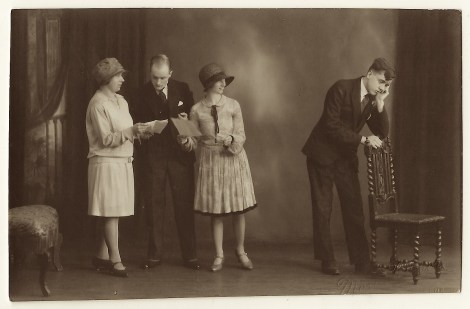

 This vintage real photo postcard features a theatrical performance in progress. The name of the theatre, play, and players are unknown. The gentleman leaning on the chair seems very forlorn. The photographer of this image is Marie Podmore. She operated a studio in the town of Colne in Lancashire, England. Preliminary research reveals that she was active at least from the early 1920’s until 1938. The stamp box indicates that the postcard was made by Crown Studios sometime between 1913 and 1929. This vintage theatrical postcard is in excellent condition.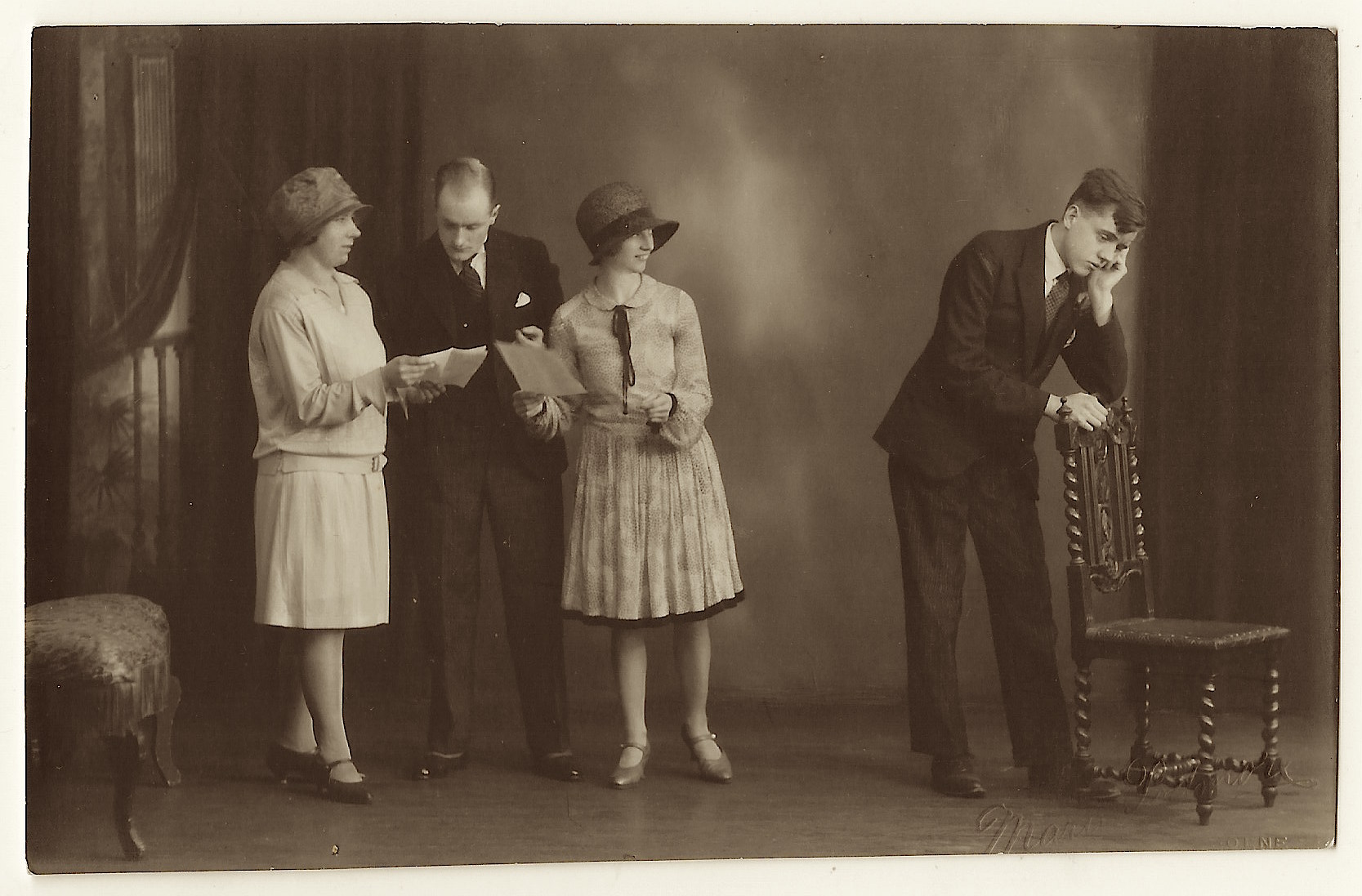




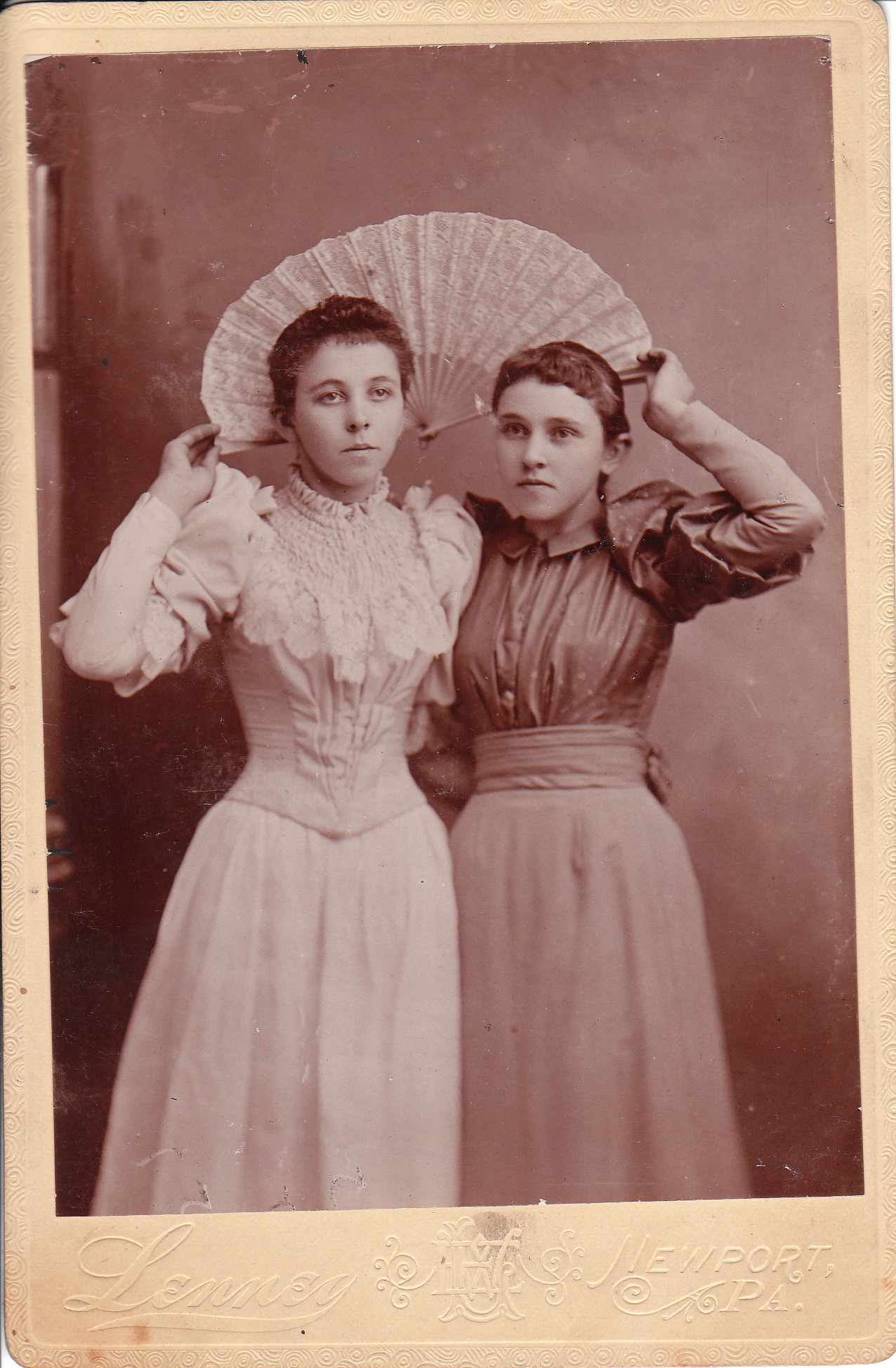
 Two young women pose for their portrait in Newport, Pennsylvania. Both women are grasping one end of a fan that they hold behind their heads. Their raised arms highlight their hour glass figures which are given an assist by the corsets they are wearing. The photographer is named William Easter Lenney. He was located in Newport in the early 1890’s and moved to Atlanta, Georgia where he became a well known portrait photographer between 1894 and 1920. He and his family then moved to California. (SOLD)


 THE CABINET CARD GALLERY