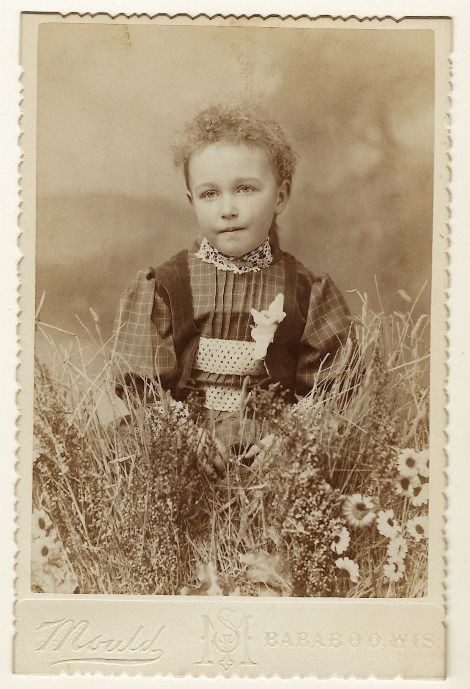
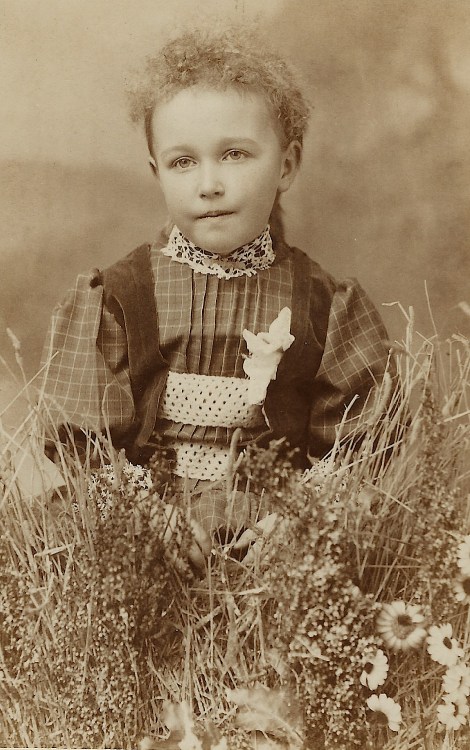
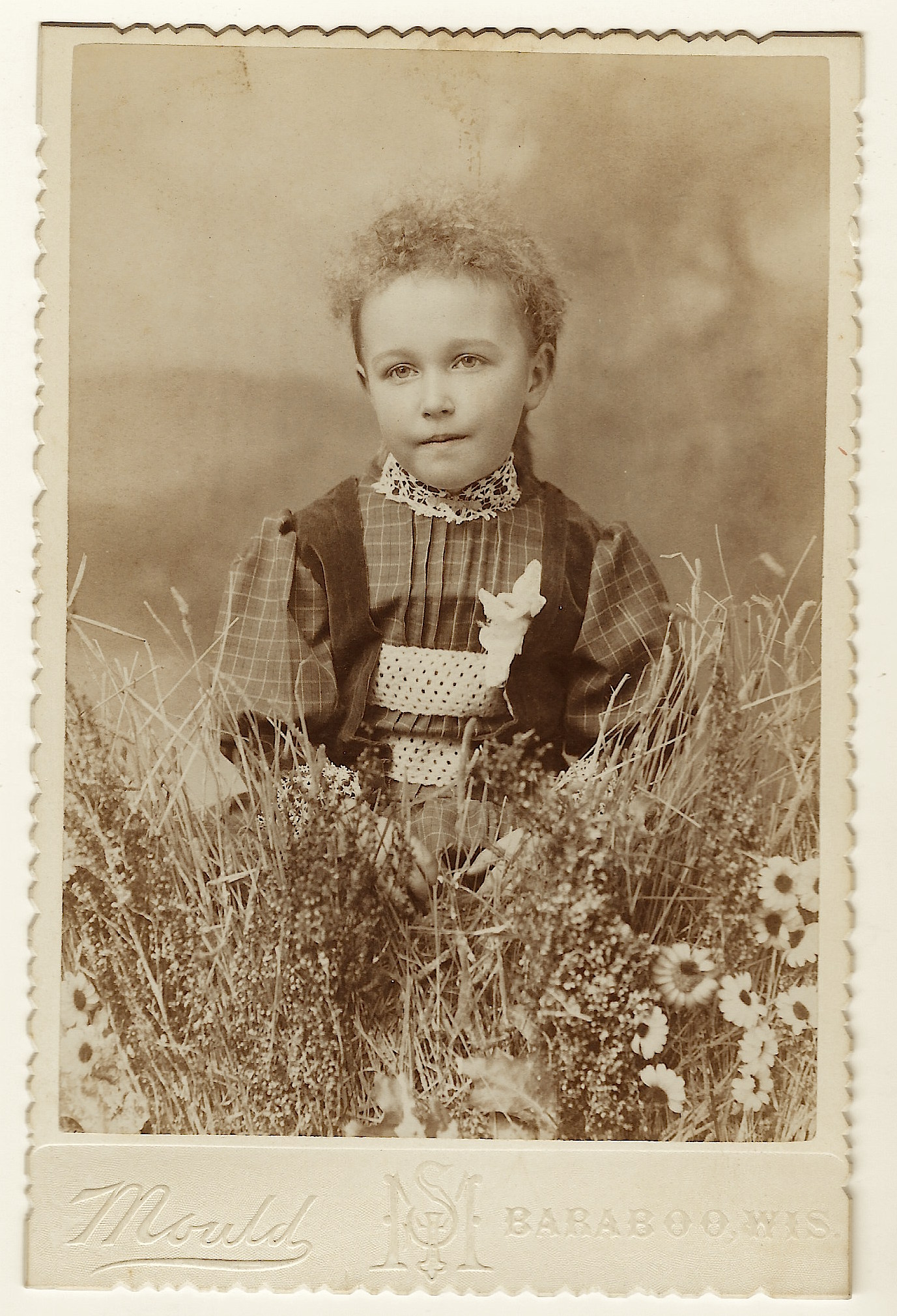
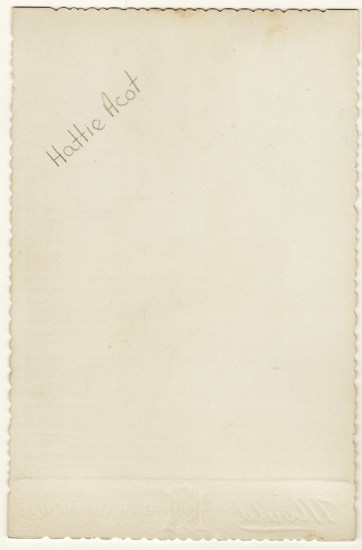
 A cute little girl with curly hair poses in a studio created field of daisies for photographer Sim Mould. The studio was located in Baraboo, Wisconsin. The girl is wearing a dress wth a lace collar and has a flower pinned to the front of her dress. An inscription on the reverse of the cabinet card indicates that the child’s name is Hattie Acot. Unfortunately, no biographical information could be found about her. The photographer, Mr. Mould is mentioned in a number of photographic journals. He placed an ad for his studio in a book about Sauk County, Wisconsin (1891). The Photographic Times (1898) reports on his appointment to a lobbying committee of the Photographers Association of Wisconsin. The Encyclopedia Dubuque (1911) reveals that Sim Mould operated a photographic studio at 107 Main Street in Dubuque, Iowa. The town of Baraboo is situated on the Baraboo river. The town was settled by Abe Wood and originally called Adams. In 1852 it was renamed Baraboo. In the town’s early history it became the home of several sawmills. In the nineteenth century the town served as the headquarters of several circuses, including Ringling Brothers. Baraboo became known as “Circus City”. This cabinet card portrait is in very good condition (see scans).
Buy this original Cabinet Card Photograph (includes shipping within the US) #2704
To purchase this item, click on the Pay with PayPal button below
$43.50
Buy this original Cabinet Card Photograph (includes International shipping outside the US) 2704
To purchase this item, click on the Pay with PayPal button below
$51.50

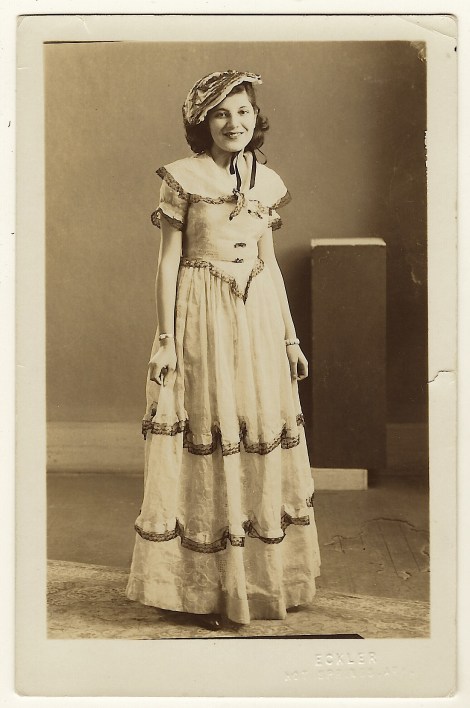
 This vintage real photo postcard features a lovely young woman smiling for the camera at the Eckler photo studio in Hot Springs, Arkansas. Eckler’s name is embossed on the right side of the bottom border of the postcard. The city of Hot Springs is located in the Ouachita Mountains and has several natural hot springs in the area. Beginning in the 1830’s, Hot Springs became a resort offering many spas. Hot Springs was the place to go for relaxation, fun, and good health. It is likely that the woman in this photograph is a visitor to the spa town. If so, she would come to the photographer for a photograph to serve as souvenir of her trip. The woman is wearing a dress that suggests that, in my opinion, informality and relaxation. Her hat is quite unusual and interesting. It looks like a slab of bacon. It seems appropriate to wear such a hat in the Razorback state. Ernest Eckler was one of Hot Springs’s most renowned photographers. He operated a studio there for 49 years (1897-1946). He was from Missouri but moved to Hot Springs in the late 1890’s. He moved to Hot Springs because he was a tuberculosis patient seeking medical benefits from the springs. Eckler was a college graduate but while in Hot Springs he discovered the field of photography and learned enough to take a job with the Missouri Pacific Railroad as a photographer. He took mostly scenic shots to be used for advertising purposes. In 1897, he purchased a studio in Hot Springs. As a studio photographer he focussed on photographing individuals and families. He was a prolific wedding photographer. This postcard has an AZO stamp box that dates between 1924 and 1949.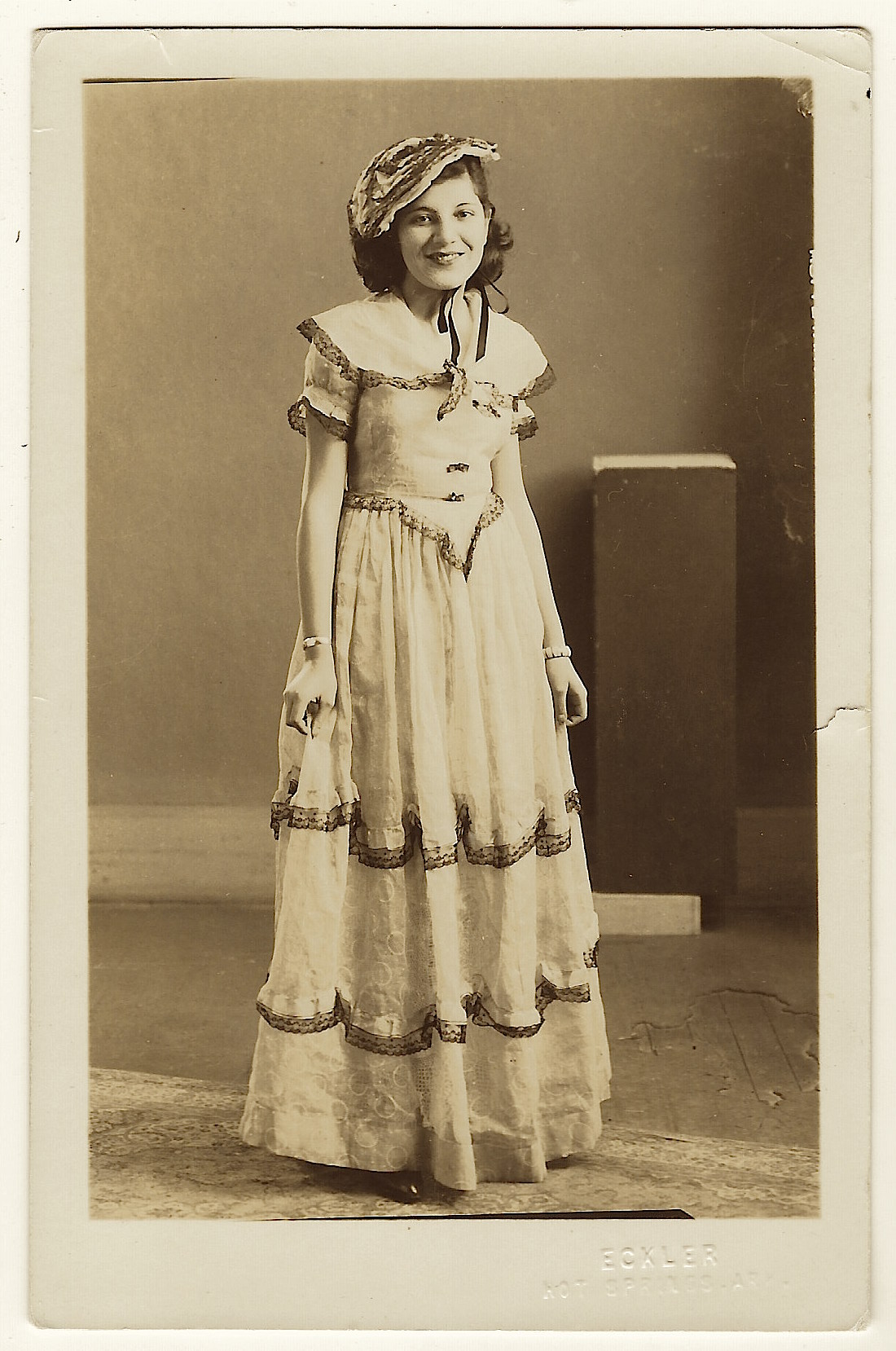

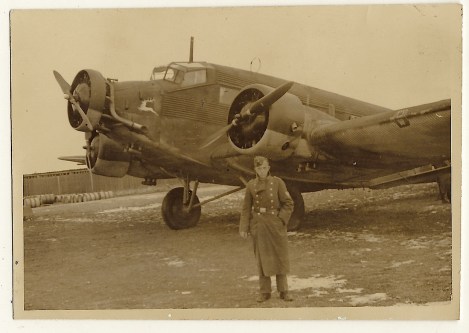 It’s wartime. To be exact, this snapshot photograph features a World War II German soldier posing in front of a military airplane. I can not identify the name of the aircraft, though I would guess the plane is a bomber or transport plane. Note the decal of the stag near the nose of the plane. It looks similar to the John Deere logo (see images below). I wonder if the decal was on all planes of this model, or if it was placed on the plane by it’s crew. The snapshot is printed on AGFA Photopaper. The company was founded in Berlin, Germany in 1876. This image is on photo paper (AGFA-Brovira ) that was produced during WW II.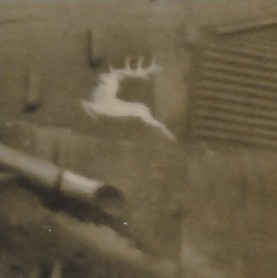



 This vintage real photo postcard features a seated young Italian beauty holding a large bouquet of flowers. She is wearing a hairband and a half smile. The postcard is color tinted. An inscription can be found on the reverse of the postcard. The Italian writing can be loosely translated as “I offer my sincere love and memories”. The woman’s name is also written on the back of the postcard. Her name is “Aigene Anziletti”. The postcard paper was produced by AZO sometime between 1924 and 1949.
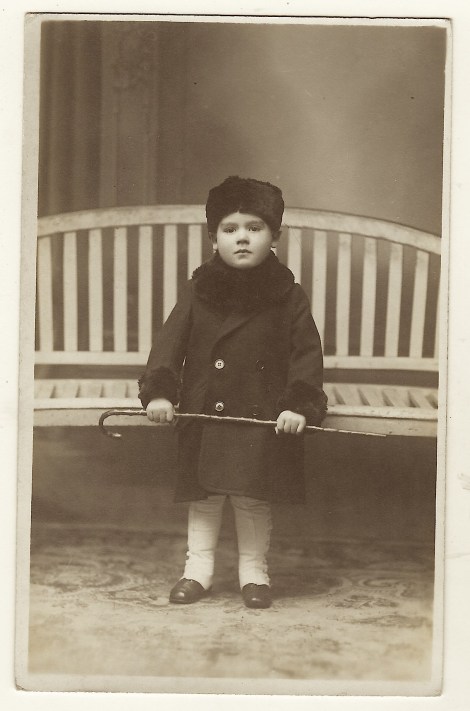
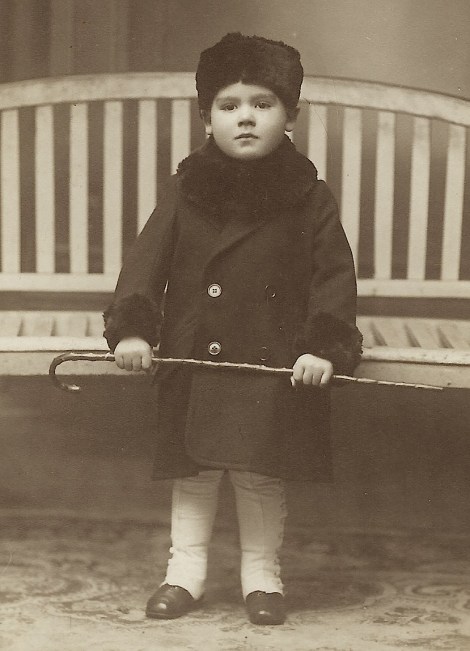 This vintage real photo postcard features a portrait of a young boy dressed in winter clothing and holding a cane. Note his cute warm cap. He is posed in front of a wooden bench. He is a cutie and the image has great clarity.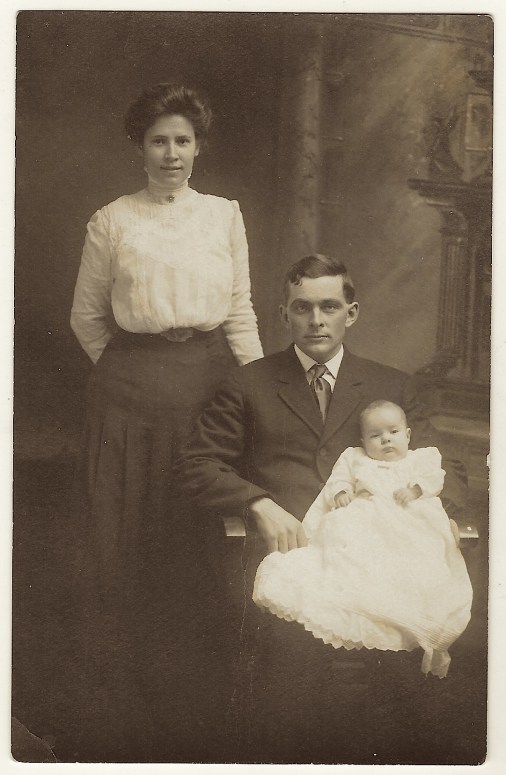
 This vintage real photo postcard features a portrait of the Bell family. Charlie and Belle and their infant Eloise pose for the unidentified photographer. Have you noticed that mom’s name is Belle Bell? The message on the reverse of the postcards reveals that Eloise weighted 14 3/4 lbs at the time this photograph was taken. The AZO stamp box indicates that this postcard was produced sometime between 1904 and 1918. This postcard is in very good condition (see scans).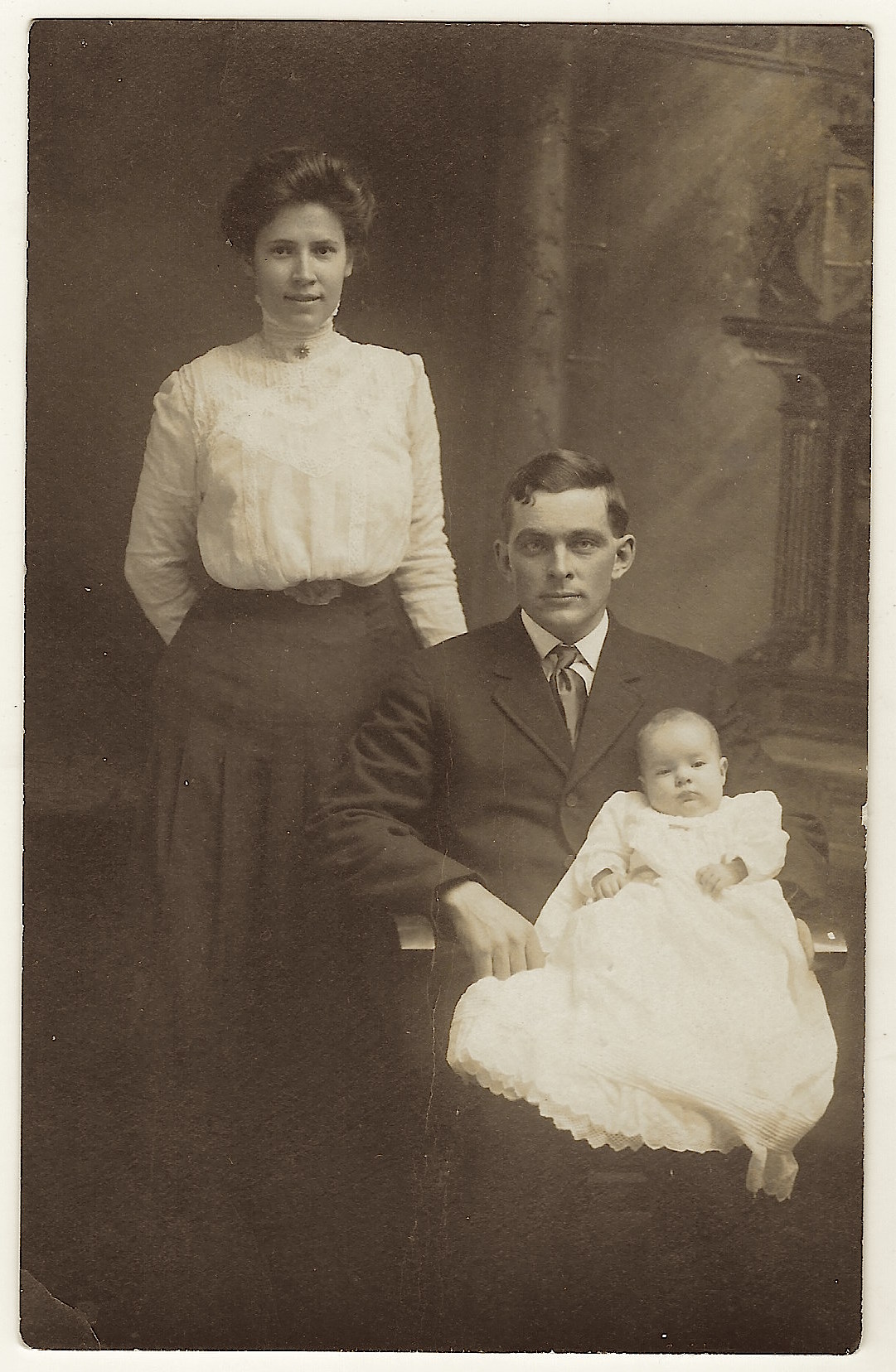

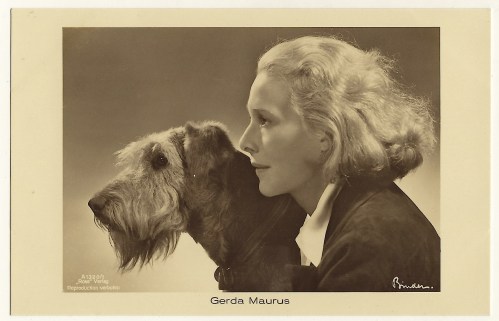
 The lovely actress seen in this vintage real photo postcard is named Gerda Maurus (1903-1968). She is posed next to a beautiful Airedale terrier. This unusual profile photograph was taken by celebrity photographer Alex Binder. His studio was located in Berlin, Germany. Maurus was active in film and television between 1928 and 1968. She was an Austrian actress of Croatian descent. Maurus was the daughter of an engineer/inventor. She grew up in Vienna and received training as a singer and dancer. She hit the stage at age fifteen. The IMDb biography of Maurus describes her as ” a strikingly beautiful blonde with high cheekbones an expressive blue eyes”. She began her career on the stages of Vienna. She was “discovered” by director Fritz Lang and he cast her in the female lead in the silent film “Spione” (1928). Lang was smitten by maurus and his marriage was destroyed. She then appeared in a number of German films during the Weimar and Nazi eras. Maurus married director Robert A. Stemmie in 1937. He directed her in “Daphne and the Diplomat” (1937). Like many actresses of her time, her acting career was hurt by the introduction of “talkies”. Further complicating matters was her nebulous association with Nazi propaganda minister Joseph Goebbels. This relationship had negative impact on her career after World War II. Due to lack of film offers, Maurus retreated to the German stage. The IMDb filmography of Gerda Maurus lists 33 credits. Here is a side note about Airedales. The first World War increased the popularity of Airedales because they became famous for their bravery on the battlefield. In the US, Presidents Theodore Roosevelt, Calvin Coolidge, and Warren Harding all owned Airedales. In the 1920’s, Airedales became the most popular dog in the US. This postcard was published by Ross Verlag and is part of a series (no. A1320/1). (SOLD)
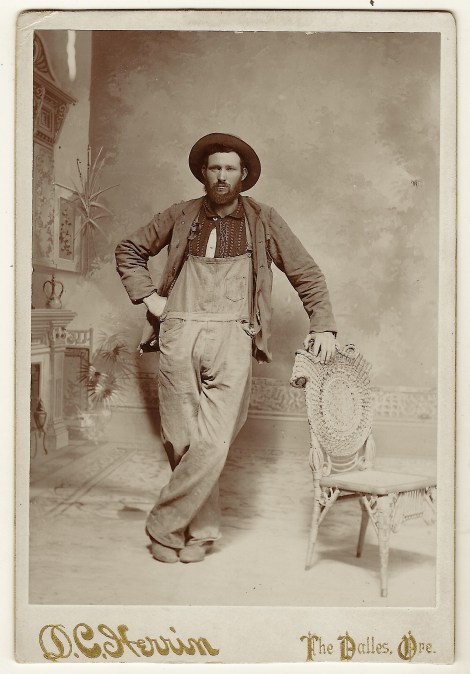 A bearded gentleman poses for his portrait at the D. C. Herrin studio in The Dalles, Oregon. The subject is wearing overalls and his attire indicates that he is a workman of some type. He is resting his hand on a wicker chair and is striking an unusual pose in that his feet are crossed at the knee. The gentleman looks rather bored as he endures the process of having his portrait taken. David C. Herrin began his photography career in Medford, Oregon (1888). He and his photographer wife, Margaret, operated a studio in The Dalles from 1892 through 1898. The couple moved to Portland, Oregon in 1899 and joined Frank G. Abell for establish Abell & Herrin photography studio. David Herrin died in 1909. An interesting side note concerns the name of the town that hosted the above photographic session. The city of “The Dalles” is named after a rock. Dalle is a French word meaning flagstone. The name of the town refers to the basalt rocks carved by the Columbia River on which the town is located. This cabinet card is in very good condition (see scans).
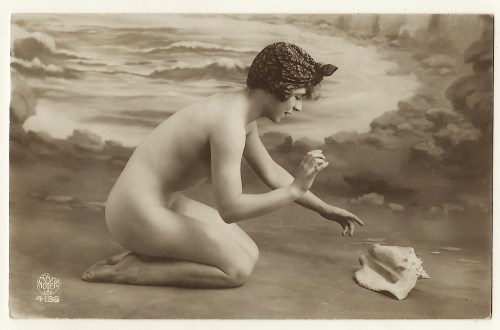
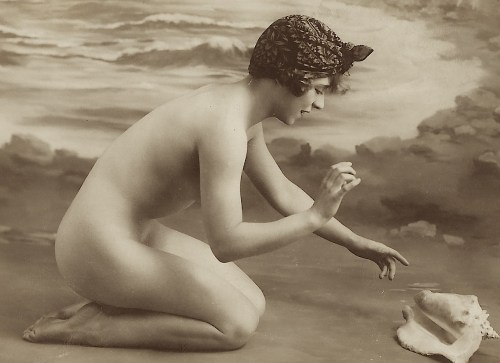 This vintage real photo postcard features a pretty nude woman She is delicately reaching for a conch shell. This tastefully done image was published by well known photographer Alfred Noyer as part of a series (No. 4136). The celebrated photographer supervised a large photo studio in Paris. The Noyer Studio operated from 1910 until the 1940’s. Many of his early postcards were reproductions of artworks. He also produced illustrated patriotic postcards during World War I. With the onset of the 1920’s he began producing postcards of children and women. Many of the postcards he produced of women were nudes or risque images. Some of his postcards list his name while others are simply marked “AN”. This photo postcard is in very good condition (see scans).


 THE CABINET CARD GALLERY