A uniformed soldier sits against a fence and he is holding two adorable lambs on his lap. This is a study in contrast. A military warrior represents battle and lethality, while the young lambs represent peace and calm. Before anyone gets “up in arms”, I want to state that I know that soldiers can represent peace and protection. Note the soldier’s high boots. They appear to be for weather protection rather than for long marches. SOLD
This vintage photograph features a military woman in uniform. She is from a European nation and it’s my hypotheses that she is from Russia. Her branch of service is not identified. There is an inscription on the reverse of the photograph but I can not decipher it. The inscription indicates that the photograph was taken in 1947, two years after the end of World War II. Hopefully, a Cabinet Card Gallery visitor will be able to provide a translation. SOLD
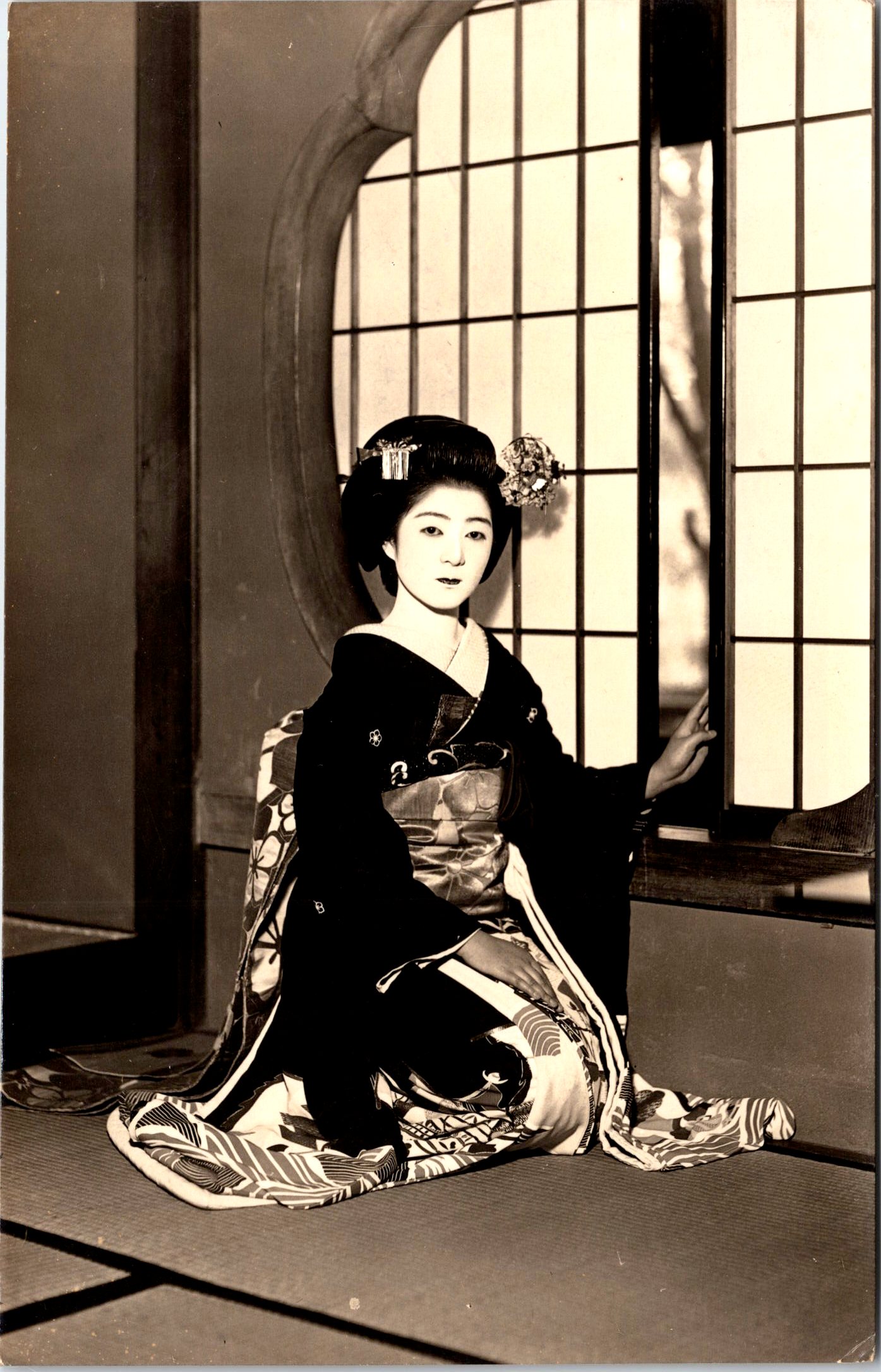
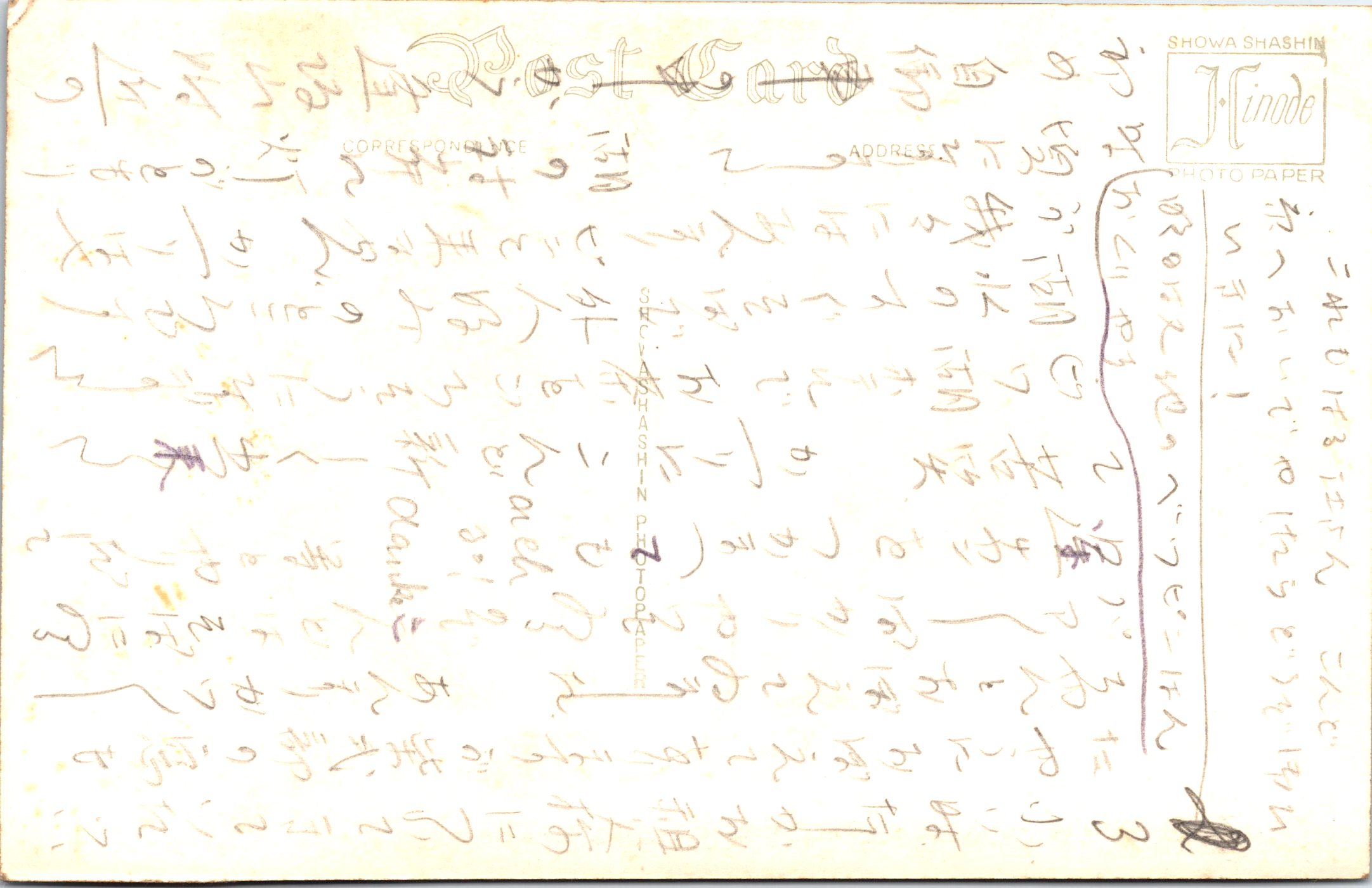
This vintage real photo postcard features a beautiful geisha. Geishas entertained via song, dance, or playing a musical instrument. Geishas were not necessarily prostitutes, though some were. This postcard is printed on Hinode photo paper. SOLD
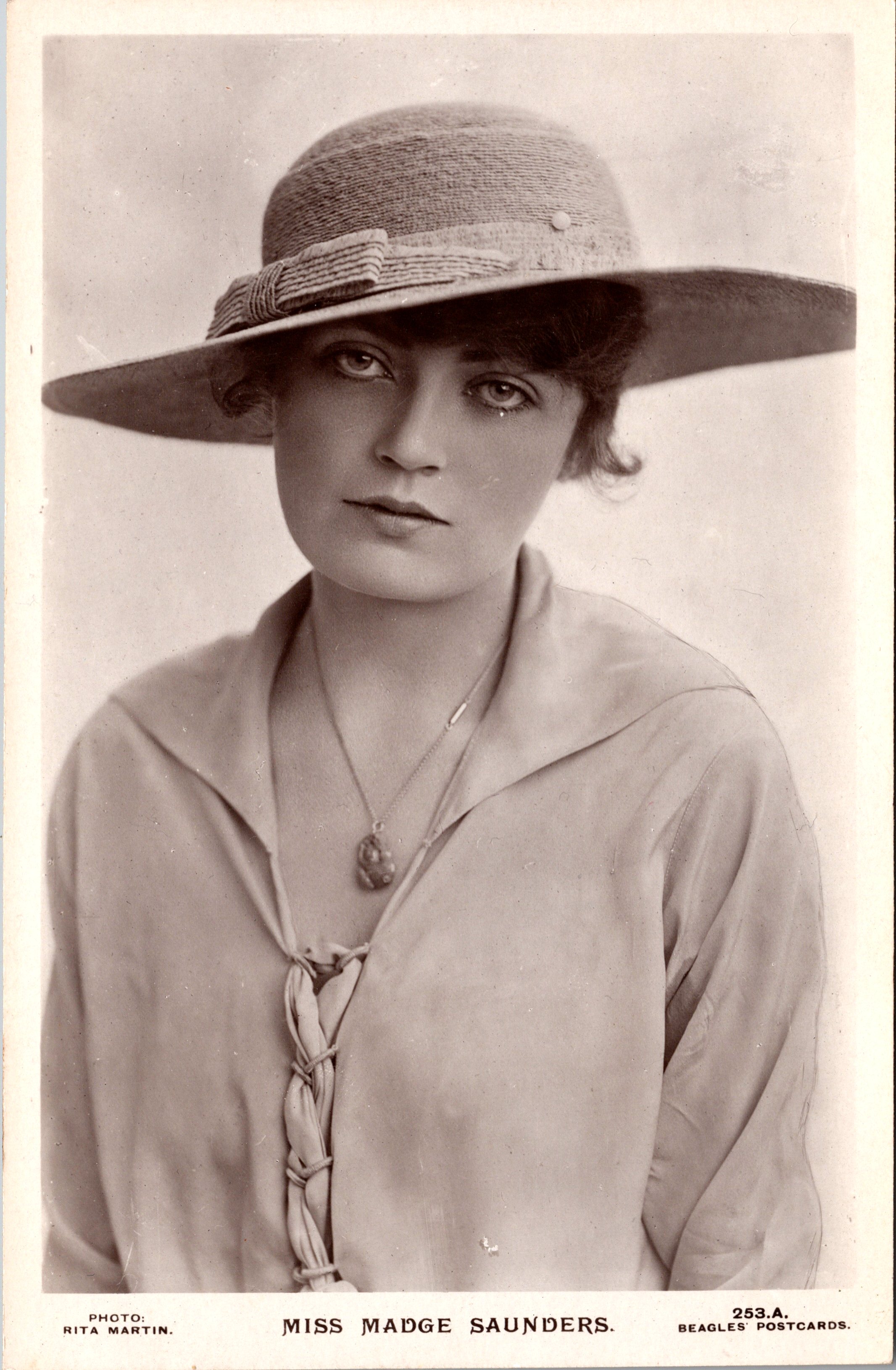
This vintage real photo postcard features theater actress and singer, Madge Saunders (1894-1967). She was born in South Africa. She was married twice, both times to actors. She appeared in two film (1918, 1930). There are 47 portraits of Saunders in England’s National Portrait Gallery. This photo portrait of Miss Saunders is one of the images in the gallery’s collection. This photograph was published by J. Beagles & Co. as part of a series (no.253A). Saunders was photographed by a celebrated female photographer, Rita Martin. SOLD
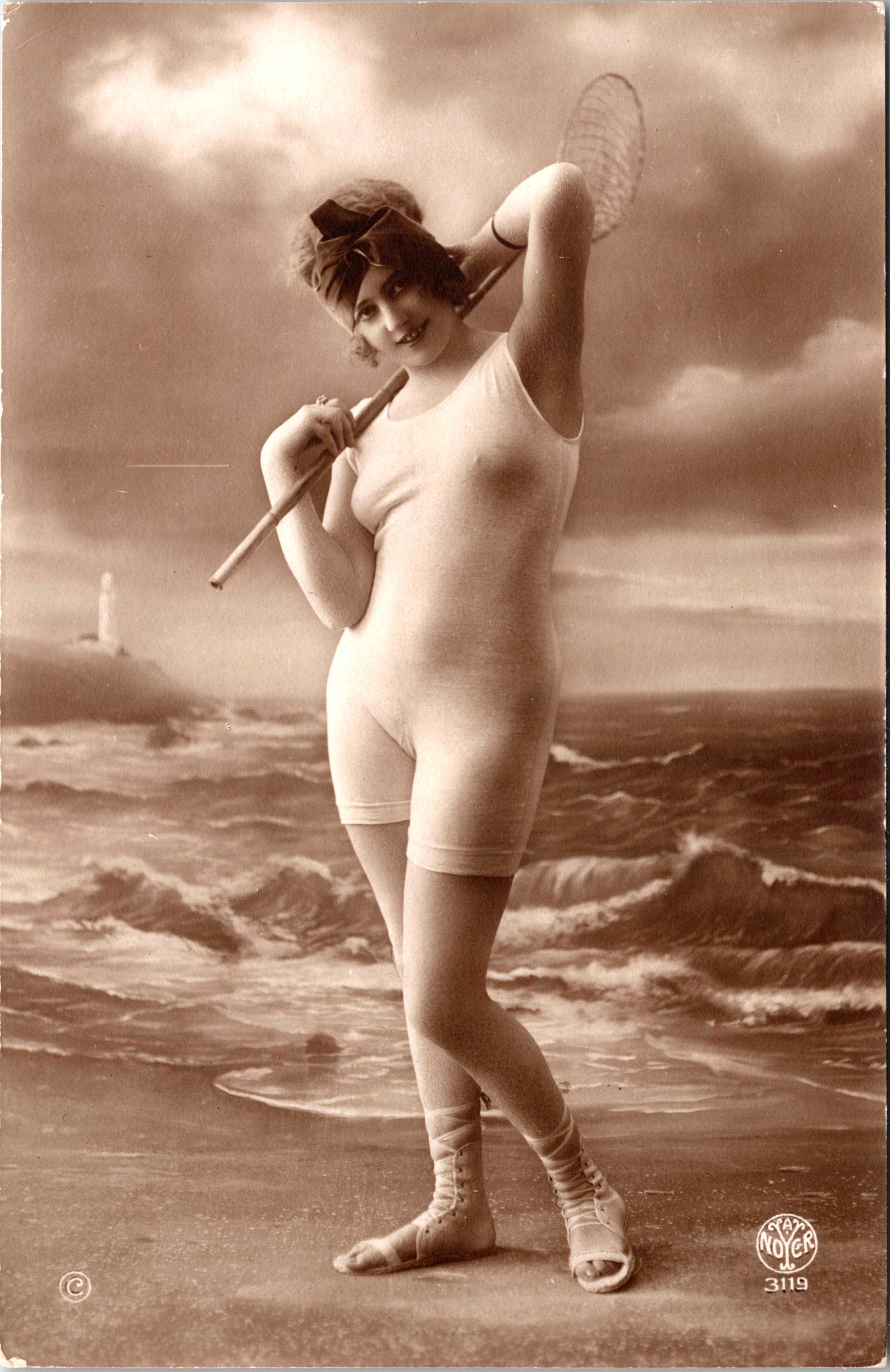
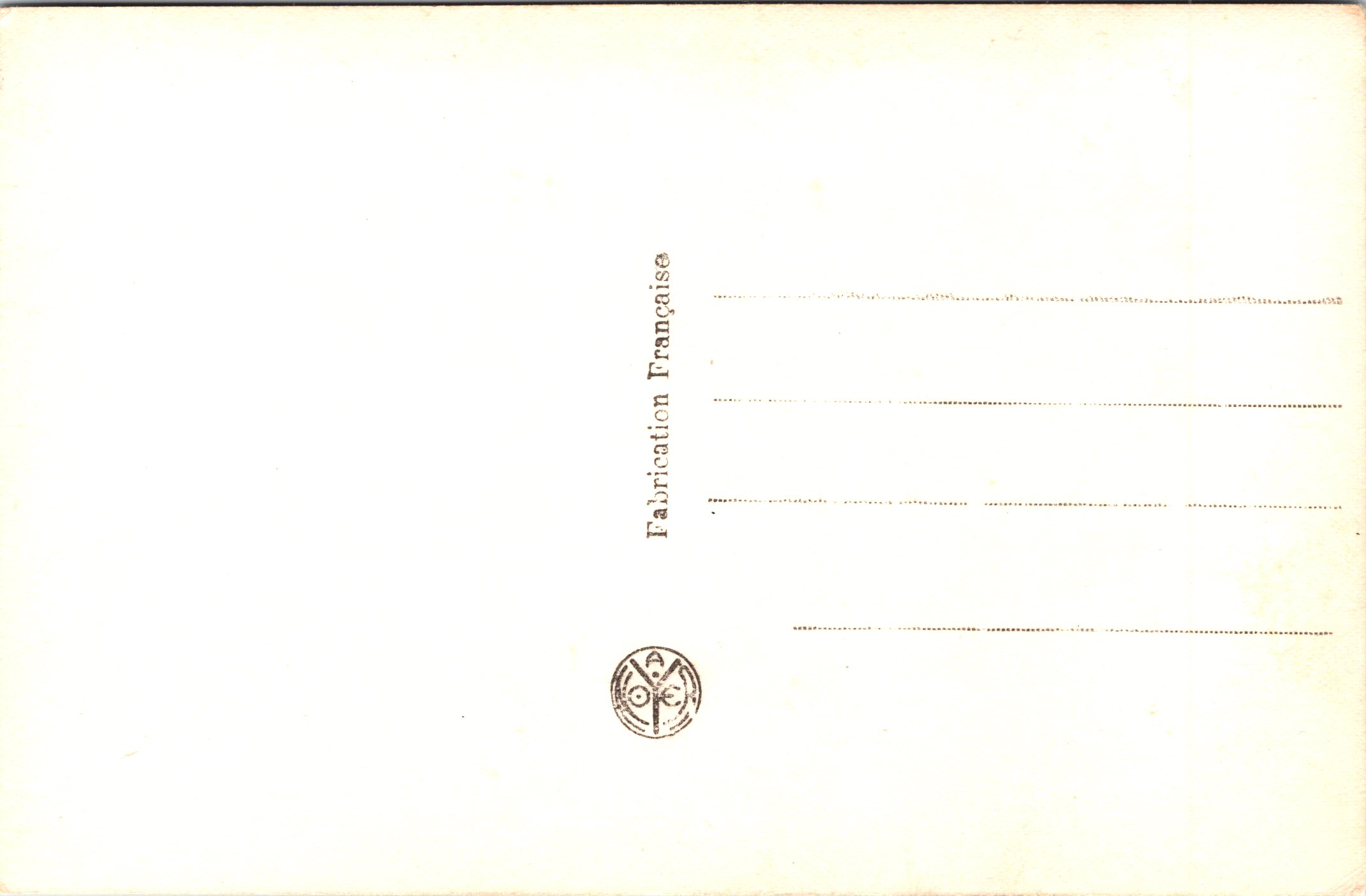
This vintage French real photo postcard features a charming seaside scene of a “bathing beauty,” a popular motif of early 20th-century glamour photography. The young woman poses confidently on a simulated beach with a painted backdrop of choppy waves and a distant lighthouse. She wears a form-fitting, one-piece knitted bathing outfit that clings to her figure—a risqué choice for the era—along with ballet-style laced sandals and sheer stockings. A bold, dark ribbon or turban is wrapped around her head, adding a dramatic flourish to her beach attire. She holds a racket over her shoulders, likely meant to suggest leisure and playfulness, possibly referencing beach paddle games or tennis, though this is clearly a studio creation rather than a candid beach photograph. Her smile is coy and knowing, with a relaxed, flirtatious pose and bright expression that captures the coquettish spirit of Belle Époque and Edwardian postcard art. This card was published by Noyer of Paris, a noted French postcard publisher known for glamorous and mildly provocative photographic portraits. The card bears the serial number 3119 and the “Fabrication Française” mark on the reverse. This is a classic example of a risqué seaside glamour postcard. SOLD
This vintage real photo postcard captures the scene of a man sharing an intimate moment with a pretty blonde woman sitting on a motor scooter. The photographer appears to have caught the man in a lustful moment. I doubt the man is giving tips about motorcycle care and maintenance. I find it unusual that the woman would be riding a motorcycle while wearing a long dress. Finding information to identify the manufacturer of this motorcycle was difficult. I discovered that a company named “Tomos” manufactured a bike whose name included the word “Galeb”. Note that a nameplate on the front of the bike says “Galeb”. Tomos manufactured motorcycles from their factory based in Koper, Slovenia. They still provide various products to their Eastern European market. The language printed on this postcard is from Slovenia. It appears that the photographer was Z. Mirkovic and the publisher was ZK. The postcard is part of a series (no. 2881). This photo postcard measures about 5 5/8″ x 4″ and is in very good condition (see scans).
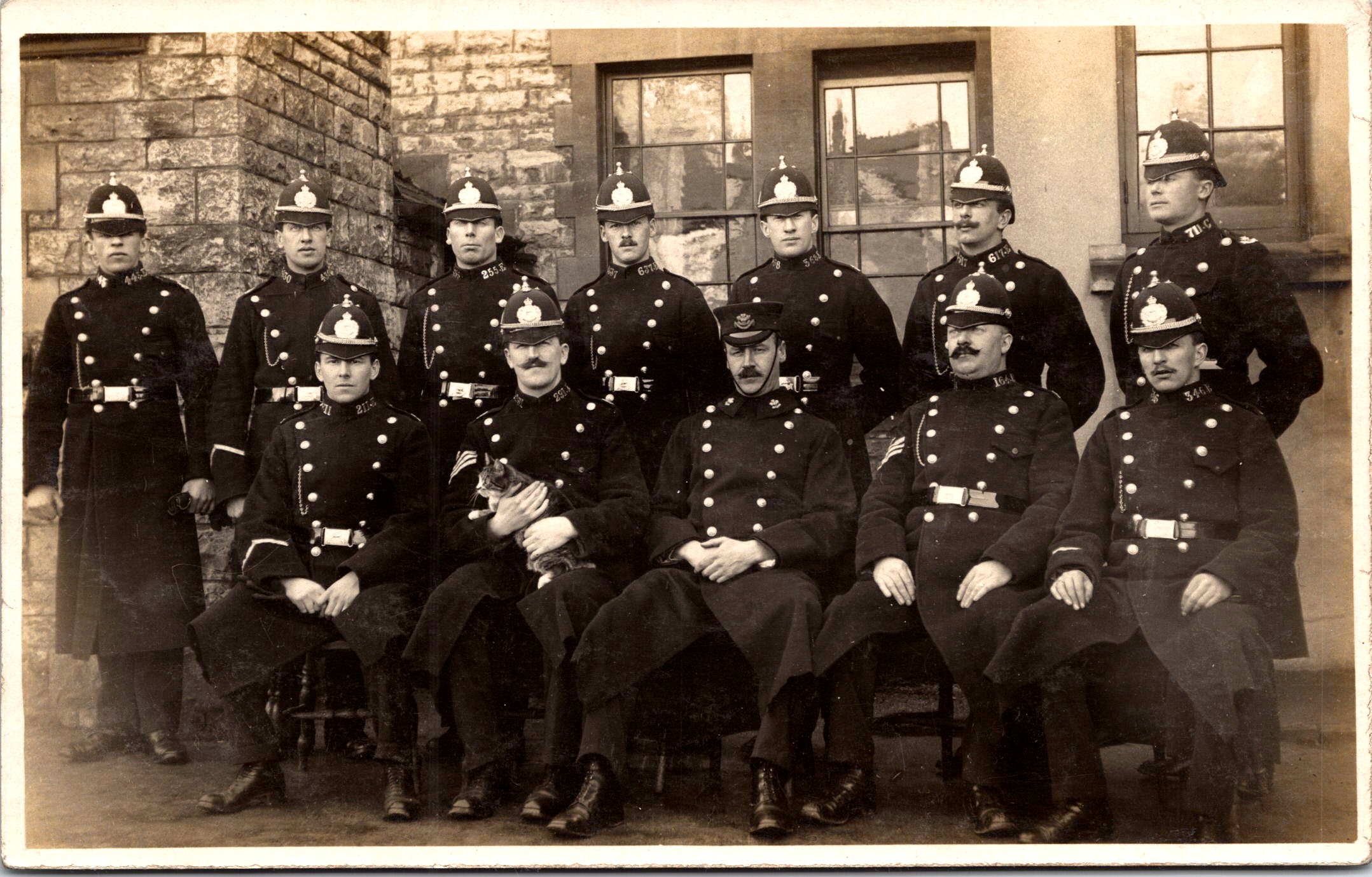
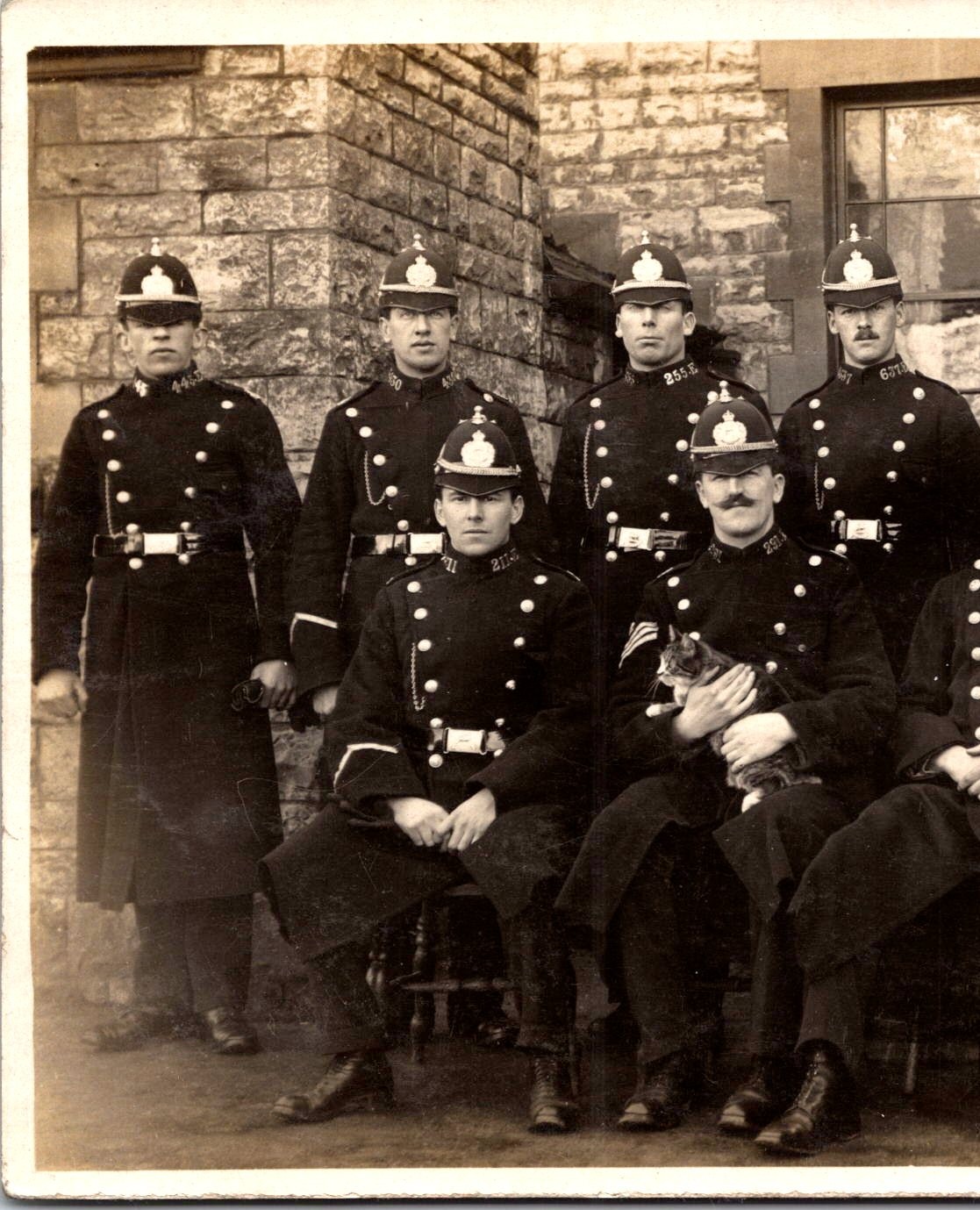
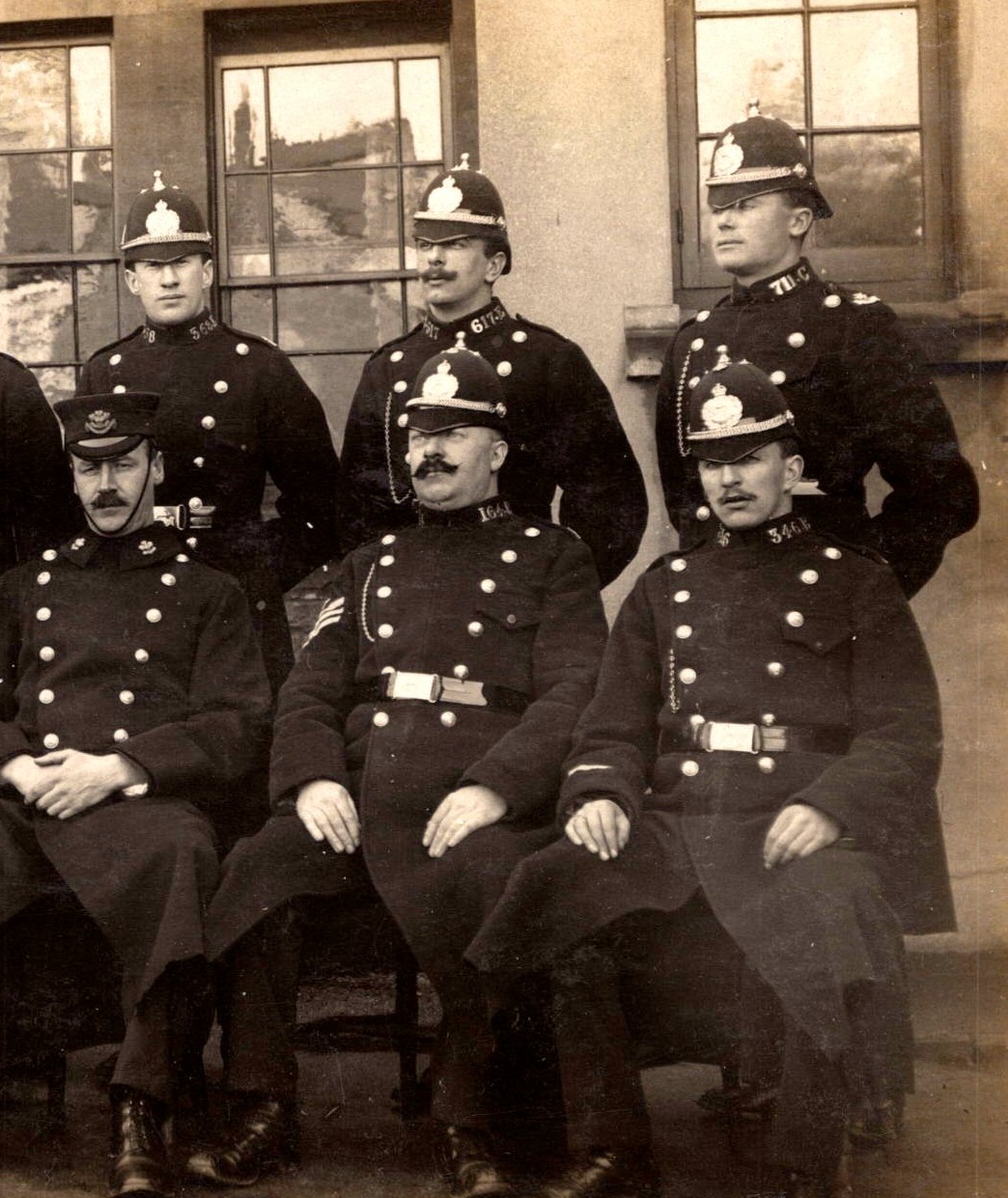
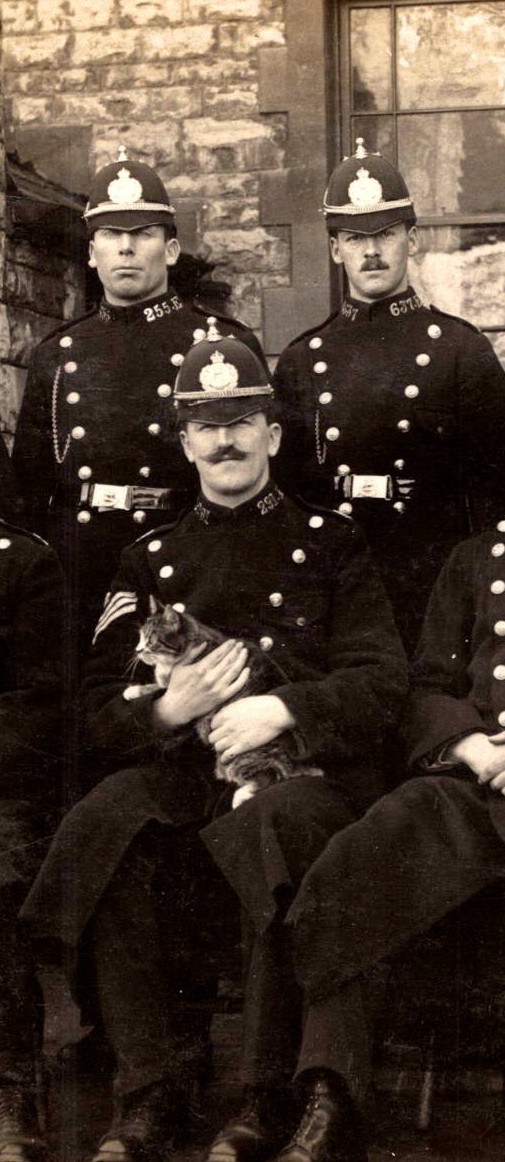
This striking antique real photo postcard captures a formal group portrait of twelve British police officers, likely taken in the early 1900s during the Edwardian era. Dressed in full uniform, the men are arranged in two neat rows, seven standing in back and five seated in front—outside what appears to be a stone police station or municipal building. Their uniforms are traditional for the period, featuring double-breasted tunics with shiny metal buttons, high collars marked with identification numbers, and the iconic custodian helmets adorned with royal insignias. Adding a subtle touch of hierarchy to the scene, one officer seated in the middle wears a peaked cap instead of a helmet, suggesting he may have held a higher rank, possibly an inspector. A few of the officers also display chevrons on their sleeves, denoting the rank of sergeant. One especially charming detail that sets this postcard apart is the presence of a cat, calmly perched in the arms of one of the seated sergeants—an unusual and endearing addition to an otherwise formal composition. SOLD
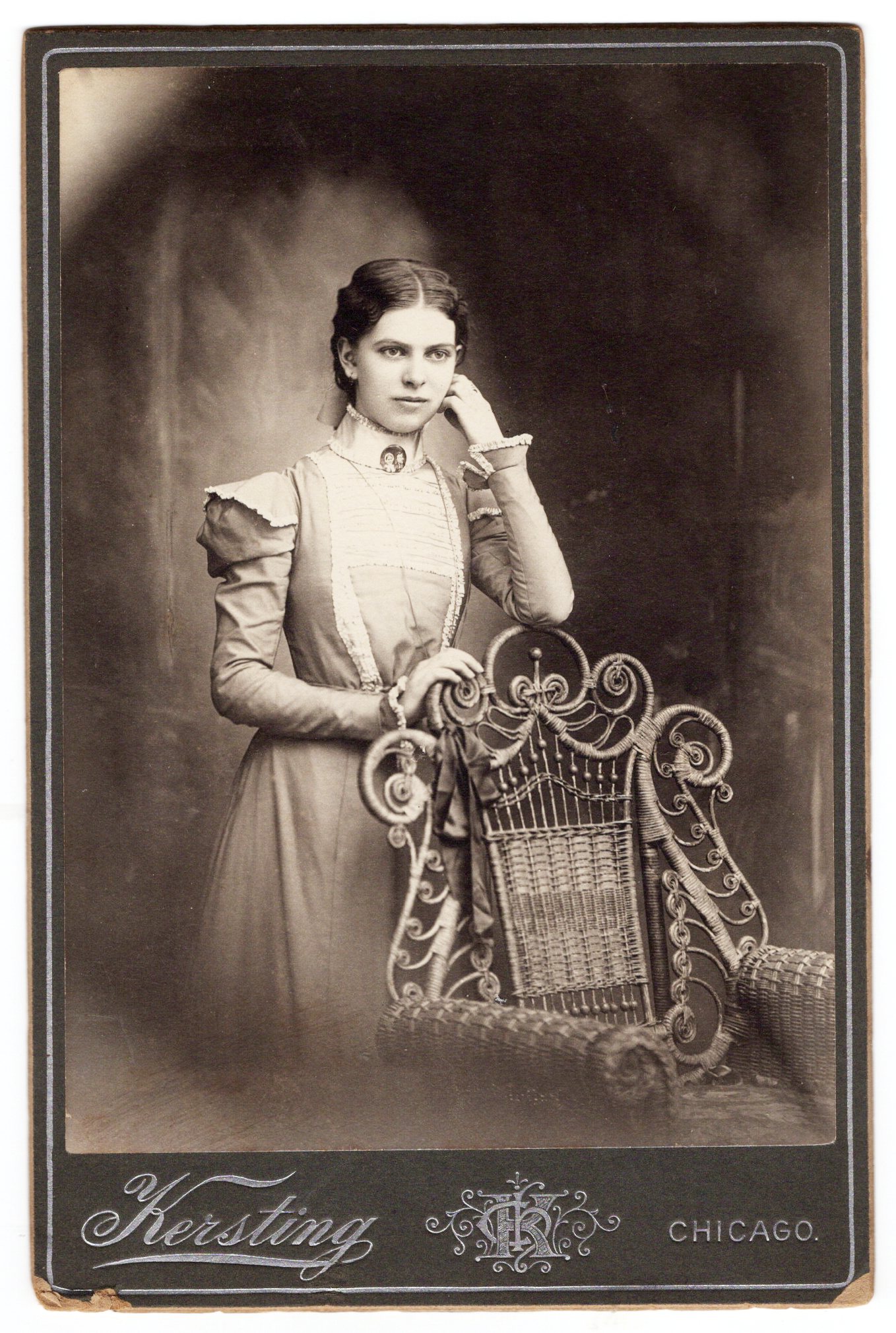
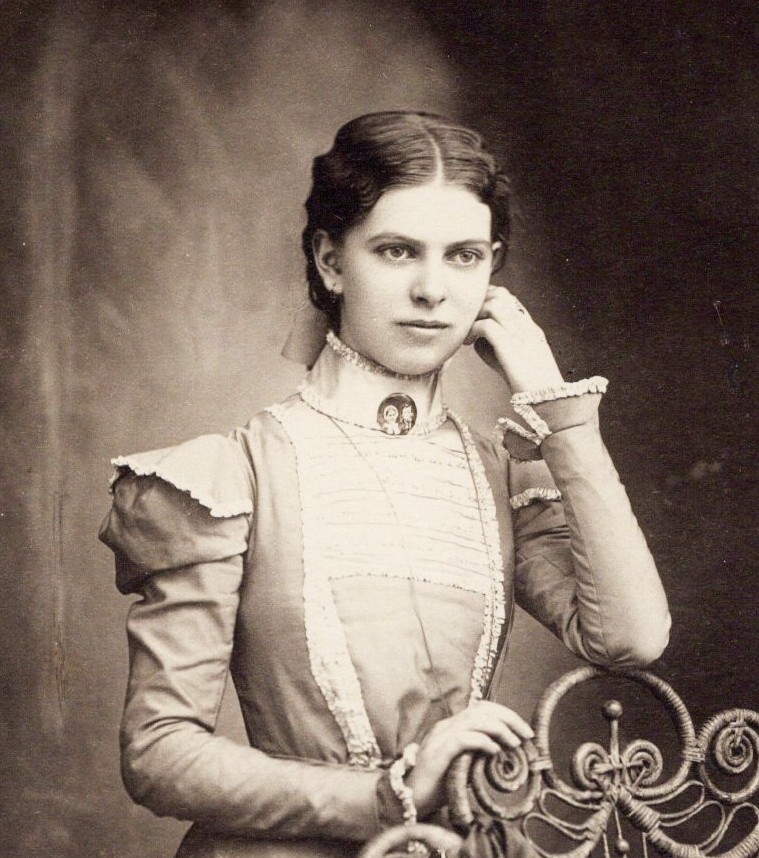
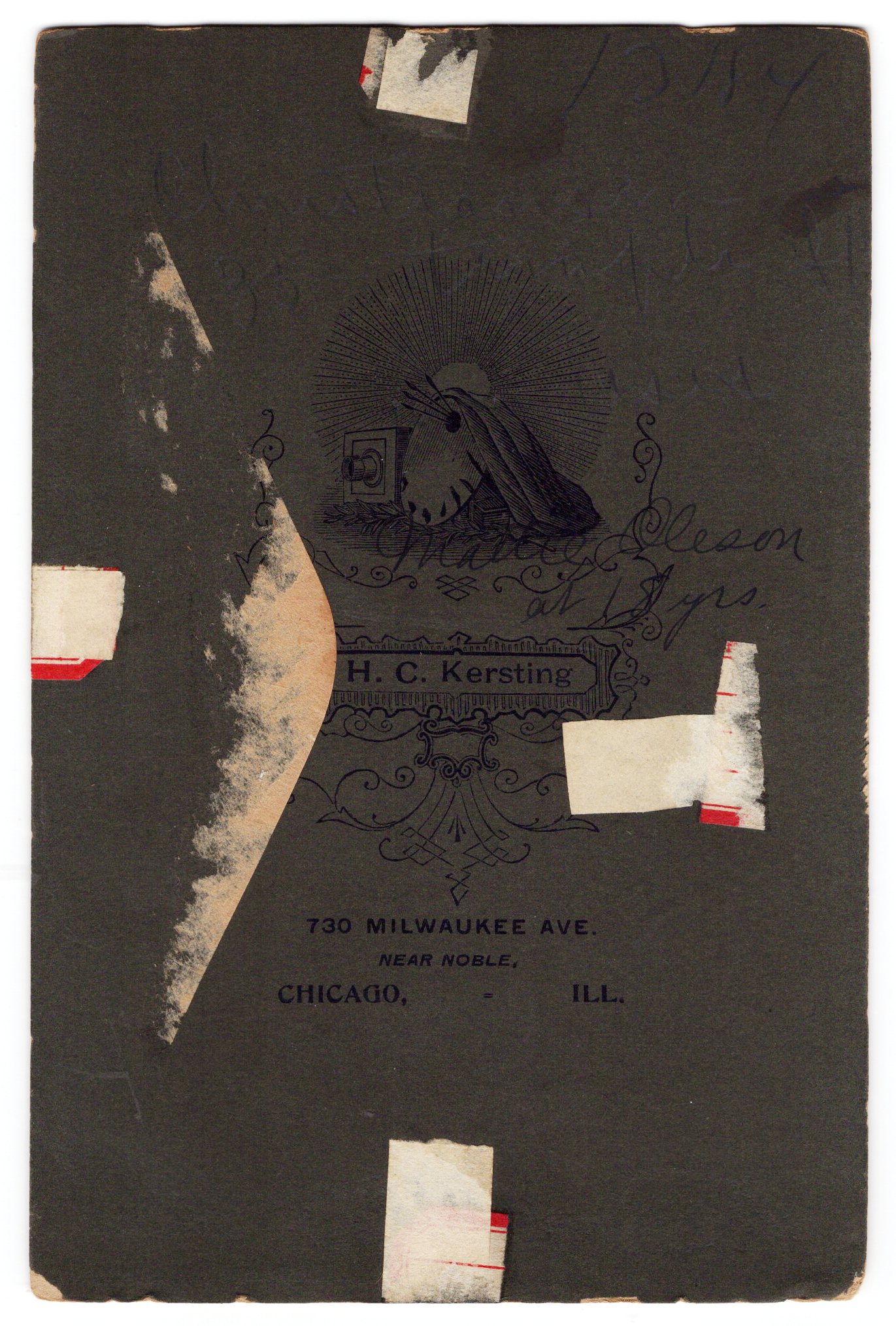
This antique cabinet card photograph features a young woman identified on the reverse inscription as Mattie Oleson, aged 18. She is posed in a traditional 1890s studio portrait style, seated and gazing slightly to the side with a composed and serene expression. Her face is oval-shaped with soft features and clear eyes, conveying a quiet dignity. Her hair is neatly pulled back and arranged in a modest style, typical of the time. Mattie is dressed in a high-collared dress of dark fabric, possibly wool or a heavy cotton, reflecting everyday or Sunday-best attire from the late Victorian period. The dress features leg-of-mutton sleeves, a popular fashion during the 1890s, which puff dramatically at the shoulders before tapering tightly down the arms. At the base of her collar, she wears a small round brooch or collar pin, possibly gold or brass, that adds a delicate decorative touch to her ensemble. The brooch is decorated with a portrait of a man and woman. Perhaps the portrait is of her parents or grandparents. The cabinet card was produced by the Kersting studio, located at 730 Milwaukee Avenue, in Chicago, Illinois. The studio imprint is elegantly embossed on the card’s bottom front, accompanied by a decorative border design that was typical for quality studios of the era. The photographer was known as H. C. Kersting. Henry C. Kersting was a notable photographer in late 19th-century Chicago. He operated his studio from approximately 1883 to 1892. On the reverse of the card is a handwritten inscription in period script: “Mattie Oleson, 18 years old.” This personal note adds historical and emotional value and creates an opportunity for genealogical research to learn more about Miss Oleson. (SOLD)
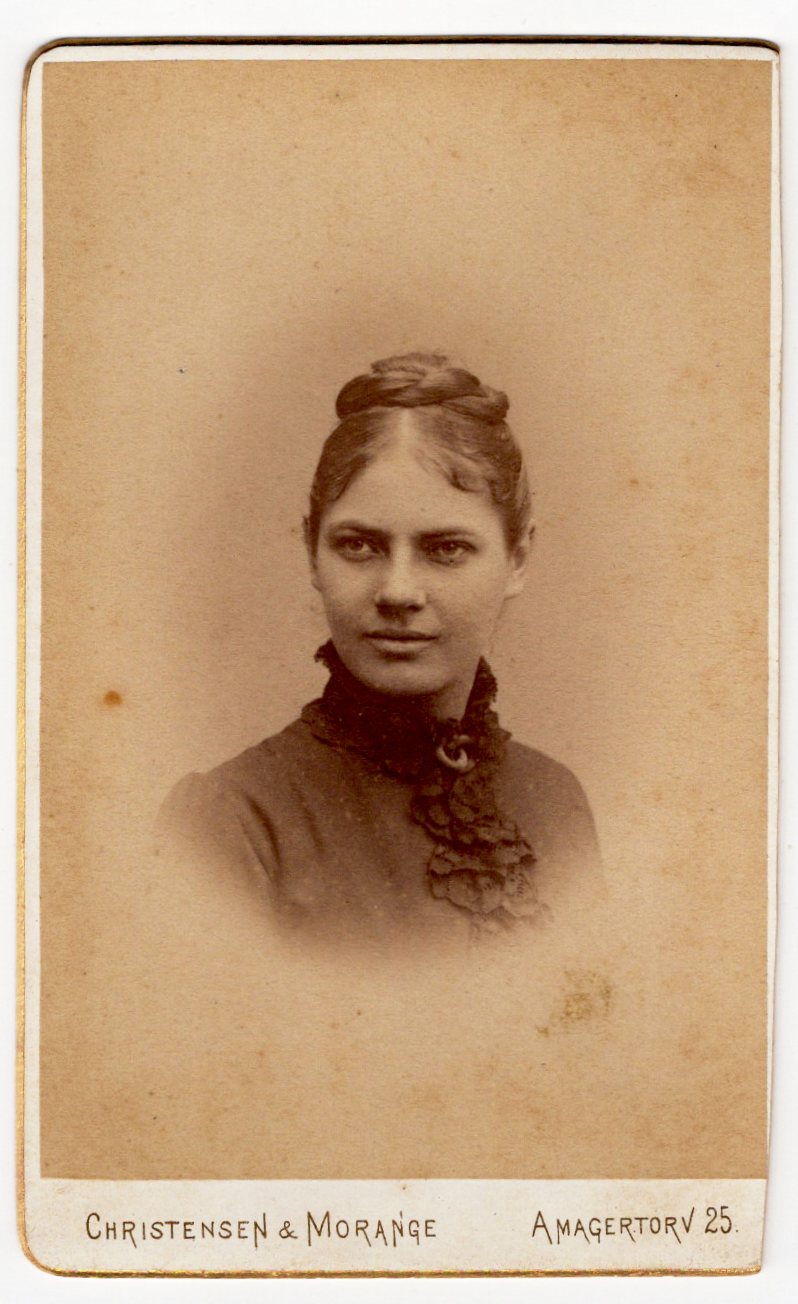
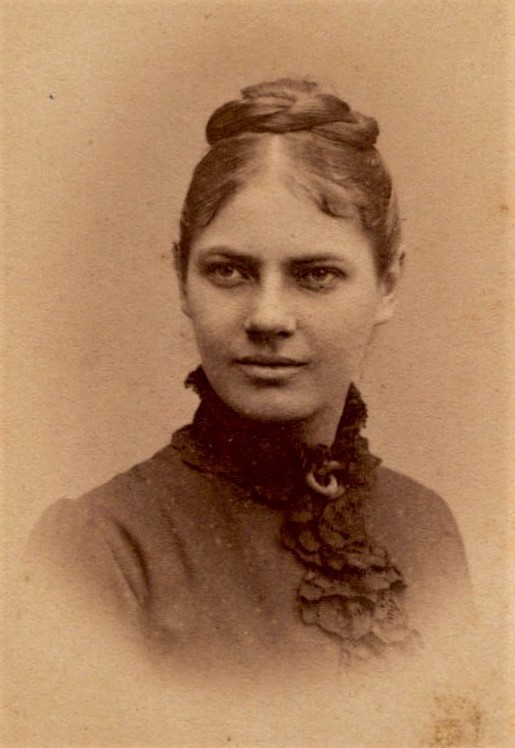
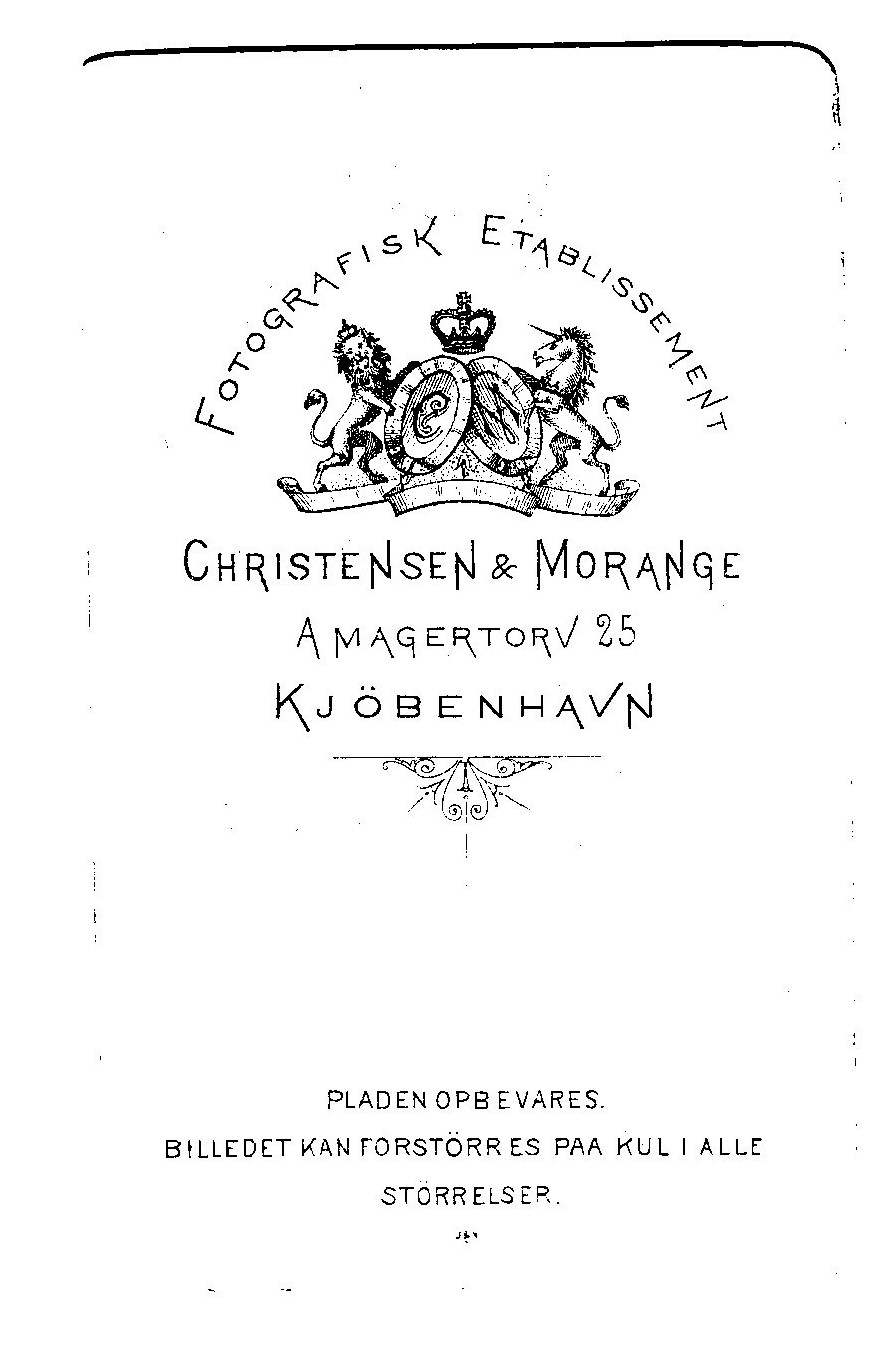
This carte de visite photograph features a young woman posing for her portrait at the studio of Christensen & Morange. The studio was located in Amagertorv, Copenhagen, Denmark. Amagertov is the most central square in central Copenhagen. SOLD
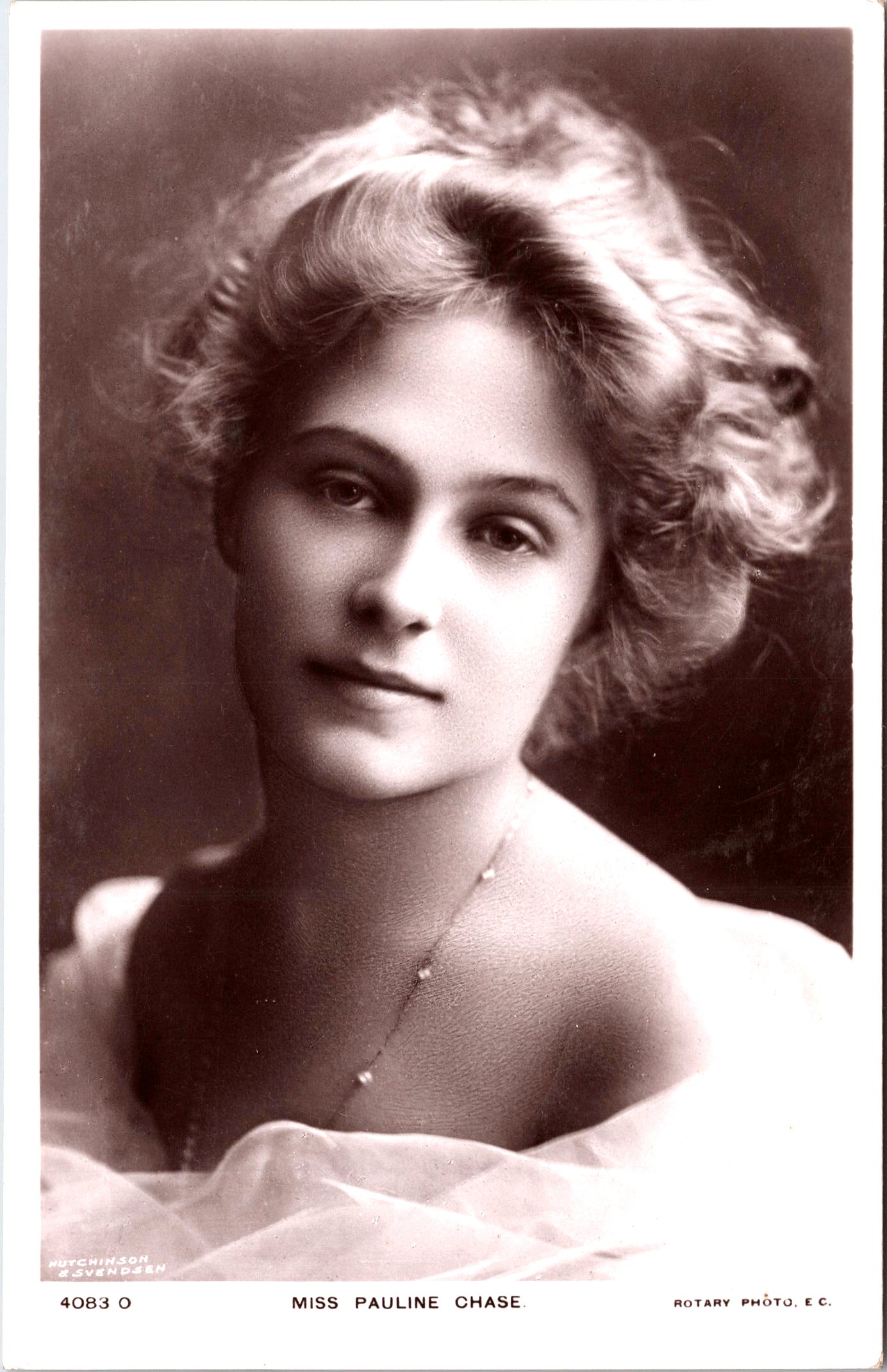
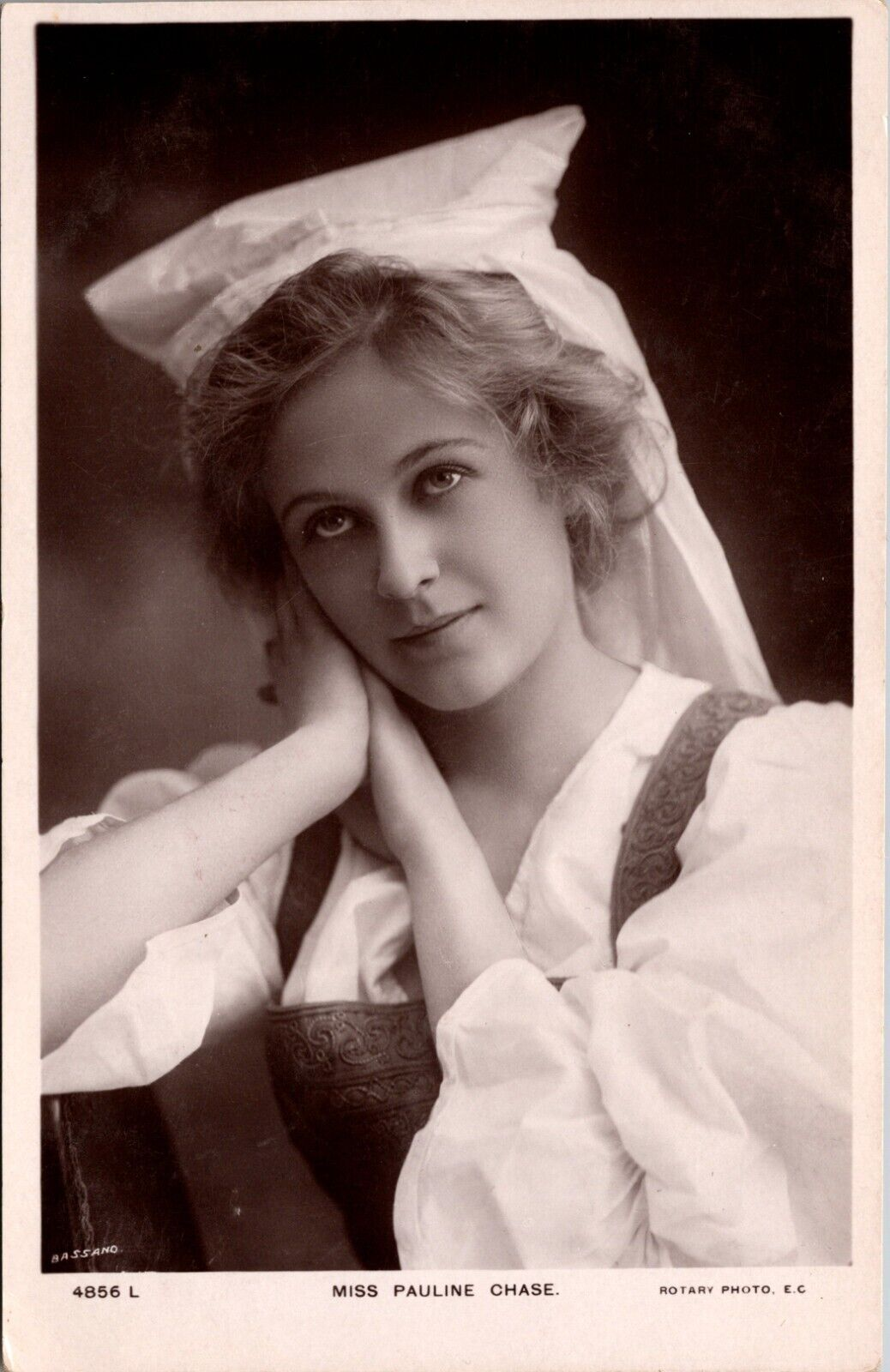
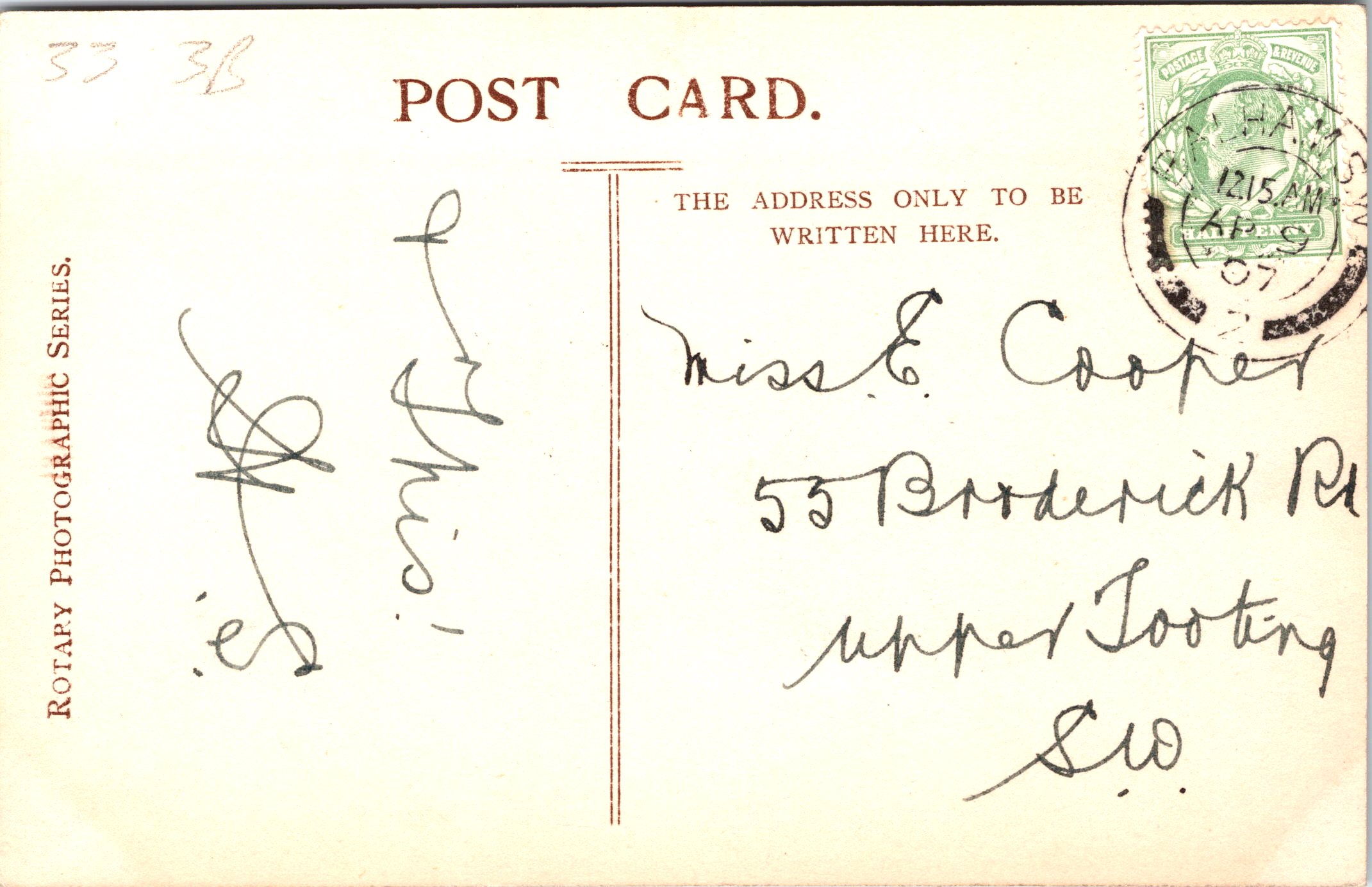
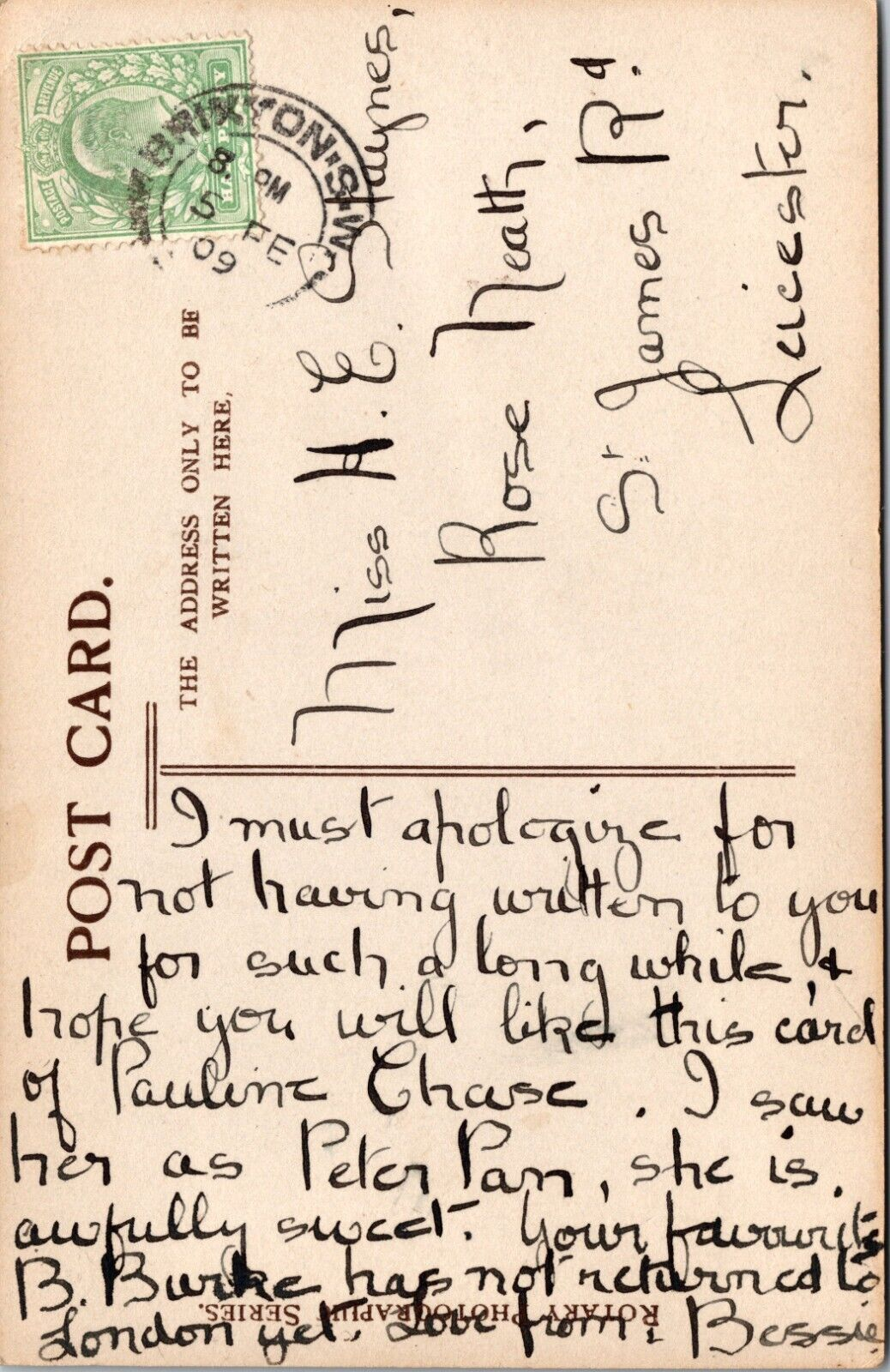
This vintage real photo Postcard 1 features pretty American actress and dancer, Pauline Chase (1885-1962). She was a regular performer both in the United States and the United Kingdom. She is especially known for her extended starring role in the British production of “Peter Pan, The Boy Who Wouldn’t Grow Up”. Her nickname was the “Pocket Venus of New York”. She was born in Washington D.C. and attended school in New York. She began acting when she was just fifteen years old. In 1901, producer, Charles Frohman recruited her to play in the London production of “The Girl From Up There”. She was just 15 years old. Upon her return to the US, she created a sensation as the “Pink Pajama Girl” in “The Liberty Belles”. She played one of the “lost boys” in the debut of Peter Pan (1904) in London. In 1906 she was chosen by producer, Charles Frohman, and playwright, J. M. Barrie, to play the title role in the production (1906-1913). This role brought her much fame and financial security. While in England, over the years, Chase developed quite a following. Charles Frohman had become her friend and mentor. Chase was a social beauty with many influential friends and admirers. She was a member of the socially elite and lived an extravagant life style. In 1913, Chase retired from the stage to marry a banker. The pair had three children. In 1916, Chase came out of retirement to play in her one and only movie appearance. There are 52 portraits of Chase in the National Portrait Gallery. The film “The Real Thing At Last” was a satirical film, based on MacBeth, written by Barrie. This postcard has a 1907 postmark. The card was published by Rotary Photo as part of a series (No.4083O). Miss Chase’s photograph was taken by the Hutchinson & Svendsen studio. (SOLD)
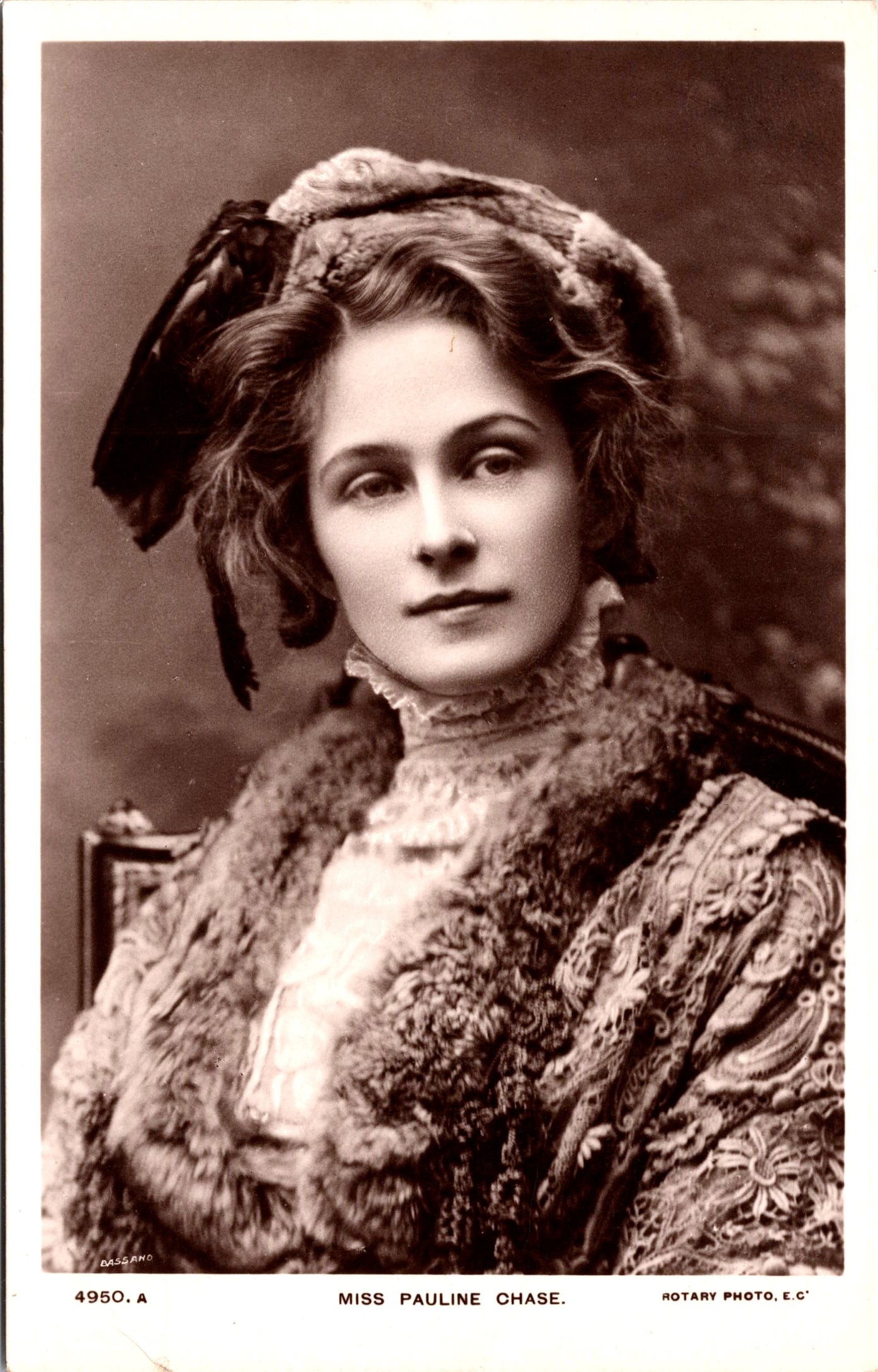
Postcard 2 was published by Rotary Photo as part of a series (No.4950A). Miss Chase’s photograph was taken by Alexander Bassano. (SOLD)
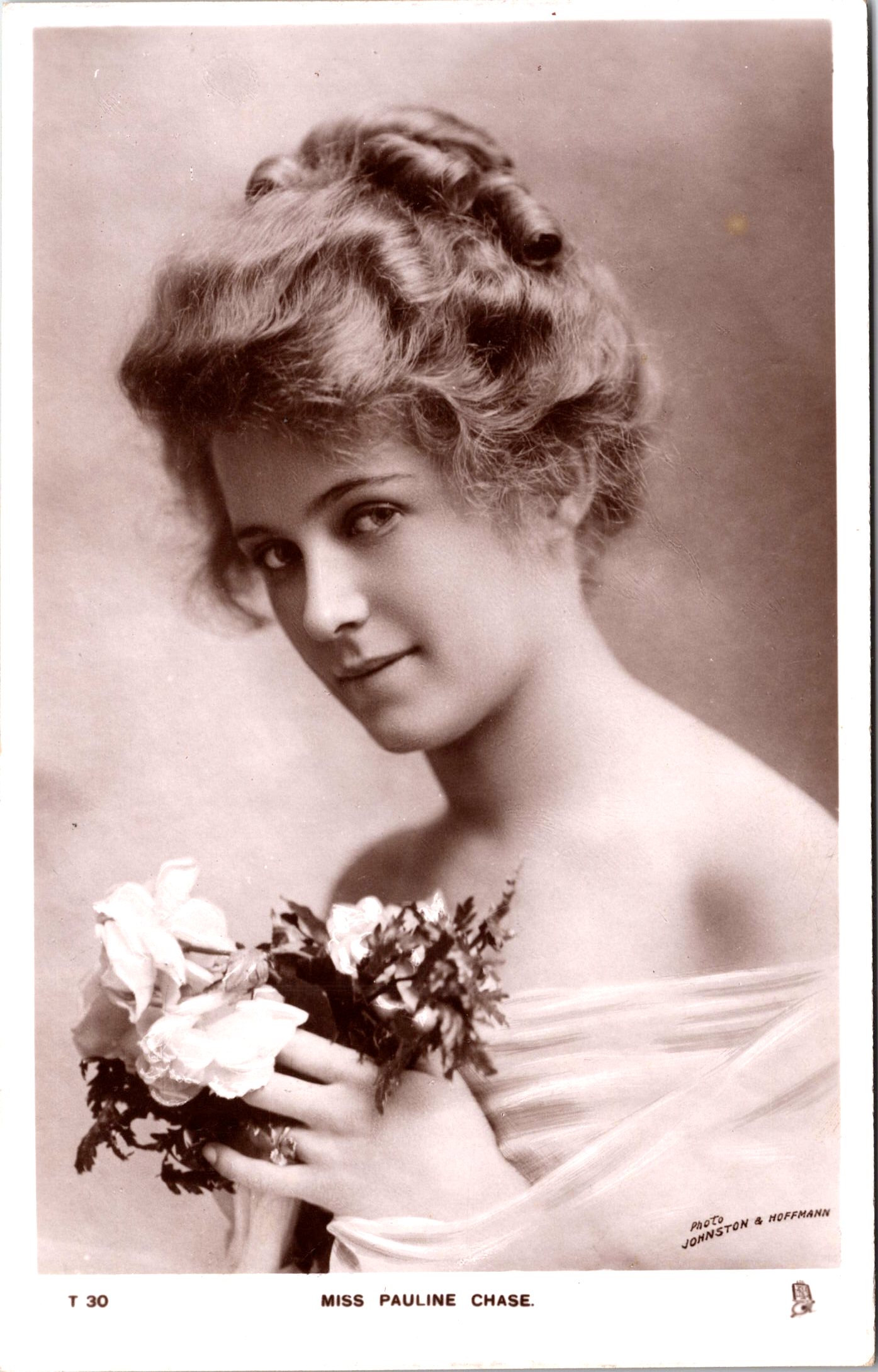
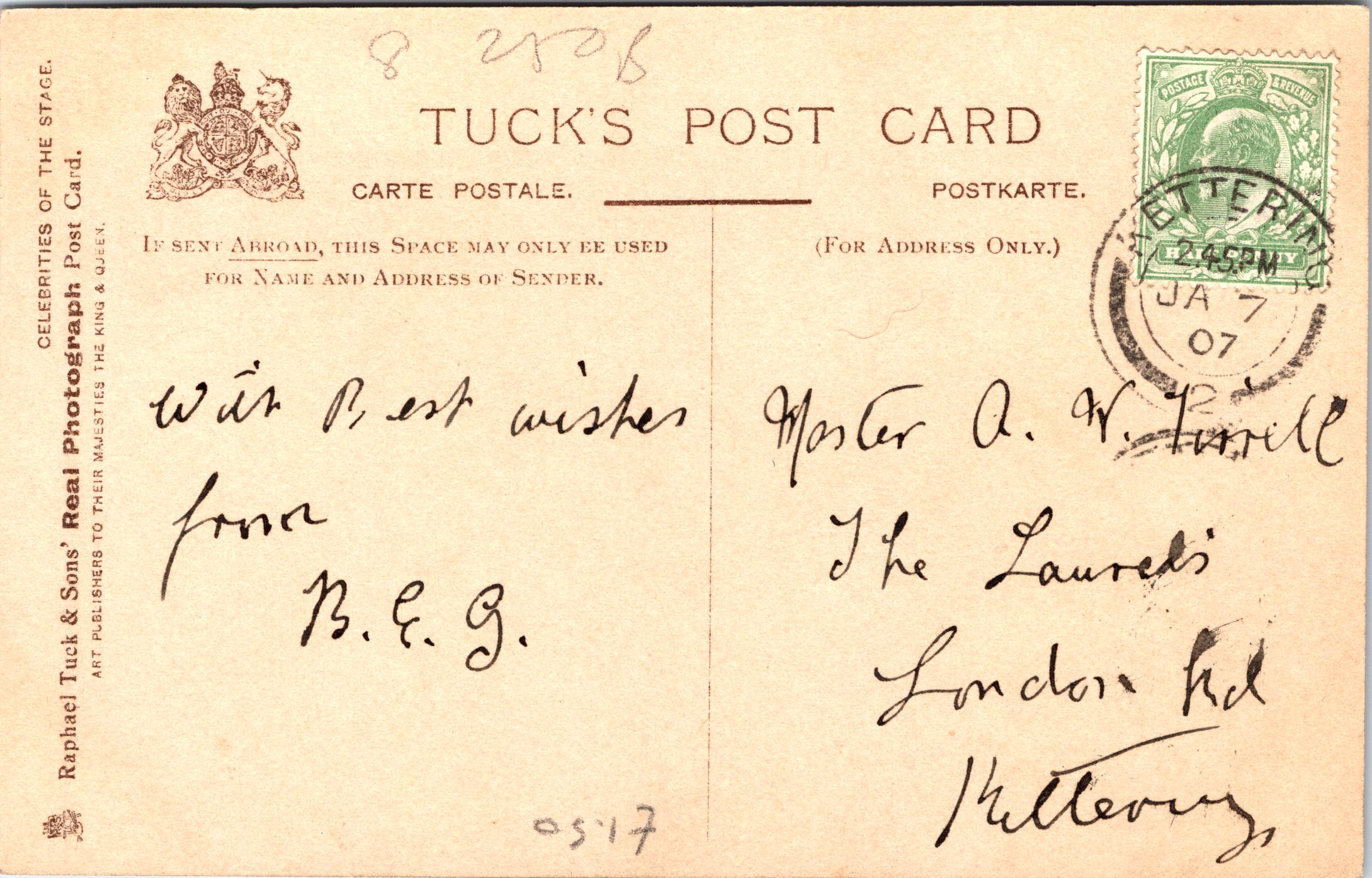
Postcard 3 has a 1907 postmark. The card was published by Raphael Tuck & Sons as part of a series (No.T30). Miss Chase’s photograph was taken by the Johnston & Hoffmann studio. (SOLD)
Postcard 4 features Chase wearing an interesting lace hat and she has a sweet, pure, and innocent appearance. This postcard was published circa 1909, the date of the cards postmark. The card was published by Rotary Photo as part of a series (No.4856L). Miss Chase’s photograph was taken by the Bassano studio. (SOLD)

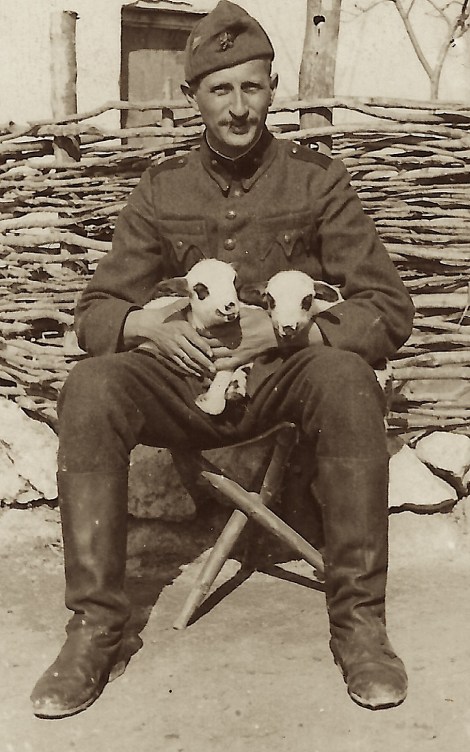 A uniformed soldier sits against a fence and he is holding two adorable lambs on his lap. This is a study in contrast. A military warrior represents battle and lethality, while the young lambs represent peace and calm. Before anyone gets “up in arms”, I want to state that I know that soldiers can represent peace and protection. Note the soldier’s high boots. They appear to be for weather protection rather than for long marches. SOLD


 This vintage photograph features a military woman in uniform. She is from a European nation and it’s my hypotheses that she is from Russia. Her branch of service is not identified. There is an inscription on the reverse of the photograph but I can not decipher it. The inscription indicates that the photograph was taken in 1947, two years after the end of World War II. Hopefully, a Cabinet Card Gallery visitor will be able to provide a translation. SOLD

 This vintage real photo postcard captures the scene of a man sharing an intimate moment with a pretty blonde woman sitting on a motor scooter. The photographer appears to have caught the man in a lustful moment. I doubt the man is giving tips about motorcycle care and maintenance. I find it unusual that the woman would be riding a motorcycle while wearing a long dress. Finding information to identify the manufacturer of this motorcycle was difficult. I discovered that a company named “Tomos” manufactured a bike whose name included the word “Galeb”. Note that a nameplate on the front of the bike says “Galeb”. Tomos manufactured motorcycles from their factory based in Koper, Slovenia. They still provide various products to their Eastern European market. The language printed on this postcard is from Slovenia. It appears that the photographer was Z. Mirkovic and the publisher was ZK. The postcard is part of a series (no. 2881). This photo postcard measures about 5 5/8″ x 4″ and is in very good condition (see scans).


 THE CABINET CARD GALLERY