COLONEL REUBEN STEERE AND WIFE (“THE SMALLEST MARRIED COUPLE IN THE WORLD”)

reuben steere

The subjects of this cabinet card portrait are Colonel Reuben Steere (1838-1915) and his wife, Rebecca (1853-1929).  Steere is elegantly dressed and has a walking stick. Rebecca has unusually long hair which is displayed prominently. Reuben Steere was a native of Chepachet, Rhode Island. He was 44 inches tall and 43 pounds at maturity. He was a member of the Lilliputian Opera Company. In 1880 he married fellow Lilliputian, Rebecca Ann Myers of Indiana. The couple settled in Chepachet in 1882 and Reuben worked as a truant officer while Rebecca operated a restaurant and confectionary shop. This photograph was produced at the “photo parlors” of Rieman & Company. The studio was located on Montgomery Street in San Francisco, California. The address printed on the front of the photograph notes that the parlors were “Opposite Lick House”. What is Lick House? The name Lick House fosters all sort of silly images in my mind but the history of Lick House is actually quite interesting. James Lick was a renowned craftsman of wood products and a successful businessman. He began building Lick House in 1861. The building was two blocks long and three stories high. It was a luxurious showpiece hotel with 164 high quality rooms. It was considered one of San Francisco’s premier hotels until it burned down to the ground during the 1906 earthquake and fire. Advertising print on the reverse of the photograph includes the following two slogans, “Rieman’s Babies” and “When others fail, try Rieman”. Additional advertising on the reverse of the image are the names George R. Rieman and Fred H. Pray. At one time, Rieman and Pray were partners in operating a photography studio. Writing on the the back of the photograph states the photograph captures “the smallest married couple in the world”. To view other photographs by Rieman click on the category “Photographer: Rieman”.

THEATER ACTOR H. J. MONTAGUE AND HIS CHECKERED TIE AND JACKET

MONTAGUE_0003One wouldn’t think that a man could wear a checkered tie with a checkered jacket and still look dashing, but theater actor H. J. Montague is able to accomplish this feat. The photographer of this cabinet card portrait is theater specialist, Jose Mora. To view more of his celebrity photographs, click on category “Photographer: Mora”. The reverse of this image has an address and a return address as if it had been mailed. However, there is no stamp or postmark. The photograph is addressed to a “Jane Mure” in Philadelphia, Pennsylvania. The script is written in very ornate calligraphy. Surprisingly, both the return and sending addresses have Philadelphia zip codes. Since zip codes are from the twentieth century (1963), it appears that someone may have added the ornate script to give the card more character but wasn’t aware, or not thinking about, the relative recent introduction of the zip code system. Henry James Montague (1844-1878) was the stage name of Henry James Mann. He was an American actor born in England. He appeared in T W Robertson’s comedies in London and in 1870 was a founder of London’s Vaudeville Theater. He came to the United States in 1874 and made quite a splash. He became a matinee idol. George Odell wrote that Montague was “a perfect specimen of refined English Manhood”. He was said to have “made other leading men seem boorish, ill dressed and possibly a bit vulgar”. Montague died quite young, about 34 years old. According to the New York Times (1878) while playing a role in a San Francisco production, he fell extremely ill from a “hemorrhage of the lungs”. He required medical attention from some theater goers and was taken to a hotel to recuperate. He rallied only briefly. During a visit from friends he became acutely ill and his last words as he was dying were reported to be,  “It’s no use, I am going boys; God bless you”. The New York Times covered his funeral. Attendees of his funeral include the “A” list of that era’s theater world. Mourners included Lester Wallack, Kate Claxton, Rose Coghlan, and Maud Granger. The afore mentioned three actresses all have portraits that can be viewed in the Cabinet Card Gallery by utilizing the search box.

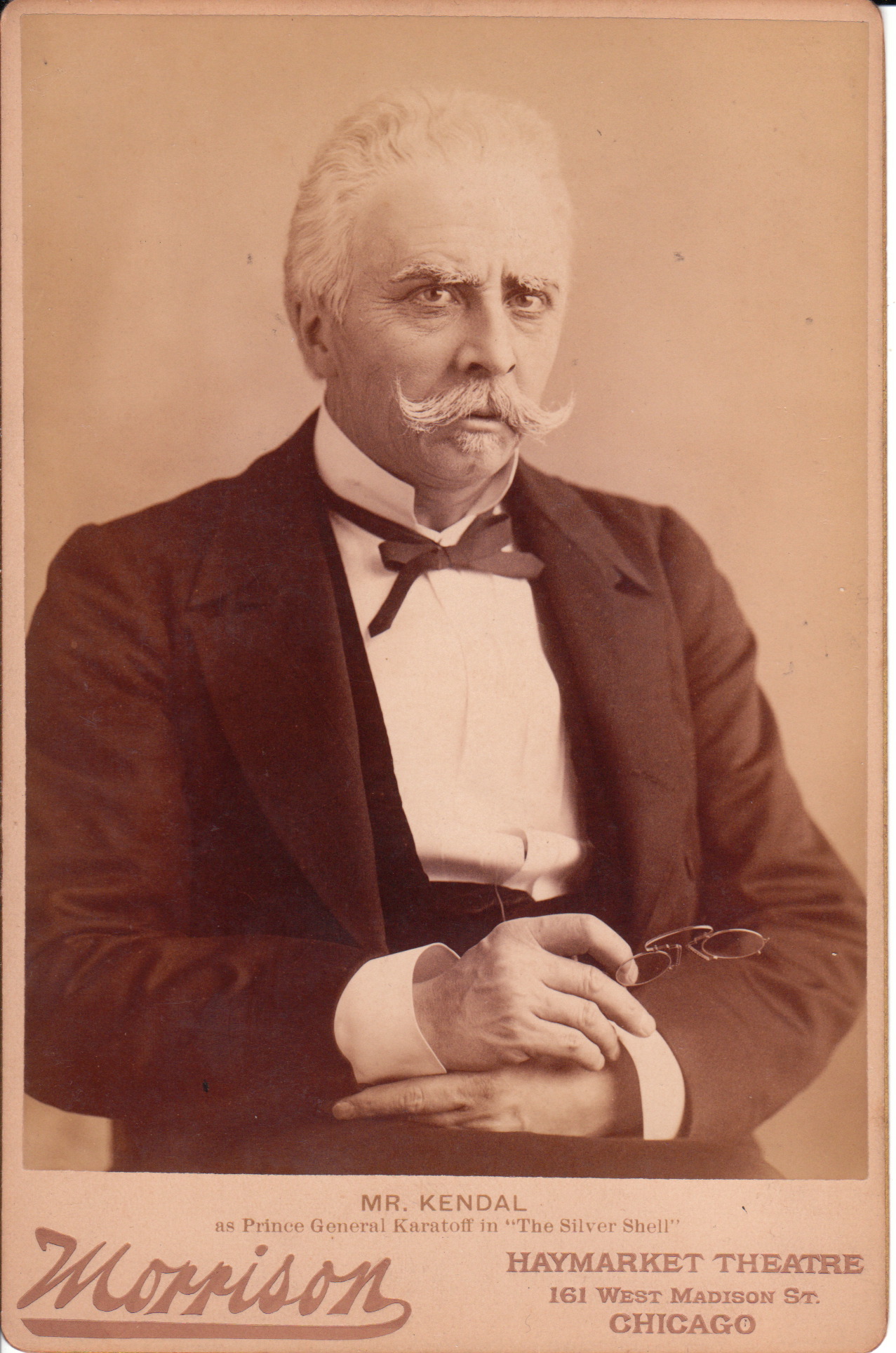
PORTRAIT OF ENGLISH THEATER ACTOR MR KENDAL PLAYING THE ROLE OF PRINCE GENERAL KARATOFF IN “THE SILVER SHELL”

mr kendal_0008

William McKenzie Morrison produced this cabinet card portrait of actor William Hunter Kendal (1843-1917). Morrison’s studio was housed in the Haymarket Theatre building in Chicago, Illinois. Morrison was known for being a photographer who specialized in taking photographs of celebrities. To view other portraits by Morrison, click on the category of “Photographer: Morrison”. Kendal’s given name was William Hunter Grimston and he was an English actor and manager. He was born in London and had his theatrical debut in Glasgow at age eighteen. Four years later he appeared in London at the Haymarket Theatre.  In 1869 he married Madge Robertson (1848-1935) and they performed together for many years. Kendal was a co-partner in managing the St. James Theatre from 1879 through 1888.  Between 1889 and 1895, Kendal and his wife toured successfully in the United States and Canada. Their American debut was in “A Scrap of Paper” (1889). The couple retired from acting  in 1908.

Published in: on February 28, 2013 at 12:00 am  Comments (1)  
Tags: , , , , , , ,

NOTED STAGE ACTOR: J. FORBES ROBERTSON

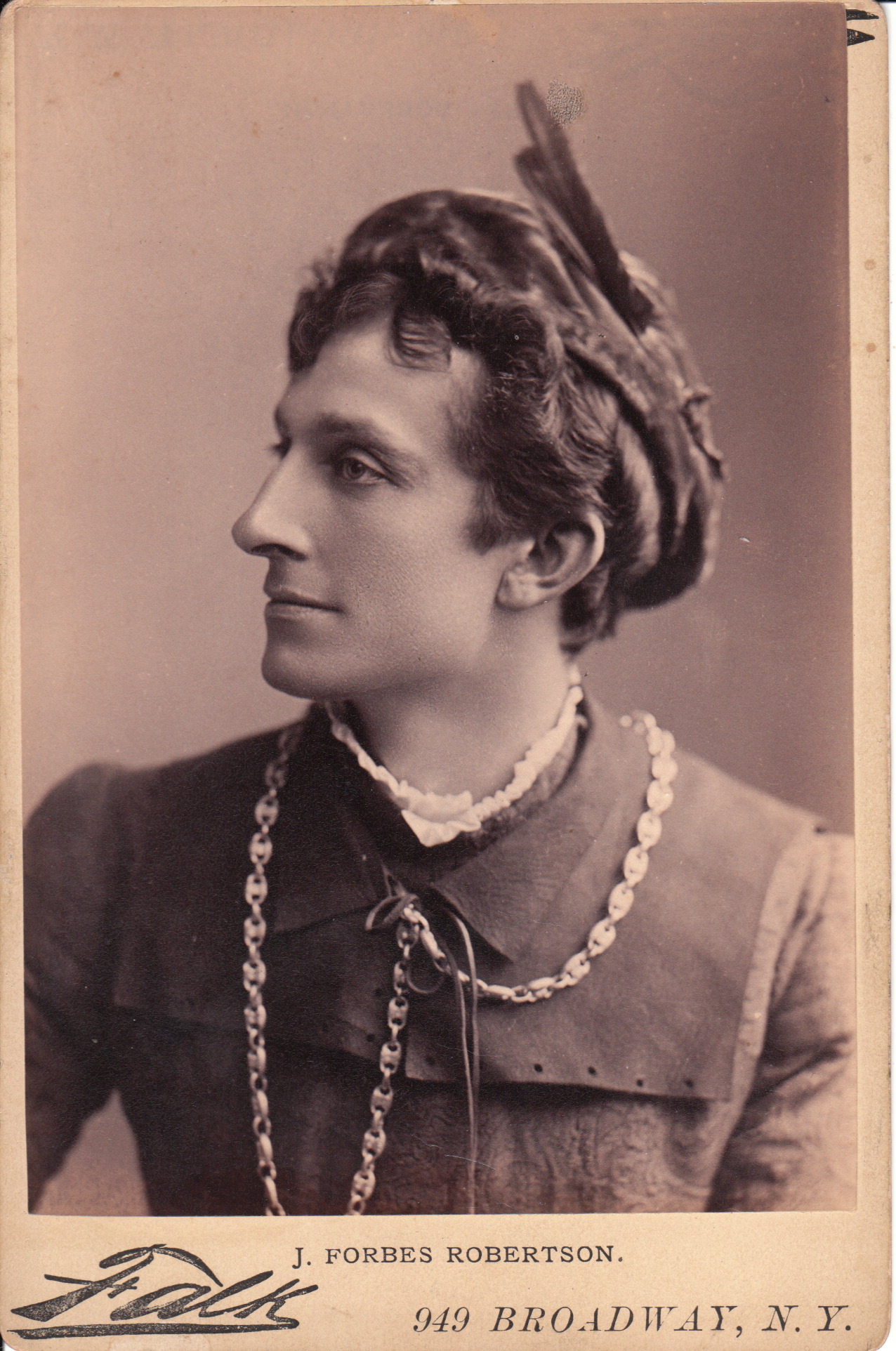
ROBERTSONJohnston Forbes-Robertson (1853-1937) was a celebrated English actor and theater manager. He was considered to be one of the finest actors of his time. He was particularly noted for his portrayal of Hamlet. He did not profess a passion for his acting profession. He was born in London. His father was a journalist and theater critic. He had ten siblings and four of them pursued acting. His original interest was to become an artist, but to support himself financially he entered acting. He worked with Sir Henry Irving for some time as a second lead actor. He then became a lead actor. His starring roles included Dan’l Druce, Blacksmith and The Parvenu (1882). George Bernard Shaw wrote the part of Caesar for him in Caesar and Cleopatra. Forbes Robertson acted in a number of Shakespeare plays and also appeared a number of times with actress Mary Anderson in the 1880’s. In 1900 he married the American actress, Gertrude Elliott (1874-1950). In 1930, Forbes Robertson was knighted. This cabinet card portrait was produced by photographer Benjamin Falk who’s studio was located in New York City. Forbes Robertson is captured in costume in this image. The reverse of the photo is stamped “J. M. Russell 126 Tremont Street, Boston”.

AREN’T YOU SOMEBODY FAMOUS? PORTRAIT OF UNIDENTIFIED MAN IN NEW YORK CITY (PHOTOGRAPHER: NAPOLEON SARONY)

s

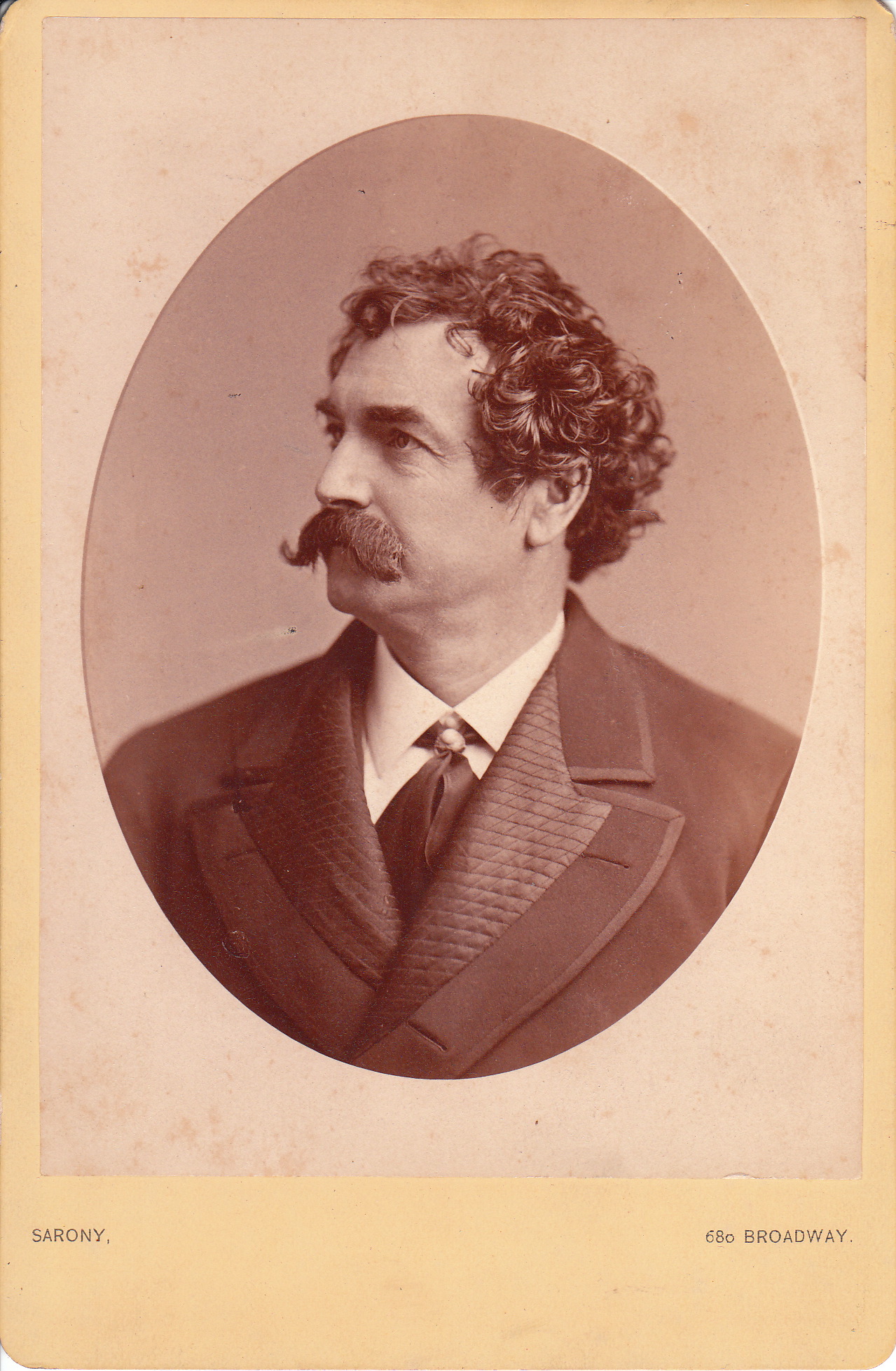
The gentleman featured  in this cabinet card portrait looks like someone famous. The photographer of this image is Napoleon Sarony who photographed many celebrities living in or visiting New York City. However, Sarony also photographed many non celebrities so there is no guarentee that the subject of this photograph is someone famous. He certainly does have great facial hair.  The reverese of this image is dated 1872. Printing on the reverse indicates that Sarony’s studio was located at 680 Broadway in New York City. The  printing lists two names associated with the studio; Napoleon Sarony and Alfred S. Campbell. To view other photographs by Sarony, click on the category “Photographer: Sarony”. To view photographs by Campbell, click on the category “Photographer: A. S. Campbell”.

A YOUNG MAN AND THREE YOUNG WOMAN IN FANCY COSTUMES (STUTTGART, GERMANY)

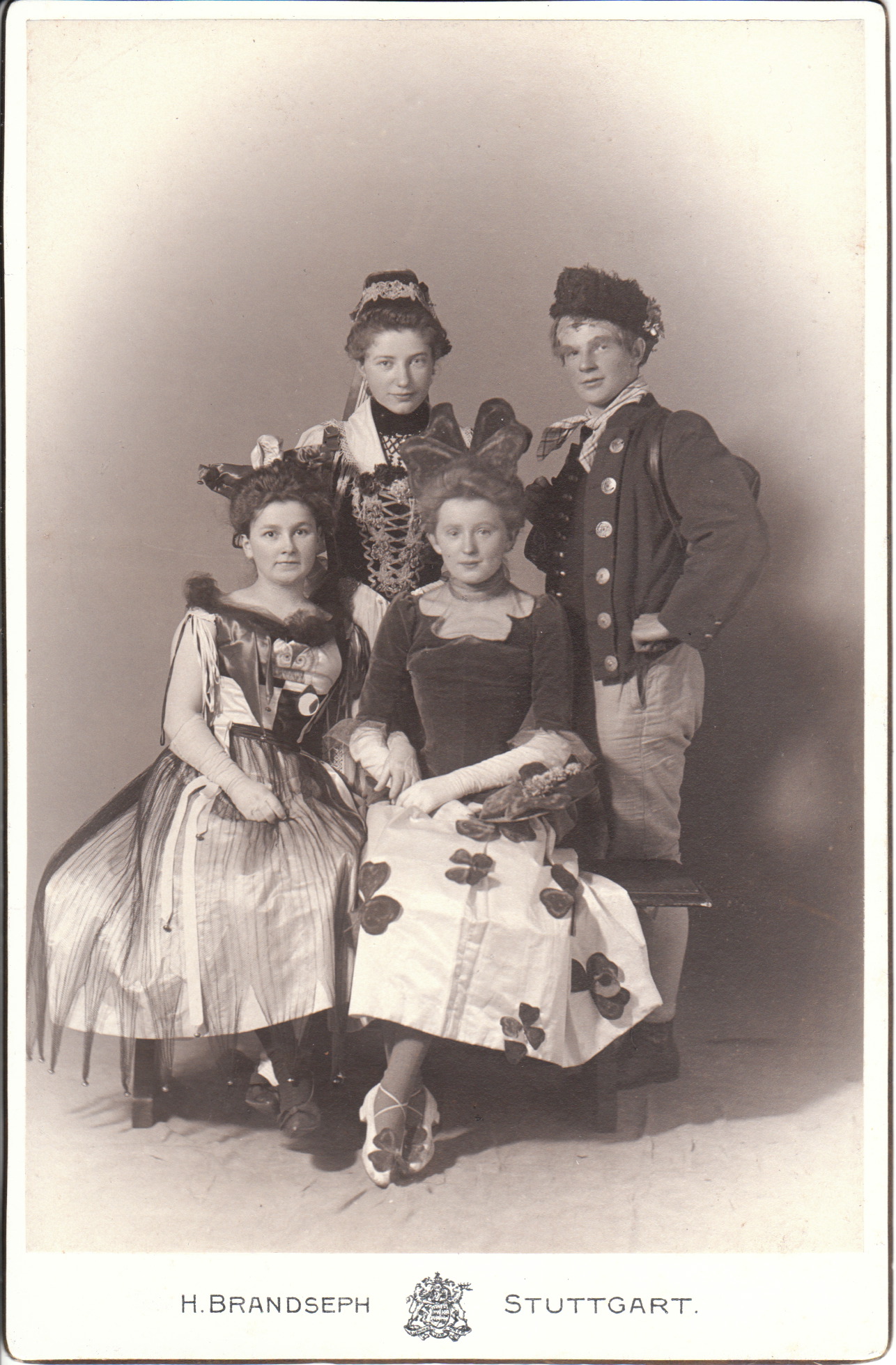
A young man and three young woman dressed in ethnic clothing, or theatrical costumes, pose at the H. Brandseph studio in Stuttgart, Germany. The foursome are attractive, and they appear to be teenagers. Perhaps they are stage performers. Printing on the reverse of the cabinet card reveals that Hermann Brandseph’s Stuttgart studio was located at “Marienstrasse 36”. A telephone number is listed for the studio which demonstrates that this photograph was produced toward the end of the cabinet card era. Hermann was the son of well known German photographer Georg Friedrich Brandseph (1826-1915). Georg was a lithographer, silhouetter, and painter who learned about the daguerreotype process from the celebrated photographer Karl Reutlinger who lived in Stuttgart (to view a number of Reutlinger’s photographs, click on cabinet card gallery category “Photographer: Reutlinger”).  Georg opened his own studio there in 1853. In the 1870’s the Brandseph studio was extremely successful. In fact, by 1870, the studio had 40 employees. Georg turned the studio over to his son Hermann (1857-1907) in 1884.

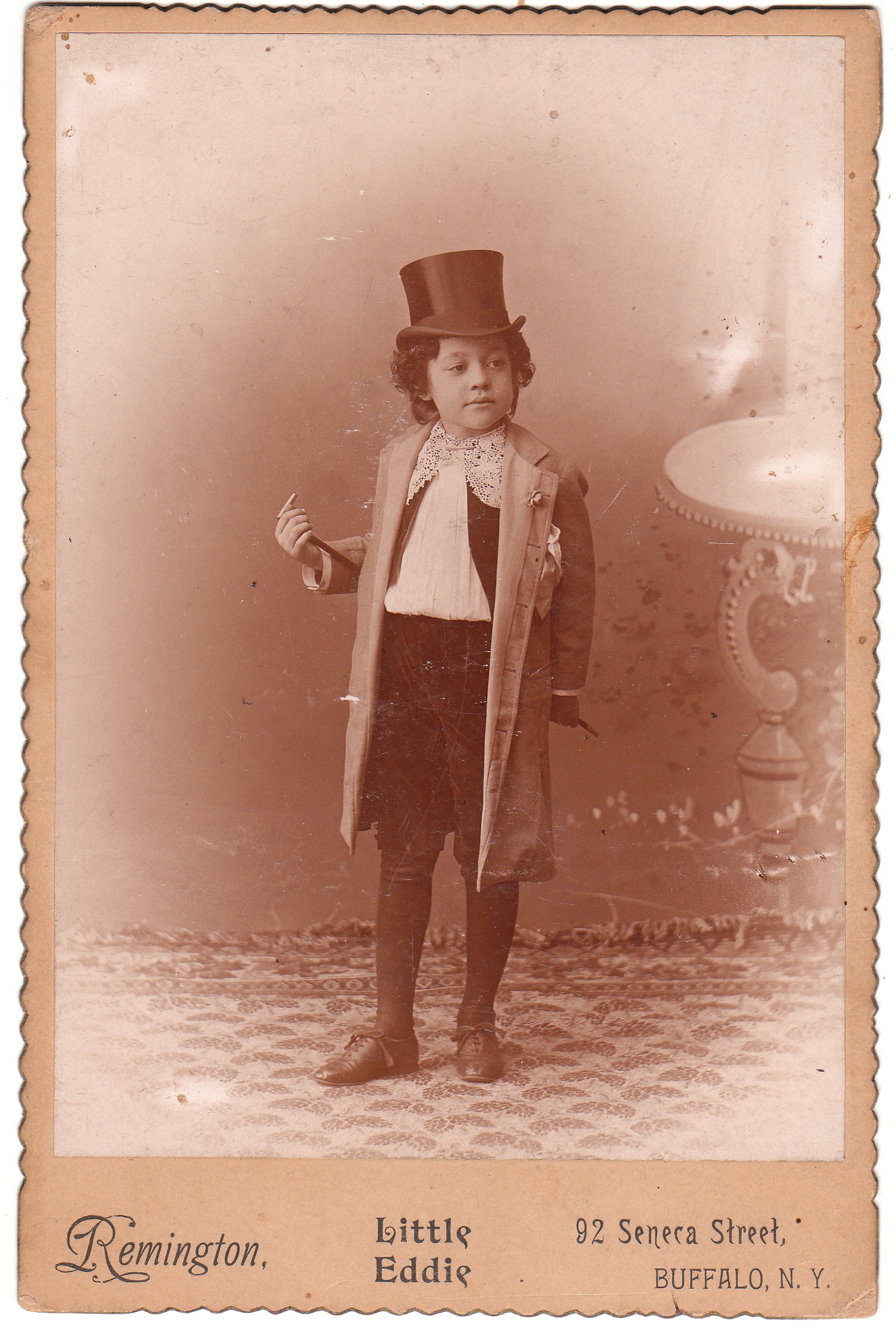
LITTLE EDDIE : WEARING A TOP COAT AND TOP HAT : BUFFALO, NEW YORK : CABINET CARD

Who is Little Eddie? “Little Eddie” is the subject of this cabinet card photograph but research yielded no information about him. In this image, long haired Little Eddie is wearing a top coat and top hat. He is also wearing a lace collar with a triangular bib. He has a flower pinned to his lapel and a white handkerchief in his breast pocket. He is holding a wand type stick. The object has a small handle. The boy in this picture has a look of a showman. Perhaps he wasn’t even a boy but instead an adult midget (the term “little person” was not yet used).  The photographer of this image was Edward A. Remington who was a native of Greenfield, Massachusetts and came to Buffalo, New York from Chicago, Illinois. Remington’s obituary appears in The Professional and Amateur Photographer (1909). The article states that he was a “widely known” photographer in Buffalo for 15 years. He left behind a widow, Mrs. Mamie Remington.   (SOLD)

Published in: on April 12, 2012 at 12:01 am  Comments (6)  
Tags: , , , ,

LESTER WALLACK: THEATRE ACTOR AND PLAYWRIGHT

This Cabinet Card was published by celebrity photographer, Napoleon Sarony. His studio was located in New York City. The subject of this portrait is actor, playwright, and theatre manager, John Lester Wallack (1820-1888). Wallack was born into a theatrical family. Wallack served in the British Army before appearing on the Dublin and London stage. His first stage appearance in New York was in 1847 in Boucicault’s adaptation of “Used Up.” Wallack became what many consider,  the leading light comedian on the American stage.  His autobiography, “Memories of Fifty Years”, was published in 1889. To view other photographs by Sarony, click on category “Photographers: Sarony”. To view other actors, click on category “Actor”.  (SOLD)

ONE MUSKETEER IN LAUSANNE, SWITZERLAND

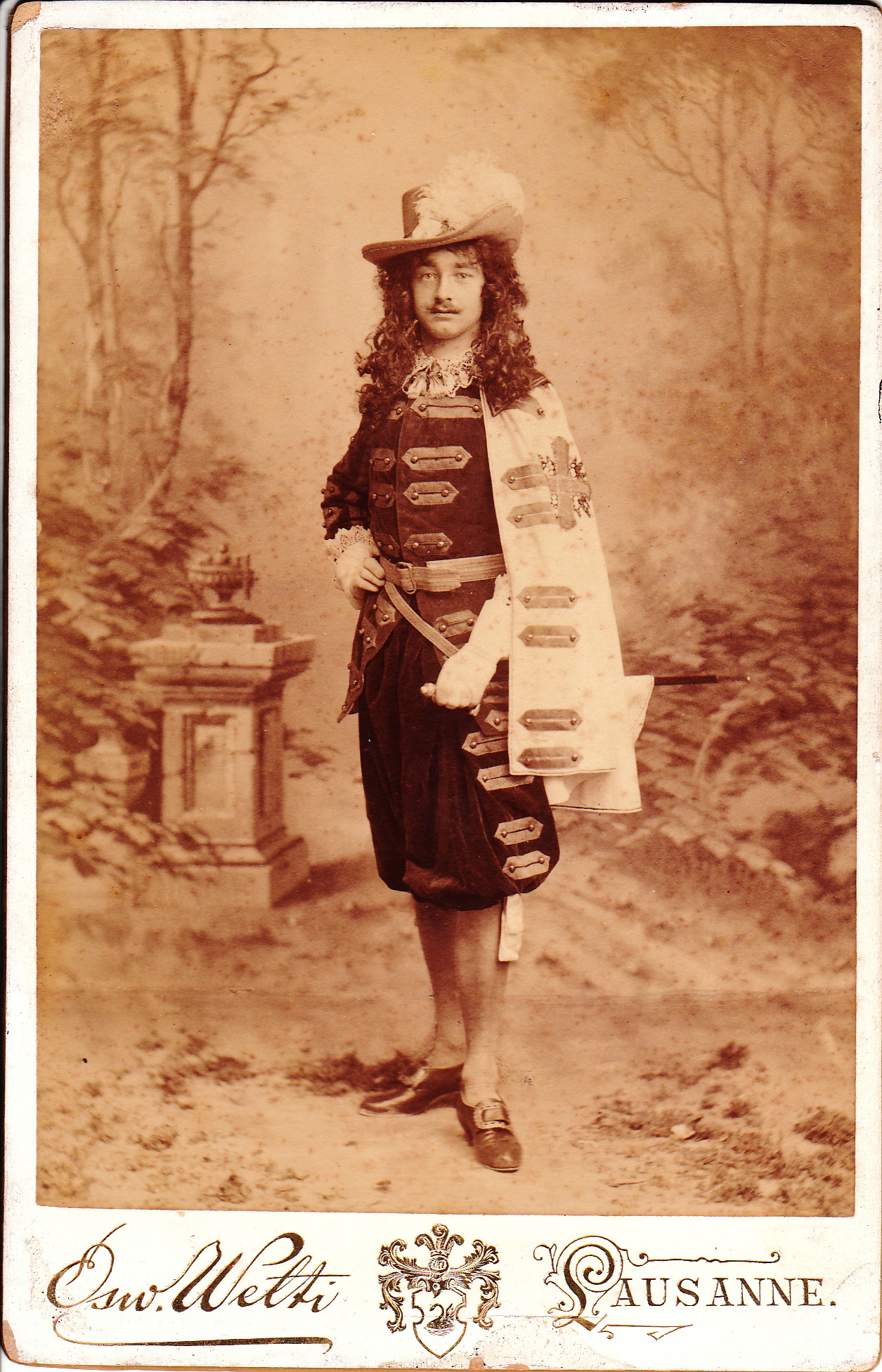
This cabinet card captures an actor in costume. He is dressed like a musketeer. Note those long tresses. It is difficult to decipher the photographers name. It may be Oswald Wetti, but that is just a guess. The photographer’s studio was located in Lausanne, Switzerland. Lausanne is a city in French speaking Switzerland. The city lies on the shore of Lake Geneva.

Published in: on March 10, 2011 at 12:01 am  Comments (1)  
Tags: , , ,

UNIDENTIFIED ACTOR IN NEW YORK (PHOTOGRAPH BY SARONY)

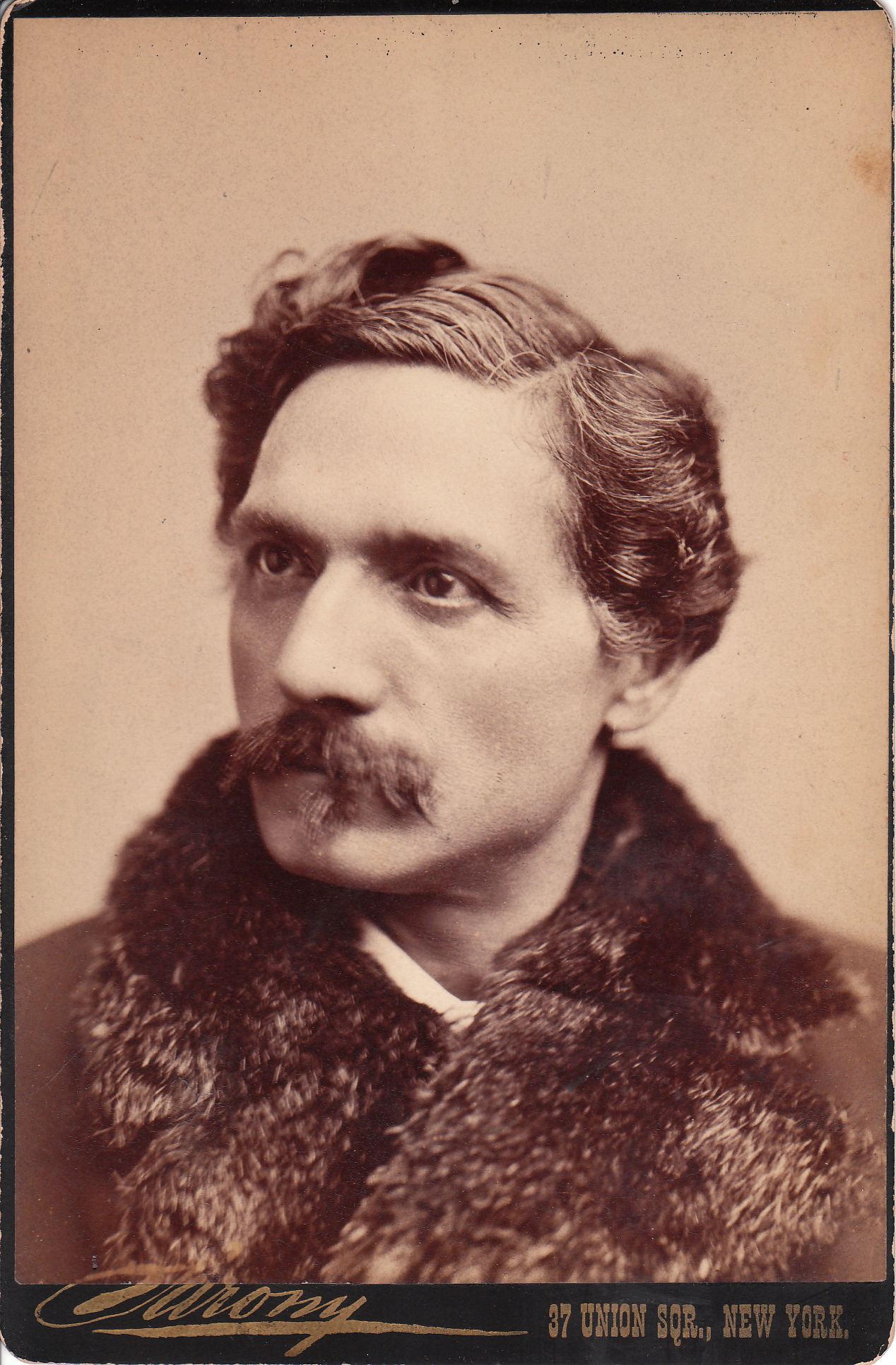
This cabinet card, by Sarony of New York City, presents a challenge to the research department of the Cabinet Card Gallery. The research department is composed of all the visitors to this site who bring with them a vast amount of knowledge which they generously share through their comments. So, what is the challenge? The challenge is; “Who is the subject of this photograph?”. This intense and interesting looking gentleman, is likely an actor. Although the evidence would not hold up in court, it does lean toward the hypothesis that this fur collared and mustachioed man, is a stage performer. The subject has the “look” of  a performer and the photographer is Sarony, who was a noted photographer of theatre stars. If any visitors have some ideas as to the identity of this gentleman, please leave a comment. Other photographs by Sarony may be seen by clicking on Cabinet Card Gallery’s category of “Photographer: Sarony”.

Published in: on January 25, 2011 at 12:01 am  Comments (6)  
Tags: ,