RARE PORTRAIT OF STAGE ACTRESS MISS MARY GREY

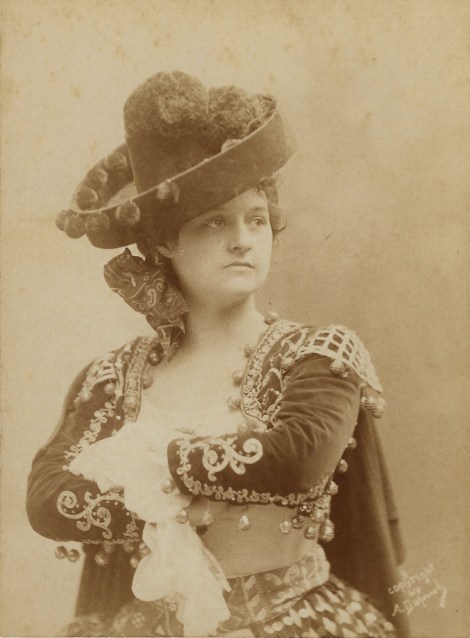
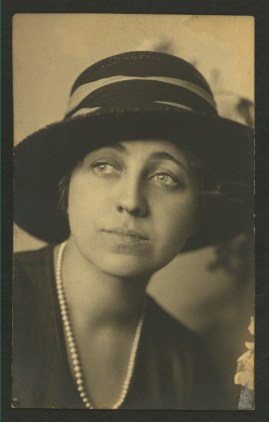
 This vintage real photo postcard features actress “Miss Mary Grey”. A search for biographical information about Miss Grey was not very fruitful. It should be noted that postcard portraits of Mary Grey are rare. Only one other postcard image of Miss Grey could be found, and it was a different pose than the one above. I found a morsel of information about one actress named Mary Grey but I can not verify that the Mary Grey seen in this postcard is the same Mary Grey that I am about to describe. Mary Grey was an actress known for her appearance in the British musical film”His Majesty and Co” (1935). She was married twice. Her first husband was James Bernard Fagan, an Irish-born actor, theater manager,producer and playwright in England. This postcard is part of the Rotary Photographic Series (no. 4954 B) published by Rotary Photo. Note the actresses winter coat, collar brooch, and fancy hat. The photograph was taken by the Foulsham & Banfield Studio. Foulsham & Banfield were well known celebrity photographers. Frank Foulsham and A. C. Banfield operated a studio in the 1900’s through the 1920’s.   SOLD

PORTRAIT OF STAGE ACTRESS: MISS MABEL DARK

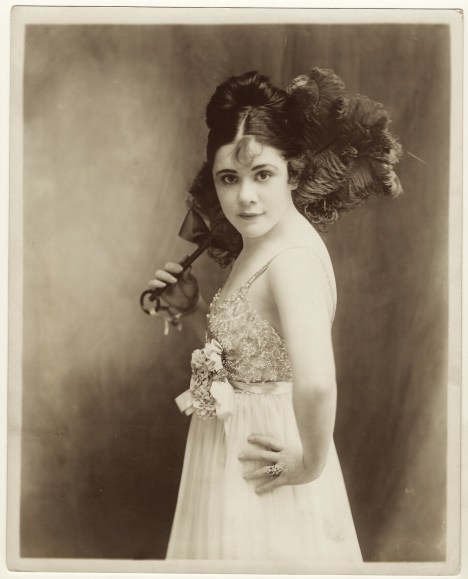
This vintage real photo postcard features stage actress Mabel Dark. She is quite pretty and is wearing a dress exposing her bare shoulders. This image was produced by the Dover Street Studios. The postcard was published by Raphael Tuck & Sons and is part of the “Celebrities of the Stage Series (no. T 1141)”. Raphael Tuck and his wife started their photography business in 1866 in London. Their store sold pictures, greeting cards, and in time, postcards. Their success came from the sale of postcards during the late 1890’s and early 1900’s. In the early 1900’s the firm conducted postcard competitions for collectors of Tuck postcards. These competitions offered cash prizes and they were very popular. The winner of one of these competitions had a collection consisting of over twenty-five thousand cards. Three of Tuck’s four sons participated in the business. The company was devastated by German bombing during World War II. In 1959 the company merged with two other printing companies.   SOLD

BARBARA CARRERA


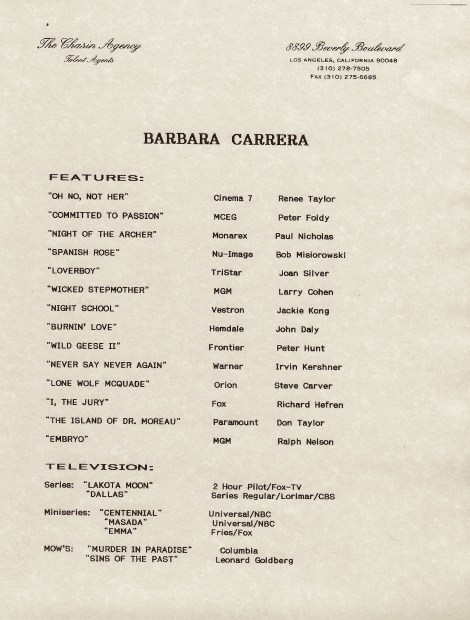
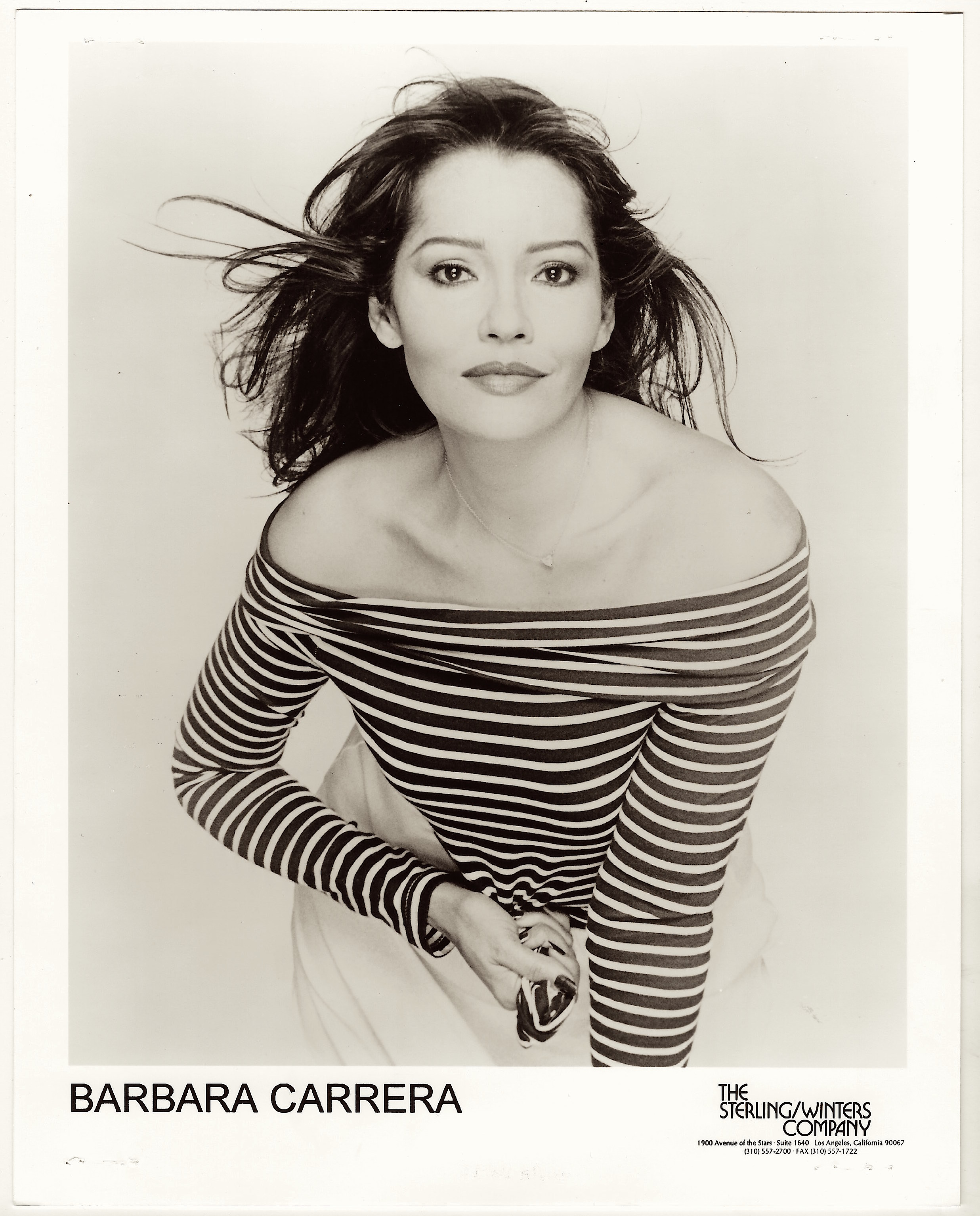
This photograph features film and television actress Barbara Carrera (1945- ). She was born in Nicaragua and was a television and film actress, as well as a model. Her mother was Nicaraguan and her father was an American employee of the American embassy in Nicaragua. Her parents separated, and at around the age of ten years old, she moved to Memphis, Tennessee to be with her father. At age fifteen, she moved to New York. At seventeen, she began a career as a model at the Eileen Ford agency. Her first film role was in 1970 and in 1976, she earned her first Golden Globe nomination. A second nomination followed in 1984. Among her appearances were “Never Say Never Again (1983)”, “Condor Man” (1981), and on the television series “Dallas”(1985). Carrera graced the pages and covers of many magazines including Vogue, Paris Match, and Harper’s Bazaar. She twice posed for Playboy (1977 & 1982). She ended her television/film career in 2004. The IMDb reports that the actress had 39 film and television credits. Carrera had three marriages, all ending in divorce. This image, accompanied by Miss Carrera’s resume, was sent to a casting director, or some other film decision maker, to ask for consideration for an acting role in the production. The logo of the Sterling/Winters Company can be seen on lower border of this photo. Sterling/Winters is a celebrity talent agency for numerous actors, musicians, athletes, and others. The heading on the resume indicates that it was prepared by “The Chasin Agency” of Los Angeles, California. This organization functions in the Talent Agent, Theatrical Business, and Amusement and Recreation Services sector. This photograph was formerly part of the Harvey and Rhoda Kuflik collection.The Kuflik collection has been touted as “the greatest celebrity autograph collection on the planet”. From the 1980’s until his death in 2002, Harvey had access to film industry agency headshots and resumes that were used in the casting process. This photograph and resume of Barbara Carrera is an example of these casting materials. Harvey and Rhoda Kuflik were siblings. The pair grew up in New York City and they amassed a very large collection of celebrity photos and autographs. In adulthood, Harvey moved to Los Angeles while Rhoda stayed in New York. They would reunite in Hollywood each year to add to their collection during Oscar week. When the pair passed away, Harvey (1942- 2002) and Rhoda (1938- 2012); the siblings left the collection to Harvey’s son, David. It bothered David that the collection was not available for the public and interested collectors to see and enjoy. He decided to put the individual items in the collection up for auction. This 8×10 photograph is in excellent condition. The content of Miss Carrera’s resume indicates that the photo and the resume were mailed in about 1994.
Buy this original vintage “Headshot” photograph and Resume (includes shipping within the US) #2512

To purchase this item, click on the Pay with PayPal button below

$32.00

Buy this original vintage “Headshot” photograph and Resume (includes international shipping outside the US) #2512

To purchase this item, click on the Pay with PayPal button below

$40.00

REVERSE OF PHOTOGRAPH

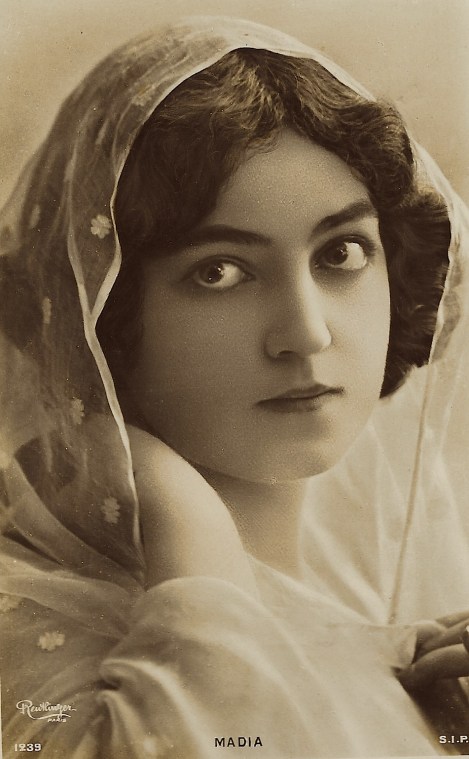
MADIA BORELLI: BEAUTIFUL FRENCH DANCER (PORTRAIT BY REUTLINGER)

“Madia! I’ve just met a girl named Madia. And suddenly that name. Will never be the same.” With apologies to Leonard Bernstein, I just couldn’t resist. This vintage real photo postcard features dancer Madia Borelli. She was a Parisian dancer active in the early twentieth century. The photographer of this portrait of Miss Borelli was the famed photographer Leopold Reutlinger of Paris, France. The postcard was published by S.I.P., which is the Societe Industrielle de Photograpie of Rueil, France. The postcard is part of a series (no. 1239).   (SOLD)

IMMIGRATION IN AMERICA (1939 STYLE): ISA MIRANDA, ITALIAN FILM STAR GETS CITIZENSHIP

This press photo was taken in 1939 and it captures Italian film star, Isa Miranda taking an oath of allegiance and receiving her U.S. citizenship papers. Paramount studios had brought the actress to Hollywood just two years before. The caption for this photograph states that during the short stint that she lived in the United States, she had become “completely Americanized”. The photograph shows Miss Miranda, her husband (Alfred Guarini) and the government clerk. Guarini (1901-1981) was an Italian screenwriter, film producer and director. Alfred Guarini was active in show business between 1935 and 1963. He is noted for his management of Isa Miranda’s career both before, and after their marriage. In the mid 1930’s, he encouraged her to work in a variety of different countries for the purpose of making her an international star. Isa Miranda (1909-1982) was born in Milan, Italy. She worked as a typist as she studied to be a stage actress at the “Accademia dei Filodrammatici” in Milan. She began her film career playing bit parts in Italian films. She achieved great success after appearing in the film “Everybody’s Woman” (1934). The film launched her career and she was given a contract with Paramount Pictures which billed her as the “Italian Marlene Dietrich”. She played several “femme fatale” roles for Paramount. After the outbreak of World War II, she returned to Italy where she acted on stage and in film. Her performance in “The Walls of Malapaga” (1949) earned her an award at the Cannes film festival. This press photo is from the Los Angeles bureau of the Illustrated Daily News and belonged to Acme News, located in New York City. In the 1960’s she began a television career in England. The IMDb credits Miss Miranda with appearing in 95 films between 1933 and 1978. The photograph measures about  9″ x 7″.  (SOLD)

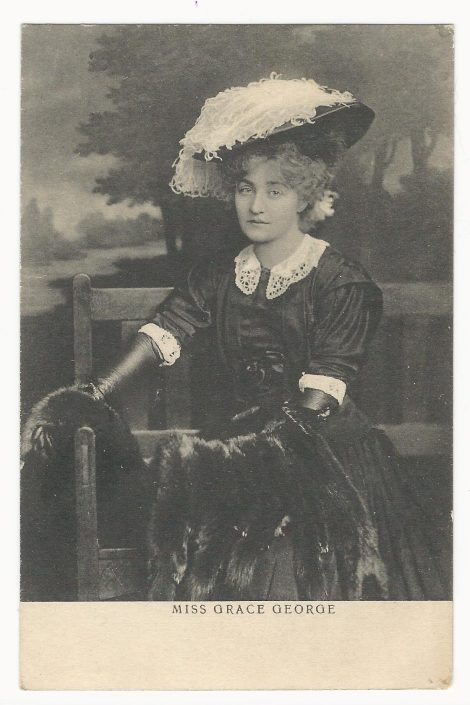
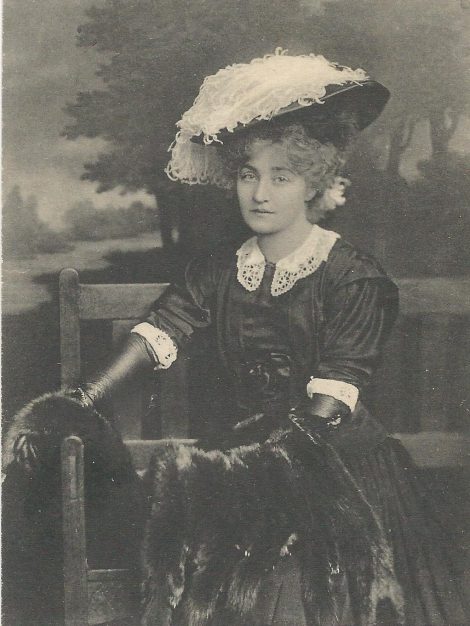
PROLIFIC AMERICAN BROADWAY ACTRESS: GRACE GEORGE

This vintage real photo postcard features American stage actress, Grace George (1879-1961). She appeared on the Broadway stage, as well as in two films. She entertained Broadway audiences for more than fifty years. The Internet Broadway Data Base credits her with appearing in 49 Broadway shows between 1898 and 1952. George was noted for her style of “high comedy”. Grace George was a manager, director, and adapter, in addition to being an actress. George was born in New York City. She was educated at the Convent of Notre Dame in Fort Lee, New Jersey. Her next stop was the American Academy of Dramatic Arts, where upon graduation, she appeared in traveling productions for four years. She then began her long string of playing to audiences on Broadway.  She was married (1899) to producer and sports promoter, William A. Brady. She starred in the immensely successful Broadway adaptation of “Ben Hur” (1899). She appeared in the silent film, “Tainted Money” (1915). She also had a role in the film, “Johnny Come Lately” (1943) with James Cagney. In 1950 she received the Delia Austrian Medal, recognizing her as a distinguished performer. Miss George appeared in two plays by George Bernard Shaw. In a review that appeared in the New York Times, Alexander Wollcott wrote; “The life of the party is, of course, Miss George herself, playing with her accustomed vivacity, charm, and precision”. This postcard was published by Souvenir Post Card Co. and printed in Germany. The Souvenir Post Card Company  existed between 1905 and 1914. It was located at 268 Canal Street in New York City. The company was purchased by Valentine & Sons and the combined company became Valentine – Souvenir.

Buy this original Real Photo Postcard (includes shipping to the US) #2424

To purchase this item, click on the Pay with PayPal button below

$14.00


Buy this original Real Photo Postcard (includes International shipping outside the US) #2424

To purchase this item, click on the Pay with PayPal button below

$22.00


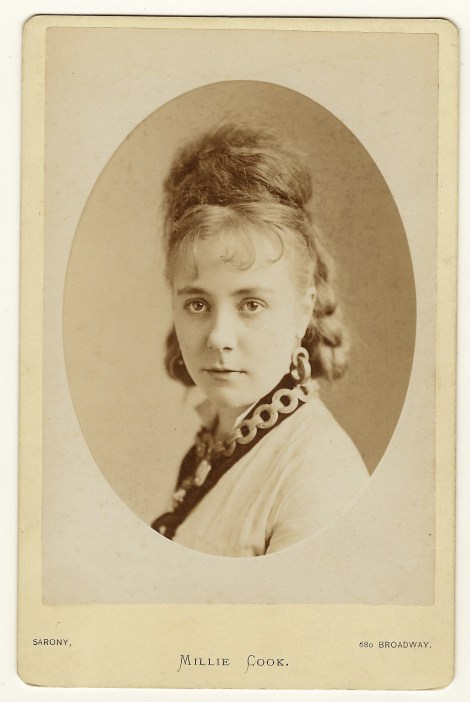
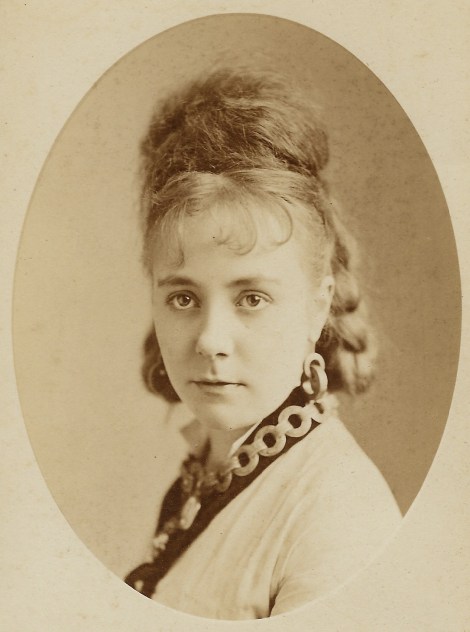
PORTRAIT OF PRETTY THEATER ACTRESS: MILLIE COOK (PHOTOGRAPH BY NAPOLEON SARONY)

The pretty young woman seen in this cabinet card photograph is a theater actress named Millie Cook. She was a well-known New York variety entertainer and actress in the 1870’s. She played roles in such productions as “Blue Beard”,  “The Female Jack Sheppard” and in Niblo Garden’s ballet extravaganza “Leo and Lotos”. She was also a star at Tony Pastor’s and at the Union Square Theater. Tony Pastor is considered by many to be the “father of American Vaudeville”. Theater Magazine (1918) describes Miss Cook as “a good looker and a fair actress”. This cabinet card portrait was photographed by celebrity photographer, Napoleon Sarony. Note Millie Cook’s birds nest  hair-do.  SOLD

Published in: on May 8, 2018 at 12:02 pm  Comments (1)  
Tags: , ,

RISQUE PORTRAIT OF GERMAN SILENT FILM ACTRESS DITA PARLO

This vintage real photo postcard portrait features German silent film actress, Dita Parlo (1908-1971). She was born in present-day Szczecin, Poland. At the time of her birth, the city was part of Germany. Her father was a forest ranger. She was initially trained as a ballerina but switched to studying acting at the Babelsberg film school. Producer, Erich Pommer, discovered Parlo and signed her to a contract to Ufa. She made her film debut in “Homecoming” (1928) and in short time became a popular actress in Germany. During the 1930’s she appeared in both German and French films and achieved much acclaim. Two of her films in particular are considered among the best in cinema history: “L’Atalante” (1934) and “La Grande Illusion” (1937). During World War II she was deported to Germany but returned to France in 1949 and resumed her career. Parlo made an attempt to establish herself in American films but had limited success. She did appear in a couple of American films and in the late 1930’s and she nearly had a role in the Orson Welles production of Joseph Conrad’s “Heart of Darkness”. Unfortunately, the project did not materialize. The horror! The horror! Oh the horror of disappointment she must have experienced. According to the IMDb, Parlo appeared in 28 films between the years of 1928 and 1966. Parlo was married to a Protestant pastor, Franck Gueutal (1904-1983) and the couple remained married until she died in 1971. An interesting piece of trivia is that Madonna took Parlo’s name for a character she created for her book entitled “Sex”. The singer stated that she was fascinated by Dita Parlo. This portrait postcard was published by Ross Verlag and was part of a series (no. 3972/1). The postcard displays the logo of “Ufa”, a German film company.  The video below shows Miss Parlo in the film  “Au bonheur des dames” (1930). Her co-star in the film was Pierre De Guingand (1885-1964). The movie was based on the romance of French writer Emile Zola.

SOLD

Published in: on May 2, 2018 at 7:08 pm  Leave a Comment  
Tags: , , ,

PORTRAIT OF STUNNING FRENCH MUSIC HALL STAR MADEMOISELLE DAVRIGNY

This vintage real photo postcard features French cabaret actress Mademoiselle Davrigny. She is truly a stage beauty. Her smile is delightful. Preliminary research yielded no biographical information. This postcard was published by Societe Industrielle de Photograpie (SIP) of Rueil, France and was part of a series (no. 1676). The photographer was Edouard Stebbing who was active in Paris between 1890 and 1910. Stebbing taught at a University in Paris and invented the stebbing camera, and was known for his work with emulsions. It is reported that he was friends with the artist Monet. He died in 1914 and his wife (Celestine) died five years earlier. Stebbing was a prolific photographer during the Belle Epoque Paris. He appears to have been an expatriate from England. He published many articles in British Photographic journals. Stebbing photographed many theatrical stars. A frequent publisher of these postcards was Monsieur G.Piprot, of “Etoille” or “Star” publishing in Paris. The “Photographic Times and American Photographer” (1883) cited Stebbing as “one of the bright lights of the French Photographic Society.   (SOLD)

Published in: on April 2, 2018 at 12:00 pm  Leave a Comment  
Tags: , , , ,

HELEN BERTRAM: COMIC OPERA STAR WHO LIVED A LIFE CHOCK FULL OF SCANDAL

This cabinet card portrait features comic opera star, Helen Bertram (1869-1953). As I researched her life, I became more and more interested in her experiences and character. She was a person who’s life itself was a drama. More on that later. She was one of America’s leading prima donnas of her era. Bertram was born in Illinois.  Her father was a wealthy grain merchant. She trained at the Cincinnati College of Music and at age 20 began working as a lead singer for a number of opera companies, including Abbott, Conried, and the Bostonians. In fact, she worked for many opera companies because she tended to switch allegiances when offered better salaries. She had much impact on comic opera. Influential roles in “The Gingerbread Man” and “The Prince of Pilsen” contributed to that impact. The St. Paul Daily Globe (1887) printed a review about a very early Bertram performance  with the Abbott company. The review states that she sang with ‘such exquisite art as to win the hearts of her audience”. The article also describes Miss Bertram as a brilliant debutante in opera, and states that she had an “exceedingly handsome face, pretty figure, graceful movement, and sweetness”. Her off-stage life was tumultuous and her scandals were covered closely in American newspapers. Plainly said, her personal life was a disaster. In 1893, news articles revealed that she and actor, Edward Henley, were having an affair. Both were married and their affair caused both of their spouses to file for divorce. At first Bertram denied her extramarital relationship saying “Oh my! Mr Henley has had so many sweethearts, it seems too bad that I should be made the scapegoat for all this.”  In 1894, Bertram and Henley announced plans to marry. They were not married long because Henley died. The St. Louis Republic (1901) reported that Bertram had thrown a locket containing Henley’s ashes off a balcony. The rationale for pitching the ashes was that she had fallen in love with another man. Bertram denied tossing the ashen remains of her husband. In 1903 she married her third husband, matinee idol Edward Morgan. He had a sensational history of stormy marriages and relationships. At some point in time, Bertram had a relationship with George d’essauer, a wealthy French nobleman. George got himself into some trouble concerning a forgery scandal. After being indicted, he fled to Europe were he was arrested for other charges. The St. Louis Republic (1905) ran an article about Bertram being taken to court for unpaid bills. She claimed she was bankrupt as the reason for non payment. In 1906, her third husband, Edward Morgan died. He died from a fall in his hotel room, but the coroner theorized that the fall was due to his well known morphine addiction. From 1908 into the 1930’s she announced several retirements only to return to the stage. Later roles included vaudeville and concert tours with provincial orchestras. Bertram also had a movie career and the IMdB lists her as appearing in three movies including “The Lightening Conductor” (1914) and “Rhythm on the River” (1940). Back to the cabinet card seen above. The studio that produced this photograph was the Aime Dupont gallery. Dupont (1842-1900) founded his photography business in 1886 in New York City, New York. He was formerly a sculptor and he was of Belgian origin. His American wife, Etta Greer, was also a photographer. She was well respected for he work as a portraitist of opera singers in Paris, France. She was educated in Paris and spent much of her childhood there. She also met and married Dupont in Paris. The couple was very talented and they became very popular as portrait photographers in New York. Among their society and celebrity clients were many singers who were appearing in New York. After Dupont’s death, his wife, and later his son (Albert), operated the studio. His wife kept the name of the studio the same, after the death of her husband. In 1906, the Metropolitan Opera hired its own official  photographer, resulting in diminished portrait work in that sector. The studio went bankrupt in 1920.