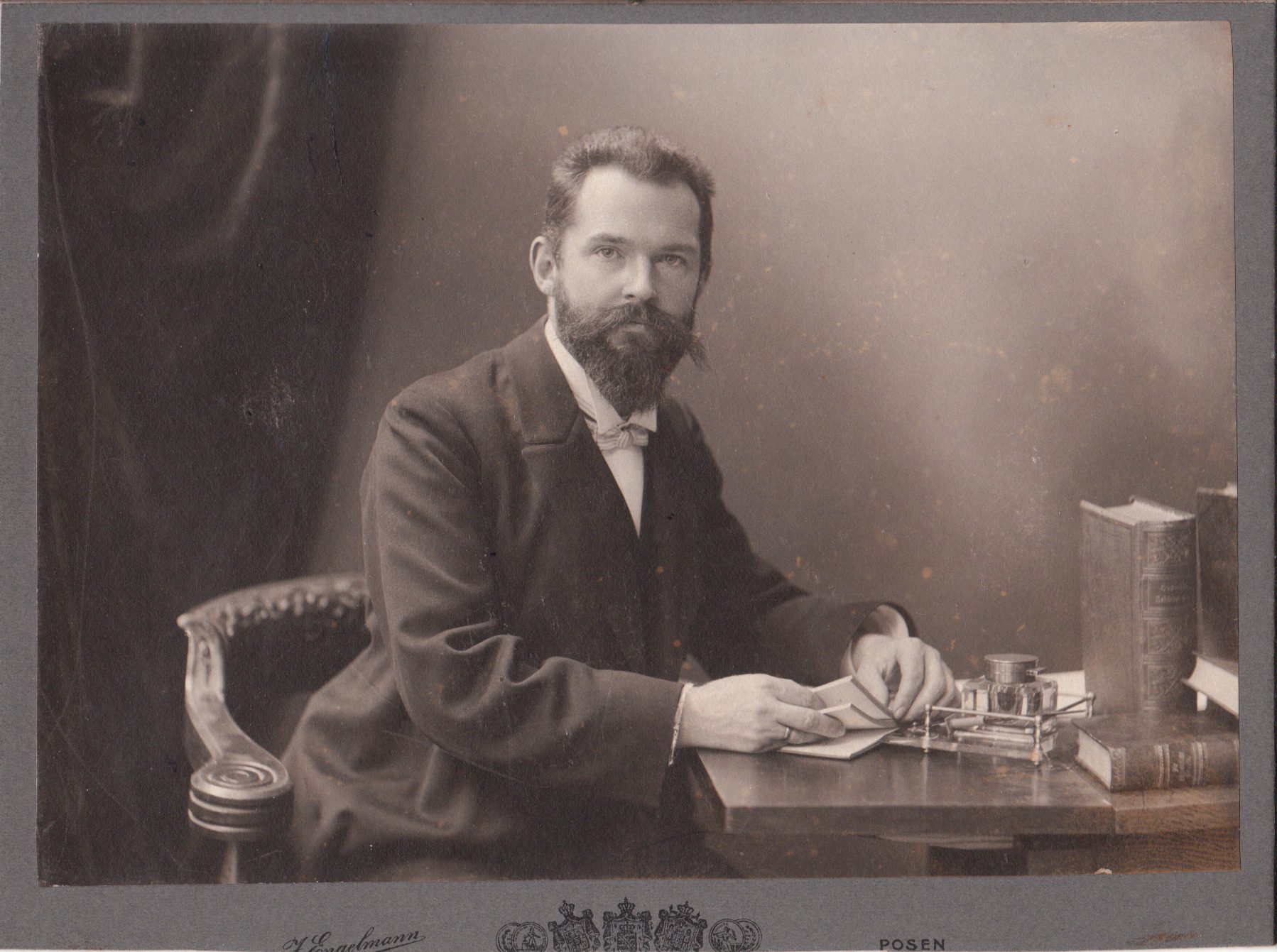
 A handsome well dressed gentleman sits at his desk and poses for this portrait by the Engelmann studio in Posen, Poland. At the time of this photograph, Posen was a province of Prussia and part of the German Empire. The man in this photograph appears to be a professional of some type. Perhaps he was an attorney or politician. He is leafing through some papers and looking at the camera. Note the large books (journals?) and the inkwell on his desk. He is wearing a wedding ring and a bow tie. (SOLD)
DESK JOCKEY CONDUCTS BUSINESS IN POSEN, PRUSSIA

HANDSOME WEDDING COUPLE IN VIENNA, AUSTRIA
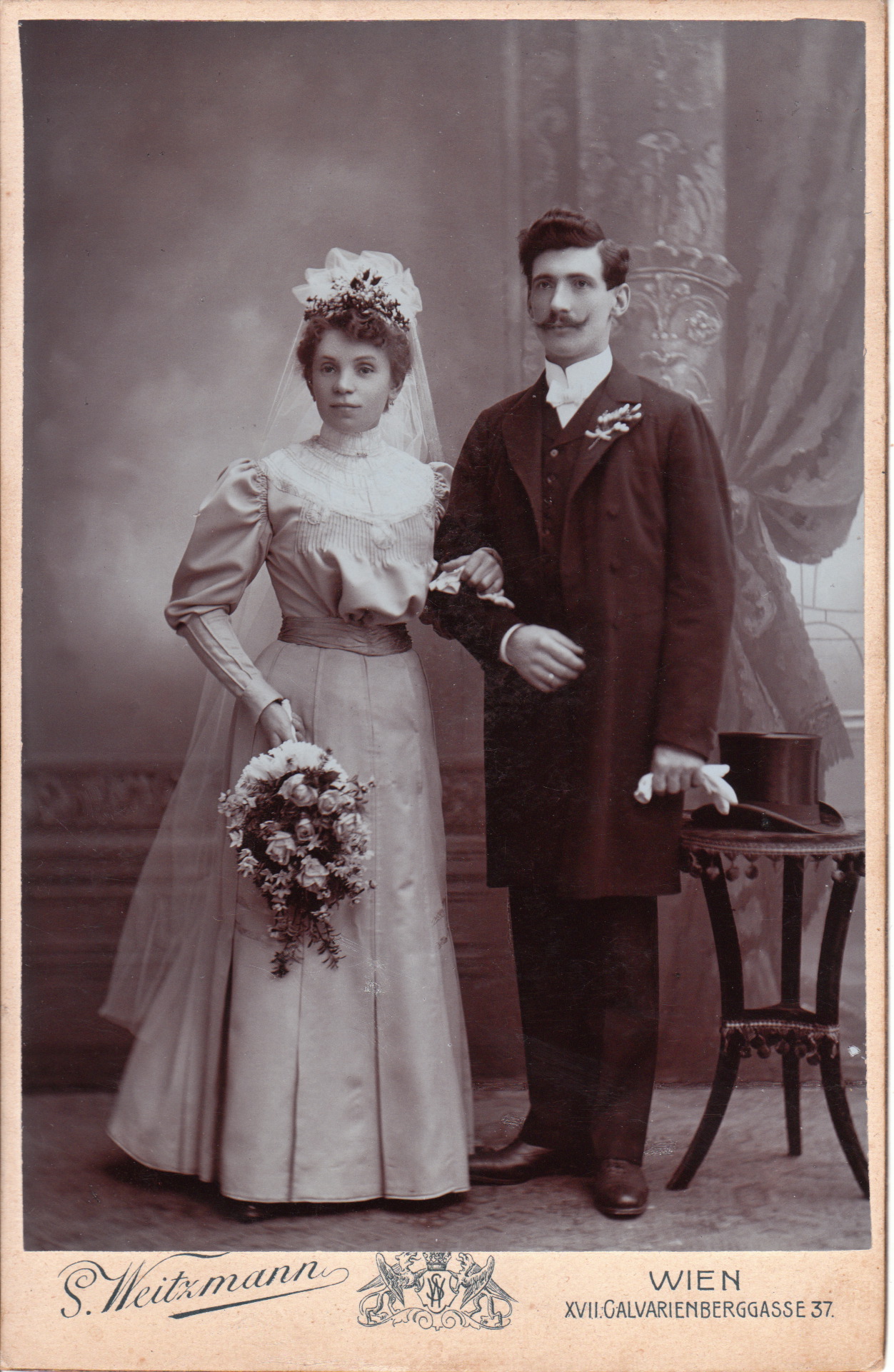 The Cabinet Card Gallery is appreciative of the talent of Austrian photographer S. Weitzmann and the site is developing a nice collection of his work. To view other images from Weitzmann’s Vienna studio, click on the category “Photographer: Weitzmann”. This photographic portrait captures a well dressed wedding couple. The bride is holding a bouquet of flowers in one hand and the groom’s arm in the other hand. The groom is wearing a flower on his lapel and has a wonderful mustache. Note his top hat on the table beside him. He is holding a pair of white gloves and is wearing his newly acquired wedding band.
A GENTLEMAN AND HIS MUTTON CHOPS IN WOOLWICH, ENGLAND
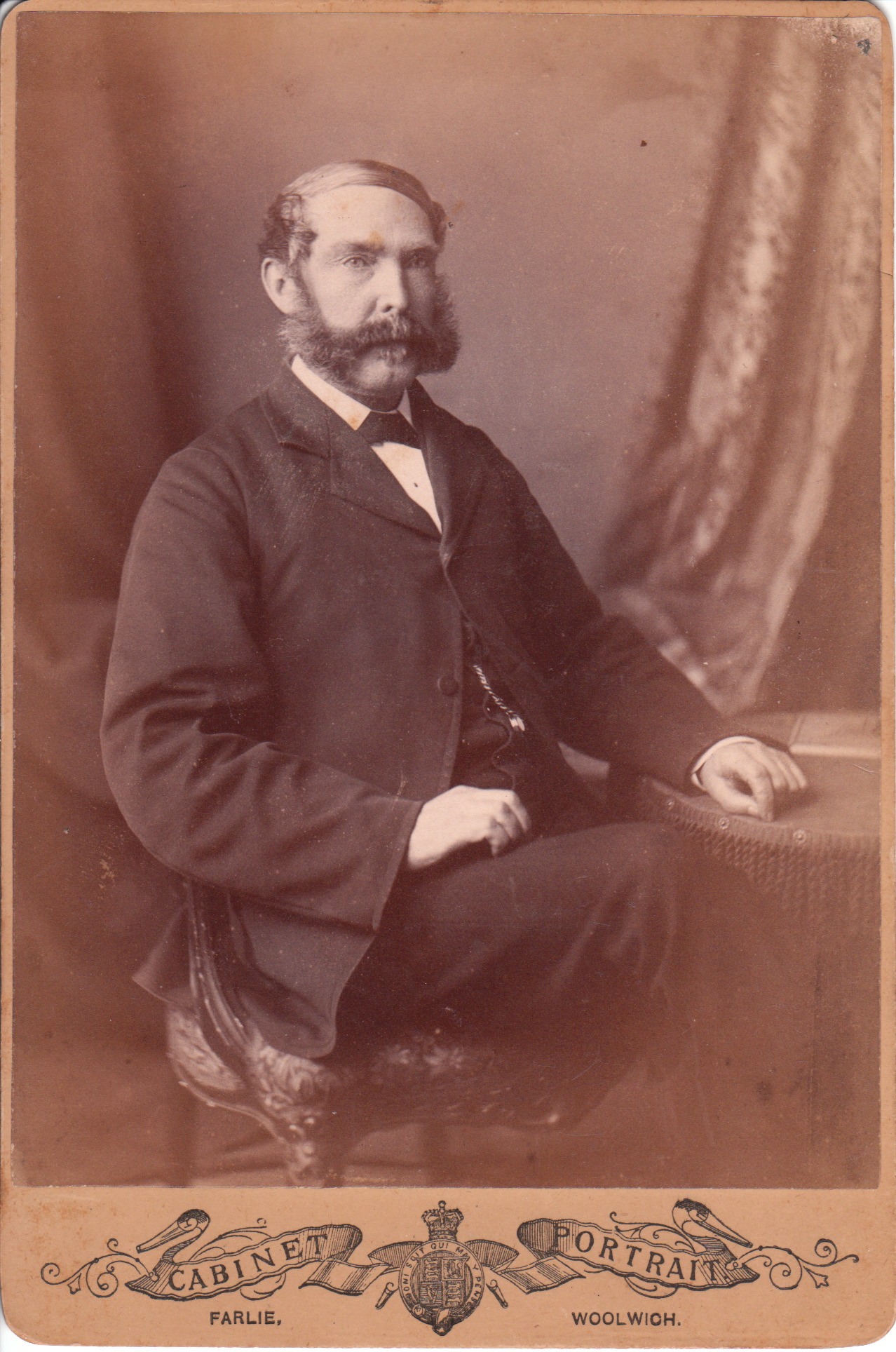 A man with distinctive muttonchops poses for his portrait at the C. J. Farlie studio in Woolwich. Charles James Farlie (1839-1901) was located at 74 Wellington. The town of Woolwich is part of greater London. Farlie worked as a photographer in the town between the 1860’s and 1880’s. He was married twice. One of his wives was Selina Louisa Farlie who died in 1873 at the age of 32. The subject of this photograph is formally dressed and is wearing the usual pocket watch with the chain exposed under his coat. The gentleman’s interesting facial hair gains him entry into the Cabinet Card Gallery’s category of “Mustaches (Only the Best). Peruse the intriguing facial hair by clicking the category.
HANDSOME MAN WITH FORMIDABLE MUSTACHE IN NEW YORK CITY
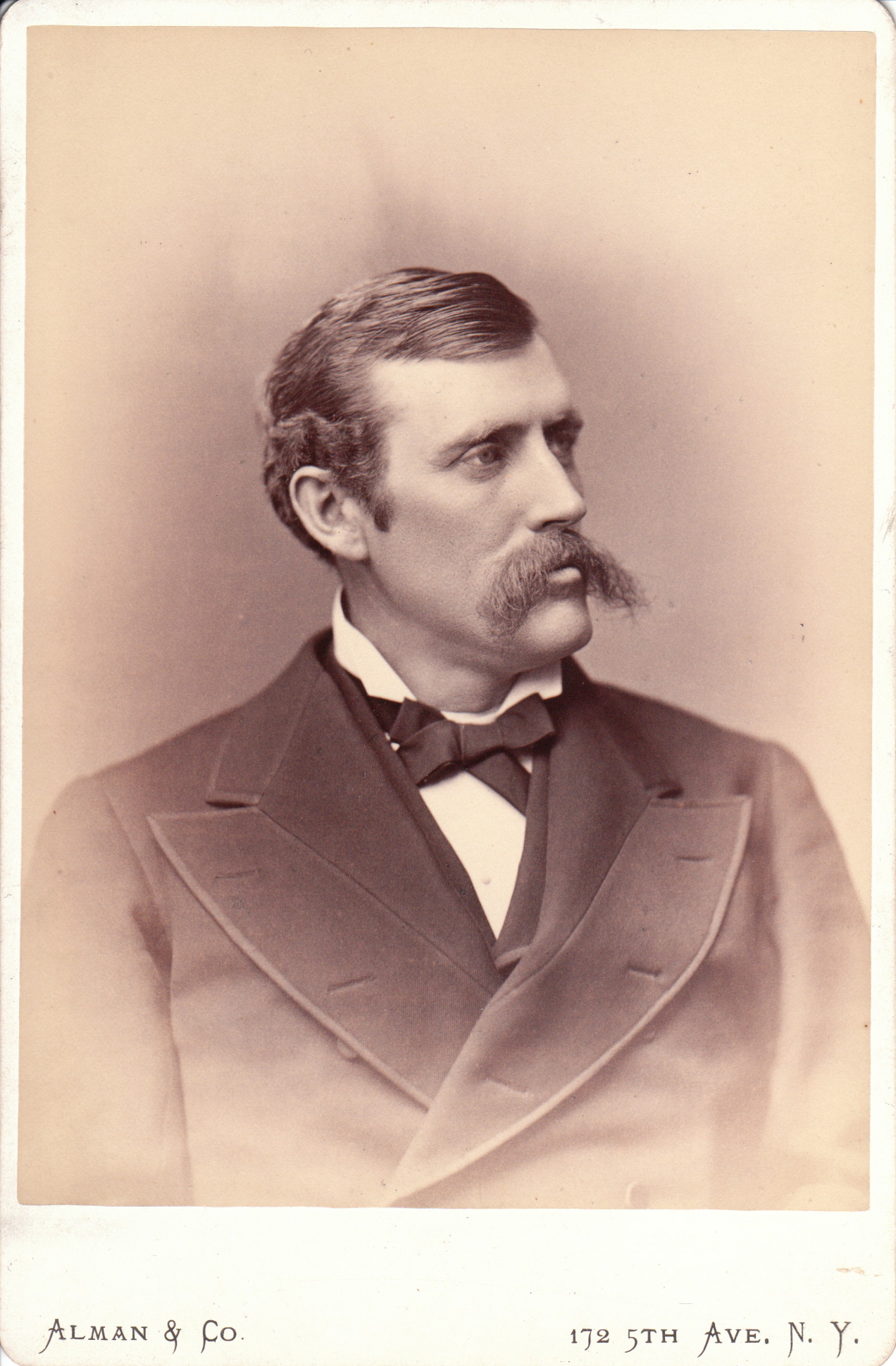
A formally dressed gentleman poses for his portrait at the Alman & Company studio in New York City. He has a great bushy mustache which earns a spot in the category “Mustaches (Only the Best)”. Click on this category to view other facial hair masterpieces. Note the man’s wide lapels and bow tie. One source states that Louis Alman (1835-?) was active in New York City and Newport, Rhode Island from the 1870’s through 1920. The dates have not been confirmed by research.
HANDSOME DEVIL IN ALLENTOWN, PENNSYLVANIA
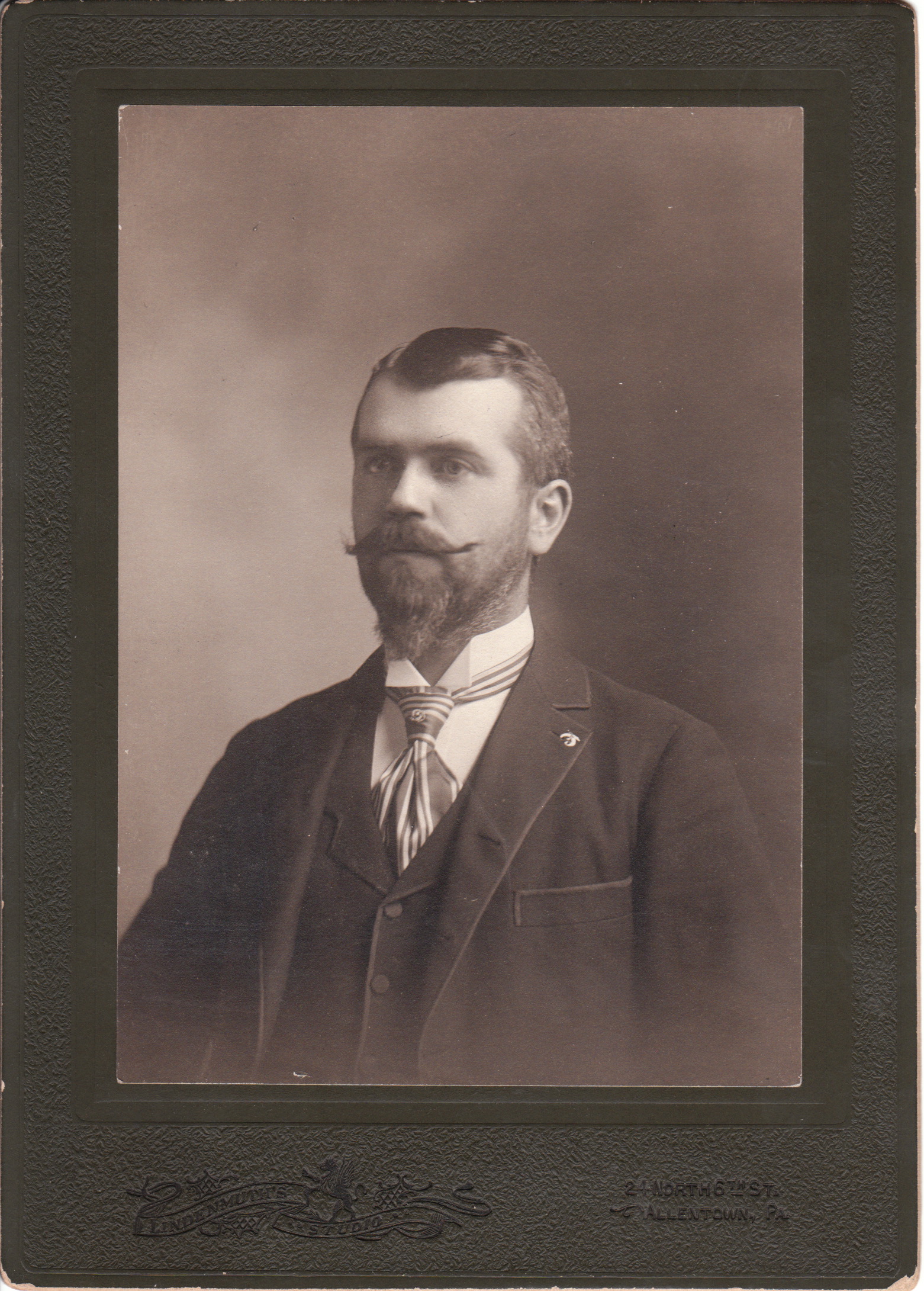
A handsome well dressed and devilish looking man poses for his portrait at Lindenmuth’s studio which was located at 24 North 6th Street in Allentown, Pennsylvania. He looks terrific in his three piece suit and his well groomed beard and handlebar mustache. Writing on the reverse of the photograph dates the image as being produced in 1899. The photographer of this portrait is primarily known for his work as an artist. Arlington Nelson Lindenmuth (1856-1950) was an American landscape and portrait painter who lived and painted in Allentown and the Lehigh Valley region of Pennsylvania. The Pennsylvania native was a member of the “Baum Circle”., the group of artists either were taught by or influenced by Pennsylvania impressionist painter, Walter Emerson Baum. Lindenmuth was also one of the earliest professional photographers in the Lehigh Valley area. He opened his first studio in Allentown in 1881. Prior to that, he operated studios in Tamaqua, Philadelphia, and Pottstown. All three cities are in Pennsylvania. As early as 1862, Lindenmuth was also employed as a traveling sales representative for Eastman Kodak. To view other photographs by Lindenmuth, click on the category “Photographer: Lindenmuth”.
A GENTLEMAN AND HIS GIANT MUSTACHE IN BROOKLYN, NEW YORK
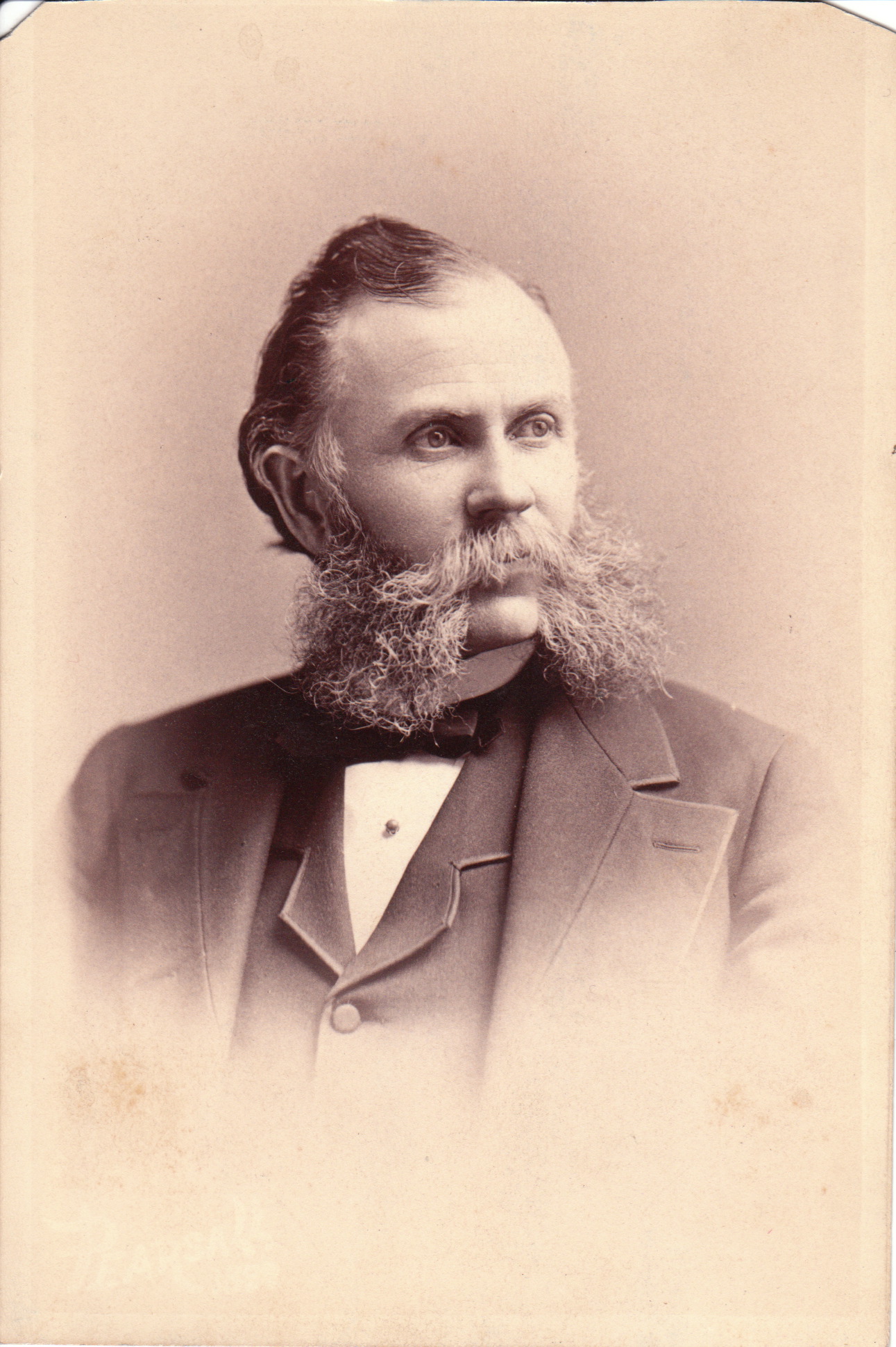 A man with a partial beard, mutton chops, and a very bushy mustache is captured by photographer George Frank E. Pearsall. The address of Pearsall’s studio was 298 Fulton Street in Brooklyn, New York. This portrait earns a spot in the cabinet card gallery’s category “Mustaches (Only the Best)”. Take a look at the category for some very interesting facial hair images. Frank Pearsall was born in New York City. His father was a life boat builder. Pearsall’s parents died when he was young and he and his two brothers were raised by an aunt in Saratoga, New York. In 1852 he began to learn about the photography business from his uncle who operated a gallery. After two years, his uncle left for Australia and the business failed despite Pearsall’s aunt’s efforts. Frank and his older brother left for an adventure and they spent eight years in such places as Cuba, West Indies, Venezuela, and elsewhere. In 1862 he returned to New York and worked as a positionist with celebrated New York City photographer Benjamin Gurney (see category “Photographer: Gurney”). He refined his skills working in the Gurney studio. In 1866 he married Long Islander Elizabeth Conrow. In 1870 he opened a photographic studio in Brooklyn which operated for two years at which point he moved his business to the 298 Fulton Street address. An 1880 advertisement asserted that Pearsall’s studio was the largest one in Brooklyn. Pearsall developed a historic camera in 1883. The camera was called the “Pearsall’s Compact Camera” and was unique in that it came in its own “carrying case” that also housed needed accessories. This design was imitated by all of the major camera manufacturers through the 1920’s. The British Journal of Photography (1876) published an article pertaining to a court case involving Pearsall. The case, Pearsall vs Schenck. was followed by photographers through out the United States because it involved a matter of universal importance to their business. The case concerned a couple that set for 17 poses at Pearsall’s studio. He sent them the proofs and they returned them. The couple contended that they did not like the pictures and would not pay for them. Pearsall demanded payment regardless of whether the couple liked the pictures. The journal took the side of Pearsall when they wrote that photography does not make “the human face divine”, it only reproduces it. The journal argued that the photographer does not have the responsibility of the painter to please the sitter for the portrait because the photographer can not control an image the way a painter can control a painting. Photographer can no change their subject’s “bad features”. The nose that is “snubby” will be “snubby” in photographs. “It is too bad to blame the poor photographer for the facial accidents of nature”. Tongue in cheek, the journal suggests the couple should have paid their bill or else the photographer might put their portraits in the gallery’s main display cases to be seen by all visitors. Pearsall won the legal case and the couple was ordered to pay for the photographs. The New York Times (1876) also reported this story but was less supportive of Pearsall. However, their article stated that the photographer should be paid for his time and supplies. The Times also made an analogy concerning the relationship of medical doctor and patient. The article asserted that patients had to pay their doctors even when they were not cured by the doctors efforts. Research revealed two interesting side notes. Pearsall was the President of the Brooklyn Archery club and in 1881 was the Secretary and Treasurer of the National Archery Association. A second bit of trivia is that Pearsall’s brother, Alva Pearsall, was a camera operator for Matthew Brady in 1871.
A MAN AND HIS WALRUS MUSTACHE IN CHARLESTON, WEST VIRGINIA
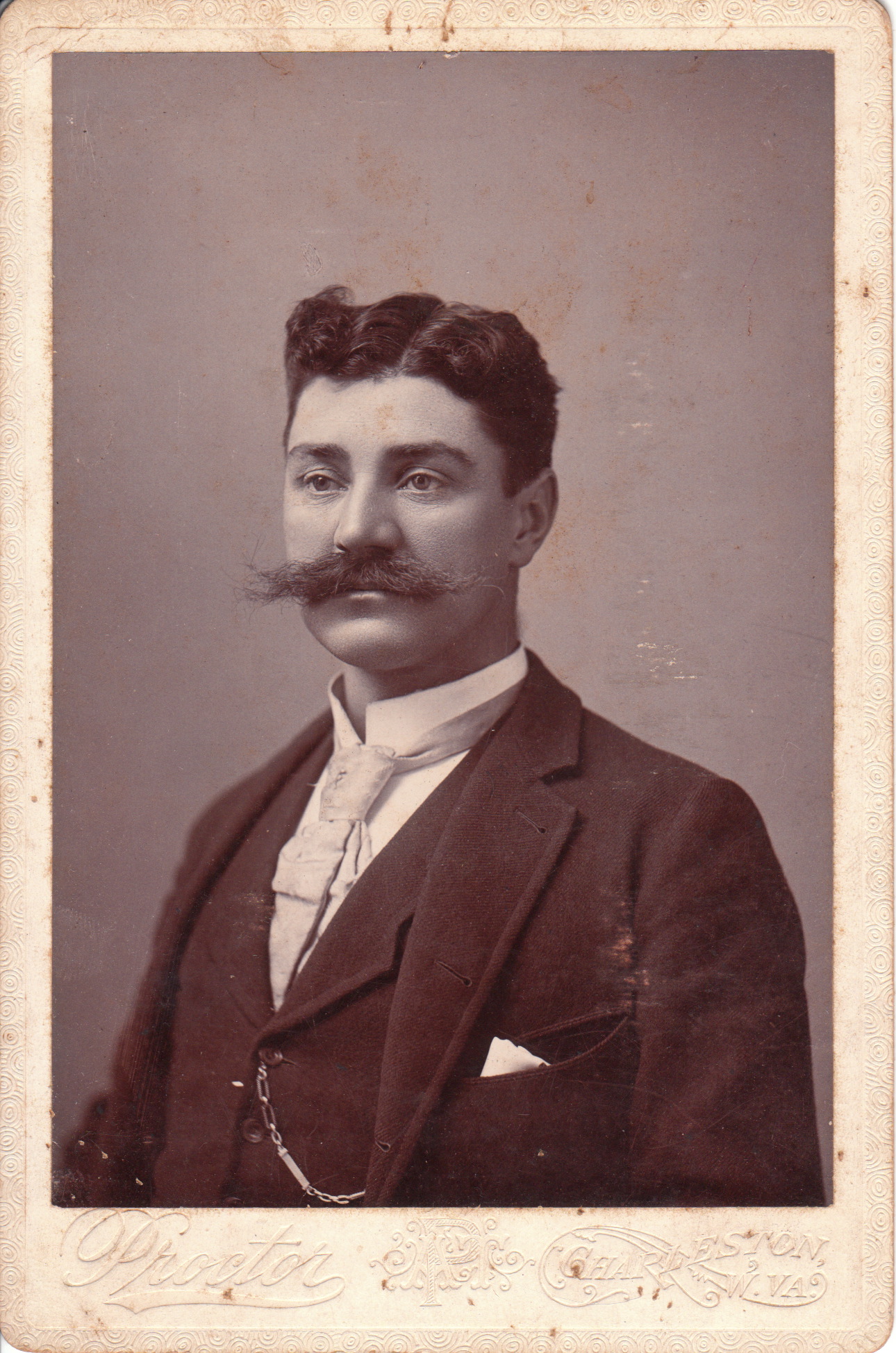 The Proctor studio produced this cabinet card portrait of a man with a walrus mustache. This admirable facial hair places this image in the category “Mustaches (Only the Best”). Click on the category to view an array of notable mustaches. A. T. Proctor’s studio was located on Capitol Street in Charleston, West Virginia. He was the successor to the Becker & Fell studio. Alfred Tobert Proctor was born in 1864 in Catalpa, Virginia. Sometime about 1888 he began his photography career in Charleston. He originally partnered with Elmer B. Tully (Proctor & Tully). In 1894 they moved their business to Huntington, West Virginia leaving photographer William Erskine to run the Charleston studio. In 1897 Erskine joined the two partners in Huntington. Ultimately the partnership ended and the three photographers operated independent businesses. Proctor was very active in the photography community. He served as President of the American Photographers Association for several years beginning in 1910. He competed in many exhibitions and Eastman Kodak used his portrait in its national advertising. He died of a heart attack in 1933. Much of his work now resides in the special collections library at Marshall University.
MAN WEARING A TURBAN IN BOSTON, MASSACHUSETTS (FRATERNAL ORGANIZATION MEMBER)
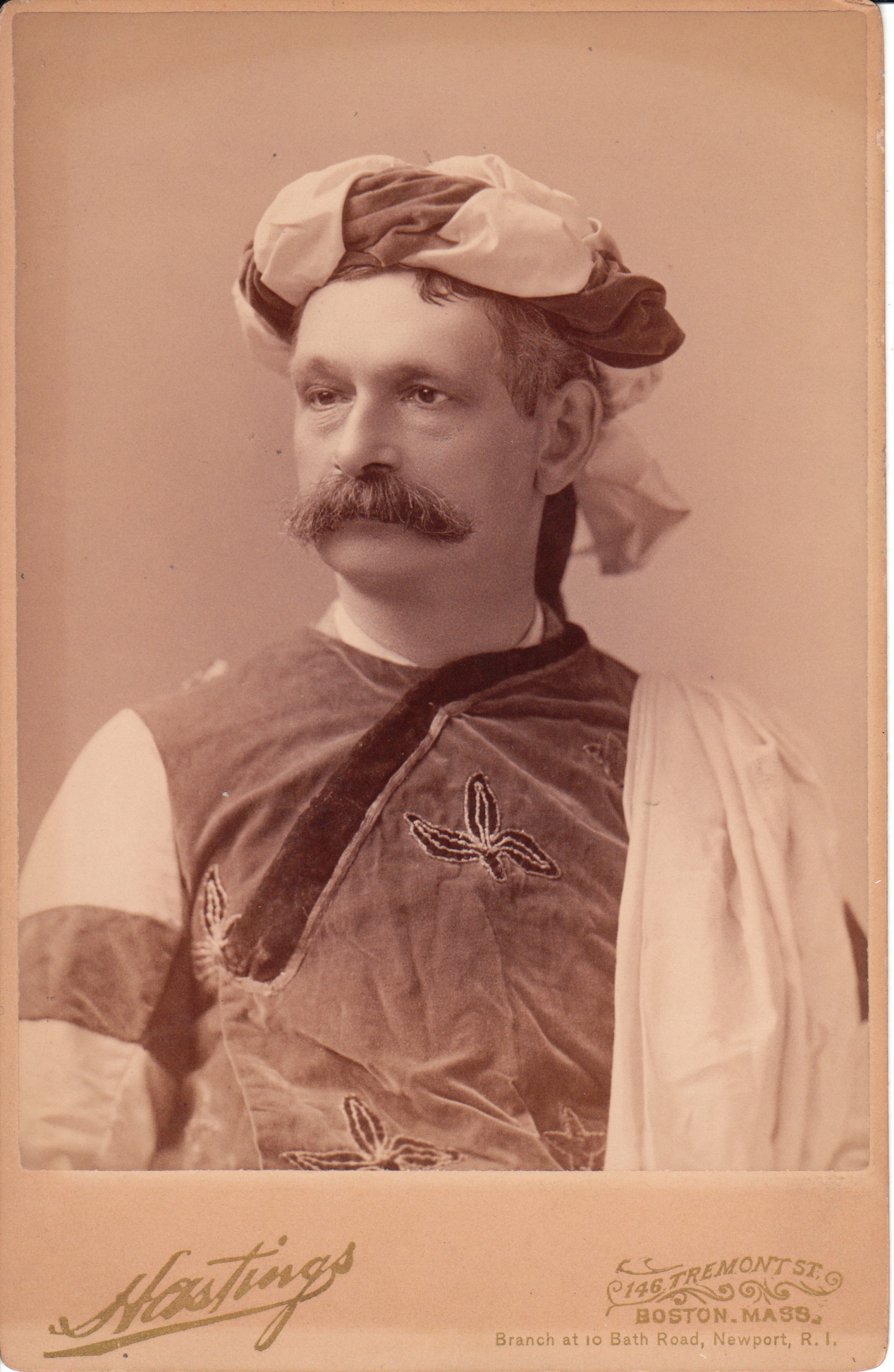 This cabinet card photograph features a middle aged man dressed in a fraternal robe and turban. It is unknown what fraternal organization his costume represents. To view a collection of other fraternal member photographs, click on the category, “Fraternal Group Members”. The gentleman in this photograph has a bold and thick mustache. To see other interesting mustaches, click on the category “Mustaches (Only the Best)”. The photographer of this portrait produced an exquisite image. The subject is well posed and the photograph has great clarity. The image was produced by the Hastings studio in Boston, Massachusetts. The studio had a branch in Newport, Rhode Island. George H. Hastings was born in Massachusetts in 1850. He operated a studio (Ritz & Hastings) with Ernest Ferdinand Ritz from sometime in the 1860’s until the 1880’s. He had his own studio from the 1880’s through sometime in the 1890’s. The 1880 US census finds Hastings living with his brother and mother and working as a photographic artist.
THEO SPARKS: A HANDSOME YOUNG MAN WITH A HANDLEBAR MUSTACHE

An inscription on the reverse of this image indicates that this handsome well dressed young man was named Theo Sparks. He looks quite spiffy with his winged collar shirt, wide tie, and handlebar mustache. The photographer was not identified nor was the location of the photographer’s studio. Despite a paucity of information, research found some biographical information about Mr. Sparks. Theo Sparks (1870-1956) was born in Indiana. The 1880 US census finds him at age 10, living in Linton, Indiana.He lived with his parents, Peter S. and Mary E. Sparks. His father was a farmer. He lived with four older siblings, Iris (age 18), Orian (age 17), Ishmel (age 14), and Pascal (age 12). He also lived with three younger siblings, Marco (age 8), Eura (age 6), and Cush (age 2). Also living with the family was Theo’s fraternal uncle, Wesley Sparks. Theo and his siblings had very unusual and interesting names. Peter and Mary Sparks deserve kudos for their creativity in baby naming.The 1900 census finds the 29 year-old Theo Sparks living in Denver, Colorado and newly married to Maud Sparks (age 24). He was working as a motorman. According to the 1910 census, Theo and Maud still lived in Denver and had four sons, Rolland (age 8), Warren (age 5), Glen (age 4), and Jorville (age 3 months). It seems Theo and Maud continued Theo’s parents tradition of giving some of their children unusual names. Theo supported his family with his income from working as a street car motorman. The 1920 through 1940 censuses indicate that Theo and Maud continued to live in Denver with different members of their family being part of their household in each of the censuses.
UNIFORMED BAND MEMBER AND HIS TUBA IN JEWETT CITY, CONNECTICUT
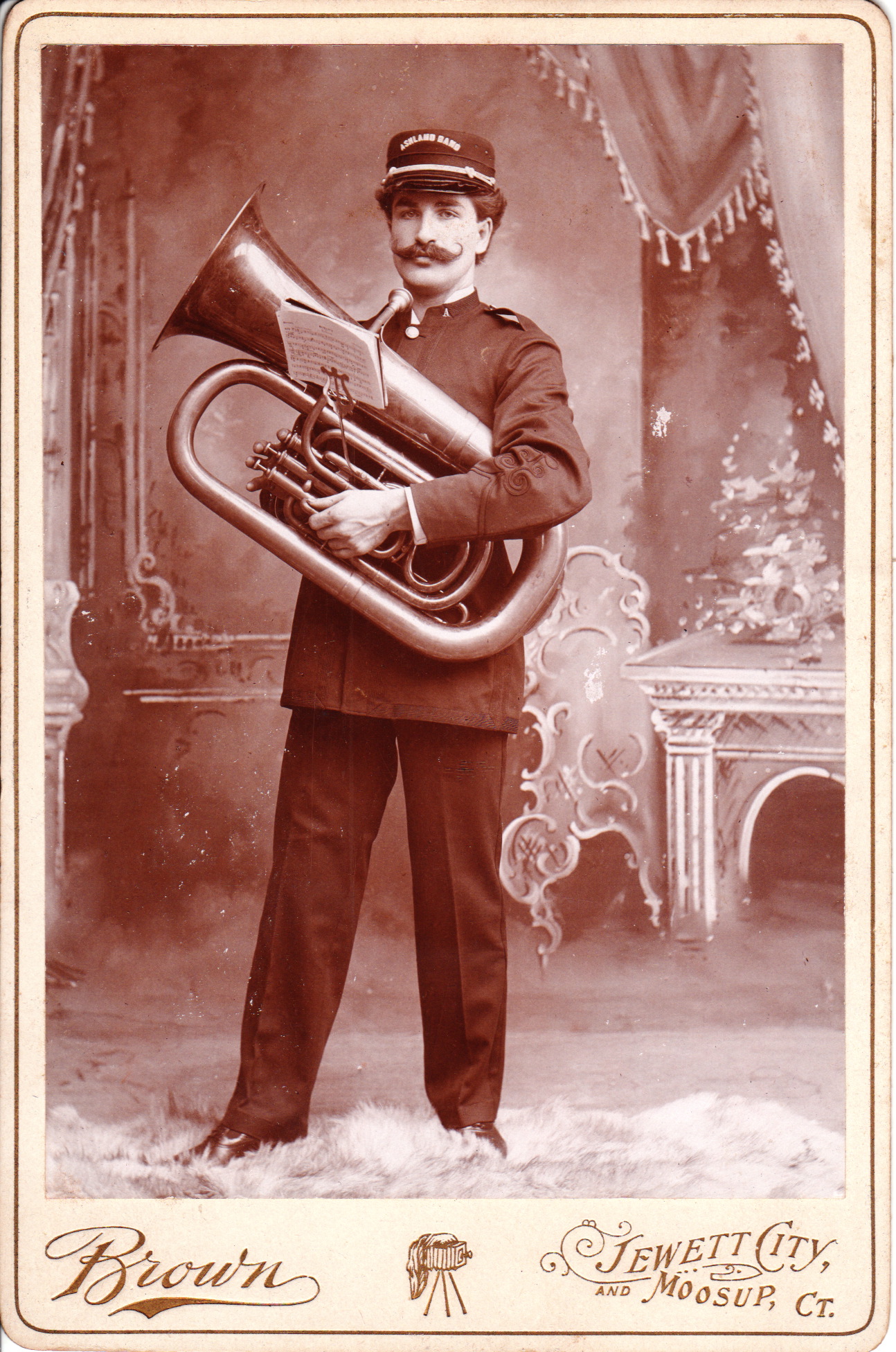
This cabinet card features a uniformed band member and his tuba. At least I think it is a tuba but I would appreciate some confirmation from a cabinet card visitor well versed in identifying musical instruments. Note the sheet music clipped to his brass instrument The musician has a terrific handlebar mustache and his cap indicates that he is a member of the “Ashland Band”. This image was produced by the Brown studio in Jewett City as well as Moosup, Connecticut. Jewett City is a borough in the town of Griswold and Moosup is located in the town of Plainfield. Jewett City and Moosup are 12 miles apart. To drive from Jewett City to Moosup, one starts off on Ashland Street. I wonder if the “Ashland Band” is related to “Ashland Street”? Research reveals that the photographer William H. Brown was born in Packerville, Connecticut in 1853. His father was an overseer in the local mill. Brown was educated in public schools and his first job was as a store clerk. After three years of working in the store, he bought it and ran it for four years until he sold it. He then went back to work as a store clerk but bought a camera and for fun, photographed his friends and others during off hours. In a short time, it was clear that Brown had much talent in the area of photography. In about 1888 he opened a photography business. He had studios in Dayville and Wauregan. Later he opened galleries in Jewett City, Taftville and Moosup. Brown was married in 1874 to Miss Lillian Bennett and the couple had two daughters, Lillian and Alice.


 THE CABINET CARD GALLERY