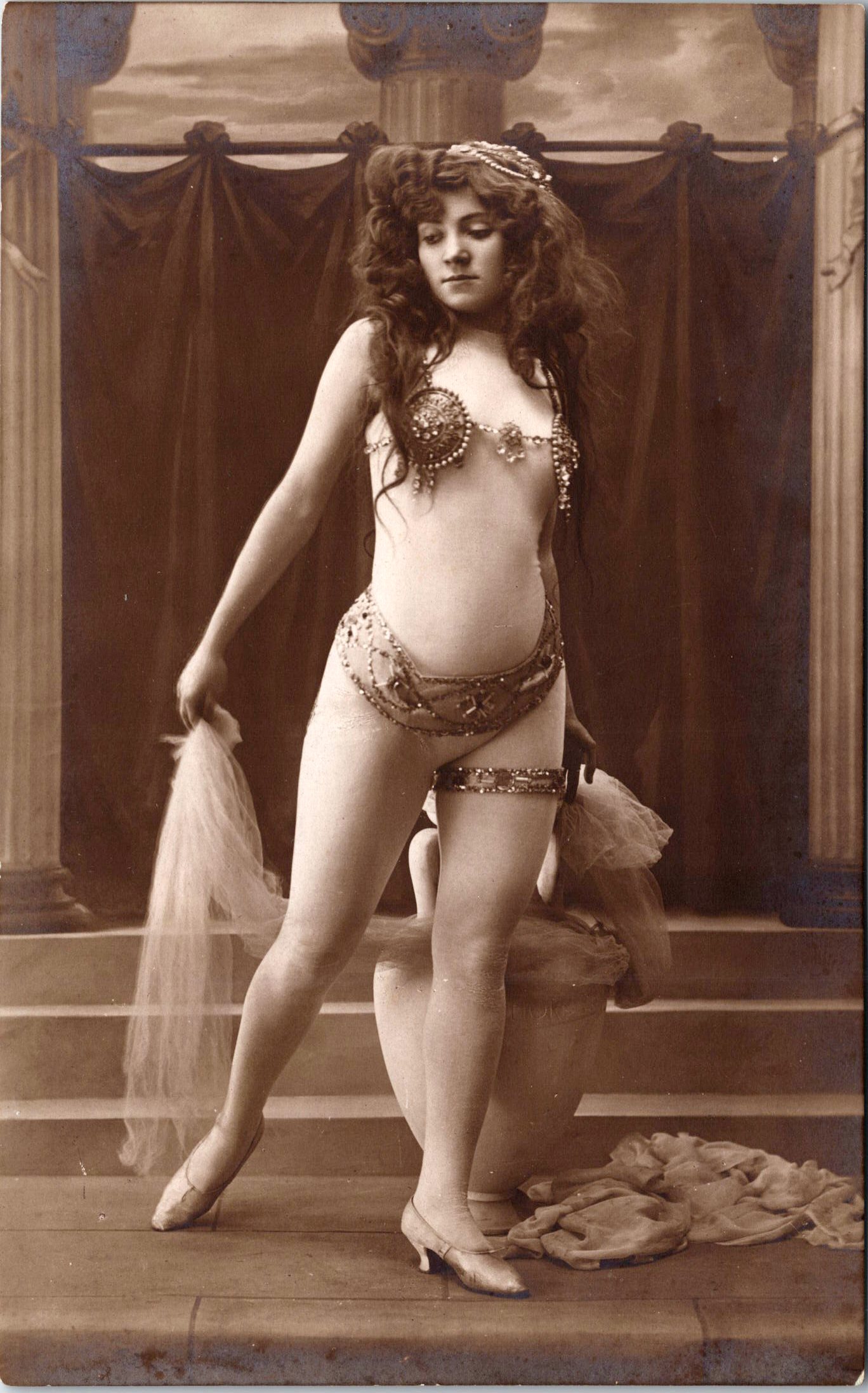
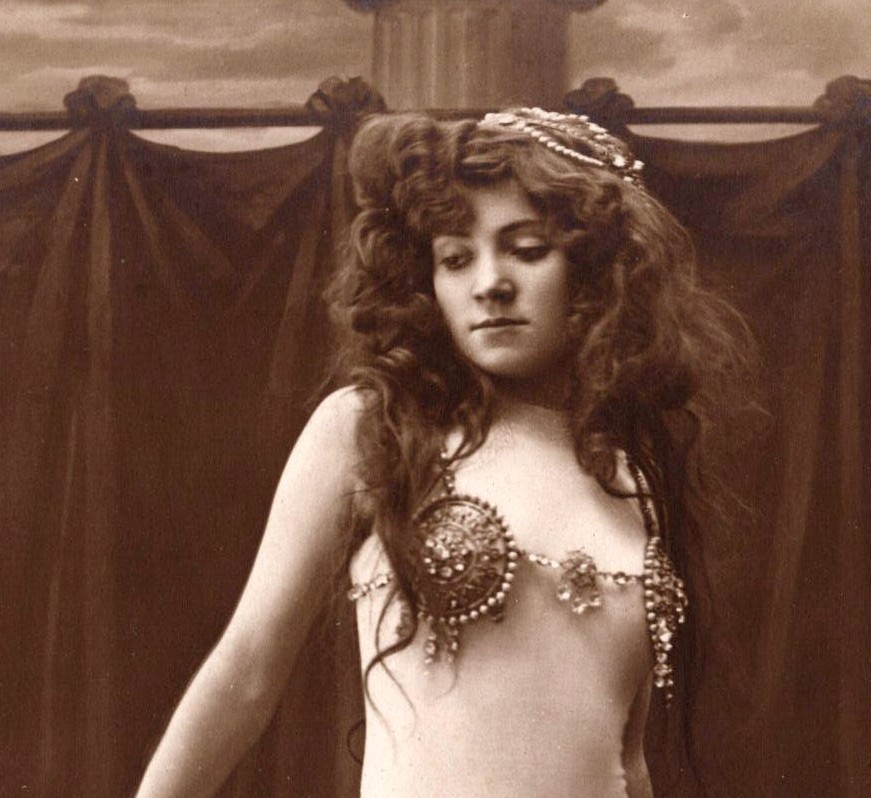
This risque postcard features a sepia-toned image of a striking woman posed in a theatrical, evocative setting. She stands confidently, her body slightly angled, with one leg bent gracefully at the knee. Her scanty attire consists of an ornate, jewel-encrusted bikini-style costume adorned with beads and shimmering details, complemented by a garter on her thigh. She holds a piece of gauzy fabric in one hand, which adds a sense of movement and allure to the image. Her delicate high-heeled shoes contribute to her poised, elegant stance. The woman’s long, wavy hair cascades over her shoulders, framing her face, which exudes a calm, almost introspective expression. Her gaze is soft, directed downward as though lost in thought, lending an enigmatic quality to her overall appearance. This type of postcard, often referred to as a risqué or “boudoir” card, was a popular collectible in the late 19th and early 20th centuries. While such images were considered daring or provocative for the era, they were also widely accepted within artistic and theatrical circles, particularly in Paris and other European cultural hubs. These postcards often featured dancers, actresses, or models and were sometimes used for advertising performances or as keepsakes. This photograph was likely taken by renowned French photographer, Jean Agélou. Agelou is credited with photographing other real photo postcards from this series. SOLD


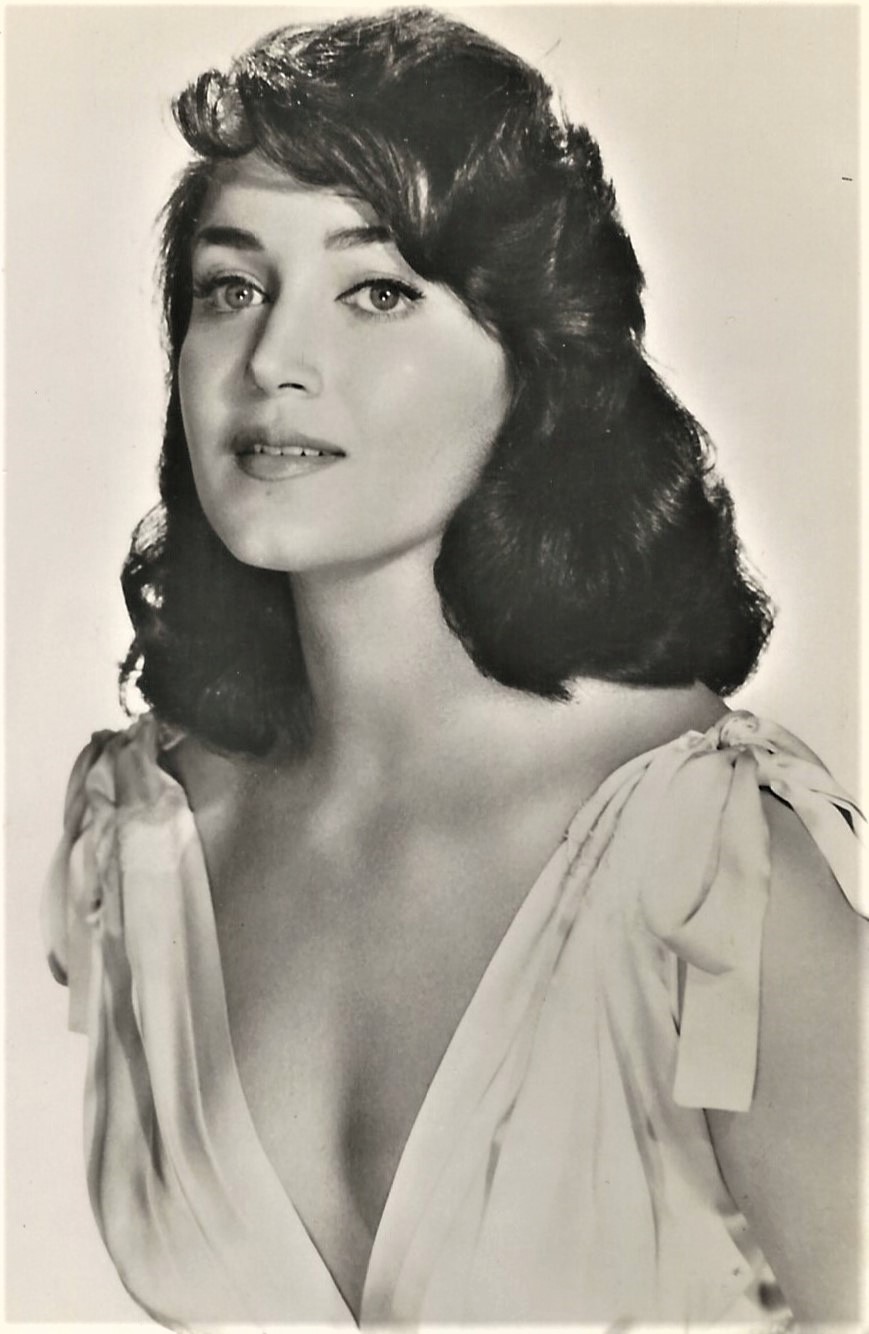
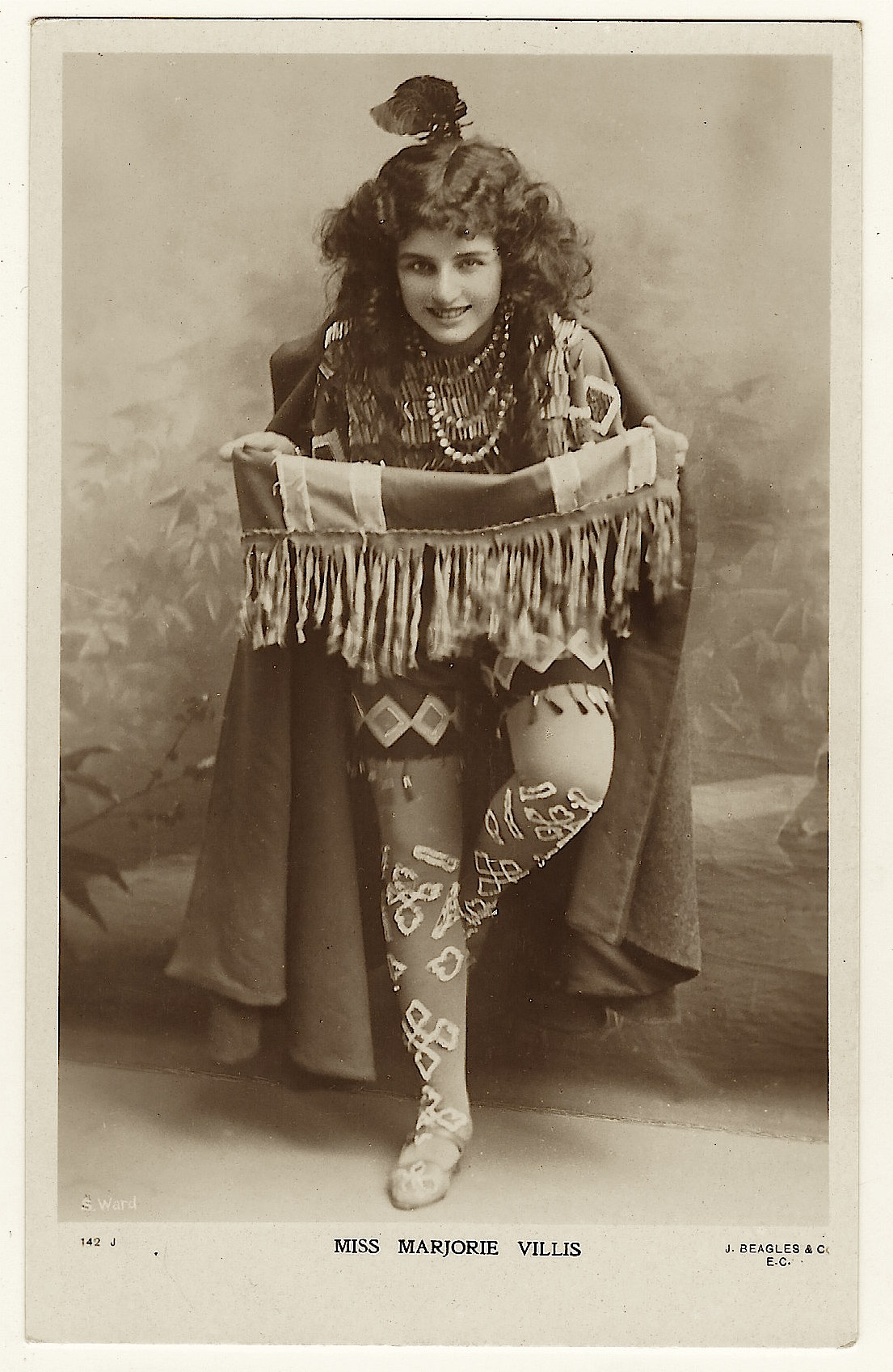
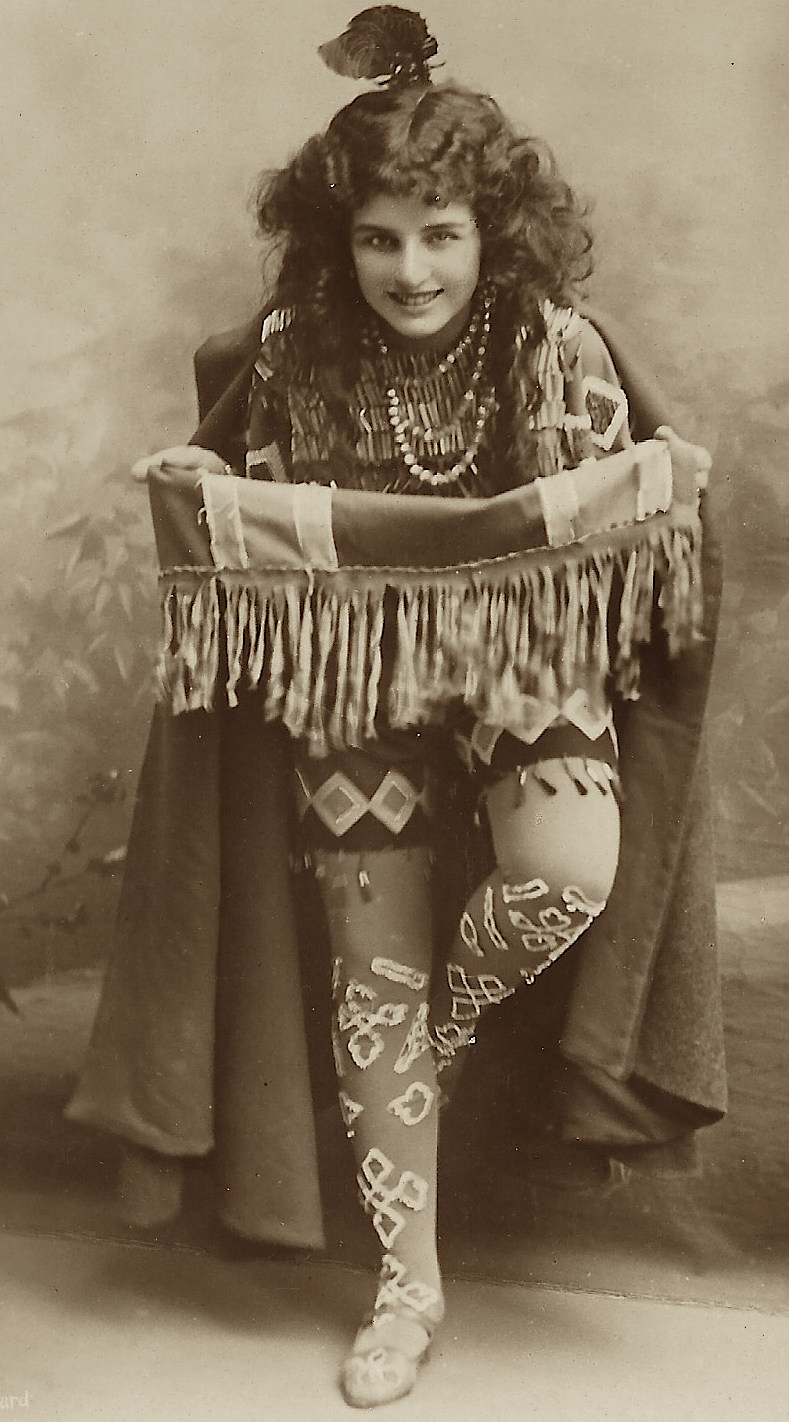 This vintage real photo postcard portrait feature British silent film actress, Marjorie Villis (1891-1981). Miss Villis is quite pretty and has a wonderful smile. This photograph captures her in a risque pose and a risque costume. What an amazing elaborate and busy costume. When I first saw this image, I immediately became motivated to find information about this provocative actress. I met little success in learning about Marjorie Villis. Photographs of her appear to be uncommon, and I could not find the postcard above anywhere online. I did learn that she sat for seven postcard portraits that can be found in the UK’s National Portrait Gallery, All of the portraits were taken by celebrated photographer, Alexander Bassano. The IMDb credits Villis with 15 film roles between 1915 and 1922. Villis was most noted for her roles in “The Rugged Path (1918), “A Romany Lass (1918)”, and “Brenda of the Barge (1920). She had a relatively short career. I wonder why her career ended so abruptly? The first talkie feature film did not get released until 1927, so we know that, unlike many other silent film stars, Villis was not shut out of the film industry because of an unsuitable voice or foreign accent. This postcard was published by J. Beagles & Company (London) as part of a series (no.142 J). The wonderful portrait of Miss Villis was taken by S. Ward. This vintage postcard is in very good condition (see scans)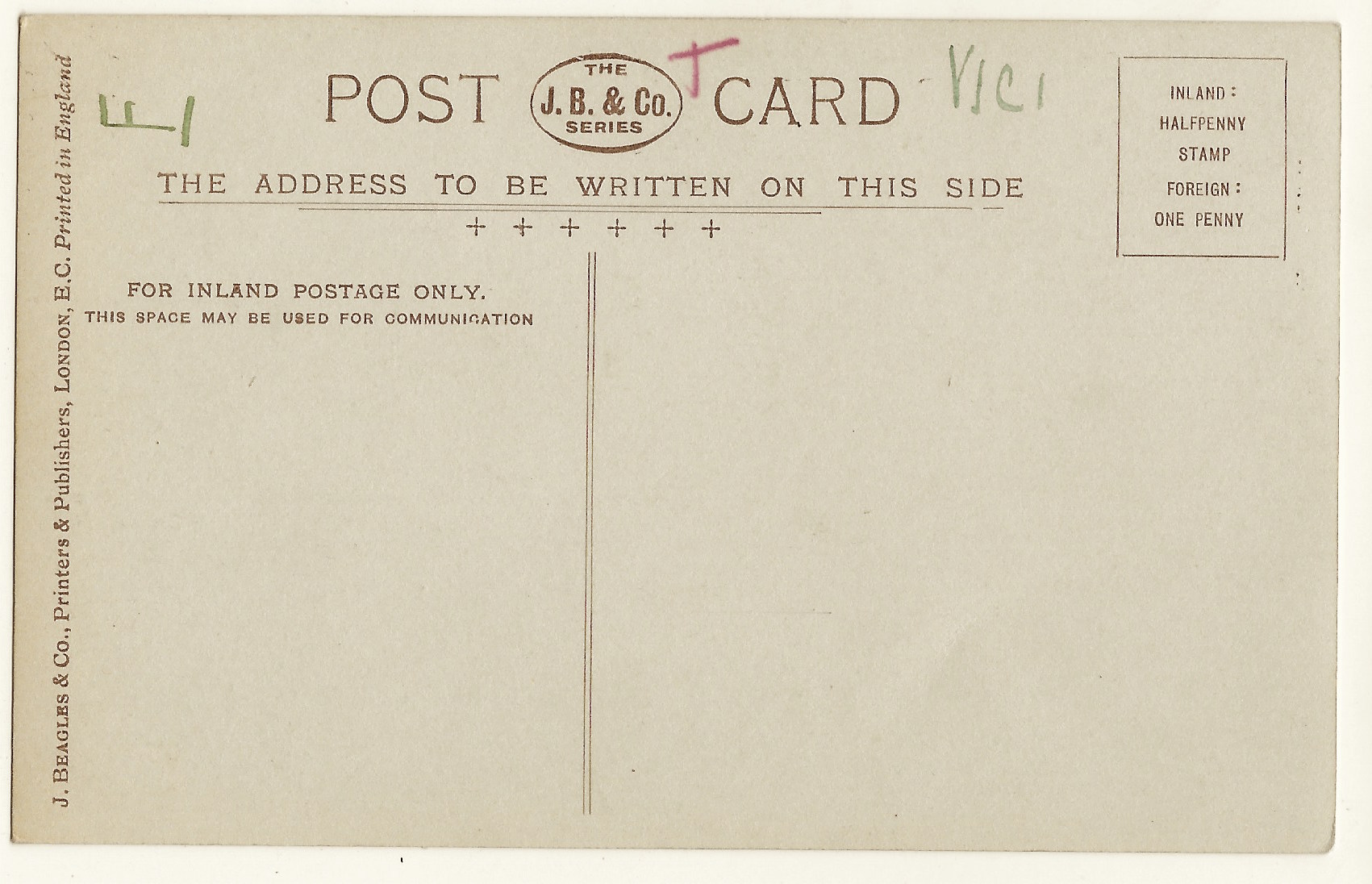





 THE CABINET CARD GALLERY