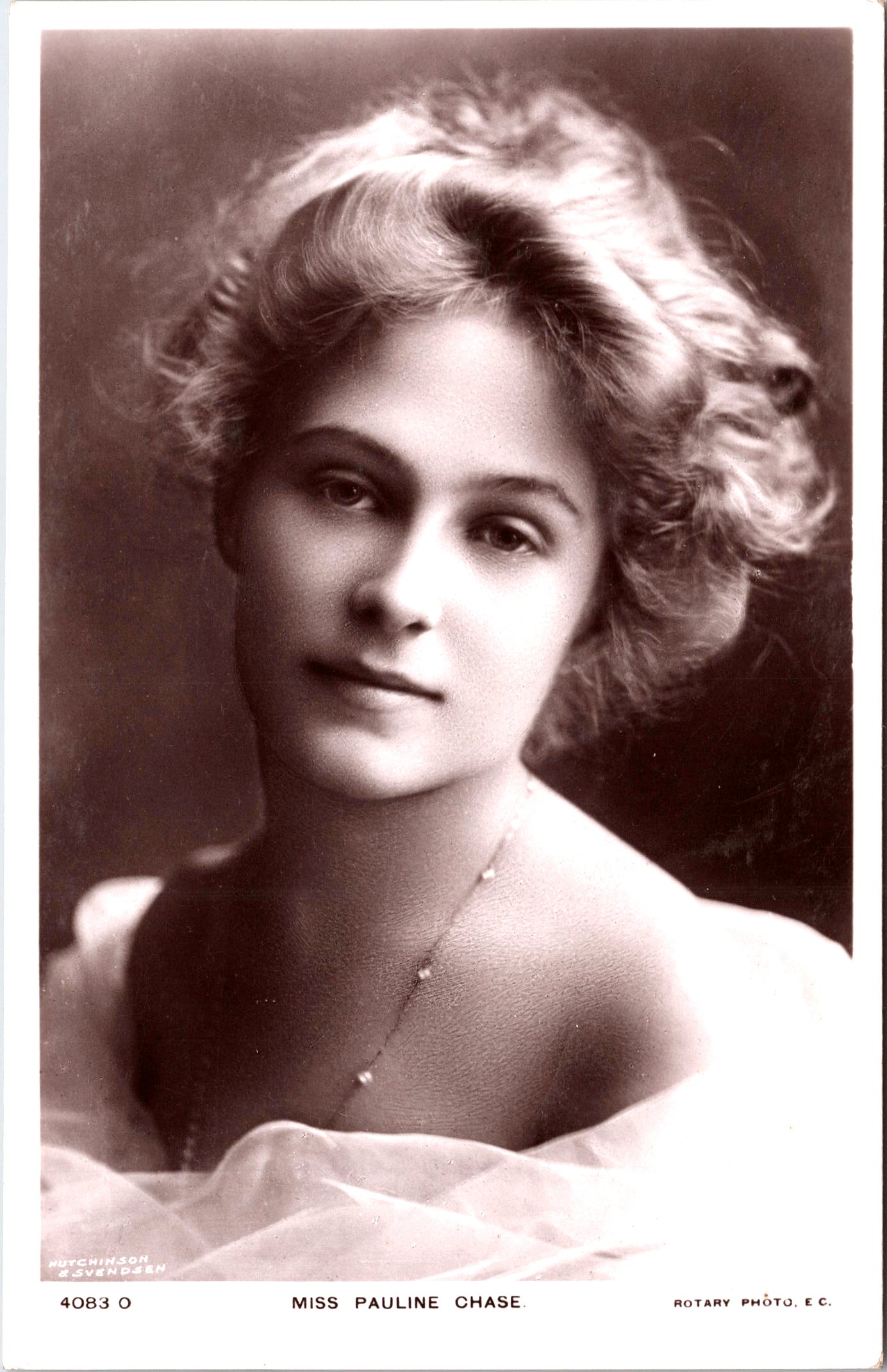
POSTCARD 1 (SOLD)
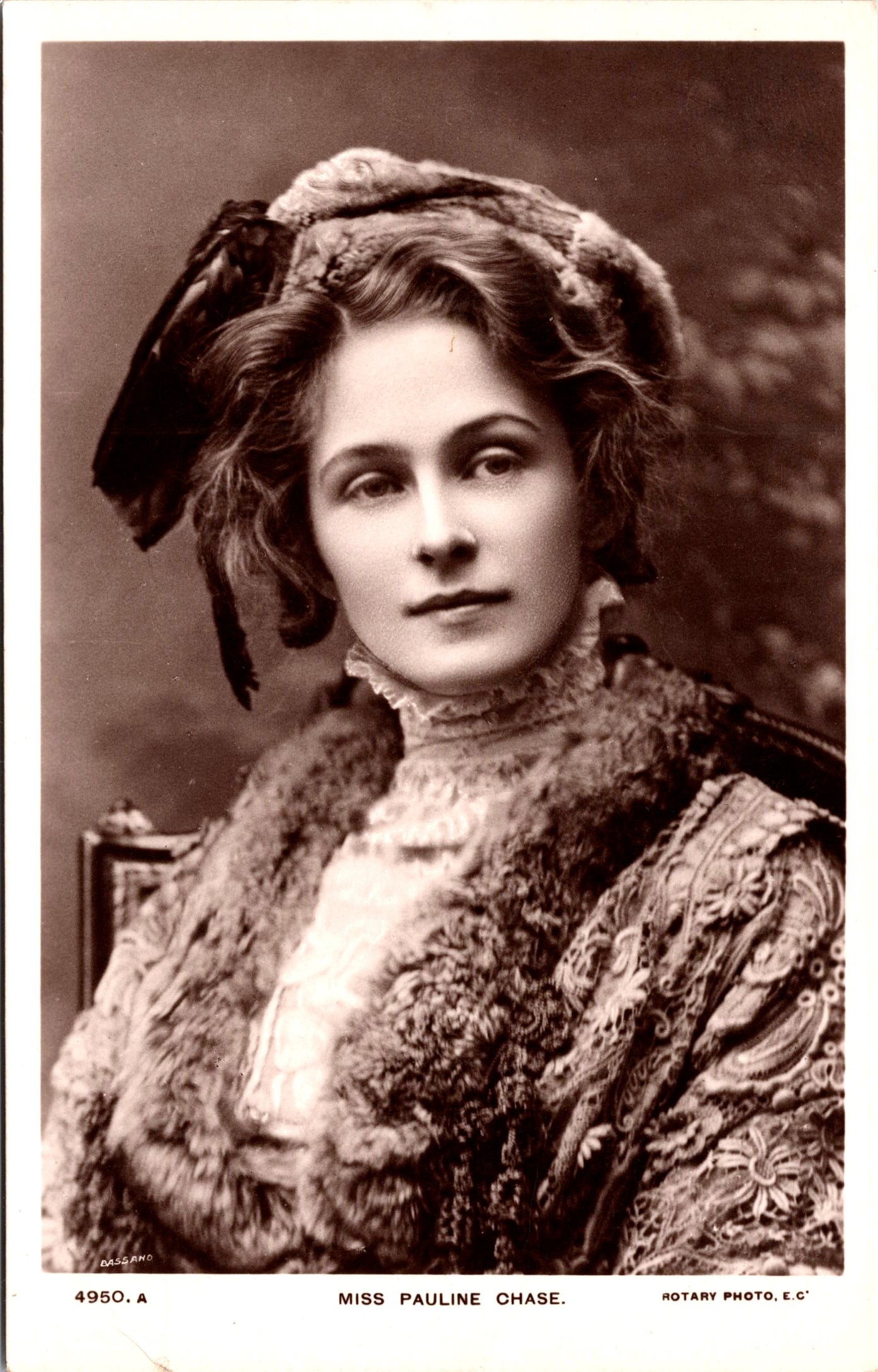
POSTCARD 2 (SOLD)
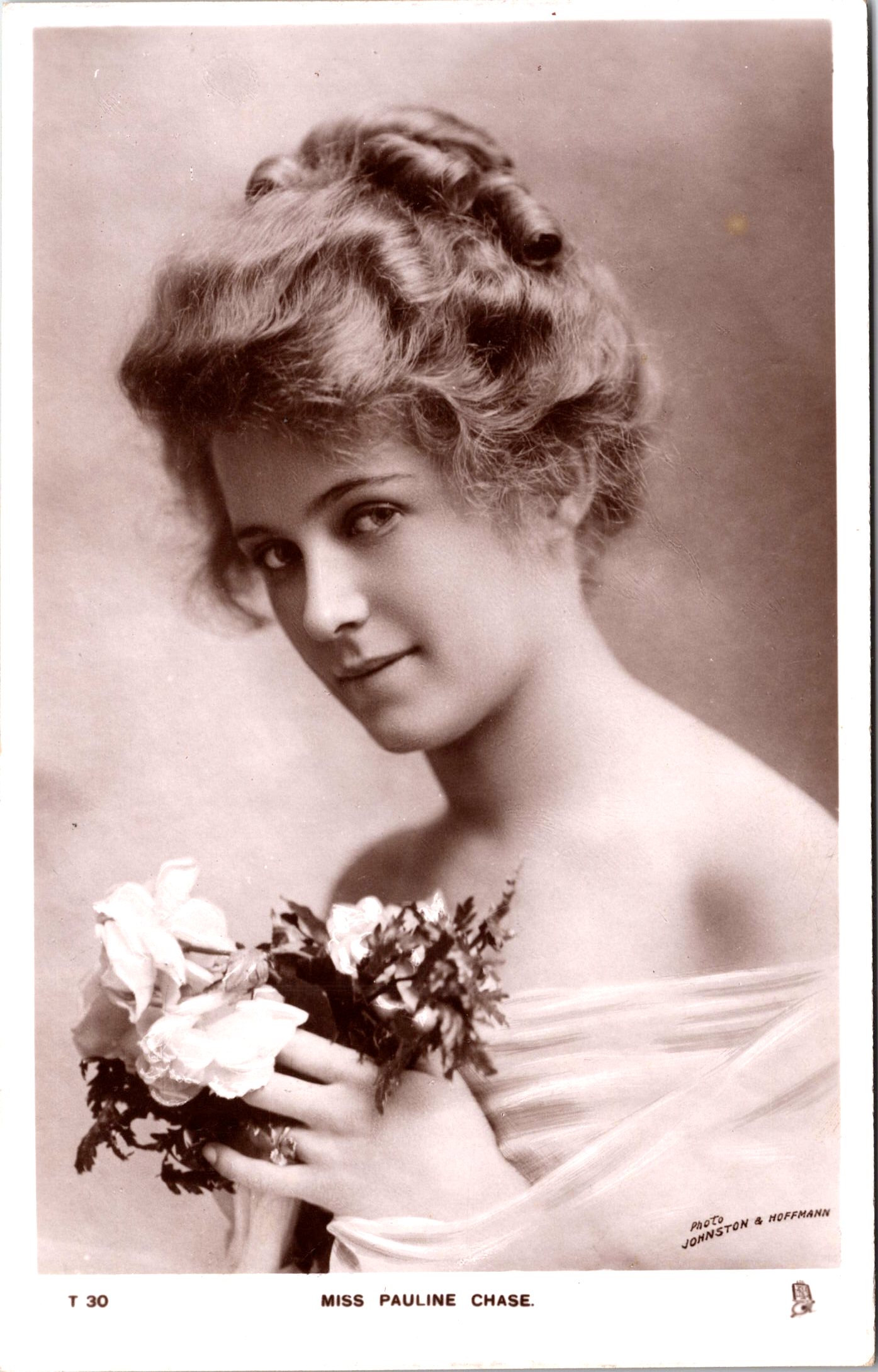
POSTCARD 3 (SOLD)
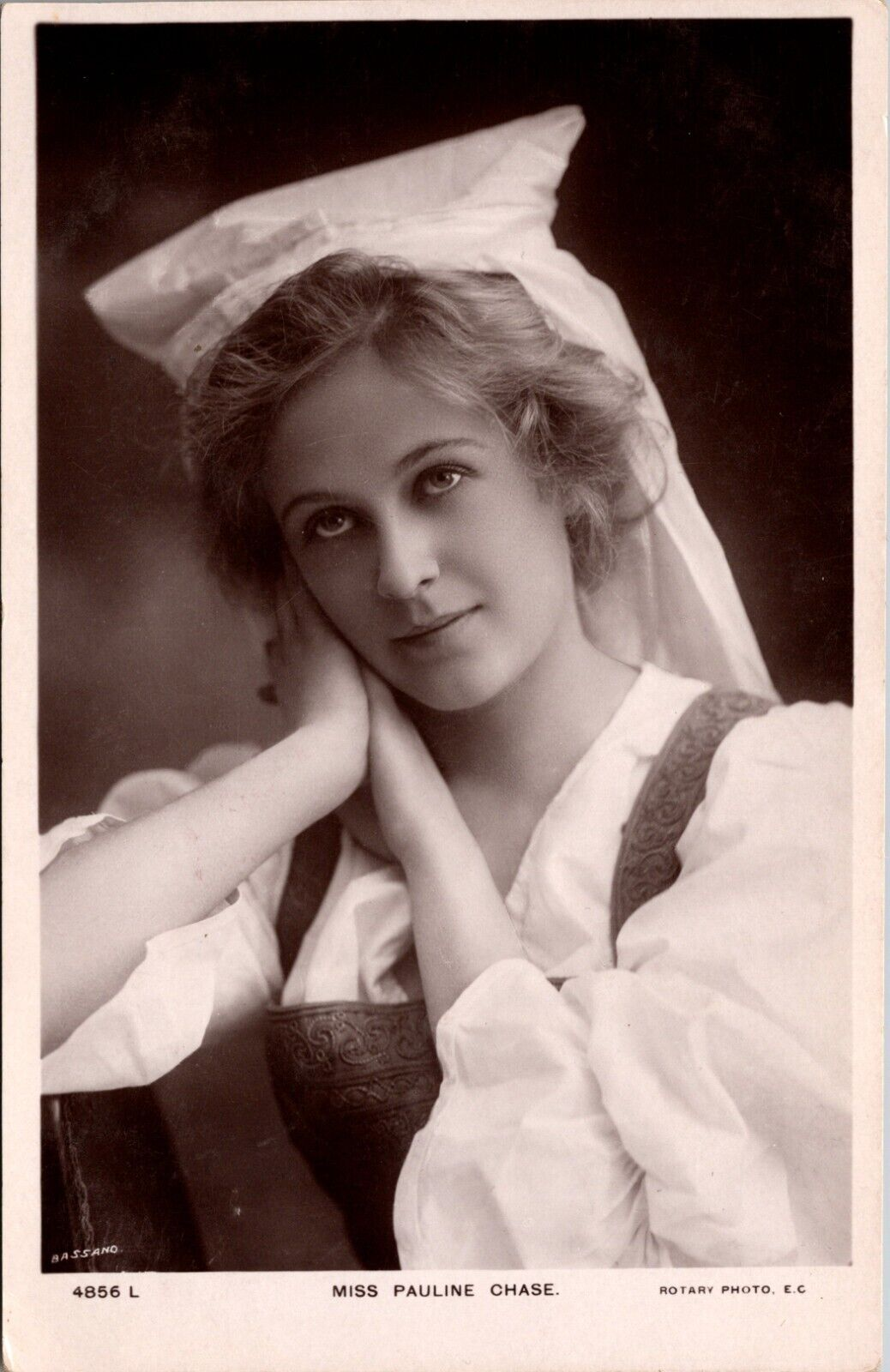
POSTCARD 4 (SOLD)
This vintage real photo Postcard 1 features pretty American actress and dancer, Pauline Chase (1885-1962). She was a regular performer both in the United States and the United Kingdom. She is especially known for her extended starring role in the British production of “Peter Pan, The Boy Who Wouldn’t Grow Up”. Her nickname was the “Pocket Venus of New York”. She was born in Washington D.C. and attended school in New York. She began acting when she was just fifteen years old. In 1901, producer, Charles Frohman recruited her to play in the London production of “The Girl From Up There”. She was just 15 years old. Upon her return to the US, she created a sensation as the “Pink Pajama Girl” in “The Liberty Belles”. She played one of the “lost boys” in the debut of Peter Pan (1904) in London. In 1906 she was chosen by producer, Charles Frohman, and playwright, J. M. Barrie, to play the title role in the production (1906-1913). This role brought her much fame and financial security. While in England, over the years, Chase developed quite a following. Charles Frohman had become her friend and mentor. Chase was a social beauty with many influential friends and admirers. She was a member of the socially elite and lived an extravagant life style. In 1913, Chase retired from the stage to marry a banker. The pair had three children. In 1916, Chase came out of retirement to play in her one and only movie appearance. There are 52 portraits of Chase in the National Portrait Gallery. The film “The Real Thing At Last” was a satirical film, based on MacBeth, written by Barrie. This postcard has a 1907 postmark. The card was published by Rotary Photo as part of a series (No.4083O). Miss Chase’s photograph was taken by the Hutchinson & Svendsen studio. (SOLD)
Postcard 2 was published by Rotary Photo as part of a series (No.4950A). Miss Chase’s photograph was taken by Alexander Bassano. (SOLD)
Postcard 3 has a 1907 postmark. The card was published by Raphael Tuck & Sons as part of a series (No.T30). Miss Chase’s photograph was taken by the Johnston & Hoffmann studio. (SOLD)
Postcard 4 features Chase wearing an interesting lace hat and she has a sweet, pure, and innocent appearance. This postcard was published circa 1909, the date of the cards postmark. The card was published by Rotary Photo as part of a series (No.4856L). Miss Chase’s photograph was taken by the Bassano studio. (SOLD)
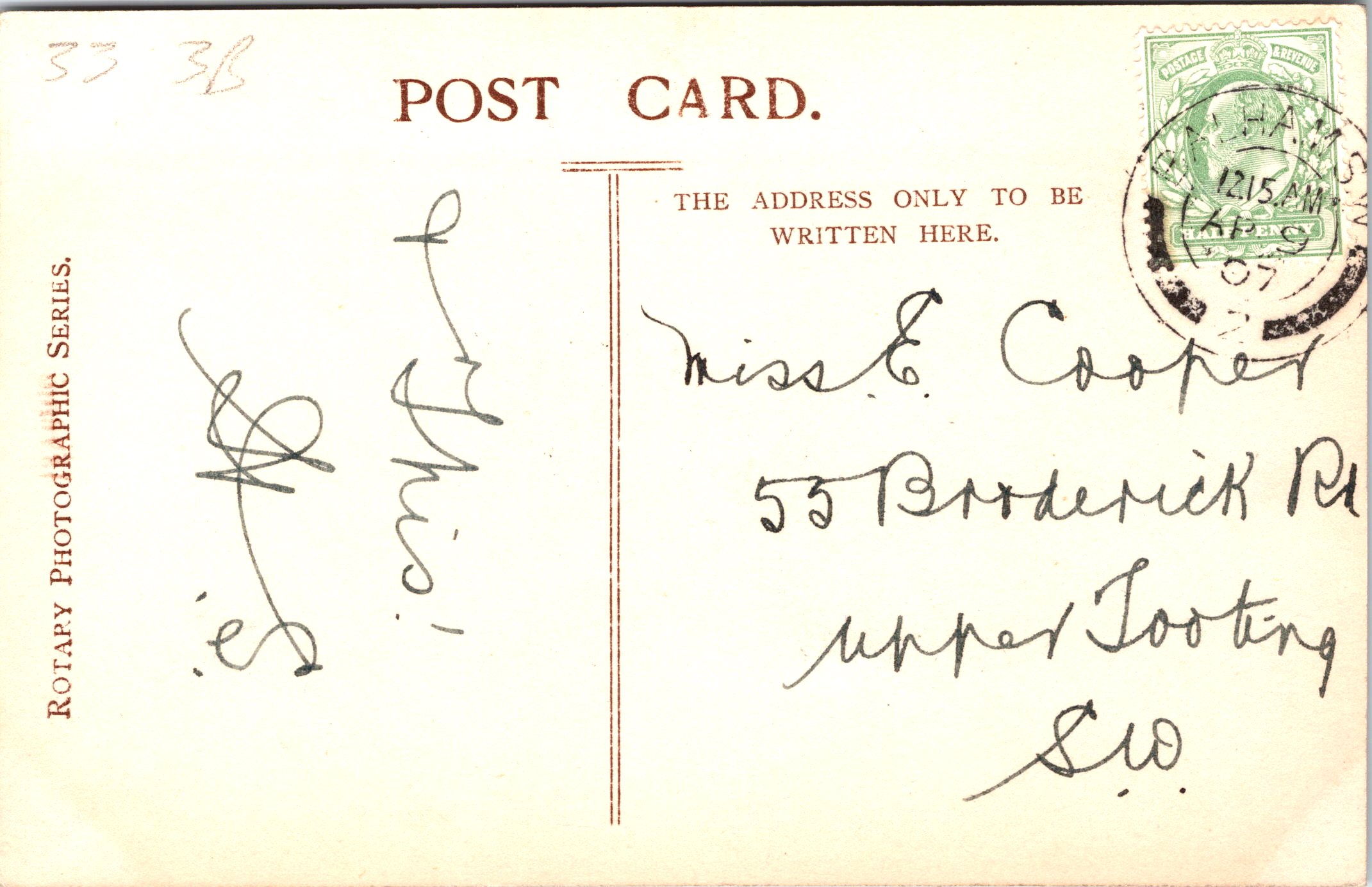
POSTCARD 1
POSTCARD 2
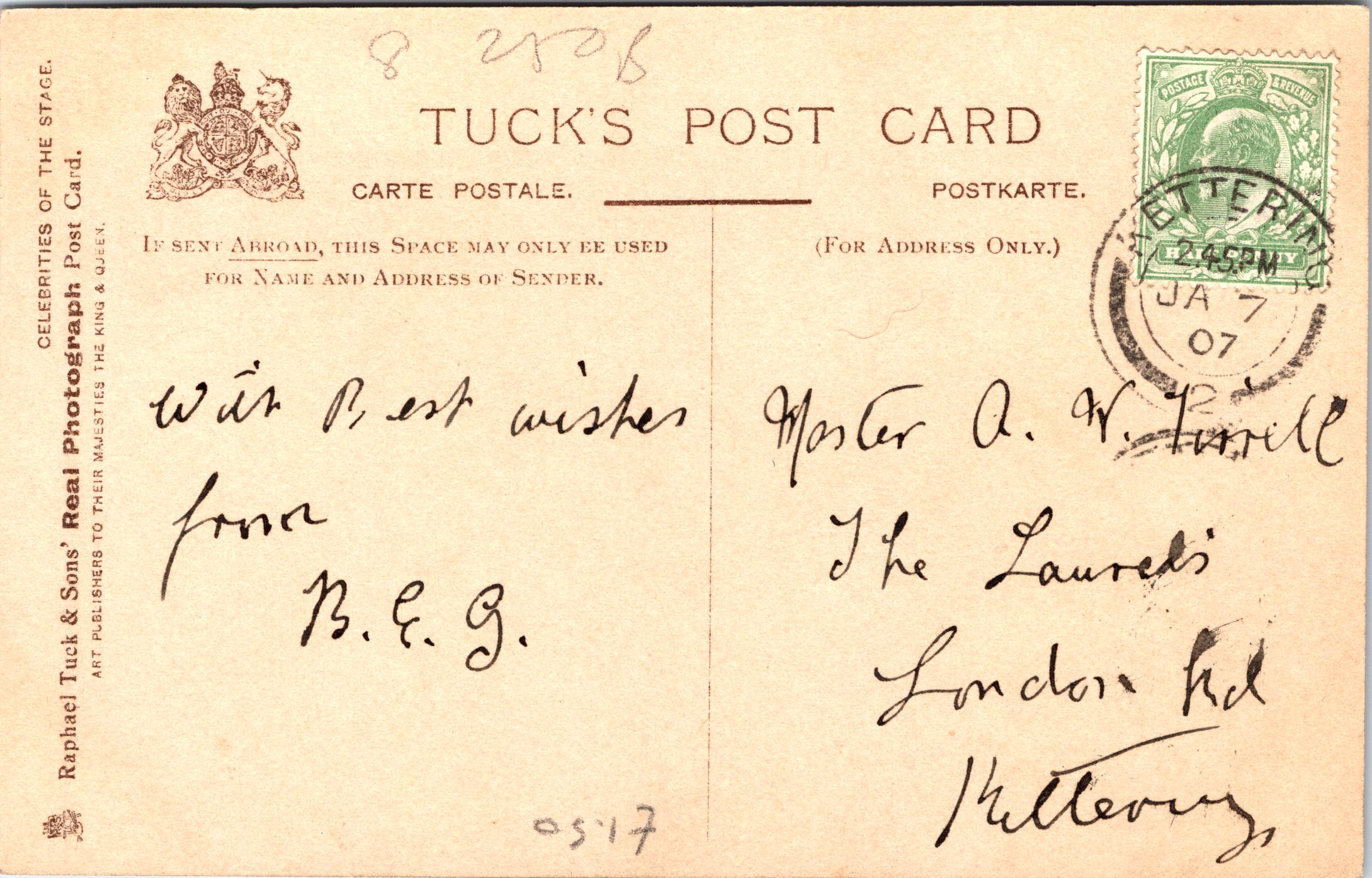
POSTCARD 3
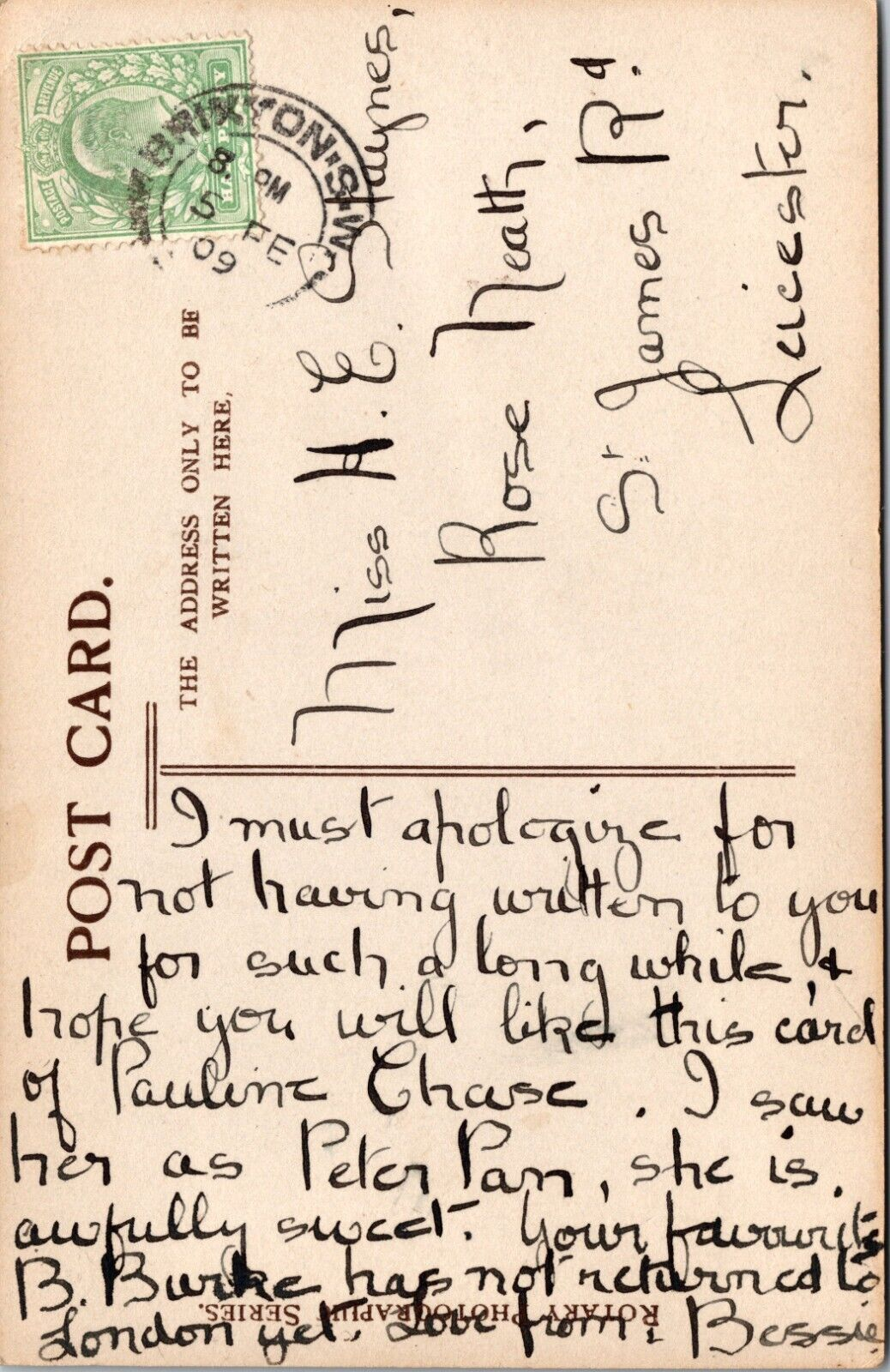
POSTCARD 4






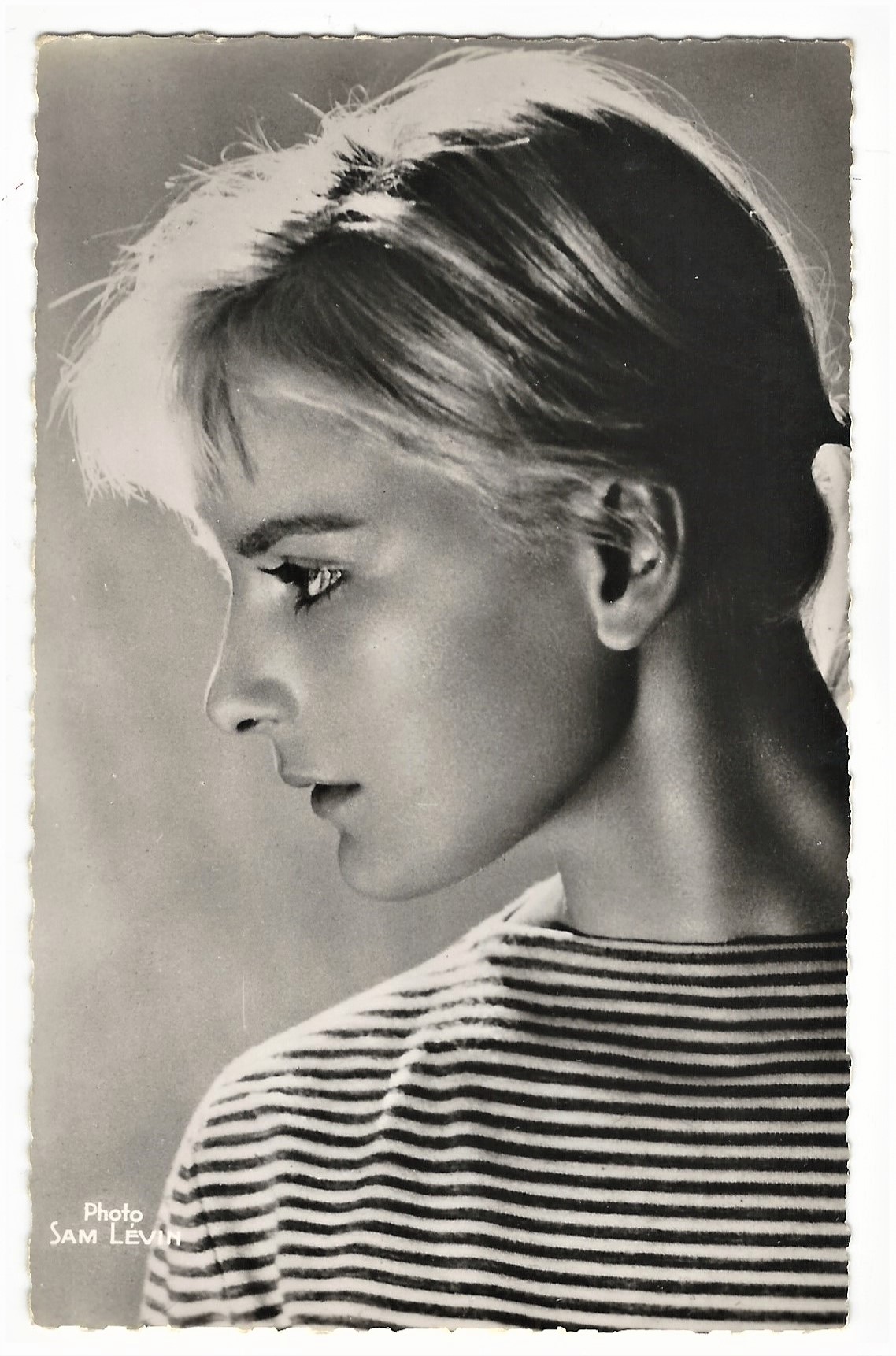 Isabelle Pia (1931-2008) was a French theater and film actress. She was known for her film roles in Madame du Barry (1954), Marianne of My Youth (1955), and “Love at Night” (1955). Pia was also a painter. The IMDb reports that she appeared in seven films between 1953 and 1955, She is also credited with two theatre appearances between 1956 and 1957. She mysteriously retired after turning down a MGM contract. The lensman who photographed Miss Pia for this postcard was Sam Levin, a respected and well known celebrity photographer. The postcard was published by the “Globe” as part of a series (no. 413). SOLD
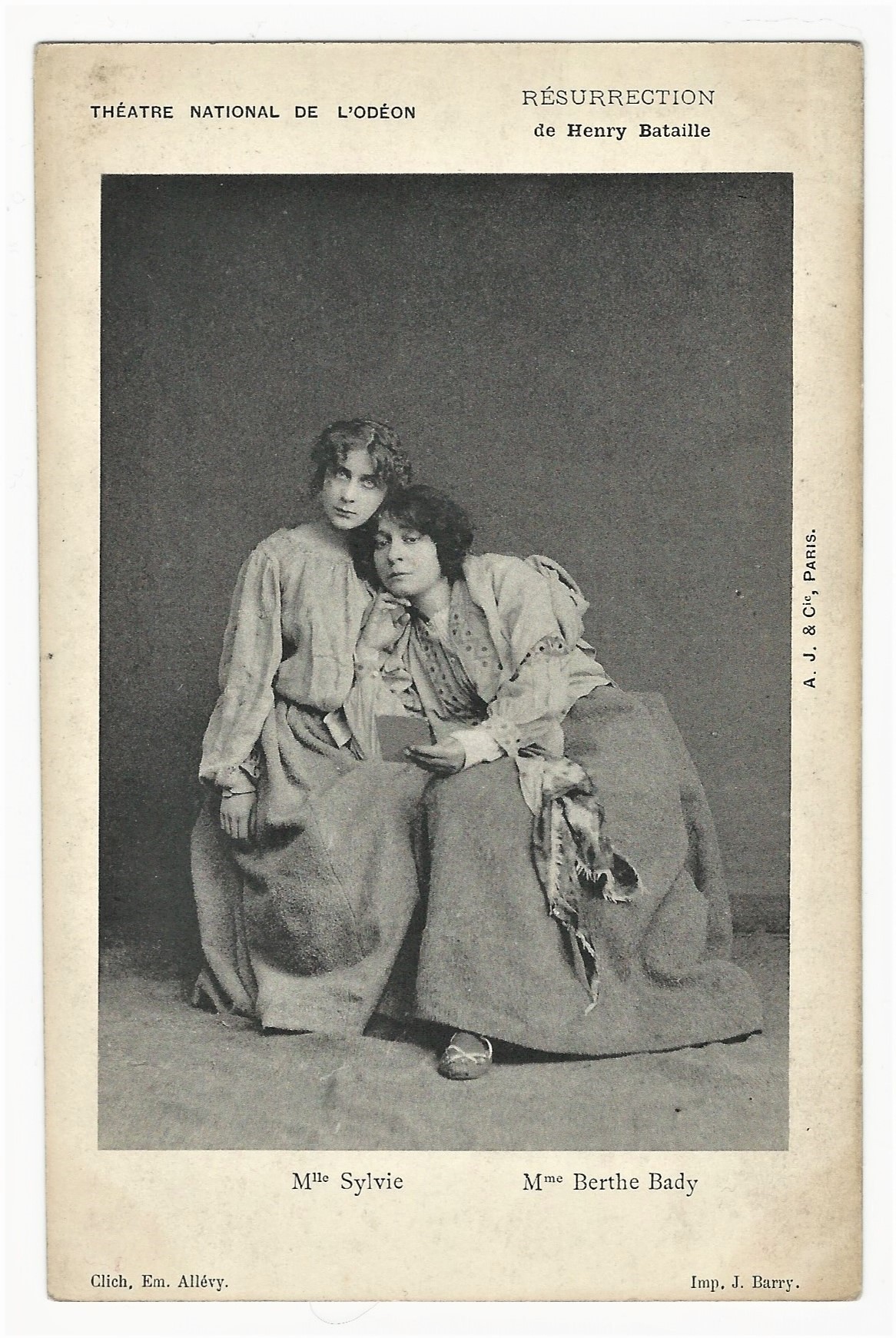
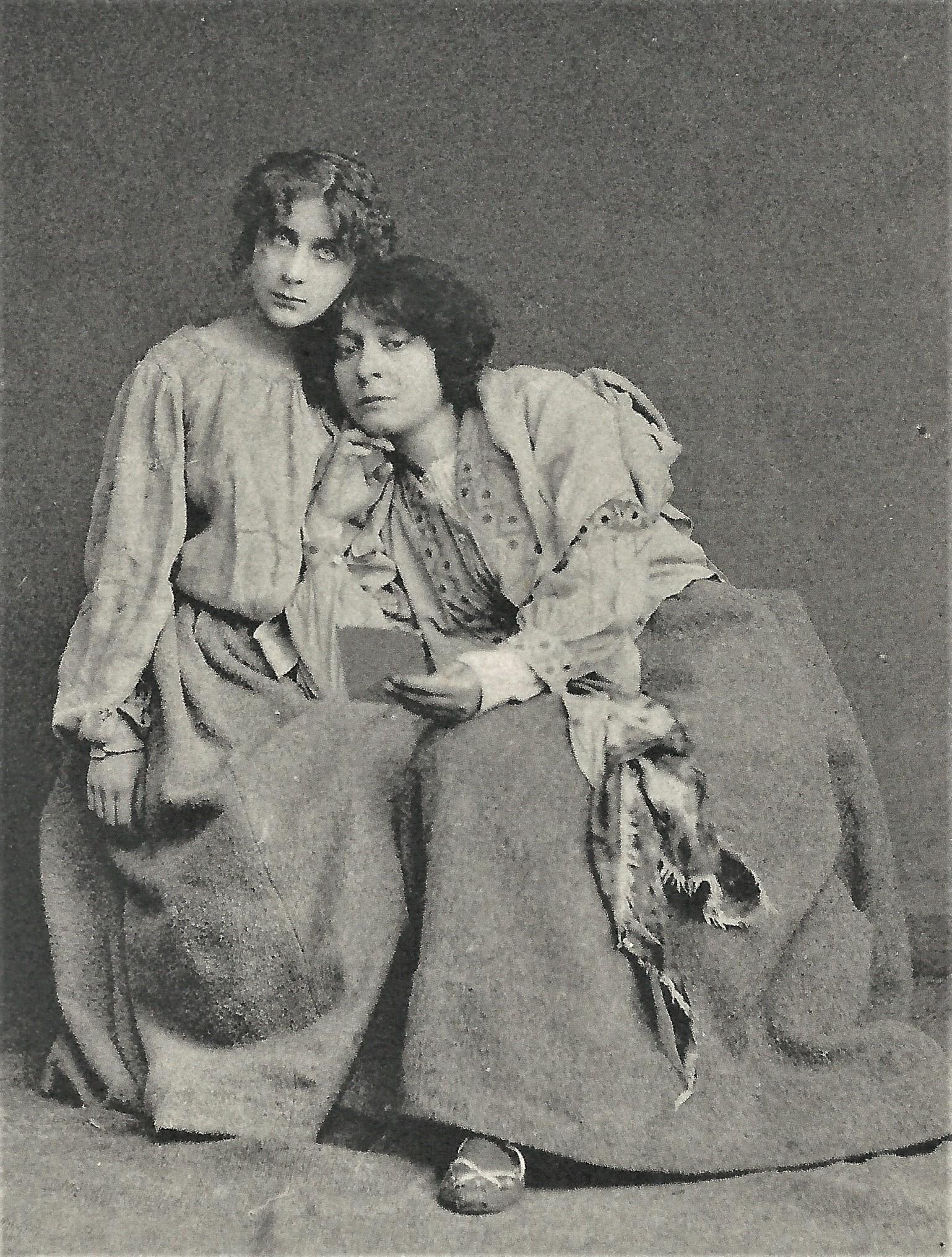 This vintage theater postcard features two actresses appearing in the play, “Resurrection”, by Henry Bataille. The play was adapted from a novel written by Leo Tolstoy. The novel was originally published in 1899. The play was performed at the “Theatre National de L’odeon. The actresses are Mll Sylvie (1883-1970) and Mme Bertha Bady (1872-1921). Here are brief biographical skethches of the actresses. Sylvie was born in Paris, France. Her original name was Louise Pauline Mainguene. Her father was a sailor and her mother was a teacher. She started her professional career in 1903. She appeared in a number of French silent films. She was both a stage and a screen actress. She graduated from the Paris Conservatoire. Her filmography, listed by IMDb, credits her as acting in 54 films between 1912 and 1968. Berthe Bady was born in Belgium but her nationality was French. Berthe Bady attended the Brussels Conservatory and was active on the stage between 1893 and 1913. She was a beautiful actress. Berthe was a companion to both Lugne-Poe and Felix-Henri Bataille. Lugne-Poe was a French actor, theatrical director, and scenic designer. He and Bady were involved in symbolist movement of the arts. Bataille was a French dramatist and poet. A brief explanation of symbolism seems to be merited. In theatre, symbolism is a way to bring a greater meaning to something than is apparent at face value. The use of color, characters, movement, props and costumes are all methods of presenting symbolism. In 1897 Bady was the subject of a portrait by Toulouse Lautrec and her death was the subject of a poem by a leading French poet, Louis Aragon. In addition, playwright Fernand Crommelynck dedicated a play to her. Wikipedia credits her with sixteen “notable” play appearances between 1893 and 1913. She appeared in Ibsen’s “The Master Builder” on an international tour. The tour took her to London, Brussels, Amsterdam, Milan, and additional cities. In 1918 she appeared in her one and only film, “Ecce Homo”. The photo of Berthe and Sylvie was taken by Emile Allevy, a Paris photographer. The postcard was published by A.J.C. (Arthur John Carter) of Eastbourne, England. This postcard was likely published around 1902 since that is when Bady played in the play at the Theatre National de L’odeon. This vintage postcard is in good condition (see scans).


 THE CABINET CARD GALLERY