This vintage photograph features a female radio announcer behind a microphone. The studio has another electronic device on the table. It is my guess that the device is a speaker or transmitter. The previous owner of this photo wrote some notes on the reverse of the image. The notes indicate that this is a photograph of a studio that was a part of “Free Radio: France”. Initially, free radio was synonymous with the term “pirate radio”. Such radio stations were popular in 1970’s Europe and were proponents of freedom of expression, and the end of state monopolies controlling radio and television. In France, state monopolies controlled radio until 1981. Prior to World War II, there were about a dozen independent and commercial radio stations operating in France. It is possible that this image comes from “Radio Andorra” because the image was part of a collection of other photos related to radio broadcasting in Andorra. “Radio Andorra” was one of the oldest French private radio stations. The radio station broadcasted from Andorra between 1939 and 1981. Since Andorra was not part of France, the station could bypass the demands of the French monopoly. This vintage photo is a terrific piece of European and French radio history. The photograph measures about 2 1/8″ x 2 5/8″ and is in very good condition.

Buy this original Vintage Photograph (includes shipping within the US) #2639
To purchase this item, click on the Pay with PayPal button below
$25.50
Buy this original Vintage Photograph (includes international shipping outside the US) #2639
To purchase this item, click on the Pay with PayPal button below
$33.50


 This photograph of a North African man and his daughter is one of the most moving photos that I have ever seen. This image pulls at my heart strings and won’t let go. I know very little about the story behind this photo. I assume that we are looking at a father and daughter. Each is displaying an expression of grave concern. In fact, they look traumatized. The previous owner of this photograph stated that the photo was taken in North Africa during a time of war. The image is a snapshot and measures about 4 1/4″ x 3 1/4″. The photograph is in very good condition (see scans).

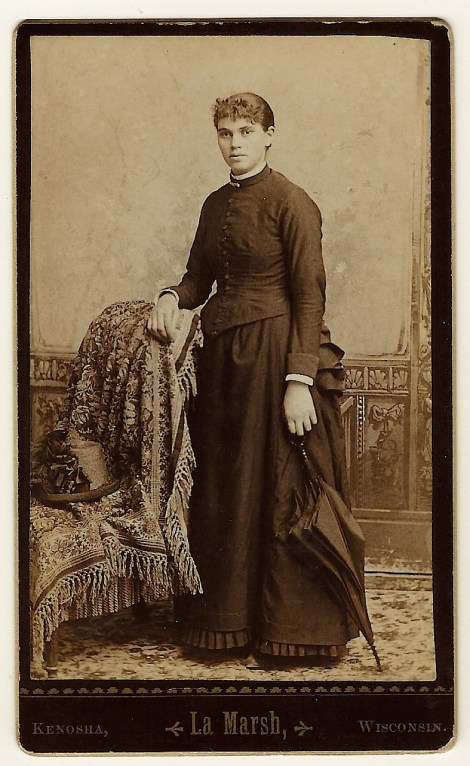
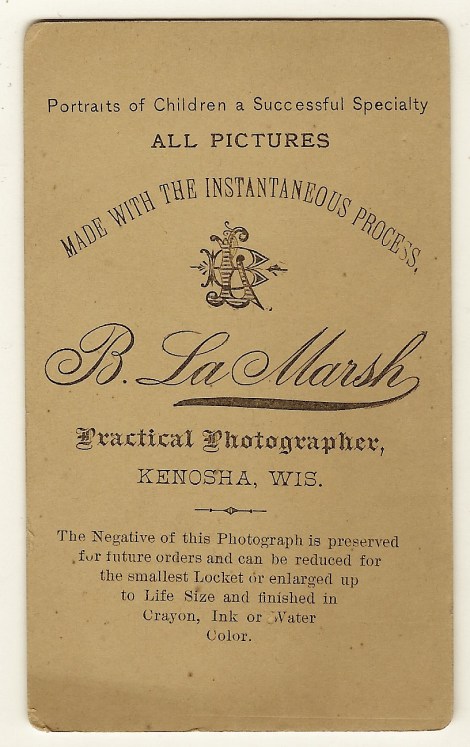
 A lovely young lady poses for her full length carte de visite portrait at the LaMarsh studio in Kenosha, Wisconsin. She is wearing a collar pin and holding a parasol. She appears to be in her teenage years. The book, “Portrait and Biographical Album of Racine and Kenosha Counties, … (1892) includes some background information about photographer, Bernard LaMarsh. He was born in Prussia in 1848. His father spent some time in the military but he was a butcher by trade. The LaMarsh family moved to the United States in 1856. The family first settled in Chicago but moved to Kenosha in 1872. During his teenage years he helped his father in the butcher business and in 1869, he entered the US Army as a drummer. He served for four years and then returned to Kenosha where he took a job as a barber. He was unhappy in the tonsorial business and in 1874 began learning photography with A. F. Wells who operated a gallery in Kenosha. After a few months of training, he bought a gallery in Marseilles, Illinois. After just a year and a half he sold his business and went to Chicago for further training with photographer, J. Steffens. In 1876, LaMarsh returned to Kenosha and opened a gallery which he ran for two years. From 1878 until 1884, he partnered with S. W. Truesdell. The partnership ended because LaMarsh bought out Mr. Truesdell. In 1879, LaMarsh married Augusta Harlis. She was ten years his junior. LaMarsh died in 1929. This cdv photograph has excellent clarity and is in good condition (see scans).
 This vintage real photo chrome postcard features an African American man and his custom 1952 Pontiac. This automobile is certainly “one of a kind”. Text on the reverse of the postcard indicates that the car has painted seat covers. In addition, the description asserts that the chrome work took years to finish. The artist decided to remain anonymous. This photograph was taken in Houston, Texas in 1973. The photographer was Chip Lord and the publisher was Foto Folio, located in New York City. Additional credits were attributed to Dover Press. This postcard was mailed in 1984, eleven years after the photograph was taken. It was mailed from Everett, Washington, to Erie, Pennsylvania. The photographer, Chip Lord (1944- ) is a very successful American media artist and has led an interesting life. He is best known for being a co-founder and practitioner at the media collective, known as Ant Farm. The firm was started in 1968. Wikipedia asserts that his work is often “nostalgic, but edged with an ironic detachment”. A graduate of Tulane, he became an architect. He taught at the University of Houston (Go Cougars….I got my graduate degree there). He also taught at a couple of the University of California Campuses. Lord is also known for many of his projects, including the “Cadillac Ranch”. He shares credit for this public art installation and sculpture with other artist from Ant Farm. The exhibition is comprised of ten half buried cadillacs facing nose-first in the ground. The cars ranged from 1949 through 1963, and the exhibition illustrated the evolution of Cadillac’s tail fins. In addition, there is symbolism. Cadillacs represented 1950’s America and a “symbol of aspirations”. The sculpture is located in Amarillo,, Texas and a photo of the project can be seen below.. Lord has had many publications and his works appear in many fine museums.
  “CADILLAC RANCH”

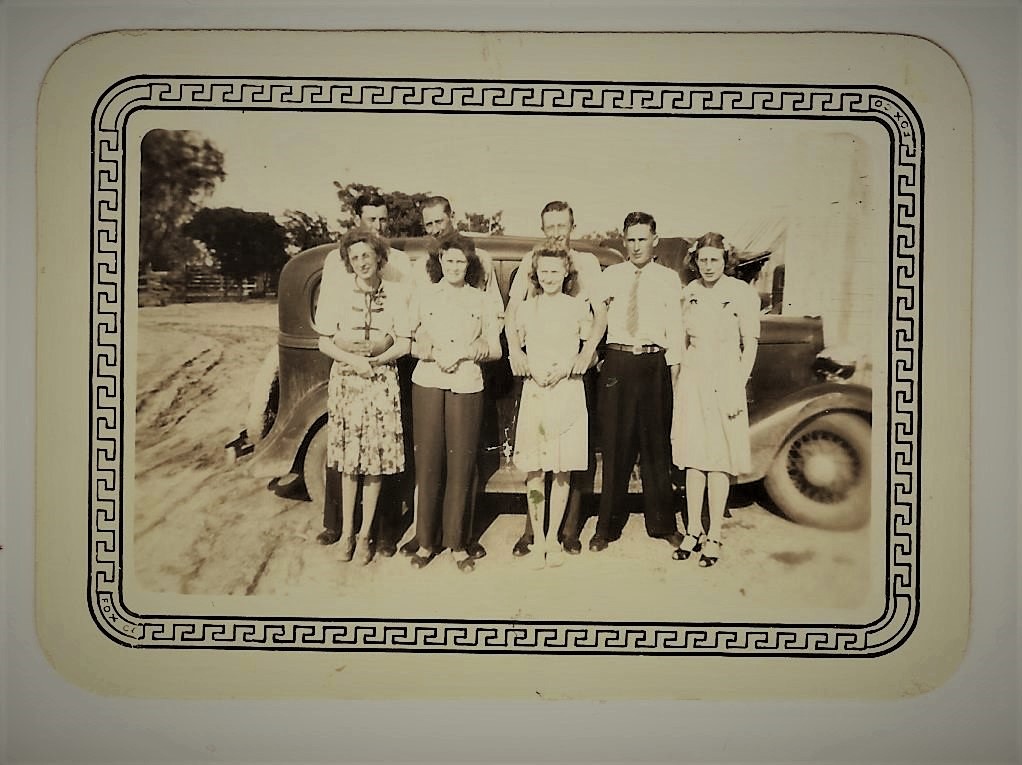
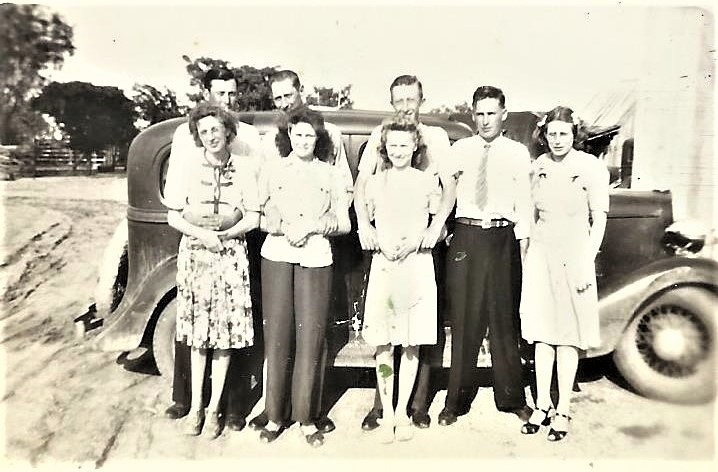 Four young couples pose in front of a dusty car that is parked on a dirt driveway. Three of the women stand in front of a man, likely their beaus. The fourth woman is keeping her distance from the fellow who stands behind her. The three men who are standing behind the three women appear to be quite “handy”. One supposes that we are looking at a photograph of a “quadruple date”. The setting may be a Texas ranch. This photograph was found in the Texas Hill Country. Do you think these four couples arrived at this location via the car that is parked behind them? If so, the seating must have been quite crowded. The image was photographed by Foxco in 1946. The company has an interesting history. The Fox Photo Studio was opened by Arthur C. Fox in 1906 in San Antonio, Texas. Fox sold the studio for seven hundred dollars to Carl D. Newton in 1909. Newton was a clever entrepreneur. One of his gimmicks was to offer a free camera to anyone buying three rolls of film and prepaying developing and printing fees. His successor to the business was Carl D Newton II. By the mid 1930’s Fox advertised itself as the world’s largest Kodak finishers. Their processing plant was in operation around the clock. The company expanded and opened facilities in Dallas, Houston, Louisiana and Oklahoma. The company grew and grew and ultimately reached 12,000 dealers nationwide. In 1986, the company was sold to Kodak. Carl D Newton III kept the retail division of the business, calling it Fox Photo. Later, the business changed hands a number of times until it faded into history. This photo was taken somewhere near San Antonio. The photo is printed on paper thinner than stock used for cdvs or cabinet cards. This photograph measures about 3 1/4″ x 2 1/4″ and is in good condition (see scans).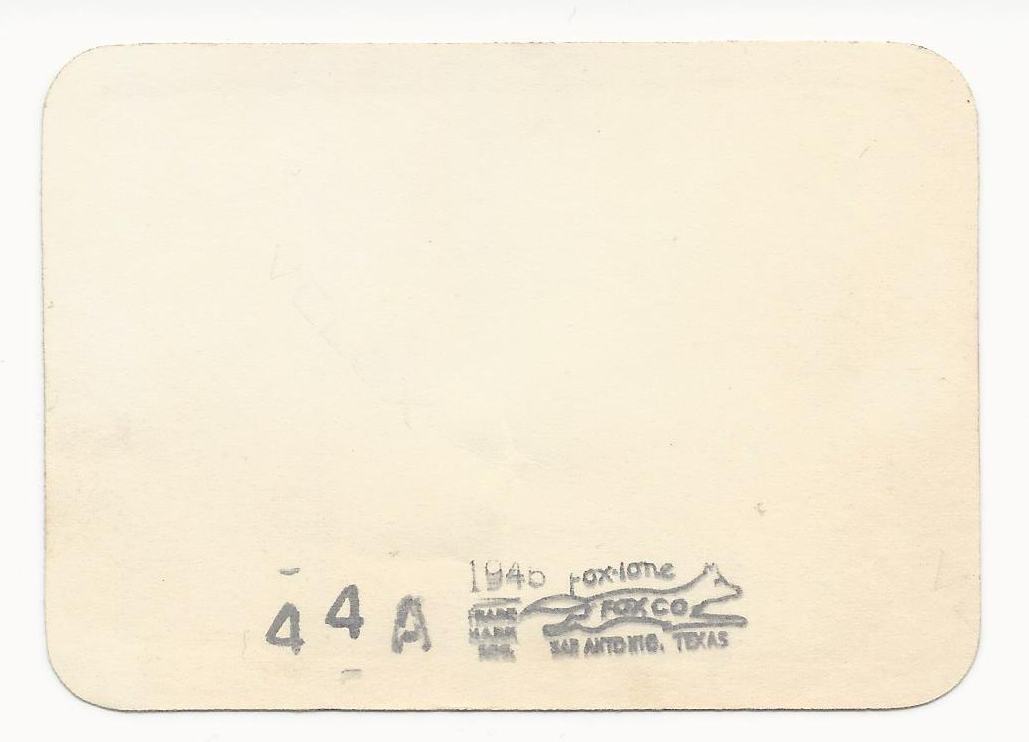
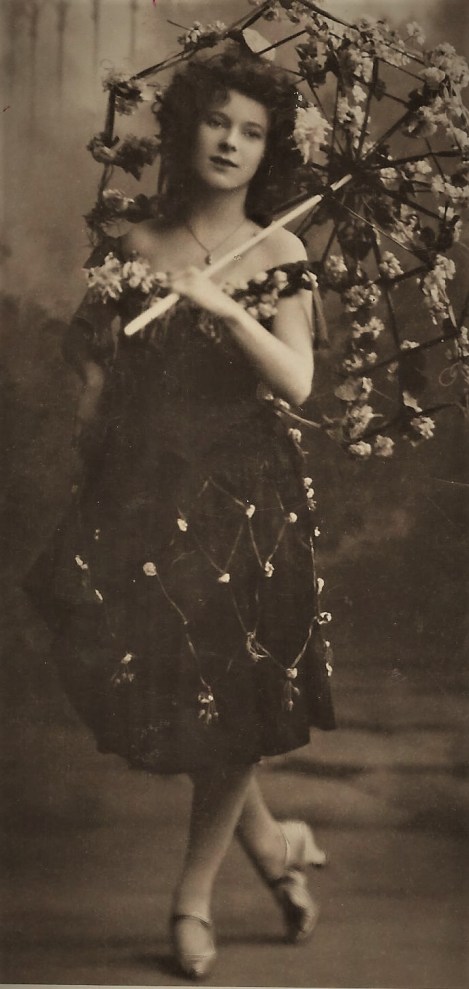
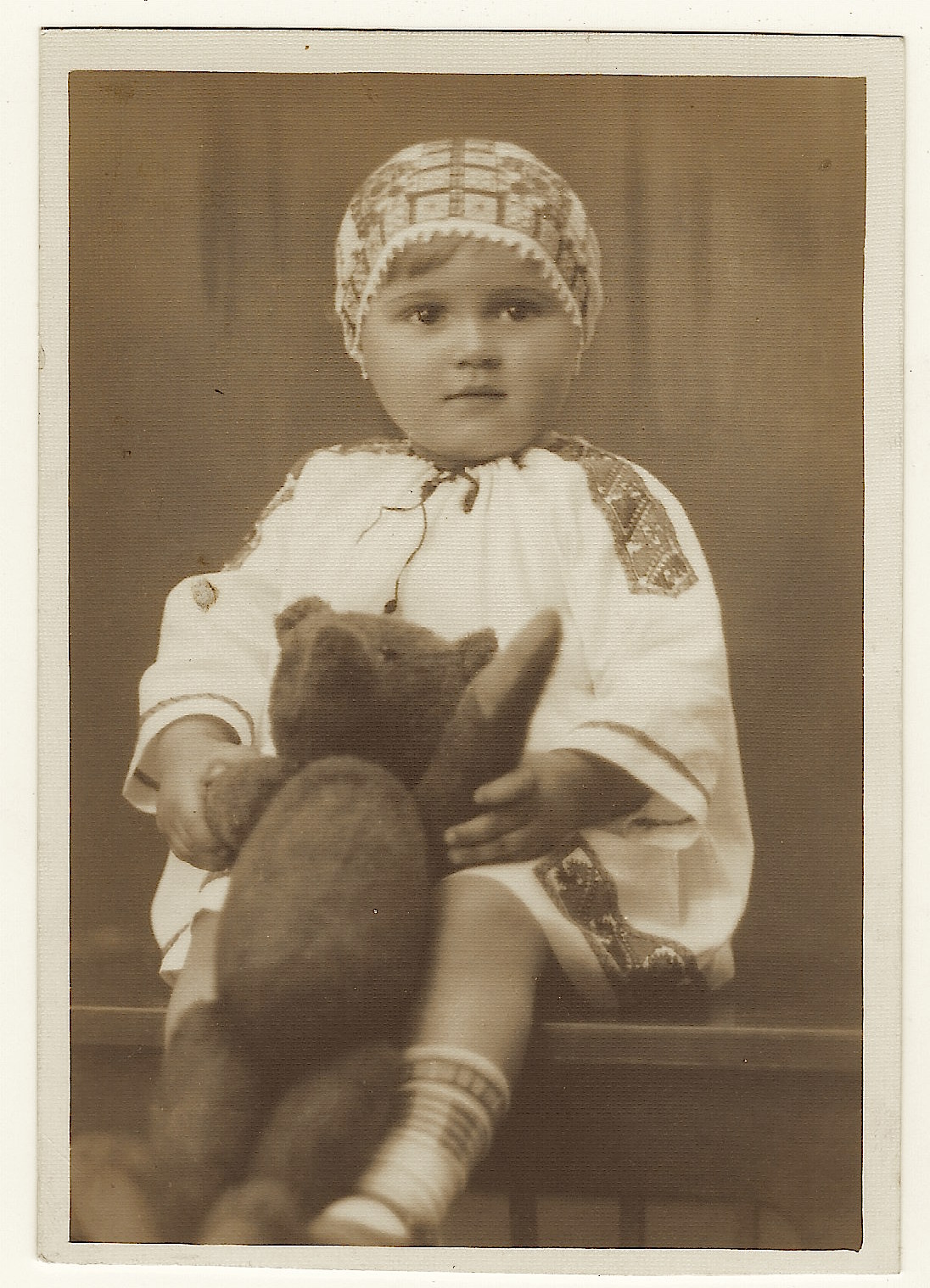 Ain’t she sweet? This adorable little girl and her teddy bear, pose for their portrait at a photo studio in Sarajevo, Yugoslavia. The child is enchantingly dressed. Sarajevo later became the capital of Bosnia. This photo postcard measures about 3 1/4″ x 4 3/4″ and is in very good condition (see scans).