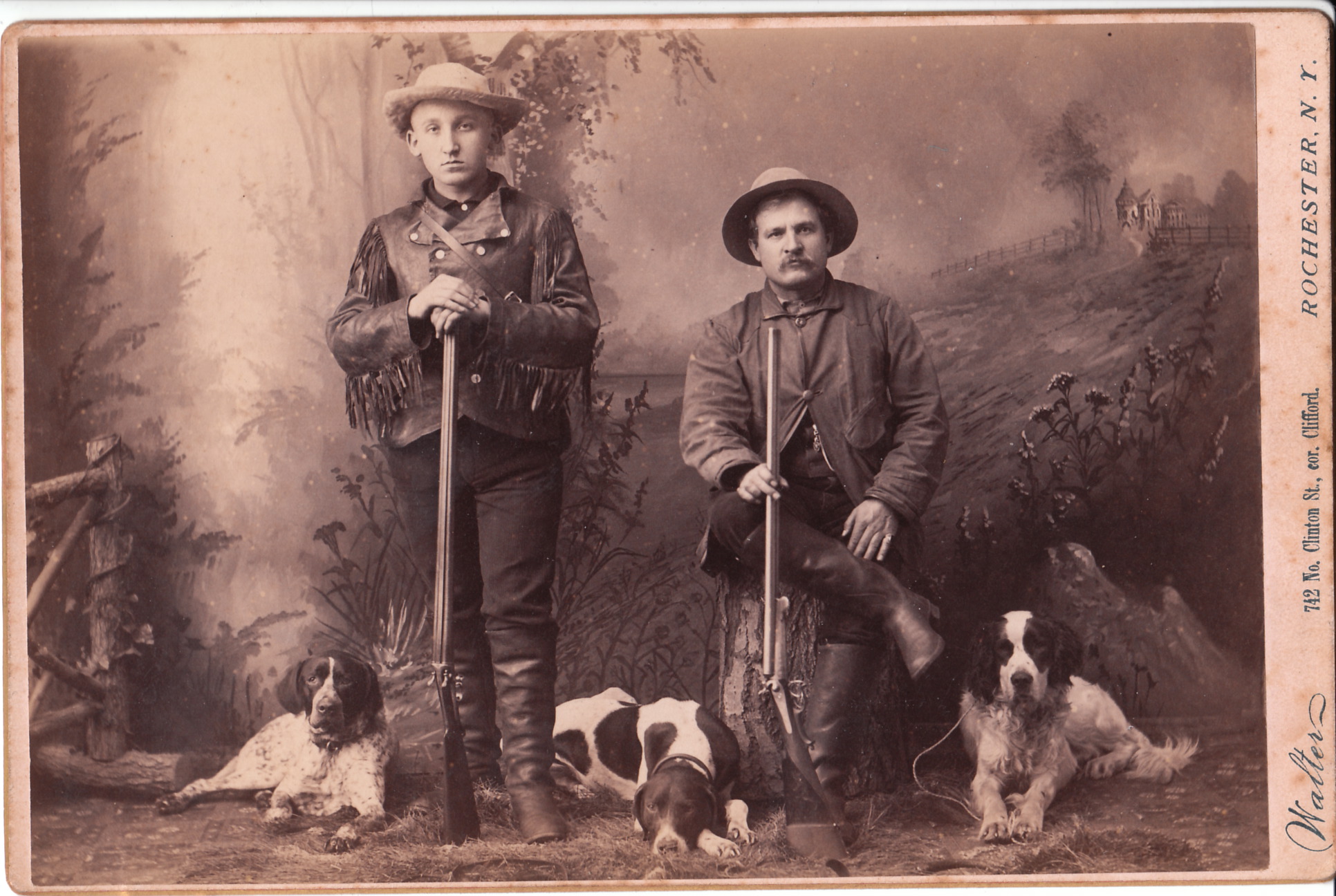
 This terrific Cabinet card image shows two Hunters and their three hunting dogs. Both gentleman are wearing boots and are holding rifles. This studio photograph was produced by Walter of Rochester, New York. Notation on the reverse of the card identifies the hunters and is dated 1887. SOLD
Two Hunters and their Rifles and Dogs (1887)

ETHEL BARRYMORE: A STAGE BEAUTY

CABINET CARD 1

CABINET CARD 2 (SOLD)
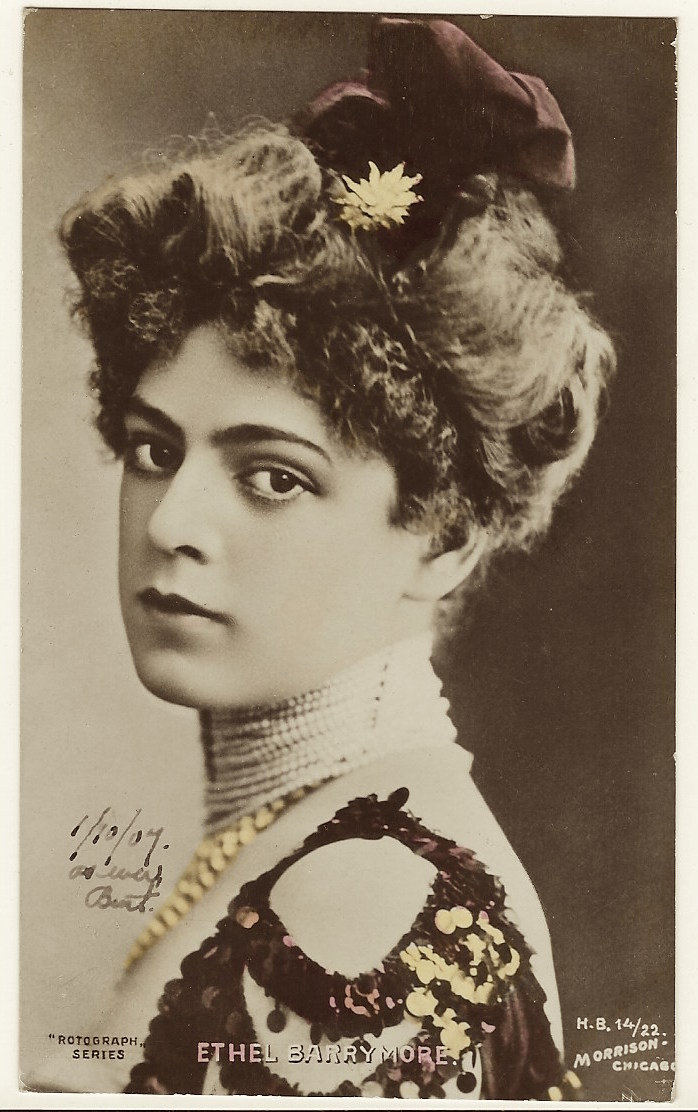
POSTCARD 1 (SOLD)
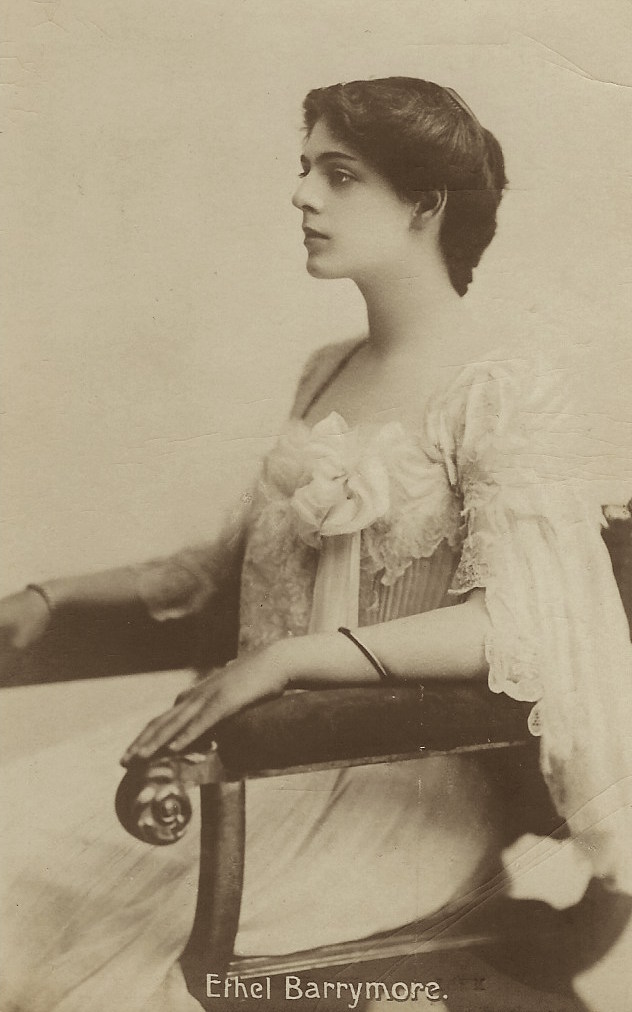
POSTCARD 2 (SOLD)
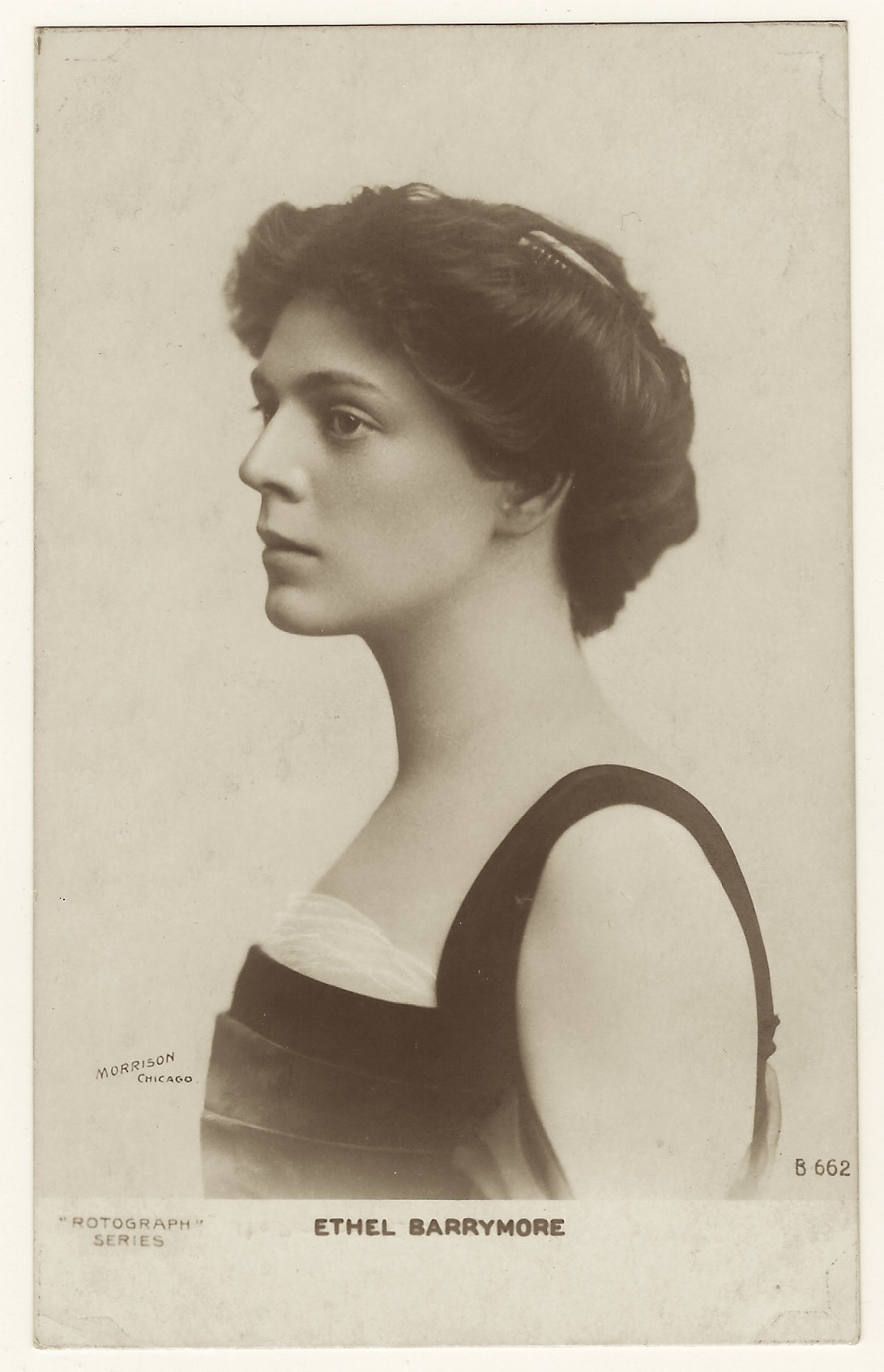
POSTCARD 3
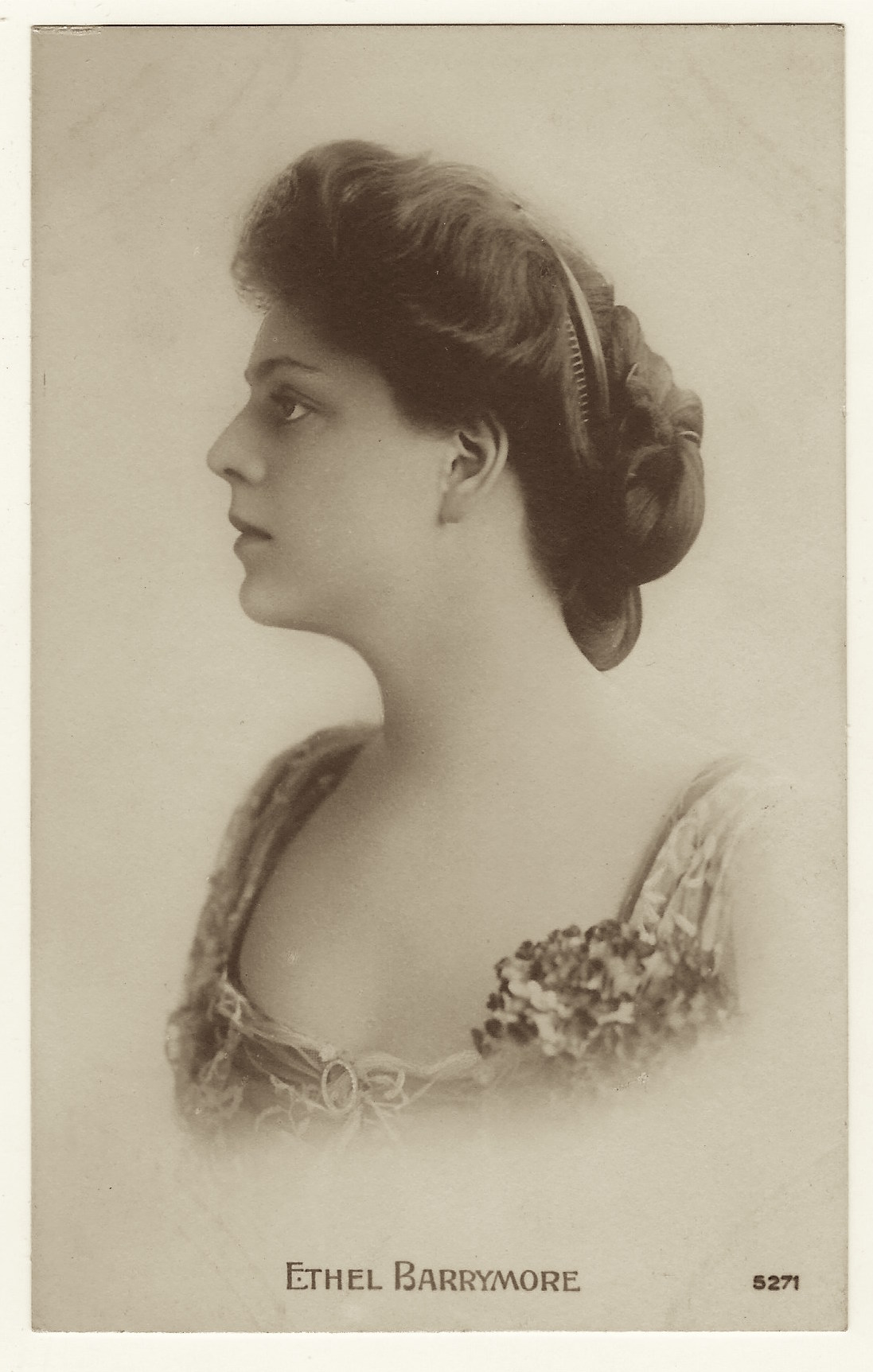
POSTCARD 4 (SOLD)
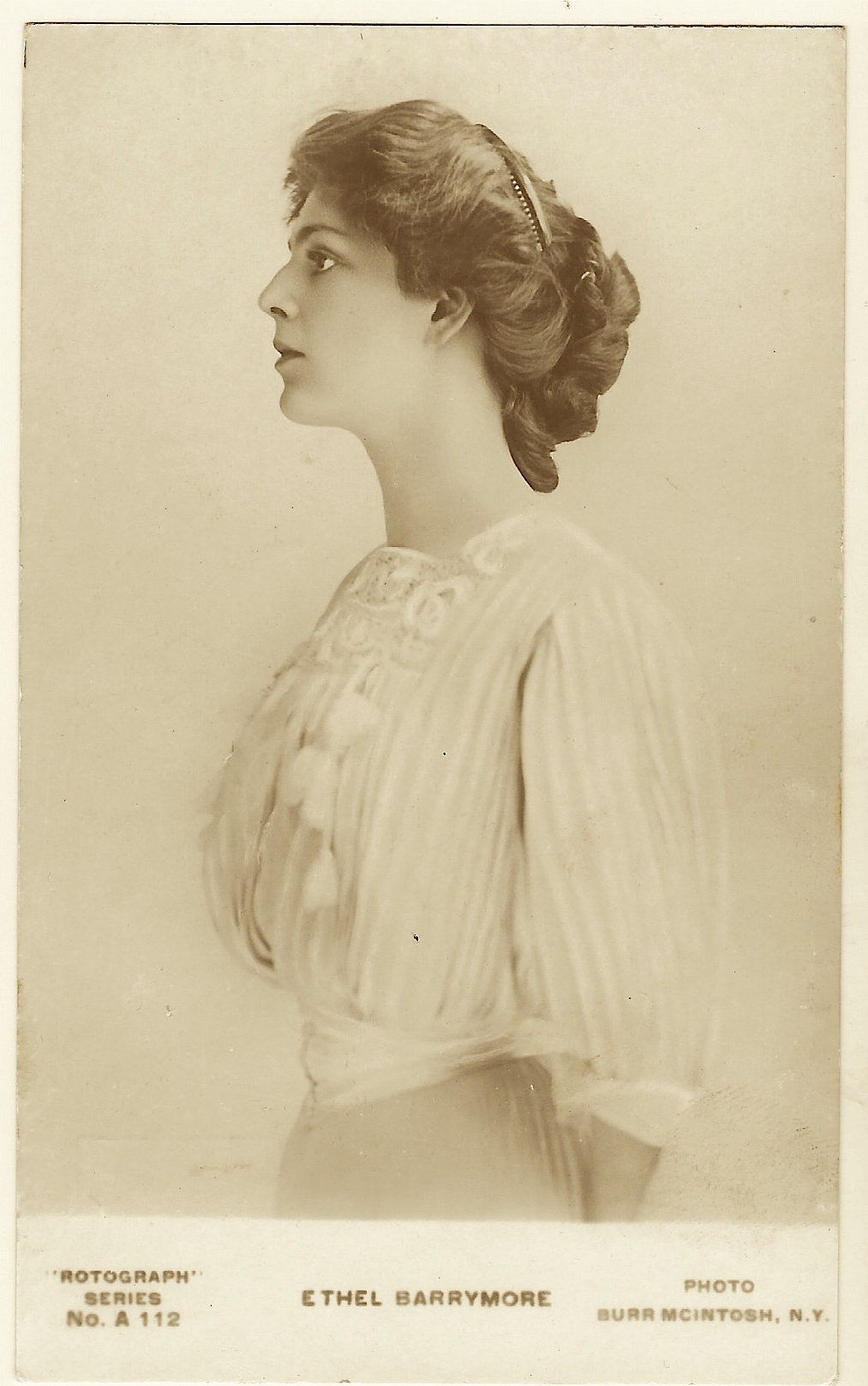
POSTCARD 5 (SOLD)

POSTCARD 6 (SOLD)
Ethel Barrymore (1879-1959) was an outstanding American actress and a member of the famous theatrical Barrymore family. She was born Ethel Mae Blythe in Philadelphia, Pennsylvania. Her parents were actors and she was the sister of John and Lionel Barrymore. She was the great aunt of modern day actress Drew Barrymore.
Ethel Barrymore was considered by many to be the greatest actress of her generation. She was a major Broadway performer and first appeared there in 1895. She had roles in A Dolls House by Ibsen (1905). She was a strong supporter of the Actors’ Equity Association and played a major role in the 1919 strike. She played in Somerset Maugham’s comedy, The Constant Wife (1926). She also starred in motion pictures beginning her film career in 1914. Notable films included None but the Lonely Heart (1944) and The Spiral Staircase (1946). Around 1900, Winston Churchill proposed marriage to Barrymore but she refused. She later married Russell Griswold Colt in 1909 and had three children. She died of cardiovascular disease in 1959 at her home in California. The Ethel Barrymore Theatre in New York City is named in her honor.
The cabinet card 1 portrait of Ethel Barrymore was photographed by Phillips Photographers of Philadelphia, Pennsylvania. To view other photographs by Phillips, click on the category “Photographer: Phillips”. The second image (cabinet card 2) of the actress was produced by Sarony, the famous celebrity photographer who’s studio was located in New York City. To see other Sarony photographs, click on the category “Photographer: Sarony”.
Cabinet card 2 was produced by Napoleon Sarony, the famous celebrity photographer who’s studio was located on Fifth Avenue in New York City. Barrymore looks young and quite pretty in this image. (SOLD)
The third portrait of Miss Barrymore appears on postcard 1, published by the Rotograph Company who operated in New York City and Germany. This postcard portrait was taken by famed Chicago photographer William Morrison. He is well known for his excellent portraits of theatrical stars. He produced both real photo postcards and cabinet cards. This postcard is number HB/1422 of the “Rotograph Series”. The image on this postcard is color tinted. This postcard has been mailed and postmarked (1907). The reverse of this postcard can be seen below.To view other photographs by Morrison, click on the category “Photographer: Morrison”.
The fourth portrait of Ethel Barrymore is an uncommon one (postcard 2). The image provides a lovely profile view of this legendary actress. If you search for this exact postcard online, you likely won’t find it. This postcard was published by E. Frey & Company who operated in New York City . Research reveals that postcards displaying the printed name of “E. Frey” were actually published by the Souvenir Post Card Company which existed between 1905 and 1914. It was located at 268 Canal Street in New York City. The company was purchased by Valentine & Sons and the combined company became Valentine – Souvenir. This postcard was printed in Germany and is in good condition (see scan).
The fifth photograph (postcard 3) of Miss Barrymore was published by the Rotograph Company. This postcard portrait was taken by famed Chicago celebrity photographer William Morrison.This postcard is number B 662 of the “Rotograph Series”. The image has excellent clarity.
The sixth image (postcard 4) is a vintage real photo postcard portrait of Ethel Barrymore. The postcard was published by Albert Hahn who was based in New York City (200 Broadway) and Hamburg. Hahn operated his company between 1901 and 1919. The postcard was produced in Germany sometime in the decade of 1900-1910. The postcard is part of a series (no. 5271). (SOLD)
Postcard 5 offers a profile view of Miss Barrymore. The postcard was published by the Rotograph Company as part of the Rotograph Series (No. A 112). The photographer of this image is Burr McIntosh of New York City. William Burr McIntosh (1862-1942) lived an interesting life. Among his job titles listed by Wikipedia, are photographer, lecturer, film studio owner, silent film actor, publisher of the “Burr McIntosh Monthly”, reporter, and radio and early film pioneer. His sister was Nancy McIntosh, a noted operatic soprano. He was a graduate of Lafayette College in 1884. His most noted film role was his appearance in D. W. Griffith’s film, “Way Down East” (1920). Wikipedia notes that he appeared in 53 films between 1914 and 1934. This vintage postcard is in very good condition.
Postcard 6 is a portrait of Miss Barrymore that was postmarked in 1907. (SOLD)
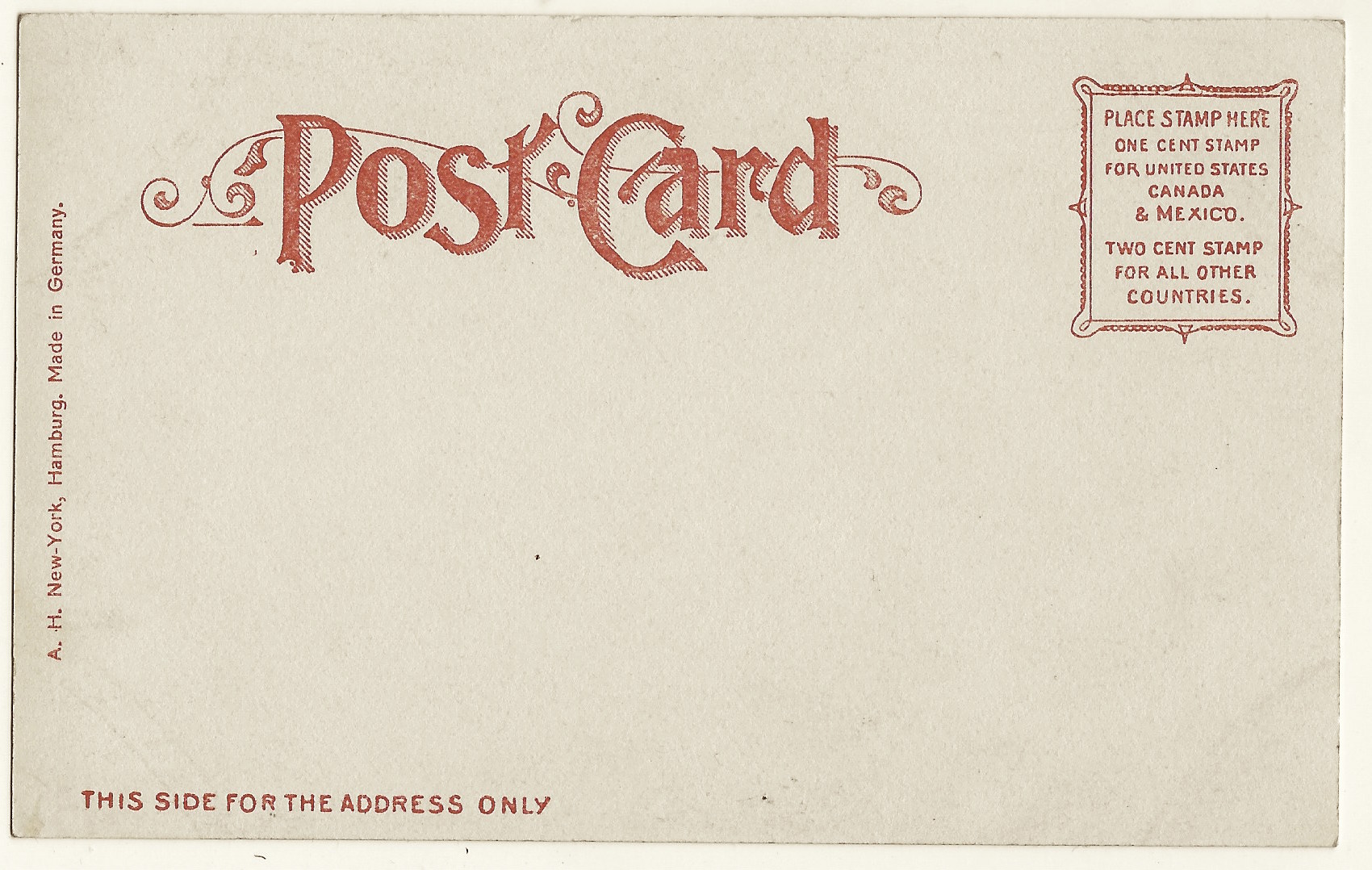
POSTCARD 4
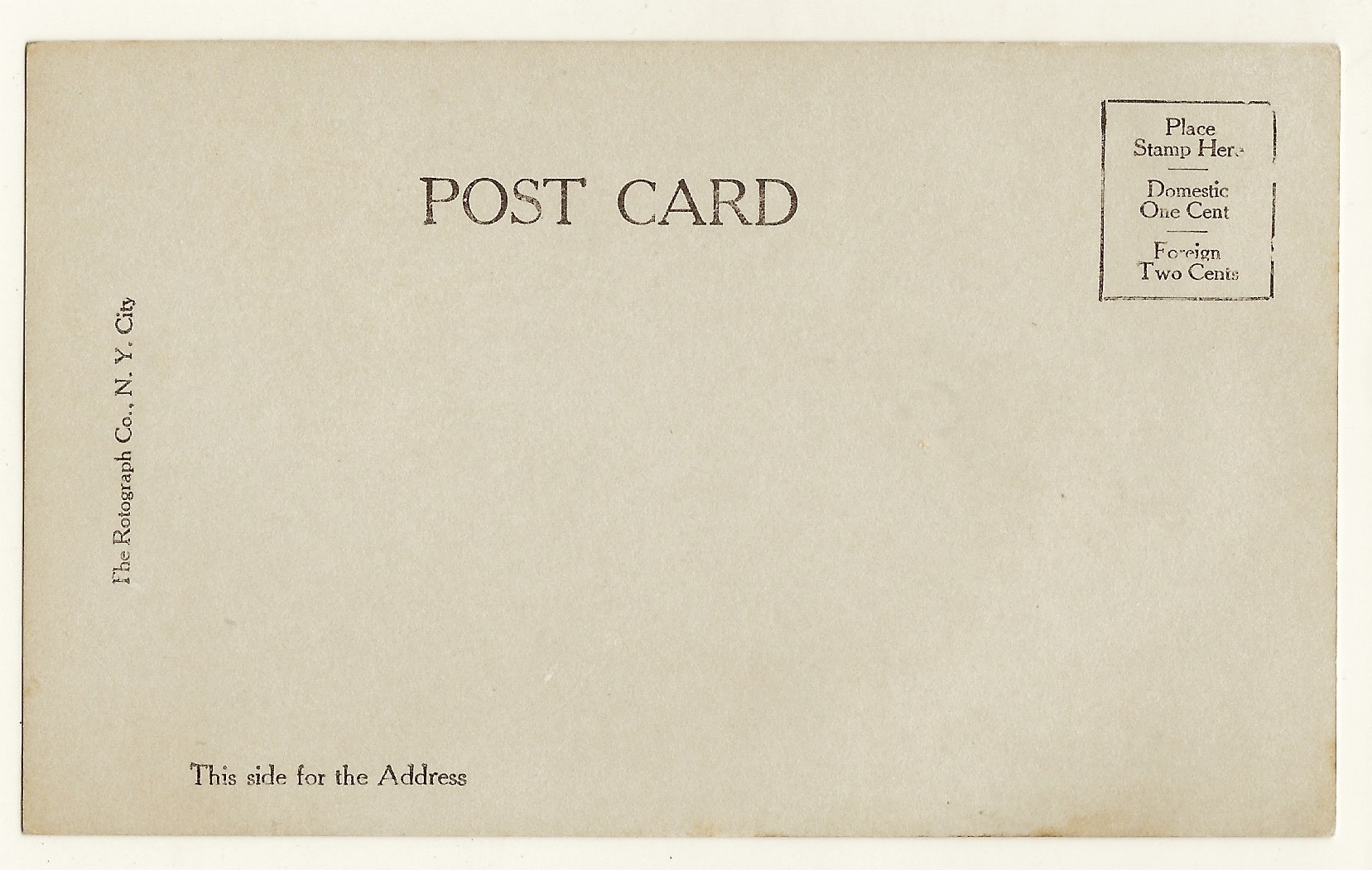
POSTCARD 5

Postcard 6 (Sold)
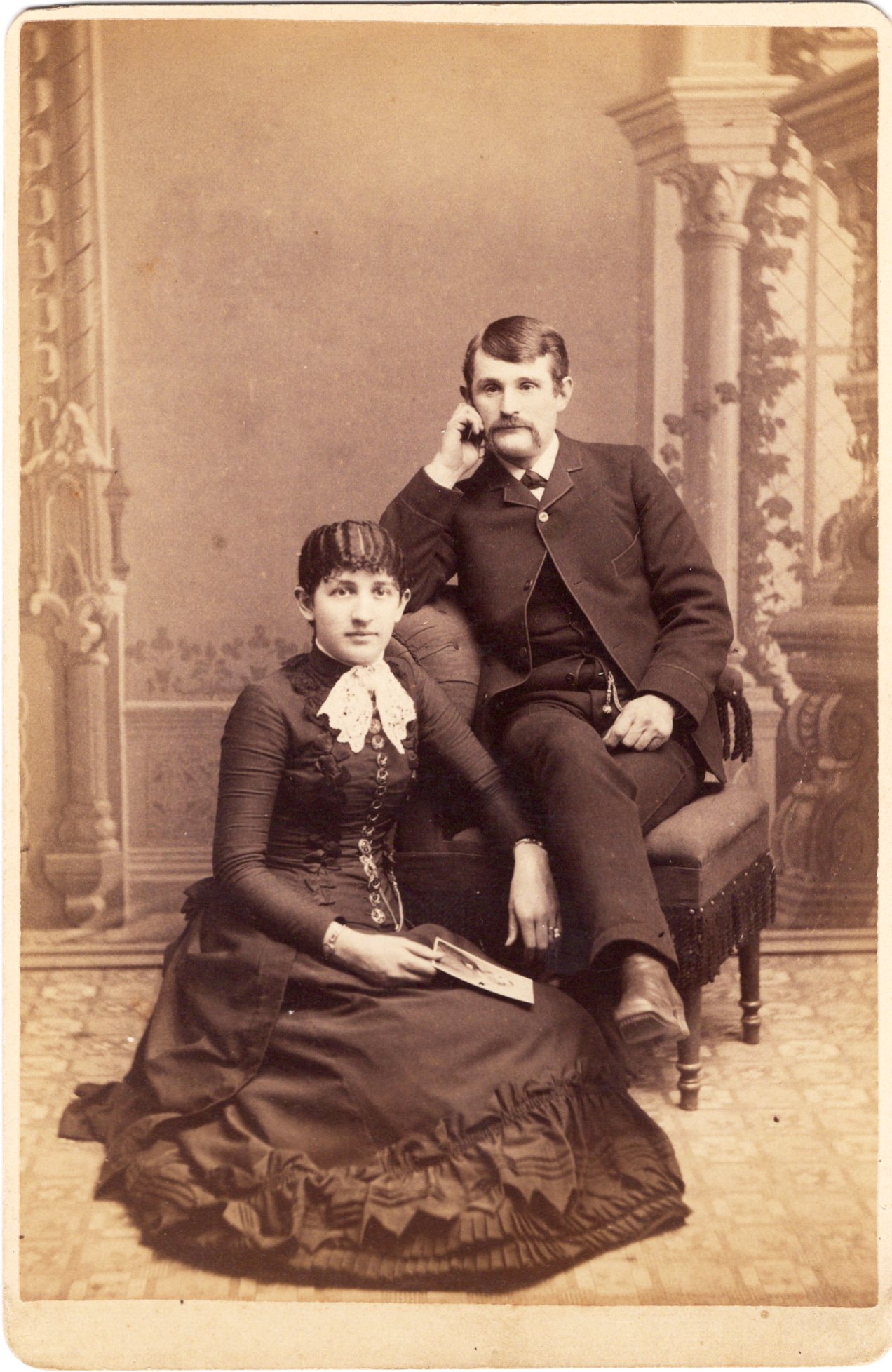
PORTRAIT OF AN ATTRACTIVE FASHONABLE COUPLE : WOMAN HOLDS CABINET CARD


This is an interesting cabinet because of the way that this couple is posing for their portrait. It is unusual to see a a woman sitting on the floor while posing for a cabinet card photograph. It is also not typical to see a woman sitting at the feet of a man in cabinet card images. The subjects of this photograph may be married, or perhaps, they are brother and sister. The couple is nicely dressed and the woman is holding a photograph of a man. The backdrop is high quality. There is no identifying information about the two individuals in the image or about the photographer. This cabinet card portrait is in excellent condition (see scans).
Buy this Cabinet Card (includes shipping within the US) #3841
To purchase this item, click on the Pay with PayPal button below
$28.70

Buy this Cabinet Card Photograph (includes International shipping outside the US) 3841
To purchase this item, click on the Pay with PayPal button below
$37.95

MLLE POLAIRE: FRENCH SINGER AND ACTRESS (PHOTOS BY REULINGER & NADAR)
 Photo 1
 PHOTO 2
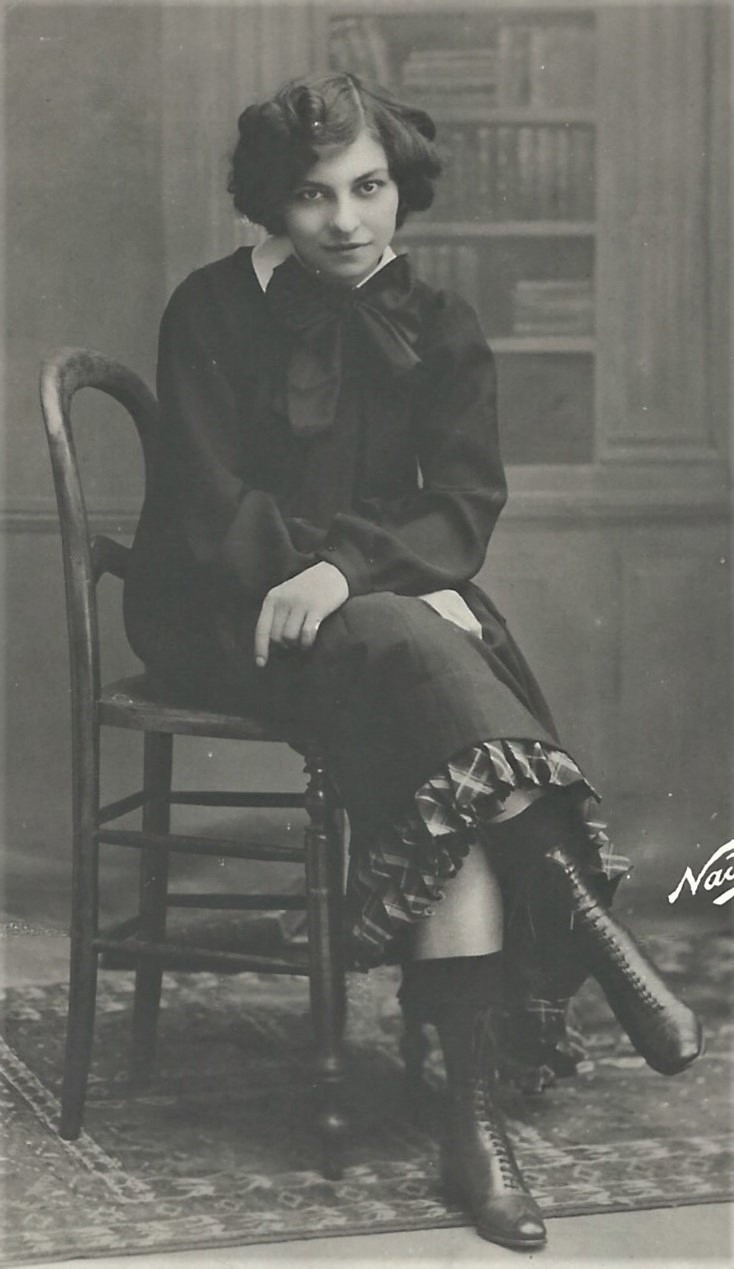 PHOTO 2 (CLOSE-UP)
Mlle Polaire is actually the stage name used by French singer and actress Emilie Marie Bouchaud (1874-1939). Polaire was born in Algiers, Algeria and began her theatrical career as a cafe singer at the young age of 15. She moved to France two years later and ad0pted the stage name Polaire and became a music hall singer. In 1895, Henri de Toulouse-Lautrec drew a sketch of her which appeared in the satirical magazine Le Rire. In 1900 her portrait was painted by Leonetto Cappiello and her popularity rose even more. She began acting in Paris in 1902 and became a major celebrity star. She was thought to be a gifted comedic actress but was also very well known for her beauty. She was famous for her tiny, corsetted waist. She was five feet and three inches tall. She lavishly overdressed in furs and dazzling jewels. In 1911 she appeared in her first silent film role and later appeared in six films of director Maurice Tourneur in 1912 and 1913. She then returned to the stage and toured the United States and England. She later made a reappearance in films, performing in ten (some were talkies). She died at age 65 and was buried in France. This cabinet card photograph (Photo 1) was taken in Paris, France at the studio of Reutlinger. Charles Reutlinger (1816-1860) was a French photographer whose studio operated between 1850-1937 in Paris, France. Among his subjects were many celebrities including the prettiest ladies of Paris. To view other photographs by Reutlinger, click on the category “Photographer: Reutlinger”. The second photo of Miss Polaire is featured in this vintage real photo postcard (Photo 2). She looks beautiful in this image. She is sitting cross-legged and wearing dark clothing, boots, and a large bow. Examining the print of the front of the card provides some interesting information. We learn that the photographer of this image is the celebrated and talented Paul Nadar (1856-1939).He was a French photographer. He learned photography by his father, Felix Nadar, also a talented portraitist. Paul eventually ran his father’s studio. The establishment catered to a affluent clientele and was very successful. In 1890 he began shooting photographs from a hot air balloon. The press referred to him as “The Fearless Paul Nadar”. Nadar also photographed sites in Europe and Ssia along the ancient silk route. Some consider his work from that trip to be the first incidence of “photo-reportage”. In 1893 he became an agent in France for Eastman Kodak. The word “Eclair” appears in the bottom right hand corner of the photo. The Eclair Company was a movie production company established in 1907 and headquartered in Paris. The company produced many silent shorts in France beginning in 1908 and it’s American division produced films from 1911 through 1914. Included in their productions was one of the first film version of “Robin Hood”. In the top left hand corner of the photograph is the word “Bouffes”. The “Theatre des Bouffes-Parisiens” is a theatre located in Paris and founded in 1855. It was the location of the production that Miss Polaire was appearing in when she posed for this photograph. The name of the production can be seen in the bottom border of the card, “Claudine a l’Ecole”. The translated title of the play is “Claudine at School”. The story is from a 1900 novel by the French writer, Colette. It is a tale about a 15 year-old girl and her brazen conflicts with the headmistress and fellow students in her school. This vintage postcard has a great deal of back story. It is in excellent condition (see scans).
Buy this Vintage Real Photo Postcard (includes shipping within the US) #3062
To purchase this item, click on the Pay with PayPal button below
$38.76
Buy this Vintage Postcard (includes International shipping outside the US) 3076
To purchase this item, click on the Pay with PayPal button below
$47.25
 PHOTO 2
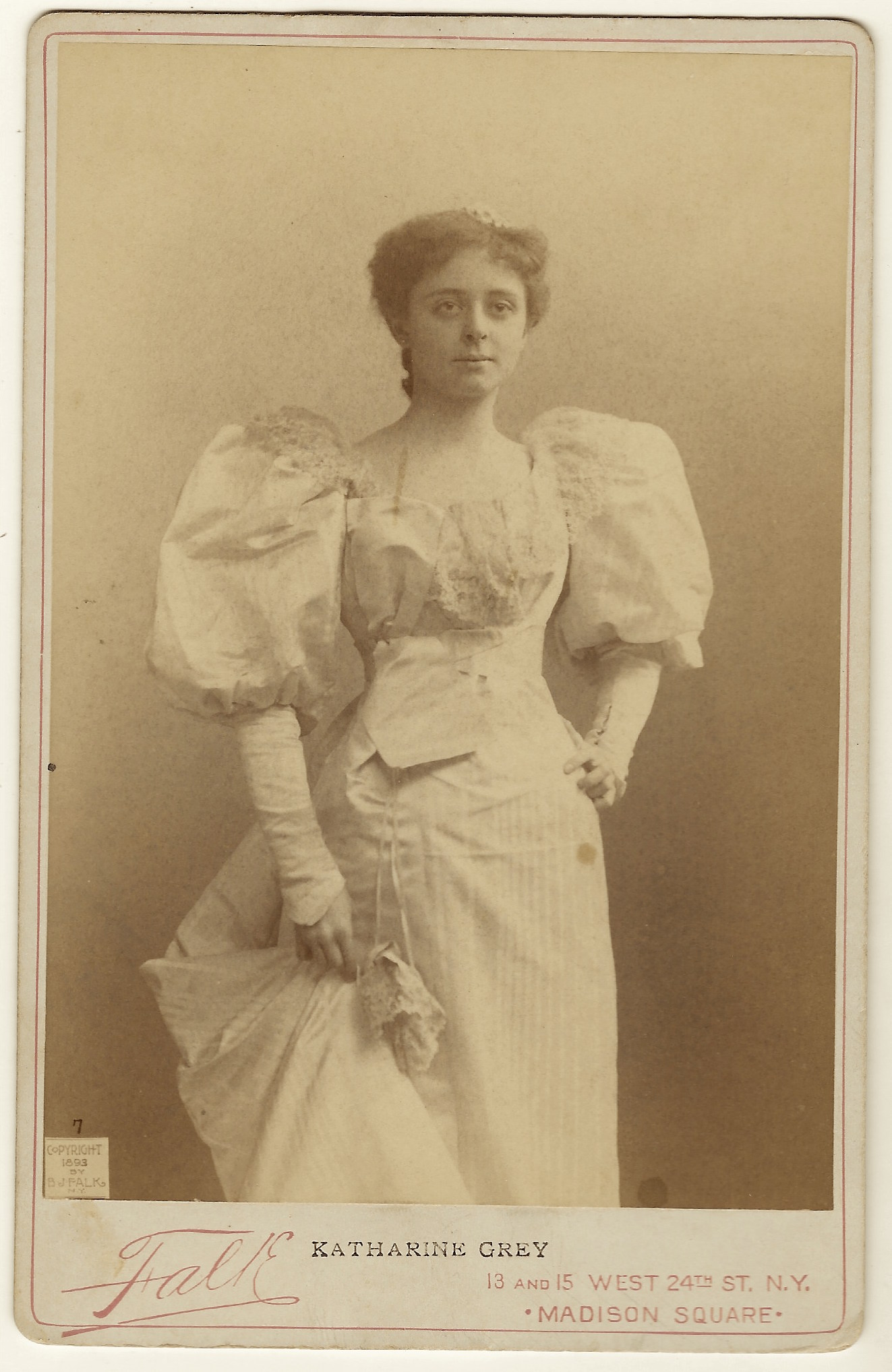
KATHARINE GREY (1873-1950): THEATRE ACTRESS
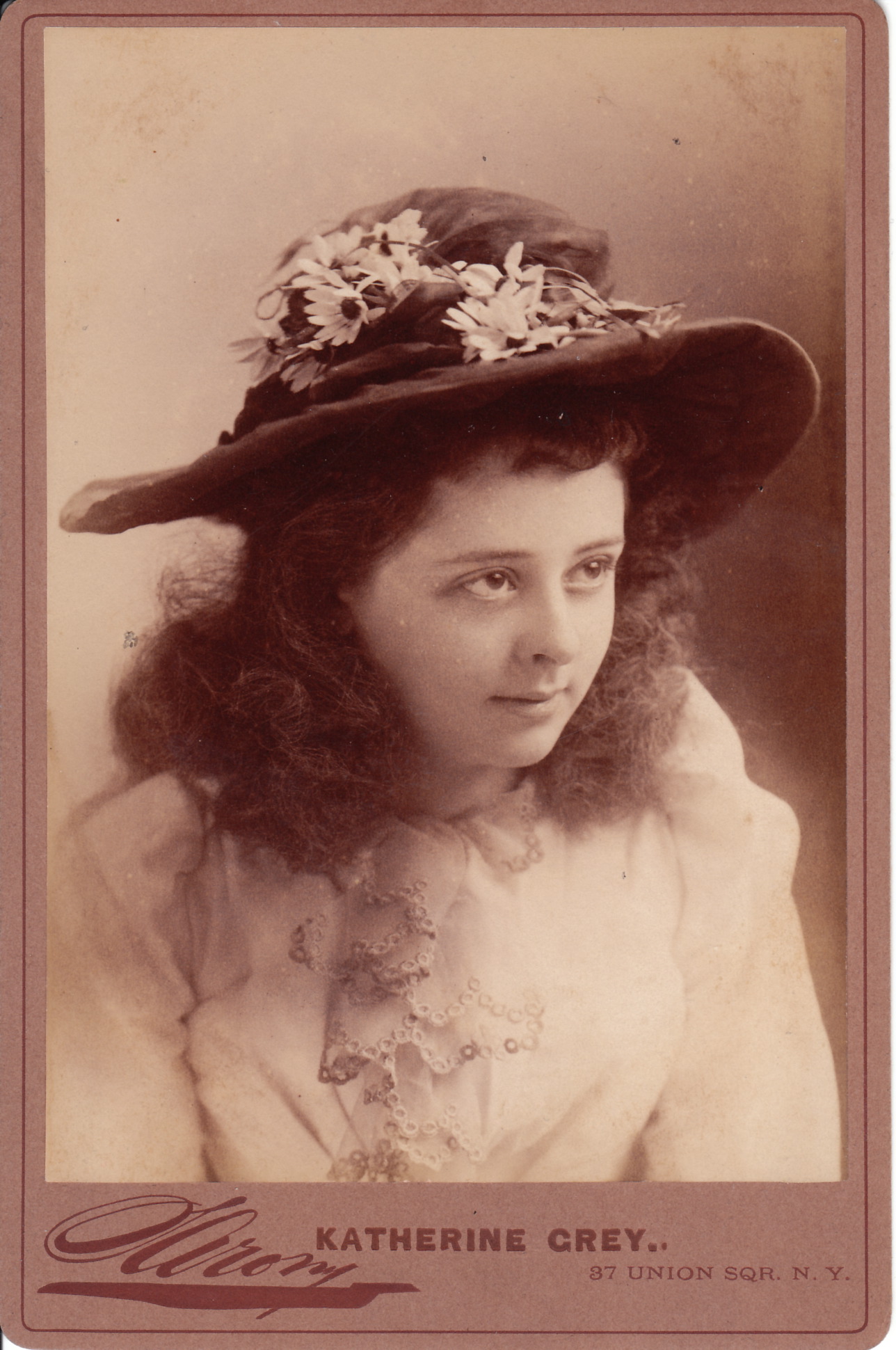 PHOTO 1
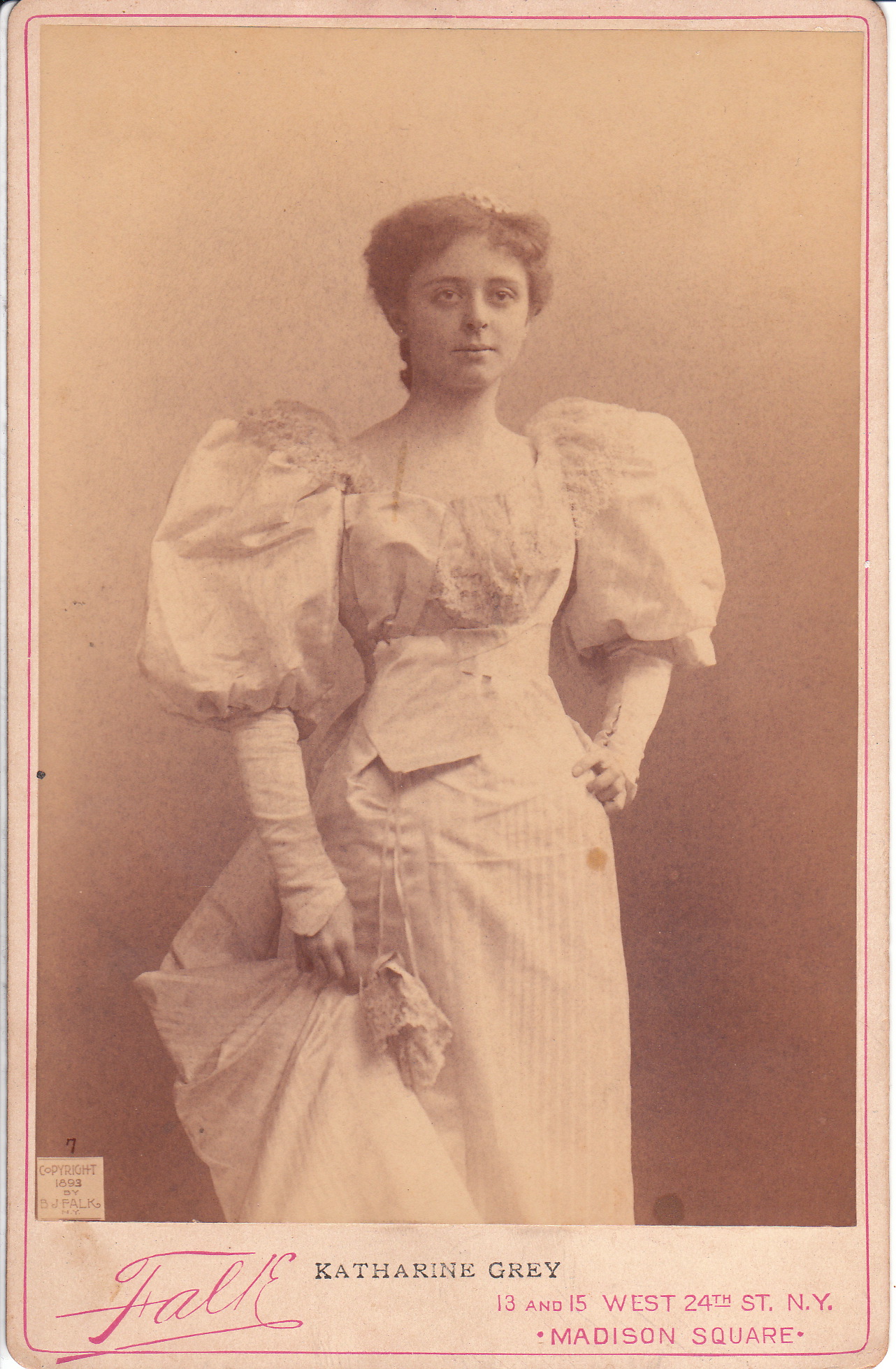 PHOTO 2
Katherine Grey (1873-1950) was an American theatre actress who appeared in more than 25 Broadway shows between 1895 and 1940. In the top cabinet card, she is photographed by Sarony, of New York City, the famed theatrical portrait photographer. Note the daisies on her hat. In the bottom cabinet card, Grey is photographed by famed celebrity photographer B. J. Falk, also of New York City. In this image she is holding the bottom of her dress in her right hand. The photograph is dated 1893 and in good condition (see scans).
Buy this original Cabinet Card Photograph (includes shipping within the US) #2755
To purchase this item, click on the Pay with PayPal button below
$28.50
Buy this original Cabinet Card Photograph (includes International shipping outside the US) 2755
To purchase this item, click on the Pay with PayPal button below
$36.50

VERY ATTRACTIVE COUPLE IN HOLYOKE, MASSACHUSETTS
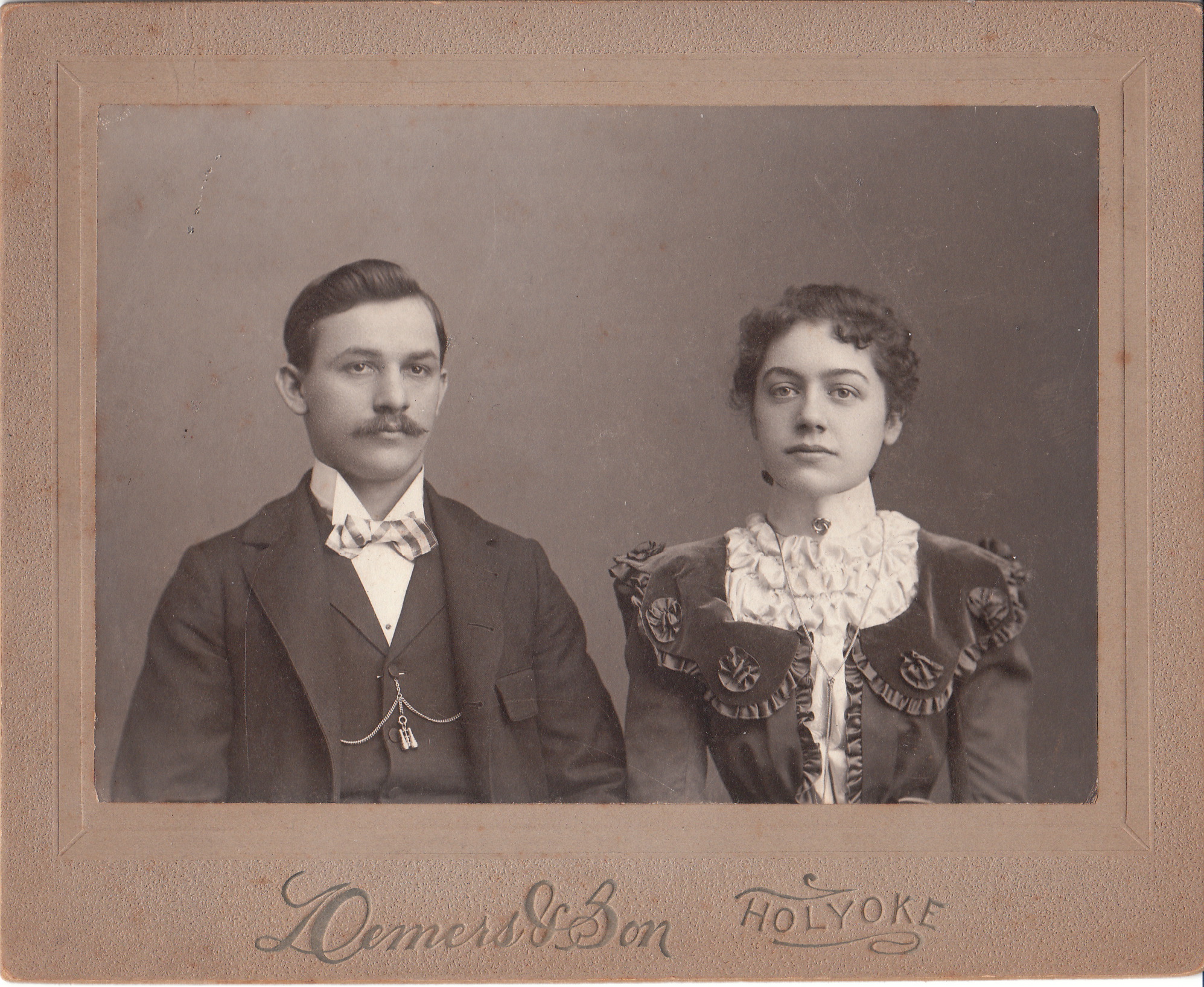
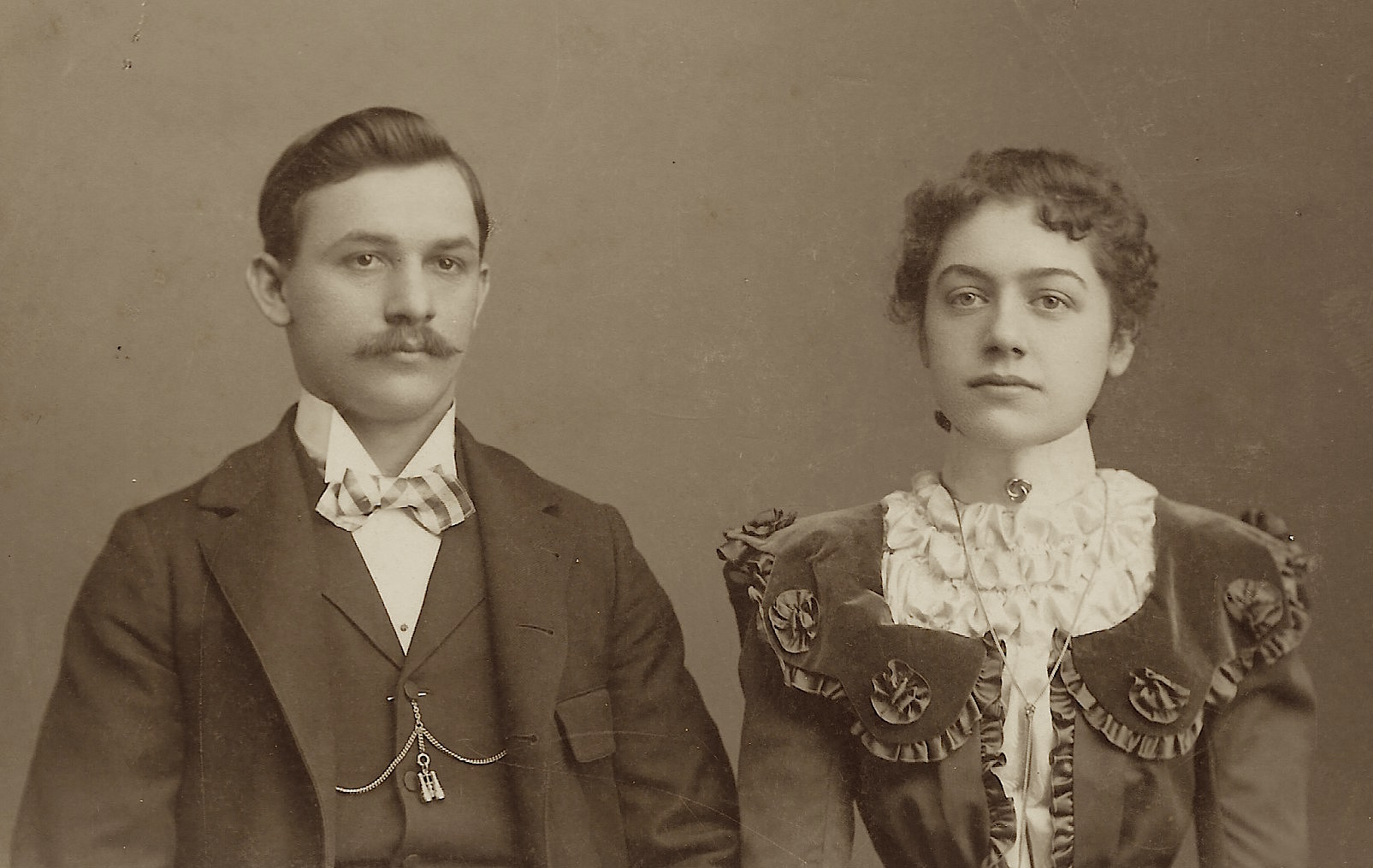
This photograph by Demers & Son of Holyoke, Massachusetts is a portrait of a very attractive and beautifully dressed couple. Is this the turn of the century version of Brad Pitt and Anjelina Jolie? The photographer of this photograph was from a studio called Demers & Son. The studio was located in Holyoke, Massachusetts. Demers & Son was comprised of Jacques Louis Demers ( c1833-1913) and his son Hormisdas Demers. They were French Canadians. “Mudra51”, provides biographical material about the pair on Flickr. Jacques was a French Canadian born in Montreal. He received his education in Montreal and studied portrait painting. He appears in Montreal directories as a working photographer from 1861 through 1875. Jacques came to Holyoke in 1883 and opened a photographic studio. The studio became known as Demers & Son by 1885 and the studio continued to do business until 1920. Jacques retired in 1909 and relocated to Ludlow, Massachusetts. He died there and was buried in Montreal. Hormisdas was born in Quebec, Canada in around 1867. His name, translated from Persian, is “the great wise one”. In 1881, Hormisdas first appears in a Quebec directory as a photographer. He came to Holyoke with his father. After the closure of Demers & Son, he still worked as a photographer and appears in the US census as a photographer through 1930. (SOLD)
YOUNG AFRICAN AMERICAN GIRL IN NEWARK, NEW JERSEY


This young African American woman is posing for her photographic portrait at the studio of J. Henry Smith in Newark, New Jersey. Smith is listed in Newark business directories as early as 1870 and as late as 1897. The young lady in this photograph appears to be in her teenage years. Cabinet card photos of African Americans are not very common. (SOLD)

MYSTERY CHANTEUSE PHOTOGRAPHED BY NADAR
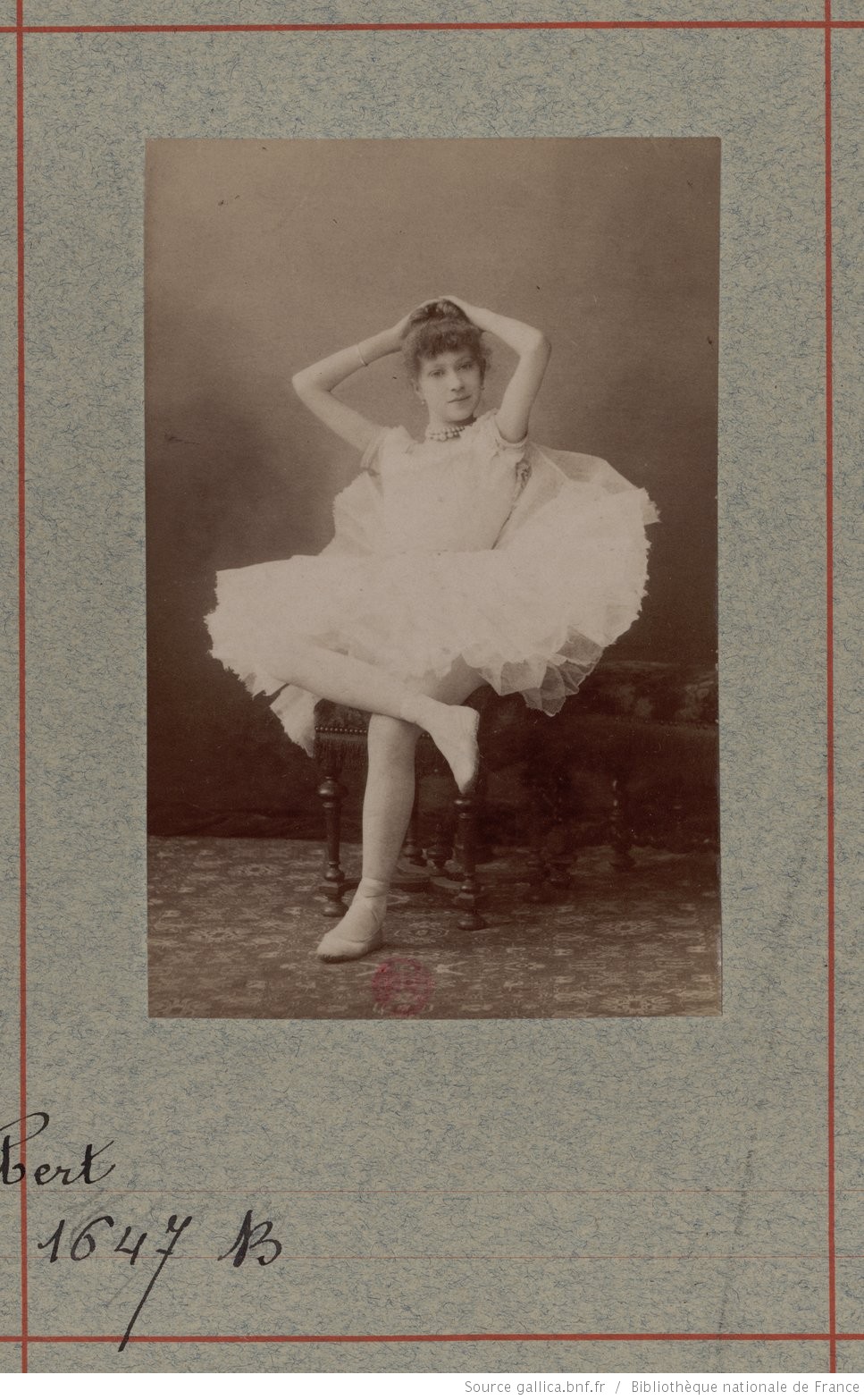
 This Cabinet Card presents a bit of a mystery. The photograph is by famed French photographer, P. Nadar of Paris. The subject of the photograph is a mystery. The reverse of the card has the name “Ilbert” written in two places. In addition the word “Chanteuse” also appears. Is she an opera singer? Is she a nightclub singer? The woman is very stylish and is wearing a fur and interesting hair clip. Hopefully, a viewer will leave a comment with some identifying information. ADDENDUM: This photograph entered into the cabinet card gallery in 2009. Since then there have been a number of cabinet card gallery visitors that have left comments concerning the identity of the subject of this image. There has been some disagreement, but at least two visitors have identified this performer as being Yvette Guilbert (1867-1944). To follow the discussion about identification, check out the comment section below. Now back to Mlle Guilbert. Born as Emma Laure Esther Guilbert, she began singing as a child but worked at a Paris department store model when she turned sixteen. She also took acting and voice lesson and in 1886 she began working as an actress. She debuted at the Variette Theatre in 1888. She was soon singing at a number of popular clubs before starring in Montmartre at the Moulin Rouge in 1890. Over time she began to sing a lot of monologue “patter songs”. Often the lyrics were risque, even raunchy. Her song frequently featured tragedy and poverty. Guilbert was audacious and audiences ate it up. She was celebrated in France, England and the United States. She was a favorite subject of artist Henri de Toulouse-Lautrec, who made many portraits and caricatures of Guilbert. Later in her career, she appeared in silent movies, talkies and made recordings. She also wrote books about the Belle Epoque. It is interesting to note that Nadar, the photographer of the mystery chanteuse also photographed Yvette Guilbert. A Nadar photograph of Mlle Guilbert is part of the collection at the National Library of France. A copy of that image can be found below.
FLORENCE COLLINGBOURNE: STAGE ACTRESS

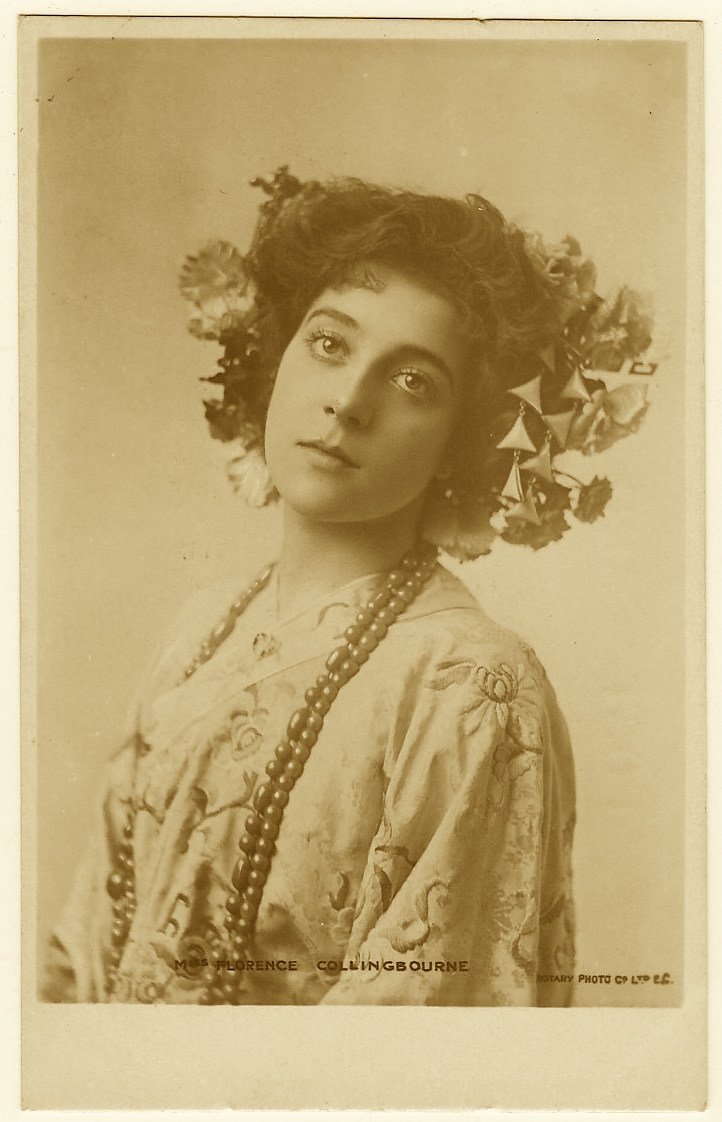
The beautiful woman pictured in this Cabinet card is stage actress, Florence Collingbourne. Obtaining significant biographical information about her has been difficult and further research will be done and provided in an addition to this blog. However, information from readers about this stage beauty will be appreciated. The Cabinet card was produced by the Rotary Photographic Company which also produced many postcards with images of theatrical stars. This Cabinet card was published in London, England. The second image displayed is a vintage real photo postcard also featuring the beautiful Miss Collingbourne (1880-?). The postcard was published by the Rotary Photo Company. The reverse of the postcard has evidence that it once occupied a photo album.

Isabel Irving: American Stage Actress
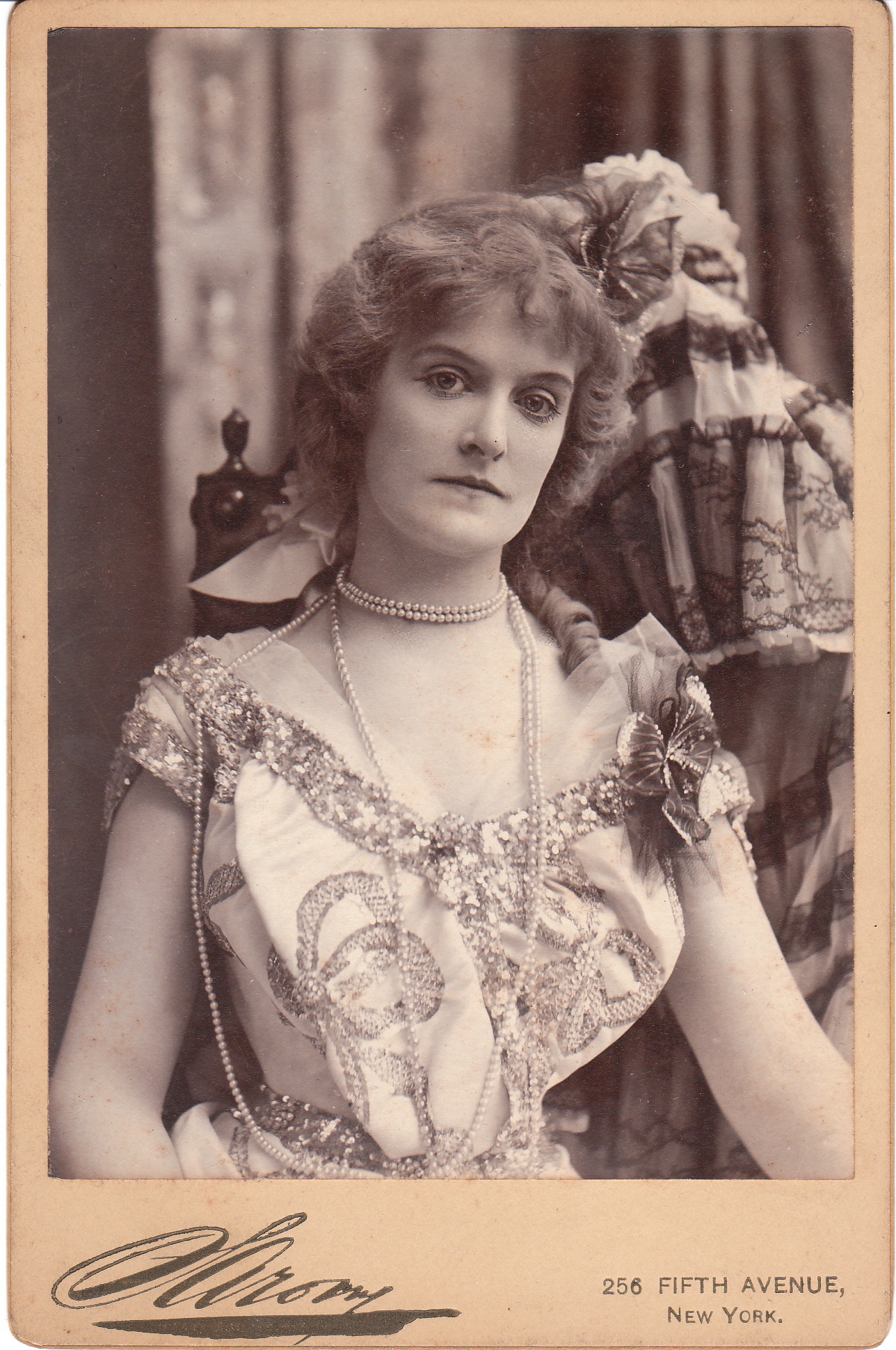
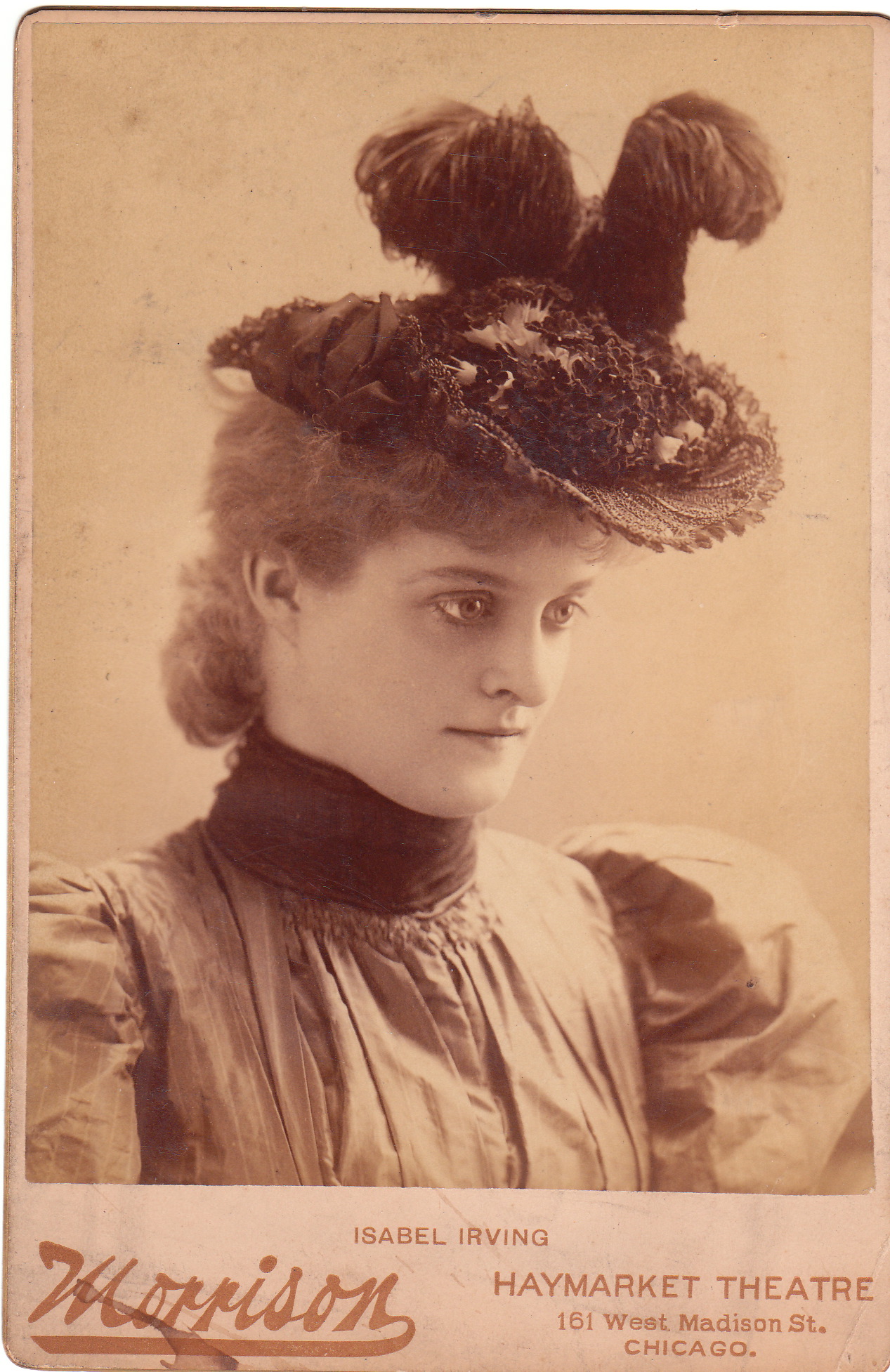
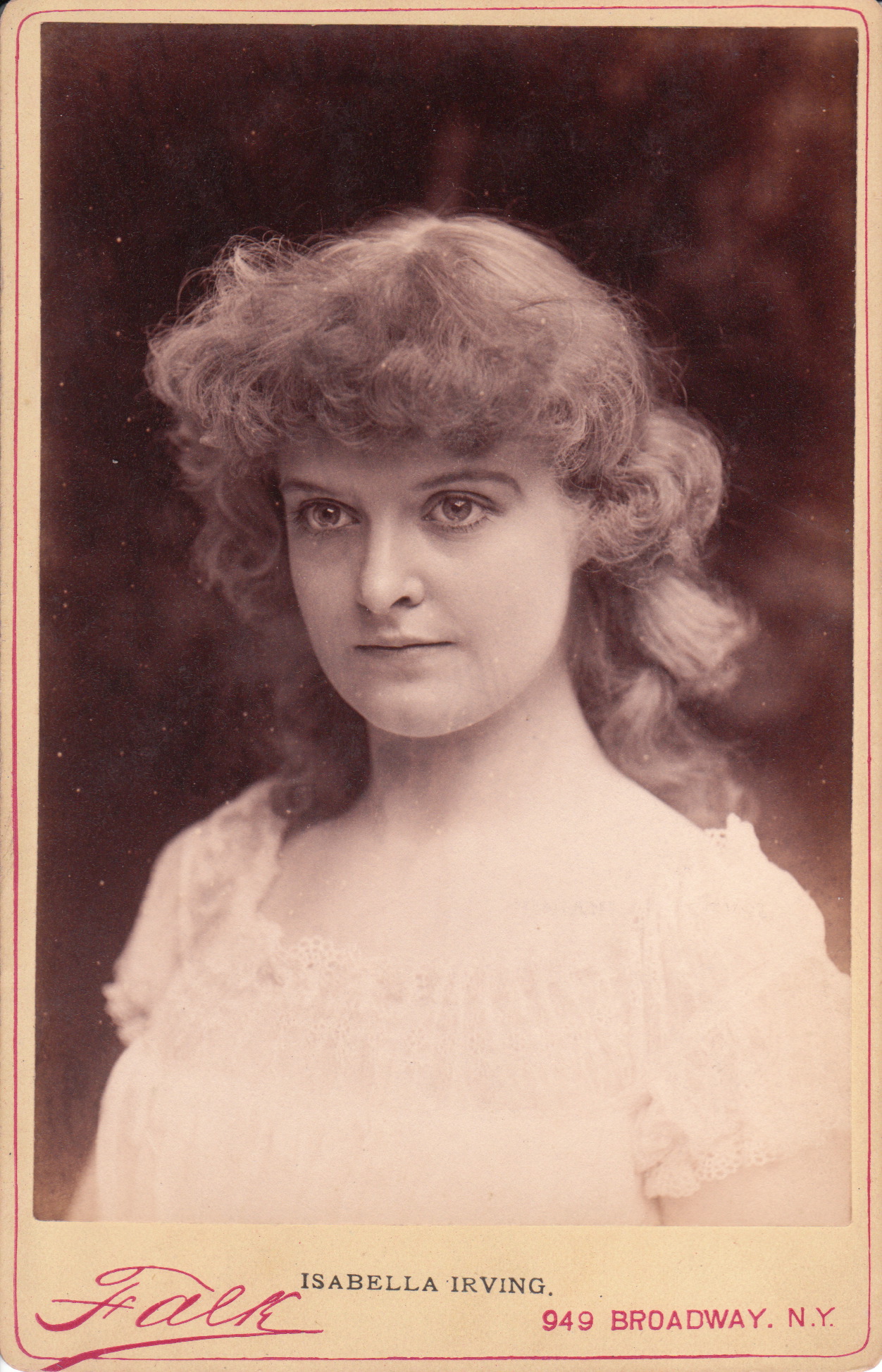
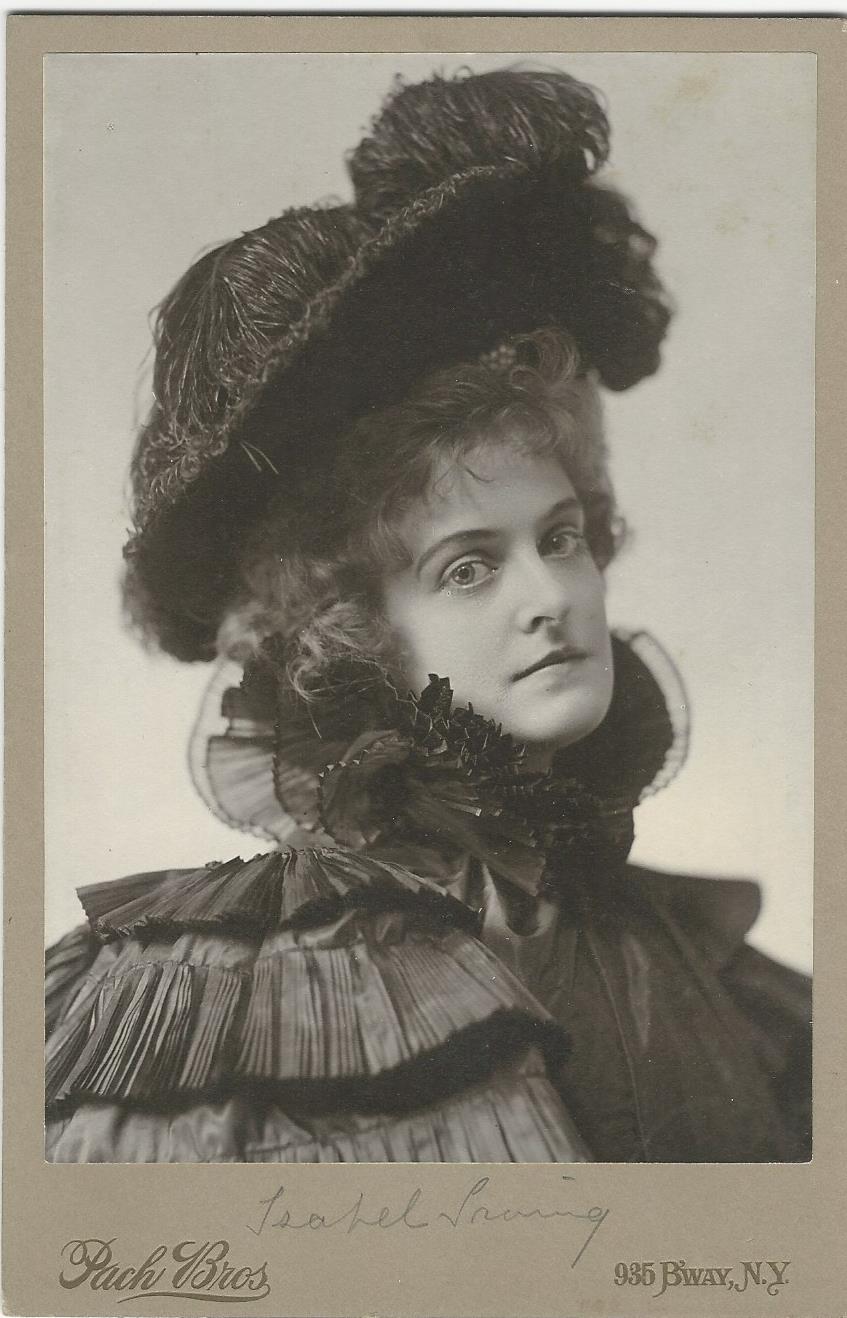
Isabel Irving (1871-1944) was an American actress born in Bridgeport, Connecticut. Her stage career began in 1886. She performed in many performances of Shakespeare. She was also in more than 30 Broadway plays between 1894 and 1936. These plays included “Merry Wives of Windsor” (1917) and “Uncle Vanya” (1930). The first cabinet photo was done at the studio of Napoleon Sarony in New York. Sarony was a very famous photographer of his time and known for his photos of theatrical performers and other celebrities. The second photograph comes from the studio of William McKenzie Morrison who was located in the Haymarket Theatre building in Chicago, Illinois. The third cabinet card portrait features Miss Irving photographed by celebrated New York photographer Benjamin Falk. The fourth cabinet card was produced by Pach Brothers studio in New York City. To view a photograph of Isabel Irving’s sister, write “Evangeline Irving” in the search box and press search. To view other photographs by any of the four cited photographers, click on the category “Photographer: Falk, Photographer: Sarony, Photographer: Morrison, or Photographer: Pach Brothers.


