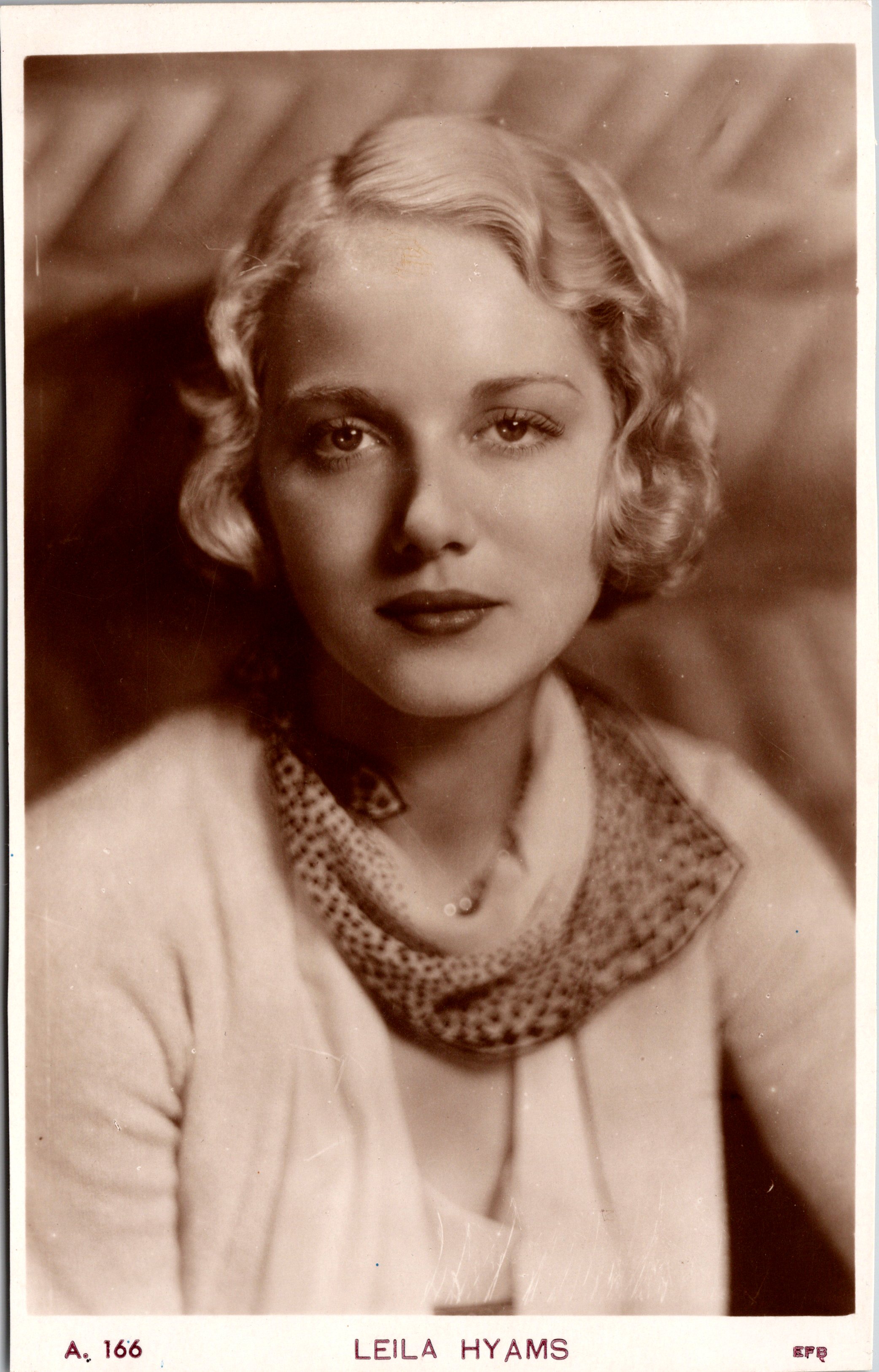
This vintage real photo postcard features American film and stage actress, model and vaudeville player, Lila Hyams (1905-1977). Her parents were vaudeville comedy performers and her mother was also a well thought of actress. Her parents also appeared together in a number of films. Leila began acting on stage as a child. In her teenage years, she worked as a model and became nationally known. She modelled for the first ad for Listerine. Leila’s film career was during the silent film and early talkie era and spanned from 1924 through 1936. Often playing leading lady roles, she appeared in more than fifty films. “Freaks” (1932) was one of best known movies. Leila married her talent agent in 1927 and they stayed together for 50 years. The New York Times wrote in her obituary that she was “an attractive blonde actress who was eminently successful at playing ingenues. This vintage postcard portrait is in very good condition (see scans). SOLD
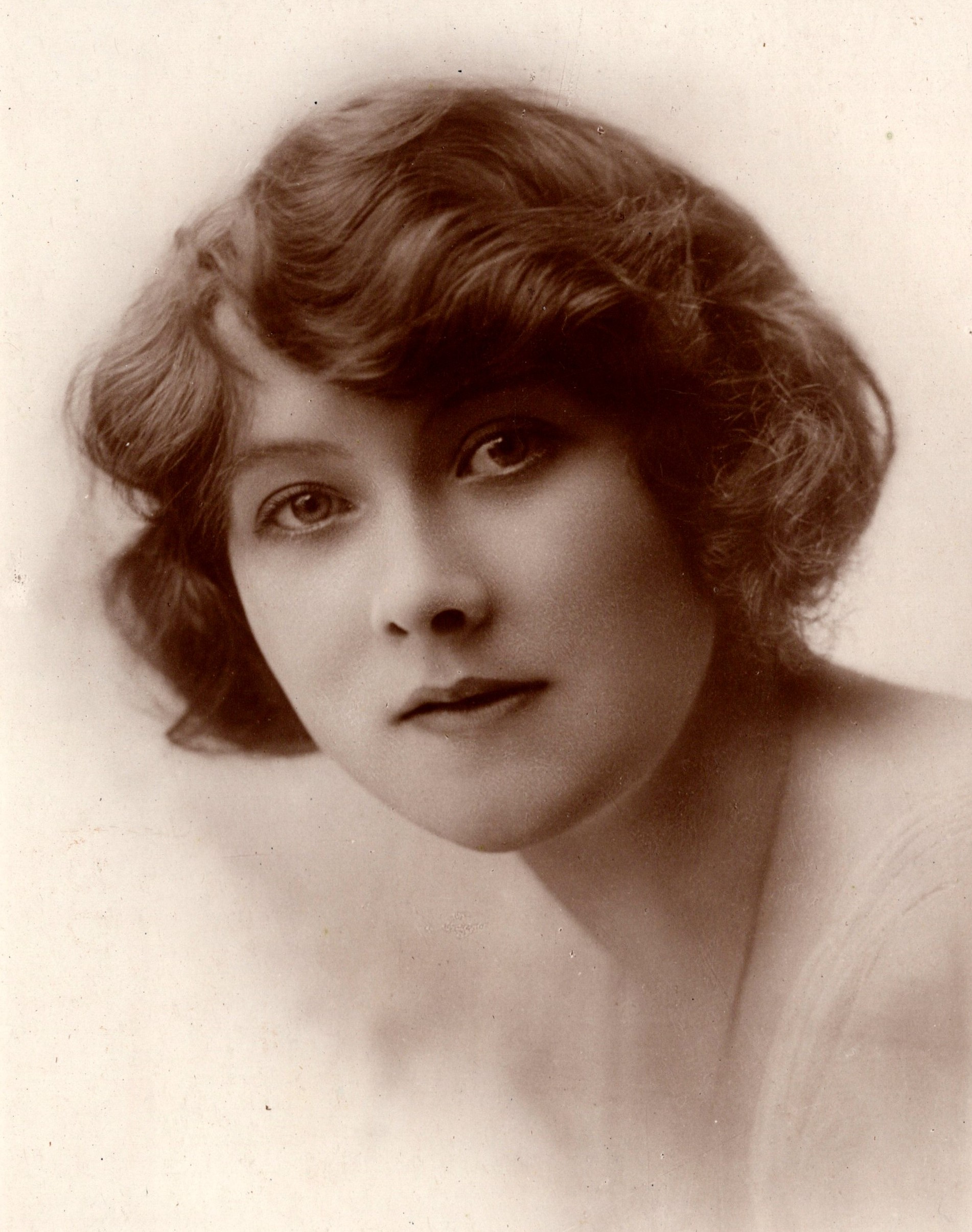
This vintage real photo postcard features British actress, Alma Taylor (1895-1974). She began her career as a child actress, making her screen debut in 1907. Taylor had brown hair, blue eyes, and a great deal of charm. She appeared in more than 150 film roles during her performing career. She was one of Britain’s major film stars during the 1910’s and early 1920’s. In 1915, she was voted the most popular British performer in a major magazine poll. Charlie Chaplin claimed second place. Most of her silent career was with producer, Cecil Hepworth. He refused to let her wear makeup in any of his films. After 1932, she acted only occasionally. The photograph on this postcard was taken while Taylor was under contract with Hepworth Pictures. (SOLD)
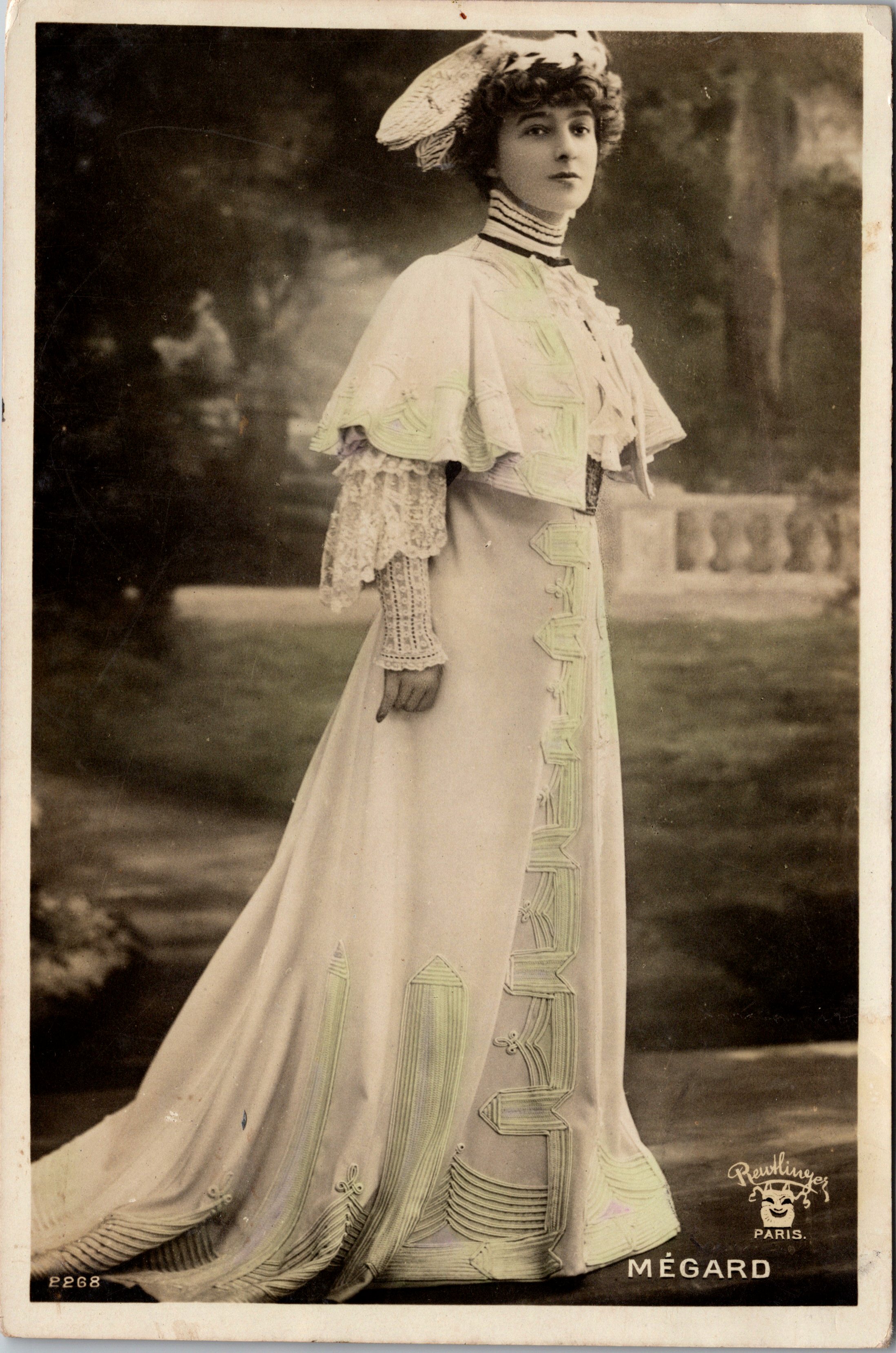
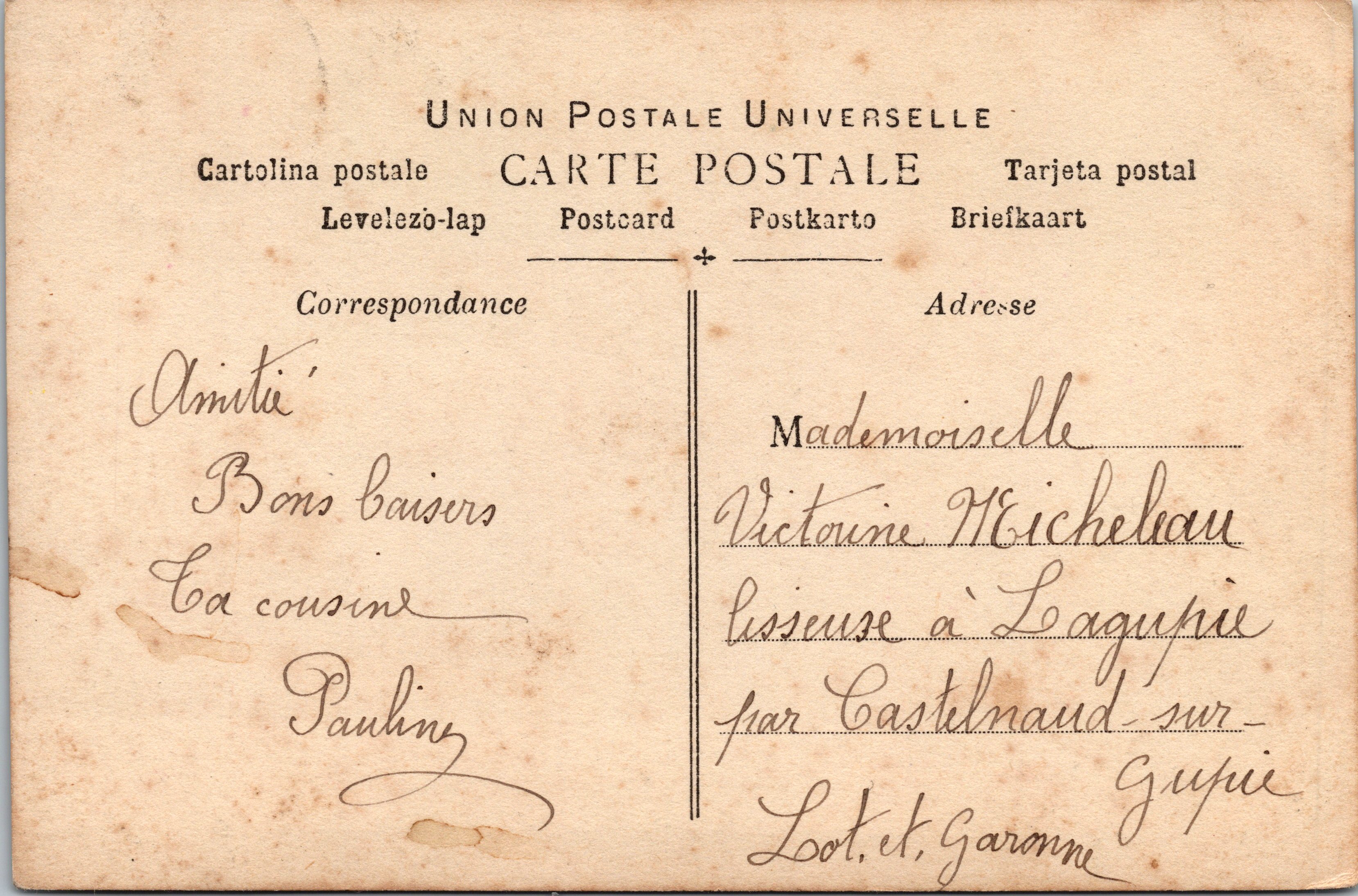
This vintage real photo postcard features a portrait of French actress and stage beauty, Andree Megard (1869-1952). She was born in France. Her parents were “well-off peasents” . At some point, her parents sent her to an Aunt to work in the aunt’s dry goods store. At fifteen years of age, she ran away to Paris. At first, she worked as an artist model. From 1896 to 1925, she appeared on the Paris stage in such works as Shakespeare and plays directed by her husband, Firmin Gemier. In 1913, while playing in Rostand’s Cyrano de Bergerac, she had an affair with Rostand. In 1907, she starred in “Anna Karenina”. In 1909, she appeared in a silent film. Megard was viewed as representing the highest echelon of fashion and beauty. She was considered “tall, graceful, and distinguished looking”. The international public monitored her hairstyle, and her costumes very closely. She was the subject of many magazine and newspaper articles. The portrait of Miss Megard seen on this postcard was taken by Leopold Reutlinger’s studio in Paris, France. It is part of a series (no.2268). Reutlinger was a very popular celebrity photographer. This vintage postcard portrait is in good condition (see scans).
Buy this Vintage Real Photo Postcard (includes shipping within the US) #3796
To purchase this item, click on the Pay with PayPal button below
$18.74
Buy this Vintage Real Photo Postcard (includes International shipping outside the US) 3796
To purchase this item, click on the Pay with PayPal button below
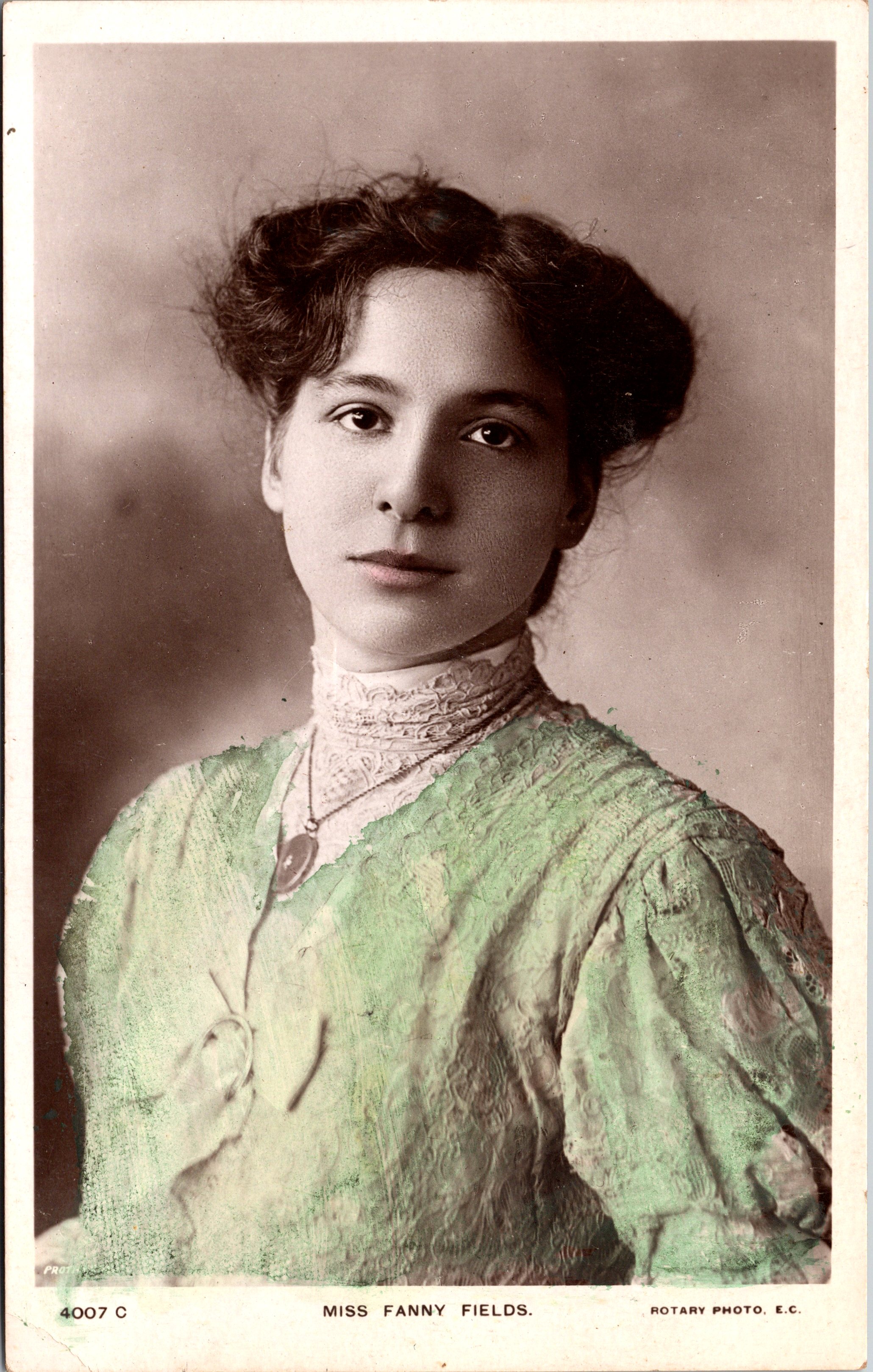
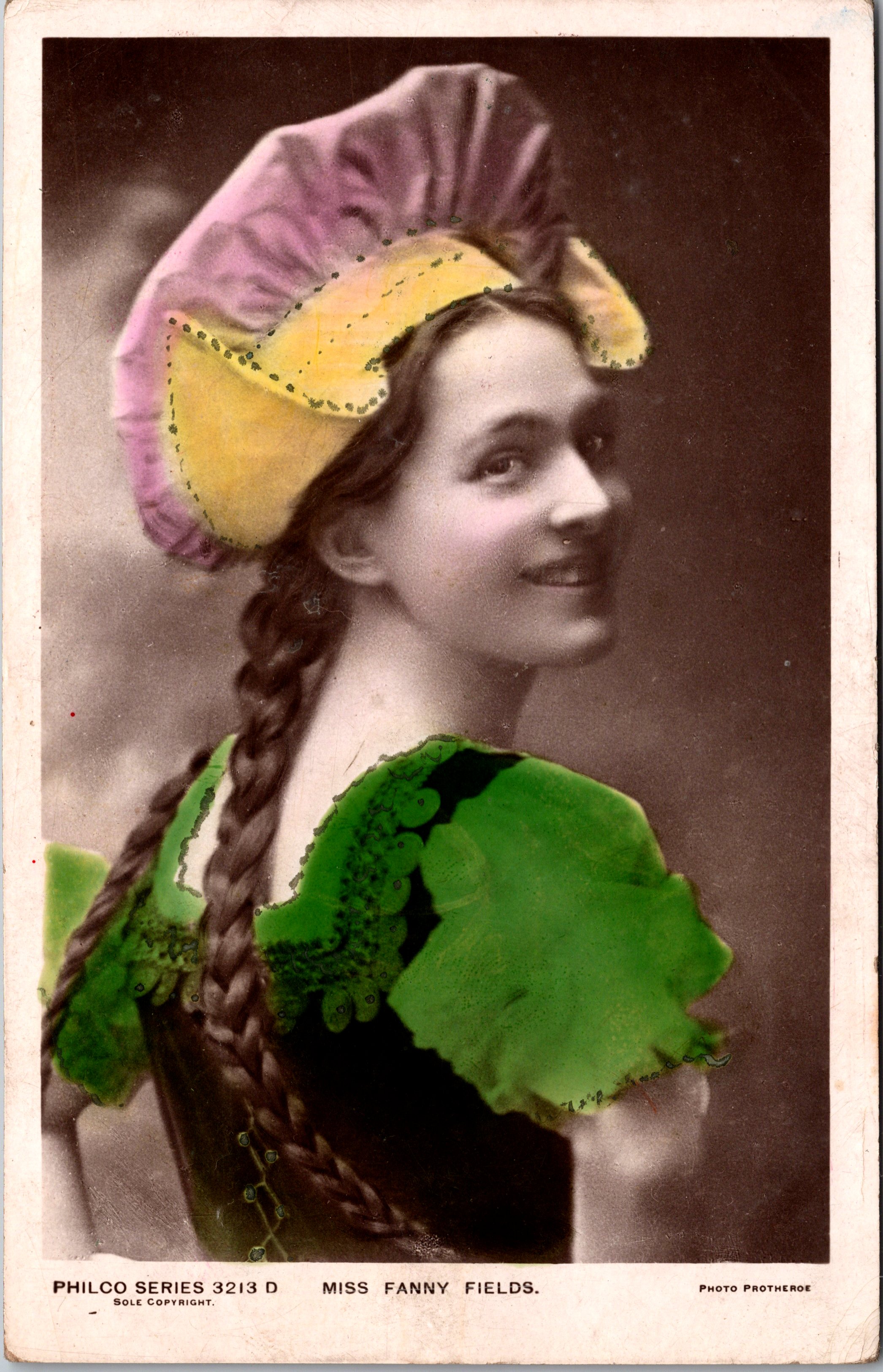
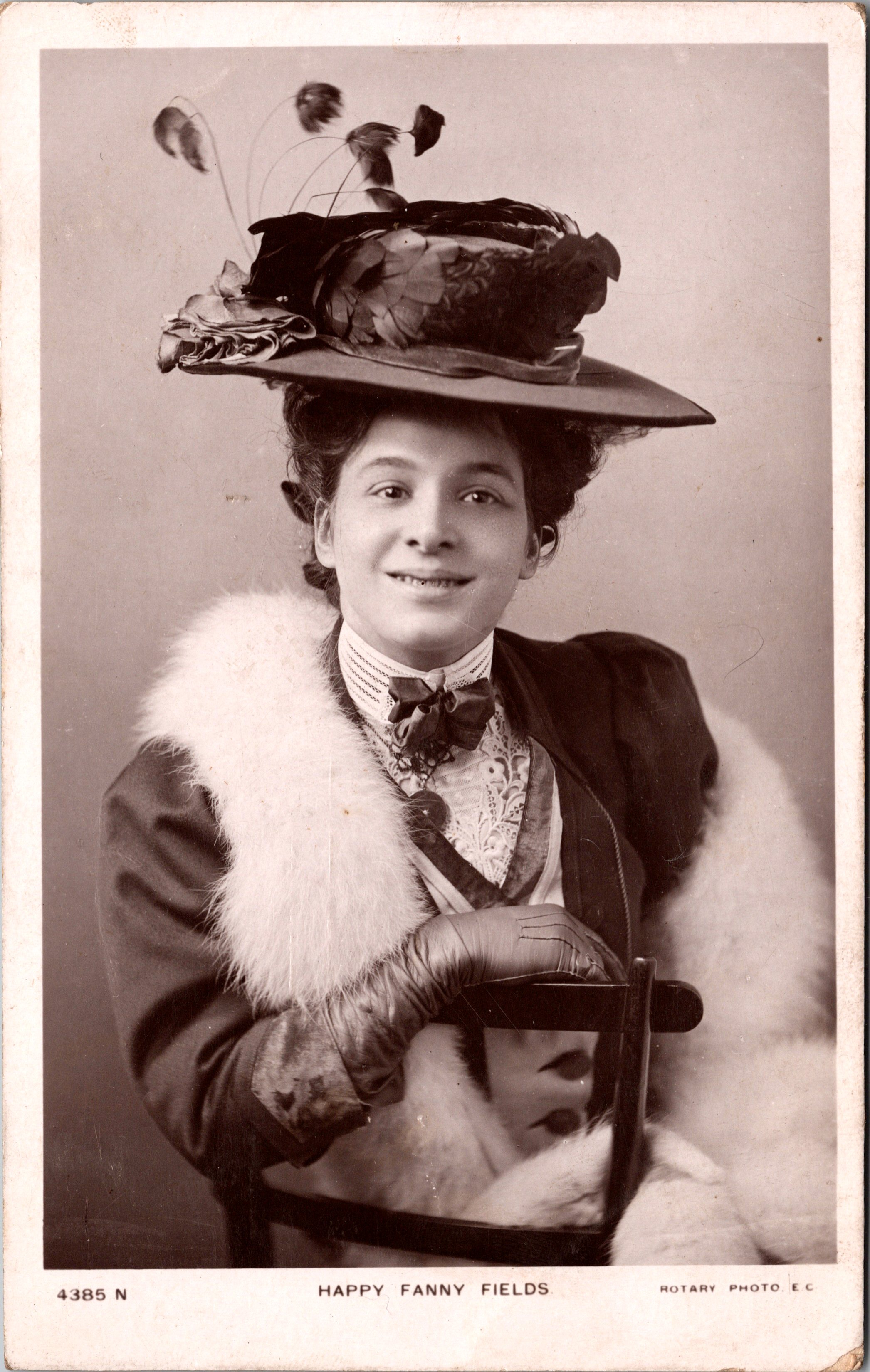
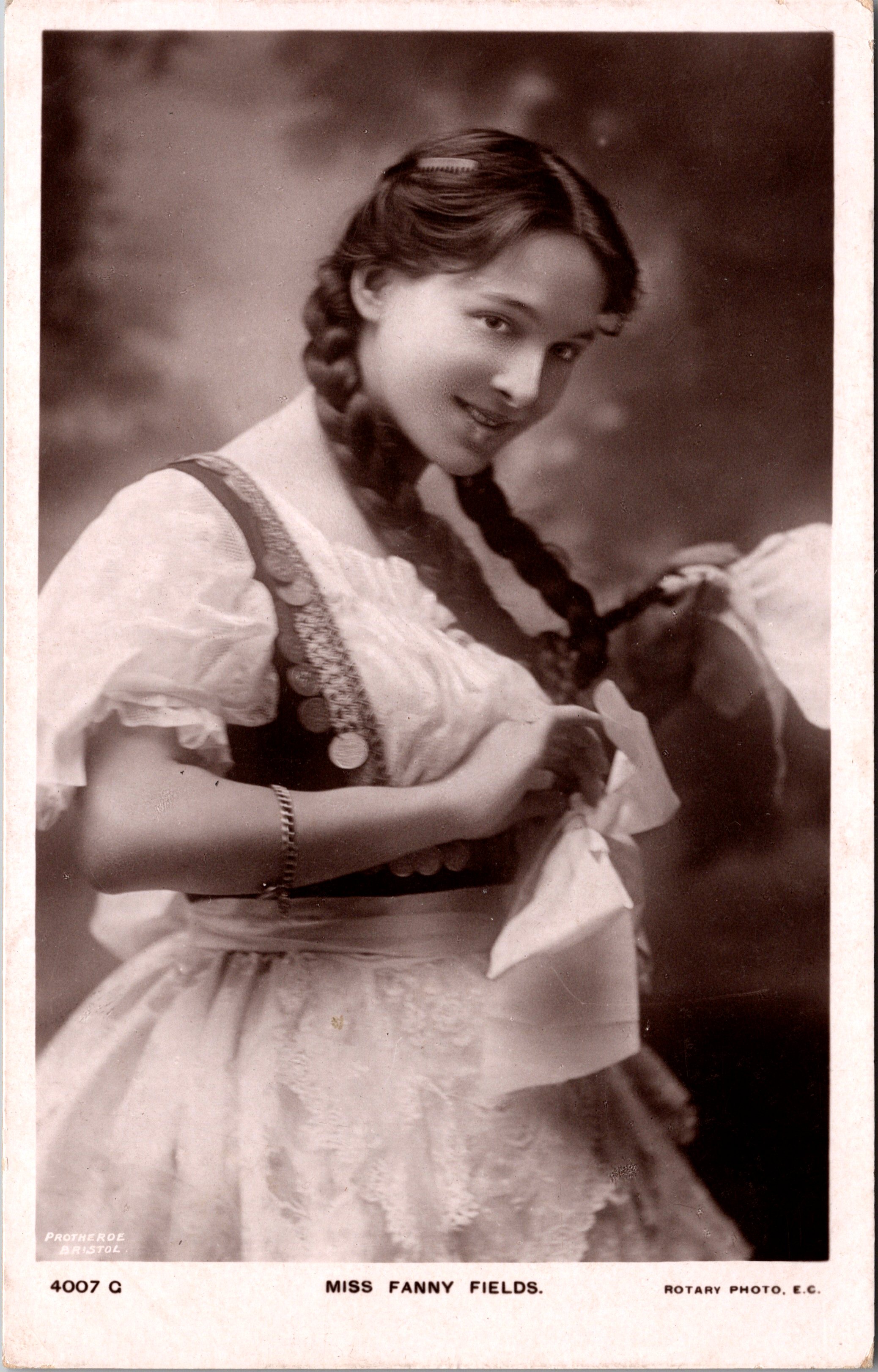
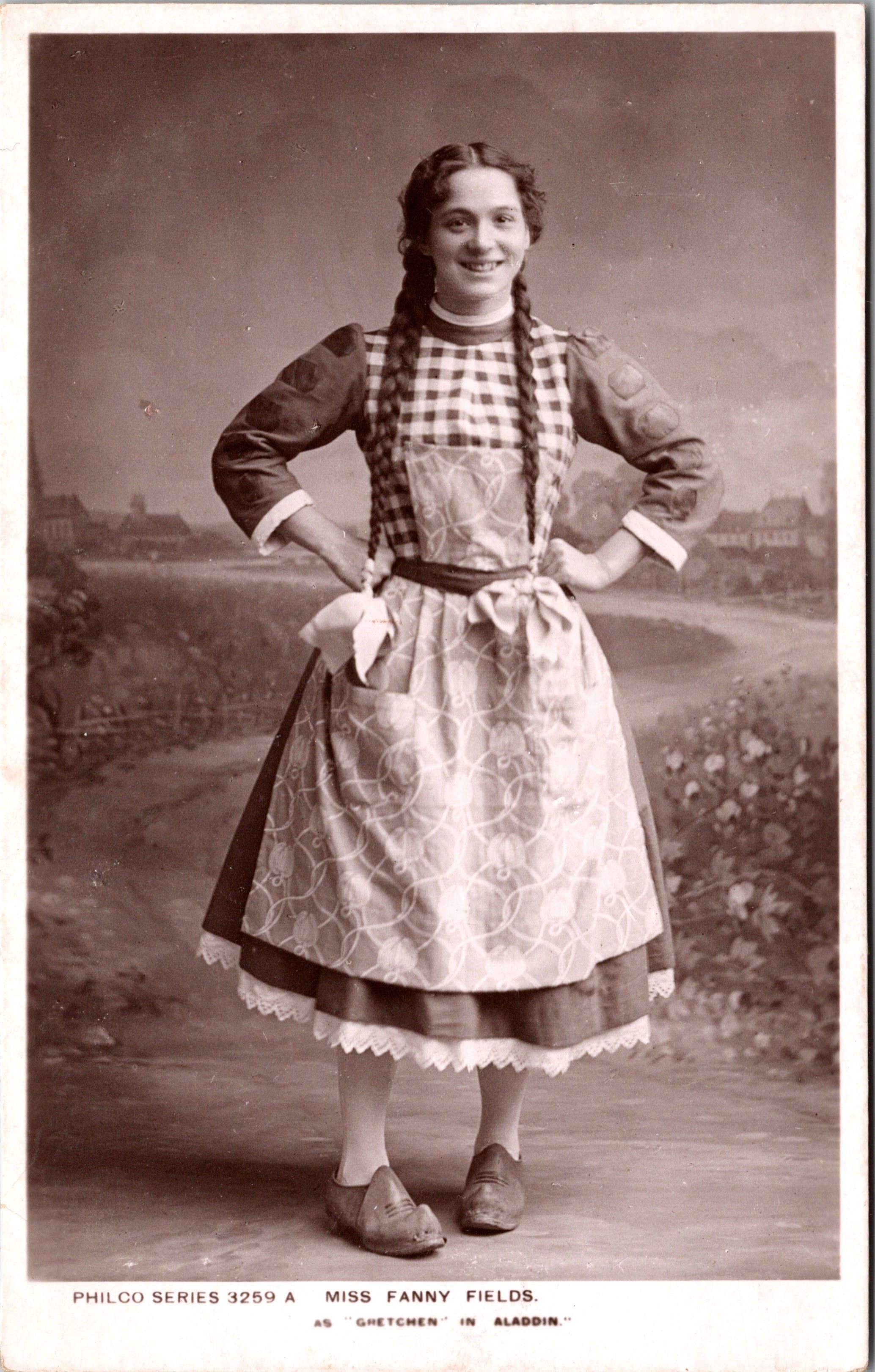
This vintage real photo postcard features American singer, dancer, and comic performer, Fanny Fields (1880-1961), who was a successful performer in British music halls and pantomimes in the early 1900s. During her career she was frequently billed as “Happy” Fanny Fields. She was born, Fanny Furman, in New York City, to a Jewish family. She first appeared in variety shows in NYC sometime around 1899. In her act, she sang and told stories. In 1902, she performed in London and had a very positive reception. One reviewer described her as “one big bubble of mirth and merriment”. She toured with Welsh harpist, Nansi Richards. She also performed “The Suffragette”. In an accompanying monologue, she encouraged woman to make a stand for their rights. In 1912, she performed in front of King George V. She also starred in a silent film short entitled “Happy Fanny Fields and the Four Little Dutchmen” (1913). She retired from the entertainment business in 1913. She returned to the United States and married Dr Abraham Rongy (1878-1949). He was a gynecologist and set up maternity hospitals. In 1933, he published one of the first books proposing the legalization of abortion. Fanny became an active fundraiser for Jewish medical organizations.
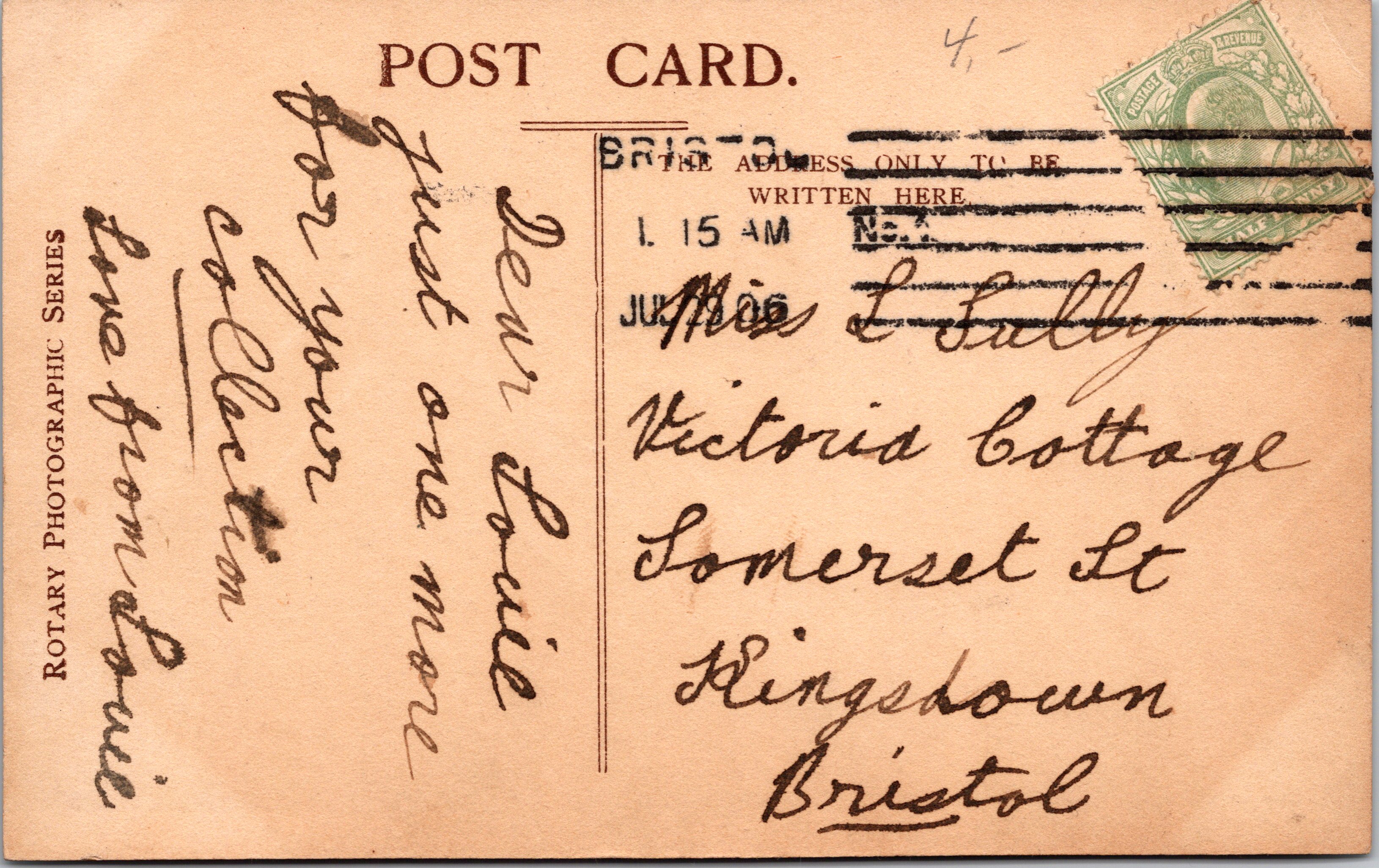
Postcard 1 features a close-up portrait of Fanny Fields. She looks pretty in this color tinted photo postcard. The postcard was published by Rotary Photo as part of a series (no.4007 C). The message on this postcard indicates that the sender sent the postcard for someone to add to their collection. This postcard has a postmark from 1906. (SOLD)
Postcard 2 is a vintage real photo postcard portrait of Miss Fields. The photograph is color tinted. The performer is just beaming for the photographer. Her hat is quite an extravaganza. This postcard was published by Philco (London) as part of a series (no.3213 D). The photographer was Lewis R. Protheroe. He operated a studio in Bristol, England. He was working as a photographer, at least between 1901 and 1917. His father, Thomas Protheroe founded the studio between approximately 1876 and 1900. The postcard has a 1906 postmark. (SOLD)
Postcard 3 is a vintage real photo postcard portrait of Miss Fields. The performer has an adorable smile. Note her long braids. This postcard was published by Rotary Photo as part of a series (no.4385 N). (SOLD)
Postcard 4 features Fanny Fields displaying a warm smile. Note her long braids. Lewis R. Protheroe who operated a studio in Bristol, England. He was working as a phototgrapher, at least between 1901 and 1917. Thomas Protheroe founded the studio between approximately 1876 and 1900 This postcard was published by Rotary Photo as part of a series (no.4007 G). The card is in very good condition (see scans). (SOLD)
Postcard 5 is a vintage real photo postcard portrait of Miss Fields. The performer is once again displaying her wonderful smile. Note her long braids. This photograph captures Fanny in costume, playing the role of Gretchen in “Aladdin”. (SOLD)
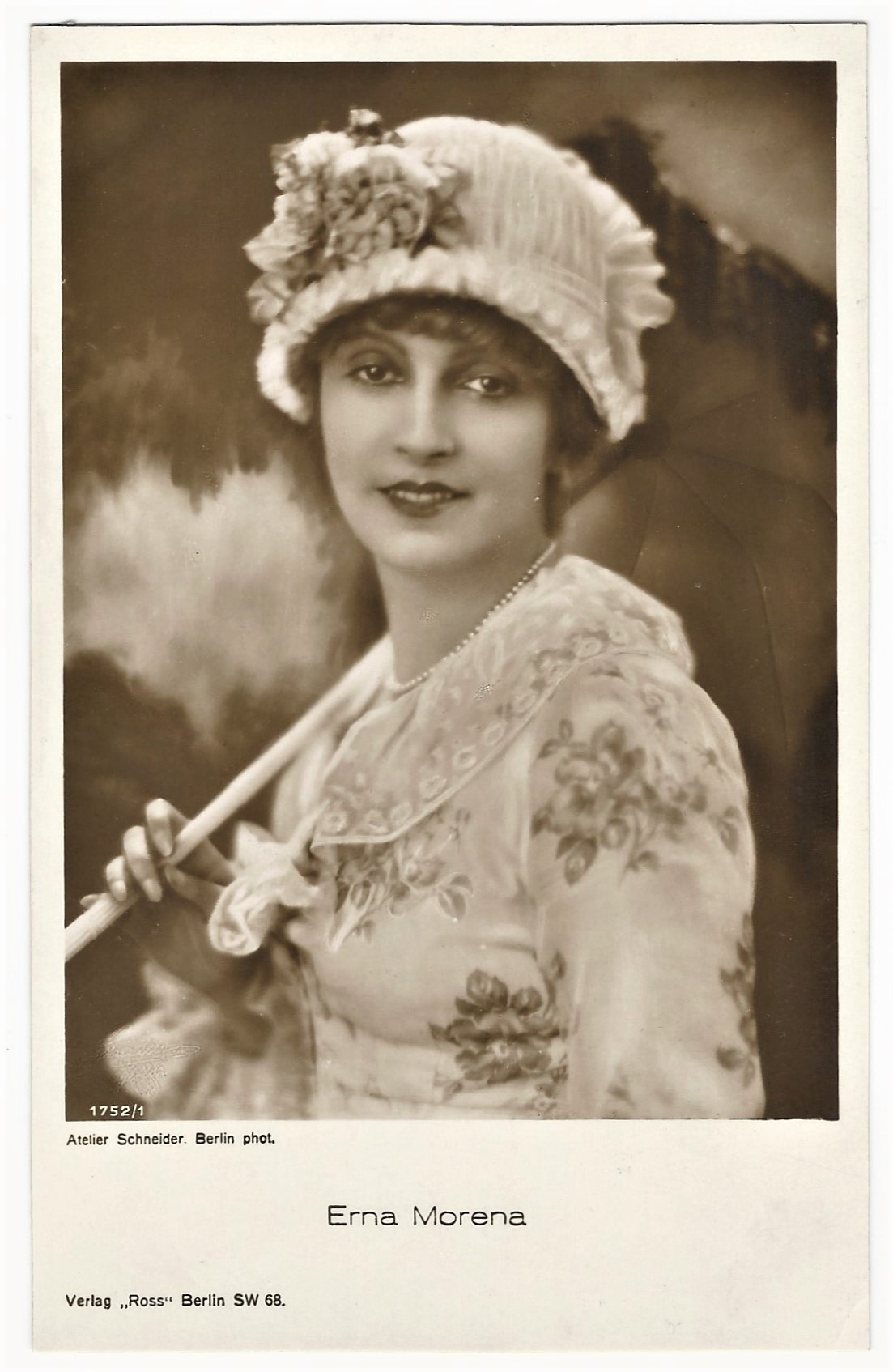
This vintage real photo postcard (Postcard 1) features pretty German film actress, Erna Morena (1885-1962). In addition to being a performer, she was also a film producer and screen writer during the silent era. The IMDb reports that Morena appeared in 122 films between 1913 and 1951. Morena grew up in a middle-class family in Bavaria. At age 17, she attended applied art school in Munich. In 1909, after a short stint in Paris, she moved to Berlin where she worked as a nurse. She became a student at the German Theater’s drama school and in 1910 was hired as an actress by Max Reinhardt, Austrian-born theater and film director. She played a number of small theater roles and in 1913, Morena made her film debut in “The Sphinx”, produced by Leteraria Film. She was a “big time” actress. She worked under many well known directors and with some of the most well known actors in German film. Morena made a bid to become a film producer and formed her own film company which produced films in 1918 and in 1920. By the mid 1920’s, she was considered one of the biggest stars in German films. With the advent of talkies, her career declined. However, she did appear in supporting roles during the 1930’s. Between 1915 and 1921, Morena was married to the German writer, Wilhelm Herzog. He was a historian of literature and culture, a dramatist, the author of an encyclopedia, and a well known pacifist. Their marriage ended in divorce. Morena appeared in the 1940 film “Jud SuB”. The movie was a Nazi Germany historical drama propaganda film. The film was produced on the order of Joseph Goebbels, the Nazi politician and trusted aide to Adolph Hitler. The movie is considered one of the most anti-semitic films of all time. Postcard 1 was published by Ross Verlag and is part of a series (no.1752/1). The company was located in Berlin, Germany. Morena was photographed by the German photographer, Ernst Schneider. Research about Mr Schneider yielded a great deal of information. He was considered to be one of the most celebrated studio photographers in Berlin during three decades (1900’s, 1910’s, 1920’s. He photographed many celebrities from the world of theater, opera, circuses, and film. He was also one of the most prominent fashion photographers in Berlin. In addition, he was well known for his nude photography and he published books showcasing his work in this domain. Sometime around 1908 Schneider began working with postcard publishers “Rotophot” and “Neue Photographische Gesellschaft” (NPG). In 1919 he began working with Ross Verlag. This postcard, a former resident of a postcard album, is in very good condition (see scans below).
Buy this Vintage Real Photo Postcard (includes shipping within the US) #3173
To purchase this item, click on the Pay with PayPal button below
$25.50
Buy this Vintage Real Photo Postcard (includes International shipping outside the US) #3173
To purchase this item, click on the Pay with PayPal button below
$34.00
Postcard 2POSTCARD 2 (CLOSE-UP)
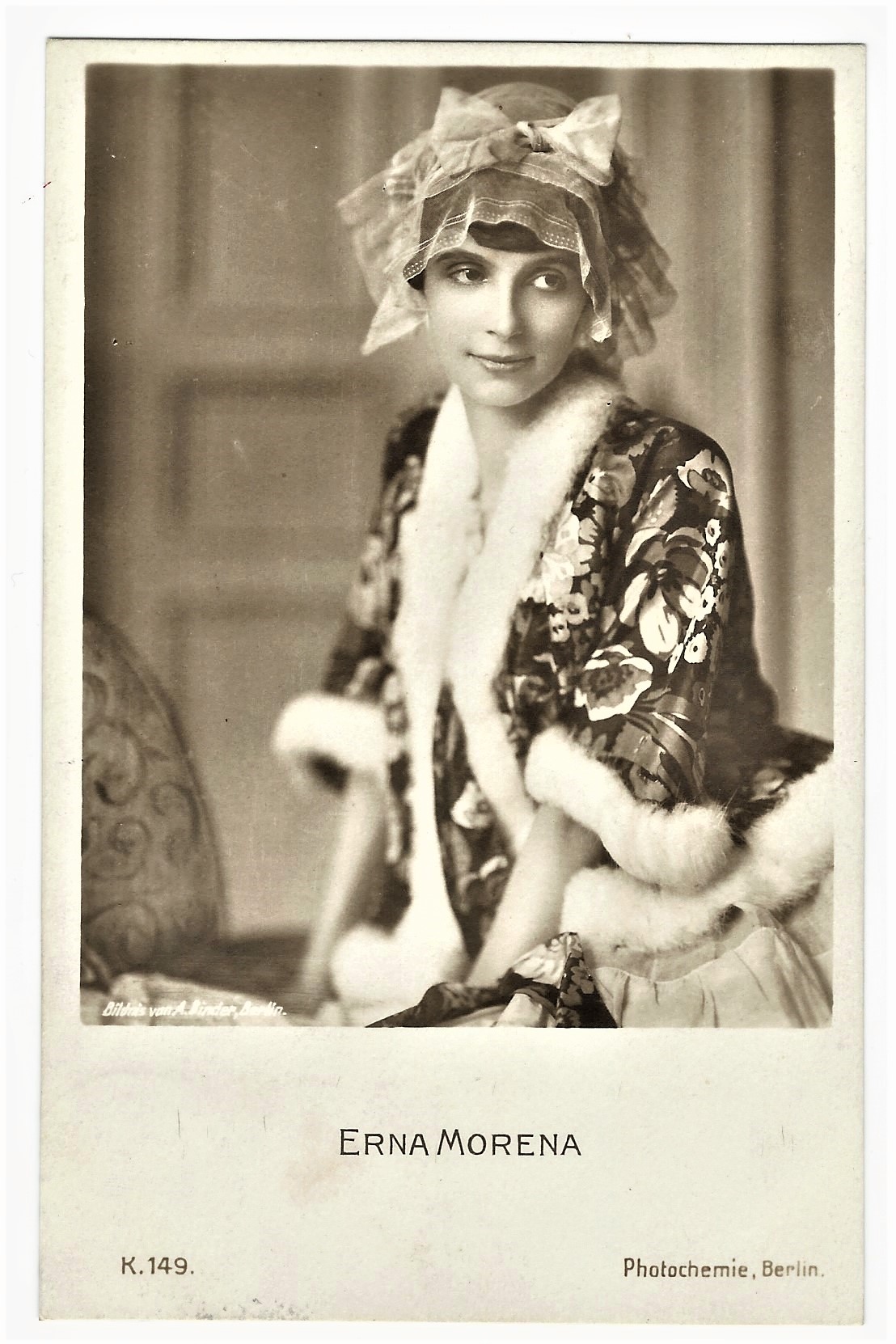
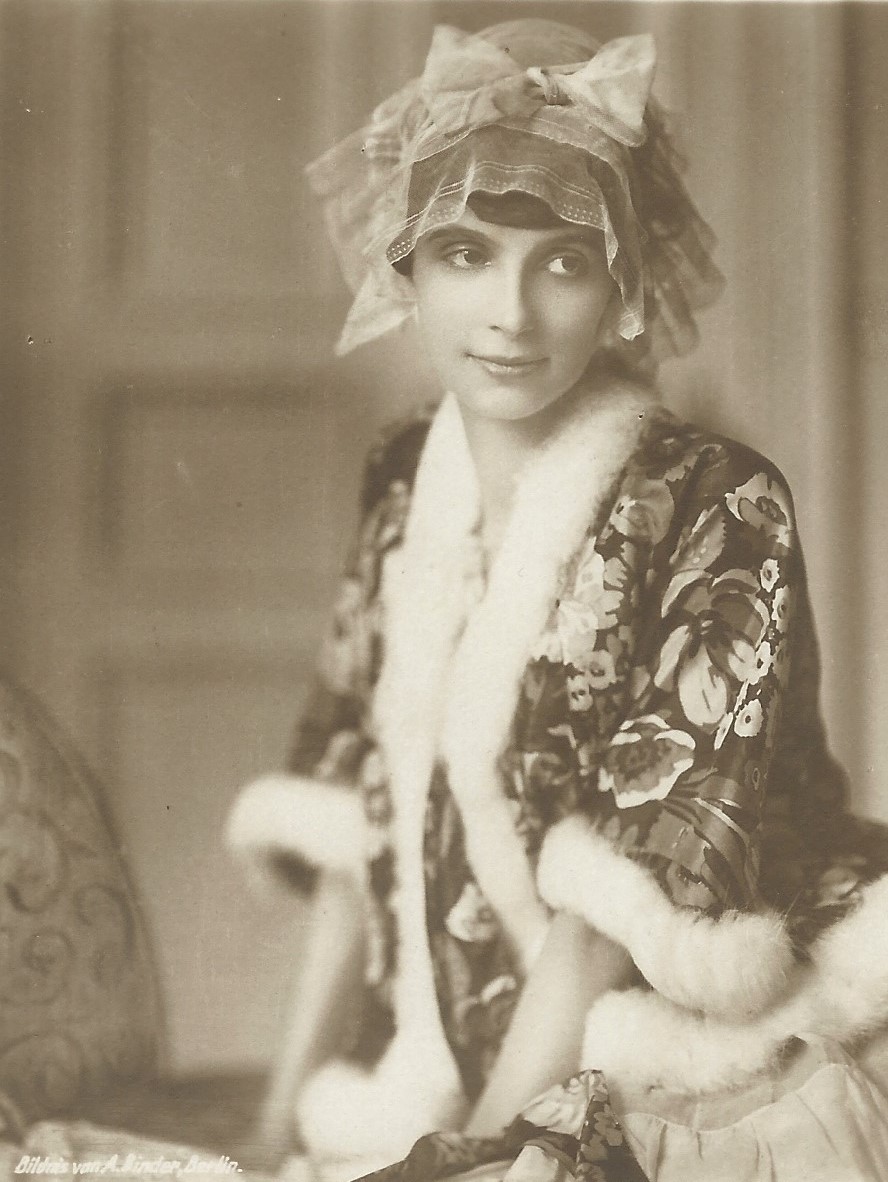
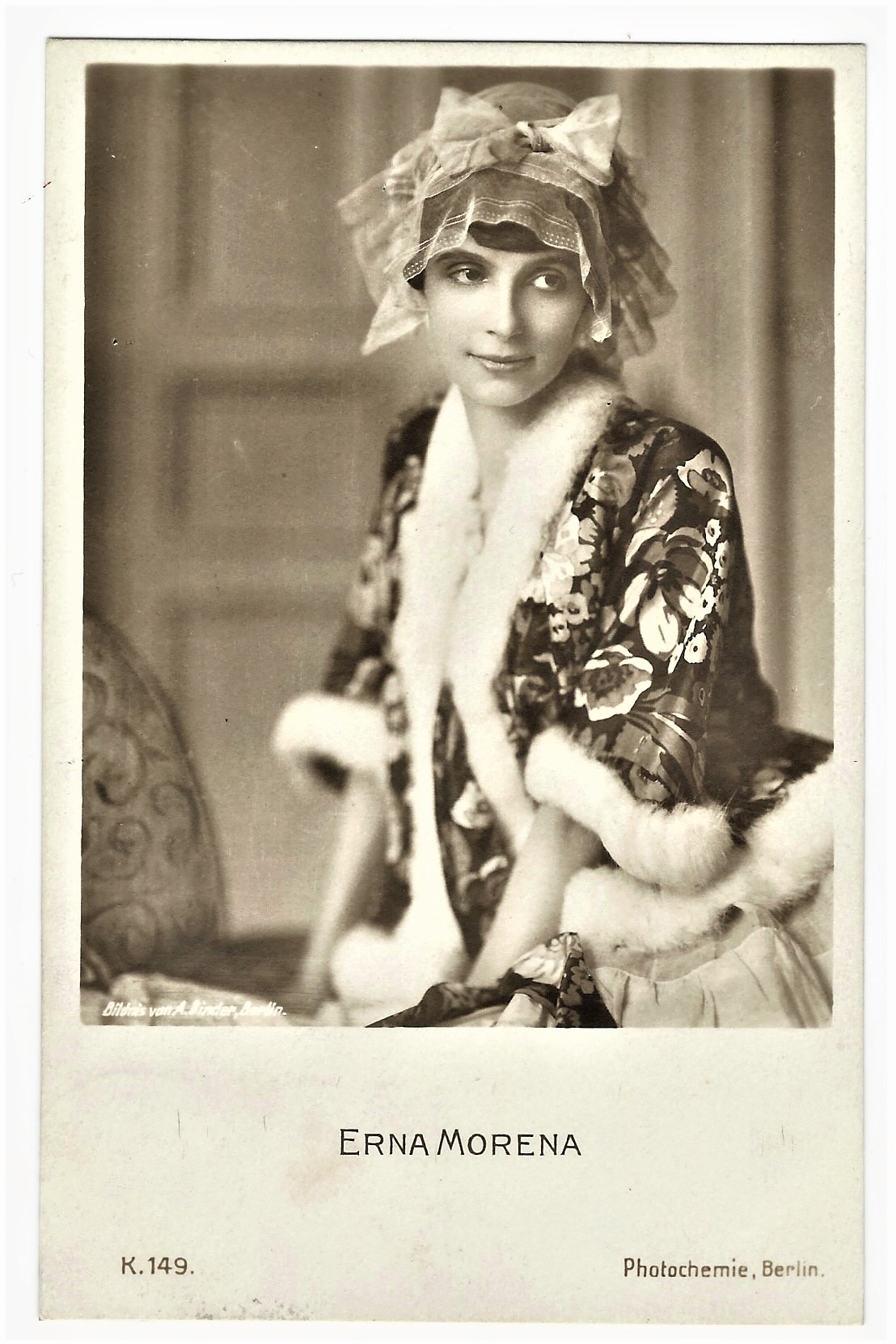
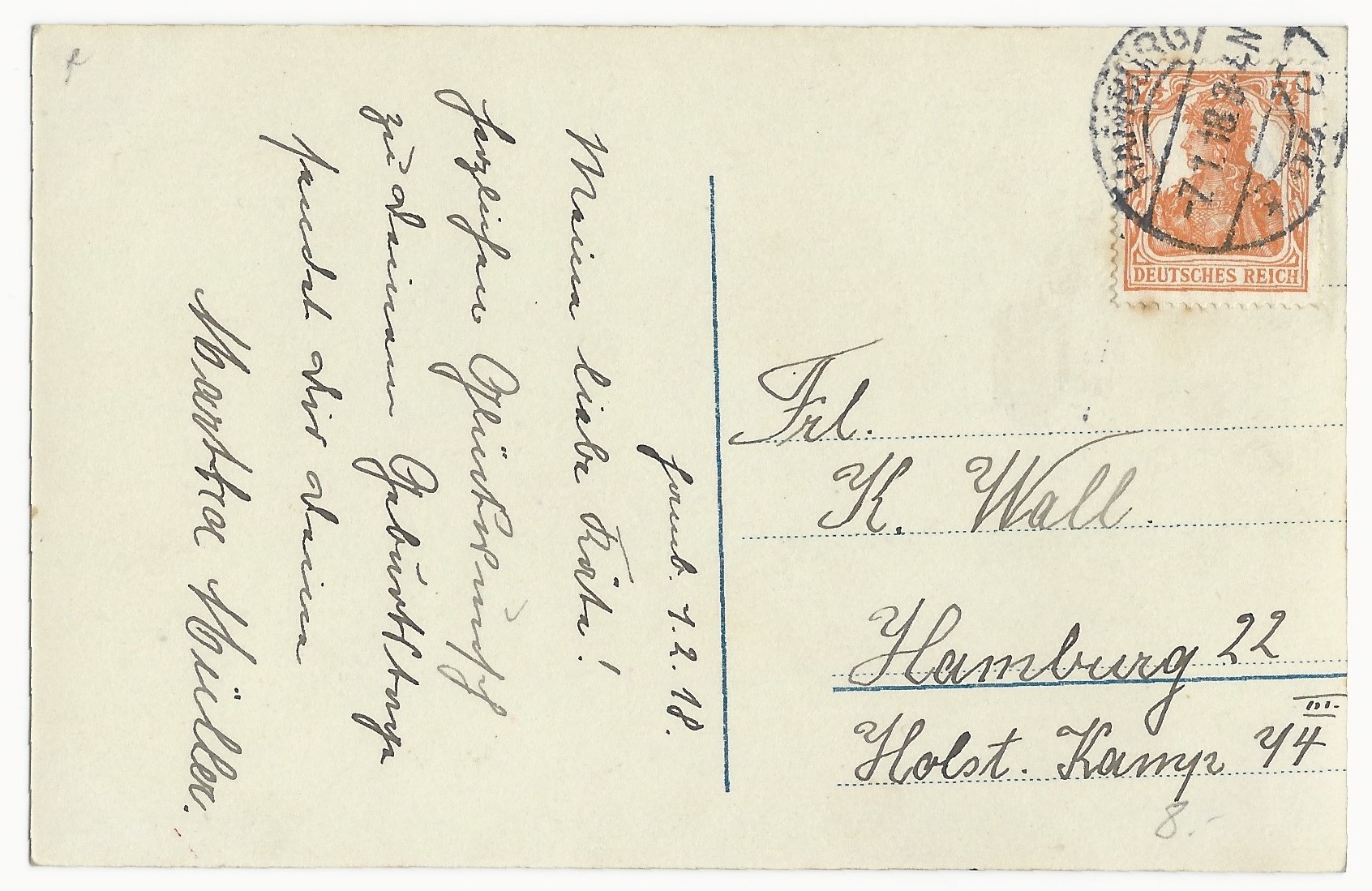
Postcard 2 also features the lovely Miss Morena. This postcard was published by Photochemie, located in Berlin, Germany. The card is part of a series (no.k149). Photochemie published postcards of only German film stars or European performers performing in German films. The postcards were published between 1914 and 1919. The firm also produced postcards of other subjects. The photographer of this terrific image was Alexander Binder (1888-1929). He had the largest photo studio in Europe during the late 1920’s and the 1930’s. Many of his entertainment star portraits appear on Ross Verlag postards. It is thought that Binder was of Swiss origin. He was of the Jewish faith. He studied engineering but did not complete his studies. From 1908 to 1910 he studied photography at a school in Munich, Germany. After the completion of his photography studies, he went to Berlin and in 1913 opened his first photography studio. Before long, he became one of the premier photographers in Berlin. He primarily focussed on fashion and celebrity photography. Since Berlin was the capital of the European film industry, Binder photographed all the stars of the European film industry including, Lilian Harvey, Conrad Veidt, and Lya De Putti. Many of his images were used in popular film portrait postcards. His photographs could be seen in postcards published by Ross Verlag and Photochemie. Binder died in 1929 but new photo cards bearing his signature continued to be published until 1937. It is thought that the real photographer of these new postcards was Hubs Floeter (1910-1974) who was employed at the studio as an operator. The studio continued to be owned by Binder’s widow, Mrs. Binder Alleman and their two daughters. The studio was managed by the Jewish Elisabeth Baroness Vonhedlis Stengel who was later deported to the Theresienstadt concentration camp. In 1938 the Nazi’s closed Binder’s studio and it was later taken over by an Aryan photographer, Karl Ludwig Haenchen . Haenchen continued to produce celebrity portraits for postcards. His publishers included Film-Foto-Verlag. After World War II the studio was taken over by the Hasse und Wiese company. This postcard has a Hamburg, Germany postmark and is dated 1918. The postcard is in very good condition (see scans)
Buy this Vintage Real Photo Postcard (includes shipping within the US) #3253
To purchase this item, click on the Pay with PayPal button below
$19.50
Buy this Vintage Real Photo Postcard (includes International shipping outside the US) #3253
To purchase this item, click on the Pay with PayPal button below
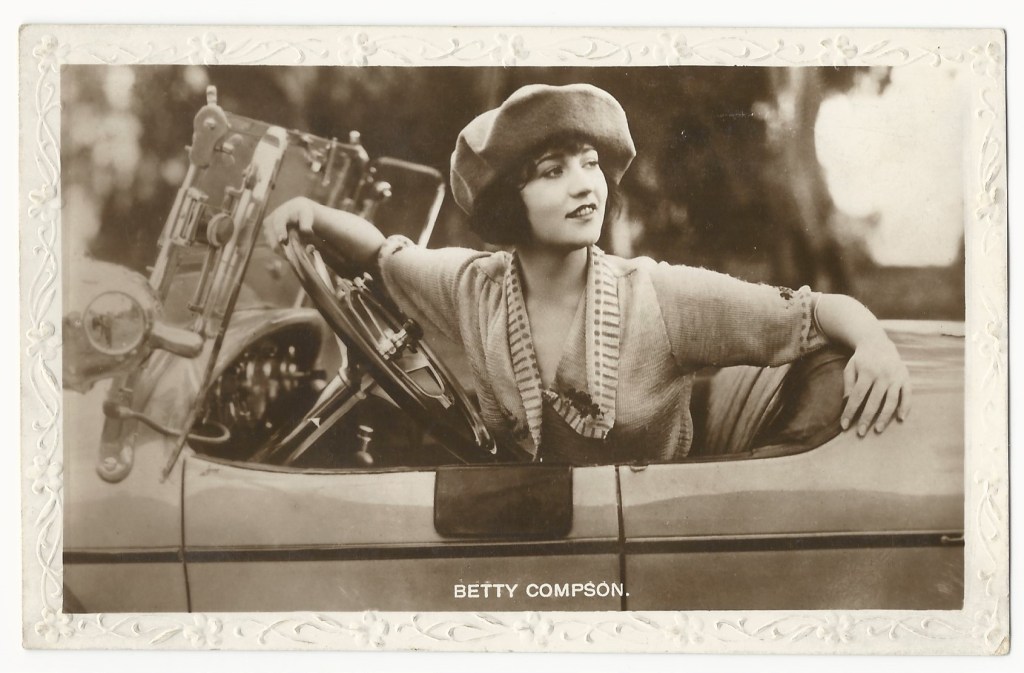
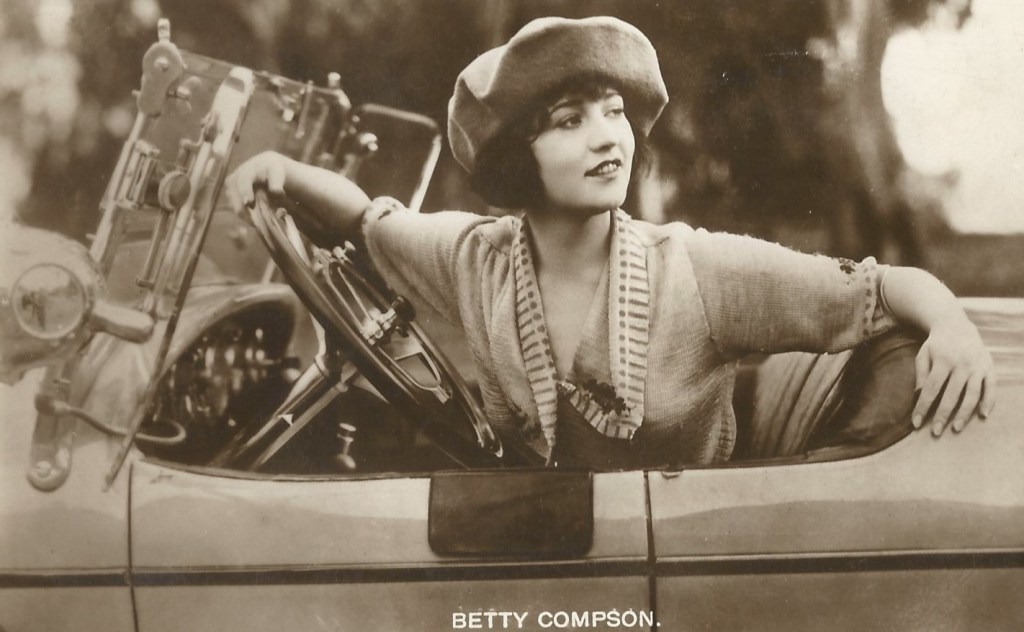
This vintage real photo postcard features American actress and film producer, Betty Compson (1897-1974). She was nicknamed “the prettiest girl in pictures”. Compson was born in a mining camp in Beaver, Utah. Her father was a mining engineer, a gold prospector, and grocery store owner. Her mother was a maid in hotels and private homes. Betty graduated from Salt Lake High School. She was hired as a violinist at age 16 in a theater in Salt Lake City. She then played in vaudeville touring companies and it was during this stint she was discovered by a film producer (Al Christie) who signed her to a contract. She began her career during Hollywoods’s silent film era. Her debut film was “Wanted, a Leading Lady” (1915). After this film, her career rocketed. She appeared in 25 film in 1916. All but one, were shorts. In 1918 she was offered a contract by studio head Mack Sennett. She rejected the offer because the salary was too low. She continued to make numerous short films until the middle of 1918. She was frequently paired with Roscoe “Fatty” Arbuckle. She started making only feature films. She became a rising star after appearing opposite Lon Chaney in “The Miracle Man” (1919). Paramount became interested in her and signed her to a five year contract. In 1921, Compson established her own production company in order to have creative control over screenplays and financing. The first movie she produced was “Prisoners of Love” (1921). After she completed acting in “The Woman With Four Faces” (1923), Paramount refused to give her a raise. She wanted an increase in her $2500 per week salary. Compson was angry enough at Paramount, to leave the company, and sign with a British film company. She made four films in England, two of them were films penned by Alfred Hitchcock. Paramount lured her back to Hollywood from England by offering her a top dollar contract. She then appeared in a movie by director, James Cruze. The pair married in 1924, but divorced four years later. The divorce from Cruze nearly ruined her financially because of debt accrued by Cruze. After Paramount did not offer her a contract renewal, she began freelancing in lower budget films. In 1928 she appeared in a “part talkie” called “The Barker”. She played a manipulative carnival girl. She was nominated for a “Best Actress” for this role by the Academy Awards. In 1929, she gained much recognition for her role in “The Docks of New York”. She played a suicidal prostitute. These two films resulted in her popularity returning to it’s previous high level. She appeared in many “talkie” films. Unlike a lot of silent film stars, Compson made a successful transition into sound films. In fact, she even appeared in a number of early musicals. When she played singing parts, her voice was dubbed. Her career flourished. In 1930, she appeared in 9 films. Her last “hit’ was in “The Spoilers”. Her costar was Gary Cooper. Her popularity waned and she only got roles in low budget, less successful studios. Her last film was in 1948. After retiring from her movie career, she started a cosmetic line and assisted her husband in a business named “Ashtrays Unlimited”. In total Compson was married three times. Her second marriage, to agent/producer Irving Weinberg ended in divorce after four years. Her third marriage was to a professional boxer. The marriage lasted 18 years and ended upon his death in 1962. She had no children. She died in 1974 after suffering a heart attack. She had much impact on the early movie industry. The IMDb reports 209 film credits between 1915 and 1948. This vintage postcard is in excellent condition (see scans). Take a look at the YouTube video below. The video features Betty Compson appearing in the silent film, “The Docks of New York” (1928). The music accompanying this video is obviously modern, but, in my opinion, it is excellent. Compson demonstrates incredible acting ability. Her facial expression and her eyes speak for her. SOLD
Betty Compson in “The Docks of New York” (1928) Music: “Marry Me” By Dave Pagett and Viv Jones (Sax)
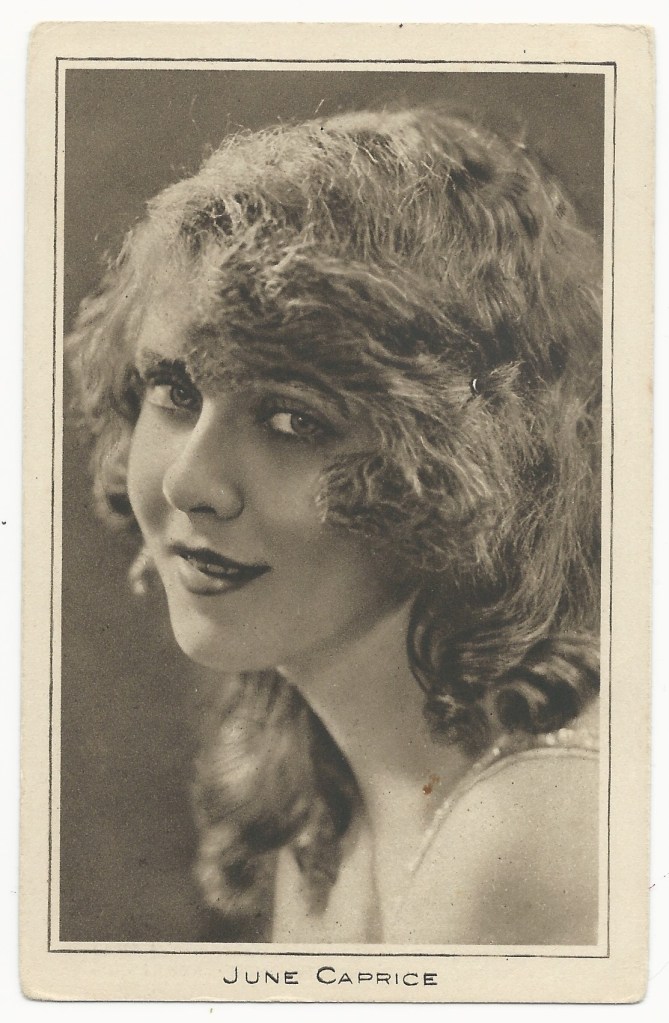
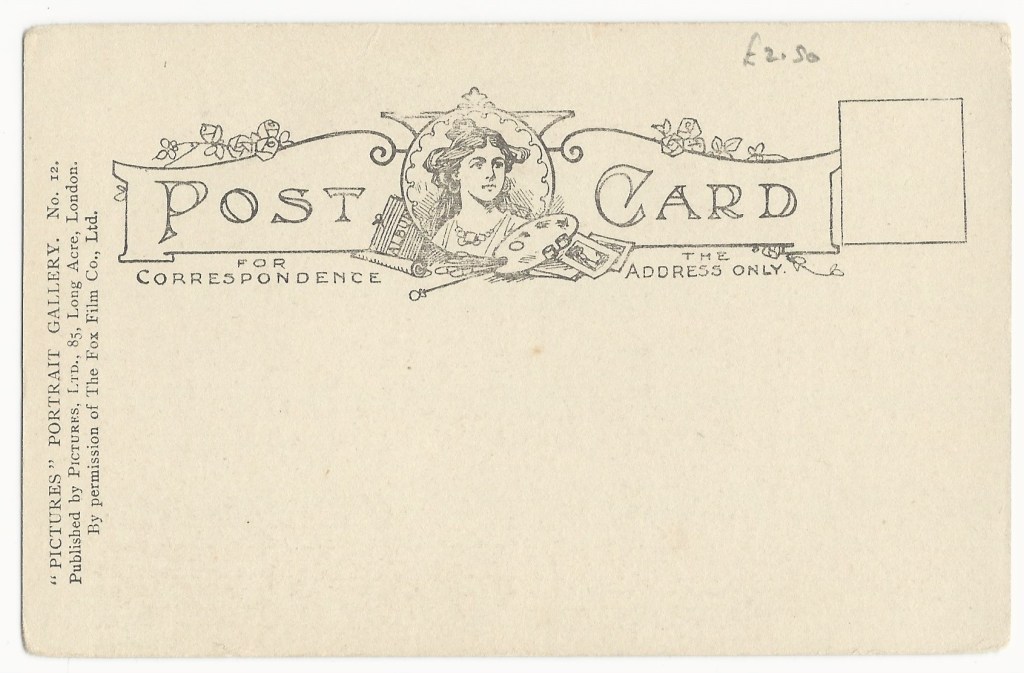
June Caprice started life named Helen Elizabeth Lawson. She was born in 1895 in Arlington, Massachusetts. June was a silent film actress. She attended school in Boston. Her acting career began on the stage. In 1916, she signed with the Fox Film Corporation to make films. William Fox had been searching for an actress to compete with Mary Pickford. Caprice had won a Boston Mary Pickford look-a-like contest. When he discovered Caprice, he boldly predicted that she would become the best known female on the screen within the upcoming six months. A press release introducing her to film fandom, stated that she was seventeen years of age. In fact, she was about twenty years old at the time. Caprice made her screen debut in a move entitled “Caprice of the Mountains” (1916). A film critic, writing in the New York Times described her as “young, pretty, graceful, petite, with an eloquence of gesture that augurs a bright future in the movies”. Her first film provided her with her stage name, “June Caprice”. June became quite popular. She received a lot of attention from fan magazines and was one of Fox’s most profitable stars toward the end of the 1910’s. She made sixteen films while with Fox. Her director for half of the movies was Harry F. Millarde. The pair began a relationship and eventually married. Caprice also worked at one time for Pathe studios. She left the film industry to begin a family and in 1922 she gave birth to a daughter. Caprice’s career took a downturn after World War I. The sweet, pure and innocent look lost popularity and was replaced by the jazz age flapper look. She later returned to working on stage and modelling. In 1931, her husband died at the young age of 46. Five years later, Caprice had a fatal heart attack while in Los Angeles. At the time, she also was suffering with cancer. She was just 40 years old at the time of her death. Caprice’s daughter was only aged 14 when she was orphaned. She was raised by her grandparents on Long Island, New York. She became a “cover girl” and actress. She used the name Toni Seven. Her photo and brief biography can be found elsewhere in the Cabinet Card Gallery. Seven inherited three million dollars from her family. The IMDb credits June Caprice with 22 film appearances between 1916 and 1921. This vintage real photo postcard was published by Pictures Ltd which was located in London, England. It was published with the perimission of the Fox Film Co. The card is part of a series (no.12) labeled “Pictures” Portrait Gallery. (SOLD)
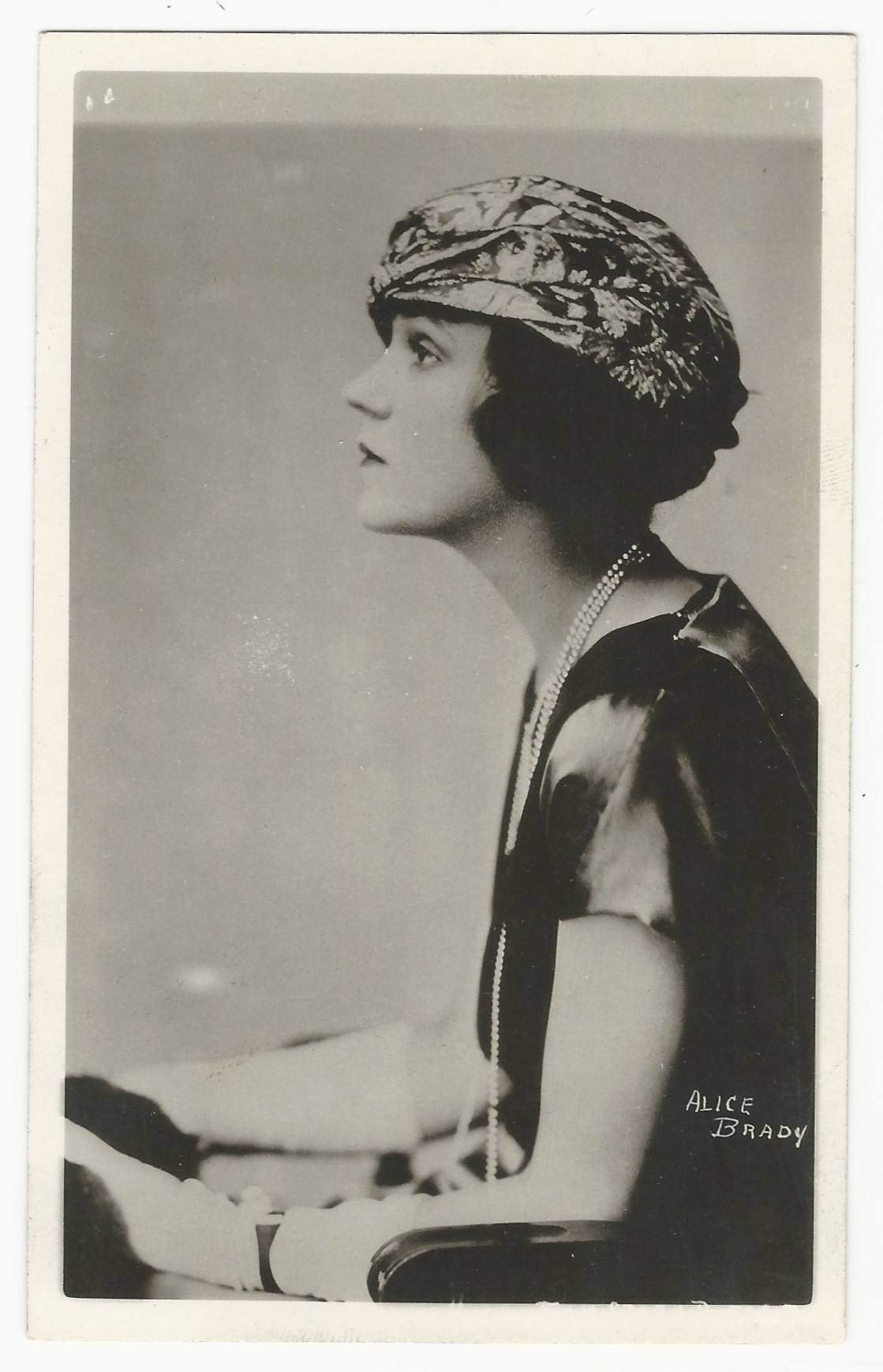
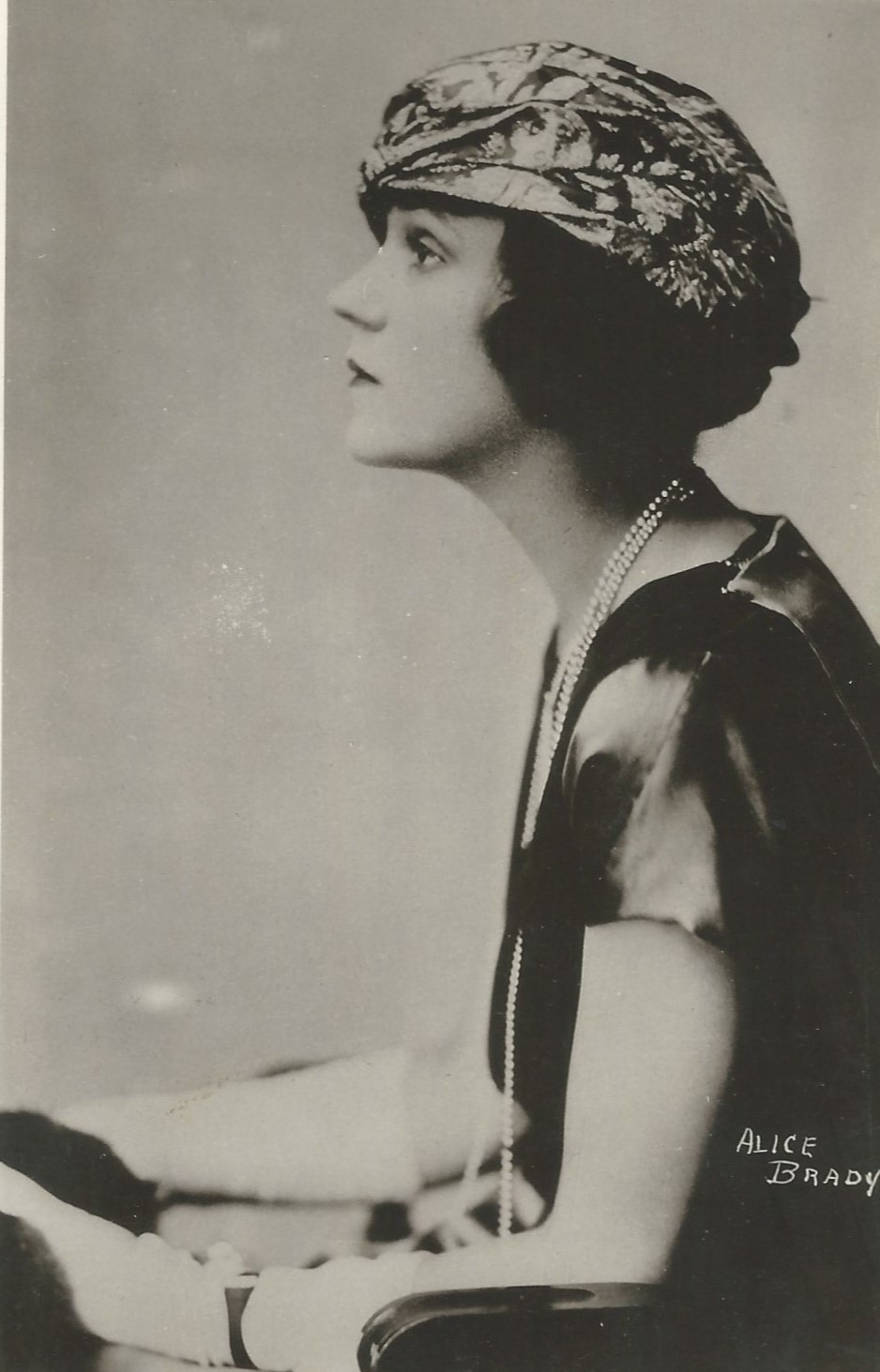
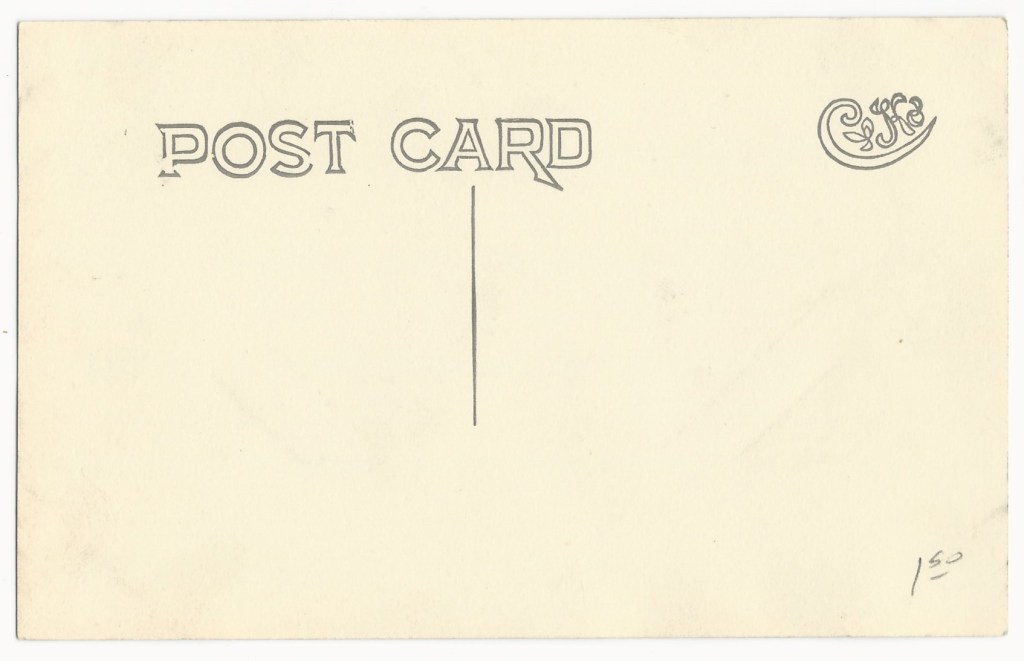
This vintage real photo postcard features film actress, Alice Brady (1892-1939). Brady was born in New York City into a theatrical family. Her father was a theatrical producer, and her mother was a French actress. When Alice was four years old, her mother died. Her father remarried and her step-mother was actress, Grace George. George (1879-1961) was a successful American stage actress. She had a long Broadway stage career and appeared in two films. Alice knew she wanted to be an actress, like her mother and step-mother, at an early age. Her first stage appearance was at the age of 14. Her first Broadway appearance was in 1911, at the age of 18. In 1913, she appeared with John Barrymore in “A Thief for The Night”. She performed on Broadway over a span of 22 years. She began her career during the silent film era and was one of the minority of actresses that successfully made the transition into sound movies. Brady’s films included “My Man Godfrey” (1936) and “In Old Chicago” (1937). Alice made her first silent feature appearance in 1914. She appeard in 53 films over the next ten years. Simultaneously, she continued to perf0orm on stage. In 1923, she took a ten year hiatus from the stage. In 1922 she made her first talkie, an MGM production. Over the next seven years, she made 25 more films. Her final film was “Young Mr. Lincoln” (1939). In 1937, Brady won the Academy Award for Best Supporting Actress for the film, “In Old Chicago”. She had been nominated for the same award the previous year. In all, Brady appeared in more than 80 films. It is important to mention Brady’s Broadway career. The IBDb reports that she appeared in over 40 Broadway productions. Some of the “Great White Way” productions (1911-1932) that included Brady were “H.M.S. Pinafore” (1911), “The Pirates of Penzance” (1912), “The Mikado” (1912), “The Yankee Princess” (1922), “A Most Immoral Lady” (1928), and “Morning Becomes Electra” (1931). Alice was married once. Her marriage to actor, James Crane, lasted from 1919 until they divorced in 1922. The marriage produced one son. Her life and career were cut short by her death from cancer just a day short of her 47th birthday. The “Cyko” stamp box on this postcard indicates that it was published between 1904 and the 1920’s. (SOLD)
This vintage real photo postcard features Russian ballerina, choreographer, and silent film star, Vera Karalli (1889-1972). She was born in Moscow. Her father was an entrepreneur and her mother was an actress. Karalli was active between 1914 and 1921. Karalli was a graduate of the Moscow Theatre School in 1906. She performed in the Ballets Russes company in 1909, and then again, in 1919 and 1920. She was a soloist with the Bolshoi Theater and after two years became a ballerina in 1915. She often danced with ballet star, Mikhail Mordkin. Karalli becan acting in 1914 and she became one of Russia’s most celebrated film actresses. From 1914 to 1919, Karalli appeared in about sixteen Russian silent films. One of these films was an adaptation of Tolstoy’s “War and Peace”. Her last film was a German drama released in 1921. Karalli was a mistress of the Grand Duke Dmitri Pavlovich of Russia. He was the cousin of Nicholas II. It was reported that she was a co-conspirator in the 1916 murder of Grigori Rasputin. After the October Revolution, she fled to the West. Between In the 1920’s she taught dance in Lithuania. Between 1930 and 1935 she was ballet mistress of the Romanian opera in Bucharest. She lived in Paris between 1938 and 1941. She later settled in Baden, Austria. (SOLD)
This vintage real photo postcard features American silent and sound film star, Virginia Brown Faire (1904-1980). She was born in Brooklyn, New York. In 1919, after being a winner of the Motion Picture Classic magazine’s “Fame and Fortune” contest, she went to Hollywood. At age 15, she was hired by Metro studio. She then appeared in movies for Fox, followed by Universal. Her first film “Runnin’ Straight” (1920) was a Hoot Gibson short western. She was the leading lady for John Gilbert in Monte Cristo (1922). She was chosen as one of the WAMPAS Baby Stars in 1923. Included in this group of beautiful actresses was Laura La Plante and Evelyn Brent. La Plante and Brent both had successful acting careers. She is most remembered for her role as Tinker Bell in Peter Pan (1924). Faire made a successful transition into sound films. Her first successful talkie was her role in Frank Capra’s “The Donovan Affair” (1929). She appeared in several westerns. Among the western stars that she played opposite to; was John Wayne,Hoot Gibson, and Buck Jones. In the late 1930’s she left Hollywood and moved to Chicago and worked in radio and industrial films. She retired in about 1935. According to the IMDb, she appeared in 74 films between 1920 and 1935. Faire had three marriages. The first, was to actor Jack Dougherty and the marriage lasted just over a year. She then married director Duke Worne, a film director. He died after three years and she then married William Bayer, a furniture manufacturer. She died of cancer in 1980. This vintage postcard was published by Ross Verlag of Berlin, Germany. It is part of a series (no, 736/1). SOLD




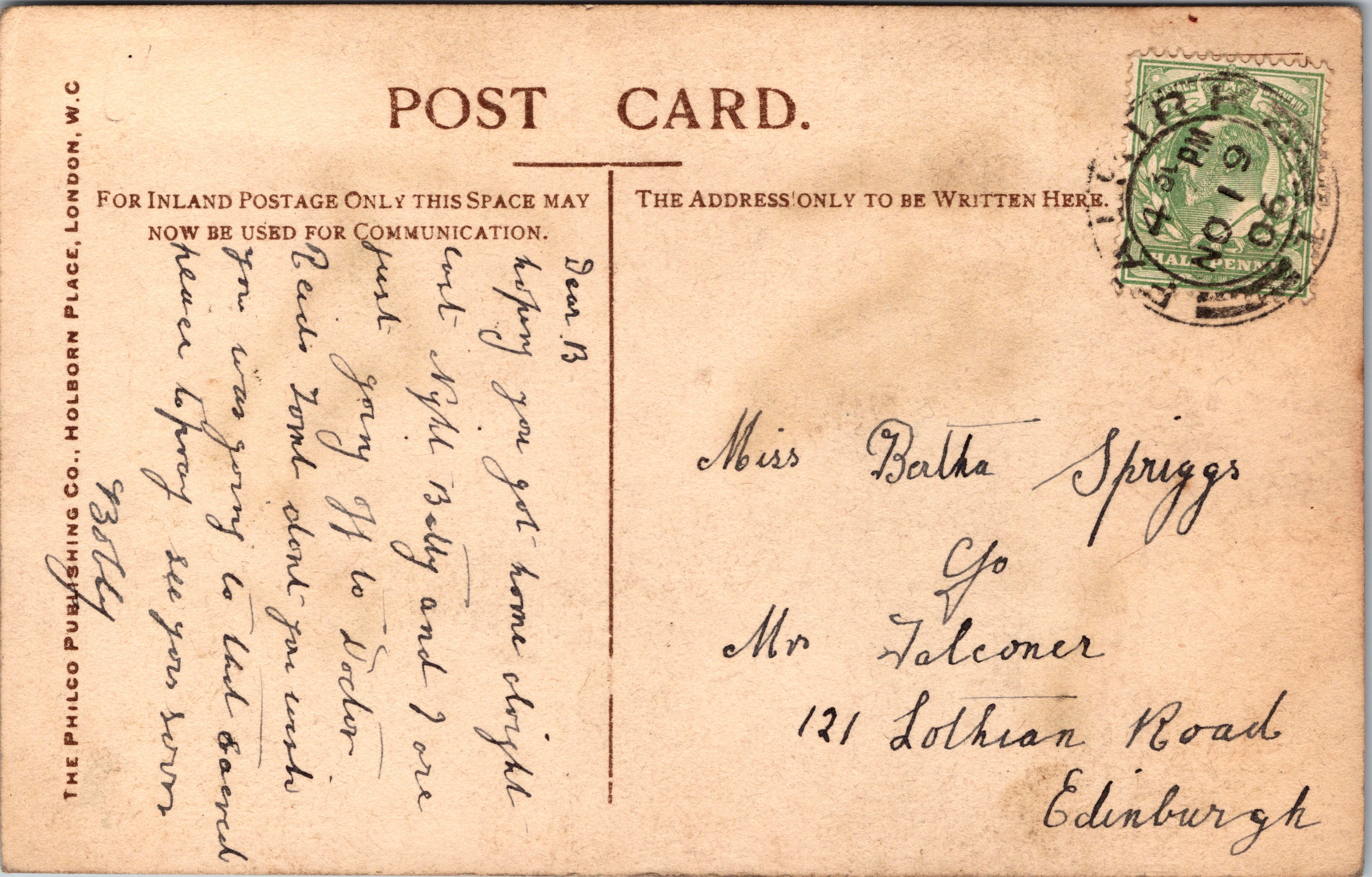
 POSTCARD 1
 POSTCARD 1 (CLOSE-UP)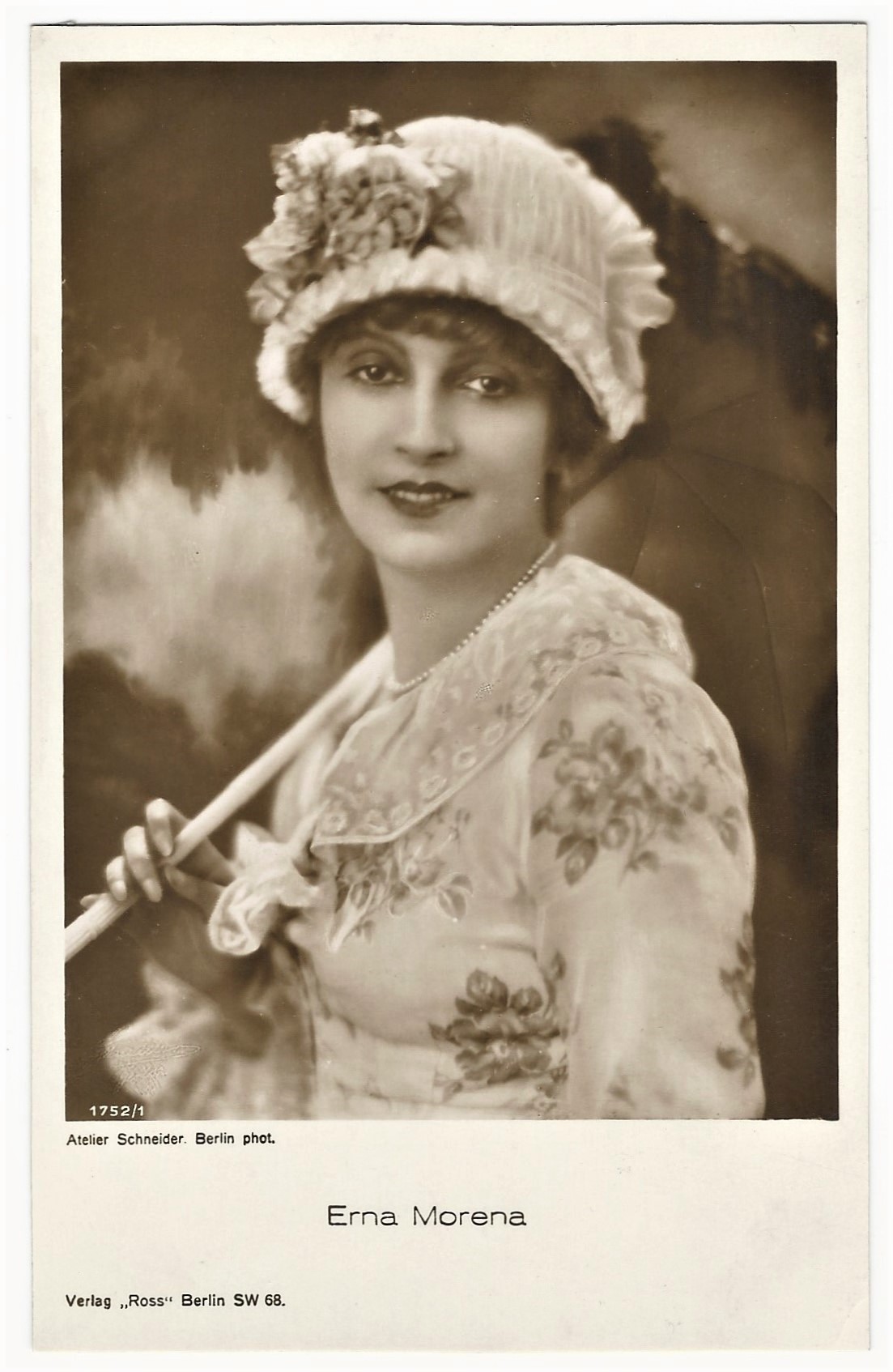

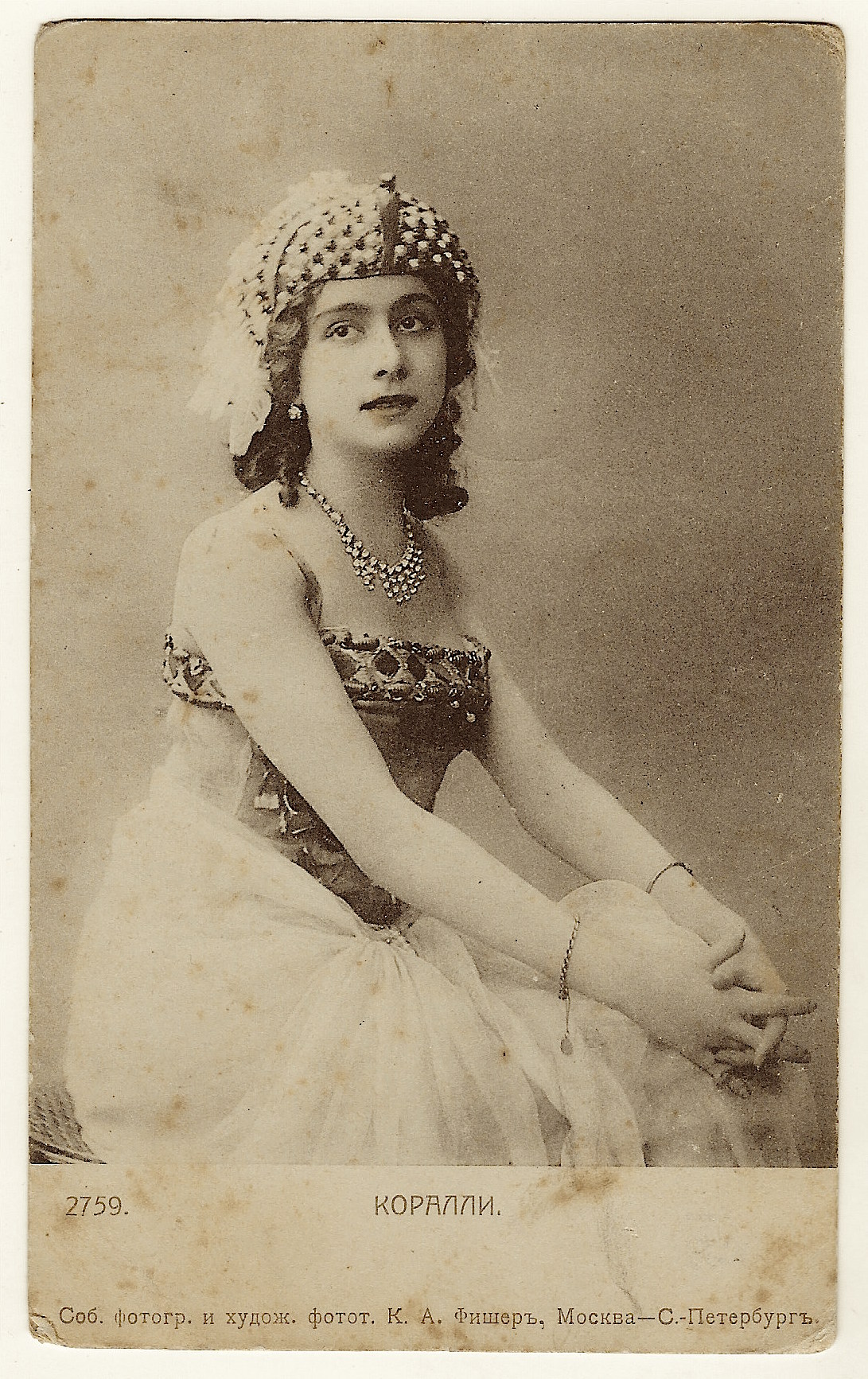
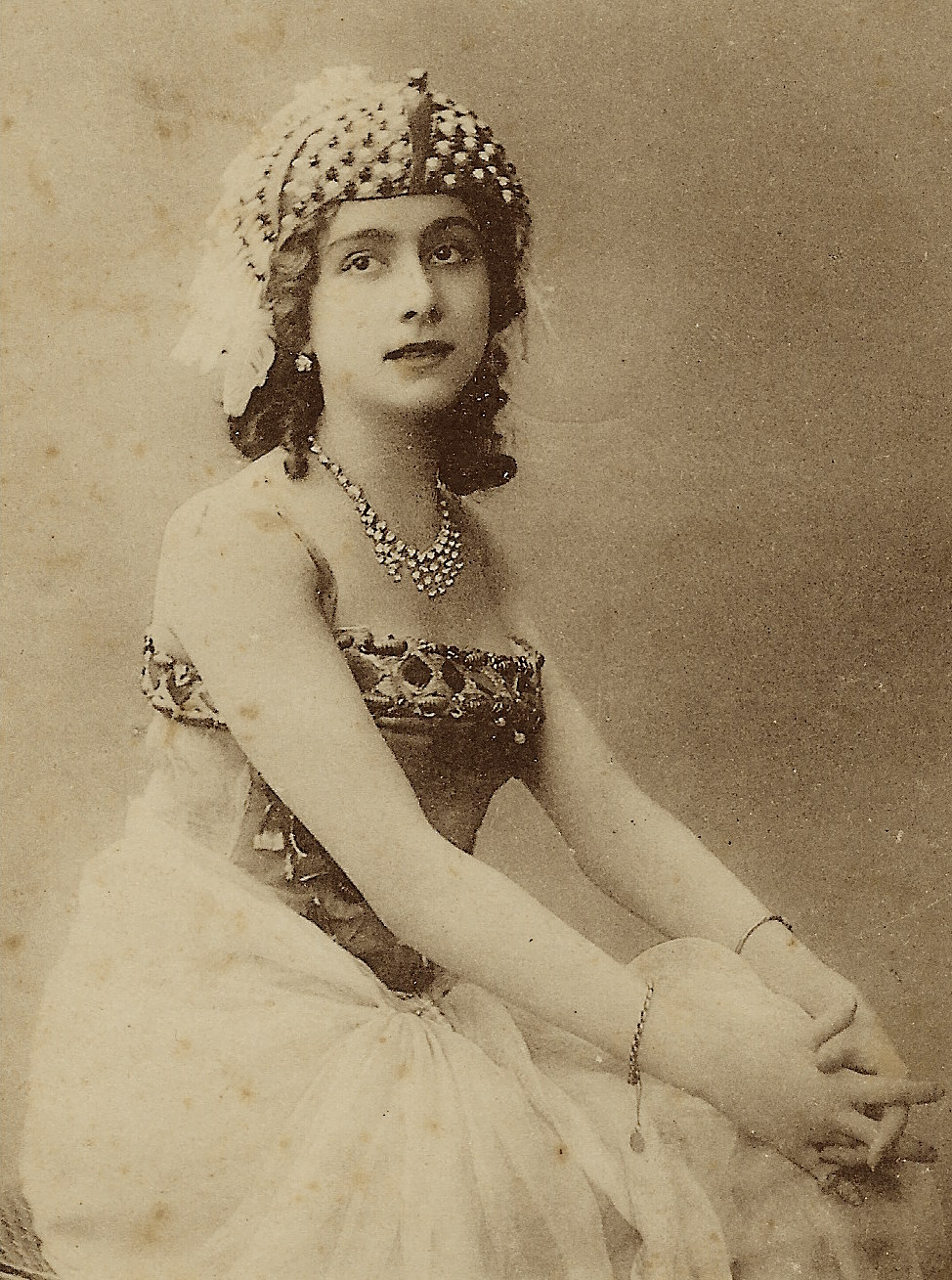 This vintage real photo postcard features Russian ballerina, choreographer, and silent film star, Vera Karalli (1889-1972). She was born in Moscow. Her father was an entrepreneur and her mother was an actress. Karalli was active between 1914 and 1921. Karalli was a graduate of the Moscow Theatre School in 1906. She performed in the Ballets Russes company in 1909, and then again, in 1919 and 1920. She was a soloist with the Bolshoi Theater and after two years became a ballerina in 1915. She often danced with ballet star, Mikhail Mordkin. Karalli becan acting in 1914 and she became one of Russia’s most celebrated film actresses. From 1914 to 1919, Karalli appeared in about sixteen Russian silent films. One of these films was an adaptation of Tolstoy’s “War and Peace”. Her last film was a German drama released in 1921. Karalli was a mistress of the Grand Duke Dmitri Pavlovich of Russia. He was the cousin of Nicholas II. It was reported that she was a co-conspirator in the 1916 murder of Grigori Rasputin. After the October Revolution, she fled to the West. Between In the 1920’s she taught dance in Lithuania. Between 1930 and 1935 she was ballet mistress of the Romanian opera in Bucharest. She lived in Paris between 1938 and 1941. She later settled in Baden, Austria. (SOLD)
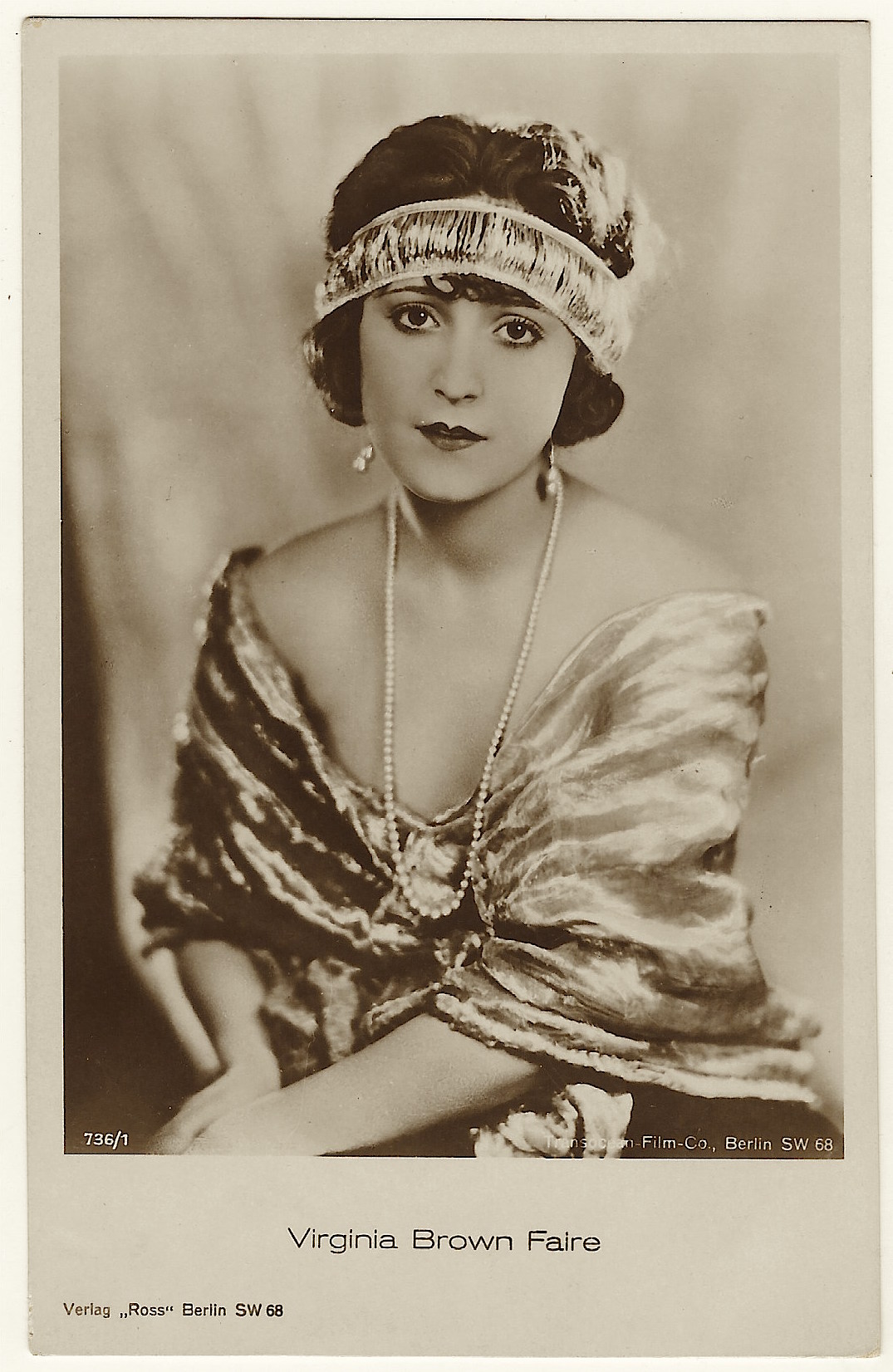
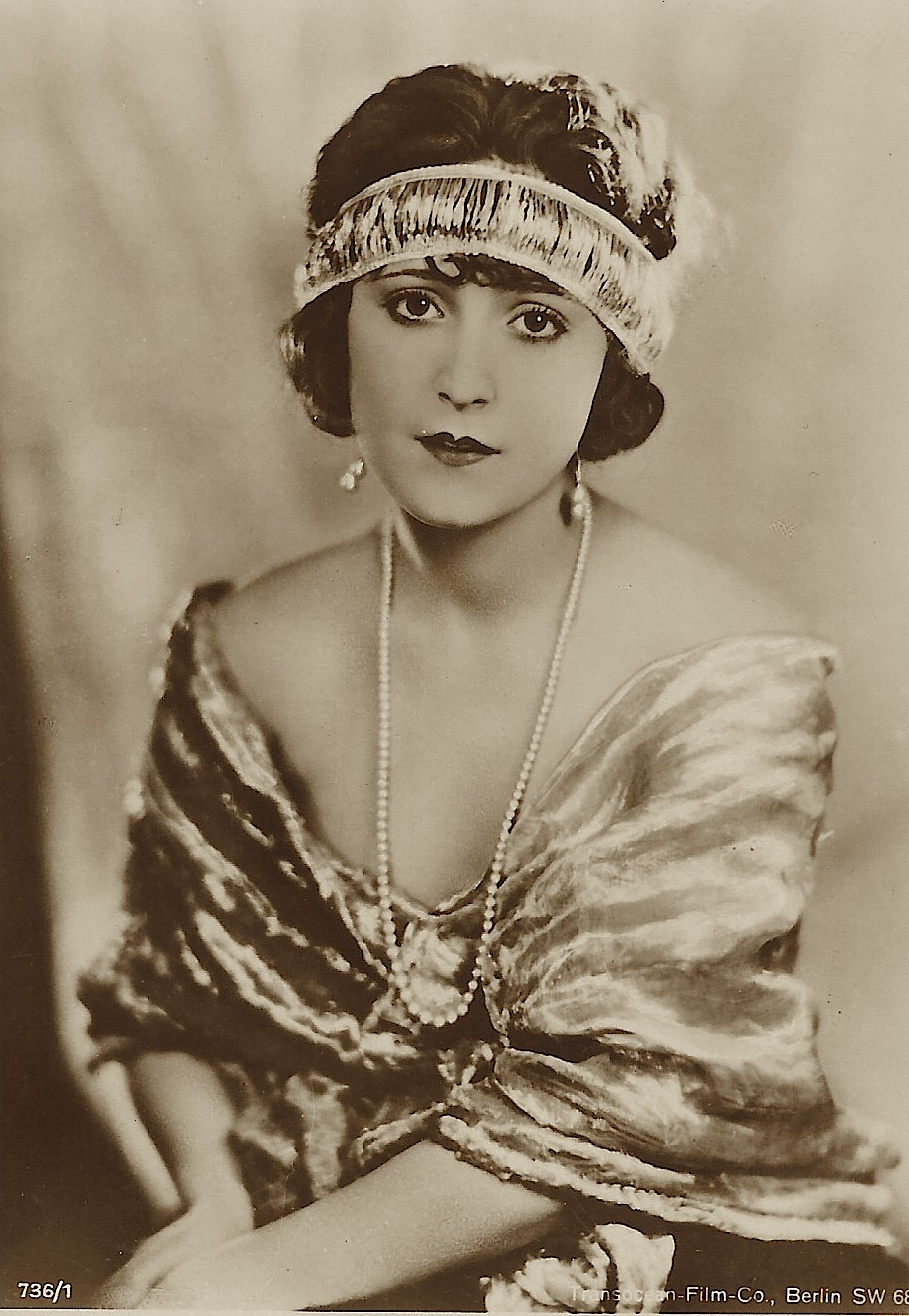 This vintage real photo postcard features American silent and sound film star, Virginia Brown Faire (1904-1980). She was born in Brooklyn, New York. In 1919, after being a winner of the Motion Picture Classic magazine’s “Fame and Fortune” contest, she went to Hollywood. At age 15, she was hired by Metro studio. She then appeared in movies for Fox, followed by Universal. Her first film “Runnin’ Straight” (1920) was a Hoot Gibson short western. She was the leading lady for John Gilbert in Monte Cristo (1922). She was chosen as one of the WAMPAS Baby Stars in 1923. Included in this group of beautiful actresses was Laura La Plante and Evelyn Brent. La Plante and Brent both had successful acting careers. She is most remembered for her role as Tinker Bell in Peter Pan (1924). Faire made a successful transition into sound films. Her first successful talkie was her role in Frank Capra’s “The Donovan Affair” (1929). She appeared in several westerns. Among the western stars that she played opposite to; was John Wayne,Hoot Gibson, and Buck Jones. In the late 1930’s she left Hollywood and moved to Chicago and worked in radio and industrial films. She retired in about 1935. According to the IMDb, she appeared in 74 films between 1920 and 1935. Faire had three marriages. The first, was to actor Jack Dougherty and the marriage lasted just over a year. She then married director Duke Worne, a film director. He died after three years and she then married William Bayer, a furniture manufacturer. She died of cancer in 1980. This vintage postcard was published by Ross Verlag of Berlin, Germany. It is part of a series (no, 736/1). SOLD


 THE CABINET CARD GALLERY