POSTCARD 1
POSTCARD 2
 POSTCARD 1
 POSTCARD 2 (SOLD)
 POSTCARD 3 (SOLD)
 POSTCARD 4 (SOLD)
 POSTCARD 5 (SOLD)
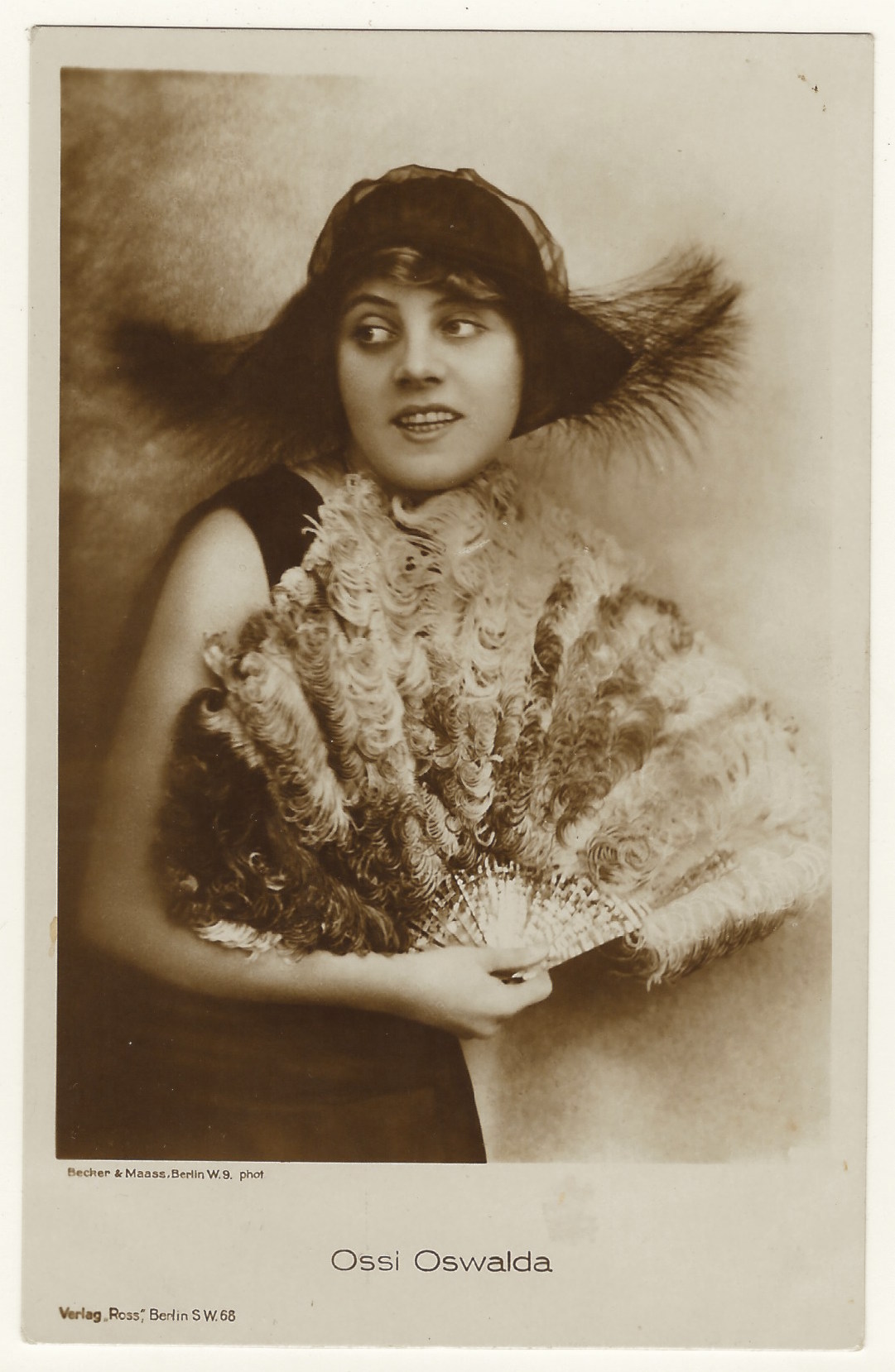
The beautiful actress seen in the top vintage real photo postcard is named Ossi Oswalda (1897-1947). She was born in Germany and appeared predominately in silent films. She was a leading lady, popular comedienne, dancer, and singer. Due to her popularity, she was known as “the German Mary Pickford”. Ossi began her career as a ballerina and she danced in a chorus line for a theater in Berlin. She made her film debute in “Night of Horrors” (1916) and was noticed by actor/screenwriter Hanns Kraly, who introduced her to director Ernst Lubitsch. Oswalda’s early career began with appearances in several Lubitsch films. In 1921, she and her husband started a film production company that produced four films over four years, all starring Miss Oswalda. After 1925, she was under contract to UFA, a German film company. After the transition to “talkies”, Oswalda joined the ranks of actresses and actors, who’s career took a nose dive. She only acted in two sound films. Her final screen appearance was in “The Star of Valencia”. She then began acting on the stage. She appeared in operettas in Germany and Vienna. When the National Socialists took power in Germany, she emigrated to Prague with her “Jewish life partner”, Julius Aubenberg. In 1943, she wrote a story for a Czechoslovakian film. In summarizing Ossi’s career, the IMDb credits her with 51 film appearances, producing 5 films, and 1 screen writing credit. It is reported that she frequently played child-like spoiled women. She appeared in drag in at least one film. Oswalda’s first marriage (1919-1925) was to a Hungarian baron. After her divorce, the actress began a highly publicized romantic relationship with Crown Prince Willhelm (1882-1951). Simultaneously, the actress Lily Damita, was having an affair with the Prince’s son. The royal family put a kibosh to both “inappropriate” relationships. In 1947, she died in Prague at age 48, bankrupt and suffering from multiple health problems. This German real photo postcard is published by Ross Verlag soemetime between 1919 and 1924. The photograph of Miss Oswalda was taken by Becker & Maass of Berlin. Note her pretty hat and fan. Hopefully, she wasn’t allergic to feathers. Oswalda was young when this photograph was taken. She was beautiful and no older than 27 years of age.
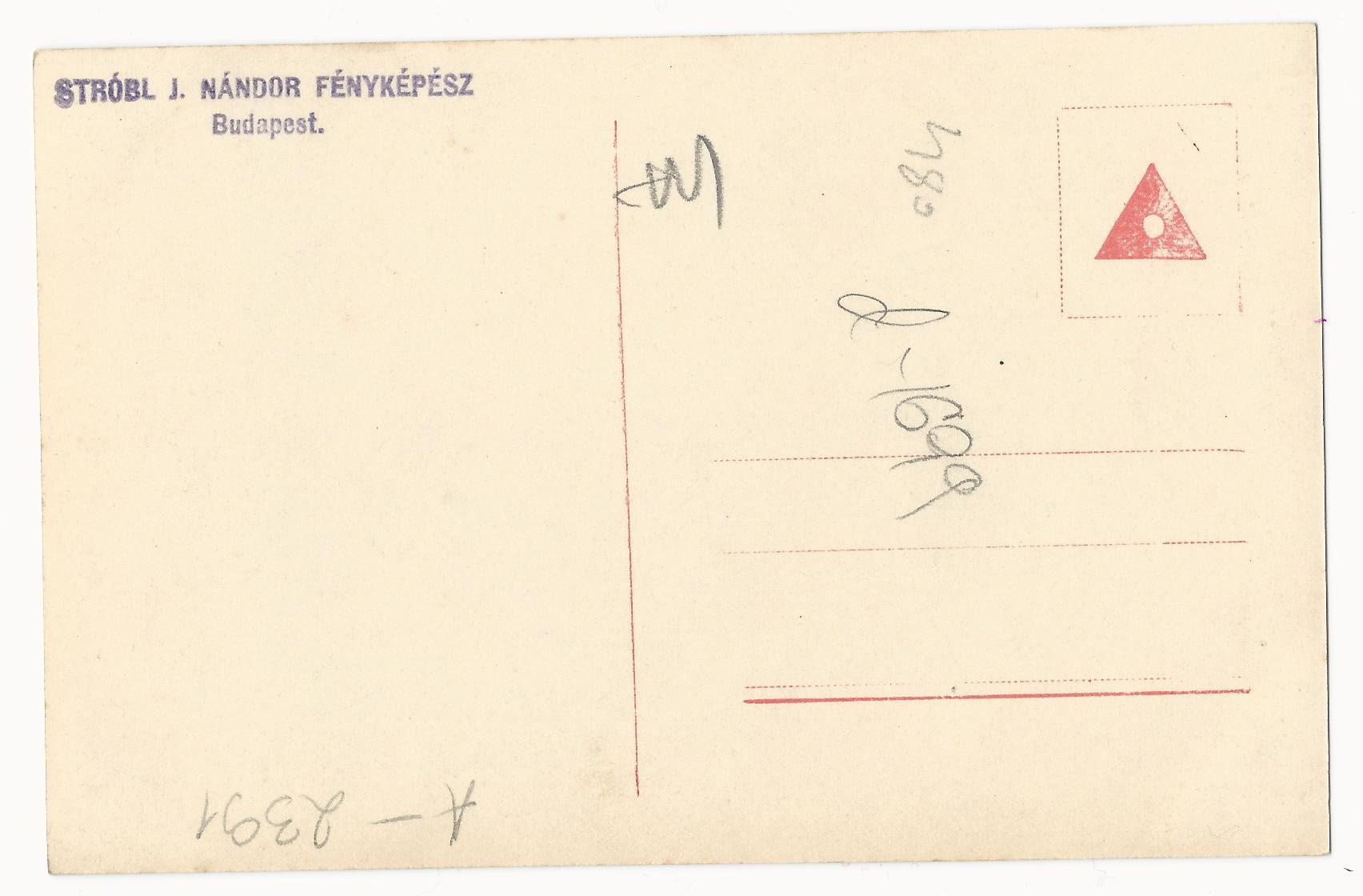
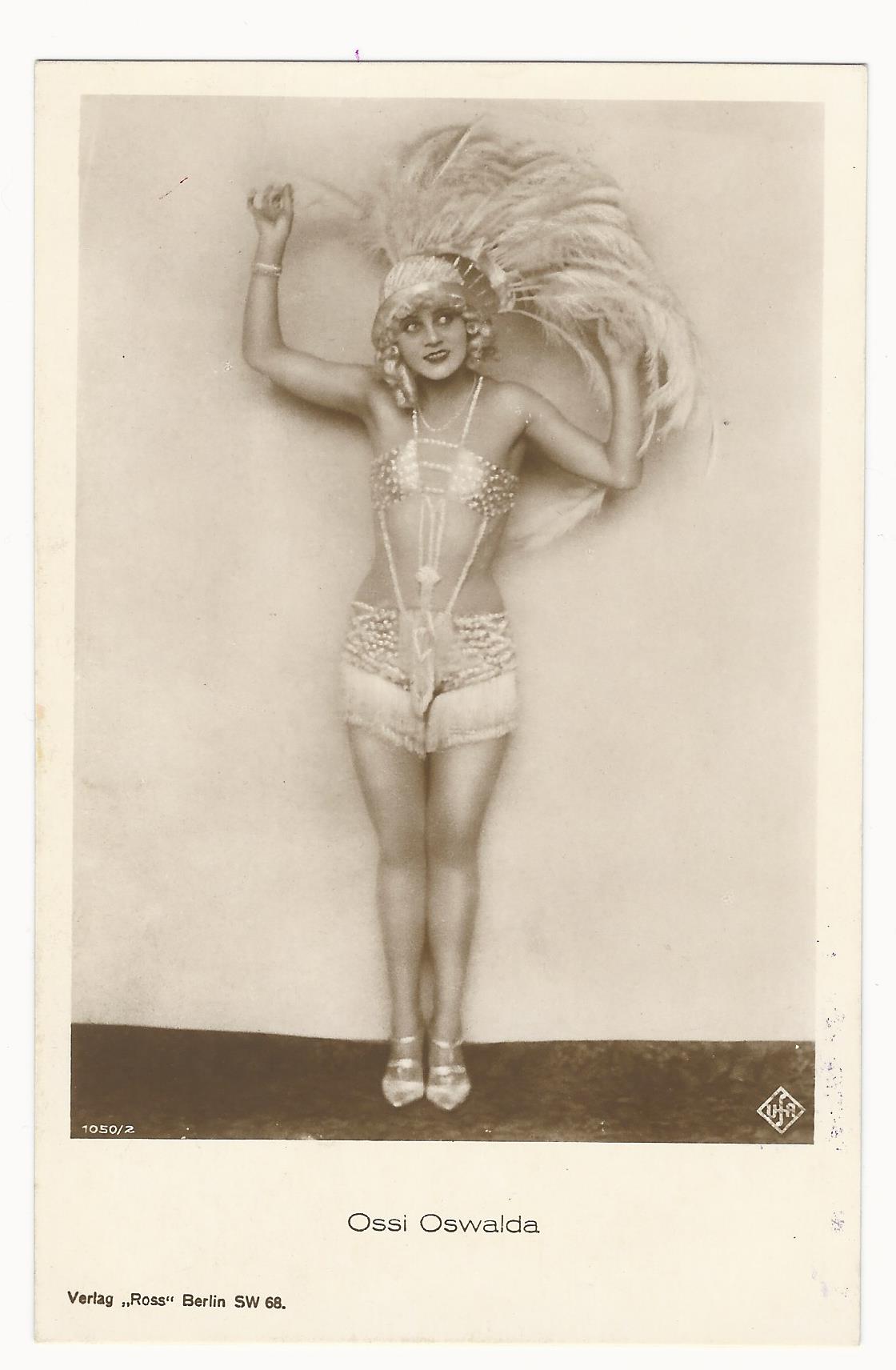
Postcard 2 features Miss Oswalda in a very skimpy costume. Her feathered hat is quite showy . She has a wonderful smile and pretty eyes. This risque postcard was part of a series (no. 1050/2) and published by Ross Verlag of Berlin, Germany. The logo of UFA, a German film company, appears on the lower right hand corner of the postcard. The reverse of the postcard reveals that that the photographer is Strobl J. Nandor of Budapest, Hungary. (SOLD)
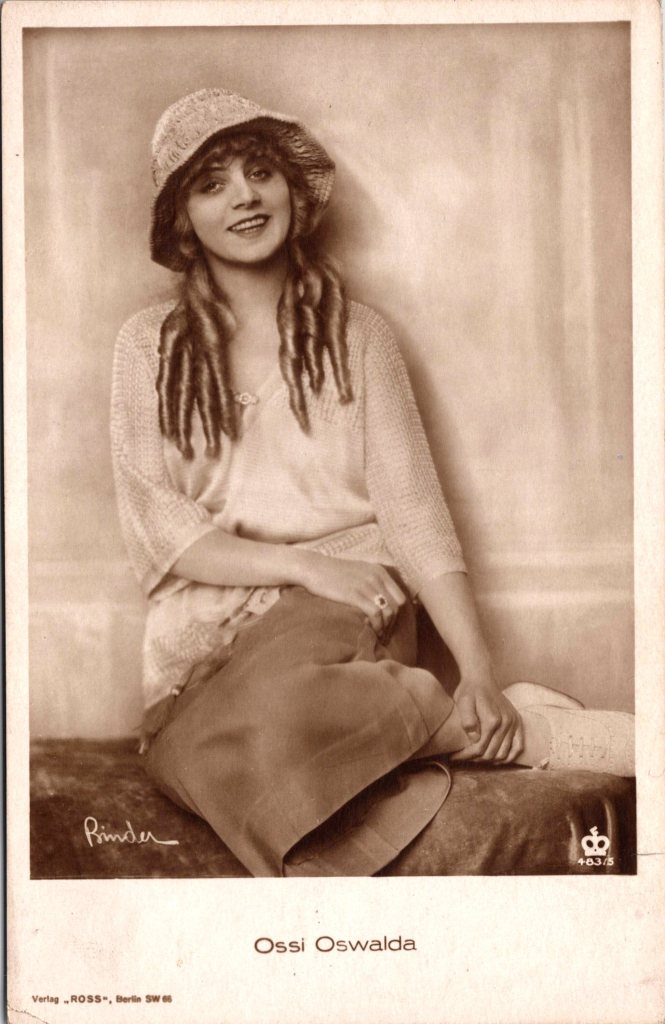
Postcard 3 is a German real photo postcard that was published by Ross Verlag. Miss Oswalda’s photo was taken by celebrity photographer Alex Binder. (SOLD)
Postcard 4 captures Miss Oswalda looking amused. She is flashing a wonderful smile. This postcard was published by Ross Verlag of Berlin, Germany (no.474/2). (SOLD)
Postcard 5 captures Miss Oswalda in a provocative pose. She is wearing a short skirt resulting in quite a leggy photo. Posing her with her hands on her hips was aimed at being suggestive. This risque postcard was published by Ross Verlag of Berlin, Germany (no.483/1). The photographer of this portrait of Oswalda was celebrity photographer Alex Binder. (SOLD)
POSTCARD 1
POSTCARD 2
POSTCARD 3
POSTCARD 4
POSTCARD 5

 POSTCARD 1 (SOLD)
 POSTCARD 1 (SOLD)
 POSTCARD 2 (SOLD)
 POSTCARD 3 (SOLD)
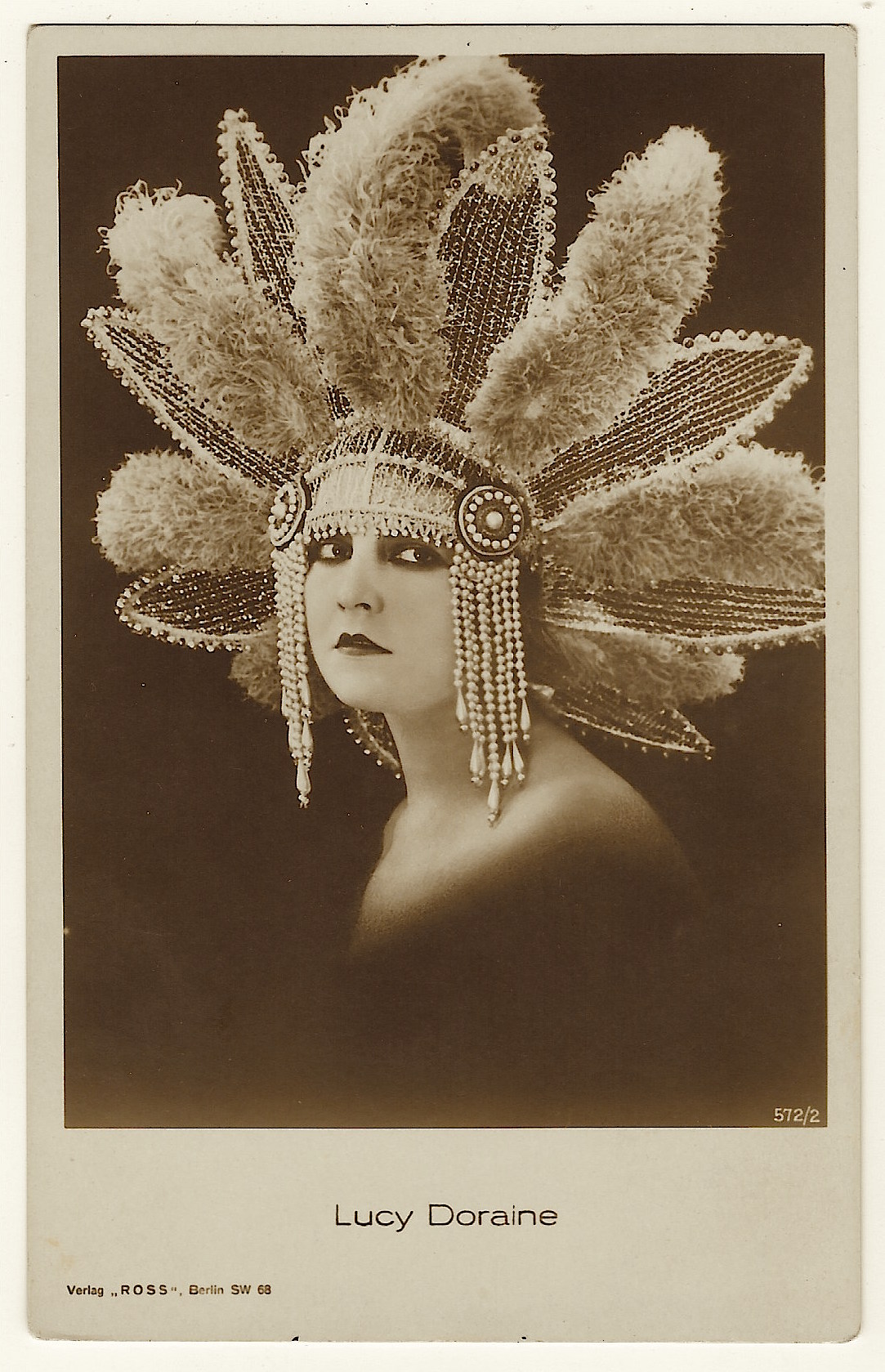
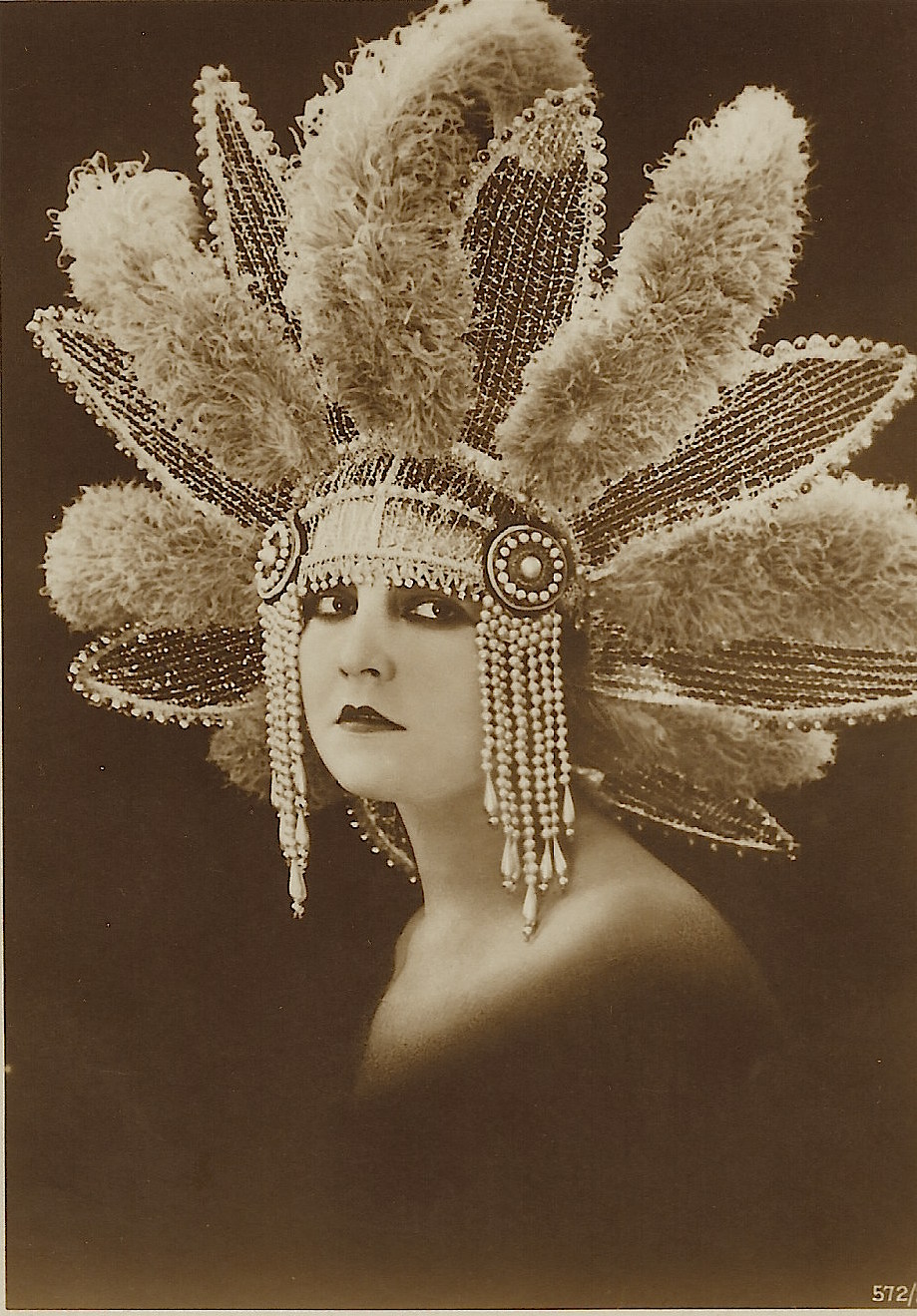
The pretty young woman featured in this risque vintage real photo postcard (Postcard 1) is Hungarian actress, Lucy Doraine (1898-1989). She began her film career shortly after her teenage years. Her mentor was Hungarian director, Michel Curtiz. He was also the first of four husbands. The pair worked together for about five years in Budapest and Vienna. They had gone to Vienna in 1919 to flee the political and military morass in Hungary. Doraine remained a European film star until 1927. Eventually, Doraine left for Hollywood, but her career did not take off. She was confined to playing supporting roles and she was young for this loss of starring roles to occur (about 30 years of age). She retired from her film career in 1933, but remained in the United States. The IMDb lists her as having 31 acting credits between 1916 and 1931.This postcard is of German origin and was published by Ross Verlag as part of a series (no.572/2). The postcard was published between 1919 and 1924. The photograph was a publicity still for her appearance in Sodom and Gomorrah (1922), The youtube video below shows Lucy Doraine appearing in a 1922 film. The stamp box of this postcard has an interesting story. “NBC” (Neue Bromsilber Convention) was a price cartel established in 1909 that continued until the 1930’s. The purpose of the cartel was to ensure that the minimum price charged for postcards was kept at a sufficiently profitable level. A number of postcard publishing companies joined the cartel in an effort to stave off the effect of competition on the pricing of postcards. (POSTCARD 1 SOLD)
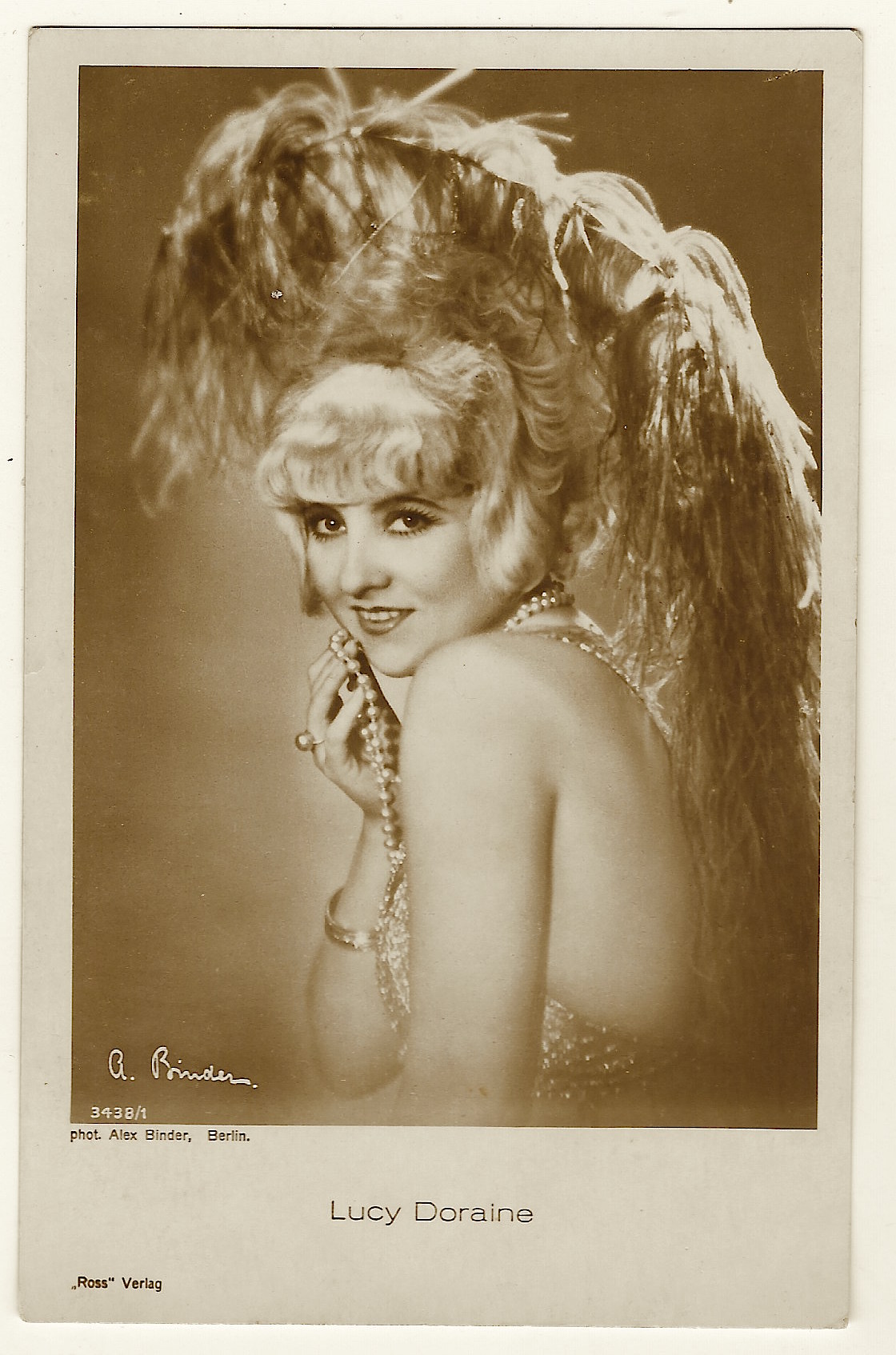
Lucy Doraine is also the subject of postcard 2. Once again Miss Doraine is adorned with an elaborate and large feathered head piece. Apparently, she was quite showy. This postcard was published by Ross Verlag and was part of a series (no. 3438/1). Doraine’s photograph was taken by Alex Binder who practiced his profession in Berlin, Germany. A number of actress portrait postcards by Binder can be found in the Cabinet Card Gallery. To view those images, place his name in the site’s search box. (POSTCARD 2 SOLD)
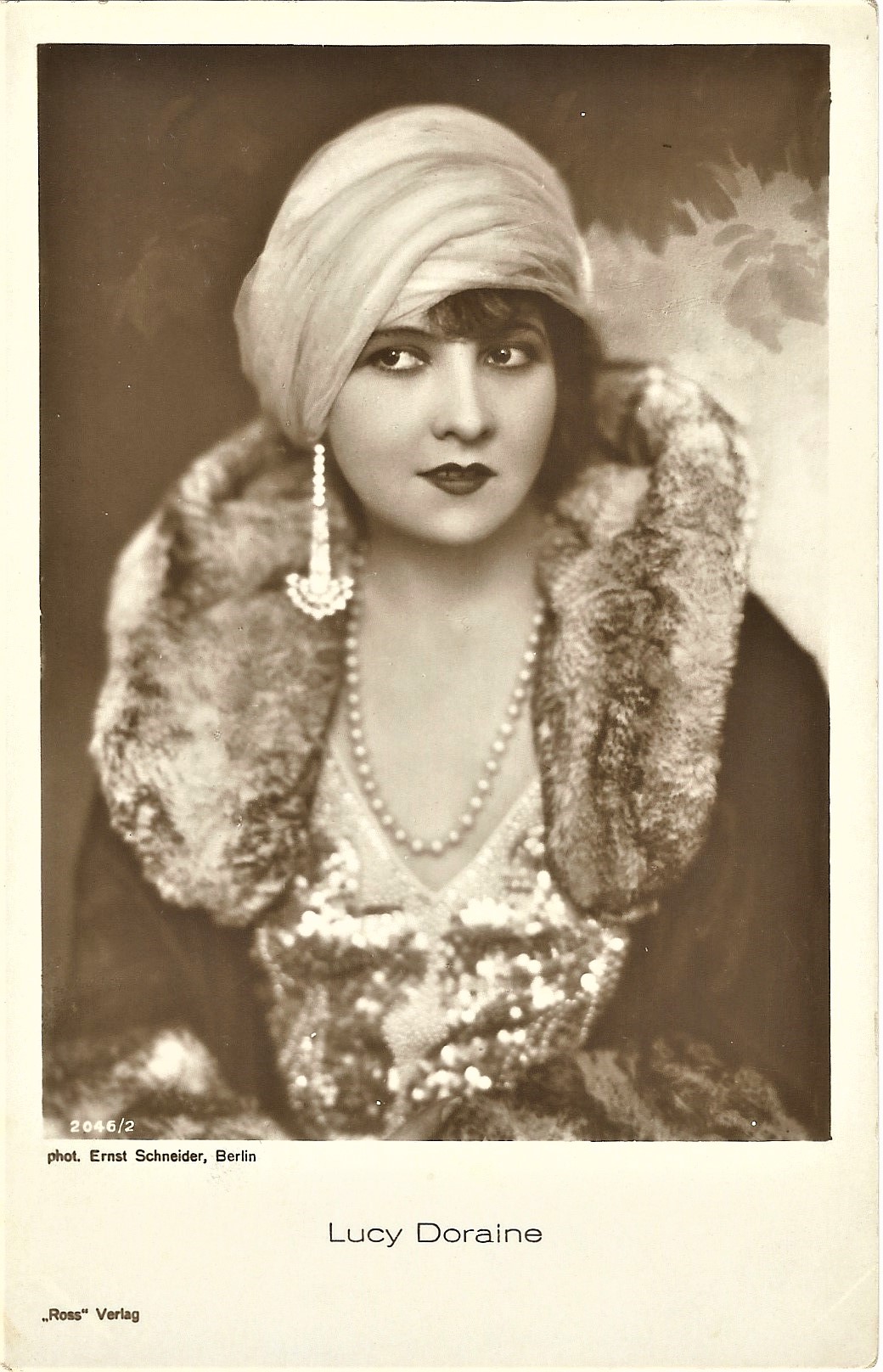
Postcard 3 features Miss Doraine in flamboyant attire. She is alluring, beautiful, and photogenic. Note her fur stole and pearls. Her hat is fantastic. This postcard was published by Ross Verlag and is part of a series (no.2046/2). The photographer of Miss Doraine’s portrait is Ernst Schneider. Schneider was considered to be one of the most celebrated studio photographers in Berlin during three decades (1900’s, 1910’s, 1920’s). He photographed many celebrities from the world of theater, opera, circuses, and film. He was also one of the most prominent fashion photographers in Berlin. In addition, he was well known for his nude photography and he published books showcasing his work in this domain. Sometime around 1908 Schneider began working with postcard publishers “Rotophot” and “Neue Photographische Gesellschaft” (NPG). In 1919 he began working with Ross Verlag. (SOLD)
 POSTCARD 1
 POSTCARD 2
 POSTCARD 3
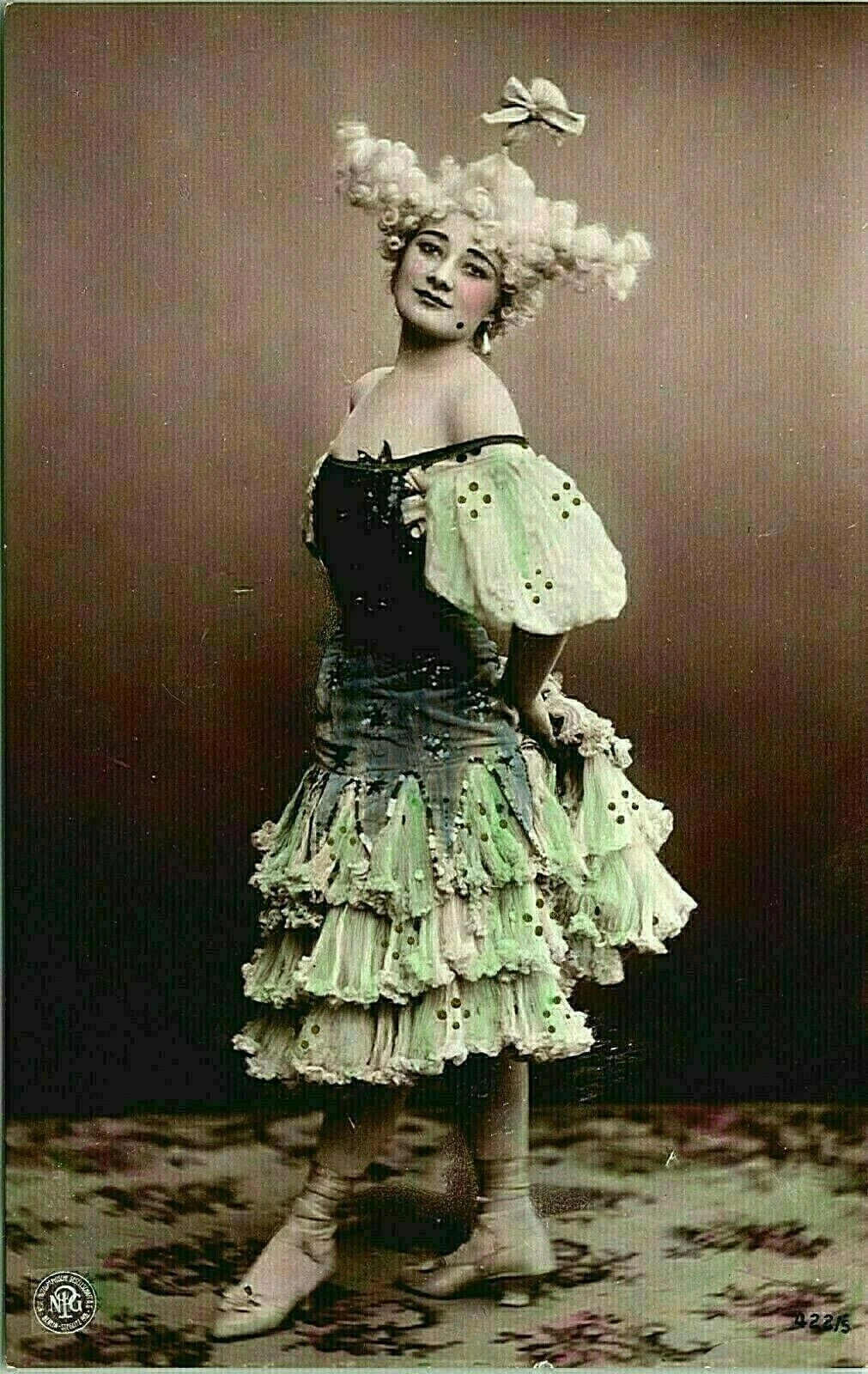
This vintage real photo postcard features an attractive young woman wearing some sort of costume. She appears to be a performer. She is wearing a white wig with an “elevated bow”. This postcard is hand color tinted. The postcard was published by Neue Photographische Gesellschaft (NPG) which was located in Berlin and Stuttgart, Germany.The company was in business between 1894 and 1948. It was founded by Arthur Black (1862-1943) and it became one of the most well known and largest companies involved in the production of postcards.This postcard is an Oranotypie. An oranotype is a trade name for a type of glossy real photo postcard published by NPG at the beginning of the 20th century. The postcard has a French stamp and the card was postmarked in 1908. SOLD
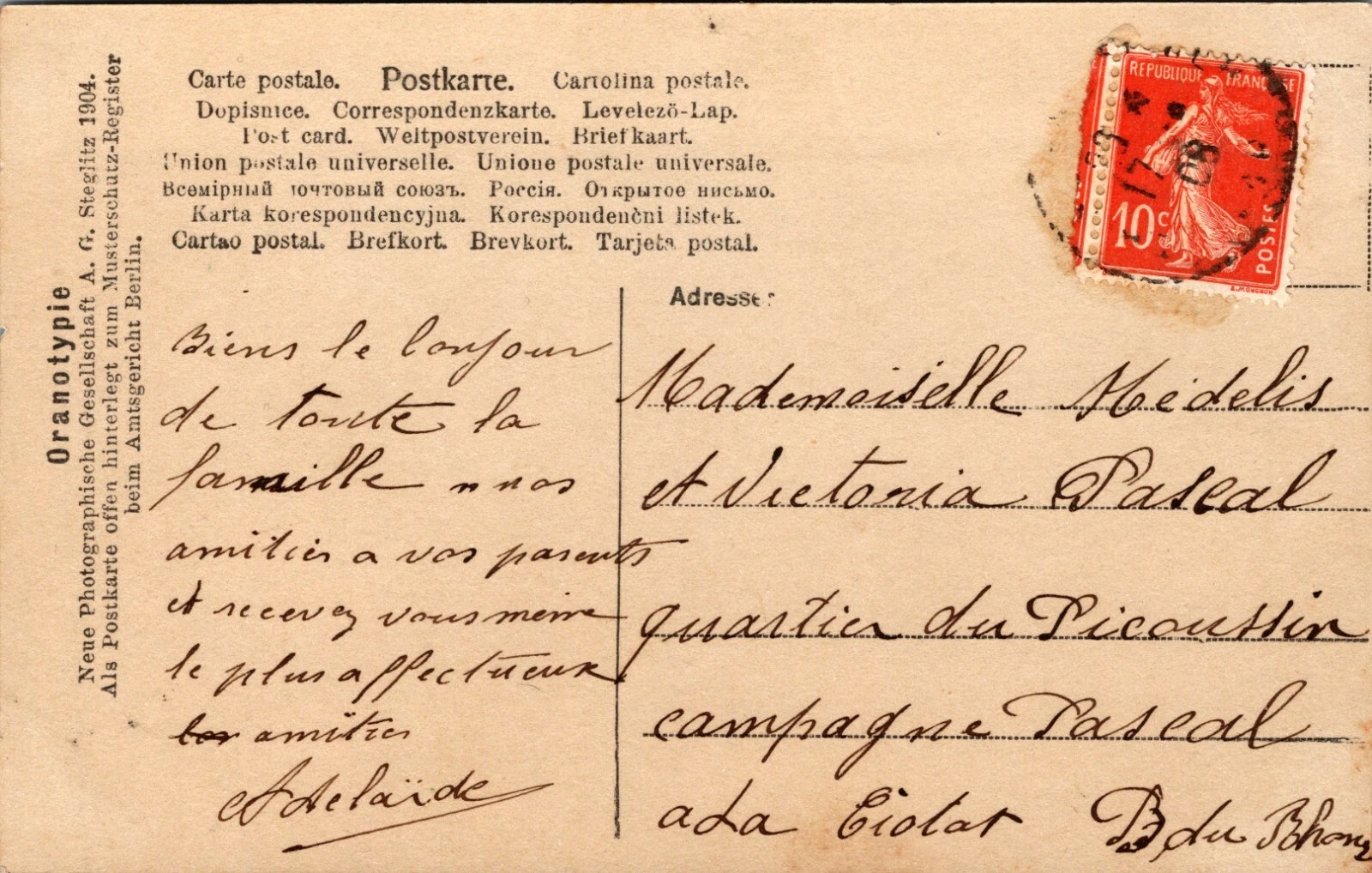
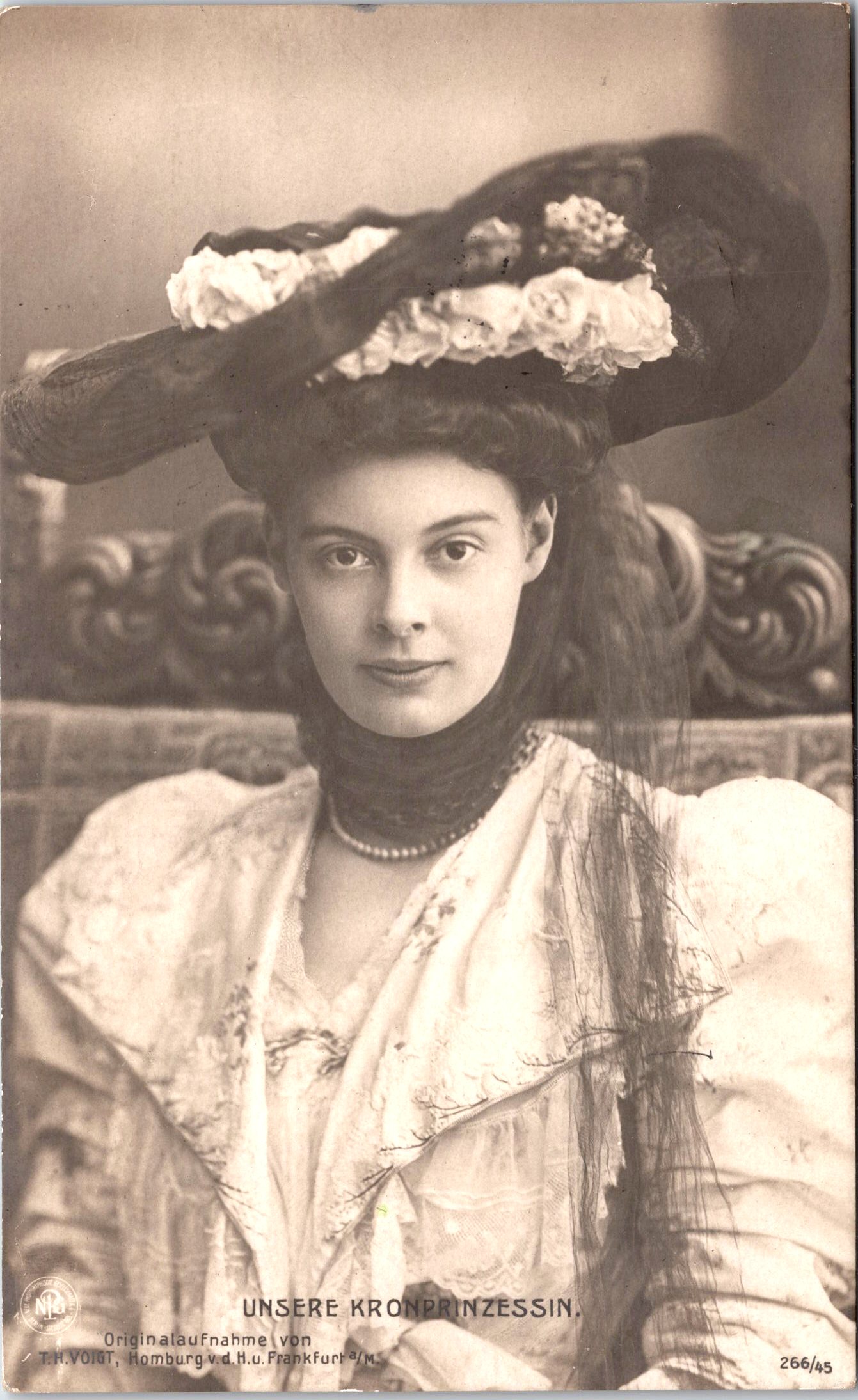
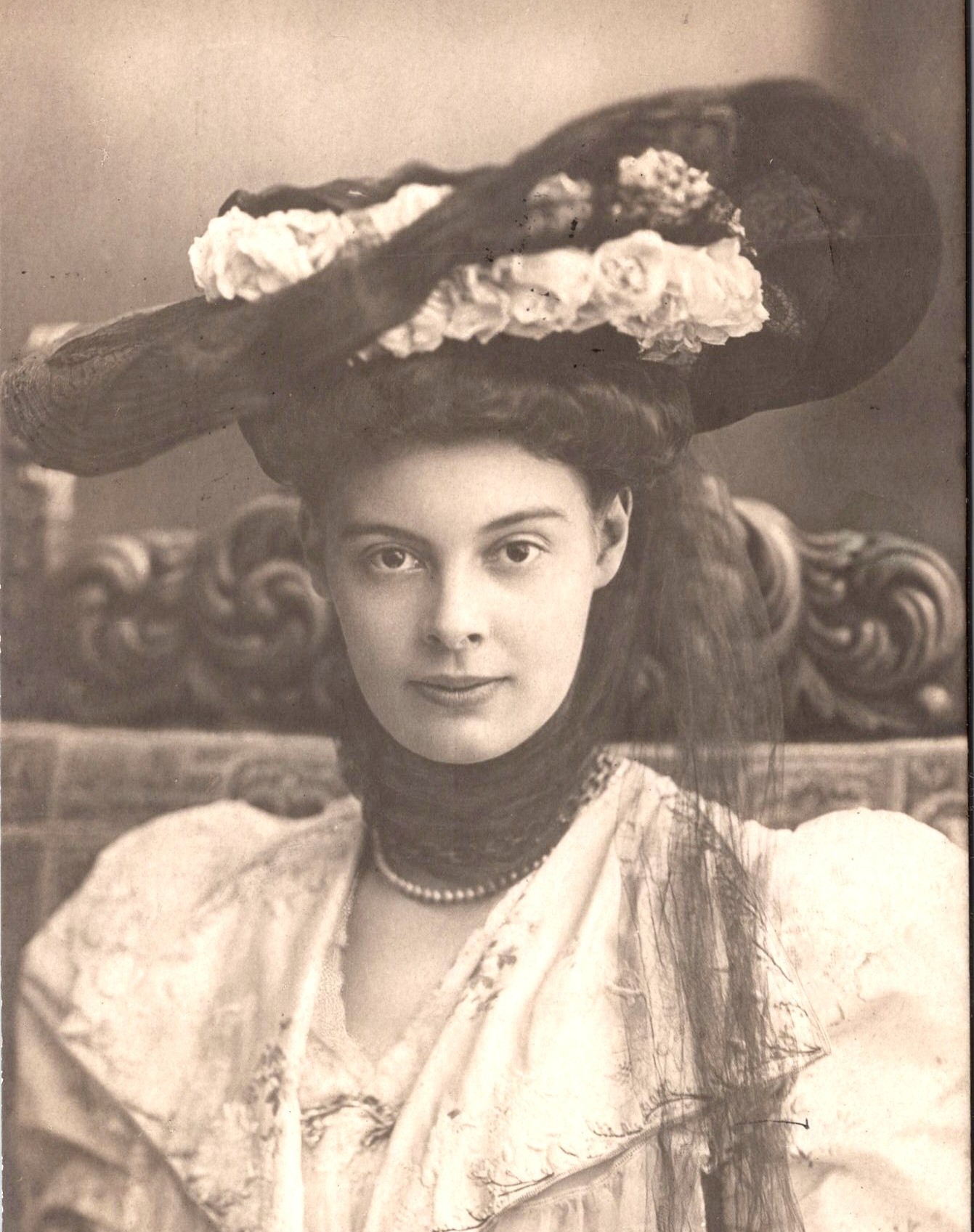
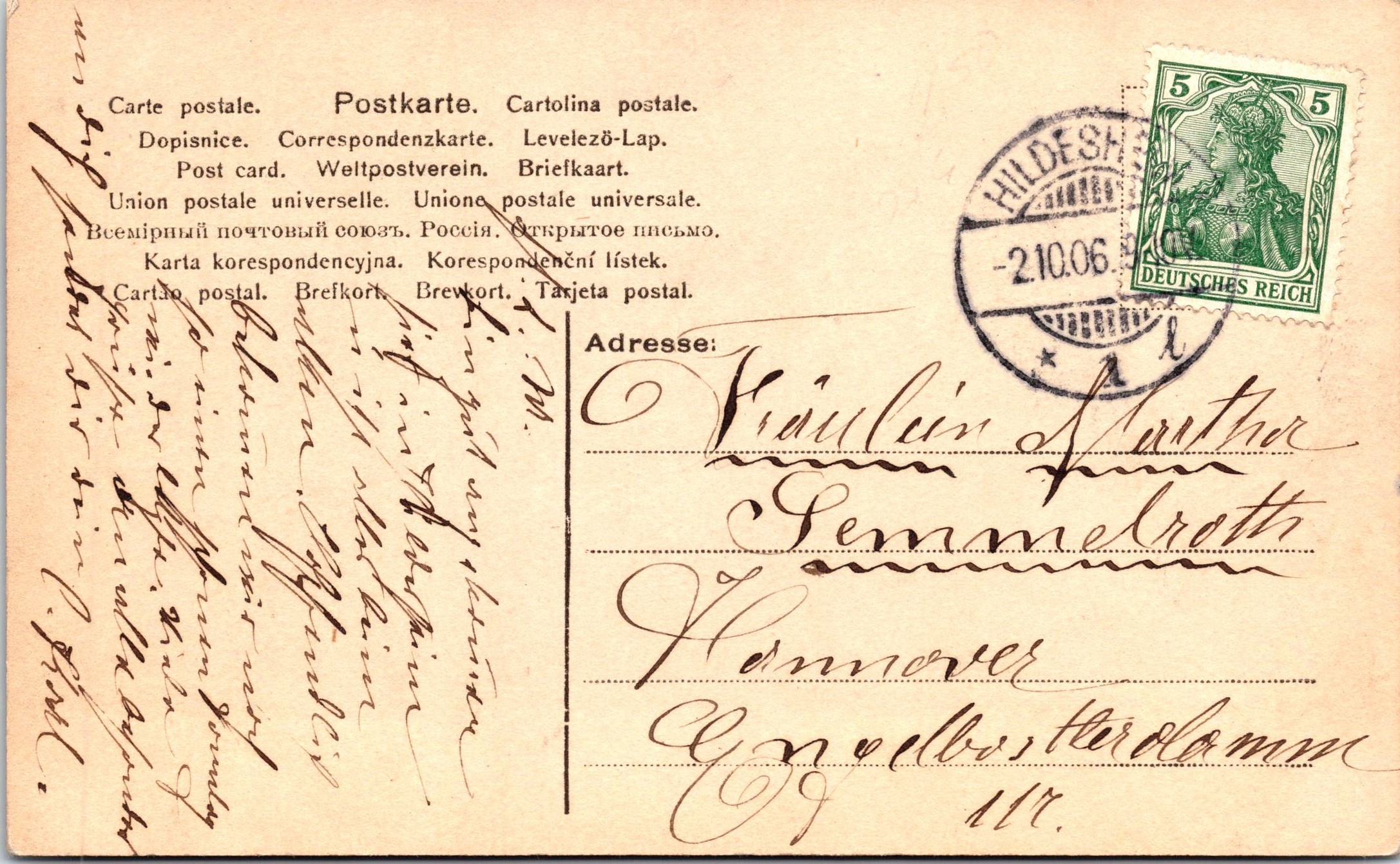
Crown Princess Cecilie of Prussia (1886–1954) was a prominent royal figure in early 20th-century Germany. She was the daughter of Frederick Francis III, Grand Duke of Mecklenburg-Schwerin, and Grand Duchess Anastasia Mikhailovna of Russia, making her a granddaughter of Emperor Nicholas I of Russia. Cecilie came from a highly prestigious lineage that united German and Russian imperial bloodlines. In 1905, she married German Crown Prince Wilhelm (Wilhelm of Prussia (1882–1951), the eldest son of Kaiser Wilhelm II, Emperor of Germany and King of Prussia. As the wife of the Crown Prince, Cecilie held the title of German Crown Princess and was seen as the future Empress of Germany. However, the German monarchy was overthrown in 1918 at the end of World War I, and the family went into exile. Wilhelm never ascended the throne, as the monarchy was abolished with the abdication of his father, Wilhelm II. Cecilie and Wilhelm had six children.Their marriage, while initially harmonious and dutiful, became strained over time due to Wilhelm’s infidelities and political turmoil. Despite no longer being royalty in power, Cecilie remained a respected figure. After the monarchy fell, she lived modestly in Germany and did not follow her husband into exile in the Netherlands. She died in Bad Kissingen, West Germany, in 1954. This real photo postcard is a studio portrait of Crown Princess Cecilie, taken by T.H. Voigt, a photographer based in Homburg v.d.H. and Frankfurt a/M. The publisher number “266/45” appears in the lower right corner, and the “NPG” logo indicates it was part of the Neue Photographische Gesellschaft series—one of the most prestigious photo publishers in Imperial Germany. In this beautifully lit and softly focused portrait, Crown Princess Cecilie sits regally, gazing directly at the camera with serene confidence. Her expression is calm and composed, projecting the quiet dignity expected of a royal consort. She wears a sumptuous white or light-colored gown, richly embroidered with floral motifs and delicate lace details. Around her neck is a strand of pearls, and an elegant dark scarf or netting is wrapped gracefully around her collar and beneath her chin. Her wide-brimmed hat, adorned with layers of flowers and lace, is spectacular—an extravagant Edwardian fashion statement in keeping with her status. Her long hair is styled in a voluminous updo beneath the hat. The combination of textures—lace, netting, silk, and pearls—exudes both softness and formality, symbolic of her royal role. The postcard is addressed to a woman residing in Hanover, Germany and the card is postmarked in 1906 in Hildesheim, Germany. Cecilie had been a princess for just a short time when this photo was taken. The stamp on the card is a 5 Pfennig green stamp bearing the image of Germania, a common stamp of the Deutsches Reich (German Empire), designed by Paul Eduard Waldraff and issued between 1900–1922. The cursive German message on the left margin is difficult to fully decipher, but it appears to be a friendly greeting. (SOLD)
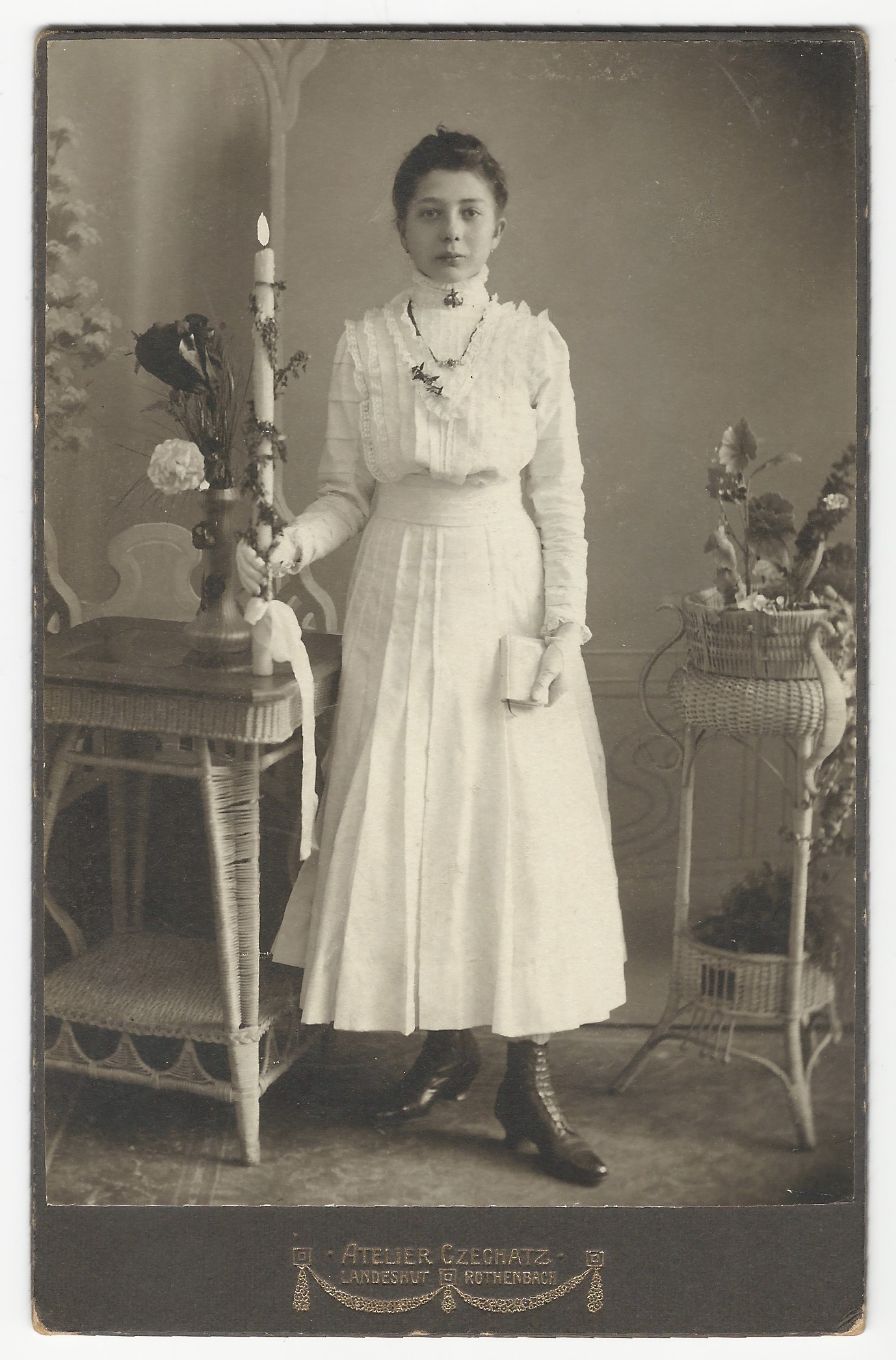
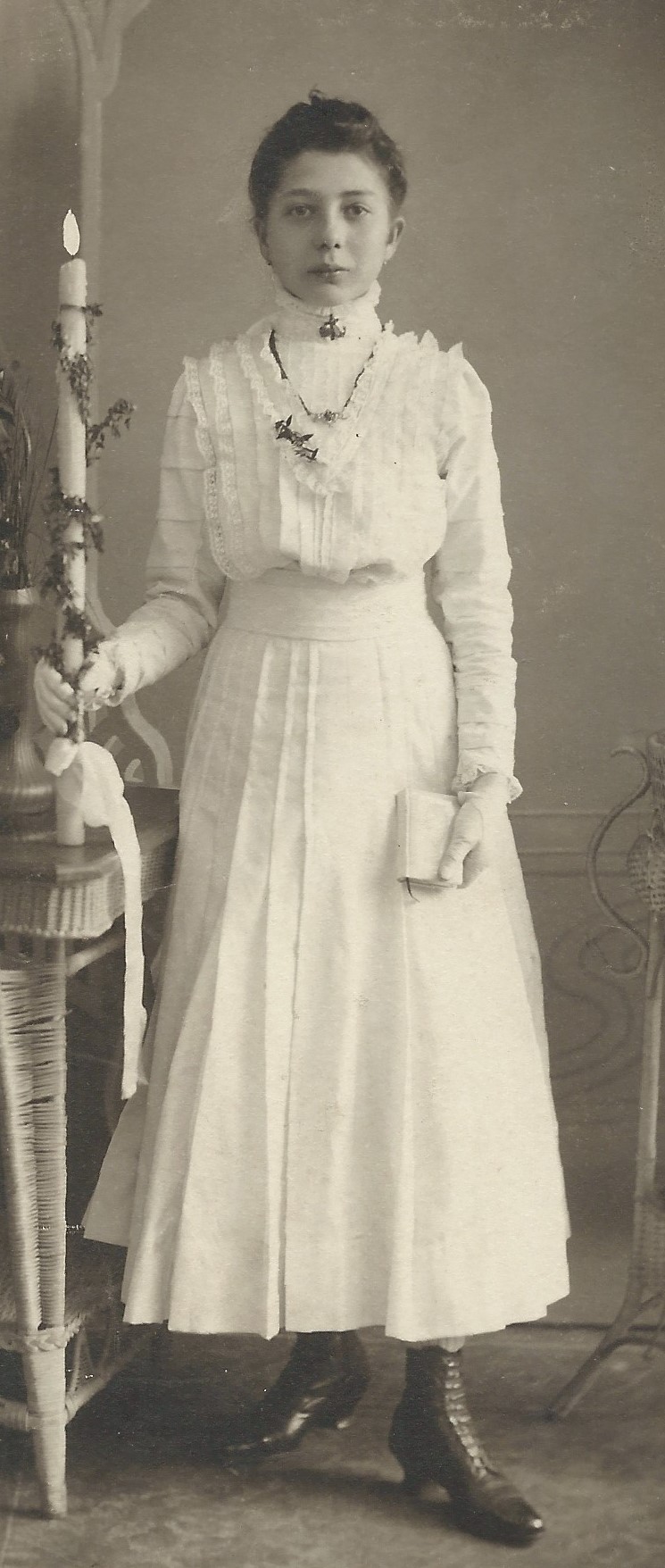
This cabinet card features a young girl posing for her first communion portrait. The photograph was taken at one of the two locations of the Czechatz studio. The sites of these two studios were Landeshut (Poland) and Rothenbach (Germany). Landeshut is also known as Kamienna Gora. This cabinet card is in excellent condition (see scans).
This real photo postcard is available for purchase at my store, The History Peddler, for $19.85 or best offer.
Interested collectors may view the listing here:
https://www.ebay.com/itm/236344328947

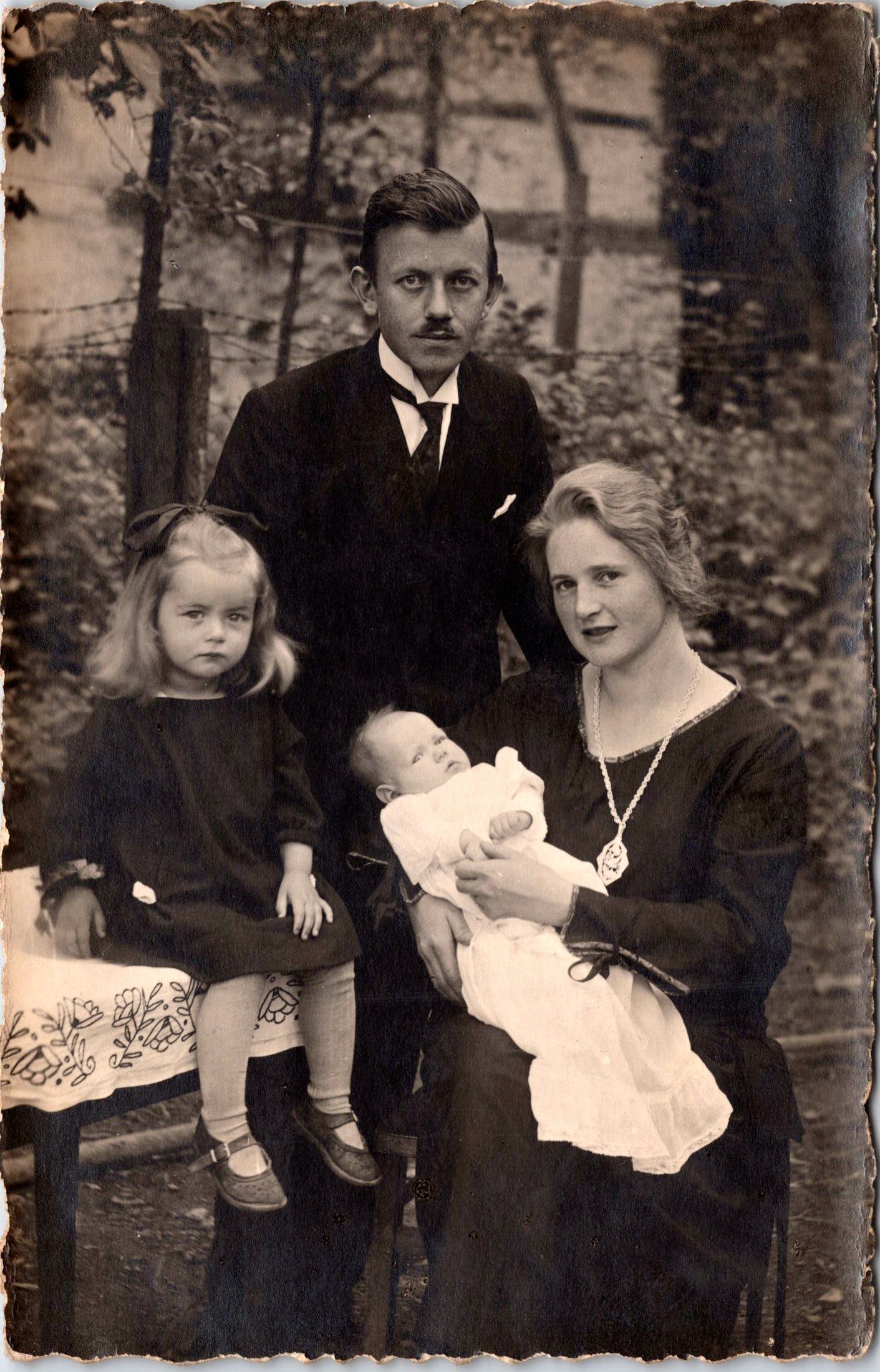
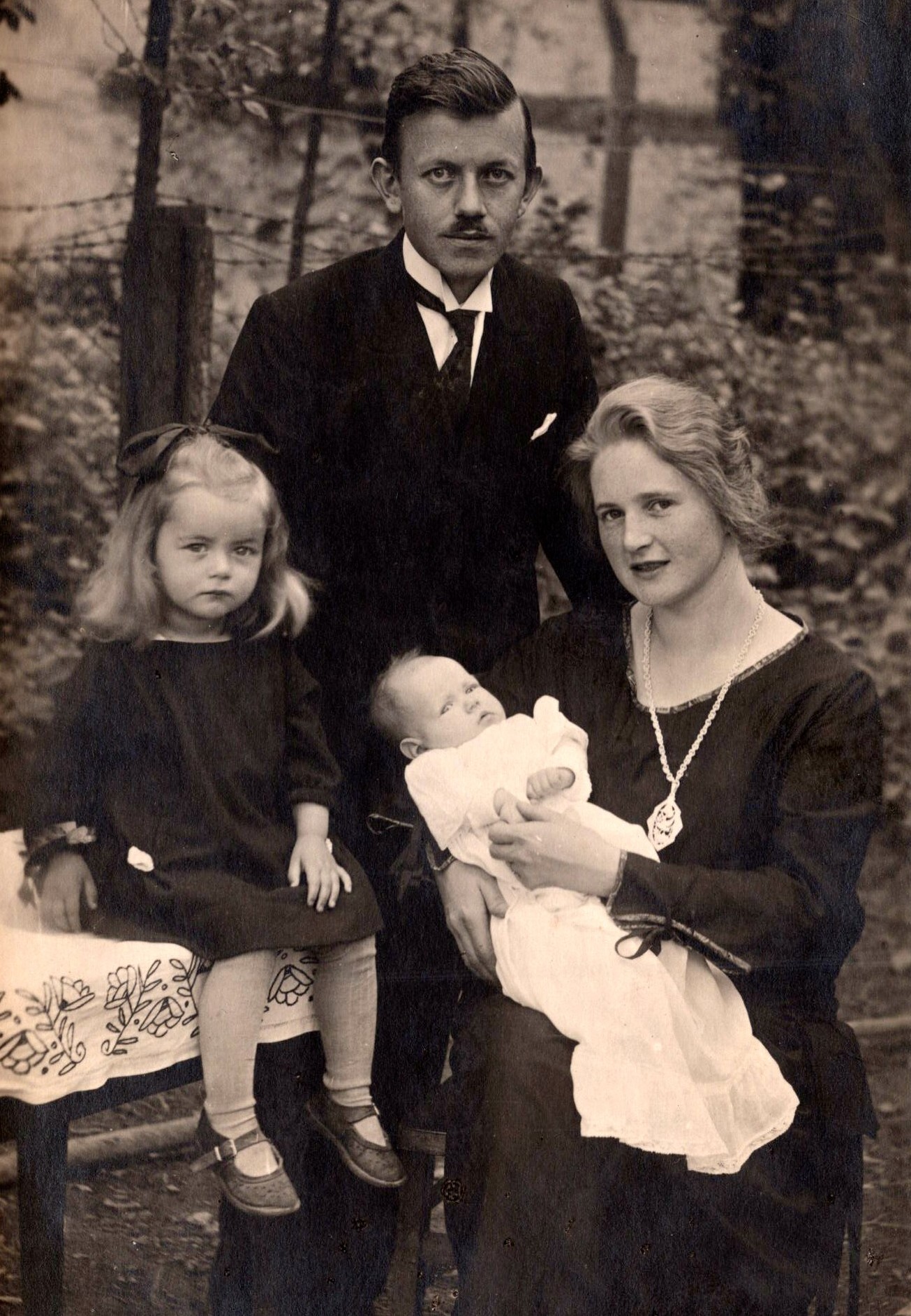
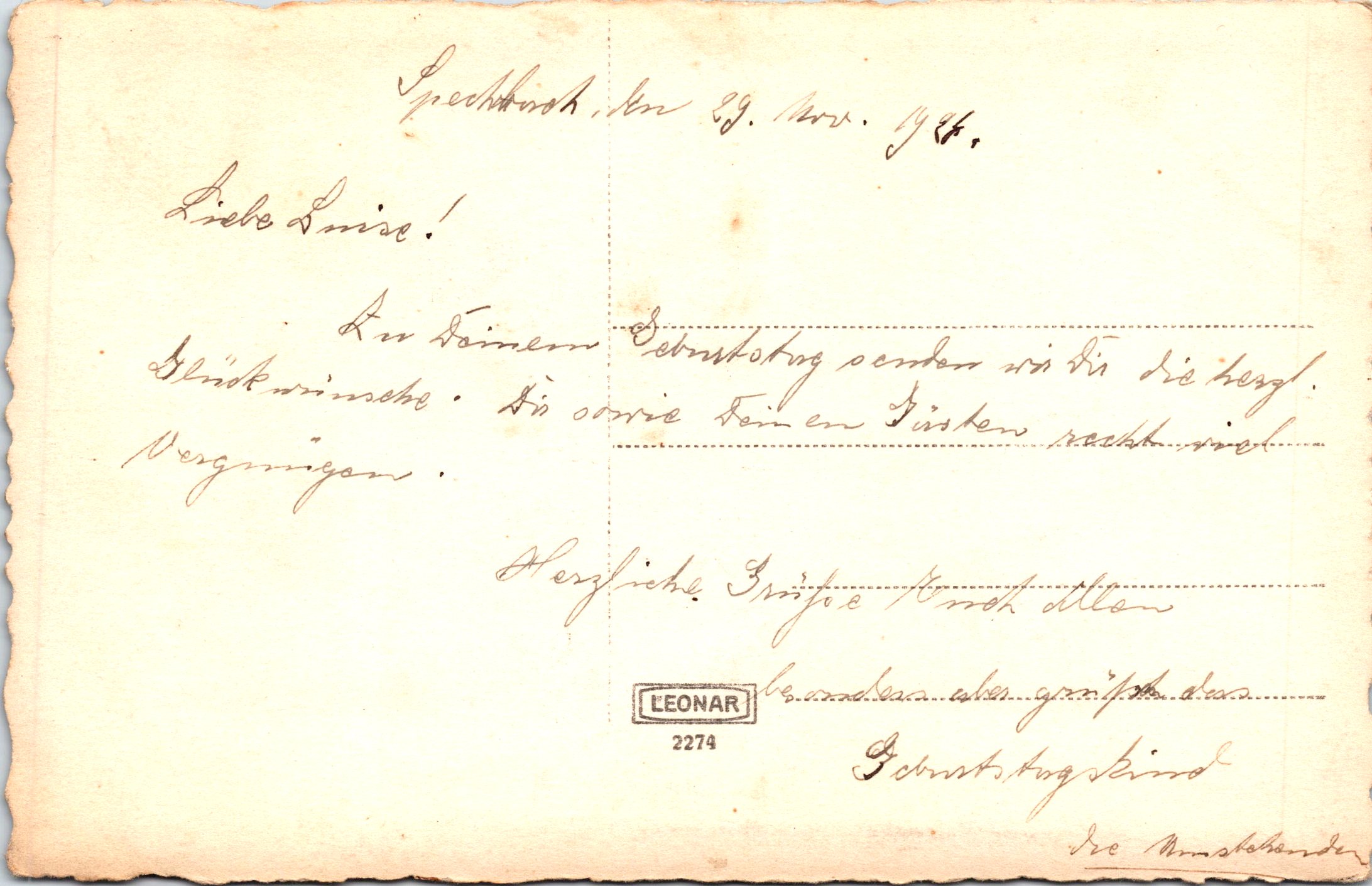
This evocative scallop edged, early 20th-century real photo postcard, presents a carefully posed family portrait, photographed outdoors in what appears to be a wooded park or garden setting. The image depicts a young couple with two children, arranged in a formal yet intimate composition that reflects both affection and dignity. The father, standing behind the group, wears a dark tailored suit with narrow lapels, a stiff white collar, slim tie, and a neatly groomed mustache—hallmarks of late 1910s to early 1920s European men’s fashion. His hair is closely cropped and carefully parted, reinforcing the formal tone of the portrait. The mother, seated at right, cradles an infant in her arms. She wears a dark long-sleeved dress with a modest neckline and a long decorative pendant necklace. Her softly waved hair, worn up but not tightly pinned, is consistent with post–World War I women’s fashion, circa 1919–1923. The older child, a little girl seated at left, appears to be approximately 3–4 years old. She wears a dark dress, light stockings, and strap shoes, with a large bow in her hair. Her direct, serious gaze gives the photograph much of its emotional weight and presence. The infant, likely under one year of age, is dressed in a long white christening-style gown, commonly used for formal portraits and special occasions during this period. The contrast between the dark adult clothing and the infant’s bright garment draws the viewer’s eye to the youngest family member. Overall, this is not a casual snapshot but a deliberately composed, commissioned portrait, intended to commemorate family life during the immediate post-war years. The reverse is divided-back, with a handwritten message in German, written in flowing cursive script. The card is postally unused (no stamp or cancellation). An approximate translation of the message is “Grechwitz (Germany), March 29, Dear Luise! On your birthday we send you our warmest good wishes. For your dear children…Warm greetings” to everyone.” The message is affectionate and familial in tone, suggesting this postcard was sent as a birthday greeting, reinforcing the idea that this portrait held personal significance for the sender and recipient. On the reverse of the card is the printed name “Leonar”. Leonar was a German photographic paper and postcard publisher. The postcard is on Leonar paper but it is not certain that the firm was also the publisher of the card. This vintage postcard is in very good condition. The card has light, even age toning. There is minor edge and corner wear. The image is clear with strong contrast. (SOLD)

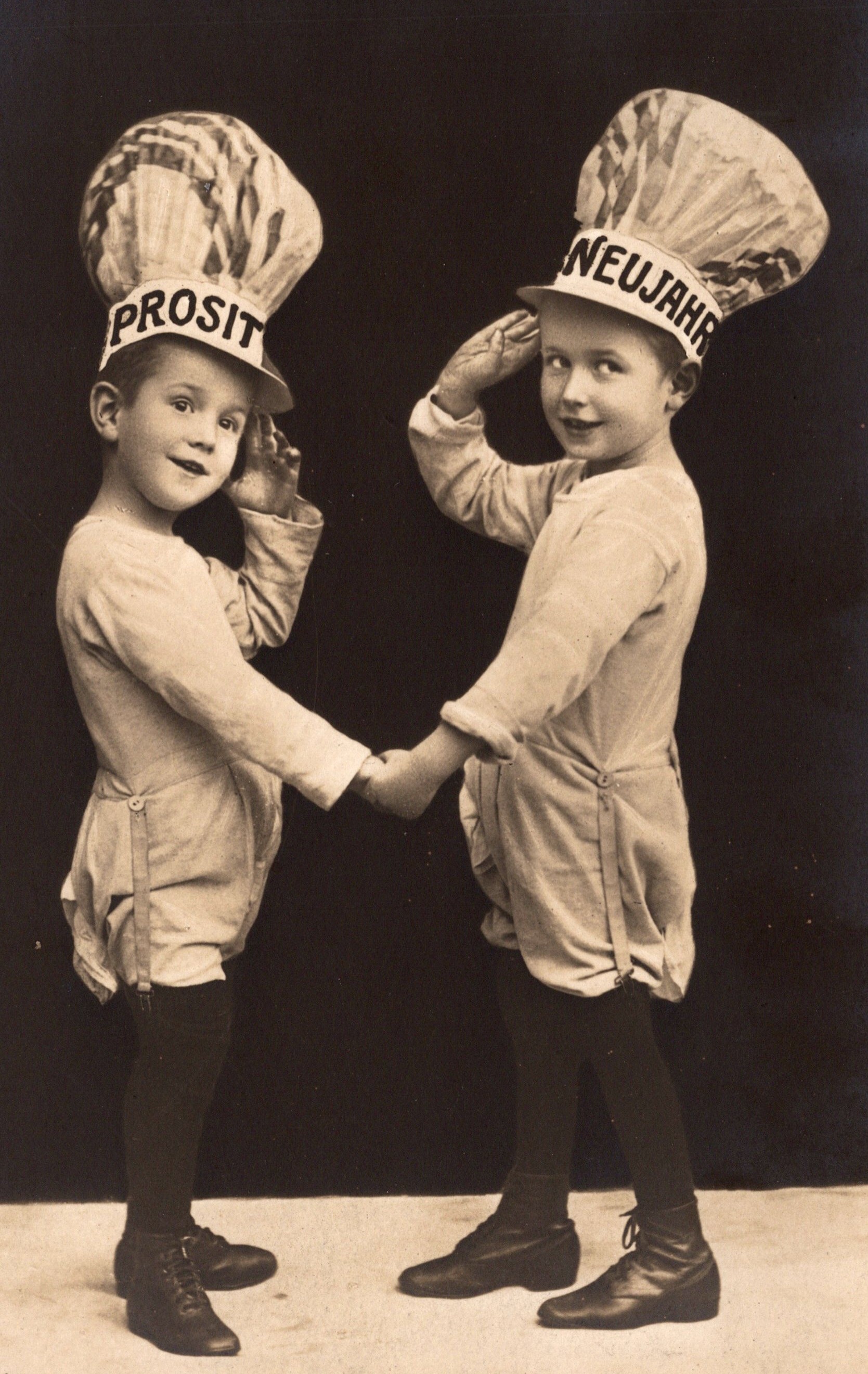
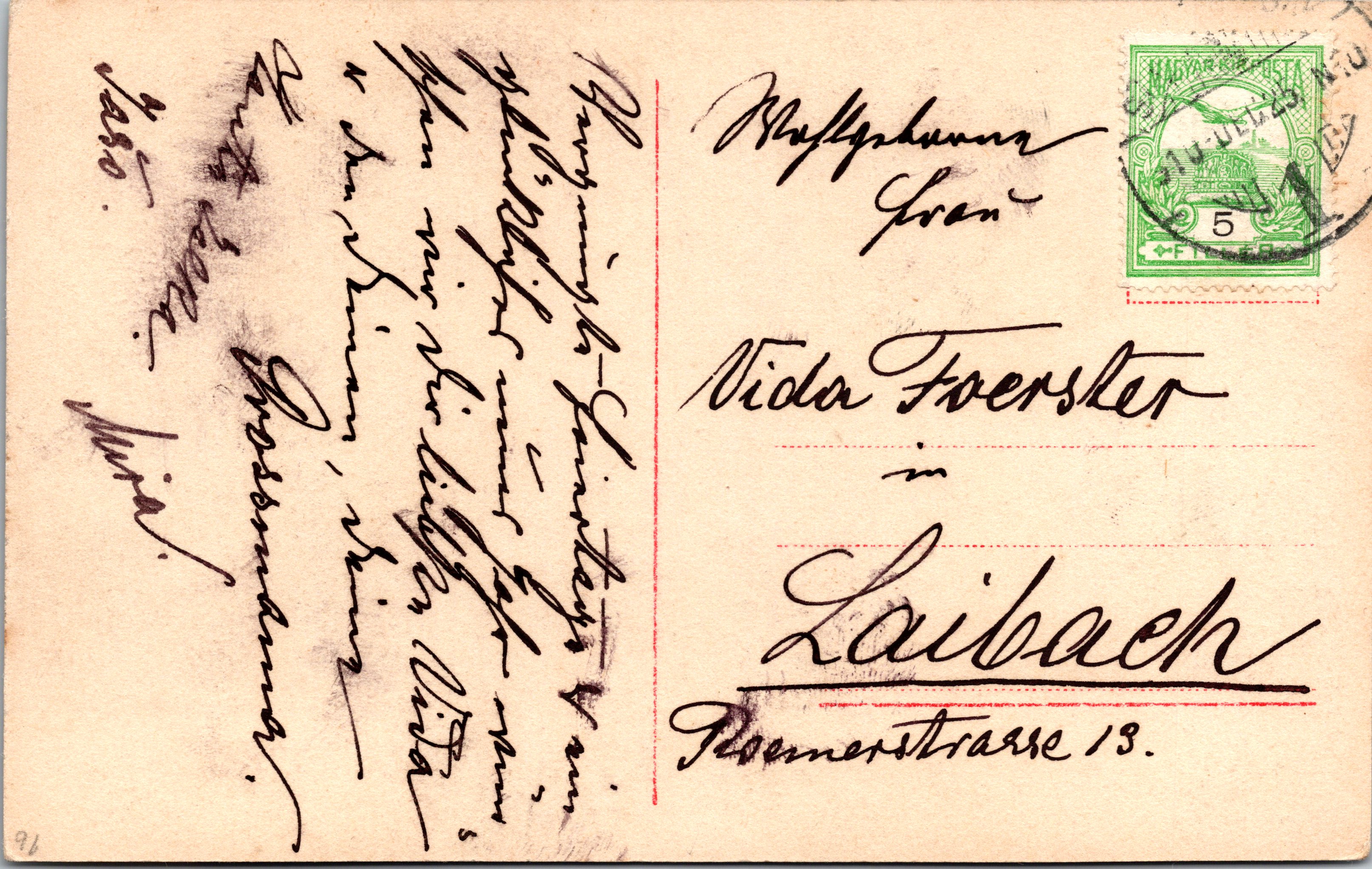
A wonderfully playful German New Year “Prosit Neujahr” real photo postcard published by RPH (Rotophot), Berlin—a major early 1900s European postcard producer best known for high-quality photographic subjects and big, numbered series. The image is pure studio charm: two children in oversized chef-style caps (party hats styled like tall cooks’ toques), posed hand-in-hand as if about to dance into the New Year. One cap reads “PROSIT” (a festive toast—“cheers!”) and the other reads “NEUJAHR” (“New Year”). Their little salute gestures and the crisp studio lighting give this card that classic pre-war holiday-photo look. At the lower left you’ll find the RPH monogram in a circle and the printed series number S.1281/3, identifying this as a Rotophot issue. Overall, this postcard presents nicely with minor edge/corner wear (see scans). The card was mailed to someone in in Laubach, Germany. The postcard has a green 5 (phennig) stamp from Germany. The message is difficult to clearly decipher but it is clear that it is a traditional New Year greeting. It appears to read “Heartfelt New Year’s greetings and a happy New Year …”. This card is likely from sometime around 1905 to 1907.
This cabinet card is available for purchase at my store, The History Peddler, for $22.00 or best offer.
Interested collectors may view the listing here:
https://www.ebay.com/itm/336367805881
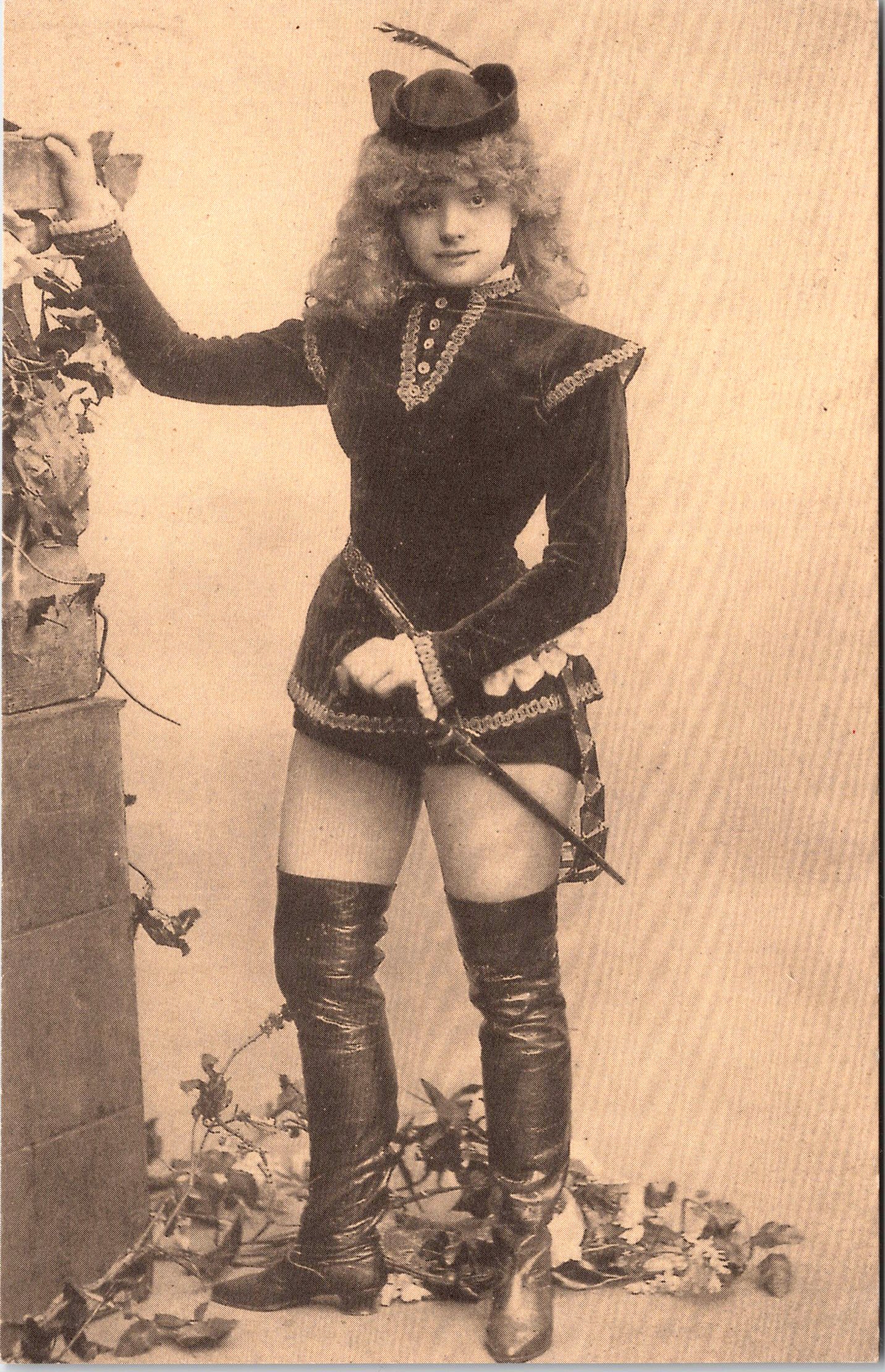
Original undivided-back theatrical postcard, printed in Germany/Austria for the European markets, ca. 1900–1905. Studio portrait of a pretty female performer in trouser-role/musketeer costume—small plumed hat, velvet tunic with braid, lace cuffs, short skirt, thigh-high boots, and a rapier. Multilingual back (German “Postkarte,” “Weltpostverein,” French, Italian, Russian, etc.) confirms early Continental printing for export; publisher and photographer uncredited, as issued. (SOLD)

POSTCARD 1
POSTCARD 2
POSTCARD 3 (SOLD)
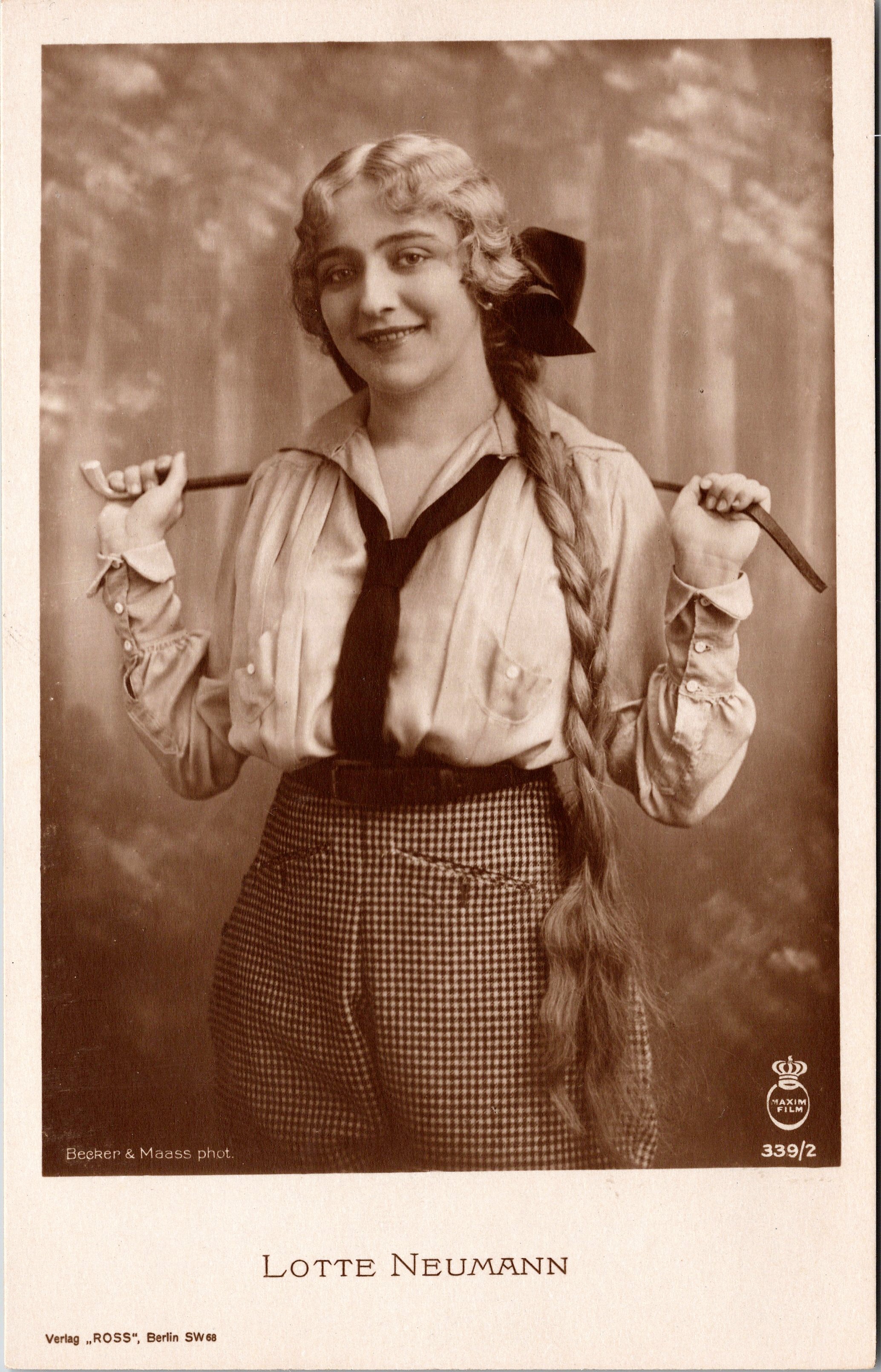
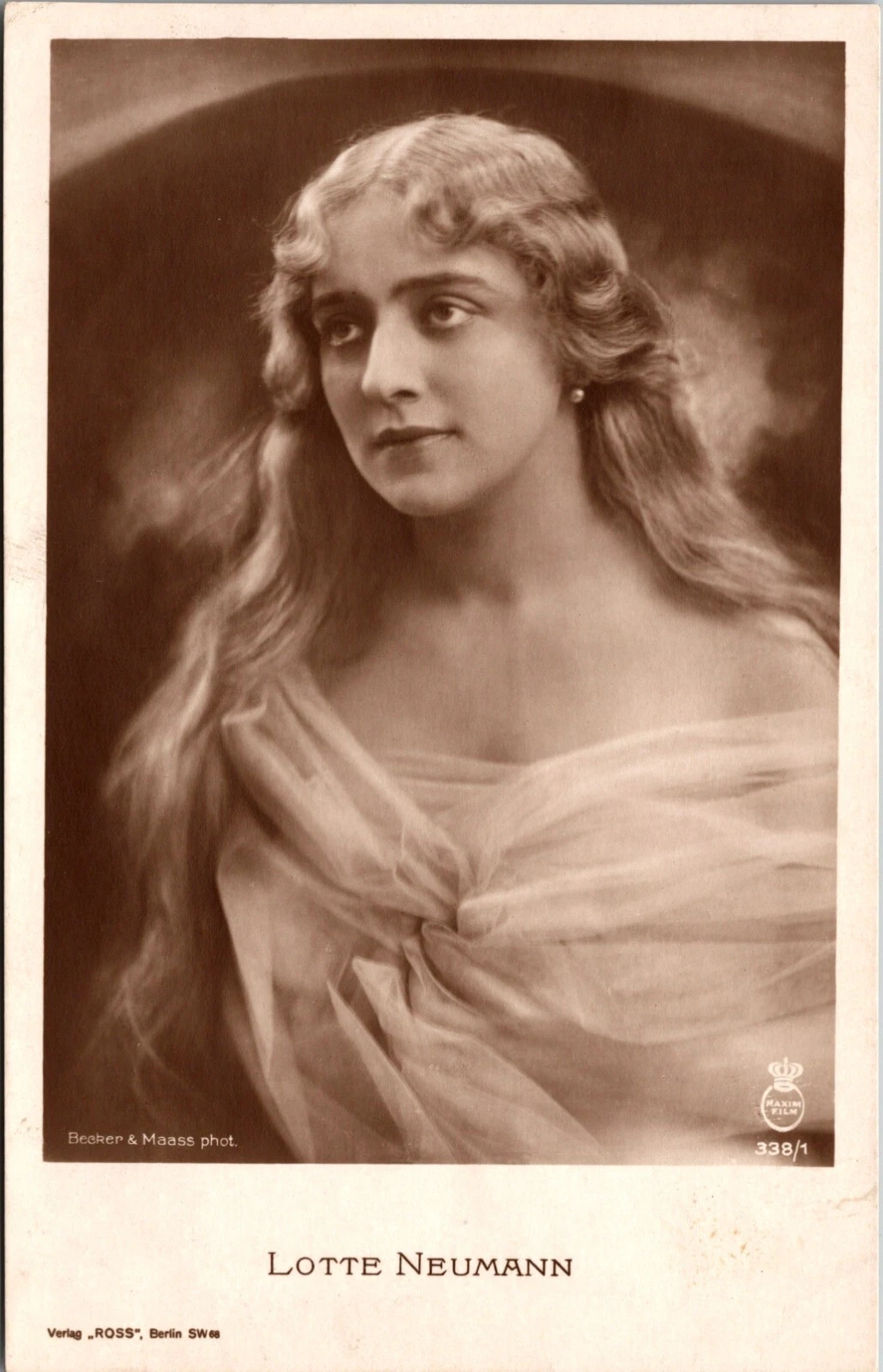
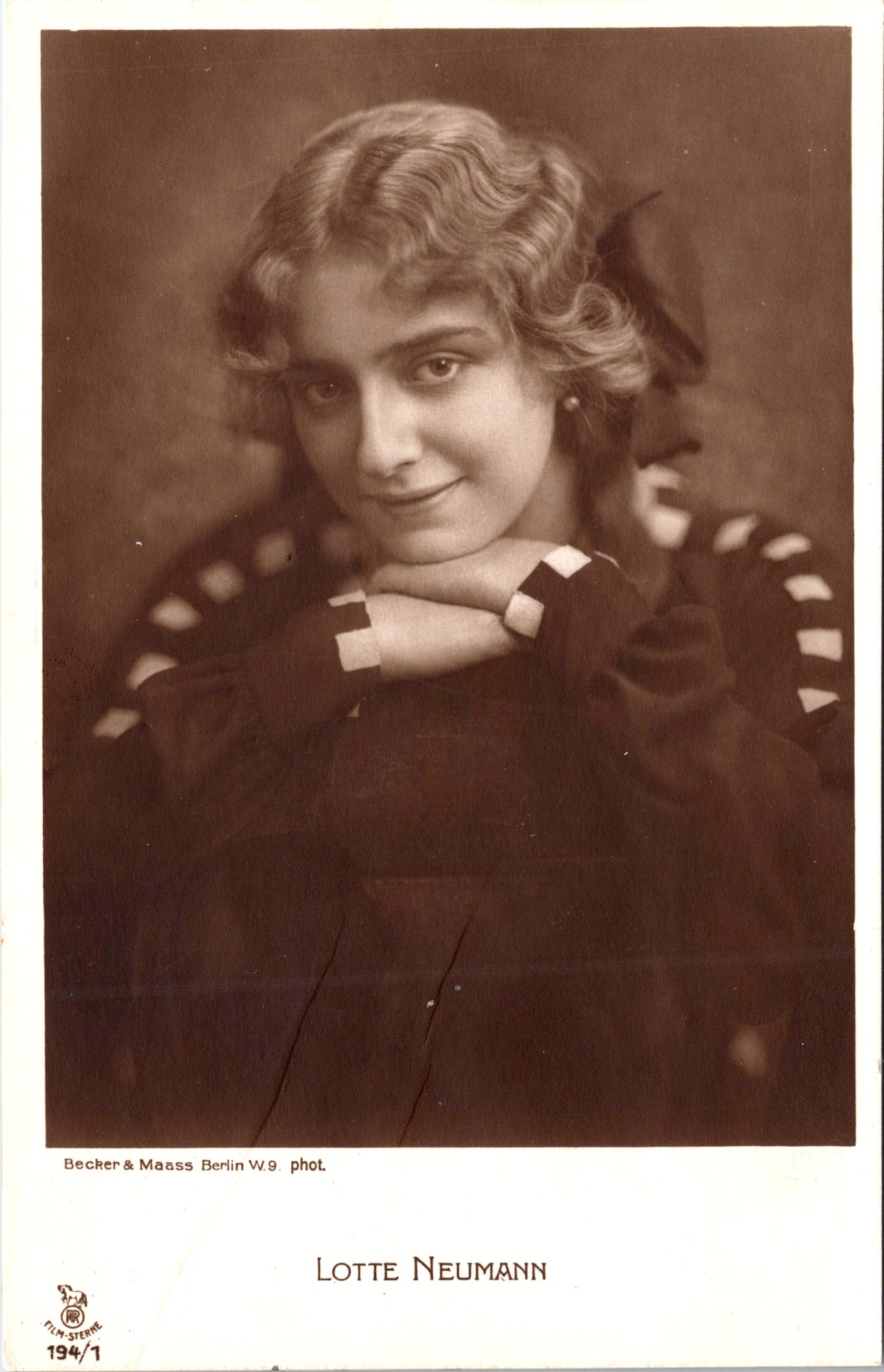
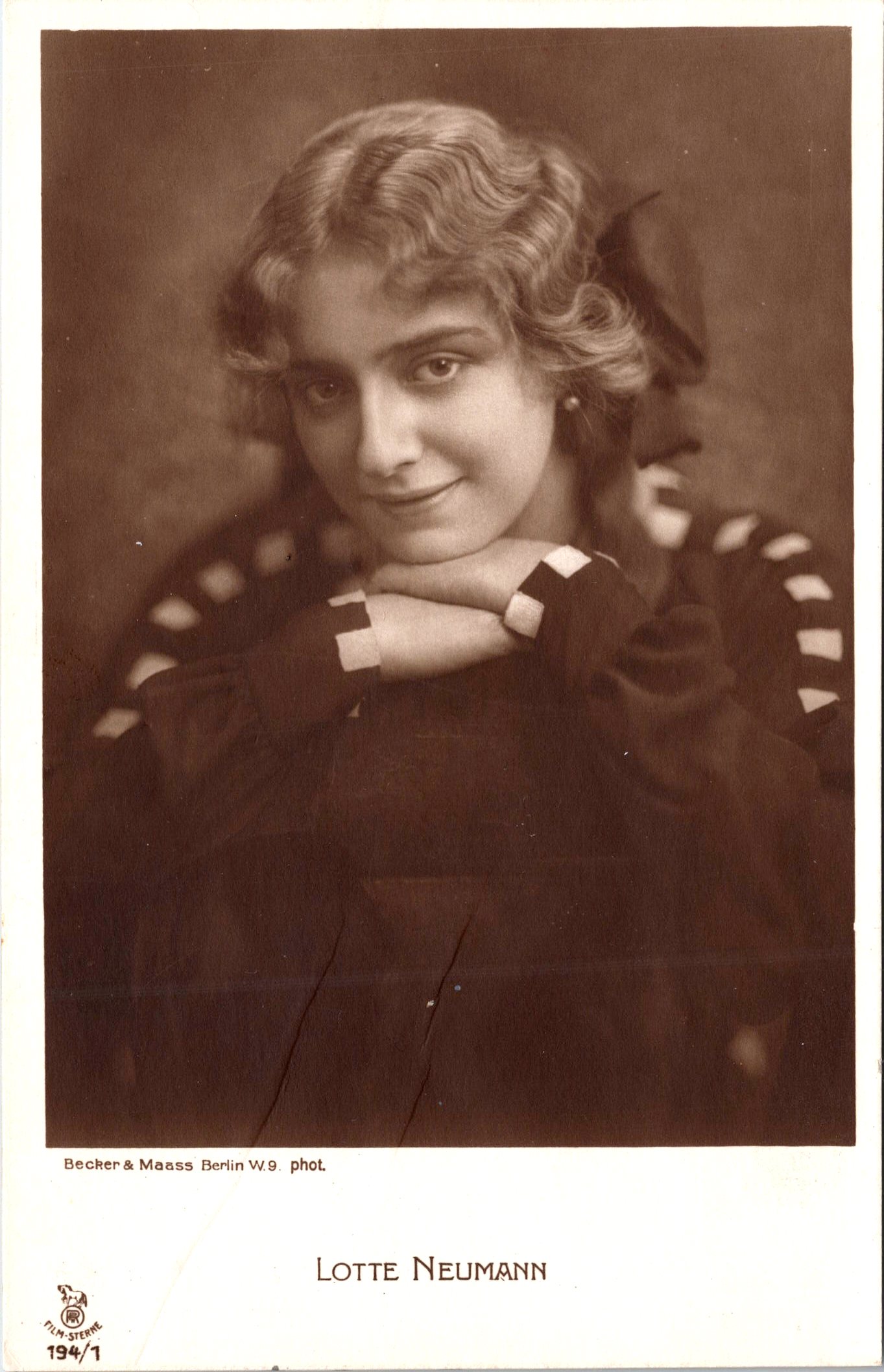
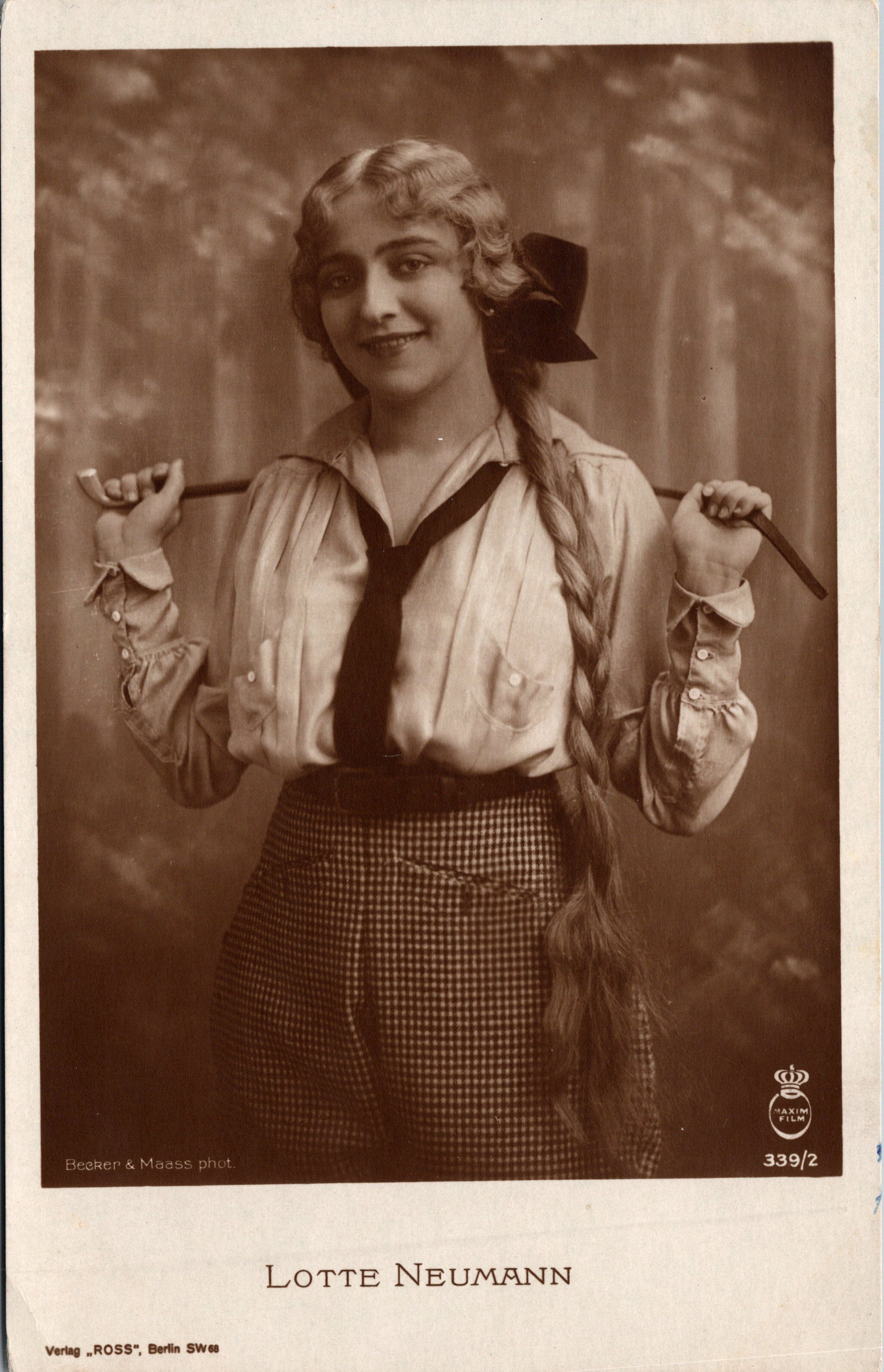
These vintage real photo postcards feature German actress, screenwriter, and producer; Lotte Neumann (1896-1977). She was active in the film industry between 1912 and 1958. Neumann was born in Berlin, Germany. At age 13, she took vocal training and acting lessons. She also studied dance and piano. Neumann also sang in two choirs. She originally desired to be a singer but after some advice from Max Mack, a German screenwriter, silent film producer and director; she chose to pursue a career in film. She made her debut in a short silent film, “Whims of Fate” (1912). Neumann became a popular actress in Germany. In 1917 she began acting in films which she produced herself. She established her own film company (Lotte-Neumann-Film-GmbH) which operated between 1916 and 1919. In 1919, she began working for UFA, a major German film producer and distributor that was active between 1917 through the end of World War II. In 1920 she starred in two films directed by Ernst Lubitsch. He was a German born American film director, producer, writer, and actor. It was prestigious for Neumann to appear in his productions. She remained popular through the 1920’s but her career declined with the advent of sound film. This was a dreaded fate suffered by many actors and actresses during the transition to talkies. Her final screen appearance was in 1931. After retiring from acting she continued to write screenplays and partnered with her her husband, Walter Wassermann, in creative endeavors. They worked together from 1935 until his death in 1944. The IMDb reports that Neumann appeared in 69 films, wrote 24 films, and produced 14 films. Neumann’s film career accomplishments are very impressive.
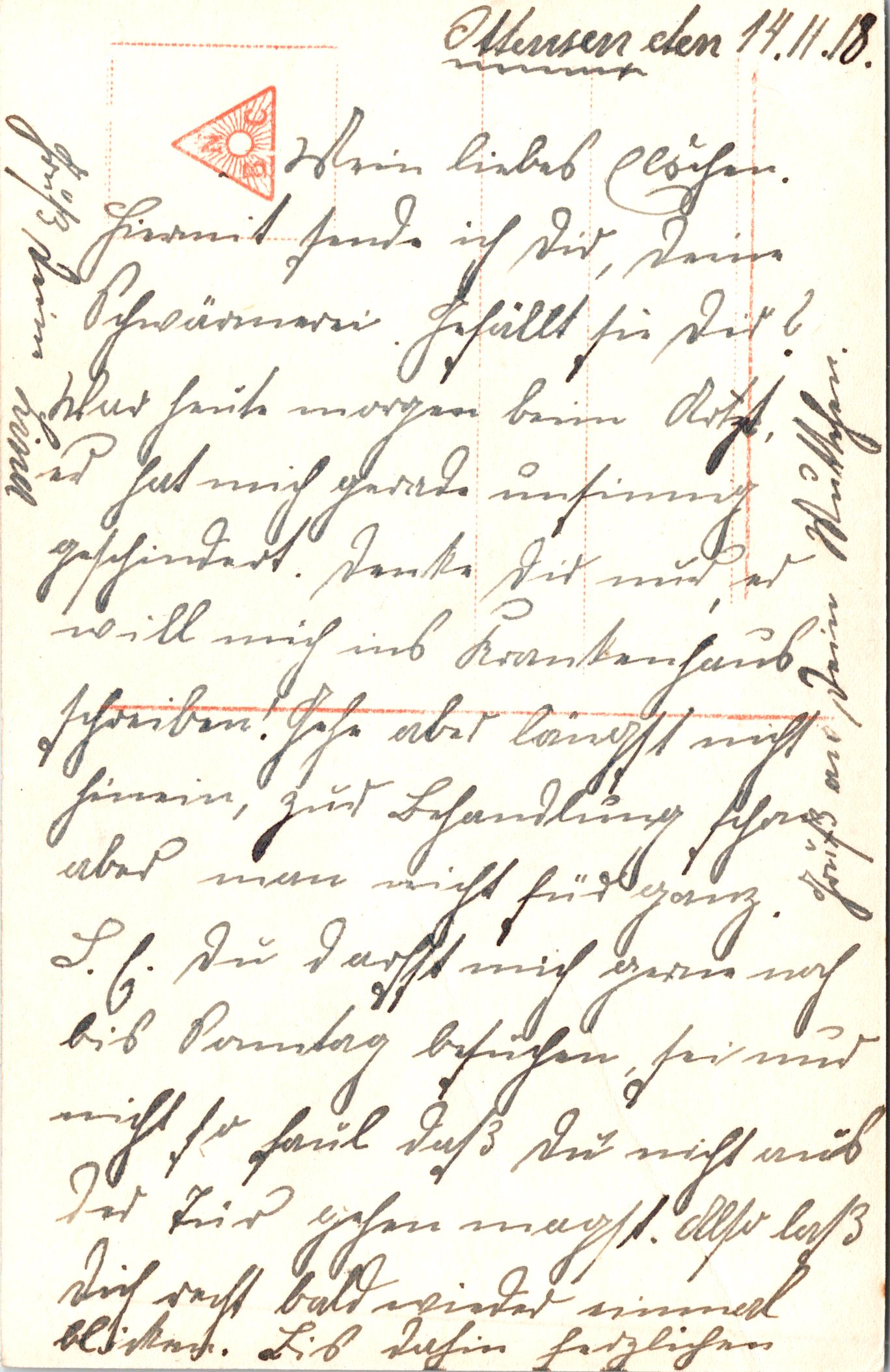
Postcard 1 was published by Film-Sterne as part of a series (no.194/1). The photographer of Miss Neumann’s photo was the Becker & Maass studio in Berlin. The message on the reverse of the postcard was written in 1918. The stamp box of this postcard has an interesting story. “NBC” (Neue Bromsilber Convention) was a price cartel established in 1909 that continued until the 1930’s. The purpose of the cartel was to ensure that the minimum price charged for postcards was kept at a sufficiently profitable level. A number of postcard publishing companies joined the cartel in an effort to stave off the effect of competition on the pricing of postcards. This postcard is in fair condition. Please note that there are two very thin creases located on the left and center bottom of the card. The photo postcard is priced accordingly.
Postcard 2 was published by Ross Verlag (Berlin) as part of a series (no.339/2). The photographer of Miss Neumann’s photo was the Becker & Maass studio in Berlin. Note the Maxim Film logo in the bottom right hand corner of the image. This postcard is in very good condition.
Postcard 3 was published by Ross Verlag (Berlin, Germany) as part of a series (No.338/1). A logo for Maxim Films can be seen in the lower right hand corner of the image. Neumann must have been under contract with Maxim when this portrait was taken. The photographer of Miss Neumann’s photo was the Becker & Maass studio in Berlin. This postcard was likely published circa 1918. The stamp box of this postcard has an interesting story. “NBC” (Neue Bromsilber Convention) was a price cartel established in 1909 that continued until the 1930’s. The purpose of the cartel was to ensure that the minimum price charged for postcards was kept at a sufficiently profitable level. A number of postcard publishing companies joined the cartel in an effort to stave off the effect of competition on the pricing of postcards. SOLD
Buy this Vintage Real Photo Postcard (includes shipping within the US) #6031
To purchase this item, click on the Pay with PayPal button below
$10.00
Buy this Vintage Real Photo Postcard (includes International shipping outside the US) #6031
To purchase this item, click on the Pay with PayPal button below
$22.00
Buy this Vintage Real Photo Postcard (includes shipping within the US) #5304
To purchase this item, click on the Pay with PayPal button below
$14.00

Buy this Vintage Real Photo Postcard (includes International shipping outside the US) #5304
To purchase this item, click on the Pay with PayPal button below
$26.00
POSTCARD 1
POSTCARD 2
POSTCARD 3 (SOLD)
POSTCARD 1 (SOLD)
POSTCARD 2 (SOLD)
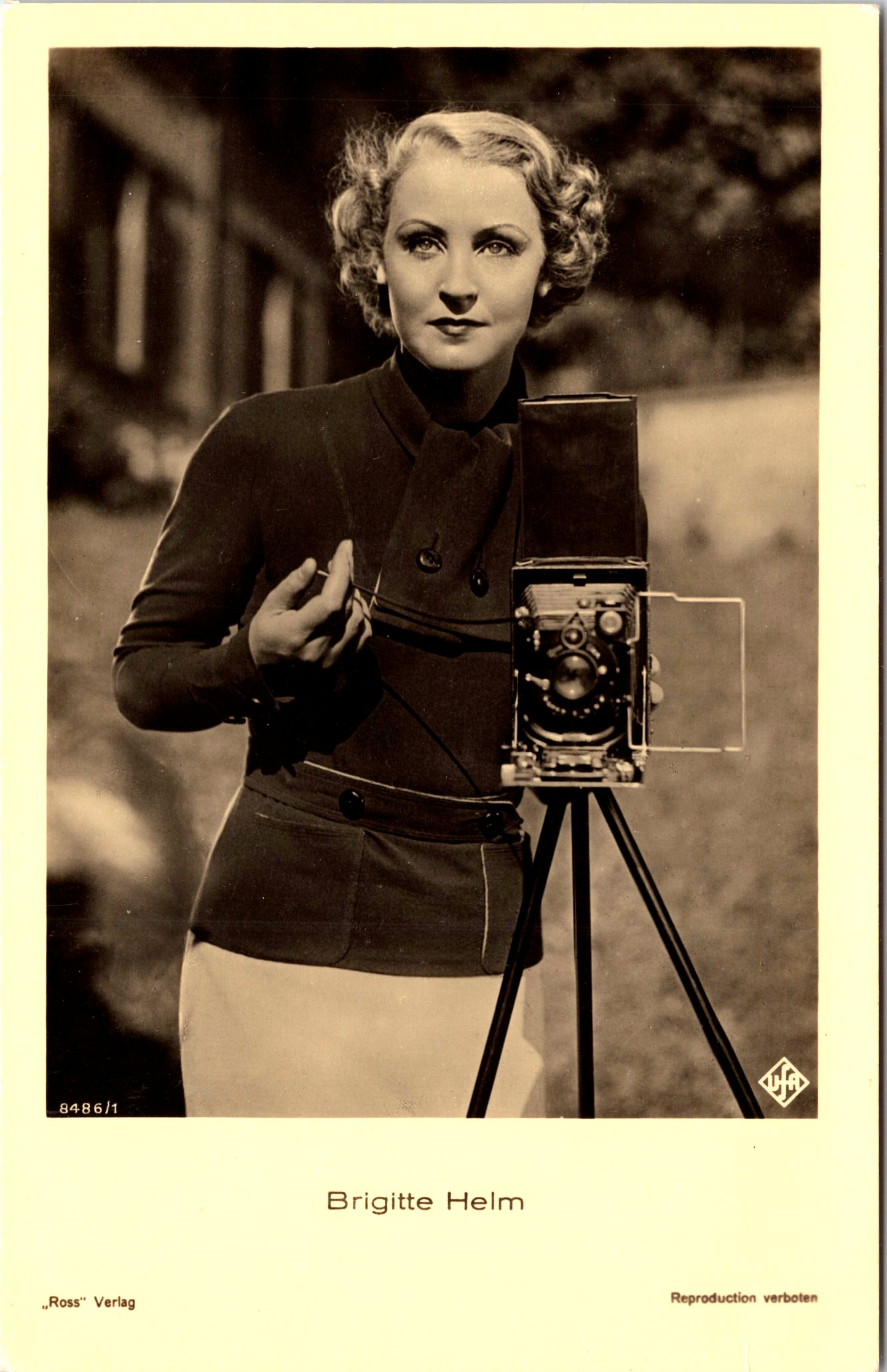
Postcard 1 features German actress, Brigitte Helm (1908-1996). The postcard captures Miss Helm taking a photograph with a camera on a tripod. Photographs of photographers in action are quite collectible. Now, back to Brigitte Helm. She is best known for her dual role in Fritz Lang’s 1927 silent film, Metropolis. After “Metropolis” she played in a long string of movies where she typically had the starring role. Helm was typecast as a Vamp or a femme fatale. She was born in Berlin. Her father was a Prussian Army officer. She was interested in acting at an early age and by age 12, was taking lead parts in school plays. At the age of 17, she acted in “Metropolis”. In 1925 she signed a ten year contract with UFA. She performed in both silent films and talkies. Beside “Metopolis” (1927), Helm was best known for “A Daughter of Destiny” (1928), “L’Argent” (1928), and “Alraune” (1929). Helm had an eventful personal life. Helm was involved in several traffic accidents. In fact, she was briefly placed in prison for manslaughter charges. She married industrialist, Dr Hugo Kunheim. The Nazis were not very pleased with her choice in men because Kunheim was Jewish. In 1935, Helm retired and moved with her husband to Switzerland where they started a family. Helm explained her retirement was because of disgust about the Nazi’s taking over the German film industry. This postcard was published by Ross Verlag as part of a series (No.8486/1). The card has the UFA logo which reveals it was published between 1925 and 1935. (SOLD)
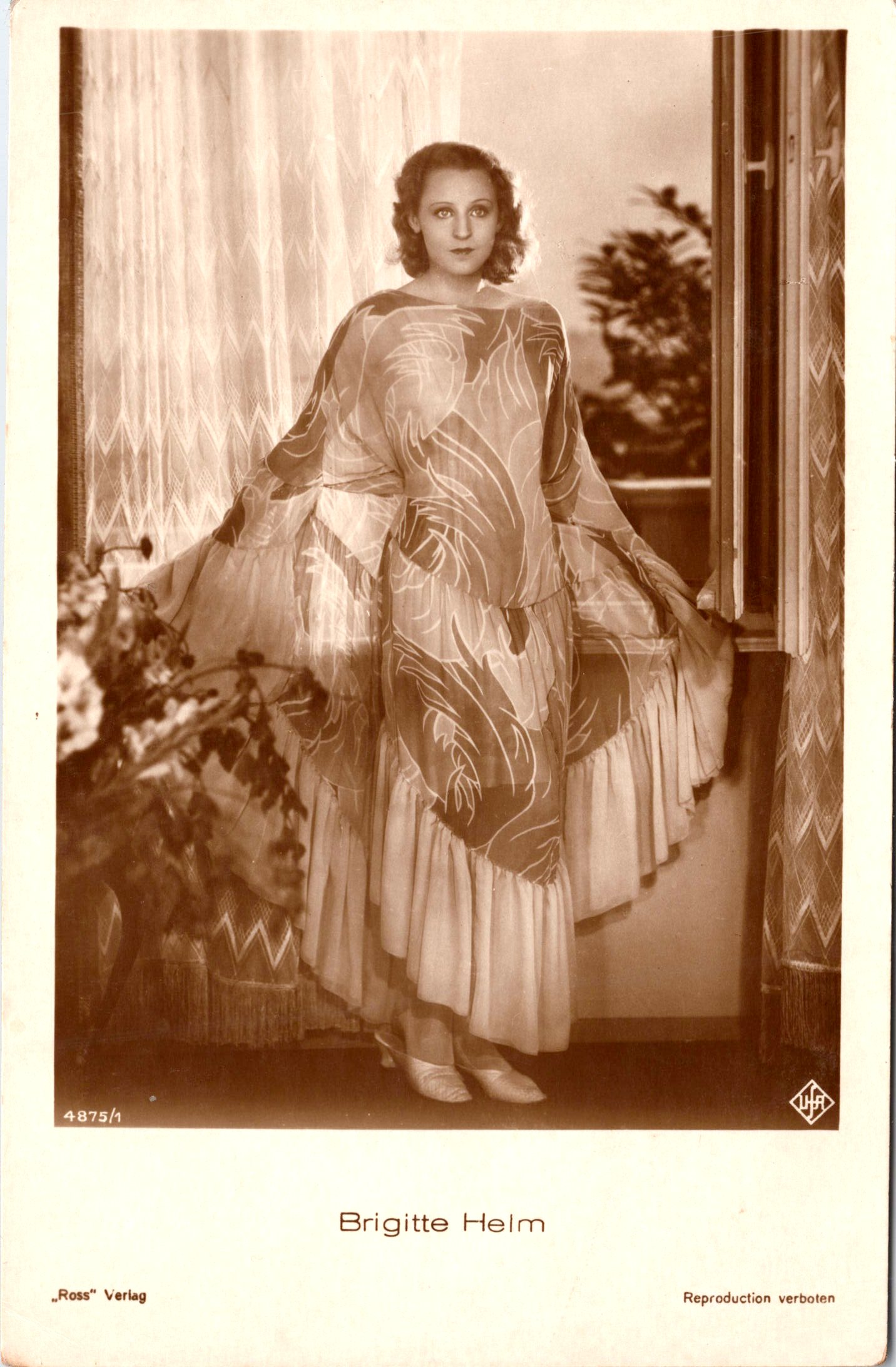
Postcard 2 captures Miss Helm in a beautiful dress that illustrates her nice figure. This postcard was published by Ross Verlag as part of a series (No.8486/1). The card has the UFA logo which reveals it was published between 1925 and 1935. (SOLD)
POSTCARD 1
POSTCARD 2
 | bmarshphd on NORTHPORT, LONG ISLAND, NEW YO… |
 | Libby Bryant on NORTHPORT, LONG ISLAND, NEW YO… |
 | rangerdon on BEALLSVILLE, PENNSYLVANIA : ST… |
| bmarshphd on ELEANOR GAINES : LUBIN SILENT… |
 | phantomfamous0cbbe9d… on ELEANOR GAINES : LUBIN SILENT… |
 THE CABINET CARD GALLERY