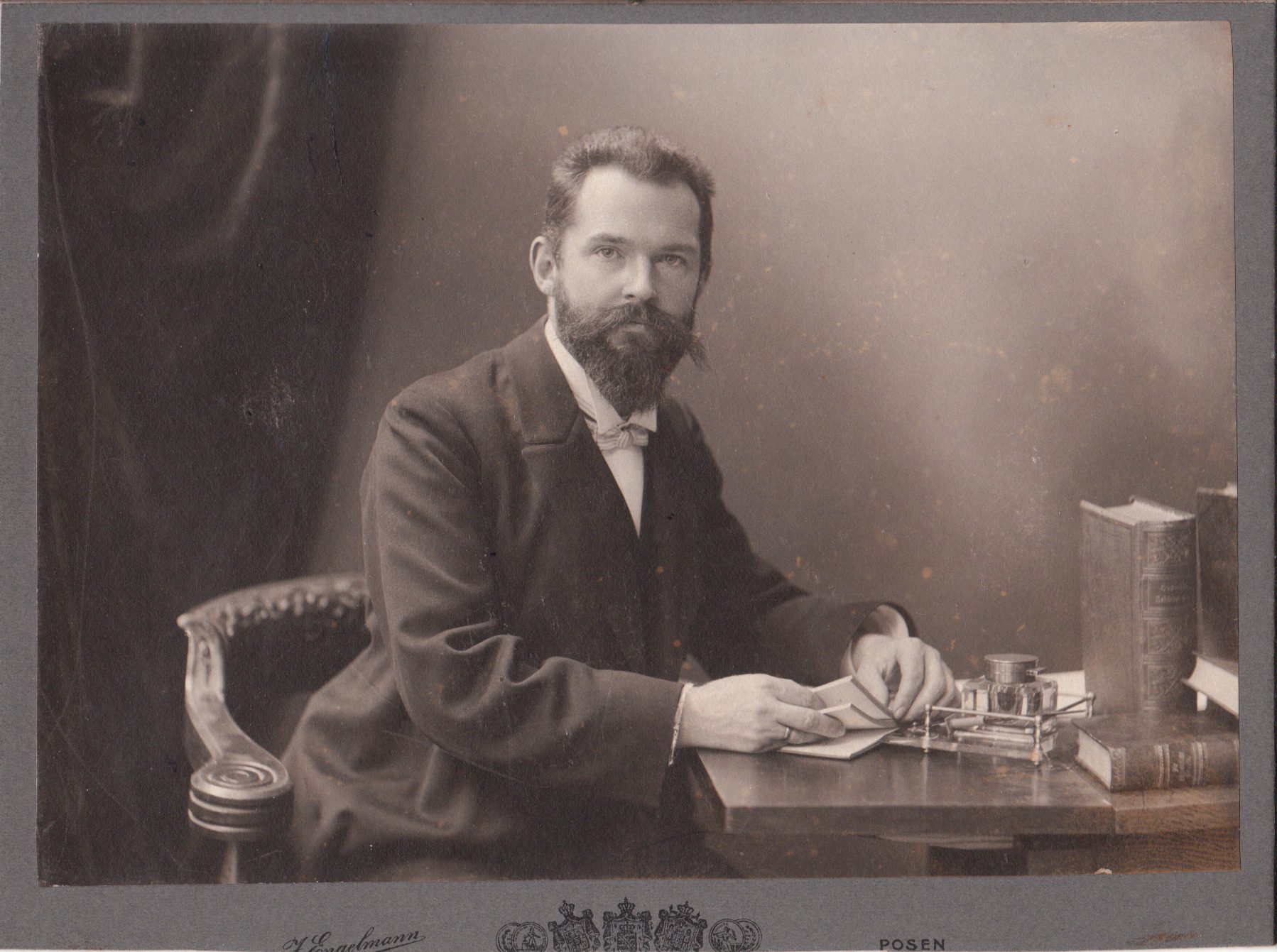
A handsome well dressed gentleman sits at his desk and poses for this portrait by the Engelmann studio in Posen, Poland. At the time of this photograph, Posen was a province of Prussia and part of the German Empire. The man in this photograph appears to be a professional of some type. Perhaps he was an attorney or politician. He is leafing through some papers and looking at the camera. Note the large books (journals?) and the inkwell on his desk. He is wearing a wedding ring and a bow tie. (SOLD)
DESK JOCKEY CONDUCTS BUSINESS IN POSEN, PRUSSIA
THREE ARROGANT NE’ER DO WELLS IN WEST CHESTER, PENNSYLVANIA
The previous owner of this cabinet card described the subjects in the photographs as “thugs”, “ne’er do wells”, and “arrogant”. We will never know if these are fitting descriptions but that is one of the reasons that collecting and viewing cabinet cards is such an interesting and fun activity. Interpreting these photographs require a knowledge of history, detective work, and psychological awareness. In addition, our interpretations of the photographs are also influenced by our own personalities, experiences, and projections. This particular photograph certainly shows three guys with attitude. They dressed nicely for their portrait. The seated man looks like a tough guy and the expression of the gentleman behind his right shoulder seems to communicate that he is ready for a confrontation. The photographer of this cabinet card is W. C. Bell.
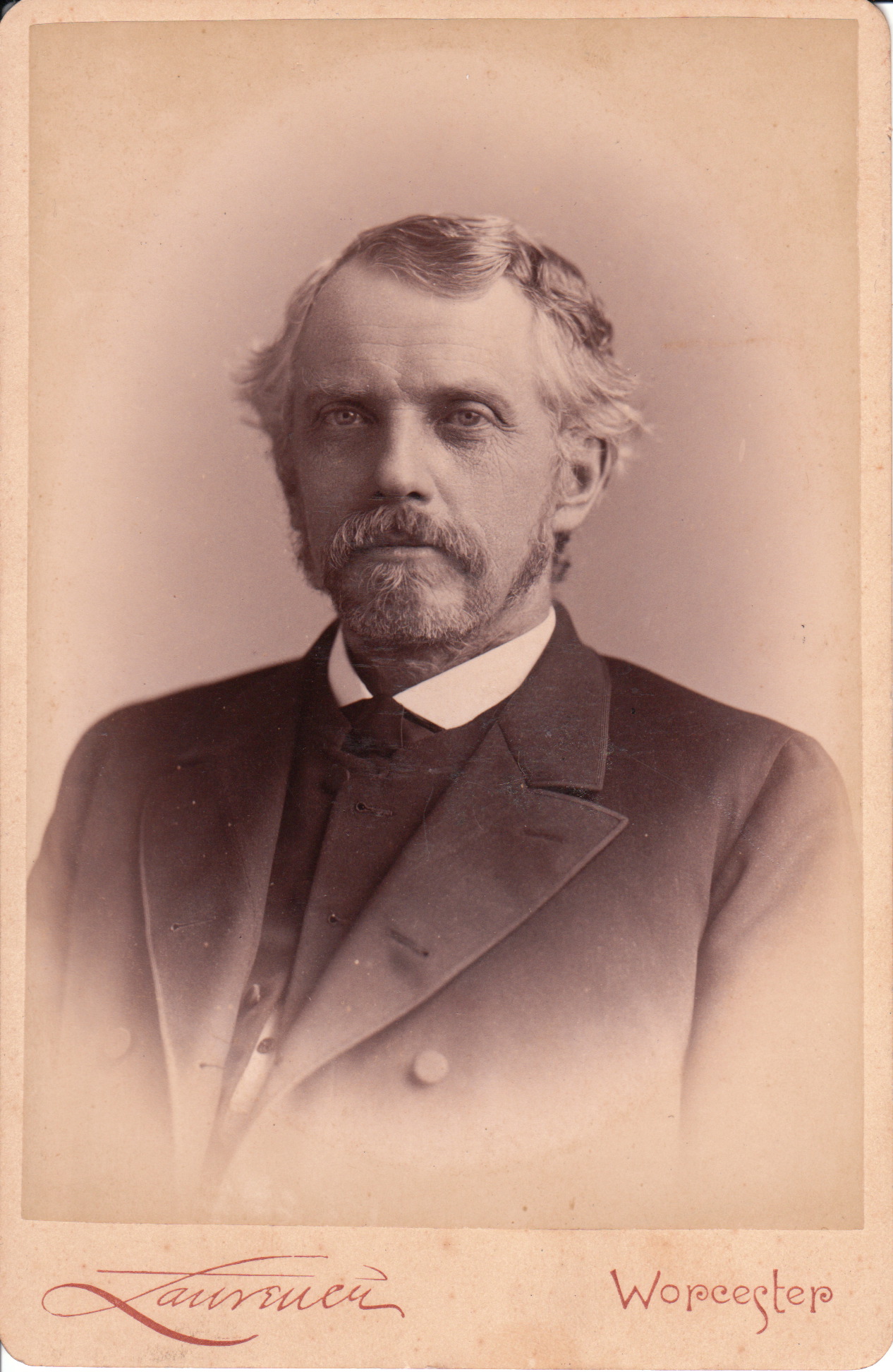
OLDER GENTLEMAN EXHIBITS TRUE GRIT IN WORCESTER, MASSACHUSETTS
An older man poses for this cabinet card photograph by Frank Lawrence who operated a studio in Worcester, Massachusetts. Advertising on the reverse of the image reveals that the studio was located at 492 Main Street. The gentleman in this photograph is nicely dressed and groomed (despite his longish locks). He has a very strong countenance. He looks like the sort of man that you would not want to alienate. He has an appearance that strongly suggests determination and grit. Research found an advertisement in the Worcester Directory (1867)for Lawrence’s studio which trumpeted that he produced both Sphereotypes and Ambrotypes. A stereographic photograph by Lawrence of the great flood of Worcester (1876) was also discovered. His name appears in Worcester business directories through 1886.
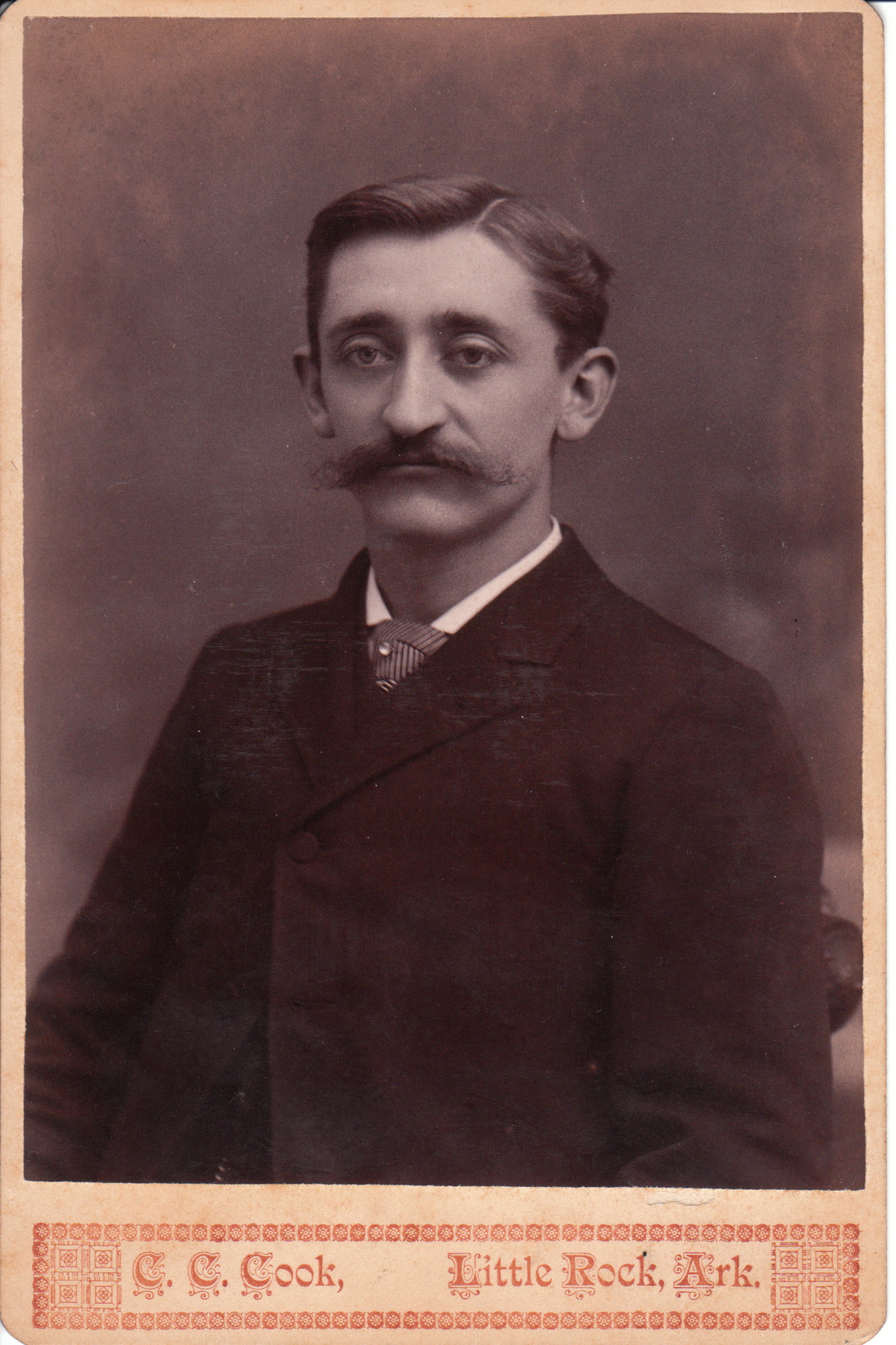
THE LITTLE MAN FROM LITTLE ROCK, ARKANSAS
The gentleman in this cabinet card photograph has an unusual appearance. He appears to be small in stature and is nicely dressed and groomed. He is wearing a pin in the knot of his tie. The photographer is C. C. Cook whose studio was located in Little Rock, Arkansas. Mr. Cook can be found in the Little Rock business directory (1886) where he is listed as a photographer.
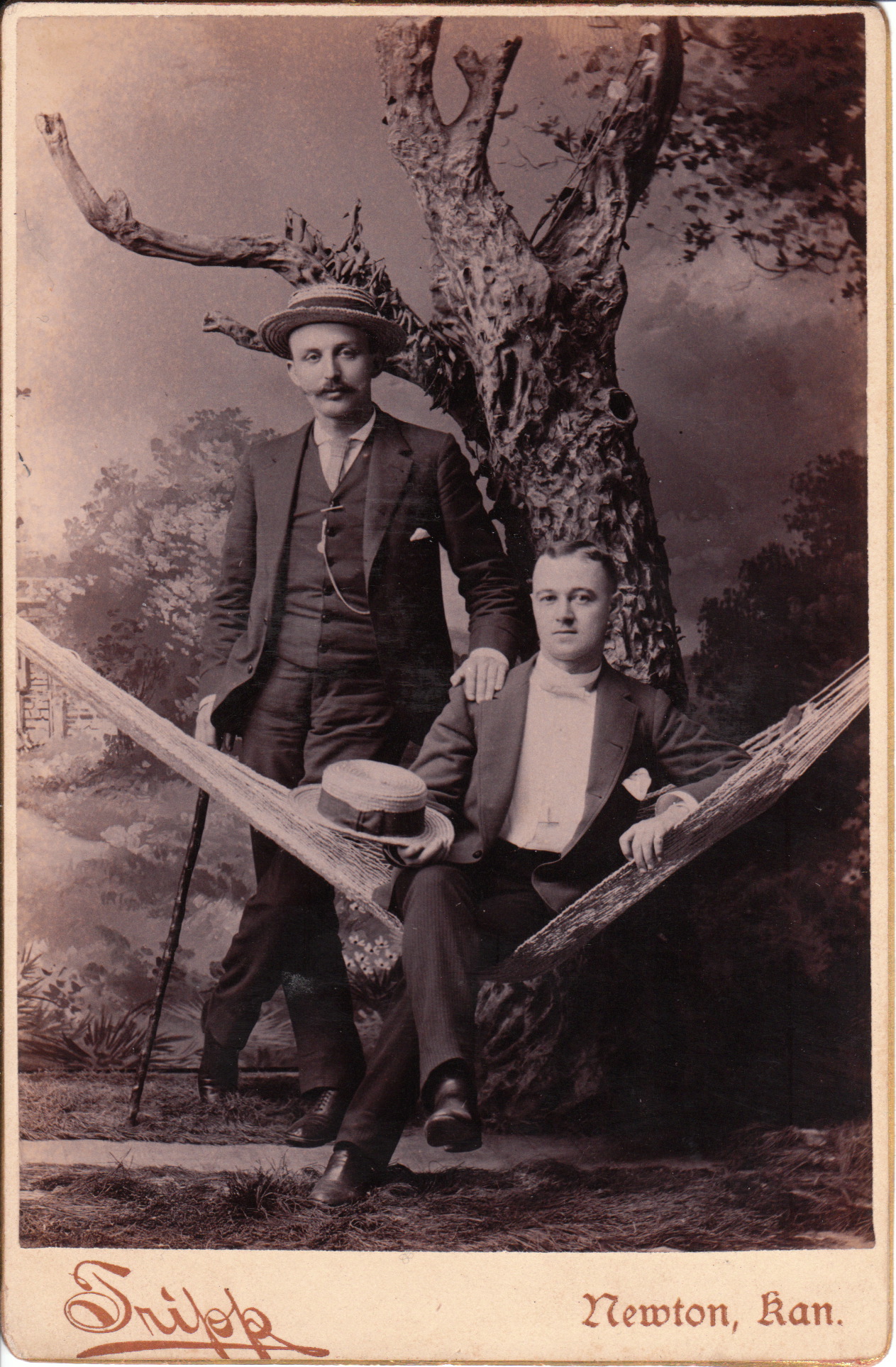
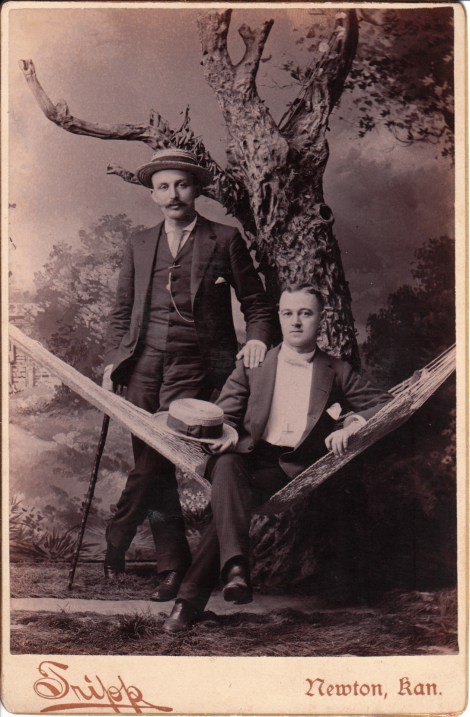
TWO DAPPER AFFECTIONATE GENTLEMEN IS NEWTON, KANSAS
Two affectionate men pose for their portrait in Newton, Kansas. The men look quite dapper in their suits and with their straw hats. Note that the gentleman wearing the suit and vest has a pocket watch chain visible atop his vest. He is also holding a walking stick.The man standing, and the man sitting on the hammock are showing some shared affection. They could be friends, relatives, or even lovers. It is impossible to guess their relationship. One wonders if homophobia was much of a factor in the cabinet card era in regard to men showing affection to men in public or in photographs. Perhaps a visitor to the cabinet card gallery can competently comment on this issue. The photographer of this image is the Tripp studio in Newton, Kansas. According to print on the reverse of the photograph, the studio was located on the corner of Main Street and Broadway. The photographer, Frank D. Tripp is cited in Anthony’s Photographic Bulletin (1896) as the President of the Photographers Association of Kansas. Another source states that Tripp “flourished” as a photographer in Newton during the 1880’s. Tripp’s obituary appears in The Evening Kansan Republican (1947). He died in Denver, Colorado at age eighty. He was described in the article as a pioneer photographer in Newton. He was an officer in the Newton Masonic Lodge. At some point he moved to Pueblo, Colorado where he was a partner in the Tripp and York photography studio.
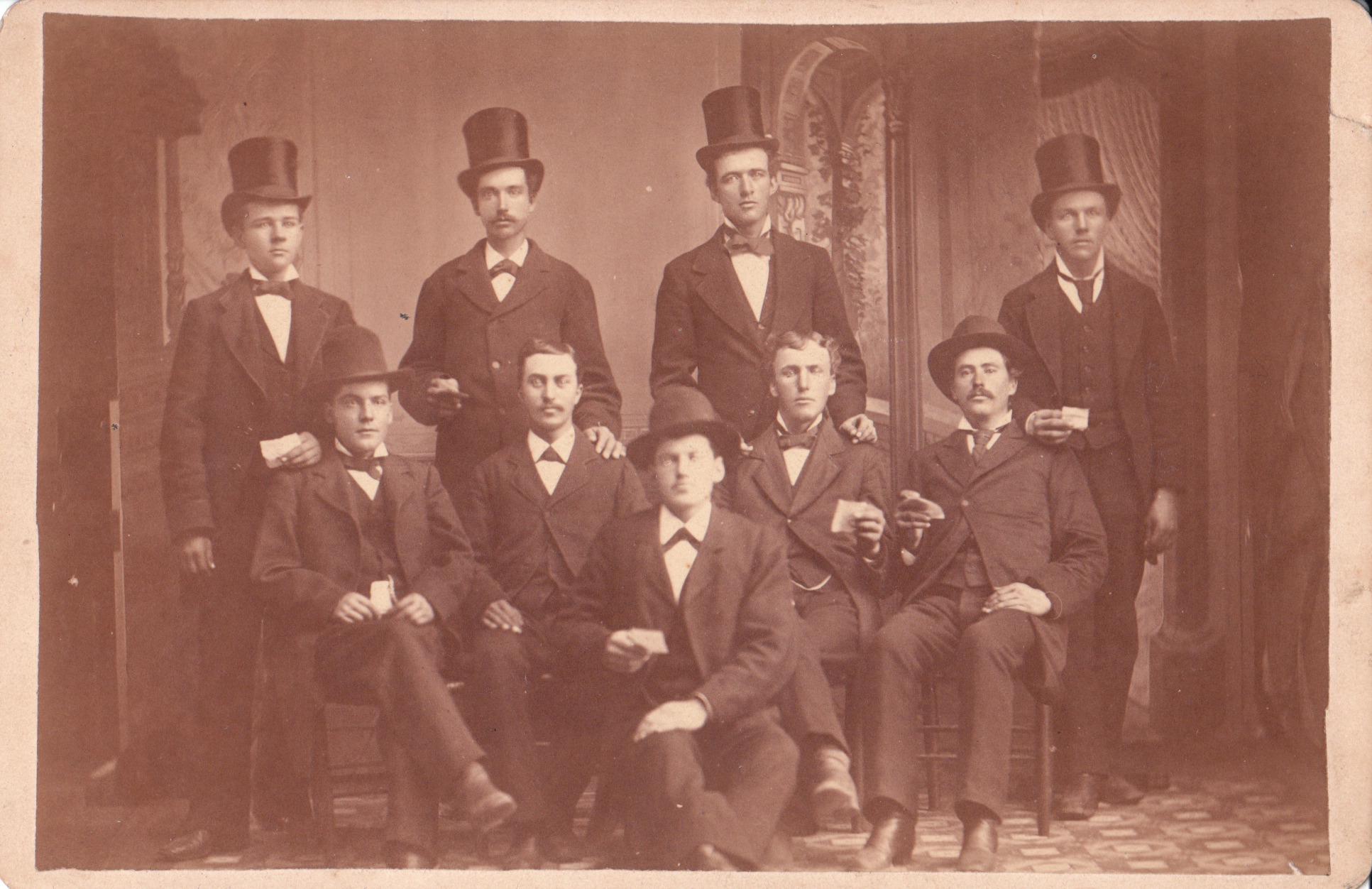
NINE GUYS DRESSED TO THE NINES
This photograph features nine men “dressed to the nines”. What does “dressed to the nines” mean and where does the term derive from? It basically means that these guys are fashionably and elaborately dressed. Research reveals that the derivation of the phrase “dressed to the nines” is unknown. There are a lot of theories but no real evidence to support a single theory. So who are these guys and what group do they represent? We run into another wall in an attempt to answer these questions. The men in this image are unidentified and the photographer is unknown. This photograph is one of those images that is similar to a psychological projective test. We have to make up our own story to better understand the photograph. The story we create is a reflection of our experiences and personality. The story I tell myself is that these men are part of a club or organization. They are dressed formally for some sort of special organizational event. The papers that they are holding are possibly certificates for some type of accomplishment, ballots, or invitations. What’s the story you tell yourself about this image? You are invited to leave a comment with your impressions
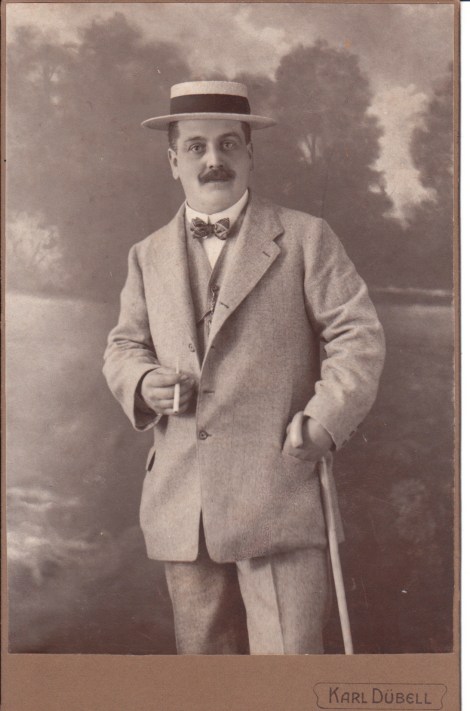
FASHIONABLE AUSTRIAN MAN IN VIENNA
A well dressed Austrian gentleman poses for this cabinet card portrait by photographer Karl Dubell. Dubell’s studio was located in Vienna, Austria. The subject in this image is accessorized with a cane, vest, bow tie and what appears to be a straw hat. What is this fine gentleman holding in the fingers of his right hand. Is that an extra long cigarette? To view other photographs by Dubell, click on the category “Photographer: Dubell”.
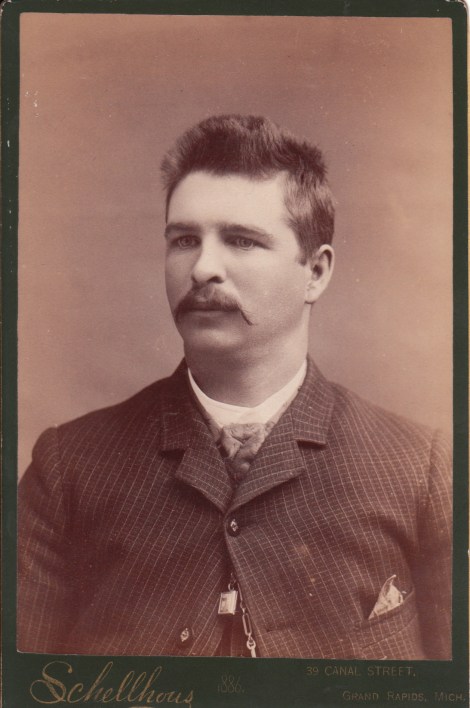
MAN WITH SPIKED HAIR IN GRAND RAPIDS, MICHIGAN
A young man with a “spiked” hairstyle poses for his portrait at the Schellhous studio in Grand Rapids, Michigan. The gentleman is wearing a checkered jacket with a pocket handkerchief, and his watch chain shows under his jacket. The photograph is dated 1886. The photographer of this image, Loran Webster Schellhous is listed in the Grand Rapids business directory between at least 1884 through 1893. He also operated photography businesses at various times in Colon, Coldwater, and Coopersville, Michigan. The Ada Historical Society (Michigan) indicates that Schellhous’s wife, Martha Catherine Faxon (1831-1905) was also a photographer. She is recognized for her work photographing leaves of various plants.
PORTRAIT OF A TIRED OLD MAN IN TEXAS (PHOTOGRAPH BY CAPTAIN HARVEY ROBERTS MARKS)
This image captures the portrait of a tired looking old man. This gentleman appears to have had better days. He looks exhausted and troubled. This photograph was taken by the Mark’s studio in Austin, Texas. The photographer of this cabinet card lived an interesting life and he was both a pioneer of Texas and a pioneer of photography. Harvey Roberts Marks (1821-1902) was a well known photographer who worked in a number of locations. He was active in Baltimore, Maryland (1849-1853), San Francisco, California (1851), Mobile, Alabama (1856-1859), Houston, Texas (1865-1870), and Austin, Texas (1870-1902). He was born in New York City. He first arrived in Texas in 1838 and received a very large land grant in Harris County (Houston). He enlisted in a company of Texas Rangers in 1840 and reached the rank of Captain. He was married to Emily H. Bassan in 1849. Research indicates that she was member of one of the most prominent families in Baltimore. In 1849 he was Jacob Shew’s partner in the Shew and Mark’s Gallery in Baltimore. He continued the gallery alone when Shew left Baltimore until 1851. The 1850 census revealed that he had three assistants in the gallery and took 5,000 daguerreotypes annually. In 1851 he took photographs of castaways from a Japanese ship involved in an incident that caught national attention. Mark’s moved to Austin in 1870 and opened a gallery a year later. During that time he became Vice President of the National Photographic Association. Marks served during the civil war. He was a member of the Houston Battalion, Texas Infantry (Detailed Men). Research was unsuccessful in gathering this Confederate regiment’s history. Marks entered the regiment and left the regiment as a Captain. Interestingly, when former Confederacy President, Jefferson Davis, visited Austin in 1875, he sat in Mark’s studio for his portrait. He died at the age of 81.