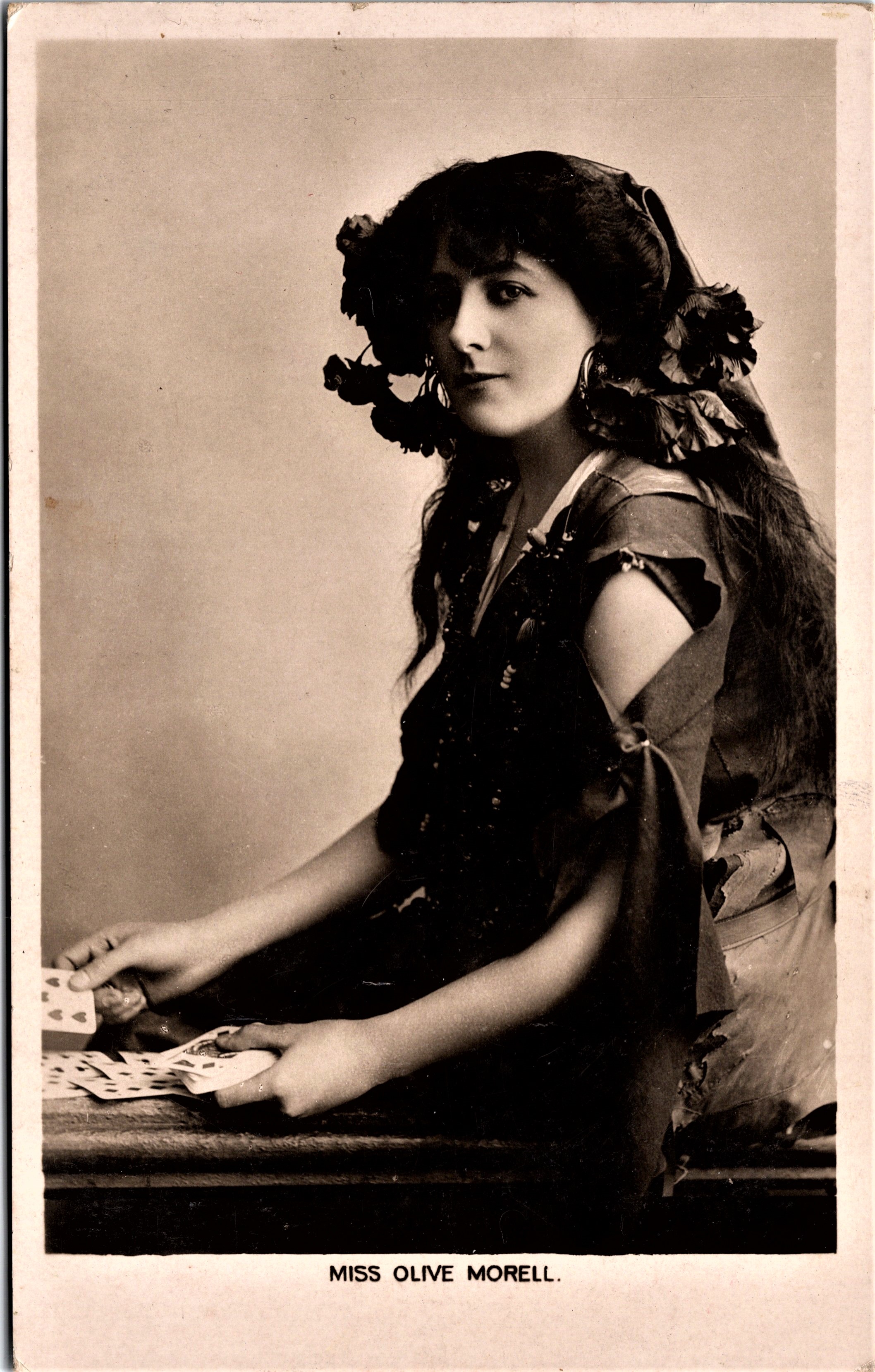
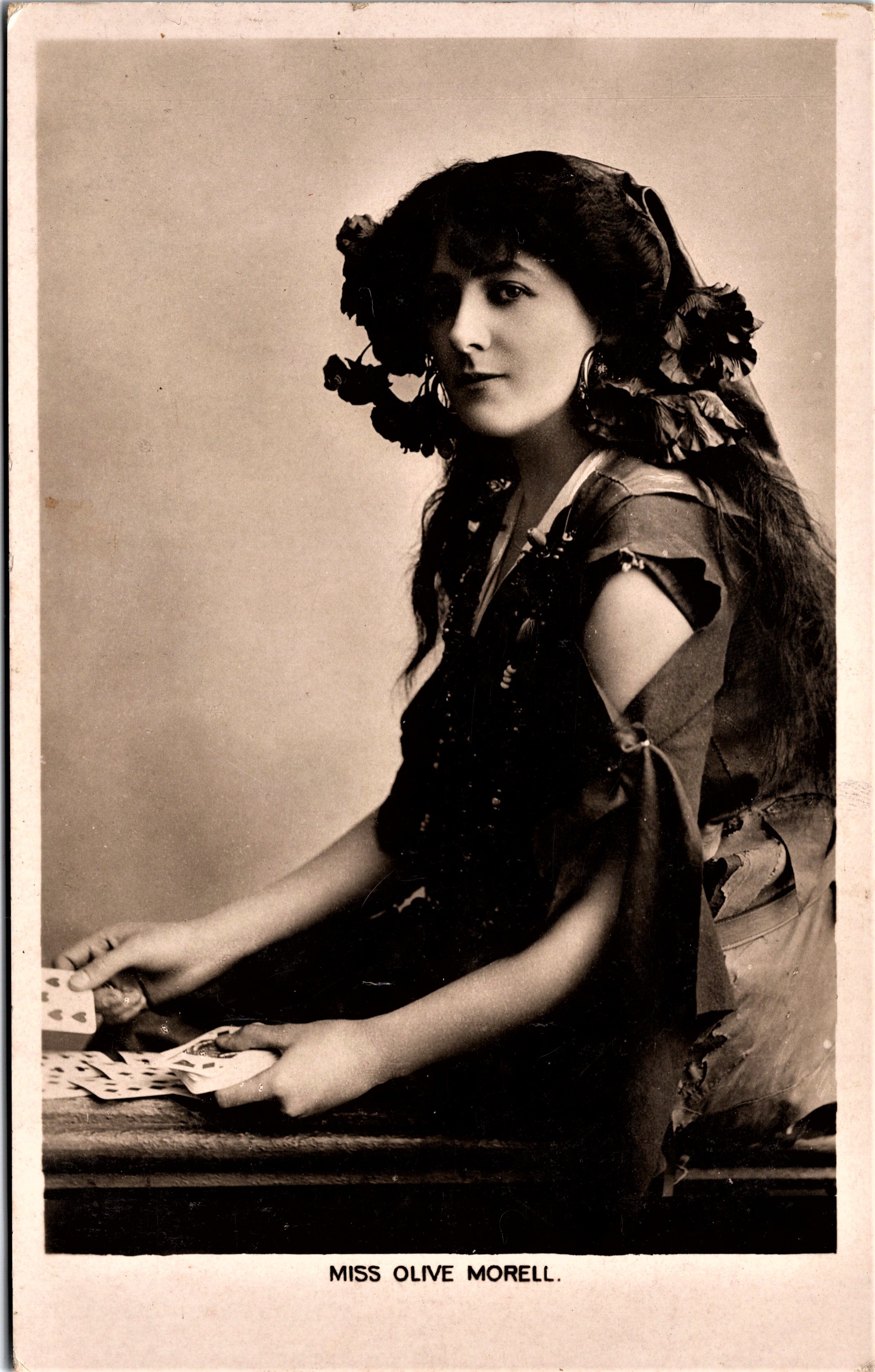
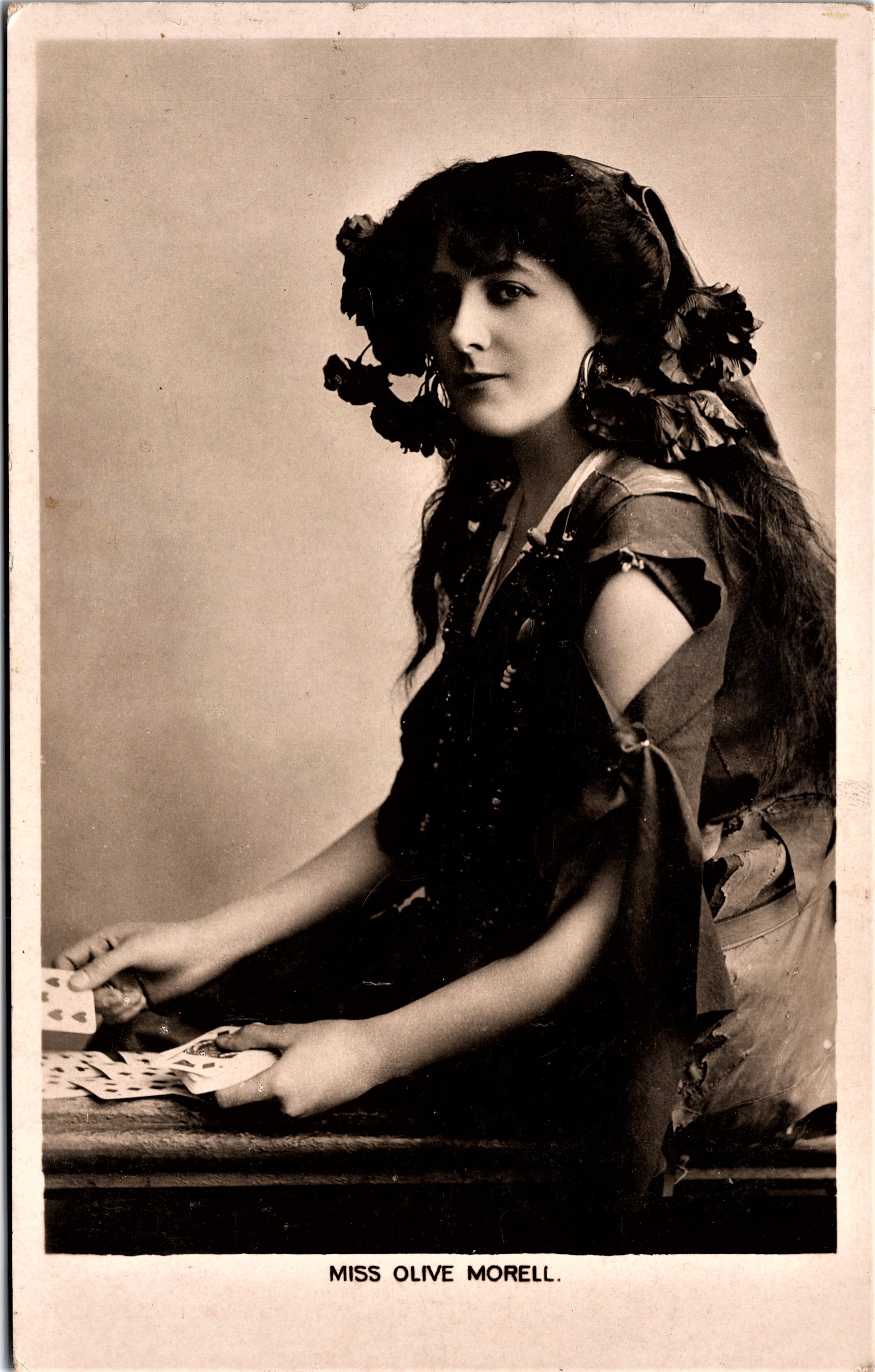
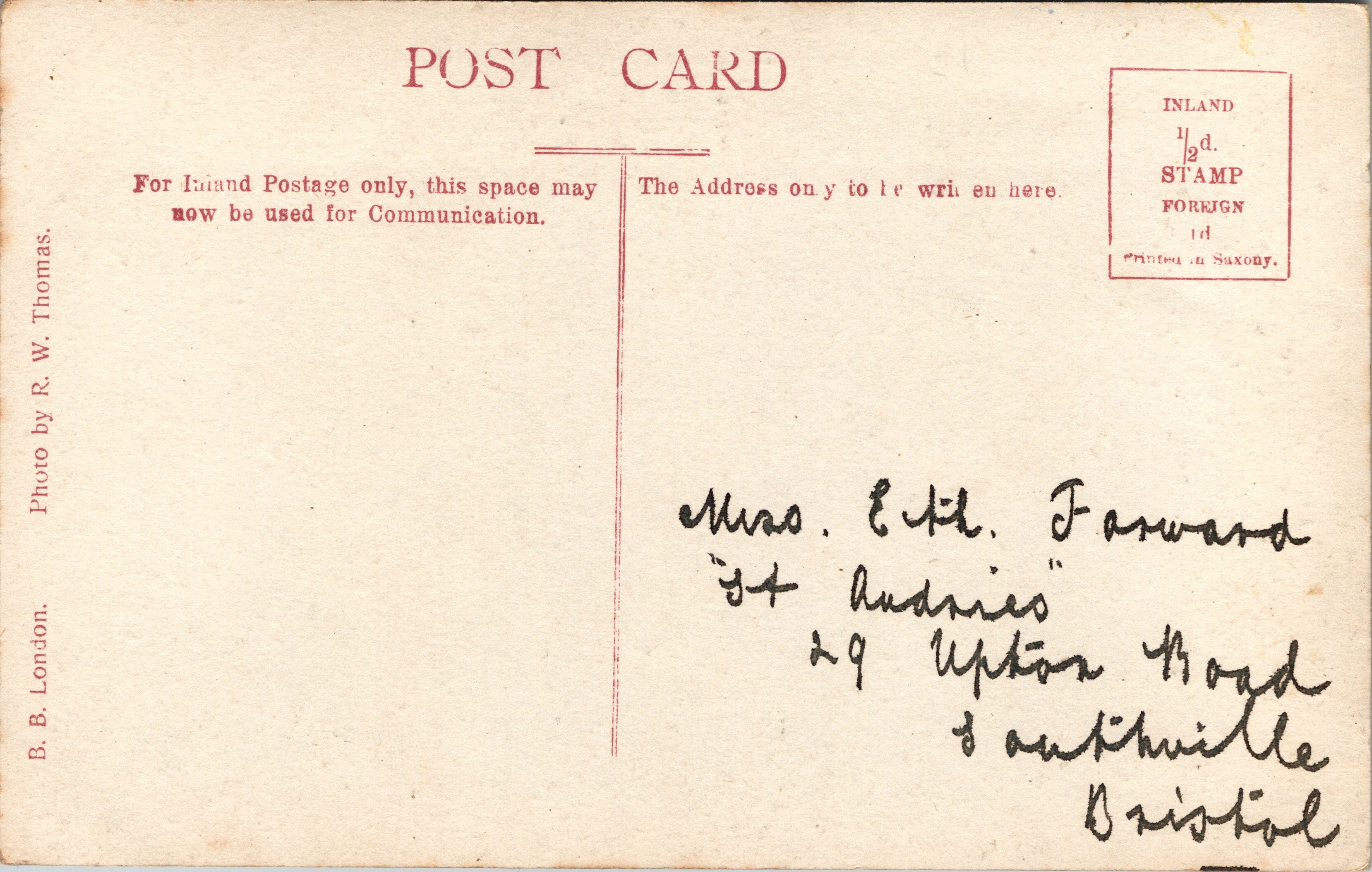
This vintage real photo postcard features English actress and Gaiety Girl, Olive Morrell (1877-1937). In this portrait postcard, she is holding playing cards. Morrell is most associated with her roles in Edwardian musical comedies. Olive was raised in Highgate, near London. An introduction by her singing teacher, led her to theatrical producer George Edwardes. The introduction opened a path for her to perform at London’s Gaiety Theater. Olive was a gaiety girl. Gaiety Girls was the name given to the chorus girls acting in the musical comedies at the theater. The “girls” were beautiful and they danced and modelled bathing suits and the latest fashions onstage. The gaiety girls were considered more respectable than the women performing at London’s burlesque houses. Morrell was a very popular real photo postcard model. Reviewers of her stage performances often commented about her beauty. In 1908, Olive was married to an Australian politician, Willie Kelly. The publisher of this postcard was a London firm (B. B.). Olive’s photo portrait was taken by R. W. Thomas. The postcard dates back to about 1906. This vintage postcard is in very good condition (see scans).
Buy this original Vintage Real Photo Postcard (includes shipping within the US) #5329
To purchase this item, click on the Pay with PayPal button below
$12.48
Buy this original Vintage Real Photo Postcard (includes international shipping outside the US) #5329
To purchase this item, click on the Pay with PayPal button below
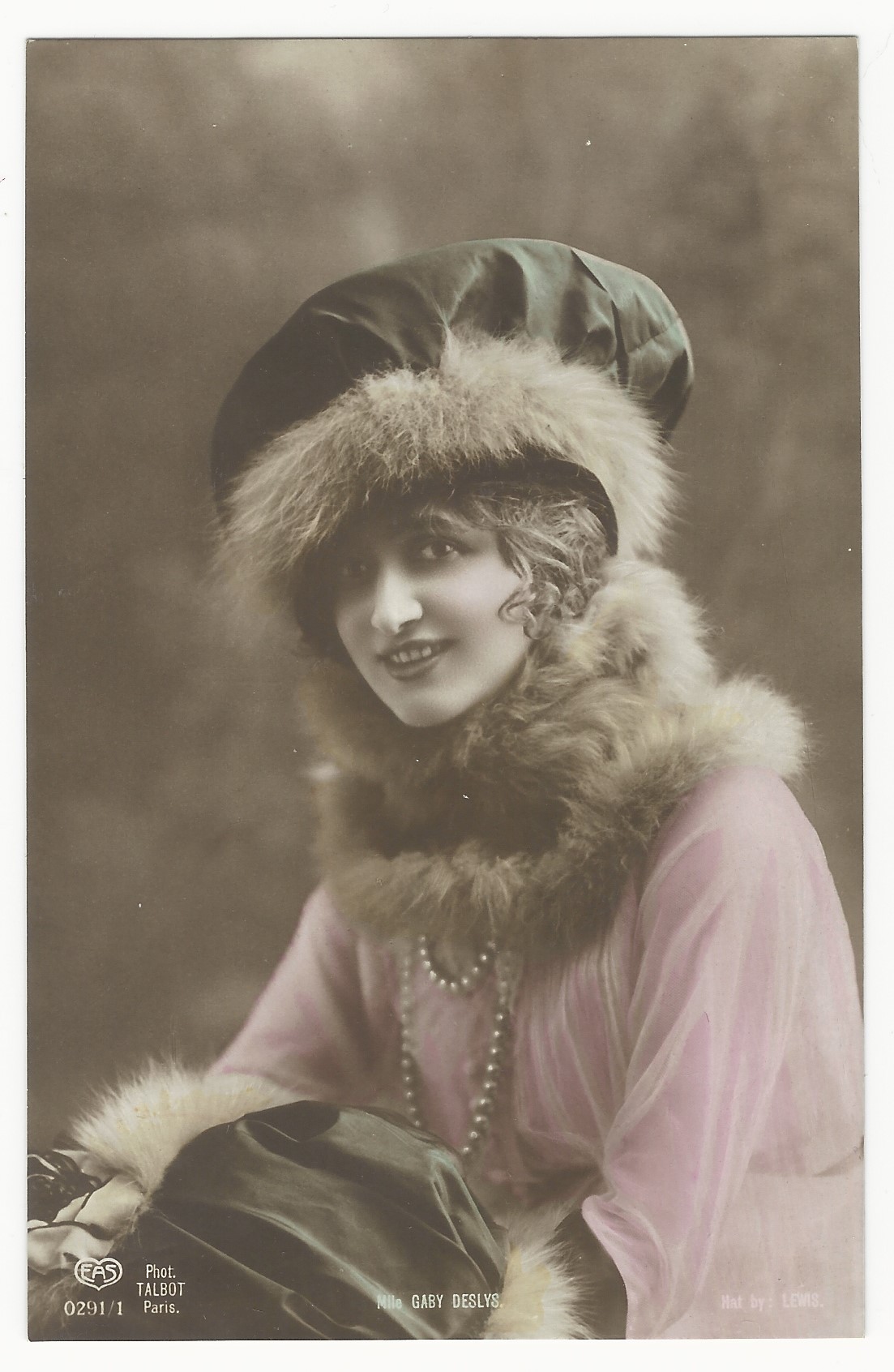
Vintage real photo Postcard 1 features a portrait of the multi talented actress, dancer, and singer, Gaby Deslys (1881-1920). Miss Deslys performed at the beginning of the twentieth century in both Europe and the United States. She was extremely popular worldwide. In fact, she was able to earn four thousand dollars a week when performing in the United States. She performed several times on Broadway. She had a dance named after her, “The Gaby Glide” (1911). You can find the sheet music, with Gaby on the cover, elsewhere on ebay. Her love life was the topic of much public gossip. She probably added to the sensationalism surrounding her by posing in a number of risque postcards. She was courted by many wealthy and powerful men, including the King of Portugal. Her life was cut short by the “Spanish” influenza. Postcard 1 is not at all common. It was published by E. A. Schwerdtfeger Company of London and printed in Berlin (no. 0291/1). The company also had an office in New York (opened in 1910). This publishing house printed many different types of real photo postcards but was known for its hand-colored real photo postcards of actresses and fashionable women in exotic costumes. The photographer was the Talbot studio. The creator of Miss Deslys’s hat is also credited (Lewis). This particular real photo postcard stands out because it offers a colorized and very clear view of this beautiful and talented performer. SOLD
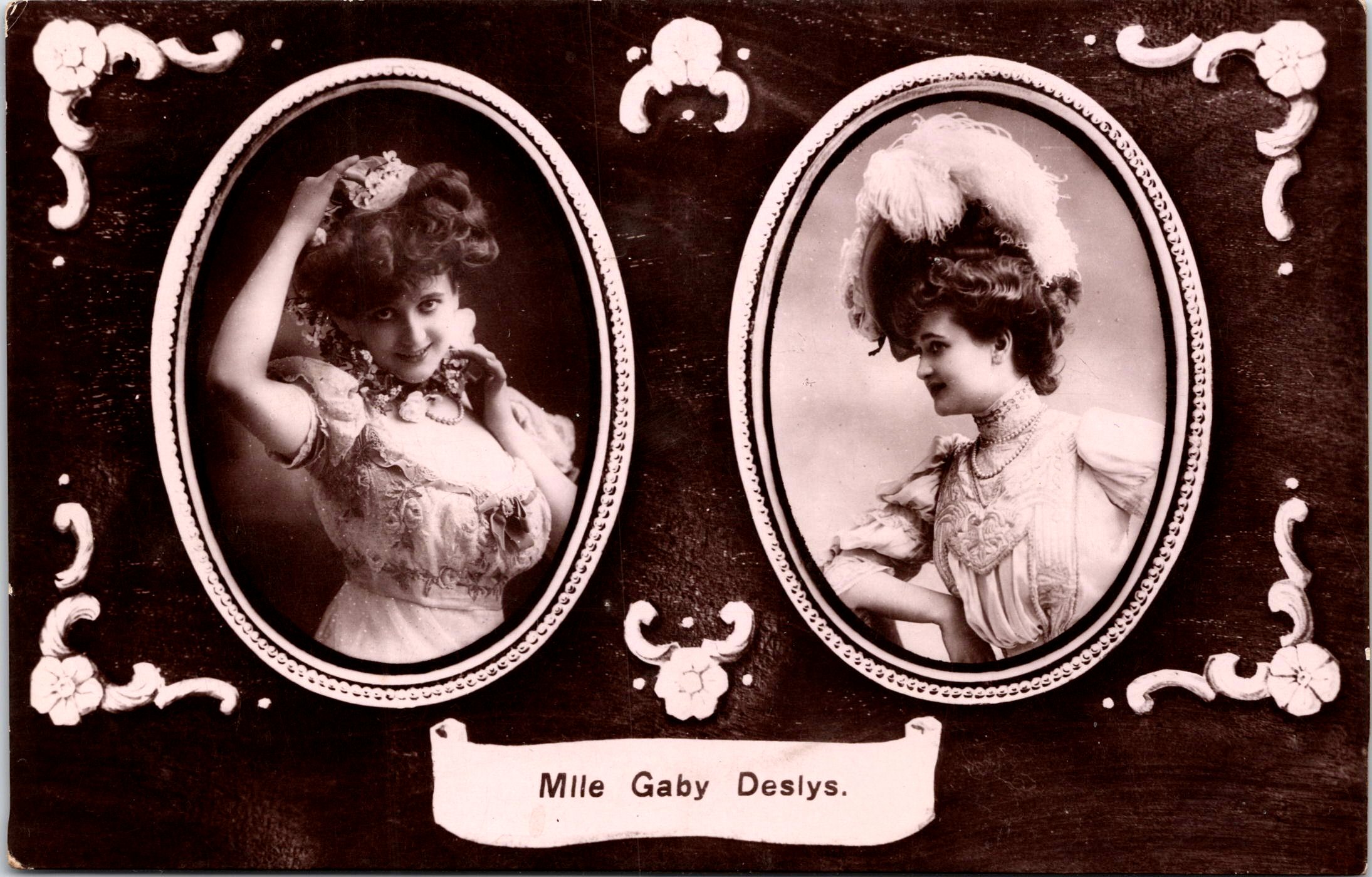
Postcard 2 was photographed by Edouard Stebbing. He was active in Paris between 1890 and 1910. Stebbing taught at a University in Paris and invented the stebbing camera, and was known for his work with emulsions. It is reported that he was friends with the artist Monet. He died in 1914 and his wife (Celestine) died five years earlier. Stebbing was a prolific photographer during the Belle Epoque Paris. He appears to have been an expatriate from England. He published many articles in British Photographic journals. Stebbing photographed many theatrical stars. A frequent publisher of these postcards was Monsieur G.Piprot, of “Etoille” or “Star” publishing in Paris. The “Photographic Times and American Photographer” (1883) cited Stebbing as “one of the bright lights of the French Photographic Society. The card has a 1908 postmark. SOLD
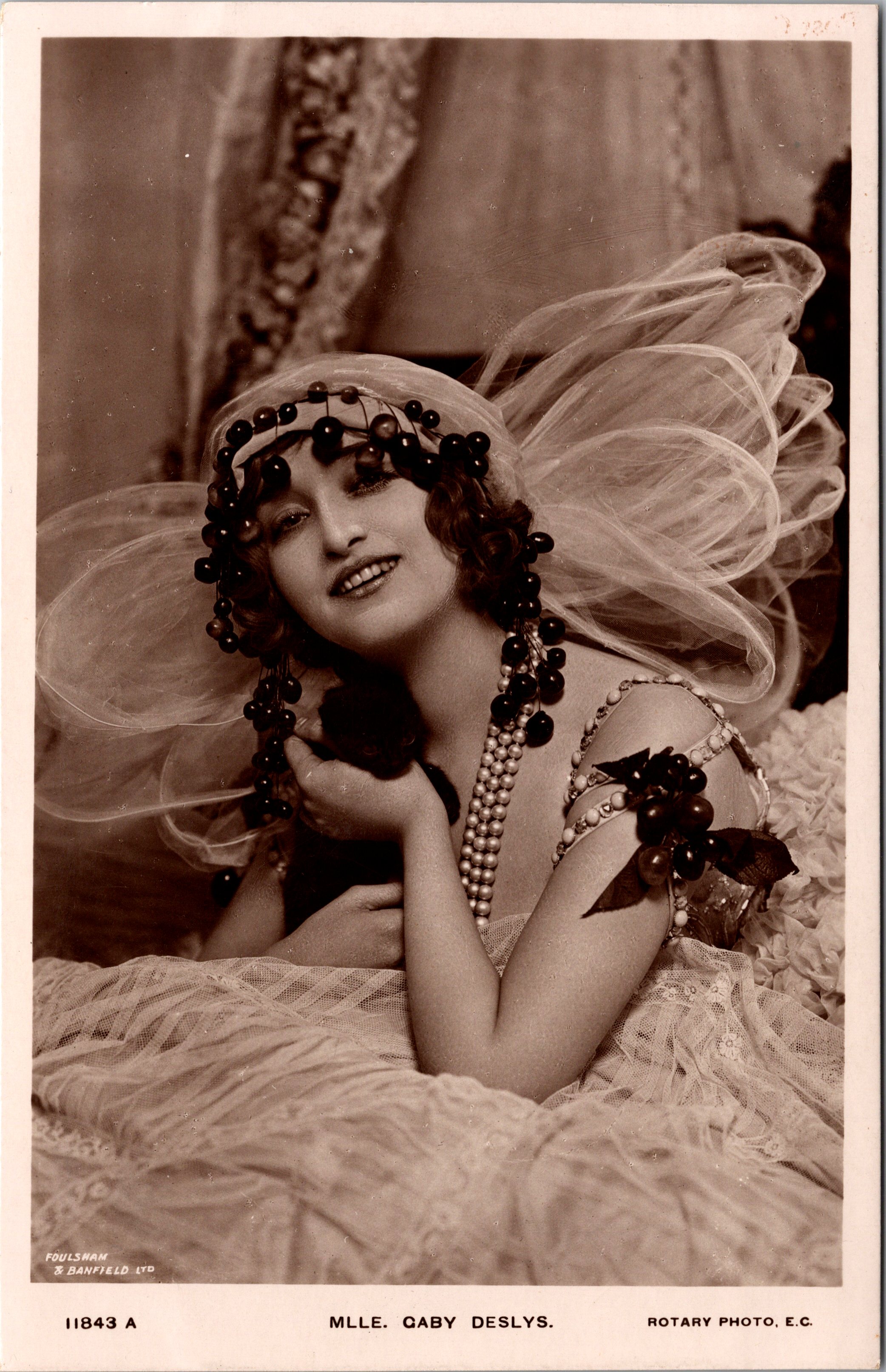
Postcard 3 is not common. It was published by Rotary Photo of Great Britain as part of a series (no.11843 A). This postcard portrait was taken by the Foulsham & Banfield studio. Gaby Deslys was certainly a beautiful and talented performer. SOLD
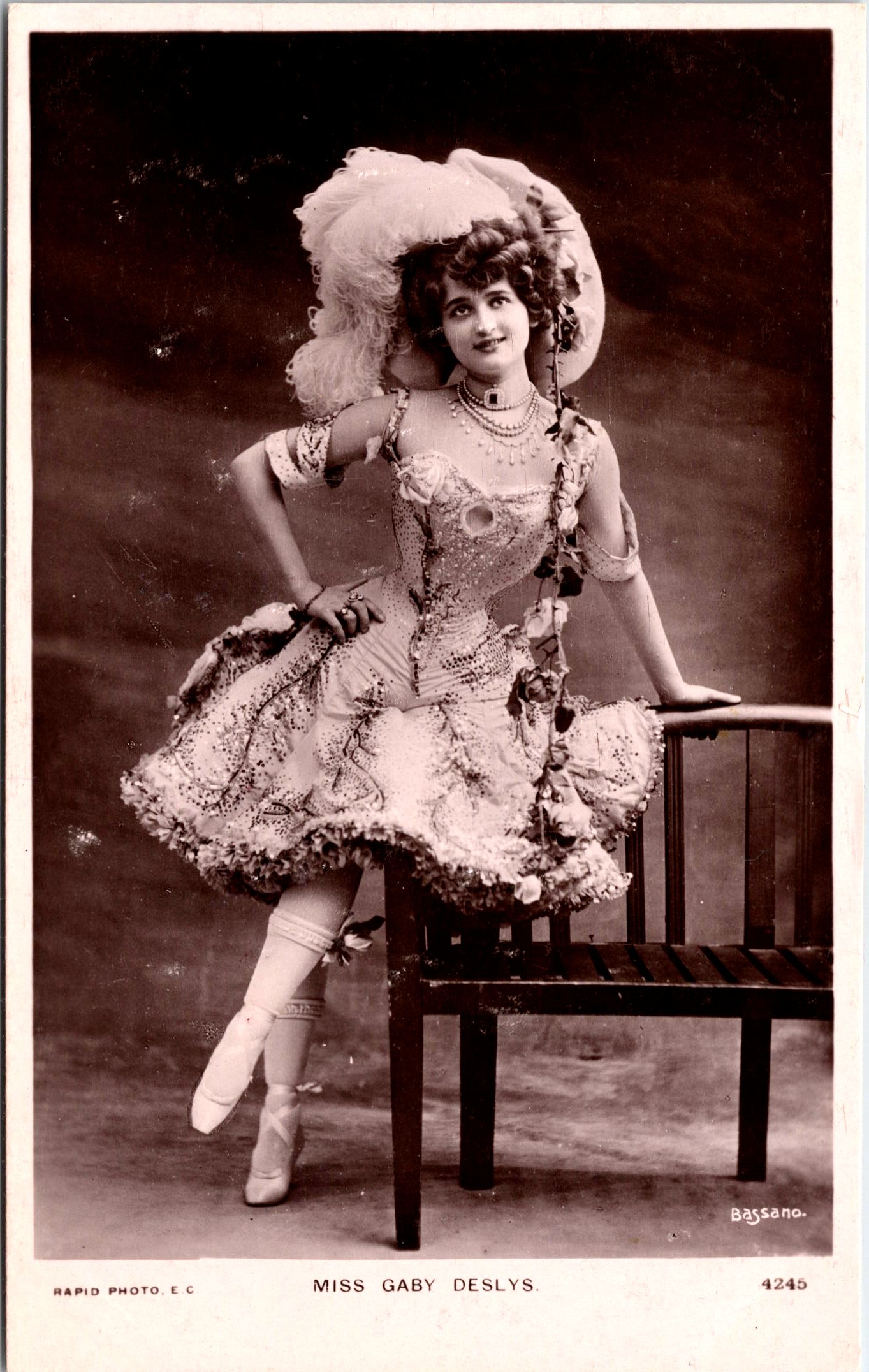
Postcard 4 was published by Rapid Photo of Great Britain as part of a series (no.4245). The company was active between 1901 and 1910. The firm specialized in taking theatrical portraits and was located in London. This postcard portrait was taken by the Bassano studio. SOLD
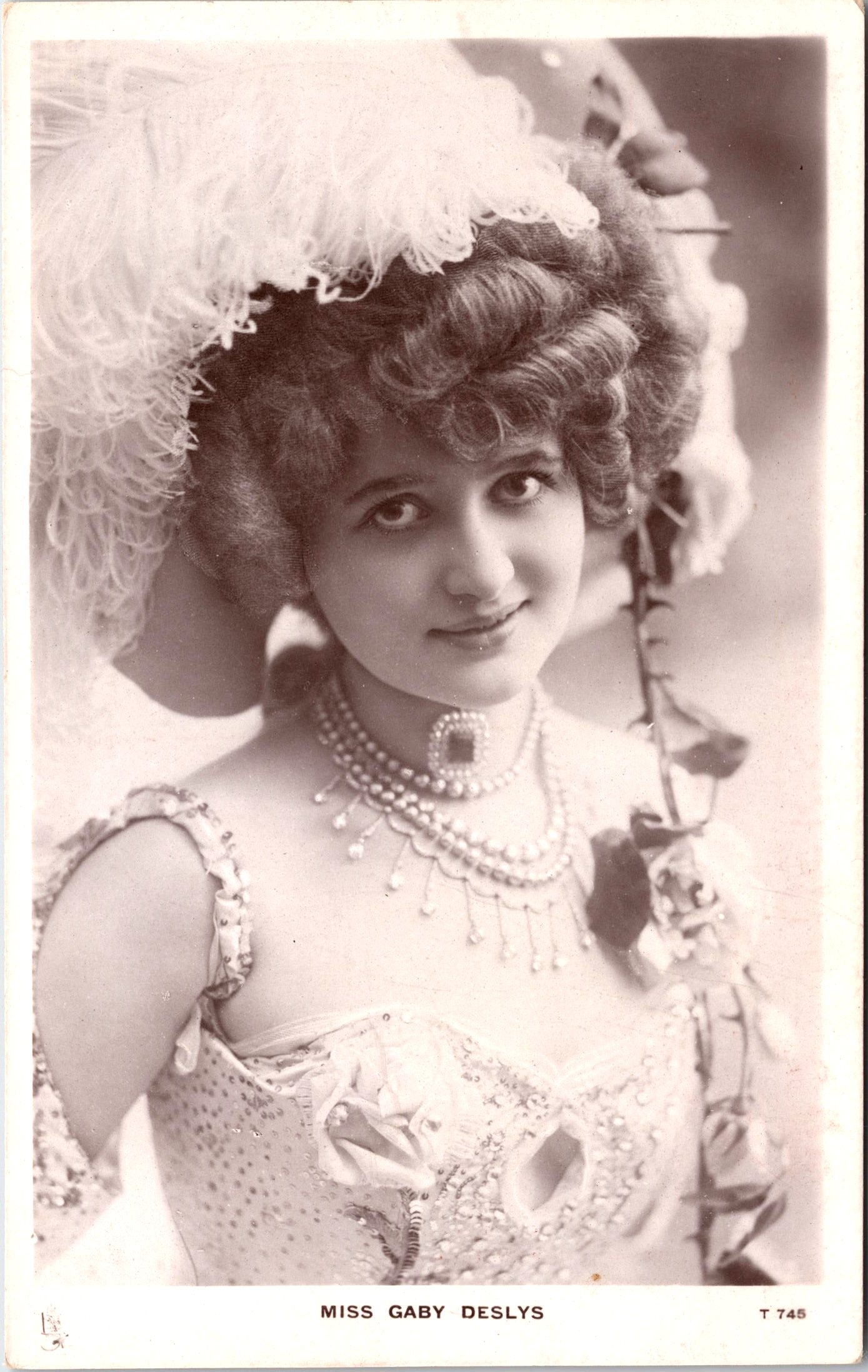
Postcard 5 was published by Raphael Tuck & Sons of Great Britain as part of the Celebrities of the Stage series (no.T745). The company produced a variety of postcards including an extensive catalog of celebrity (stage and screen) portrait postcards. The firm began publishing this Deslys postcard in 1903. Miss Deslys was photographed by Dover Street Studio for the portrait seen on this postcard. (SOLD)
Postcard 6 was published by J. Beagles of Great Britain as part of a series (no.70H). This real photo postcard is uncommon. This risque vintage real photo postcard features Deslys wearing a provocative costume for her time. She is flashing an infectious smile. Note her corset assisted wasp thin waist.
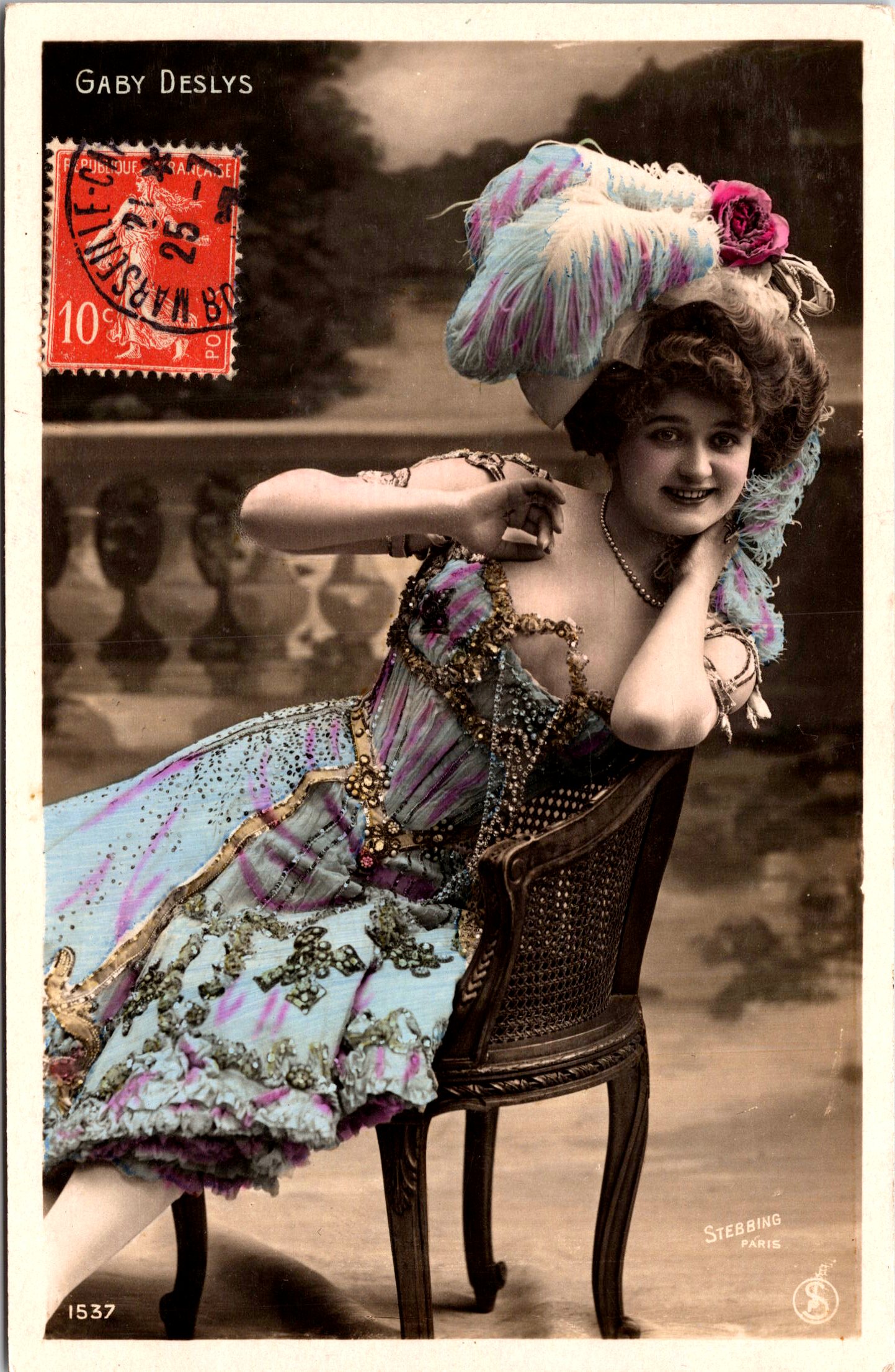
Postcard 7 was published by Societe Industrielle de Photograpie (SIP) of Rueil, France, and is part of a series (no.1537).The photographer was Edouard Stebbing who was active in Paris between 1890 and 1910. Stebbing taught at a University in Paris and invented the stebbing camera, and was known for his work with emulsions. It is reported that he was friends with the artist Monet. He died in 1914 and his wife (Celestine) died five years earlier. Stebbing was a prolific photographer during the Belle Epoque Paris. He appears to have been an expatriate from England. He published many articles in British Photographic journals. Stebbing photographed many theatrical stars. This real photo postcard is uncommon. (SOLD)
Postcard 8 is an uncommon vintage real photo postcard. It was published by Davidson Brothers of Great Britain. Davidson Brothers was located in both London and New York City. The firm operated between 1901 and 1911. (SOLD)
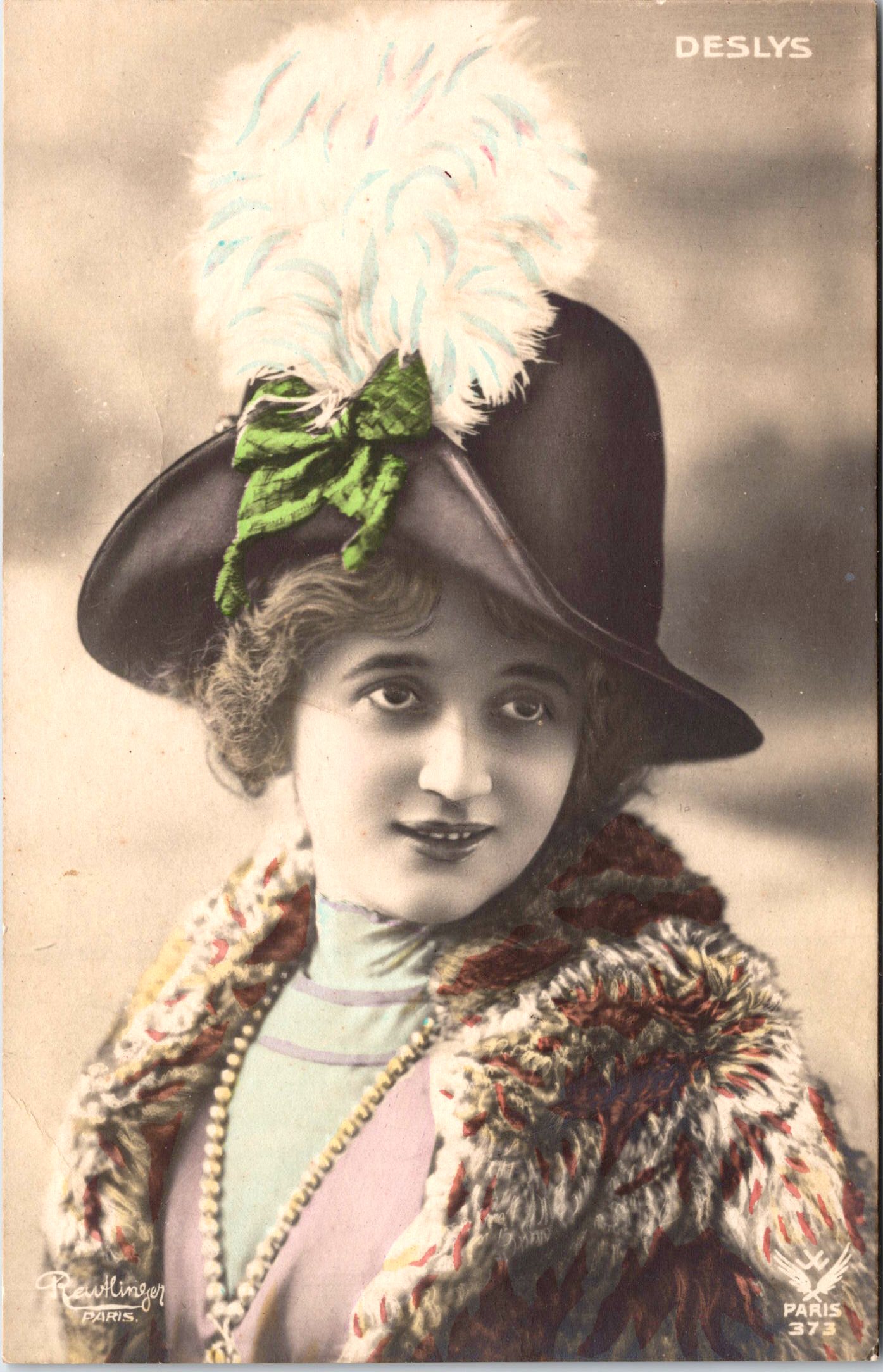
Postcard 9 has a portrait taken by esteemed celebrity photographer, Leopold Reutlinger. This real photo postcard is very uncommon. Gaby Deslys was certainly a beautiful and talented performer. (SOLD)
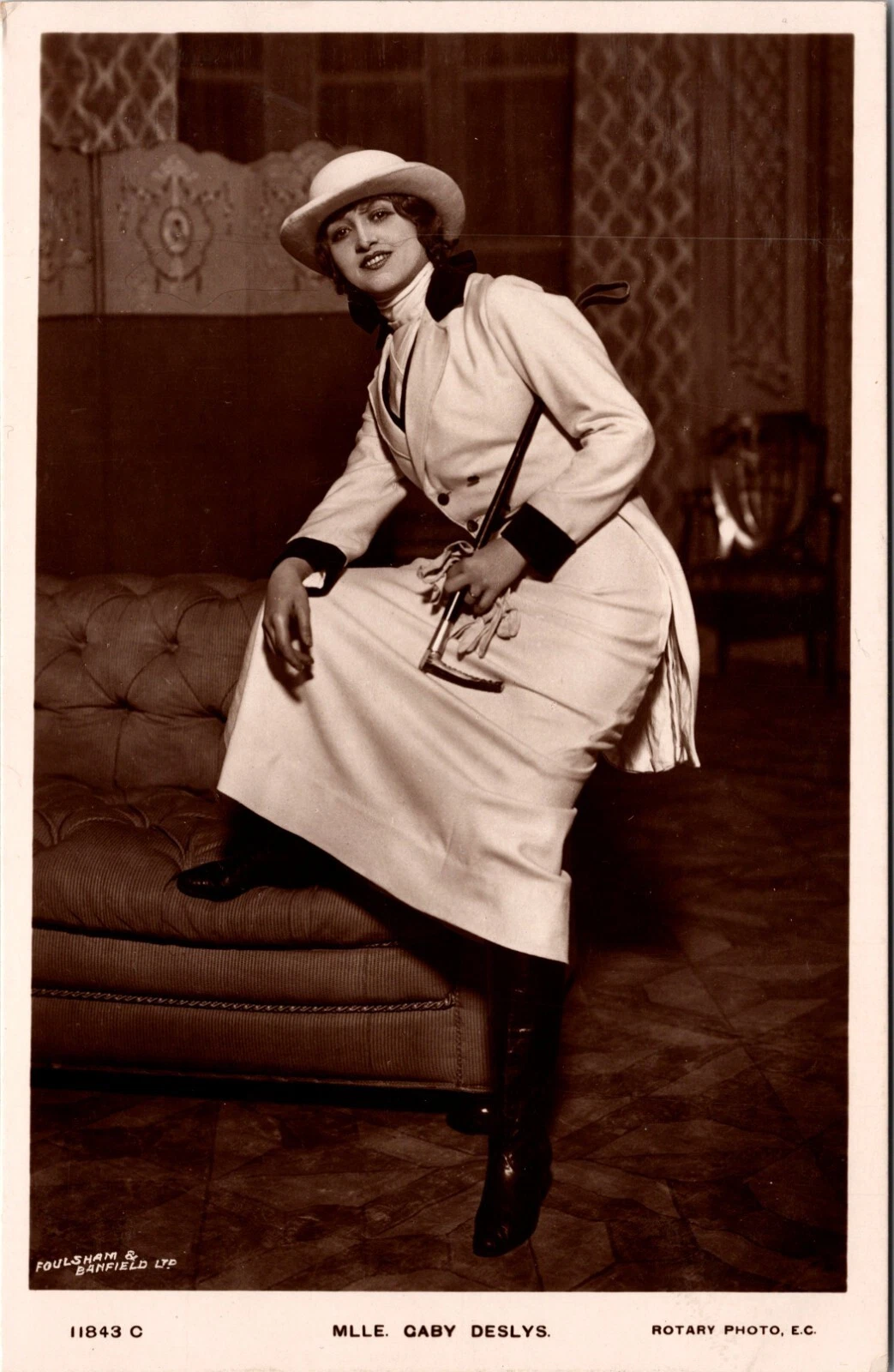
Postcard 10 is not at all common. It was published by Rotary Photo of Great Britain as part of a series (no.11843 C). This postcard portrait was taken by the Foulsham & Banfield studio. SOLD
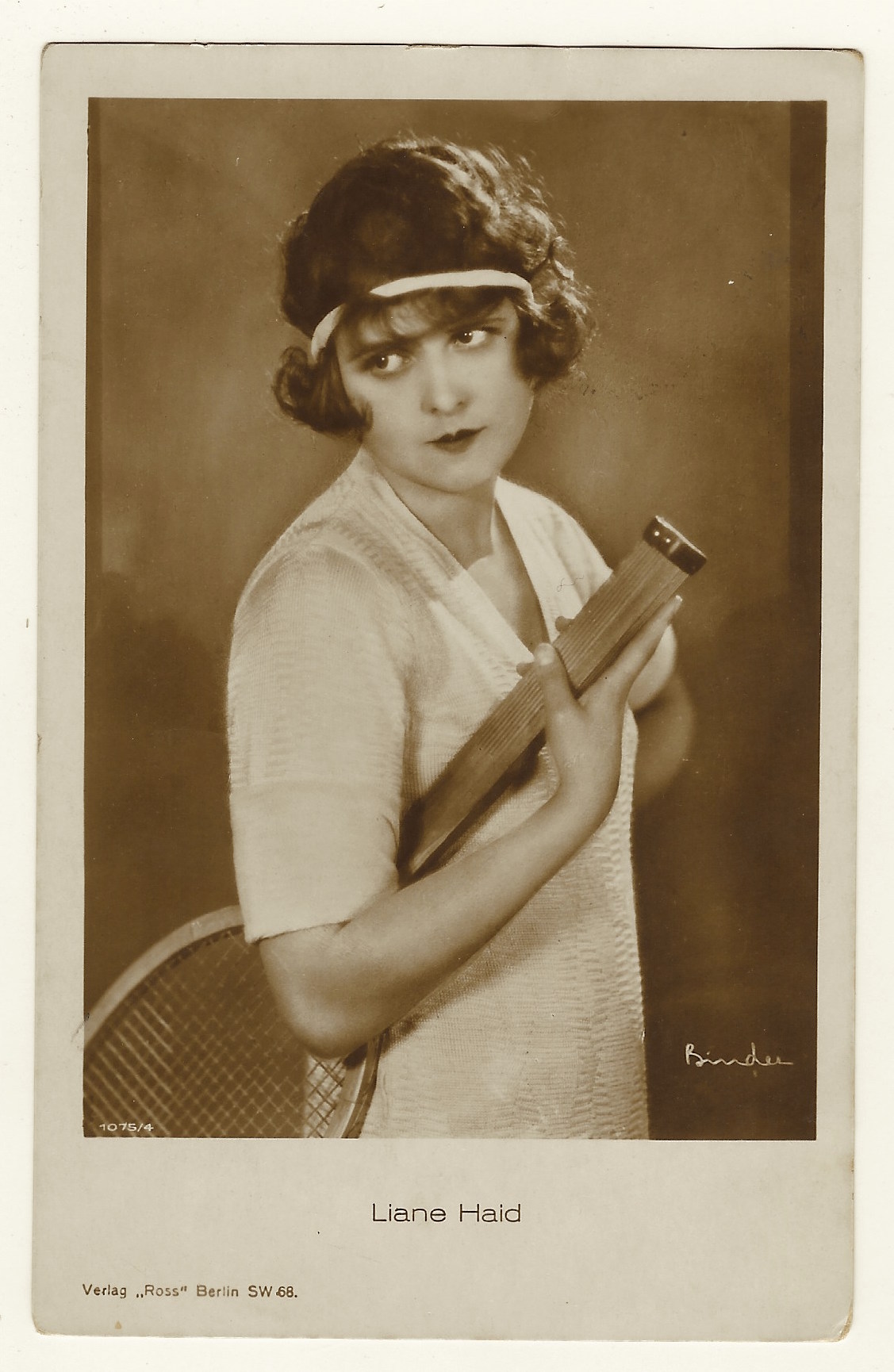
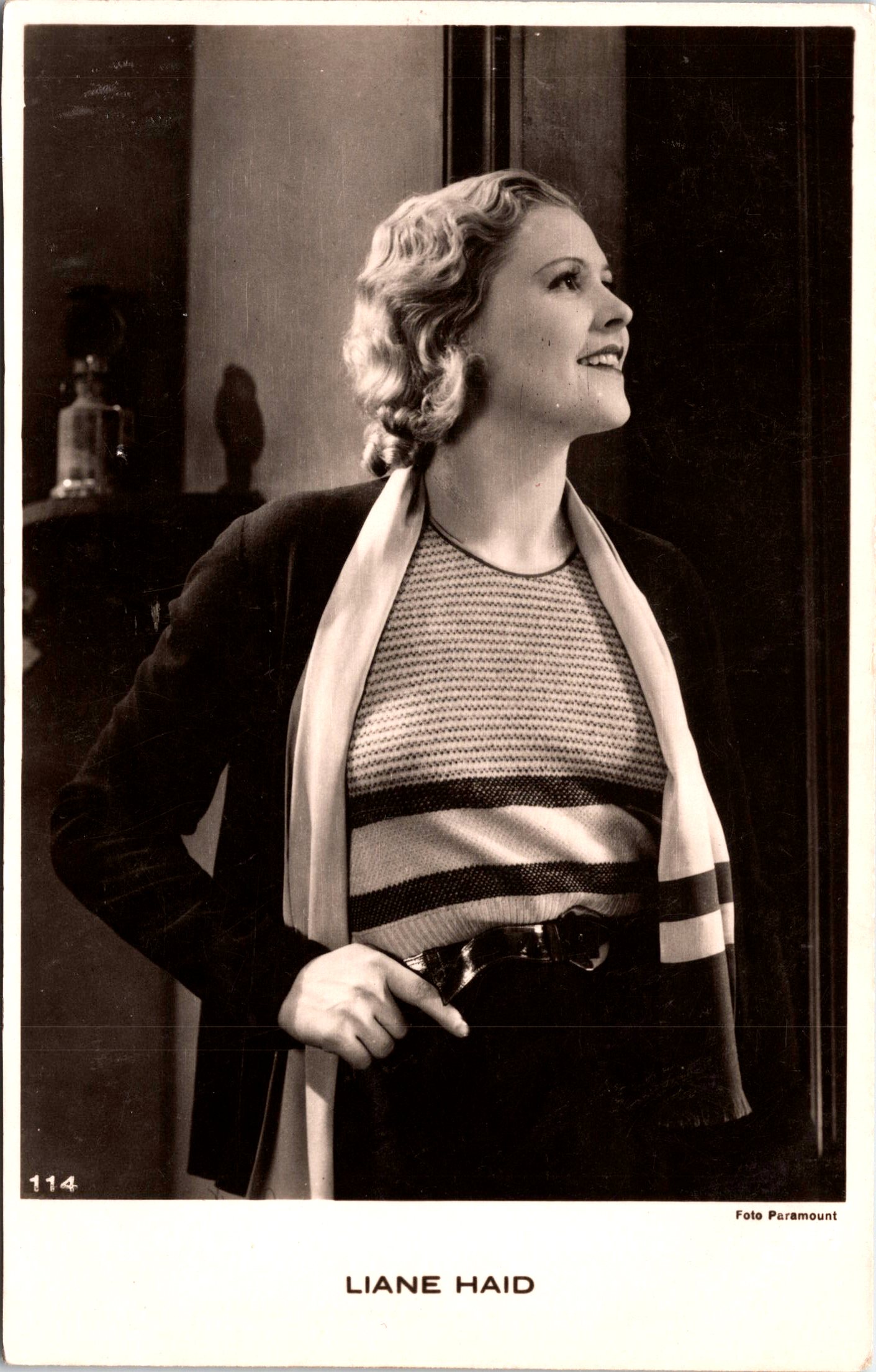
These vintage real photo postcards feature European film star Liane Haid (1895-2000). In the top postcard she poses holding a tennis racket and wearing a hair band to keep her hair out of her eyes. She is quite beautiful but how can we interpret her facial expression. To me, it looks like she is rolling her eyes as if she is bothered by something. Who is Liane Haid? She was born in Vienna, Austria and received training in both dance and singing. She gained the nickname of “Sweet Viennese Girl”. Haid was a prima ballerina, dancer, singer and stage actress. She worked in Budapest and Vienna as a dancer. Her stage career was mostly in Berlin and Vienna. She became a popular pin-up star through the 1920’s and 1930’s. Her first movie role was in a World War I propaganda film. She was employed by UFA and appeared in a number of comedy films alongside other movie stars including Willi Forst, Bruno Kastner, and Georg Alexander. UFA was a major German Film producer and distributor that operated between 1917 through the end of World War II. Liane Haid refused a number of Hollywood offers but in 1942, she escaped Nazi Germany and went to Switzerland according to Wikipedia, “because of the regime, because everything was bombed, and because all the good directors had left”. Soon thereafter she got married and retired from films. She was married three times. The IMDB web site states that she has 92 film credits from 1915 through 1953. Notable films include “Lady Hamilton” (1921), “Lucrezia Borgia” (1926), and “The Song is Ended” (1930). The photographer of this terrific image was Alexander Binder (1888-1929). He had the largest photo studio in Europe during the late 1920’s and the 1930’s. Many of his entertainment star portraits appear on Ross Verlag postards. It is thought that Binder was of Swiss origin. He was of the Jewish faith. He studied engineering but did not complete his studies. From 1908 to 1910 he studied photography at a school in Munich, Germany. After the completion of his photography studies, he went to Berlin and in 1913 opened his first photography studio. Before long, he became one of the premier photographers in Berlin. He primarily focussed on fashion and celebrity photography. Since Berlin was the capital of the European film industry, Binder photographed all the stars of the European film industry including, Lilian Harvey, Conrad Veidt, and Lya De Putti. Many of his images were used in popular film portrait postcards. His photographs could be seen in postcards published by Ross Verlag and Photochemie. Binder died in 1929 but new photo cards bearing his signature continued to be published until 1937. It is thought that the real photographer of these new postcards was Hubs Floeter (1910-1974) who was employed at the studio as an operator. The studio continued to be owned by Binder’s widow, Mrs. Binder Alleman and their two daughters. The studio was managed by the Jewish Elisabeth Baroness Vonhedlis Stengel who was later deported to the Theresienstadt concentration camp. In 1938 the Nazi’s closed Binder’s studio and it was later taken over by an Aryan photographer, Karl Ludwig Haenchen . Haenchen continued to produce celebrity portraits for postcards. His publishers included Film-Foto-Verlag. After World War II the studio was taken over by the Hasse und Wiese company.
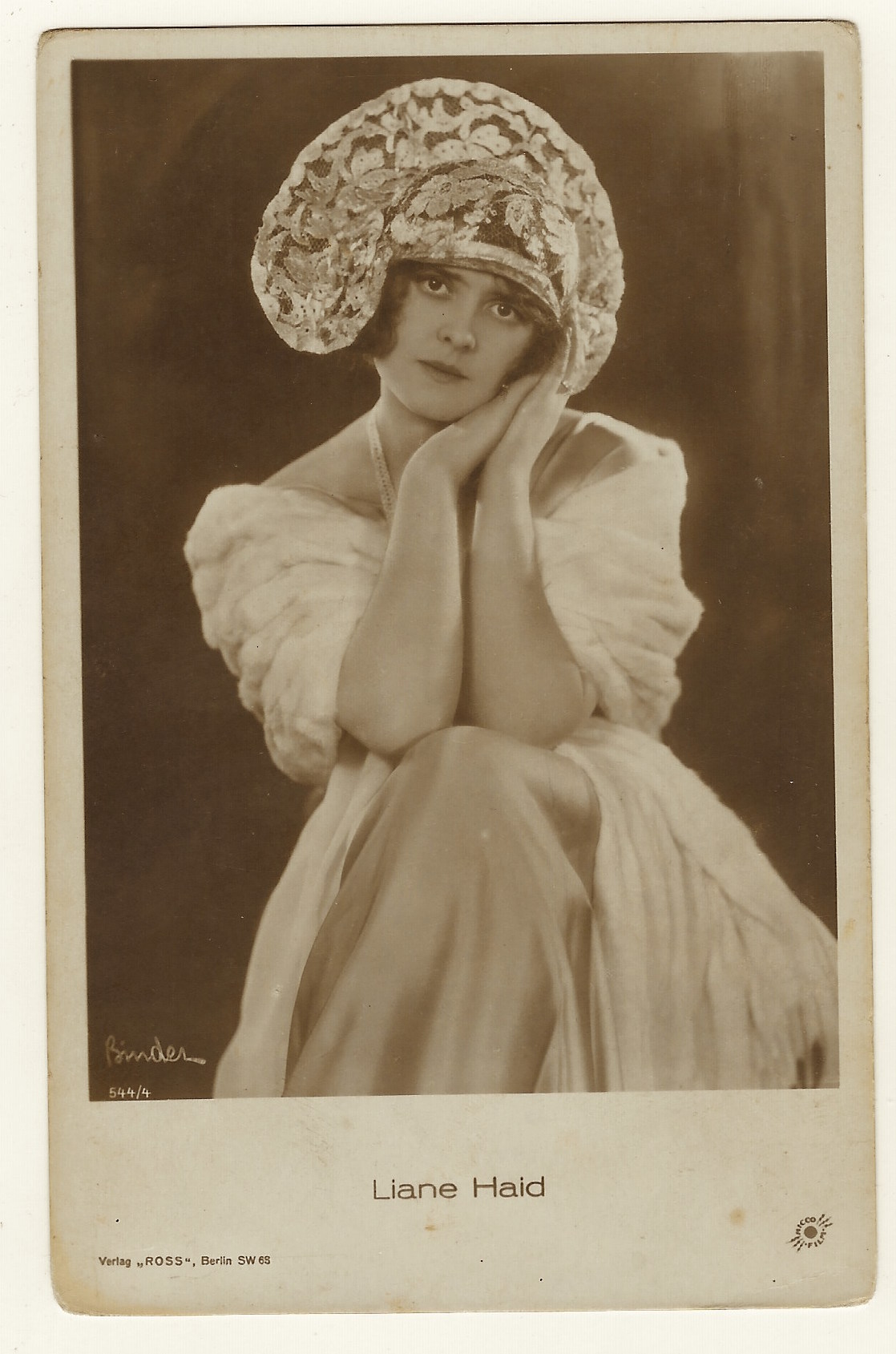
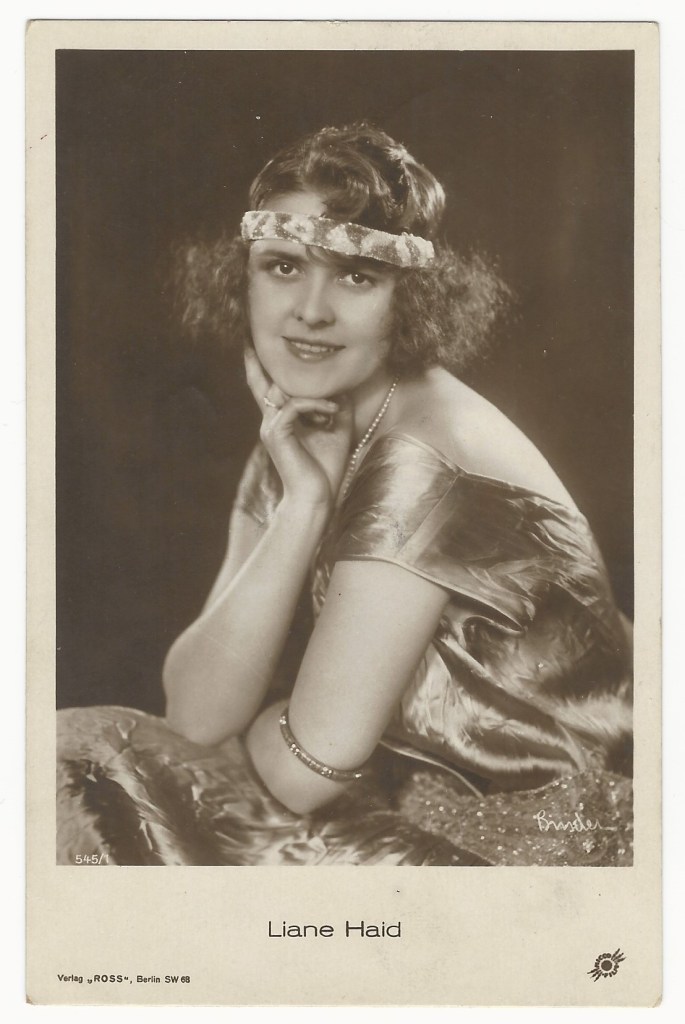
The second vintage postcard portrait of Miss Haid was also the work of Alexander Binder. The actress looks beautiful in her art deco lace headdress. Her eyes can be described as spell binding. The postcard was published by Germany’s Ross Verlag and is part of a series (no. 544/4). Also credited for this photograph is “Micco Film”. Before working for Micco Film, Haid was employed by Kunstfilm. She was very successful working for the company but in 1920 she sued the company for physically exploiting her (placing her in dangerous situations) and for making her financially responsible for her own makeup and costuming. Haid’s husband, industrialist Fritz von Haymerle, built her a studio (Micco-Film) in Vienna to further promote her career.
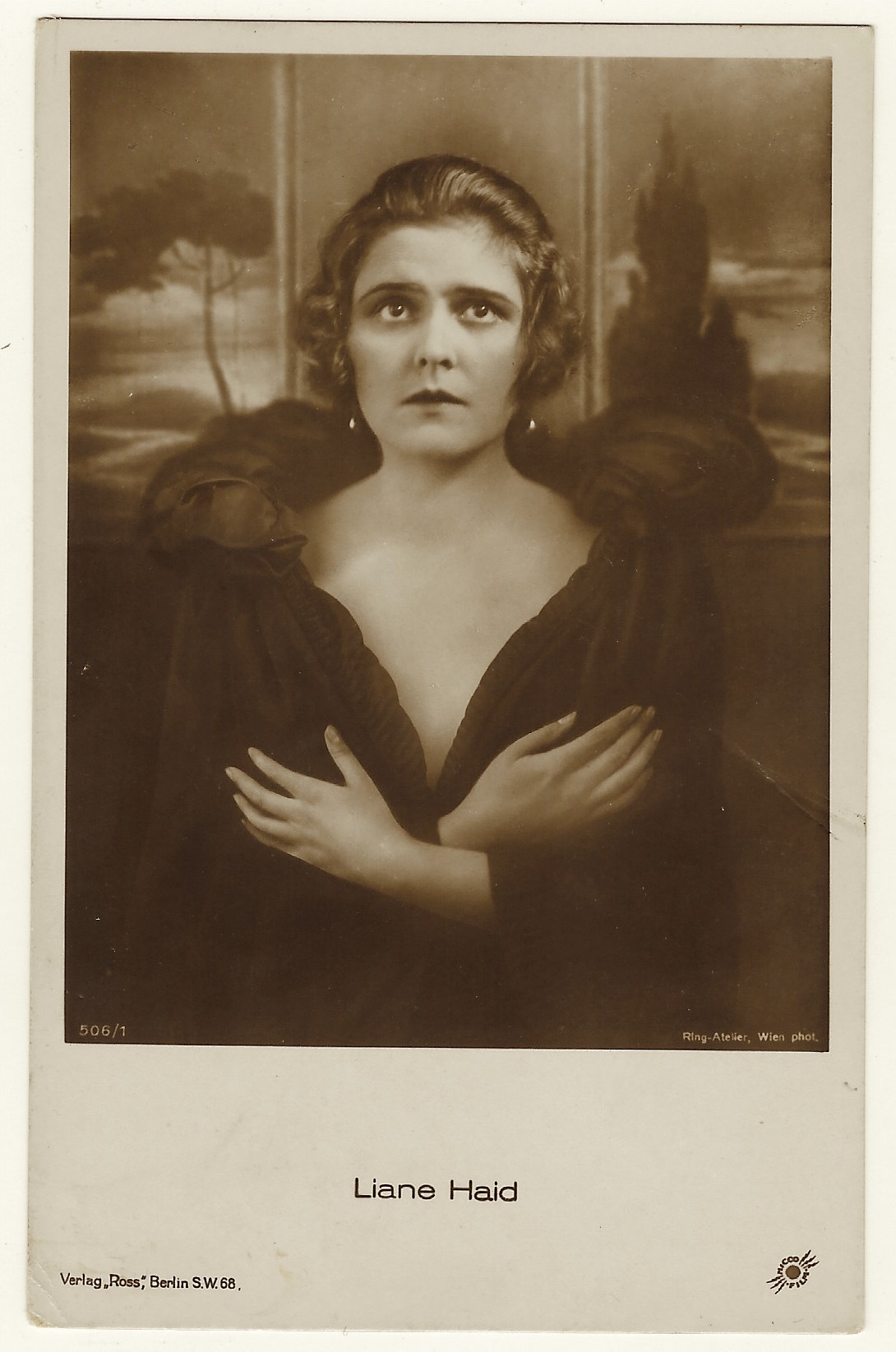
The third real photo postcard, seen above, was produced by publisher Ross Verlag (Berlin). Once again, Liane Haid appears beautiful in her portrait. The photograph was taken by the Ring studio in Vienna, Austria. A logo for Micco-Film appears in the lower right hand corner of the postcard. SOLD
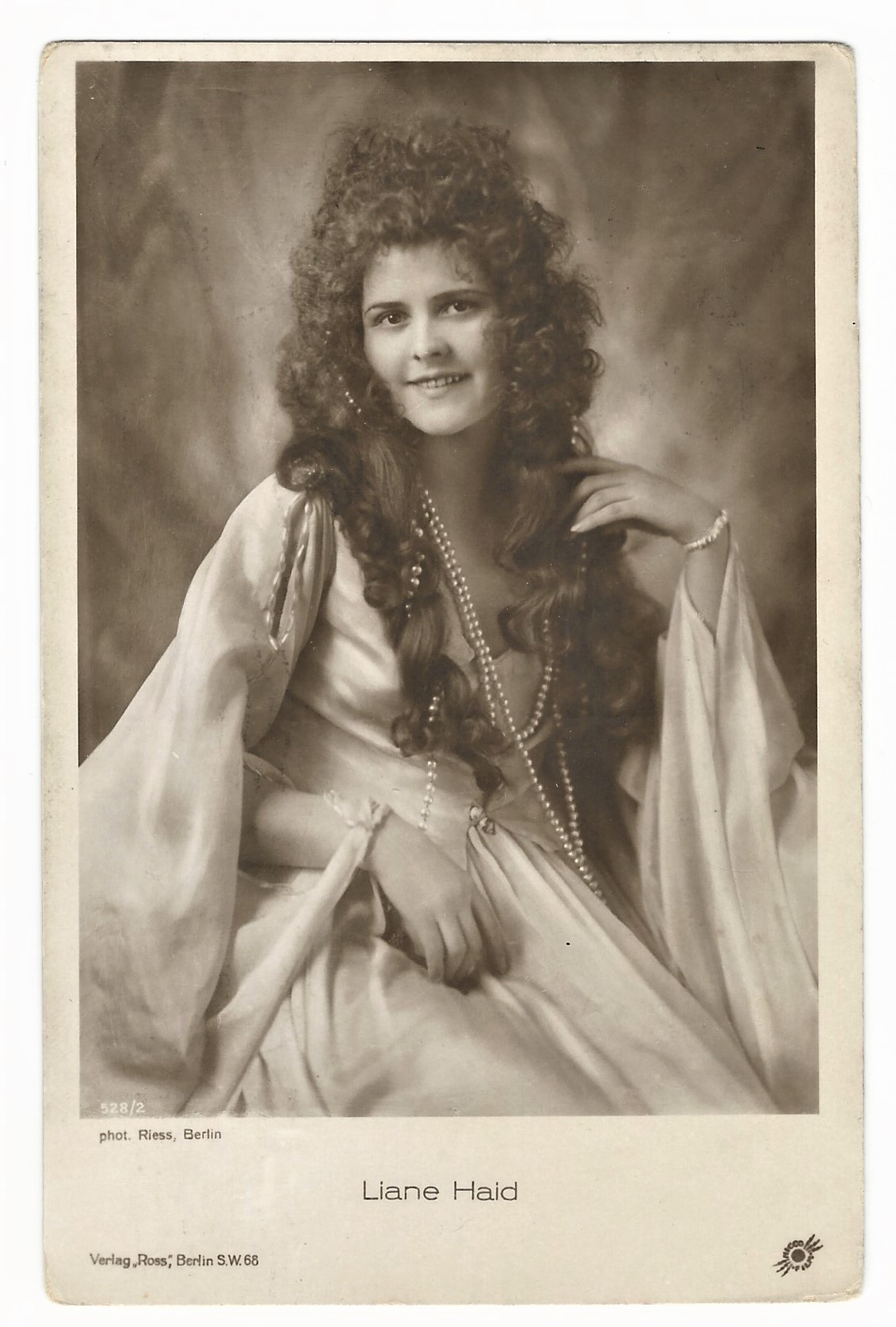
Postcard 4 is a vintage real photo postcard featuring a young and long haired Liane Haid. She is flashing a very sweet smile. The postcard was published by Ross Verlag of Berlin, Germany. It is part of a series (No. 528/2). Miss Haid was photographed by Frieda Riess (1890-1955?), a female Berlin photographer. One of her photographs can be found in Great Britain’s National Portrait Gallery. The postcard has the logo for Micco-Film in the bottom right hand corner and is postmarked 1929. The card was mailed from Denmark to Estonia. SOLD
Postcard 5 features a vintage real photo of Miss Haid. As usual, she looks quite pretty. The actress is flashing a lovely smile. She is wearing a string of pearls and a hair band.This photograph was taken by the talented and prolific celebrity photographer, Alexander Binder. The postcard was published by Ross Verlag (Berlin) as part of a series (no. 545/1). The logo for Micco-Film can be seen on the bottom right hand corner of the postcard. The card was postmarked in 1925 and is in very good condition (see scans).
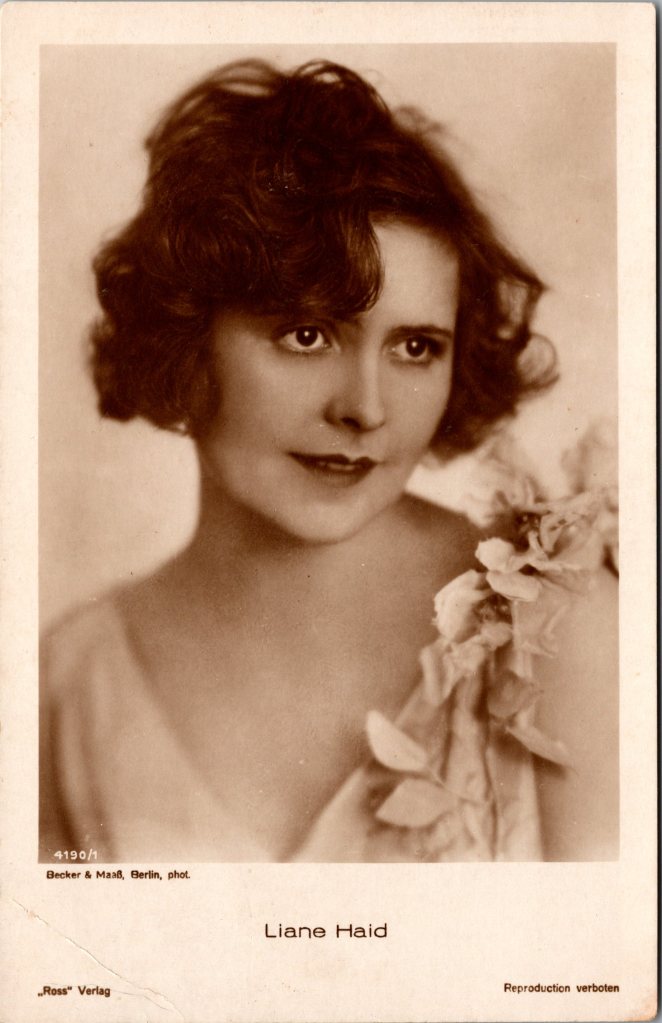
Postcard 6 offers another view of Miss Haid. She looks beautiful as always. This photograph was taken by the Becker & Maas studio. The firm was located in Berlin Germany. The publisher of the card was Ross Verlag. The postcard is part of a series (No.4190/1). (SOLD)
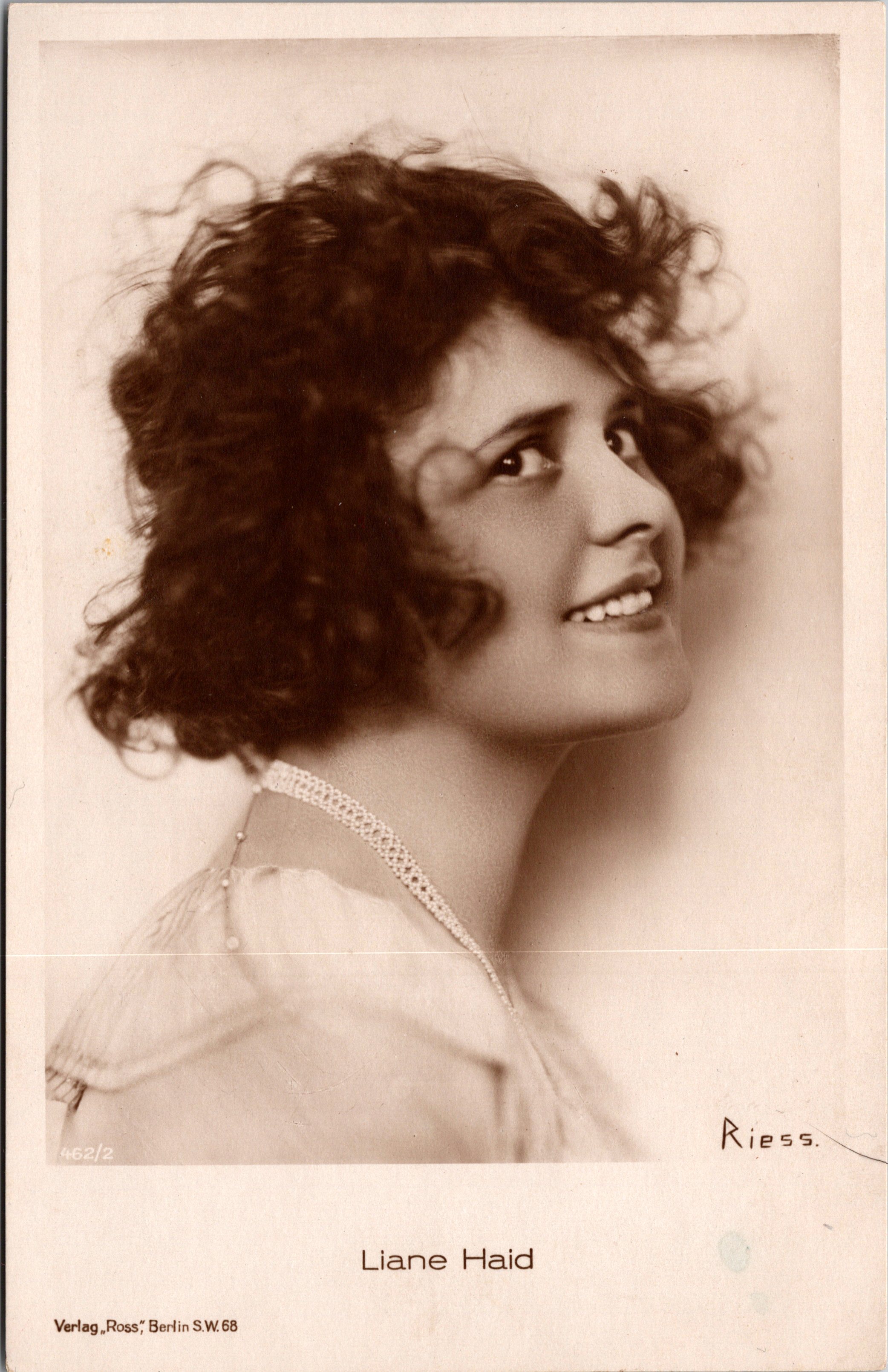
Postcard 7 features Miss Haid as photographed by Frieda Riess (1890-1955?), a female photographer located in Berlin, Germany. The publisher of the card was Ross Verlag. The postcard is part of a series (No.462/2). (SOLD)
Postcard 8 was published by Ross Verlag. The postcard is part of a series (No.1732/3). Note the logo for UFA, a German film company. (SOLD)
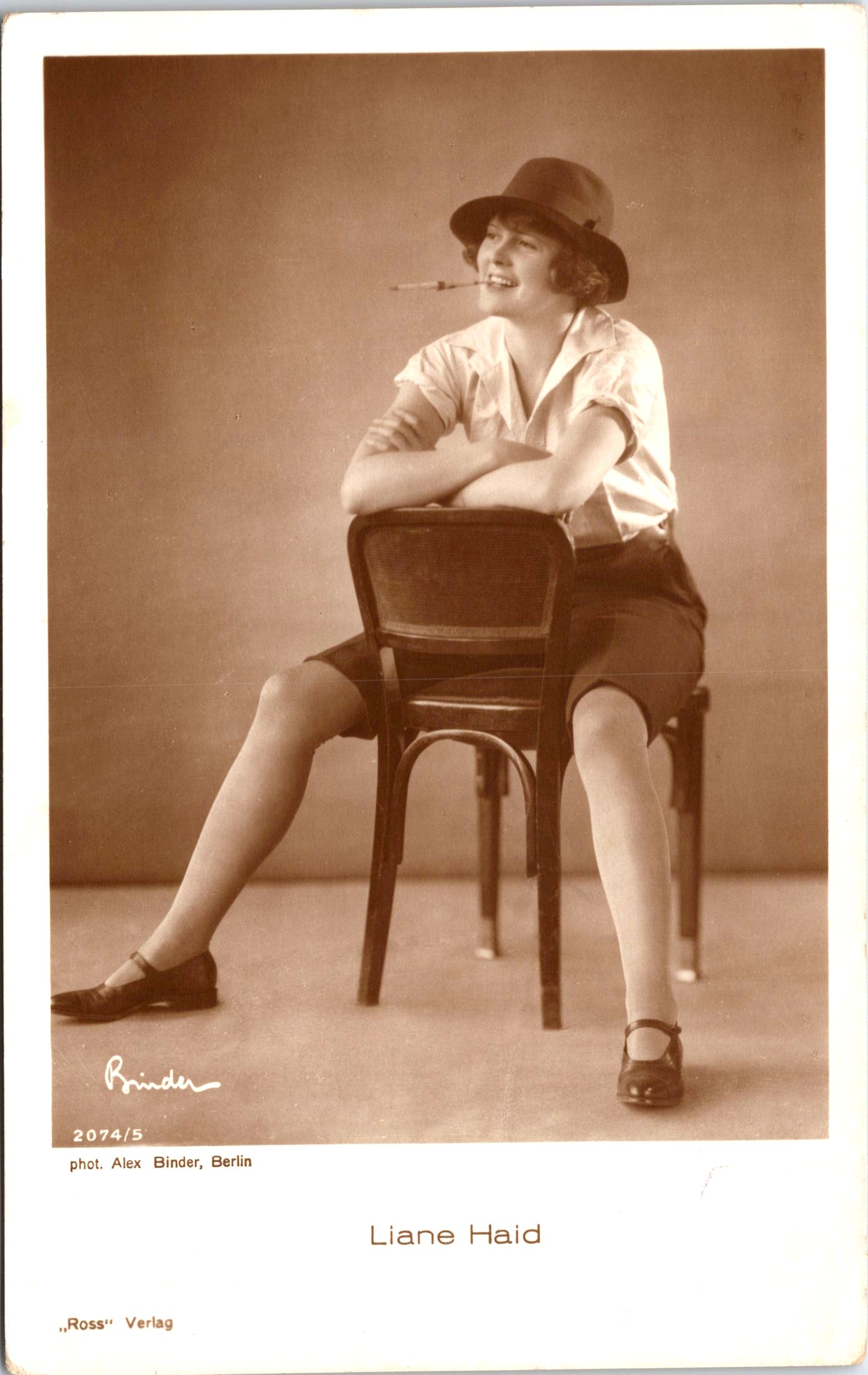
Postcard 9 features Haid sitting in a chair in a provocative manner and smoking a cigarette in a cigarette holder. This photograph portrays Haid as unconventional and seductive. The publisher of the card was Ross Verlag. The postcard is part of a series (No.2074/5). Miss Haid’s photograph appearing on this postcard was taken by Alexander Binder (Berlin, Germany). (SOLD)
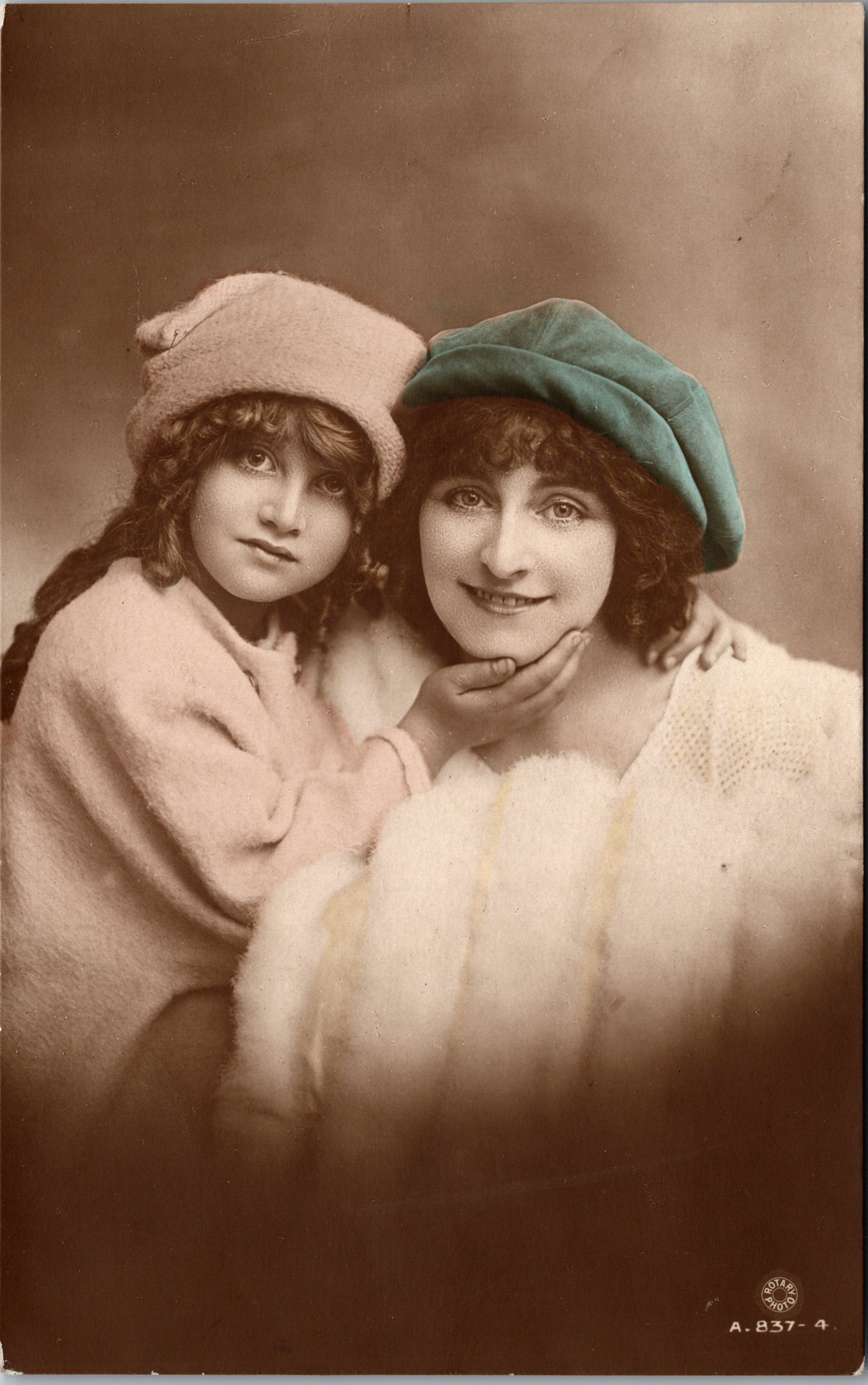
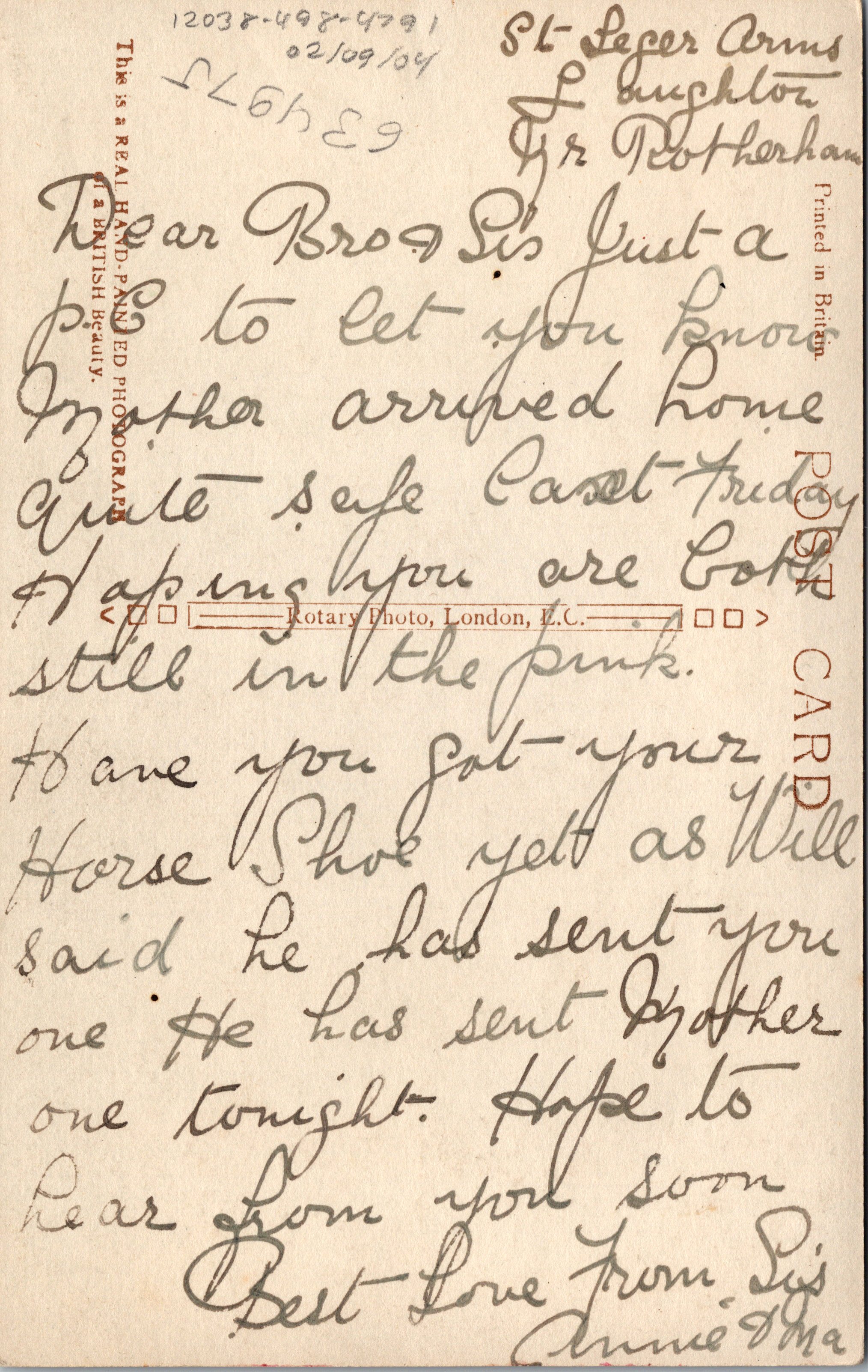
This vintage hand painted real photo postcard features a portrait of a very beautiful mother and her equally beautiful daughter. The pair are dressed for winter and looking quite fashionable. Their hats are terrific. Mom is wearing a fur coat. They have wonderful smiles. The writer of the postcard expresses to the reader, “Hoping you are both still in the pink”. I haven’t heard that expression in a while. If you don’t know, “in the pink” is a idiom that means in the peak of health. This vintage postcard was published by Rotary Photo as part of a series (No.A837-4). It was written in the first decade of the 1900’s. The postcard is in very good condition (see scans).
Buy this Vintage Real Photo Postcard (includes shipping within the US) #5324
To purchase this item, click on the Pay with PayPal button below
$34.00
Buy this Vintage Real Photo Postcard (includes International shipping outside the US) #5324
To purchase this item, click on the Pay with PayPal button below
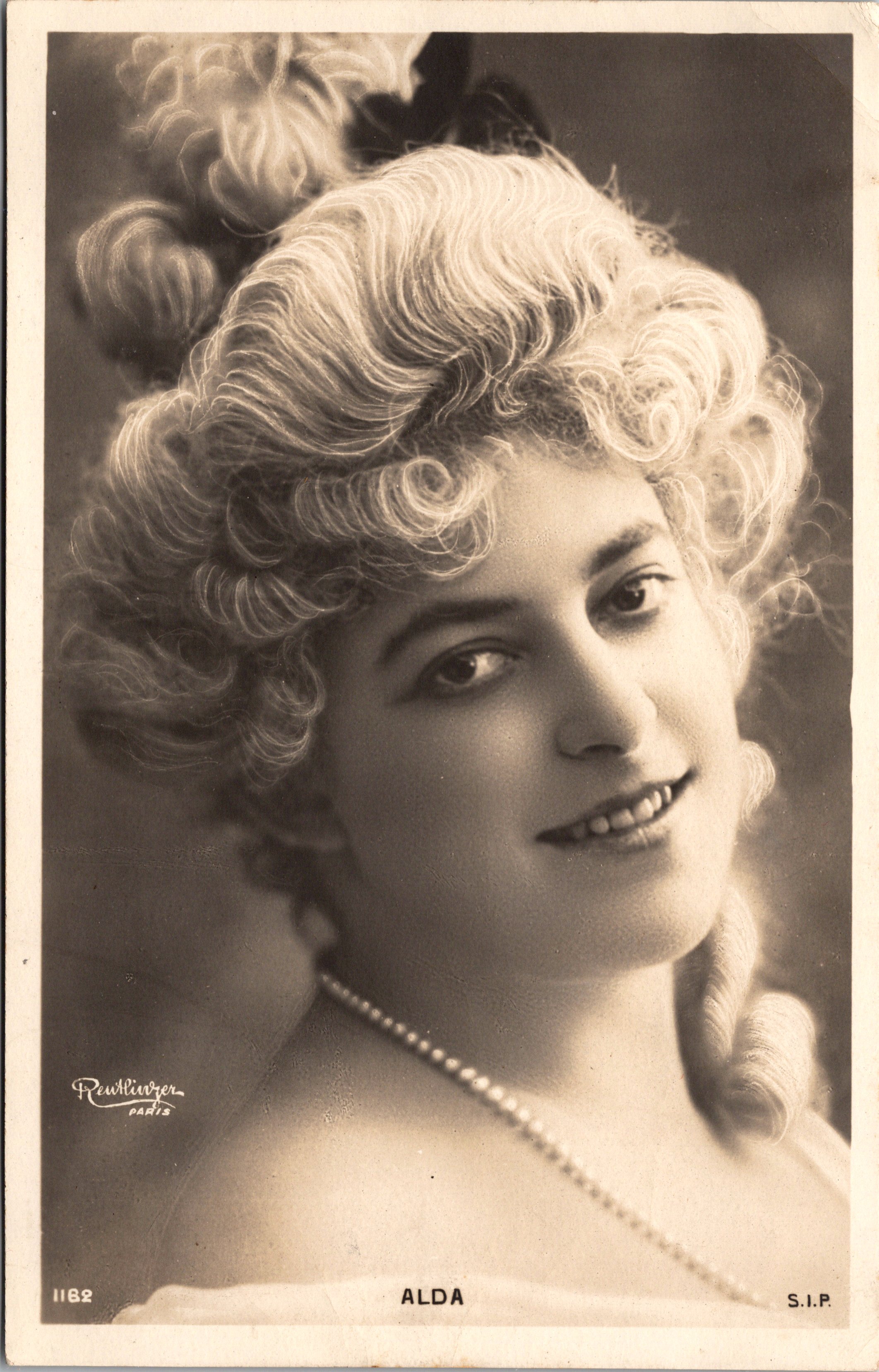
This vintage real photo postcard features Austalian operatic soprano, Frances Alda (1879-1952). She was a famous opera star during the first three decades of the twentieth century. In addition to her excellent singing voice, she had a big persoablity. She made her operatic debut in France (1904) and by 1908, she debuted at the Metropolitan Opera House in New York City. She had 369 performances at the Met, often with Enrico Caruso. In 1908 she began singing on records. Frances was born in New Zealand. Her mother was a singer and took Frances along on her operatic tours. Frances performed in Gilbert and Sullivan in Austalia before going to Europe in 1900. She went there to study opera and to launch an international singing career. In 1929 she left the Met and performed in concerts, on radio broadcast and in vaudeville. Frances was married twice. She retired to Long Island, New York and lived an affluent lifestyle. She died of a stroke and her grave is in Great Neck, Long Island. This postcard photo was taken by the Reutlinger studio in Paris, France. The card was published by French publisher, S.I.P., as part of a series (No.1182). This vintage portrait postcard is in very good condition.
Buy this Vintage Real Photo Postcard (includes shipping within the US) #5323
To purchase this item, click on the Pay with PayPal button below
$24.00
Buy this Vintage Real Photo Postcard (includes International shipping outside the US) #5323
To purchase this item, click on the Pay with PayPal button below
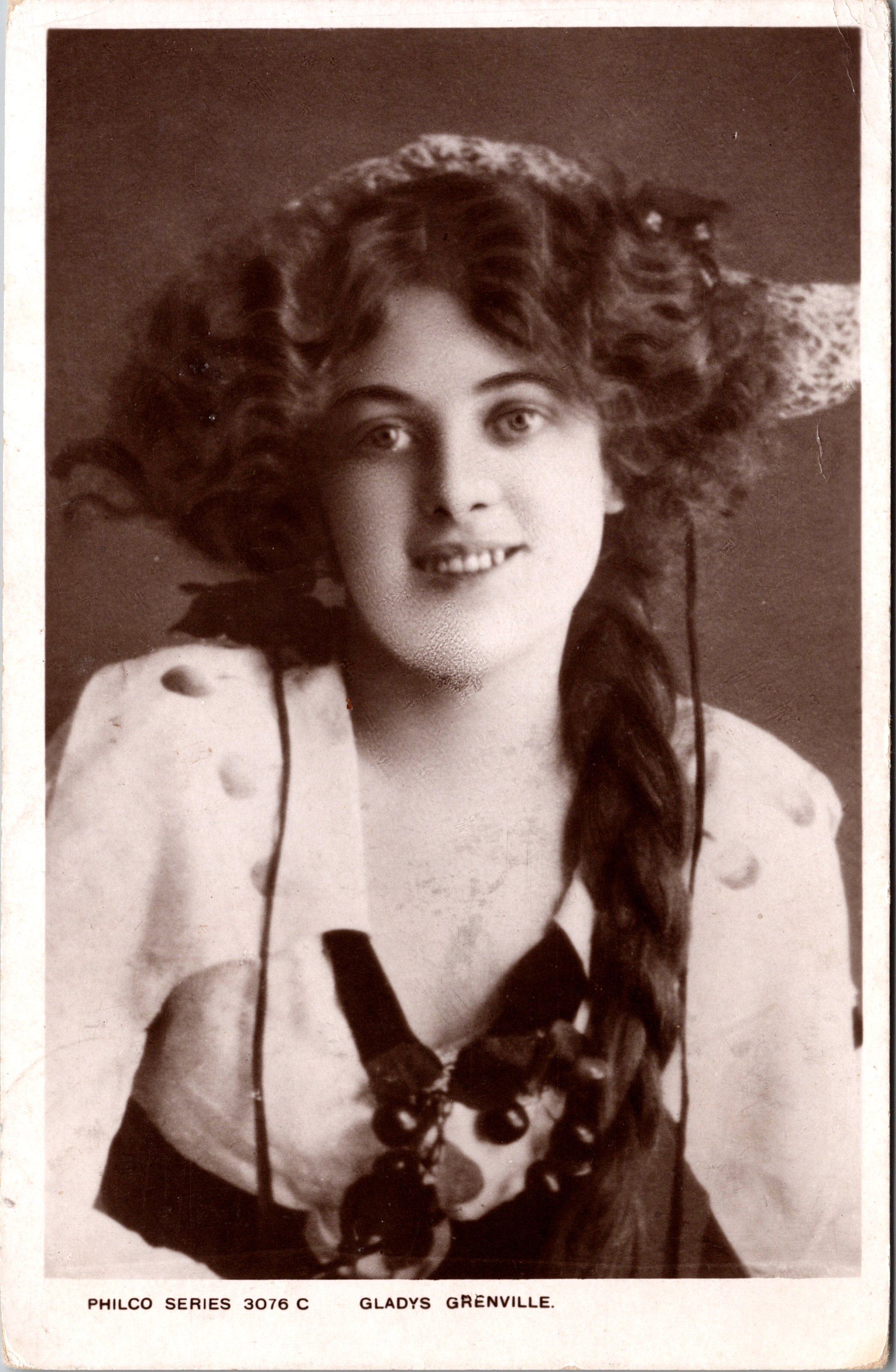
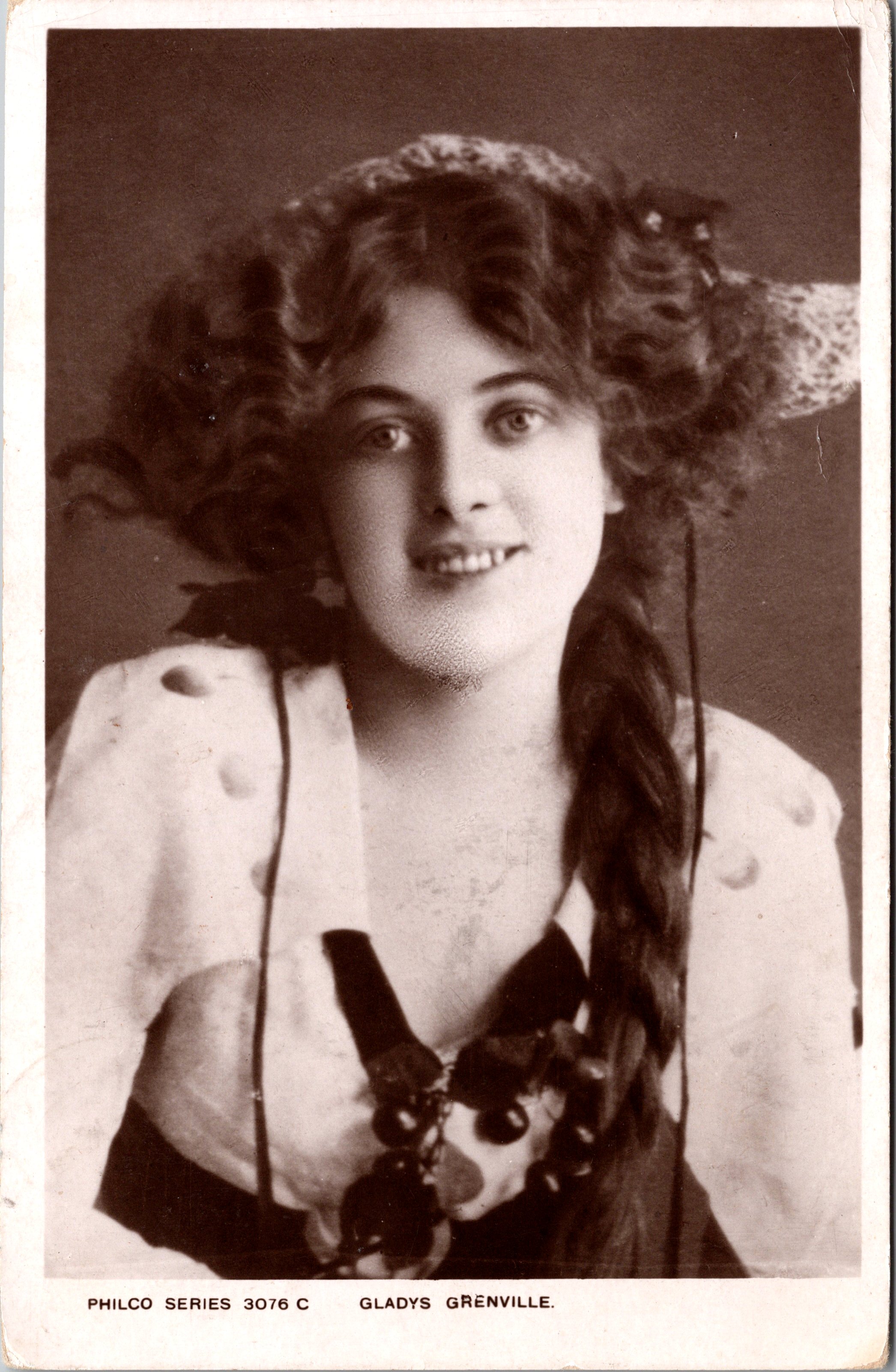
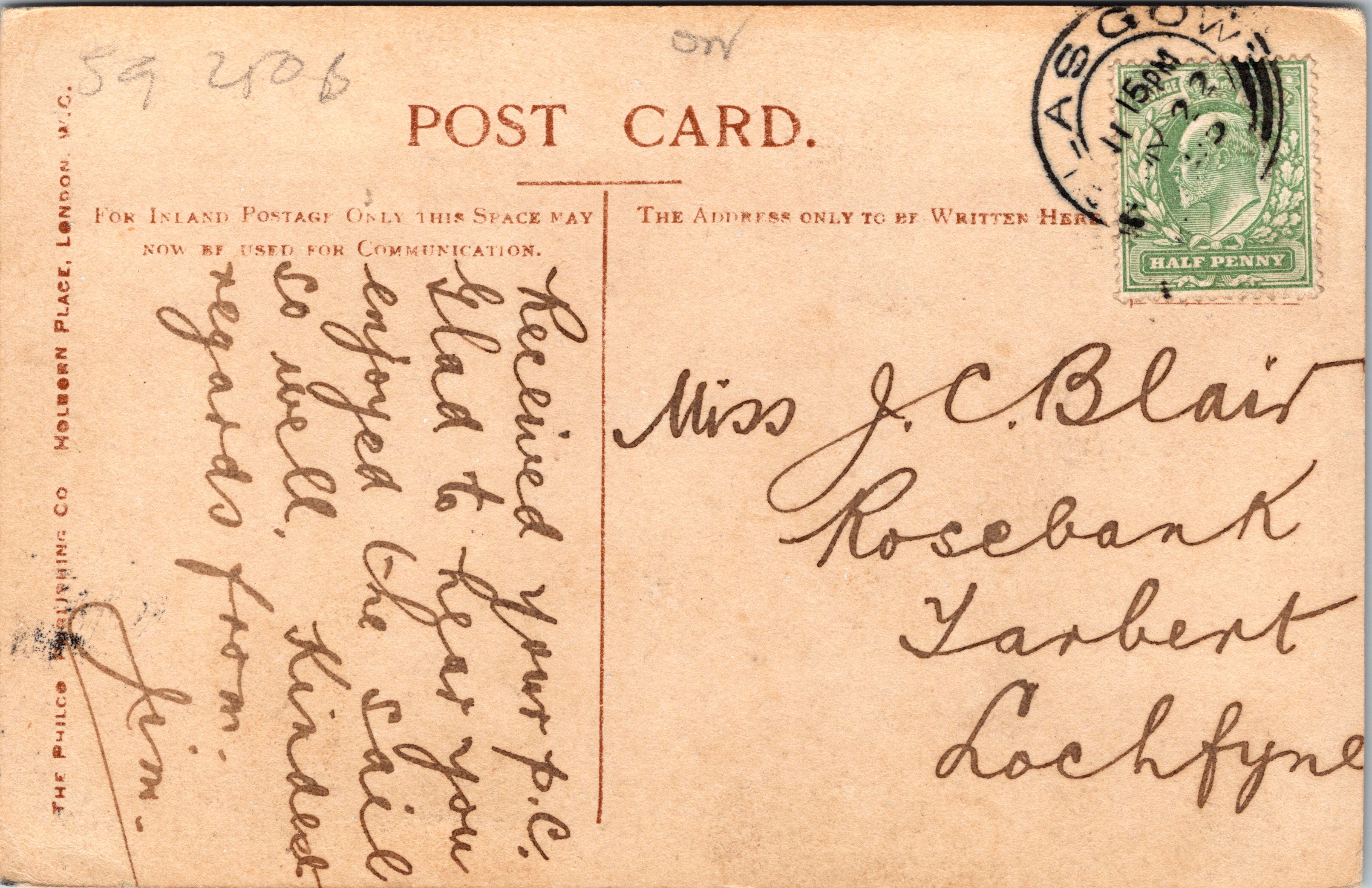
This vintage real photo postcard features British singer and actress, Gladys Grenville. A number of her stage appearances are credited in early British theatrical books and magazines. There is little biographical information about her life and career. She is pretty and has a great smile. The card has a 1905 postmark.This vintage postcard was published by Philco and is in overall good condition (See Scans).
Buy this Vintage Real Photo Postcard (includes shipping within the US) #5317
To purchase this item, click on the Pay with PayPal button below
$16.48
Buy this Vintage Real Photo Postcard (includes International shipping outside the US) #5317
To purchase this item, click on the Pay with PayPal button below
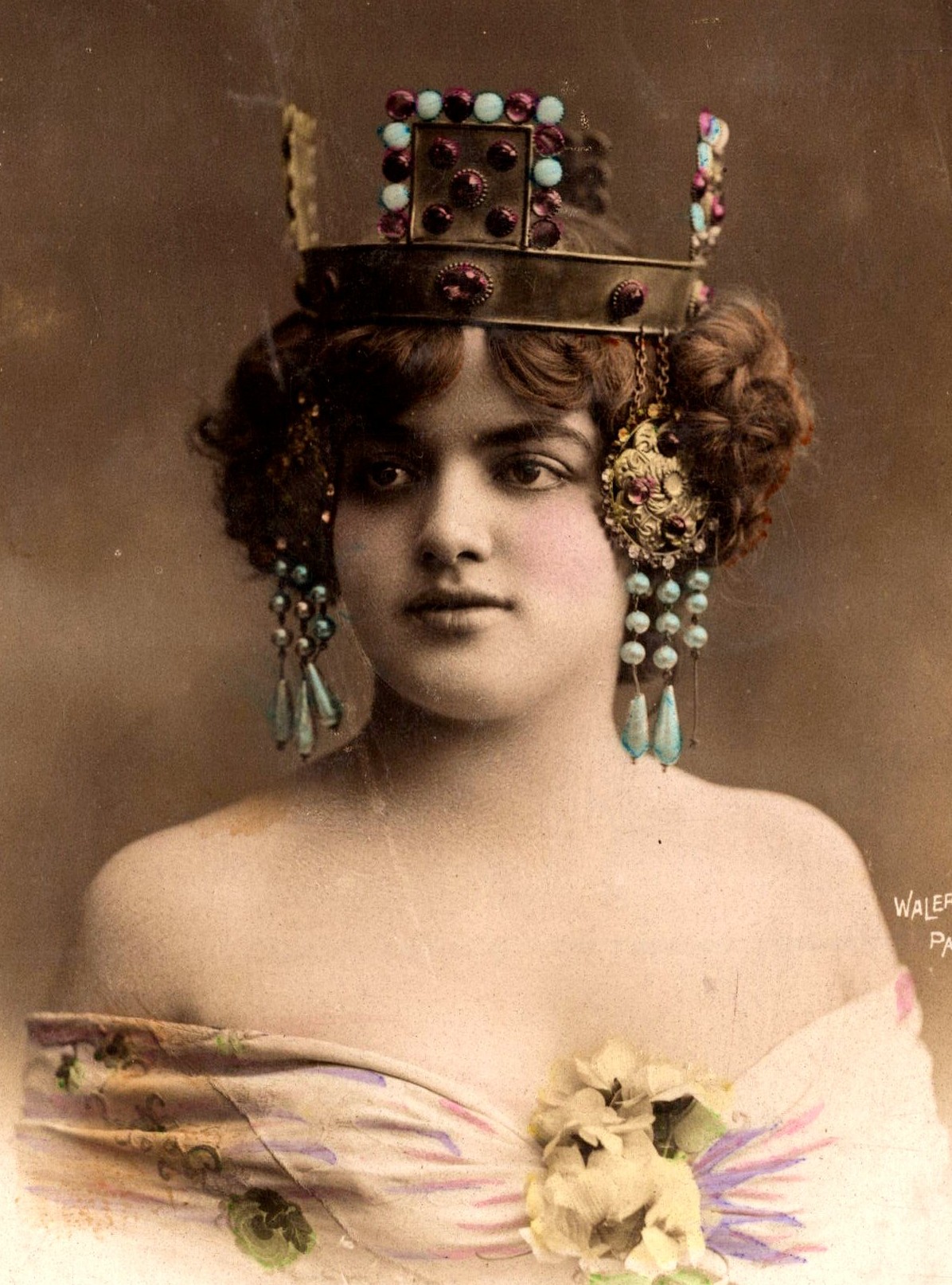
This vintage real photo postcard features performer, Miss Veglia. The title on the card indicates that she performed at the Folies Bergere, in Paris France. This actress may be Tina Veglia who was a silent film actress. One of the films that she is noted for is “The Three Musketeers” (1918).She is also listed as appearing in two Italian silent films. Interestingly, the word “Veglia”, translated from Italian to English, means “Vigil”. The portrait of Miss Veglia was hand tinted. She is wearing quite the interesting head piece. The ornate jeweled piece is crownlike and has a hodgepodge design. The message on this postcard, written in French, is captivating. A translation app translates the message as ” I suffer in silence and I do not complain. Not seeing me, you may think I’ve moved on, but despite that, I will love you always. I’m letting a little bit of hope shine through. Try to guess who is sending you this card…”. This is an extremely dramatic message. I wonder what eventually happened. Did the writer and recipient ever get together and live “happily ever after”? This photo portrait was taken by Walery at his Paris studio. He was a well known and talented celebrity photographer. The postcard was published by SIP as part of a series (no.5026). The postcard has a Belgian stamp and the care is addressed to someone in Courcelles-Pont-à-Celles, Belgium.(SOLD)
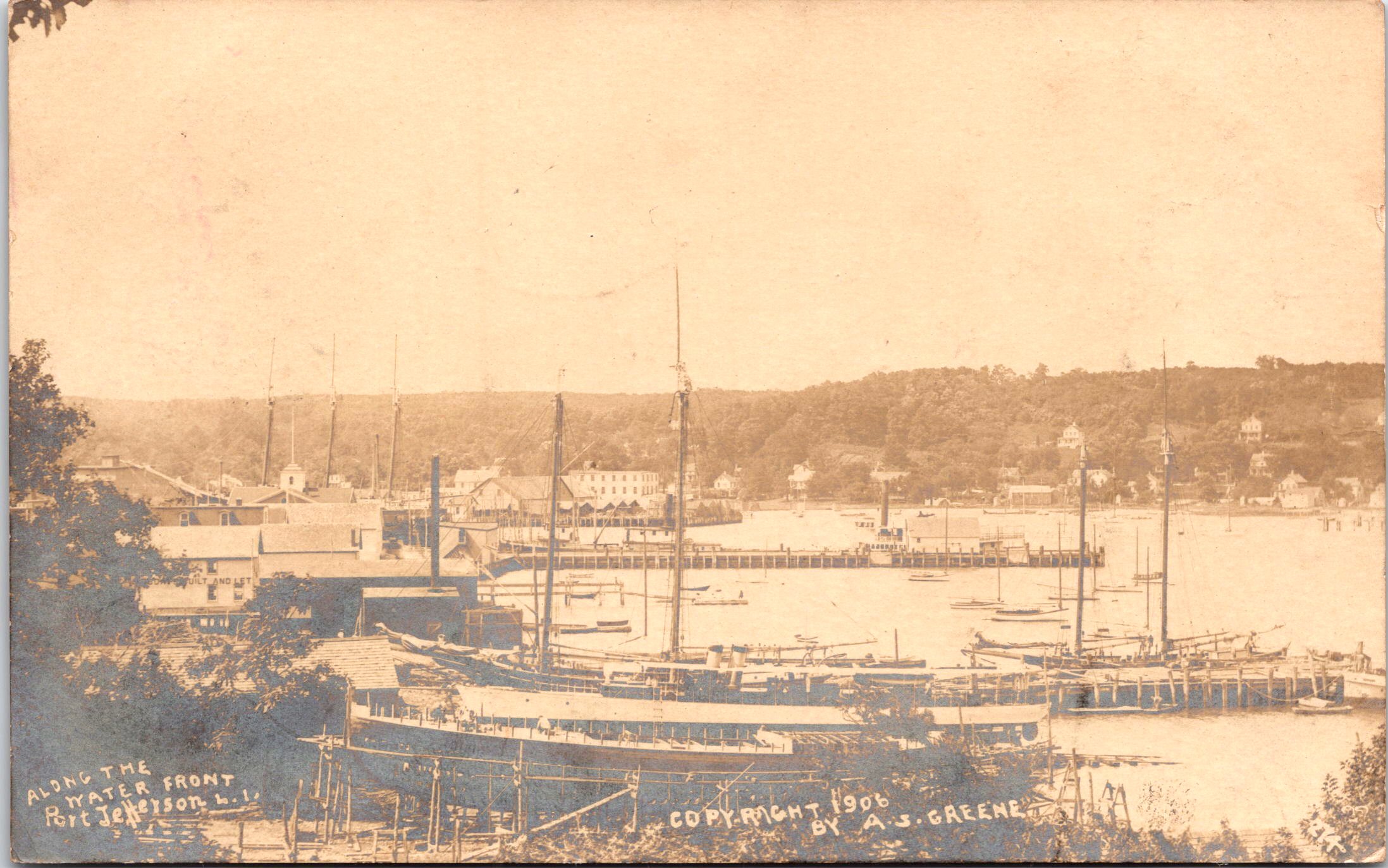
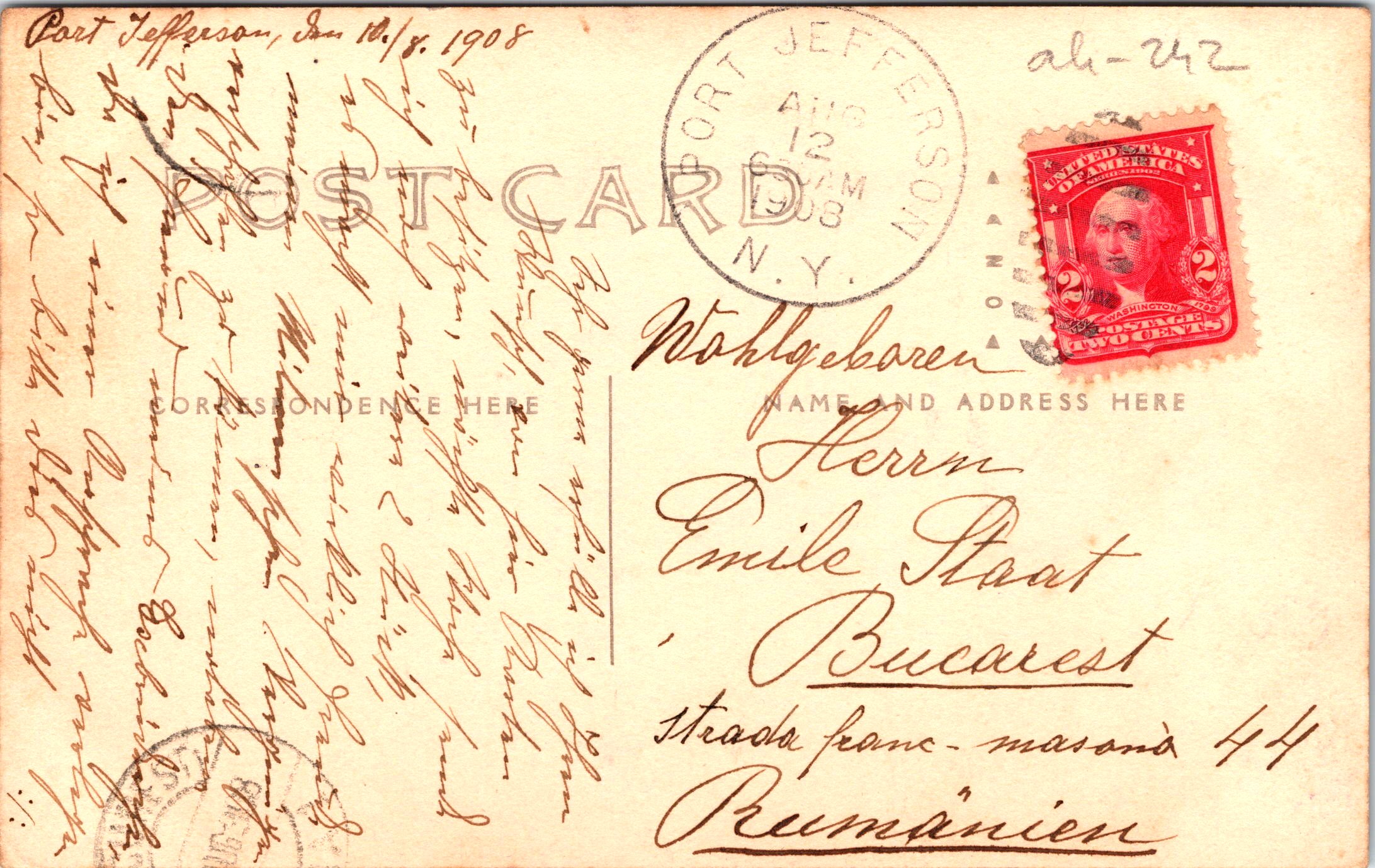
This vintage real photo postcard features a view along the waterfront of the town of Port Jefferson. The town is located in eastern Long Island, New York. The town is located on the Northshore of Long Island and was a port on Long Island Sound. The photo seen on this card, shows many sailing ships. Some of the ships are in dock while others are attached to moorings. The postcard also shows many of the buildings that comprise the town of Port Jefferson. Port Jefferson harbor is the home of “The Bridgeport (Connecticut) & Port Jefferson Ferry”. The firm was established in 1883 and the ferry was originally a steamboat. The ferry company transported passengers but also agricultural goods. One of the founders of the ferry company was entrepreneur and circus owner, P. T. Barnum. This postcard was published by A. J. Greene. The postcard was dated and postmarked in 1908. SOLD
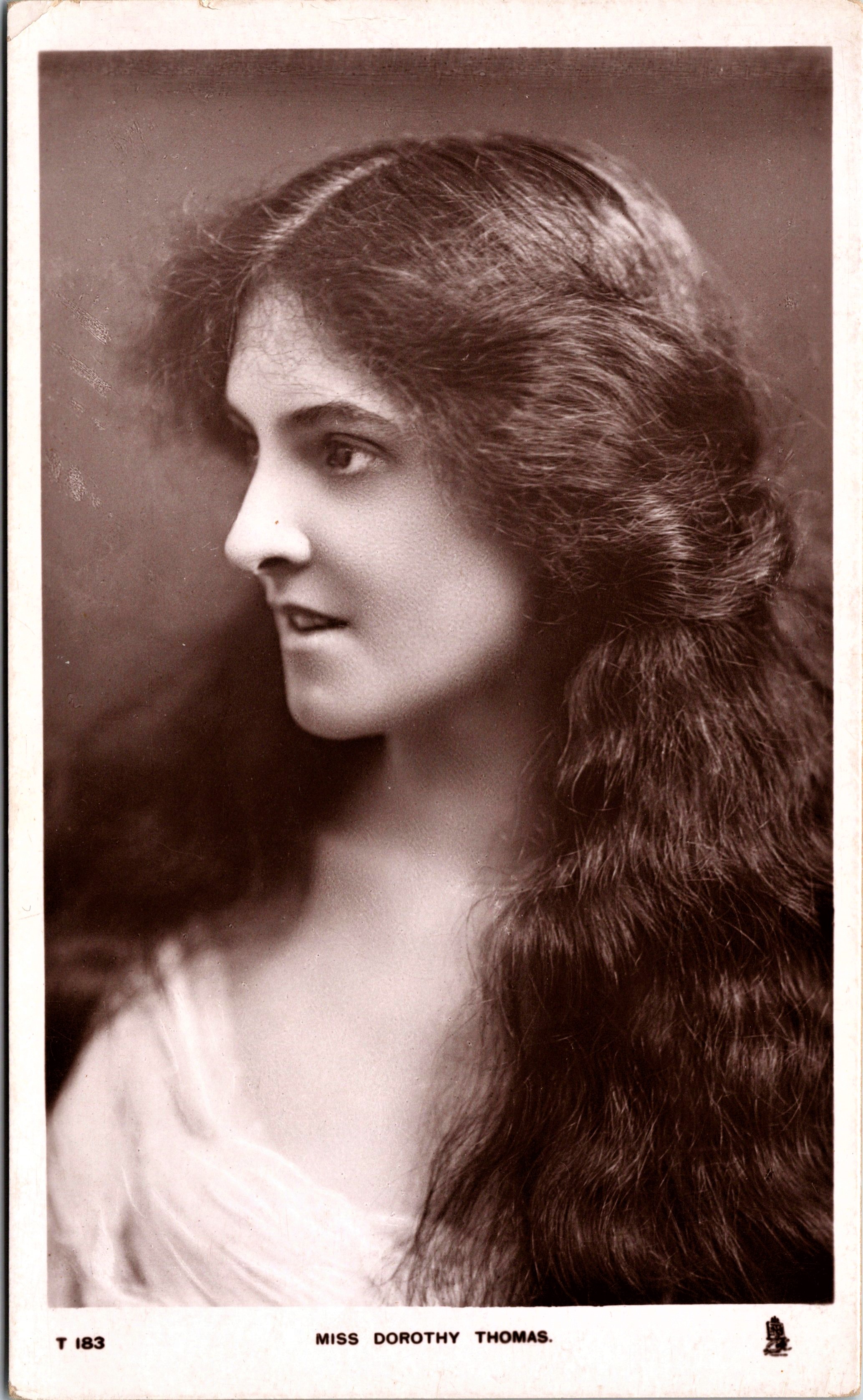
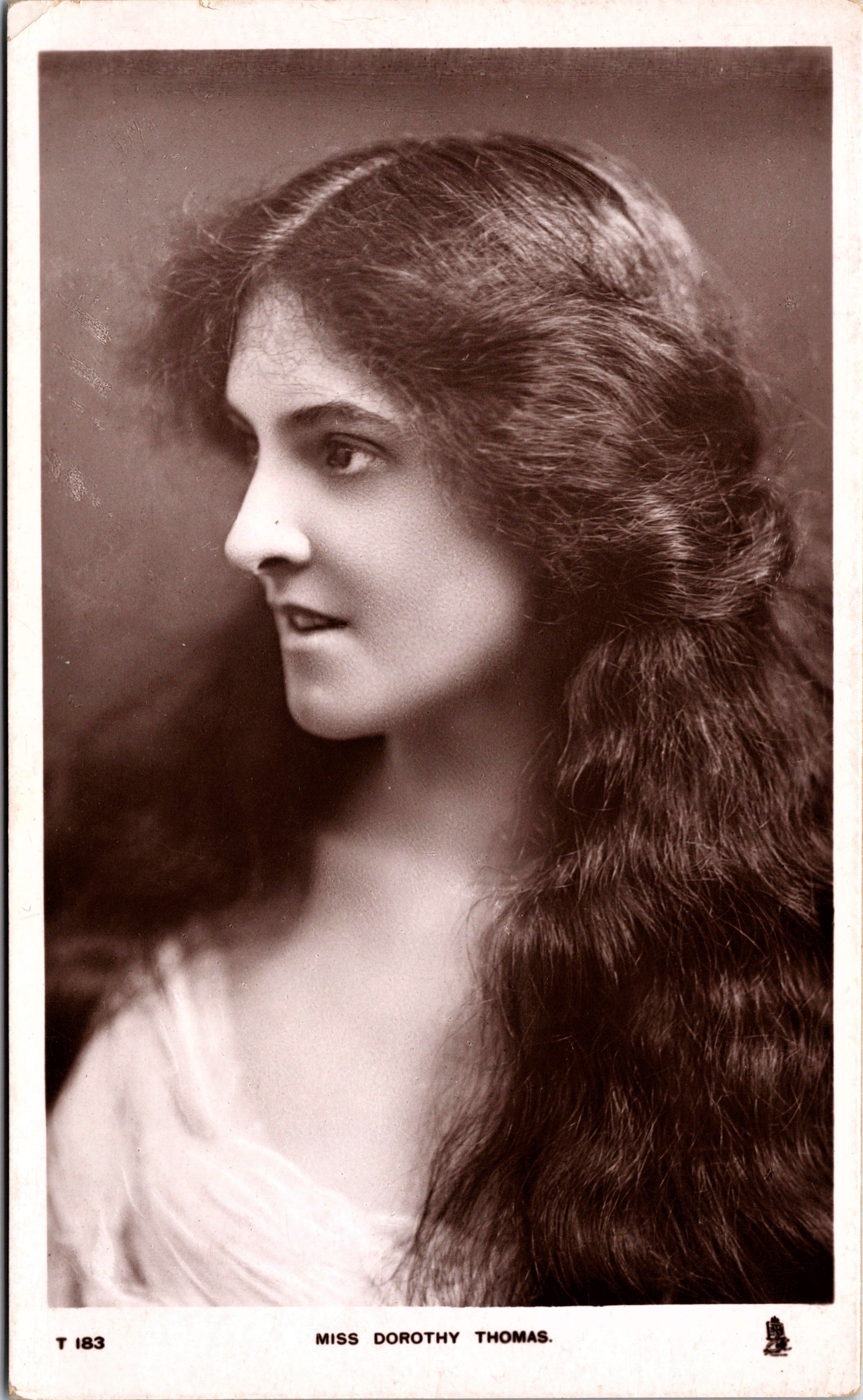
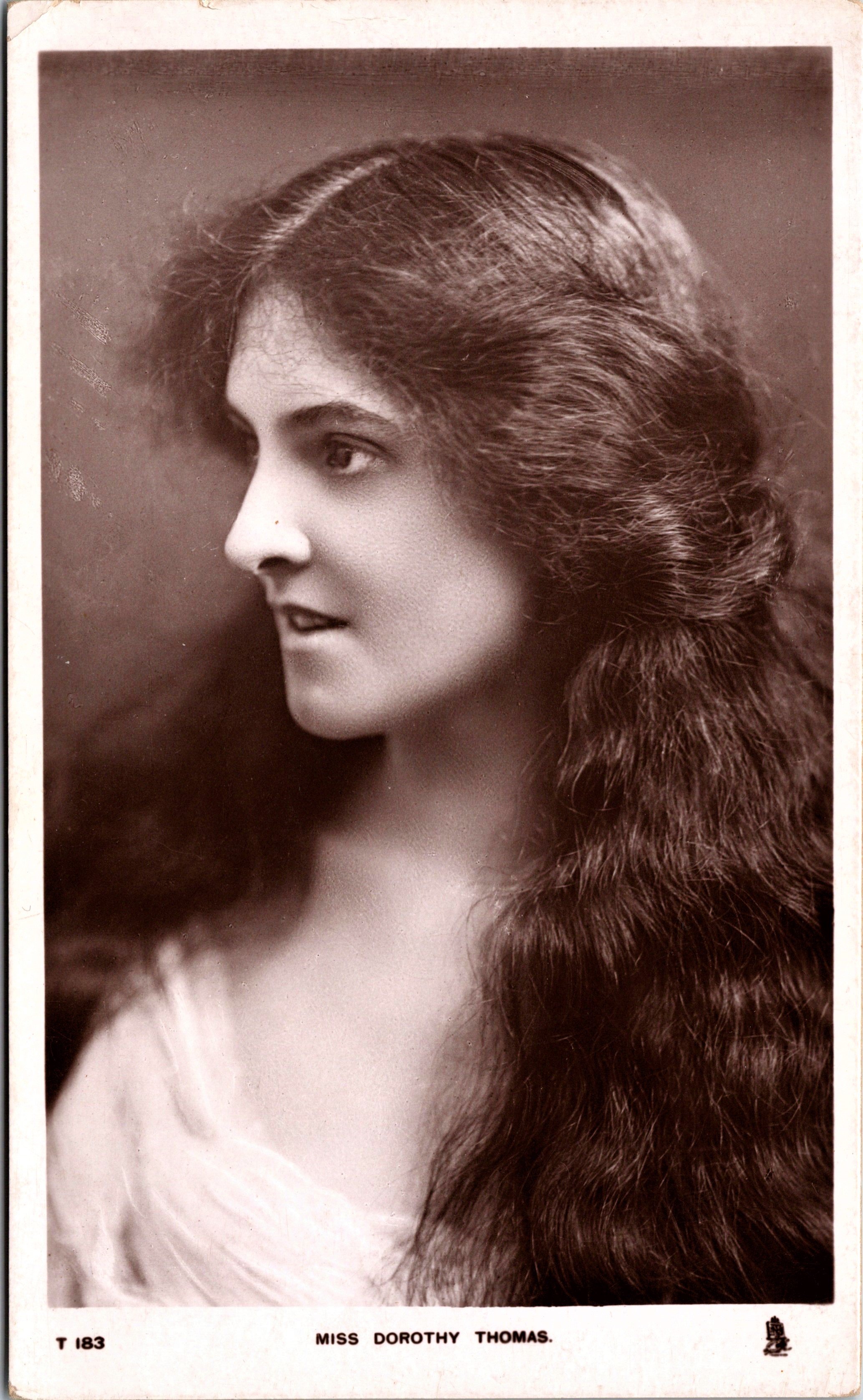
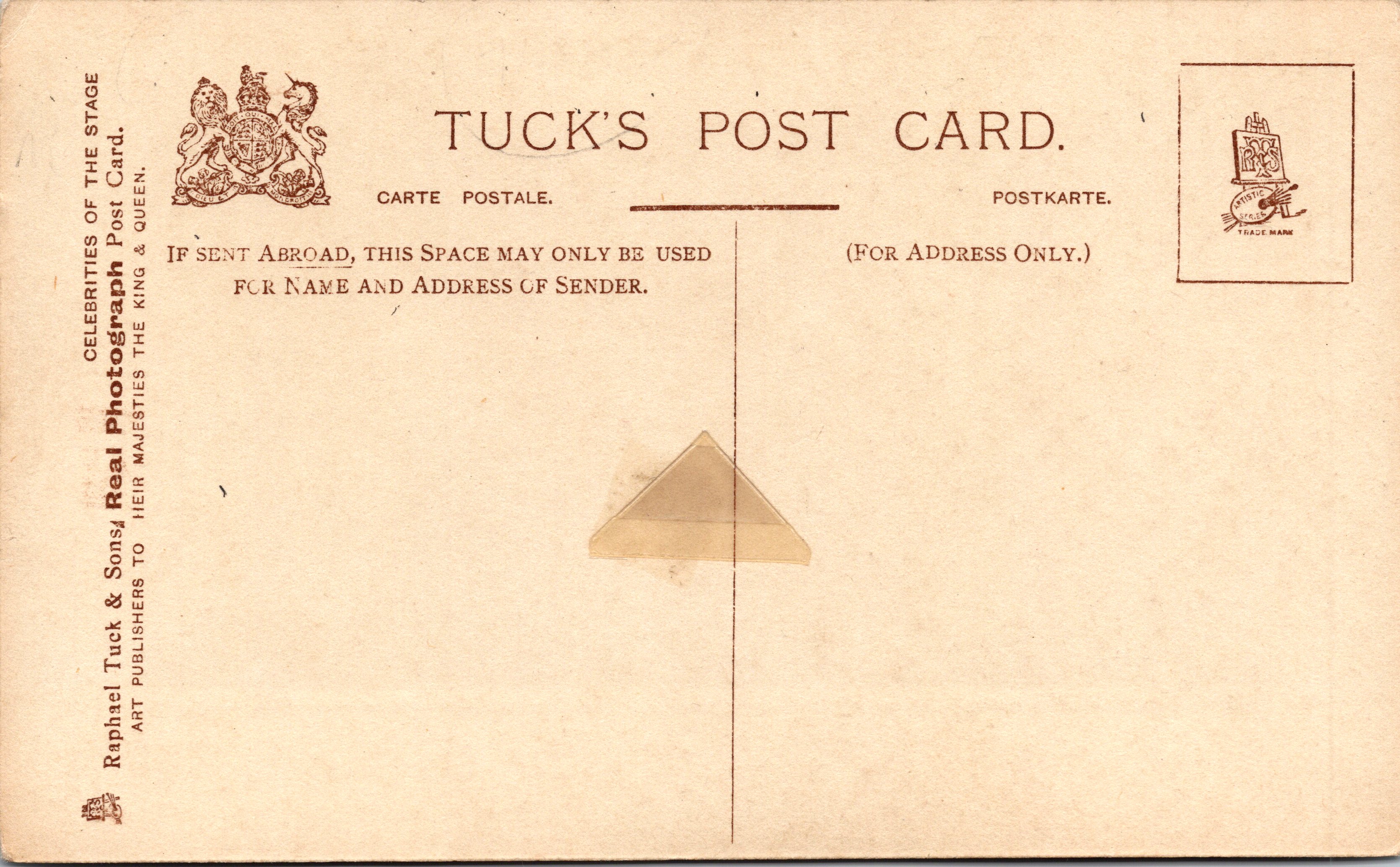
This vintage real photo postcard features stage actress, Dorothy Thomas (1882-?). She sat for five photographs in the collection of England’s National Portrait Gallery. She appeared in “The Prisoner of the Bastille” in 1909. Further research is needed to illuminate details of the pretty actress’s life. This postcard was published by Raphael Tuck & Sons as part of the “Celebrities of the Stage” series (T183).This portrait postcard is in overall good condition. Note the album hinge on the reverse of the card.
Buy this Vintage Real Photo Postcard (includes shipping within the US) #5321
To purchase this item, click on the Pay with PayPal button below
$14.40
Buy this Vintage Real Photo Postcard (includes International shipping outside the US) #5321
To purchase this item, click on the Pay with PayPal button below
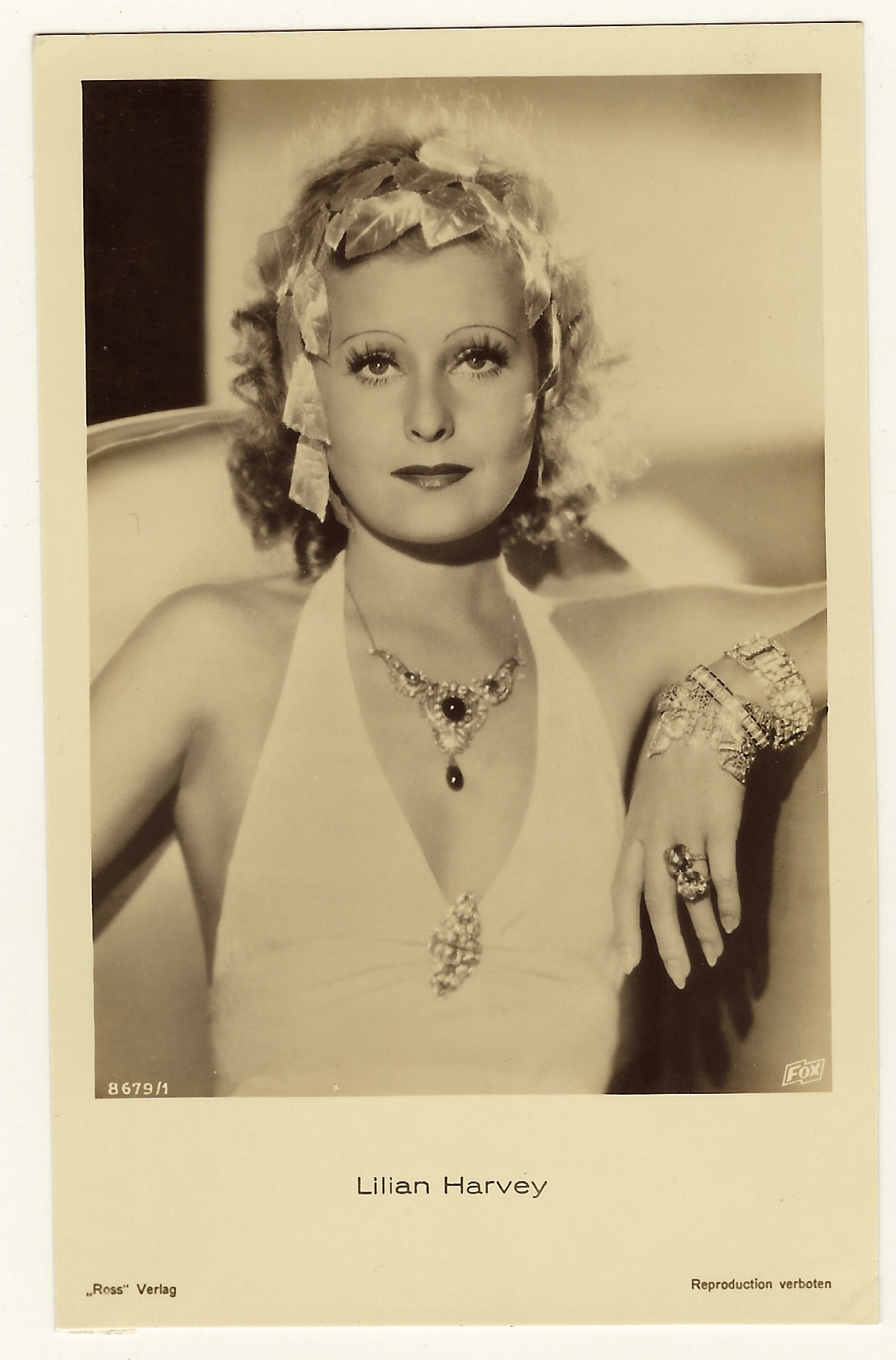
Real photo postcard #1 features Anglo-German actress and singer, Lillian Harvey (1906-1968). Her acting base was in Germany. Harvey was born in Hornsey, England to an English mother and a German father. During World War I her family was “trapped” in Magdeburg, Germany and Harvey was sent to live with her Swiss aunt. After the war she finished school in Berlin and than studied voice and dance at the Berlin State Opera. In 1924 she earned a role as a revue dancer in Vienna. This was followed by her first movie role which was in an Austrian film named “The Curse”. Thereafter, she starred in multiple silent films. Her first leading role was in “The Passion” (1925). Because of her voice training, Harvey was able to make the transition into “talkies”. She and actor Willy Fritsch became the “dream couple” of German movies. The pair acted together in eleven movies. In the 1930’s Harvey’s films appeared in both German and English and she became popular outside of Germany. She went to Hollywood and made four movies for the Fox Film Corporation (this postcard is from that period). In 1935, Harvey returned to Germany. She appeared in several more films and soon she was under the watchful eye of the Gestapo. Harvey had many Jewish friends in the film industry and she was supportive of them. By 1939, Miss Harvey was forced to leave Germany, leaving behind valuable real estate holdings. She went to France where, in 1940, she made two movies for director Jean Boyer. In 1943 she was stripped of her German citizenship because she had performed for French troops. When southern France was occupied by the Nazis in 1942, she emigrated to the United States. During the war she did some theatre acting and also worked as a homeside volunteer nurse. After the war, Harvey relocated to Paris. She went on a world tour as a singer and in 1949 made appearances in West Germany. She spent her retirement on the French Riviera (Antibes) where she had a souvenir shop and raised snails for escargot. Harvey was married one time. Her four year marriage to theater director Hartvig Valeur-Larsen ended in divorce. Eventually she settled down with her female partner Else Pitty Wirth (1907-2007). Interestingly, the two women are buried together in Antibes. The imdb gives Harvey 54 acting credits between 1925 and 1940. Interestingly, Lillian Harvey’s name is mentioned in Quentin Tarantino’s film “Inglorious Bastards” (2009). One of her songs is played on a phonograph and in addition one of the characters in the film mentions liking Harvey’s performance in a film and Joseph Goebbels becomes angry and insists her name never be mentioned in his presence. Click on the link below to hear the Lillian Harvey/Willy Fritsch duet used in the Tarantino movie. The 1936 song is titled “Ich Wollt Ich War Ein Huhn” (I Wish I Was A Chicken). Now would be a good time to discuss this postcard portrait of Miss Harvey. She is looking quite decorated in this photograph. She is wearing a garland of leaves in her hair, a very ornate necklace, a number of large bracelets, two giant rings, and a jeweled clasp on her dress near her cleavage. Note her very notable eye lashes. She is wearing a somewhat provocative dress and it is clear that the aim of the photographer is to emphasize Miss Harvey’s sexiness. The photographer and Miss Harvey succeeded in accomplishing this goal. The postcard was published by the German firm Ross Verlag and was part of a series (no. 8679/1). The postcard credits Fox films. SOLD
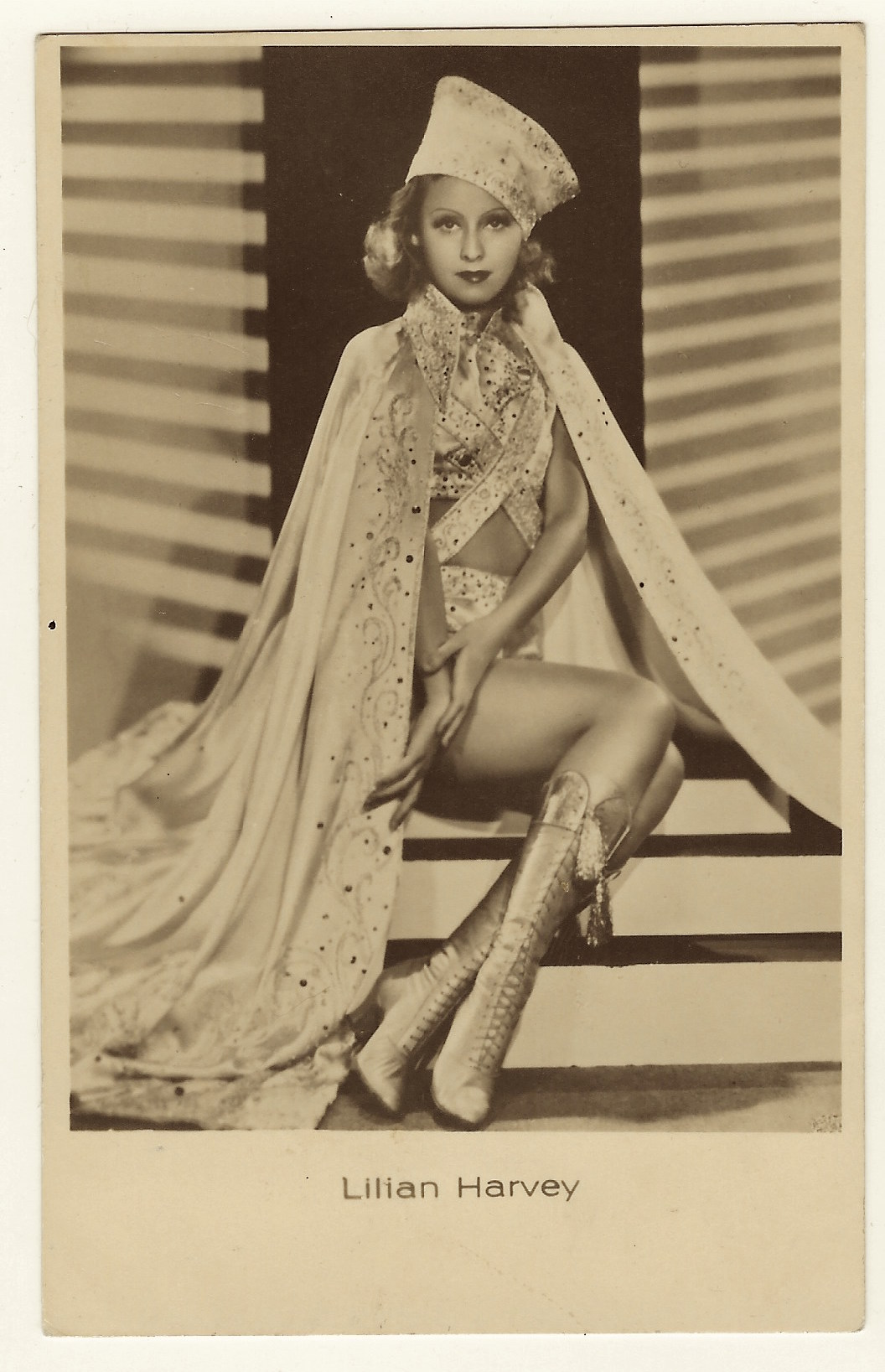
The second postcard (postcard 2) features Miss Harvey in a risque costume. She is showing a “lot of leg” which is quite provocative for her time. It is likely that this image captures her in one of her film roles. The postcard was published by Argenta, which was located in Munich, Bavaria. SOLD
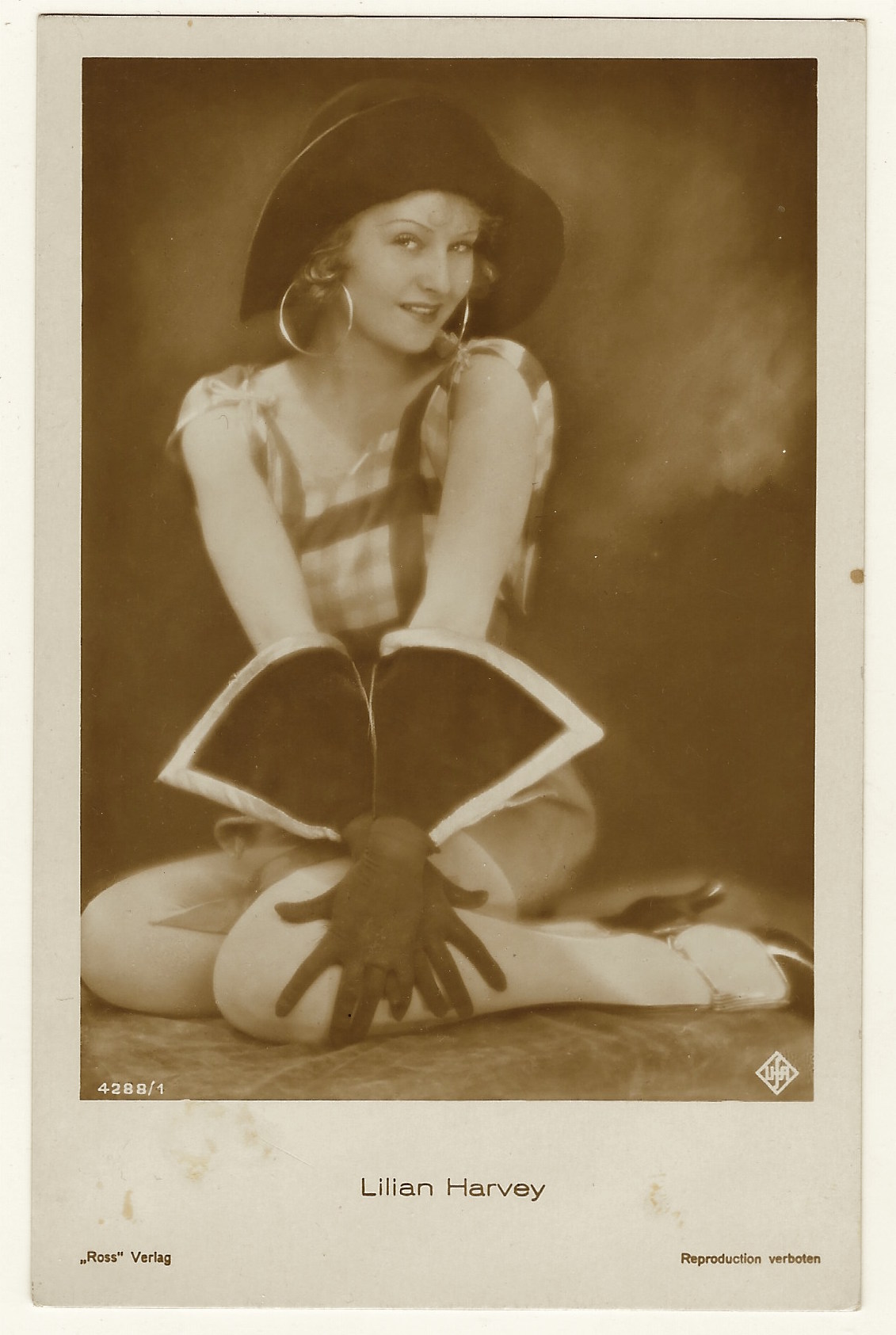
The third postcard (postcard 3) presents Miss Harvey is a sexy pose. Note her dark gloves and large hoop earrings. The postcard was published by Ross Verlag and is part of a series (no. 4288/1). Note the advertising logo for the German film company UFA, located on the bottom right hand corner of the image. (SOLD)
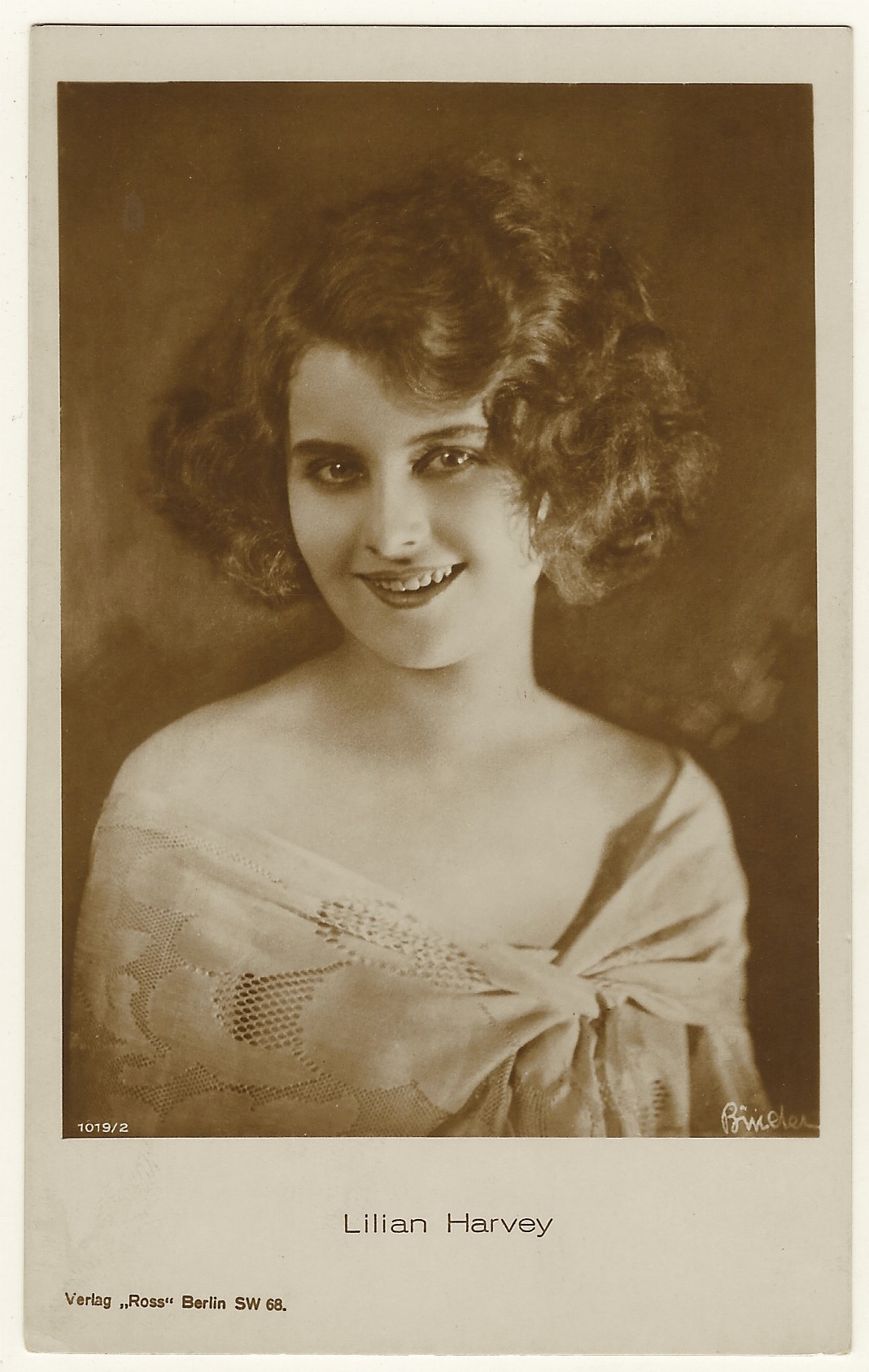
The fourth postcard (postcard 4) showcases Lillian Harvey’s beautiful smile. Miss Harvey’s not quite plunging neckline was clearly aimed to add a bit of a risque element to the photograph. This postcard was published by Ross Verlag (Berlin) and is part of a series (no. 1019/2). This portrait was taken by the talented photographer, Alex Binder. The photographer of this terrific image was Alexander Binder (1888-1929). He had the largest photo studio in Europe during the late 1920’s and the 1930’s. Many of his entertainment star portraits appear on Ross Verlag postards. It is thought that Binder was of Swiss origin. He was of the Jewish faith. He studied engineering but did not complete his studies. From 1908 to 1910 he studied photography at a school in Munich, Germany. After the completion of his photography studies, he went to Berlin and in 1913 opened his first photography studio. Before long, he became one of the premier photographers in Berlin. He primarily focussed on fashion and celebrity photography. Since Berlin was the capital of the European film industry, Binder photographed all the stars of the European film industry including, Lilian Harvey, Conrad Veidt, and Lya De Putti. Many of his images were used in popular film portrait postcards. His photographs could be seen in postcards published by Ross Verlag and Photochemie. Binder died in 1929 but new photo cards bearing his signature continued to be published until 1937.
Buy this original Real Photo Postcard (includes shipping within the US) #2490
To purchase this item, click on the Pay with PayPal button below
$27.50
Buy this original Real Photo Postcard (includes International shipping outside the US) #2490
To purchase this item, click on the Pay with PayPal button below
$35.50
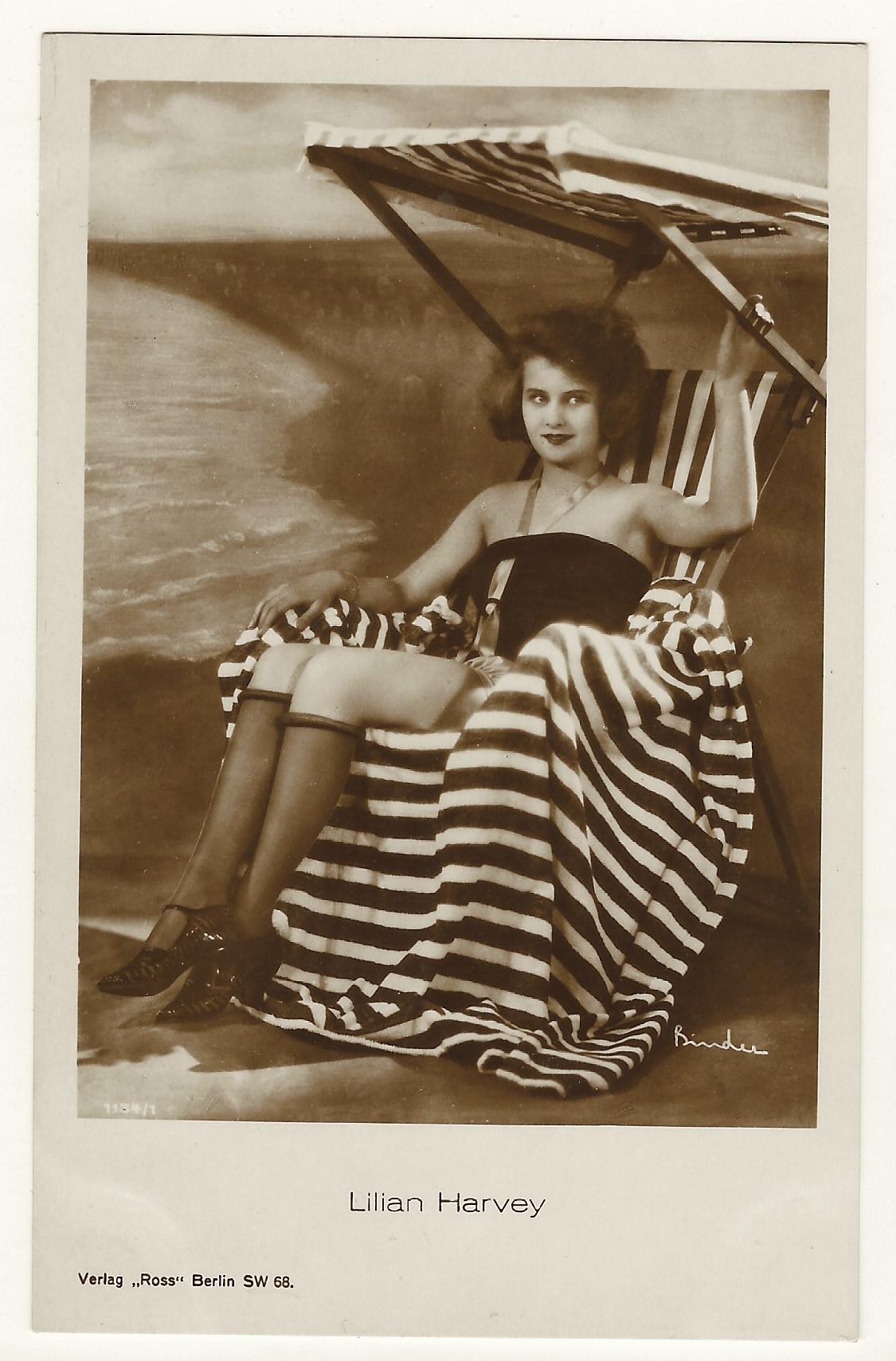
The fifth real photo postcard (postcard 5) features Miss Harvey wearing a bathing suit and sitting in a beach chair. Her shoes and stockings don’t seem very appropriate for the beach so it is a good thing that she is actually in a photographer’s studio and sitting in front of a beach backdrop. Obviously, the mission of the photographer was not to convince viewers that Miss Harvey was at the beach. The intent of photographer Alexander Binder was to present Lilian Harvey in a provocative and sexy pose. Mr. Binder certainly succeeded in accomplishing his goal. This photo postcard was published by Ross Verlag. (SOLD)
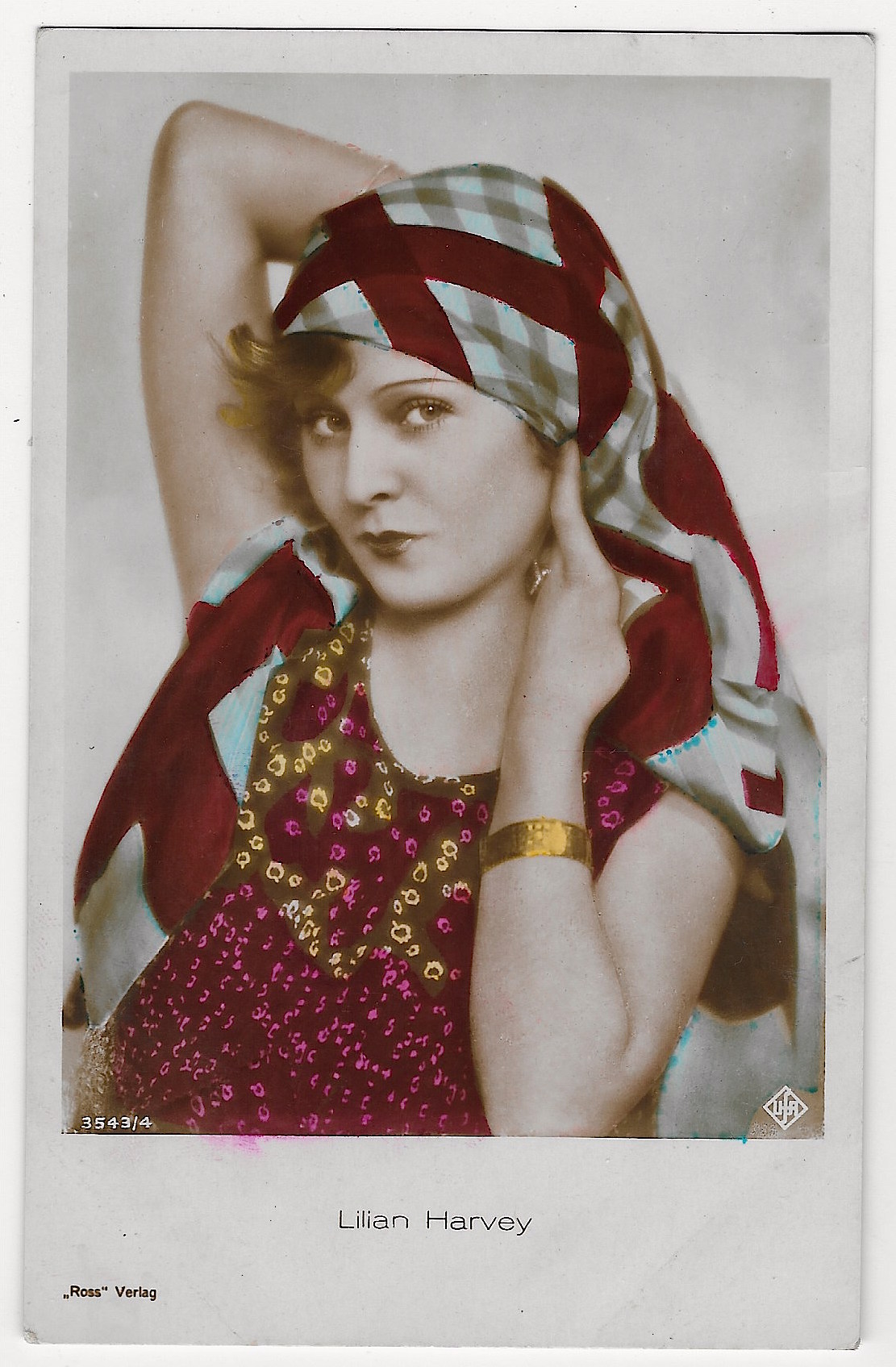
Postcard 6 featuring Miss Harvey, is published by Ross Verlag. The postcard is part of a series (no. 3543/4). She looks fantastic wearing her print dress and plaid long scarf. I’m not convinced the dress and scarf are matching, but her beauty overcomes any mismatch. As in Postcard #3, the logo for the German film company UFA, can be seen on the lower right hand corner of the image. This photo postcard is from the 1930’s and is in very good condition (see scans).
Buy this original Real Photo Postcard (includes shipping within the US) #2488
To purchase this item, click on the Pay with PayPal button below
$35.50
Buy this original Real Photo Postcard (includes International shipping outside the US) #2488
To purchase this item, click on the Pay with PayPal button below #2488
$43.50
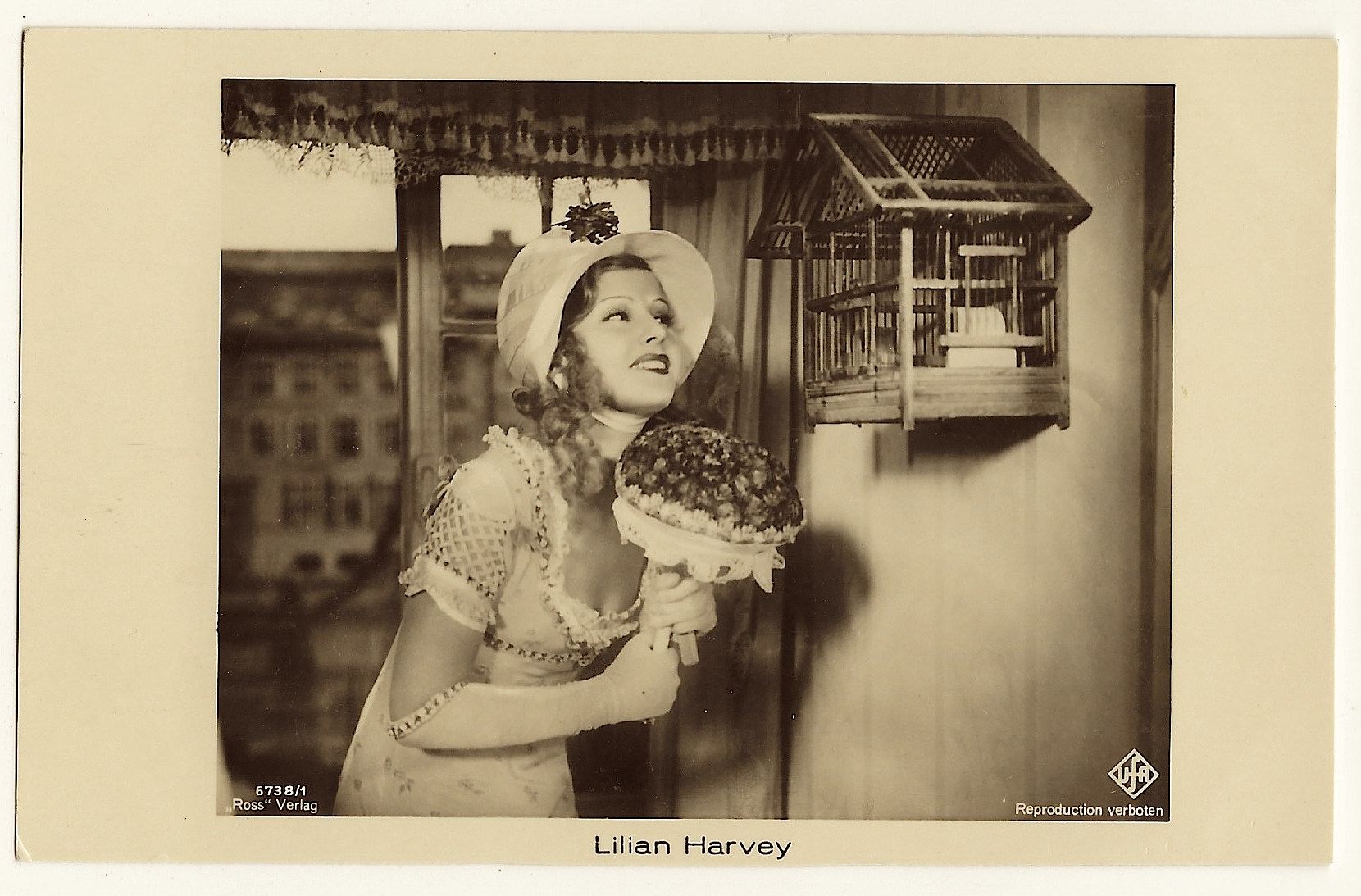
Postcard #7 features Lillian Harvey leaning forward as she looks into a hanging bird cage. The photographer likely chose this pose to inject some sexuality into the image. The pose reveals a small amount of the actress’s cleavage. She is wearing a relatively low-cut dress for this time period. Print on the reverse of the postcard reveals that the photograph of Miss Harvey comes from the film “Congress Dances” (1931). Her costar in the film was Willy Fritsch. The postcard was published by Ross Verlag and is part of a series (no. 6738/1). On the right hand bottom corner of the postcard is the logo for “UFA”, a German film company. This postcard is in excellent condition.
Buy this original Real Photo Postcard (includes shipping within the US) #2520
To purchase this item, click on the Pay with PayPal button below
$28.00
Buy this original Real Photo Postcard (includes International shipping outside the US) #2520
To purchase this item, click on the Pay with PayPal button below
$36.00
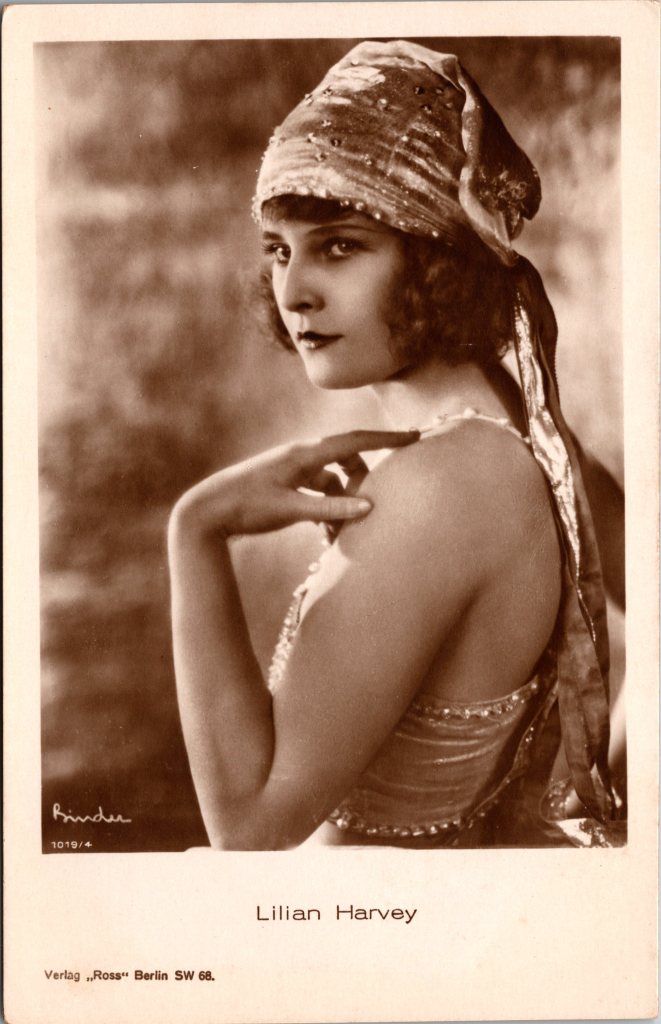
Postcard 8 was photographed by Alexander Binder and published by Ross Verlag as part of a series (no.1019/4). Ballerini & Fratini (Florence, Italy) are credited on the reverse of this postcard. (SOLD)
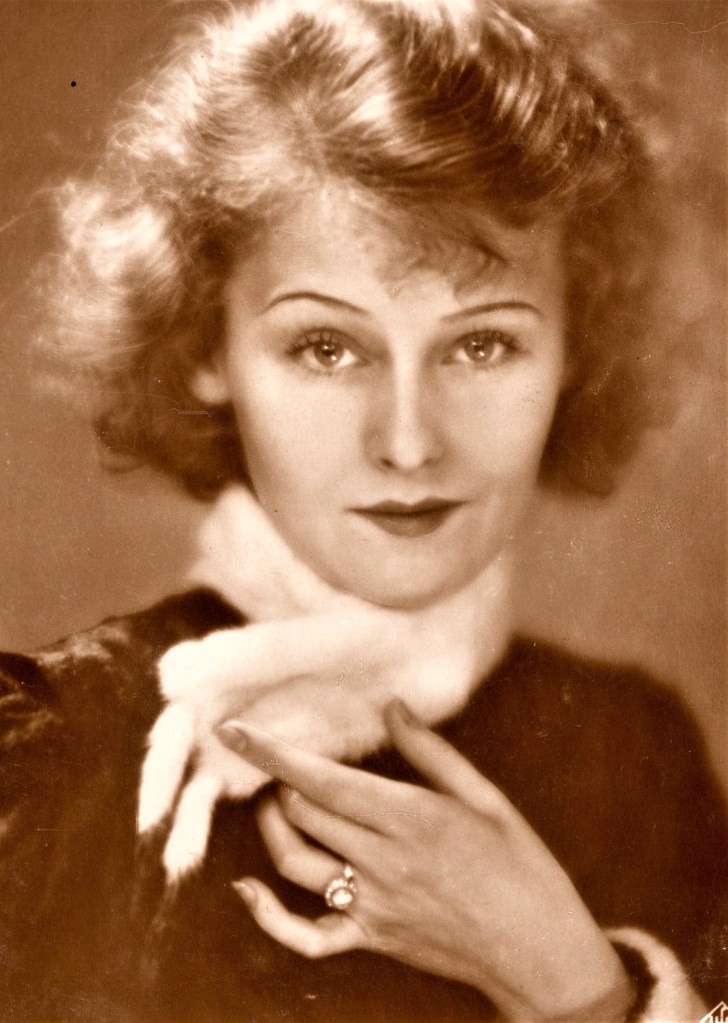
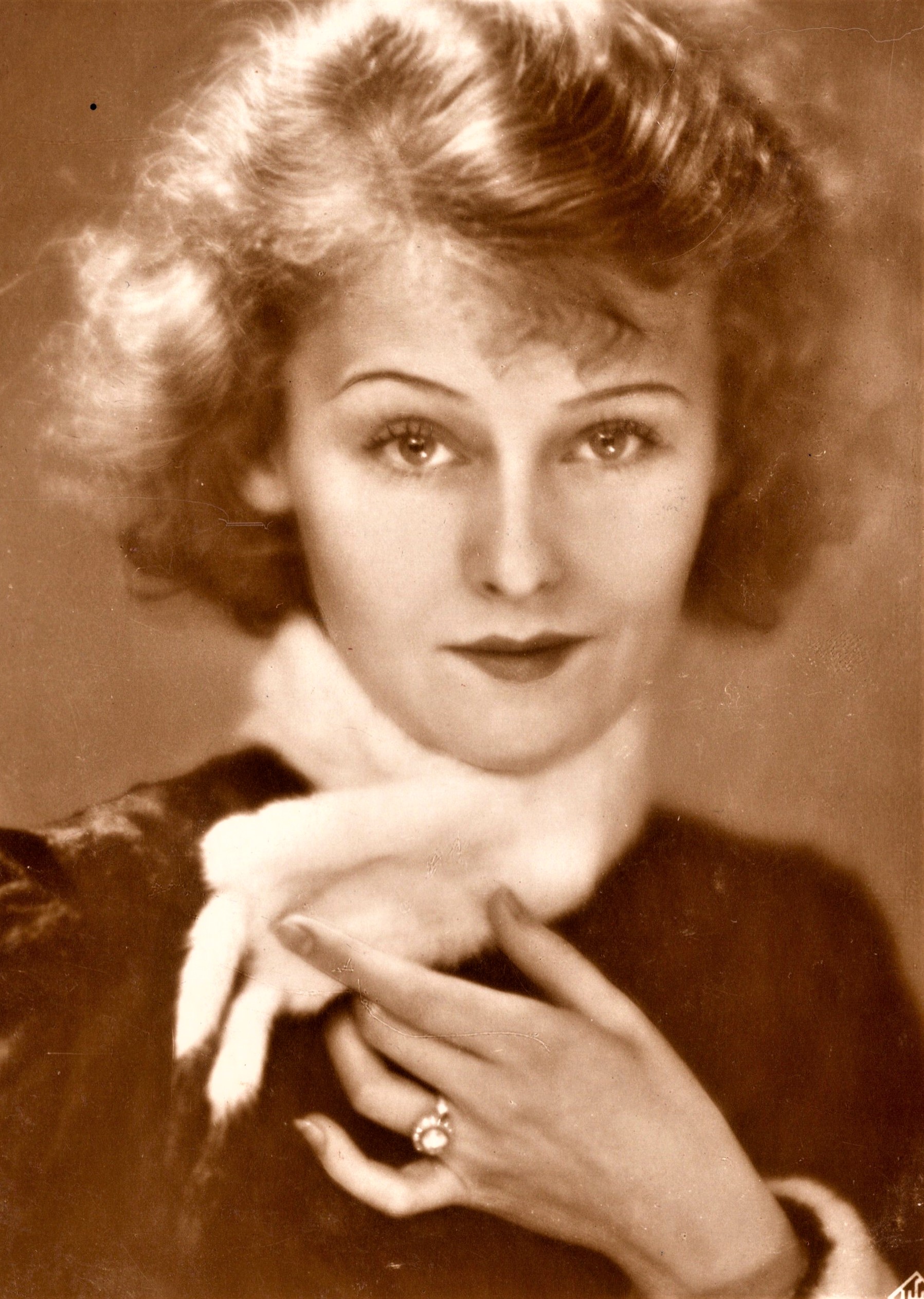
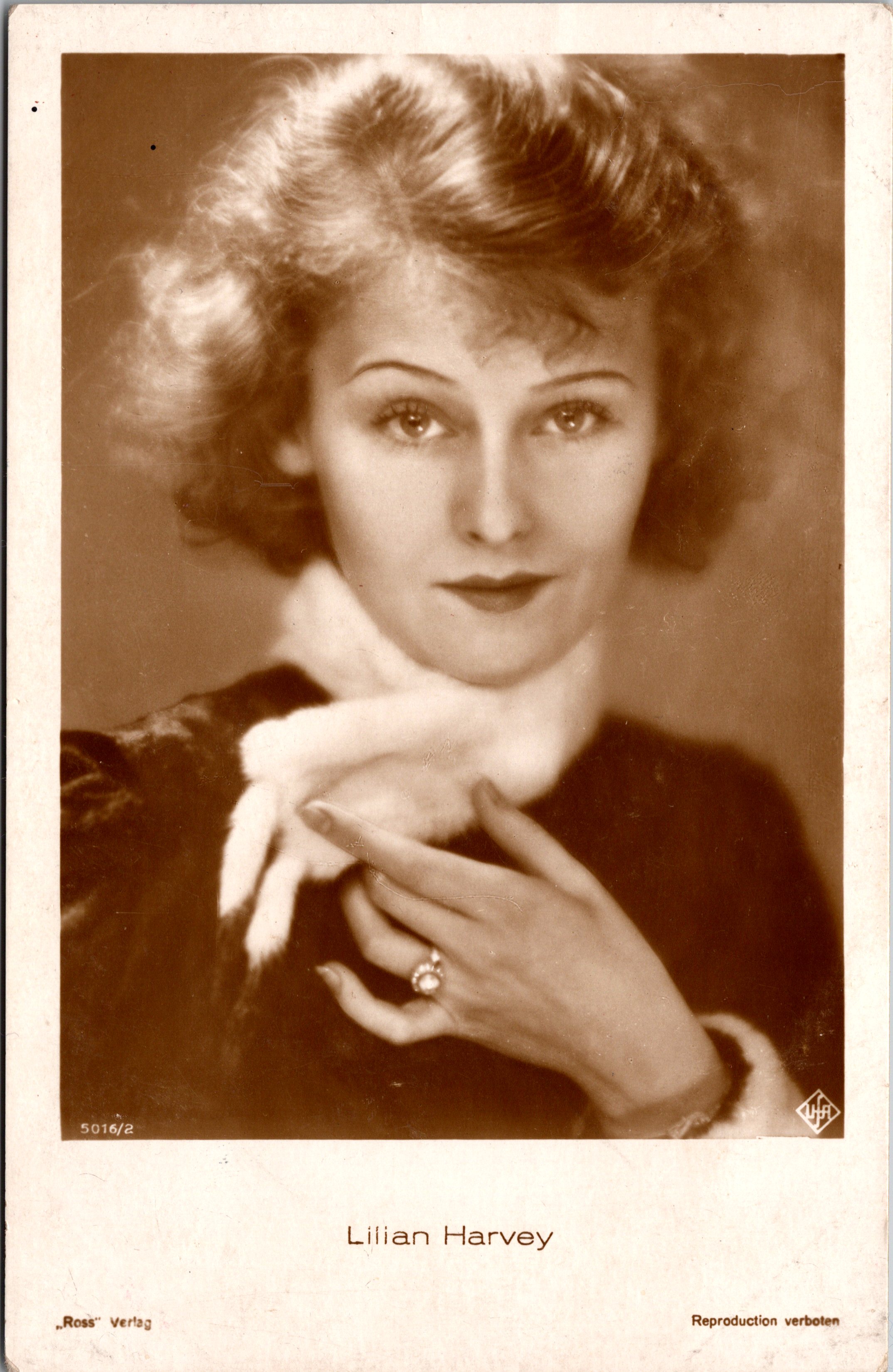
Postcard 9 offers a pretty portrait of Lilian Harvey that was published by Ross Verlag as part of a series (no.5016/2). Note the logo for UFA, the German film company, in the bottom right hand corner of the image. This vintage postcard is in very good conditon (see scans).
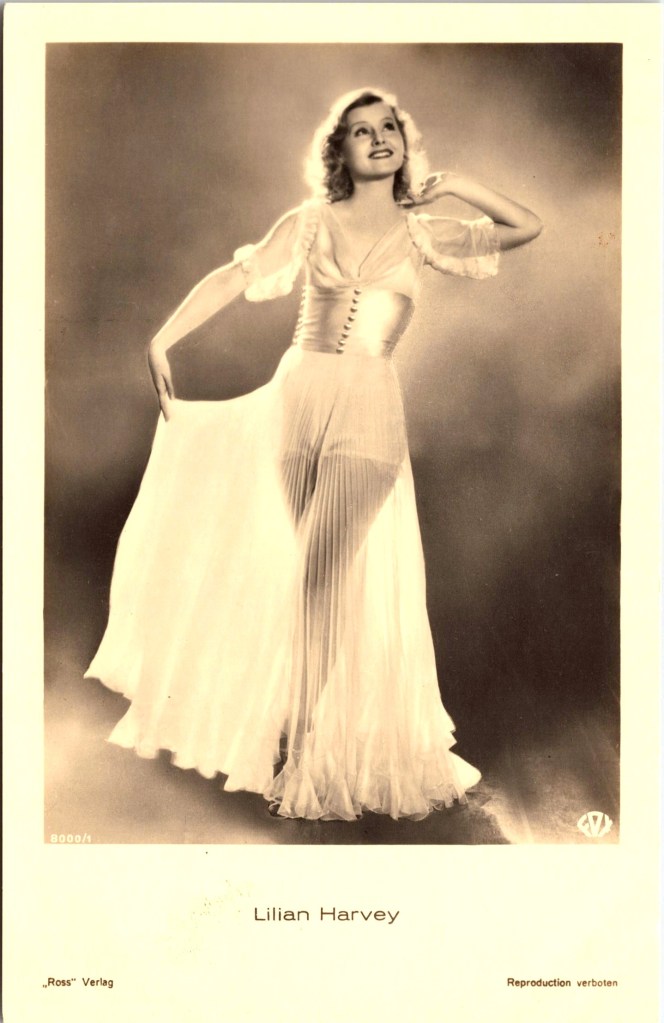
Postcard 10 is meant to be risque. Harvey is wearing a provocative dress and it is clear that the aim of the photographer is to emphasize Miss Harvey’s sexiness. The photographer and Miss Harvey succeeded in accomplishing this goal. This card has the logo of Fox Films. She made four films for the company beginning 1931. Lillian Harvey was a popular postcard model and there are many postcard images of her in existence. However, this particular card is very uncommon and one of the more suggestive photographs of Miss Harvey published on a postcard. This postcard portrait was published by Ross Verlag (Germany) as part of a series (No.8000/1). SOLD
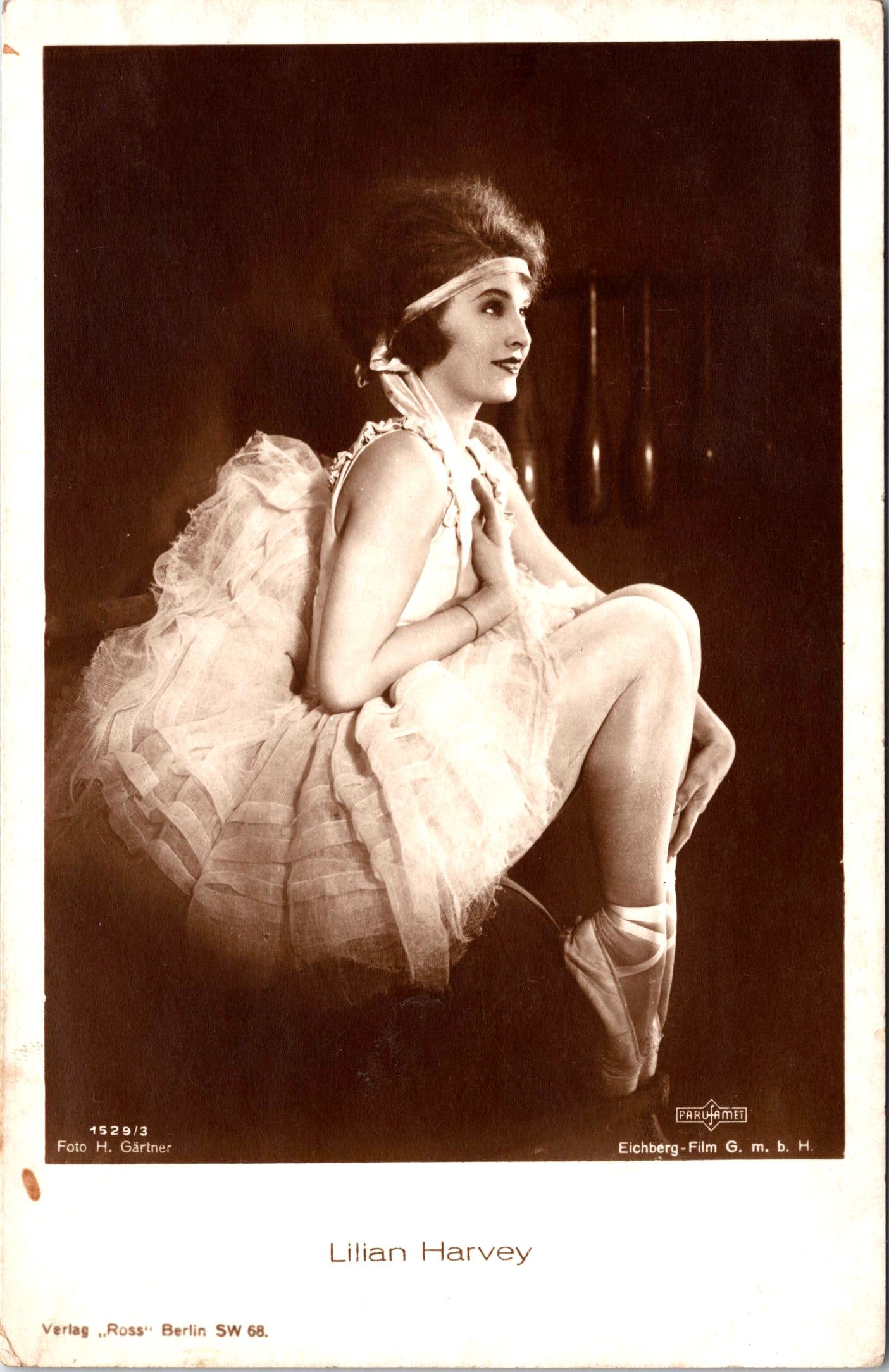
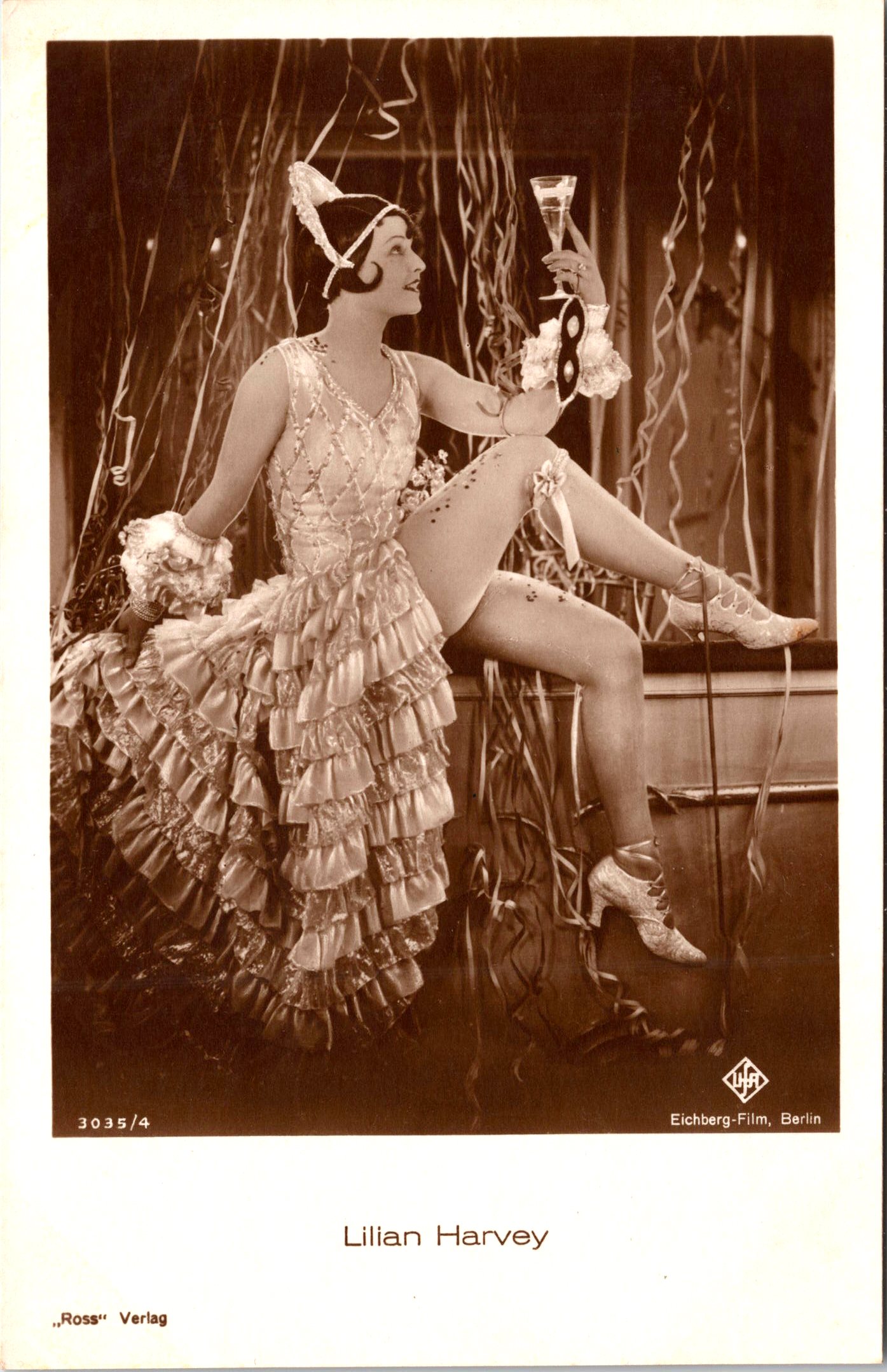
Postcard 11 was published by the German firm Ross Verlag and was part of a series (no. 1393/4). Eichberg Films is credited on the bottom right hand corner of the image. The company was located in Germany. Richard Eichberg was a moderately successful actor who became a director/producr in 1915. (SOLD)
Postcard 12 was published by the German firm Ross Verlag and was part of a series (no. 8679/1). She is posed in a bit of a provocative pose and is smoking a pipe. This postcard portrait was photographed by H. Gartner and published by Ross Verlag as part of a series (no.1529/1). Eichberg Films is credited on this postcard. Richard Eichberg (1888-1952) began his career as an actor but became a succssful film director and producer in the German film industry. He directed 87 films and produced 77 films. (SOLD)
Buy this Real Photo Vintage Postcard (includes shipping within the US) #5112
To purchase this item, click on the Pay with PayPal button below
$15.79
Buy this Vintage Real Photo Postcard (includes International shipping outside the US) #5112
To purchase this item, click on the Pay with PayPal button below
$25.04
POSTCARD 13
POSTCARD 14 (SOLD)
POSTCARD 15 (SOLD)
POSTCARD 16(SOLD)
Postcard 13 was published by Ross Verlag and features Miss Harvey posed in a provocative manner. This postcard has a French stamp and was postmarked in 1929 in Paris, France.(SOLD)
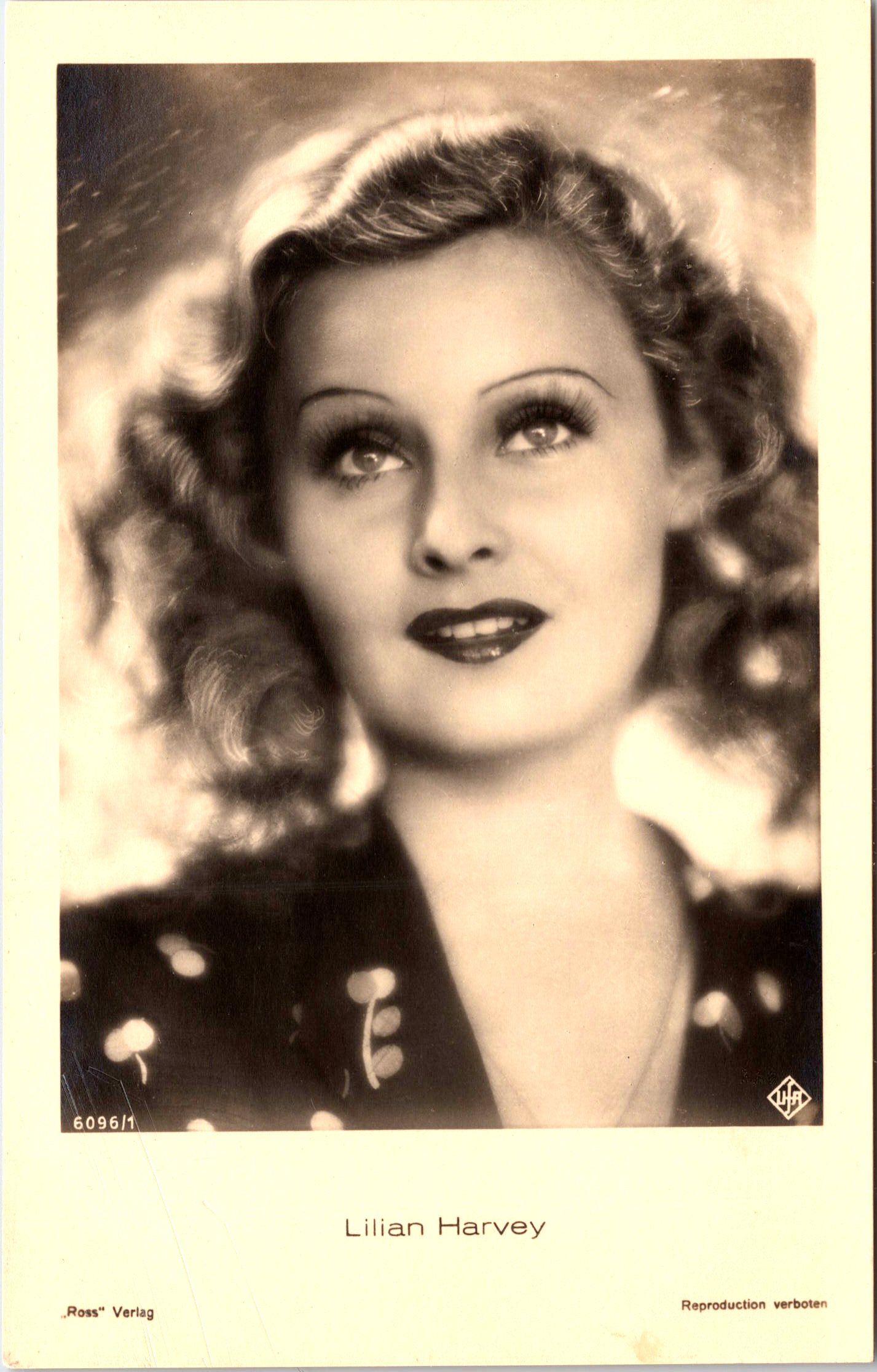
Postcard 14 was published by the German firm Ross Verlag and was part of a series (no. 6096/1). UFA Films is credited on the bottom right hand corner of the image. The company was located in Germany. SOLD
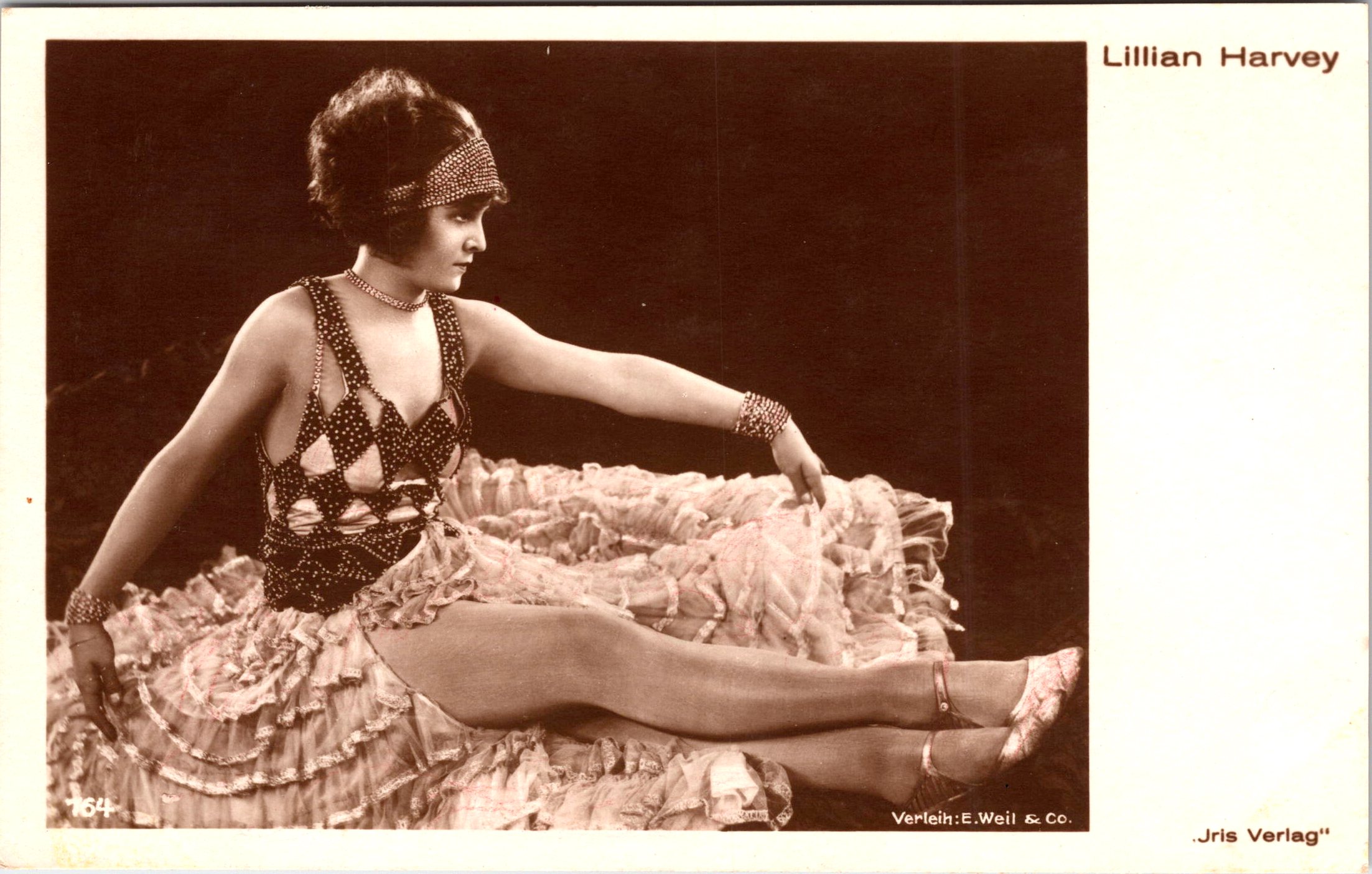
Postcard 15 shows Lillian Harvey wearing a ballerina costume and it is clear that the aim of the photographer is to emphasize Miss Harvey’s sexuality. The photographer and Miss Harvey succeeded in accomplishing this goal. The postcard was published by the Austrian firm Iris Verlag and was part of a series (no.764). Iris Verlag in Vienna was the most important Austrian publisher of film star postcards. The photographer of this portrait was E. Weil & Co. SOLD
Postcard 16 was published by Ross Verlag. It was part of a series (no.2033/1). The postcard has the logo of “Fanamet” in the lower right hand corner of the image. “Fanamet Films” was an Austrian film distribution company. The logo for “First National Pictures” is located on the bottom left hand corner of the image. First National Pictures was an American motion picture production and distribution company. The company was founded in 1917 as a theater chain. It then began distributing movies and in 1924 it began producing films. In 1929 the company was absorbed by Warner Brothers. (SOLD)





 POSTCARD 8 (SOLD)
 POSTCARD 9
 POSTCARD 10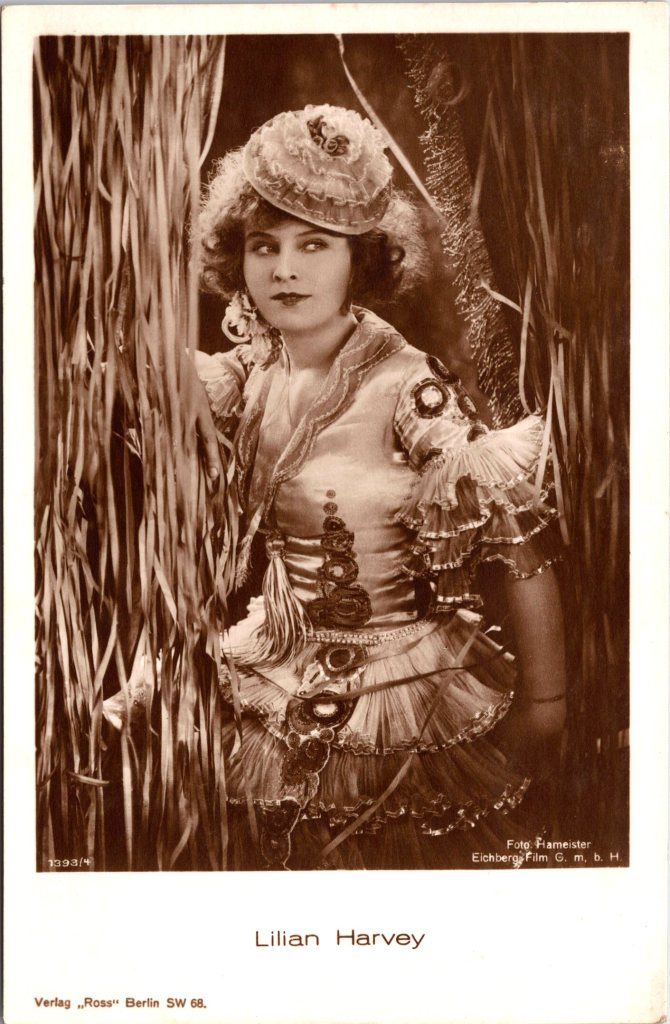



 THE CABINET CARD GALLERY