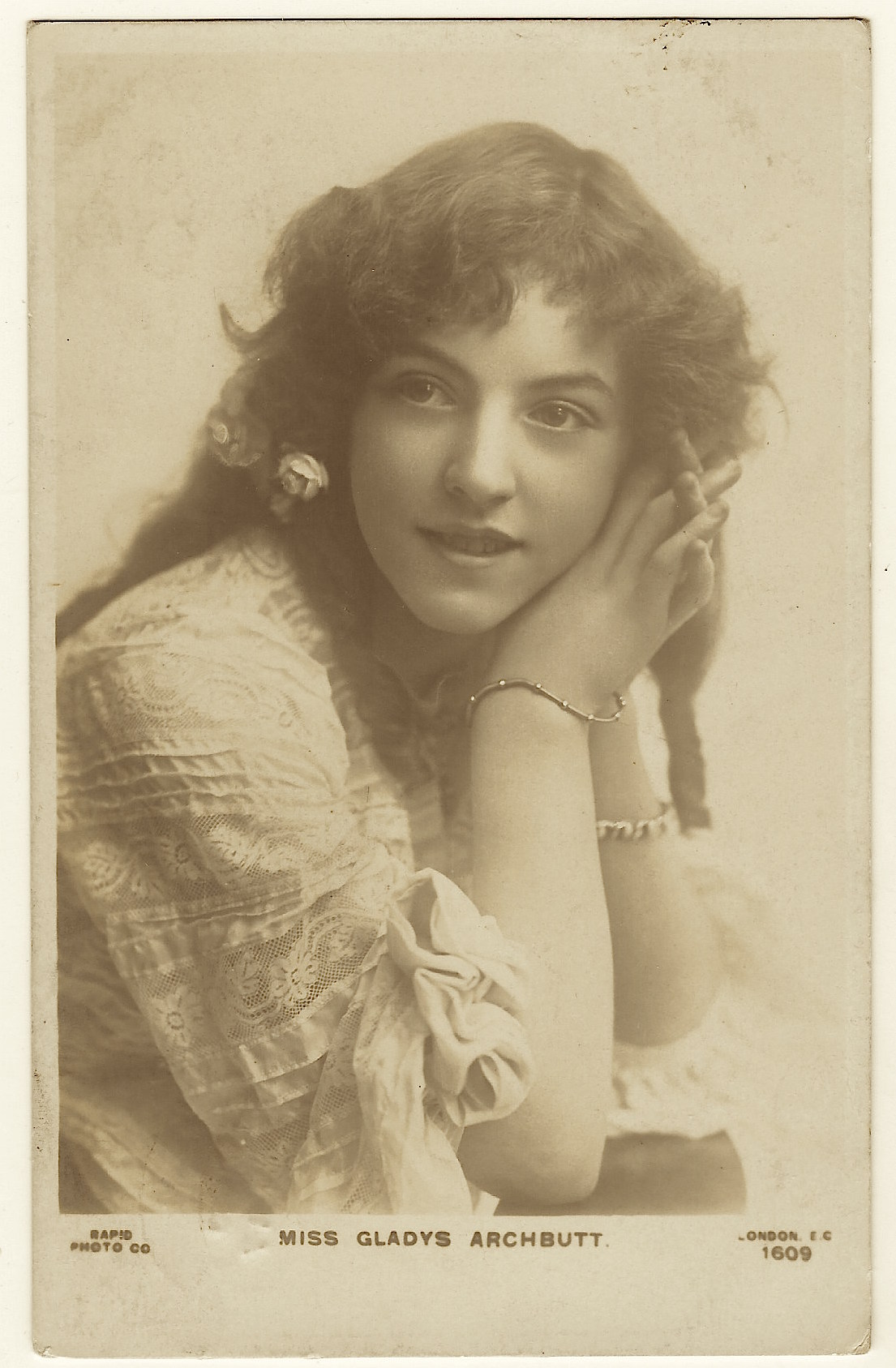
These vintage real photo postcards feature English actress Gladys Archbutt (1889-1968). She began her career as a child actress and dancer. She then launched a career in musical comedies in both Europe and the United States. She appeared in three Broadway musicals “London Follies” (1911), “The Balky Princess”, and “The Lamb of Delft”. She was sitter for five portraits in the National Portrait Gallery’s collection. Archbutt was married to Edwyn Ingram Gibbons in 1909. He was killed during World War I. The photographers of these images include Alexander Bassano, Lallie Charles, The Royal Magazine (1908) ran a story about Miss Archbutt. She tells the story of one of her theatrical career “adventures”. Her company was playing in Wales and their manager departed without warning. The cast did not have the money needed to return home to London and they decided to continue performing. They soon learned that the scenery from the show had been hocked and they had to buy it back. Needless to say, the company eventually earned their way home. She tells an additional story of a time where she was almost guillotined by a falling curtain. Her role in that production required her to faint and drape herself over her fathers “dead” body. Unfortunately, the actor playing her father had fallen dead in the wrong spot on the stage. As the curtain fell, the actors on the stage whispered that she needed to move from her precarious position. Being a dedicated performer, she would not move away because she was supposed to be in an unconscious state. She states she narrowly avoided being badly hurt.
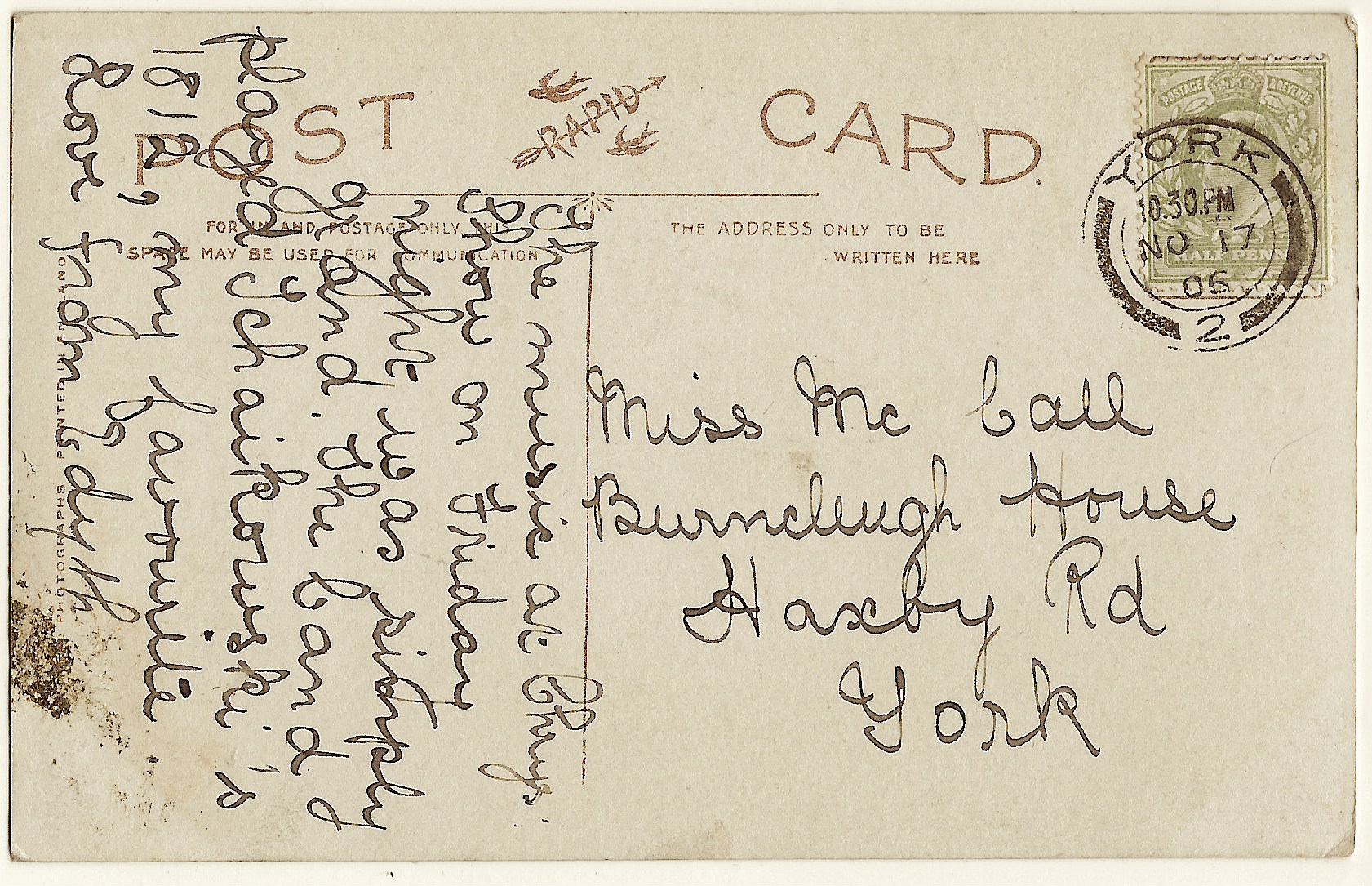
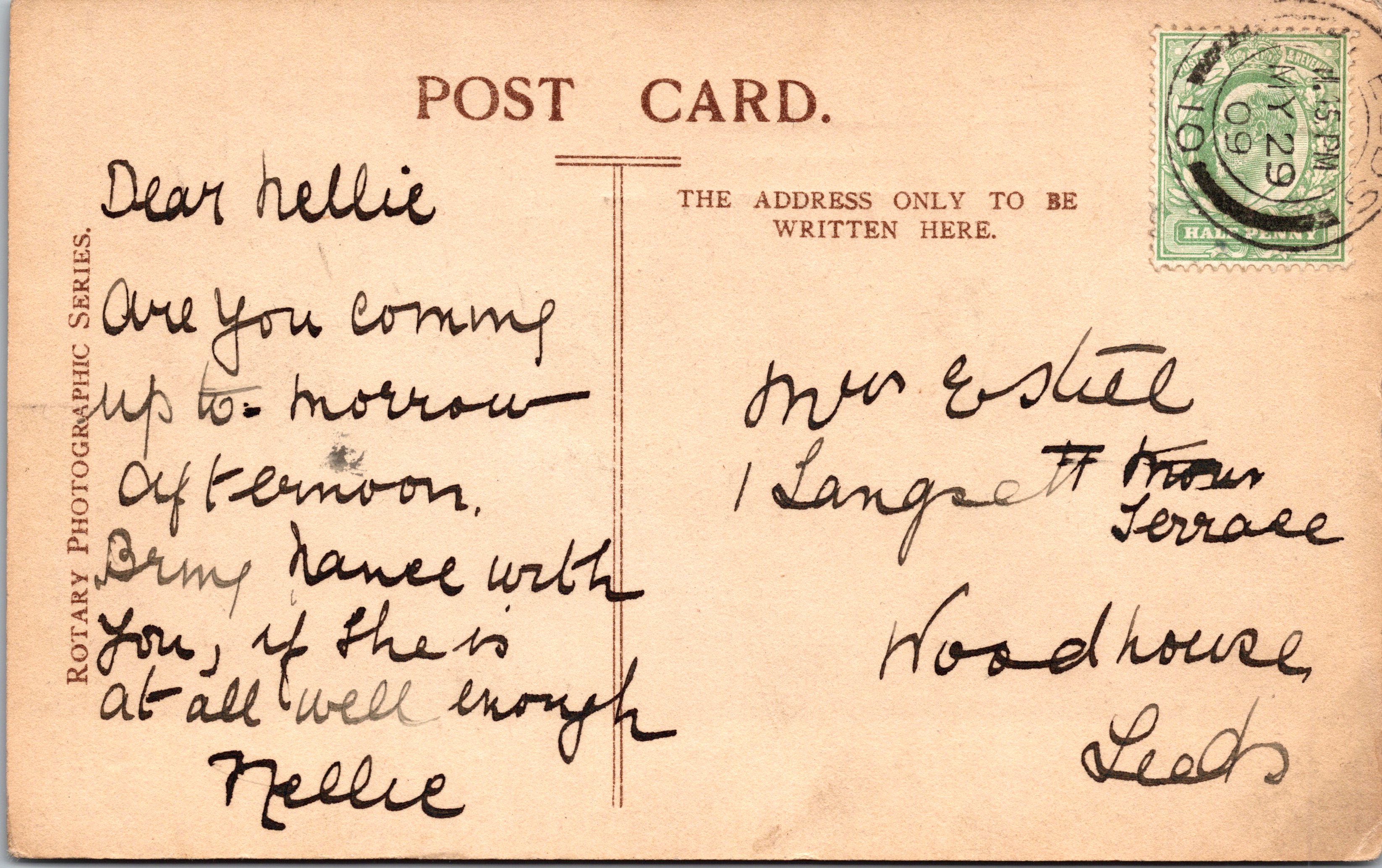
Vintage Postcard 1 was published by Rapid Photo and is part of a series (no.1609).The company existed between 1901 and 1910 and was located in London. The company is best known for their portraits of actresses. The postmark is from York and reveals that the card was mailed in 1906.The writer of the card describes attending a performance of Tchaikovsky’s “1812 Overture”.This vintage postcard is in good condition (see scans). Note the bumping next to Miss Archbutt’s name on the front of the postcard. This portrait postcard is priced accordingly.
Postcard 2 is hand colored and was published by Rotary Photo and is part of a series (no.1762F). (SOLD)
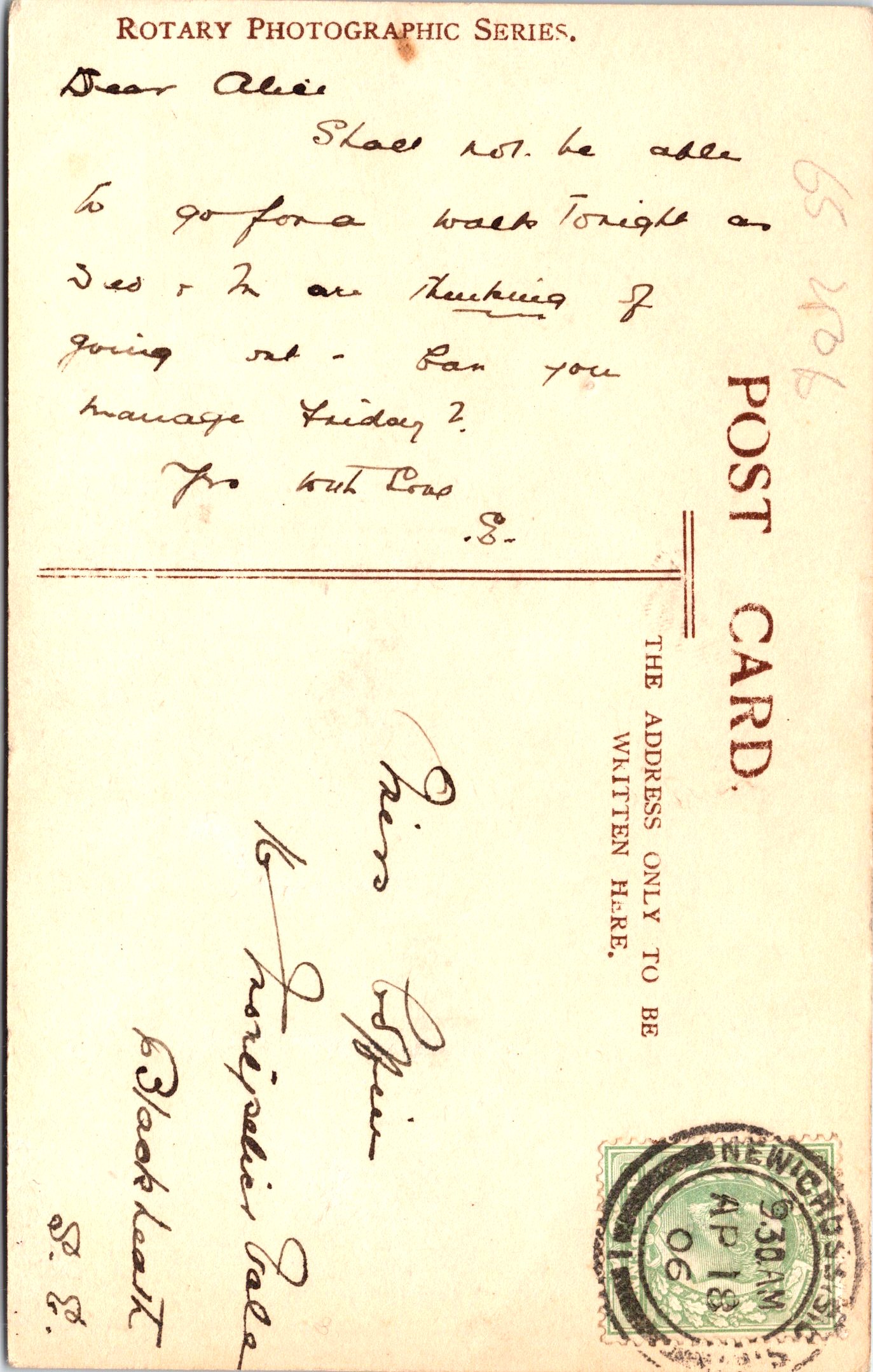
Postcard 3 was published by Rotary Photo and is part of a series (no.1752C). The postmark on this card reveals that it was mailed in 1906. SOLD
Buy this Vintage Real Photo Postcard (includes shipping within the US) #3018
To purchase this item, click on the Pay with PayPal button below
$12.49
Buy this Vintage Real Photo Postcard (includes International shipping outside the US) #3018
To purchase this item, click on the Pay with PayPal button below
$20.99
In Postcard 4 Miss Archbutt was photographed sitting cross legged, holding a small dog. Her calves are exposed, or at least they are covered by nude stockings. The exposure of her lower legs make this postcard risque. SOLD
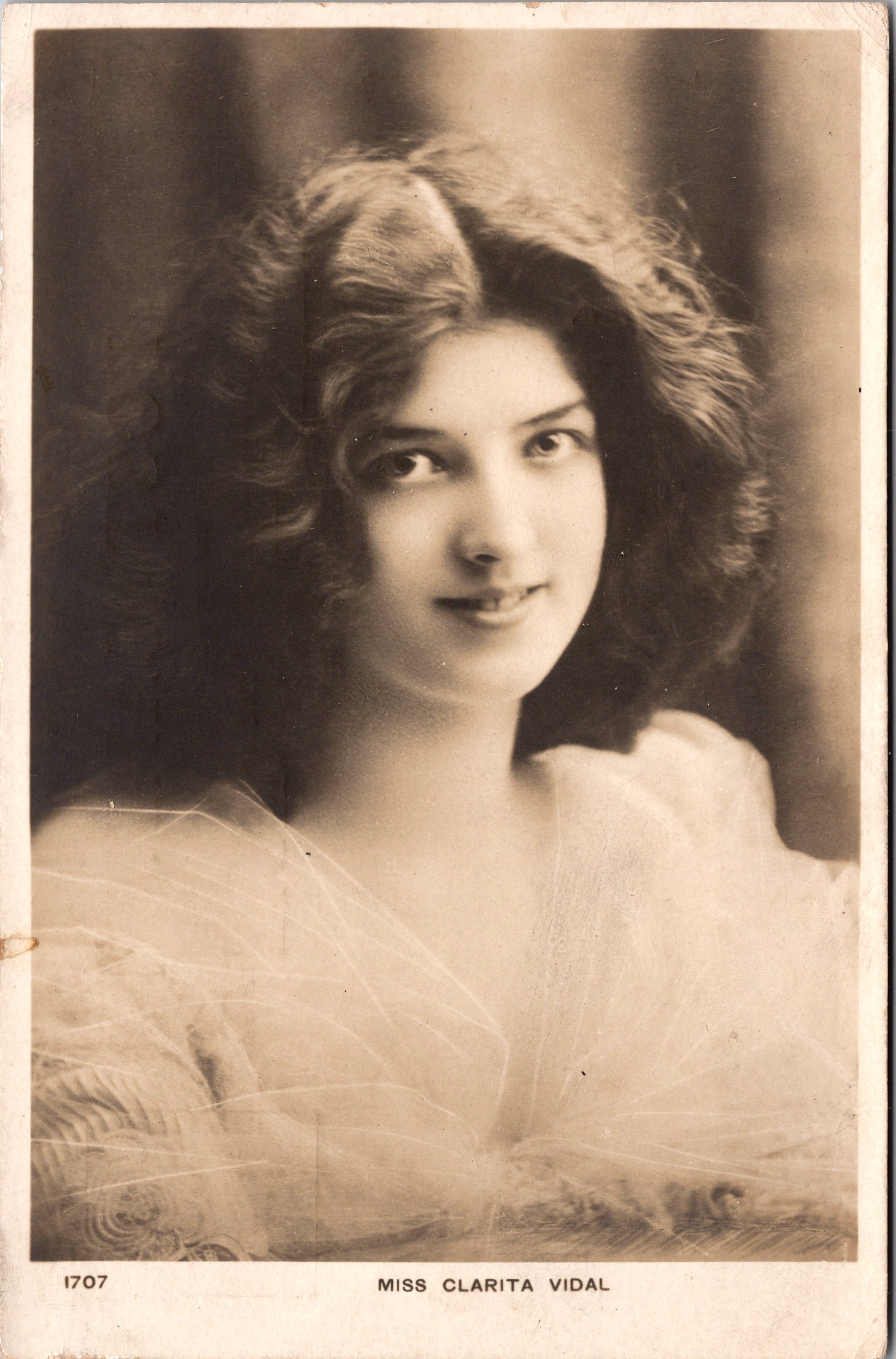
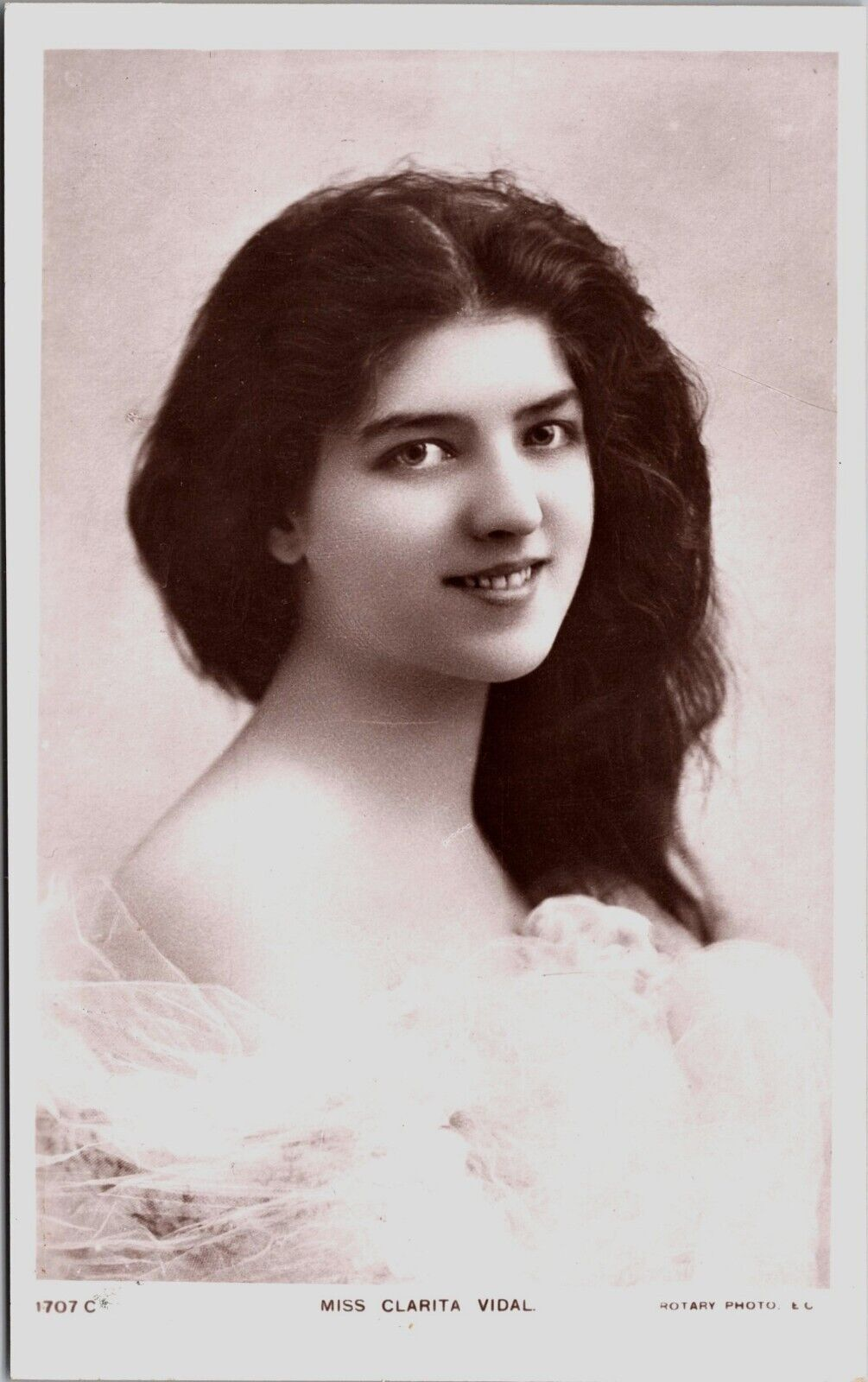
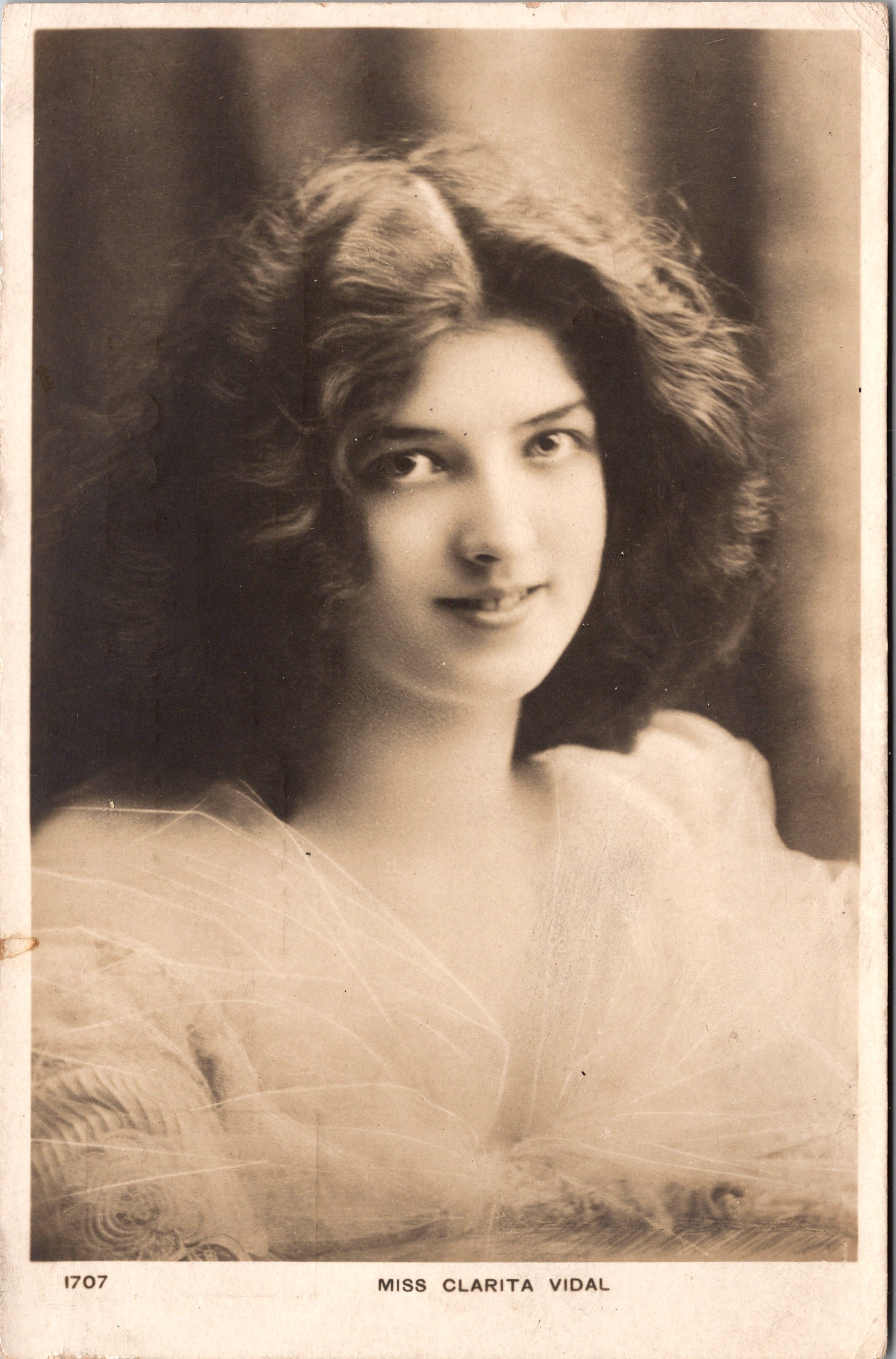
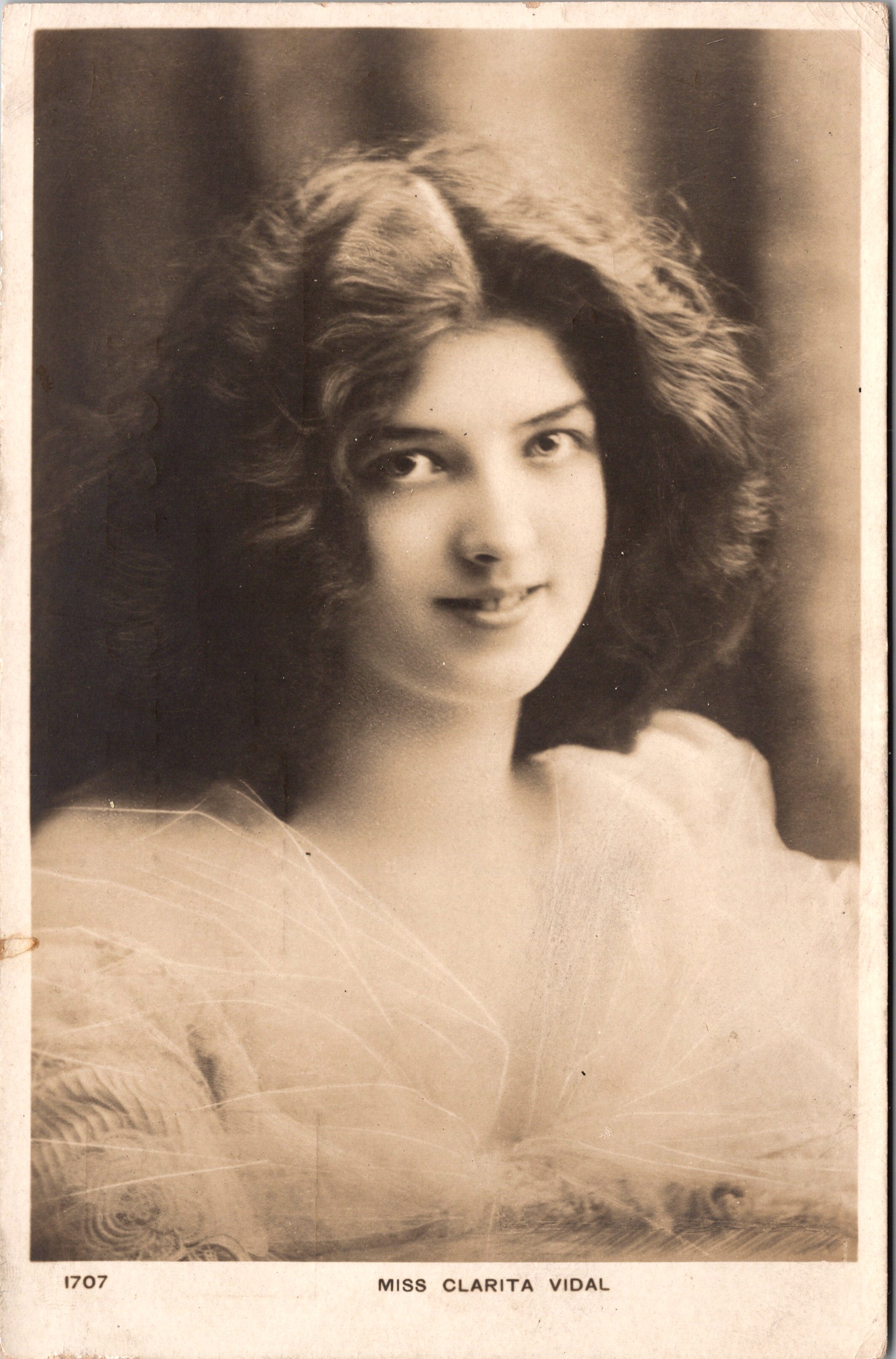
The pretty actress seen on these vintage real photo postcards is Clarita Vidal (1883-1919). She was an actress in Edwardian musical comedies. She was also known for her work in wartime Italy. She did this volunteer work as Countess Chiquita Mazzuchi. She once told a reporter that she did not know her nationality. There were varying stories about her background. She said she was born in Singapore and that her father was a Spanish Ambassador and her mother was from England. Vial also said that she was raised in Algiers among Spanish diplomat families. She stated her name there was Chiquita Saavedra de Cervantes. Vidal was a “Florodora girl”, a stage beauty. “Florodora” was an Edwardian musical comedy that became one of the first successful Broadway musicals of the twentieth century. The show opened in London in 1899. Actresses Evie Greene and Ada Reeve were among the show’s performers. The Broadway production was performed at the Casino Theater in 1900 and ran for 552 performances. The show achieved some of its success from it’s chorus line of “Florodora Girls”. A Wikipedia entry describes the six female performers comprising the line as being ”tall, gorgeous damsels, clad in pink walking costumes, black picture hats and carrying frilly parasols (who) swished onto the stage and captivated New York for no other reason than they were utterly stunning”. The IBDB credits Vidal with two Broadway appearances; “The Silver Slipper” (1902) and “Cynthia” (1903). These appearances were followed by roles on the London stage, including “The School Girl” (1903). Renowned actress Billie Burke said of Vidal, “I remember Clarita Vidal, famous and smick-smack, who posed as if she were made of wax, with just one expression of sheer beauty”. She left the stage after marrying in 1909. The press rediscovered her by late 1915. She was using the name “Countess Chiquita ‘Chick’ Mazzuchi” and was working as a nurse and ambulance driver during World War I. In 1917 she spoke at war relief fundraisers in New York City. She spoke about wounds she sustained during her service in Italy. Apparently, Miss Vidal was prone to exaggeration, or lying, depending on your perspective. The Italian Consul objected to her using the title of “Countess” and embellishing her nursing experiences in the war. The New York district attorney investigated her claims and she agreed to stop speaking and collecting money for the war effort.
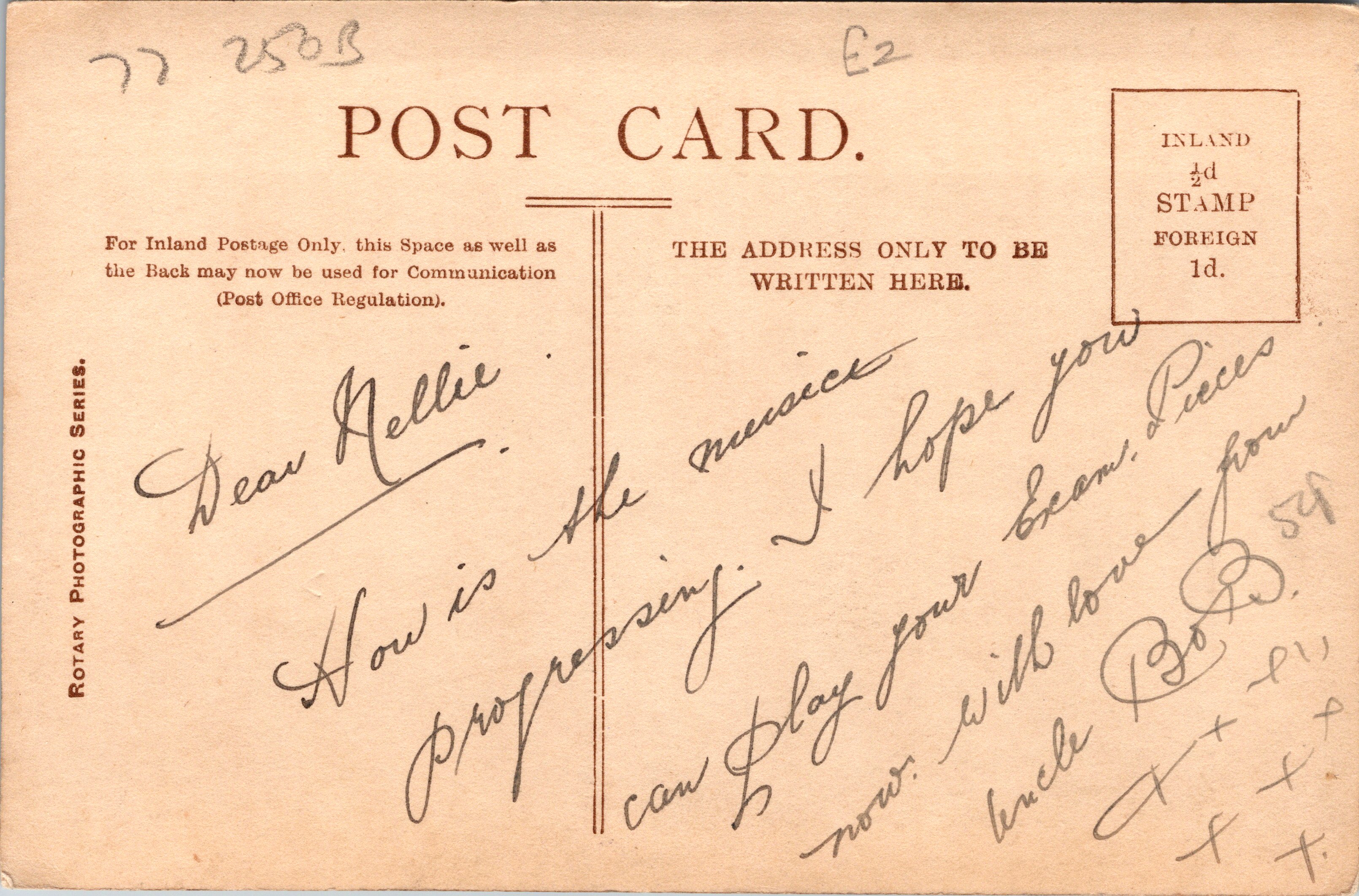
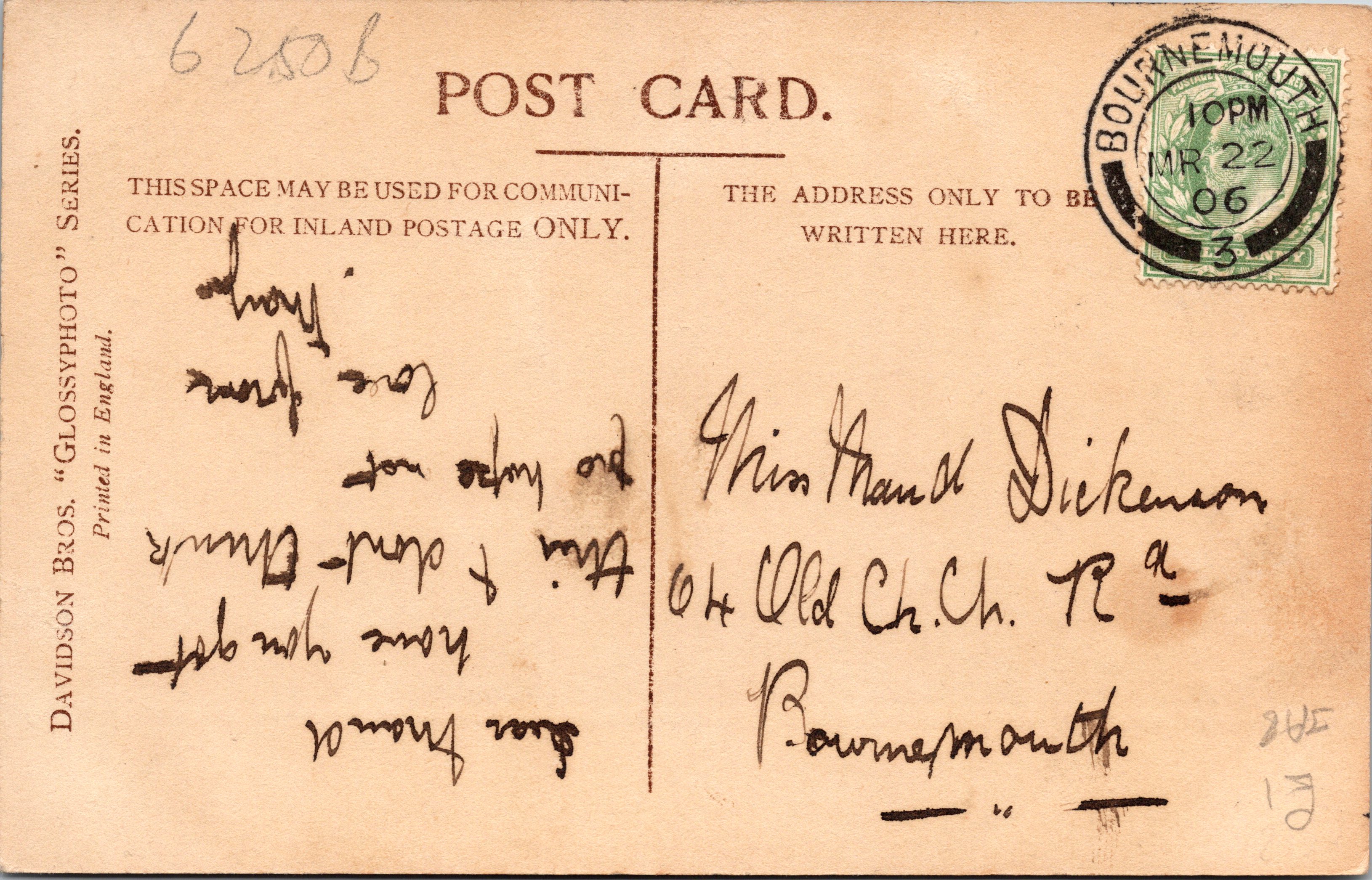
The content of the message on Postcard 1 is interesting. The sender is wishing the addressee luck on her music performance exams. This postcard was published by Rotary Photo and is part of a series (no.1707). The postcard is in good condition (see scans).
Postcard 2 was published by Rotary Photo and is part of a series (no.1707C). (SOLD)
Buy this Vintage Real Photo Postcard (includes shipping within the US) #5135
To purchase this item, click on the Pay with PayPal button below
$32.00
Buy this Vintage Real Photo Postcard (includes International shipping outside the US) #5135
To purchase this item, click on the Pay with PayPal button below
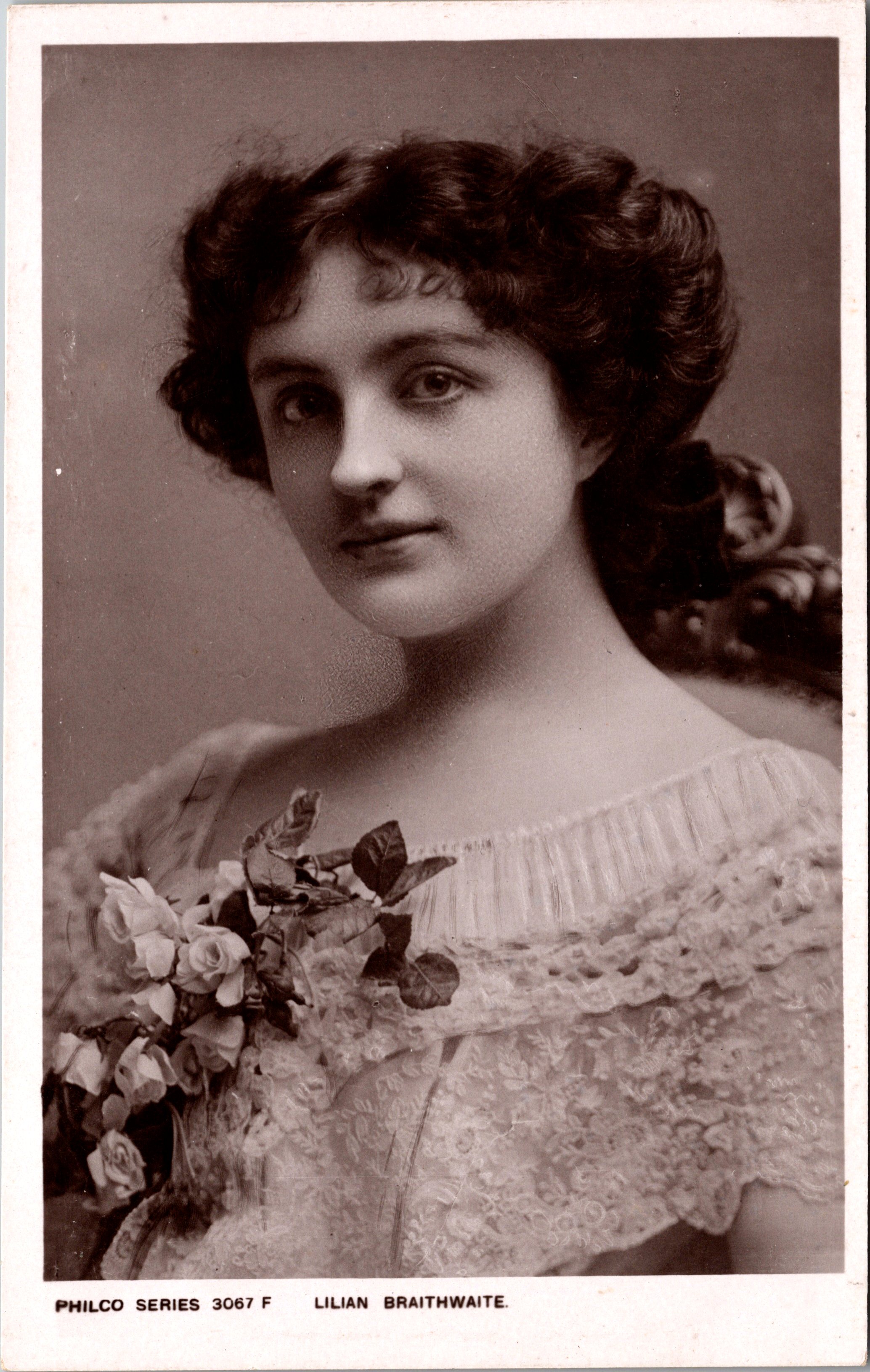
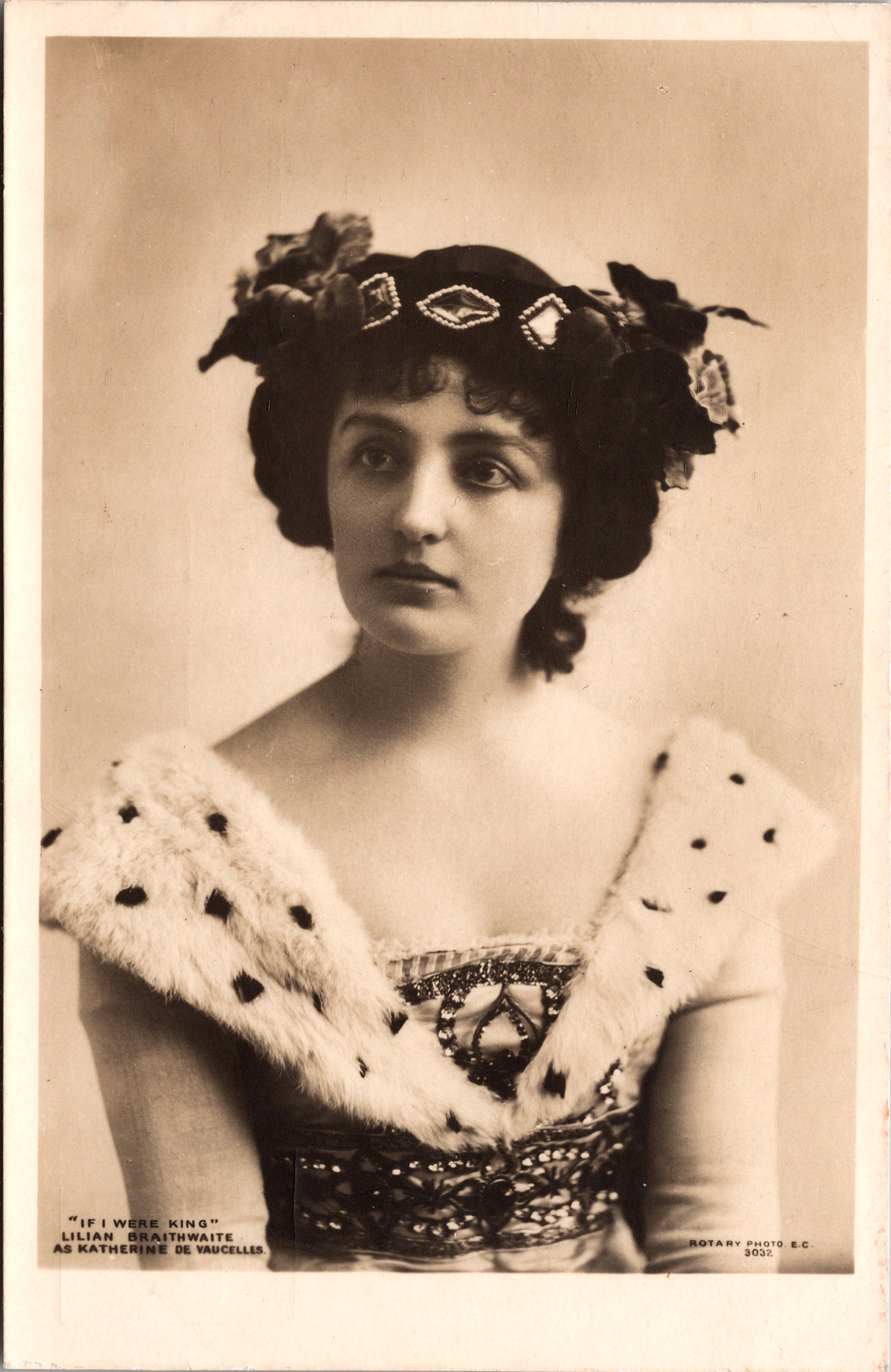
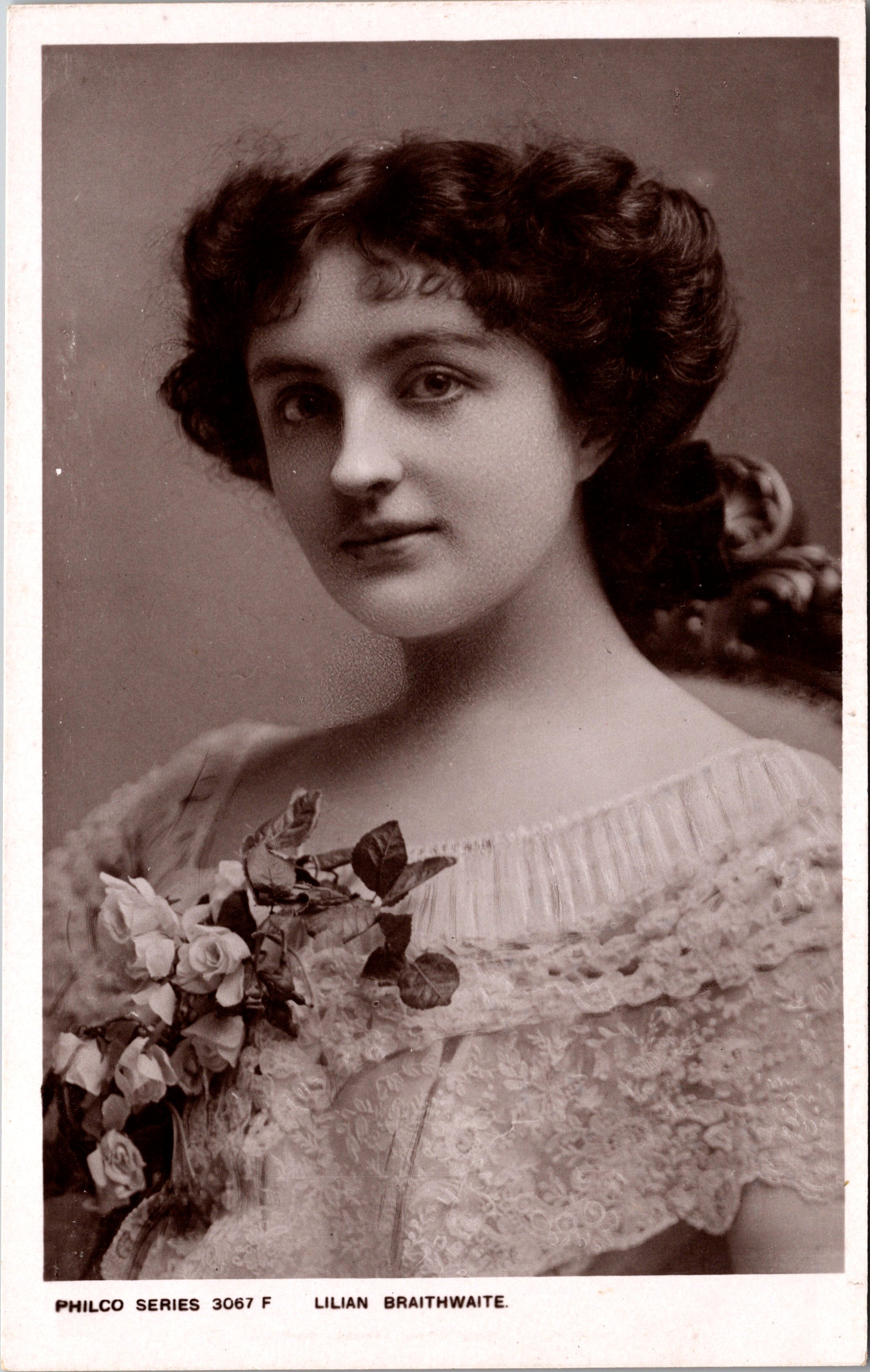
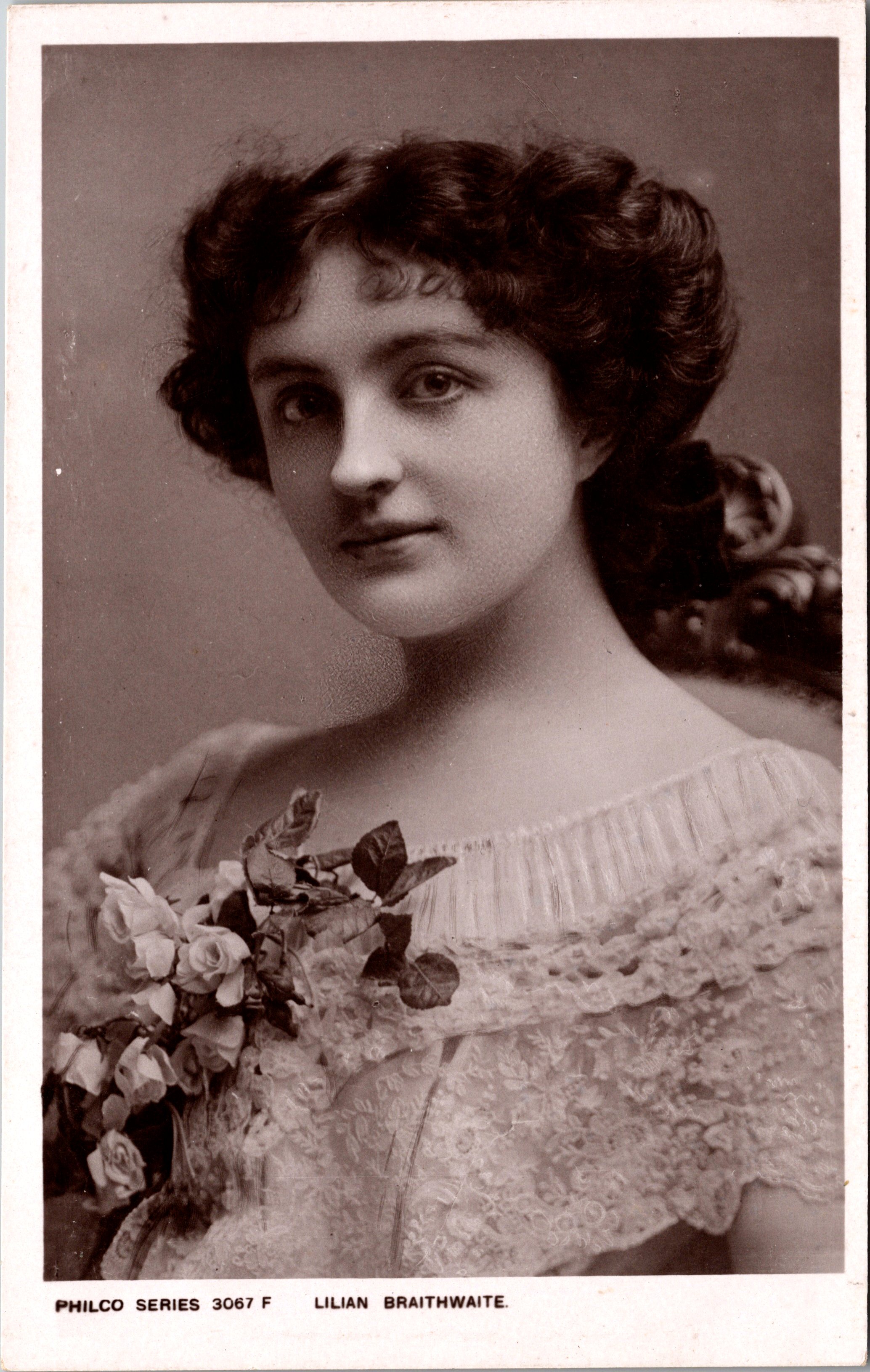
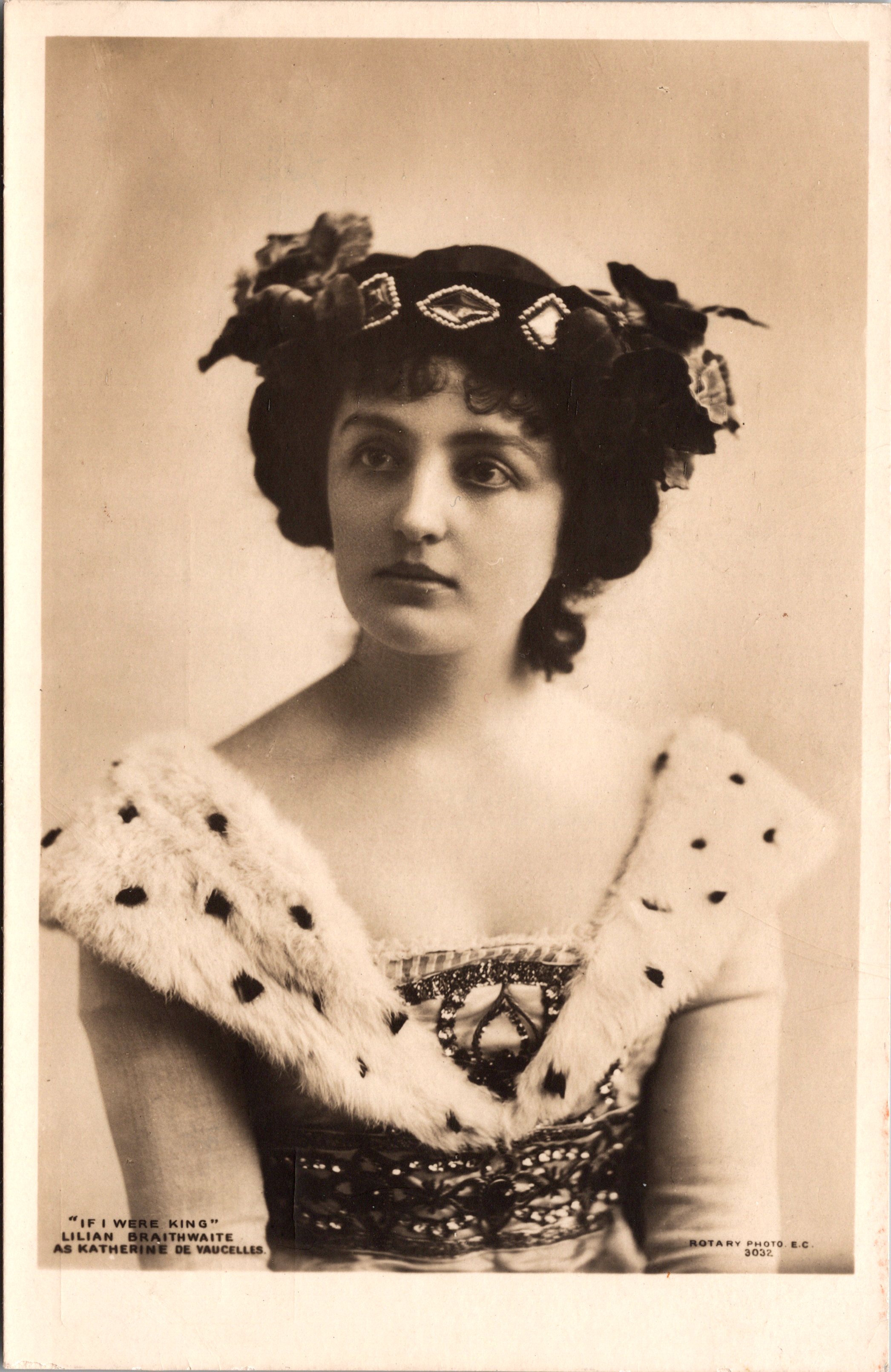
These vintage real photo postcards feature pretty English stage actress Lilian Braithwaite (1873-1948). Lilian’s major focus was the stage but she did appear in both silent and talkie films. Her father was a Vicar (member of the clergy). She first acted with amateur companies and when she decided to become a professional actress, her parents were opposed. Despite the parental opposition, in 1897, she joined a professional Shakespearean company. She married one of her fellow actors, Gerald Lawrence. They divorced in 1905 due to Lawrence’s adultery and desertion. Her first professional London appearance was in “As You Like It” in 1900. She joined a series of other stage companies over the years. Her major noted appearance was as the alcoholic mother in Noel Coward’s drama, “The Vortex” (1924). In 1927, she appeared in Alfred Hitchcock’s film “Downhill”.
Postcard 1 was published by Philco. The card is part of a series (No.3067F). This unposted postcard is in Very Good condition (see scans).
Postcard 2 features Lilian in her role in the play, “If I Were King”. The publisher of this portrait postcard is Rotary Photo (No.3032). This unposted postcard is in Very Good condition (see scans).
Buy this Real Photo Vintage Postcard (includes shipping within the US) #5180
To purchase this item, click on the Pay with PayPal button below
$14.85
Buy this Vintage Real Photo Postcard (includes International shipping outside the US) #5180
To purchase this item, click on the Pay with PayPal button below
$24.85
Buy this Real Photo Vintage Postcard (includes shipping within the US) #5213
To purchase this item, click on the Pay with PayPal button below
$12.48
Buy this Vintage Real Photo Postcard (includes International shipping outside the US) #5213
To purchase this item, click on the Pay with PayPal button below
This rare vintage real photo postcard features pretty stage actress, Miss Ethel Hollingshead. Note her fur stole. The animals is whole, face and all. I believe the creature is a mink. Certainly, this garment is not politically correct in today’s world. Not much information about Miss Hollingshead is readily available. The IBDb reveals that she acted in two Broadway plays; “A Message From Mars” (1901) and “Saucy Sally” (1904). She also appeared in “The Boatswain’s Mate” (1907) at London’s Wyndham’s Theatre. A deeper dive into the theater literature is required to learn more about Miss Hollingshead. This postcard was published by Rotary Photo as part of a series (No.1830A). SOLD
This uncommon vintage real photo postcard features French singer, dancer and entertainer, Marcelle Lender (1862-1926). Lender was also famous for her modelling in paintings by Henri de Toulouse-Lautrec. Lender began dancing at age sixteen and quickly escalated her fame by performing at the Theatre des Varietes in Paris, France. Lender was the model for several works by Lautrec. Her most notable appearance in his paintings was of her dancing the Bolero, in full costume, during an 1895 performance of “Chilperic”. That painting is today in the collection of the National Gallery of Art in Washington DC. This postcard portrait of Miss Lender was taken by the famed Reutlinger studio. The card was published by the English firm, Rotary Photo. SOLD
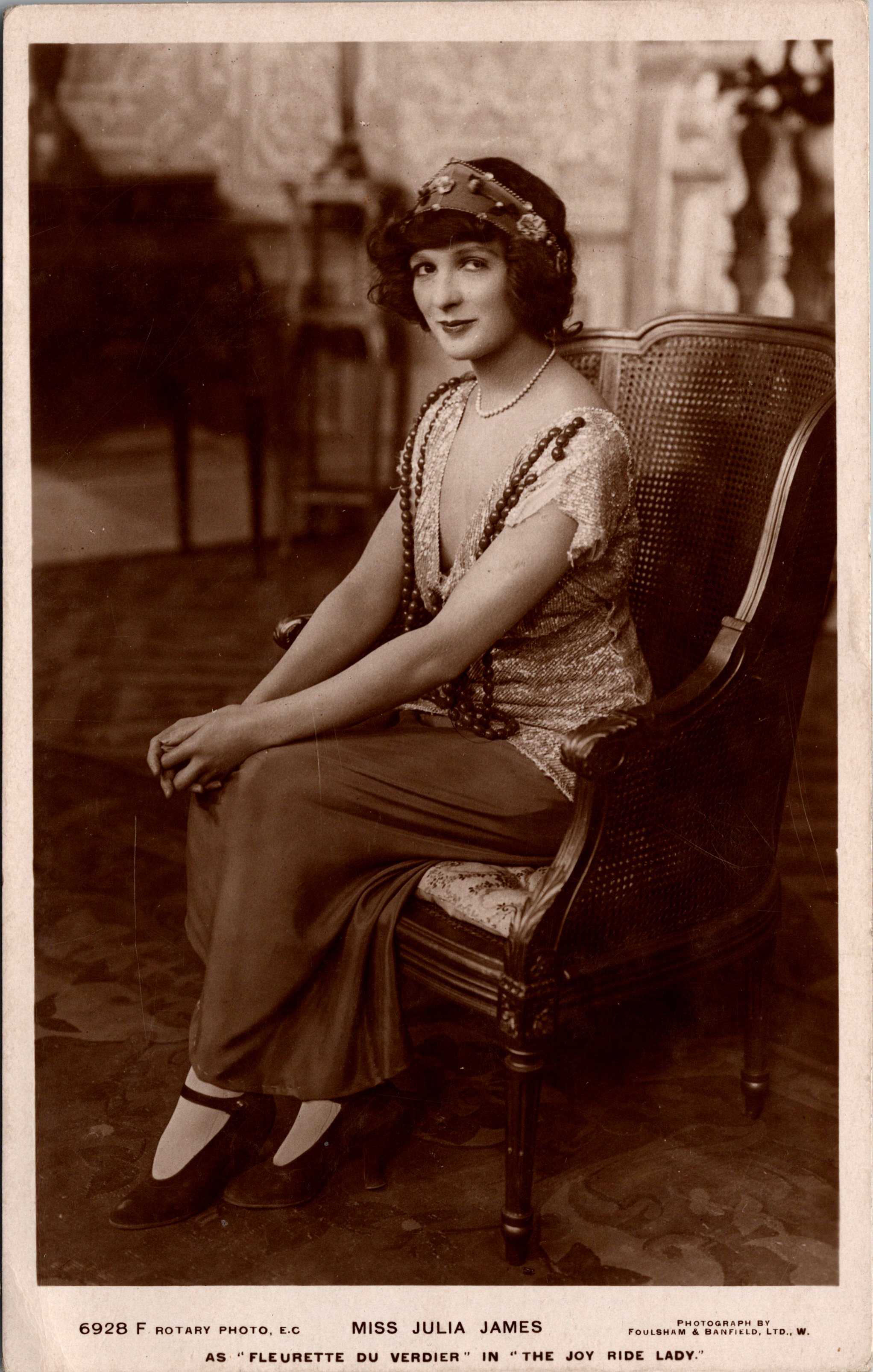
Postcard 1 features Julia James (1890-19F64), a beautiful stage actress. She appears in costume from the show “The Joy Ride Lady”. The play appeared in a London’ West End theater in about 1914. She sat in 76 portraits that are part of England’s National Portrait Gallery. She is considered by one theatrical writer to be among the top fifteen most beautiful actresses of the 1900’s Edwardian era. She was born in London, England and began her career as a chorus girl at the Aldwych Theatre under Seymour Hicks. She played in “Blue Belle” in 1905. She appeared in productions at the Gaiety Theatre. These plays included “The Girls of Gottenburg”, “Havana”, and “Our Miss Gibbs”. She performed in Paris in “The Arcadians” (1913). This Rotary Photo postcard was printed in Great Britain. The postcard is part of a series (no.6928F). The photographers of this image are from the Foulsham and Barfield studio. (SOLD)
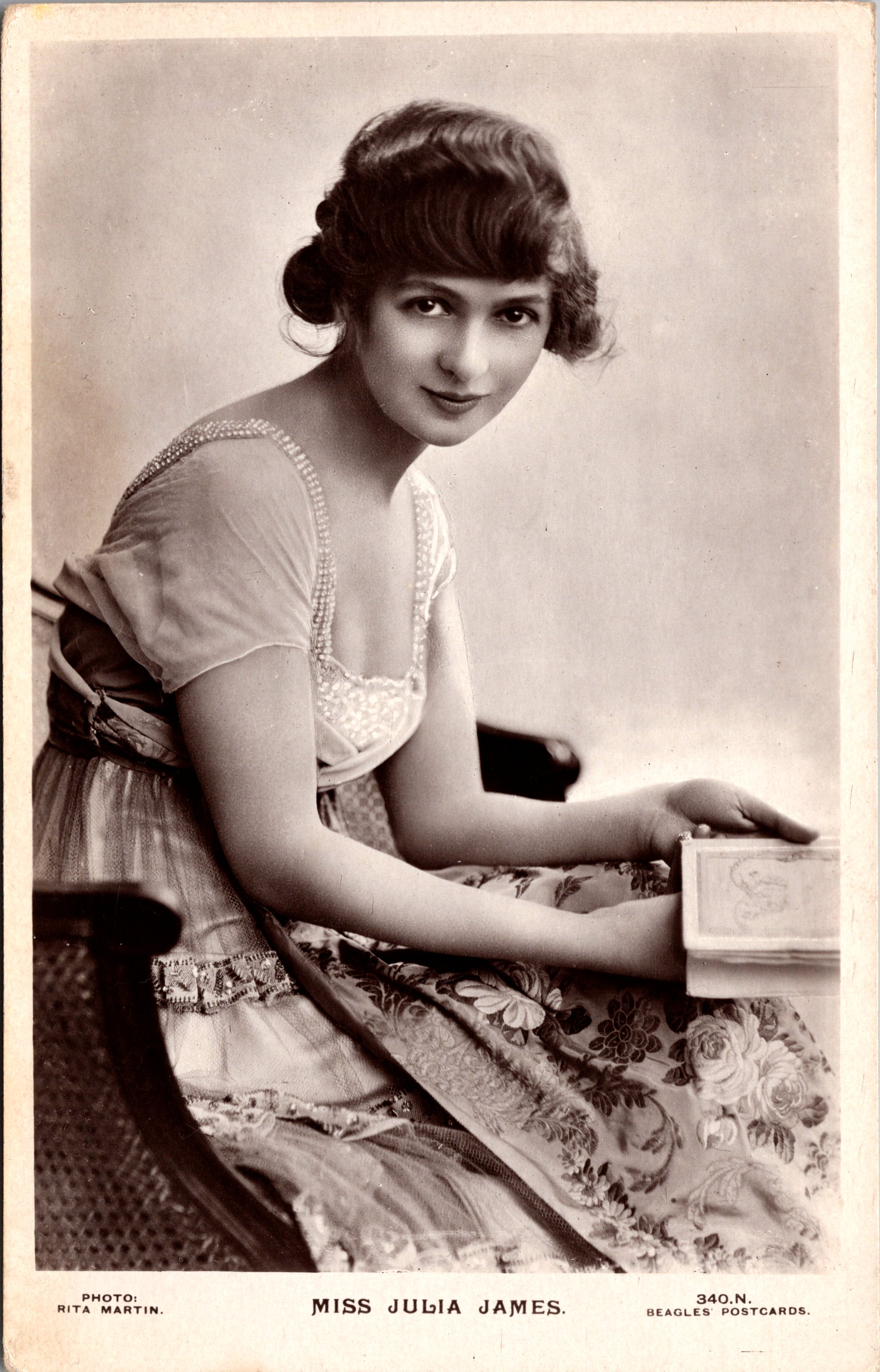
Postcard 2 was published by Beagles and was printed in Great Britain. The postcard is part of a series (no.340N). The photographer of this image is esteemed celebrity photographer, Rita Martin. (SOLD)
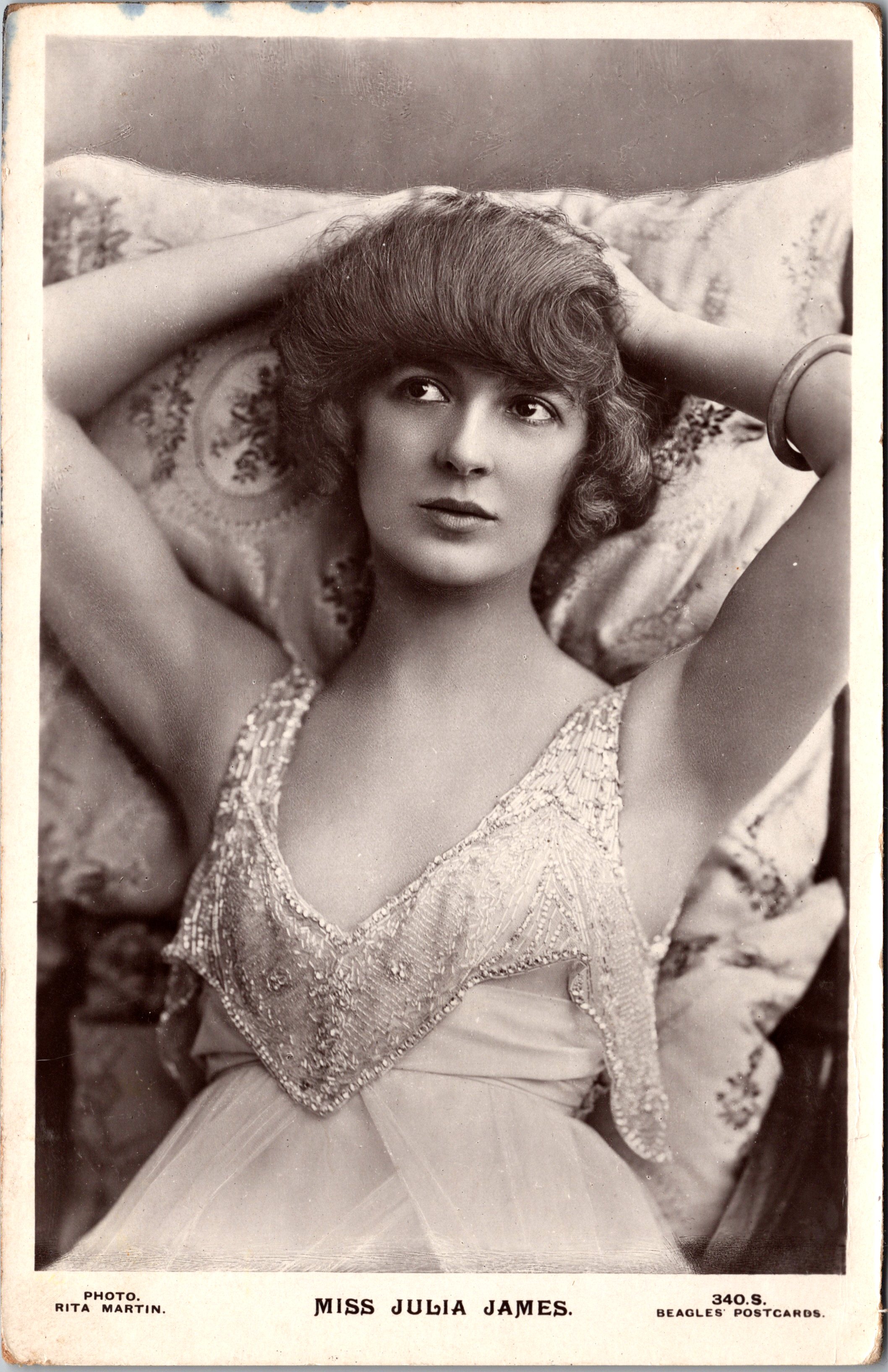
Postcard 3 was published by Beagles and printed in Great Britain. The card has a 1917 postmark. The postcard is part of a series (no.340S). The photographer of this image is esteemed celebrity photographer, Rita Martin. (SOLD)
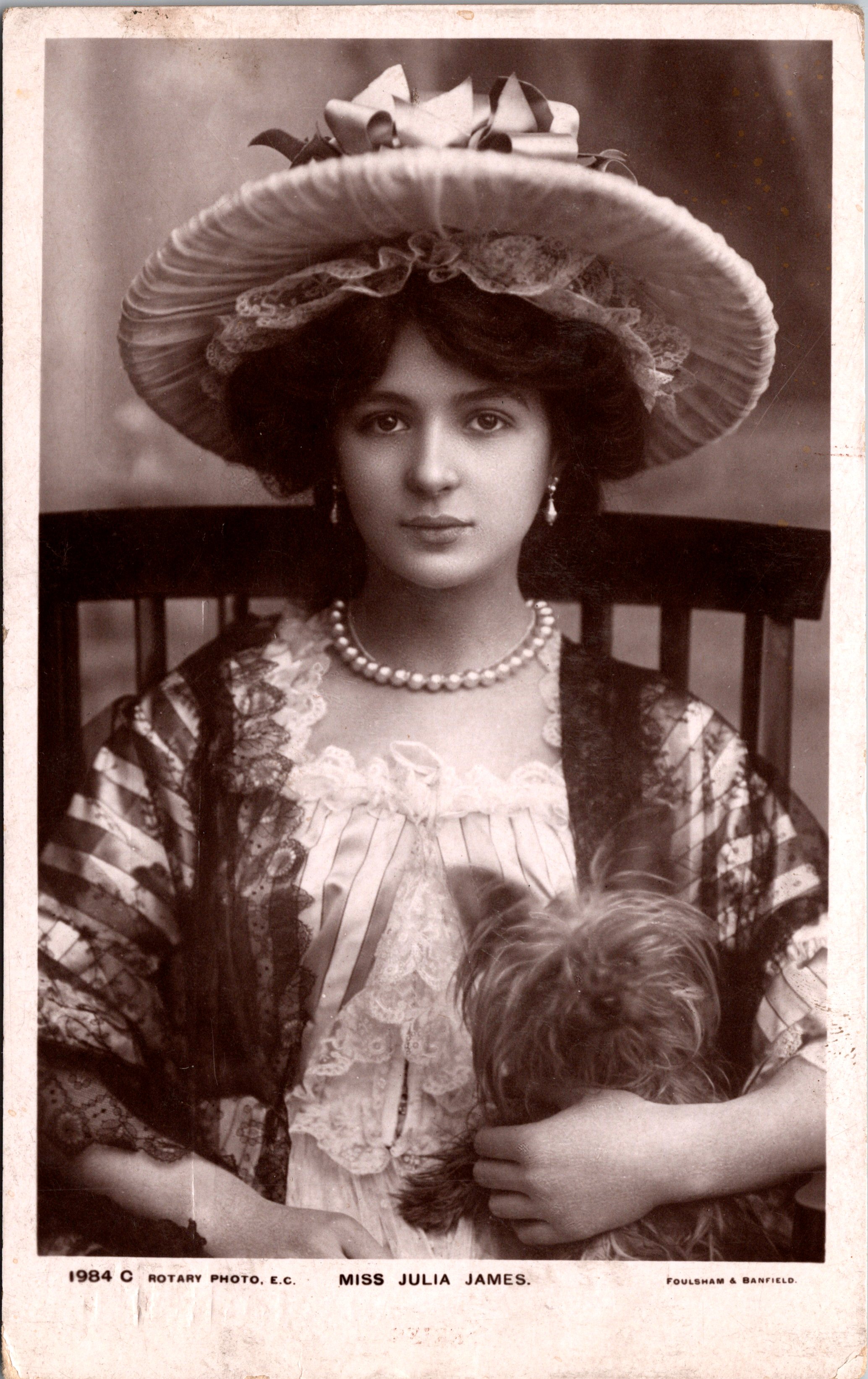
Postcard 4 was printed in Great Britain by Rotary Photo. The card has a 1909 postmark, revealing that Miss James was about 19 years of age when this photo was taken. The postcard is part of a series (no.1984C). The photographer of this image is the Foulsham & Banfield studio. (SOLD)
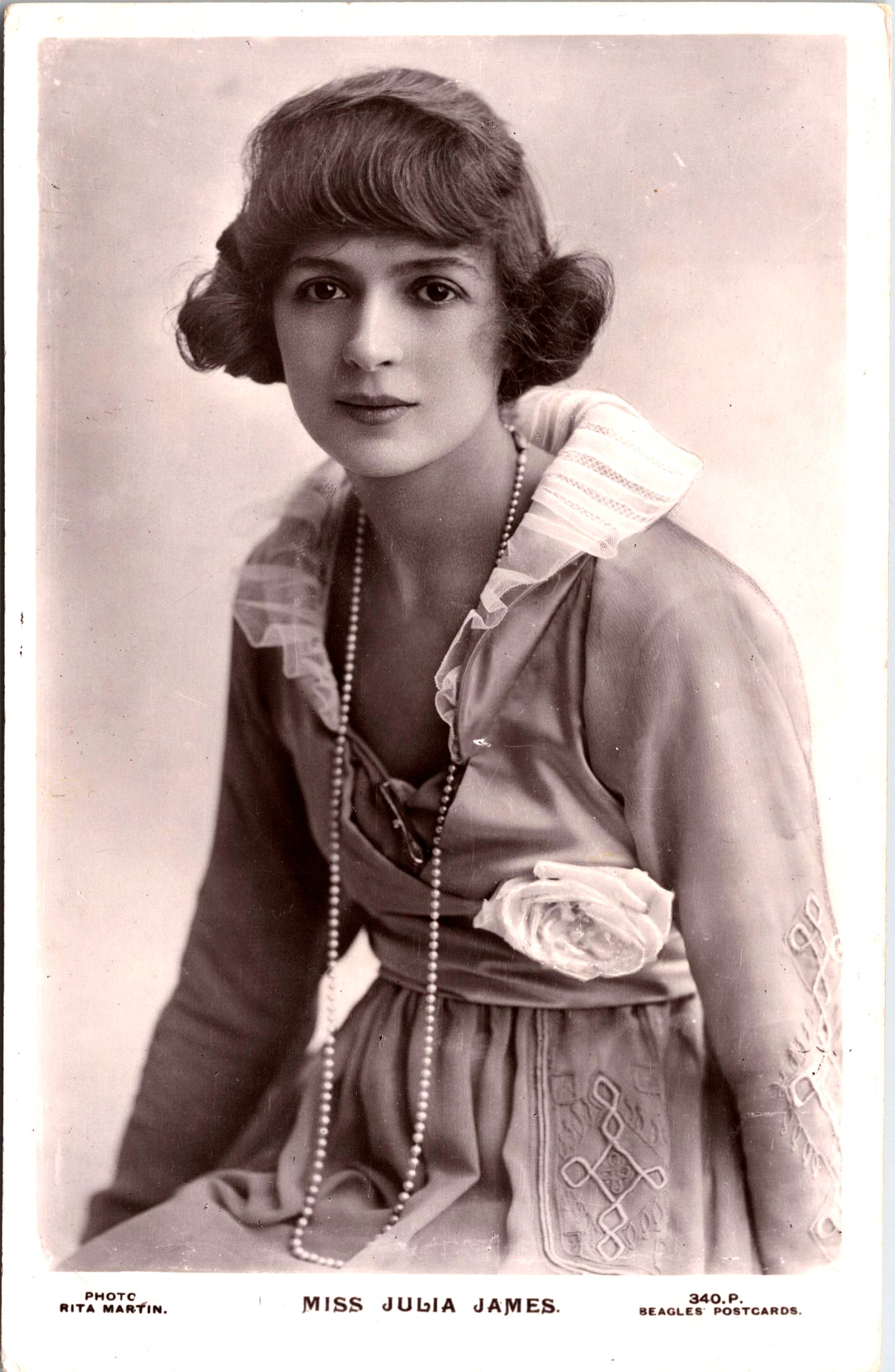
Postcard 5 This vintage real photo postcard features Julia James wearing a long strand of pearls and a pretty dress. Her dress is low cut for her era, making this postcard risque. She was likely a teenager, or in her twenties, when this photograph was taken. This postcard was published by J. Beagles & Co. and printed in Great Britain. The postcard is part of a series (no.340P). The card was distributed by K. V. M. Sultan & Co. which was located in Singapore. The photographer of this image was female. Women photographers were not very common at the time this postcard was published. The photographer of this postcard photo was Rita Martin. She was a talented and well known celebrity photographer. (SOLD)
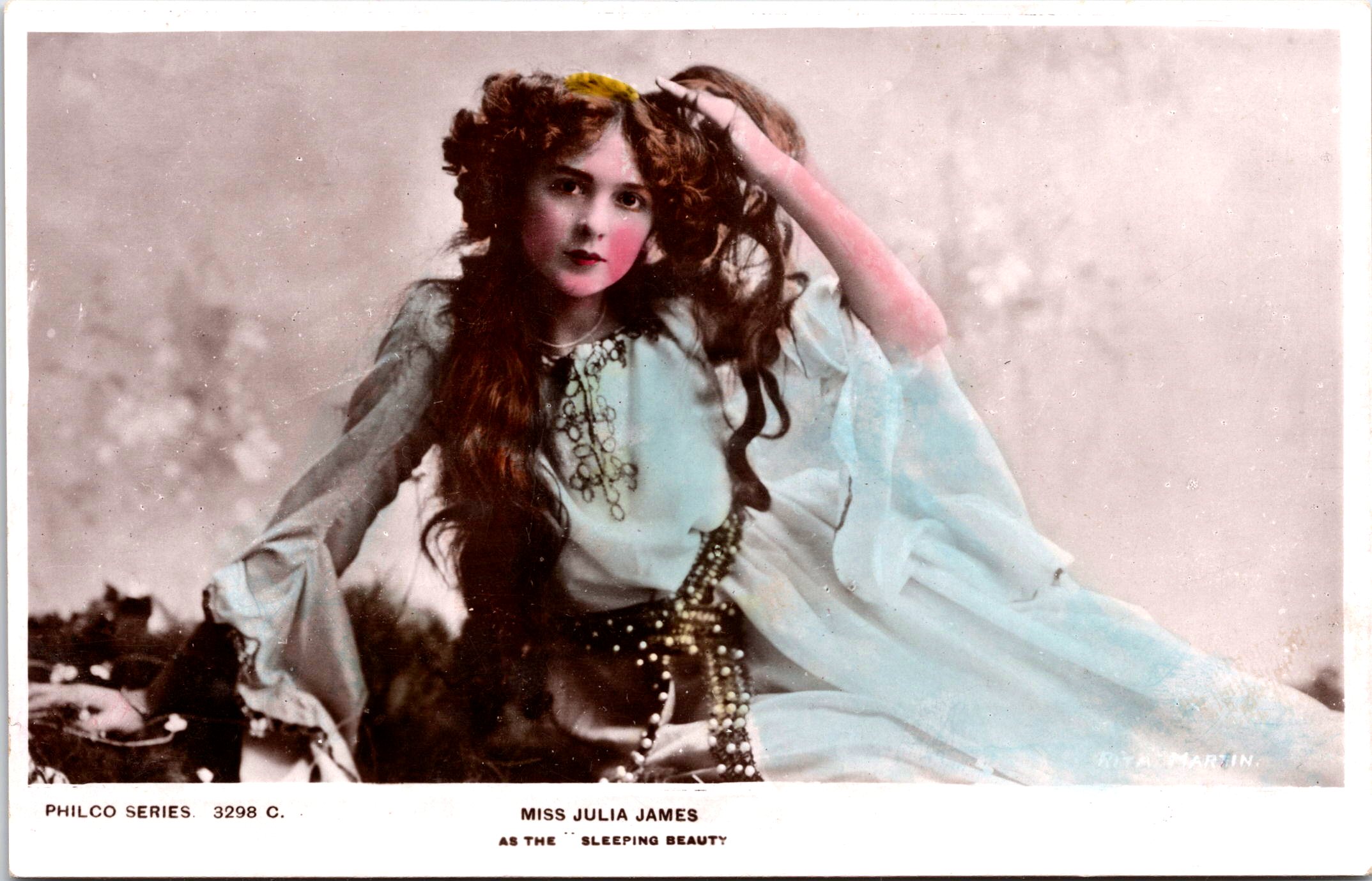
Postcard 6 features Miss James in a scene from “Sleeping Beauty”. This “Philco” postcard was printed in London, England. The postcard is part of a series (no. 3298C). The photographer of this image is the fabulous celebrity photographer, Rita Martin. She is considered one of the best British photographers of her time. Her studio was in an exclusive neighborhood She was born Margareta Weir Martin in Ireland. Margareta “Rita” Martin started her career in photography in 1897 by assisting her elder sister Lallie Charles in running her studio. In 1906 Rita opened her own studio. Rita had a specialty in photographing actresses including Lily Elsie and Lily Brayton. She was also well known for her child studies which often involved children of well known actresses. Rita’s sister, Lallie Charles was more known as an excellent society photographer. (SOLD)
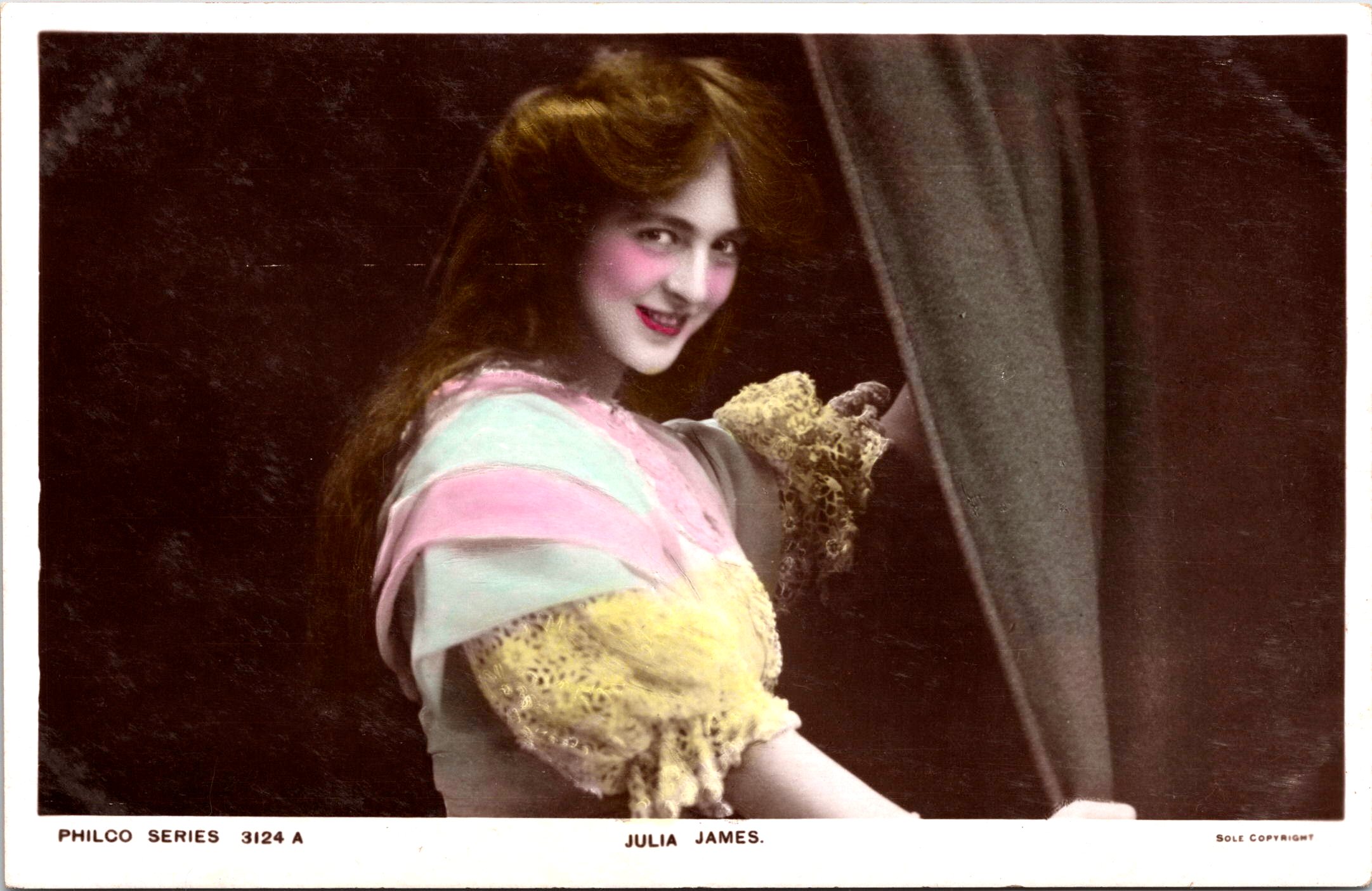
Postcard 7 is beautifully color tinted image of Julia James. Note her long strand of pearls and her pretty dress. Her dress is low cut for her era, making this postcard risque. She was likely a teenager, or in her twenties, when this photograph was taken. This postcard was published by Philco and printed in Great Britain. The postcard is part of a series (no.3124A). (SOLD)
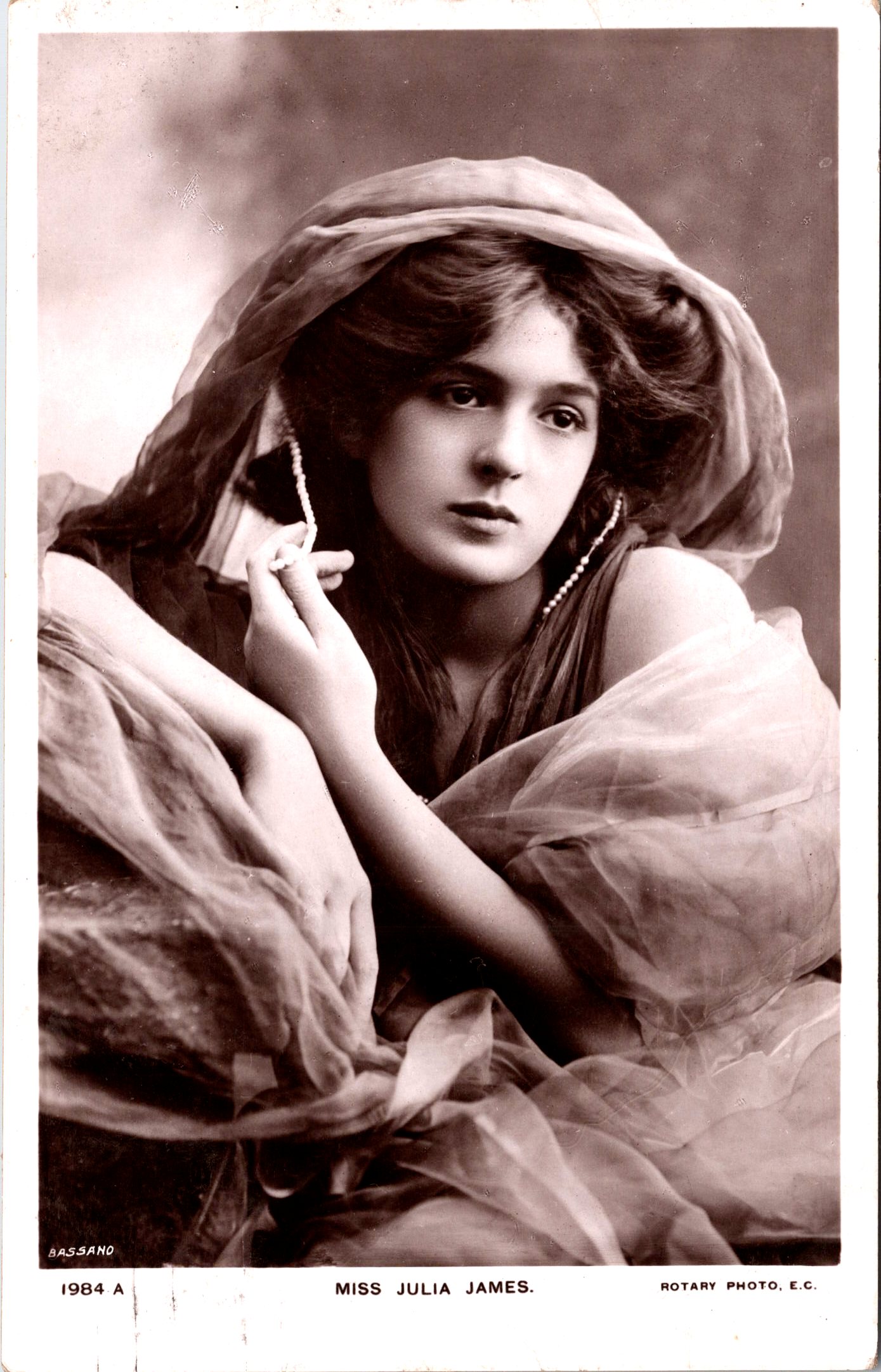
Postcard 8 has a message that provides the recipient with birthday greetings. This Rotary Photo postcard was printed in Great Britain. The card has a 1907 postmark, revealing that Miss James was about 17 years of age when this photo was taken. The postcard is part of a series (no.1984A). The photographer of this image is Alexander Bassano. Bassano (1829 –1913) was a leading royal and high society photographer in Victorian London. (SOLD)
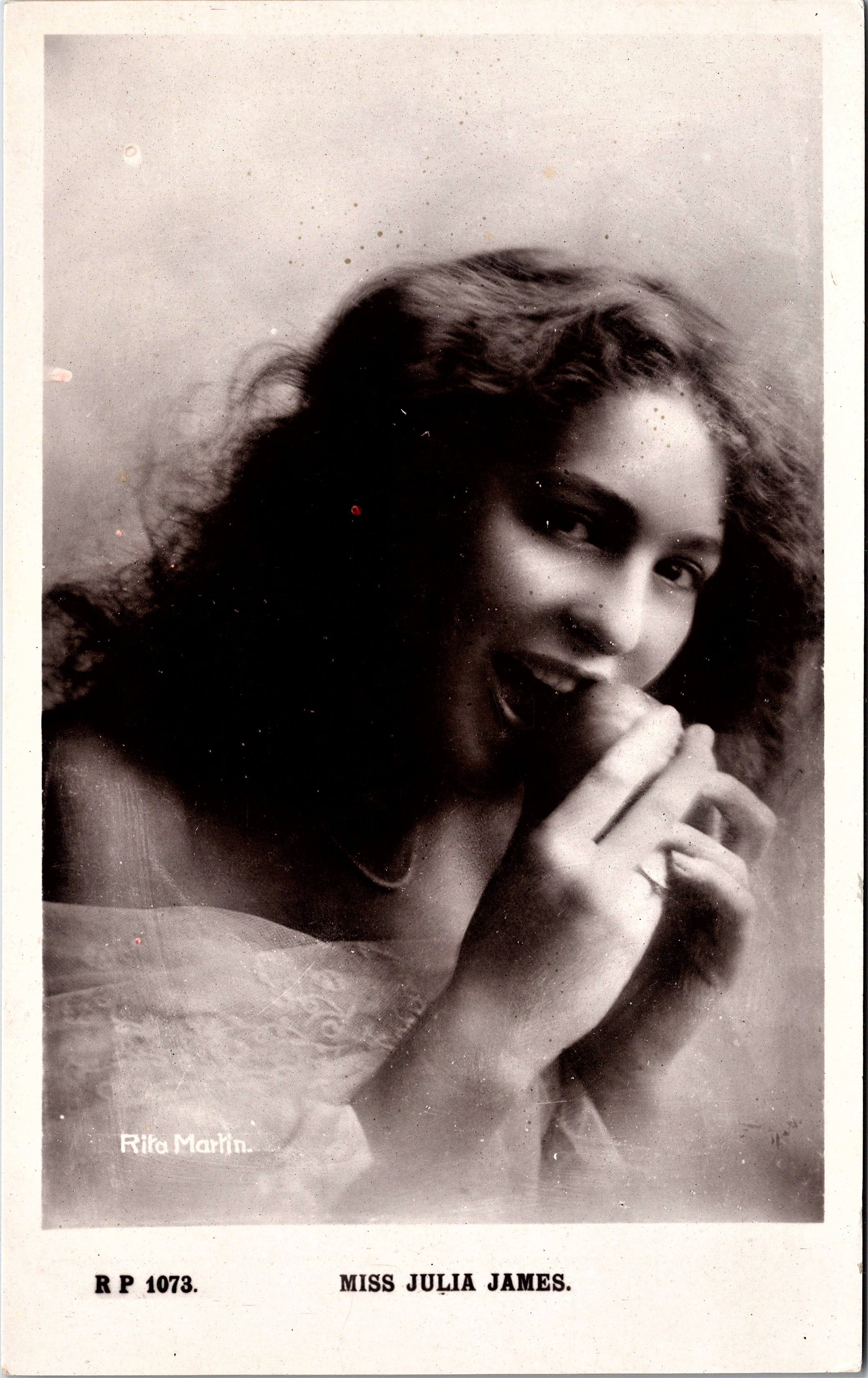
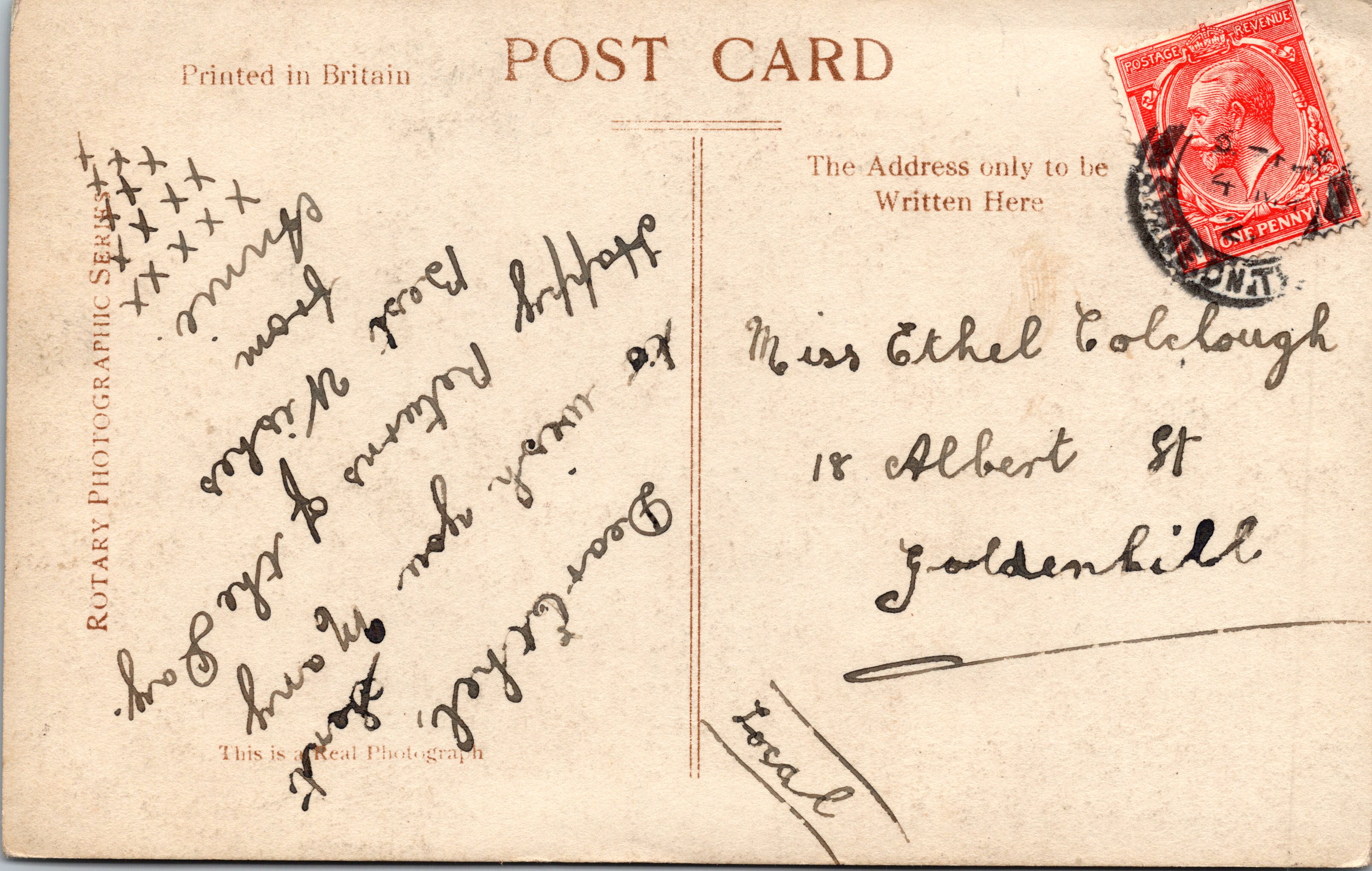
Postcard 9 captures James eating an apple. She is flashing a fine smile. This postcard was was published by the Rival Photographic Series and was printed in Great Britain. The postcard is part of a series (no.R P 1073). The photographer of this image was the talented and famous, Rita Martin. She was considered one of the best British photographers of her time. She opened her studio in 1906. (SOLD)
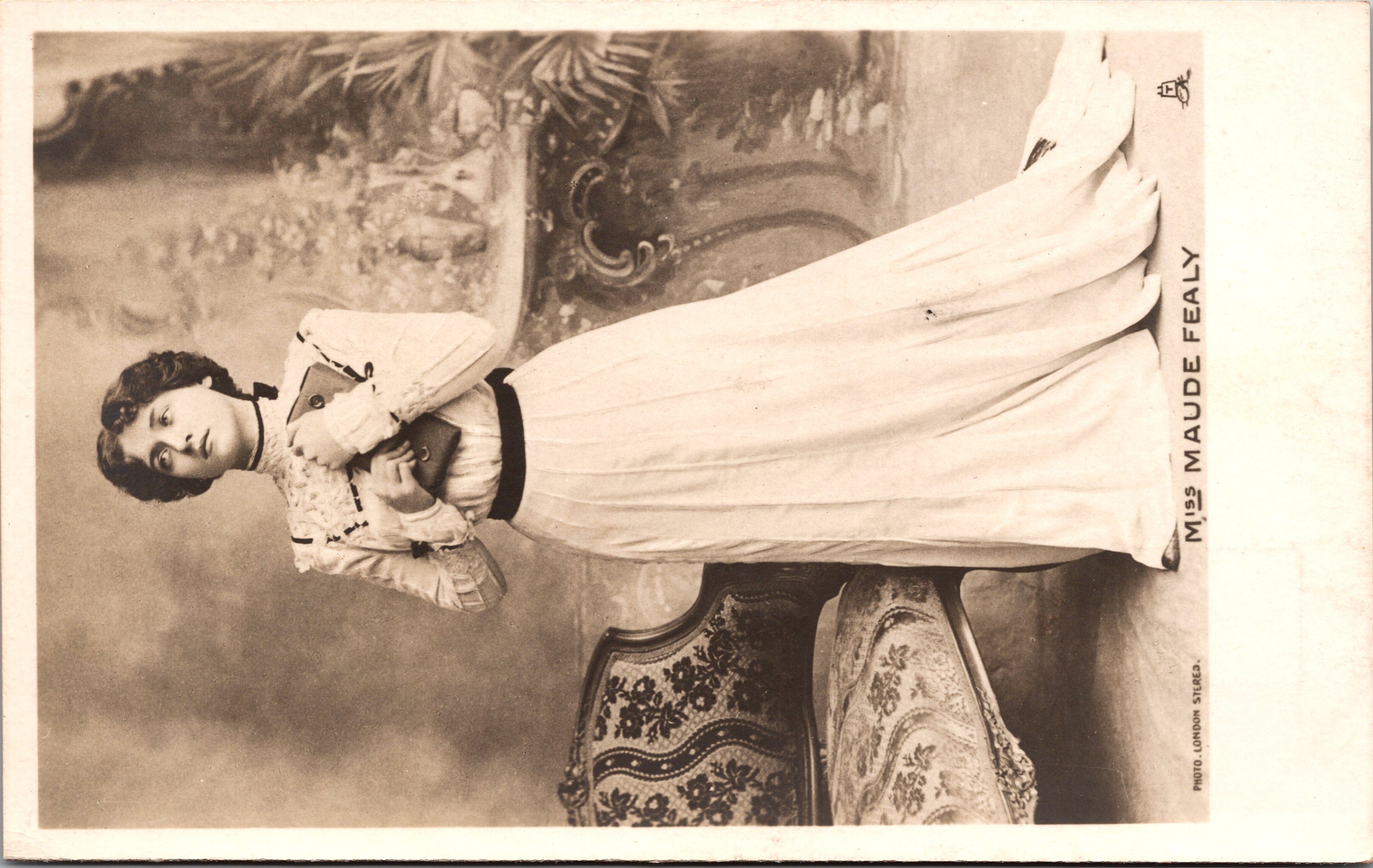
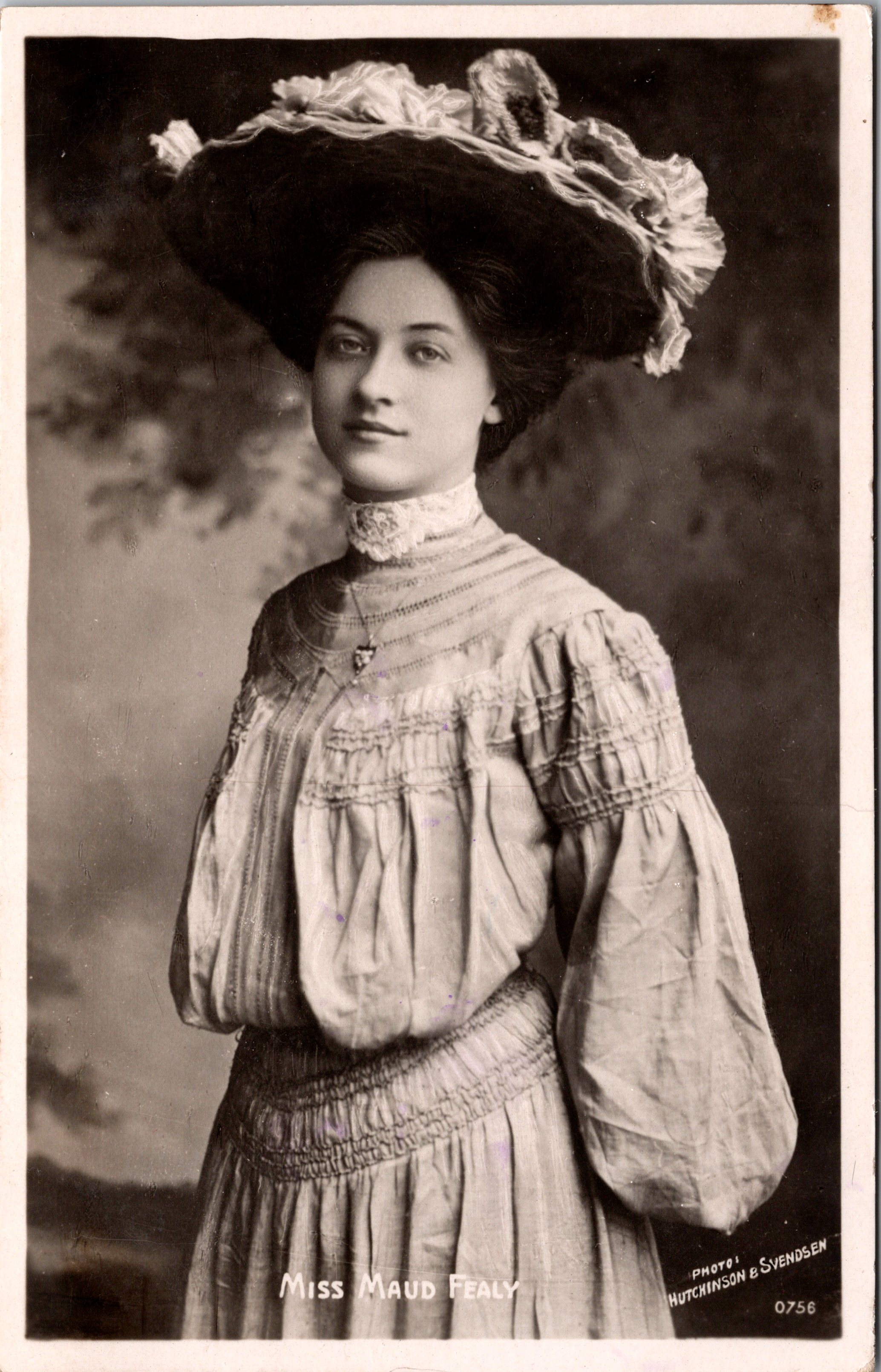
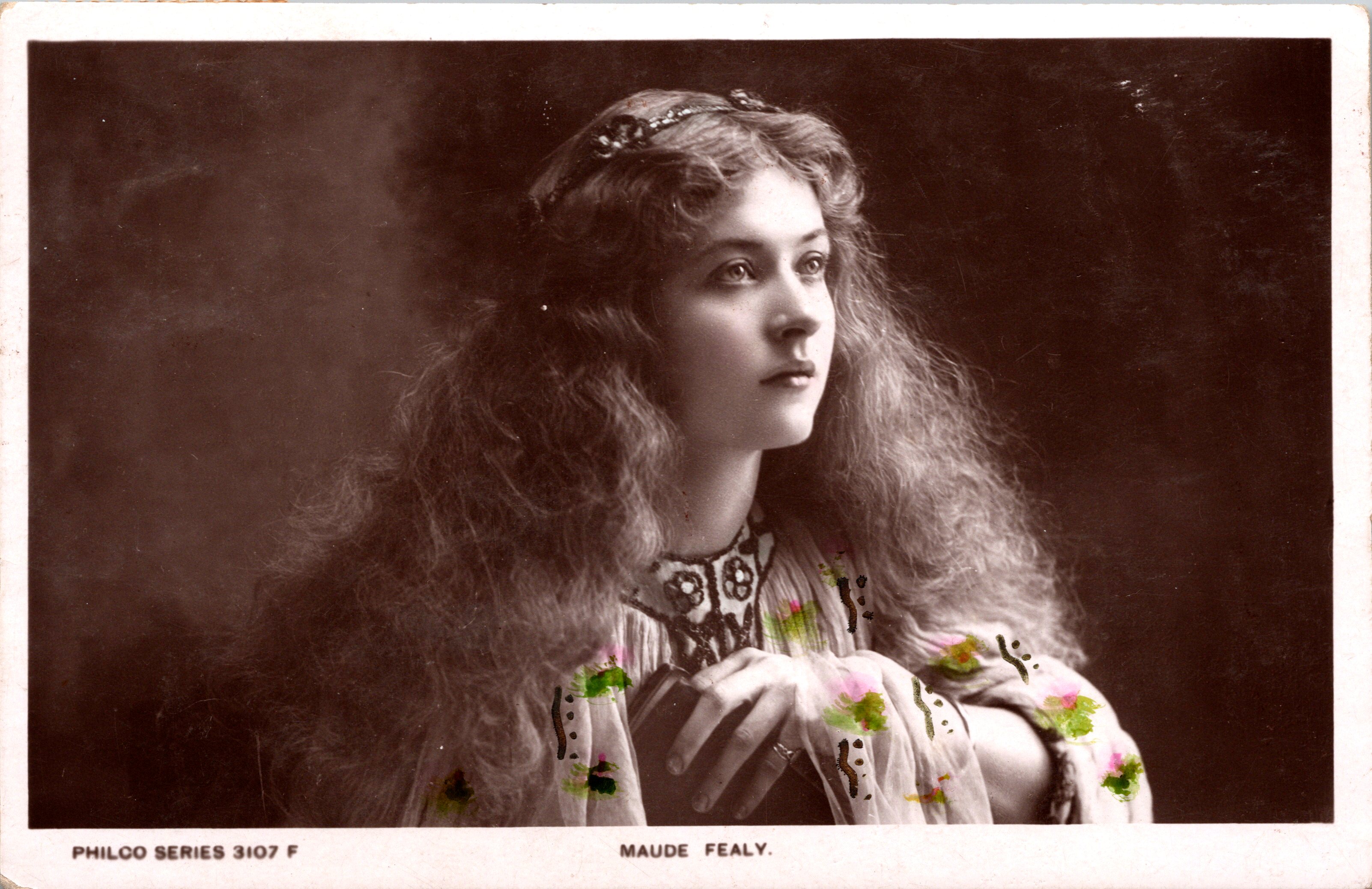
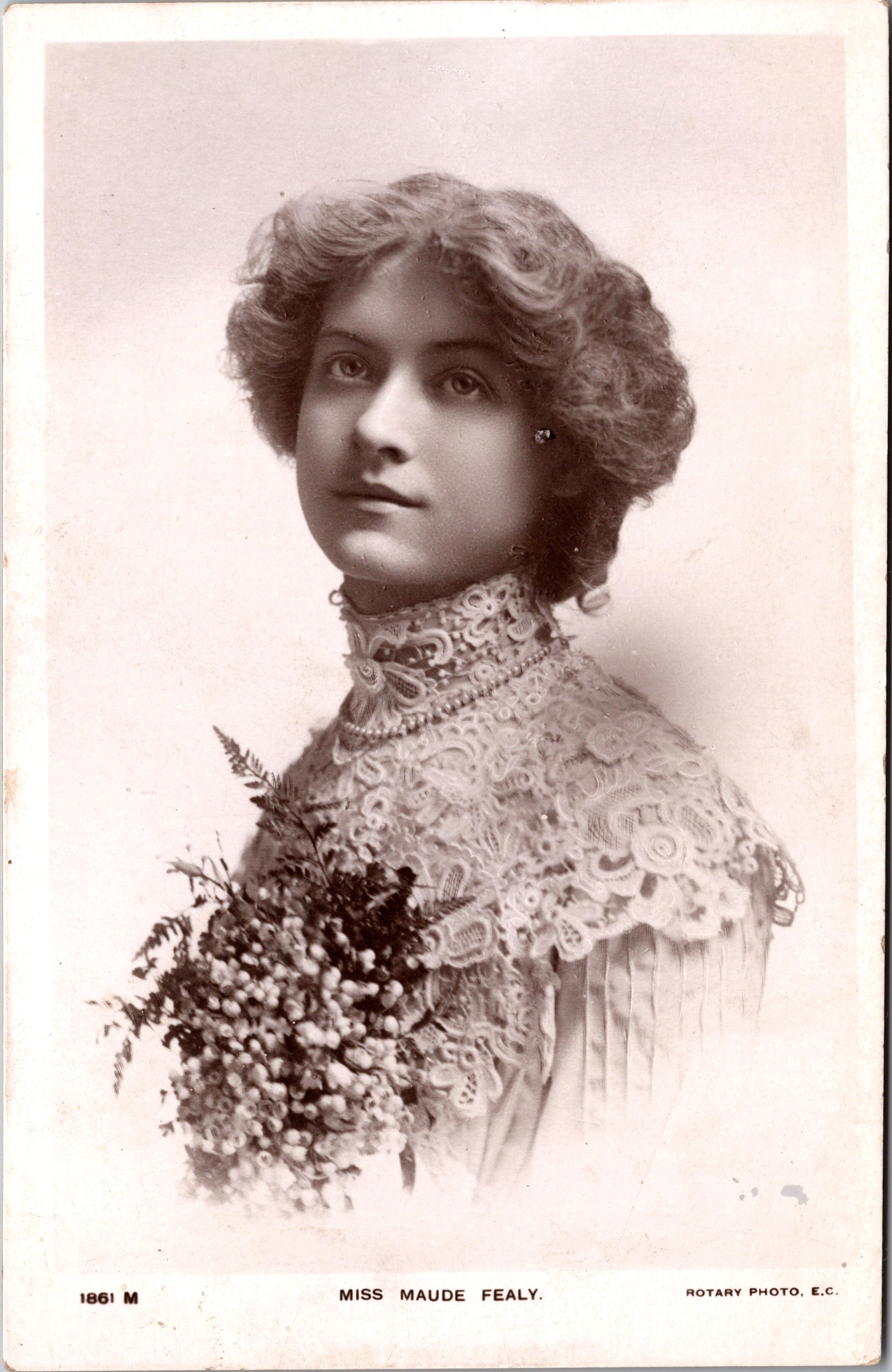
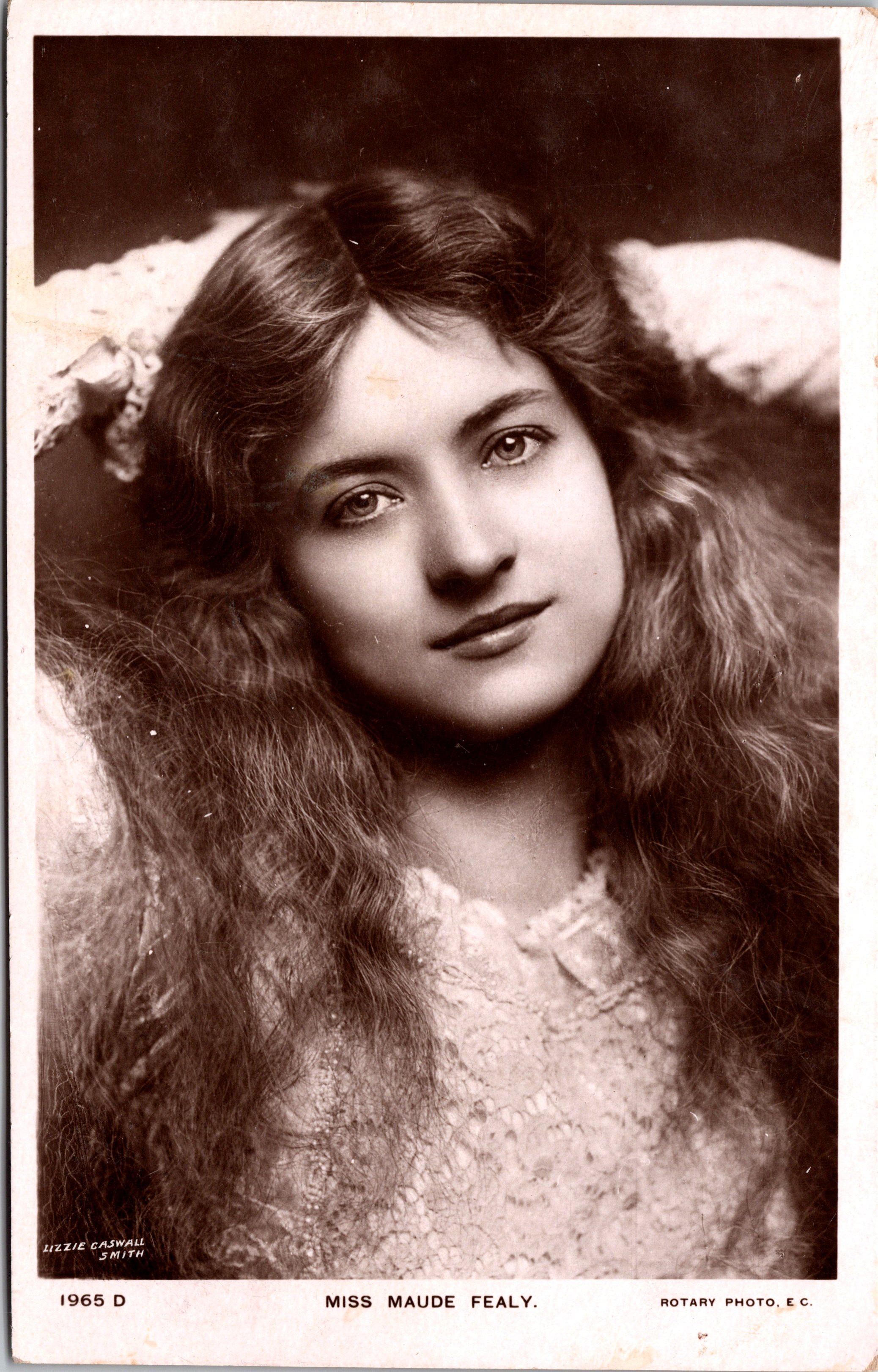
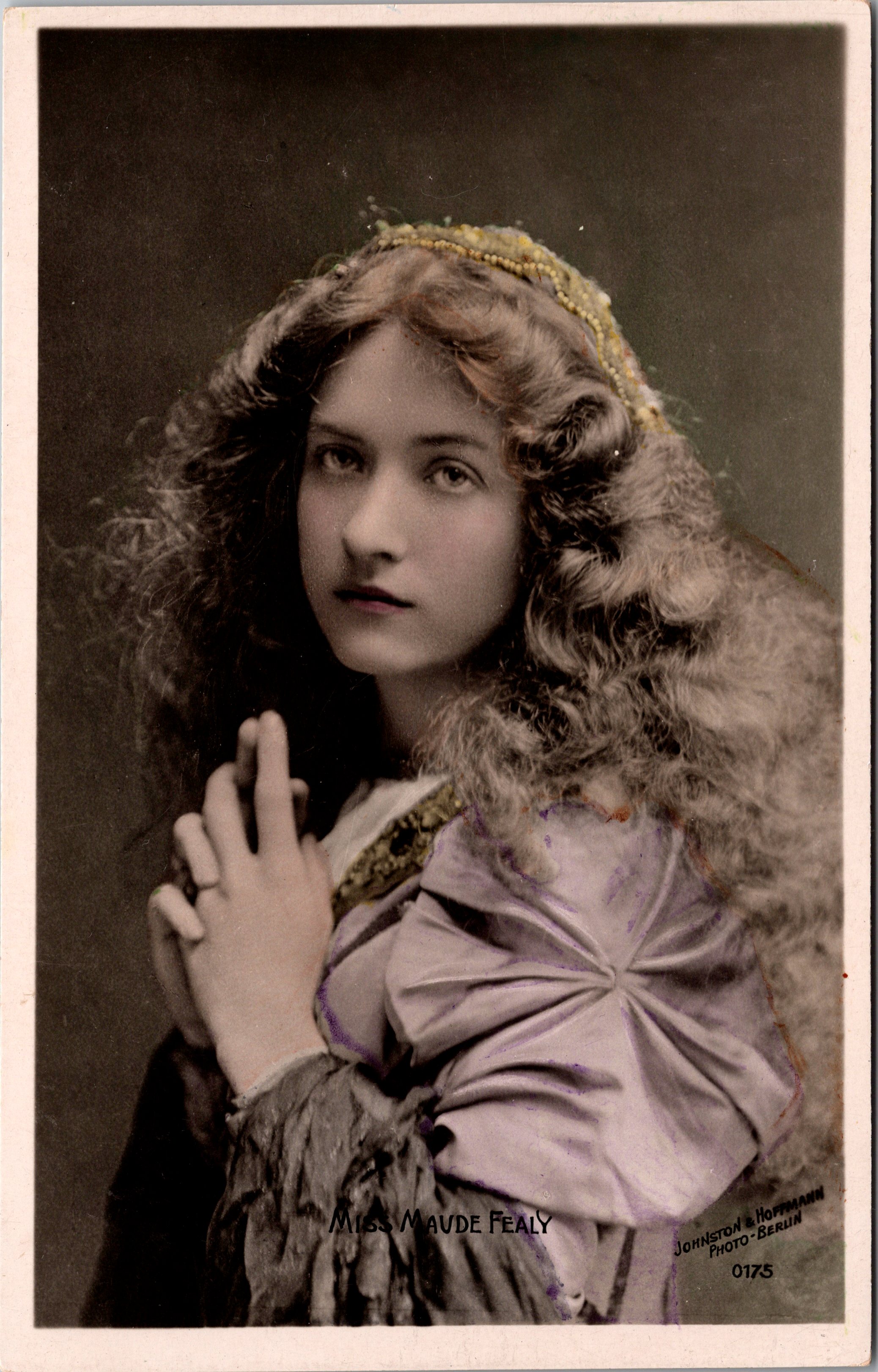
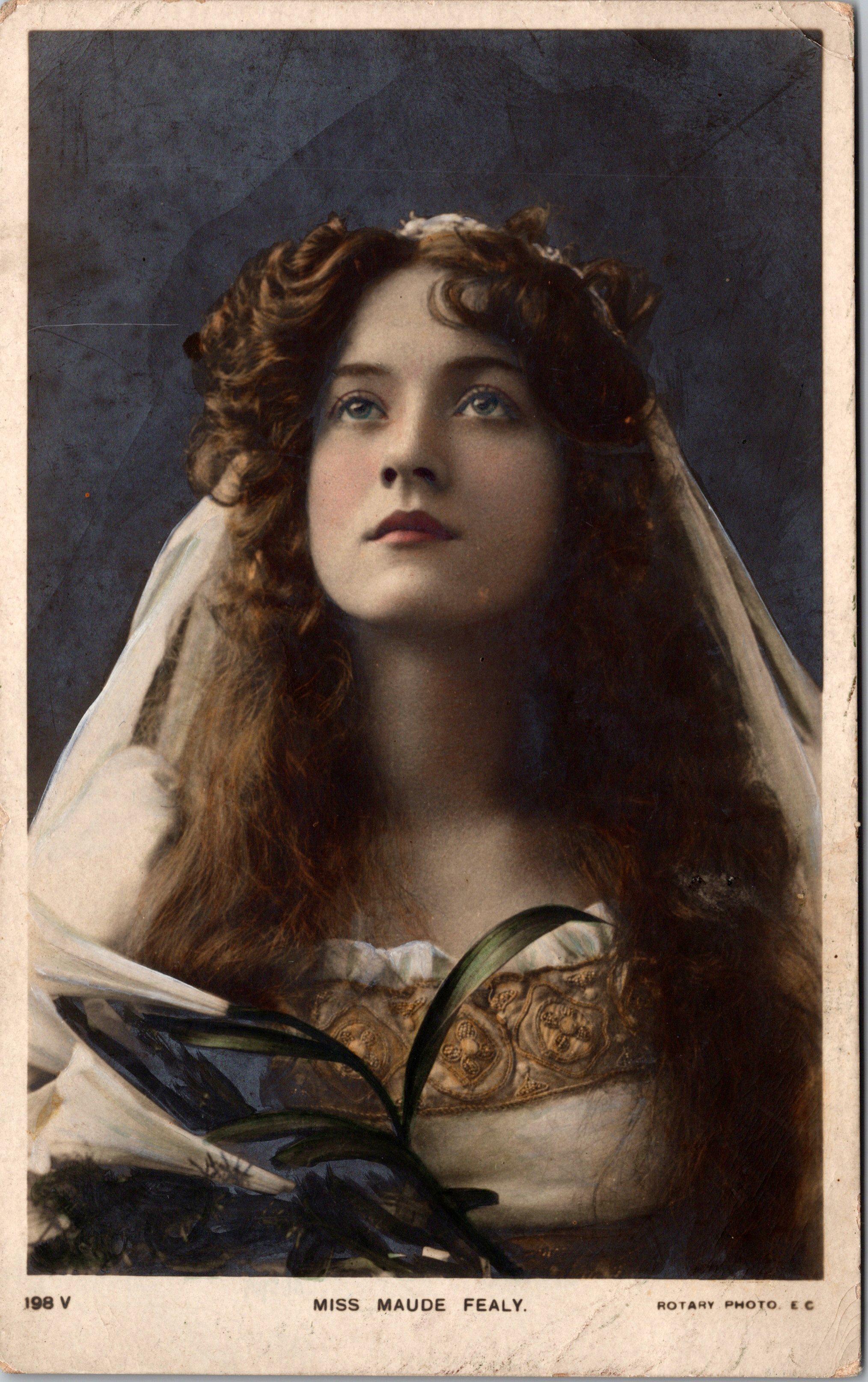
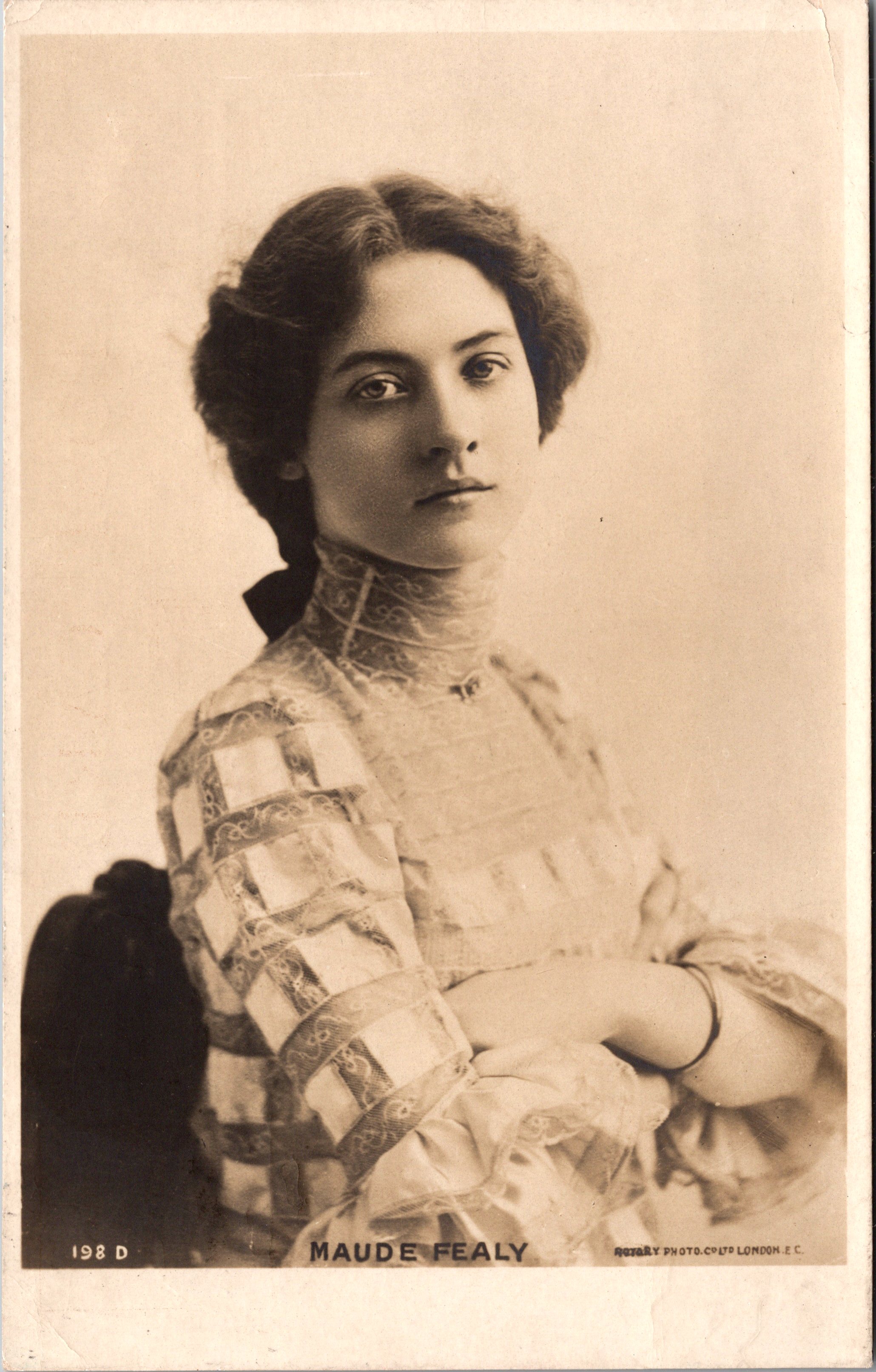
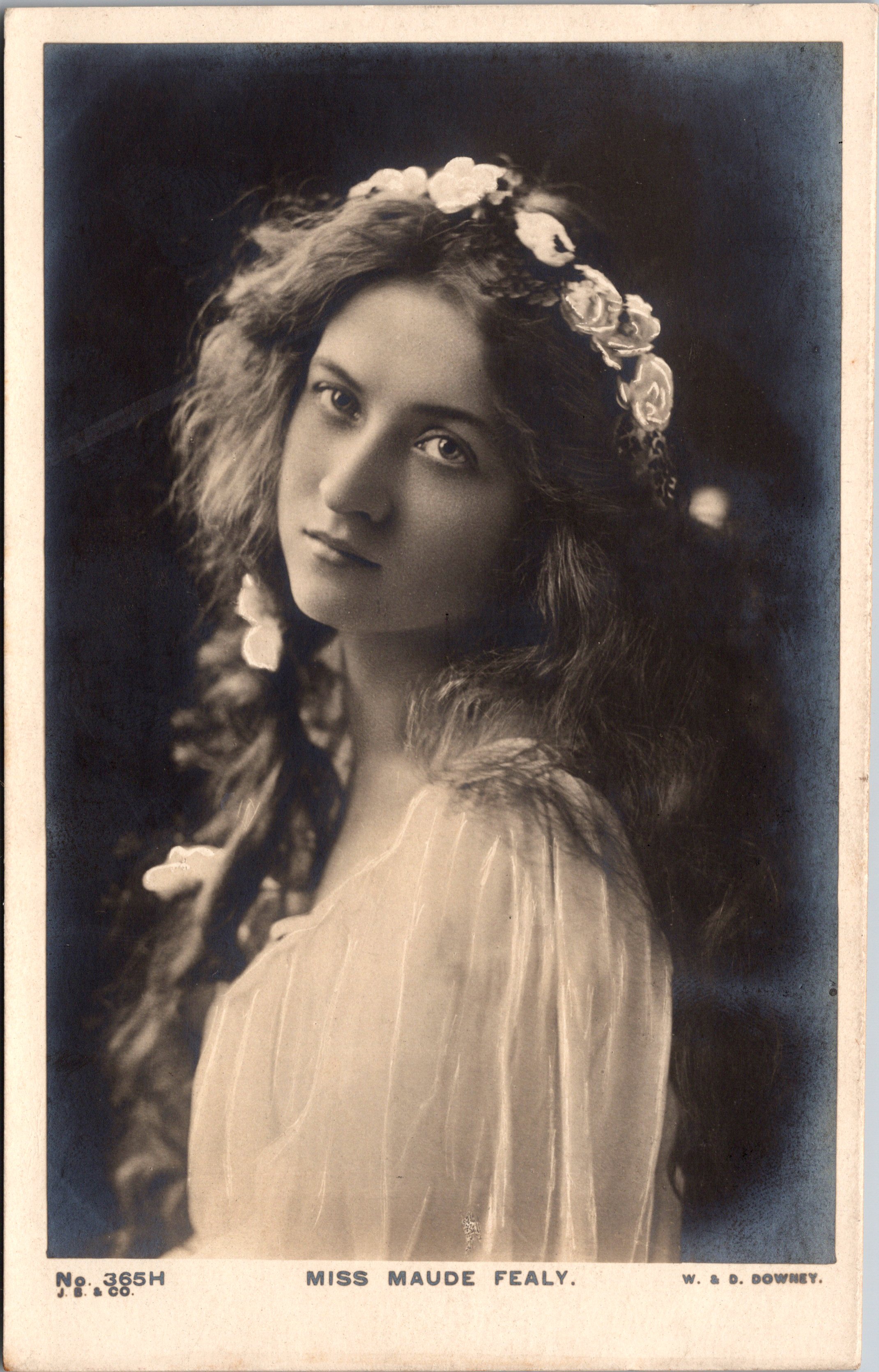
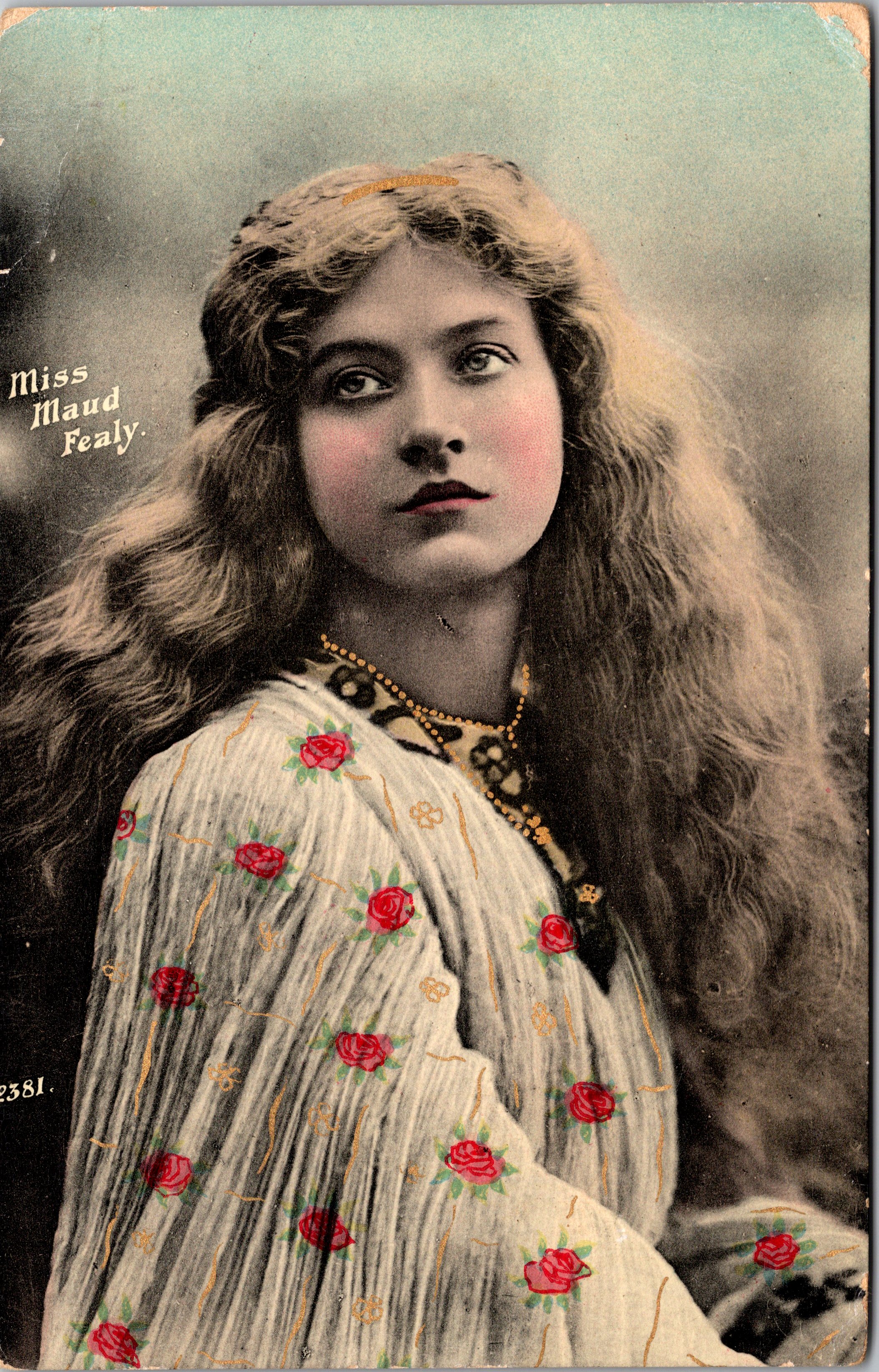
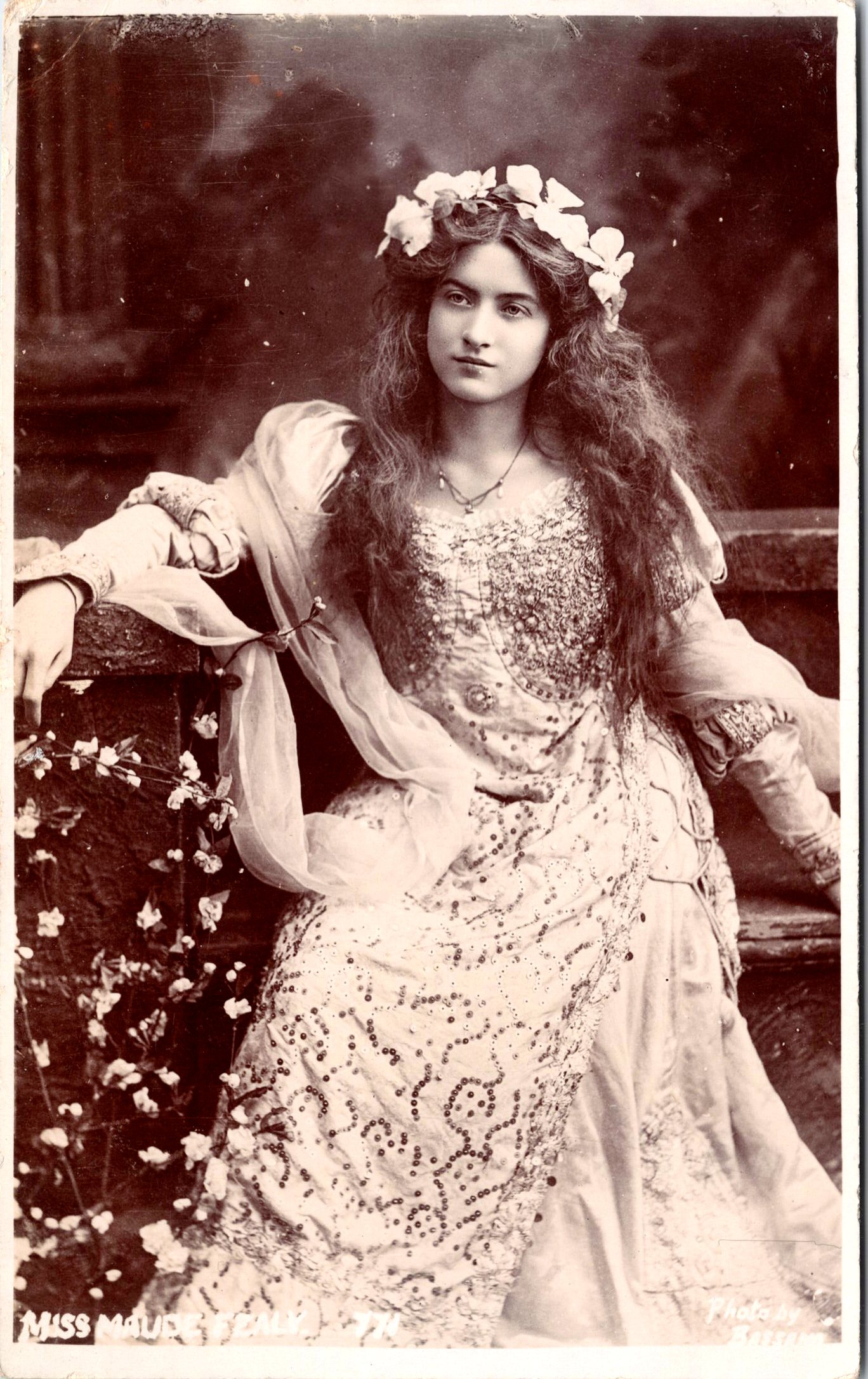
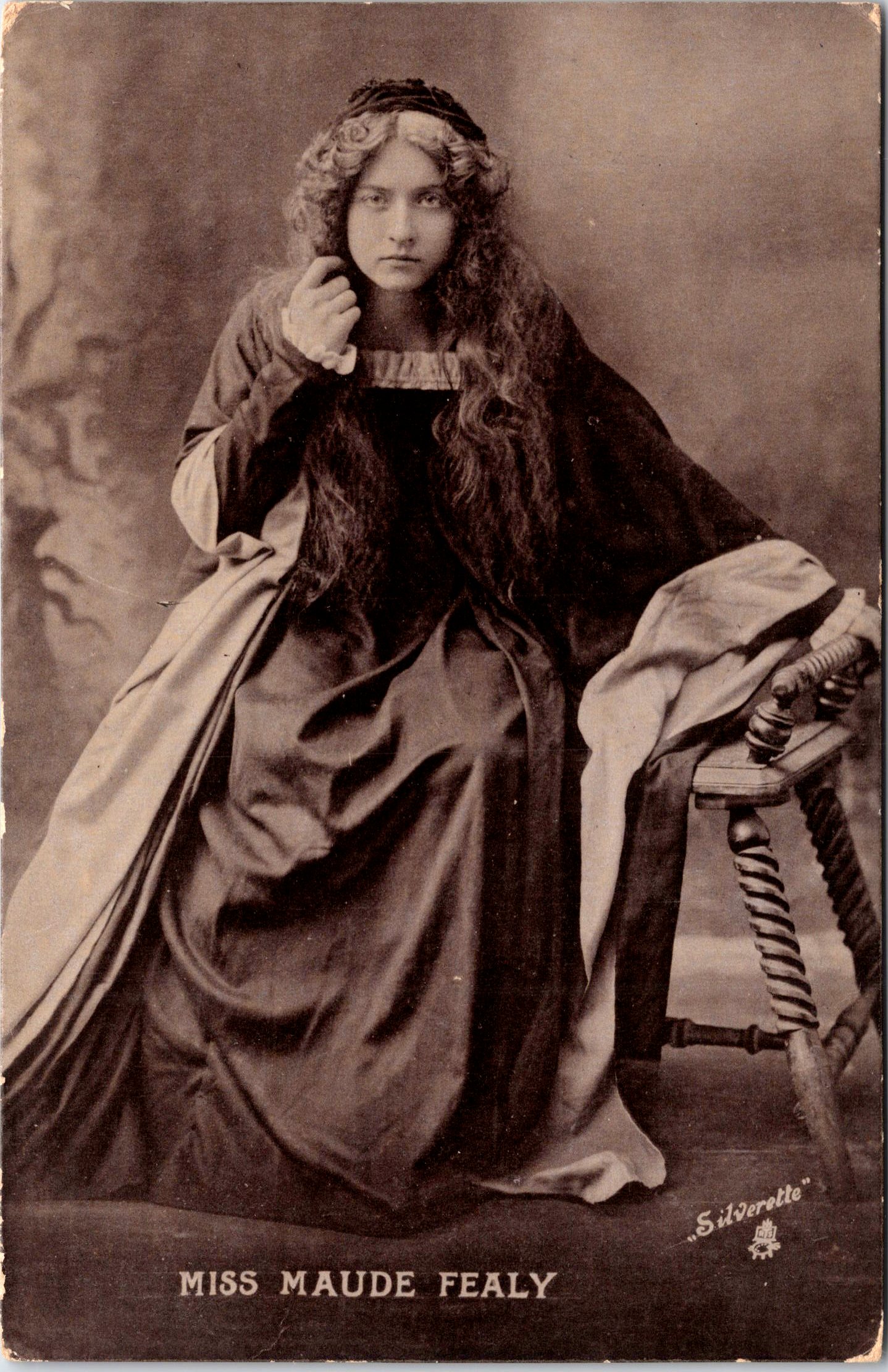
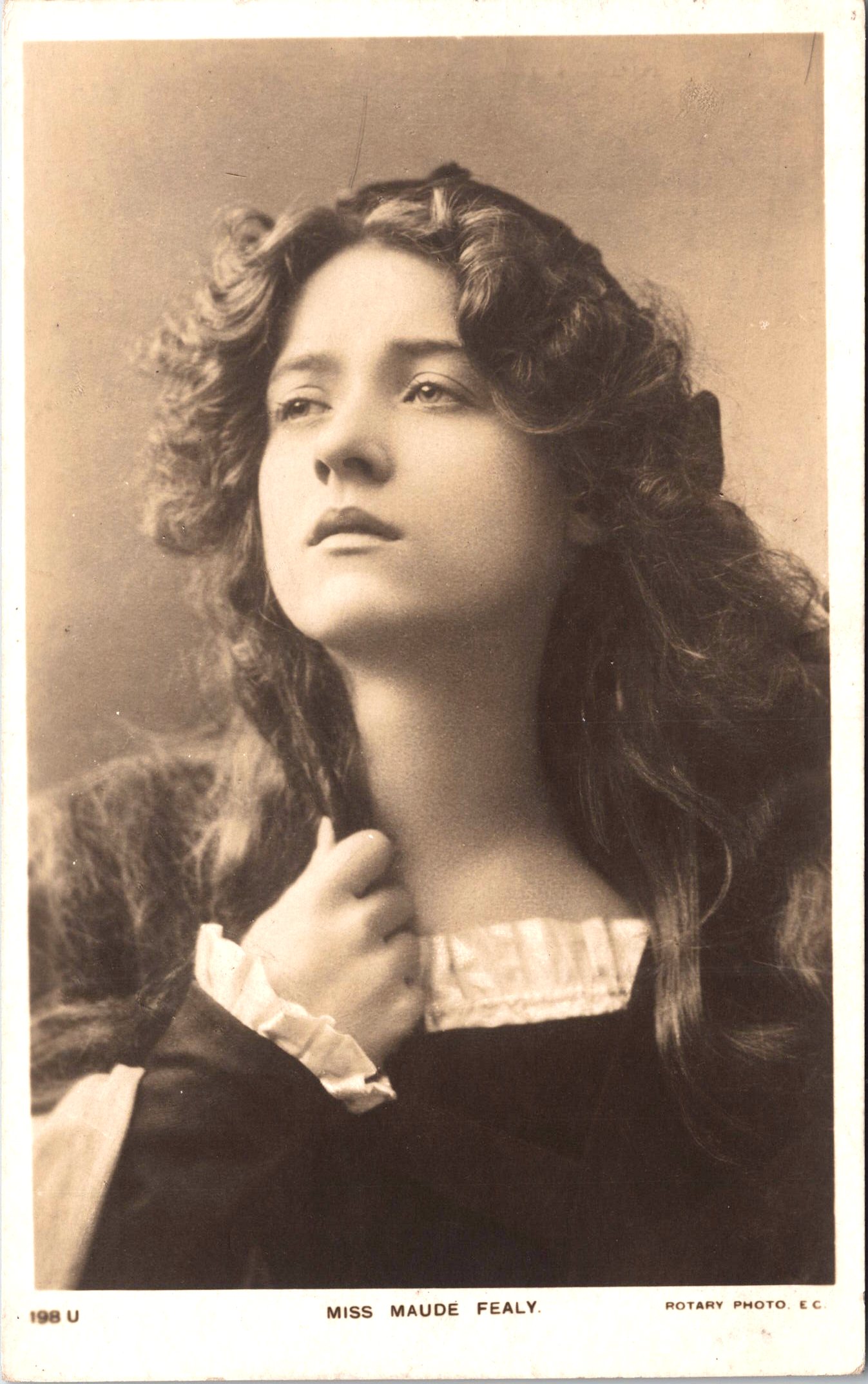
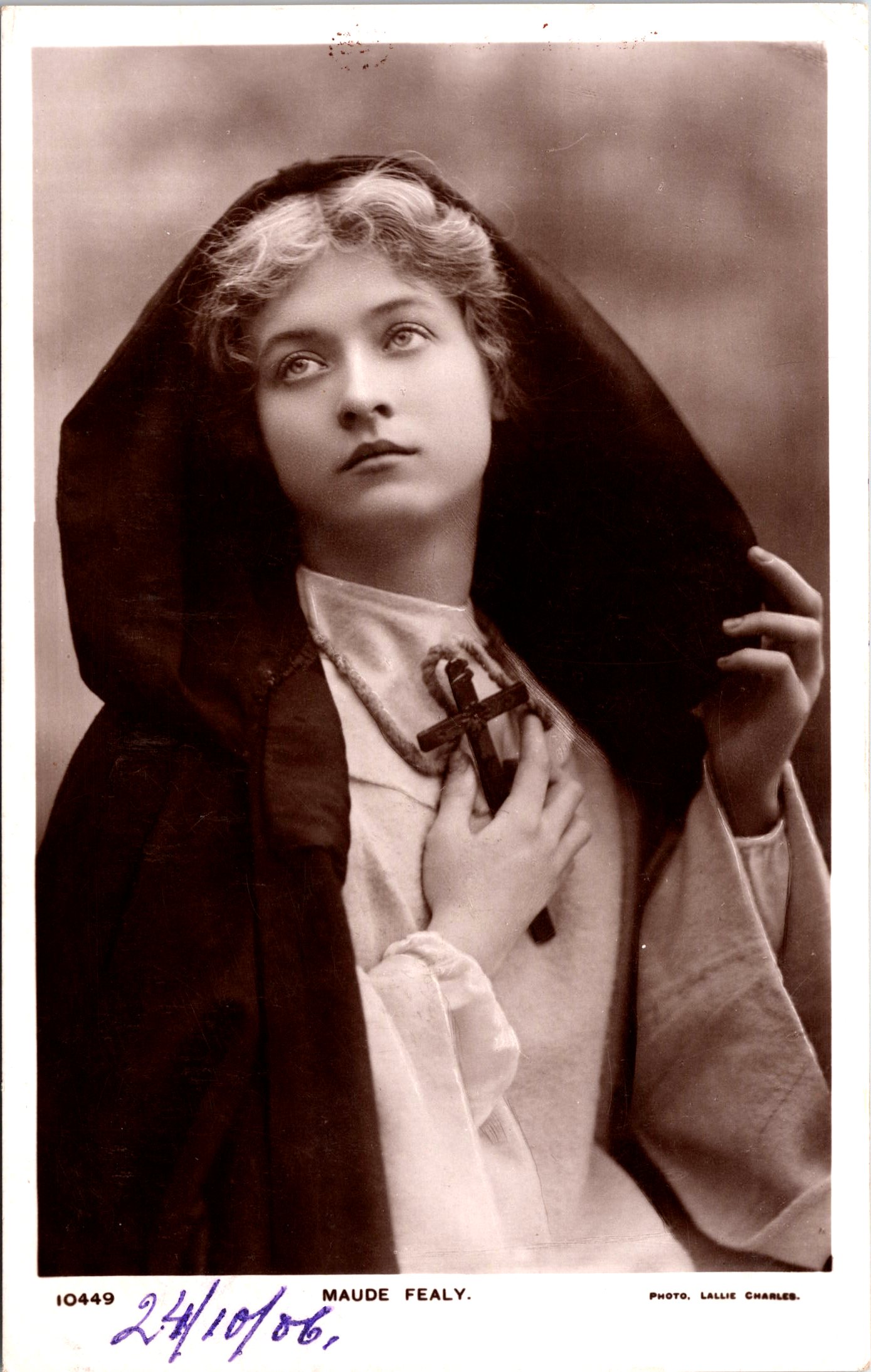
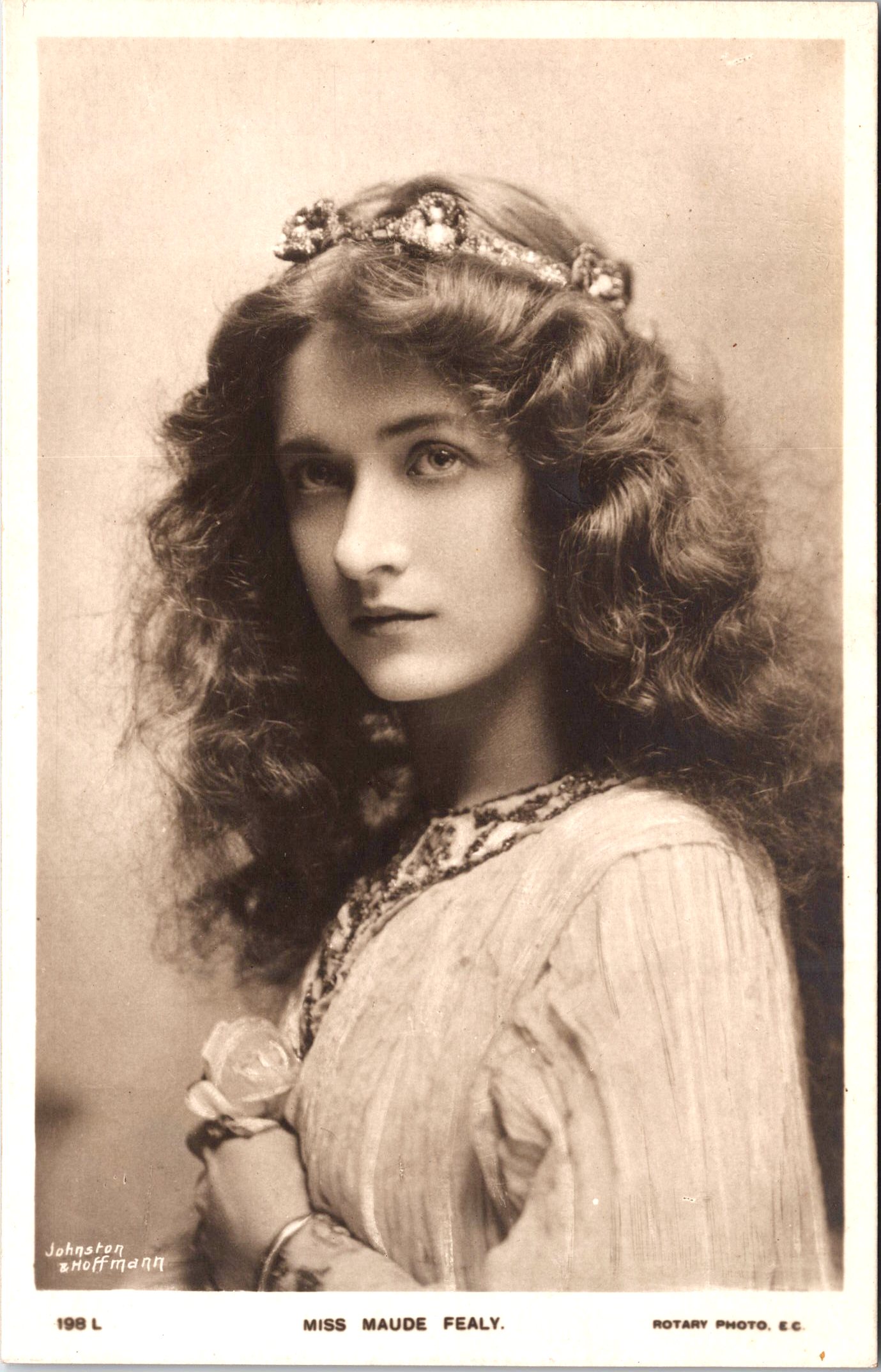
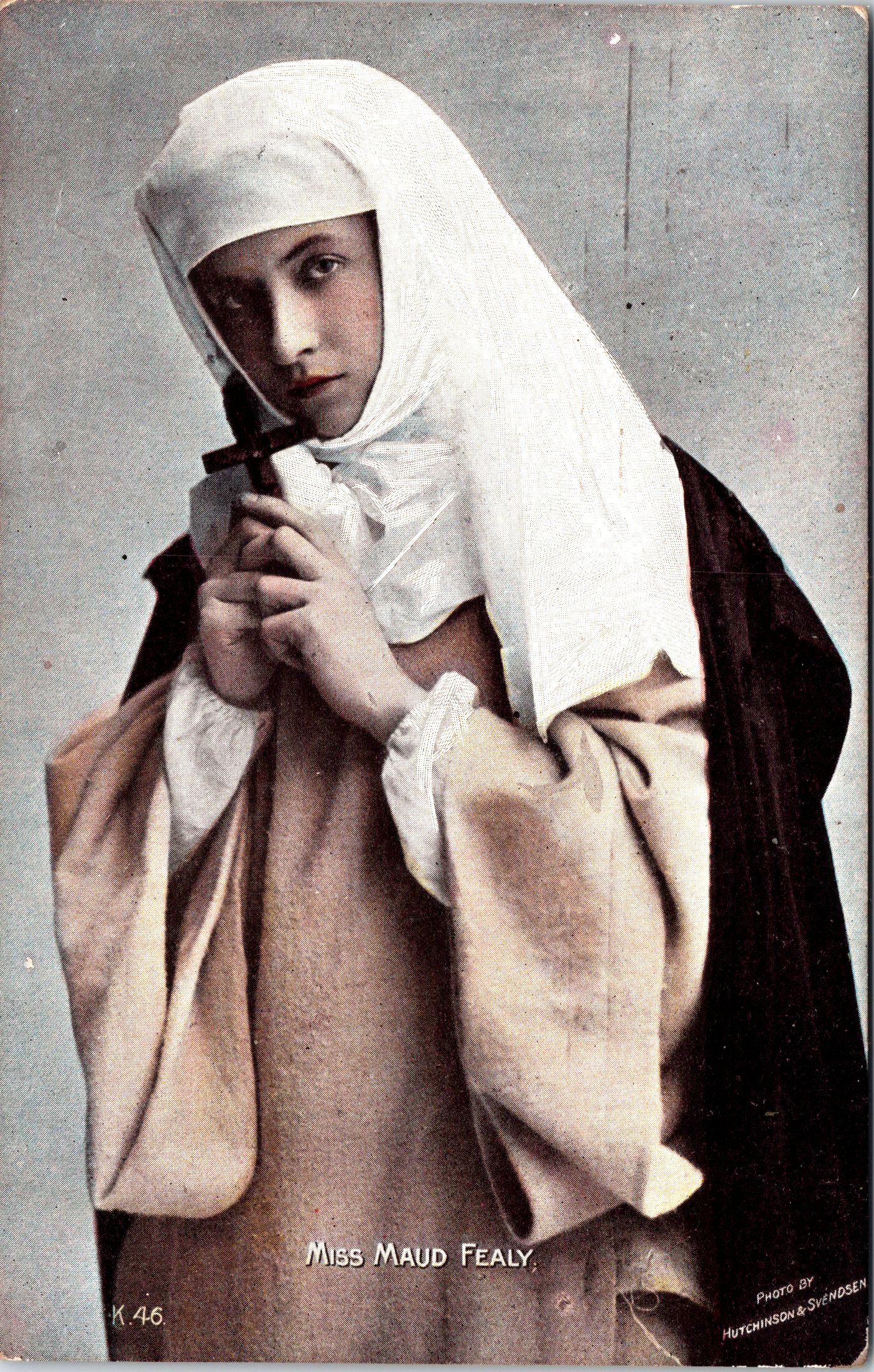
This vintage real photo postcard features American stage and silent and sound film actress, Maude Fealy (1883-1971). Maude was born in Memphis, Tennessee. Her mother was an actress and acting coach. After her mother remarried, she moved to Colorado where Maude called home for much of her life. She made her stage debut at the age of three. she performed at the Elitch Theater numerous times during her childhood. In 1905 she began to be the featured actress in a number of productions. She worked alongside stock player Cecil B DeMille and the pair developed a friendship that lasted many decades. In fact, he cast her in his film “The Ten Commandments” (1956). This postcard illustrates Miss Fealy’s beauty. Her photo postcards were very popular and collectable during her era, as well as today.
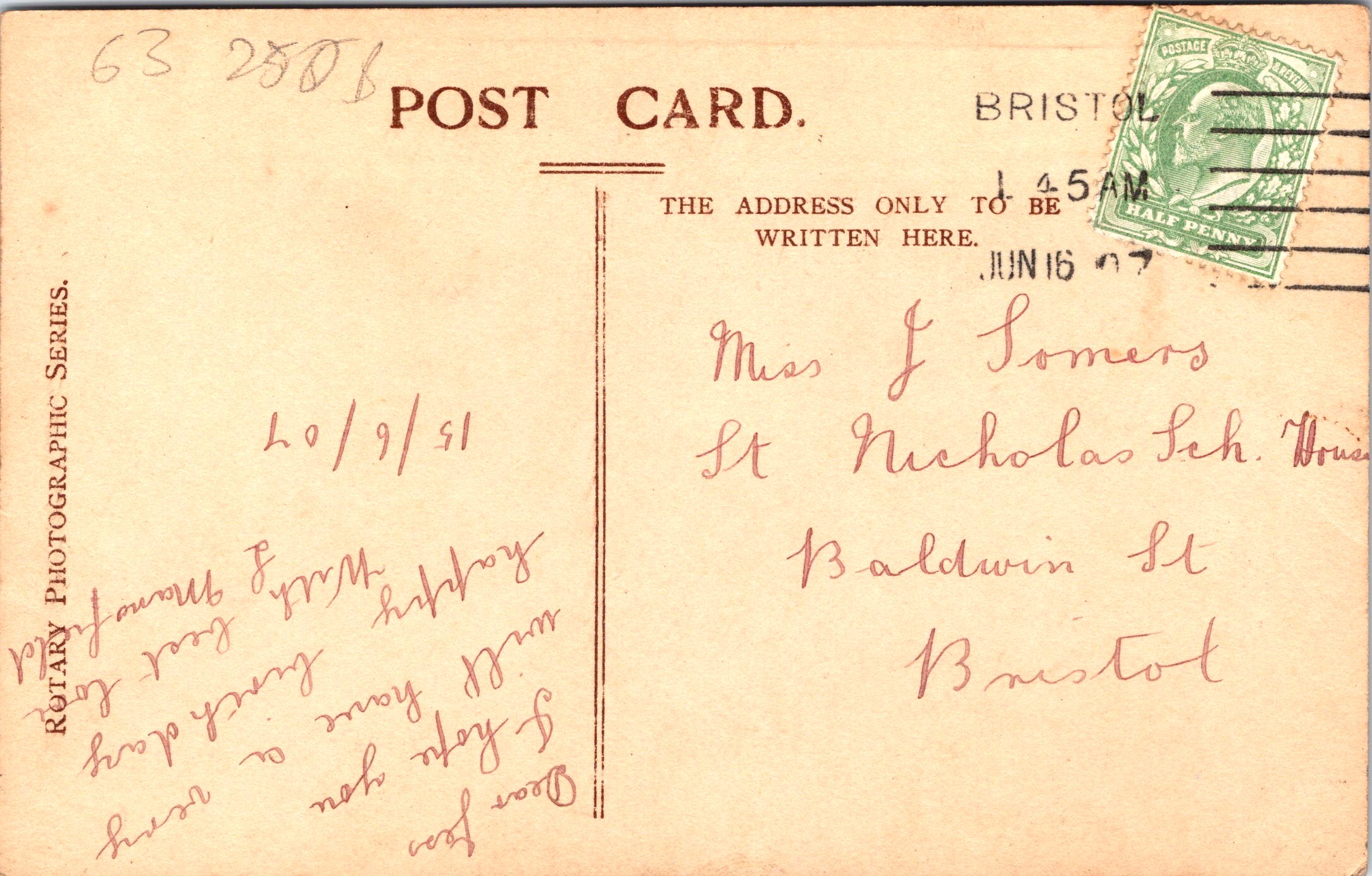
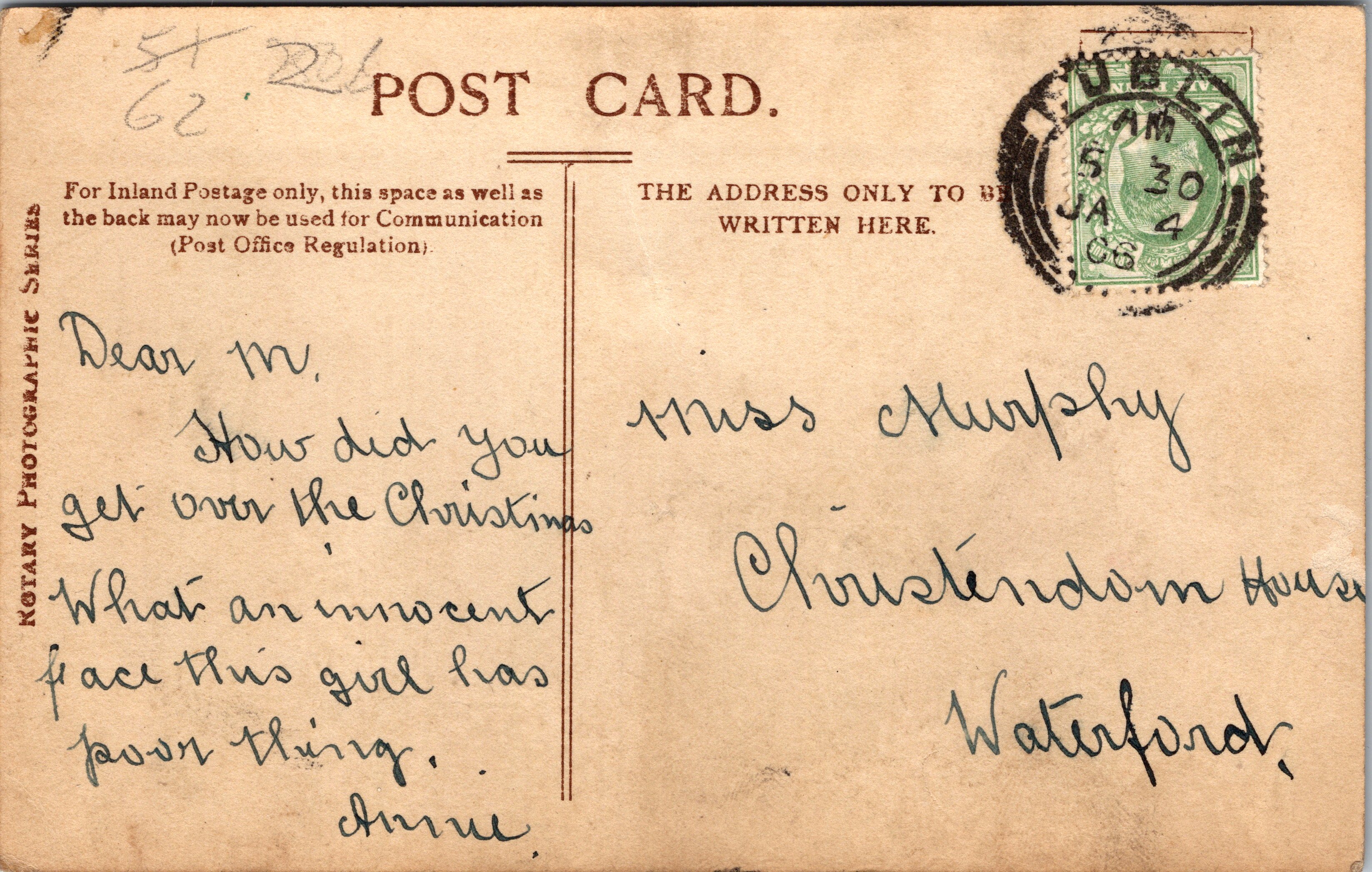
Postcard 1 is uncommon. The card was published by Rotary Photo as part of a series (no.1965J), The postcard is of British origin. Note that this postcard is hand tinted and postmarked in Dublin (1906). The card has an interesting message. The writer proclaims “What an innocent face this girl has. Poor thing”. Since when is “innocence” something to pity? (SOLD)
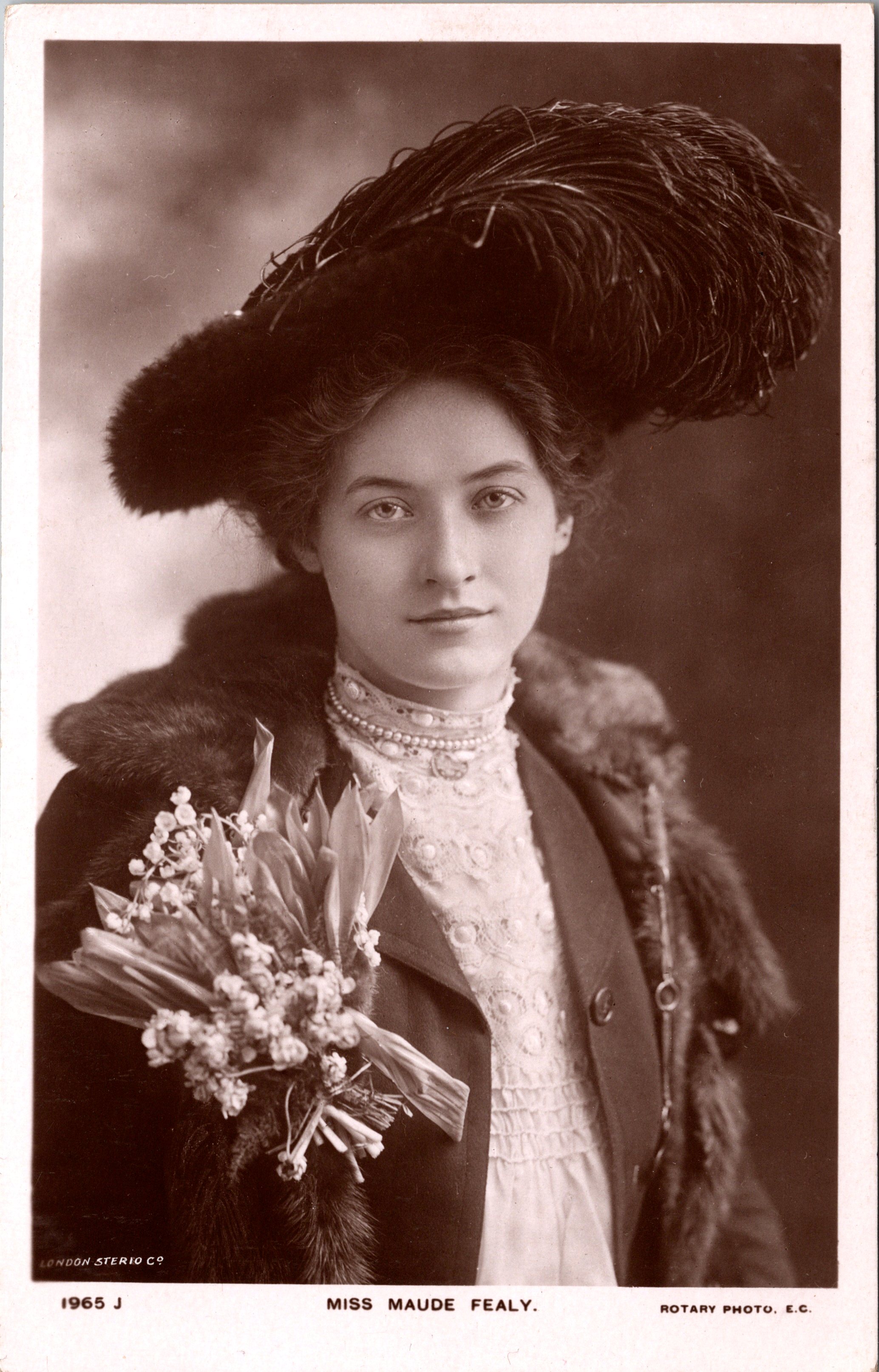
Postcard 2 demonstrates that Miss Fealy was fashionable and quite beautiful. Her photo postcards were very popular and collectable during her era, as well as today. This particular postcard is rare. The portrait for this postcard was taken by the London Stereo Company. The card was published by Rotary Photo as part of a series (no.1965J), The postcard is of British origin. (SOLD)
Postcard 3 was published by Davidson Brothers as part of a series (no.1378), The postcard is of British origin and demonstrates that Maude Fealy was fashionable as well as beautiful. (SOLD)
Postcard 4 is uncommon. The card was published by Raphael Tuck in 1904 as part of the “Stage Favorites: series (no.5058), The postcard is of British origin. (SOLD)
Postcard 5 is rare. The card was published by Rotary Photo as part of a series (no.1928C), The postcard is of British origin. (SOLD)
Postcard 6 is rare. The card was published by Germany’s Rotophot (no.0756). (SOLD)
Postcard 7 was published by Philco as part of a series (no.3107F). The card is beautifully hand colored. The postcard is of British origin. The postcard was postmarked in 1907. (SOLD)
Postcard 8 was published by Rotary Photo as part of a series (no.1861M), This particular card is rare. The postcard has a 1905 postmark and is of British origin. (SOLD)
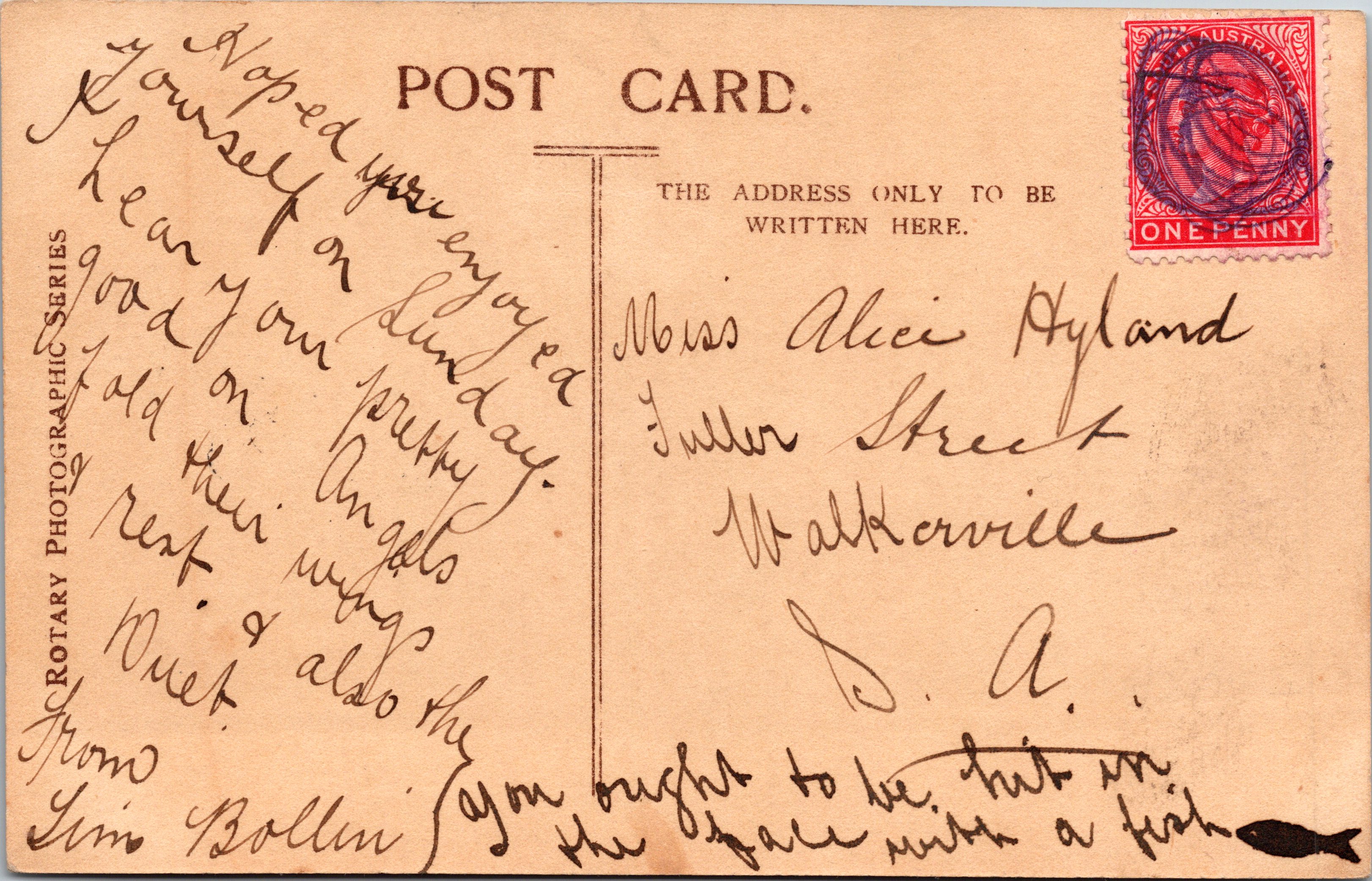
Postcard 9 has a notable message. The card was written from a man to a woman. The last line of the gentleman’s note states “You ought to be hit in the face with a fish”. He topped it off by drawing a fish at the end of the sentence. He certainly must have been joking but the comment is quite odd by today’s standards. The card was published by Rotary Photo as part of a series (no.1965D). (SOLD)
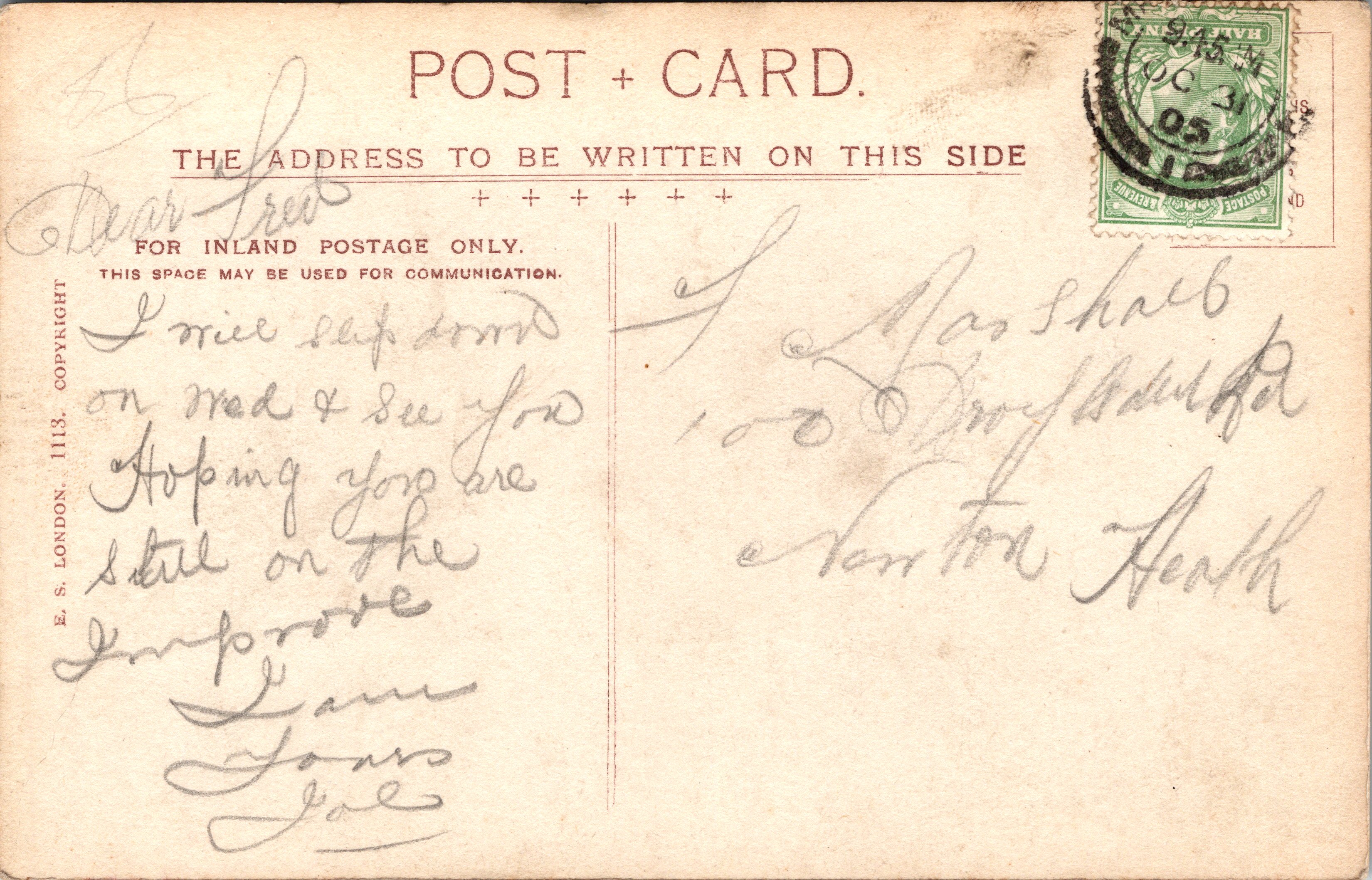
Postcard 10 is uncommon. The card was published by E. S. London as part of a series (no.1113). (SOLD)
Postcard 11 is rare. The card was published by RotoPhot as part of a series (no.0175). The card is beautifully hand colored. (SOLD)
Postcard 12 is uncommon and the card was published by Rotary Photo as part of a series (no.198 V)), The message on this postcard is an Easter greeting.
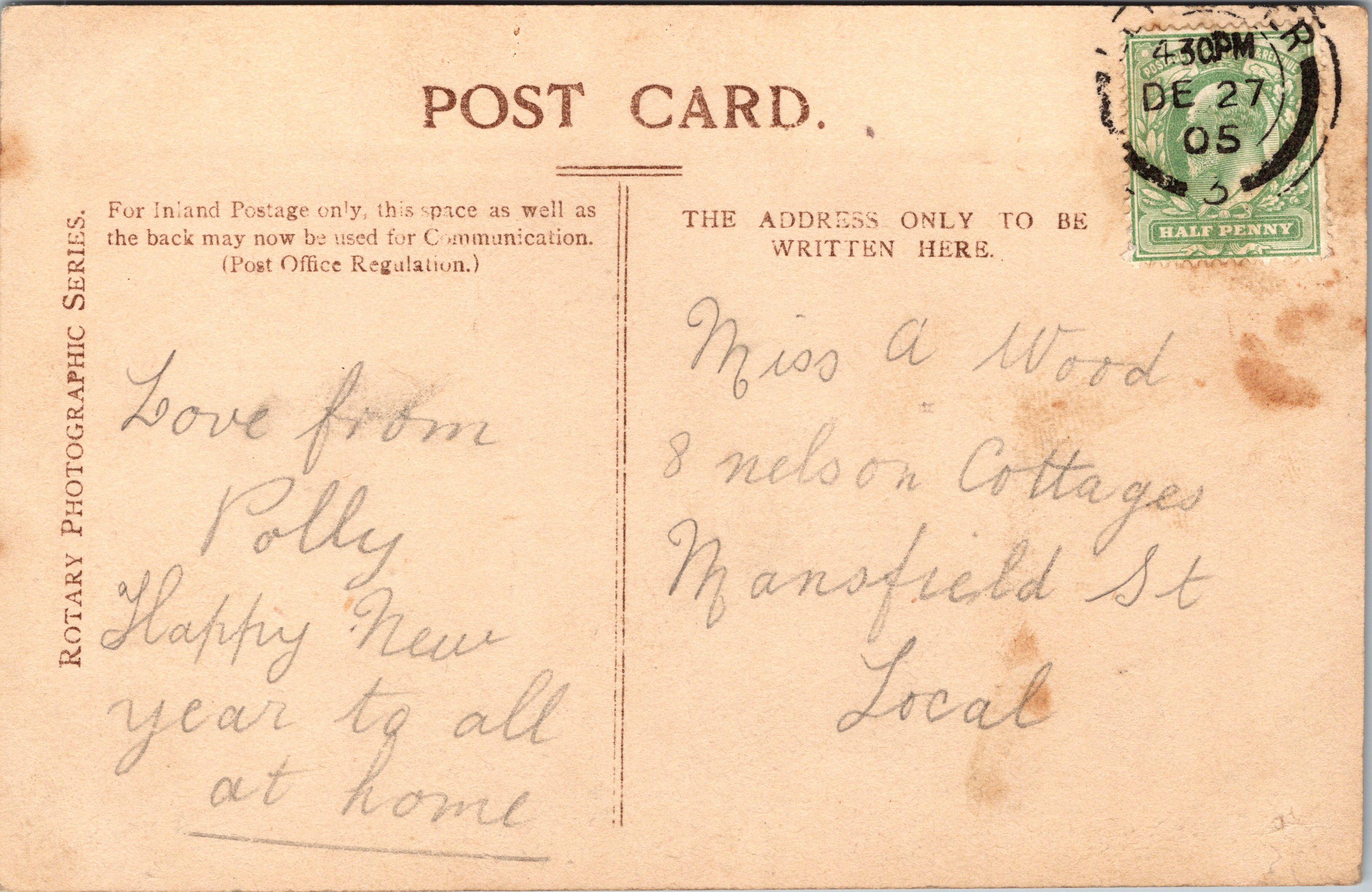
Postcard 13 demonstrates that Miss Fealy was fashionable and quite beautiful. Her photo postcards were very popular and collectable during her era, as well as today. This card has a 1904 postmark.It was published by Rotary Photo as part of a series (no.198D), (SOLD)
Postcard 14 was published by J. Beagles 7 Co. as part of a series (no.365H). Miss Fealy’s photo portrait was taken by esteemed celebrity photographers, W & D Downey. The uncommon postcard is of British origin. (SOLD)
Postcard 15 was published by P. F. B. as part of a series (no.4037). P. F. B. is likely a Berlin firm named Paul Finkenrath. However, a second Berlin company named Paul Fink went by the inititials PFB which certainly creates some confusion among postcard collectors. This vintage postcard is uncommon. (SOLD)
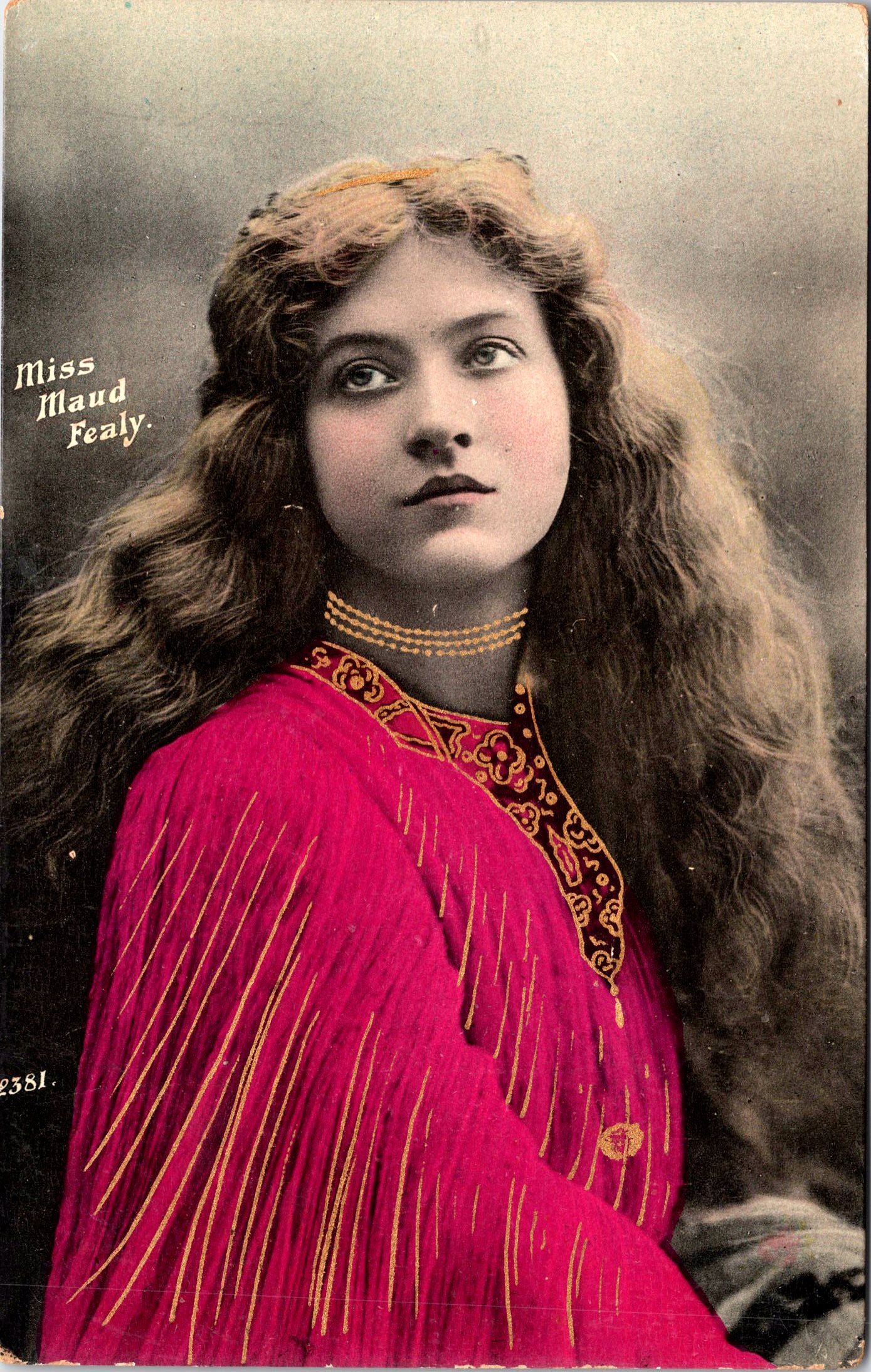
Postcard 16 was published by Rotary Photo as part of a series (no.2381). (SOLD)
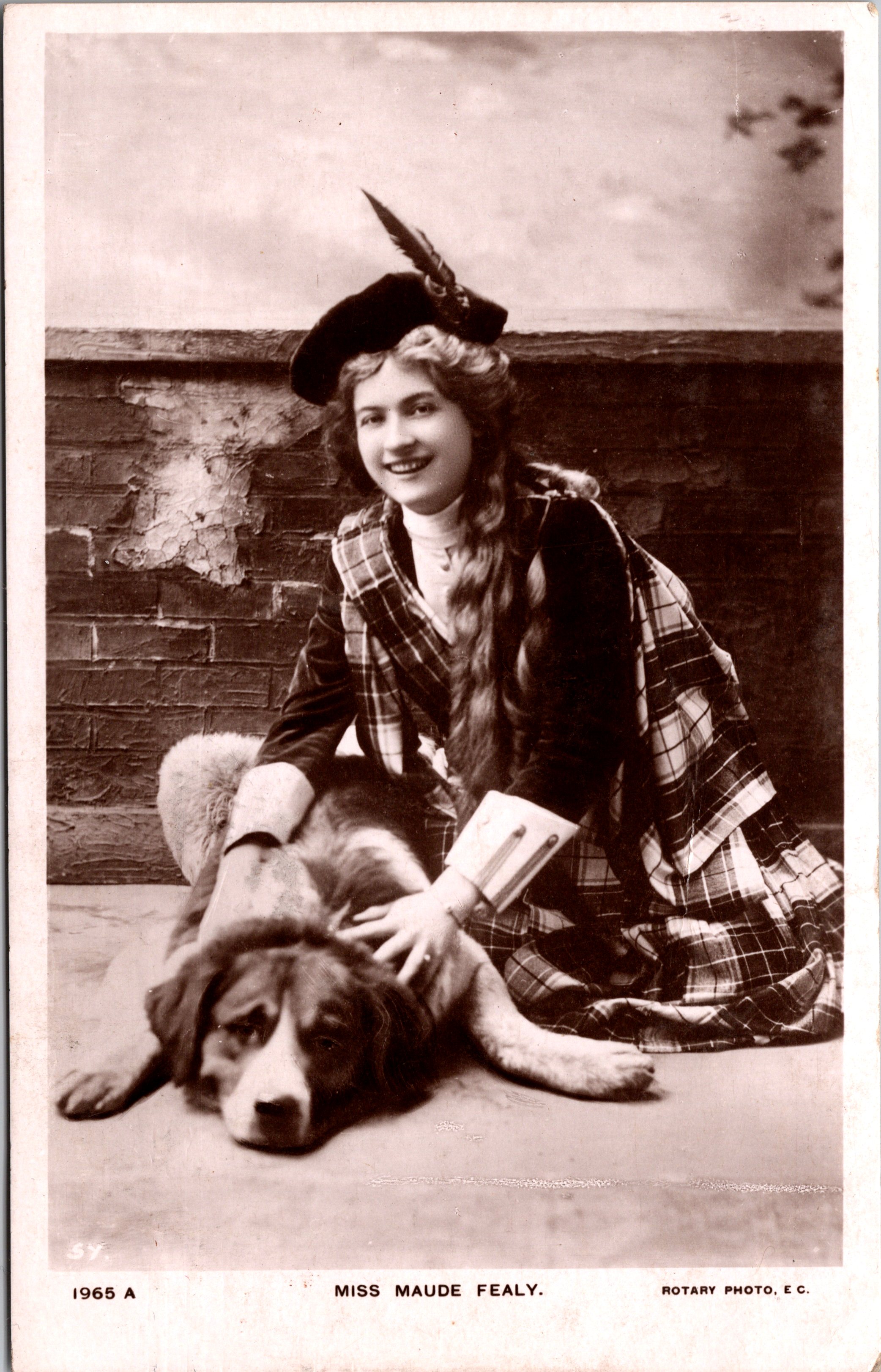
Postcard 17 is rare. The postcard offers a view of Miss Fealy petting a large dog. It appears to be some type of hound. Maude is flashing a pretty smile and is wearing a feathered hat and a plaid dress and jacket. The card was published by Rotary Photo as part of a series (no.1965A), The postcard is of British origin. (SOLD)
Postcard 18 is rare. The card was published by Rotary Photo as part of a series (no.1861F), The postcard is of British origin and it’s postmark is appears to be from 1906. (SOLD)
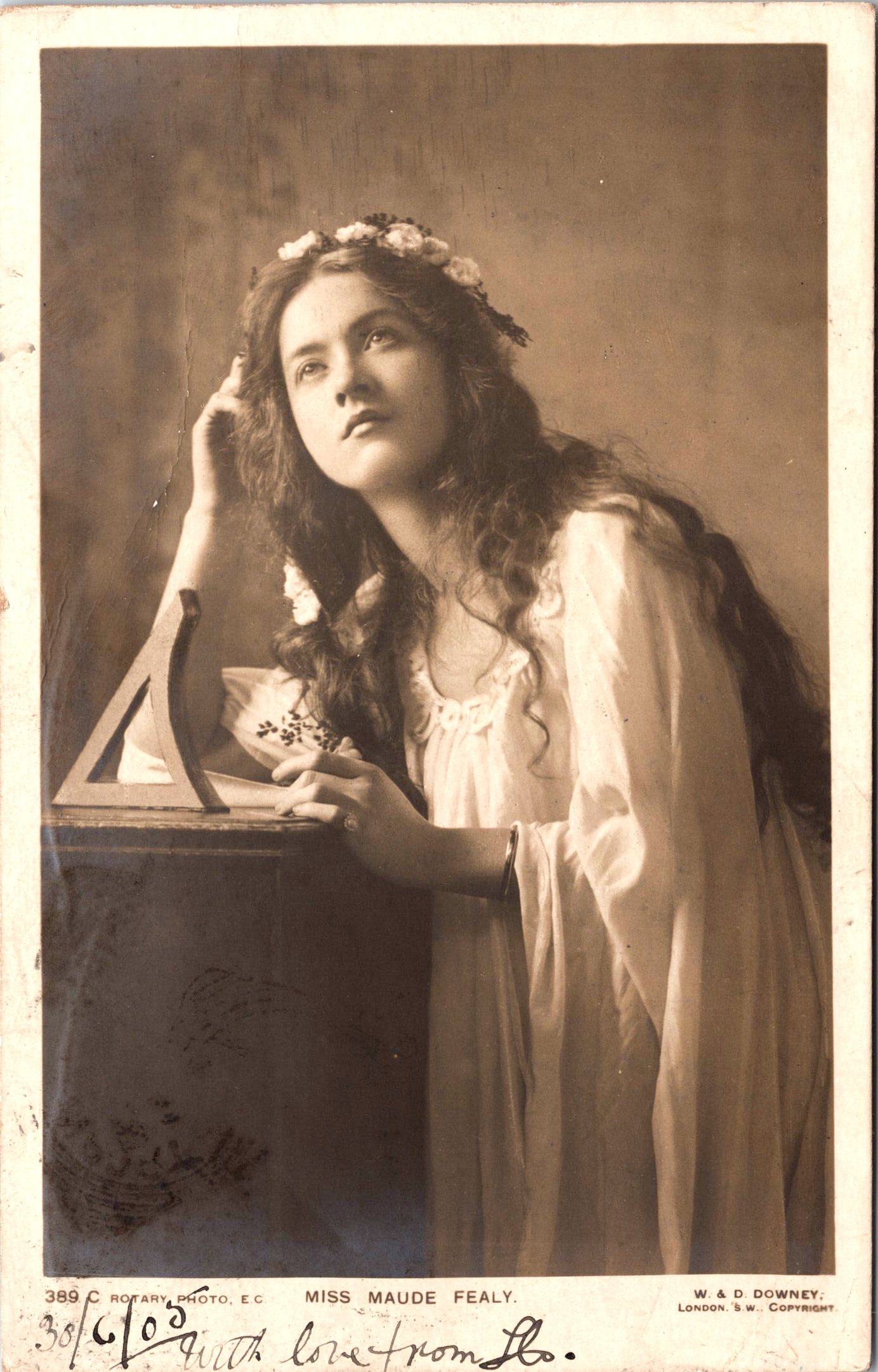
Postcard 19 is rare. The card was published by Rotary Photo as part of a series (no.389C). Miss Fealy’s photograph was taken by the esteemed W & D Downey studio. The postcard is of British origin and it’s postmark is from 1905. (SOLD)
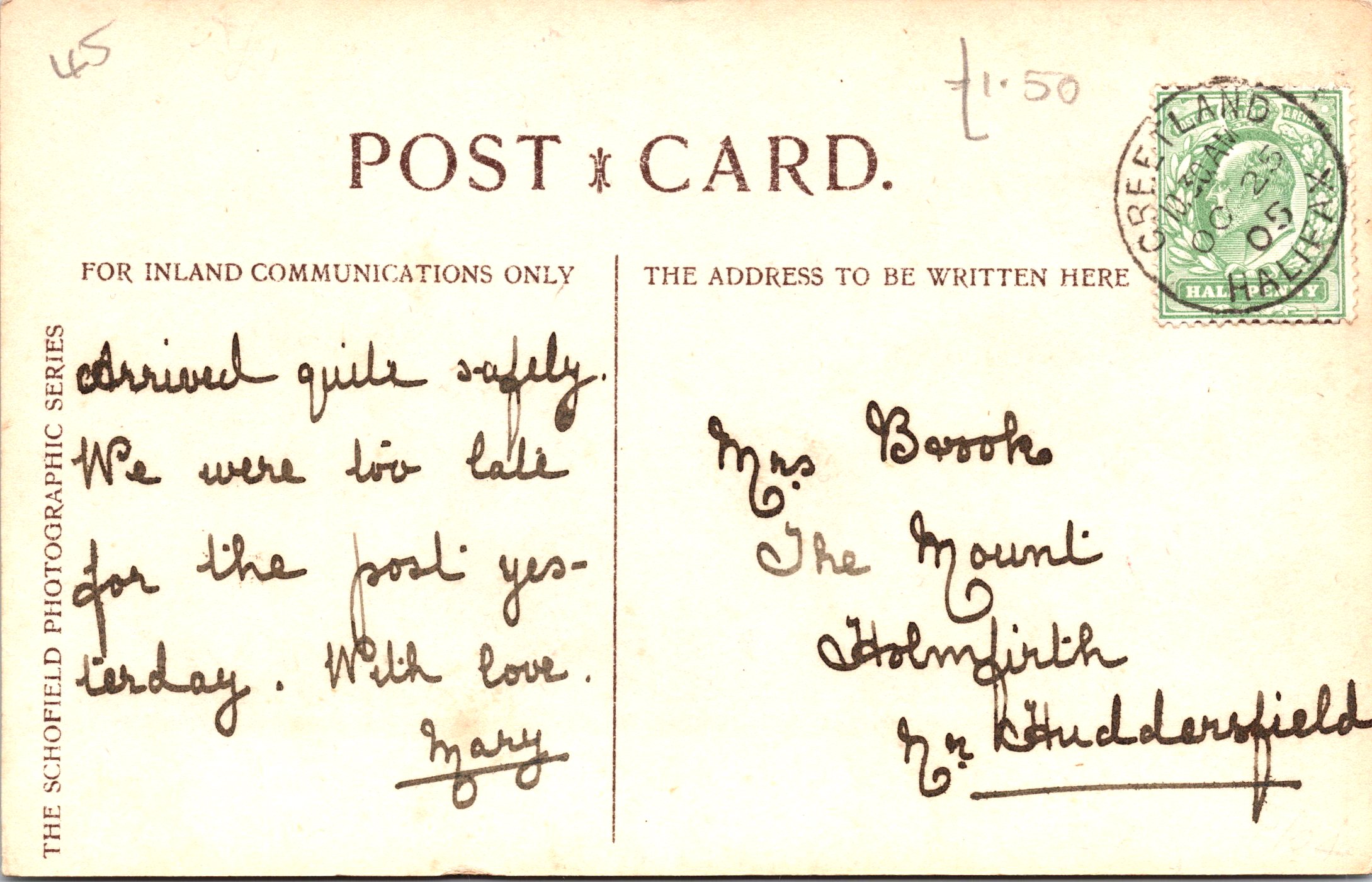
Postcard 20 is rare. The card was published by the Schofield Photographic Series (no.428). Three actress portrait postcards from this series can be found in England’s National Portrait Gallery. Miss Fealy’s photograph was taken by the esteemed Johnston & Hoffman studio. The postcard is of British origin and it’s postmark is from 1905. (SOLD)
Postcard 21 is of British origin and is generously hand tinted. The card is identical to Postcard 16 except for the two different hand tintings. (SOLD)
Postcard 22 is uncommon. The card was published by A & G Taylor as part of the “Reality Series”. Miss Fealy’s portrait was taken by the Bassano studio. The postcard is of British origin. (SOLD)
Postcard 23 is uncommon. The card was published by J. Beagles & Co. as part of a series (No.365). The postcard is of British origin (SOLD)
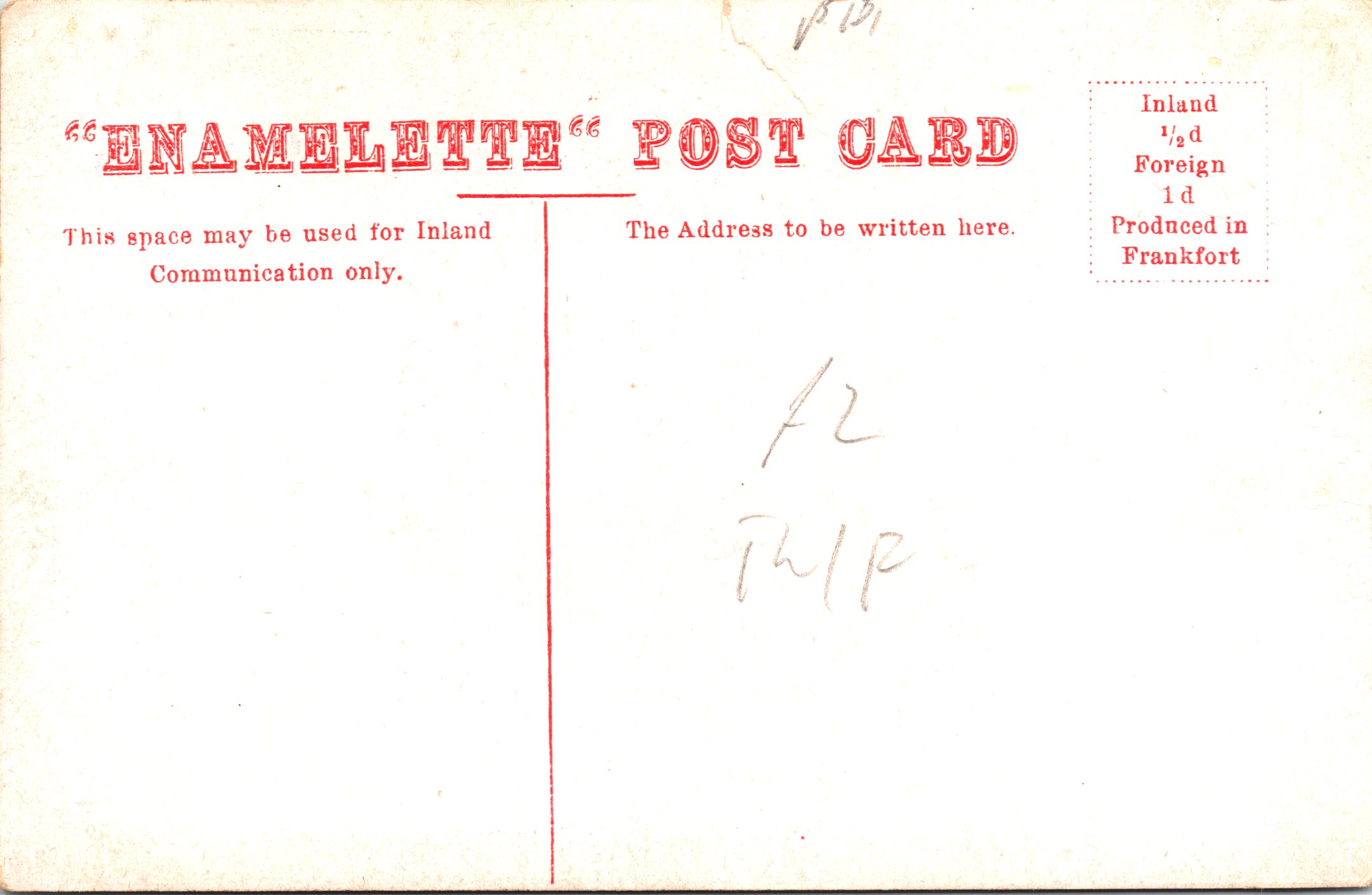
The photo portrait on Postcard 24 was taken by the Johnston & Hoffmann studio. The card is an example of an “Enamelette Postcard”. (SOLD)
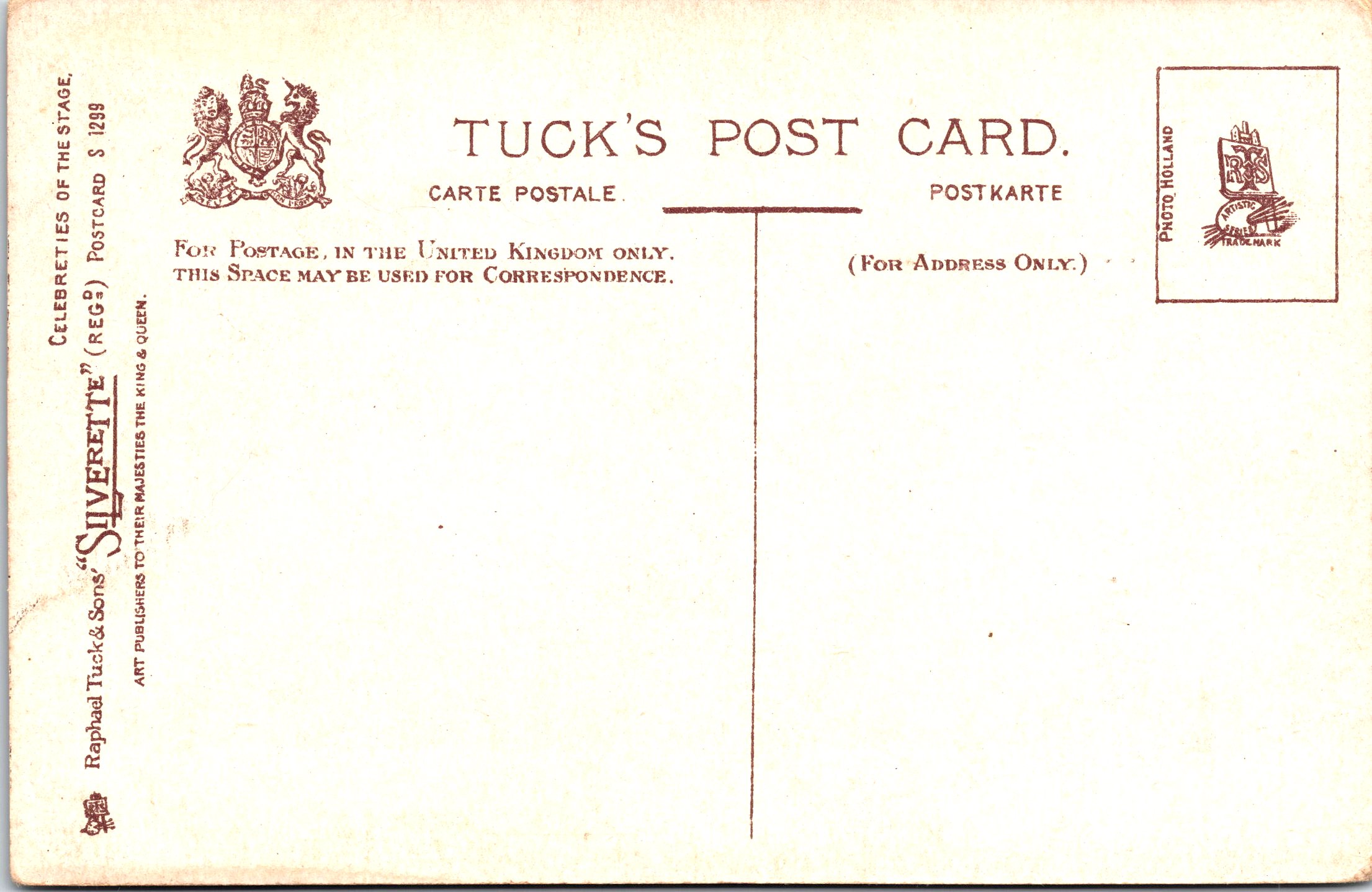
Postcard 25 is color tinted and was published by Raphael Tuck as part of the “Celebrities of the Stage” series (no.S1299). The card is an example of an “Silverette Postcard”. (SOLD)
Postcard 26 is an uncommon color tinted vintage lithographic card. It was published by Rotary Photo as part of a series (no.198U). (SOLD)
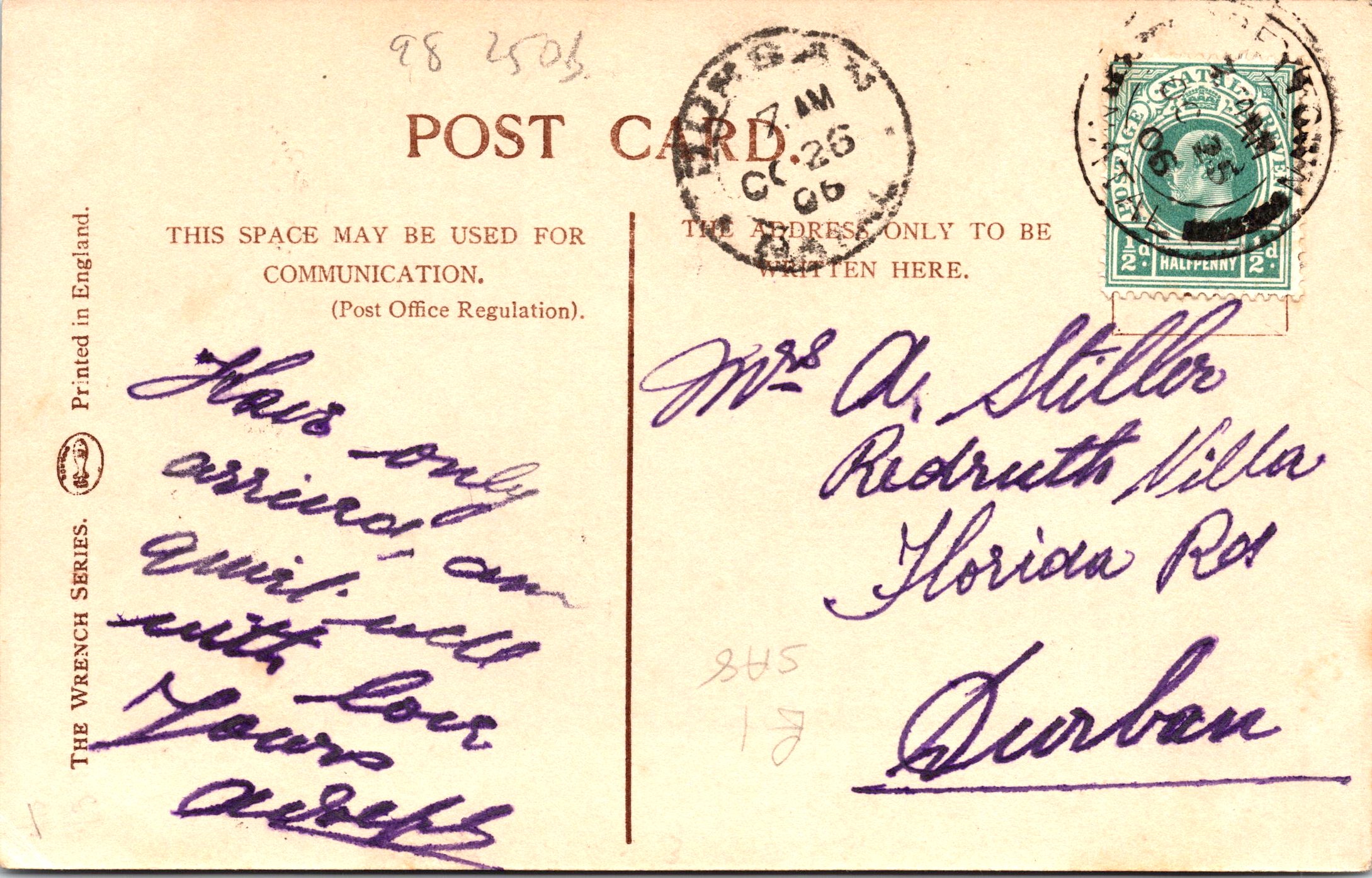
Postcard 27 is uncommon. The card was published as part of the Wrench series (No.10449). Miss Fealy’s portrait was taken by the famous female celebrity photographer, Lallie Charles. The postcard is of British origin and has a 1906 postmark. (SOLD)
Postcard 28 was published by Rotary Photo as part of a series (No.198L). Miss Fealy’s photograph was taken by the Johnston & Hoffmann studio. (SOLD)
Postcard 29 was published by Giesen Brothers & Co. as part of a series (no.K46). The photographer of Maude’s portrait was the Hutchinson & Svendsen studio. The National Portrait Gallery asserts that this pair of photographers were active in London between 1905 and 1906. (SOLD)
Postcard 30 was published by Giesen Bros. (GB).Miss Fealy’s photograph was taken by R. Thiele. Reinhold Thiele is known for his photographical talent. Thiele (1856-1921) also used the name “Karl Anton”. Seven of his photo portraits can be found in Great Britain’s National Portrait Gallery. He was born in Germany and learned about photography there. He came to London in 1878 and after a stint with photographer, William Henry Prestwich, he was hired by the London Stereoscopic Company (1880). In 1894, he established a studio known as Simmons & Thiele. Initially, Thiele specialized in photographing football teams. He is considered to be one of the early press photographers. Later, he operated a studio in London. He photographed many theatre stars. This postcard is of British origin. (SOLD)
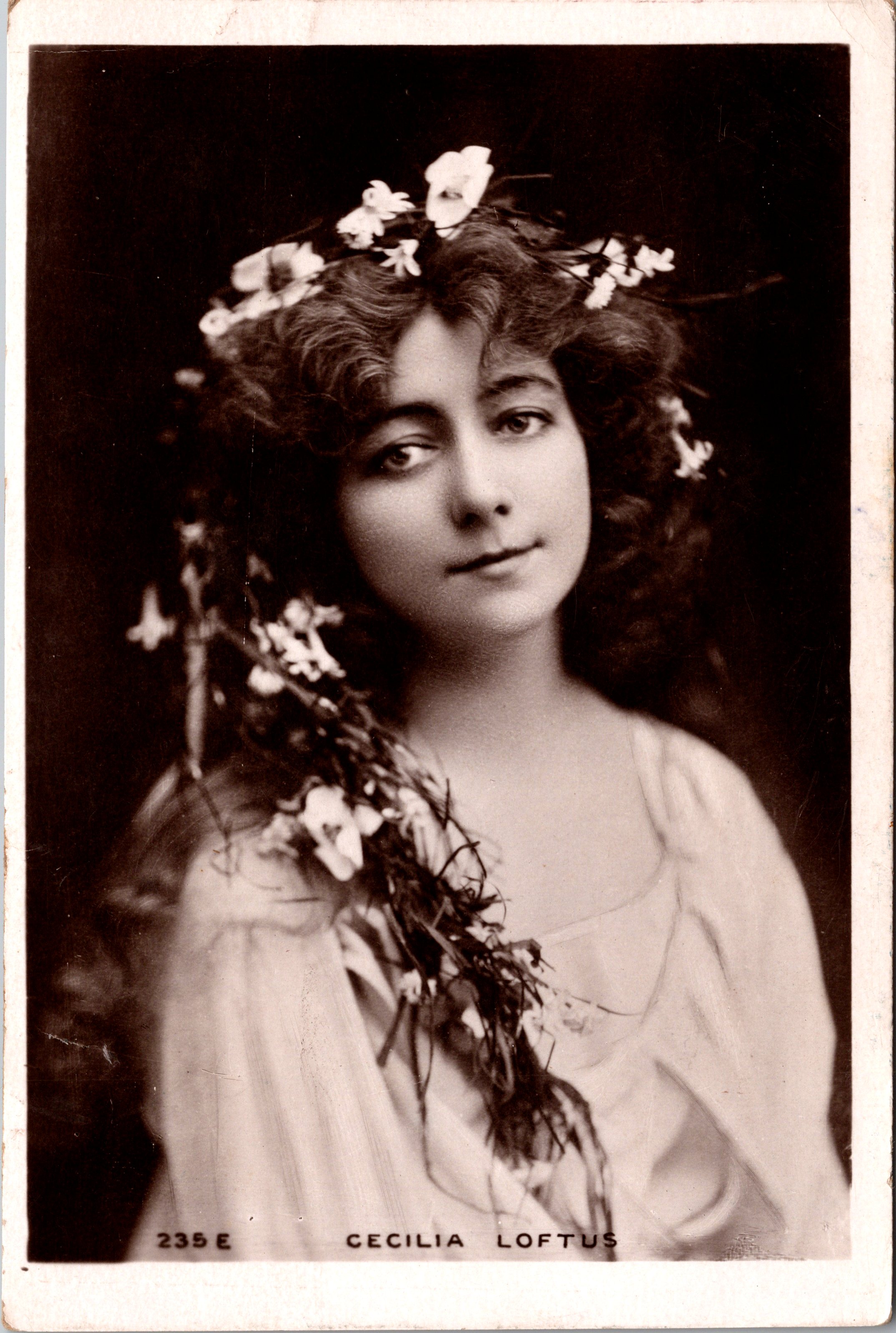
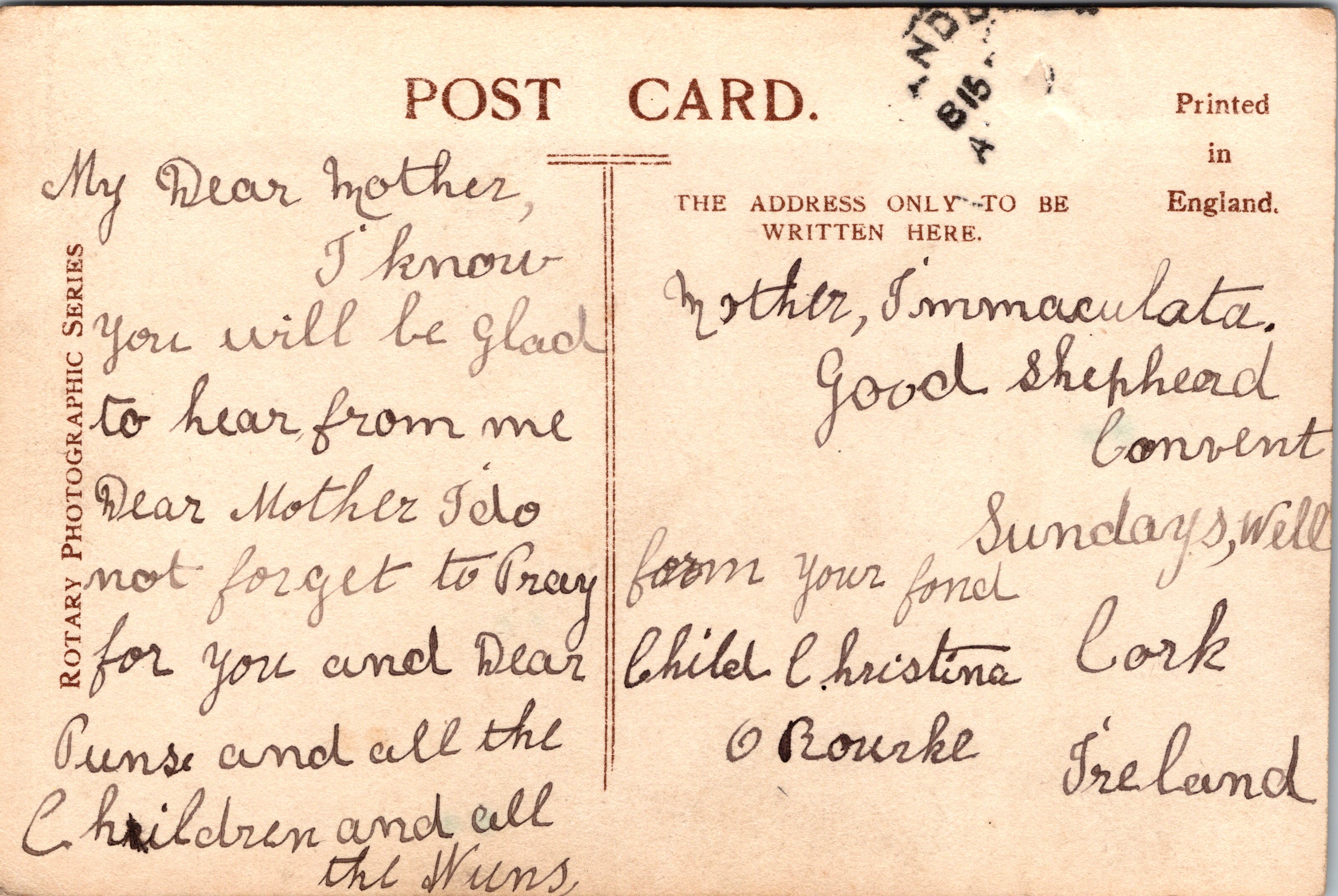
This vintage real photo postcard features a stage beauty named Cecilia Loftus (1876-1943). She was a Scottish actress, singer, mimic, vaudevillian, and music hall performer. Her career spanned the late 19th and early 20th centuries. She was a product of parents who were performers. Her father was a member of a successful variety group and her mother was an actress, music hall performer, and burlesque star. At age seventeen, Cecilia (Cissy) made her debut at the Oxford Music Hall in London. She began her career in Music Halls and then appered in musical comedy at the Gaiety Theatre. In 1894, she appeared in Vaudeville at the Lyceum Theatre in New York City. She joined the Ada Rehan Company, and then the Augustin Daly Company. In 1898, she began to appear in legitimate theatre. She toured with actor Sir Henry Irving. In 1905 she had success appearing in Henrik Ibsen’s “A Doll’s House”. Later that same year, she received much acclaim for her portrayal of Peter Pan. Loftus had a successful career in burlesque as well as on Broadway. The IBDb credits Loftus with appearing in 39 different Broadway productions between 1900 and 1941. Many of her roles were in Shakespeare plays. She also appeared in 14 films from the 1910’s to the 1940’s. Cecilia had a tumultous personal life. She eloped at 17 with an Irish writer, twice her age. The marriage failed. In 1908 she married an American doctor. Within six years, her marriage and health were in bad shape. She divorced her husband. Healthwise, she became dependent on alcohol and pain killers. In 1922, she was arrested for possession of morphine. She received probation from an English court and in 1923, she permanantly left Great Britain and returned to New York City to pursue her career on Broadway and in Hollywood. The message on this postcard is very interesting. It is a note from a daughter to her mother. Although it is only a hypothesis, the daughter appears to be at the Good Shepherd Convent, in Cork, Ireland. This vintage postcard was published by the Rotary Photo Company as part of a series (no.235 E). SOLD
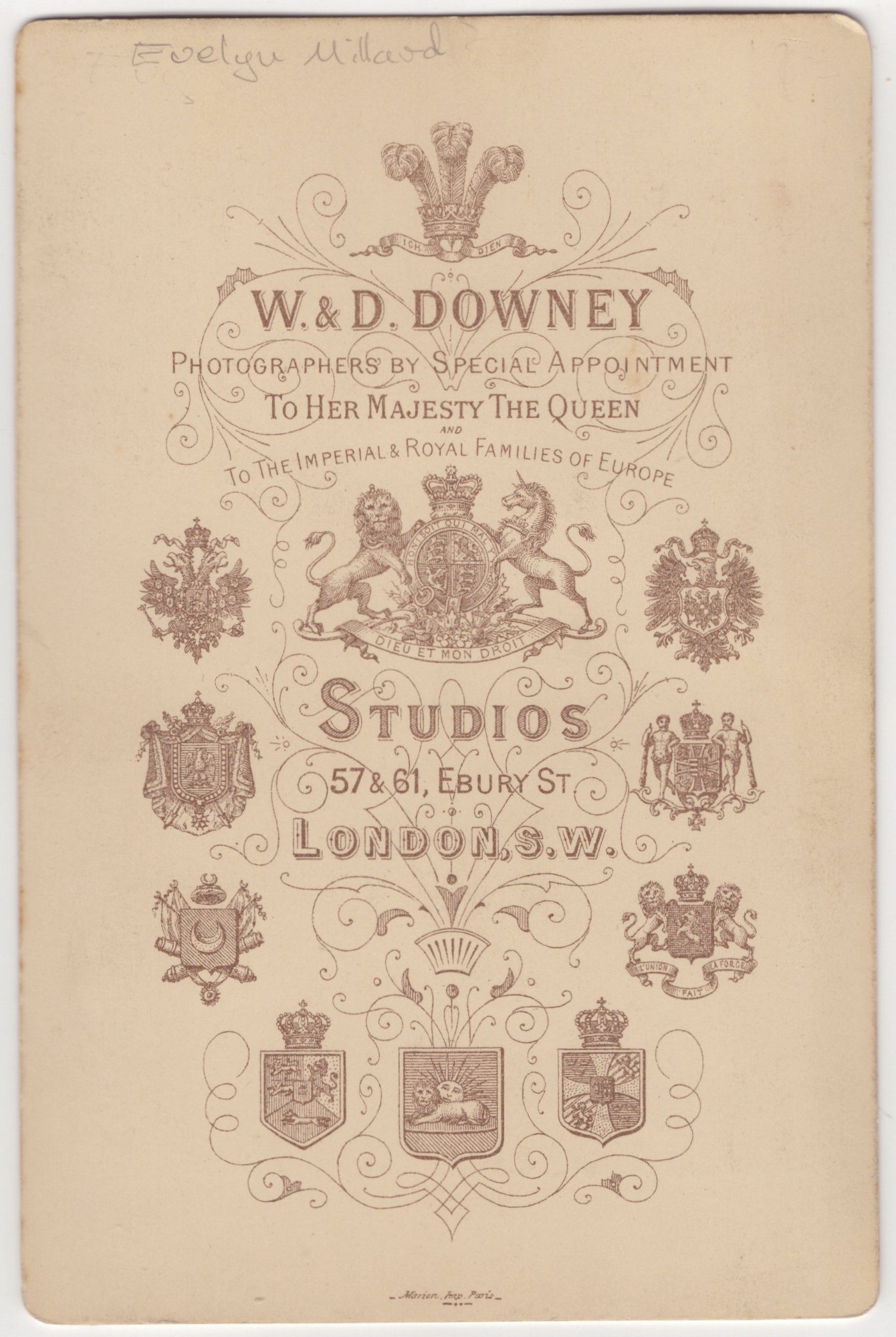
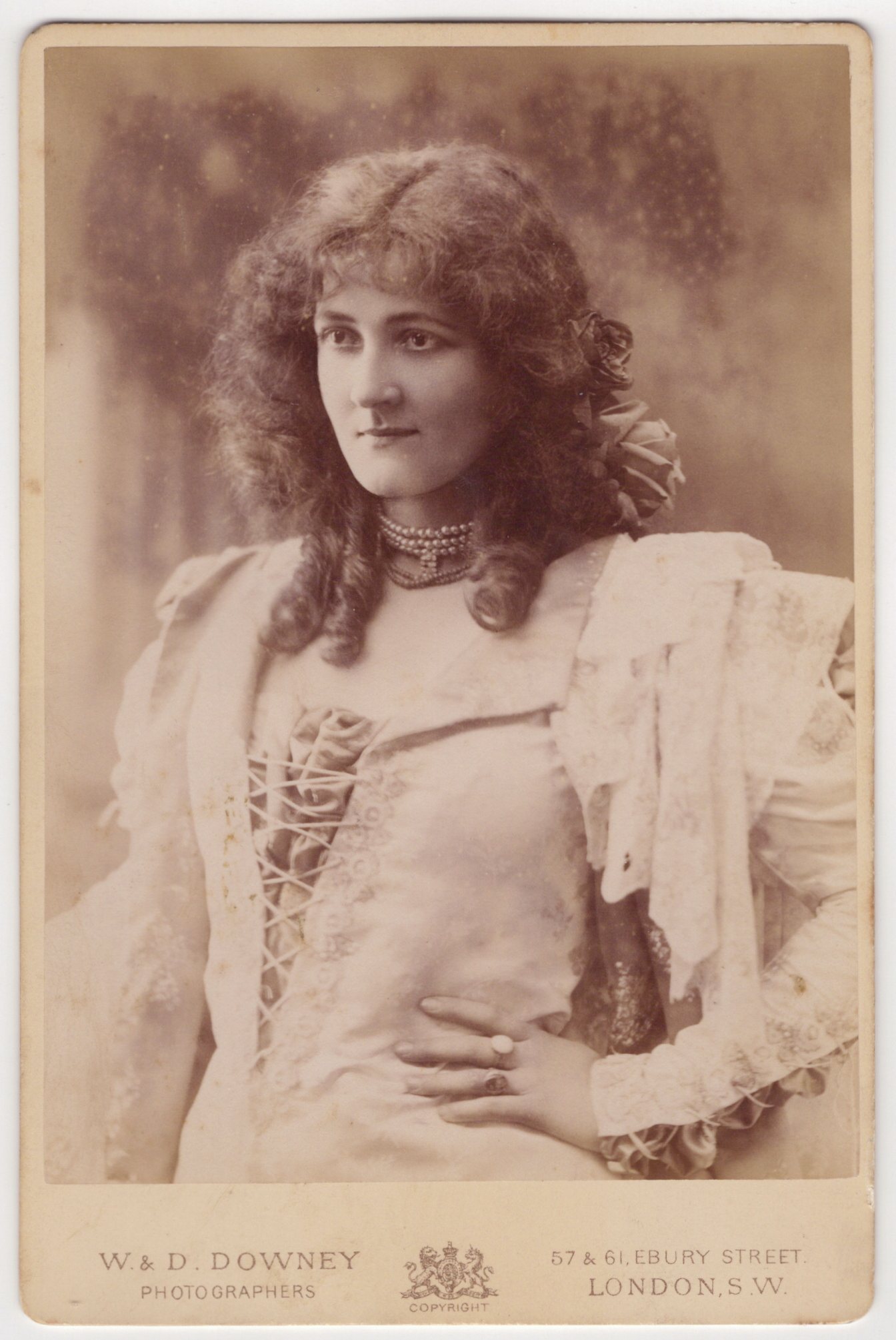
Cabinet Card 1 was photographed by W & D Downy, located in London, England. This studio was well known and highly respected in England. They advertised themselves as photographers specially appointed to photograph the imperial and royal families of Europe. SOLD
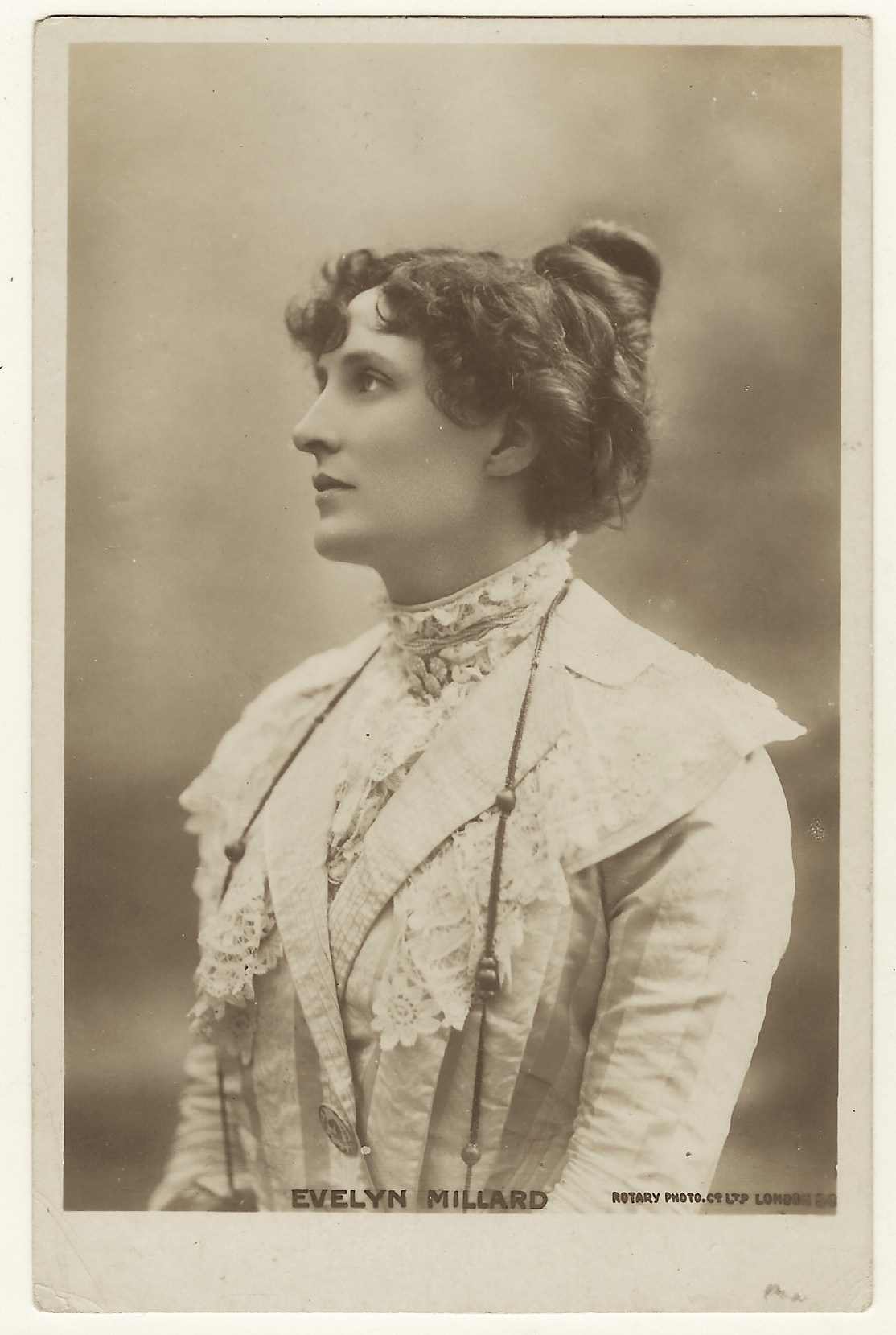
Postcard 1 features a portrait of English stage actress Evelyn Millard (1869-1941). She was well known for her acting in Shakespearian theater as well as for her beauty. She is also noted for creating the role of Cecily Cardewin in the premier of Oscar Wildes play “The Importance of Being Earnest” (1895). This postcard was produced by the Rotary Photo Company of London, England. (SOLD)
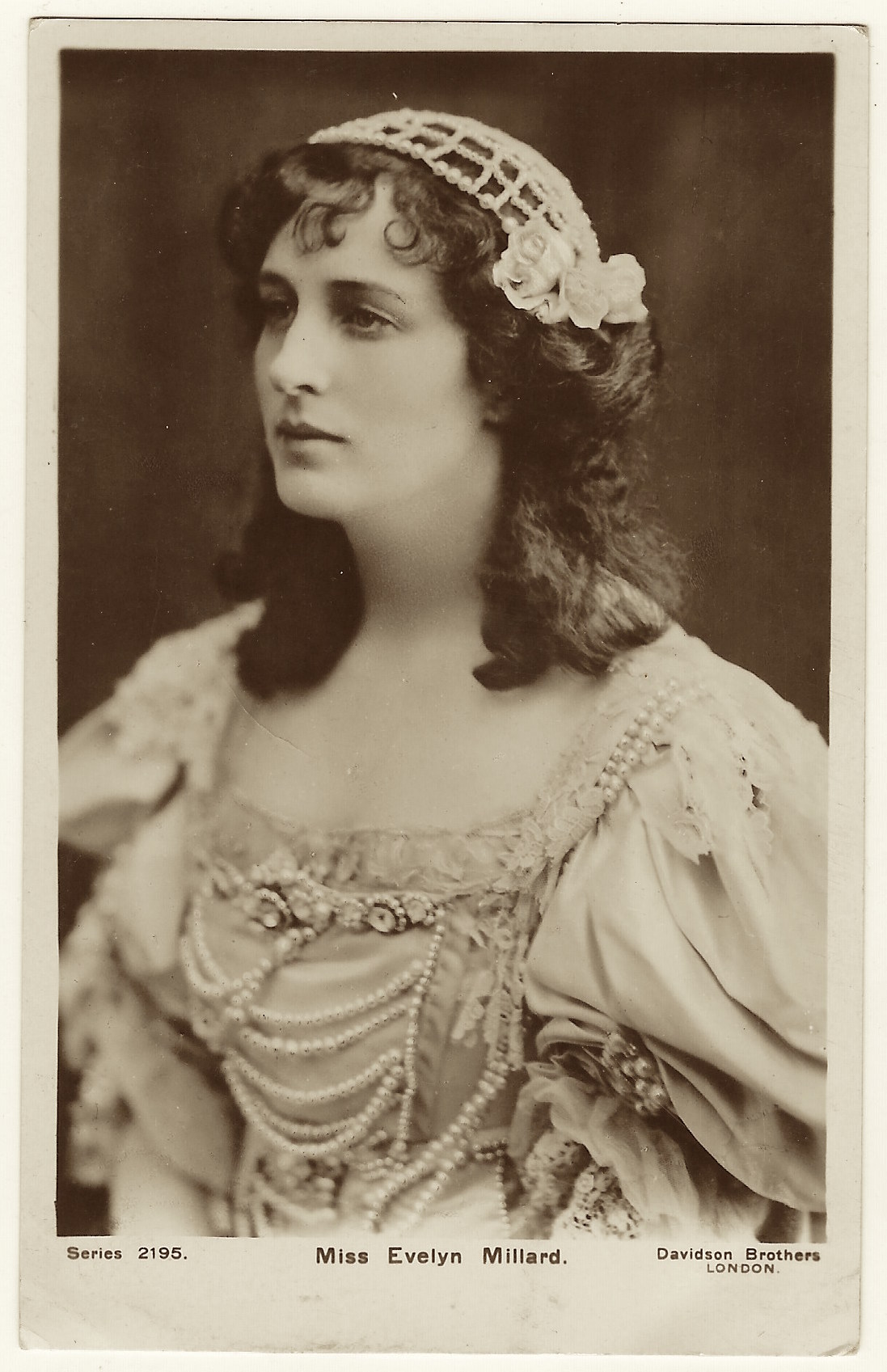
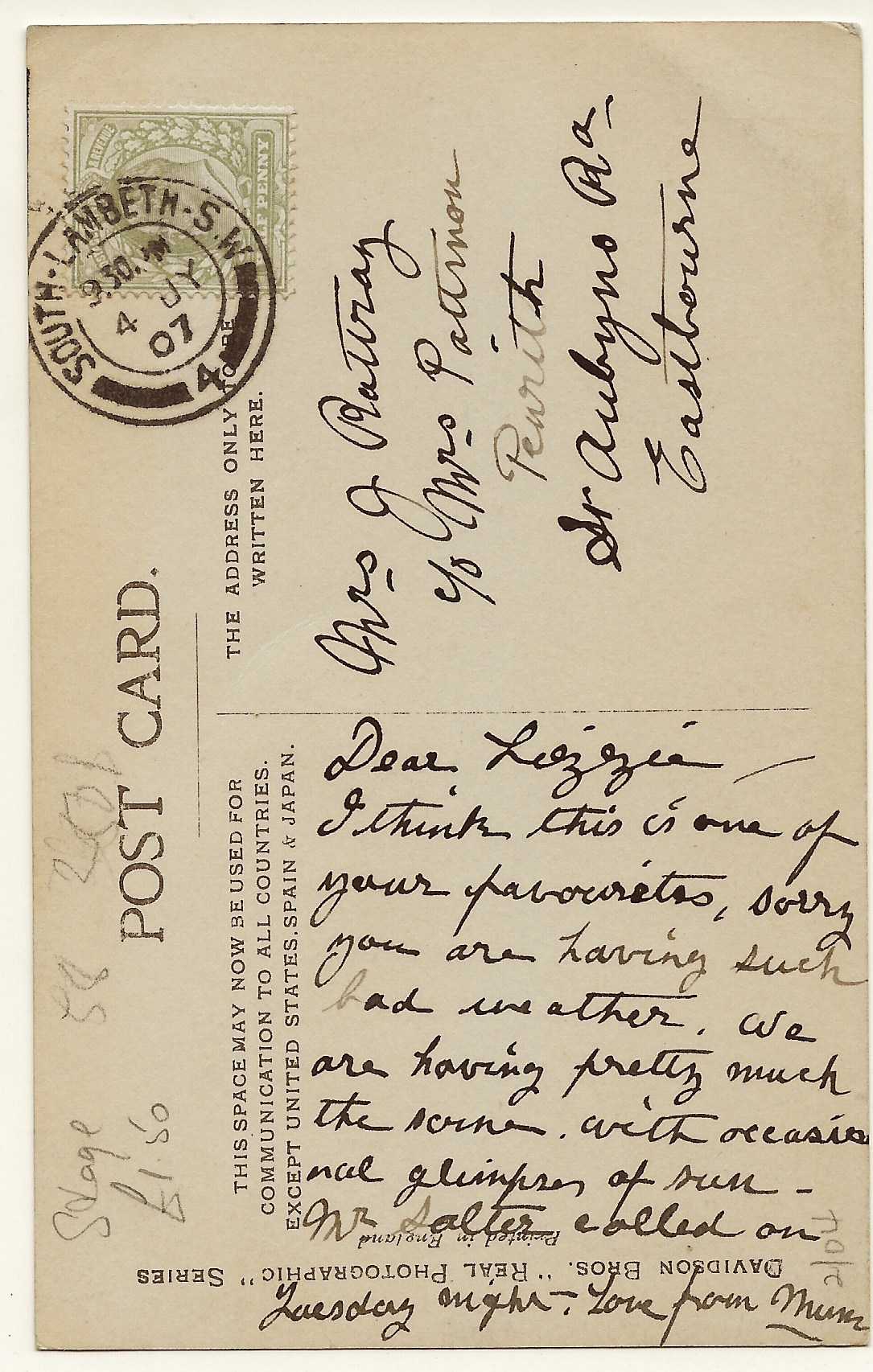
Postcard 2 is a portrait of Miss Millard taken by the Davidson Brothers studio in London, England. The postcard is part of a series (“Real Photographic Series” no. 2195). Davidson Brothers was located in both London and New York City. The firm operated between 1901 and 1911. Some of their theatrical postcard portraits have the same format as many of the Rotograph photo cards. This postcard was postmarked in South Lambeth in 1907. Lambeth is a district in Central London. The writer of the message on this postcard starts the communication with “Dear Lizzie, I think this is one of your favorites”. Most likely the writer was stating that Evelyn Millard was one of the favorite actresses of the recipient of the postcard. Collecting postcard images of theatrical stars was certainly quite popular at the time this postcard was written. (SOLD)
The third postcard is color tinted and was produced by the Rotary Postcard Co. as part of the Rotary Photographic Series ( no. 191G). The photographer was T. C. Turner who operated studios in London and Hull, England. Thomas Charles Turner (1839-1896) operated his London studio between 1870 and 1900. Millard is clearly in costume for this portrait. Note her unusual pin. It looks like a multi-eyed horror movie insect. This vintage postcard is in very good condition (see scans). (SOLD)
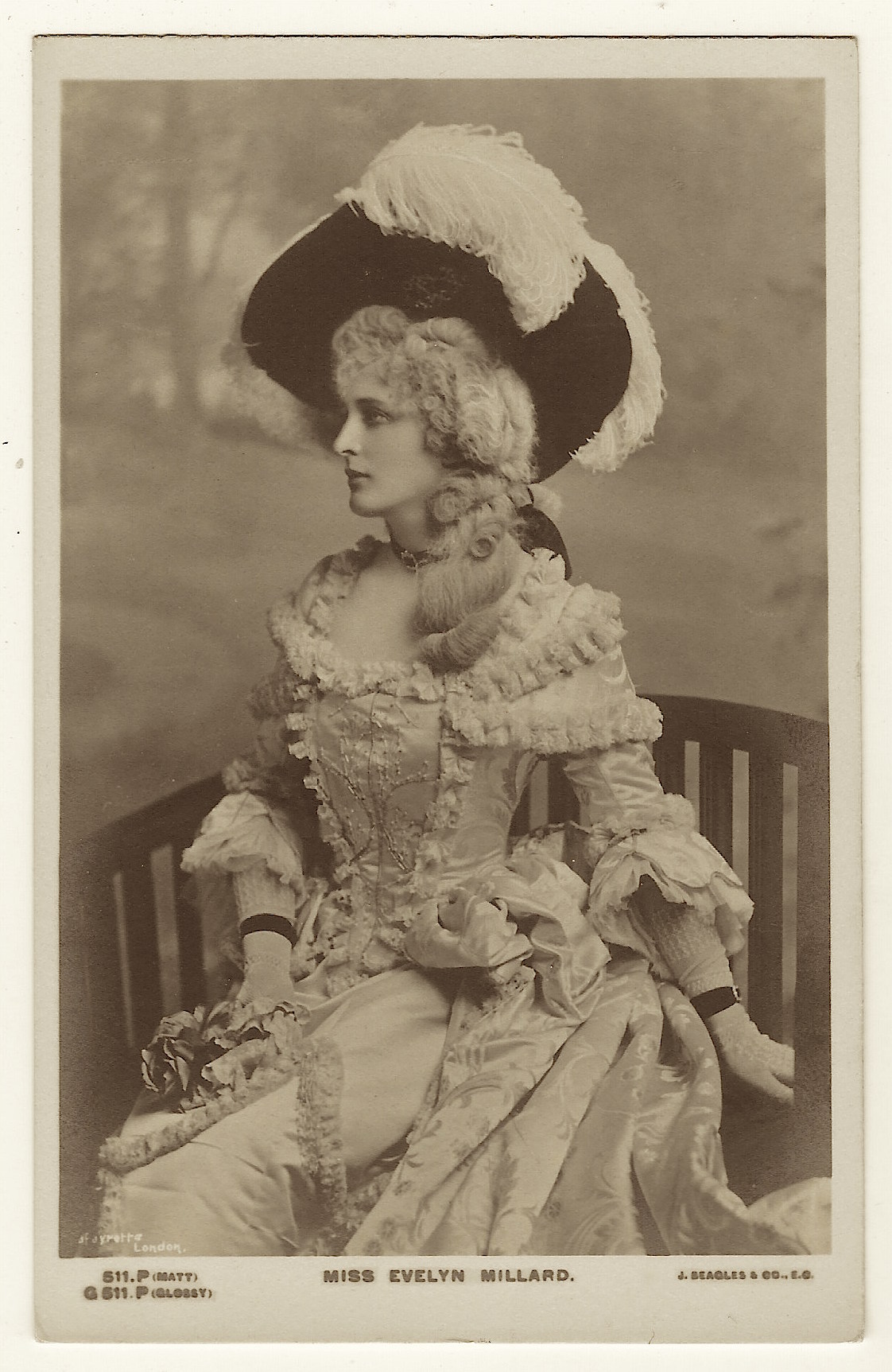
Postcard number four is rare. Miss Millard looks quite beautiful and is dressed in an exquisite gown. Note, that unlike most of her other portrait postcards, Evelyn has blonde hair. Most of her photo postcards show her with dark hair. It is very possible, even likely, that she is wearing a wig in this portrait. The photographer of this image was the Lafayette studio. The firm was founded in Dublin in 1880 by James Stack Lauder. His father, Edmund Lauder was a pioneering and successful photographer. The elder Lauder used the name “Lafayette’ to give the company a touch of Paris, which was a a city considered the center of the art and photography world. James was joined in business by his three photographer brothers. By the 1900, the company had studios in Glasgow, Manchester, London and Belfast. The studio also was invited to photograph Queen Victoria. The company still exists today. This postcard was published by J. Beagles & Co. of London, England. The postcard is part of a series (no. G 511.P). The “G” is an abbreviation for “glossy”. There was also a matte version of this postcard portrait. John Beagles (1844-1909) was born in England. At age 17 he was a “pupil teacher”. In the census of 1891, he is listed as a “photographic publisher” in Nottingham. Later he established J. Beagles & Co. in London. He and his successors produced a variety of postcards including an extensive catalog of celebrity (stage and screen) portrait postcards. The firm also published topographic and view cards, as well as a series called “Matrimonial Cats”. After Beagle’s death, the business continued as J. Beagles & Co. until it closed in 1939. (SOLD)
This rare vintage real photo postcard features the red headed actress that electrified the Australian stage. She was noted for her famous wicked wink. The life and times of Daisy Jerome can best be described as scandalous. She arrived in Australia in 1913 for a three year stage tour. Feminism was rising in the western world. Suffragettes were marching for the right to vote. Women were smoking, driving, wearing less conservative fashion, and even dancing the tango with it’s sexual overtones. She arrived in Adelaide adorned with an excess of jewelry. She was born in America but raised in England. Her place of birth was New York and she was born Daisy Witkowski in 1886. Daisy reported that she was raised in a multilingual household that had been visited by Presidents Lincoln, McKinley, and Roosevelt. After experiencing financial problems, her father moved the family to England. Money was needed and Daisy followed her sister onto the stage. She played the Palace and toured with companies that gave her a chance to do comedic singing and pantomime. Her performances were considered to be amusing and irreverent. She was a comedienne. Her humor has been described as “vibrant” and “wicked”. Daisy was described as “feisty”, “cunning”, and “independent”. She was small and dainty and had compelling eyes and an expressive face. Her performances had a risque tone and she had a hoarse, sensual voice. She could toe dance and wooden shoe dance, but was most known as a mimic and comnic singer. After a year of marriage, she deserted her first husband to live with another man. In 1910, she took a journalist to court for libel. The reporter had accused her of performing encores when audiences had not requested them. She claimed that her professional reputation had been damaged. The court case was a circus. The defense ridiculed one of her songs which caused her to break into tears in the witness chair. She won the case but was barely compensated. When she began her tour of Australia, she was recognized as raucous, vulgar and “an acquired taste”. She quickly charmed those that were hesitant to appreciate her and she soon received a warm welcome and a complimentary nickname, “The Electric Spark”. Her carrot red hair became the subject of much debate. She claimed it was her natural color but most people were not believers of her claim. One day, an Australian comedian told her that a gentleman had taken offence to her hair. The comedian said that the offended man would visit her that night. The comedian then informed the local fire chief that there was great risk of fire during Daisy’s time on stage. The worried fireman came to the theatre and when he saw Daisy’s red hair, he realized he had been a victim of a joke. He kept the joke going when he said that he agreed there was risk of fire and he ordered the scenery to be fireproofed immediately. During Daisy Jerome’s era, there was a bias against redheads. They were considered to be hot tempered and sexually wild and uninhibited. Her theater/music hall background only magnified some people’s negative view of Daisy. After completing her touring contract in Australia, she signed another one. This time she performed on a vaudeville stage which allowed her to showcase her bawdy songs. In 1914 she sang a feminist style song called “The Press, the Pulpit, and the Petticoat”. This song argued that women were more powerful and influential than the media and the church. Daisy was a woman who had unconventional ideas. She would not restrained by political correctness. She stated in a 1914 interview that “I refuse to regulate my acts to accepted rules of conduct”. Despite her views, she remained popular with Australian audiences. She left Australia in 1916 and returned in 1922 for another successful tour. Later, she was involved in another court case which this time involved her suing her maid over missing jewels. With the arrival and subsequent popularity of films, Daisy Jerome faded out of the public’s focus. Two photo portraits of Daisy Jerome can be found in England’s National Portrait Gallery.
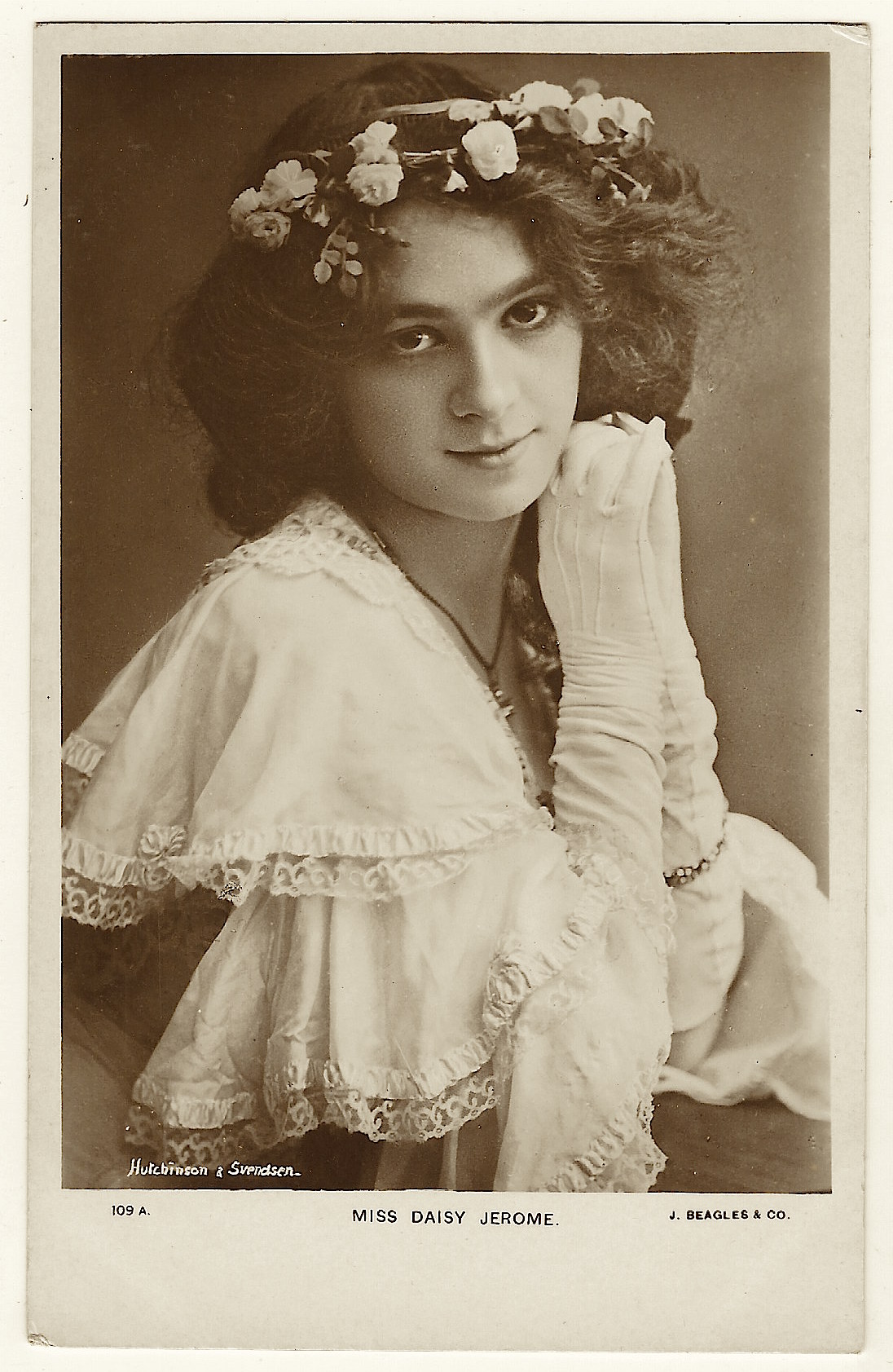
Postcard 1 was published by J. Beagles & Co. of London, England as part of a series (No. 109 A). The company was started by John Beagles (1844-1909). The company produced a variety of postcards including an extensive catalog of celebrity (stage and screen) portrait postcards. After Beagle’s death, the business continued under it’s original name until it closed in 1939.Miss Jerome’s portrait was taken by the Hutchinson & Svendsen studio. The National Portrait Gallery asserts that this pair of photographers were active in London between 1905 and 1906. This vintage photo postcard is in excellent condition (see scans). This postcard portrait of Daisy Jerome is absolutely beautiful and very uncommon. (SOLD)
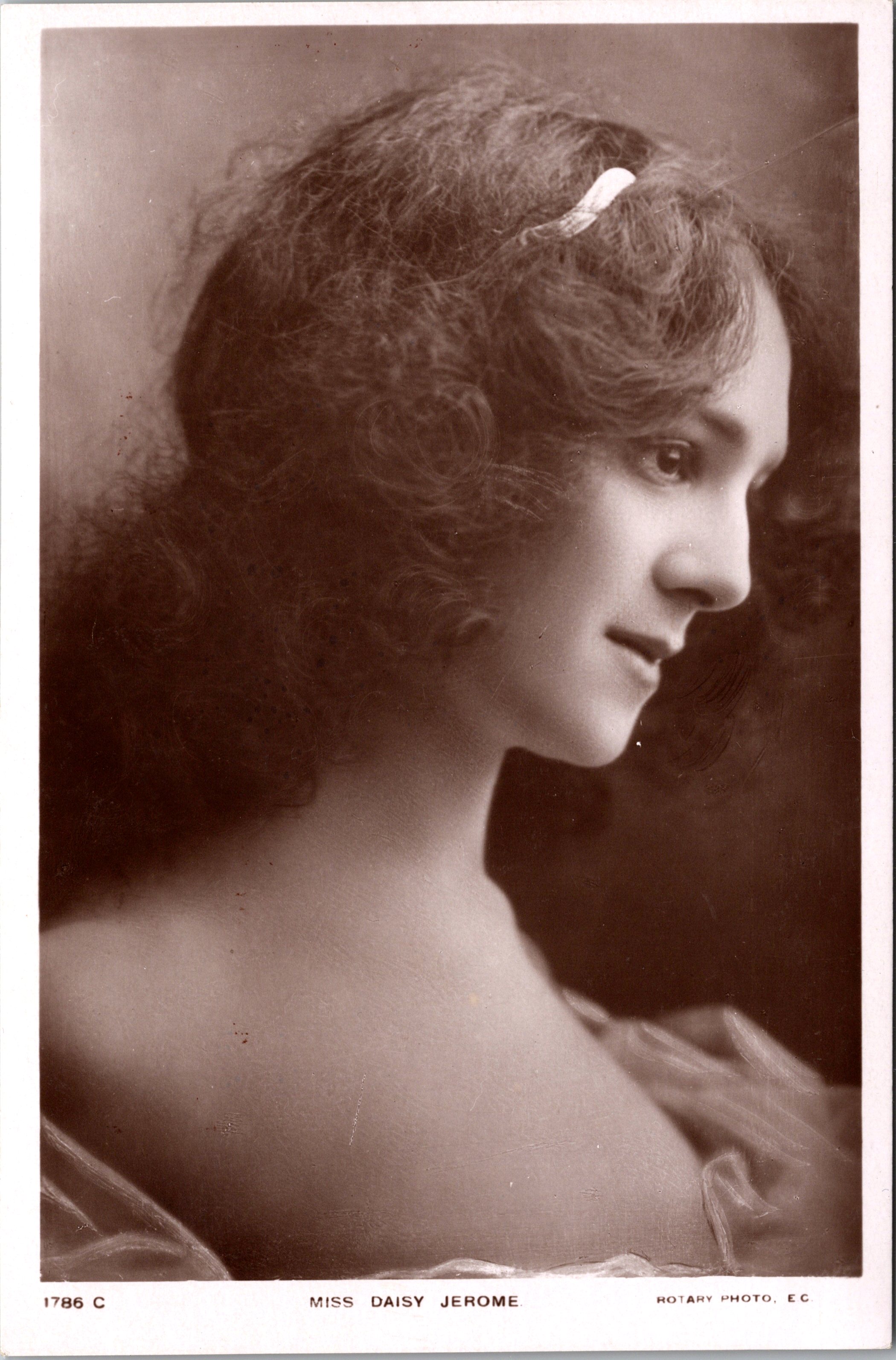
Postcard 2 was published by Rotary Photo (England) as part of a series (No. 1786 C). This vintage photo postcard is in good condition (see scans).
Buy this Vintage Real Photo Postcard (includes International shipping outside the US) #5172
To purchase this item, click on the Pay with PayPal button below
$22.00
Buy this Vintage Real Photo Postcard (includes International shipping outside the US) #5172
To purchase this item, click on the Pay with PayPal button below

















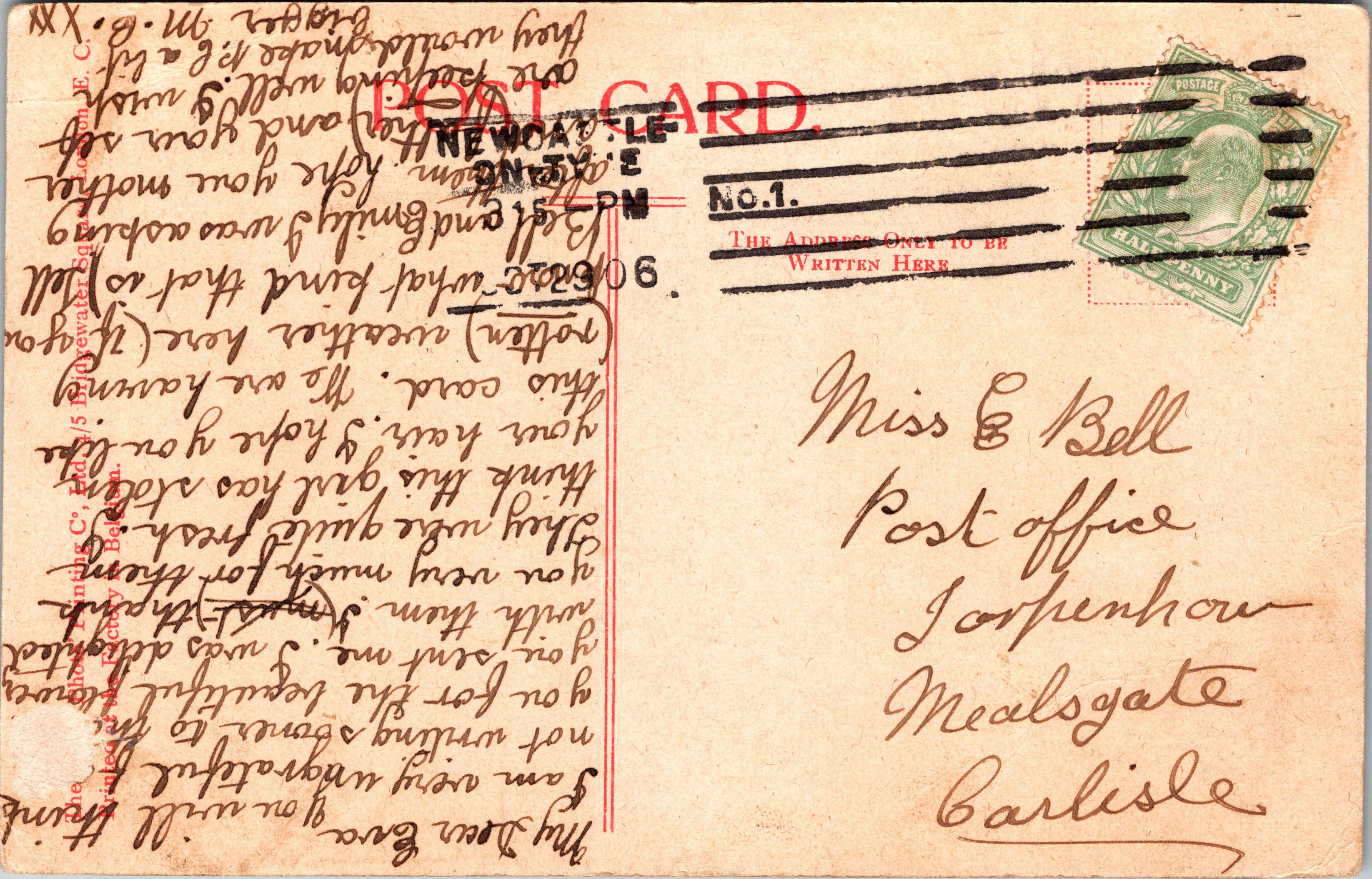
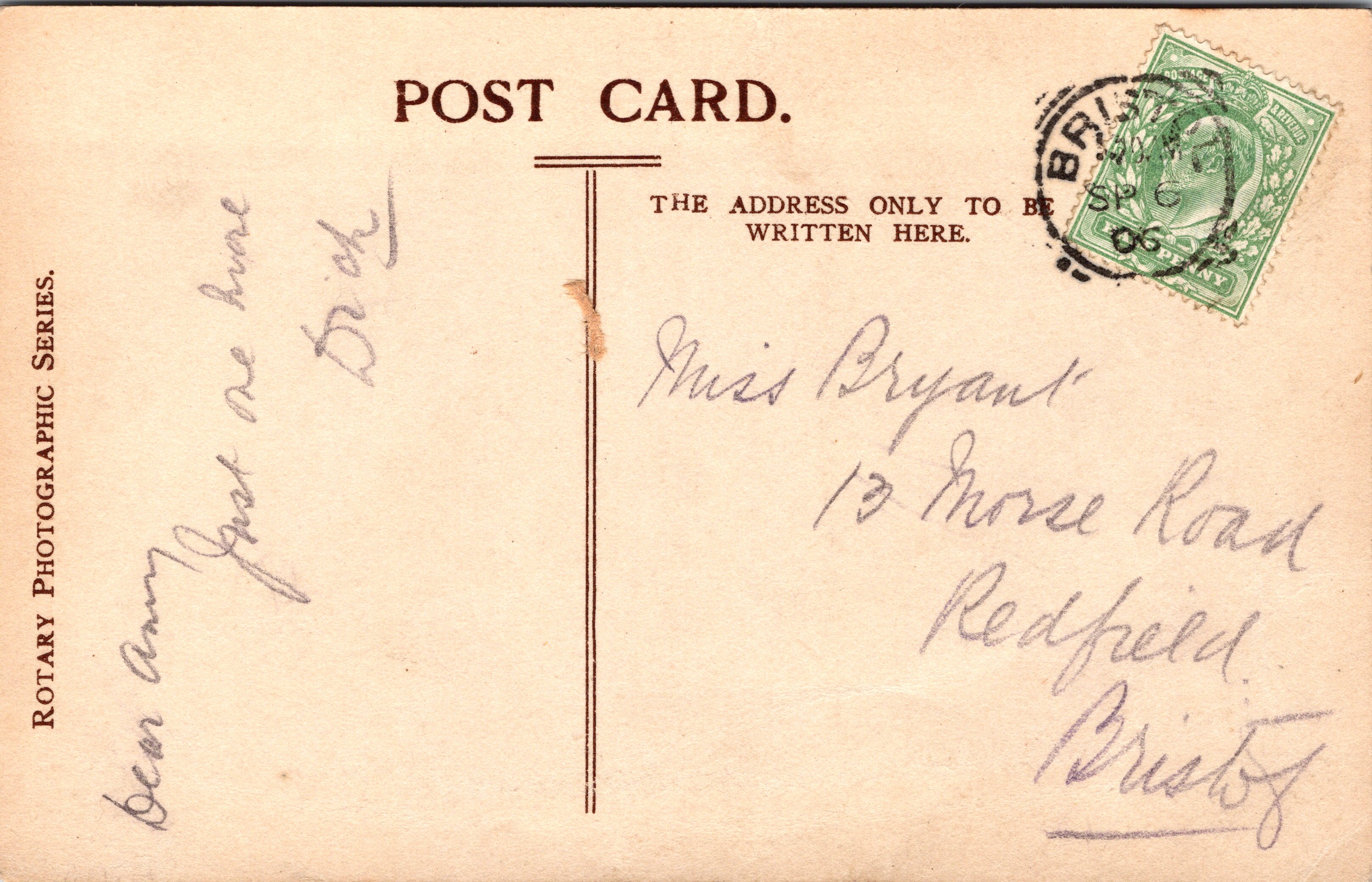
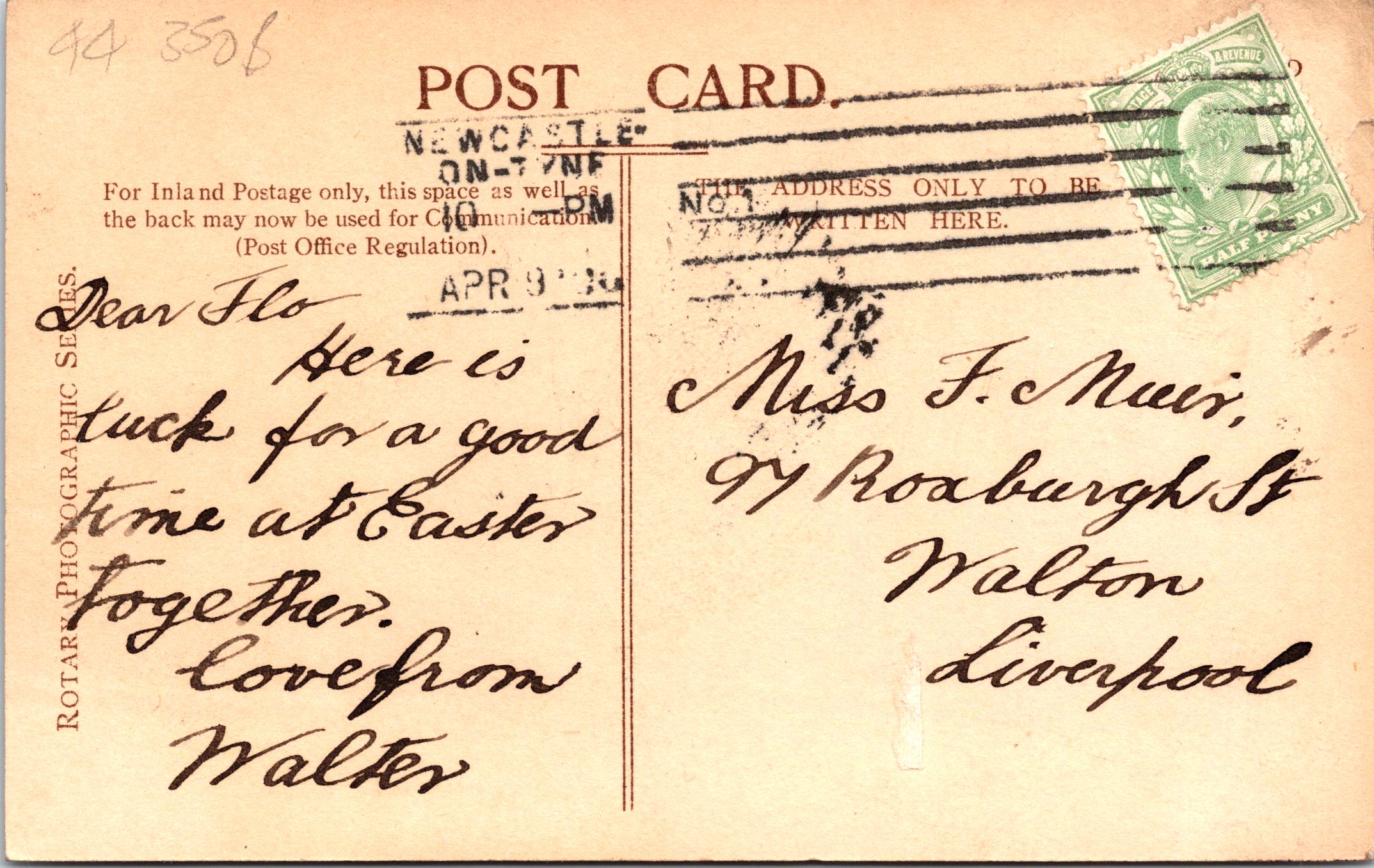
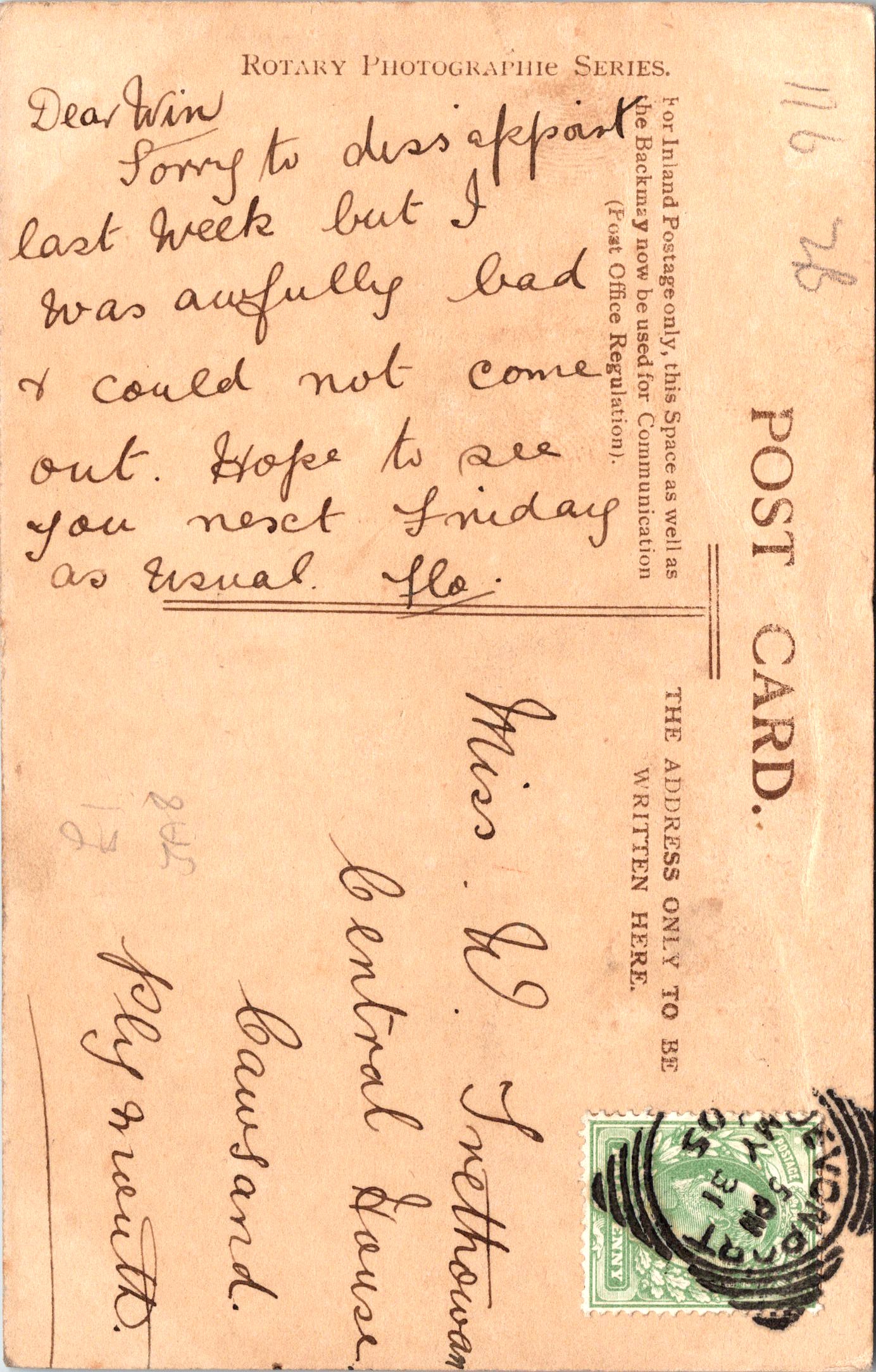


 POSTCARD 4 (SOLD)
 POSTCARD 3
 POSTCARD 4