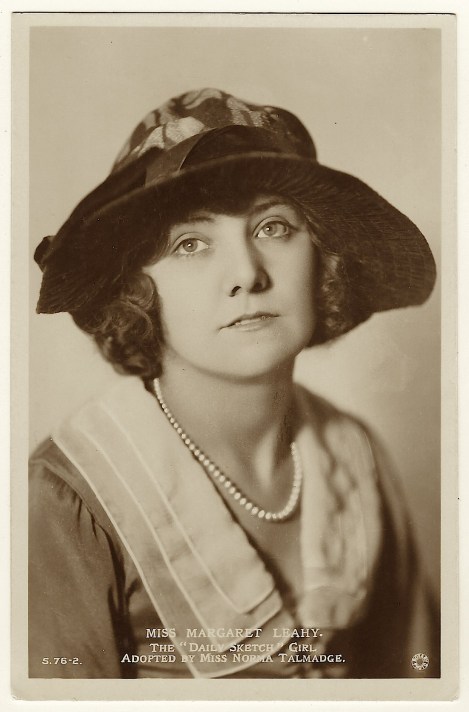
 Margaret Leahy (1902-1967) was a British actress. She was born in London. At the age of eighteen, she set up a costume shop and designed women’s clothing. She also modeled her designs for her customers. The story of how she got her start in acting is an interesting one. After winning a beauty contest, she seemed destined for stardom. Unfortunately, despite her rapid launch into filmdom, her career quickly crashed. She made only one film in her short-lived career. The beauty competition occurred in 1922. Actresses, Constance and Norma Talmadge, Joseph Schenck (film studio executive), and Edward Jose (film director) held a beauty contest in England. It’s purpose was to find a new leading lady. The “Daily Sketch”, an English newspaper, offered a starring role in a major Hollywood film to the winner of the contest. Eighty thousand women entered the contest and three girls were chosen to the final competition. The finals were held in Hollywood and Miss Leahy was the winner. Norma Talmadge described Leahy as “the most ravishing girl in England”. Leahy’s start in films was a disaster. She was dismissed from “Within the Law” (1923). The film’s director found her acting talent was nearly non-existent. He threatened to quit unless Leahy was terminated. The year 1923 wasn’t all bad for Miss Leahy. She was named one of thirteen WAMPAS Baby Stars. Evelyn Brent, Eleanor Boardman, and Laura La Plante were among the thirteen. All but Leahy became successful film actresses. Between 1922 and 1934, WAMPAS association supported a promotional campaign that named thirteen young actresses thought to be destined to become stars. Margaret’s next stop was an appearance in a Buster Keaton comedy, “Three Ages” (1923). Leahy received little attention for her role in the movie and her career was stopped in it’s tracks. Leahy did not return to England. Instead she got married and remained in California. She became an interior decorator and was known to despise the movie industry. In fact, she burned all her movie related scrap books. Sadly, Leahy committed suicide at the age of sixty-four in California. This vintage postcard was published by Rotary Photo and printed in England. The postcard is part of a series (no. 5.76.2). The postcard is in very good condition (see scans). SOLD


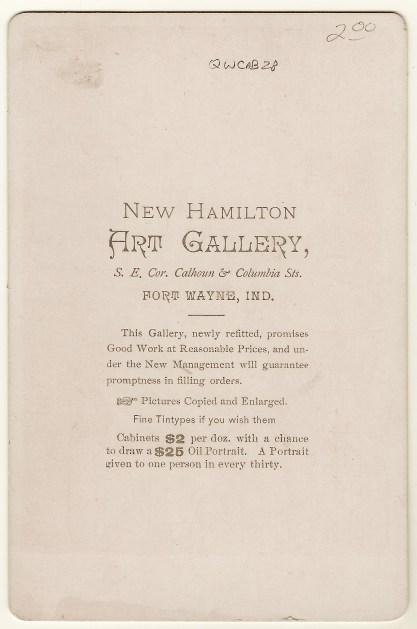
 A pretty woman poses for her portrait at the New Hamilton Art Gallery in Fort Wayne, Indiana. She looks quite fashionable in her dark dress and wonderful hat. The feathers on the hat are neatly divided into halves of black and white. She is wearing a necklace and is leaning on a high backed chair. She looks very pensive. Advertising on the reverse of the photograph reveals that the studio was located on the corner of Calhoun and Columbia Streets. In addition, the advertising lists the cost of cabinet cards as being 2 dollars per dozen. As an added marketing technique, the studio would do a free 25 dollar oil portrait for one of every thirty customers. Apparently the photographer who operated this studio was a creative marketer as well as a creative photographer. This cabinet card is in very good condition (see scans).
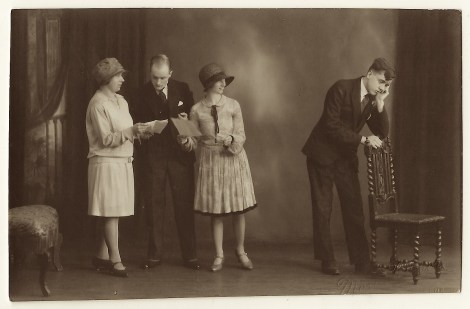

 This vintage real photo postcard features a theatrical performance in progress. The name of the theatre, play, and players are unknown. The gentleman leaning on the chair seems very forlorn. The photographer of this image is Marie Podmore. She operated a studio in the town of Colne in Lancashire, England. Preliminary research reveals that she was active at least from the early 1920’s until 1938. The stamp box indicates that the postcard was made by Crown Studios sometime between 1913 and 1929. This vintage theatrical postcard is in excellent condition.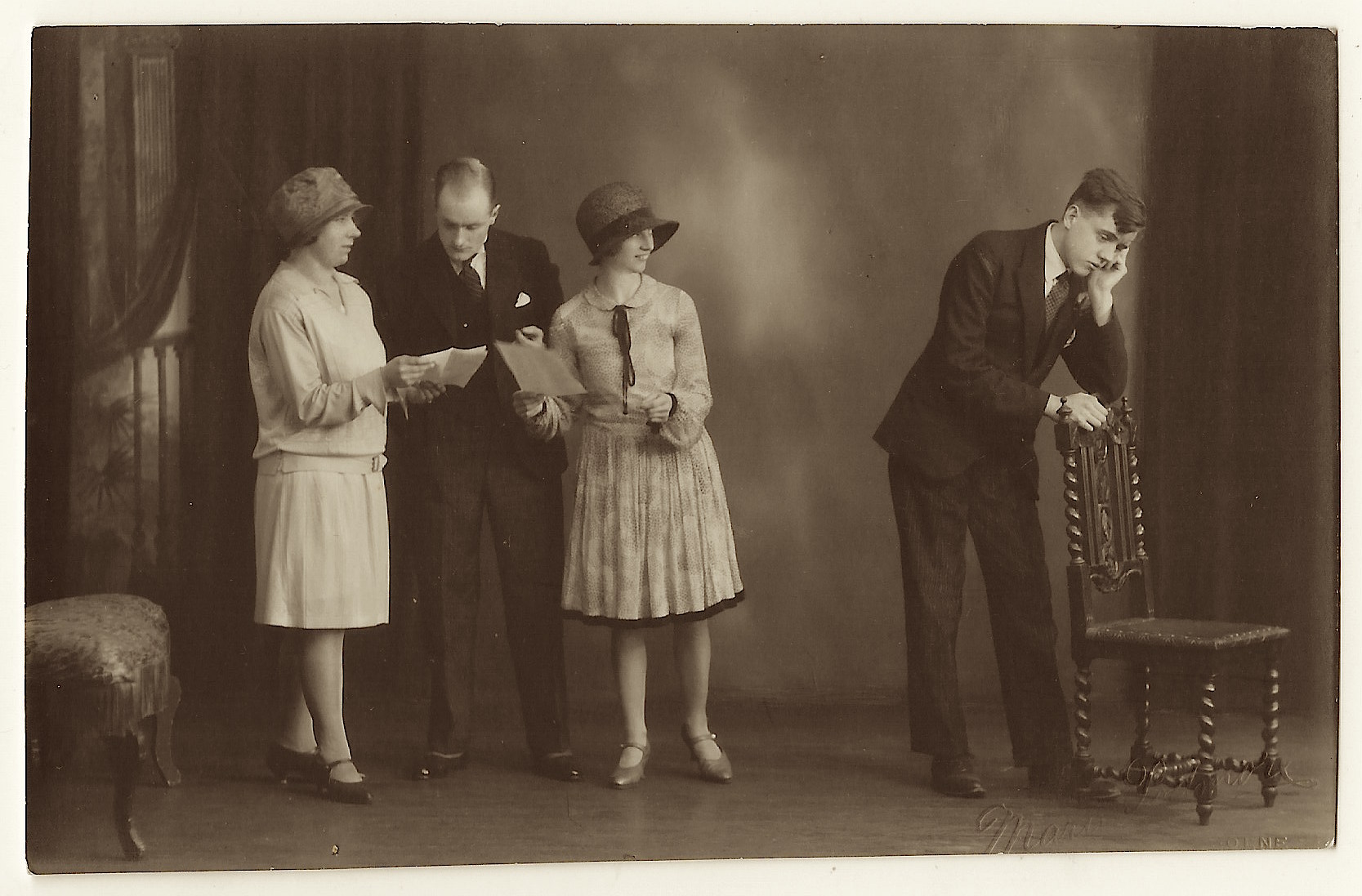

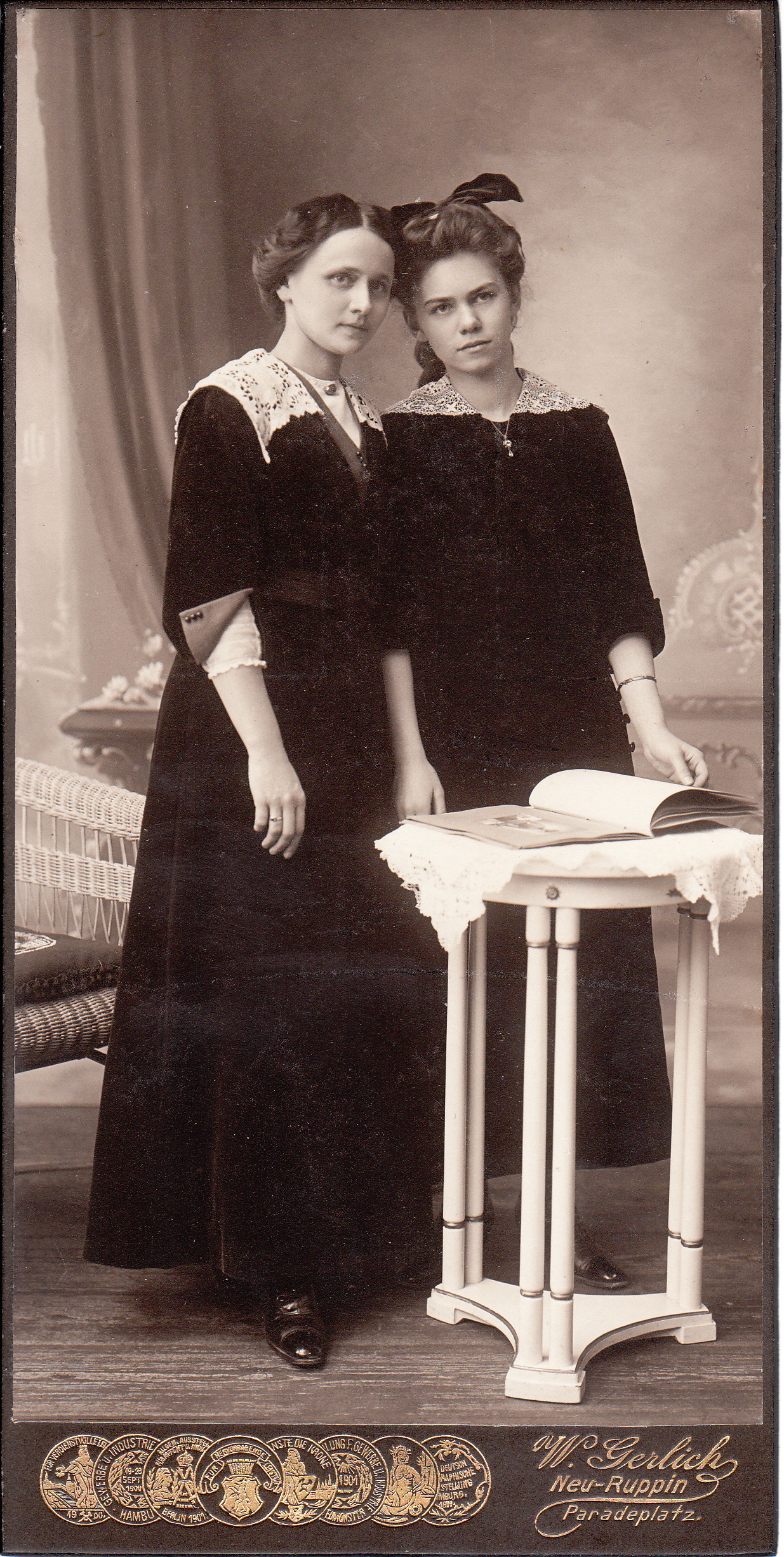
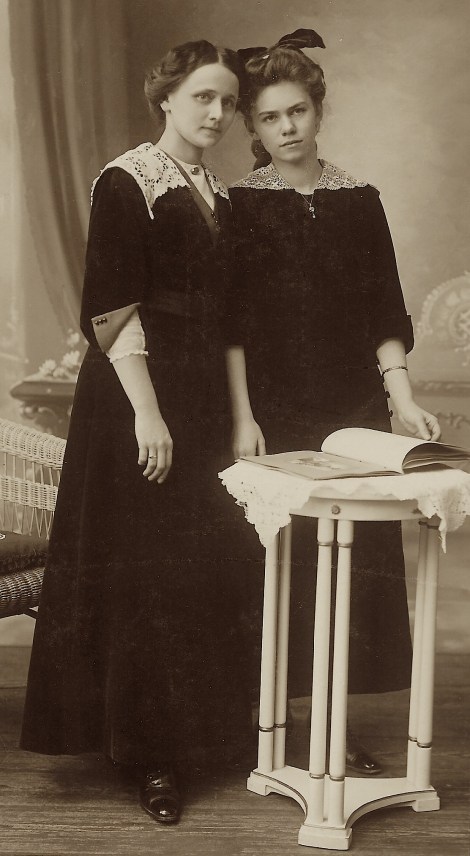


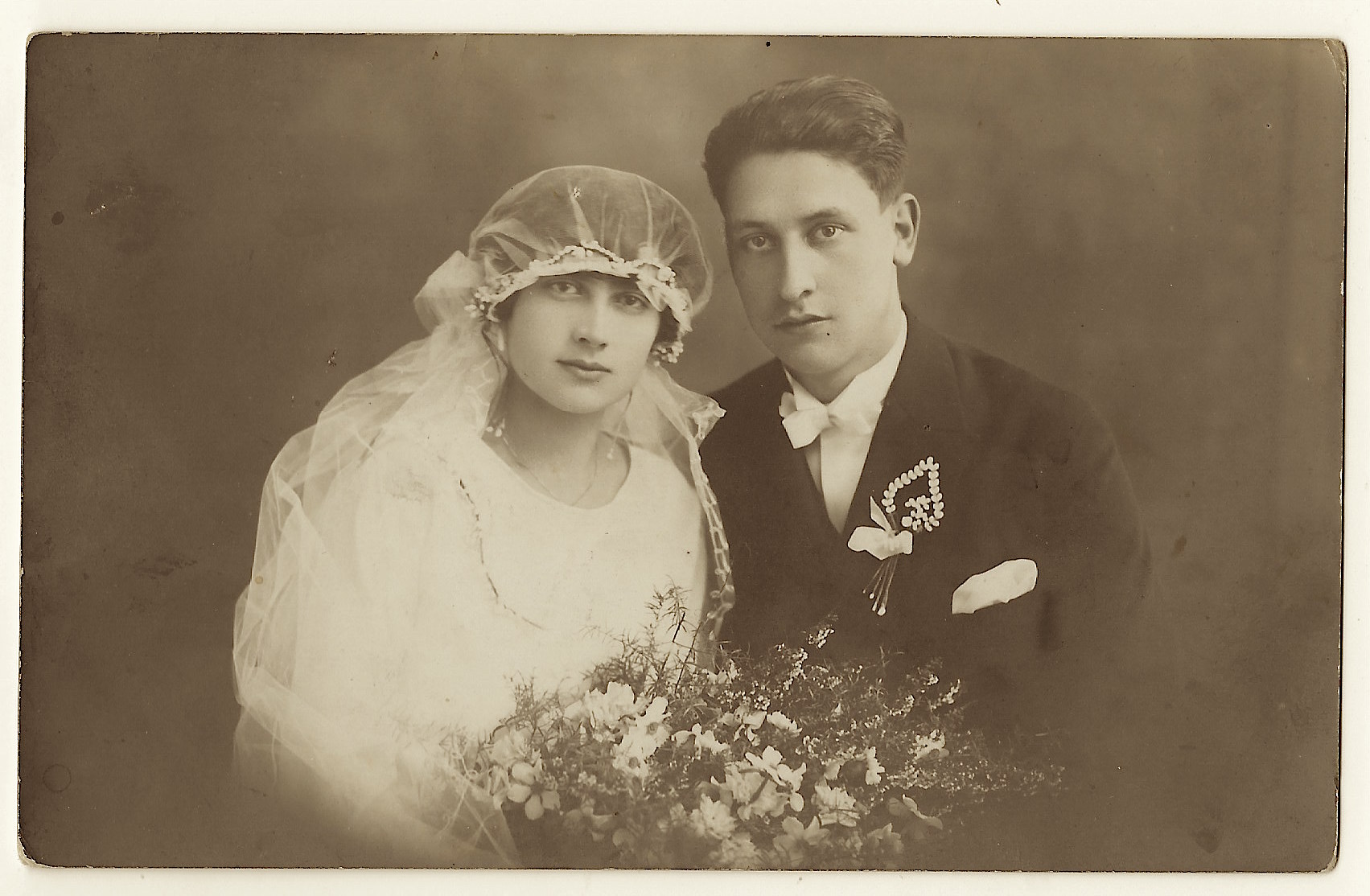

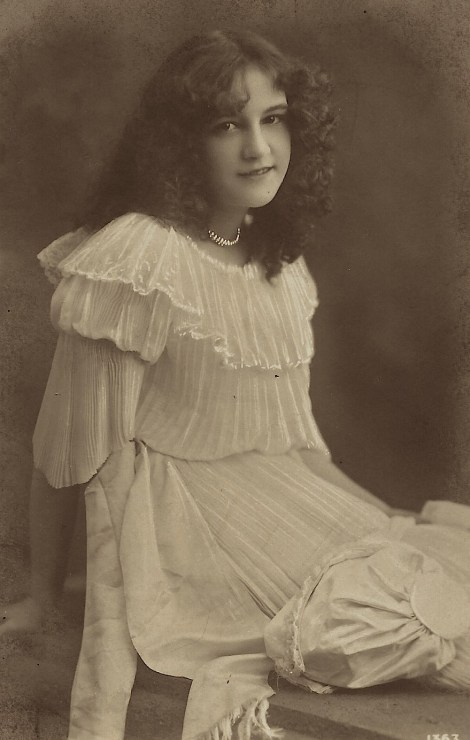

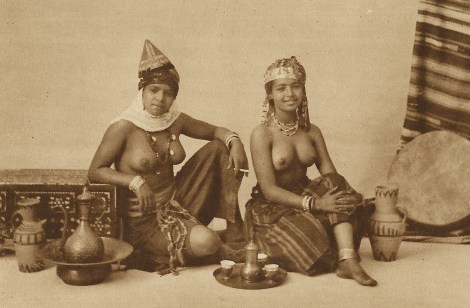
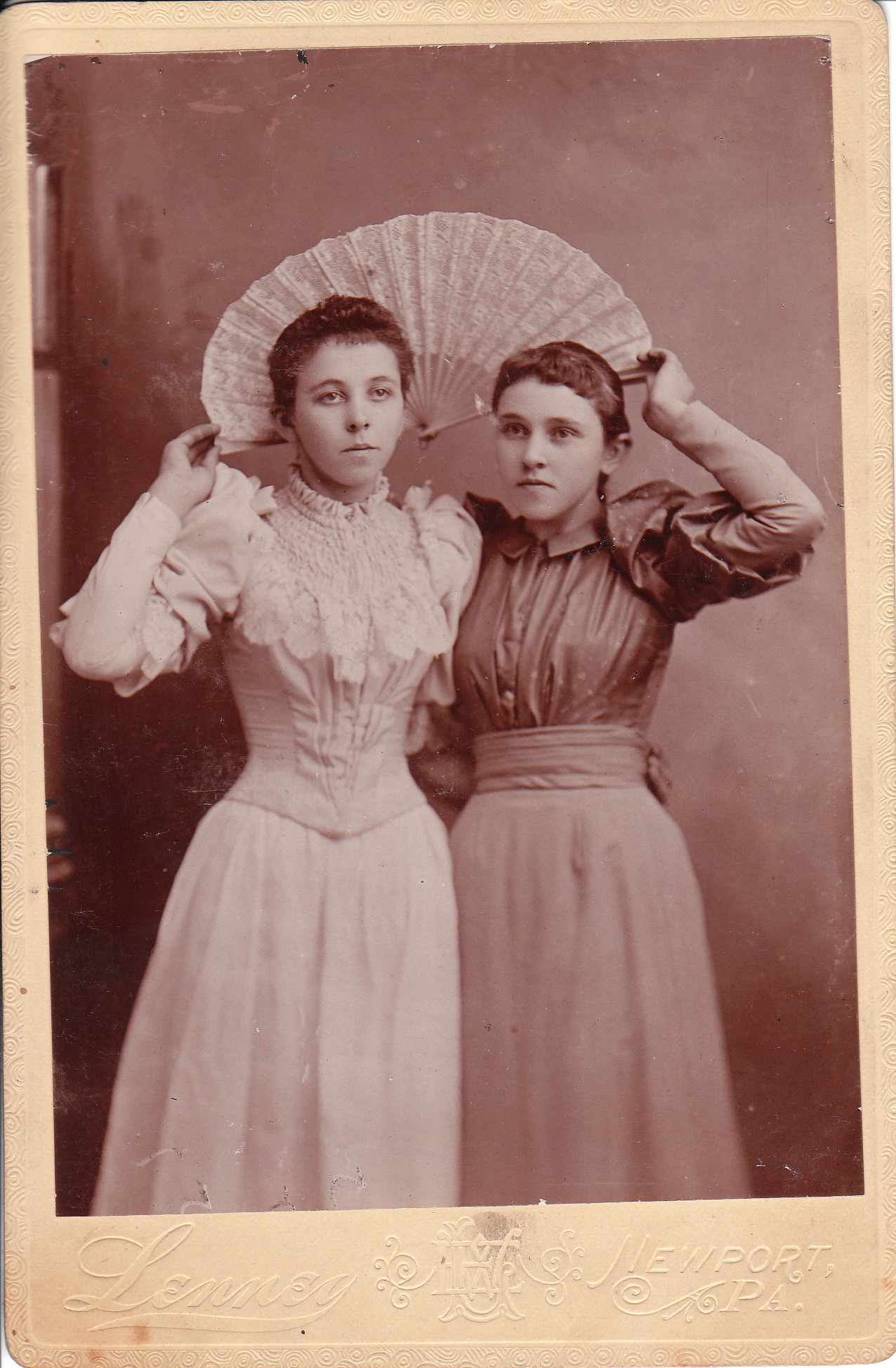
 Two young women pose for their portrait in Newport, Pennsylvania. Both women are grasping one end of a fan that they hold behind their heads. Their raised arms highlight their hour glass figures which are given an assist by the corsets they are wearing. The photographer is named William Easter Lenney. He was located in Newport in the early 1890’s and moved to Atlanta, Georgia where he became a well known portrait photographer between 1894 and 1920. He and his family then moved to California. (SOLD)

 A uniformed chauffeur leans against his “woodie” station wagon. Peering out the window is a young woman, possibly, a teenager. An inscription on the reverse of the photo indicates that this snapshot was taken in 1948. The pictured automobile is called a woodie because part of the rear body is made of wood or material that resembles wood. Woodies were popular in the United States in the 1930’s and 40’s. The wagons were made as versions of sedans as well as station wagons. Some were basic and some of these autos were luxury vehicles. Generally, they were manufactured by third party conversion companies. The last year of production of real wood construction in American station wagons was 1953. From then on, only faux wood was used. The uniformed driver and the thatched roof on the brick building may offer a hint of where this snapshot photo was taken. The previous owner of this image suggested that the photo was taken somewhere in Africa. This snapshot photograph measures about 3 1/2″ x 2 3/8″. SOLD
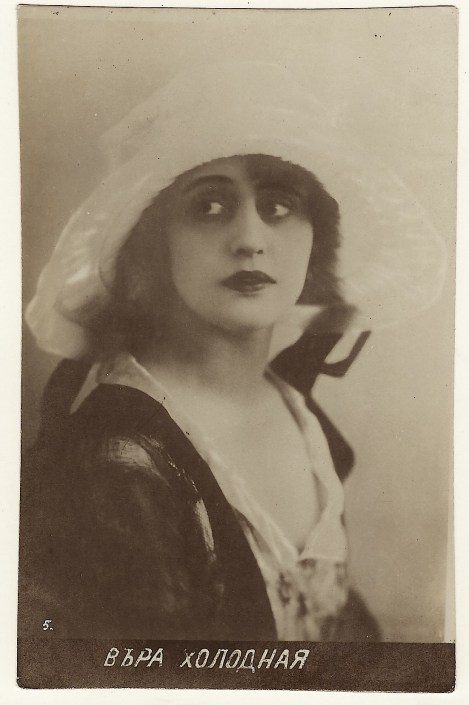
 This vintage real photo postcard features Russian actress Vera Vasilyevna Kholodnaya (1893-1919). Sometimes she is referred to as Holodnaja). She was the first star of Russian silent film. The number of films that she appeared in, is unknown. It is estimated the number of appearances is somewhere between fifty and one hundred. It is unfortunate that only five of her films survived the passage of time. She was born in Poltava which was part of the Russian Empire, and is now located in the Ukraine. At the age of two, she moved to Moscow to live with her grandmother. As a child, she fantasized about becoming a classical ballerina. She eventually enrolled in the Bolshoi Theatre ballet school From early childhood, she participated in family theater productions, While attending her school prom to celebrate her graduation she met Vladimir Kholodny, whom she married in 1910. He is known as one of Russia’s first race car drivers. The pair had two children. In 1908, after seeing actress Vera Komissarzhevskaya in a stage role, she decided that she wanted to pursue a career in films. She sought out Vladimir Gardin, a major Russian film director, and he gave her a minor role in Anna Karenina. In 1915, film director Yevgeni Bauer was searching for an actress who possessed great beauty. After meeting Vera Kholodnaya, he found the enchantress that he was looking for. Bauer’s film was a resounding success. He then made a second film starring Kholodnaya. These two Bauer films made Vera a major celebrity. She soon became known as “the Queen of Screen” and had great successes with other films. By 1918, she was a film phenom. When Russia entered World War I, her husband joined the military. She participated in charity concerts to support the soldiers and their families. It is reported that she was “worshipped” by soldiers. By the time of the Russian Revolution (1917), a new Kholodnaya film was released every three weeks and she continued to experience acclaim and success. Around this time, the actress moved with her film company to Odessa. She died there, at age 25, during the 1918 flu pandemic.This version of the flu, was known as the “Spanish Flu” and it infected 500 million people around the world between 1918 and 1920. Estimates are that between 50 and 100 million people died during the pandemic. (SOLD)


 THE CABINET CARD GALLERY