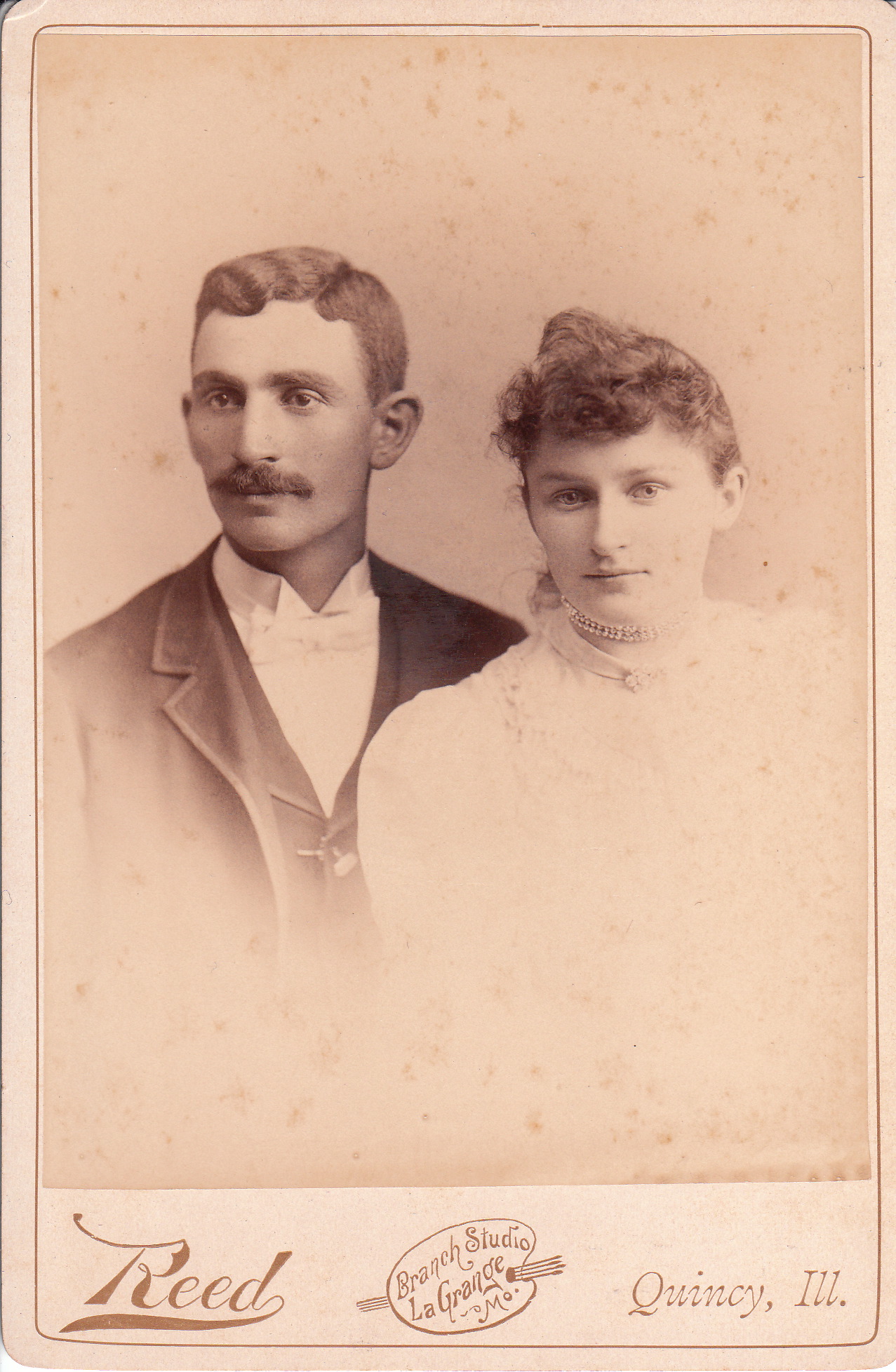
A handsome young couple pose for their portrait at the Reed photography studio in Quincy, Illinois. This unidentified endearing couple are nicely dressed, and the woman is wearing a necklace. Advertising on the bottom of the front of the cabinet card indicates that Reed operated a branch studio in La Grange, Missouri. To view other couple portraits, click on the category entitled “Couples”. Candace McCormick Reed (1818-1900) was born in Crab Orchard, Tennesee and moved to Missouri as a young girl. In 1842, she married Warren Reed, a photographer. The couple left Missouri and relocated to Quincy, Illinois, and established a daguerreotype gallery in 1848. Warren Reed died in 1858 and Candace Reed became the gallery owner and photographer. She quickly sold the gallery and opened a new gallery which she named the “Excelsia Gallery”. Candace’s sister, Miss Celina McCormick, worked as an assistant in the studio. At times, Candace worked under the name of Mrs W A Reed or Mrs Warren Reed. She kept her gallery up to date technologically and she was especially gifted in the art of painting photographs. She was known for her talent in enlarging old photographs and retouching them in crayon, oil, watercolor, and India ink. Candace was able to financially support her two children and mother-in-law, with proccds fro the business. Candace was admirably very civic minded. She established a support organization for soldiers and their families during the civil war. The group was called the “Sisters of the Good Samaritan”. She also served as a nurse in Union Army hospitals in Nashville, Chattanooga, and Vicksburg. While she was volunteering for the Union effort, she left her gallery in the care of her brother, who was also a photographer. After the war, Candace operated the Quincy gallery, and also ran galleries in Missouri. The galleries were located in the towns of Canton, La Grange, and Palmyra. Candace Reed’s Quincy gallery was in busines between 1848 and 1888. This cabinet card portrait is in very good condition (see scans). (SOLD)



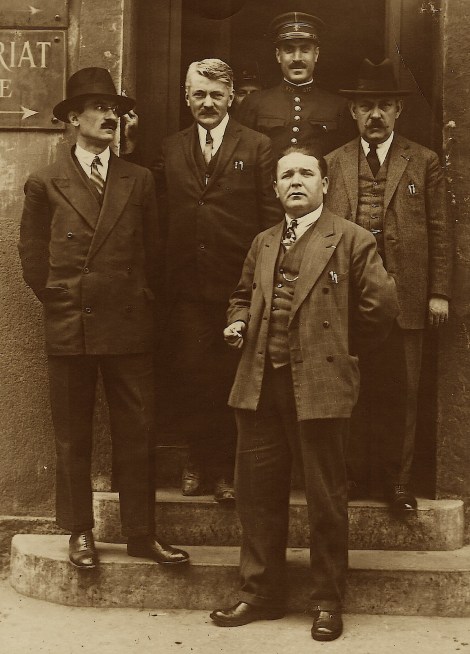 This vintage photograph features five policemen posing in front of the entrance to an unknown French city’s police department. Four of the men are dressed in plain clothes. They are likely detectives. A uniformed officer stands behind the plainclothesmen. None of these men are rookies. They look hardened and not the type of men you would want to enrage. Note that three of the men have pens in their pockets. The pens are easy to reach for writing citations. The signs on the wall of the building appear to say “Gardiens” (Police) and “Commissariat” (Department). This photograph appears to have been taken in the 1930’s. The photo measures about 5″ x 7″ and is in very good condition (see scans).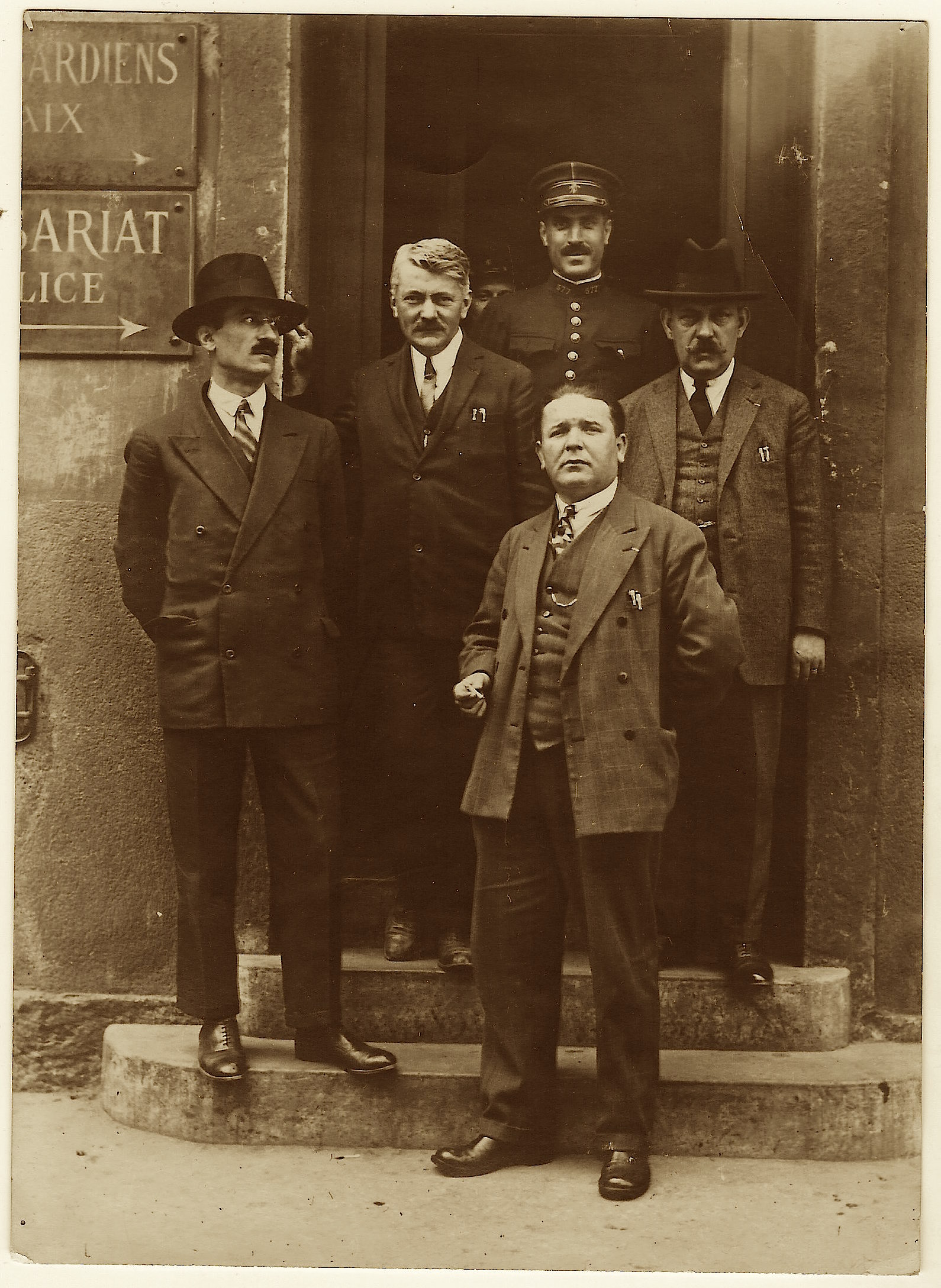


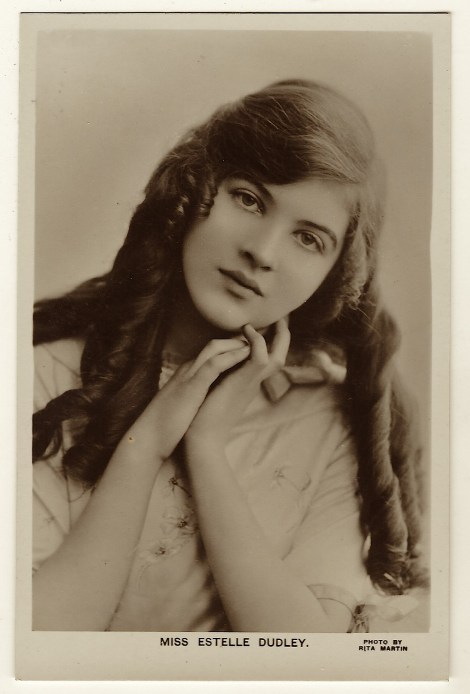
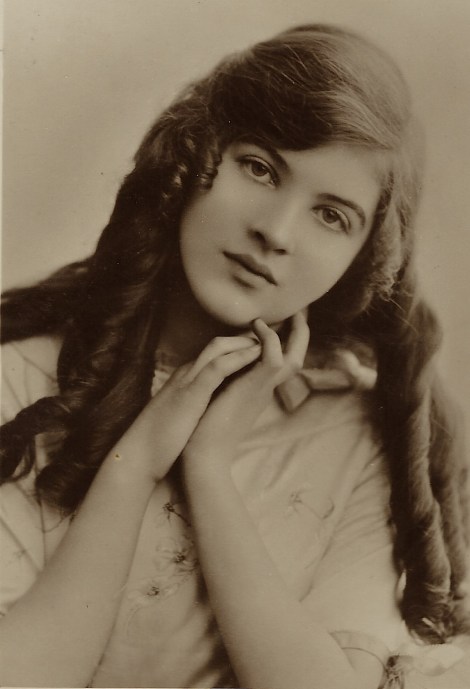 This vintage real photo postcard features child actress Miss Estelle Dudley. A search for information about Miss Dudley yielded little biographical data. She appears to be most famous for her role as Alice in the play, “Alice in Wonderland”. Britain’s National Portrait Gallery has 13 photographs of the young actress. All of the images were photographed in 1917 and are from the production of “Alice in Wonderland”. The photograph of Miss Dudley seen on this postcard was taken by well known female celebrity photographer Rita Martin. She was considered one of the best British photographers of her time. She opened her studio in 1906. Martin’s sister, Lallie Charles was an esteemed society photographer.

 This vintage real photo postcard features actress Caroline May Blaney. Biographical information about Miss Blaney is elusive. However, some information was uncovered. Miss Blaney acted in Western shows. At the time, “Buffalo Bill’s Wild West Show” was quite popular. The show toured the US, Canada, and Europe. The success of this show spawned a number of other wild west shows. Miss Blaney performed in such shows. She is known for her performances with Young Buffalo, an American actor and entertainer. A photograph of the pair can be seen below. A review in the Brighton and Hove Society (1911) describes one of these performance. The show took place in the United Kingdom, at the Alhambra Theatre. The review mentions Caroline May Blaney. She received billing just below Young Buffalo. The show was called “King of the Wild West”. The reviewer wrote that Blaney deserved praise for her rendition of “My Pony Boy”. The writer adds that she received “hearty applause”. A sad and interesting aside reported in the article is that in order to bring the Native Americans actors to England, a five thousand dollar bond had to be deposited with the United States to “procure” the right to take them on the foreign tour. The Native Americans were from the Pine Ridge Reservation in South Dakota. The portrait of Miss Blaney appearing on this postcard shows her in costume as “Wild Nell” in the “King of the Wild West Show”. “The New York Dramatic Mirror” (1910) published an article which included news about Miss Blaney. It reported that she was managed by her brother, Charles E. Blaney (1866-1944). He was a well known theatrical producer, director, and writer. The article tell the story of Blaney’s learning that her mother was in a serious car accident. She received the telegram in between the second and third acts of a play in which she was a performing. The show must go on, so Blaney wore street clothes during the third act enabling her to immediately dash to the local train station (Buffalo, New York) to catch a train to her mother’s home (Columbus, Ohio). The portrait was photographed by Foulsham & Banfield. Foulsham & Banfield were well known celebrity photographers. Frank Foulsham and A. C. Banfield operated a studio in the 1900’s through the 1920’s. (SOLD)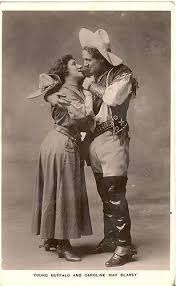

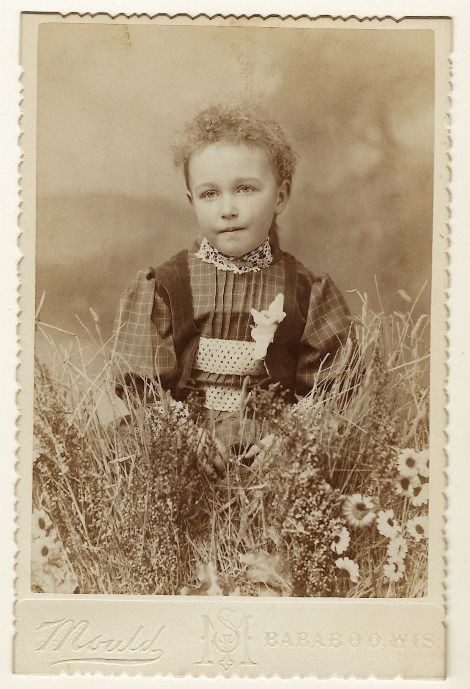
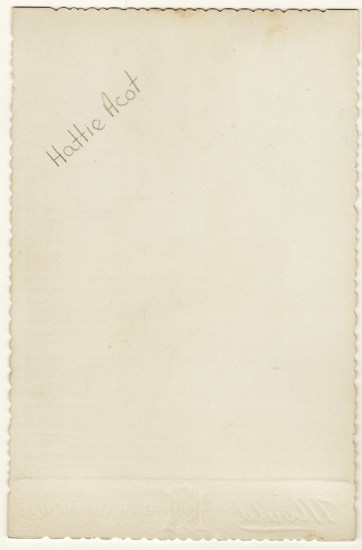
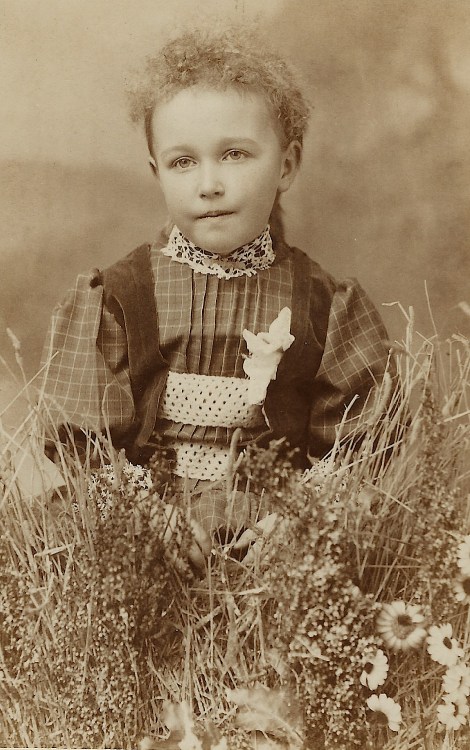 A cute little girl with curly hair poses in a studio created field of daisies for photographer Sim Mould. The studio was located in Baraboo, Wisconsin. The girl is wearing a dress wth a lace collar and has a flower pinned to the front of her dress. An inscription on the reverse of the cabinet card indicates that the child’s name is Hattie Acot. Unfortunately, no biographical information could be found about her. The photographer, Mr. Mould is mentioned in a number of photographic journals. He placed an ad for his studio in a book about Sauk County, Wisconsin (1891). The Photographic Times (1898) reports on his appointment to a lobbying committee of the Photographers Association of Wisconsin. The Encyclopedia Dubuque (1911) reveals that Sim Mould operated a photographic studio at 107 Main Street in Dubuque, Iowa. The town of Baraboo is situated on the Baraboo river. The town was settled by Abe Wood and originally called Adams. In 1852 it was renamed Baraboo. In the town’s early history it became the home of several sawmills. In the nineteenth century the town served as the headquarters of several circuses, including Ringling Brothers. Baraboo became known as “Circus City”. This cabinet card portrait is in very good condition (see scans).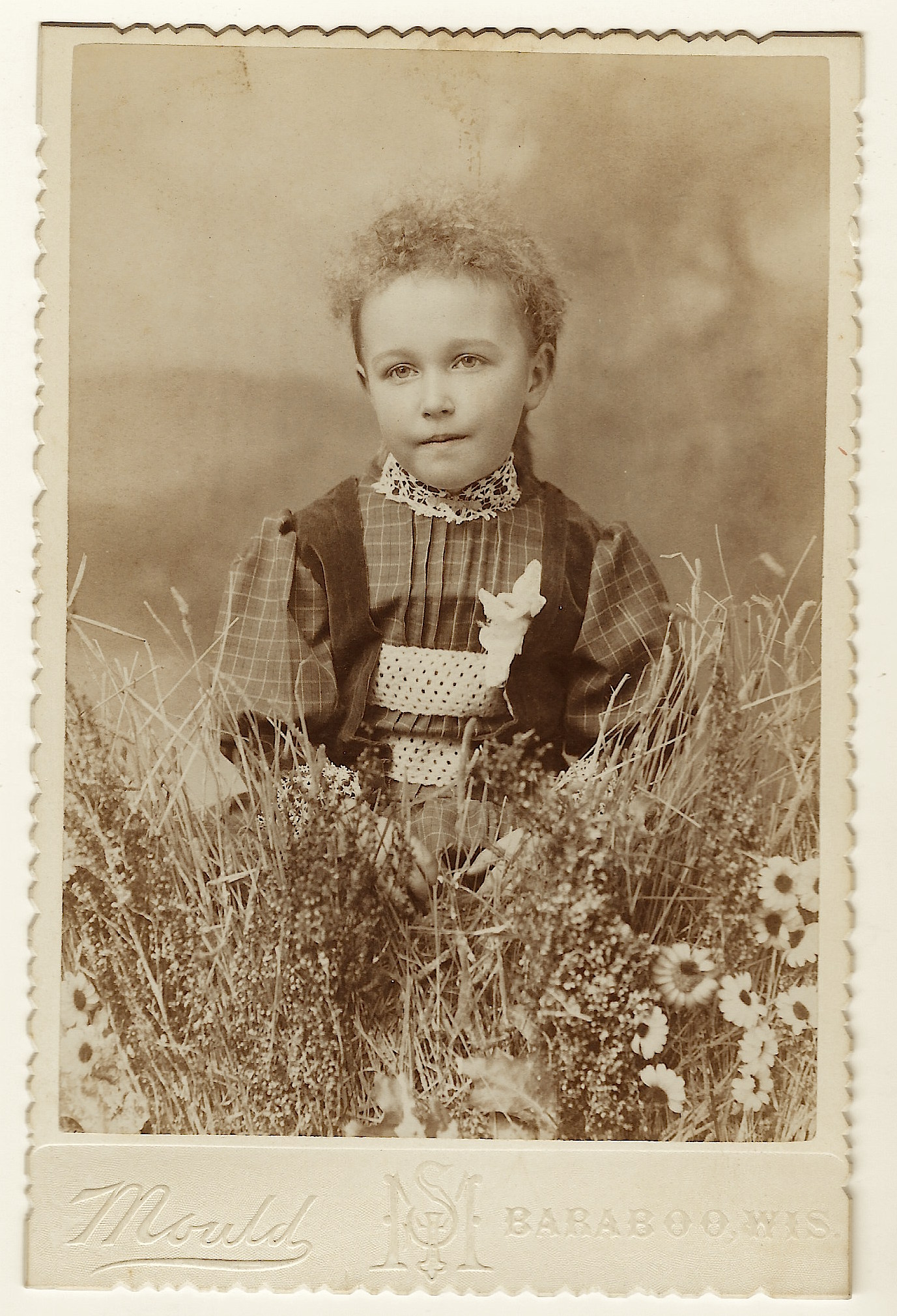
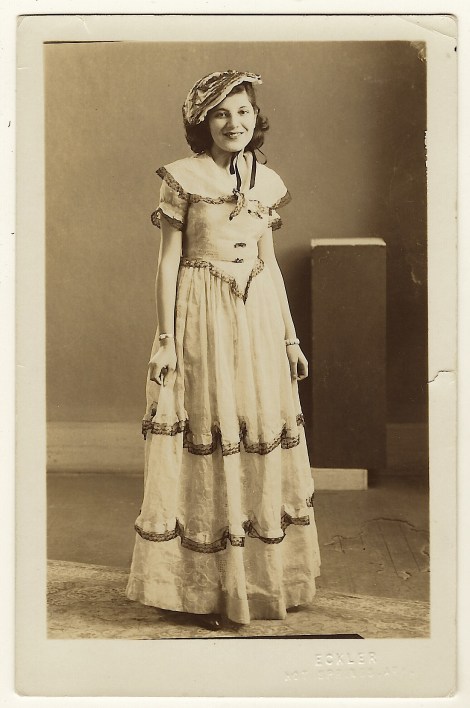
 This vintage real photo postcard features a lovely young woman smiling for the camera at the Eckler photo studio in Hot Springs, Arkansas. Eckler’s name is embossed on the right side of the bottom border of the postcard. The city of Hot Springs is located in the Ouachita Mountains and has several natural hot springs in the area. Beginning in the 1830’s, Hot Springs became a resort offering many spas. Hot Springs was the place to go for relaxation, fun, and good health. It is likely that the woman in this photograph is a visitor to the spa town. If so, she would come to the photographer for a photograph to serve as souvenir of her trip. The woman is wearing a dress that suggests that, in my opinion, informality and relaxation. Her hat is quite unusual and interesting. It looks like a slab of bacon. It seems appropriate to wear such a hat in the Razorback state. Ernest Eckler was one of Hot Springs’s most renowned photographers. He operated a studio there for 49 years (1897-1946). He was from Missouri but moved to Hot Springs in the late 1890’s. He moved to Hot Springs because he was a tuberculosis patient seeking medical benefits from the springs. Eckler was a college graduate but while in Hot Springs he discovered the field of photography and learned enough to take a job with the Missouri Pacific Railroad as a photographer. He took mostly scenic shots to be used for advertising purposes. In 1897, he purchased a studio in Hot Springs. As a studio photographer he focussed on photographing individuals and families. He was a prolific wedding photographer. This postcard has an AZO stamp box that dates between 1924 and 1949.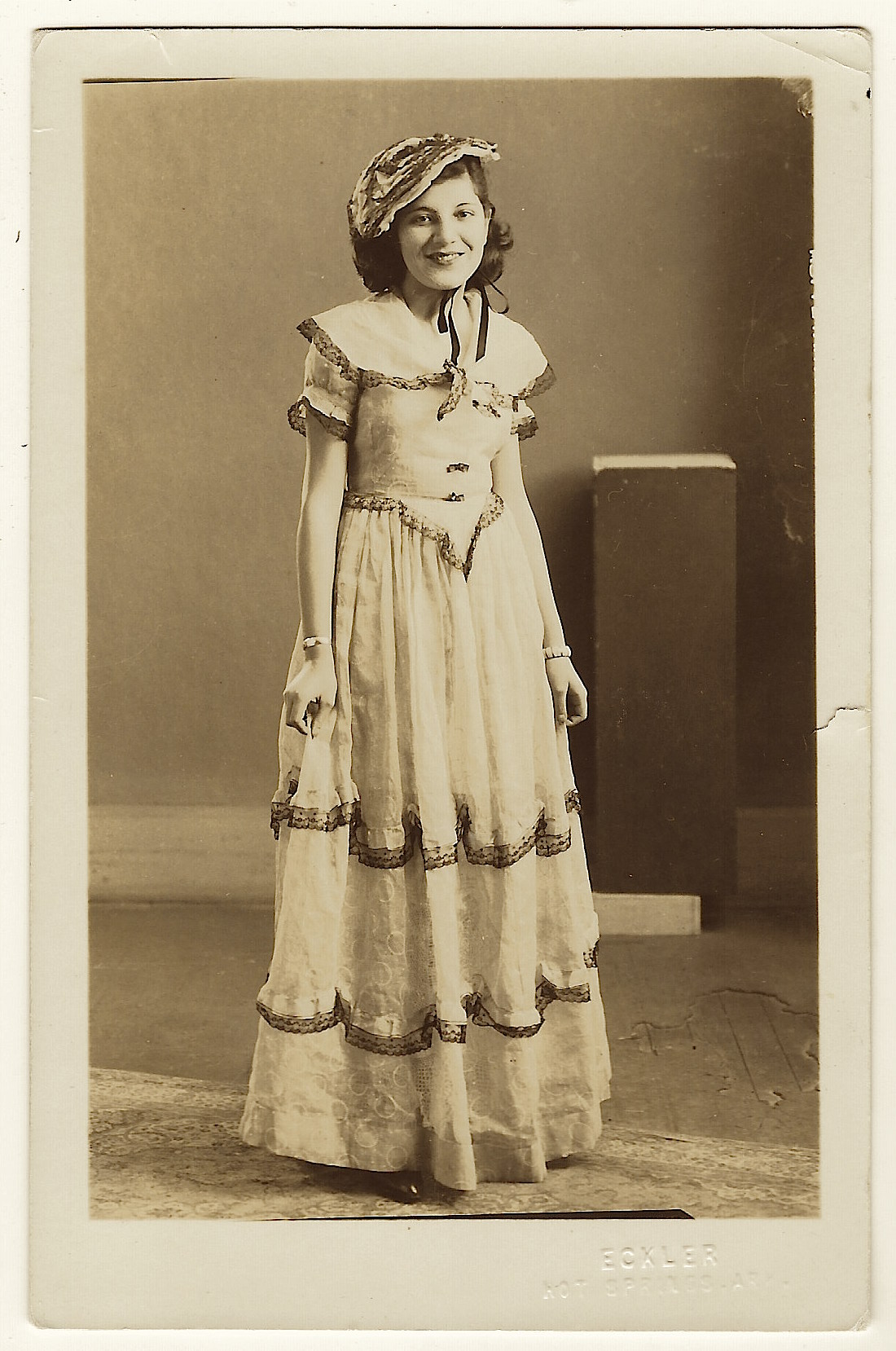

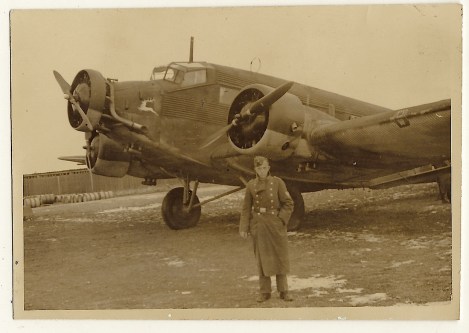 It’s wartime. To be exact, this snapshot photograph features a World War II German soldier posing in front of a military airplane. I can not identify the name of the aircraft, though I would guess the plane is a bomber or transport plane. Note the decal of the stag near the nose of the plane. It looks similar to the John Deere logo (see images below). I wonder if the decal was on all planes of this model, or if it was placed on the plane by it’s crew. The snapshot is printed on AGFA Photopaper. The company was founded in Berlin, Germany in 1876. This image is on photo paper (AGFA-Brovira ) that was produced during WW II.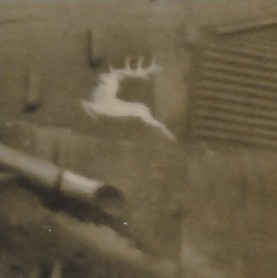



 THE CABINET CARD GALLERY