GABY DESLYS: BEAUTIFUL AND TALENTED ACTRESS, DANCER AND SINGER

POSTCARD 1 (SOLD)
POSTCARD 2 (SOLD)

POSTCARD 3 (SOLD)

POSTCARD 4 (SOLD)
POSTCARD 5 (SOLD)

POSTCARD 6 (SOLD)
POSTCARD 7(SOLD)

POSTCARD 8 (SOLD)

POSTCARD 9 (SOLD)

POSTCARD 10

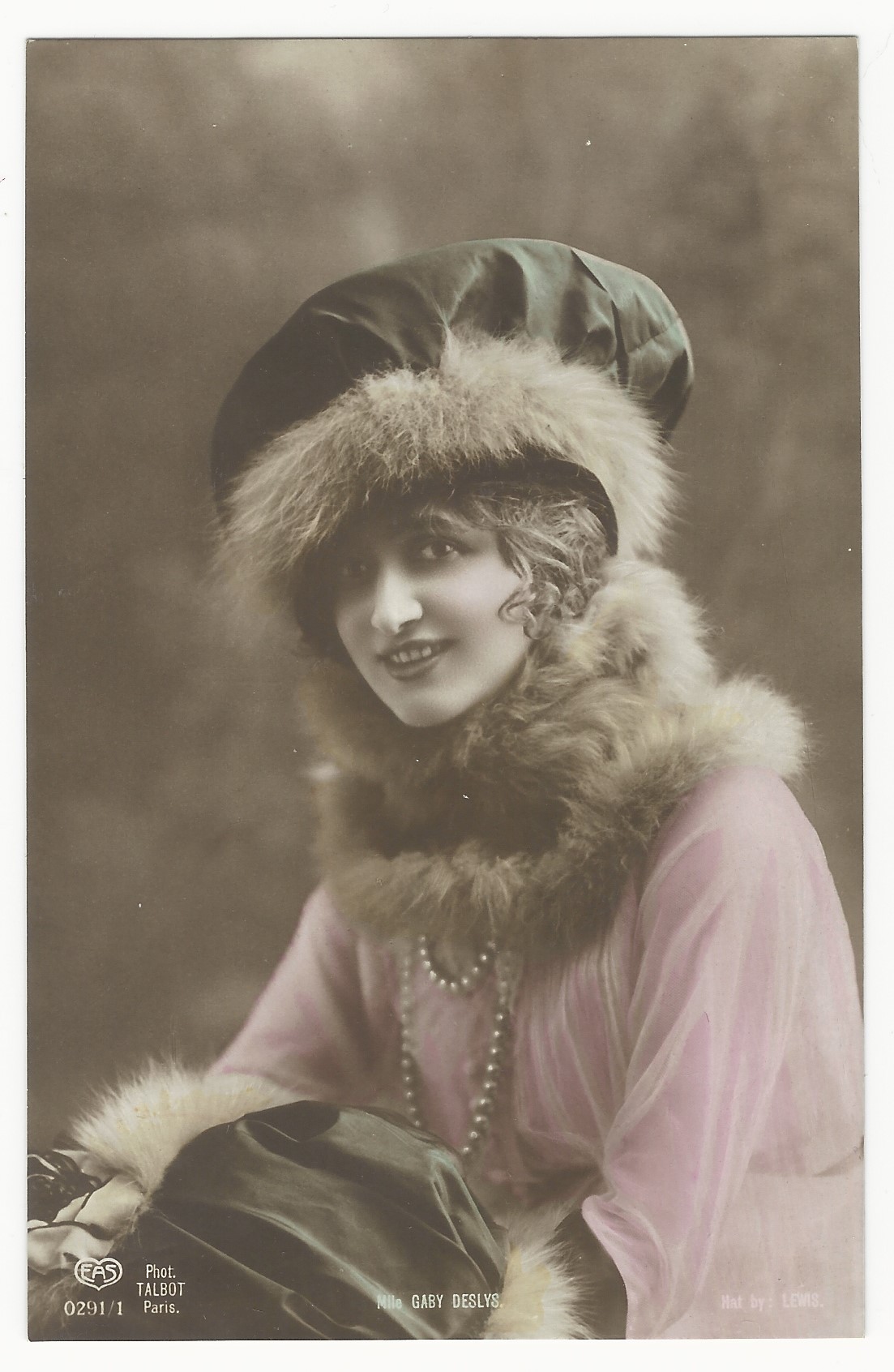
Vintage real photo Postcard 1 features a portrait of the multi talented actress, dancer, and singer, Gaby Deslys (1881-1920). Miss Deslys performed at the beginning of the twentieth century in both Europe and the United States. She was extremely popular worldwide. In fact, she was able to earn four thousand dollars a week when performing in the United States. She performed several times on Broadway. She had a dance named after her, “The Gaby Glide” (1911). You can find the sheet music, with Gaby on the cover, elsewhere on ebay. Her love life was the topic of much public gossip. She probably added to the sensationalism surrounding her by posing in a number of risque postcards. She was courted by many wealthy and powerful men, including the King of Portugal. Her life was cut short by the “Spanish” influenza. Postcard 1 is not at all common. It was published by E. A. Schwerdtfeger Company of London and printed in Berlin (no. 0291/1). The company also had an office in New York (opened in 1910). This publishing house printed many different types of real photo postcards but was known for its hand-colored real photo postcards of actresses and fashionable women in exotic costumes. The photographer was the Talbot studio. The creator of Miss Deslys’s hat is also credited (Lewis). This particular real photo postcard stands out because it offers a colorized and very clear view of this beautiful and talented performer.  SOLD

Postcard 2 was photographed by Edouard Stebbing. He was active in Paris between 1890 and 1910. Stebbing taught at a University in Paris and invented the stebbing camera, and was known for his work with emulsions. It is reported that he was friends with the artist Monet. He died in 1914 and his wife (Celestine) died five years earlier. Stebbing was a prolific photographer during the Belle Epoque Paris. He appears to have been an expatriate from England. He published many articles in British Photographic journals. Stebbing photographed many theatrical stars. A frequent publisher of these postcards was Monsieur G.Piprot, of “Etoille” or “Star” publishing in Paris. The “Photographic Times and American Photographer” (1883) cited Stebbing as “one of the bright lights of the French Photographic Society. The card has a 1908 postmark.  SOLD

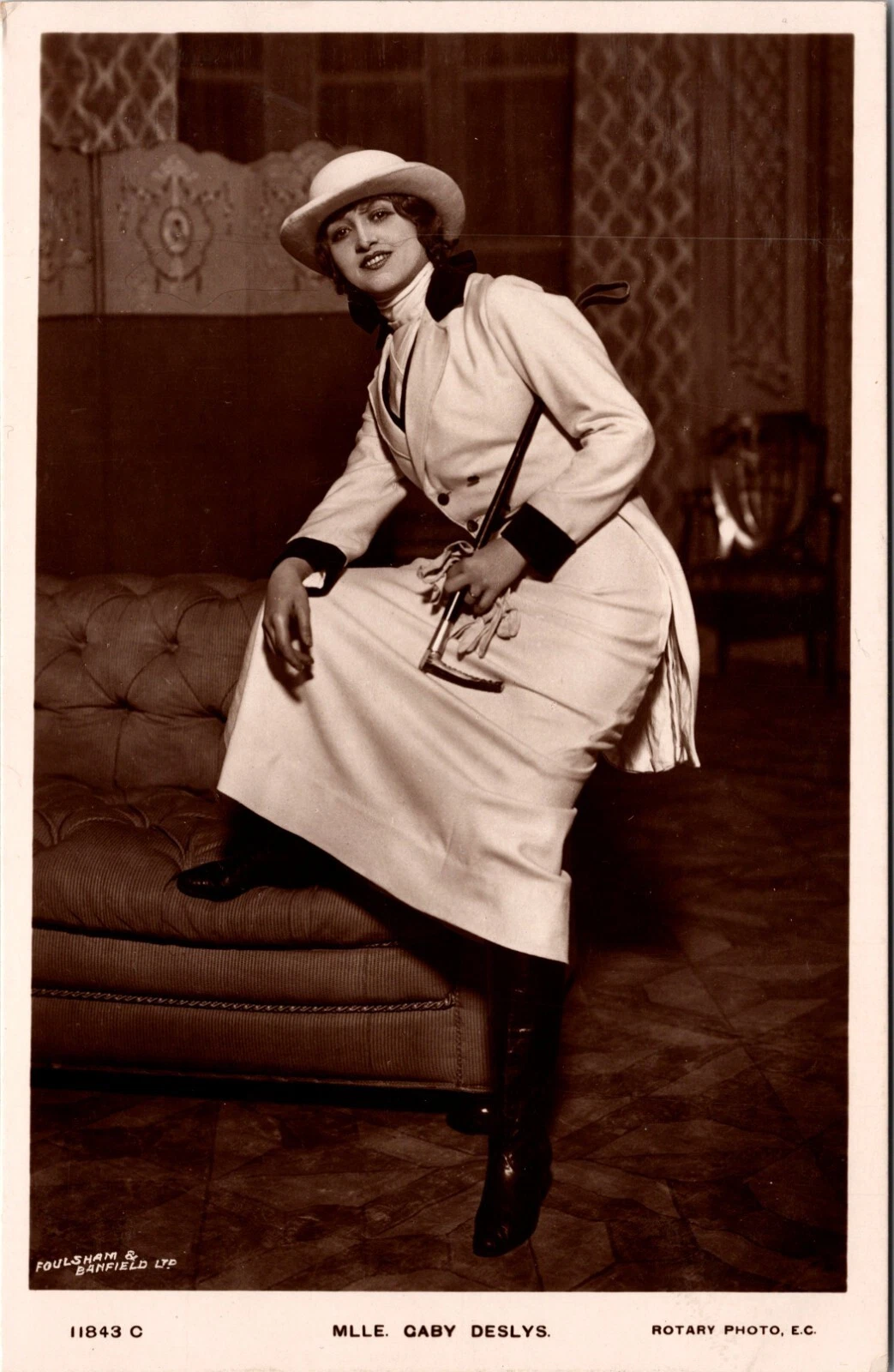
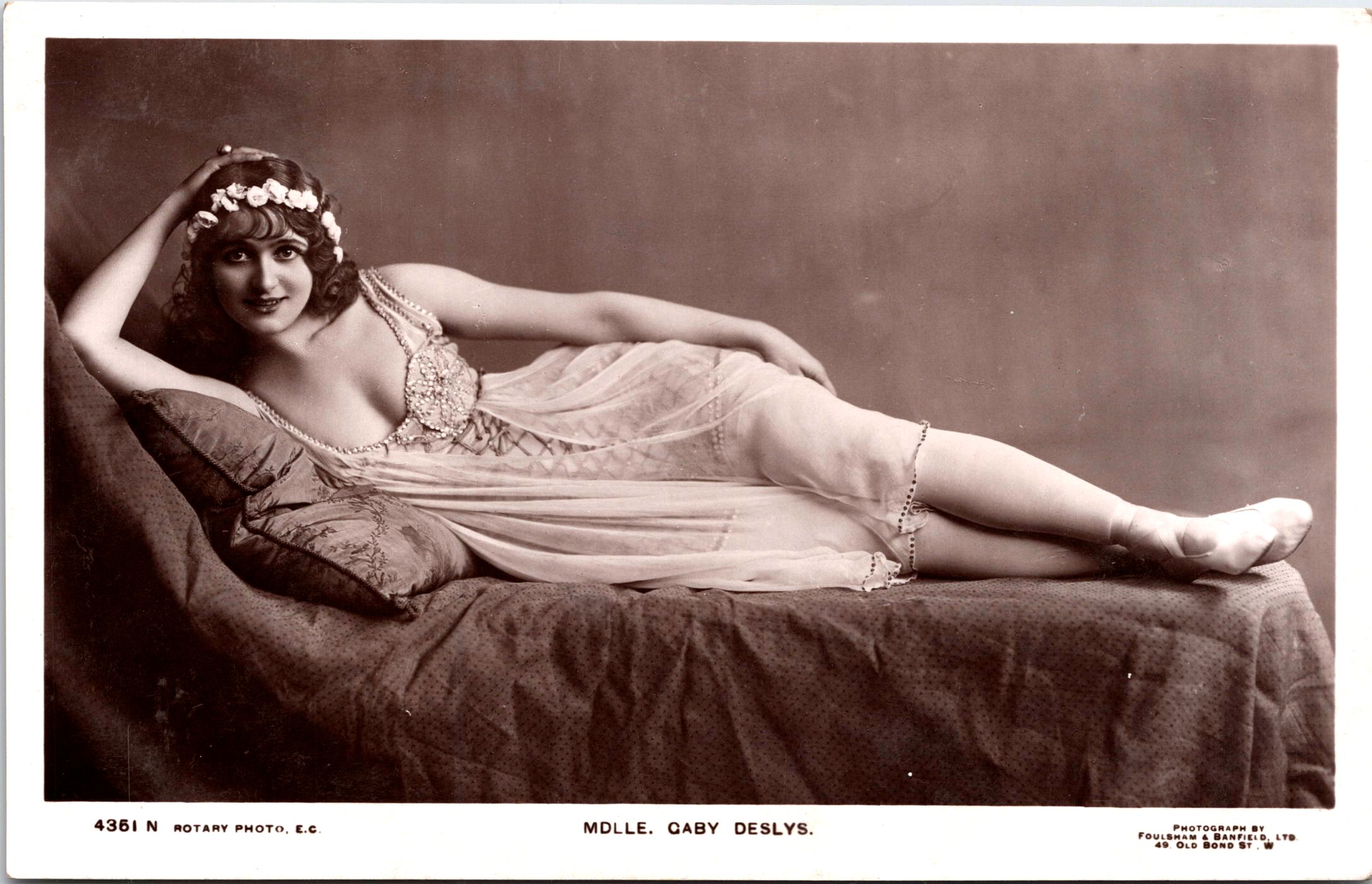
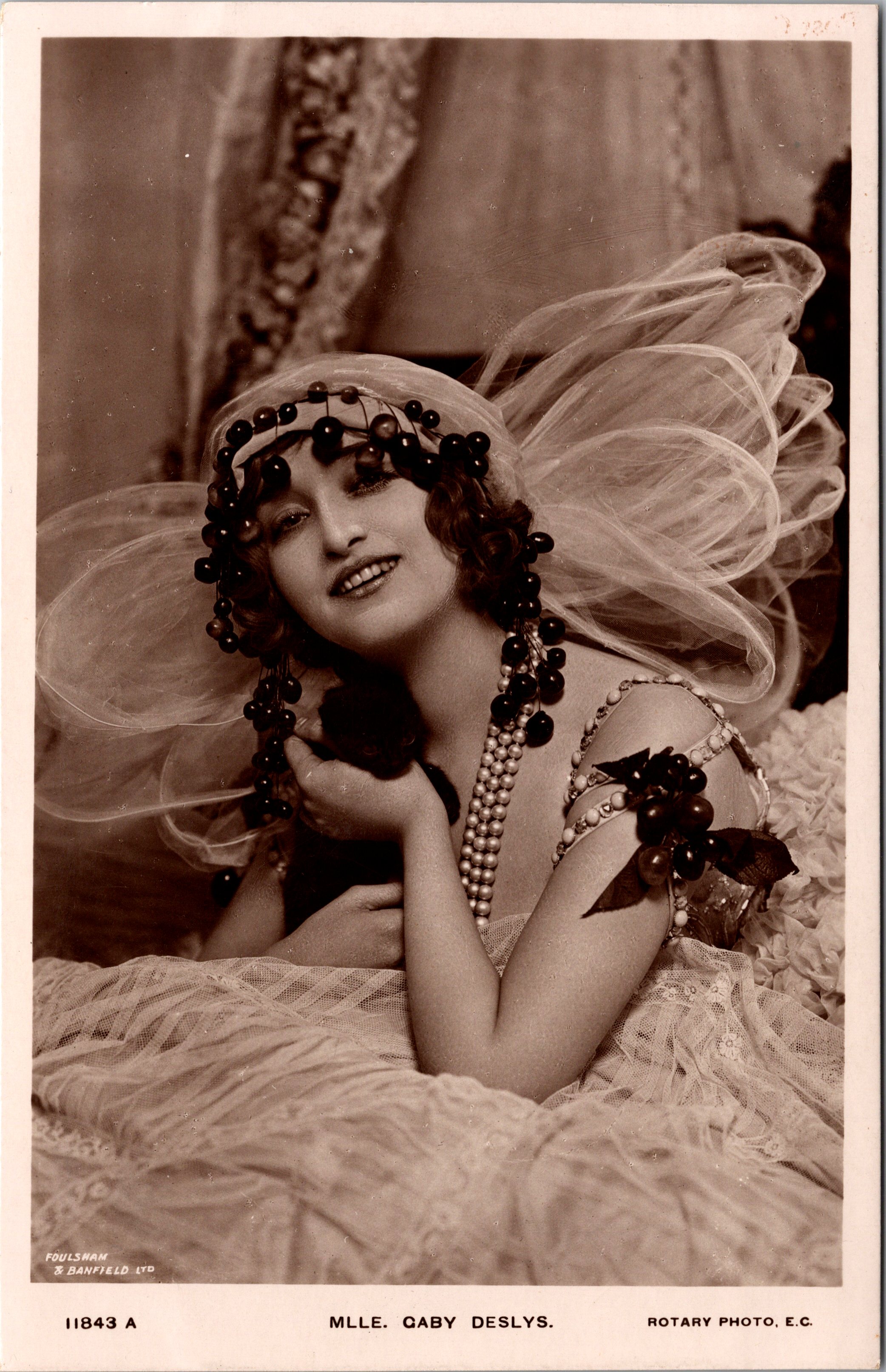
Postcard 3 is not common. It was published by Rotary Photo of Great Britain as part of a series (no.11843 A). This postcard portrait was taken by the Foulsham & Banfield studio. Gaby Deslys was certainly a beautiful and talented performer.  SOLD

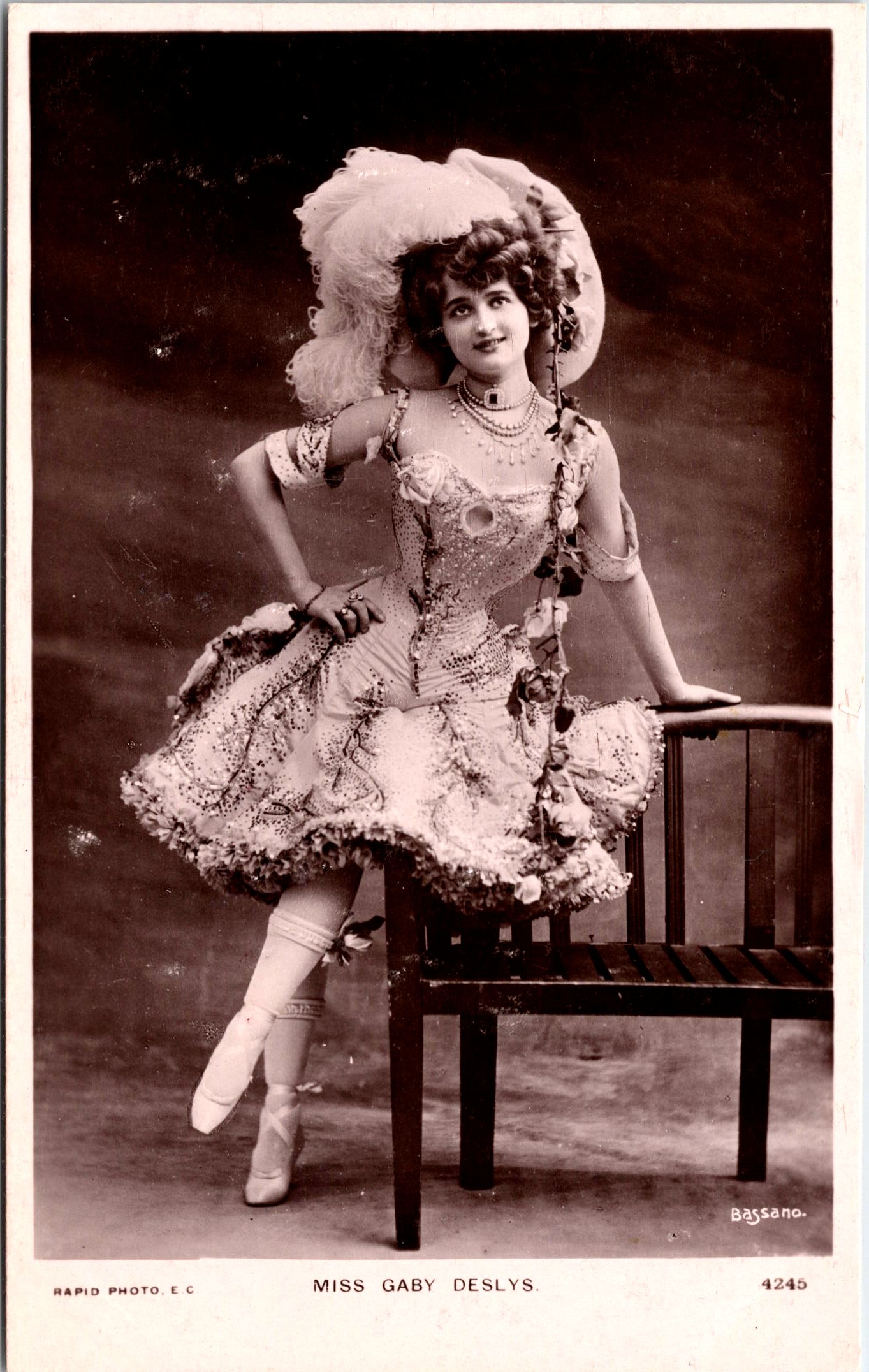
Postcard 4 was published by Rapid Photo of Great Britain as part of a series (no.4245). The company was active between 1901 and 1910. The firm specialized in taking theatrical portraits and was located in London. This postcard portrait was taken by the Bassano studio.  SOLD

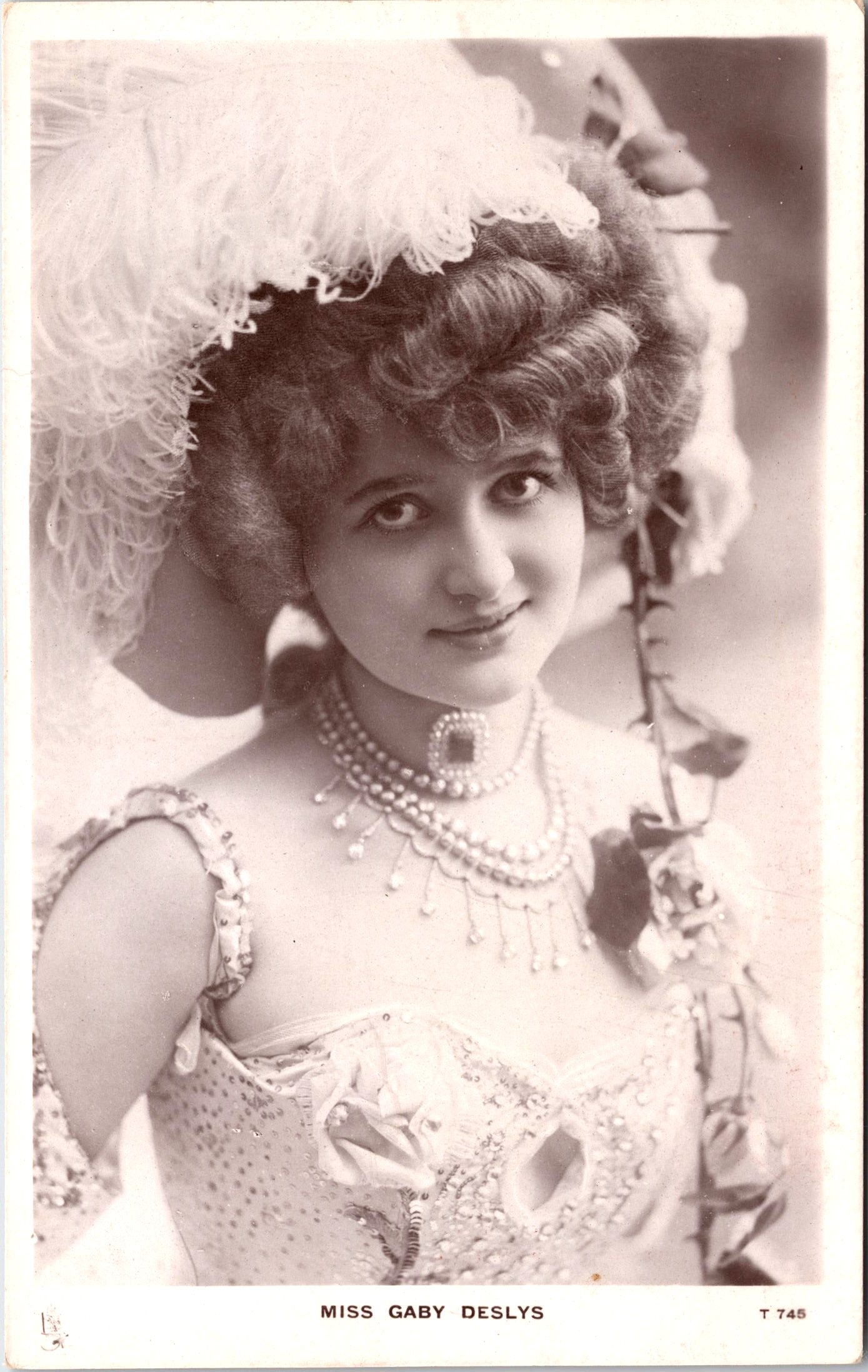
Postcard 5 was published by Raphael Tuck & Sons of Great Britain as part of the Celebrities of the Stage series (no.T745). The company produced a variety of postcards including an extensive catalog of celebrity (stage and screen) portrait postcards. The firm began publishing this Deslys postcard in 1903. Miss Deslys was photographed by Dover Street Studio for the portrait seen on this postcard.  (SOLD)

Postcard 6 was published by J. Beagles of Great Britain as part of a series (no.70H). This real photo postcard is uncommon. This risque vintage real photo postcard features Deslys wearing a provocative costume for her time. She is flashing an infectious smile. Note her corset assisted wasp thin waist.

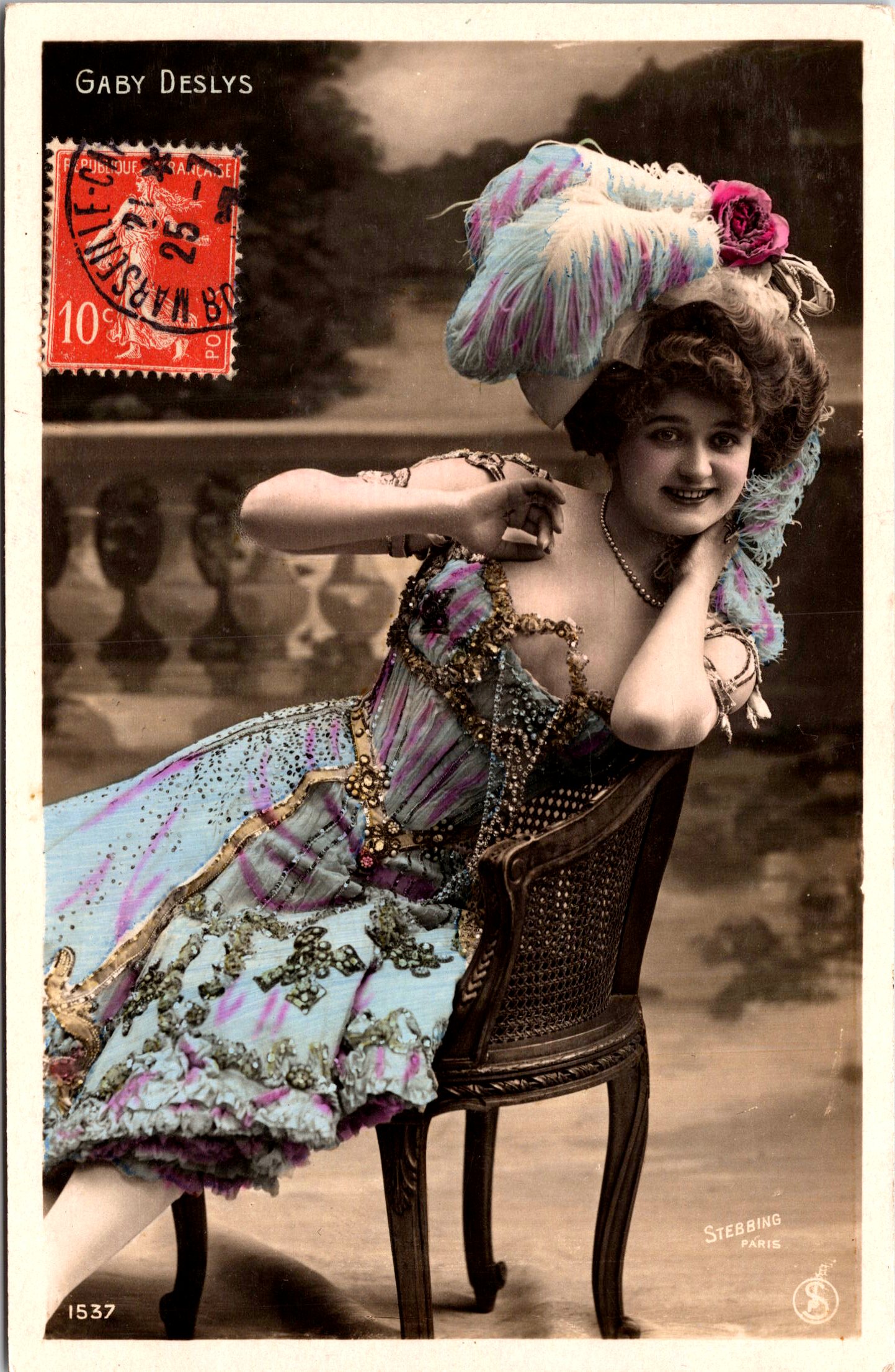
Postcard 7 was published by Societe Industrielle de Photograpie (SIP) of Rueil, France, and is part of a series (no.1537).The photographer was Edouard Stebbing who was active in Paris between 1890 and 1910. Stebbing taught at a University in Paris and invented the stebbing camera, and was known for his work with emulsions. It is reported that he was friends with the artist Monet. He died in 1914 and his wife (Celestine) died five years earlier. Stebbing was a prolific photographer during the Belle Epoque Paris. He appears to have been an expatriate from England. He published many articles in British Photographic journals. Stebbing photographed many theatrical stars. This real photo postcard is uncommon.  (SOLD)

Postcard 8 is an uncommon vintage real photo postcard. It was published by Davidson Brothers of Great Britain. Davidson Brothers was located in both London and New York City. The firm operated between 1901 and 1911.  (SOLD)

Postcard 9 has a portrait taken by esteemed celebrity photographer, Leopold Reutlinger. This real photo postcard is very uncommon. Gaby Deslys was certainly a beautiful and talented performer.  (SOLD)

Postcard 10 is not at all common. It was published by Rotary Photo of Great Britain as part of a series (no.11843 C). This postcard portrait was taken by the Foulsham & Banfield studio. SOLD

MISS EMMY WEHLEN : PRETTY THEATRE AND SILENT FILM STAR : BROADWAY : RPPC

POSTCARD 1

POSTCARD 2 (SOLD)

POSTCARD 3 (SOLD)

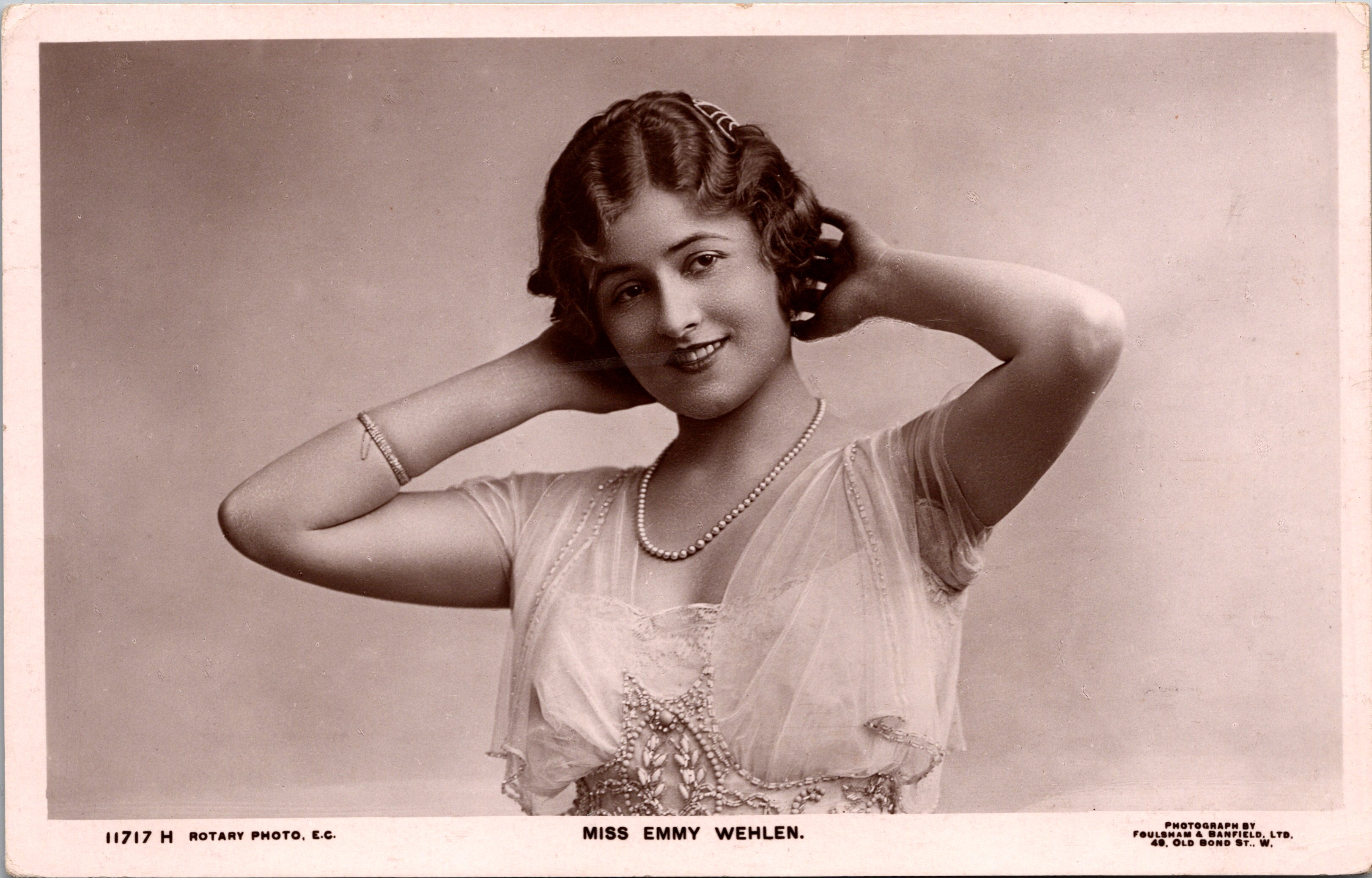
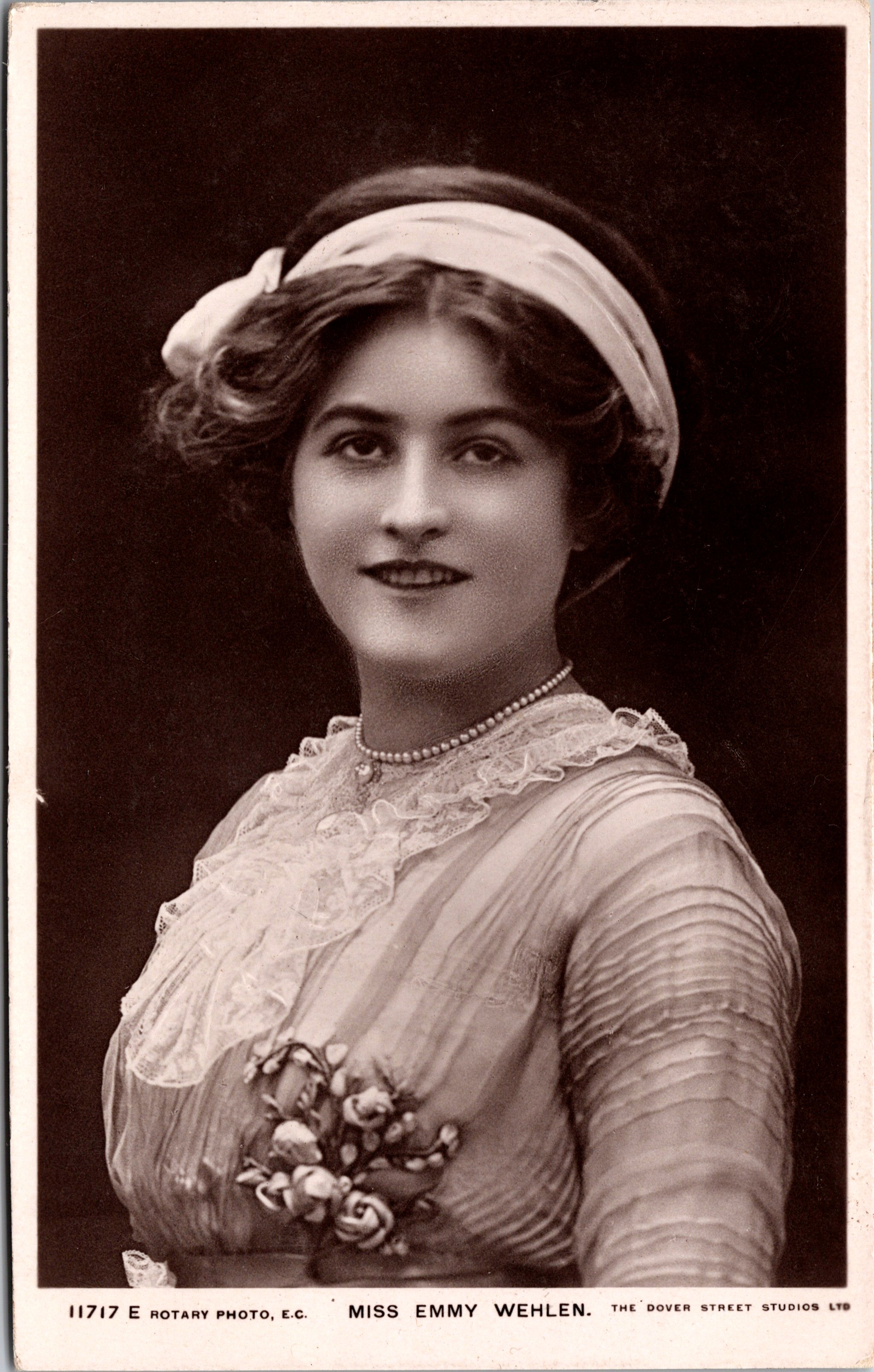
Postcard 1 features German actress, Emily “Emmy” Wehlen (1887-1977). She was a Edwardian musical comedy and silent film actress. She retired from acting at a young age (early 30’s), Wehlen received her musical training at the Mannheim Conservatory. She then joined the Thalia-Theatre and performed in musical comedies in several German cities. She was then invited to London and was considered as a possible successor to Lily Elsie. Wehlen played the lead role in “The Merry Widow” (1909). Later that year she appeared in the hit musical “The Dollar Princess” which ran for 428 performances. Next stop was New York, where she appeared in four Broadway plays between 1911 and 1915. Shortly after her last Broadway appearance, Wehlen left the stage and pursued a film career.  She appeared in over twenty films between 1915 and 1920. “Everybody’s Magazine (1911) reported that Wehlen was very pretty and very graceful. Her acting and voice were also praised. In addition, the article stated that “she has the indescribable charm of personality” and that audiences liked her and wanted her to never leave the stage during a production. Miss Wehlen’s photograph on this postcard was taken by celebrity studio, Foulsham & Banfield. The card was published by Rotary Photo as part of a series (no.11717H).

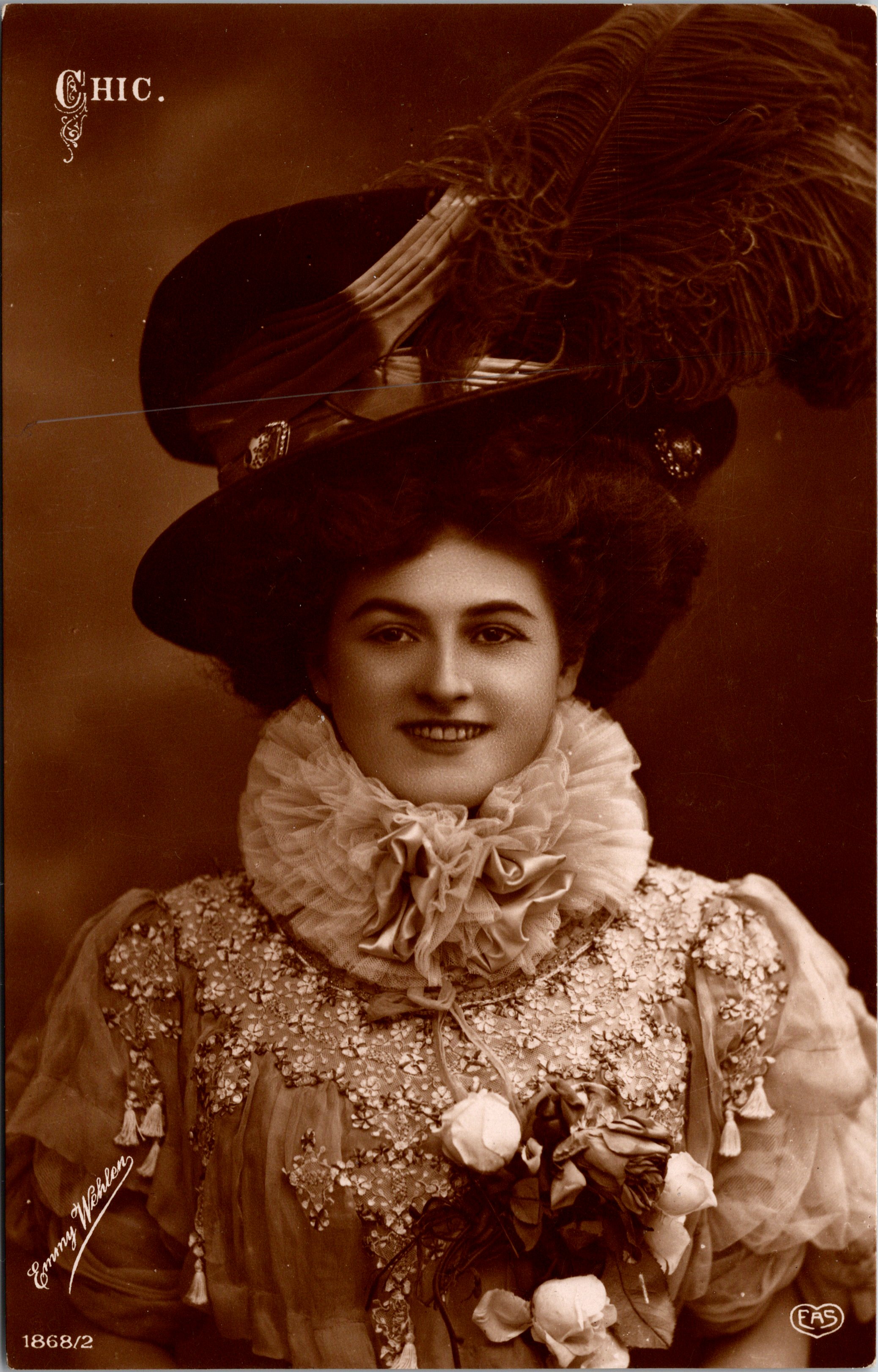
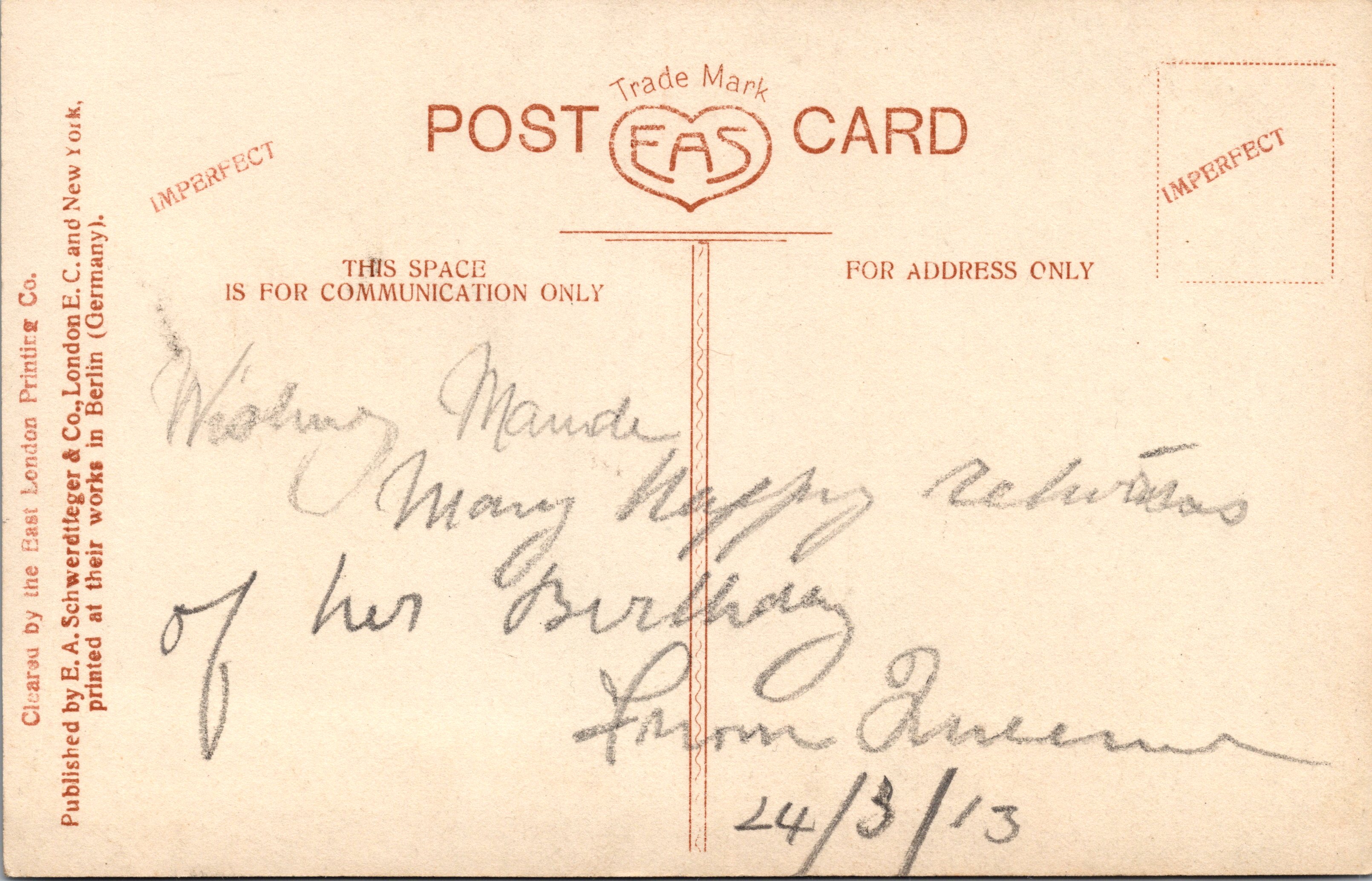
In Postcard 2, Wehlen is beautifully dressed for the portrait appearing on the postcard. She looks a bit clownish with her ruffled collar. There are flowers pinned to the front of her dress and she is wearing a jumbo feathered hat. She has a beautiful smile. The card was published by EAS as part of a series (no.1868/2). The firm was located in London and New York. The postcard was printed in Germany. Interestingly, the word “imperfect” is printed in two places on the front of the card. The word “chic” appears in the upper right hand corner of the image. Emmy Wehlen fits the bill. She is truly chic. The message on the postcard indicates that it was written in 1913.  (SOLD)

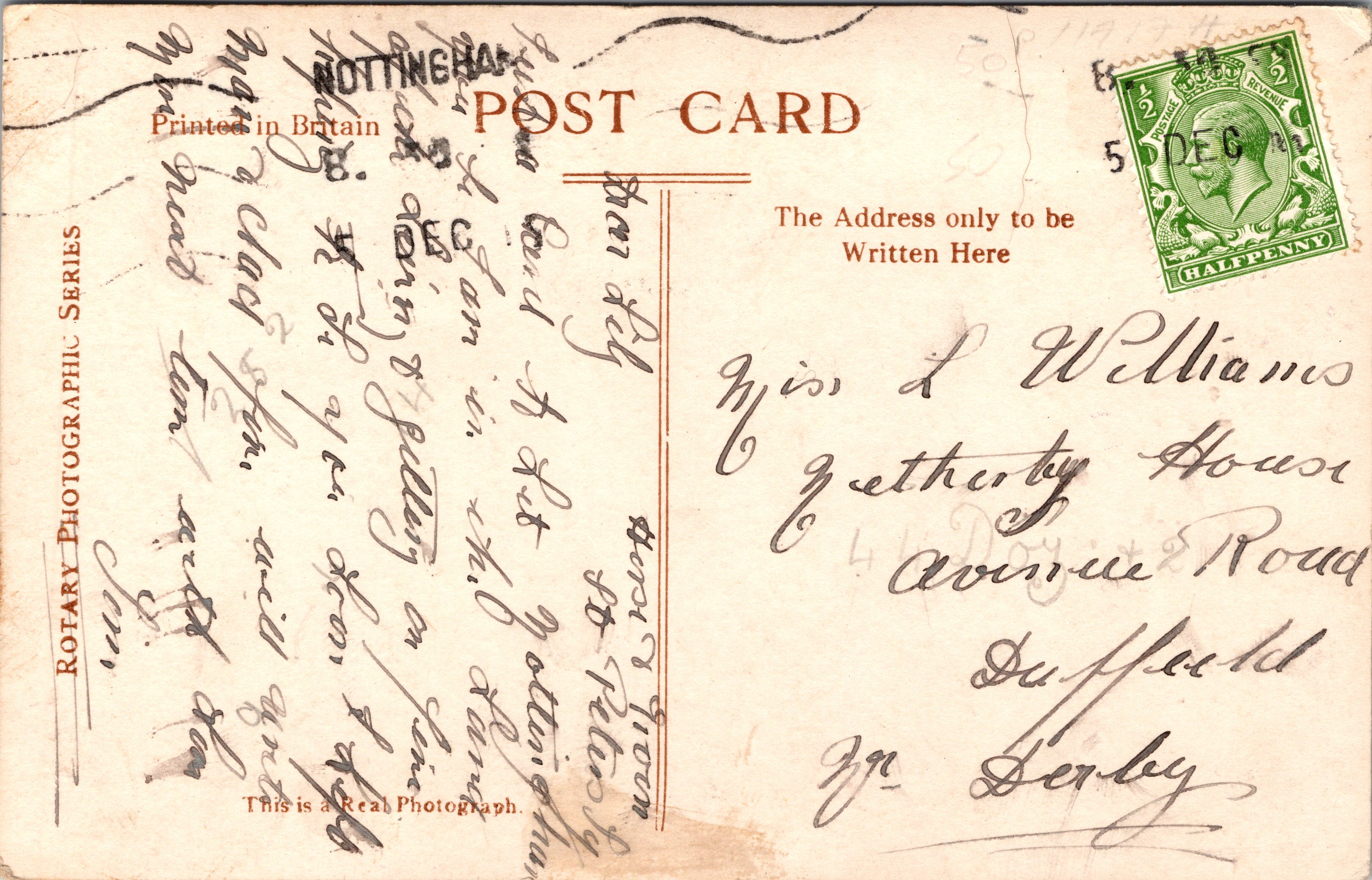
Postcard 3 features Miss Wehlen’s photograph taken by celebrity studio, Dover Street Studios. The card was published by Rotary Photo as part of a series (no.11717E). The message on the card indicates that the sender hoped that this photo postcard was meant to be an addition to the recipient’s postcard collection. (SOLD)

POSTCARD 1

POSTCARD 2

POSTCARD 3

JULIA MARLOWE: ESTEEMED AMERICAN STAGE ACTRESS : CABINET CARD PORTRAIT 

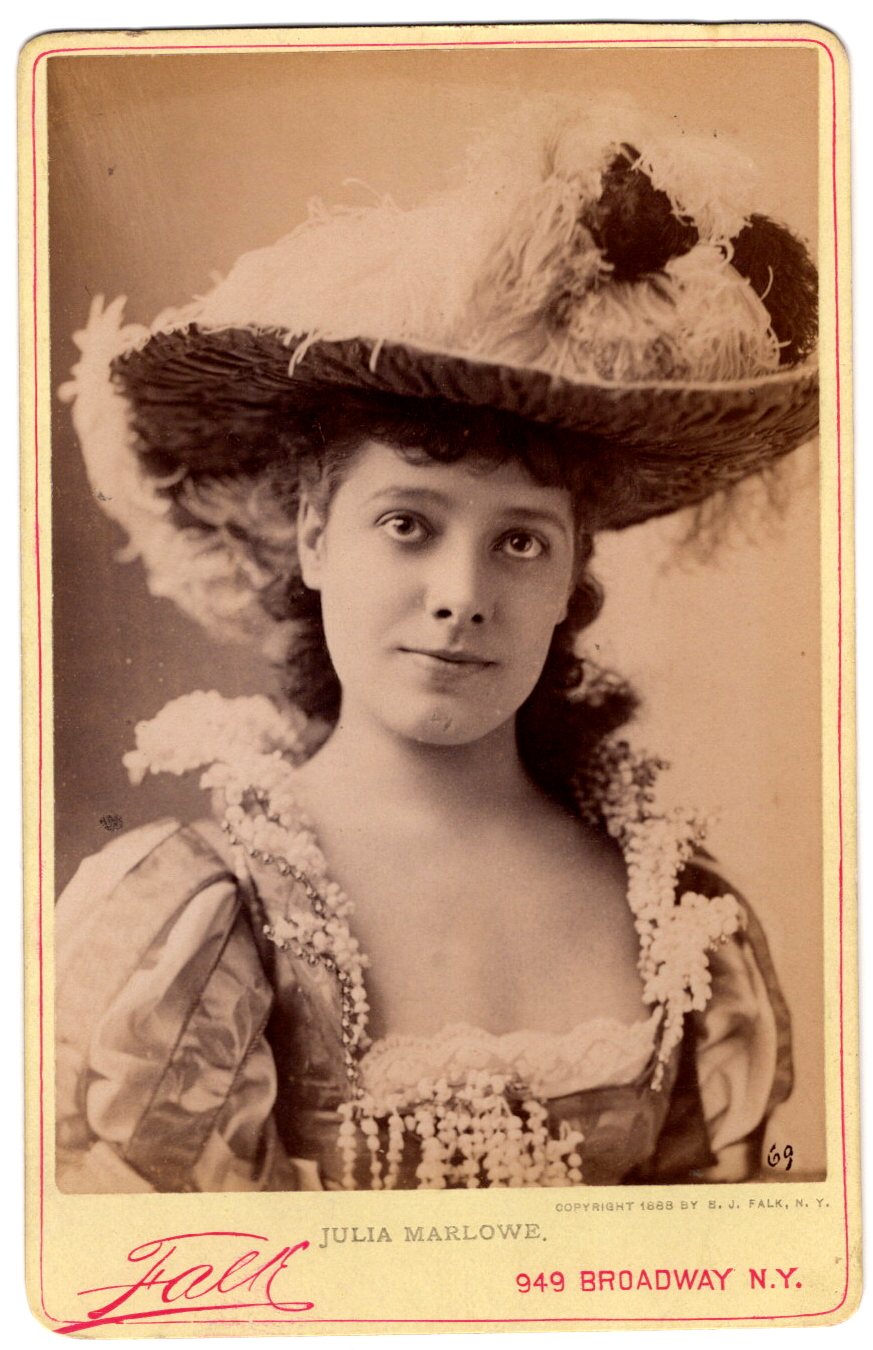
This cabinet card features Julia Marlowe displaying a mischievous smile. Note her engaging large eyes. Miss Marlowe was a stage beauty. She is wearing a somewhat revealing dress (for the cabinet card era) and has a wonderful hat atop her head. Julia Marlowe (1865-1950) was born in England and as a young child moved to the United States with her family. In her early teens she began her theatrical career with a juvenile opera company. She began playing Shakespeare in her home town of Cincinnati, Ohio. She made her Broadway debut in 1895 and by the end of her career, had appeared in more than 70 Broadway productions. Her first husband was actor, Robert Tabor. Their marriage lasted six years. In 1904 she appeared in “When Knighthood was in Flower”. Great success in this play brought her financial independence. Earlier, in 1903, she appeared in ‘The Cavalier” and “Ingomar”. The New York Sun wrote about her performance in “Ingomar”; “There is not a woman player in America or in England that is – attractively considered- fit to unlace her shoe”. In 1904 she began a partnership with actor E. H. Sothern. They toured the United States performing various plays of Shakespeare. They were managed by Charles Frohman and later, the Shubert brothers. They were considered to be among the major Shakespearian actors of the day. In 1906, Marlowe played in “Jeanne d’Arc” and also as Salome in “John the Baptist”. Later, Sothern and Marlowe played in London but were not terrific box office successes there. In 1911 Marlowe and Sothern married each other. In 1920 and 1921, they made eleven phonograph recordings for the Victor Company. This cabinet card photograph was published in 1888 by the talented and popular Benjamin Falk of New York City. The image is marked with the number sixty-nine. This cabinet card has excellent clarity and is in very good condition (see scans).

6193

Buy this Cabinet Card Photograph (includes shipping within the US) #6193

To purchase this item, click on the Pay with Paypal button below

$72.00

6193

Buy this Vintage Original Cabinet Card (includes International shipping outside the US) #6193

To purchase this item, click on the Pay with Paypal button below

$82.00

FANNIE WARD : PRETTY STAGE & SILENT FILM STAR : PHOTO BY LIZZIE CASWALL SMITH : RPPC 1905

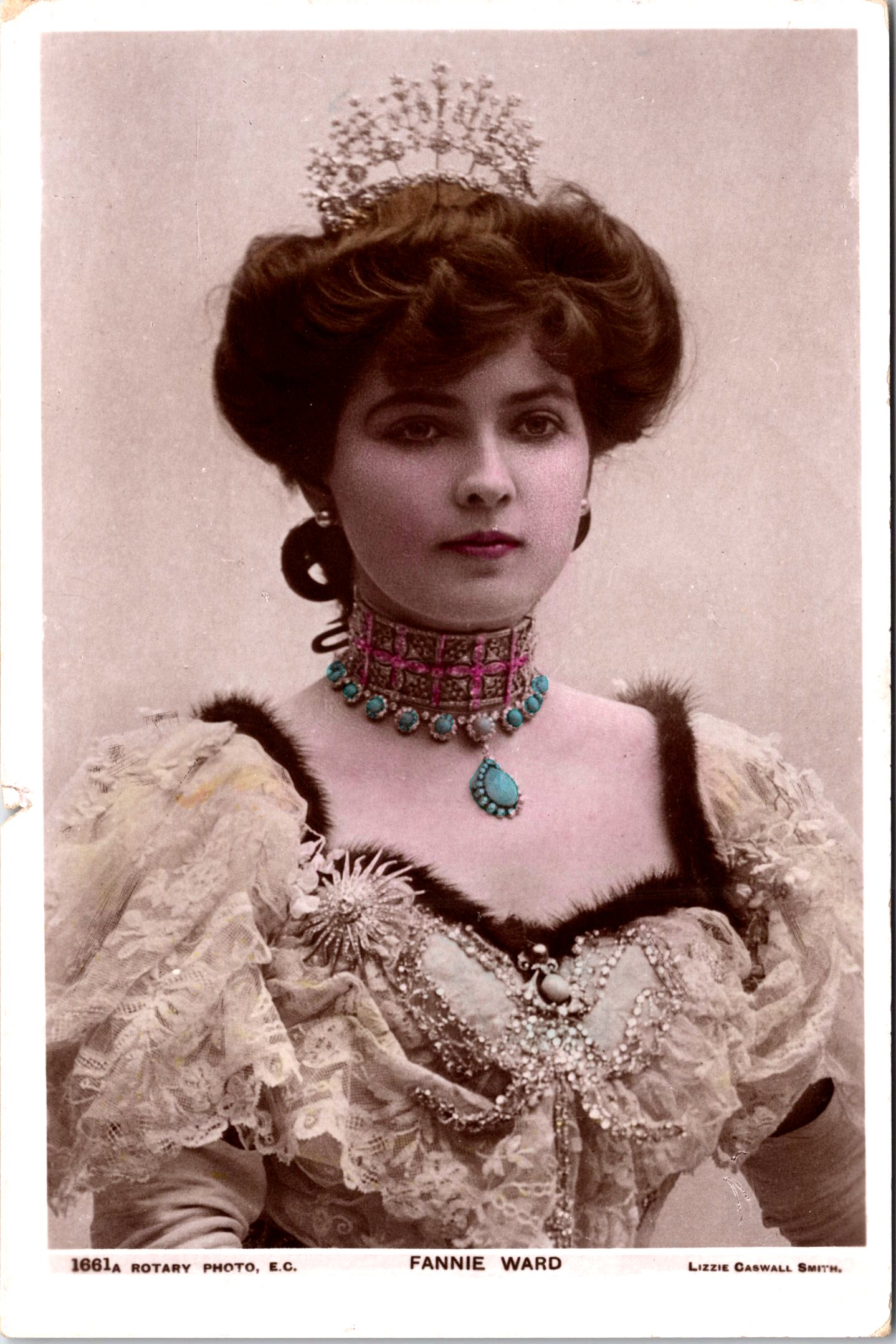
This vintage real photo postcard features pretty American stage and silent film actress and film producer, Fannie Ward (1872-1952). She was also the star of light comedies on Broadway. She began her career in the early 1890s, and appeared in over 100 films between 1895 and 1920. She was known for her roles in silent comedies and melodramas, and was considered one of the most popular actresses of her time. She played starring roles in “Madam President”, “The Shop Girl” and many others. Her screen debut was in Cecil B DeMille’s sexually charged, “The Cheat” (1915). Ward also produced several films, including the 1913 film “The Chink in the Armour,” which was directed by her then-husband, Frank Keenan. She retired from acting in 1920, but continued to work in the film industry as a producer until her death in 1952. In addition, after her retirement from the screen, she opened a beauty salon in Paris called “The Fountain of Youth”. The name of the salon is a bit ironic. Ward was known for her youthful appearance. It was not ununsual for her to play the parts of women one of two decades her junior. Ward held feminist beliefs which she wasn’t shy to talk about. In 1909, she told a reporter that her husband hated her work and then pointed out the hypocrisy of society’s support of men pursuing their interests (ie. art, sports, travel) but not supporting women who did the same. In addition, Ward worked as a film producer, a role not usually populated by women. Rotary Photo published this postcard as part of a series (No.1661A). The firm was located in London. Miss Ward was photographed by celebrated female photographer, Lizzie Caswall Smith. This posted postcard has a 1905 postmark.  SOLD

ALLA NAZIMOVA TRIBUTE SONG : BY ANITA OWEN : JONES MUSIC CO. : SHEET MUSIC 1920

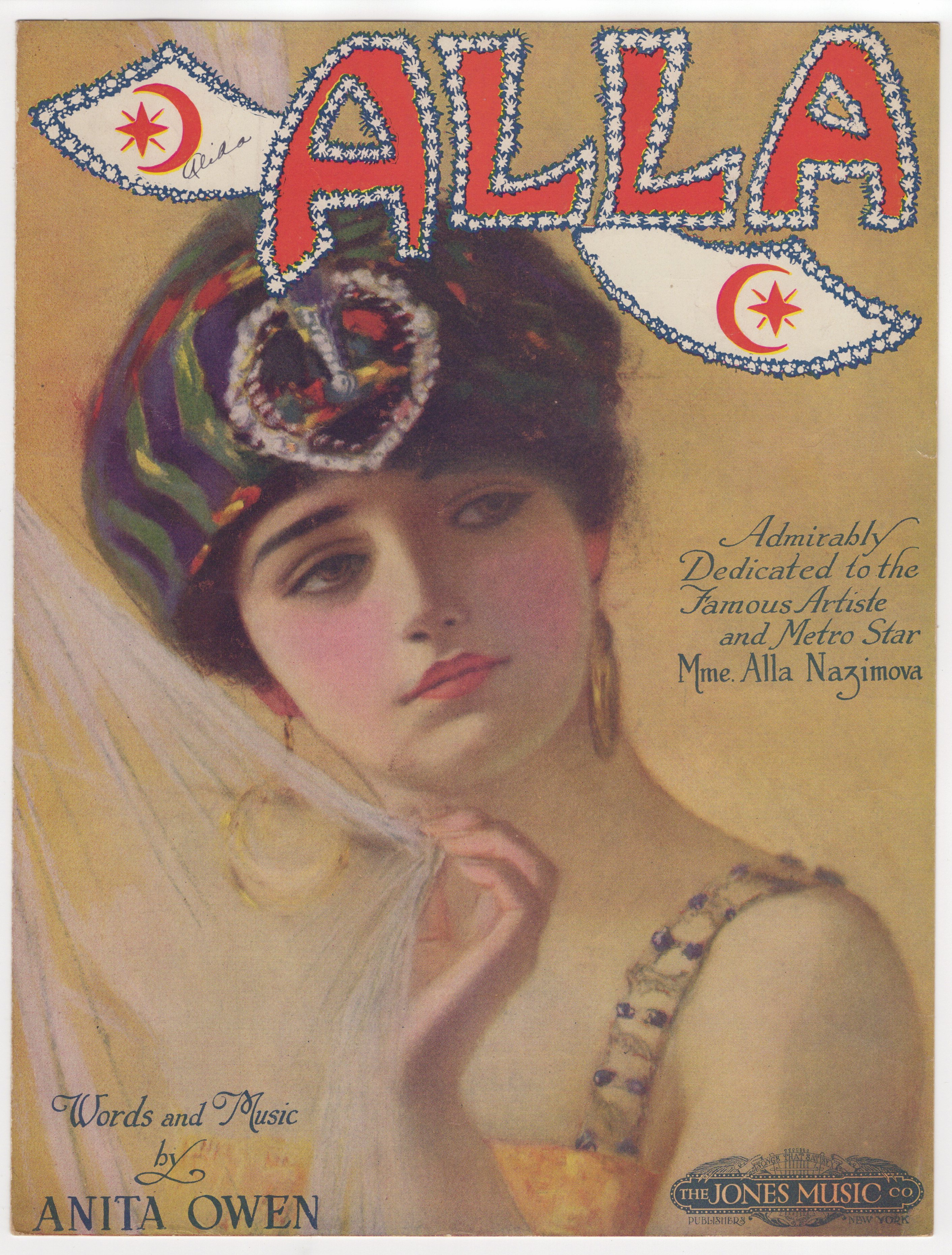
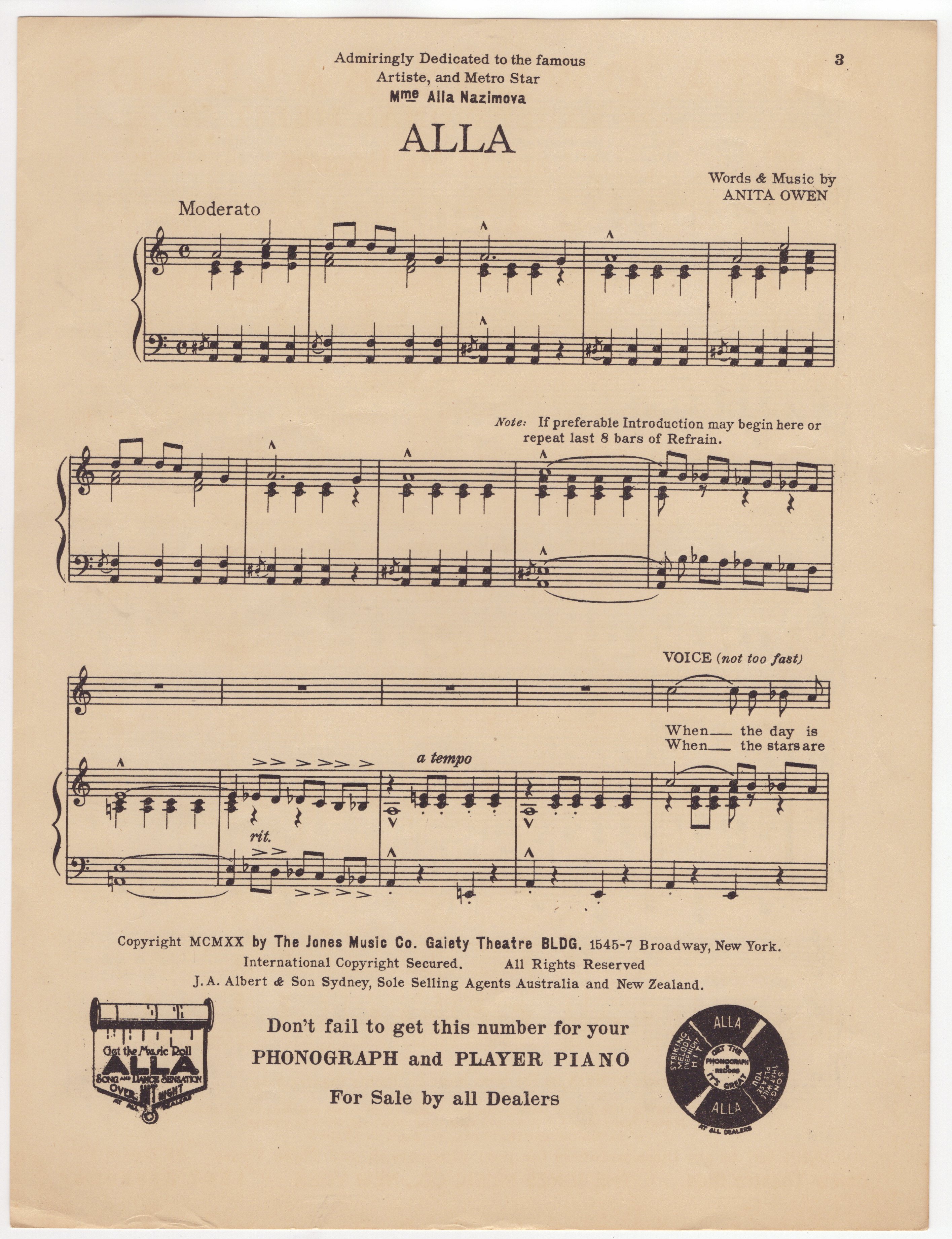
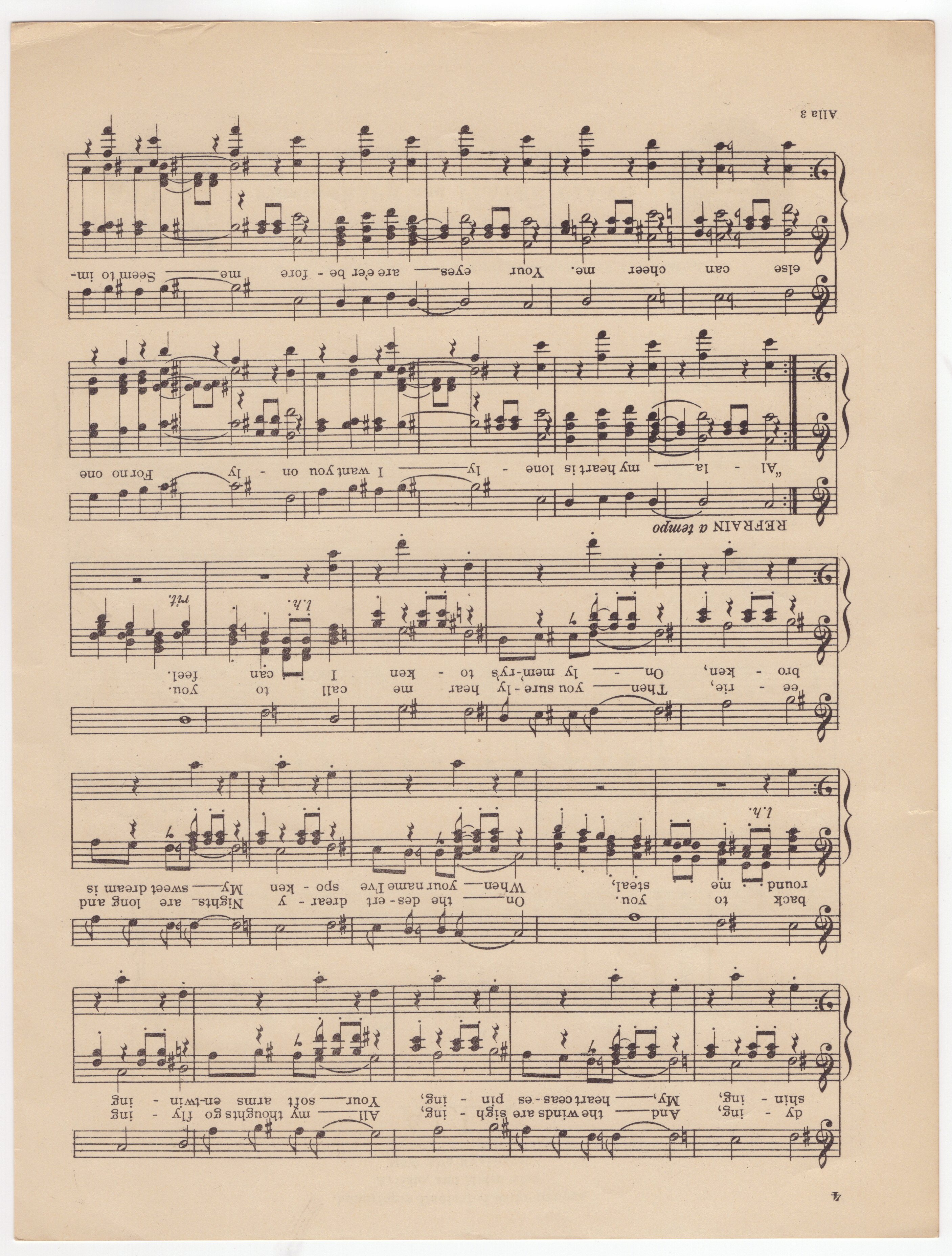
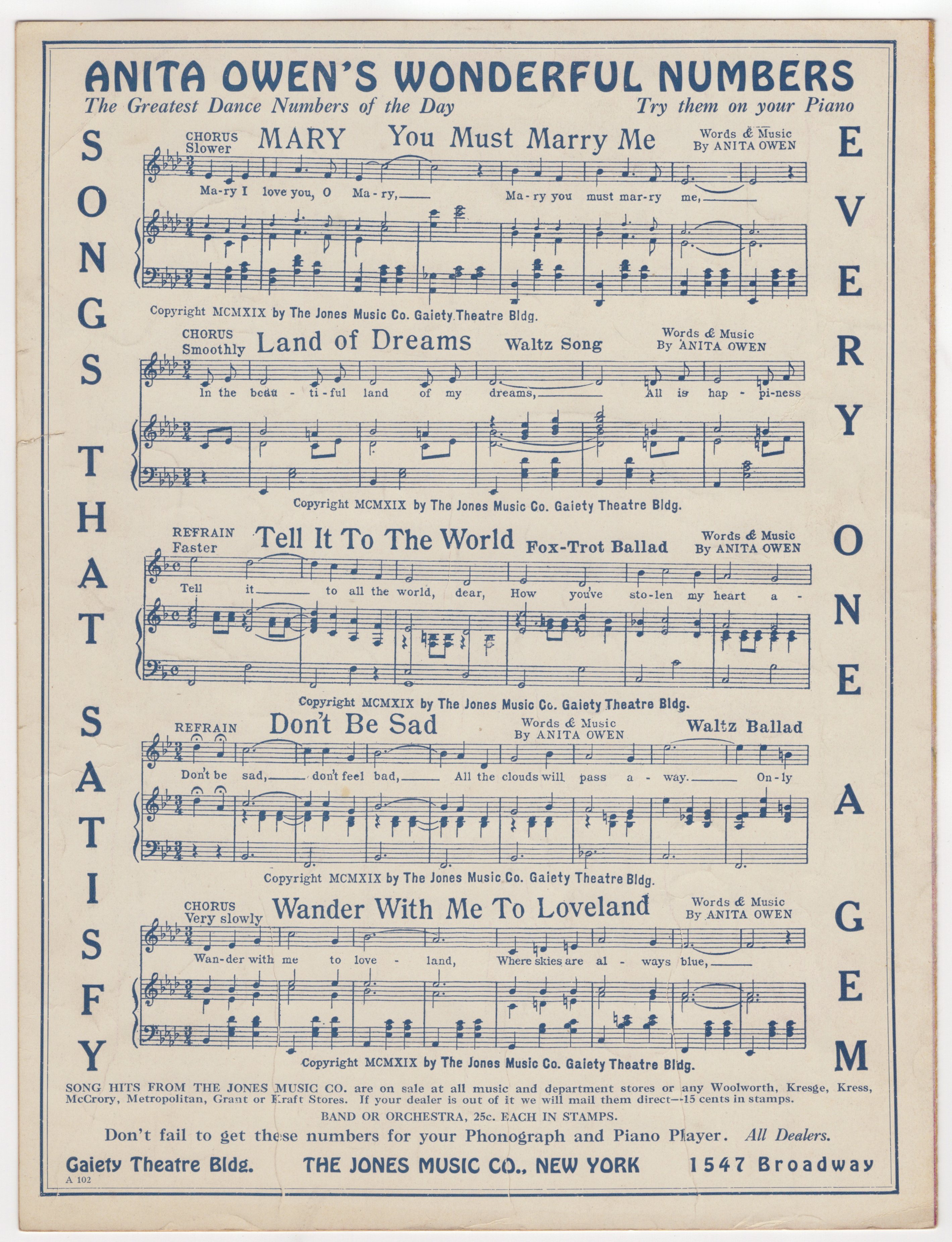
This vintage sheet music is entitled “Alla”. The music is dedicated to the “Famous Artiste and Metro Star”, Mme Alla Nazimova (1879-1945). She was a Russian-American actress, director, producer and screenwriter. She was noted for her classic Broadway work. She acted in the plays of Ibsen, Chekhov, and Turgenev. She later worked in film. She acted, wrote screen plays and directed films. Her film “Salome” (1922) is considered a “cultural landmark”. Nazimova was bisexual and her sexual escapades garnered much public attention. A portrait of Nazimova graces the front cover of this sheet music. This sheet music was published by The Jones Music Company in 1920. The firm was based in New York City. This sheet music is in very good condition (see scans). SOLD

MAXINE ELLIOTT : STAGE & FILM ACTRESS : BUSINESS WOMAN : CELEBRITY LOVERS : RPPC

POSTCARD 1

POSTCARD 2

POSTCARD 3 (SOLD)

POSTCARD 4 (SOLD)

POSTCARD 5 (SOLD)

POSTCARD 6 (SOLD)

POSTCARD 7 (SOLD)
POSTCARD 8 (SOLD)
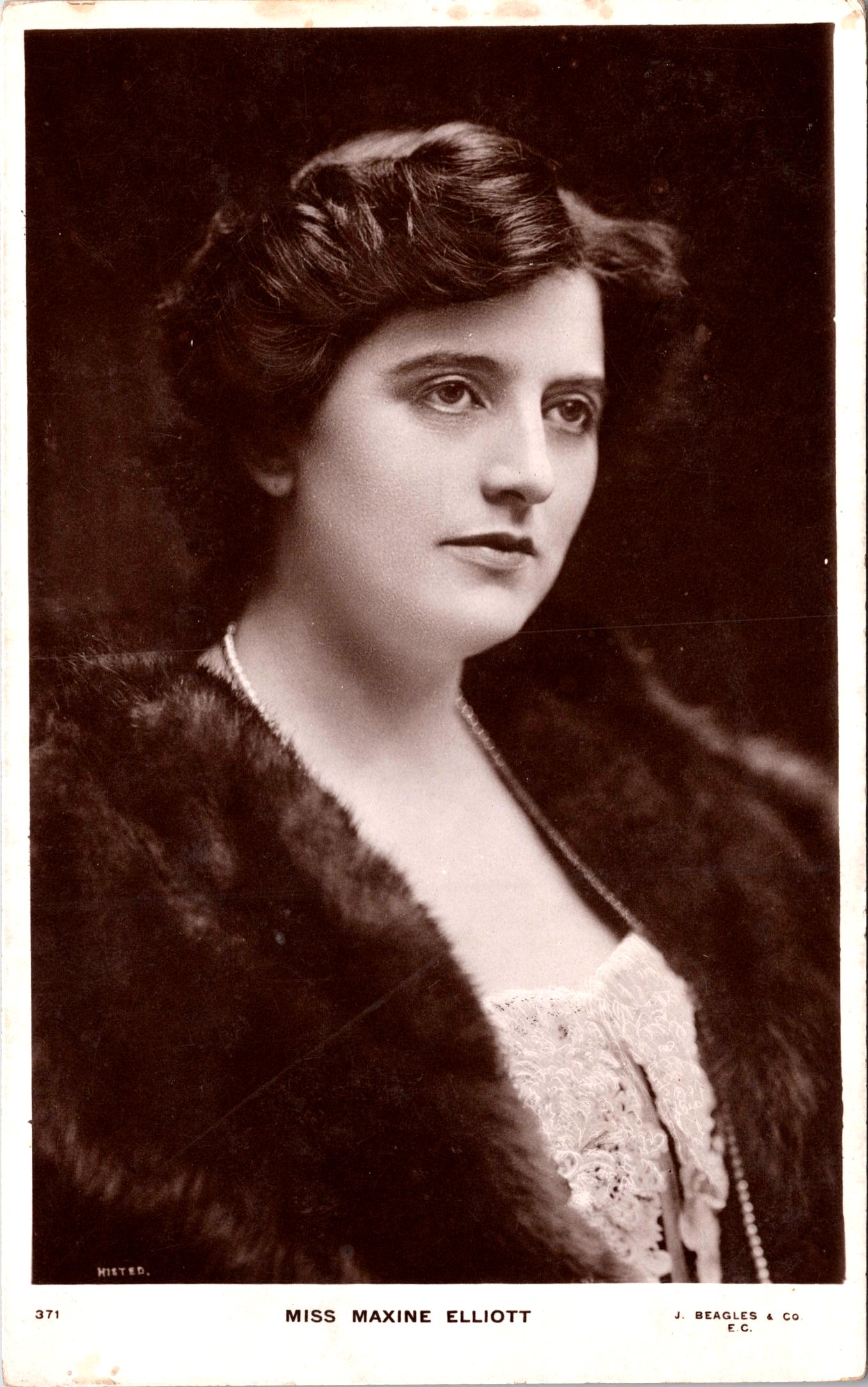
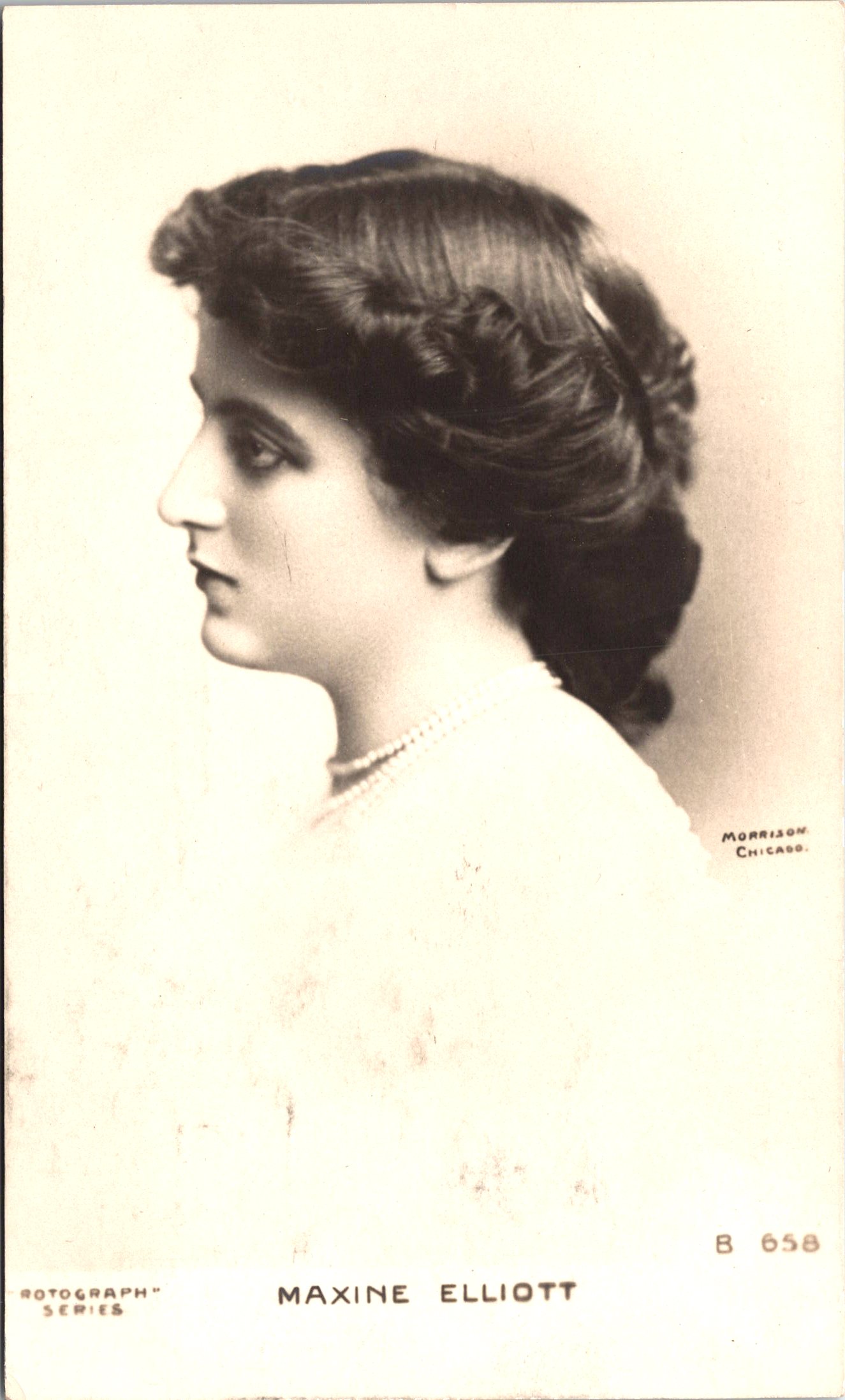
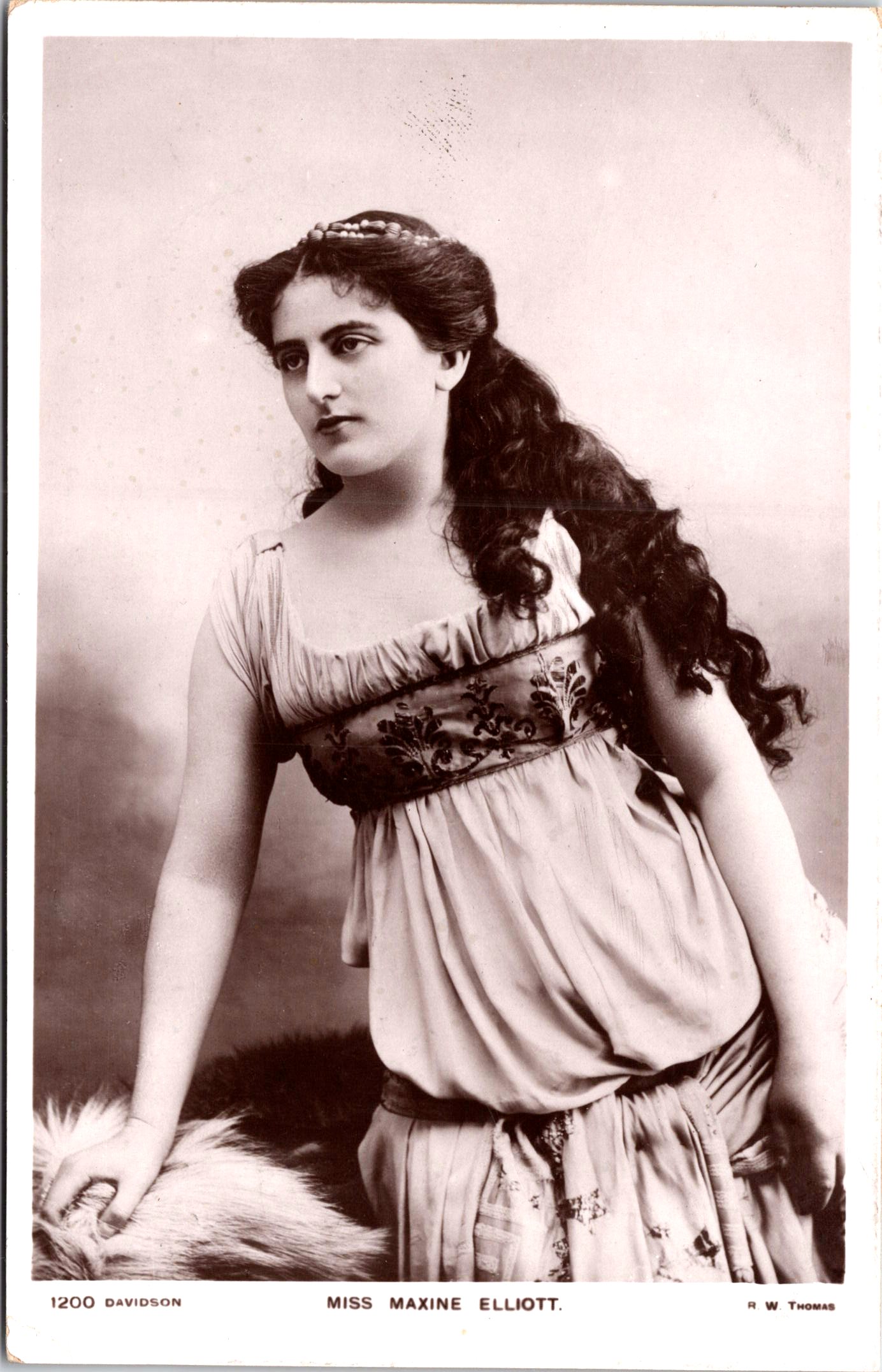
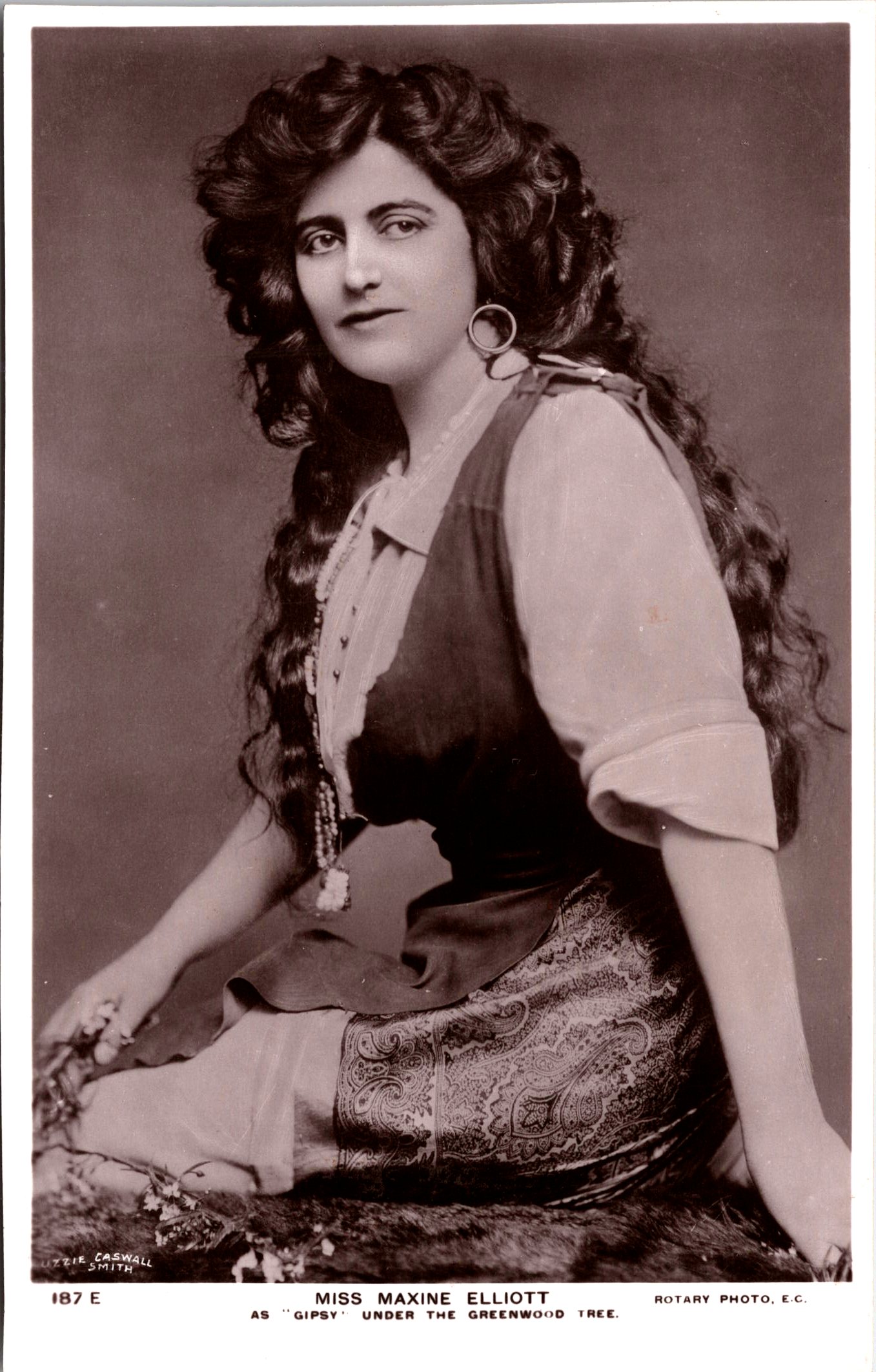
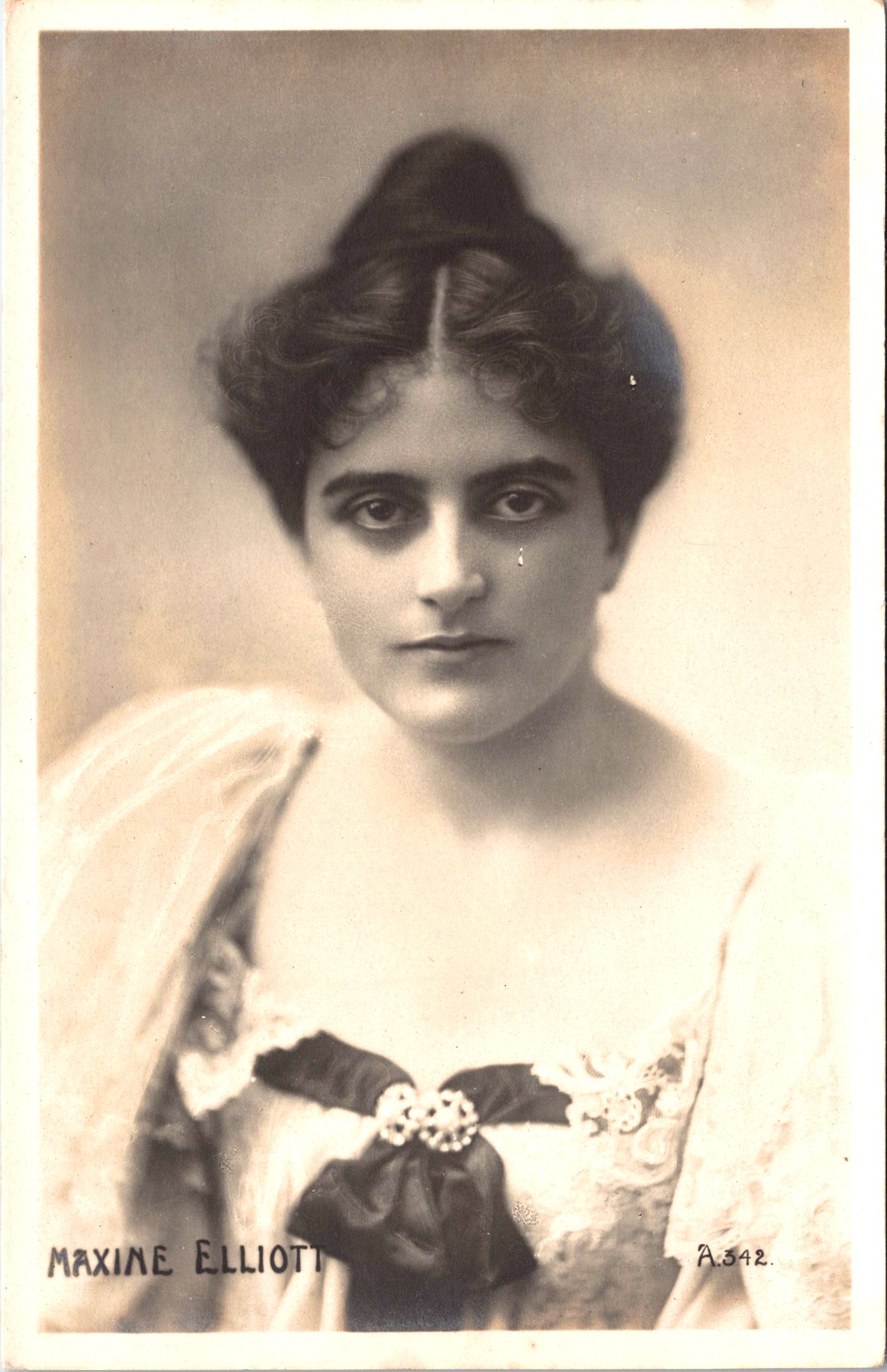
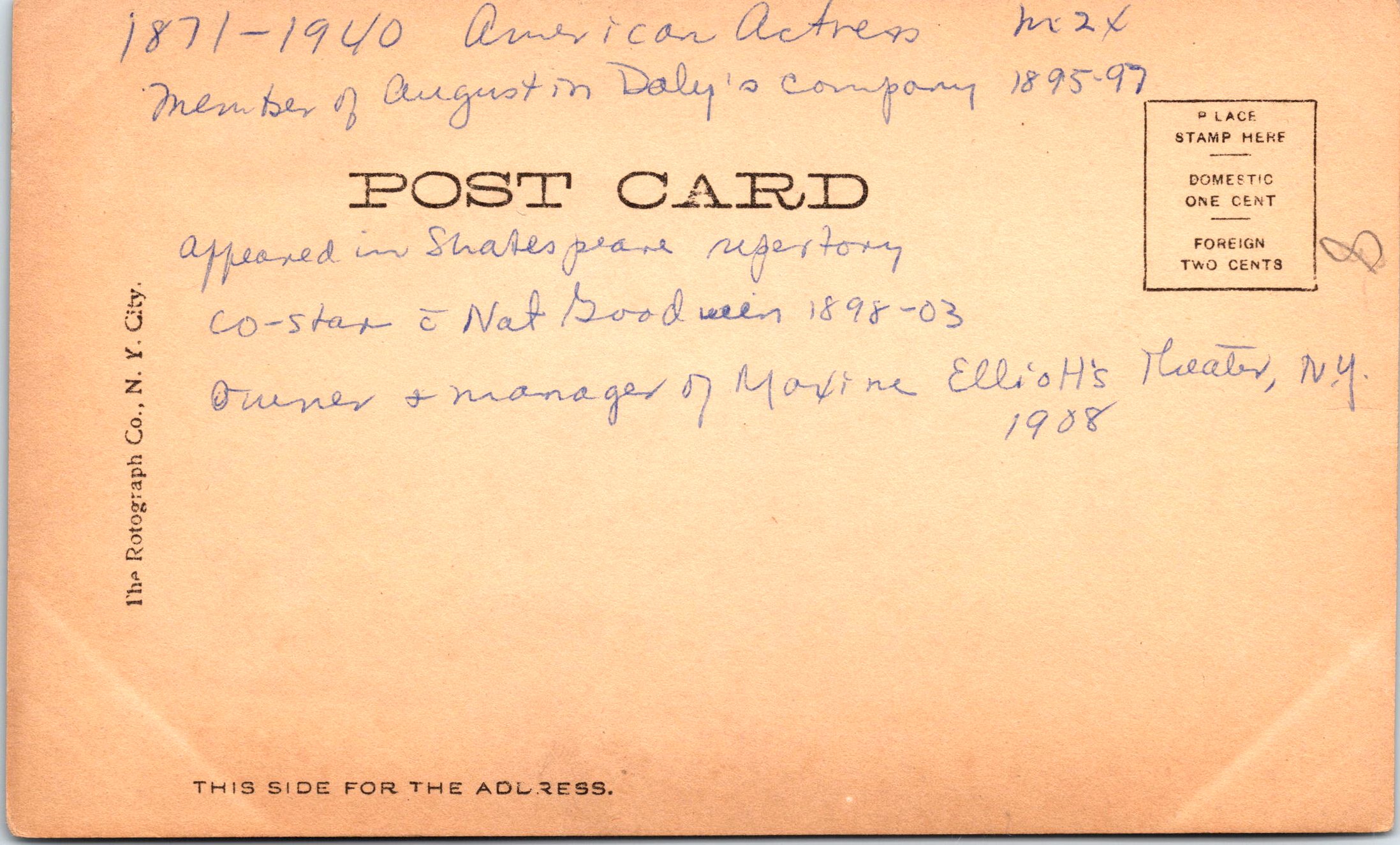
This vintage real photo postcard (Postcard 1) features a portrait of beautiful stage and film actress, and businesswoman, Maxine Elliott (1868-1940). Her photograph was taken by celebrity photographer Benjamin Falk at his New York City studio. Elliott was more than a stage actress. She managed her own theater and experimented with silent films in the 1910’s. Elliott was an extremely popular actress. Apparently she was popular with the men too. It is thought that she had affairs with famous people including King Edward VII and J. P. Morgan. It is also reported that she dated baseball hall of famer, John Montgomery Ward and heavyweight champion Gentleman James Corbett. During World War I she was very involved with the cause for Belgian relief. Elliott was born in Rockland, Maine. Her father was a sea captain. She had at least three siblings including her sister Gertrude Elliott, who also became a successful actress. When Maxine was 15, she was seduced and impregnated by a 25 year-old man. She may or may not have married the man but it is known that she lost the baby. In 1890 she made her first stage appearance. Her big break came in 1895 when she was hired by Augustin Daly to be the supporting actress for the highly acclaimed actress, Ada Rehan. In 1898, after divorcing husband number one, she married comedian Nat C. Goodwin. The two starred together in a number of productions including “Nathan Hale” and “The Cowboy and the Lady”. In 1903, Maxine appeared in the Broadway production of “Her Own Way” (1903). The play launched Maxine into stardom. In 1905, the play went to London where King Edward VII requested an introduction to the pretty actress. They met and then rumors started about the pair having an intimate relationship. In 1908, Goodwin obtained a divorce from Elliott. This is about the time she met 70 year-old J. P. Morgan. They became friends and rumors of their romantic involvement were never confirmed. Financial advice from Morgan helped her become a wealthy woman. The same year as her divorce, she opened her own theater, “The Maxine Elliott” in New York City. She was both the owner and the manager. In fact, she was the only woman in the US, at the time, managing her own theater. In regard to acting on Broadway, Elliott had an extensive resume. She appeared in 22 Broadway productions between 1894 and 1920. In 1913, she began acting in silent films. The IMDb reports that she was in five films including “From Dusk to Dawn” (1913), “Fighting Odds” (1917), and “The Eternal Magdalene” (1919). In 1913, Elliott went to England and started dating tennis star Anthony Wilding, fifteen years her junior. According to one source, the pair planned to marry, but he was killed in action in World War I. As a result, Elliott became obsessed with the war and moved to Belgium where she volunteered her money and time toward Belgian relief. It is reported that she also nursed wounded soldiers. Belgium recognized her by awarding her the Belgian Order of the Crown. Elliott retired from the stage in 1920. She stated that she “wished to grow middle-aged gracefully”. This postcard portrait features a young and beautiful Maxine Elliott. This image is a beautiful remnant of turn of the century theater history. This postcard was published by the Rotograph Company which was based in New York City. The postcard is part of a series (No.B888). SOLD

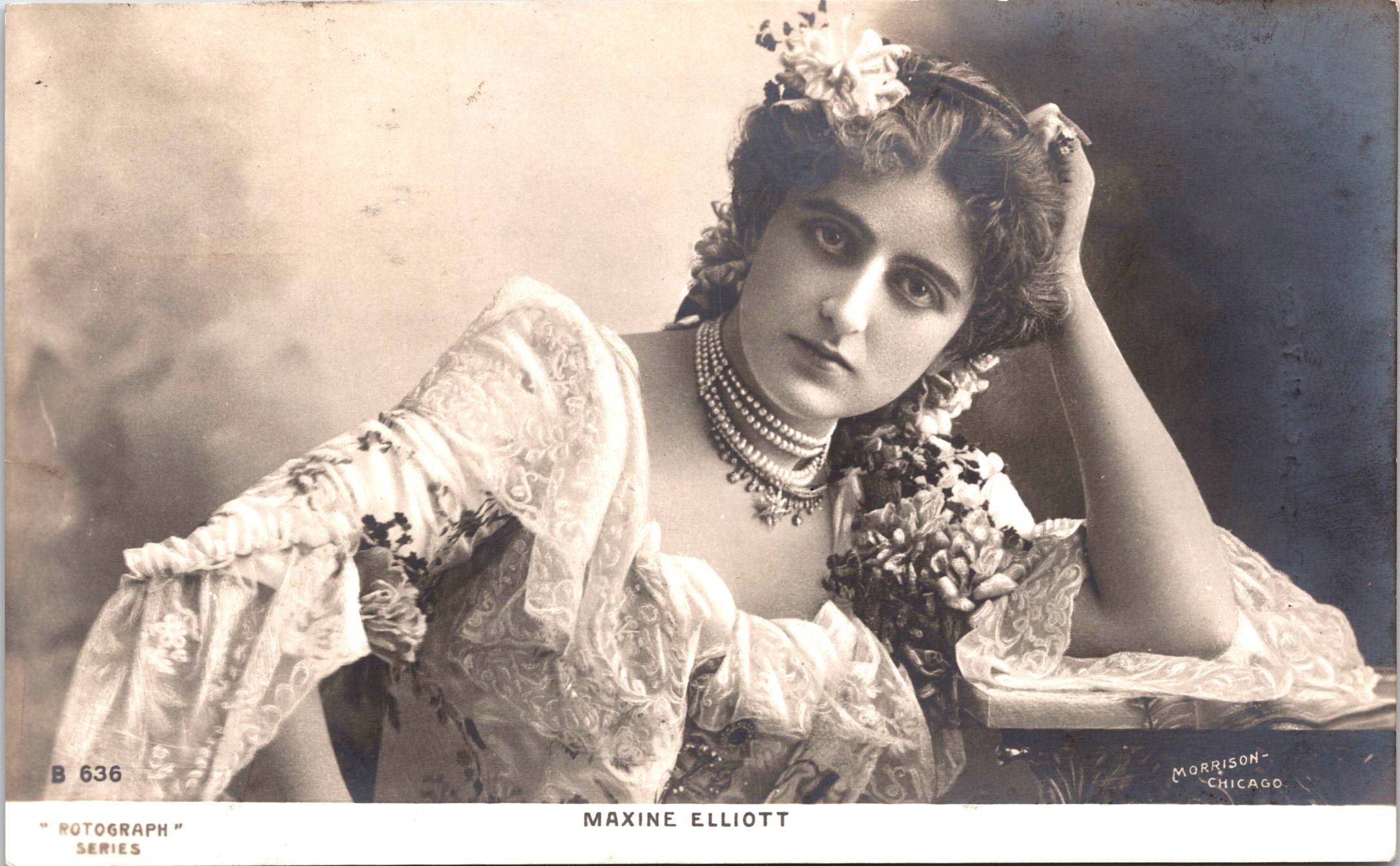
Postcard 2 features a photograph taken by female celebrity photographer, Lizzie Caswall Smith. Lizzie Caswall Smith (1870-1958) was a British photographer who operated in the early 1900’s. She specialized in photographing members of society and celebrities. Many of her photographs were used for postcards. She was involved in the Women’s Suffrage movement and photographed many of the leading suffragettes. She also photographed many actors including Billie Burke and Maude Fealy. She operated the Gainsborough Studio from 1907 through 1920 (309 Oxford Street) and moved to a new location (90 Great Russell Street) where she remained until she retired in 1930 at the age of 60 years-old. Her most famous photograph is a portrait of Florence Nightingale taken in 1910. It was auctioned in 1908 and sold for 5500 pounds which is an equivalent today of nearly 8,000 dollars. The National Portrait Gallery has 84 portraits associated with Lizzie Caswall Smith. This postcard was published by the Rotograph Company which was based in New York City. The postcard is part of a series (No.B636). SOLD

Postcard 3 features a nice portrait of Maxine Elliott. This image, taken by William Morrison (Chicago, Illinois) is a beautiful remnant of turn of the century theater history. This postcard was published by the Rotograph Company, which was based in New York City. The postcard is part of a series (No.B636).  (SOLD)

Postcard 4 features Miss Elliott’s portrait by Ernest Walter Histed (1862-1947). Histed was born in England but achieved his success as a photographer in Chicago, and later, in Pittsburgh. He then returned to England and opened a photography studio there. His subjects there included Clara Butt (Opera Star) Pope Pius X, and the Empress of Germany. Histed returned to the US and opened a studio on Fifth Avenue in New York City. He later moved to Palm Beach, Florida and continued his profession until 1934. The Museum of the City of New York has a large collection of his work. The National Portrait Gallery (England) has 32 of his photographs in their collection. This postcard was published by London’s J. Beagles & Co. as part of a series (No. G386).The company was started by John Beagles (1844-1909). The company produced a variety of postcards including an extensive catalog of celebrity (stage and screen) portrait postcards. After Beagle’s death, the business continued as J. Beagles & Co. until it closed in 1939.  (SOLD)

Postcard 5 comes from the studio of celebrity photographer, William McKenzie Morrison of Chicago, Illinois. Morrison’s studio was in the Haymarket  theater building. This postcard was published by the Rotograph Company which was based in New York City. The postcard is part of a series (No.B658).  (SOLD)

Postcard 6 features a pretty portrait of Miss Elliott taken by R. W. Thomas.  It is likely that he is the same man that authored “The Modern Practice of Photography” (1927).This postcard was published by London’s Davidson Bros. as part of a series (No.1200). The message from the sender of this card introduced me to a new word. The writer asks “Isn’t this a beauteous maiden?”. I looked up the word “beauteous” to see if it existed. I learned that the word exists and means “beautiful”. I also learned that “Beauteous” is a word that is customarily used in literature and not conversation. (SOLD)

Postcard 7 Elliott photrographed in costume for her role as Gipsy in “Under the Greenwood Tree”. Her photograph was taken by famed celebrity female photographer, Lizzie Caswall Smith. This image is a beautiful remnant of turn of the century theater history. This postcard was published by Rotary Photo as part of a series (No.187E).  (SOLD)

Postcard 8 was published by London’s Ralph Dunn & Co. as part of a series (No. A342). (SOLD)

POSTCARD 1 (SOLD)

POSTCARD 2 (SOLD)

POSTCARD 3 (SOLD)

POSTCARD 4 (SOLD)

POSTCARD 5 (SOLD)

POSTCARD 6 (SOLD)

POSTCARD 7 (SOLD)

POSTCARD 8 (SOLD)

RUTH VINCENT : ENGLISH OPERA SINGER AND ACTRESS : RPPC

POSTCARD 1

POSTCARD 2

POSTCARD 3

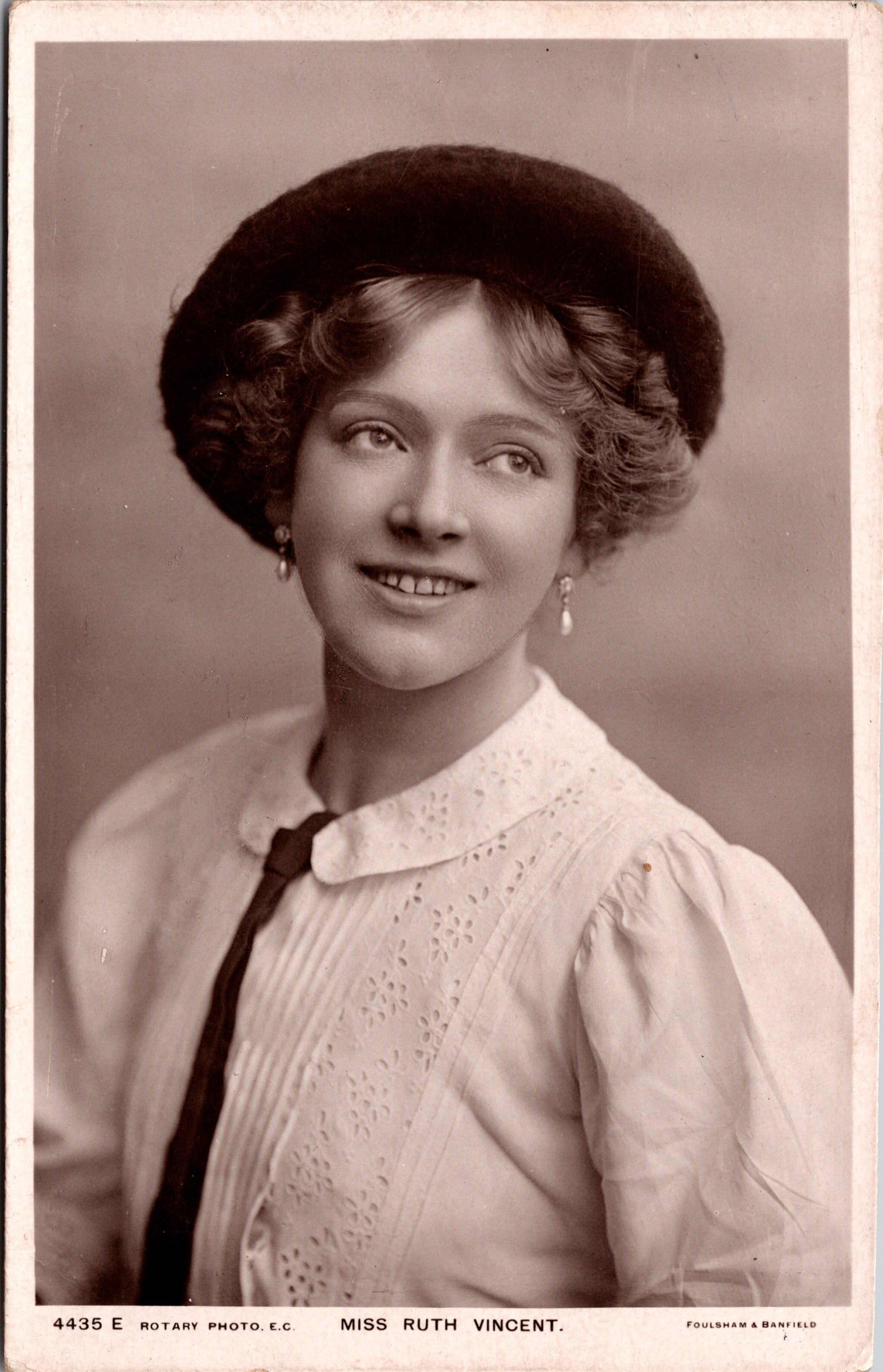
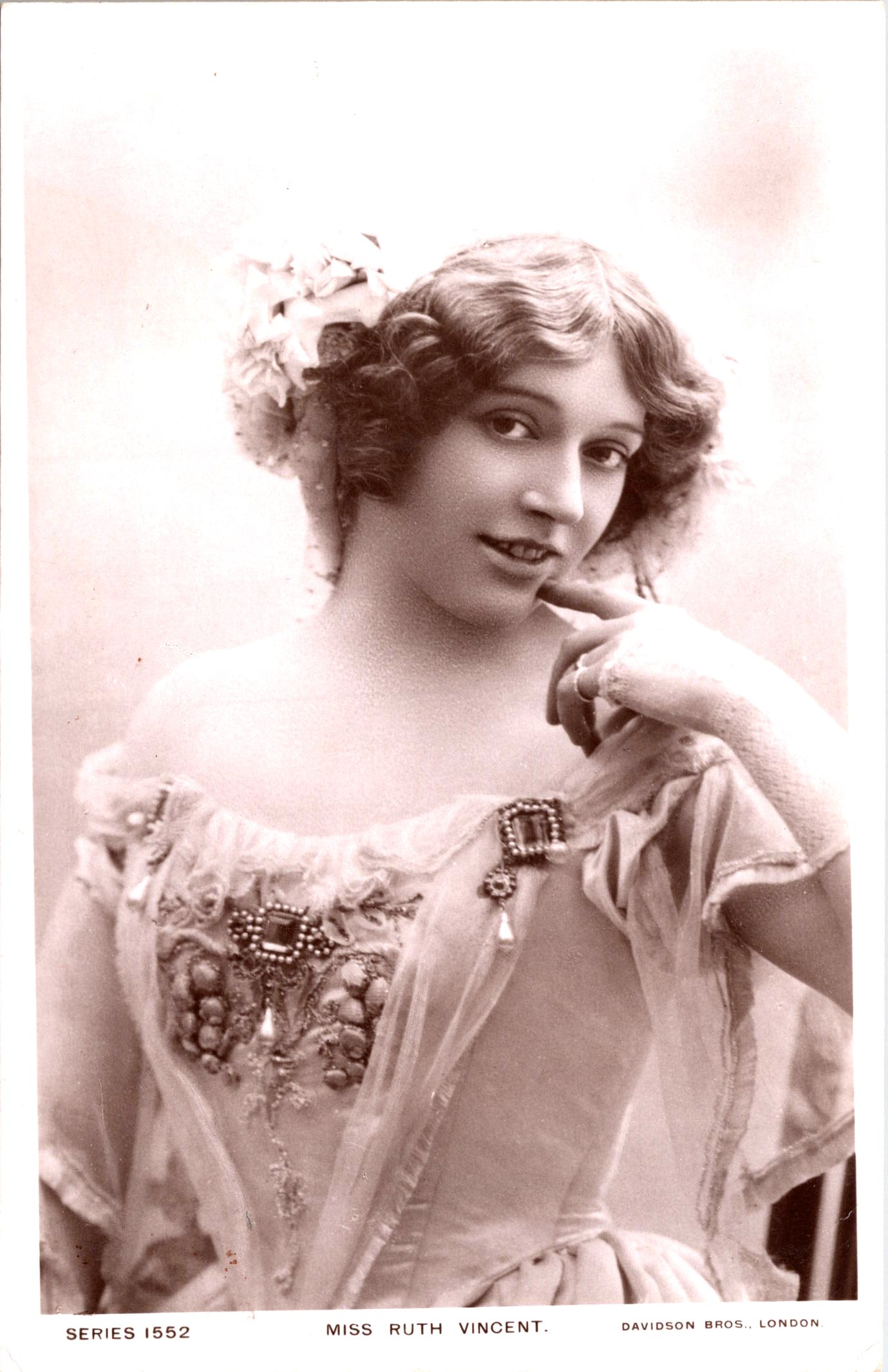
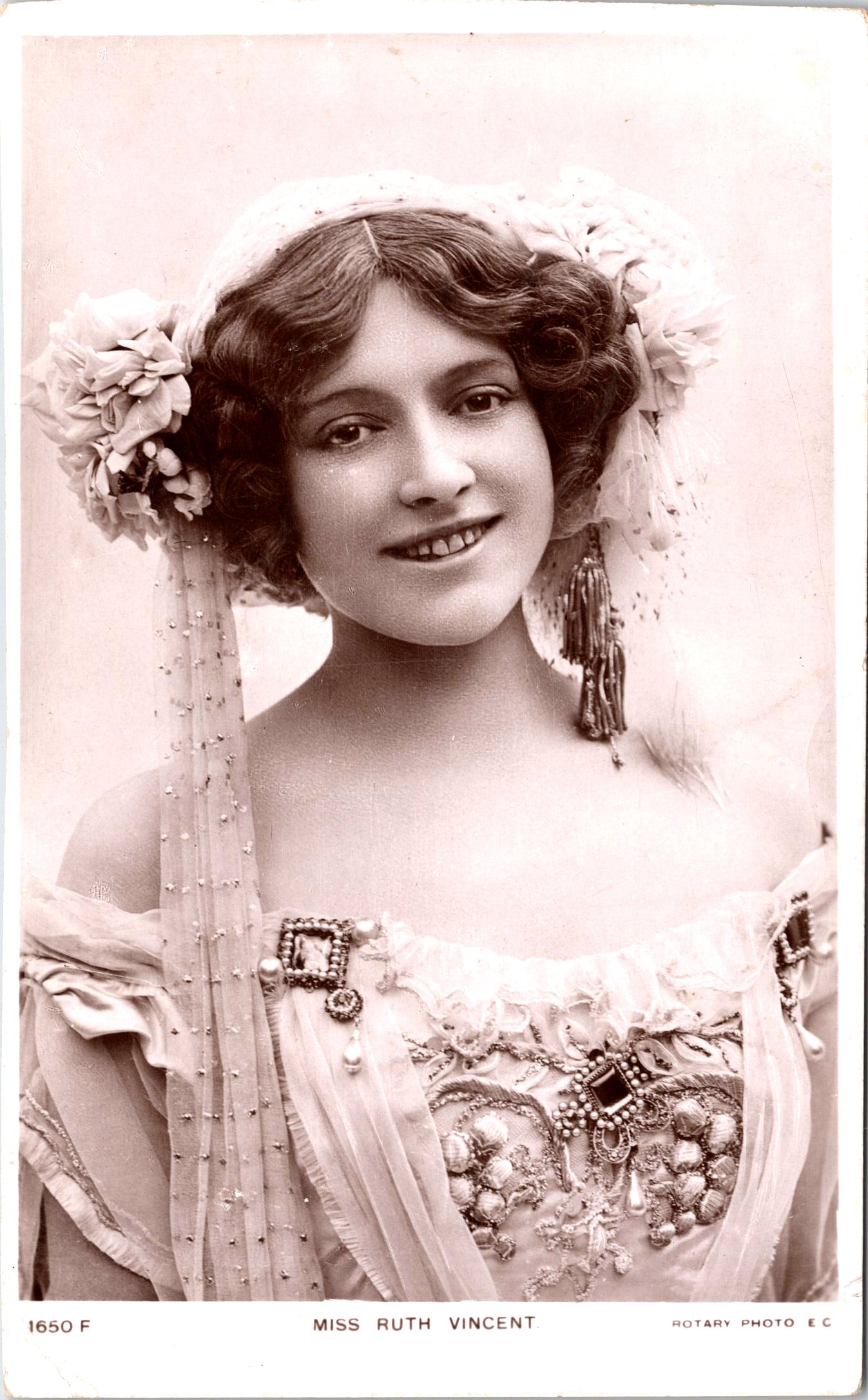
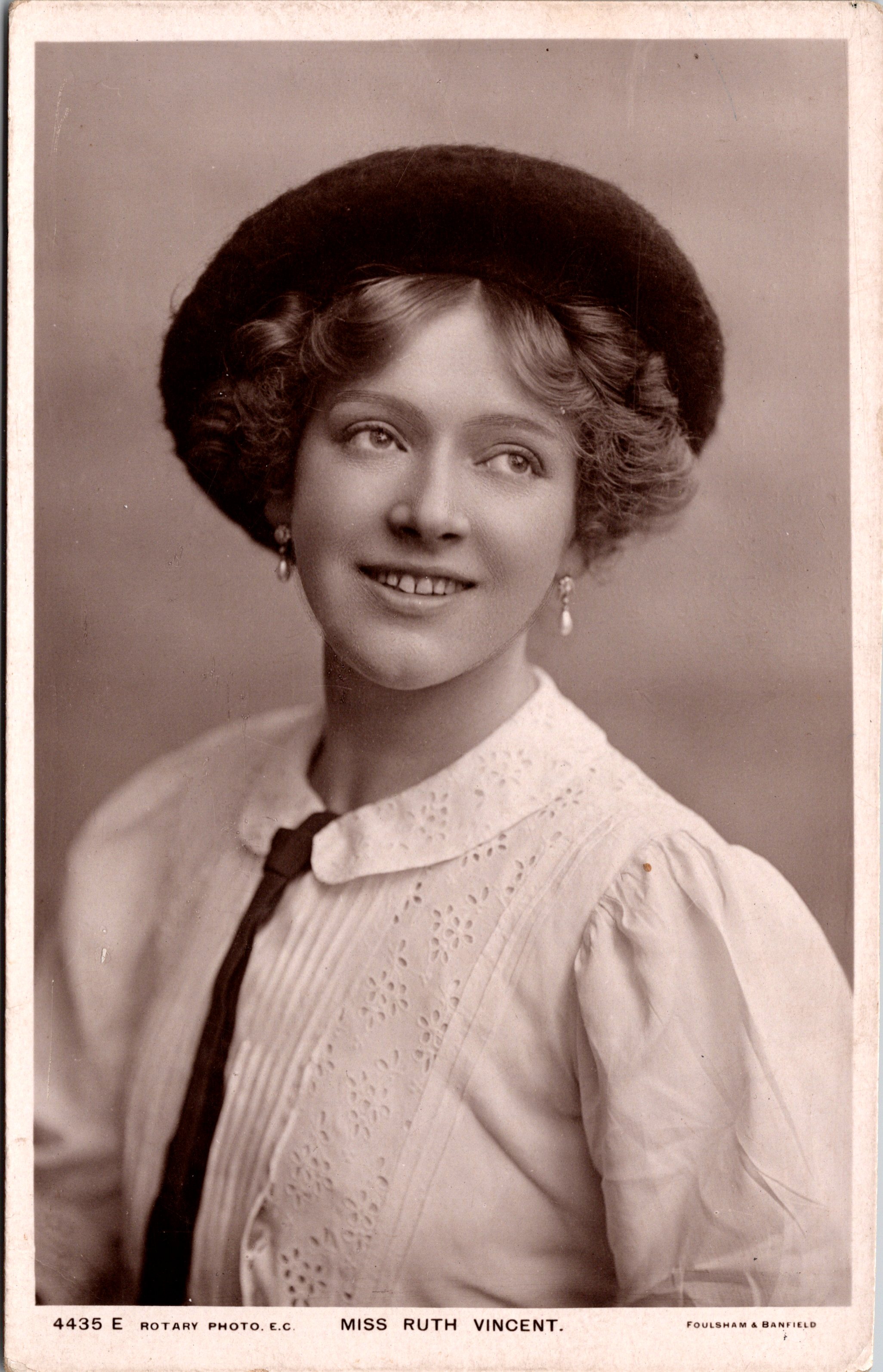
These vintage real photo postcards feature English opera singer and actress, Ruth Vincent (1873-1955). She is most well known for her soprano performances in the Savoy Operas with the D’Oyly Carte Opera Company in the 1890’s as well as in her roles in the West End (London) during the decade after 1900. Most notable was her performance in “Tom Jones”. She joined D’Oyly Carte in 1894, at age 17 as a chorus girl. By 1896, she was playing small roles and quickly was promoted to play leading roles. She left the company in 1899. Her career transitioned into appearing in Edwardian musical comedies, opera, and singing in concerts. Vincent also performed on Broadway. The IBDb reports that she had three Broadway appearances between 1900 and 1905. Vincent continued to sing and act until 1930. 
Postcard 1 : Vincent’s photograph on this card was taken by the Foulsham & Banfield studio. This postcard was published by Rotary Photo as part of a series (4435 E). The firm was located in London. This postcard is in very good condition (see scans). 

Postcard 2 : This postcard was published by Davidson Brothers as part of a series (no.1552). The firm was located in London, England. 

Postcard 3 : This postcard was published by Rotary Photo as part of a series (1650F). The firm was located in London, England. 

Buy this original Vintage Real Photo Postcard (includes shipping within the US) #5217

To purchase this item, click on the Pay with PayPal button below

$12.85

Buy this original Vintage Real Photo Postcard (includes International shipping outside the US) #5217

To purchase this item, click on the Pay with PayPal button below

$22.85

POSTCARD 1

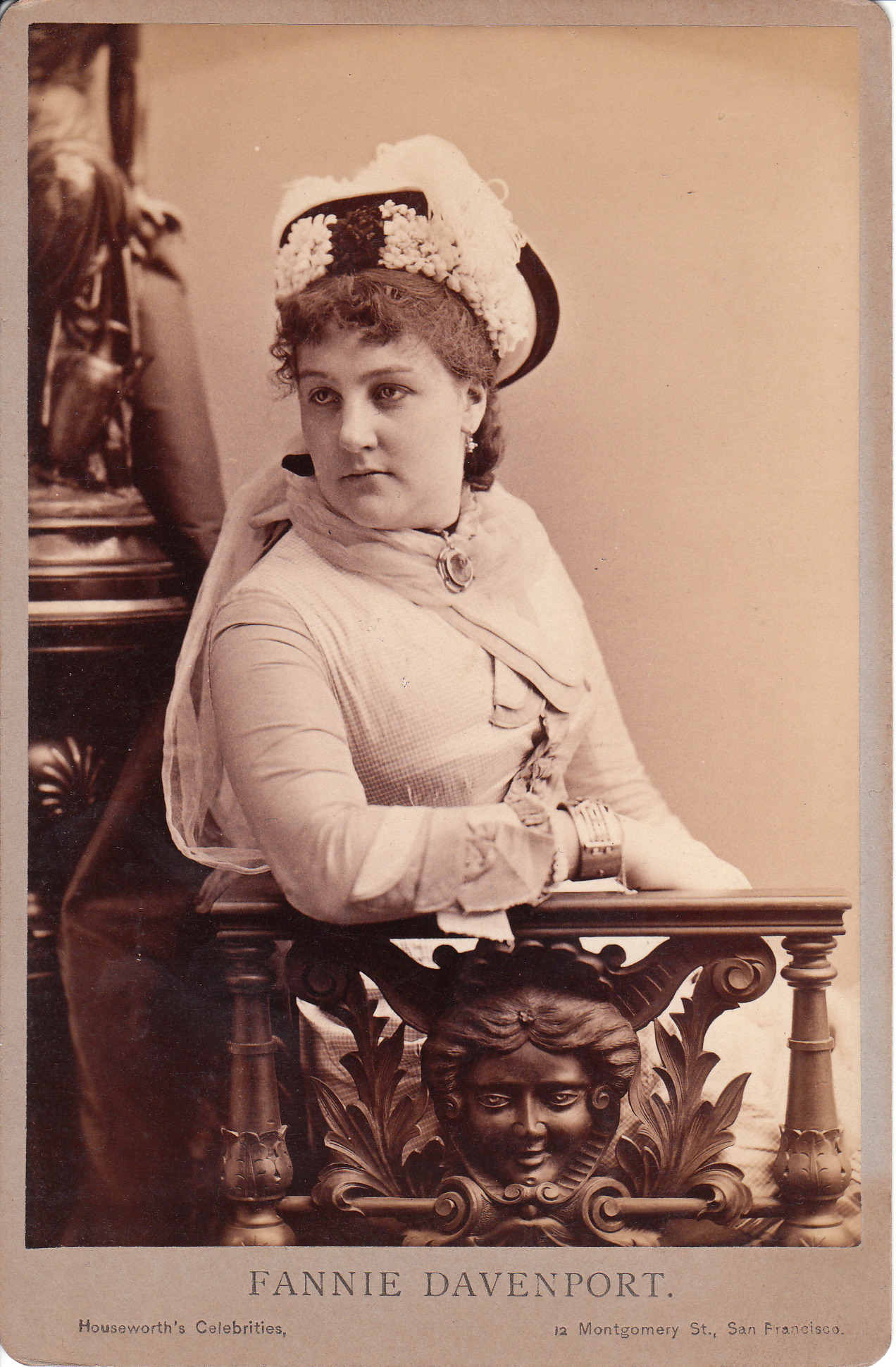
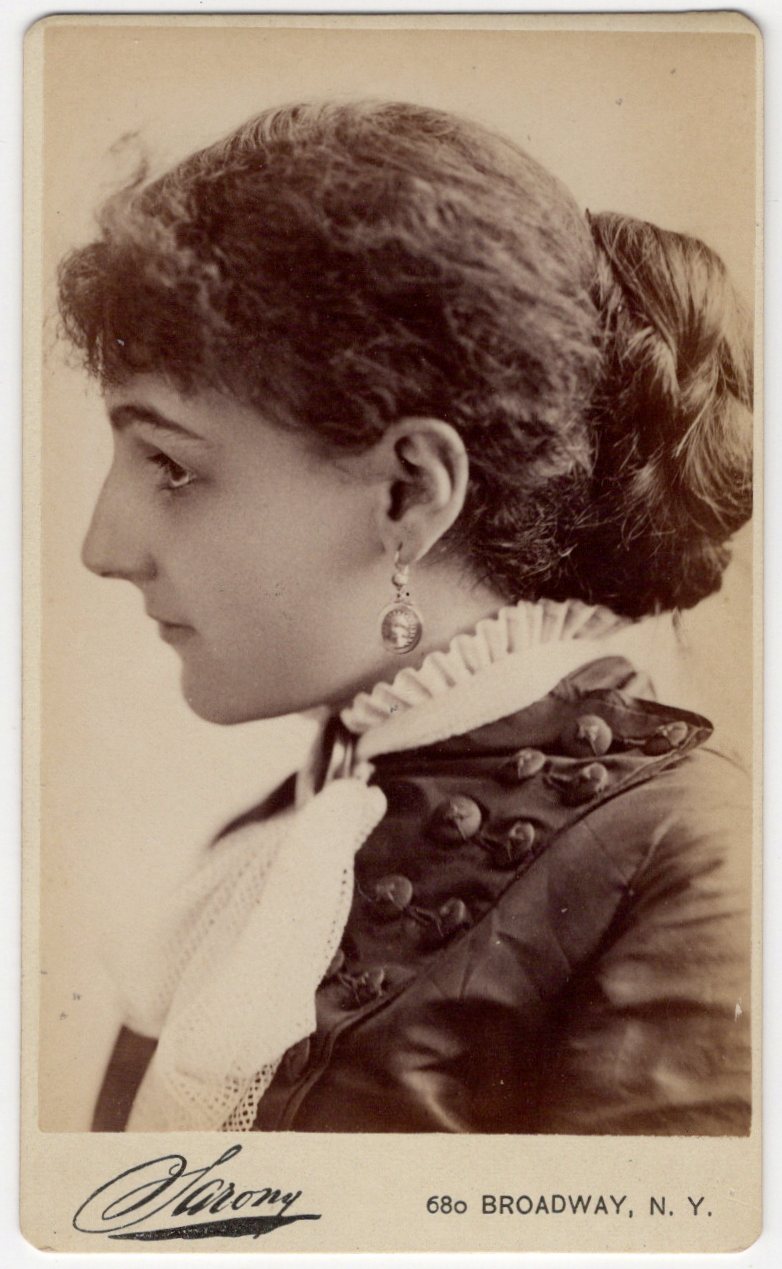
FANNY DAVENPORT: AMERICAN STAGE ACTRESS (1880)

PHOTO 1

PHOTO 2 (SOLD)

PHOTO 3 (SOLD)

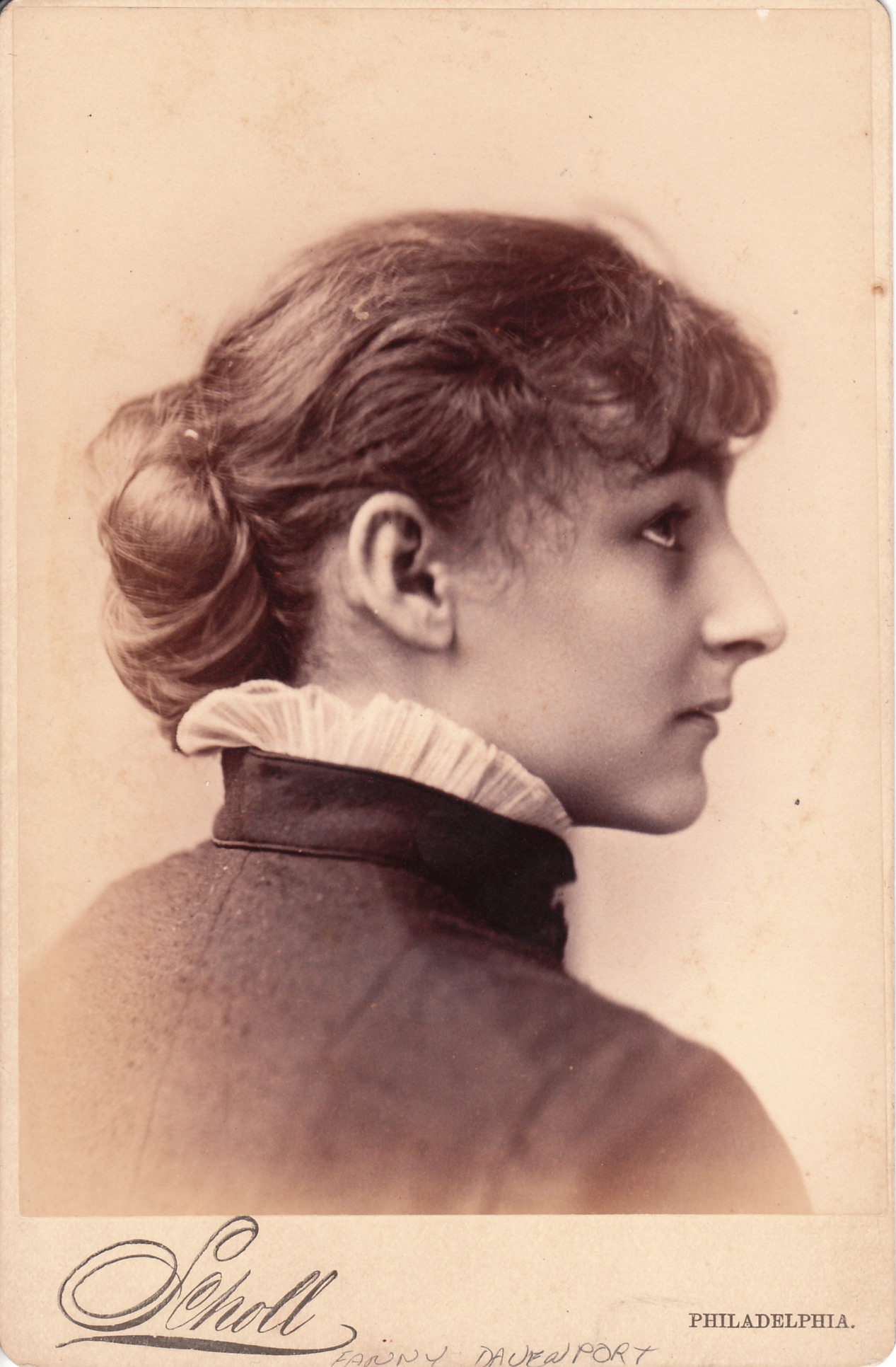
The top Cabinet Card is an image of American stage actress, Fanny Davenport. The photograph is dated February 28, 1880. Miss Davenport (1850-1898) was thirty years of age when she sat for this photograph by Emil Scholl, in Philadelphia, Pennsylvania. He photographed many celebrities and this site has a category that includes a number of his images.  To view these images, click on the category “Photographer: Scholl”. Davenport was born in London, England and educated in public schools in Boston, Massachusetts. In 1862 she appeared in ” Faint Heart Never Won Fair Lady” in New York. In 1869 she became a member of the Augustin Daly Theater Company. She later formed her own company. She had great success in “Fedora” (1883) and “Cleopatra” (1890). Fellow actor, Otis Skinner, in a backhanded compliment stated that “Miss Davenport was a handsome woman, her business sense keen and her industry untiring. To these qualities rather than her acting, she owed the late success in which she accumulated a fortune in her productions.”
The second photograph features a portrait of Davenport by Thomas Houseworth, whose studio was located in San Francisco, California. This image was part of the “Houseworth Celebrities” series. The series included three thousand titles for different categories, including entertainment and government. Note the carving below the chairs armrest in this photograph. Also take notice of Miss Davenport’s interesting hat. Thomas Houseworth (1828-1915) was an optician, photographer, and photographic publisher. Houseworth and George S. Lawrence came to San Francisco in 1849, during the Gold Rush. They caught gold fever and worked as miners in Calavera and Trinity counties. After two years of mining, they admitted defeat, and returned to San Francisco. In 1855, they partnered in a store that sold optical supplies and other miscellaneous items; but the partners became most well known for their stereographs. In 1859 they sold stereographs from an English company, but they soon contracted with local photographers to acquire and publish a diverse collection of stereos featuring various aspects and scenery of northern California and western Nevada. Later, they began to publish and market stereographs under their own name and by the early 1860’s had built the largest collection of stereographs for sale on the west coast. Lawrence retired in 1868 and the firm became known as Thomas Houseworth and Company. Houseworth hired the most talented photographers he could find.  His photographers included Thomas Hart (Transcontinental Railroad Construction), Carleton Watkins (The Sierras’), and Eadweard Muybridge (Yosemite). By the 1870’s Houseworth’s business was failing due to increased competition. He left the field of photography in the 1880’s and went to work as an accountant and an optometrist.

Photograph 3 is a carte de visite portrait of Fanny Davenport (1850-1898) . The photo was taken at the Broadway studio of Napoleon Sarony. This photograph is from circa 1880. Miss Davenport  was about thirty years of age when she sat for this photograph by Napoleon Sarony in New York City. 

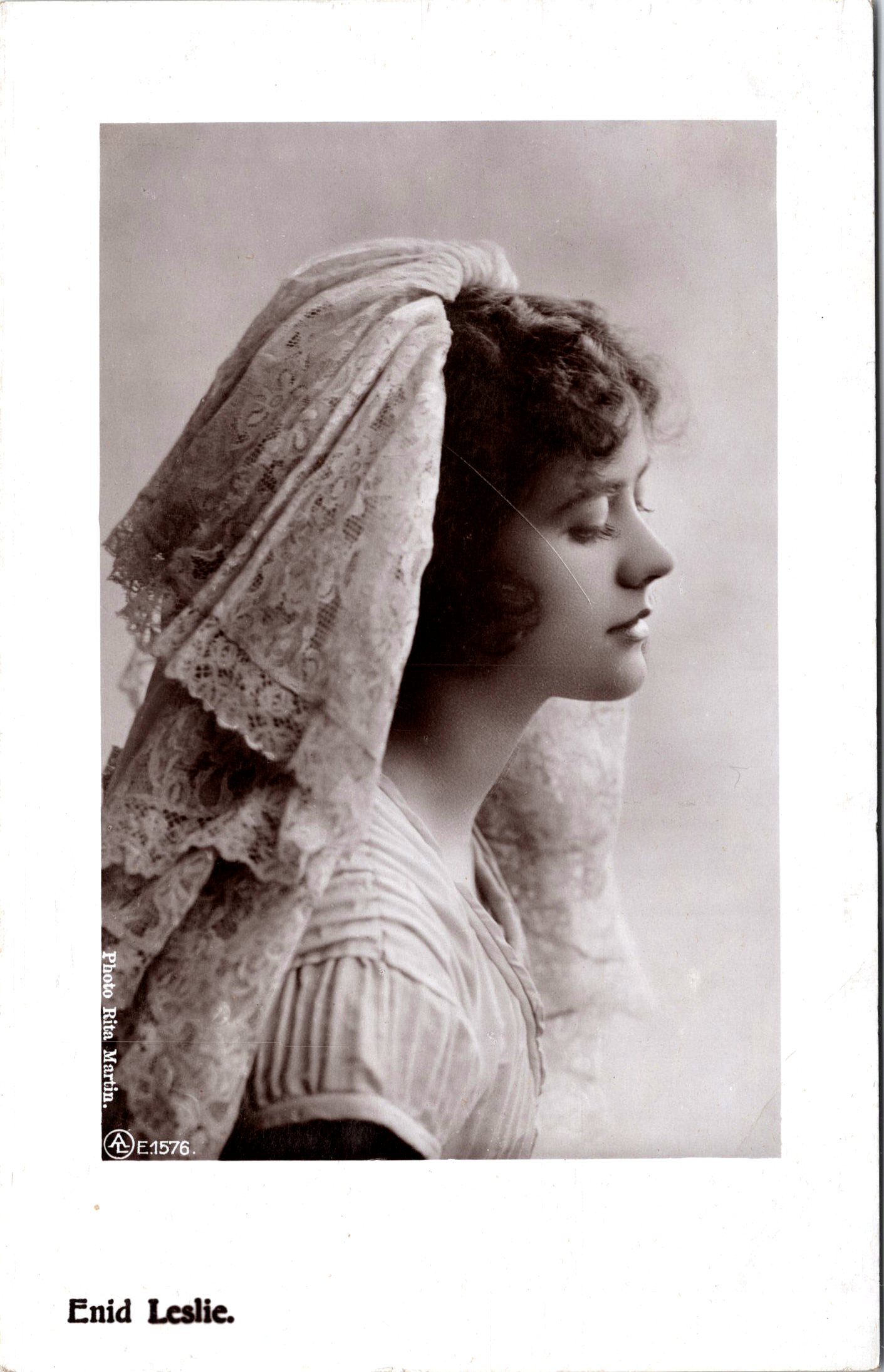
ENID LESLIE: PRETTY STAGE ACTRESS : BROADWAY : LONDON STAGE : RPPC

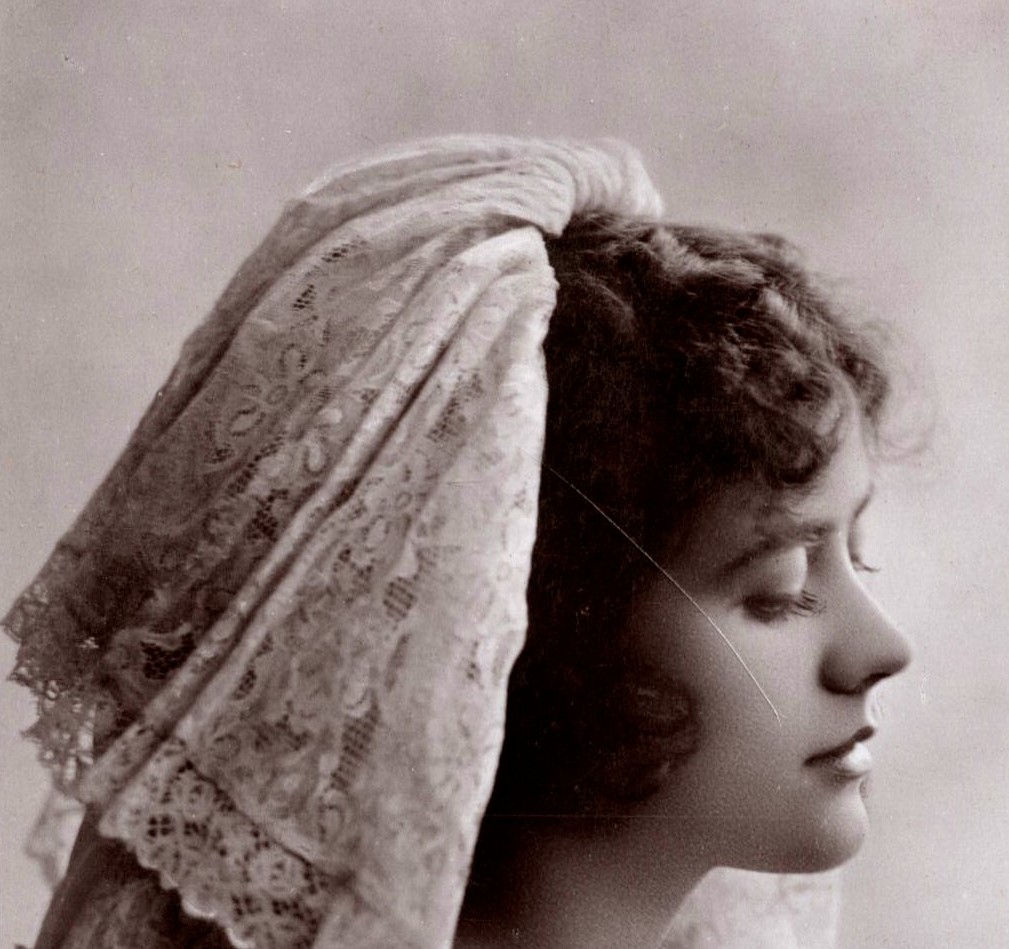
This vintage real photo postcard features actress, Enid Leslie. Her photo was taken by the talented female celebrity photographer, Rita Martin. There is not much biographical information about this performer that is readily available on the internet. However, it is clear that she was an active performer. Theatricalia list 6 London stage appearances for Miss Leslie. The plays were performed between 1909 and 1913. A photograph of Leslie and Nina Sevening can be seen on the front page of “The Illustrated Sporting News” (1908). The IBDd reports that she appeared in two Broadway plays between 1883 and 1912. The Tatler (1916) describes Leslie as a “charming actress”. This postcard was published by Aristophot (London). The company ceased to exist when it was purchased by Iris Verlag (Austria) in 1909. SOLD

MAY DE SOUSA : ACTRESS/SINGER :TRAGIC DESCENT FROM STAR TO SCRUB WOMAN : RPPC 1907

POSTCARD 1 (SOLD)

POSTCARD 2 (SOLD)

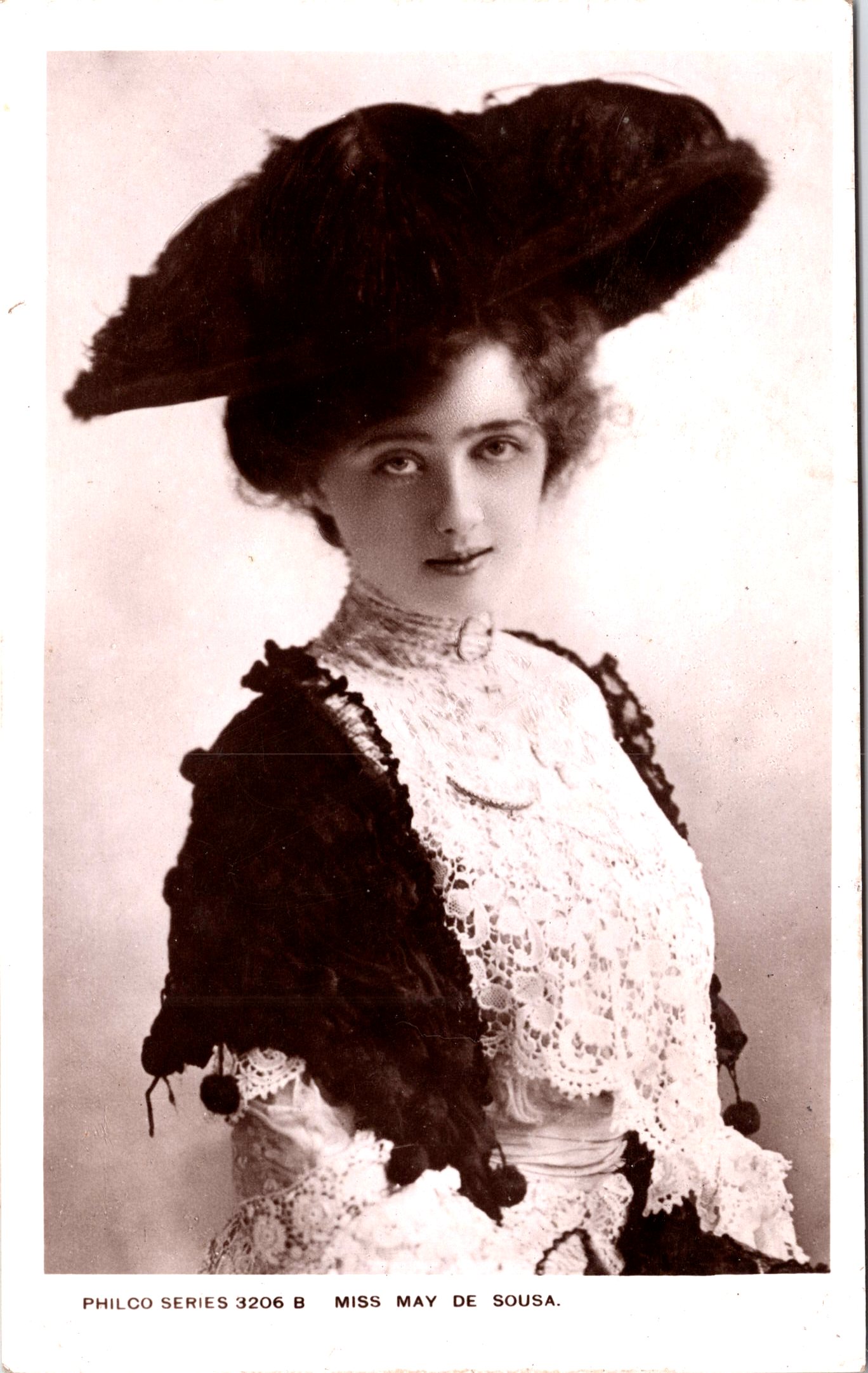
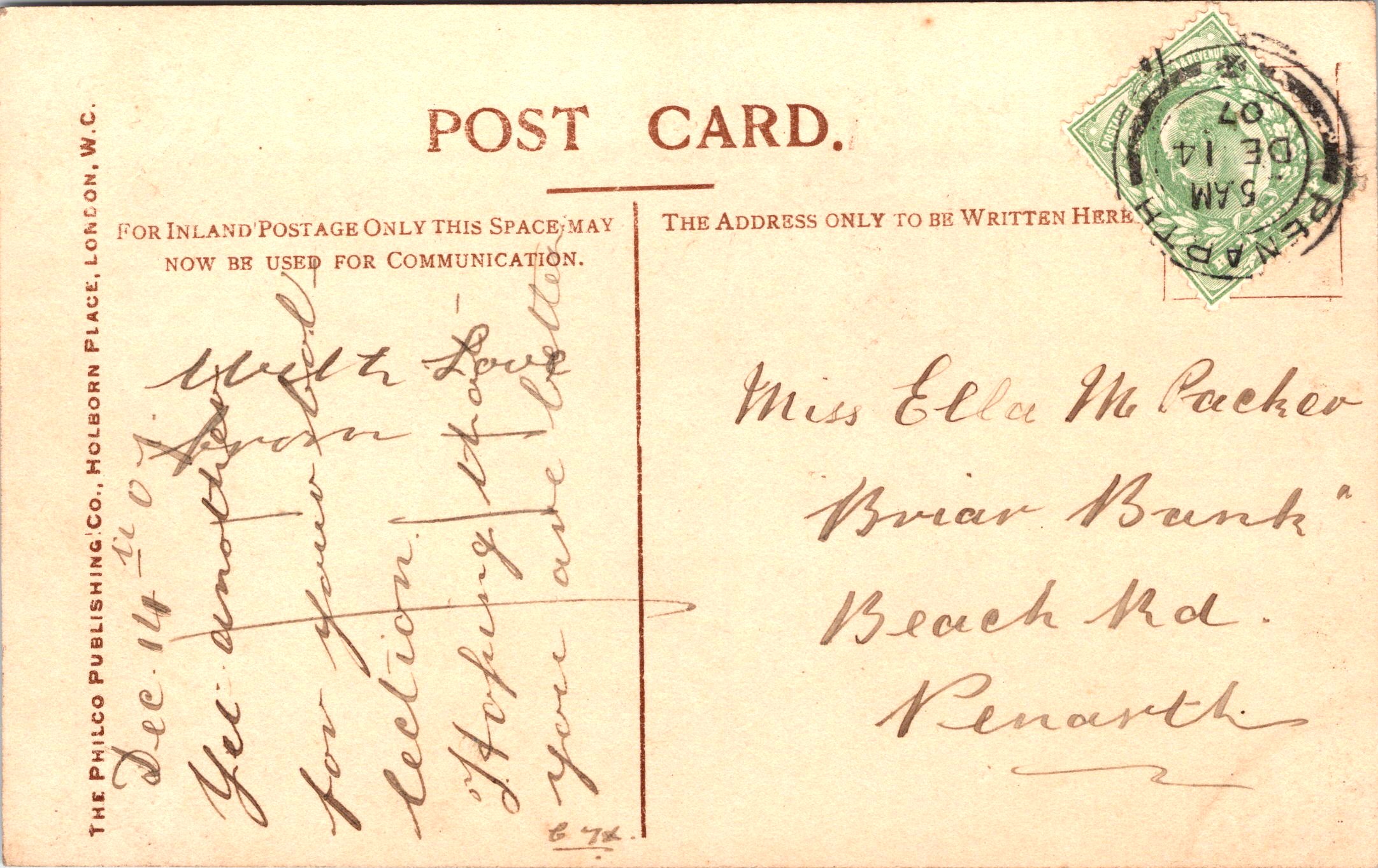
Postcard 1 features American stage actress, and singer, May de Sousa (1884-1948). She had many successes, but she lived a tragic life. Her father was a Chicago police detective. She became famous in 1898, I at about 14 years of age, when she sang “Dear Midnight of Love”. This song was a ballad by bathhouse John Coughlin. He was a Chicago politician and would-be songwriter.  In 1901 she was hired by Frank Perley as one of the principles for his touring company. Next, she became the understudy for Alice Nielson in a San Francisco production. In 1902 she was invited to go to London with the cast of that show, but she turned down the opportunity because she was afraid of the sea voyage. She then joined the cast of the highly successful operatic fantasy, “The Storks”. In 1904 she joined the cast of the Wizard of Oz. That same year, she became part of the cast of “Babes in Toyland”. At this point, she had become a very popular actress. She then went to London to star in a production of Cinderella. She followed that up with other stage successes in London. Although she had much success in light operatic roles, she wanted to display her talent as a dramatic actress. In 1908 she was one of the first American actresses to perform at the Moulin Rouge. While in Paris she was reported missing because she did not contact friends or family for over five weeks. She returned without explanation. She was now a star in both the United States and England. In 1910, her mother was discovered dead in a room filled with gas. It was unknown whether her mother’s death was accidental or by suicide. In 1910, May married a stockbroker. Their marriage was very troubled from its beginning. Her husband had lied about his finances, and the financial burden fell on the De Sousa. In addition, her husband frequently physically, abused her. After two years of marriage, she divorced him on the grounds of cruelty and financial desertion. De Sousa continued her career in both America and Europe. De Sousa appeared in 8 Broadway plays between 1905 and 1915.  She was performing in France shortly before the start of World War I and barely escaped Germany’s invasion of France. In 1913, she was forced to declare bankruptcy. In 1918, she toured Australia with a theatrical company. While there, in about 1919, she married a local doctor and the pair moved to Shanghai. She performed there with amateur companies. In 1941 her husband died, and in around 1943 she was imprisoned for seven months as a civilian intern by the Japanese. When she returned to Chicago, she worked as a scrub woman in a public school. Her health was very much compromised by her internment,  she soon was forced to quit her job due to not being healthy enough to perform her tasks. She became malnourished and died in poverty and alone. She was a charity case in the county hospital when she died in 1948. May DeSosa had risen to become the toast of Europe and America, but died isolated and forgrotten. She was buried in a pauper’s grave. This vintage postcard was published by Philco as part of a series (No.3206B). The card was postmarked in 1907. (SOLD)

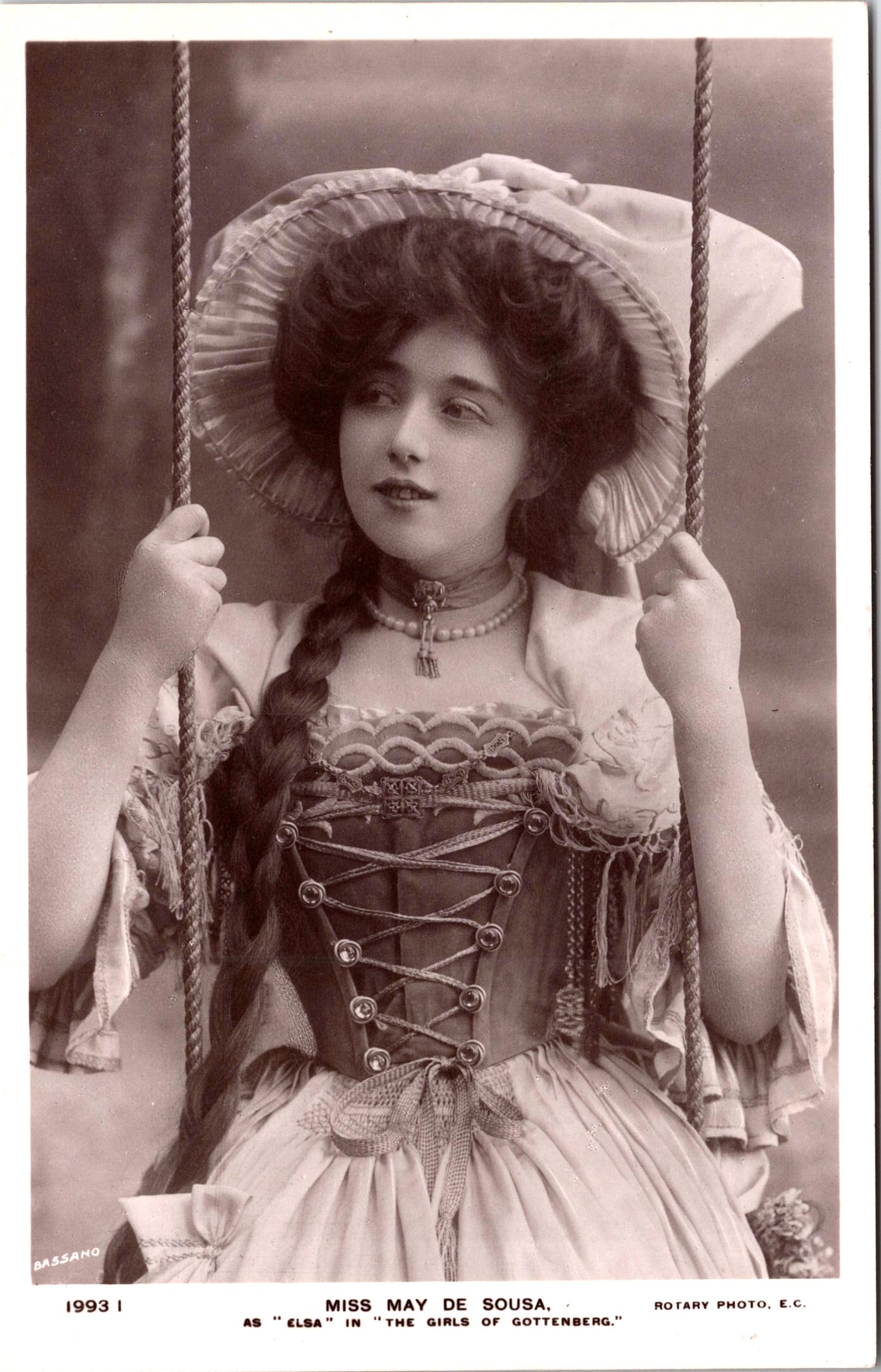
Postcard 2 was published by Rotary Photo as part of a series (No.1993I). De Sousa is shown in costume for “The Girls of Gottenberg”. (SOLD)